30 Short Haircuts for Men That Look Sharp
Thirty short mens haircuts short hair options that look sharp — buzz, crew, Ivy League, French crop, fades, and curly cuts, with the exact ask for your barber.
In this article · 41
- What Counts as a Short Men's Haircut
- How to Choose Your Short Cut
- Classic Buzz Cut Variations
- Induction Cut
- Classic Buzz
- Soft Buzz
- Long Buzz
- Burr Cut with Line-Up
- Butch Cut with Skin Fade
- Crew Cut and Ivy League Territory
- Classic Crew Cut
- Short Crew Cut
- Ivy League
- Princeton Cut
- High and Tight
- French Crop and Cropped Fringe Cuts
- Classic French Crop
- Textured French Crop
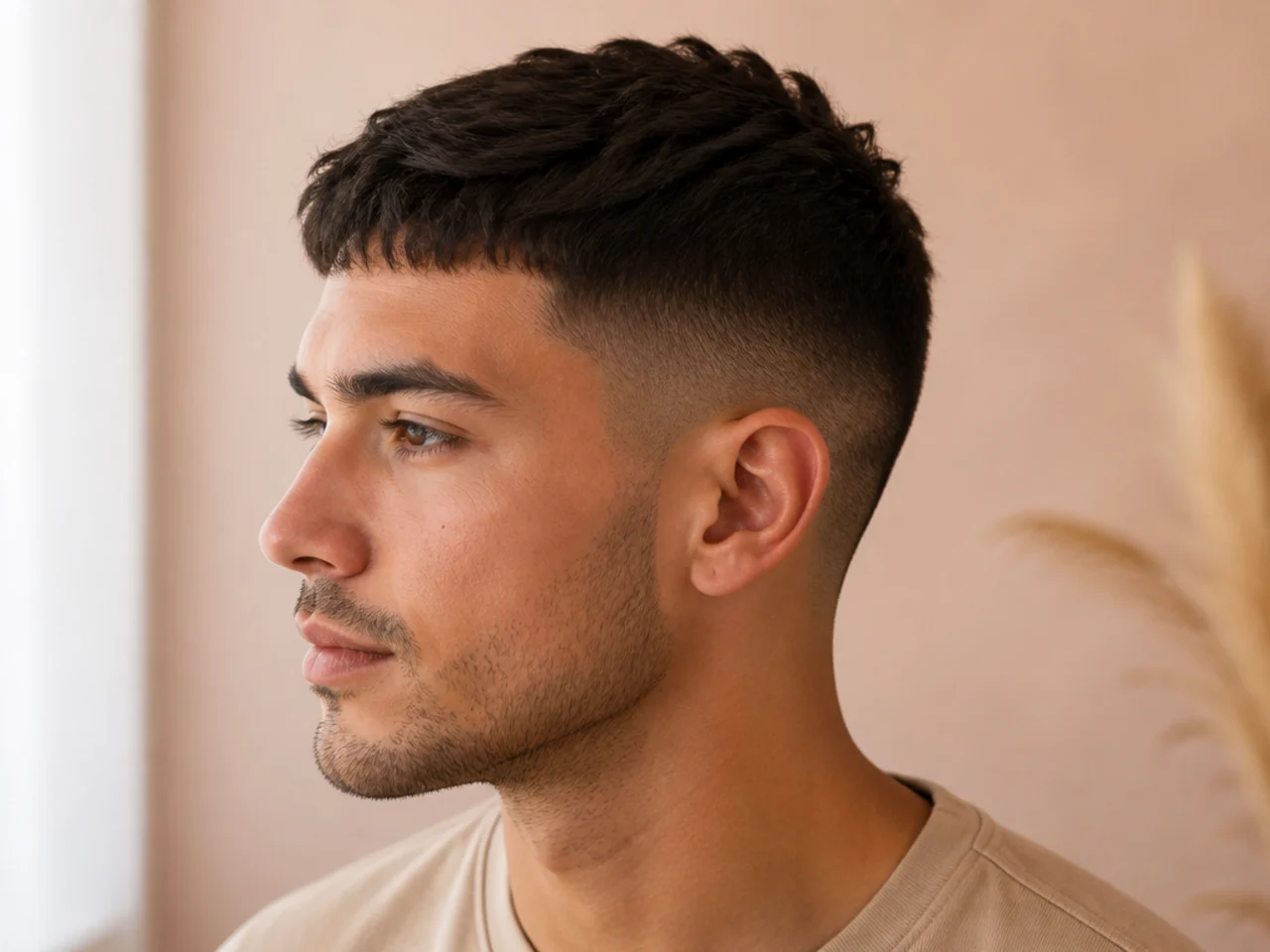
- Short Cropped Fringe
- Edgar Haircut
- Caesar Cut
- Short Textured and Volume Tops
- Short Textured Quiff
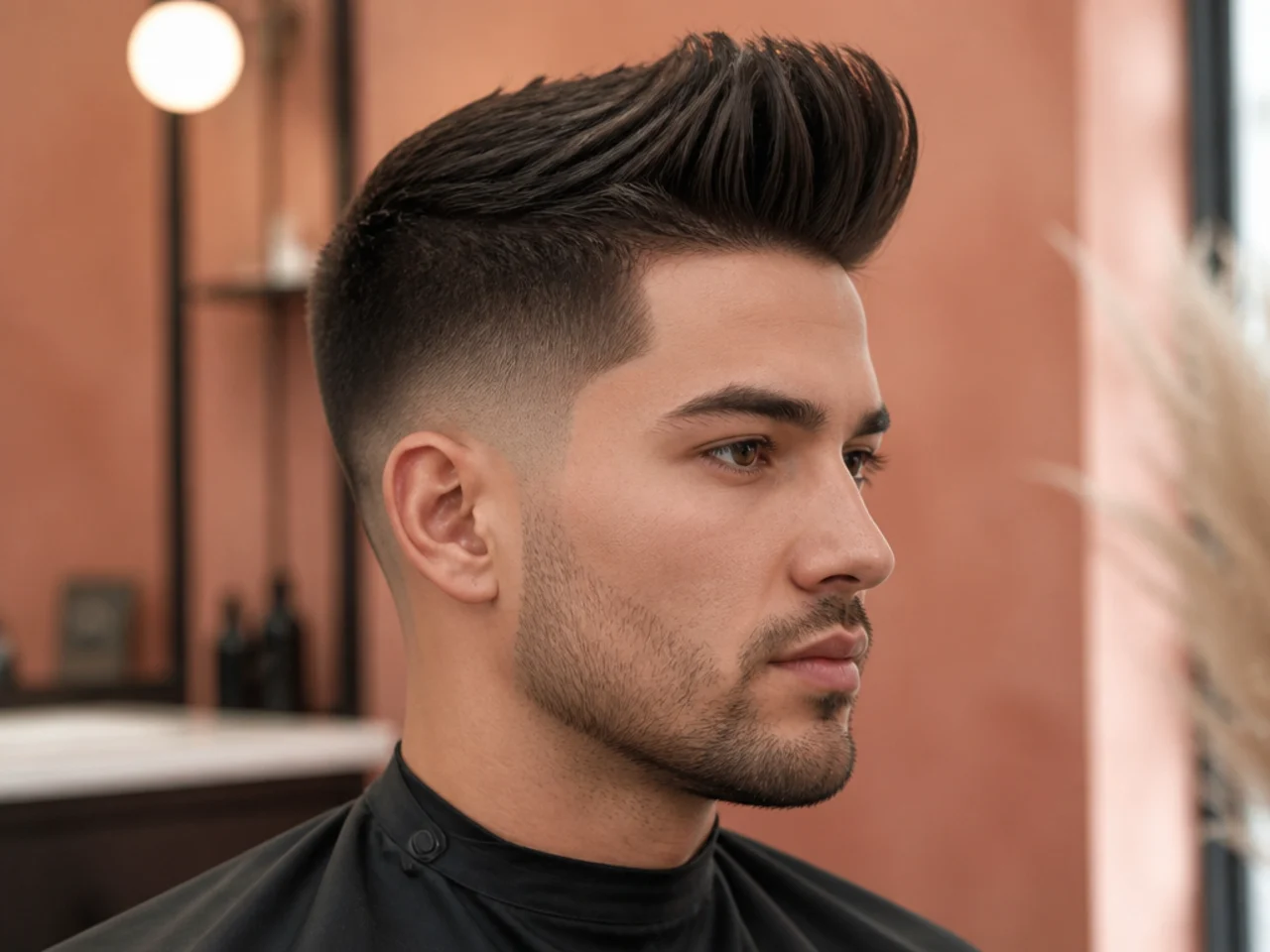
- Short Pompadour
- Short Brush Up
- Short Spiky Cut
- Short Side Part
- Short Cuts with a Clean Fade
- Short Crop with Low Fade
- Short Crop with Mid Fade
- Short Crop with Low Taper Fade
- Short Skin Fade
- Comb Over with Low Fade
- Short Cuts for Curly and Coily Hair
- Short Curly Fade
- Short Coily Crop
- Short 360 Waves
- Twist Sponge Curls with Fade
- How to Ask Your Barber for a Short Cut
- Styling and Maintenance for Short Hair
- FAQ
The best short haircut is the one that looks sharp on Tuesday morning without a bathroom full of product. This guide walks through thirty short cuts for men — guard 0 to 4 on the buzz side, or one to two inches of scissor-cut on top — grouped by family so you can jump straight to the one that fits your hair, your face, and how much time you actually want to spend in front of a mirror. Every variation includes the exact ask for your barber, the face shapes it flatters, and the one styling move that finishes the job at home.
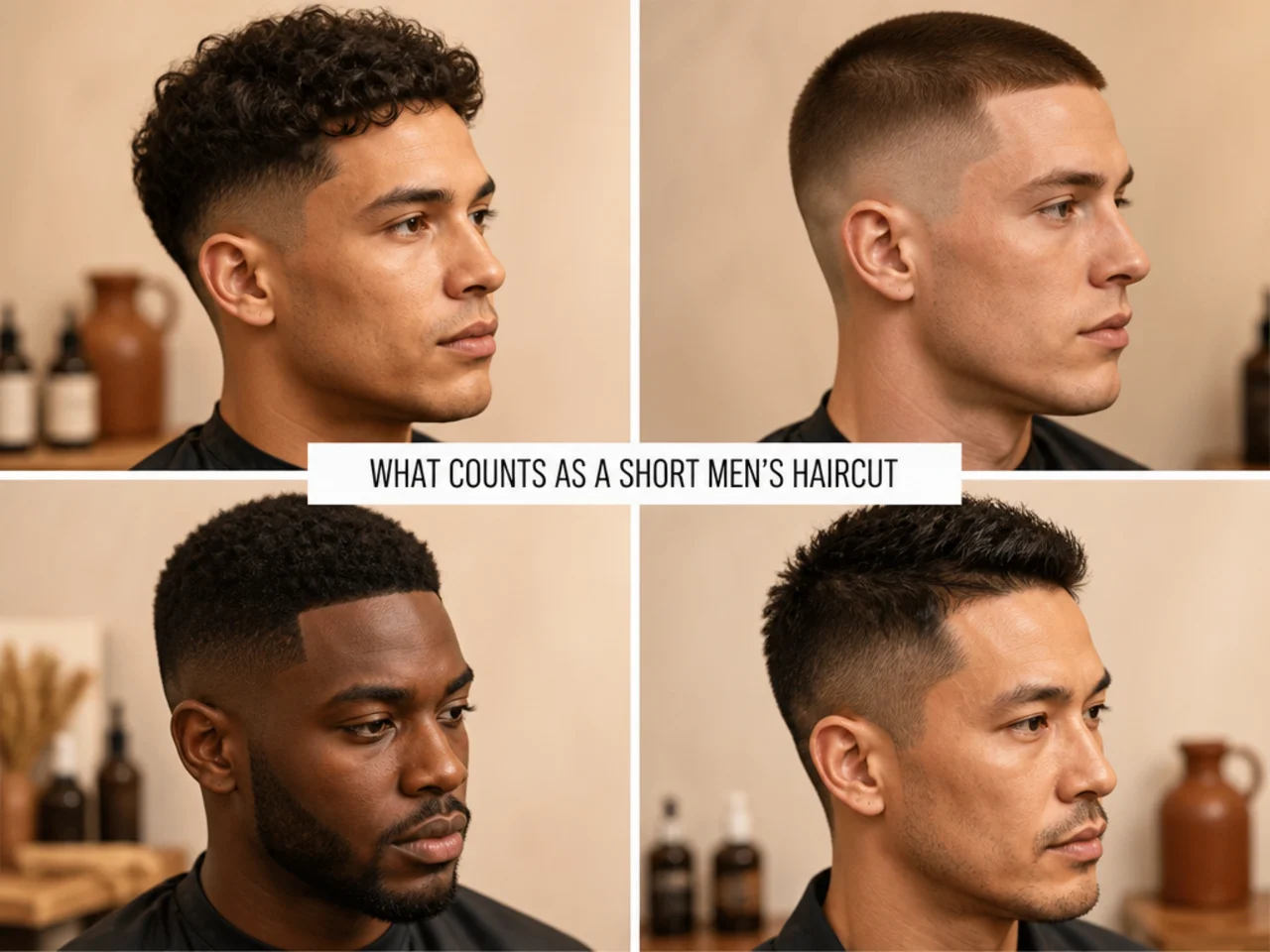
What Counts as a Short Men's Haircut
Short means one of two things. Either the top is clippered to a guard number between 0 (skin) and 4 (roughly half an inch), or it's scissor-cut somewhere between three-quarters of an inch and two inches. Sides are always shorter than the top — tapered, faded, or clippered to a #1 or #2.
Anything past two inches on top starts to move into medium-length territory and asks for real styling. Short cuts don't. That's the whole appeal. A pea of clay, thirty seconds with your fingers, and the shape holds until you shower it out.
Short reads clean in almost every workplace — office, trade, hospitality, uniform. It also flatters thinning hair, receding hairlines, and wide cowlicks better than any long cut, because it stops trying to hide what's honest.
How to Choose Your Short Cut
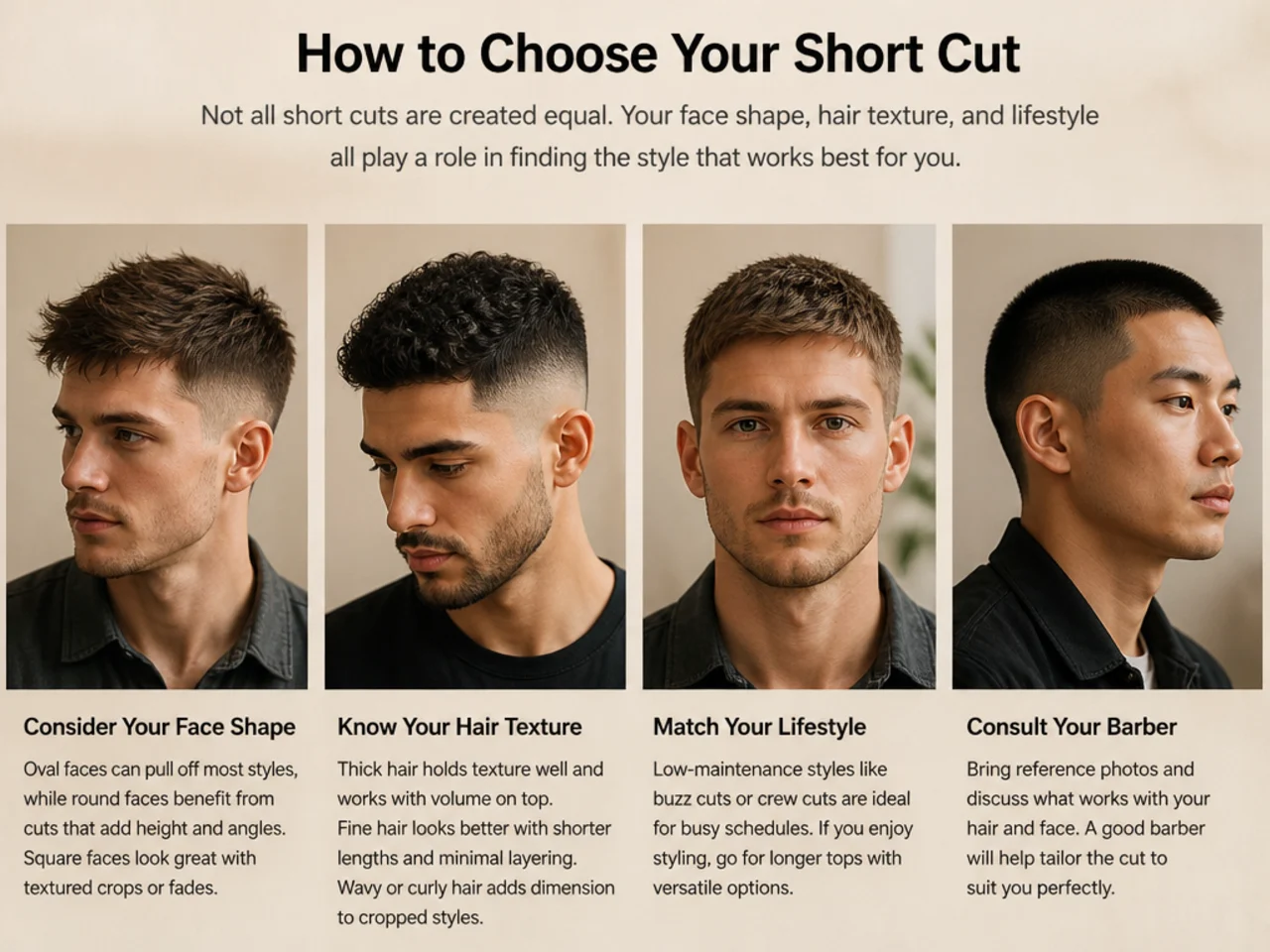
Face shape does most of the work. Round faces want height on top — a short quiff, brush-up, or textured crop with a fade lengthens the silhouette. Square faces suit almost any short cut — the strong jawline carries a buzz, crew, or Ivy League with equal ease. Oval faces are the easiest to dress; every cut here works, so pick on hair type and lifestyle instead. Heart-shaped faces want a forward fringe or textured top that balances a narrower chin. Long or oblong faces should reach for a French crop or Caesar — the forward fringe visibly shortens the forehead.
Hair type is the second filter. Fine, straight hair reads best short and neat — buzz, crew, or Ivy League. Thick, straight-to-wavy hair carries any short cut and rewards a textured crop or quiff. Coarse or coily hair wants scissor work on damp hair and a fade to keep the profile clean.
Workplace is the tiebreaker. Trades and uniformed jobs suit a buzz, high and tight, or crew cut. Corporate rewards an Ivy League, side part, or short comb over with a low fade. Creative offices carry anything on this list.
Classic Buzz Cut Variations
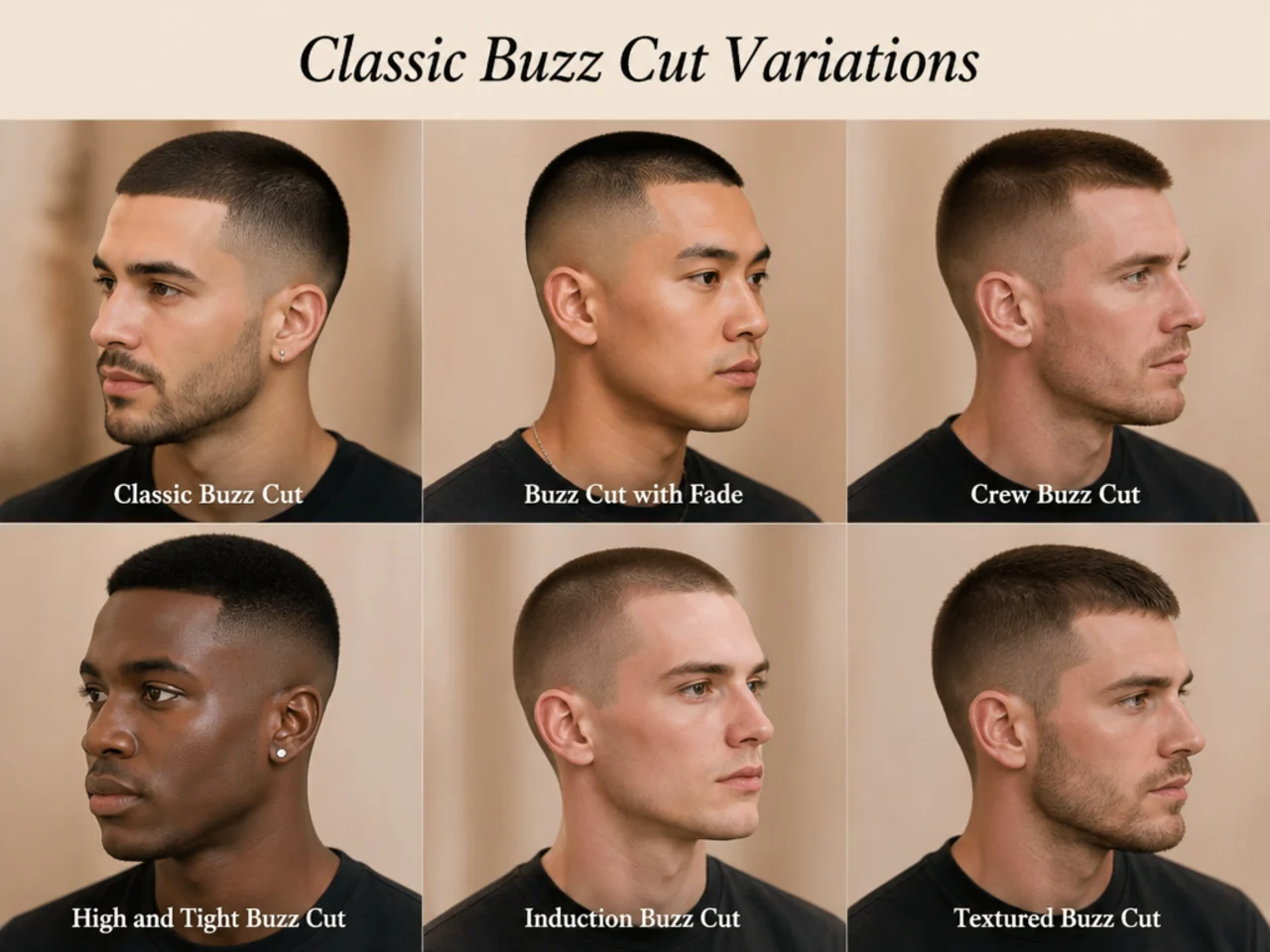
The buzz cut family is one clipper decision — which guard number. Each half-step longer softens the read.
Induction Cut
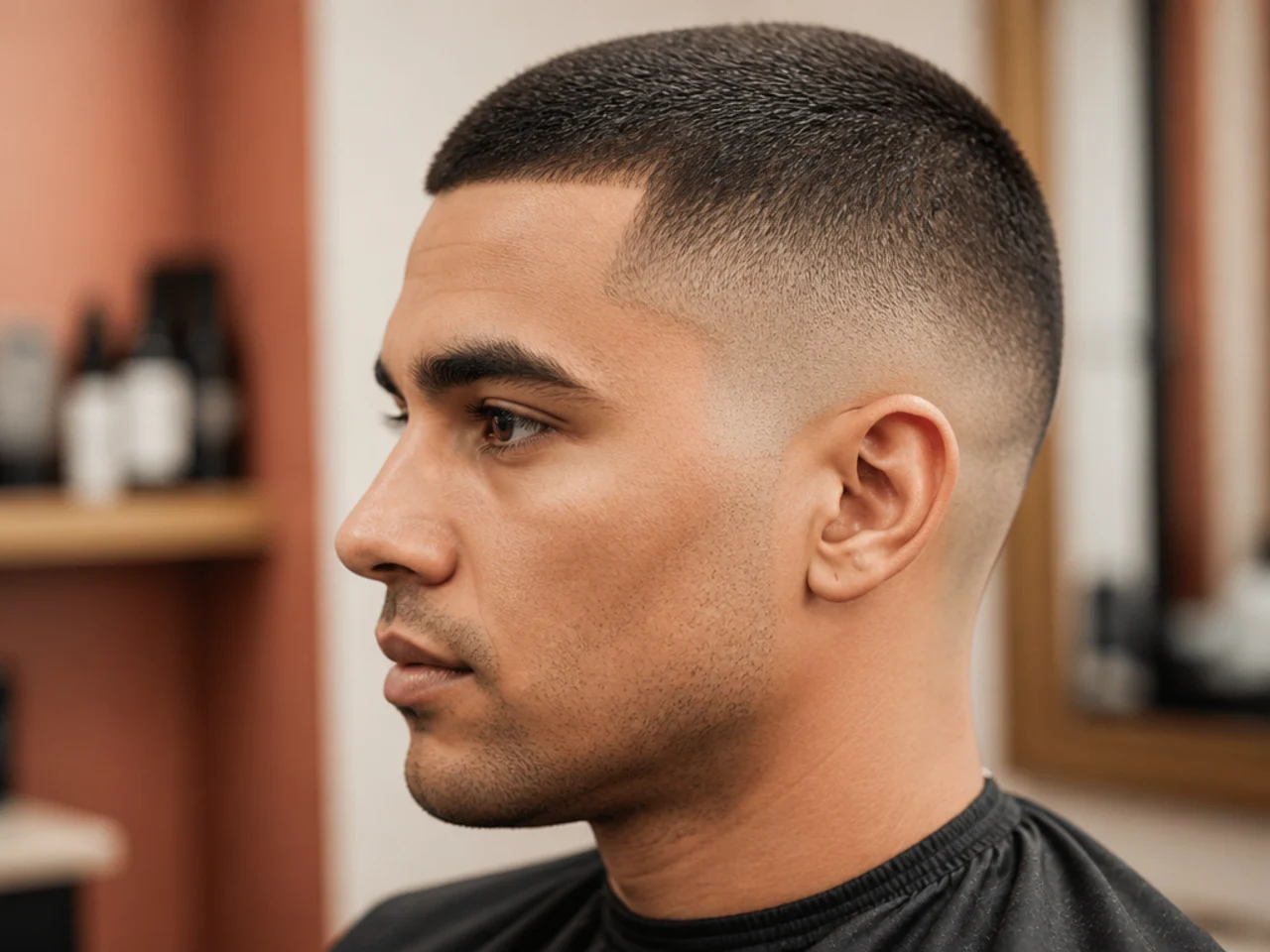
The induction is the shortest buzz that still counts as a haircut. Cut with a #0 — no guard, blade against the scalp — it leaves a shadow of hair and nothing else. The Marines cut every recruit this way on day one, which is where the name lives. It reads raw and honest on square jawlines, symmetric skulls, and dark stubble that fills in the temple line.
Skip it if you have a very round face — the tight profile can round you further. Skip it too if you scar visibly on the scalp or have a moles you'd rather keep quiet. Ask for: "Zero all over, blend at the neckline." Styling takes zero seconds. Book every three to four weeks or the shape drifts fast.
Classic Buzz
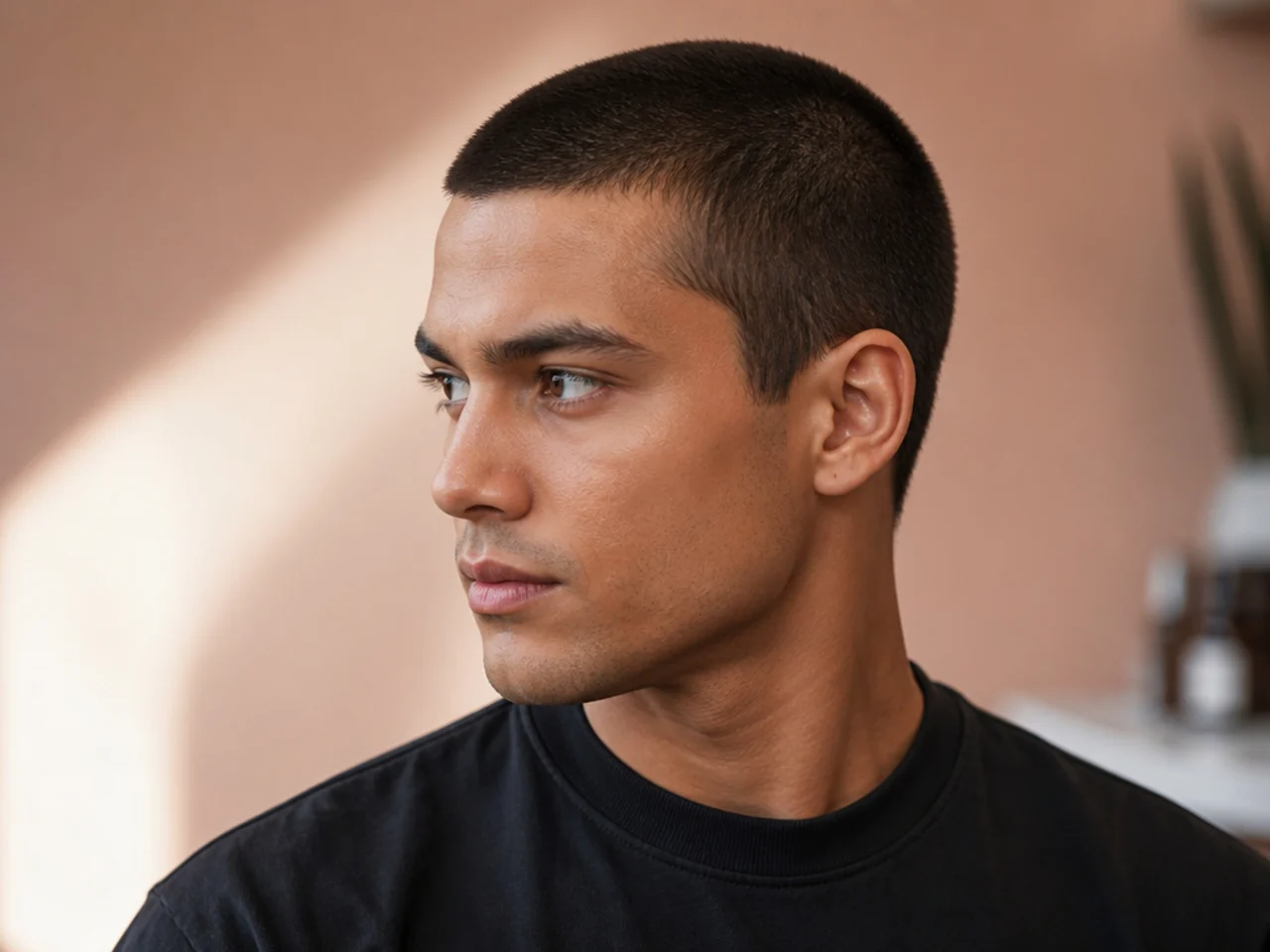
The classic buzz is a #1 guard all over — about an eighth of an inch. Enough length to feel like hair, short enough that you never think about it. Best on square and oval faces, thick or thinning hair, and any workplace that respects a clean silhouette.
Ask for: "Number one all over, square neckline." Rub a pea of face moisturizer through it while it's still damp if you want a whisper of shine. Rebook every four weeks.
Soft Buzz
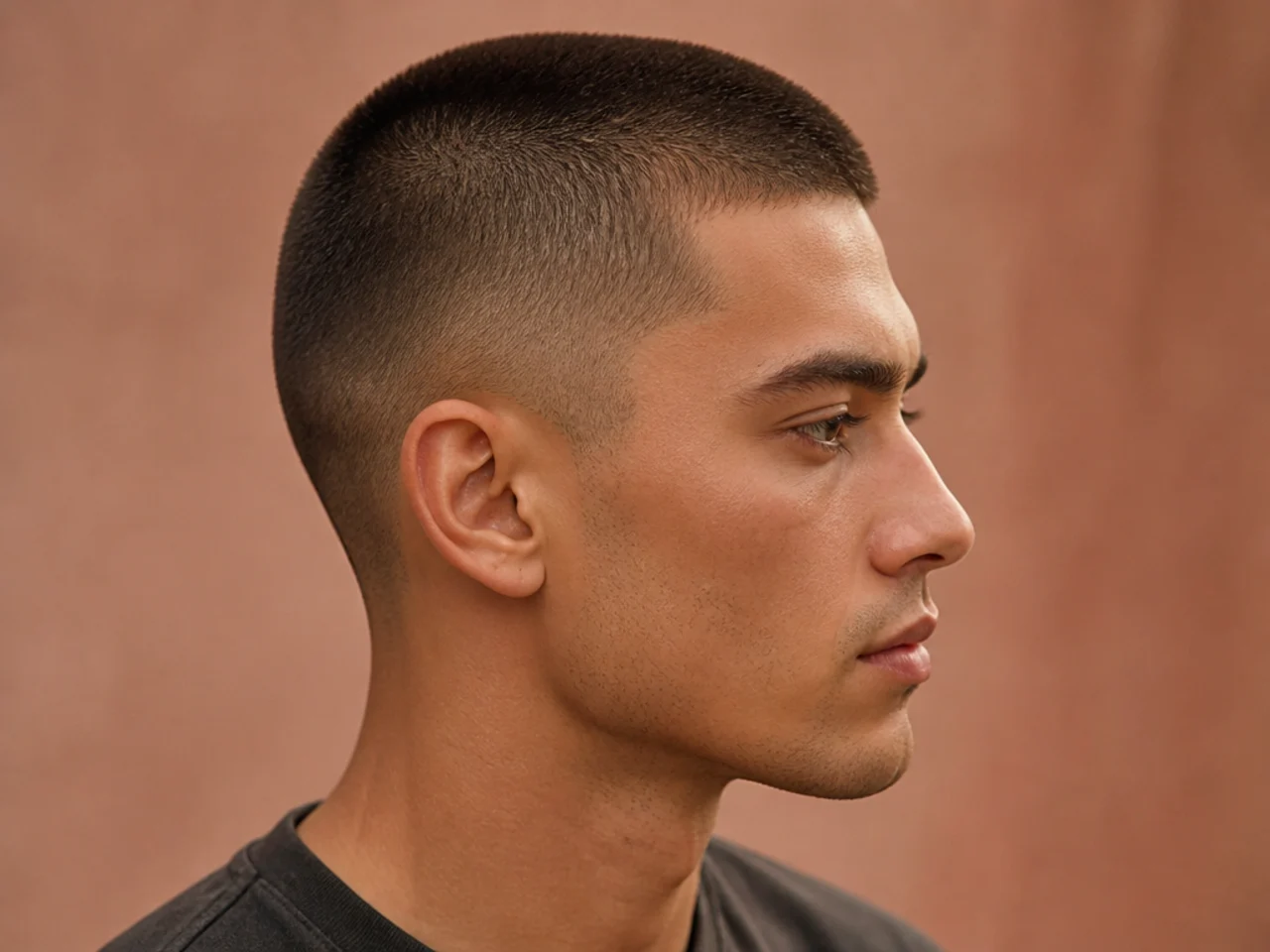
A #2 guard leaves about a quarter inch — the sweet spot for guys who want a buzz without the barely-there read. The soft buzz photographs warmer than the classic and covers slightly more scalp, which suits round faces and lighter hair colors.
Ask for: "Number two all over, blend the neckline soft." Add a low taper at the sides if you want a touch of contrast without daily styling. Rebook every four to five weeks.
Long Buzz
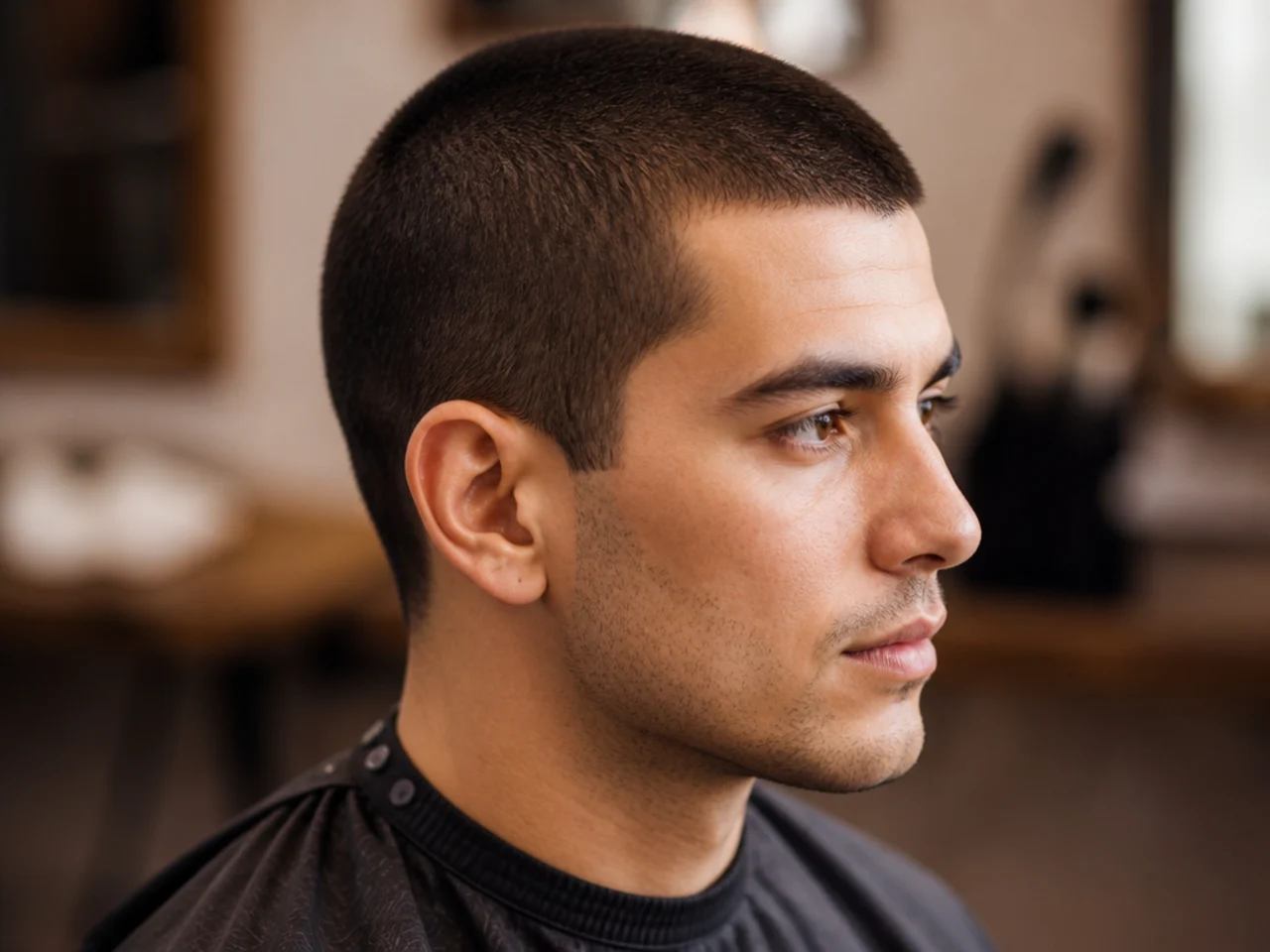
A #4 buzz leaves roughly half an inch on top — the ceiling of the buzz family. Enough length to feel like a haircut, none of the daily styling of a crew. Suits every face shape, and works particularly well for guys transitioning into or out of shorter cuts.
Ask for: "Number four on top, skin or low fade at the sides, square neckline." Optional: leave the front a hair longer for a soft graduated line. Rebook every four to five weeks.
Burr Cut with Line-Up
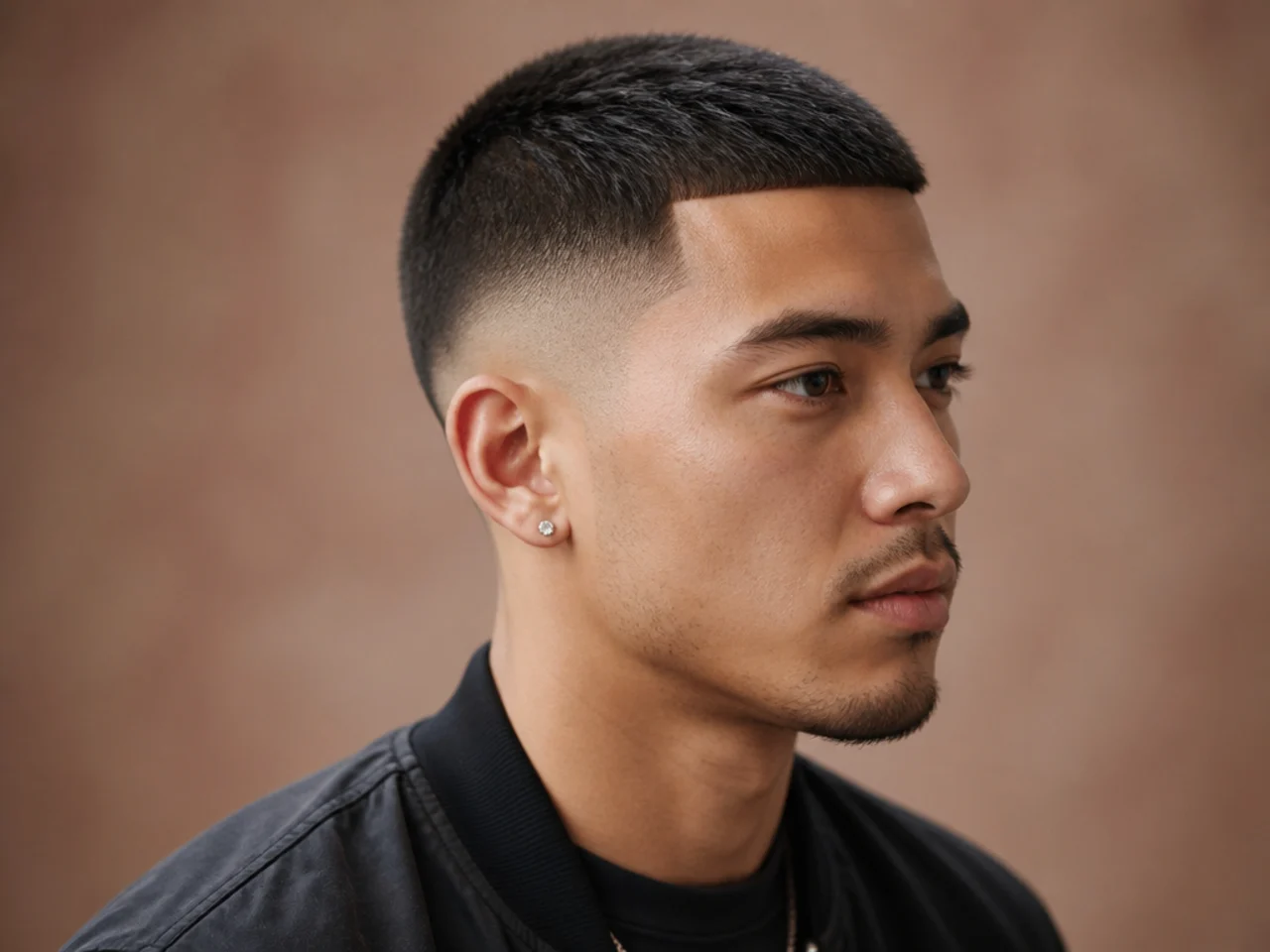
The burr is a #1 or #2 all over paired with a razor-sharp line-up at the forehead and temples. The line-up is the whole point — it turns a plain buzz into a finished look and reads especially well on Type 3 and Type 4 hair.
Best on strong hairlines that hold the line as it grows in. Ask for: "Number two all over, sharp line-up at the forehead and temples, straight neckline." Rebook every two to three weeks — a line-up fills in faster than the cut.
Butch Cut with Skin Fade
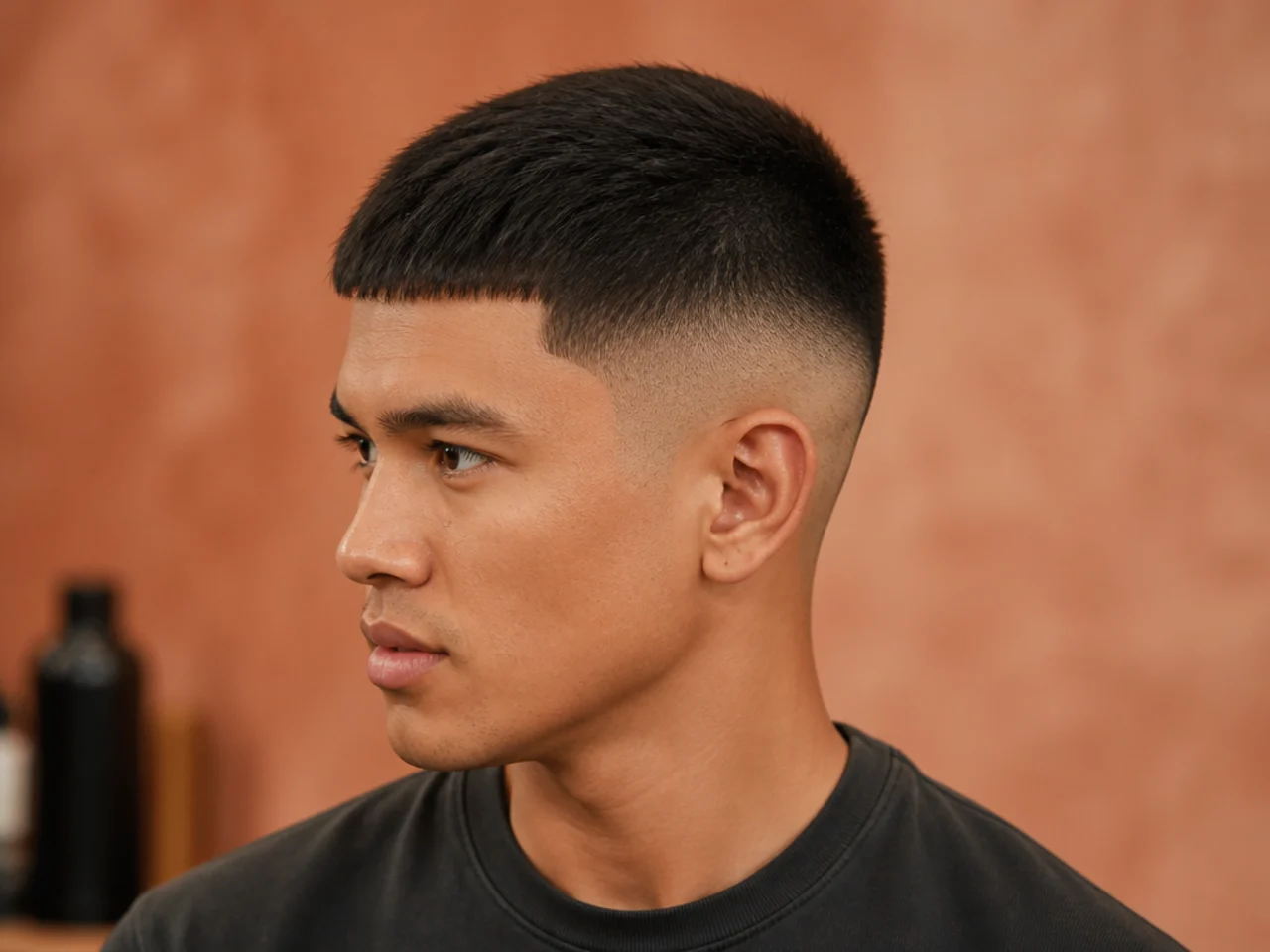
The butch is a #2 or #3 all over the top with a skin fade at the sides. Half a step longer than a buzz, half a step shorter than a crew. It's the lowest-effort cut on the list that still reads intentional.
Best for athletic lifestyles, thinning hair, and guys who want to stop thinking about their hair for six weeks. Ask for: "Butch cut, number three on top, skin fade at the sides, square neckline." Styling is zero — towel-dry and go.
Crew Cut and Ivy League Territory
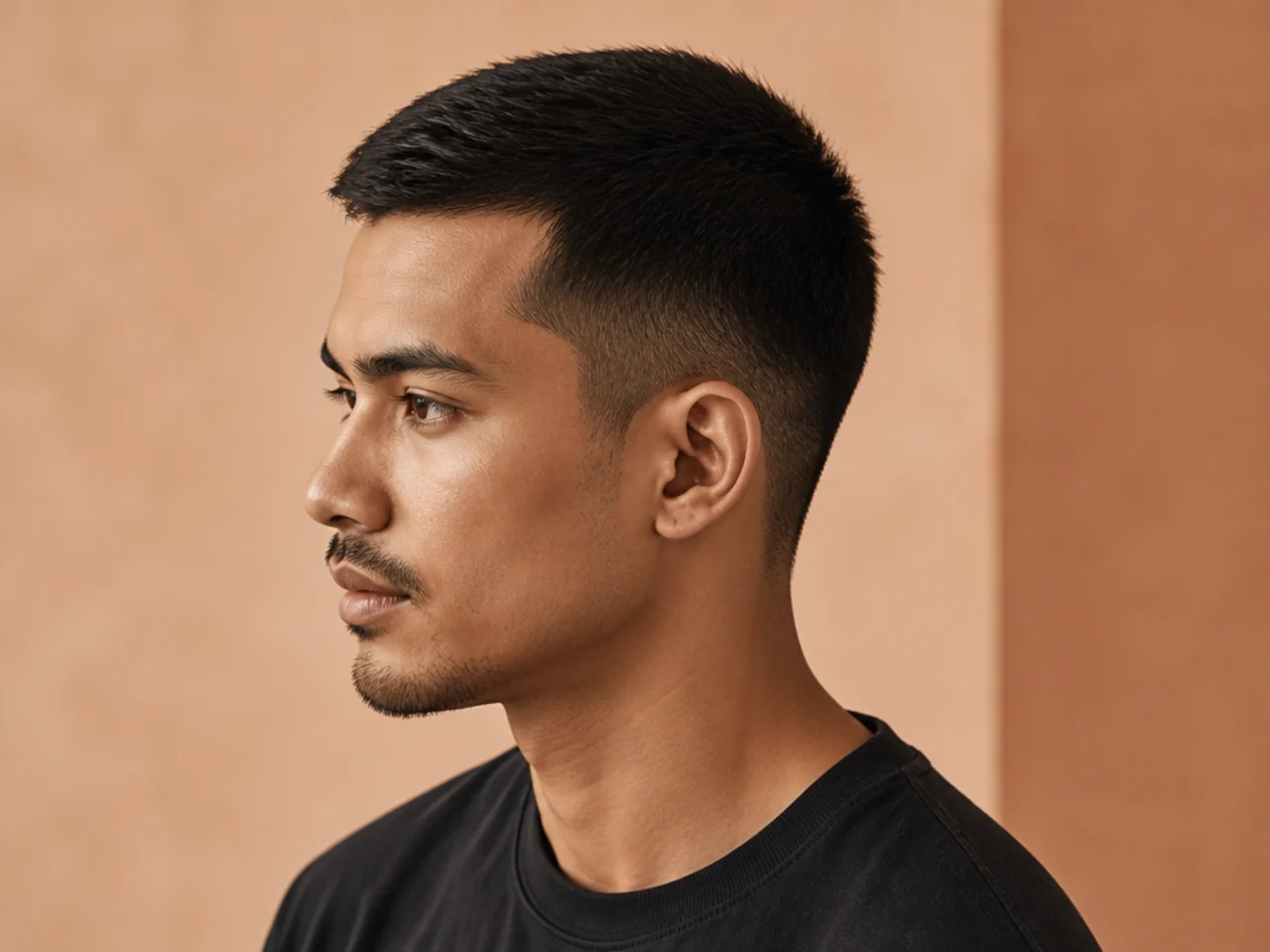
Scissor work on top, clipper work on the sides. The crew cut family is where short haircuts pick up polish.
Classic Crew Cut
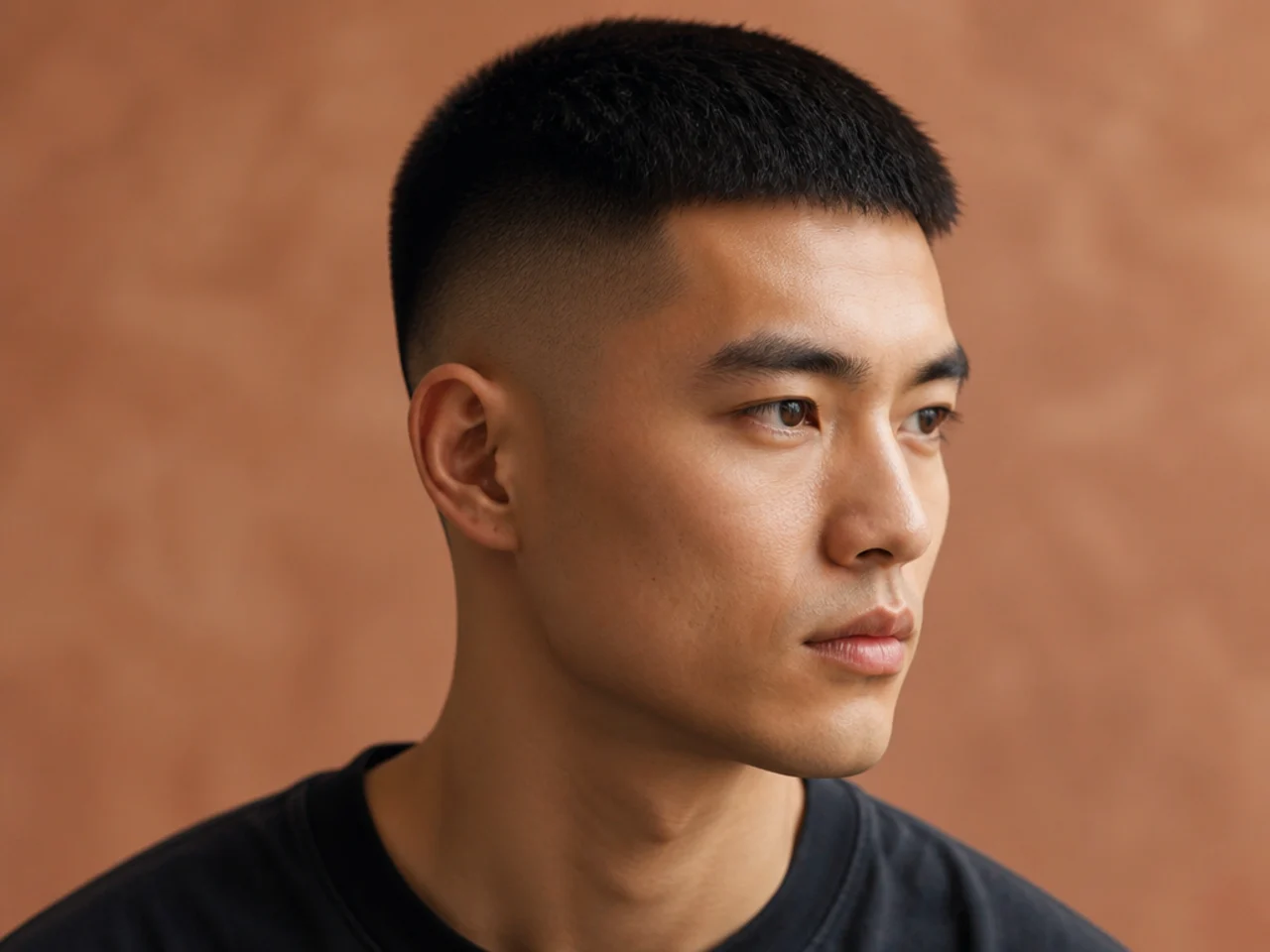
The classic crew keeps about an inch on top with a scissor-graduated top — front slightly longer than back — and sides tapered from a #2 down to a #1 at the perimeter. It flatters every face shape and every hair type. That's why military barbers have cut nothing else for decades.
Ask for: "Crew cut, one inch on top graduated shorter to the back, number two tapered sides." A pea of matte clay pushed forward with your fingers finishes the whole look in thirty seconds.
Short Crew Cut
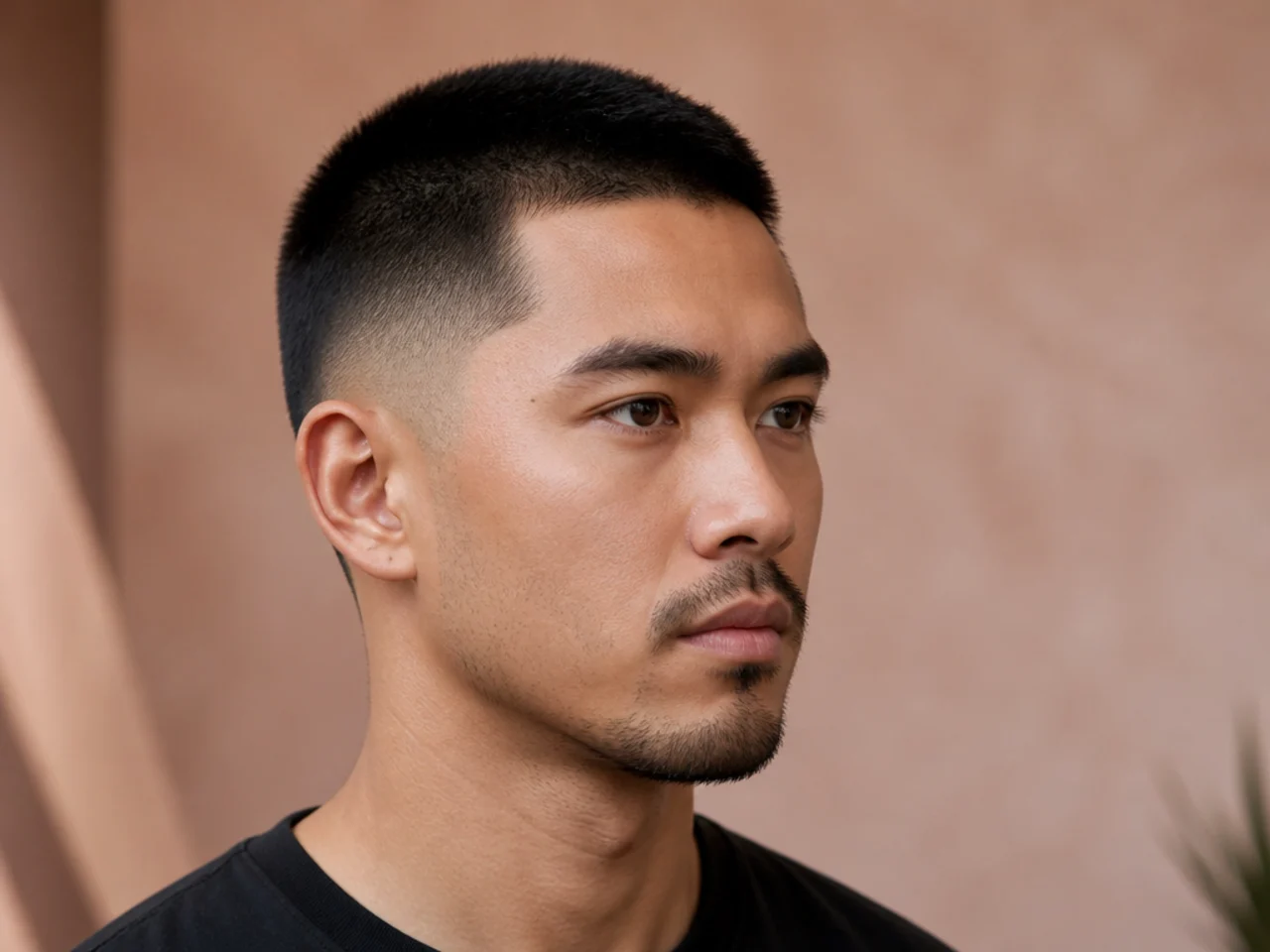
The short crew keeps three-quarters of an inch on top — the shortest version that still counts as a crew before you cross into buzz territory. Best on square and diamond faces because the tight profile shows off the bone structure.
Ask for: "Short crew cut, three-quarter-inch graduated top, number two tapered sides." No product needed. If you want a whisper of shine, tap a drop of light cream into the front only.
Ivy League
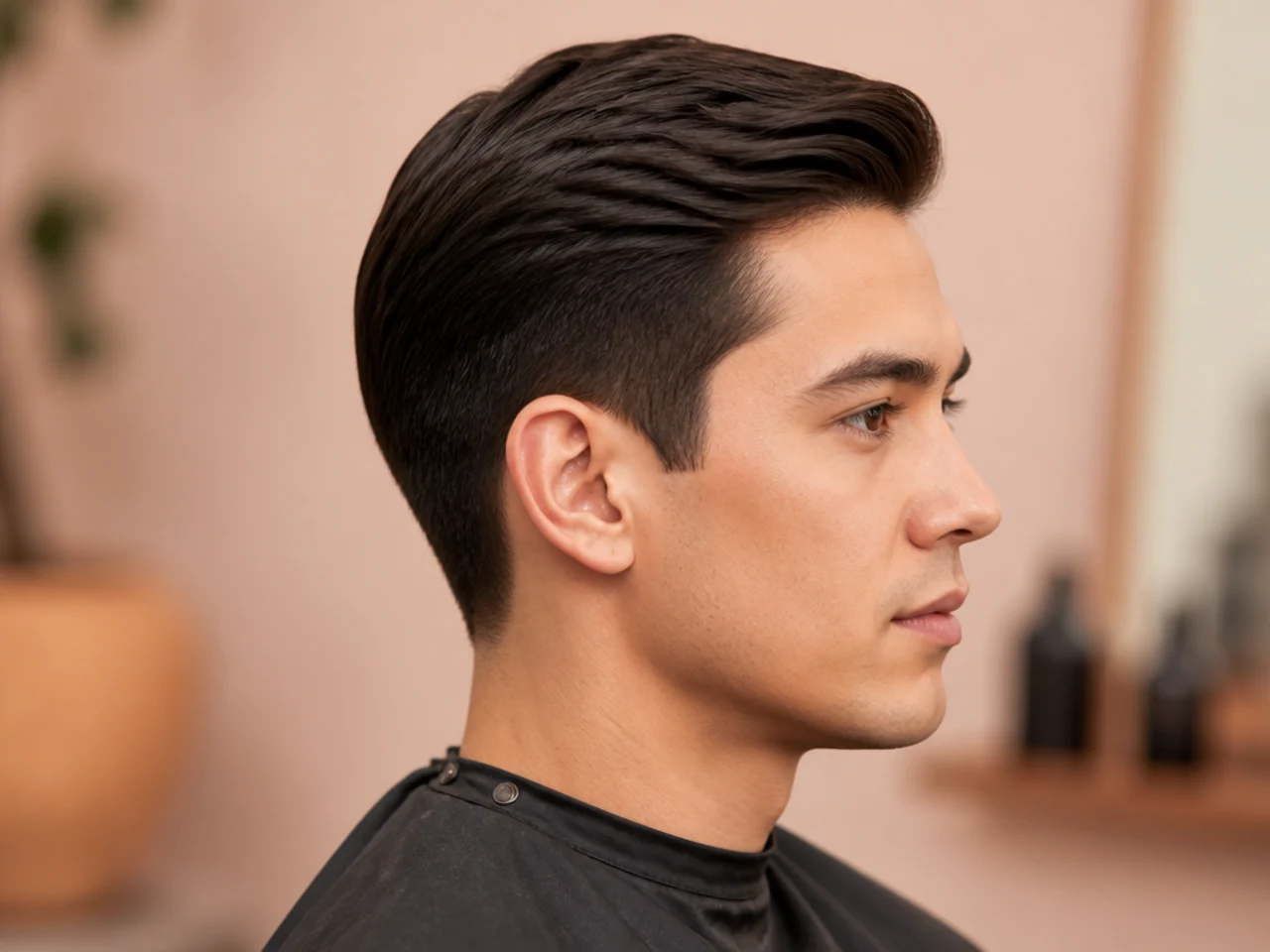
The Ivy League is a crew cut with enough length on top — an inch and a half to two inches — to hold a side part. It's the boardroom-friendly short cut, and the best entry point for guys stepping up from a buzz who want to look put-together.
Best on oval, square, and heart-shaped faces, and straight-to-wavy hair. Ask for: "Ivy League, two inches on top, part on the left [or right], scissor-blended sides." Blow-dry to the part with a small round brush, work a light-hold pomade through, comb once. Rebook every five to six weeks — the scissor-blended sides grow out gracefully, so you don't get punished for stretching a visit.
Princeton Cut
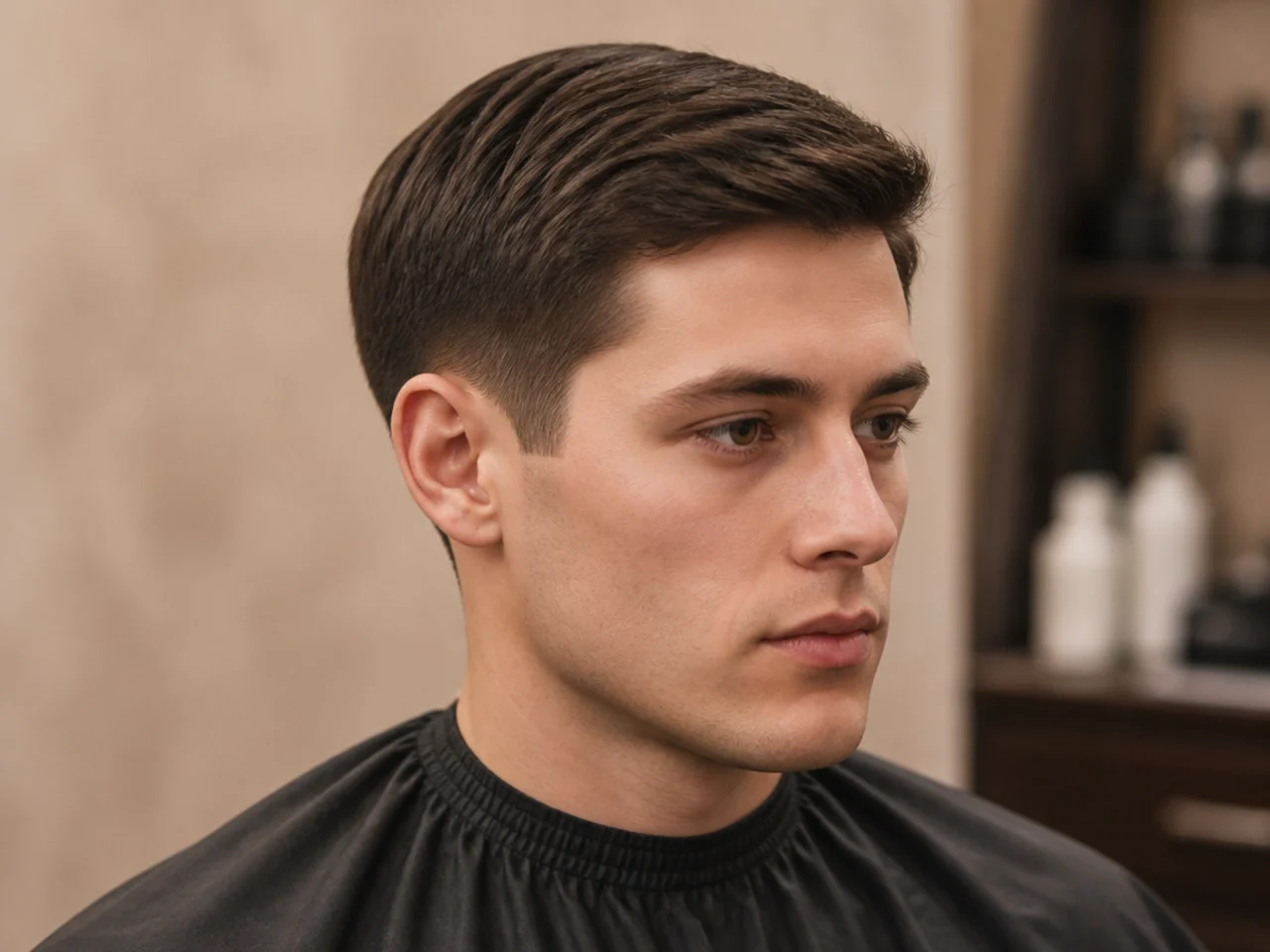
The Princeton is the Ivy League's slightly-longer cousin — two inches or a shade more on top, with a natural part that falls where your hair wants to go instead of a defined razored line. Reads softer and more casual than the Ivy League while keeping the same clean silhouette.
Ask for: "Princeton cut, keep two inches on top, natural part, taper the sides low." Style with a medium-shine cream — restraint on product keeps it from looking dated.
High and Tight
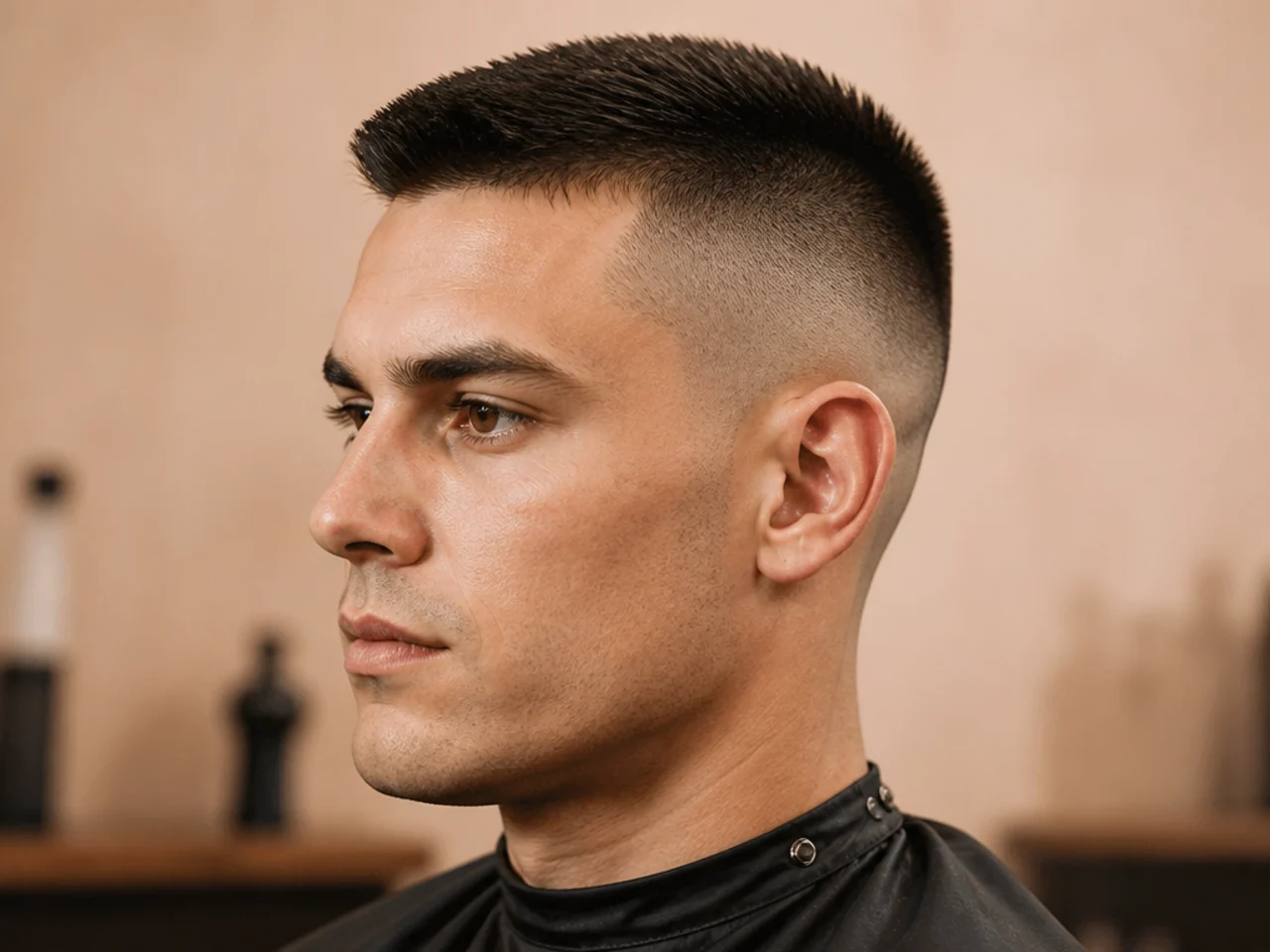
The high and tight is a #2 or #3 on top with a #0 or skin fade jumping in high — above the temples, sometimes as high as the crown. Military discipline, civilian polish. It reads clean at any age.
Best on strong features and thick, straight-to-wavy hair. Reads great in trades, uniformed roles, and any office that respects a tidy silhouette. Ask for: "High and tight, number three on top, skin fade jumping in high above the temple, square neckline." Optional: add a razored line part or a subtle shaved design at the temple — mention it upfront so the barber can plan the fade around it. Rebook every three weeks; the high fade line drifts fast.
French Crop and Cropped Fringe Cuts
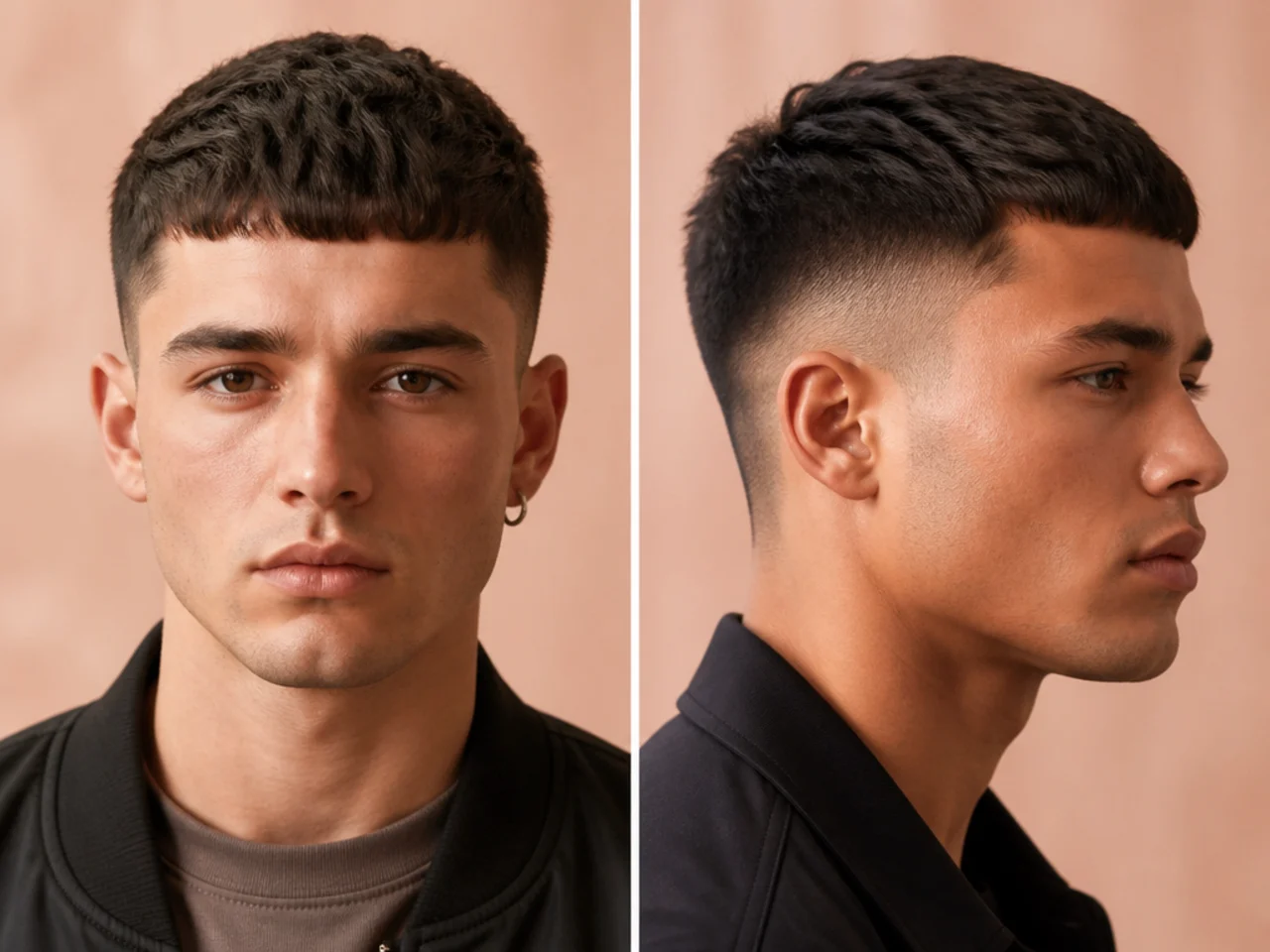
Short top, forward fringe. The French crop family flatters high foreheads and receding hairlines because the fringe covers what a slick-back would expose.
Classic French Crop
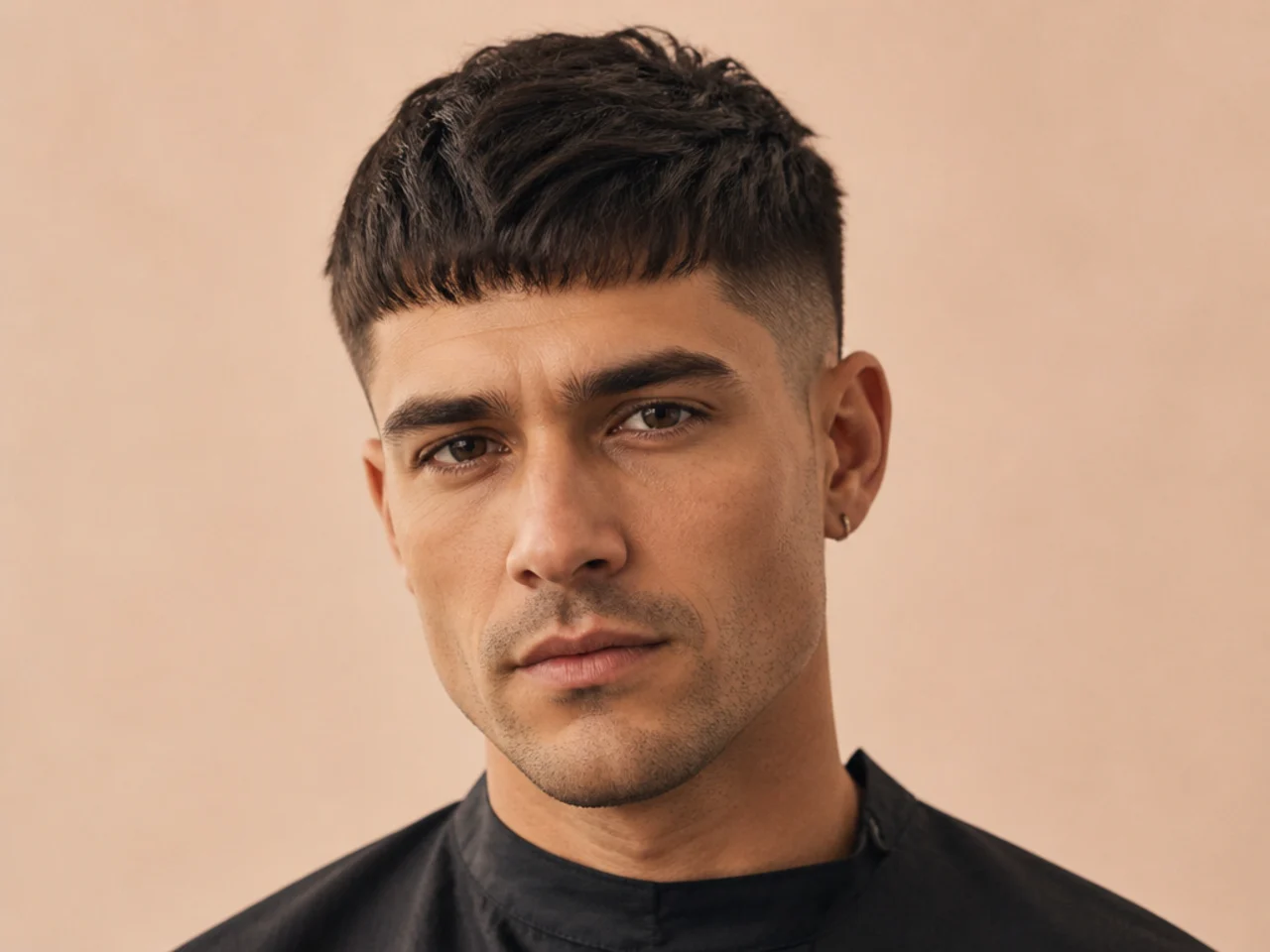
The classic French crop keeps about an inch and a half on top with a blunt fringe just above the brow. A mid fade at the sides sharpens the silhouette. Straight, wavy, and lightly curly hair all carry it well.
Ask for: "French crop, inch and a half on top, blunt fringe at the brow, mid fade at the sides." Bring a photo — fringe length is the whole point, and half-inch differences matter. Style with a matte paste pushed forward.
Textured French Crop
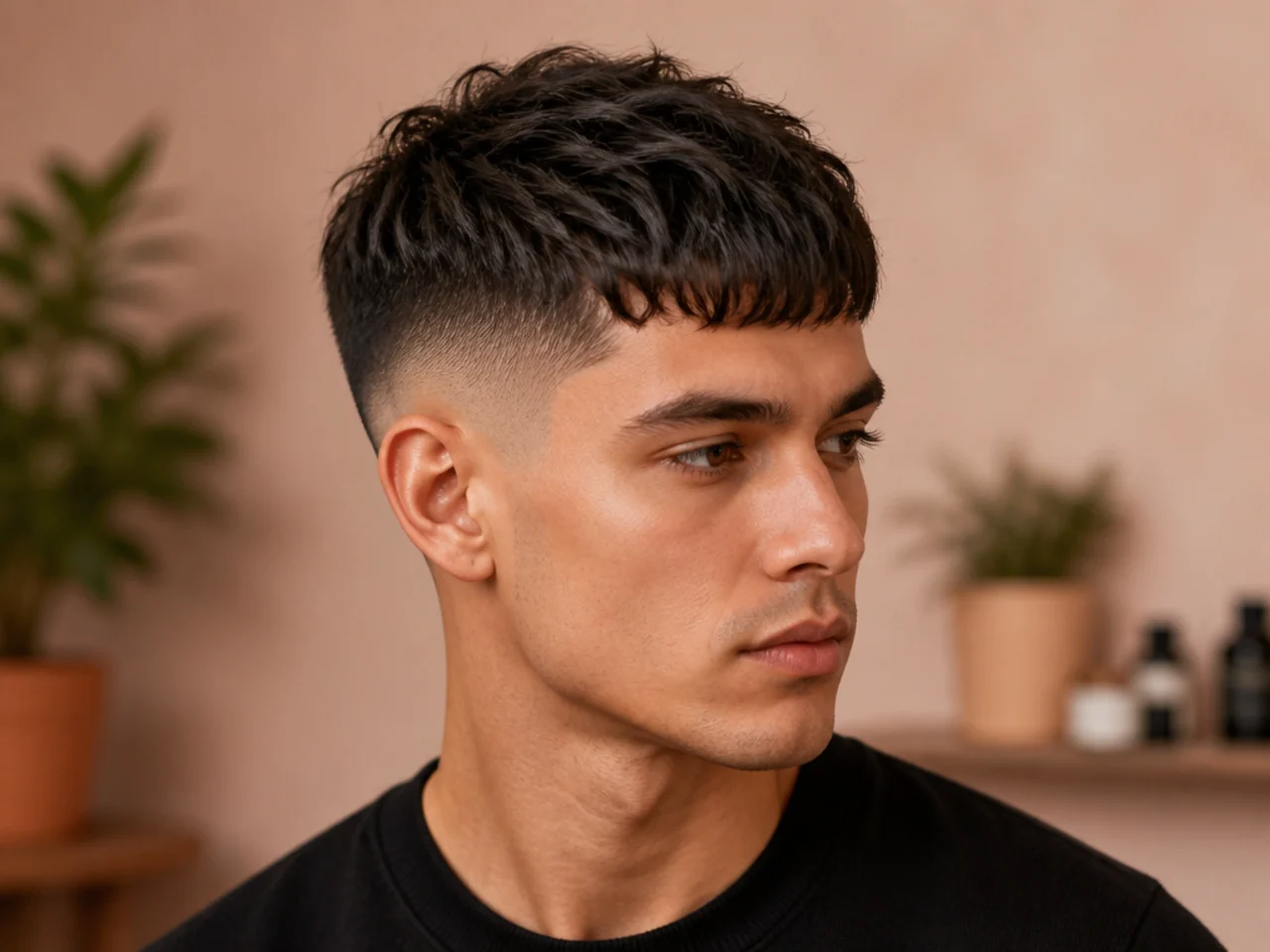
The textured version keeps the same length but swaps the blunt fringe for a piecey, point-cut edge — softer, more casual, and less committed. Best on fine-to-medium straight-to-wavy hair; skip if your hair is very thick, since the texture disappears under weight.
Ask for: "Textured French crop, inch and a half on top point-cut for texture, soft fringe at the brow, low fade at the sides." A dab of sea-salt spray under a matte cream adds grip.
Short Cropped Fringe
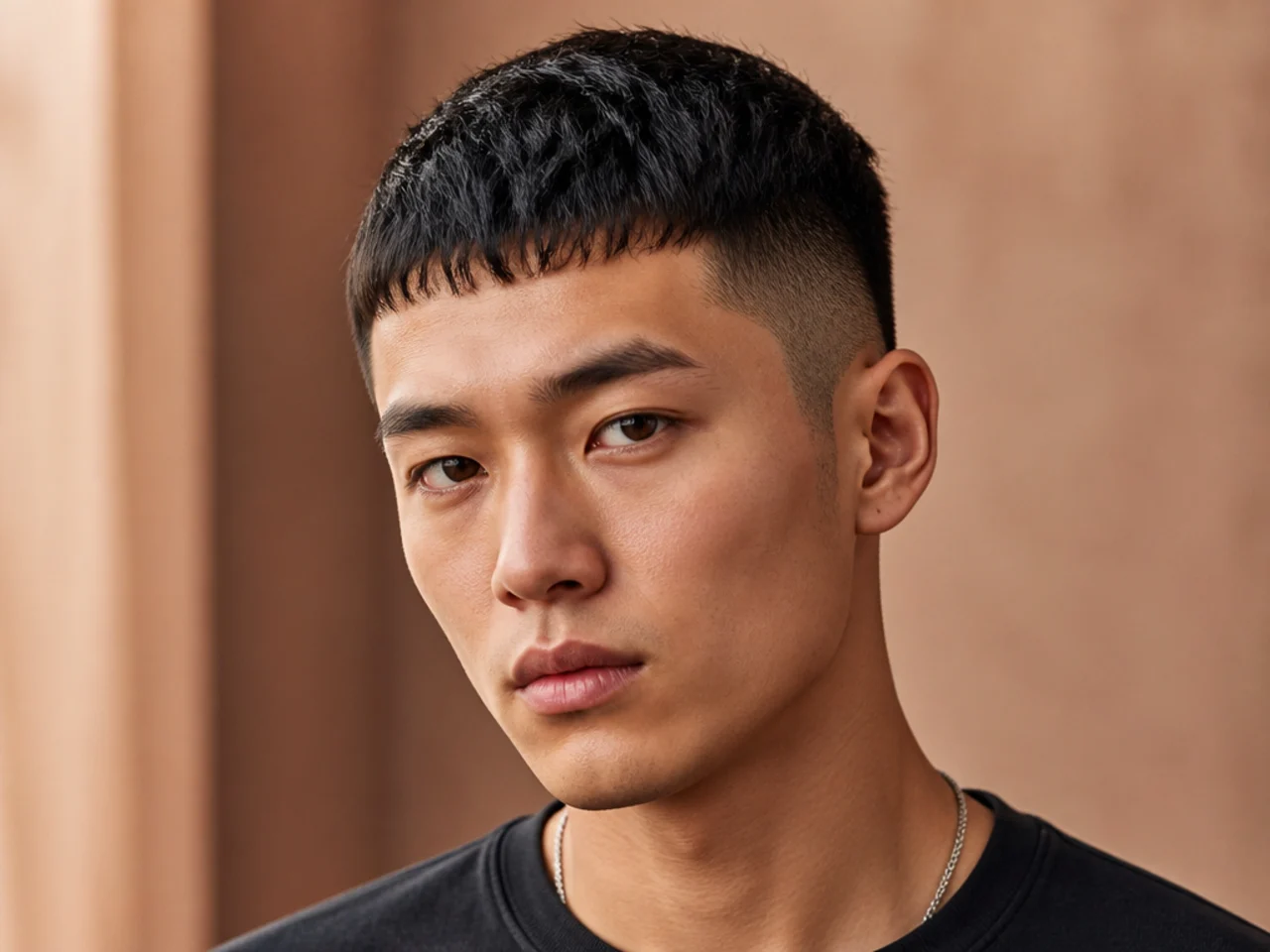
The short cropped fringe drops the top to about three-quarters of an inch with a tight forward fringe. The shortest cut on this list that still uses a fringe as its focal point — closer to a Caesar than to a full French crop.
Best on high hairlines, round and long faces. Ask for: "Short crop, three-quarter inch on top, tight blunt fringe, low taper on the sides." Zero styling. If it fights the shape, blast the roots with cold air for ten seconds.
Edgar Haircut
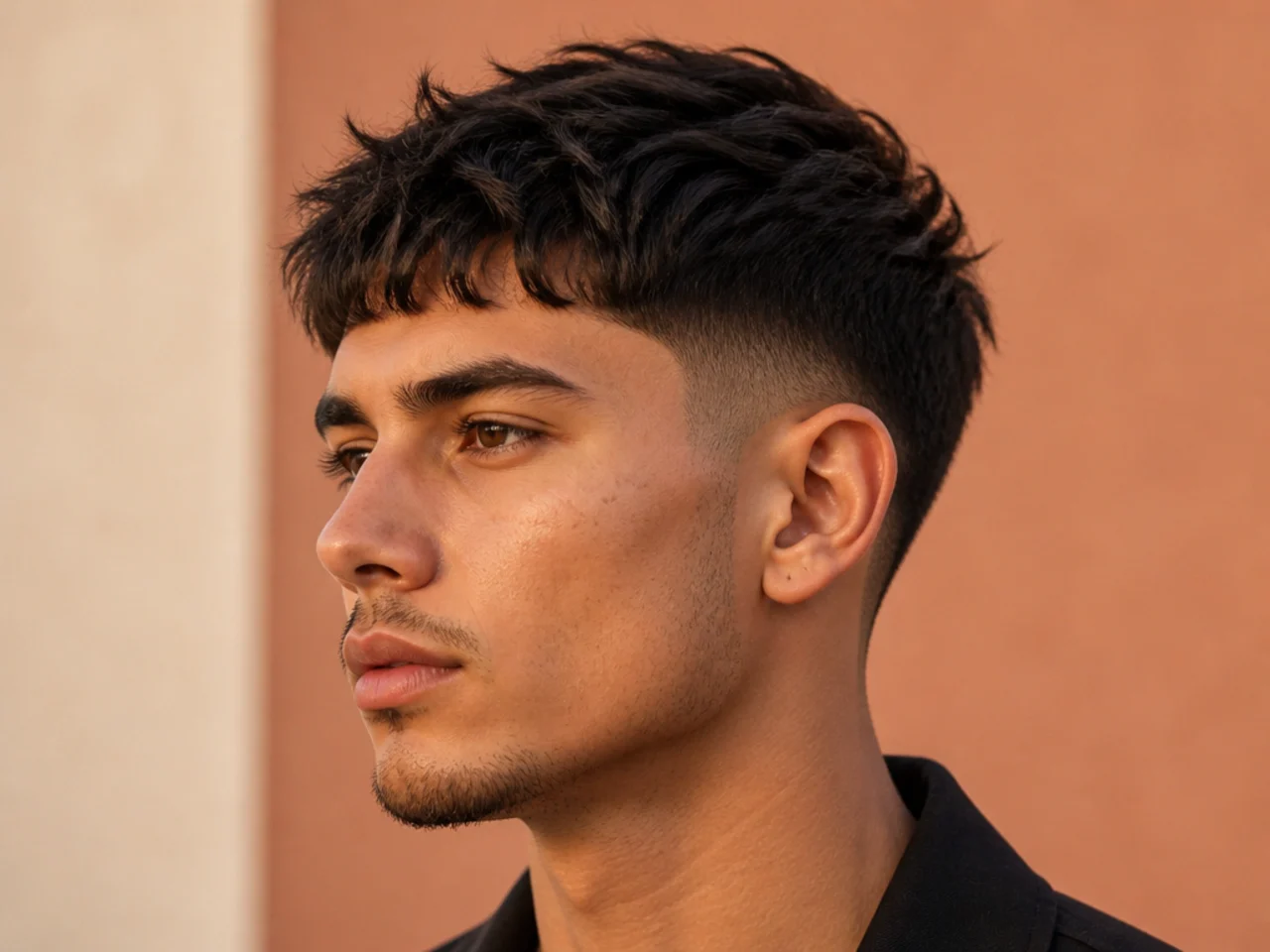
The Edgar haircut is a short cut with a hard, razor-straight fringe line and a skin fade at the sides. Popular in Latino and streetwear communities, it reads bold and current.
Best on straight hair and round-to-oval faces. Ask for: "Edgar cut, three-quarter inch on top, straight hard fringe line, skin fade jumping in mid to high." A drop of matte cream keeps the fringe sitting exactly where the barber left it. Rebook every two to three weeks — the line grows out visibly.
Caesar Cut
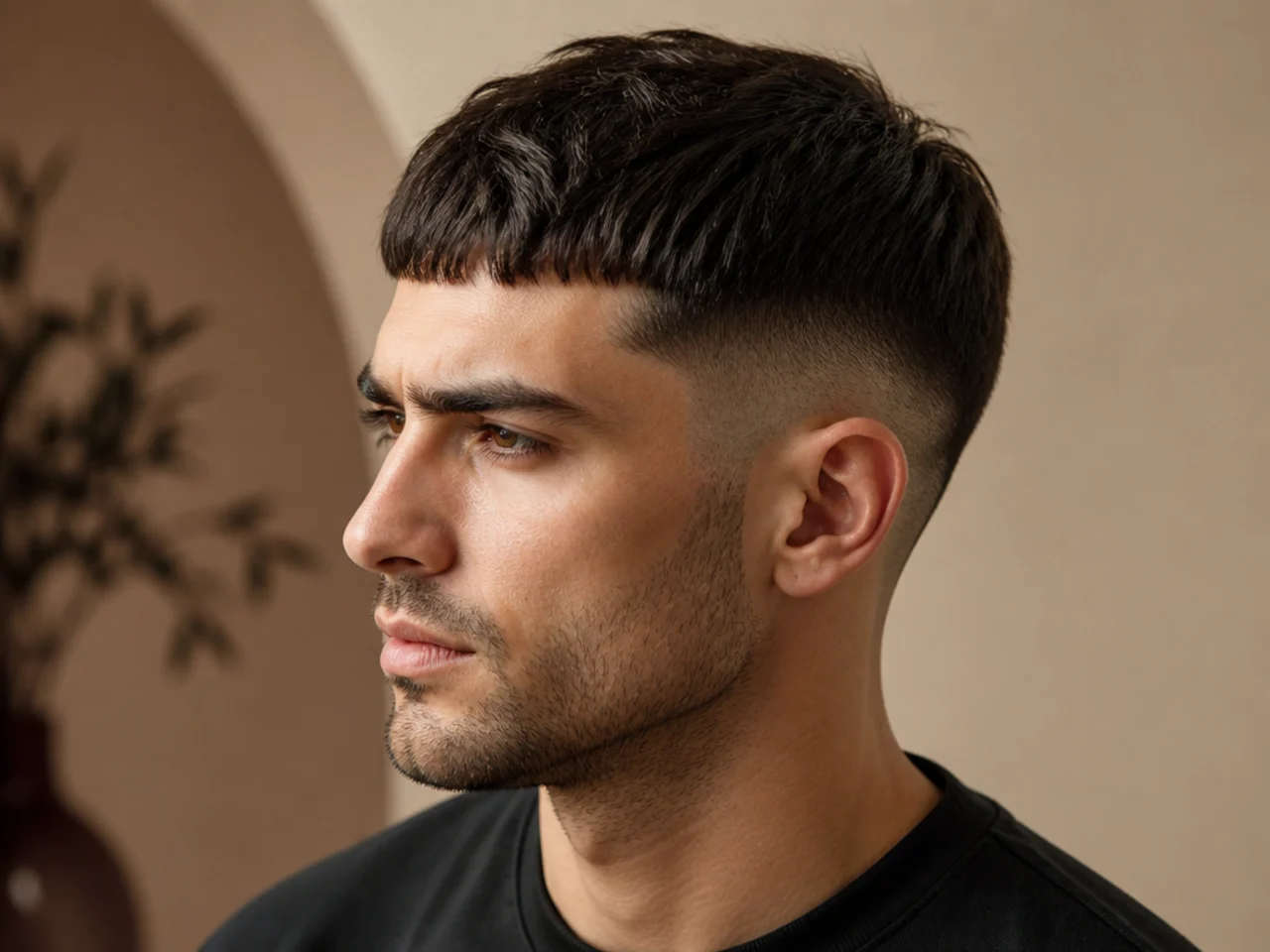
The Caesar is the classical ancestor of the French crop — about an inch on top, brushed forward, ending in a short even fringe across the brow. Modern versions pair it with a low or mid fade at the sides for contrast.
Best on high foreheads, receding hairlines, and straight-to-wavy hair. Ask for: "Caesar cut, one inch on top brushed forward, straight fringe at the brow, low fade at the sides." Style with a matte pomade for a modern read.
Short Textured and Volume Tops
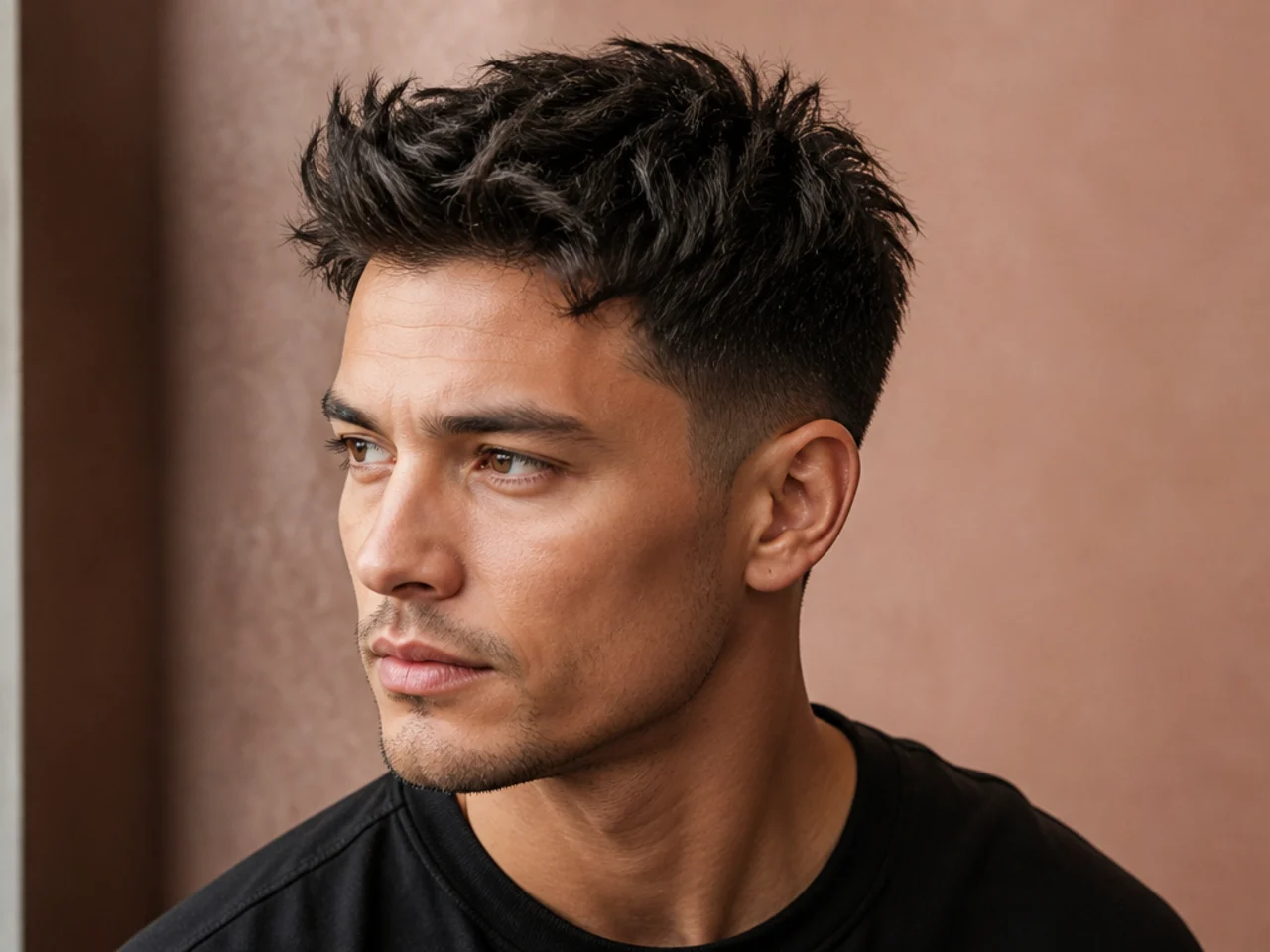
Two inches on top gives you enough to lift, tousle, or brush. These textured haircuts trade the flat profile of a buzz for shape without adding real styling time.
Short Textured Quiff
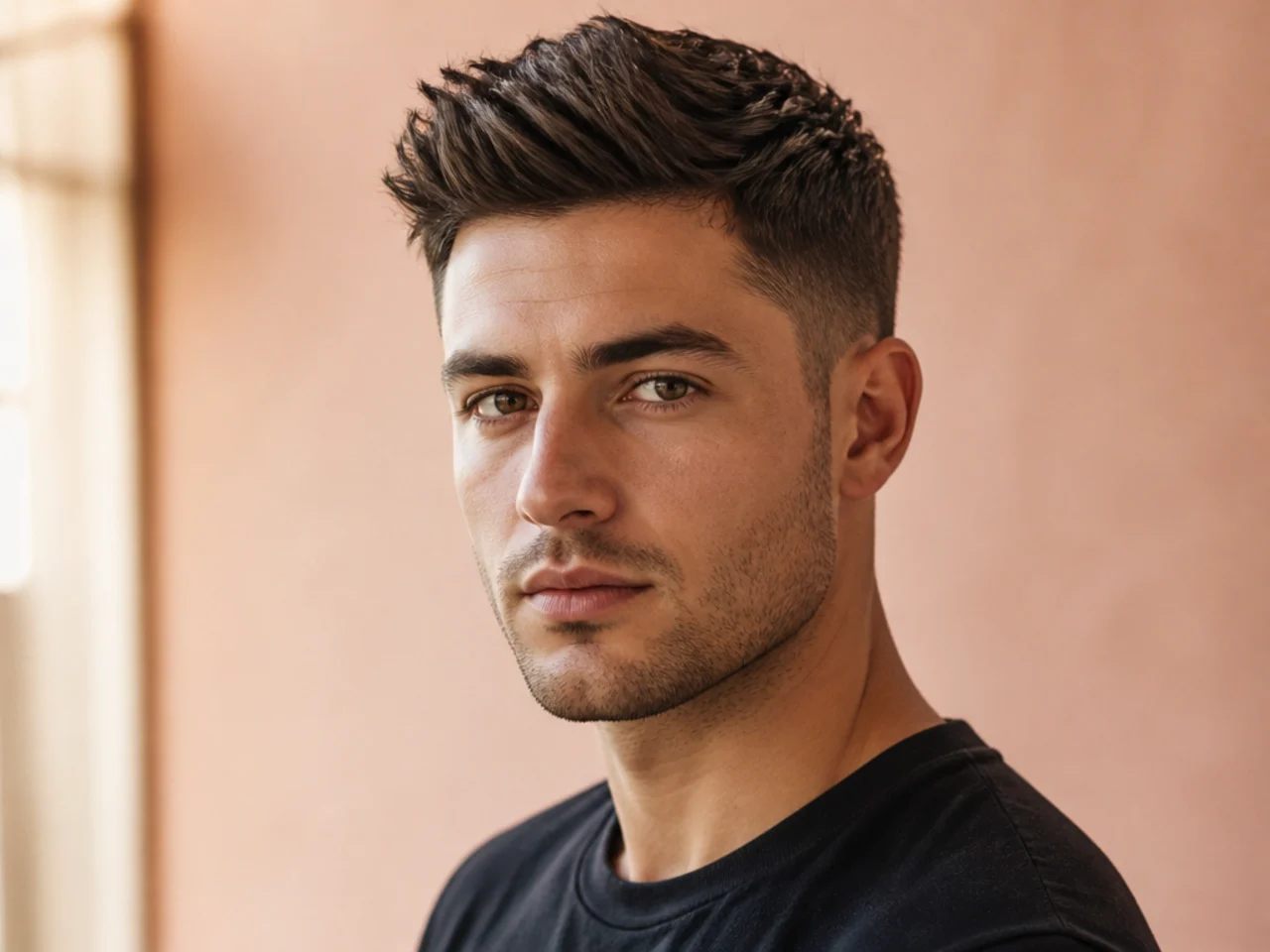
The short quiff keeps about two inches on top, point-cut for movement, with volume built up at the front. A low or mid fade at the sides makes the lift read intentional instead of accidental.
Best on round, heart-shaped, and oval faces — the vertical lift adds length. Ask for: "Short textured quiff, two inches on top point-cut for texture, low fade at the sides." Blow-dry the front up and back, work a matte paste through, tousle.
Short Pompadour
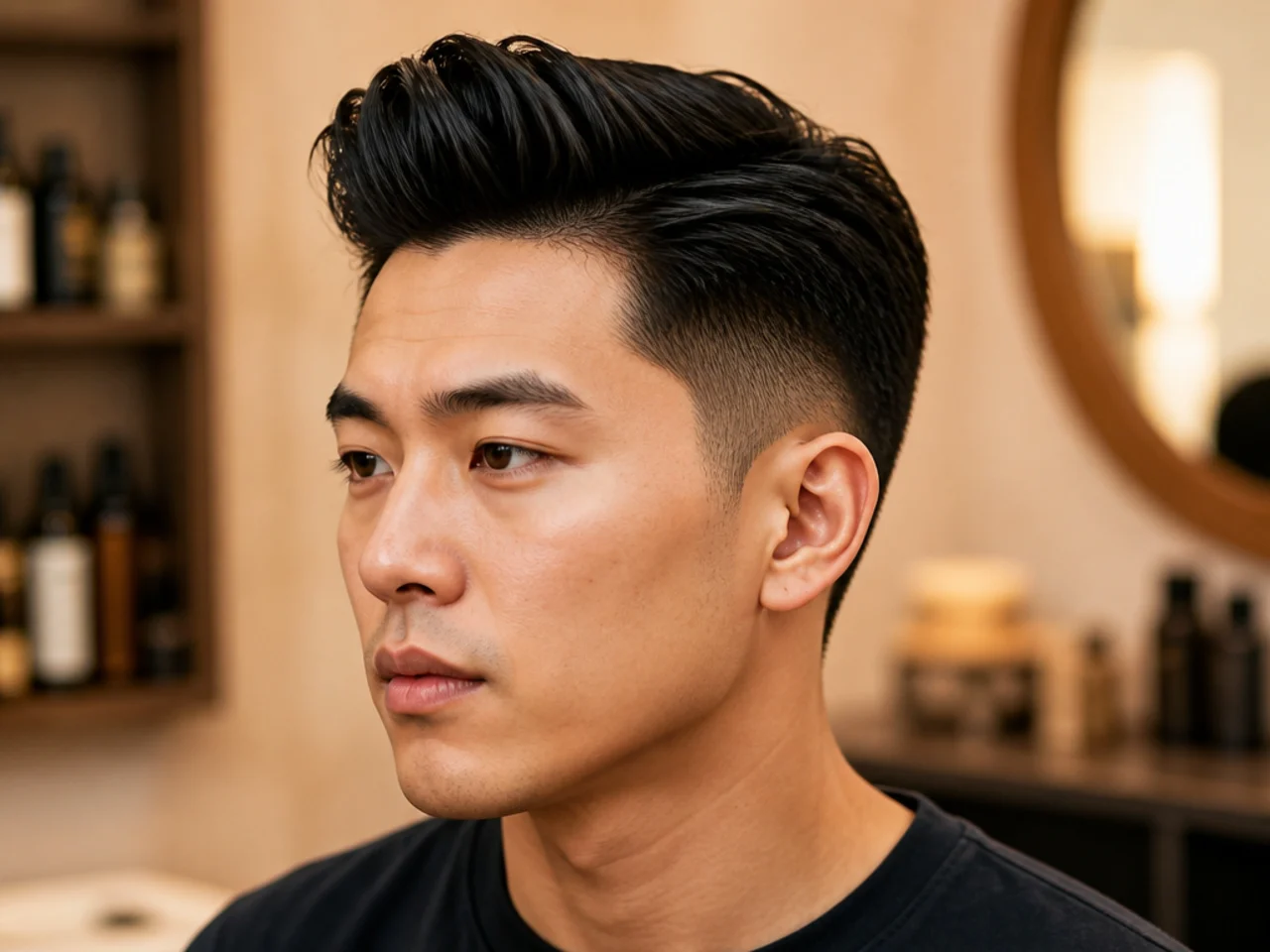
A short pompadour keeps the same two inches but styles it back and up with more sheen than a quiff. Retro roots, modern silhouette. Works with a low taper fade or a straight scissor-blended side.
Best on oval and square faces and straight-to-wavy hair with body. Ask for: "Short pompadour, two inches on top, low taper fade at the sides." Blow-dry back with a small round brush, work a medium-shine pomade through, comb once.
Short Brush Up
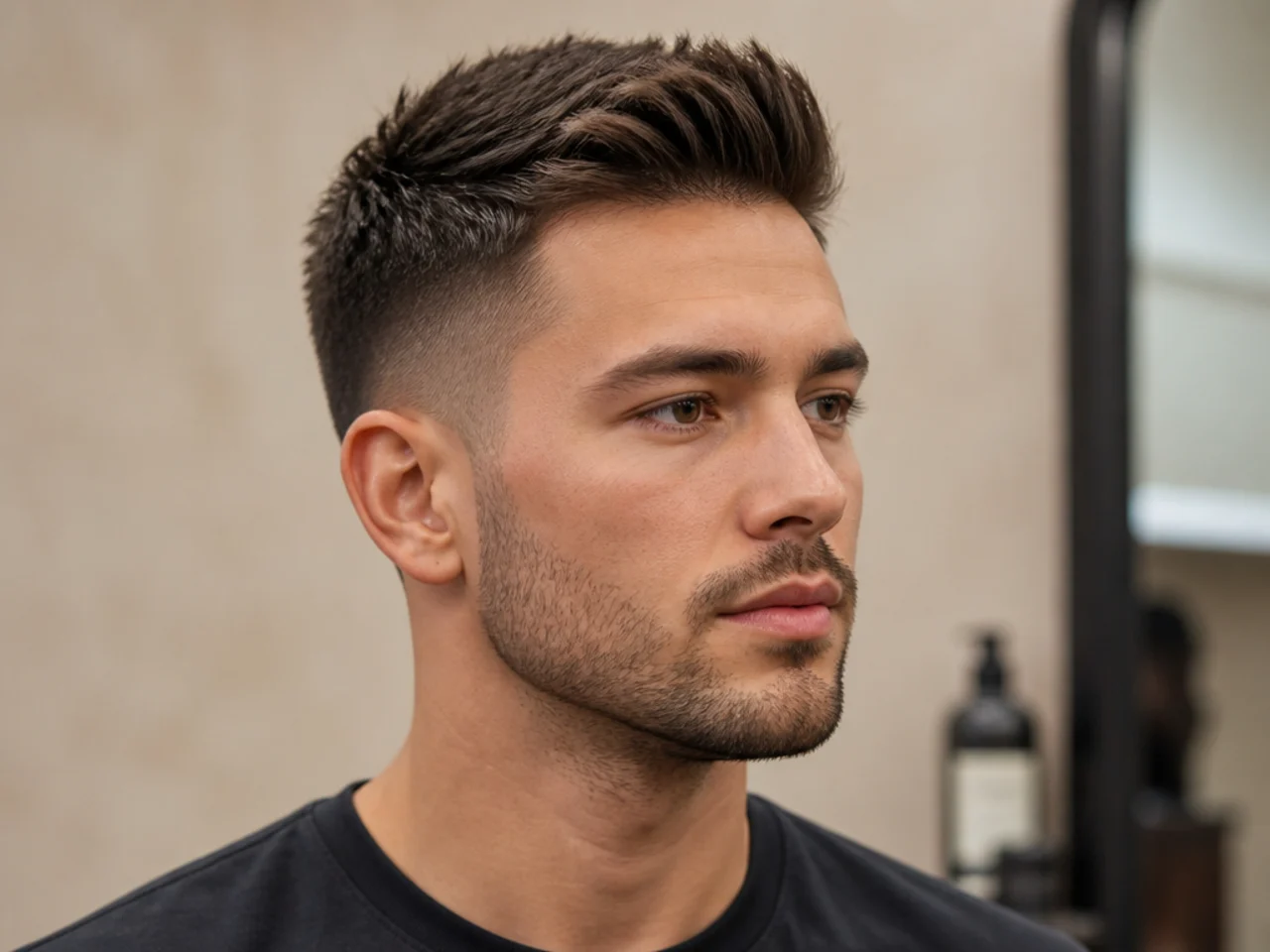
The brush up keeps an inch and a half on top brushed straight up and forward. Sides fade cleanly to draw the eye upward — usually paired with a low or mid fade. Reads modern and photographs well.
Best on round and heart-shaped faces because the vertical lift adds length. Ask for: "Brush up, inch and a half on top, low fade at the sides, square the neckline." Blow-dry up with a vent brush, work a light-hold clay through.
Short Spiky Cut
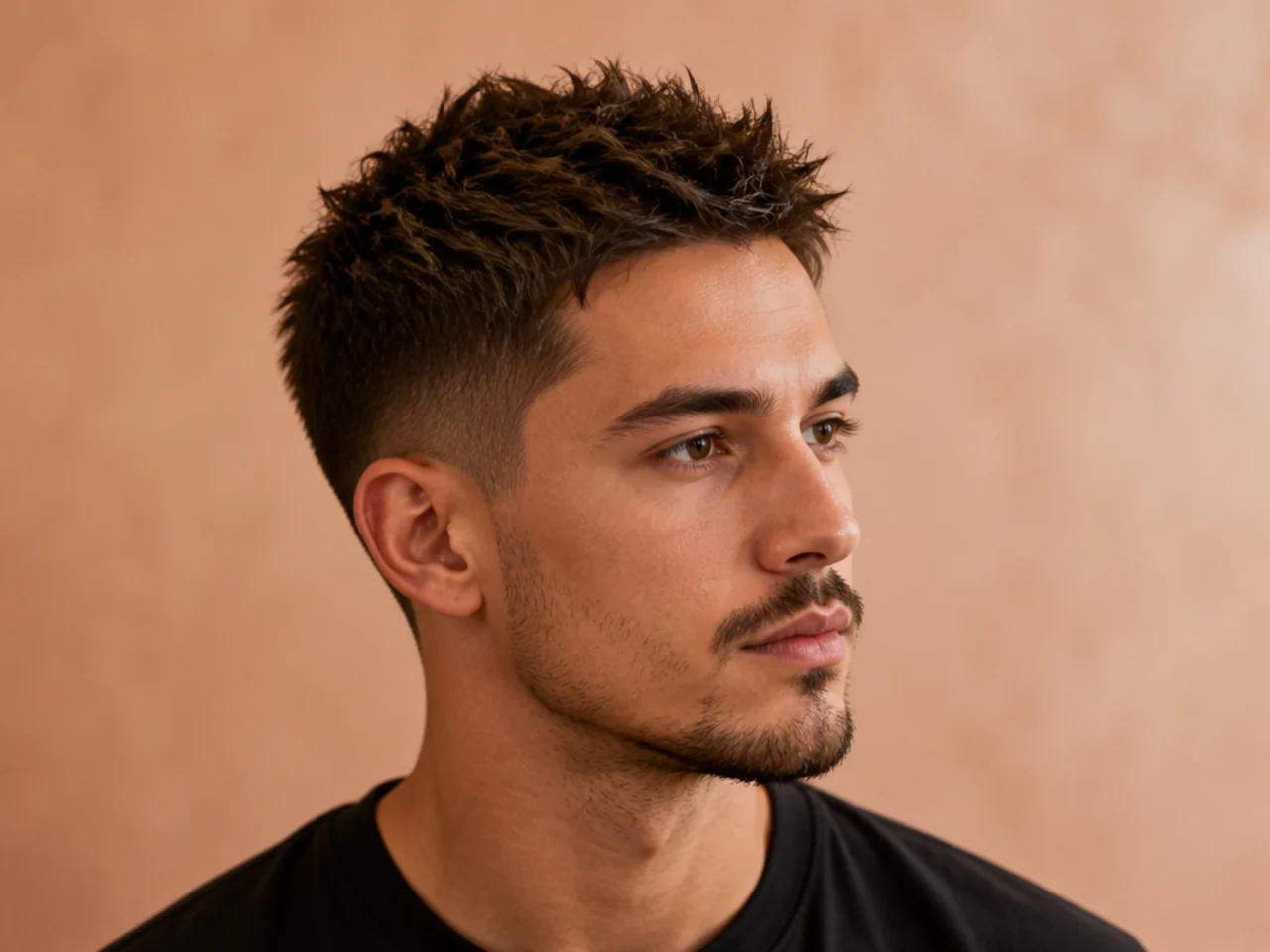
Short spikes keep an inch to an inch and a half on top with heavy point-cutting for texture, and a fade at the sides to make the spikes stand out. Playful without being a costume, and best on guys under 40 in casual dress codes.
Ask for: "Spiky cut, inch and a half on top point-cut for texture, low or mid fade at the sides." Firm-hold matte clay pinched into small sections with your fingertips. Sea-salt spray under the clay if your hair is fine.
Short Side Part
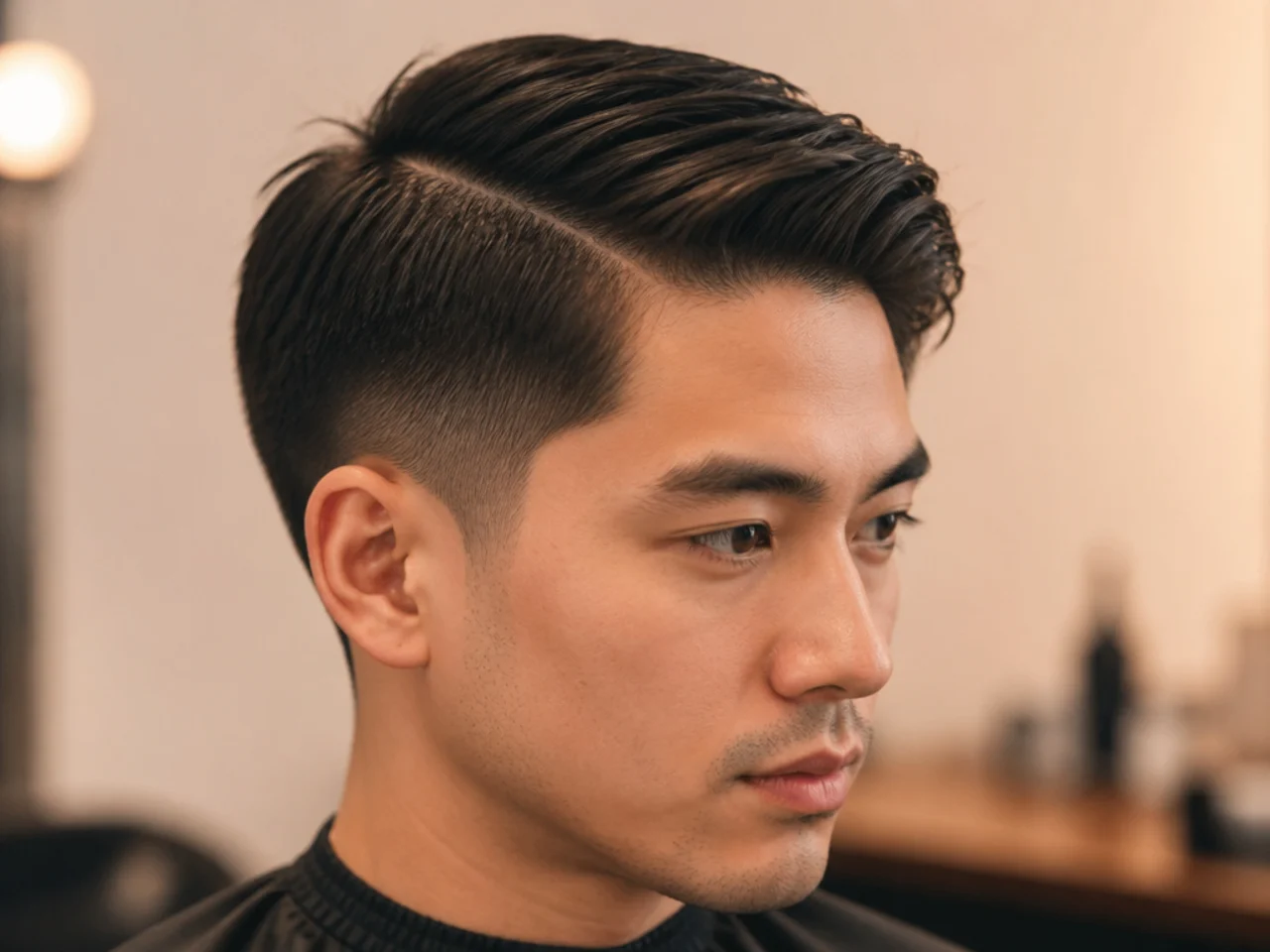
The short side part keeps about an inch and a half on top with a defined part on the side — natural or razored — and a low fade or taper at the sides. The most workplace-friendly short cut on the list, and one of the most flattering across face shapes because the part visually widens the crown and narrows the jaw at the same time.
Ask for: "Short side part, inch and a half on top, part on the left [or right], low fade at the sides." Confirm which side you actually part on before the barber picks — it should feel natural, not forced. Blow-dry to the part, work a light pomade through, comb once. Cleanest look on the list for under a minute of effort.
Short Cuts with a Clean Fade
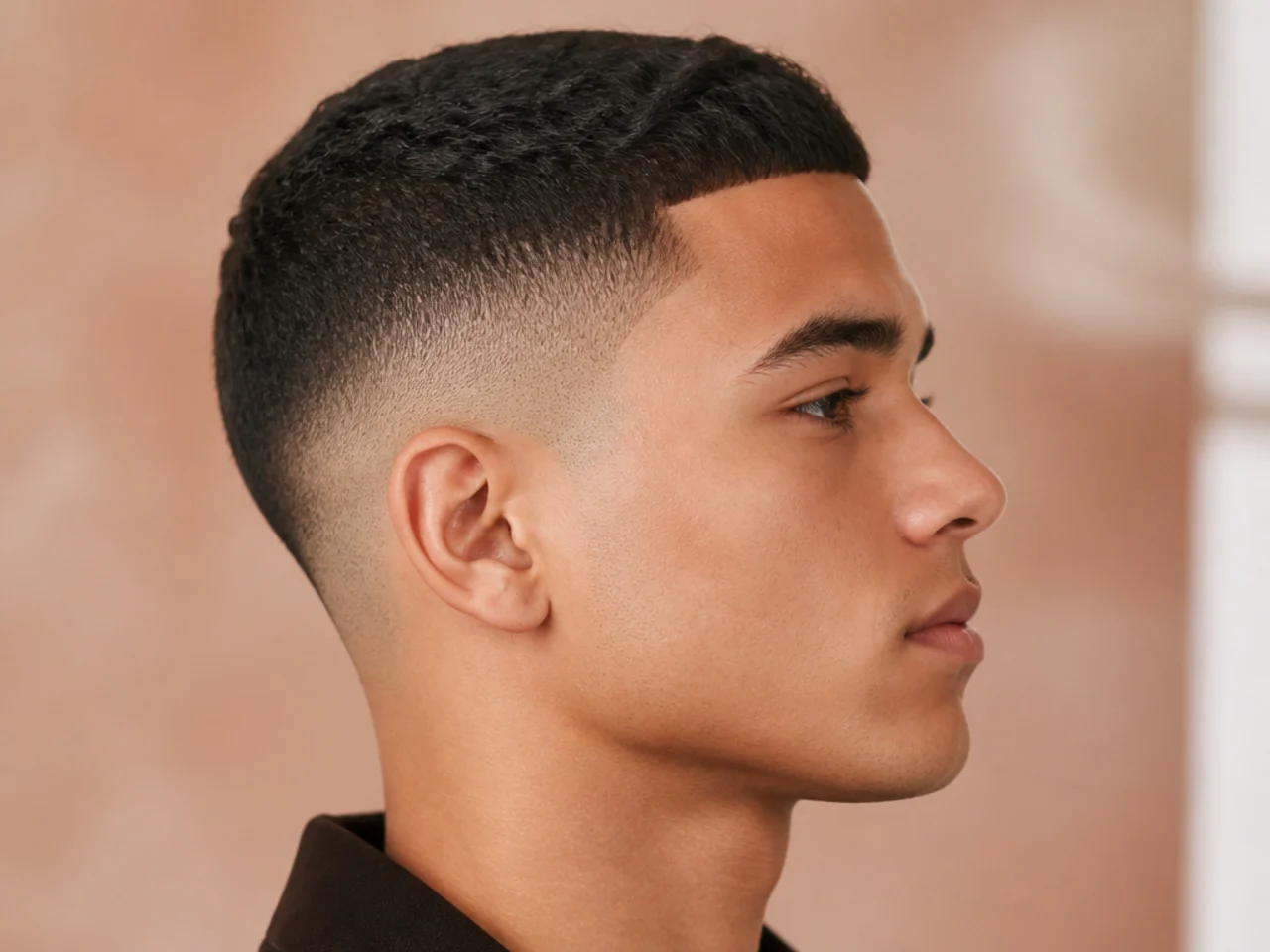
Adding a fade to any short cut sharpens the silhouette and shifts it modern. The height of the fade decides how bold it reads.
Short Crop with Low Fade
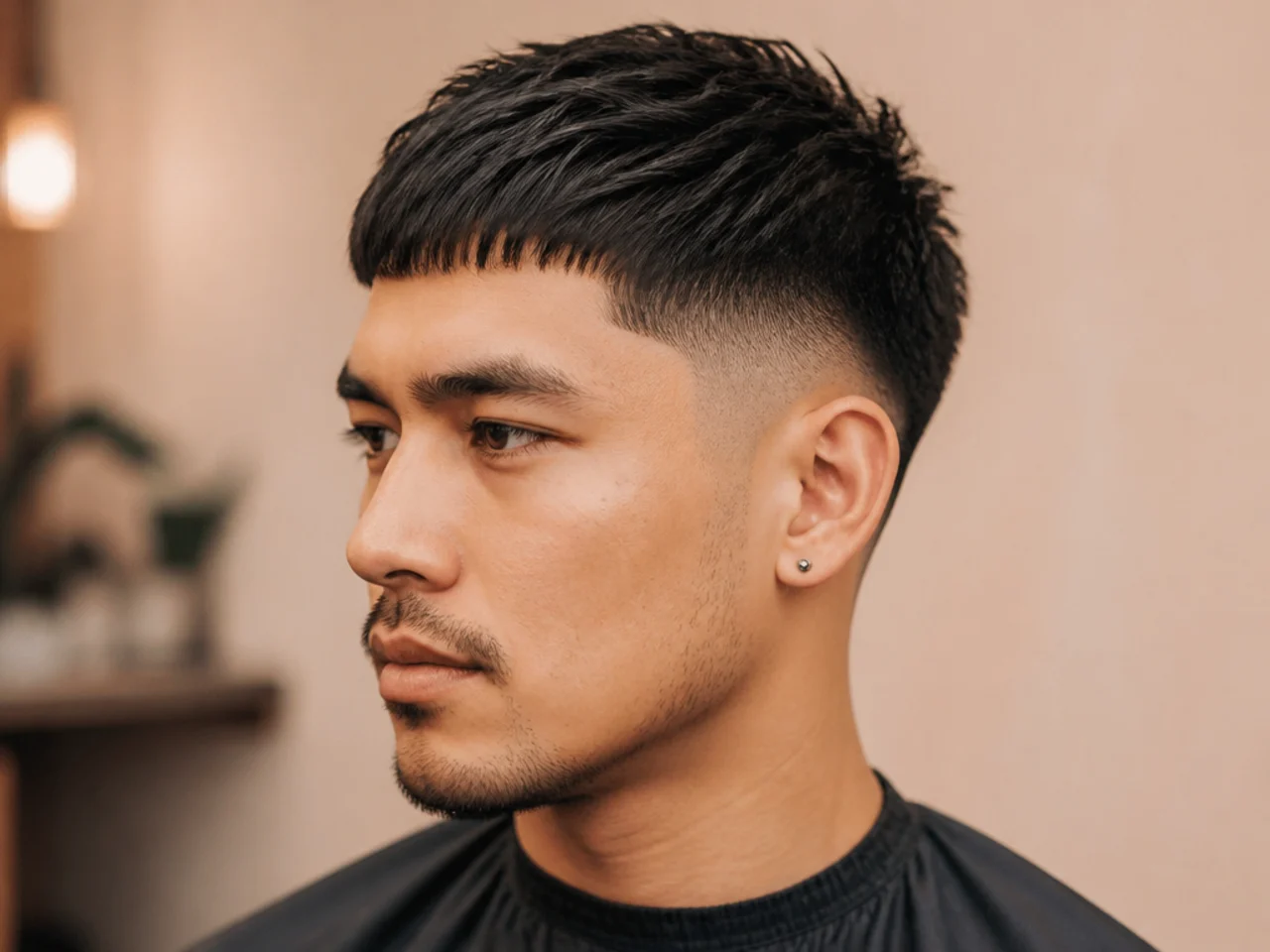
A short crop with a low fade keeps about an inch on top and drops the fade behind the ear — the most workplace-friendly fade height. Subtle contrast, easy to grow out gracefully.
Best on every face shape and every hair type. Ask for: "Short crop, one inch on top, low fade at the sides, square the neckline." Zero styling — a drop of matte cream tapped into the front for softness if you want it.
Short Crop with Mid Fade
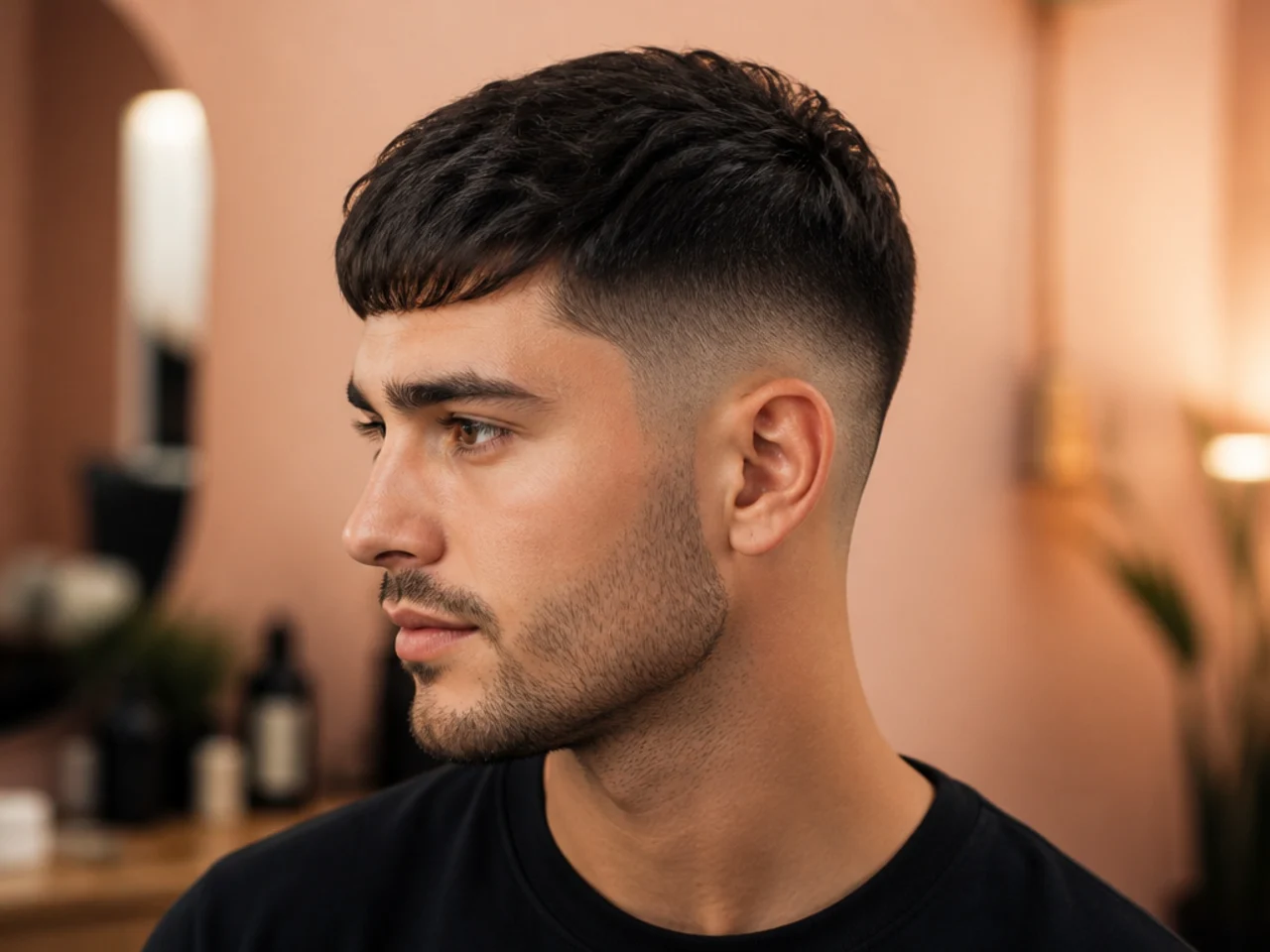
Mid fade drops at the temple — the most-requested fade height on Pinterest right now. Paired with a short crop, it reads modern without being trendy. Slightly bolder than the low version, still office-safe.
Ask for: "Short crop, inch on top, mid fade at the temple, square neckline." Style with a pea of matte clay pushed forward. Rebook every three weeks to keep the fade line crisp.
Short Crop with Low Taper Fade
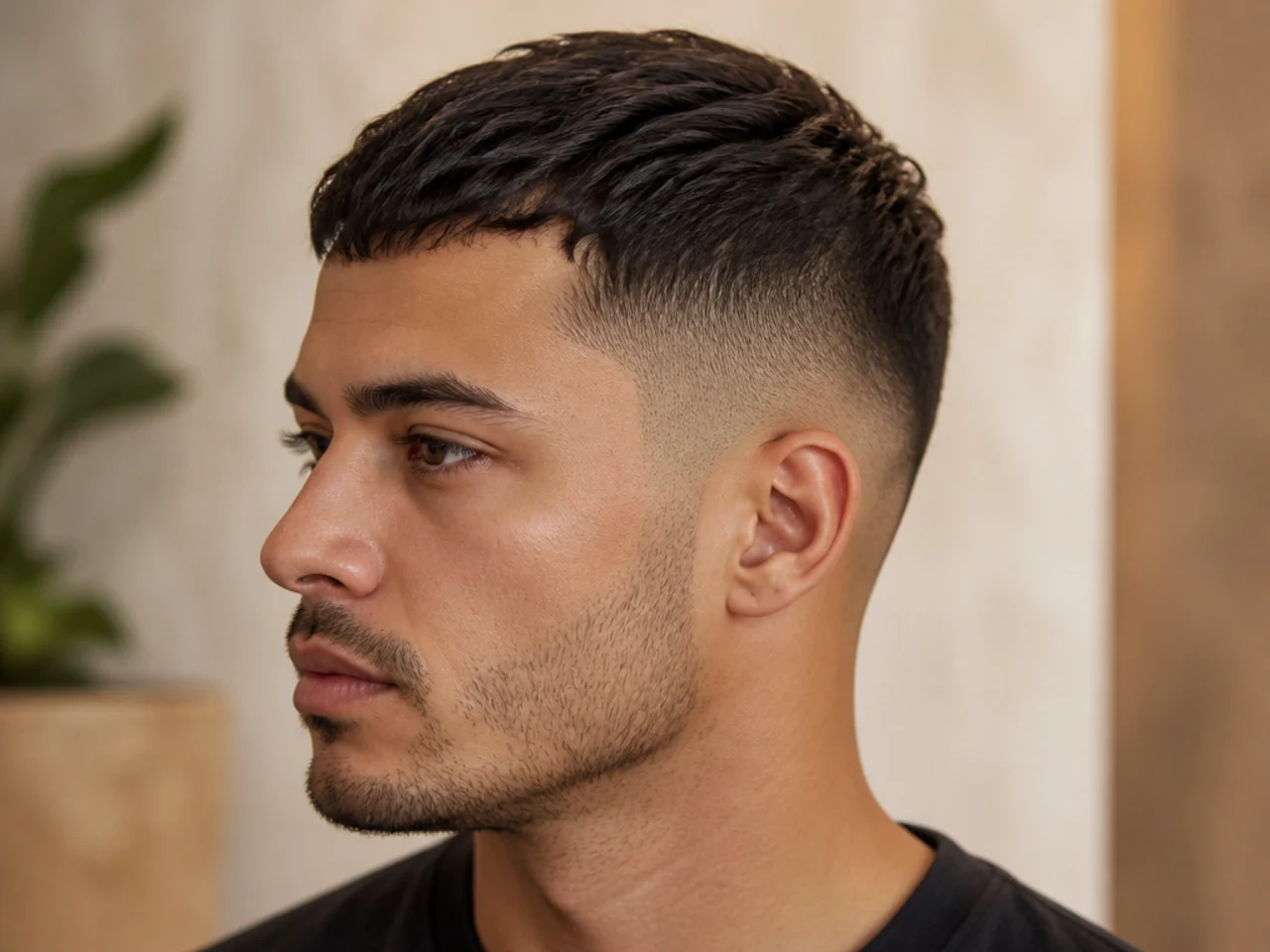
The low taper fade is the softest fade on the menu — a gentle blend behind the ear rather than a hard skin line. Paired with a short crop, it's the most forgiving short cut for guys who can only book every five to six weeks.
Best on every face shape. Ask for: "Short crop, inch on top, low taper fade at the sides." Grows out with grace. If you want more contrast on the next visit, ask for the full low taper fade with a longer skin-blend.
Short Skin Fade
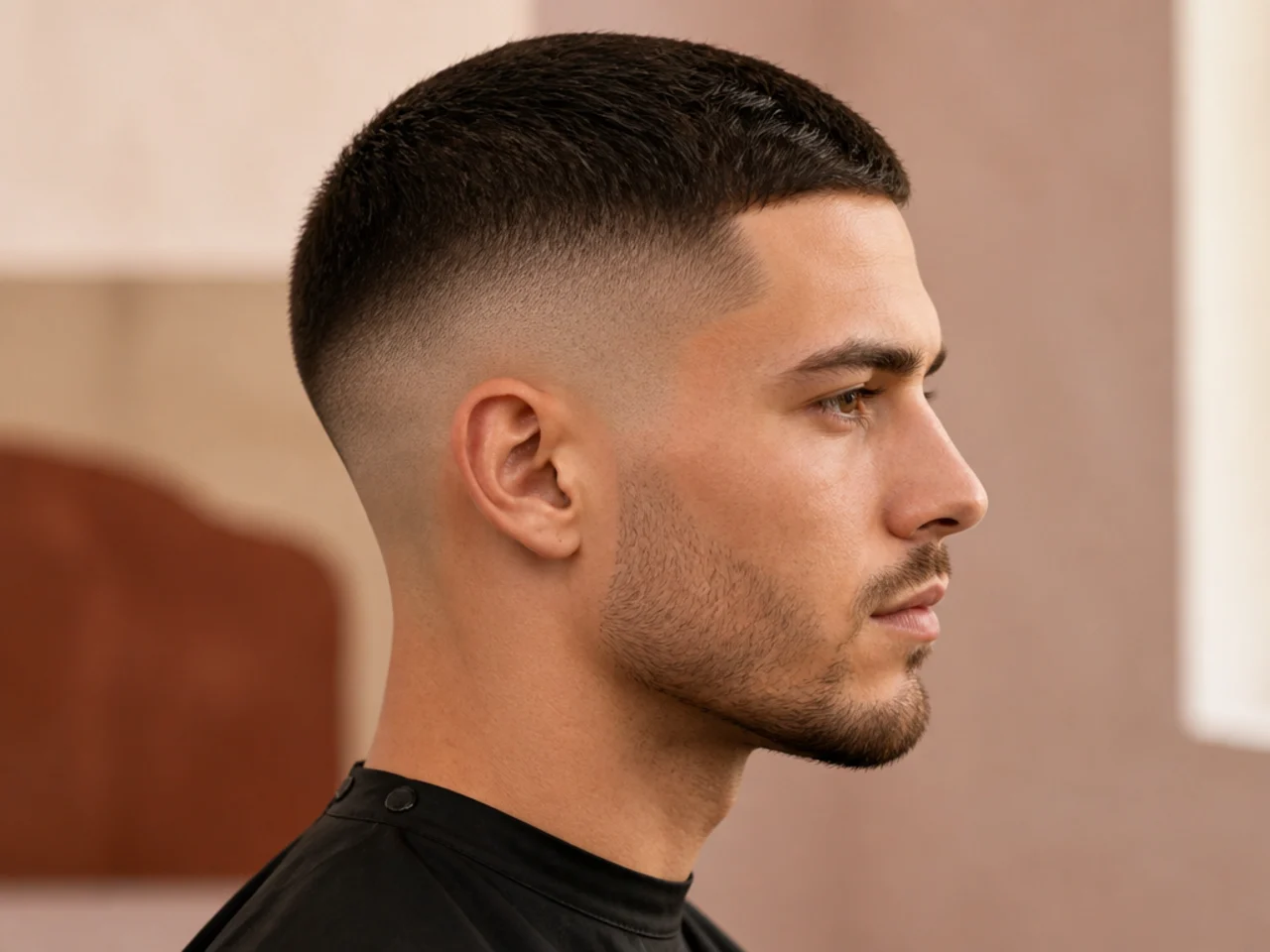
Short on top, faded all the way to skin at the sides. The boldest short-cut fade on the list. Reads sharp on Type 3 and Type 4 hair, and works especially well when paired with a line-up at the hairline.
Ask for: "Skin fade, keep the top at a number two or three, jumping in mid or high, line up the hairline." Rebook every two to three weeks — skin fades lose their look fastest.
Comb Over with Low Fade
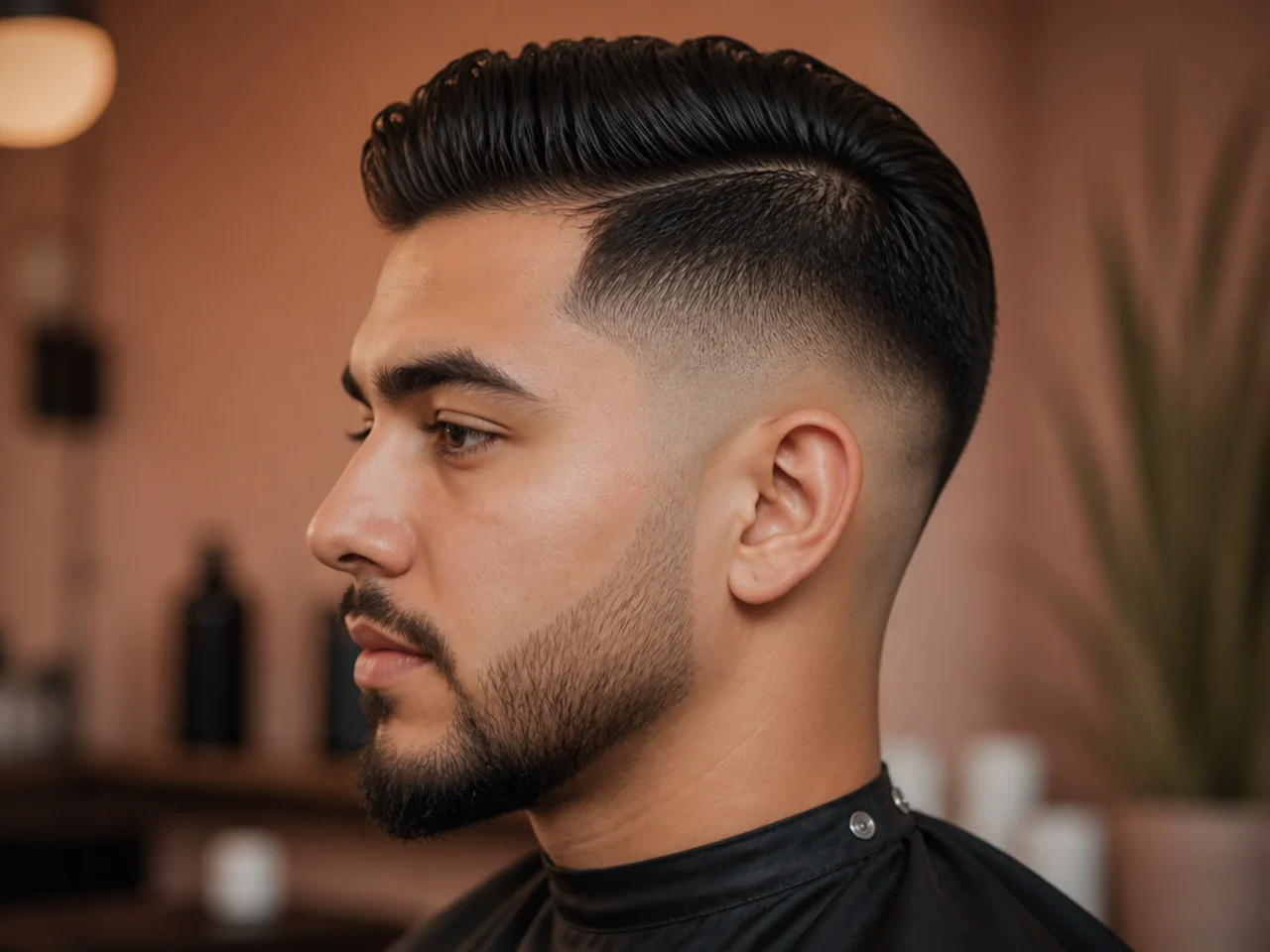
A short comb over keeps about two inches on top, brushed to one side with a razored or natural part, paired with a low fade. Closest thing to a suit in haircut form. Best on oval and square faces and straight-to-wavy hair.
Ask for: "Comb over with a razored part on the left [or right], two inches on top, low fade at the sides." Blow-dry with a round brush toward the part, work a medium-hold pomade through, comb across.
Short Cuts for Curly and Coily Hair
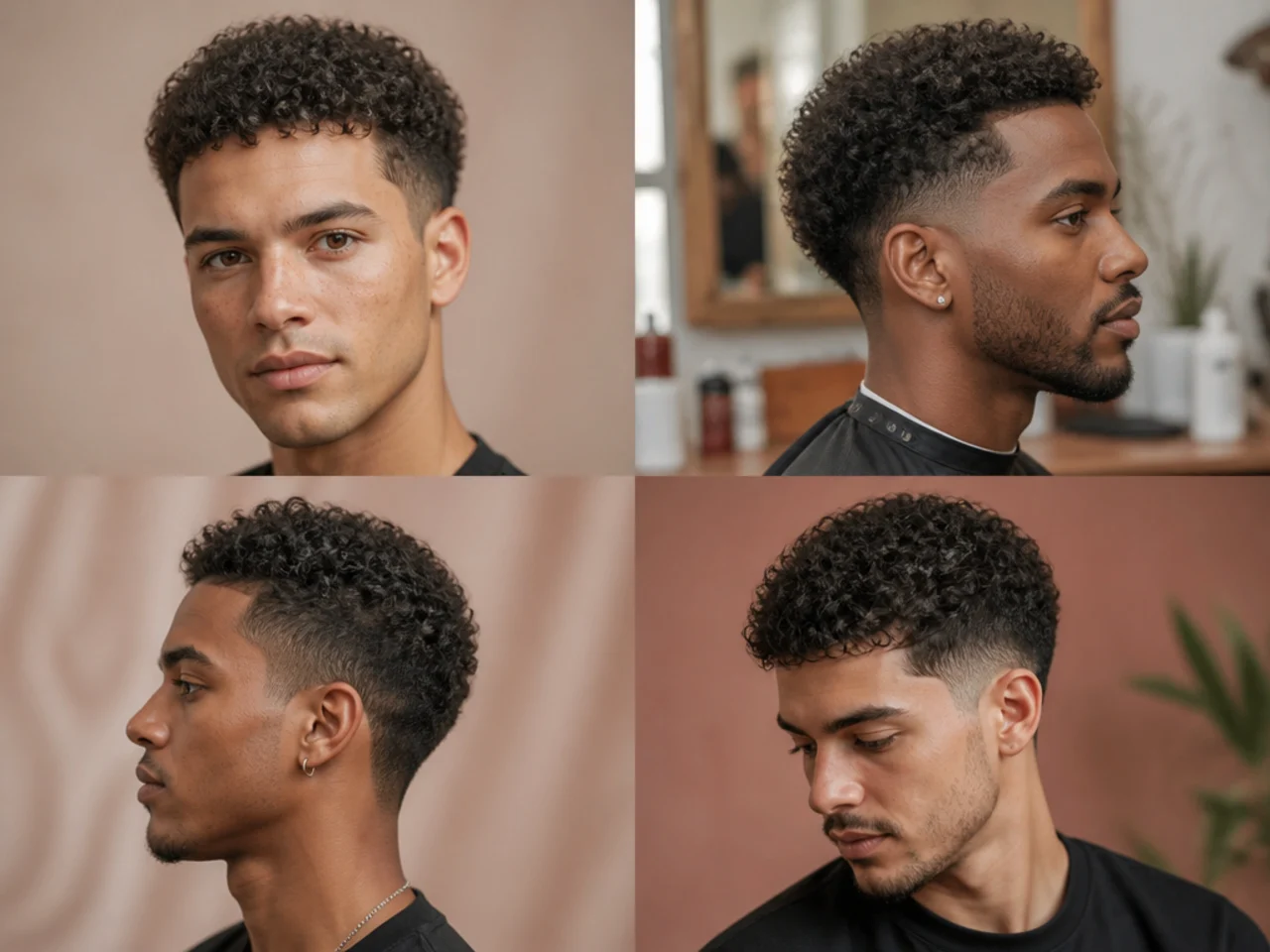
Curls and coils want scissor work on top, not clippers. Clippers flatten the pattern and cost you weeks of coaxing it back. Every cut in this section keeps the top short but scissor-cut on damp hair.
Short Curly Fade
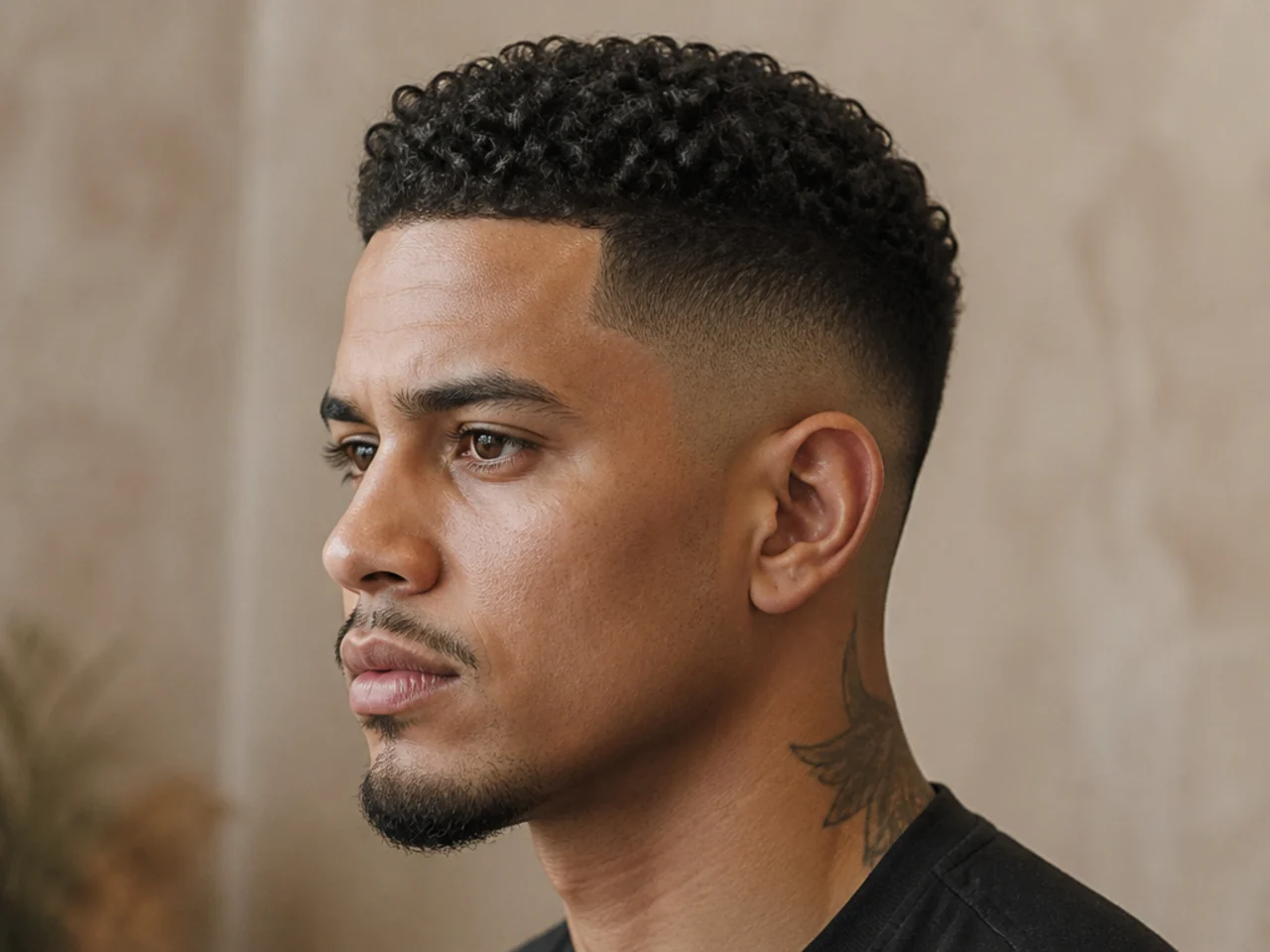
The short curly fade keeps about an inch and a half of curl on top with a low or mid fade at the sides. The fade shape frames the curls without cutting into them, and the short length keeps the wash-and-go routine honest.
Best on Type 3A through 3C curls and any face shape. Ask for: "Low or mid fade, leave an inch and a half of curl on top scissor-cut on damp hair, no clippers on the top." Work a curl cream through soaking-wet hair, scrunch, air-dry or diffuse low.
Short Coily Crop
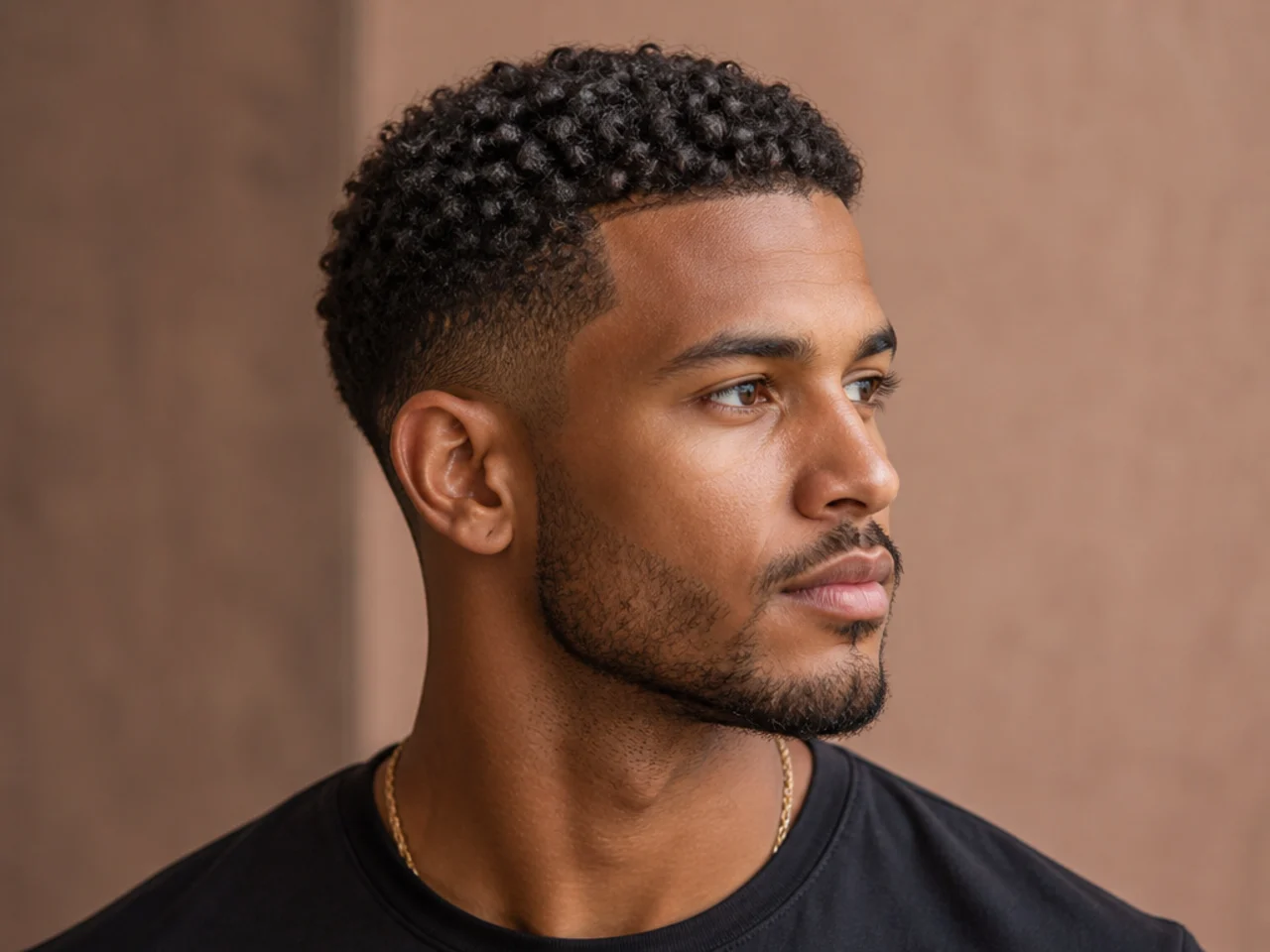
A short coily crop keeps three-quarters of an inch to an inch of Type 4 coil on top with a fade at the sides. The tight coils sit dense and defined at that length, giving the whole cut a sharp, sculpted read.
Best on Type 4A through 4C hair and every face shape. Ask for: "Short coily crop, three-quarter inch on top scissor-cut on damp hair, fade at the sides, line up the hairline." Moisturize daily with a leave-in cream to keep the pattern defined.
Short 360 Waves
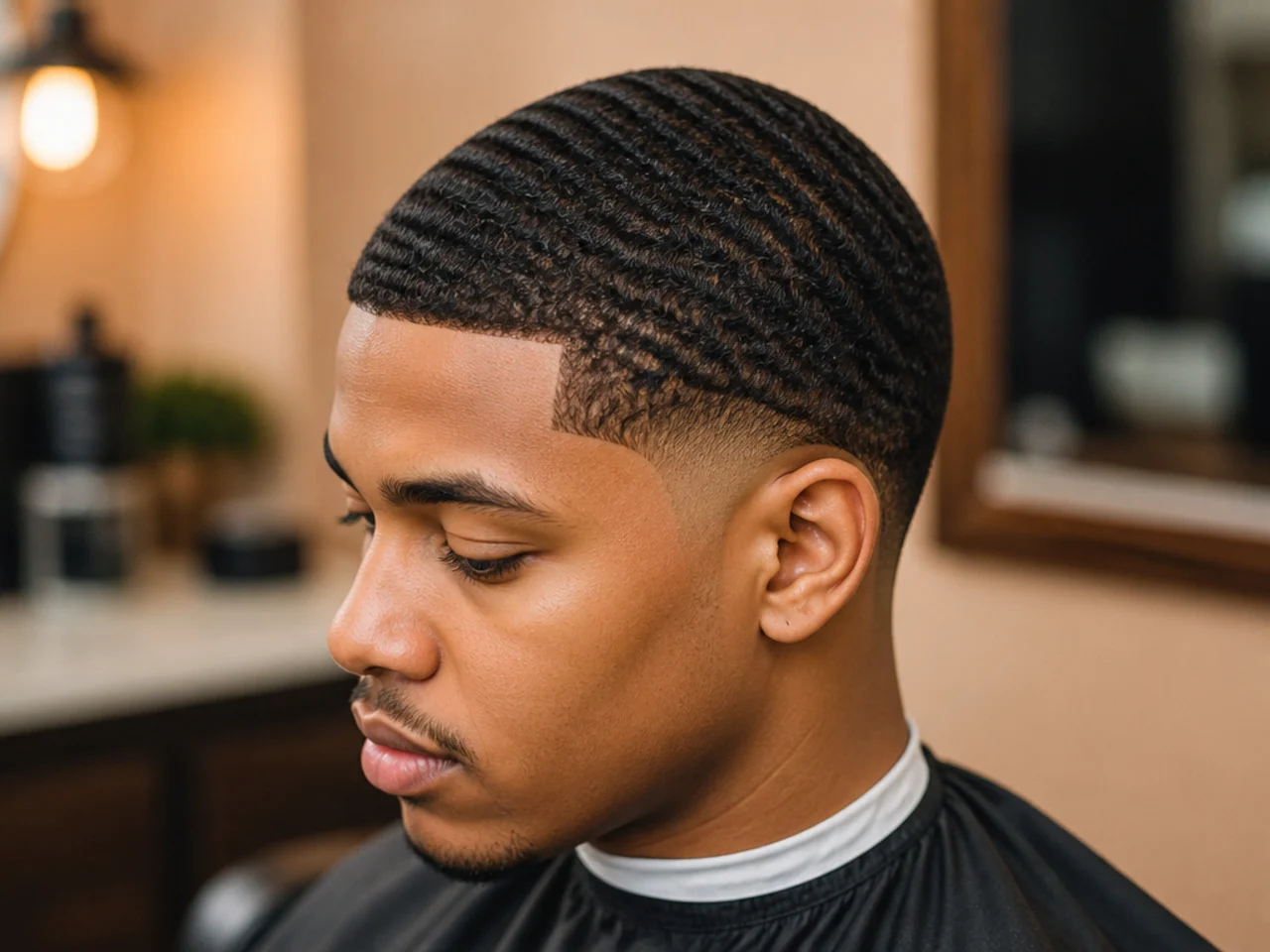
360 waves are cut short — a #1 or #2 on top — with the wave pattern trained in through daily brushing and durag wear at night. Best on Type 3C and Type 4A hair with a natural wave pattern already present.
Ask for: "Number one and a half on top, low or mid fade at the sides, brush pattern-friendly." Brush toward the crown twice a day for the first month. Wear a silk or satin durag every night. Wolf brush sessions during growth stretches.
Twist Sponge Curls with Fade
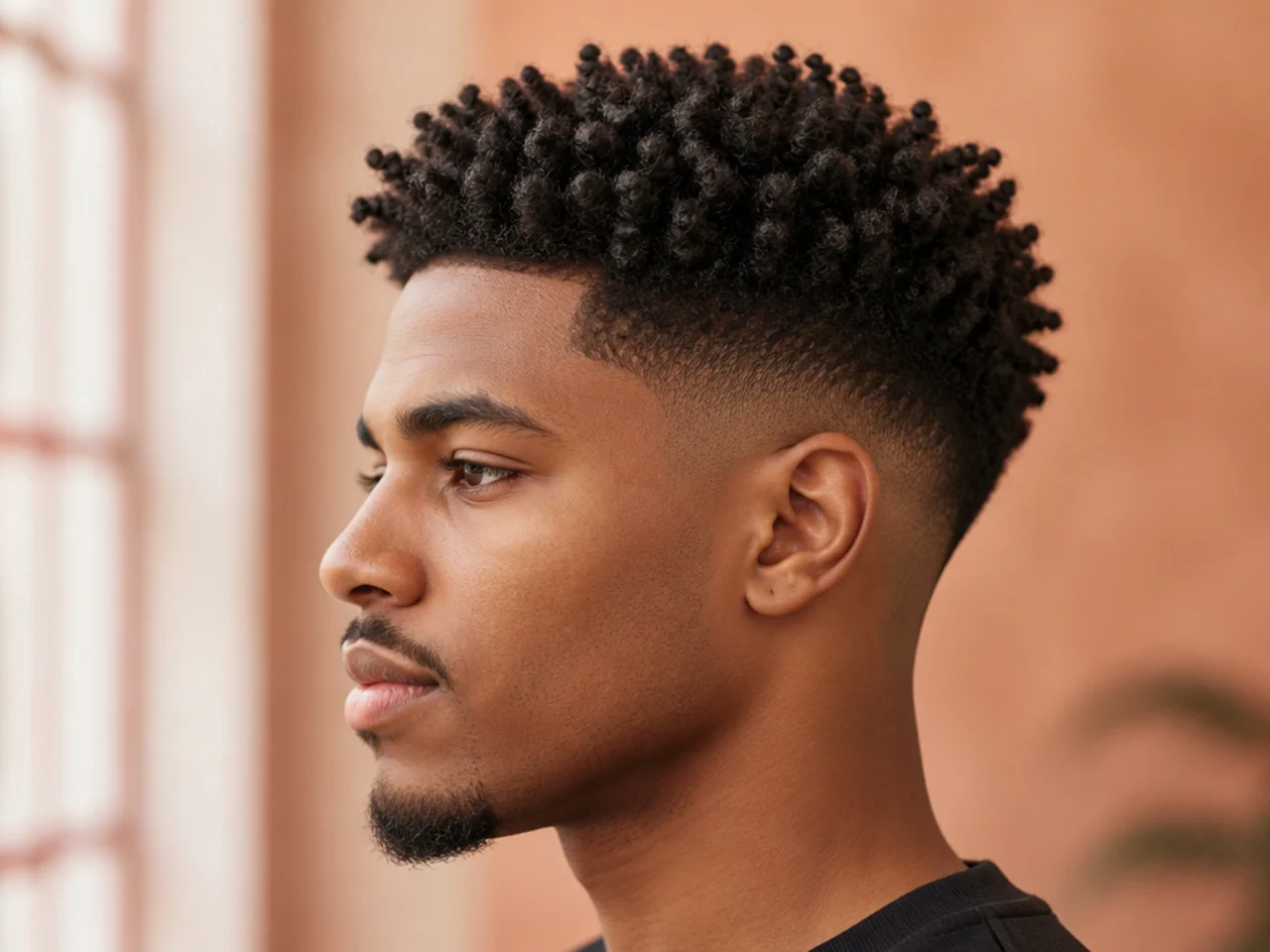
Sponge curls take short Type 4 hair — about an inch to an inch and a half — and twist the coils into defined little curls with a rubber curl sponge. Pairs beautifully with a mid or low fade at the sides. For a broader look at short cuts on Asian and coarser textures, see our buzz cuts for Asian men guide.
Ask for: "Keep an inch and a half on top scissor-cut on damp hair, mid fade at the sides." Twist with the sponge on damp, product-loaded hair. Moisturize daily. Rebook every four weeks.
How to Ask Your Barber for a Short Cut
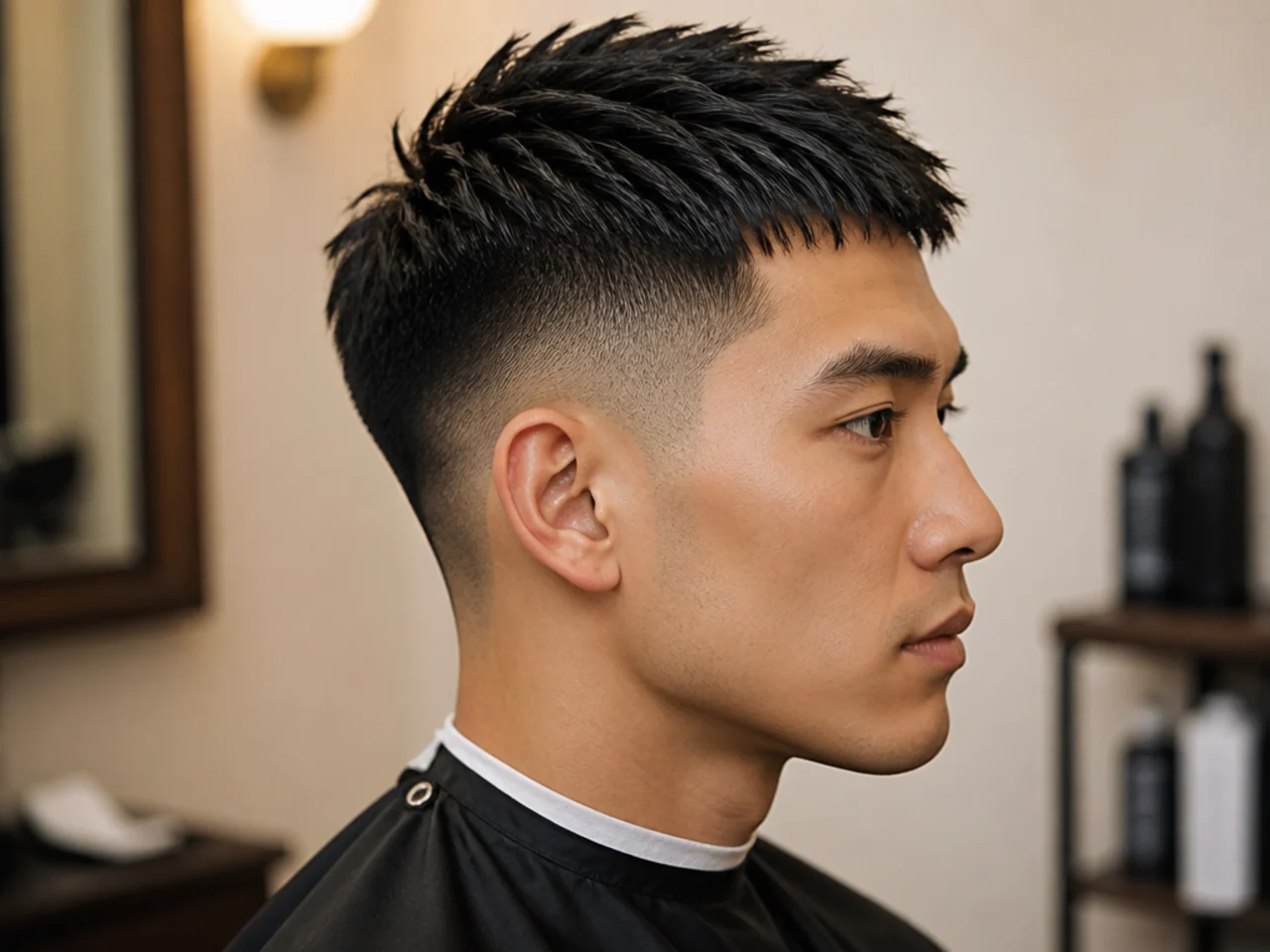
Every short haircut lives or dies by five specifics. Get them right and you walk out with the cut in your head.
- Bring a photo. Words vary; photos don't. Two references — one from the front, one from the side — beat any description.
- Name the top length in inches or guard numbers. "Inch on top" or "number two on top." Barbers cut to numbers, not vibes.
- Name the side treatment. Taper, low fade, mid fade, high fade, skin fade, or scissor-blend. Point at where the fade should start on your head.
- Name the neckline. Square, round, or tapered. Square reads sharpest on short cuts. Round softens.
- Say the finish you want. Matte and textured, sleek and shiny, or somewhere in between. Your barber picks product cues from that word.
- Say your rebook cadence. If you can only come every six weeks, ask for a taper or scissor-blend instead of a skin fade — it grows out cleaner.
- Ask for point-cutting on the top. Especially on crews, quiffs, and crops. Blunt-cut ends sit heavy; point-cut ends move.
Styling and Maintenance for Short Hair
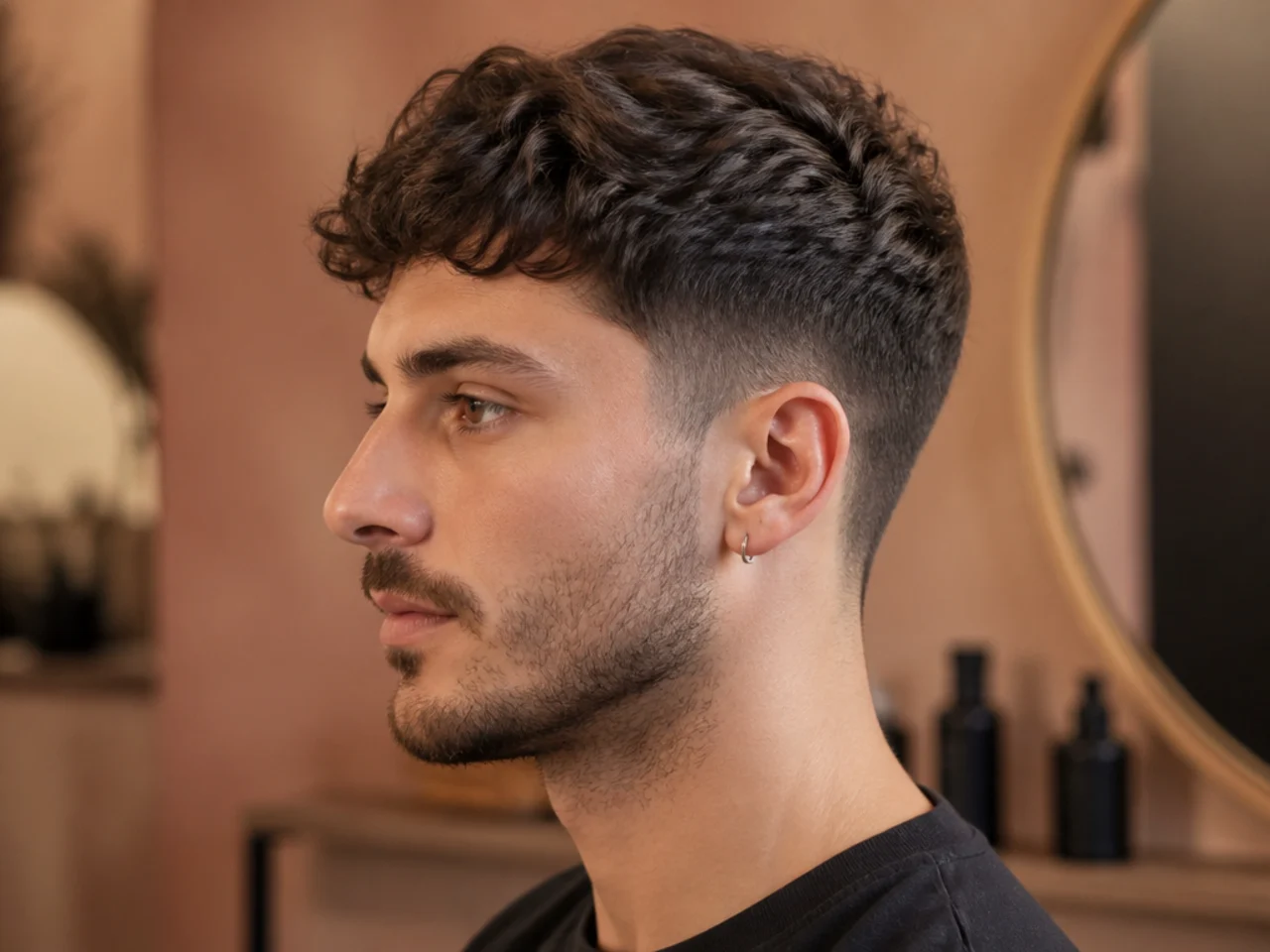
Short hair needs one product. That's the whole system. Match the product to the finish you asked for:
- Buzz, crew, and butch cuts — nothing. A drop of face moisturizer through damp hair adds a whisper of shine if you want it.
- Ivy League, side part, comb over, and Princeton — light-hold pomade or a medium-shine cream. Blow-dry to the part first.
- French crop, textured crop, and Caesar — matte paste or matte cream, worked forward.
- Quiffs, brush-ups, and spikes — firm-hold matte clay with a sea-salt spray pre-styler for grip if your hair is fine.
- Curly and coily crops — leave-in conditioner or curl cream applied to soaking-wet hair.
Wash cadence matters. Short hair sits close to the scalp, which means it picks up oil fast — but daily shampoo strips the scalp and pushes it to overproduce. Sulfate-free shampoo two or three times a week is the sweet spot. Rinse with cool water on the last pass to close the cuticle. Skip conditioner on the top of buzz, crew, and Ivy League cuts; use it on any scissor-cut length past an inch, and always on curls.
Rebook by cut type. Skin fades and hard line-ups want two to three weeks. Standard low or mid fades and buzz cuts want three to four weeks. Scissor-blended cuts like the Ivy League or short quiff hold for five to six. The moment the outline softens is the moment to book — a fade especially reads messy the second week past its rebook.
For a broader take on short cuts built for zero effort, see our short simple mens haircuts breakdown and our low-maintenance mens haircuts guide.
FAQ
Quick answers to the questions barbers get every week.
Can I cut a short haircut at home? A buzz, yes — a decent clipper set pays for itself in two months. Anything with a fade or a defined shape wants a barber. Home fades read blotchy without a mirror system you probably don't have.
Does a short cut make thinning hair look worse? No — the opposite. Short cuts make thinning hair honest, and honest reads better than the alternative. Buzz cuts, butch cuts, and short French crops all flatter receding hairlines and thinning crowns.
Which short cut works best for round faces? Anything that adds height on top — a short quiff, brush-up, or textured crop paired with a fade. Skip a plain buzz on a round face; the tight profile can round you further. If a buzz is non-negotiable, at least add a skin fade so the vertical line at the temple creates the illusion of a longer silhouette.
What's the difference between a crew cut and an Ivy League? Length. A crew keeps about an inch on top. An Ivy League keeps an inch and a half to two — enough to hold a defined side part. Everything else is shared, from the tapered sides to the scissor-blended top.
How much should a short haircut cost? Between $25 and $60 at a neighborhood barbershop. Skin fades and line-up work push the higher end because they take longer to cut clean. A basic buzz at a chain shop can run as low as $15, but the outline usually shows it.
Should I grow it out before switching to a longer style? Yes — schedule a scissor trim every four weeks during the grow-out to keep the sides and neckline clean while the top catches up. Skipping trims makes the awkward stage last twice as long.