30 Mens Mullet Hairstyles That Look Effortlessly Cool
Thirty mens mullet variations, and the distinction most people get wrong — a mullet is a front to back length change, not a decision about the sides. Where the step lands against the occipital bone is what makes it read retro or modern.
In this article · 37
- What Makes a Mullet a Mullet
- How to Choose Your Version
- The 30 Mens Mullet Hairstyles
- 1. Classic Mullet
- 2. Modern Tapered Mullet
- 3. Low Fade Mullet
- 4. Mid Fade Mullet
- 5. Burst Fade Mullet
- 6. Skin Fade Mullet
- 7. Short Mullet
- 8. Long Mullet
- 9. Curly Mullet
- 10. Wavy Mullet
- 11. Straight Hair Mullet
- 12. Coily Mullet
- 13. Mullet With a Blunt Fringe
- 14. Mullet With Curtain Bangs
- 15. Textured Mullet
- 16. Shaggy Mullet
- 17. Wolf Cut Mullet
- 18. Mullet With a Hard Part
- 19. Mullet With a Lined Up Hairline
- 20. Disconnected Mullet
- 21. Blended Mullet
- 22. Mullet With a Connected Beard
- 23. Bleached Mullet
- 24. Two Tone Mullet
- 25. Slicked Back Mullet
- 26. Mullet on a Receding Hairline
- 27. Mullet on Thick Hair
- 28. Mullet on Fine Hair
- 29. Mullet at Week Eight
- 30. Business Mullet
- Styling and Upkeep
- Mistakes to Avoid
- FAQ
- Final Thoughts
Most men asking for a mullet describe the back and forget the front, and the front is what makes the cut read as a mullet at all.
A mullet is a front to back gradient. Short at the temples and fringe, long from the crown down. What happens on the sides is a separate decision made afterwards.
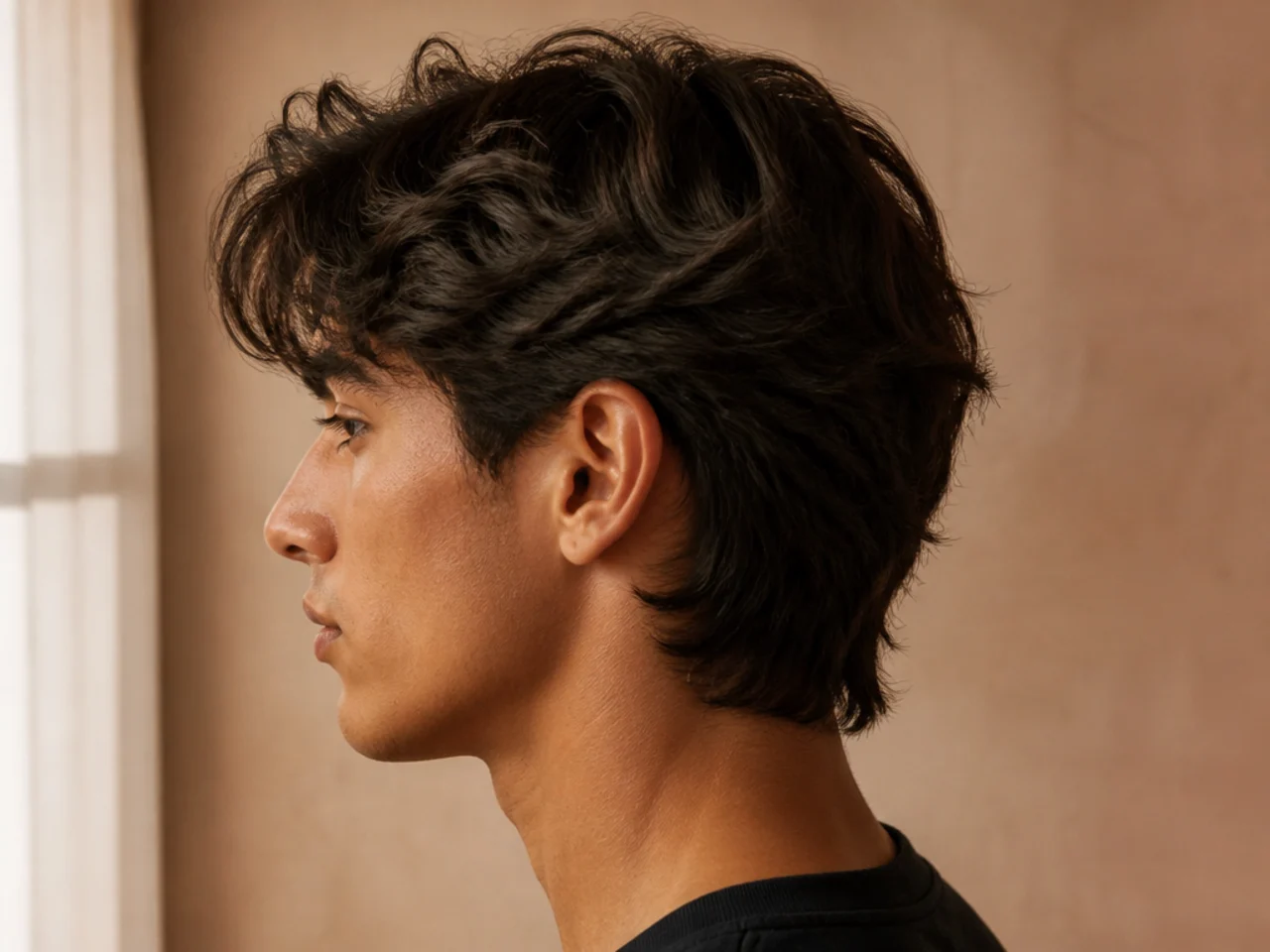
The transition sits at the occipital bone. That is the ridge you can feel at the back of the skull. Whether the length steps down before it or after it decides whether the cut reads retro or modern.
What Makes a Mullet a Mullet
The length change is the cut. Everything else is trim. If the front is not appreciably shorter than the back, you have long hair with tidy sides.
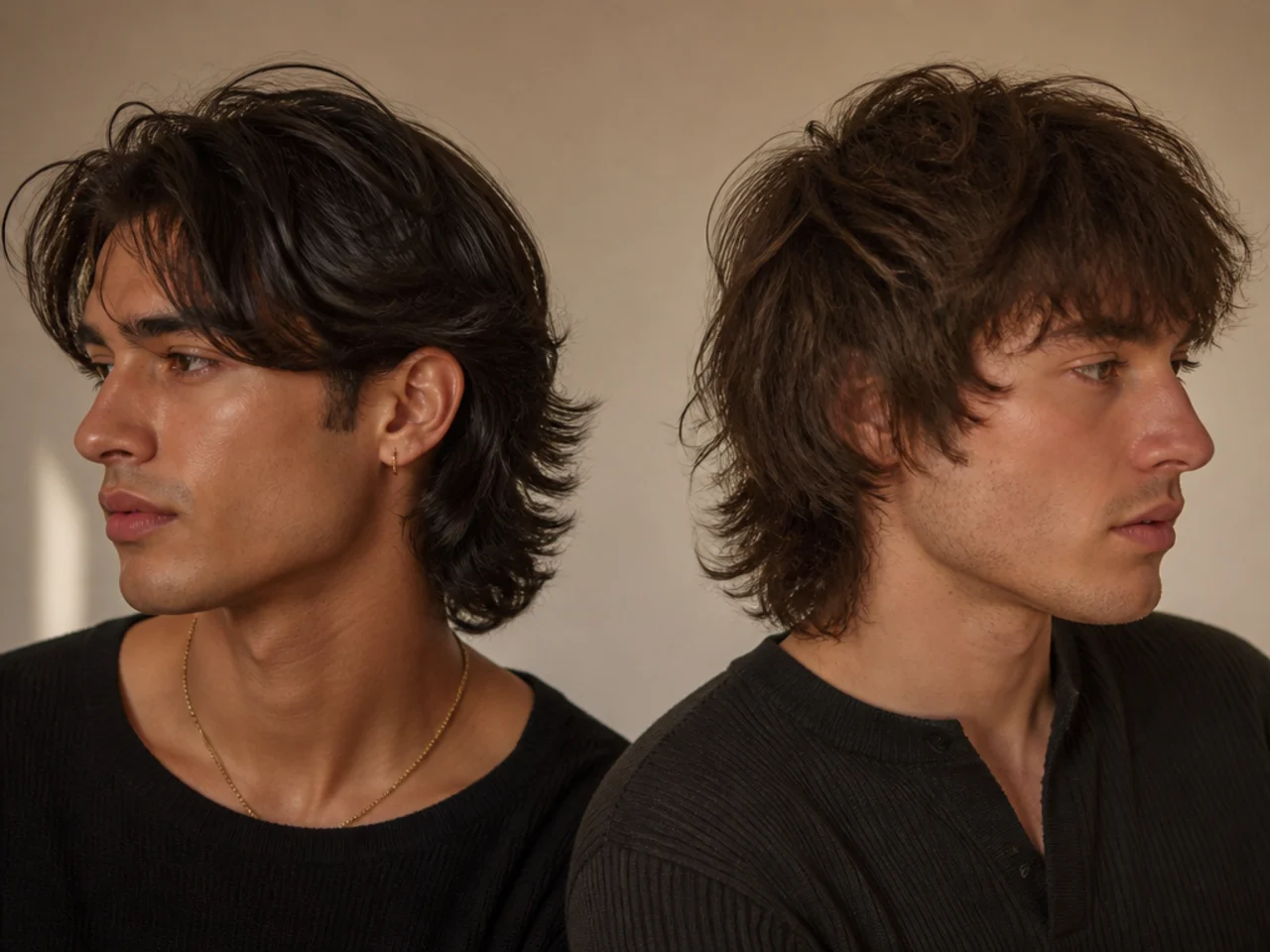
Disconnected and blended are two different haircuts. A disconnect steps from short to long with nothing in between. A blend graduates, and reads as shape rather than as a statement.
The sides are a free variable. Taper, fade, or leave them alone — none of it changes whether the cut is a mullet, only how loud it is.
A mullet is not a wolf cut. The mullet lives in the perimeter; the wolf cut lives in the interior layers. Ask for the wrong one and you get volume at the crown instead of length at the back.
How to Choose Your Version
Pick the tail length by where it lands. Nape, collar, or shoulder blade. Each one changes how much weight hangs behind the transition, and weight is what decides whether the tail sits away from the neck or flat against it.
Pick the side length by your trim schedule. A skin fade shows stubble at one to two weeks. A taper finishing at a number one still reads correctly at three to four.
Pick disconnected or blended by how much attention you want. The step is the loud part. Removing it keeps every other feature of the cut and drops the volume by half.
Cut curly hair dry. Curl shrinks as it dries, so a tail measured wet arrives two to four inches shorter than the one you agreed to.
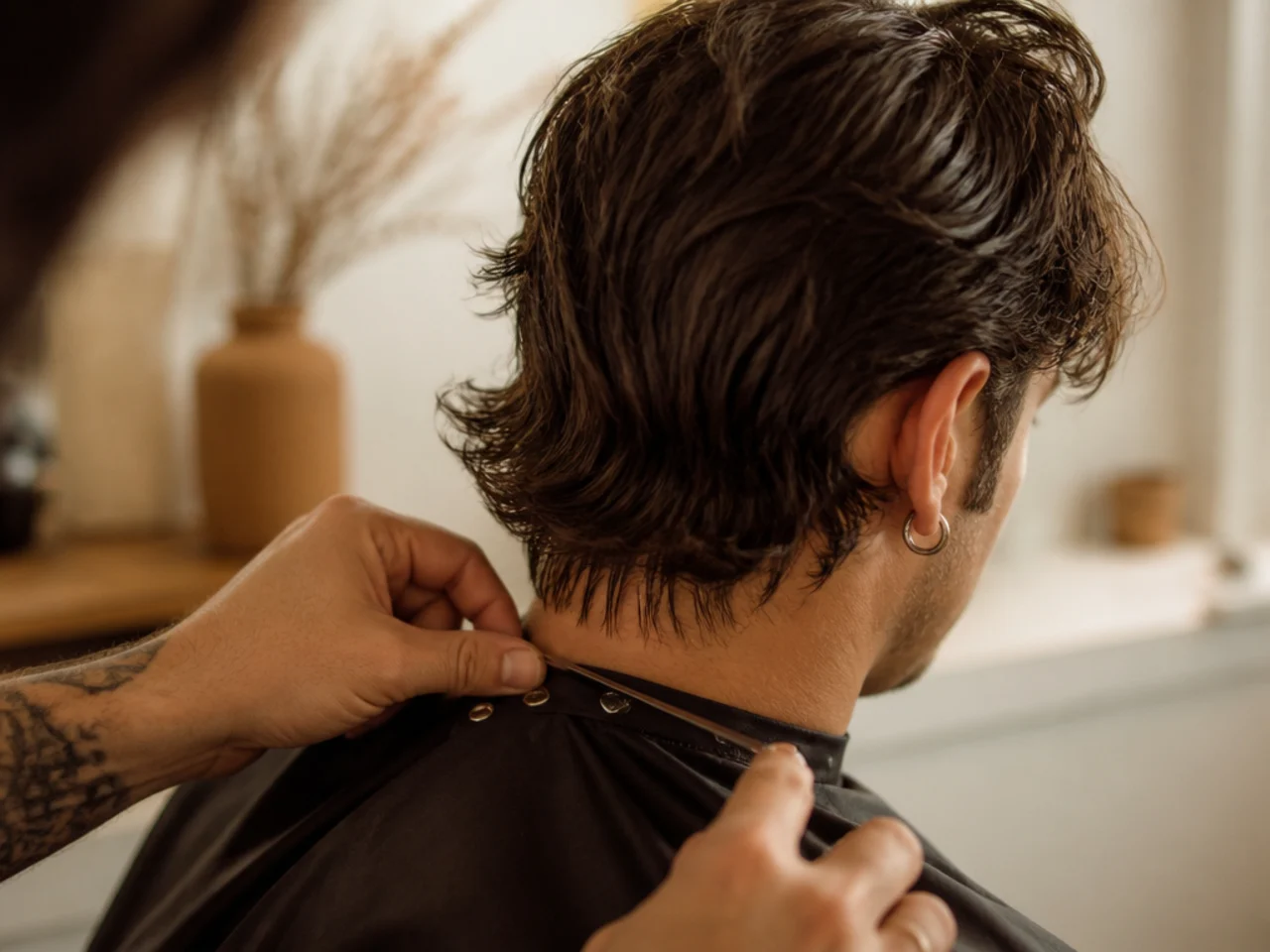
The 30 Mens Mullet Hairstyles
1. Classic Mullet
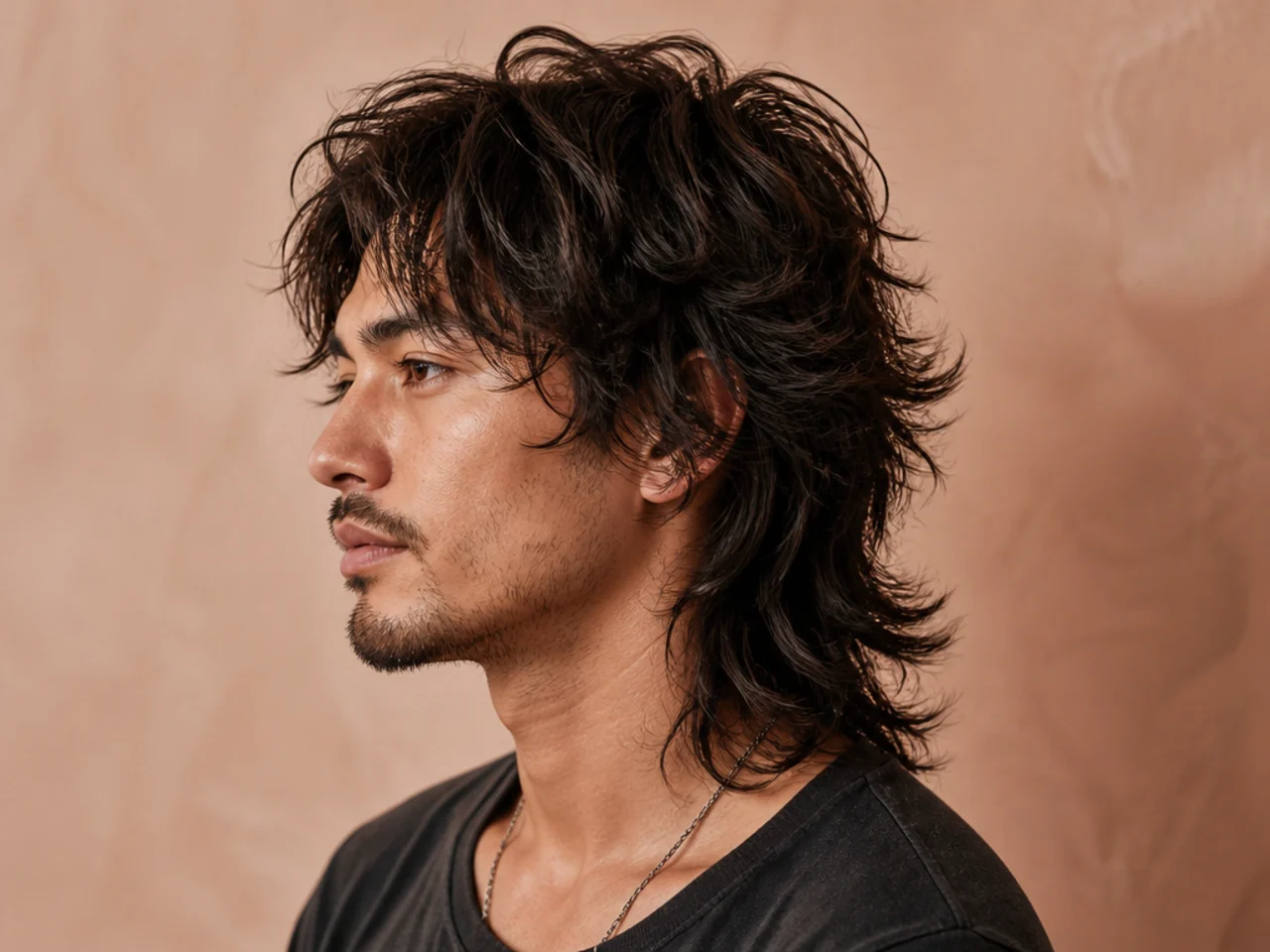
Short on top and at the temples, full length from the crown back, and a hard step where the two meet. That step is the point of the cut and the first thing anyone reads, so a barber who quietly blends it has handed you a shag instead.
2. Modern Tapered Mullet
The sides shorten gradually to a number one at the neckline instead of stopping dead, so nothing is bare. Those remaining three millimetres keep the contrast against the tail moderate, and the gradient blurs slowly enough that the cut still reads correctly at three or four weeks.
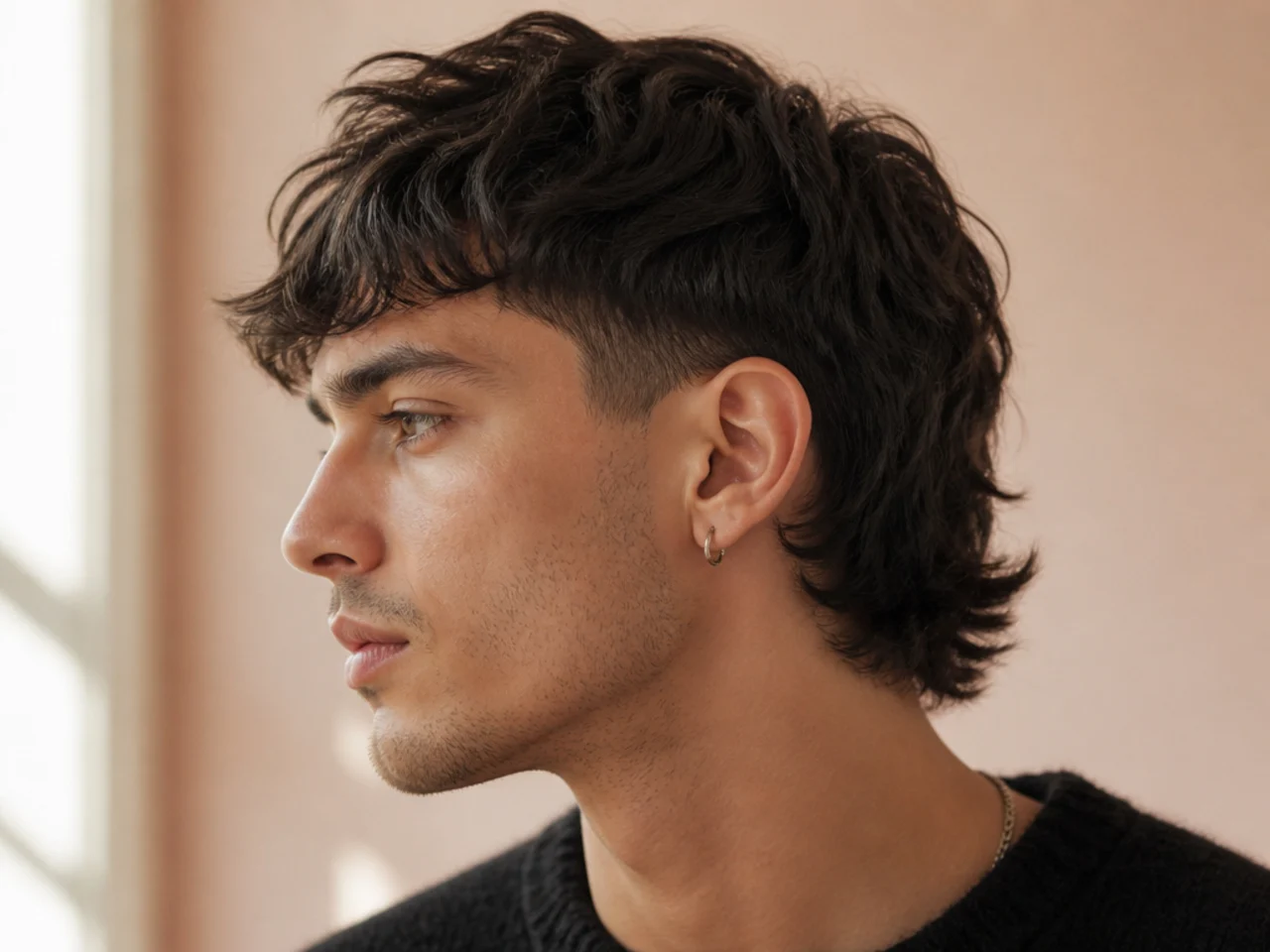
3. Low Fade Mullet
The fade starts just above the ear and drops to skin at the bottom, covered in more depth in the low fade mullet. Keeping the line low leaves the widest part of the head untouched, so the tail still has visible bulk behind it rather than sitting on a shaved skull.
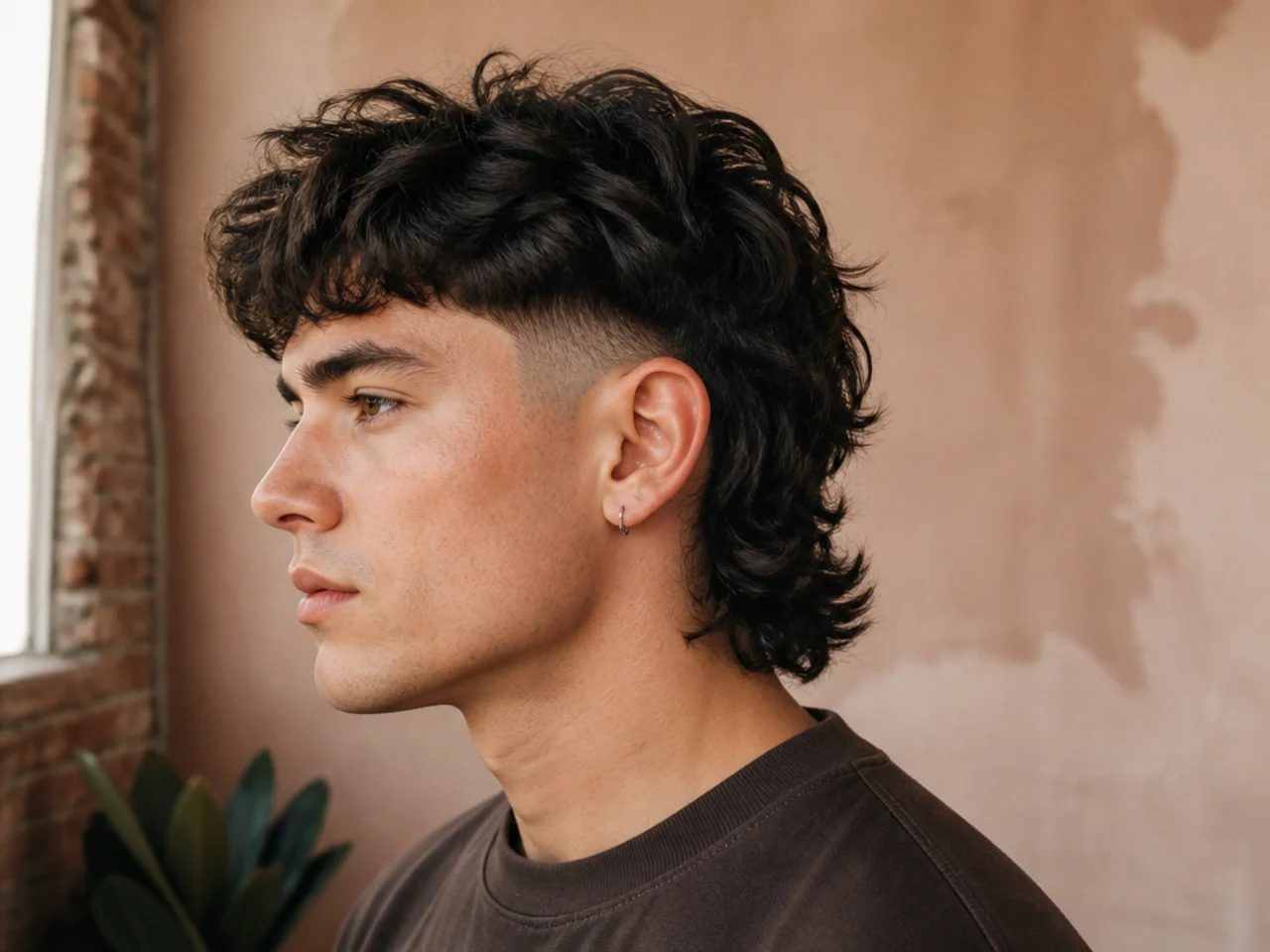
4. Mid Fade Mullet
The line begins level with the temple, roughly halfway up the side. Contrast against the tail goes up, but the gradient has further to travel, so it takes more passes to keep smooth and shows a rushed blend far more clearly than a low fade does.
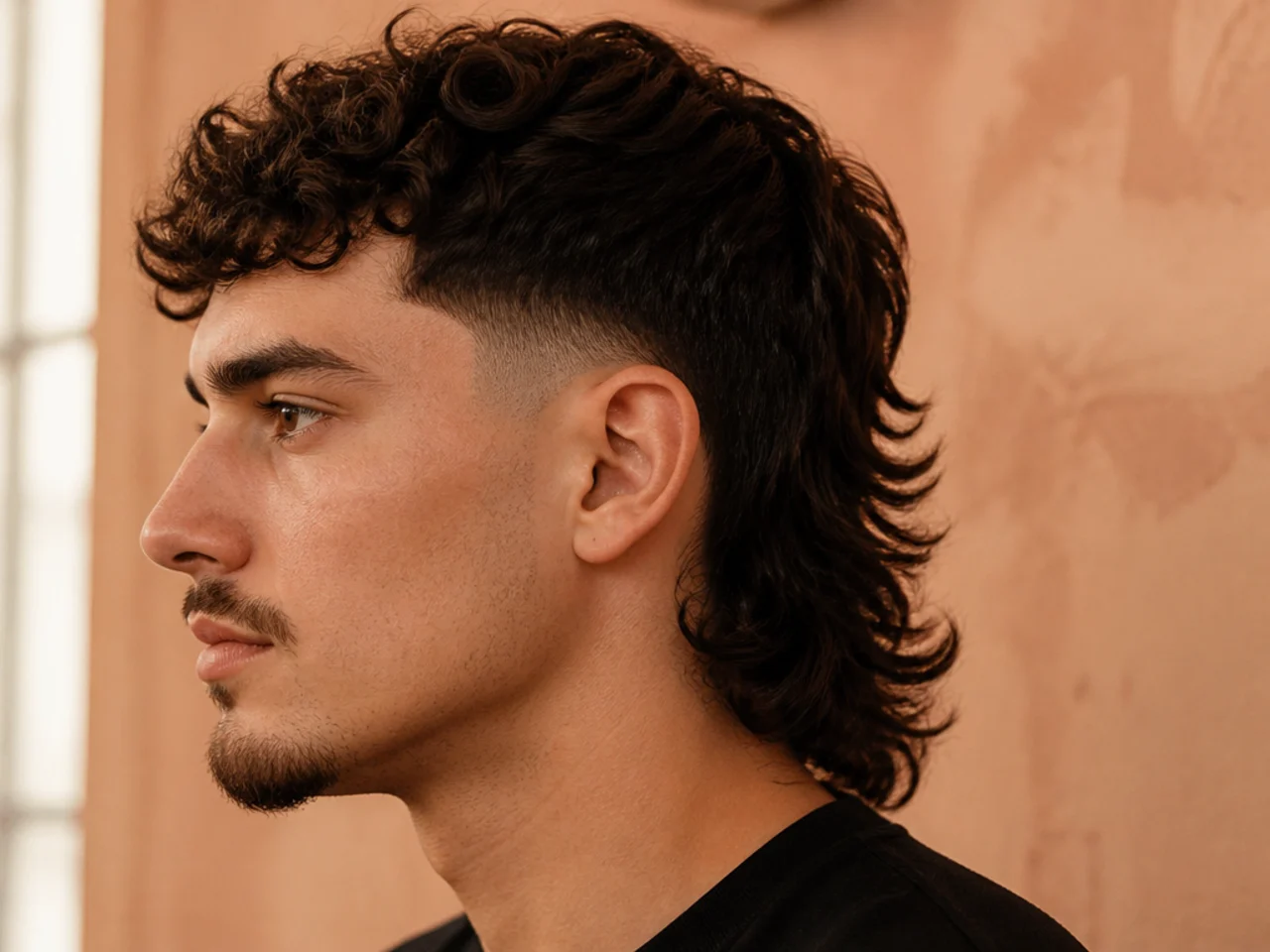
5. Burst Fade Mullet
The fade arcs around the ear in a semicircle and stops before it reaches the back of the head. That is exactly why it suits a mullet — it clears the side without cutting into the weight behind the ear that the tail needs to sit against.
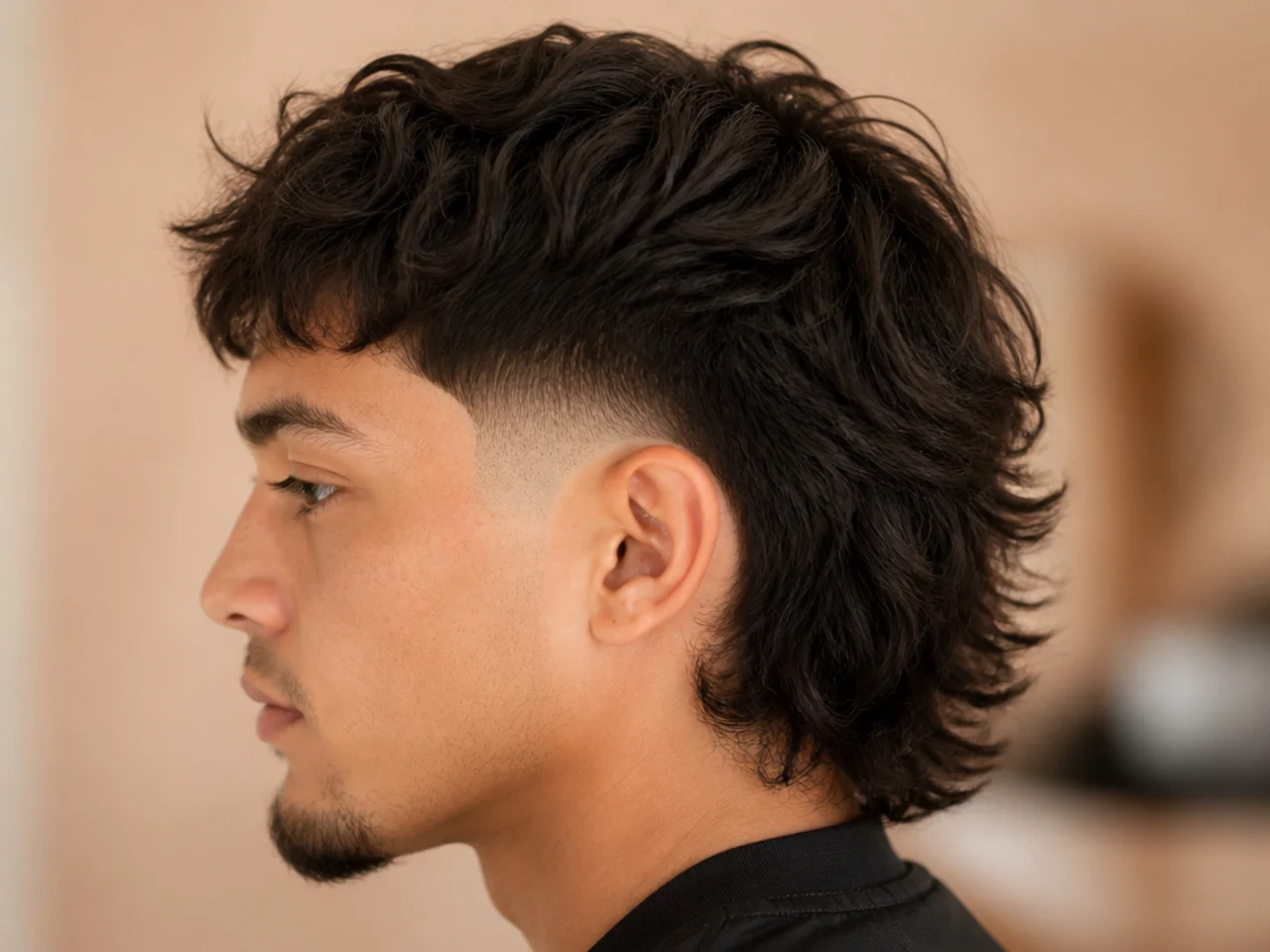
6. Skin Fade Mullet
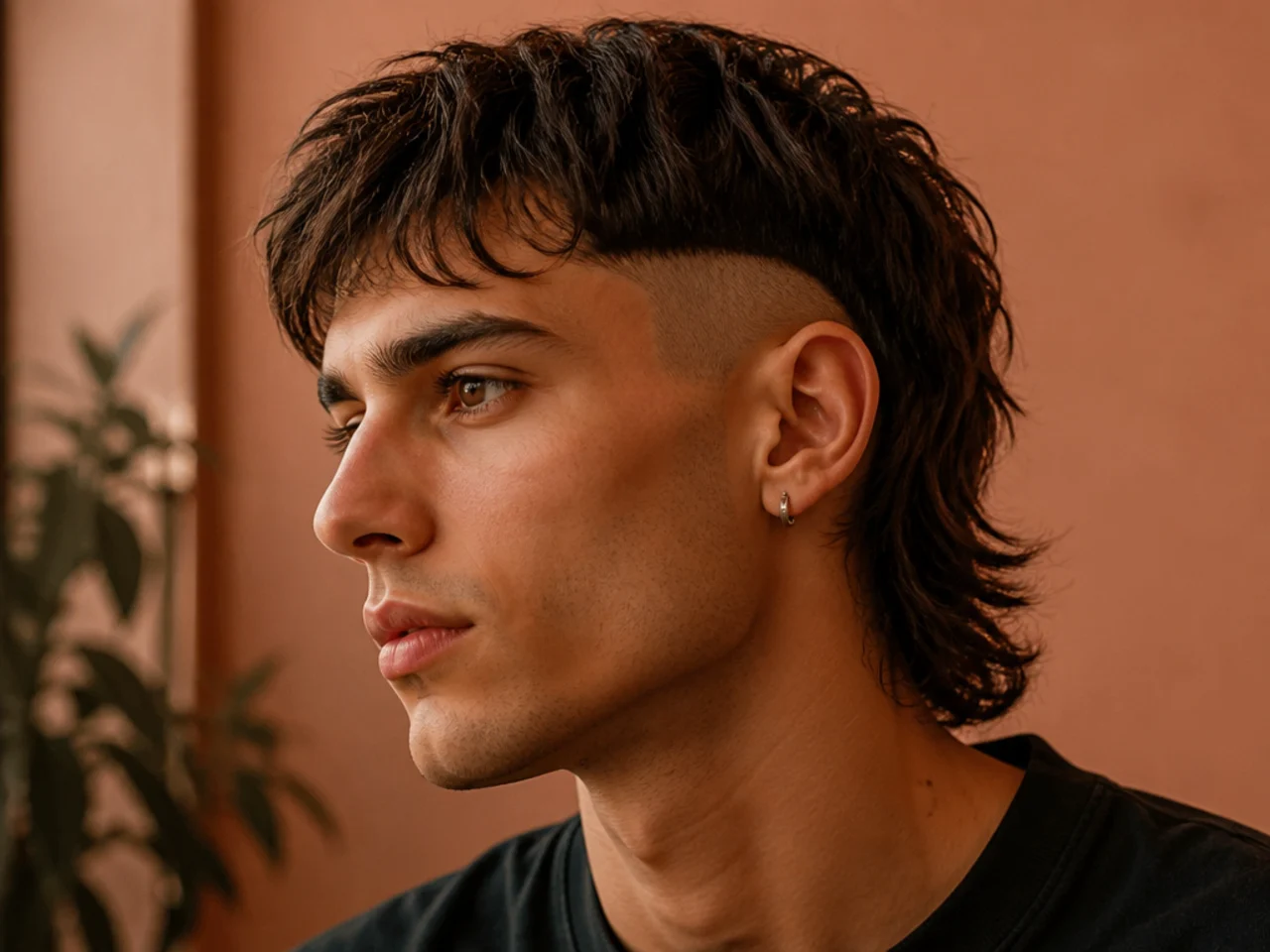
The sides taken to bare scalp for the highest contrast available. Skin reflects light where hair absorbs it, which is why the jump to the tail reads so hard, and it is also why stubble is visible within one to two weeks. Budget a fortnightly trim or the shape closes up.
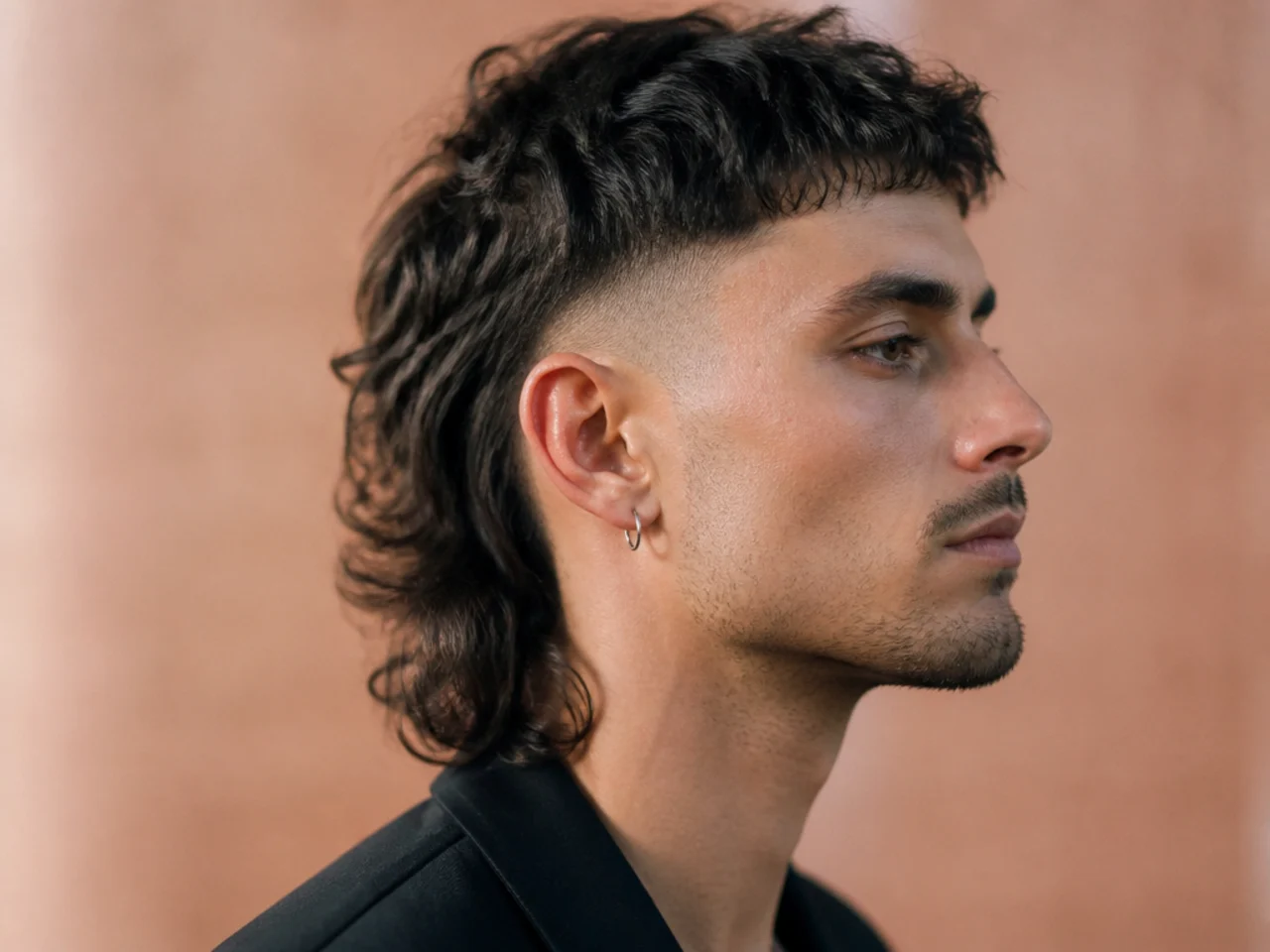
7. Short Mullet
The tail stops at the nape rather than the collar, which is the version covered in short mullet haircuts. Shortening the tail lowers the contrast, so the front has to come up as well or the whole thing flattens into an ordinary short back and sides.
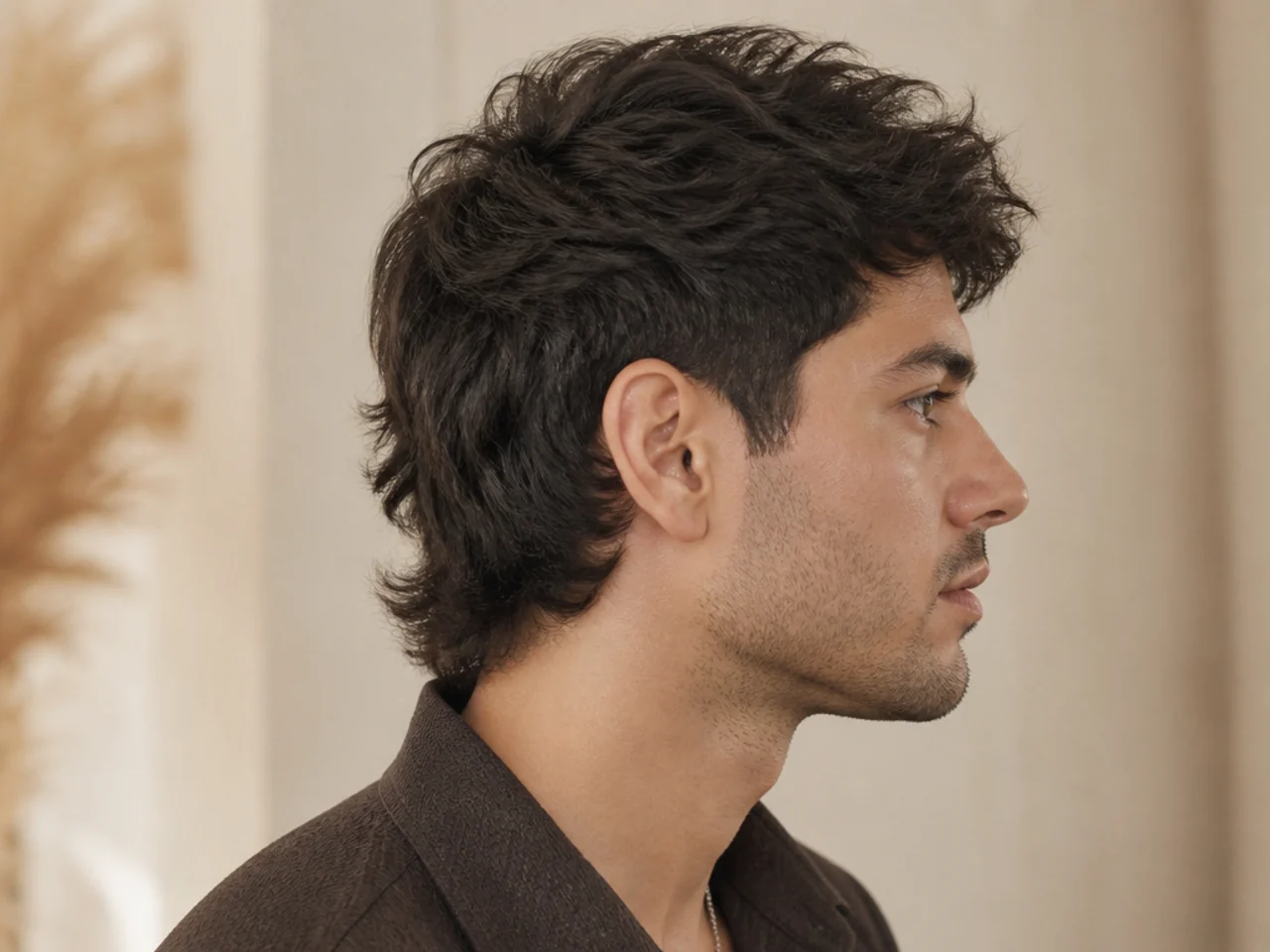
8. Long Mullet
The tail past the shoulder blade. Length adds weight, and weight pulls the tail flat against the back where a shorter one stands away from it. Ask for the last two inches point cut so the perimeter breaks into strands instead of hanging as one sheet.

9. Curly Mullet
Curl shrinks as it dries, so a curly mullet cut wet comes out two to four inches shorter than it looked in the chair. It has to be cut dry, curl by curl, with the tail judged at the length it actually falls rather than the length it stretches to.
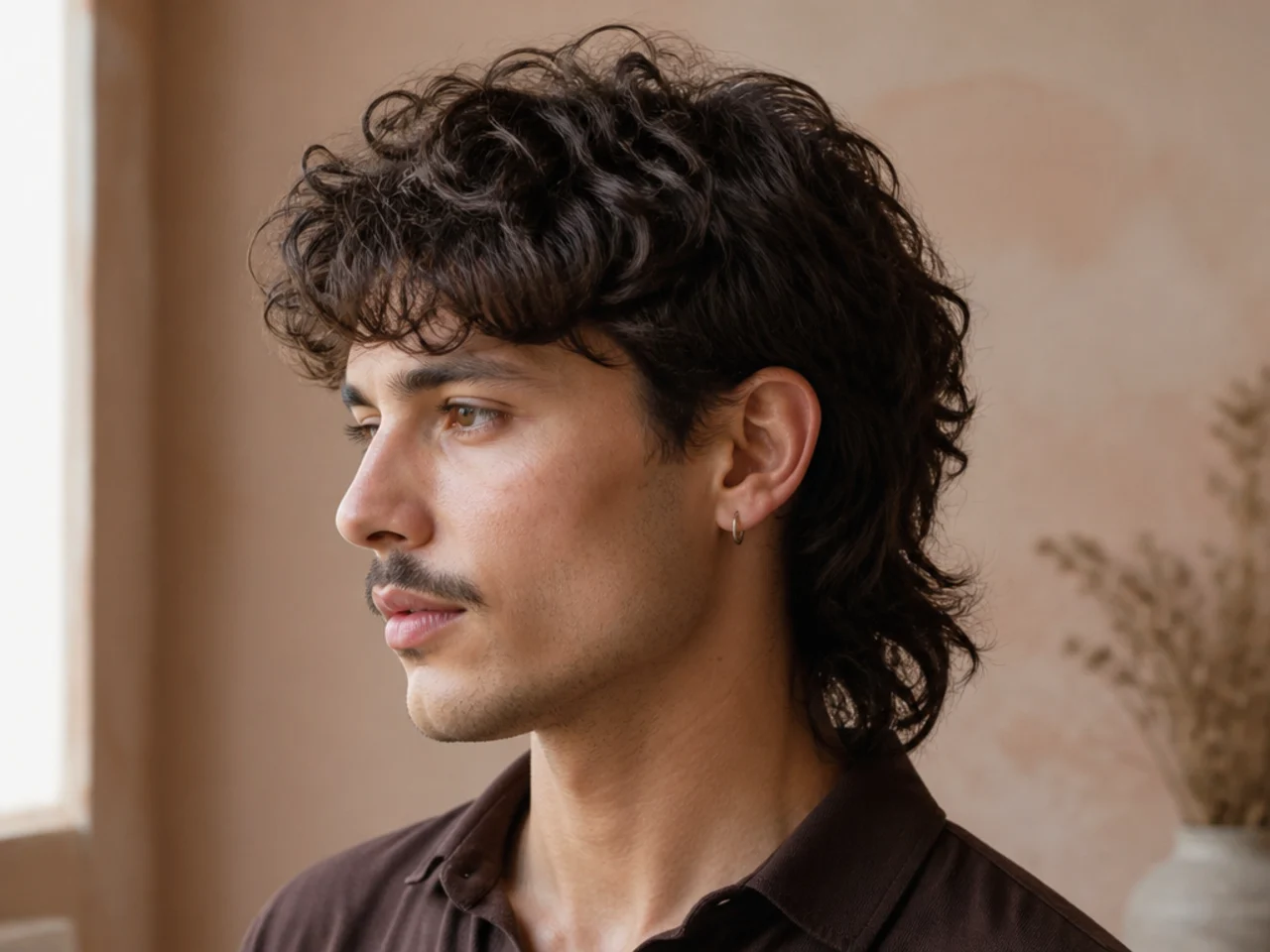
10. Wavy Mullet
The bend does the texturising for you. An S wave throws light in several directions at once, so the step between the short sides and the tail blurs on its own and needs far less point cutting than the same cut on a straight head.
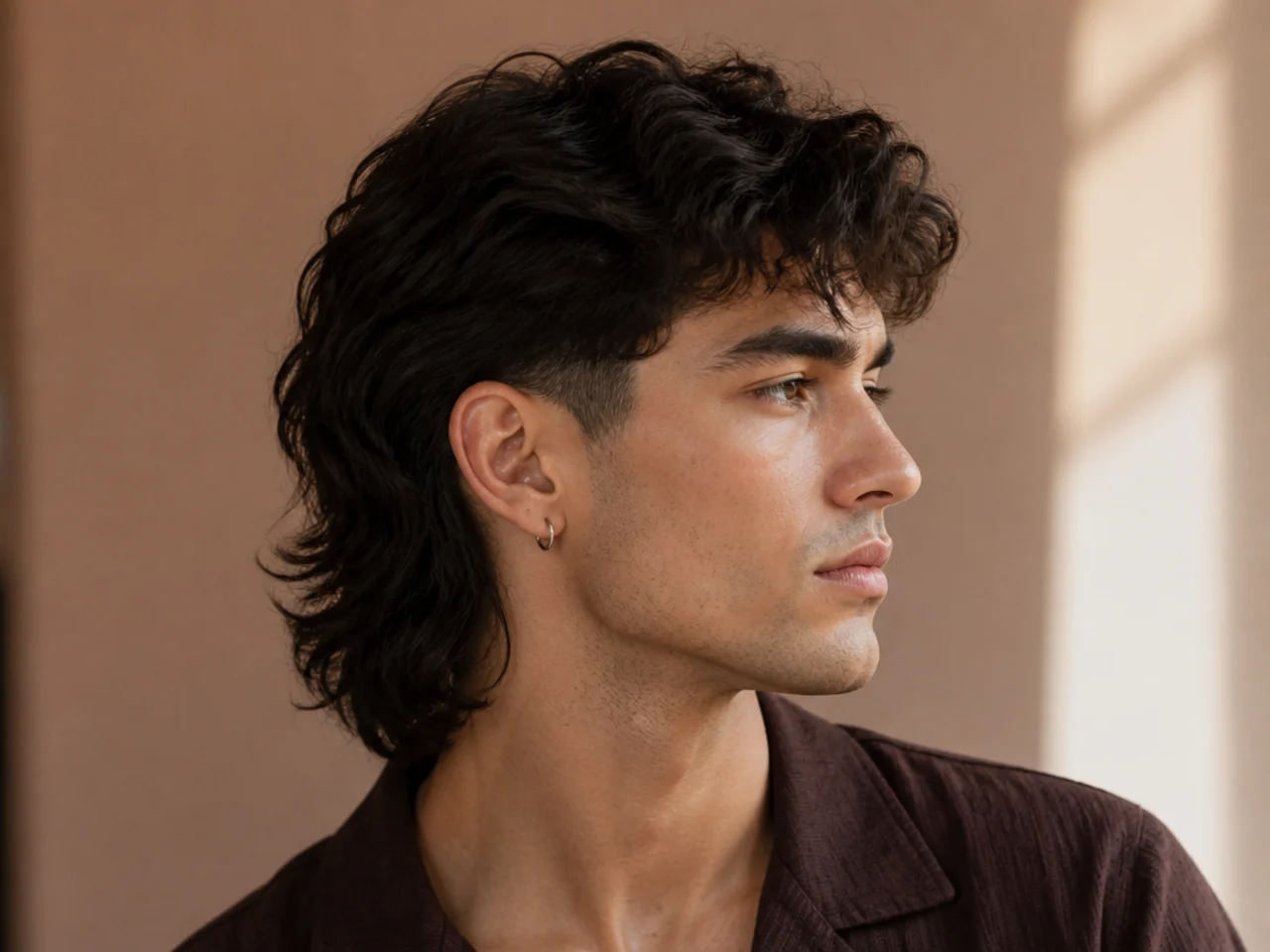
11. Straight Hair Mullet
The cleanest outline of any texture and the least forgiving. A straight strand sits in a single line with no bend to scatter light, so every uneven pass along the tail perimeter reads as a step rather than as shadow. Check the outline in a hand mirror before you leave.

12. Coily Mullet
Coily hair holds its shape upward instead of falling, so the tail reads as volume rather than as length. The transition has to be cut into the curl pattern rather than straight across it, otherwise the change in density shows as a hard shelf.

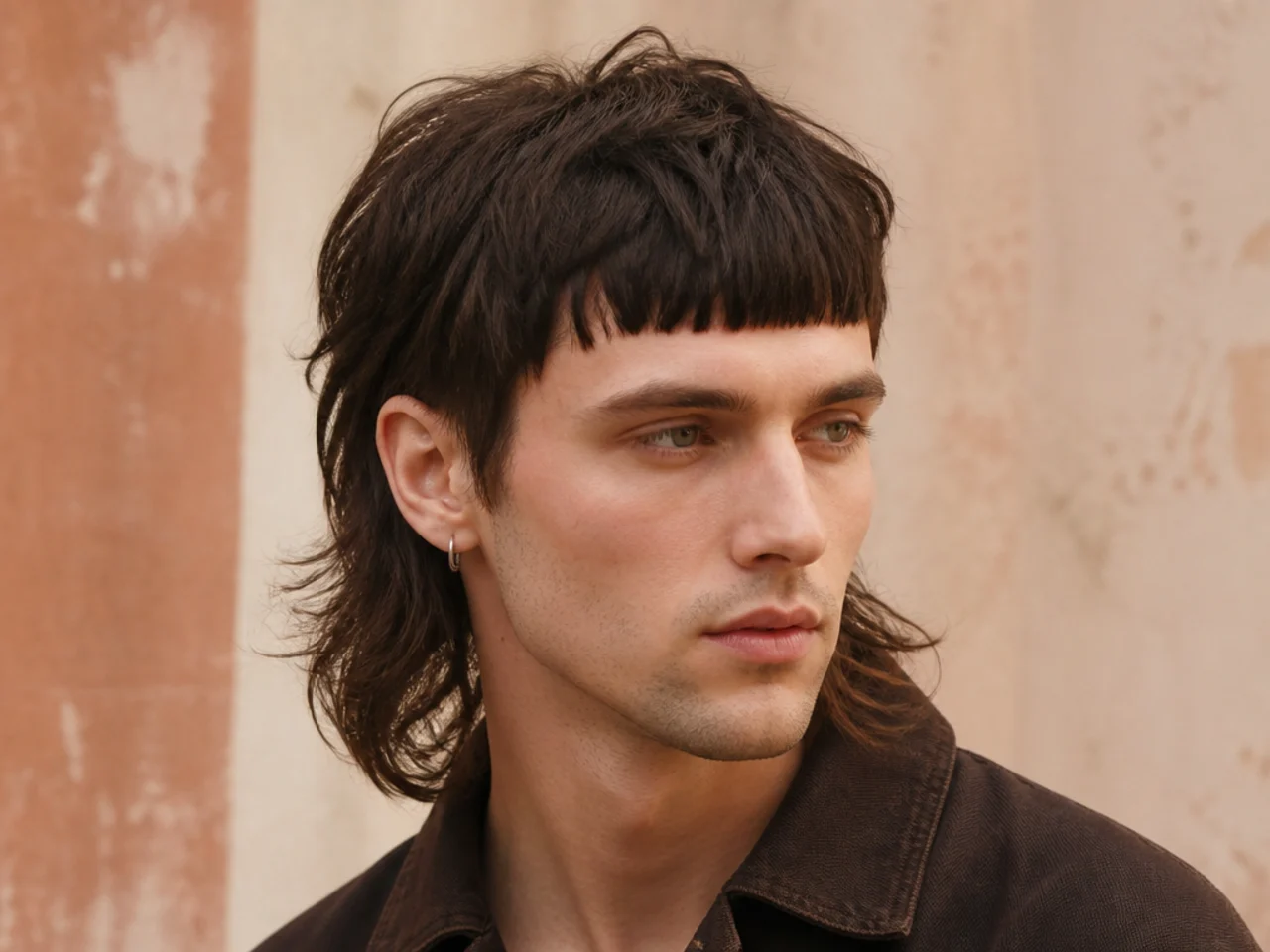
13. Mullet With a Blunt Fringe
A fringe cut level at the brow puts a second short edge at the front, which raises the front to back contrast without touching the tail. It also gives the shape an anchor on a face whose natural hairline is soft or uneven.
14. Mullet With Curtain Bangs
The fringe split at the centre and swept to both sides so the forehead stays partly visible. It softens the front edge of the cut, which is worth having if a blunt fringe reads too severe against a heavy jaw or a low hairline.

15. Textured Mullet
Point cutting removes weight from the ends without shortening the outline, so the perimeter breaks into separate pieces rather than one blunt line. On thick hair this is the difference between a tail that separates and a tail that hangs like a curtain.
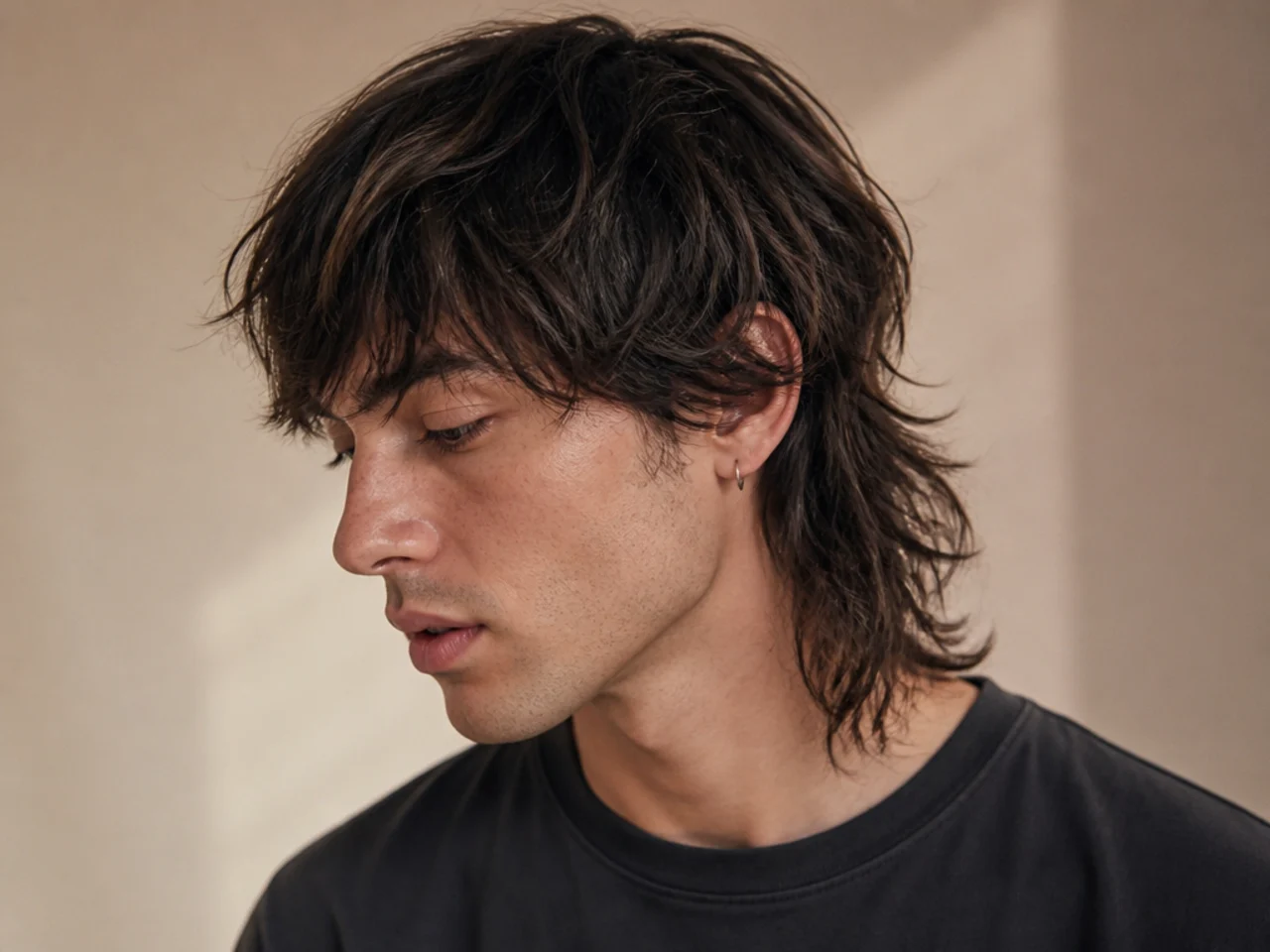
16. Shaggy Mullet
Layers cut through the top and crown as well as the back, so volume sits high and the tail becomes the end of a gradient instead of a separate panel. It is the easiest version to grow out because there is no hard step that has to be disguised.
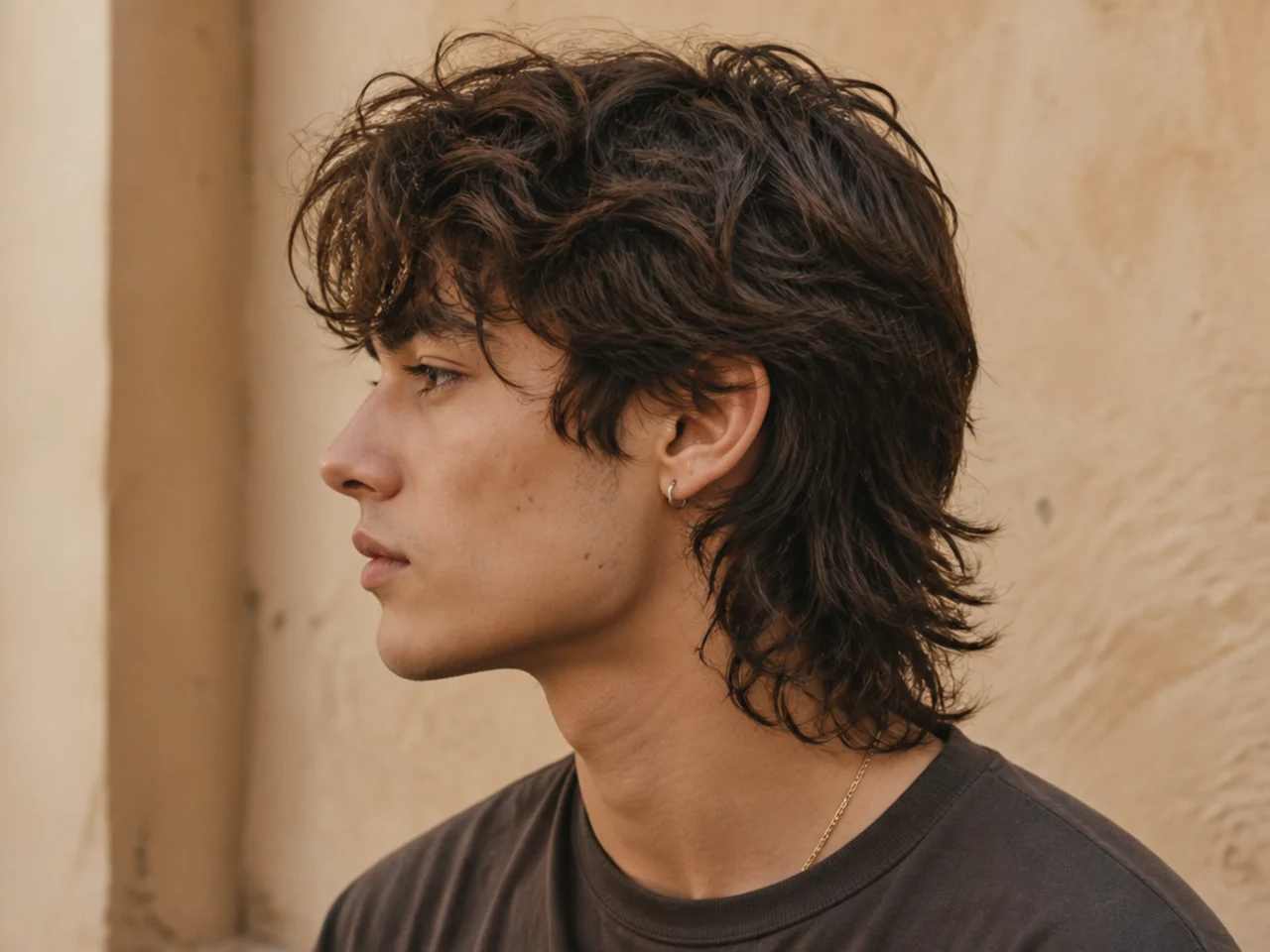
17. Wolf Cut Mullet
A mullet carrying the layering of a shag. Short crown layers sit on top of the longer ones and prop them up, which is where the volume comes from, and the tail is simply what survives of the perimeter underneath all of it.
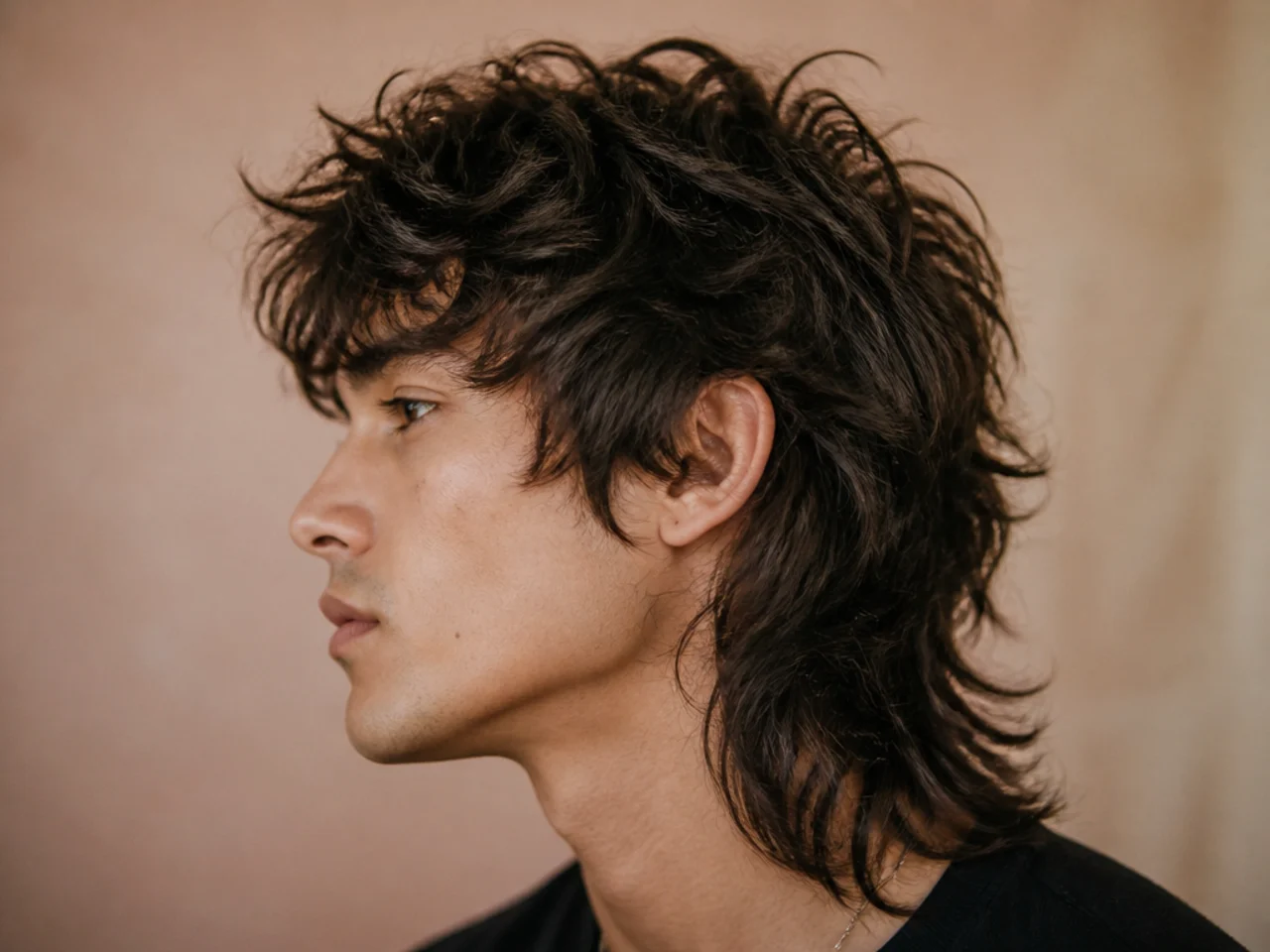
18. Mullet With a Hard Part
A trimmer line cut along the parting gives the eye a vertical to read against the horizontal of the tail, which is what stops the cut looking flat in profile. It grows back as a visible stripe within a fortnight, so it commits you to that schedule.
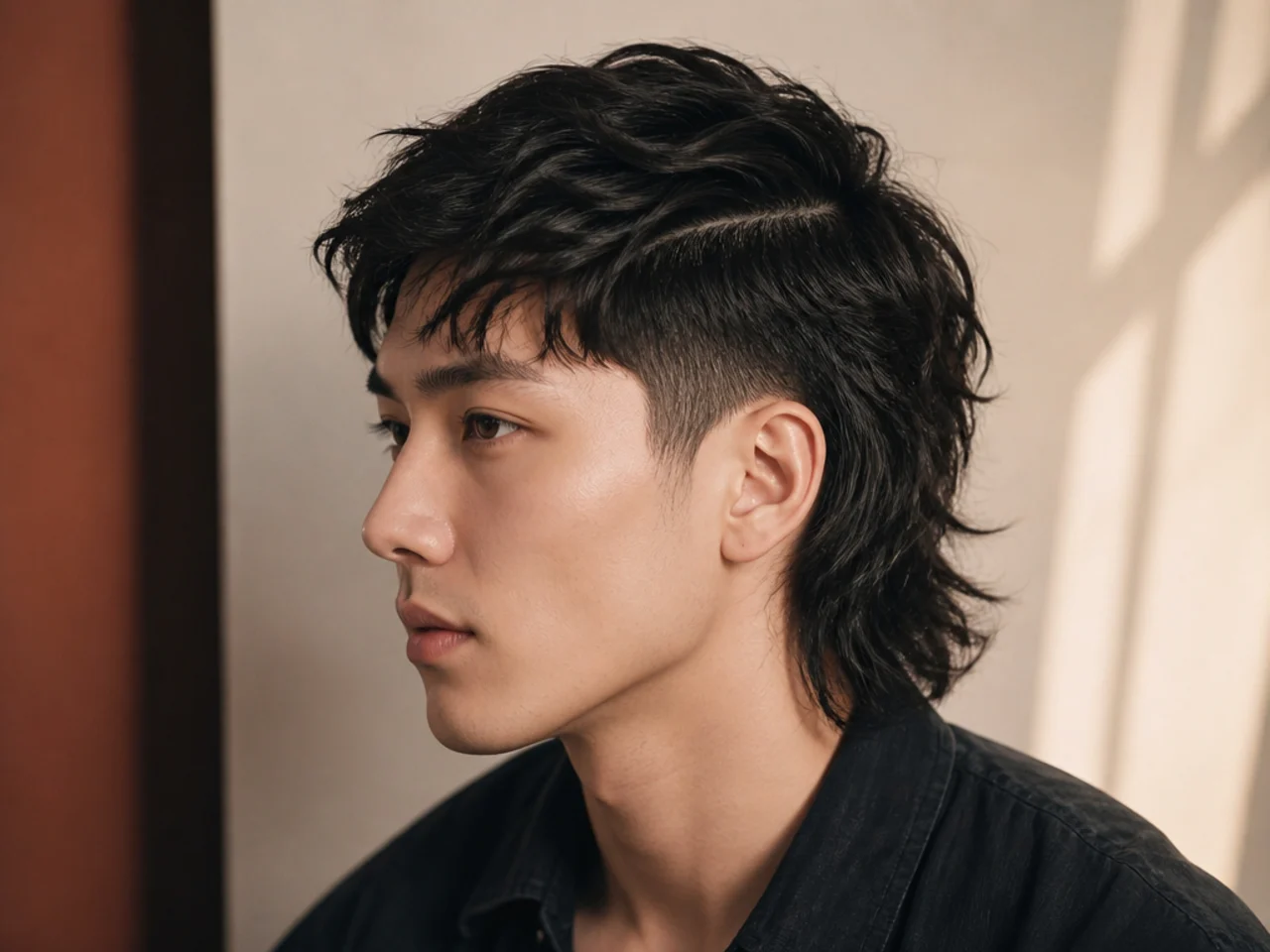
19. Mullet With a Lined Up Hairline
The front hairline and temples squared off with a trimmer. It sharpens the half of a mullet most men neglect, but it also removes the softness that hides an irregular hairline, so it flatters a hairline that is already even and exposes one that is not.
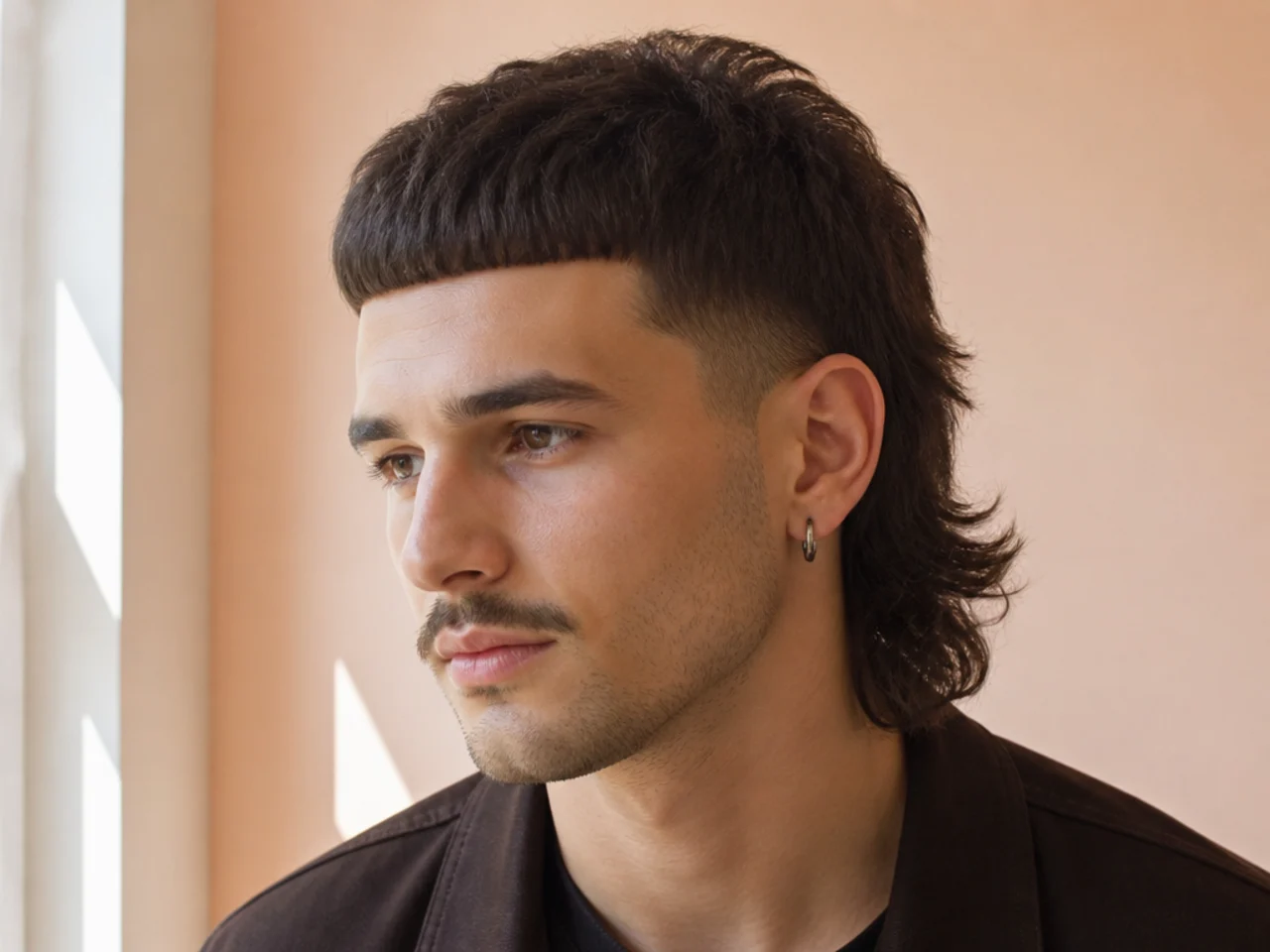
20. Disconnected Mullet
No gradient at all between the short sides and the long back, just a clean step. It is the boldest version and the least forgiving of a bad angle, because nothing is blending the two lengths and every viewpoint shows the join at full strength.
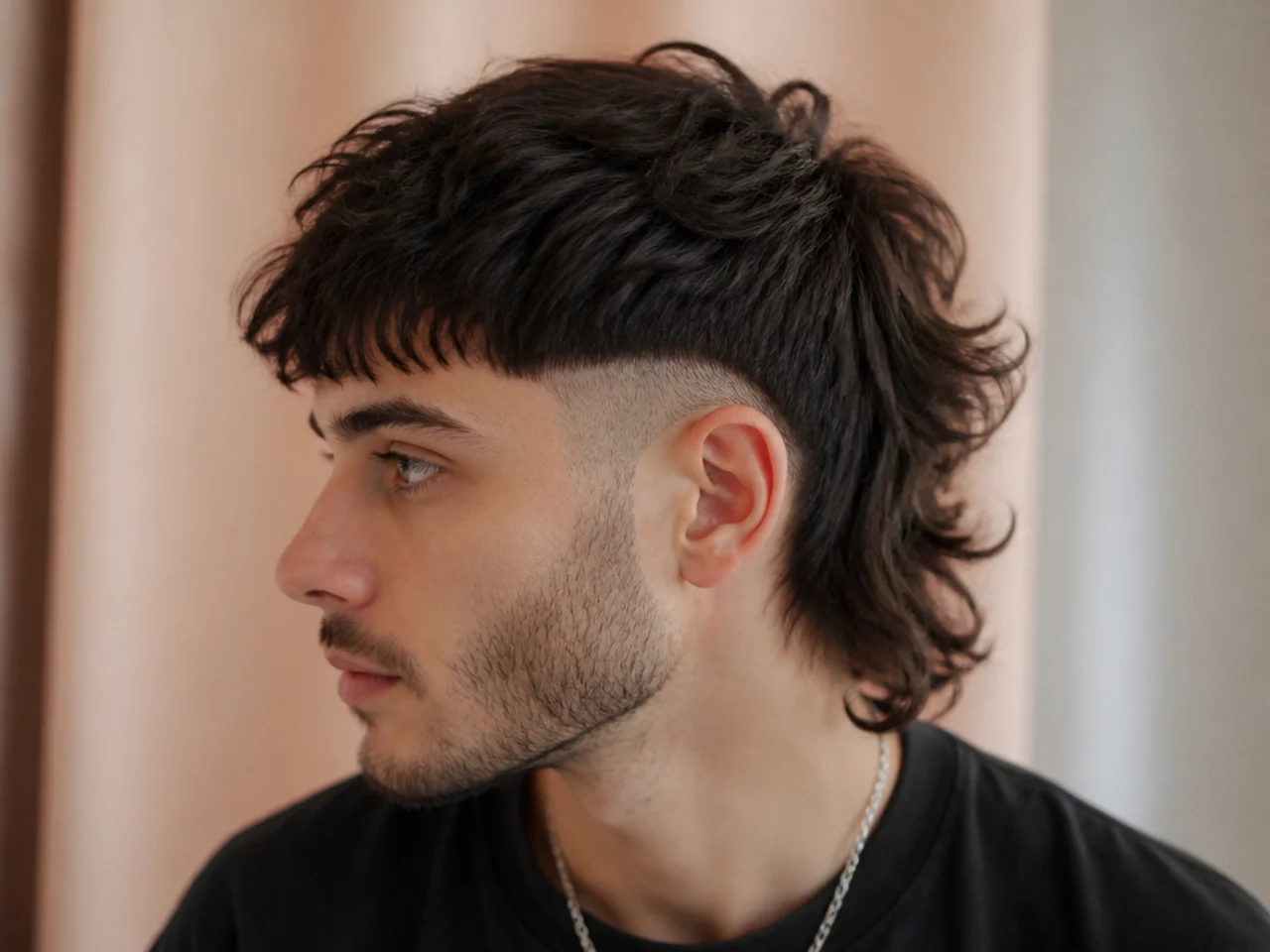
21. Blended Mullet
The sides graduate into the tail so no step is visible. It reads as long hair with a shape rather than as a mullet on first glance, which is precisely what makes it the version that survives an office and a family photograph.
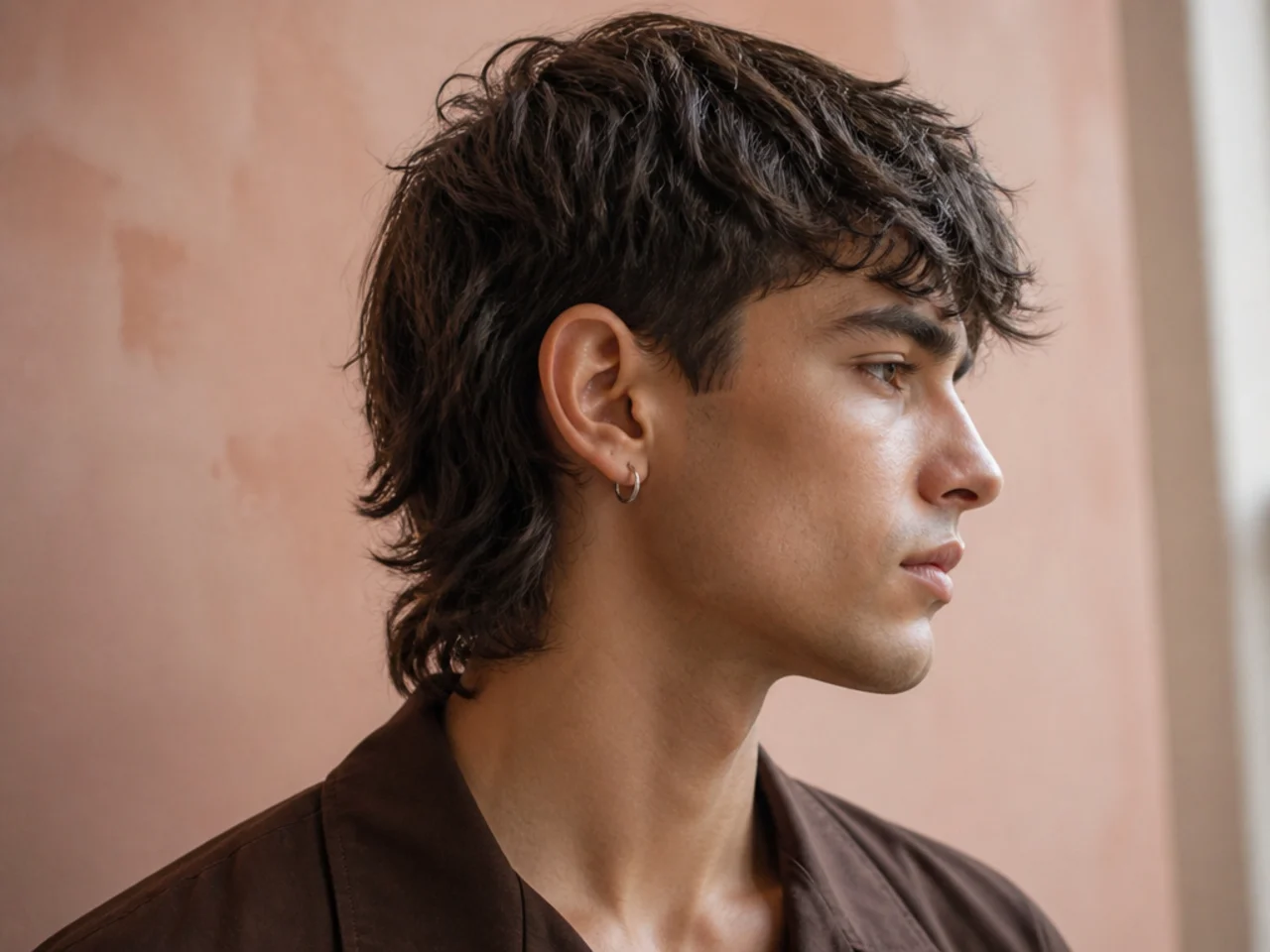
22. Mullet With a Connected Beard
The taper on the side runs down into the beard as one continuous gradient, which removes the second horizontal line across the jaw. The join has to land where beard density genuinely starts, usually just below the earlobe, or the gradient runs out of hair halfway down.
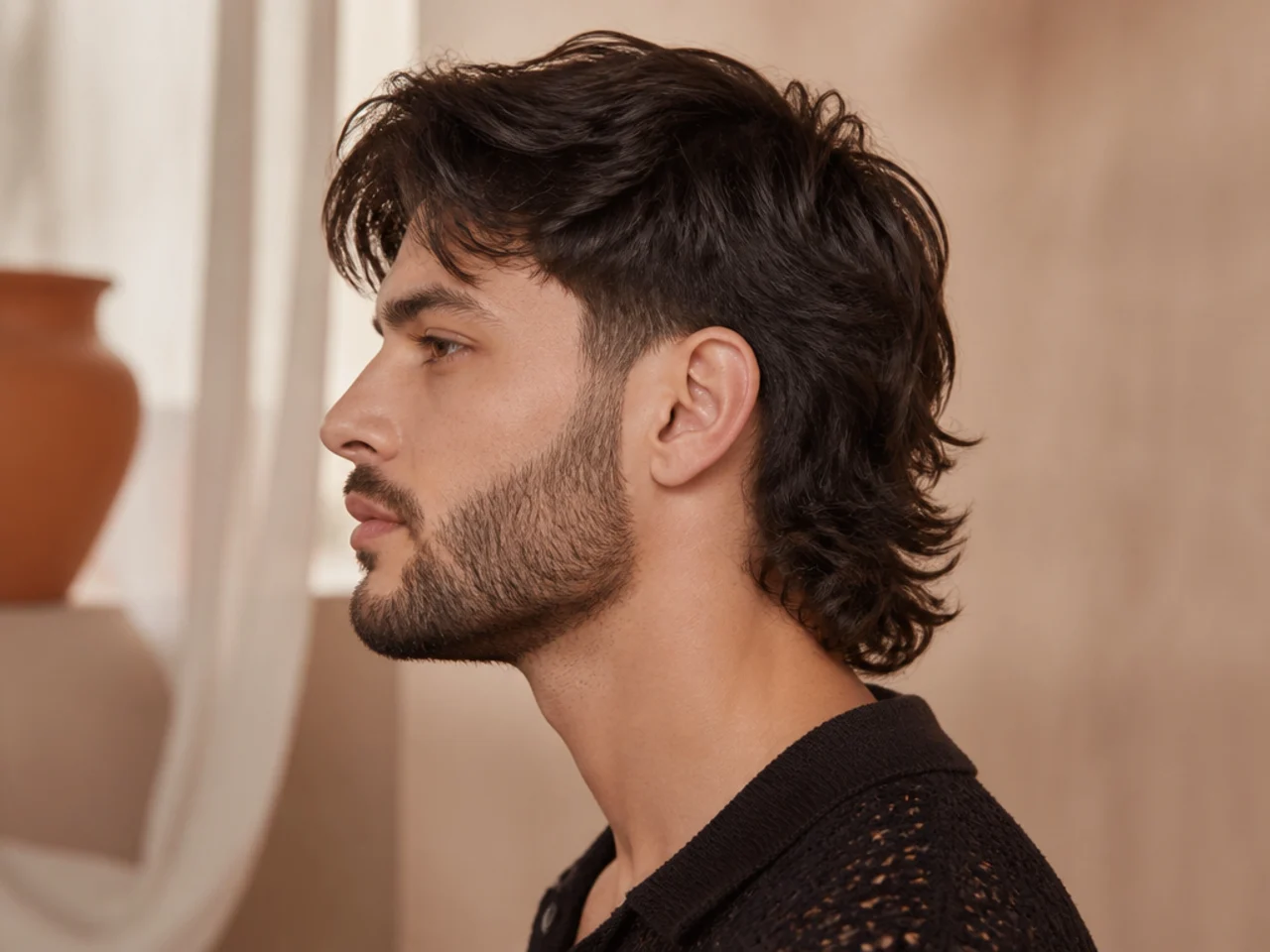
23. Bleached Mullet
Lightening the tail and leaving the front dark exaggerates the length change, because a colour boundary registers faster than a length boundary does. Bleach also lifts the cuticle and roughens the strand, which gives fine hair grip it does not have on its own.

24. Two Tone Mullet
The tail in one shade and the top in another, split at the transition. It only works if the colour boundary and the length boundary land in the same place — put them an inch apart and you get two competing lines instead of one.
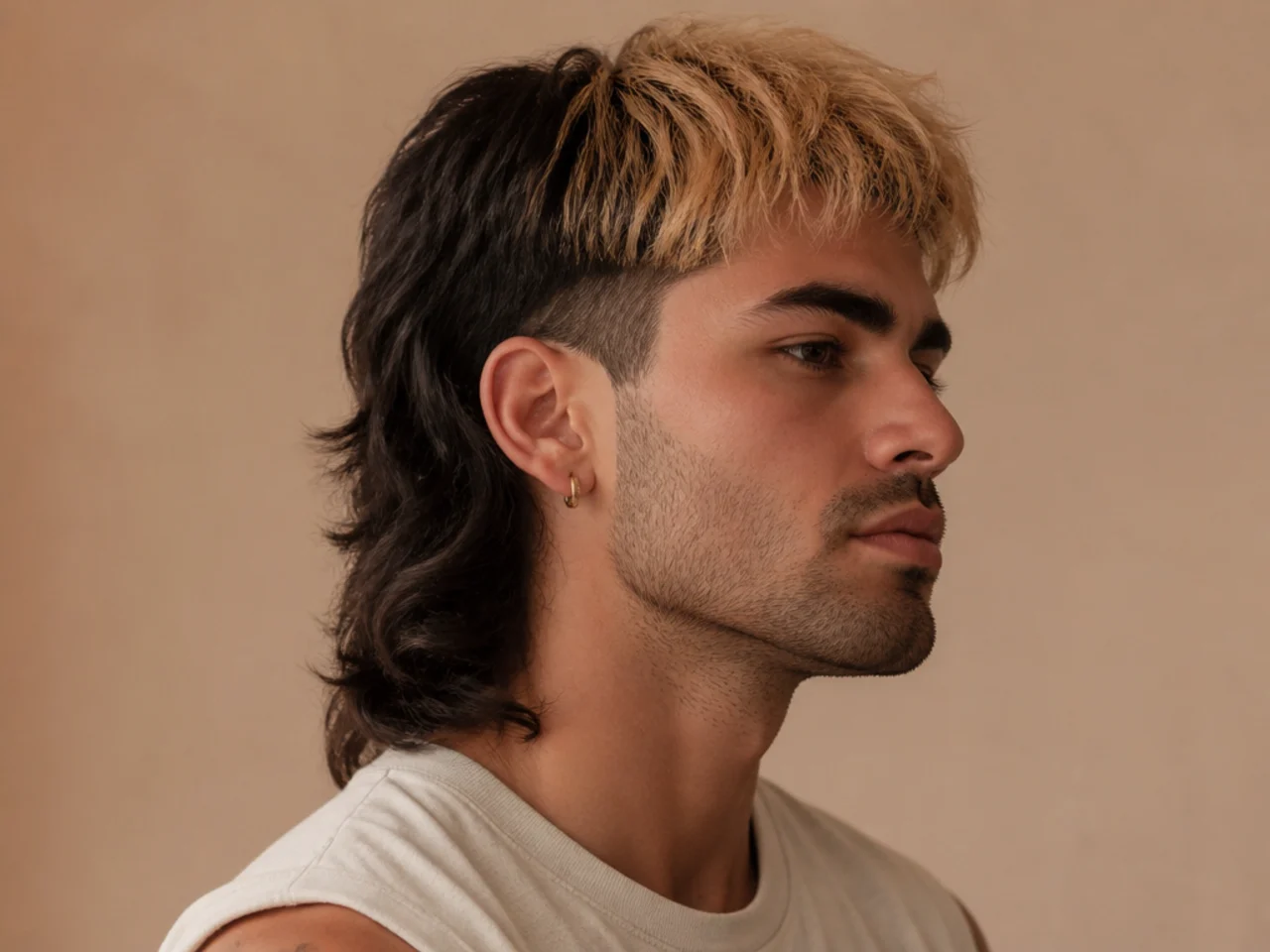
25. Slicked Back Mullet
The top and sides taken back off the face with product, tail left loose. Pulling the front back exposes the hairline and raises the apparent height of the head, so it flatters a short face and works against a long one.
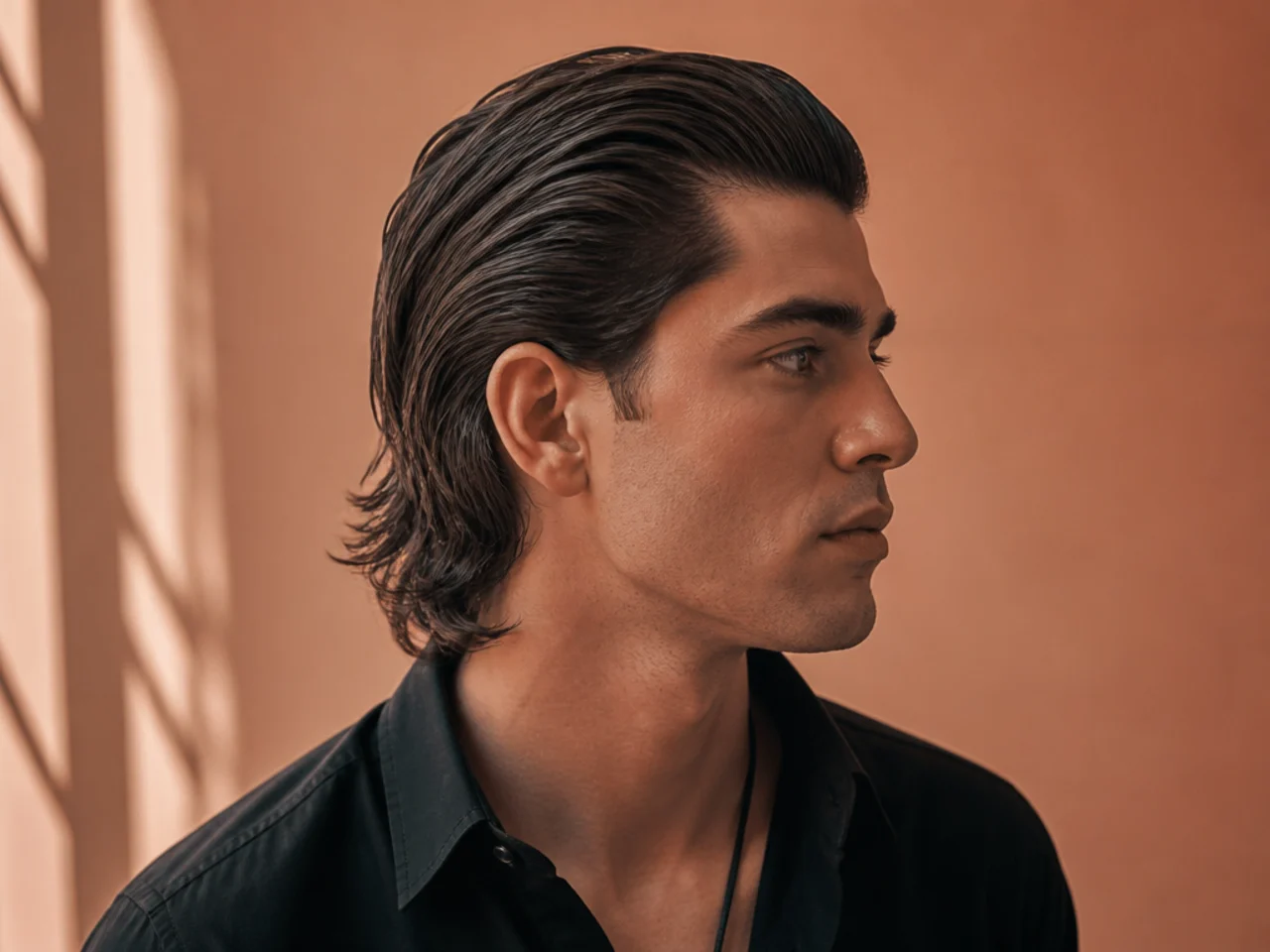
26. Mullet on a Receding Hairline
Bringing the front down over the temples covers the recession, and the weight at the back pulls the eye away from the hairline entirely. The slicked back version does the opposite, so pick one approach and commit to it.
27. Mullet on Thick Hair
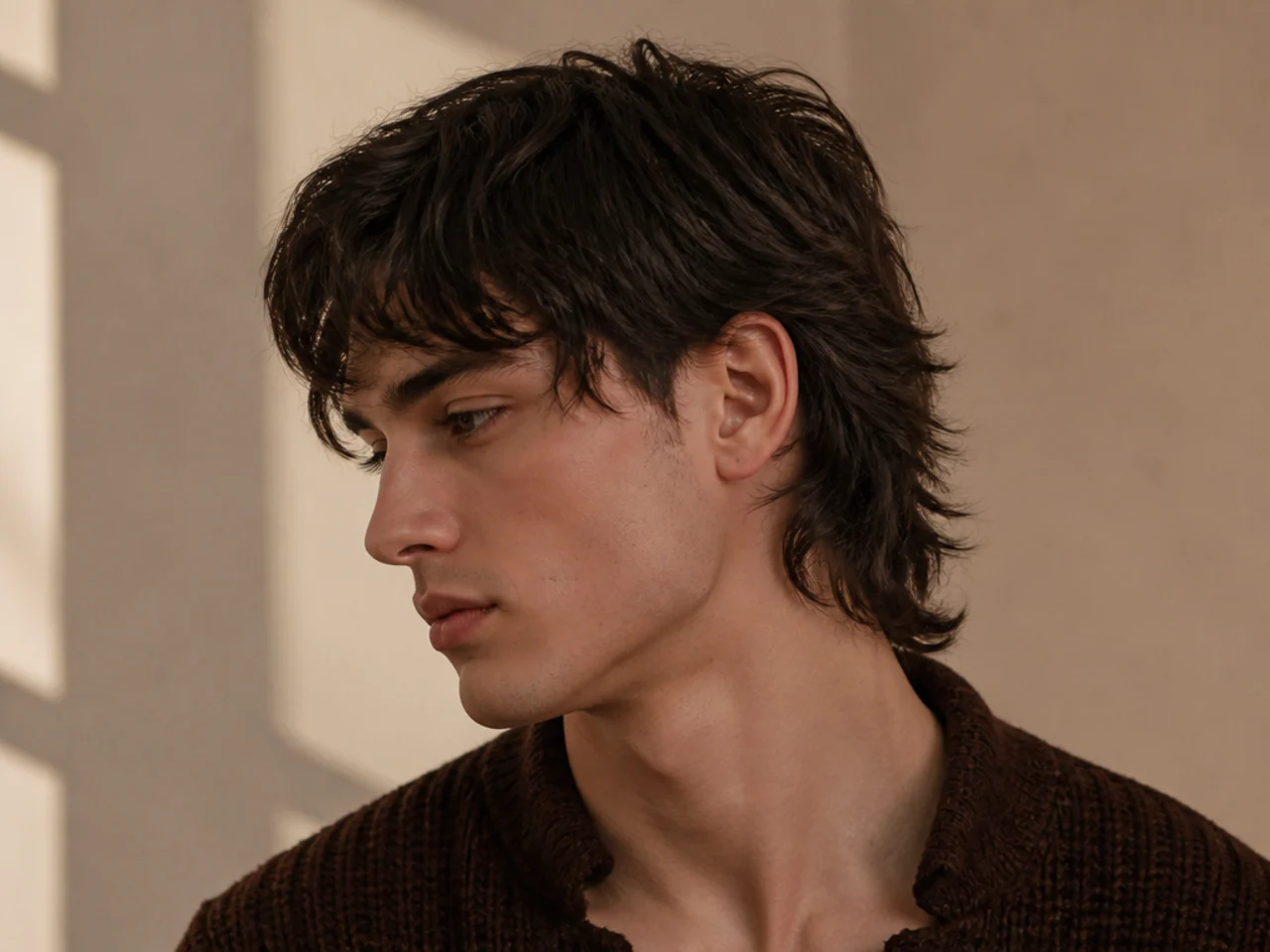
Thick hair holds a blunt perimeter sharply, which is why an unthinned tail sits as a solid wedge. Ask for the interior thinned rather than the outline shortened, so weight comes out of the middle and the shape you agreed to stays where it is.

28. Mullet on Fine Hair
Fine hair needs its blunt perimeter kept, because the outline is where the remaining density is actually visible. Over texturising is the fastest way to make a fine tail look stringy, so ask for the ends left alone and the volume built at the crown instead.
29. Mullet at Week Eight
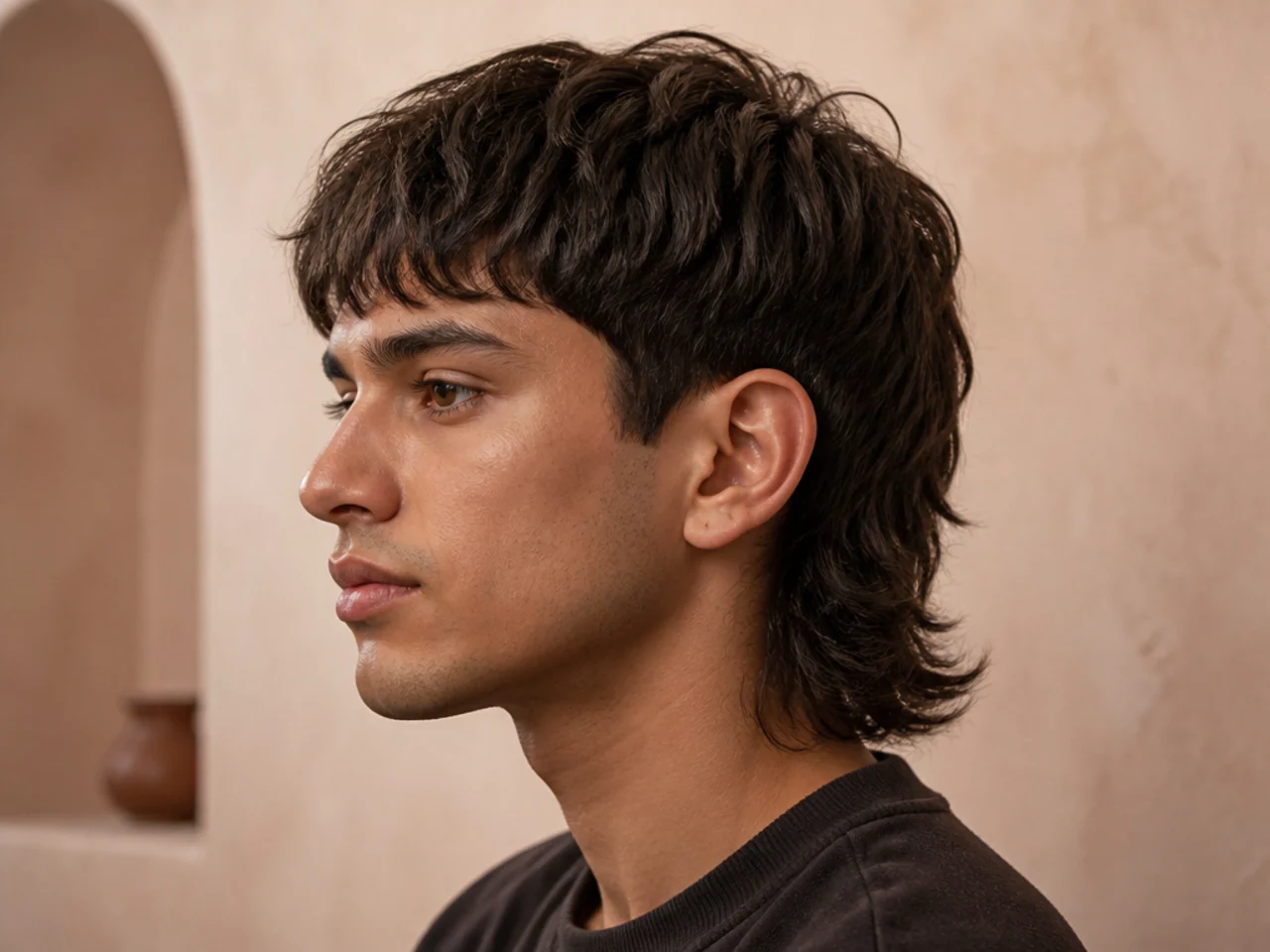
The sides have grown into the tail and the step has closed, which turns the cut into a shag. It is worth photographing, because if you prefer the head at week eight to the head at week one you should be asking for a blended mullet next time.

30. Business Mullet
The tail long enough to read as a mullet loose but short enough to sit inside a collar, with the sides tapered rather than faded. The trick is that a taper reads as a normal short back and sides from the front, so the cut only declares itself in profile.

Styling and Upkeep
Book by the sides, not the tail. A skin fade wants two weeks, a taper three to four. The tail can go months without a trim and usually should.
Ask for the ends point cut, not shortened. It takes weight out of the perimeter while leaving the outline where it is, which is the only way to change how a tail hangs without losing length.
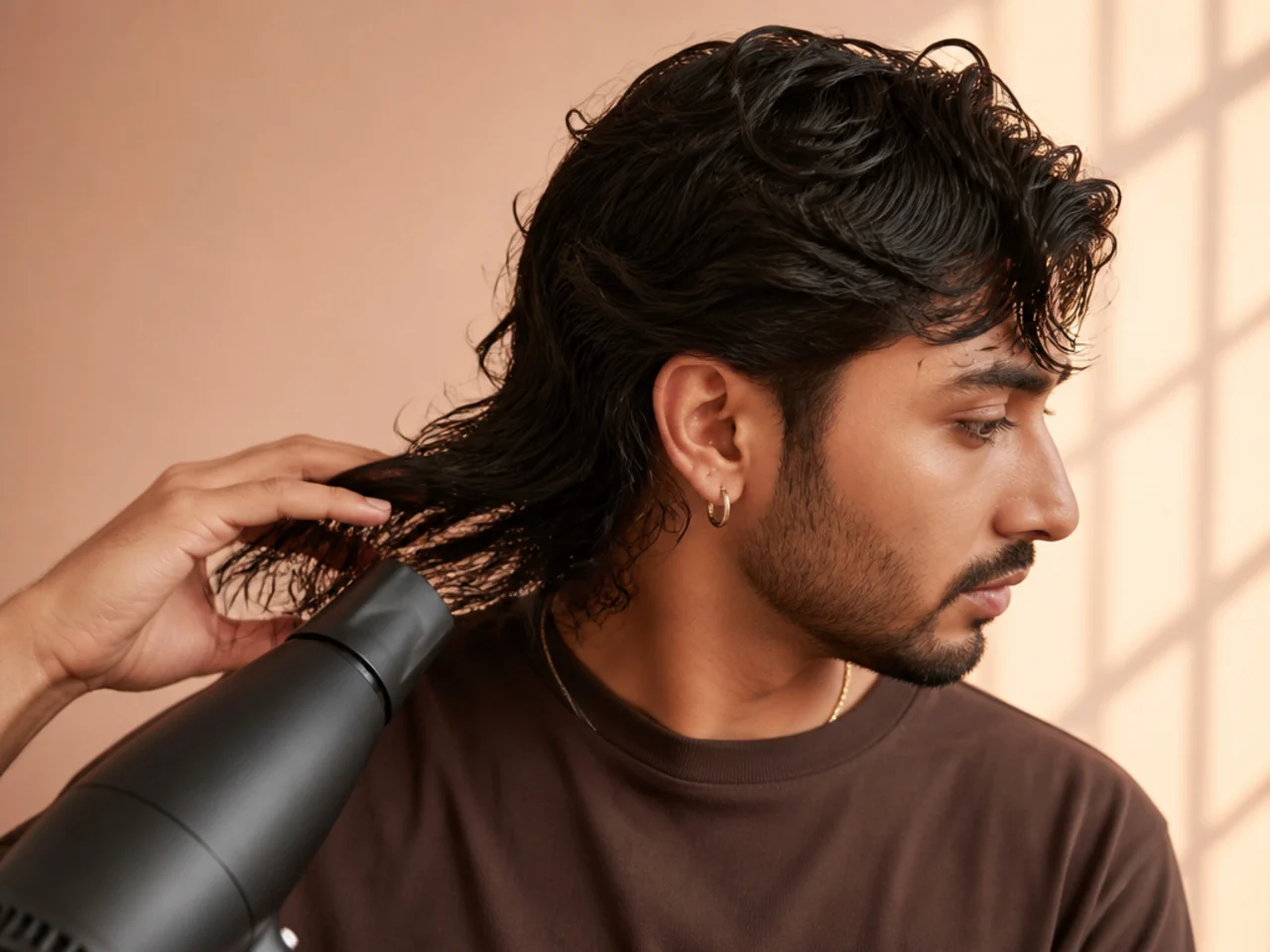
Dry the tail downward. Hair sets in the shape it dries in, so drying it forward or sideways builds a kink you then have to fight all day.
Photograph the transition height. It is the one measurement that changes the cut between visits, and it is the one nobody remembers by the next appointment.
Keep product at the front. The top and fringe need hold to stay short looking; product in the tail weighs it down and pulls it flat against the neck.
Mistakes to Avoid
Describing only the back. Half the cut is the front. Say how short the fringe and temples go, or the barber will guess and guess conservatively.
Cutting curly hair wet. Shrinkage costs two to four inches once it dries, and no amount of styling puts them back.
Going to skin on a monthly schedule. Bare scalp is visible stubble inside a fortnight. If you cannot get back in two weeks, ask for a taper finishing at a number one instead.
Running thinning shears through a fine tail. Fine hair depends on its blunt outline for the appearance of density, and thinning shears remove exactly that.
Letting the sides catch the tail up. Once the step closes the cut becomes a shag by default rather than by choice, which is a different haircut nobody asked for.
FAQ
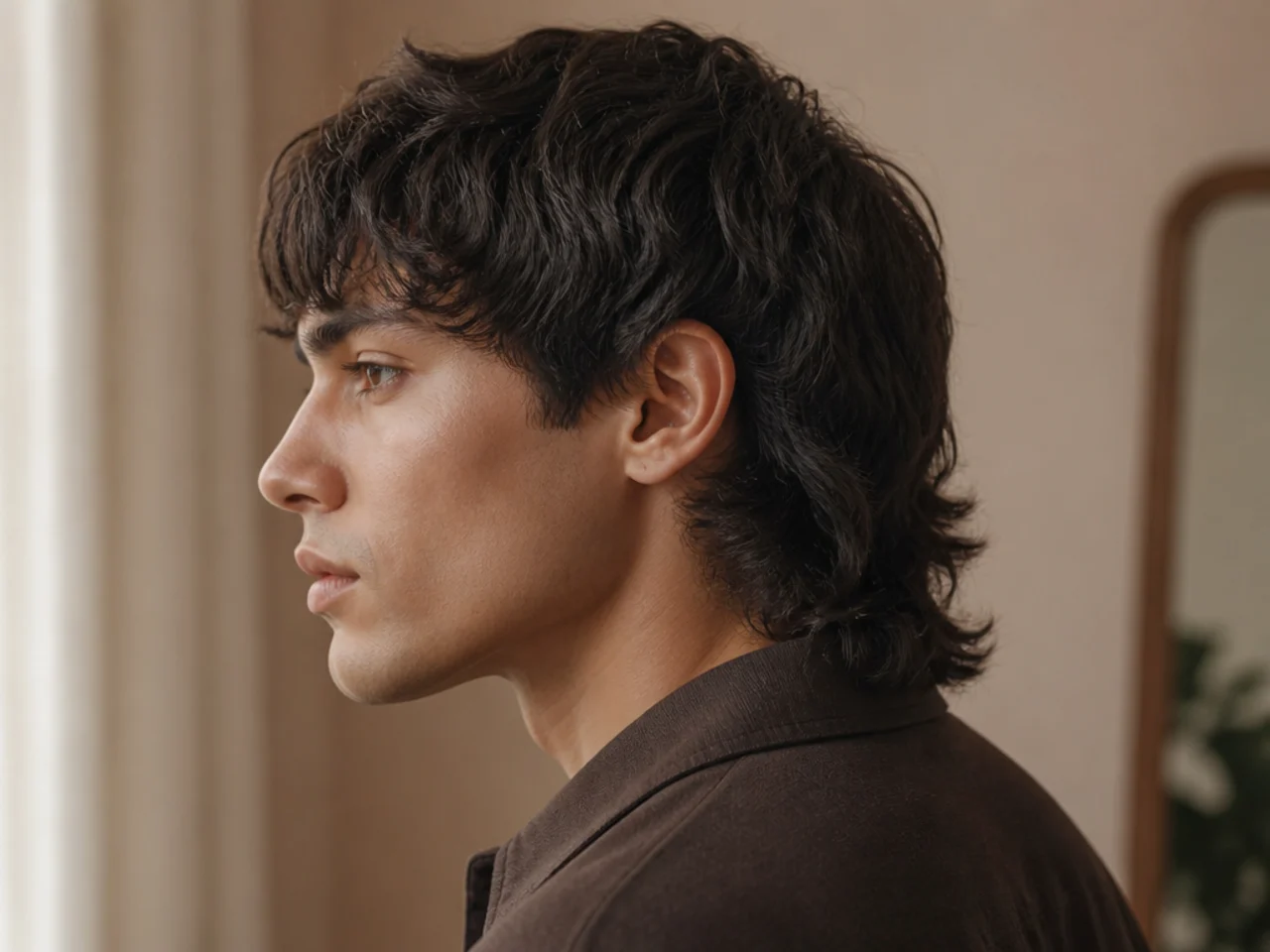
Mullet or wolf cut? The mullet is the perimeter; the wolf cut is the interior layering.
How short can the sides go? A number two at 6mm is the usual floor before it reads as a fade.
How often? Two weeks for a skin fade, three to four for a taper.
Final Thoughts
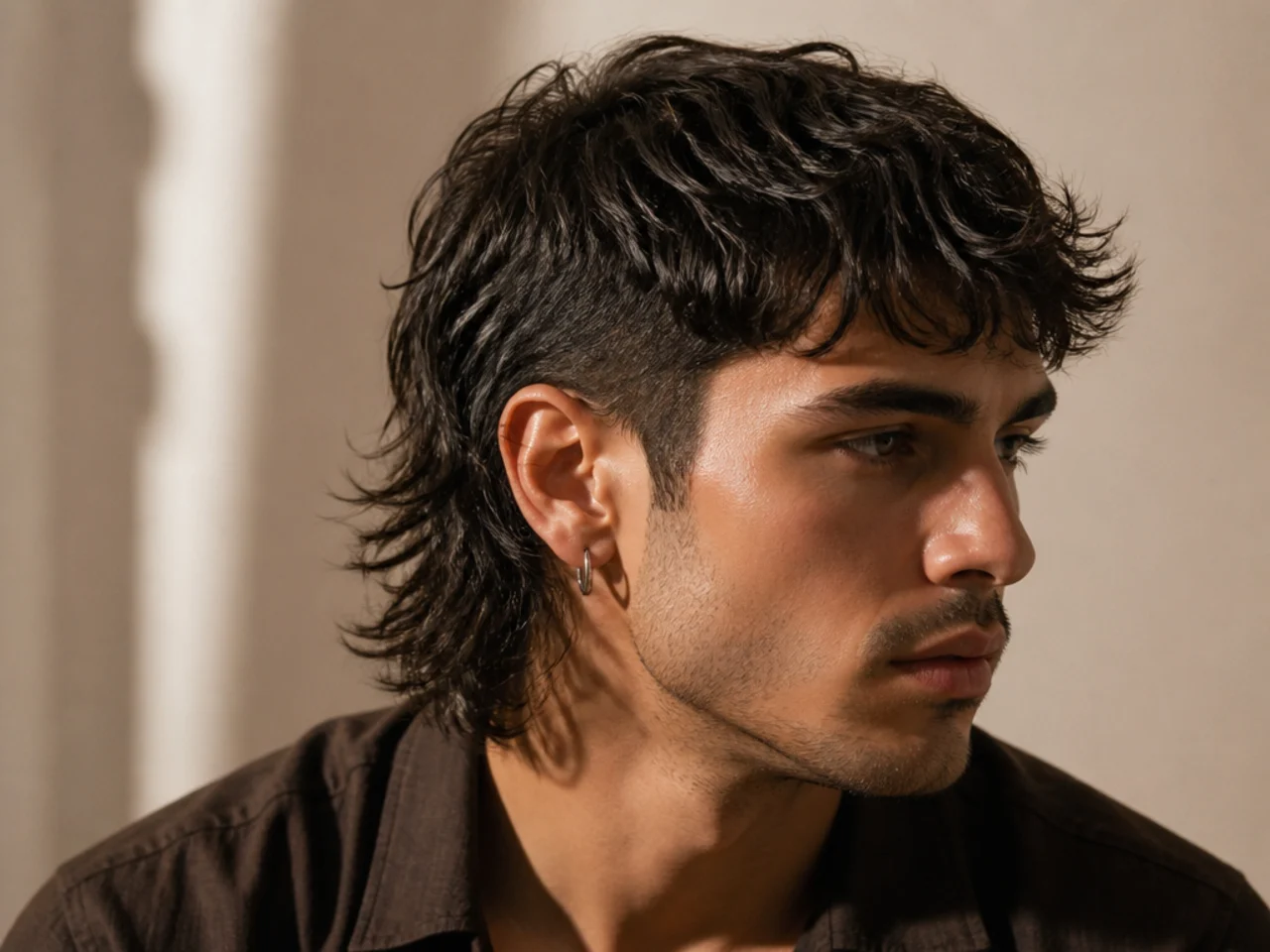
Describe the cut in three numbers and a landmark: where the front stops, what guard the sides take, and where the tail lands. That is enough for any barber to build the shape without guessing, and guessing is where most mullets go wrong.
For the version that stops at the nape see short mullet haircuts, and for the fade placement that leaves the tail its weight see the low fade mullet. More in Mullet and Wolf Cut.