
6 Wolf Cut Mistakes Guys Make and How to Fix
Six wolf cut mistakes I see on repeat in my stylist chair — from vague chair consults to flat combing habits — and the exact fix for each one, with real client stories.
In this article · 18
- What the Modern Wolf Cut Actually Needs
- Where Wolf Cut Mistakes Usually Start
- The Six Wolf Cut Mistakes I See Every Week
- 1. Walking In With No Reference Photos — Sam, 26
- 2. Blunt Ends Instead of Point-Cut Layers — Ricky, 23
- 3. Combing the Crown Flat Every Morning — Jake, 31
- 4. Loading Up on Heavy Pomade — Marco, 24
- 5. Stretching to Ten Weeks Between Trims — Kyle, 28
- 6. Picking the Wrong Side Treatment — Nate, 34
- The One Habit That Fixed Every Cut
- What to Do Next
- FAQ
- What is the biggest mistake guys make with a wolf cut?
- Why does my wolf cut look flat instead of layered?
- How often should I trim a wolf cut?
- Can I fix a bad wolf cut without shaving it all off?
- What styling product ruins a wolf cut?
- Is a wolf cut worth growing out for from a fade?
Six guys sit in my chair every week with a wolf cut they hate — and the same six wolf cut mistakes keep showing up. Vague consultations. Blunt-cut ends. Fingers replaced by a comb. Heavy product where matte should be. Trims stretched past ten weeks. Wrong side treatment for the workplace. Below are those six wolf cut mistakes men make, the client stories behind each one, and the exact fix I hand back at the chair.
What the Modern Wolf Cut Actually Needs
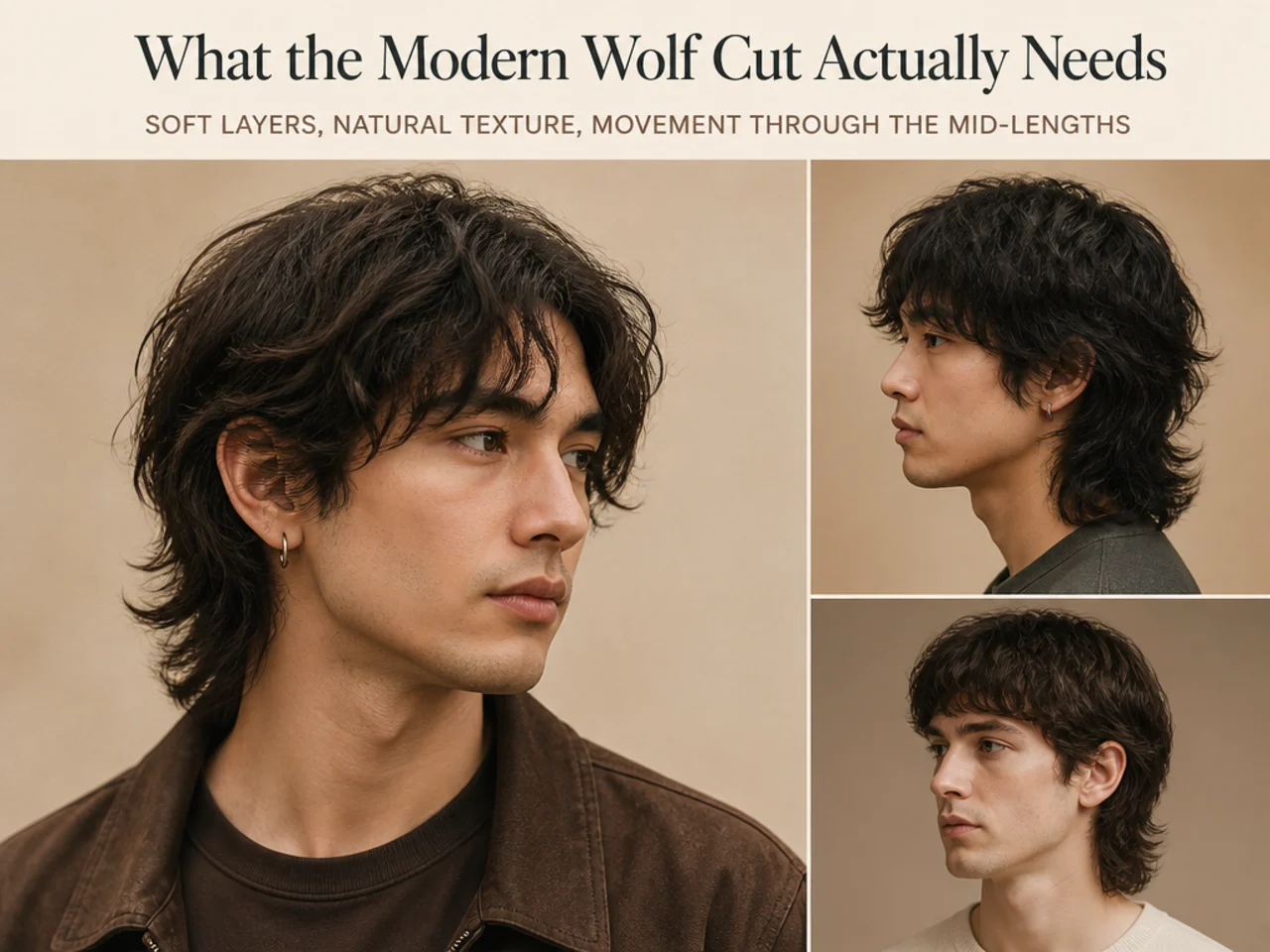
The wolf cut is a hybrid — the crown volume of a modern shag haircut sitting on the back-length concentration of a modern mullet. Three parts do the work together. Internal layers through the crown lift the top. Face-framing pieces starting at the cheekbone soften the front. A longer, textured back grazes the collar or drops just past it.
That three-part anatomy is why the mistakes below matter so much. Take away point-cutting on the layers and the shape collapses into a helmet. Load up wet-look product and the layered separation disappears. Skip the trim window and the whole silhouette drifts into an accidental mullet.
Every fix in this guide protects one of those three anatomical parts. The rest is discipline — booking on time, styling with fingers, matching your side treatment to your actual weekly life. If your barber understands the anatomy and you protect the routine, the cut reads intentional every day of the year.
Where Wolf Cut Mistakes Usually Start
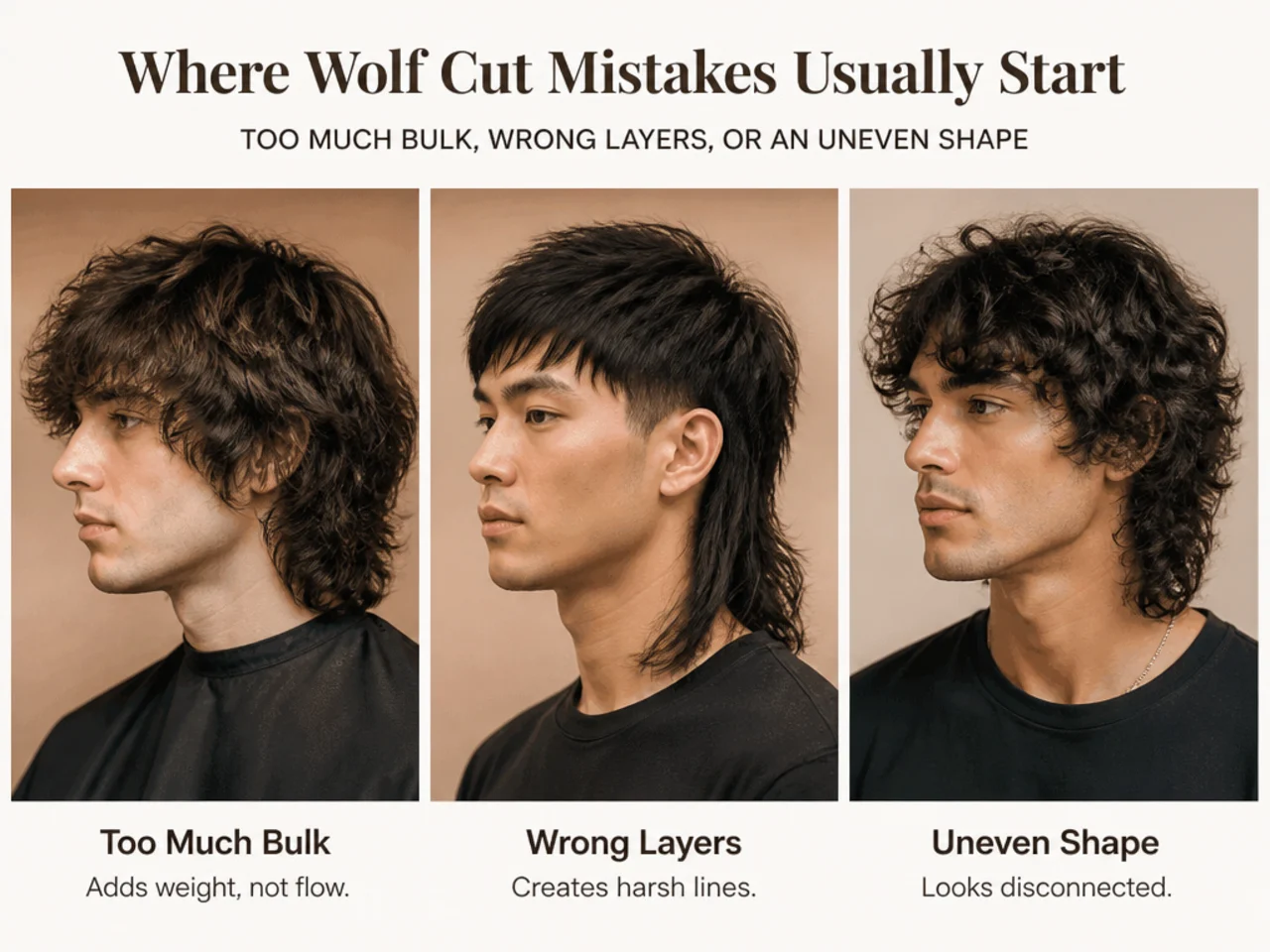
Nearly every bad wolf cut I recut started at the consultation. The client said "wolf cut" to a barber who'd only seen the 2021 TikTok version. Or they trusted the reference photo without checking whether their own hair type could hold that silhouette. Or they picked the sides based on aesthetic instead of workplace.
Face shape sets the ceiling. Oval and heart faces suit almost every wolf variation. Round faces need vertical lift — the high-volume or mullet-wolf variations. Square faces want softer, layered edges rather than hard disconnections. Long faces get better balance from a fringed or curtain version that breaks up vertical space.
Hair type is the other filter. Straight hair shows layer lines cleanly, and point-cutting is mandatory. Wavy hair does half the work naturally. Curly and coily hair build the shape without styling but need dry cutting so each coil is placed intentionally. Fine hair needs shorter perimeters and denser internal layers. Thick hair needs thinning through the mid-lengths so nothing turns into a hedge. Miss any of that at the consultation and the mistakes below start writing themselves.
The Six Wolf Cut Mistakes I See Every Week
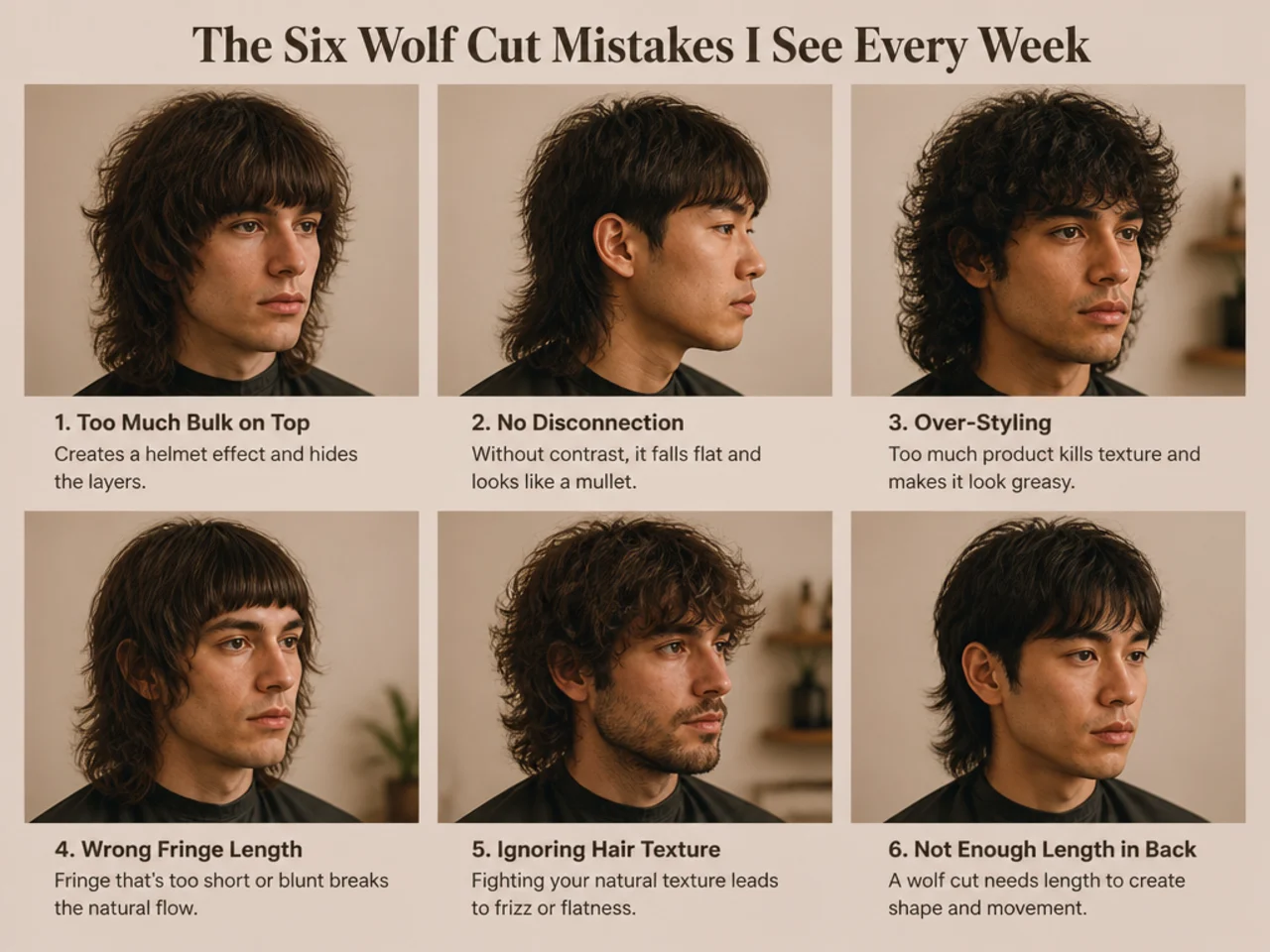
Every one of these mistakes has a name attached to it in my chair — a real client whose first version I rescued and whose corrected cut still books with me. The mistake, why it happens, the fix that worked, and what the corrected version looks like. Read the one closest to your own situation first, then borrow whatever fits.
1. Walking In With No Reference Photos — Sam, 26
Sam manages a downtown gastropub and had grown his hair for eight months specifically for the cut. He walked into his old barber's chair and said, "Give me a wolf cut." No reference photos, no length spec, no talk about the sides. He came to me two weeks later with a generic 2021-era shag that had nothing to do with what he'd saved on Pinterest.
The mistake was assuming "wolf cut" points to a single style. It doesn't. The family covers thirty variations that contradict each other on length, layer depth, side treatment, and fringe. A barber given no context defaults to whatever version they last cut, and that's rarely what you had in mind.
The fix took one appointment. Sam opened his phone and showed me three saved images — front, side, back — of a mid-length wolf with a soft scissor taper and no fringe. I cut fresh internal layers through the crown, rebalanced the back to three inches with point-cut ends, and softened the sideburns into the top. Total time in the chair: forty-five minutes.
What better looks like: he stopped fielding "what happened to your hair" the next Monday. His usual line at the bar now is that his colorist friend booked me the day after his recut. Three of his regulars have followed. Reference photos did all the work.
2. Blunt Ends Instead of Point-Cut Layers — Ricky, 23

Ricky is a graphic design student who wanted the wolf cut with fringe version. He booked a walk-in near campus. The stylist got the length right but blunt-cut every end with the shears held straight. The result was a heavy block of hair that stacked into a mullet slab rather than a layered wolf silhouette.
The mistake was assuming the wolf cut is a length-driven cut. It isn't. It's a technique-driven cut. Point-cutting — the scissor angle that thins each end at roughly forty-five degrees — is what gives the layered movement its signature texture. Blunt ends read flat and heavy, and the layers stack into a solid perimeter no styling product will lift.
The fix took thirty minutes. I didn't touch the length. Point-cut the entire perimeter with the shears angled inward, then re-textured the internal crown layers with the same technique. The volume that had disappeared came back within one blow-dry.
What better looks like: Ricky now air-dries with two fingers of matte cream and the layers hold movement for the whole day. He rebooked at six weeks — the exact window I'd flagged — and hasn't skipped a cycle since. If your stylist doesn't know what point-cutting means, walk out before they start.
3. Combing the Crown Flat Every Morning — Jake, 31
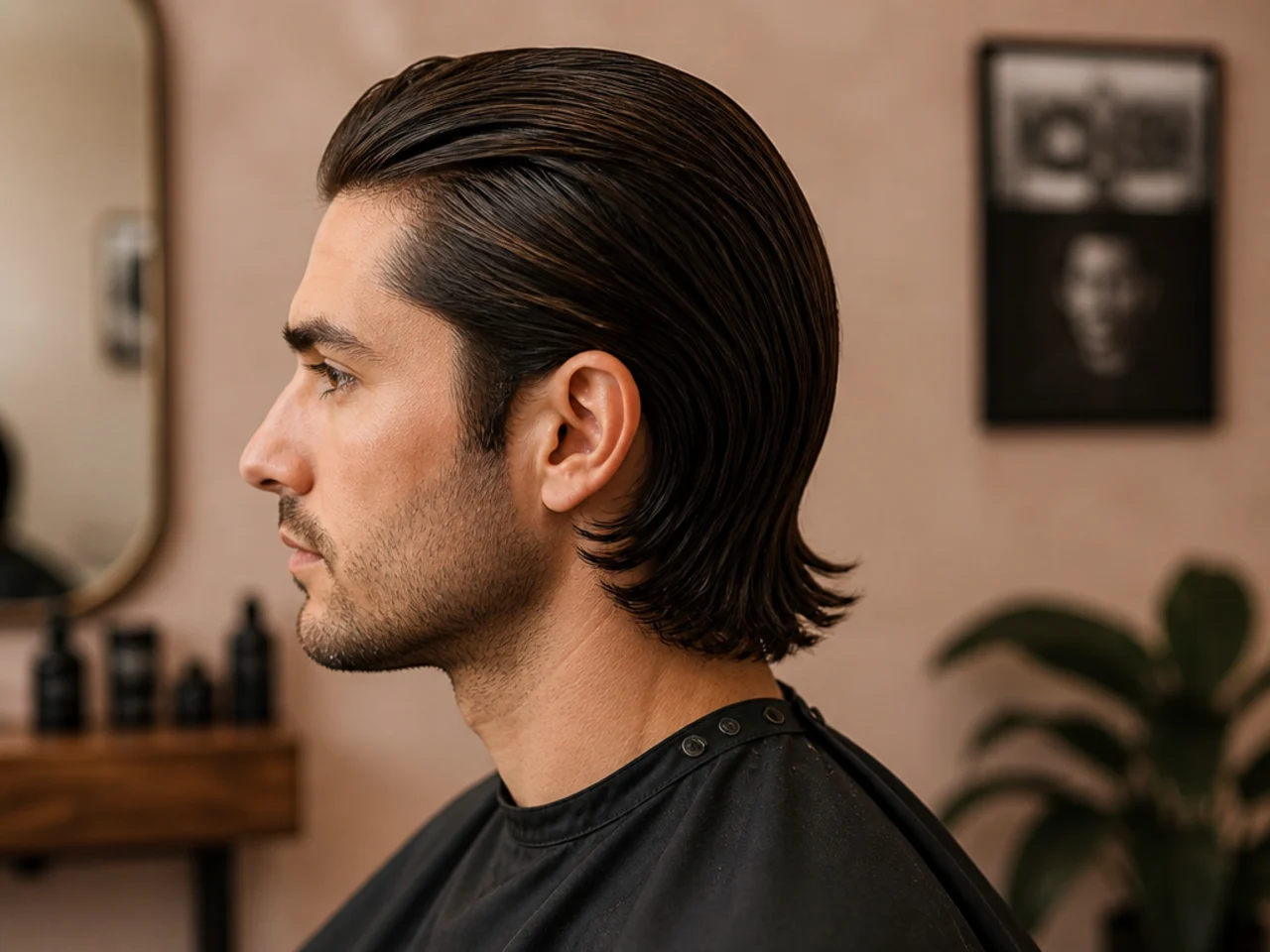
Jake is a software engineer with straight, medium-thick hair who's worn wolf cuts for two years. When his shape collapsed three months into his current cut, he blamed the cut. It wasn't the cut. He'd bought a fine-tooth comb over the holidays and had been combing the crown flat every morning like he was building a side part.
The mistake was treating layered hair like sectioned hair. A comb — especially a fine-tooth comb — drags each layer down to its longest point and cancels out the texture the cut was engineered to hold. The crown flattens against the scalp, the layer separation reads as a bad haircut instead of a bad habit, and no product can un-do the pull.
The fix cost nothing. I asked Jake to leave the comb in the drawer for one week and use his fingers to lift the roots at the crown after towel-drying. No re-cut, no product change — just the swap from comb to fingertips.
What better looks like: Jake sent me a mirror selfie a week later with visible crown height back. He now uses a wide-tooth comb only for the front pieces and nothing else. His shape has held cleanly for the six weeks following, which is when I saw him again. The single change beat every product he'd bought that year combined.
4. Loading Up on Heavy Pomade — Marco, 24
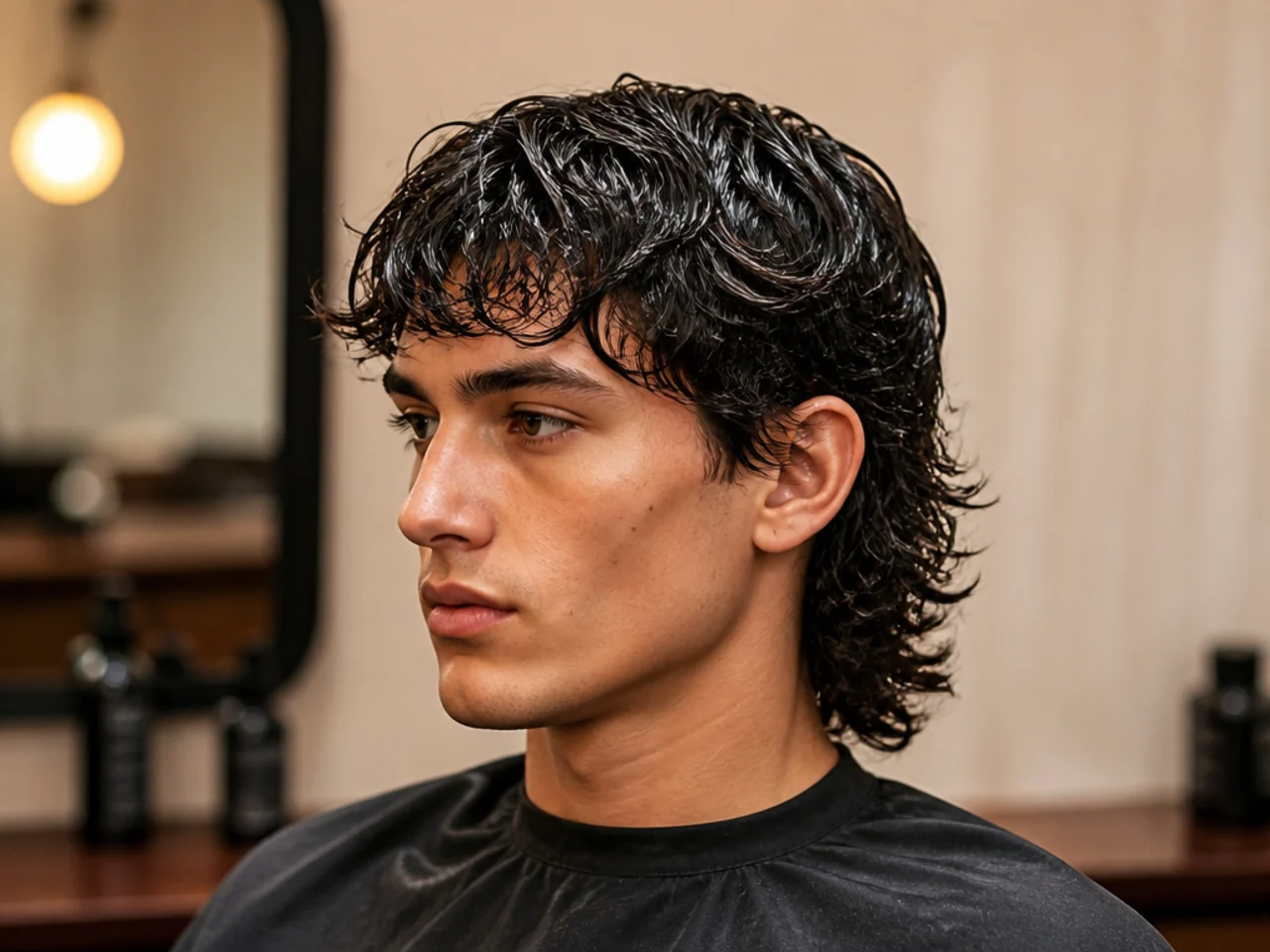
Marco DJs weekends at three different venues and rebooked with me after his first wolf cut sat "wrong" for a whole month. When I asked what he was styling with, he pulled a can of high-shine wet-look pomade out of his backpack — the kind meant for a slick-back, not a layered wolf.
The mistake was assuming more product means more definition. Heavy pomade weighs the layers down and separates them into stringy, greasy sections that catch light unevenly. A wolf cut is designed to hold shape from the cut, not from the product — you enhance the movement, you don't manufacture it. Wet-look finishes also read older than the cut is meant to feel.
The fix took a five-minute product swap. Matte clay for hold, a lightweight sea-salt spray for movement, and a light hairspray for lockdown. Pea-sized amounts of the clay worked through the top with fingertips, two pumps of the spray on damp back length, and no comb through any of it.
What better looks like: Marco sent me a booth selfie the next Saturday. The layers moved with his head under the club lights instead of sitting glued down. He now runs the same three-product rotation year-round and has stopped buying anything at drugstore checkout. Product hierarchy — matte first, salt second, spray last — is the sequence that saved his cut.
5. Stretching to Ten Weeks Between Trims — Kyle, 28

Kyle is a paramedic on twenty-four-hour shifts and doesn't always want to spend his off day at the salon. He'd been booking every ten weeks — sometimes twelve — instead of the six I'd suggested at the start. By month three, the layered wolf had drifted into a shapeless mullet with a triangular back.
The mistake was treating a wolf cut like a fade schedule. A fade reads scruffy in three weeks; a wolf cut reads acceptable at eight. But by ten, the layer differential has closed up and the back has grown past the shape the cut was engineered around. Once the triangle forms, no styling product recovers it — the length has to come off and the layers have to be rebuilt.
The fix required both a re-cut and a scheduling change. I trimmed Kyle's layers down to the original wolf silhouette, then booked his next six visits on his shift-off Tuesdays before he left the chair. Standing appointments removed the "when should I go back" decision, which is where he was losing the timeline.
What better looks like: Kyle's shape has stayed consistent for the full year since. He also stopped complaining about "my hair looking weird" on rotation weeks. Every one of my long-cycle clients has moved to standing appointments after seeing his result. A consistent haircut cadence does more for the shape than any single visit ever will.
6. Picking the Wrong Side Treatment — Nate, 34
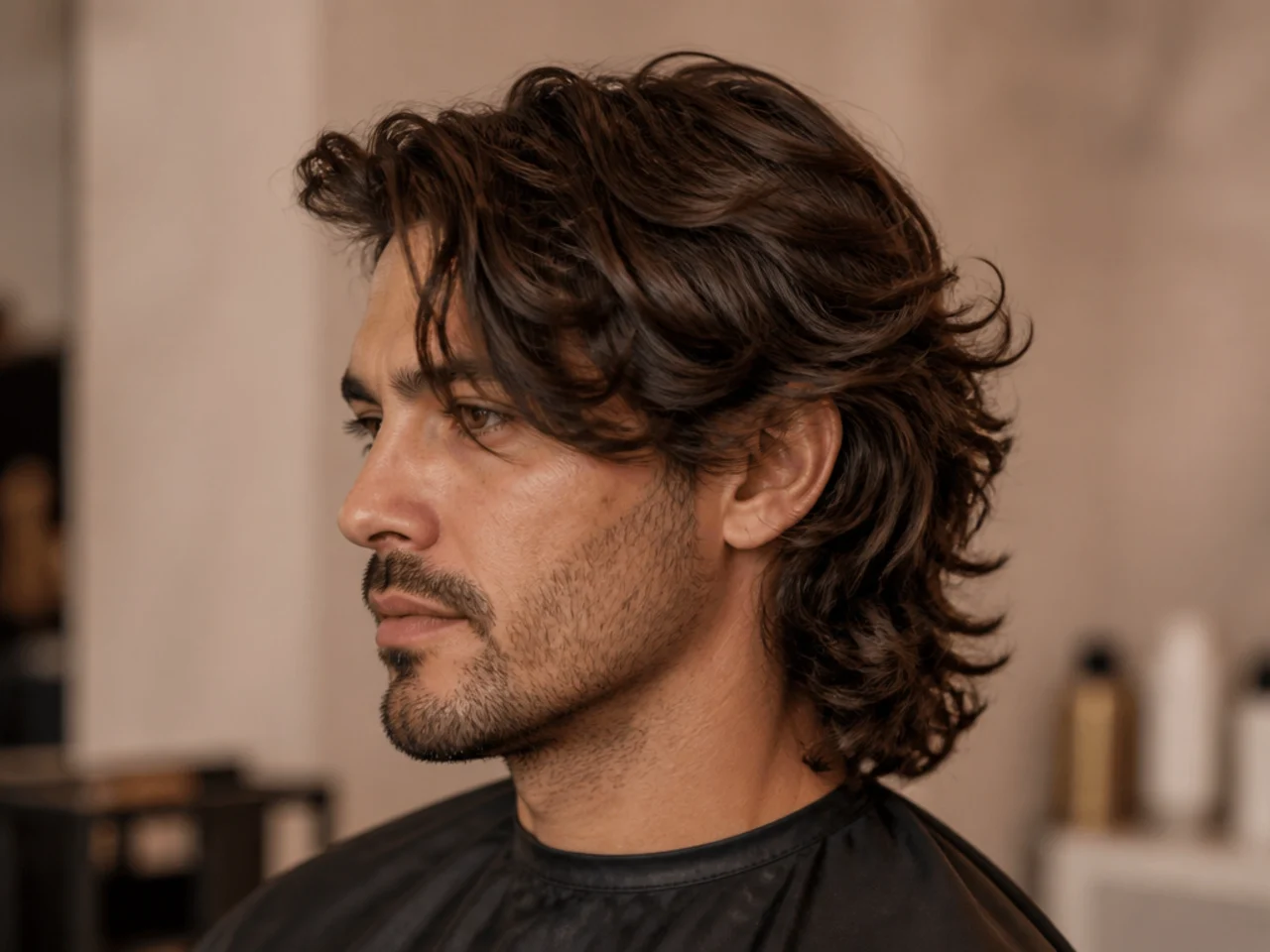
Nate is a corporate lawyer at a downtown firm with a strict client-facing dress code. He'd asked his previous barber for a full low taper fade with a disconnected undercut — the reference photo was a musician he liked. His managing partner pulled him aside the following Monday.
The mistake was matching the side treatment to a reference photo instead of matching it to the room where he spends most of his week. A hard disconnection reads bold and creative — great in a design studio, wrong at a client meeting. The reverse is also true; a soft scissor taper on a nightlife-focused guy reads under-styled.
The fix took an appointment plus a scheduling shift. I softened the disconnection into a clean scissor taper — one-and-a-half inches at the top of the sideburn tapering down to half an inch at the bottom — and blended the top into the taper with no hard line. Same layered wolf silhouette on top, workplace-appropriate frame around it.
What better looks like: Nate's managing partner emailed him a week later with a "nice cut" line in passing. He kept the wolf-and-taper for the next two years. When he moved firms into a more creative role, we adjusted the taper into a low fade — same top, different frame. The wolf cut is flexible at the sides. Your side treatment should track your workplace, not your Spotify playlist.
The One Habit That Fixed Every Cut
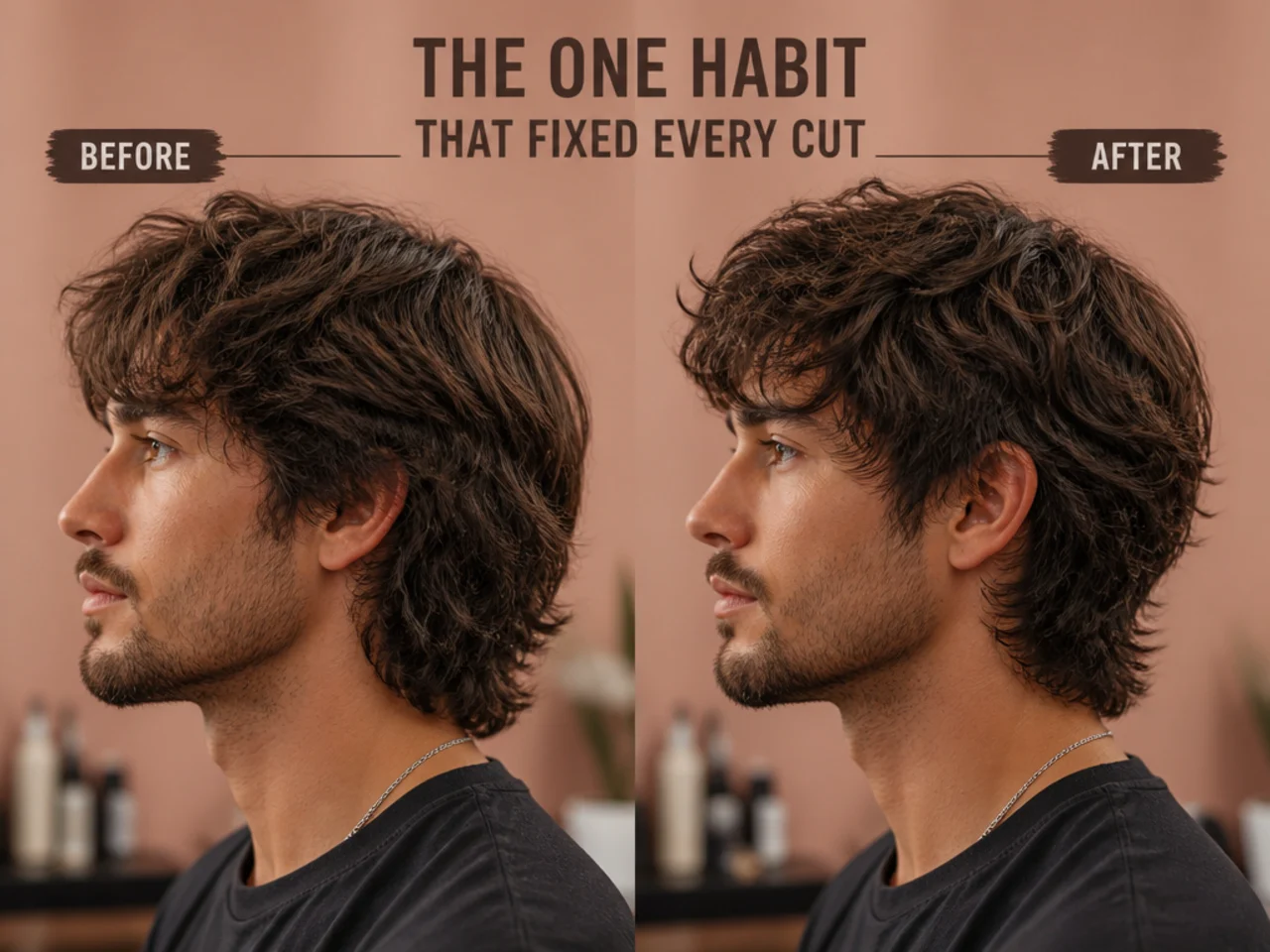
Every one of these six clients had the same recovery arc. The bad first version, the recut with me, and then — the actual difference — a change in how they briefed the chair for every appointment after that.
They started bringing the same three reference photos to every visit. Not "the same style" every time — literally the same photo files. Wolf cuts drift half an inch per session if you let them. The same reference photo, held next to the face at the start of every appointment, gives every barber the same silhouette to aim for. Every time.
Reference photos plus standing appointments plus finger-styling. That's it. The three habits together drop the "why does my hair look weird" question rate to zero for my regulars. No product hack, no expensive salon program — just the same photo, the same schedule, and the same styling method every single day.
If you take one thing from this whole guide, take that. Your wolf cut only reads intentional when your maintenance is intentional. Everything else is the cut trying to work around a routine that wasn't designed for it.
What to Do Next
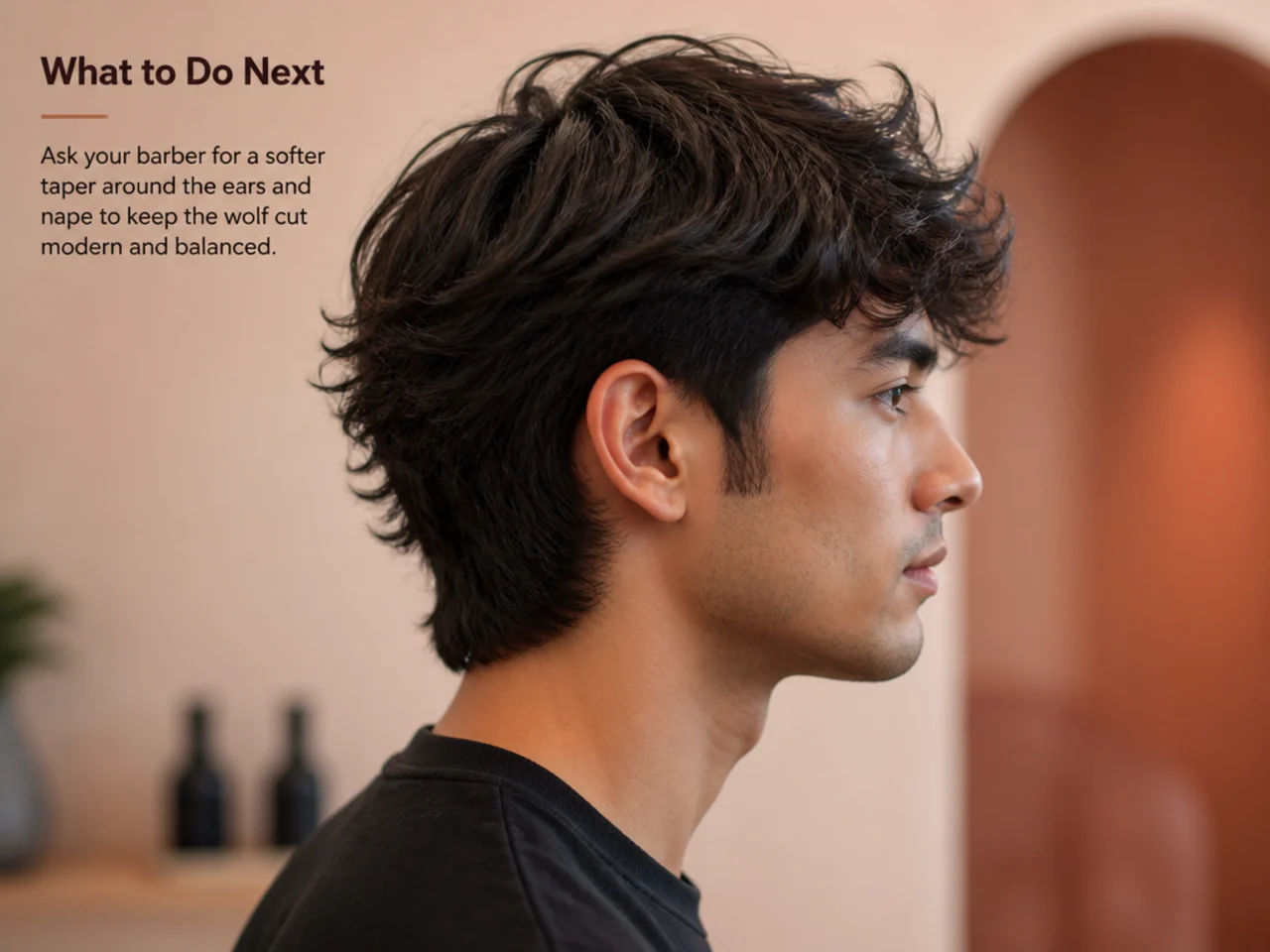
Pick your version first. If you haven't landed on the exact wolf silhouette you want, browse the wolf cut hair men library — thirty variations, each with reference frames and the chair language to hand your barber. If you're still weighing the wolf against a straight mullet, the modern mullet haircut men guide walks through the silhouette differences.
Then match the version to your hair type. Straight hair: the wolf cut men straight hair guide covers the point-cutting technique that saves you from the blunt-cut mistake. Curly hair should be cut dry — the curly wolf cut men guide explains why. If you want the shortest, lowest-commitment version that still reads as a wolf, the short wolf cut men piece covers the office-safe variations.
Book a stylist with a real wolf cut portfolio. Ask to see three photos of layered work on their Instagram before you sit down — not fades, not tapers, wolf cuts specifically. Any barber can be great at fades and still put a bad wolf on your head. If a friend has one that reads well, ask them who cut it. Word of mouth beats Google reviews for shape-heavy cuts.
Confirm your cadence. Standing appointments every six weeks is the single scheduling move that separates my regulars from the rest. If you're not sure your calendar supports it, pick the short wolf cut men version or hold at a soft low taper fade around a shorter top until you're ready to commit. Growing out from a fade? A stopover at a textured crop keeps the shape clean for the three months of awkward length before the wolf is realistic.
FAQ
What is the biggest mistake guys make with a wolf cut?
Walking in without reference photos. The wolf cut family covers thirty variations that contradict each other on length, layer depth, side treatment, and fringe. A barber given no context defaults to whatever version they last cut, which is rarely what you had in mind. Three photos — front, side, back — plus lengths in inches turns "give me a wolf cut" into an actual instruction.
Why does my wolf cut look flat instead of layered?
Two possible causes. First, the layers weren't point-cut — blunt ends stack into a solid block and cancel out the movement the shape is supposed to hold. Second, you're using a fine-tooth comb through the crown, which drags each layer down to its longest point. Both are fixable — one with a rebooked appointment, one with a drawer.
How often should I trim a wolf cut?
Every five to eight weeks — non-negotiable. Wait longer and the layers close up and the back drifts into a triangle. Fade sides need their own touch-up every two to three weeks separately from the layered work. Standing appointments beat trying to remember every cycle.
Can I fix a bad wolf cut without shaving it all off?
Almost always. Most bad wolf cuts are undercut with layer issues that a skilled barber can rebalance in one visit — point-cut the perimeter, re-texture the crown, blend the sideburns into the top. Bring the reference photo you originally wanted so the recut has a target instead of a guess.
What styling product ruins a wolf cut?
Heavy pomade, wet-look gel, and anything with a high-shine finish. They flatten the layered texture and separate it into greasy strings. Swap to a matte clay for hold, a matte cream for pliability, or a sea-salt spray for movement — pea-sized amounts, finger-work only. The cut is engineered to work light.
Is a wolf cut worth growing out for from a fade?
Yes, if you commit to the three-to-five-month timeline. Plan for at least three inches on top and two at the back before the shape reads. Get trimmed every six weeks during the grow-out to keep the perimeter clean, and use the awkward middle stage to try a textured crop or an overgrown taper on the way through.