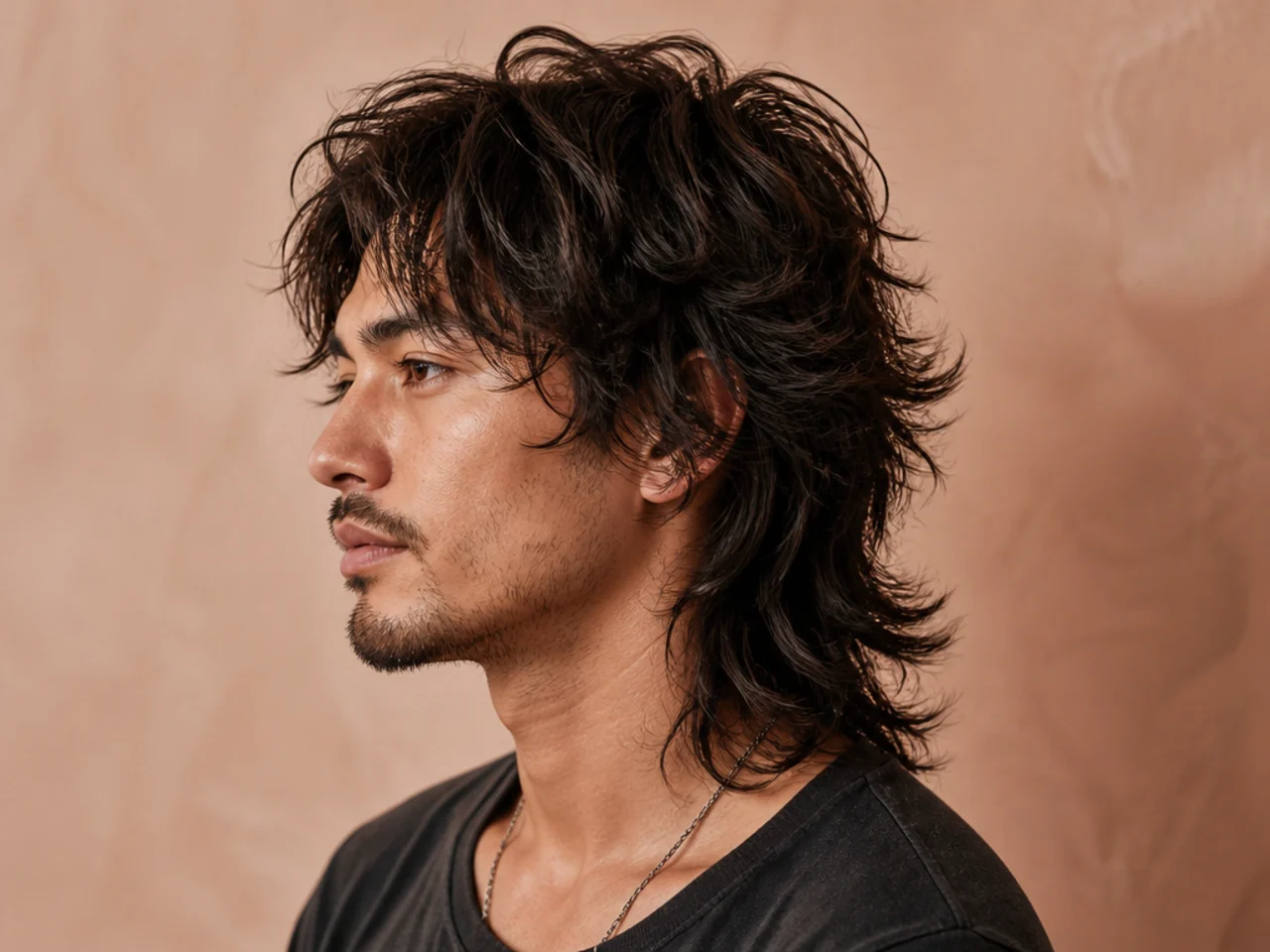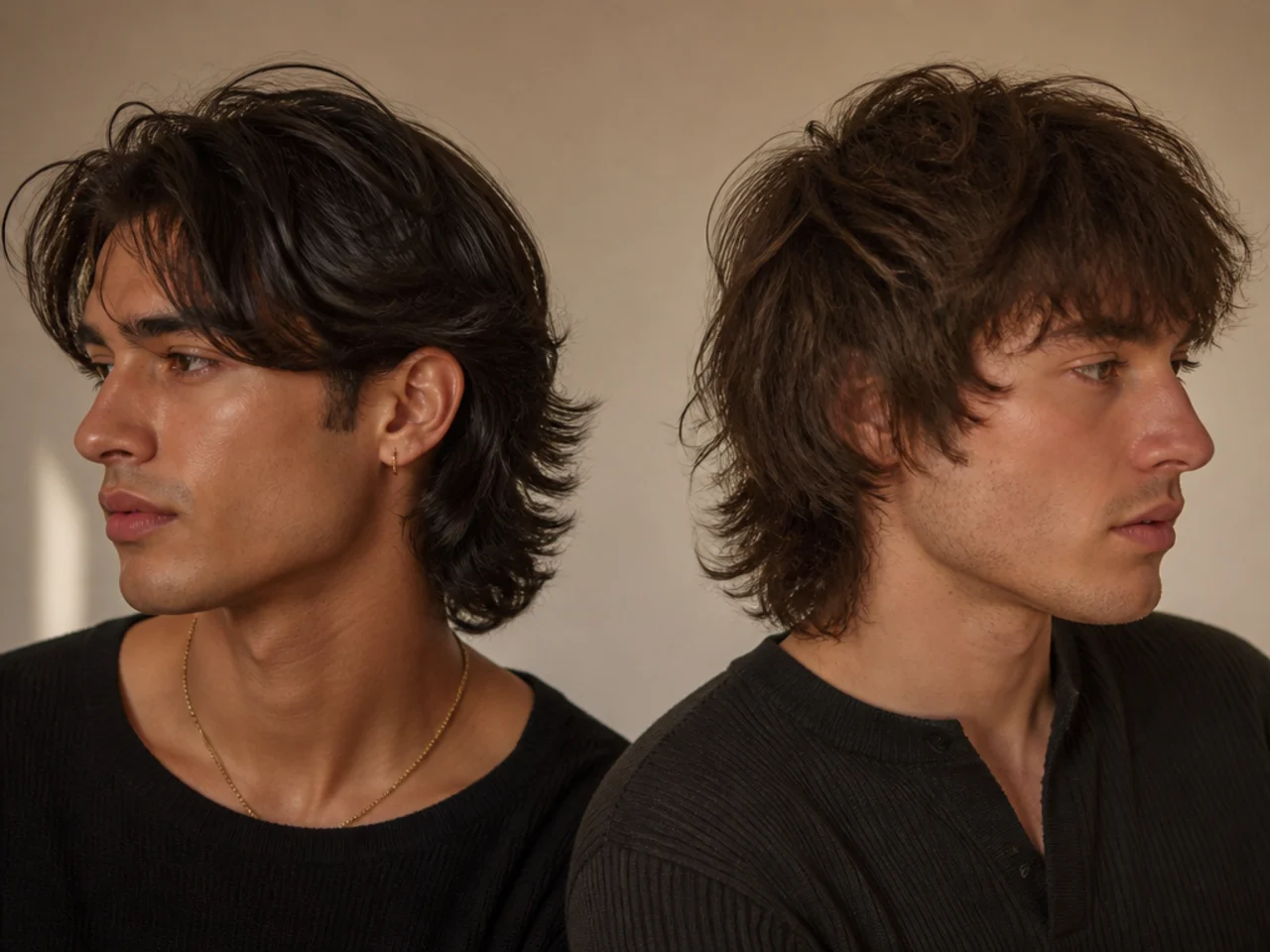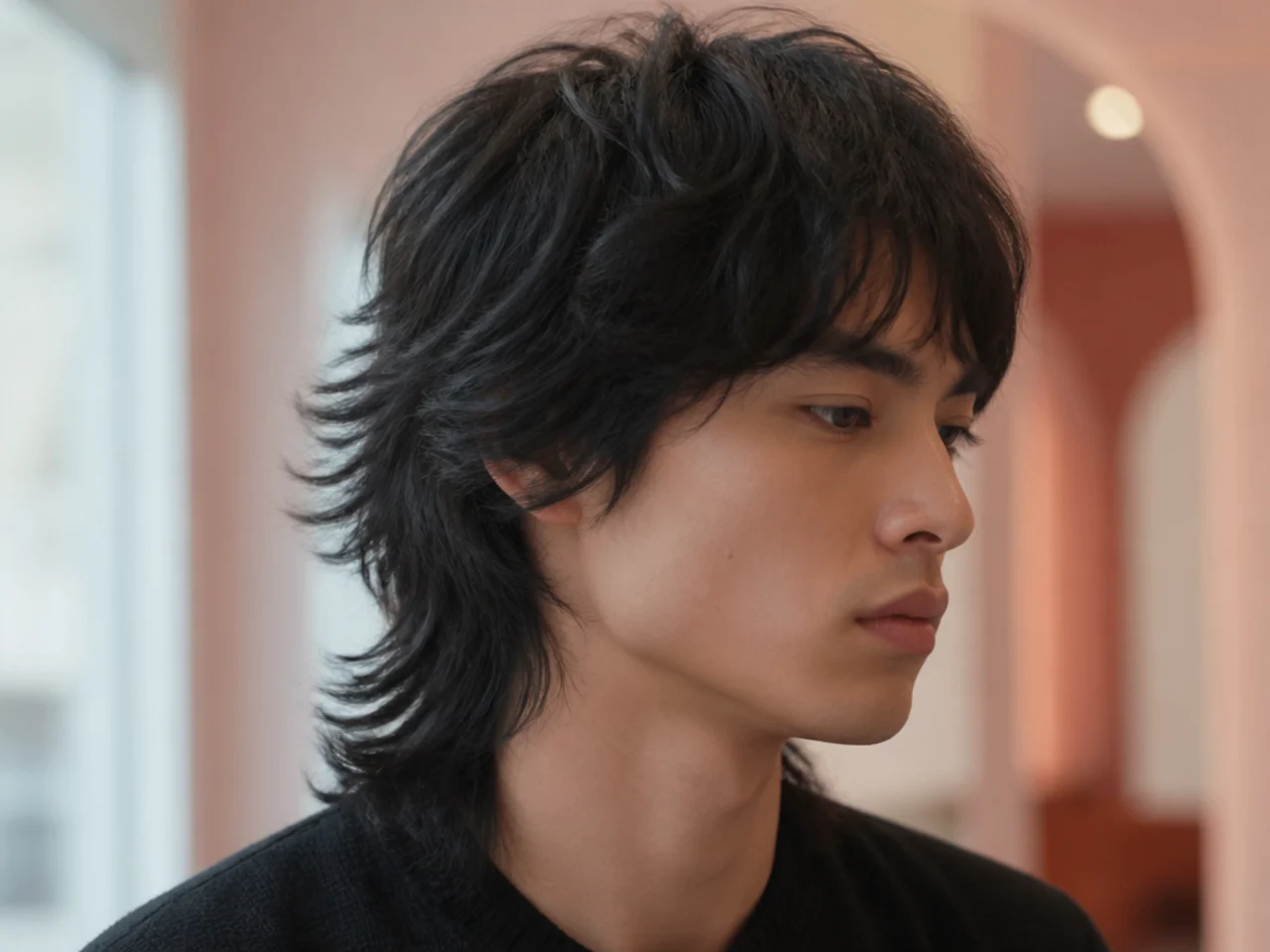
25 Wolf Cut Mullet Hybrids That Look Sharp
A wolf cut is defined by its layering and a mullet by its outline, so the two combine cleanly. Twenty five hybrids, and the one distinction that decides which of them you are actually asking for.
In this article · 32
- Where The Wolf Cut Ends And The Mullet Begins
- How To Choose Your Hybrid
- The 25 Wolf Cut Mullet Hybrids
- 1. The Soft Blend
- 2. The Disconnected Wolf Mullet
- 3. The Tapered Wolf Mullet
- 4. The Low Fade Version
- 5. The Mid Fade Version
- 6. Curtain Fringe On Top
- 7. A Textured Crop Front
- 8. The Korean Wolf Mullet
- 9. The Shaggy Fringe
- 10. Wavy Hair Wolf Mullet
- 11. Curly Wolf Mullet
- 12. Coily Wolf Mullet
- 13. Straight Hair Wolf Mullet
- 14. Fine Hair Wolf Mullet
- 15. Thick Hair Wolf Mullet
- 16. The Short Wolf Mullet
- 17. The Long Wolf Mullet
- 18. The Two Block Wolf Mullet
- 19. Wolf Mullet With A Hard Part
- 20. Wolf Mullet Into A Beard
- 21. The Bleached Tail
- 22. The Grown Out Wolf Mullet
- 23. The Wet Look Finish
- 24. The Middle Part Wolf Mullet
- 25. The Wolf Mullet At Week Four
- Styling and Upkeep
- Mistakes to Avoid
- FAQ
- Final Thoughts
Most people asking for a wolf cut mullet are describing two different things at once, and only one of them is decided by the clippers.
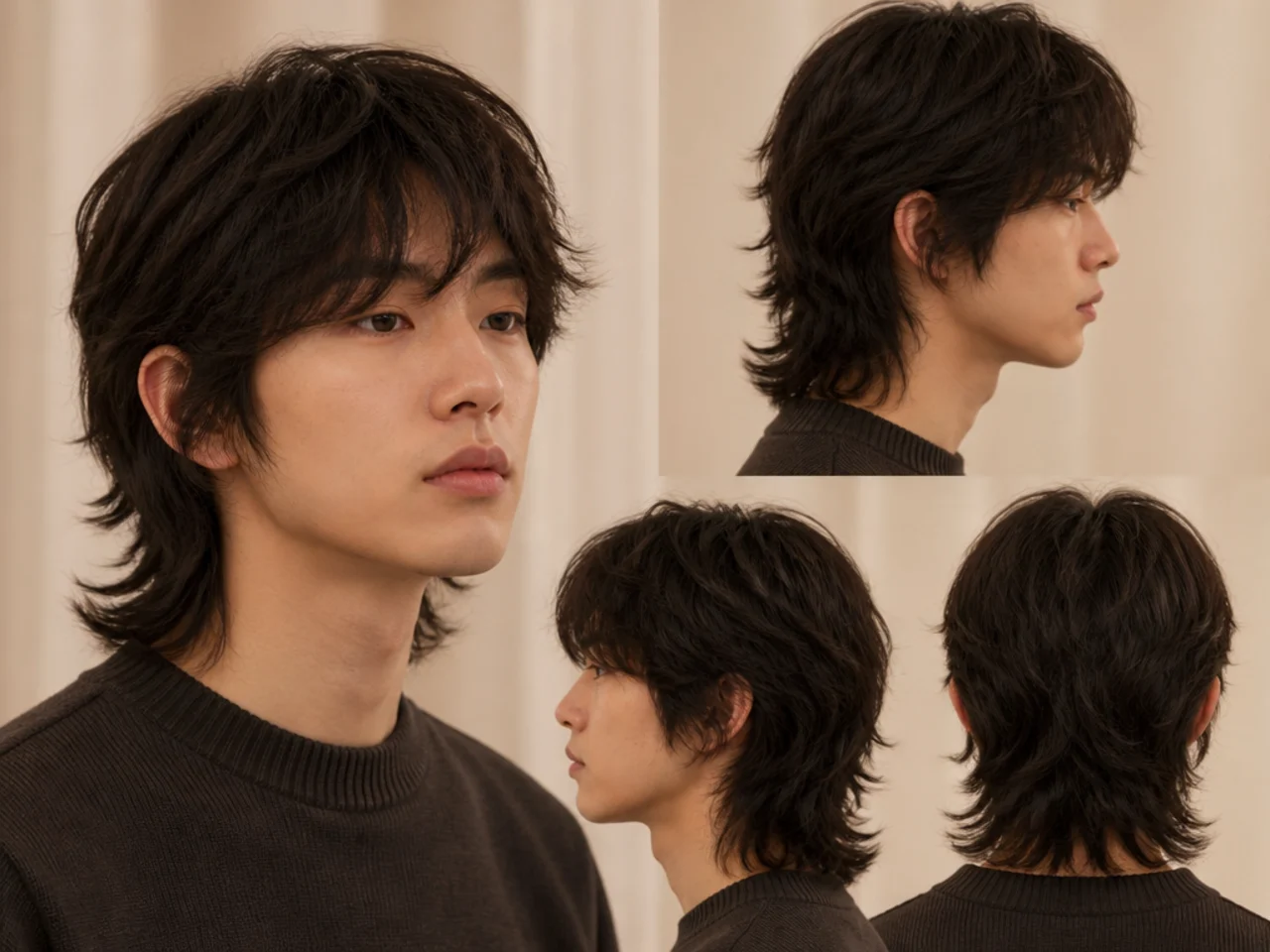
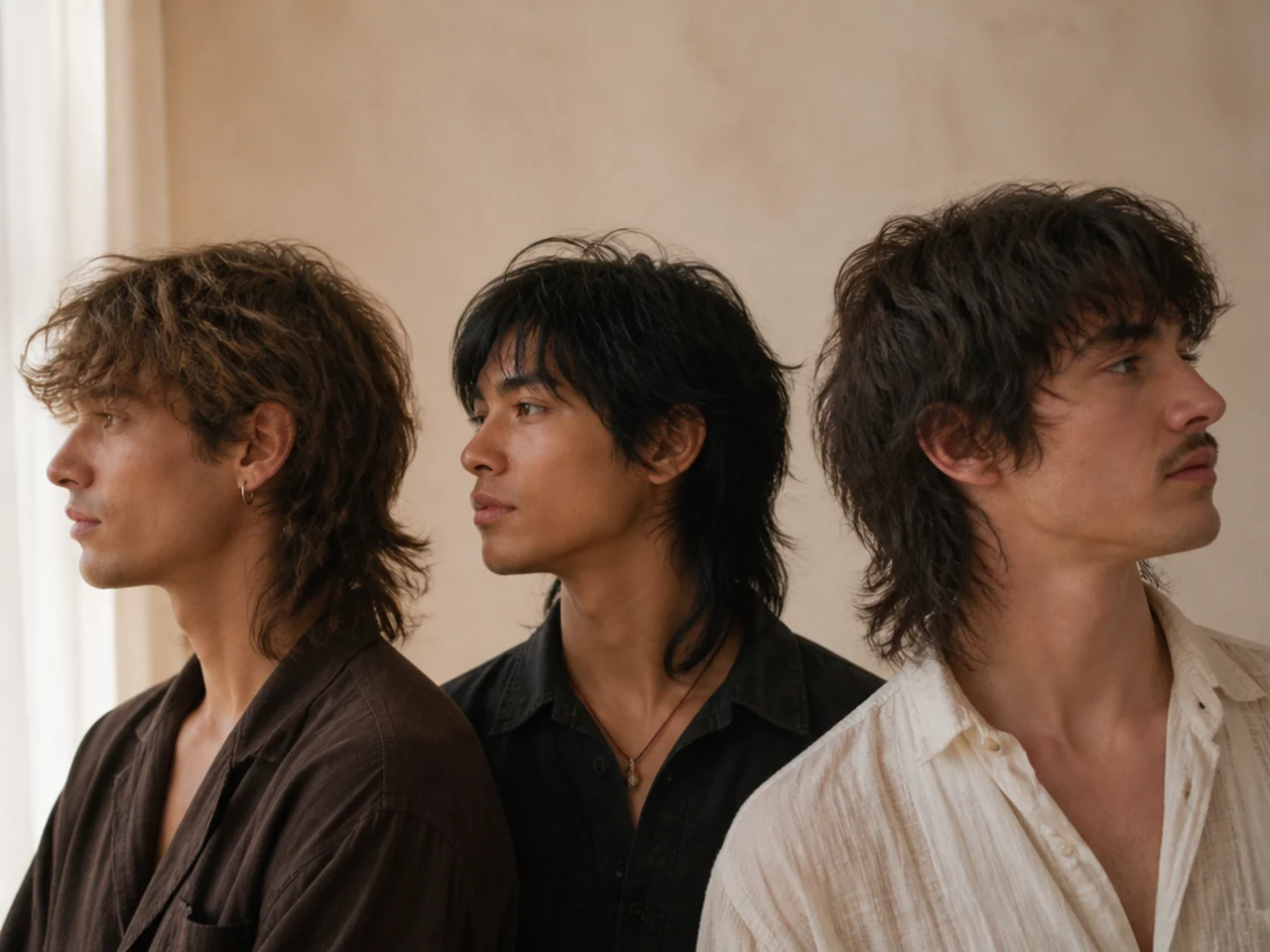
A mullet is an outline. A wolf cut is a layering pattern. Short front and sides with a long back is the mullet. Short crown layers stacked over long ends is the wolf cut. The hybrid uses both.
The layering is what makes it move. A plain mullet hangs as one mass at the back. Cutting the crown short props the length underneath it up, so the whole shape lifts rather than lying flat.
Where The Wolf Cut Ends And The Mullet Begins
The outline is the mullet part. Anything shorter at the sides and front than at the back qualifies, regardless of how the interior is cut.
The layering is the wolf cut part. The crown is cut noticeably shorter than the lengths beneath it, so the short pieces sit on the long ones and hold them off the head.
Together they solve each other's weakness. A mullet without layers goes heavy and flat. A wolf cut without a mullet outline loses the contrast that makes the silhouette read at a distance.
Neither needs a clipper. Both can be cut entirely with scissors, which is why the hybrid works on hair that will not hold a hard line.
How To Choose Your Hybrid
Decide the sides first. Scissor cut sides keep the cut soft and grow out invisibly. A taper sharpens it and holds three to four weeks. A skin fade sharpens it hardest and wants attention every two.
Decide how deep the layers go. Shallow layers give movement without losing weight. Deep layers give lift but thin the ends, which fine hair cannot afford.
Match the fringe to the back. A heavy fringe over a light tail makes the head look front weighted. Keeping both around the same density is what balances the silhouette.
Pick by texture honestly. Wave and curl do half the work of the layering for free. Straight hair needs the layers cut deeper to get the same separation.
The 25 Wolf Cut Mullet Hybrids
1. The Soft Blend
Everything cut with scissors and blended from the fringe through to the tail with no visible boundary. It grows out without a correction point, which is why it suits anyone going longer than eight weeks between appointments.
2. The Disconnected Wolf Mullet
A deliberate jump between short sides and long back with nothing bridging it. The gap is the point, but it is also permanent for the length of the grow out, since the only way to remove it is waiting for the sides to catch up.
3. The Tapered Wolf Mullet
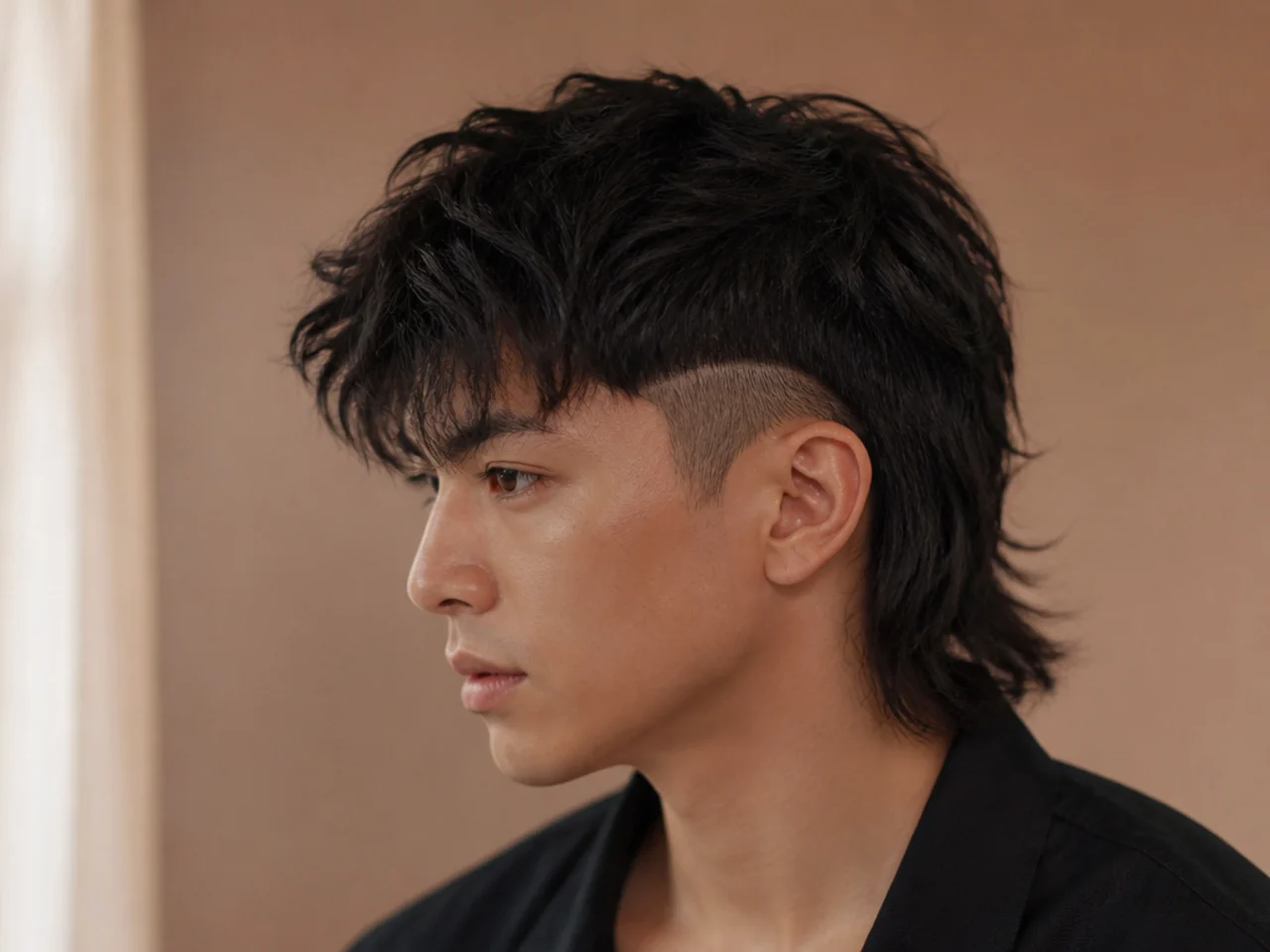
The sides shorten gradually and finish around a number one at three millimetres, never bare. That remaining length keeps the contrast moderate and gives the layers above something to sit against instead of a hard edge.
4. The Low Fade Version
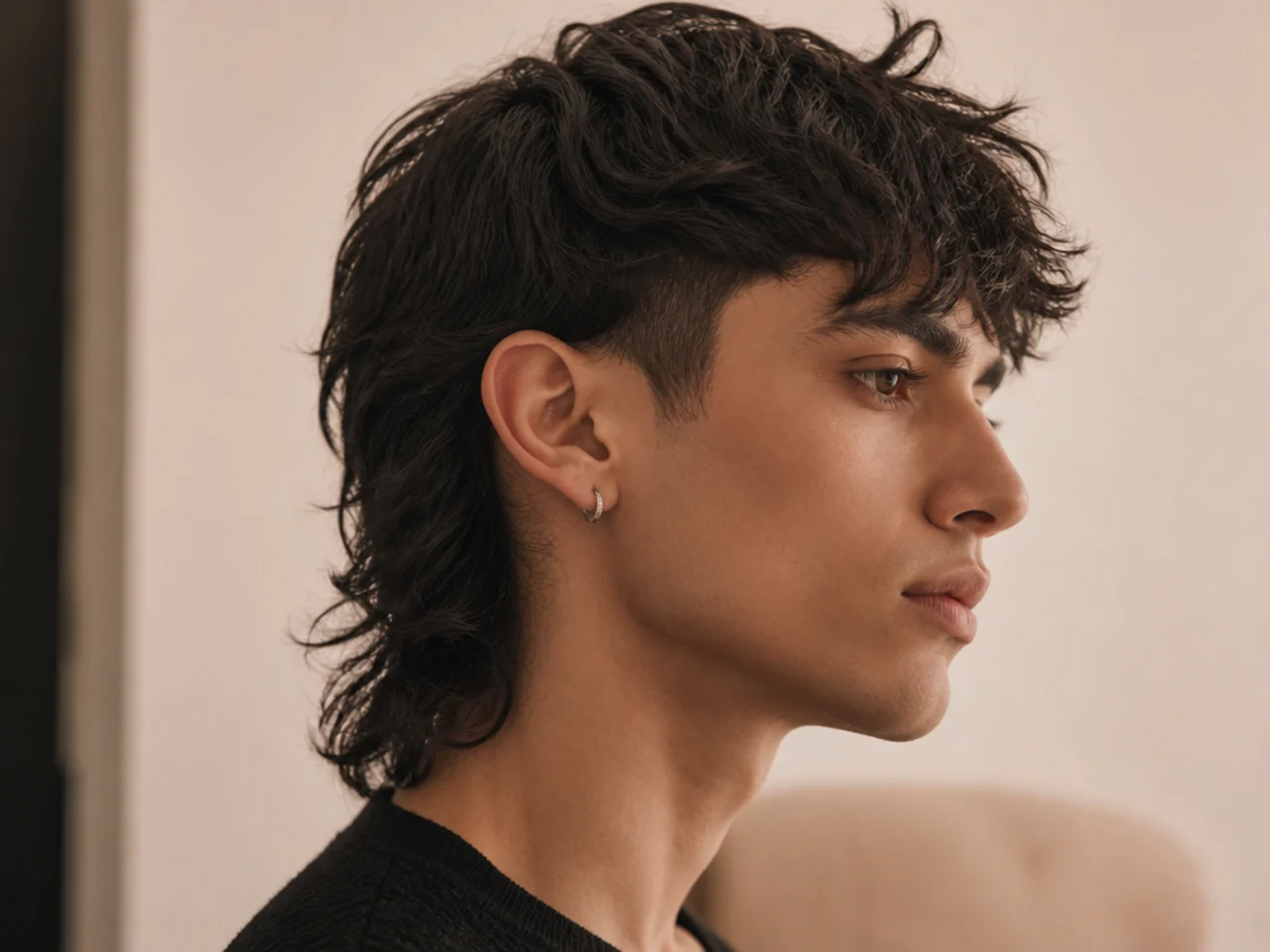
The fade starts at the top of the ear and takes the bottom to skin. Because it sits low the layered length above is untouched, so the cut still reads as long hair with a clean edge underneath rather than a short back and sides.
5. The Mid Fade Version
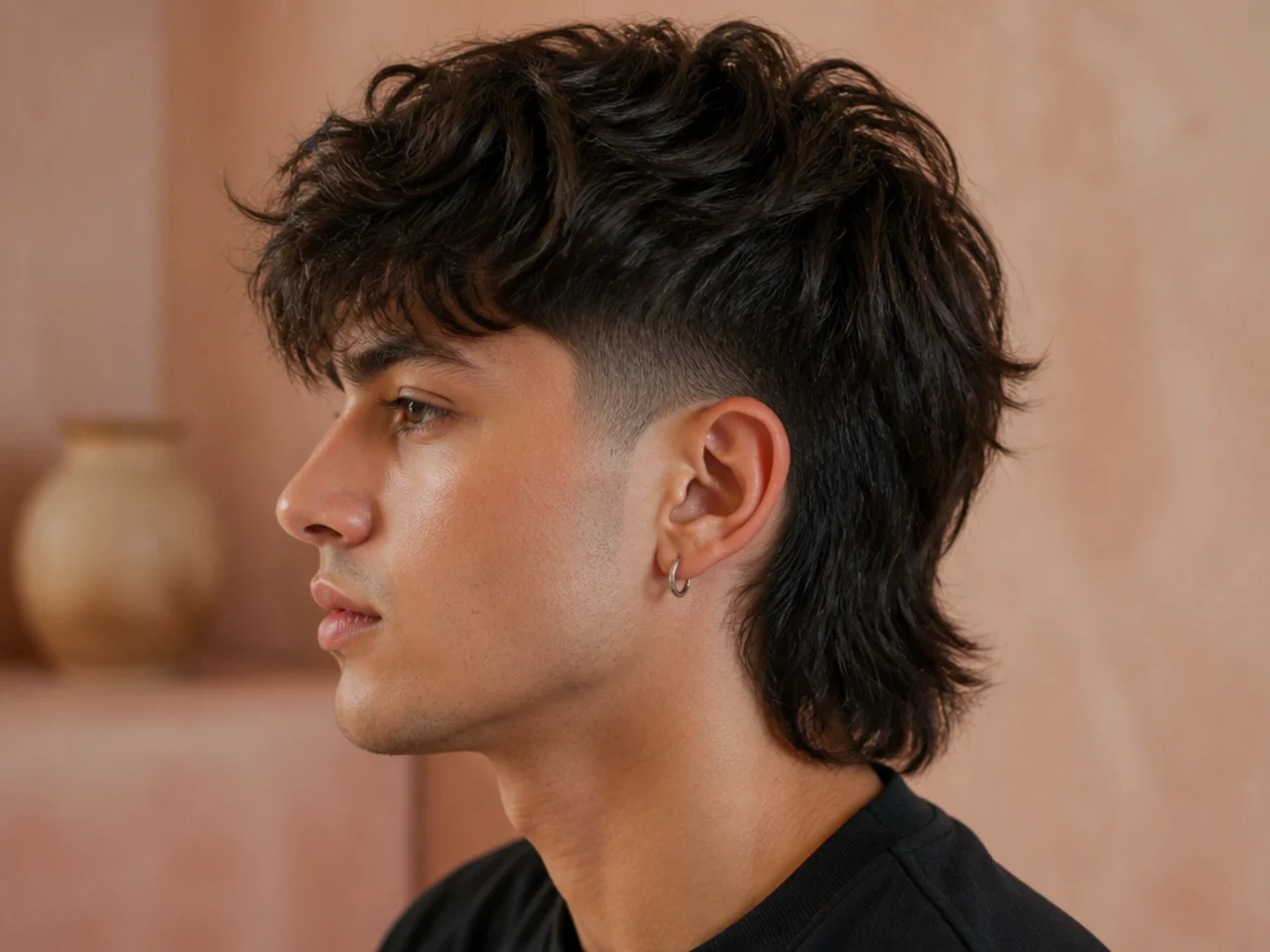
Starting halfway up removes weight from the side of the head, which narrows the silhouette and pushes all the volume to the crown and back. It needs a full tail to balance, otherwise the head reads long and thin.
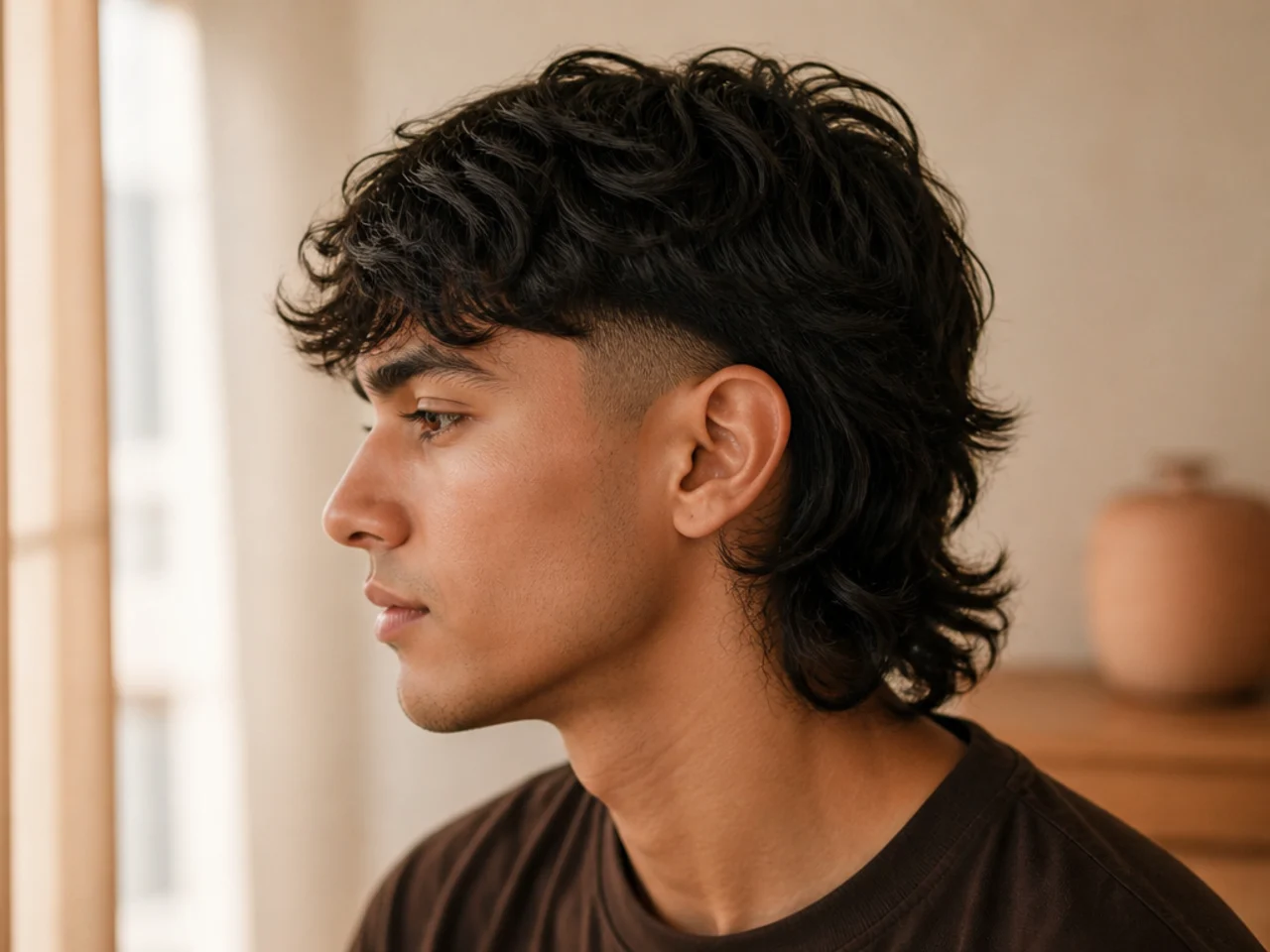
6. Curtain Fringe On Top
The front split into two panels that fall either side of a centre parting. The split has to be cut into the fringe rather than combed in, or it closes up the moment the hair moves and the shape reverts to a flat sheet.
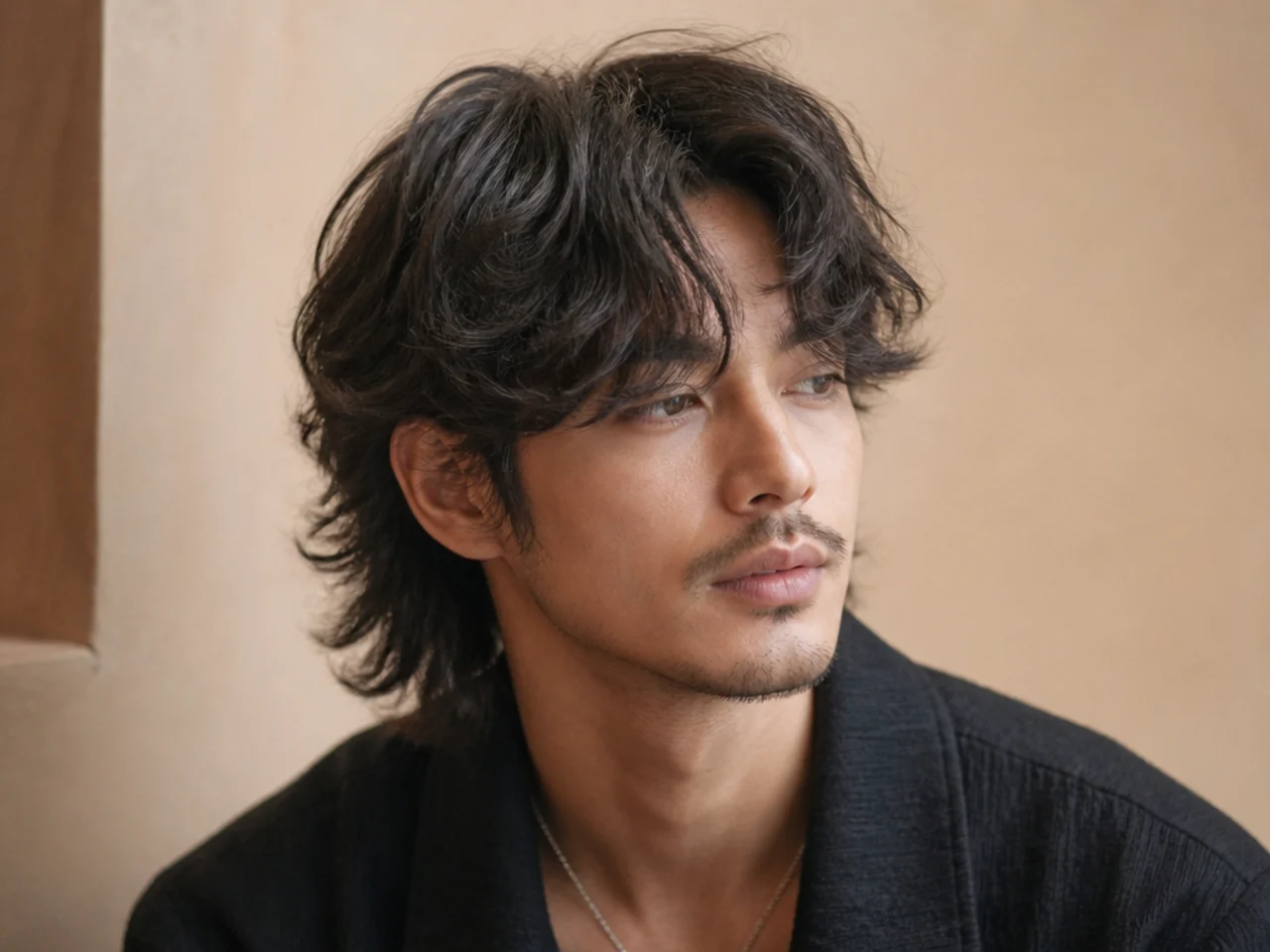
7. A Textured Crop Front
A short blunt fringe over a long back, borrowed from the crop. The blunt edge gives the front a hard line that the soft layering behind it plays against, which is where the contrast in this version comes from.
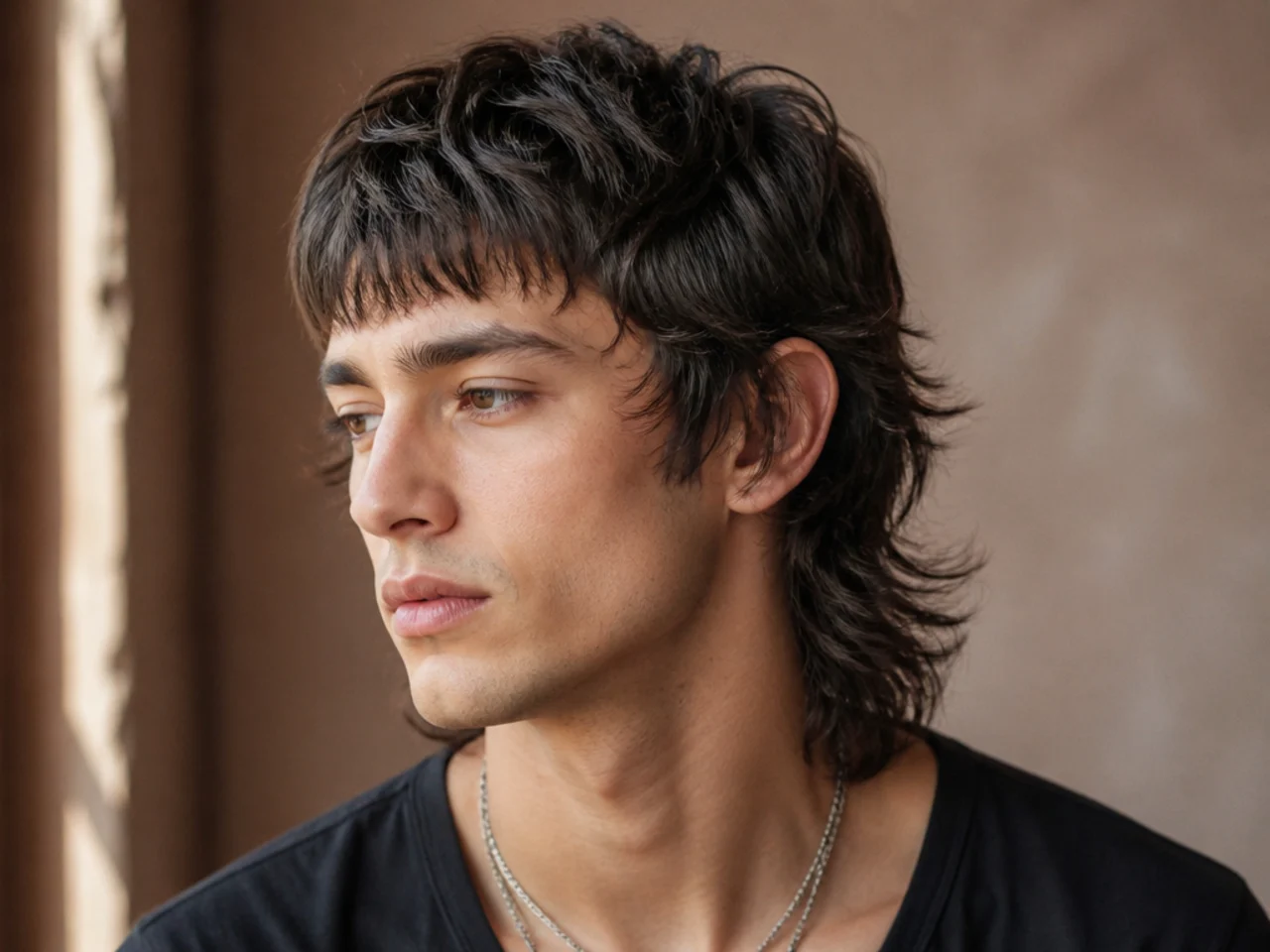
8. The Korean Wolf Mullet
Softer and rounder than the western version, with the volume set at the crown and the ends left airy. The shape depends on a perm or a daily blow dry, since it needs the hair to hold a curve it will not take on its own. More on the base cut in the korean wolf cut.

9. The Shaggy Fringe
A long fringe cut in several lengths so it breaks apart across the forehead rather than hanging as one curtain. The staggered ends mean it never needs to sit precisely, which is why it survives wind and a hat.
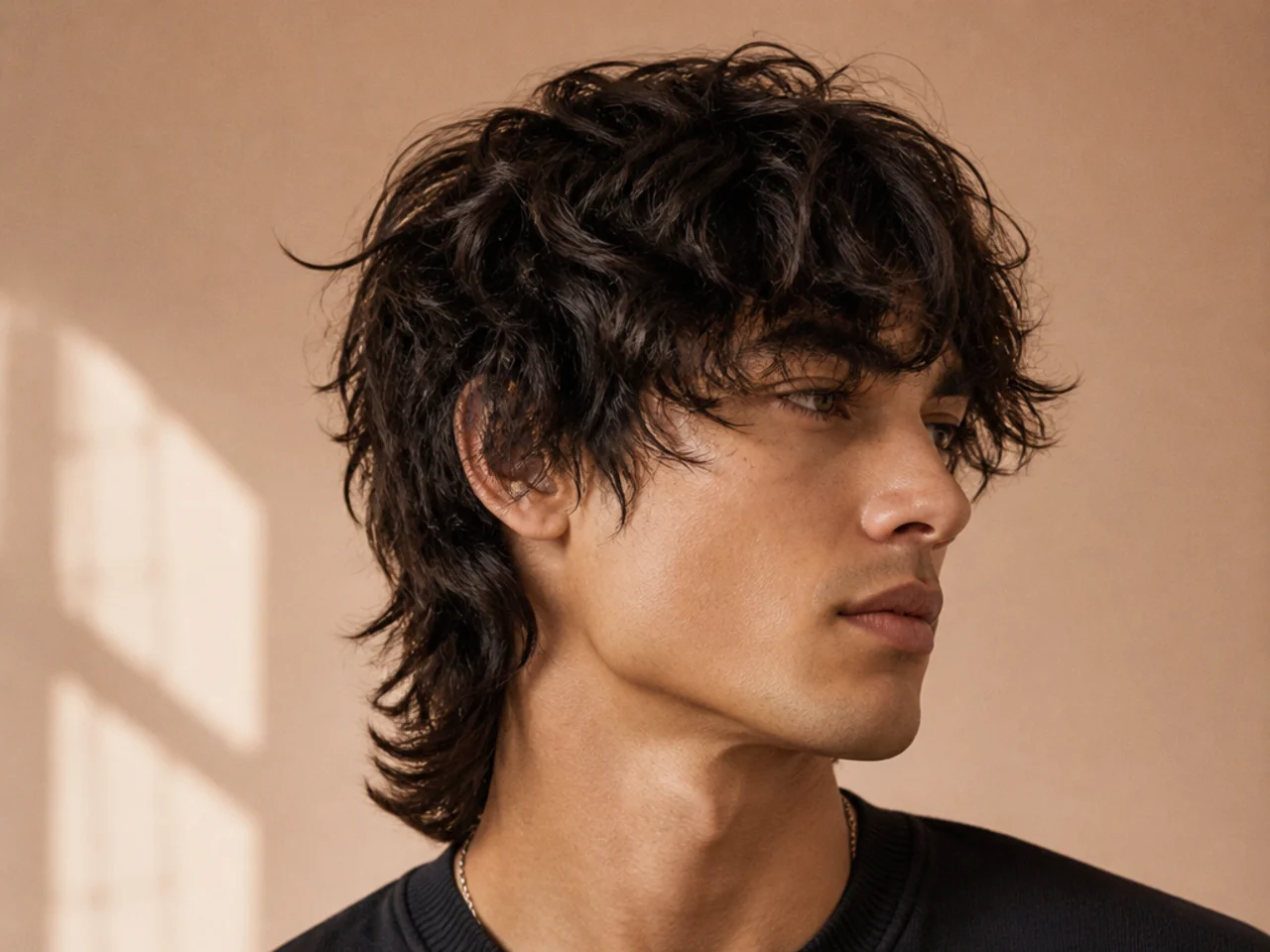
10. Wavy Hair Wolf Mullet
Wave adds separation for free, so the layers can be cut shallower than on straight hair. The bend also hides small inconsistencies in the layering, which makes this the most forgiving texture for the cut. See the wavy wolf cut for men for the styling detail.
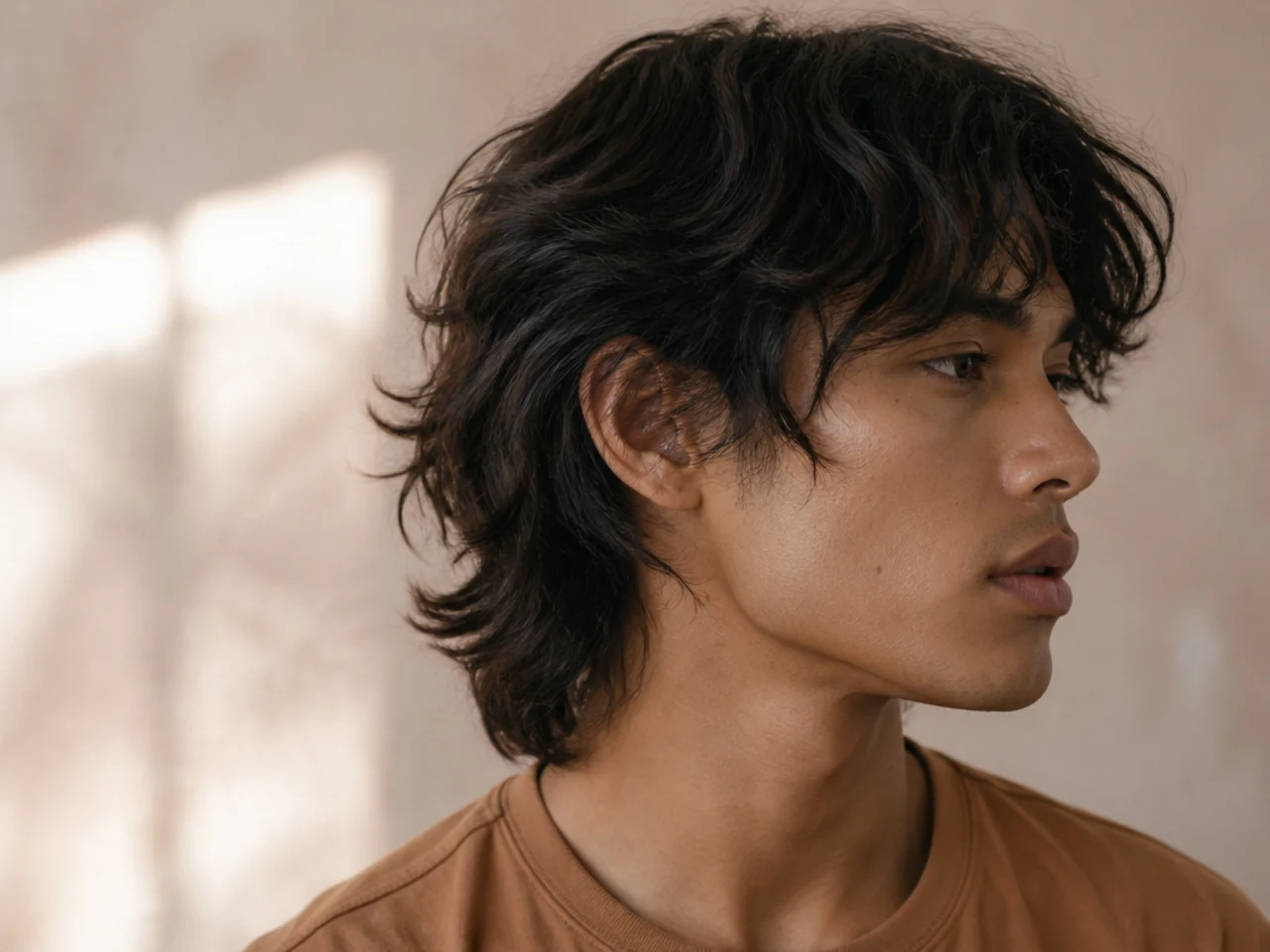
11. Curly Wolf Mullet
Curl already stacks on itself, so heavy layering removes the weight that holds the shape down and the whole thing turns triangular. Ask for the layers to be cut dry, curl by curl, so the length that is removed is the length you actually see.
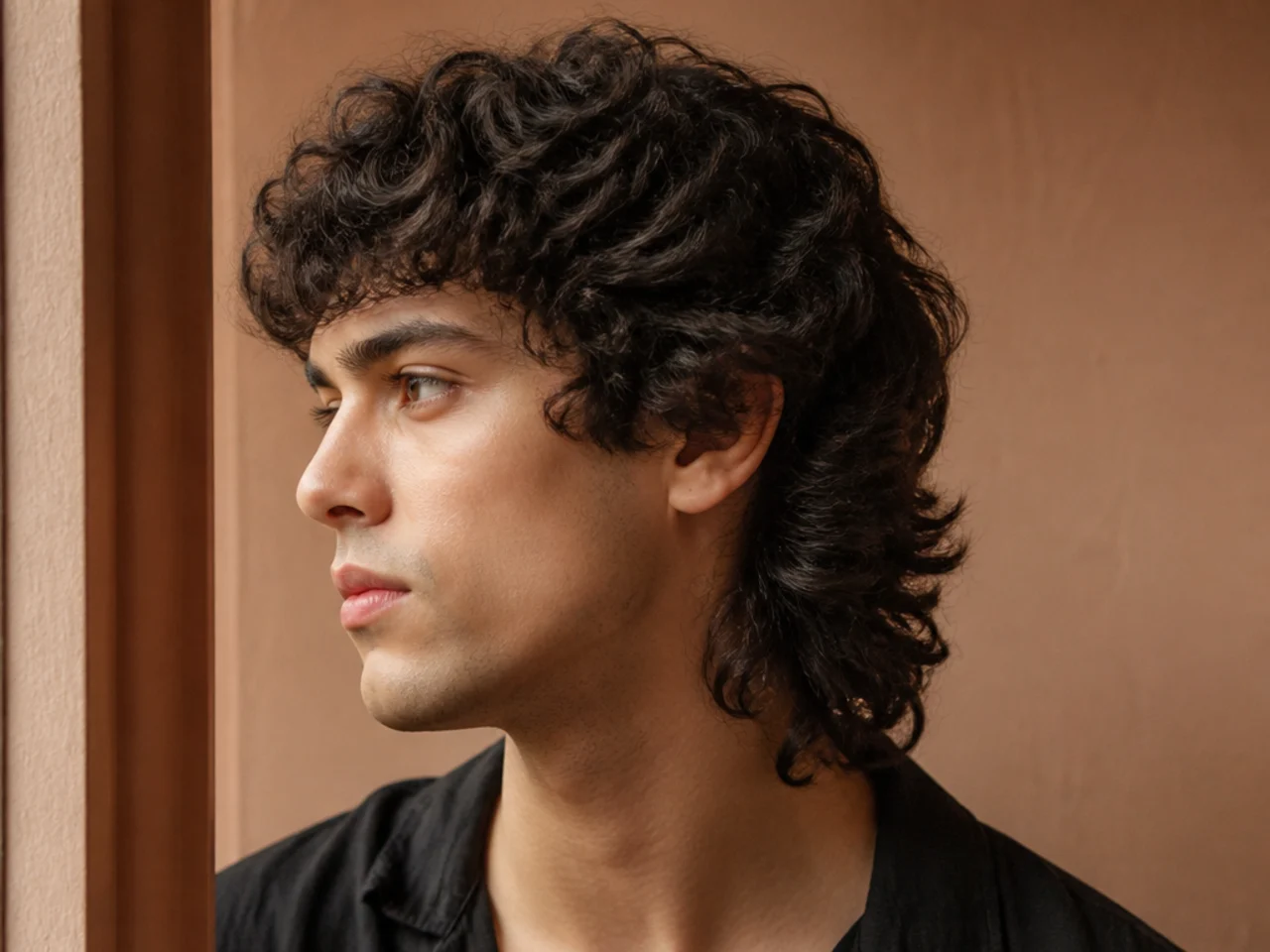
12. Coily Wolf Mullet
Coils shrink to a fraction of their stretched length, so the tail has to be cut far longer than it looks to clear the collar. The sides work best tapered rather than scissor cut, because a taper gives the density a clean edge to stop against.
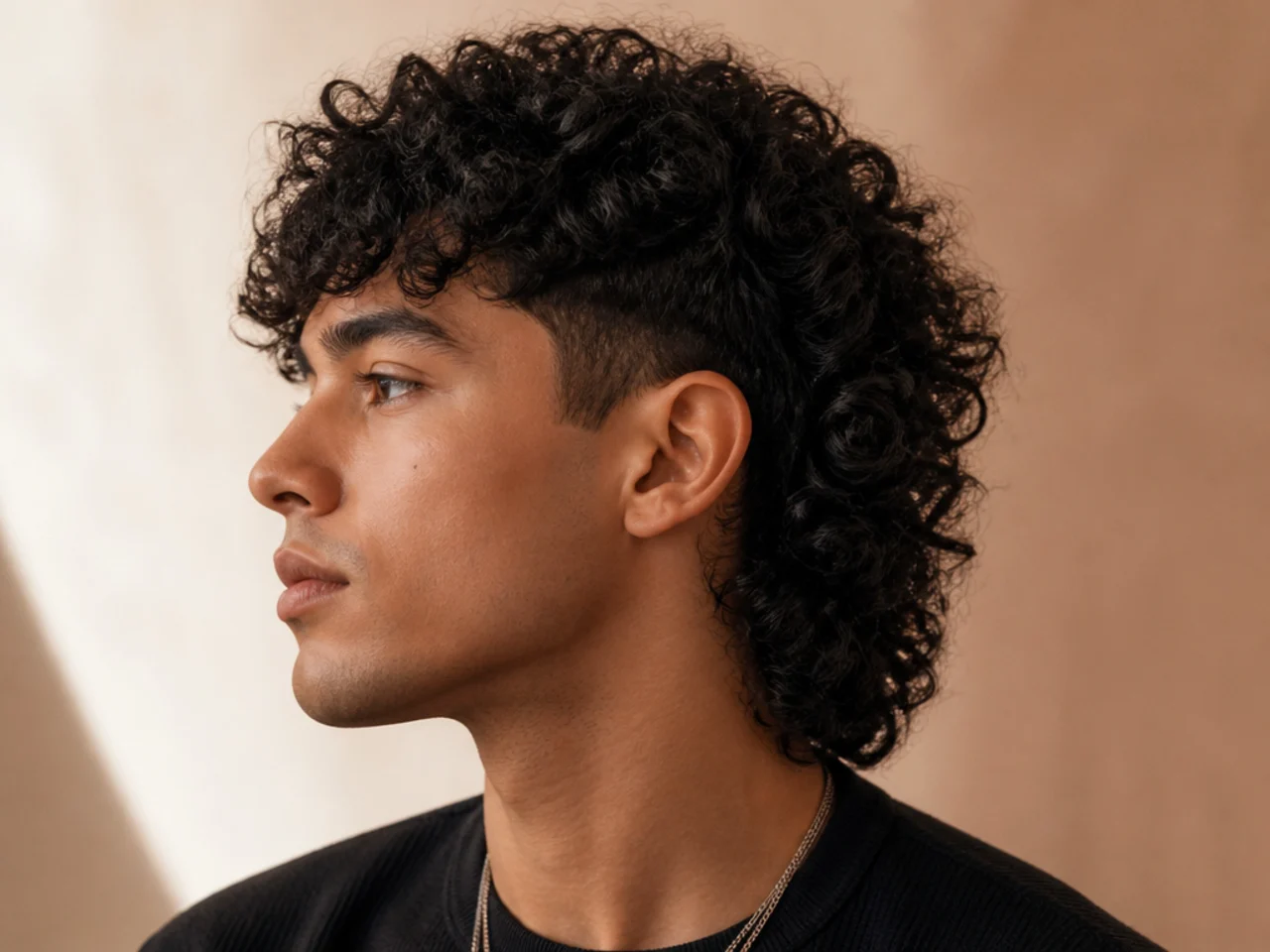
13. Straight Hair Wolf Mullet
Straight hair falls in one line and swallows shallow layering. The layers need to go deeper and the ends need point cutting, because a blunt edge on straight hair sits flat and the whole shape loses the separation it was cut for.

14. Fine Hair Wolf Mullet
Fine hair cannot afford deep layering because removing interior weight leaves the ends transparent. Keep the layers shallow and short, so the crown gets lift without the tail thinning out to nothing at the bottom.
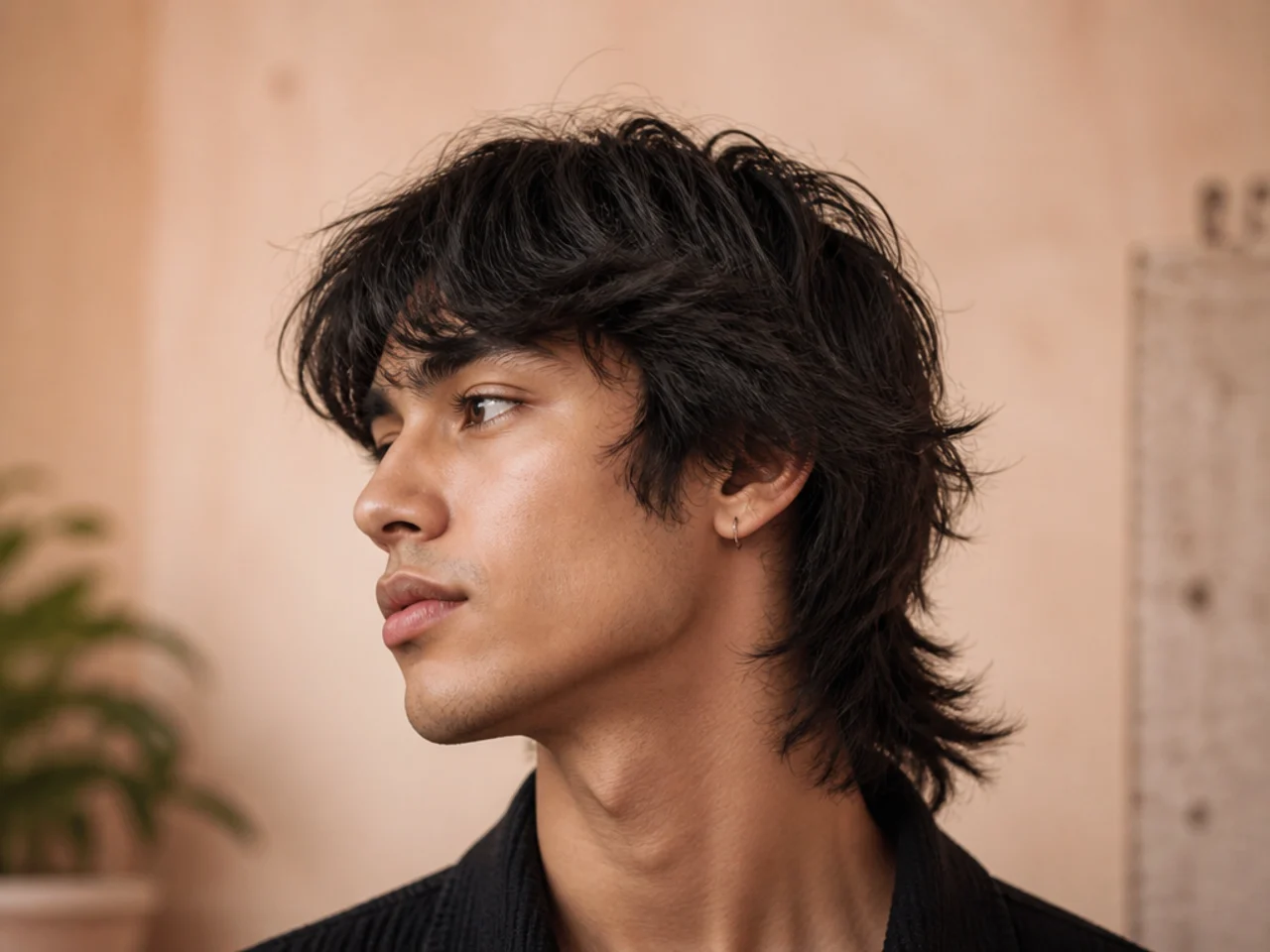
15. Thick Hair Wolf Mullet
Thick hair needs weight taken out or the back sits like a block. Deep layers through the interior remove bulk without shortening the outline, which keeps the tail long while letting it actually hang.
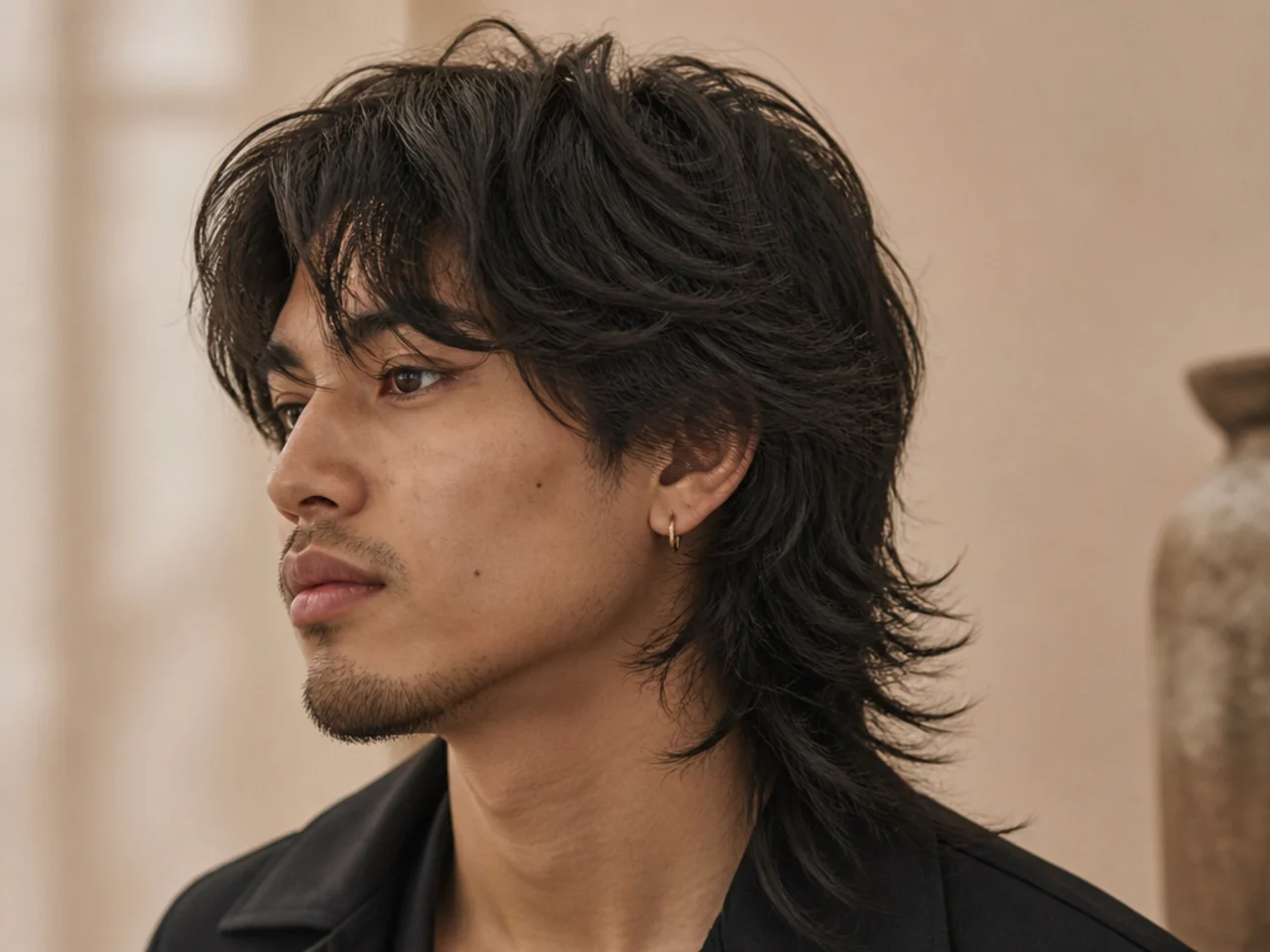
16. The Short Wolf Mullet
Everything scaled down, with the tail finishing at the nape rather than past the collar. It reads as a textured cut with a long back rather than a mullet, which makes it the version that survives a dress code. See the short wolf cut.
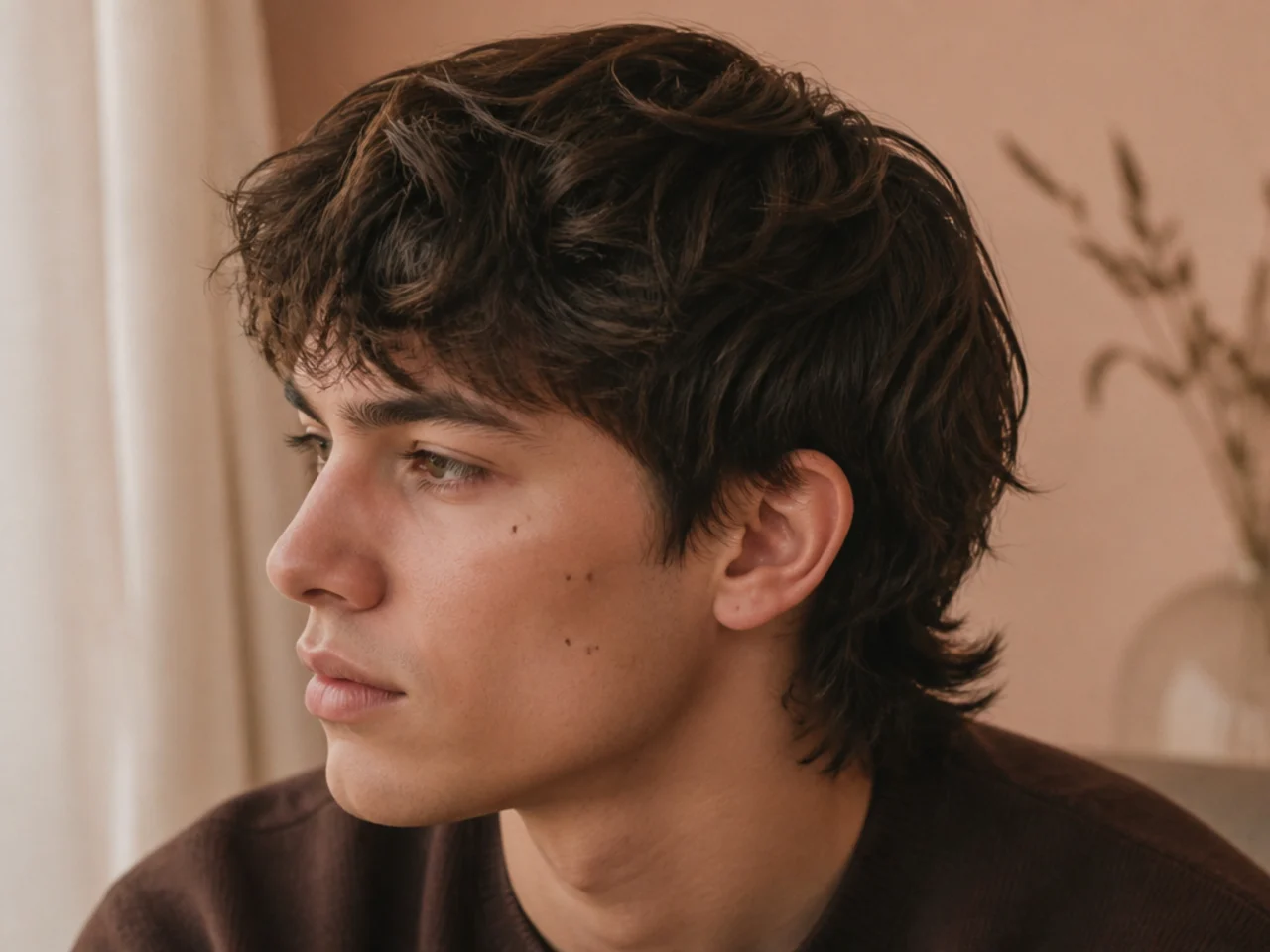
17. The Long Wolf Mullet
Past the shoulder blades at the back with the layering still starting at the crown. At that length the layers have to be staggered down the whole tail, not just at the top, or the bottom half hangs as dead weight. More in the long wolf cut for men.
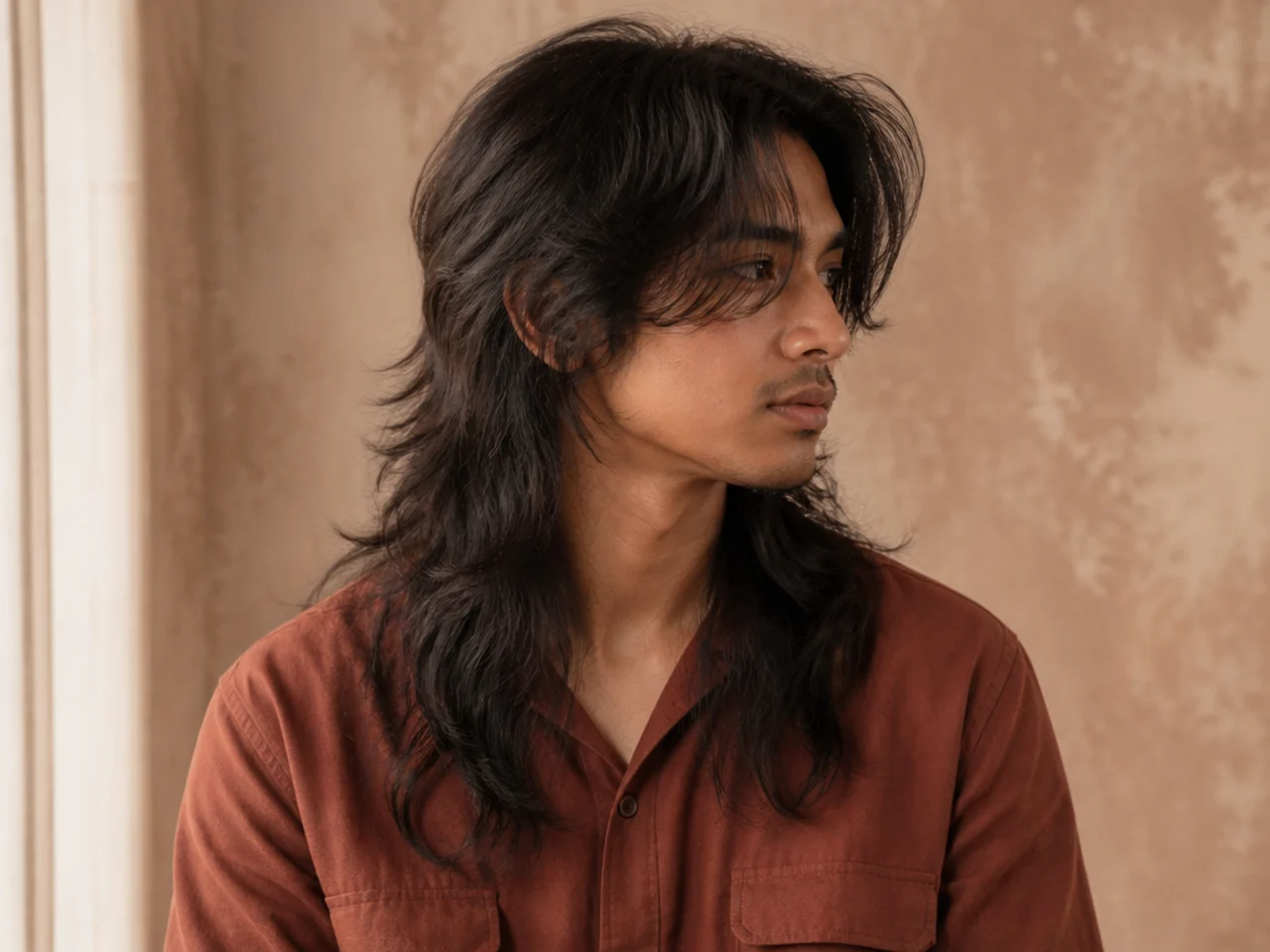
18. The Two Block Wolf Mullet
The sides and back below the parietal ridge clipped short while everything above is left long and layered, with a clean horizontal boundary. The line has to follow the ridge exactly, since a boundary drawn even slightly low makes the head look top heavy.
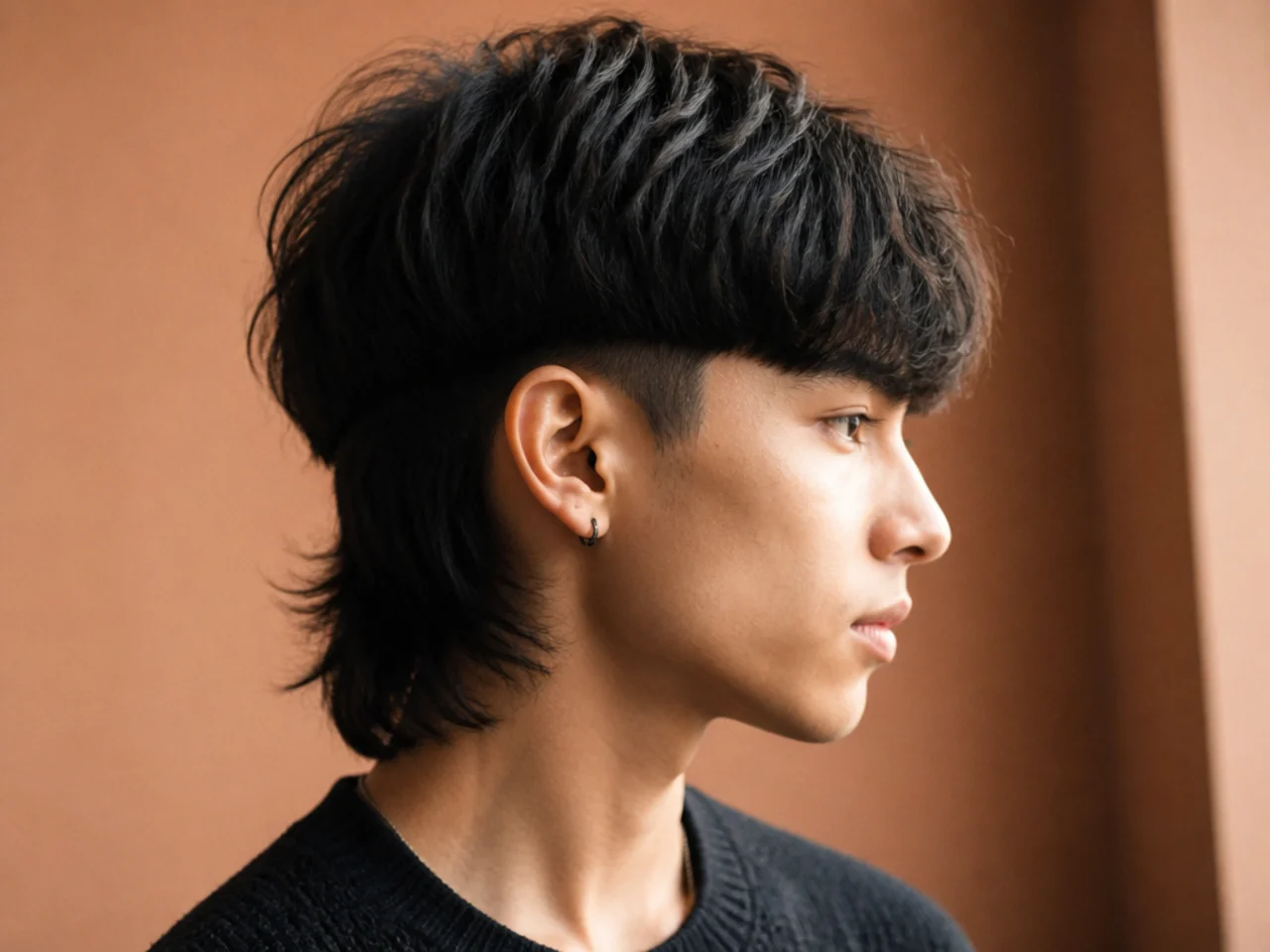
19. Wolf Mullet With A Hard Part
A trimmer line cut along the parting. It gives the eye a vertical against all the horizontal movement in the layering, which is what stops the sides reading as a soft blur next to a busy top.
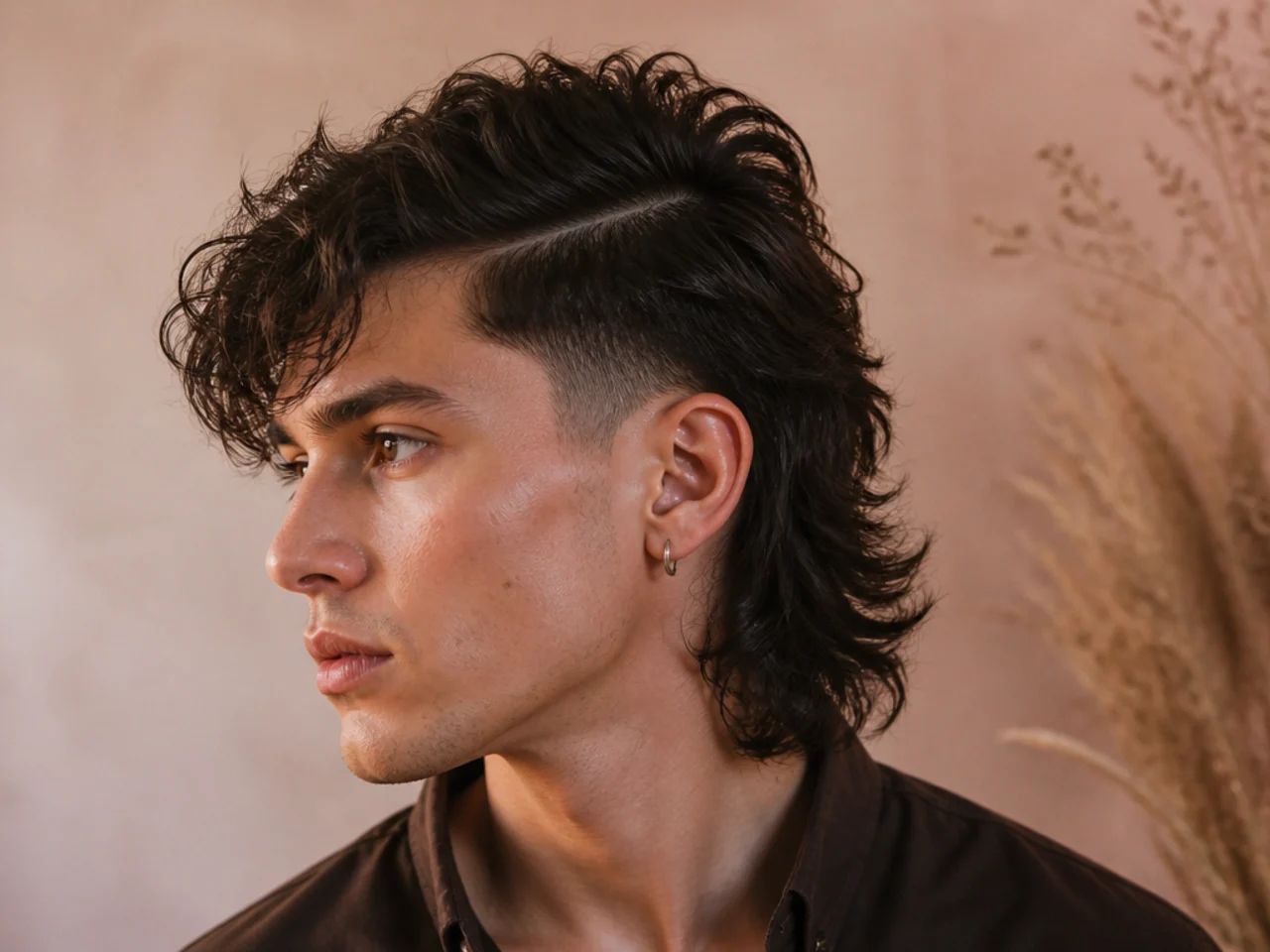
20. Wolf Mullet Into A Beard
The taper runs down into the beard as one gradient instead of stopping above the jaw. The join has to land where beard density genuinely starts, usually just below the earlobe, or the blend runs out of hair partway down.
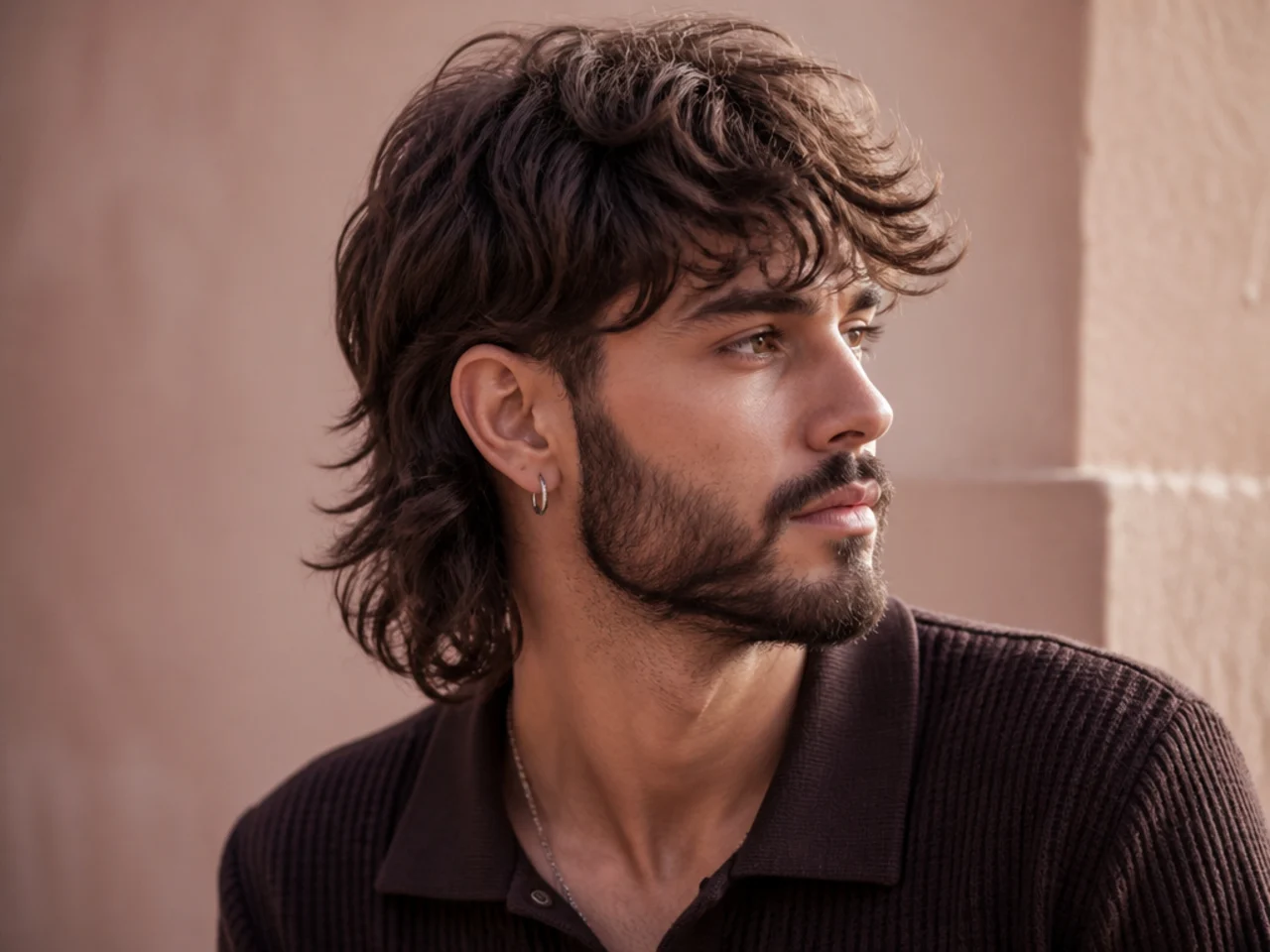
21. The Bleached Tail
Lightening only the length at the back exaggerates the outline, because lighter hair reflects more light and reads as further forward. It also costs the tail condition, and bleached ends layer badly since damaged hair does not hold a point cut edge.
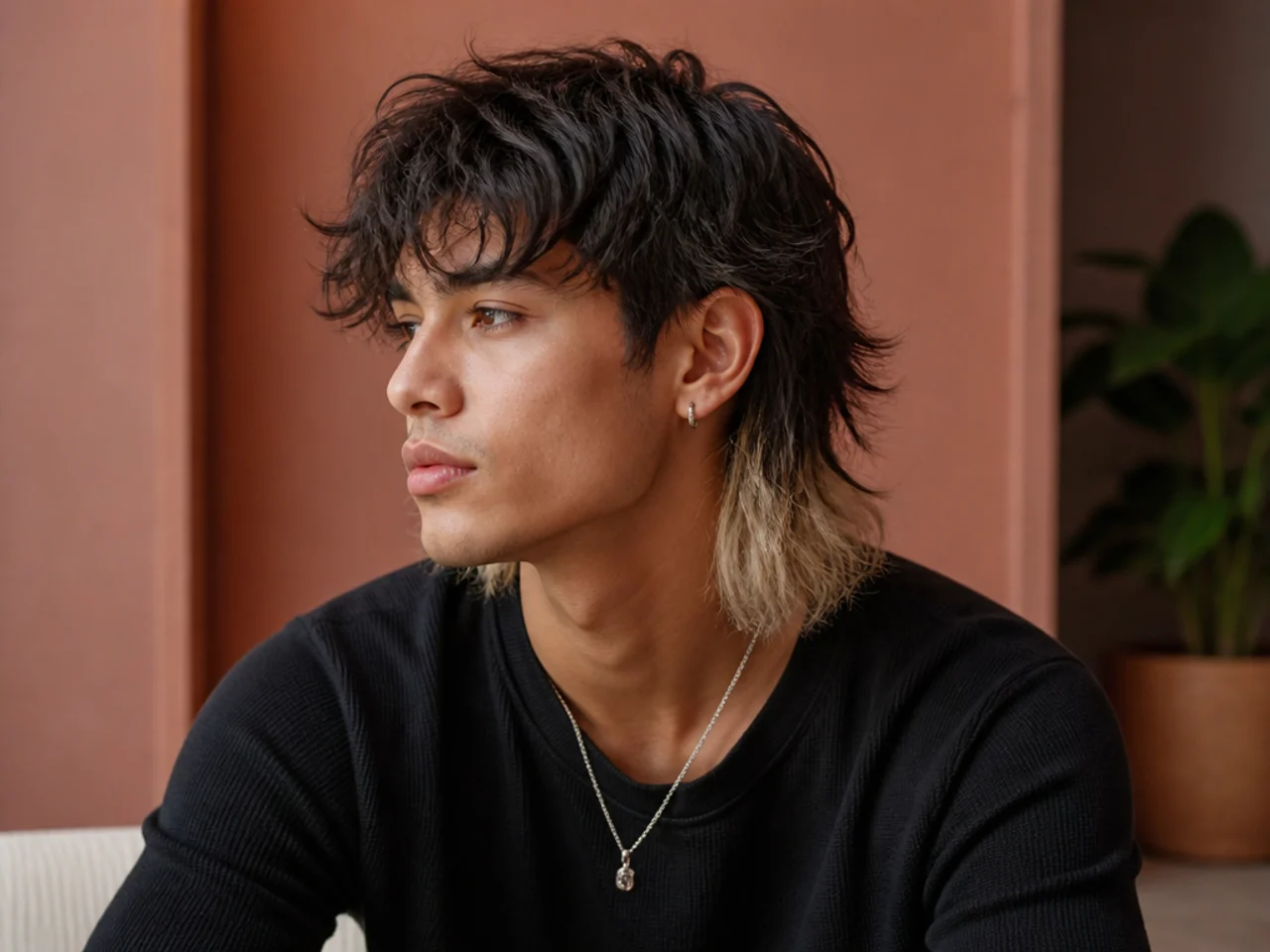
22. The Grown Out Wolf Mullet
At eight to ten weeks the crown layers have caught up with the lengths and stopped propping them, so the shape drops. It is a real look rather than a failure, but it is a different one, and the lift only returns when the crown is cut back.
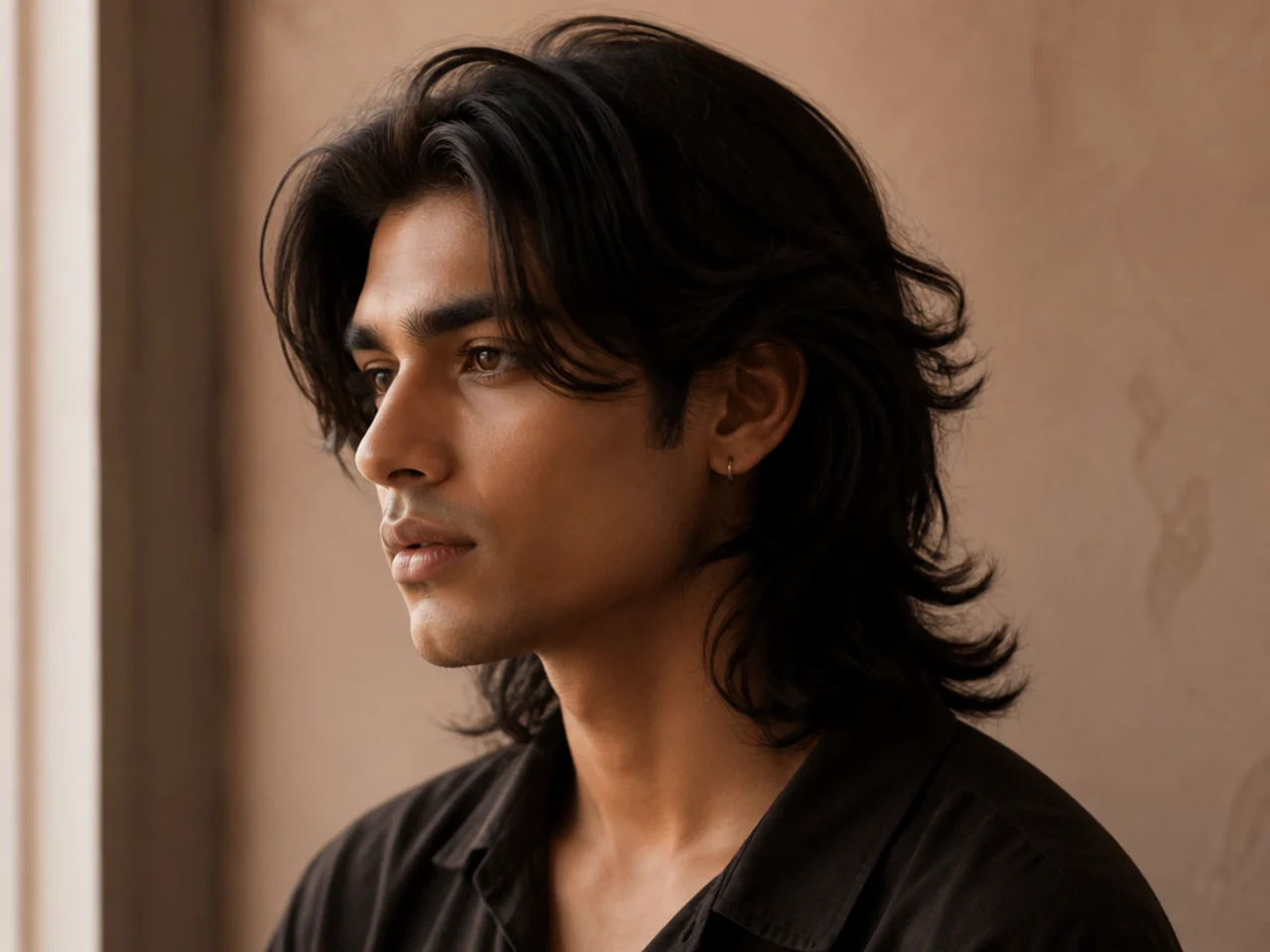
23. The Wet Look Finish
Gel or a heavy cream on damp hair makes the layers clump into defined pieces rather than a soft mass. It also weighs the crown down, so this finish suits thick hair and flattens a fine head completely.
24. The Middle Part Wolf Mullet
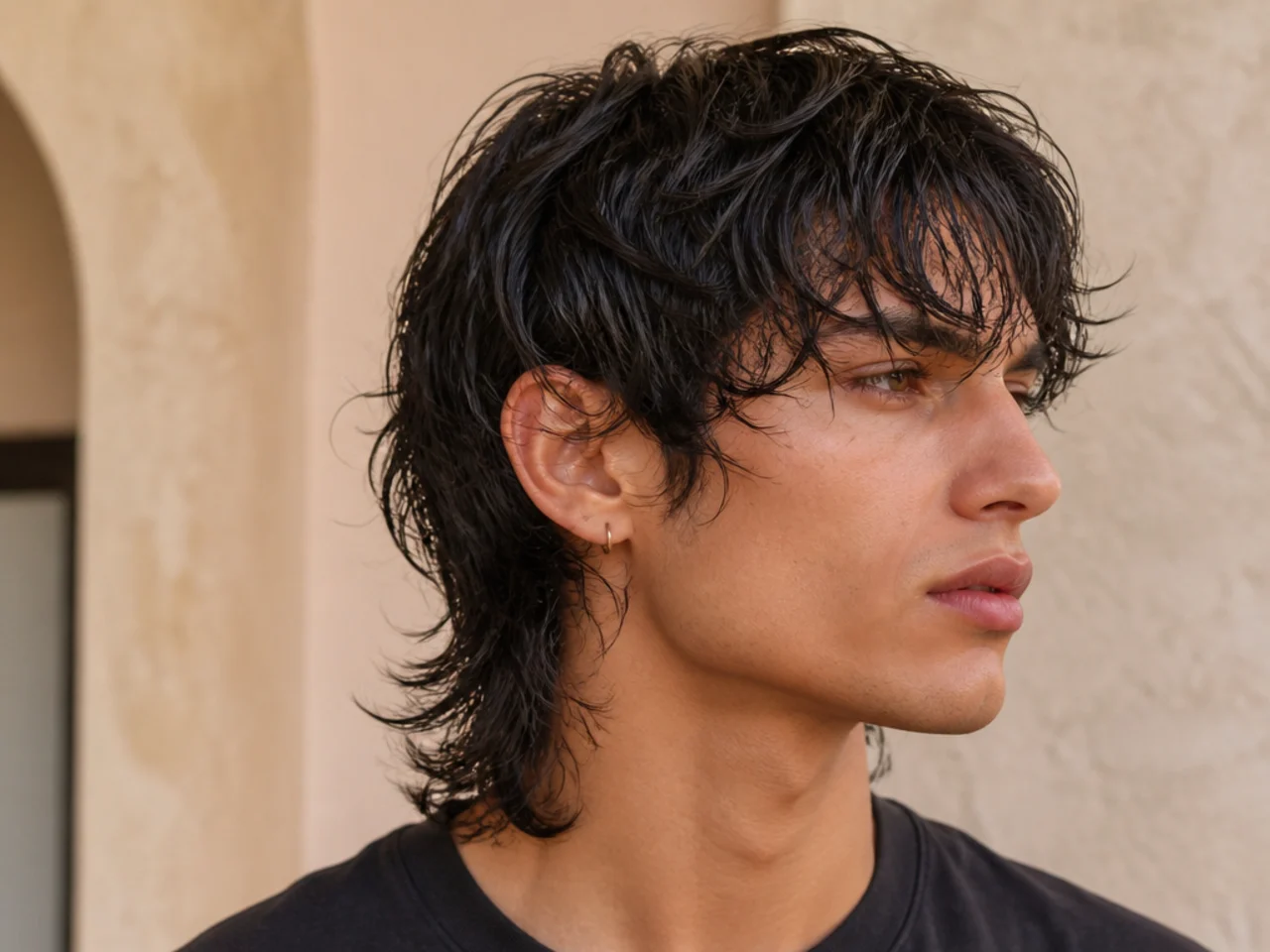
Splitting the top down the centre pulls the volume sideways, which widens a narrow face. The parting needs cutting in rather than combing, because layers cut for a side parting fall wrong the moment they are pushed the other way.
25. The Wolf Mullet At Week Four
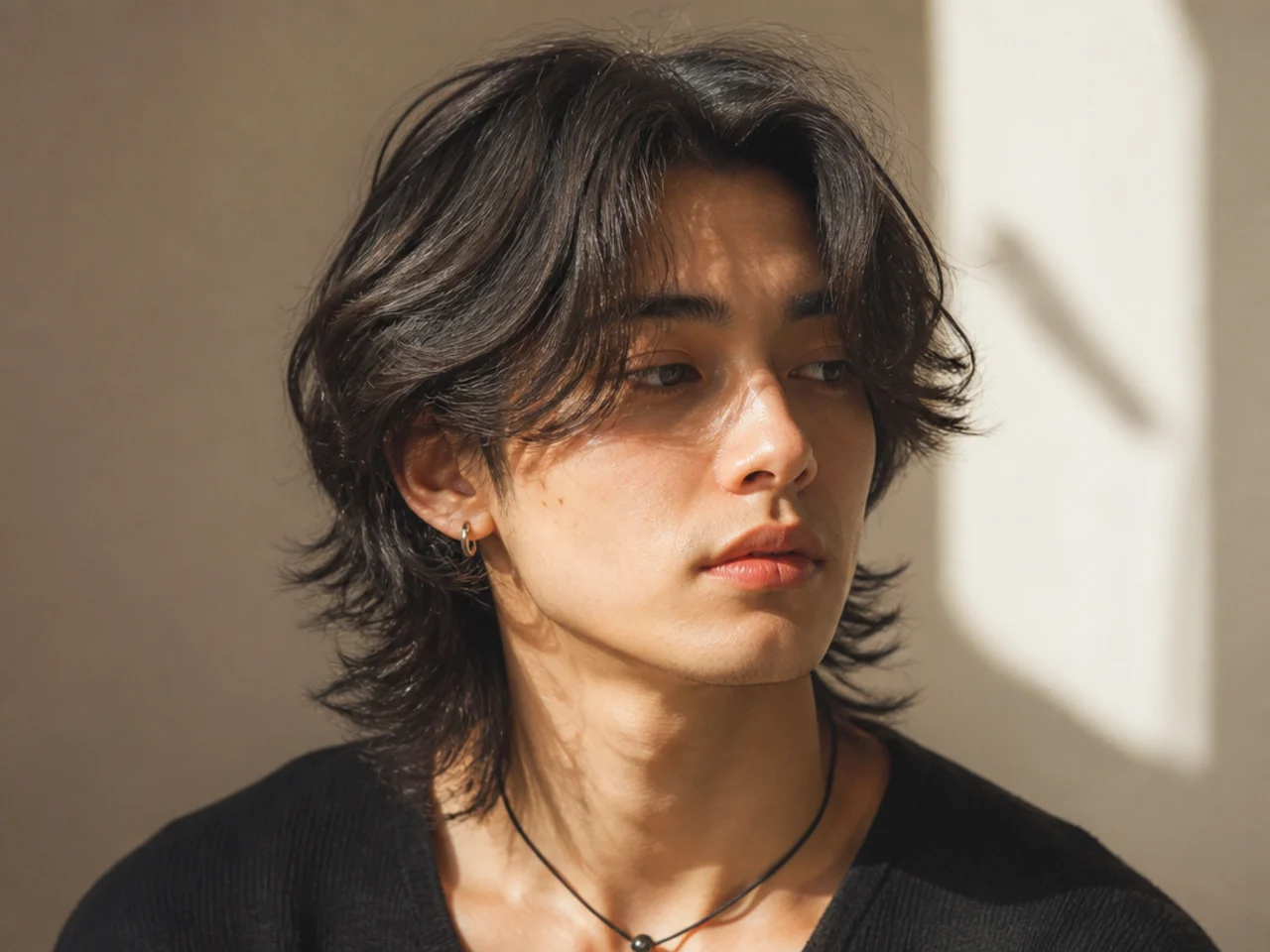
The layering is still doing its job and a taper still reads correctly, which makes this the honest state of the cut. Photograph it here rather than on day one, since this is what it looks like for most of its life.

Styling and Upkeep
Rough dry before touching a product. Layers set in the direction they dry. Getting them roughly into position first means the product holds the shape rather than fighting it.
Use a matte paste, not a wax. Wax welds pieces together and kills the separation the layering exists for. A matte paste adds grip without gluing.
Point the nozzle down the tail. Downward airflow closes the cuticle along the length, which is what stops the ends flicking outward as they dry.
Salt spray only on the crown. It roughens the surface so the short layers grip each other and stand up. On the tail it just makes the ends coarse.
Book by the sides, not the top. The layering lasts six to eight weeks. A taper lasts three to four and a skin fade two, so the sides set the schedule.
Mistakes to Avoid
Layering fine hair deeply. It removes the interior weight the ends depend on and leaves the tail transparent at the bottom.
Cutting curl wet. Curl draws up as it dries, so a tail cut to the collar wet finishes well above it. Cut dry and cut in the natural pattern.
Using thinning shears on the tail. They cut through the middle of the section and leave short pieces that stand up as the tail grows. Point cutting removes the same weight from the ends only.
Matching a heavy fringe to a light tail. The head reads front weighted. Keep the two ends of the outline at similar density.
Treating the wolf cut and the mullet as one instruction. Name the outline and the layering separately, because a barber can deliver one perfectly while ignoring the other.

FAQ
Wolf cut or mullet? The mullet is the outline, the wolf cut is the layering.
Does it work on straight hair? Yes, with deeper layers and point cut ends.
How often? Six to eight weeks for the layers, sooner if the sides are faded.
Final Thoughts
Ask for the two halves separately. Name the outline first, in terms of where the sides finish and how far the back goes, then name the layering by how short the crown should sit against the lengths under it. A barber can execute either one on its own, so leaving one unsaid is how these cuts come back looking like something else.
For the base cut see the wolf cut for men, and for the mullet leaning version see the mullet wolf cut for men. More in Mullet and Wolf Cut.