20 Wolf Cut Ideas For Medium Fine Hair
Twenty wolf cuts built for fine hair at medium length, and the one rule that keeps them from going stringy — layer the top third, leave the perimeter alone. Fine hair has no weight to spare at the ends.
In this article · 27
- What Layering Does to Fine Hair
- How to Choose Your Version
- The 20 Wolf Cut Ideas for Fine Medium Hair
- 1. Shallow Layer Wolf Cut
- 2. Blunt Perimeter Wolf Cut
- 3. Collarbone Wolf Cut
- 4. Wolf Cut With Curtain Bangs
- 5. Wolf Cut With a Heavy Fringe
- 6. Wolf Cut With Face Framing Layers
- 7. Middle Part Wolf Cut
- 8. Deep Side Part Wolf Cut
- 9. Shag Leaning Wolf Cut
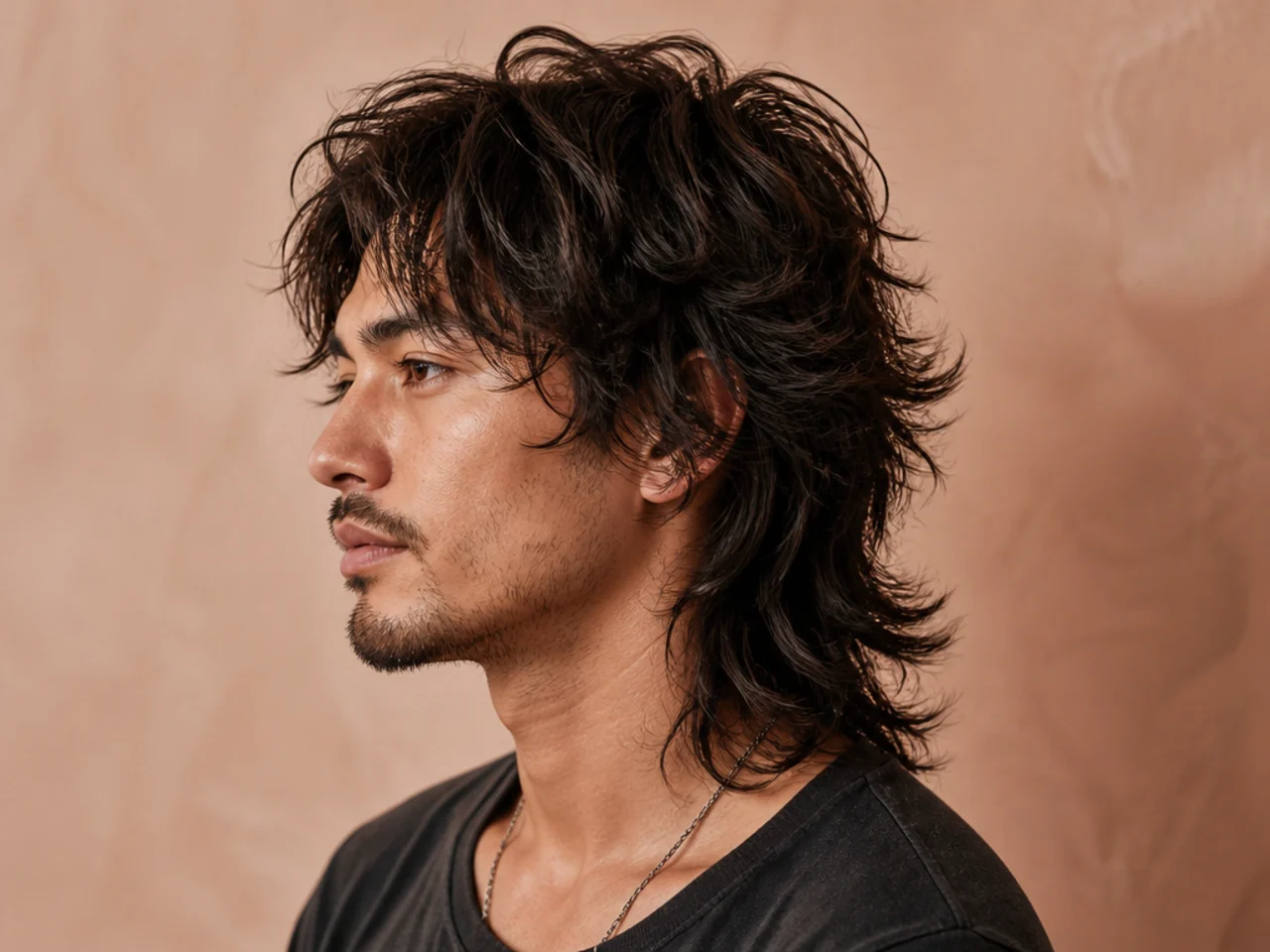
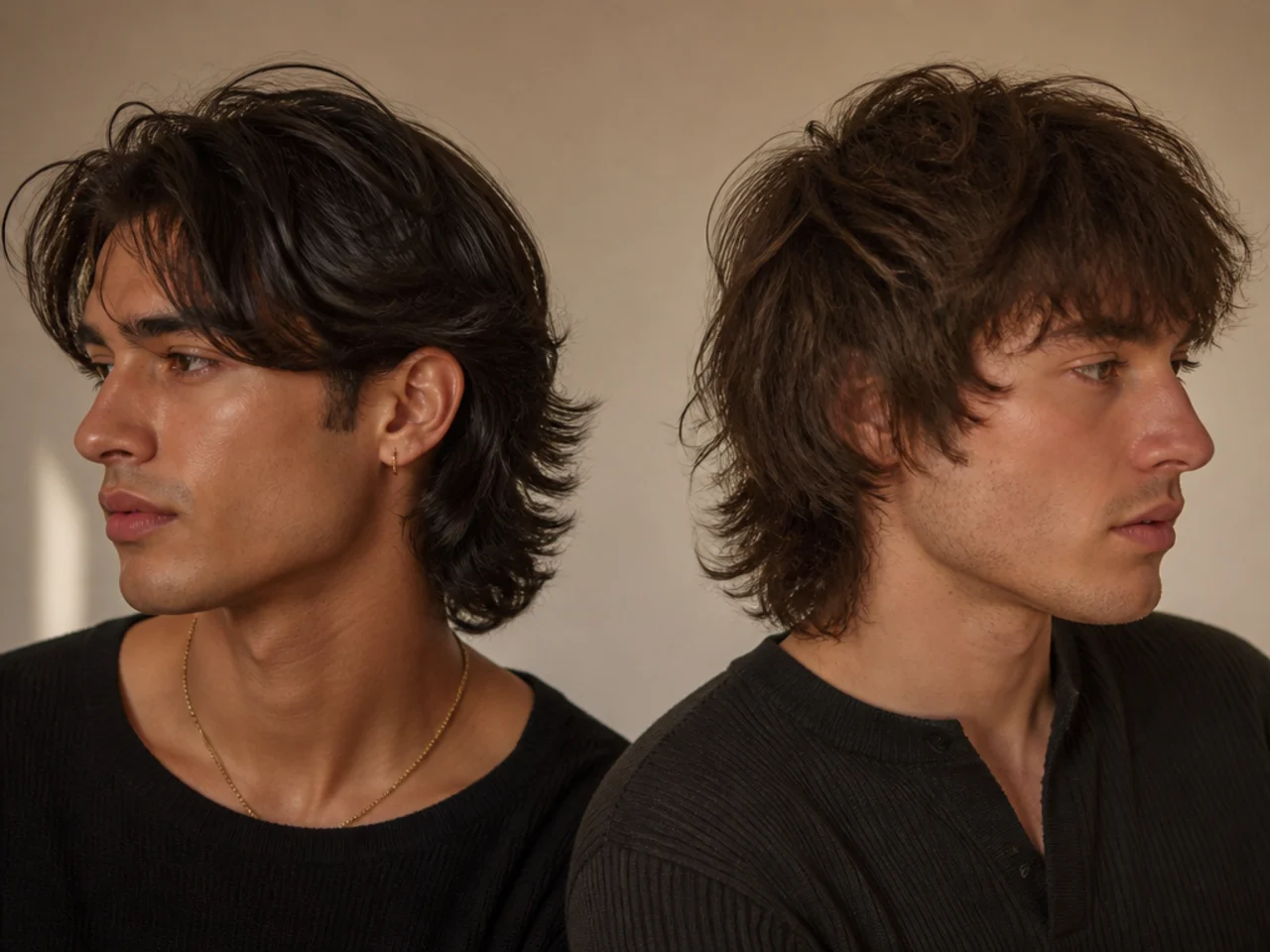
- 10. Mullet Leaning Wolf Cut
- 11. Wolf Cut With a Rounded Back
- 12. Wolf Cut With a V Shaped Back
- 13. Dry Cut Wolf Cut
- 14. Wolf Cut With a Point Cut Fringe
- 15. Wolf Cut With a Shorter Crown Section
- 16. Wolf Cut With Balayage
- 17. Wolf Cut With a Root Shadow
- 18. Wolf Cut With a Money Piece
- 19. Wolf Cut on Straight Fine Hair
- 20. Wolf Cut on Wavy Fine Hair
- Styling and Upkeep
- Mistakes to Avoid
- FAQ
- Final Thoughts
Fine hair gets layered like thick hair and then blamed for going stringy, when the real problem is that the layers took weight the ends never had.
The volume in a wolf cut comes from short layers propping up long ones. The crown sections sit on top of the lengths below and hold them off the scalp, and that lift is the entire effect.
Fine hair has nothing to give at the perimeter. Layer the top, leave the bottom line intact, and the cut keeps both the lift and the weight it needs to hang.
What Layering Does to Fine Hair
Fine describes strand width, not how much hair you have. A fine head can be dense. The strands are simply narrower, so a handful reads thinner than the same handful of coarse hair.
Every layer removes weight from below it. On coarse hair that is a relief. On fine hair it is the difference between ends that hang together and ends you can see through.
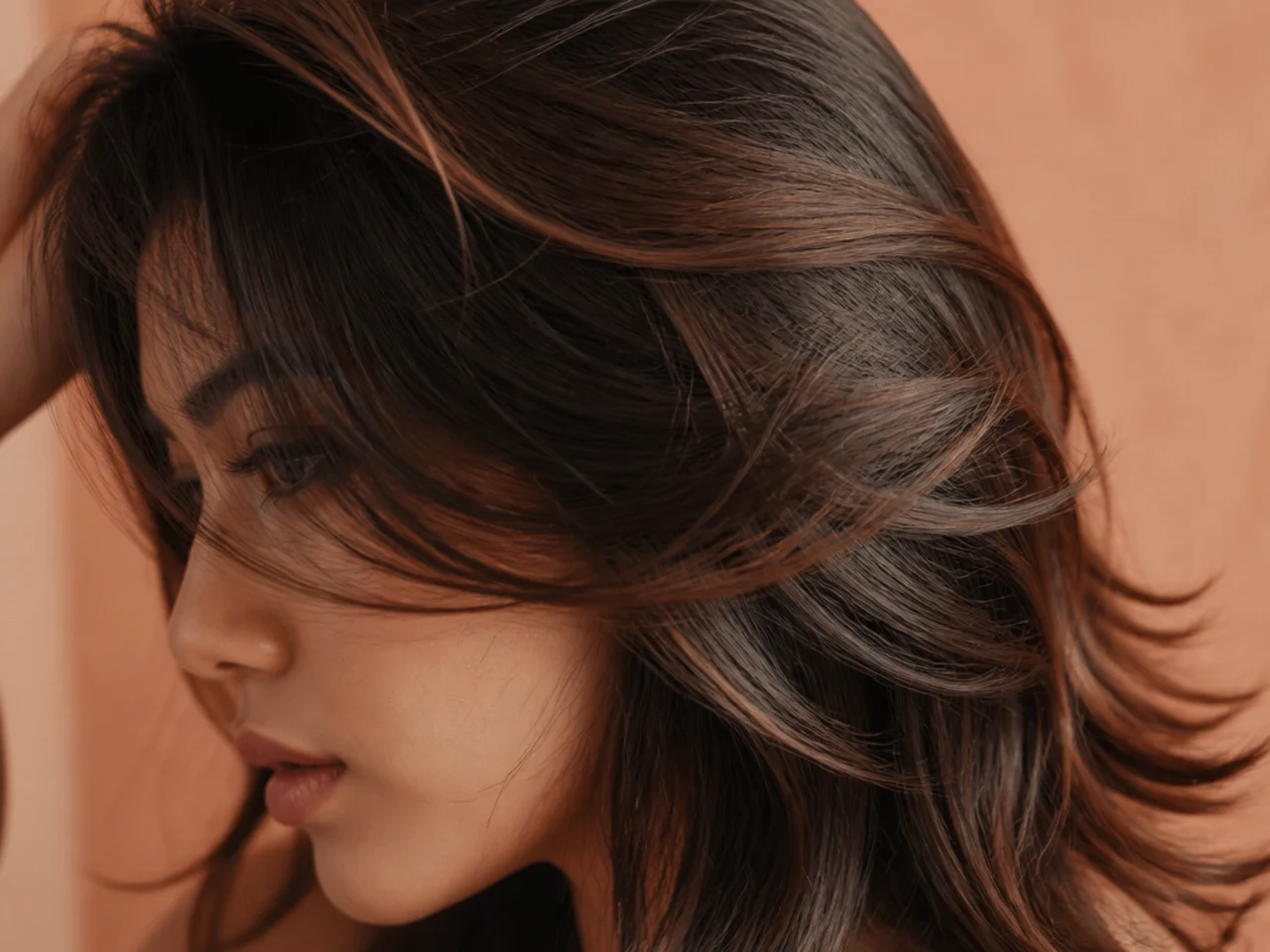
The lift lives in the top third. Layers cut above the cheekbone create the raised crown the wolf cut is known for. Below that line they only thin the lengths.
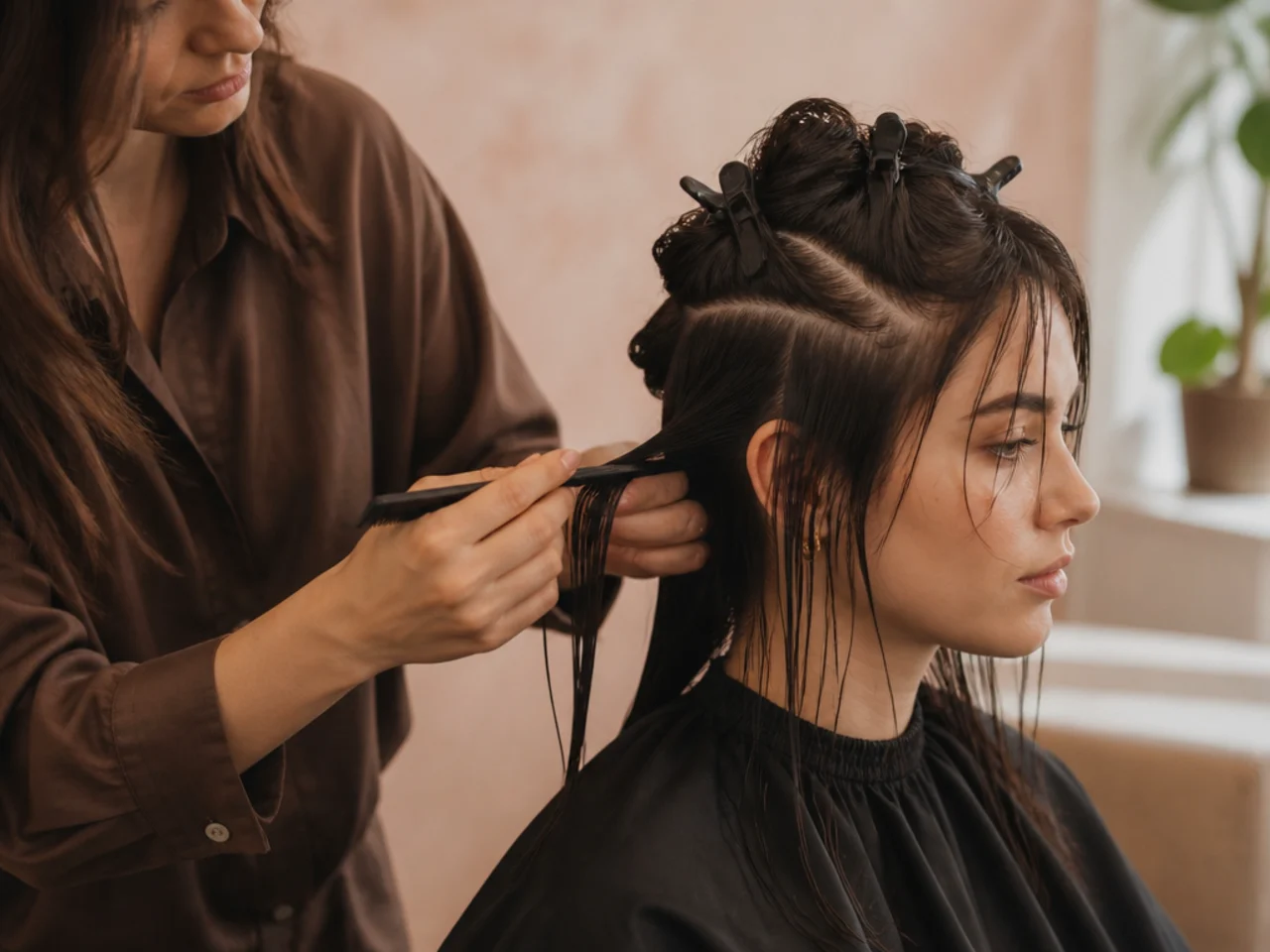
Wet fine hair lies about its density. Water clumps strands together, so hair that looks full on the cutting stool can be a third narrower once it is dried and separated.
How to Choose Your Version
Set the shortest layer by where you want width. A layer ending at the cheekbone puts the widest point at the cheekbone. Move it up and the shape goes round, move it down and it goes long.
Decide the perimeter before the layers. A blunt bottom line is the only thing holding fine ends together, so it is a decision made first, not a finishing touch.
Count your washes. Fine hair goes flat at the root within a day, so a cut that needs a blow dryer to read at all will read on one day in three.
Bring a photograph of dry hair. Wolf cuts photograph well wet and behave differently dry, and fine hair is where that gap is widest.
The 20 Wolf Cut Ideas for Fine Medium Hair
1. Shallow Layer Wolf Cut
The shortest layer stops at the cheekbone rather than the crown, so only the top third loses weight and the lengths below keep their full thickness. This is where most fine heads should start, because a layer cut higher takes weight from hair already carrying almost none.
2. Blunt Perimeter Wolf Cut
Layers through the body, then the bottom line cut straight across with scissors instead of point cut. That solid edge is a visual anchor: the eye reads a clean line as a full one, where a feathered edge reads as hair running out.

3. Collarbone Wolf Cut
Length stopping at the collarbone is about as long as a fine wolf cut should go. Past that the ends have travelled far enough from the scalp that the natural taper in each strand becomes visible, and no amount of layering above fixes a thinning tip.

4. Wolf Cut With Curtain Bangs
The fringe splits at the centre and sweeps out to meet the face frame, which hides the join where the shortest layer begins. It also puts a second body of hair across the forehead, so the front reads roughly twice as dense as it is. The shorter take on the shape sits in the short wolf cut.

5. Wolf Cut With a Heavy Fringe
A full fringe taken from a deep triangle of hair pulls density forward off the top of the head. On fine hair that borrows from one of the few places with hair to spare and puts it where it is seen most, though it costs the crown some of its lift.

6. Wolf Cut With Face Framing Layers
Two shorter pieces cut at the temples and graduated back into the length. They sit against the cheek and cast a shadow along the jaw, narrowing the face without removing weight from anywhere the rest of the cut depends on.

7. Middle Part Wolf Cut
A centre part splits the crown into two smaller sections, and a small section lifts more easily than one wide one. The trade is that a centre part exposes the scalp line down the middle, so a sparse crown wants a root shadow or a slightly offset split.

8. Deep Side Part Wolf Cut
Taking the part further over sends more hair across the top of the head, and hair crossing a part is held off the scalp by the change in direction alone. It is the cheapest root lift available and it costs nothing at the cutting stool.

9. Shag Leaning Wolf Cut
More layers, all of them soft, and no strong contrast between the crown and the lengths. On fine hair this reads more forgiving than the classic wolf cut, because there is no single short section that can go flat and give the whole shape away.

10. Mullet Leaning Wolf Cut
The back is left longer and the sides brought shorter, so the outline turns into a tail. The strong silhouette does the work here, because a shape the eye can trace does not need density to look deliberate. The men's version of the same idea is the korean wolf cut.

11. Wolf Cut With a Rounded Back
The perimeter cut in a shallow curve instead of a point. Curving the line keeps every strand at a similar distance from the scalp, so no single section thins out ahead of the rest and the back stays as solid as the sides.

12. Wolf Cut With a V Shaped Back
The centre back left longer than the outside edges, drawing the eye to a point. It is flattering but it is the least forgiving perimeter for fine hair, because that centre point carries the thinnest ends at the greatest distance from the scalp.
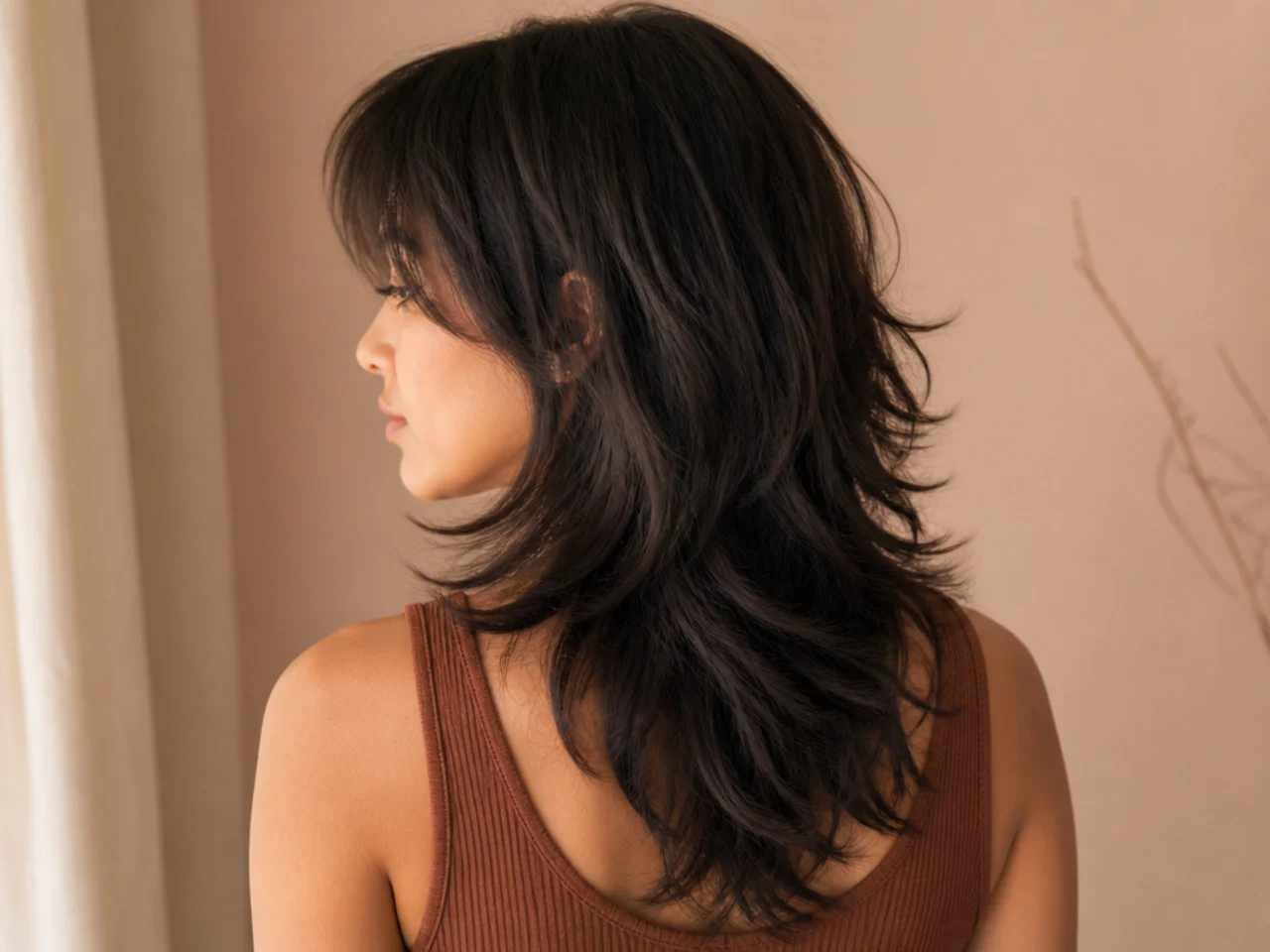
13. Dry Cut Wolf Cut
Cutting dry means the stylist is looking at the same hair you look at in the mirror rather than at wet strands stuck together. Fine hair shrinks and separates as it dries, and a layer that looked balanced wet can sit an inch too short once it lifts.
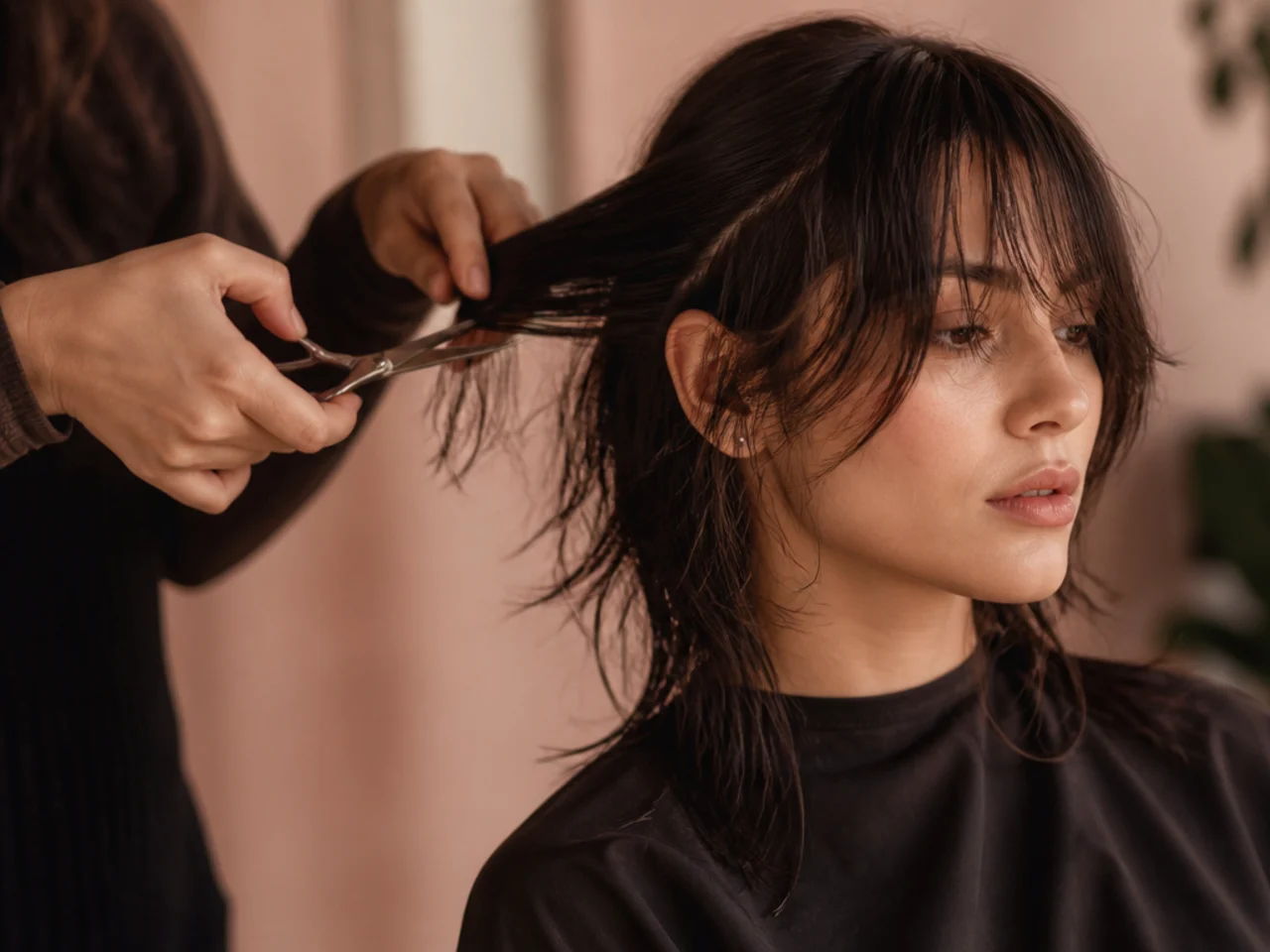
14. Wolf Cut With a Point Cut Fringe
Point cutting the fringe and nothing else softens the edge across the forehead so it does not sit as a hard block on a fine head. Keeping the technique above the eyebrows means the weight loss happens where there is length behind it to compensate.

15. Wolf Cut With a Shorter Crown Section
A tighter crown layer, around three inches, gives the most lift available at the top of the head. It works on dense fine hair and fails on sparse fine hair, because a short crown that cannot stand up lies flat and shows the step where it was cut.

16. Wolf Cut With Balayage
Two or three tones through the mid lengths make the eye read separate strands where it would otherwise read one flat sheet. Tonal variation is the closest thing to free density on fine hair, because it buys apparent thickness without removing a single millimetre of weight.

17. Wolf Cut With a Root Shadow
A darker tone kept through the first inch of regrowth makes the scalp harder to see through at the parting. Fine hair looks thinnest exactly where the strands separate at the root, so darkening that band returns more apparent density than any change further down.

18. Wolf Cut With a Money Piece
Two lightened sections at the front of the face frame. Because they are brighter than the hair behind them they advance visually, which pushes the darker lengths back and builds a sense of depth that a single flat tone cannot produce.

19. Wolf Cut on Straight Fine Hair
The hardest combination, because straight strands lie flat against each other and show every layer edge as a line. Ask for the layers to be slide cut rather than cut against a straight guideline, so the change in length happens across an inch instead of at a single point.

20. Wolf Cut on Wavy Fine Hair
The easiest, because the bend in each strand holds it away from its neighbours and supplies volume the cut does not have to. Cut it dry and cut it long, since wavy hair springs up between half an inch and a full inch as it dries.

Styling and Upkeep
Dry the roots against their direction first. Fine hair sets in the shape it dries in, and it dries in minutes, so the first two minutes decide the volume for the day.
Mousse at the root, nothing at the ends. Product weight is what closes a fine wolf cut down, and the ends need none of it to hold together.
Keep conditioner below the ears. Conditioner is a weight, and weight sitting at the root removes exactly the lift the layers were cut to create.
Trim the perimeter every eight to ten weeks and leave the layers. The bottom line softens first, and refreshing it costs no length anywhere else in the cut.
Wash less often than feels right. One day of natural oil gives fine hair grip. Two days gives it weight, and weight is the enemy of the shape.
Mistakes to Avoid
Asking for lots of layers. It is the phrase that produces stringy ends, because a stylist hears it as permission to layer through the perimeter as well as the top.
Letting a razor near the ends. A razor thins as it cuts, which is useful on coarse hair and ruinous on fine, where the tip of the strand is already its narrowest point.
Going past the collarbone. Length is weight and weight pulls fine roots flat, so every extra inch below the collarbone costs lift at the crown.
Cutting it wet at a first appointment. Wet fine hair reads a third denser than dry, so the layers get cut for hair that will not be there once it dries.
Chasing the photograph texture with heat every day. Heat roughens the cuticle, and roughened fine hair breaks through the mid lengths, exactly where a wolf cut needs its stack of layers intact.

FAQ
Does a wolf cut suit fine hair? Yes, if the layers stay in the top third and the perimeter stays blunt.
How long should it be? Collarbone at the longest, because past that the ends thin faster than layers can compensate.
Wet cut or dry cut? Dry, every time. Wet fine hair reads denser than it is.

Final Thoughts
Fine hair does not need a different cut so much as a different distribution. Keep the layering above the cheekbone, keep the bottom line solid, and the wolf cut gives you lift at the crown without spending the weight that holds the ends together.
For the shorter end of the same shape see the short wolf cut, and for the blunter, more graphic version see the korean wolf cut. More in Mullet & Wolf Cut.