30 Gorgeous Curtain Bangs For Short Fine Hair
Thirty curtain bang variations for short fine hair, sorted by the measurement that governs all of them. Every hair taken into the fringe is one fewer around the parting, so on a fine head the depth of the section decides the result.
In this article · 37
- Why Fine Hair Changes the Fringe
- Choosing Your Length and Split
- The 30 Curtain Bang Ideas for Short Fine Hair
- 1. The Shallow Section Curtain Bang
- 2. The Cheekbone Length Curtain Bang
- 3. The Nose Length Curtain Bang
- 4. The Jaw Length Curtain Bang
- 5. The Chin Grazing Curtain Bang
- 6. The Curtain Bang on a Pixie
- 7. The Curtain Bang on a French Bob
- 8. The Curtain Bang on a Blunt Bob
- 9. The Curtain Bang on a Layered Bob
- 10. The Curtain Bang on a Short Shag
- 11. The Curtain Bang on a Bixie
- 12. The Deep Centre Split
- 13. The Off Centre Split
- 14. The Floating Split
- 15. The Feathered Curtain Bang
- 16. The Point Cut Curtain Bang
- 17. The Blunt Cut Curtain Bang
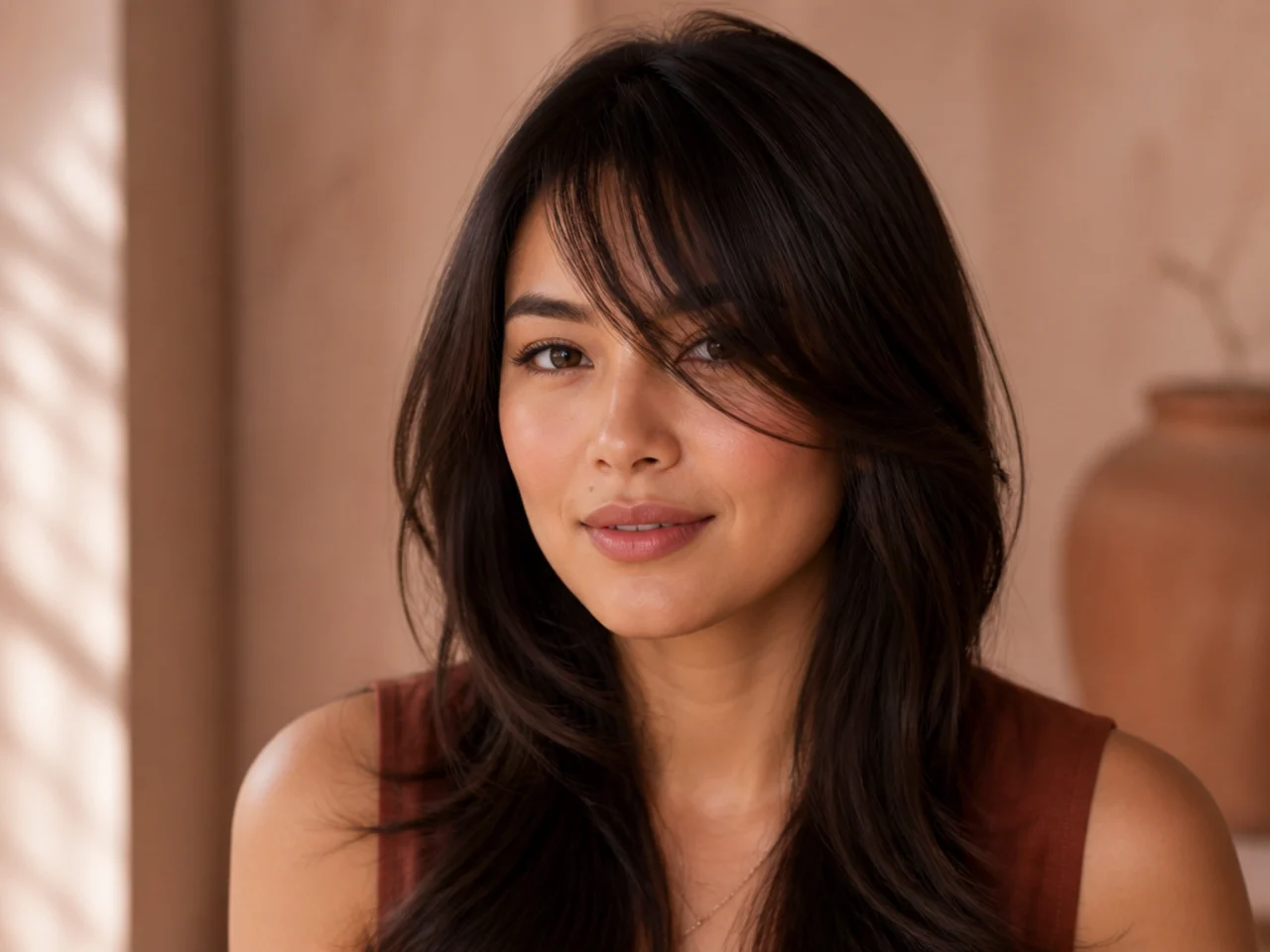
- 18. The Wispy Curtain Bang
- 19. The Heavier Curtain Bang
- 20. The Curtain Bang With a Money Piece
- 21. The Curtain Bang With Root Lift Powder
- 22. The Air Dried Curtain Bang
- 23. The Round Brushed Curtain Bang
- 24. The Flat Ironed Curtain Bang
- 25. The Curtain Bang on Straight Fine Hair
- 26. The Curtain Bang on Wavy Fine Hair
- 27. The Curtain Bang on Curly Fine Hair
- 28. The Curtain Bang Over a Cowlick
- 29. The Curtain Bang at Six Weeks
- 30. The Curtain Bang Pinned Back
- Styling and Upkeep
- Mistakes to Avoid
- FAQ
- Final Thoughts
On fine hair a curtain fringe is not a styling decision but a subtraction, and the amount subtracted is the whole question.
The fringe is taken out of the parting. Every hair cut into it is one fewer around the crown, and on a fine head that shortage shows within an inch of the hairline.
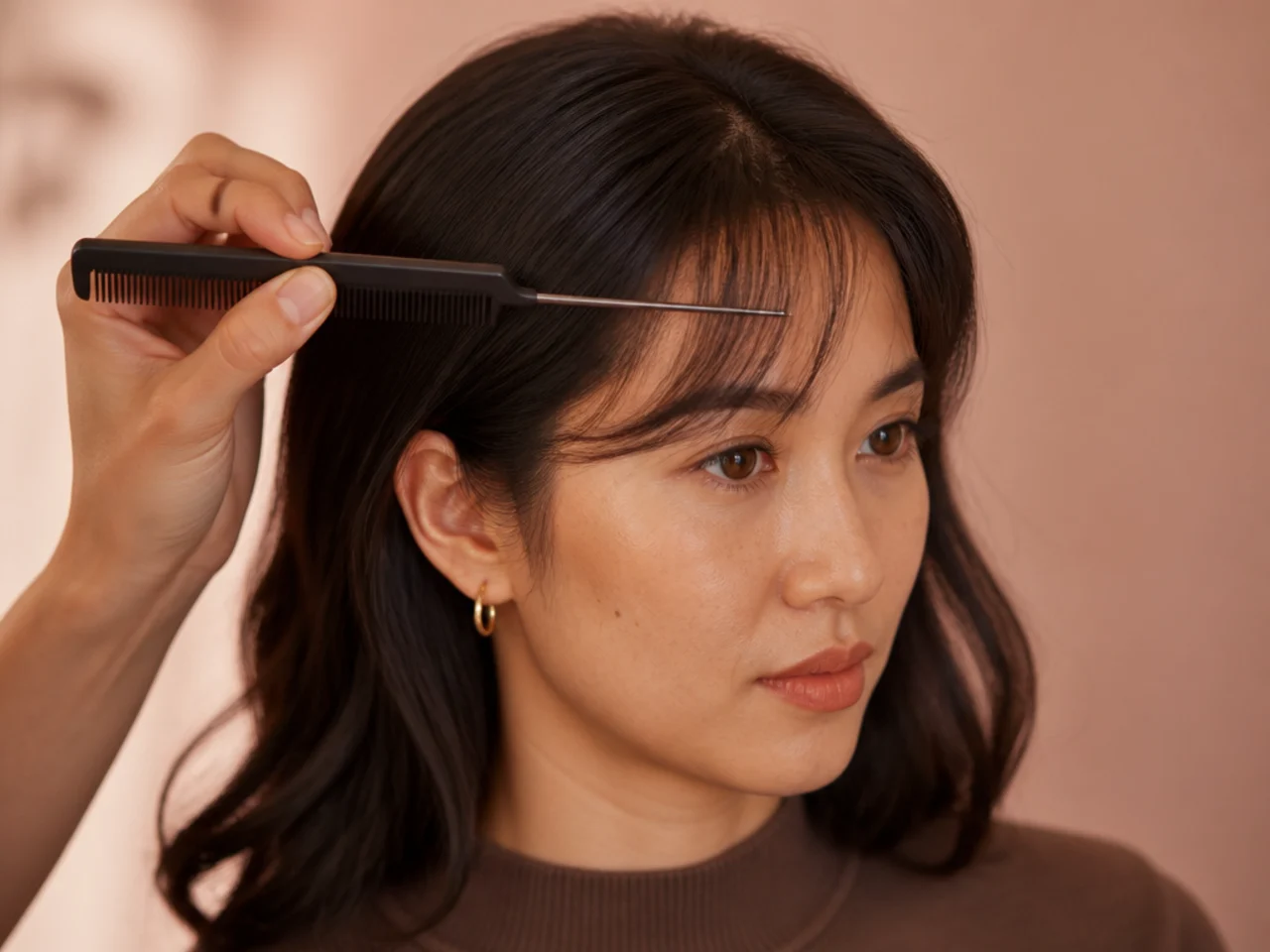
Shallow section, fairly blunt ends. An inch and a half back is the working limit, and a solid edge is what makes a small amount of hair read as dense.
Why Fine Hair Changes the Fringe
Fine strands cover less scalp each. The same number of hairs looks thinner because each one is narrower, so density has to be protected rather than spent.
Short lengths help. A short fringe carries less of its own weight, so it holds a sweep that would collapse at long lengths on the same head.
Blunt ends look denser than tapered ones. All the strands finishing on one line reads as a solid edge, where a razored end reads as several thin ones.
Oil at the root is the enemy. The forehead deposits sebum straight into the fringe, and a fine fringe carries far less hair to disguise it.
Choosing Your Length and Split
Take the shortest piece to the cheekbone. That is the shortest length that still bends back on itself instead of standing forward.
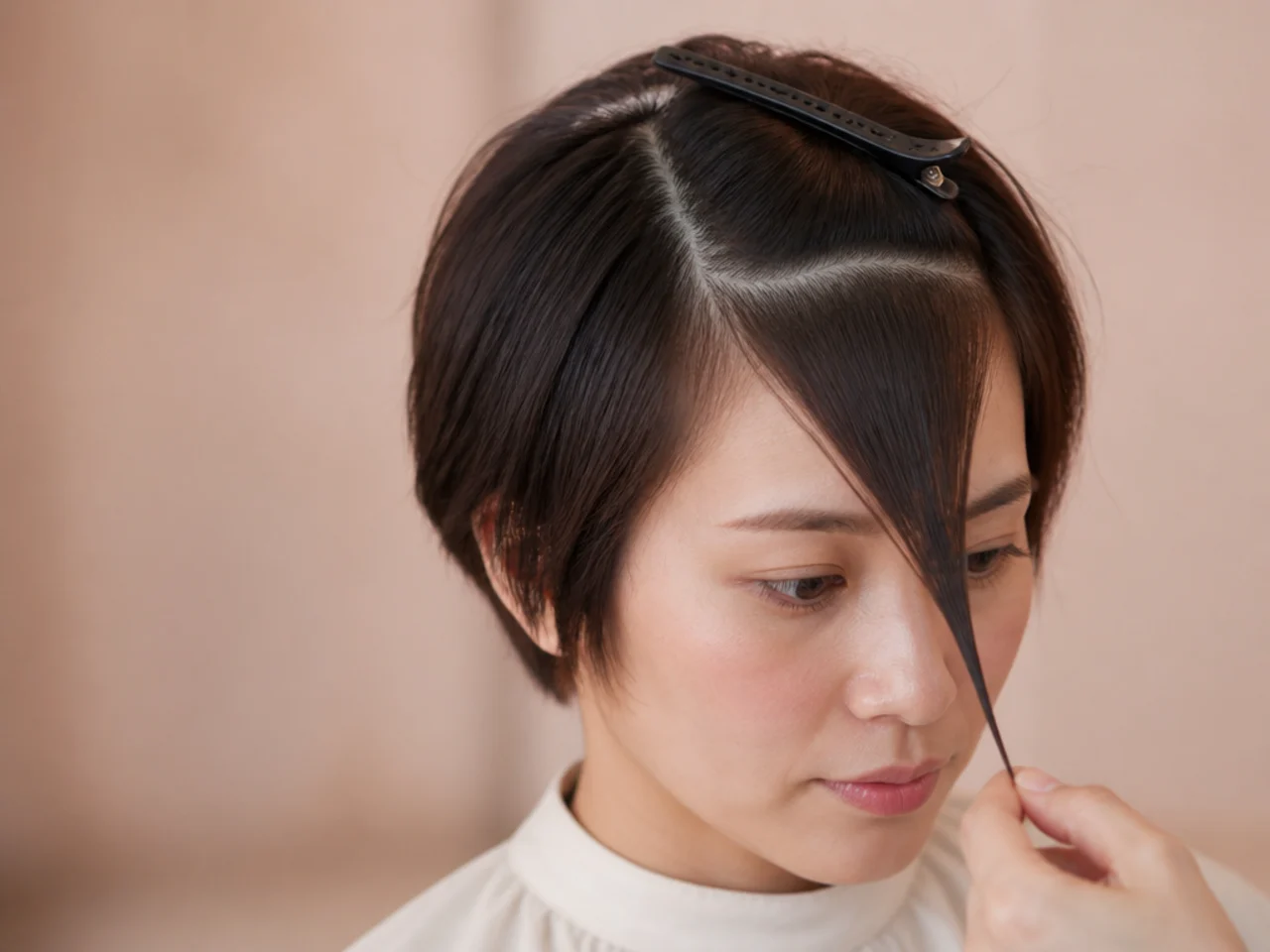
Set the section depth before the length. An inch to an inch and a half back on fine hair, measured from the hairline, not from the crown.
Find the split rather than choosing it. Comb the fringe forward and let it separate. A forced parting reopens sideways within a couple of hours.
Match it to the cut behind it. A blunt bob wants a blunter fringe and a shag wants a feathered one, because the fringe is read against the outline it sits in front of.
The 30 Curtain Bang Ideas for Short Fine Hair
1. The Shallow Section Curtain Bang
The section is a triangle taken barely an inch back from the hairline. On fine hair that restraint is the entire trick, because anything deeper thins the parting behind it and swaps one problem for another.
2. The Cheekbone Length Curtain Bang
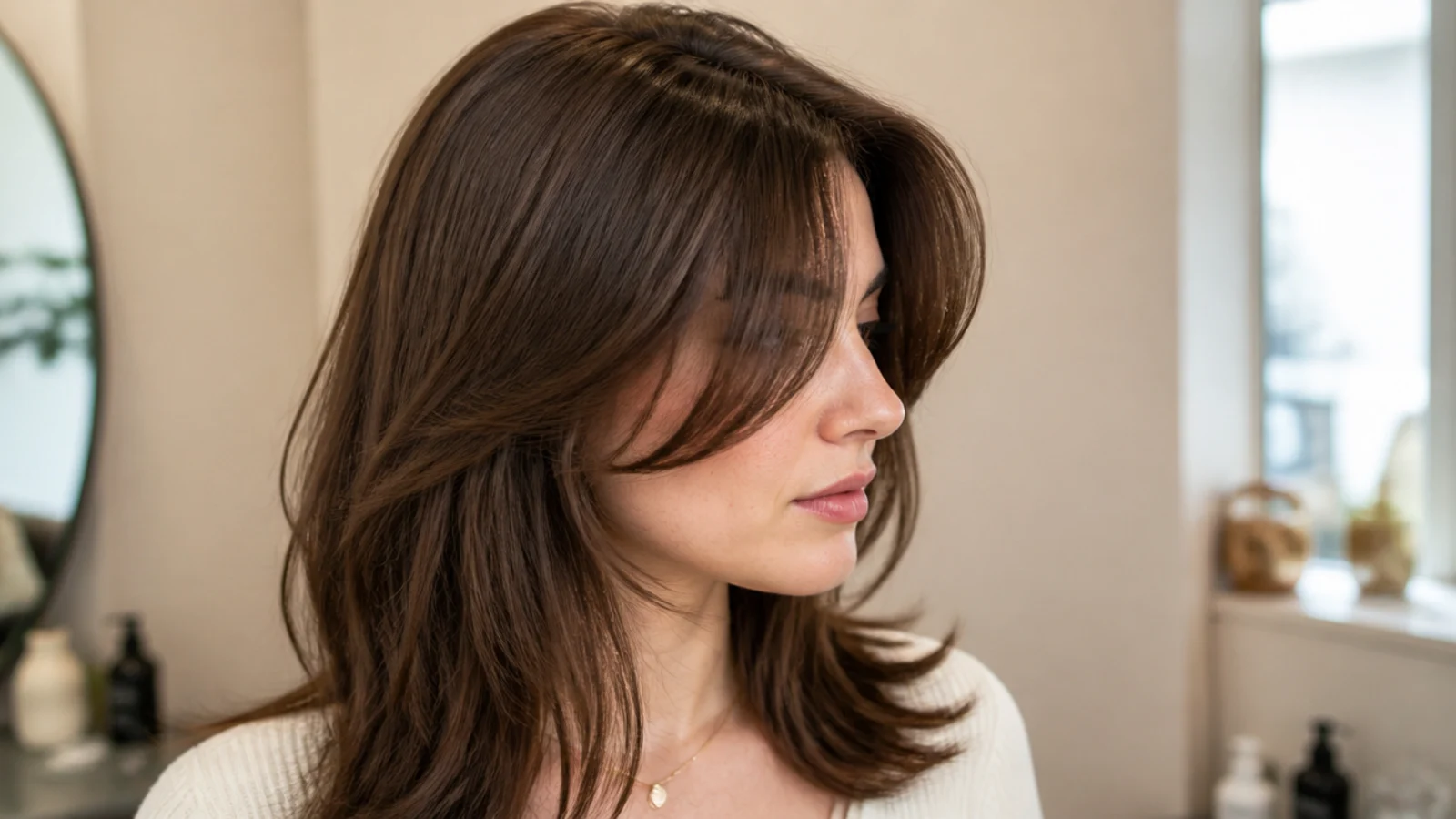
The shortest front piece finishes level with the cheekbone. That length has just enough weight to hold a backward sweep, and it is the point at which the fringe stops being a fringe and starts being face framing.

3. The Nose Length Curtain Bang
The front pieces land at the tip of the nose. It is the most versatile length on fine hair because it is long enough to tuck behind an ear on a bad morning and short enough to still open the face.

4. The Jaw Length Curtain Bang
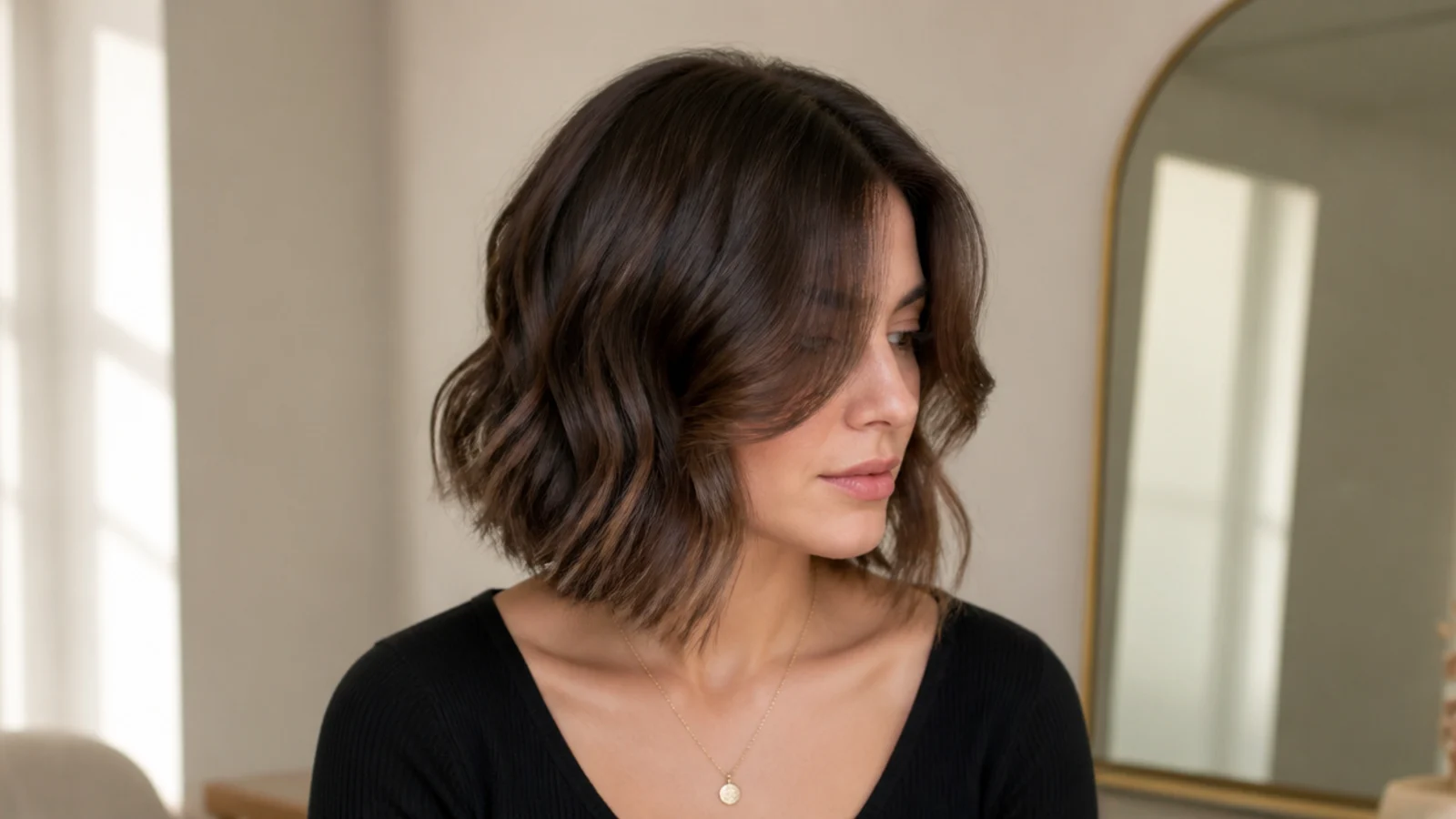
The fringe reaches the jaw and merges with the sides. On a short cut this makes the fringe read as part of the outline rather than as an addition, which is the least maintenance version there is.

5. The Chin Grazing Curtain Bang
The longest workable version on short hair, with the ends at the chin. The extra length adds weight, so the sweep sits lower and softer, and it needs less styling to stay where it was put.

6. The Curtain Bang on a Pixie
At pixie length there is very little behind the fringe, so the section has to come from the very front hairline only. Cut it any deeper and the crown loses the mass that was giving the whole cut its height.

7. The Curtain Bang on a French Bob
A jaw length bob with a fringe already built into its shape. The fringe and the perimeter are close enough together that they read as one line, which makes fine hair look considerably denser than it is.

8. The Curtain Bang on a Blunt Bob
The blunt perimeter and a fairly blunt fringe do the same job twice. Two solid lines on a fine head is the strongest density illusion available, and it costs nothing but resisting the urge to texturise.

9. The Curtain Bang on a Layered Bob
Soft layers behind and a curtain fringe in front. The layers have to stay shallow on fine hair, or the fringe becomes the densest thing on the head and reads as separate from everything behind it.

10. The Curtain Bang on a Short Shag
A feathered fringe against a heavily textured cut. Here the fringe should match the interior, because a blunt fringe in front of a shag reads as two different haircuts joined at the hairline.

11. The Curtain Bang on a Bixie
The back is cut close and the fringe carries almost all the length at the front. That imbalance is what gives the cut its forward drive, and the fringe is doing the visual work the sides used to do.

12. The Deep Centre Split
The parting is taken back several inches and the fringe falls away from a strong central line. On fine hair this exposes the most scalp of any option, so it needs a root shadow or a powder at the parting to work.

13. The Off Centre Split
Moving the split half an inch to one side loads a slightly heavier panel onto the other. That extra weight is enough to hold the heavy side down and let the light side lift, which reads as movement rather than symmetry.

14. The Floating Split
The fringe is cut evenly enough that it can be split anywhere across the front. It only works if both sides are the same length to within a few millimetres, since any difference becomes visible the moment the split moves.

15. The Feathered Curtain Bang
The ends are cut on a steep angle so each strand finishes at a slightly different point. It looks soft, and on fine hair it costs density, so it belongs on the thicker end of fine rather than the thinnest.

16. The Point Cut Curtain Bang
The scissors go into the ends vertically, removing a small amount from alternating strands. It breaks a hard line without thinning the fringe, which is the compromise most fine hair actually wants.

17. The Blunt Cut Curtain Bang
Every strand finishes on one line. Nothing makes fine hair look denser, because the eye reads the edge rather than counting the hairs, and a solid edge implies a solid section behind it.

18. The Wispy Curtain Bang
Deliberately sparse, with a very shallow section and thinned ends. It suits hair that is fine but dense, where there are enough strands to spare. On genuinely sparse hair it just looks like a fringe that has worn away.

19. The Heavier Curtain Bang
A slightly deeper section, cut blunt, worn as a density illusion. It borrows hair from the crown to make the front look full, so it is a trade rather than a free gain and only worth it if you always wear a fringe.

20. The Curtain Bang With a Money Piece
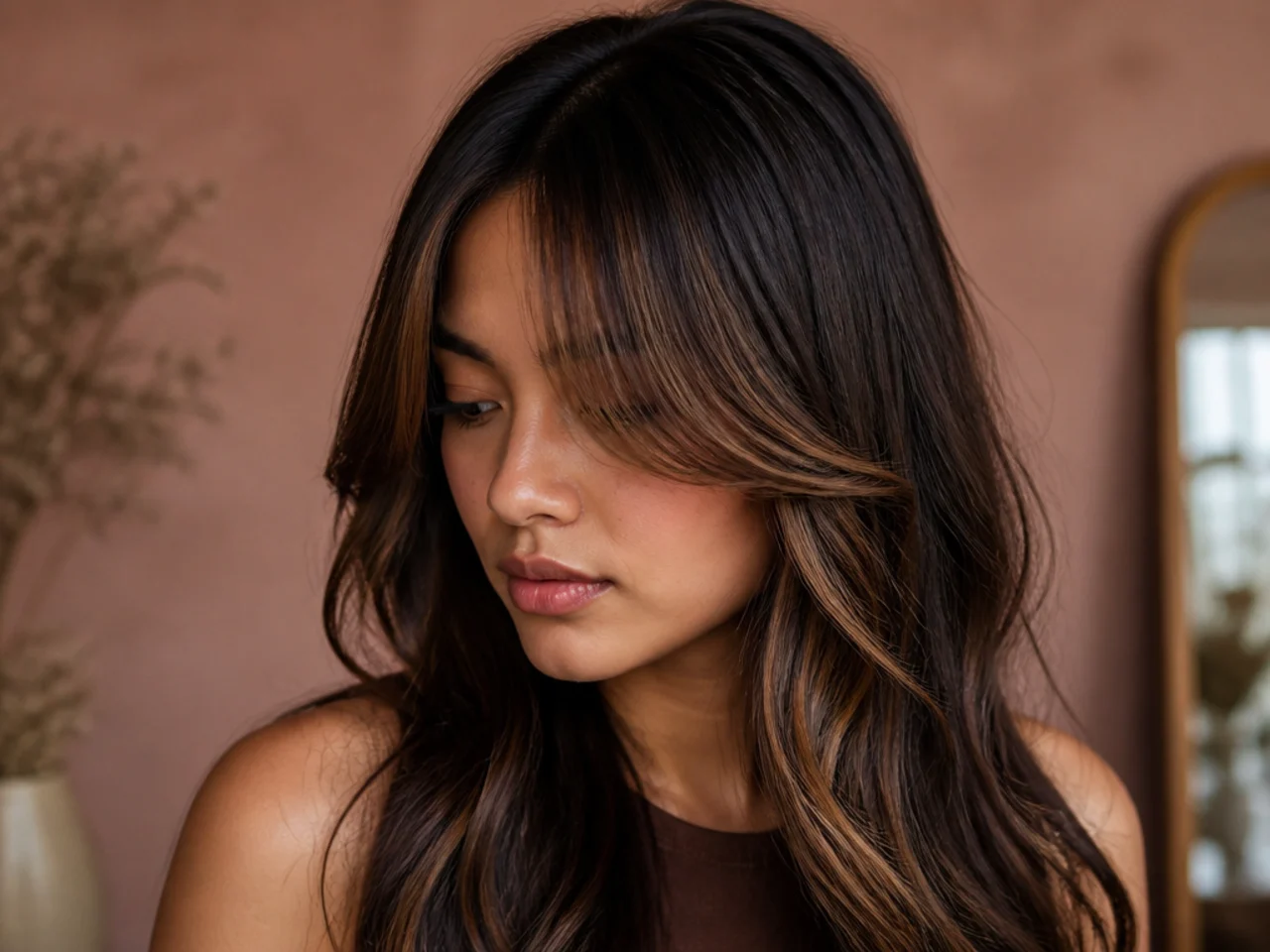
The two front panels lifted a couple of shades. They sit in front of everything else, so the contrast is at its strongest there, and lightening only the fringe means the rest of the head never has to be touched.
21. The Curtain Bang With Root Lift Powder
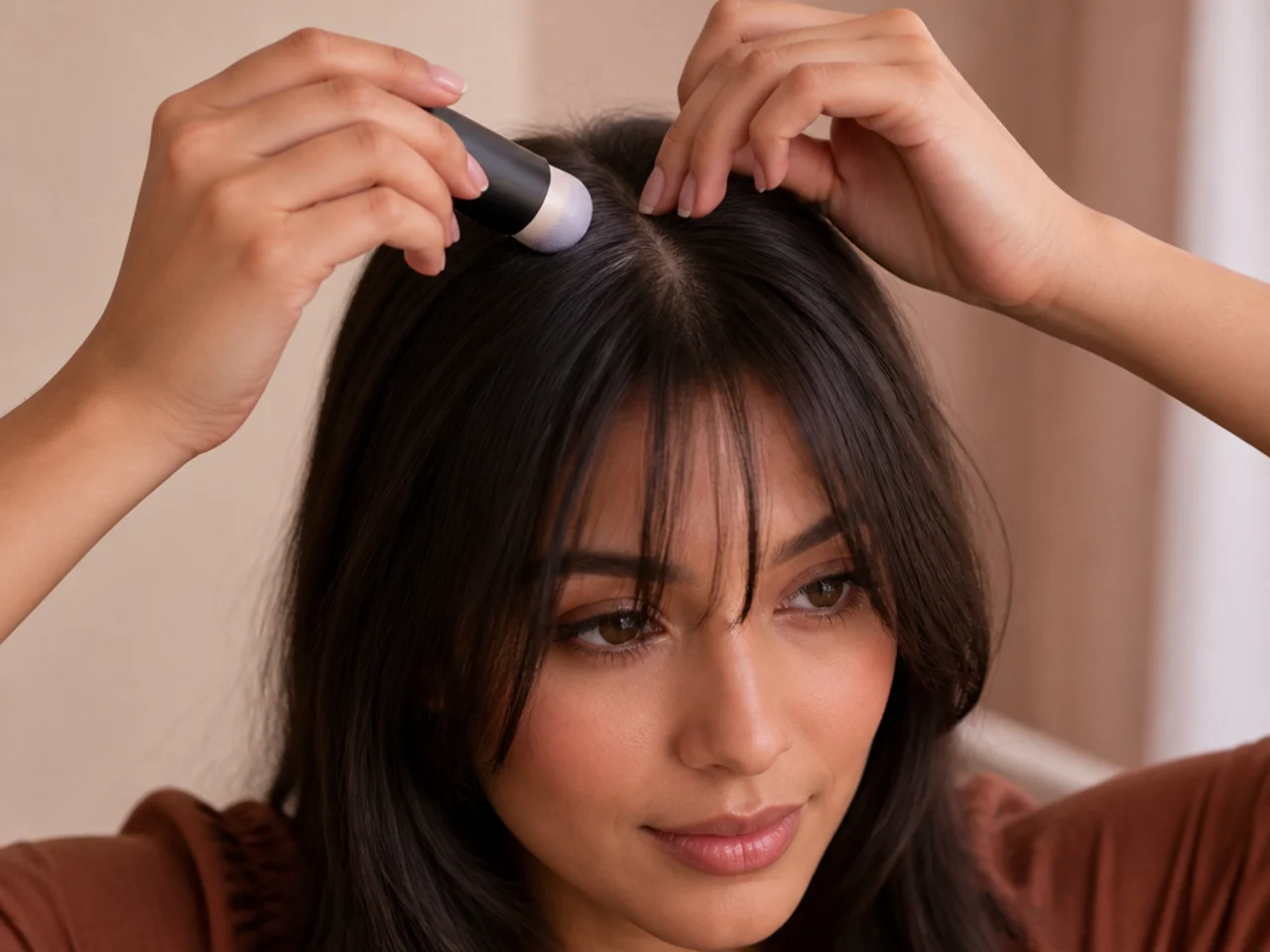
A pinch of powder worked into the fringe roots. It adds friction between strands so they hold each other apart, which on fine hair does more for volume than any spray applied down the length.
22. The Air Dried Curtain Bang
The fringe damped, pushed into position and left. Hair sets in the shape it dries in, so this works, but only if the fringe is placed before it dries rather than corrected afterwards.

23. The Round Brushed Curtain Bang
Dried over a brush rolled away from the face. On fine hair use a smaller barrel than you would on thick, because a fine fringe needs a tighter radius to hold any bend at all once it is released.

24. The Flat Ironed Curtain Bang
The ends curved outward with the plates barely closed. Clamping hard flattens the strand and removes the small amount of body a fine fringe has, so the pressure matters more than the temperature.

25. The Curtain Bang on Straight Fine Hair
Straight fine hair has no bend of its own, so all the shape has to be dried in from wet. It also shows the cut line most clearly, which is why a blunt edge is worth keeping here rather than softening it.

26. The Curtain Bang on Wavy Fine Hair
The natural bend does most of the sweeping, so the cut can be softer and the styling shorter. Wave also scatters light along the strand, which makes fine hair look fuller than the same amount cut straight.

27. The Curtain Bang on Curly Fine Hair
Cut dry and one curl at a time. Fine curls stretch further under water than coarse ones do, so a fringe measured wet can end up an inch shorter, which on a fringe is the difference between a sweep and a wing.

28. The Curtain Bang Over a Cowlick
A cowlick at the front hairline forces the hair in a fixed direction, and it cannot be cut out. Split the fringe along the cowlick rather than across it and the growth pattern starts doing the work instead of fighting you.
29. The Curtain Bang at Six Weeks
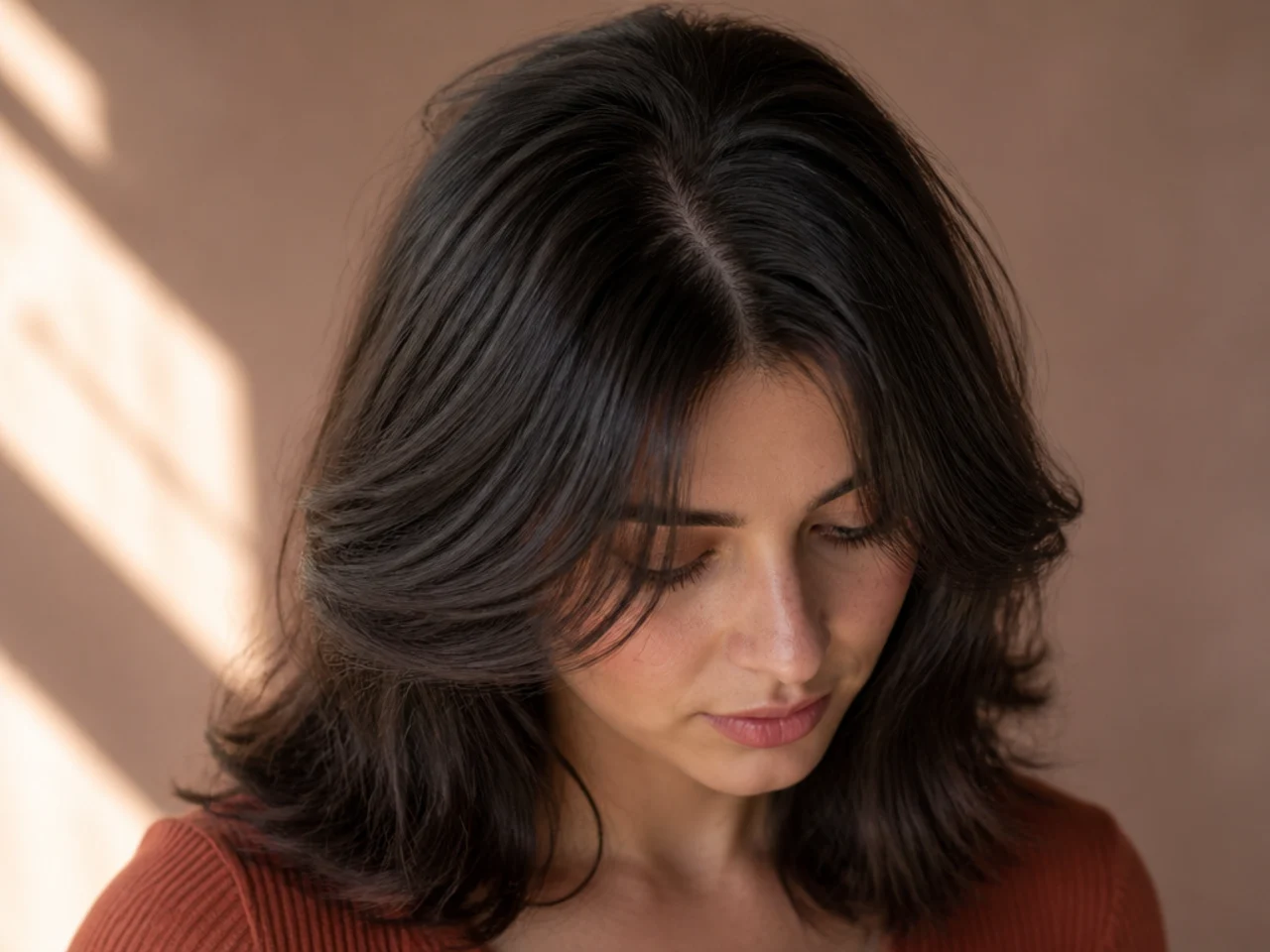
The shortest pieces have grown past the cheekbone and the sweep has flattened. Hair grows about half an inch a month, so six weeks is roughly three quarters of an inch, and on a fringe that is enough to change what it does.

30. The Curtain Bang Pinned Back
Both panels swept back and pinned behind the ear or at the crown. Pin into the hair beneath rather than into the fringe itself, or the pin holds the fringe together while holding it to nothing and slides straight out.
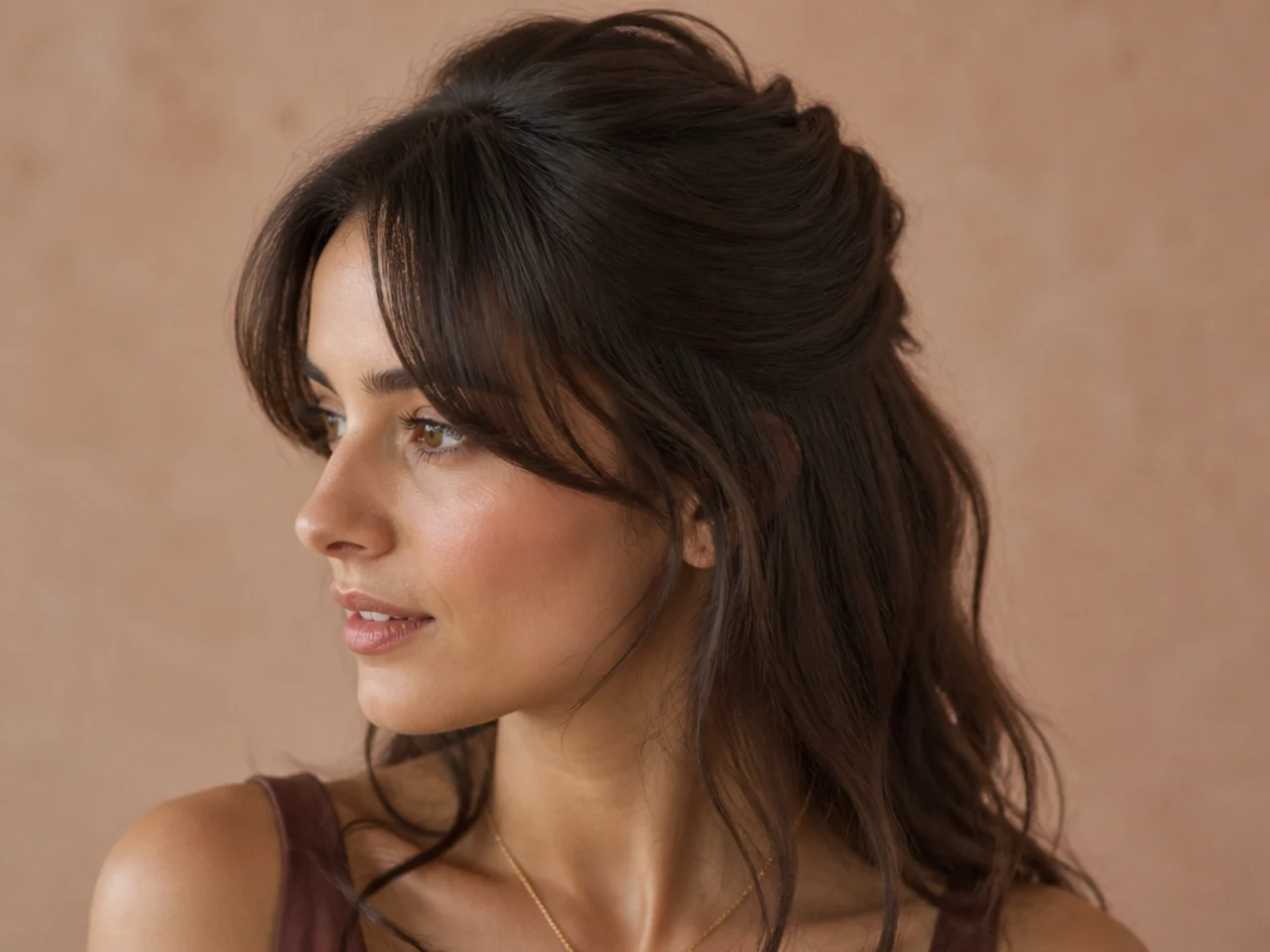
Styling and Upkeep
Wash the fringe on its own between washes. It collects forehead oil faster than the rest of the head and there is less hair to hide it in.
Restyle from damp, never dry. Fine hair takes a shape as it dries and holds nothing at all if heated dry.
Keep product at the root and above the ear. Anything on the ends of a fine fringe adds weight where the sweep is already marginal.
Trim every four to six weeks. Half an inch a month is enough to move the shortest piece past the cheekbone and lose the sweep.
Do not brush the fringe once it is set. A comb through a fine fringe pulls the root flat and there is no recovering it without water.

Mistakes to Avoid
A deep fringe section. Past about an inch and a half back it thins the parting behind, and a transparent crown is worse than a thin fringe.
Razoring the ends. A tapered end reads as several thin strands rather than one solid line, which is the opposite of what fine hair needs.
Cutting it wet on curly hair. Fine curls stretch further than coarse ones, so the fringe lands shorter than it measured.
Forcing the split. A parting cut against the growth reopens sideways by mid morning, every day, permanently.
Dry shampoo down the length. It works by absorbing oil at the root and only dulls the surface anywhere else.

FAQ
How deep a section? An inch to an inch and a half back from the hairline, no more.
Does it thin the hair? Only if the section is deep or the ends are razored.
Shortest length? The cheekbone. Above that the piece stands forward instead of sweeping.

Final Thoughts
Book it by the section, not the picture. "A triangle an inch back, shortest piece at the cheekbone, ends left blunt" is three measurable instructions, and on fine hair those three decide whether the fringe adds density at the front or removes it from the parting.
For the same fringe carried on length see curtain bangs on long hair, and for the shorter, denser relative of this cut see short french bangs and french bangs versus curtain bangs. For the same fringe described by its two anchor points see short hair with curtain bangs. More in Bangs and Fringe.