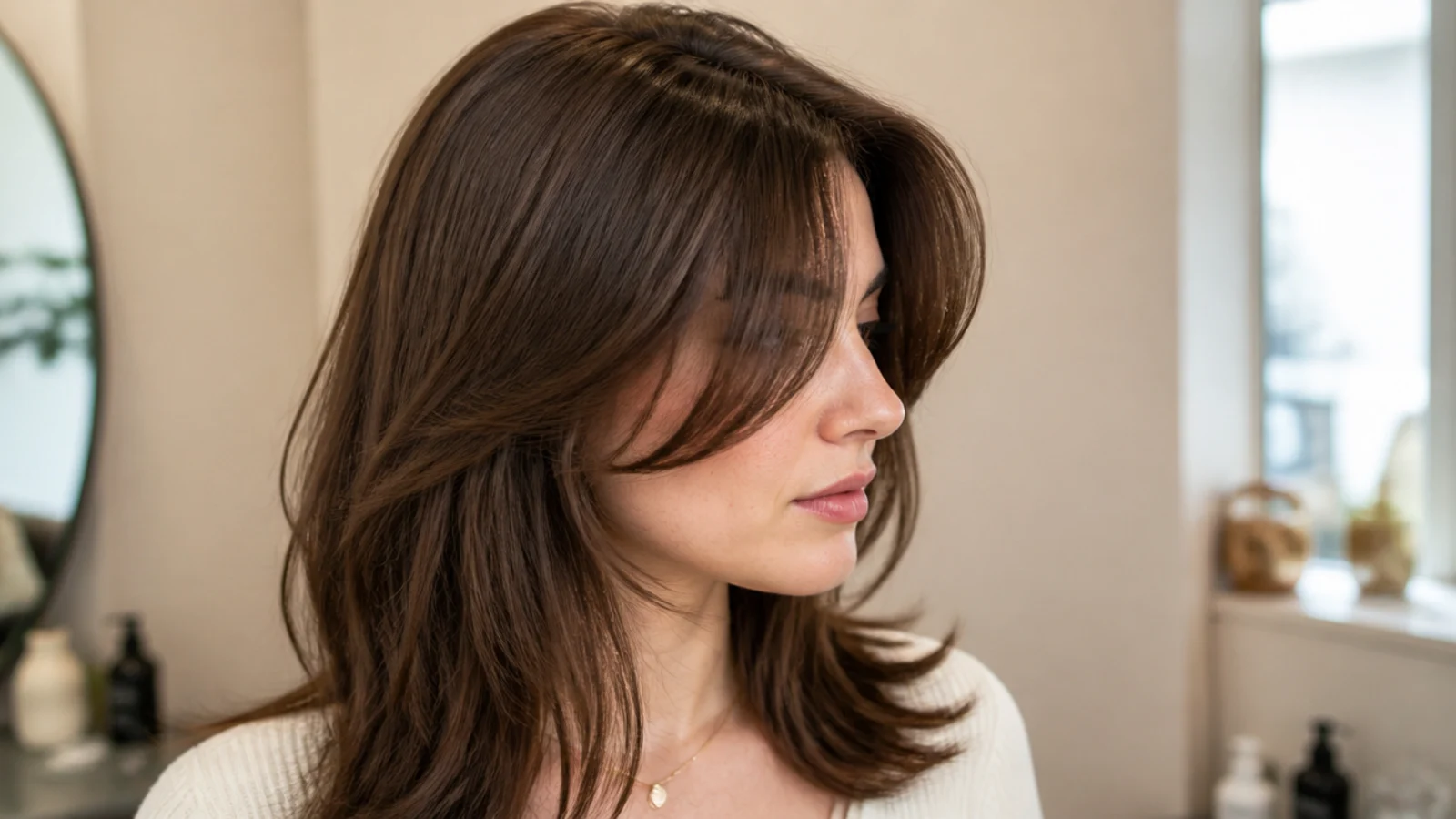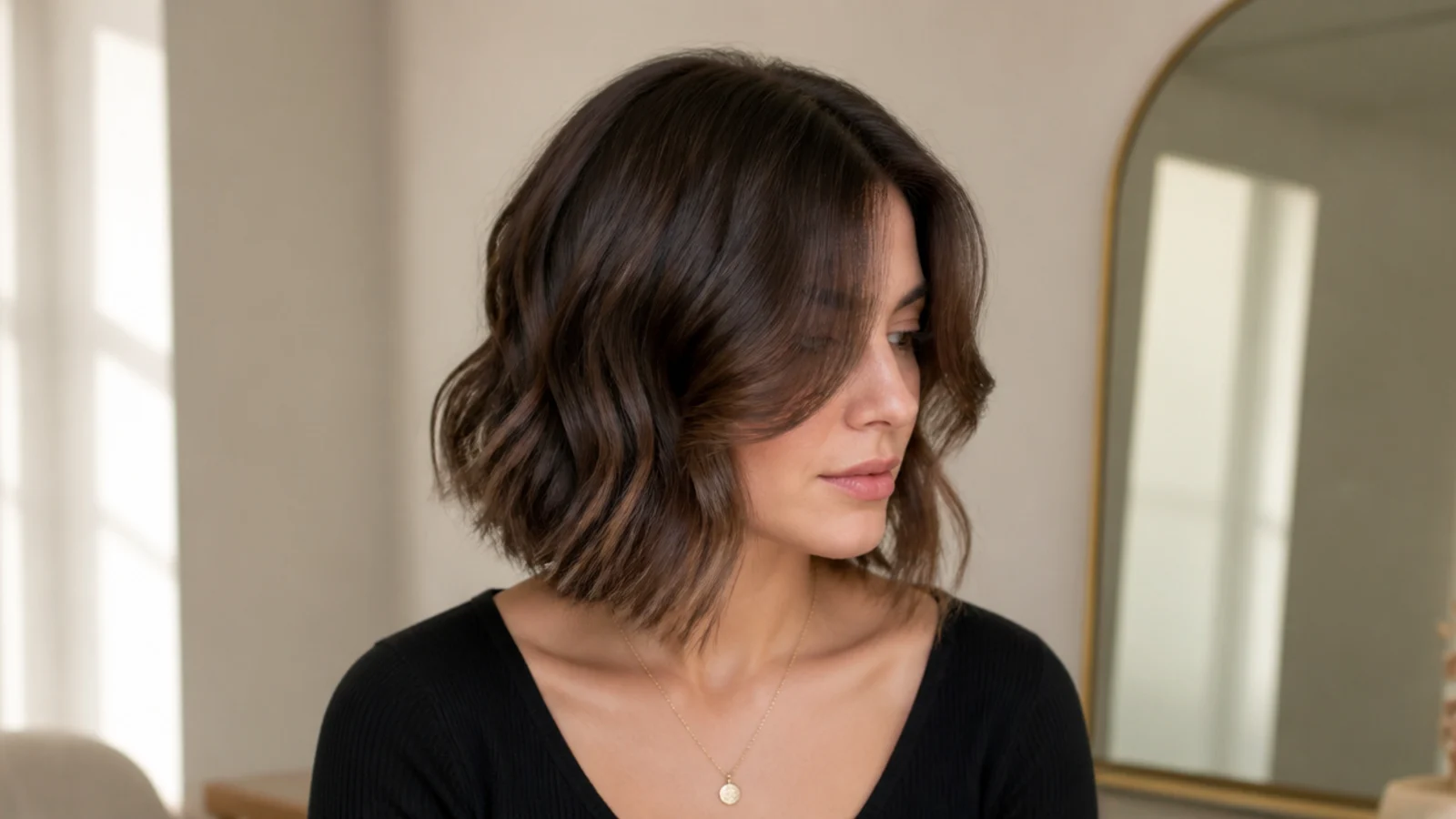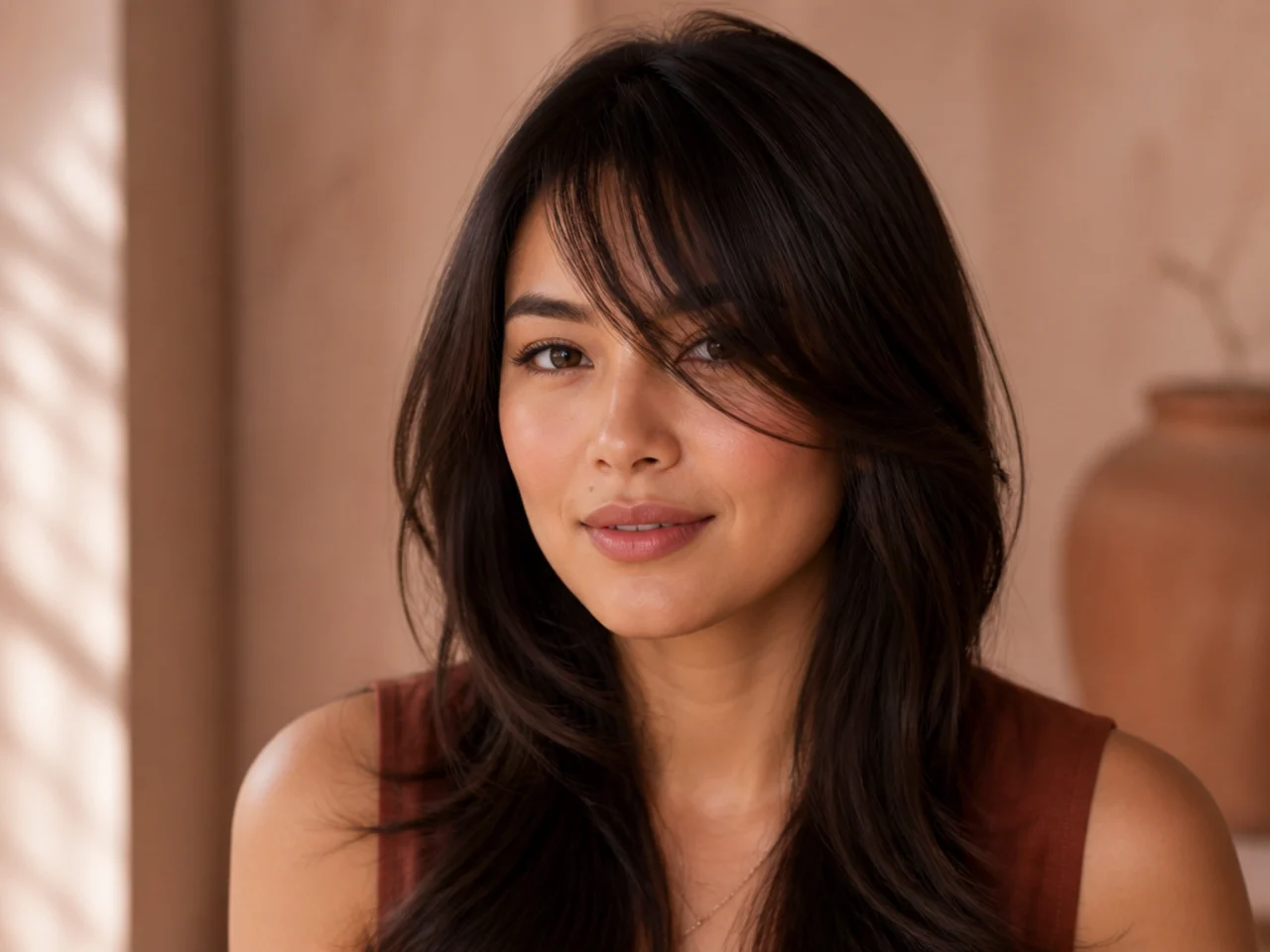
25 Stunning Short Hair Looks With Curtain Bangs
Twenty-five short cuts with curtain bangs, and the proportion that decides whether they read as curtains at all. On short hair the fringe has to be cut longer relative to the length, or it closes into a solid fringe.
In this article · 32
- Why Curtain Bangs Work on Short Hair
- Choosing Your Bang Length
- The 25 Short Hair Looks With Curtain Bangs
- 1. Blunt Bob With Curtain Bangs
- 2. Layered Bob With Curtain Bangs
- 3. French Bob With Curtain Bangs
- 4. Chin Length Bob With Curtain Bangs
- 5. Lob With Curtain Bangs
- 6. Stacked Bob With Curtain Bangs
- 7. Wavy Bob With Curtain Bangs
- 8. Curly Bob With Curtain Bangs
- 9. Pixie With Curtain Bangs
- 10. Bixie With Curtain Bangs
- 11. Shaggy Bob With Curtain Bangs
- 12. Short Wolf Cut With Curtain Bangs
- 13. Asymmetric Bob With Curtain Bangs
- 14. Jaw Length Blunt Bob With Curtain Bangs
- 15. Short Hair With Bottleneck Bangs
- 16. Curtain Bangs on Fine Short Hair
- 17. Curtain Bangs on Thick Short Hair
- 18. Short Hair With a Money Piece
- 19. Tousled Crop With Curtain Bangs
- 20. Sleek Bob With Curtain Bangs
- 21. Curtain Bangs Tucked Behind the Ears
- 22. Half Up Short Hair With Curtain Bangs
- 23. Curtain Bangs With a Middle Part
- 24. Curtain Bangs With a Side Part
- 25. Grown Out Curtain Bangs
- Styling and Upkeep
- Mistakes to Avoid
- FAQ
- Final Thoughts
Curtain bangs fail on short hair for one reason: they were cut to the same measurements used on long hair, where there was far more length below them to taper against.
A curtain bang is a gradient, not a length. It runs from a short point at the centre out to a longer point at the cheek, and that difference is what makes it read as curtains.
Short hair leaves less room for that gradient. Keep the shortest point at the brow rather than above it, and let the outer ends reach the jaw so the taper still has somewhere to travel.
Why Curtain Bangs Work on Short Hair
They restore the vertical a short cut removes. Short hair widens the head visually; a fringe that opens downward pulls the eye back into a vertical line.
They soften a blunt perimeter. A bob ends in a hard horizontal, and the tapered ends of a curtain bang break that line before it reaches the face.
They give a short cut somewhere to move. The front pieces are the only part of a jaw length cut light enough to shift when you turn your head.
They grow into face framing rather than into your eyes. Hair grows roughly a centimetre a month, so a cheekbone bang becomes a jaw length piece instead of a problem.

Choosing Your Bang Length
Shortest point at the brow for the boldest version. Maximum gradient against a short cut, and the version that changes your face shape most.
Shortest point at the cheekbone for a soft one. Less contrast, far easier to grow out, and it blends into the length within two months.
Match the outer ends to your perimeter. On a chin length bob the bang should finish at or just past the jaw, so it reads as part of the same shape.
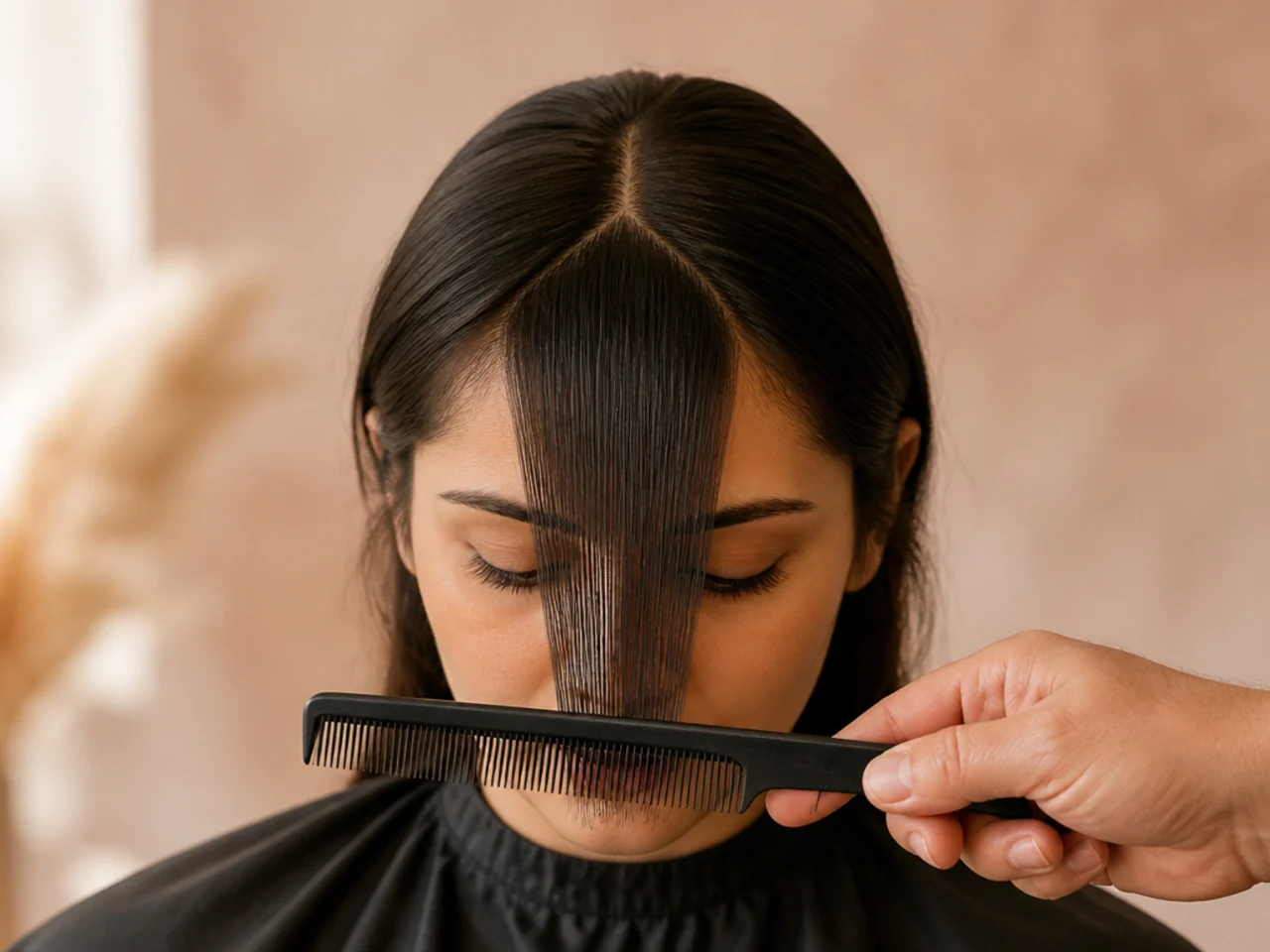
Take a shallow section, always. Depth is what makes a fringe heavy. A shallow triangle stays open; a deep one closes flat across the forehead.
The 25 Short Hair Looks With Curtain Bangs
1. Blunt Bob With Curtain Bangs
The blunt perimeter keeps all its weight at the ends, and the tapered fringe is the only soft line in the cut. That contrast is the point — a layered bob under curtain bangs gives you two soft shapes and neither one stands out.
2. Layered Bob With Curtain Bangs
Layers through the mid lengths continue the same downward taper the fringe already follows, so the two shapes join instead of competing. Keep the shortest internal layer below the fringe or the crown starts lifting and the fringe loses the length it needs to sweep.

3. French Bob With Curtain Bangs
A French bob sits at the jaw with a rounded outline, and the fringe traditionally comes in shorter and heavier. Softening it into curtains opens up the forehead, which stops the round perimeter and a solid fringe from closing the face in on all sides. See also short French bangs.

4. Chin Length Bob With Curtain Bangs
The classic pairing, because the fringe ends and the perimeter both land near the jaw. When those two points meet, the whole cut reads as one continuous outline rather than a fringe placed on top of a bob.

5. Lob With Curtain Bangs
The extra length below the collarbone gives the fringe far more to taper against, so you can take the shortest point higher without it reading as a full fringe. This is the most forgiving length on this list.

6. Stacked Bob With Curtain Bangs
Graduation at the back pushes weight upward into the crown, and the fringe balances that by putting weight back at the front. Without it the silhouette tips backward and the face loses its frame entirely.

7. Wavy Bob With Curtain Bangs
Waves lift as they dry, so the fringe has to be cut a good centimetre longer than the finished length you want. Cut level with the brow while damp, a wavy fringe can end up sitting above it once the bend takes hold.

8. Curly Bob With Curtain Bangs
Curls shrink by a third or more, so the fringe must be cut dry with the curl pattern already formed. There is no reliable way to predict where a curly fringe will finish from its wet length, which is why cutting it wet so often ends above the hairline.

9. Pixie With Curtain Bangs
The fringe is the longest part of the cut, which inverts the usual proportion and gives a pixie a soft front against short sides. Keep the outer ends below the cheekbone, or there is not enough length left to fall open and it reads as a grown out fringe.

10. Bixie With Curtain Bangs
A bixie sits between a bob and a pixie, with more weight left at the back than a pixie carries. That extra weight is what lets the fringe stay long without unbalancing the shape, which is why this length takes curtain bangs more easily than a true pixie.

11. Shaggy Bob With Curtain Bangs
Heavy internal layering removes weight from the mid lengths, so the fringe has to be thinned to match or it reads as the densest thing on the head. Matching the density between fringe and lengths matters more here than matching the length.

12. Short Wolf Cut With Curtain Bangs
The wolf cut stacks its shortest layers at the crown, and the fringe extends that stack forward over the face. Both shapes taper downward and outward, so they join into one silhouette rather than sitting as two separate features.

13. Asymmetric Bob With Curtain Bangs
One side longer than the other already creates a diagonal, and the fringe has to be cut off centre to match it. Split a curtain bang down the middle over an asymmetric cut and the two diagonals fight each other across the face.

14. Jaw Length Blunt Bob With Curtain Bangs
The strongest horizontal in short hair, cut level at the jaw. The fringe is the only thing preventing that line from squaring the face off, so its outer ends need to reach past the corner of the jaw rather than stopping short of it.

15. Short Hair With Bottleneck Bangs
Narrow at the top of the fringe and flaring at the cheek. The narrow section keeps weight off the forehead so the fringe stays open, which is the same problem a heavy curtain bang solves badly by relying on styling.

16. Curtain Bangs on Fine Short Hair
Take the shallowest section you can. Fine hair has little density to spare, and every strand pulled forward into a fringe is a strand missing from the crown behind it, which is where a fine short cut needs its volume most.

17. Curtain Bangs on Thick Short Hair
Thick hair makes a fringe heavy enough to sit flat against the forehead regardless of how it is dried. The fix is internal thinning within the fringe section itself, not a shorter cut, because shortening it only makes the weight sit higher.

18. Short Hair With a Money Piece
Lightening the two fringe panels makes them advance visually while the darker lengths behind recede. That depth difference makes the fringe read as a separate layer, which exaggerates the split a curtain bang is built around.
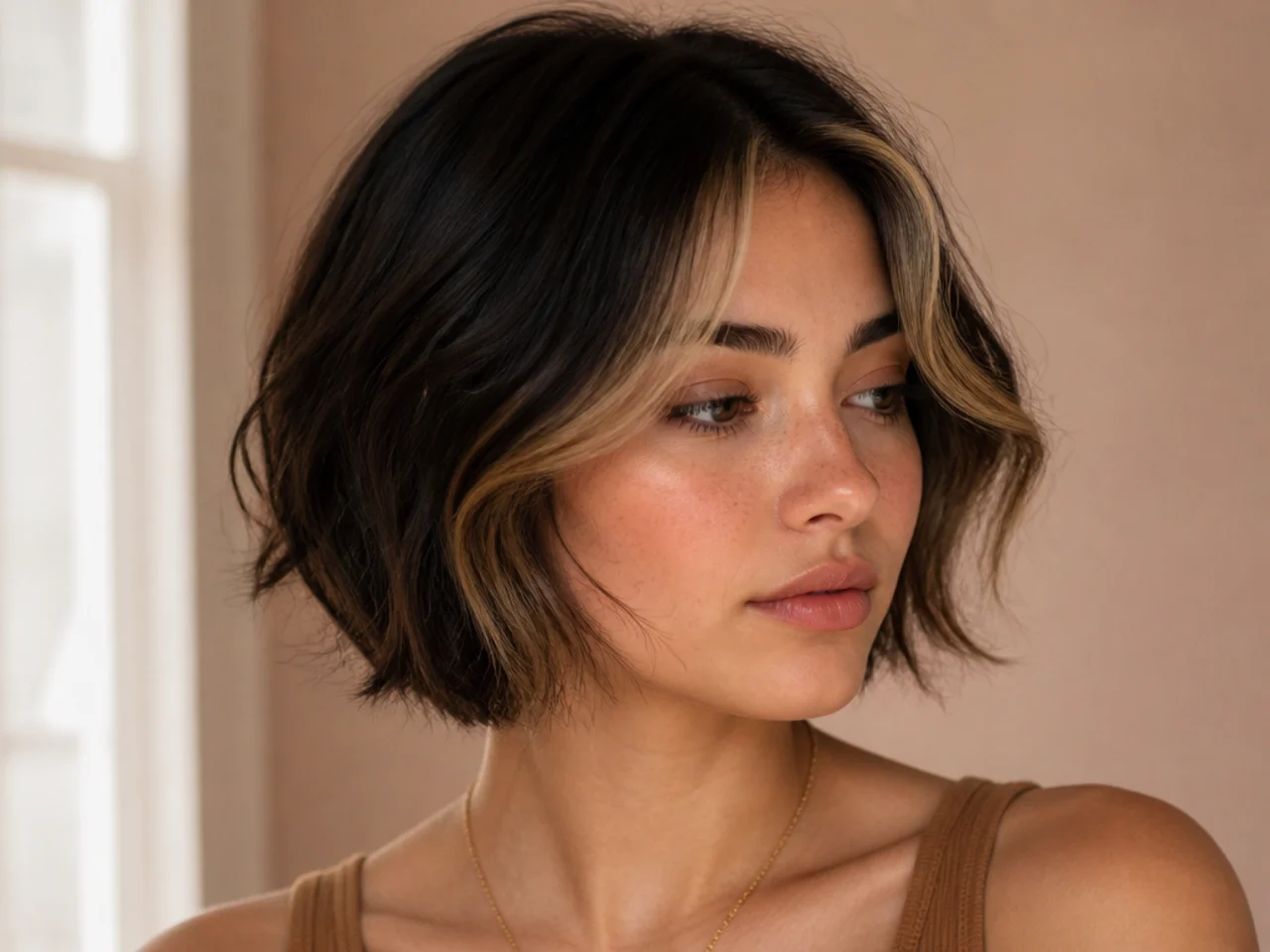
19. Tousled Crop With Curtain Bangs
The crop is dried without direction so the ends fall where they want, and the fringe is the only section given a deliberate shape. That single controlled element is what stops a tousled cut reading as untidy rather than as styled.

20. Sleek Bob With Curtain Bangs
Smoothing the lengths flat means every millimetre of the fringe gradient is visible, with no texture to disguise an uneven cut. This is the version that needs the fringe cut dry and checked in the mirror before you leave the chair.

21. Curtain Bangs Tucked Behind the Ears
Tucking the outer ends back leaves only the short centre section falling forward. It is the fastest way to test whether your fringe is too heavy — if the tucked version looks better, the section was cut too deep.

22. Half Up Short Hair With Curtain Bangs
Taking the crown back leaves the fringe as the only hair around the face, so its shape carries the whole look. Pull the top section back before you dry the fringe, or the tension flattens it against the forehead as it sets.
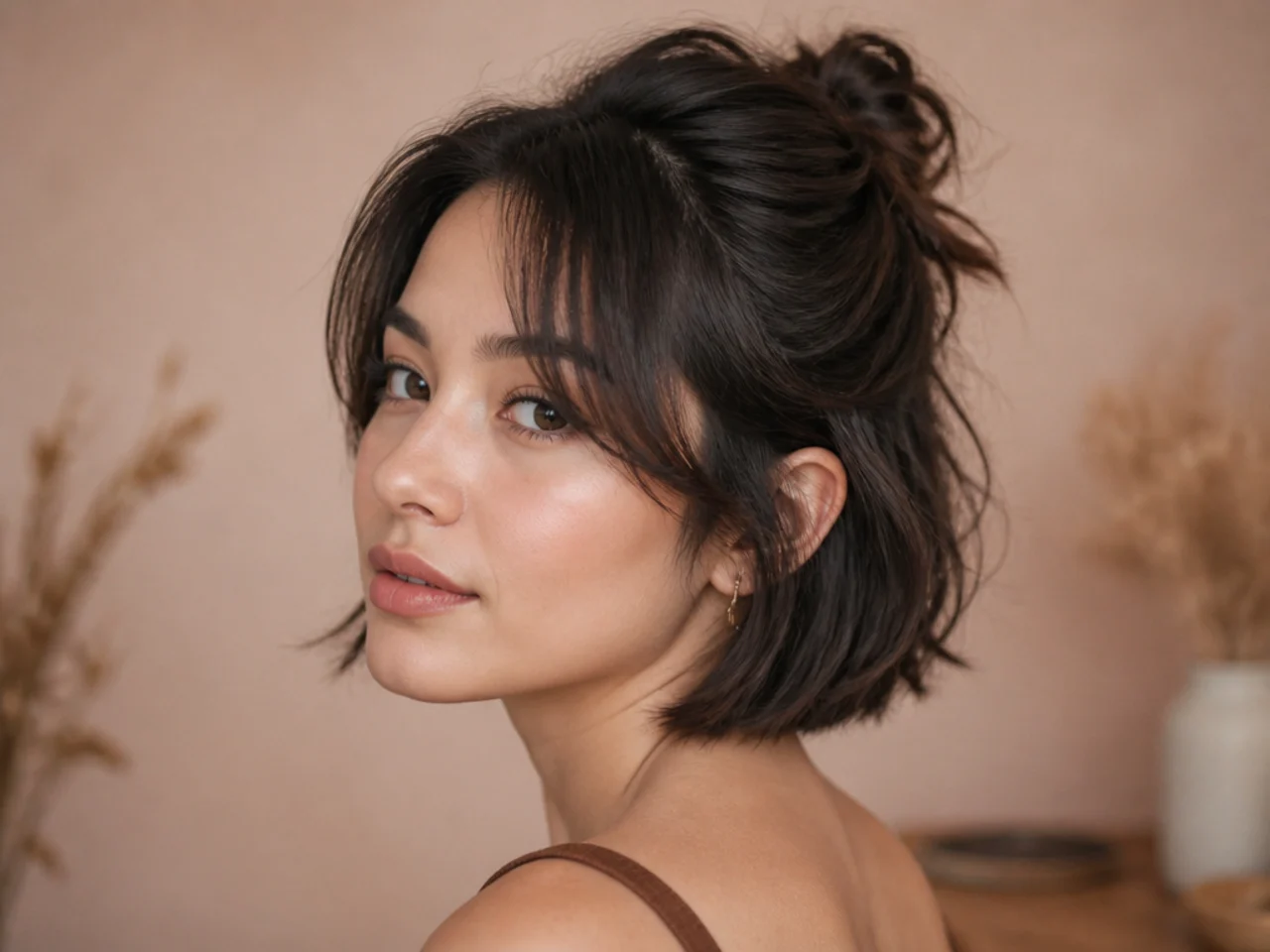
23. Curtain Bangs With a Middle Part
The part continues straight into the fringe split, which gives one unbroken line from crown to brow. Any mismatch between the two shows immediately, so the fringe has to be cut from a section centred on the same part you actually wear.

24. Curtain Bangs With a Side Part
Moving the part off centre loads one panel with more hair than the other, so the fringe has to be cut asymmetrically to compensate. Cut symmetrically and worn off centre, the heavy side hangs noticeably lower within a week of growth.

25. Grown Out Curtain Bangs
At eight to ten weeks the fringe has reached the jaw and joined the perimeter, which is the point of cutting curtains rather than a blunt fringe. Trim only the shortest centre point to reset the gradient without losing the length you have gained. The longer version is covered in curtain bangs on long hair.

Styling and Upkeep
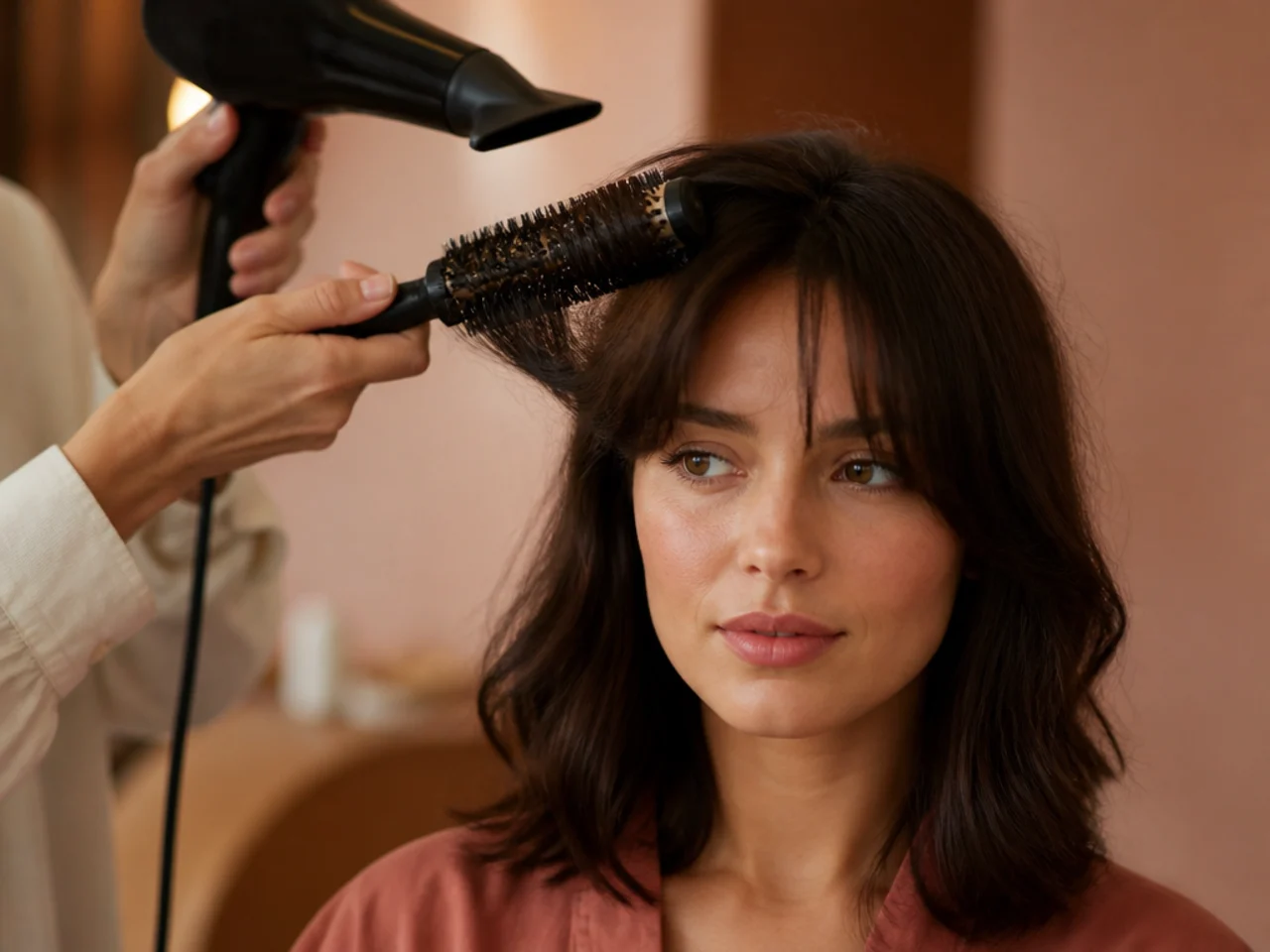
Dry the fringe first, while the rest is still wet. It sets its direction in the first two minutes and cannot be redirected later.
Dry the ends away from the face. Air pushed forward closes the curtains; pushed back and outward, they fall open.
Trim only the centre point between cuts. Taking the outer ends off destroys the gradient, and the gradient is the style.
Do not brush a fringe dry after styling. Static and brushing separate the panels into strands rather than two soft sweeps.
Expect a trim every four to six weeks. Hair grows around a centimetre a month and the shortest point is where it shows first.
Mistakes to Avoid
Taking the section too deep. Weight is what closes a fringe, and depth is where the weight comes from.
Cutting it wet. Hair lifts as it dries. On wavy or curly hair that is one to three centimetres you cannot put back.
Copying a fringe photographed on long hair. The gradient was measured against a length you do not have.
Cutting it level across. A flat fringe with no gradient is a blunt fringe, whatever it was asked for.
Ignoring a cowlick at the hairline. It pushes the fringe up on one side, so that side has to be cut longer to finish level.

FAQ
Wet or dry? Dry, in the direction the hair actually falls.
How short at the centre? Brow for a bold version, cheekbone for a soft one.
Why does it fall closed? The section was cut too deep, or it was dried forward.

Final Thoughts
Ask for the two points, not the style name. "Shortest at the brow, outer ends at the jaw, shallow section" describes a curtain bang precisely enough that it cannot come back as a fringe.
For the same fringe cut against more length see curtain bangs on long hair, and for the shorter heavier alternative see French bangs with a curtain shape. For how section depth decides density on fine hair see curtain bangs with short hair. More in Bangs and Fringe.