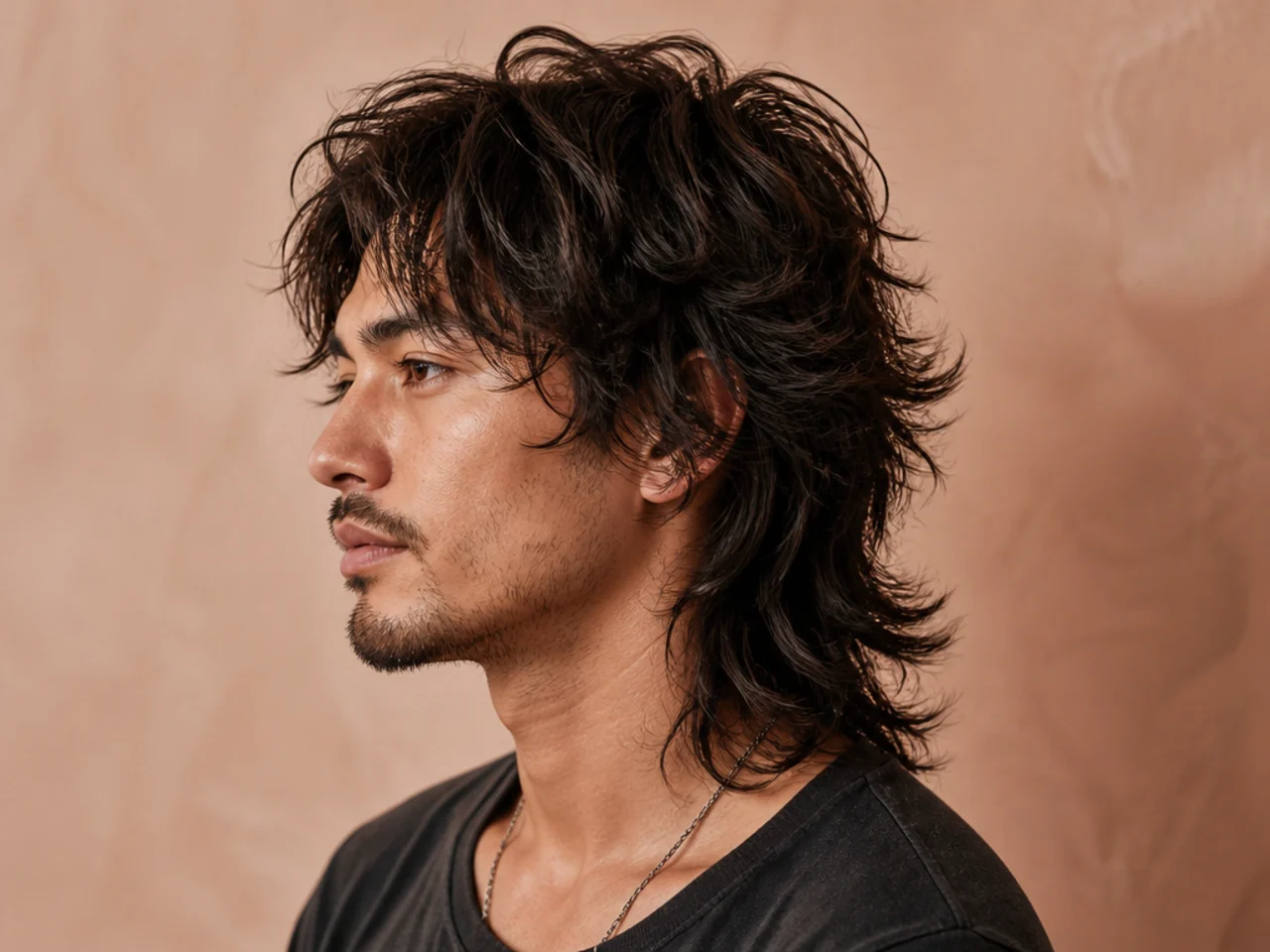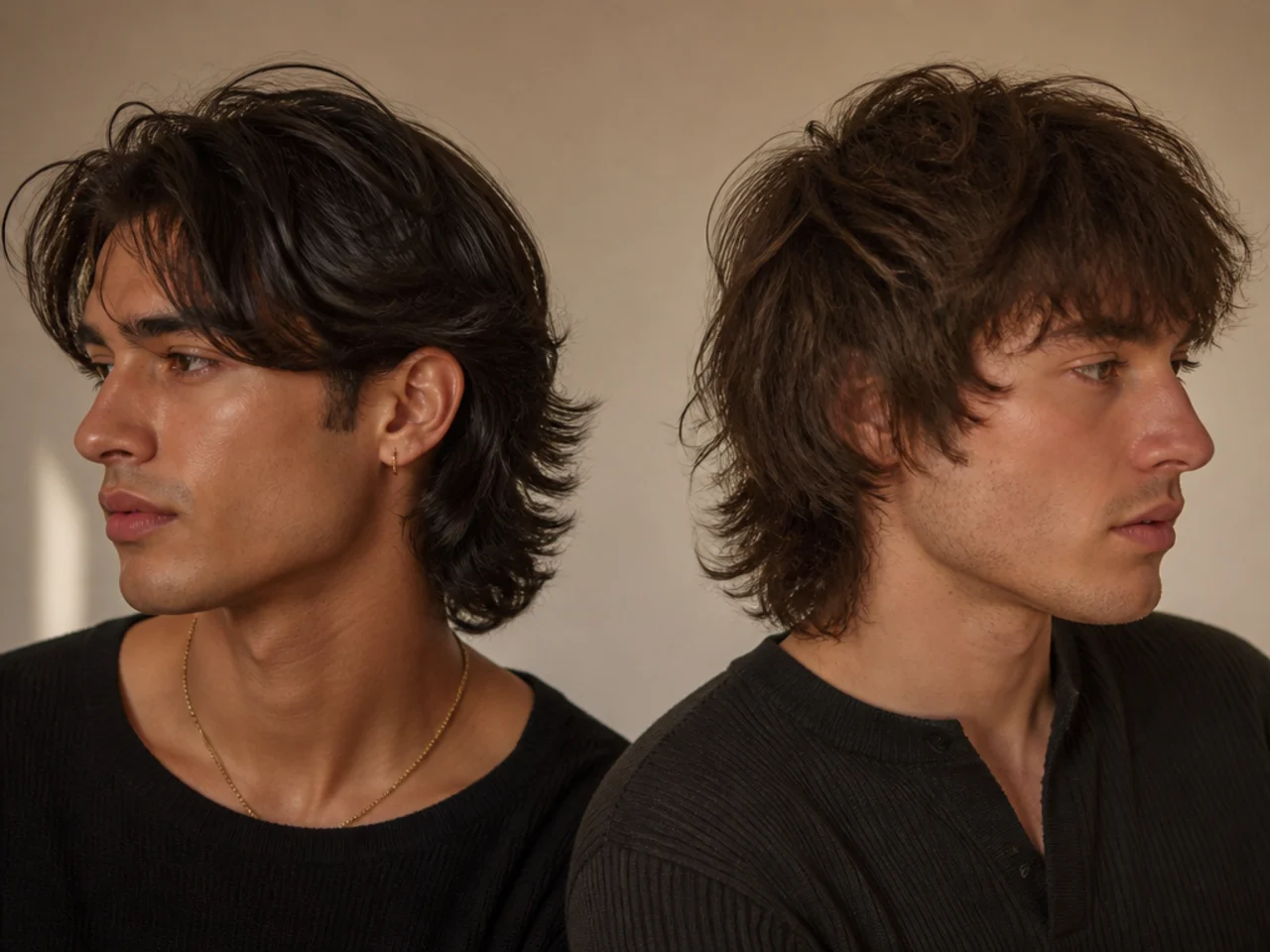
30 Gorgeous Wolf Cuts For Men With Thick Hair
A wolf cut on thick hair is a weight removal job with a shape attached. Thirty versions, from cropped to collar length, and where each one takes the density out so the layers move instead of stacking into a helmet.
In this article · 37
- What a Wolf Cut Is on Thick Hair
- How to Choose Yours
- The 30 Wolf Cuts
- 1. Short Wolf Cut With a Cropped Fringe
- 2. Mid Length Wolf Cut
- 3. Long Wolf Cut Past the Collar
- 4. Wolf Cut With a Curtain Fringe
- 5. Wolf Cut With a Blunt Fringe
- 6. Wolf Cut With a Taper at the Nape
- 7. Wolf Cut With a Low Fade
- 8. Wolf Cut With a Mid Fade
- 9. Wolf Cut With Undercut Sides
- 10. Wolf Cut With a Hidden Undercut
- 11. Wavy Wolf Cut
- 12. Curly Wolf Cut
- 13. Coily Wolf Cut
- 14. Straight Hair Wolf Cut
- 15. Wolf Cut With a Middle Part
- 16. Wolf Cut With a Deep Side Part
- 17. Wolf Cut With a Comma Fringe
- 18. Wolf Cut With a Mullet Tail
- 19. Wolf Cut With Ghost Layers
- 20. Wolf Cut With Razored Ends
- 21. Wolf Cut With Point Cut Ends
- 22. Wolf Cut With Slide Cut Layers
- 23. Wolf Cut With a Rounded Silhouette
- 24. Wolf Cut on a Long Face
- 25. Wolf Cut on a Round Face
- 26. Wolf Cut Connected to a Beard
- 27. Air Dried Wolf Cut
- 28. Blow Dried Wolf Cut
- 29. Wolf Cut at Week Two
- 30. Wolf Cut at Month Three
- Styling and Upkeep
- Mistakes to Avoid
- FAQ
- Final Thoughts
Most wolf cuts that fail on thick hair fail the same way: the layers were cut, the weight was not removed, and the shape set into a helmet by the second wash.
The crown props up the length. Short layers sit on top of the longer ones and hold them off the head. That is the mechanism the entire cut runs on.
Density is the raw material and also the problem. Thick hair supports the structure, but only once enough mass has come out from inside the sections rather than off the ends.
What a Wolf Cut Is on Thick Hair
Short crown, long perimeter, deliberate gap. The distance between those two lengths is the cut. Close it and you have a shag.
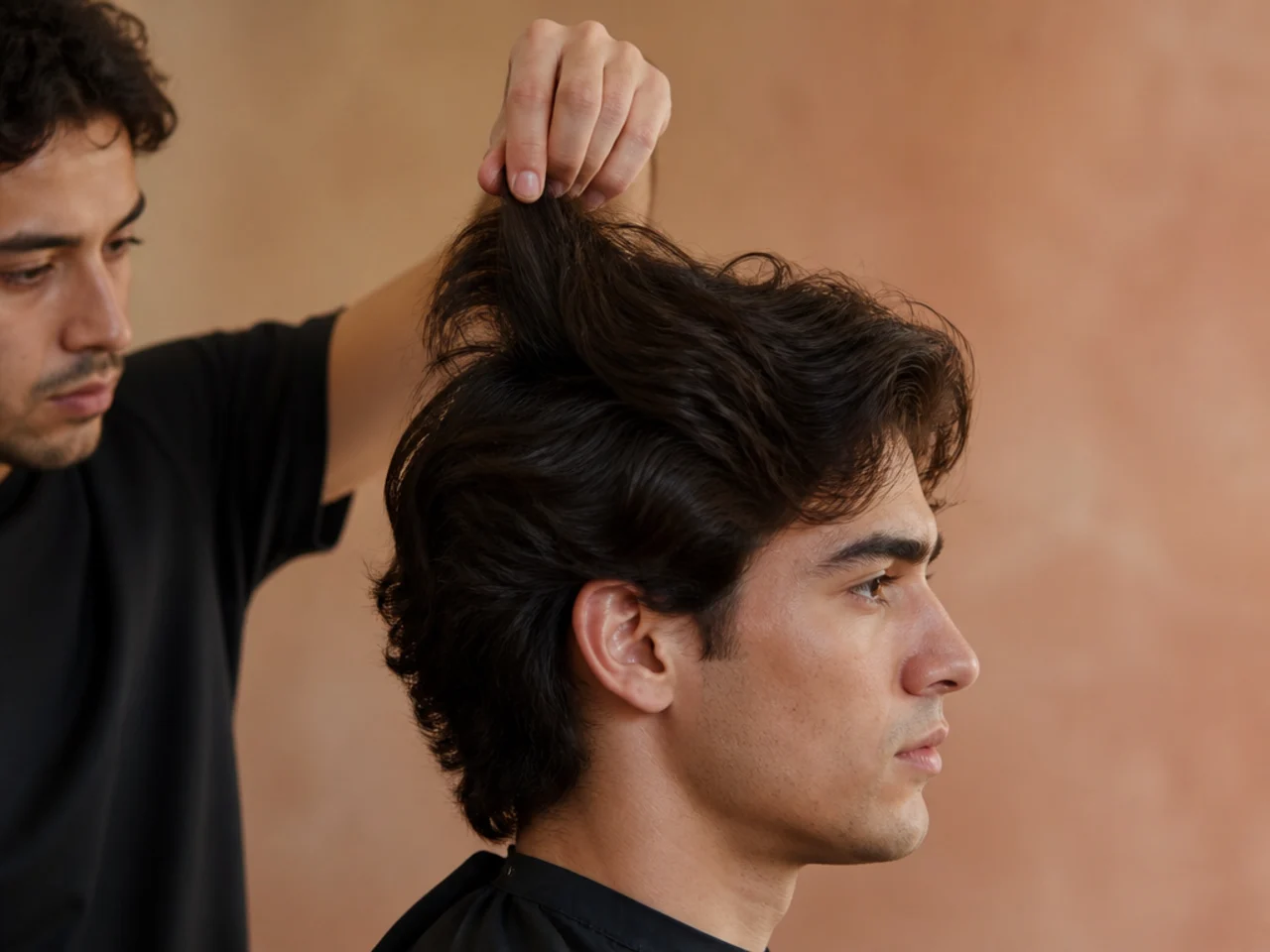
Weight comes out of the interior. Slicing or thinning inside each section drops the bulk while leaving the outline intact, which is what lets thick hair move.
The perimeter carries the silhouette. Take too much off the ends and the shape has no boundary, so it reads as overgrown rather than cut.
It is a dried cut, not a washed one. The layers only separate once the roots have been dried in a direction. Left to dry flat, thick hair sets into a solid cap.

How to Choose Yours
Choose by how much you will dry it. The cut needs five minutes of directed drying. If that will not happen, go shorter so the shape survives without it.
Choose by your texture. Straight thick hair needs more internal weight removed; wave and curl separate themselves and need less.
Choose by your face length. The widest point of a wolf cut sits at the cheekbone, which flatters a long face and widens a round one.
Choose by your trim interval. The crown closes up in about two months. Anything shorter than that on top means a barber every eight weeks without exception.
The 30 Wolf Cuts
1. Short Wolf Cut With a Cropped Fringe
The whole cut brought up so the fringe sits above the brow and the perimeter clears the ears. It survives without styling because a short section has less mass fighting the root, so the lift stays put on its own.
2. Mid Length Wolf Cut
Perimeter at the top of the ear, crown layers three or four centimetres above it. This is the length where the gap between the two is visible without the weight of the perimeter yet dragging the crown flat by the afternoon.
3. Long Wolf Cut Past the Collar
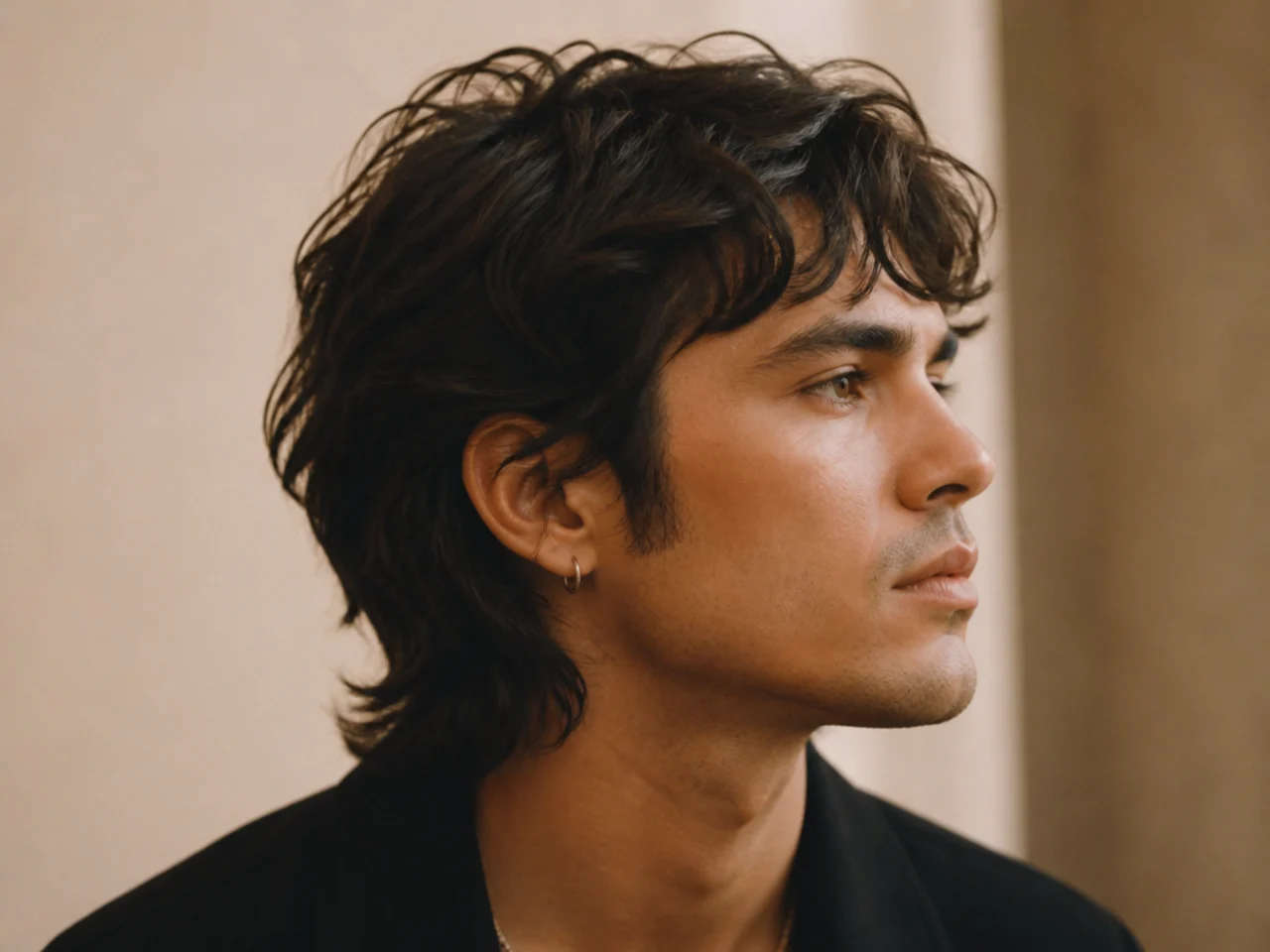
Maximum contrast, and maximum load on the crown. Every extra centimetre of perimeter adds mass hanging off the same roots, so the crown has to be cut shorter than it would be at mid length just to keep lifting it.

4. Wolf Cut With a Curtain Fringe
The front split into two halves that fall away from the centre. On thick hair a curtain works because the mass is divided between two sections instead of one, so neither side has enough weight to flop across the face.

5. Wolf Cut With a Blunt Fringe
A solid line straight across the brow. Thick hair holds a blunt edge better than any other texture because there are enough ends at the same length for the line to stay visible even as it grows.

6. Wolf Cut With a Taper at the Nape
The back shortened gradually and finished at a number one, which is three millimetres, never bare. It tidies the nape without introducing a hard line, and it holds its appearance for three to four weeks rather than needing attention fortnightly.

7. Wolf Cut With a Low Fade
The gradient starts just above the ear and runs to skin. It clears the bulk from the lowest part of the sides, which is where a thick head widens most, while leaving everything above it untouched.
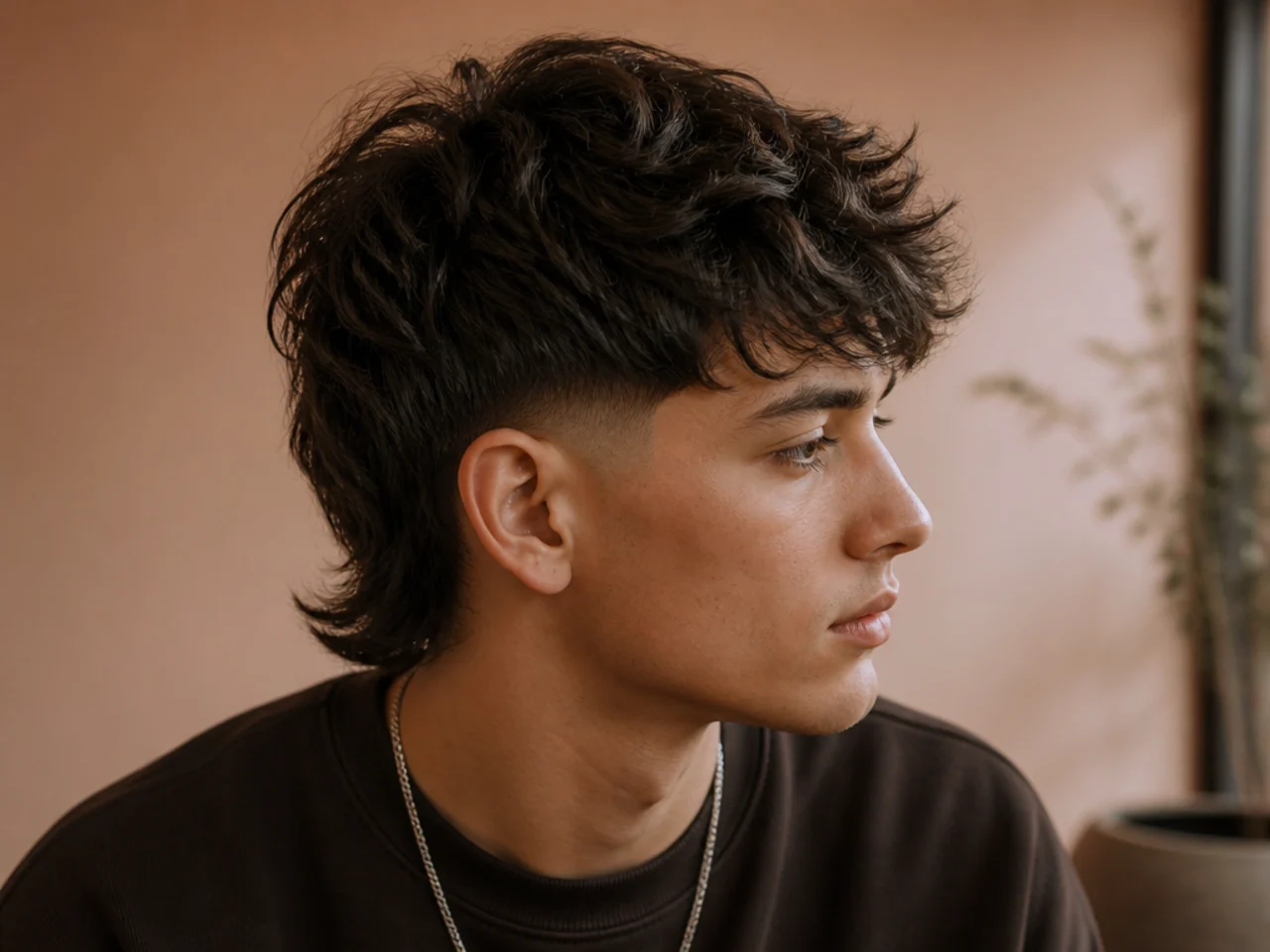
8. Wolf Cut With a Mid Fade
The fade begins around the temple, so more skin shows and the jump into the layers above is harder. It needs recutting every one to two weeks, because bare skin turns to visible stubble within days.
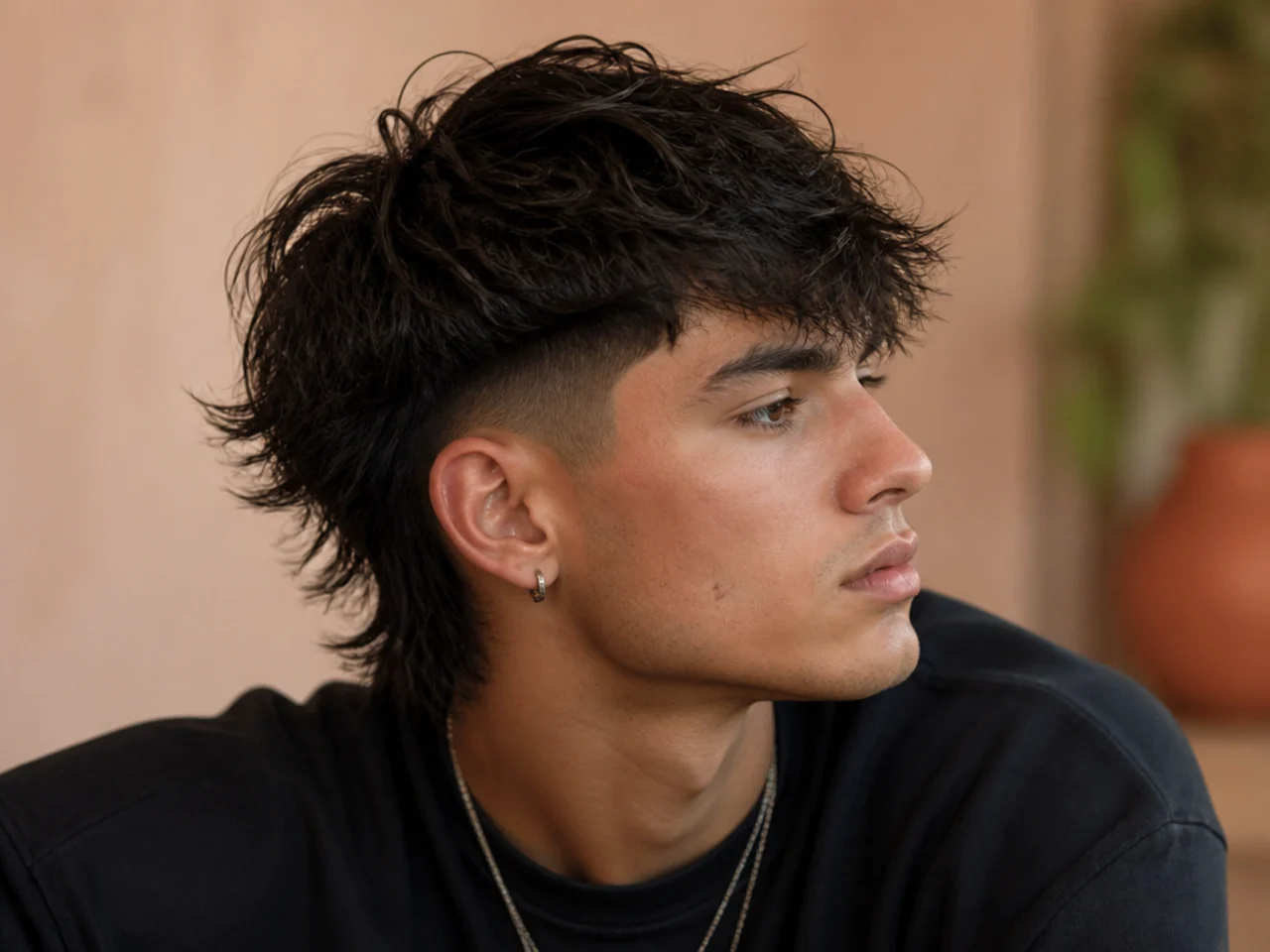
9. Wolf Cut With Undercut Sides
The sides clipped to one uniform length with no gradient, and the layers left long over the top of them. The hard disconnection removes far more bulk than a fade, which is why it suits the thickest heads.
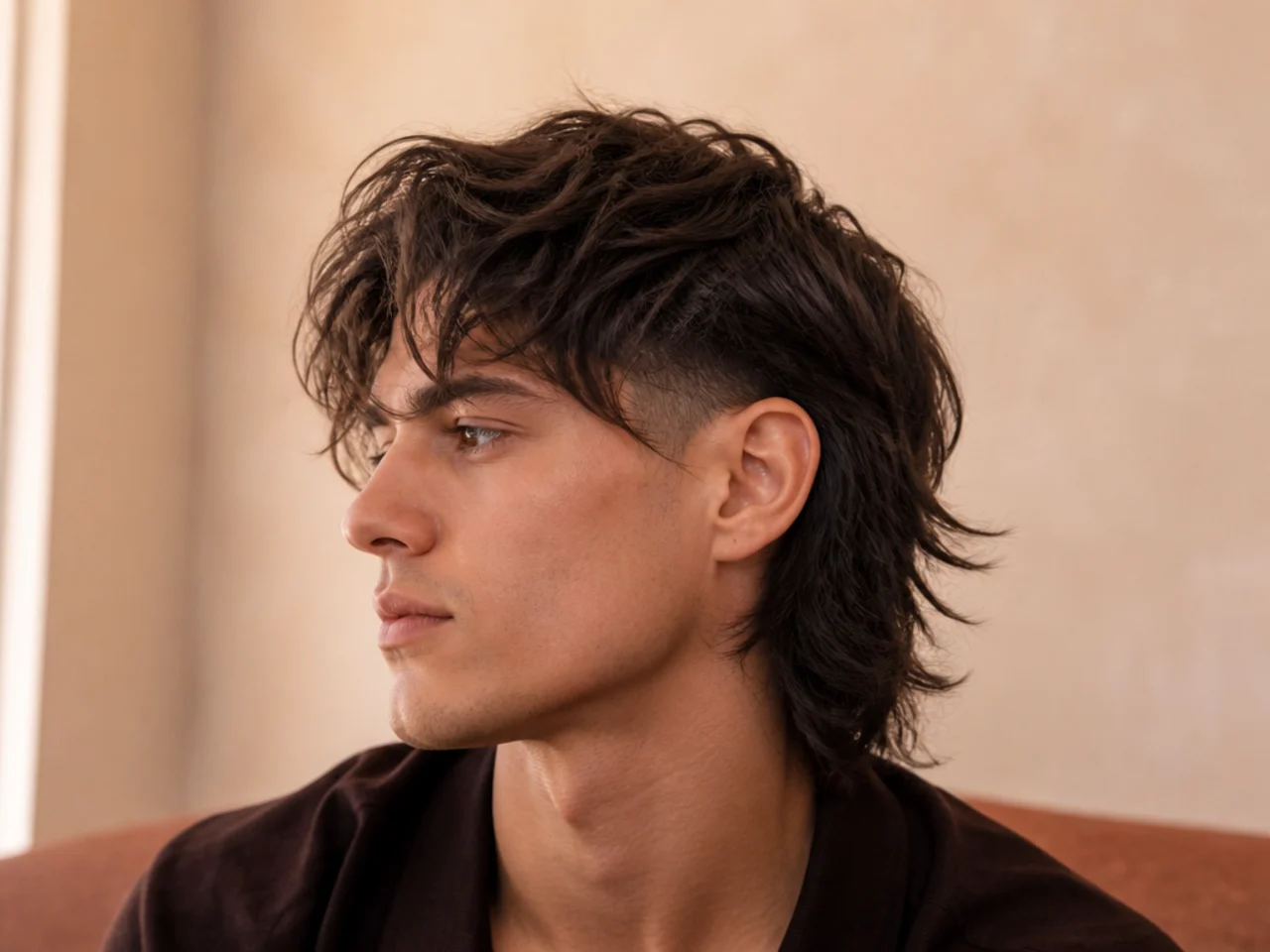
10. Wolf Cut With a Hidden Undercut
A clipped panel behind each ear, completely covered when the hair is down. It takes the width out of the exact place a thick head bulges without changing the outline anyone sees.
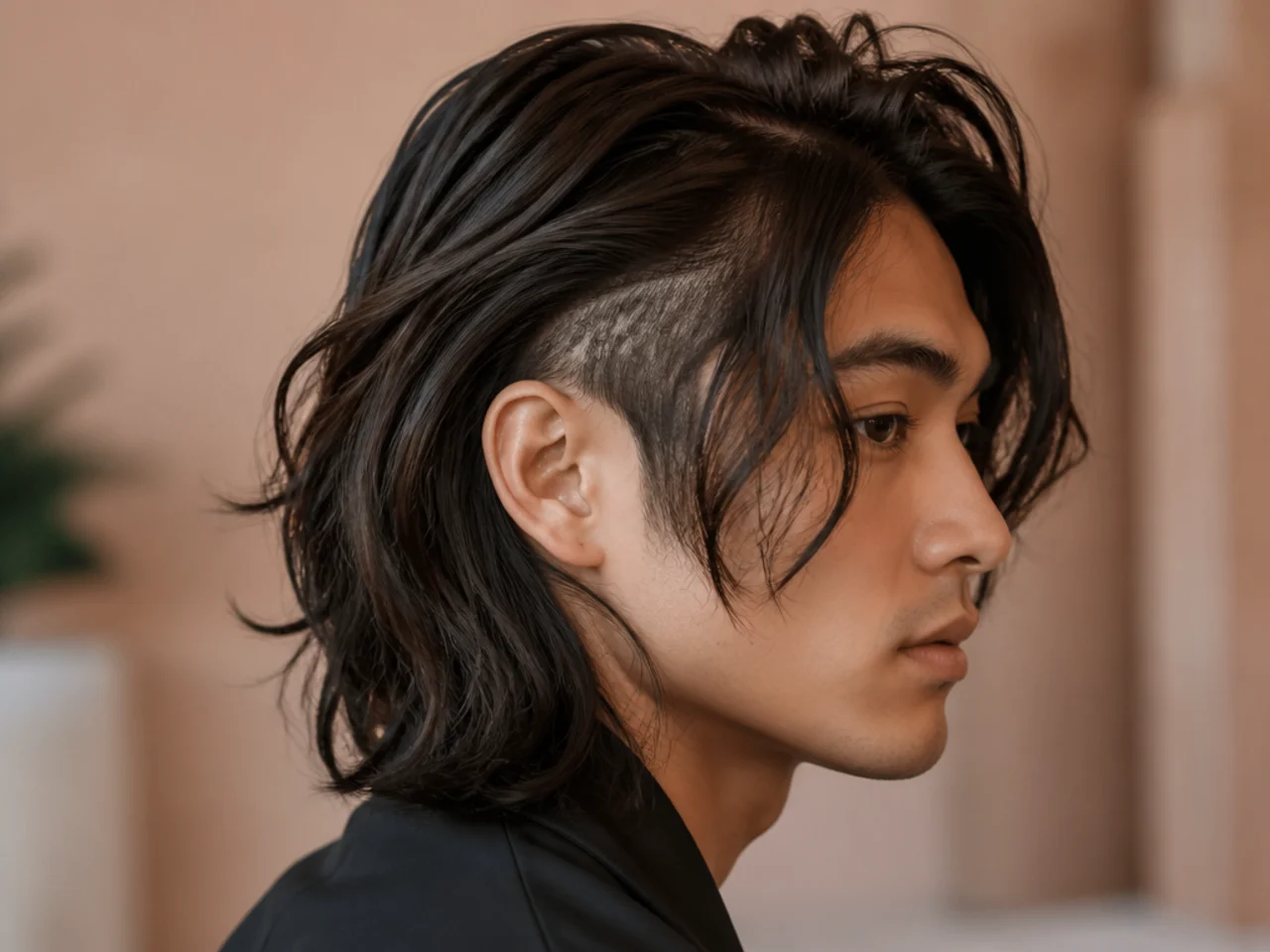
11. Wavy Wolf Cut
Covered in more depth in the wavy version. Each S bend throws light in several directions, so the layer edges blur and a cut that would look stepped on straight hair reads as continuous movement instead.

12. Curly Wolf Cut
Cut dry and curl by curl, since a stretched curl springs back by a third or more once released, as the curly version sets out. Wet cutting a curly head is the single most common way a wolf cut ends up three inches shorter than planned.

13. Coily Wolf Cut
Coils shrink further than curls, sometimes to a quarter of their stretched length, so the layers have to be planned in the shrunken state. Layer spacing also has to widen, because a coil already creates its own separation and stacked layers turn the shape into a wedge.

14. Straight Hair Wolf Cut
The least forgiving version, since a straight strand lies in one line and shows every layer edge as a step. It needs more interior weight removed than any other texture, because nothing in the hair itself breaks up the bulk.
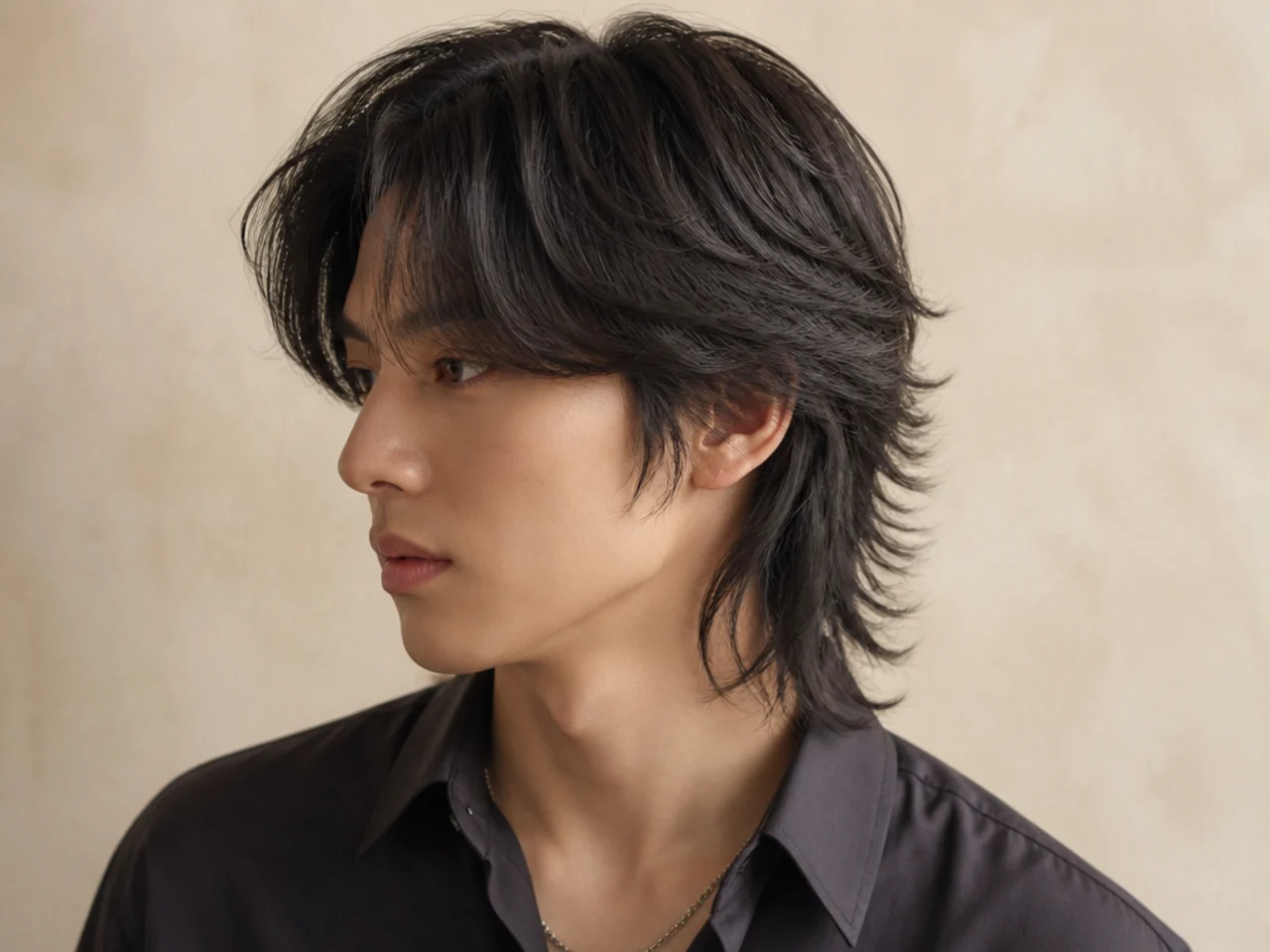
15. Wolf Cut With a Middle Part
The crown weight split evenly so neither side carries it all. The roots stay lying in their natural direction, which means less height at the front and a narrower silhouette at the temples.

16. Wolf Cut With a Deep Side Part
The heavy side has to travel across the crown against its own growth direction, and roots pushed backward stand up. On a thick head that produces real height at the front with no product involved.
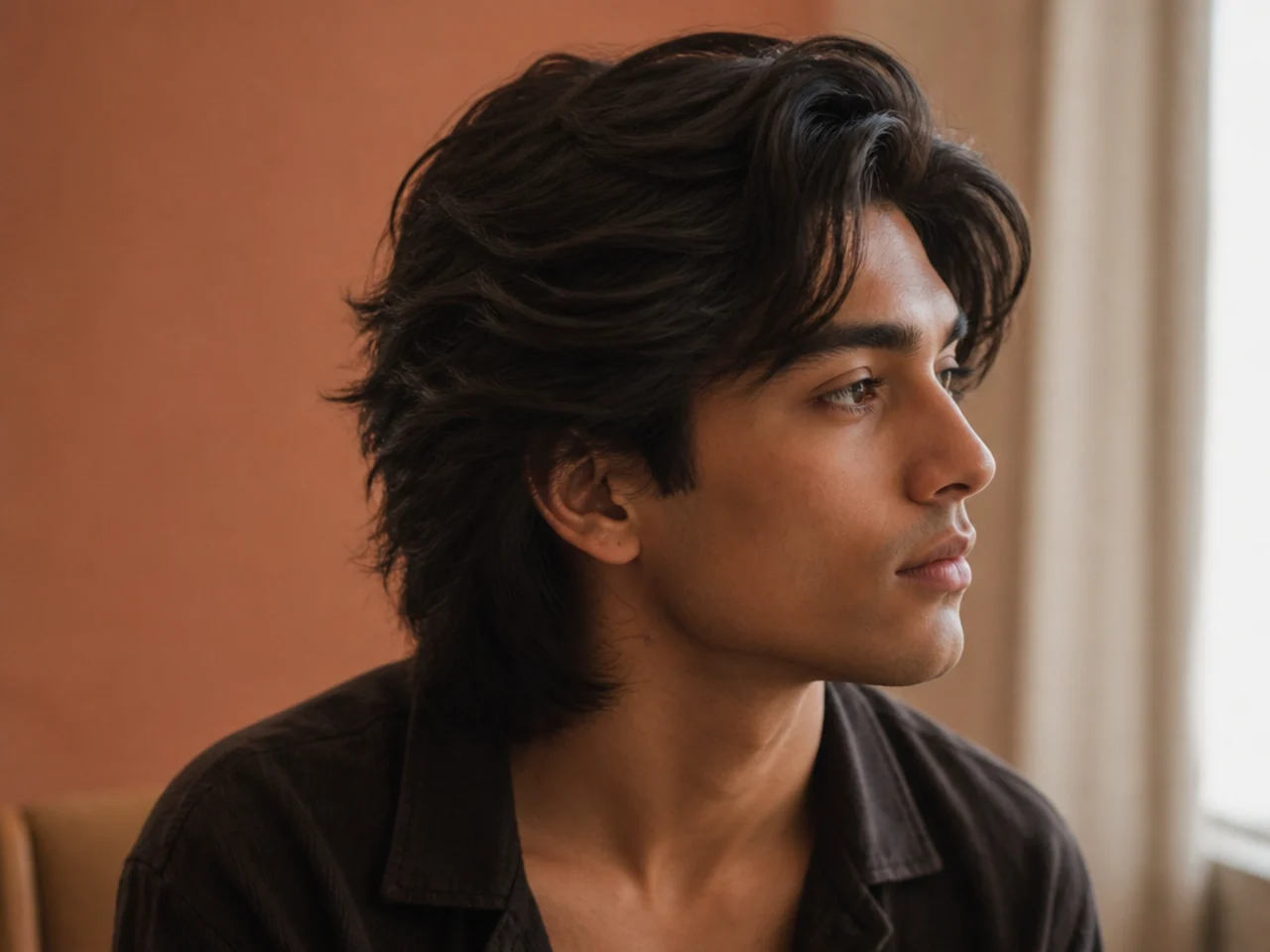
17. Wolf Cut With a Comma Fringe
The front pieces curved inward toward the cheek in a comma shape, set with a round brush. The bend has to be dried in and cooled in position, because hair holds whatever shape it is in as it cools and a comma dropped hot straightens out immediately.

18. Wolf Cut With a Mullet Tail
The nape left noticeably longer than the sides while the crown stays layered. It moves the cut from a shag toward a mullet, and the tail has to be dried back and slightly out or it sits flat on the collar.

19. Wolf Cut With Ghost Layers
Layers cut inside the section that never surface on the top layer. The visible ends stay heavy while the bulk underneath is gone, which is the only clean way to thin thick hair without leaving short pieces standing up.

20. Wolf Cut With Razored Ends
The razor tapers each strand to a point so the ends lose mass gradually rather than stopping in a block. It needs a fresh blade on damp hair, because a dull pass frays the cuticle and frayed ends frizz rather than fall.
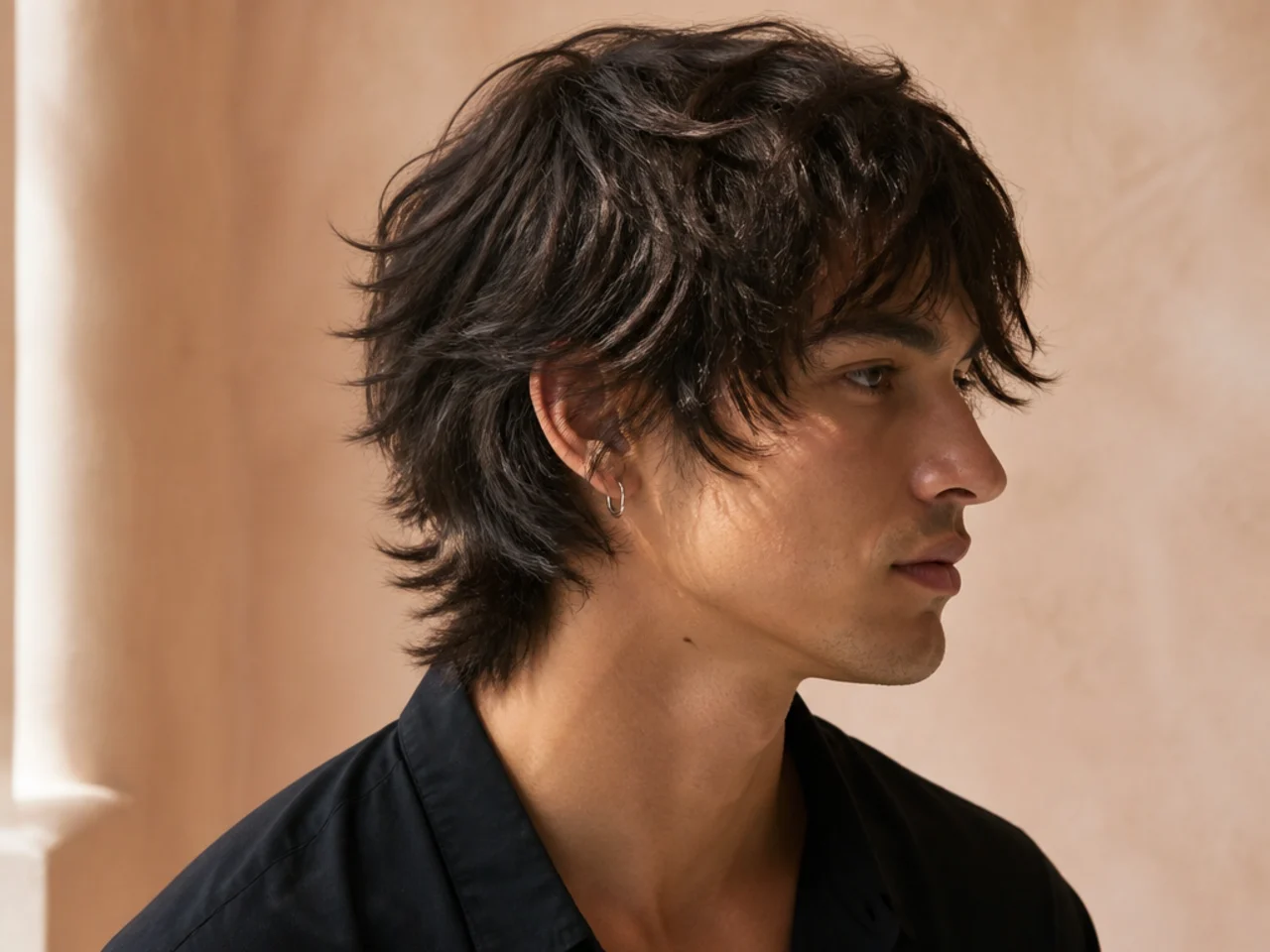
21. Wolf Cut With Point Cut Ends
Shears held vertically and notched into the ends, removing hair at staggered depths. The section then finishes at several lengths at once, so the eye reads a soft edge instead of the hard line a blunt cut leaves.
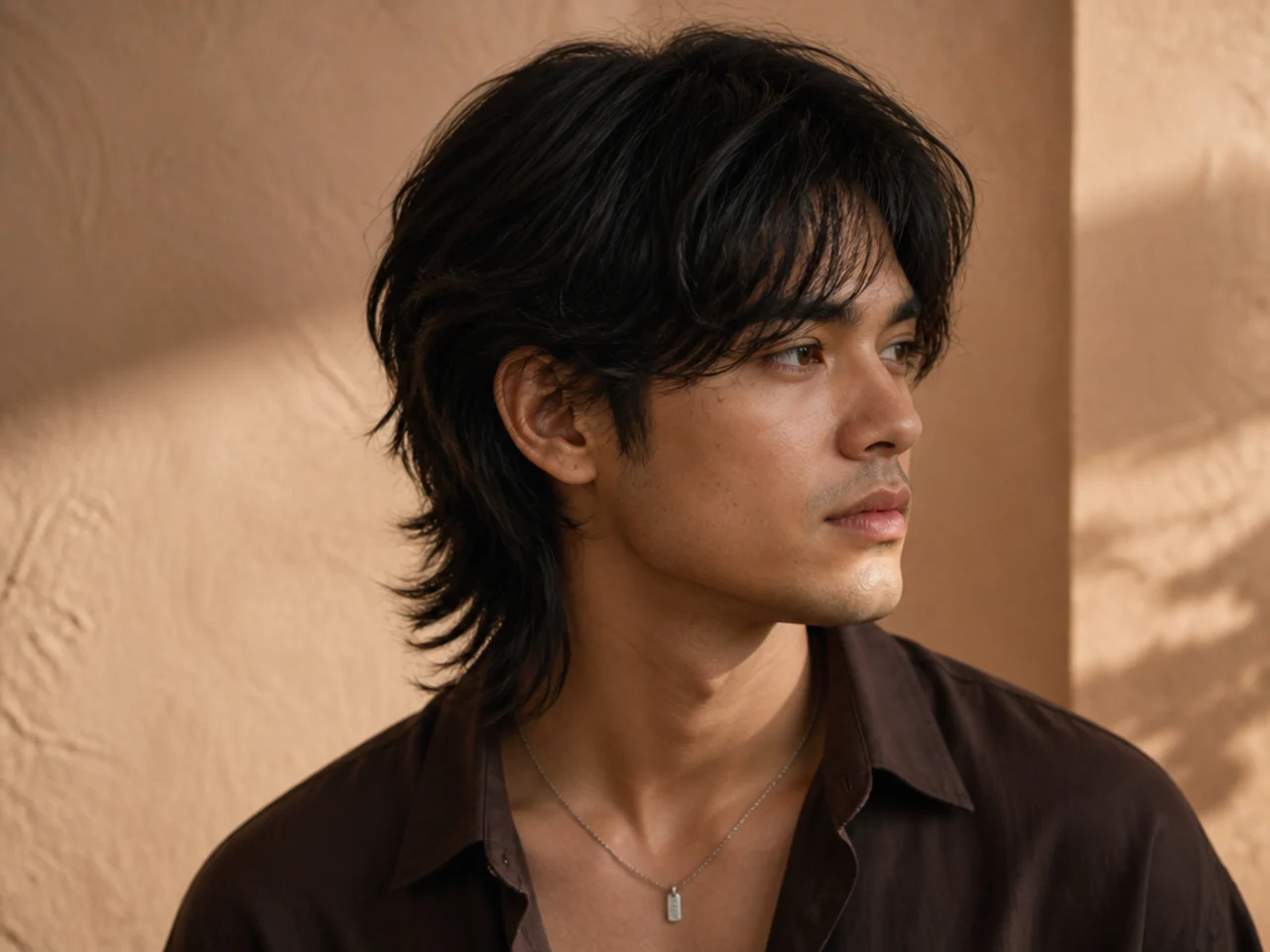
22. Wolf Cut With Slide Cut Layers
The shears held half open and slid down the section, removing length gradually along its whole travel. It produces a long soft graduation rather than a step, which suits thick straight hair where any abrupt change of length is visible.

23. Wolf Cut With a Rounded Silhouette
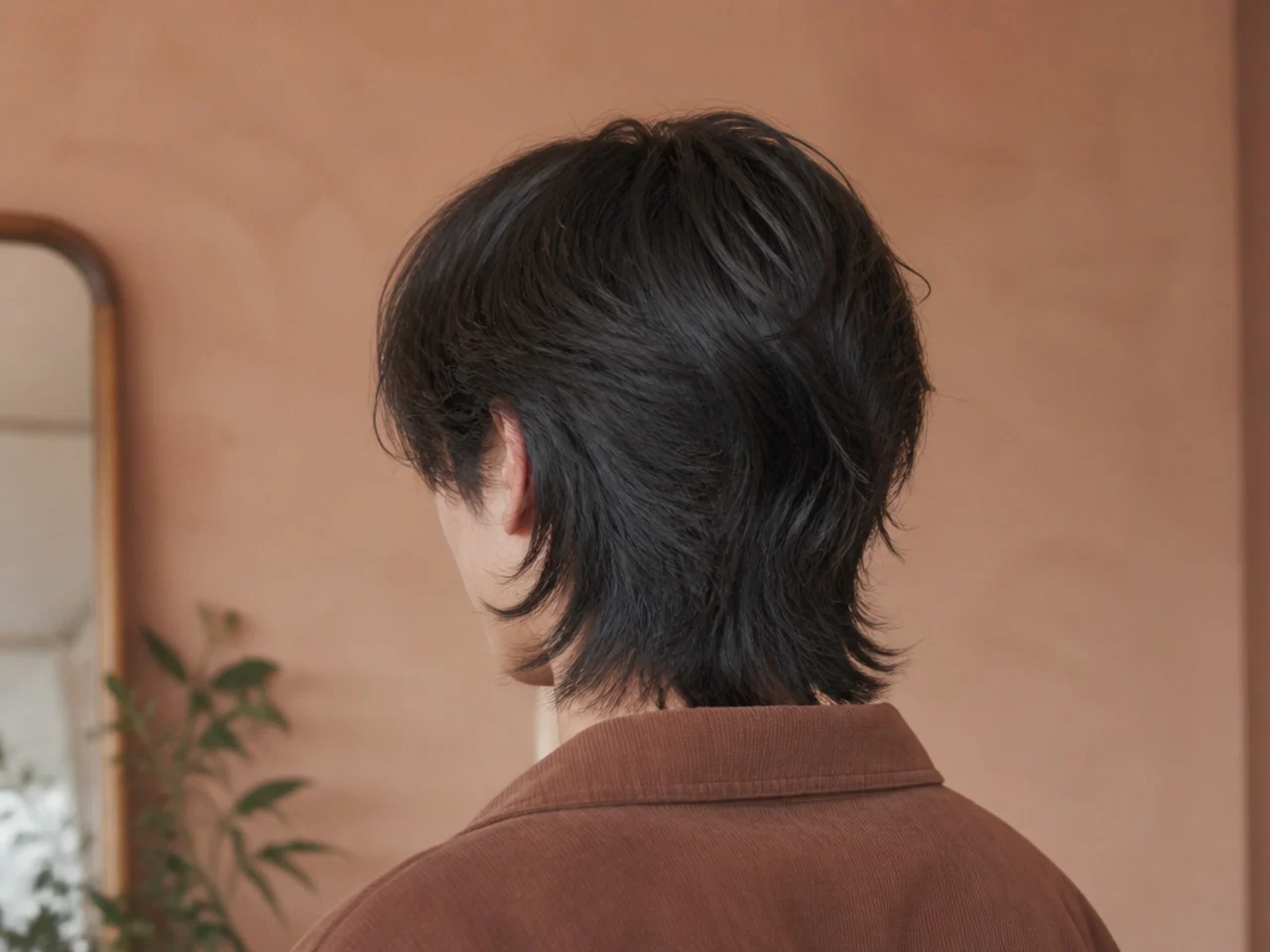
The perimeter cut shorter at the back than the sides so the outline curves rather than hanging square. On thick hair the rounding is what stops the shape reading as a block when seen from behind.
24. Wolf Cut on a Long Face
Width at the cheekbone is exactly what a long face wants, so the standard proportions work unchanged. Keep the fringe present rather than swept back, since exposing the forehead adds visual length at the top.

25. Wolf Cut on a Round Face
Move the widest point down toward the jaw and keep the crown taller. Volume at the cheekbone broadens a round face, while height at the crown adds the vertical the shape is short of.
26. Wolf Cut Connected to a Beard
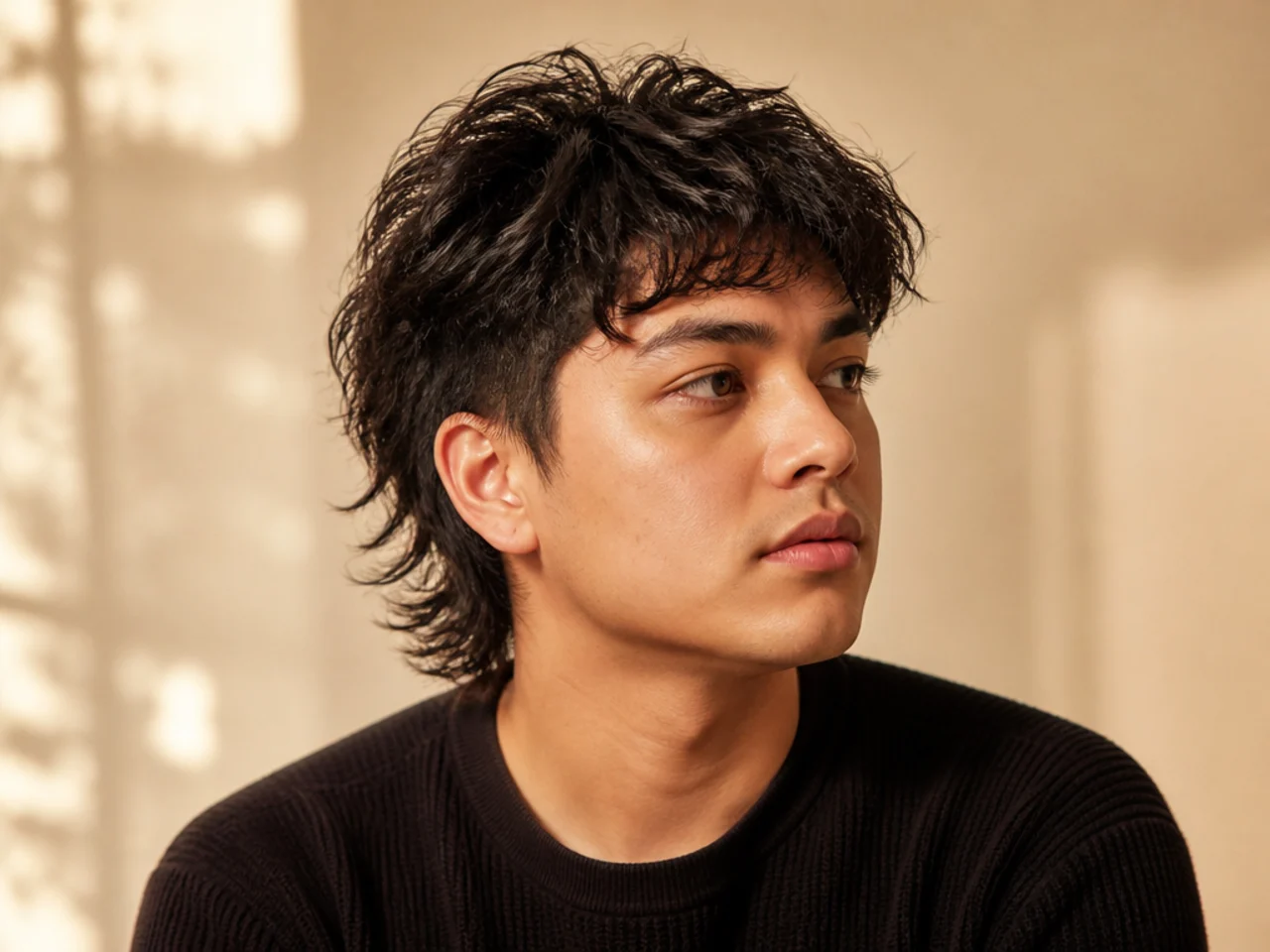
The sides run down into the beard as one continuous gradient. The join has to land where the beard genuinely starts growing, usually just below the earlobe, or the blend runs out of hair partway down and leaves a gap.

27. Air Dried Wolf Cut
Product on soaking hair, then no hands until it is dry. Styling creams hold by drying into a film that links neighbouring strands, and touching the hair before that film sets breaks it, which turns definition into frizz.

28. Blow Dried Wolf Cut
Roots pushed against their growth direction, then a cold shot. The root is the only part of the strand carrying the weight above it, so bending it while damp and setting it cold is where all the height in the cut comes from.
29. Wolf Cut at Week Two
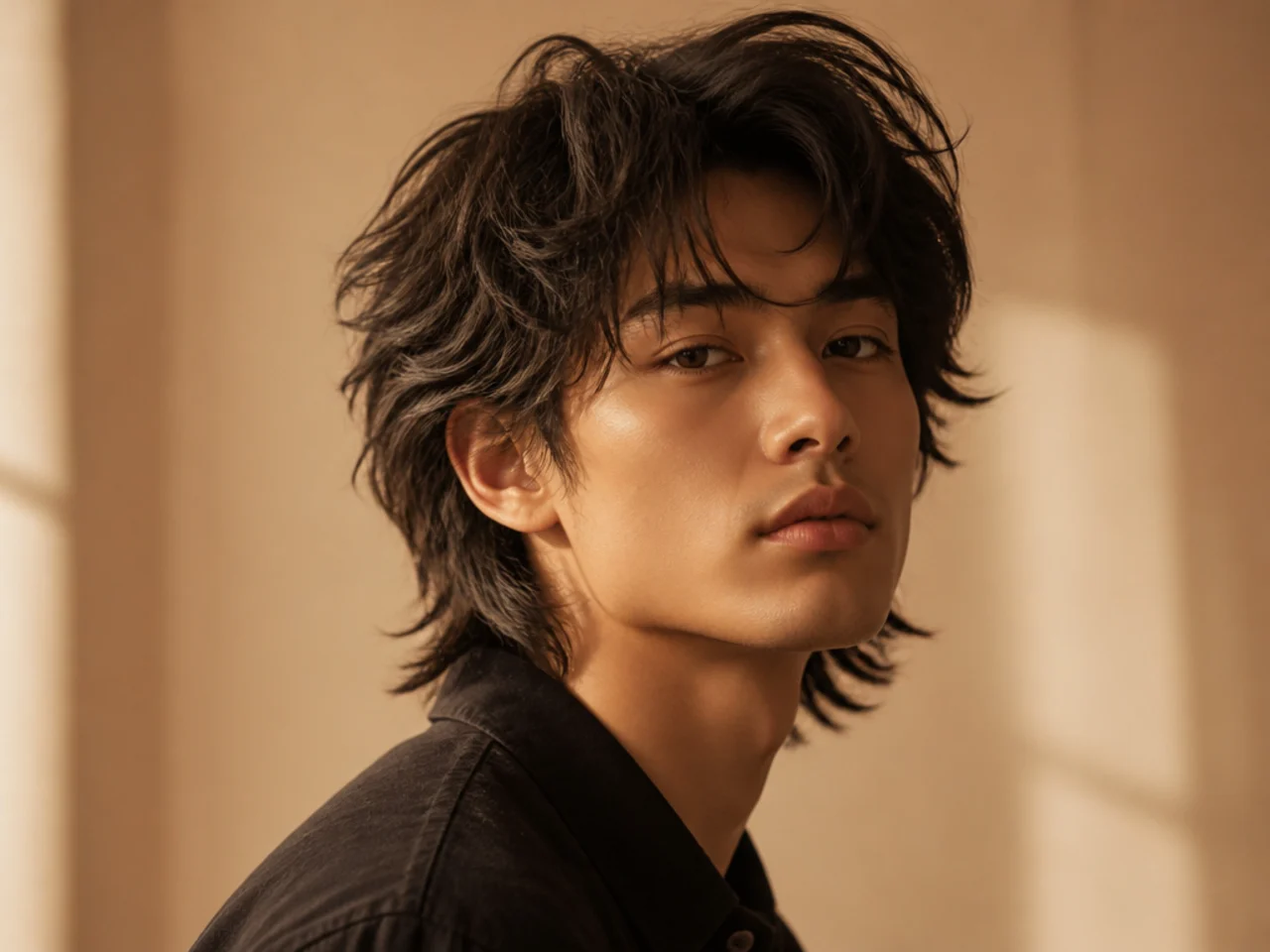
The gap between the crown and the perimeter at its clearest, and the point at which the cut looks most deliberate. Photograph it here, because this is the reference to bring back to the barber next time.

30. Wolf Cut at Month Three
The crown has grown roughly three centimetres and now nearly reaches the length below it. The gap has closed, so the cut reads as long layered hair and needs the crown taken back up rather than the ends tidied.

Styling and Upkeep
Dry the roots, not the ends. The ends already know what to do. Height at the root is what the shape is built on.
Use a matte product. Shine on thick hair reads as grease. A matte clay scatters light and makes the layers look separated.
Warm the product in your palms first. Warming lowers its viscosity so it spreads as a film rather than sitting as a lump on a few strands.
Cut the crown more often than the perimeter. The crown closes the gap in two months while the ends stay useful for far longer.
Refresh with water on day two. Water reopens the bonds so the hair can take a new direction. More product only adds weight to yesterday's shape.

Mistakes to Avoid
Layering without removing interior weight. The layers exist but the bulk holds them down, and the cut sets into a solid cap.
Cutting curly or coily hair wet. It springs back by a third or more once dry, and the length you planned is gone.
Thinning shears on the ends. They leave short pieces at random lengths that stand up as frizz along the top layer.
Letting the crown grow past three months. The gap closes and the shape disappears, whatever the perimeter is doing.
Asking for a fade when you meant a taper. A fade goes to bare skin and needs recutting fortnightly; a taper finishes at a number one and holds three to four weeks.

FAQ
Does it suit thick hair? Better than fine hair, provided the interior weight is removed.
How short is the crown? Around five to eight centimetres, ending near the temple when pulled forward.
How often does it need cutting? The crown every eight to ten weeks, the perimeter far less.

Final Thoughts
Every version here is the same decision made in a different place: how much weight comes out, and from where. Take it from inside the sections and thick hair moves. Take it off the ends and you have shortened the cut without changing anything.
For the shape in general see the wolf cut for men, and for the cropped end of the range see short wolf cut men. More in Mullet and Wolf Cut.