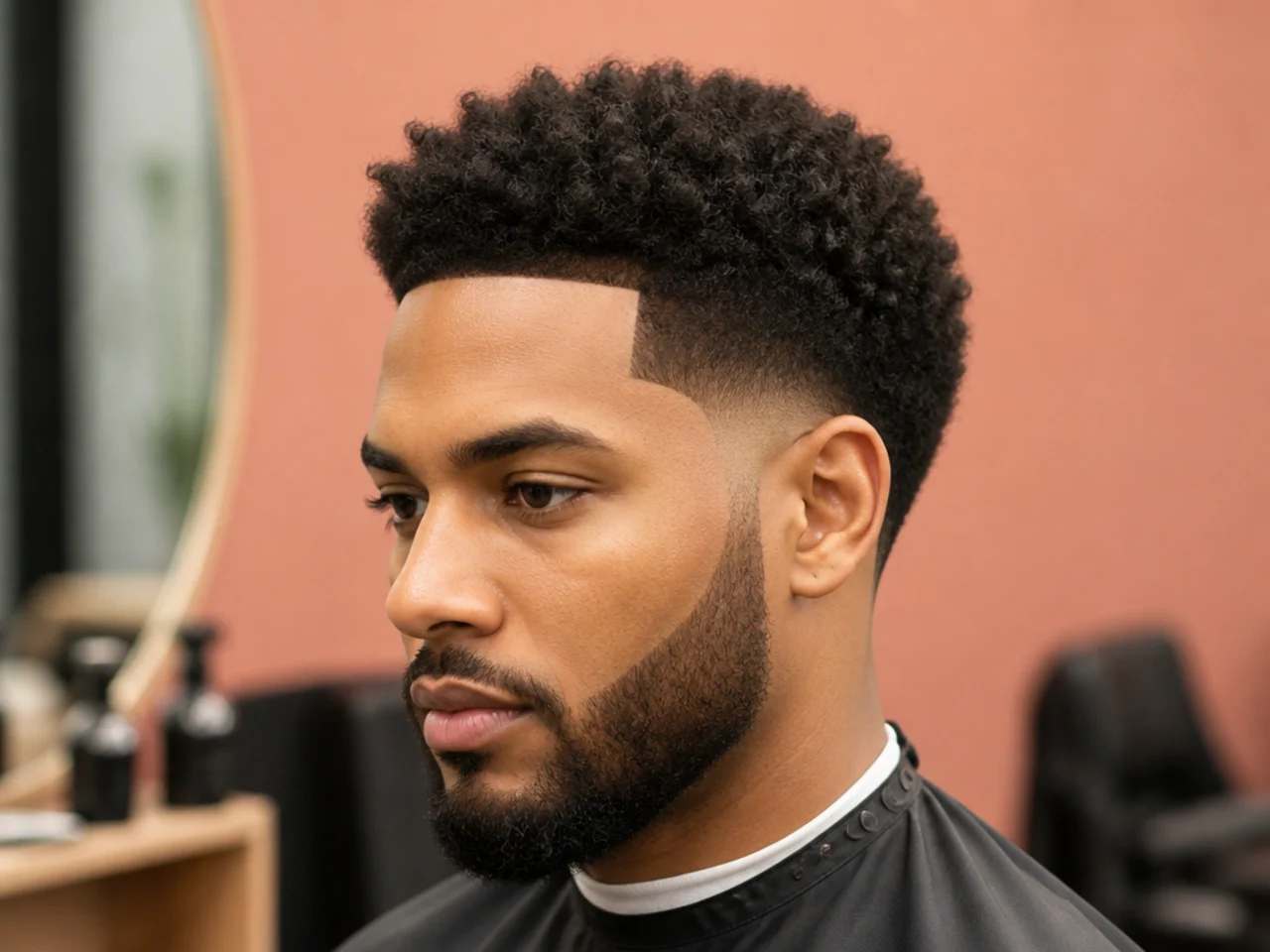
5 Reasons the Afro Taper Fade Is a Top Pick for Black Men
The afro taper fade Black men choose over the skin fade — 5 concrete reasons it wins for 4A–4C coils, plus guard numbers, growout tips, and the exact barber ask.
In this article · 10
- The One-Line Answer
- Reason 1: The Taper Meets 4A–4C Coils on Their Terms
- Reason 2: It Works With Any Afro Height
- Reason 3: Lower Maintenance Than a Skin Fade
- Reason 4: It Adapts to Beard or Clean Face
- Reason 5: The Growout Reads Clean
- Afro Taper Fade vs Skin Fade vs Curly Cut — Side by Side
- Who Should Still Pick a Different Fade
- How to Ask Your Barber for an Afro Taper Fade
- FAQ
The afro taper fade earned its reputation the honest way — it treats 4A, 4B, and 4C coil patterns as the point of the cut, not the obstacle. Below are the five reasons Black men keep coming back to this shape over the skin fade or a plain curly cut, with the growout math, the beard interaction, and the exact language for your barber. Start with the low taper fade pillar or the full fades for Black men roundup for context.
The One-Line Answer
The afro taper fade wins because it stops before it hits skin. That single design choice — a #0.5 or #1 guard at the shortest point instead of bare scalp — is what makes it read soft against 4A–4C coils, tolerate two weeks of growout, and hand off cleanly to a beard. A skin fade does the opposite on all three counts. If you have coily hair and any interest in a haircut that survives your calendar, the afro taper fade black men trust is almost always the right pick.
Reason 1: The Taper Meets 4A–4C Coils on Their Terms
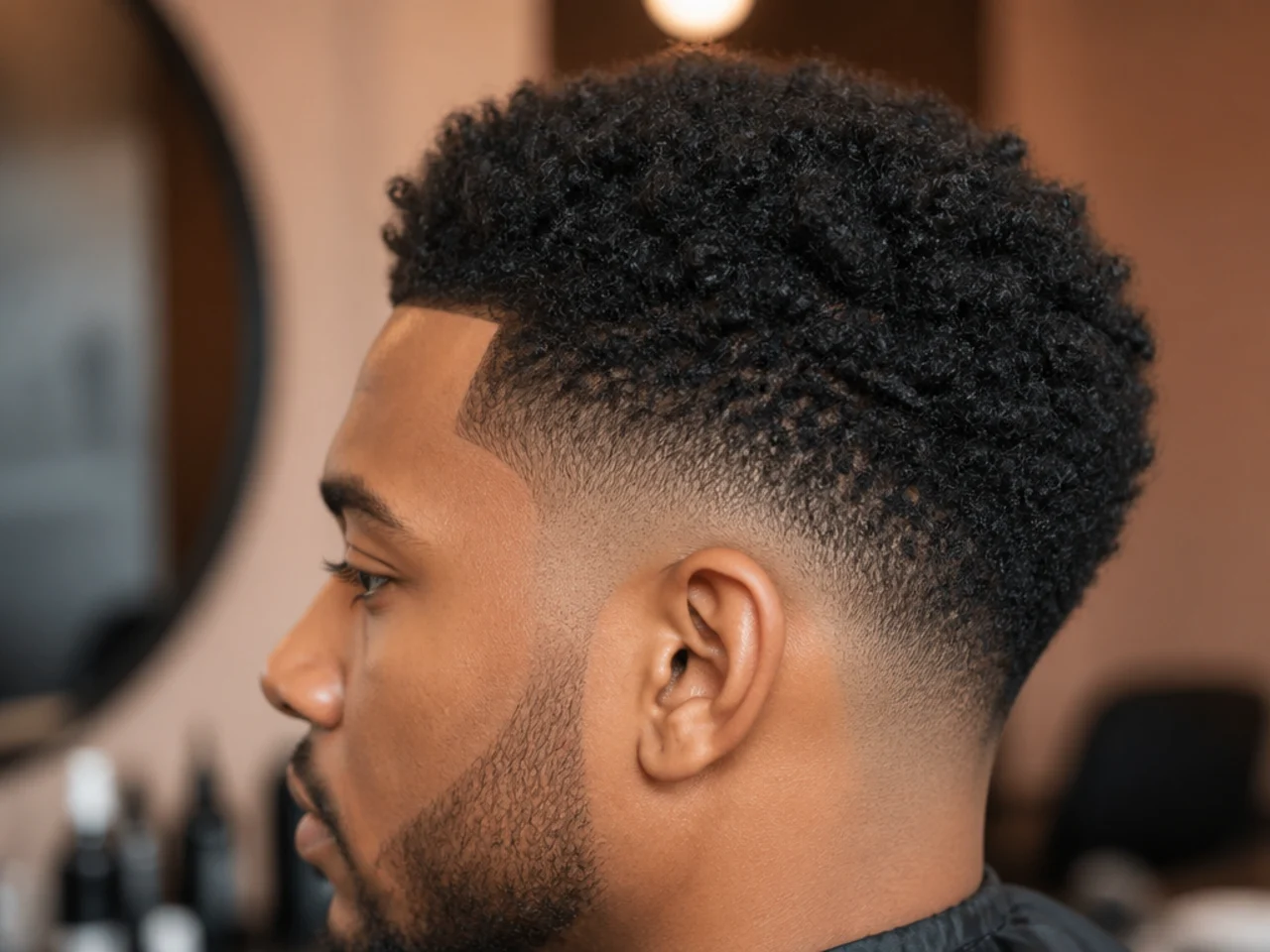
The skin fade was designed for straight and wavy hair. On a #0 or bald finish, straight strands reflect light evenly and the transition looks polished. On 4A–4C coil, the same finish creates a visual cliff — dense coil pattern up top, bare shiny scalp below, no handoff between them. The eye reads that as two separate cuts stacked on the same head.
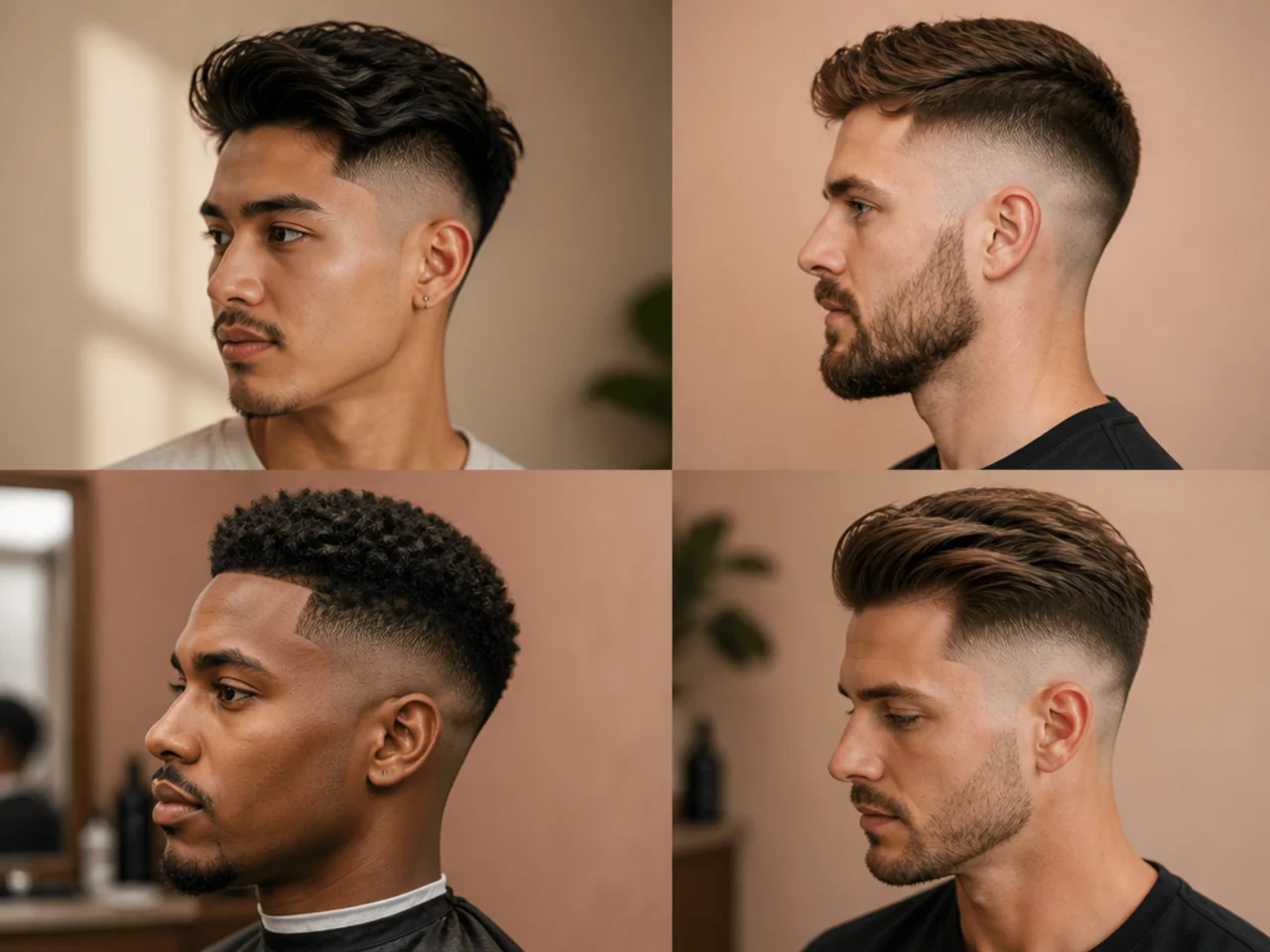
The taper fixes this at the design level. Leaving a #0.5 or #1 guard at the shortest point preserves just enough coil density at the perimeter that your pattern reads continuous from the crown all the way down to the temple. It's the same reason the taper haircut family has been the polished-natural default since the '70s — the coil doesn't stop, it just gets shorter.
Why the guard number matters. A #0.5 keeps the coil visible but flat against the skin. A #1 leaves a hair of texture at the perimeter. Both work. Going below a #0.5 puts you back into skin-fade territory. That's a choice — but it isn't a taper anymore.
Why it flatters every coil density. On 4A, the looser coil pattern falls softly into the taper zone. On 4B, the tighter S-shape holds shape all the way to the fade line. On 4C, the densest coil packs into the taper without the top looking heavier than the sides. The taper adapts to whatever pattern you brought in.
Why it forgives your barber. Skin fades punish any wobble in the transition line — bare scalp shows every unevenness. A #0.5 or #1 finish blurs small imperfections into the coil texture. That means a merely good barber can give you a great-looking afro taper. The skin fade needs a specialist, every visit, forever.
Reason 2: It Works With Any Afro Height
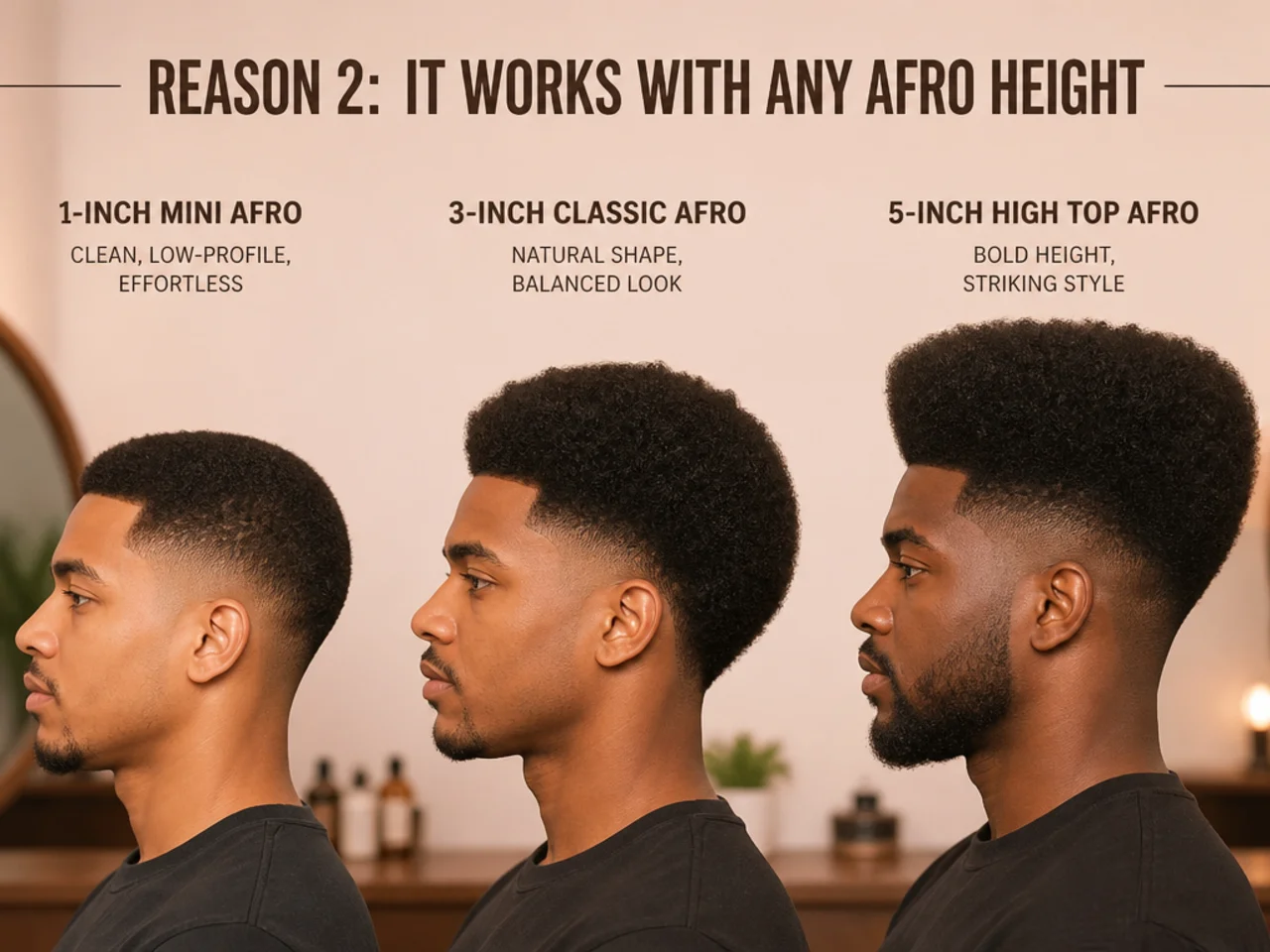
Most fade shapes lock you into a top height. A high skin fade demands a tall structured top or it looks unfinished. A tight buzz-fade demands nothing on top and reads weird if you grow anything out. The afro taper fade is the exception — it holds up under one inch of coil or five, and everything in between.
One to two inches: the rounded mini afro. A tight dome sitting on a low taper reads clean and asks almost nothing of your morning. Best for square and round faces where the compact silhouette balances the jaw. This is the "just want a nice haircut" version and it wears every workplace.
Three inches: the everyday afro. The sweet spot for most Black men on 4A–4C. Enough visual weight to read as a real afro without daily heavy styling. Pairs with a low taper for a soft frame, a mid taper for a modern edge, or a high taper for the sharpest contrast. If you're new to the family, start here.
Four to five inches: the statement. Blowouts, high tops, tall crowns. The taper stays low or mid so it doesn't fight the top for attention. This is the version that photographs like a magazine cover and asks the most of your styling routine — daily picking, satin bonnet at night, a full moisturize on wet-day mornings.
Length freedom is the point. You can grow through all three heights on the same taper schedule. Start at one inch, ride out a few months, cross into four inches without ever visiting the "growing-my-hair-out awkward phase" that plagues most fades. The afro taper handles every length equally well because the perimeter treatment doesn't care what's happening on top. For twenty specific length-and-taper combinations, the afro taper fade 20 variations roundup lays out each one with an "ask for" line.
Reason 3: Lower Maintenance Than a Skin Fade
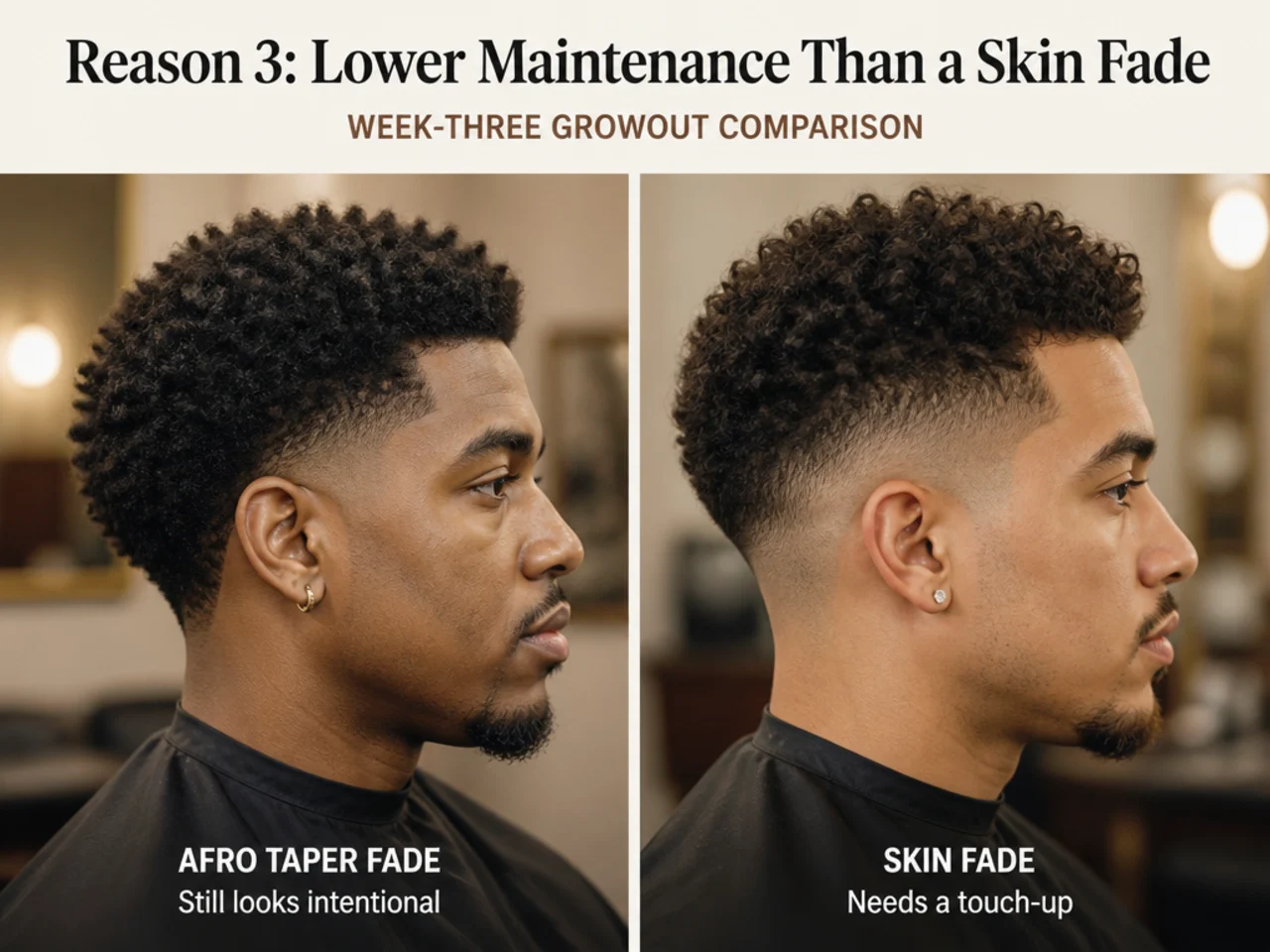
This is where the taper earns its keep for anyone with a job and a life. A skin fade needs a barber visit every ten to fourteen days or the shape collapses. As soon as the skin panel grows in even a millimeter of stubble, the crisp contrast that made the cut work disappears — and what's left just looks patchy.
The taper doesn't have that problem. Its shortest point is already a short guard, not bare skin. Week-three fuzz on a #0.5 or #1 reads as intentional length, not neglect. That single design difference doubles your growout window.
The real cadence. A low afro taper is a three-to-four-week shape. A mid taper is a two-to-three-week shape. A low taper fade with an afro will still look clean in the morning on day 24 — try that with a skin fade and you'll be booking an emergency shape-up.
The line-up runs on its own timer. The razored hard line at the forehead and temples blurs faster than the fade zone. Book a shape-up-only visit at week two — most Black barbershops charge $15 to $25 for it — and skip the full cut. That keeps the frame crisp without eating into the taper. A skin fade doesn't offer this option; the whole cut has to be redone every visit.
The math over a year. Low afro taper: 12 to 15 full cuts plus 6 to 8 shape-ups. Skin fade: 26 to 30 full cuts, no shape-up-only option. If your barber charges $50 a full cut and $20 a shape-up, the taper runs about $760 a year. The skin fade runs about $1,400. Same money buys you a real barbecue setup, or you keep the extra hours.
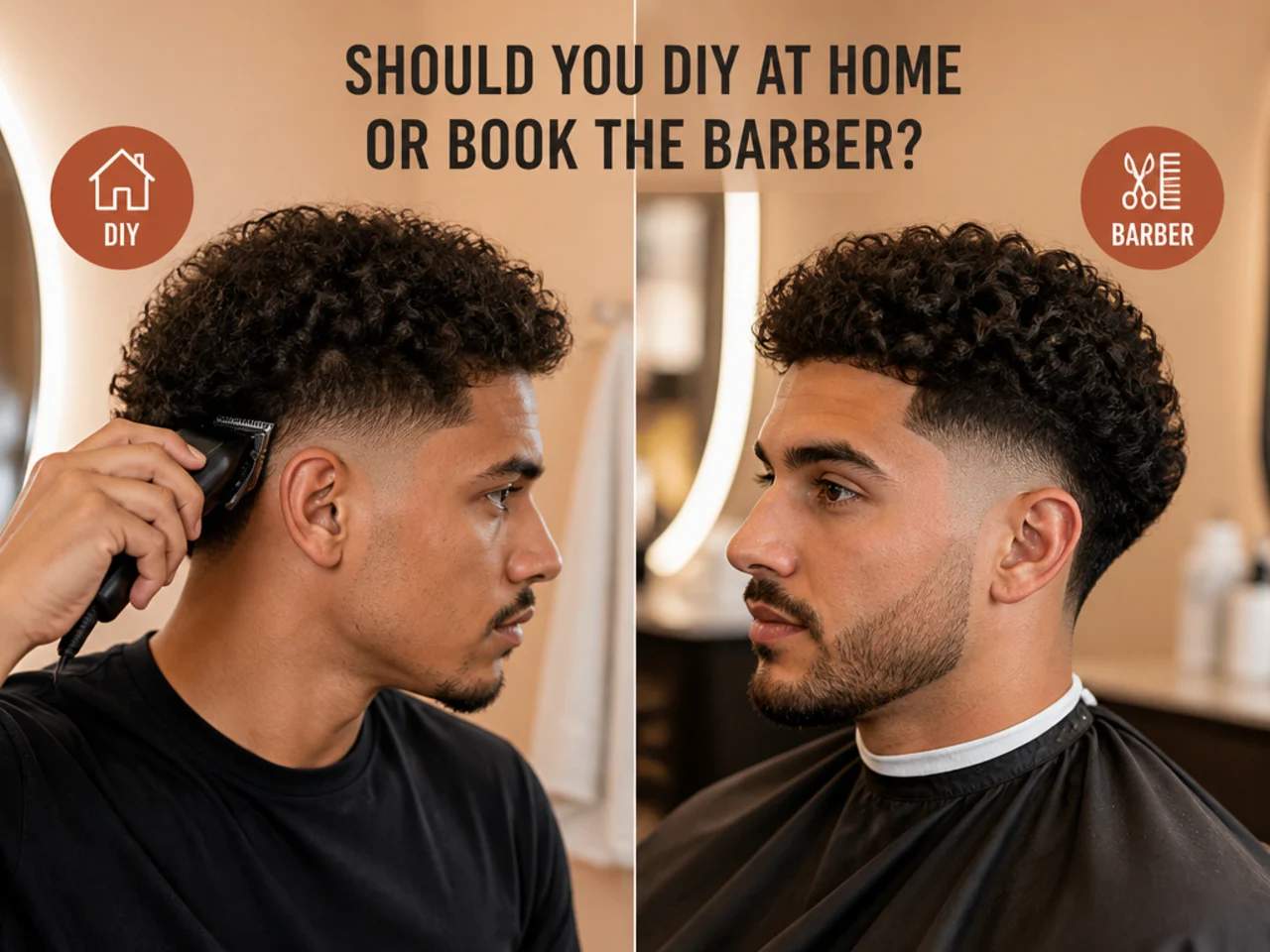
Home cleanup. If you own decent clippers — Wahl, Andis, or BaBylissPRO — you can re-blend the taper yourself at week three with a #0.5 or #1 guard and a soft touch. Try that on a skin fade and you will regret it inside sixty seconds. The taper is the DIY-forgiving version of the family.
Reason 4: It Adapts to Beard or Clean Face
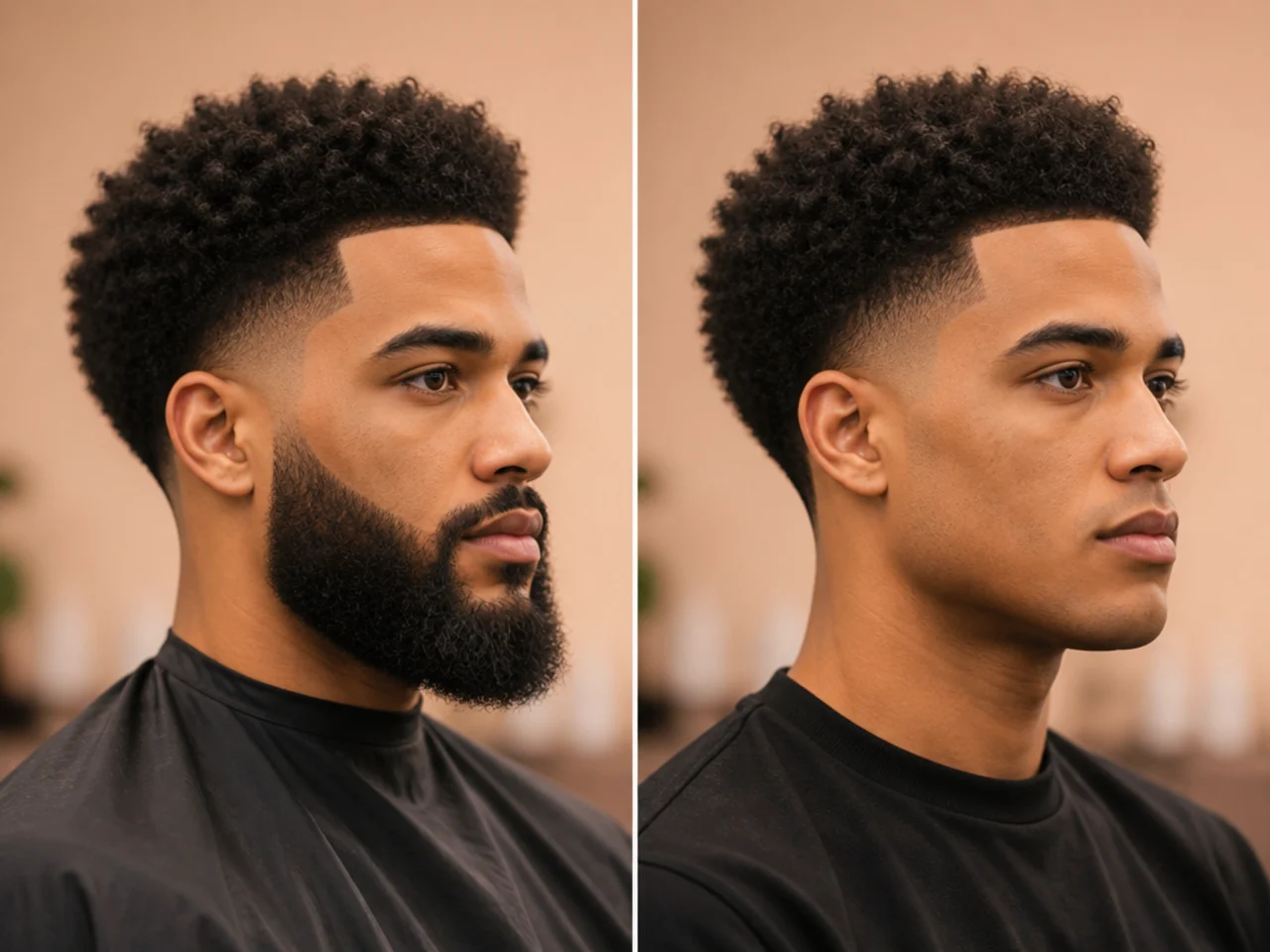
Beard interaction is where most fade choices force a compromise. A skin fade next to a beard creates a sharp visual break at the sideburn — bare scalp meeting hair the beard can't cover. A tight fade forces the beard to fade too, which not every beard density can pull off. The afro taper fade solves this with the same trick it uses everywhere else: it leaves enough hair at the perimeter to hand off cleanly.
With a full beard. The taper drops the sideburn to a #0.5 or #1, which is roughly the same density as most beard growth. The barber can then taper the beard from that sideburn straight down into the jaw, so the whole face frame reads as one continuous shape from crown to chin. This is the version that photographs the best and reads the most polished — one shape, no seams.
With a groomed shorter beard. Same principle, tighter numbers. Ask for a #0.5 at the taper and a #0.5 through the sideburn and cheek, then let the beard length build up below the jaw line. The connection stays clean even at a heavy stubble density.
With no beard. The taper still works. A clean shave lets the taper carry the frame on its own, and the low or mid taper line reads soft rather than aggressive against a bare cheek. A high taper next to a clean shave sharpens the whole face — pick that if you have strong jaw angles you want to feature. The versatility across facial hair is one reason the afro taper for Black men has stayed the default cut for a full generation.
Book both on the same day. Ask your barber to shape the head and beard in one sitting. Fresh line-ups on both keep the handoff crisp. If you split the appointments, one side of the frame will always be a week ahead of the other.
Reason 5: The Growout Reads Clean
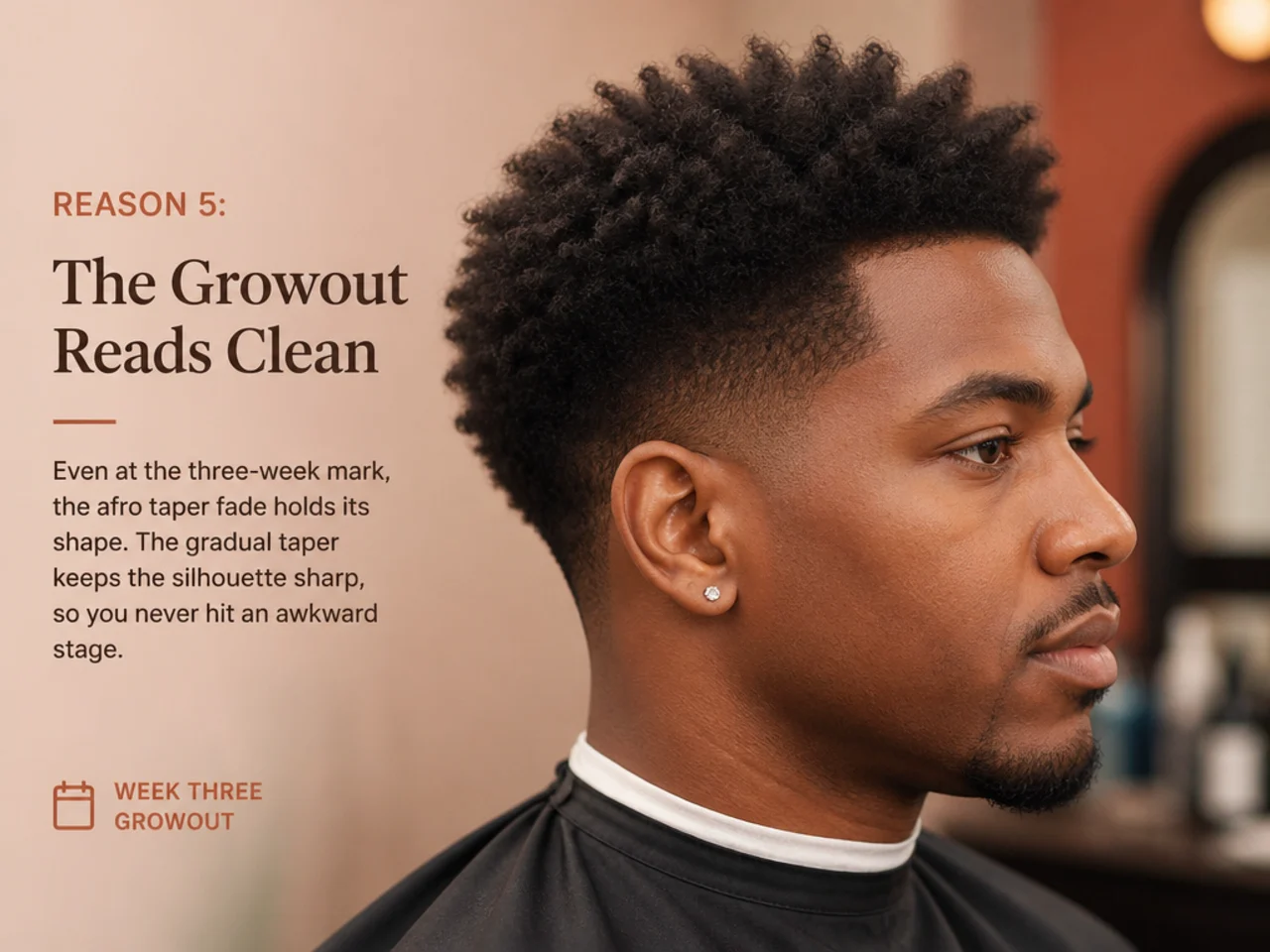
Every fade has a growout personality. Some look their best on day one and get worse every day after. The afro taper looks close to its best for most of its cycle — that's the design working with you rather than against you.
The taper zone forgives fuzz. A #0.5 or #1 shortest point plus another two weeks of growth still reads as short back and sides. There's no bare scalp to fill in unevenly, no sharp line to blur, no crisp geometry to lose. Just slightly longer coil sitting where slightly shorter coil sat two weeks ago.
The top rewards growth. The afro on top gets fuller as the weeks go on. Where a buzz-cut growout enters an awkward "not short, not long" phase around week two, the afro taper actively looks better with more coil to pick out. The top and sides tell the same story — this is a cut that ripens.
The line-up is the pressure valve. The one part of the frame that does blur is the razored line at the forehead. That's the piece to touch up between full cuts — every ten to fourteen days for a shape-up. Book that solo appointment and your afro taper can go three to four weeks between full cuts while still reading crisp in every photo.
Growout as a feature, not a bug. Some men run this cut on a six-week rotation on purpose — start at 2.5 inches on top after a fresh cut, grow to 4 inches by the end of the cycle, then reshape. The taper holds through the entire window. Compare that flexibility against the low fade vs mid fade vs high fade rotation, where a high skin fade demands a two-week rebook every single time. The afro taper is the shape that lets you plan your month around something other than your barber.
Afro Taper Fade vs Skin Fade vs Curly Cut — Side by Side
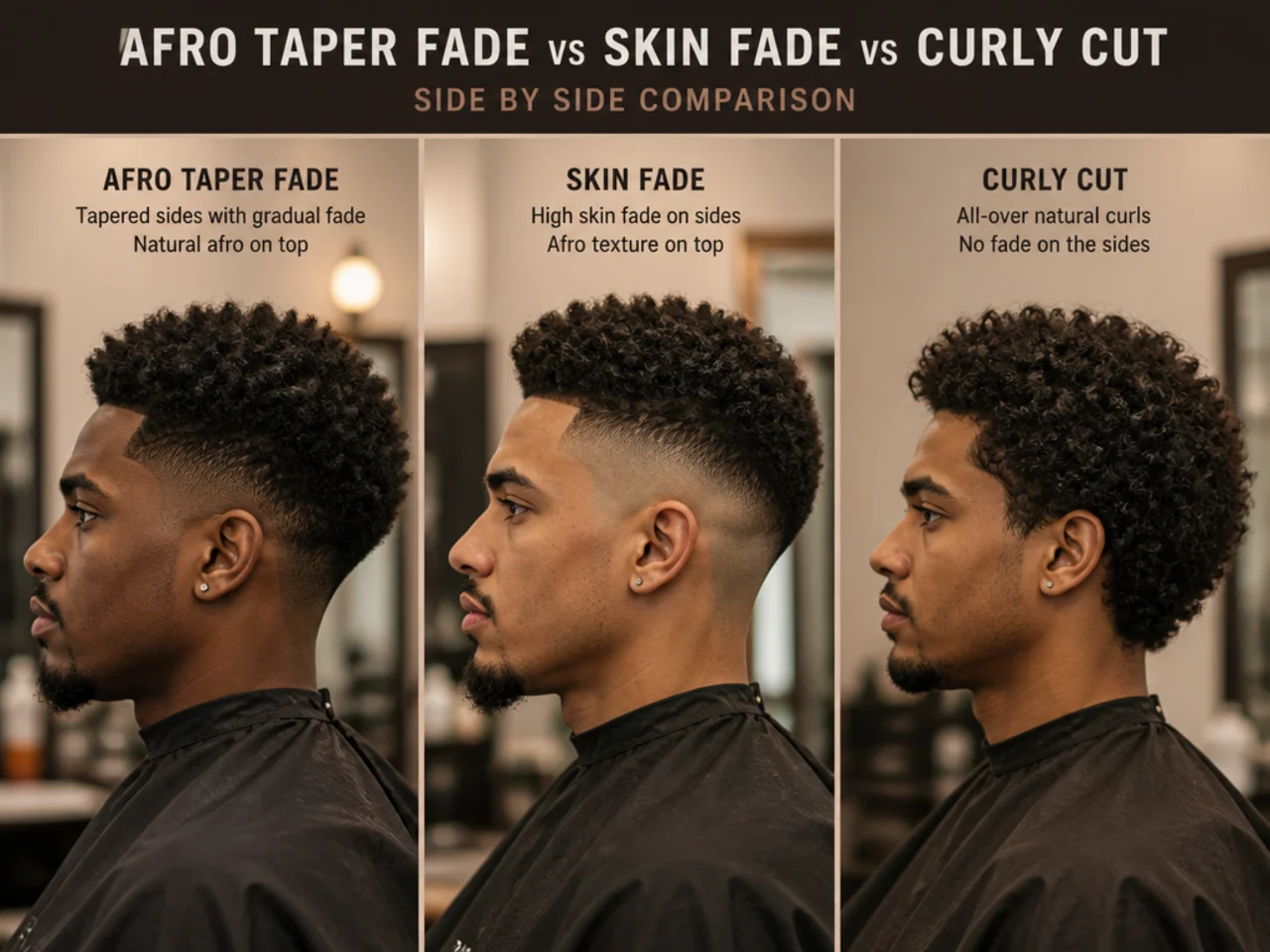
The taper reads best when you see it against the two alternatives. Skin fade throws sharper contrast and needs constant maintenance. A no-fade curly cut is the softest option but reads shaggy at any real length. The afro taper sits in the middle and wins the middle.
Read the table like a decision tree. If any single row is the deal-breaker — say, you can't do a barber visit every two weeks — the skin fade drops off the list. If you want any structure at all around the perimeter, the no-fade curly cut drops. The taper is the option that survives all seven questions for most Black men.
Who Should Still Pick a Different Fade
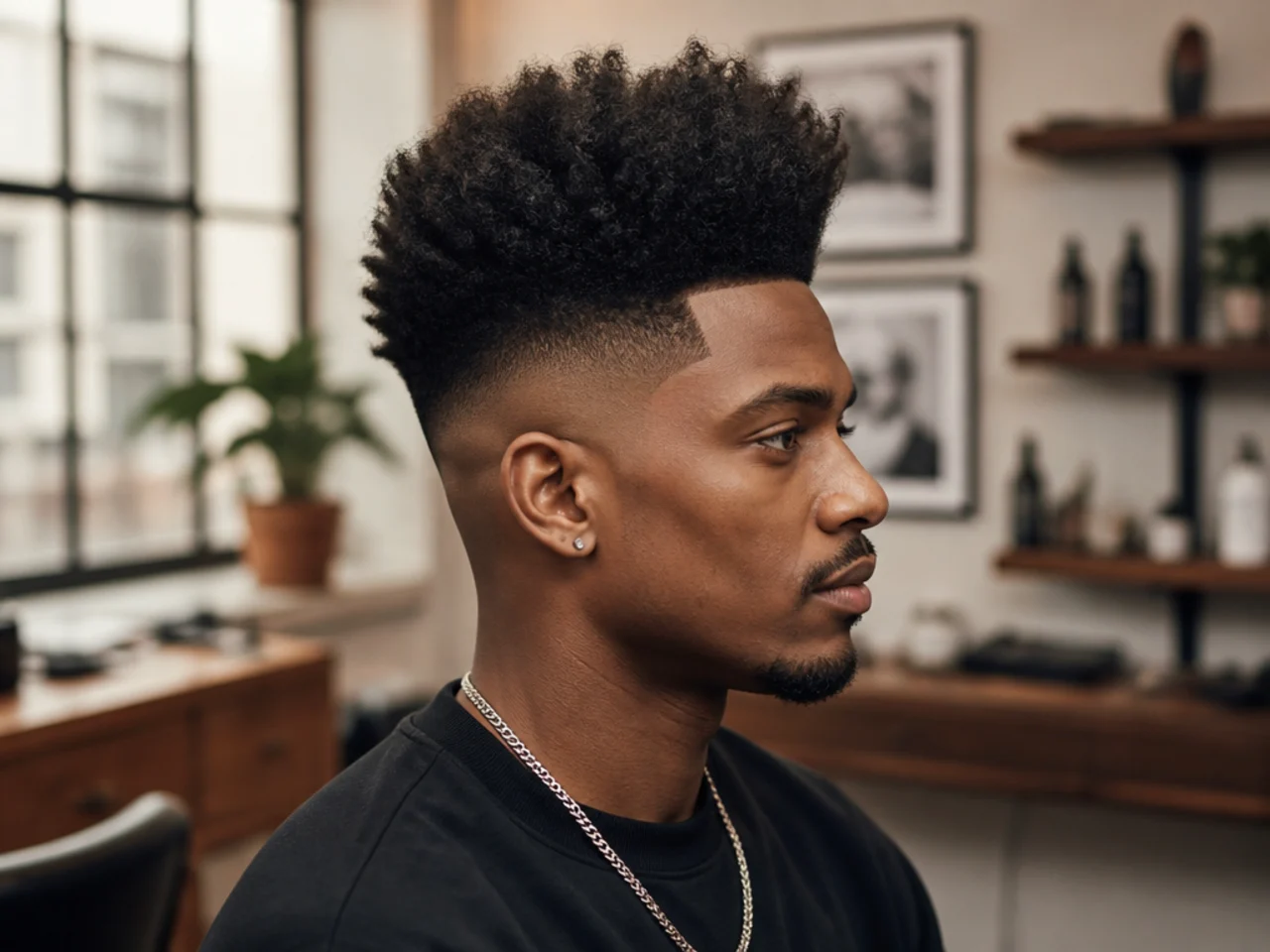
The afro taper isn't the right answer for every guy every time. Three situations where a different pick will serve you better.
You want maximum contrast, workplace be damned. A high skin fade next to a tall afro is unmatched for visual drama. The bare-skin panel reads as high fashion, especially in creative fields and entertainment. Book weekly maintenance and it will look incredible every day. If that's the point, take the skin fade over the taper. The mid taper fade for Black men piece has the middle-ground version if you want closer contrast without going full skin.
Your workplace requires a very short overall look. Some uniformed jobs, military, and heavily regulated environments call for a hair length that ends before the afro shape can build. In that case, a full skin fade with a very short top — under an inch of coil — reads compliant and clean. The taper wants at least an inch of texture to justify itself; below that, the numbers stop working.
You have zero styling appetite and skip the pick. The afro taper depends on you picking out the top and moisturizing it. If you'd rather not, a very short buzz-and-taper reads better than a squashed, dry two-inch afro. Match the cut to the routine you'll actually do. If you want the flexibility to grow curls out later, the low taper fade with curly hair piece covers the looser-coil version of the same conversation.
For every other case, the afro taper is the right pick. It survives your calendar, respects your coil pattern, and plays well with the rest of your face.
How to Ask Your Barber for an Afro Taper Fade
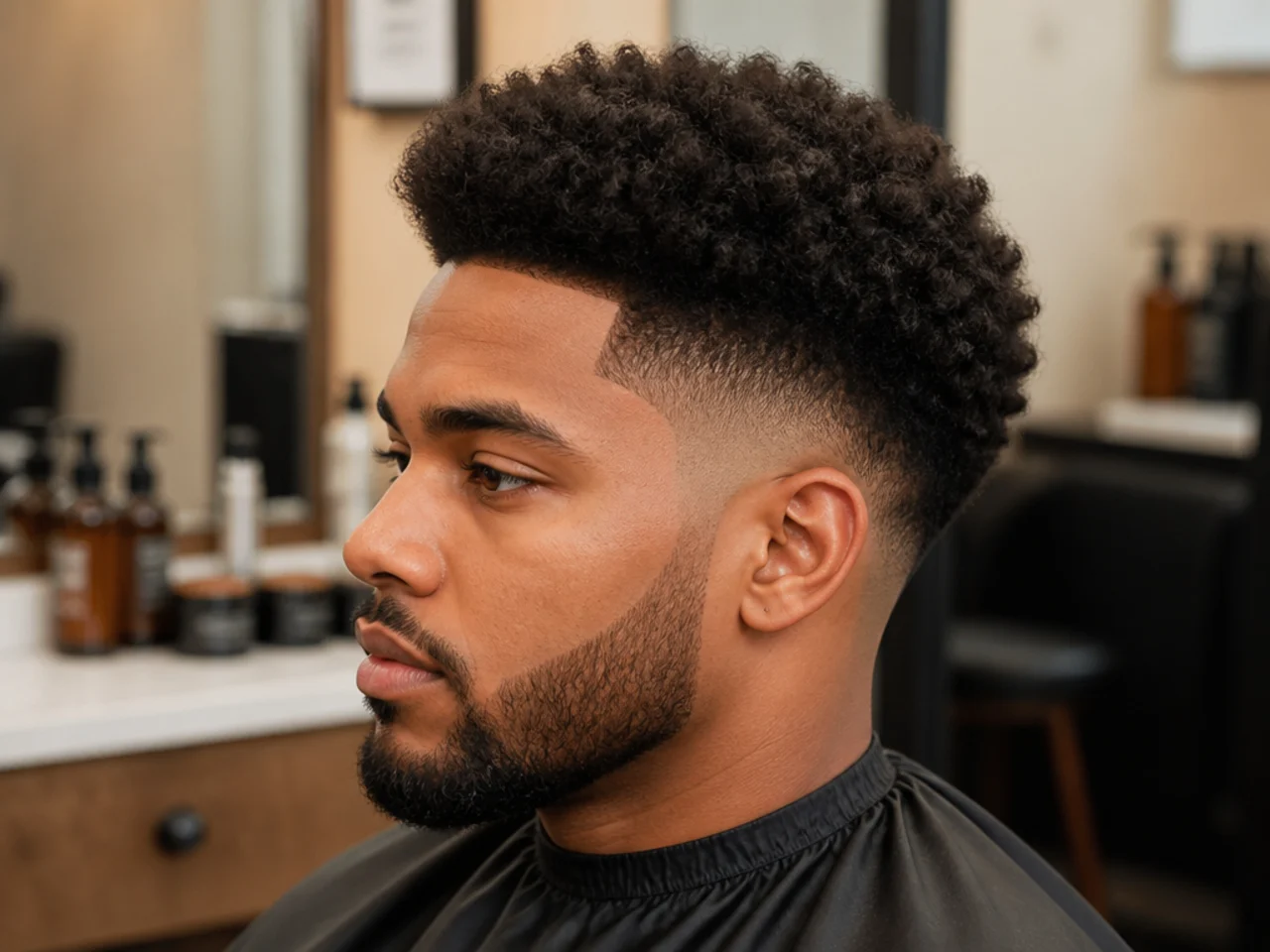
Seven lines cover the whole conversation. Nail these and you leave with the version you had in mind.
- Show a photo — and match the coil pattern. An afro taper on 4A loose coils reads completely different from the same shape on 4C. Screenshot a reference where the model's pattern matches your own. If you don't know your pattern, the curl types breakdown will tell you in under a minute.
- Say the words "afro taper fade." Not "afro fade," not "taper cut." The full phrase tells your barber where to start (above the ear), where to stop (a #0.5 or #1 guard, never skin), and that you want a shaped afro on top.
- Confirm the taper height. Low above the ear, mid at the temple, high above the parietal ridge. Point to where you want the transition to sit on your own head so there's no ambiguity.
- Confirm the guard at the shortest point. #0.5 for sharper contrast, #1 for softer. Never below #0.5 — the moment you cut to skin, you have a fade, not a taper.
- Ask for the top to be picked out before cutting. Cutting an afro compressed against the head almost always ends shorter than you asked for. Picking first shows the true length.
- Specify the top length in inches on picked-out hair. "Three inches when it's picked out." Give the number, not "a medium afro." Barbers work from inches, not vibes.
- Book the next appointment before you leave. Every two to three weeks for the taper and line-up, every six to eight for the full reshape. Standing appointments hold the schedule together.
For the daily routine — leave-in order, picking technique, satin bonnet, sponge finish — the curly hairstyles for men piece walks through the whole regimen in more detail than fits here.
FAQ
Is the low afro taper the safest version to start with? Yes. It sits well above the ear, blends soft, and tolerates a full month of growout without collapsing. New to the family? Book a low afro taper with a #1 at the shortest and two inches of picked-out afro on top. That combination fits any workplace, any face shape with an oval or square jaw, and any coil density from 4A to 4C.
Can I run this cut on 3C or looser coil? Yes, though the top will read more as a curly top than a true afro at 3C. If you want the full round afro silhouette on looser coil, keep the length at three inches minimum and ask your barber to pick out and shape carefully. The taper still works exactly the same at the sides.
Do I need a specialist Black barbershop? Not required, but strongly preferred. Any barber can execute a taper on straight or wavy hair; not every barber has the reps on 4A–4C coil to sculpt a real afro shape. If you're new to a shop, ask up front whether they cut afros regularly. A good barber will say yes or refer you out — both are the right answer.
Should the top ever be blown out at the chair? For a statement finish, yes. Ask for a blowout on damp hair before the scissor cut, so your barber sees the actual expanded shape. That's the version that reads biggest and photographs best. For daily wear, skip the blowout and keep the natural coil.
Can I add designs or a hard part? Yes to both. A single razored hard part above one temple adds signature detail without much upkeep. Fuller designs (stars, waves, tribal lines) hold shape for two weeks and need re-cutting each visit. Both look sharpest on a low or mid taper base.
Is this the right cut if I'm growing my afro out long-term? Yes — better than any other option. The taper at the sides means the sides always look clean while the top grows out however long you want. Book taper-only refresh visits every three weeks and let the top ride. That's the growout plan for a full short taper fade Black men evolution into a tall crown afro.