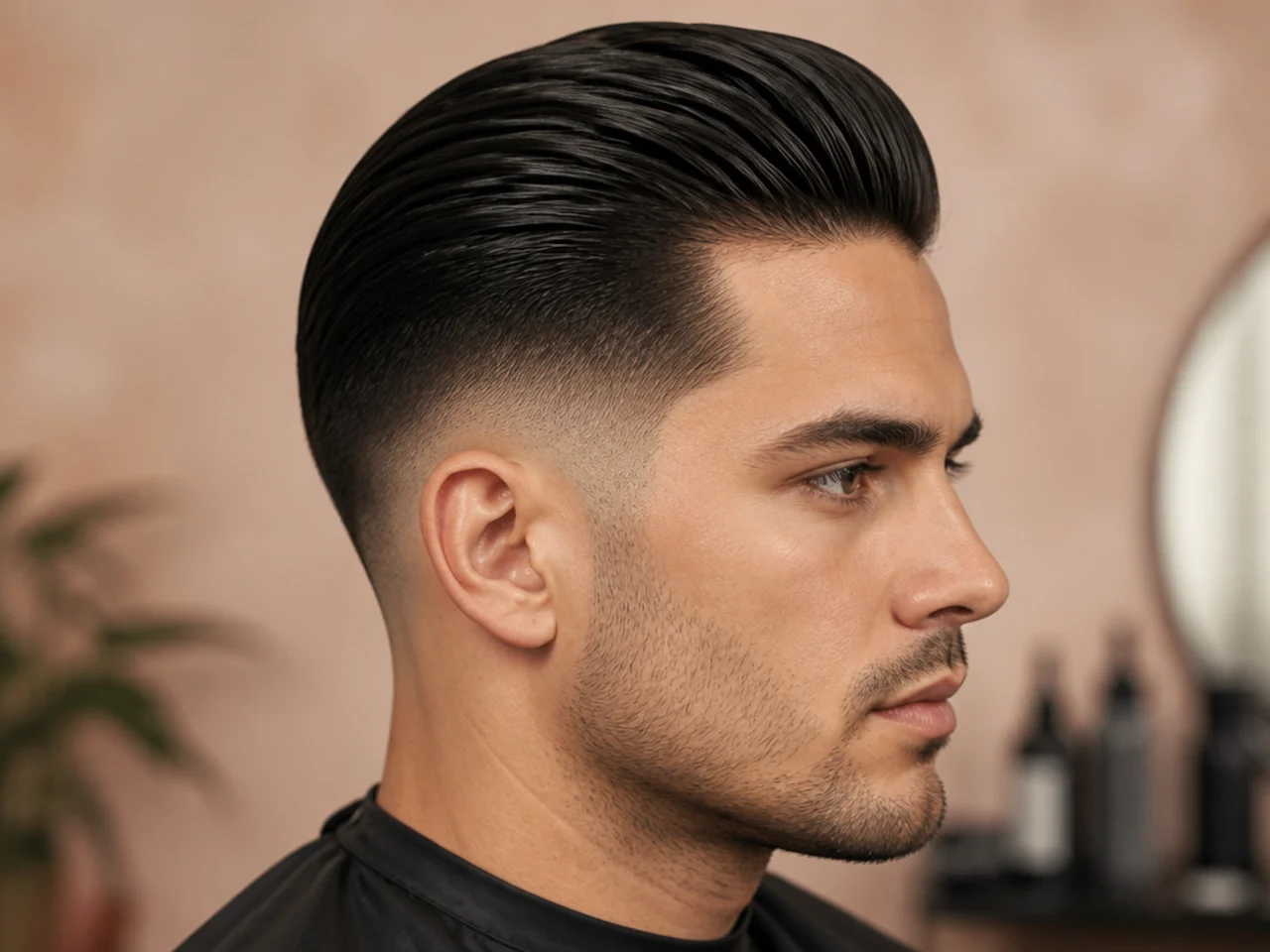
20 Taper Fade Slick Back Styles Worth Trying
Twenty taper fade slick back haircut ideas for 2026 — every taper height, every finish, face-shape notes, guard numbers, and how to ask your barber.
In this article · 29
- What Is a Taper Fade Slick Back?
- How to Choose Your Taper Fade Slick Back
- The Core Taper Fade Slick Back Family
- 1. Classic Taper Fade Slick Back
- 2. Low Taper Fade Slick Back
- 3. Mid Taper Fade Slick Back
- 4. High Taper Fade Slick Back
- 5. Skin Taper Fade Slick Back
- 6. Drop Taper Fade Slick Back
- Length & Structure Variations
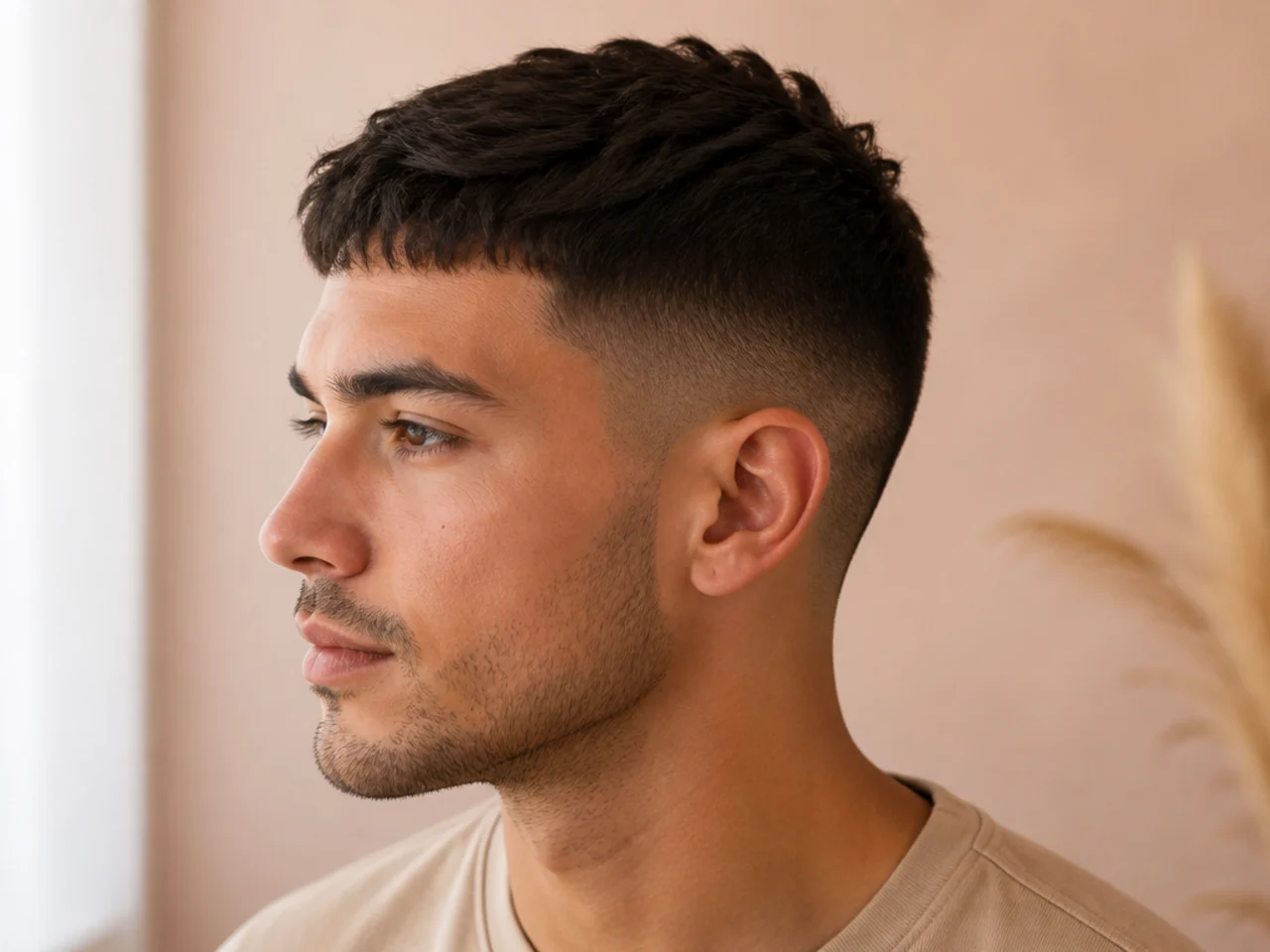
- 7. Short Taper Fade Slick Back
- 8. Long Taper Fade Slick Back
- 9. Slick Back Undercut with Taper Fade
- 10. Disconnected Taper Fade Slick Back
- 11. Taper Fade Slick Back with Hard Part
- Finish & Attitude Variations
- 12. Modern Matte Taper Fade Slick Back
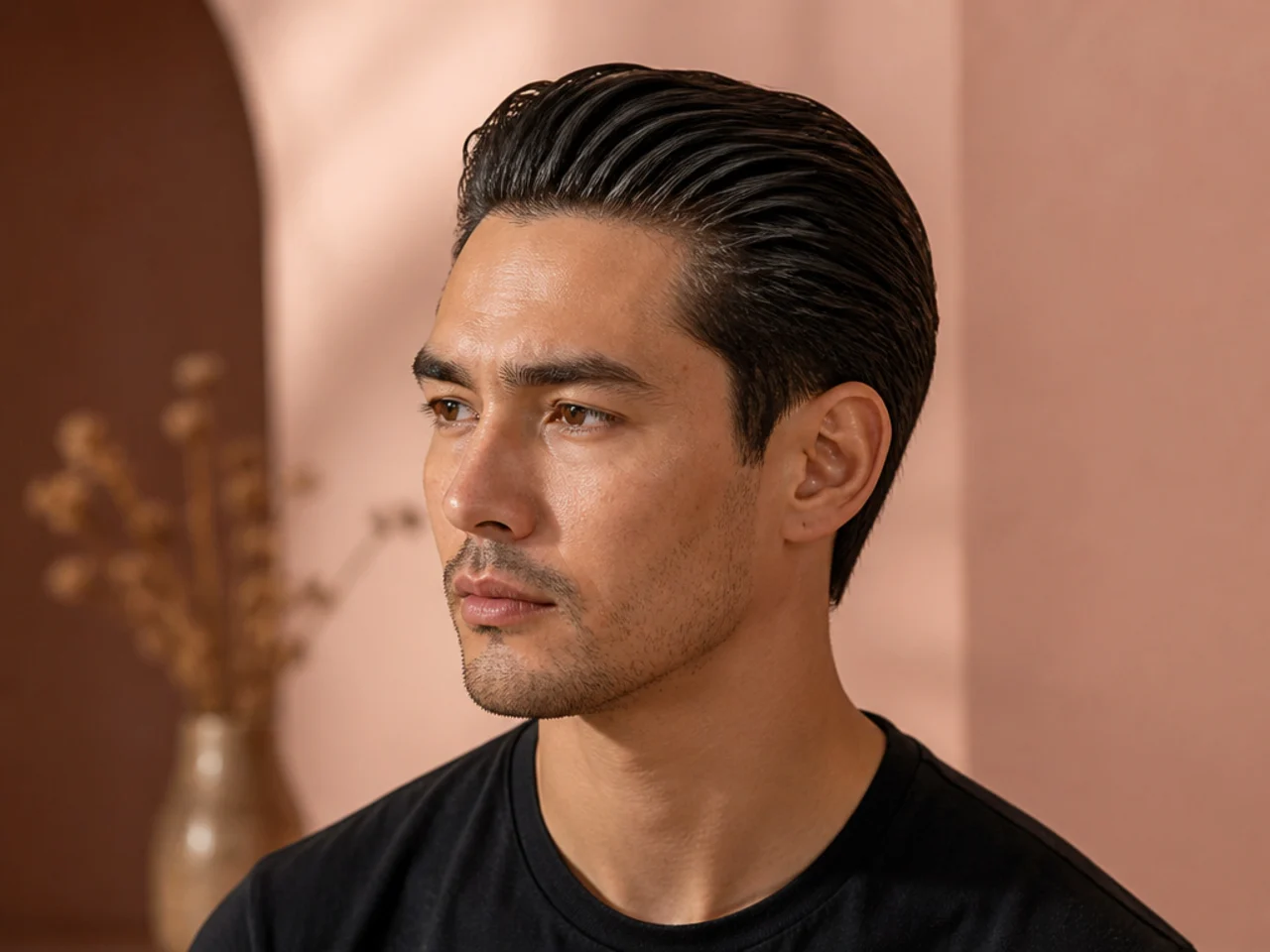
- 13. Wet-Look Taper Fade Slick Back
- 14. Messy Taper Fade Slick Back
- 15. Textured Taper Fade Slick Back
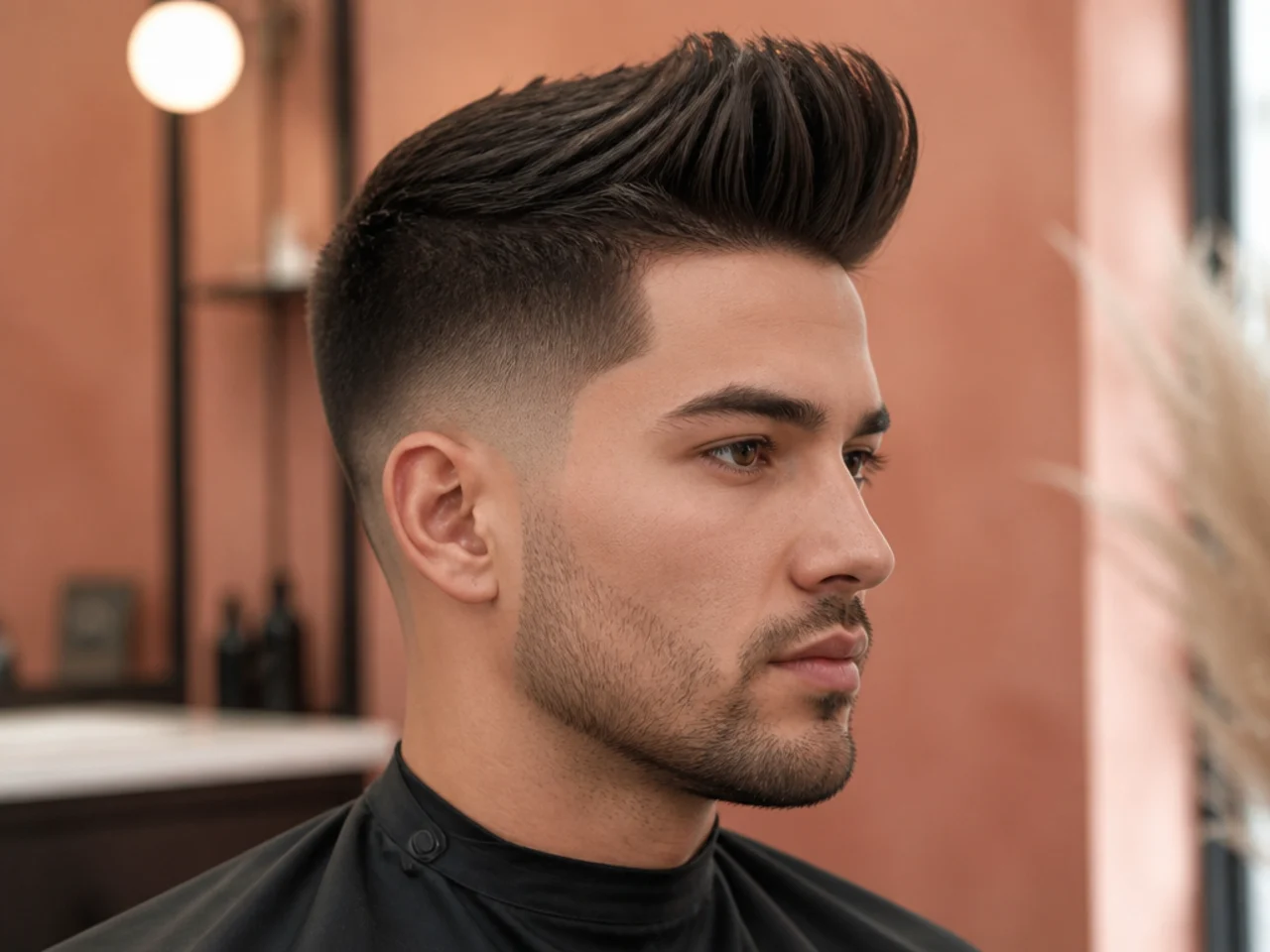
- 16. Slick Back Pompadour with Taper Fade
- For Your Hair Type and Look
- 17. Taper Fade Slick Back with Side Part
- 18. Taper Fade Slick Back for Curly Hair
- 19. Taper Fade Slick Back for Black Men
- 20. Taper Fade Slick Back with Beard
- How to Ask Your Barber
- Styling & Maintenance
- FAQ
The taper fade slick back is the two most-requested moves in men's hair right now stacked on the same head — a taper fade at the sides, a slicked-back top on the crown. The taper gives you polish. The slick back gives you shape. Together they land somewhere between old-money classic and modern barbershop, and they adjust to any face, any hair type, and any dress code by trading one variable — the taper height, the finish, or the top length. Twenty variations worth asking for below, with photos, face-shape notes, and the exact language to hand your barber.
What Is a Taper Fade Slick Back?
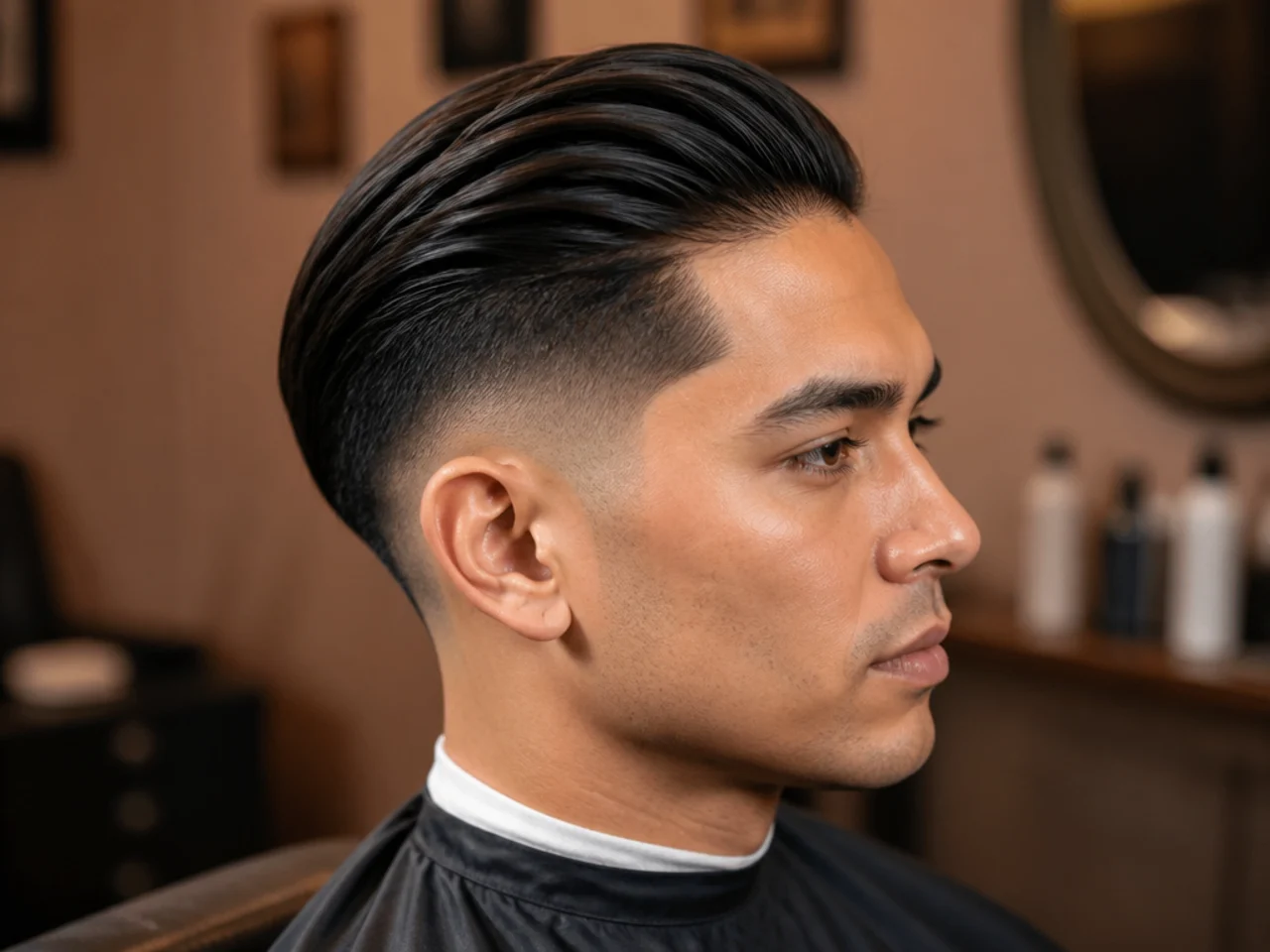
A taper fade slick back combines two techniques. The sides get a taper fade — the perimeter blends down through short clipper guards, tightest at the neckline and around the ear, softening upward through a scissor-blended transition. The top stays long enough (four to six inches for most versions) to comb back off the forehead and hold with product.
The taper does the shape work at the sides. Where a plain fade runs high on the head, a taper focuses the blend around the ear and neckline, keeping the rest of the sides fuller. That leaves more hair to frame the slicked-back top, which is why the taper fade reads intentional where a straight fade can read aggressive.
The slick back does the shape work up top. Volume sits on the crown rather than at the temples. The comb-back move stretches the forehead and elongates the face, which suits most face shapes — especially round and square. Together they read Wall Street calm on the classic version, Peaky Blinders on the disconnected version, and old-money country club on the low-taper version.
How to Choose Your Taper Fade Slick Back
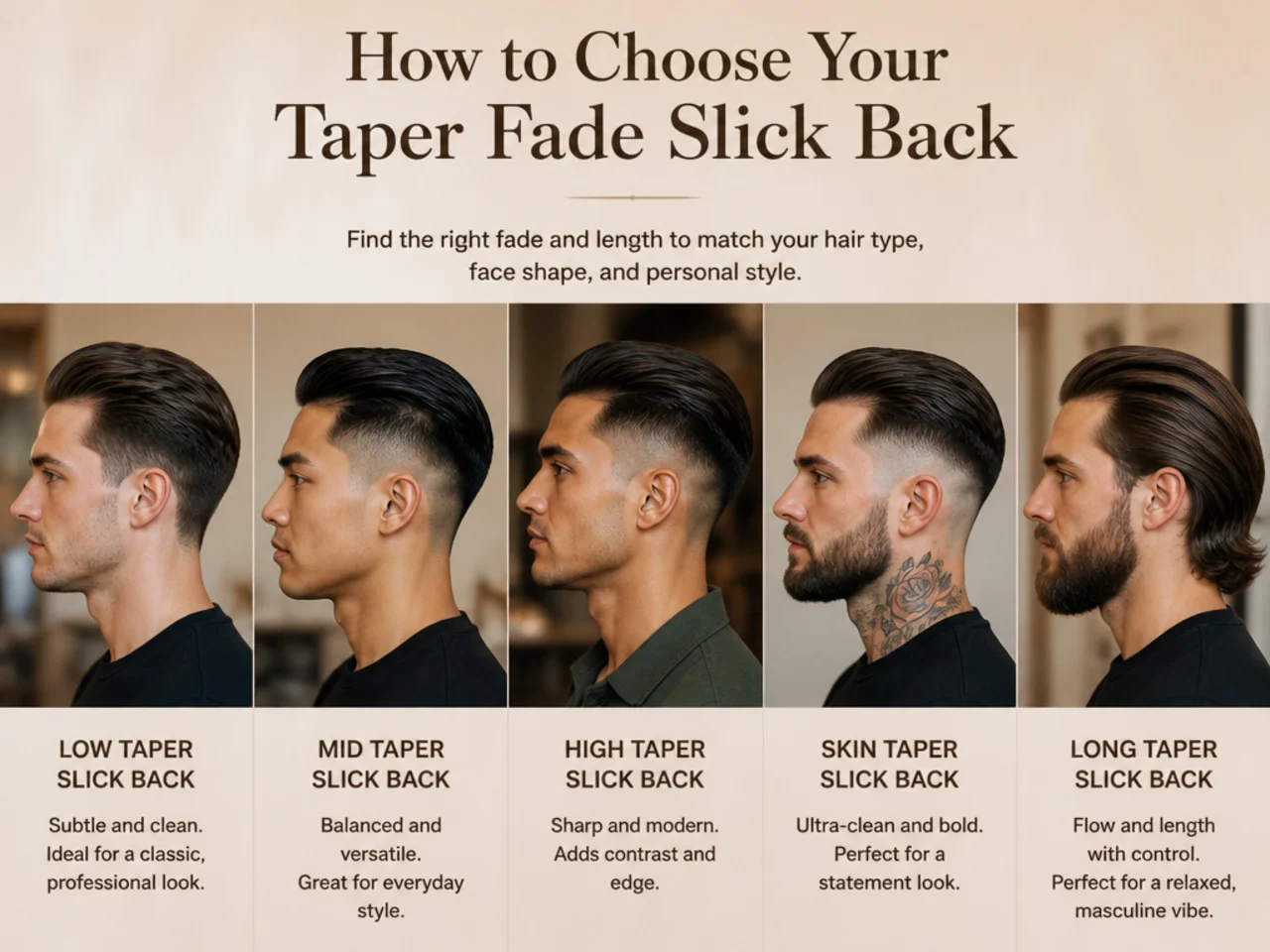
Four filters narrow the 20 options below to two or three real candidates for you.
Taper height first. Low taper for the most conservative rooms. Mid taper for the barbershop default that reads modern without dating fast. High taper for the sharpest contrast against the slicked top. Skin taper for the boldest look, provided you can re-cut every two weeks.
Hair type second. Straight and loose-wave hair carries the classic wet-look version cleanest — the strands lie flat under any pomade. Wavy hair carries the modern matte version best. Curly hair (3A to 3C) needs a wider comb and a shorter top. Coily hair (4A to 4C) needs a brush-back with curl cream rather than a comb-back.
Face shape third. Oval and round faces wear almost every version below. Square faces balance well with the longer, softer versions. Long or rectangular faces should keep the top under five inches and skip the pompadour — added height stretches the face further.
Workplace fourth. Traditional finance, law, and corporate rooms favor the low or mid taper with a classic finish. Tech and creative offices open the door to disconnected, undercut, or high-taper variations. Trades and outdoor work reward the shortest top length and the lowest maintenance version.
The Core Taper Fade Slick Back Family
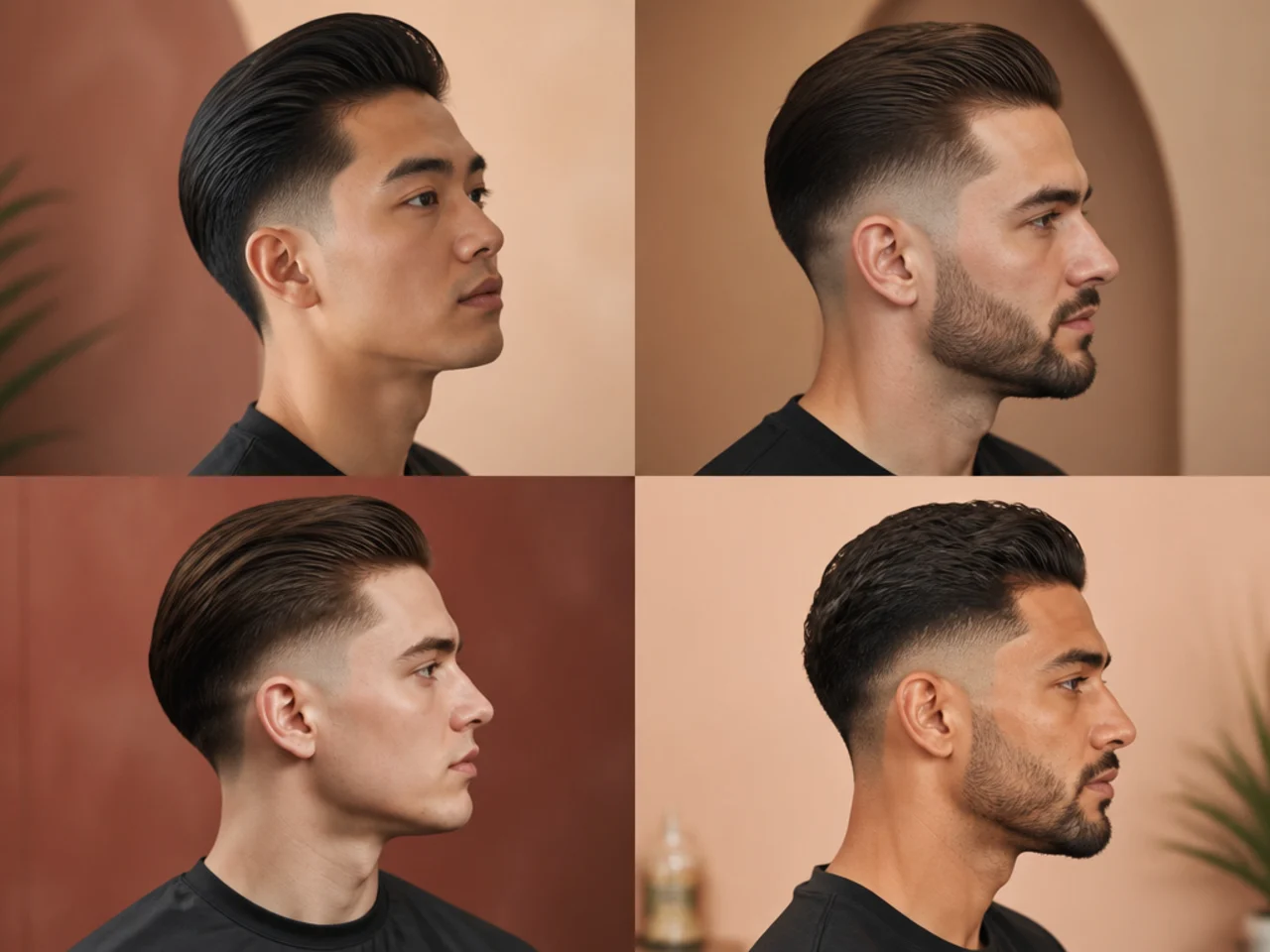
These six are the foundation versions. Each pairs a specific taper height with a standard slicked-back top. Start here — the finish and styling variations layer on top of one of these six shapes.
1. Classic Taper Fade Slick Back
The classic version is the reference cut every other variation is measured against. Mid taper starting at the temples, blending down to a #1 at the ear and neckline. Five inches on top, combed straight back with an oil-based pomade for a soft shine.
It suits oval, round, and square face shapes because the volume sits on top rather than the sides. Straight and lightly wavy hair holds it cleanest.
Ask for a mid taper starting at the temples finishing at a #1 at the perimeter, five inches on top with scissor-blended layers, and a natural neckline. Style with an oil-based pomade on damp hair — nickel-sized scoop, emulsified between the palms, combed straight back with a fine-tooth comb in one pass.
2. Low Taper Fade Slick Back
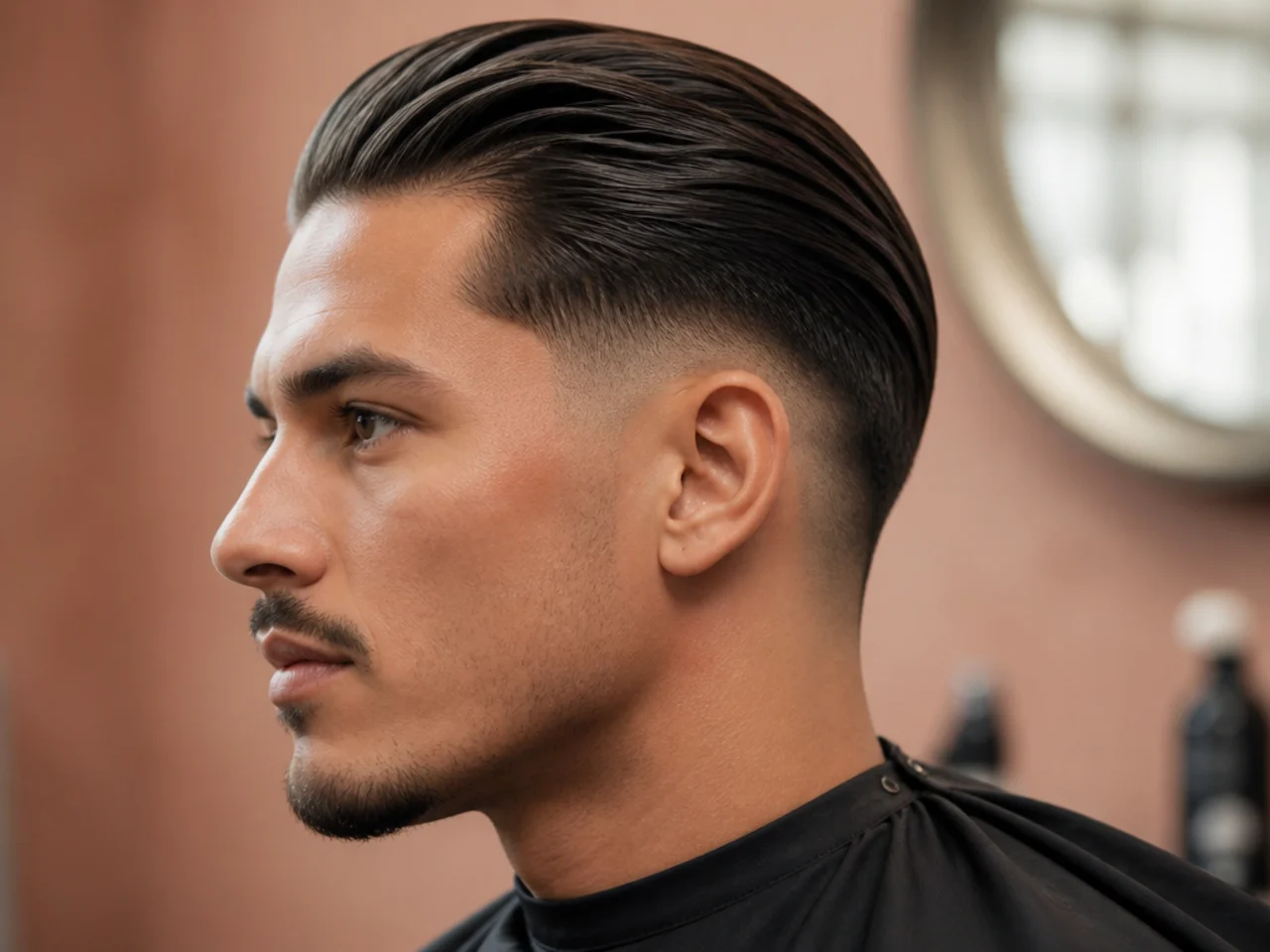
The low taper version sits the fade lower on the head — the blend starts about a finger's width above the ear and drops to a #0.5 or #1 at the perimeter. It is the most office-friendly of the four heights because no fade line runs above the ear or across the temple.
It suits every face shape and every workplace, especially conservative dress codes. See our full low taper slick back haircut roundup for twenty variations dedicated to this height.
Ask for a low taper starting an inch above the ear finishing at a #1, five to six inches on top with scissor-blended layers, and a tapered neckline. Style with an oil-based pomade for the classic finish, or a matte cream for the modern version.
3. Mid Taper Fade Slick Back
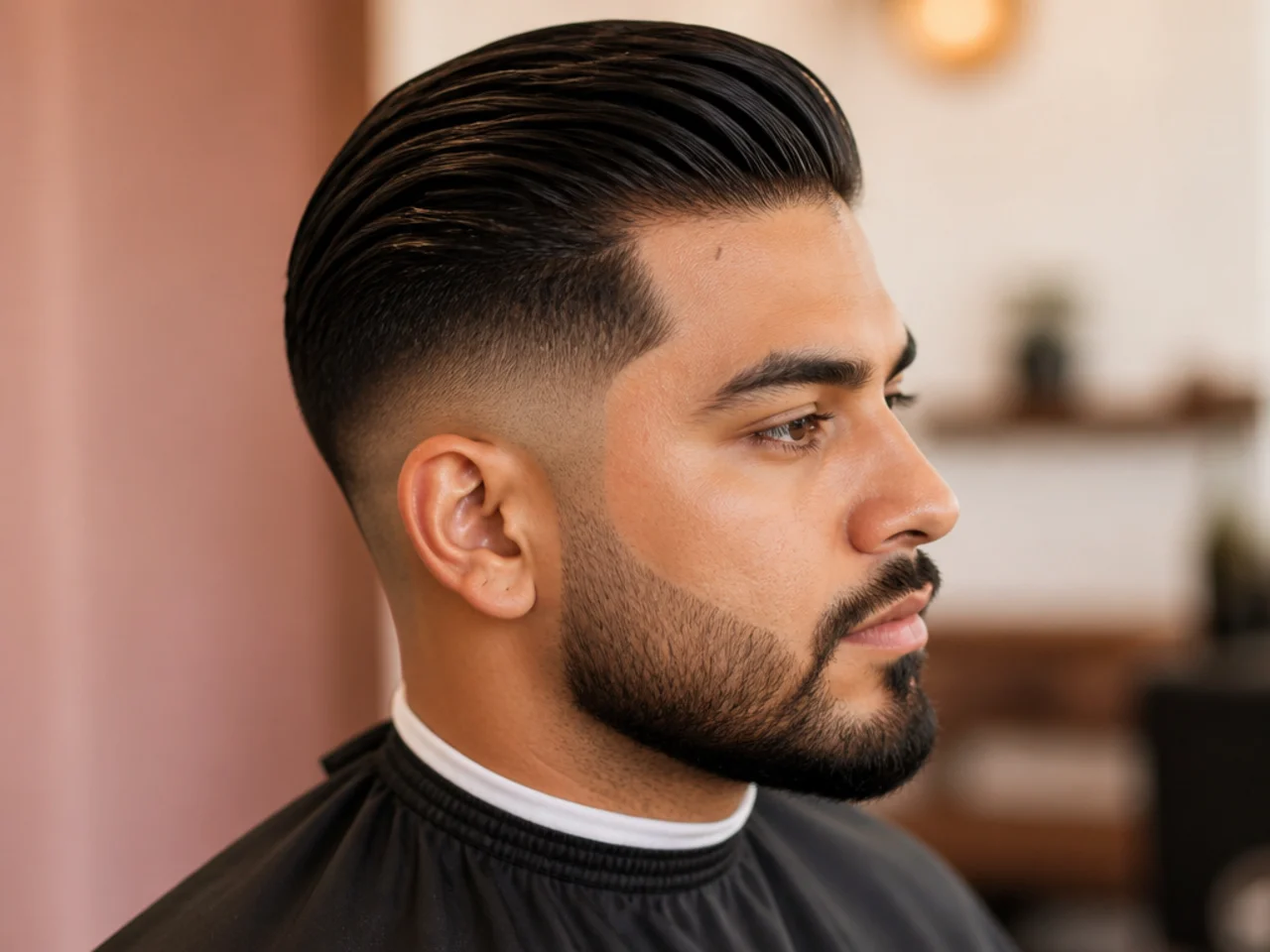
The mid taper version is the current Pinterest favorite — the blend starts at the temples, giving you visible fade contrast without the aggressive high-and-tight read of a high fade. Reads modern and current without dating fast.
It suits oval, square, and diamond faces. Works on straight, wavy, and lightly curly hair without adjustment.
Ask for a mid taper starting at the temples finishing at a #1 at the ear and #0.5 at the neckline, four to five inches on top, and a soft neckline. Style with a matte cream or fiber on damp hair — comb back with a fine-tooth comb for the classic version, or rake back with your fingers for the textured version.
4. High Taper Fade Slick Back
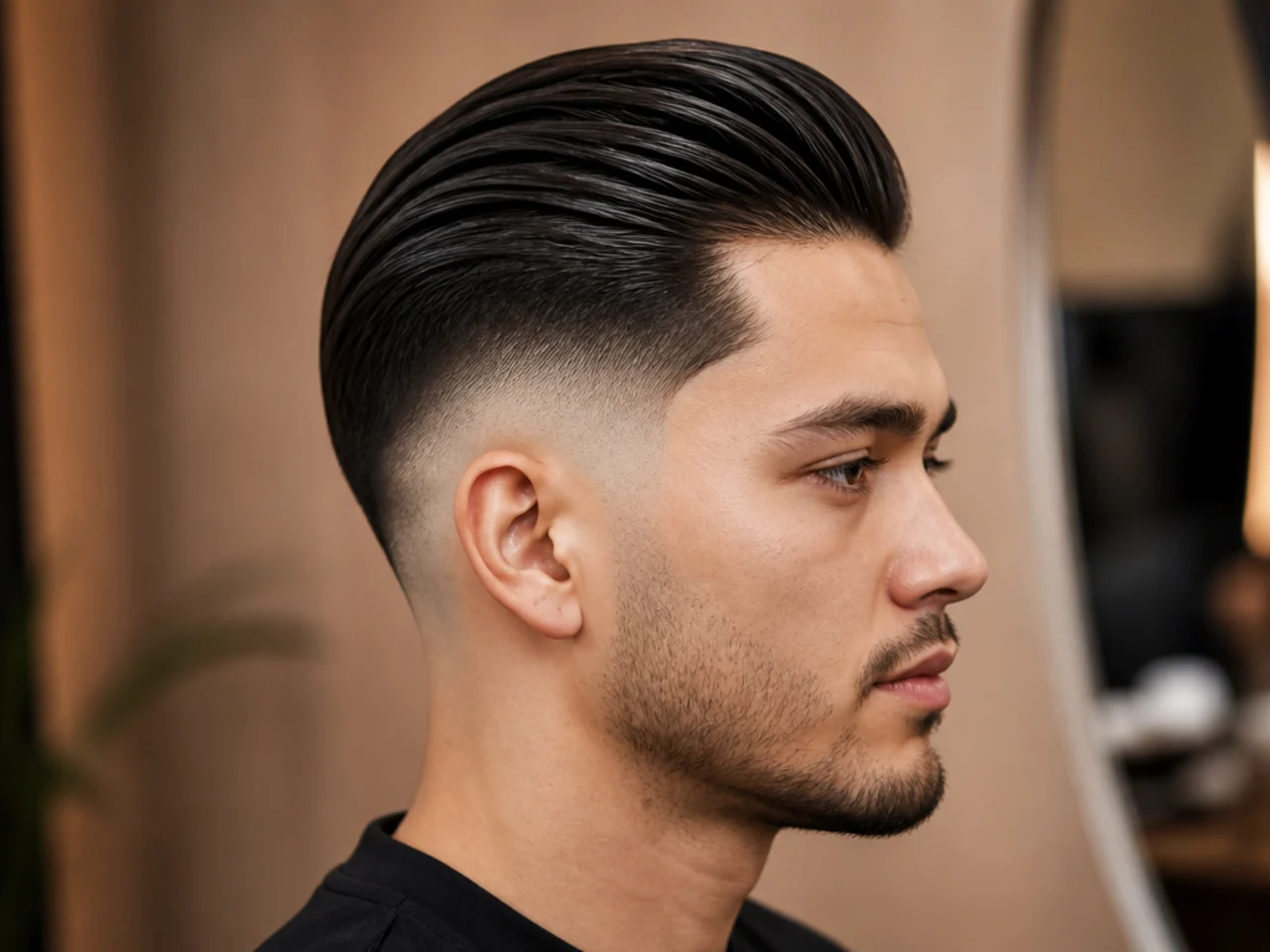
The high taper version pushes the blend up near the parietal ridge — the point where the top of the head curves down into the side. It maximizes contrast between the long slicked top and the short faded sides. Reads bold and modern.
It suits square and diamond faces where the sharp side contrast balances a strong jawline. Round faces should skip this one — the contrast can widen the head visually.
Ask for a high taper starting at the parietal ridge finishing at a #0 or #0.5 at the perimeter, five to six inches on top, and a defined neckline. Style with a strong-hold pomade or firm-hold clay — the taper does most of the visual work, so let the top sit clean. See our full high taper fade haircut guide for standalone versions of the height.
5. Skin Taper Fade Slick Back
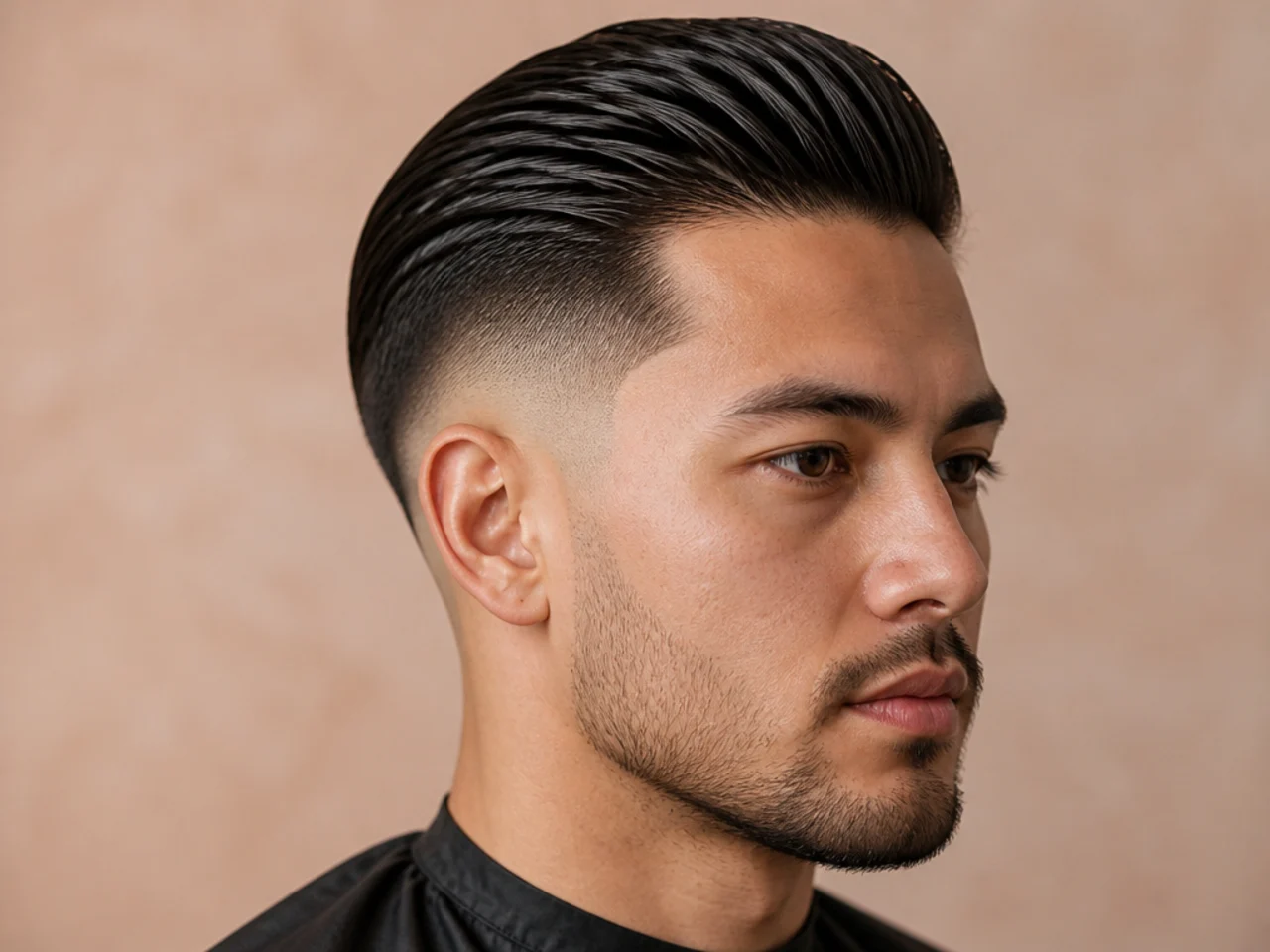
The skin version blends the taper all the way down to bare skin at the base. Sharpest contrast in the family, and the version most likely to catch the eye across a room. It also needs the most maintenance — a two-week cadence keeps the skin fade clean.
It suits guys with clean, even scalp tone and the schedule for frequent barber visits. Face shapes: oval, square, and diamond wear it best.
Ask for a skin taper with a mid-height start point, four to six inches on top, and a razor-shaped hairline. Style with a firm-hold pomade or clay — the tight sides mean the top has to look intentional or the whole cut reads unfinished.
6. Drop Taper Fade Slick Back
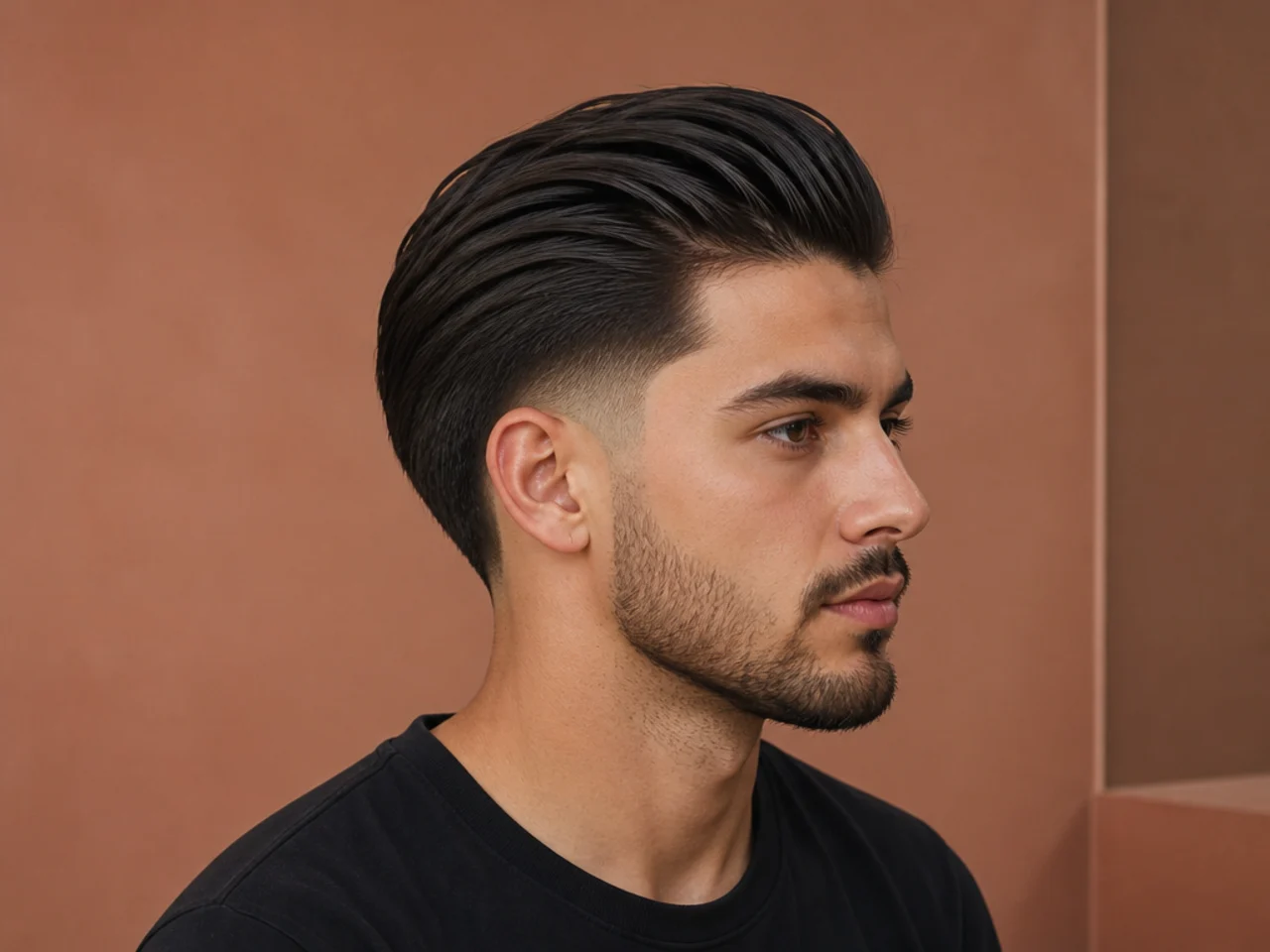
The drop version curves the taper line downward as it wraps around the ear — instead of running straight across the head, it dips behind the ear before rising to the neckline. Softens the profile and shows off the back of the head, which is often ignored in a slick back.
It suits oval, round, and heart-shaped faces. Any hair type works — the drop is a shape choice, not a texture choice.
Ask for a mid taper with a drop behind the ear, five inches on top, and a scissor-blended top. Style with a medium-hold cream on damp hair, combed straight back, and let the drop shape show through in profile.
Length & Structure Variations
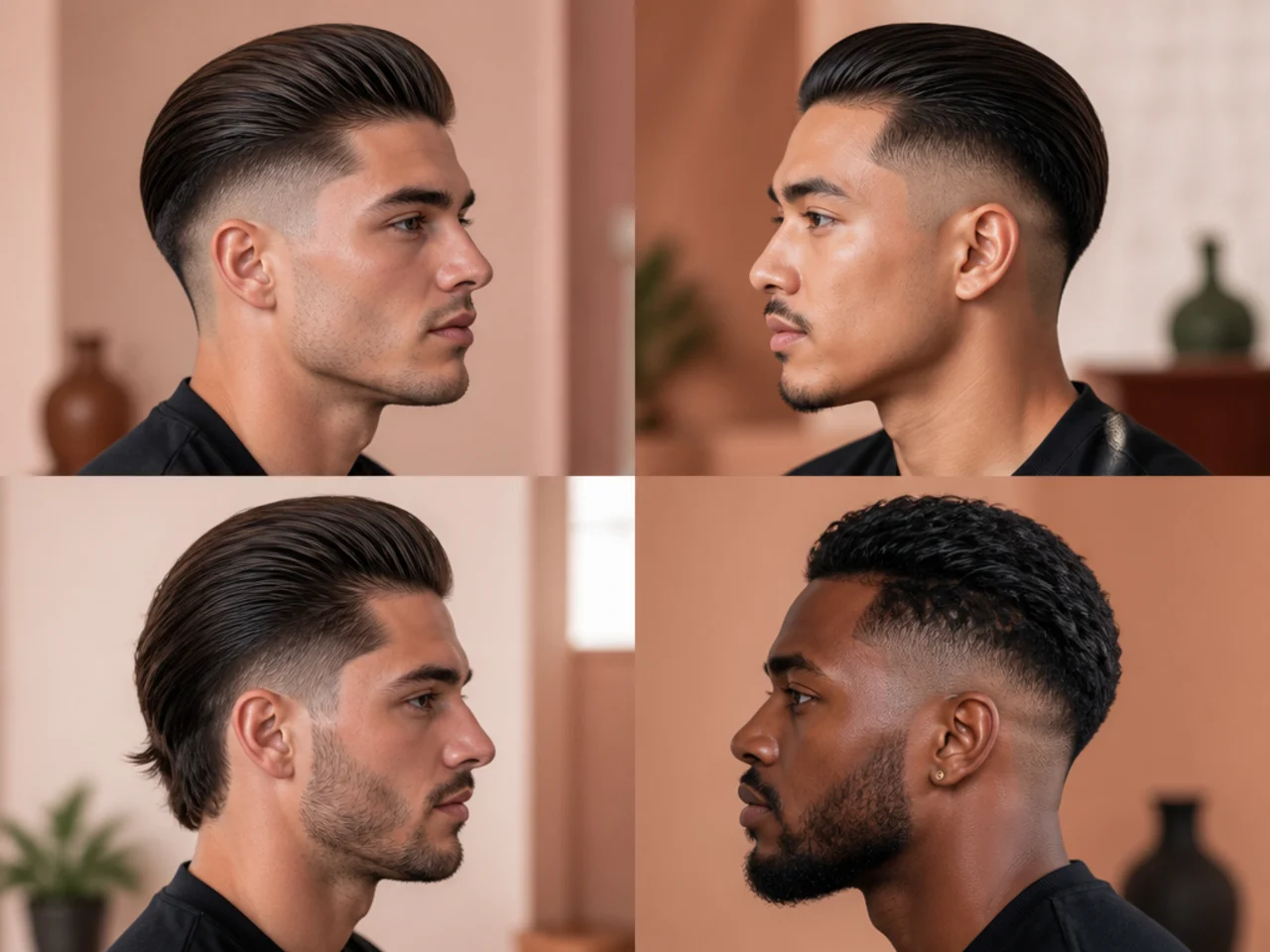
These five change the shape by adjusting how long the top runs and how sharply the top meets the taper below. Pick one when the classic proportions feel wrong for your face or your hair density.
7. Short Taper Fade Slick Back
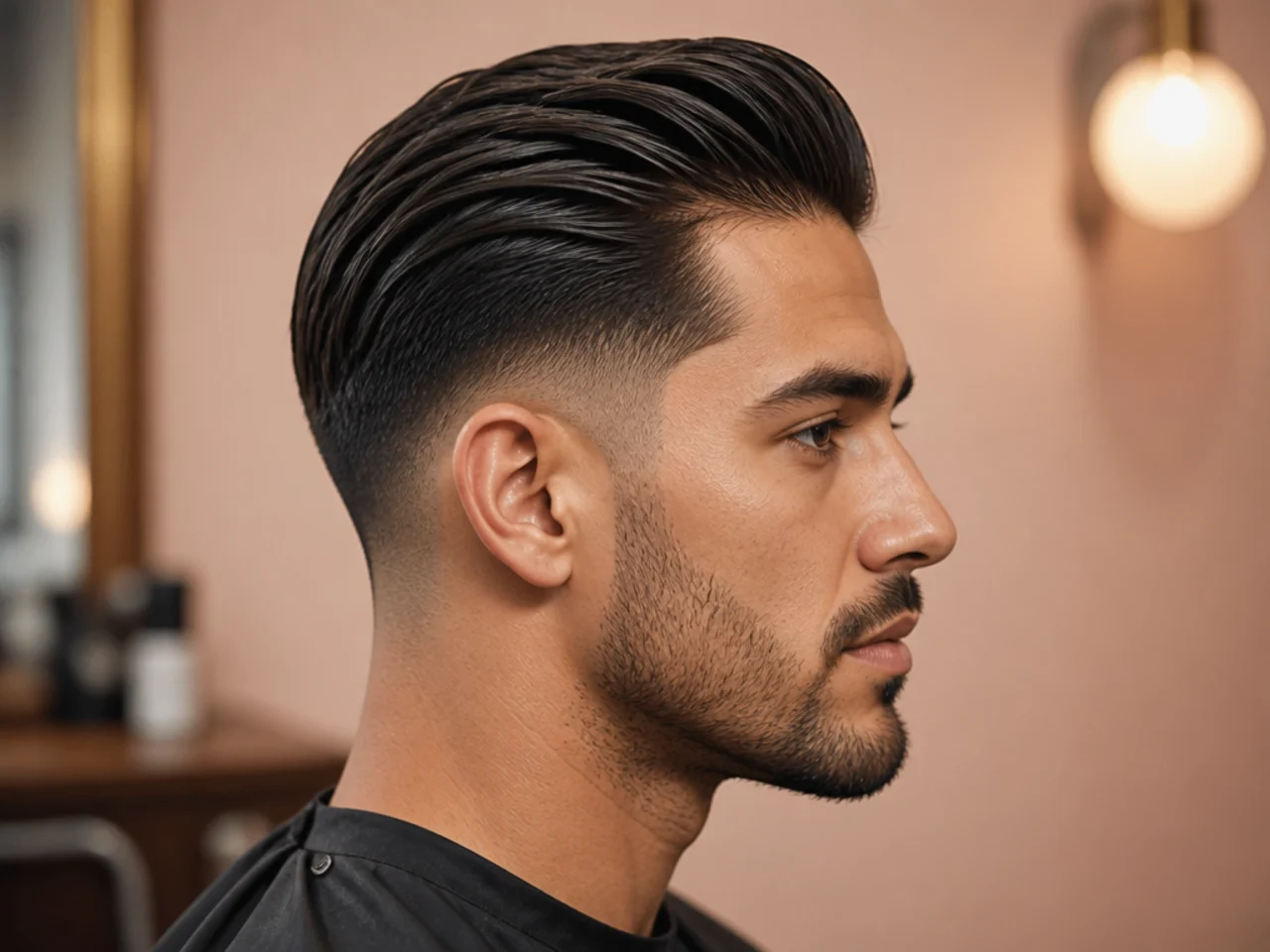
The short version keeps the top at three to four inches — the minimum length that still lies flat when combed back. Cuts styling time in half and grows out more gracefully than the longer versions.
It suits guys who want the slick-back read without the daily blow-dry routine. Works on straight, wavy, and loose-curl hair.
Ask for three to four inches on top, a low or mid taper finishing at a #0.5, and scissor-blended layers so the length transitions smoothly. Style with a small amount of pomade or cream — because the top is shorter you need less product and less pressure on the comb. A quick tip if you want alternatives at this length: browse the short simple mens haircuts roundup.
8. Long Taper Fade Slick Back
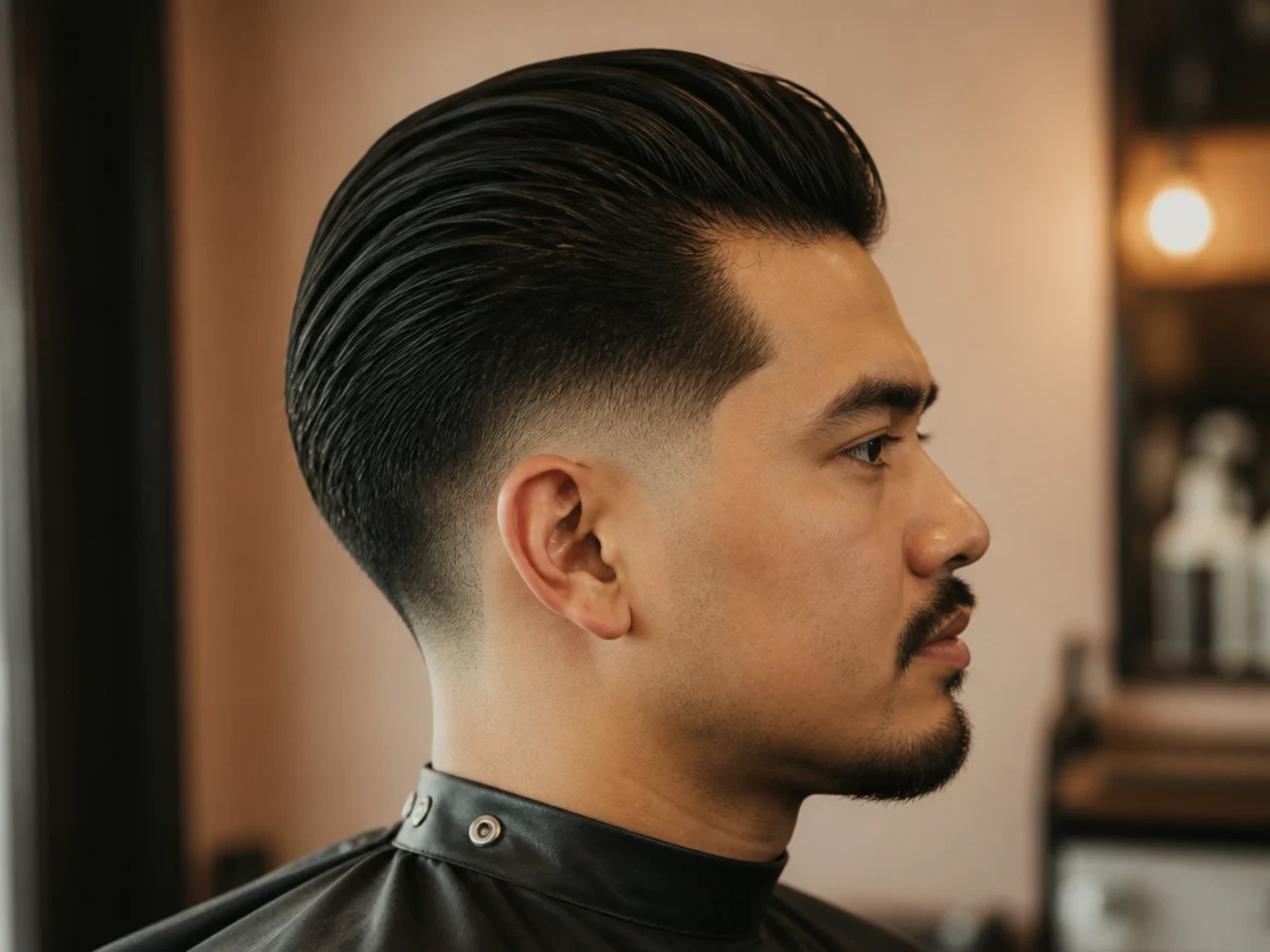
The long version uses six to eight inches on top. The extra length gives you natural flow at the back of the head when the hair settles against the crown — think American Psycho without the corporate uniform.
It suits guys with straight to loose-wave hair and the patience for the grow-out. Thick or coarse hair needs thinning through the interior to sit flat when combed back.
Ask for six to eight inches on top with thinning shears through the interior, a low or mid taper starting above the ear, and a tapered neckline that ages well. Apply a medium-hold pomade root to tip, then blow-dry back with a round brush for lift at the front.
9. Slick Back Undercut with Taper Fade
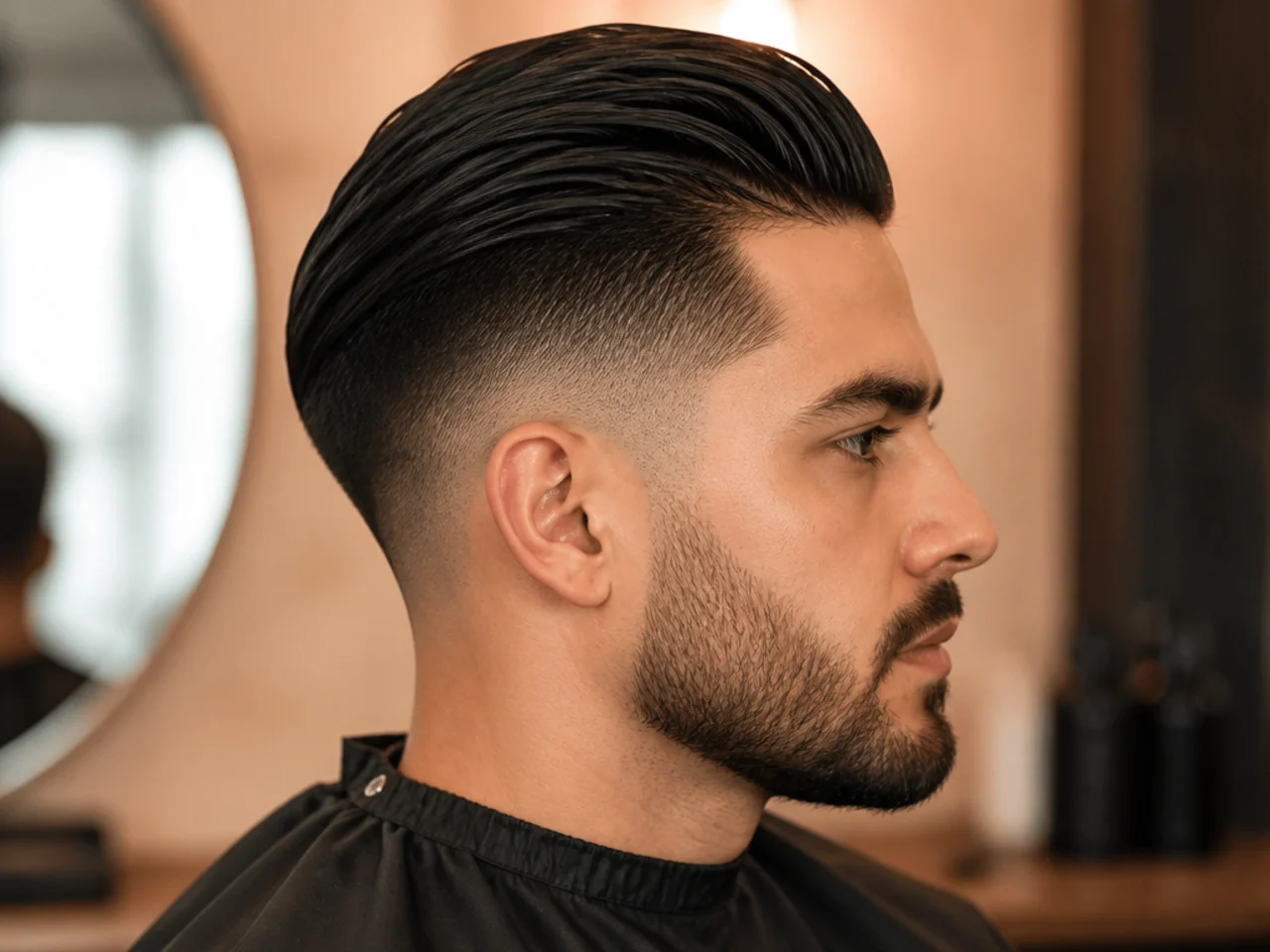
The undercut hybrid runs a disconnected undercut through the sides and lets a taper fade handle the perimeter blend at the very bottom. You get the drama of an undercut with the softer read of a taper at the neckline instead of a hard shaved line all the way down.
It suits square and diamond faces. Works on straight, wavy, and curly hair.
Ask for six to seven inches on top with a disconnected undercut through the sides (usually a #2 or #3), then a mid or low taper blending from the undercut down to a #0.5 at the neckline. Style with a strong-hold pomade combed back with a fine-tooth comb, then set with a light spray. Our full undercut fade guide covers the styling recipe in more detail.
10. Disconnected Taper Fade Slick Back
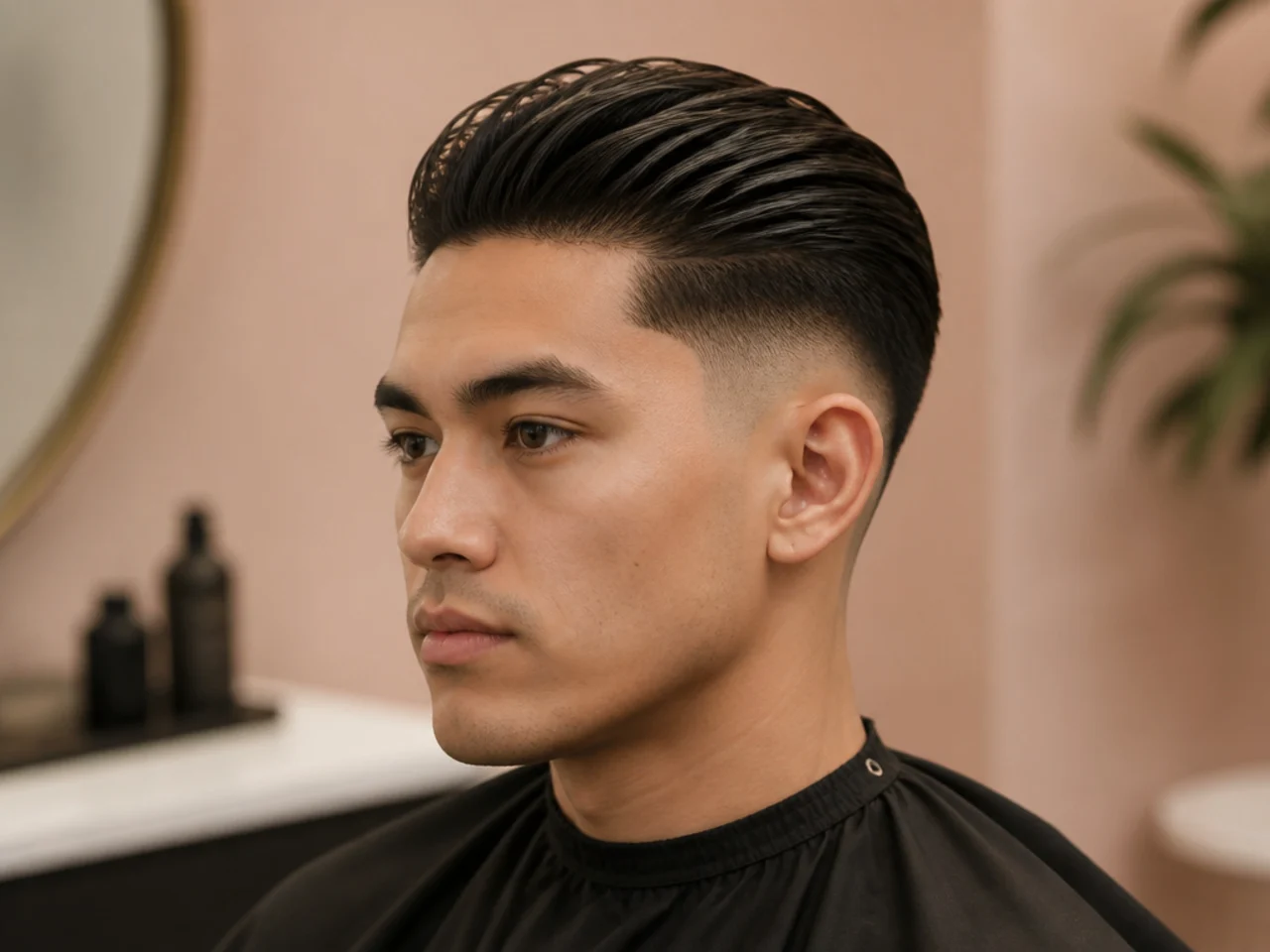
The disconnected version breaks the smooth gradient between the top and the sides. Instead of a scissor-blended transition, the top stops at a clear line and the taper picks up below it. Sharper contrast, more visual weight, and a much more dramatic read than the classic.
It suits guys with strong jaws and confident face shapes. Round and long faces should skip this one — the contrast either widens or stretches the face.
Ask for five inches on top with a disconnected shelf at the temple, a mid or high taper starting immediately below the disconnection, and a #0.5 or #1 at the perimeter. Style with a strong-hold pomade for the wet-look version, or a matte clay for the modern dry-look version.
11. Taper Fade Slick Back with Hard Part
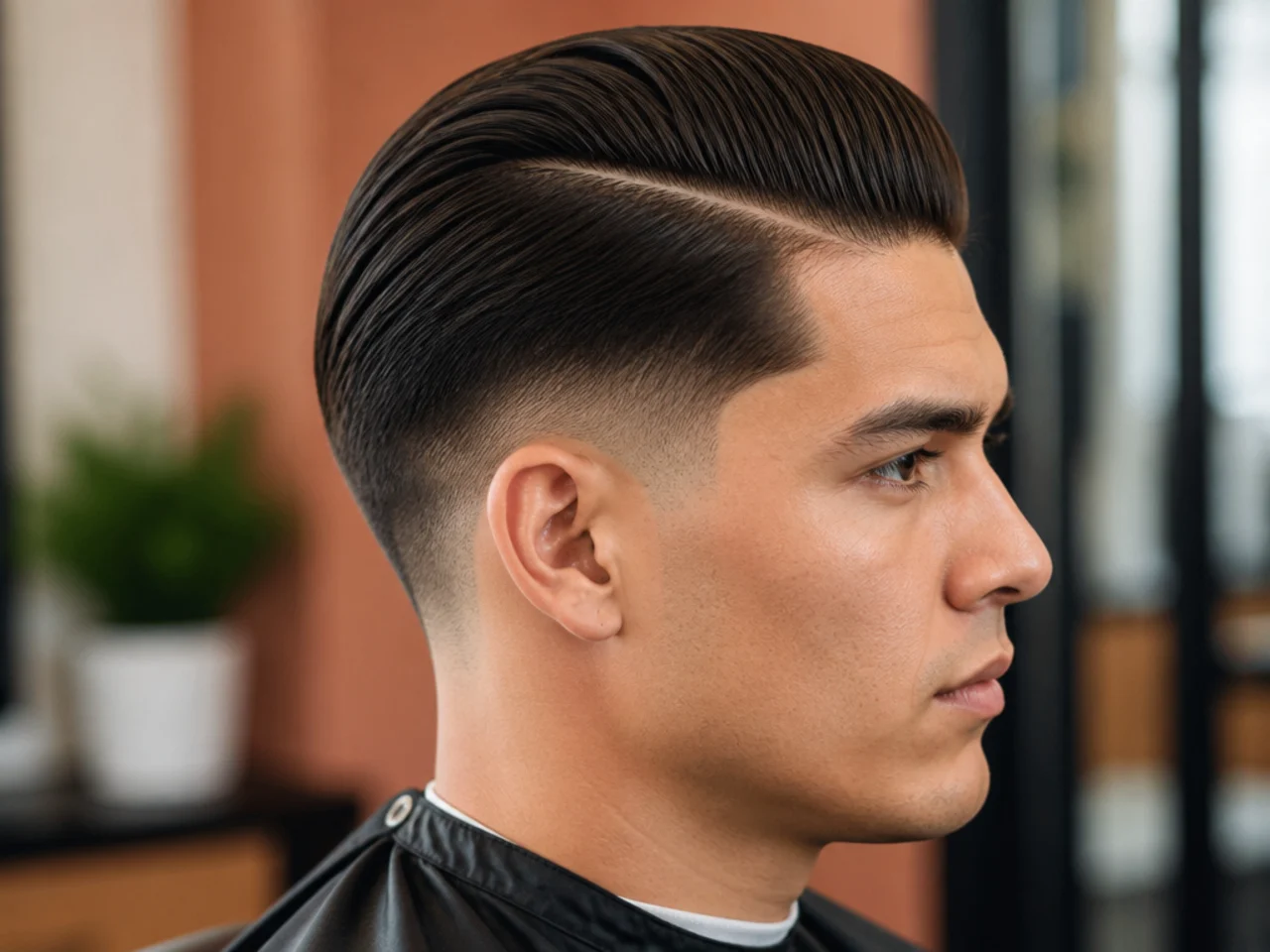
The hard part version adds a razor-shaved parting line — a thin, straight groove about two millimeters wide, cut into the head above the temple. Separates the slicked-back top from the tapered sides visually and reads architectural.
It suits square and diamond faces. Any hair type wears it because the part is cut, not styled.
Ask for a mid taper finishing at a #0.5 at the perimeter, four to five inches on top, and a razor-drawn hard part about a finger's width above the temple. Style the same way as the classic — pomade or cream on damp hair, combed straight back. The hard part does the visual work.
Finish & Attitude Variations
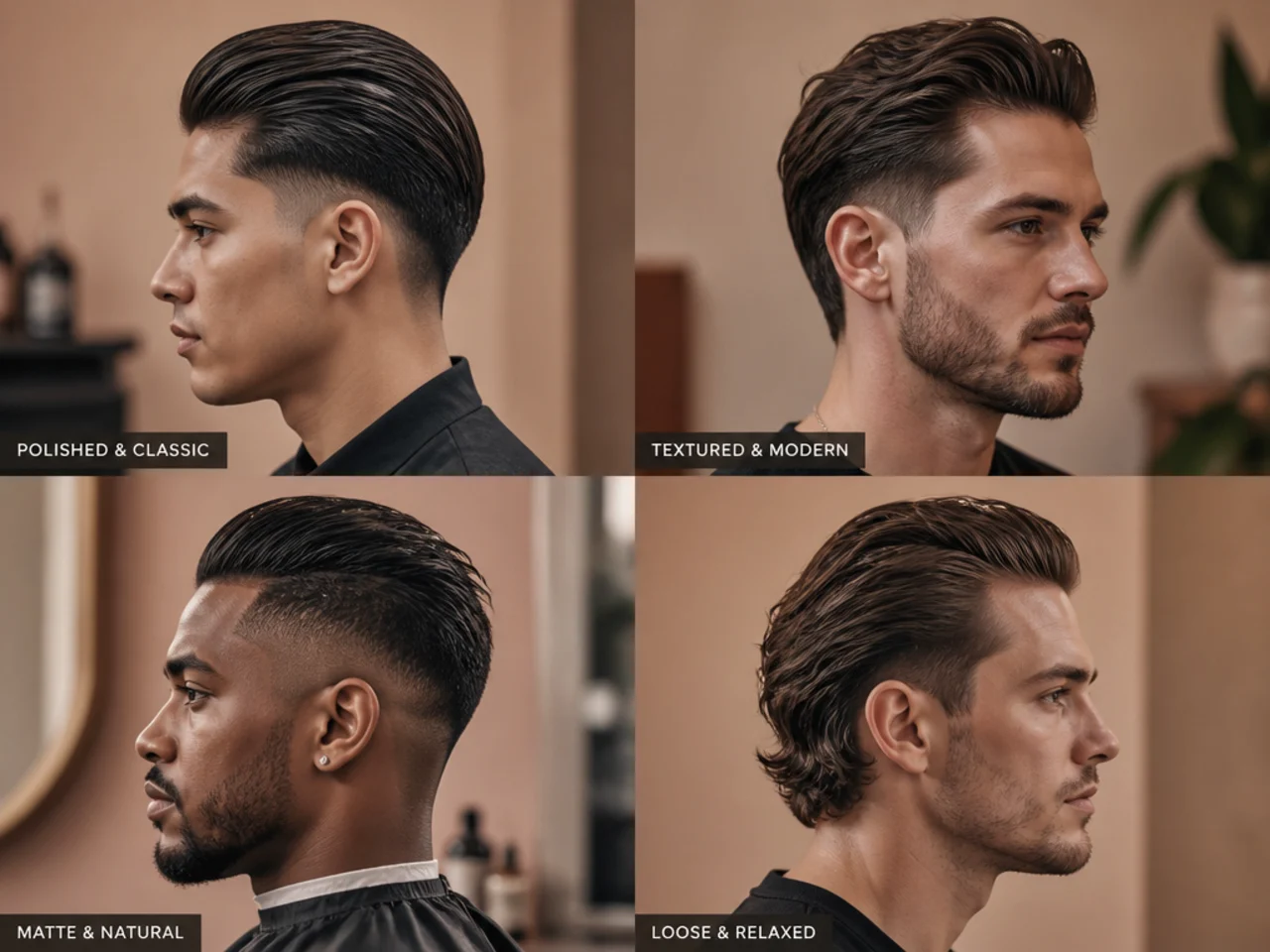
Same shape, different mood. These five change how the finished top looks and feels — glassy versus matte, tight versus broken, flat versus lifted. Pick the finish that matches the room you walk into.
12. Modern Matte Taper Fade Slick Back
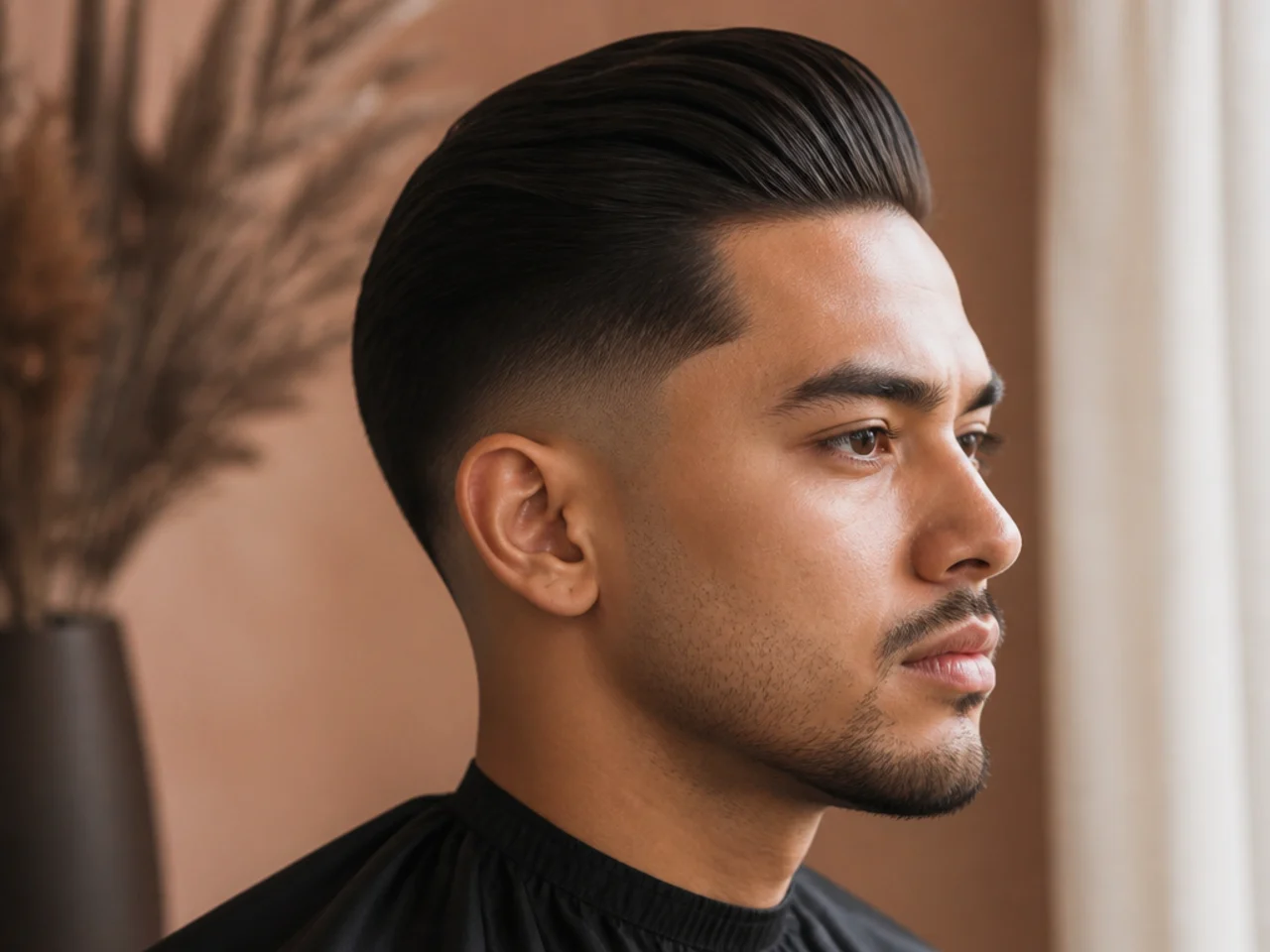
The modern matte version trades shine for texture. Same taper, same slicked shape, dry finish. Reads styled without reading greasy — the version most guys under forty ask for now.
It suits any face shape and any hair type, though wavy hair carries it best because the natural bend adds movement without gluing every strand flat.
Ask for a low or mid taper to a #1 at the perimeter, four to five inches on top with lightly point-cut ends for texture. Style with a matte cream or clay on towel-dried hair — blow-dry back with a vent brush, then finish with your fingers instead of a comb. The finger pass keeps the texture alive.
13. Wet-Look Taper Fade Slick Back
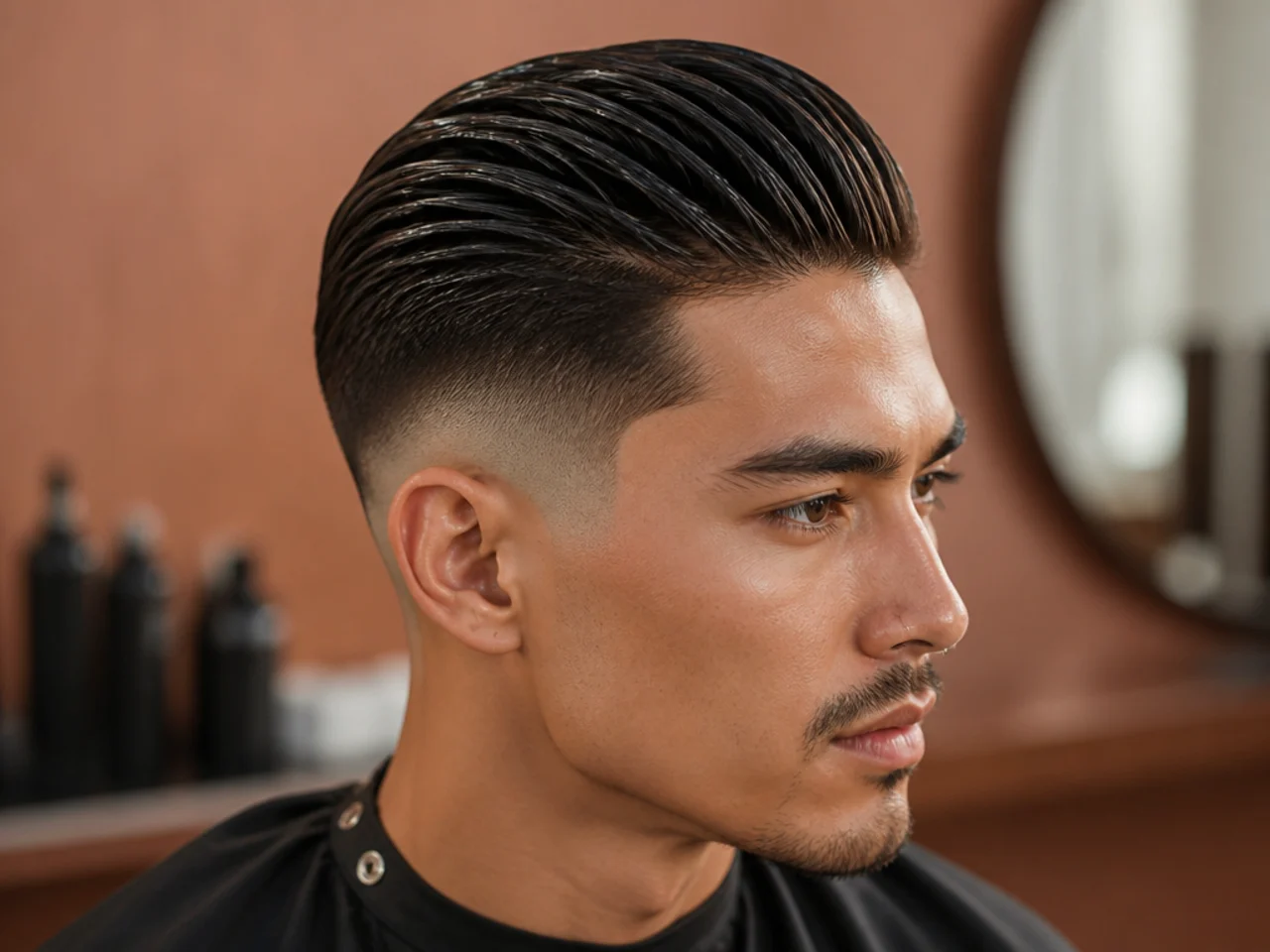
The wet-look version is the reference version pushed toward its shiniest read. Every strand lies flat and reflects light. Reads Peaky Blinders and 1930s film noir.
It suits oval, square, and heart-shaped faces. Straight hair carries it cleanest; wavy hair works with a strong-hold oil pomade.
Ask for a mid taper to a #1, five to six inches on top with scissor-blended layers, and a soft neckline. Style with an oil-based pomade on damp hair — a slightly bigger scoop than usual, emulsified fully, combed back with a fine-tooth comb in a single pass. Every extra pass makes the shine look overworked, so stop after one.
14. Messy Taper Fade Slick Back
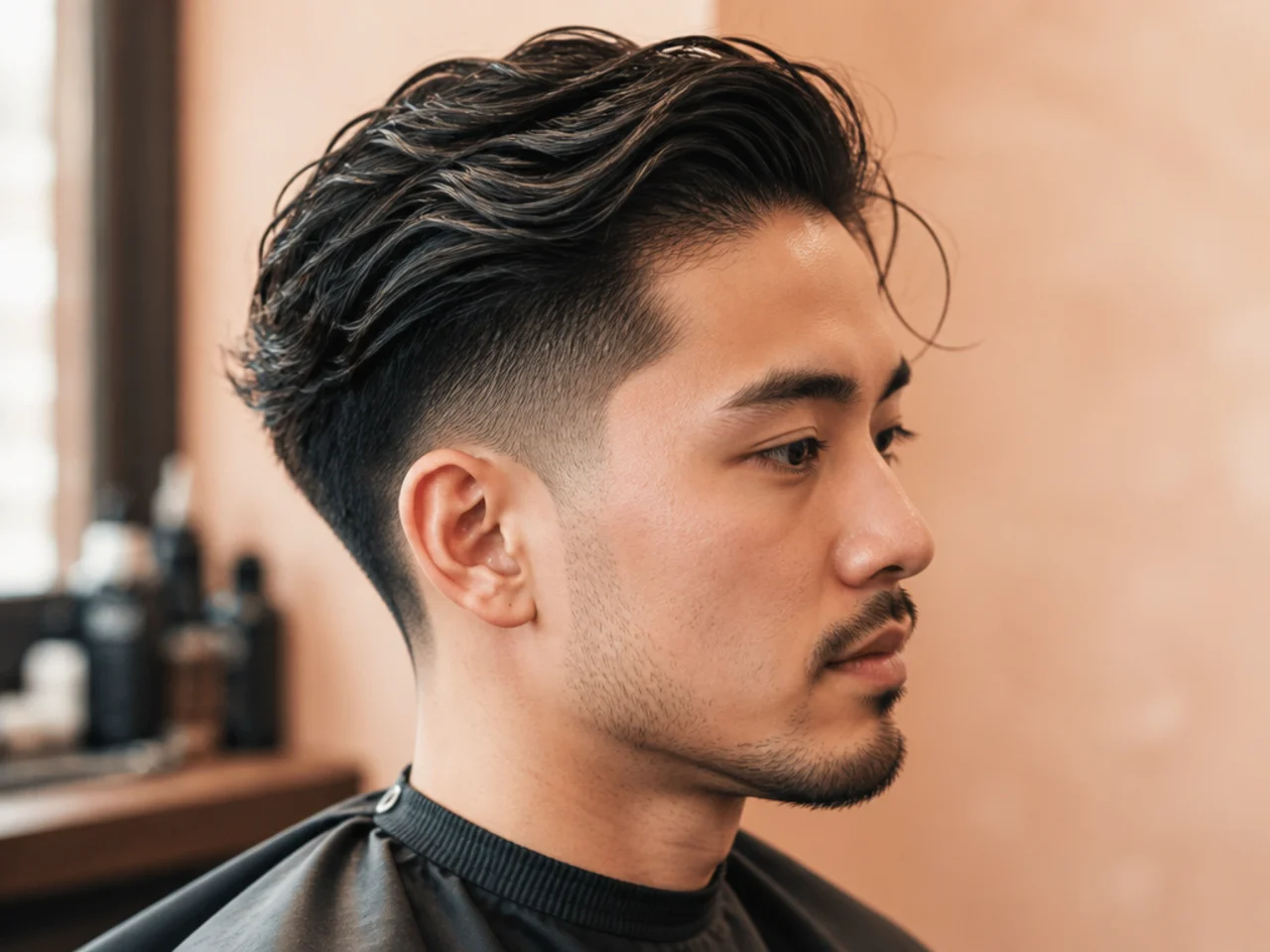
The messy version keeps the combed-back direction but breaks the polish. Strands separate, a couple of pieces fall forward, the finish reads slept-in-on-purpose. Reads younger and softer than the classic.
It suits round and square faces where the softening helps. Works best on wavy or lightly curly hair.
Ask for four to five inches on top with lightly point-cut ends, a mid or low taper to a #1, and blended scissor work through the top. Style with a matte cream — rake it back with your fingers instead of a comb, pull one or two front pieces slightly loose, then leave it alone. No hairspray. The messy look breaks the moment you touch it.
15. Textured Taper Fade Slick Back
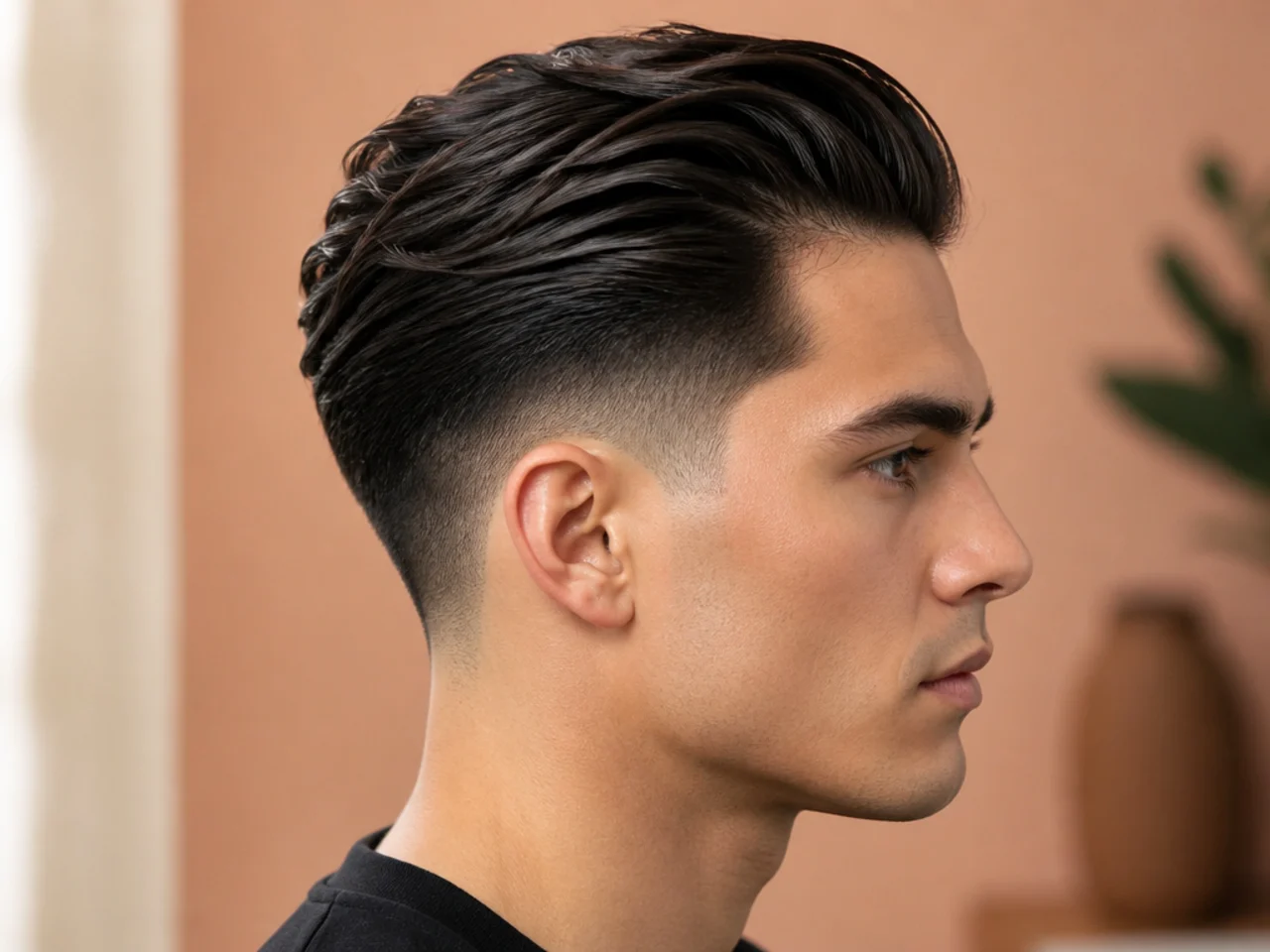
The textured version is the modern matte with more visible separation. Instead of combing every strand flat, you break the top into distinct piecey sections that fall in the same direction. Reads intentional without reading corporate — the current Pinterest-favorite finish for guys in creative work.
It suits round and square faces because the vertical piecing adds proportion. Wavy and lightly curly hair carry it best.
Ask for a mid taper to a #0.5, four to five inches on top with point-cut ends for texture, and a matte finish. Style with a fiber or paste — emulsify a small amount, rake back with your fingers, and separate the front piece with a pinch grip. Skip the blow-dryer for a lived-in read. For more finish options in the family, browse our full slick back haircut roundup.
16. Slick Back Pompadour with Taper Fade
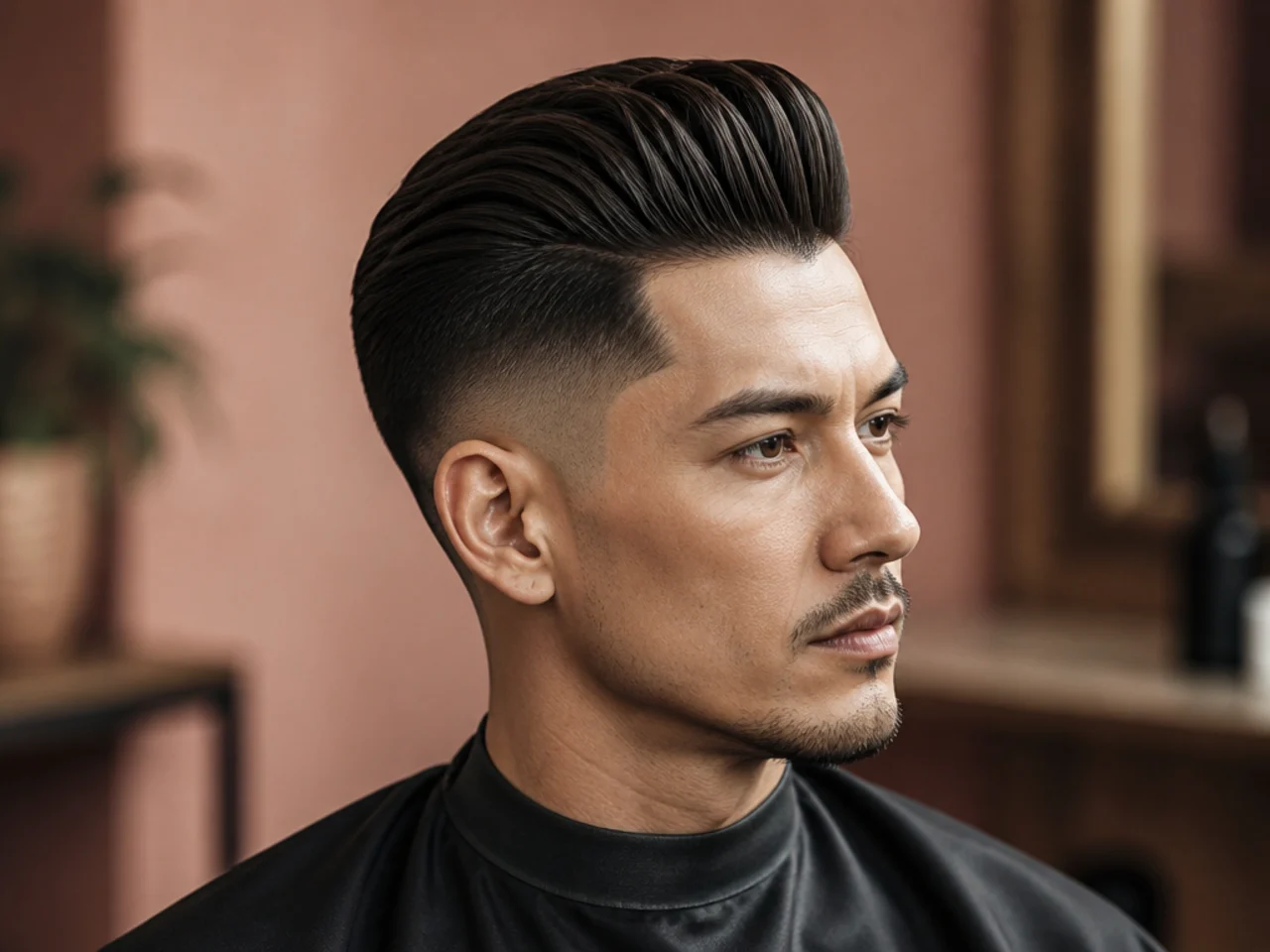
The pompadour hybrid takes the slick back and adds vertical lift at the front. Instead of combing everything flat back, you brush the front section up and back so it stands two to three inches above the forehead. Reads dramatic and old-school.
It suits round, square, and heart-shaped faces because the added height stretches the face. Long faces should skip it — added height on top of length reads unbalanced.
Ask for a mid taper starting at the temples, five to six inches on top, and enough weight at the front to hold the lift. Style with mousse at the roots on damp hair, blow-dry the front up and back with a round brush, then set with a medium-hold pomade.
For Your Hair Type and Look
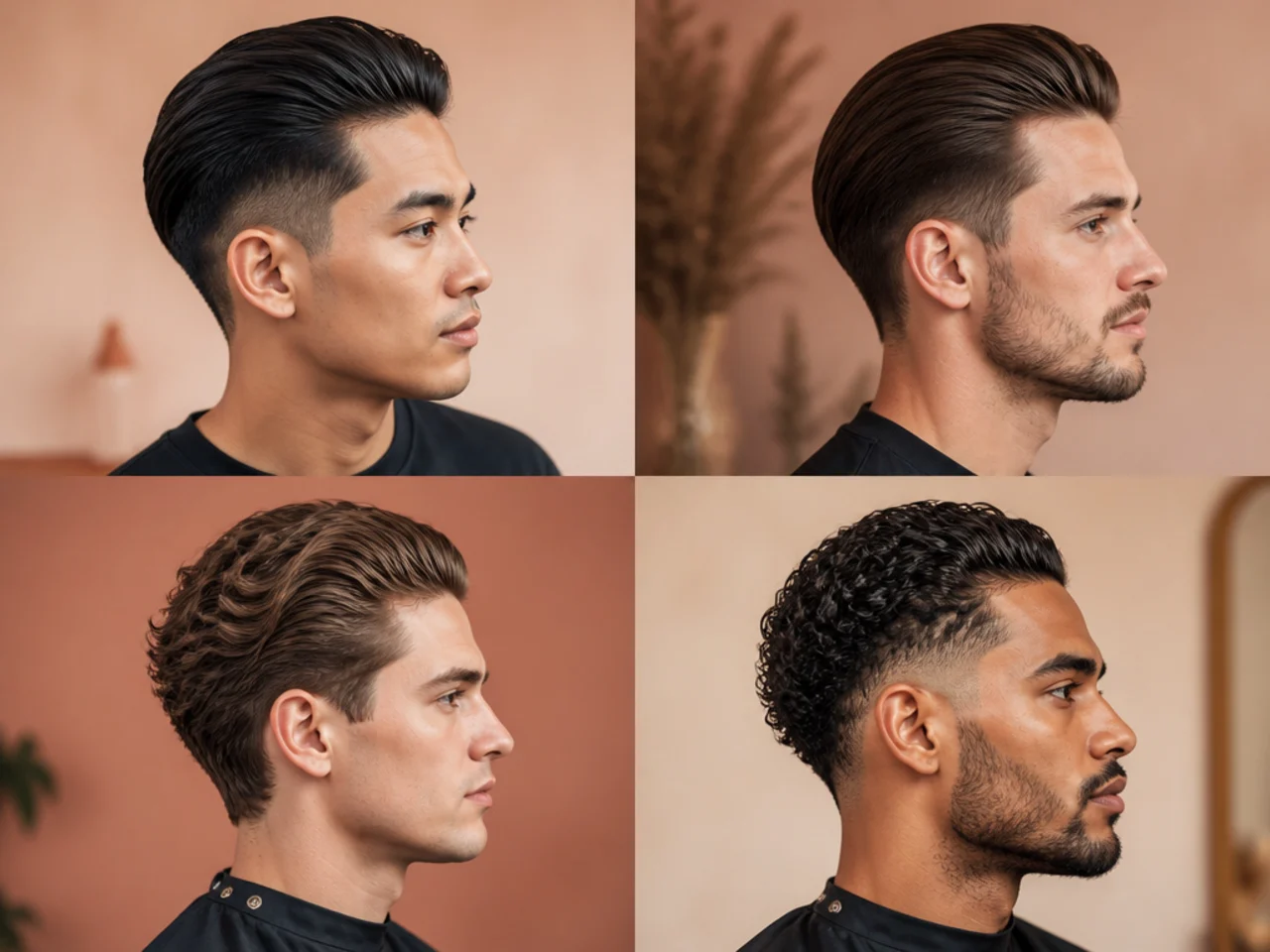
The last four dial the cut in for a specific hair type or a specific styling ambition — a side part, curly hair, coily hair, or a paired beard.
17. Taper Fade Slick Back with Side Part
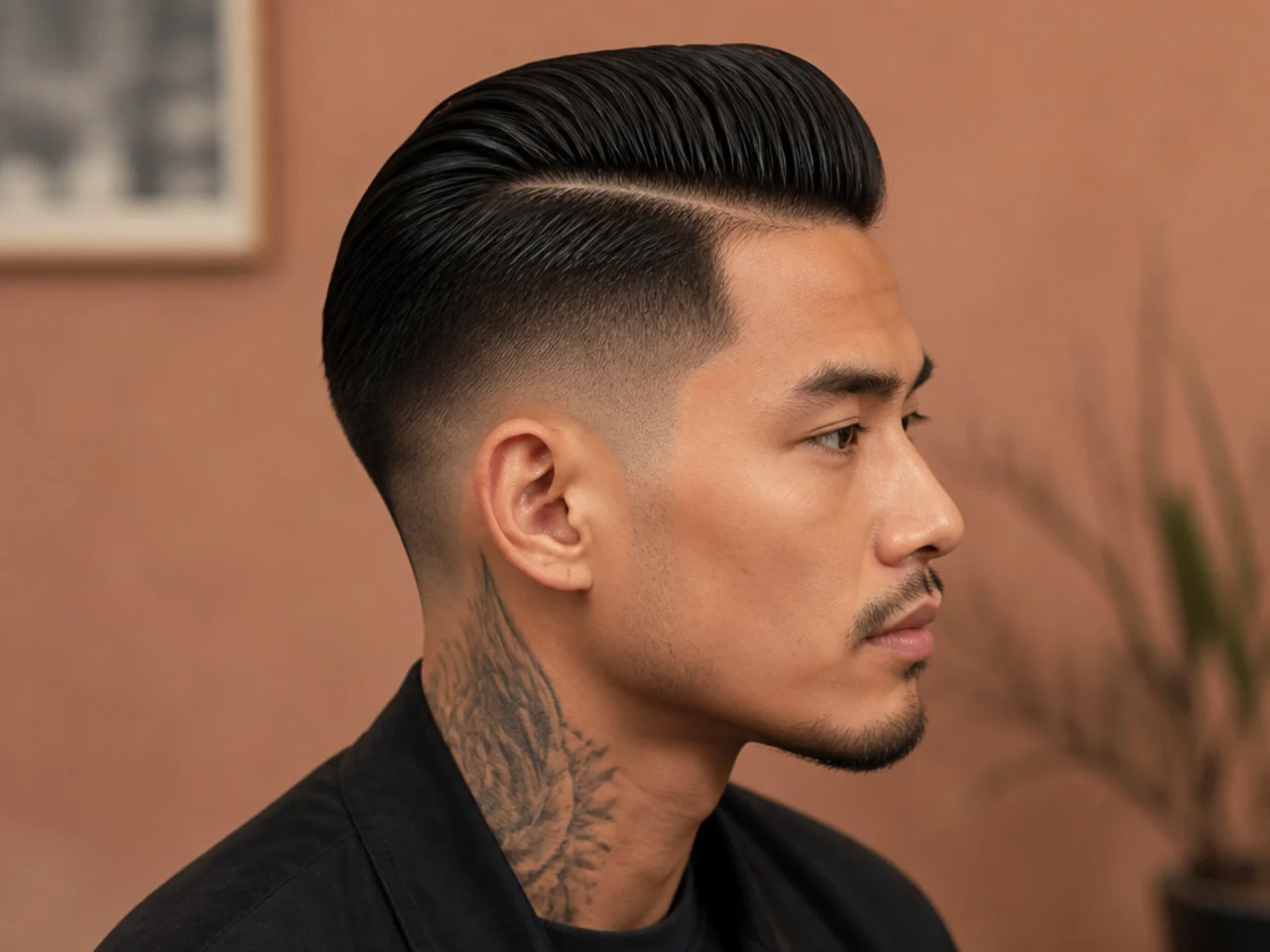
The side part version borrows structure from the side part hairstyles for men family — a clean parting line above the temple splits the top into two panels, both swept back and down. Reads old-money and executive without needing a full pomp.
It suits oval, square, and heart-shaped faces. Straight or lightly wavy hair holds the part cleanest.
Ask for a mid or low taper starting above the ear, four to five inches on top, and a natural side part on your dominant side. Style by drawing the part with a fine-tooth comb on damp hair, then combing each panel back and down. Set with a medium-hold cream or pomade.
18. Taper Fade Slick Back for Curly Hair
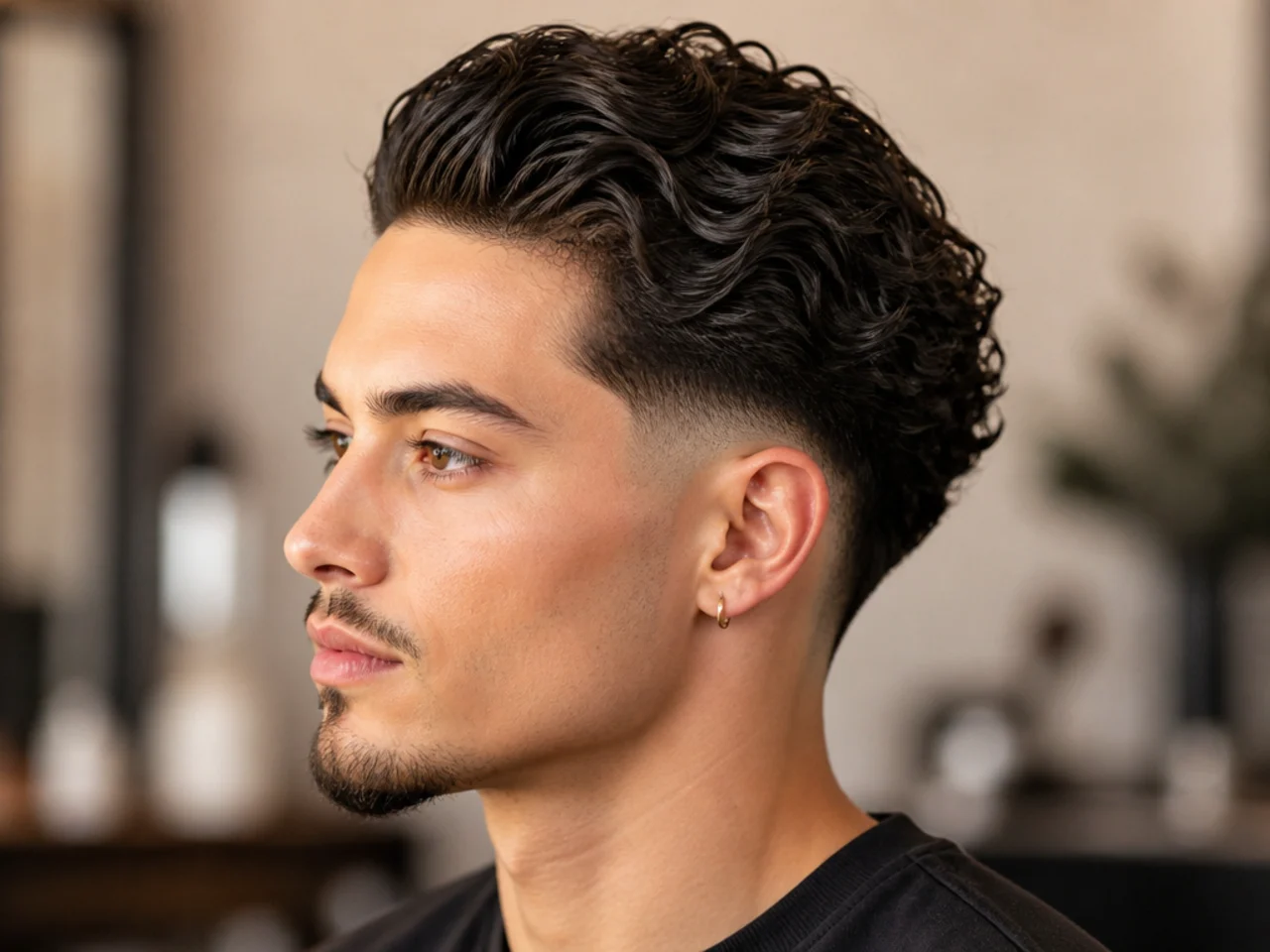
Curly hair (3A to 3C) wears a slick back — the version just looks different from the straight-hair reference. You get defined curls flowing back rather than a glassy sheet. Reads Italian actor rather than Wall Street banker.
It suits oval, round, and square faces. Coily 4A to 4C hair benefits from the version below instead. See the curly hairstyles for men guide for more looks in the curl family.
Ask for three to five inches on top depending on your curl pattern, a mid or low taper to a #0.5, and a shape that tapers slightly toward the crown so the curls flow back rather than sit up. Style with a curl-defining cream, then rake back with a wide-tooth comb — never a fine-tooth on curls. Finish with a light-hold spray for humidity.
19. Taper Fade Slick Back for Black Men
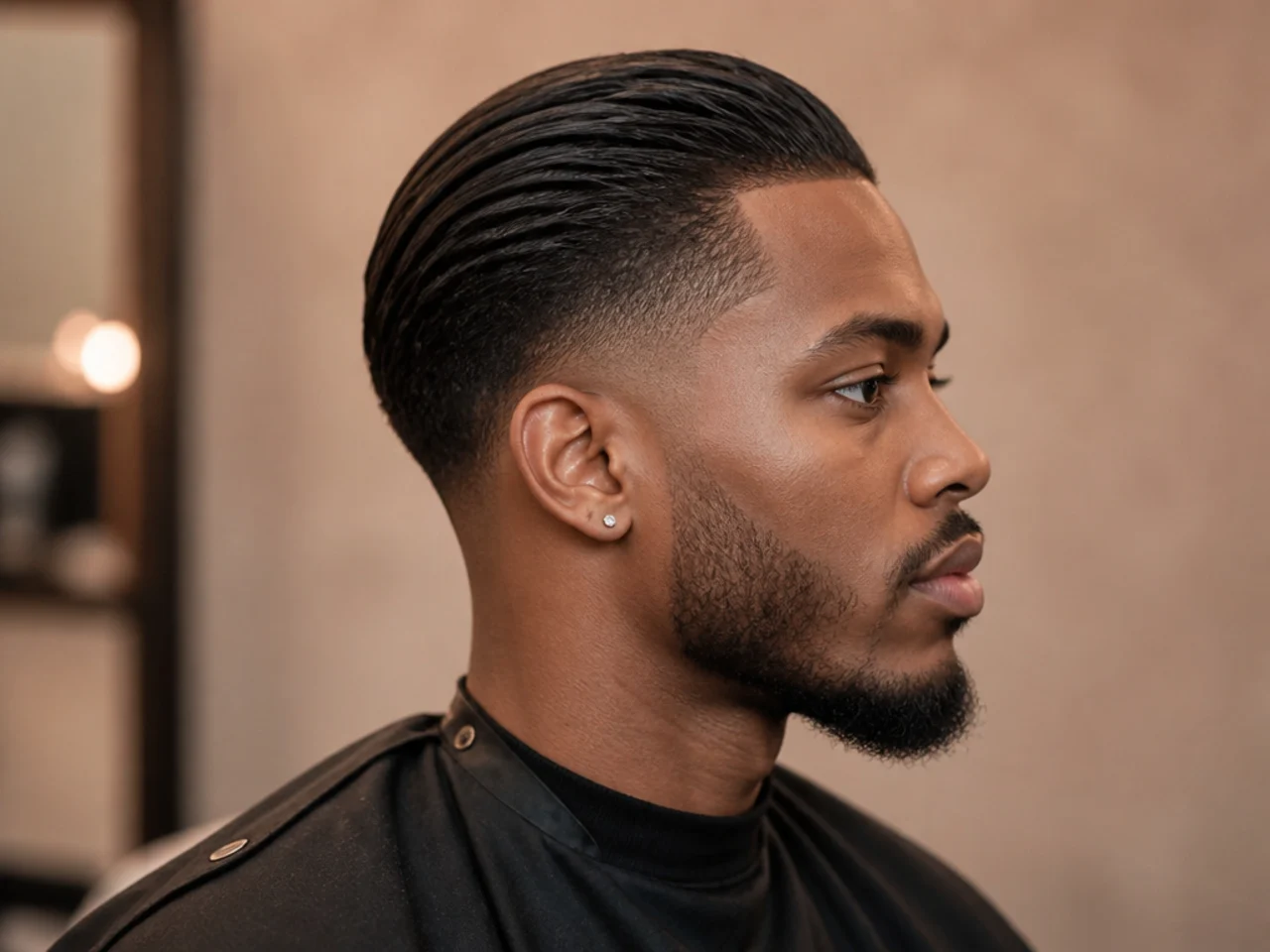
For Black men with coily 4A-4C hair, the slick back version uses a brushed-back pattern that shows the natural coil rather than a flat comb-through. Top is left at three to five inches, hydrated with curl cream, then brushed back with a boar-bristle brush into a defined pattern.
It suits any face shape. The skin or high taper reads especially clean against the natural pattern up top.
Ask for three to five inches on top depending on your coil density, a skin or low taper starting an inch above the ear finishing at a #0 or #0.5, and a shape-up along the hairline for a crisp forehead line. Style with a curl cream and a boar-bristle brush — sweep back in the direction of your natural growth, then set with a light-hold spray.
20. Taper Fade Slick Back with Beard
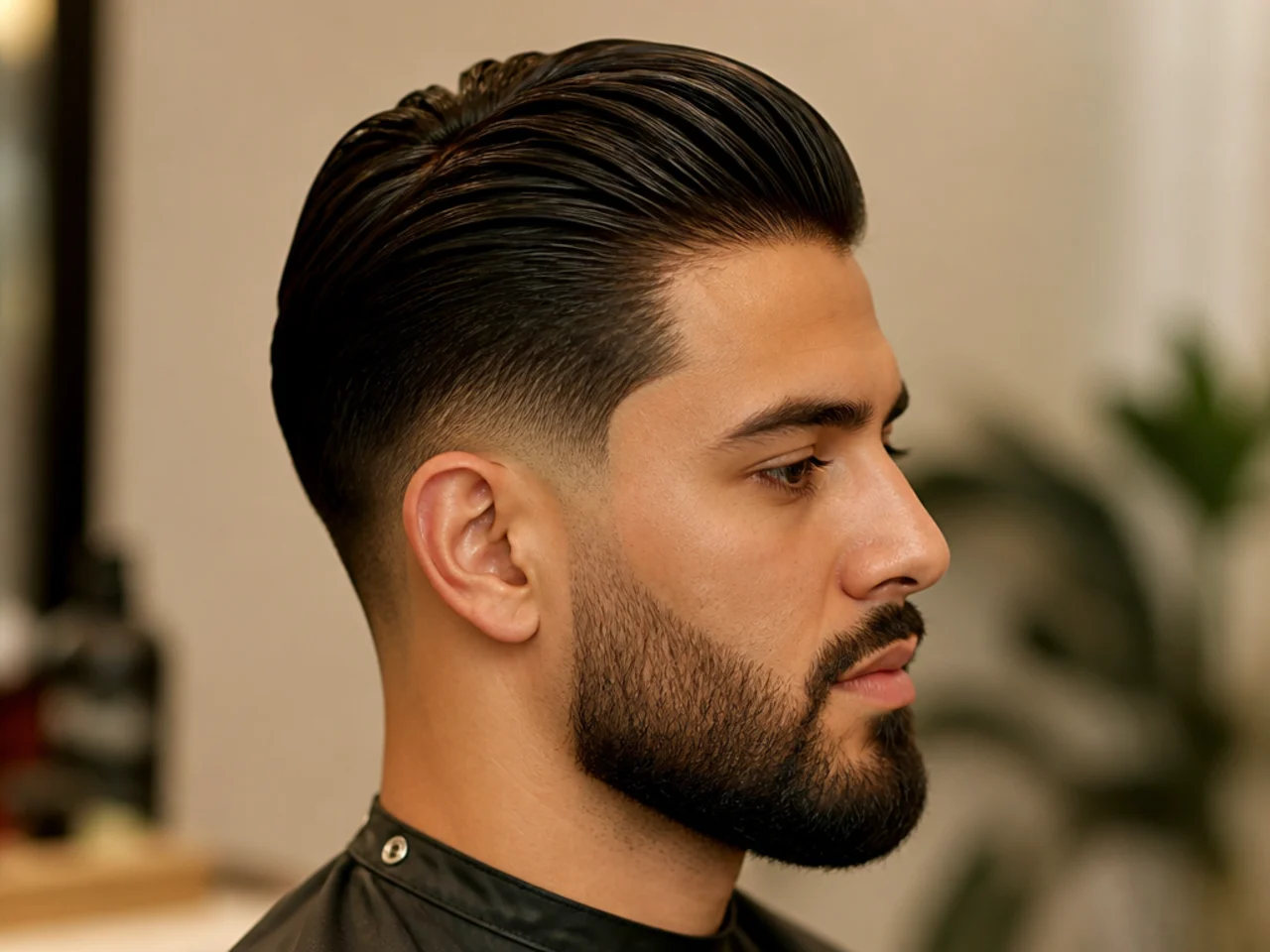
The beard version balances the vertical pull of the slicked-back top with a defined jawline below. Read the two together — a medium-length beard (about half an inch) suits the classic pomade version; a short stubble suits the modern matte version; a full beard suits the long slick back version.
It suits guys who can grow an even beard. Face shape depends on beard length — a fuller beard balances a long face; stubble balances a round face. Also worth reading if you want the corporate-safe pairing: professional hairstyles for men.
Ask for the beard to connect naturally with the taper — no floating beard line above the ear. Your barber should blend the sideburn into the beard through the same taper geometry. Style the hair as you would the classic, then finish the beard with a small amount of beard oil combed through with a wide-tooth comb.
How to Ask Your Barber
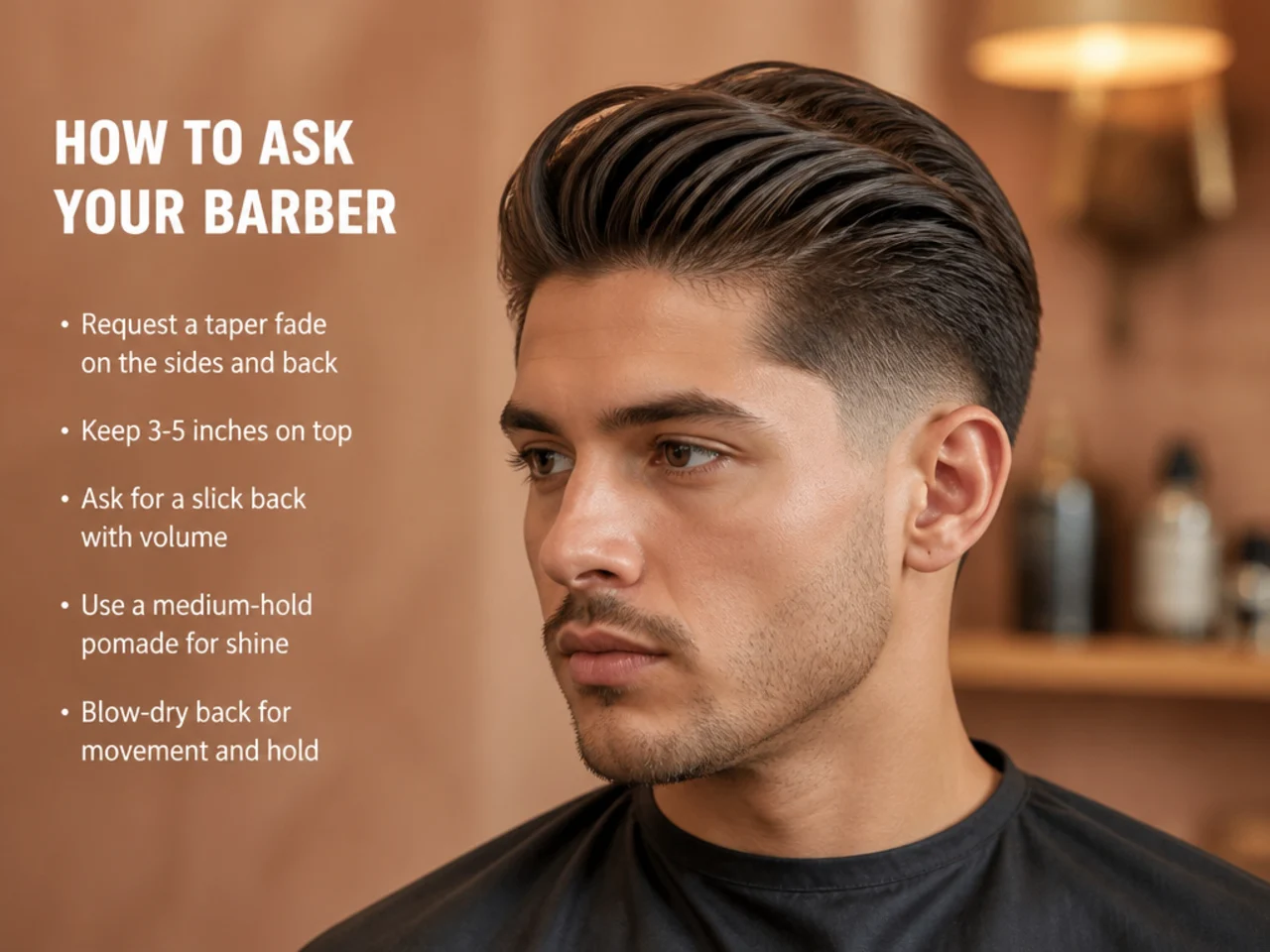
Walk in with the right vocabulary and you leave with the cut you had in mind. Use these seven steps in order.
- Bring a photo. One clear reference of the exact variation you want, ideally shot from the same three-quarter angle as the mirror at the shop. Photos beat descriptions every time.
- Name the cut. "Taper fade slick back" is the right phrase. Follow it with the height — "low taper," "mid taper," "high taper," or "skin taper" — so your barber knows where to start the blend.
- Specify where the taper starts. "An inch above the ear" for the low taper. "At the temples" for the mid. "At the parietal ridge" for the high. Give the anatomical landmark, not just the height name.
- Specify the perimeter guard. A #1 for the low taper classic, a #0.5 for the mid and disconnected versions, a #0 or skin for the boldest look. Never say "shorter" — give the number.
- Specify the top length in inches. Four to six inches for most versions. Say the number, not "medium" — every barber calibrates "medium" differently.
- Specify the finish. Wet-look pomade, matte cream, fiber, or clay. The finish drives the product recommendation and the styling advice the barber gives you at the end of the cut.
- Book the next appointment before you leave. Two weeks for skin tapers, three for mid, four for low. The taper looks its best fresh — waiting until you notice grow-out means you already look overdue.
Styling & Maintenance
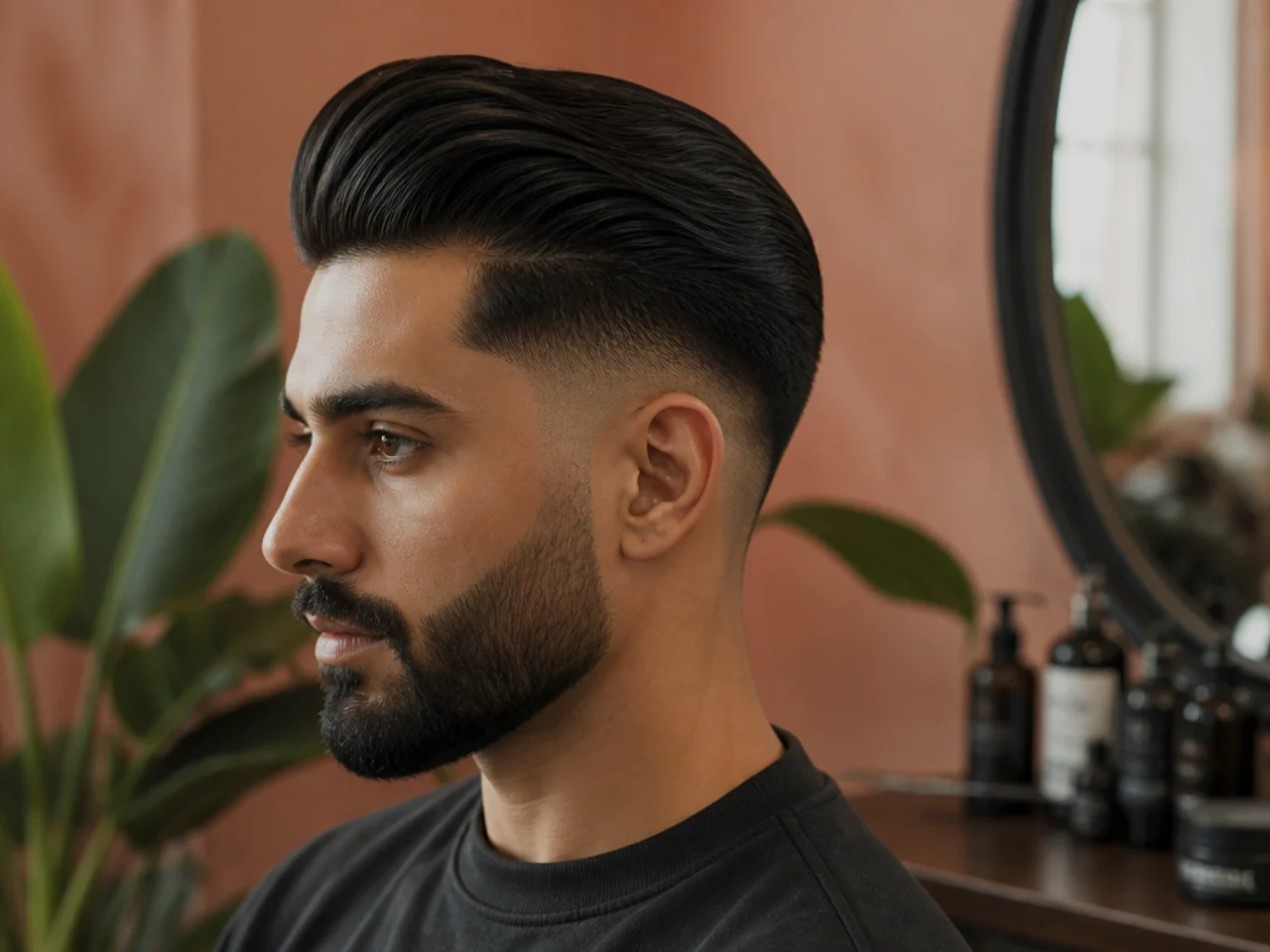
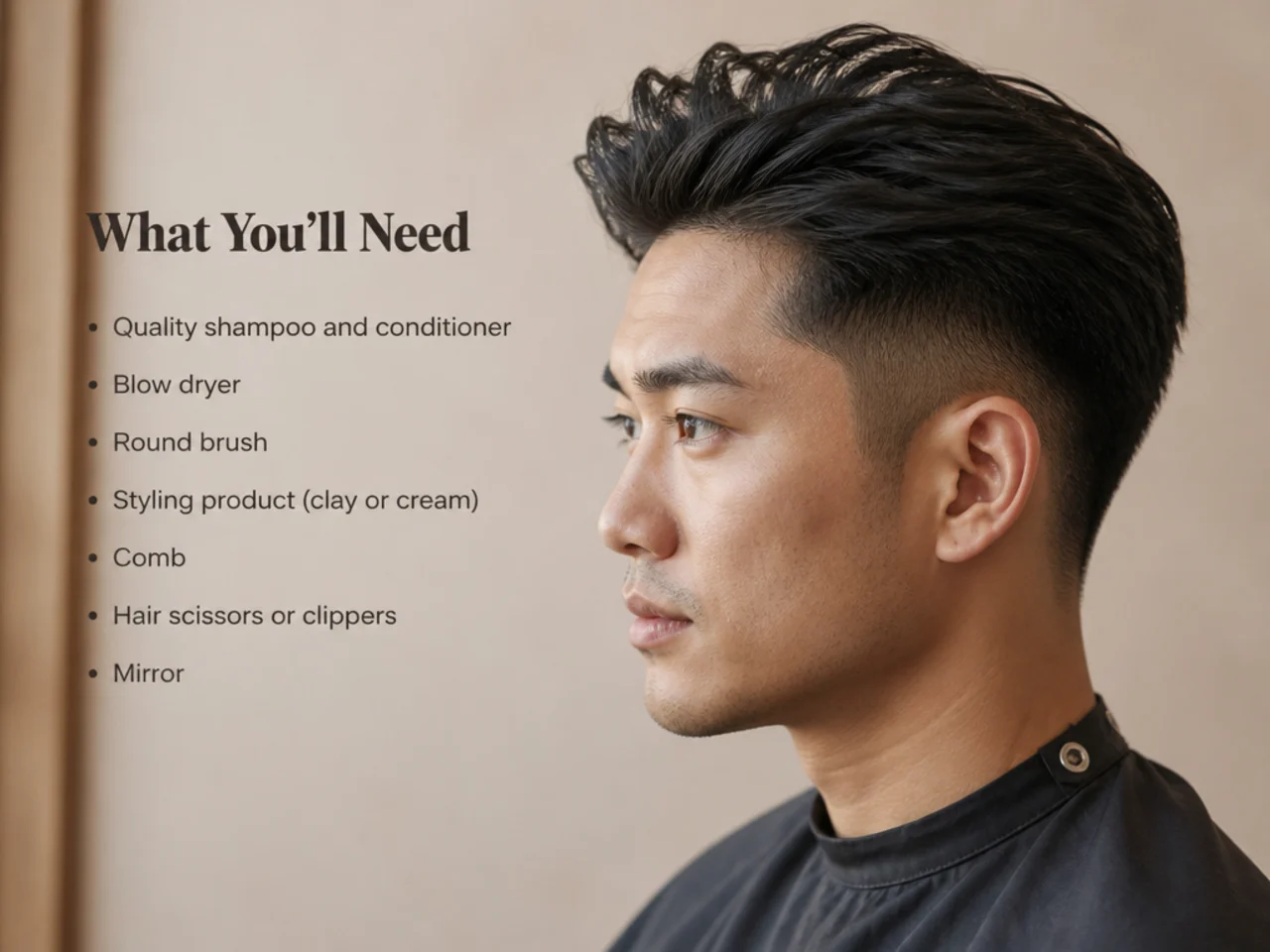
The right product does more work than the right cut. Match your finish to the version above and stop chasing a wet-look Instagram shot if you asked for the modern matte version.
For the classic wet-look version. An oil-based pomade — a nickel-sized scoop, emulsified fully between your palms, worked root to tip on damp (not soaking) hair. Comb straight back with a fine-tooth comb in one pass. Every extra pass overworks the shine.
For the modern matte version. A matte cream or clay on towel-dried hair. Blow-dry back with a vent brush for ten seconds per section — direct heat away from the crown, always following the direction you want the hair to sit. Finish with your fingers to keep the texture alive.
For the pompadour hybrid. Add a volumizing mousse at the roots before you blow-dry. Round-brush the front up and back, cool-shot the shape for ten seconds, then set with a medium-hold pomade. The mousse-plus-blow-dry sequence is what separates the pompadour from the flat slick back.
For the textured version. A firm-hold fiber or paste, emulsified between the palms, raked back with your fingers. Separate the front piece with a pinch grip. Skip the comb — the tool is your hand.
Wash cadence. Shampoo two or three times per week with a sulfate-free shampoo — daily washing strips the natural oils that give the slick back its shine and manageability. Condition every wash. On off-days, rinse with water and re-style.
Between cuts. Re-cut the taper every two to four weeks depending on height. Stretch the top to five or six. If your hair is thick, book a light interior thinning between full cuts so the top does not build up density.
Sleep on it. A silk or satin pillowcase reduces friction and keeps the shape overnight. Cotton pillowcases roll the hair forward and shorten the life of a fresh cut.
FAQ
Which taper fade slick back is the easiest to style? The short version (top at three to four inches). Less length means less product, less pressure on the comb, and a shorter blow-dry. Any competent barber can execute it and you can style it in under two minutes.
Can I get a taper fade slick back with thin hair? Yes, with the right pre-styling. Add a volumizing mousse at the roots before combing back so the front section does not lie flat against the forehead. Keep the top on the shorter end (three to four inches) so gravity does not flatten it further.
How long does it take to grow the top out for a slick back? Four to six months for most guys, starting from a short crop. The awkward stage is between two and three months — you can hide it with a strong pomade and a headband when you sleep.
Do I need to see a specialist for a taper fade slick back? No. This is a standard shop cut. Bring a photo, name the guard numbers, name the height, and any $30 barber shop can deliver it.
What is the current trend in taper fade slick backs? The mid taper with a matte finish and lightly point-cut ends. Reads modern without dating fast, works in almost any office, and takes under three minutes to style each morning.