20 Medium-Length Quiff Hairstyles for Men
Medium quiff hairstyles men keep asking for — 20 mid-length variations with face-shape notes, styling steps, and the exact barber wording each one needs.
In this article · 32
- What Is a Medium-Length Quiff?
- How to Choose Your Medium Quiff
- The 20 Medium Quiff Hairstyles
- The Classic Medium Quiff
- The Textured Medium Quiff
- The Medium Quiff with Low Taper Fade
- The Medium Quiff with Mid Fade
- The Medium Quiff with High Skin Fade
- The Medium Undercut Quiff
- The Messy Medium Quiff
- The Medium Quiff with Drop Fade
- The Medium Quiff with Burst Fade
- The Side-Swept Medium Quiff
- The Curly Medium Quiff
- The Wavy Medium Quiff
- The Medium Quiff with Beard
- The Slick-Back Medium Quiff
- The Medium Quiff with Curtain Fringe
- The Medium Faux Hawk Quiff
- The Modern Medium Quiff
- The Medium Quiff for Fine Hair
- The Asymmetric Medium Quiff
- The Medium Quiff with Hard Part
- How to Ask Your Barber
- Styling & Maintenance
- FAQ
- How long is a "medium" quiff exactly?
- Do I need a fade with a medium quiff?
- Which face shape suits a medium quiff best?
- How long does it take to grow one out from a short cut?
- Can I switch between finishes without recutting?
- What if my hair is thick and coarse?
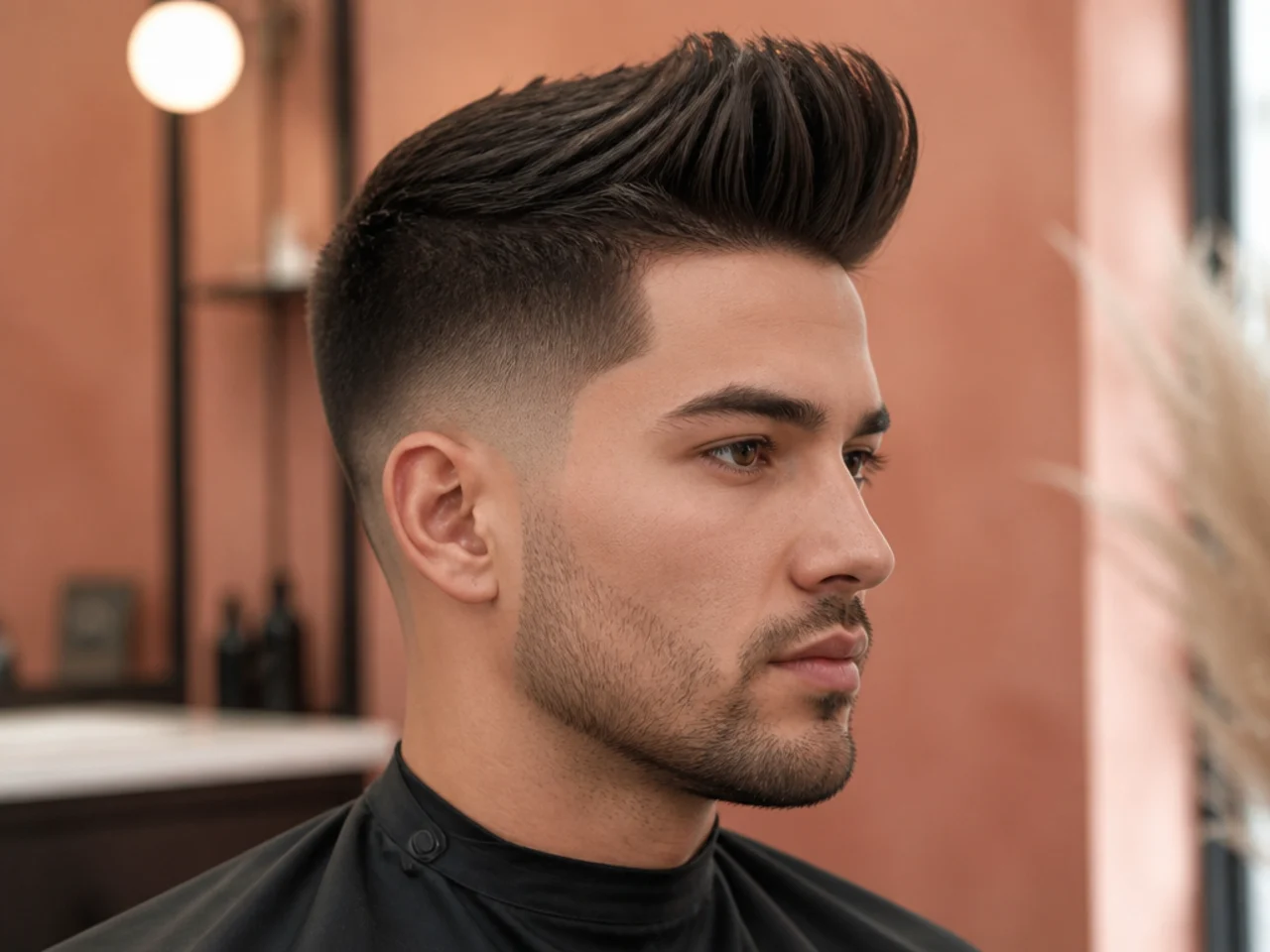
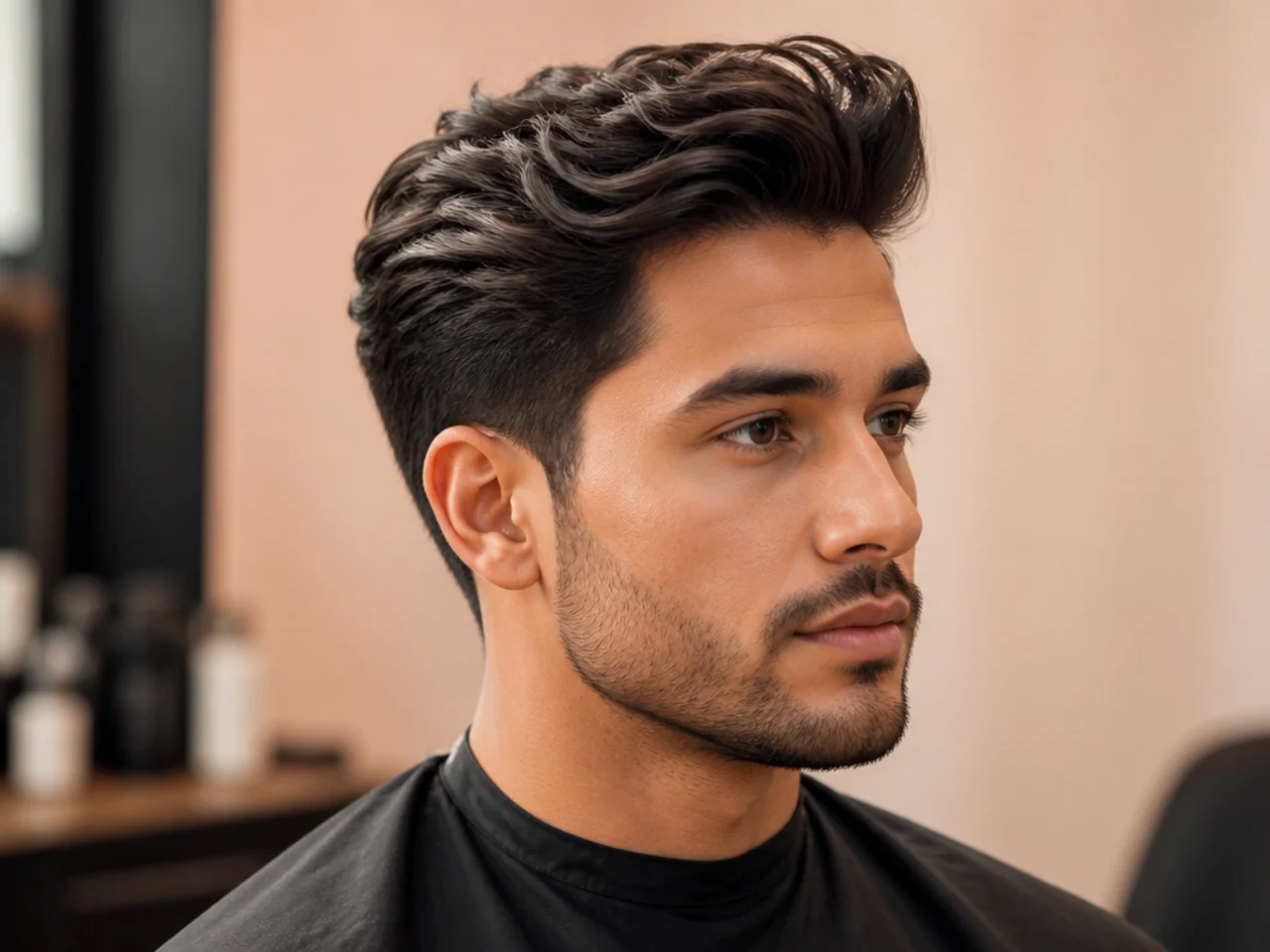
A medium quiff sits at the sweet spot of the quiff family — four to six inches at the front, long enough to hold real lift, short enough to style in three minutes. It reads modern with a matte finish, classic with pomade, and dresses up or down without a recut. This guide covers twenty medium quiff hairstyles men are booking in 2026, with the face-shape rules, the exact barber wording, and the styling routine each one demands.
What Is a Medium-Length Quiff?
A medium quiff is a men's haircut with short-to-tapered sides and four to six inches on top, styled with the front lifted up and slightly back. It sits between the short quiff — where the top runs 2–3 inches and holds shape without much product — and the long quiff, which pushes past six inches and needs five minutes of dedicated styling. The medium length is the flexible one: enough to sweep, part, or comb, without the commitment the long version asks for.
The shape works across every hair type. Straight hair sweeps cleanly. Wavy hair carries the texture for you. Curly hair reads bigger and softer than any other quiff variation. Fine hair needs a mousse pre-styler but still holds the geometry. Thick hair gets weight-removed so it moves instead of sitting flat. For the wider family and the shape's rock 'n' roll origin, see the quiff hairstyles men pillar guide.
Medium is also the safest first move into a quiff. Short reads too conservative for some jobs; long feels like a commitment to styling. Medium gives you the height without either compromise.
How to Choose Your Medium Quiff
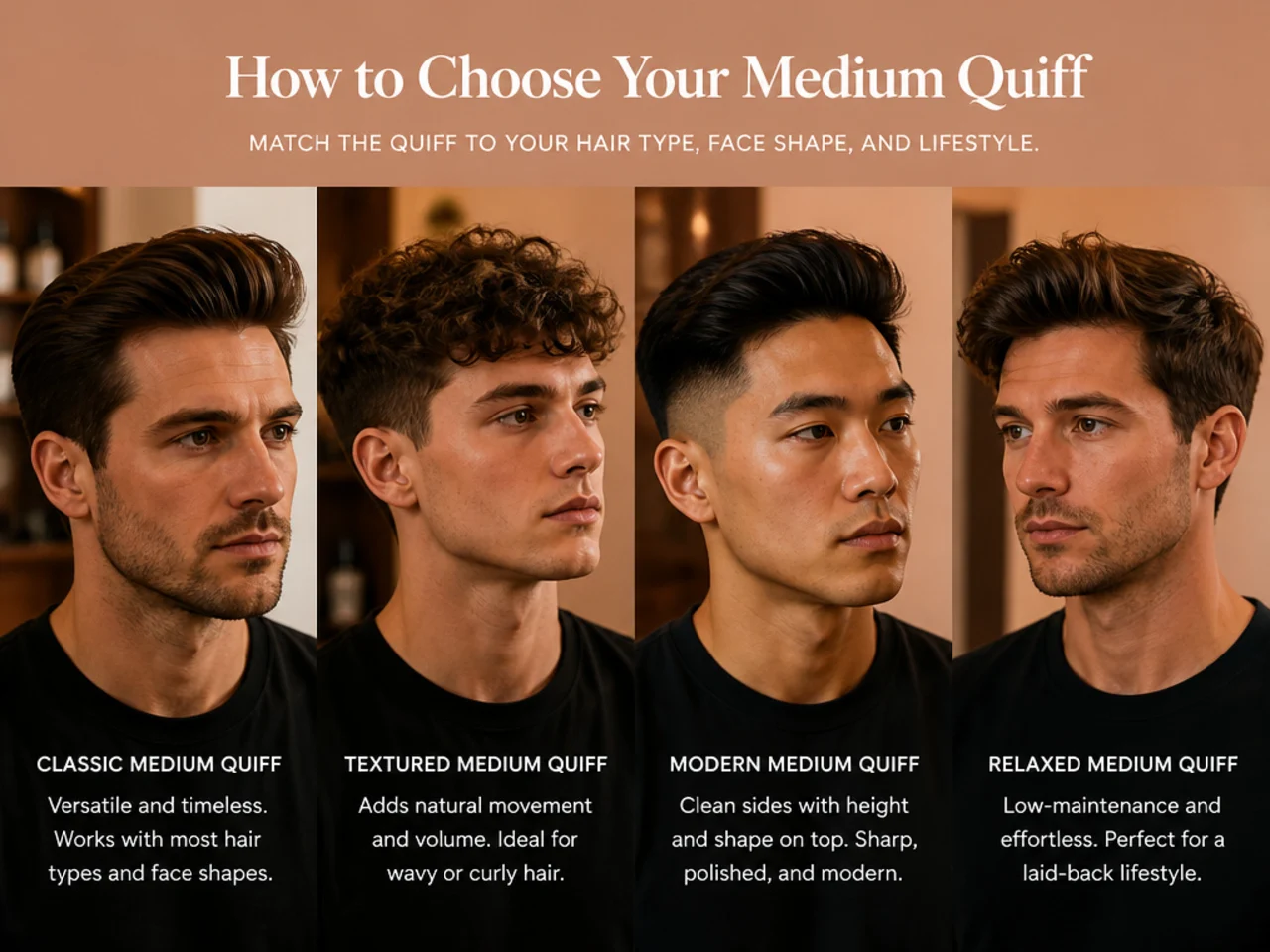
Start with your face. Round and square jaws gain the most — the vertical lift adds visible length and softens the frame. Oval faces suit any medium quiff variation. Long or narrow faces should keep the front around four inches; five or six starts to stretch the face further than you want. If face shape is what's stopping you, work through the general medium length hairstyles men guide first.
Then match the version to your hair type. Straight, medium-density hair holds any medium quiff without help. Fine hair needs a mousse pre-styler and slightly less length at the front (four inches, not six). Thick and coarse hair gets internal thinning at the barber. Wavy and curly hair swaps clay for cream and lets the natural pattern build the shape.
Finally, be honest about styling time. The classic and slick-back versions want three to five minutes and a comb. The textured, messy, and tousled versions want ninety seconds and your fingers. Pick the one your Tuesday morning can support.
The 20 Medium Quiff Hairstyles
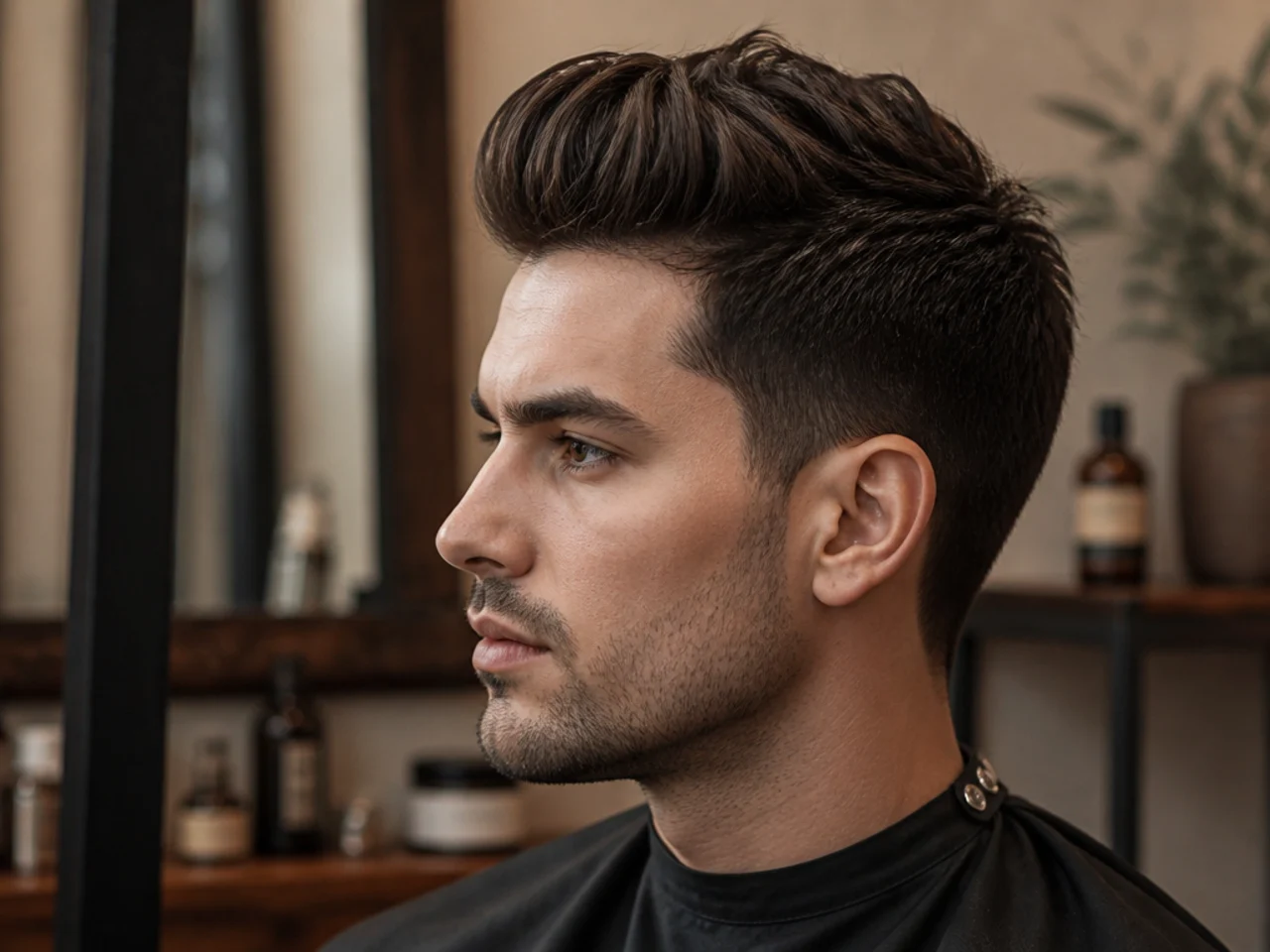
Twenty versions of the same core shape, each with a clear reason it made the list. Every entry names what makes it different, who it flatters, the exact language to hand your barber, and the styling detail that separates it from its neighbors.
The Classic Medium Quiff
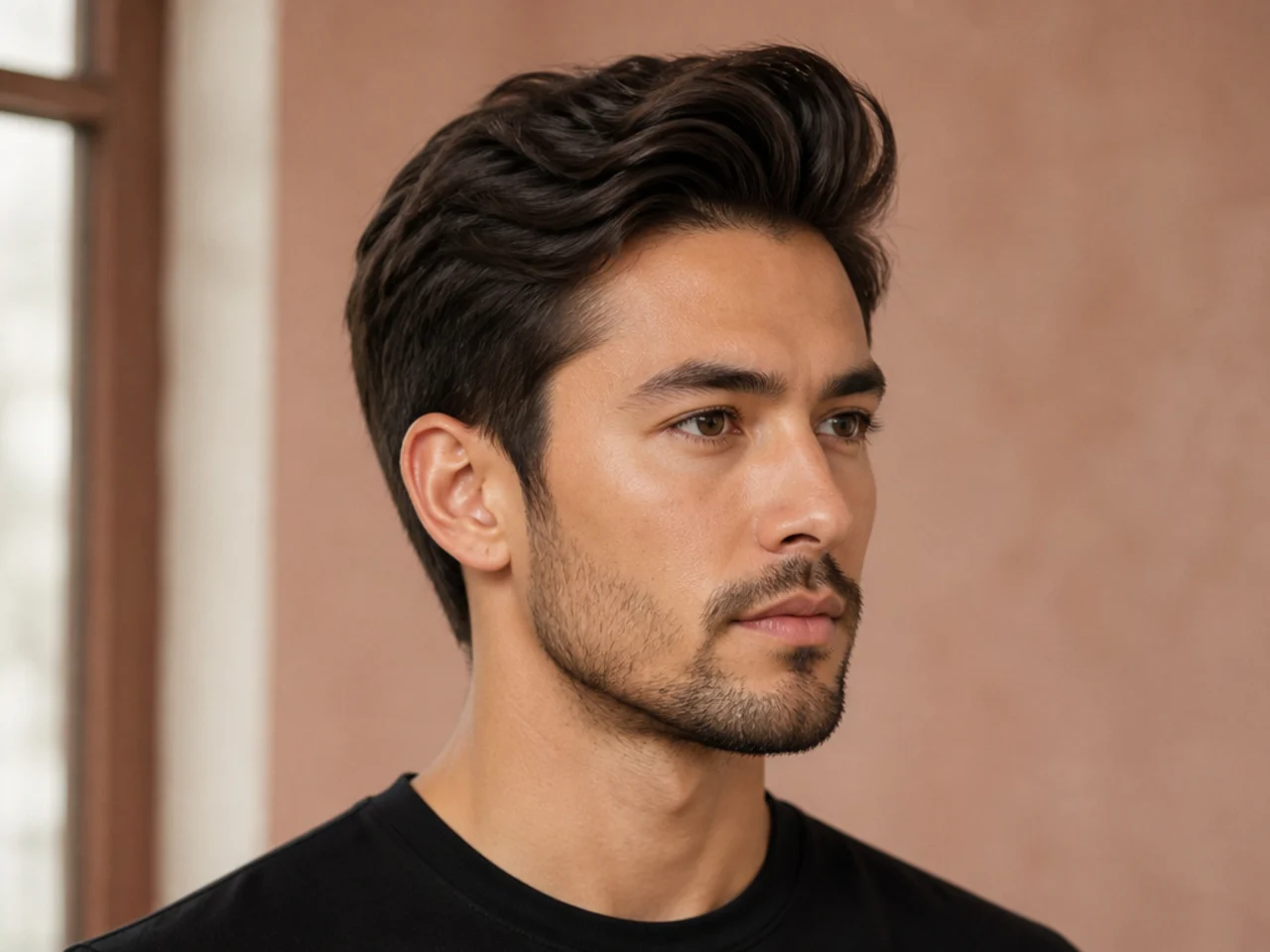
The neutral shape. Five inches at the front swept up and slightly back, sides scissor-tapered without a fade, top finished with a water-based pomade for medium shine. This is the medium quiff most barbers cut when a client says "quiff" without another qualifier — no undercut drama, no matte tousle, just a clean pomaded silhouette.
Ask for five inches on top tapered down to three at the crown, a scissor-blended side with no clipper marks, and a soft blend behind the ear. Style with a nickel of medium-hold pomade combed once from front to back. Best for straight-to-wavy hair on any face shape — the workhorse in the medium quiff family. See the full classic quiff hairstyles men family for the pomade-forward siblings.
The Textured Medium Quiff
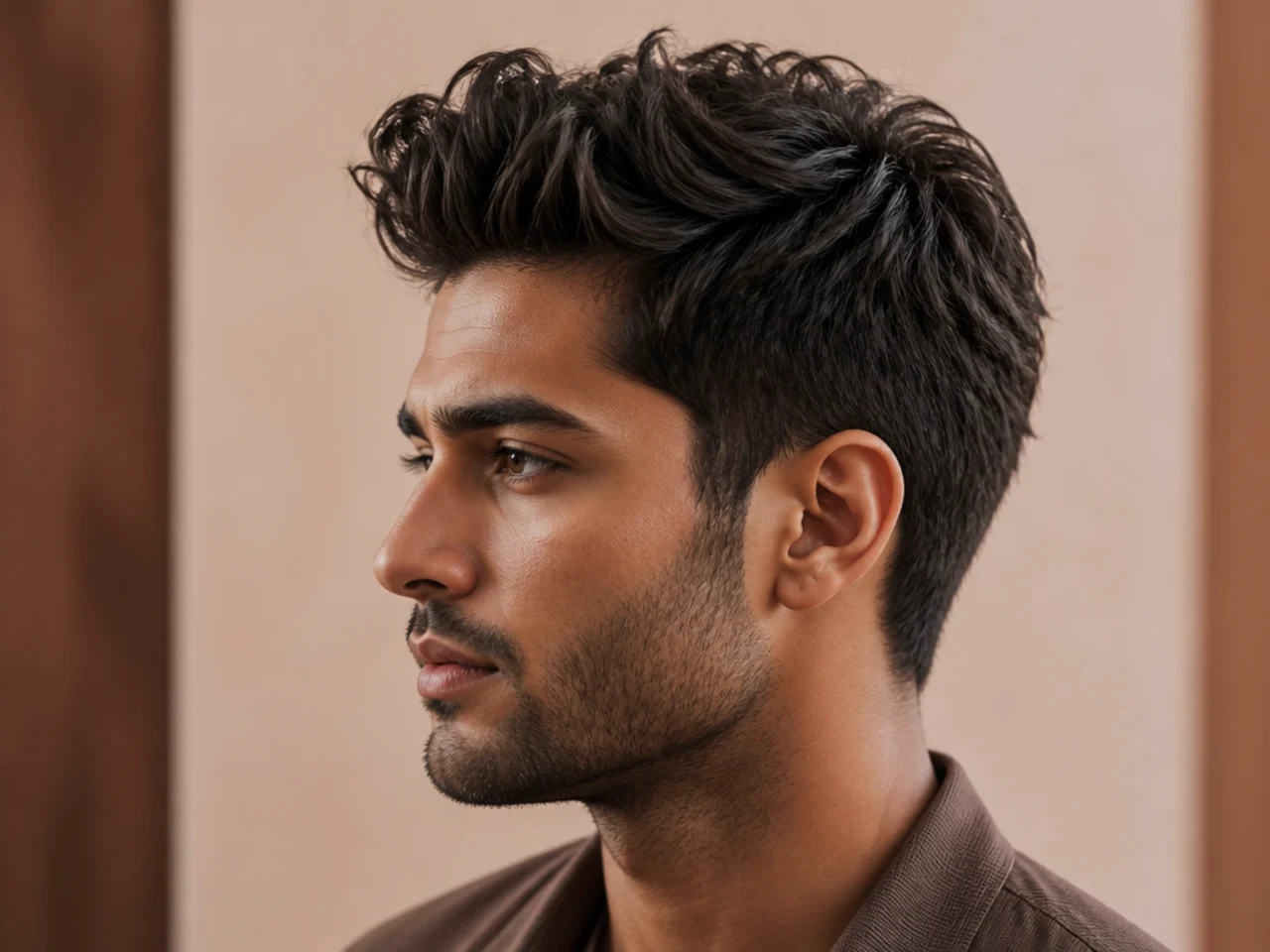
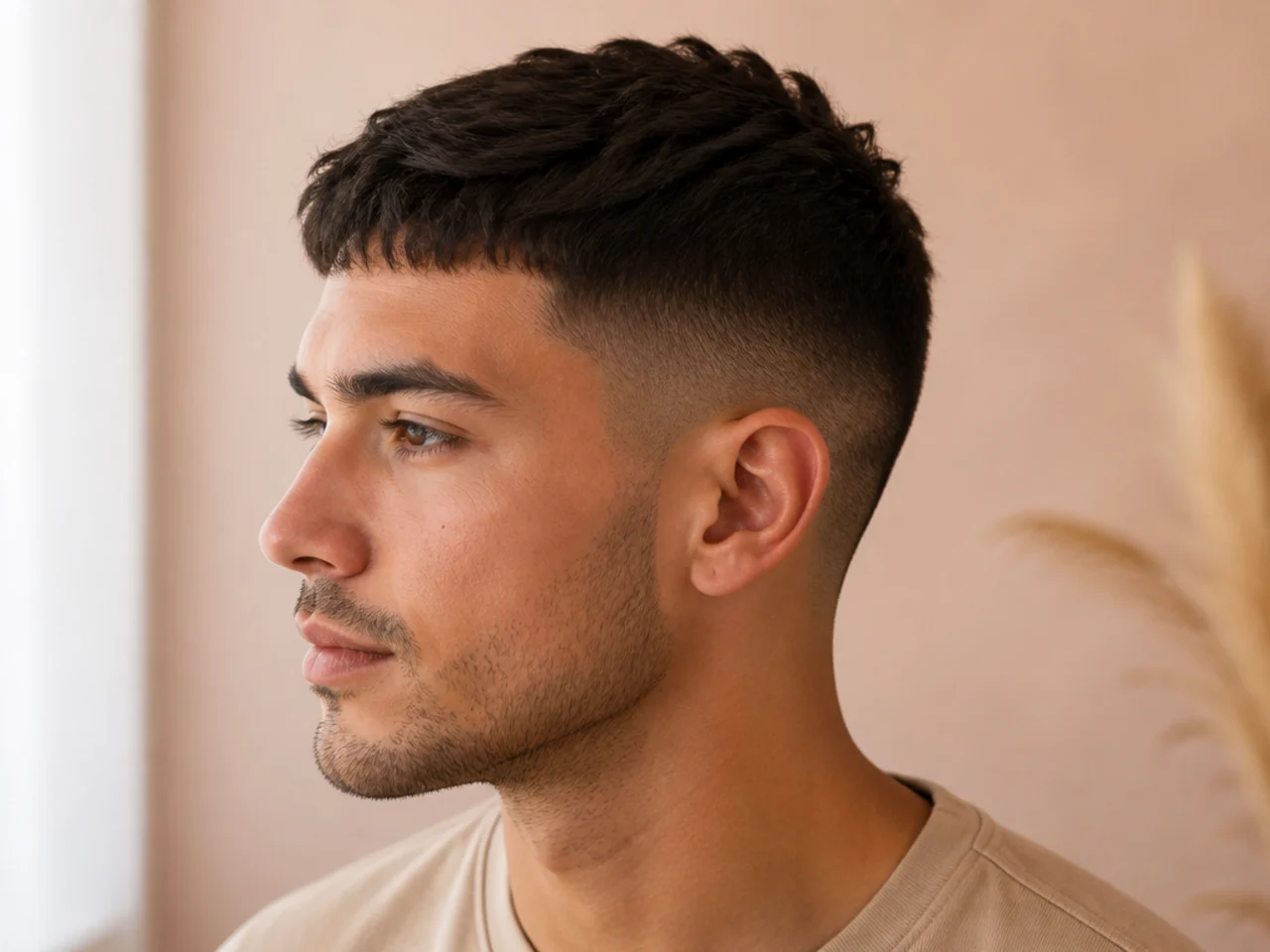
The modern default. The barber point-cuts through the top so strands separate cleanly, and the front is left long enough (5 inches) to sweep up with real movement. Instead of one solid mass, you see individual pieces — the finish that makes the shape read 2026 rather than 1955.
Ask for point-cut layers on top, a low taper fade or mid fade at the sides, and light internal thinning if your hair is dense. Tell your barber the goal is separation, not bulk. Style with a pea of matte clay warmed in the palms, pressed into the ends first, then pushed up and back with open fingers. Best for straight or slightly wavy hair on oval, square, and heart-shaped faces. The most-photographed version in the guide.
The Medium Quiff with Low Taper Fade
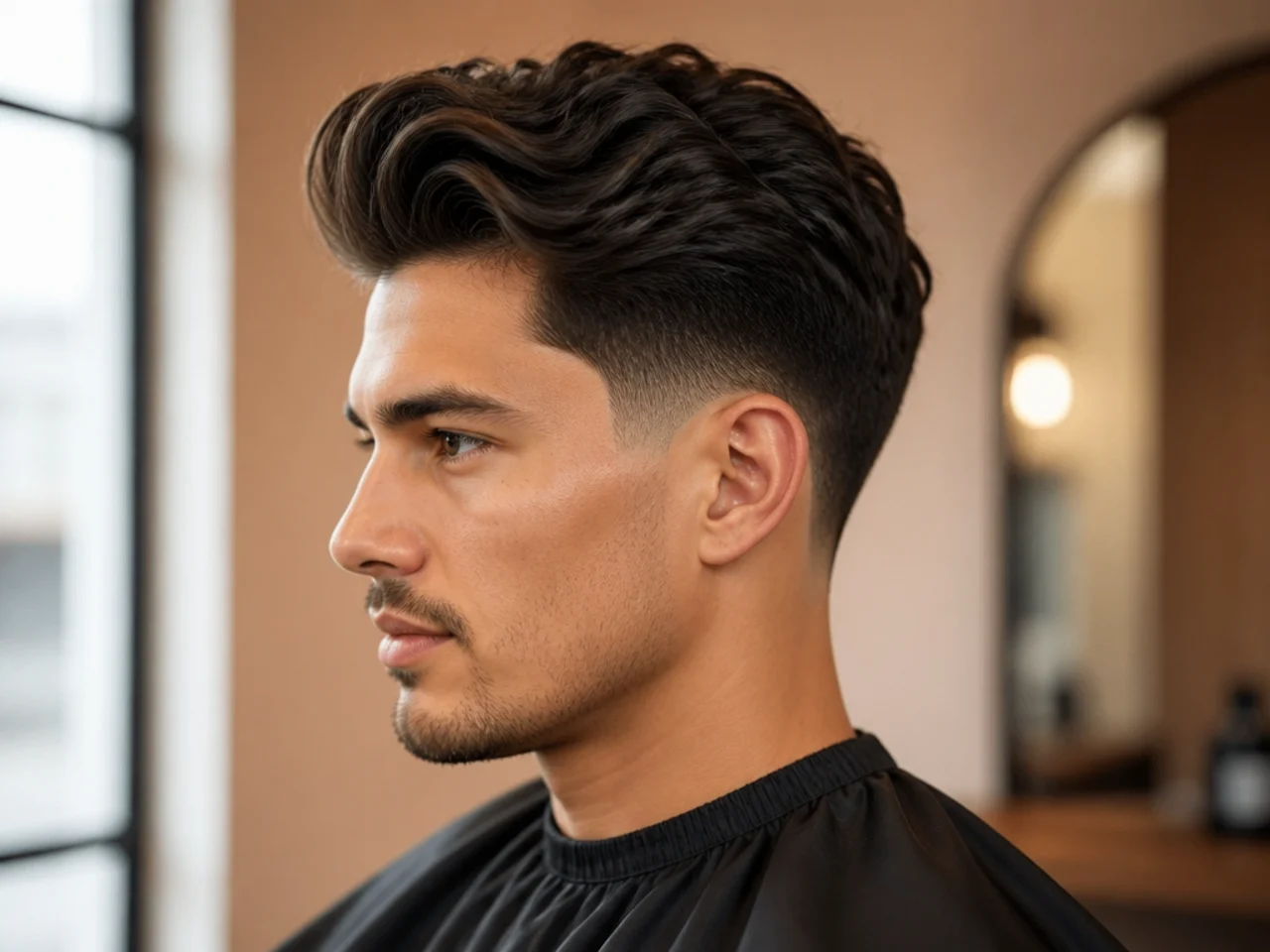
The office-friendly version. Top runs 4–5 inches, sides finished with a low taper fade that starts just behind the sideburn and never climbs above the ear. From the front, it reads clean and conservative. From the side, the shape is unmistakably a quiff.
Ask for a low taper fade that stays "invisible from the front," 5 inches at the front, and a soft crown blend so nothing looks blocky from the side. Style with a shine pomade combed once, or with matte clay pressed into the ends for a more casual finish. Best for professional dress codes on any face shape and any hair type. If you want the same silhouette on straight hair with slightly less contrast, the medium fade haircut for men breakdown covers the side treatments that pair with this length.
The Medium Quiff with Mid Fade
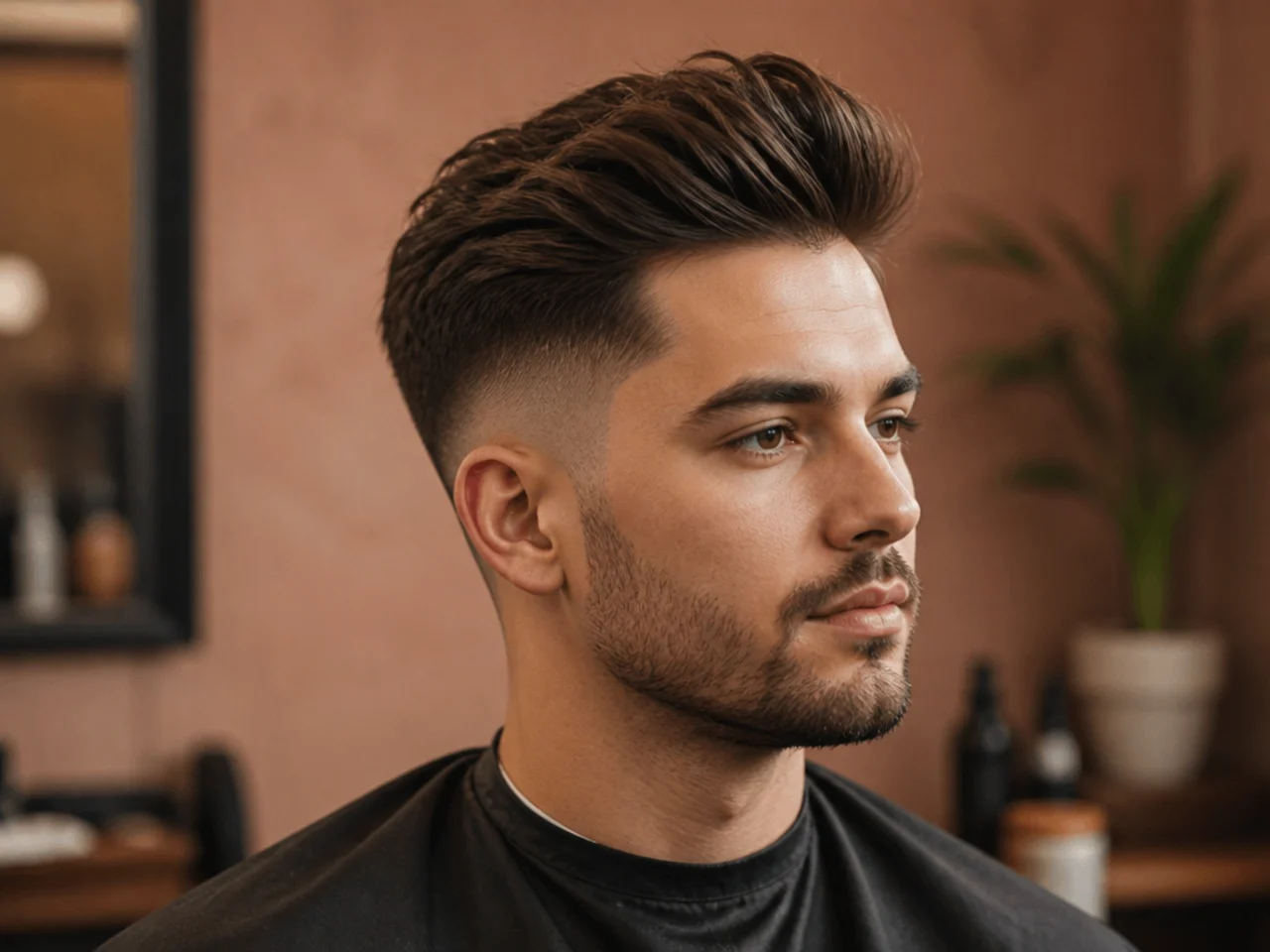
The balanced contrast version. Top stays 4–5 inches, sides drop into a mid fade that lands halfway between the ear and the temple. It's the version most barbers default to when a client says "medium quiff, make it modern" without specifying a fade type.
Ask for a mid fade, scissor layers on top, and enough length at the front to sweep with your fingers rather than a comb. Tell your barber to keep the crown tight — long crown ruins the shape from behind. Style with matte paste rubbed between the palms, then pressed into the front and pushed up and slightly forward. Best for thick or coarse hair on square and oval face shapes.
The Medium Quiff with High Skin Fade
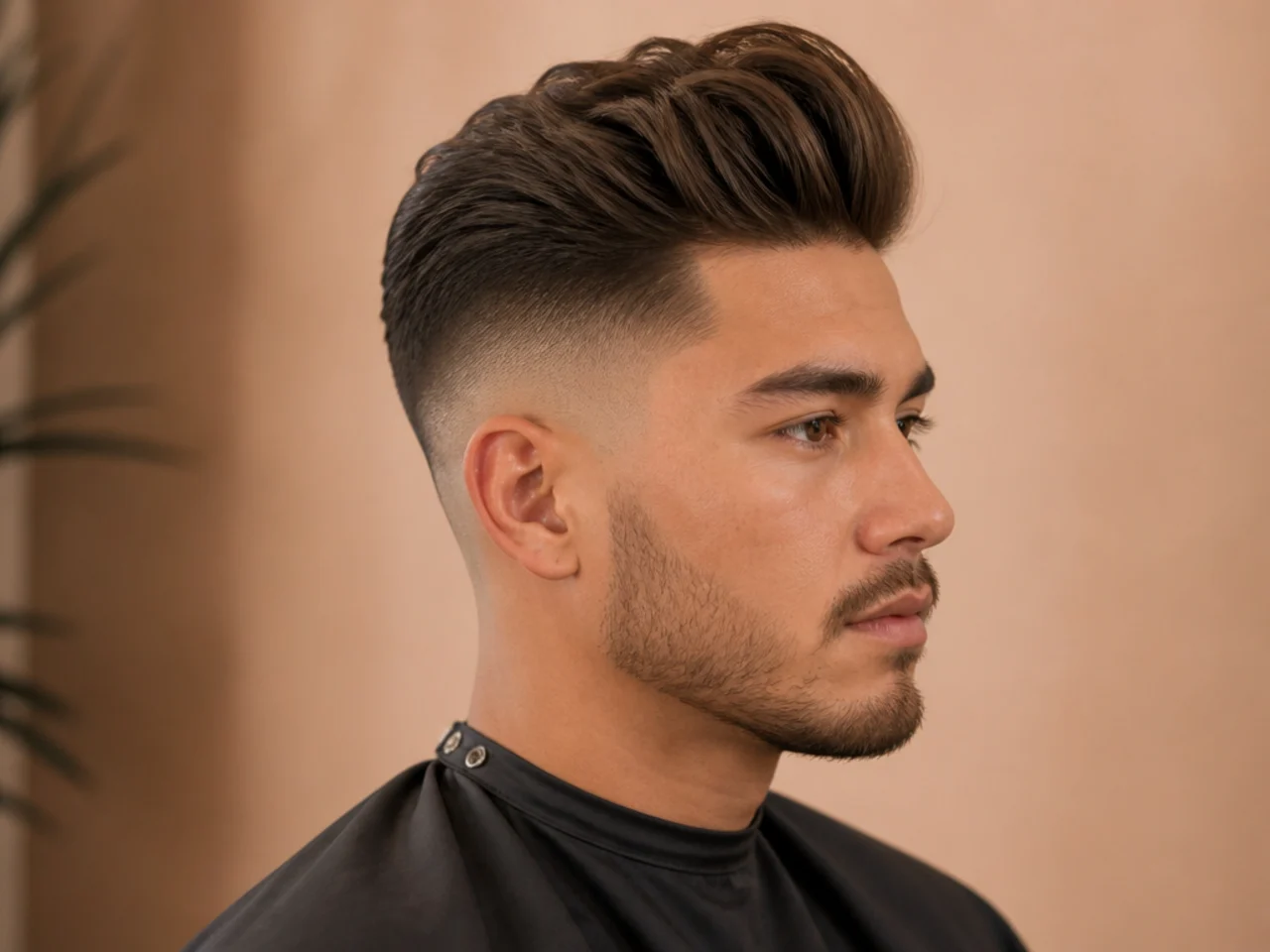
Maximum contrast. A high skin fade climbs to the temple, and the medium top sits above it as a clean, defined shape. The height on top looks bigger by pure geometry — the shaved sides make the four to five inches on top read as more.
Ask for a high skin fade at the temple, scissor detail through the top, and 5 inches at the front left weight-heavy so it holds movement. Tell your barber you want a clean bald edge, not a soft blend, where the fade begins. Style with matte clay pressed into the ends and pushed up with open fingers. Best for clean-shaven or lightly stubbled guys with straight-to-wavy hair on oval and square face shapes. This one photographs sharpest but resets every 2–3 weeks.
The Medium Undercut Quiff
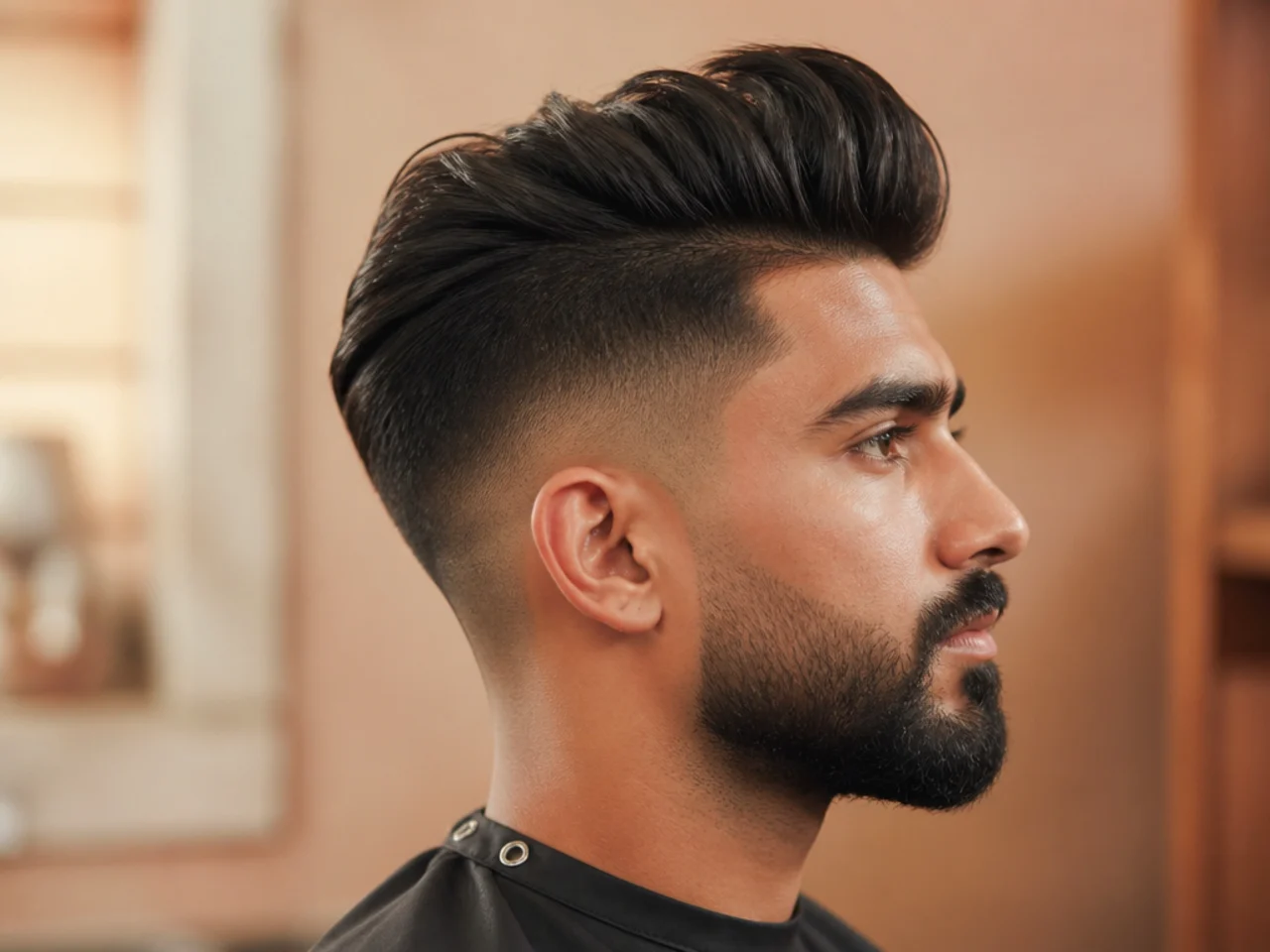
Disconnected on purpose. Sides run one guard length all the way up — no fade, no blend, just a hard line where the top meets the sides. The medium-length top swept up and back sits on that shelf like a punctuation mark.
Ask for a disconnected undercut with a #2 or #3 guard, 5 inches on top, and a clean line where the disconnection sits. Tell your barber if you want a soft transition or a razor-sharp break. Style up and back with matte clay for the everyday look, or comb it flat with pomade for a slick back — the disconnection lets you flip between both without recutting. Best for guys who don't mind attention, oval and square face shapes, straight to slightly wavy hair.
The Messy Medium Quiff
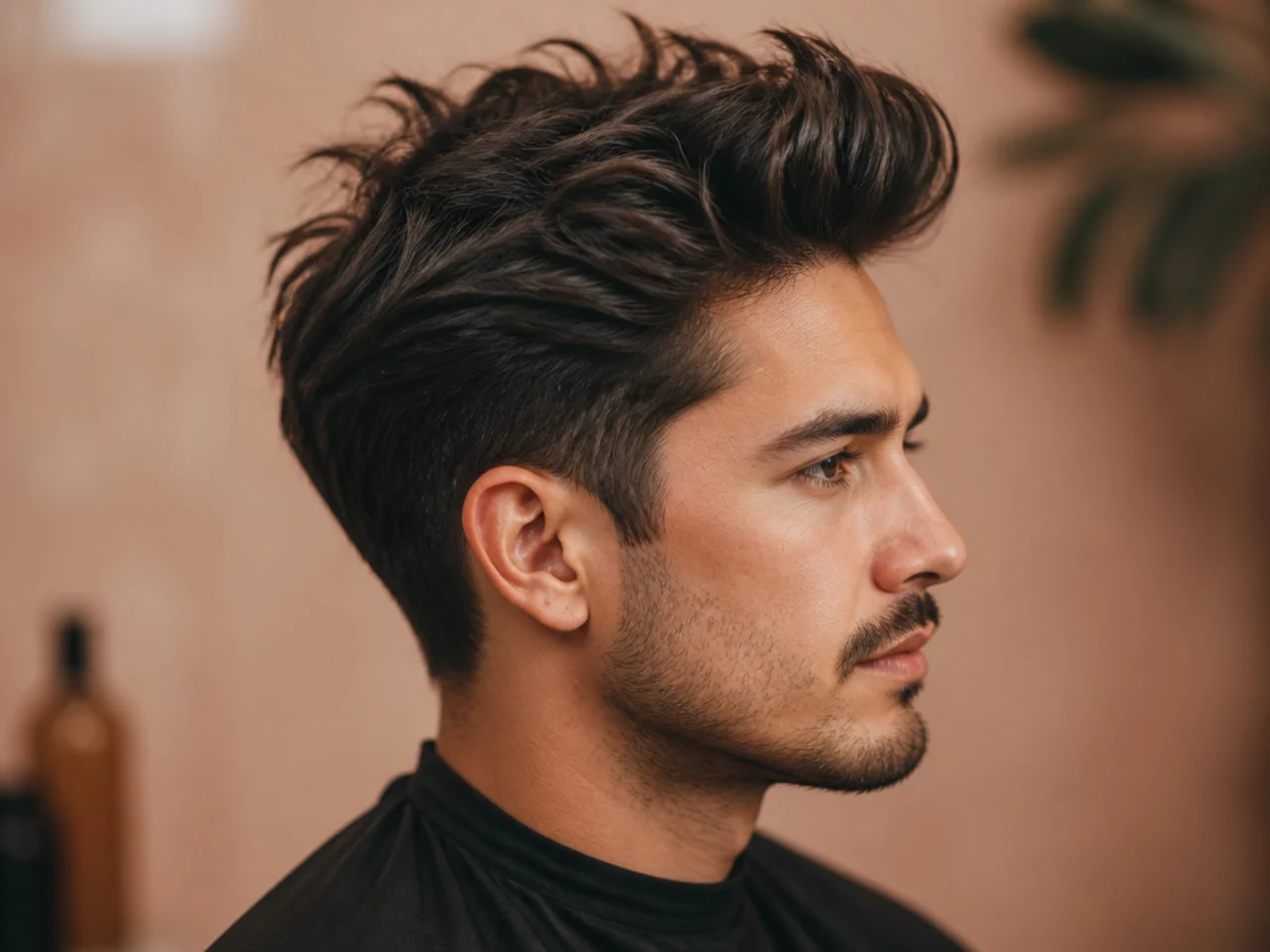
The slept-in finish. Layers run longer at the front (5–6 inches), the perimeter is left slightly rough, and there's no clean part or comb line — just texture pointing up and slightly off-center. It looks unstyled. It isn't.
Ask for scissor layers on top, a burst fade or drop fade at the sides, and no razor work at the ends. Tell your barber you want a "worn-in" edge, not a sharp one. Rough-dry with your fingers on high heat, then work a pea of matte clay from ends to roots — never the other way. Push everything up with the flat of your hand, no comb. Best for wavy or fine-but-plentiful hair on any face shape. The full messy quiff hairstyles men breakdown covers the finish details.
The Medium Quiff with Drop Fade
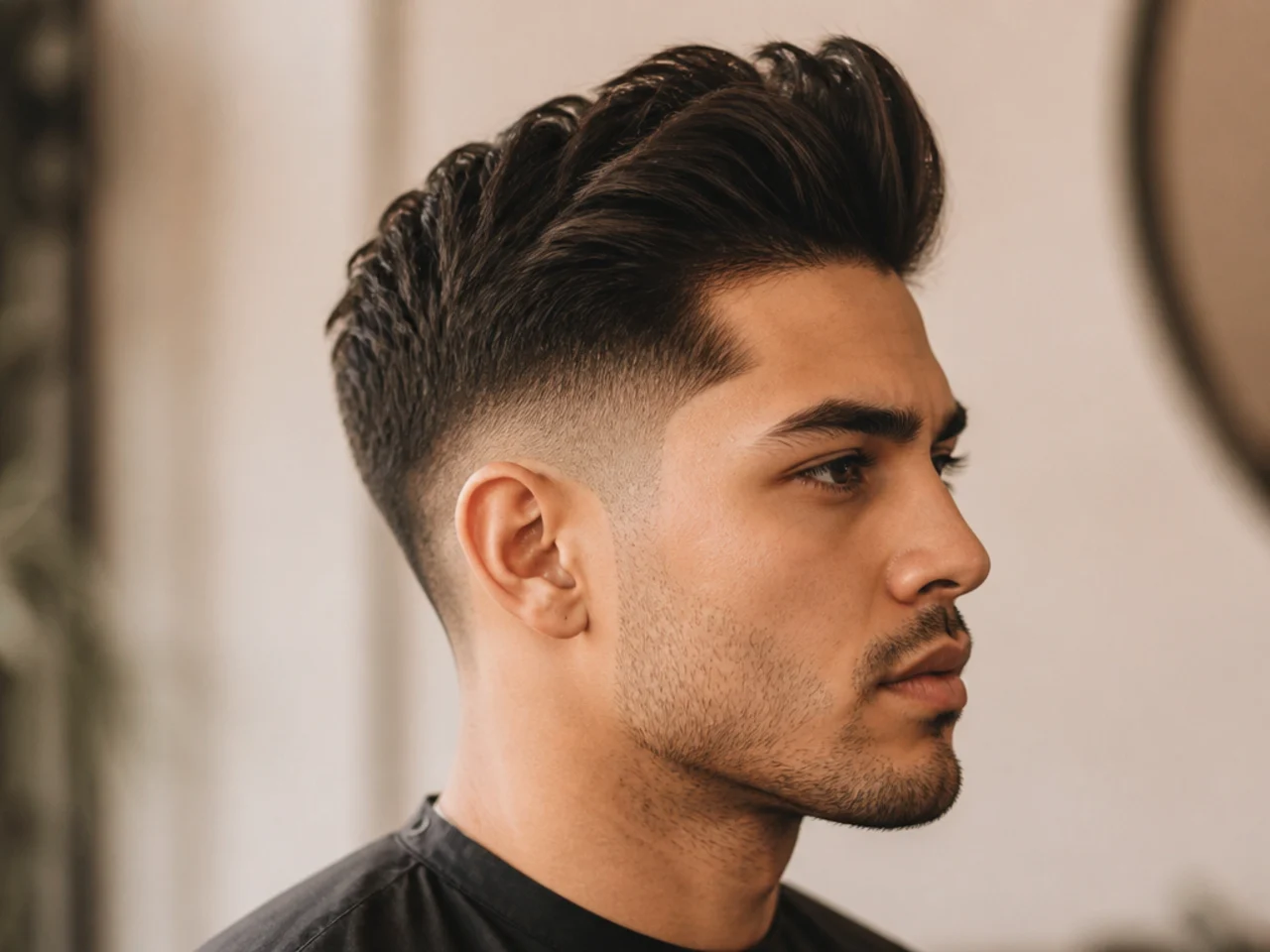
The drop fade curves down and around behind the ear rather than staying flat across the head. Paired with a medium quiff, the curve softens the whole cut and gives it a younger, less angular read than a straight fade would.
Ask for a drop fade — specify where you want it to bottom out — 5 inches on top, and enough length at the crown to blend into the front sweep. Tell your barber to keep the drop line "visible from three-quarters but not from straight-on." Style with matte paste pushed up and slightly forward with your fingers, then raked through with light pressure. Best for guys in their 20s–30s on oval and square face shapes with medium-density hair.
The Medium Quiff with Burst Fade
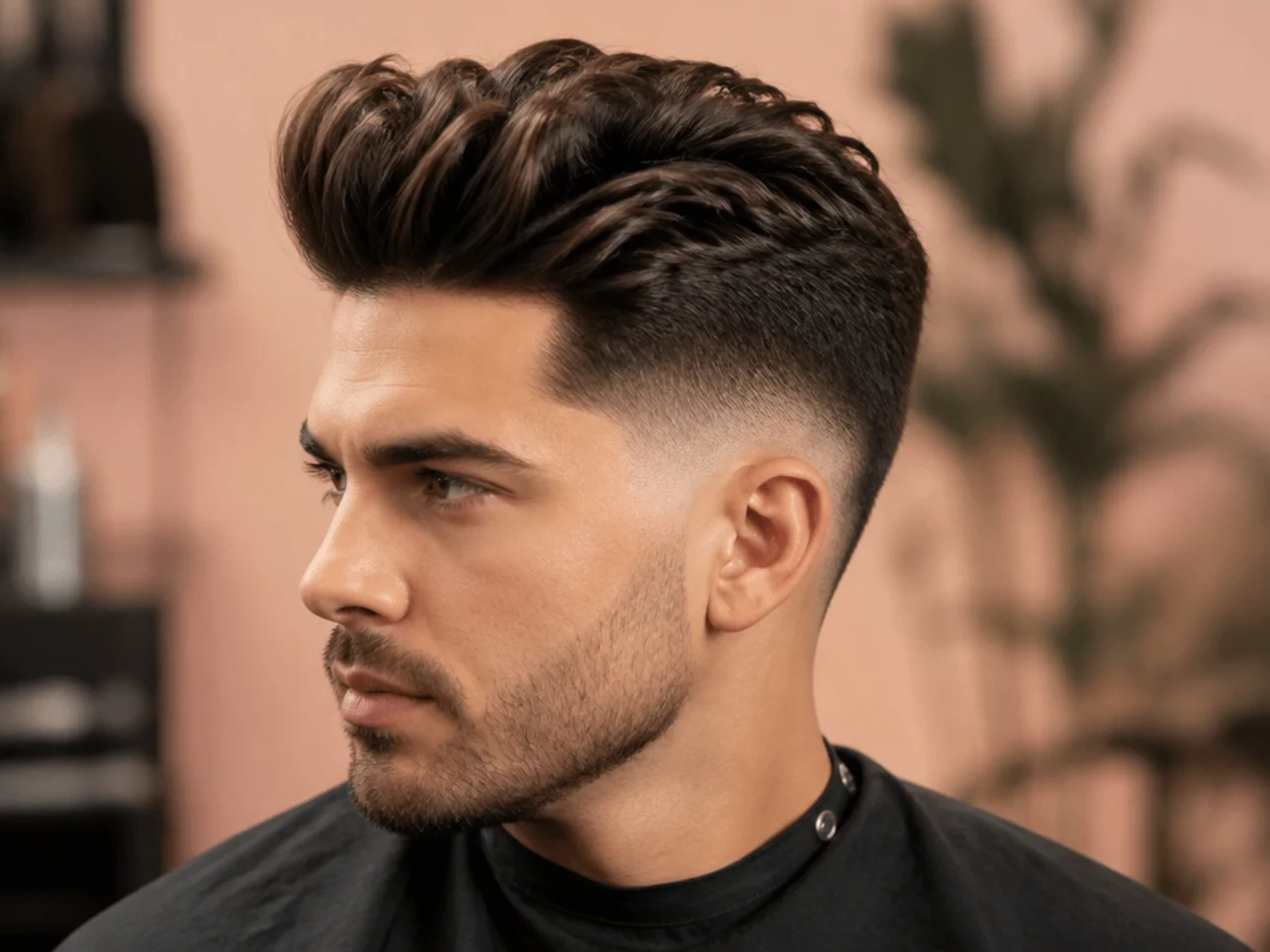
A rounded burst of clipper work wraps around the ear instead of a straight fade line, keeping visual weight higher on the head and pulling the eye up toward the front lift. It reads bolder than a taper without the shock of a full skin fade.
Ask for a burst fade around each ear, 5 inches at the front, scissor layers through the top, and no line-up above the ears. Tell your barber the burst should feel like a soft round rather than a hard edge. Style with matte clay pushed up and back, or with a light fiber for hold with less separation. Best for oval and heart-shaped faces on straight-to-wavy hair. The version that reads most 2026 on the guide.
The Side-Swept Medium Quiff
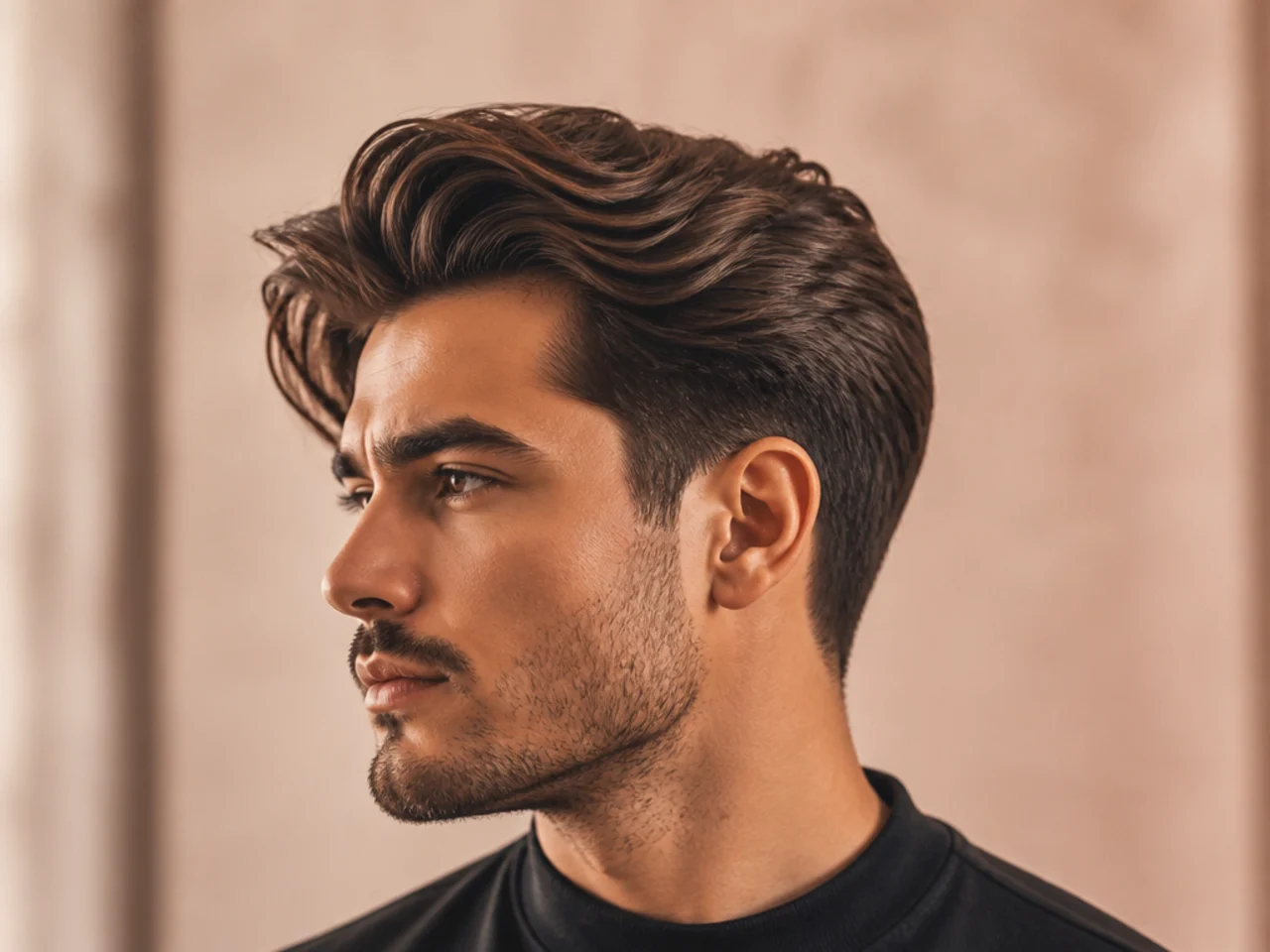
The quiff crossed with a real side sweep. Instead of the front lifting straight up and back, it lifts up and moves across the head to your non-dominant side. A natural part runs along the cowlick, splitting the top so the shape reads sharper than a straight brush-up.
Ask for a natural side part along your cowlick, 5 inches at the front, and a scissor-tapered or low taper fade at the sides. Tell your barber the sweep sits on the heavier side of the part. Style with a cream pomade combed from the part outward. Best for formal wear, weddings, and interviews. The dressier cousin to the classic in this list — pairs cleanly with the side part hairstyles for men family.
The Curly Medium Quiff
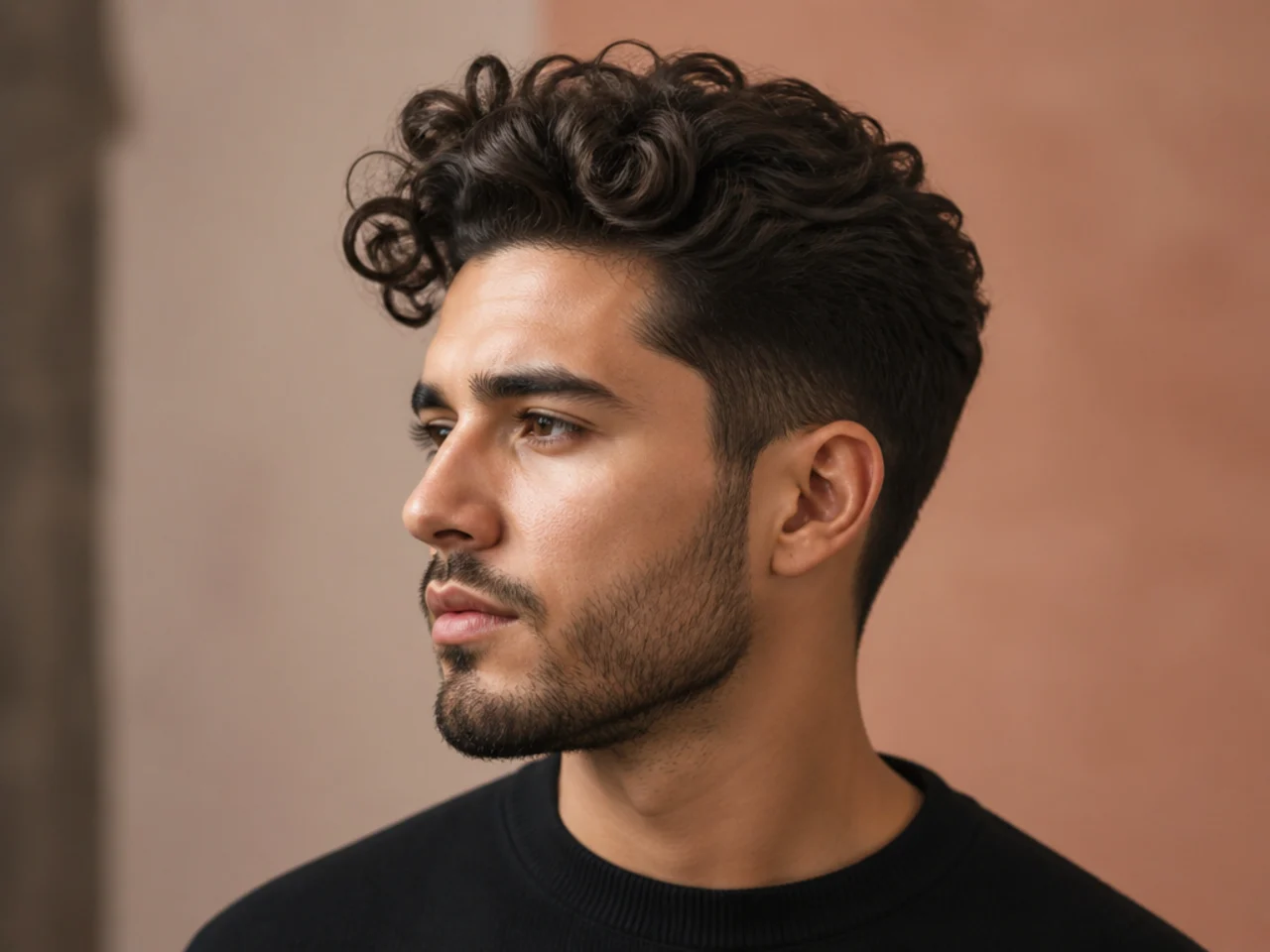
Curly hair makes the quiff shape read differently. The volume is built-in, so the barber's job is to control the perimeter and give the front room to lift naturally. Measured stretched, the top runs five inches — which means it curls up to roughly three when dry.
Ask for scissor layers cut on dry curl (not wet — curls shrink and the barber cuts blind), a low or mid taper fade at the sides, and 5 inches at the front measured stretched. Tell your barber not to razor or thin — both destroy curl pattern. Apply a curl cream or leave-in to damp hair, scrunch upward at the front, and diffuse on low. Light gel or wax with an open hand — never a comb. Best for 3A–3C curl patterns on any face shape. See the curly quiff hairstyles men guide for the pattern-specific version.
The Wavy Medium Quiff
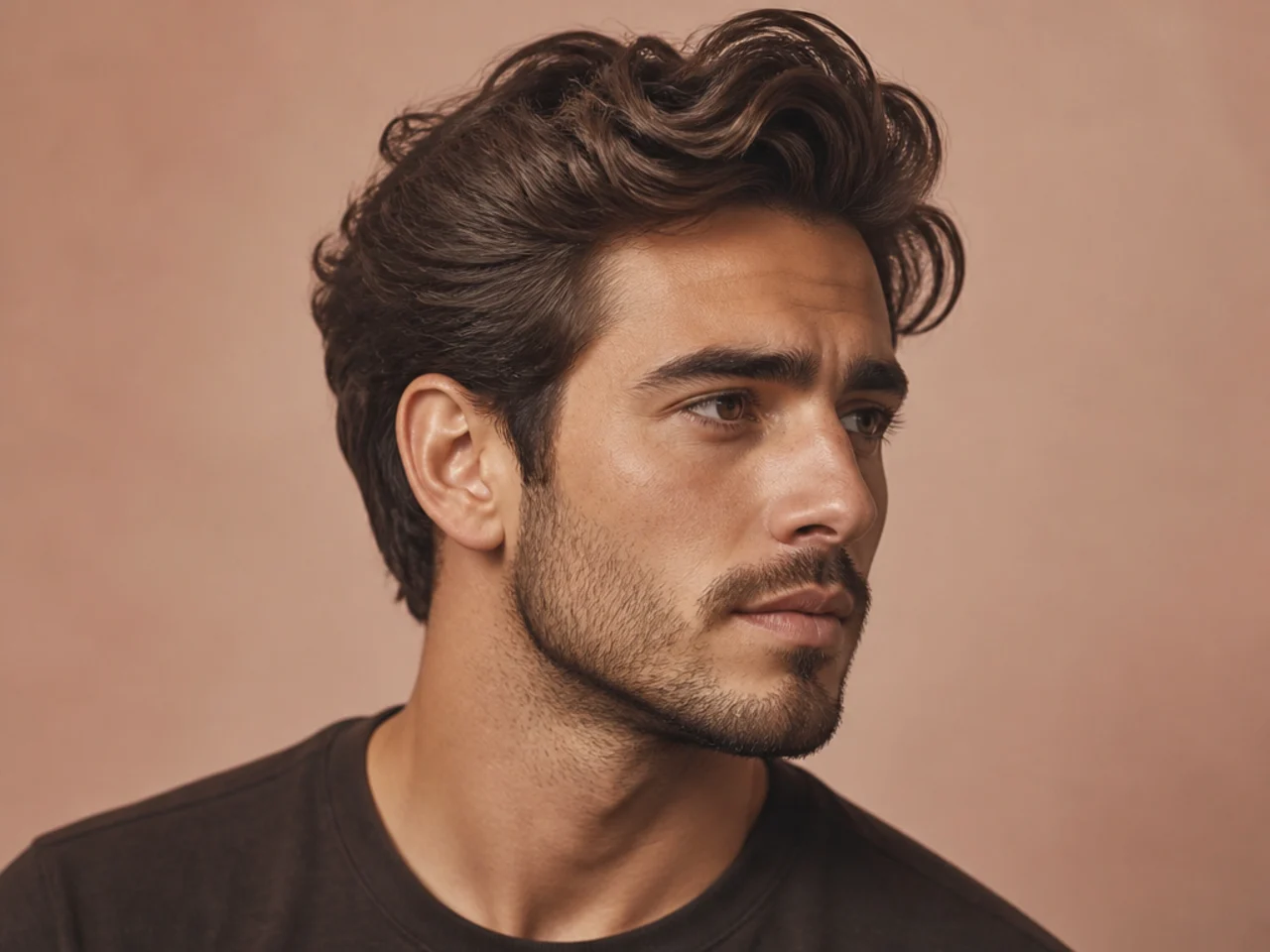
If your hair has a natural bend, the wavy medium quiff lets it show instead of fighting it flat. The waves handle the texture for you — all you're adding is direction and a bit of lift at the front. Cut with the wave pattern, not against it.
Ask for scissor layers cut with the wave pattern, a mid or low taper fade at the sides, and 5 inches at the front. Tell your barber not to thin the ends — thinning ruins wave definition. Apply a wave-friendly cream (or a mousse-and-cream mix) to damp hair, then air-dry with the front swept back or diffuse on low. Skip clay — it's too thick for waves. A light wax at the tips only. Best for naturally wavy hair on any face shape.
The Medium Quiff with Beard
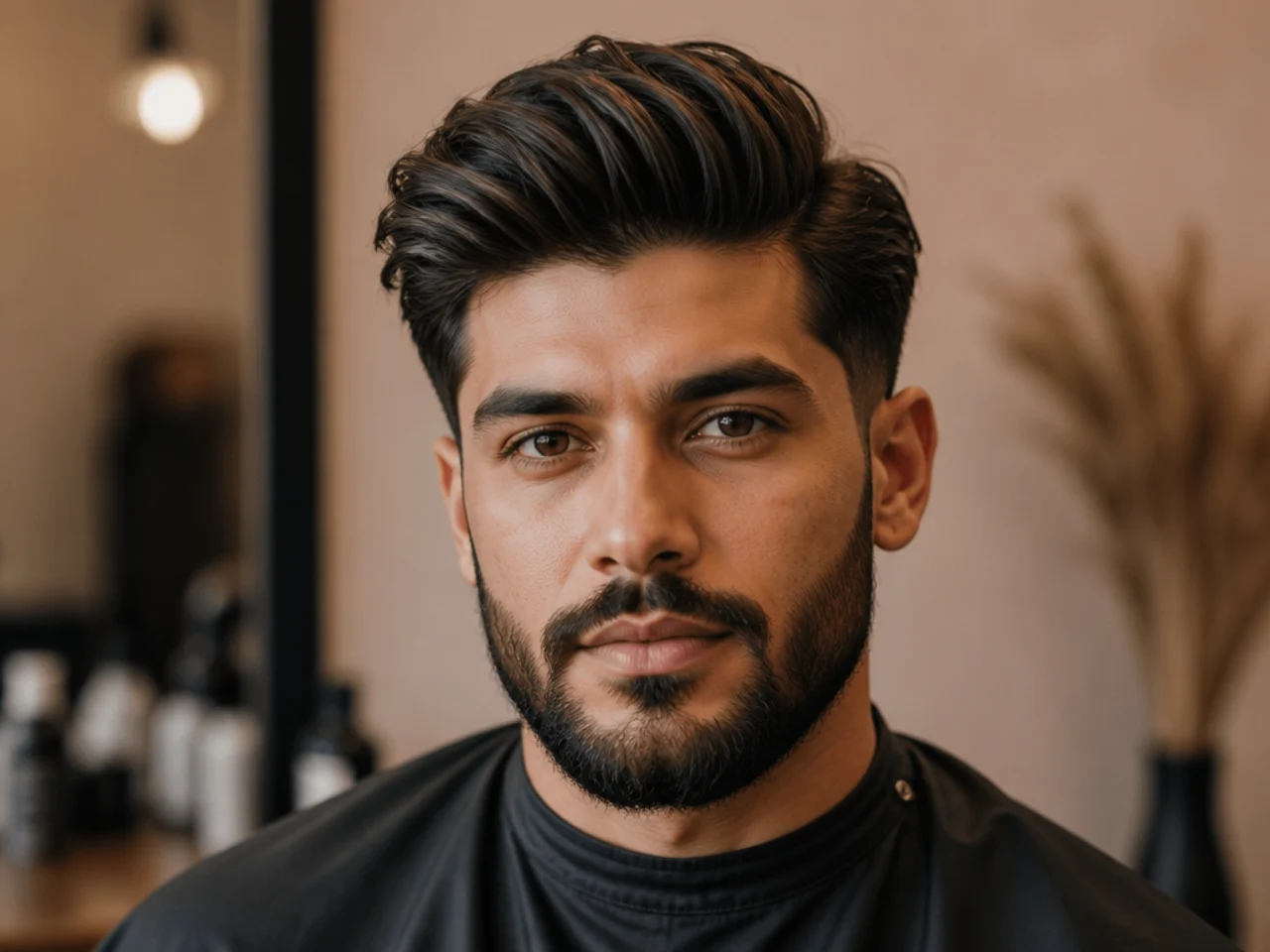
Pair a medium quiff with a full beard and the whole face reads twice as framed — height on top, weight along the jaw, no styling effort required. The rule is density matching: full 5-inch quiff pairs with a full beard, textured 4-inch quiff pairs with shorter stubble.
Ask for a mid fade that ties into the beard line so the sides and cheeks flow into each other, 5 inches at the front, and scissor layers on top. Tell your barber to keep the fade and beard connected — no visible break between them. Style the quiff with matte clay pushed up and back, and keep beard oil in the beard only. Mixing them makes both look greasy. Best for square, oval, and heart-shaped faces. Round faces should keep the beard tighter to avoid a helmet effect.
The Slick-Back Medium Quiff
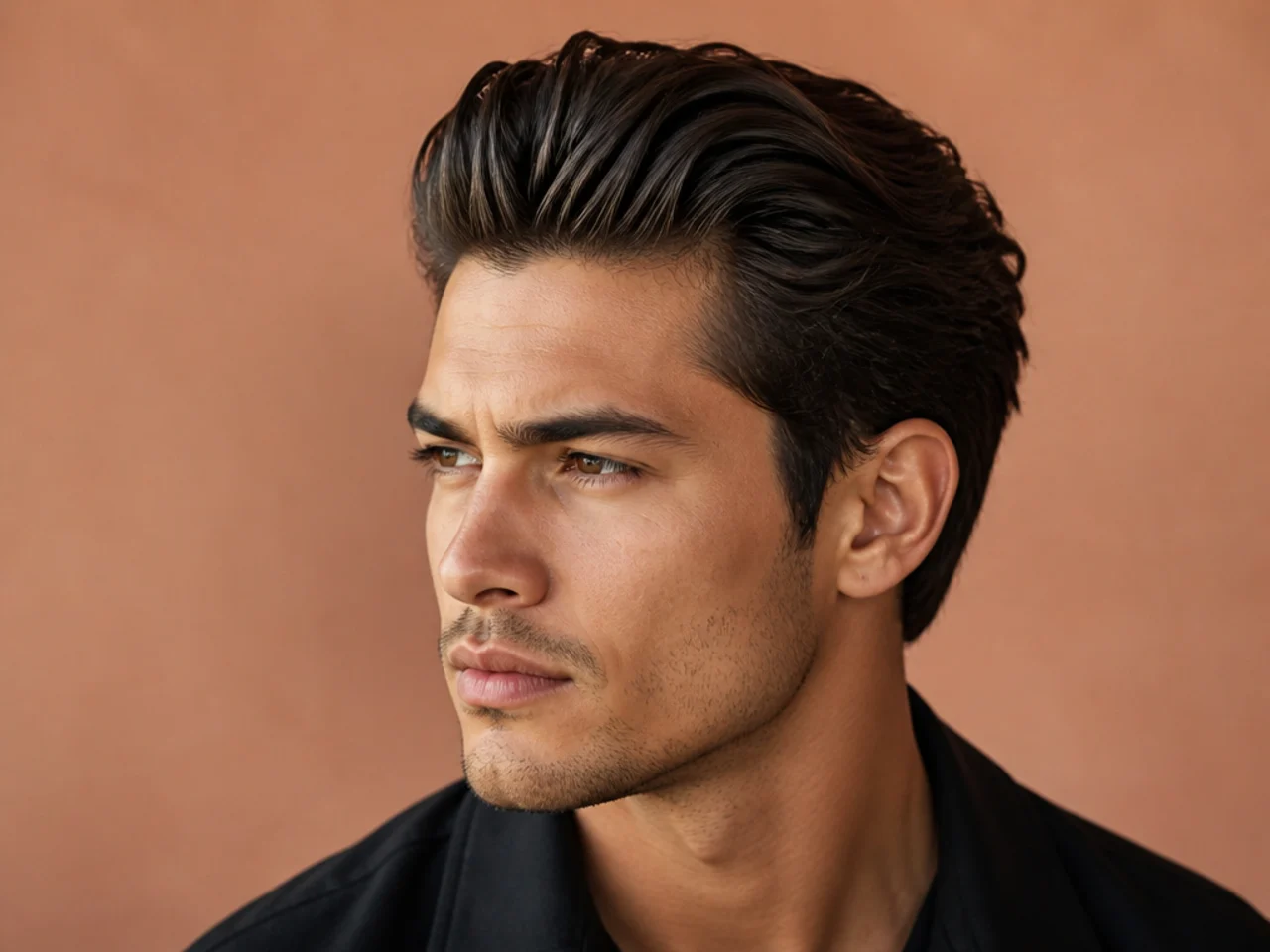
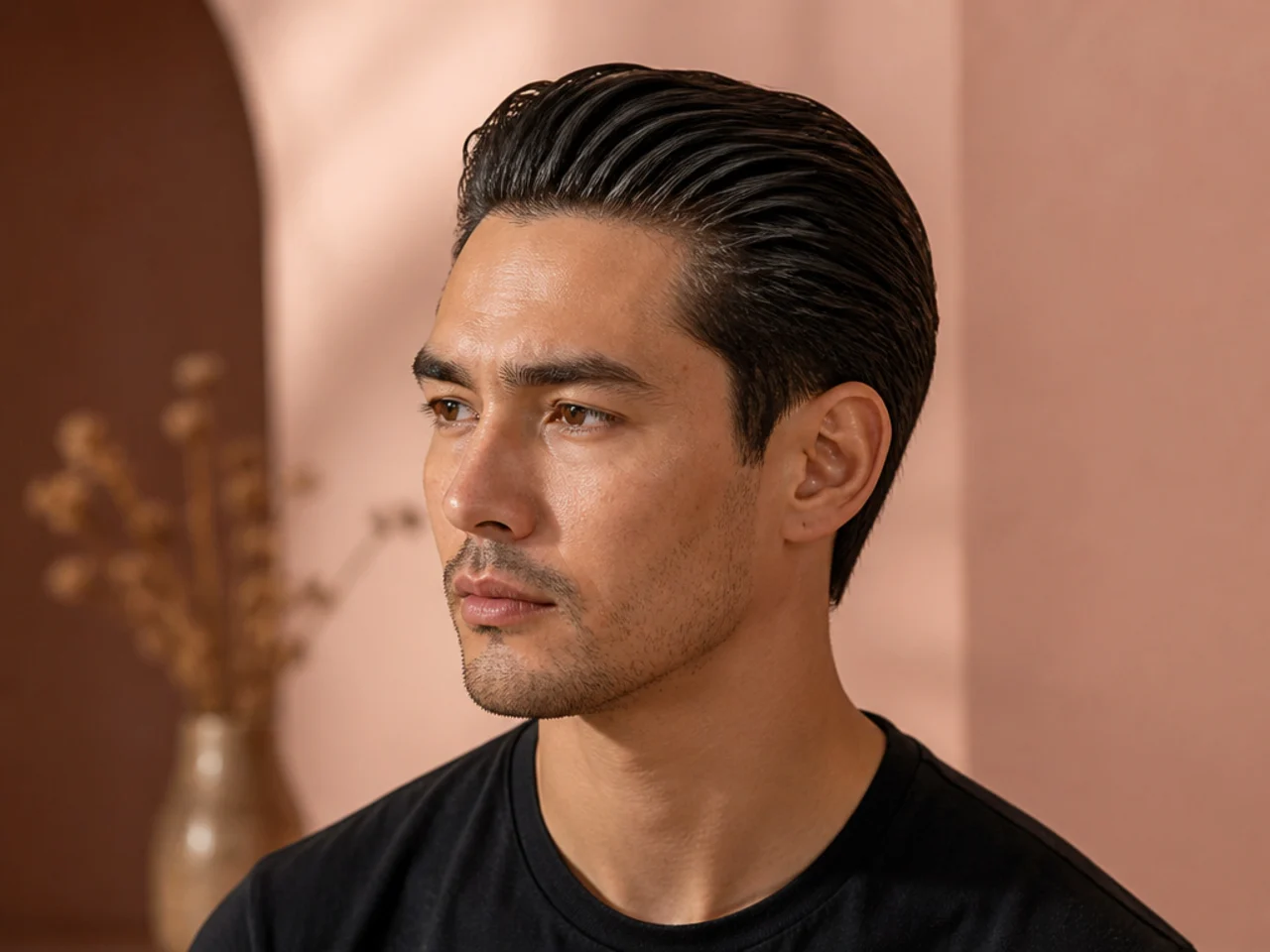
The polished, back-to-the-1950s version. The top is combed straight back cleanly with visible shine, front lifted slightly at the root so it doesn't sit flat against the head. It's the medium quiff closest to a proper slick back haircut — same product, more front volume.
Ask for a mid skin fade or scissor taper, 5 inches at the front, and scissor layers through the top. Tell your barber the finish will be smooth, not textured, so no aggressive thinning. Prep with a blow-dry cream, blow-dry with a round brush straight back, then work a coin of water-based pomade from root to tip. Comb through once. Best for weddings, offices, and any setting where "polished" beats "casual." Straight hair holds it best.
The Medium Quiff with Curtain Fringe
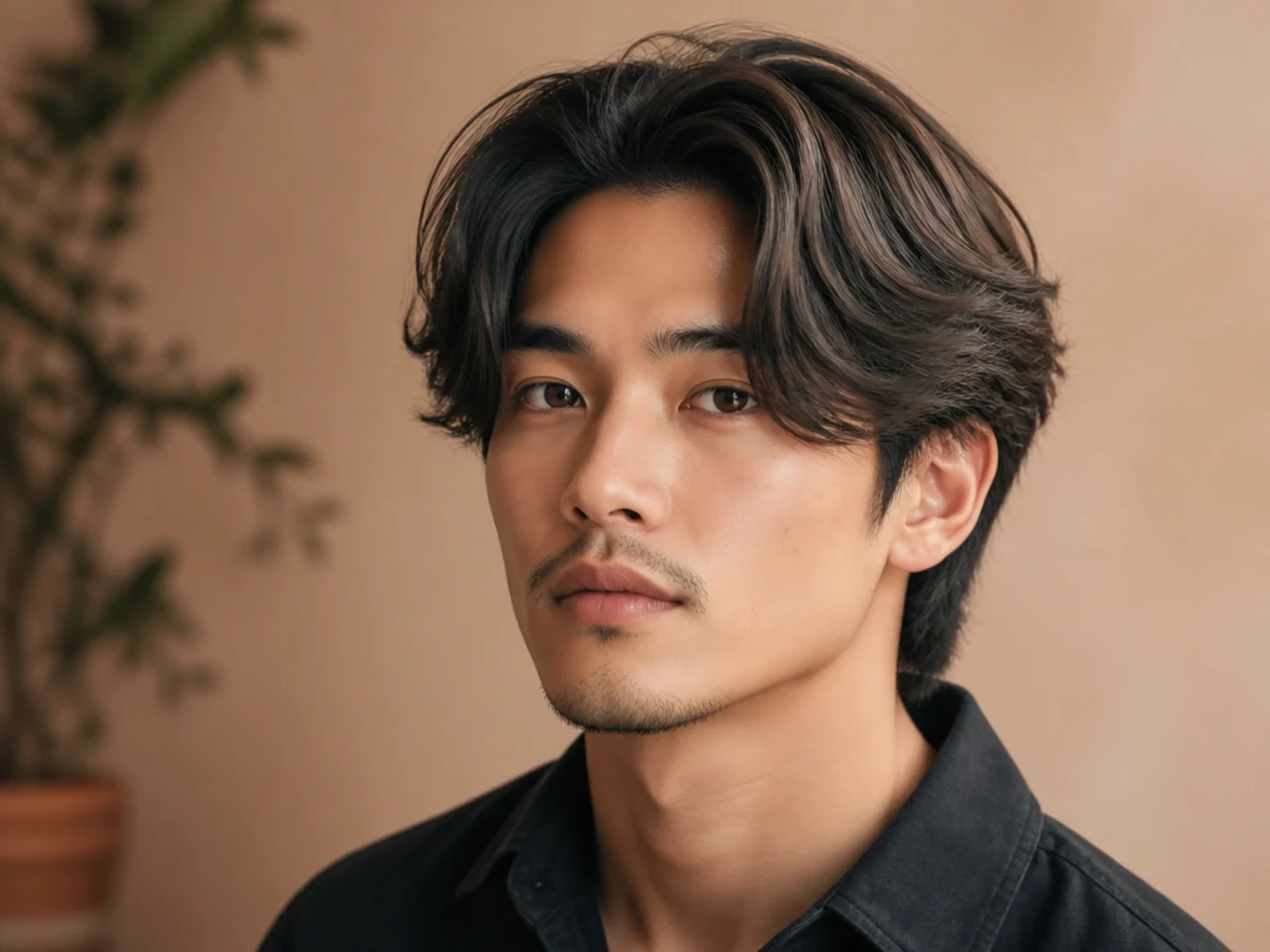
A hybrid shape. The top is medium length (5 inches) but rather than lifting all of it up and back, the front third is left to fall softly across the forehead as a light curtain, with the rest swept up. It reads modern and slightly rebellious without the full commitment of a curtain haircut.
Ask for 5 inches at the front, point-cut layers through the front third for a soft curtain, a low taper fade at the sides, and a soft crown blend. Tell your barber you want the front to fall in two loose sections when styled. Style with matte cream worked from the ends up, then split the front softly with your fingers. Best for oval and heart-shaped faces on straight-to-wavy hair. Pairs well with the fringe haircuts for men family if you want more fringe next time.
The Medium Faux Hawk Quiff
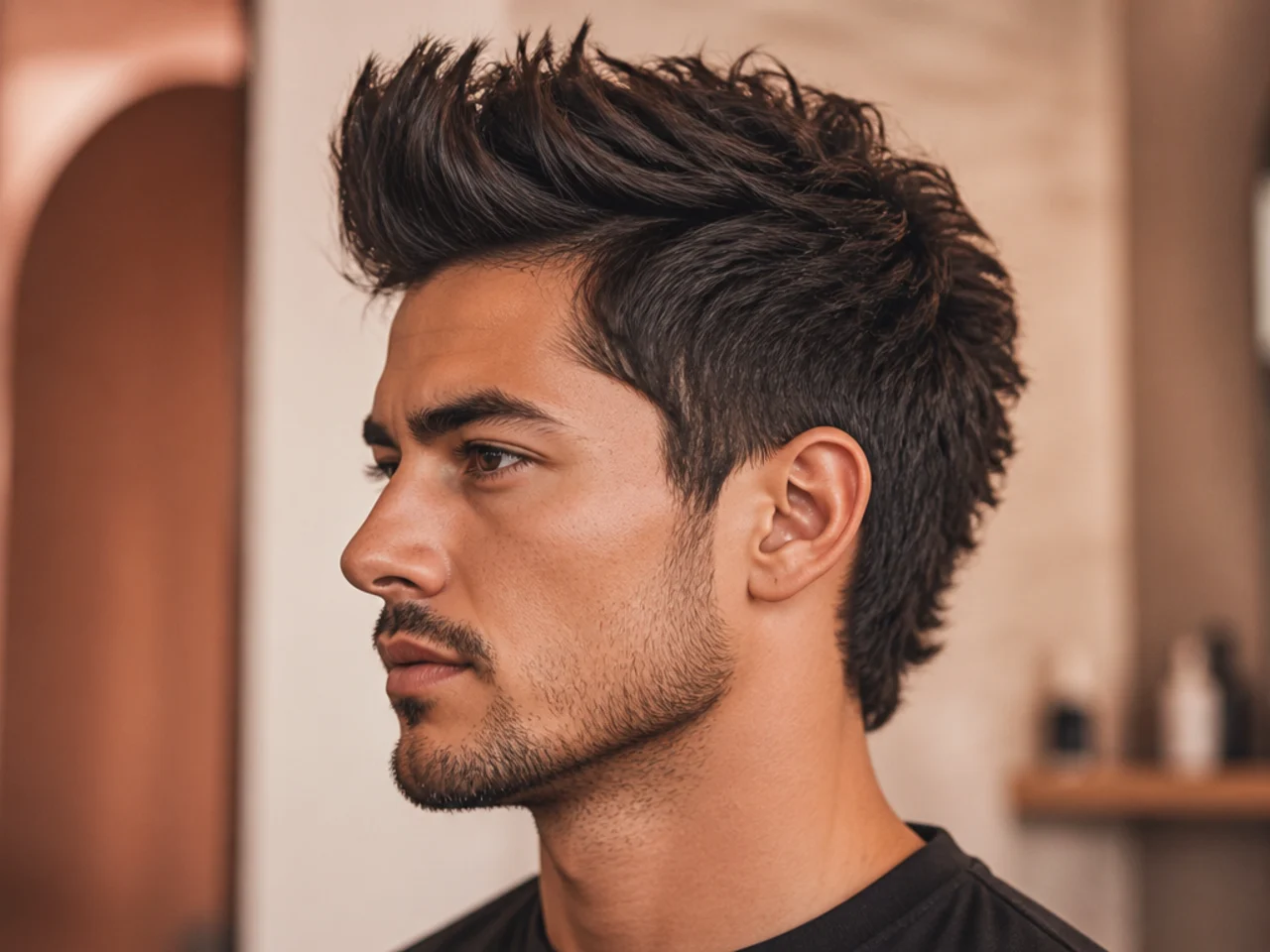
The quiff pushed toward a mohawk without shaving down the sides. The central strip is 5 inches, lifted forward and up to a soft peak at the front, while the sides stay tapered or faded. It's the boldest medium quiff without any of the commitment a real hawk asks for.
Ask for a mid fade or high skin fade, 5 inches on top with the length concentrated down the center, and internal thinning at the sides of the top so the middle strip stands prouder. Tell your barber the front should lift forward and up, not just up. Style with a strong fiber or firm-hold cream, pushed up and forward with your fingers under the roots. Best for square and long face shapes on straight-to-wavy hair.
The Modern Medium Quiff
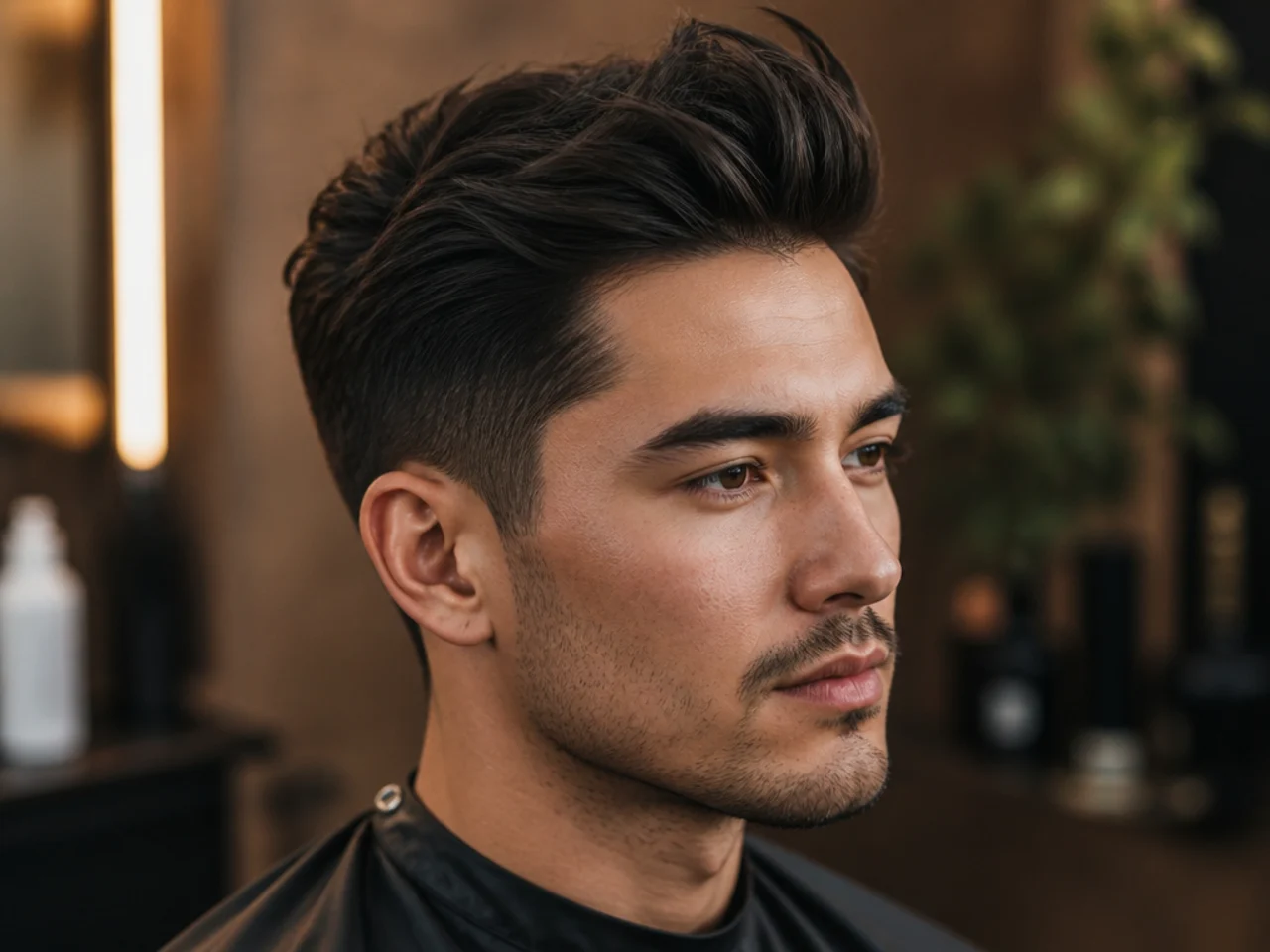
Every edge sharpened. Sides get a proper skin fade or high taper, the top is left long at the front (5 inches) and tighter through the crown, and there's usually a soft disconnection where the top meets the fade. A crisp line-up at the hairline finishes the shape.
Ask your barber for a skin fade starting mid-ear, scissor detail through the crown, a line-up at the temple and forehead, and the front left long enough to sweep. Tell your barber you want maximum contrast between the fade and the top. Prep with a light mousse, blow-dry the front up, then finish with matte clay pressed into the ends only. Best for 20s–30s guys who want a haircut that photographs sharp. See the wider textured haircuts for men family for related directions.
The Medium Quiff for Fine Hair
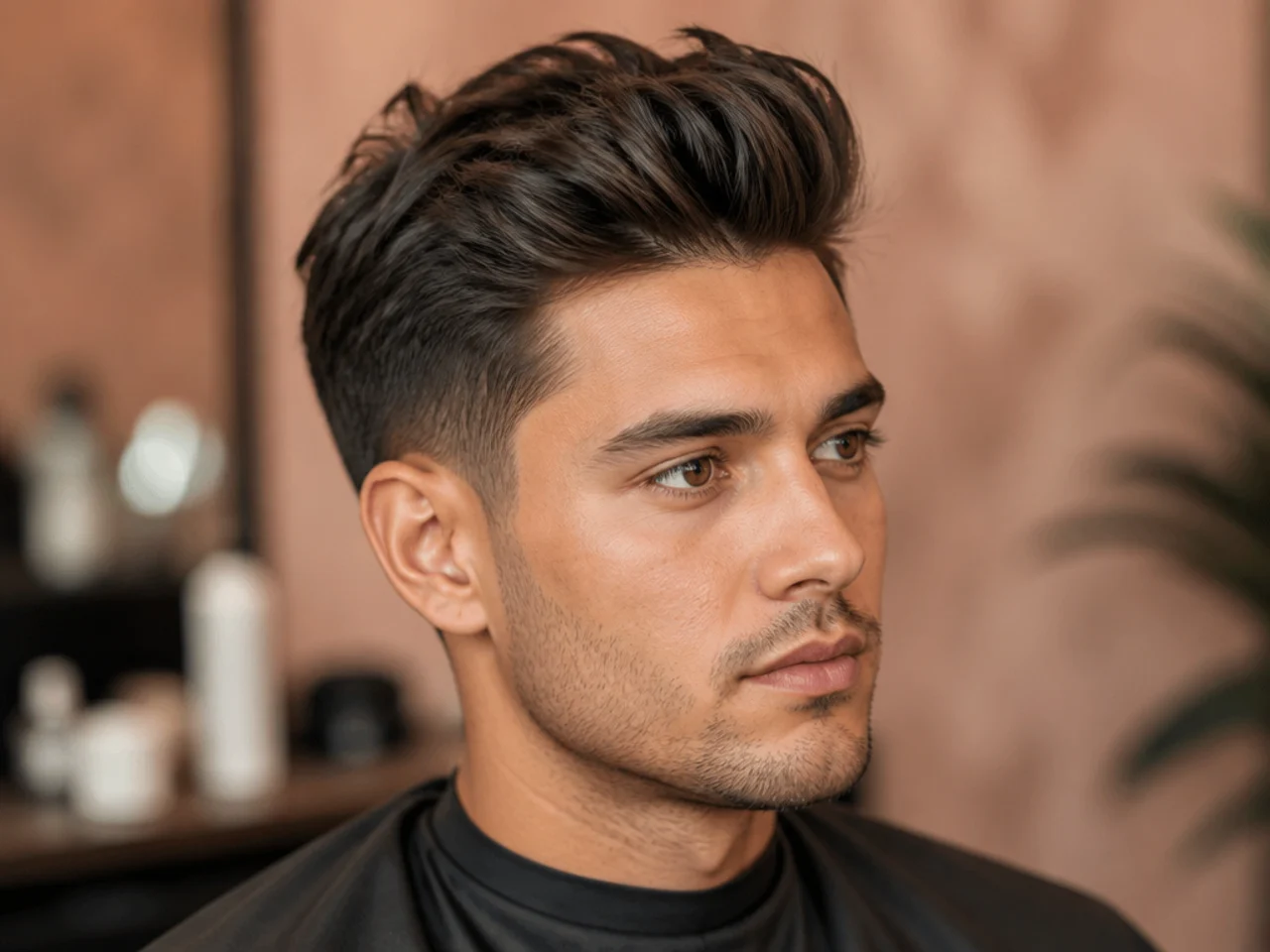
Fine hair fights the medium quiff shape unless you help it. This version keeps the top slightly shorter (4 inches, not 5–6), asks for aggressive root lift in the cut, and swaps clay for a lighter volumizing product. Every step is engineered for the strand type.
Ask for 4 inches at the front, a scissor taper (not a heavy fade) at the sides, and internal cutting that leaves the roots free to lift. Tell your barber you have fine hair and the priority is volume. Style with a volumizing mousse worked into damp roots, blow-dry with a round brush lifting front-to-back, then finish with a texture powder dusted at the root and a light hairspray from eight inches. Best for fine straight or slightly wavy hair on any face shape. The full messy hairstyles men guide covers more volume-first shapes if this one doesn't hit.
The Asymmetric Medium Quiff
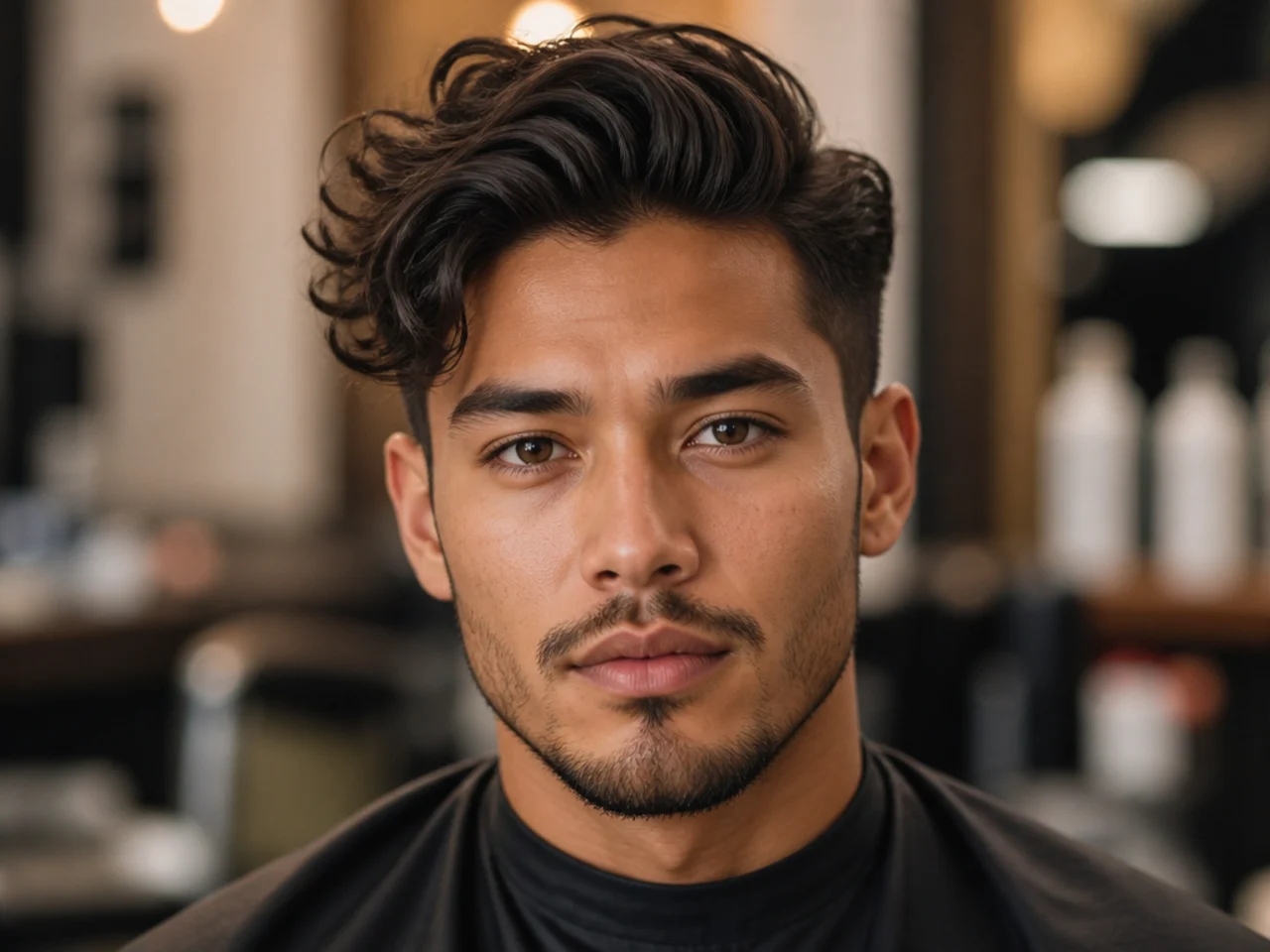
The quiff deliberately off-balance. Instead of a symmetrical sweep up and back, one side is styled harder than the other, and the front lifts up and across at a strong diagonal. The shape reads modern and slightly editorial — this is the version stylists cut for photo shoots and wedding party grooms.
Ask for 5 inches at the front layered heavier on your dominant side, a mid taper fade or scissor-blended side, and a soft crown blend. Tell your barber you want visible asymmetry — the two sides of the top shouldn't mirror. Style with a medium-hold fiber or cream pushed up and across in the direction of the heavier side. Best for oval and heart-shaped faces on straight-to-wavy medium-density hair. The version that reads highest-fashion in the guide.
The Medium Quiff with Hard Part
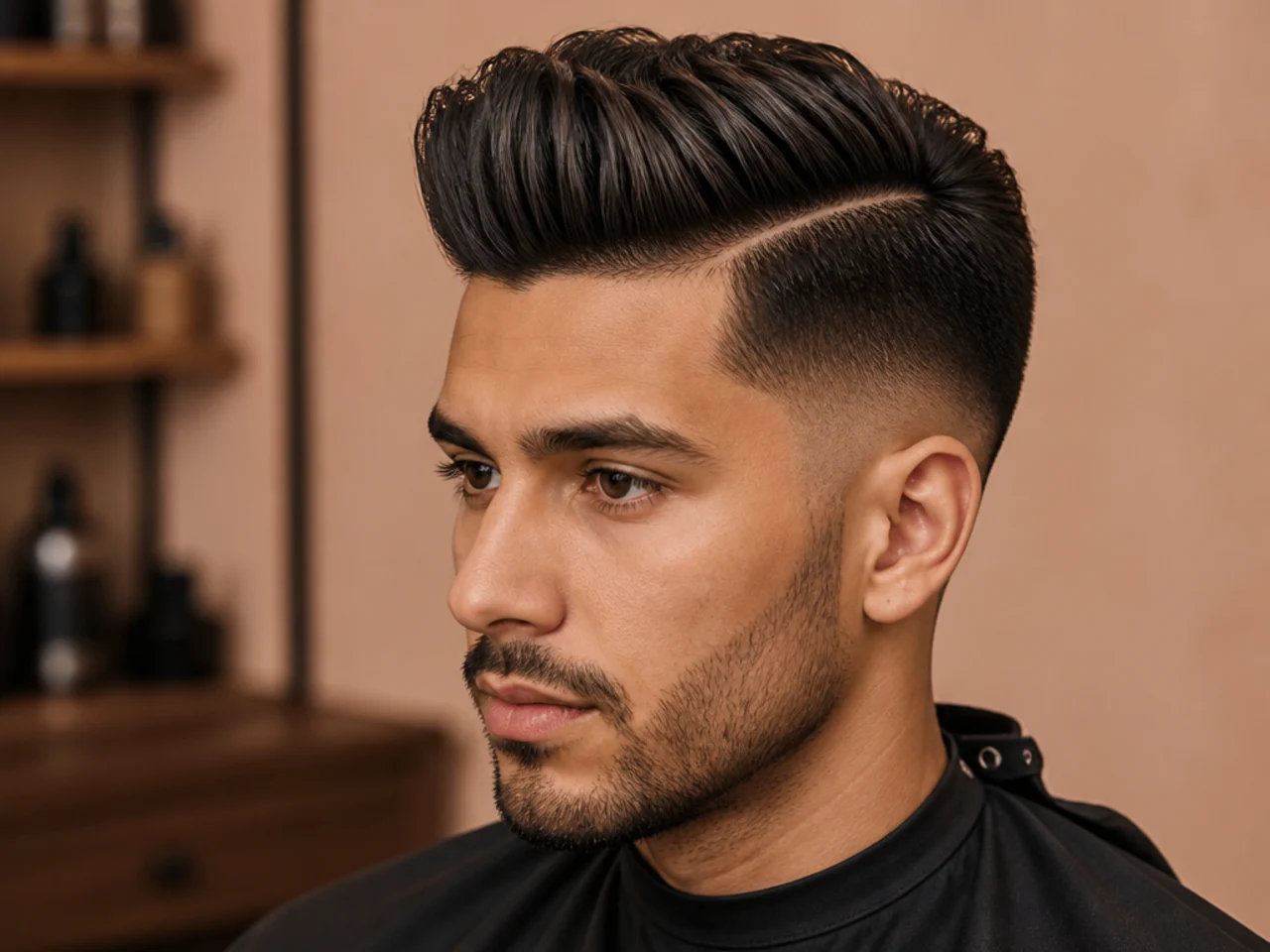
A medium quiff with a razor-drawn hard part cut into the side. The parted hair sits swept up and back from the part, and the whole cut reads defined and slightly formal. This is the barber's showpiece — the medium quiff that leaves the chair looking finished before you touch it with product.
Ask for a razor part on your dominant side, 5 inches at the front, a low taper fade or scissor-tapered side down to a #2, and a soft crown blend. Tell your barber to cut the part with a straight razor, not a clipper — the line is cleaner and holds shape longer. Style with a shine pomade combed cleanly from the part outward and up-and-back for the front. Best for weddings, formal events, and straight thick hair on any face shape. Pairs with the comb over haircut technique if you want the part more pronounced next time.
How to Ask Your Barber
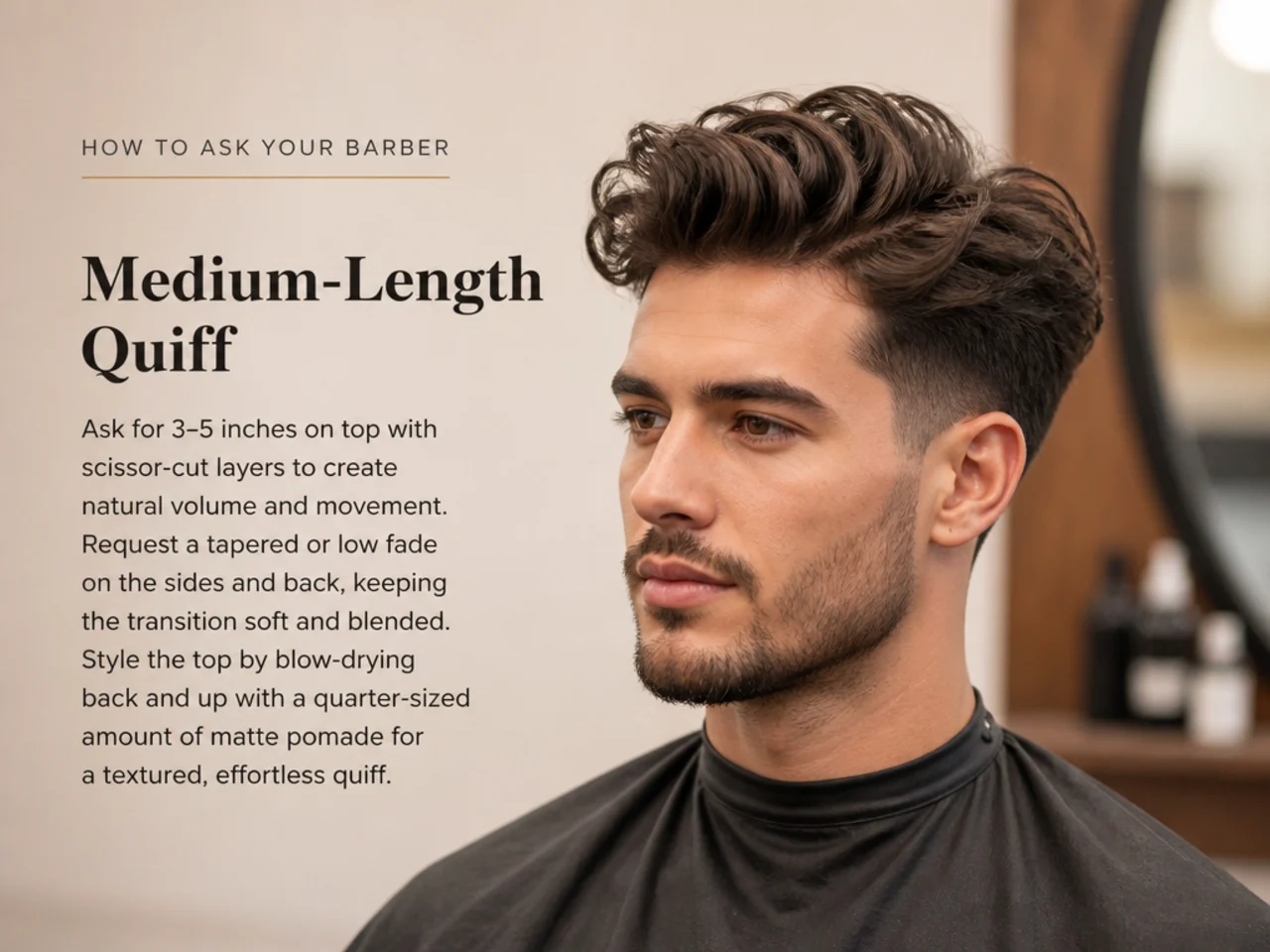
Bring a photo of the exact variation from above. Then walk through these six specifics in order — every barber understands this brief.
- Length at the front, in inches. Four inches for fine or conservative versions, five for the workhorse classic and textured cuts, six for the more dramatic versions in the list. Say the number.
- Length at the crown. Ask for the crown "tapered down to three inches" or "tight through the crown." Long crown ruins the shape from behind on any medium quiff.
- Side treatment. Scissor taper (no clippers), low taper fade, mid fade, high skin fade, drop fade, burst fade, or disconnected undercut. Say which one, and specify the guard number for undercuts.
- Crown blend. Ask for a "soft blend at the crown" so the shape rounds from every angle. Without this, the cut reads blocky from the side.
- Front weight. Tell your barber if you want the front weight-heavy (for movement and sweep) or thinned (for a lighter finish on thick hair).
- Finish. Matte and textured, pomade shine, or wet-look gloss. This tells your barber how to blow-dry you at the finish and which product family to recommend.
Say those six things and your barber will cut exactly the medium quiff you want. Skip any of them and you're rolling the dice on someone else's interpretation.
Styling & Maintenance
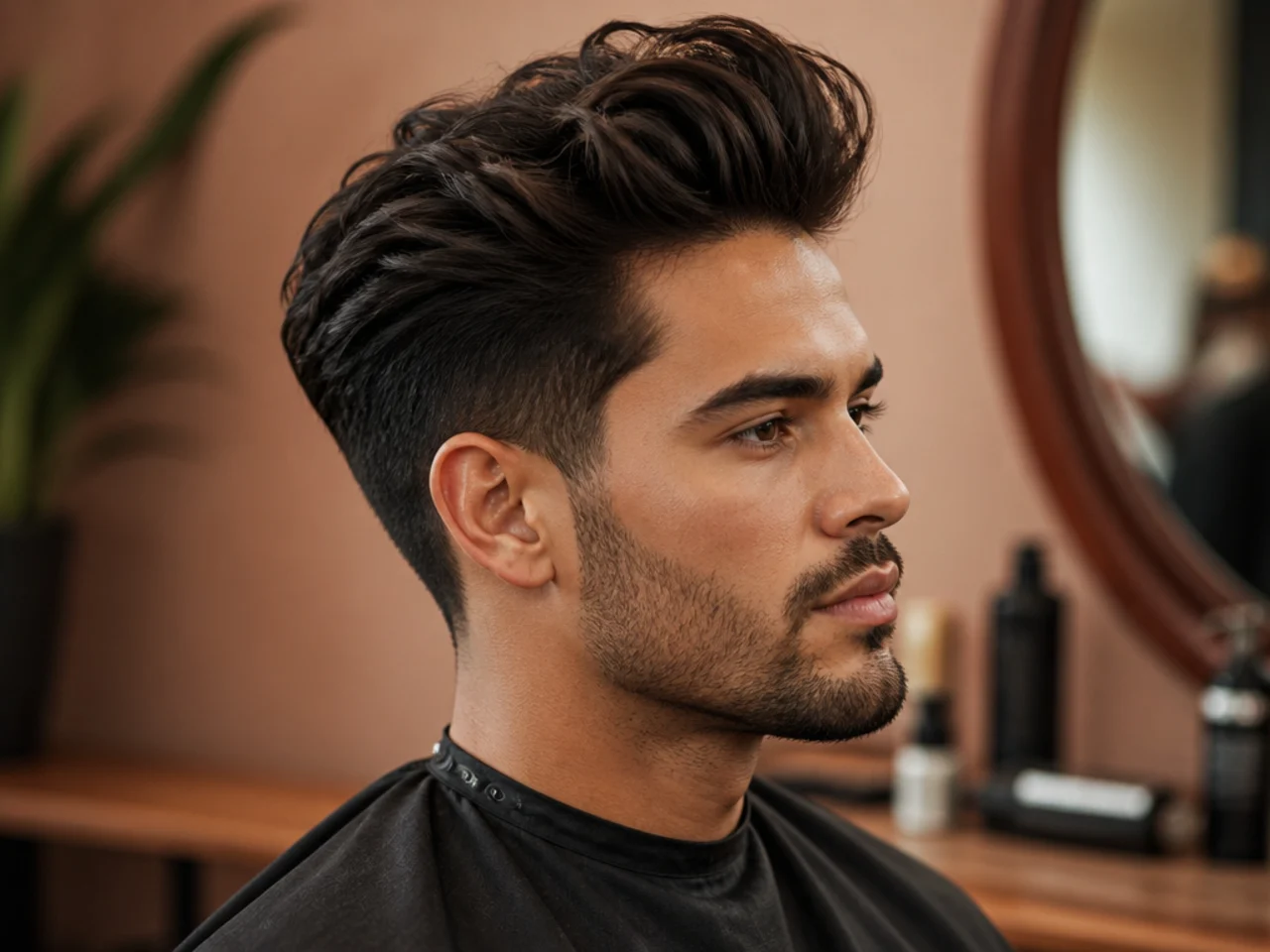
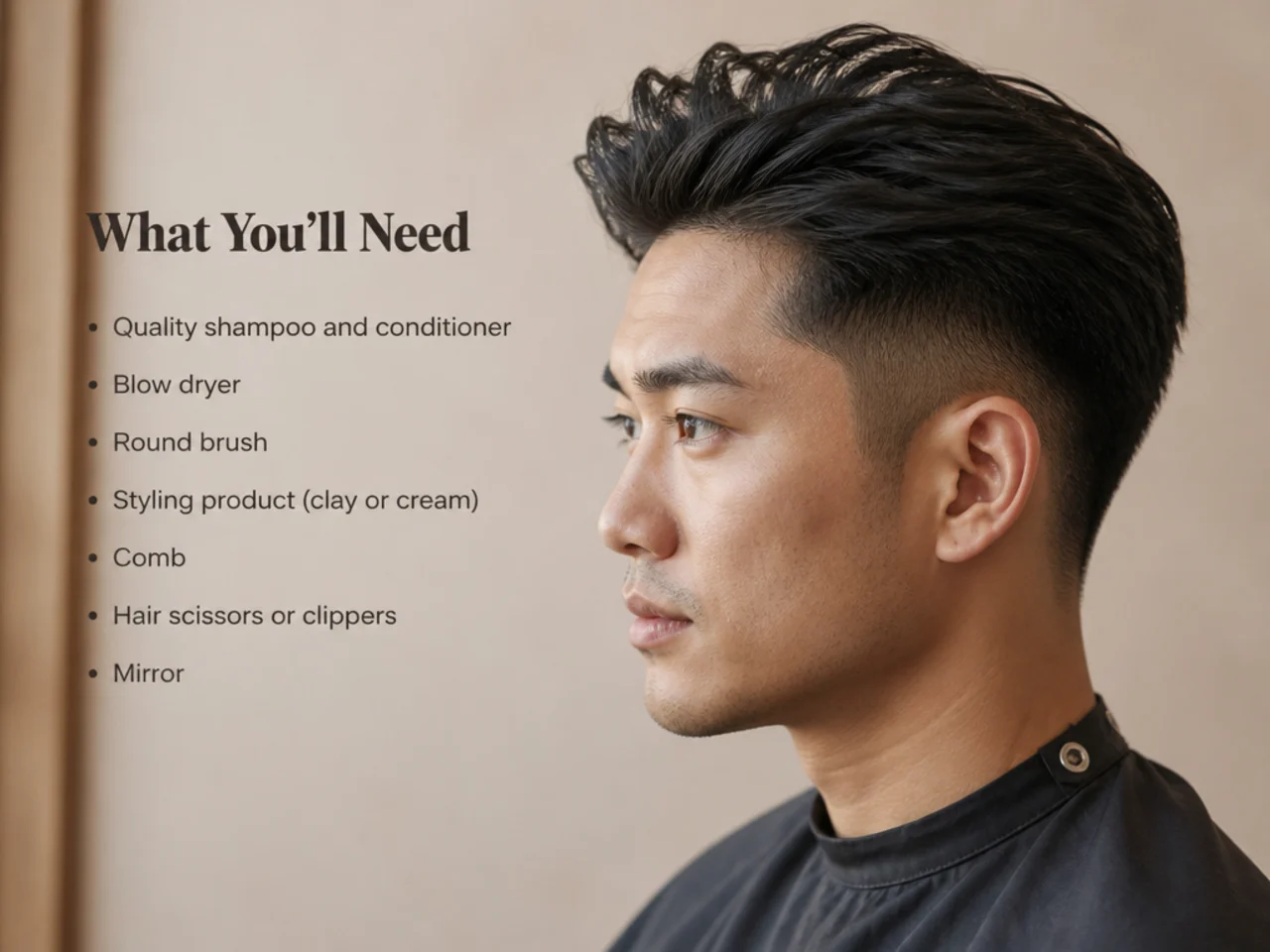
Medium quiffs need three things on the counter: a styling product matched to your finish, a round brush or vented brush for front lift, and a light hairspray for the longer variations. That's it.
Match the product to the version. Matte clay or paste for textured, messy, undercut, and modern medium quiffs. Water-based pomade for classic, side-swept, slick-back, and hard-part versions. A curl cream or defining cream for curly and wavy medium quiffs. A volumizing mousse plus texture powder for the fine-hair version. One product family, not two mixed together.
Start with damp — not wet — hair. Spray a light sea-salt spray or work a coin of mousse from root to mid-length. Blow-dry on medium heat with the brush lifting the front up and slightly back. Cool-shot the shape to lock the direction in. Warm a nickel of your chosen product between your palms until it turns clear, then apply from the ends first and work back toward the roots. Never dump product at the roots — that flattens what you just built.
Off-center reads more modern than dead-center on any medium quiff. For structured versions, comb through with a fine-tooth comb. For tousled and textured versions, rake through with open fingers only.
Book the next cut every five to six weeks. The shape survives longer than a short quiff, but the moment the crown grows past the front line, the whole cut reads unkempt. A quick shape-up at the sides between full cuts extends the life by a week. For a broader product toolkit that holds up on straight, wavy, and coarse hair, the best wavy hair products guide covers clays, pomades, and creams that pair with every medium quiff in this list. For the clippers your barber (or you at home) actually reaches for, see the best hair clippers for men breakdown.
FAQ
How long is a "medium" quiff exactly?
Four to six inches at the front, tapered down through the crown. Anything shorter falls into the short quiff hairstyles men category — top runs 2–3 inches and holds shape on its own. Anything longer belongs with the long quiff hairstyles men family and asks for real styling time. Medium is the flexible middle ground.
Do I need a fade with a medium quiff?
No. A scissor taper works beautifully and reads classic. Fades add contrast — low taper for office wear, mid fade for balance, high skin fade for a bolder frame, drop or burst fade for softer geometry. Pick the side treatment for your dress code and your face shape, not because a fade feels obligatory.
Which face shape suits a medium quiff best?
Round and square jaws gain the most because the vertical lift adds visible length. Oval faces suit any medium quiff variation. Long or narrow faces should keep the front around four inches so the shape doesn't stretch the face further. Heart-shaped faces work with side-swept or asymmetric versions that balance a wider forehead.
How long does it take to grow one out from a short cut?
Two to four months from a short crop, six months from a buzz cut — you need at least four inches at the front to hold a medium quiff shape. Ask your barber for scissor tapering along the way so the sides look intentional through the awkward middle phase. Don't skip trims while growing out; unshaped growth reads shaggy, not styled.
Can I switch between finishes without recutting?
Yes — that's the whole point of the medium quiff. The same cut wears matte and textured on Tuesday with clay, then slick and shiny on Friday night with a water-based pomade. Some versions in this guide (the undercut, the modern medium quiff) were built specifically to hold two looks off one haircut.
What if my hair is thick and coarse?
Ask your barber to remove weight through internal thinning during the cut. Coarse hair left dense at five inches sits bulky, not lifted, and the quiff shape gets lost. The right weight-work turns the same length into a shape that sweeps cleanly instead of sitting like a helmet. Prep with a blow-dry cream to soften the strands, and use matte paste rather than clay — paste holds coarser hair better without dragging.