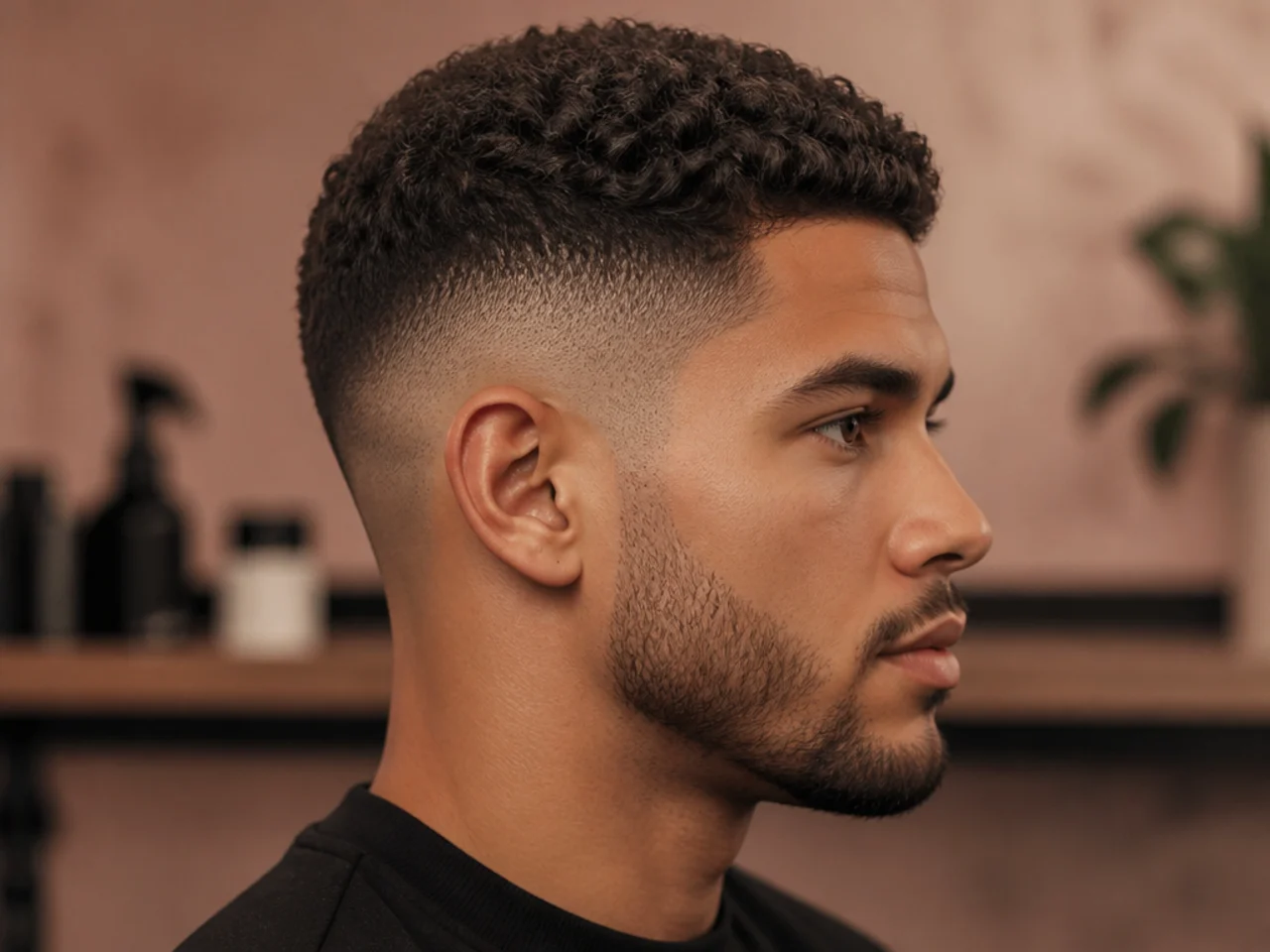
Best Medium Fade Haircut for Men: The Ultimate Guide
Try the stylish Medium Fade Haircut for a clean and balanced look. This trendy men’s haircut blends perfectly with modern hairstyles and suits almost every face shape.
In this article · 22
- What Is a Medium Fade Haircut?
- Key Characteristics:
- Top 5 Medium Fade Haircut Styles (Trending Now)
- 1\. Medium Skin Fade
- 2\. Medium Taper Fade
- 3\. Medium Drop Fade
- 4\. Medium Fade with Curly Hair
- 5\. Medium Fade with Pompadour or Quiff
- How to Maintain a Medium Fade Haircut
- Fade Haircut for 50 Year Old Man: Stylish and Age-Appropriate Look
- Men's Skin Fade Haircut: Clean, Sharp, and Modern Style
- Who Should Get a Medium Fade?
- Final Thoughts
- Medium Fade Haircut FAQ
- What's Better, Mid-fade or Taper?
- Is Fade Haram in Islam?
- What Is a Medium Fade Haircut?
- Does a Mid Fade Look Good?
- Is a Medium Fade Professional?
- What's The Difference Between a Medium Fade and Low Fade?
- Can a Medium Fade Work With Long Hair on Top?
- Is a Skin Fade The Same as a Medium Fade?
The medium fade is the most-requested fade in the shop, and for good reason. It sits in the middle of the fade family — the transition starts near your temple, drops through tighter guards, and leaves the top untouched. What you get: five variations that suit almost every face shape and hair type. Below, each one is broken down by what makes it different, who it flatters, and how to ask for it in the chair.
What Is a Medium Fade Haircut?
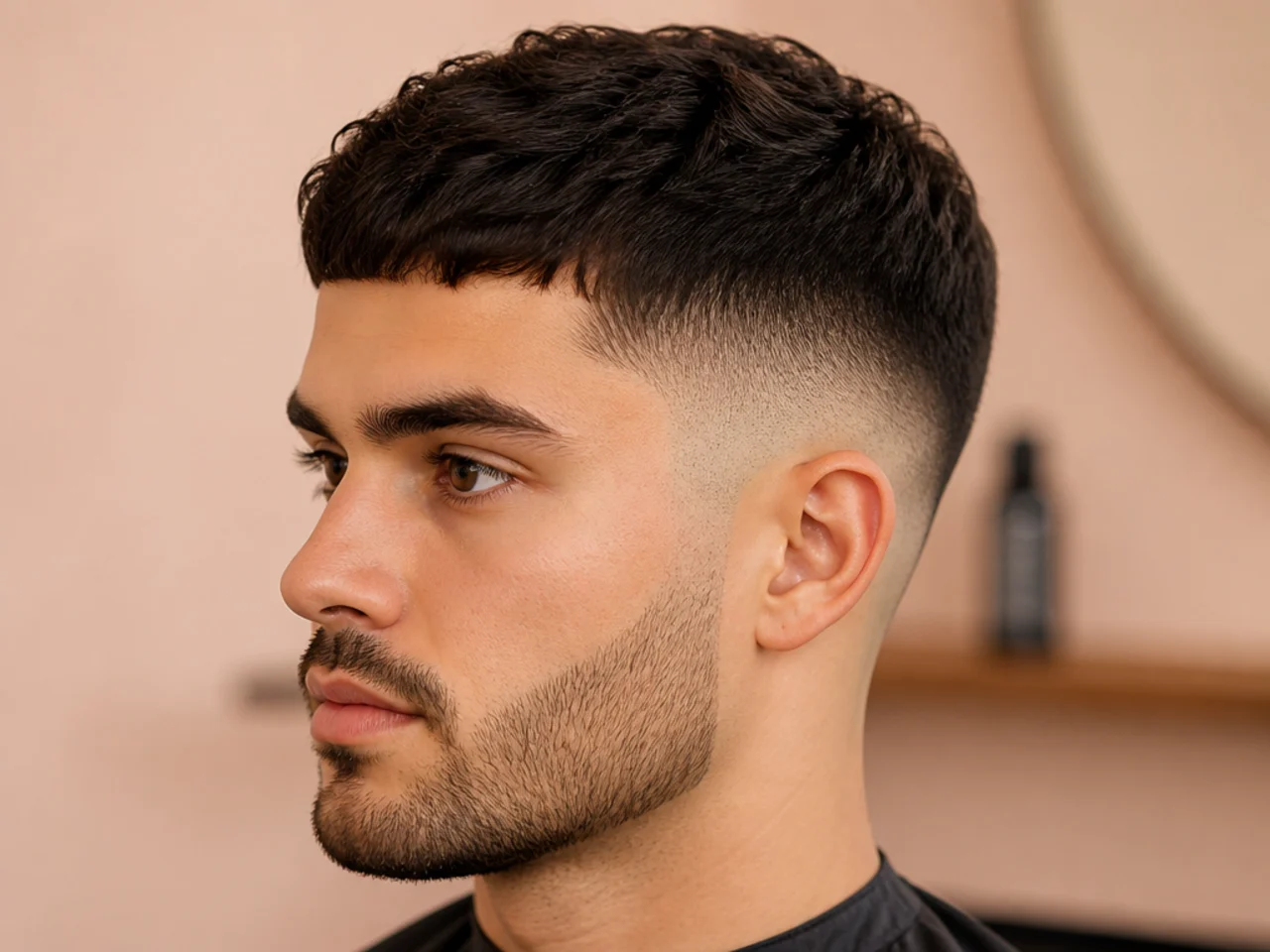
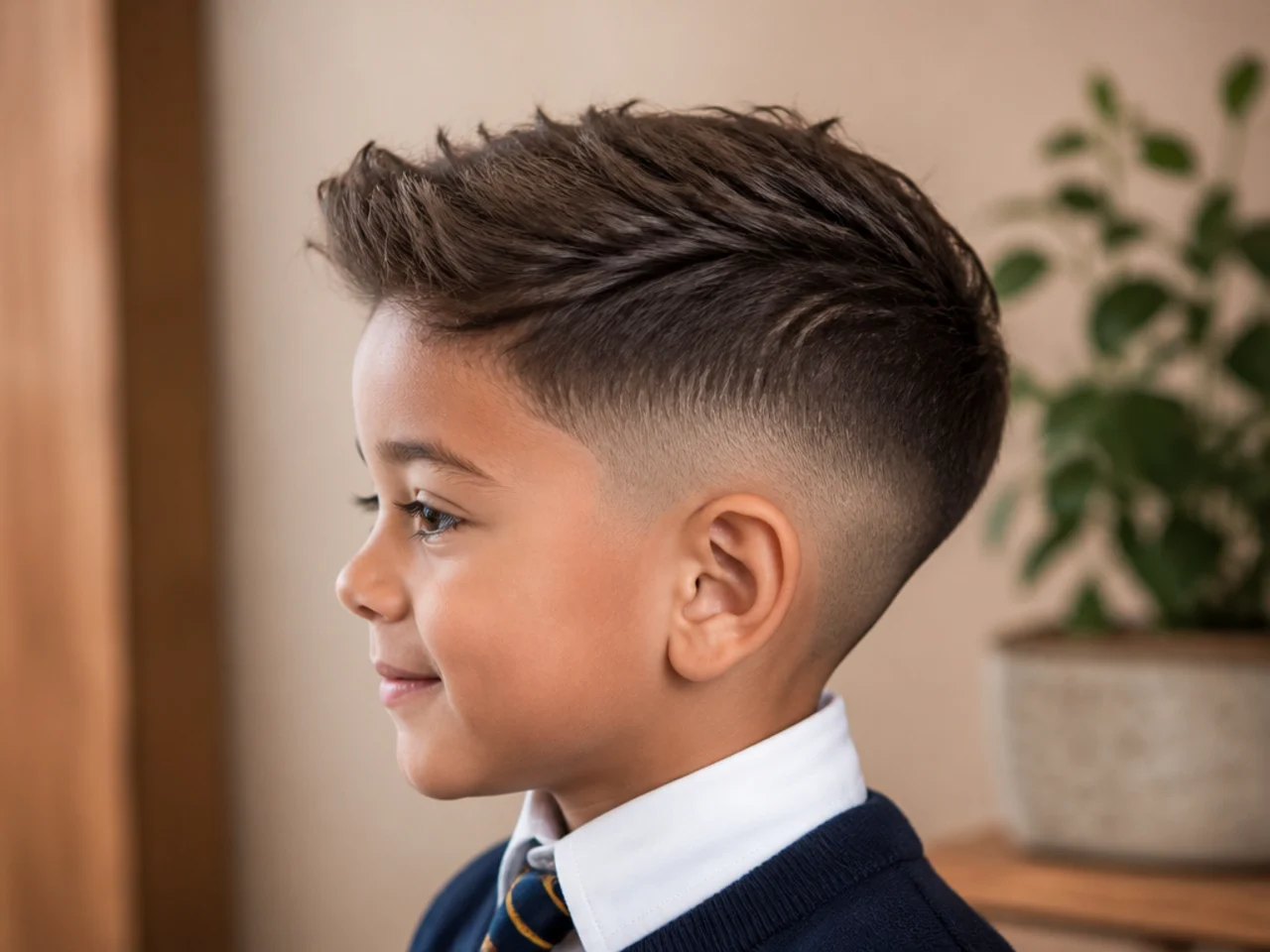
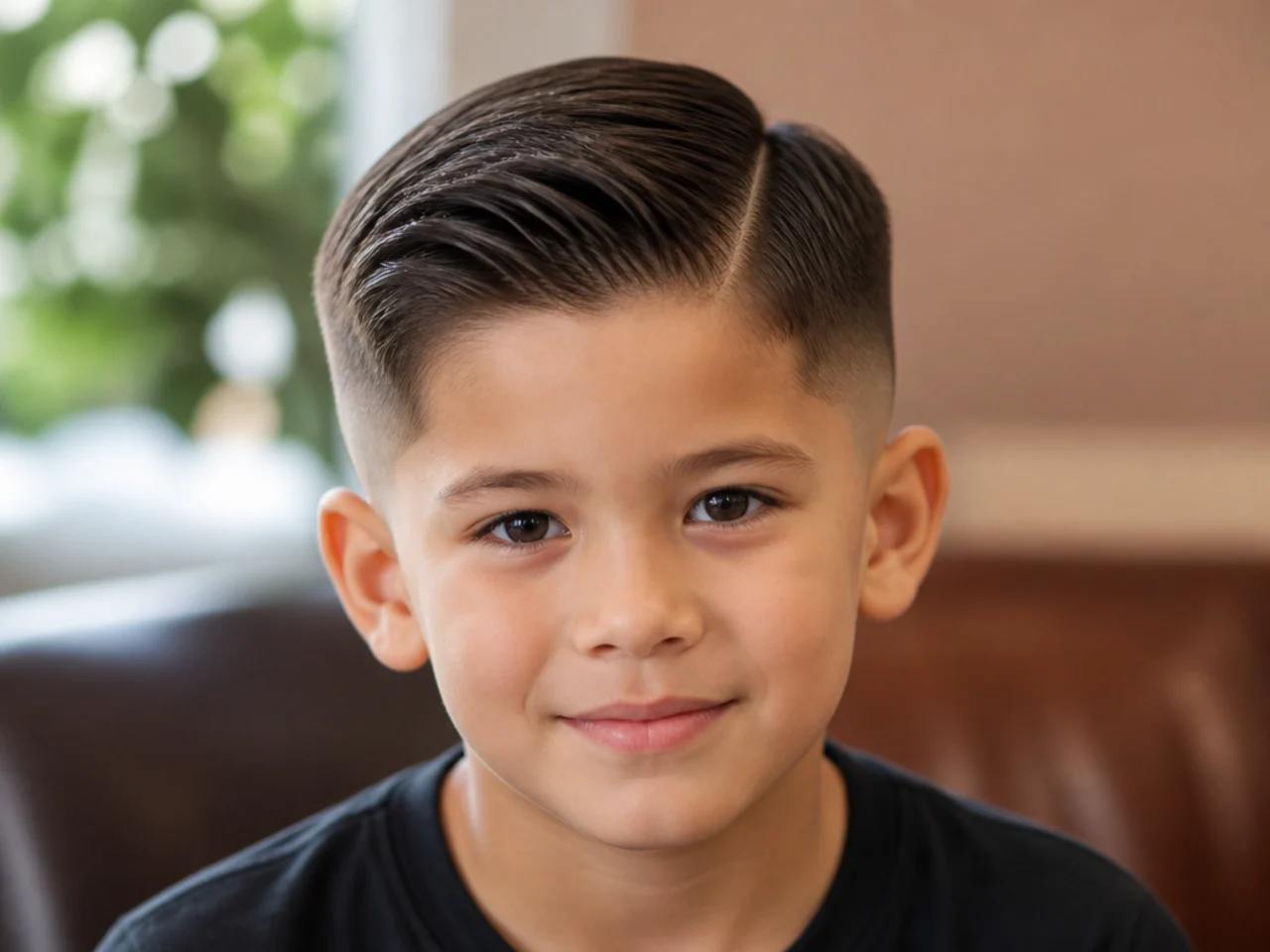
A medium fade starts halfway between your ear and your temple. From there, the sides taper down — usually to a #1 or #0.5 at the bottom, often blended to skin. The top stays untouched by the clippers. That midpoint start is what defines the cut. Move the fade line up and you're in high fade or high taper fade territory. Move it down and you've built a low fade.
Some barbers use "mid fade" and "medium fade" interchangeably. Others reserve "mid" for a sharper, cleaner line right at the temple bone and treat "medium" as a broader zone in the middle third of the head. If you want the sharper, more defined version, ask for a mid fade haircut by name. If you want more forgiveness in the line, ask for a medium.
The reason it's the safest cut on the menu: contrast. You get enough drop-off from top to sides that the cut reads intentional, but not so much that the fade becomes the whole story. The fade haircut family lives on that contrast, and the medium sits at its median.
Key Characteristics:
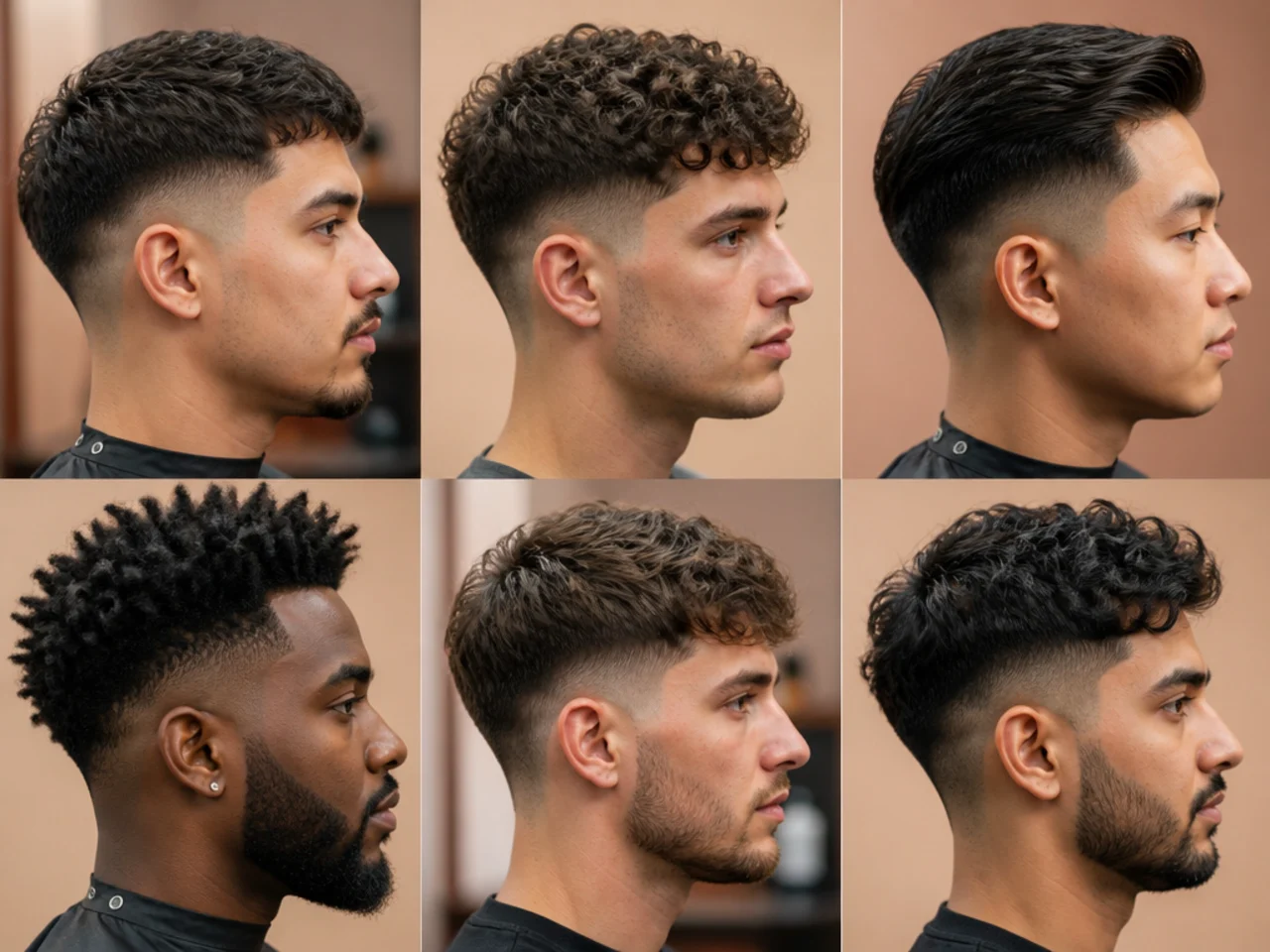
- Fade begins around the temple, roughly midway up the head.
- Sides can end at skin, #0.5, or #1 depending on how bold you want the contrast.
- Blends with any length on top — buzzed, textured, quiffed, slicked, or curled.
- Works with most face shapes and every hair type.
- Grows out cleanly for two to three weeks before you need a re-cut.
Top 5 Medium Fade Haircut Styles (Trending Now)
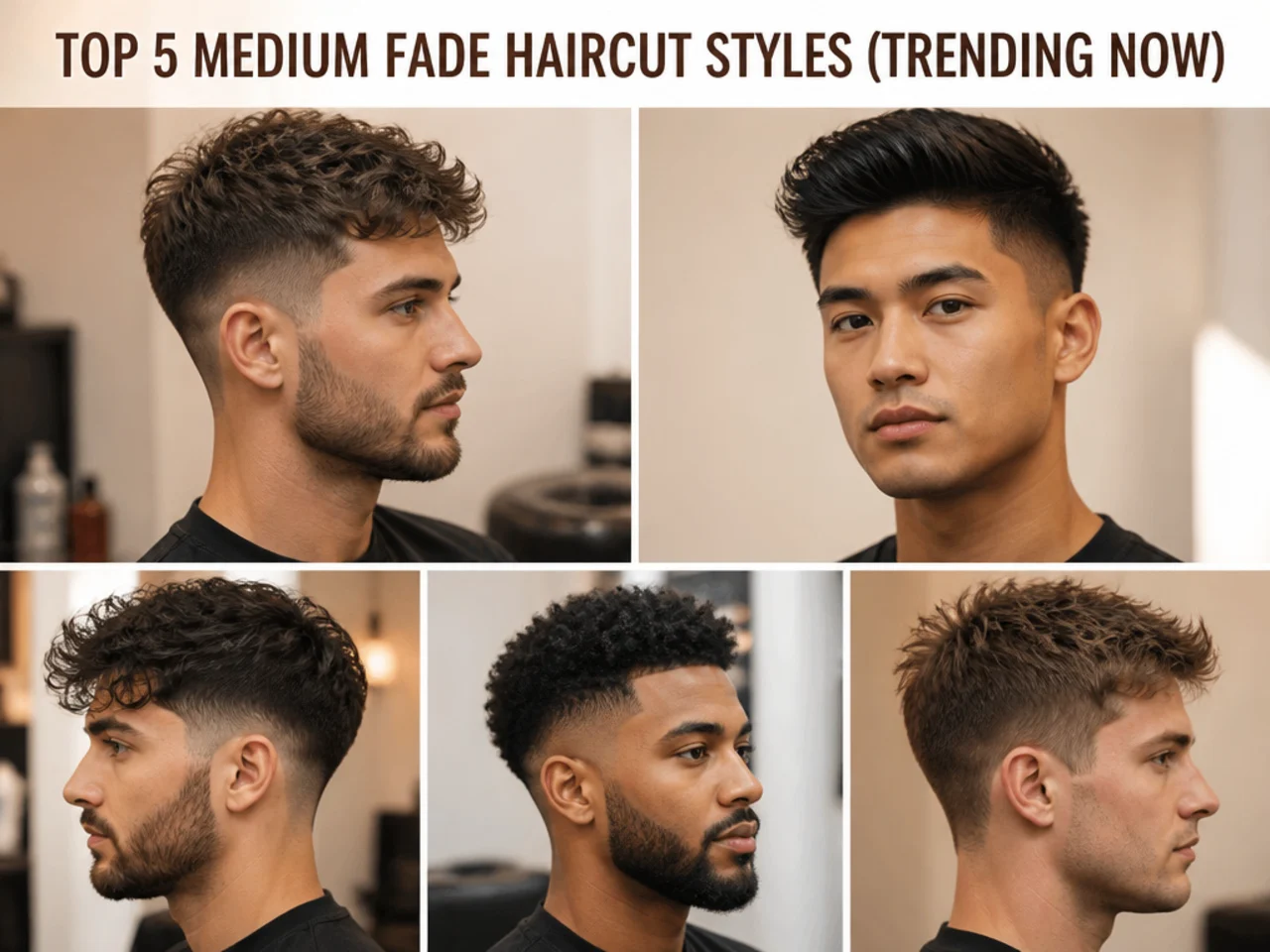
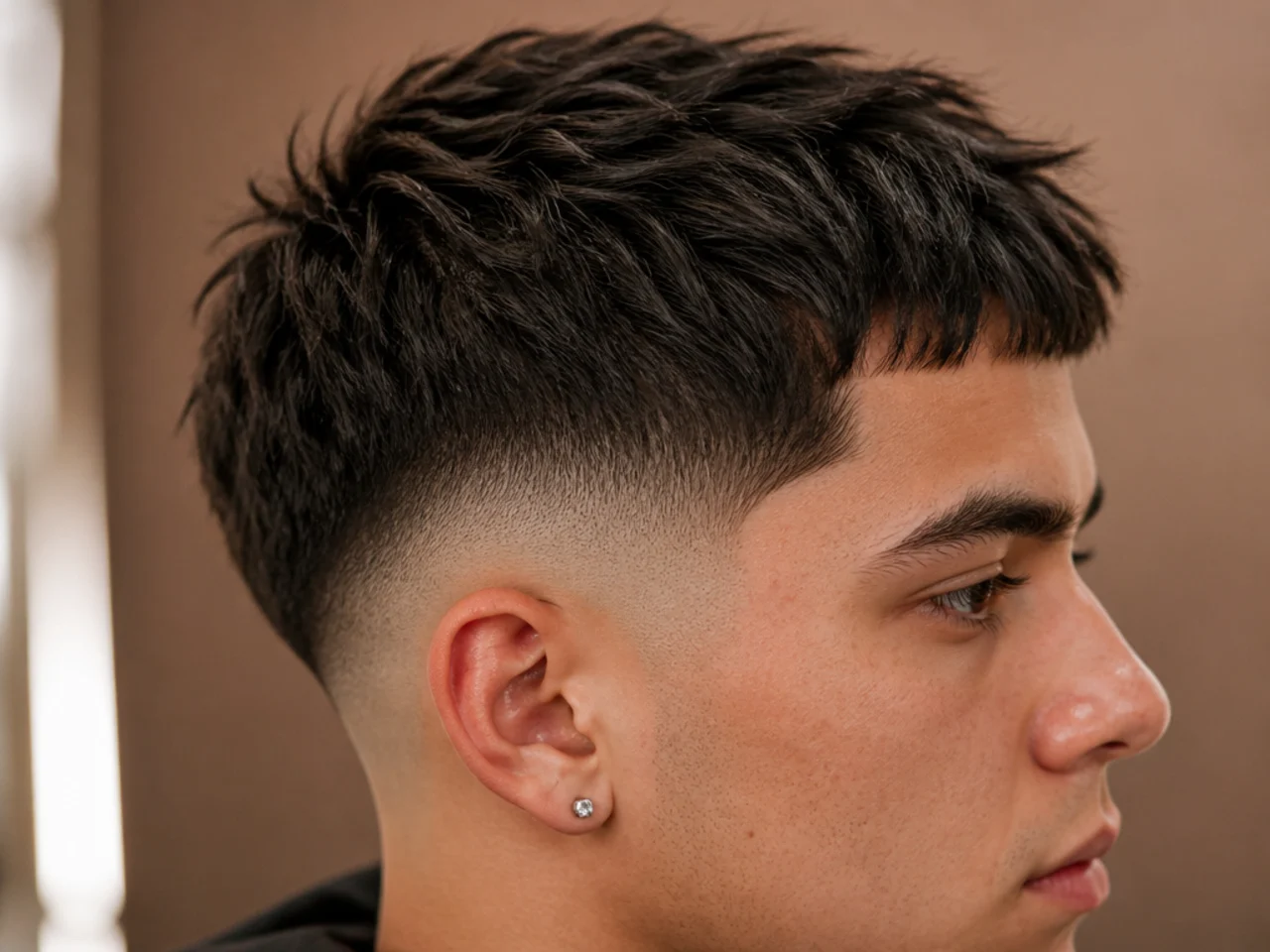
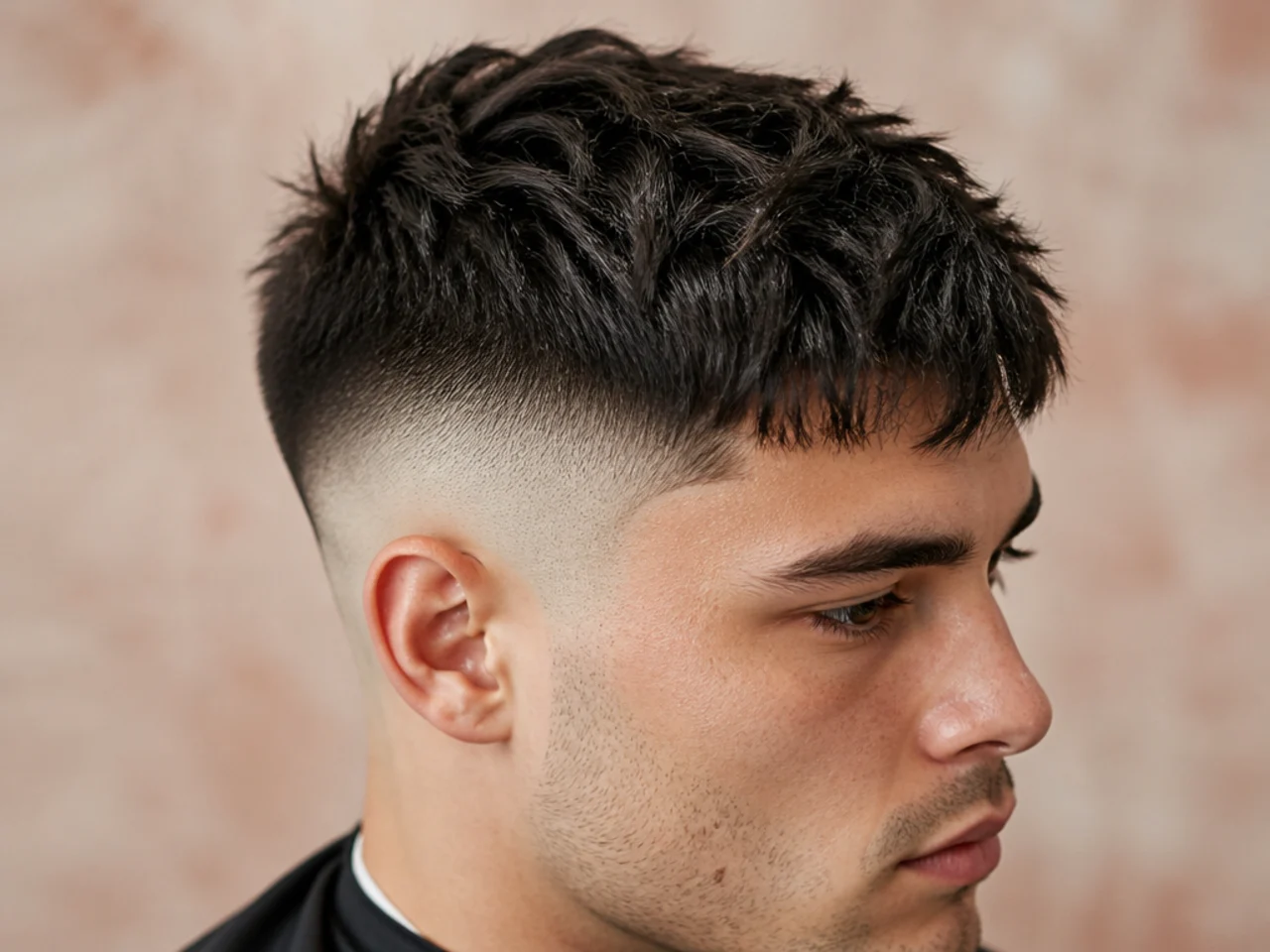
1. Medium Skin Fade
The high-contrast version. The clippers start at the mid-line and drop through every guard until skin shows at the bottom. What makes it different: that fully bald bottom section. Naked skin frames whatever you're doing on top and makes the cut photograph sharp from across the room.
Best for oval, square, and diamond faces. Exposed skin narrows the visual width of your head at the sides, so if you've got a rounder face, this is a quick way to look leaner. Steer around it if your face is already long — the extra vertical will stretch you further.
How to ask: "Medium skin fade, fully bald at the bottom, blended up to a #2 at the top of the fade. Leave two inches on top with a matte finish." Two inches is the sweet spot for a textured crew cut or French crop over this fade. If you want to go shorter, one inch works for a buzz cut hybrid.
Styling tip: matte clay, not pomade. Pomade's shine fights the clean look of exposed skin. Warm a pea-sized amount between your palms, work it through damp hair, and let it air-dry.
2. Medium Taper Fade
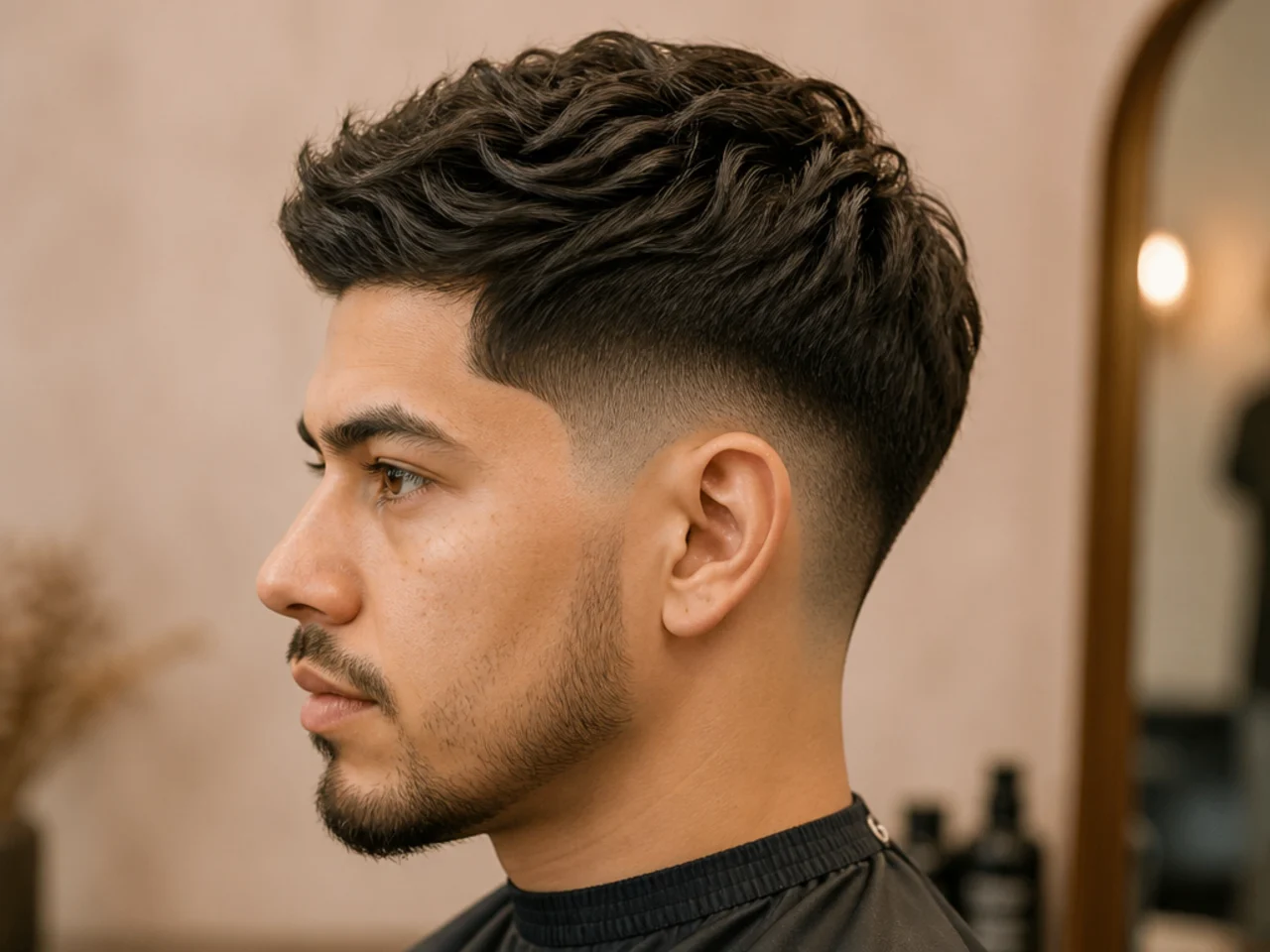
The conservative variant. The fade still starts mid-head, but it never goes to skin — the shortest point sits at a #1 or #0.5. What makes it different: no naked scalp anywhere. The cut still looks fresh, but it reads office-appropriate on a Monday and pub-appropriate on a Friday.
Best for men over 30, professionals in traditional industries, and anyone whose scalp is prone to sun sensitivity or razor bumps. Every face shape can wear it. Rounder faces benefit from keeping length on top for vertical lift.
How to ask: "Medium taper fade, blended down to a #1 on the sides, no skin. Cleanest at the perimeter and softening as it goes up. Leave one and a half to two inches on top, scissor-finished." The scissor finish keeps the top-to-sides transition from looking abrupt. If you want the full breakdown of the taper haircut family, that standalone guide covers every variation.
Styling tip: sea salt spray in the morning, no product at night. You get two looks from one cut — textured and worked for the day, soft and casual for the evening.
3. Medium Drop Fade
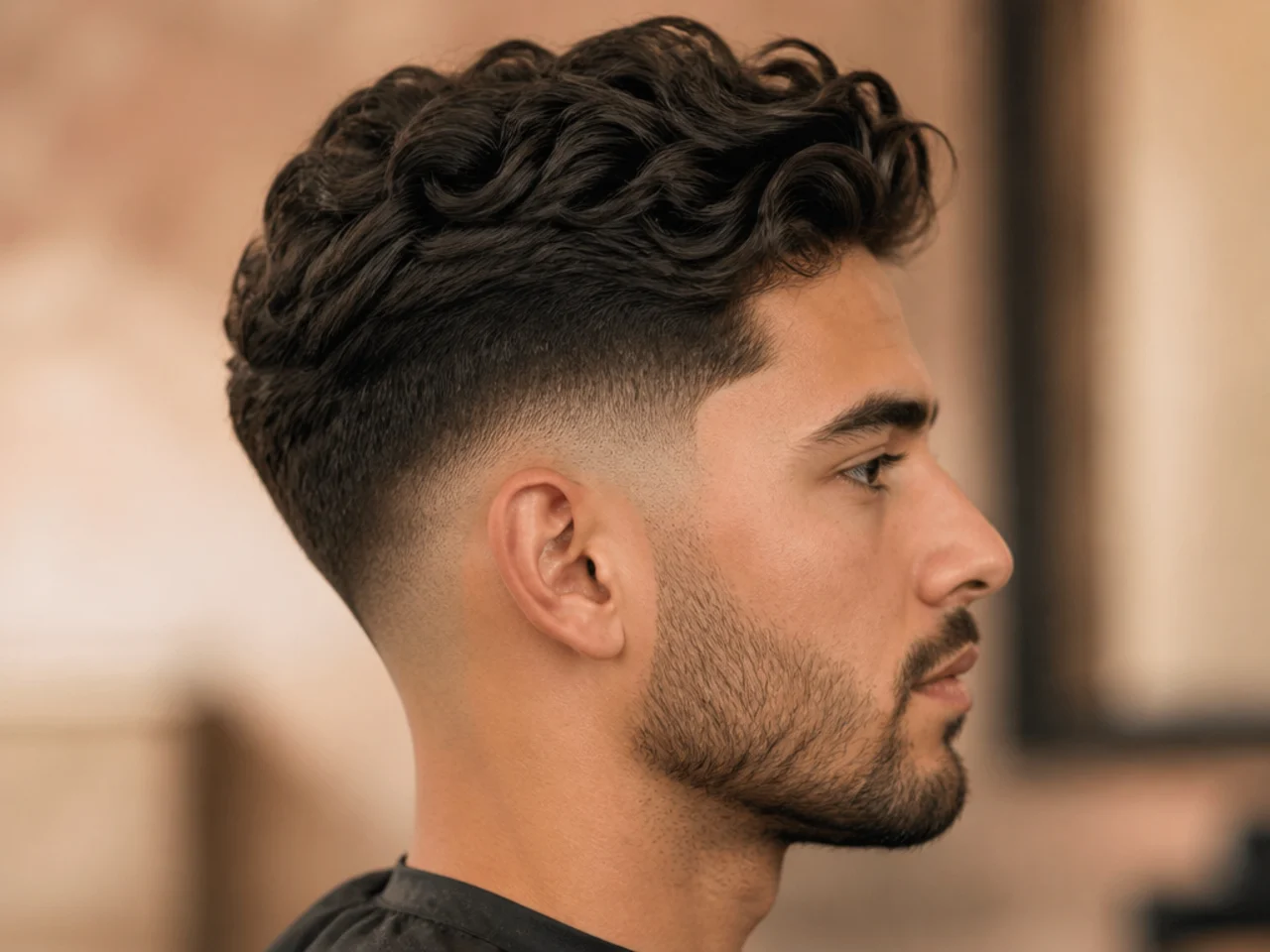
The fade line curves down behind the ear instead of running level around your head. What makes it different: that dropped arc. It follows the natural curve of your skull and gives the cut movement — the fade almost brackets your ear rather than cutting a straight highway across.
Best for round and oval faces. The drop pulls the eye downward and elongates the jaw line. It also plays with any top style that has weight in the back — pompadours, quiffs, faux hawks, and longer curly styles.
How to ask: "Medium drop fade, dropped about an inch behind the ear, blended to skin or a #0.5 at the low point. Two to three inches on top with texture through the ends." Show a photo — the drop is where barbers vary most, and a picture pins the exact height for you.
Styling tip: blow-dry the top back and slightly to one side while it's still damp. The drop fade looks best when the top has visible direction, not just volume.
4. Medium Fade with Curly Hair
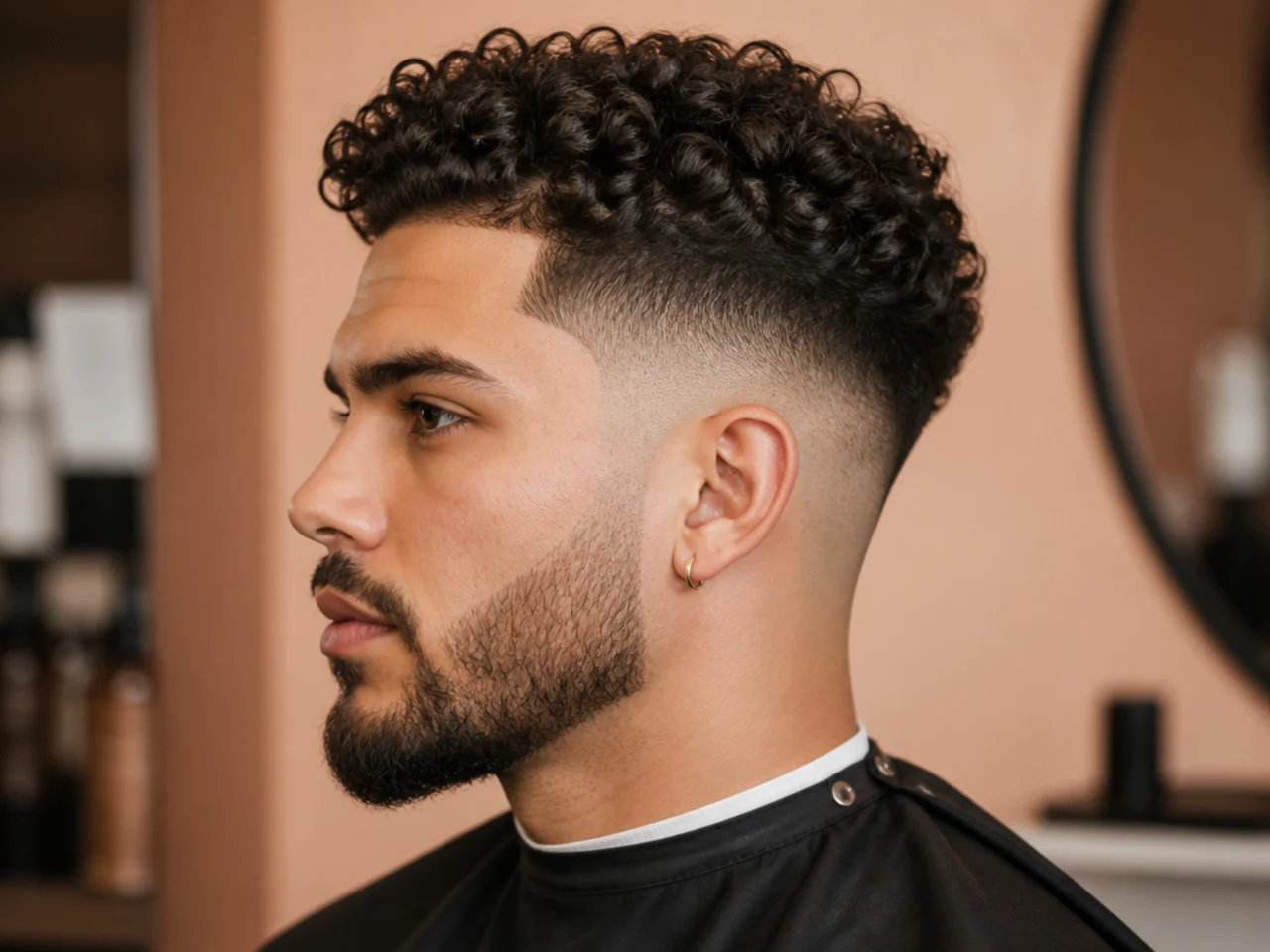
The fade earns its keep here. Curls carry weight and shape on top, so the clean, tight sides give the eye somewhere quiet to rest. What makes it different: the top is defined by its natural texture, and the fade exists to spotlight it, not compete with it. If you want to explore the top-shape options in more depth, work through the full curly hairstyles for men guide.
Best for anyone with a 3a to 4c curl pattern. Oval and heart-shaped faces get the most out of it — curls add width at the top and balance a narrower jaw. Square faces work too; pair with a soft round top rather than a boxy crop.
How to ask: "Medium fade to skin, scissor-cut on top only — no thinning shears, no clippers over the curls. Leave three to four inches of length, keep the curl pattern intact, and shape the perimeter to my head." Thinning shears kill curl structure. Every good curl barber knows this, but not every barber is a curl barber, so say it out loud. For a fade with more curve around the ear, some men prefer a burst fade haircut with curls — that shape flatters coily texture especially well.
Styling tip: apply curl cream to soaking wet hair, scrunch, then air-dry or diffuse. Once dry, break the cast with a drop of oil rubbed between your palms.
5. Medium Fade with Pompadour or Quiff
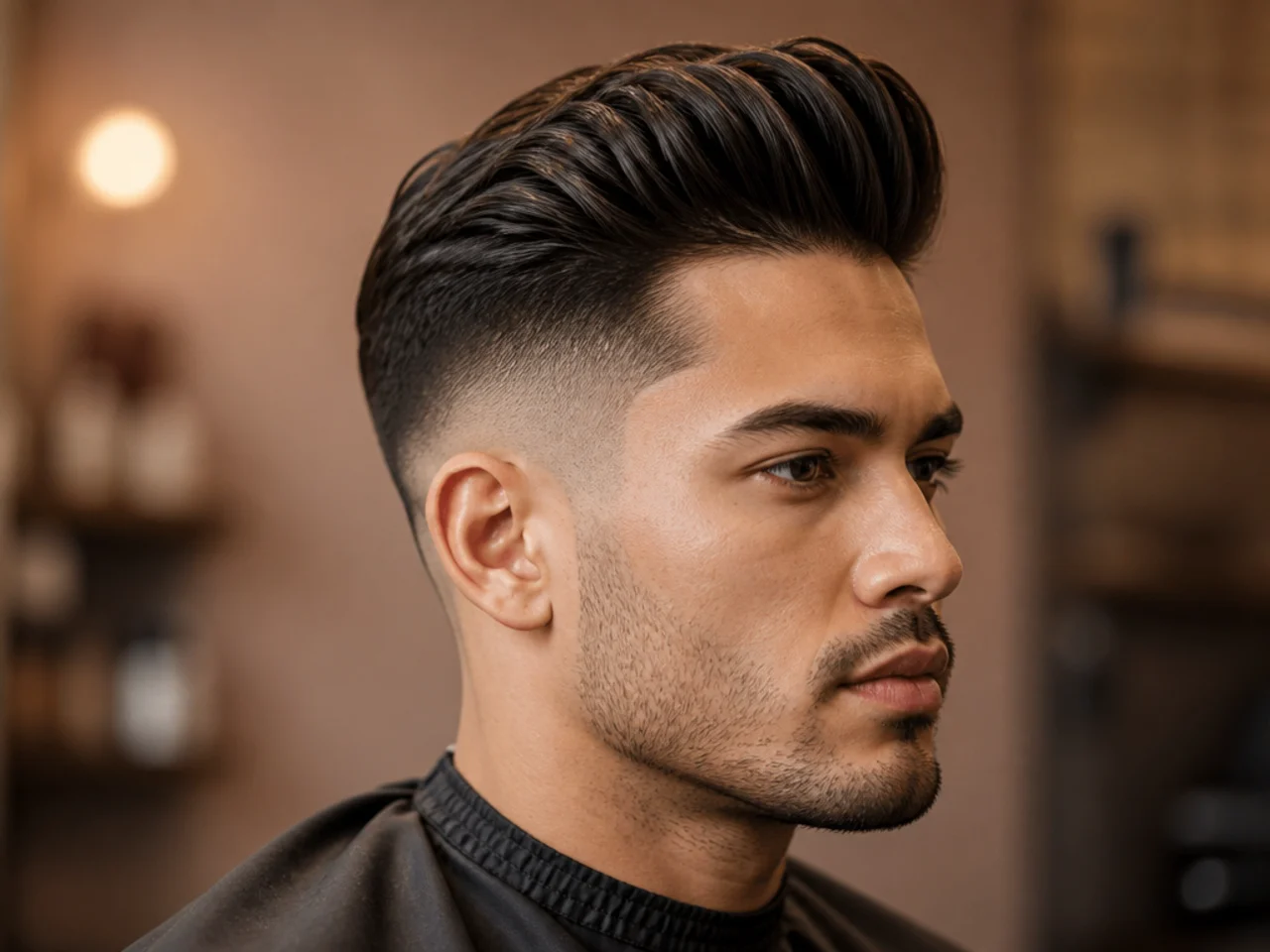
Big top, clean sides. The medium fade is the modern replacement for a hard side-part when you're running real length on top. What makes it different: contrast. Four to five inches on the crown, near-zero on the sides — that ratio is what makes the pomp or quiff look bold instead of dated.
Best for oval and rectangular faces. If your face is round, keep the volume tall rather than pushed forward — height narrows a round face, forward-swept bulk widens it. Straight and wavy hair carry this best; tight curls will fight the sculpt.
How to ask: "Medium fade to a #0.5 on the sides, no skin. Four inches on top, longer at the front for pompadour lift, and clean up the neckline square." If you're going quiff instead of pompadour, ask for two and a half to three inches — a quiff needs less length than a full pomp.
Styling tip: blow-dry with a round brush, roll the front up and back, then set with a firm-hold pomade. Finish with hairspray only if you're going out — everyday wear doesn't need it.
How to Maintain a Medium Fade Haircut
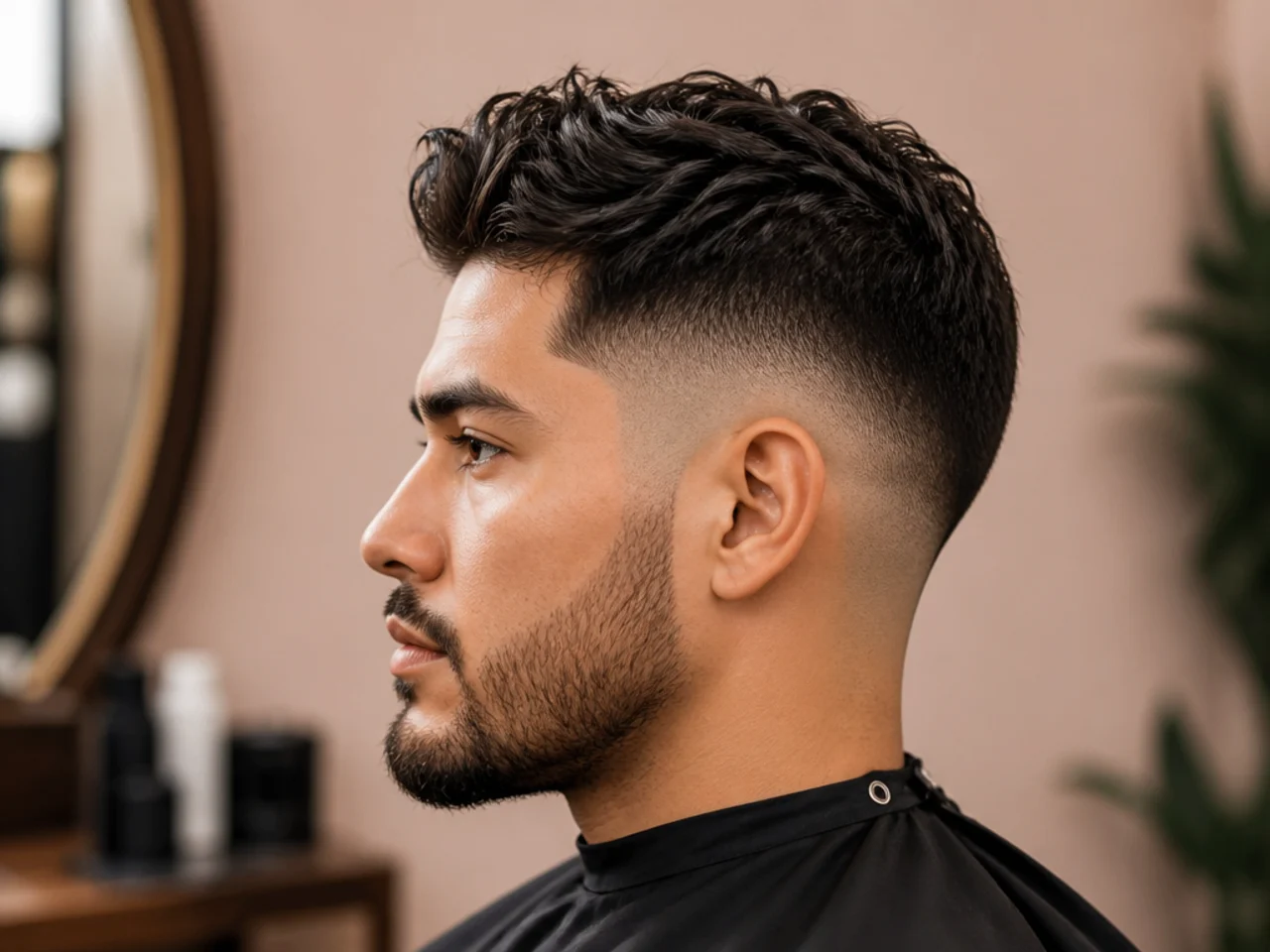
The medium fade lives on its bottom line. Once that line blurs, the cut goes with it. Here's how you keep it sharp between visits.
- Book your re-cut every two to three weeks. The fade line starts softening around day 14 and looks scruffy by day 21.
- Clean the neckline yourself between visits with a beard trimmer set to zero, working against the grain. Do it in natural light, not bathroom fluorescents.
- Wash your scalp two to three times a week — not daily. Over-washing dries the scalp and makes the faded band flake, which shows more on skin fades.
- Moisturize the exposed scalp on skin-fade variants. A drop of unscented lotion or beard oil rubbed into the faded band prevents ingrowns and razor bumps.
- Choose product by hair type: matte clay for short texture, pomade for slick sculpts, curl cream for curls, sea salt spray for wavy volume.
- Blow-dry from wet to damp when you want lift; skip the dryer when you want the natural drop.
- Sleep on a satin or silk pillowcase if you're running a longer top. Cotton crushes texture and creases the front section.
Fade Haircut for 50 Year Old Man: Stylish and Age-Appropriate Look
The medium fade earns its keep past forty. It hides thinning better than any other cut on the menu. You keep the length where you still have coverage on top, and the fade removes visual weight from areas where hair is retreating. That contrast — full on top, tight on the sides — reads as intentional, not as compensation.
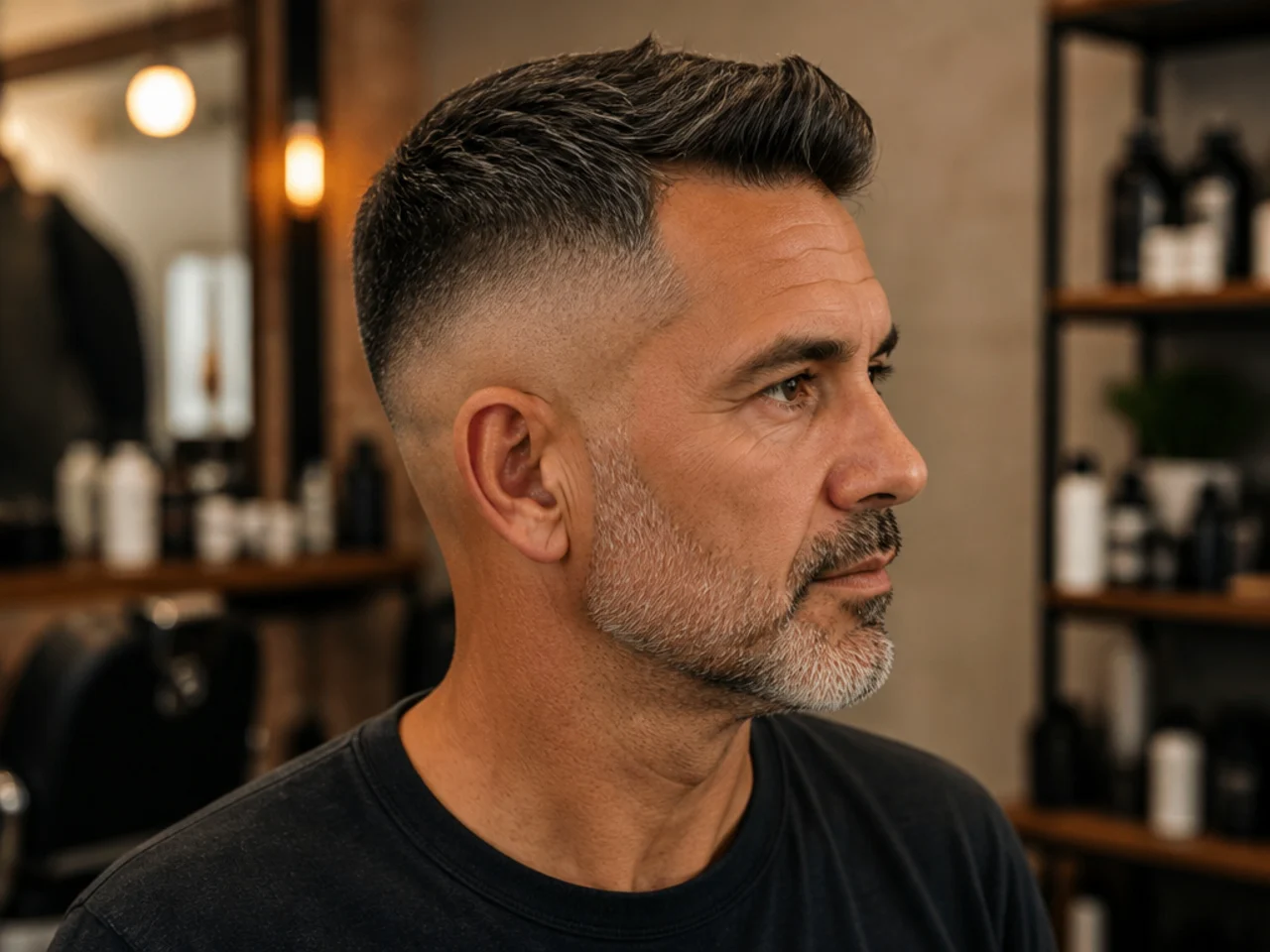
For a man in his fifties, drop the top length slightly — one to one and a half inches works better than three. A long top with a fade past forty starts to read like a costume. A short top with a clean medium fade reads distinguished. Add a bit of gray and you're set.
Pair it with a well-groomed short beard if you can grow one. The visual line of the fade wants to continue into the jawline, and a beard closes that loop. If you can't grow density, stay clean-shaven with a defined jaw line — the fade will hold up on its own.
If you're dealing with a receding hairline, push the fade closer to a low taper fade instead of true medium. The lower start keeps the sides quieter and doesn't invite the eye up toward the recession. For a broader look at fade options that suit textured or coily hair past forty, this fade haircut guide breaks them down by texture and age.
Men's Skin Fade Haircut: Clean, Sharp, and Modern Style
The skin fade takes the medium fade and pushes it to its cleanest possible finish. The clippers on the sides drop through every guard until bare scalp shows at the bottom. That naked band is the whole point. It makes the transition ruthlessly precise, and it forces your barber to blend perfectly because there's nowhere to hide.
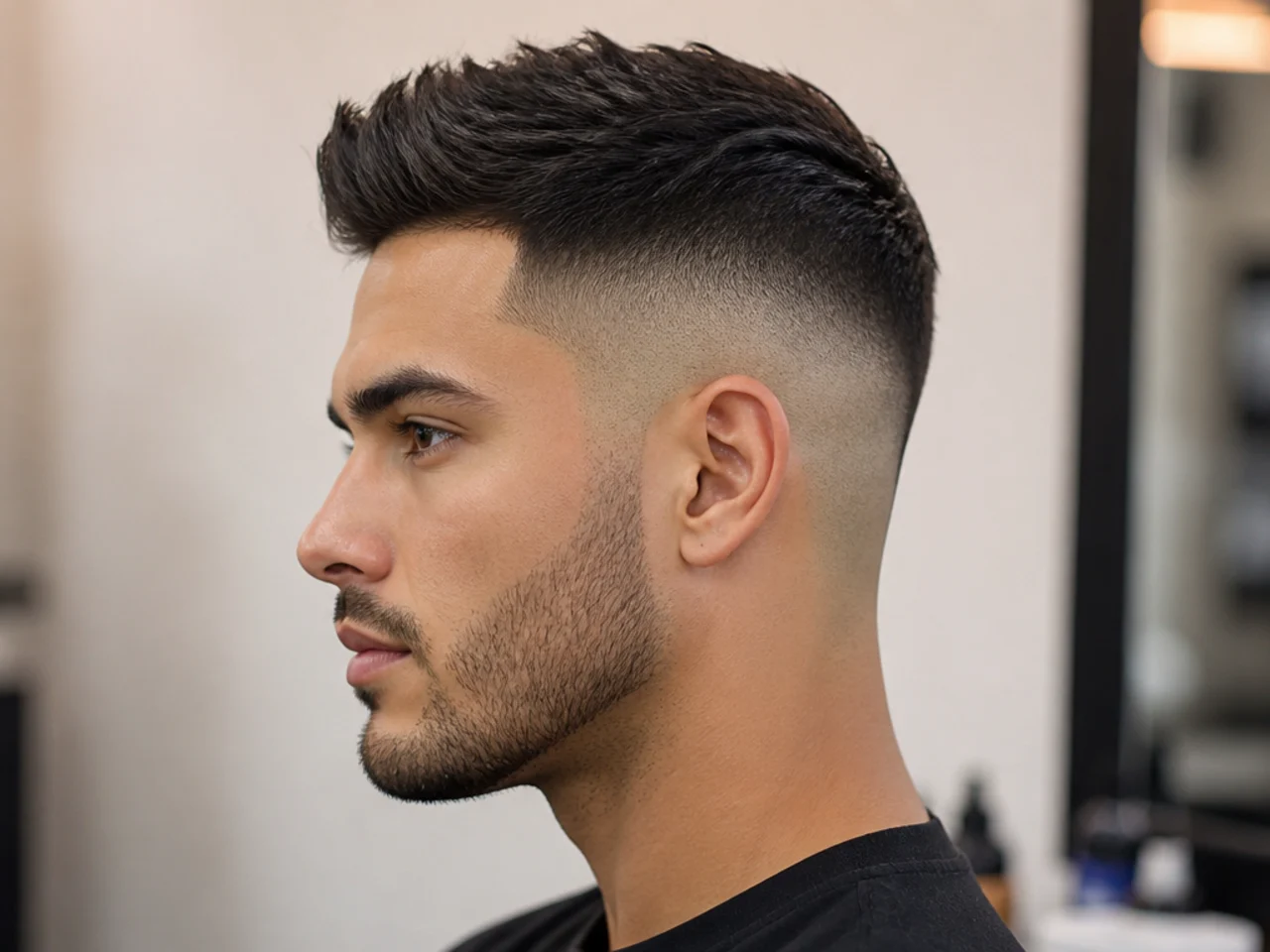
Pair a medium skin fade with a textured crop, a quiff, a slick back, or a French crop. Anything with definition on top will lift off that clean bottom band and photograph well. Anything shapeless will look unfinished.
The trade-off: skin fades need touch-ups every ten to fourteen days, not the standard twenty-one. That naked skin grows a shadow of stubble within a week, and once the shadow arrives, the whole clean-line effect is gone. If you can't commit to that visit schedule, run a #0.5 or #1 at the low point instead.
If you like the aggressive drop of a skin fade but want more visual variety at the transition, take a look at the blowout taper — it builds on the skin-fade base with a different arc through the crown and works especially well with volume-heavy tops.
Who Should Get a Medium Fade?
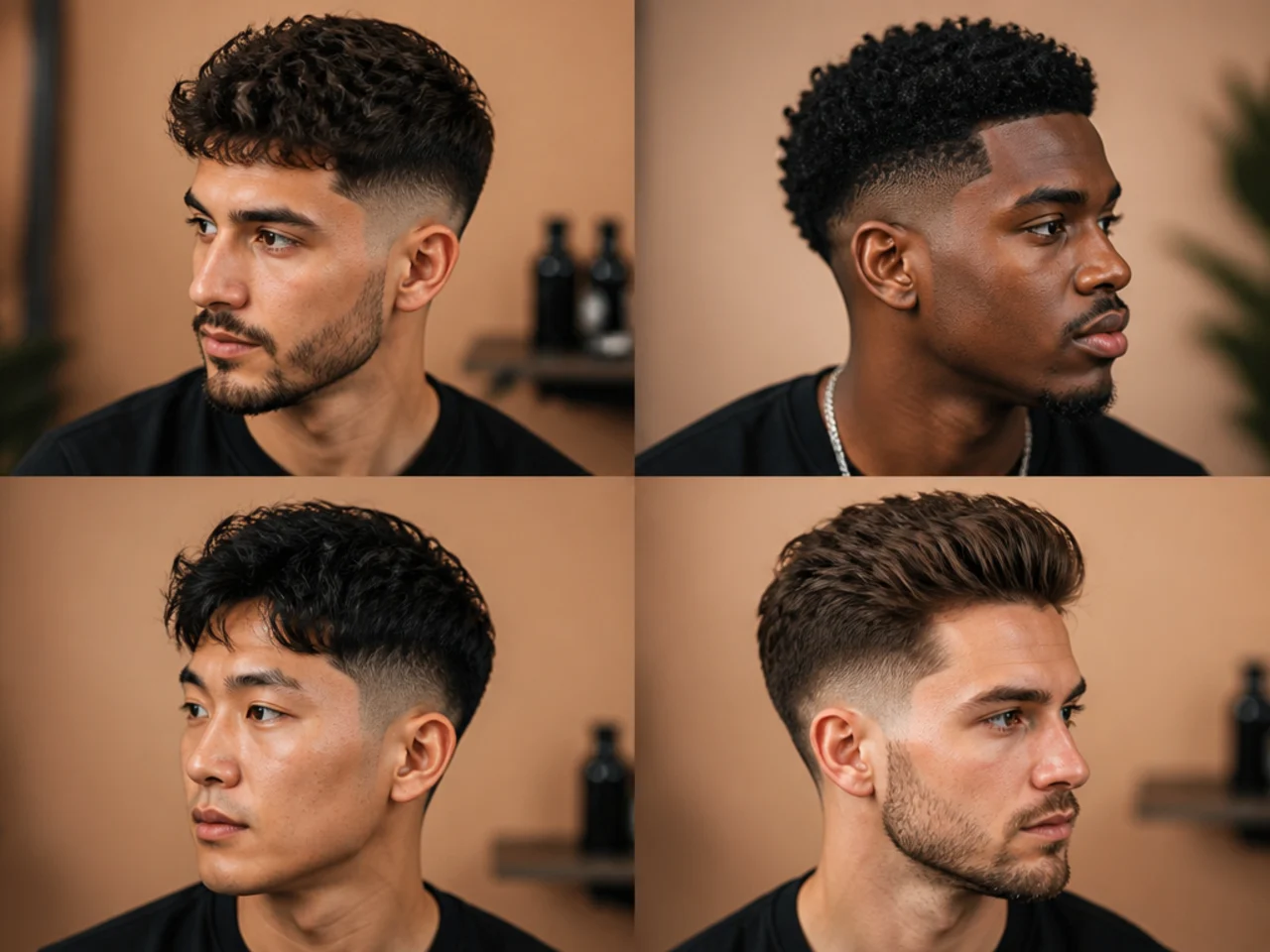
Almost everyone. The medium fade is the most adaptable cut in the fade family — it adjusts to every face shape by moving the fade line up or down within the middle third of the head. Here's how to place it for your face.
Round faces: Ask for a slightly higher medium — fade line closer to the top of the ear. Combine with two and a half to three inches of vertical volume on top. The height narrows the round; the higher fade line makes it look intentional.
Long or oblong faces: Keep the fade line lower within the medium range. Restrain the top length to under two inches. Width in the top section balances your vertical without stretching you further.
Square faces: You have flexibility. Both high-medium and low-medium work. Soften the top with texture rather than a boxy shape — you want to counter the strong jaw with something looser above.
Oval faces: Any variation flatters you. Pick your medium fade style by hair type and lifestyle, not by face shape.
Diamond faces: Keep the sides moderately tight and add width at the top through texture or a soft quiff. A skin-fade version will over-narrow you at the cheekbones; run a taper version instead.
Heart faces: Fade slightly lower and add volume in the crown, not the front. The bulk shifts weight backward and balances a wider forehead.
Hair type matters less than face shape here. Straight and wavy hair take every variation. Curly and coily hair fits every variation as long as you're scissor-cutting the top. If you're still deciding between fade heights instead of variations, the low fade vs mid fade vs high fade breakdown lays out the visual difference side by side. And if you want to expand your reference file, the Best 40 Shag Haircuts guide includes several medium-fade pairings worth studying.
Final Thoughts
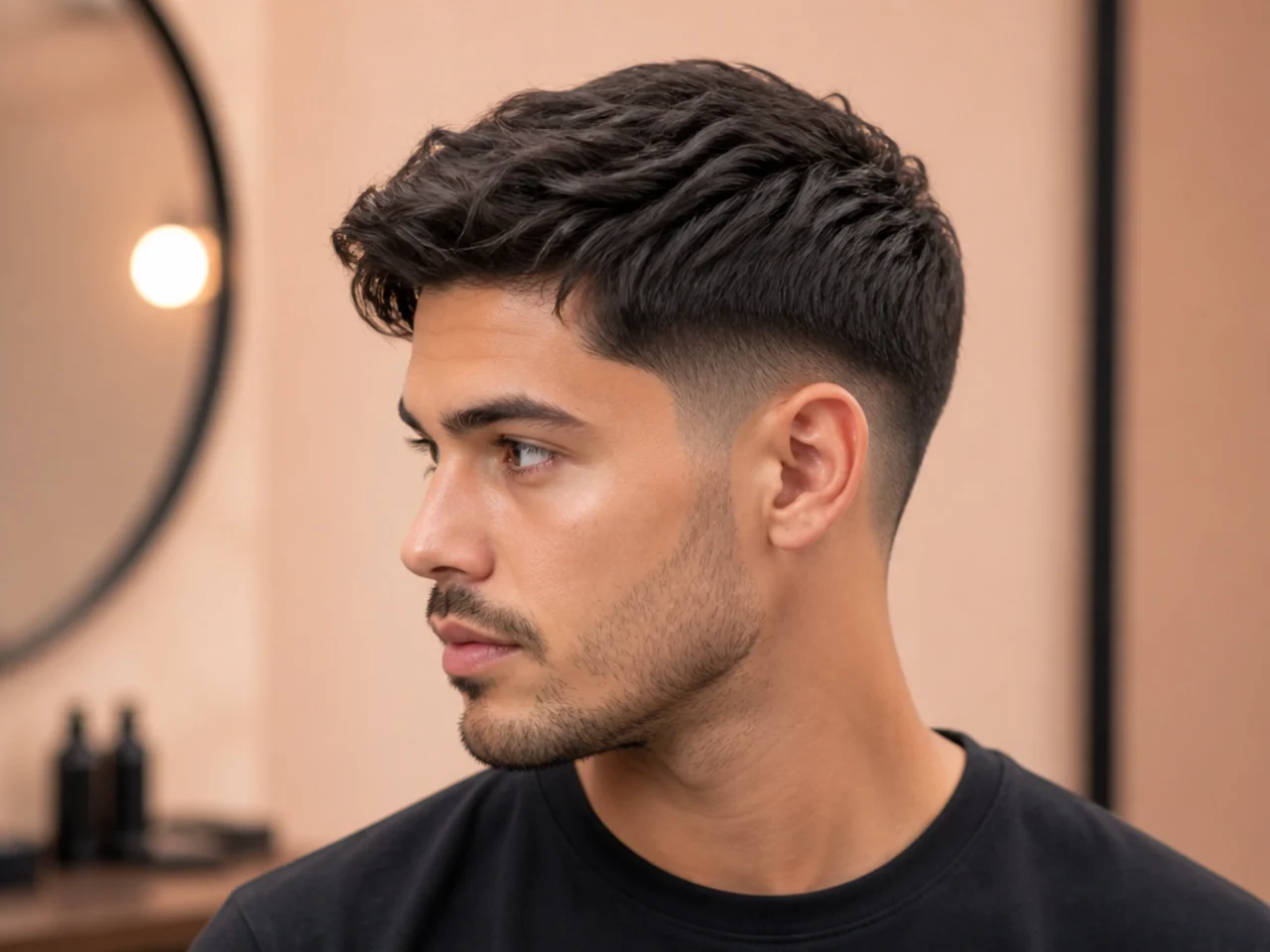
The medium fade is the default fade for a reason. It works across face shapes, hair types, ages, and dress codes. The five variations above — skin, taper, drop, curly, and pompadour-paired — cover almost every real-world request that walks into a barbershop.
Pick your variation by the shape of your face and the length you want on top, not by what's trending on your feed. Bring a photo, name your guard number and top length in inches, and ask for the finish (matte, natural, or sleek). Book your next appointment before you leave the chair. Those four moves get you 90% of the way to a fade that looks made-for-you.
Medium Fade Haircut FAQ
What's Better, Mid-fade or Taper?
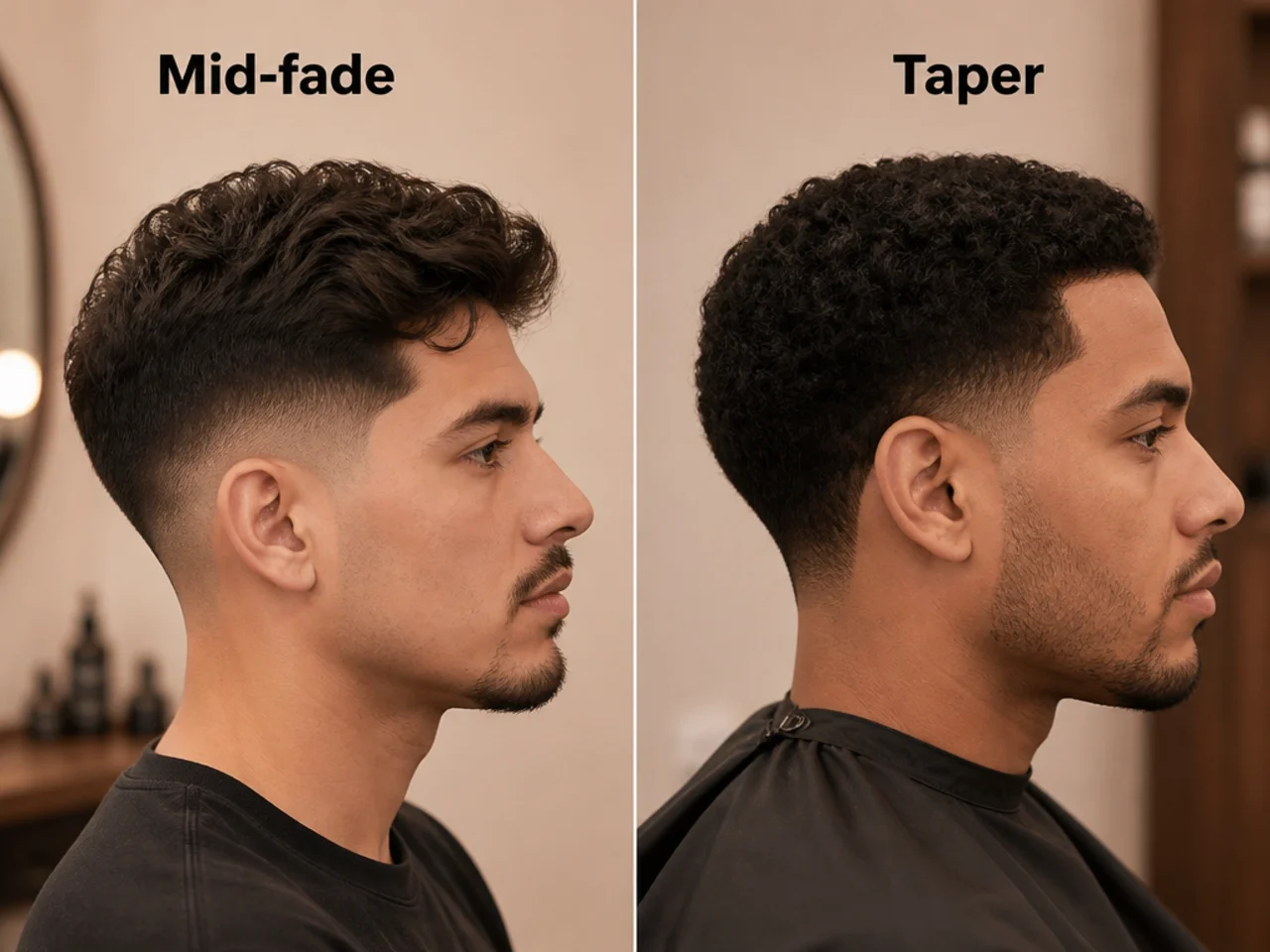
Depends on your dress code and how much visual work you want the cut to do. The mid fade reads sharper and more modern. A taper reads softer and more classic. If you work in a traditional office, go taper. If you want a fresh, contemporary silhouette, go mid.
Is Fade Haram in Islam?
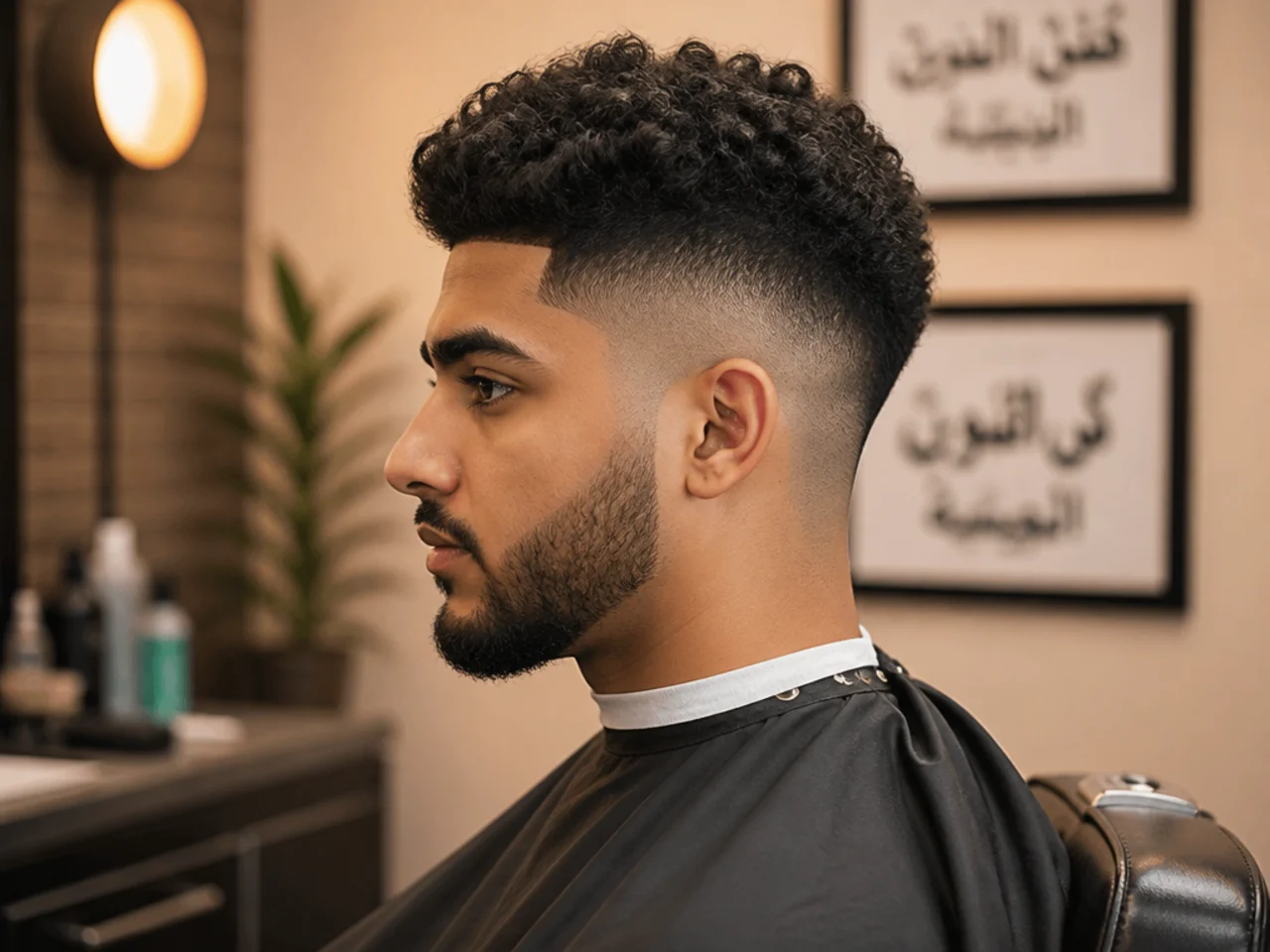
Interpretations vary across schools and scholars. Most modern rulings consider fades permissible when the length difference is reasonable and no shaved designs or patterns are added. Ask your local imam — that's the answer that actually matters for your practice.
What Is a Medium Fade Haircut?
A haircut where the fade line starts midway between your ear and your temple, then drops through progressively shorter guards to a very short length or bare skin at the bottom. The top stays untouched by the fade.
Does a Mid Fade Look Good?
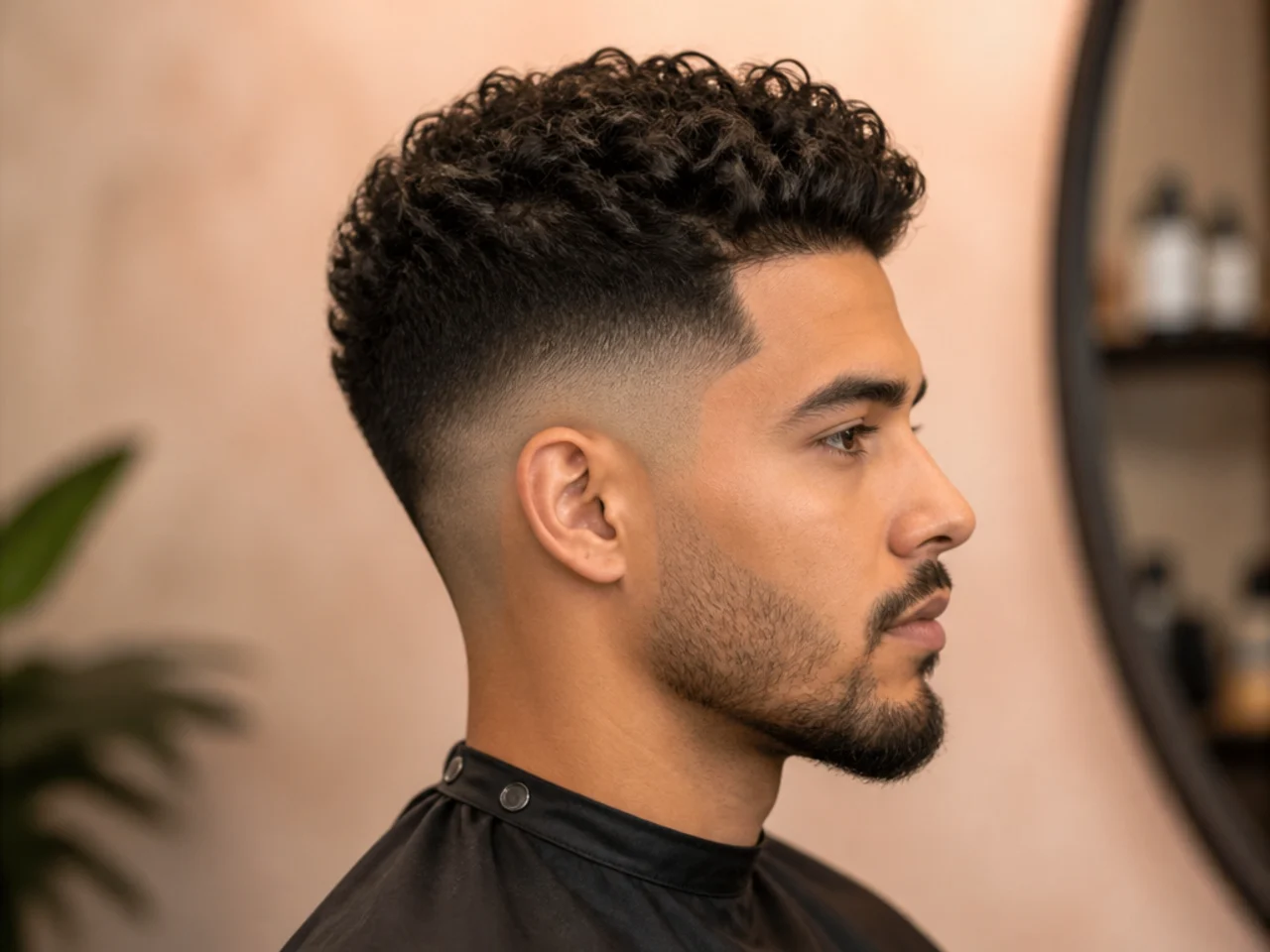
On most people, yes. It's the most face-shape-neutral fade in the family. If it looks off, the issue is usually the top length, not the fade — too much on top over a mid fade reads costume, too little reads unfinished.
Is a Medium Fade Professional?
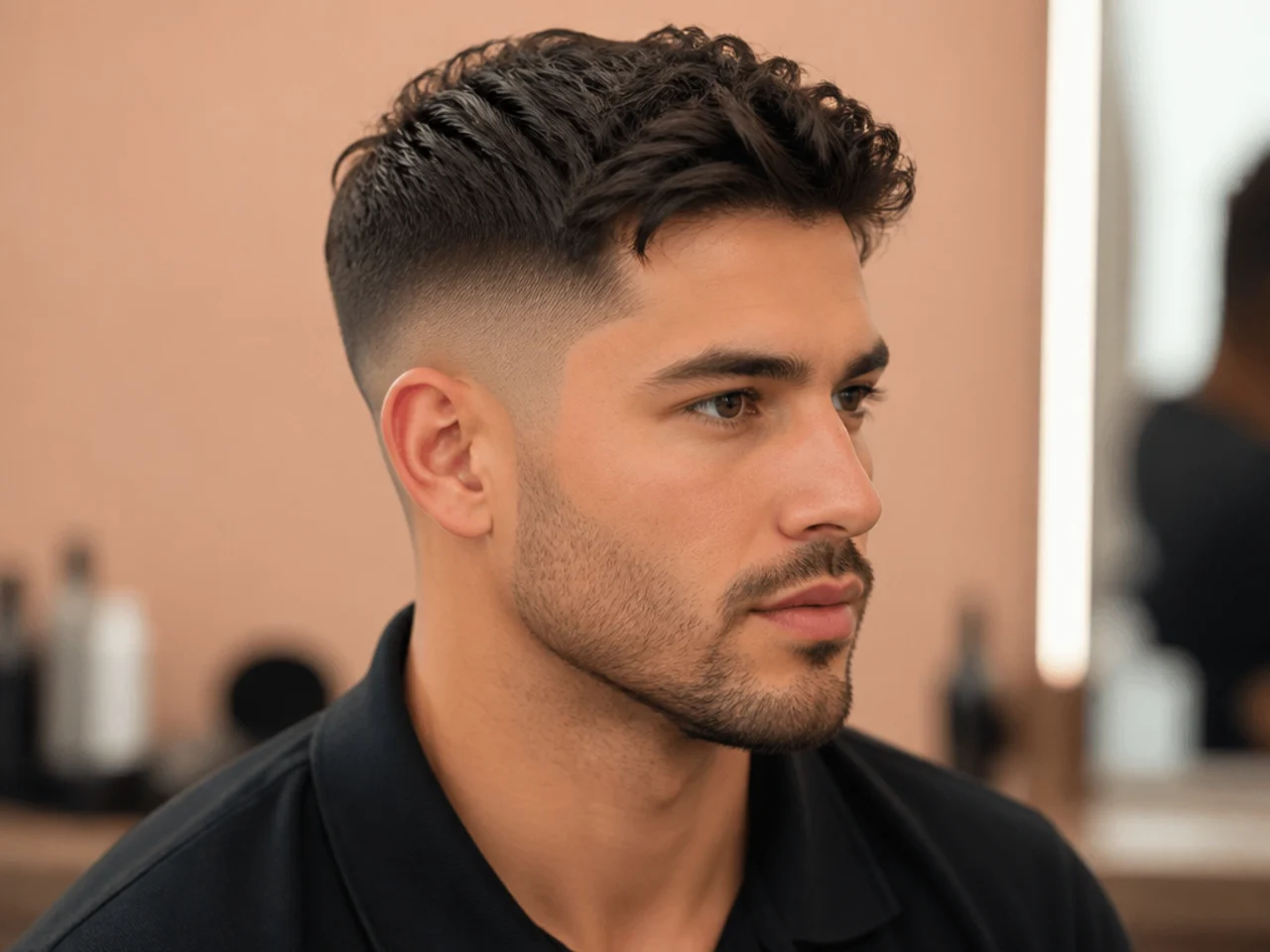
Yes. Run the taper version — no skin — and keep the top under two inches, and it fits every dress code from creative agency to law firm. Skin fades read fine in most modern offices too, but if you're in a conservative industry, stay clear of the exposed scalp.
What's The Difference Between a Medium Fade and Low Fade?
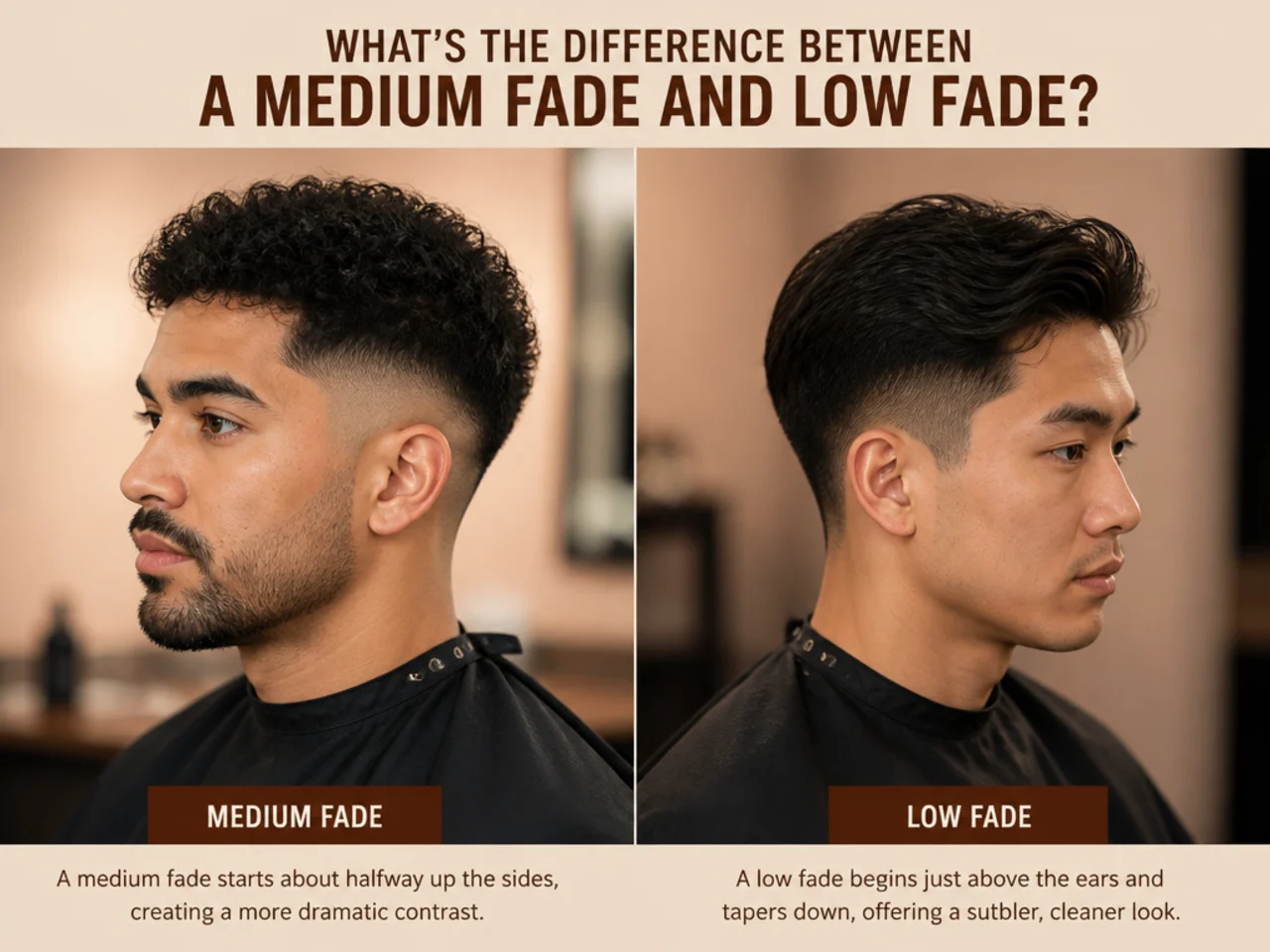
Where the fade line starts. A low fade sits just above the ear, creating a subtle transition. A medium fade sits midway between the ear and the temple, creating a more visible drop. Higher fade line, more contrast.
Can a Medium Fade Work With Long Hair on Top?
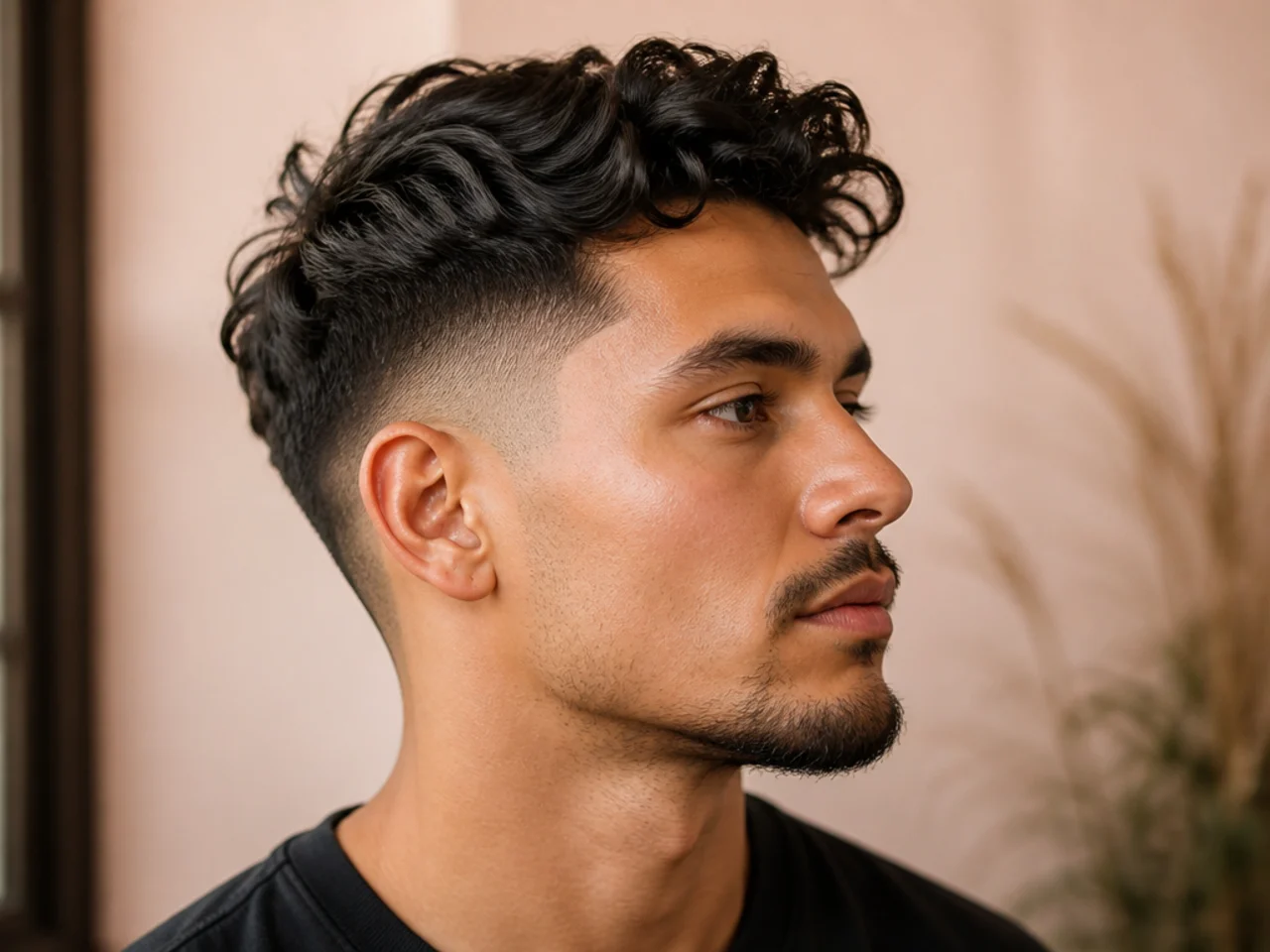
Yes — the medium fade is what most modern long-top cuts are built on. Pompadours, quiffs, textured shag tops, and slick backs all sit on a medium fade. Keep the transition scissor-cut so the top doesn't fall into the fade abruptly.
Is a Skin Fade The Same as a Medium Fade?
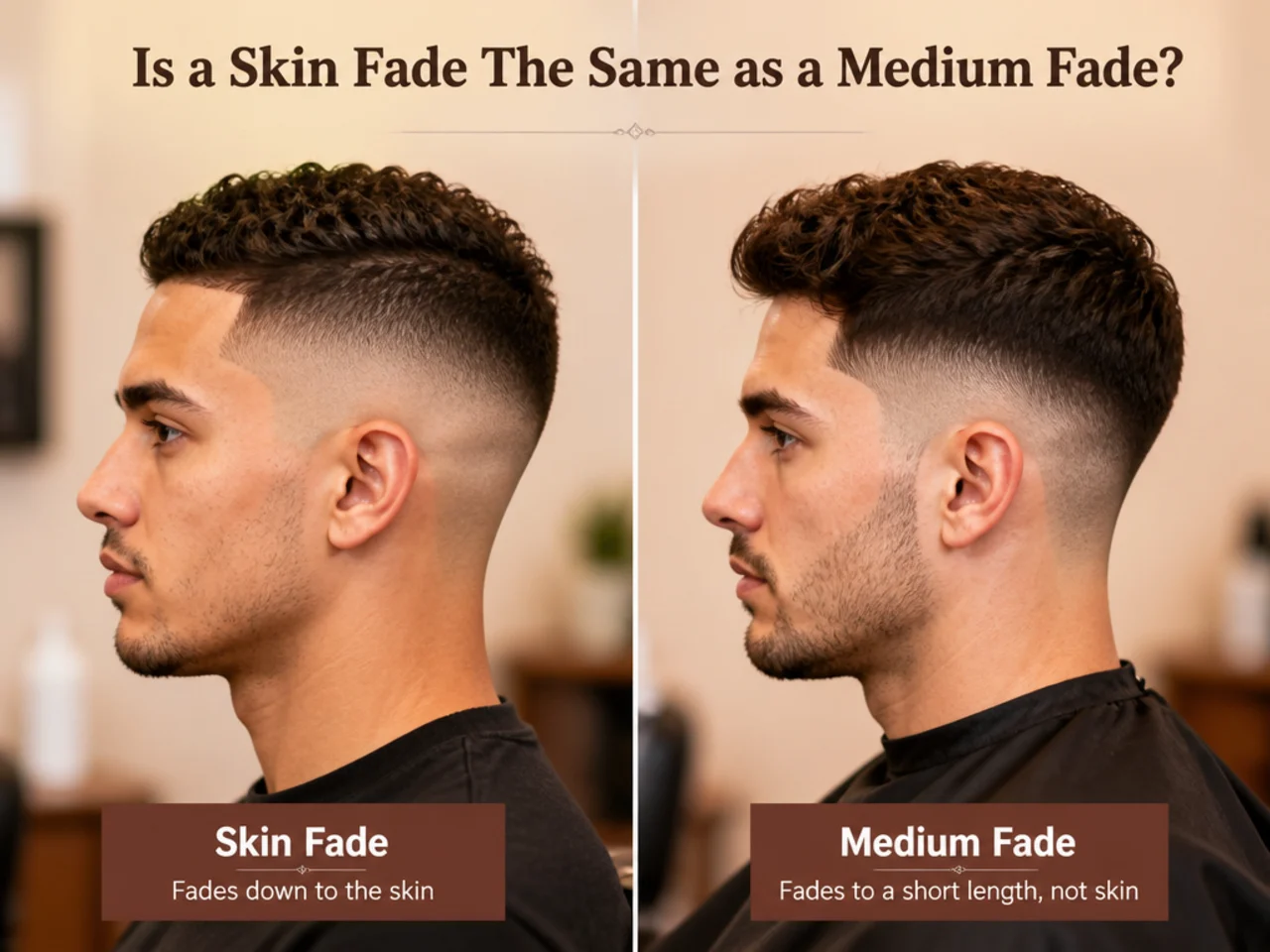
No. Skin fade describes how short the fade goes at its lowest point — down to bare skin. Medium fade describes where the fade starts — midway up the head. You can combine them: a medium skin fade starts mid-head and drops to skin at the bottom.