15 Curly vs Wavy Hair Ideas for Men
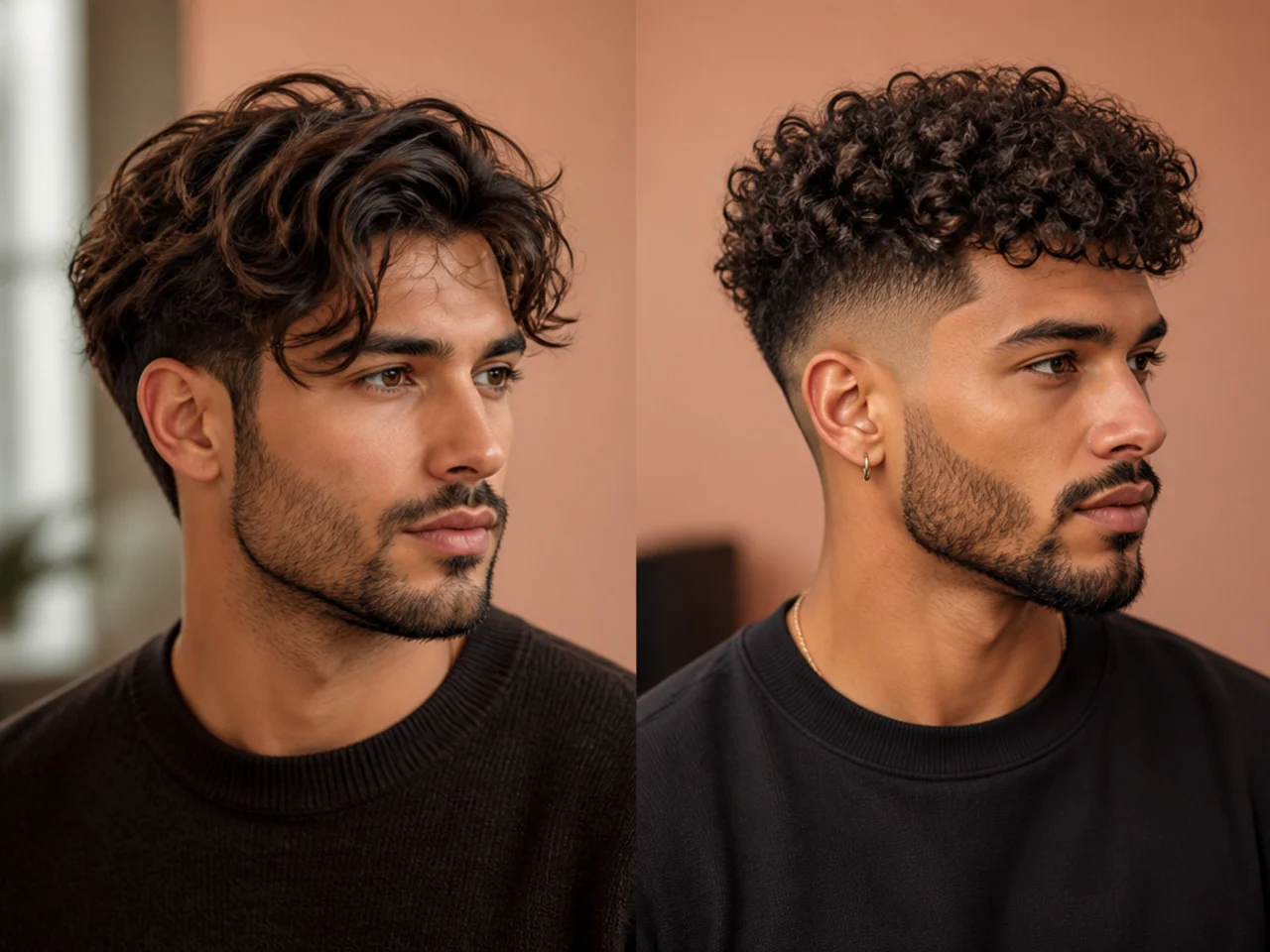
Wave and curl are not two points on the same scale, they are two materials that behave differently under weight. One needs mass to exist and the other needs mass removed, which changes the cut, the product and the barber brief.
In this article · 22
- Curl and Wave Are Not Points on One Scale
- How to Choose Yours
- The 15 Comparisons
- 1. Identifying the Pattern
- 2. Shrinkage Against Cut Length
- 3. Wet or Dry Cutting
- 4. Layers
- 5. Minimum Length to Show
- 6. Product Weight
- 7. Root Lift
- 8. Fades and Tapers
- 9. Beard Interaction
- 10. Humidity
- 11. Day Two and Day Three
- 12. Appointment Cadence
- 13. The Grow-Out Curve
- 14. Looking Formal
- 15. The Mixed Head
- Styling and Upkeep
- Mistakes to Avoid
- FAQ
- Final Thoughts
Almost every man with textured hair has been handed advice written for the other pattern.
They fail in opposite directions. A wave that goes wrong goes flat, and a curl that goes wrong goes frizzy, so the corrections point opposite ways too.
Weight is the axis that separates them. Wave needs mass to hold its shape and curl needs mass removed to lift, and nearly every decision below is a consequence of that one difference.
Curl and Wave Are Not Points on One Scale
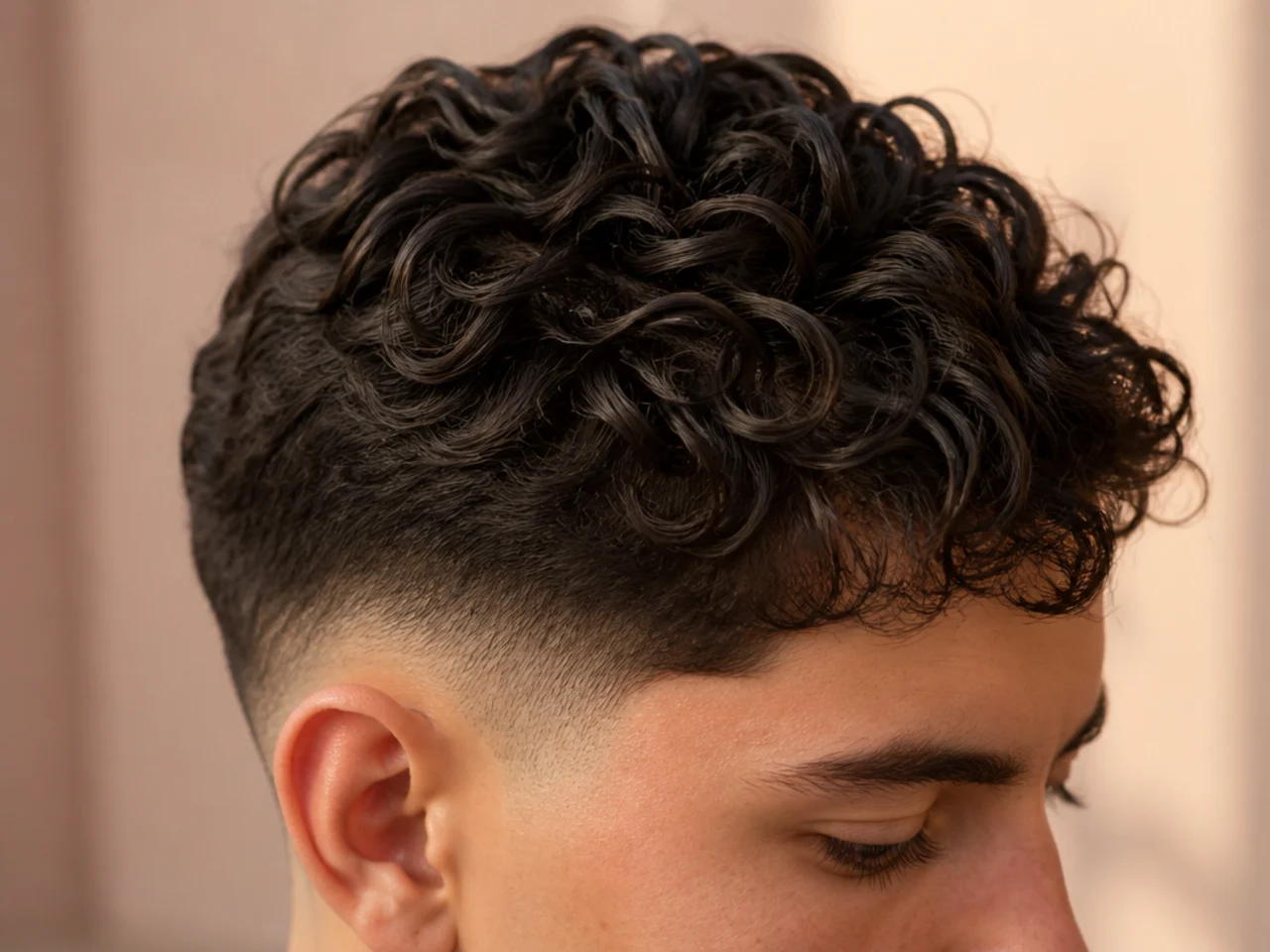
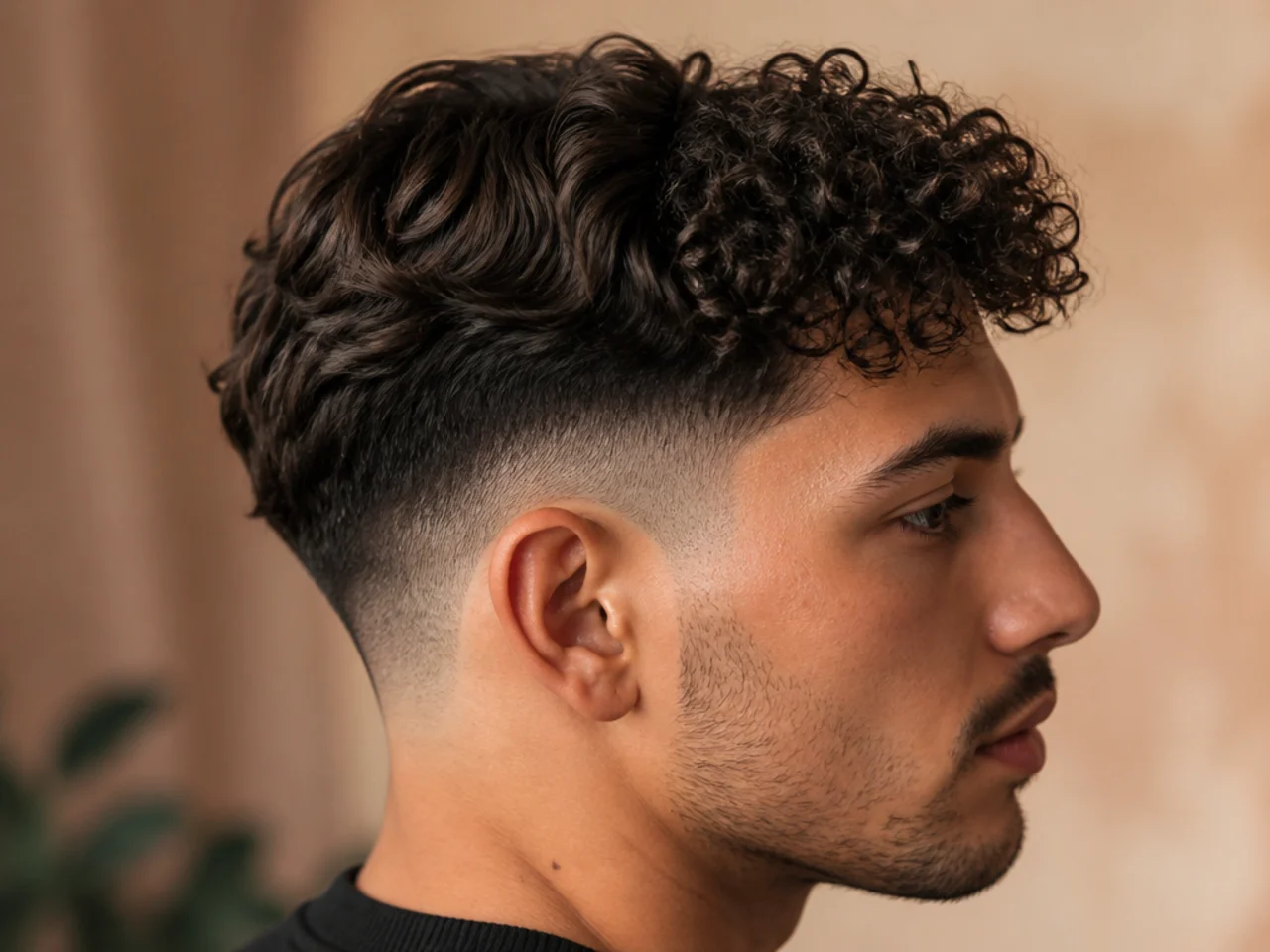
A wave bends and a curl wraps. One makes an S along a flat strand, the other closes into a spiral.
Shrinkage separates them sharply. Wavy loses very little, curly loses around a third and tightly coiled loses up to half.
Weight helps one and hurts the other. Mass holds a wave open and drags a curl straight.
Both are damaged by brushing dry. It is the single rule that genuinely applies to each of them.
How to Choose Yours
Judge it air-dried with nothing on it. Product and towel drying disguise both patterns.
Watch which way it fails. Flat means wave rules apply and frizzy means curl rules do.
Check the length loss. A third of length disappearing means you are dealing with curl.
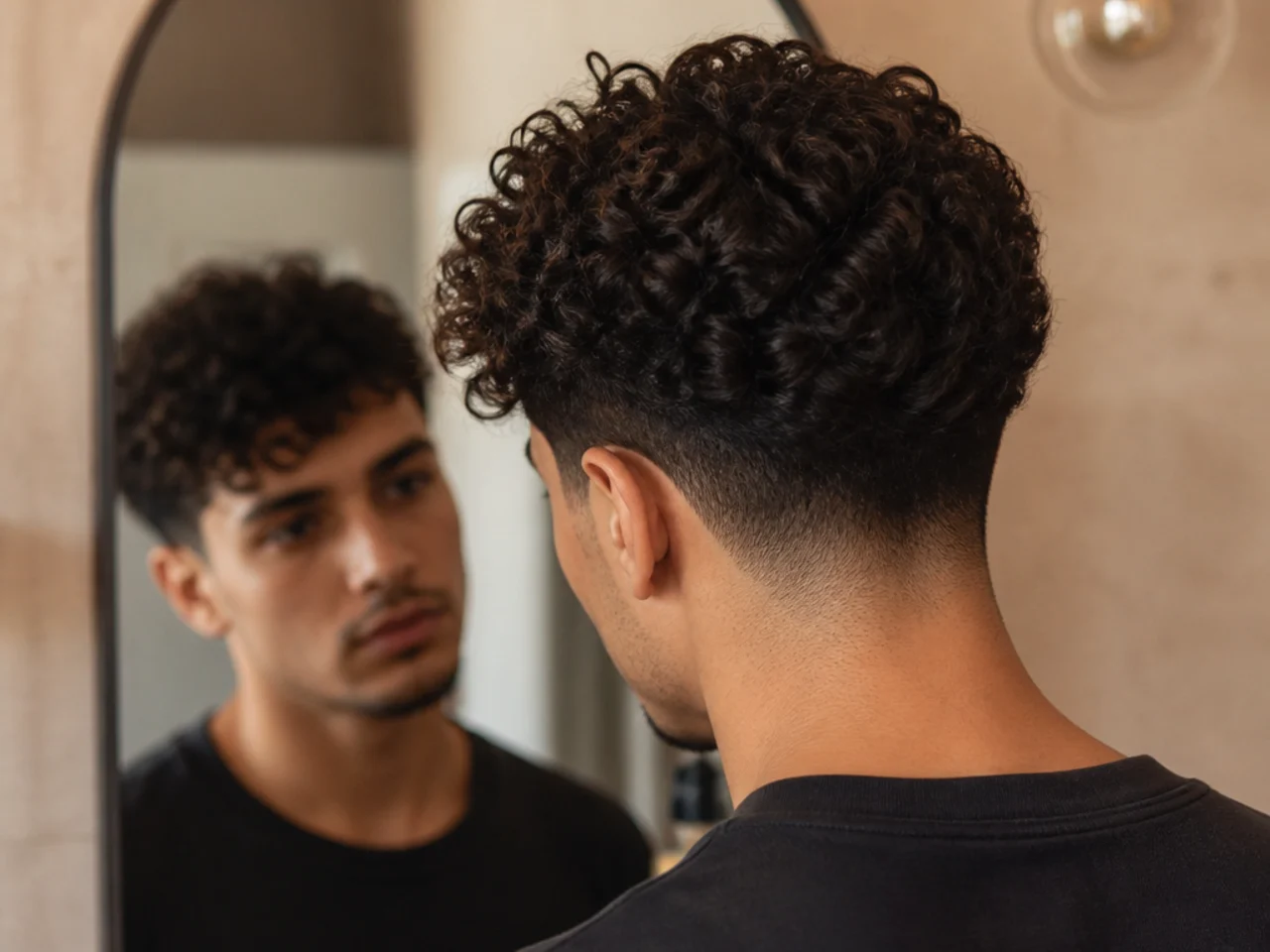
Expect a mixed head. Waves at the hairline and curls at the crown is extremely common.
The 15 Comparisons
1. Identifying the Pattern
A wave keeps the strand flat and a curl closes it into a loop. The reliable test is a clean air-dry with nothing applied, because everything else flattens waves and frizzes curls until they look alike.
2. Shrinkage Against Cut Length
Waves lose very little length drying and curls lose about a third. That gap means a curly man has to quote a worn length and let the barber add the difference, and a wavy man does not.
3. Wet or Dry Cutting
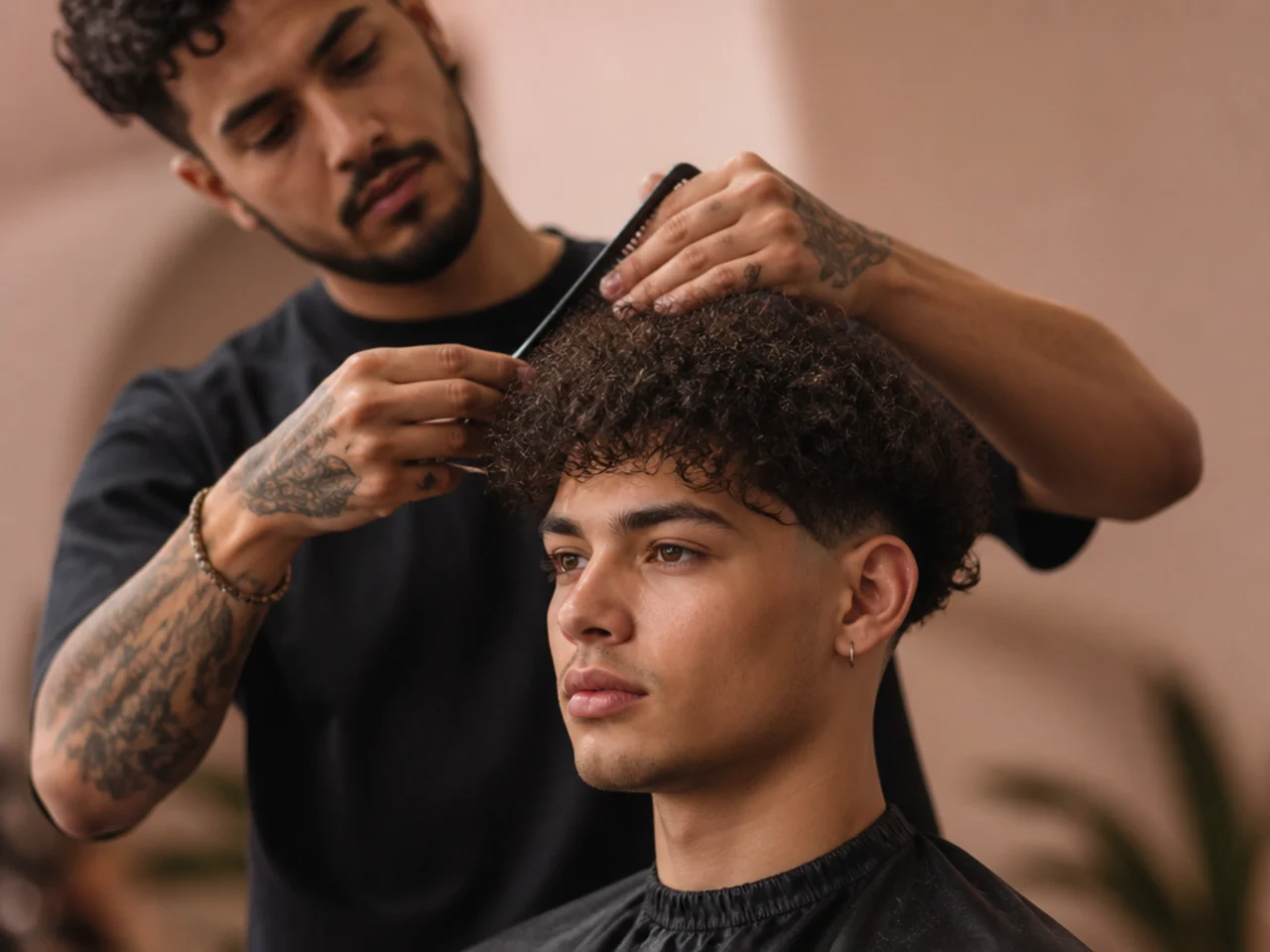
Curls should be cut dry whenever the pattern matters, because that is the only state showing their true length. Waves can be cut wet with little risk, which is why most barbers default to it and why it fails on curls.
4. Layers
Curl wants interior weight removed so it can spring upward. Wave wants that weight left in, because layers take away the mass holding the S shape open.
5. Minimum Length to Show
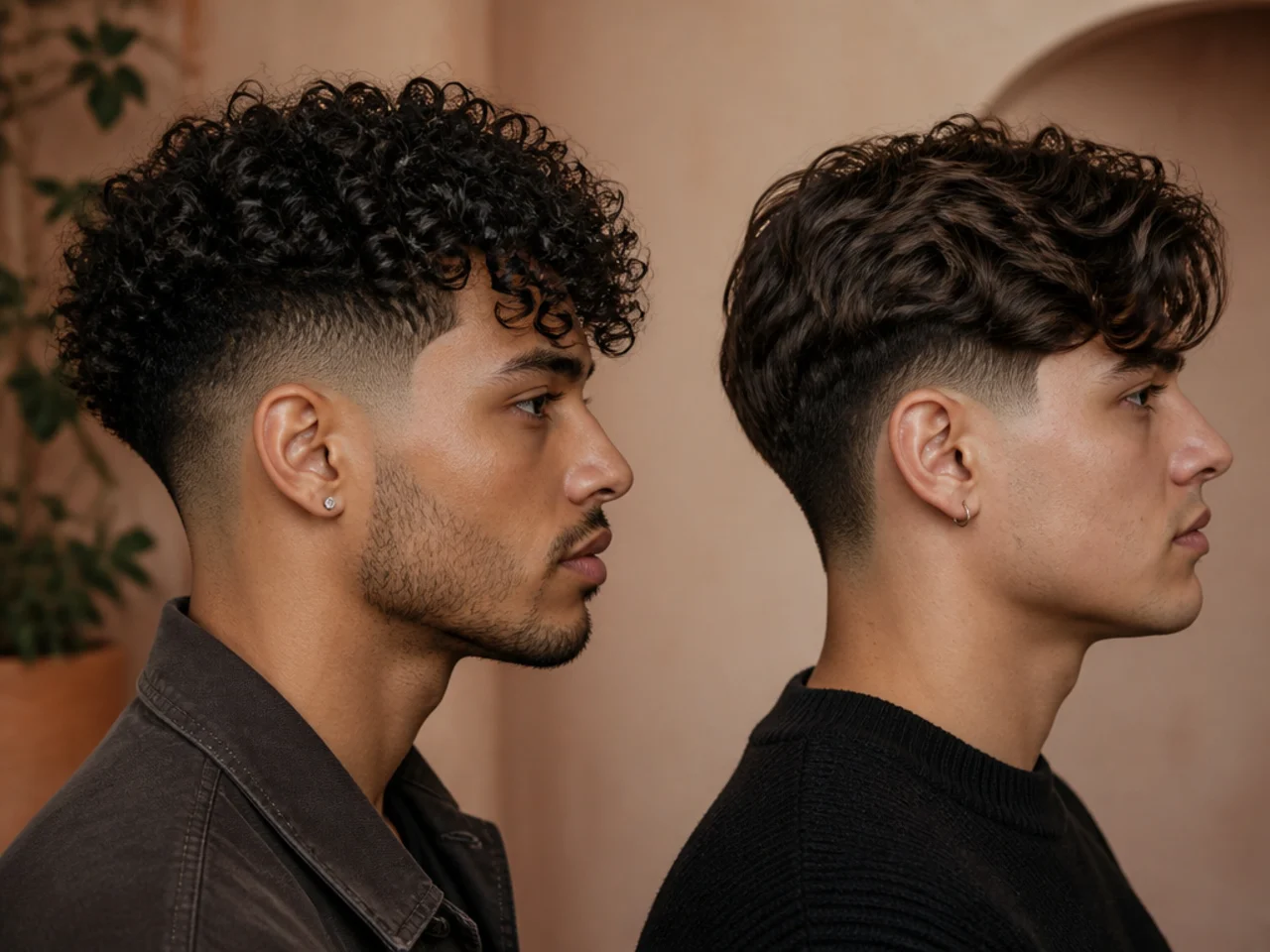
Curl shows its pattern from about 10mm upward. Wave often needs four centimetres or more before the bend has room to complete, which is why short cuts read straight on wavy heads and why most wavy haircuts for men sit at medium length.
6. Product Weight
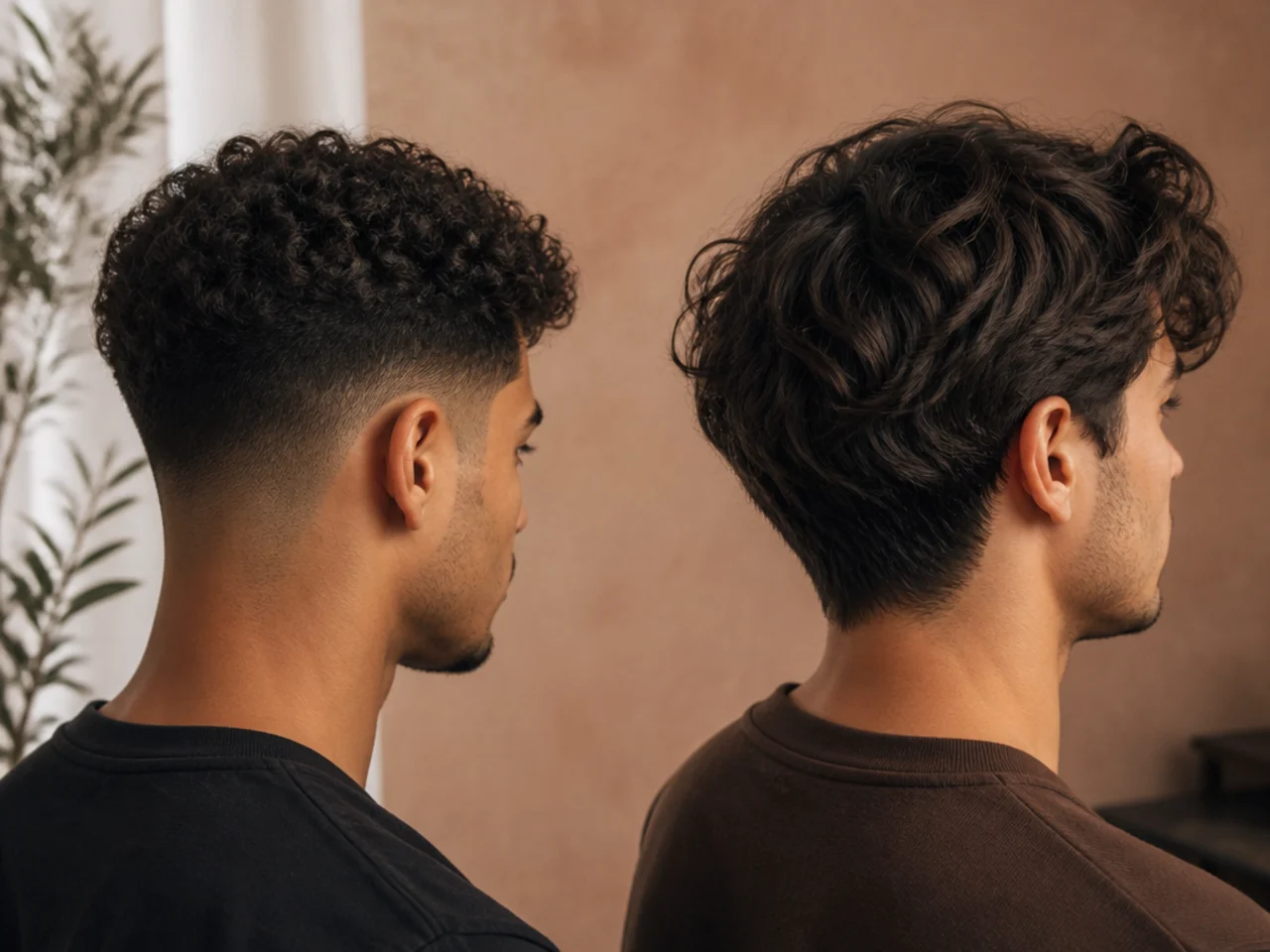
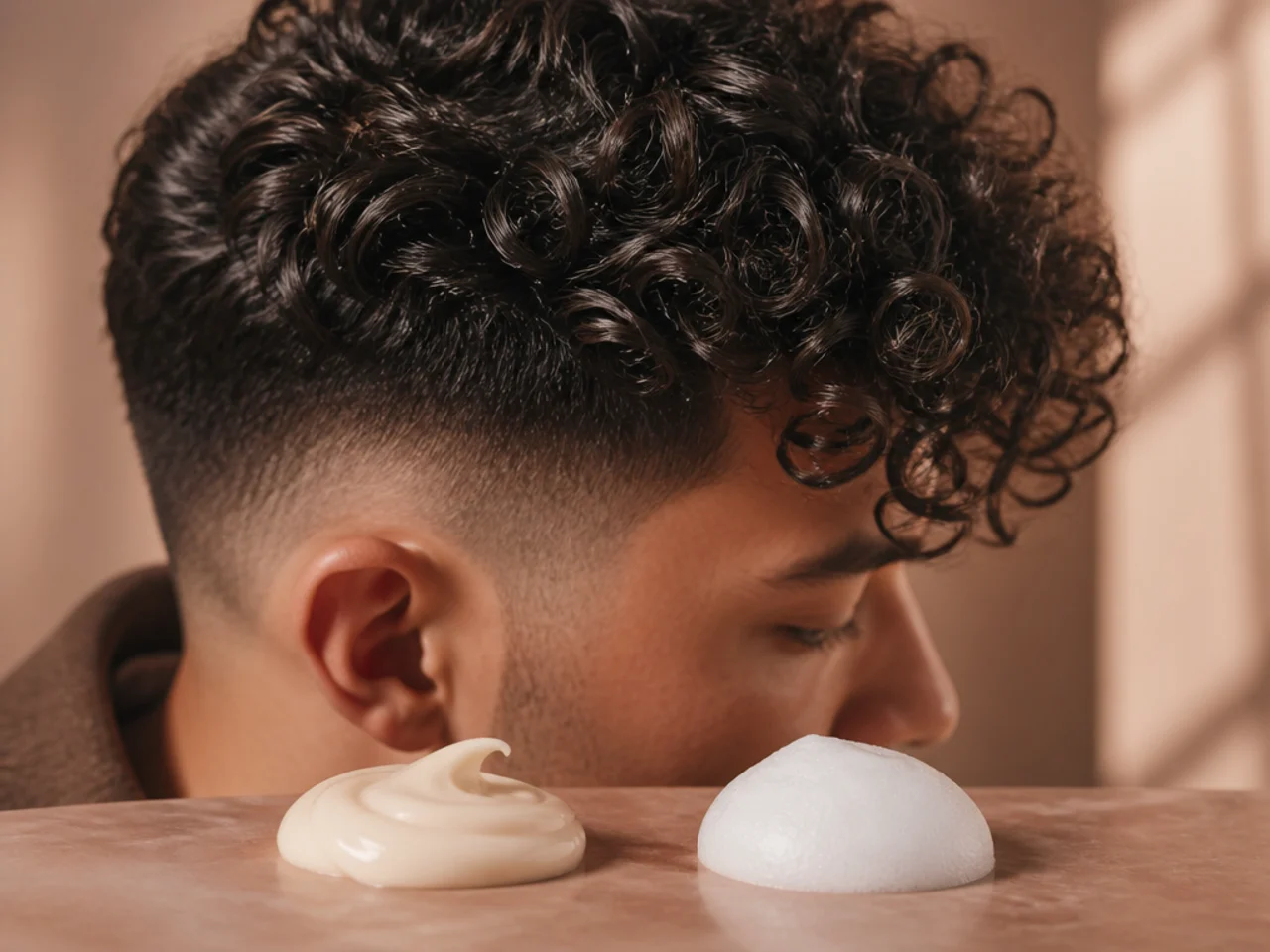
A curl needs a cream to hold its clumps together. A wave collapses under that same cream, which is why mousse or nothing at all suits it better.
7. Root Lift
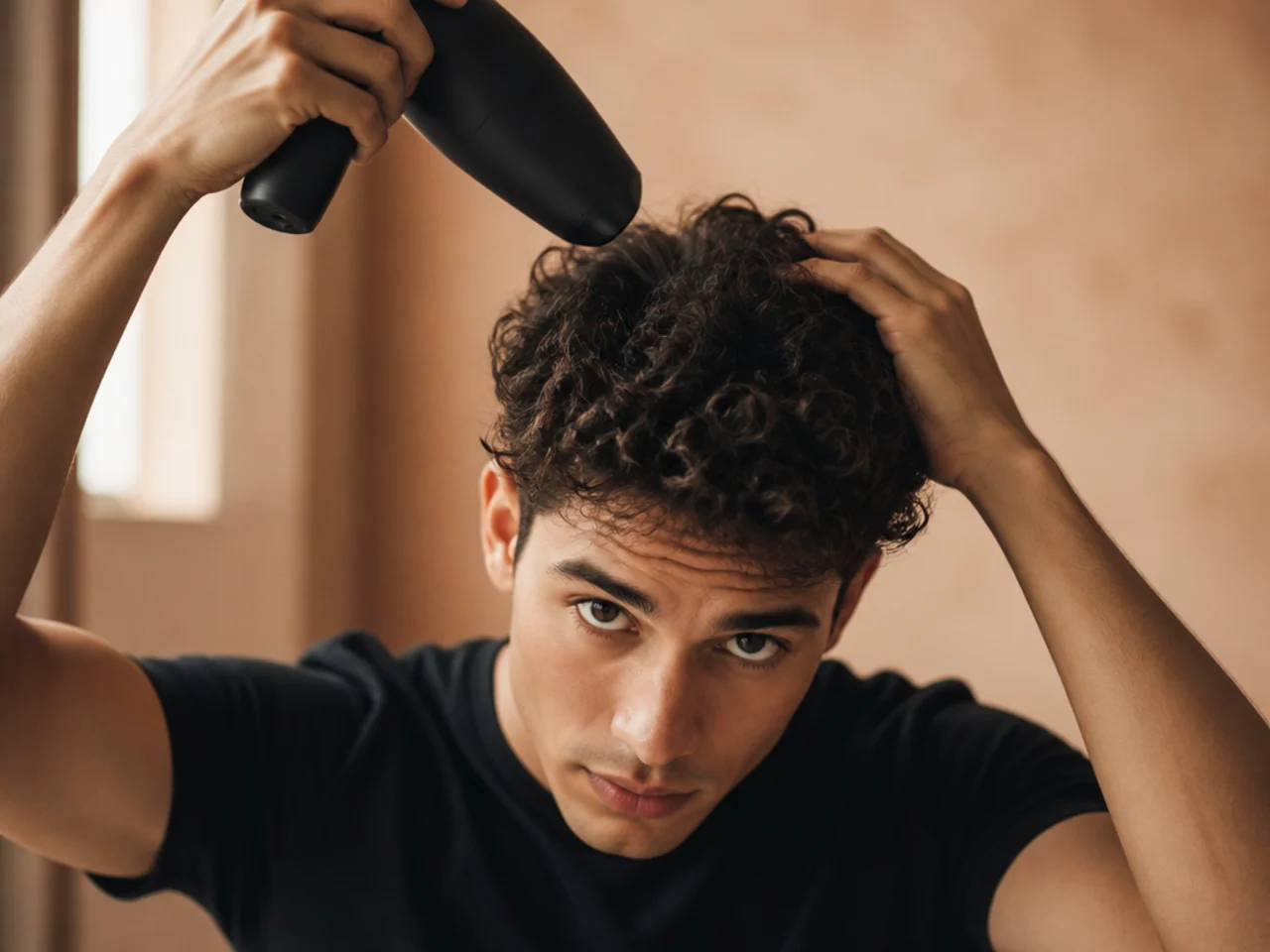
Curl generates its own lift because the spiral pushes away from the scalp. Wave lies flat and has to be given lift by drying head forward, since it cannot create any on its own.
8. Fades and Tapers
Curl stops at a defined outline, and that outline gives the eye a boundary to measure the gradient against, which is what makes a fade read as deliberate contrast rather than as an accident of length. Wave blurs into the top of a fade and generally suits a taper better, where the shape does the work instead of the contrast.

9. Beard Interaction
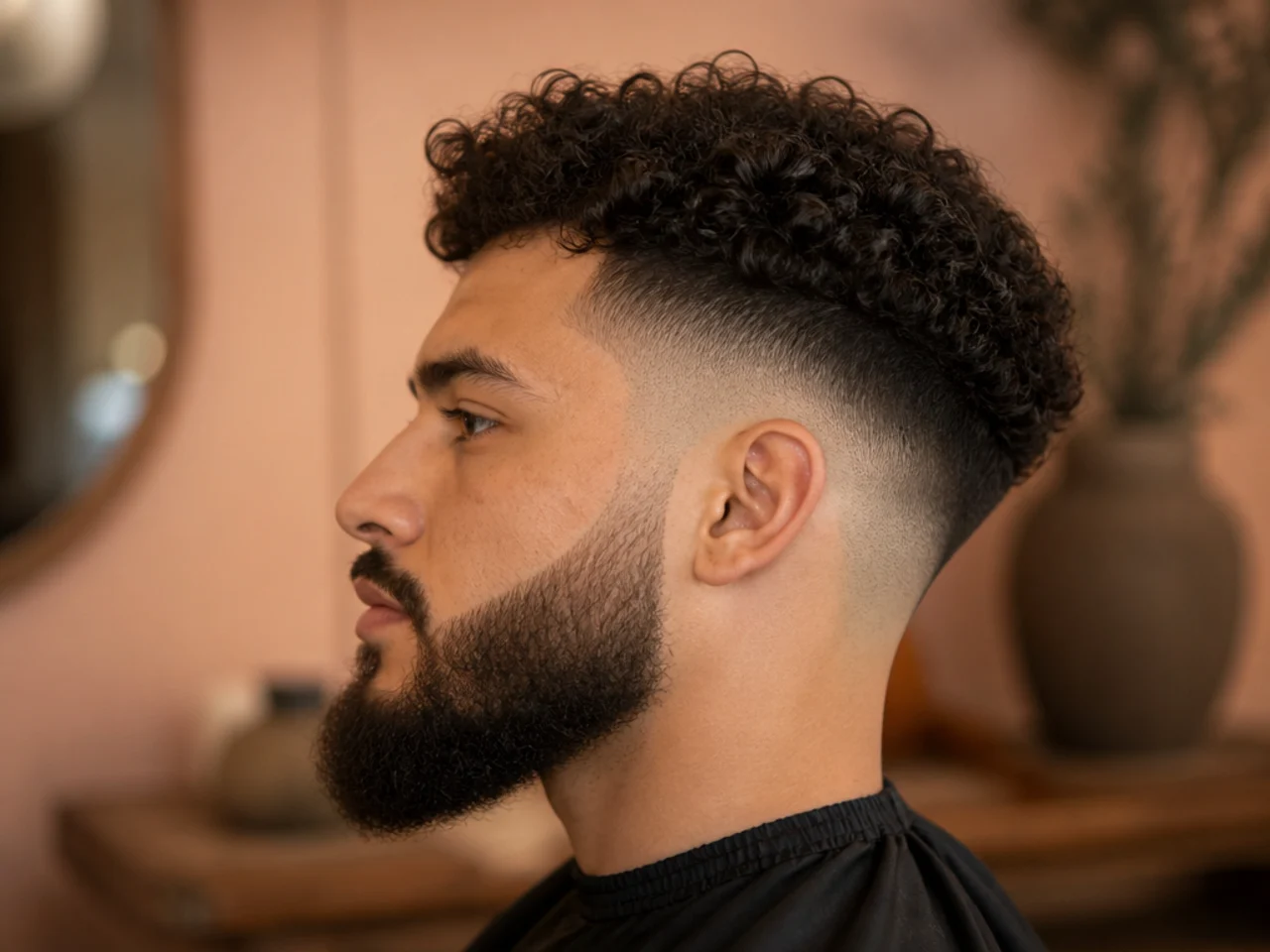
Wave and beard hair are similar textures, so a connected blend works, the way it does on an ivy league with a beard. Curl against a straight beard is a texture mismatch at the join, which is why a clear disconnect usually reads cleaner.
10. Humidity
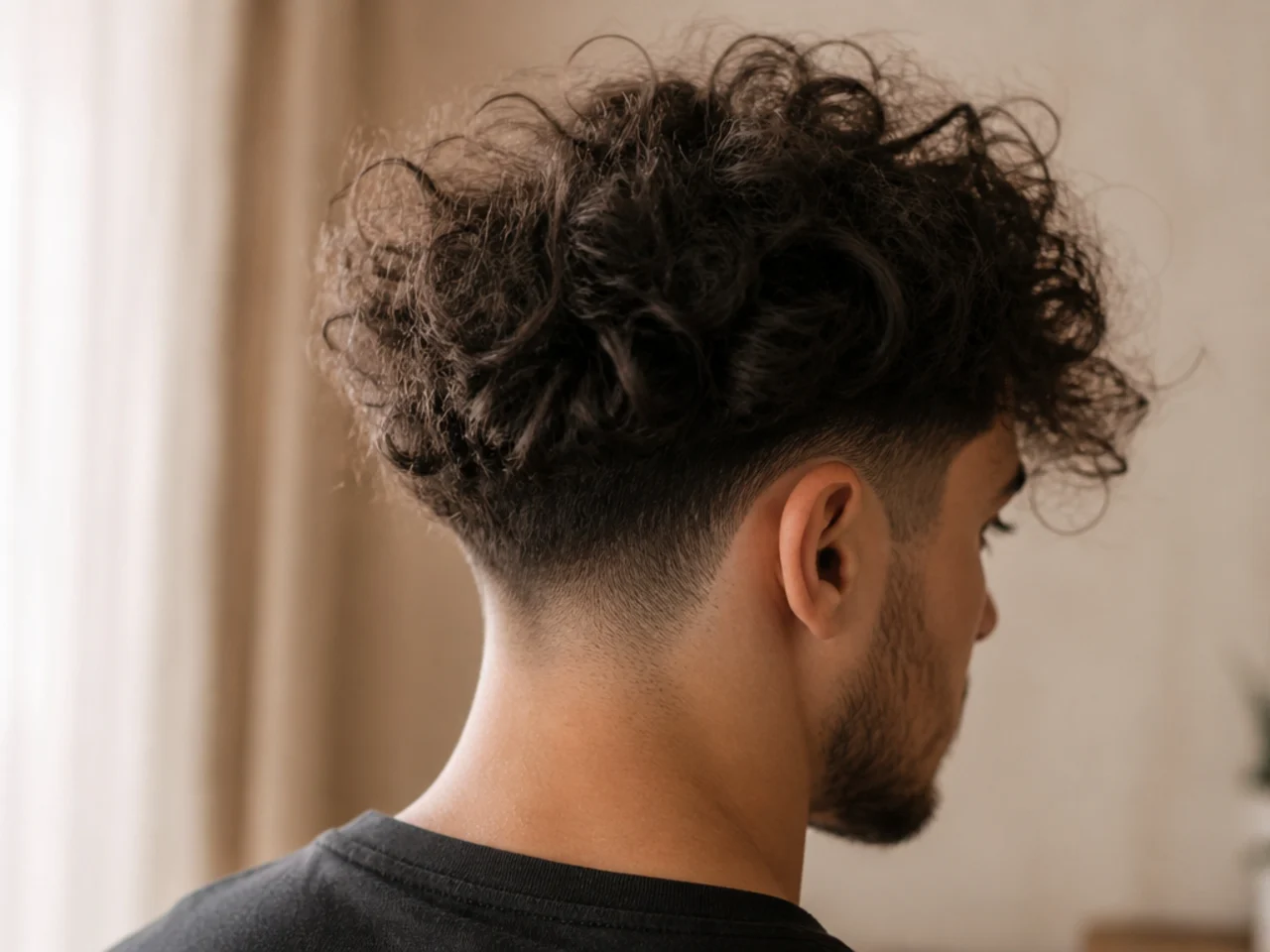
Moisture makes curls swell and frizz and makes waves drop and go limp. The same weather produces opposite complaints, and opposite fixes.
11. Day Two and Day Three
Curls loosen and separate over a few days into a softer version of the same shape. Waves flatten instead, which is why a wavy head usually needs a rewet where a curly head can simply be worn looser.
12. Appointment Cadence
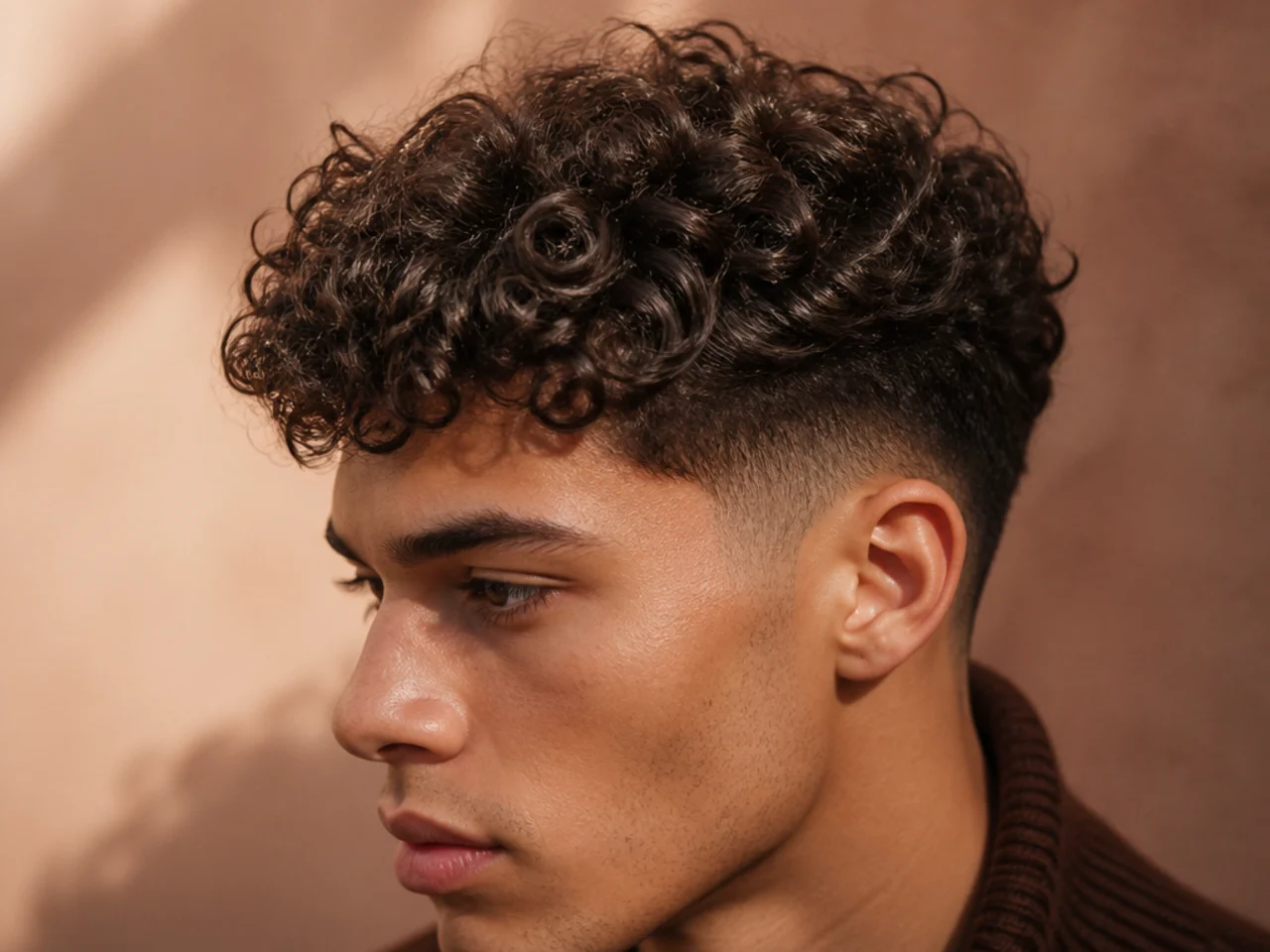
Curl hides growth because the pattern shortens the visible length, so six to eight weeks works. Wave shows growth plainly and often needs cutting closer to every five or six.
13. The Grow-Out Curve
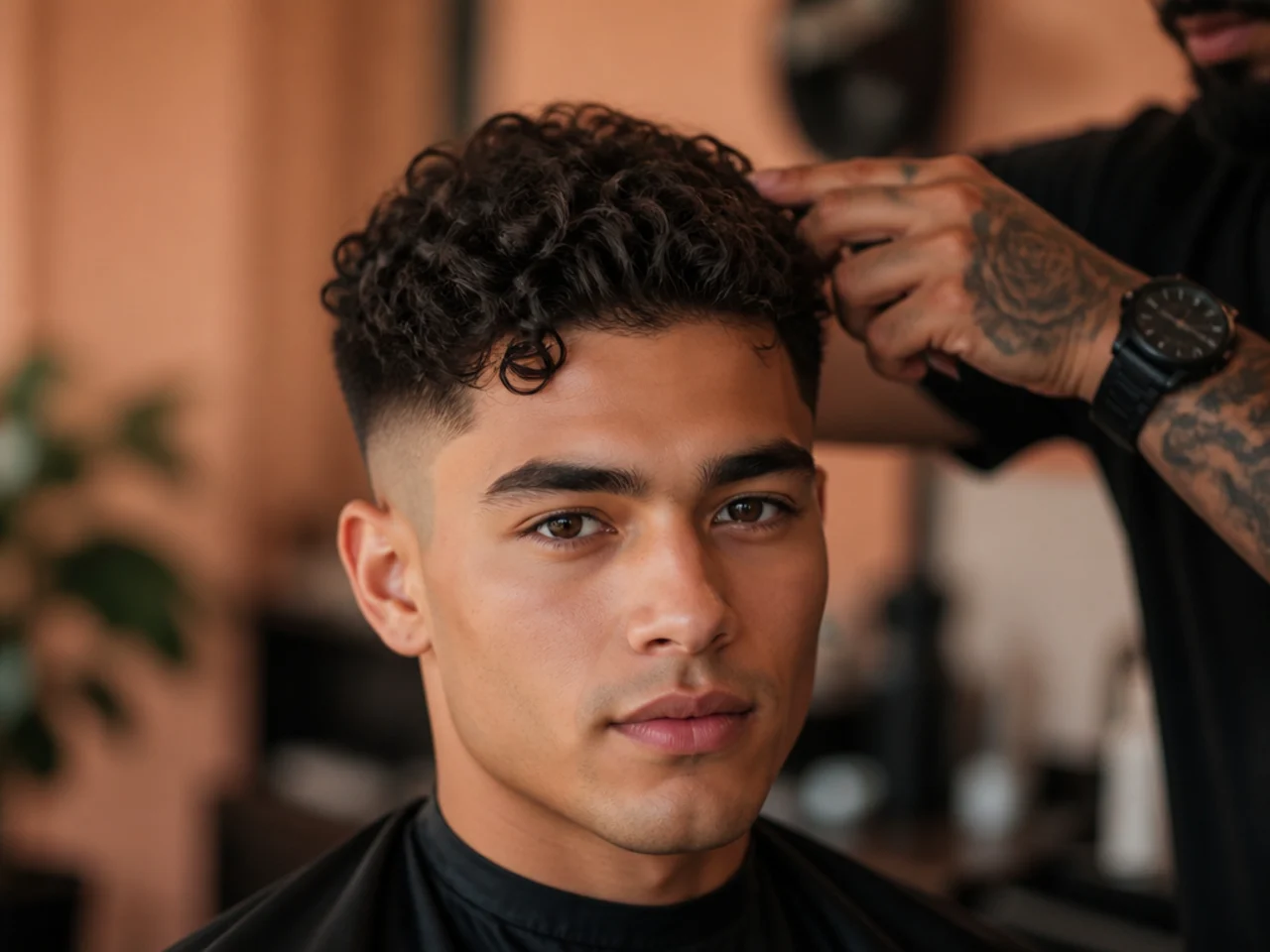
Curl gets harder as it lengthens because weight pulls the spiral open. Wave gets easier, because length is exactly what it was missing, so the two grow-outs feel completely different.
14. Looking Formal
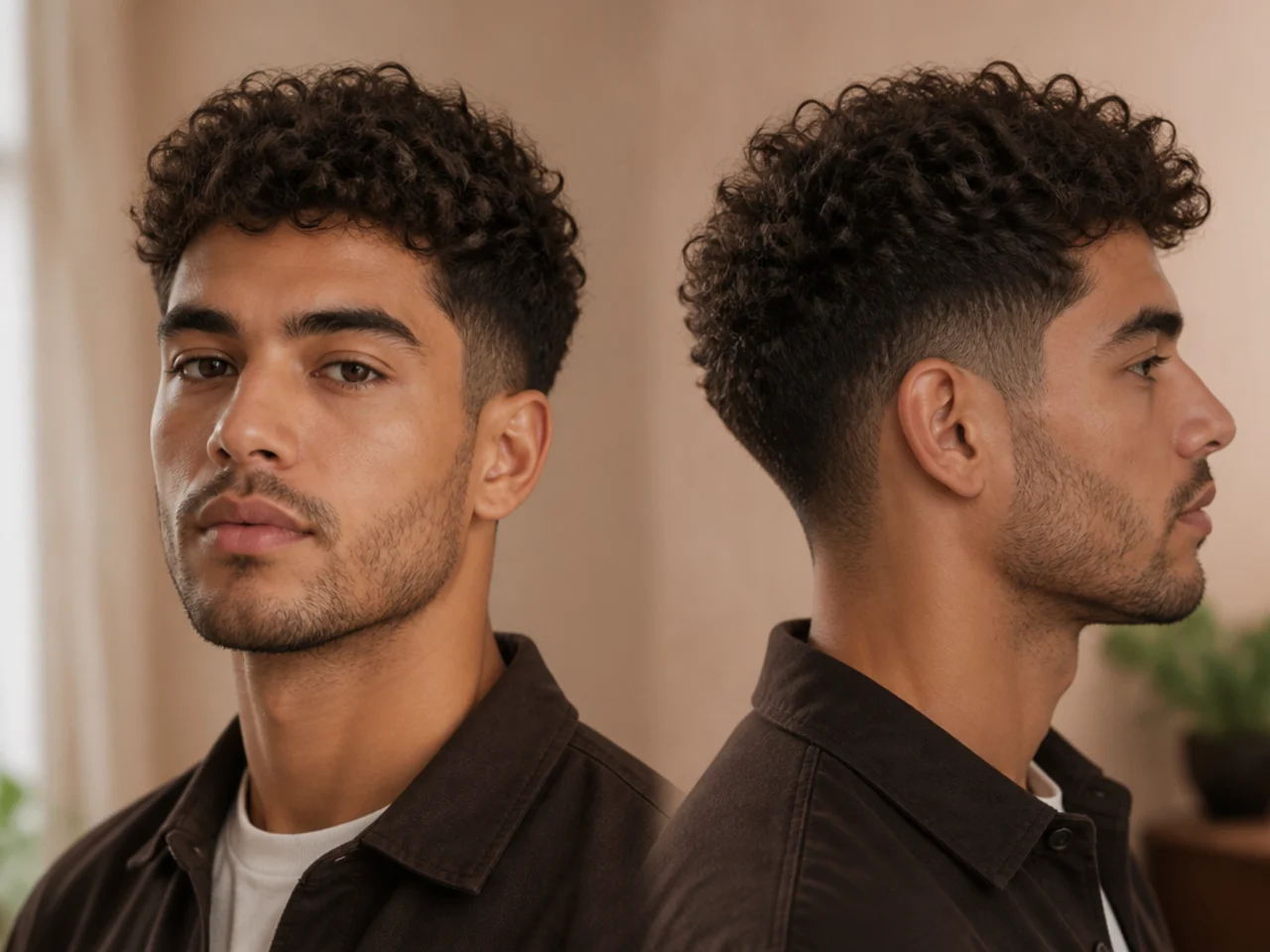
Curl reads formal when volume is reduced but definition is kept. Wave reads formal when it is given a clean part, because a wave holds a parting far more reliably than a curl does.
15. The Mixed Head
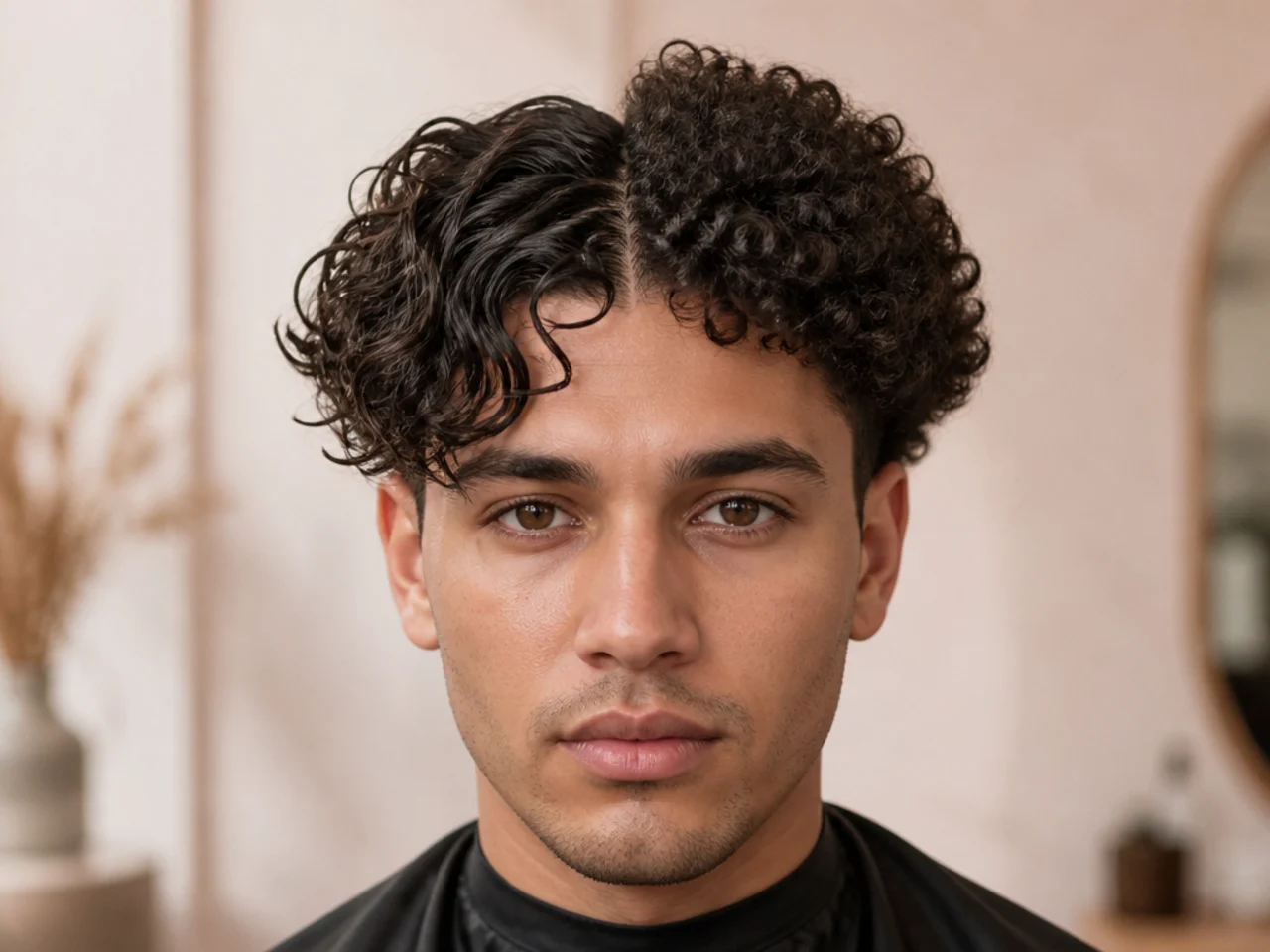
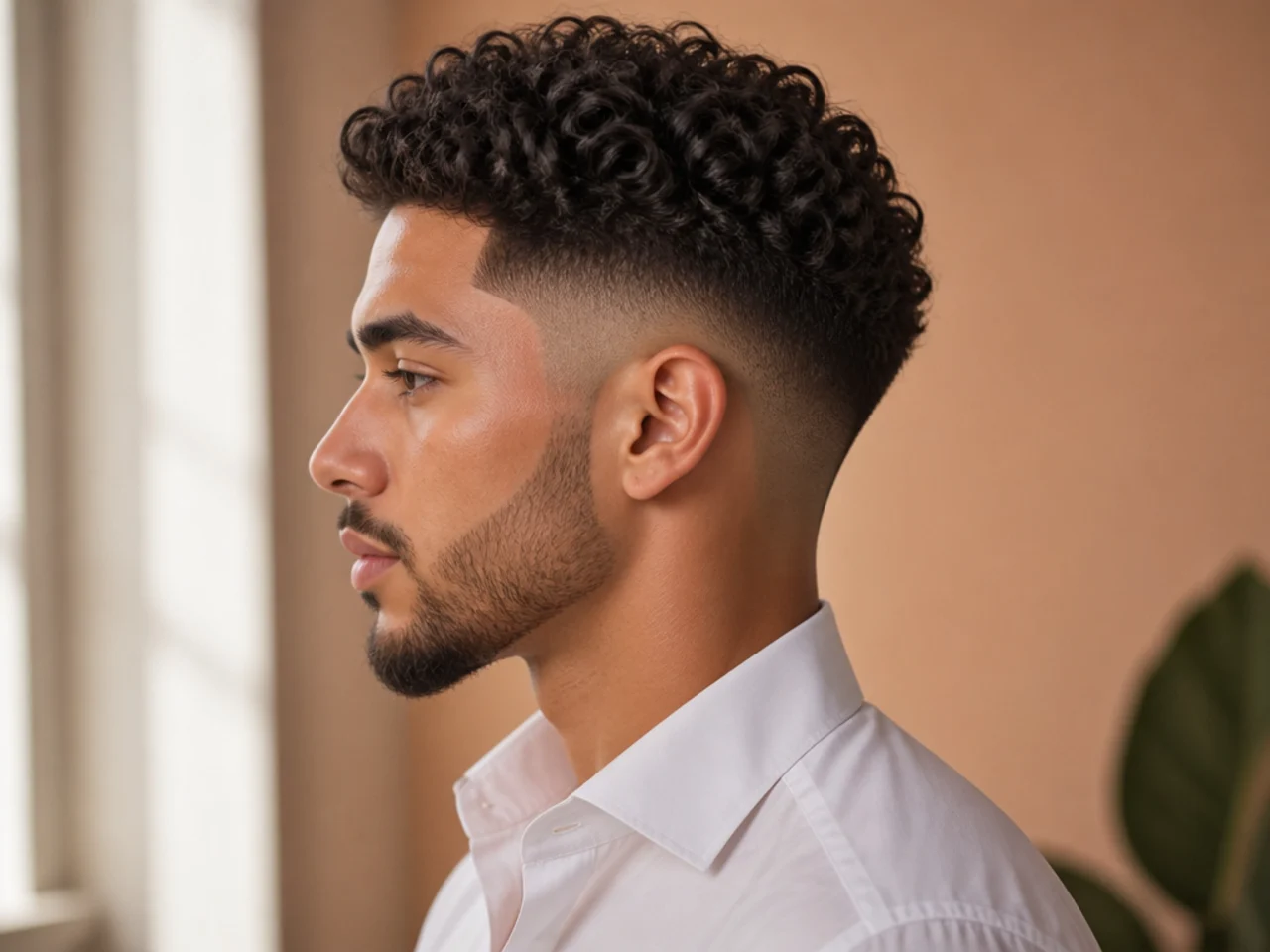
Waves at the hairline and curls at the crown is the most common arrangement of all. Treat the zones separately, because a single product amount cannot suit both without failing one of them.
Styling and Upkeep
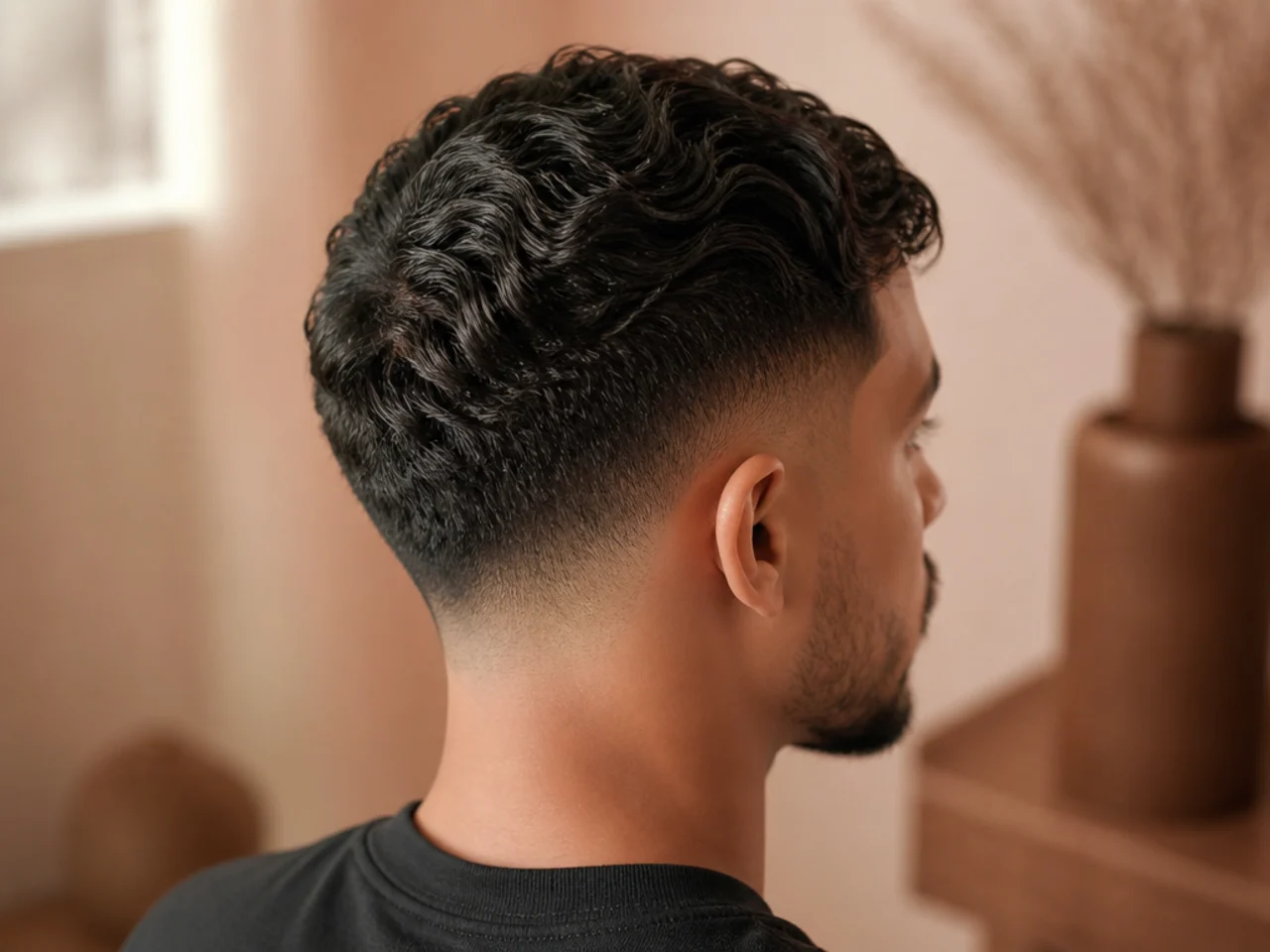
Give waves length and give curls layers. It is the shortest summary of everything above.
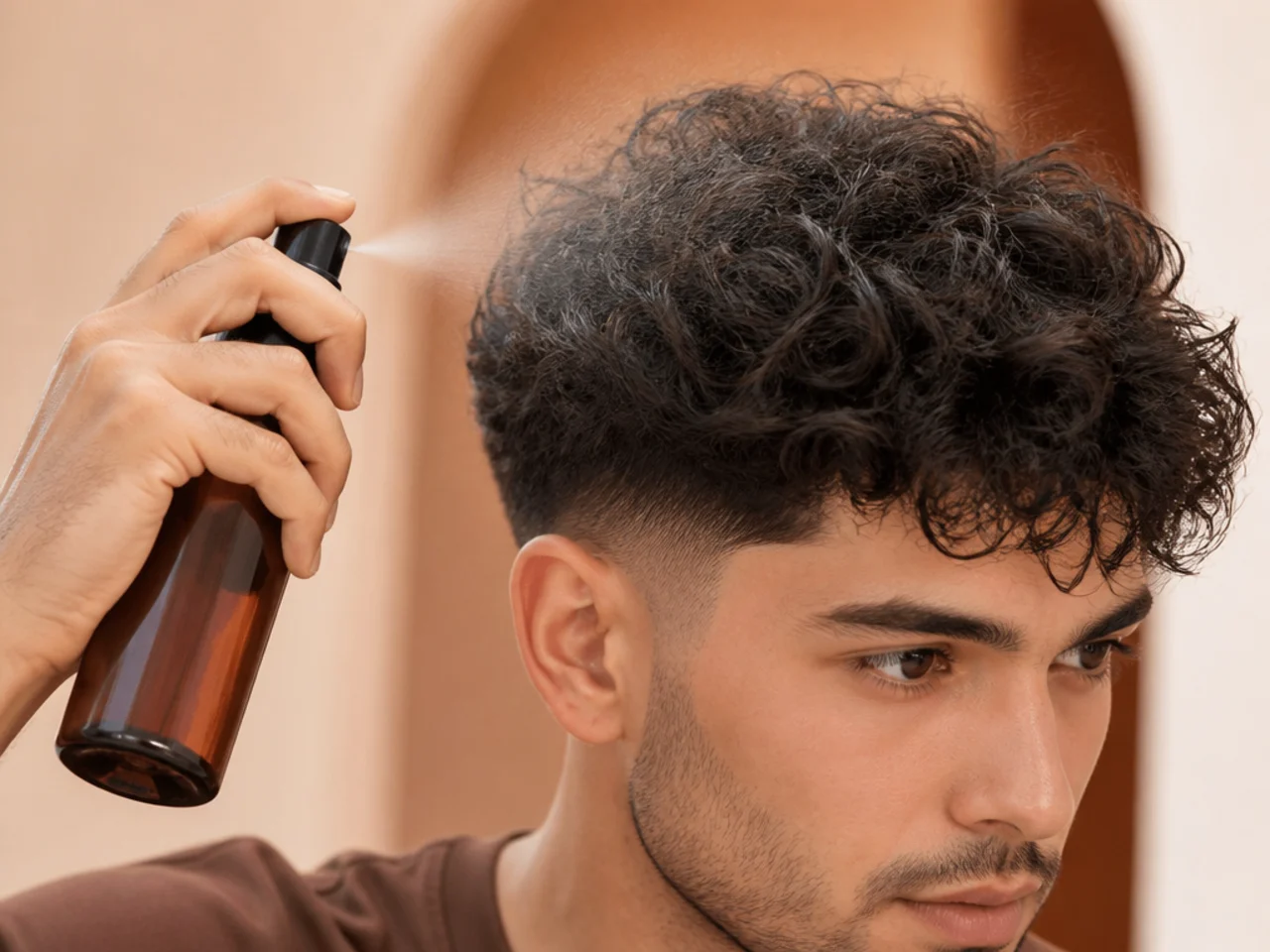
Refresh both with water rather than product. Water reactivates a pattern and product only holds what is already there.
Use less on waves than instinct suggests. Most flat wavy heads are carrying weight they never needed.
Squeeze with a t-shirt rather than a towel, on either. Towel loops lift strands out of clumps in both patterns.
Say which one you have at the consultation. Barbers default to wet cutting, and that default is wrong for curl.
Mistakes to Avoid
Applying curl advice to waves. It is written for frizz, and your problem is flatness.
Cutting curls wet. A third of the length returns as it dries and the cut is already finished.
Layering a wave for movement. Layers remove the mass the S shape depends on.
Cutting a wave short to make it tidier. Below about four centimetres the pattern has nowhere to happen.
Brushing either one dry. It separates the clumps in both, producing frizz in one and flatness in the other.

FAQ
How do I tell them apart? Air-dry with nothing on it, and check whether the strand bends or wraps.
Different haircuts? Yes, in opposite directions, since one needs weight left in and one needs it removed.
Can waves be cut wet? With far less risk, because they lose very little length as they dry.
Final Thoughts
Work out which way your hair fails and then apply the opposite rule set to the one you have probably been following. The single sentence worth taking to a barber is whether you want weight left in or taken out, because everything else follows from that.
For the wavy side in depth see wavy curly hair ideas for men, and to place your pattern precisely read the curl types guide. More in Men's Haircuts.