20 Medium Jellyfish Haircut Ideas
Twenty medium length versions of the stepped cut, and the arithmetic that decides all of them. At collarbone length the gap between the two hems is whatever is left over, so the bell has to sit higher than most people expect.
In this article · 28
- What Is a Medium Jellyfish Haircut
- Jellyfish Versus Wolf Versus Mullet
- Who It Suits
- Styling the Bell and the Length
- The Salon Consultation
- The Growing Out Timeline
- The 20 Medium Jellyfish Ideas
- 1. Collarbone Length With a Jaw Bell
- 2. Fine Straight Hair
- 3. Curtain Bangs
- 4. Cheekbone Bell on Wavy Hair
- 5. Round Face
- 6. Soft Disconnect for Work
- 7. Blunt Bell With Flipped Ends
- 8. Two Tone Platinum
- 9. 2B Waves With Sea Salt
- 10. Thick Coarse Hair
- 11. Hime Panels
- 12. Micro Bangs
- 13. Bra Strap Length With a Chin Bell
- 14. Square Jaw
- 15. 3A Curls
- 16. Copper Money Piece
- 17. Razored Heavy Hair
- 18. Nape Undercut
- 19. Sleek Straight Finish
- 20. Grown Out Into a Shag
- Final Thoughts
At medium length this cut stops being a style decision and becomes an arithmetic one.
The gap is whatever is left over. Bell length subtracted from the length of your hair is the separation between the two hems, and that number is the cut.
So the bell has to sit high. At collarbone length a chin bell leaves almost nothing below it, which is why the cheekbone and jaw placements do nearly all the work here.
What Is a Medium Jellyfish Haircut
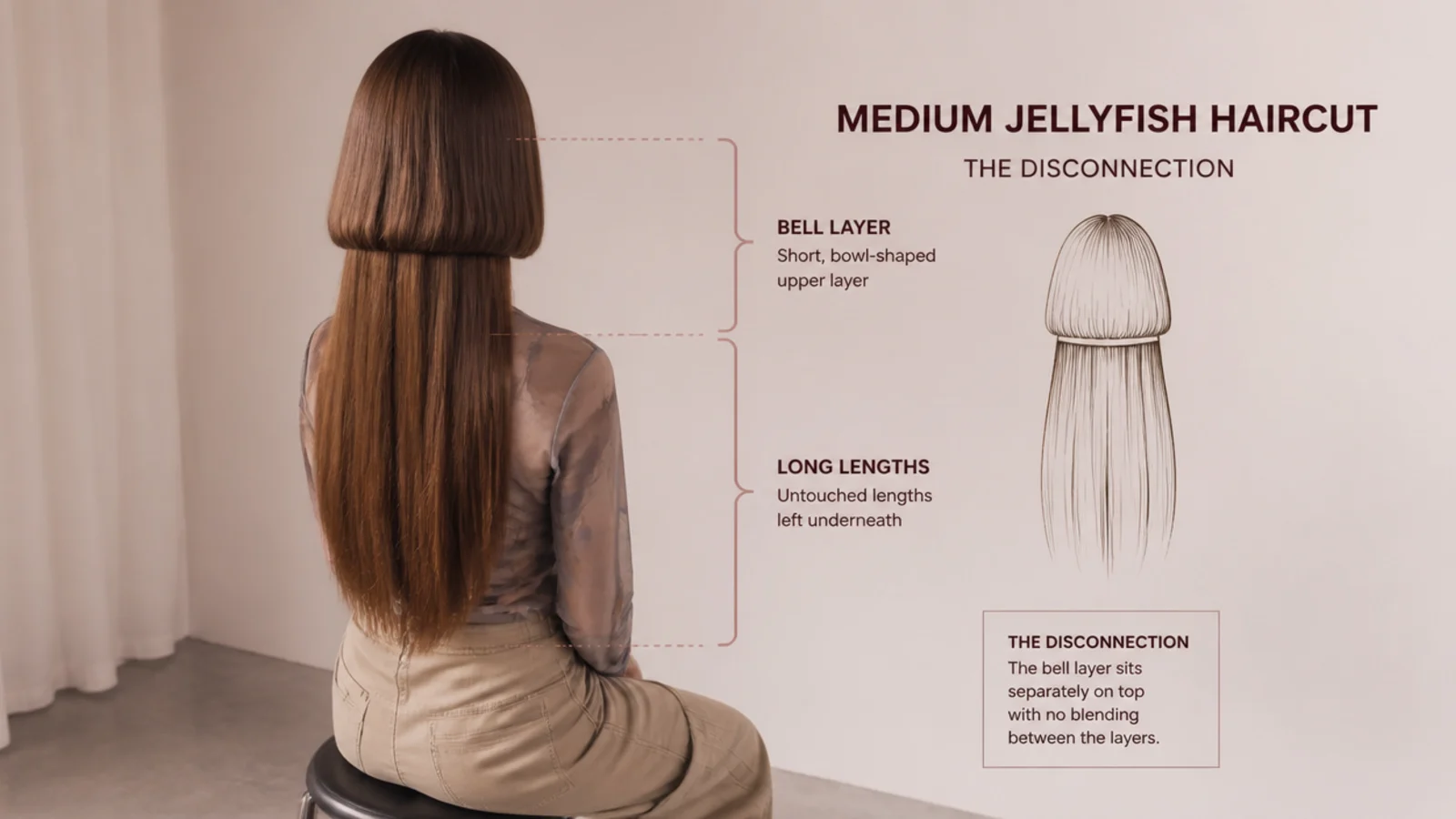
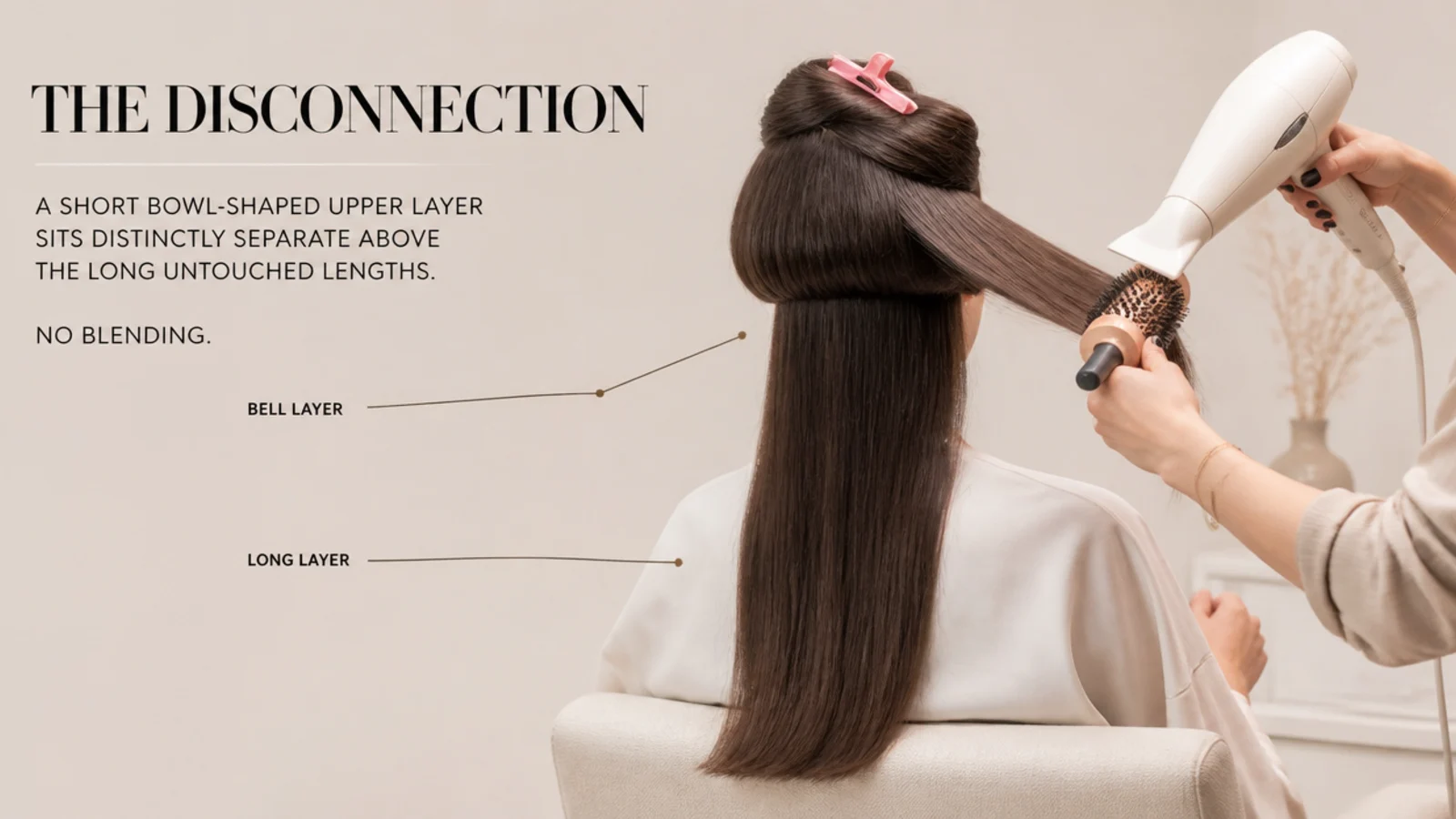
A short blunt tier over untouched medium length hair. The upper section is cut level all the way round and the lengths below it keep every inch they had.
The step between them is the design. No graduation, no blending. The moment the two tiers connect, the cut becomes a long layered shape instead.
Collarbone is the floor. Shorter than that and there is no room left for a gap, so the same cut reads as a heavy layered bob rather than as two tiers.
Five inches of separation is about the minimum. Below that the eye stops reading a decision and starts reading a layer that was cut badly.
Jellyfish Versus Wolf Versus Mullet
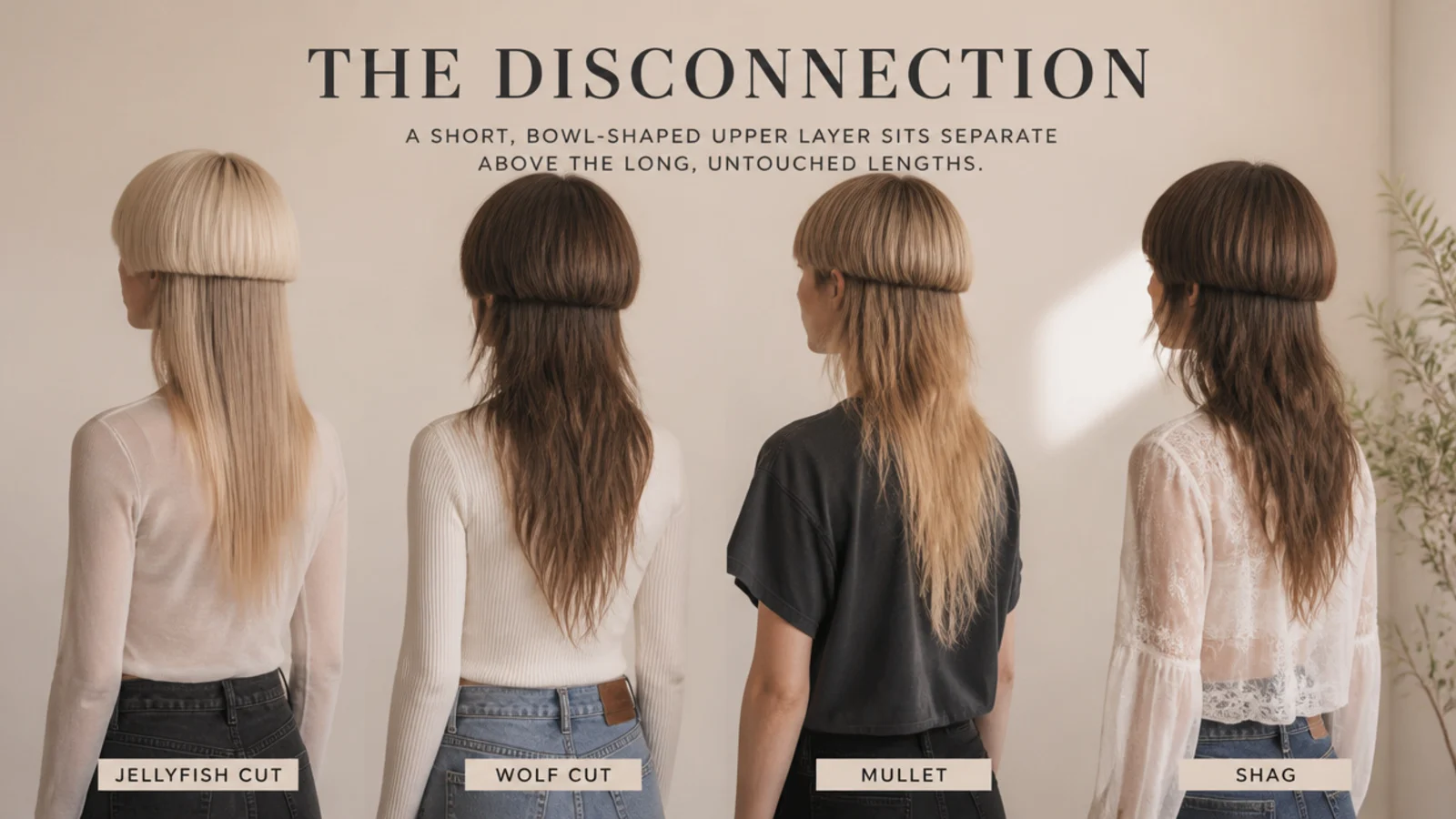
The jellyfish steps. One short tier over one long tier with a visible break and nothing bridging it.
The wolf graduates. The same top to bottom axis, but every length runs smoothly into the next, which is why the two are so often confused in a consultation.
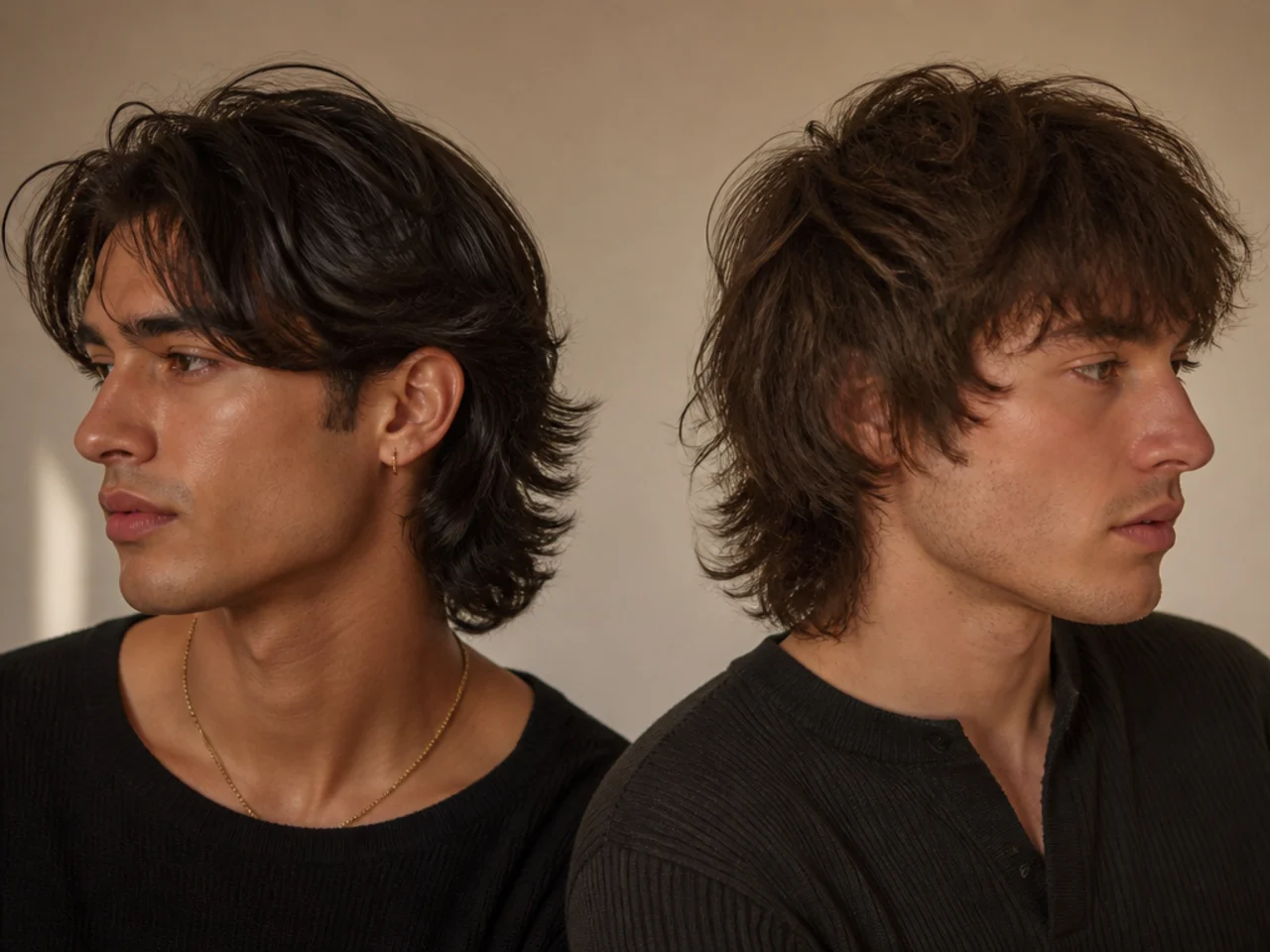
The mullet runs front to back. Short at the front and sides, long behind, so it reads from the side where the jellyfish reads from the front.
Only the jellyfish leaves the perimeter alone. Nothing comes off the lengths, which matters more at medium length than anywhere else because there is less to spare.
Who It Suits
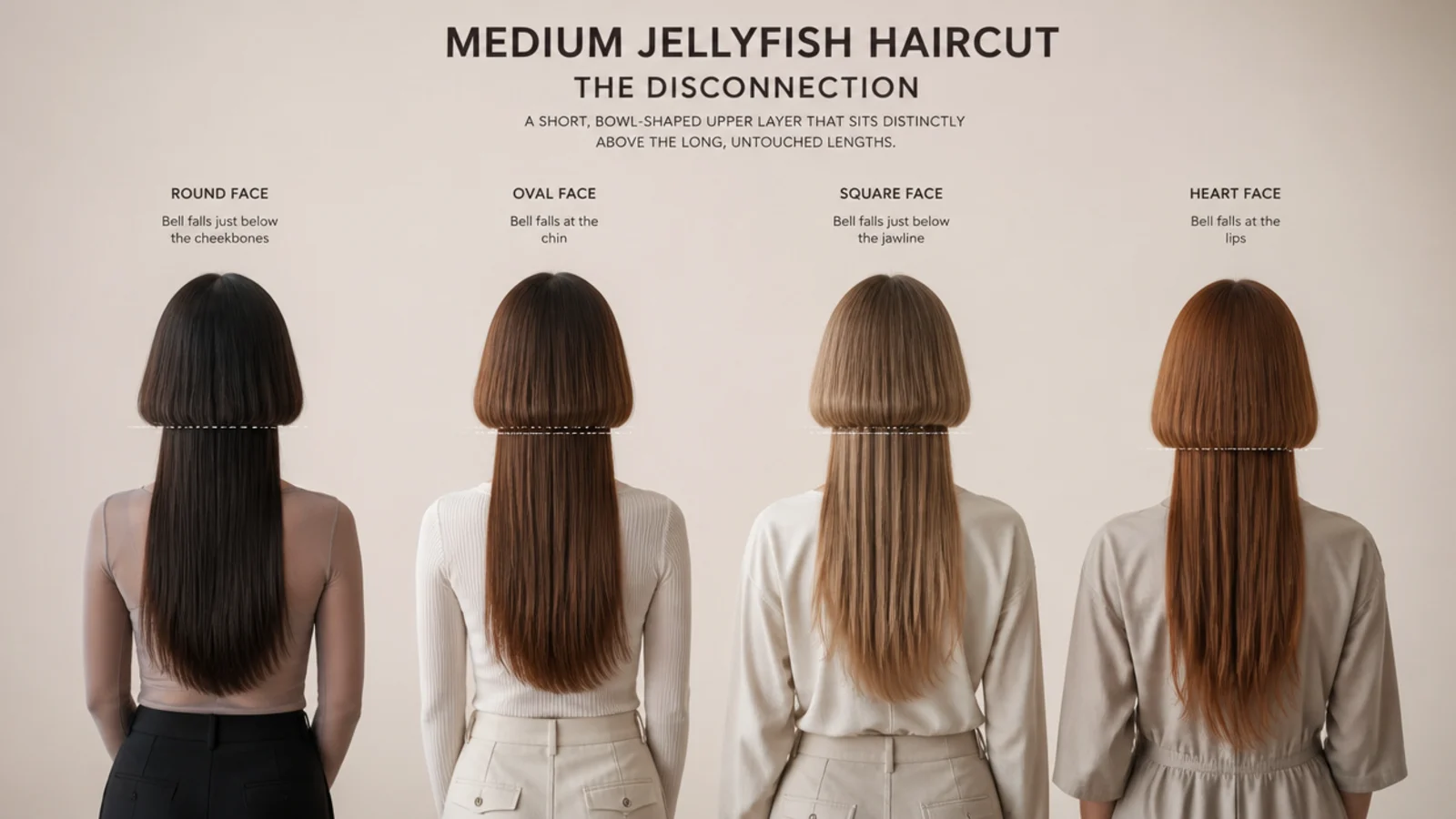
The hem is a horizontal across the face. Wherever the bell ends, the face gains width, because a blunt line pulls the eye sideways rather than down.
Medium length forces a compromise. A round face wants the hem low and the arithmetic wants it high, and the usual resolution is a jaw hem with a notched edge.
Fine hair does well here. A blunt line ends every strand on the same point, which reads as density, and medium length keeps enough weight in the perimeter to match it.
Thick hair needs interior weight removed. Two full density tiers over a short run of length sit like boards, and thinning from underneath is what lets them hang.
Styling the Bell and the Length
Two tiers, two surfaces. Smooth the bell, texture the lengths. Matching them collapses the cut into one sheet of hair, which at medium length happens faster than it does on long.
The bell keeps a set all day. Short hair carries little weight, so the shape it cooled into is the shape it holds.
Rough dry the lengths. Fingers and downward airflow leave texture while keeping the cuticle flat, which is exactly the contrast the tier above needs.
Product by tier. Serum on the bell, texture spray below. Applied the other way round each one cancels the purpose of the other.
The Salon Consultation
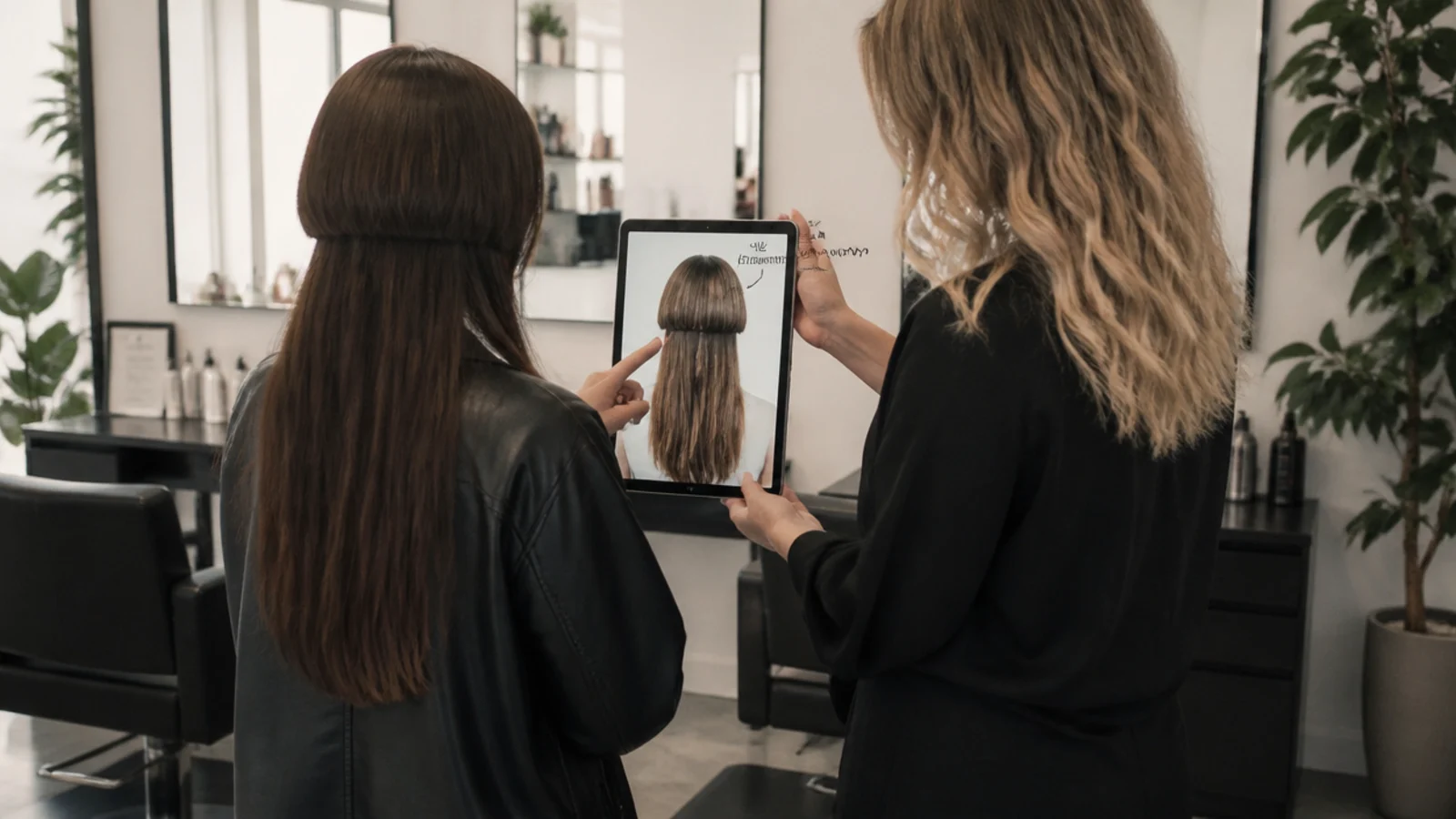
Say disconnected and say do not blend. Both, before any sectioning happens. Softening a hard edge is trained reflex and it happens without being announced.
Name the gap before the hem. At medium length the gap is the scarce resource, so agreeing the separation first tells you where the bell can go.
Point at your own face for the hem. Cheekbone, jaw or chin, indicated with a finger. Inches land differently on every neck.
Say the lengths are untouched. Dusting the ends is fine. Layering the top of them raises the lower hem and eats the gap from below, which at this length there is no room to lose.
The Growing Out Timeline
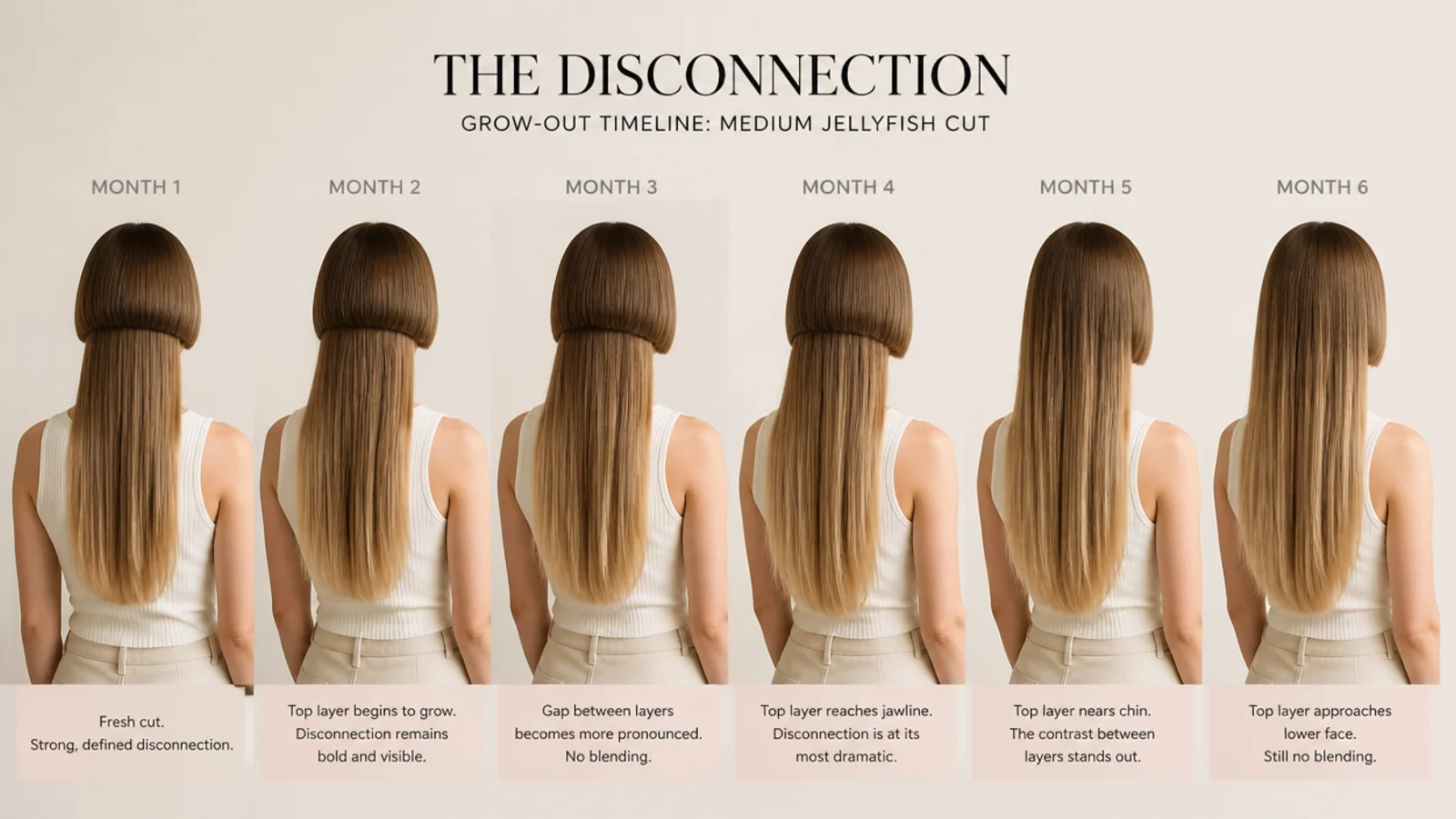
Half an inch a month, from both ends. The lengths grow too, but the bell is what closes the gap because it starts so much higher up the head.
Eight to ten weeks is the recut window. By then the bell has dropped about an inch, and at medium length that inch is a fifth of the whole gap.
Month three is the threshold. The step softens into a long face framing layer, which looks perfectly good and is no longer this cut.
The exit is a shag. Once the hems sit within a couple of inches, one blending pass converts it, so there is no awkward stage to sit through.
The 20 Medium Jellyfish Ideas
1. Collarbone Length With a Jaw Bell
The baseline version, and the tightest the arithmetic gets before the cut stops working. A jaw bell over collarbone lengths leaves roughly five inches of gap, which reads as deliberate from a conversational distance and no further.

2. Fine Straight Hair
Fine hair does better in this cut than in almost any layered alternative, because a blunt line stacks every end on the same point and reads as density. Keep the bell section shallow so the lengths below it keep enough hair to match.

3. Curtain Bangs
Splitting the front of the bell into a curtain opens the outline at the temples and stops the bowl reading as closed. At medium length that matters more, because a short bell over short lengths can otherwise look like a helmet on a stem.

4. Cheekbone Bell on Wavy Hair
Placing the hem high buys back the gap that medium length takes away. Waves soften the hem though, scattering light along the edge, so the extra separation is spent on keeping the step visible rather than on drama.
5. Round Face
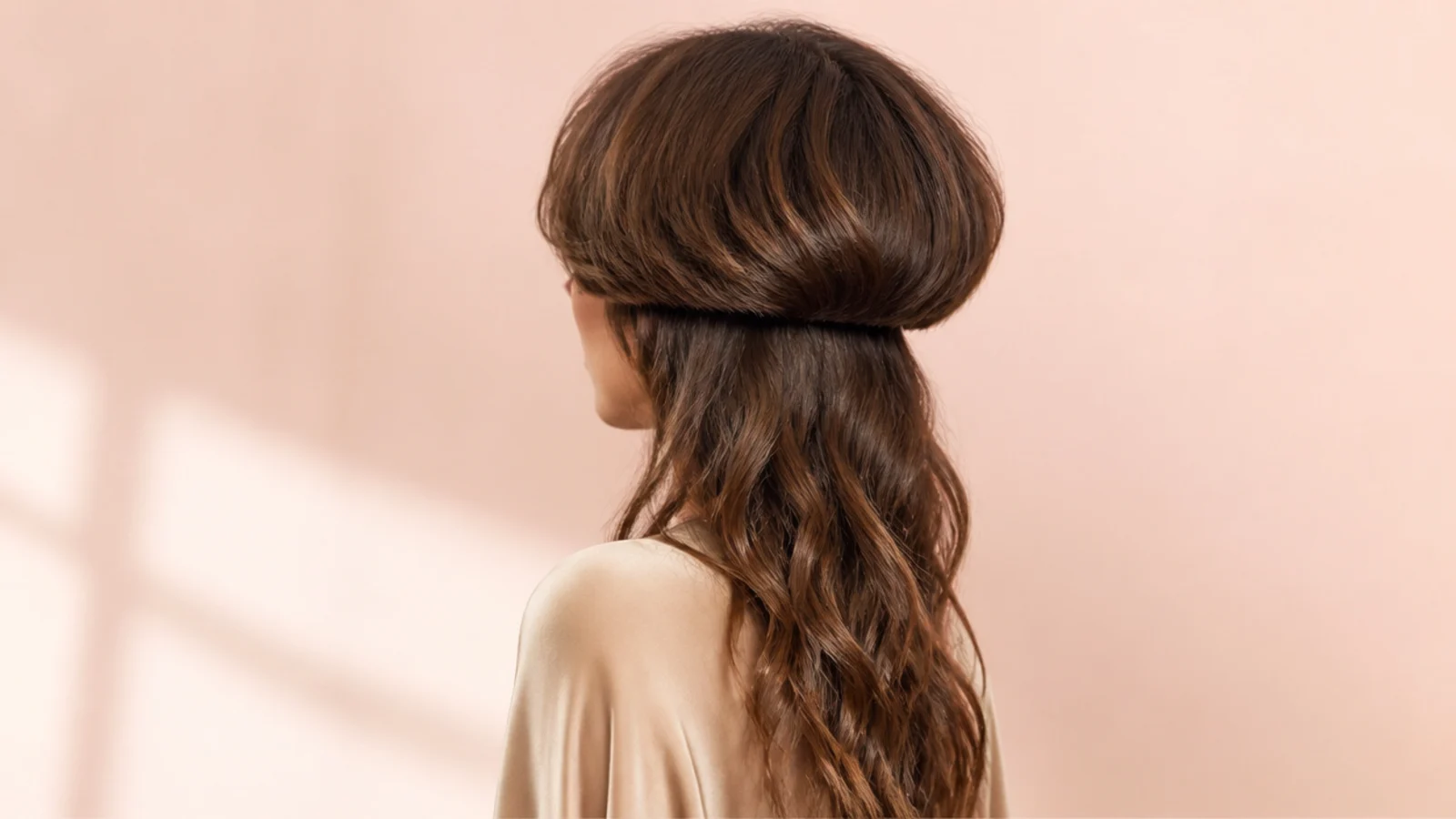
The compromise version. The hem drops to the jaw so the horizontal misses the widest part of the face, and the gap that costs is recovered by keeping the lengths at their maximum rather than trimming them.

6. Soft Disconnect for Work
The step is cut shallower and the hem lightly notched so the shape survives being tied back and reads as layers in a meeting. It gives up the hard edge and gains a cut that does not need explaining every morning.

7. Blunt Bell With Flipped Ends
Turning the hem outward lifts it clear of the hair beneath, which manufactures separation that the cut itself did not have room for. On medium length that flick is worth an inch of gap for the cost of one round brush pass.
8. Two Tone Platinum
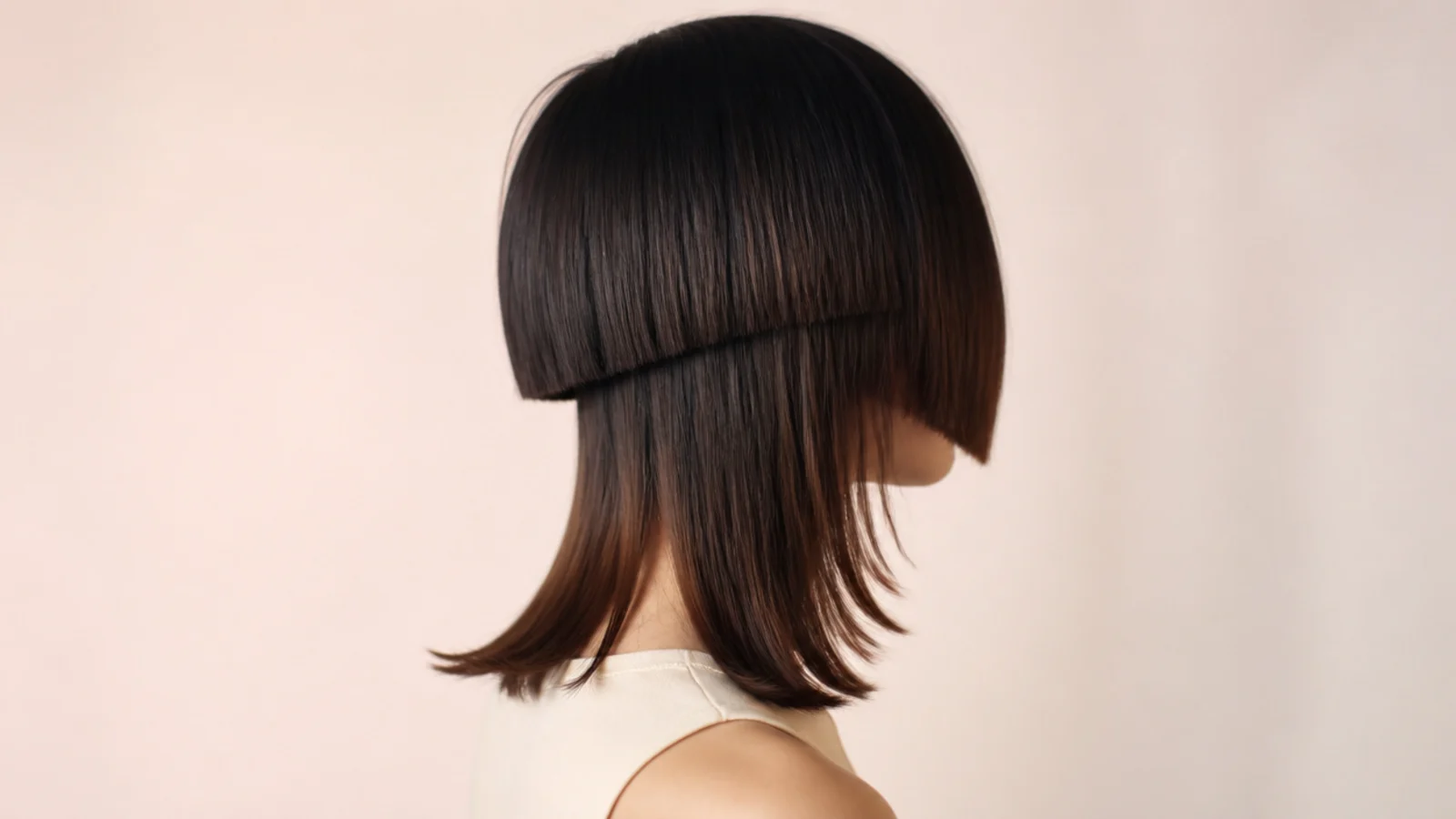
Lifting the upper tier alone puts a colour boundary on the line the cut already drew, which doubles the contrast without touching the length. It is the most effective way to make a small gap read from further away.
9. 2B Waves With Sea Salt
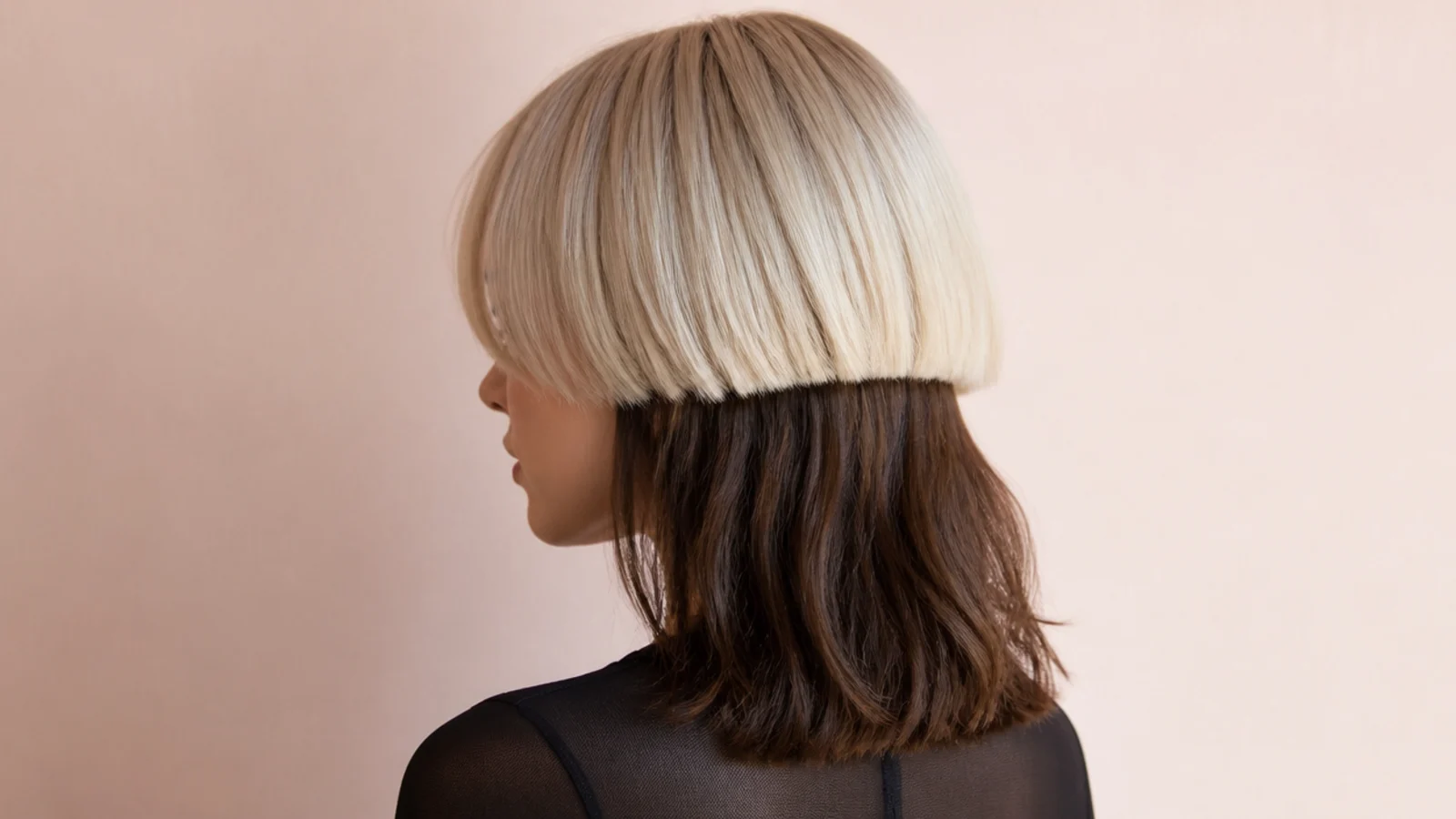
Salt spray roughens the surface of the lengths and leaves them matte, which is the strongest possible contrast against a smoothed bell. Keep the spray below the hem, because the same roughness on the bell destroys the flat plane the edge depends on.
10. Thick Coarse Hair
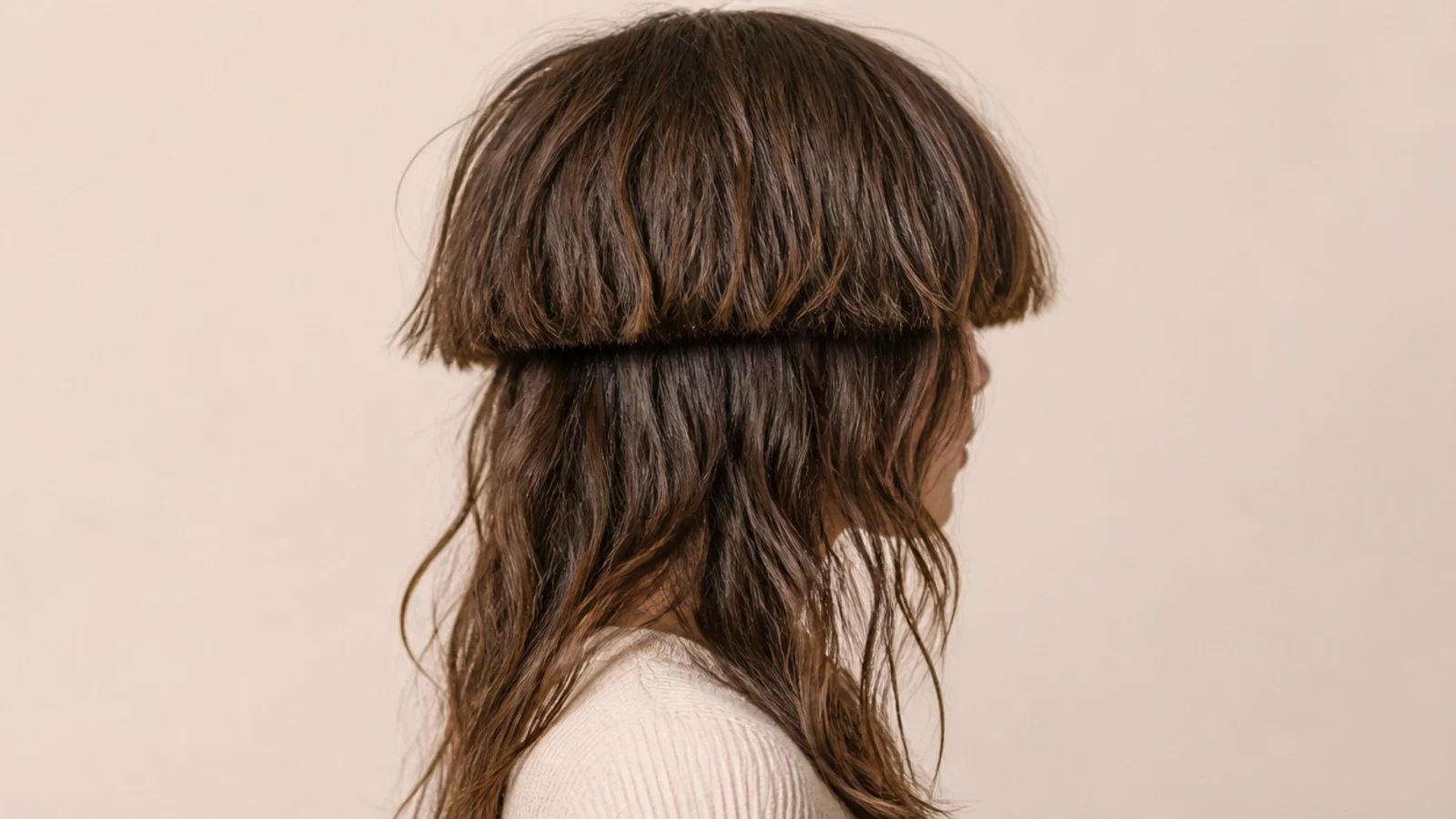
Two full density tiers over a short run of length is the hardest combination this cut faces. Interior weight has to come out from underneath the lengths, or the lower tier stands away from the body and the bell looks small against it.
11. Hime Panels
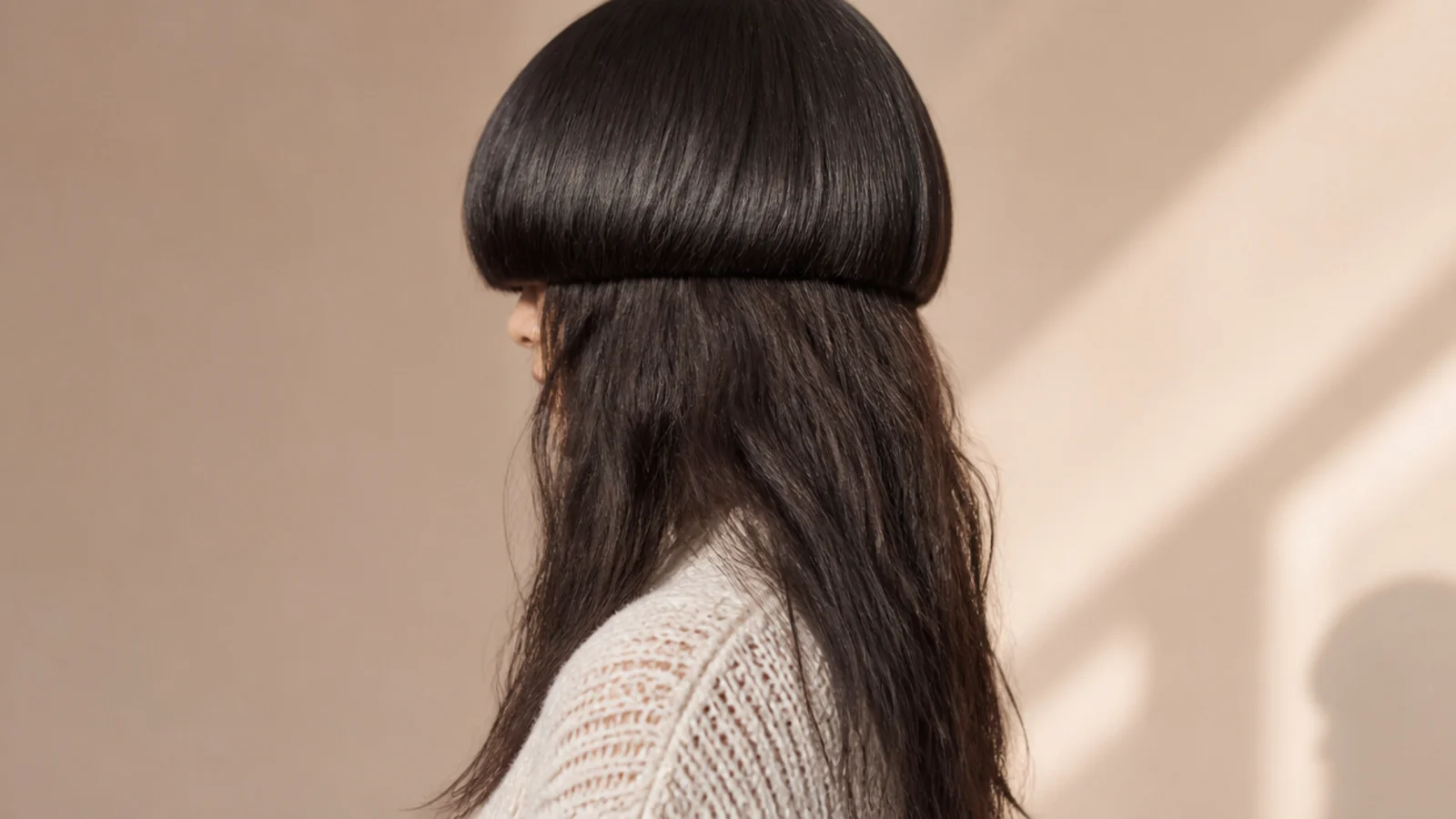
Two blunt vertical panels cut beside the face to the same line as the bell. They add a second pair of hard edges, which reinforces the geometry when a small gap is doing less work than it would on long hair.
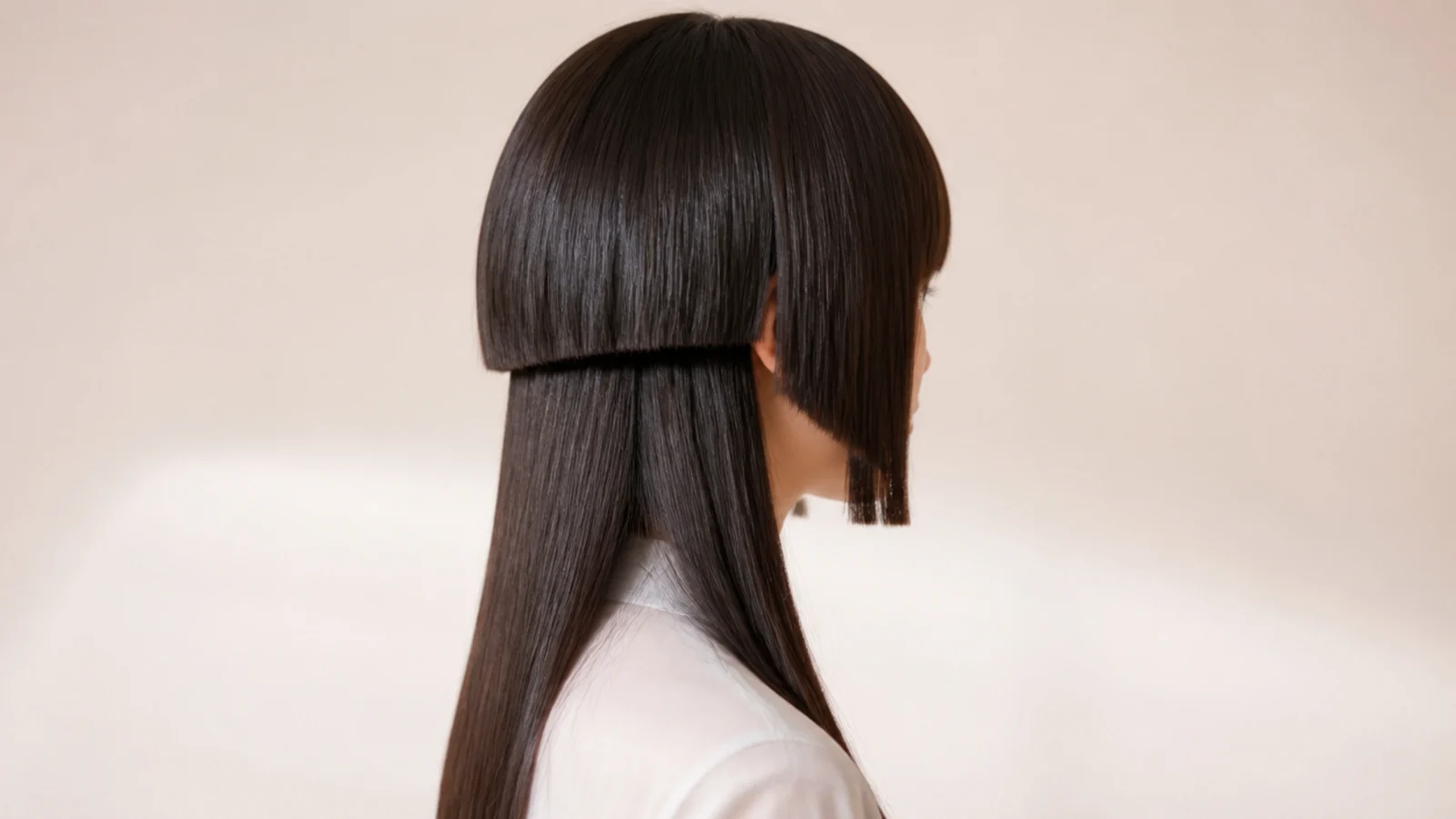
12. Micro Bangs
A very short fringe above the bell puts a third horizontal on a face that already has one from the hem. On medium hair the lines sit closer together, so this only works when the fringe is wispy enough to read as texture.
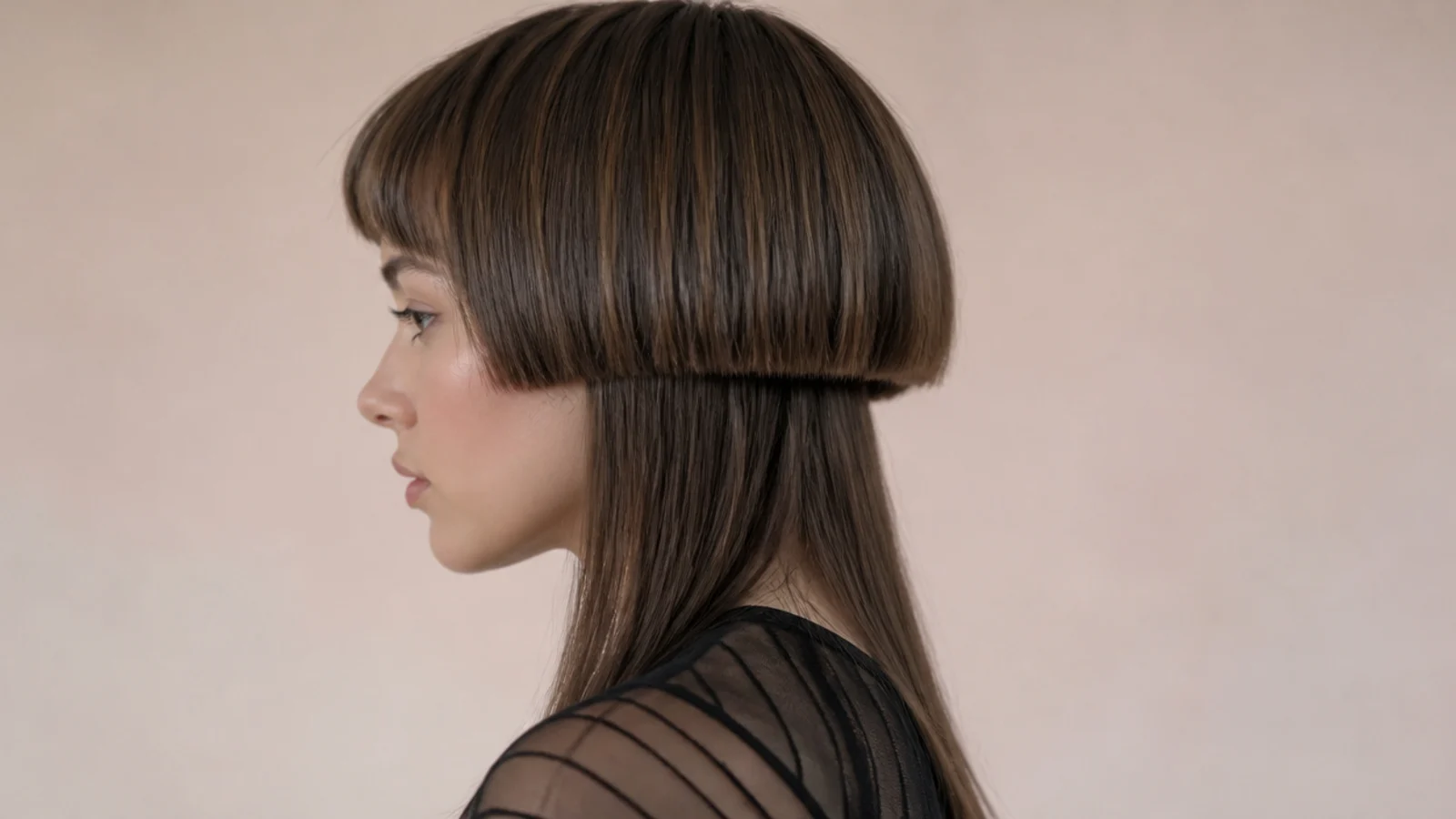
13. Bra Strap Length With a Chin Bell
The most generous version medium length allows, with around nine inches between the hems. That extra distance is what lets the bell sit at the chin, which is the softest and most conservative placement available.

14. Square Jaw
A hem landing exactly on a strong jaw doubles the horizontal that is already there. Dropping it an inch below the jaw corner, or notching the edge, keeps the line from repeating the shape of the face beneath it.
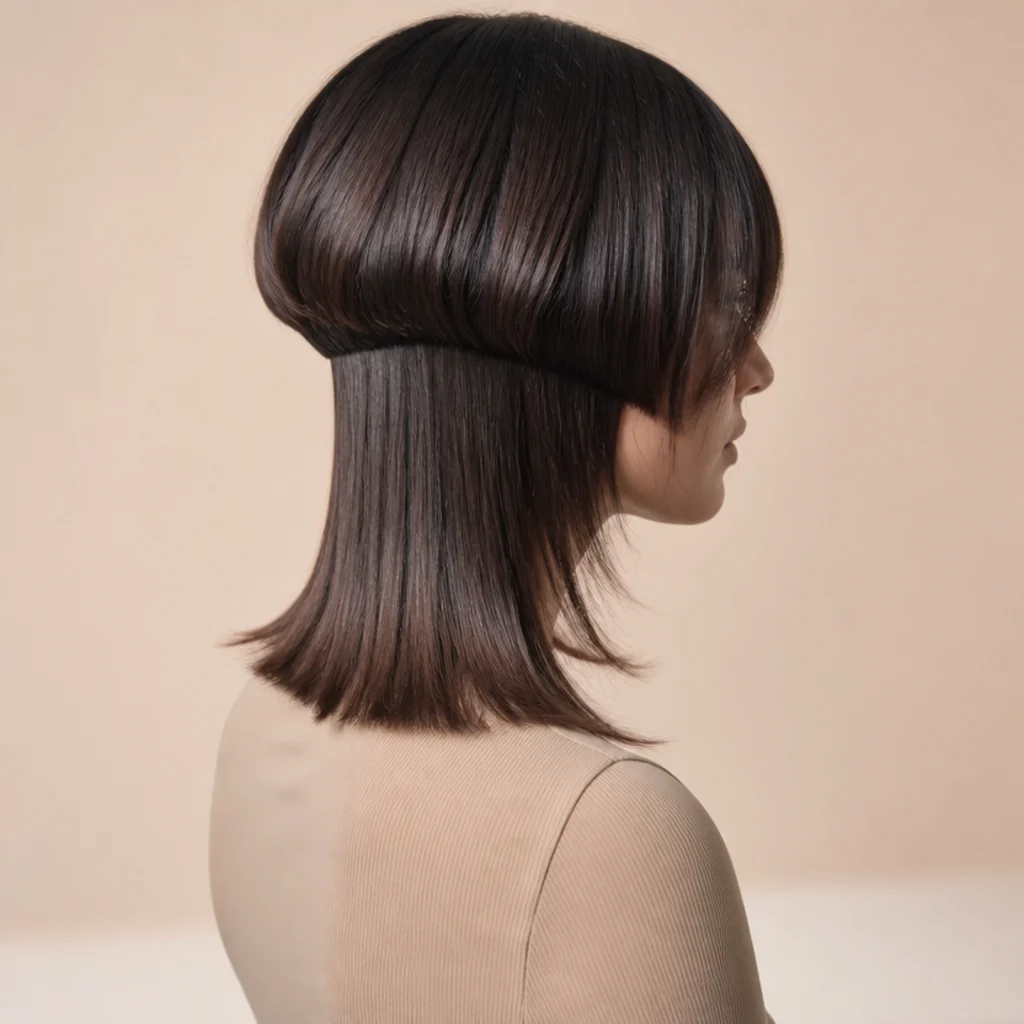
15. 3A Curls
Curl draws hair upward as it dries, so the bell has to be cut two inches or more below where it should land. Curl also fills the gap visually, which means medium length curly hair needs the highest bell placement of any version here.
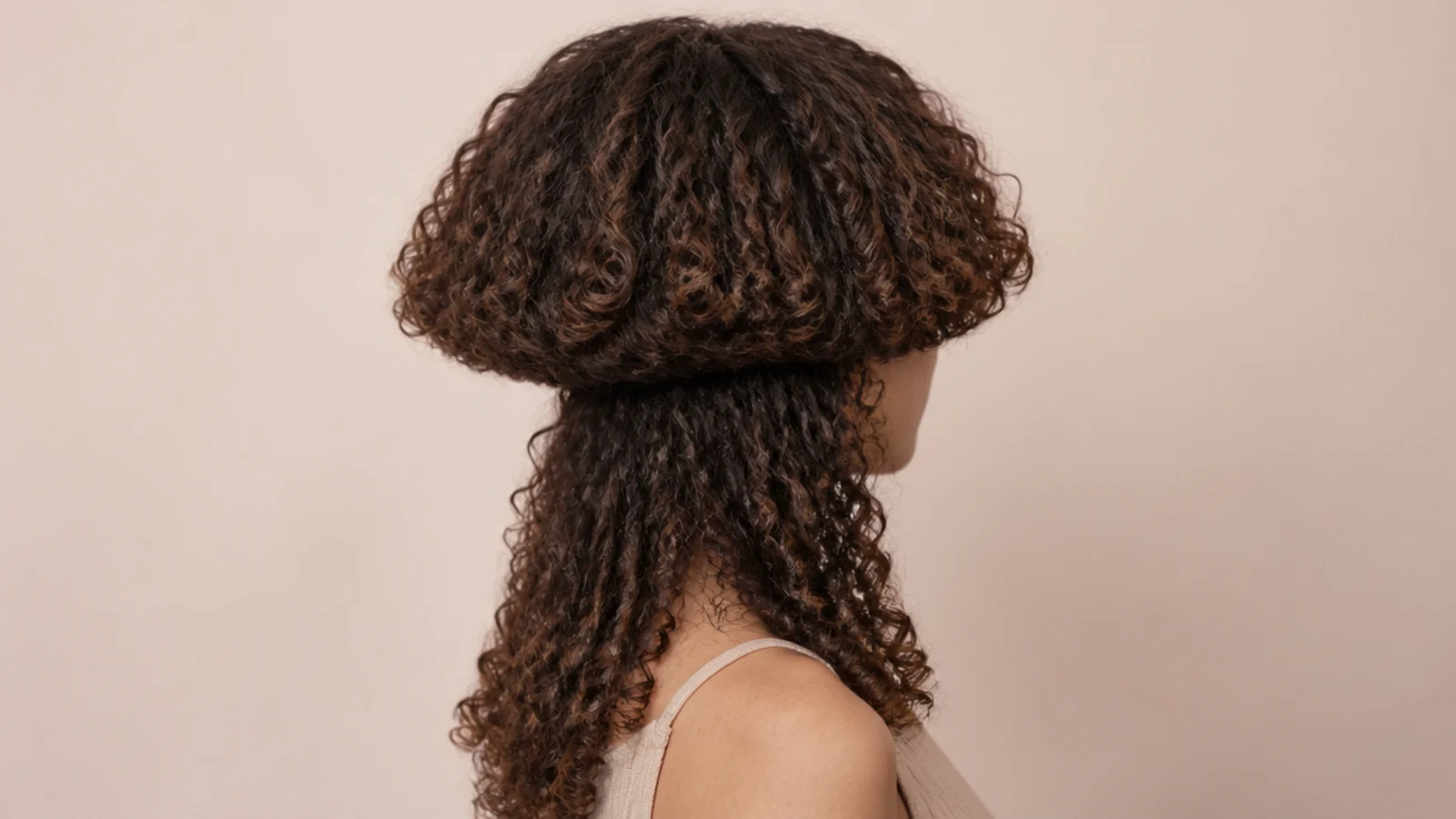
16. Copper Money Piece
Warming just the two front sections of the bell puts brightness where the hem meets the face. Because the bell ends on a line, the colour edge and the cut edge land together and each makes the other more visible.
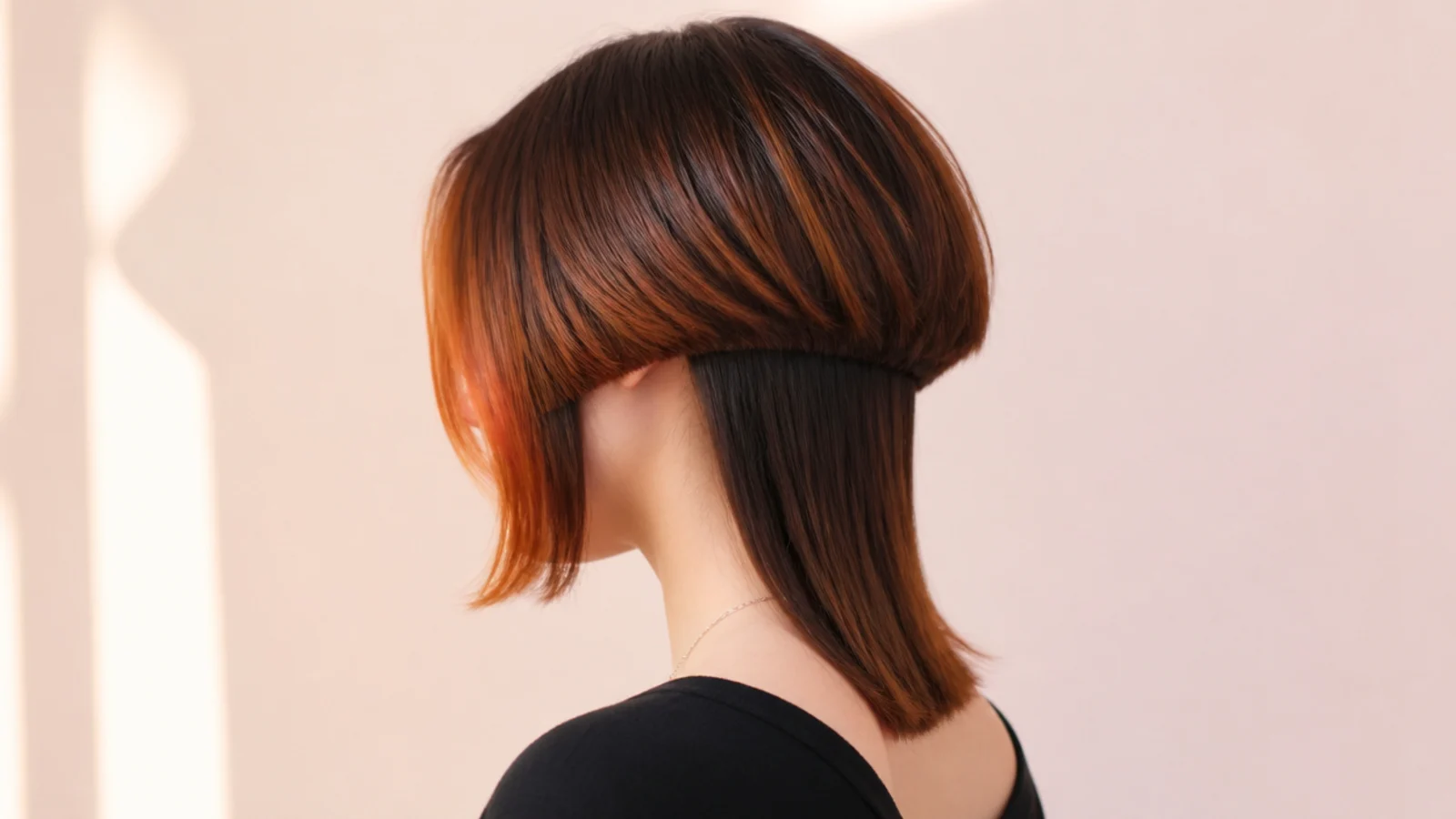
17. Razored Heavy Hair
A razor tapers each strand to a point instead of cutting it square, which takes weight out of the hem without shortening it. That matters at medium length, where losing height on the bell would cost gap the cut cannot afford.

18. Nape Undercut
Clipping the nape lets the lengths hang flat against the neck rather than pushing outward. The bell then sits clear of them by a wider margin, which manufactures visible separation without a single inch coming off the top.
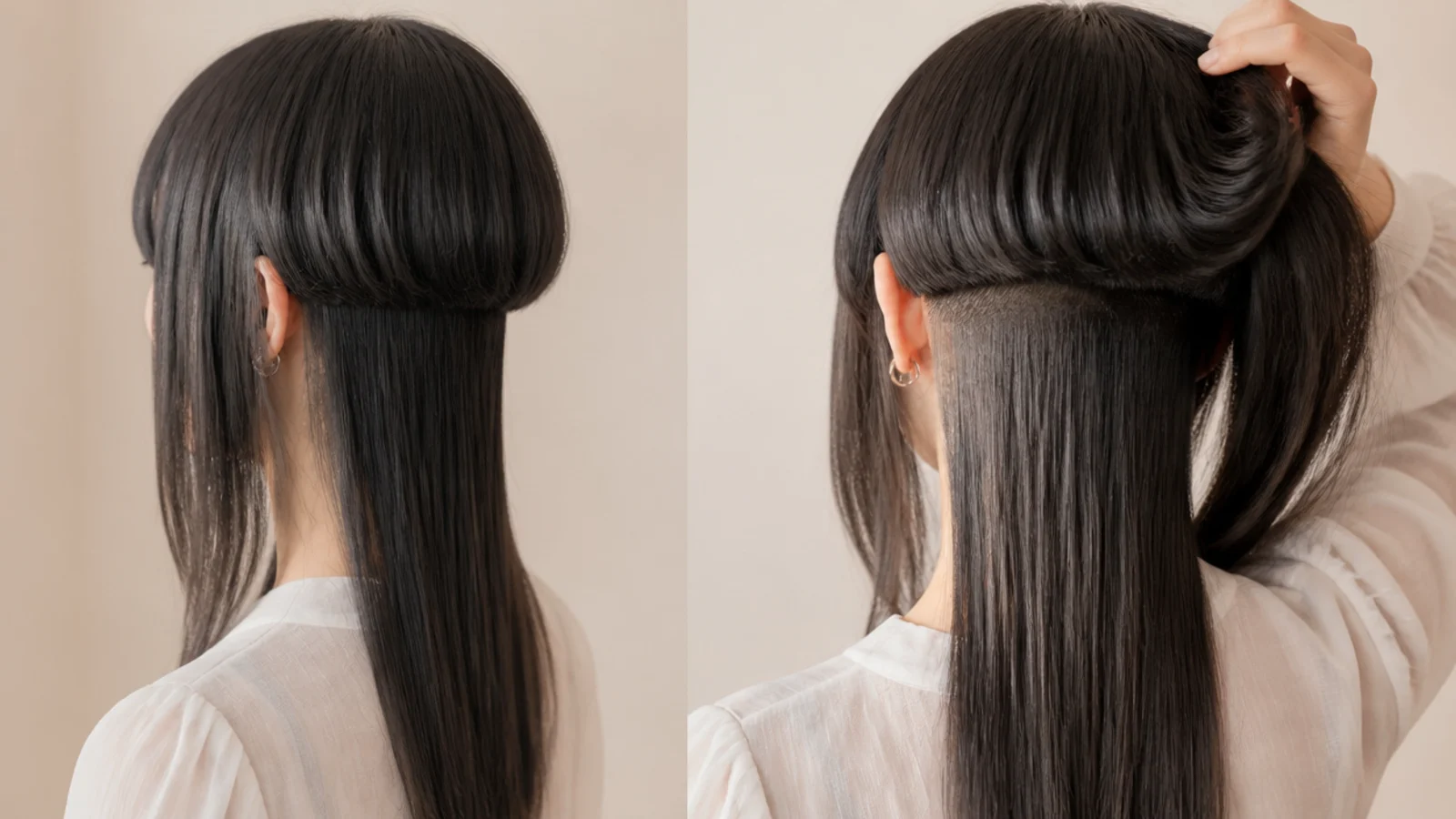
19. Sleek Straight Finish
Ironing both tiers flat gives the hem maximum definition, because a flat cuticle reflects light in one direction and the edge becomes a drawn line. It is the one case where matching the surfaces works, since the line itself carries the contrast.
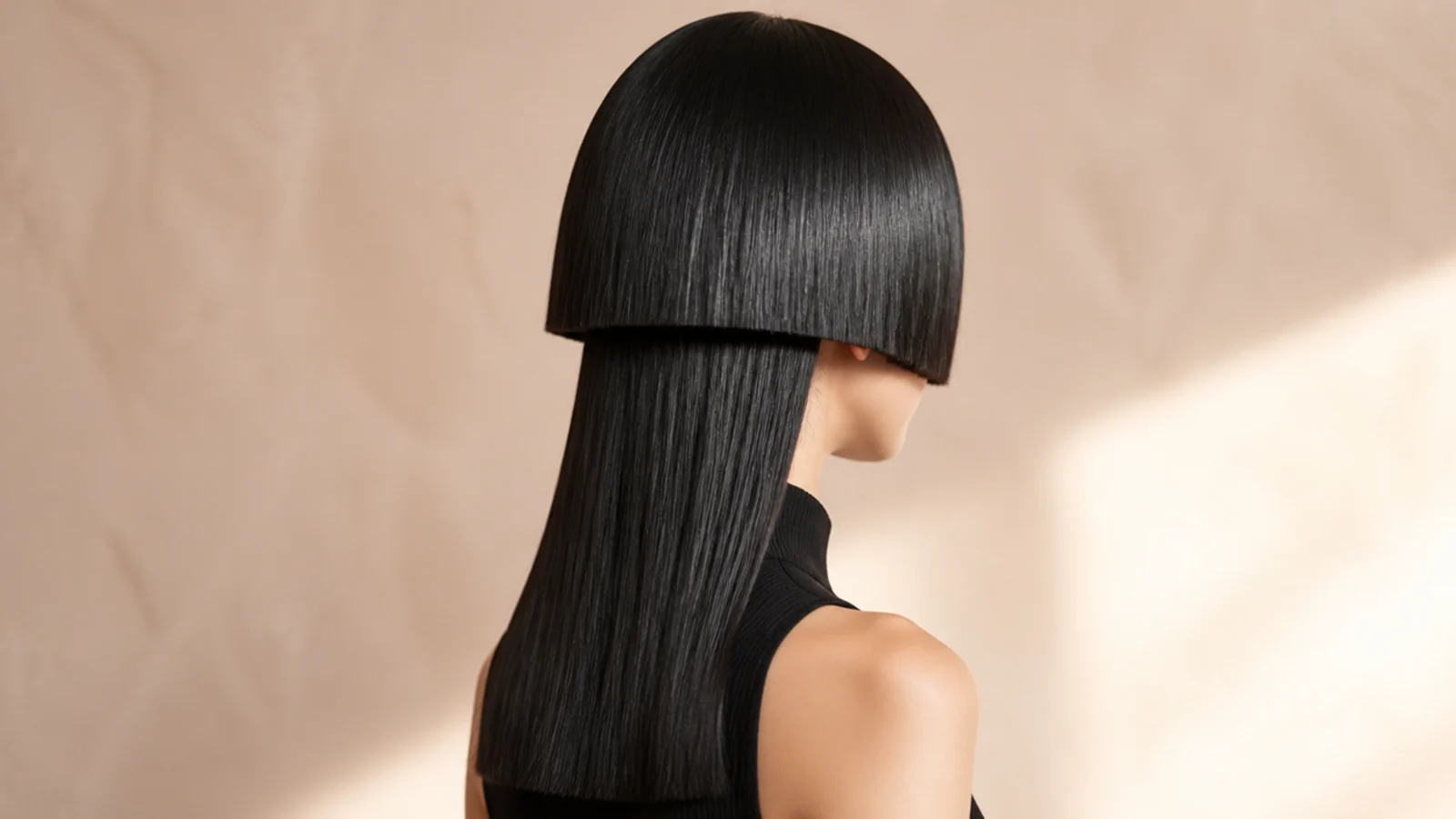
20. Grown Out Into a Shag
Once the gap has closed to a couple of inches, one blending pass turns the bell into the top layer of a shag. Knowing that in advance is what makes a medium length jellyfish worth trying even if you are unsure.
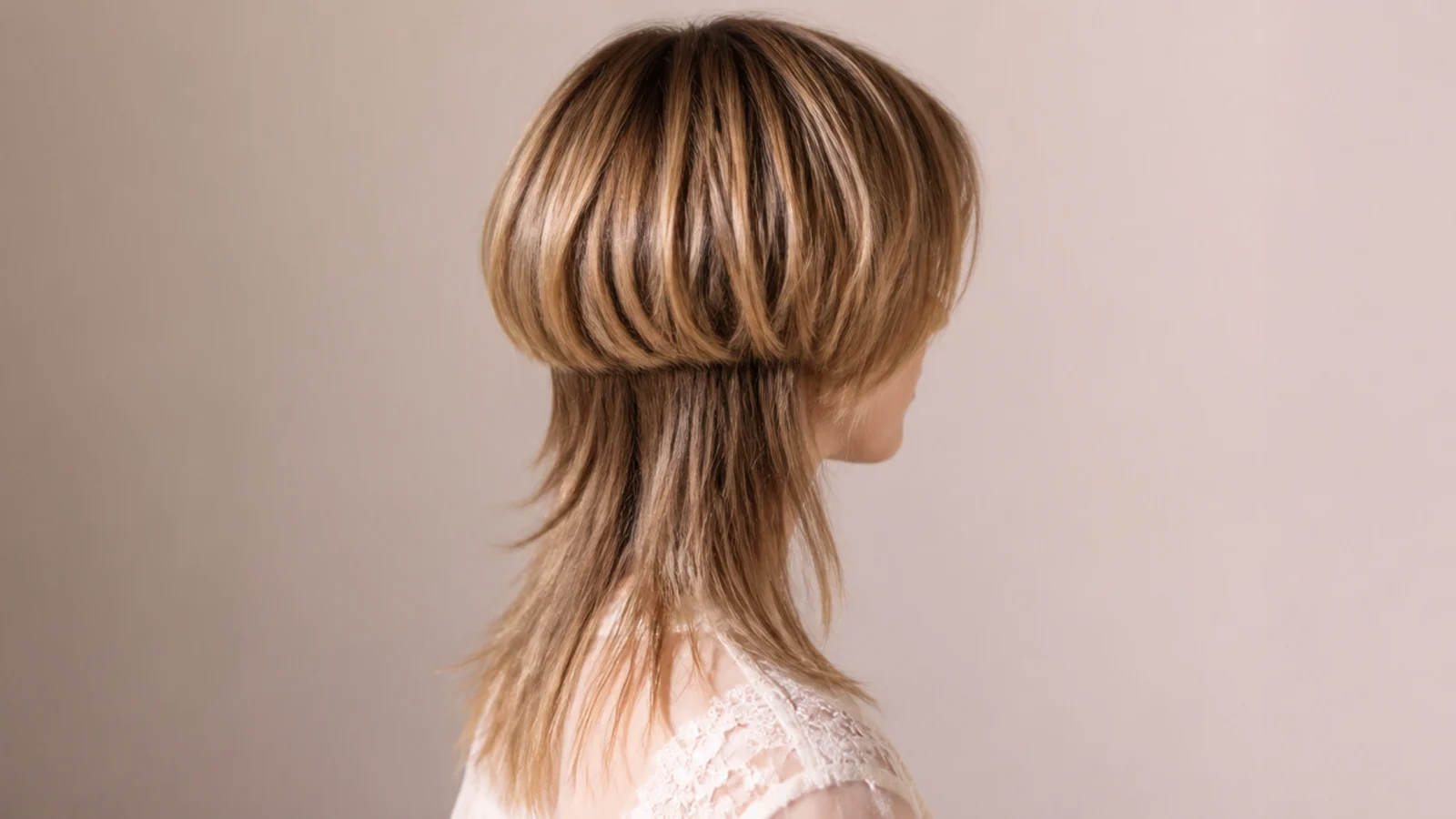
Final Thoughts
Do the subtraction before you do anything else. Take the length of your hair, take off the length of the bell you want, and what remains is the gap the cut has to live on. At medium length that number is small enough that the bell placement gets decided by geometry first and by your face second, which is the reverse of how these consultations usually run.
If the arithmetic leaves you short, buy the gap back rather than cutting the lengths. Flipping the hem outward, clipping the nape or putting a block of colour on the boundary all make a small separation read from further away, and none of them costs an inch. For the full range of the cut see the jellyfish haircut guide, and for the blended two tier cousin at this length see medium butterfly haircut ideas. More in Mullet and Wolf Cut.