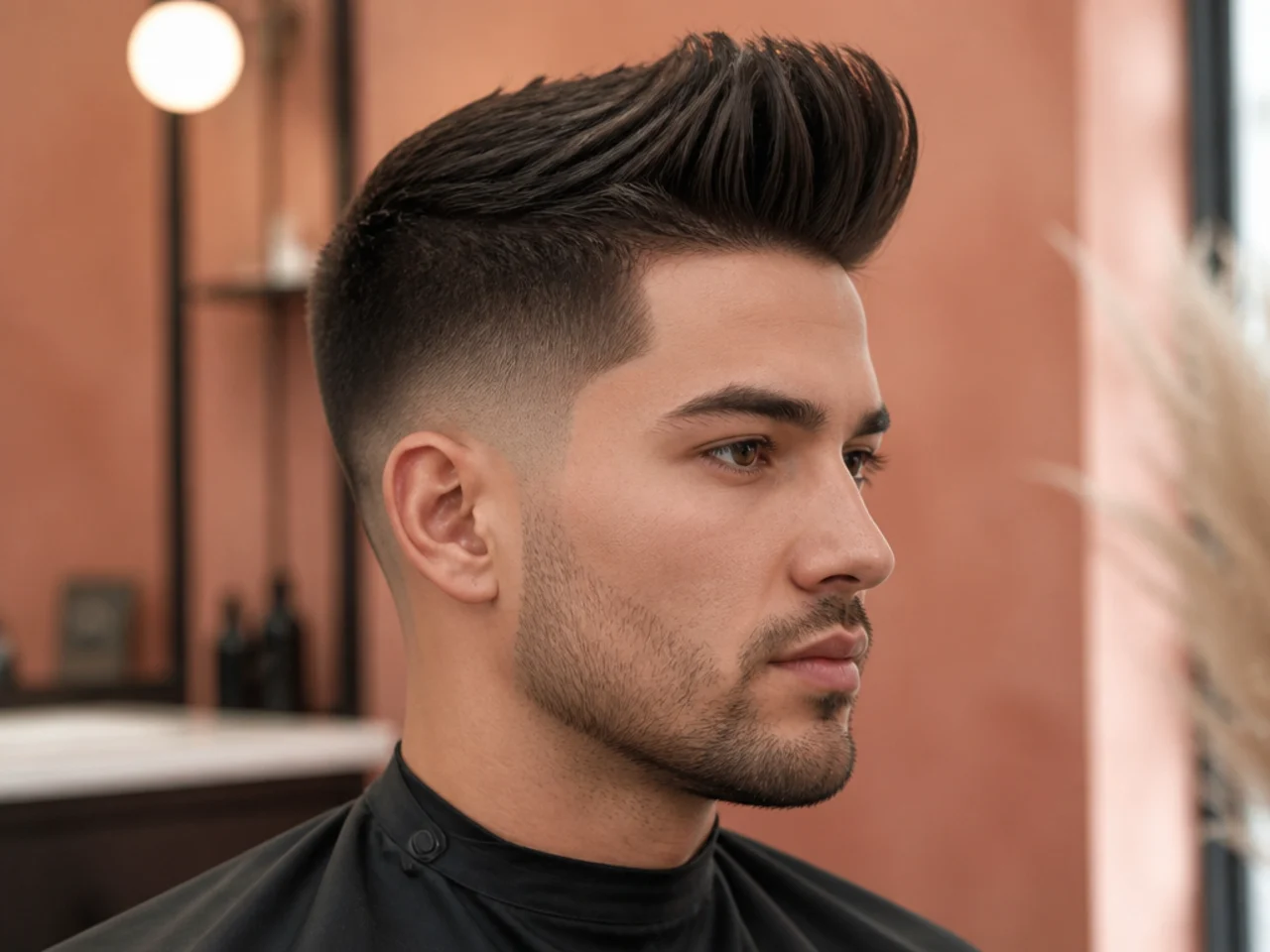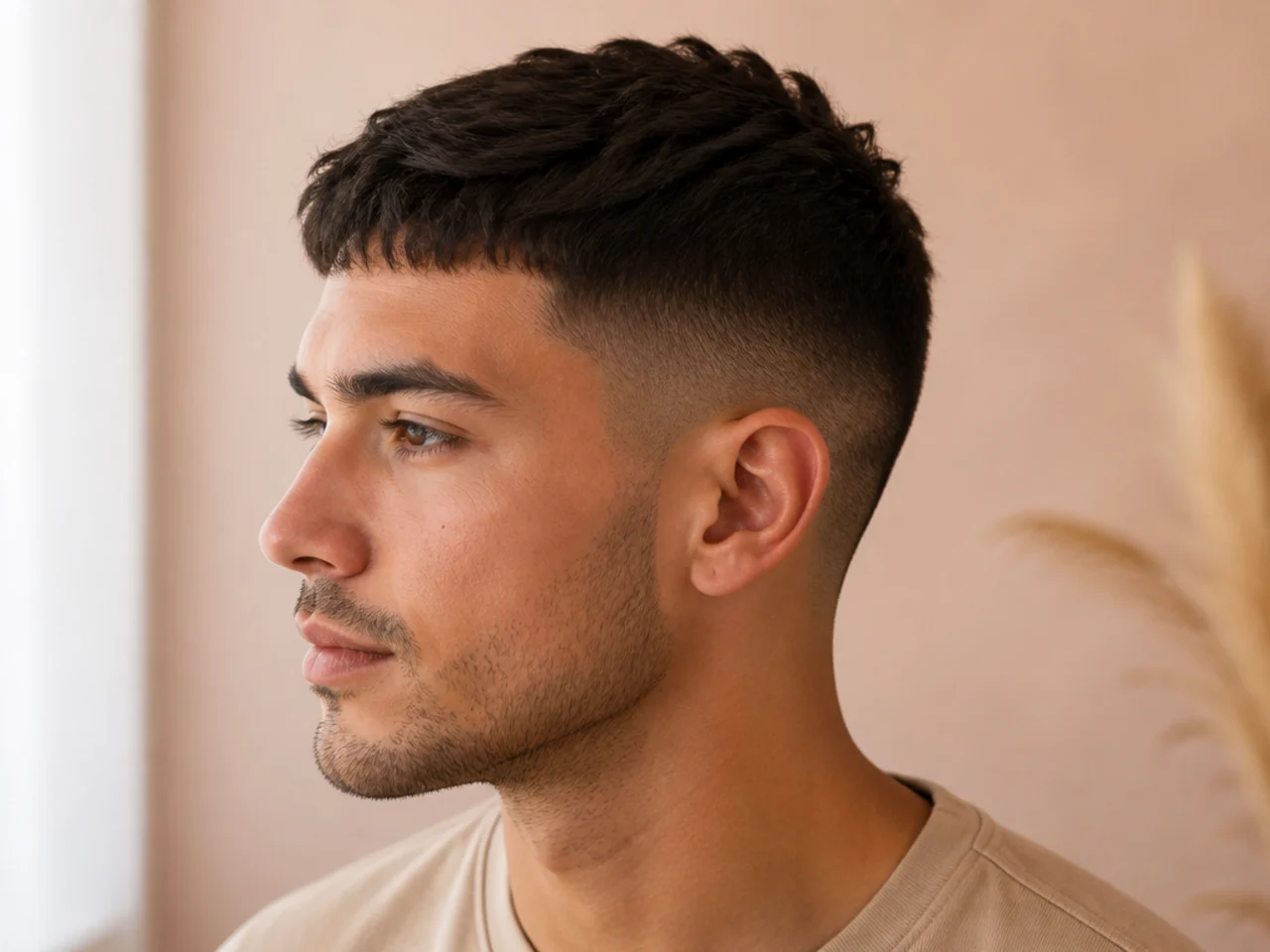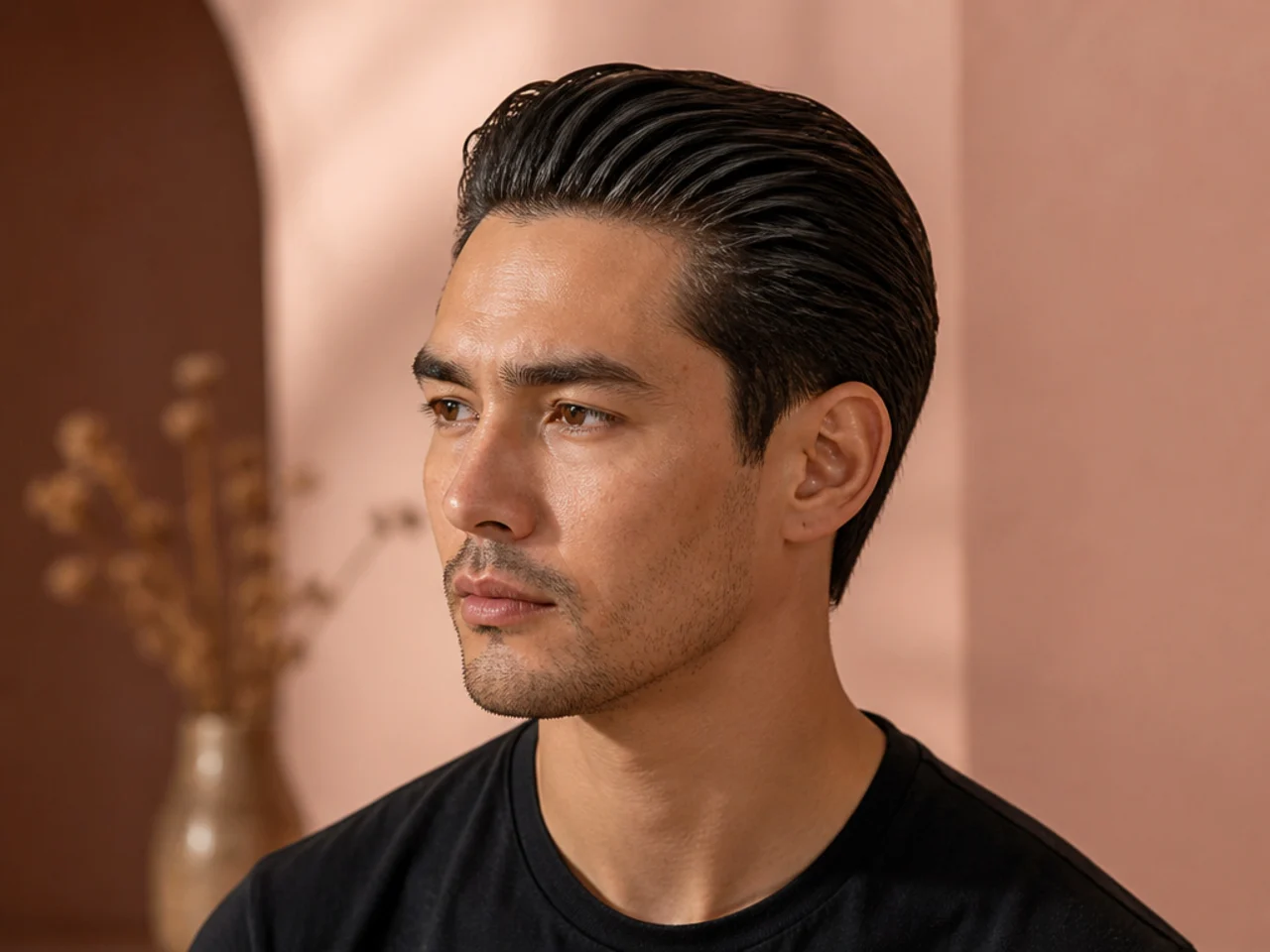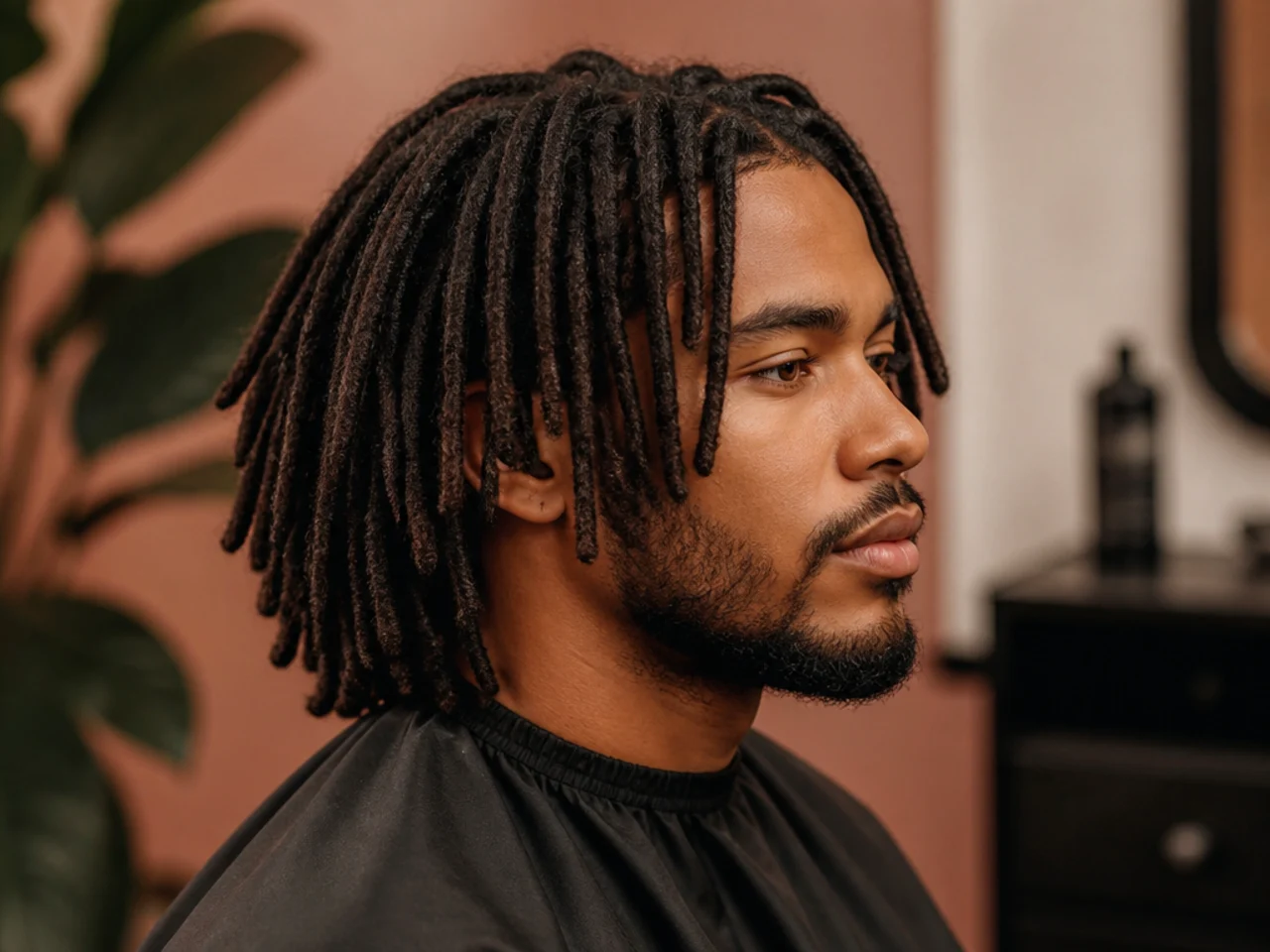
15 Medium Length Dread Styles for Men
Fifteen medium length dread men styles — freeform, palm-rolled, interlocked, and faded locs at shoulder length with loctician wording and retwist cadence.
In this article · 21
- What Are Medium Length Locs (Dreads)?
- How to Choose Your Medium Length Loc Style
- The 15 Medium Length Loc Styles
- 1. Traditional Palm-Rolled Medium Locs
- 2. Freeform Locs at Shoulder Length
- 3. Retwisted Two-Strand Twist Locs
- 4. Interlocked Medium Locs
- 5. Sisterlocks / Microlocs at Medium Length
- 6. Instantloc / Crochet Locs
- 7. Medium Locs with High Taper Fade
- 8. Medium Locs Half-Up Man Bun
- 9. Barrel Twist Medium Locs
- 10. Medium Locs with Curly Ends
- 11. Blonde-Tipped Medium Locs
- 12. Wick Locs at Medium Length
- 13. Braided Medium Locs (Loc Braids)
- 14. Medium Locs Ponytail / Puff Pull-Back
- 15. Medium Locs with Low Fade and Beard Blend
- How to Ask Your Loctician for a Medium Length Style
- Styling and Maintenance for Medium Length Locs
- FAQ
Locs at medium length are where the journey stops feeling new. The pattern is set, the roots have matured, the ends have started to close — and you're deciding whether you want them worn down, tied back, faded at the sides, or colored at the tips. Below are fifteen medium length dread styles for men worth asking a loctician for in 2026, with the retwist cadence, the exact chair-side wording, and the maintenance rhythm for each.
New to the family? The wider medium length hairstyles for men roundup covers non-loc medium options, and the curl types breakdown helps place your natural texture before you start a loc journey.
What Are Medium Length Locs (Dreads)?
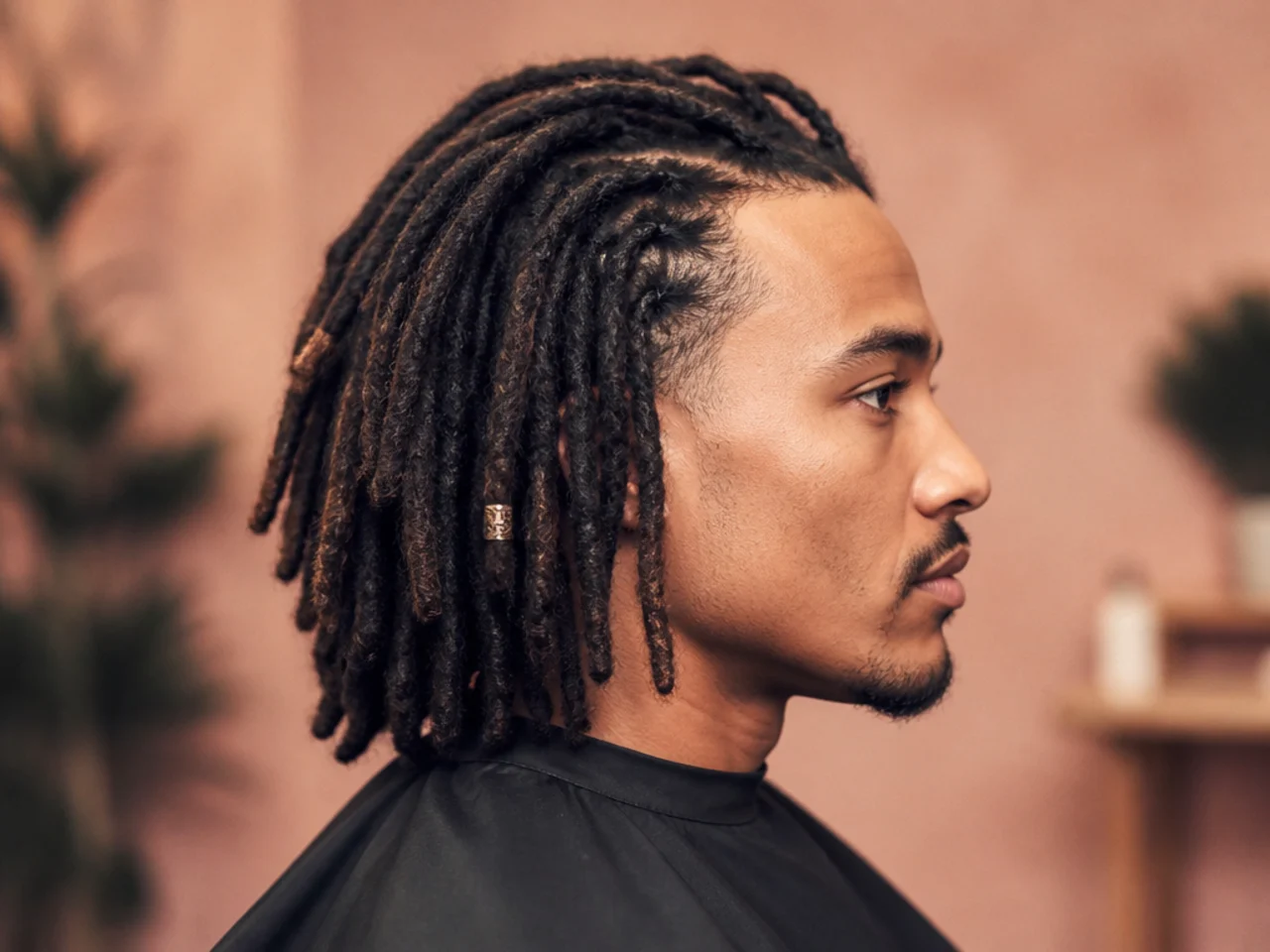
Locs are strands of hair that have been trained (or left) to knot into rope-like sections that stay locked for the life of the hair. On Black textures — 4A through 4C in particular — the coil pattern loves to loc, which is why the style has stayed rooted in the African diaspora for thousands of years and became a defining visual of the Rastafarian movement in twentieth-century Jamaica. "Dreads" and "locs" describe the same hair; most locticians today prefer "locs" for the everyday word and reserve "dreadlocks" for the historical and cultural context.
Medium length sits between shoulder-grazing and the middle of the back — roughly eight to sixteen inches of loc length depending on your shrinkage. For most guys that's two to four years into the journey, past the awkward "budding" and "teenage" phases, into what locticians call the "mature" or "adult" stage where the pattern is set and the ends are starting to close naturally.
Every look below assumes locs that are already mature at medium length. If you're at month six with starter locs, come back once your roots have knotted and your parts are stable — most of these styles won't sit right on a head that's still forming its loc pattern.
How to Choose Your Medium Length Loc Style
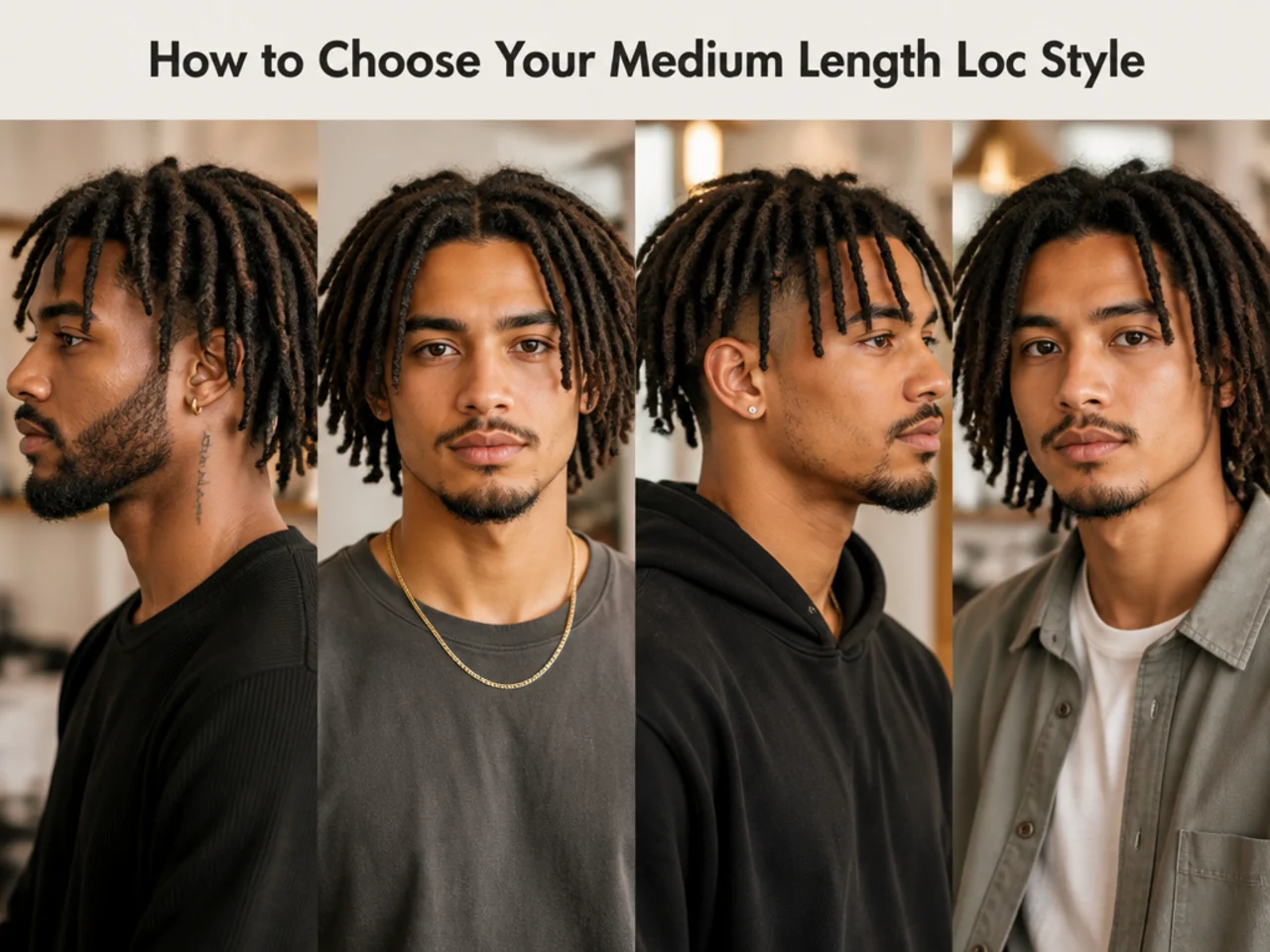
Four decisions narrow the choice: your starter method, your face shape, your workplace, and how much time you'll actually give the retwist appointment.
Starter method. Palm-rolled locs read uniform and cylindrical. Two-strand-twist locs carry a slight braid pattern at the roots for the first year and settle uniform after. Interlocked and sisterlocks read thinner and more defined because the tool literally pulls the loc through itself at the root. Freeform locs vary in size and shape because they've never been manipulated. Your starter method decides how every one of these styles will actually look on your head.
Face shape. Oval takes almost every loc style. Round wants vertical volume — a half-up bun or a pulled-back pony elongates the face. Long faces read balanced under locs worn down or with a low fade. Square jaws pair well with looser freeform texture that softens the angles. Heart-shaped faces suit fringe or comma loc styling that adds weight below the eyeline.
Workplace fit. A neat palm-rolled retwist with locs pulled back reads clean at any office. Freeform locs and wick locs carry more visual weight and read best in creative fields, hospitality, music, and self-employment. Fades on the sides sharpen any medium loc look for a professional setting — same principle behind most of the mens medium length haircut family.
Maintenance appetite. Interlocking and palm-rolling need a loctician every four to eight weeks. Freeform needs nothing but a monthly wash. Sisterlocks and microlocs are the most time-intensive to retwist because there are ten times the parts — budget five hours in the chair. Choose the maintenance cycle you'll actually keep.
The 15 Medium Length Loc Styles
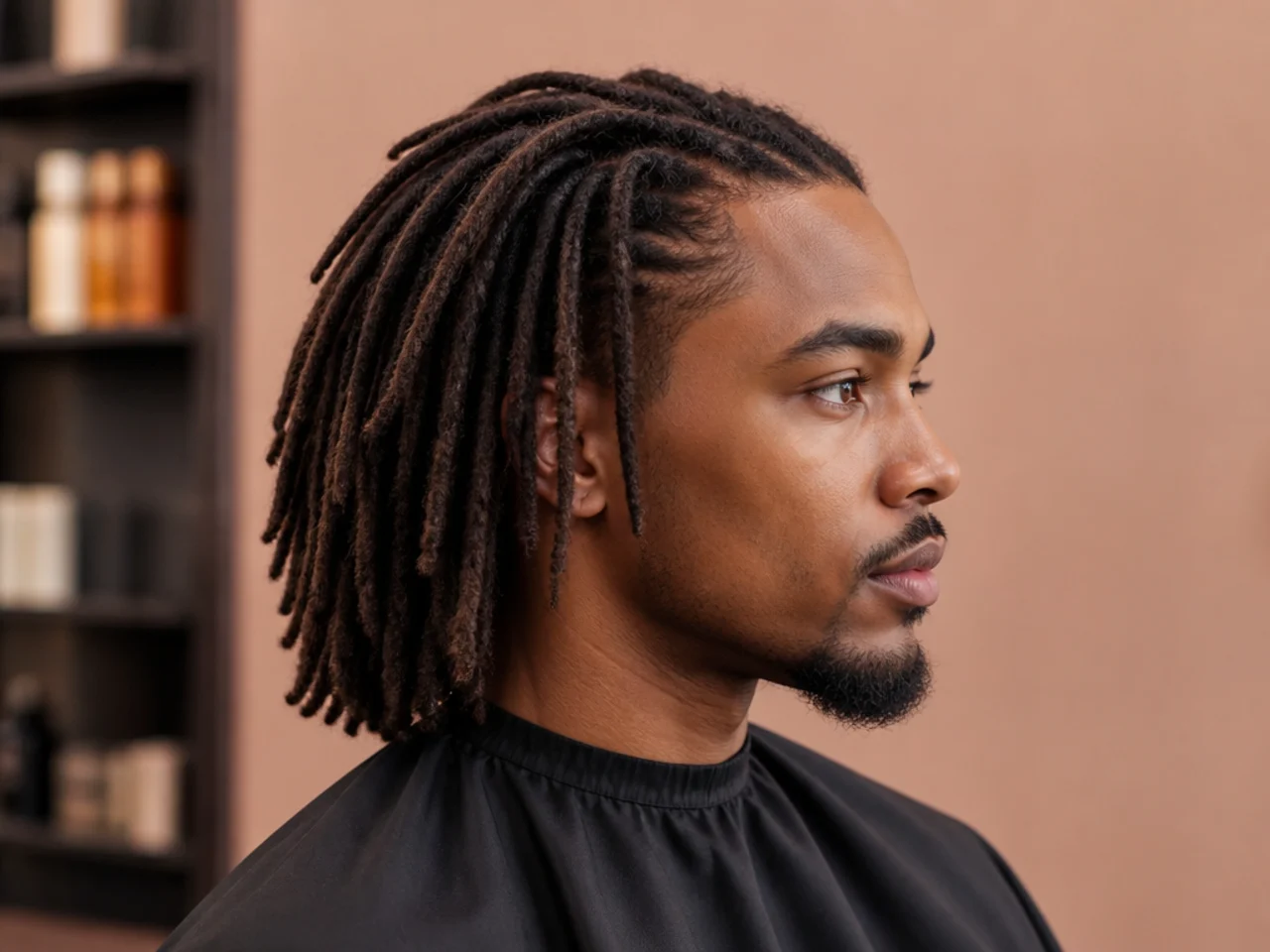
Fifteen medium length loc styles for men, arranged from most classic to boldest statement. Each covers what makes the version different, who it flatters, the loctician-side ask, and one styling move to steal.
1. Traditional Palm-Rolled Medium Locs
The everyday classic — twelve to fifteen inches of pencil-thick locs, retwisted by palm-rolling the root of each loc clockwise between the palms after a wash. The pattern reads uniform and cylindrical, the roots stay flat against the scalp for the first two weeks post-retwist, and the ends have closed off into rounded tips. Best on 4A through 4C textures and on every face shape.
Ask for: "medium palm-rolled retwist, pencil-thick locs, natural end shape — no wax, use a light water-based gel."
Styling: wash with a residue-free shampoo every seven to fourteen days, retwist every four to six weeks, sleep in a satin bonnet or a du-rag to keep the fresh retwist tight overnight.
2. Freeform Locs at Shoulder Length
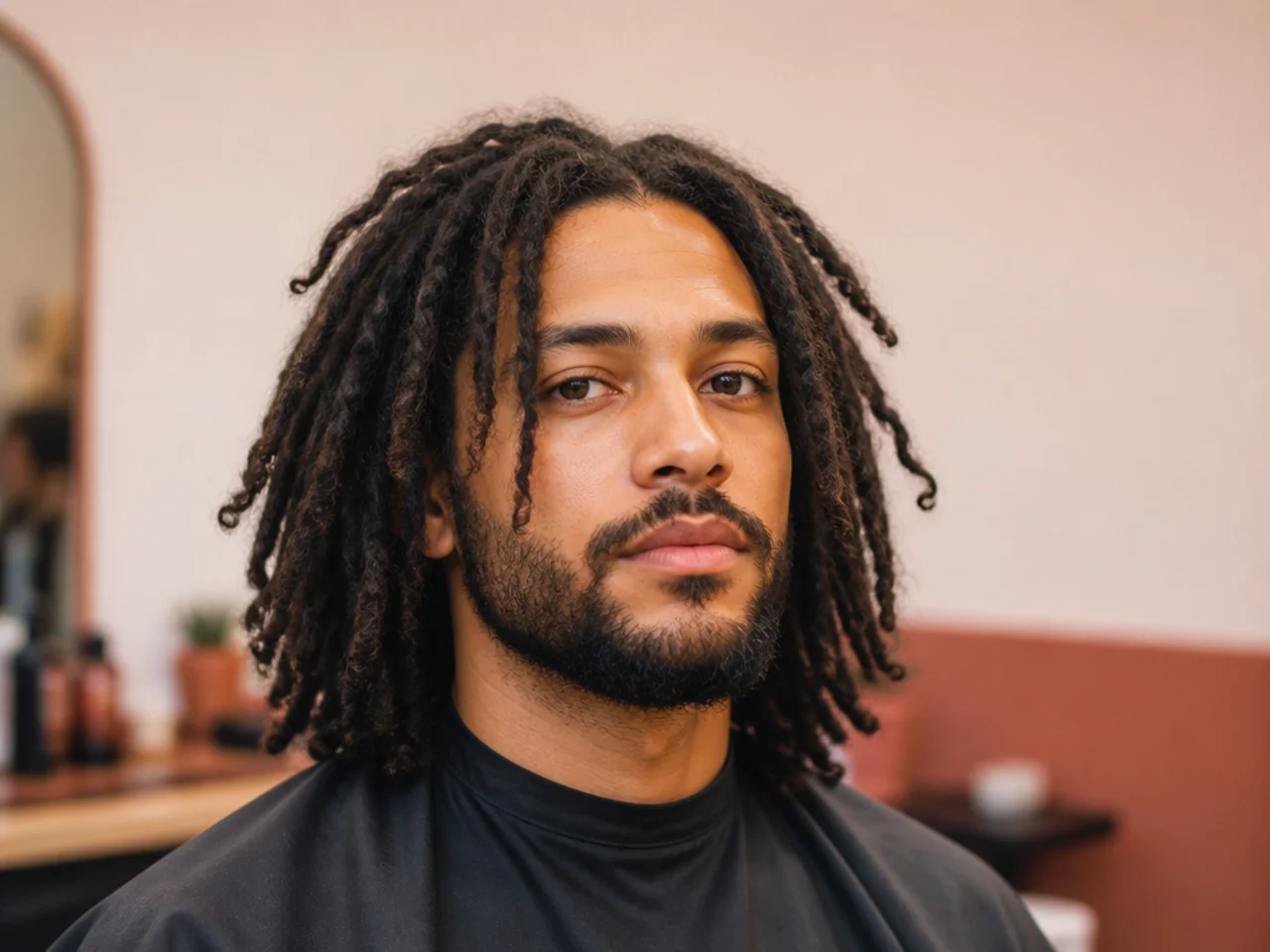
The most culturally rooted version of the style — locs left to form and lock on their own, with no retwisting, no gel, and no interlocking. Sizes vary across the head. Some locs congo (fuse together), some stay thin. The pattern reads organic and asymmetrical. Traceable directly to the Rastafarian tradition and to the "let it loc how it locs" philosophy. Best on any face shape and any 4A-4C texture with the patience for a two-to-three-year commitment before it reads mature.
Ask for: freeform locs don't need a loctician for retwisting. You'll want a stylist for the first shape-up and occasional trim only. Wash and go, otherwise.
Styling: wash monthly with an apple cider vinegar rinse or a residue-free shampoo. Separate any locs that start to marry unintentionally at the root. Otherwise, hands off.
3. Retwisted Two-Strand Twist Locs
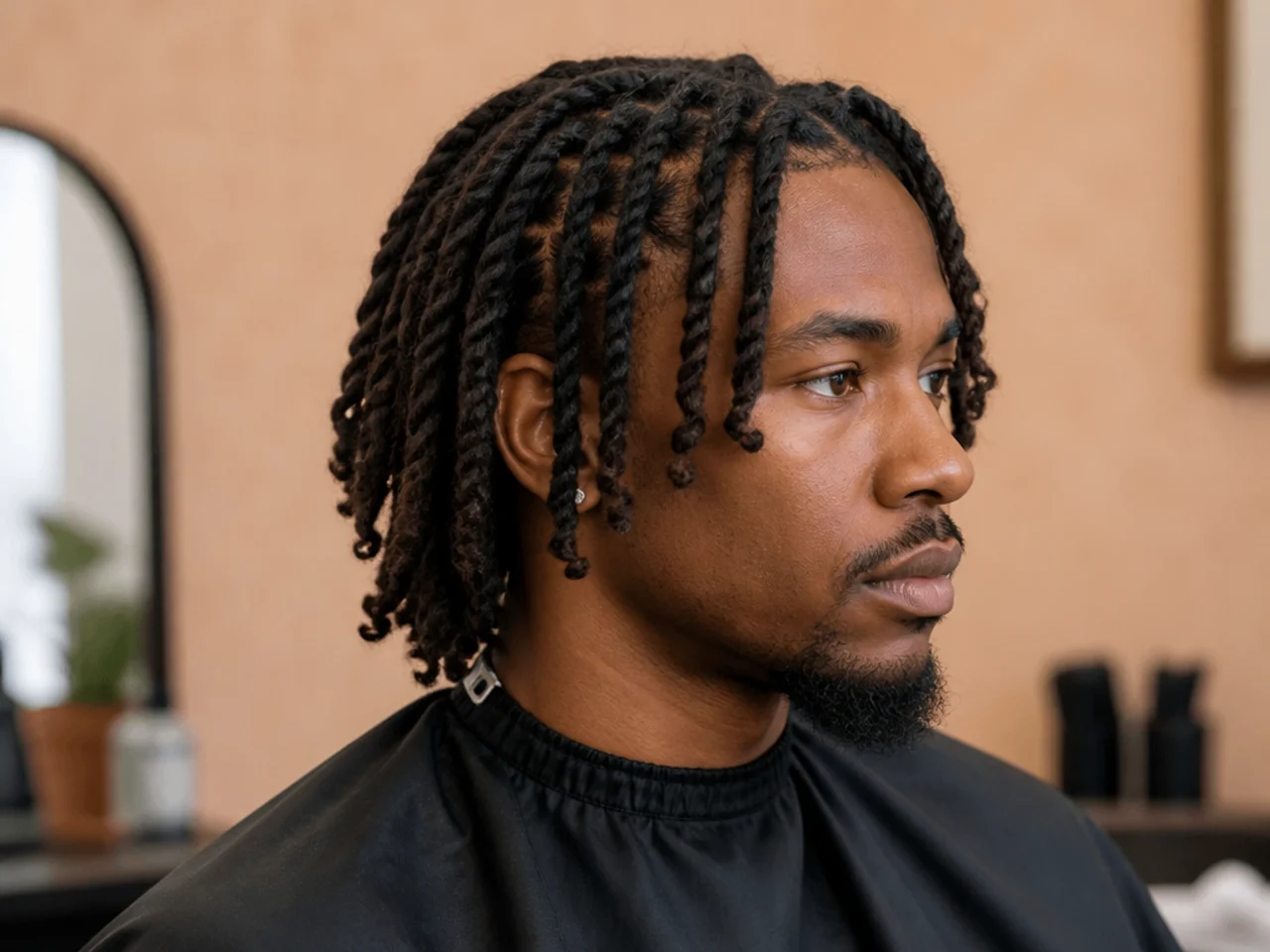
Locs started by twisting two strands of hair together and letting the twist matt into a locked pattern. At medium length the loc reads slightly flatter and more oval than palm-rolled — a subtle rope pattern remains visible along the length even after the twist has matured. Popular for guys who want a bit more visual texture in the loc itself. Best on medium and thicker density 4A through 4C hair.
Ask for: "two-strand twist loc retwist at the root, oval shape, water-based gel finish."
Styling: retwist every four to six weeks. On new growth the loctician will re-twist two-strand at the root rather than palm-roll, keeping the pattern consistent from scalp to end.
4. Interlocked Medium Locs
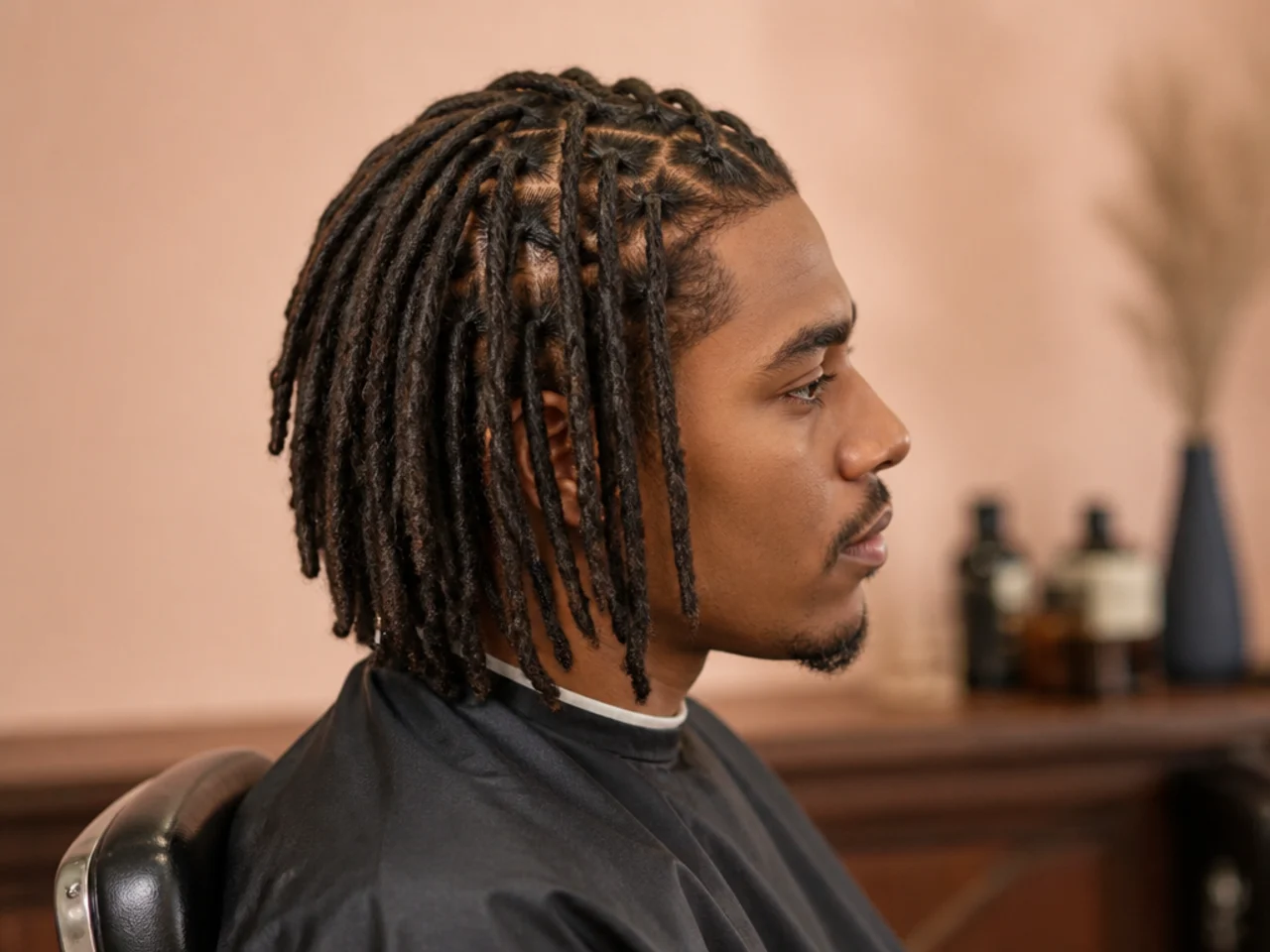
Interlocking is a maintenance method rather than a starter — the loctician pulls each loc through its own root with a tool (a latch hook or the fingers) to lock the new growth. At medium length interlocked locs read thinner and more architectural than palm-rolled. They also hold retwist longer — six to eight weeks between appointments instead of four. Best on all textures and face shapes; especially strong for guys who work in water or sweat heavily since interlocking survives moisture better than palm-rolling.
Ask for: "interlocked retwist, rotate the interlocking direction from last time to prevent thinning at the root."
Styling: wash every ten to fourteen days, air-dry fully before any manipulation, retwist every six to eight weeks with a loctician trained in the interlocking method.
5. Sisterlocks / Microlocs at Medium Length
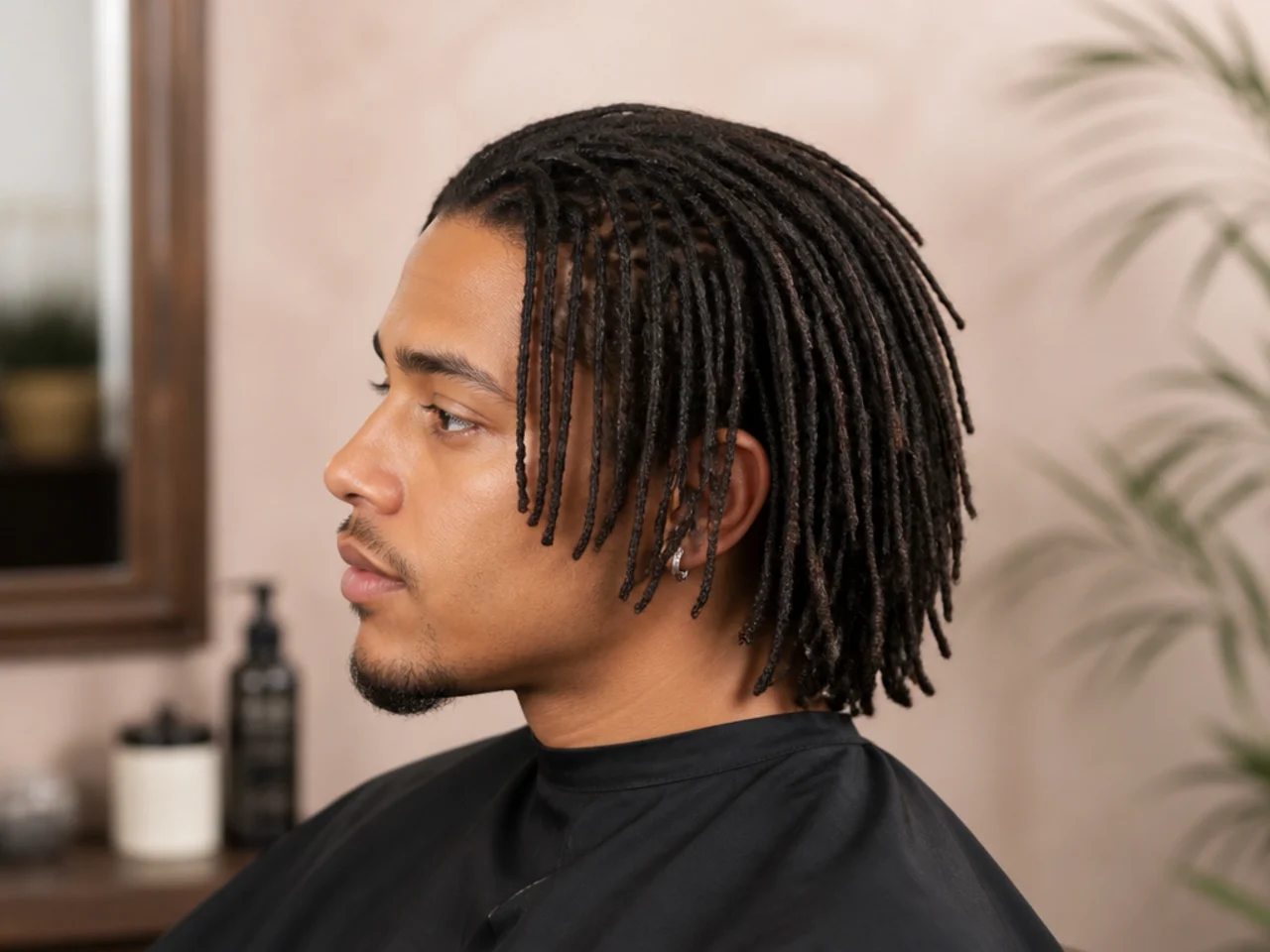
The finest loc version — several hundred pencil-lead-thin locs installed with a proprietary sisterlocks technique or a general microloc method. At medium length the sheer count gives the hair a fluid drape that reads more like a heavy braid pattern than traditional dreads. Retwist is a four-to-five-hour appointment because there are ten times the parts. Best on 3C through 4B textures with the density to support the count, and on oval, square, and heart faces.
Ask for: "sisterlocks retwist" or "microloc retwist" — specify whether your locs are installed with the certified sisterlocks method or general microlocs, because the retwist tool differs.
Styling: wash and braid the microlocs into four large braids to protect them, air-dry, unbraid before retwist. The drape is the whole point — resist the urge to tie them up daily.
6. Instantloc / Crochet Locs
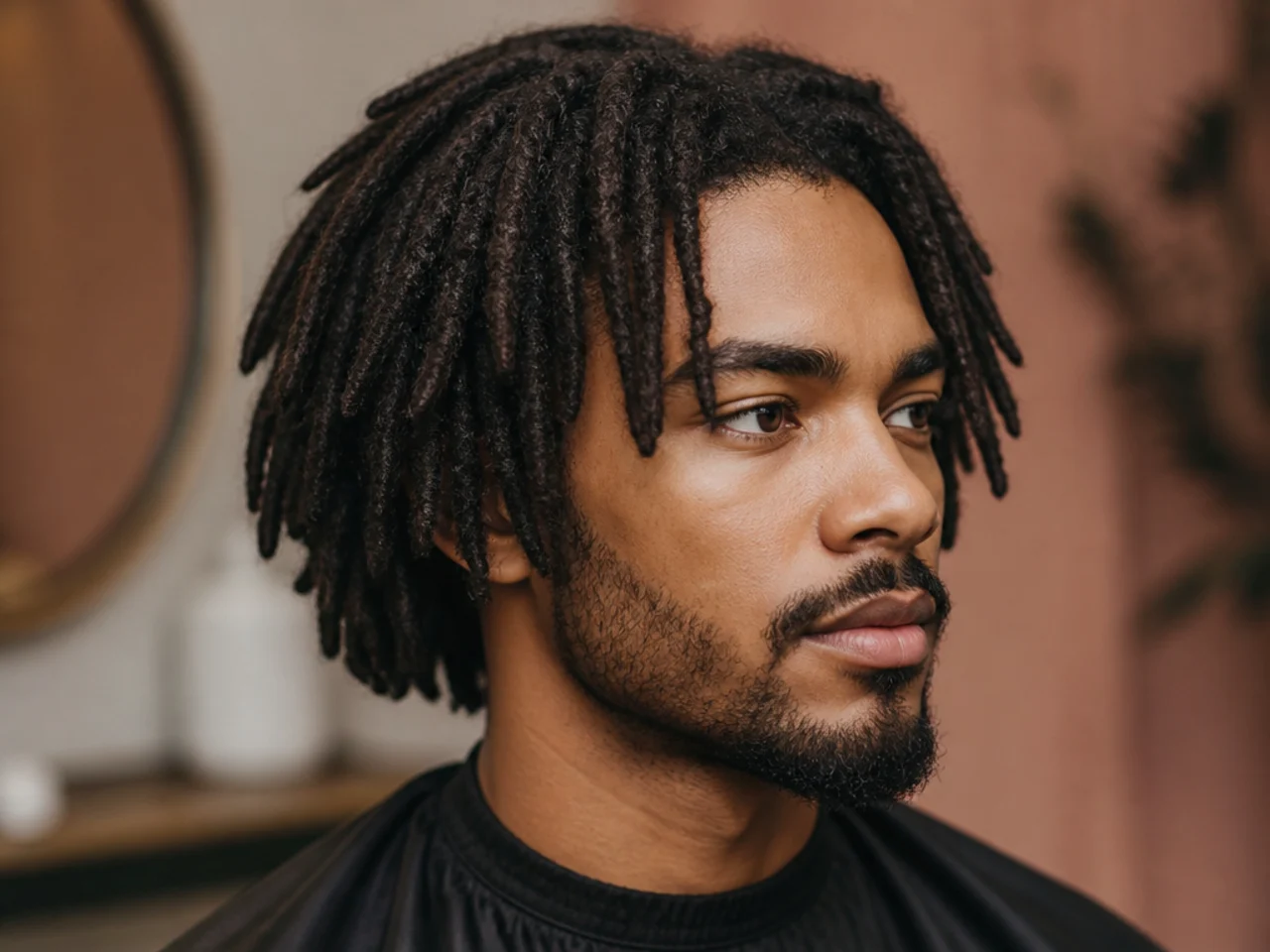
The shortcut version — locs installed by feeding sections of hair through a crochet hook until each section is fully locked in a single appointment. Instantloc bypasses the two-year "budding" phase and gives you a fully mature loc appearance from day one. At medium length these read uniform and closed-off along the length. Best on 4A through 4C textures. Book with a licensed instantloc technician; the installation runs four to eight hours.
Ask for: "instantloc install with pencil-thick sizing" for a new set, or "instantloc-style retwist" if you already have them and need root maintenance.
Styling: treat like any mature palm-rolled loc after installation. Retwist every four to six weeks, wash every ten to fourteen days, satin bonnet at night.
7. Medium Locs with High Taper Fade
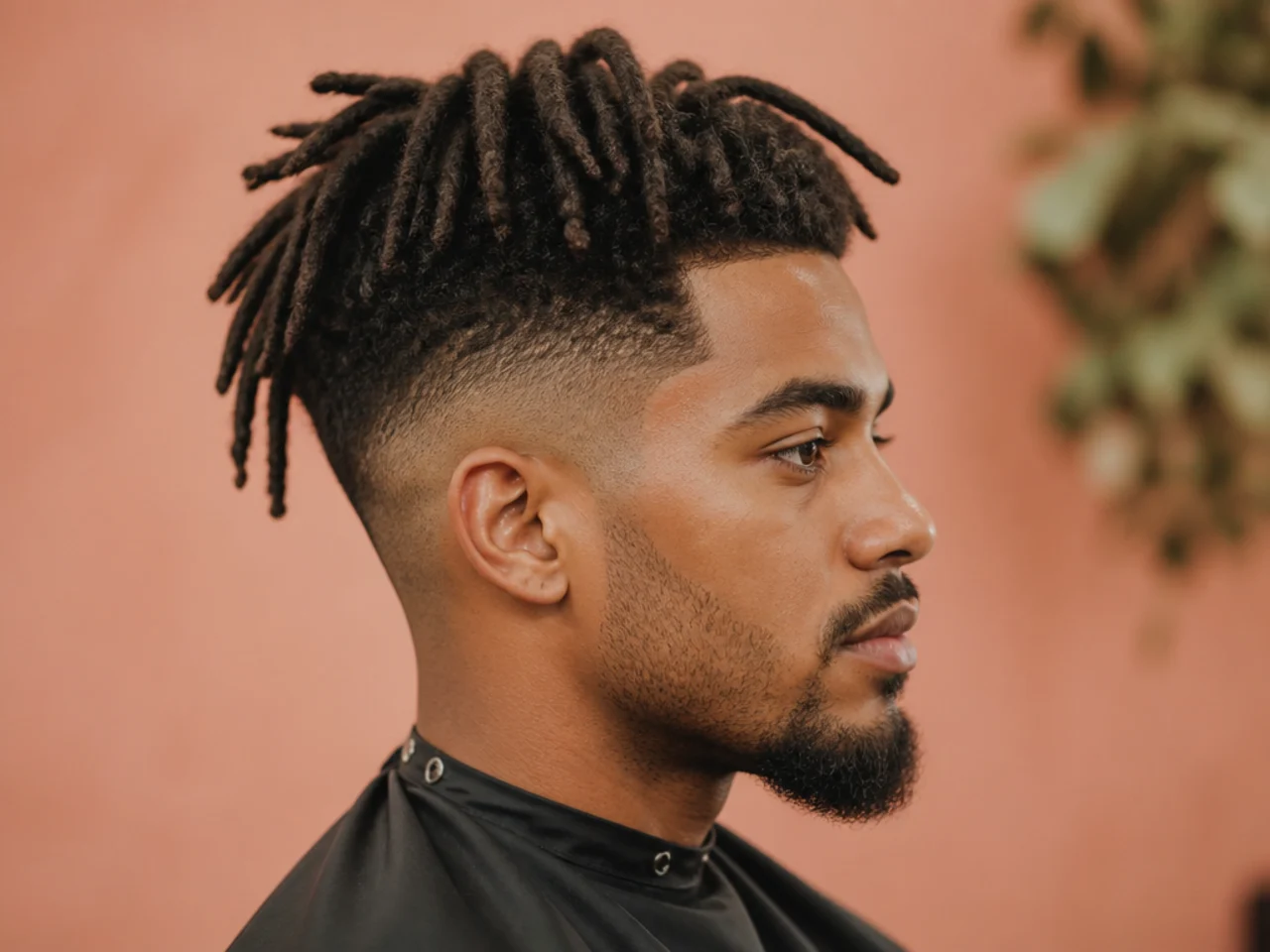
Locs on top, faded sides — the most-requested medium length loc combination for men in 2026. The high taper fade at the sides throws all the visual weight into the locs on top. The transition line falls just below the temple and drops to a bald #0 at the bottom. Best on oval, square, and heart faces where the height sits balanced. Have your barber cut the fade, then your loctician retwist the top — two different appointments, two different specialists.
Ask for: at the barber, "high taper fade, bald at the shortest, don't touch the loc roots — cut around them." At the loctician, "palm-rolled retwist on the top locs only, blend into the freshly faded perimeter."
Styling: book the fade every two to three weeks to keep the contrast crisp, retwist the top locs every four to six weeks. A silk head-wrap at night preserves both the fade and the retwist.
8. Medium Locs Half-Up Man Bun
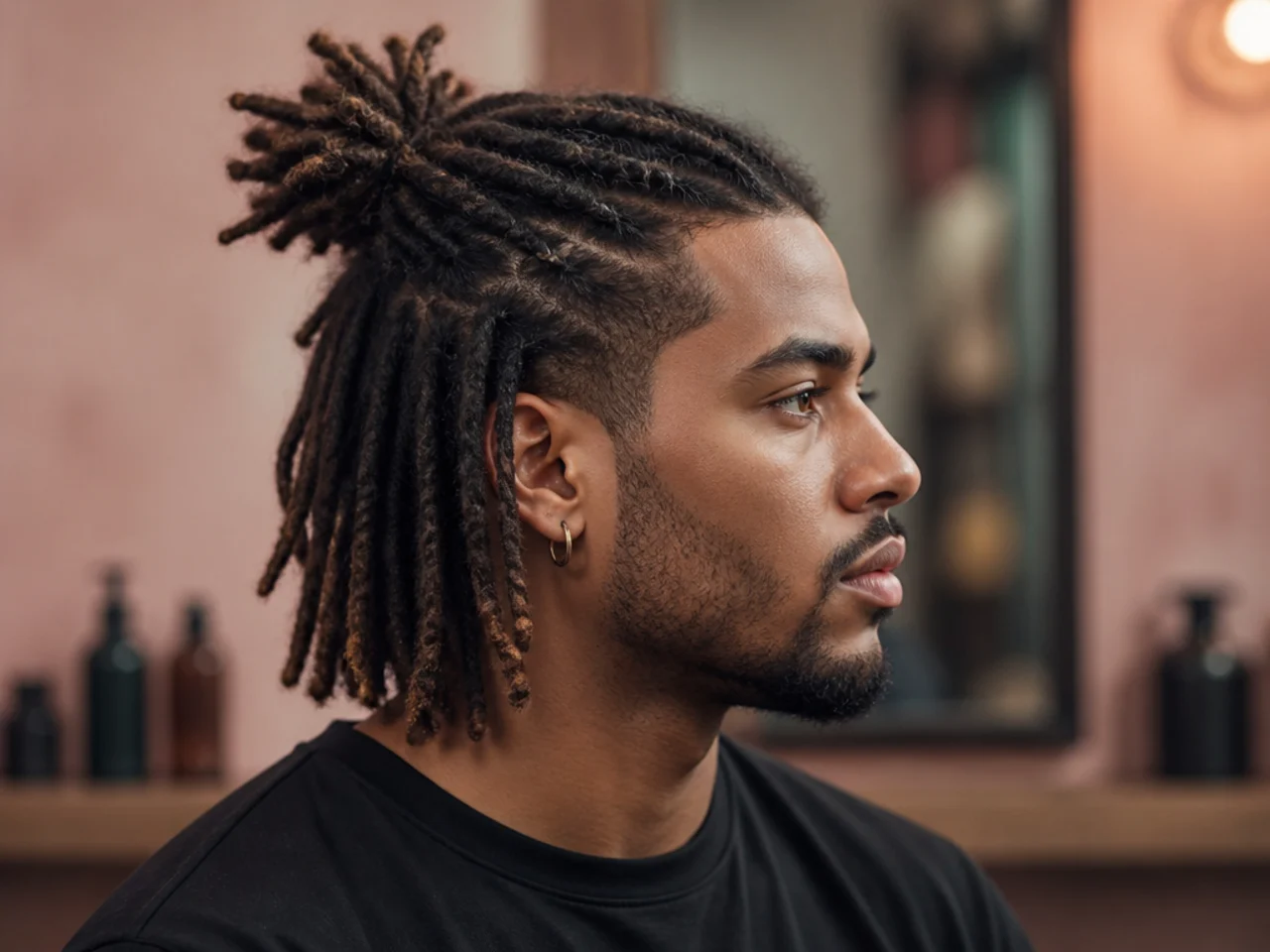
The office-friendly version — the top half of the locs pulled up and knotted into a small bun at the crown, the bottom half left to fall to the shoulders. Reads professional, keeps the locs off the face during work, and takes fifteen seconds to tie. Best on oval, round, and long faces where the crown height flatters the face length. Works on any loc size or starter method.
Ask for: no loctician wording needed for the style — just make sure your regular retwist is done. Use a fabric loc tie or a hair-friendly silicone band rather than an elastic that will snag.
Styling: finger-part the top half from ear to ear, gather at the crown, and twist into a small knot. Secure with a fabric tie. Rotate the exact part line every few days so the same locs aren't always bearing the weight.
9. Barrel Twist Medium Locs
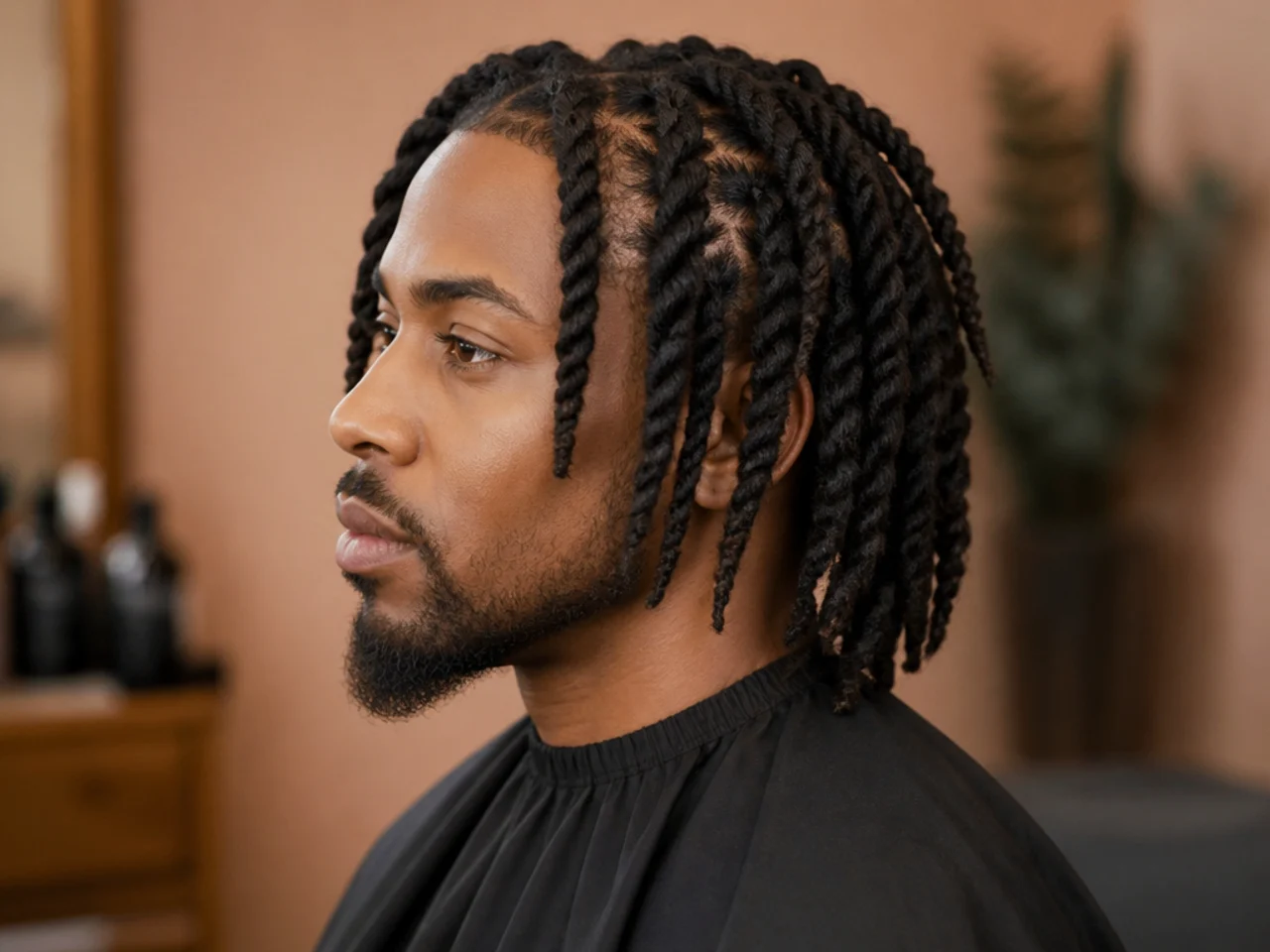
The styled retwist — pairs of locs twisted around each other from root to tip for a rope-effect finish. Barrel twists take a retwist appointment from "clean" to "styled" and hold for four to seven days before they need to be untwisted for the next wash. Best on medium locs eight to fourteen inches long — long enough to twist cleanly, short enough that the pattern reads uniform. Great for weddings, photos, and events. Works on any face shape.
Ask for: "add barrel twists after the retwist — pair them across the whole head with a light gel finish."
Styling: sleep in a satin bonnet to preserve the pattern, unravel gently before the next wash. The twist pattern shows off best when the locs are freshly retwisted underneath.
10. Medium Locs with Curly Ends
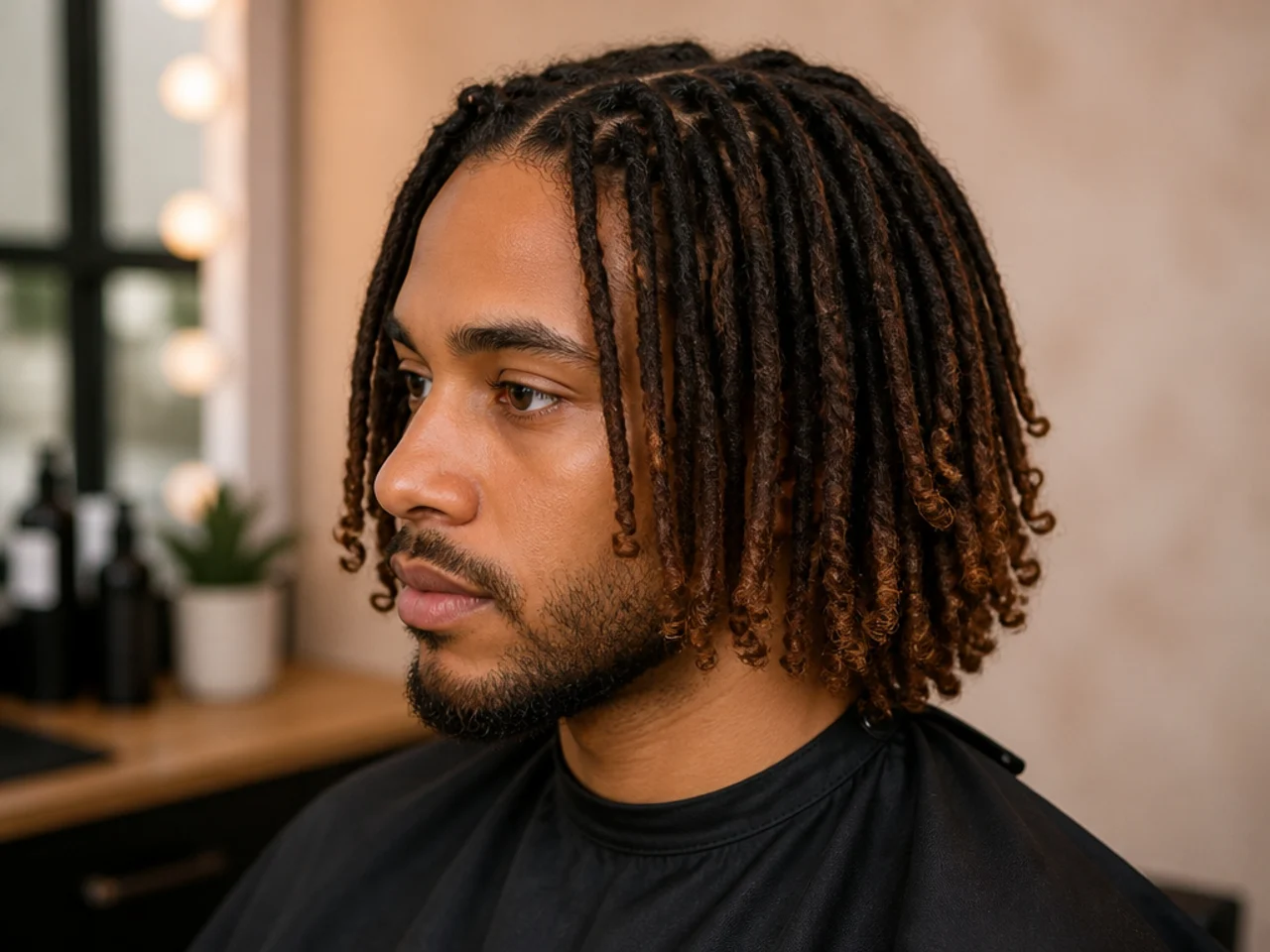
The finished-tip look — locs palm-rolled at the roots, with the last two inches of each loc set into a curl using a rod, a straw, or a pipe cleaner overnight. The curled ends add a visual full stop and read soft against the linear body of the loc. Best on locs with closed mature tips (a year plus). Suits every face shape.
Ask for: "regular retwist, then rod-set the last two inches of each loc overnight — I'll come back the next day for the take-down."
Styling: the curl holds for five to ten days before drooping. Sleep in a bonnet to protect the shape. Refresh with a spritz of setting spray and finger-coil individual ends between full sets.
11. Blonde-Tipped Medium Locs
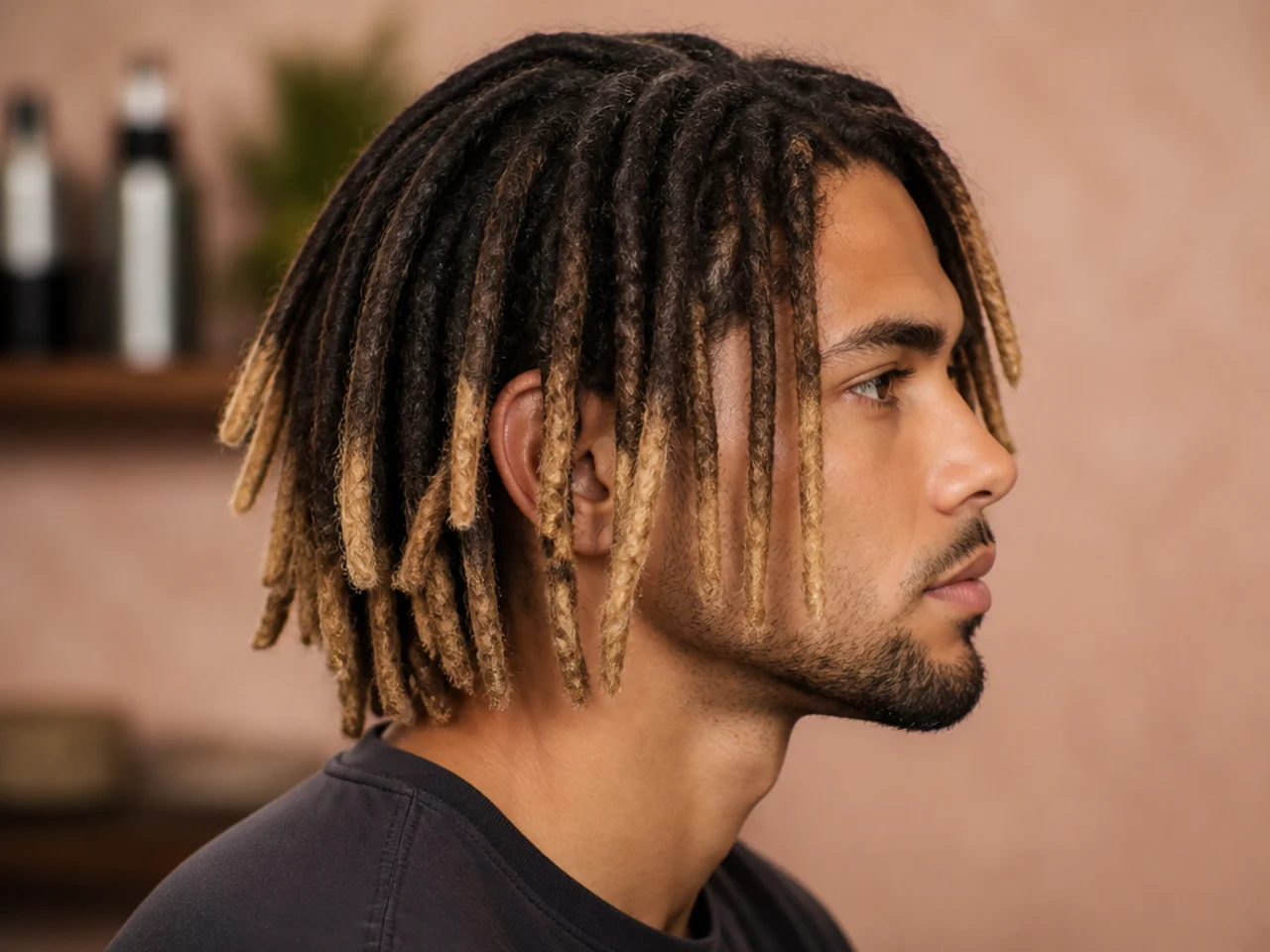
The color version — the last four to six inches of each loc lightened to a warm blonde or honey shade over dark natural roots. Reads statement and reads current. Best on locs a year plus into the journey — bleaching a fresh or immature loc weakens the pattern. Book the color with a colorist experienced with textured hair and with locs specifically; a general hair colorist can burn the loc or cause breakage at the root of the lifted section.
Ask for: "loc-specialist balayage on the last four to six inches, warm blonde tone, keep the natural roots — no bleach past the halfway point."
Styling: deep condition the lightened section weekly, avoid harsh sulfates, run purple-toning shampoo through the tips every ten to fourteen days if you went fully blonde. Sleep in a satin bonnet to prevent the lightened section from drying out.
12. Wick Locs at Medium Length
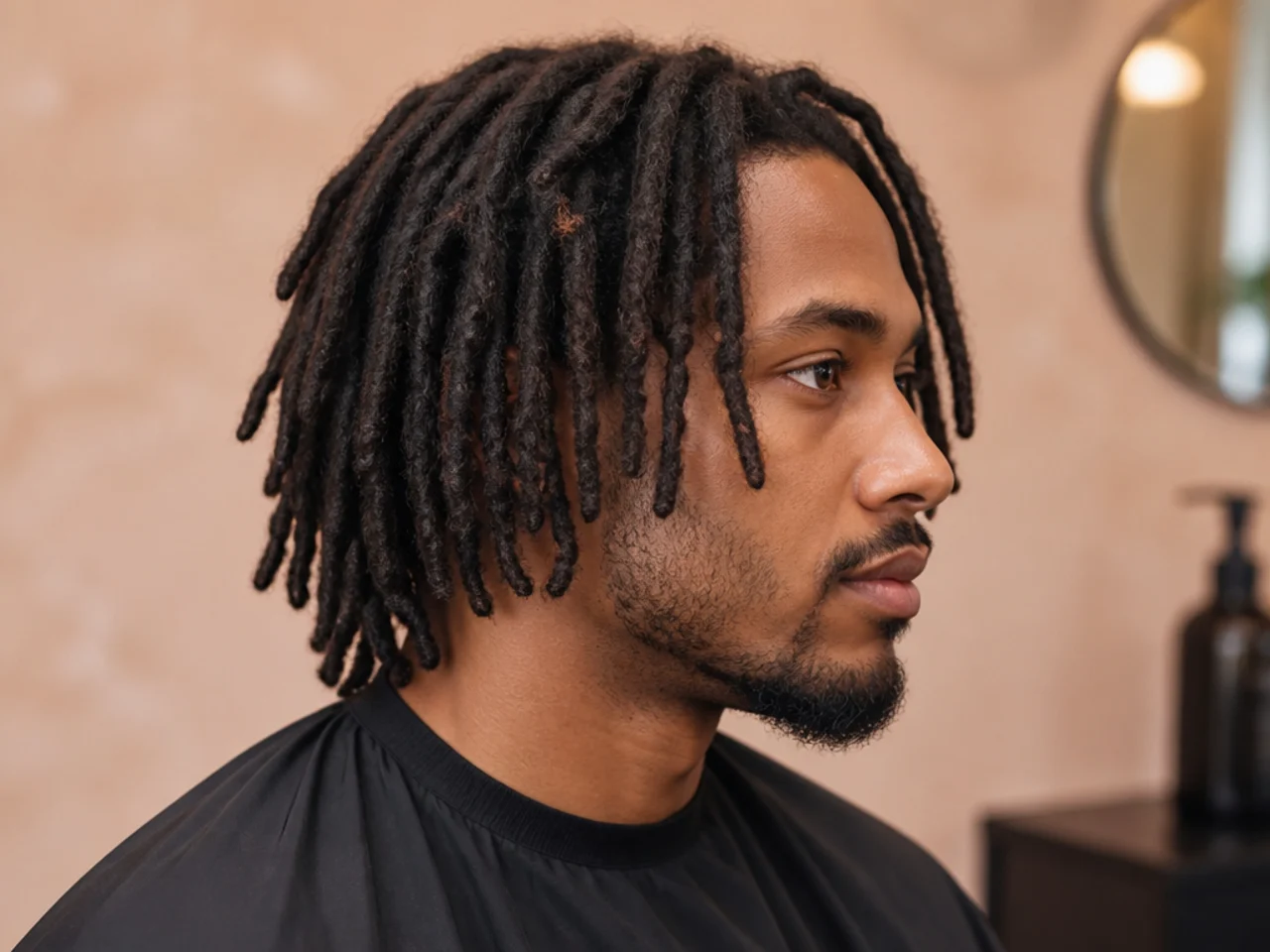
The chunky version — a small count of very thick locs (usually eight to twenty across the whole head) at wrist-width diameter. Popular in the Miami and South Florida loc culture and increasingly seen nationwide. At medium length wicks read bold and heavy, and each loc becomes almost a piece of visual sculpture. Best on 4B and 4C density that can carry the weight. Suits oval and square faces best. Installation is specialized — find a wick loctician specifically.
Ask for: "wick loc install with eight to fifteen wicks total, distribute evenly across the head, use my natural texture only — no crochet fill."
Styling: wash every fourteen to twenty-one days, air-dry fully (wicks take twelve to twenty-four hours to fully dry), retwist every eight to twelve weeks with a wick-experienced loctician.
13. Braided Medium Locs (Loc Braids)
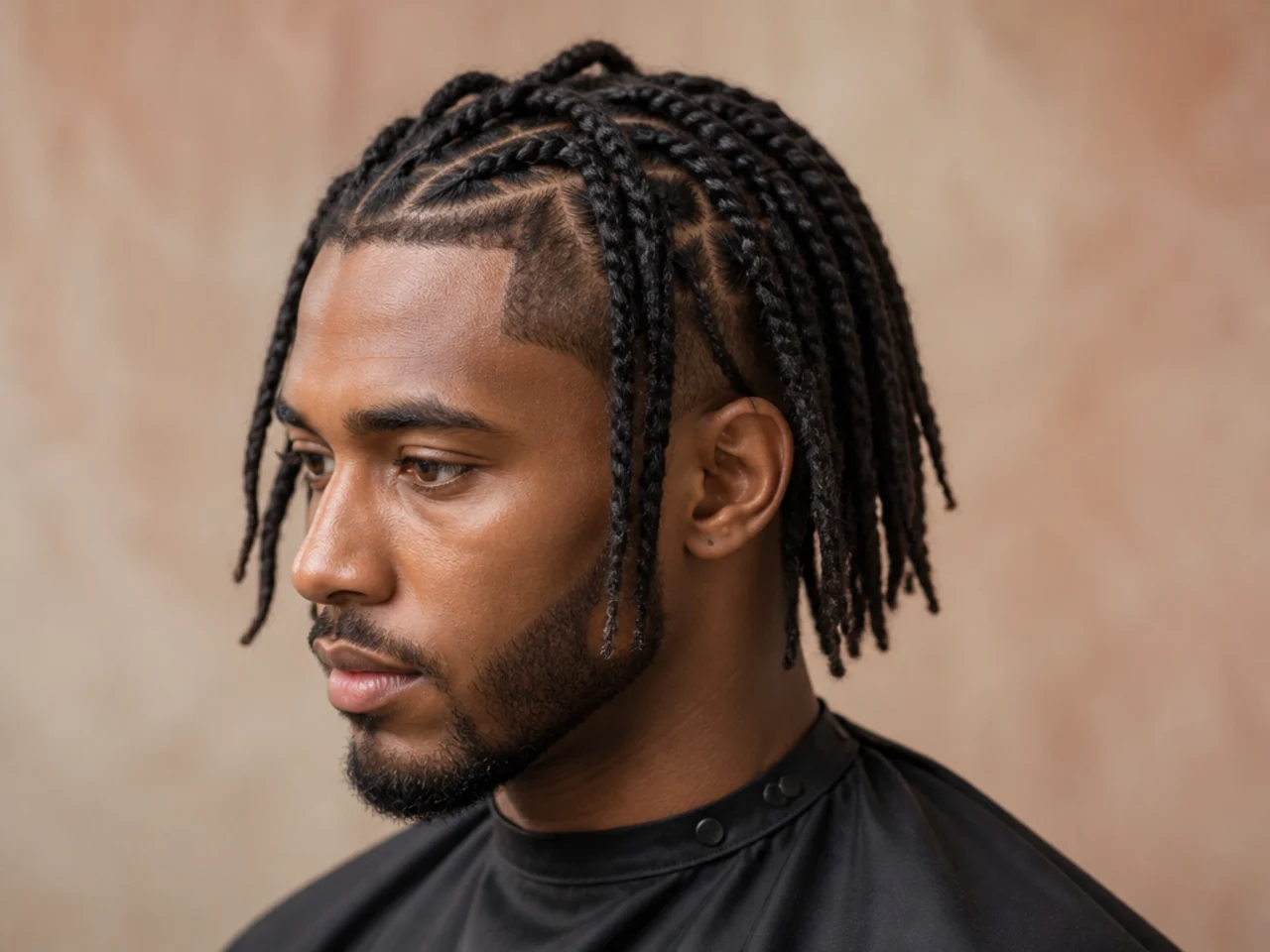
The protective style — mature medium locs braided into three to five large plaits down the back of the head. Reads uniform and neat, buys you two to four weeks between refreshes, and protects the loc ends from the friction that causes wear. Best on locs a year plus into the journey with enough length to braid cleanly (usually ten inches plus). Works on any face shape.
Ask for: the loctician or a specialized braider will handle this after your retwist — "loc braids, five plaits down the back, no extension hair, plain finish."
Styling: oil the scalp along the parts twice a week, wear a bonnet at night to keep the braids from unraveling at the tips. Unbraid gently at the two-to-four-week mark to allow the locs to breathe.
14. Medium Locs Ponytail / Puff Pull-Back
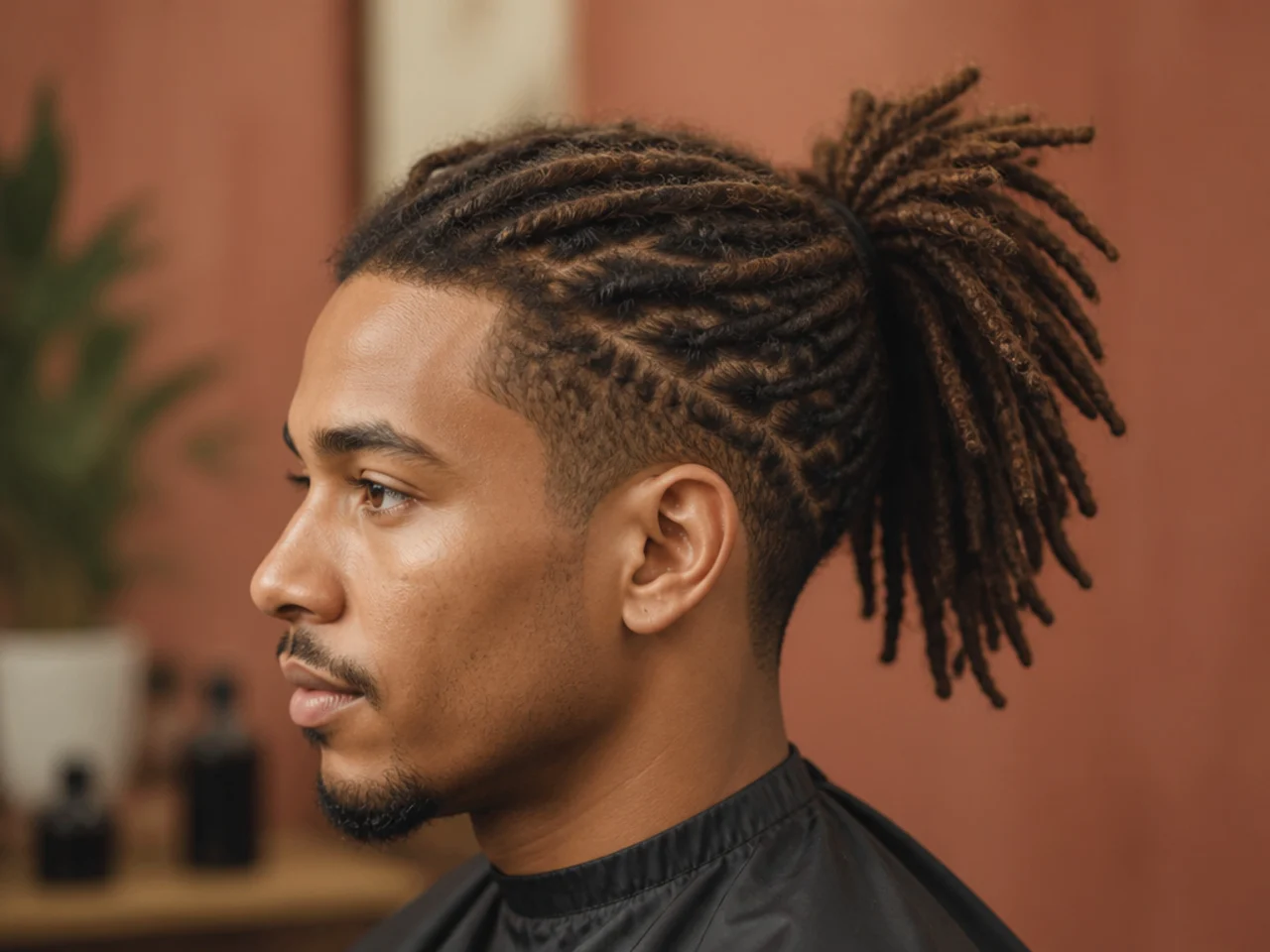
The clean pulled-back version — every loc gathered into a low ponytail at the nape, secured with a fabric loc tie. Reads sharp for meetings, weddings, and formal wear. Best on medium locs long enough to fully gather (ten inches plus) and on any face shape. Especially strong for guys with round or heart faces because the pull-back visually elongates the profile.
Ask for: no loctician wording — just keep your retwist current so the pulled-back version reads clean. A satin scarf tied at the hairline while the tie sets keeps the front laid flat.
Styling: rotate the exact position of the tie every day so the same section of locs isn't always bearing the tension. Never sleep with the tie in — release the ponytail before bed and re-do it in the morning to prevent strain on the roots.
15. Medium Locs with Low Fade and Beard Blend
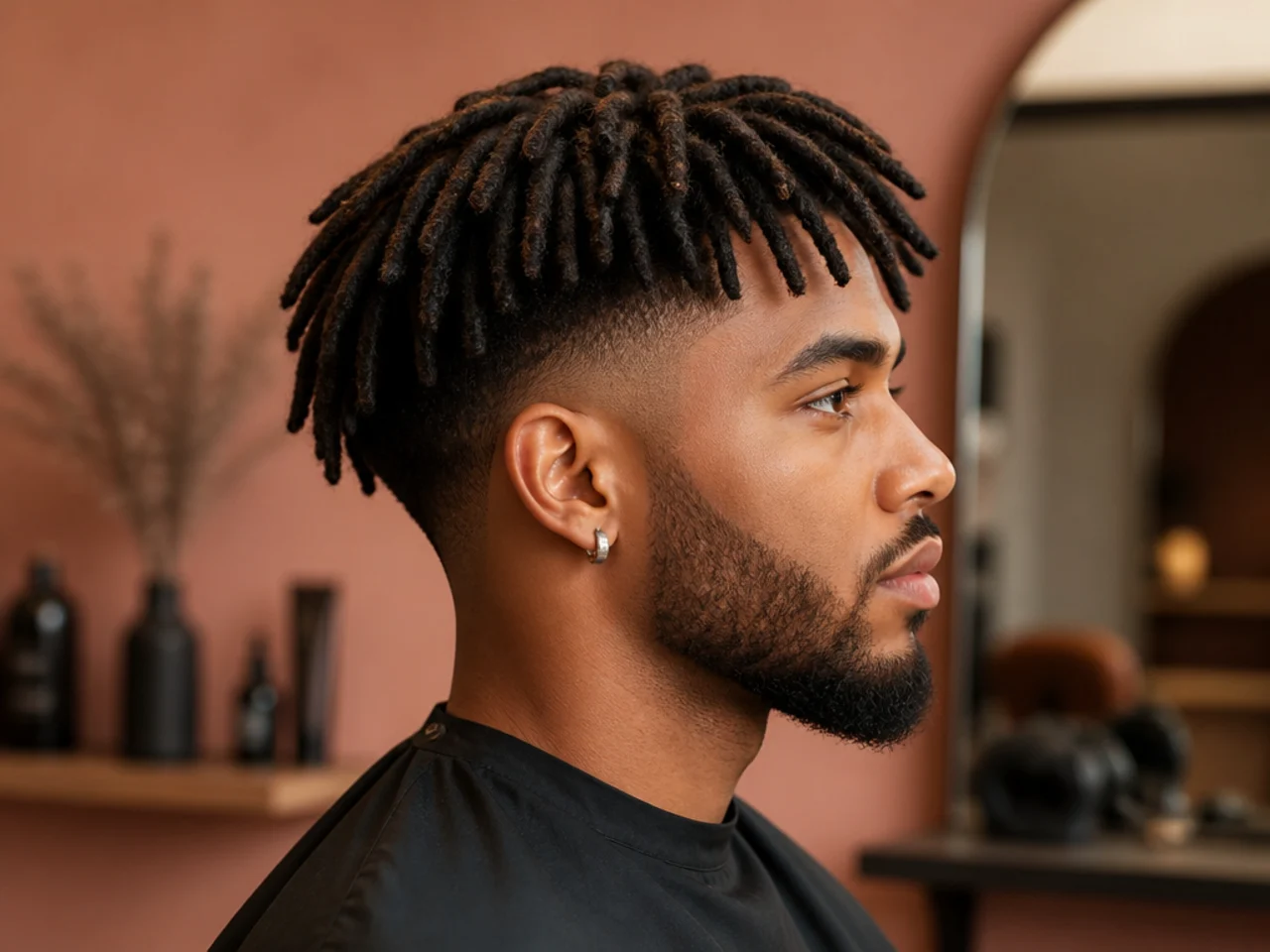
The mature statement — shoulder-length locs on top, a clean low taper fade at the sides that stops just above the ear, and a full beard trimmed and blended into the fade line at the sideburn. Reads polished, professional, and grown. Best on oval, square, and heart faces, and on guys with the beard density to actually make the blend work. Two-chair job: barber for the fade and beard, loctician for the retwist.
Ask for: at the barber, "low taper fade, #0.5 at the shortest, don't touch the loc roots. Beard blended into the fade at the sideburn line, full shape." At the loctician, "palm-rolled retwist on the top locs only."
Styling: book the fade and beard every two to three weeks, retwist every four to six weeks. Beard oil daily on the beard, a light loc oil weekly at the roots.
How to Ask Your Loctician for a Medium Length Style
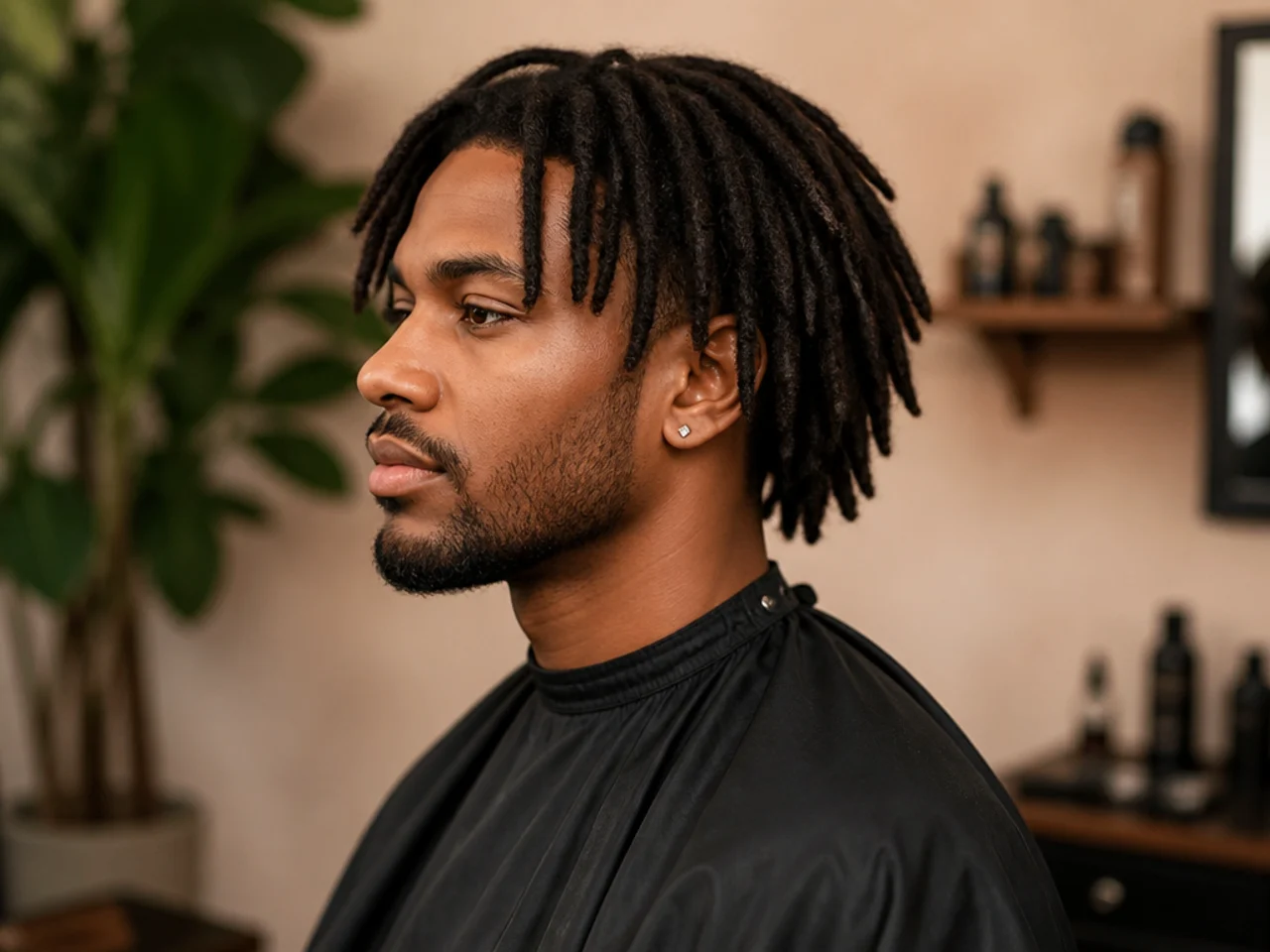
Seven lines cover the full appointment. Hit these and you'll leave with the version you had in mind.
- Say the maintenance method by name. Palm-rolled, interlocked, two-strand twist, or freeform-friendly. Every loctician uses a specific method and switching methods mid-journey can weaken the loc.
- Show a photo — one at your loc length. A style that looks fluid on hip-length locs can read stiff at shoulder length. Pick a reference where the model's locs are within two inches of yours.
- Confirm the appointment length. Palm-rolled retwist on a full head of medium locs takes two to three hours. Interlocked runs three to four. Sisterlocks and microlocs run four to six. Block the calendar honestly.
- Ask about product before they apply it. Water-based gels only — no beeswax, no petroleum, no residue-heavy holds. Ask what they'll use; if they say wax, find another loctician.
- Specify what you want for the ends. Natural close-off, rod-set curl, blunt trim, or tapered ends. Each takes a different amount of extra time and reads differently in photos.
- Ask for a scalp treatment. A pre-retwist scalp cleanse or a hot-oil massage extends the health of the loc and is worth the extra thirty to forty-five minutes.
- Book the next appointment before you leave. Palm-rolled every four to six weeks. Interlocked every six to eight. Sisterlocks every eight to twelve. The cadence protects the loc pattern from thinning at the root.
Styling and Maintenance for Medium Length Locs
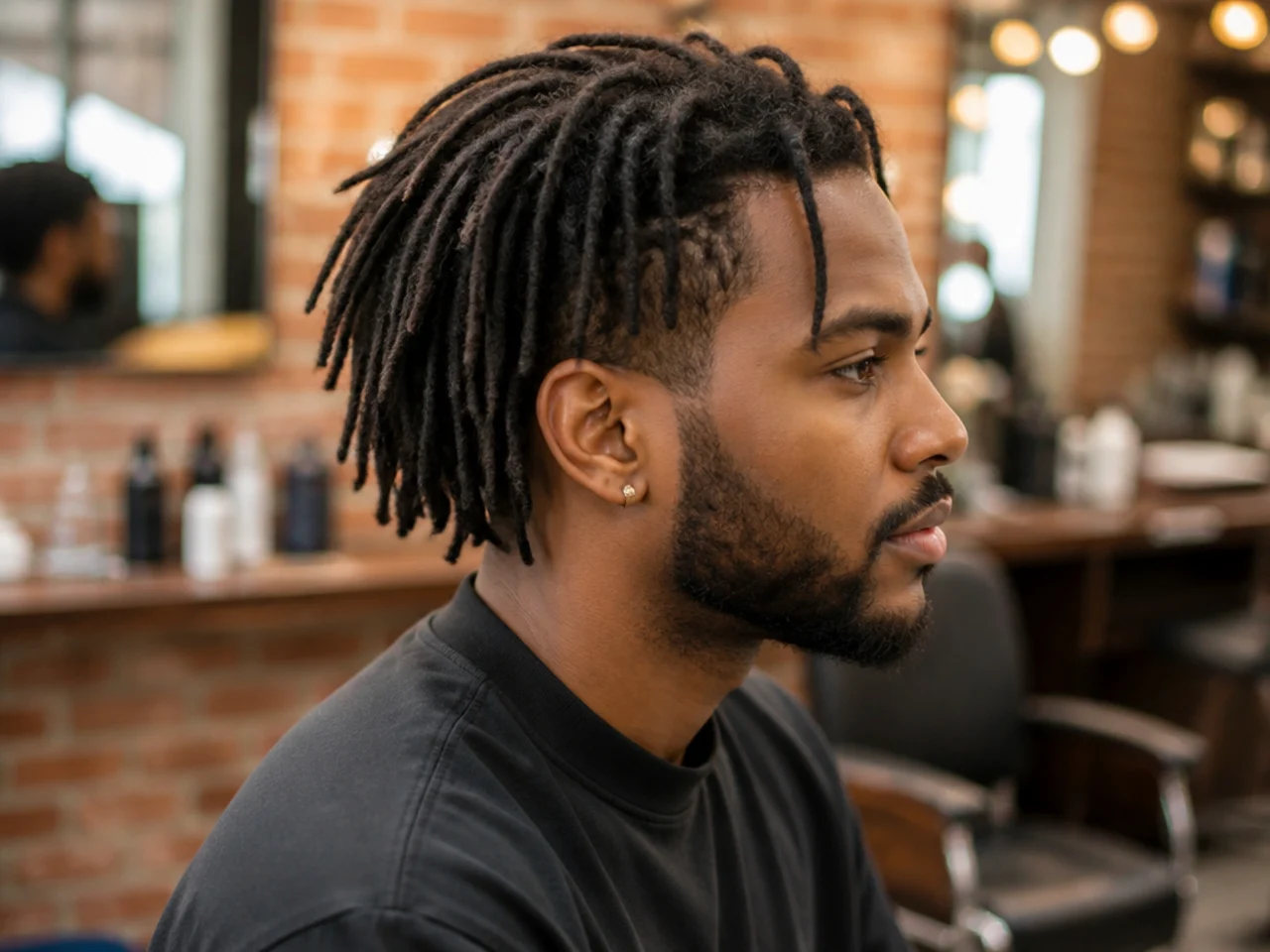
Medium length locs need less product and more discipline. Cleanliness, patience, and a satin bonnet do most of the work.
Wash rhythm. Every seven to fourteen days with a residue-free shampoo or a clarifying loc-specific formula. Residue trapped inside a loc causes odor, mildew, and eventual dry rot — the fastest way to lose a loc journey. Air-dry fully before any manipulation.
Product order. Water-based loc gel at the root during retwist, a light loc oil (jojoba, argan, or a purpose-made blend) massaged into the scalp between washes. That's the whole product routine. Skip anything with beeswax, petrolatum, or heavy silicones — they never fully wash out and turn your locs into candle wicks over time.
Between-retwist care. Sleep in a satin bonnet, du-rag, or on a satin pillowcase every single night. Cotton wicks moisture from the locs and roughs up the retwist. In the morning, a spritz of water and a drop of loc oil brings the pattern back.
Scalp care. Massage the scalp twice a week with your fingertips (not your nails) to encourage blood flow to the roots. An apple cider vinegar rinse once a month clarifies residue that shampoo alone can miss. A monthly hot-oil scalp treatment prevents the flakiness that comes with long-term loc wear.
Perimeter cleanup. If you wear a fade or taper at the sides, book the barber every two to three weeks to keep the line crisp against the locs. If you own decent clippers, the best hair clippers for men guide covers what to look for; you can maintain the neckline and sideburns between visits, but leave the actual fade line for the barber.
Loc health check. Every six months, feel the length of each loc for weakness. If a loc thins to a pencil at the mid-point, tell your loctician — they can either reinforce it with an interlock repair or, in worst cases, combine it with a neighboring loc to save the length.
Cultural care. Read the origin story. Locs carry meaning in Rastafarian, African, Caribbean, and Hindu traditions. The style is a hairstyle and it's more than a hairstyle. Respect what you're wearing, learn who wore it before you, and let the journey teach you something.
Want more medium-length ideas? The medium length curly hairstyles for men roundup covers non-loc curly options at the same length, the curly hairstyles for men hub walks through defined-curl territory, and curly haircuts for Black men covers the full curl-first playbook across the diaspora.
FAQ
How long does it take to grow medium length locs from a starter set? Two to four years for most guys, depending on your starting method and your shrinkage. Comb coils and two-strand-twist starters take longer to hit medium length because the loc shrinks as it locks. Instantloc and crochet installations arrive at medium length faster because the loc is compressed at install. Your hair grows the same speed whether it's locked or free — the shrinkage is what changes the timeline.
Can I go swimming with medium length locs? Yes, but rinse with plain water before you get in the pool or ocean so the locs absorb clean water first and less chlorinated or salt water. Wash and fully dry within twenty-four hours of swimming. Loc-specific salt-water sprays and post-swim rinses protect the pattern; skip the shampoo bar routine while traveling if you can't fully dry the locs afterward.
What's the difference between locs and dreadlocks? They're the same hair. "Locs" is the everyday term most Black locticians and loc wearers use in 2026. "Dreadlocks" carries the historical, Rastafarian, and cultural weight and is more often used when referring to the tradition itself. Either word is correct; most guys pick "locs" because it drops the negative connotation of "dread."
How do I know if my starter locs are ready for a medium length style? Wait until the loc has matured — the roots knot naturally against the scalp without gel, the ends have started to close off into rounded tips, and you can wash the hair without the pattern unraveling. That's usually the eighteen-to-twenty-four-month mark. Trying to style immature locs into buns, braids, or fades usually loosens the pattern and sets you back months.
Can I have a beard and medium length locs at the same time? Yes — the beard blend is one of the strongest medium length loc looks (see variation 15). Match the beard length and shape to the density of the locs. Full beards pair well with palm-rolled locs; a shaped goatee or a short beard suits sisterlocks and microlocs where the finer loc size wants a lighter facial hair companion.
Do medium length locs damage the scalp? Not if they're maintained properly. The scalp damage stories usually trace to over-retwisting (weekly instead of monthly), heavy petroleum-based products building up at the root, or interlocking done in the same direction over and over so the loc gets pulled through the same channel repeatedly. Space the retwists, use water-based products, and rotate the interlocking direction — the scalp stays healthy for the full journey.