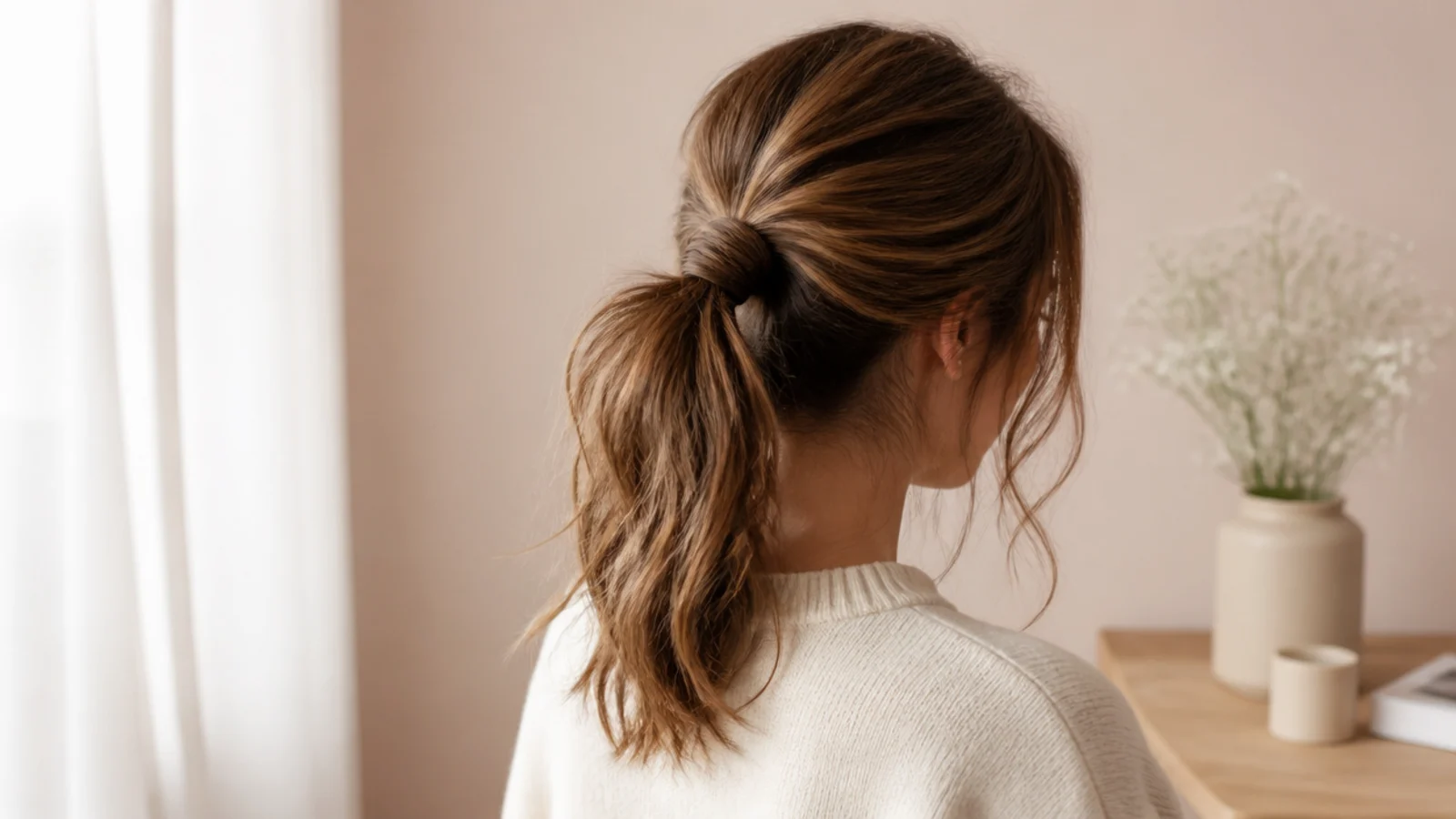
15 Messy Ponytail Ideas for Medium Hair
Fifteen messy ponytails for shoulder and collarbone length, and the problem that belongs to this length alone — a mid length tail is often too short to hang and too long to ignore, so it sticks out instead of falling.
In this article · 23
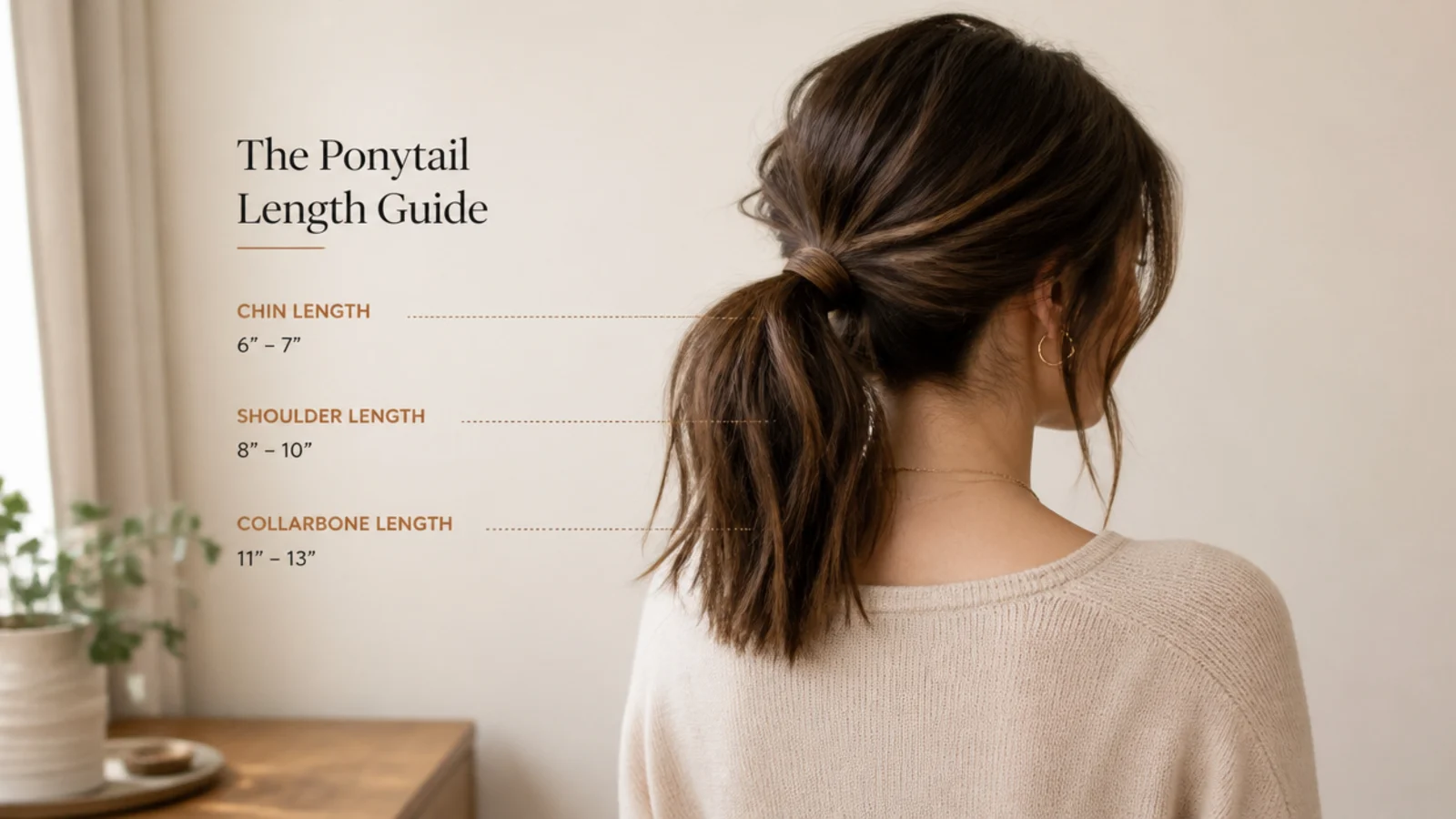
- How Long Is Medium Hair
- Messy Not Untidy
- Tie Placement on Medium Hair
- Stopping a Stubby Ponytail
- Fine Versus Thick Medium Hair
- Products That Matter
- The 15 Medium Hair Messy Ponytails
- 1. Low at the Nape
- 2. High Pony at Shoulder Level
- 3. Teased Crown
- 4. Wrapped Elastic
- 5. Double Stacked
- 6. Blunt Lob Ponytail
- 7. Shag Ponytail
- 8. Half Up
- 9. Two Bubble Ponytail
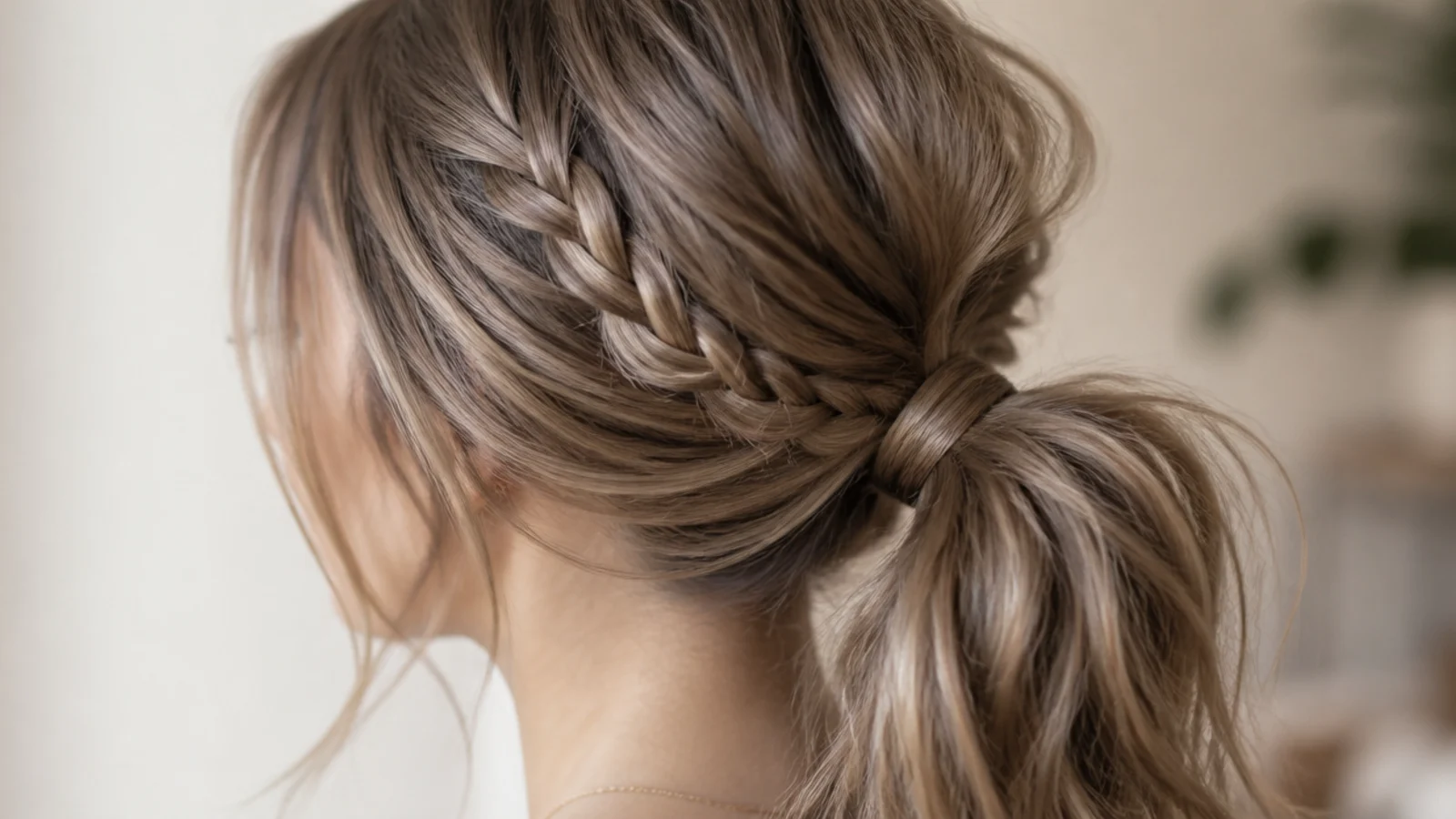
- 10. Braided Front
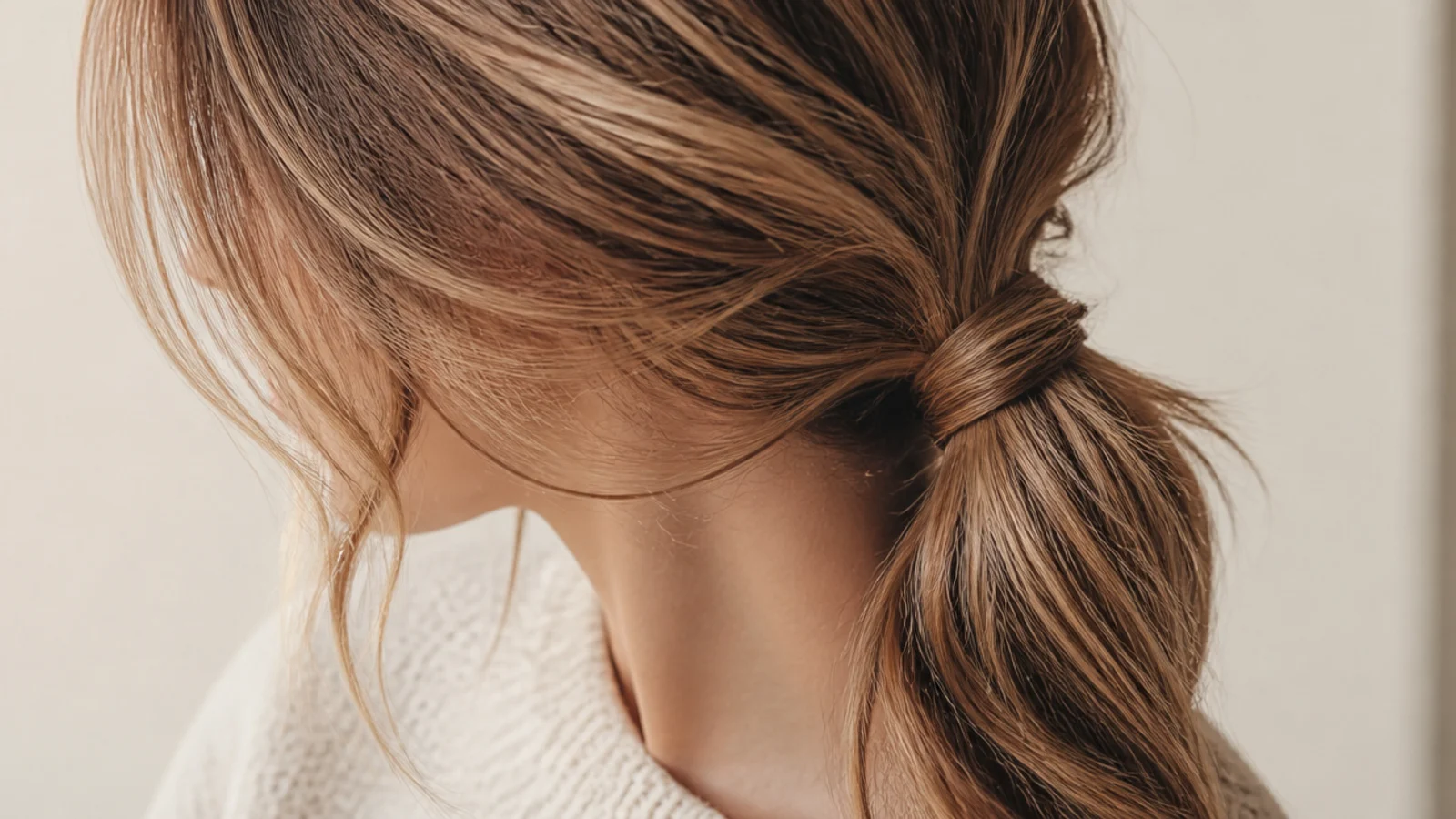
- 11. Side Ponytail
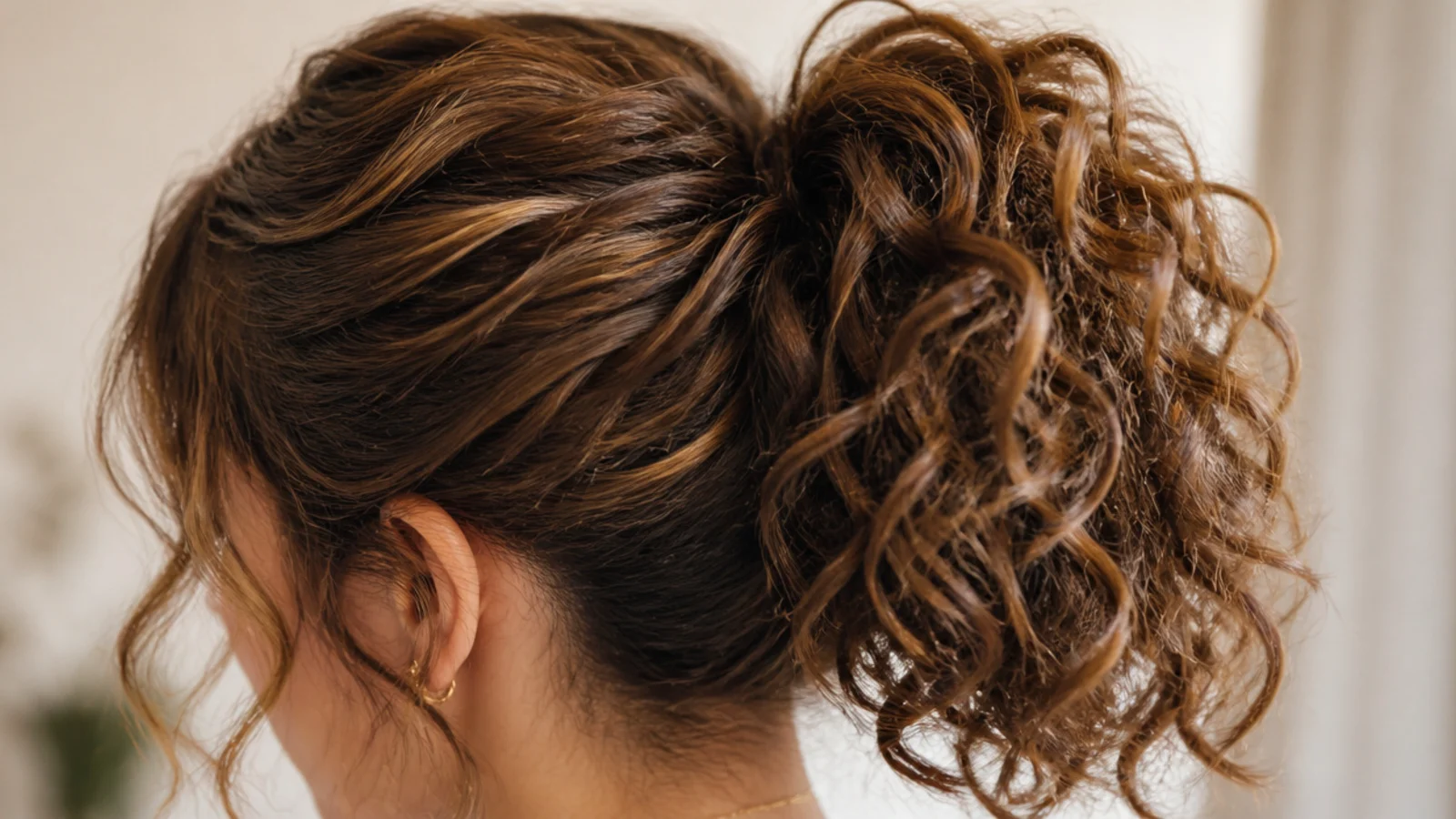
- 12. Curly Ponytail
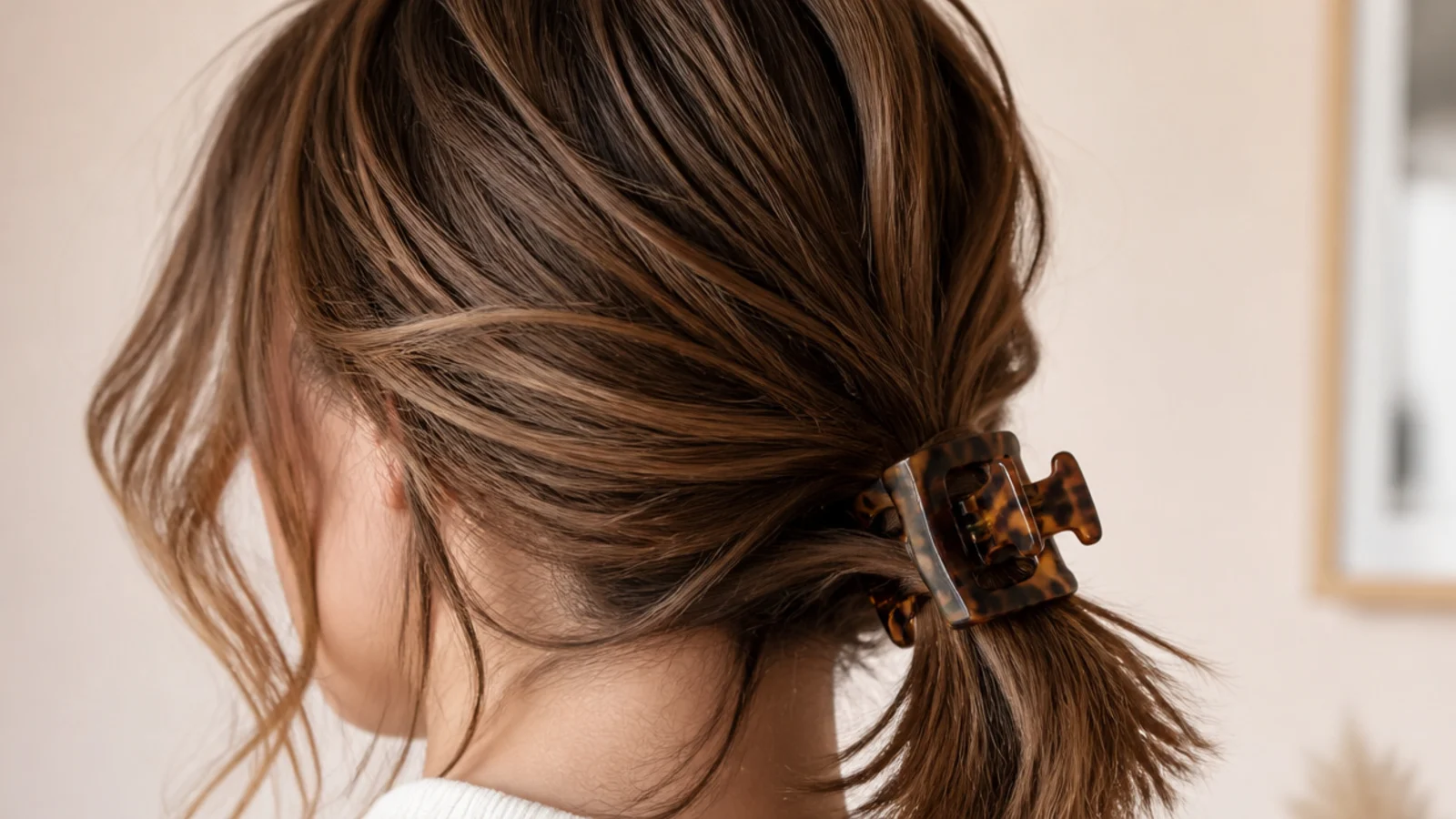
- 13. Claw Clip Ponytail
- 14. Curtain Bangs
- 15. Sleek Root
- Final Thoughts
Medium hair has a ponytail problem that neither short nor long hair shares, and it shows up the moment you tie it.
A short tail sticks out rather than hangs. Hair falls when the weight below a point beats the stiffness of the strands, and six inches of tail often does not manage it.
Height fixes more of this than product does. A higher tie gives the tail room to swing and hides the blunt stub that a low one puts on display.
How Long Is Medium Hair
Collarbone to just past the shoulder. Roughly twelve to sixteen inches from the root on most heads, which is where a full gather is comfortable but never generous.
Below the collarbone it behaves as long hair. The tail gains enough weight to drag its own band down, and placement starts to matter more than grip.
Above the jaw it stops gathering. The nape hair no longer reaches, so you are working with half up versions rather than full ponytails.
Curl changes the answer completely. A curl sitting at the jaw can measure past the collarbone stretched, so judge medium by pulled length rather than by where it rests.
Messy Not Untidy
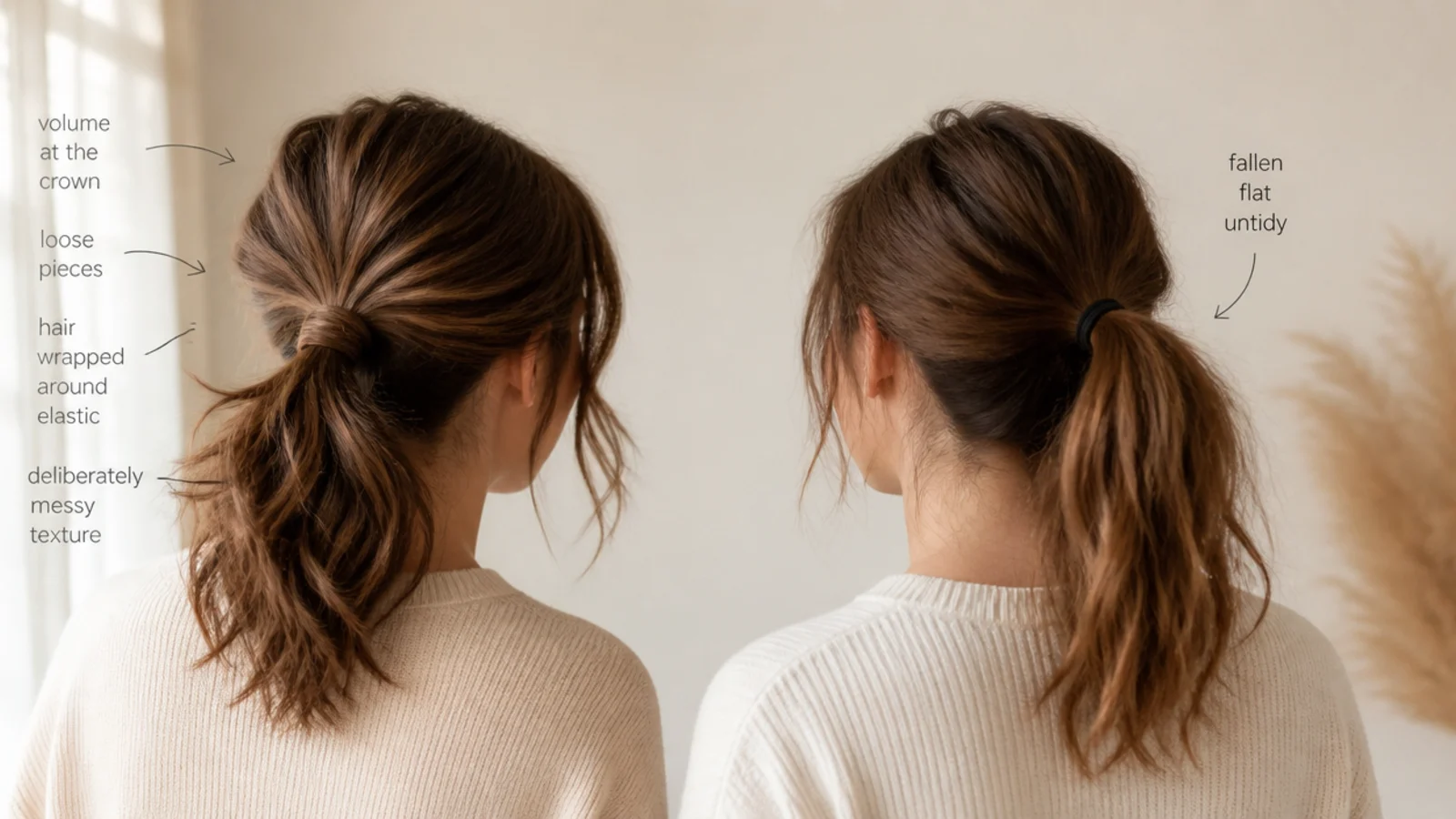
Messy is volume you placed. Untidy is volume that dropped. At this length there is little enough hair that the difference is read instantly.
The base carries the whole style. A clean tight base makes roughness above it read as deliberate. A loose base at medium length just looks like it is falling out.
Loose pieces at the front, never the nape. Short nape hairs escaping under a mid length tail are the single most common reason this looks untidy rather than undone.
Ends need softening. A blunt cut at medium length ends every strand at the same point, and gathered up that edge reads as a stub unless it is broken up.
Tie Placement on Medium Hair
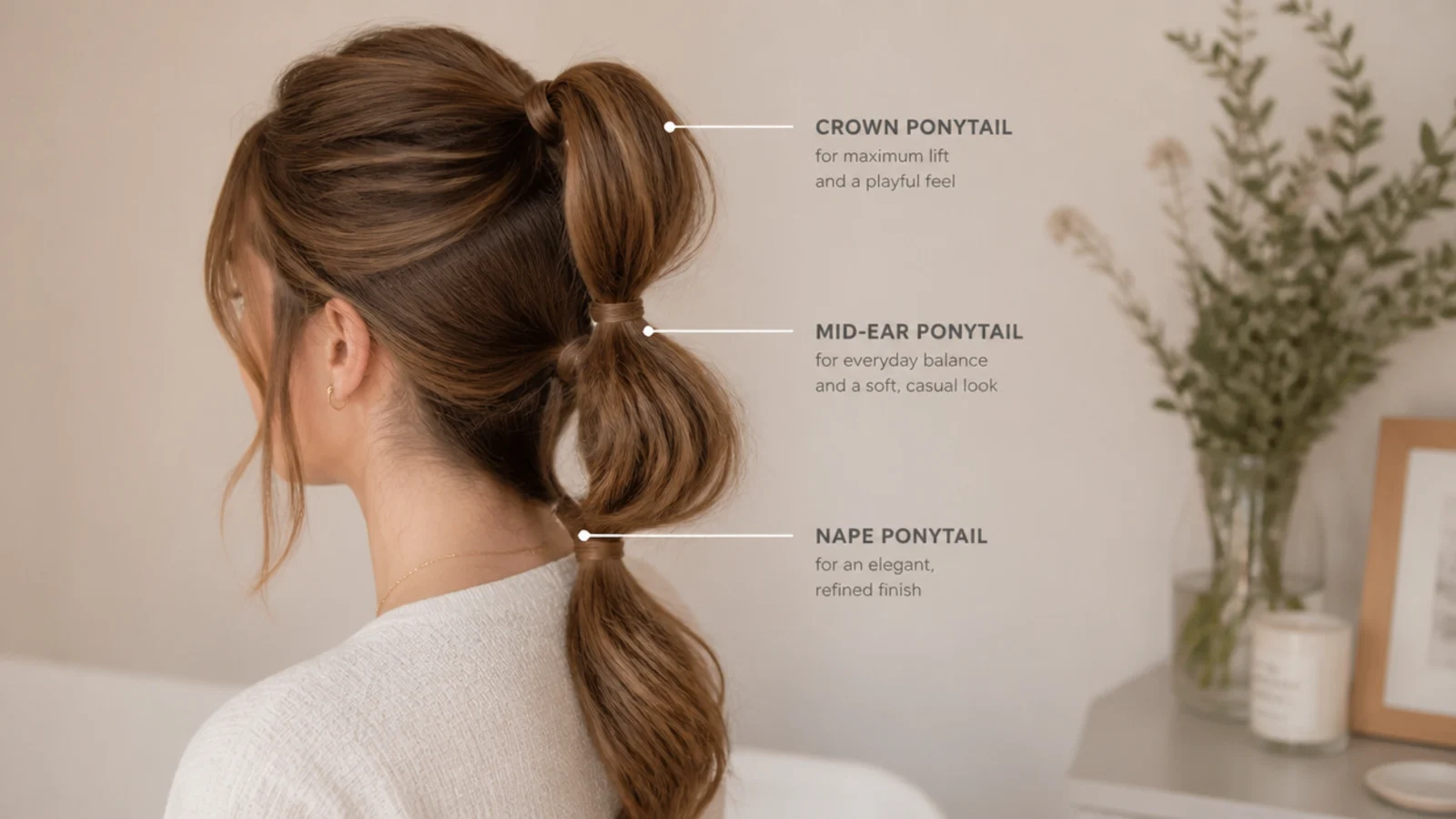
Higher than you would go on long hair. The tail is light enough that a crown placement holds without dragging, and height is what stops it reading as stubby.
Mid height is the safe default. Level with the top of the ear the tail clears the shoulder, swings, and still looks intentional at the base.
Low ties need a loosened crown first. At this length a nape tie pulls the whole head flat, and the style goes severe without any lift above it.
Off centre buys length. Moving the tie to one side lets the tail lie along the shoulder rather than stick off the back of the head.
Stopping a Stubby Ponytail
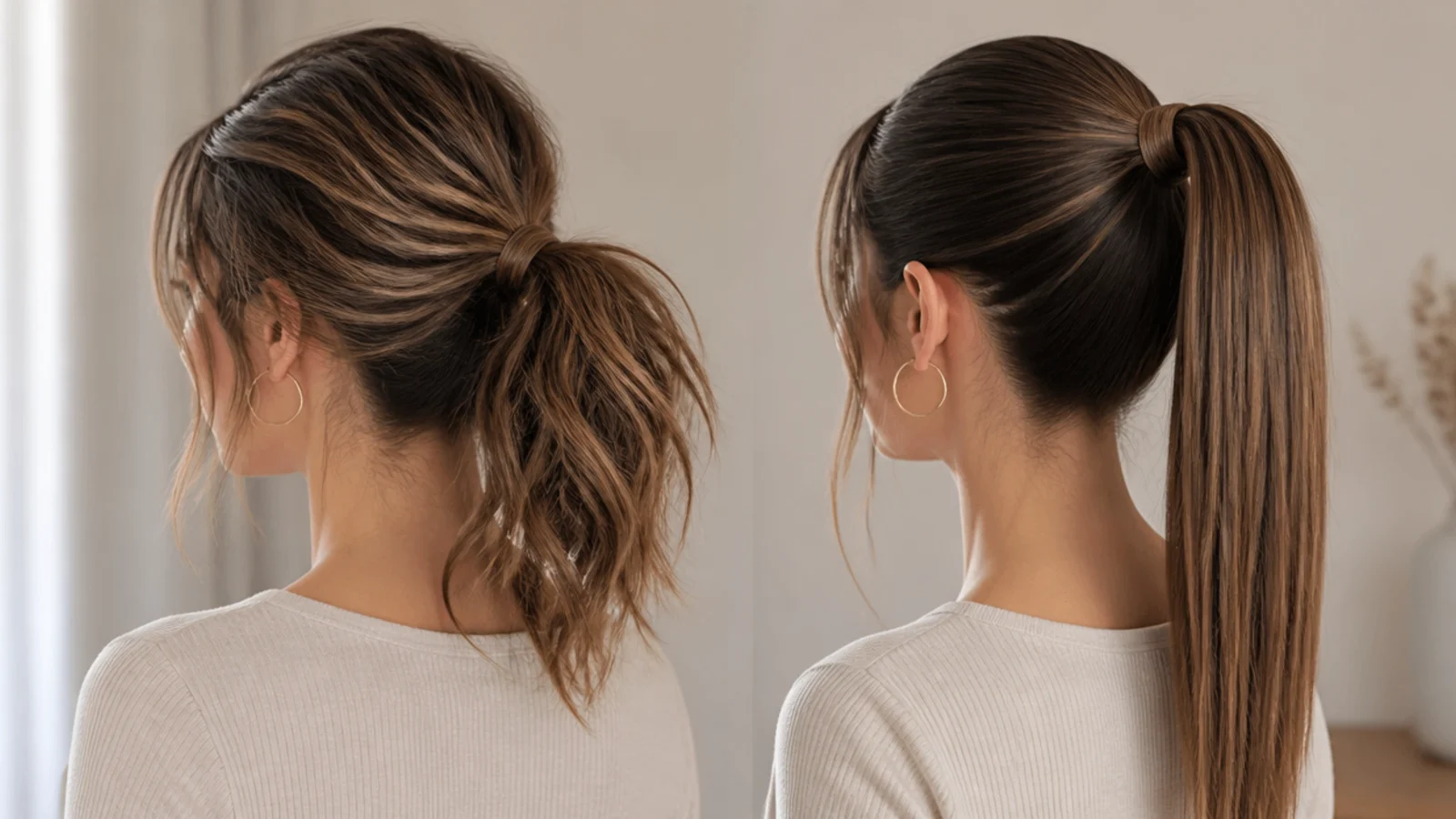
Bend the ends. One pass with an iron or a round brush curves the last two inches, and a curve reads as a direction rather than as a cut edge.
Break the perimeter up. A blunt line ends every strand at the same point, so ask for a little point cutting through the ends and the stub disappears.
Tie higher. A high tail hangs against nothing, so it falls under its own weight instead of propping itself against the back of the head.
Split the tail into sections. Bubbles or a wrapped base give the eye structure to read, which is more effective than trying to make short hair look long.
Fine Versus Thick Medium Hair
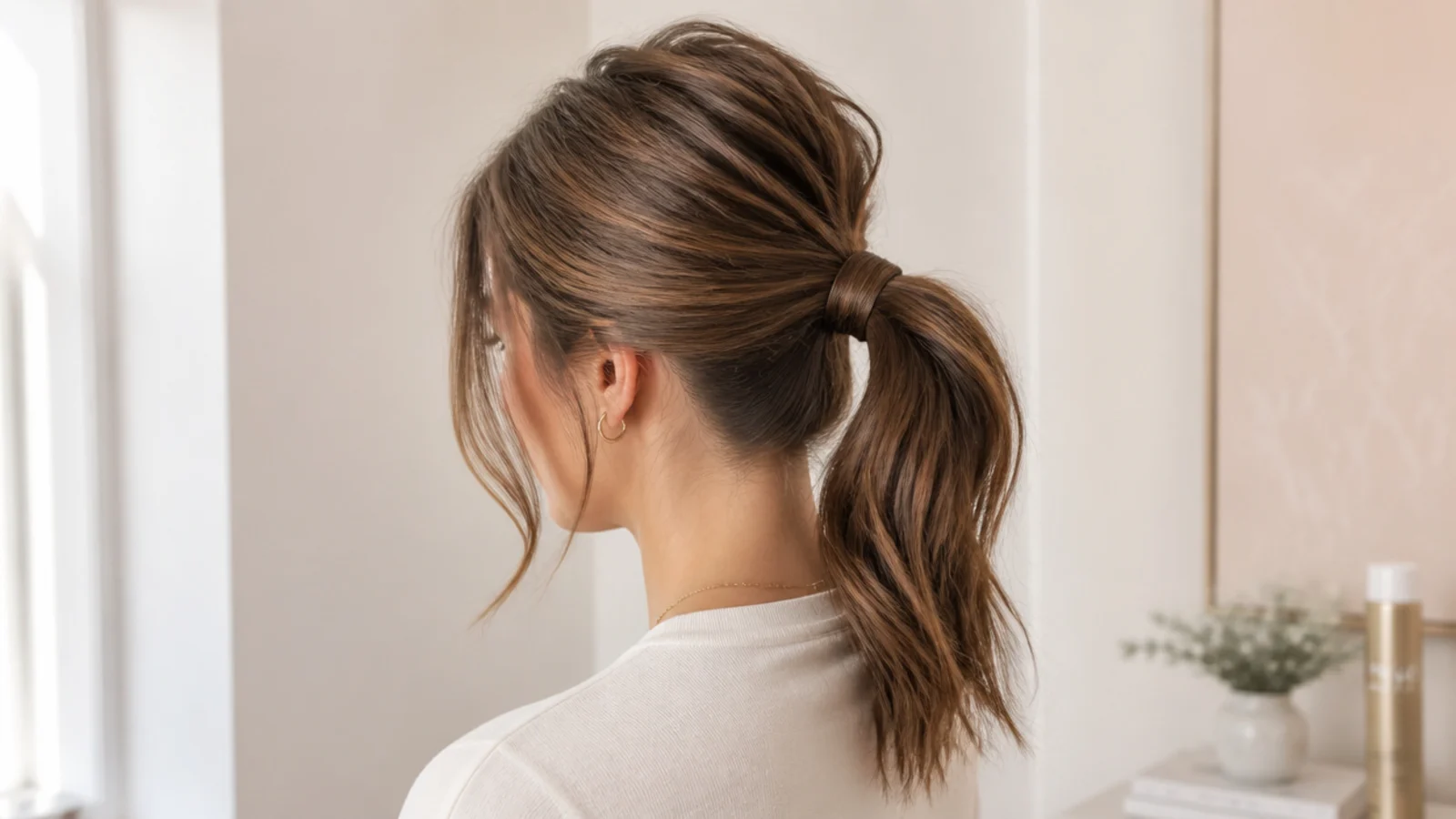
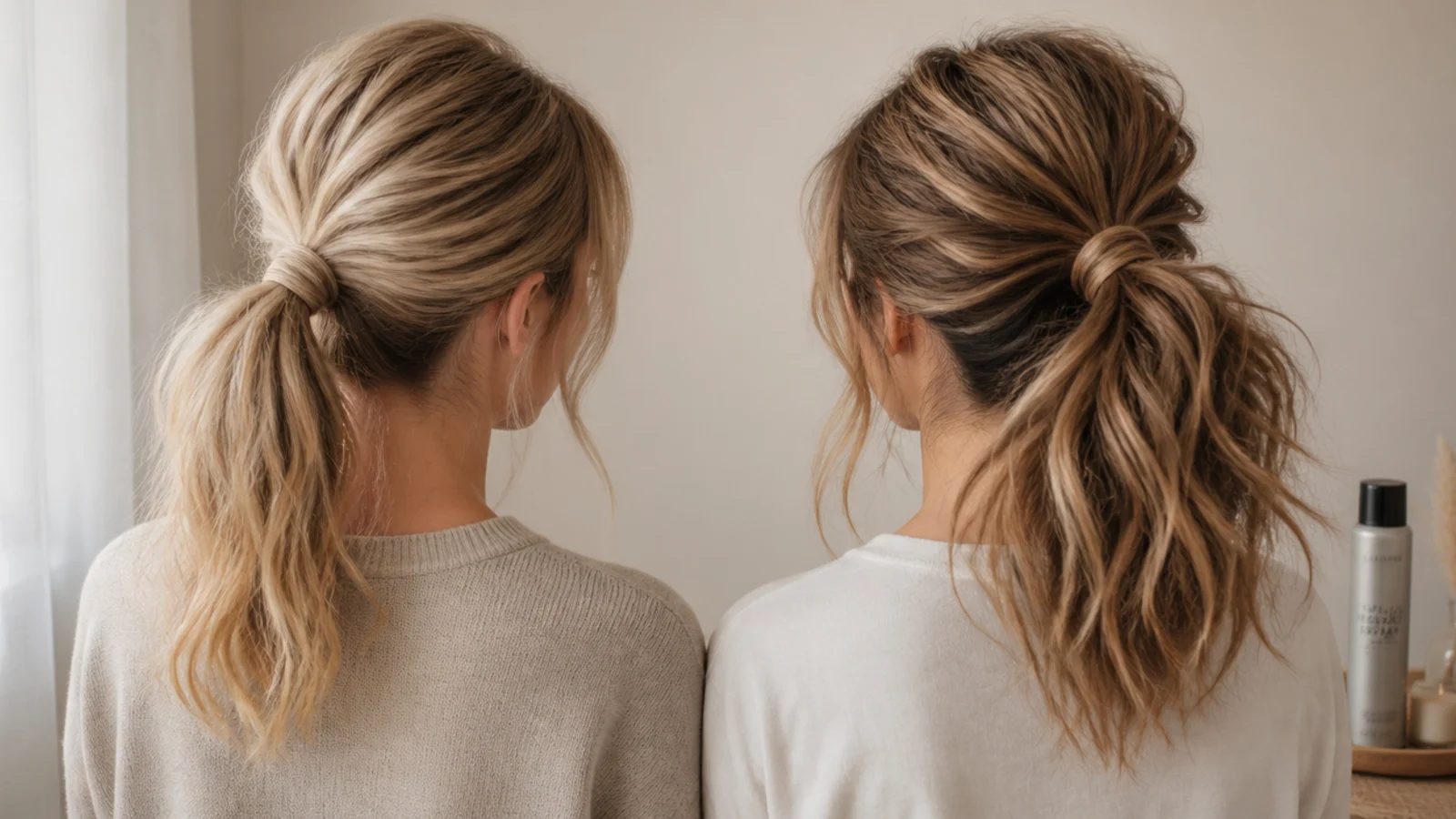
Fine medium hair goes thin at the band. There is little bulk to begin with and the elastic compresses what there is, so the tail can look narrower than the head above it.
Thick medium hair goes wide instead. The gather is dense and short, which is the combination that produces a solid block rather than a tail.
Fine hair wants a crown tug and a wide band. Both add apparent width where the style is thinnest.
Thick hair wants the bulk broken up. A braided base, bubbles or a claw clip divide the mass so it reads as shape instead of as one heavy lump.
Products That Matter
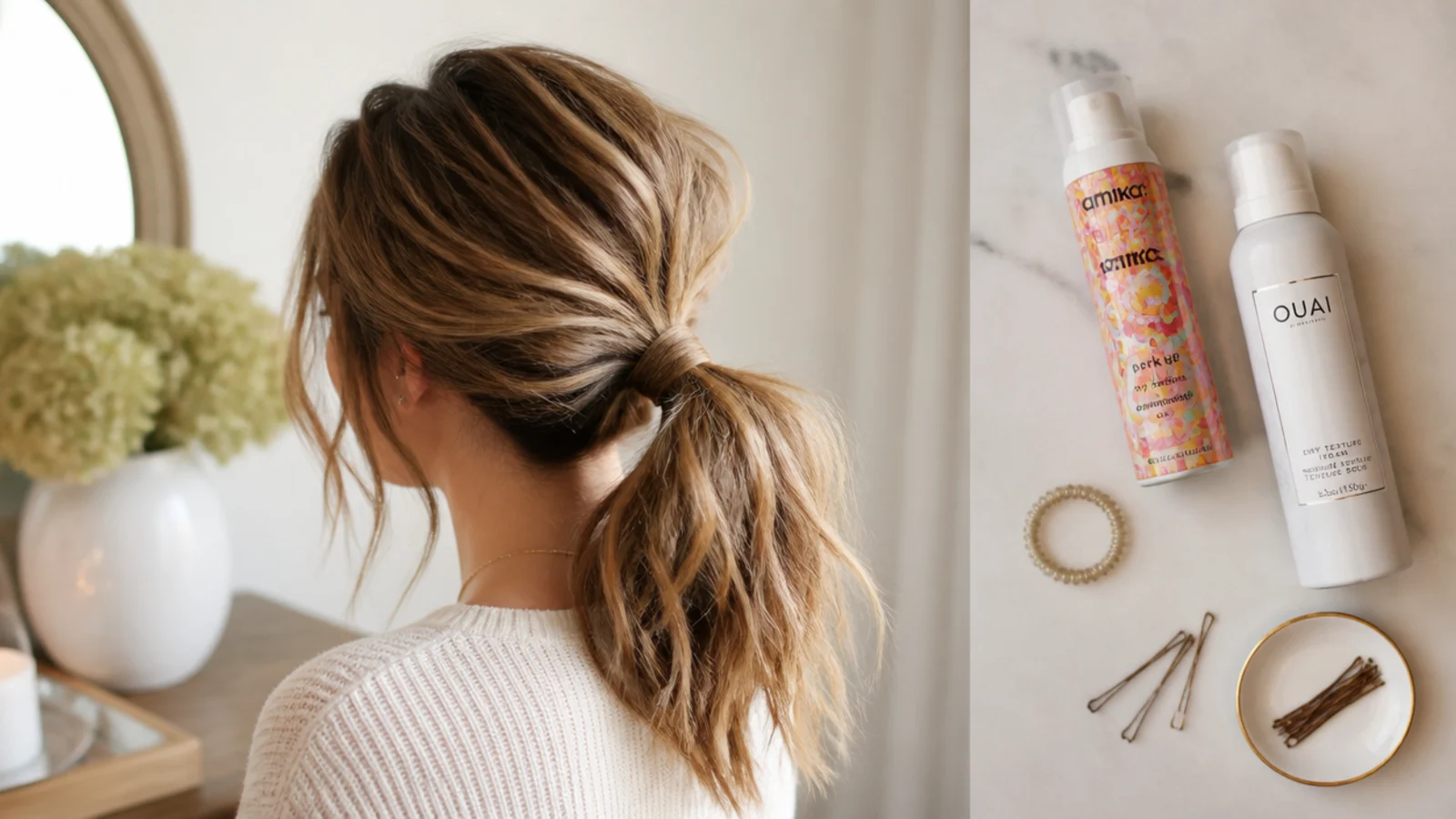
Texture spray through the mid lengths. Medium hair has the least natural weight to hold a shape, so grit is doing the work gravity does on long hair.
Dry shampoo at the base only. It absorbs oil and leaves powder behind, and that powder is the friction the band needs. Keep it off the tail or the ends go dusty.
A fabric covered elastic. Wider contact across a small gather, and no metal join to catch on hair that is already short of length.
An iron for the last two inches. The only tool that reliably solves a stub, and it takes about thirty seconds on this length.
Two pins under the base. Crossed beneath the elastic they act as a shelf, which props a light tail up and away from the neck.
The 15 Medium Hair Messy Ponytails
1. Low at the Nape
The quietest version, and the one that needs the crown loosened before it works. Tied at the nape the tail rests on the neck, so nothing slides, but the pull flattens the whole top of the head unless you tug it back up afterwards.
2. High Pony at Shoulder Level
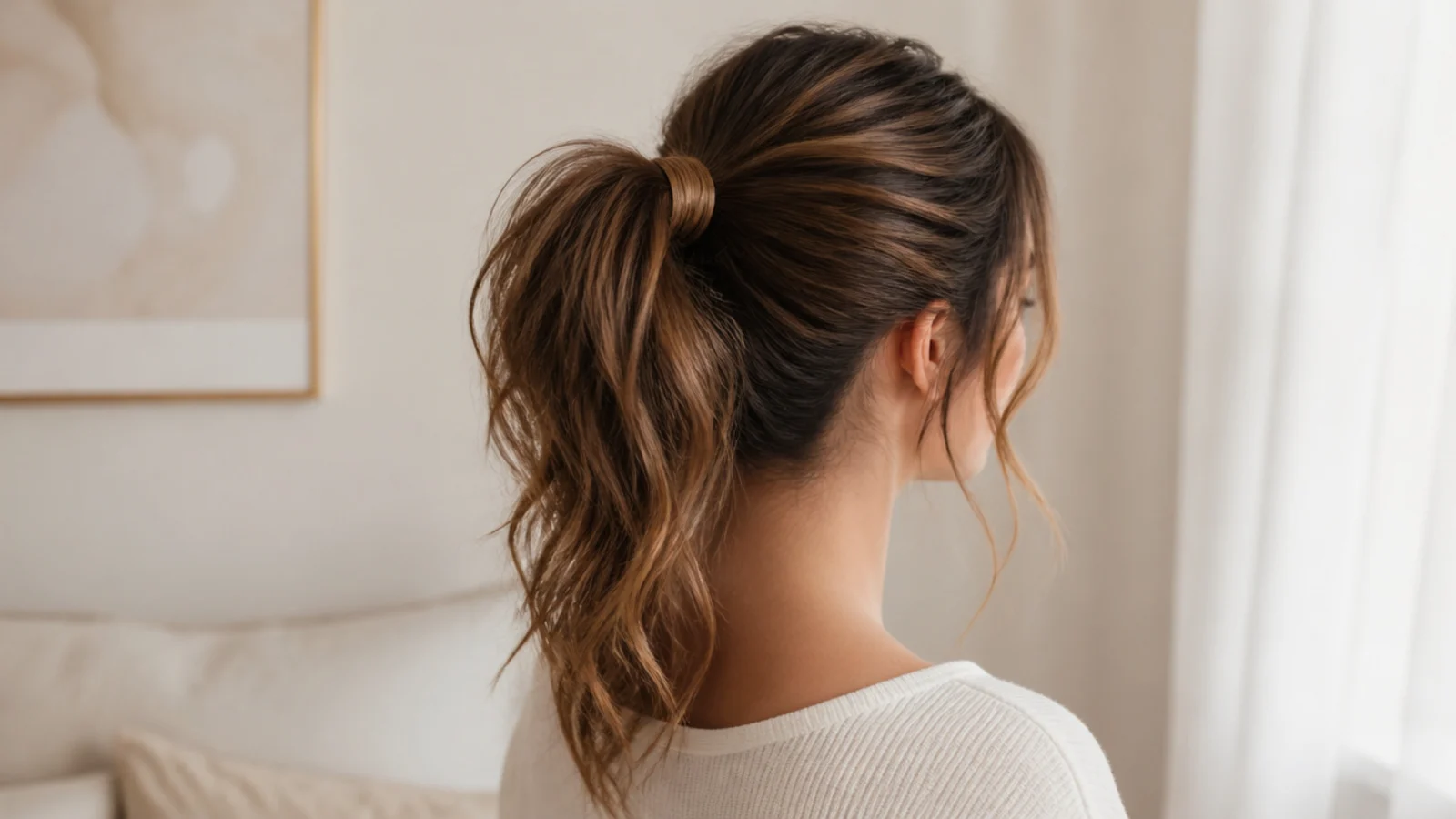
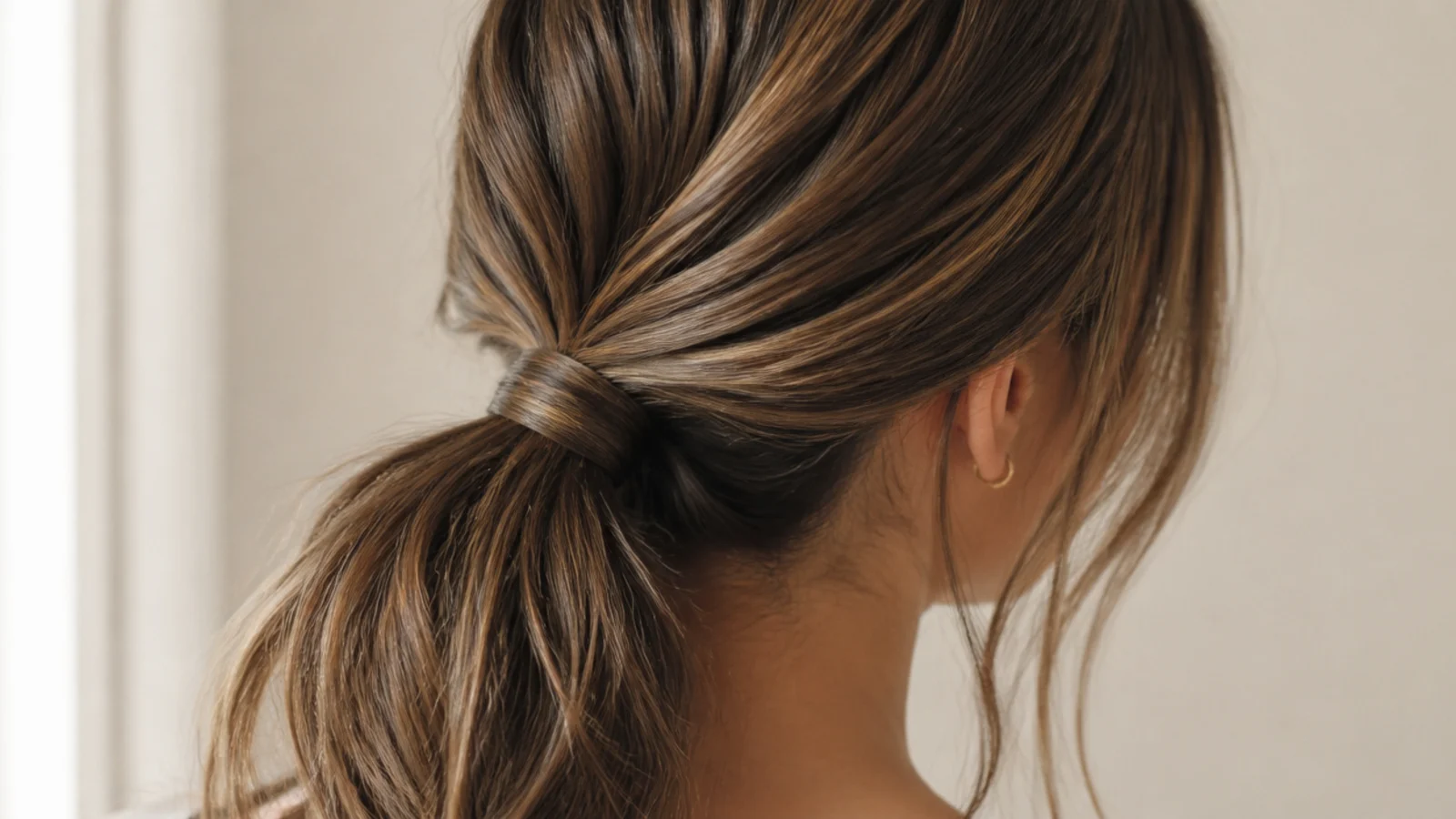
Tied high enough that the tail clears the shoulder and swings freely. A mid length tail is light, so a high placement costs almost nothing in hold here and buys back the movement a low tie takes away.
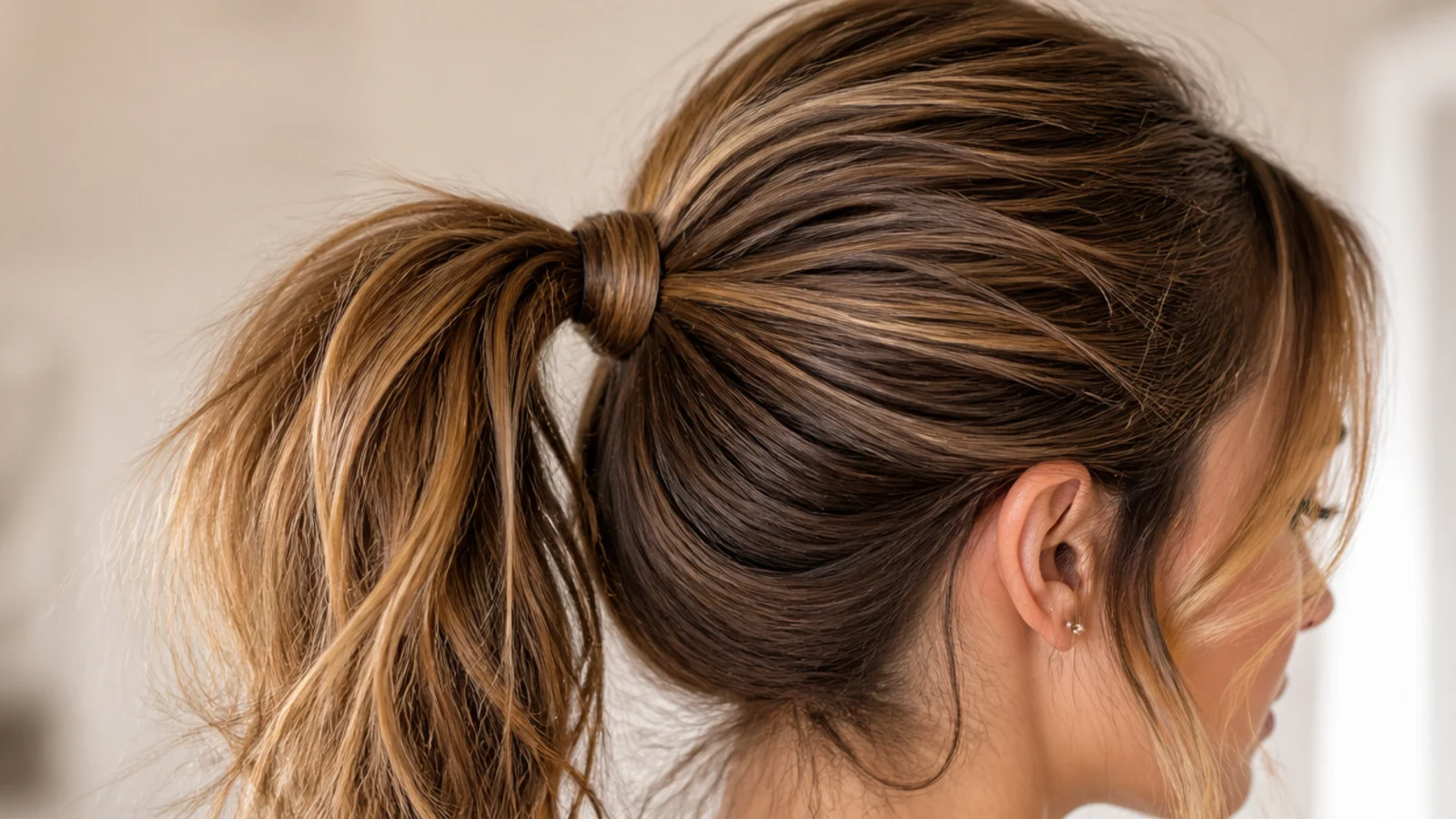
3. Teased Crown
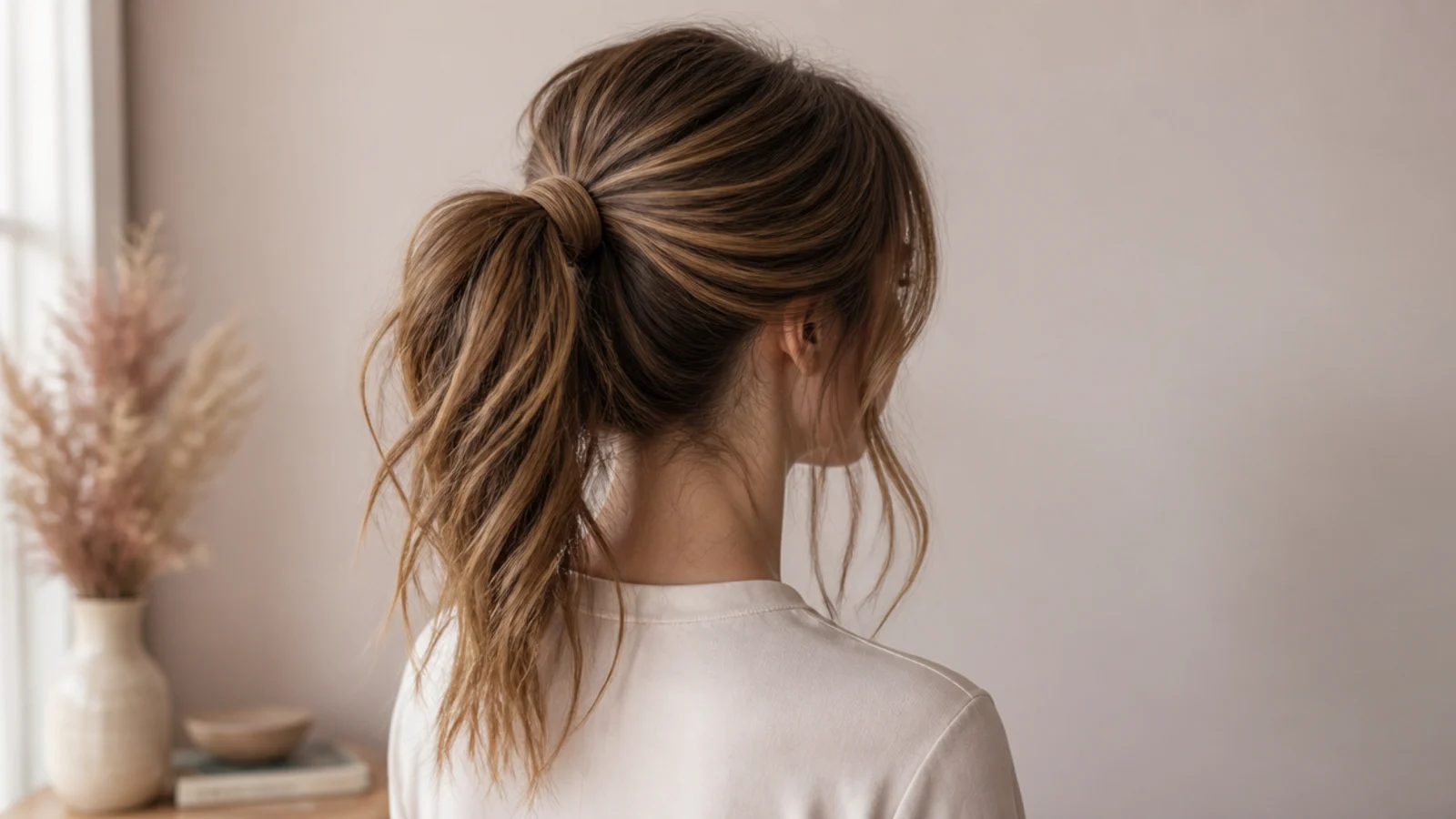
Backcombing pushes the cuticles of neighbouring strands against each other until they knot into a light mat, and that mat holds the surface hair up. On medium hair it also adds the height that stops a short tail looking bottom heavy.
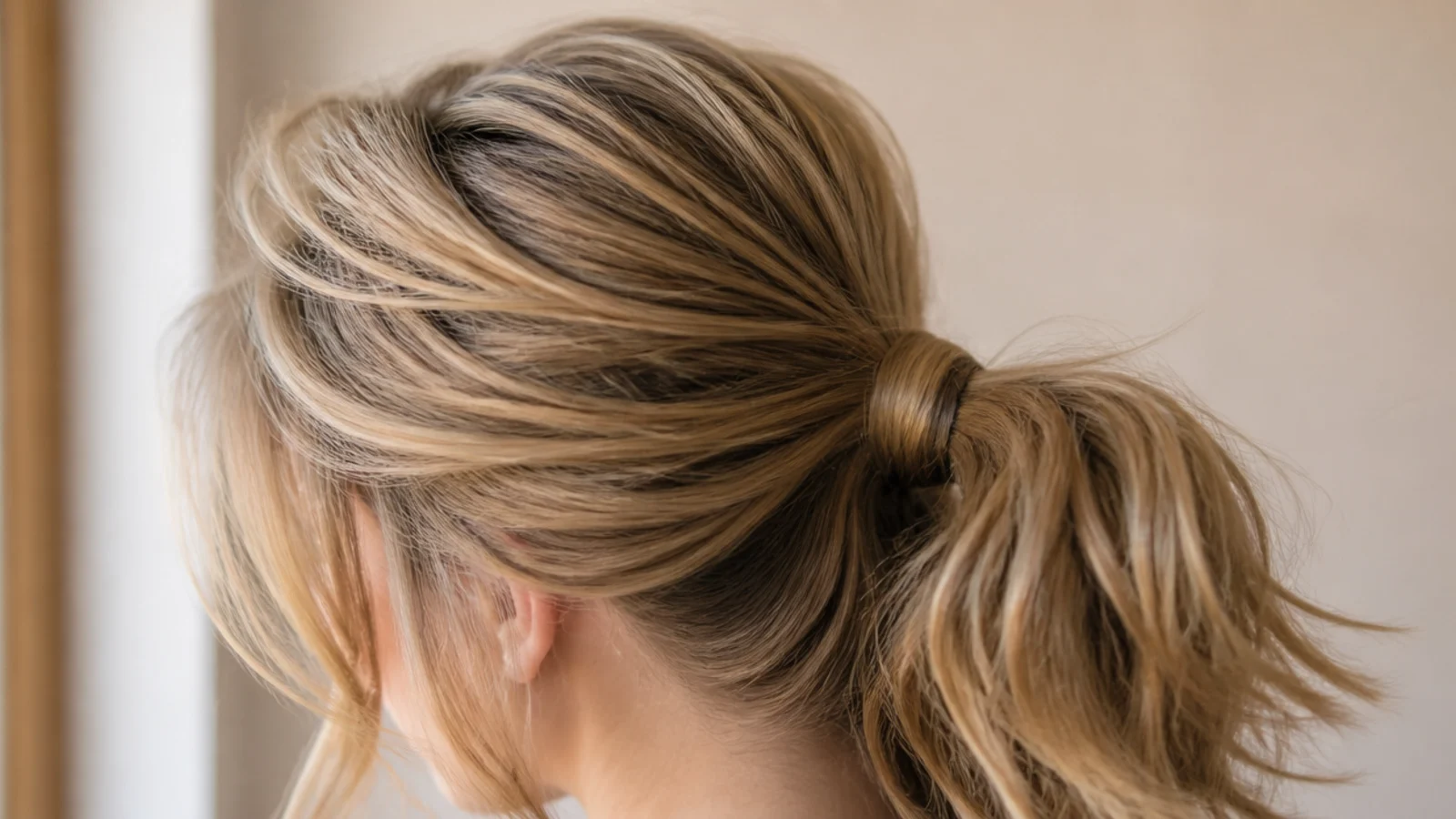
4. Wrapped Elastic
A thin section taken from underneath and wound around the base hides the band. On medium hair that section only reaches around twice, so pin the end underneath rather than trusting it to tuck.
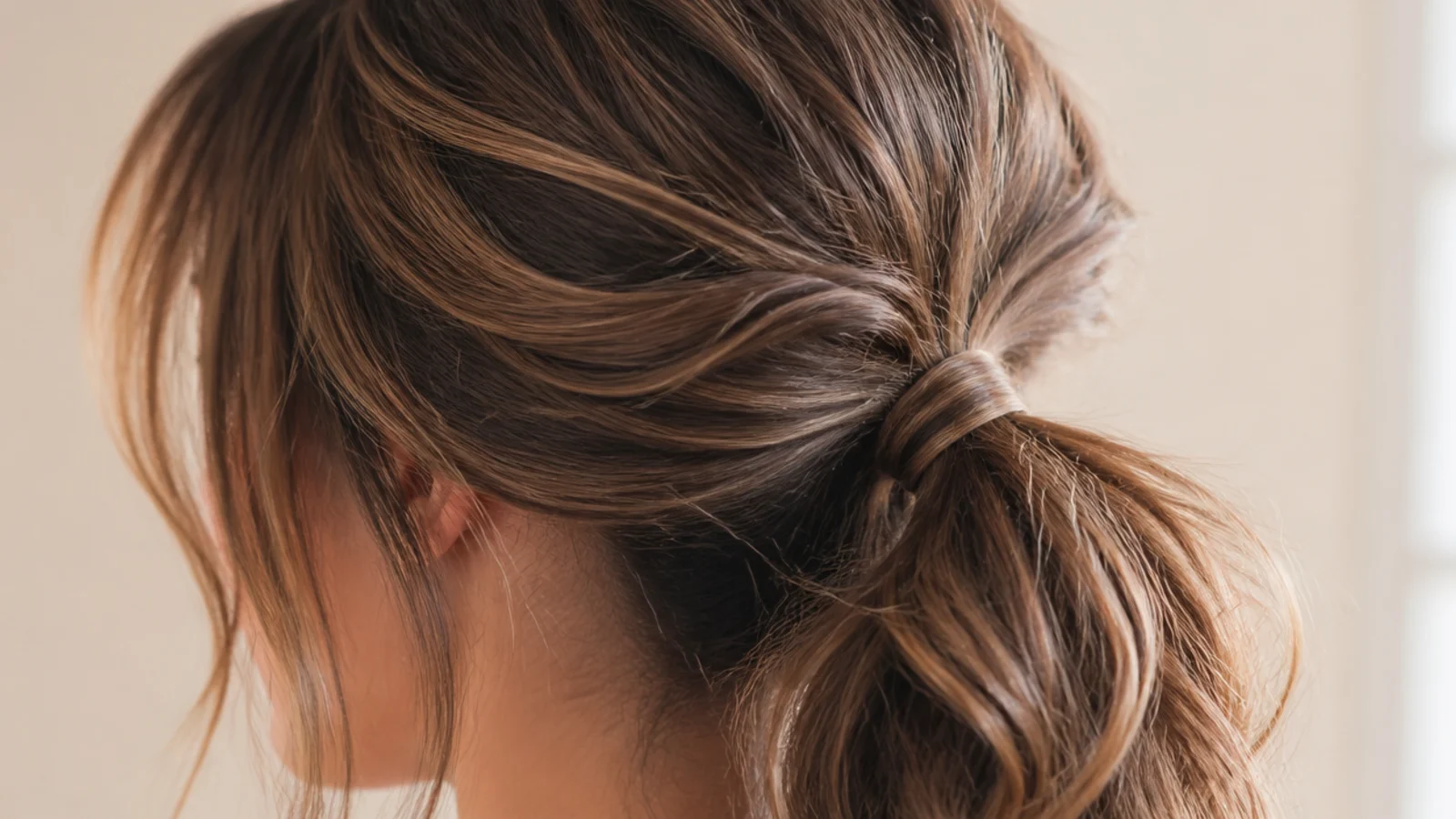
5. Double Stacked
Two elastics with the second sitting a few millimetres above the first. The upper band stops the base sliding and the lower one holds the gather, which on a short dense tail also pushes the hair outward and adds width.
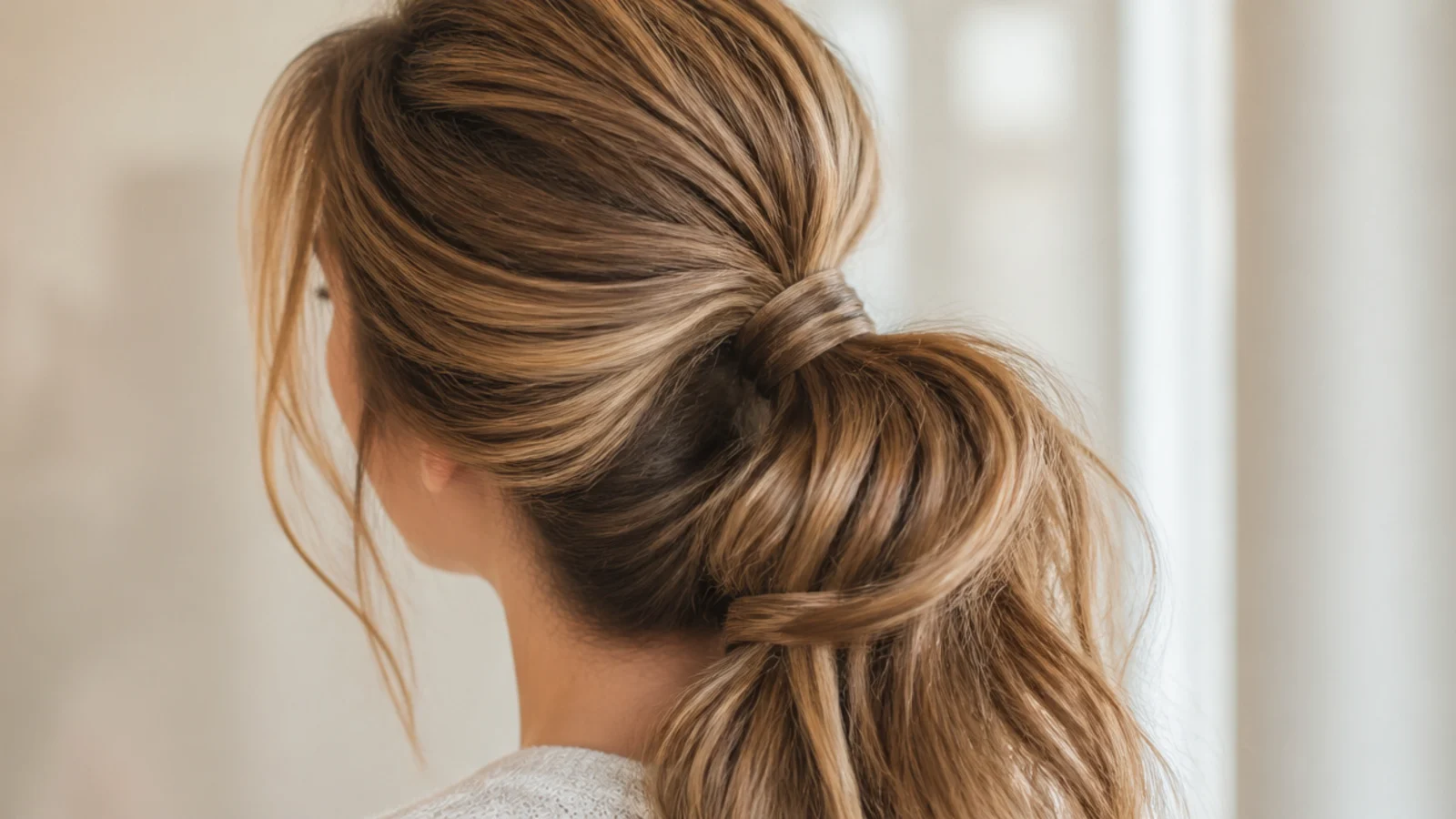
6. Blunt Lob Ponytail
A blunt lob gathers into the flattest, most solid tail of any medium cut, because every strand ends on the same line. Bend the last two inches with an iron before tying and the block turns back into a tail.
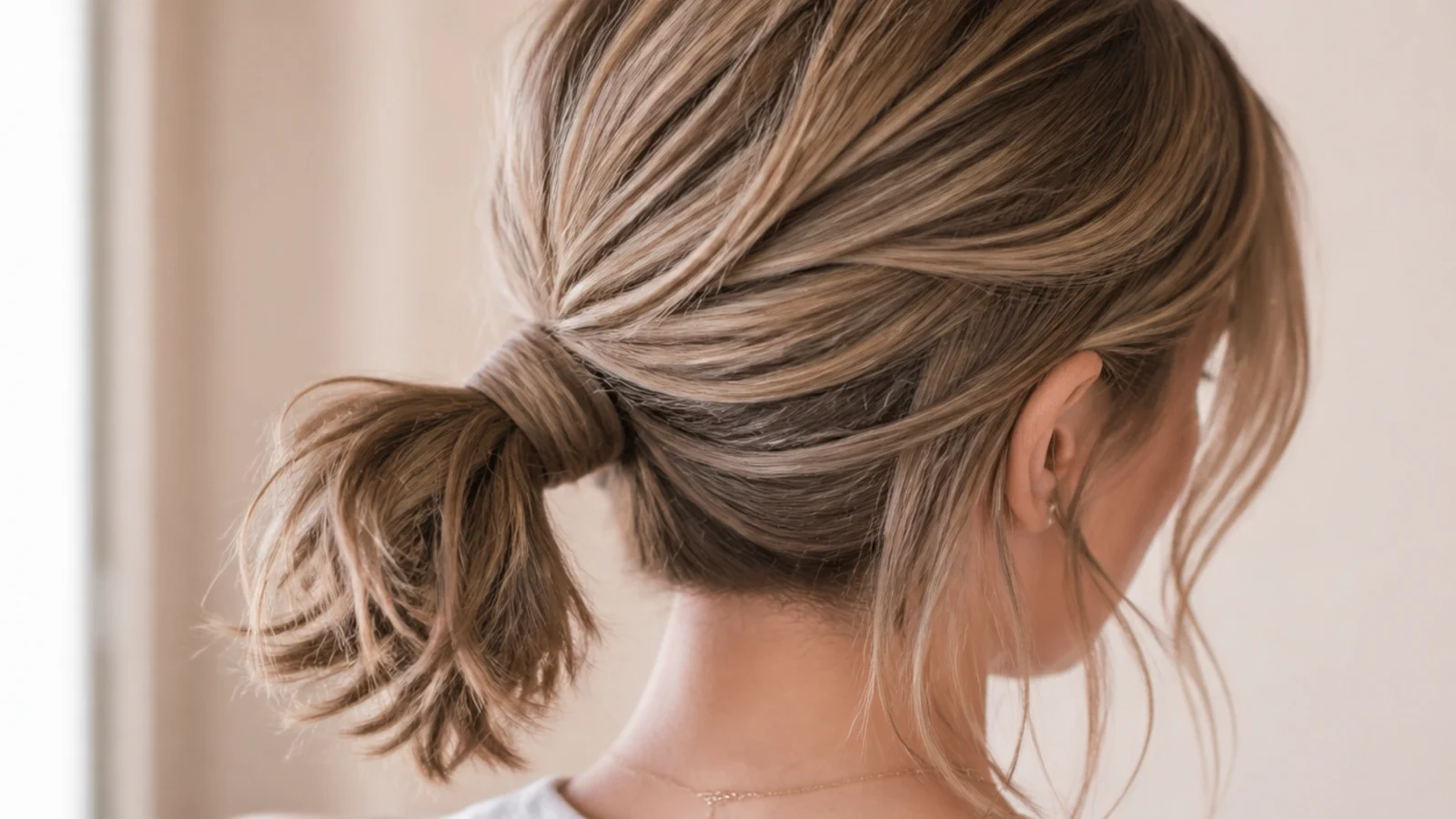
7. Shag Ponytail
A shag is cut in layers of very different lengths, so the short ones cannot reach the band and fall out around the face by design. That is why this cut looks better tied back than most, and why fighting the escaping pieces is pointless.
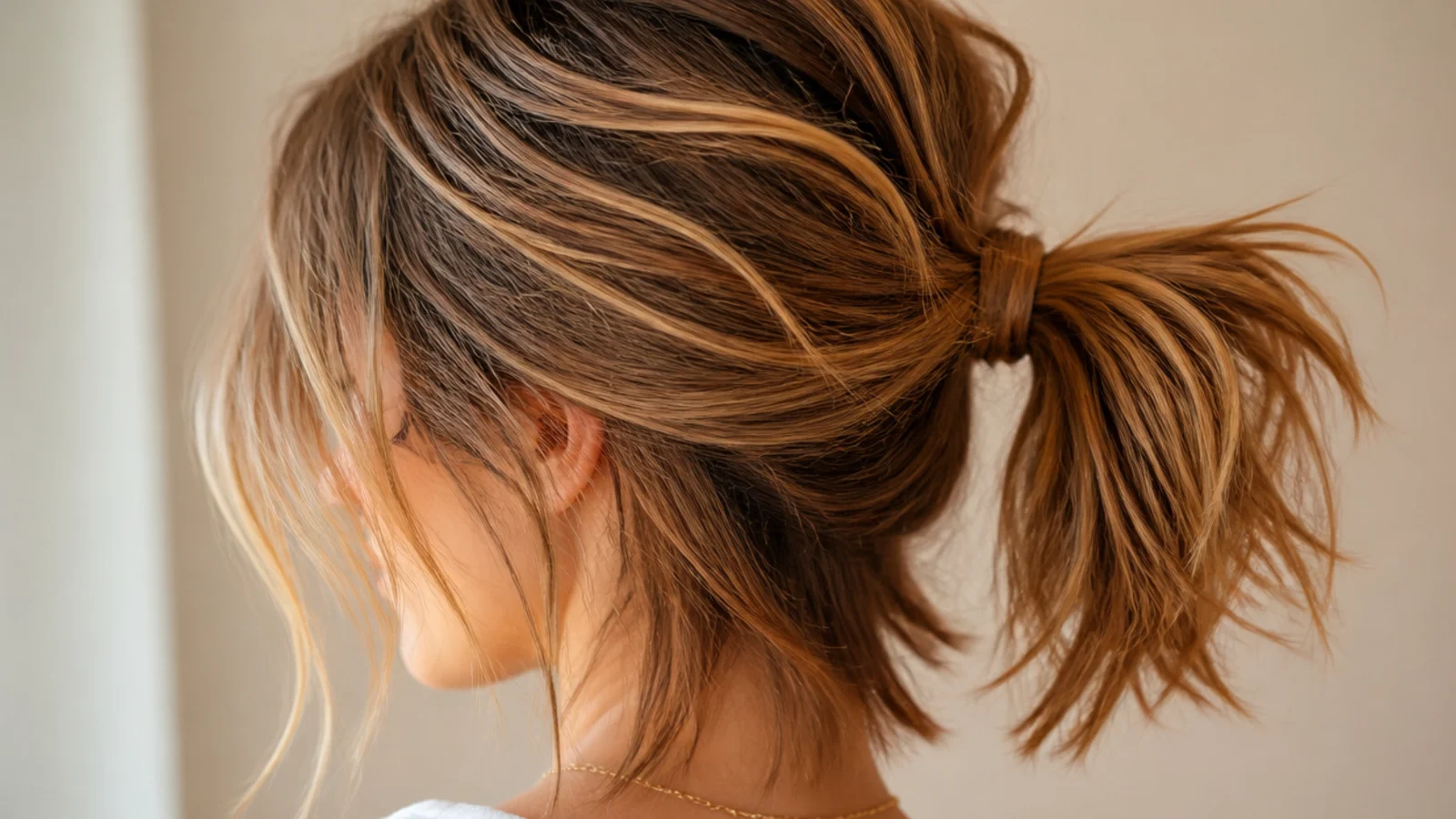
8. Half Up
Only the top section is gathered, so the elastic holds a small amount of hair and the lengths stay visible. On medium hair this is often the more flattering choice, because it keeps the perimeter of the cut on show instead of hiding it in a stub.
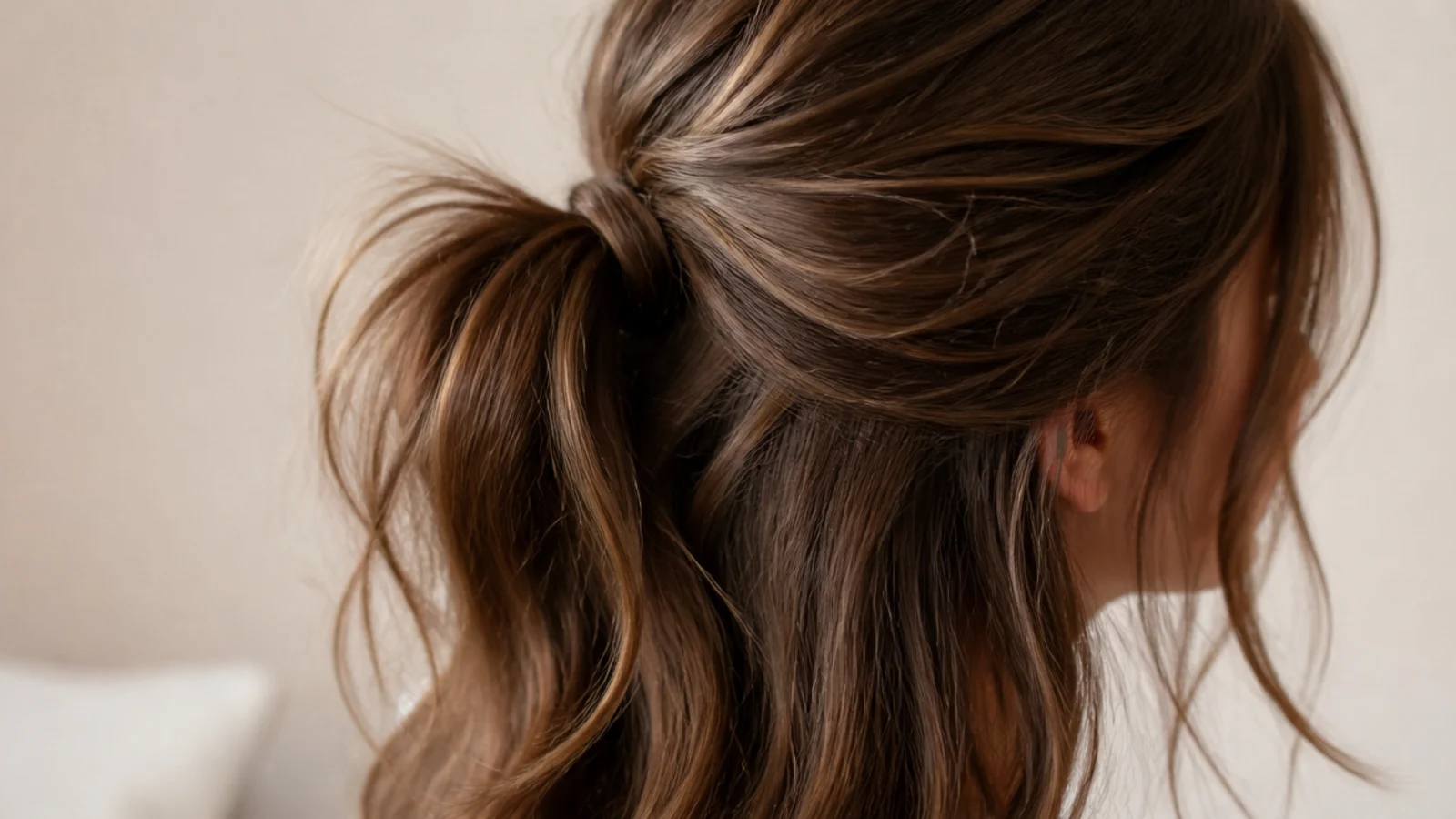
9. Two Bubble Ponytail
Two bands down a mid length tail is all there is room for before the sections run out of hair to fan out. Pulling each bubble wide adds visible width, which is the most direct answer to a tail that looks narrow at the band.
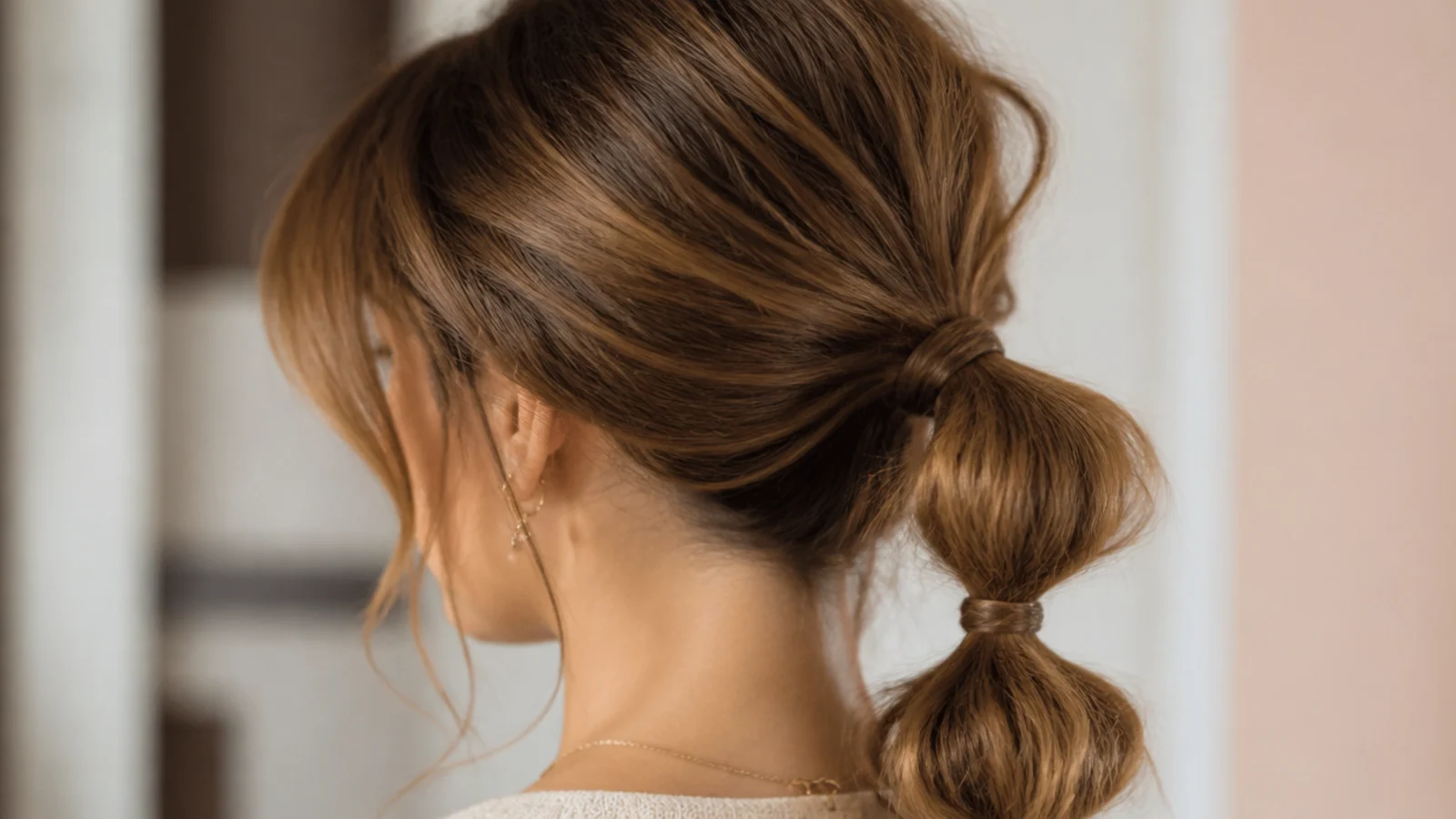
10. Braided Front
A braid taken from the parting back to the elastic holds the front off the face and gives the base a ridged surface to sit against. Anchored at both ends, it does not loosen when you look down.
11. Side Ponytail
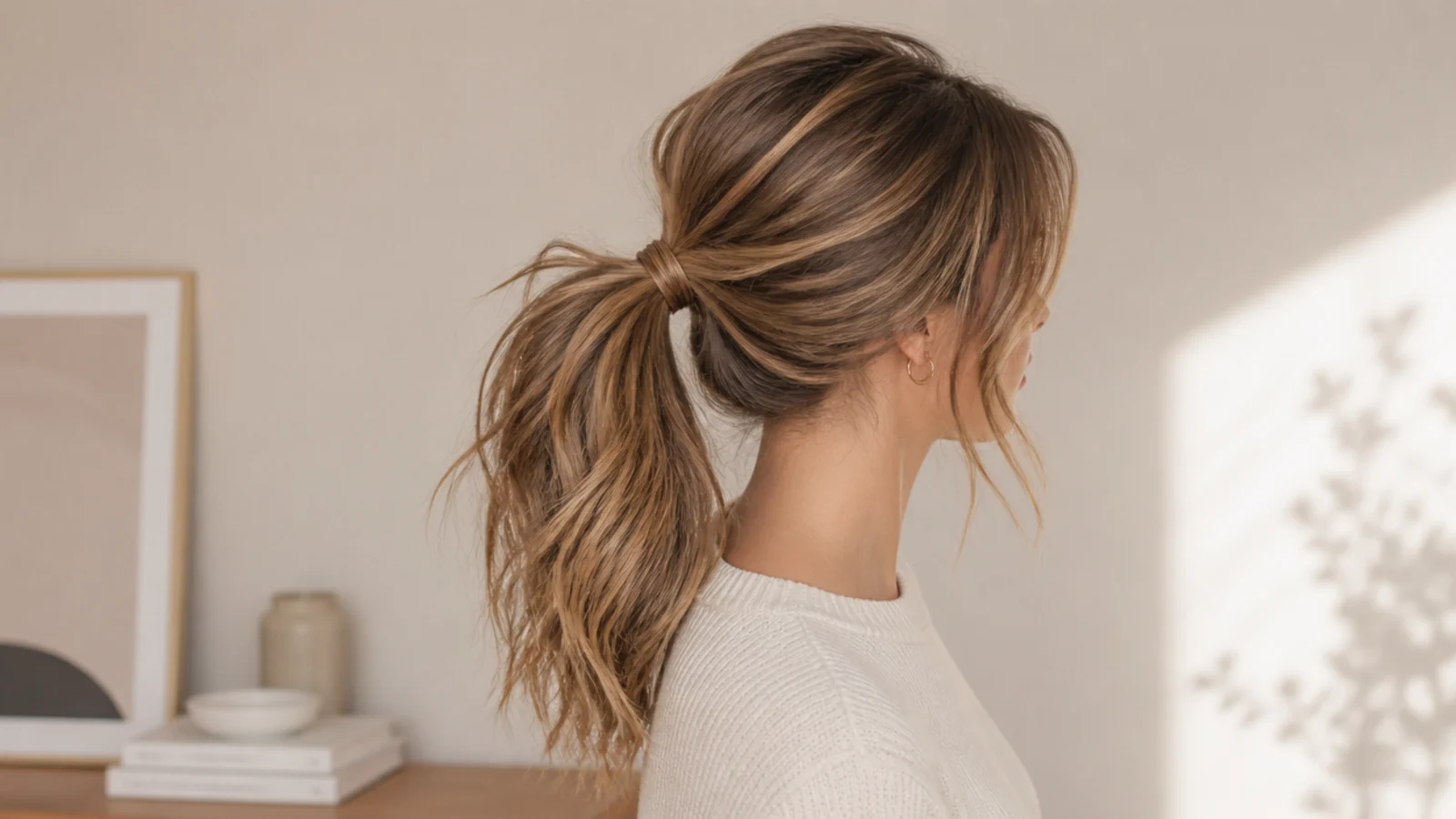
Moving the tie off centre lets a short tail lie along the shoulder rather than project off the back of the head. That change of angle is the cheapest way to make medium length read as longer than it is.
12. Curly Ponytail
A curl at medium length is far longer stretched than it looks, so gather it loosely and let the pattern expand above the band. Compressing curl at the base is what creates the flattened section you cannot brush out later.
13. Claw Clip Ponytail
A clip grips by spring pressure across its teeth rather than by squeezing the gather into a loop, so it never compresses a mid length tail into a narrow point. It also releases in one motion, which matters on hair you retie often.
14. Curtain Bangs
Cut to fall either side of the parting, curtain bangs are too short to be gathered and stay out by design. Against a medium tail they put weight and interest at eye level, which balances a style whose mass sits low and behind.
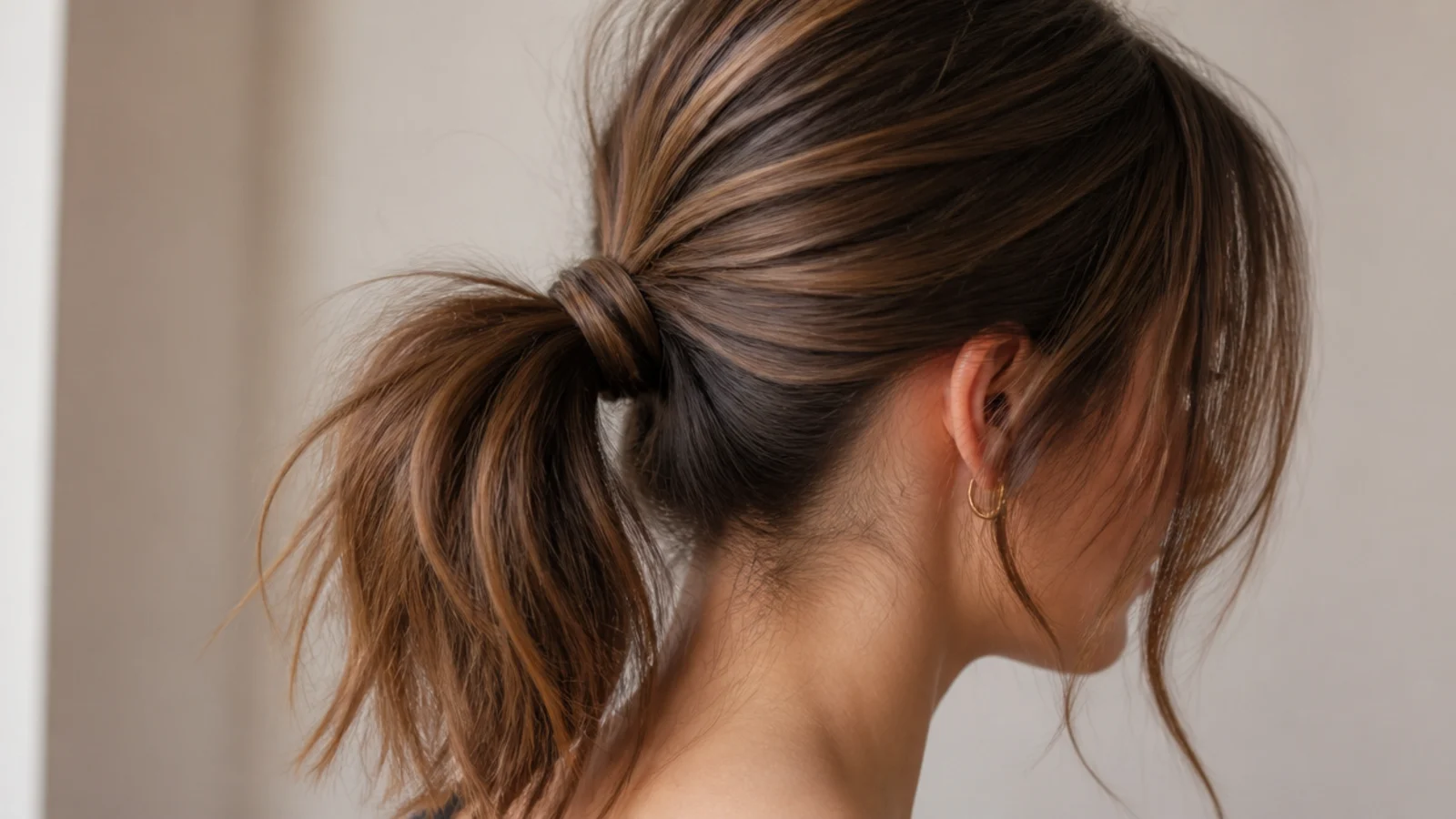
15. Sleek Root
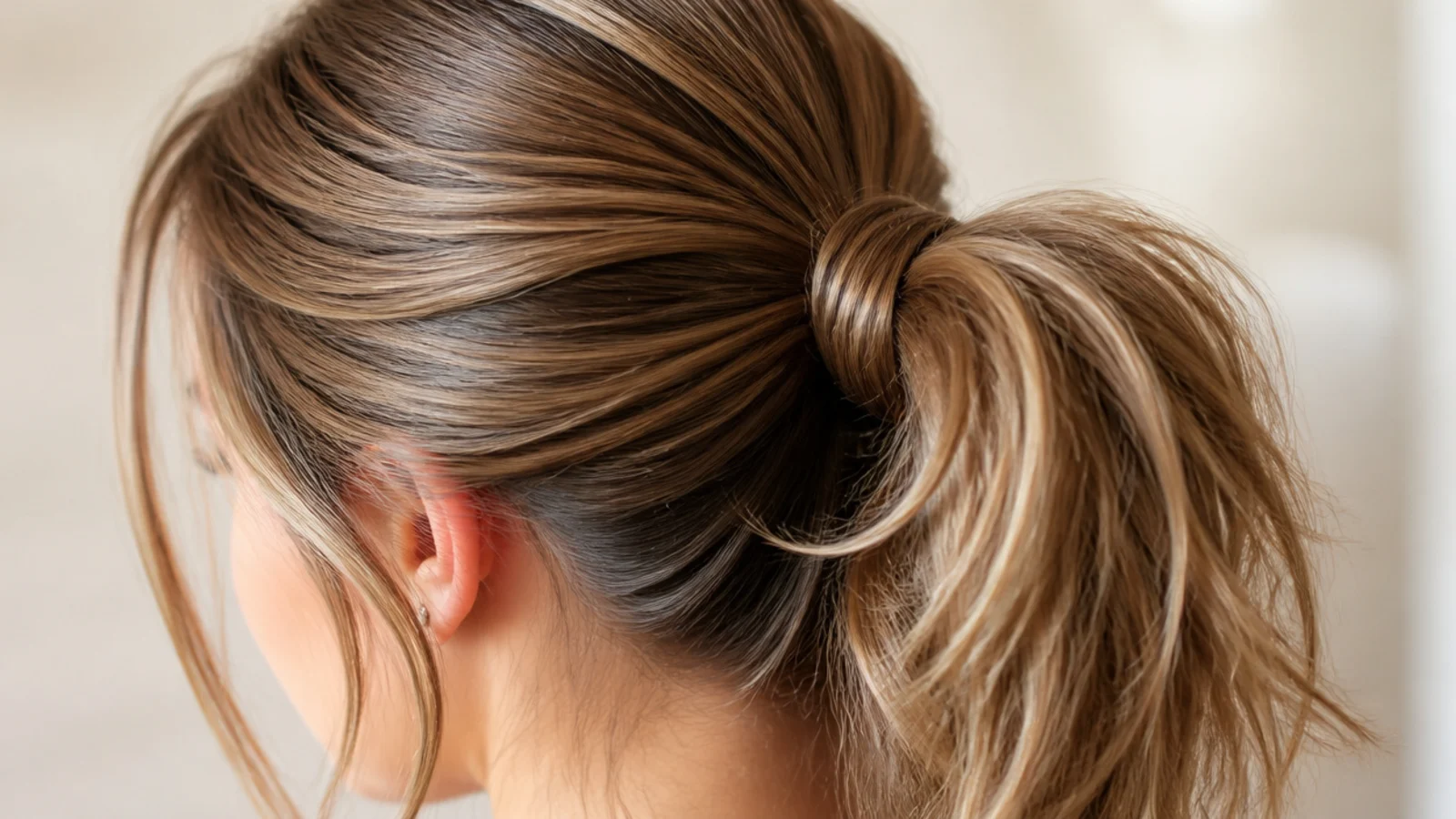
Smoothing the first two inches from the hairline and leaving the tail rough gives a polished edge without a blow dry. The eye takes the root as the finish standard of the whole style, so nothing past the band has to match it.
Final Thoughts
Medium hair sits at the awkward point where a tail is heavy enough to gather and too light to hang, so almost every fix here is about giving it either height or a bend. Tie higher than you would on long hair, curve the last two inches, and the stub problem stops being one.
The rest is grip. Powder at the base, texture through the mid lengths, and a band wide enough not to sink into a small gather. For the version that gathers rather than hangs see the messy bun tutorial for medium hair, and for day three see greasy hair ponytail ideas. More in Updos and Clips.