25 Graduation Hairstyles That Survive the Cap
Twenty-five graduation styles sorted by where they sit against the cap band, and the one rule that decides all of them. The mortarboard grips at your head's widest circumference, so anything built below that line survives the ceremony untouched.
In this article · 33
- Where the Cap Sits
- Updo Versus Down in Photos
- By Hair Length
- All Day Hold
- Morning Timing
- Cap Dent Fix
- The 25 Graduation Hairstyles
- 1. Low Chignon at the Nape
- 2. Half Up Curls
- 3. Sleek Low Ponytail
- 4. Braided Crown Halo
- 5. French Twist
- 6. Side Swept Waves
- 7. Messy Low Bun
- 8. Dutch Braid Half Up
- 9. Side Fishtail Braid
- 10. Textured Bob Waves
- 11. Pixie With Side Volume
- 12. Slicked Low Bun
- 13. Bubble Ponytail
- 14. Rope Twisted Bun
- 15. Half Up Bun
- 16. Knotless Braids in a Bun
- 17. Flat Twists Into a Low Bun
- 18. Low Curly Puff
- 19. Faux Locs Half Up
- 20. Hollywood Waves
- 21. Low Double Buns
- 22. Rope Braid
- 23. Sleek and Straight
- 24. Ribbon Low Ponytail
- 25. Pinned Back Curls
- Final Thoughts
Most graduation hairstyles are chosen from a photograph taken after the cap came off, which is why so many of them fail during the two hours it is on.
The cap grips at one line and one line only. The band inside the board sits at your head's widest circumference — around the occipital bone at the back, just above the ears at the sides. Nothing else touches your hair.
Everything below that line is free. A knot at the nape changes nothing about how the cap sits. The same knot at the crown lifts the board and tips it off the back of your head.
Where the Cap Sits
The band grips at your widest circumference. Around the occipital bone at the back, above the ears at the sides, across the forehead at the front. That ring is the only part of your head the cap actually contacts.
Inside the ring is contested, below it is free. Bulk inside the ring has to go somewhere, and it goes upward into the board. Bulk below the ring is invisible to the cap.
The board should sit level, front edge roughly two finger widths above the eyebrows. If it rides up at the back, something inside the ring is propping it there.
Test the fit the night before, on the style you plan to wear. A cap that fitted your loose hair will not fit the same head with a bun added to it.

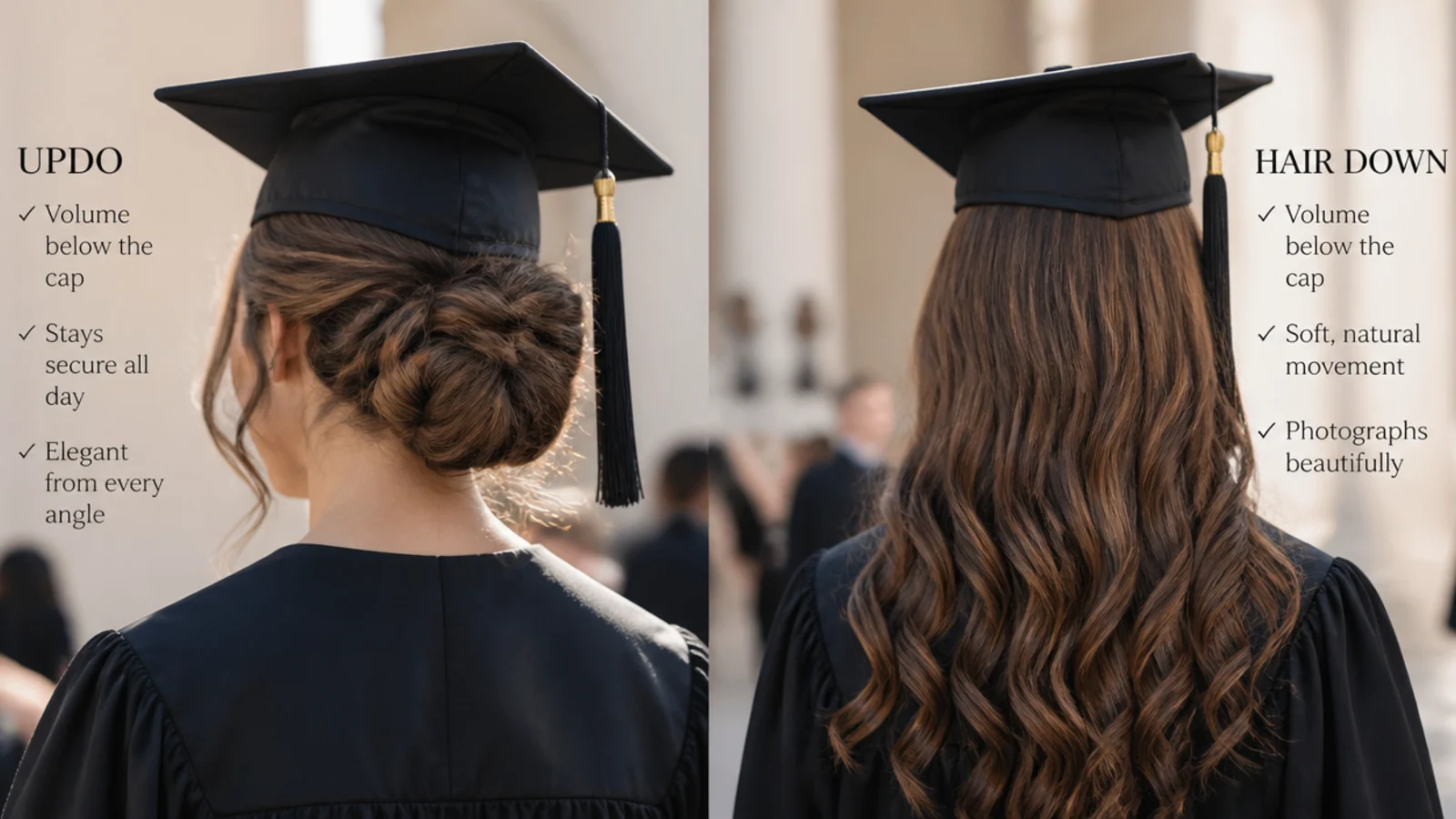
Updo Versus Down in Photos
The cap is on for a fraction of the day. A ceremony runs one to two hours. The photographs run from the moment it ends until you go home.
An updo looks identical before and after. There was nothing under the band to flatten, so there is no reveal to manage and no mirror to find.
Hair worn down carries a horizontal line across it. The band presses a flat ring in at roughly ear height, and in a photograph that ring reads as a shadow rather than as hair.
Choose by which half of the day matters more to you. Ceremony portraits favour an updo. Everything after favours whatever you actually wanted to wear, with a plan for the ring.
By Hair Length
Short hair has nothing for a pin to hold. A pixie needs a backcombed section or a small twist to give the cap's pins a bundle wide enough to bite, or they slide straight back out.
Mid length hair shows the dent worst. It ends near the band line, so the flattened ring lands in the middle of the visible hair instead of near the top of it.
Long hair carries weight the band has to fight. Gathered low, that weight hangs below the ring. Gathered high, it levers against the board all afternoon.
Textured hair loses volume rather than pattern. Compression flattens the crown and the curl returns underneath, so the repair is lifting at the root, not restyling the length.

All Day Hold
Set on bone dry hair. Water breaks the hydrogen bonds that hold hair in shape and they reform as it dries. Damp hair under a band dries into a flat ring you cannot brush out afterwards.
Let any set cool completely before the cap goes on. A curl holds its shape only once it has cooled. Compress it while it is still warm and it sets flat instead.
Spray the perimeter and the ends, not the crown. Firm hold on the crown gives the band a rigid shell to crack, and that crease is sharper than the one soft hair would have taken.
Grip beats hold at the roots. A dusting of dry shampoo or a light texture spray adds friction between strands so the crown resists collapsing, rather than being glued flat and then crushed.
Morning Timing
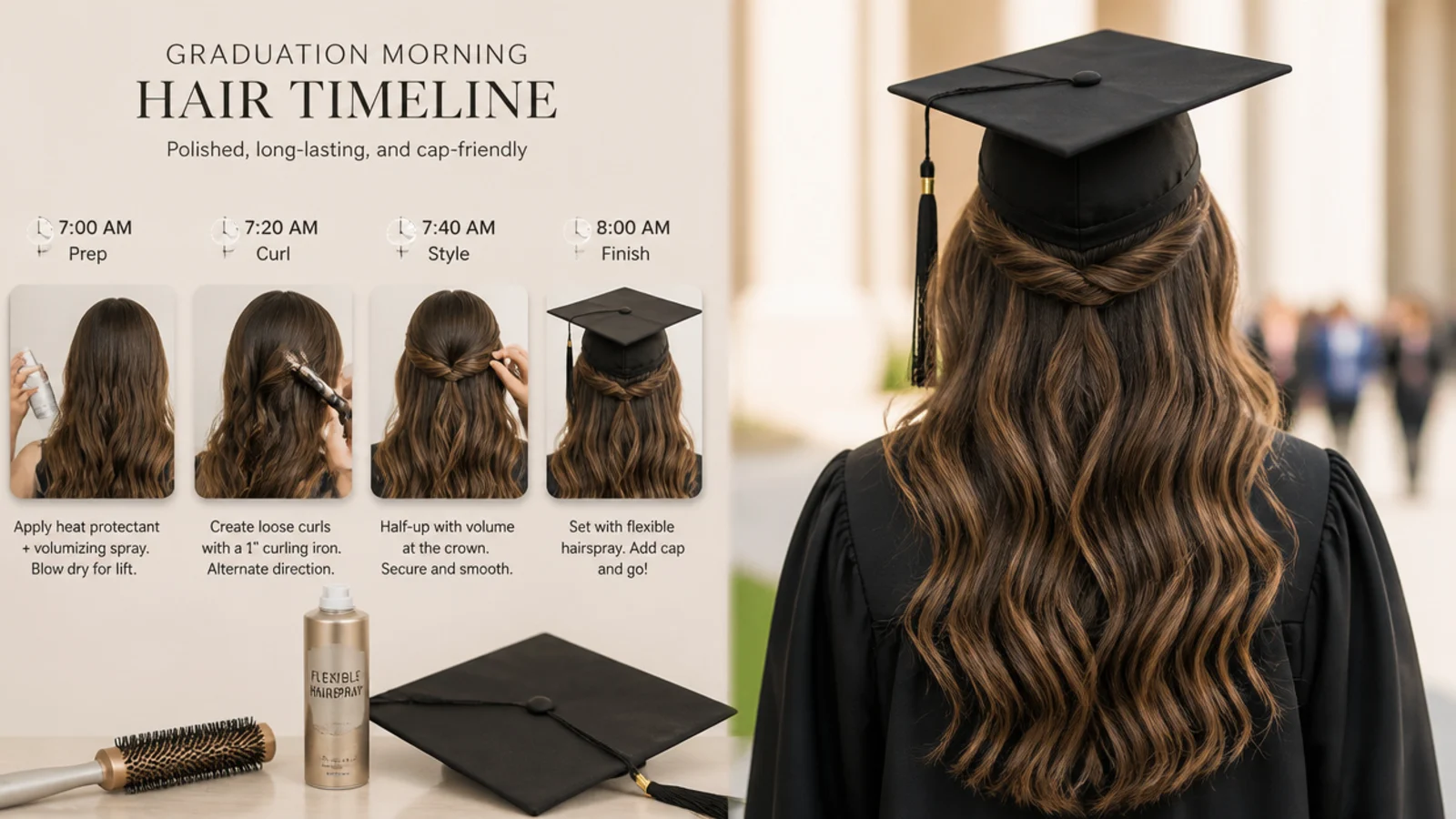
Wash the night before, not the morning of. Freshly washed hair is slippery and pins travel in it. A day of natural oil is what gives a pin something to hold against.
Finish the style ninety minutes before you leave. That is enough time for it to cool, settle and drop, and enough time to redo one section if it drops badly.
Put the cap on at the last possible moment. Every extra minute under the band is another minute of compression, and the depth of the dent scales with the time.
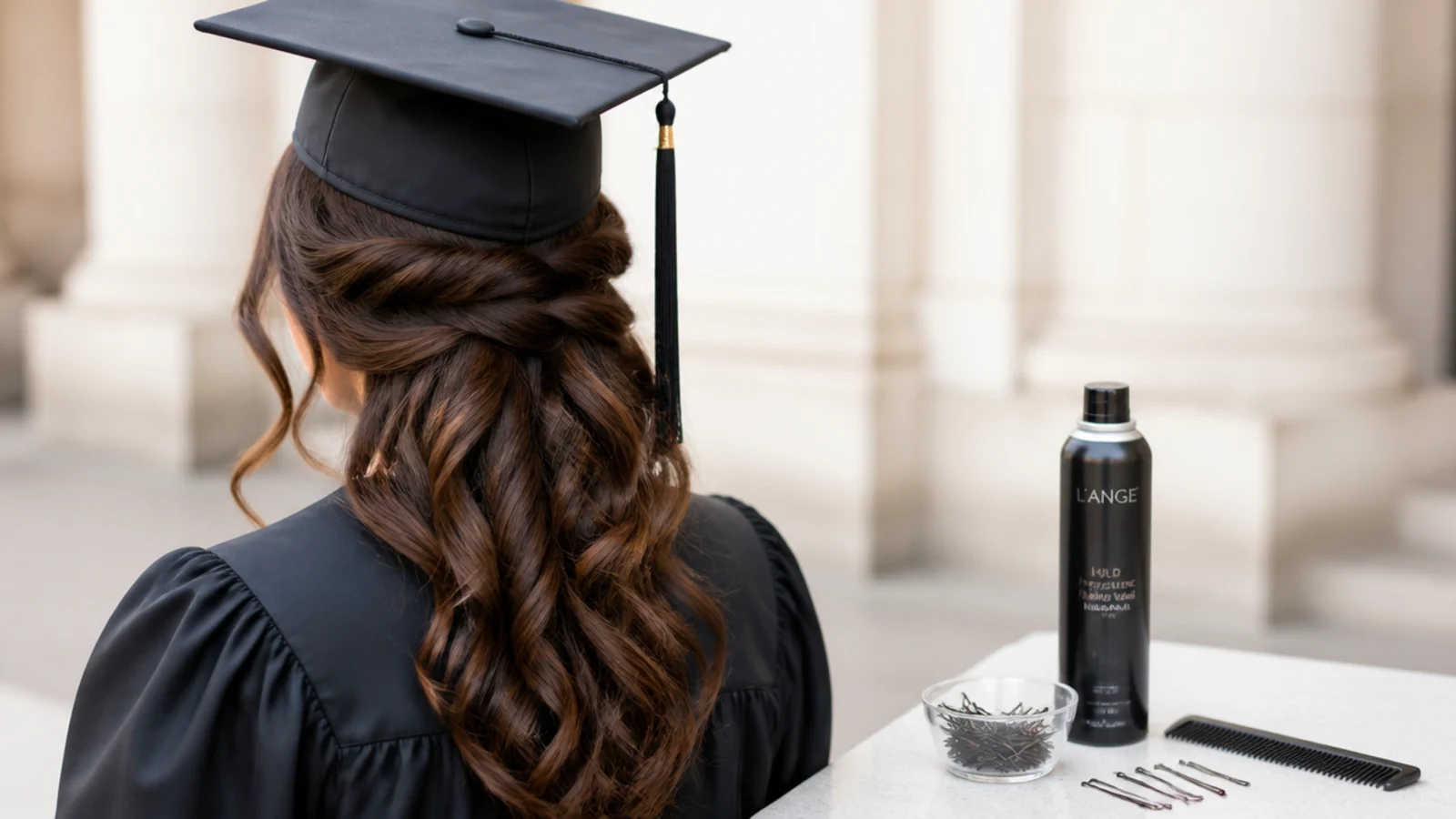
Carry six pins, a small mirror and a travel hairspray. All three fit in a pocket, and the pins are the ones that matter — caps loosen long before styles do.
Cap Dent Fix
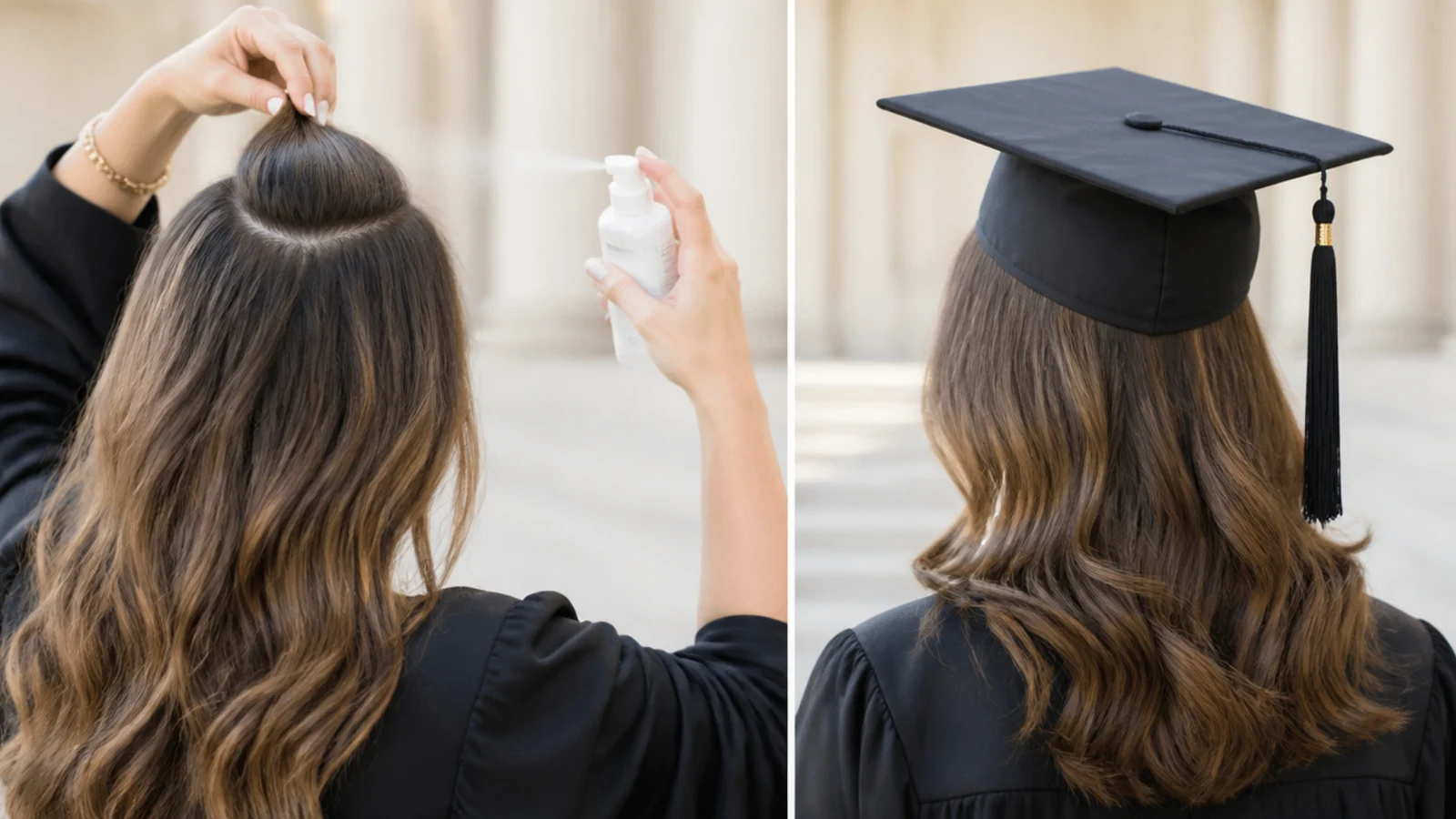
Re-wet only the band line. A fine mist along the flattened ring, not over the whole head, so you are not resetting hair that is still doing its job.
Lift at the root and dry against the dent. Warm air, fingers pushing the root in the opposite direction to the way the band pressed it.
Then let it cool in position. This is the step people skip and the one that actually sets the shape, because the bonds reform as the hair cools rather than while it is hot.
On textured hair, put the water into the root only. The pattern below is intact. Only crown volume is missing, and root water plus a shake at the scalp brings it back.
The 25 Graduation Hairstyles
1. Low Chignon at the Nape
The knot sits below the occipital bone, so the band grips bare skull curve rather than hair, and the cap fits exactly as it did with your hair loose. Its pinned base also gives the cap's own pins somewhere solid to enter, which is why this is the default recommendation everywhere.
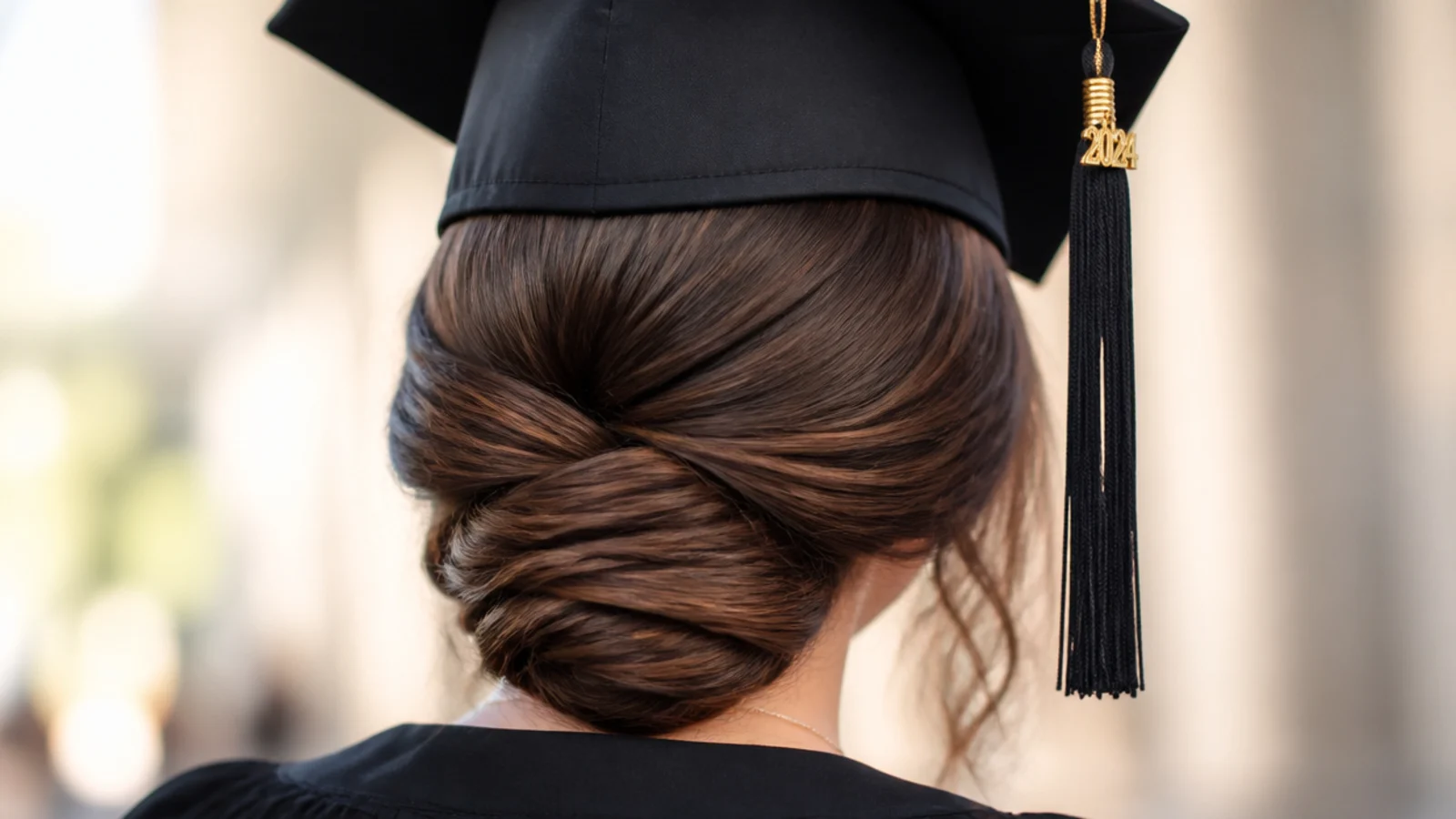
2. Half Up Curls
The gathered section has to be secured below the crown, because anything fastened above ear height lands inside the band ring and pushes the back of the board up. The curls left hanging are untouched, since they sit entirely below the line the cap grips.

3. Sleek Low Ponytail
No bulk anywhere the band travels, so the cap sits identically with the style in and out. The tail's weight also pulls the surface hair downwards and away from the band, which is why the ring it leaves is shallower than on hair worn loose.

4. Braided Crown Halo
A braid wrapped around the head sits in exactly the place the band wants, so it only works if the braid is pressed flat to the scalp. Flat, it raises the whole circumference evenly and the cap simply sits a few millimetres higher without tilting.

5. French Twist
The roll is a vertical column against the back of the head, so it adds height at the nape rather than width at the band line. Its pins run in a single seam, which gives the cap's pins a continuous bank of anchored hair to bite into anywhere along the back.
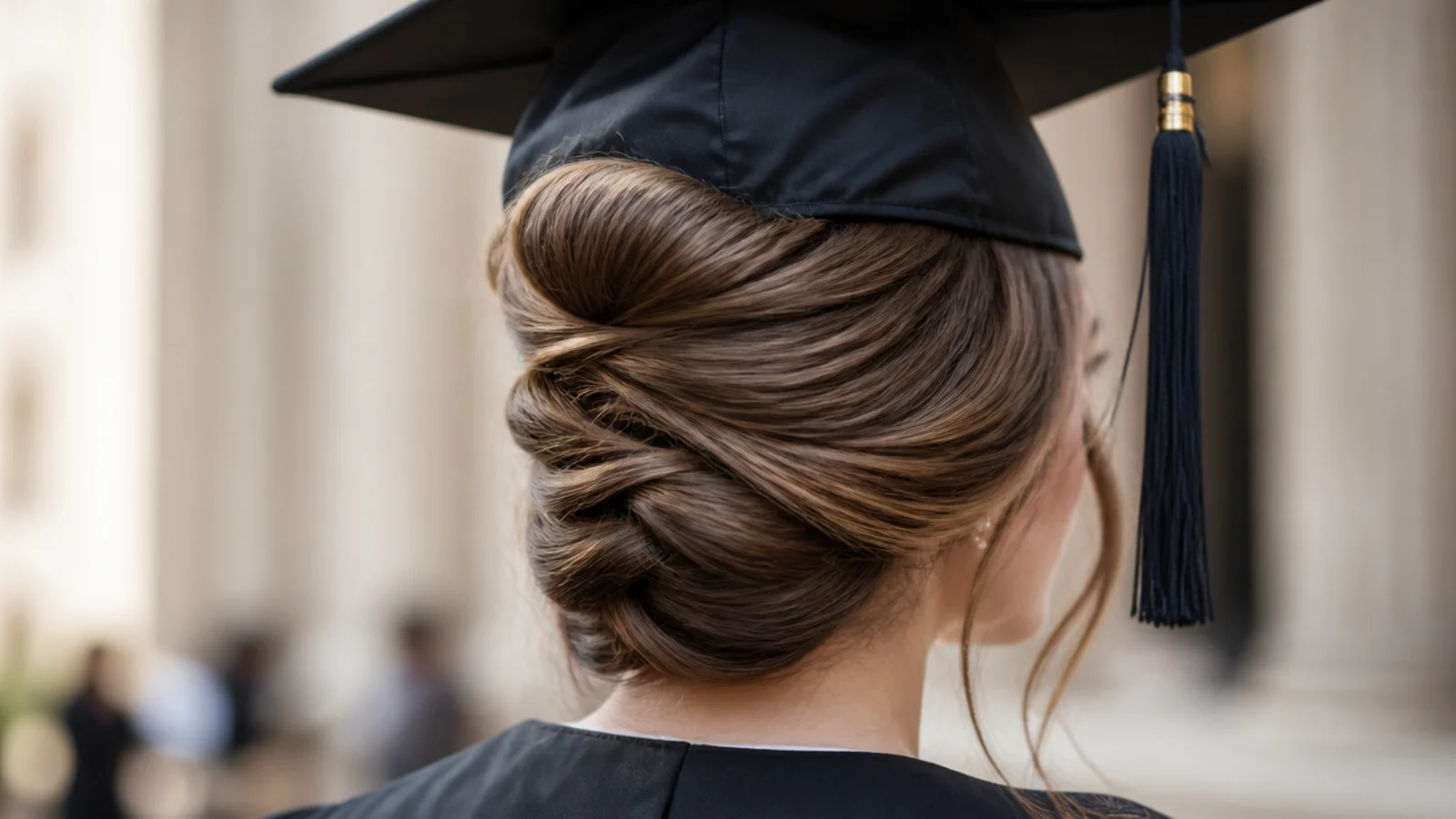
6. Side Swept Waves
Sweeping the mass over one shoulder empties the back of the head, so the band contacts hair only at the front and sides. The ring it does leave runs across a section you can hide simply by sweeping to the other side once the cap is off.

7. Messy Low Bun
Deliberately loose texture rebounds from compression better than a smooth surface, because the strands are not lying parallel and there is air between them to re-expand. Pin the base tightly and leave the surface loose, so what the band presses is the part designed to look pressed.

8. Dutch Braid Half Up
A Dutch braid crosses each section underneath, so it sits proud of the scalp, where a French braid crosses over and sinks in. Proud is a problem under a band, so angle the braid low behind the ear and it clears the ring completely.

9. Side Fishtail Braid
The two strand weave takes a thin piece from each outer edge every pass, so it builds a flatter, denser rope than a three strand braid does. Worn forward over one shoulder it sits below the band from the first crossing down.

10. Textured Bob Waves
A bob ends above the shoulder, so most of its length sits inside the band's radius and takes the compression directly. Set it as a soft bend rather than a defined curl, because a bend that gets flattened still reads as a bend and a crushed curl reads as damage.

11. Pixie With Side Volume
The height sits forward of the temples, ahead of where the band grips hardest, so the cap presses the flattest part of the cut. Rebuild it with fingers rather than a brush afterwards, since brushing pulls the lift straight back out.
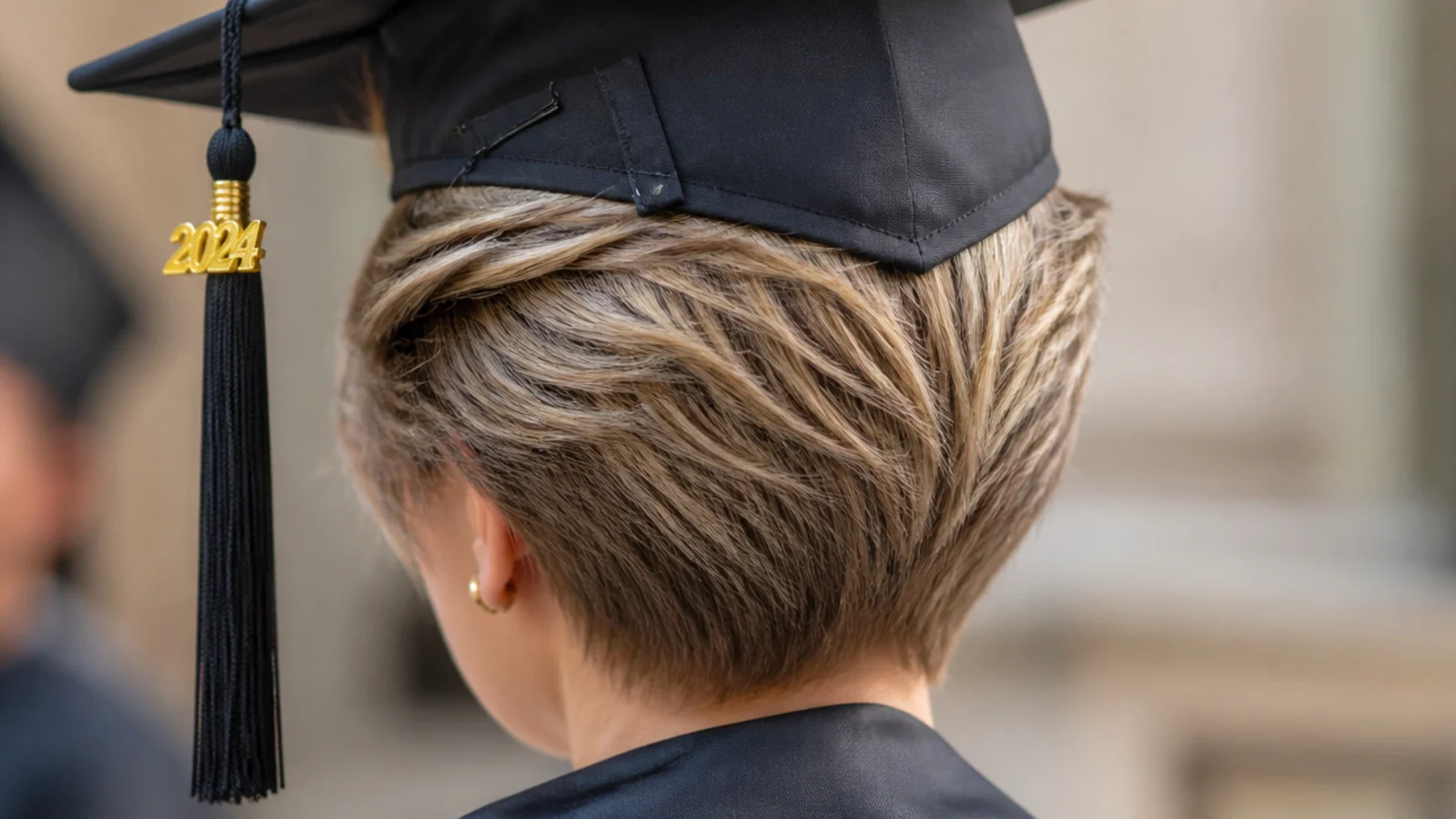
12. Slicked Low Bun
Gel dries into a shell that keeps its shape through the compression, since there is no loose surface for the band to disturb in the first place. The only real risk is applying it wet and then trapping it under a cap, where it cannot dry and sets flat instead.
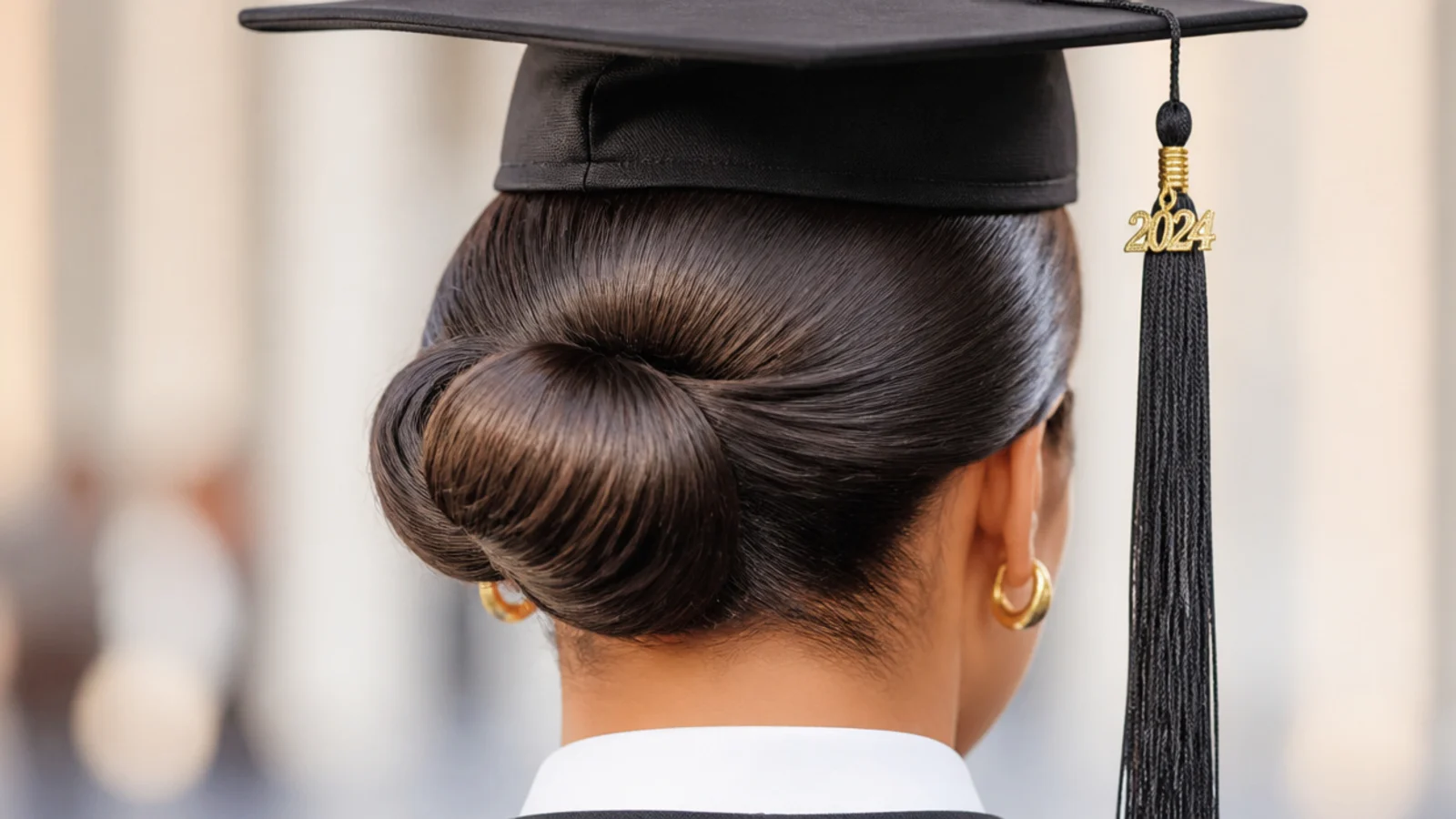
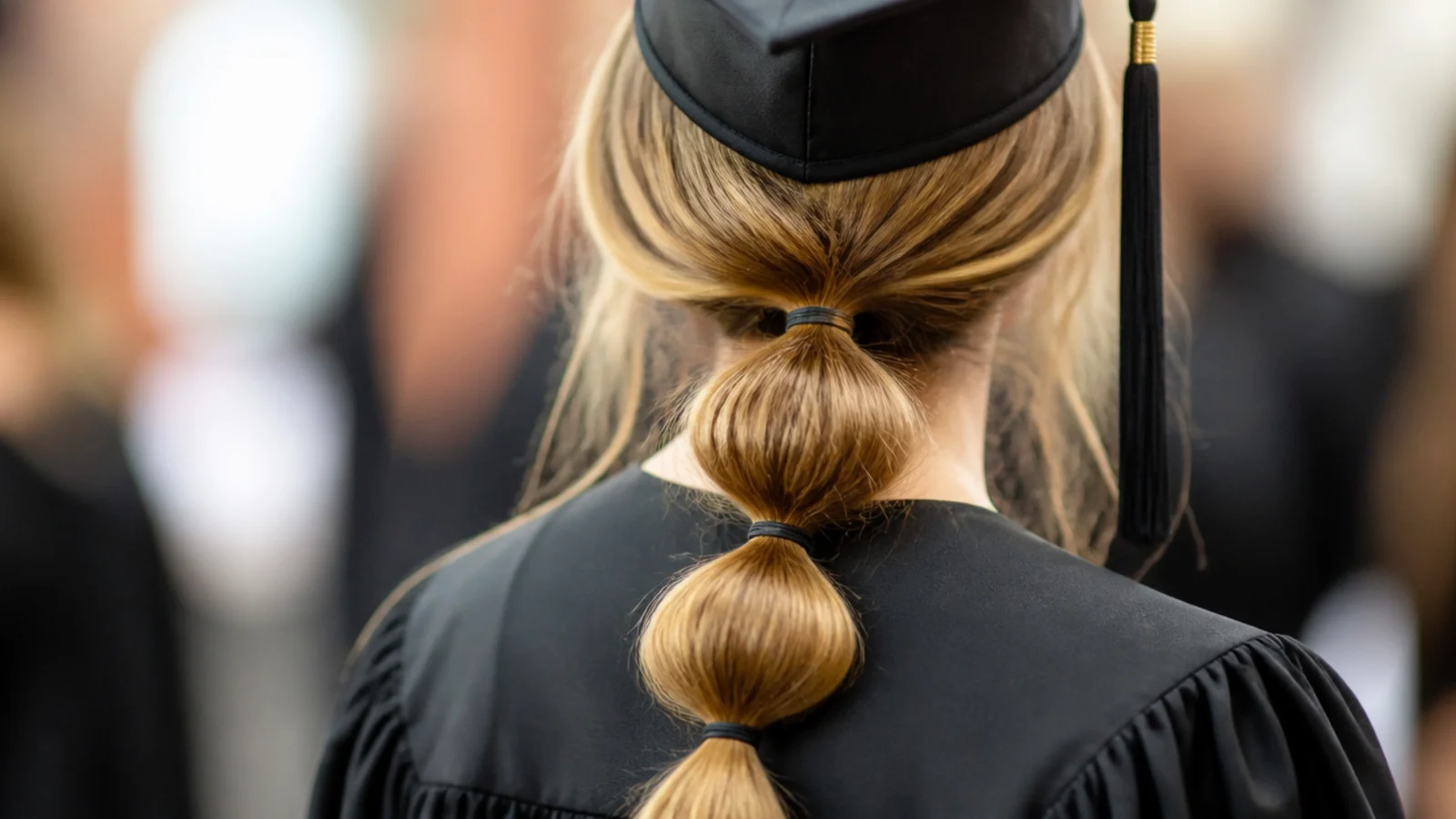
13. Bubble Ponytail
Spacing elastics down the tail divides the weight between several anchor points instead of loading it all onto the first one. Set the top elastic below the band line, or the highest bubble gets squashed into an oval and the rhythm of the whole thing breaks.
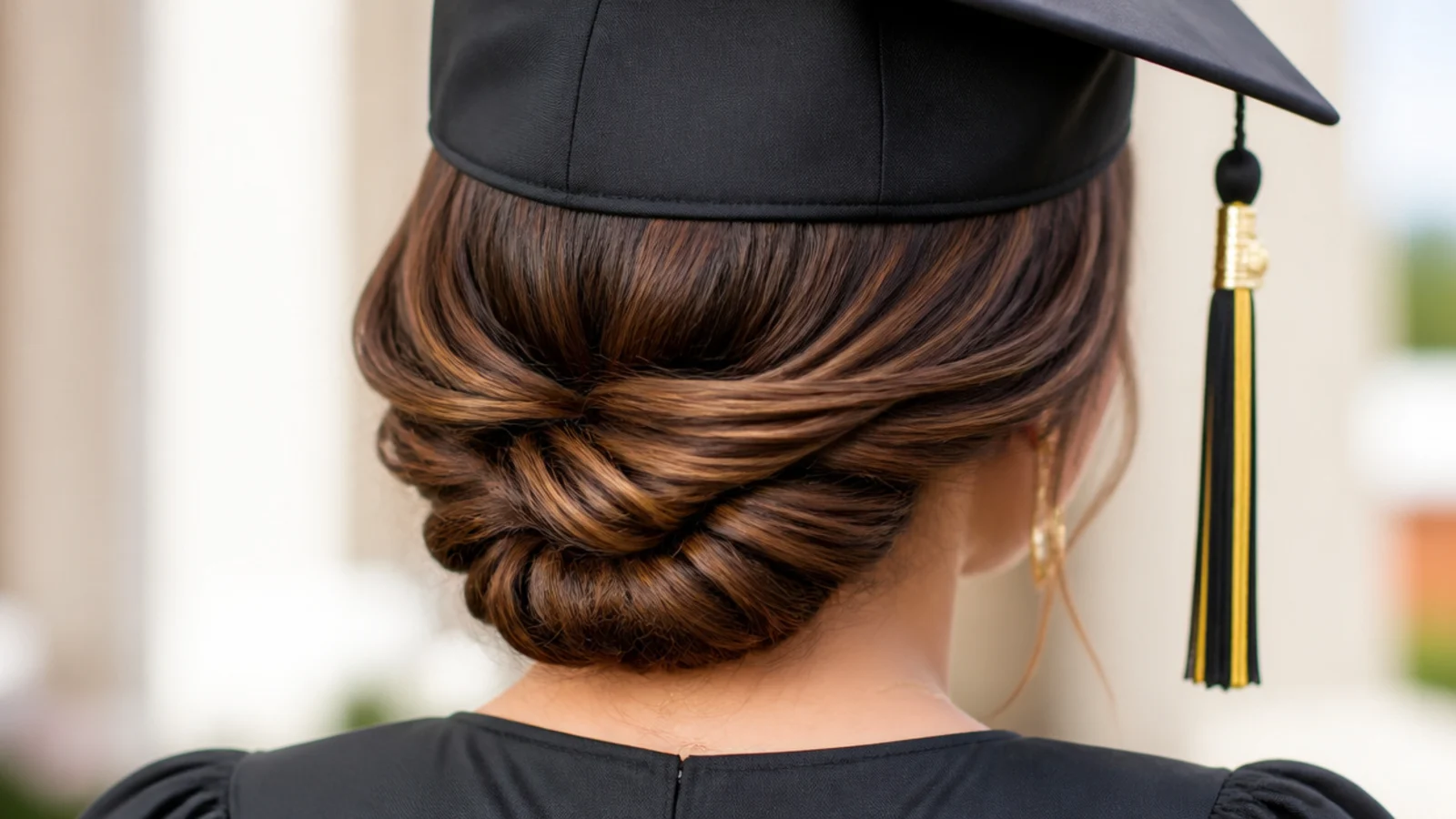
14. Rope Twisted Bun
Two strands twisted in one direction and wound together in the other lock against each other, so the coil holds with far fewer pins than a smooth bun needs. Fewer pins under a cap means fewer hard points pressing into your scalp for two hours.
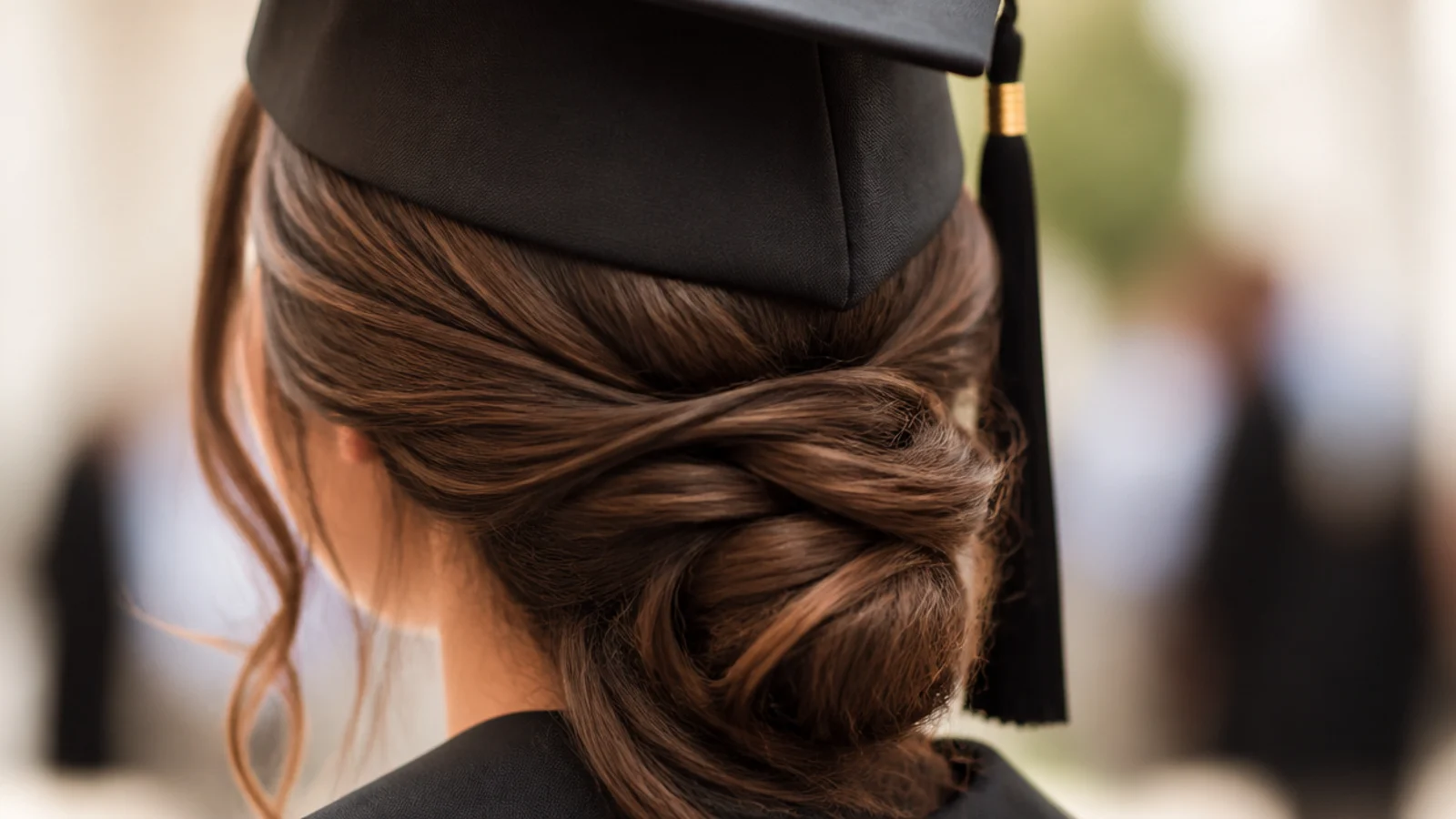
15. Half Up Bun
The knot has to clear the band, and the largest one that does sits at the lower edge of the occipital bone rather than at the crown. A crown knot lands directly under the centre of the board and lifts it, which is the single most common graduation cap failure.
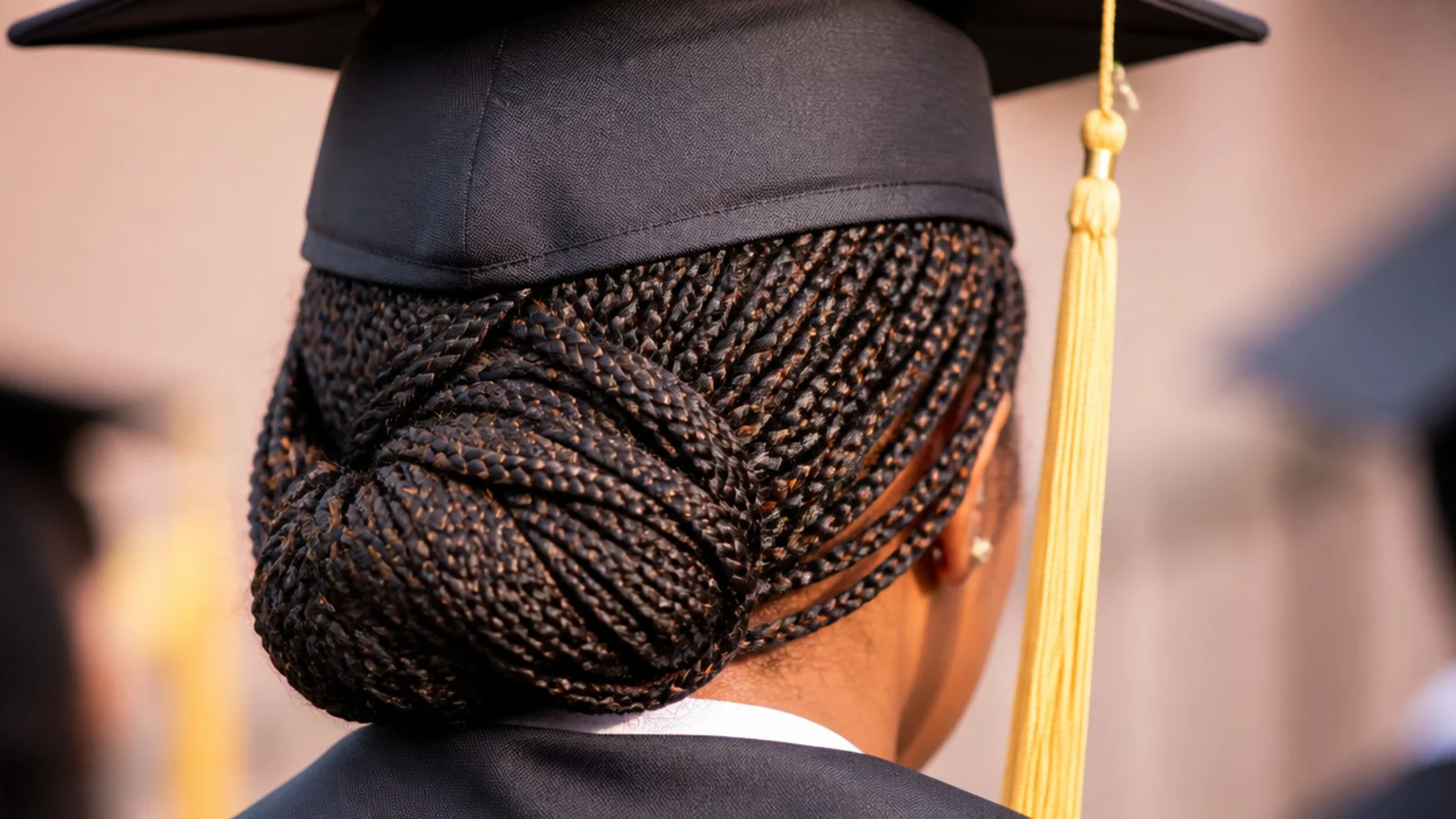
16. Knotless Braids in a Bun
Knotless braids start with your own hair and feed the extension in gradually, so there is no hard knot at the root to press into your scalp when the band tightens over it. Gather them low and the weight hangs clear of the cap entirely.
17. Flat Twists Into a Low Bun
Flat twists lie against the scalp the way cornrows do, adding almost no height anywhere the band passes, so the cap fits as though your head were bare. All of the bulk ends up gathered at the nape, which is the one place it costs nothing.

18. Low Curly Puff
Gathering the volume below the band is the only way volume survives a cap at all, because anything above the line is compressed for the full ceremony. A tie at the nape keeps the crown flat by design, so there is nothing to be disappointed about when the cap comes off.

19. Faux Locs Half Up
Locs are heavy, and a half up gathered high spends the whole ceremony pulling backwards against a board that is already trying to slide that way. Take the gather low and the same weight works with the band instead of against it.

20. Hollywood Waves
The S shape is pinned into place and set as it cools, so it survives a cap only if it is completely cool and completely dry before the band goes near it. Warm hair under compression simply re-sets in the compressed position.

21. Low Double Buns
Two small knots spread the same bulk over a wider and lower area than one large knot does, so neither is tall enough to reach the band. They also balance the weight left to right, which stops the cap being pulled to one side.
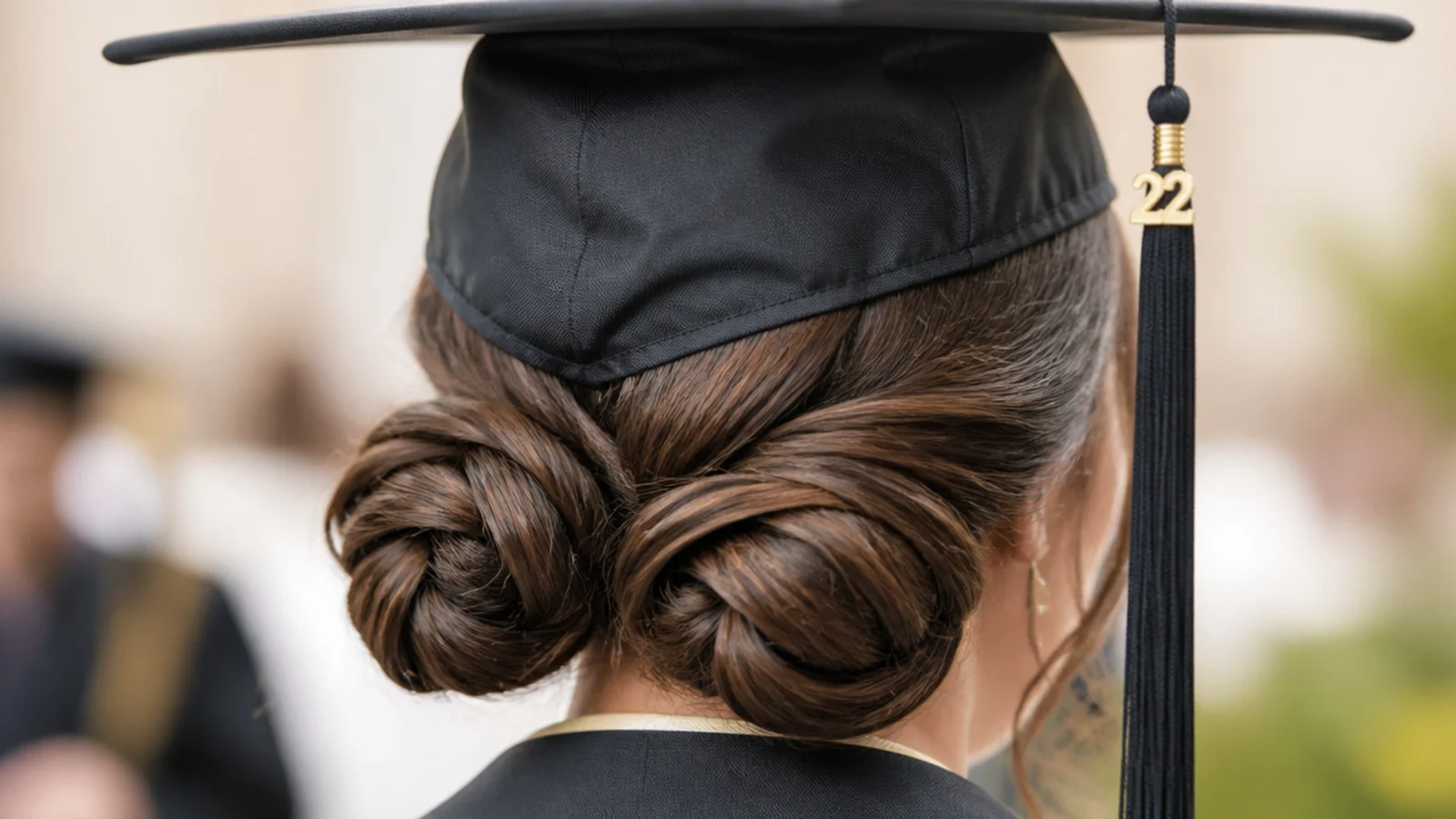
22. Rope Braid
A two strand rope carries tension along its entire length, so it does not loosen from the top down the way a three strand braid does when a cap tugs at the crown. It also finishes at roughly the same thickness it started, which photographs cleanly.

23. Sleek and Straight
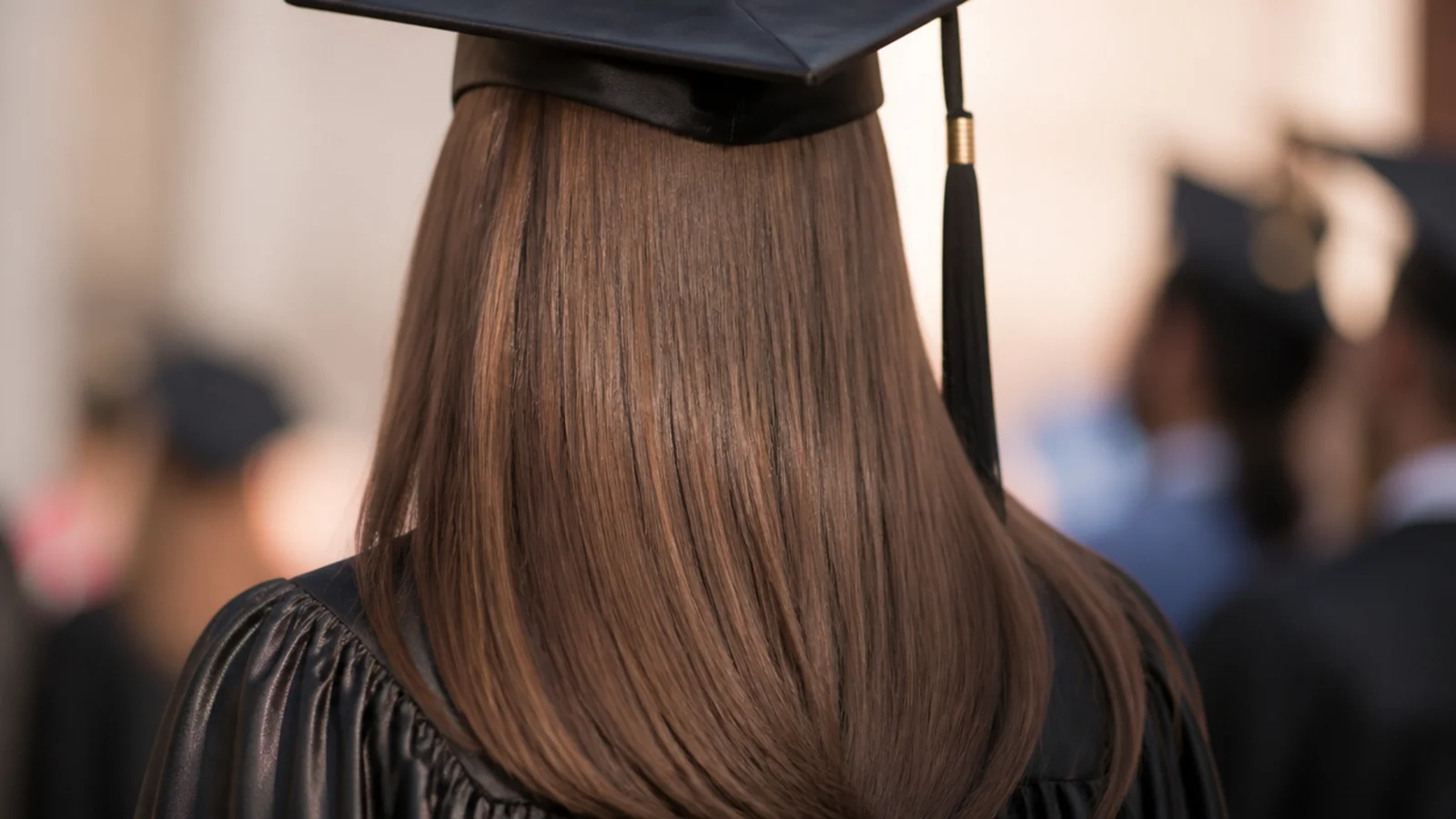
Straight hair takes the deepest ring of any texture, because the strands lie parallel with no bend to spring back against once the pressure comes off. Plan on one pass with an iron along the band line afterwards, and iron before the ceremony rather than after it.
24. Ribbon Low Ponytail
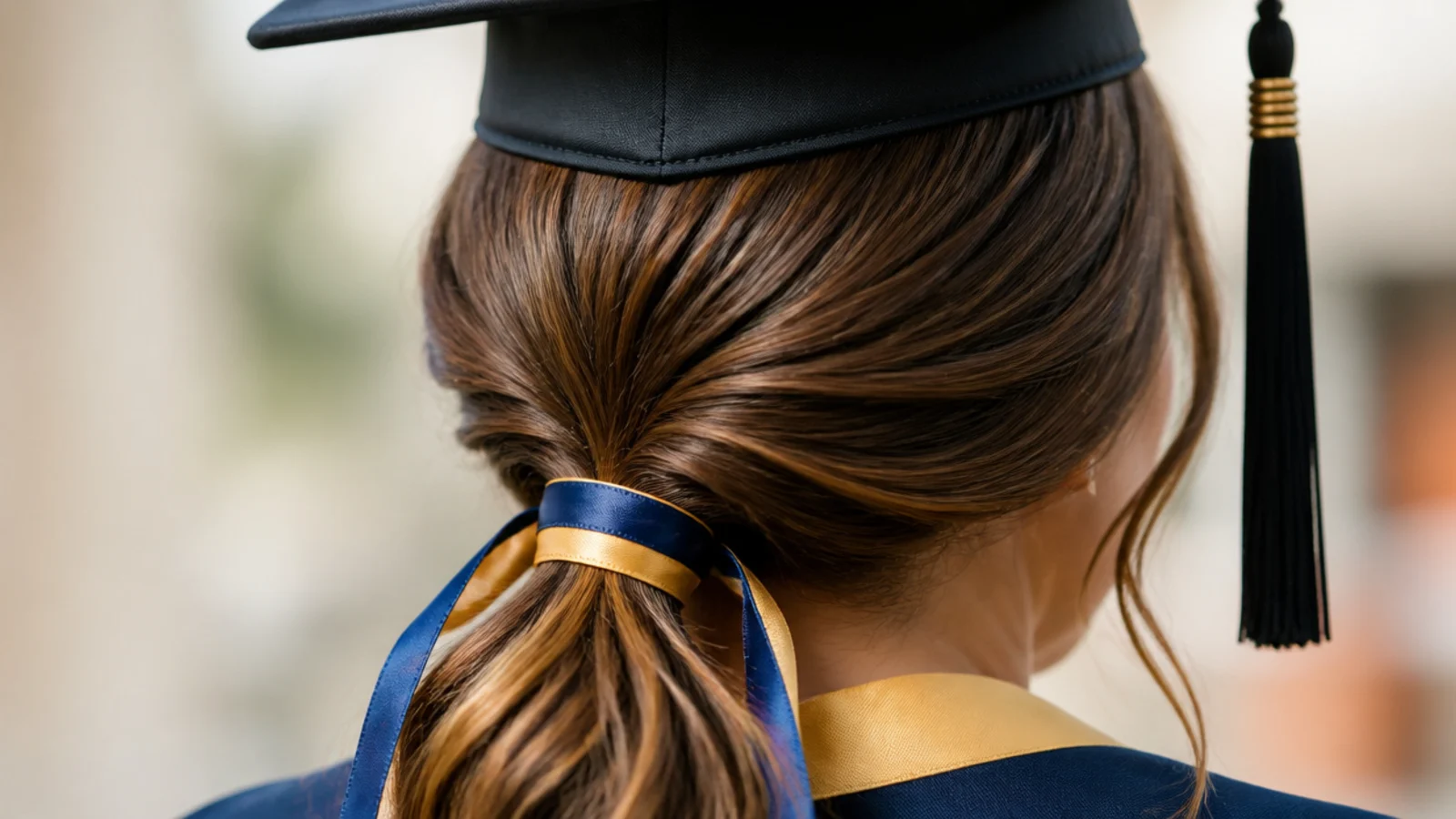
A ribbon tied over the elastic adds no thickness anywhere the band travels, and it reads at the distance a stage photograph is taken from, which a bare elastic does not. Tie the bow after the cap is on so it never gets crushed under the board.
25. Pinned Back Curls
Pinning the front sections back at the sides clears the hair out of the band's path and gives the cap's own pins two anchored bundles to enter. Cross each pair of pins in an X, because two crossed pins hold by friction against each other and a single pin holds by nothing.

Final Thoughts
Put a finger on the widest part of your skull, run it around your head, and you have the entire decision in front of you. Everything above that circle gets compressed for the length of the ceremony and everything below it comes out exactly as it went in, which is why nearly every style that works on a graduation morning is a low one.
The rest is timing. Wash the night before so pins have grip, set on dry hair, let it cool fully, and put the cap on last. More in Occasion Hair. See also the braided version and the easy version.
Frequently asked questions
Related posts
See all posts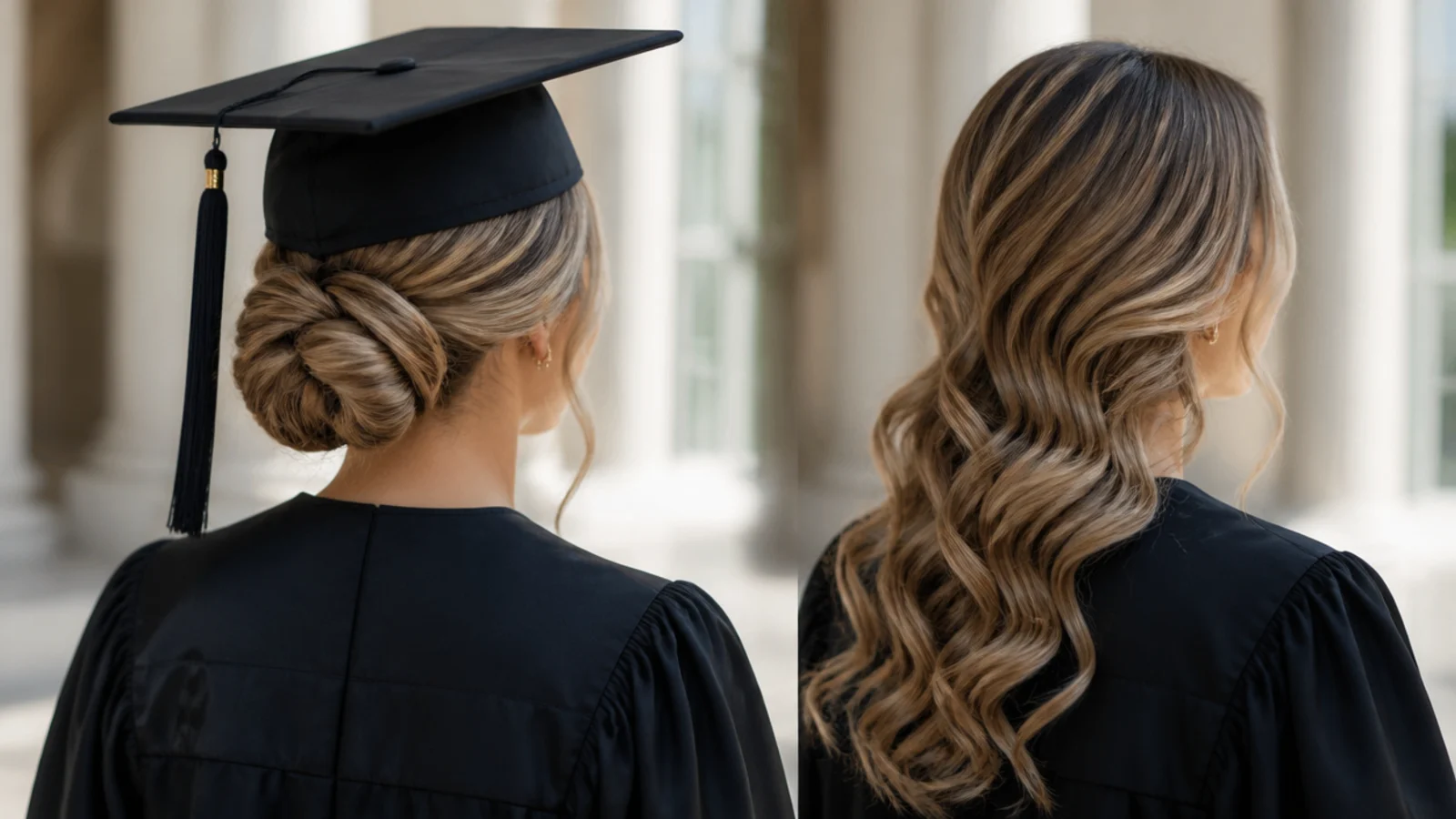
15 Graduation Hair Ideas for the Updo Versus Down Decision
Read more
15 Straight Hair Wedding Looks to Save
Read more
20 Gorgeous Prom Looks for Straight Hair
Read more