15 Easy Graduation Hairstyles You Can Do in Ten Minutes
Fifteen easy graduation styles, chosen for the thing most guides forget — the cap comes off for the photographs. A style has to look right in two states, worn under a flat board and again with a dent across the crown.
In this article · 23
- Where the Cap Sits
- Easy Styles by Hair Length
- Styling It Yourself
- Morning Timing
- All Day Hold
- The Cap Off Dent Fix
- The 15 Easy Styles
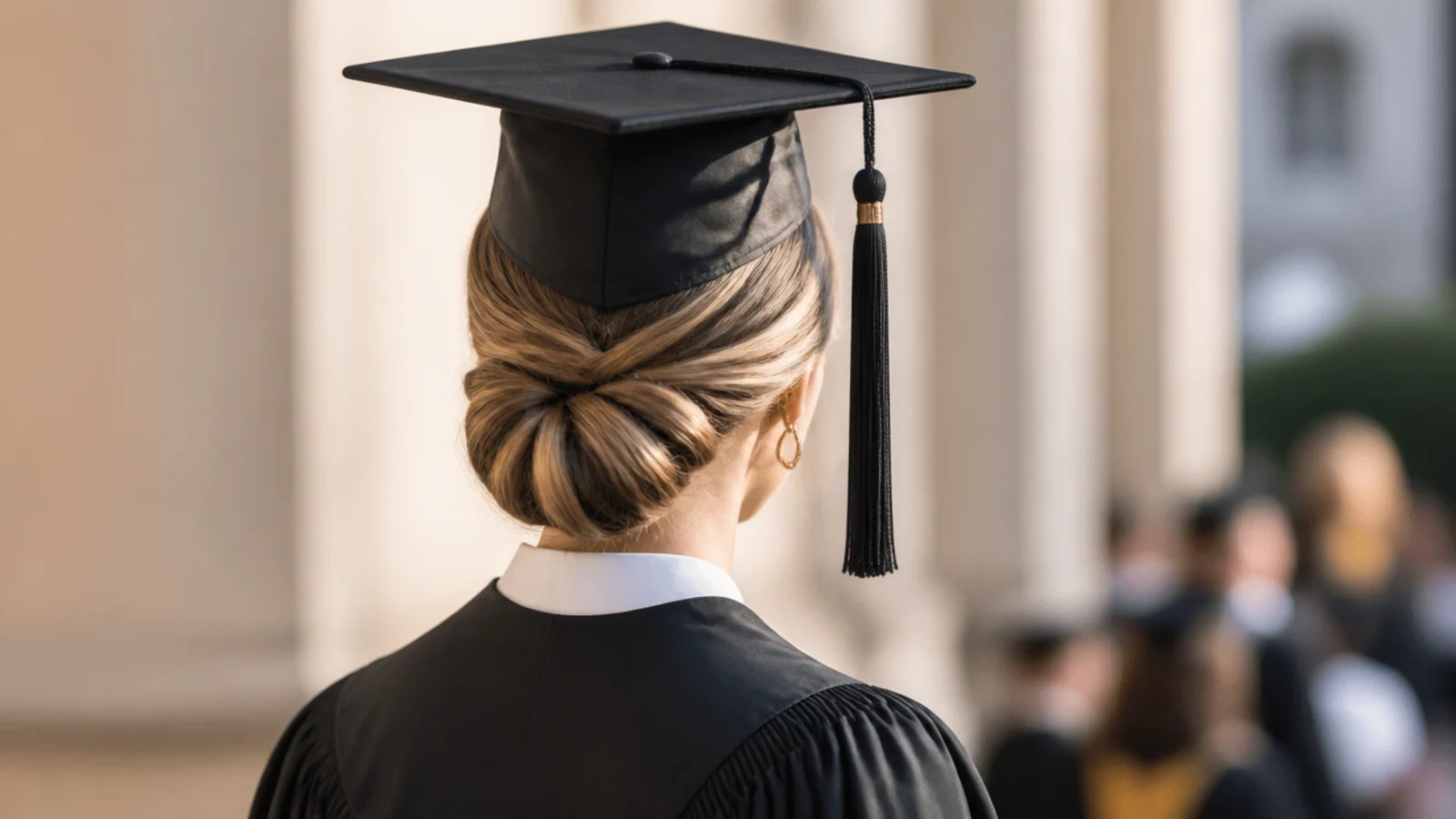
- 1. Low Twisted Bun
- 2. Sleek Low Ponytail
- 3. Overnight Waves
- 4. Bubble Half Up
- 5. Side Swept Waves
- 6. Tucked Faux Bob
- 7. Dutch Crown Braid
- 8. Rope Twist Half Up
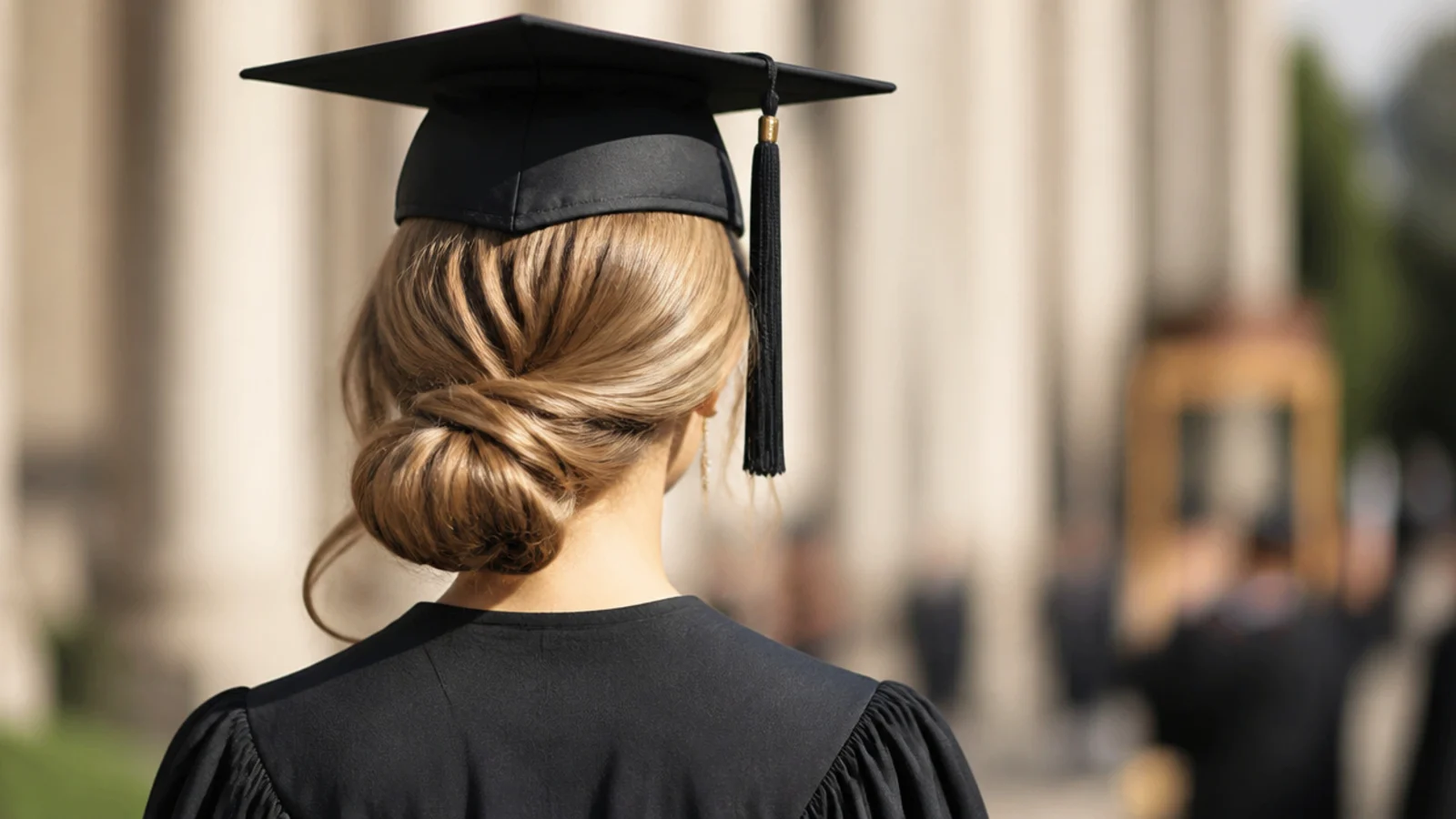
- 9. Low Chignon
- 10. Textured Low Ponytail
- 11. Claw Clip Twist
- 12. Flat Twist Low Puff
- 13. Two Low Braids
- 14. Deep Side Part Wave
- 15. Slicked Low Bun
- Final Thoughts
The cap gets photographed for ten minutes and comes off for the rest of the day, which means the style has to work twice and most people only plan for once.
Build everything below the cap line. A mortarboard grips the crown and presses flat whatever is under it, so volume above that line is volume you are going to lose.
A dent only shows against volume. Smooth crowns have nothing to crush and textured ones hide the crease, so the styles that survive best are the ones at either end of that range.
Where the Cap Sits
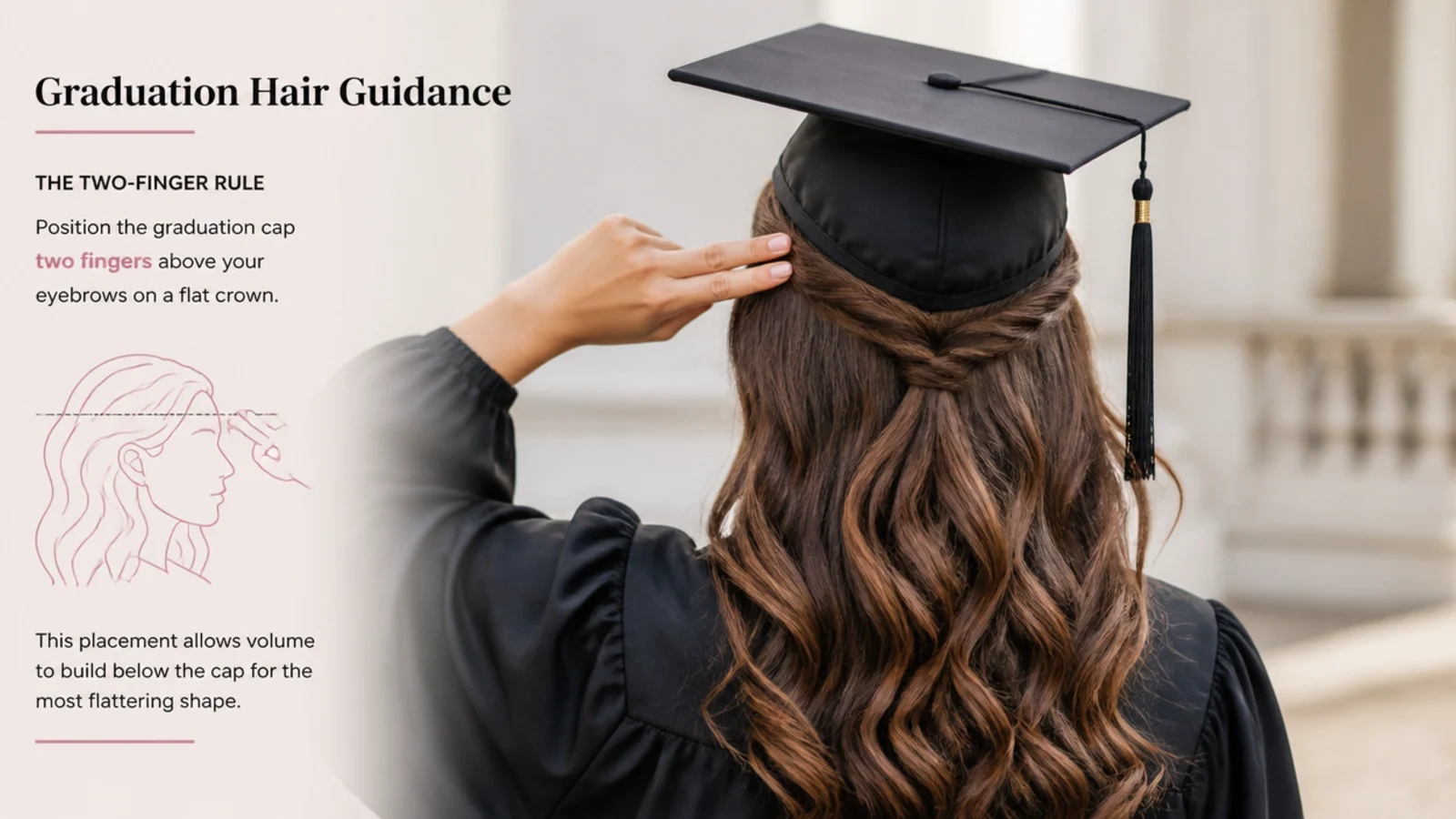
A mortarboard is a flat board on a skullcap. The skullcap grips the crown and does the holding, and the board is just what everyone sees.
The front edge sits about an inch above the eyebrows. That line is the boundary. In front of it your hair is on display, behind it your hair is under pressure.
Level, not tipped back. A board worn tilted slides all afternoon, and the usual cause of tilt is a bump of hair under one edge.
The tassel side is set by your school. Which side it starts on and whether it moves during the ceremony varies, so check the instructions rather than guessing.
Anything at the crown lifts the whole board. A high ponytail or a top knot does not just get flattened, it changes where the cap sits and stops it gripping.
Easy Styles by Hair Length
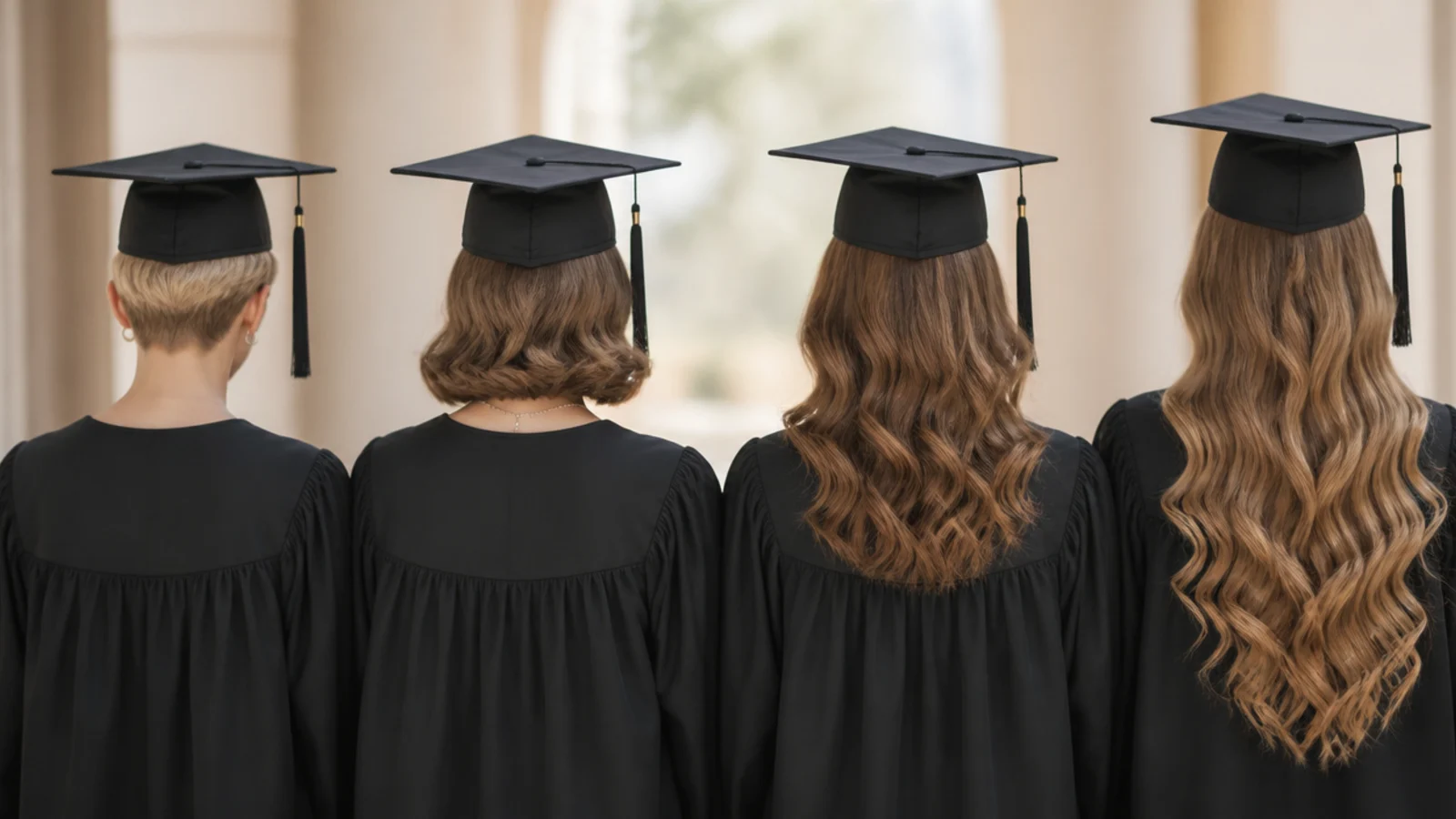
Short and chin length. Pin the sides back and leave the rest. There is no length to gather, so the cap sits directly on the cut and the fix afterwards is finger styling.
Shoulder length. The most workable length for a ten minute style. A low twist, a half up, or a claw clip all hold without extensions or padding.
Mid back and longer. The problem becomes weight and the gown collar, since long loose hair tangles against fabric all day. Contain the ends even if you leave the top loose.
Fine hair. Grip is the constraint rather than length. Second day hair, or a mist of dry shampoo through the roots, is what stops the style sliding.
Thick hair. You will need more pins than you expect and no padding at all, because the density supplies its own shape.
Styling It Yourself
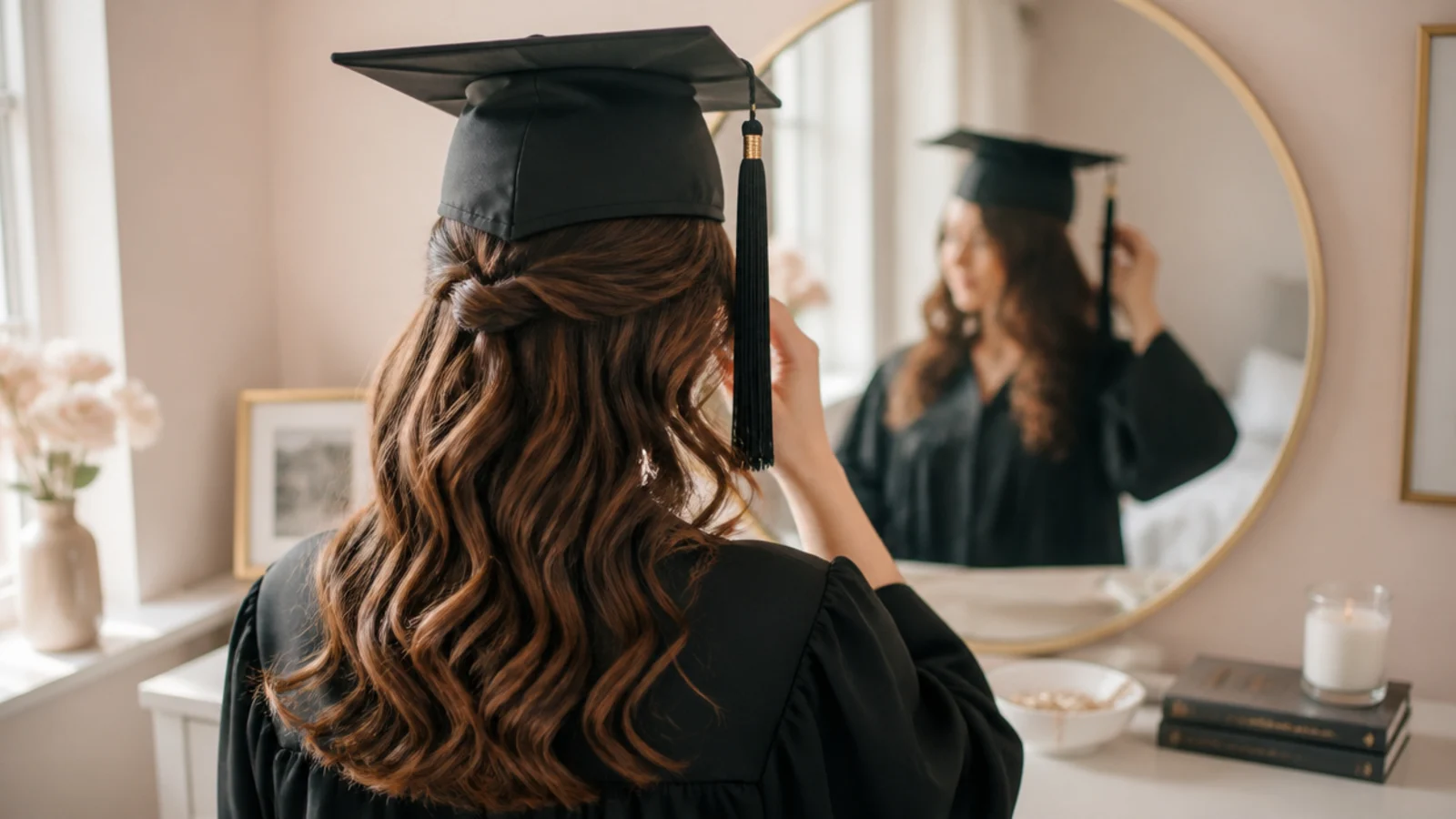
Everything at the nape is easy, everything at the crown is not. You can reach the back of your neck and see it in a hand mirror. You cannot see the top of your own head at all.
Work in front of a mirror with a second mirror behind you. A phone propped on a shelf in video mode does the same job for free.
Choose styles with no symmetry requirement. A deliberately messy side bun is forgiving. Two matched braids are not, and the difference shows in every photograph.
Do the front section last. It is the part everyone sees, and hands are steadiest before your arms have been above your head for ten minutes.
Photograph the back before you leave. It is the only way you will know what you are fixing later.
Morning Timing
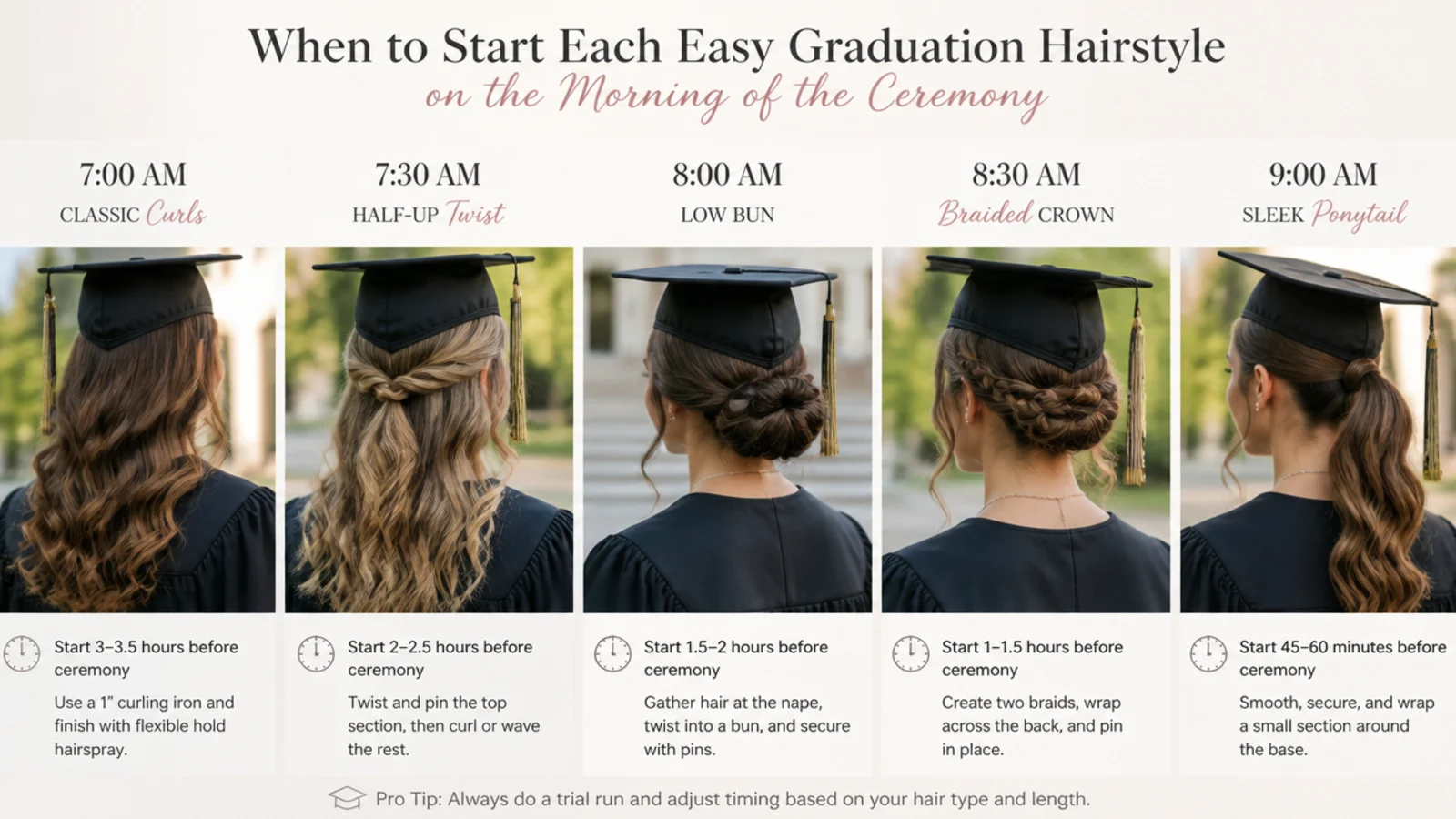
Wash the night before. Clean hair has no grip and no residual texture, so pins slide and elastics creep for the whole day.
Style at least an hour before you leave. Everything drops a little as it settles, and you want that to happen at home rather than during the ceremony.
Put the cap on at home for five minutes. This is the whole rehearsal. Take it off, look, and adjust the style rather than the cap.
Dress after the hair is finished. Pulling a gown over a finished updo undoes more work than any other single moment of the morning.
Leave the last ten minutes empty. Something always needs one more pin.
All Day Hold
Grip beats product. Second day hair or a light dry shampoo mist gives sections something to hold onto, and no amount of spray fixes hair that is too clean to grip.
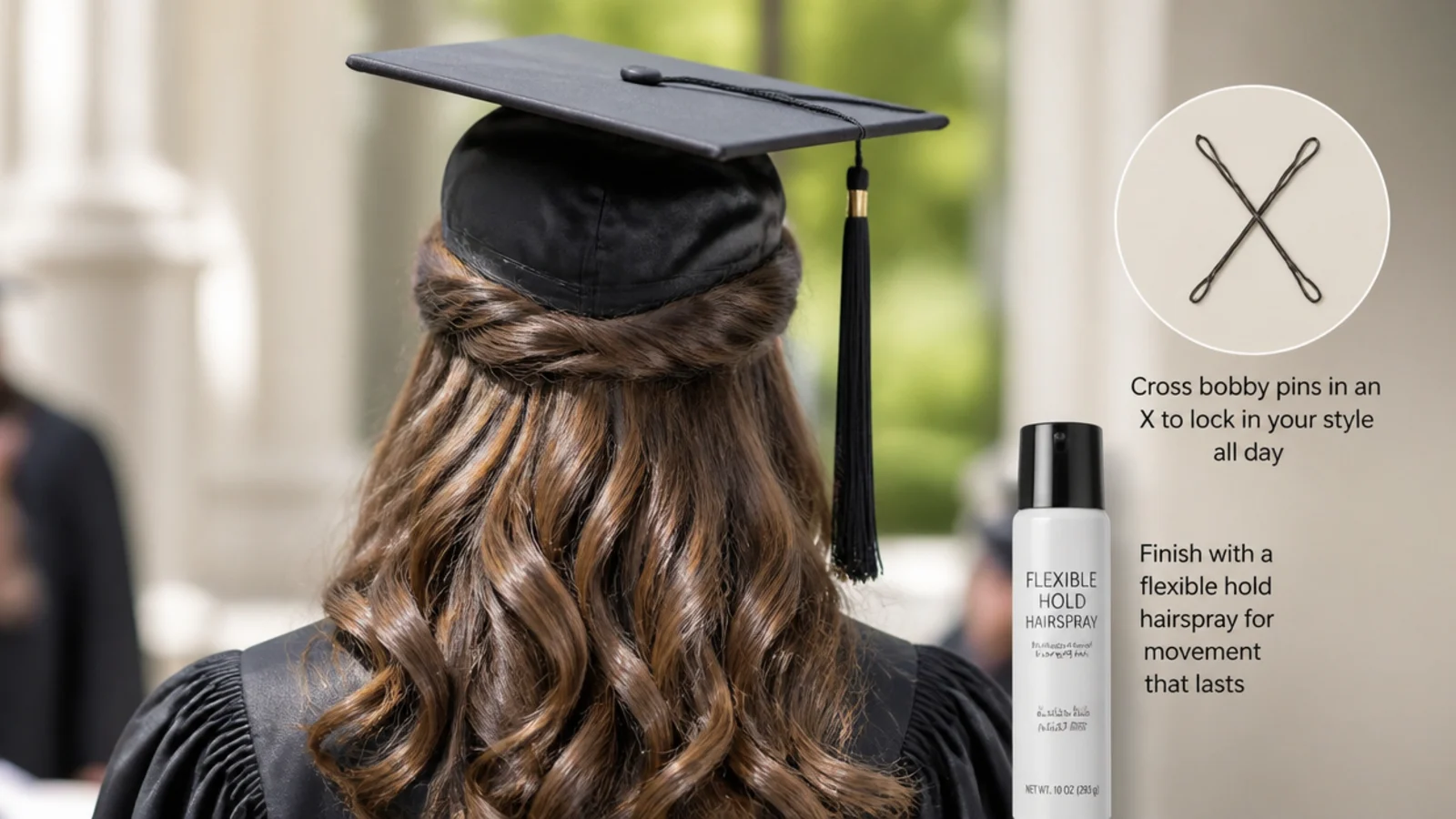
Cross your pins in an X. Two crossed pins resist movement in two directions, where a single pin only stops movement across itself.
Wavy side of the pin against the head. The ridged edge is what grips the hair. Sliding it in flat side down halves the hold for nothing.
Flexible hold rather than firm. A rigid cast cracks under a cap and leaves visible flakes on a dark gown.
Anchor to hair that is anchored. A pin driven into loose length holds nothing, so every pin needs to pass through hair that is already secured to the head.
The Cap Off Dent Fix
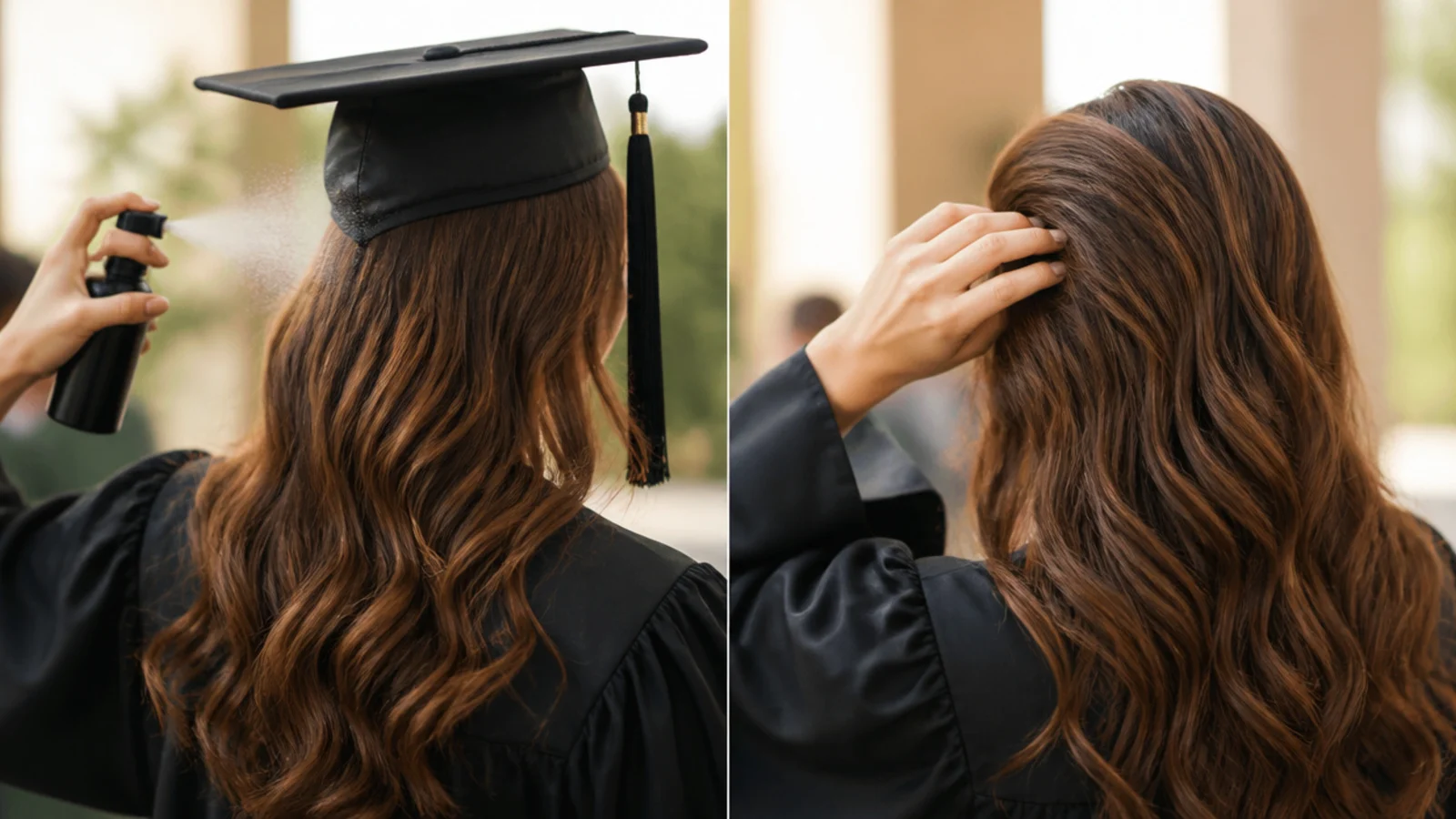
Expect a line across the crown. Two hours of even pressure leaves one, and knowing it is coming is what stops it being a crisis.
Lift at the roots, not at the length. Fingers under the roots and a shake is enough. Brushing the length just redistributes the flatness.
A cool blast fixes it fastest. Lift the section, warm it briefly, then let it cool in the lifted position, because hair sets its shape as it cools rather than while it is warm.
Dry shampoo at the roots adds volume by texture. It gives the flattened hair friction against itself so it stops lying down.
Or make the dent the parting. A crease across the crown can be brushed into a deliberate line and stops reading as damage entirely.
The 15 Easy Styles
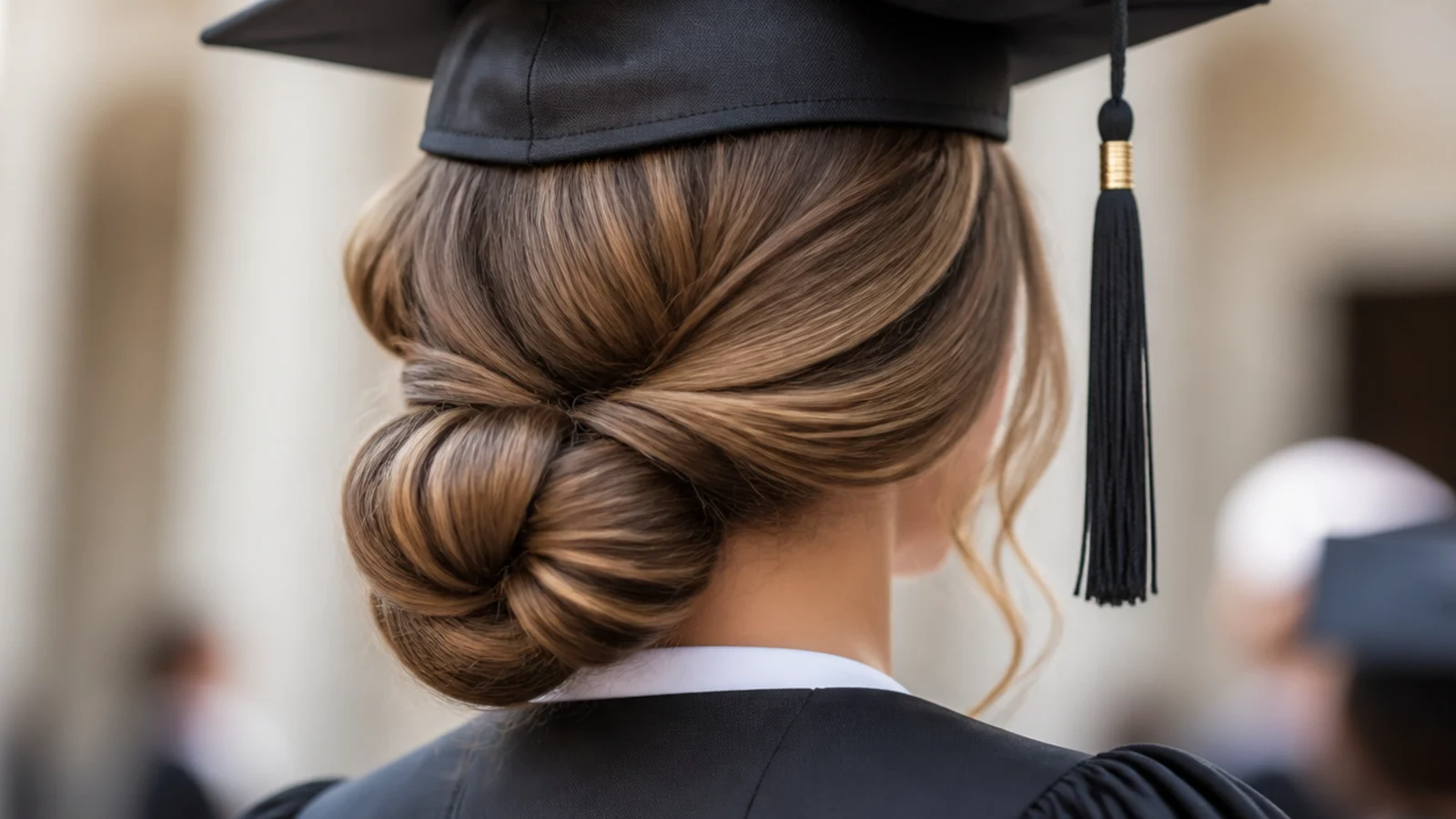
1. Low Twisted Bun
Two sections twisted around each other hold their own tension before a single pin goes in, so the pins are only locating the coil rather than carrying it. That is why this survives a cap and a gown collar when a gathered bun of the same size slides loose.
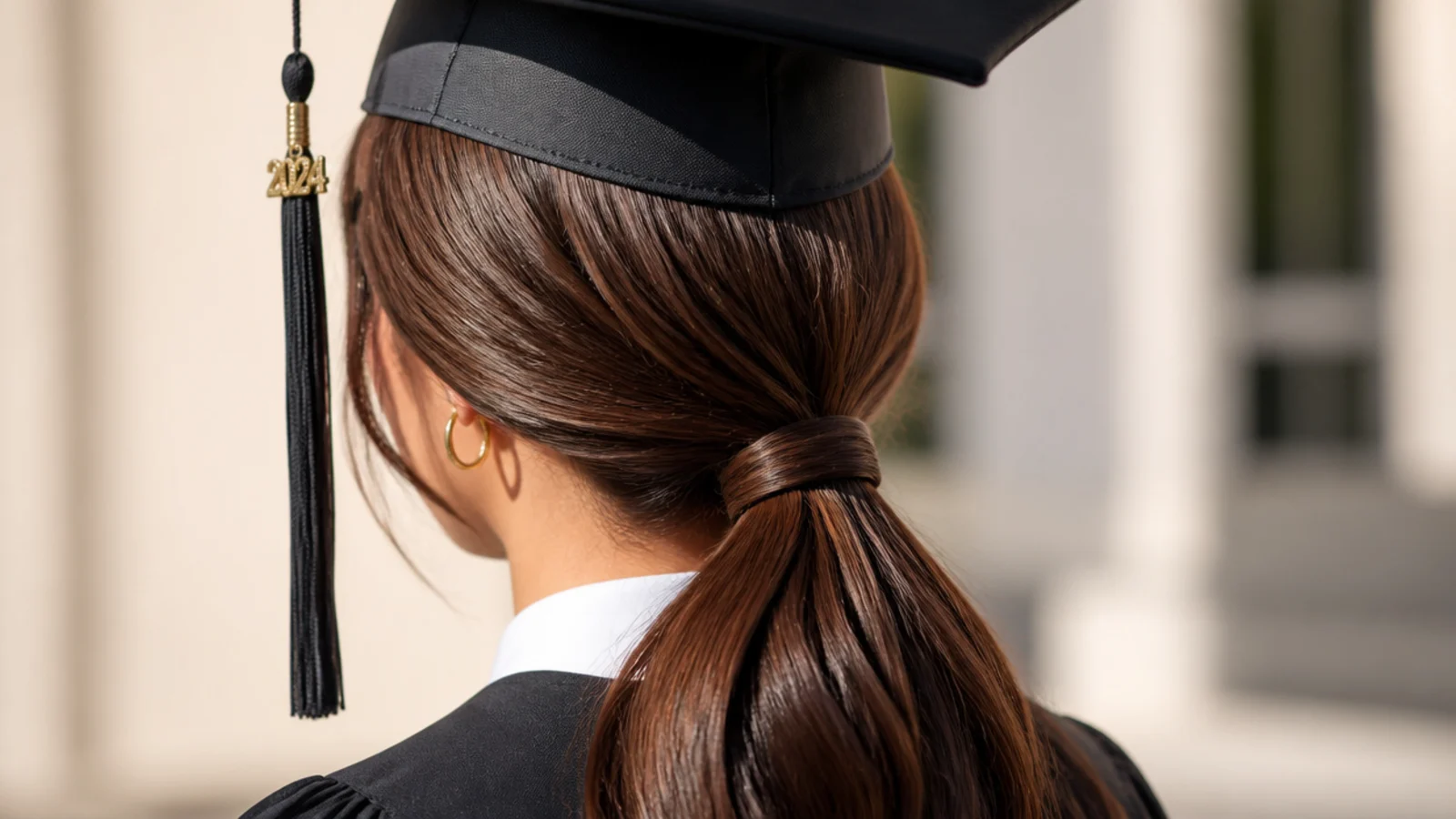
2. Sleek Low Ponytail
Nothing sits above the cap line, so there is no volume for the board to crush and nothing to fix afterwards. A gel or wax pressed along the hairline keeps the front surface flat under the band, which is the only part of this style the cap actually touches.
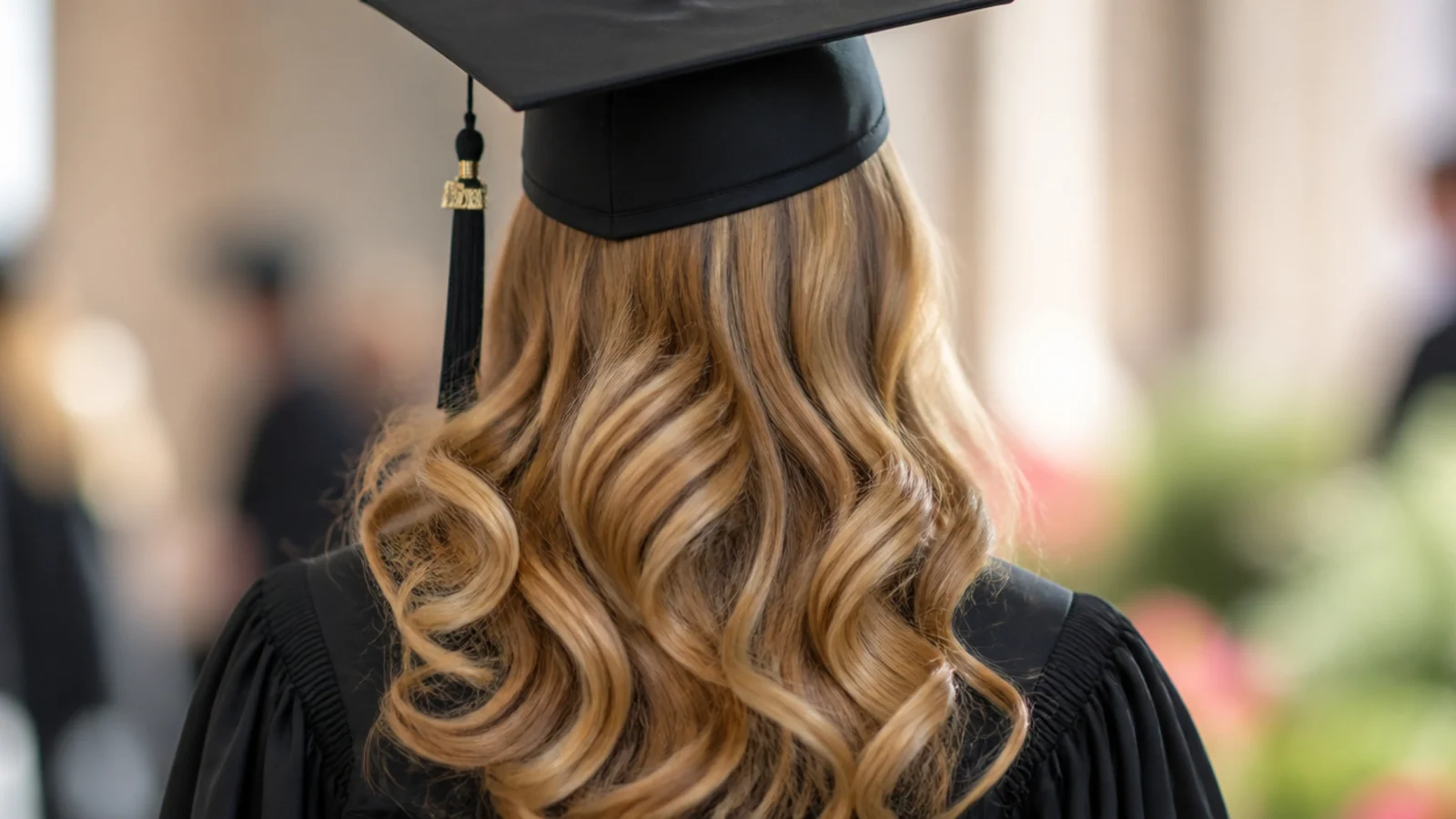
3. Overnight Waves
Damp hair braided at night dries in the braided shape, because the hydrogen bonds broken by water reform as it leaves. The set costs no morning time and no heat, but it is held by those bonds, so keep the wave below the ears where the cap cannot press it flat again.
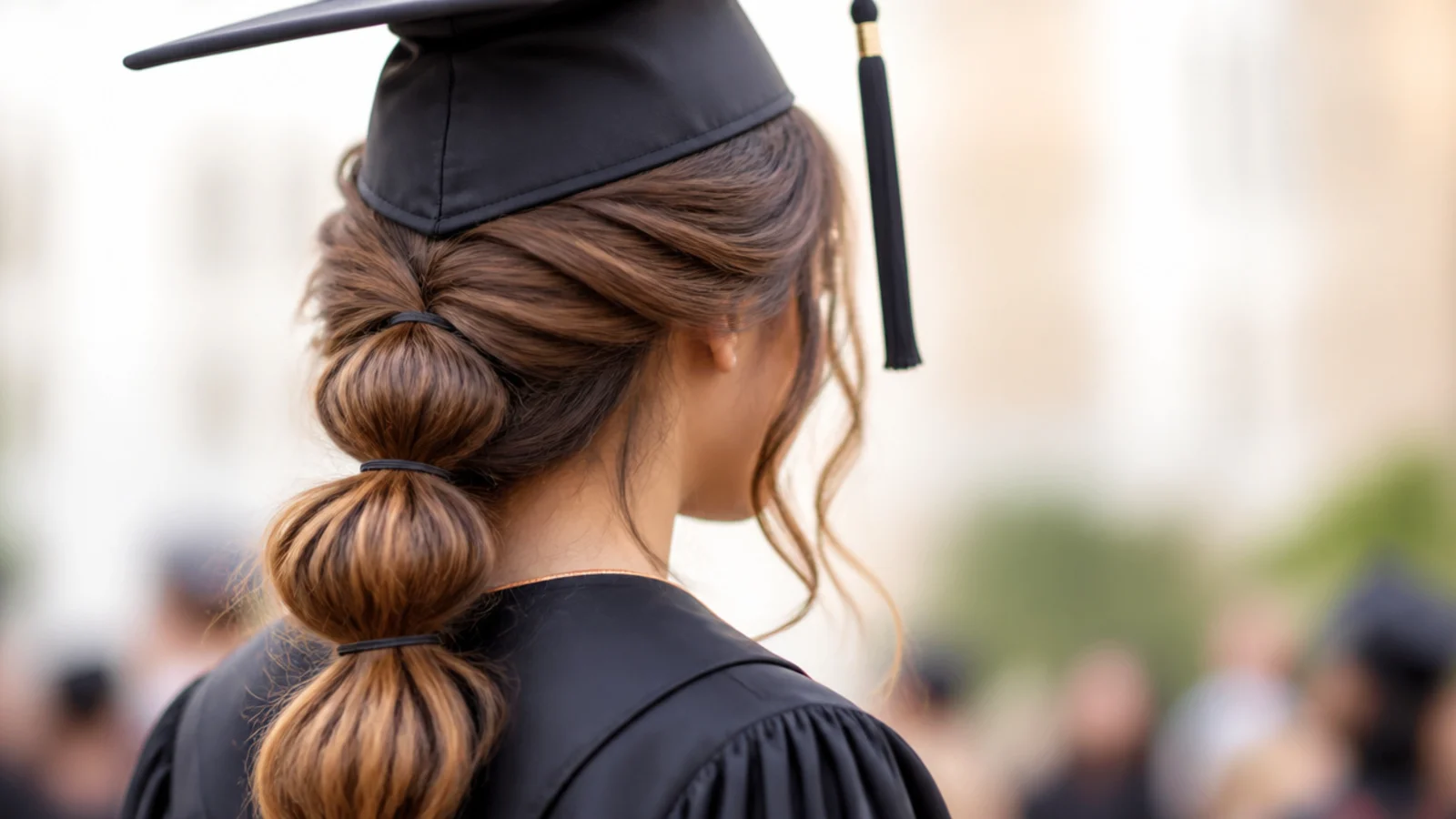
4. Bubble Half Up
A row of small elastics down the gathered section splits the length so no single band carries the whole weight, which is what stops a half up sagging by mid afternoon. Start the first bubble below the cap line and the shape survives the ceremony intact.
5. Side Swept Waves
Moving everything to one shoulder takes the length off the back of the neck where a gown collar tangles it. It also means the cap only ever touches the parting, so the wave itself is never under the board and comes out untouched.
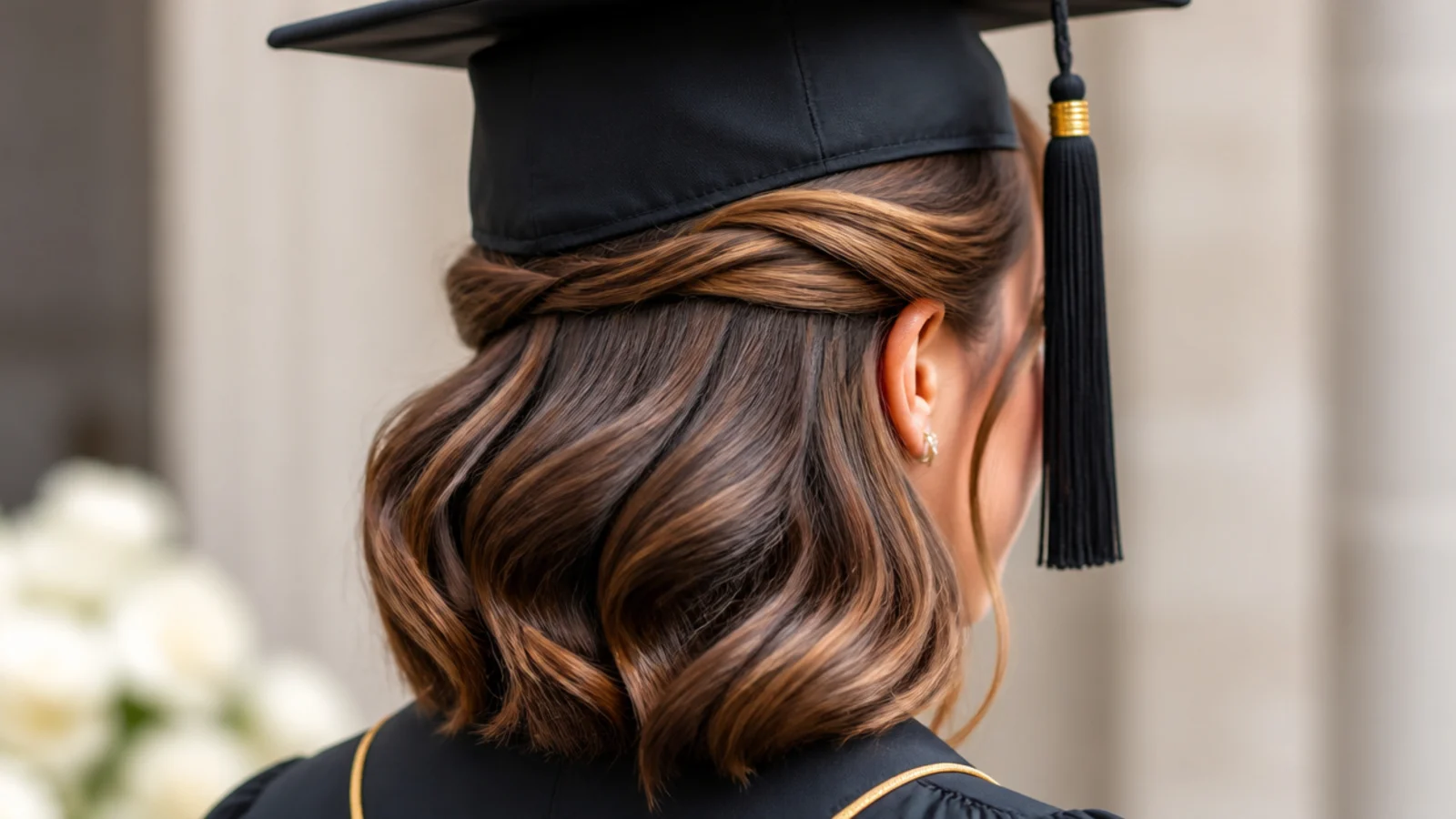
6. Tucked Faux Bob
The length is rolled under and pinned so it reads as a bob without anything being cut. The tuck puts the ends inside the shape, which removes both the collar tangling and the free edges that humidity acts on, and it takes about four minutes.
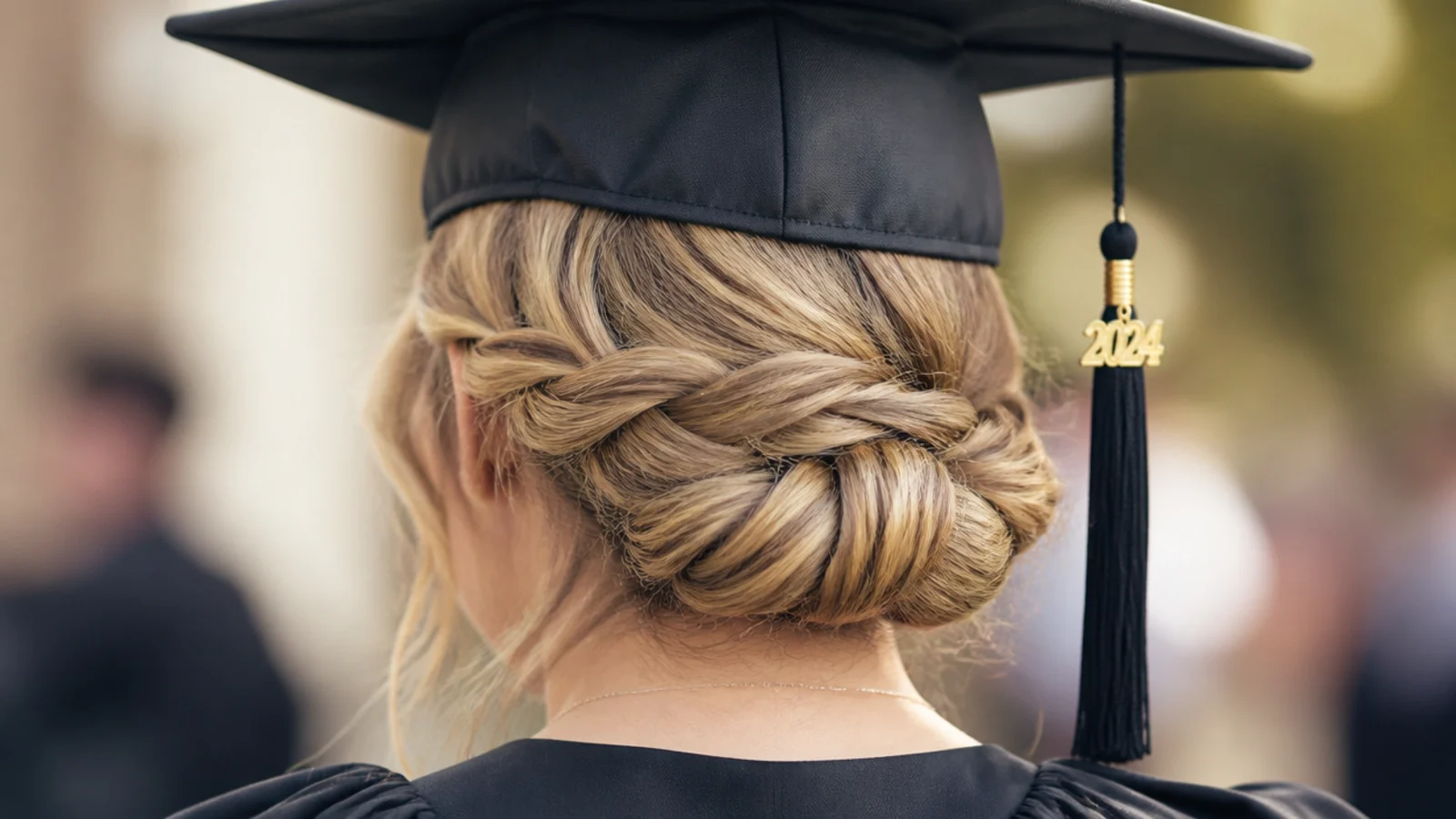
7. Dutch Crown Braid
The braid is worked against the scalp so it adds a fraction of an inch rather than the several a bun would, which keeps the board sitting level. Because the strands cross underneath, the braid still stands out visually even though it is physically flat.
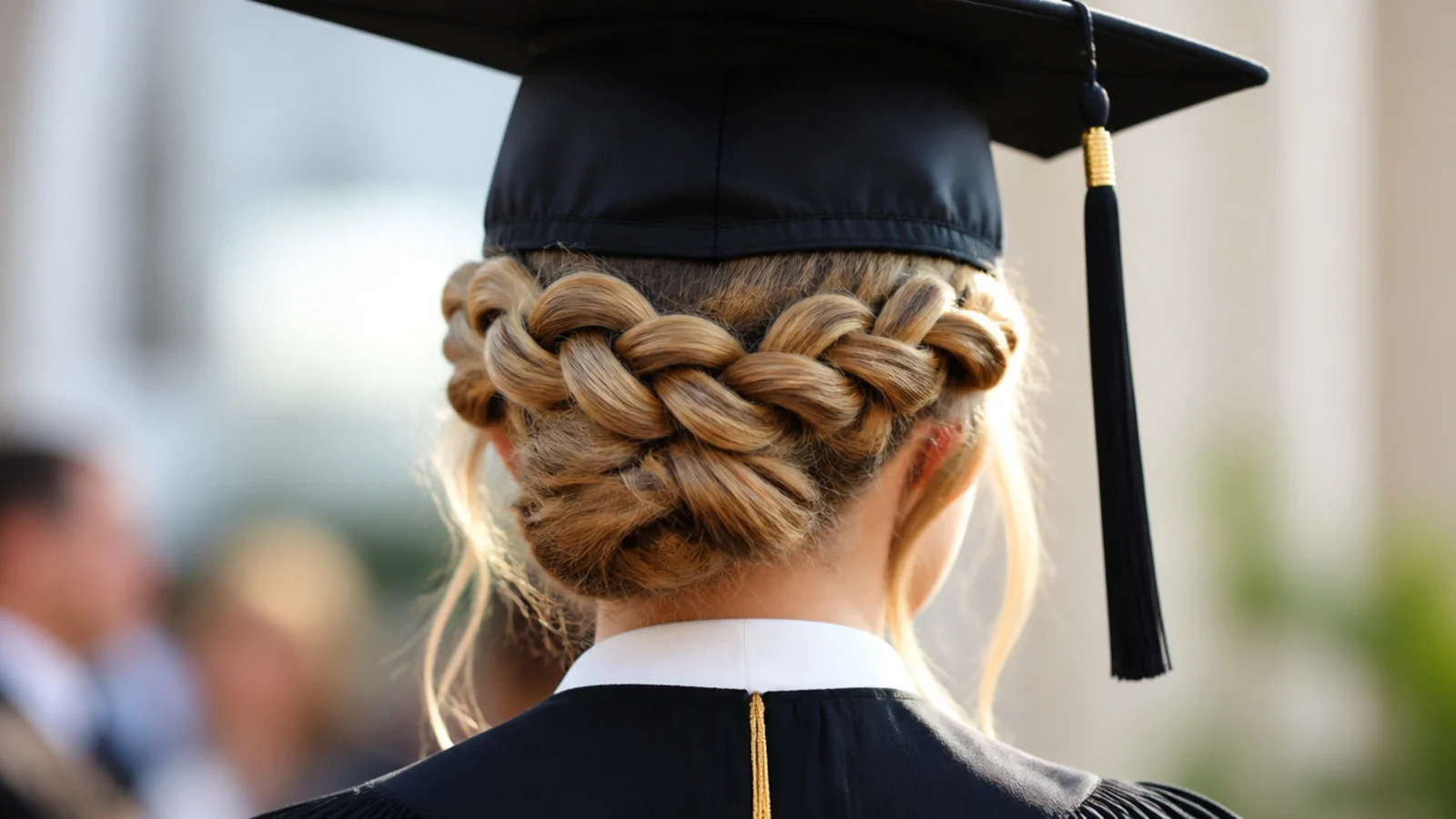
8. Rope Twist Half Up
Two sections are twisted individually in one direction and then wrapped around each other in the opposite direction, and that opposing tension is what locks the rope shut. Twist both the same way and it unwinds within minutes, which is why this style gets an unfair reputation for slipping.
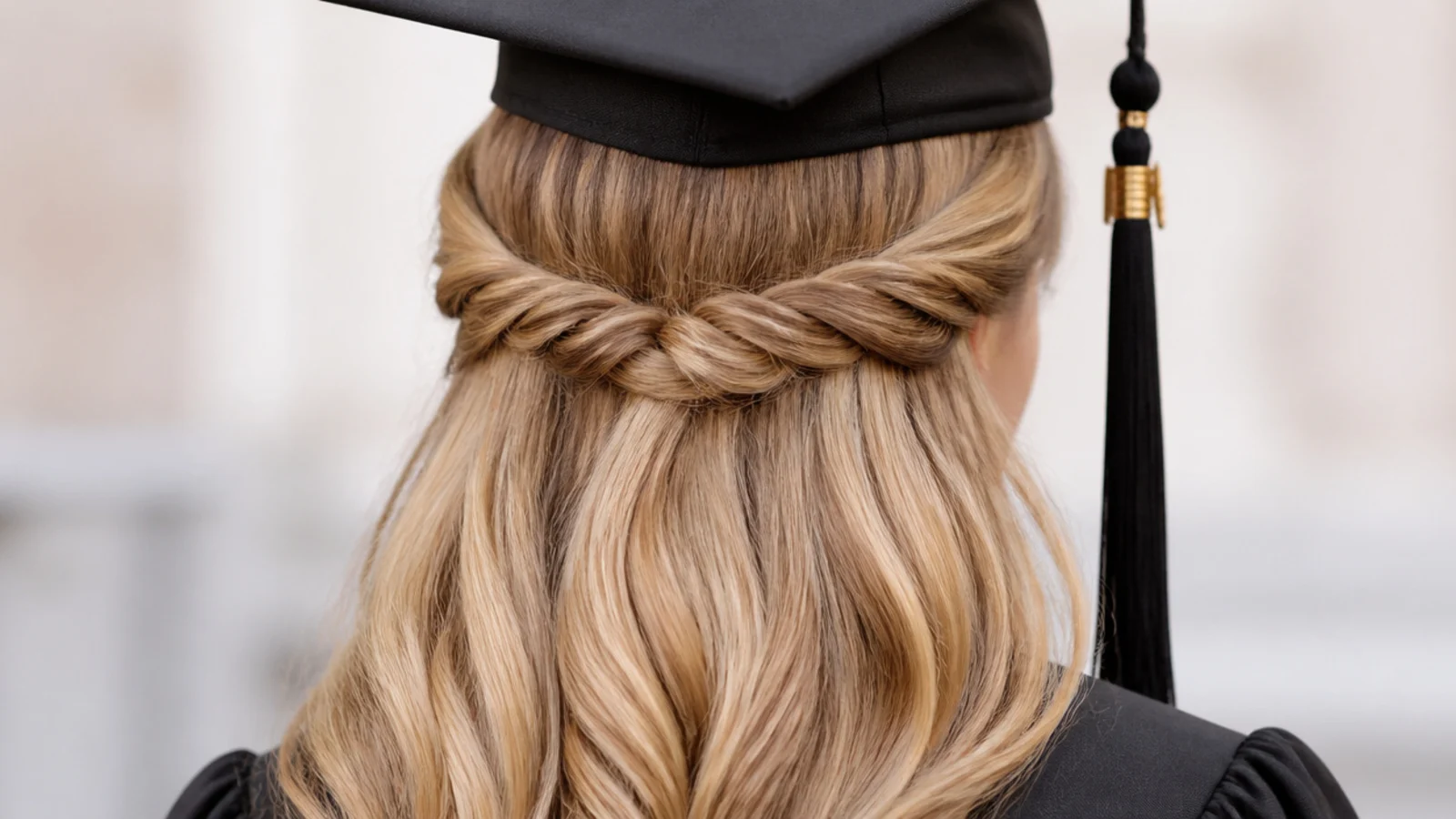
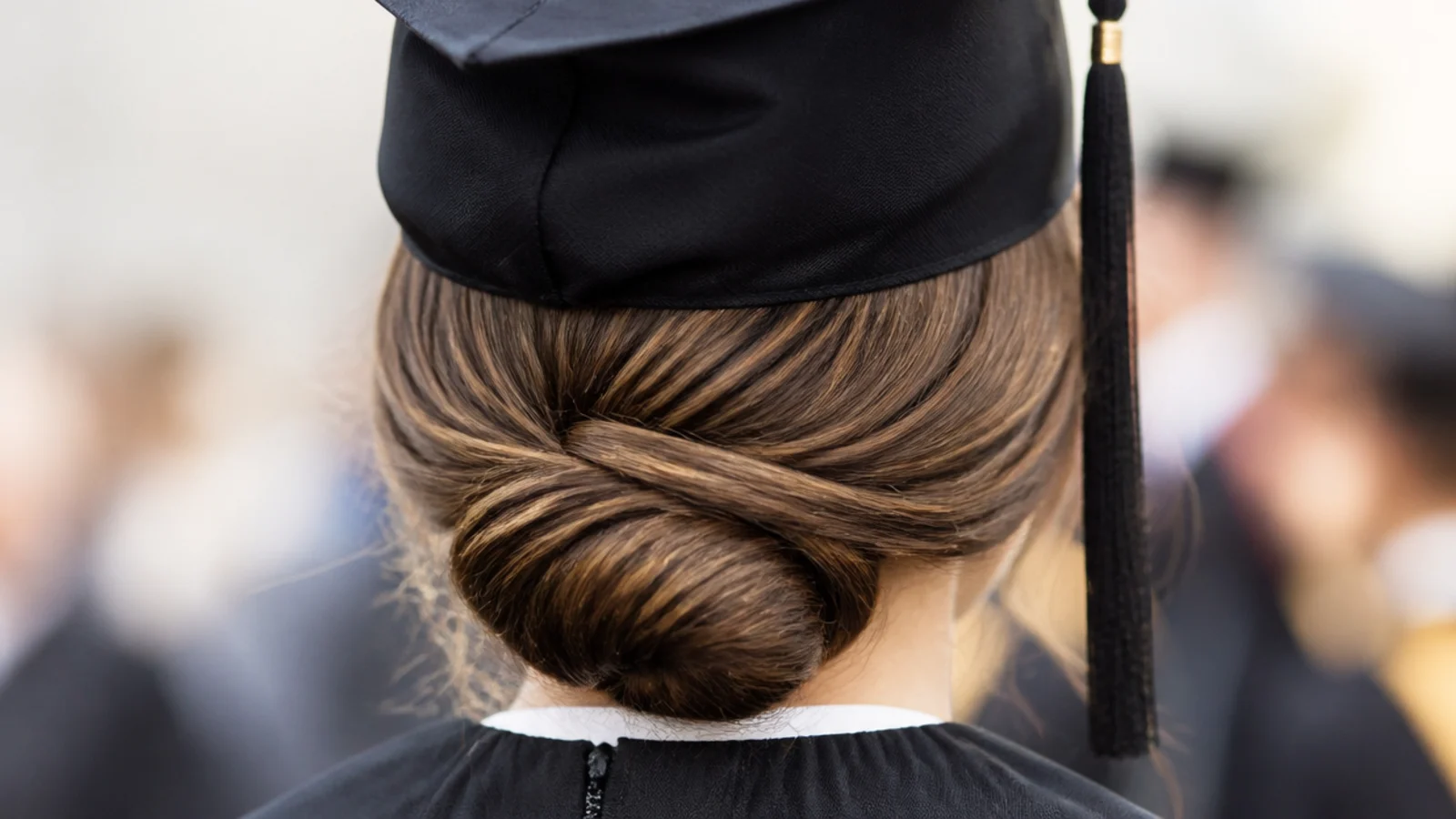
9. Low Chignon
Gathered and pinned at the nape, which is the one place on the head where gravity works with the style rather than against it. Setting it while the hair is very slightly damp lets the surface dry in position, so it stays smooth for hours without spray.
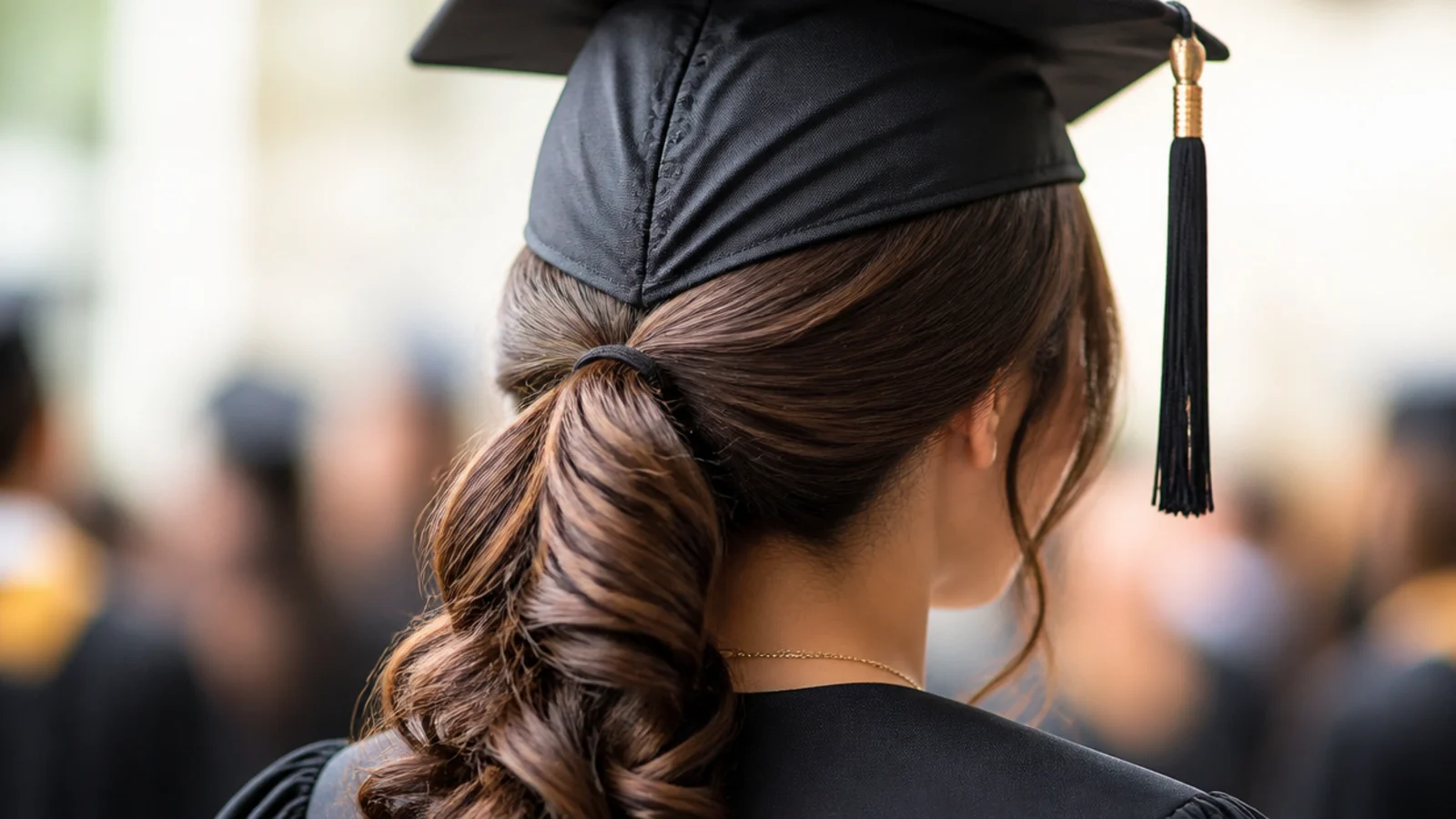
10. Textured Low Ponytail
Texture spray gives the strands friction against each other, so the elastic stops creeping down and the style holds its position. It also solves the cap problem, because a crease pressed into already textured hair reads as more texture rather than as a dent.
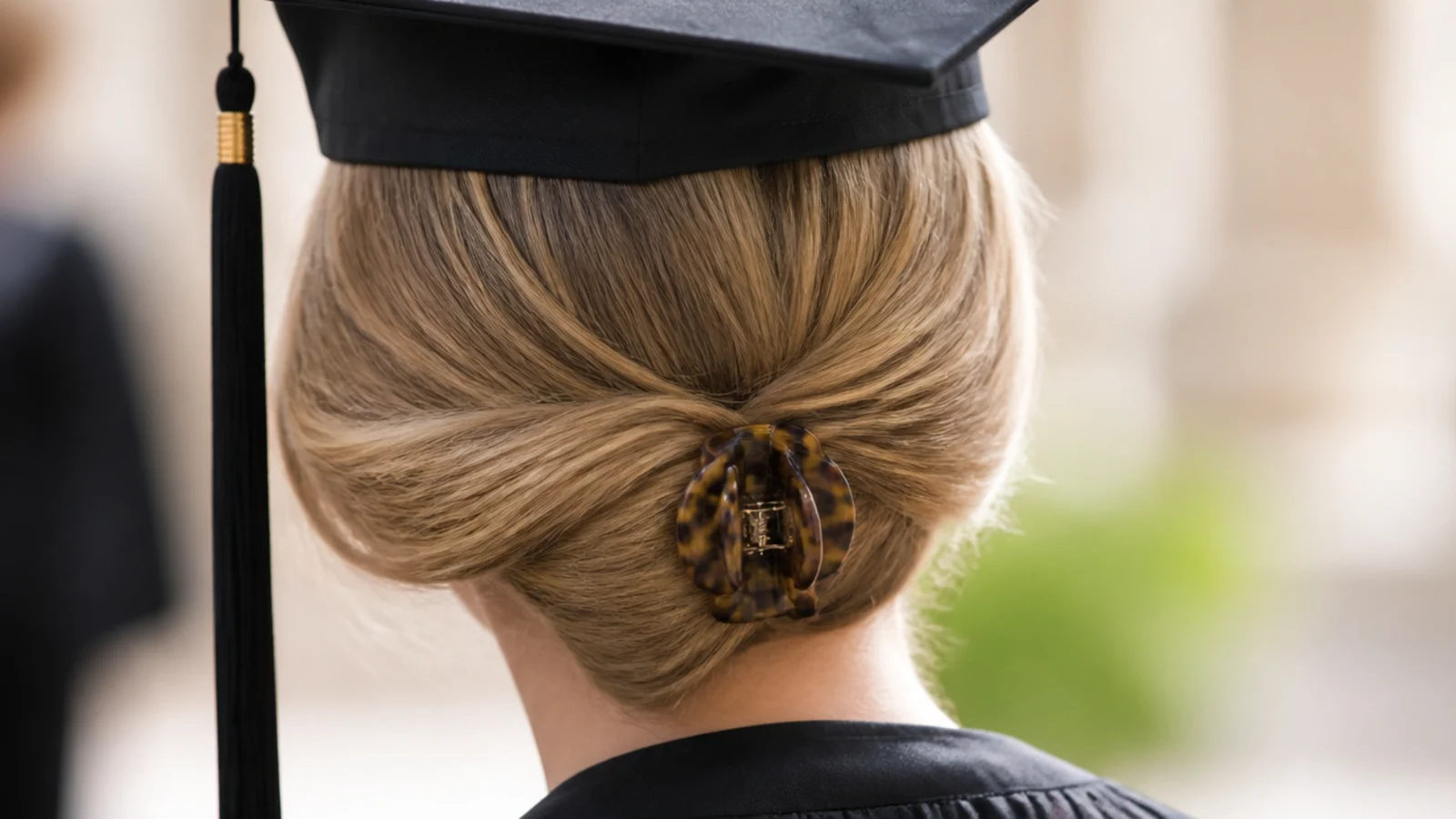
11. Claw Clip Twist
Twisting the length before clipping folds the surface inward and hides the ends inside the twist, which is why a clipped twist looks finished and a clipped handful does not. The whole thing takes about fifteen seconds and can be redone one handed after the cap comes off.
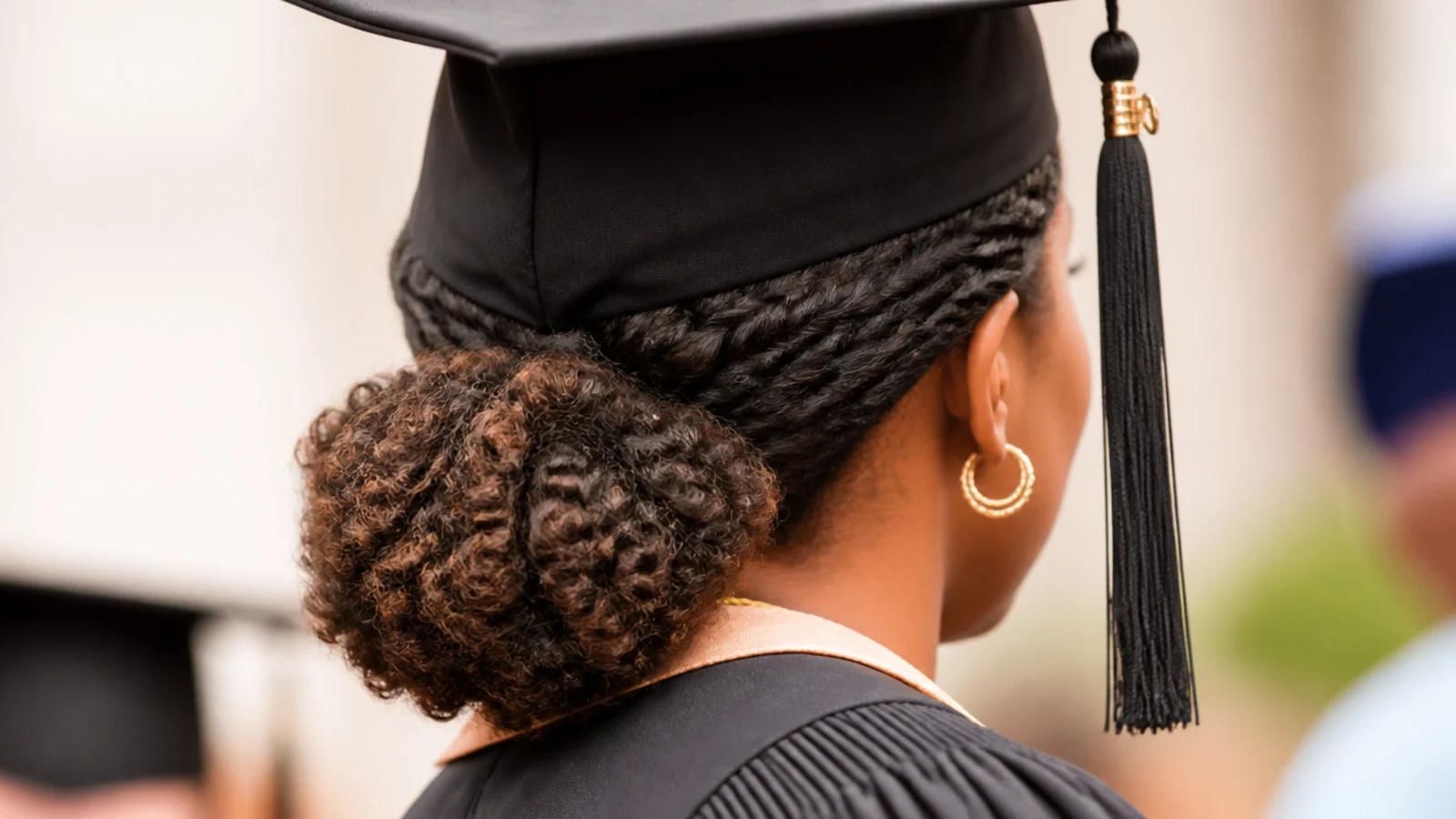
12. Flat Twist Low Puff
The twists lie directly against the scalp so the cap meets a genuinely flat surface, and all the volume gathers into a puff at the nape well below the board. Twists also hold their tension for days, so this can be set the night before with no loss.
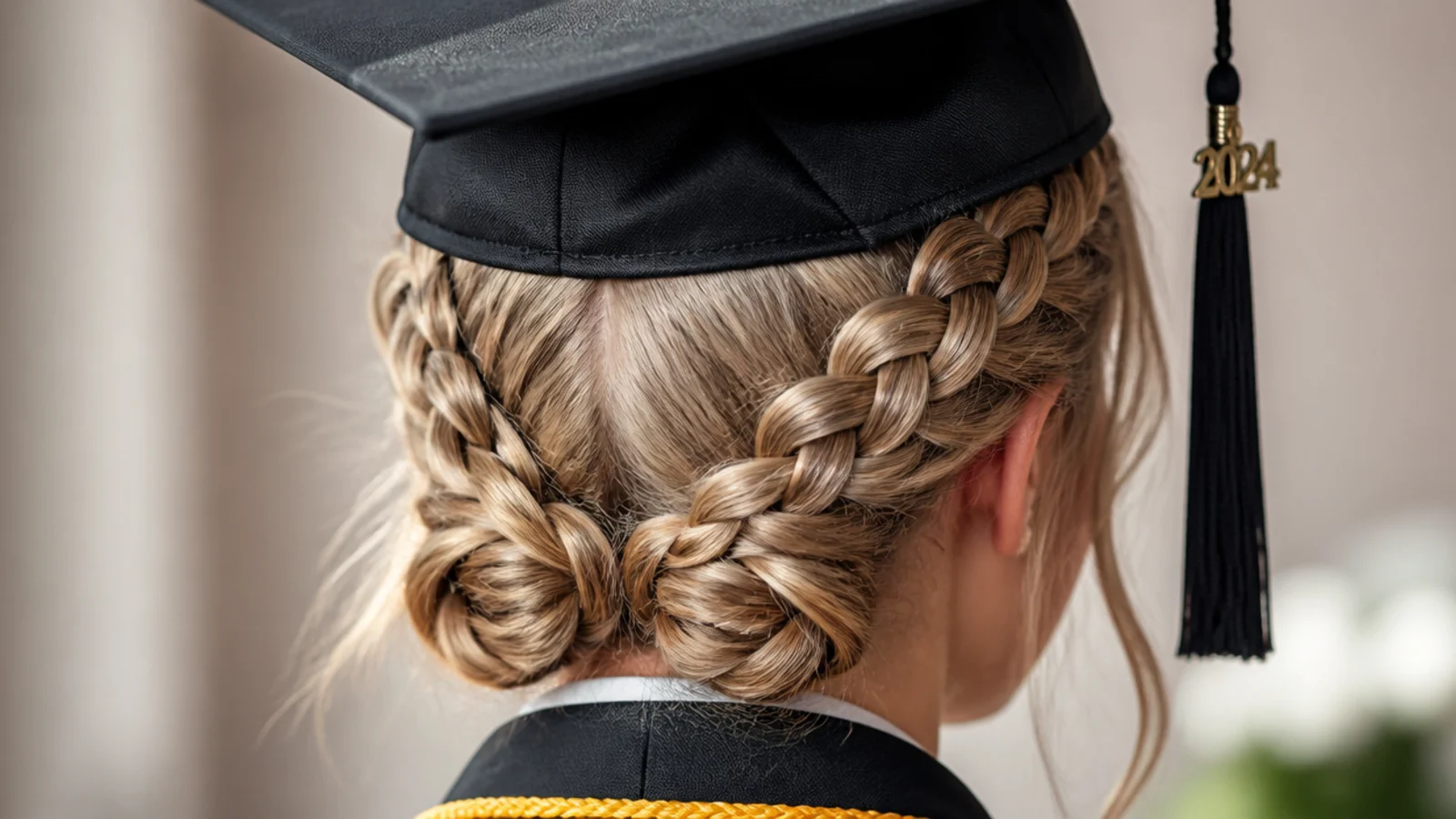
13. Two Low Braids
Splitting the hair in half puts equal weight on both sides, so nothing drags the style to one side over a long afternoon. Both braids sit below the ears, which means the cap band meets a smooth even surface and the board stays level.
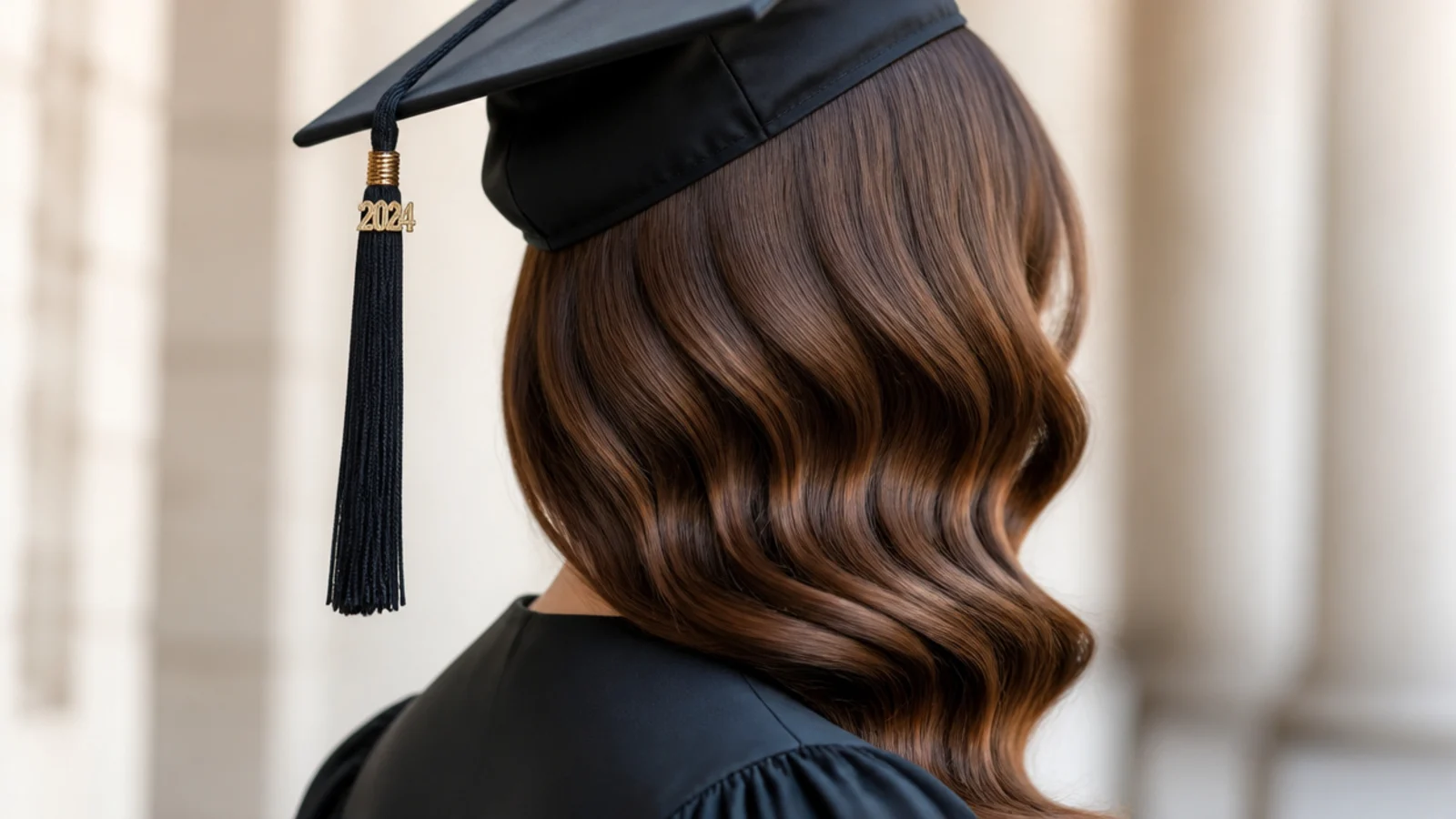
14. Deep Side Part Wave
A deep part is a line rather than a volume, so the cap sits on it without disturbing anything. Secure the part with a small pin underneath before the cap goes on, because the parting is the first thing to shift when the skullcap slides over it.
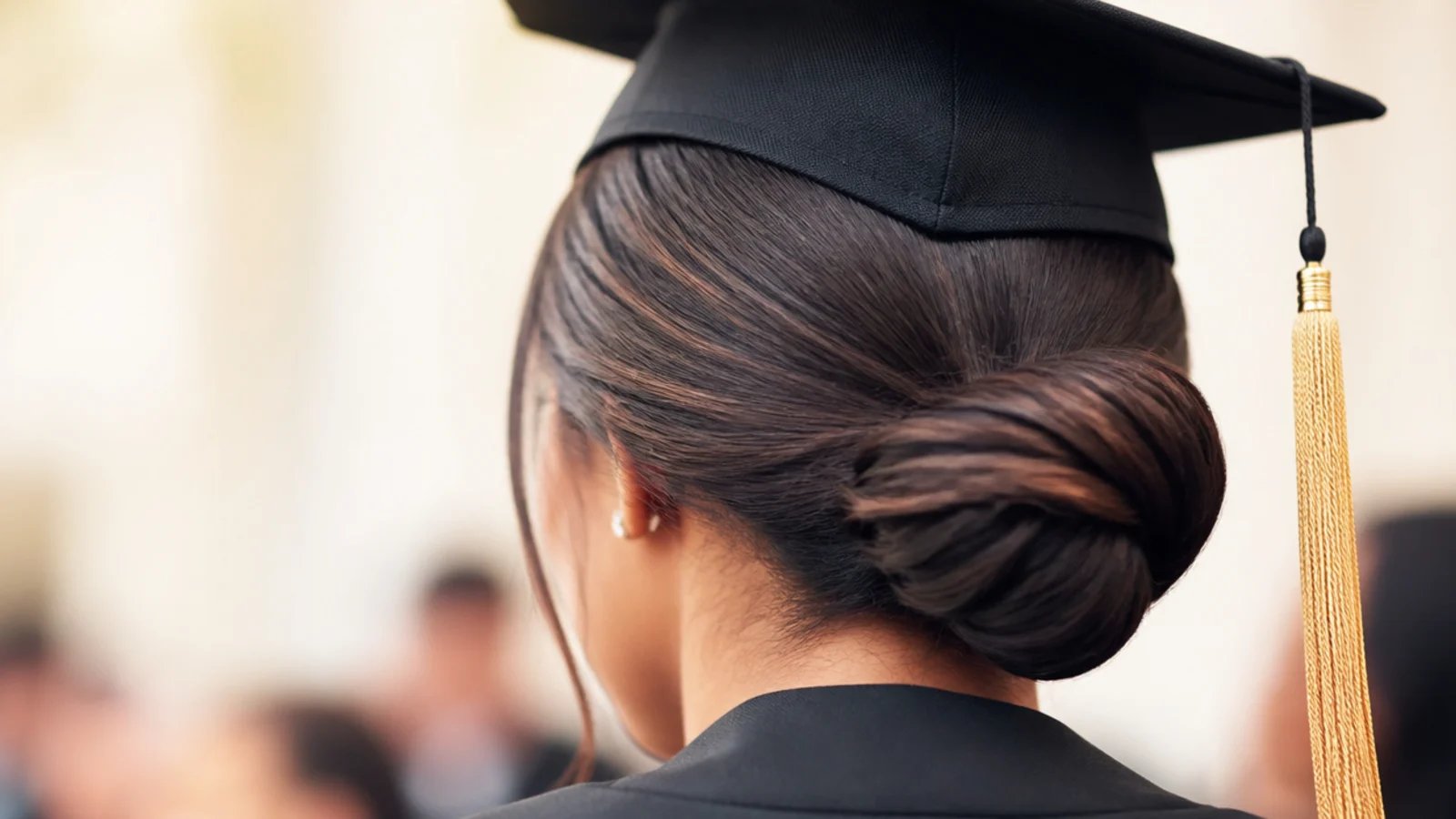
15. Slicked Low Bun
The only style here with literally nothing for a cap to flatten, since the crown is already pressed to the head. That makes it the safest choice for a long ceremony, and the trade is that it shows every stray short hair, so the hairline needs a gel or wax pass.
Final Thoughts
Pick the style for the state you will spend the most time in. The cap is on for the ceremony and off for every photograph after it, and the styles that handle both are the ones with a flat crown and their volume at the nape. A slicked low bun and a textured low ponytail sit at opposite ends of that idea and both work, where a crown ponytail fails at both.
Then rehearse it once. Put the cap on at home, wear it for five minutes, take it off and look, because the adjustment you make at that point costs nothing and the one you make in a car park costs the morning. For more styles you can do without help see 20 steps to do your own hoco hair in 30 minutes, and for once the cap is off see 25 easy high ponytail hairstyles. More in Occasion Hair.
Frequently asked questions
Related posts
See all posts
15 Graduation Hair Ideas for the Updo Versus Down Decision
Read more
15 Straight Hair Wedding Looks to Save
Read more
20 Gorgeous Prom Looks for Straight Hair
Read more