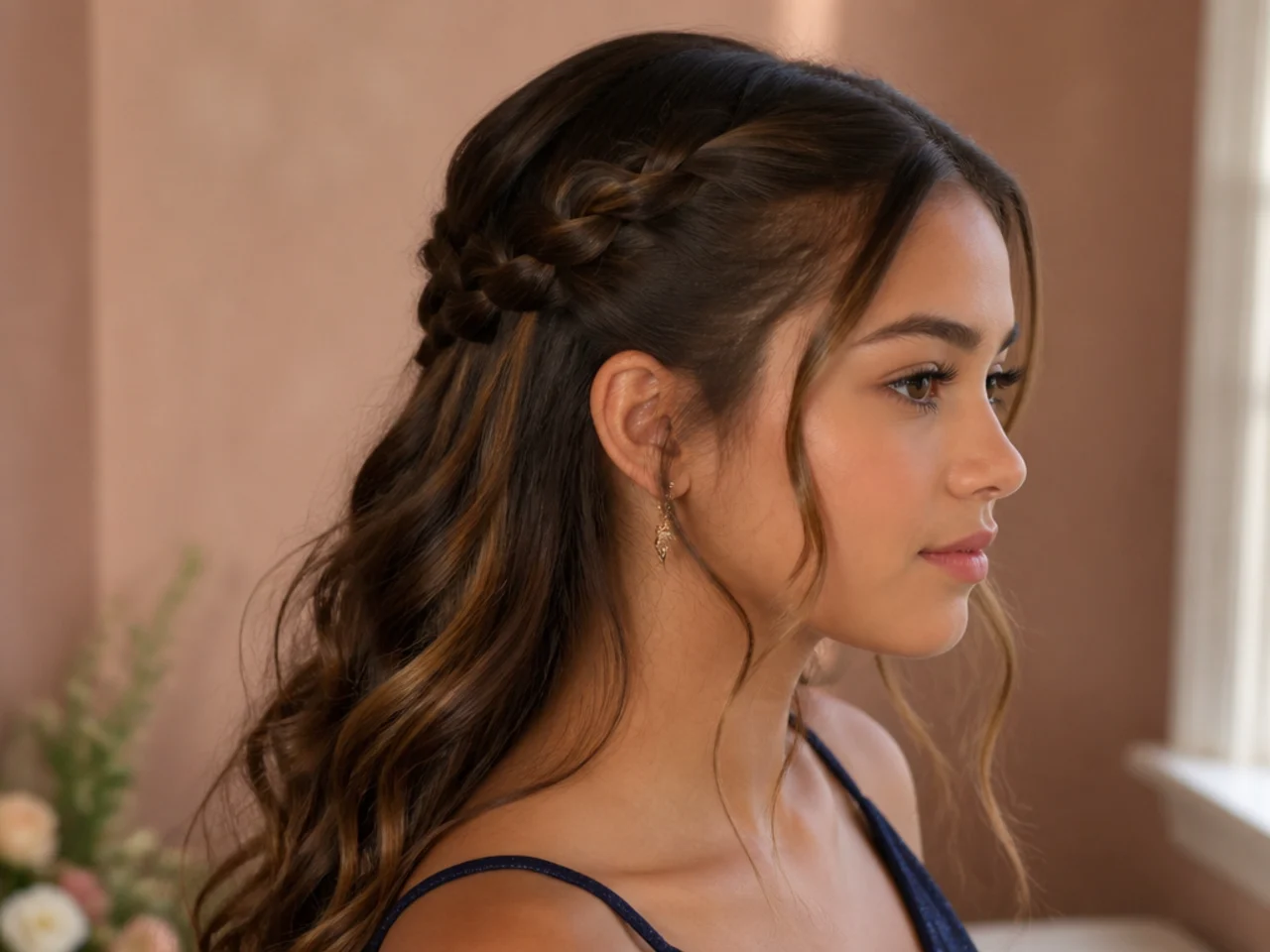
20 Gorgeous Hoco Braids For Medium Length Hair
A braid consumes hair at every crossing, so it always finishes shorter than the hair it started from. Twenty homecoming braids chosen because they fit medium length rather than fighting it.
In this article · 27
- Why Medium Length Changes a Braid
- Choosing a Braid That Fits Your Length
- The 20 Hoco Braids
- 1. The Dutch Crown Braid
- 2. The Half Up Fishtail
- 3. The Braided Headband
- 4. The Twin Dutch Braids
- 5. The Braid Wrapped Ponytail
- 6. The Rope Twist Half Up
- 7. The Waterfall Braid
- 8. The Braided Low Bun
- 9. The Fishtail Ponytail
- 10. The Side Swept Braid
- 11. The Boho Face Framing Braids
- 12. The Braided Bubble Pony
- 13. The Pull Through Braid
- 14. The Milkmaid Braid
- 15. The Ribbon Woven Braid
- 16. The Braided Chignon
- 17. The Halo Braid
- 18. The Knotted Half Up
- 19. The Pearl Pinned Braid
- 20. The Braid Into Loose Curls
- Styling and Upkeep
- Mistakes to Avoid
- FAQ
- Final Thoughts
Most braid tutorials are filmed on hair well past the waist, which is why the same braid on medium length hair finishes somewhere around the shoulder and looks like it failed.
A braid eats length. Every crossing takes a little hair out of the vertical, so a braid always ends higher than the loose hair it was made from.
Medium length hair ends where people can see it. The elastic sits at shoulder height rather than halfway down the back, so hiding it stops being optional.
Why Medium Length Changes a Braid
The crossings are the cost. Each stitch pulls the strand sideways as well as down, and that sideways travel is length you no longer have hanging.
Thin braids reach further than thick ones. A narrower section has a smaller cross section, so each crossing consumes less of it. Two slim braids finish lower than one heavy one made from the same hair.
Anything that travels around the head is the hard version. A halo or a milkmaid has to cover a fixed circumference, and medium hair usually runs out somewhere near the opposite ear.
Pancaking buys width, not length. Pulling the outer edge of each stitch widens the braid so it reads fuller, and it holds because the elastic at the end stops the tension travelling back up.
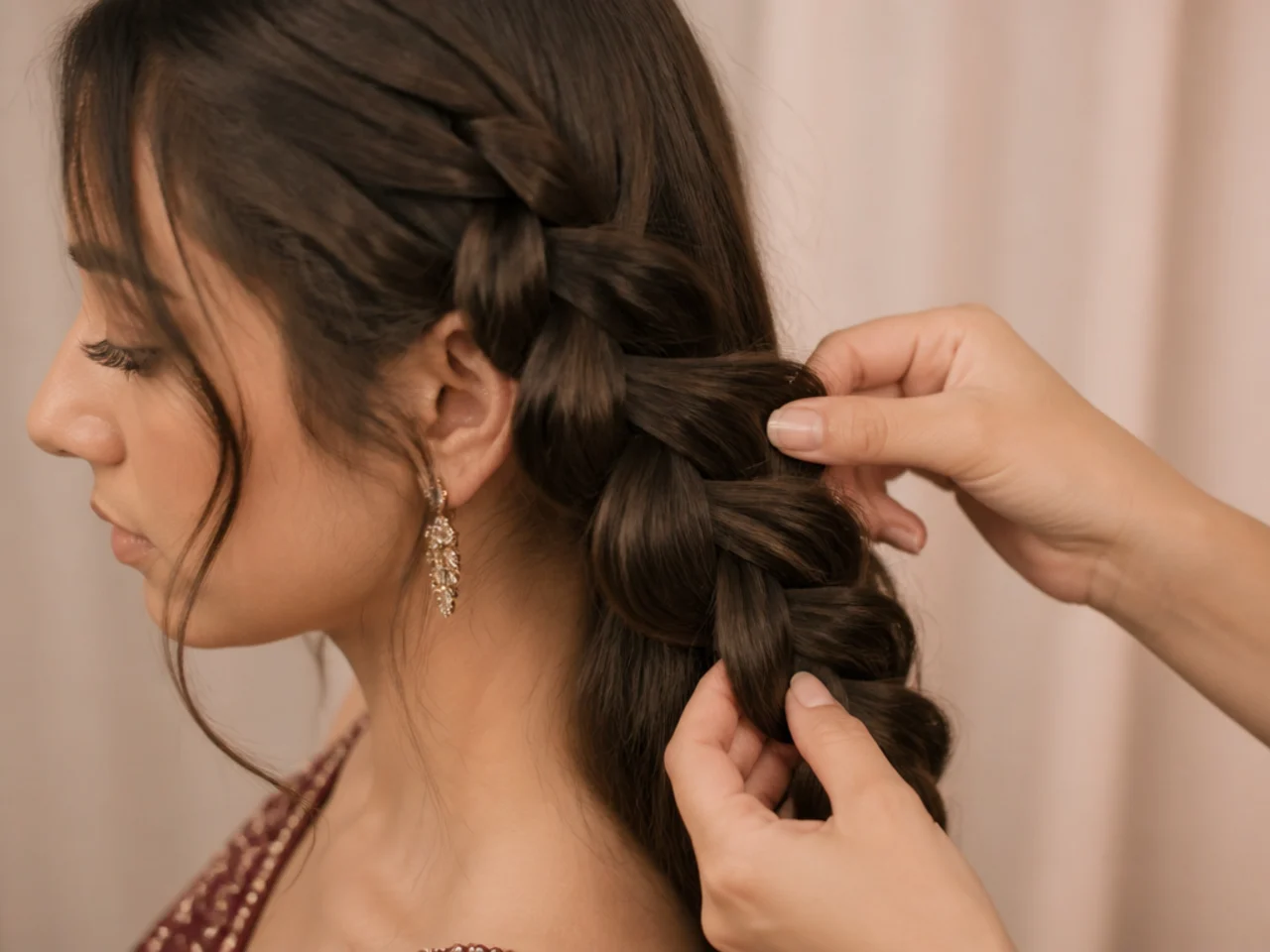
Choosing a Braid That Fits Your Length
Count what the braid has to reach. A style that ends at the shoulder needs half the hair of one that has to be pinned at the opposite temple.
Dutch sits proud, French sinks in. A Dutch braid crosses each strand under the middle so it stands on the surface. A French braid crosses over, so it settles into the hair around it.
Anchored beats hanging on medium hair. A braid pinned into a coil or a ponytail hides its own ending, which is the part medium length struggles to make look deliberate.
Braid on day two hair. Clean hair has a smooth cuticle and the stitches slide closed. A day of oil, or a texture spray, is what keeps the pattern open.
The 20 Hoco Braids
1. The Dutch Crown Braid
Each strand crosses under the middle rather than over it, so the braid stands raised on the surface of the hair and catches light along its whole length. On medium hair start it above one ear and run it back toward the crown, because a full circle runs out of hair somewhere near the opposite temple.
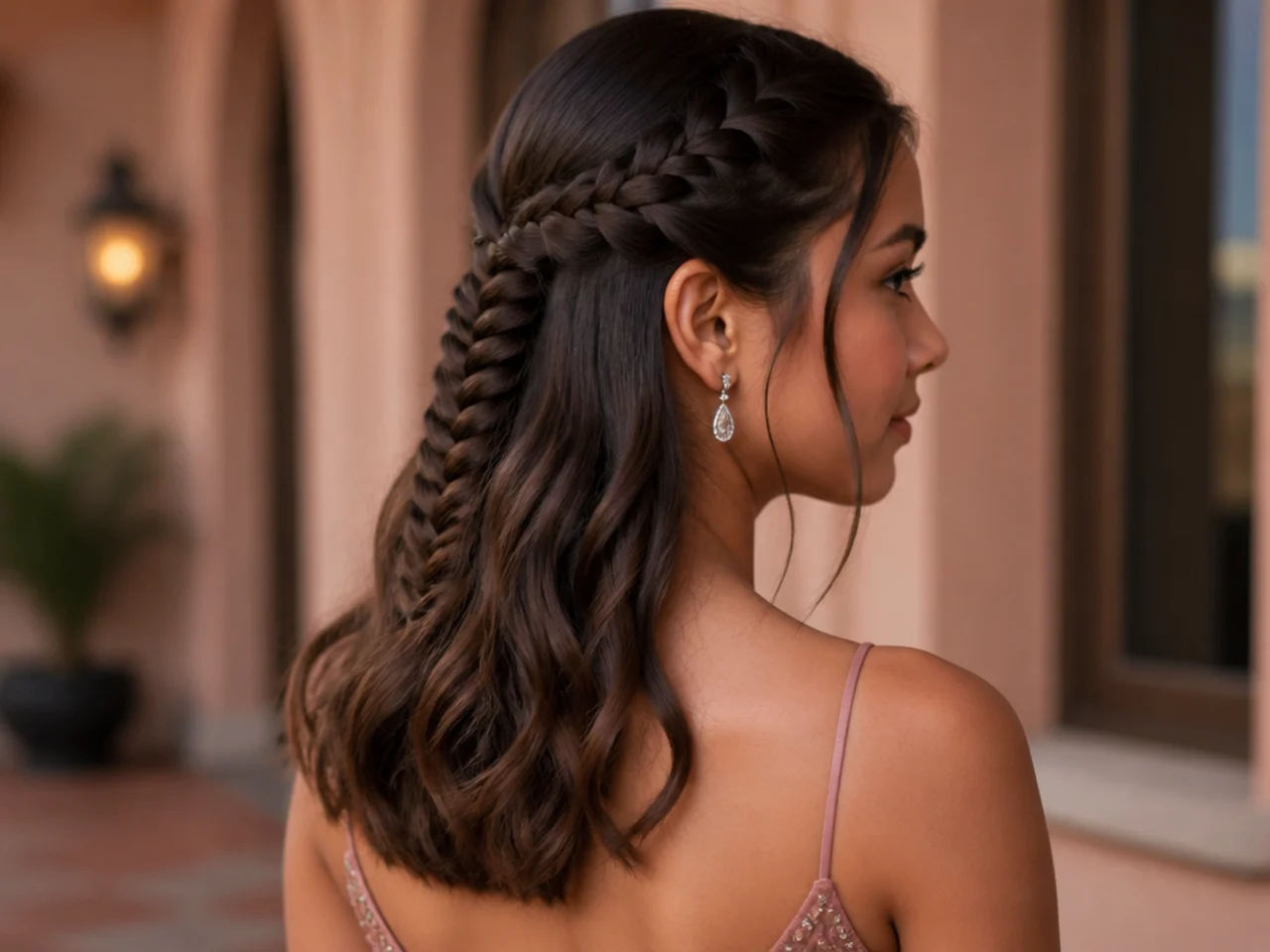
2. The Half Up Fishtail
A fishtail crosses small pieces from the outside of two sections, which uses noticeably more length per stitch than a three strand does. Braiding only the top half leaves the rest of the hair hanging free, which is what stops the whole thing finishing at ear height.
3. The Braided Headband
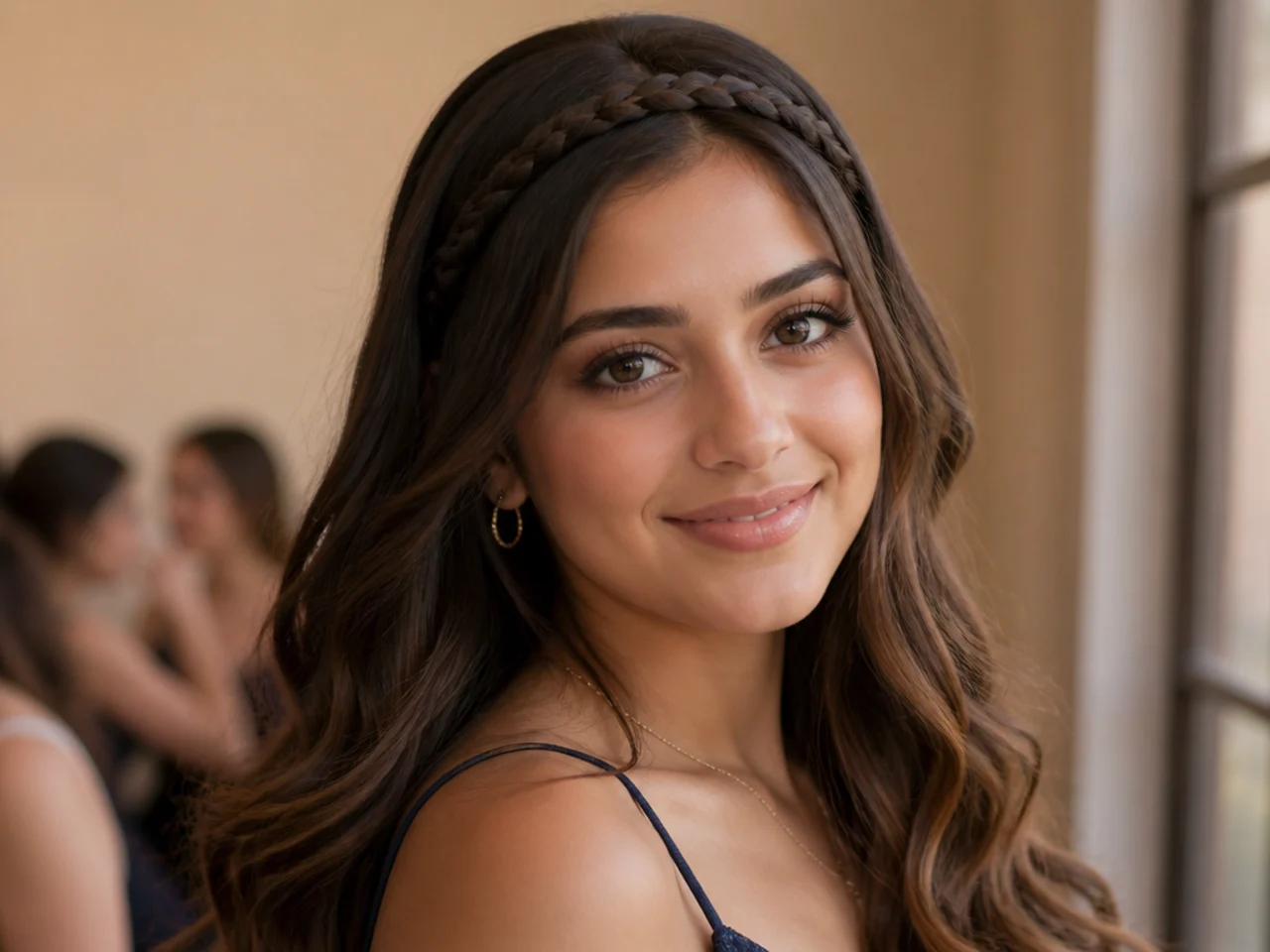
A slim braid taken from one temple across the front hairline and pinned behind the opposite ear. It only has to cover the hairline rather than the head, so the length required is short enough that even a grown out fringe can be caught into it.
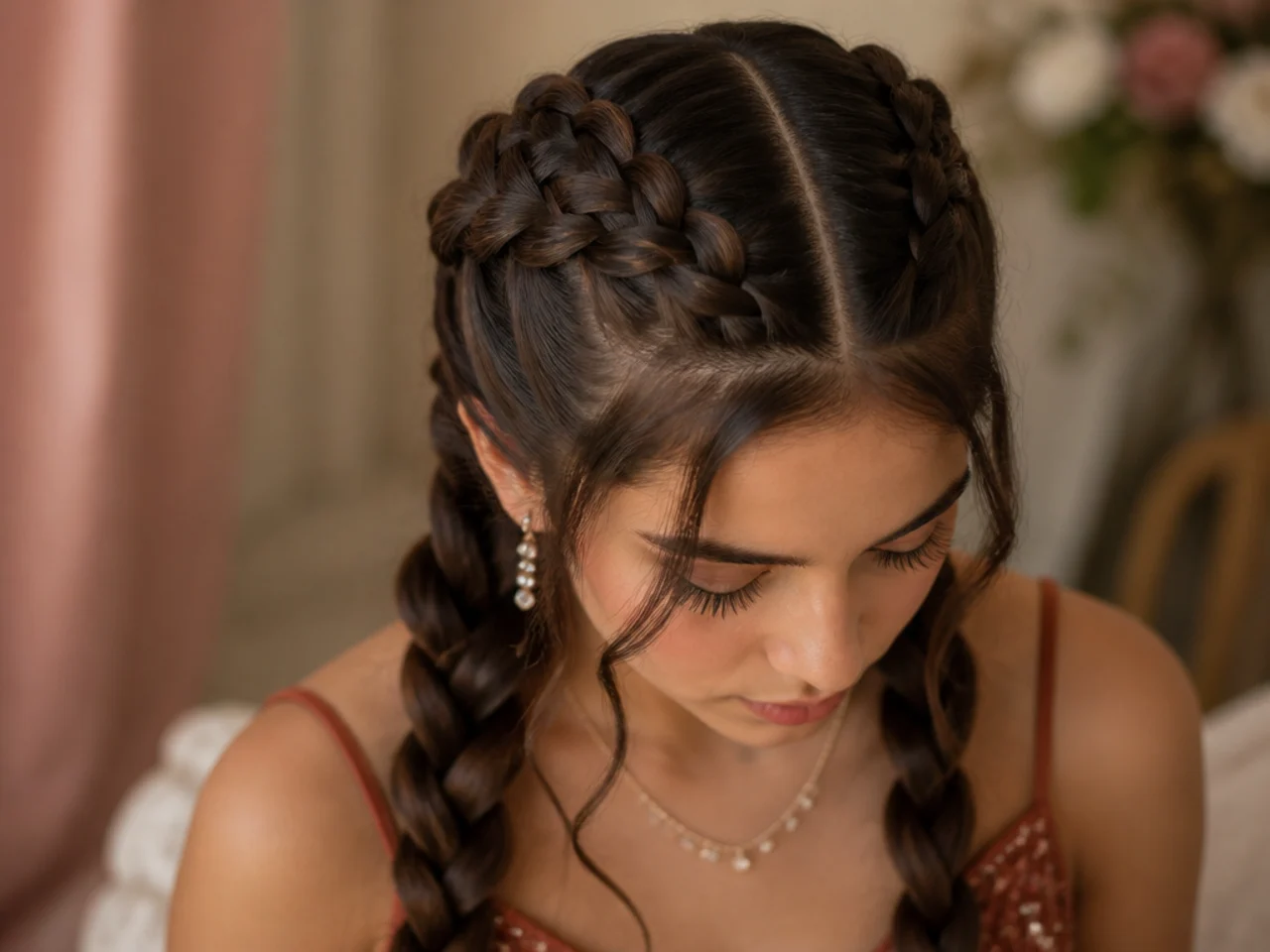
4. The Twin Dutch Braids
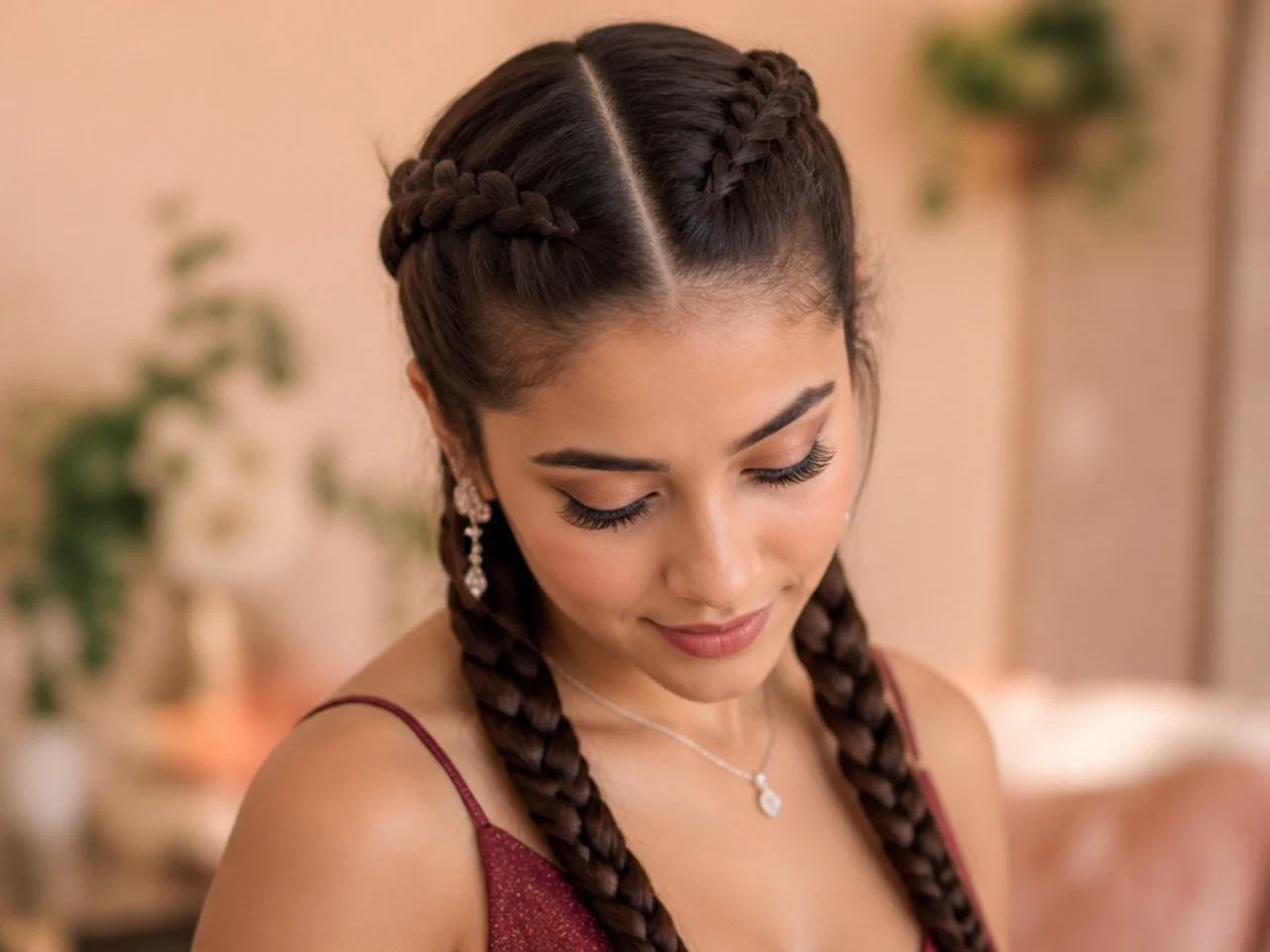
Two braids down either side of a centre parting. Splitting the hair halves the width of each braid, and a narrower braid consumes less length per crossing, so both finish lower down the back than one thick braid made from the same hair would.
5. The Braid Wrapped Ponytail
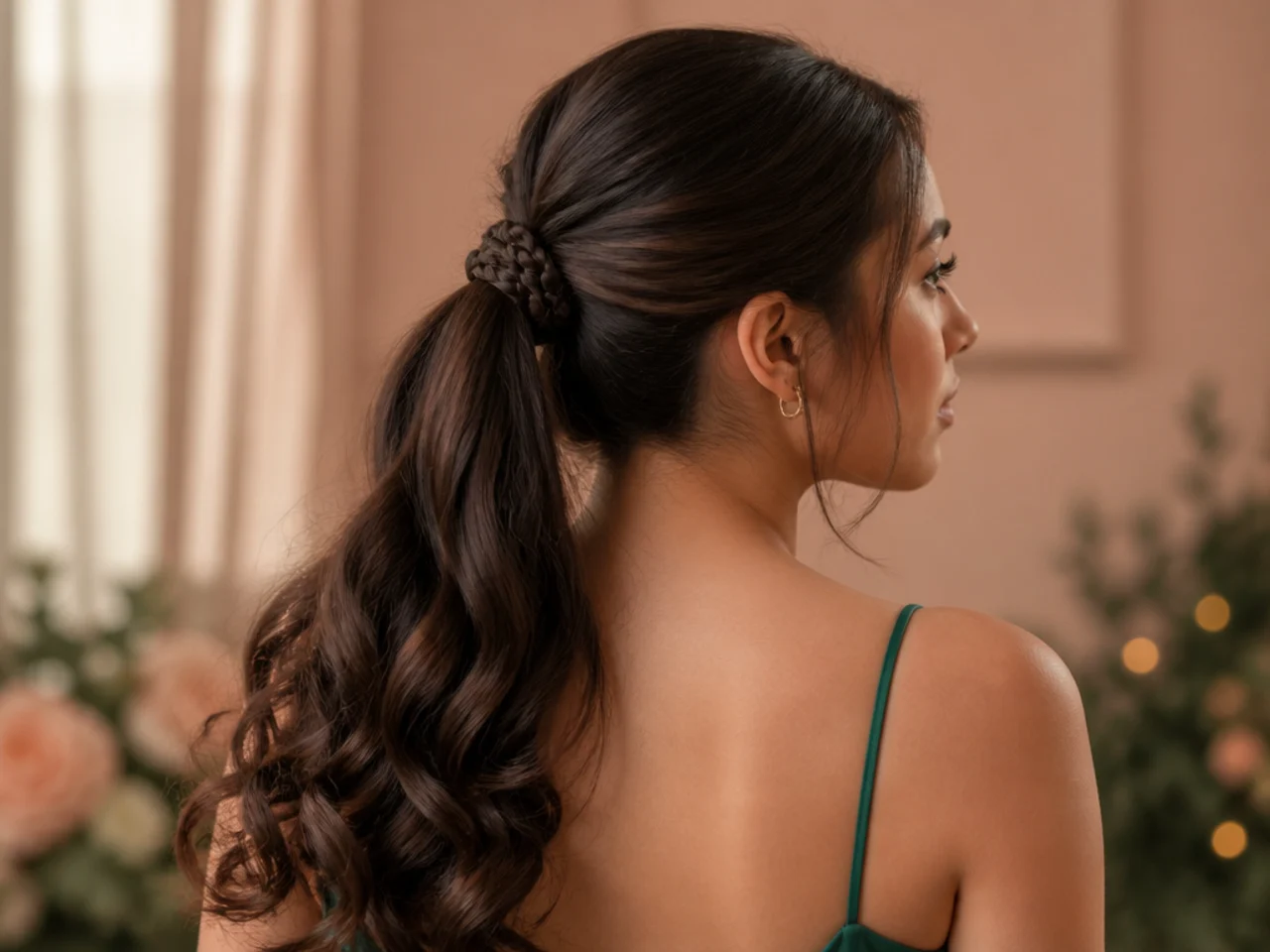
Gather the tail first, then braid a thin section from underneath and wind it over the elastic. Braiding after the gather means the braid has one small job and needs almost no length, which makes this the most reliable braid on short medium hair.
6. The Rope Twist Half Up
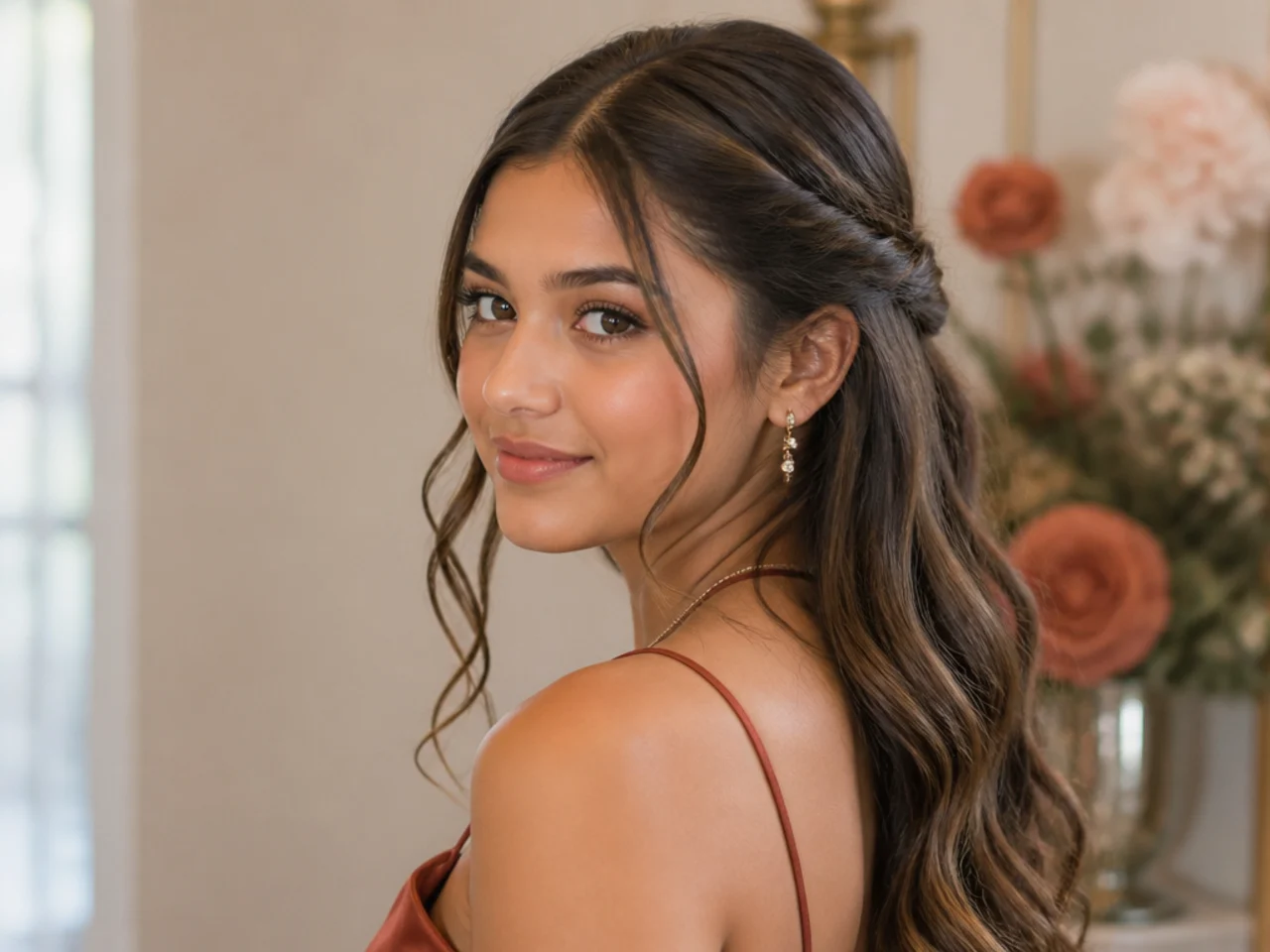
Two strands twisted individually in one direction, then wound around each other in the opposite direction. The two opposing twists lock against one another, which is why a rope holds on medium hair without the interlocking structure a braid relies on.
7. The Waterfall Braid
One strand is dropped at every crossing and replaced with fresh hair taken from above, so the braid never carries its own length forward. That is why it works on medium hair when a plain side braid does not, and the dropped pieces fall through as loose strands beneath it.
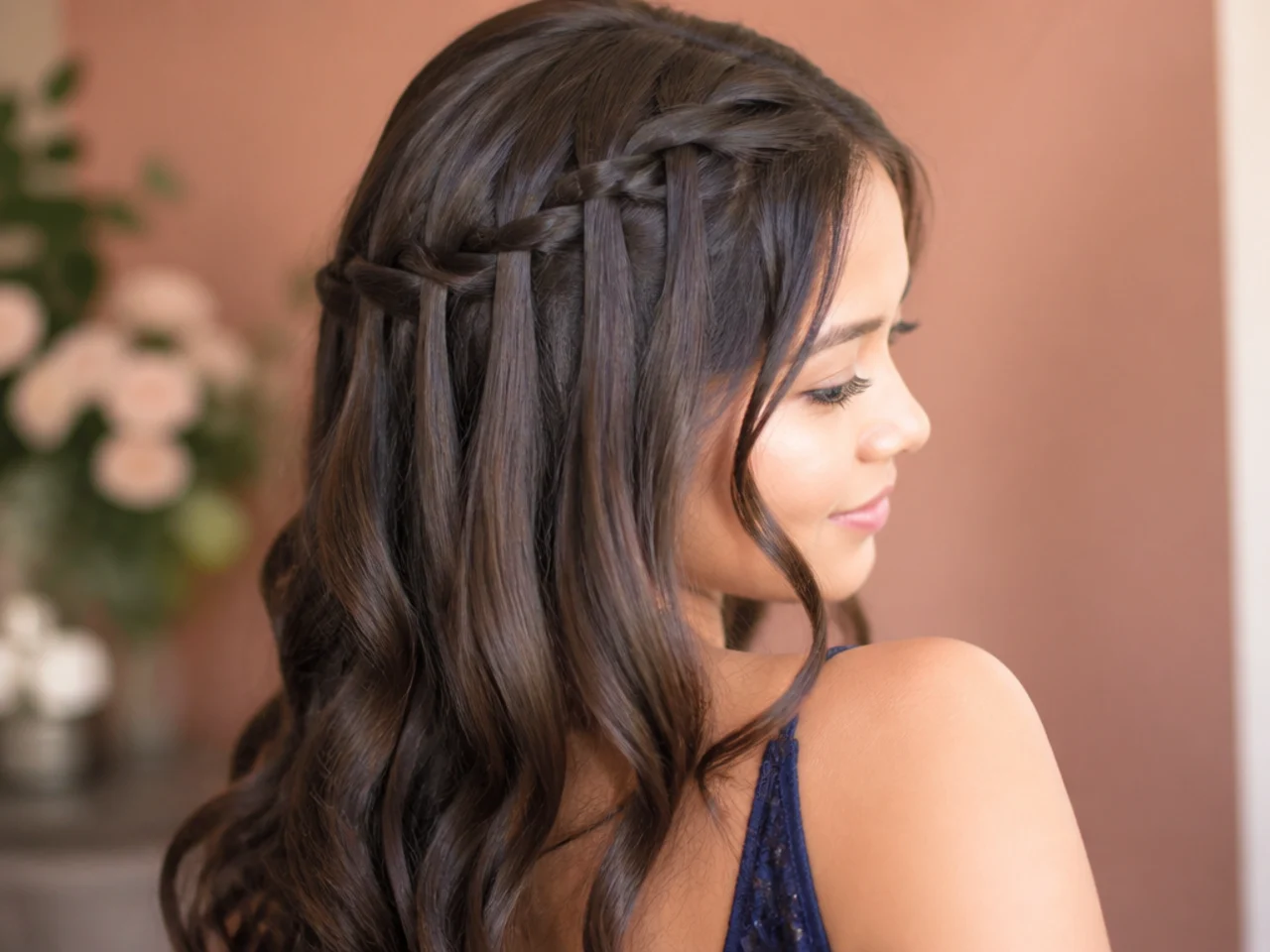
8. The Braided Low Bun
Braid the length loosely, coil it at the nape and pin. A braided coil holds far better than a smooth one because the stitches give every pin something structural to bite into, where a smooth twist offers only a slippery surface.
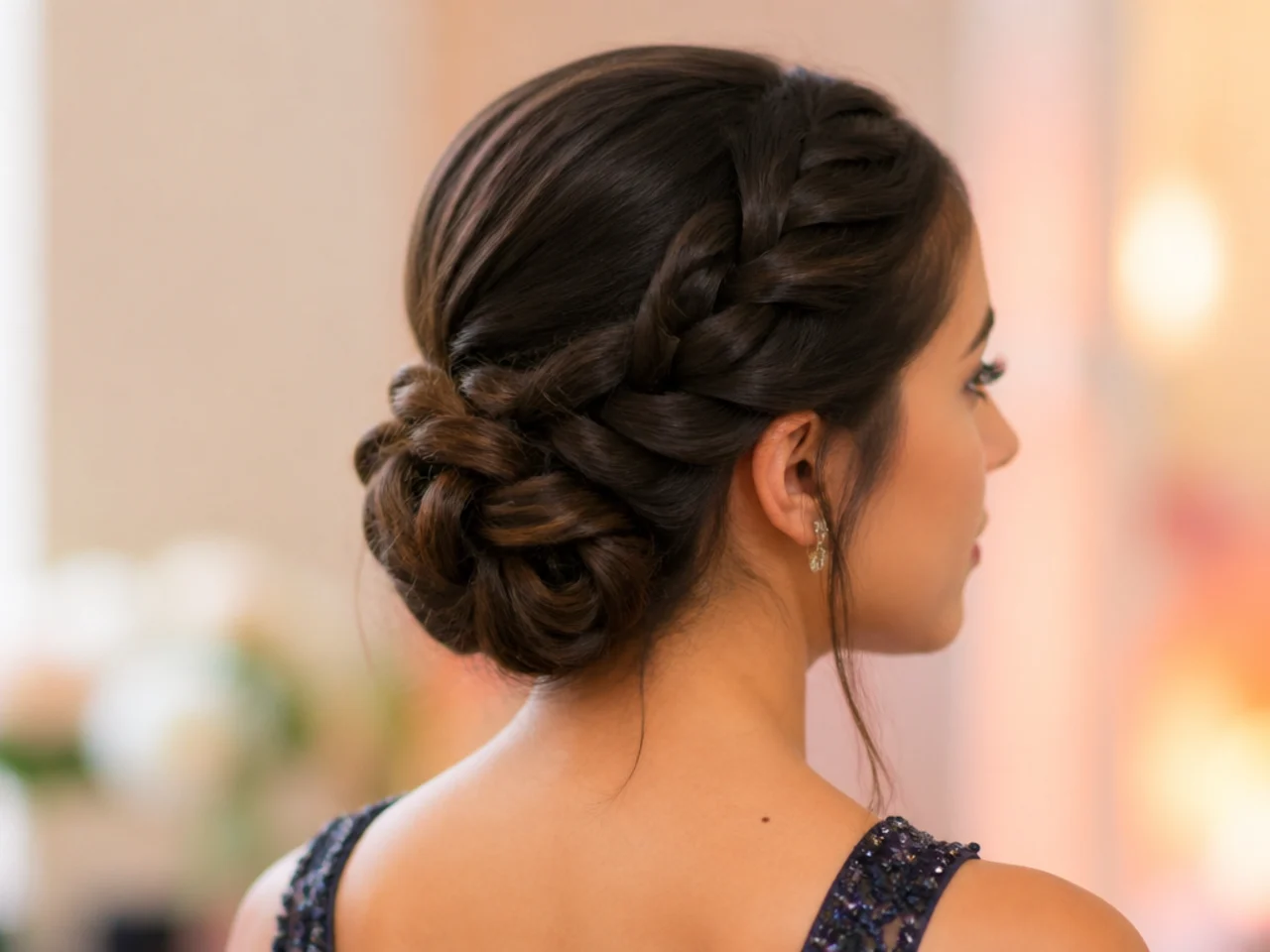
9. The Fishtail Ponytail
Gather into a ponytail first, then fishtail the tail itself. Keeping the fishtail off the scalp means every stitch stays tight and visible, where a fishtail worked across the head on medium hair loosens before it reaches the elastic.
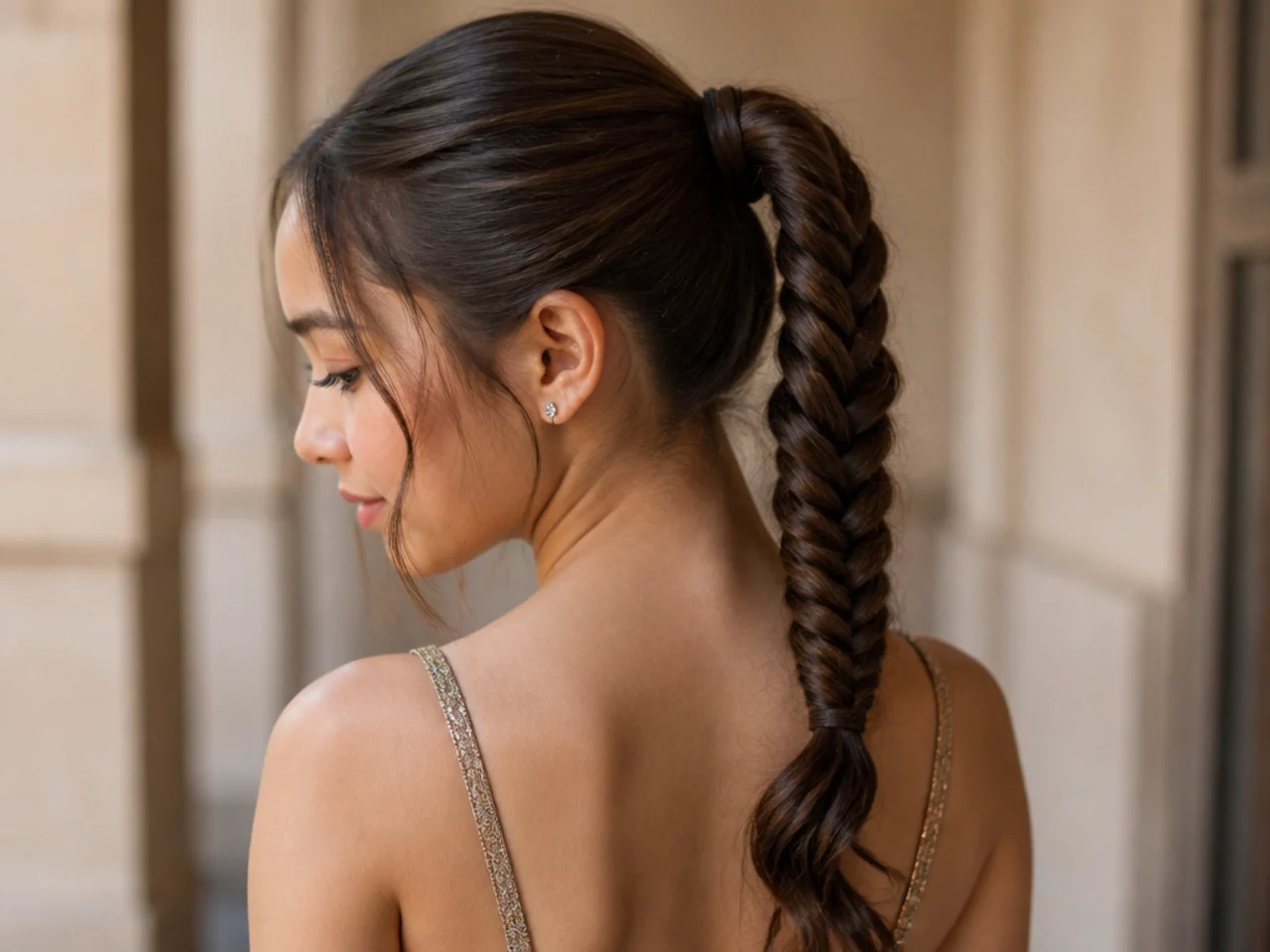
10. The Side Swept Braid
Everything gathered over one shoulder and braided loosely. Because the hair travels diagonally across the back before it starts braiding, it gains a few centimetres of working length compared with hanging straight down.
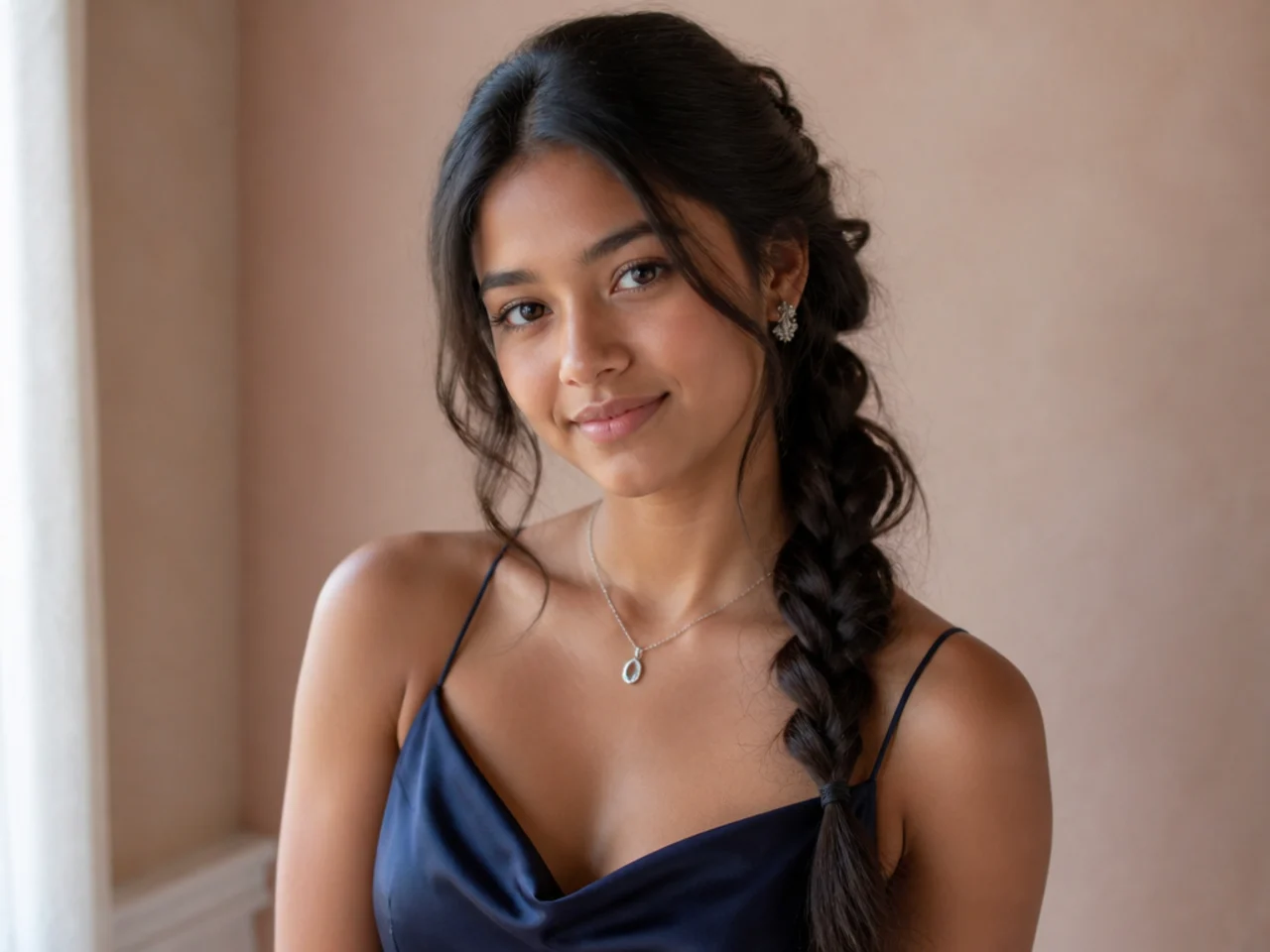
11. The Boho Face Framing Braids
Two thin braids at the temples with everything else left down. Thin braids catch the short face framing hairs into their stitches, which is exactly the hair that slides out of a thicker braid within the first hour.
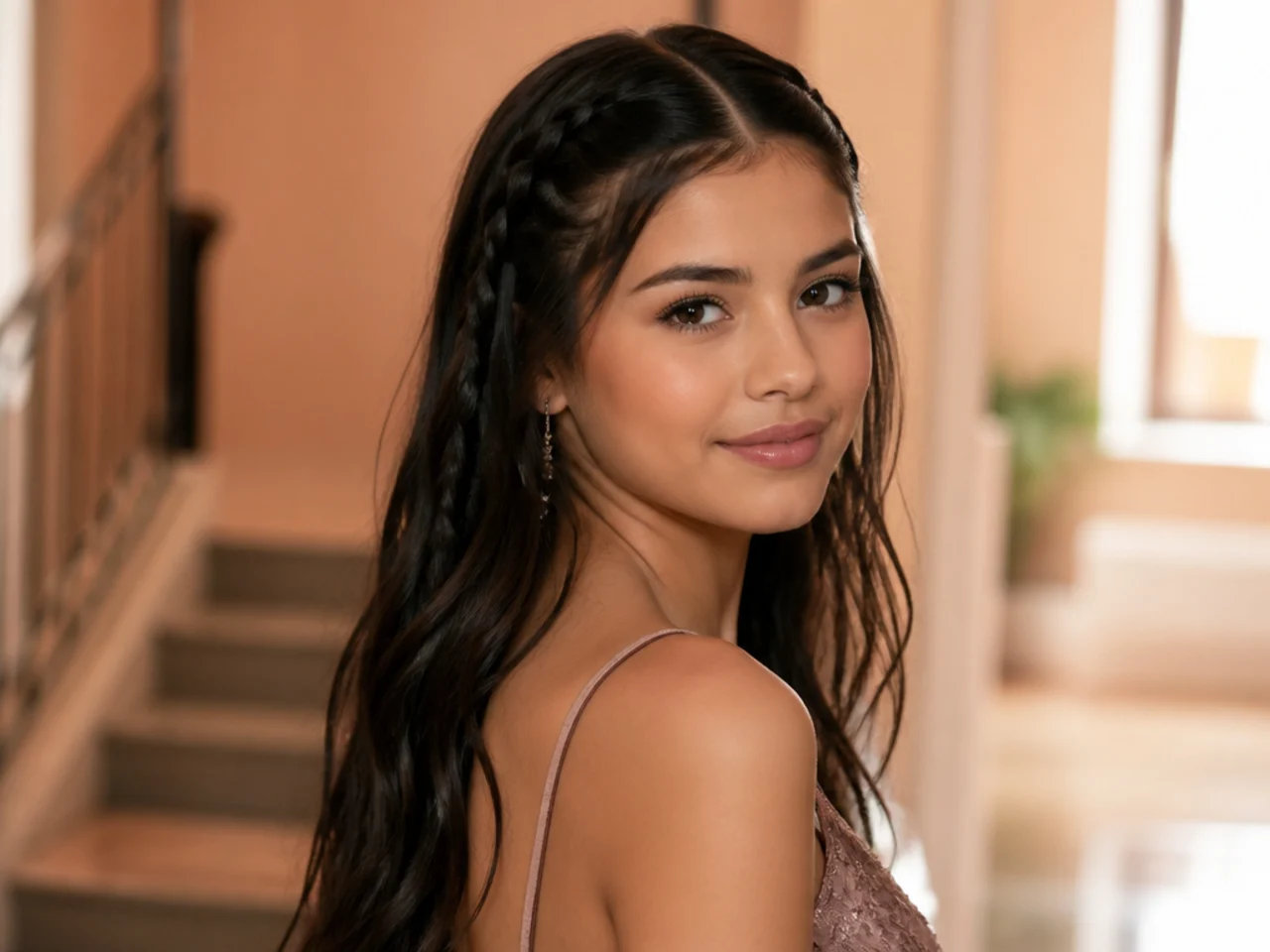
12. The Braided Bubble Pony
Short braided runs alternating with bubbles down the tail, a trick borrowed from braided high ponytails. Braids compress length while bubbles expand sideways, so alternating them lets a medium tail fill the vertical space a much longer one would.
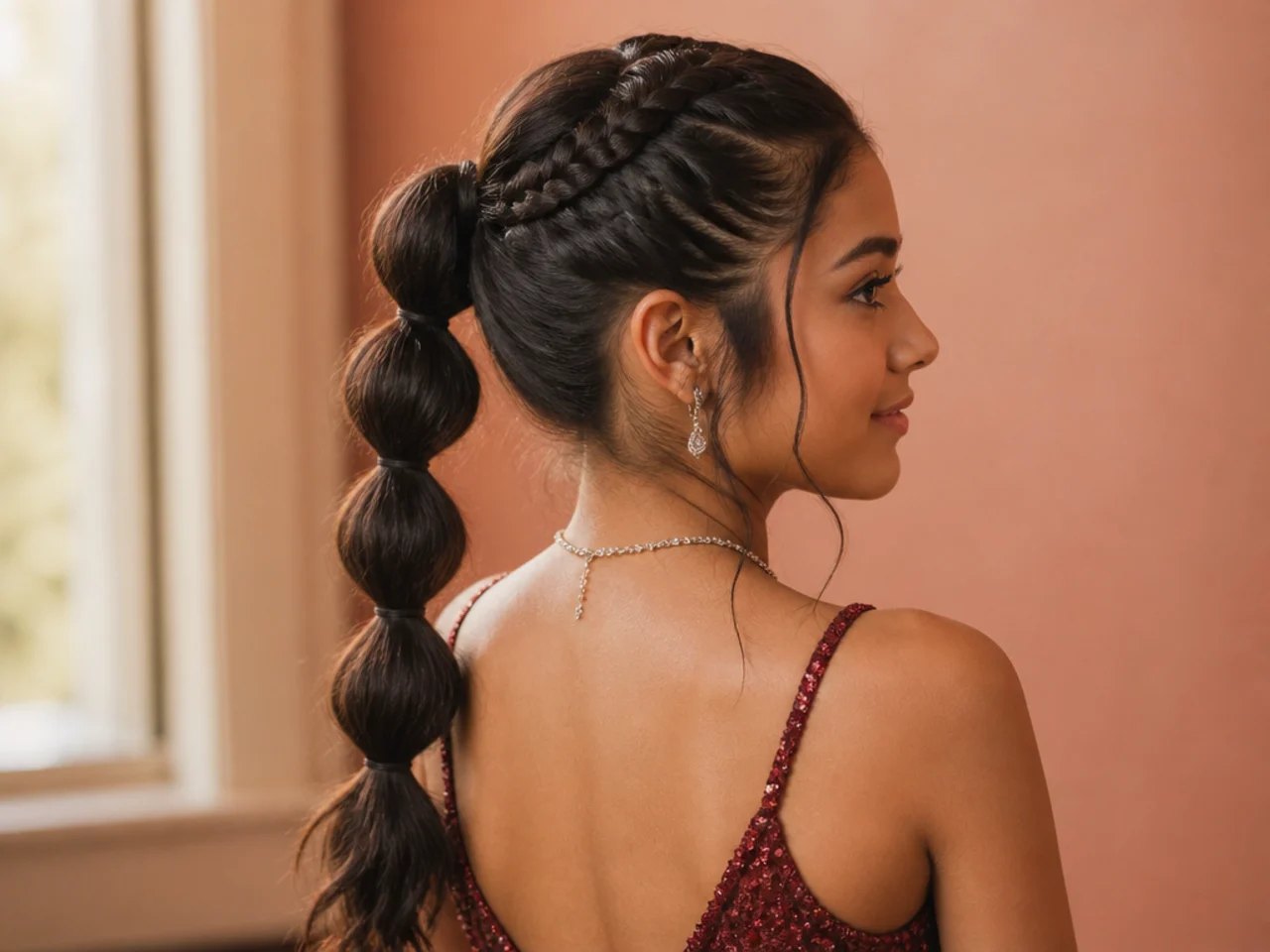
13. The Pull Through Braid
Not a braid at all — small ponytails stacked down the length, each one split and the section above pulled through it. Because nothing is being consumed by crossings, it reads far fuller and longer on medium hair than a real braid made from the same sections.
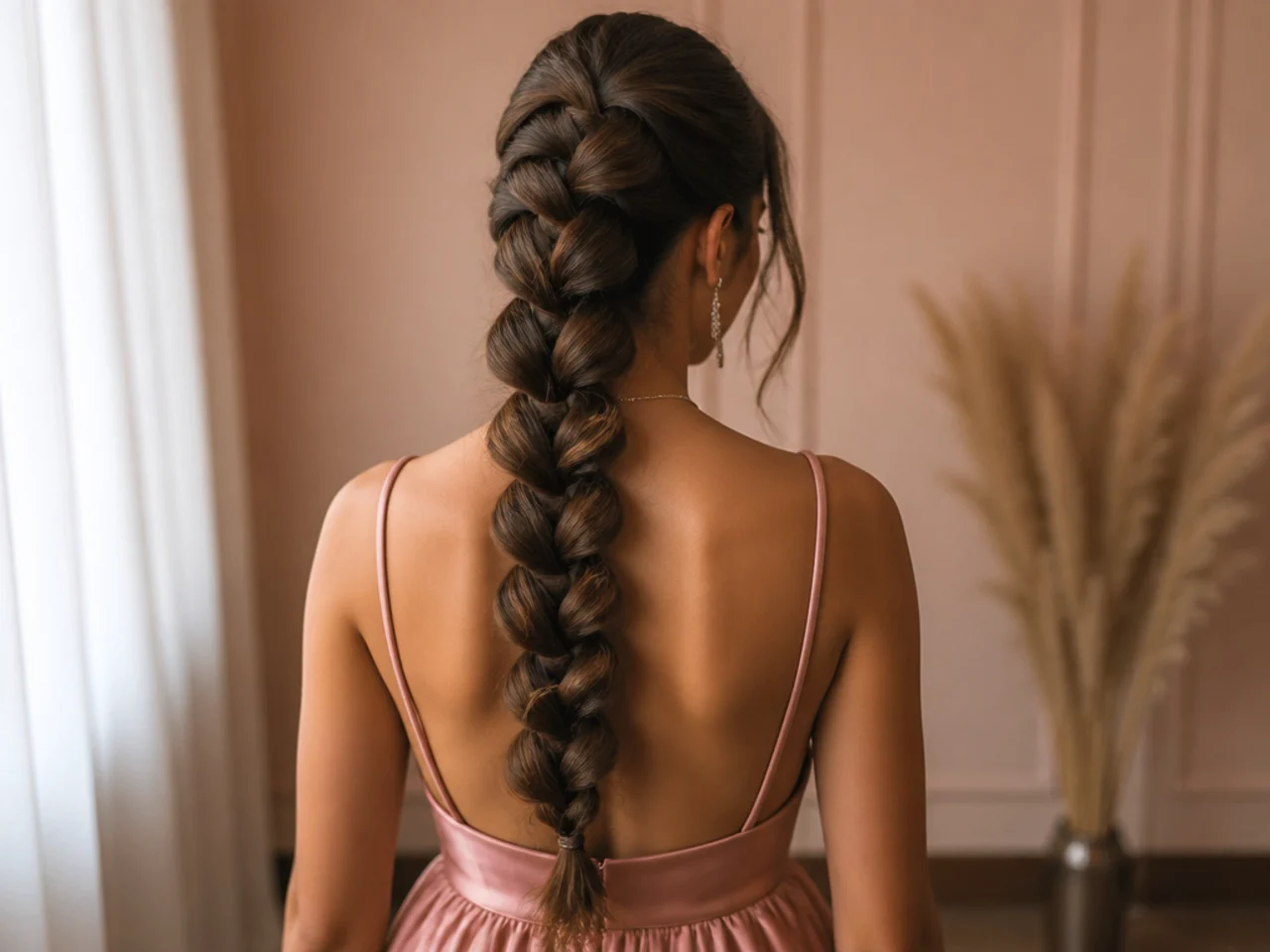
14. The Milkmaid Braid
Two braids taken up over the crown and pinned on the opposite side. Medium length is the shortest this works on, and only with thin braids, since a thick one uses too much length in its crossings to reach across the parting.
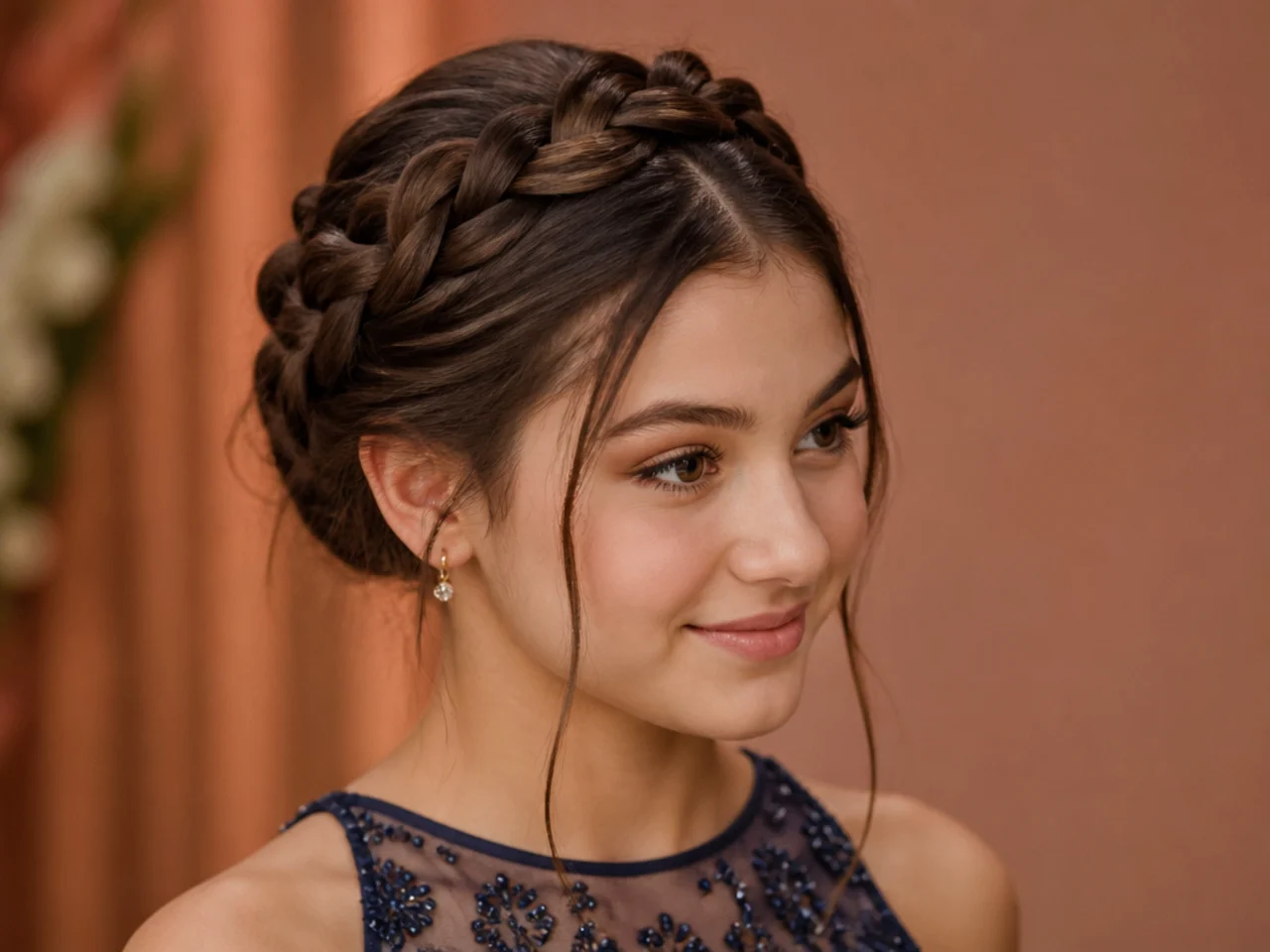
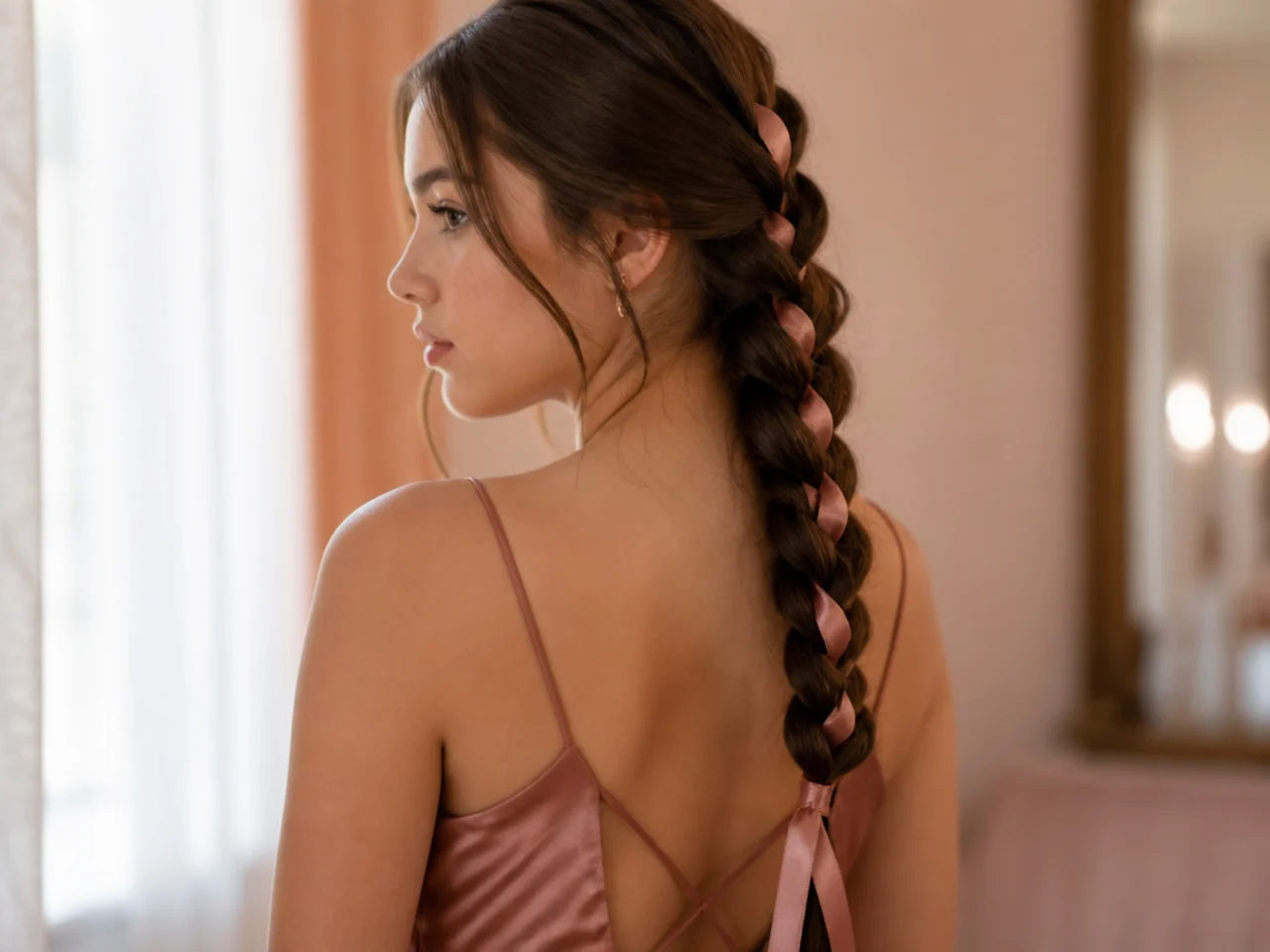
15. The Ribbon Woven Braid
A ribbon added as a fourth strand from the very first crossing. The ribbon carries on past the point where the hair ends, so a medium braid finishes in a long tie rather than in a blunt elastic at shoulder height.
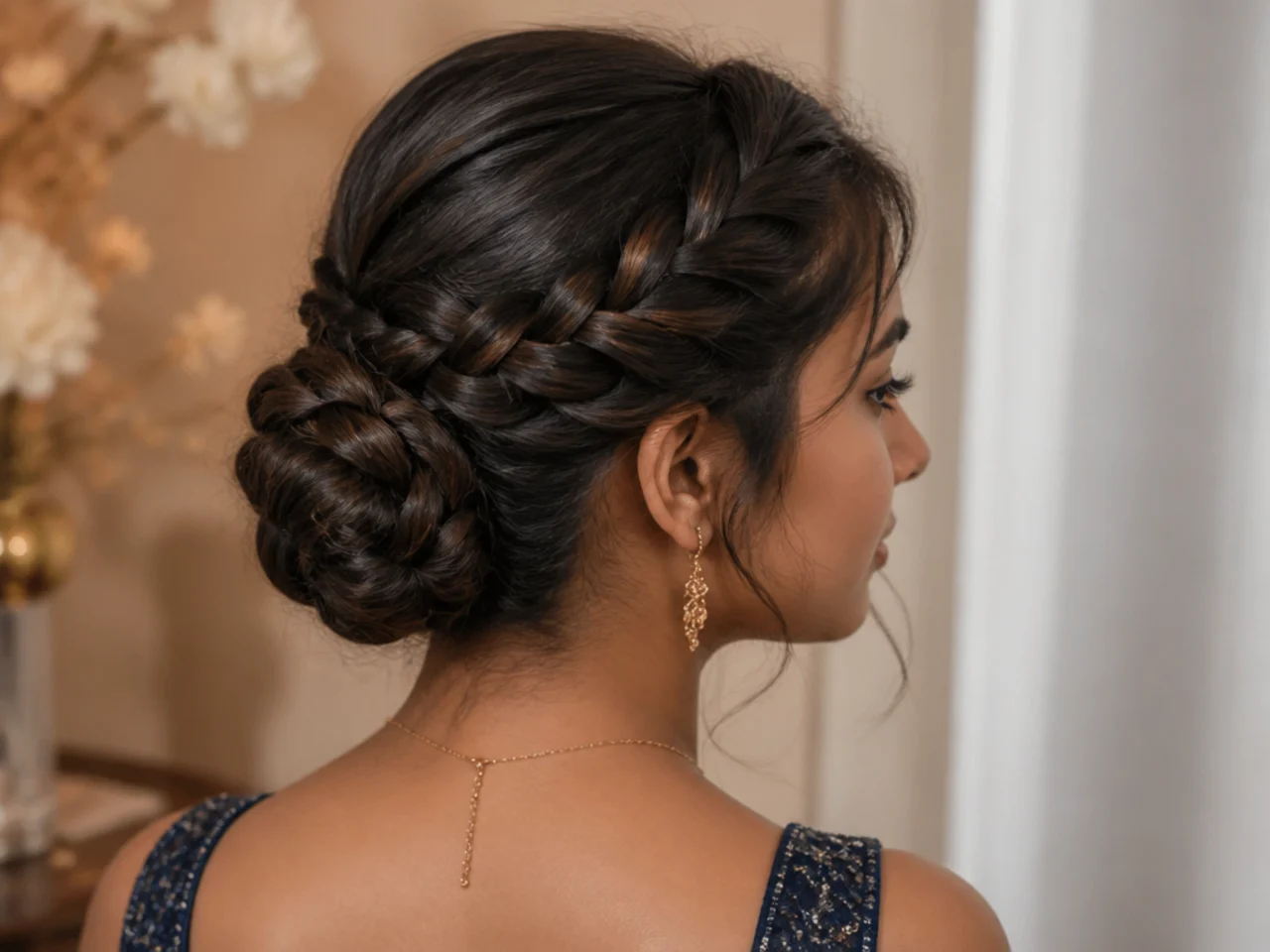
16. The Braided Chignon
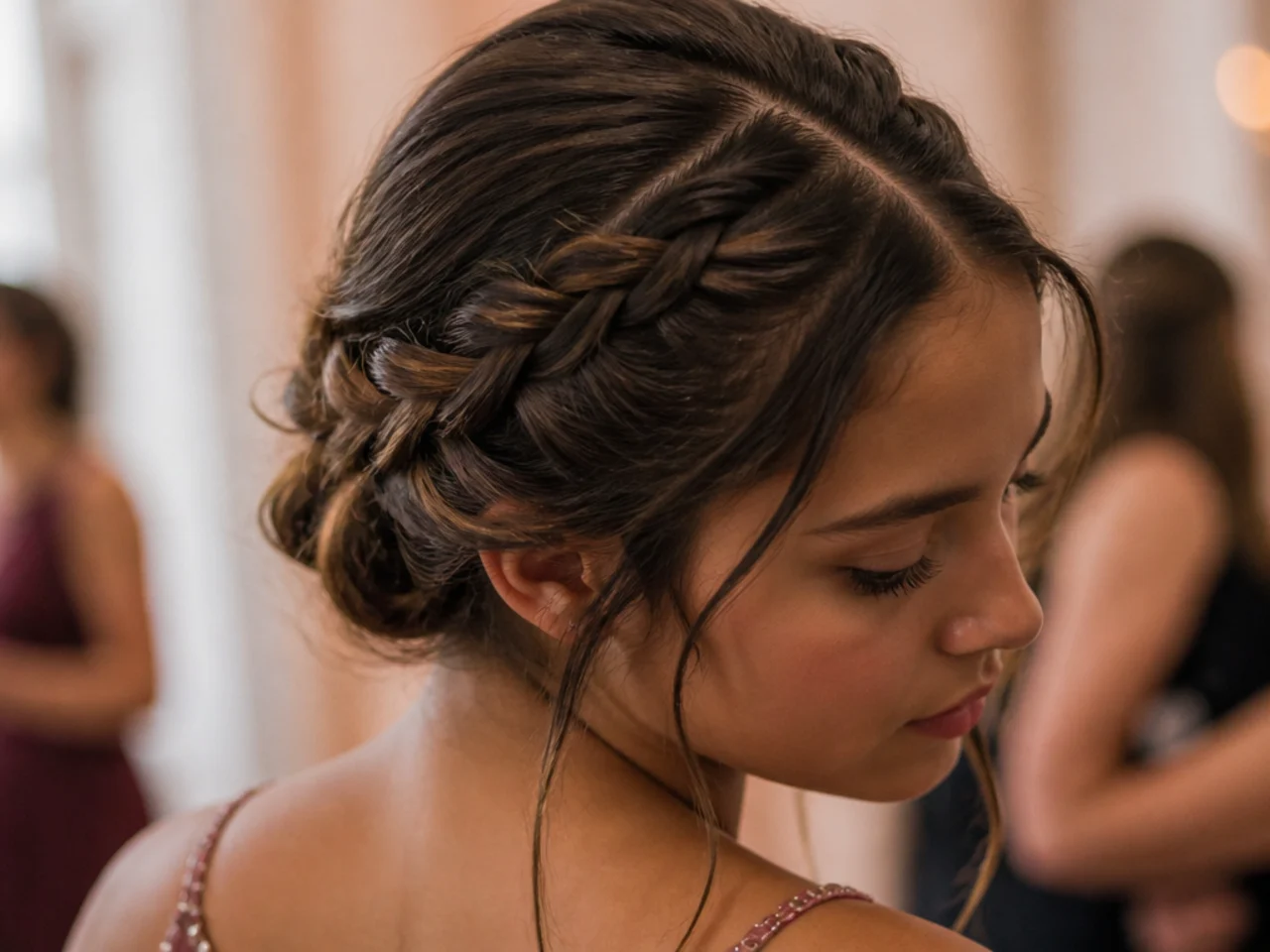
A braid pinned into a flat coil low at the back of the head. Push each pin into the braid's own stitches rather than into the surface, because a stitch resists movement in every direction and smooth hair only resists it in one.
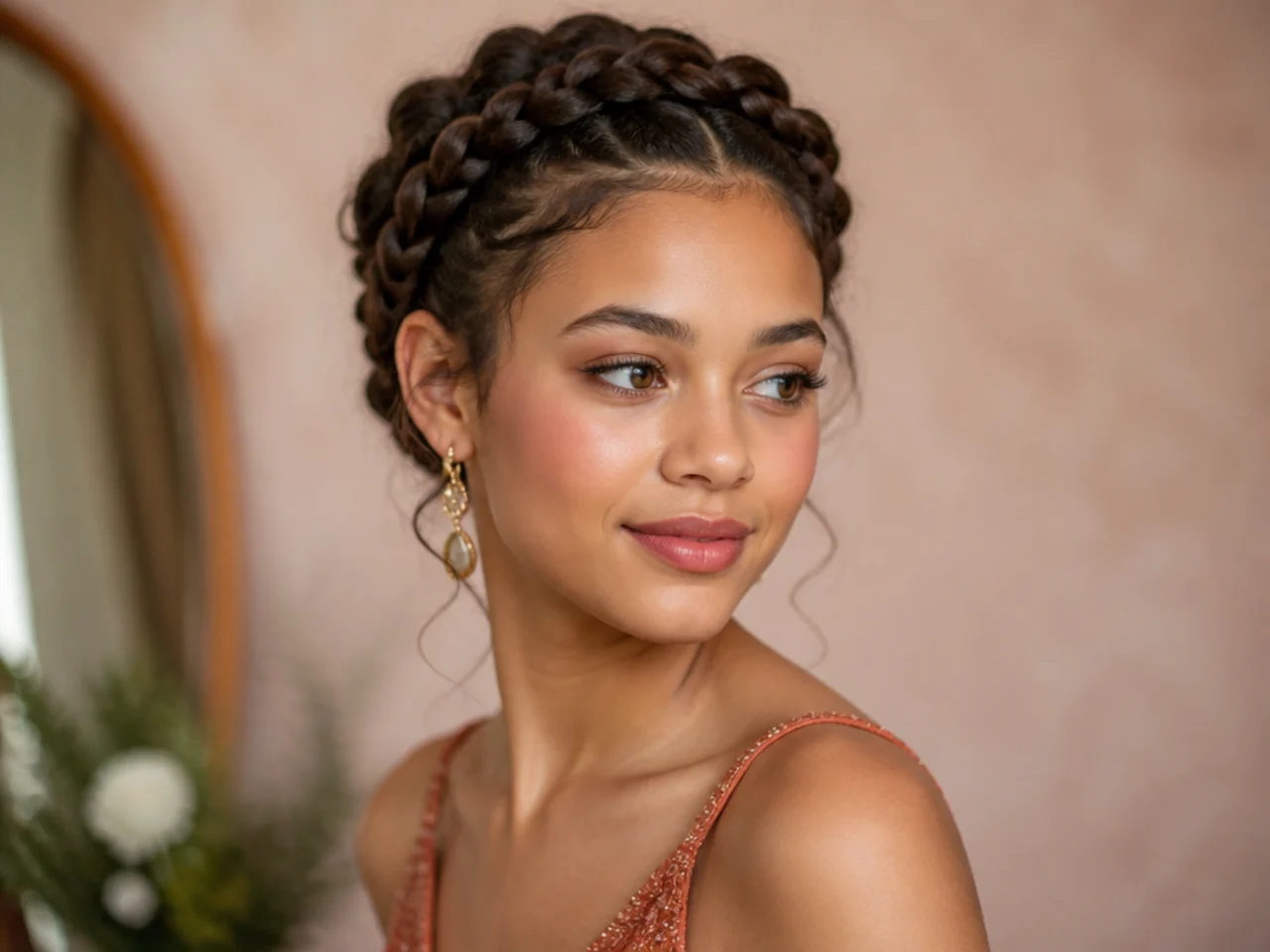
17. The Halo Braid
One braid taken all the way around the head. The circumference does not shrink to match your hair, and the braid keeps consuming length at every crossing, so on medium hair this needs either added length or a very thin section to reach the whole way.
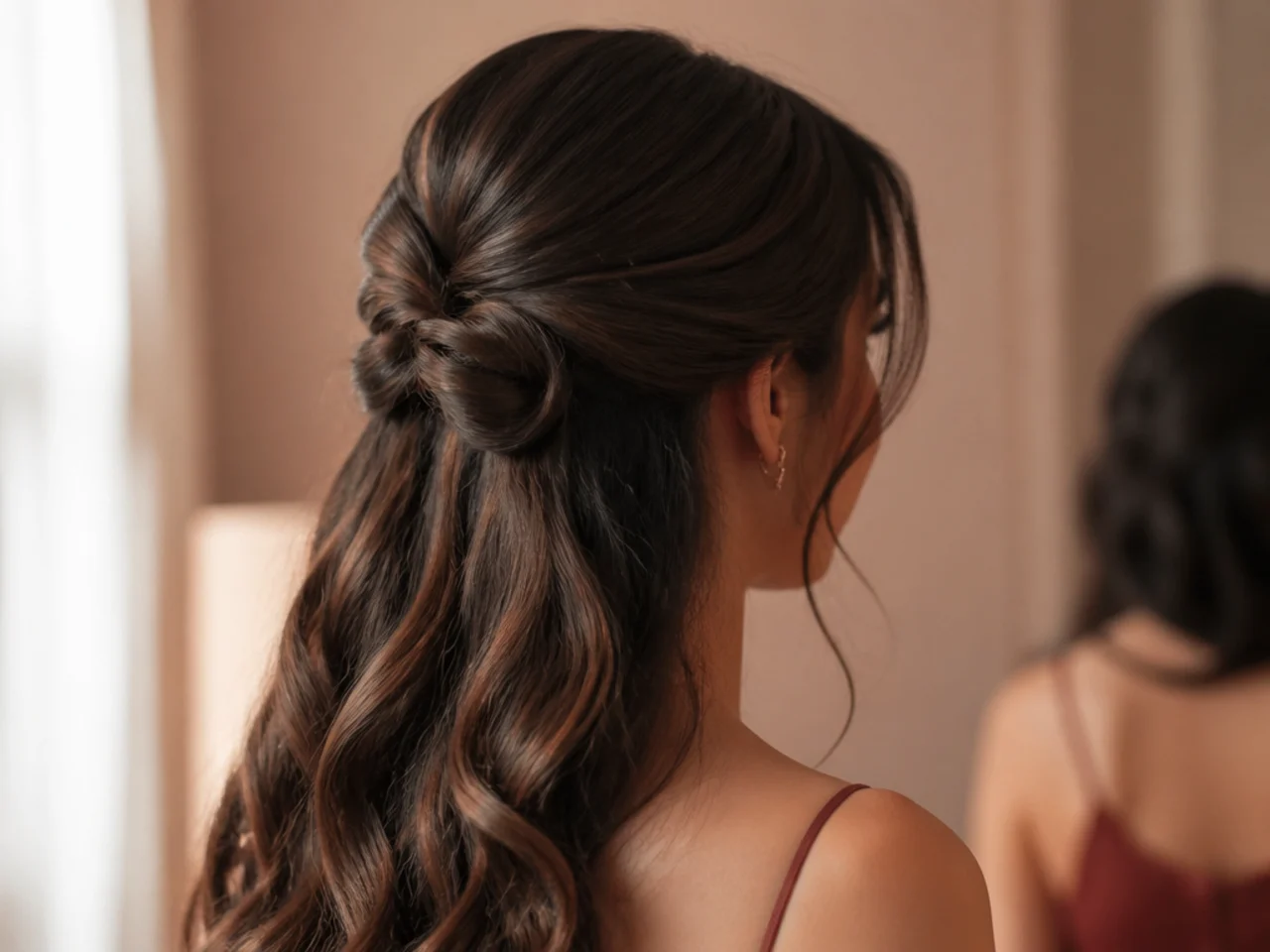
18. The Knotted Half Up
Two sections knotted over each other repeatedly down the back of the head. Each knot uses barely any length, so this reads as an intricate woven detail on hair far too short to carry a real braid the same distance.
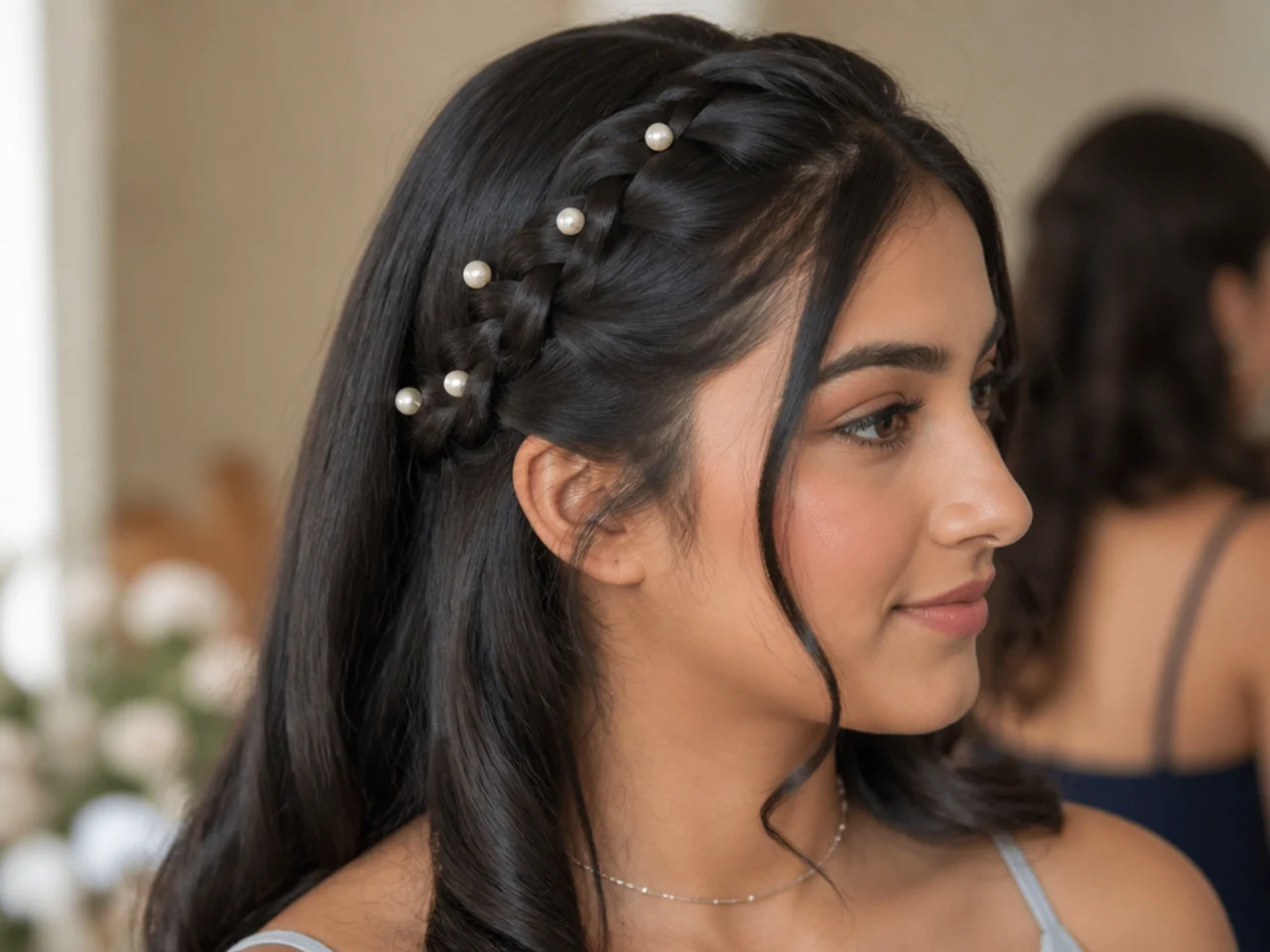
19. The Pearl Pinned Braid
Decorative pins set into the outer edge of the stitches. Run them along one side rather than down the centre, because the outside edge of each crossing is the only part deep enough to hold a pin that has a weight on the end of it.
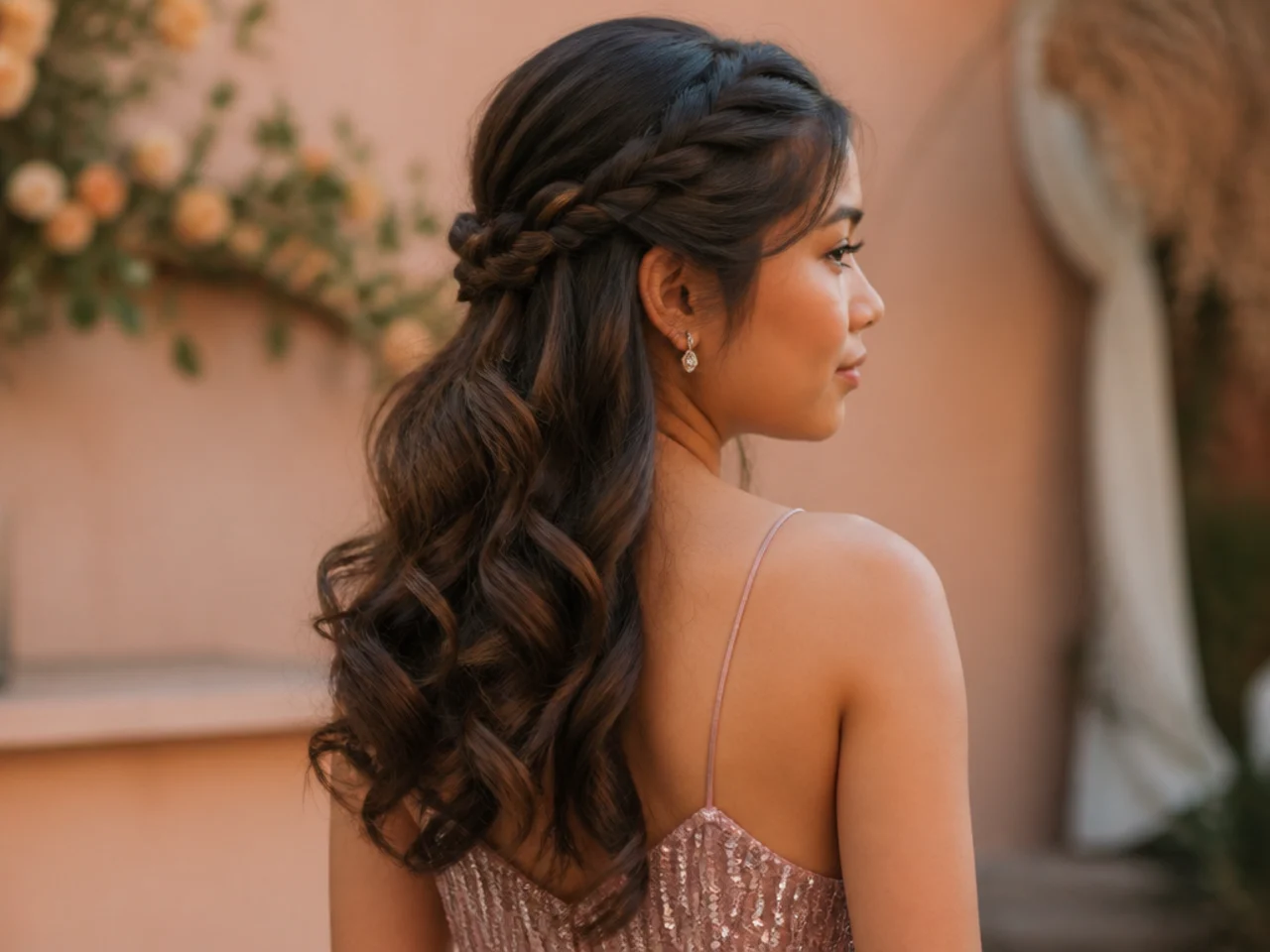
20. The Braid Into Loose Curls
Braided from the crown to about ear height, then released into curled lengths. Medium hair has enough for a braid or enough for curls, and splitting the head between them is how you get both without either looking cut short.
Styling and Upkeep
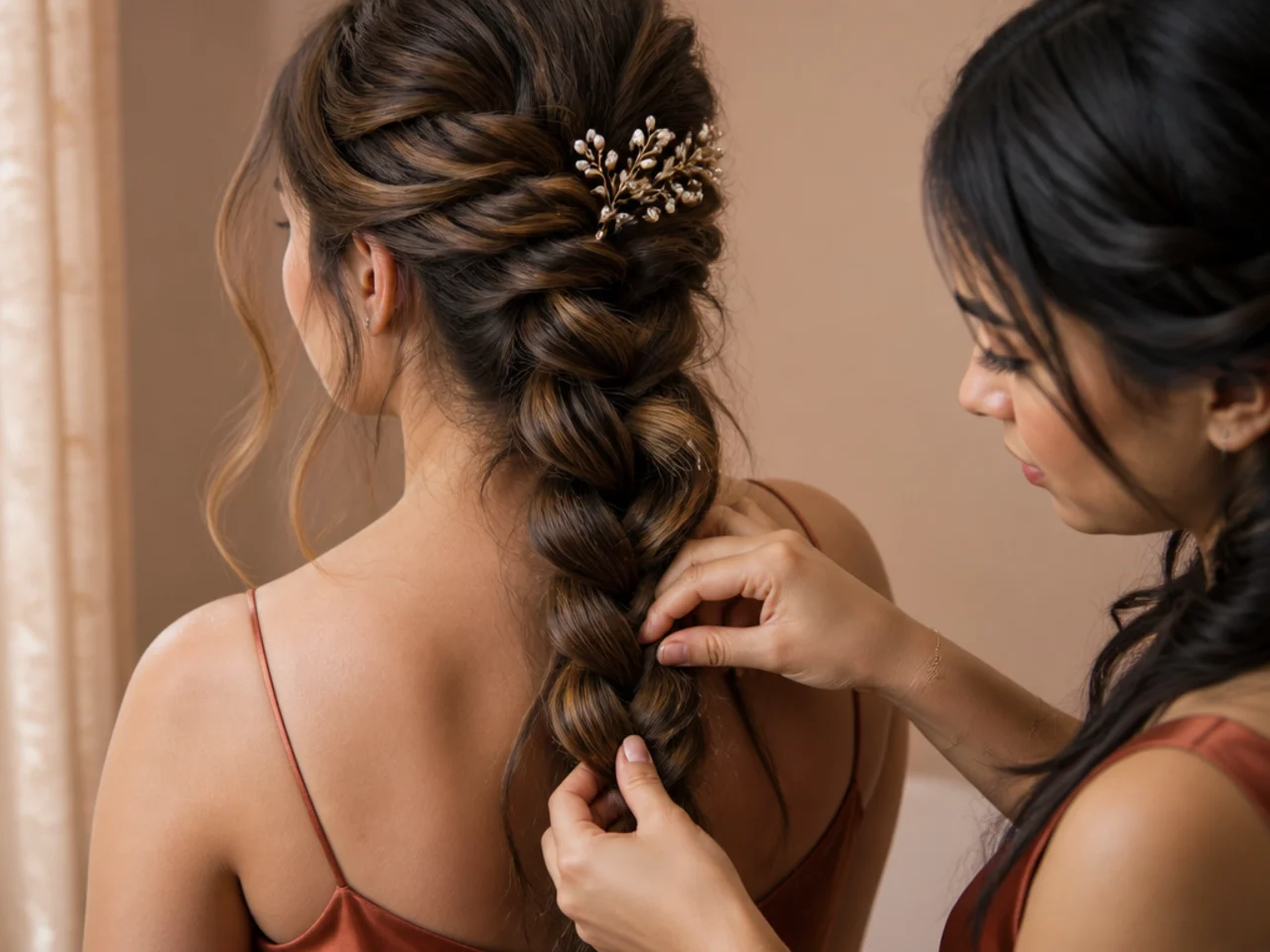
Braid on day two hair. Clean strands slide against each other, and a braid that slides loosens from the top downward, which is the failure you cannot fix without redoing it.
Pancake from the bottom upward. Working up means the section you are pulling is anchored by the tighter stitches above it.
Finish with a clear elastic and hide it. A thin band takes up almost no vertical space, so the braid appears to end in the hair rather than in hardware.
Mist the finished braid rather than the sections. Spraying as you go stiffens each strand and the crossings stop lying flat against each other.
Carry two spare pins. A braid comes apart at its pinned end long before the stitches themselves fail.
Mistakes to Avoid
Braiding freshly washed hair. It is the single most common reason a braid that looked right at six o'clock has slid loose by eight.
Choosing a style that has to circle the head. A halo or a milkmaid needs a fixed circumference of hair, and medium length rarely has it without help.
Pancaking before the elastic is on. Without a fixed end, the width you pull out simply unravels the crossings behind it.
Making one thick braid instead of two thin ones. Thick braids consume more length per stitch, so the single braid finishes higher and looks stubby.
Spraying between crossings. Product applied mid braid glues sections in position before the shape is finished, and the stitches never settle flat.
FAQ
Is medium length long enough? For most of these, yes. Only the styles that circle the head struggle.
Why does my braid look thin? It has not been pancaked, and it is probably too thick a section to begin with.
Clean hair or not? Day two. A smooth cuticle lets every stitch slide loose.
Final Thoughts
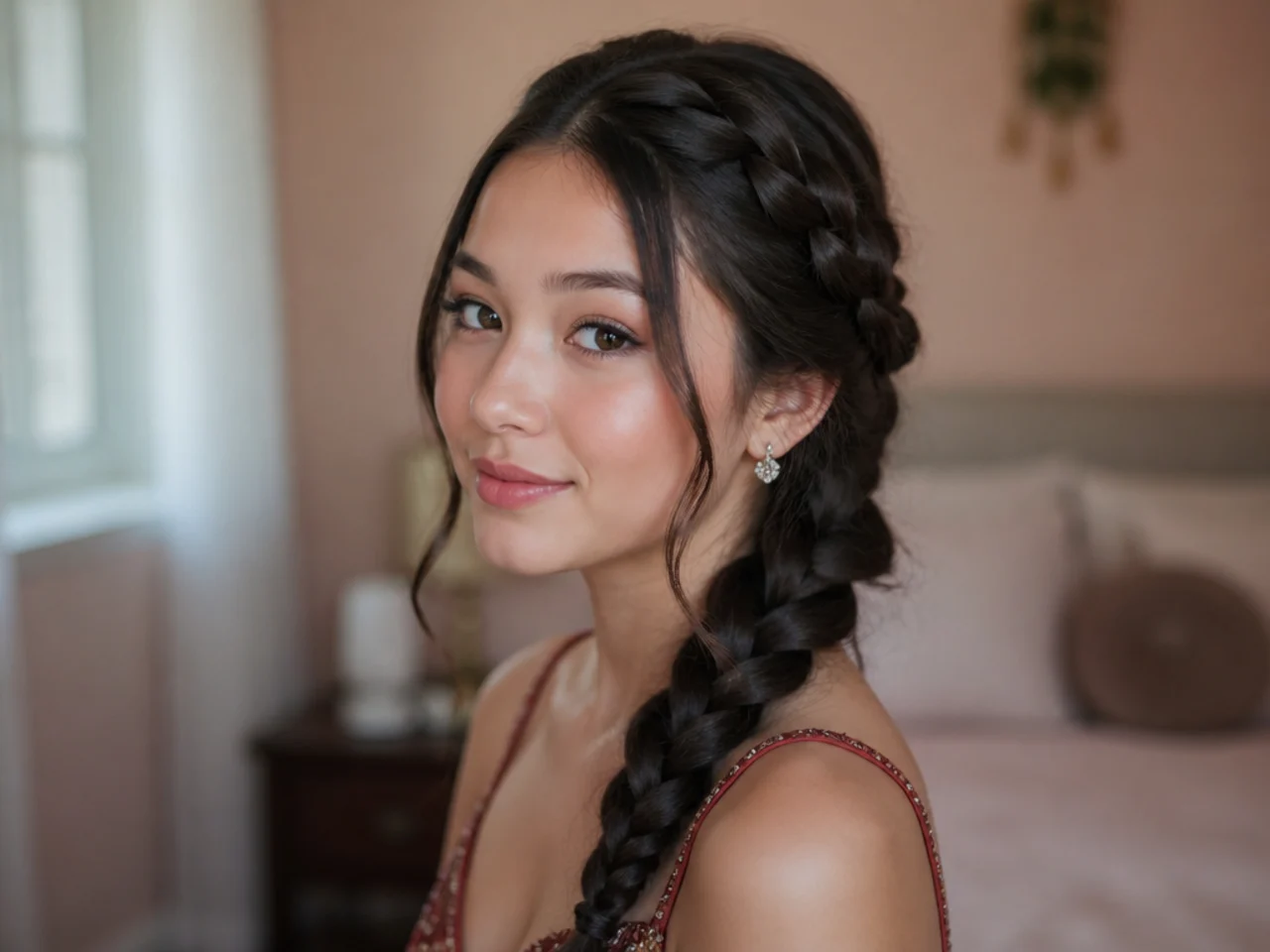
Choose the braid by what it has to reach rather than by how it looks in a photograph taken on waist length hair. Anything anchored into a bun or a ponytail hides its own ending, which is the only real problem medium length has.
For the textured version see hoco hairstyles for curly hair, and if you are working with less length see hoco hairstyles for short hair. More in Occasion Hair.
Frequently asked questions
Related posts
See all posts
15 Graduation Hair Ideas for the Updo Versus Down Decision
Read more
15 Straight Hair Wedding Looks to Save
Read more
20 Gorgeous Prom Looks for Straight Hair
Read more