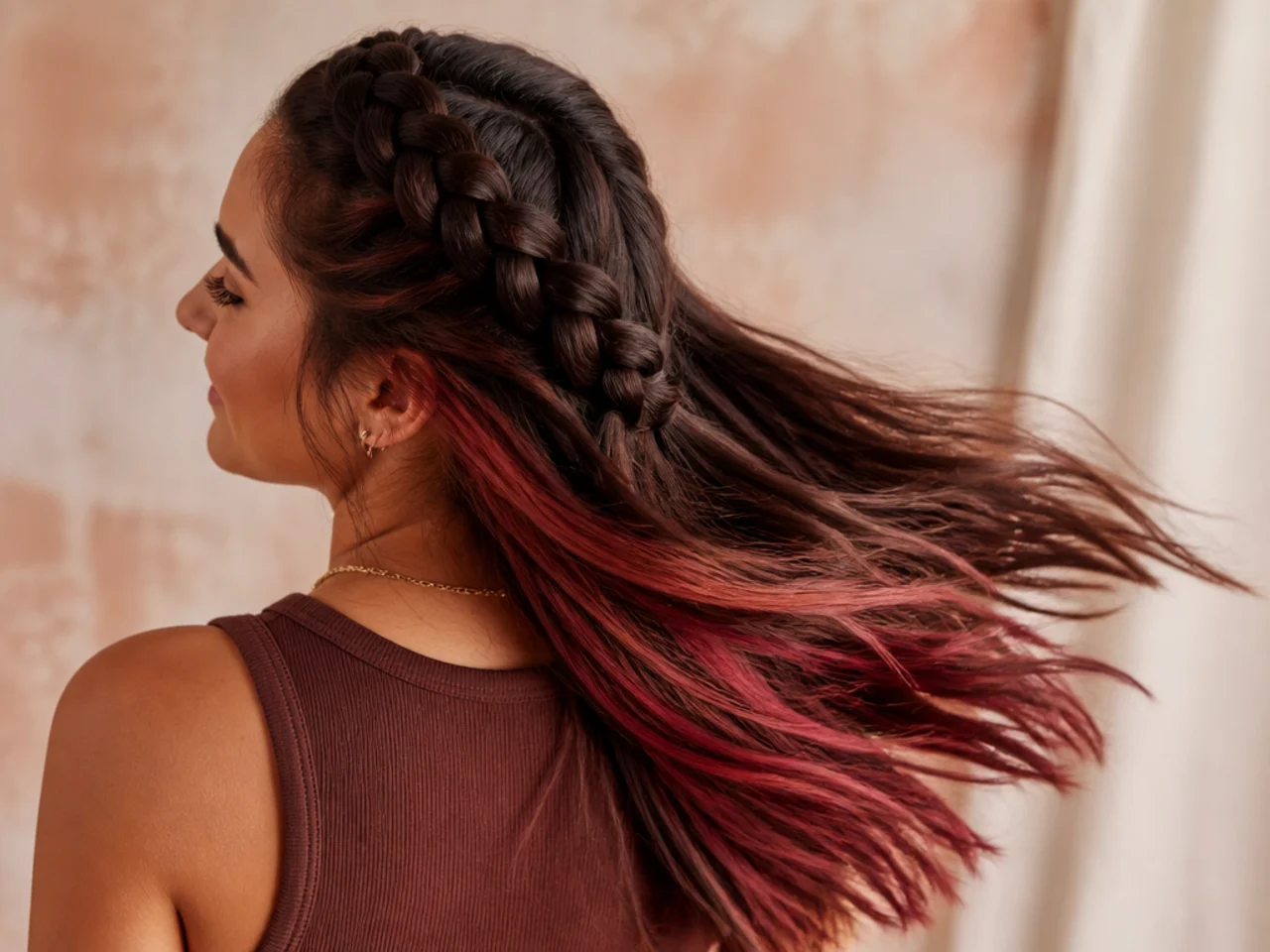
20 Peekaboo Hair Color Braids We Love
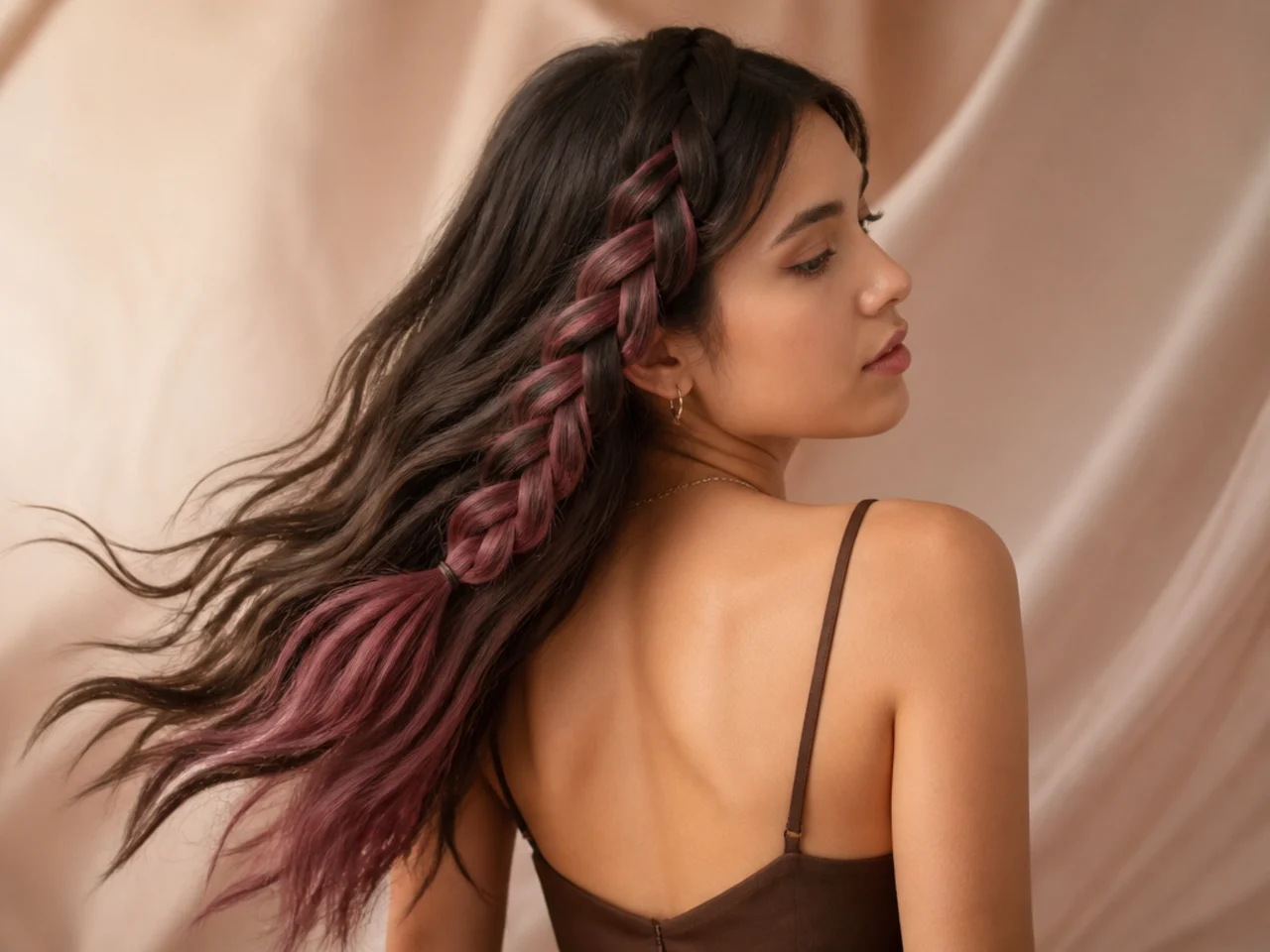
Twenty braided peekaboo looks, and the thing braiding does that no other style does — it turns a hidden panel into a repeating pattern. Which means the placement rules change completely.
In this article · 26
- Distribute, Do Not Block
- The 20 Braided Looks
- 1. Dutch Braid with a Split Panel
- 2. Two Dutch Braids
- 3. Fishtail with Vivid Panel
- 4. Boxer Braids with Colour
- 5. Braided Crown
- 6. Half-Up Braid
- 7. Braided Ponytail
- 8. Rope Twist with Two Tones
- 9. Braided Bun
- 10. Side Braid with Pastel
- 11. Four-Strand Braid
- 12. Milkmaid Braids
- 13. Braid with a Nape Panel
- 14. Braided Half-Up on Curly Hair
- 15. Two-Tone Braid
- 16. Braid with Colour on the Ends Only
- 17. Loose Pancaked Braid
- 18. Braid Wrapped into a Low Bun
- 19. Braid on a Reverse Peekaboo
- 20. Braid Down One Side Only
- Controlling How Much Shows
- Mistakes to Avoid
- FAQ
- Final Thoughts
Braiding does something to a peekaboo that no other style does: it turns a hidden panel into a repeating pattern.
Every time the coloured section crosses over, a piece of colour surfaces. Down a full braid that produces a rhythm — colour, base, colour, base — which reads as deliberate design rather than as a flash of hidden dye.
It also means the placement rules from every other article here do not apply.
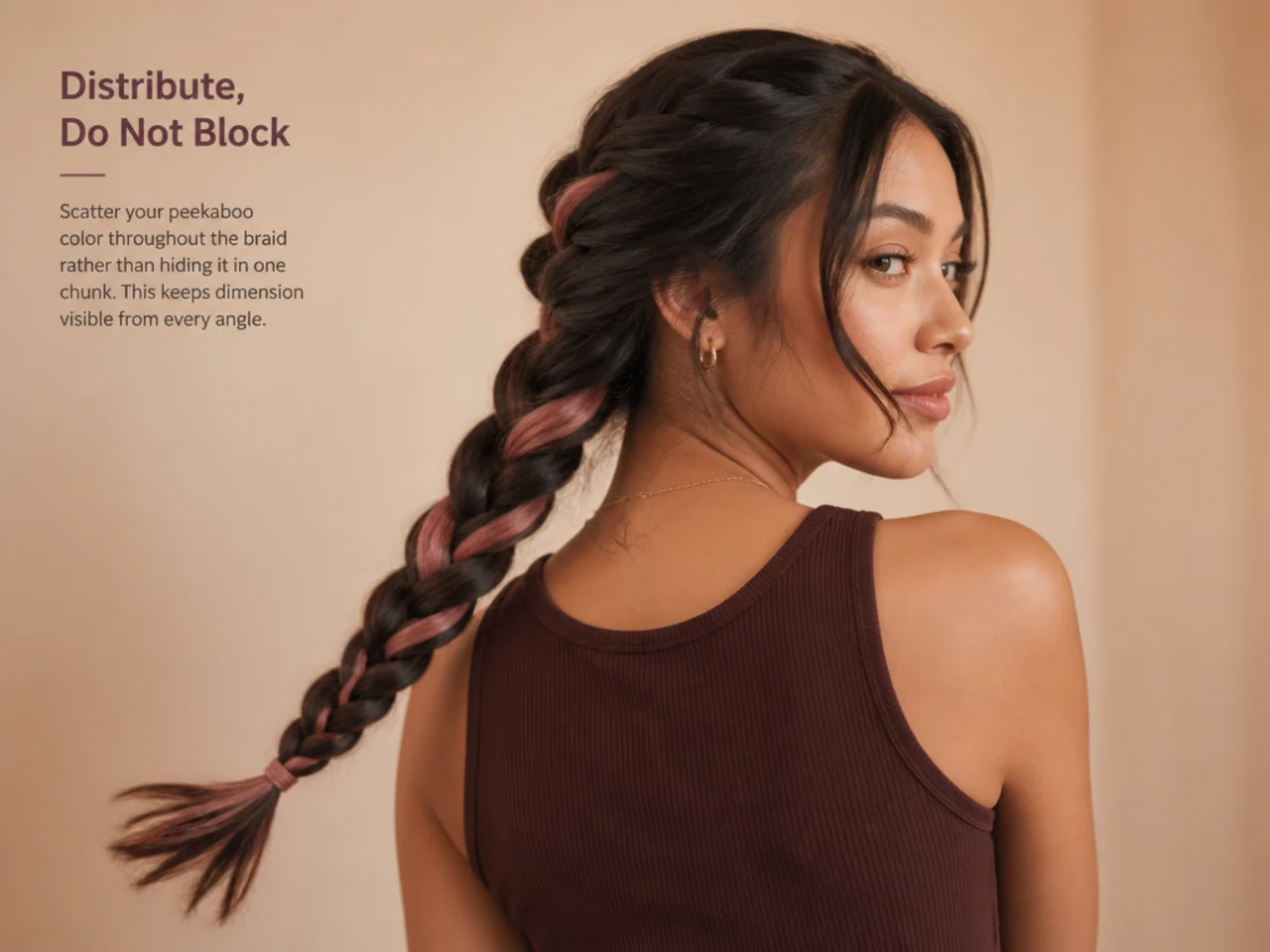
Distribute, Do Not Block
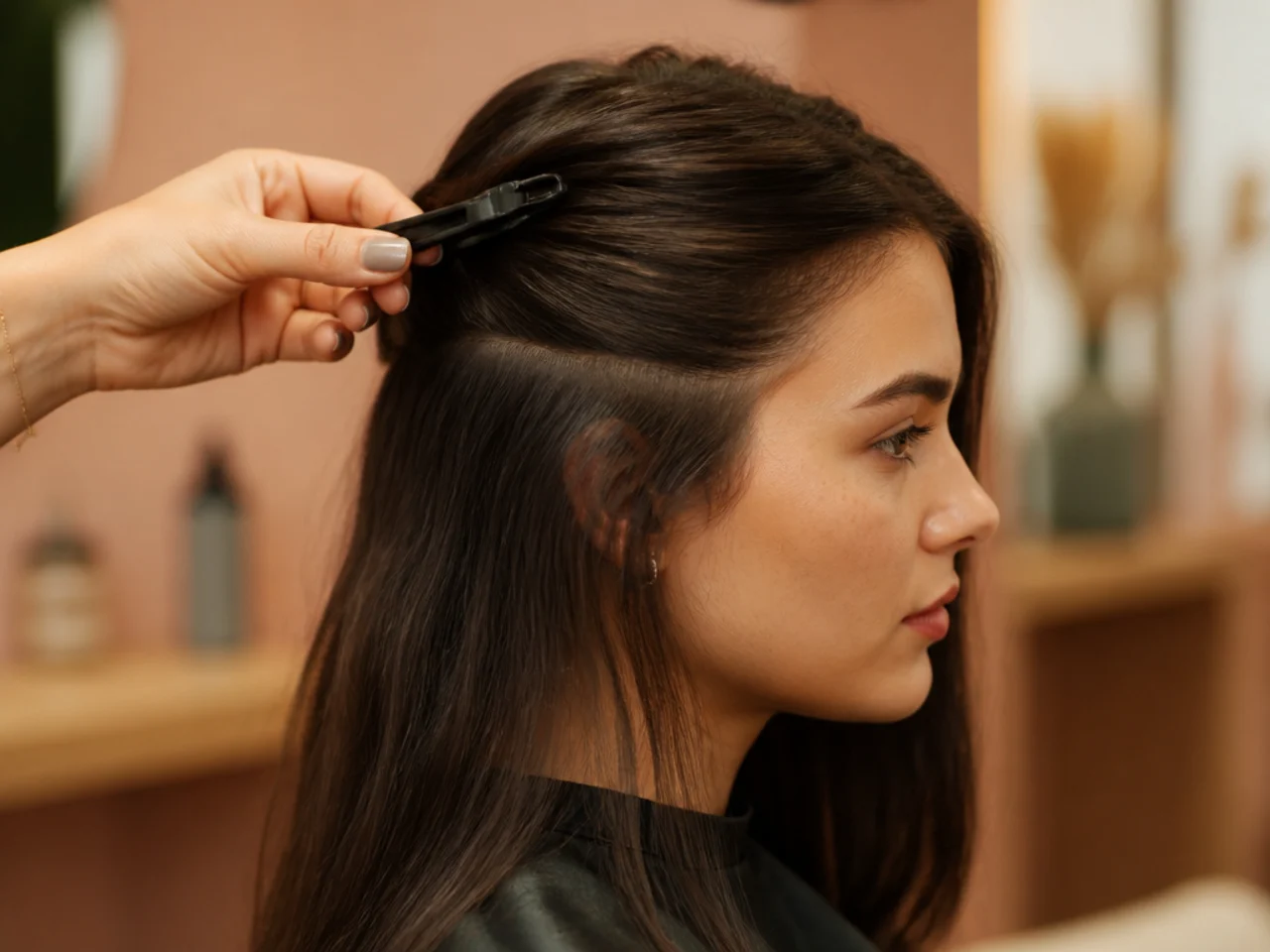
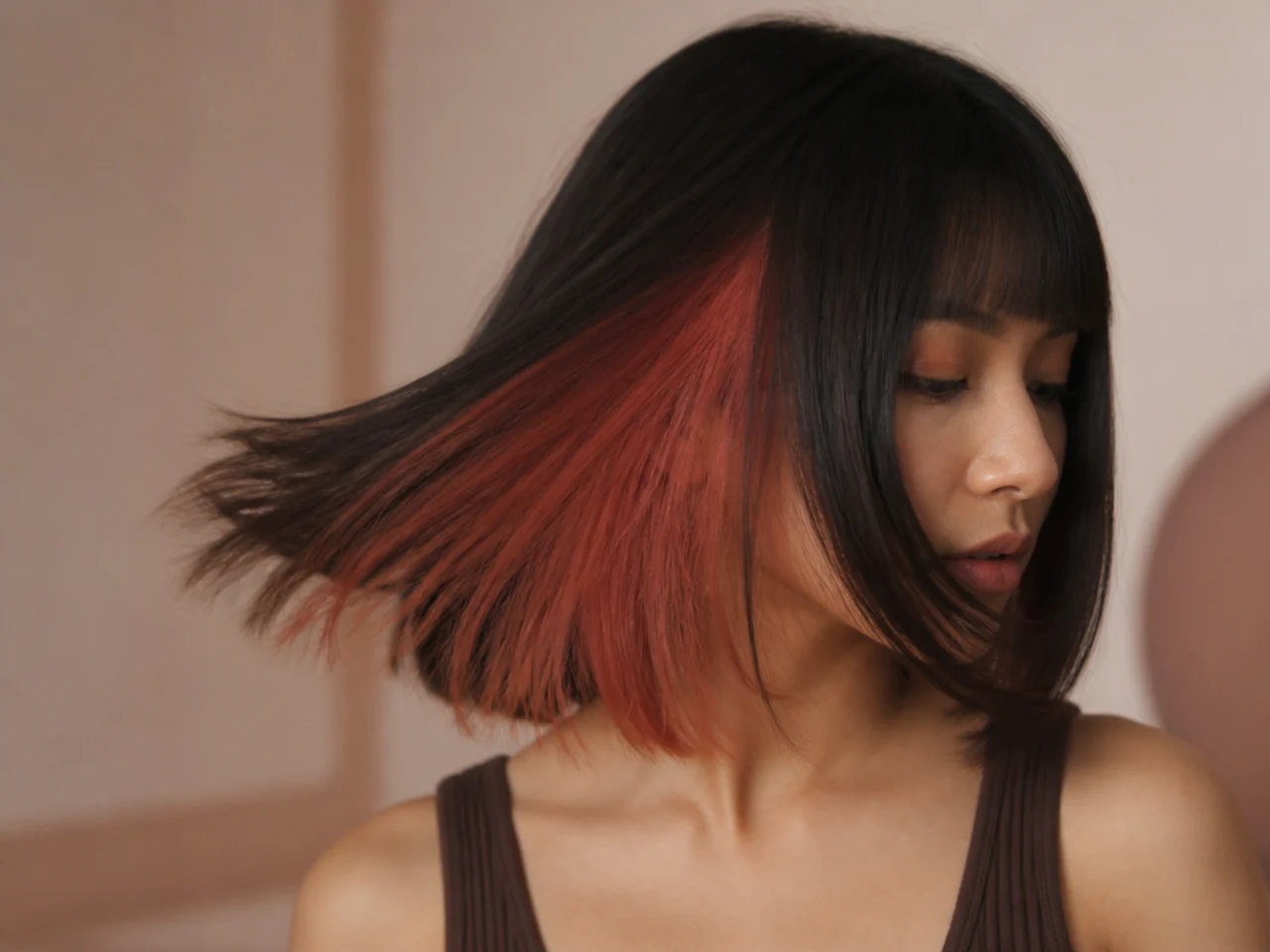
For an unbraided peekaboo the panel is one solid section, because you want it to appear as one clean piece of colour.
Braided, that same solid block produces one thick clump of colour that dominates one side of the plait and looks accidental. What you want instead is colour spread across two or three thinner sections, so it enters the braid at different points and surfaces repeatedly.
Say this at the consultation, because it is the opposite of what a colourist will do by default. The phrase that works is: I want to braid this, so can the colour be split rather than in one block?
Dutch braids show it best. The strands cross under, so the braid sits proud of the head and the coloured sections come to the surface. A French braid crosses over and tucks colour inward, showing considerably less.
The 20 Braided Looks
1. Dutch Braid with a Split Panel
The core version. Colour surfaces at every crossover.
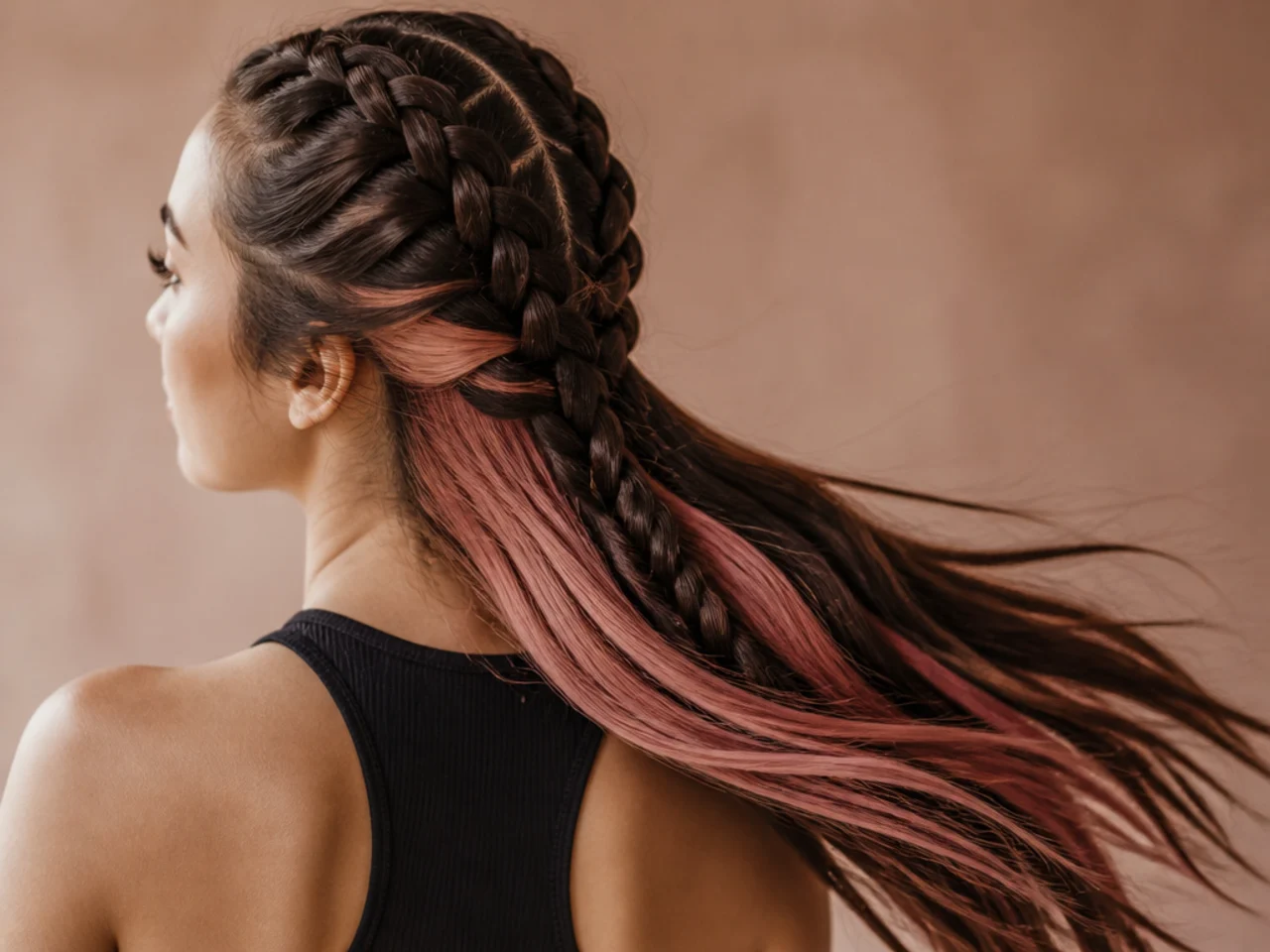
2. Two Dutch Braids
Symmetrical pattern on both sides.
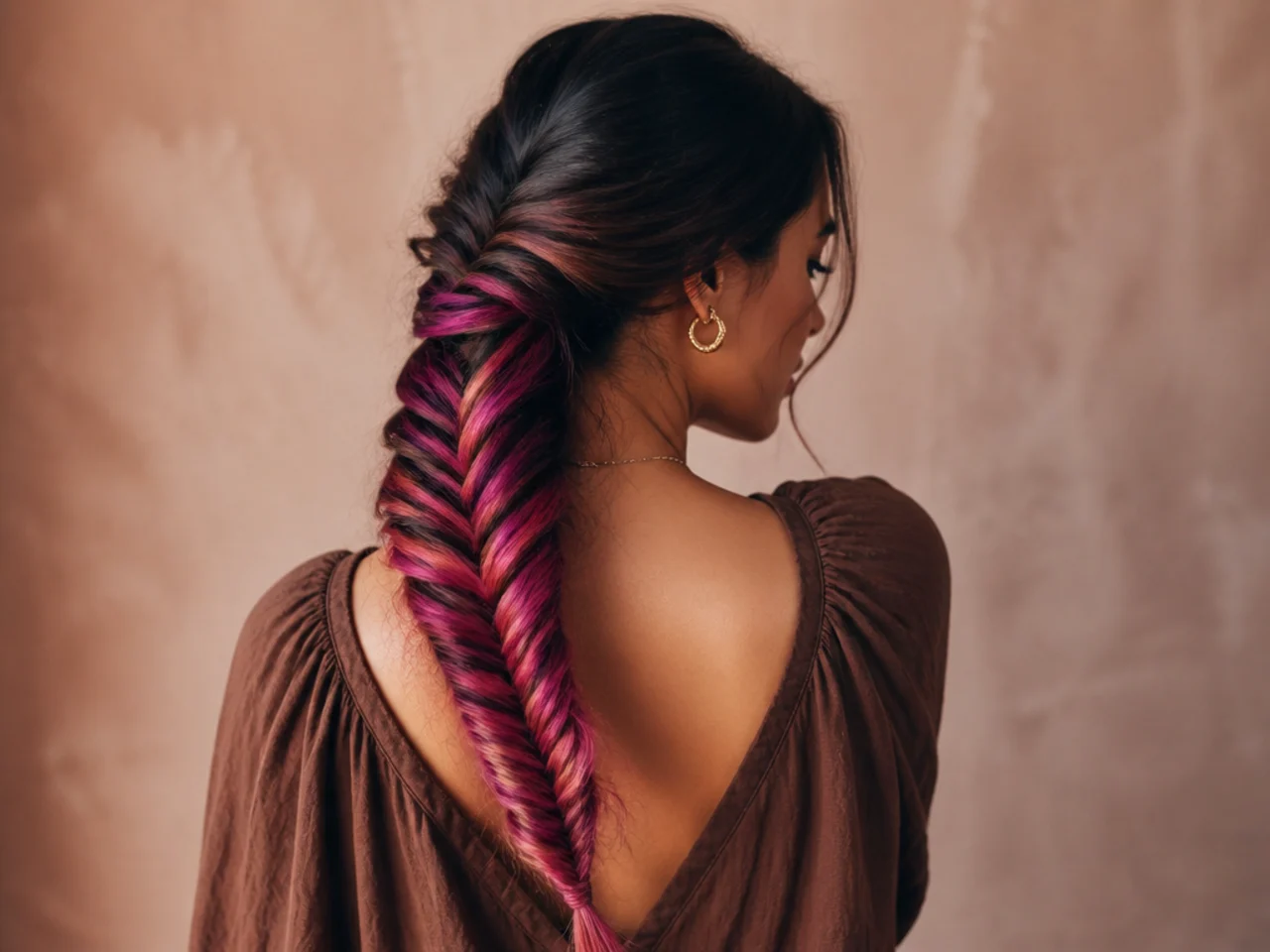
3. Fishtail with Vivid Panel
The finest pattern available — colour appears in small regular pieces.
4. Boxer Braids with Colour
Tight to the scalp, colour running the full length of each.
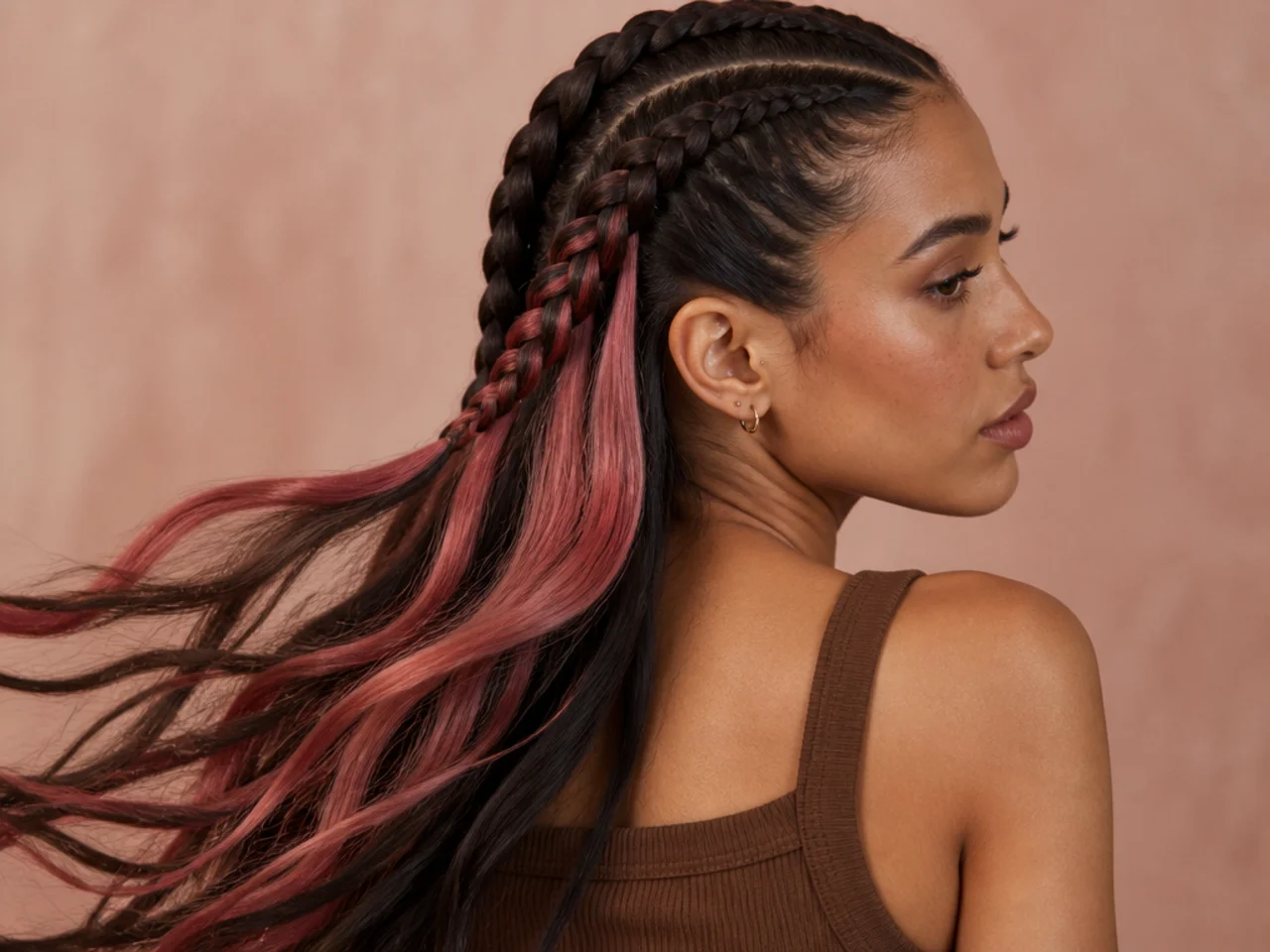
5. Braided Crown
Colour wrapping around the head as a band.
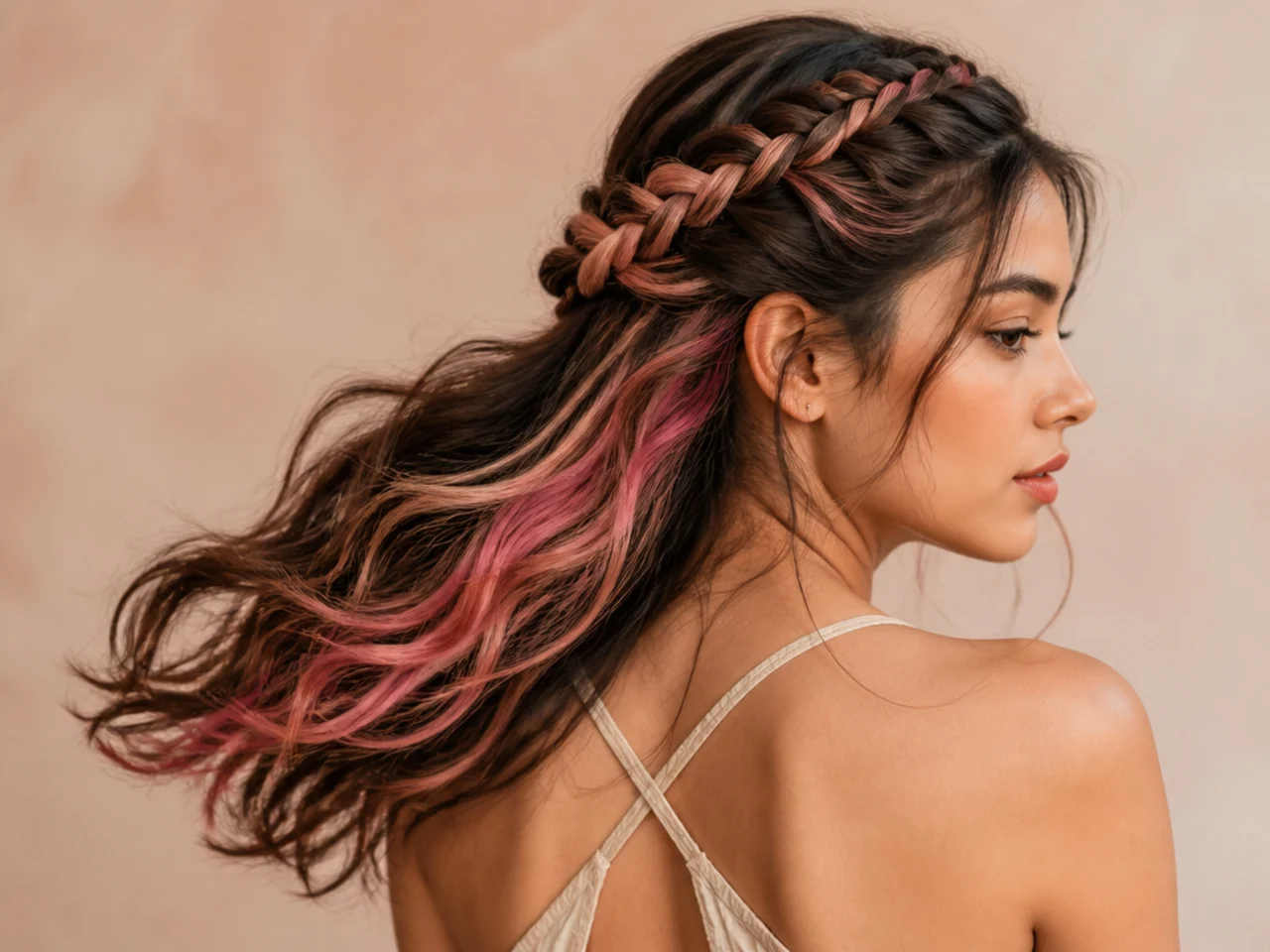
6. Half-Up Braid
A single braid through the top section, colour showing in the plait.
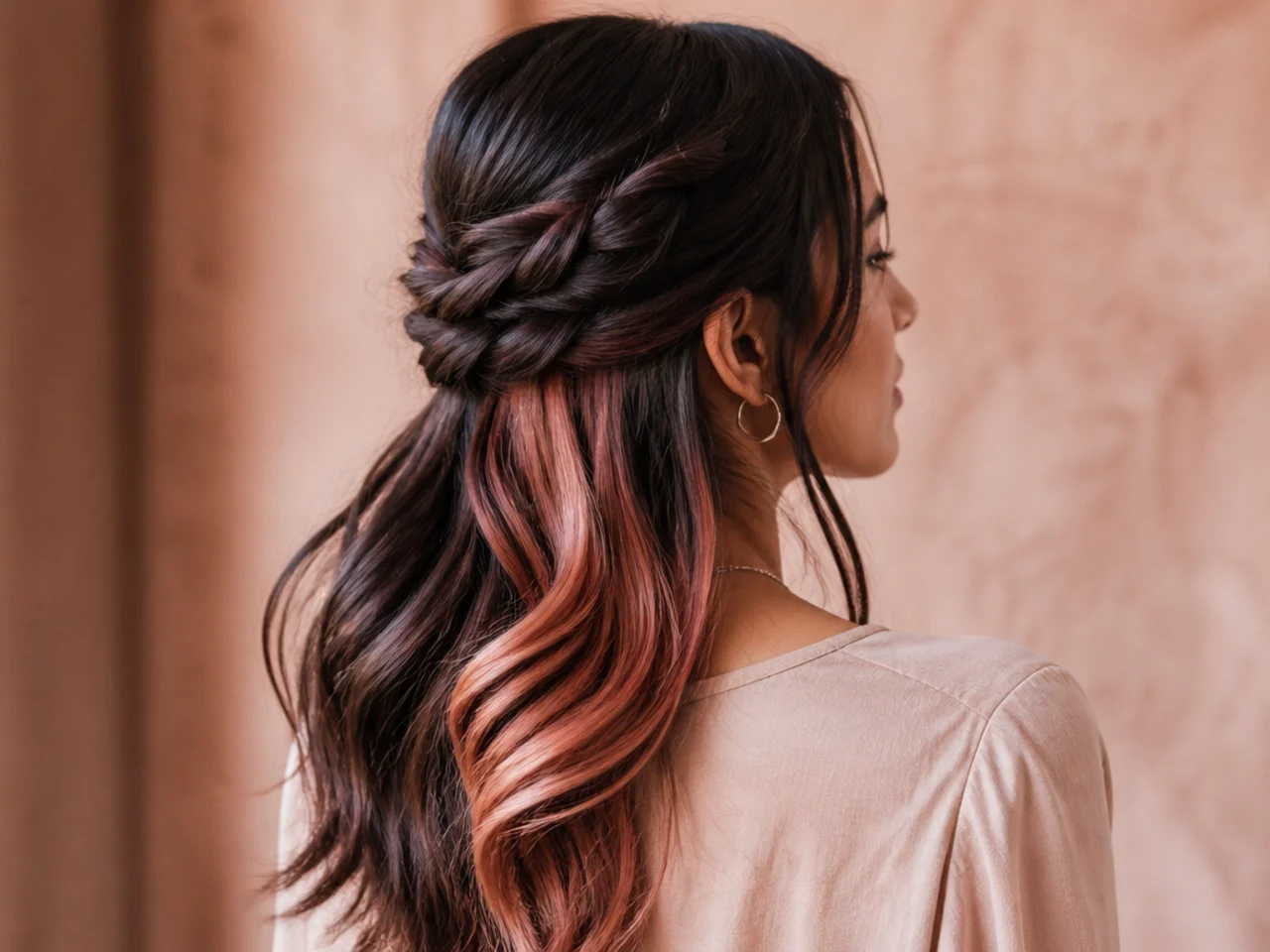
7. Braided Ponytail
Gathered first, then braided — colour concentrates below the elastic.
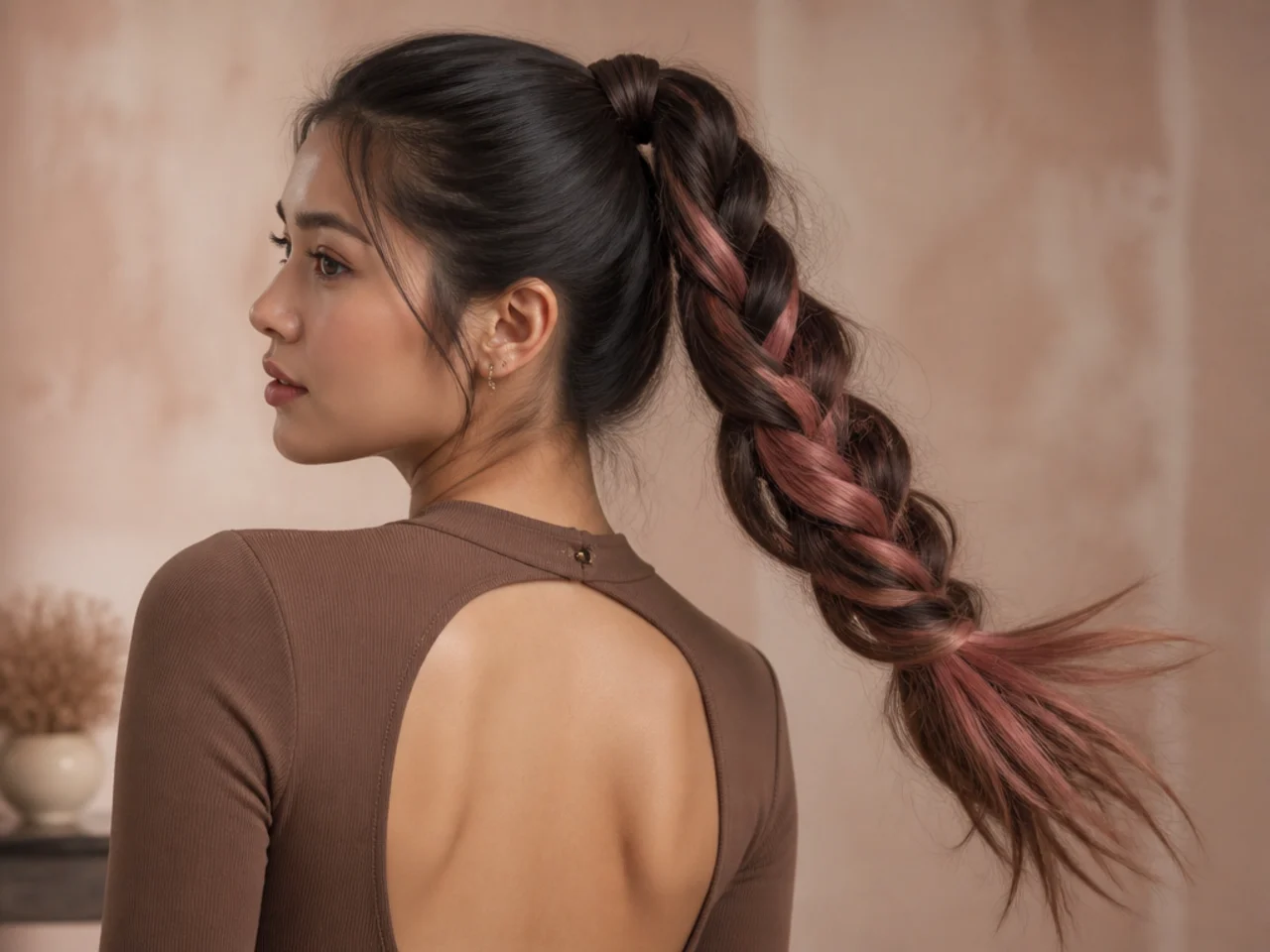
8. Rope Twist with Two Tones
Two sections twisted, one coloured. The simplest way to show a panel.
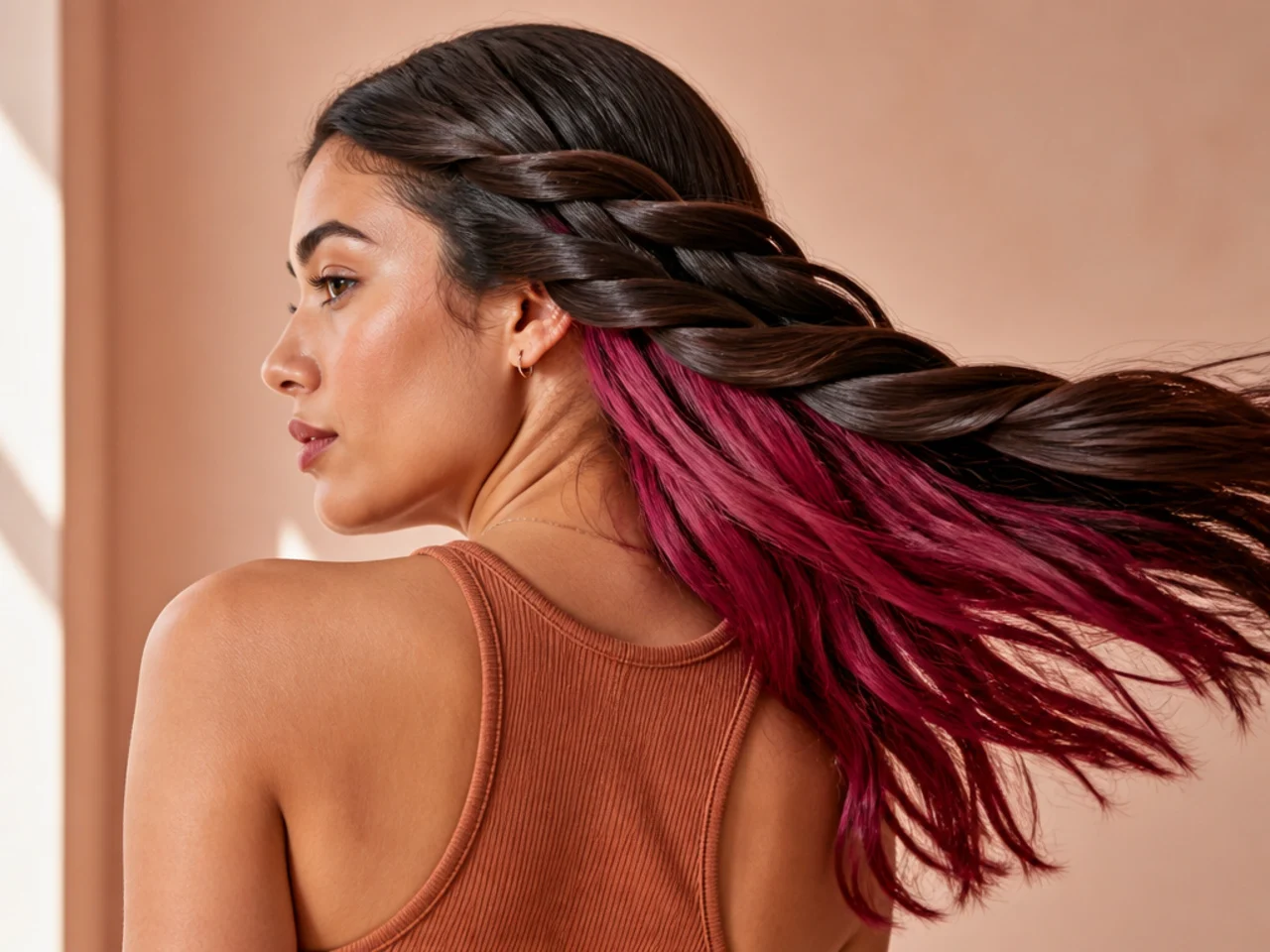
9. Braided Bun
Braided, then coiled. Colour spirals through the shape.
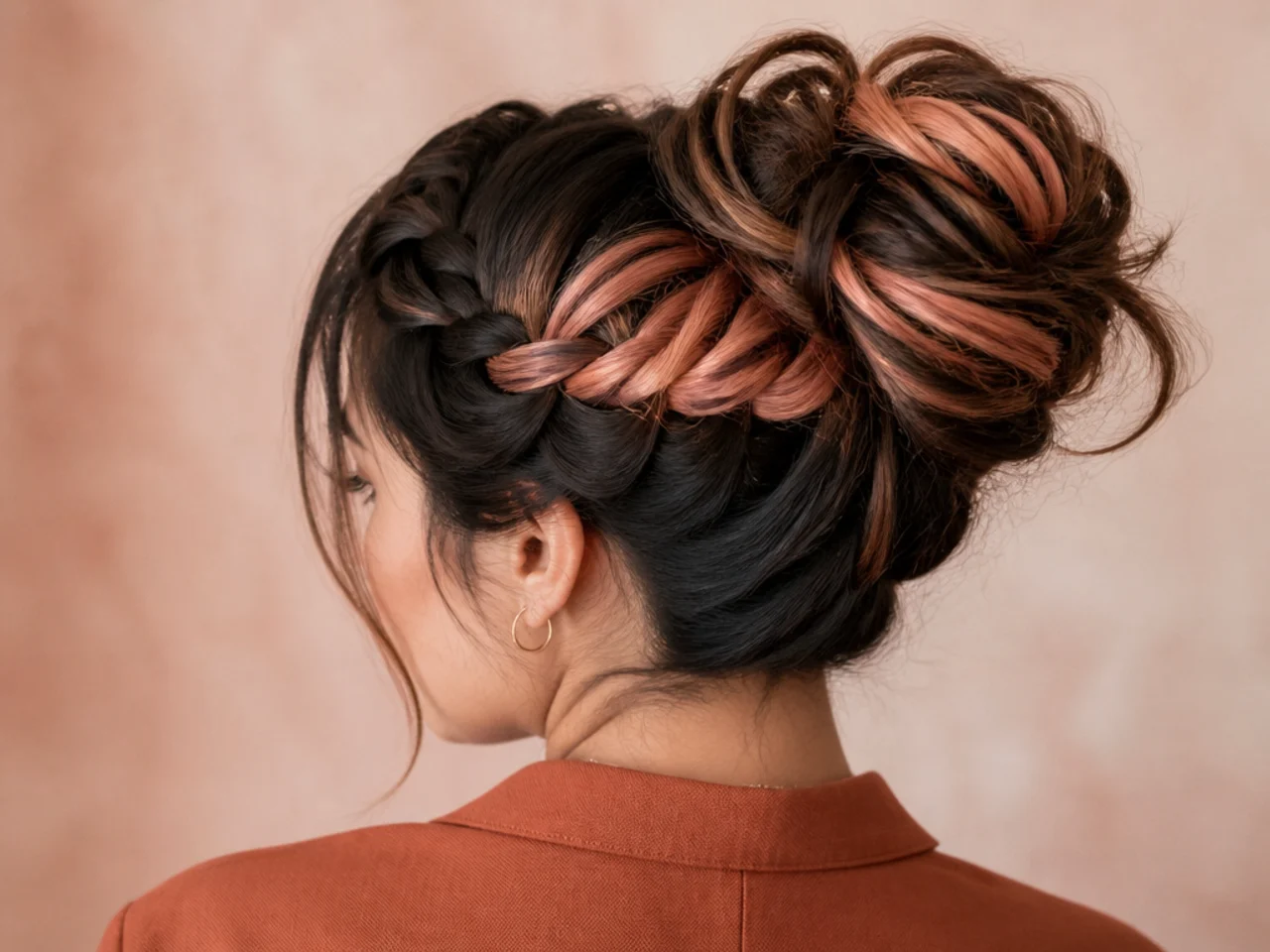
10. Side Braid with Pastel
Soft shades read particularly well in a braid pattern.
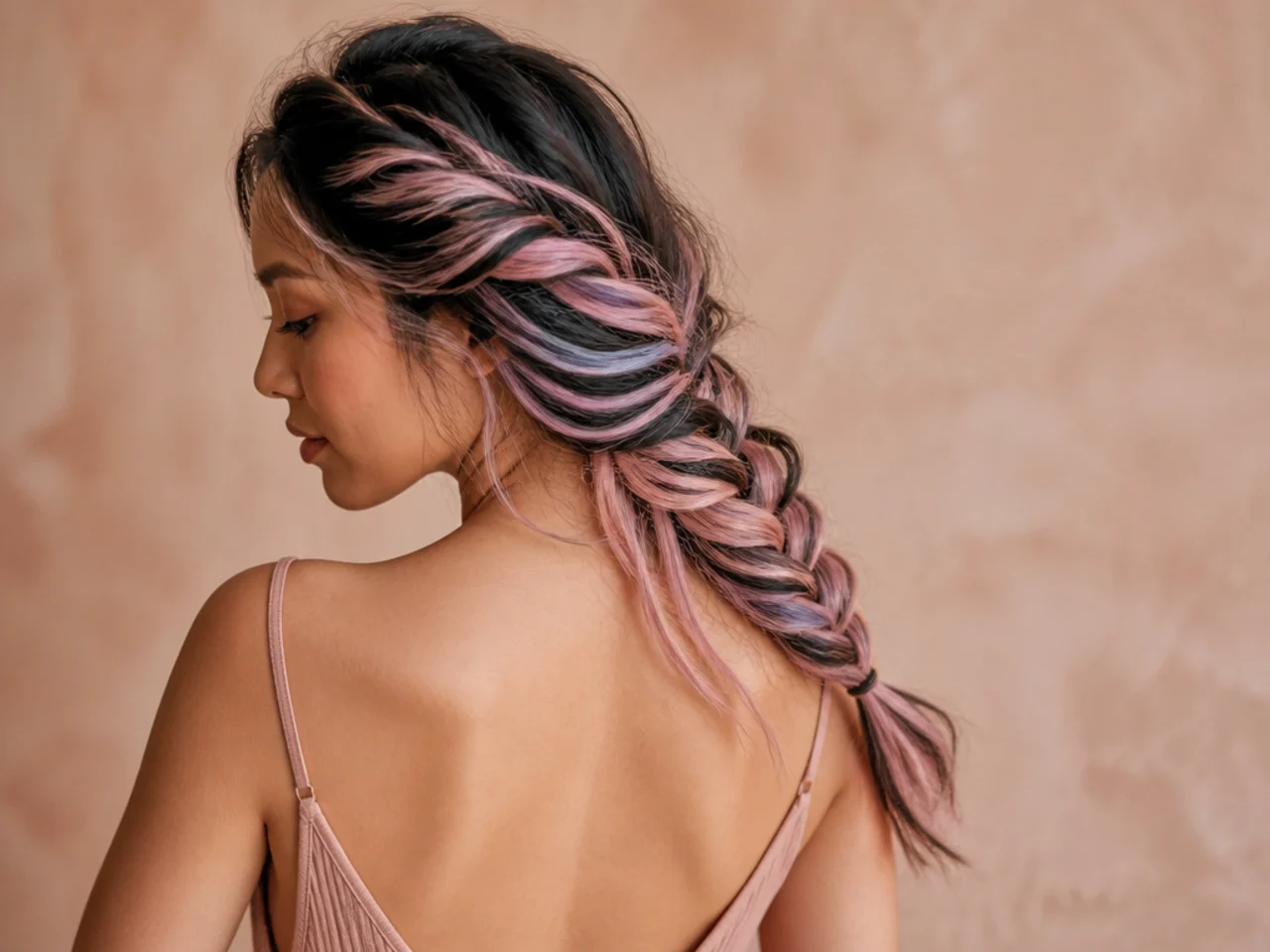
11. Four-Strand Braid
More crossings, so more colour surfaces.
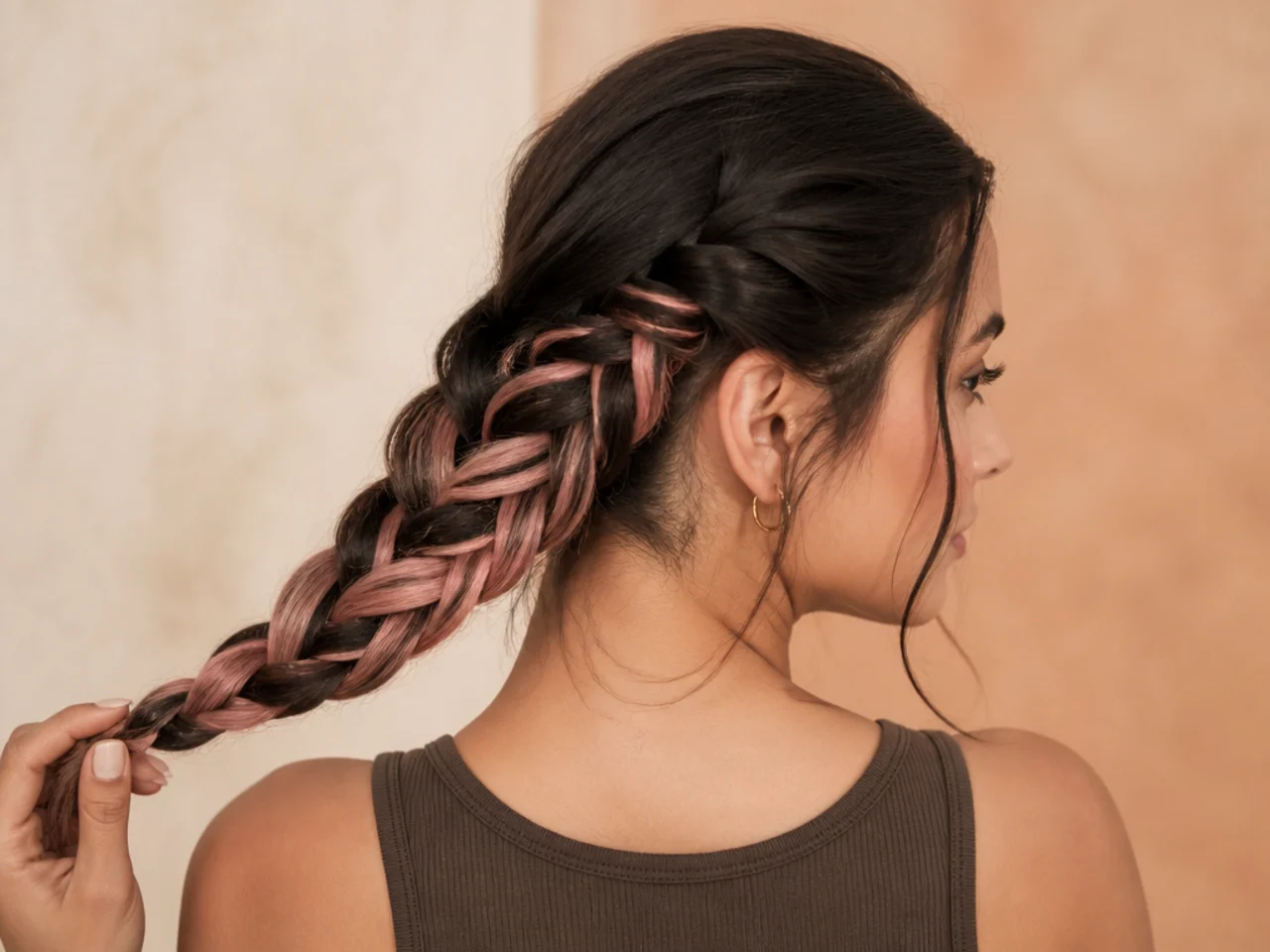
12. Milkmaid Braids
Colour wrapping over the crown from both sides.
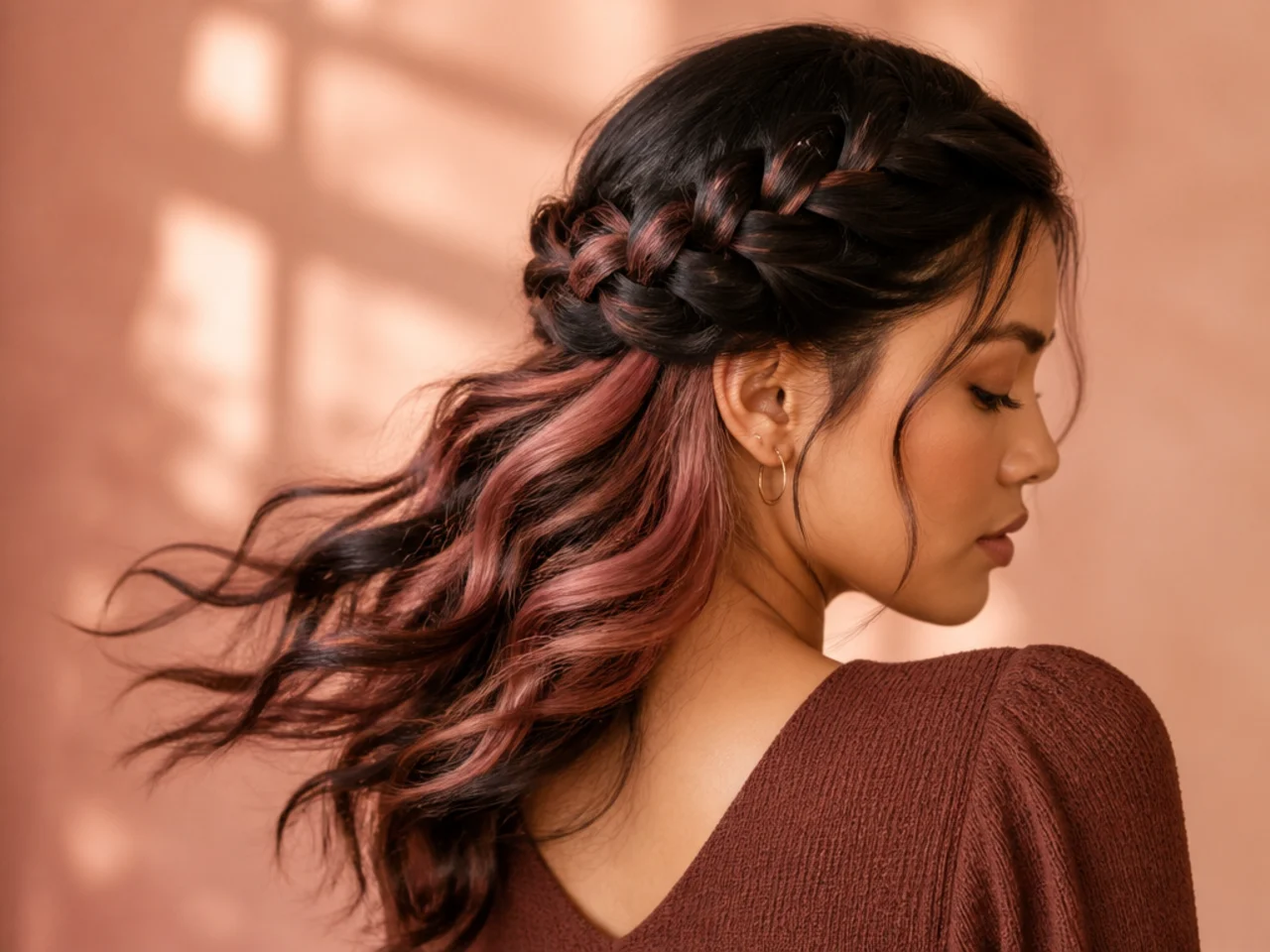
13. Braid with a Nape Panel
Colour only in the lower braid, so the top stays plain.
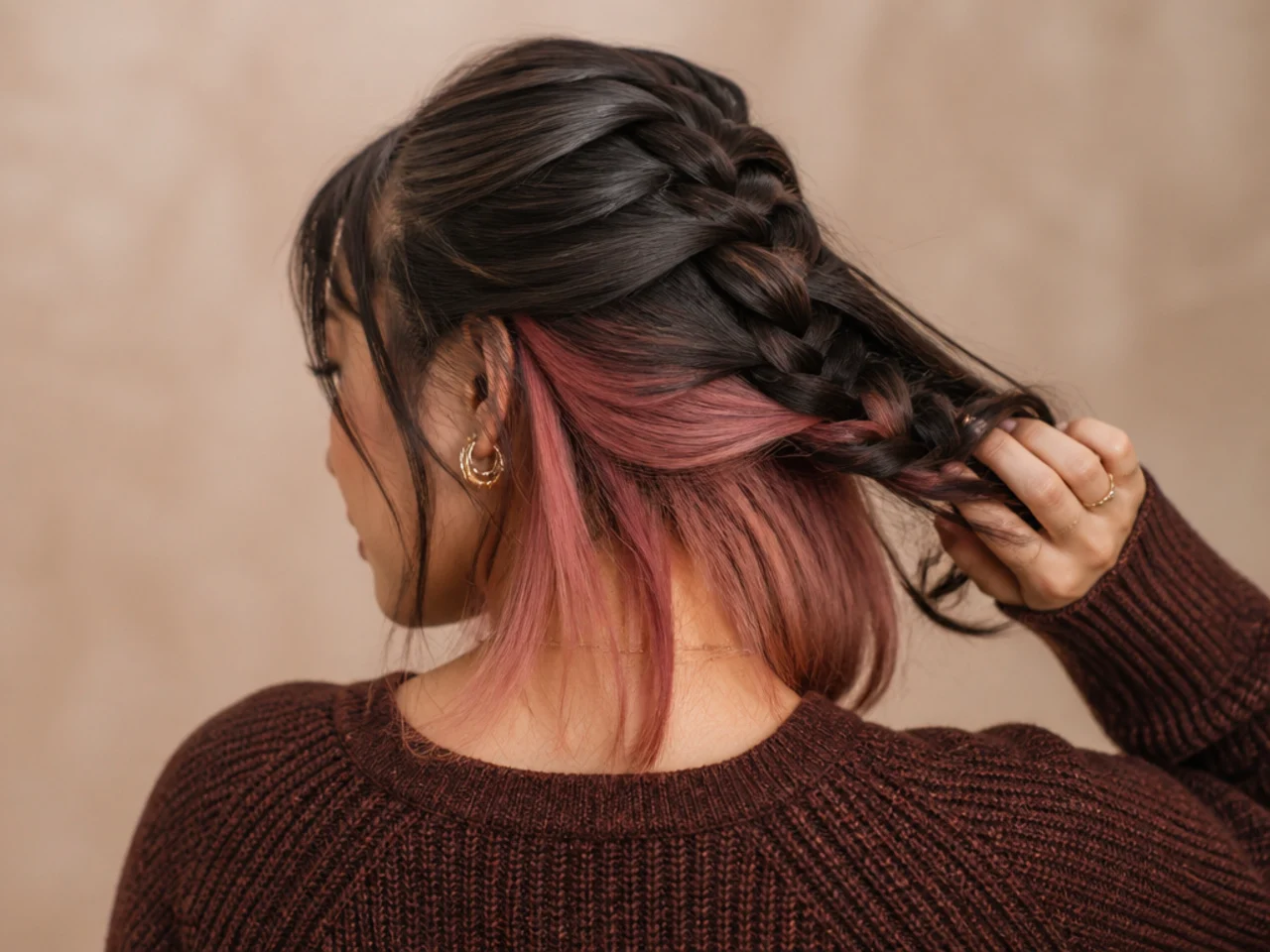
14. Braided Half-Up on Curly Hair
Curl plus braid shows colour more than either alone.
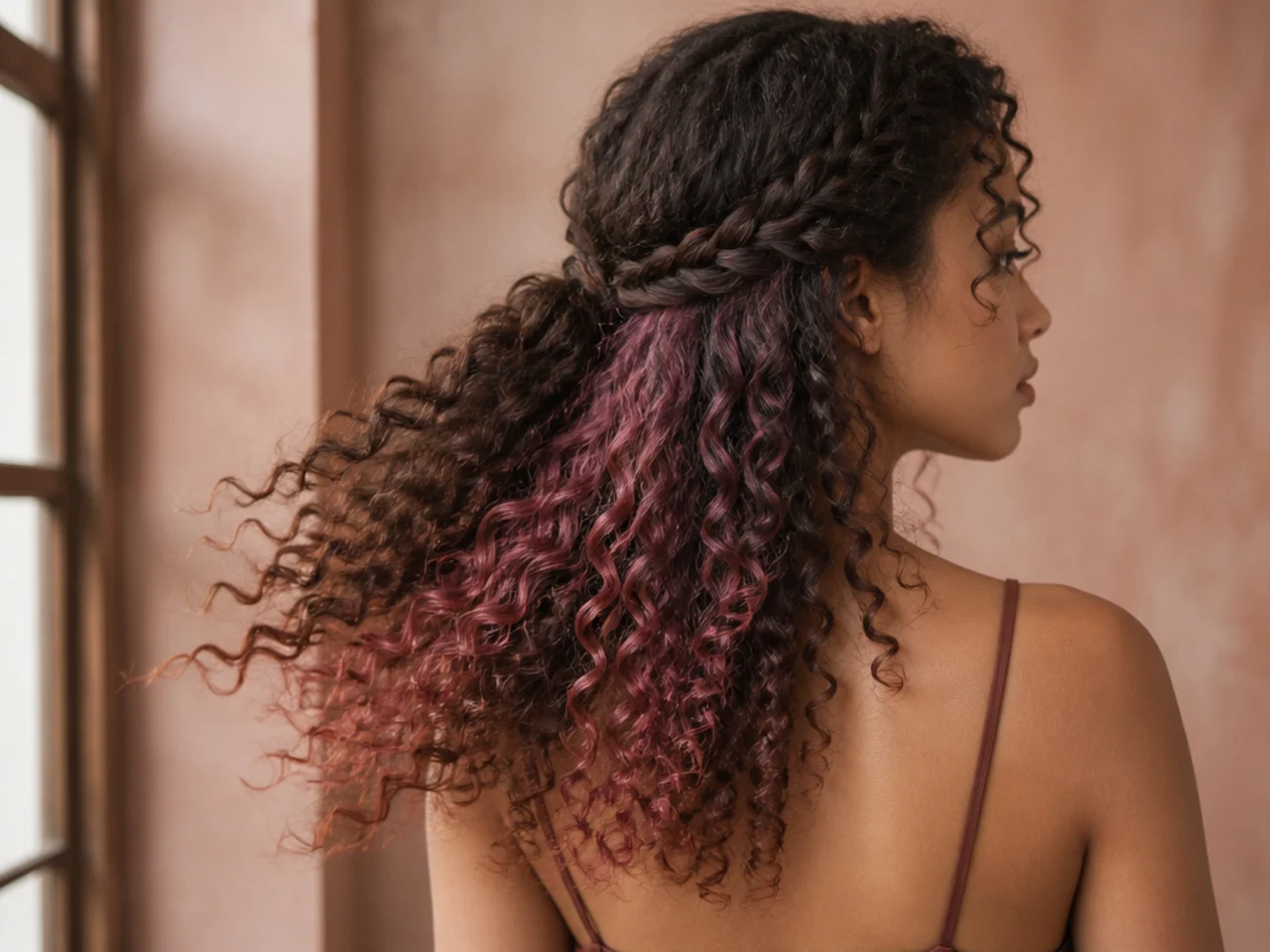
15. Two-Tone Braid
Two different peekaboo shades entering the same plait.
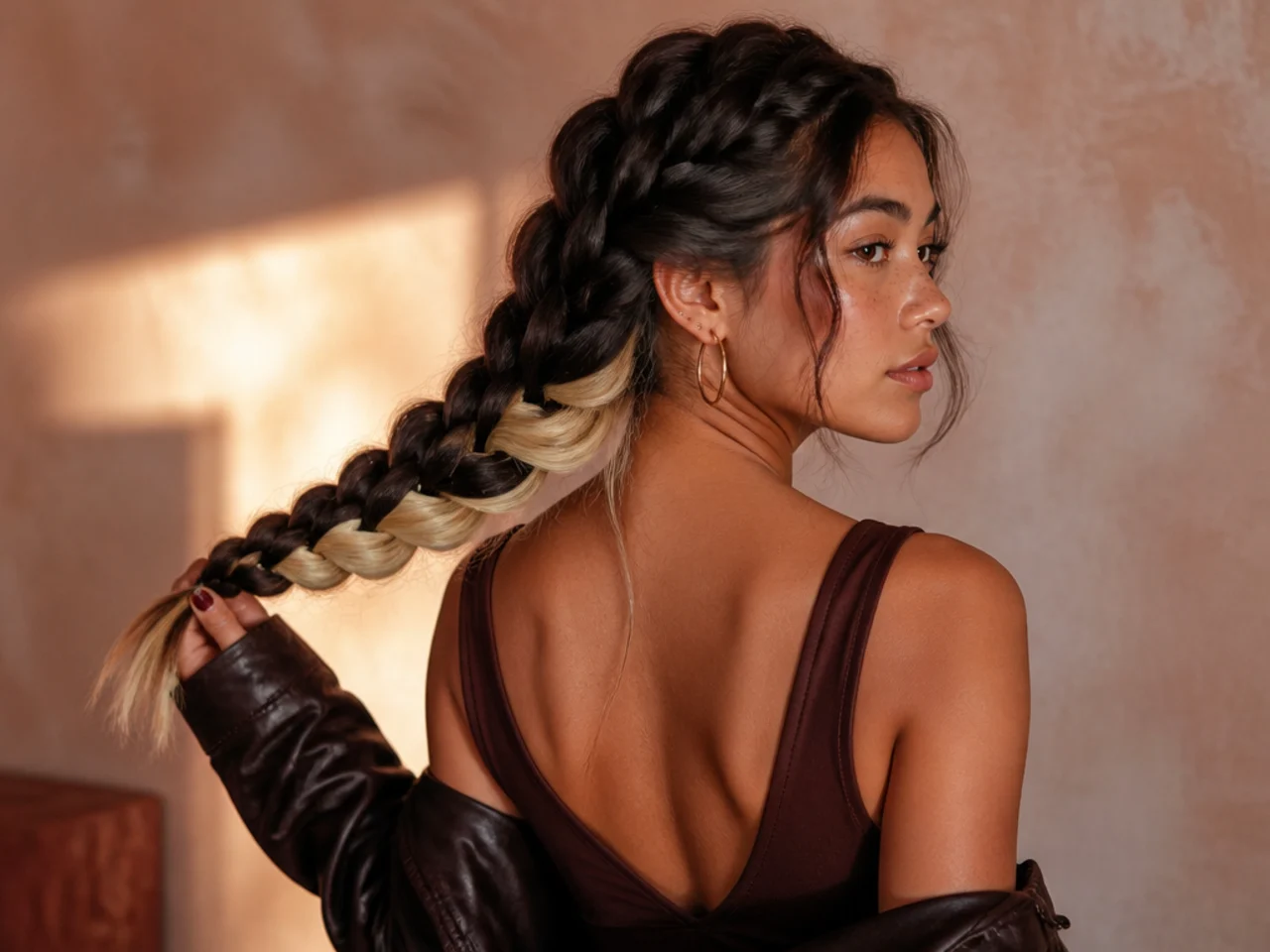
16. Braid with Colour on the Ends Only
Colour appears only in the last third of the plait.
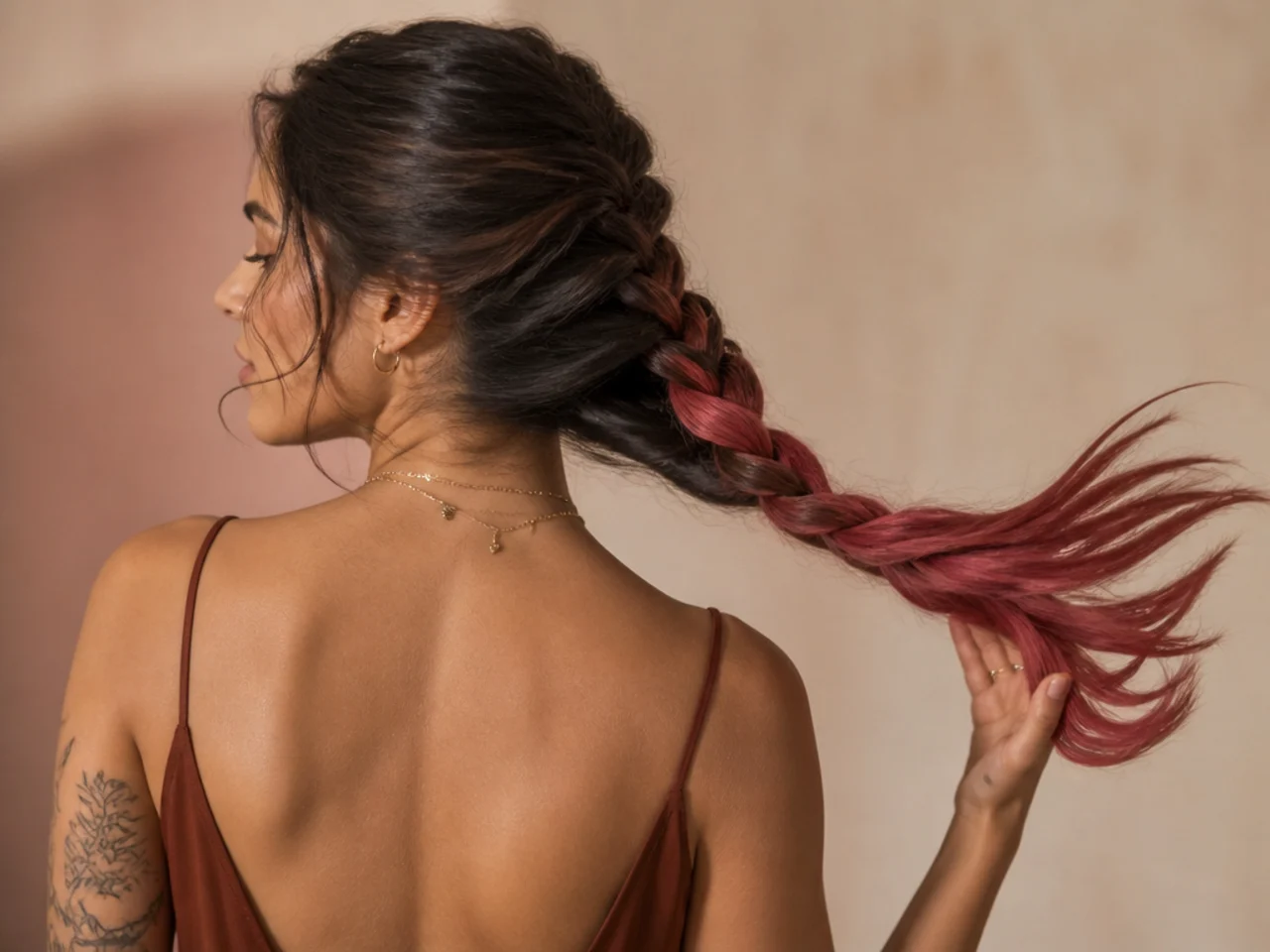
17. Loose Pancaked Braid
Pulling the braid open widens each crossing and shows more colour.
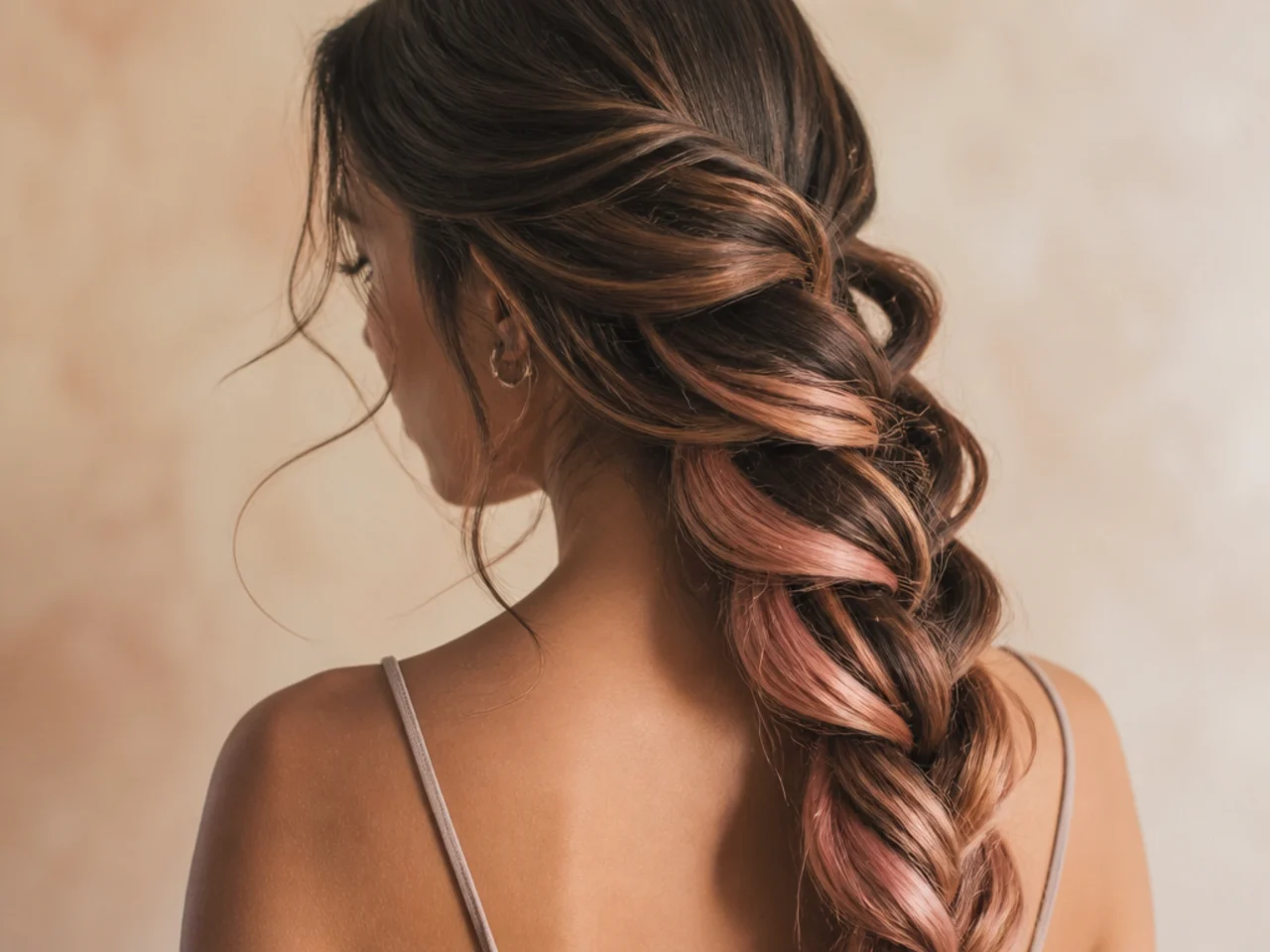
18. Braid Wrapped into a Low Bun
Colour visible in the wrap, hidden in the coil.
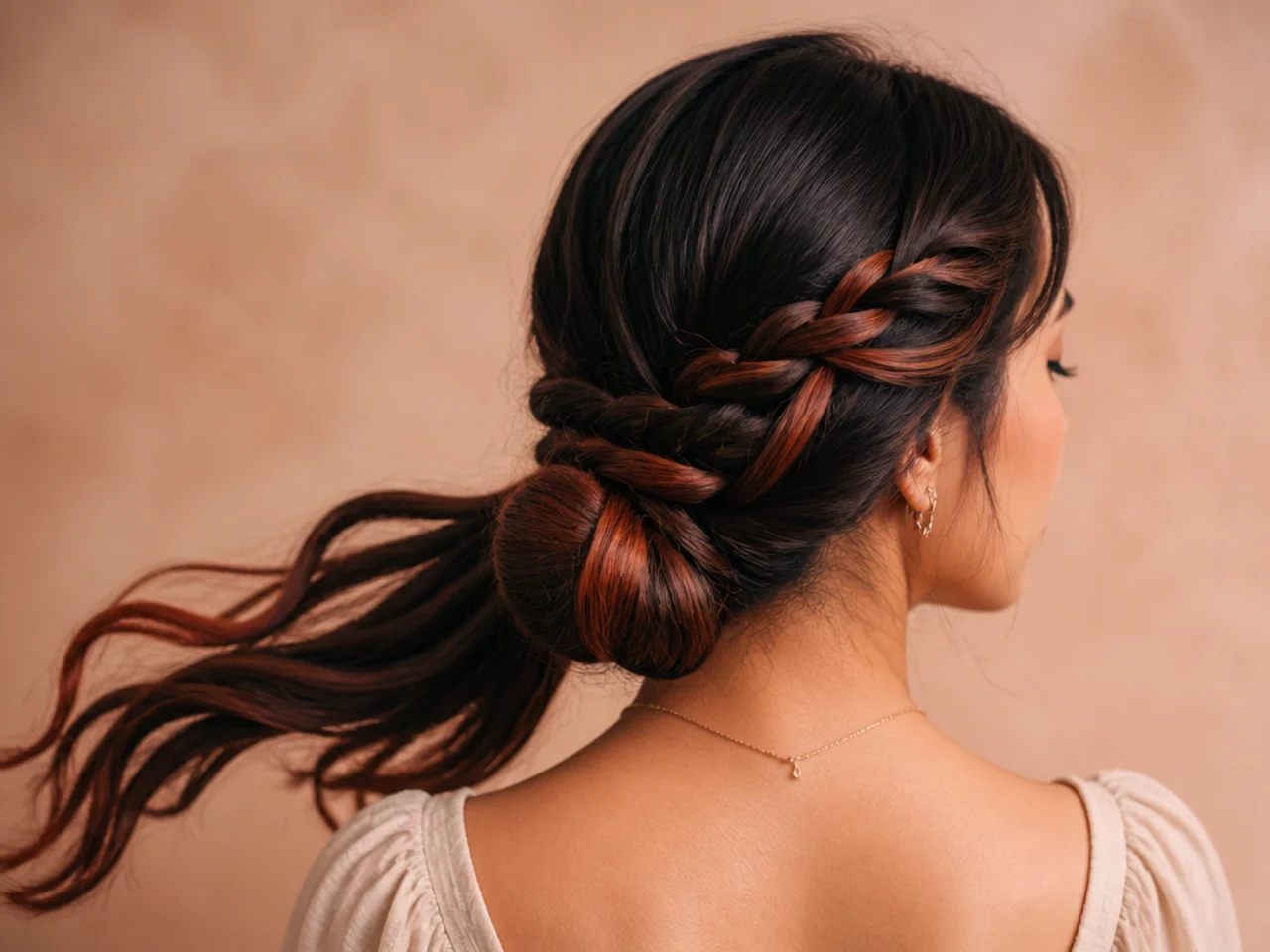
19. Braid on a Reverse Peekaboo
A dark panel braided through blonde. Striking, and no bleaching.
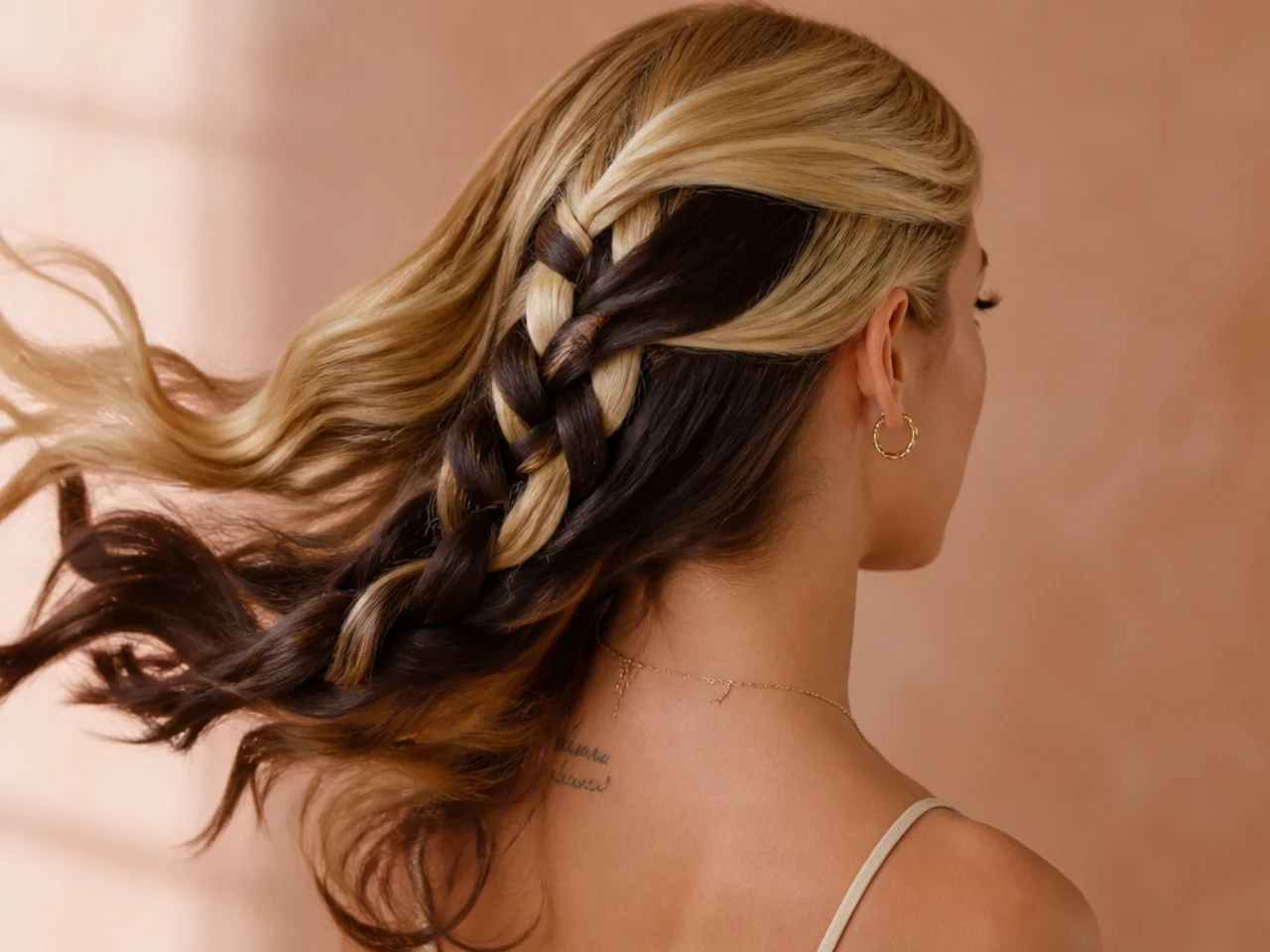
20. Braid Down One Side Only
Colour braided on one side, the other side left loose.
Controlling How Much Shows
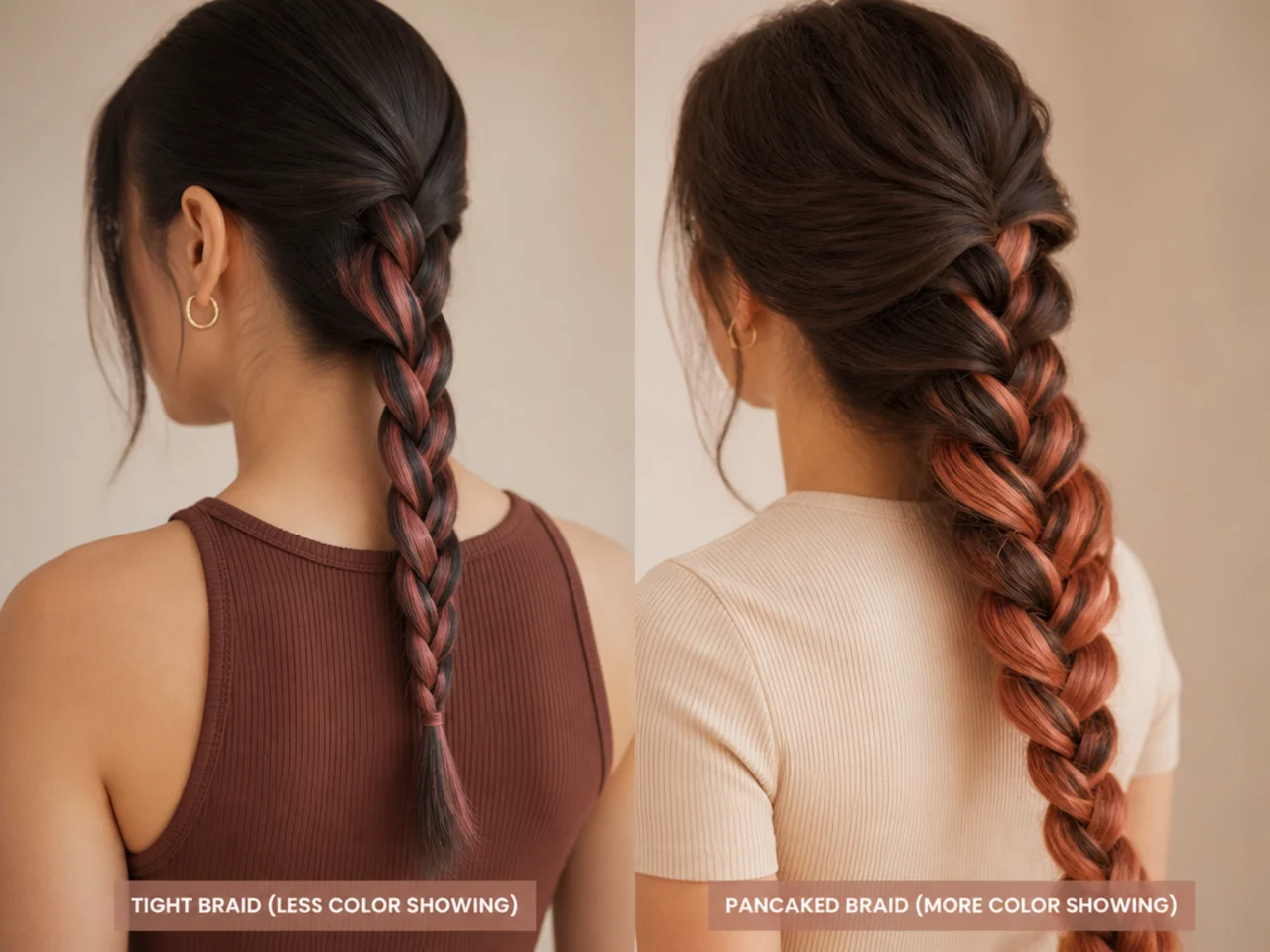
Pancake the braid — gently pull the outer edge of each crossing — and the coloured sections widen, showing considerably more.
Braid tightly and the colour appears as small, precise dots of shade.
Braid loosely and it reads as soft, blended flashes.
Start the braid below the panel and the colour appears only partway down, which gives a gradient effect without any extra colouring.
That range from one panel is the reason braided peekaboo is worth the extra planning. The same colour can read as graphic or as subtle depending only on how you braid it that morning.
Mistakes to Avoid
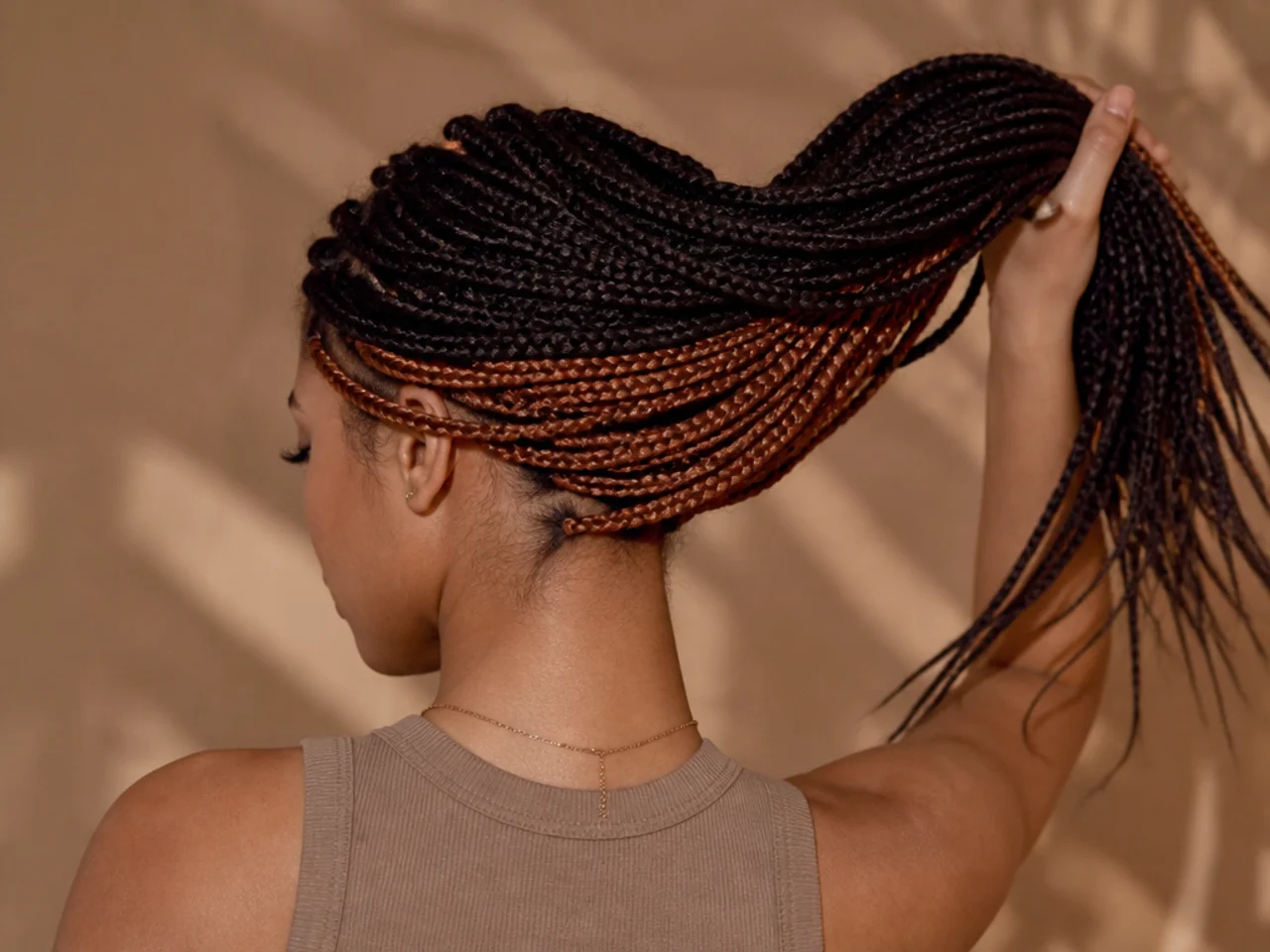
One solid block of colour. It braids into a clump rather than a pattern.
A French braid when you wanted maximum colour. It tucks the colour inward.
Not telling the colourist you braid. The default placement is wrong for braiding.
Colour placed too low for a crown braid. It never reaches the braided section.
Braiding a very narrow panel. It disappears entirely into the crossings.
FAQ
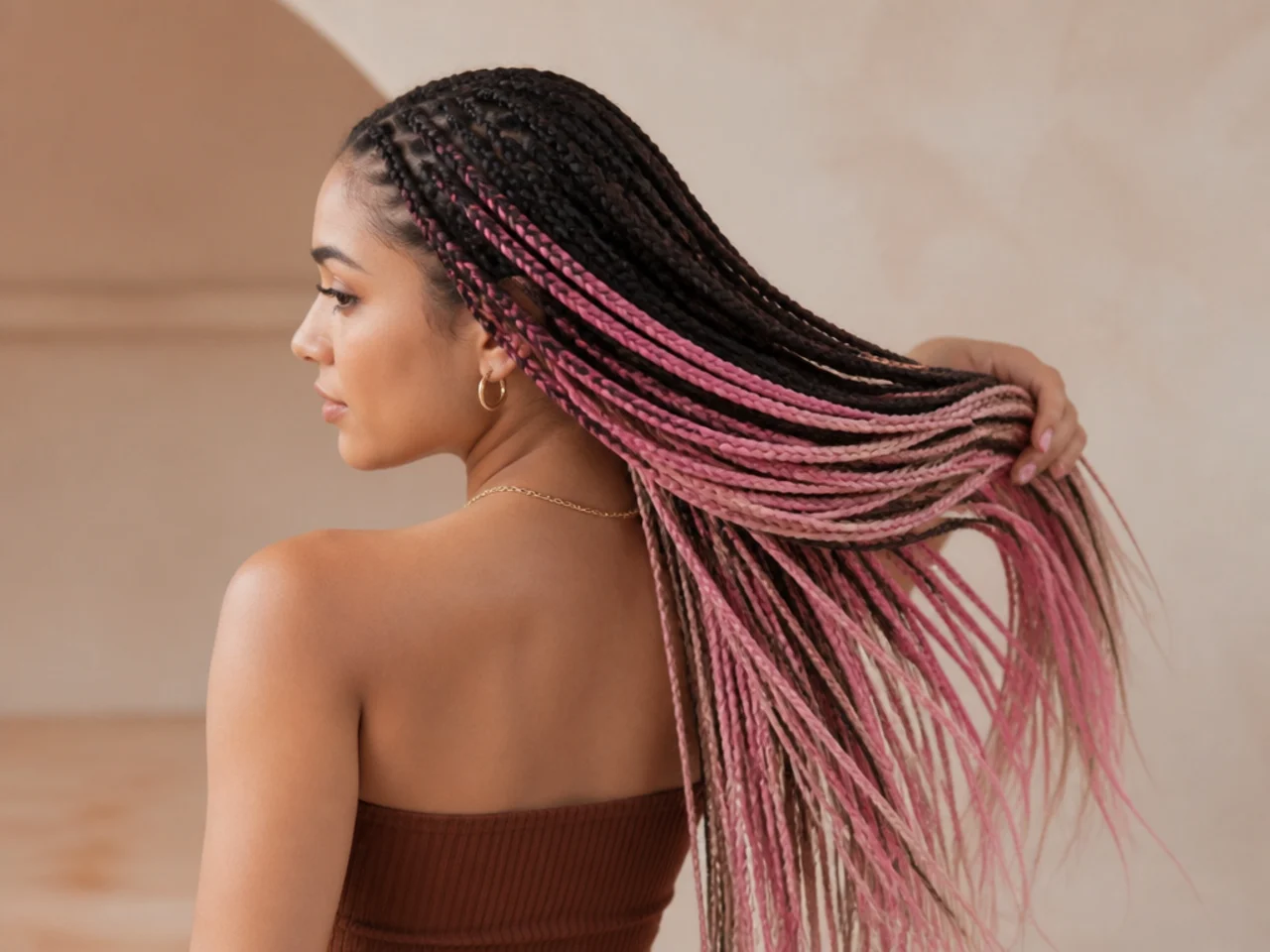
How does it look braided? As a repeating pattern rather than a block of colour.
Where should the panel go? Distributed across two or three thinner sections, not one block.
Which braid shows it best? A Dutch braid — the strands cross under and sit proud.
Final Thoughts
Tell your colourist you braid before they section anything. Distributed colour is the difference between a braid with a pattern running through it and a braid with a stripe stuck on one side — and it costs nothing extra to ask for.
For medium length see 20 peekaboo colors for medium length hair, and for the full range see 25 stunning peekaboo hair color ideas. More in Hair Color Trends.