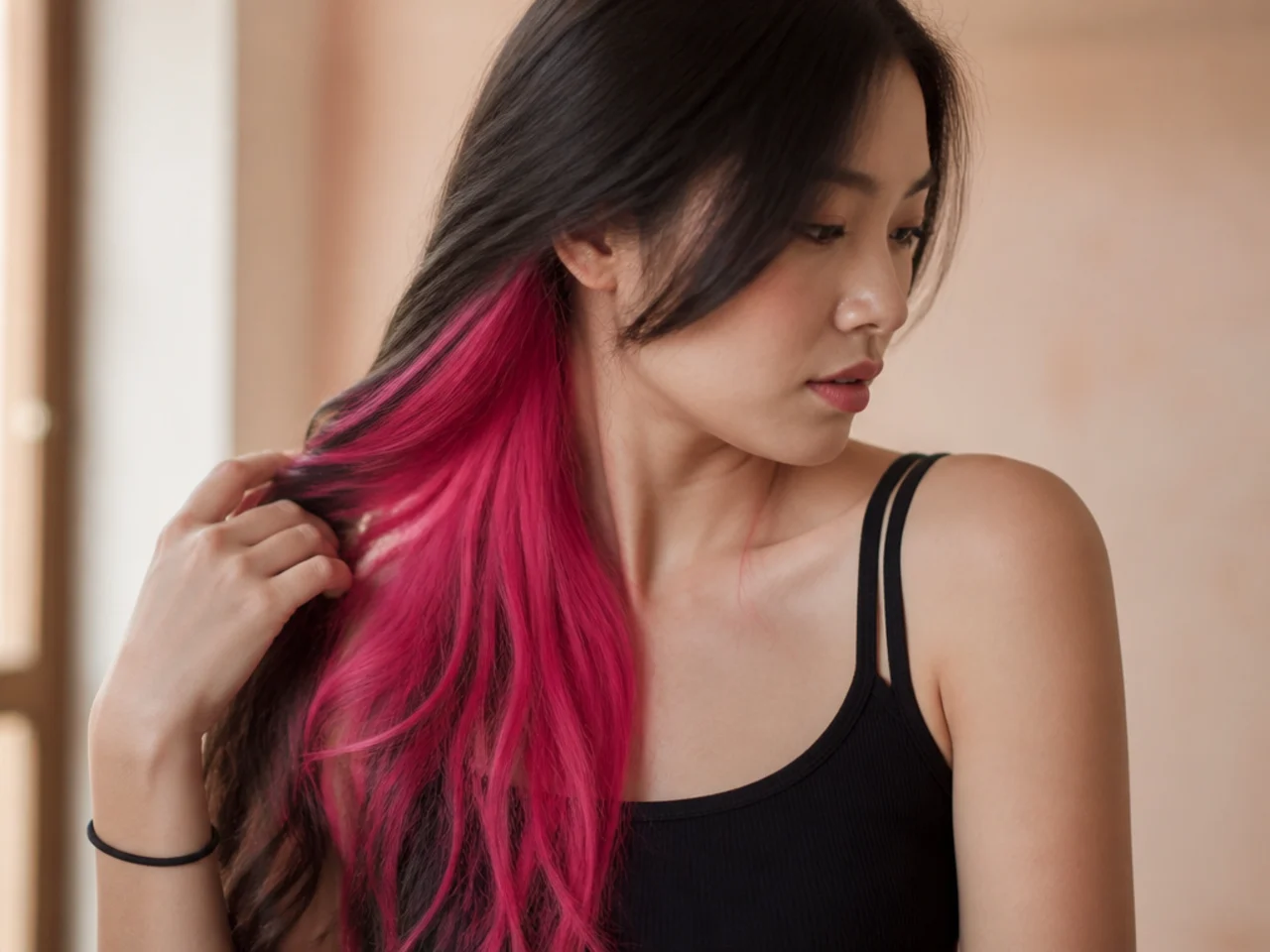
20 Stunning Pink Peekaboo Hair Color Ideas
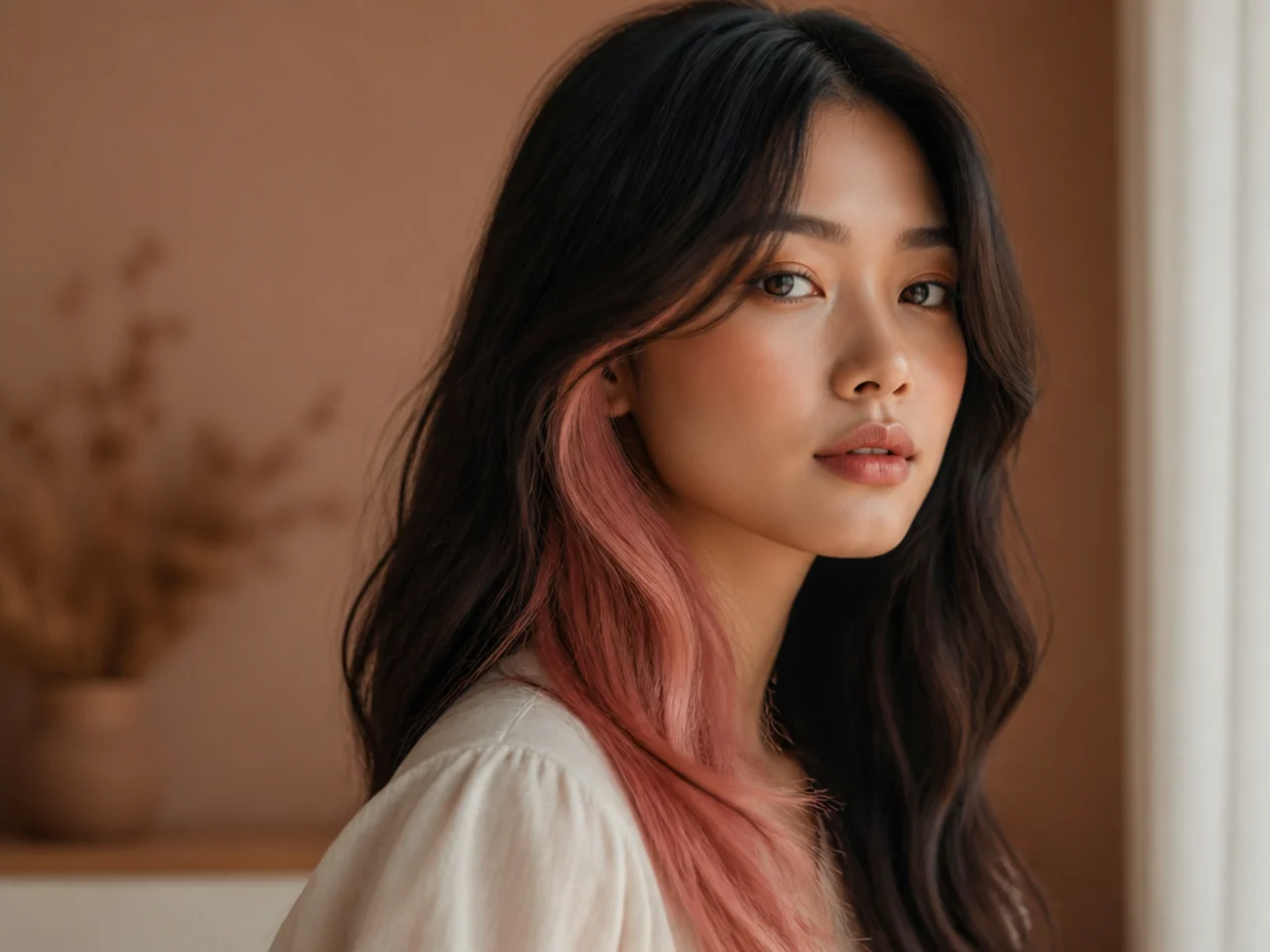
Twenty pink peekaboo placements, and the thing nobody mentions — the natural canopy that hides the colour also shields it from sunlight, so hidden pink outlasts the same shade worn on top. How much lift each pink needs is the other half of the decision.
In this article · 27
- What Makes a Colour a Peekaboo
- How to Choose Your Pink
- The 20 Pink Peekaboo Ideas
- 1. Hot Pink Under Layer
- 2. Pastel Pink on Prelightened Blonde
- 3. Rose Gold Peekaboo
- 4. Bubblegum Pink Panels
- 5. Magenta Peekaboo on Dark Brown
- 6. Fuchsia Peekaboo on Black Hair
- 7. Coral Pink Peekaboo
- 8. Dusty Rose Peekaboo
- 9. Neon Pink Peekaboo
- 10. Pink Peekaboo at the Nape
- 11. Pink Peekaboo Behind the Ears
- 12. Thin Pink Ribbons
- 13. Pink Peekaboo Under a Blunt Bob
- 14. Pink Peekaboo in Long Layers
- 15. Pink Peekaboo on Curly Hair
- 16. Pink Peekaboo on Straight Hair
- 17. Pink Peekaboo With a Shadow Root
- 18. Pink and Purple Peekaboo
- 19. Pink Peekaboo on Copper Hair
- 20. Pink Peekaboo at Six Washes
- Styling and Upkeep
- Mistakes to Avoid
- FAQ
- Final Thoughts
A pink peekaboo that shows all the time is not a peekaboo — it is a badly placed panel, and the fix is depth of section rather than shade.
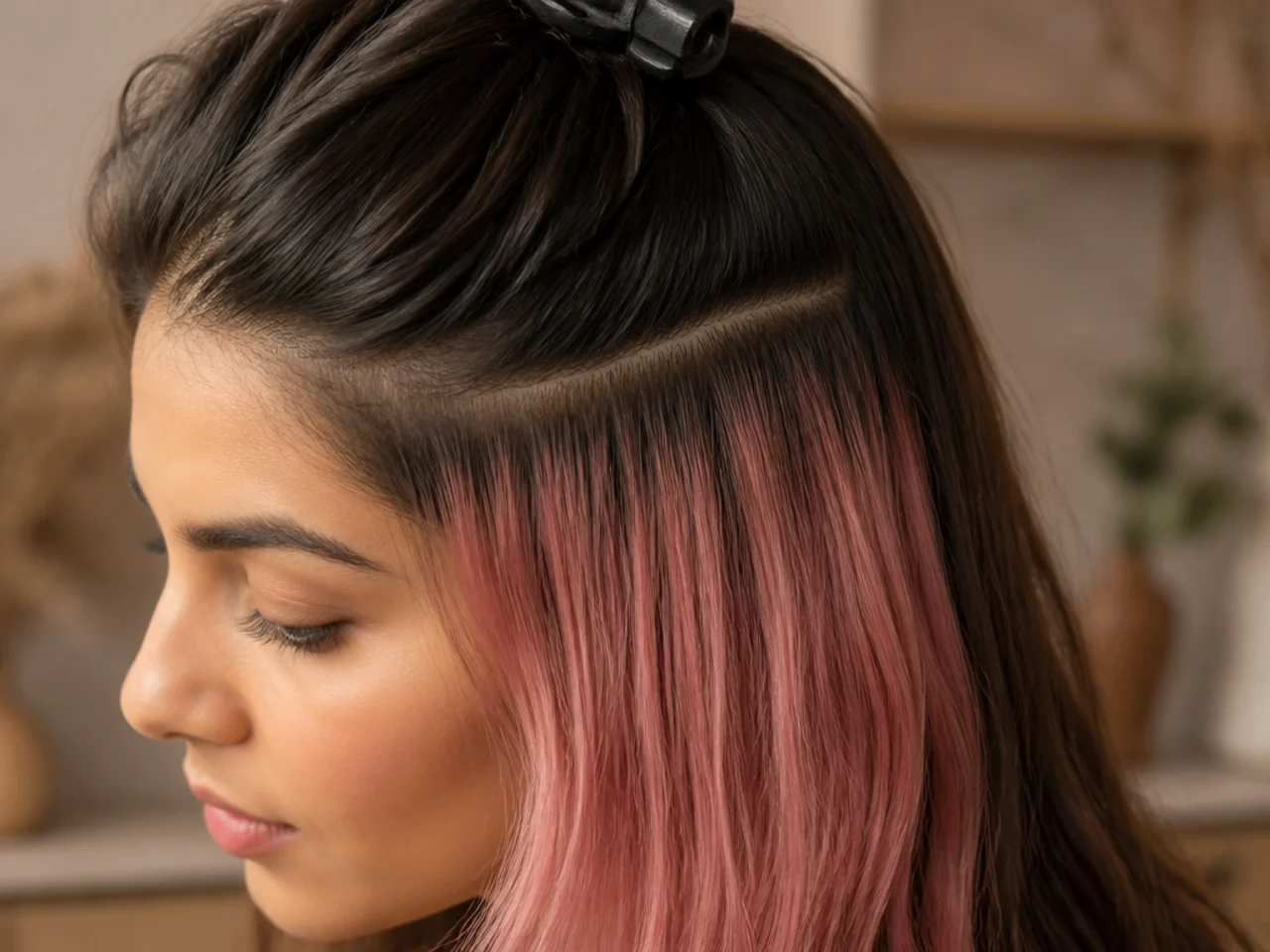
The canopy is the shutter. Natural hair left over the top is what makes the colour appear only when you move, tuck or lift it.
Hidden pink fades more slowly than exposed pink. Sunlight is the main thing that destroys the pigment, and the layer above the panel absorbs most of it.
What Makes a Colour a Peekaboo
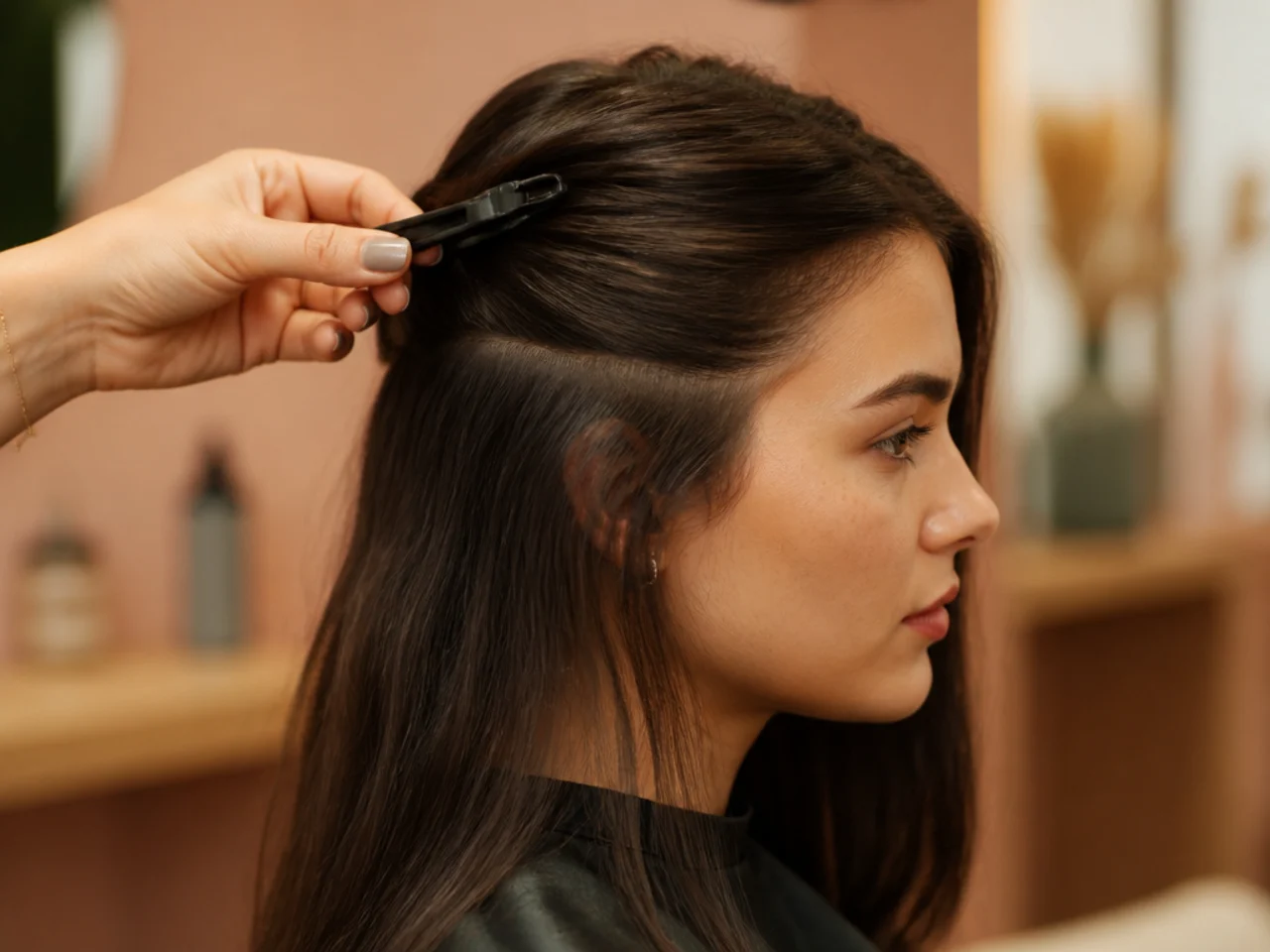
It sits under the natural parting. The section is taken horizontally, below the line where your hair falls, so the top layer covers it completely at rest.
It reveals on movement, not on standing still. The effect depends on the hair swinging or being tucked behind an ear, which is why placement matters more than saturation.
Pink has no lifting power of its own. Direct dyes deposit onto whatever tone is already there, so the colour you get is the pink plus the base under it.
The panel is protected. Being under the canopy keeps it out of UV and away from most of the friction that dulls surface colour.
How to Choose Your Pink
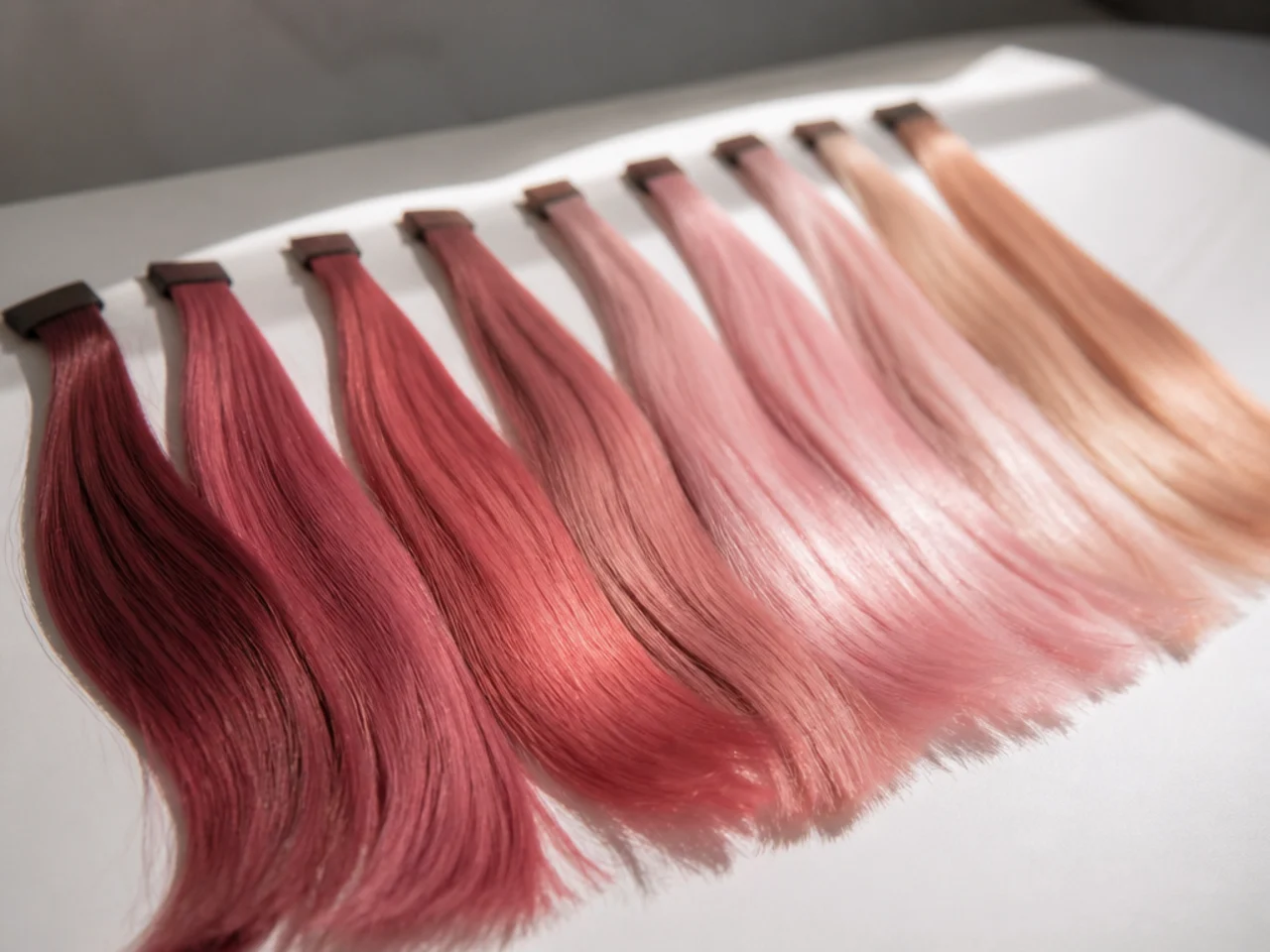
Choose by how far your base will lift. Pastels need a very pale base to read as pastel; on gold they turn peach. Saturated pinks tolerate a warmer base because their own pigment overrides it.
Choose by how often you wash. Every wash removes some of a direct dye, so a four wash week costs roughly twice the colour of a two wash week.
Choose by where you want the reveal. Nape placement shows in a ponytail. Side placement shows when you tuck. Under the ends shows whenever the hair moves.
Choose a shade you will like faded. Pink does not vanish evenly; it drifts toward peach and then a pale wash, so pick a pink whose faded state you can live with.
The 20 Pink Peekaboo Ideas
1. Hot Pink Under Layer
The reference version and the most forgiving. Hot pink carries enough of its own pigment to sit over a base lifted only to a light gold, so it needs less bleach than a pastel and holds its intensity through more washes.
2. Pastel Pink on Prelightened Blonde
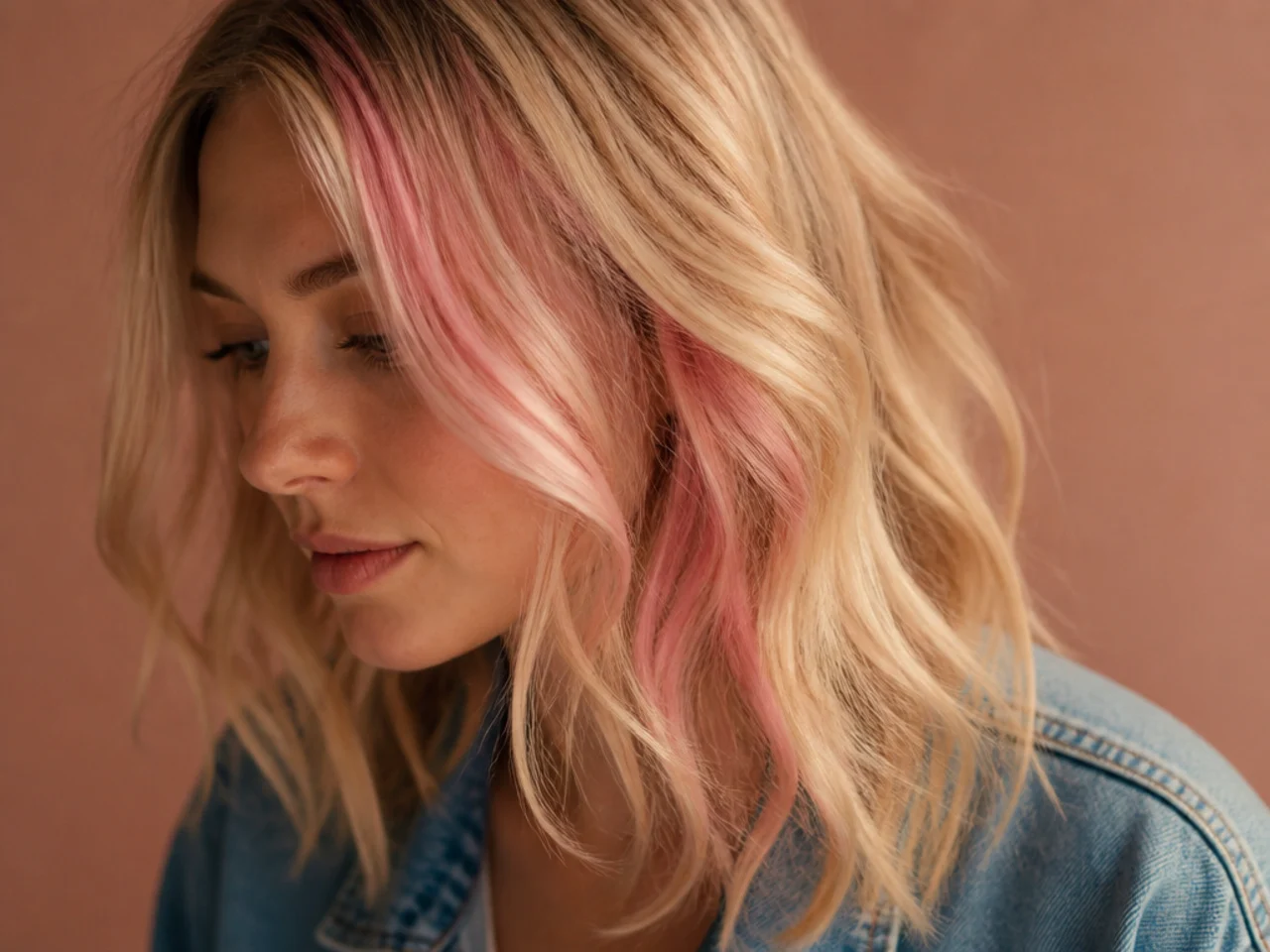
Pastels are mostly a diluted dye on a very pale base, so any yellow left in the hair turns them peach. The base has to reach a near white before the pink is applied, and that is the whole difficulty of this one.
3. Rose Gold Peekaboo
Pink with warmth deliberately left in the base rather than lifted out. Because it is built on the gold the bleach already produced, it fades toward a soft copper instead of going chalky, which makes it the least demanding pink to maintain.
4. Bubblegum Pink Panels
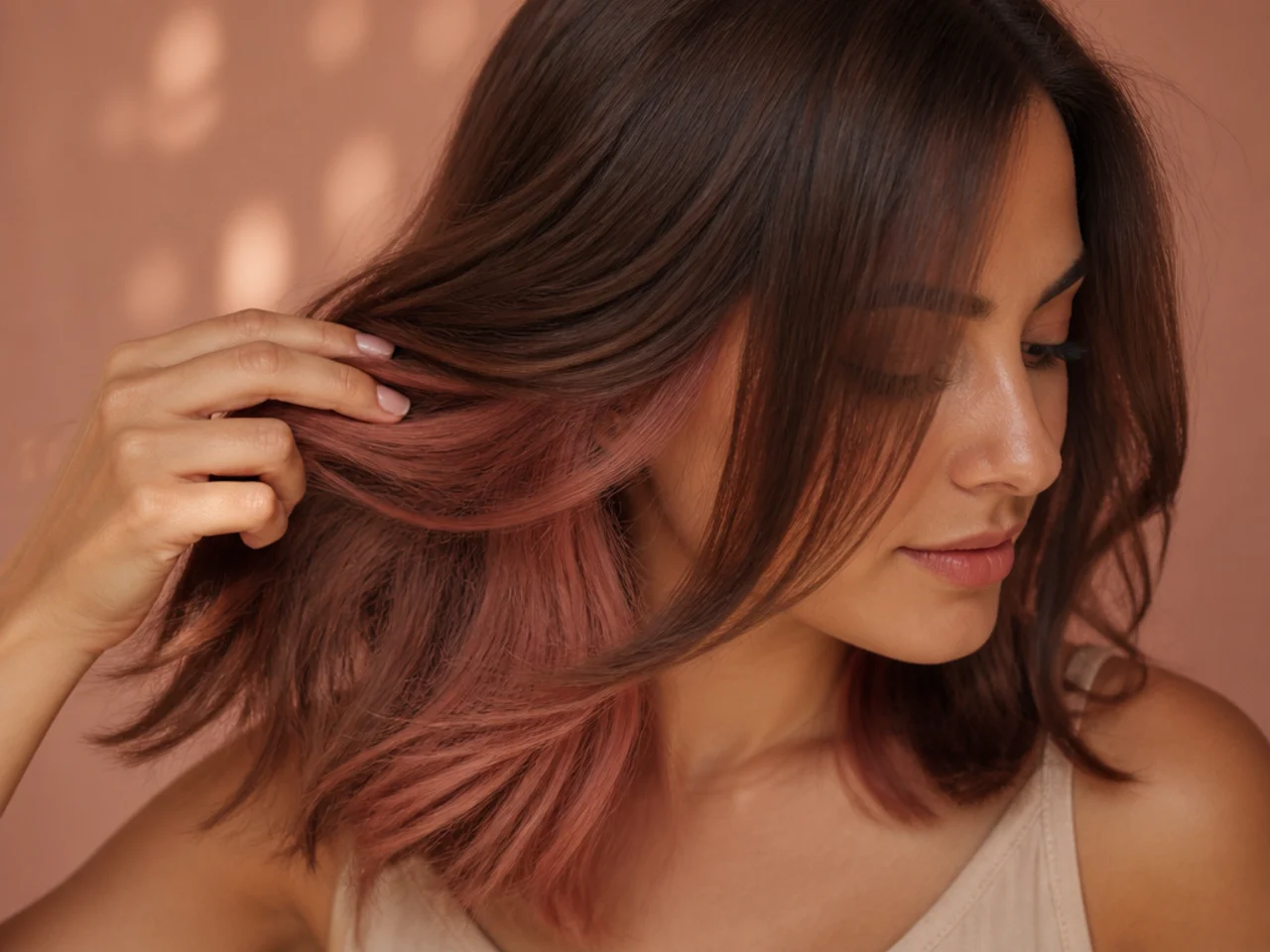
Cooler and more opaque than a pastel, sitting between the two in strength. Its blue component is what keeps it from reading peach, and that component leaves first, so the shade shifts warmer as it fades rather than lighter.
5. Magenta Peekaboo on Dark Brown
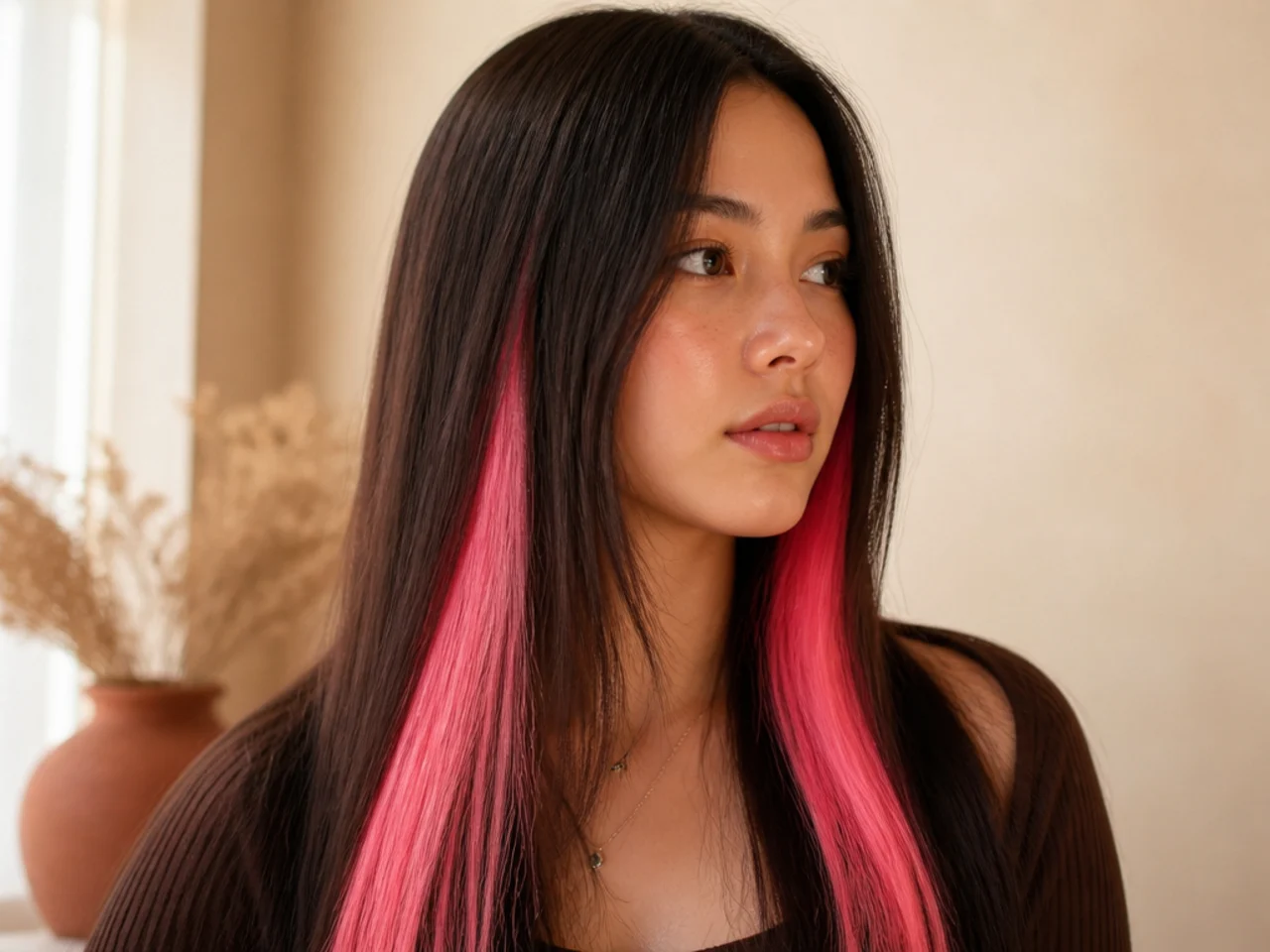
Magenta carries enough depth to survive a base that has only been lifted a few levels, which is why it is the usual answer on dark hair. It reads almost black in shade and floods with colour in direct light.
6. Fuchsia Peekaboo on Black Hair
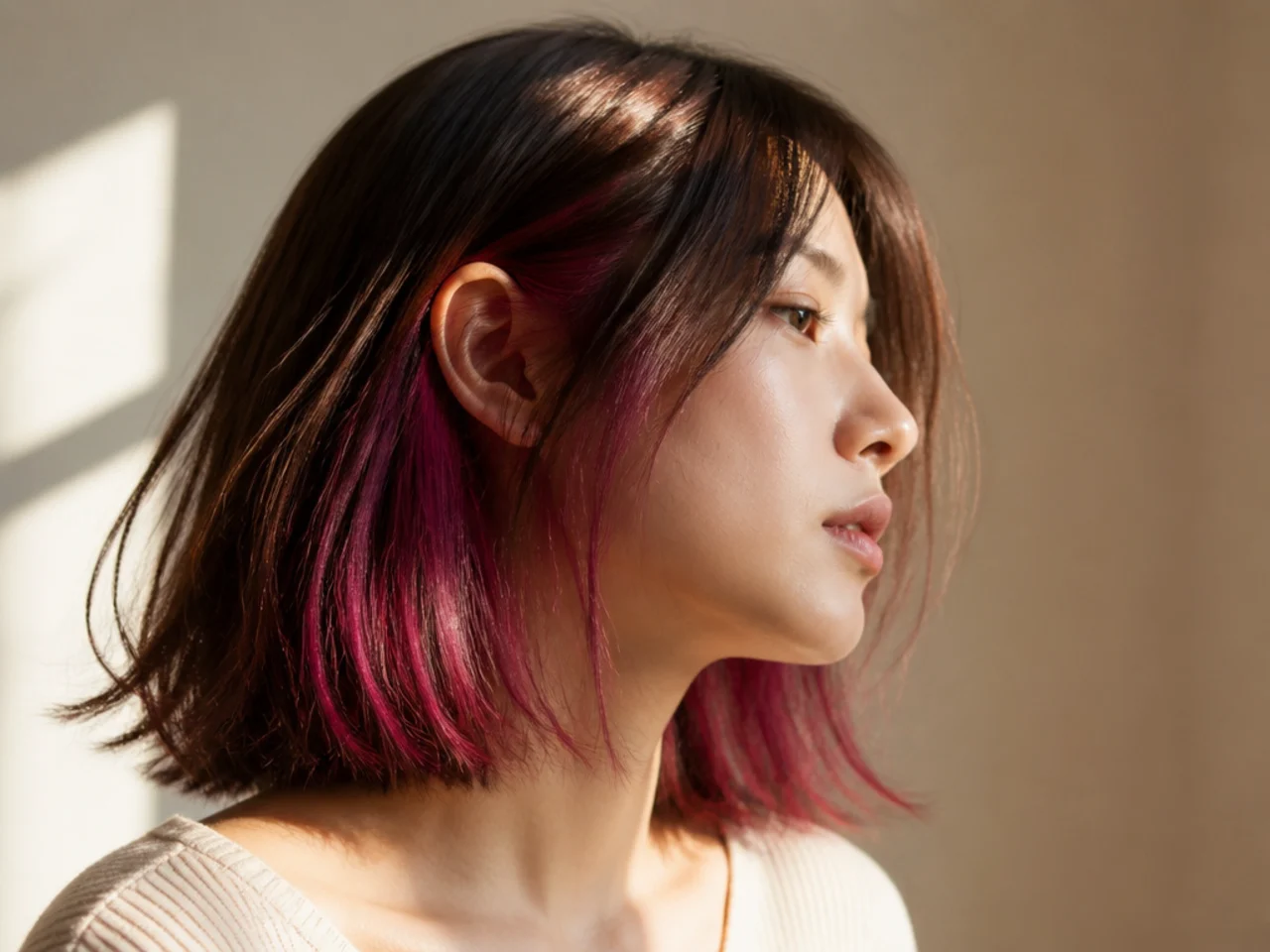
The highest contrast in the list, and the one that most depends on the bleach. Black hair holds a great deal of underlying red and orange, and fuchsia is the shade that turns that warmth into an asset instead of fighting it.
7. Coral Pink Peekaboo
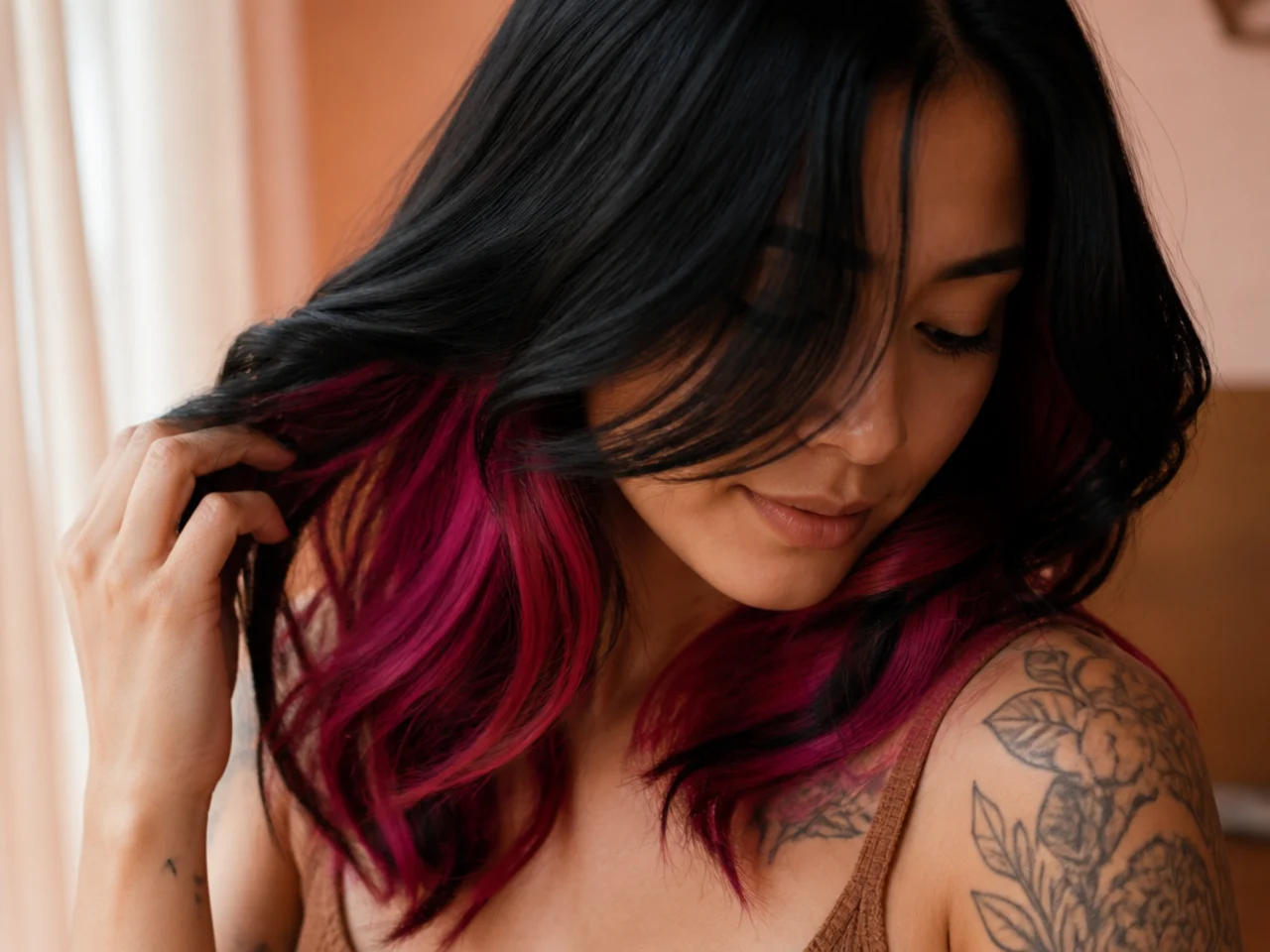
Pink pushed toward orange on purpose. Since a warm base pulls every pink in that direction anyway, choosing coral means the fade moves toward the shade you already picked rather than away from it.
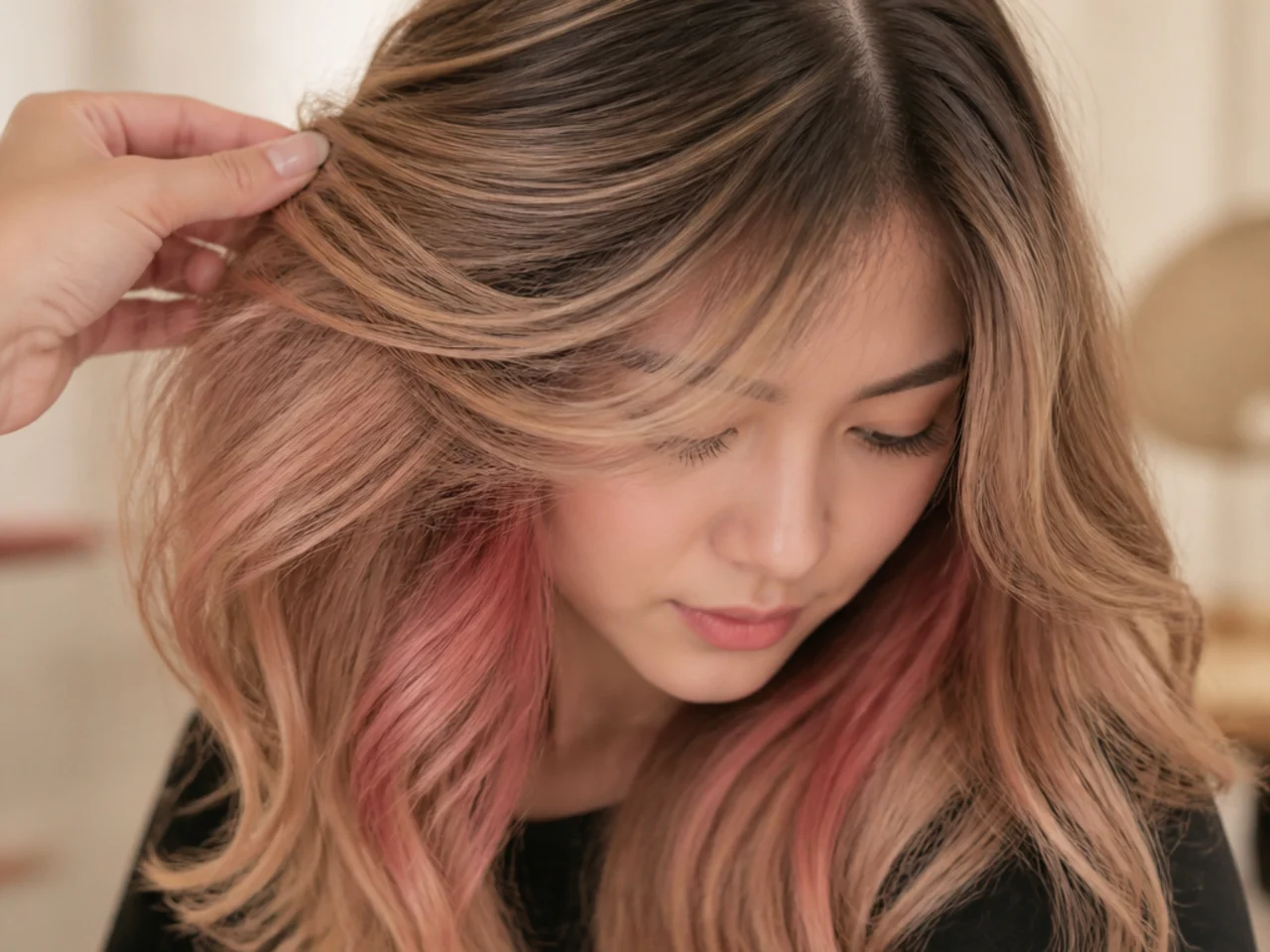
8. Dusty Rose Peekaboo
A muted pink with grey or violet mixed in to kill the brightness. The greyed pigment is what makes it read as a considered colour rather than a fashion shade, and it is the easiest pink to wear somewhere formal.
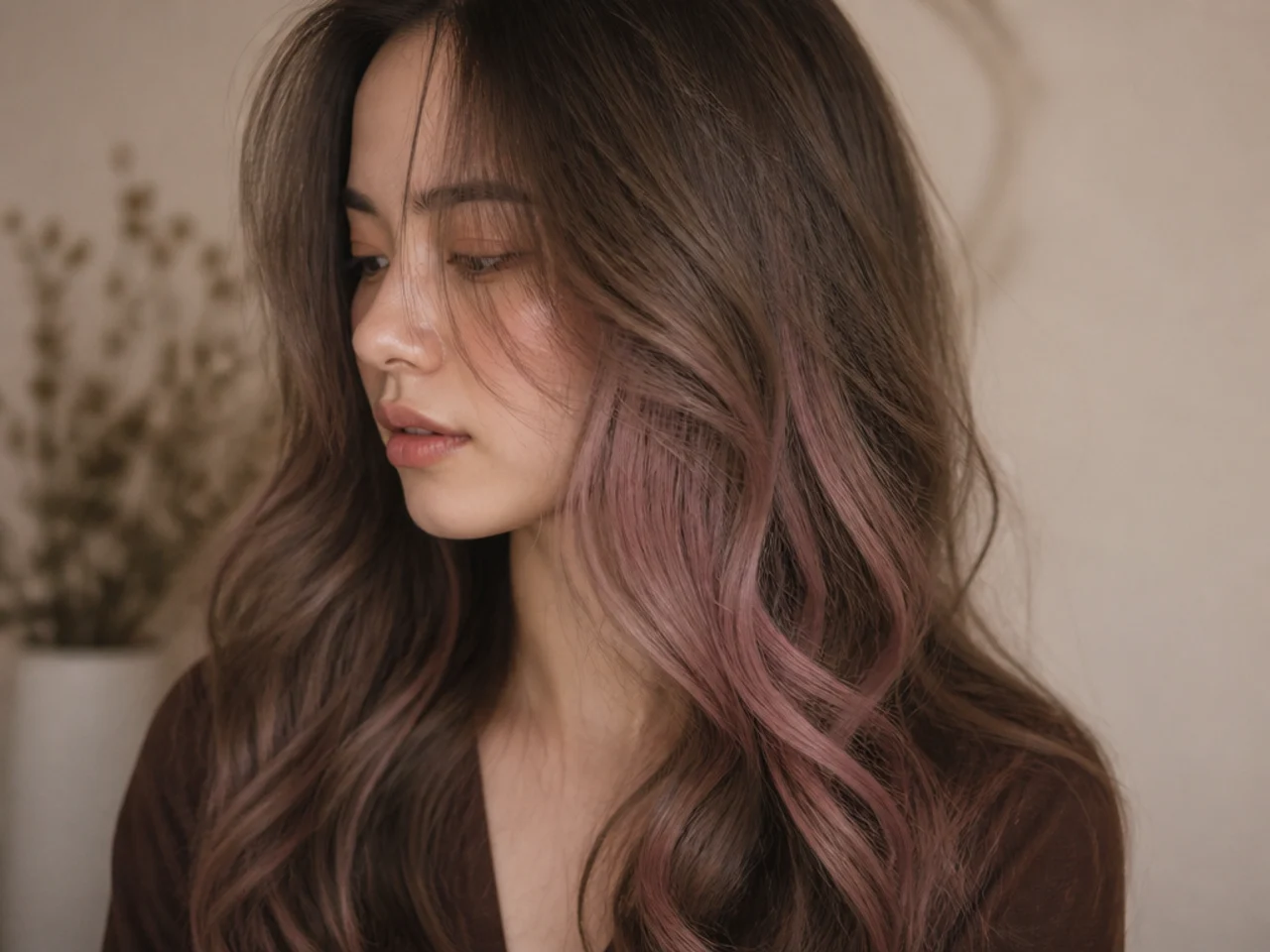
9. Neon Pink Peekaboo
Neon pigments are fluorescent, which means they re emit light rather than only reflecting it. That is why they look almost lit from within outdoors and unremarkable under warm indoor bulbs.
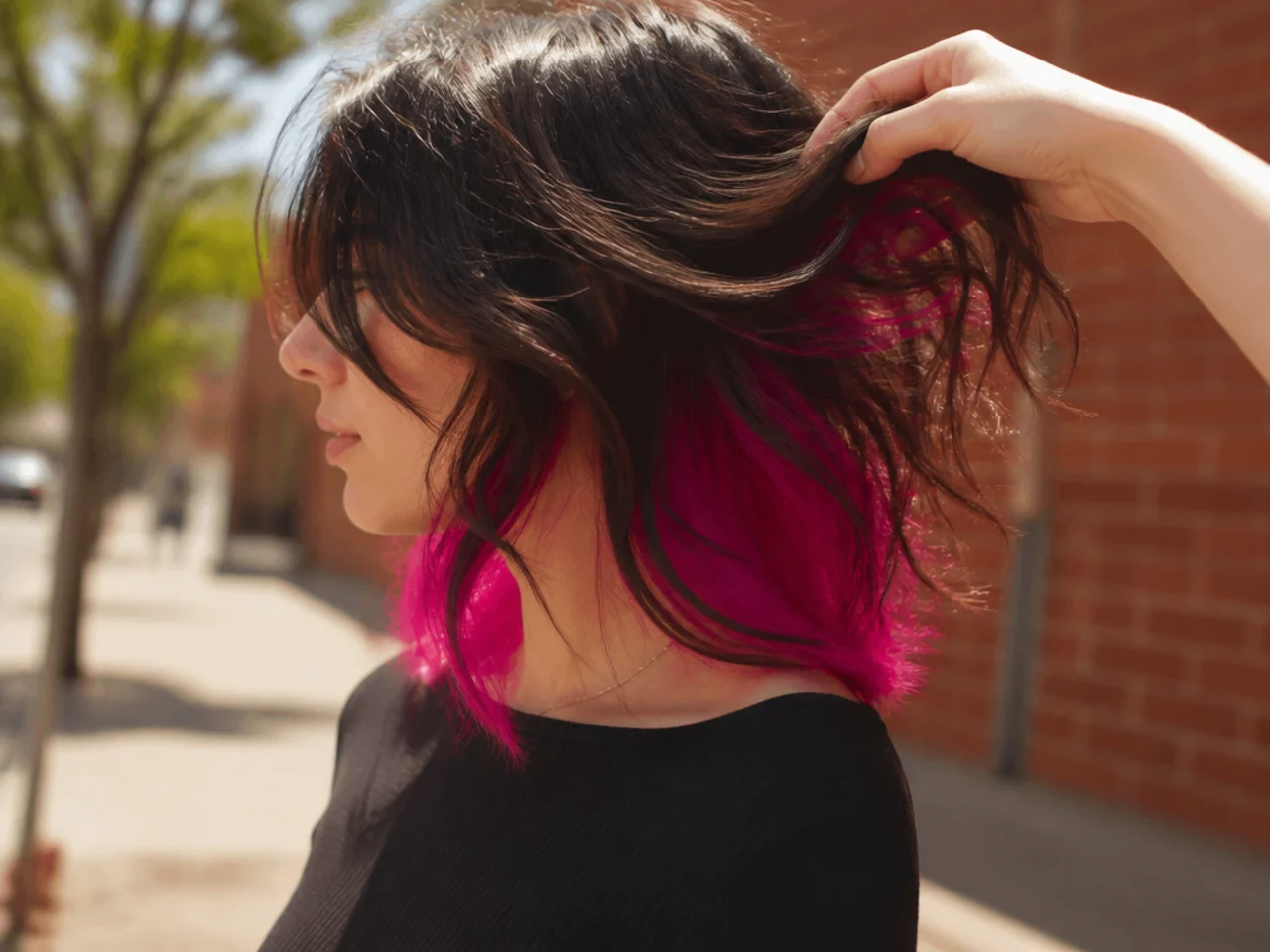
10. Pink Peekaboo at the Nape
Placed at the very bottom of the back so it appears only in a ponytail or an updo. This is the most concealable placement of all, because the section stays covered even when the hair is worn down and windy.
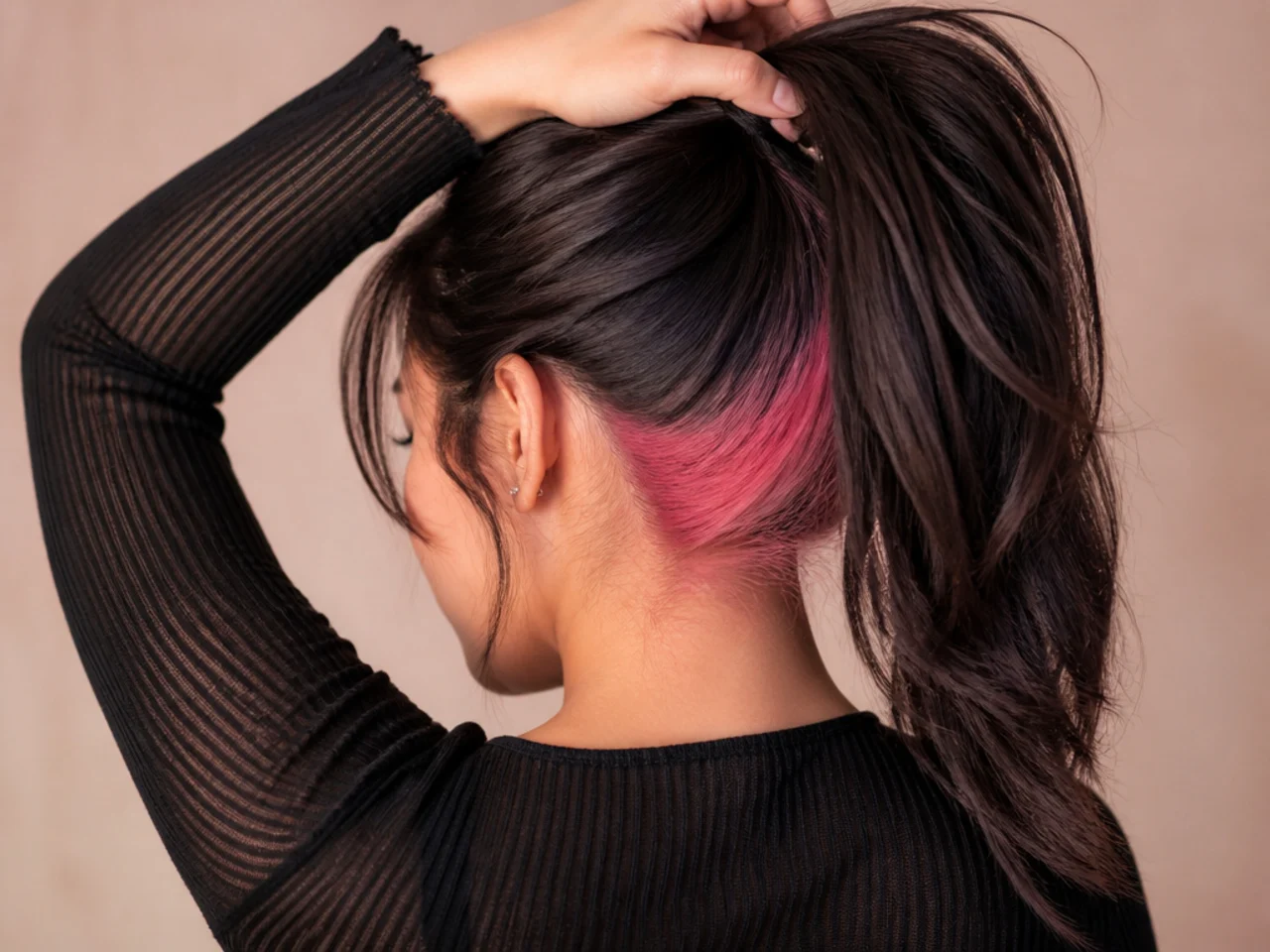
11. Pink Peekaboo Behind the Ears
Two small panels either side, timed to appear when the hair is tucked. Because the reveal is a gesture rather than a movement, this placement gives the most control over when the colour is seen.
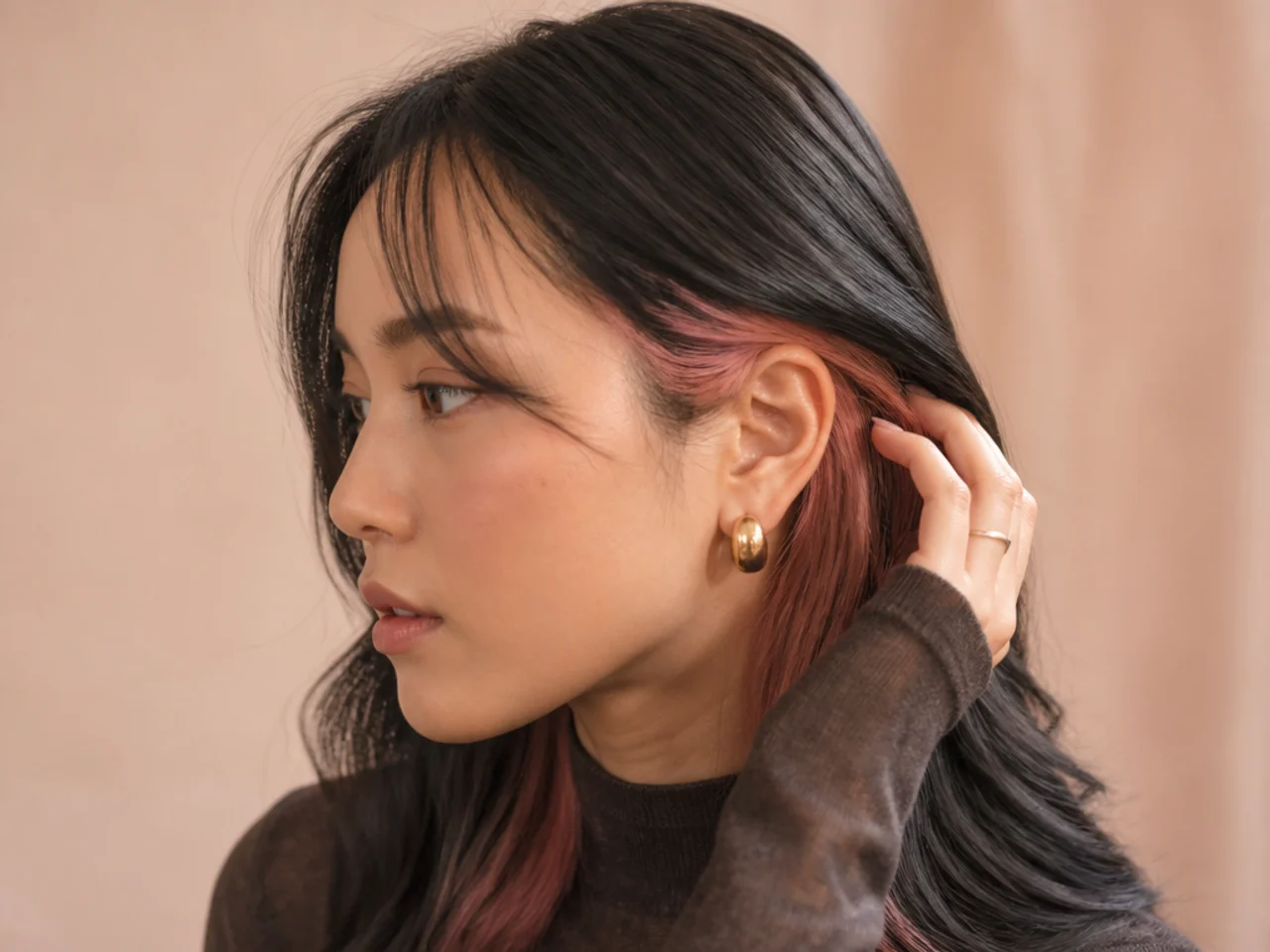
12. Thin Pink Ribbons
Fine slices instead of one solid panel. Thin sections intermingle with the natural hair as it moves, so the colour appears as flashes throughout rather than as a block, and regrowth is far less obvious.
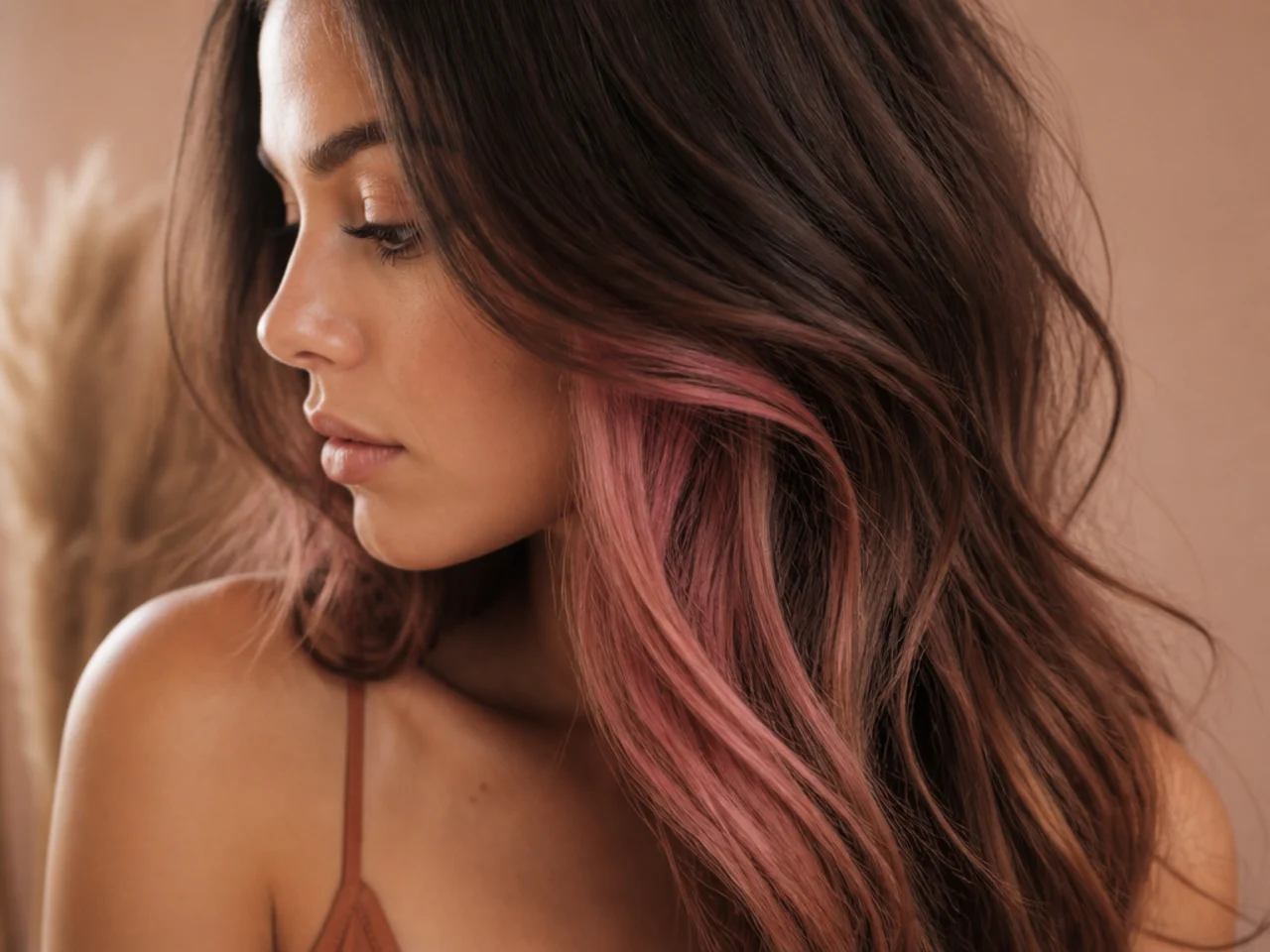
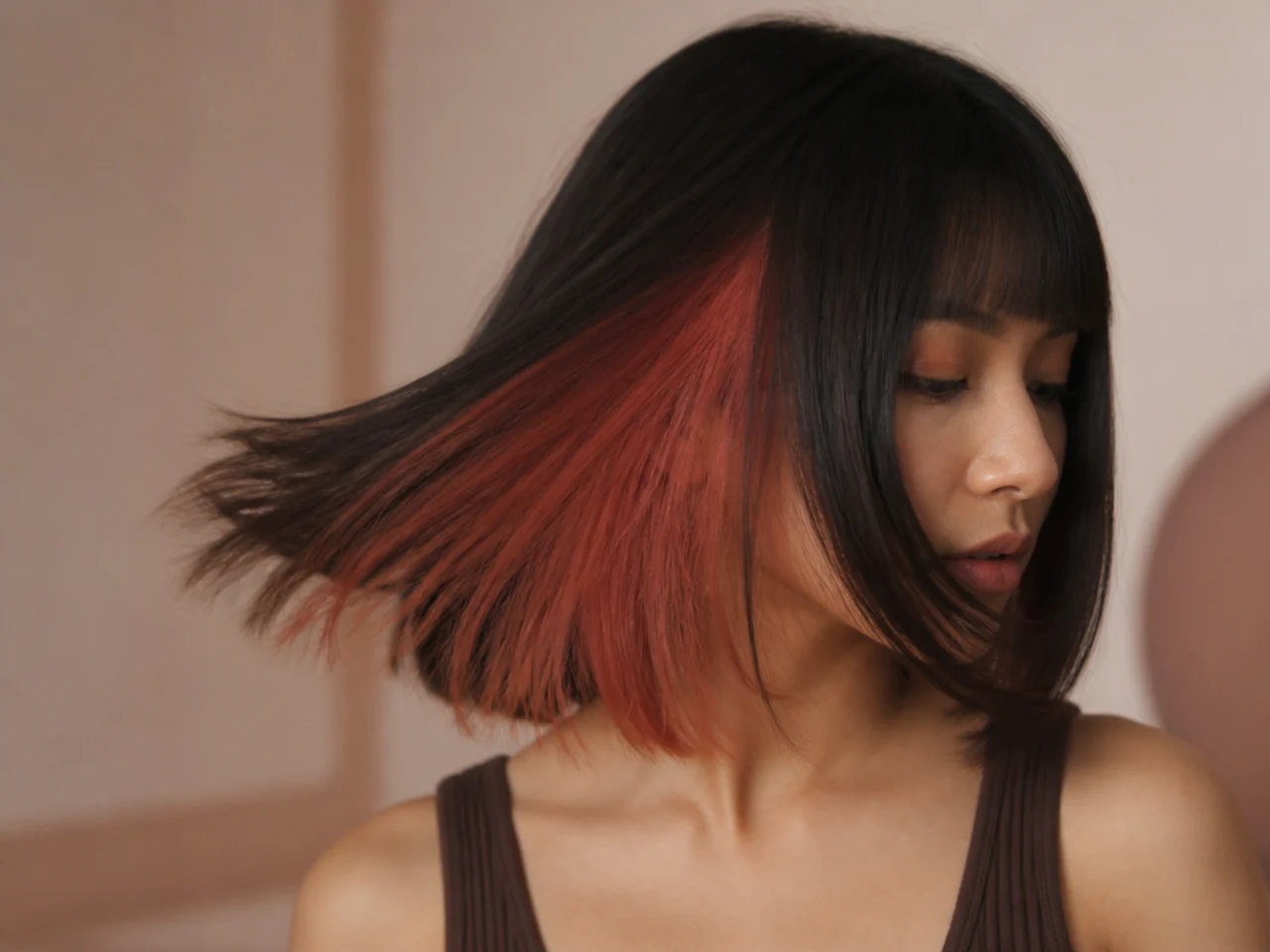
13. Pink Peekaboo Under a Blunt Bob
A heavy blunt line stacks the under layer directly against the bottom edge, so a bob shows its hidden colour almost constantly. Keep the panel small or the effect stops being hidden at all.
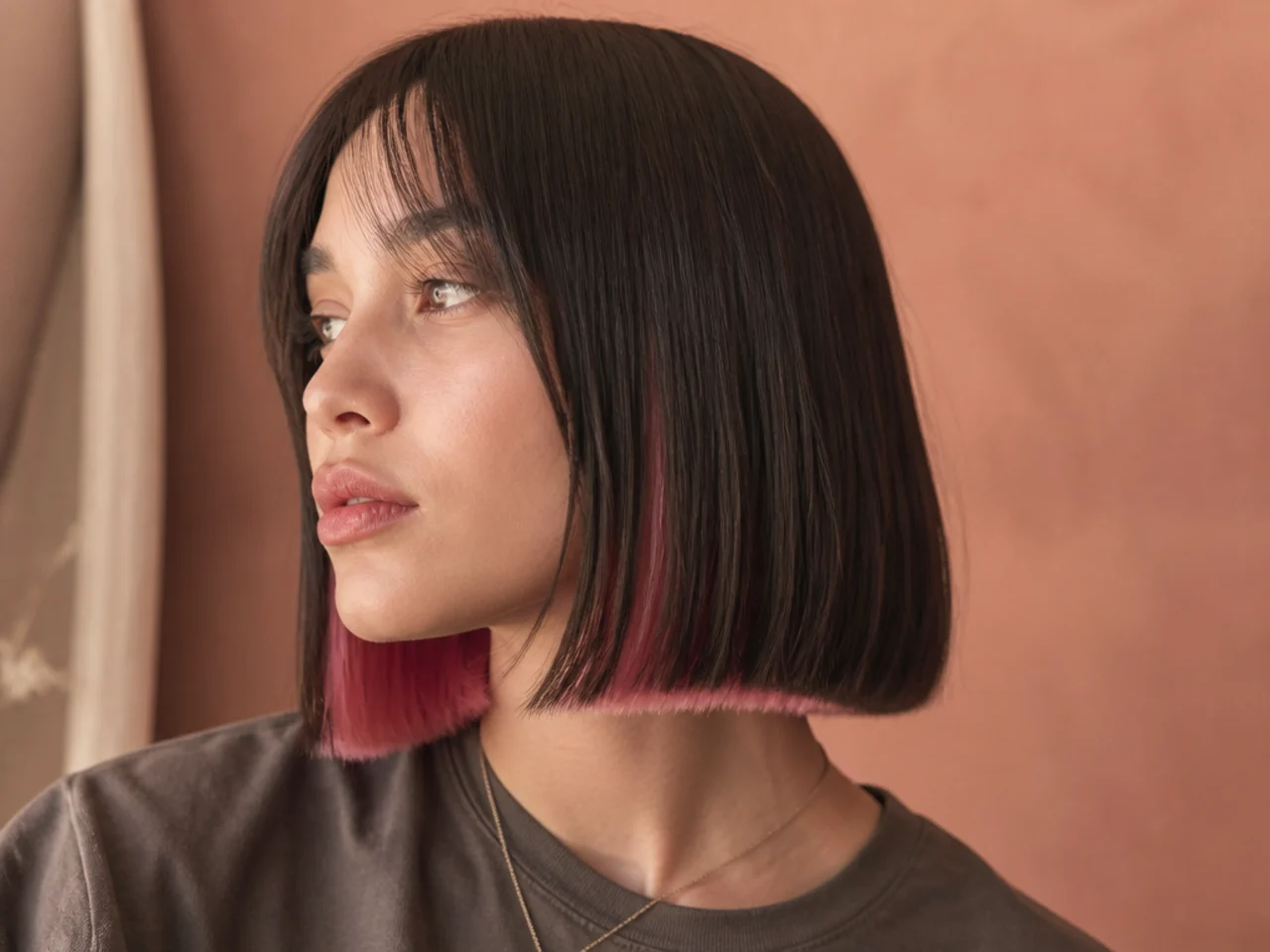
14. Pink Peekaboo in Long Layers
Layers break the canopy into steps, and every step is an opening the colour can show through. This is the placement that reads most often without being lifted, which suits anyone who wants the pink noticed.
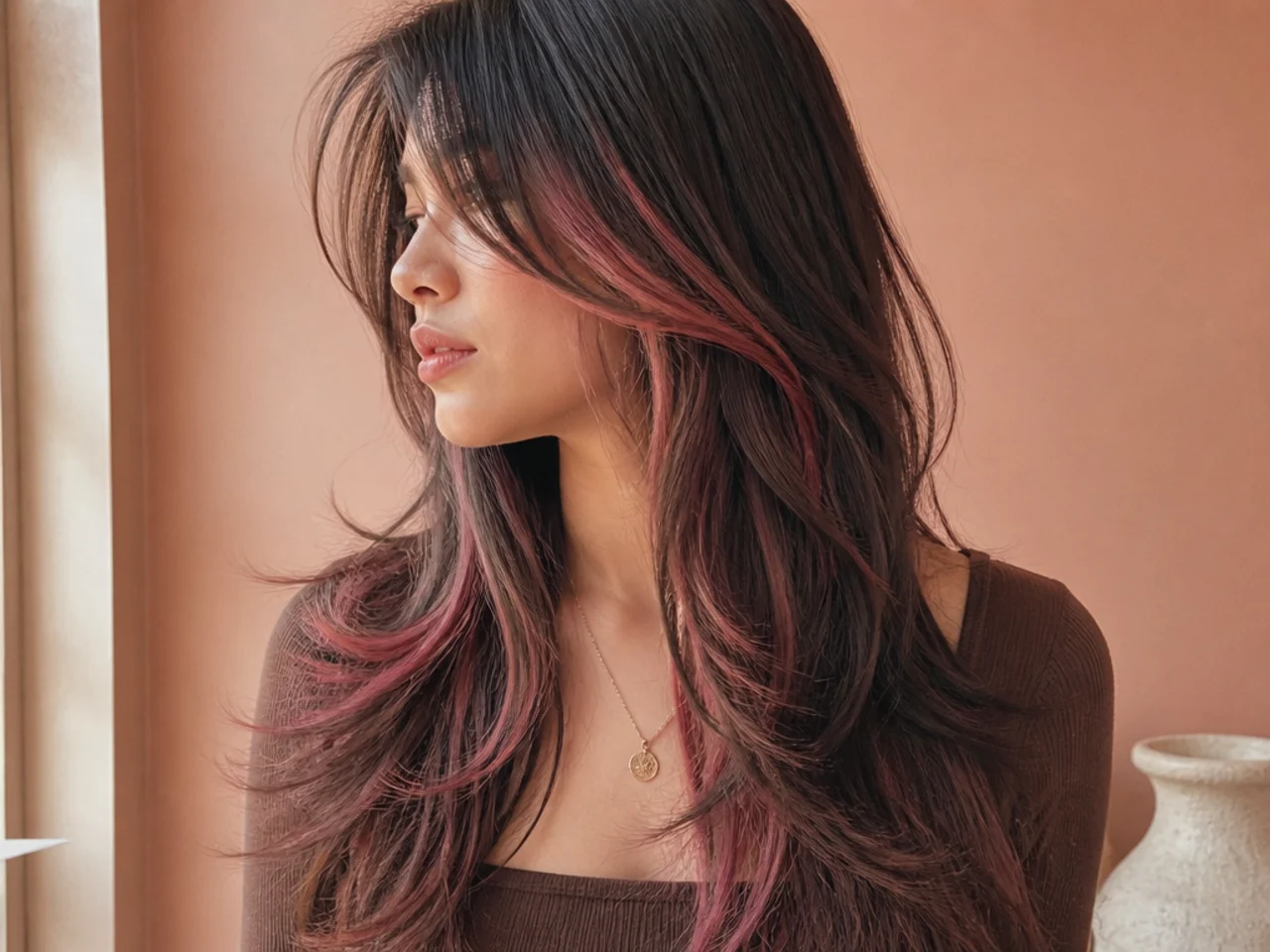
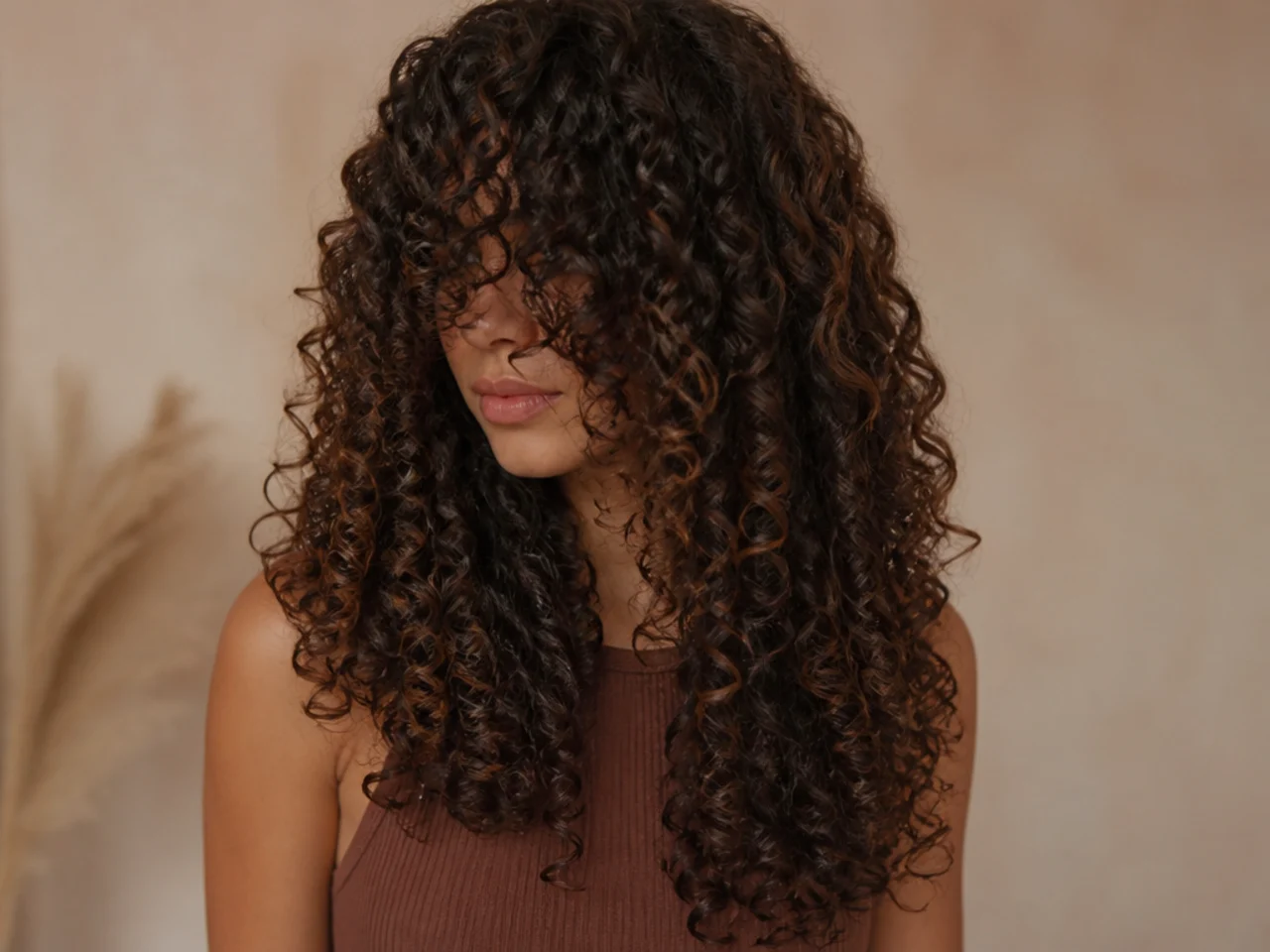
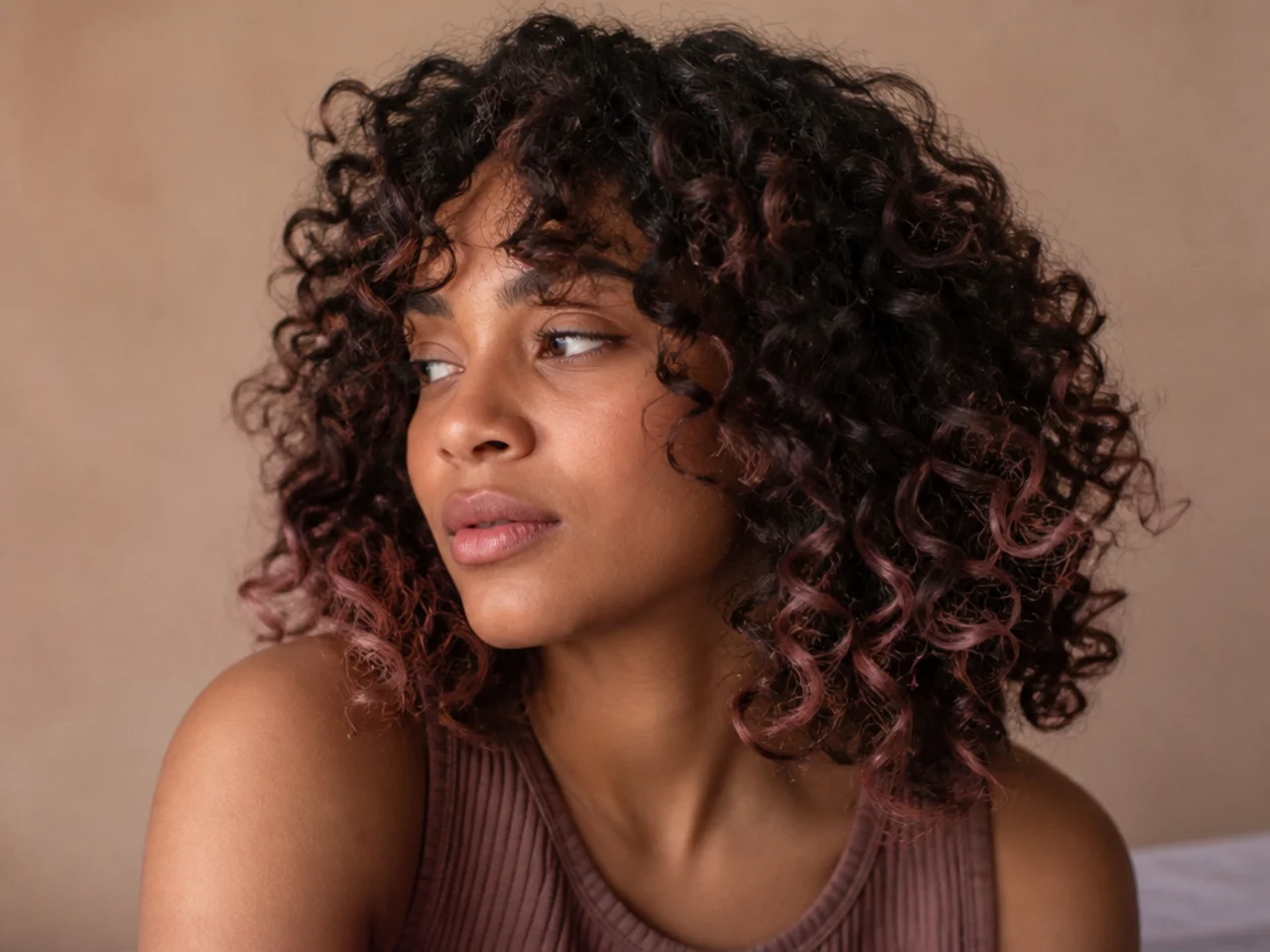
15. Pink Peekaboo on Curly Hair
A curl turns constantly, so an under panel surfaces at every bend without any movement at all. Less colour is needed here than on straight hair to achieve the same visual weight.
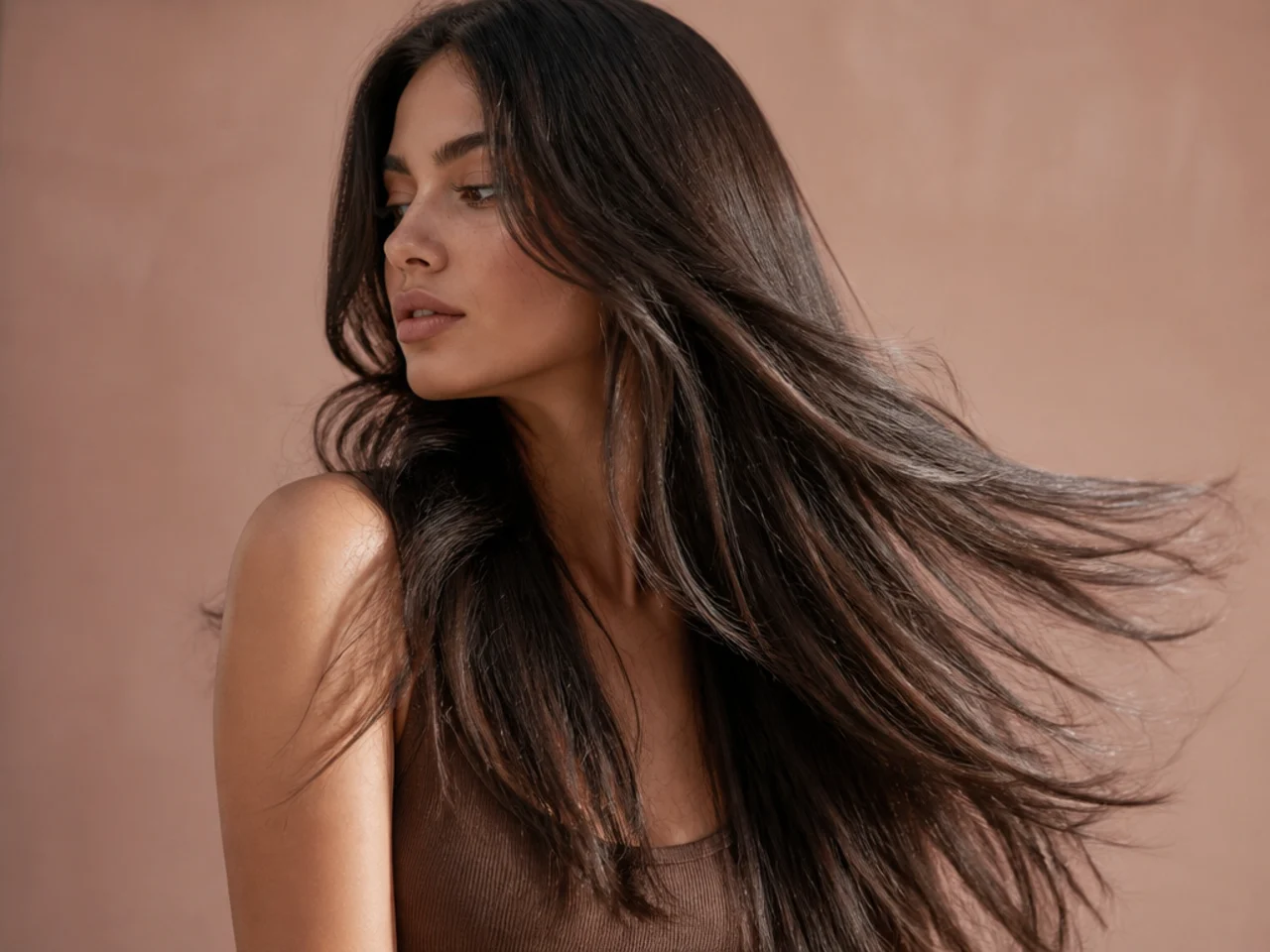
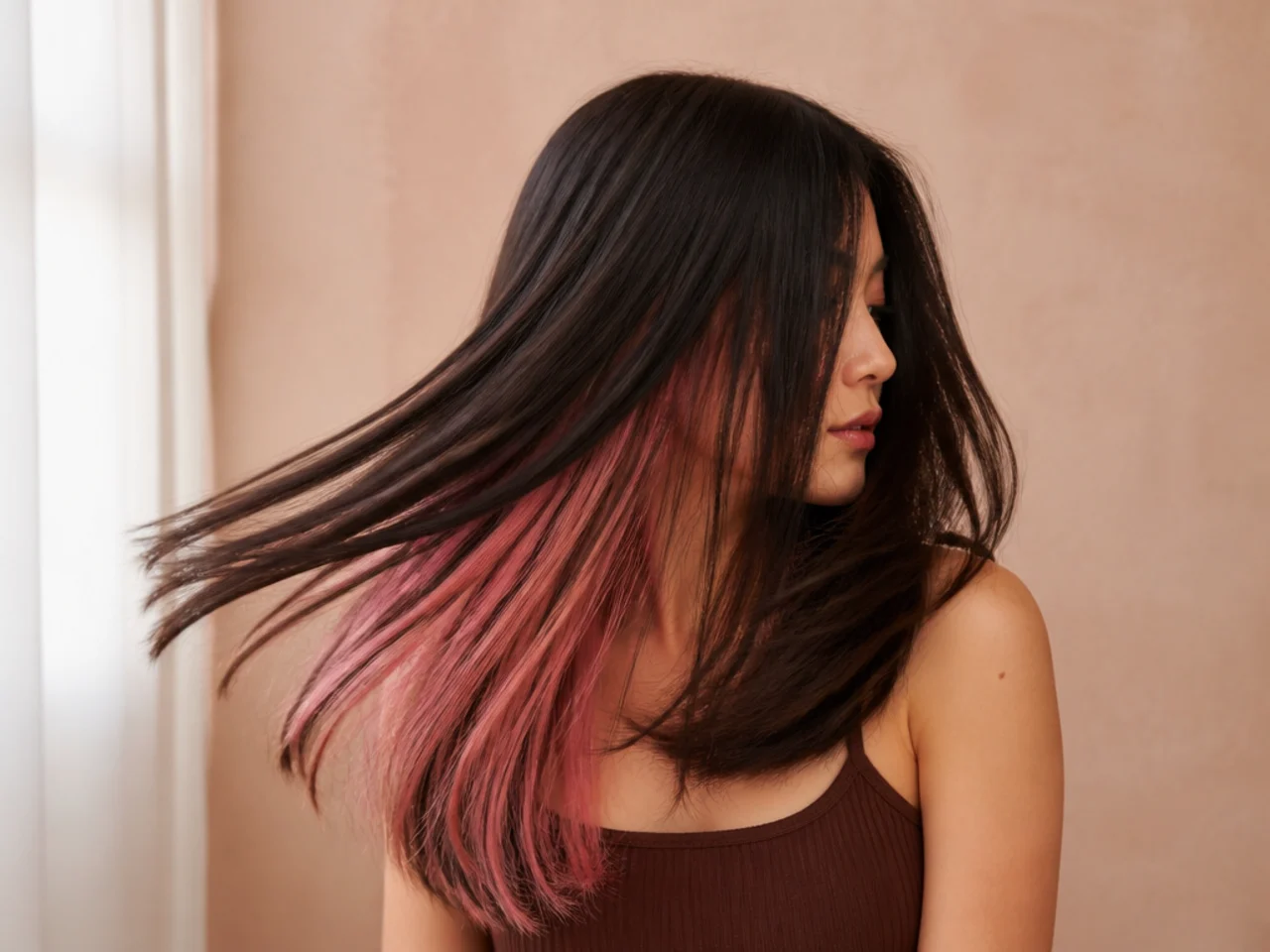
16. Pink Peekaboo on Straight Hair
Straight hair lies as a flat sheet, so the panel stays completely hidden until the hair swings. That is the purest version of the effect and the reason the placement was invented on straight hair first.
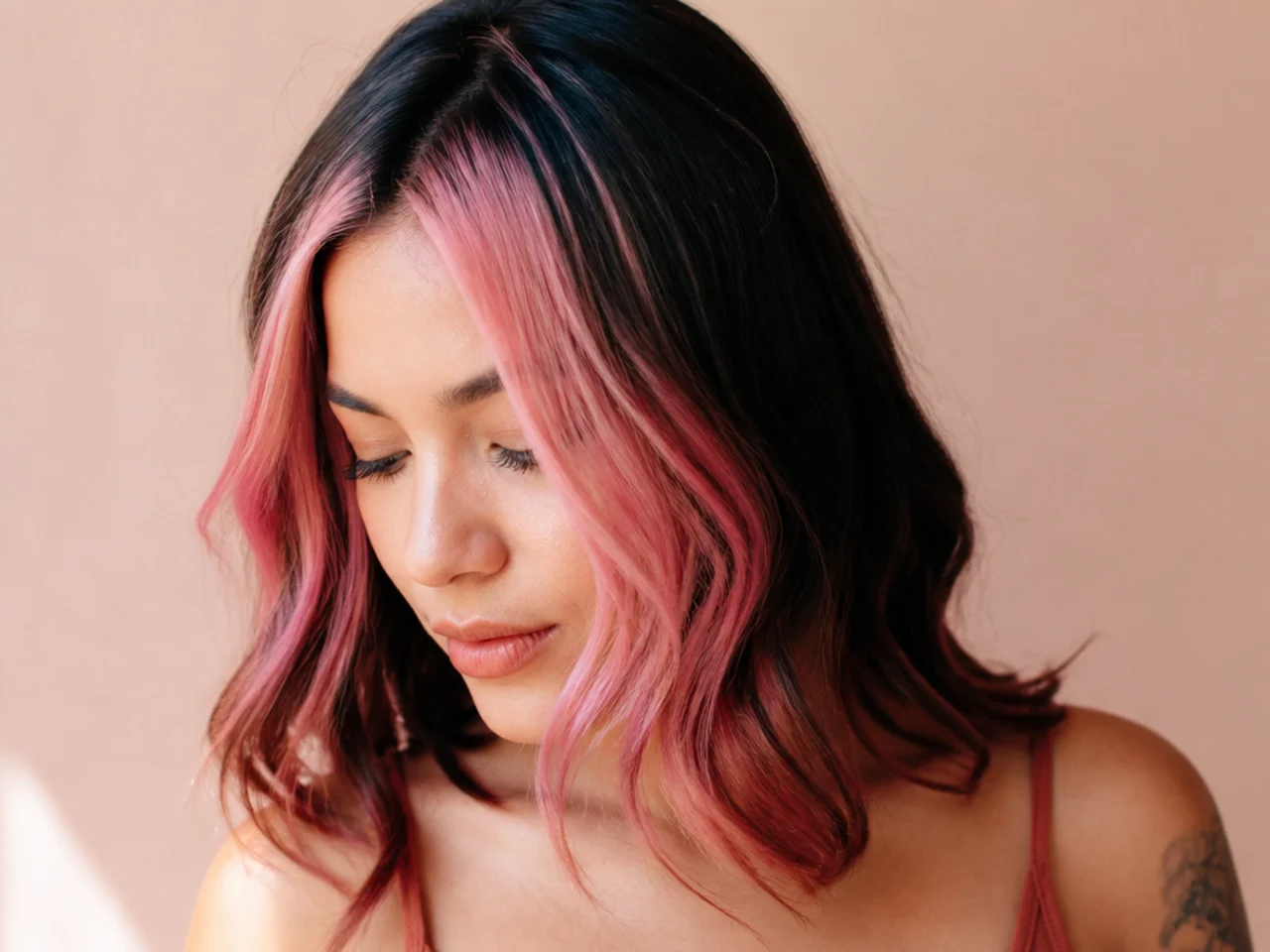
17. Pink Peekaboo With a Shadow Root
The colour started a few centimetres down from the scalp with the natural root left dark. Regrowth then meets colour on a gradient rather than a line, which is what buys the placement several extra weeks before it needs redoing.
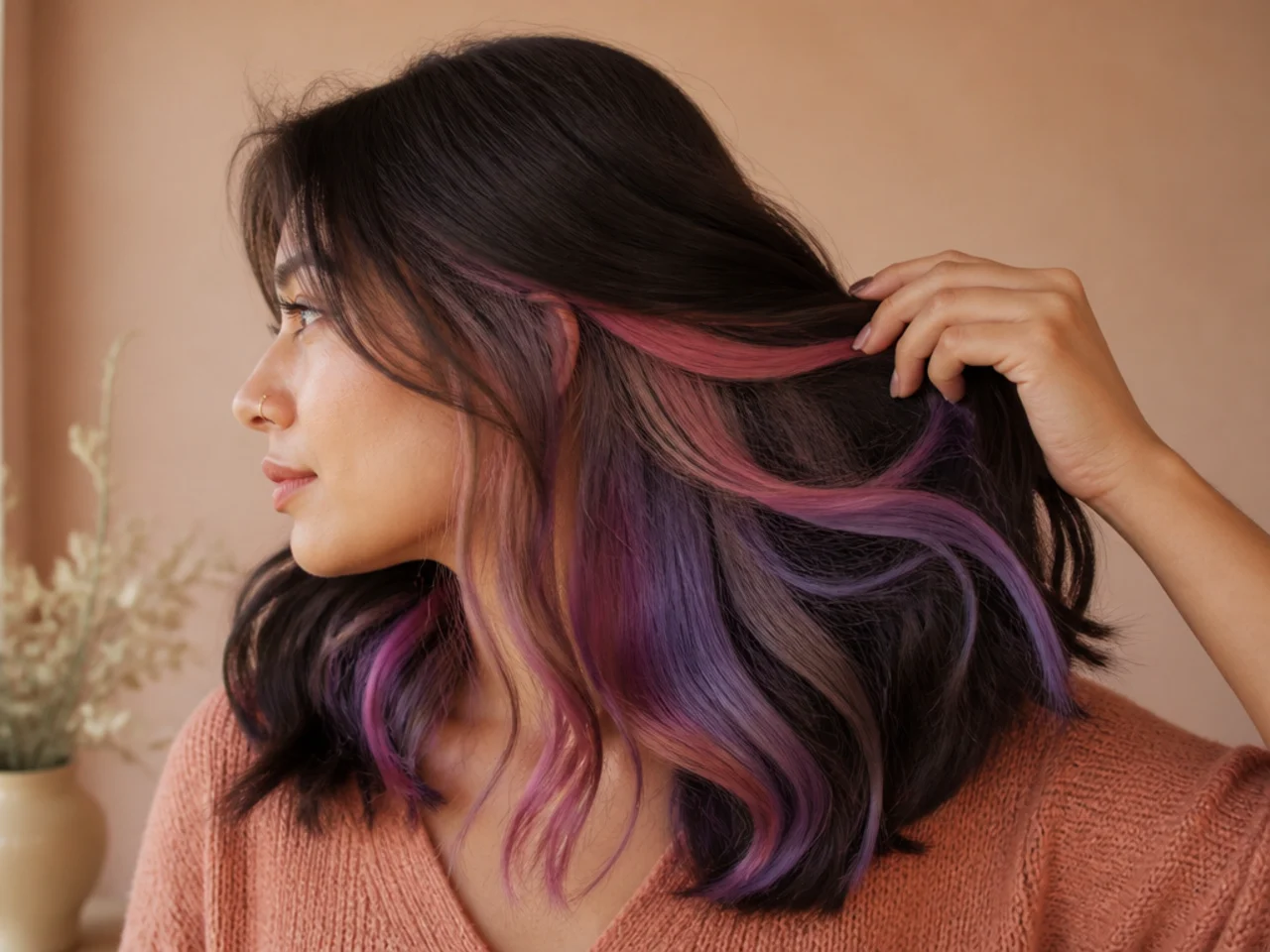
18. Pink and Purple Peekaboo
Two shades placed in alternating slices. Purple pigment holds longer than pink in most direct dye ranges, so as the panel fades the balance shifts violet — plan for that rather than being surprised by it. The blue version behaves the same way.
19. Pink Peekaboo on Copper Hair
Over a copper base the pink reads as a deepened warm red rather than as pink proper, because the orange underneath shows through the translucent dye. Anyone wanting true pink here has to lift the copper out first, and the red placement is the easier route.
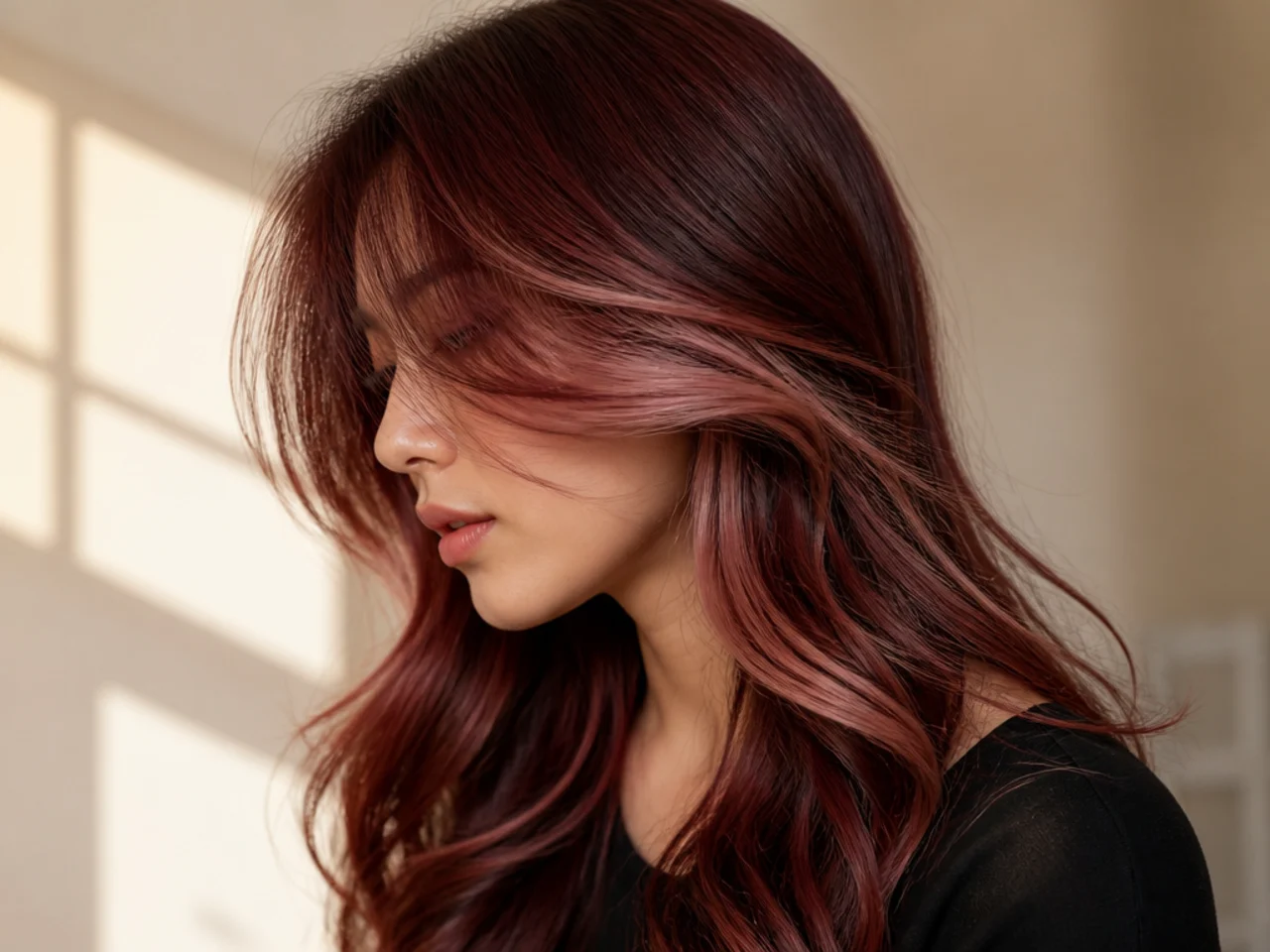
20. Pink Peekaboo at Six Washes
Softer, warmer and more transparent than day one. This is the state the colour spends most of its life in, so it is worth deciding whether you like it before booking, not after.
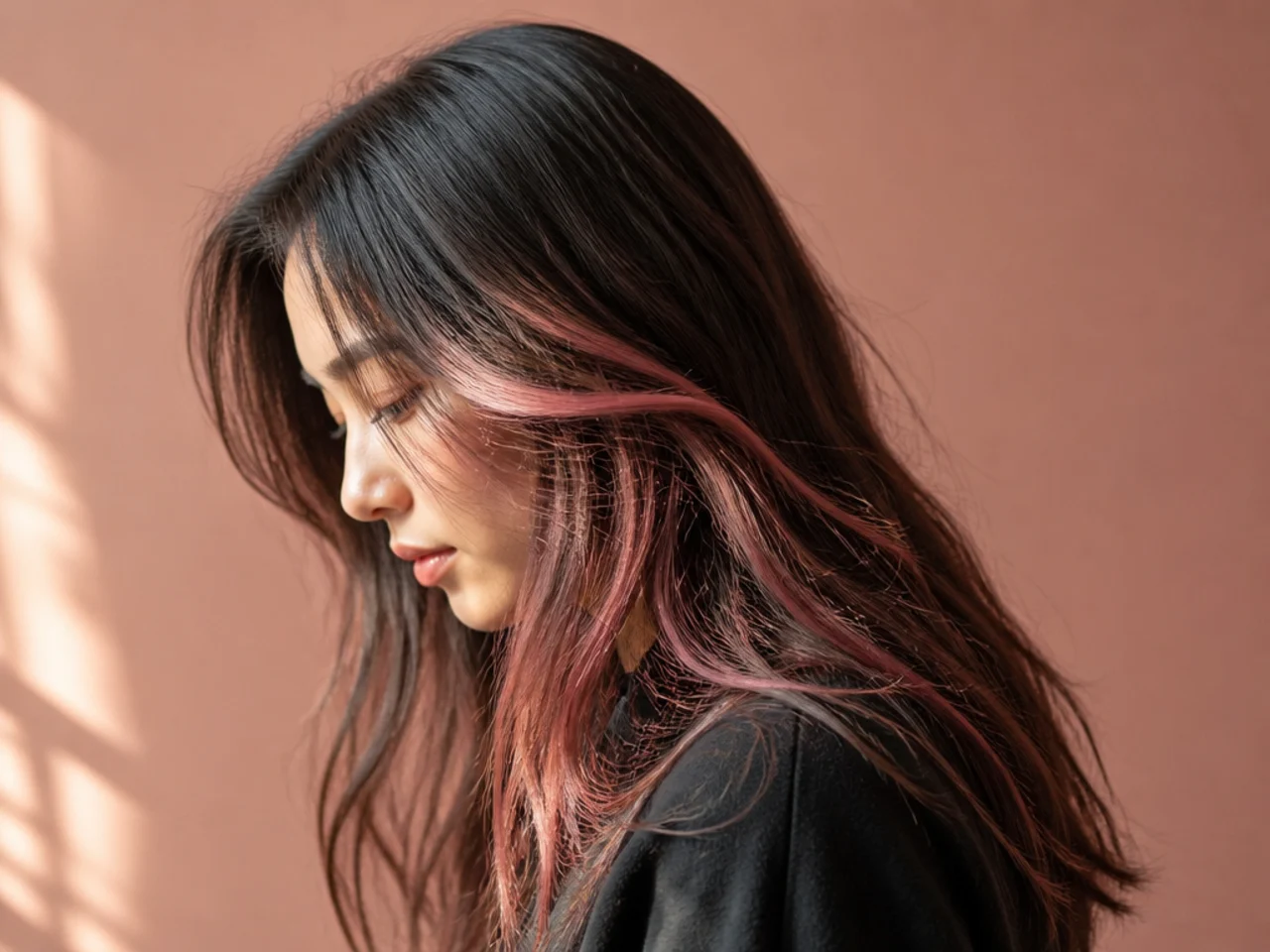
Styling and Upkeep
Wash in cool water. Heat swells the cuticle and lets deposited pigment out; cool water keeps it shut and is the single cheapest way to extend a pink.
Use a colour depositing conditioner in the same family. It replaces the pigment each wash removes, which turns fading into a slow drift rather than a decline.
Keep sulphates off the panel. Strong detergents strip direct dye faster than anything else in a bathroom.
Heat style the canopy, not the colour. Irons drive pigment out of the cuticle, and the panel is the section that can least afford it.
Refresh the panel before the roots. Regrowth on a hidden section is invisible for weeks; the colour going dull is what actually gives it away.
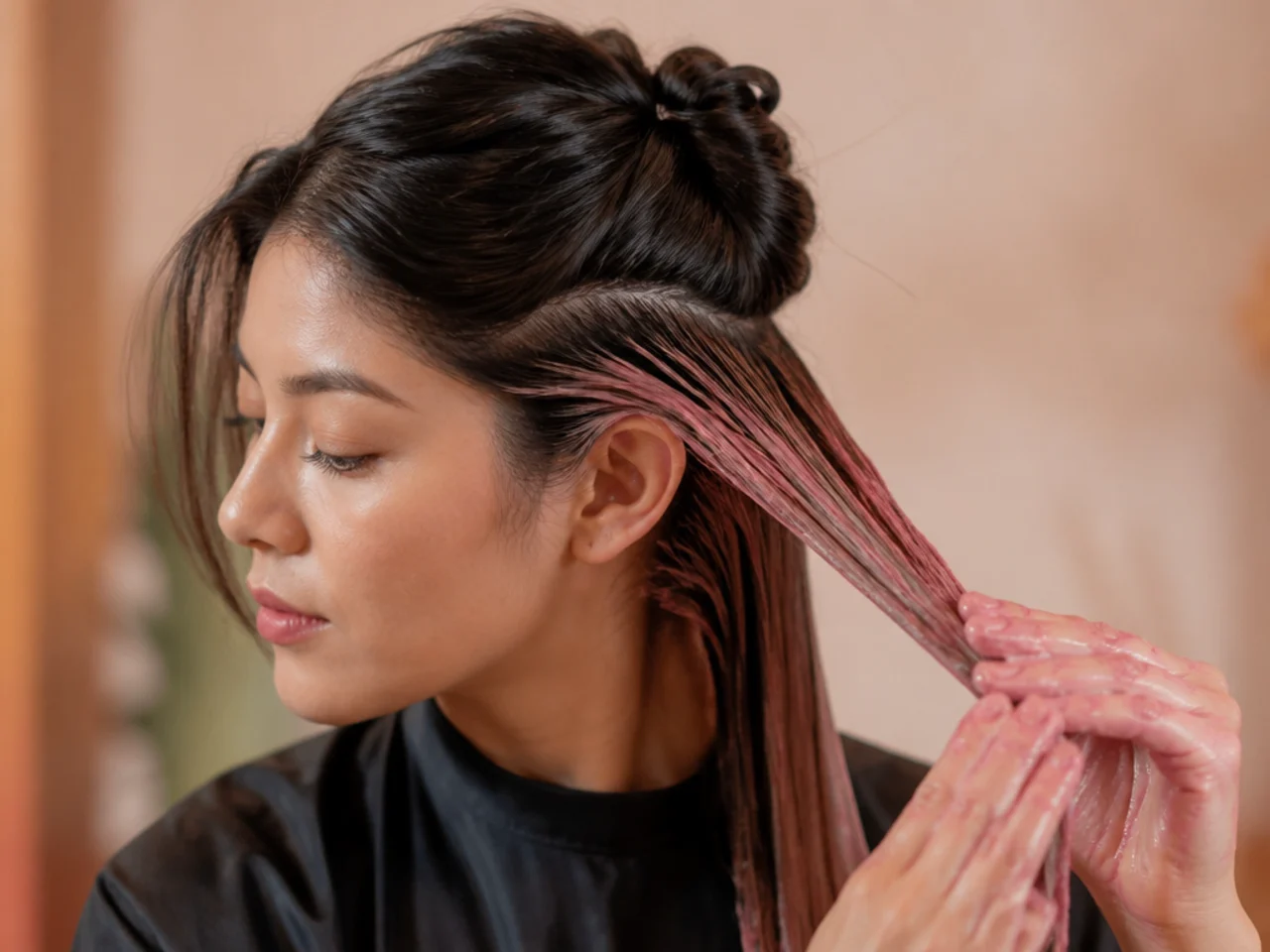
Mistakes to Avoid
Taking the section too high. Above the natural parting it stops being hidden and becomes an ordinary highlight.
Applying pink to a base that is still gold. The gold shows through and the result is peach, whatever the tub said.
Choosing a pastel with a heavy wash schedule. Pastels have the least pigment to lose, so they show fading fastest.
Lifting the panel and the canopy together. The canopy is meant to stay natural — bleaching it removes the contrast the whole effect depends on.
Judging the colour indoors. Warm bulbs flatten pink badly. Check it in daylight before deciding it went wrong.
FAQ
Do I need bleach? Yes for anything but the deepest magenta — pink only deposits.
How long does it last? Four to eight weeks of washes, longer than surface pink.
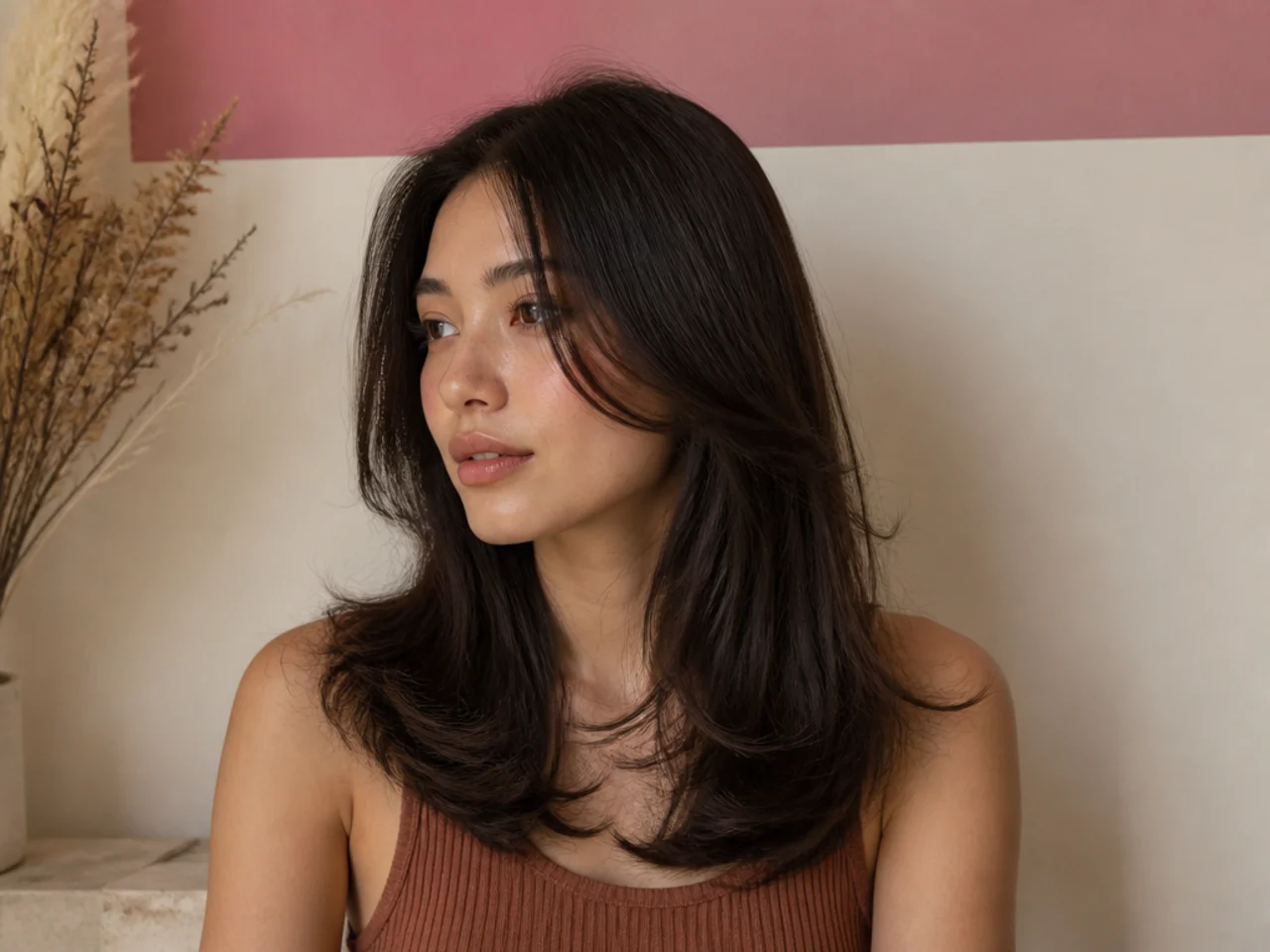
Where does the panel go? Below the natural parting, under the canopy.
Final Thoughts
Decide the placement before the shade. How far under the canopy the section sits determines whether anyone ever sees the colour, and no amount of pigment fixes a panel taken too high.
For the placement rules across every shade see the peekaboo colour guide, and for the version that hides warmth best see red peekaboo. More in Hair Color Trends.