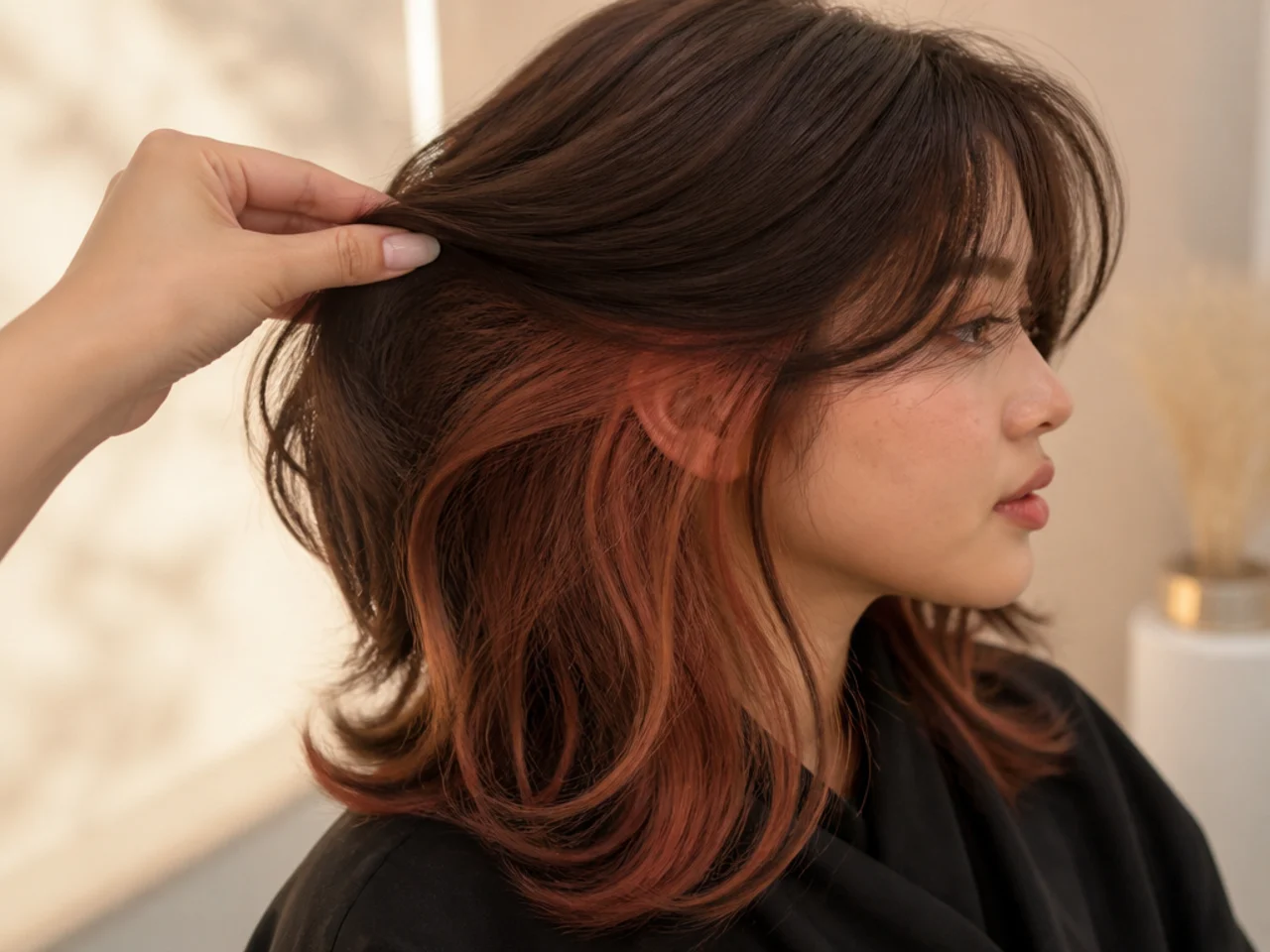
25 Peekaboo Hair Colors That Flatter Brunettes
Twenty five peekaboo shades for brown hair, sorted by the two things that decide the result — where the panel sits, and how far the base has to be lifted to reach the colour. Get the placement wrong and a hidden colour is just a stripe.
In this article · 32
- Why the Panel Stays Hidden
- Choosing a Shade Your Base Can Reach
- The 25 Peekaboo Colors for Brunettes
- 1. Auburn Under the Top Layer
- 2. Copper Panels
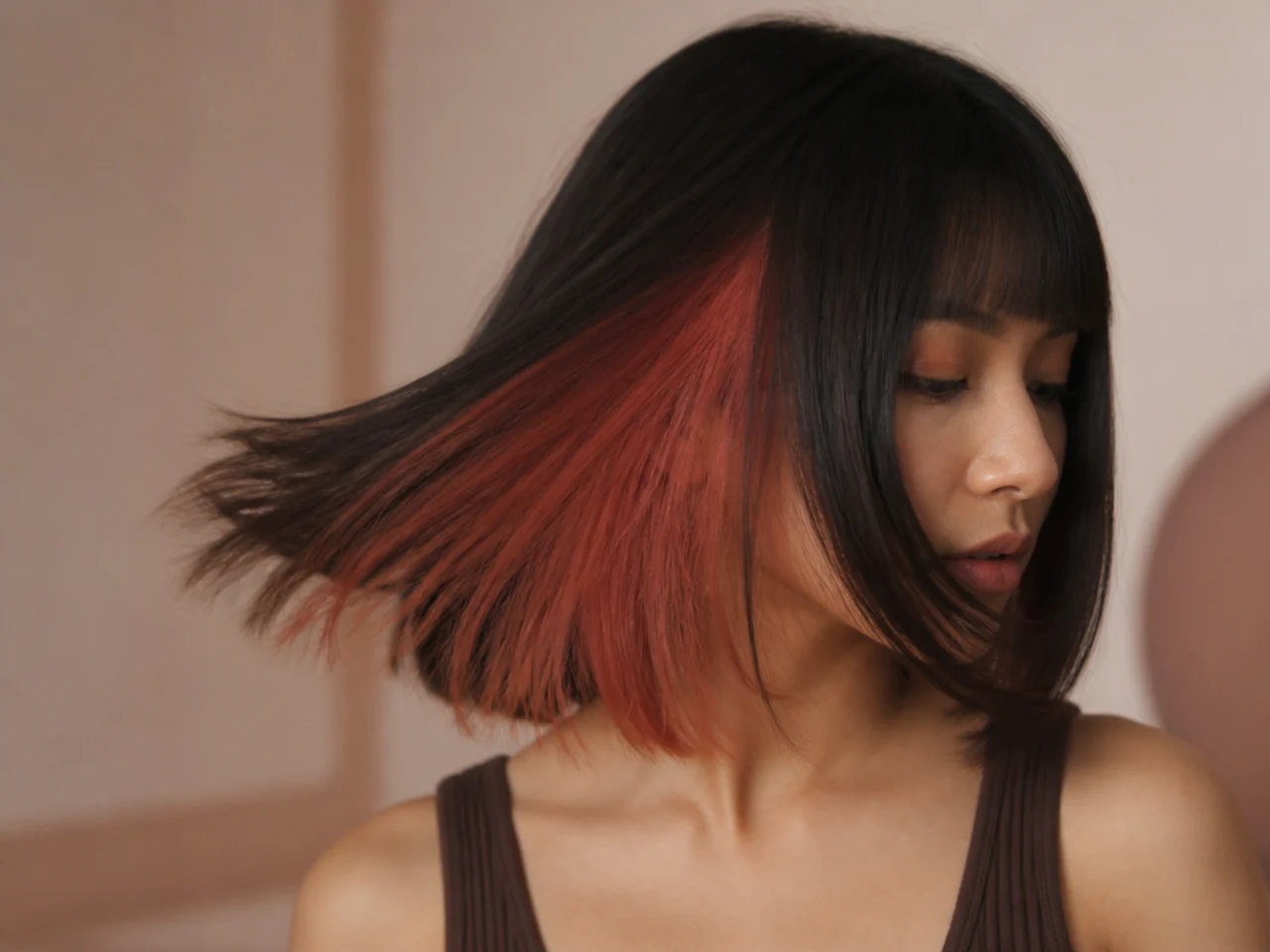
- 3. Burgundy Underlayer
- 4. Cherry Red at the Nape
- 5. Mahogany Peekaboo
- 6. Rose Gold Panels
- 7. Caramel Peekaboo
- 8. Honey Blonde Underlayer
- 9. Toffee Slices Around the Face
- 10. Deep Violet Peekaboo
- 11. Lavender Panels
- 12. Magenta Underlayer
- 13. Pastel Pink at the Nape
- 14. Midnight Blue Peekaboo
- 15. Teal Panels
- 16. Emerald Green Underlayer
- 17. Peacock Blend
- 18. Sunset Peekaboo
- 19. Silver Peekaboo
- 20. Ash Brown Peekaboo
- 21. Peekaboo Behind the Ears
- 22. Ponytail Peekaboo
- 23. Chunky Panels
- 24. Fine Woven Slices
- 25. Shadow Rooted Peekaboo
- Styling and Upkeep
- Mistakes to Avoid
- FAQ
- Final Thoughts
A peekaboo that shows all the time was placed too high, and no amount of the right colour fixes a panel in the wrong position.
The top section is the curtain. A panel only reads as hidden if there is enough hair falling over it, which means it has to start below the parting rather than beside it.
The shade is limited by how far your base can be lifted. Brown hair lifts through red and orange, so warm colours arrive early and cool ones need the panel taken to pale yellow and toned.
Why the Panel Stays Hidden
Placement decides visibility, not brightness. A neon panel under a thick top section stays invisible until you move. A soft caramel taken above the parting is on show all day.
Below the parting means below the horseshoe. The section that falls forward from the crown to the temples is the cover. Anything under it is peekaboo territory.
Depth of the section controls how much shows. A shallow section of colour peeks; a deep one shows every time the hair swings, which is a different look with the same dye.
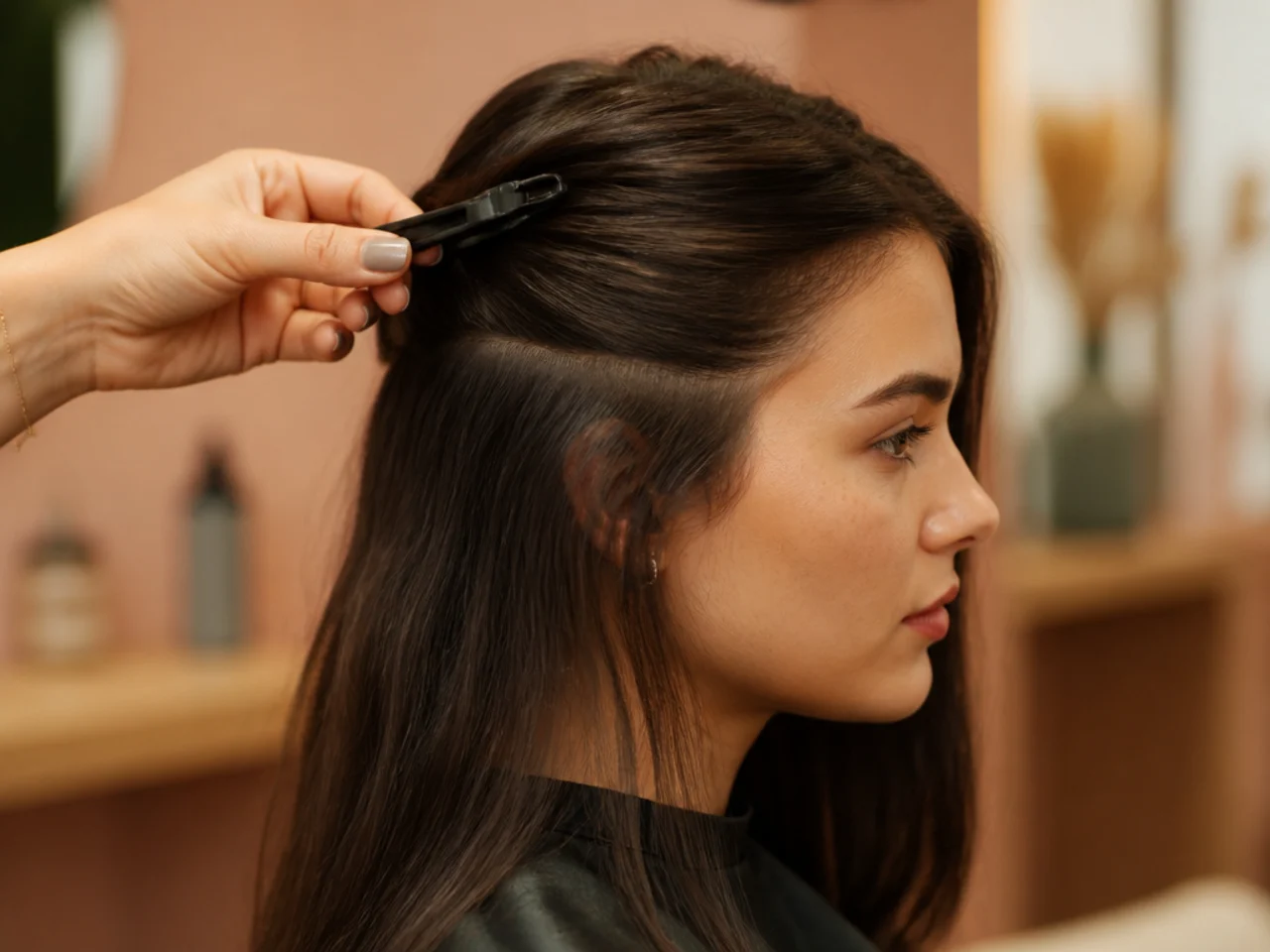
Test it before the colour goes on. Clip the top section down over the sectioned panel and look in the mirror. That is precisely what it will look like at rest.
Choosing a Shade Your Base Can Reach
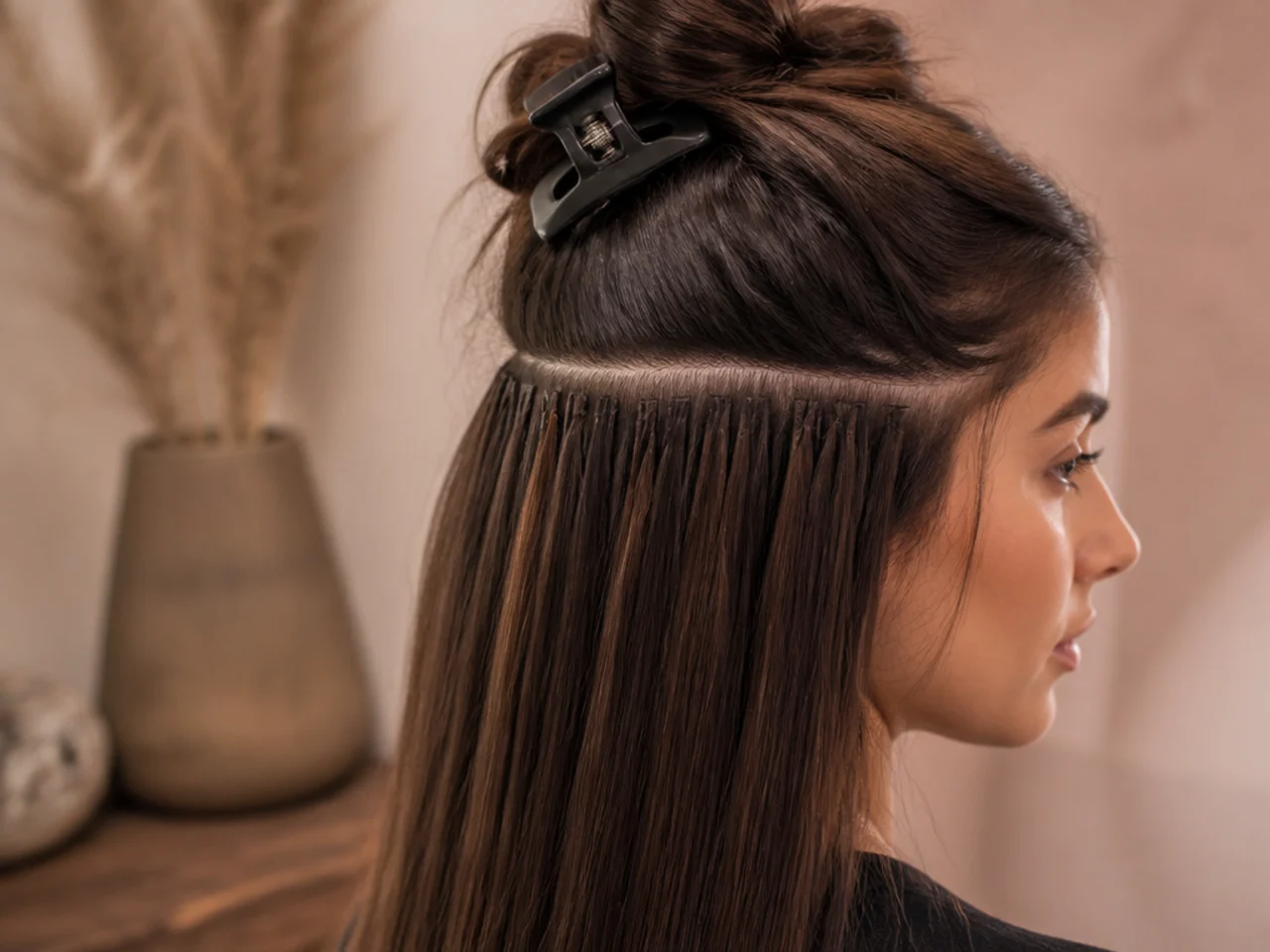
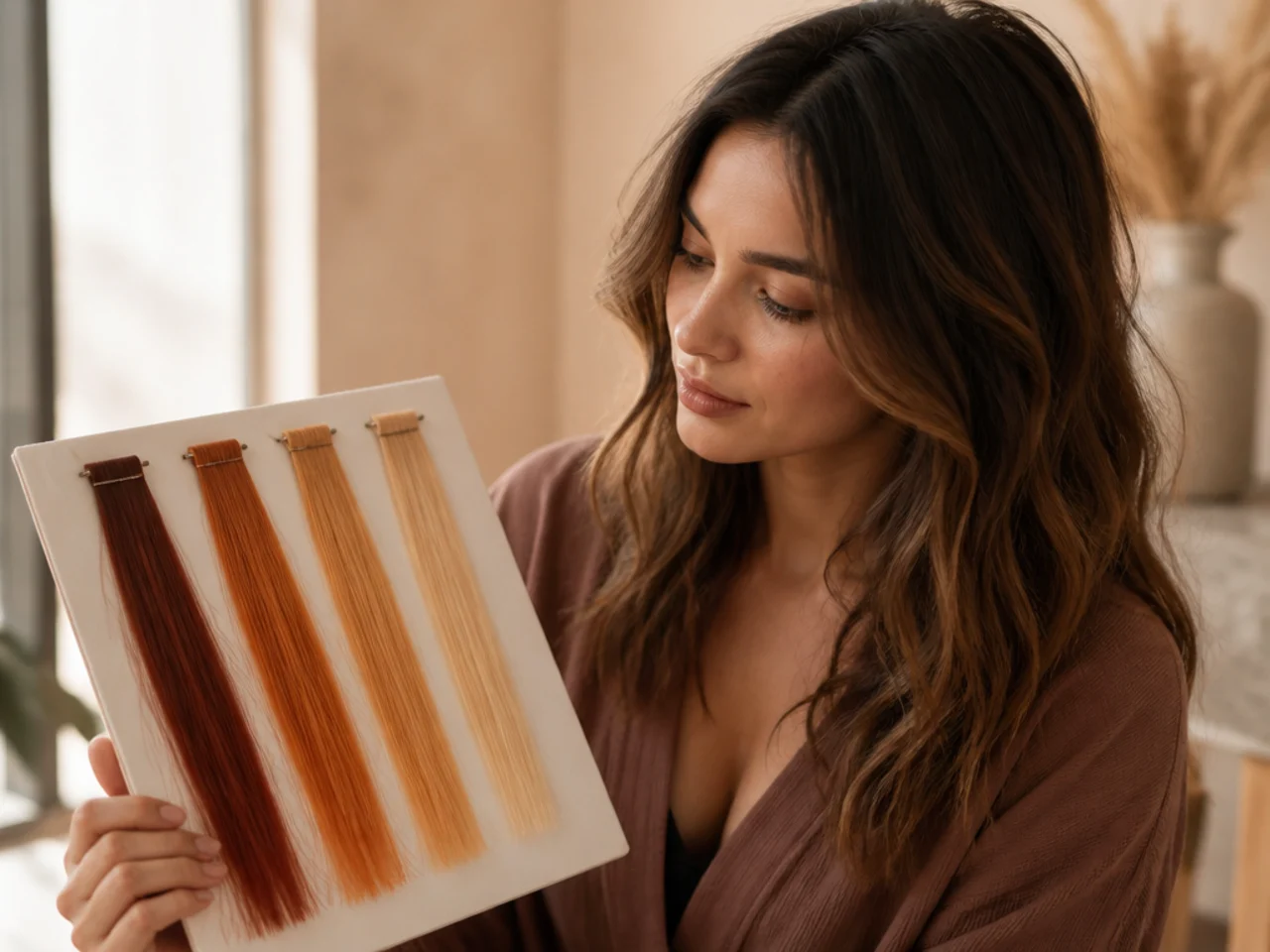
Warm shades arrive with almost no lift. Copper, red and burgundy sit happily on a mid brown base because the underlying warmth adds to them rather than fighting them.
Cool shades need pale yellow and a toner. Blue over leftover orange goes green, and silver over it goes muddy grey. That second step is the one most often left out of a quote.
Pastels need the most lift and hold the least colour. They are heavily diluted, so they need a level nine or ten base to read at all and they fade fastest of anything here.
Ask what happens at week six, not week one. Blue and green stain and are hard to remove, reds fade fast but leave nothing behind, and that difference matters more than the first photograph.
The 25 Peekaboo Colors for Brunettes
1. Auburn Under the Top Layer
The lowest effort shade on this list, because auburn sits only a level or two from a mid brown base and the residual warmth from lifting is already the right colour. It reads as a red glint when the hair moves rather than a stripe, which makes it the sensible first attempt.
2. Copper Panels
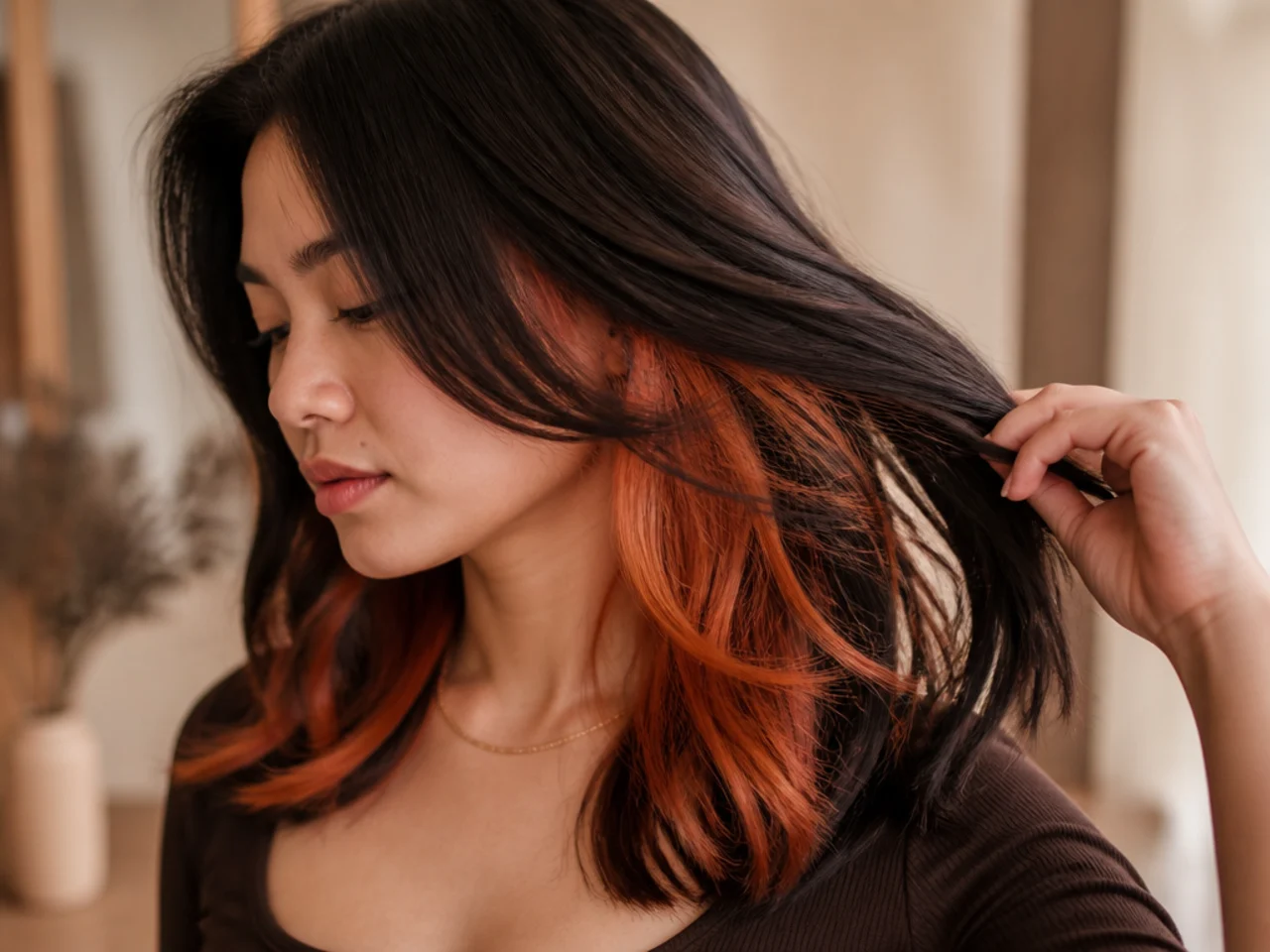
Copper lands almost exactly where brown hair naturally sits after two or three levels of lift, so the base does half the work. Uneven lifting matters far less here than with any cool shade, because the patches that lifted less simply read as depth.
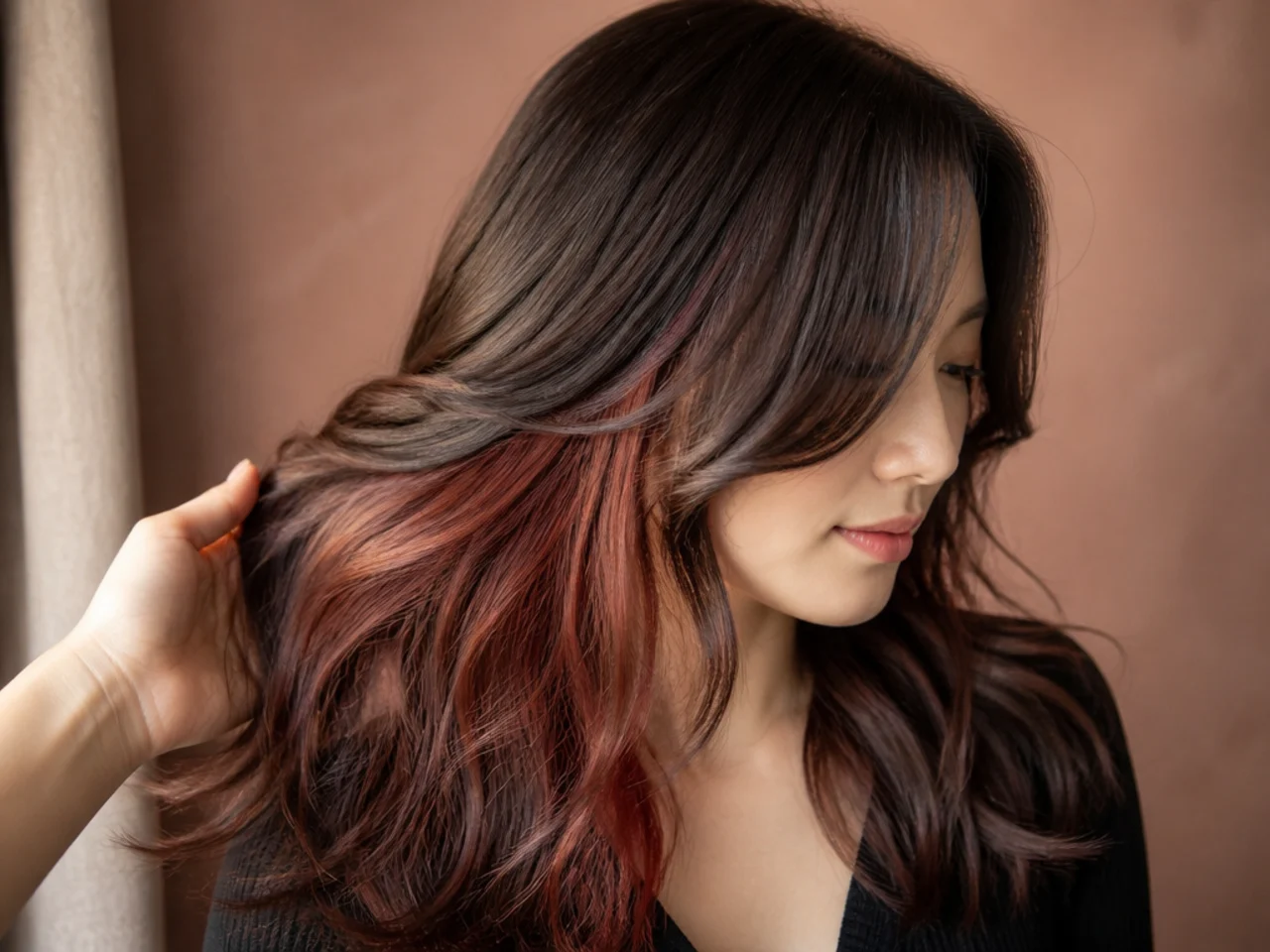
3. Burgundy Underlayer
Burgundy is deposit only and needs no lift on brown hair, which is why it does almost no damage. It only reads in direct light, where the red reflect fires against the base — in shade it looks like your natural colour, which is exactly what makes it wearable at work.
4. Cherry Red at the Nape
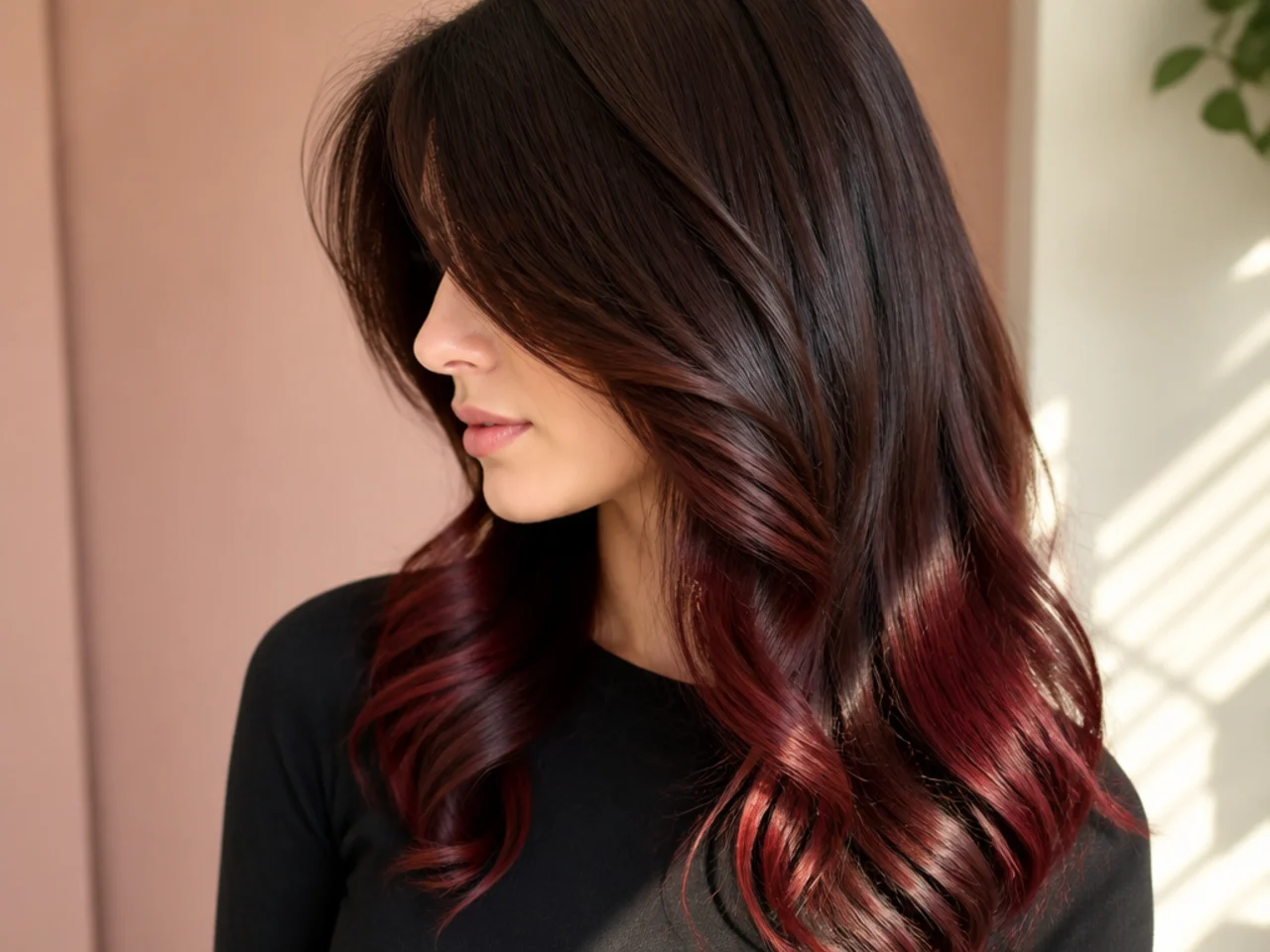
Placing a bright red at the nape hides it completely under loose hair and shows the whole panel the moment it goes up. Red is also the shade that fades fastest, so a nape panel gets less sun and washing exposure than one at the sides and holds noticeably longer.
5. Mahogany Peekaboo
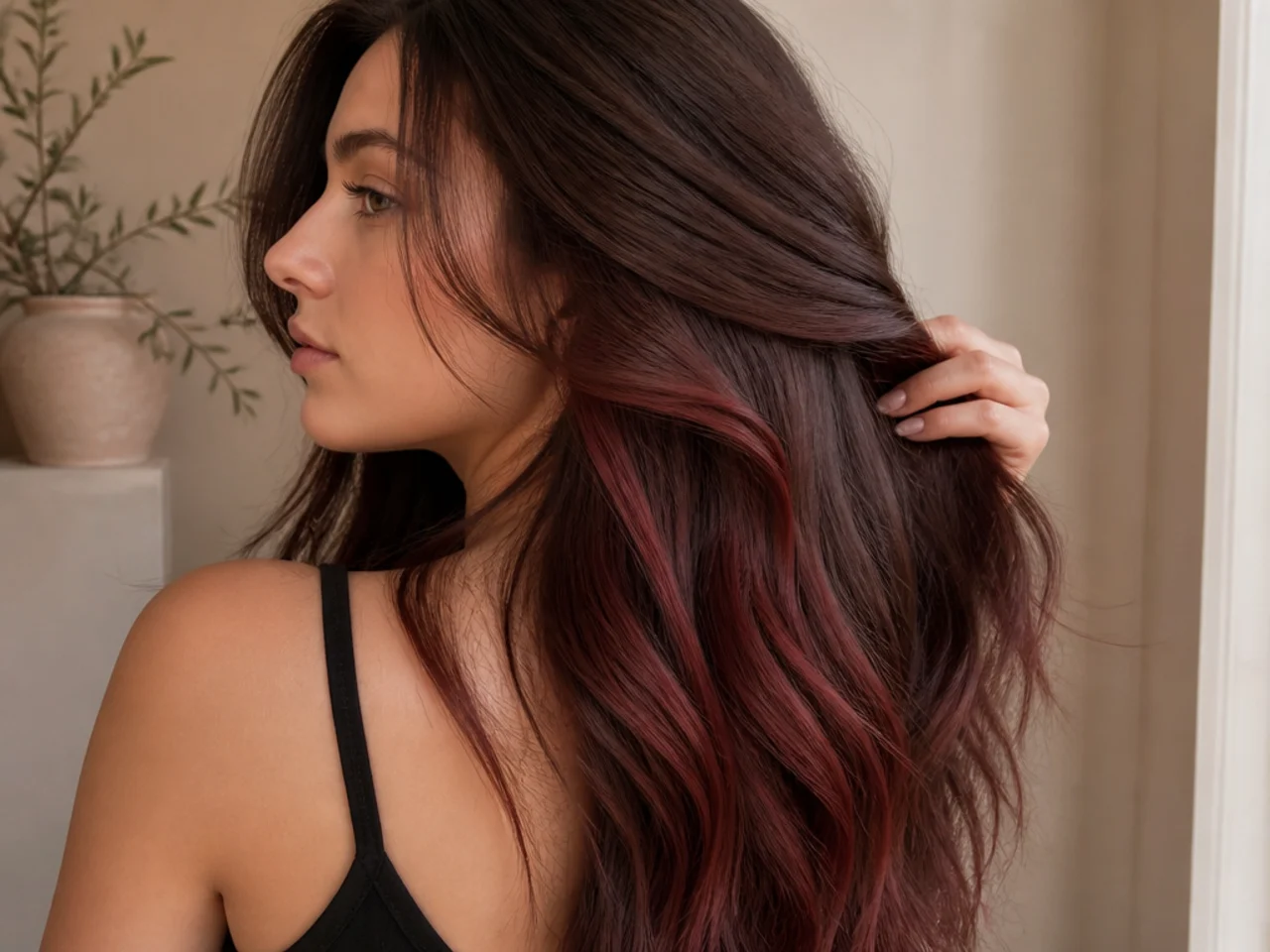
A brown with a red base rather than a red proper, so it needs no lifting and grows out with no visible line. The trade is subtlety — on hair darker than a level four it can vanish entirely, so it belongs on mid brown rather than near black.
6. Rose Gold Panels
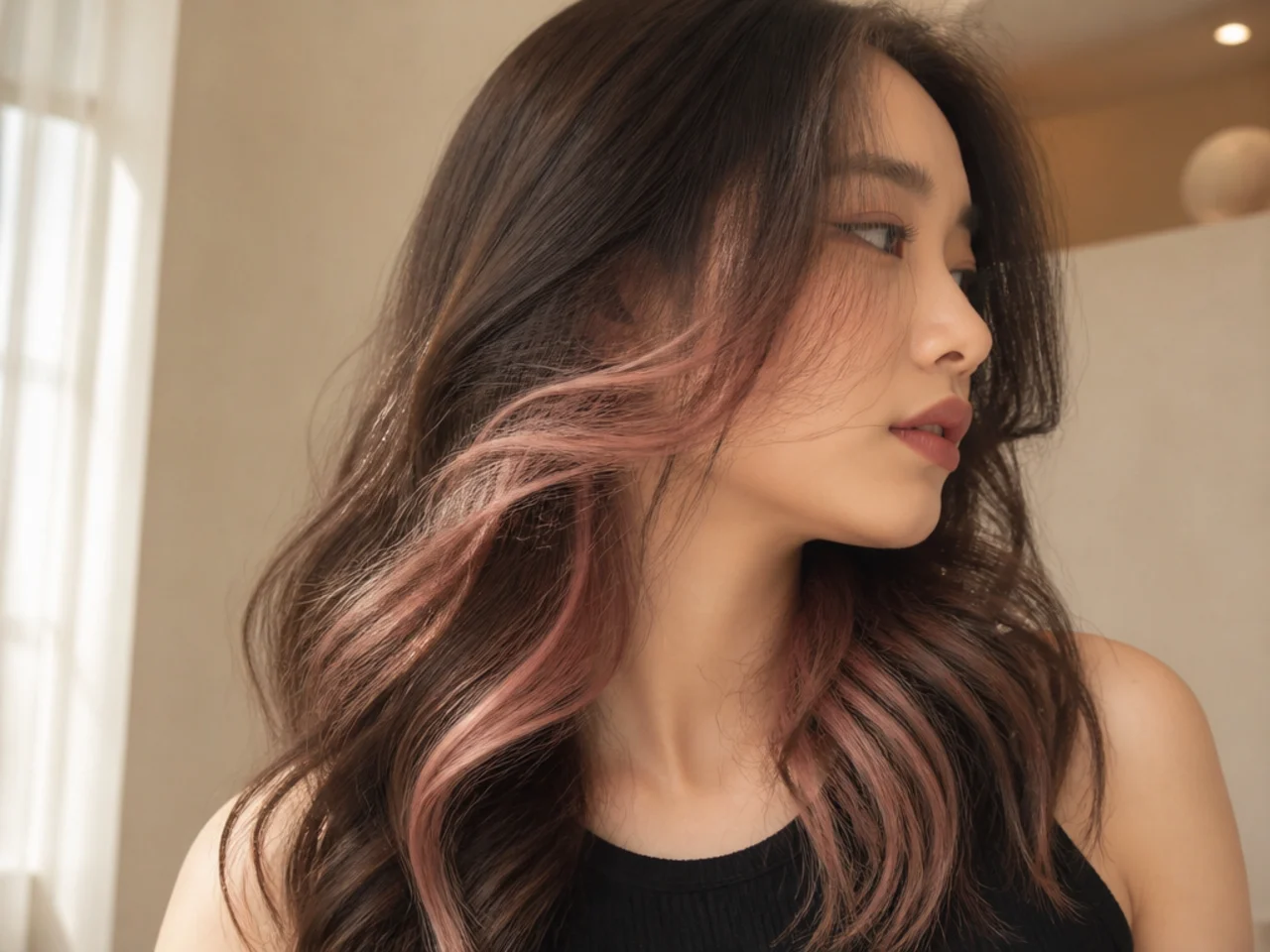
Rose gold is a pastel with a warm base, so it needs the panel at a level eight or nine but forgives the warmth that survives that lift. Anything left orange reads as more gold in the mix, which is why it succeeds on brunettes where lilac fails.
7. Caramel Peekaboo
There is no dye step at all here — caramel is what brown hair looks like three or four levels up, so the lift is the colour. That makes it the cheapest option on the list and the one that never needs a root touch up, because the grow out is the same tone family.
8. Honey Blonde Underlayer
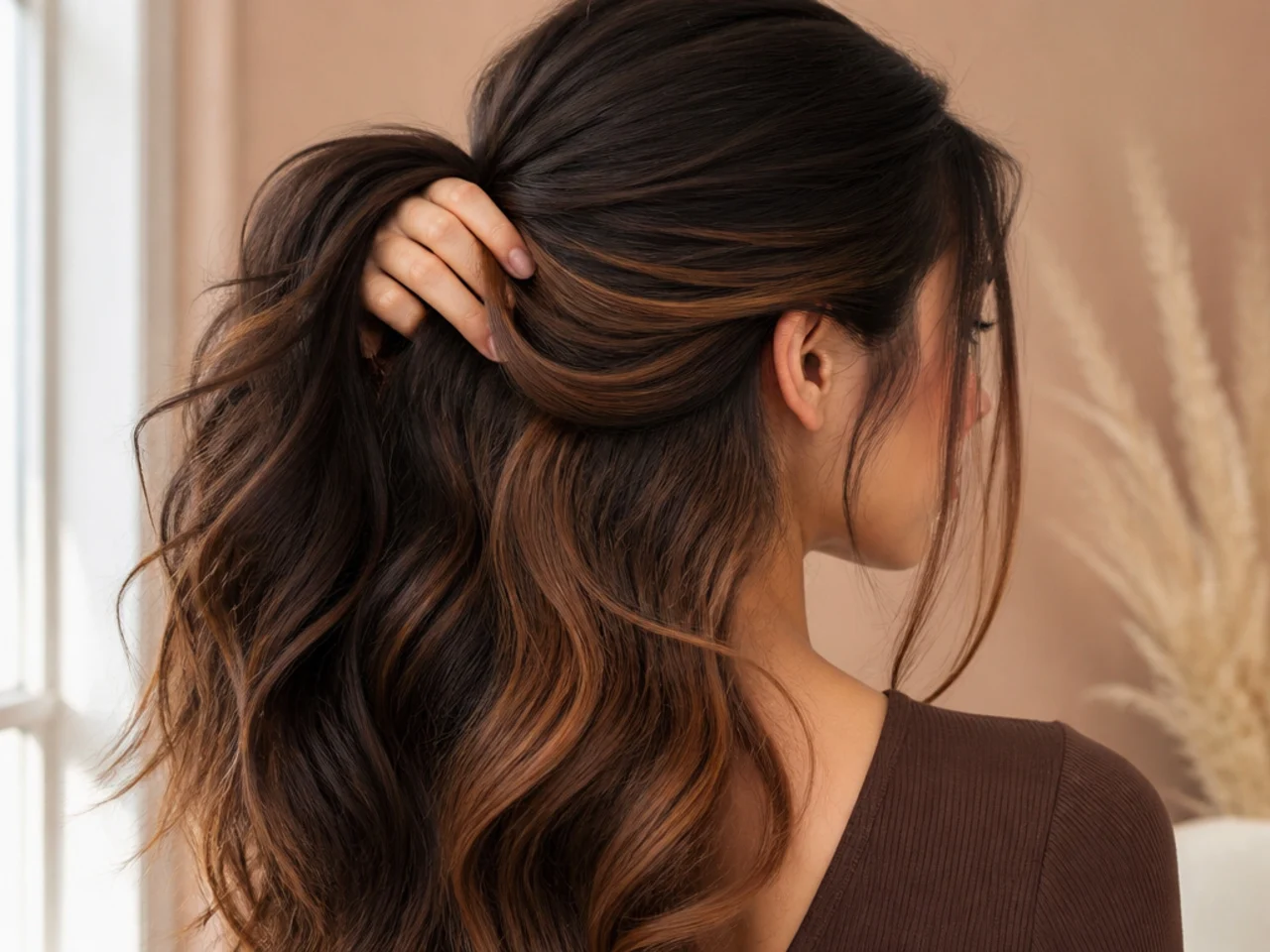
Honey wants a level seven or eight and a gold toner rather than an ash one, since ash on a brown base fights the warmth still in the hair. Placed under the whole bottom layer it makes thick brown hair look lighter without touching the surface colour.
9. Toffee Slices Around the Face
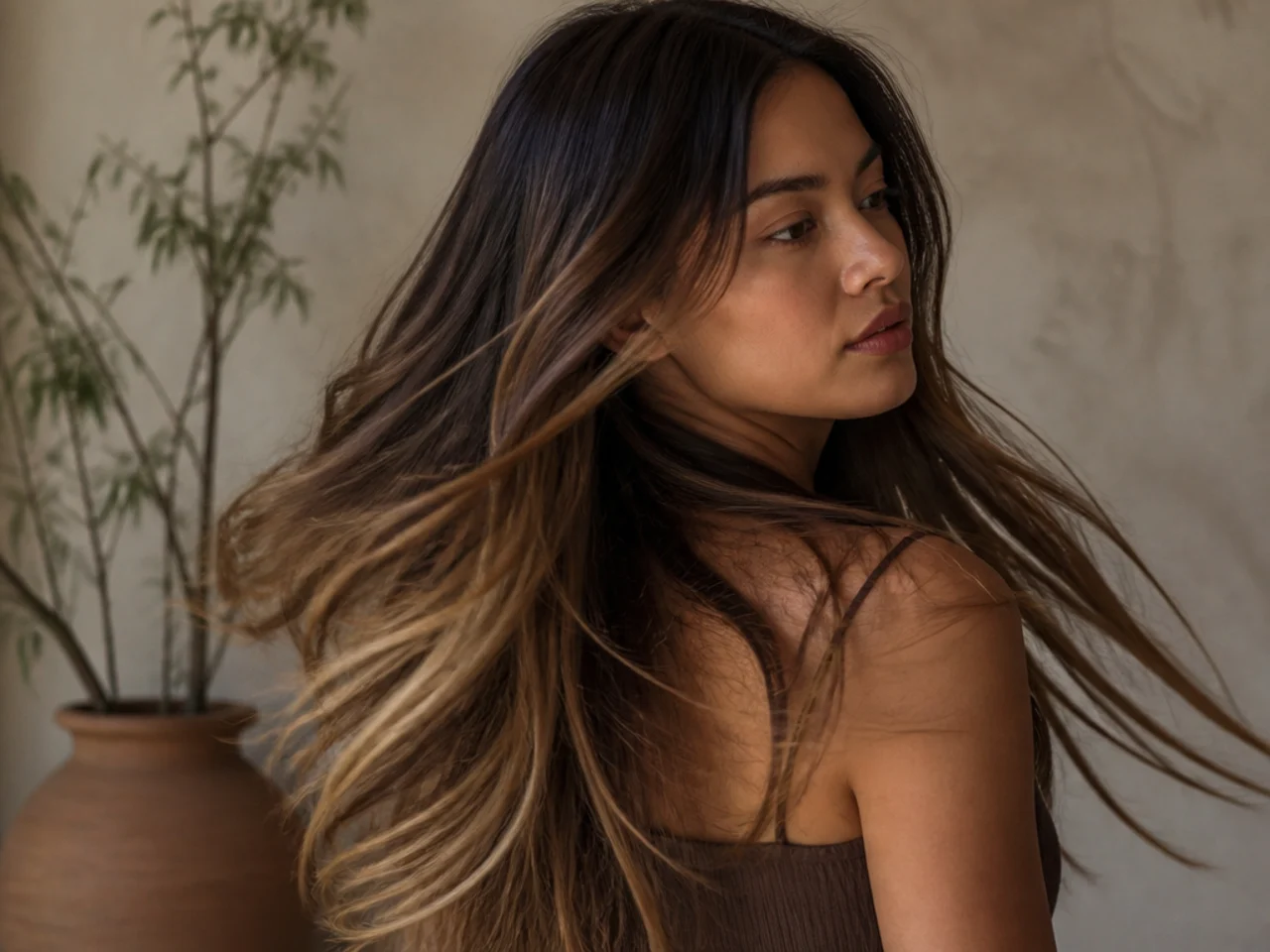
Fine slices taken just behind the face framing pieces catch the light when the hair is pushed back and disappear when it is down. Because they are only a level or two lighter, regrowth never draws a hard line and the panel can be left for six months.
10. Deep Violet Peekaboo
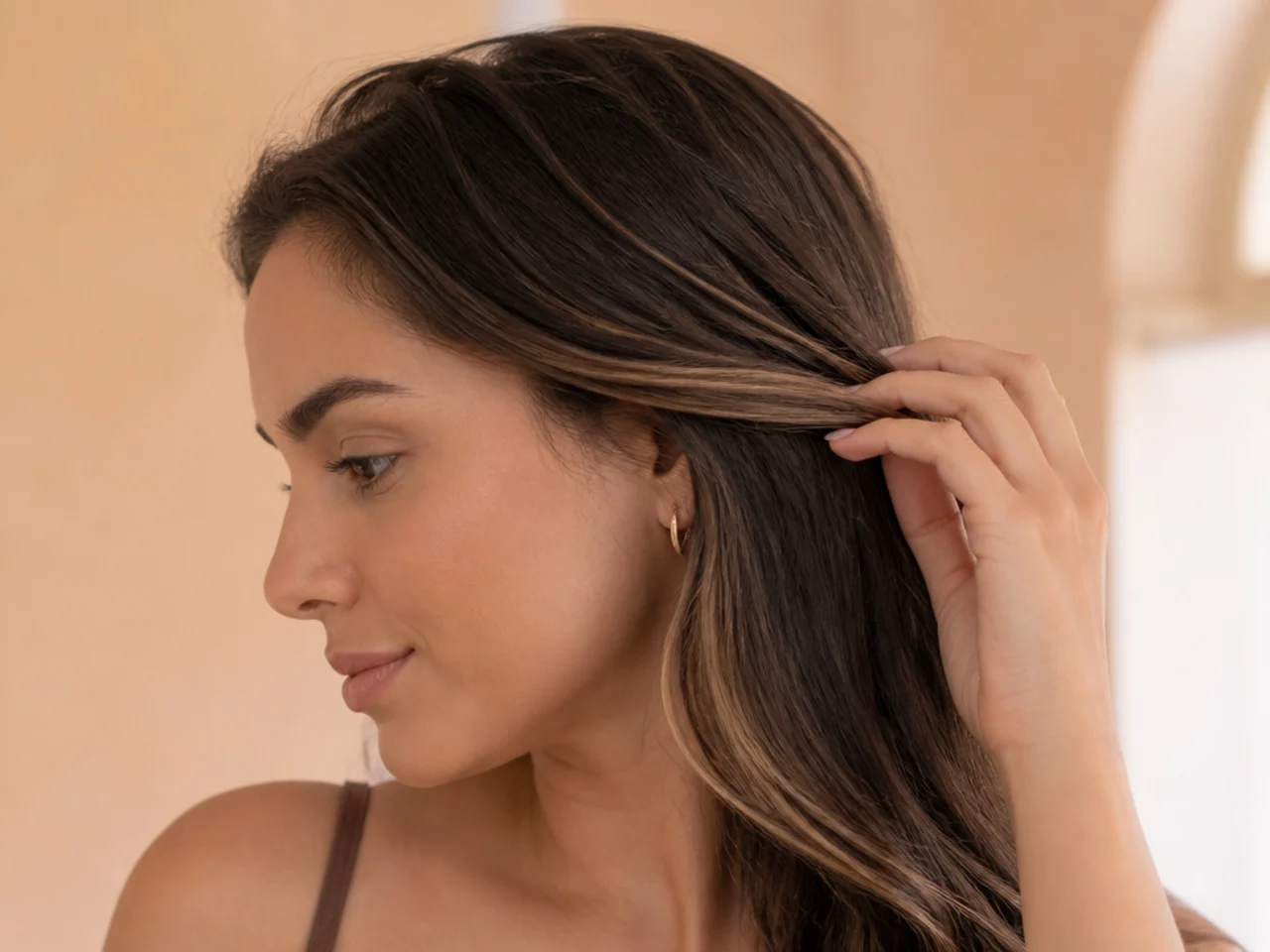
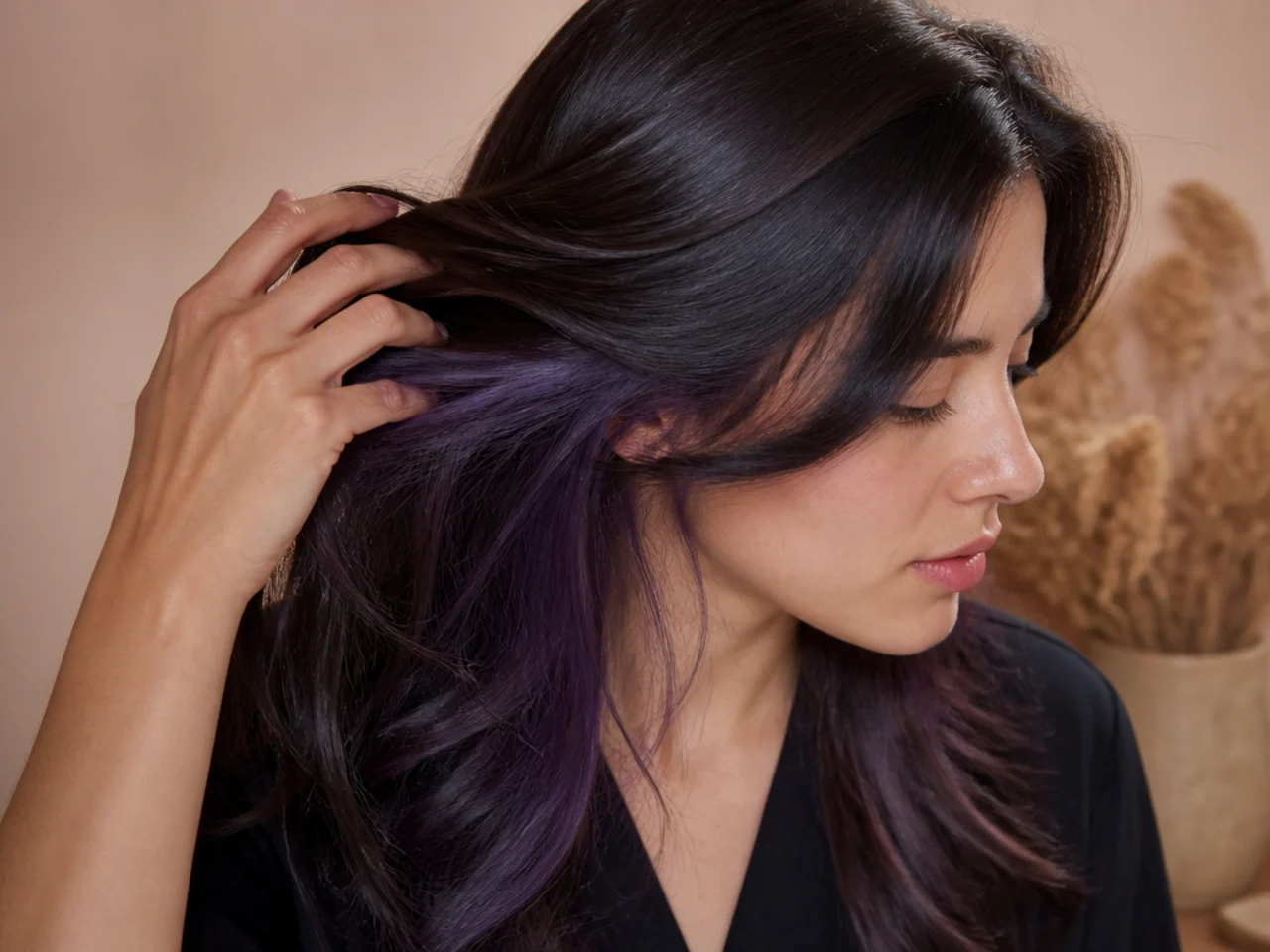
The one cool shade that behaves on an under lifted brunette base, because the pigment is dense enough to cover residual warmth rather than mix with it. Take the same violet to a pastel dilution and the orange underneath wins immediately.
11. Lavender Panels
Lavender needs a level nine base and toning to remove every trace of yellow, because any warmth left turns it beige within a week. It is also the fastest fader here, since a pastel carries very little pigment to begin with.
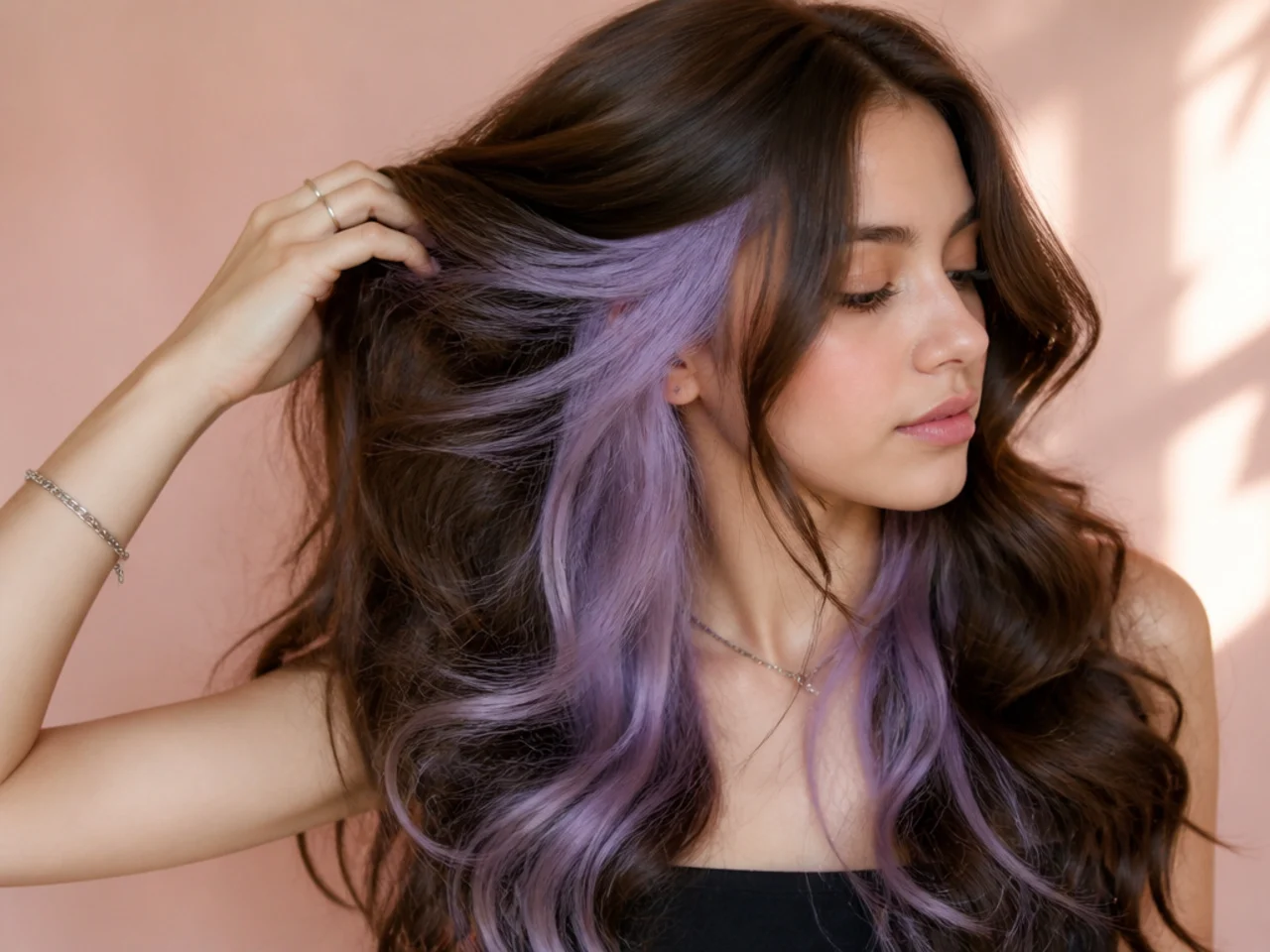
12. Magenta Underlayer
Magenta sits between red and violet, so it holds up over the orange stage far better than a pure purple would. On a brunette that means one lifting session rather than two, and a colour that fades toward pink rather than toward mud.
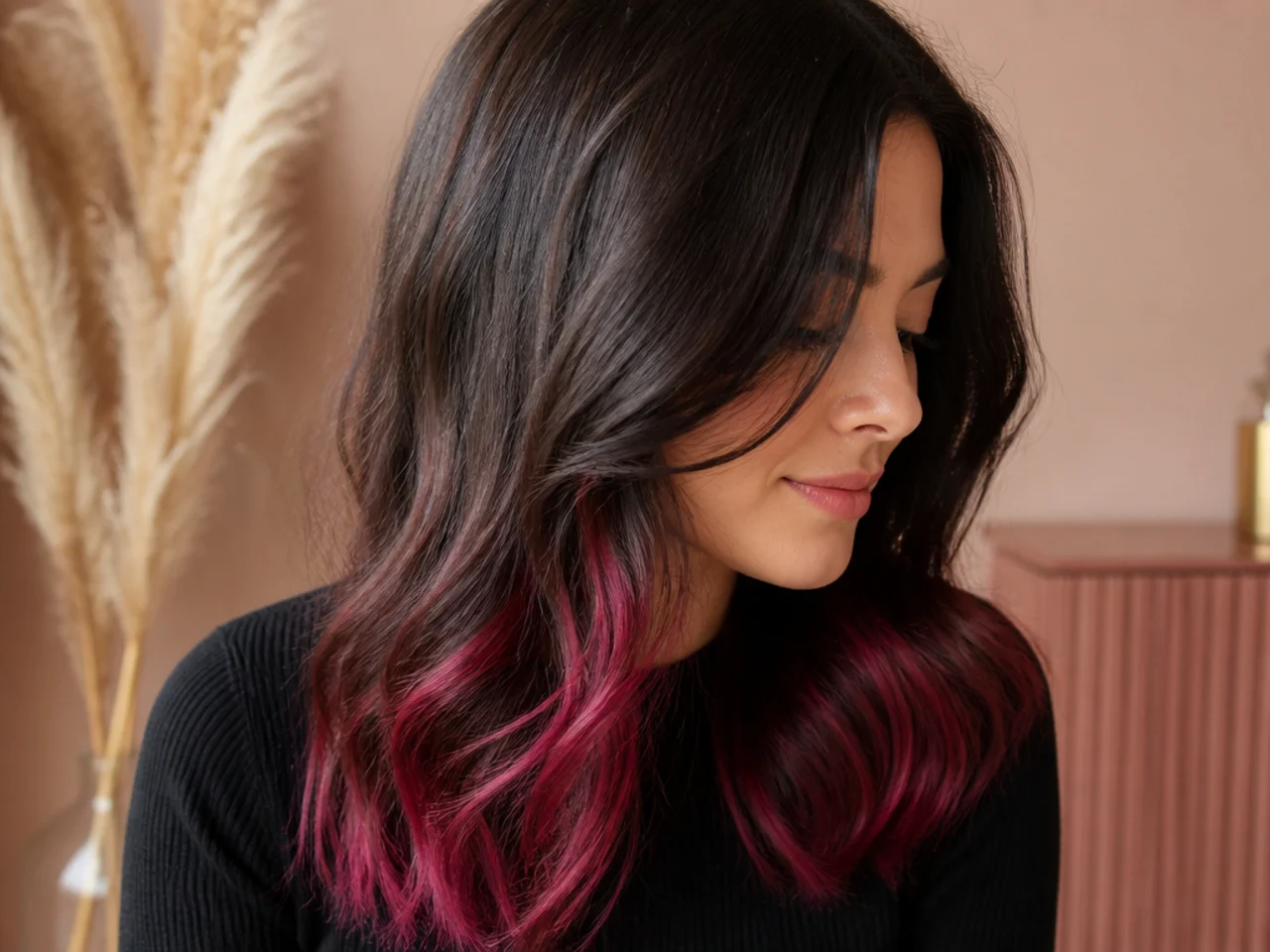
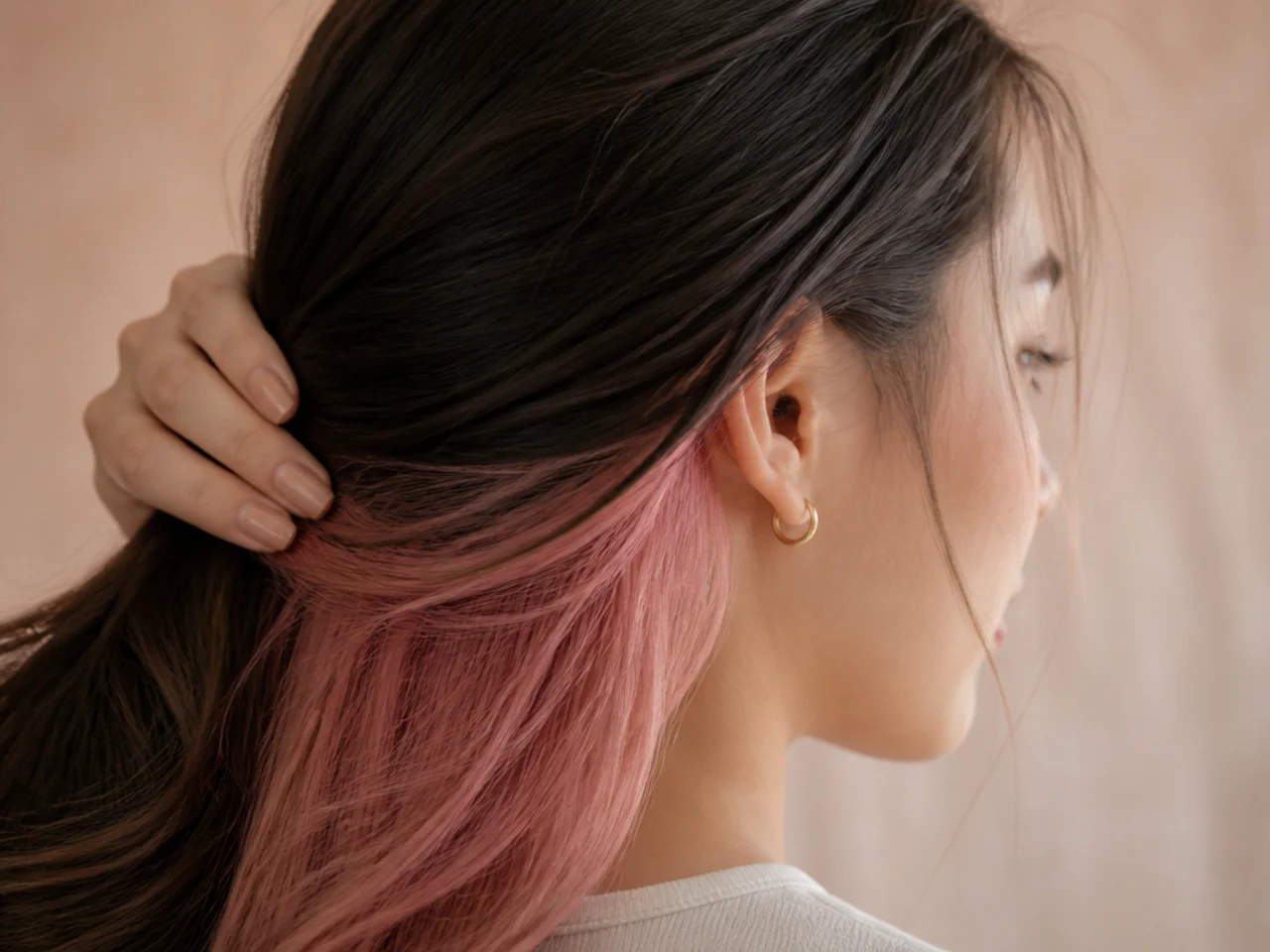
13. Pastel Pink at the Nape
Pink needs the same pale base as lavender but is far more forgiving of leftover warmth, since warmth pushes it toward coral rather than toward grey. Placed at the nape it also avoids the sun exposure that strips pastels quickest.
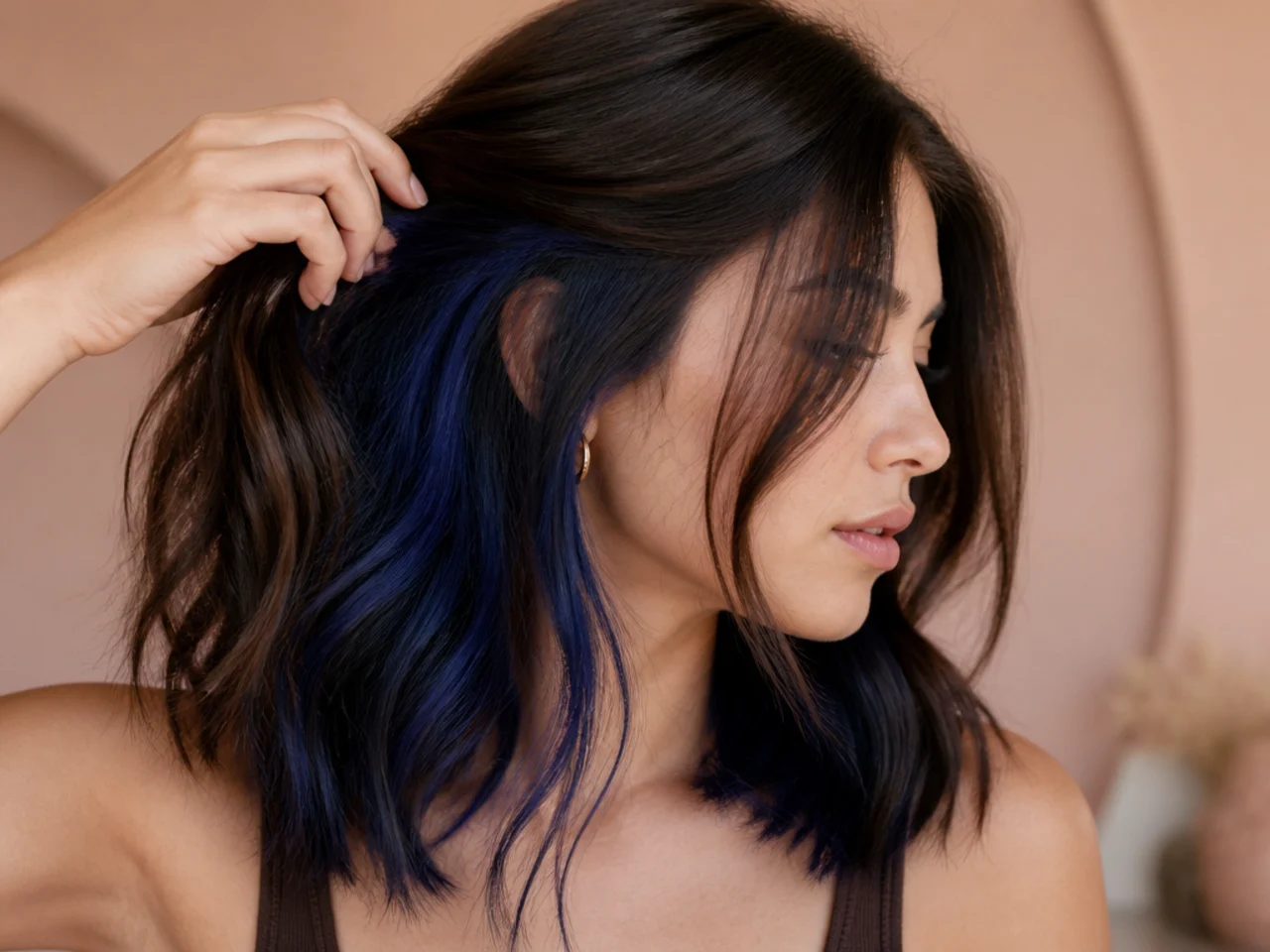
14. Midnight Blue Peekaboo
A dark blue carries enough pigment to sit over a level seven without turning green, which no bright blue will do. That single fact makes it the realistic blue for a brunette who does not want two bleaching sessions, and it is the safest entry to a blue peekaboo.
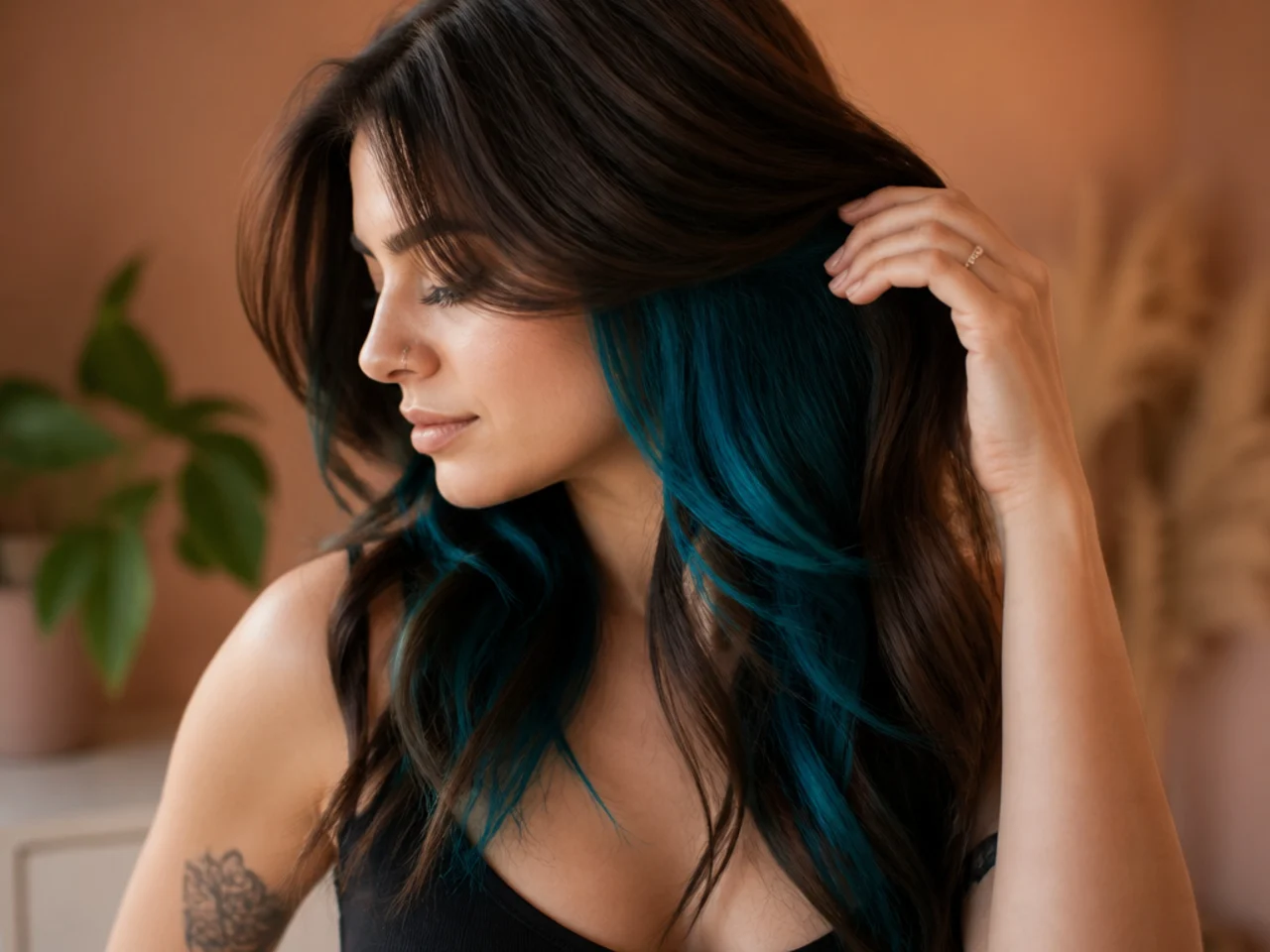
15. Teal Panels
Teal is blue with green already in it, so a trace of leftover yellow shifts it further green rather than ruining it outright. That tolerance makes it the most achievable of the bright cool shades on brown hair, though the panel still has to reach pale yellow.
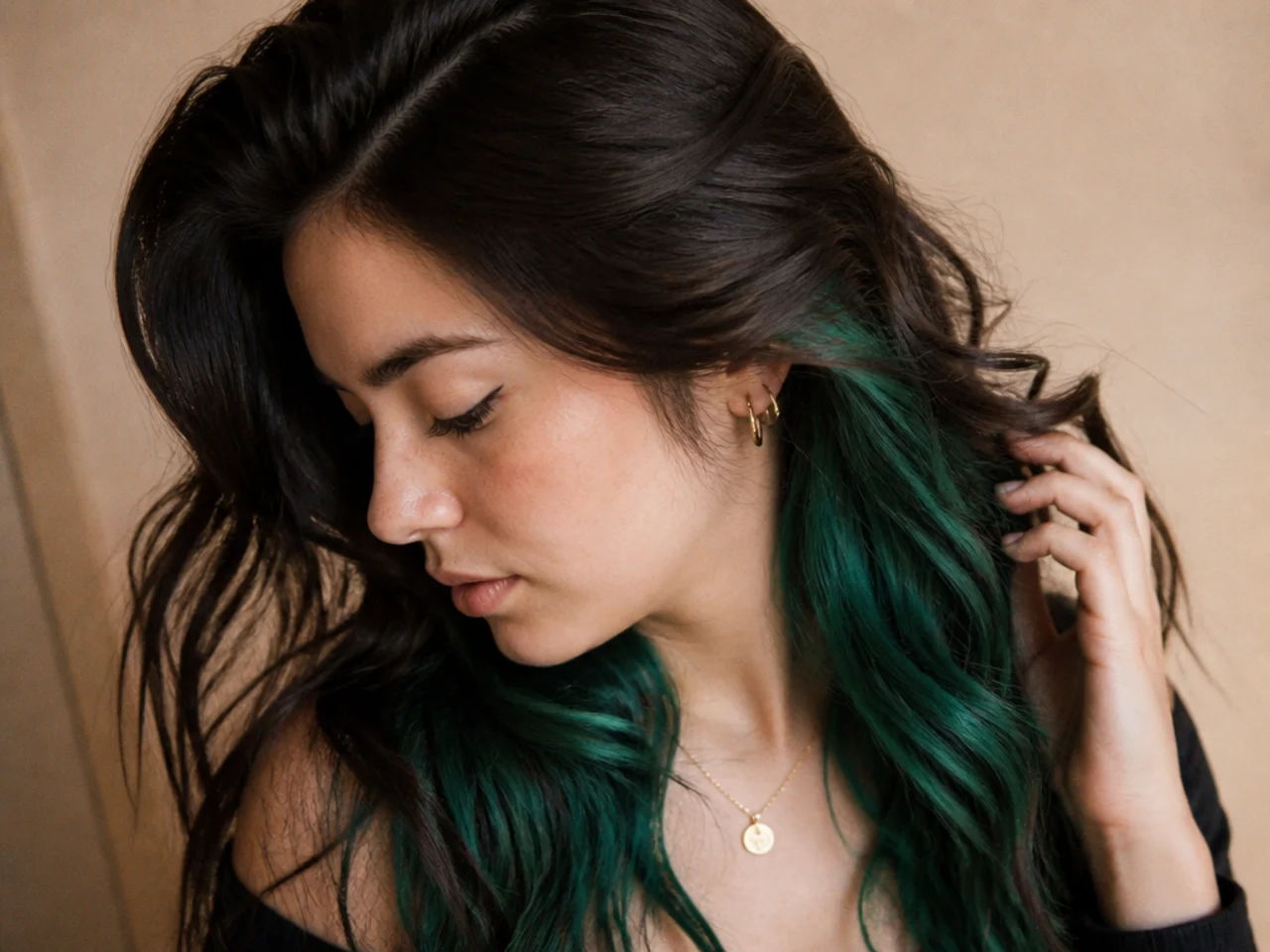
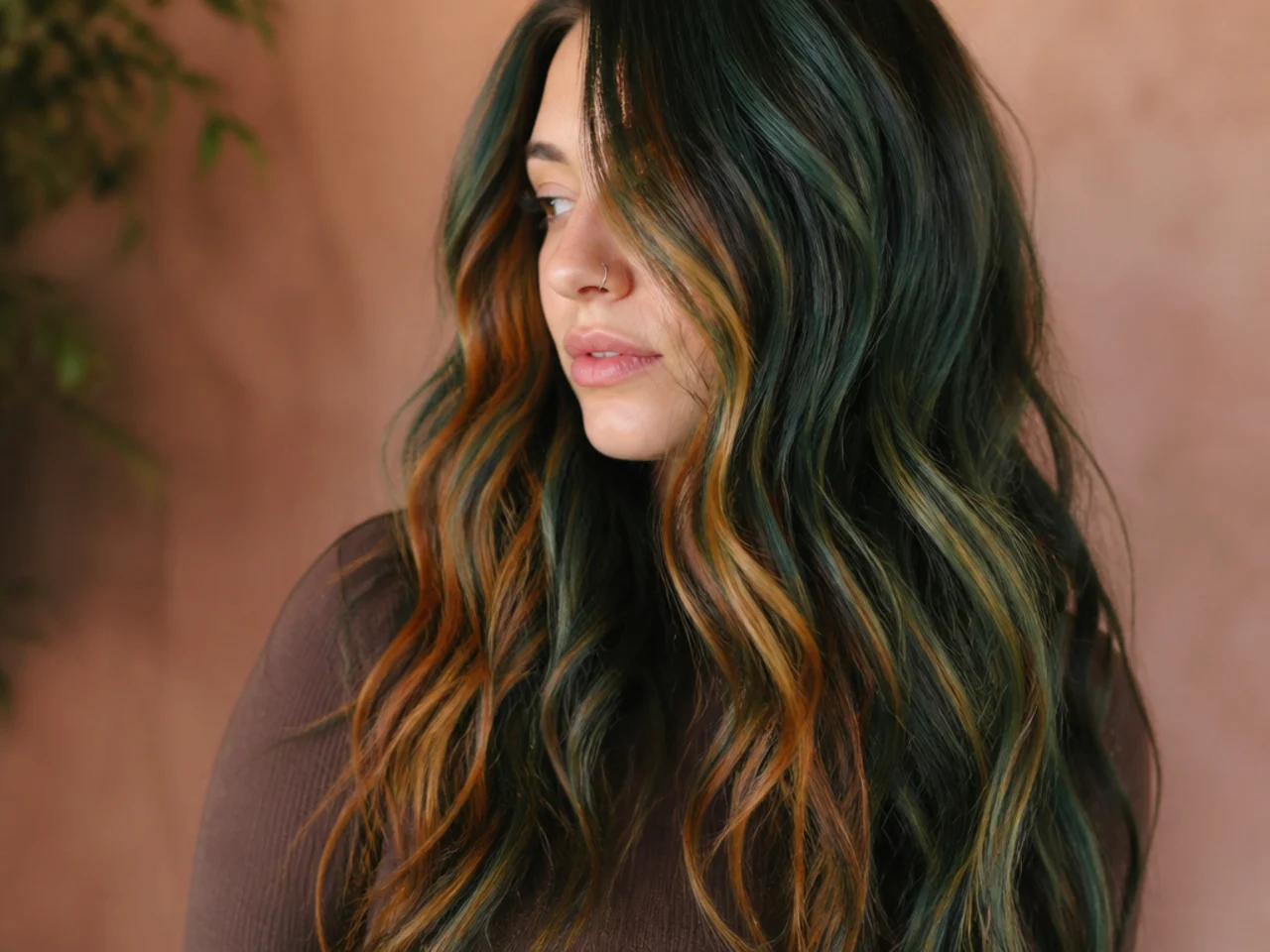
16. Emerald Green Underlayer
Green is the only vivid that benefits from an imperfect lift, because yellow plus blue is green and the base is already contributing. The catch is removal — green stains the cortex and takes several attempts to lift back out, so treat it as a year long decision.
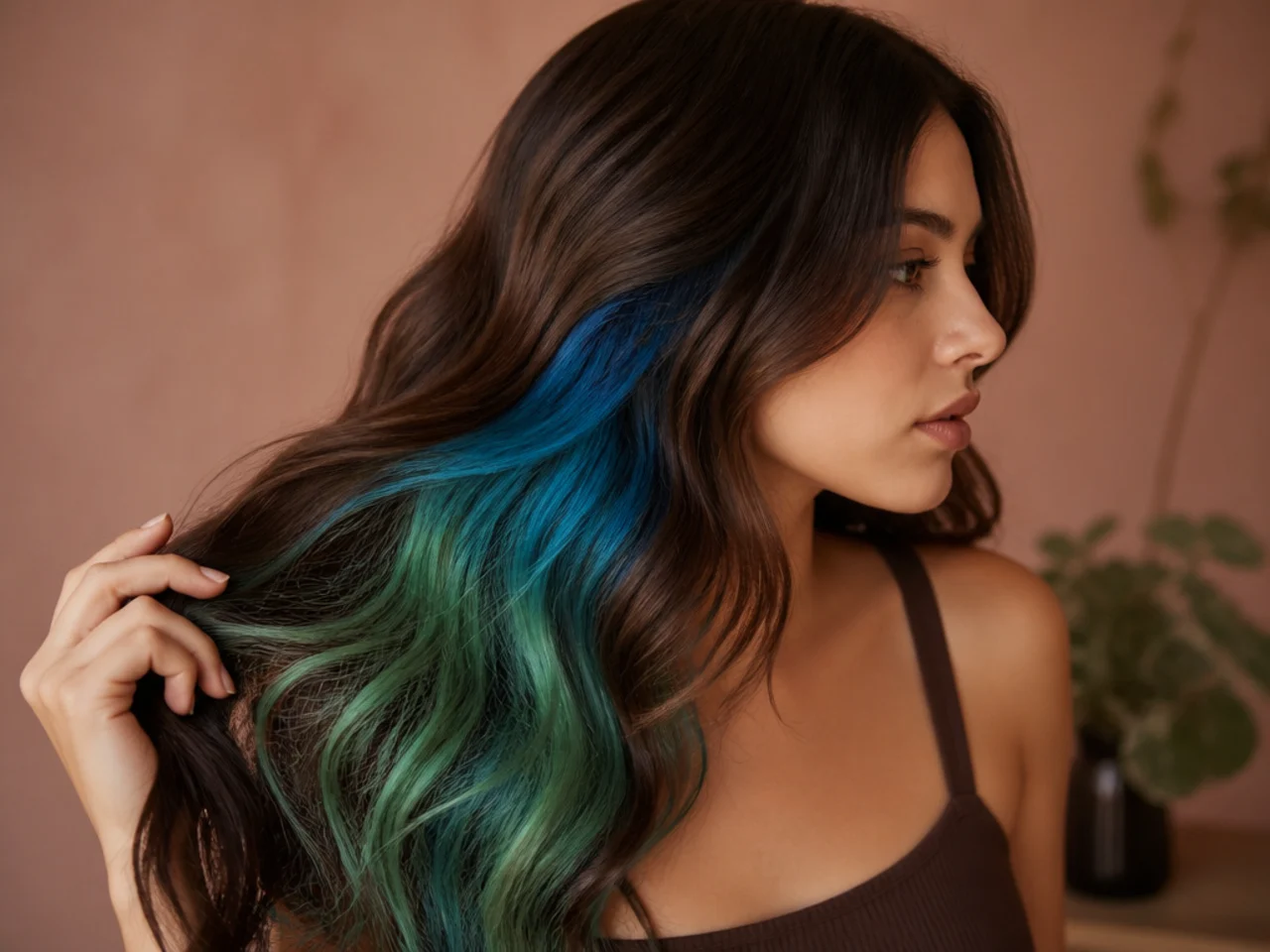
17. Peacock Blend
Blue melting into green through the panel works on a brunette because the two shades sit next to each other on the wheel, so any unevenness in the lift reads as part of the blend. A blend of two distant colours would show every patch instead.
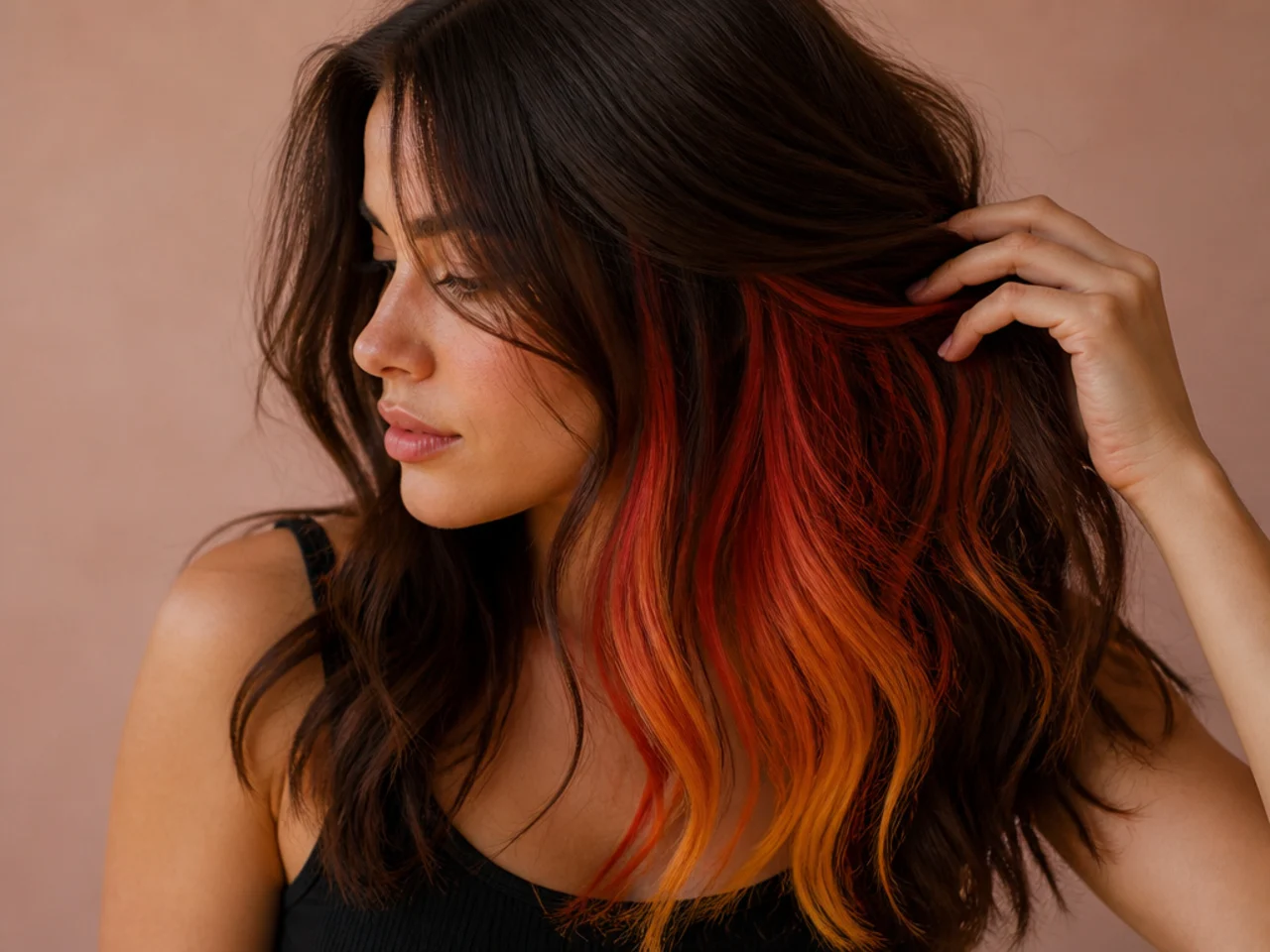
18. Sunset Peekaboo
Red at the root through orange to gold at the ends, and every stage of that blend is a colour brown hair passes through as it lifts. That is why it survives an uneven bleach better than any single shade and needs the least correcting, much like a red peekaboo does.
19. Silver Peekaboo
The hardest shade on this list, because silver shows every trace of warmth and brown hair holds warmth all the way to level ten. Expect two lifting sessions and a violet toner, and expect the toner to need refreshing every three or four washes.
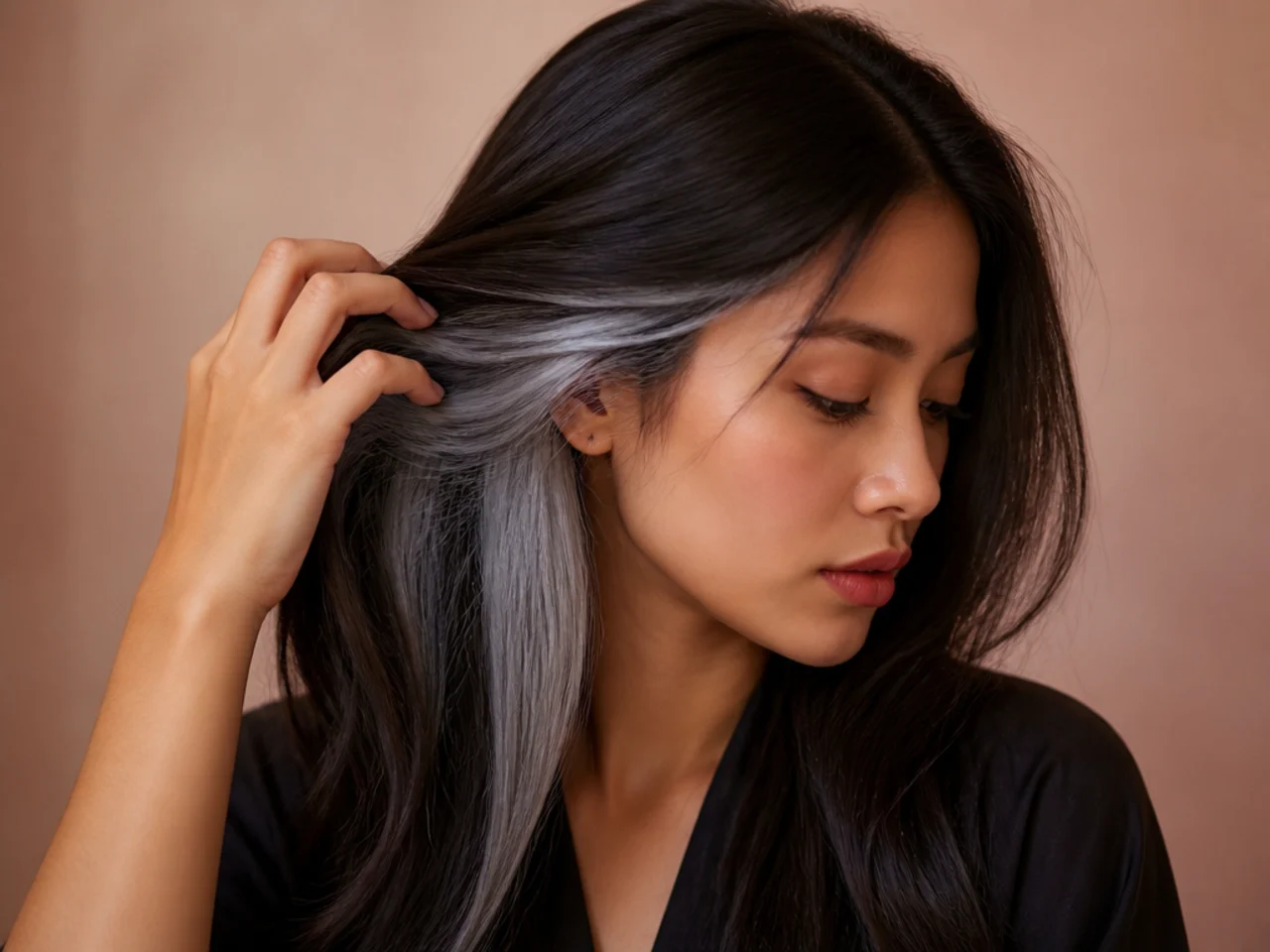
20. Ash Brown Peekaboo
Two levels of lift and an ash toner gives a panel that is cooler rather than brighter than the base, which reads as depth in daylight and nothing at all under warm indoor light. It is the least committal option here and the easiest to reverse.
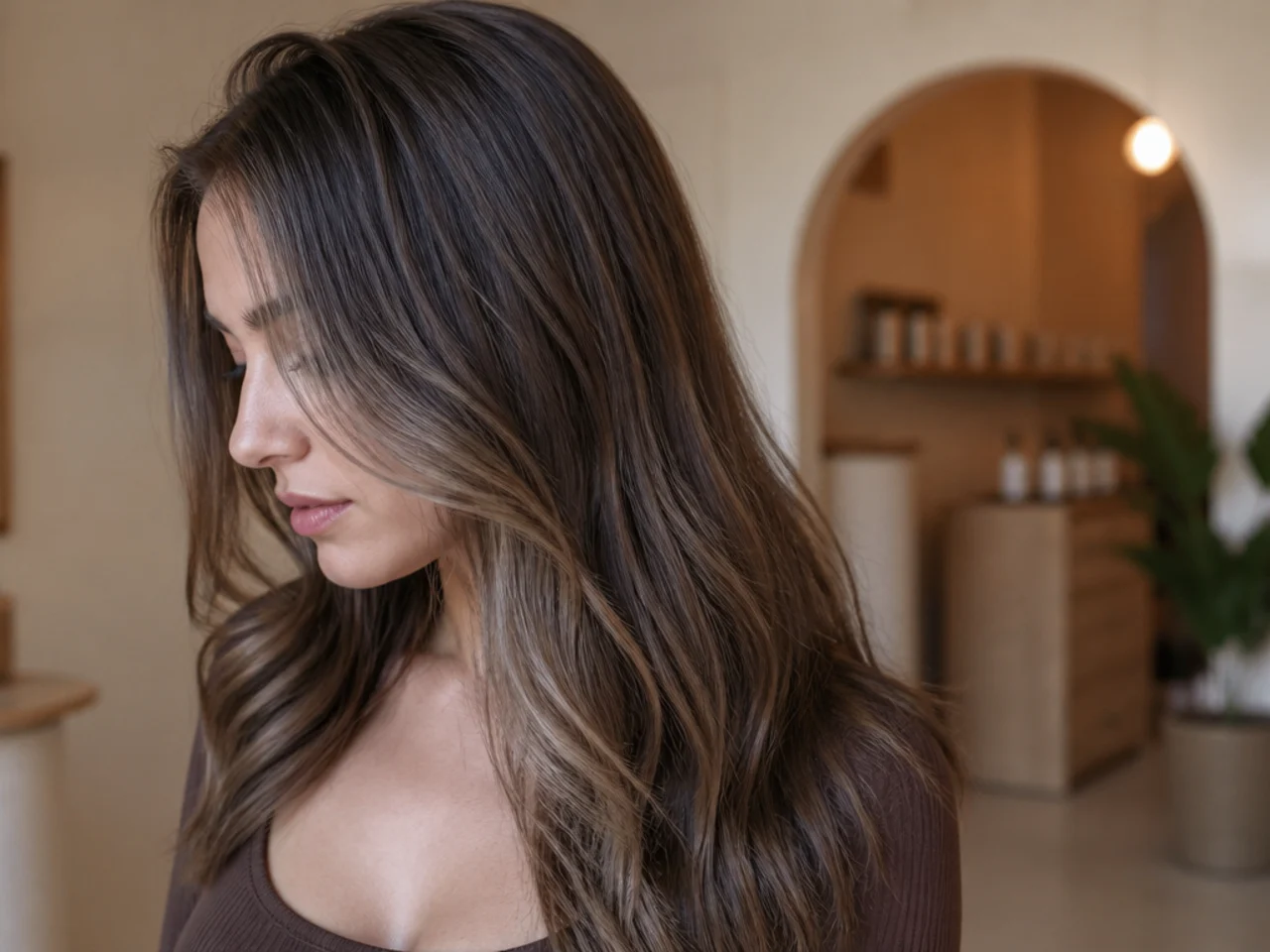
21. Peekaboo Behind the Ears
A panel placed behind each ear shows only when the hair is tucked, which is a movement you control. It also sits in the section least exposed to sun and heat styling, so a vivid placed there outlasts the same shade placed at the sides by weeks.
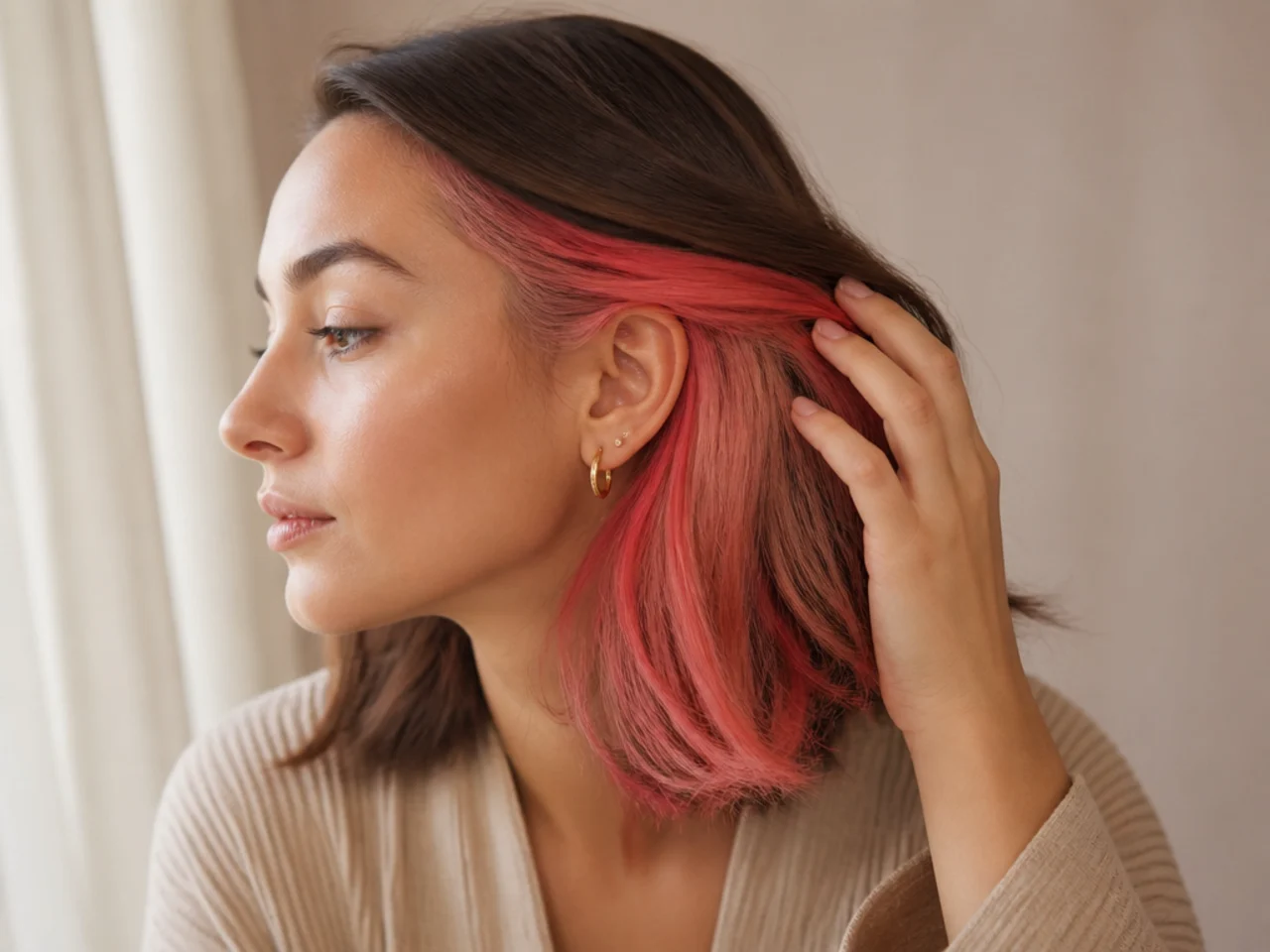
22. Ponytail Peekaboo
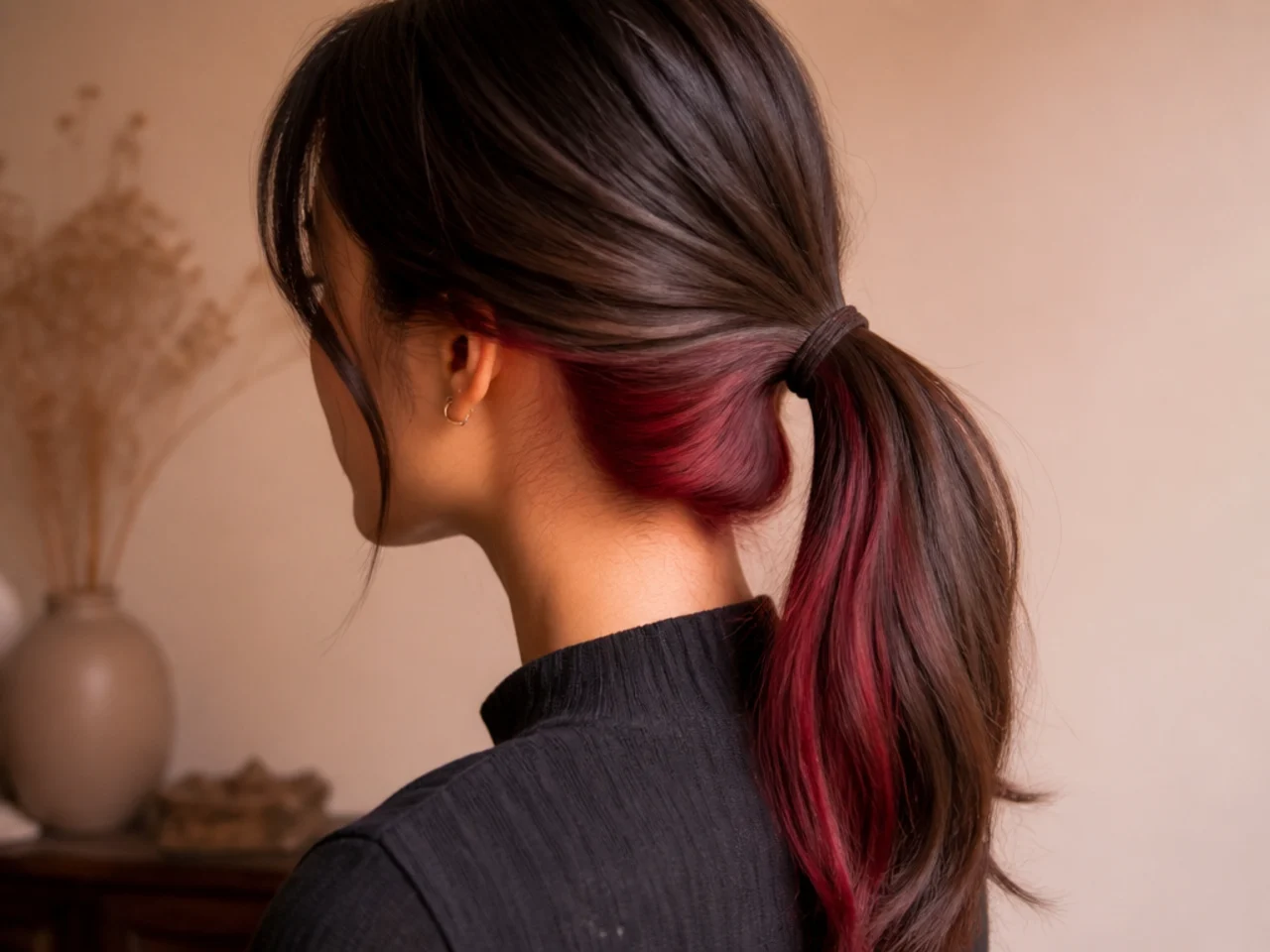
Colour taken only across the nape and the lower back sections is invisible with the hair down and covers the whole length of a ponytail once it is up. The panel has to run wide enough to reach both sides, or half the ponytail comes out brown.
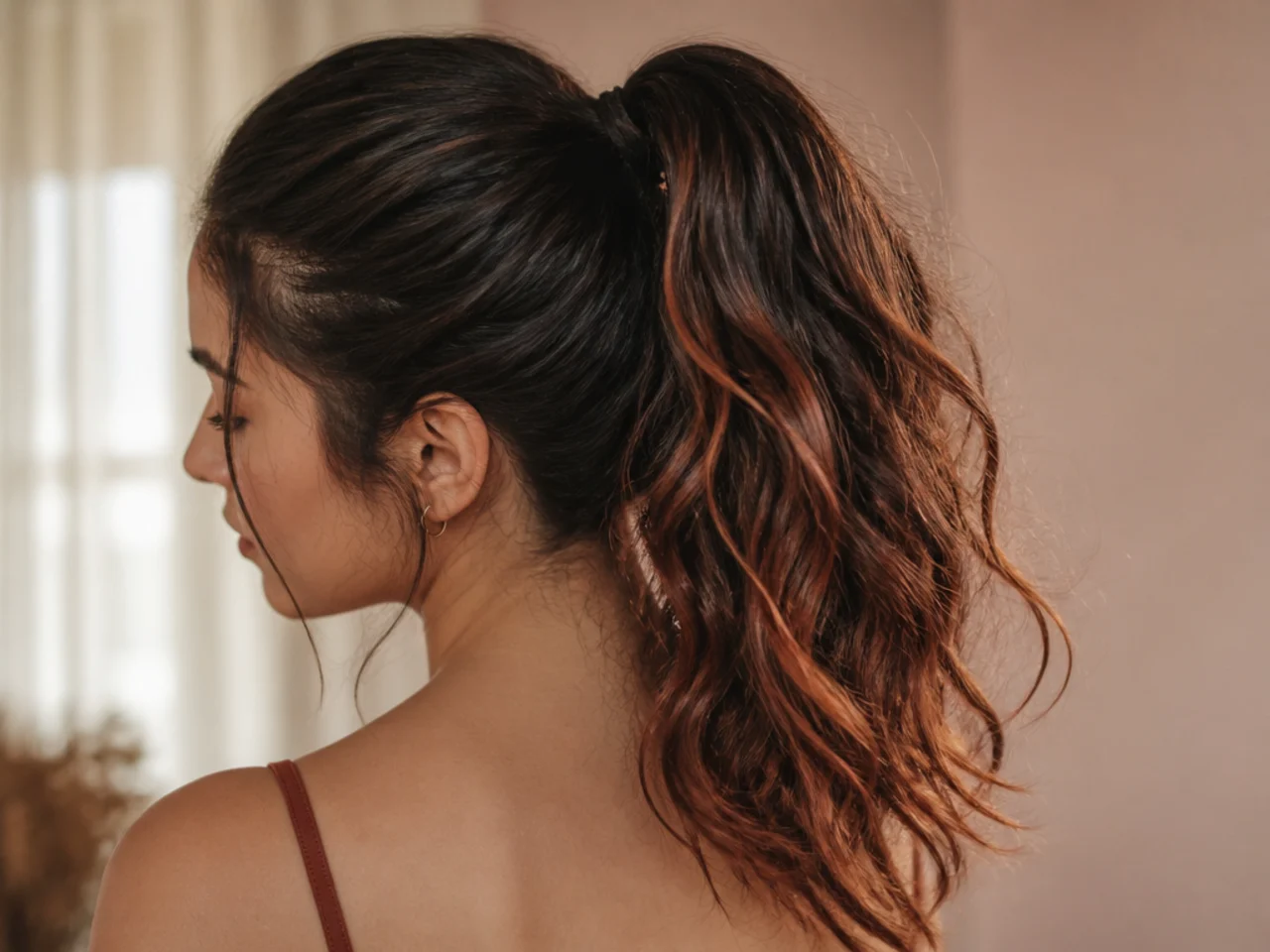
23. Chunky Panels
Solid sections of colour hold their brightness longer because there is no brown hair woven through to dilute them optically. The trade is a hard edge at the join, so chunky panels want a shade close enough to the base that the boundary does not read as a line.
24. Fine Woven Slices
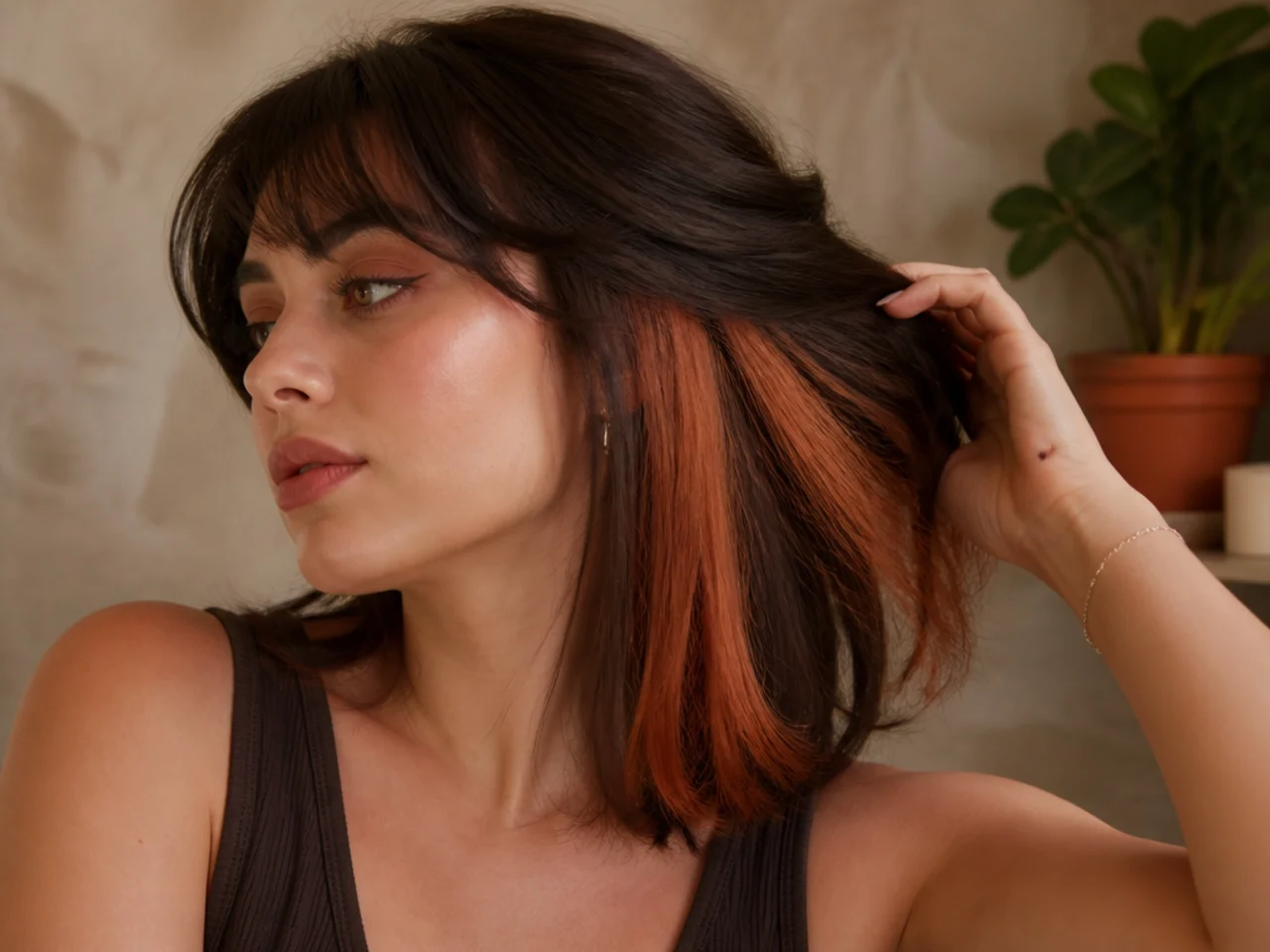
Weaving fine slices through the under section blends the colour with the base so it reads as a shimmer rather than a block. It also fades more gracefully, since each thin slice is surrounded by natural hair and the eye never sees a clean before and after.
25. Shadow Rooted Peekaboo
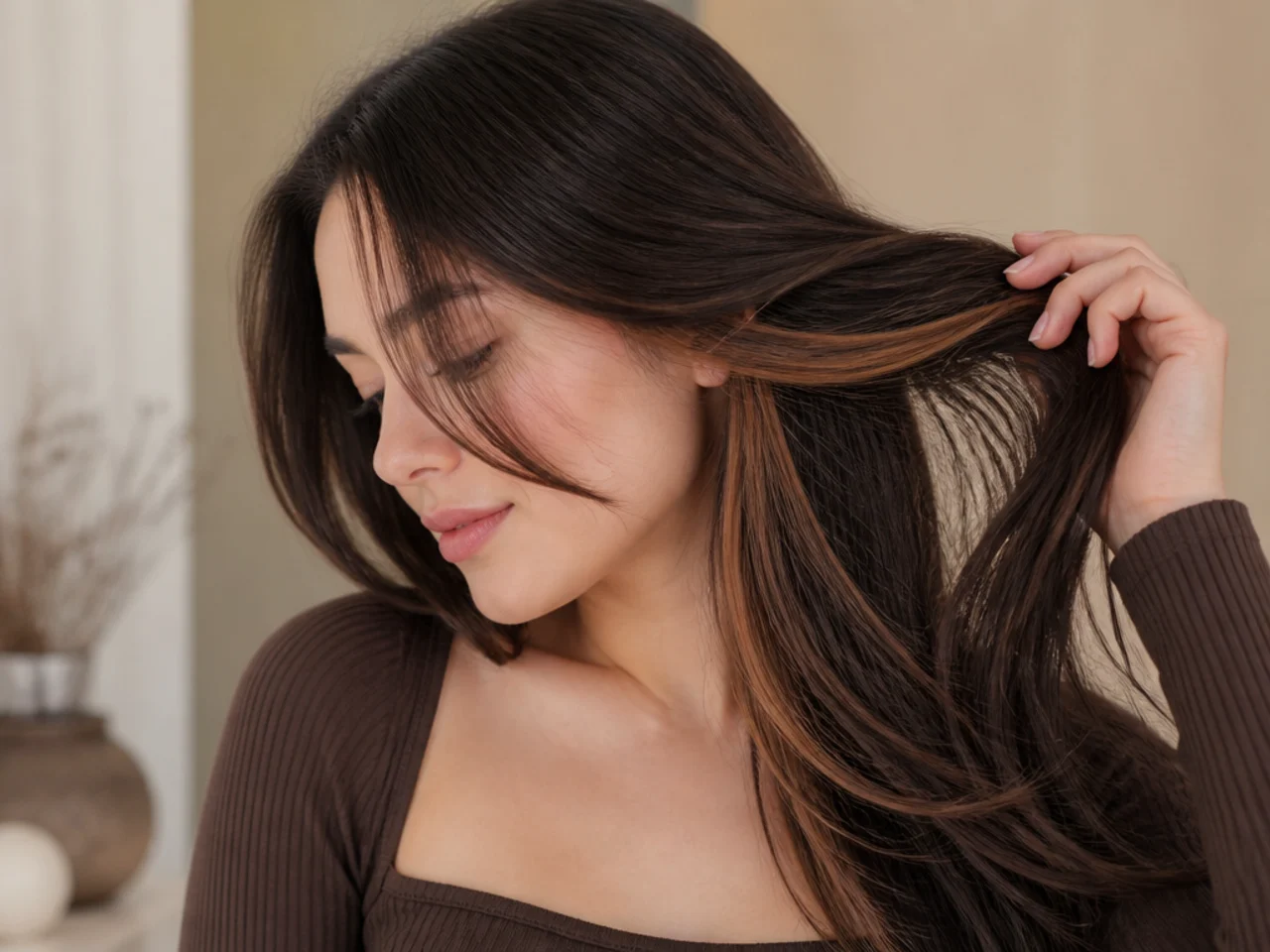
Leaving an inch or two of natural base at the top of the panel means regrowth has nowhere to announce itself, so the appointment cycle stretches from six weeks to four or five months. The shadow also softens the join where the panel meets the covering section.
Styling and Upkeep
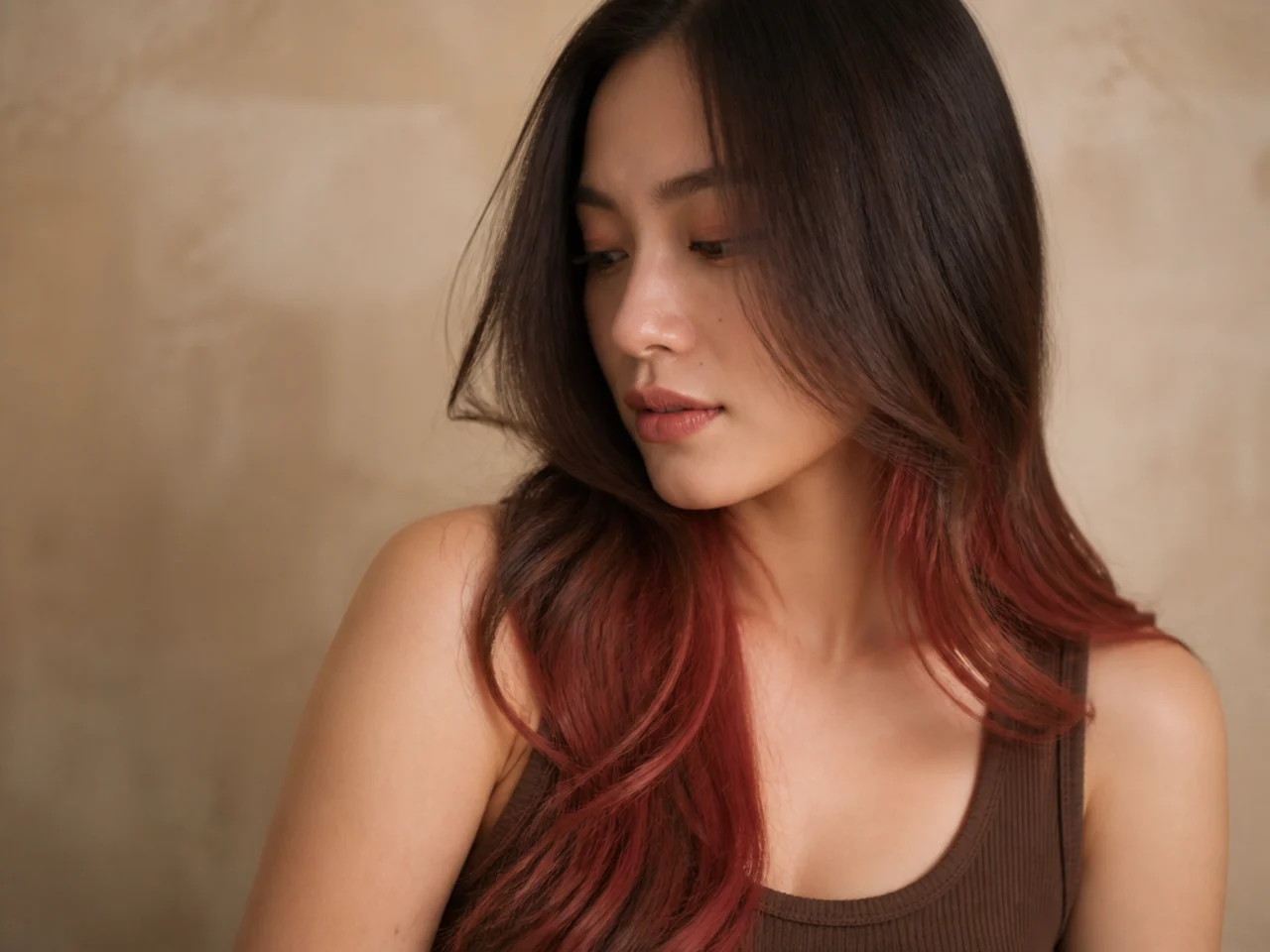
Wash in cool water. Heat swells the cuticle and lets deposit only pigment escape, which is the single biggest cause of a panel fading in three washes rather than ten.
Use a sulphate free shampoo on the panel. Sulphates strip the surface pigment that a direct dye depends on, since none of it is bonded into the cortex.
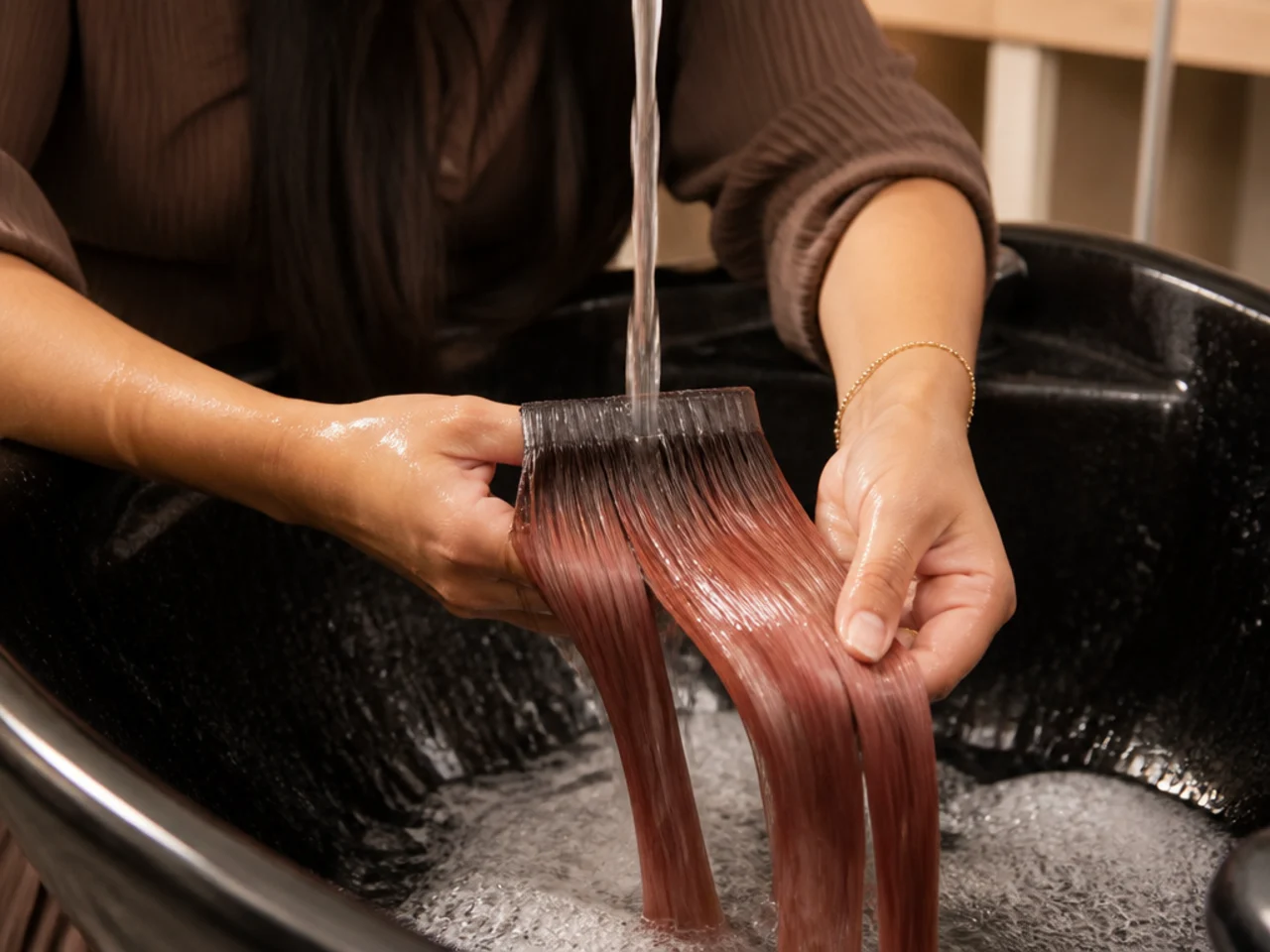
Refresh with a pigmented conditioner. Adding a small amount of the same shade to conditioner tops the panel up on wash day and delays the next salon visit by weeks.
Keep heat tools off the coloured section. A straightener at full temperature dulls a vivid in a single pass, and the panel is the part nobody checks because it is underneath.
Wear it up for the first two days. Fresh direct dye transfers onto pale clothing while the cuticle is still settling.
Mistakes to Avoid
Placing the panel above the parting. There is nothing covering it, so it is a highlight all day rather than a colour that appears when you move.
A bright blue on an under lifted panel. Blue over leftover orange goes green, every time, and it is colour theory rather than bad luck.
Skipping the toner to save money. An untoned lift on brown hair is orange, and orange is the base that ruins every cool shade.
Choosing green without planning the removal. Green stains and takes several sessions to lift back out, which makes it the hardest thing here to undo.
Bleaching the panel at home for a pastel. Reaching an even level nine across a whole section is the difficult part, and pastels show every millimetre that lagged behind.
FAQ
Where should the panel sit? Below the parting, under the section that falls over it.
Which shades need the least lift? Warm ones — copper, red, burgundy, auburn.
Why does mine fade so fast? Direct dye sits near the cuticle, and hot water washes it out.
Final Thoughts
Decide the placement first and the shade second. Where the panel sits controls how often anyone sees it, and how far your base has to be lifted controls what it costs and how long it lasts — those two answers narrow twenty five options down to about three.
For which shades survive the warmth in brown hair see peekaboo colours that pop on brunettes, and for the technique across every base see the peekaboo hair colour guide. More in Hair Color Trends.