30 Gorgeous Peekaboo Hair Looks For Dark Hair
Thirty peekaboo looks built for a dark base, and the fact that decides every one of them — the shade you can wear is set by how far the panel is lifted first, not by the photo you point at. Dye deposits colour, it never removes it.
In this article · 37
- Why Dark Hair Changes the Rules
- Choosing Your Shade and Placement
- The 30 Peekaboo Looks for Dark Hair
- 1. Burgundy Under a Black Base
- 2. Cherry Red Peekaboo
- 3. Copper Under Dark Brown
- 4. Deep Violet Panel
- 5. Plum Peekaboo
- 6. Electric Blue Underlayer
- 7. Teal Peekaboo
- 8. Emerald Green Panel
- 9. Hot Pink Peekaboo
- 10. Tangerine Peekaboo
- 11. Silver Peekaboo
- 12. Pastel Lilac Peekaboo
- 13. Caramel Peekaboo for Low Contrast
- 14. Two Tone Peekaboo
- 15. Nape Only Peekaboo
- 16. Under the Parting Peekaboo
- 17. Ear to Ear Panel
- 18. Behind the Ear Peekaboo
- 19. Half Head Underlayer
- 20. Ribbon Width Peekaboo
- 21. Ombre Peekaboo
- 22. Root Shadow Peekaboo
- 23. Peekaboo on Straight Dark Hair
- 24. Peekaboo on Wavy Dark Hair
- 25. Peekaboo on Curly Dark Hair
- 26. Peekaboo on Coily Hair
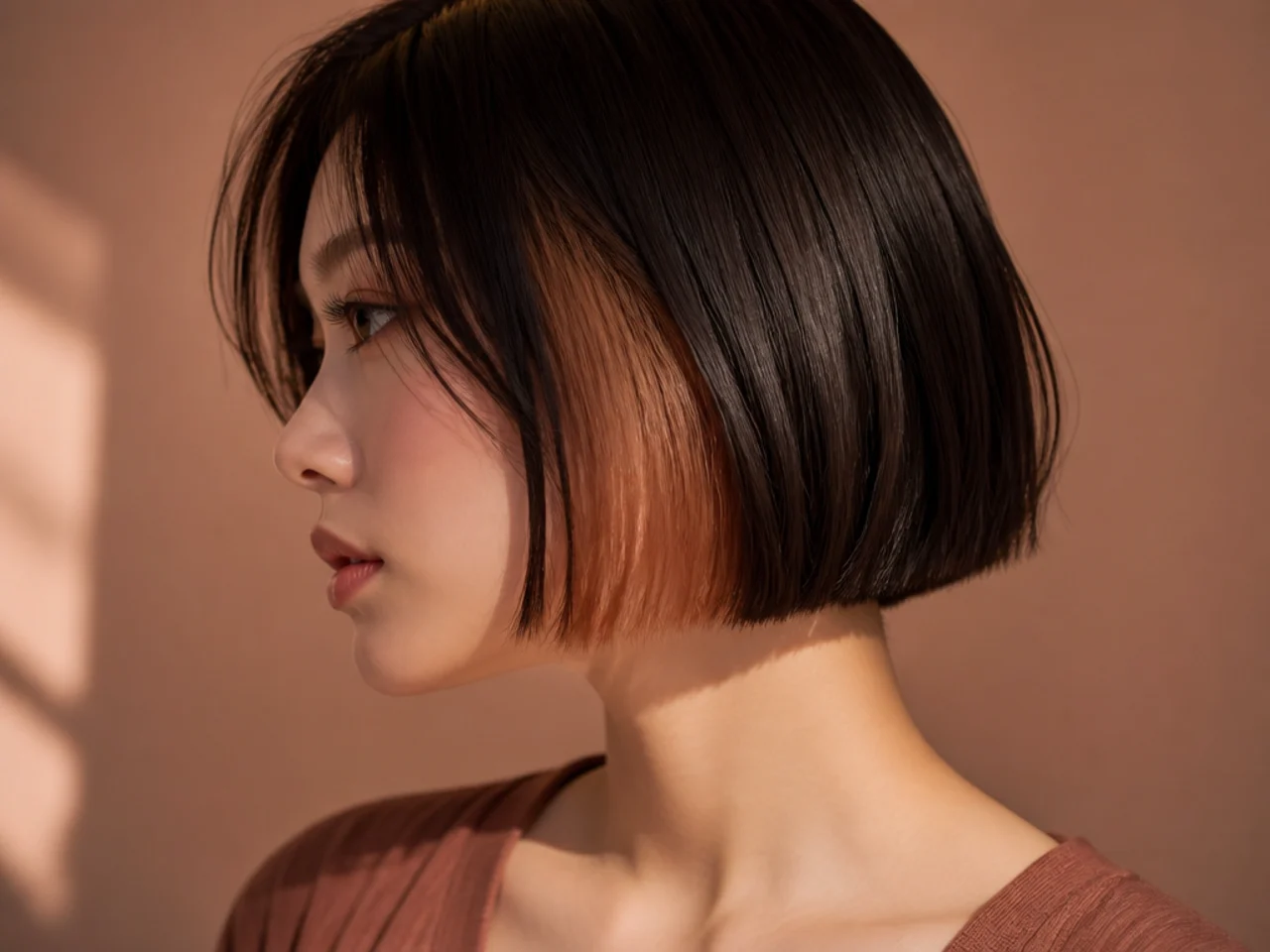
- 27. Peekaboo Under a Blunt Bob
- 28. Peekaboo Under Long Layers
- 29. Peekaboo in Braids
- 30. Peekaboo Under a High Ponytail
- Styling and Upkeep
- Mistakes to Avoid
- FAQ
- Final Thoughts
Most peekaboo photographs were shot on hair that had already been lightened, which is why the same tube of dye on an untouched dark base produces nothing at all.
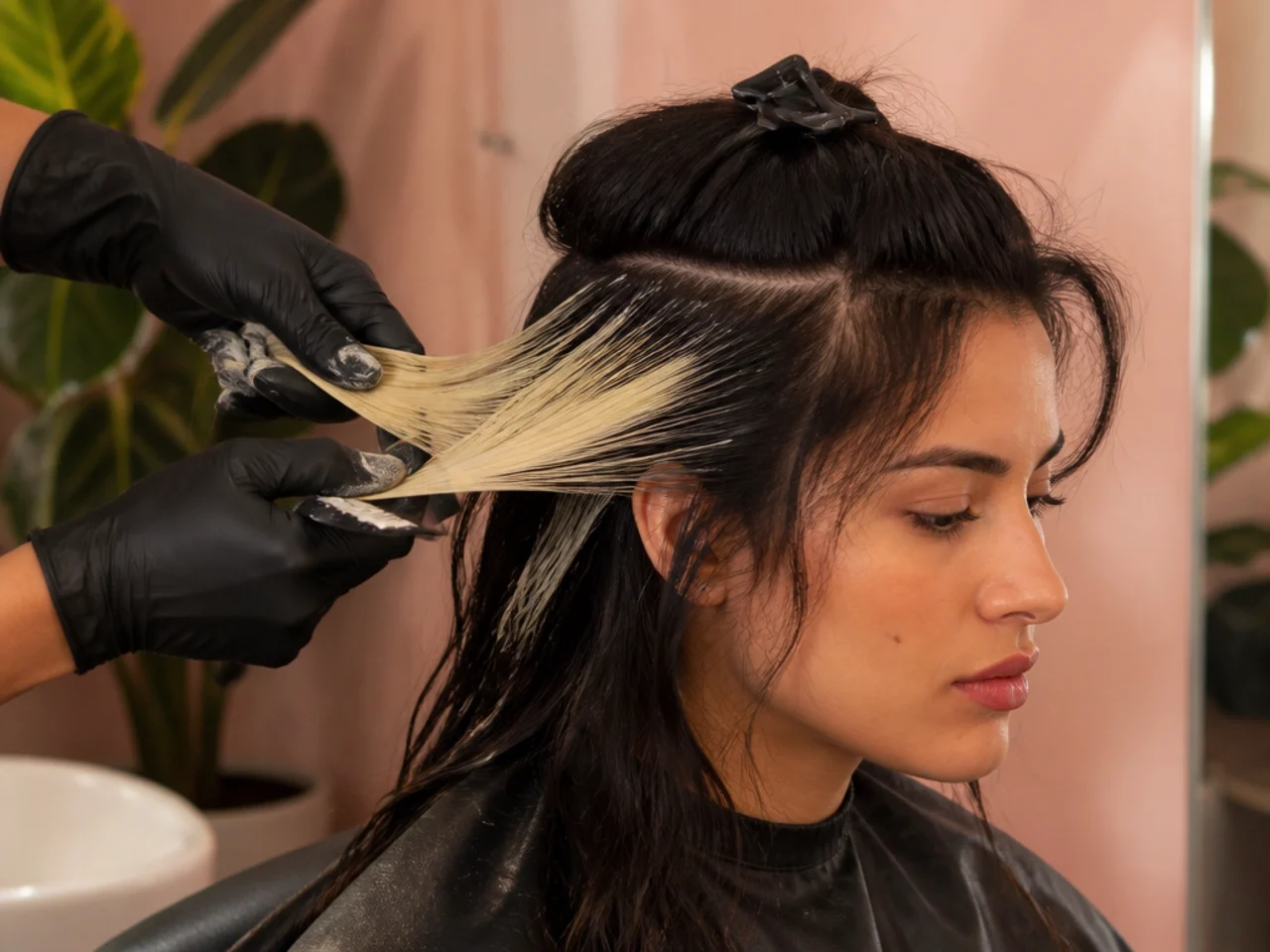
Dye deposits colour. It never removes it. On a naturally dark head a blue or a pastel has nothing to sit on, so the panel has to be lifted before any bright shade will read.
Dark hair is the best top layer there is. It is opaque enough to hide a panel completely, which is the half of a peekaboo that nobody photographs and everybody needs.
Why Dark Hair Changes the Rules
Dark hair lifts through warmth. A very dark base passes red, then orange, then gold on the way to yellow. Whatever warmth is left behind mixes with whatever you put on top of it.
Blue and orange cancel each other. That is the whole reason a blue panel on a half lifted base turns teal. Violet over a yellow base goes ashy by the same arithmetic.
Deep shades barely need lifting. Burgundy, plum and violet are close in depth to natural dark hair, so they show while a pastel on the identical base shows nothing.
Two sessions is normal for a pastel. Taking a very dark base to pale yellow in one sitting is where breakage happens. Splitting it costs an extra appointment and saves the panel.
Choosing Your Shade and Placement
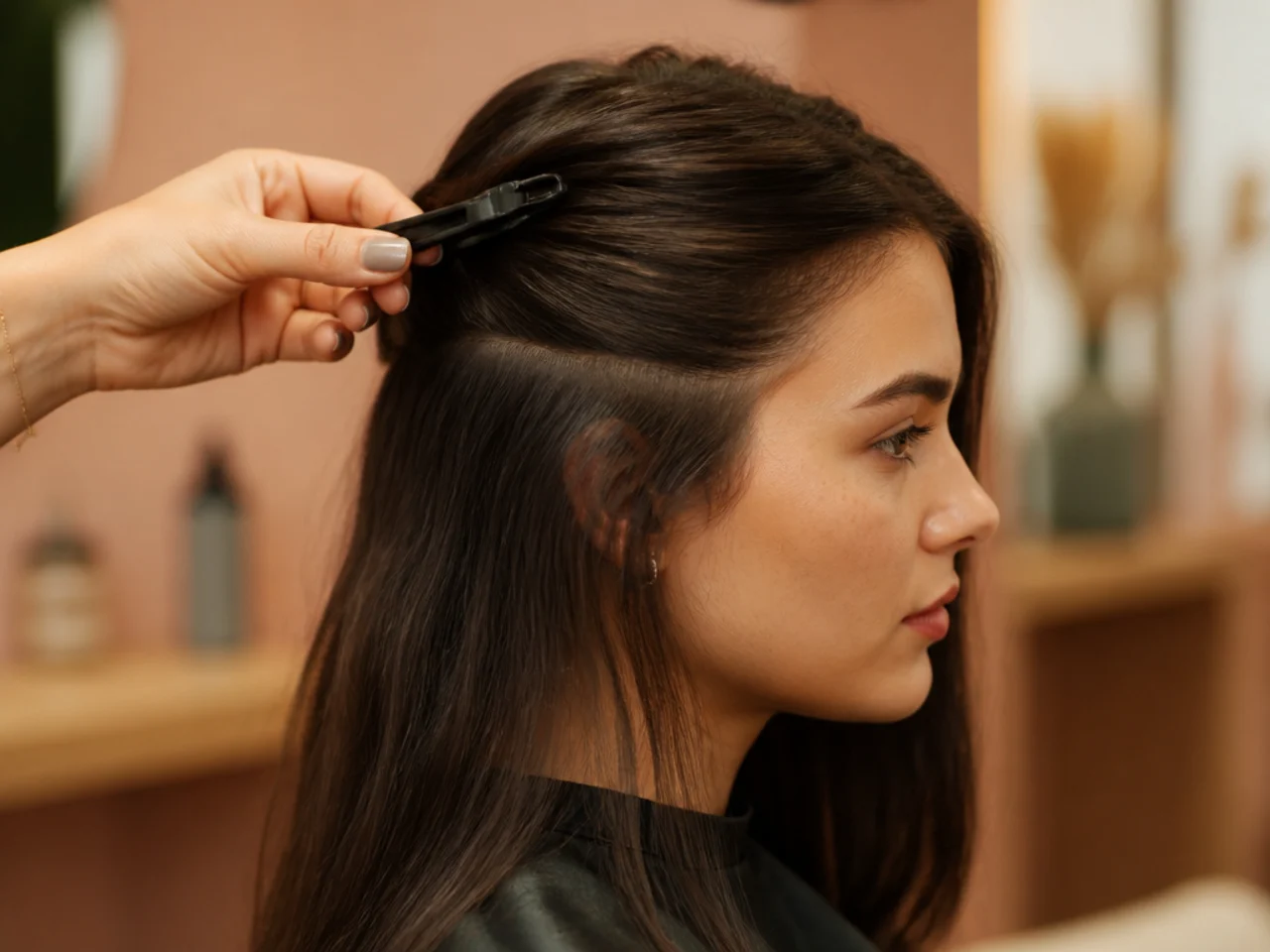
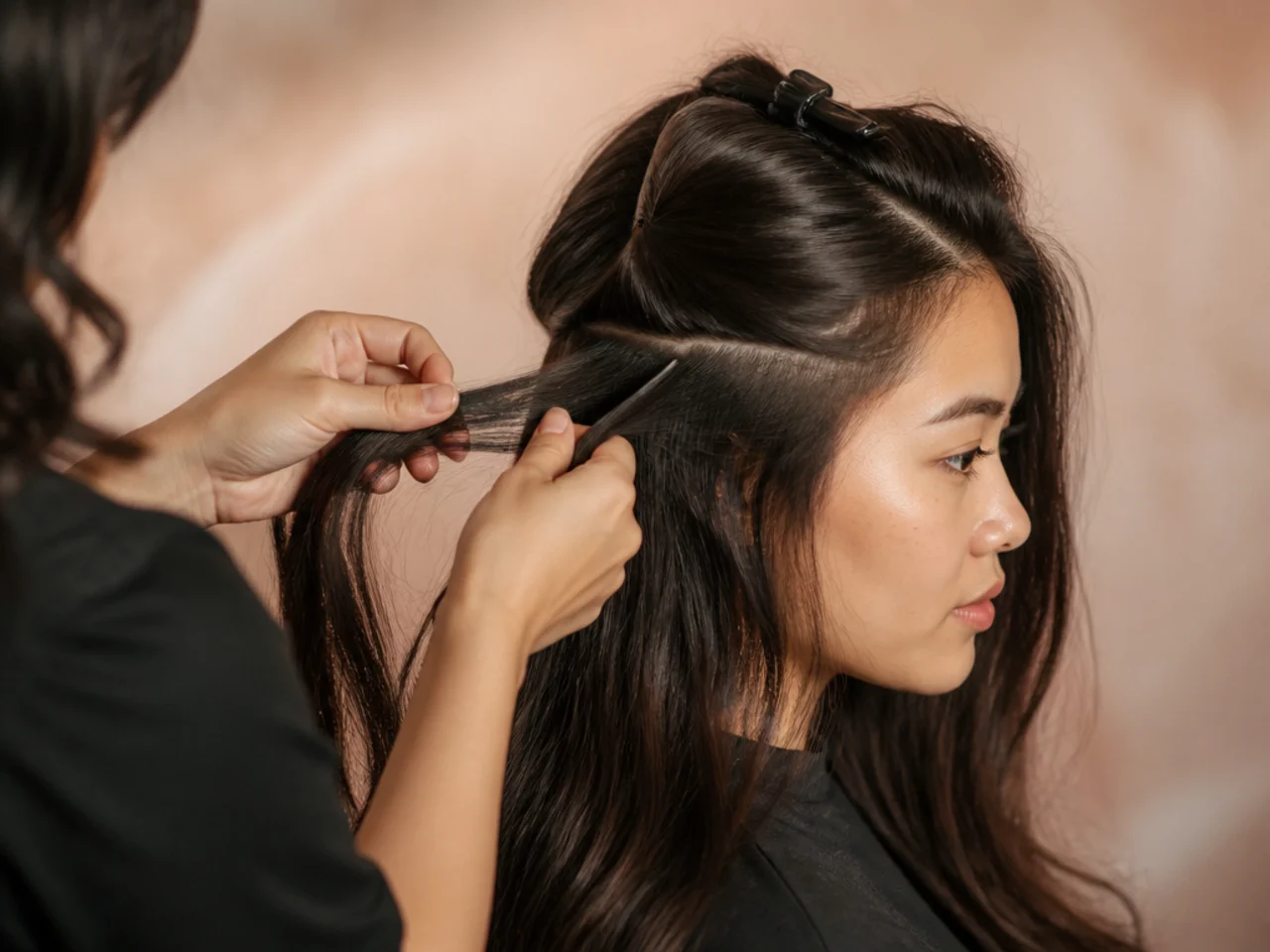
Place the panel under the section you lift. A nape panel is invisible on someone who never ties their hair up. Choose the placement from how you actually wear your hair, not from a photo of a ponytail.
Panel width decides how loud it reads. A wide section reads as a second head of colour when hair goes up. A narrow one reads as a stripe, which is a different look and a much smaller bleach bill.
Take the section below the parting, never at it. A panel that reaches the parting is a highlight and shows permanently. The concealment is what makes it a peekaboo.
Pick the shade by the level you can reach. Decide how much lifting the hair can take, then choose from the shades that work at that level. Choosing the shade first is how people end up with a muddy panel.
The 30 Peekaboo Looks for Dark Hair
1. Burgundy Under a Black Base
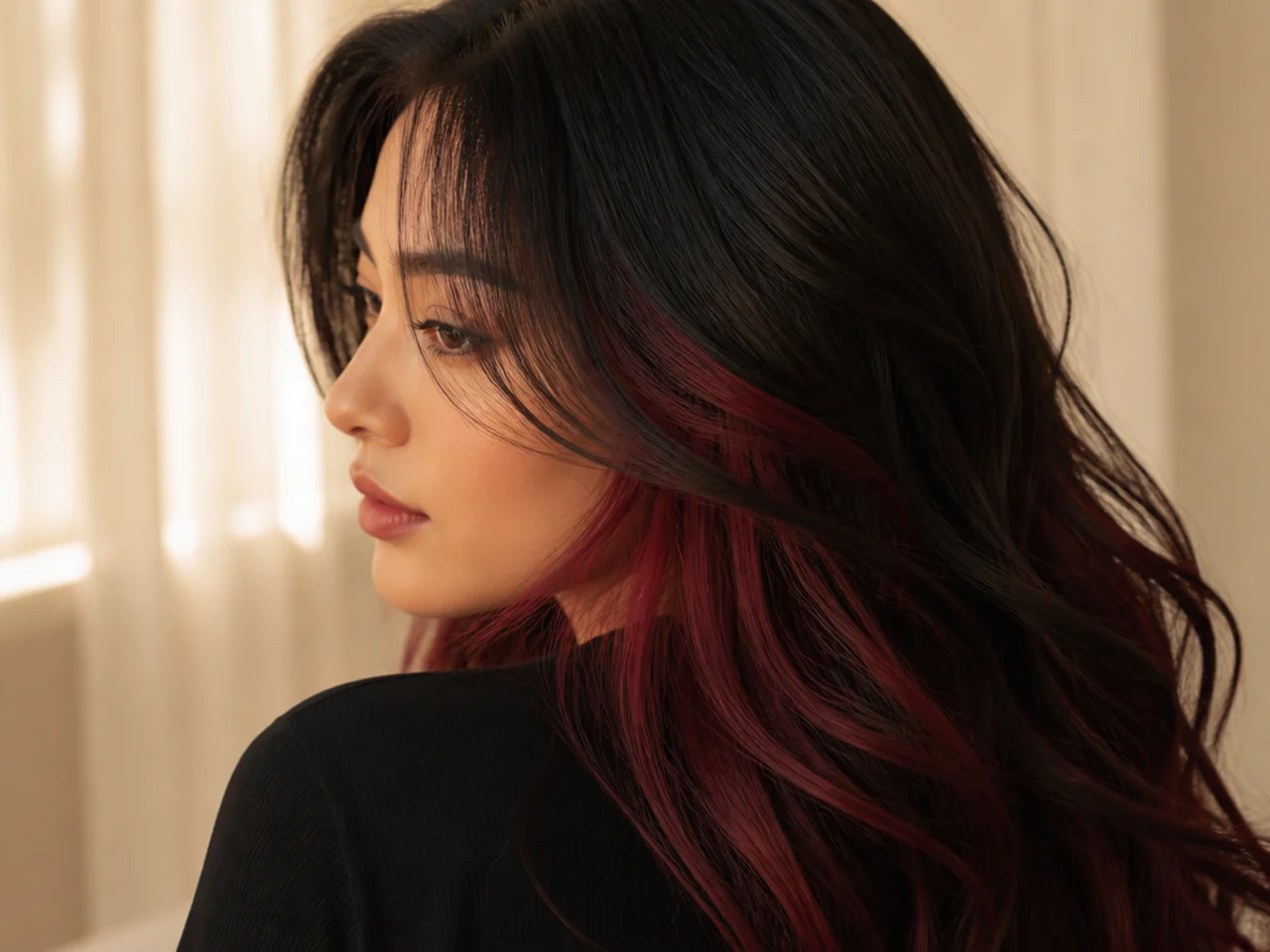
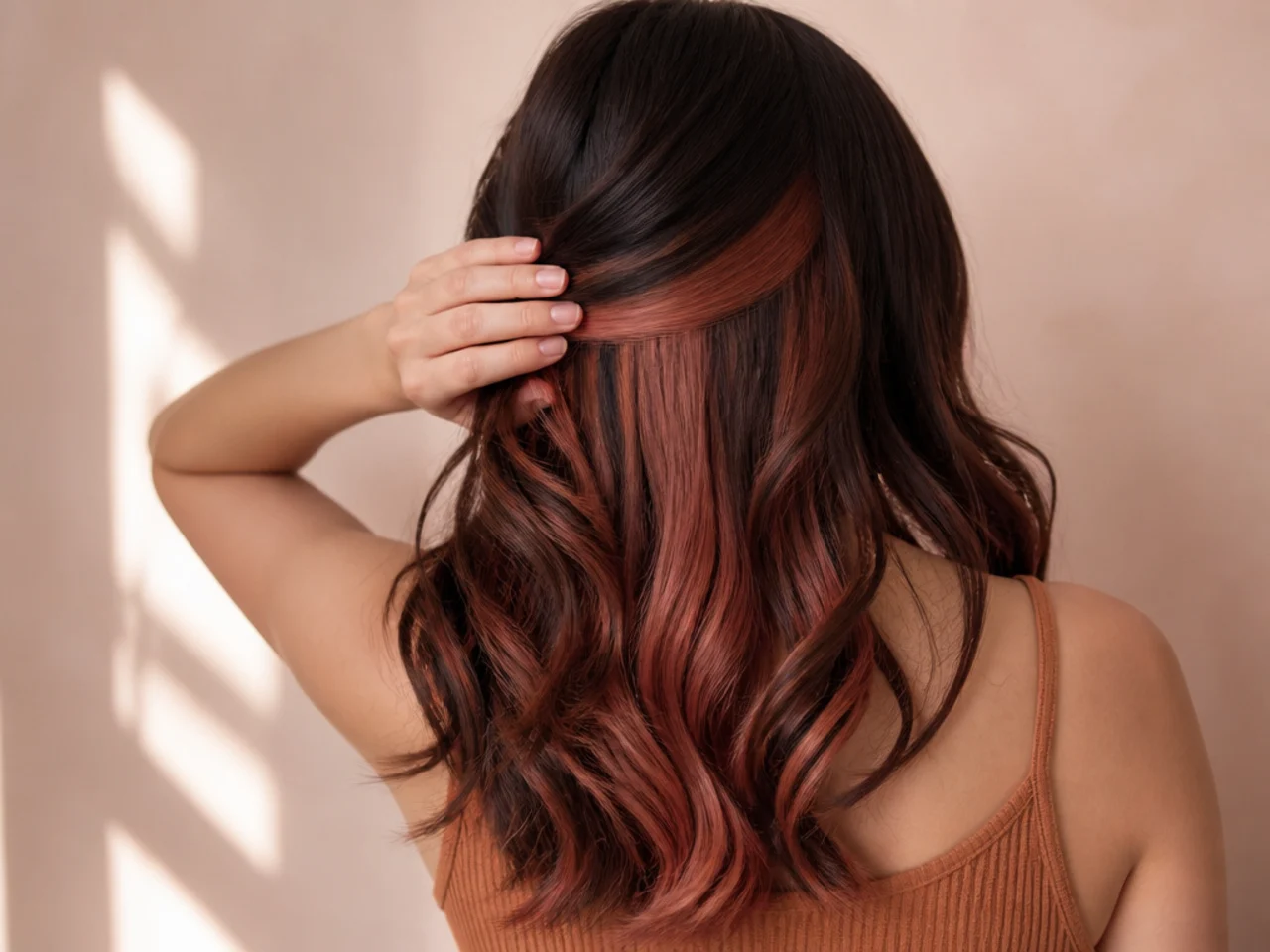
Burgundy sits only a level or two lighter than natural black, so it reads as depth rather than as a stripe and needs almost no lifting to show. That closeness is also why it grows out without a line, since there is no pale band underneath waiting to be exposed.
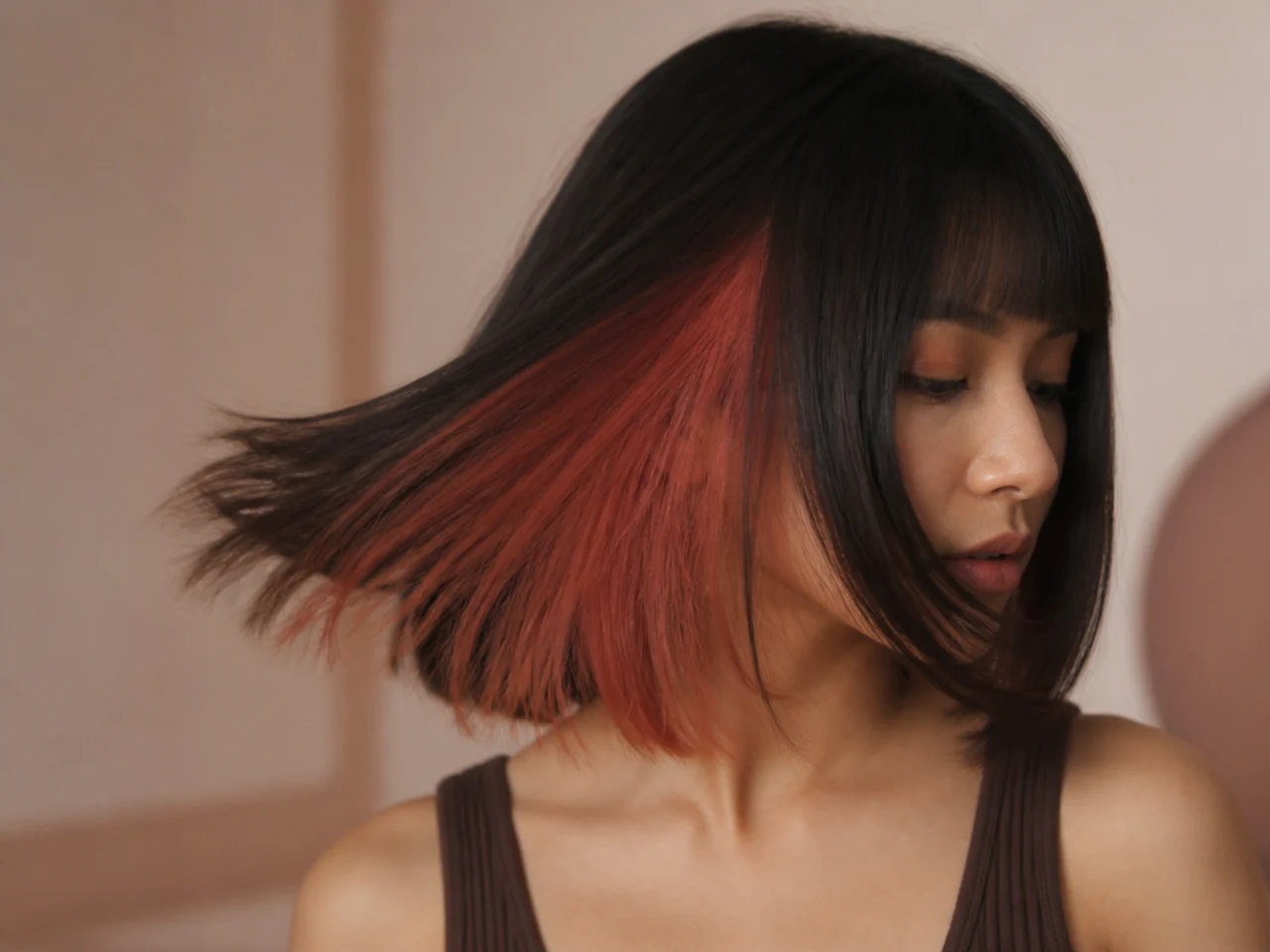
2. Cherry Red Peekaboo
Red is the shade dark hair gives up most easily, because the pigment exposed during lifting is red orange to begin with and the dye lands on tone the hair already has. Expect it to fade first, though: red molecules are the largest in the palette and sit closest to the cuticle.
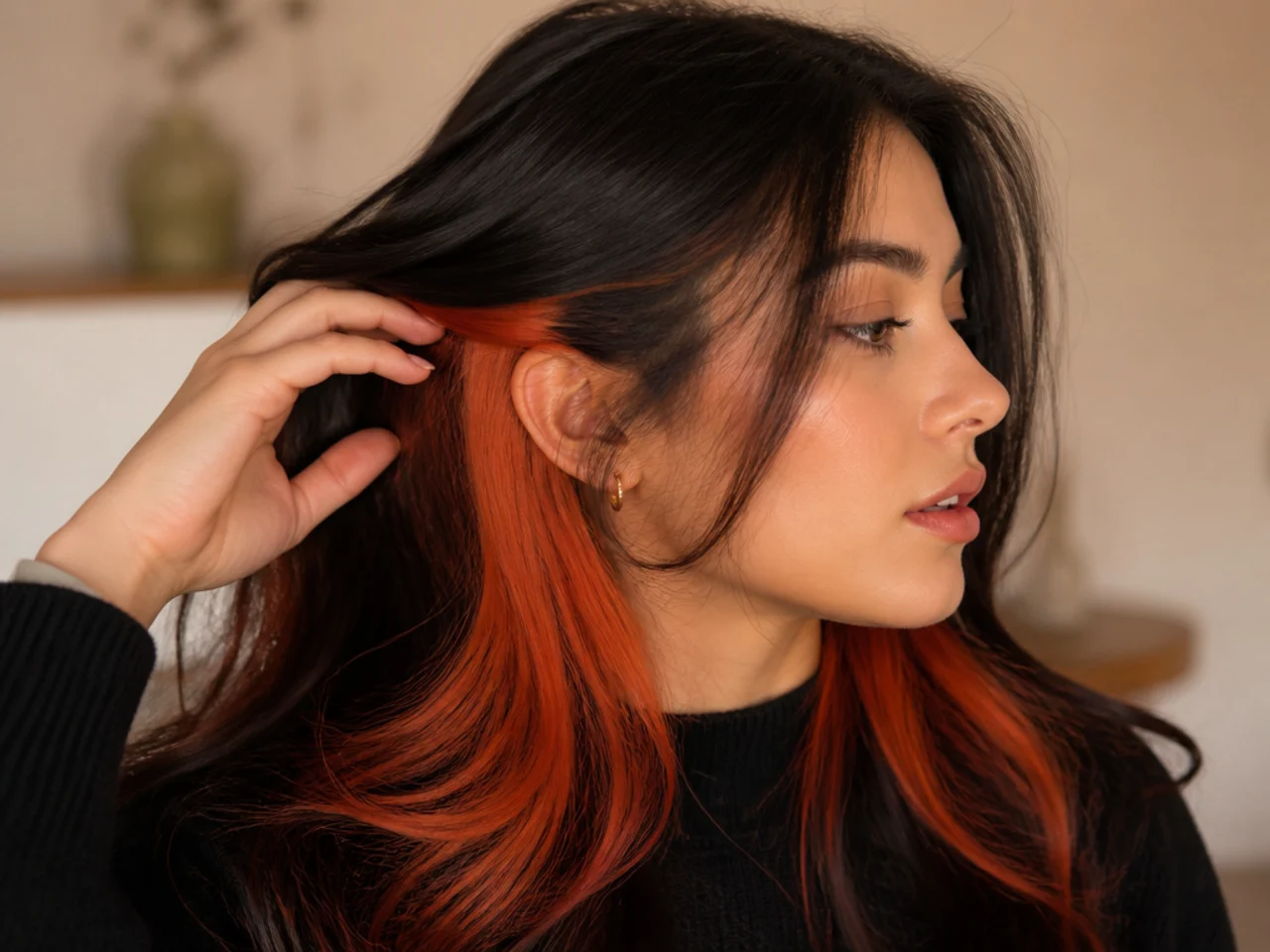
3. Copper Under Dark Brown
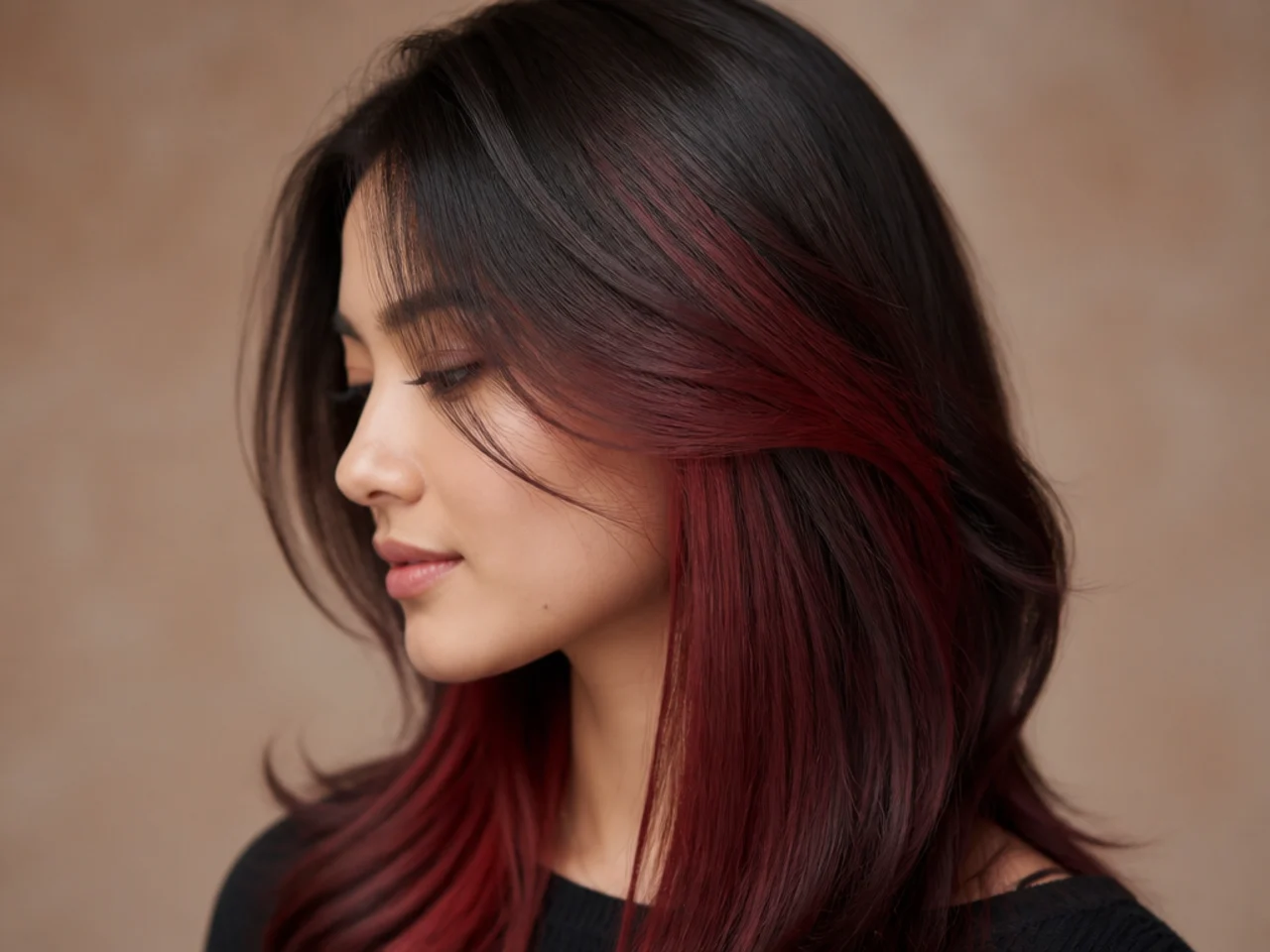
Copper reads correctly at around level seven, which is exactly where dark brown lands after a single controlled lift. Push the lift further and the base goes gold, at which point the copper turns brassy instead of the burnt tone in the reference picture.
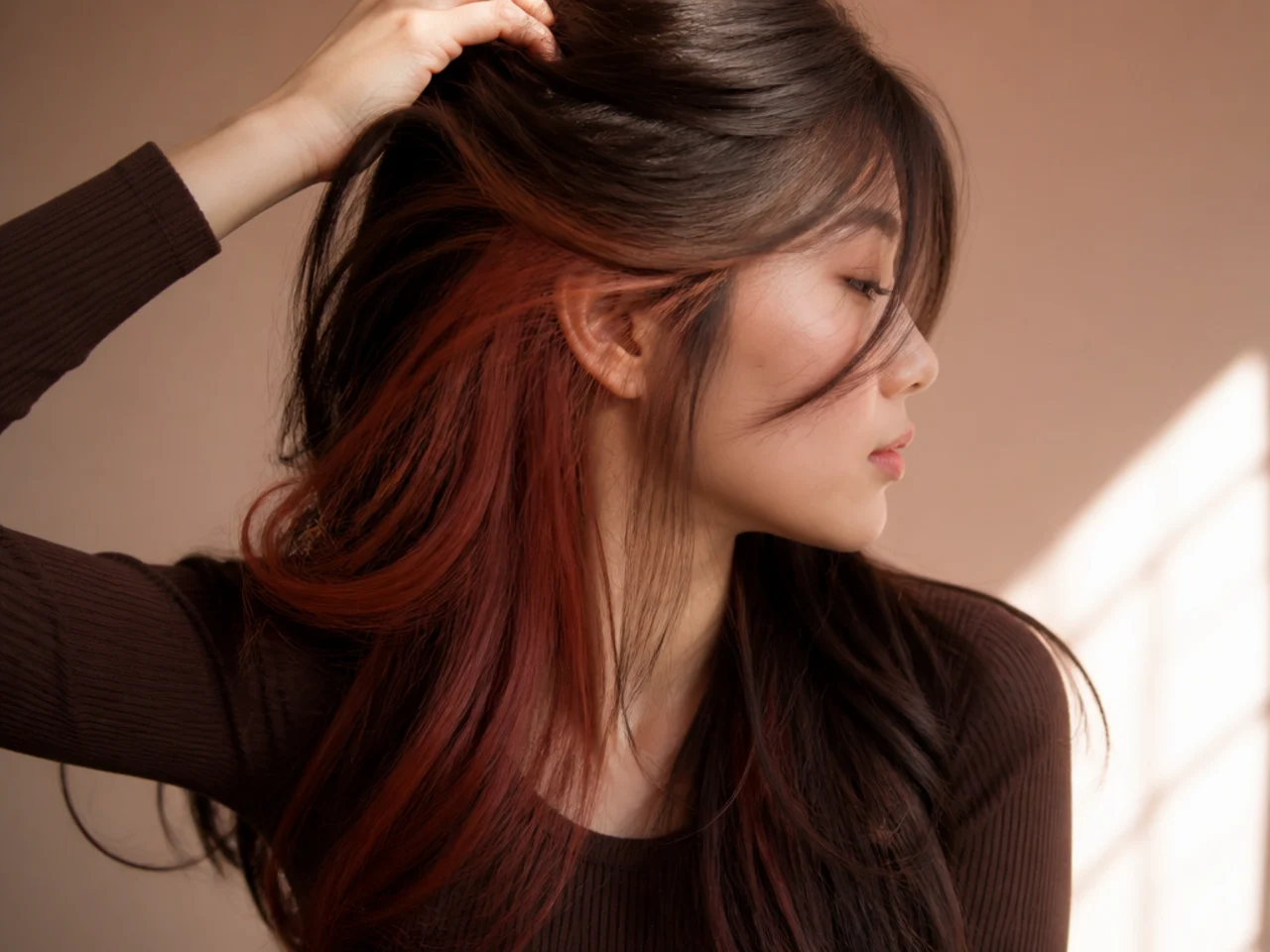
4. Deep Violet Panel
Violet is dark enough to deposit on a mid brown base without bleaching to blonde first, which makes it the cheapest of the cool shades on dark hair. It also fades towards grey rather than towards orange, so the middle of the grow out still looks intentional.
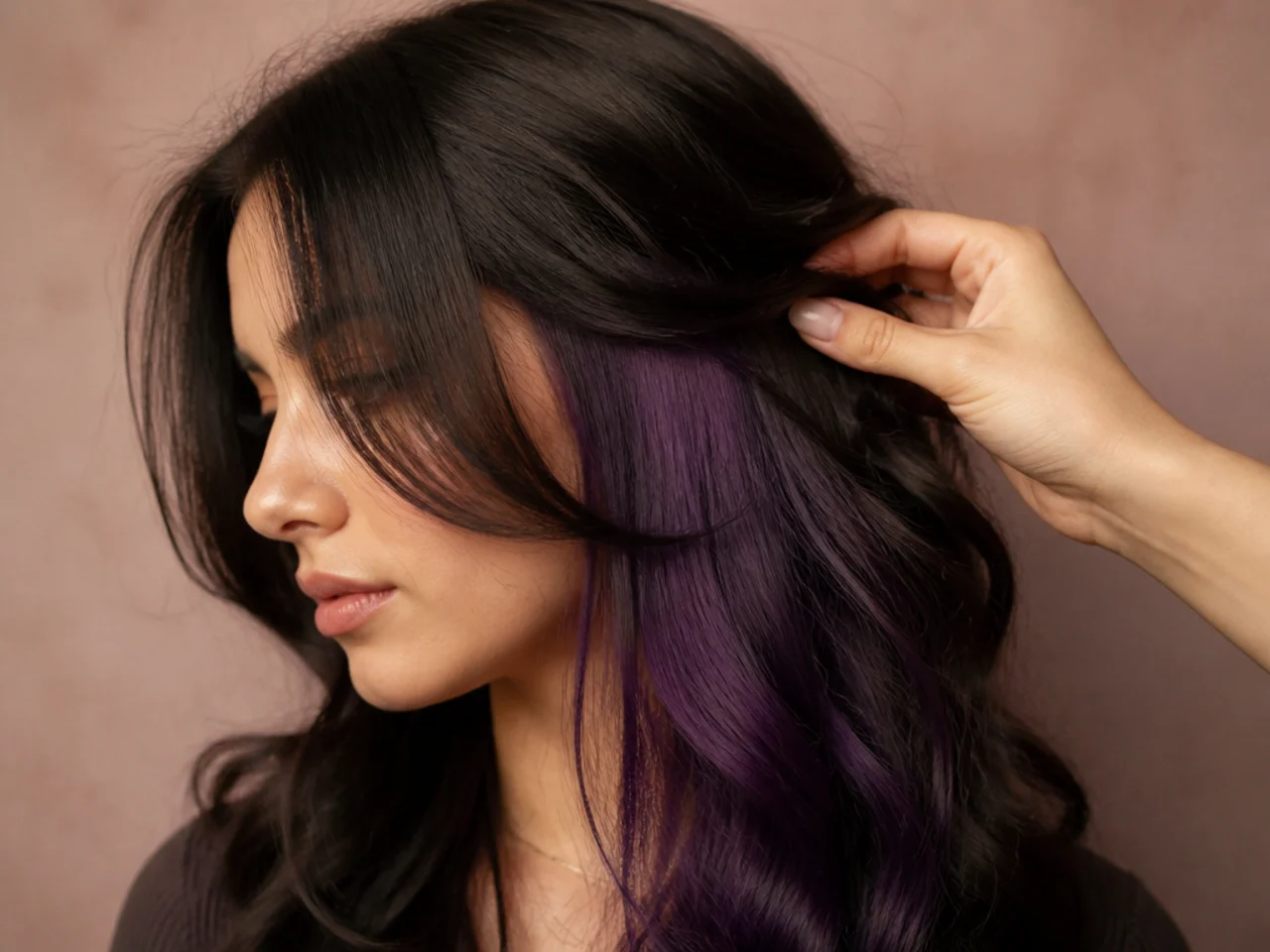
5. Plum Peekaboo
Plum is violet with red left inside it, and that red is what lets it sit on a base still carrying warmth. On the same hair a true violet would turn brown, because the leftover orange eats the blue half of the violet and leaves only the red behind.
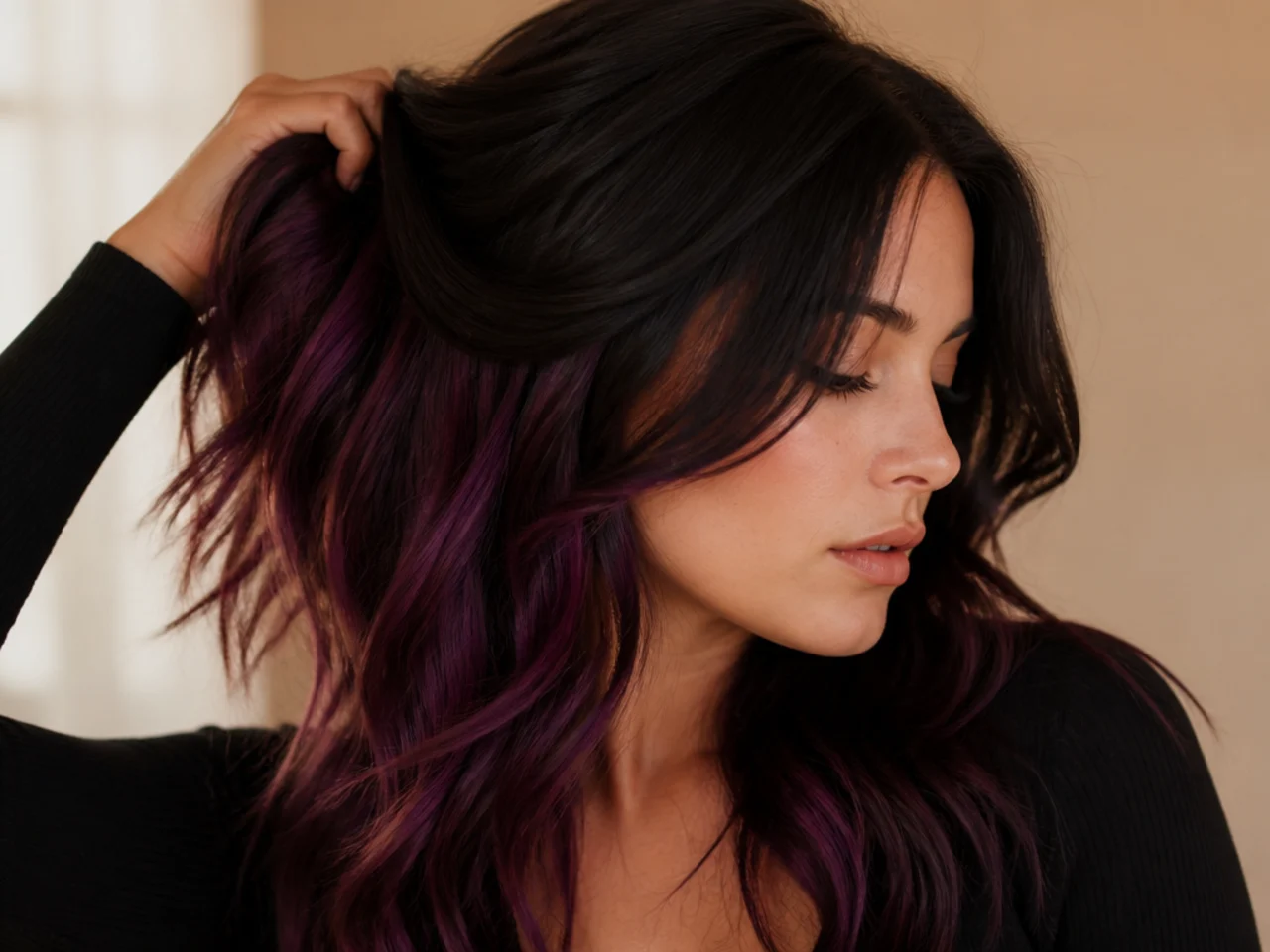
6. Electric Blue Underlayer
Blue is the hardest shade to land on dark hair, because it stays blue only on a panel lifted all the way to pale yellow. On anything still orange the two cancel into teal, which is covered properly in the blue peekaboo guide and is a fine result, just not the one that was asked for.
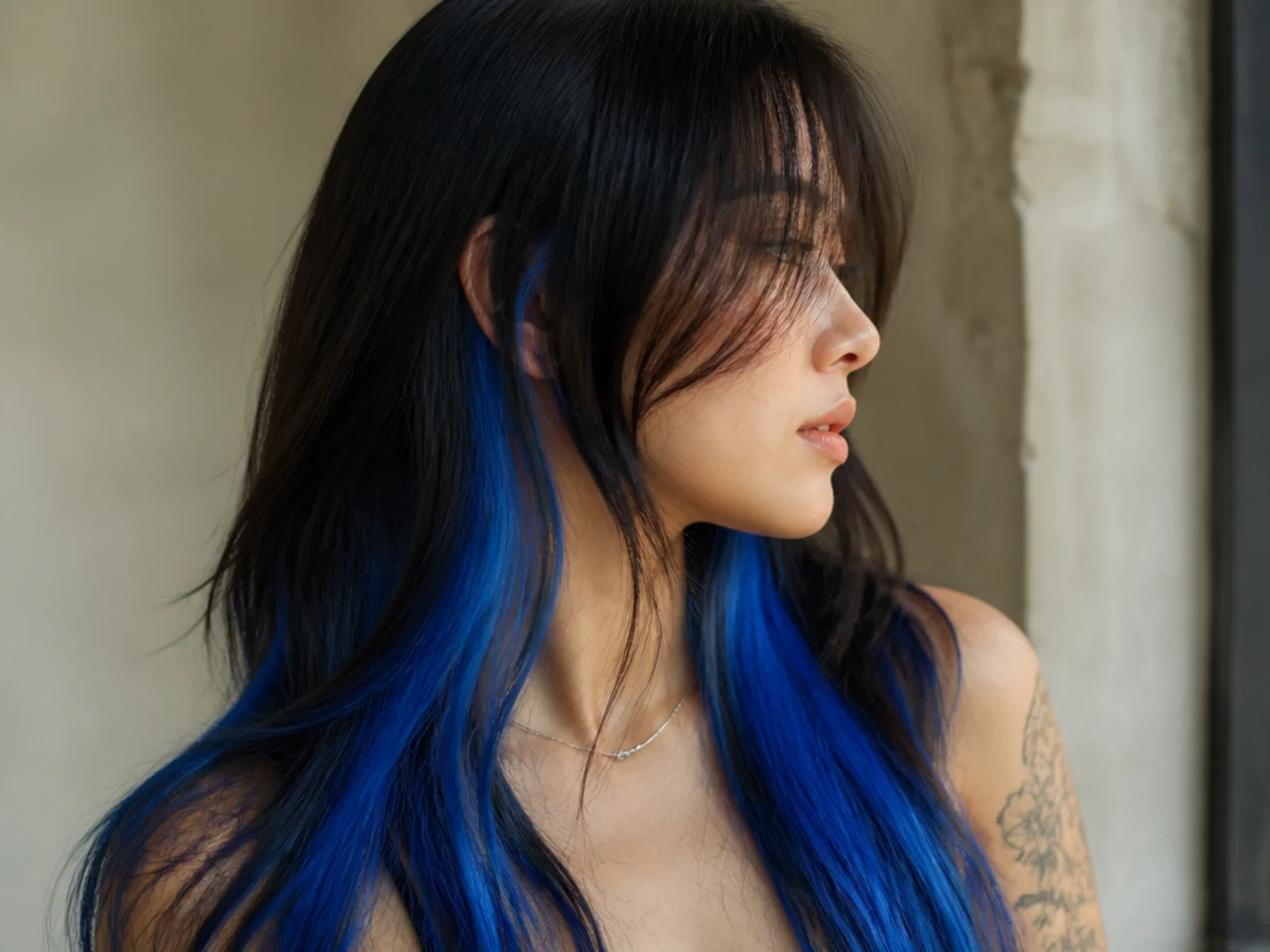
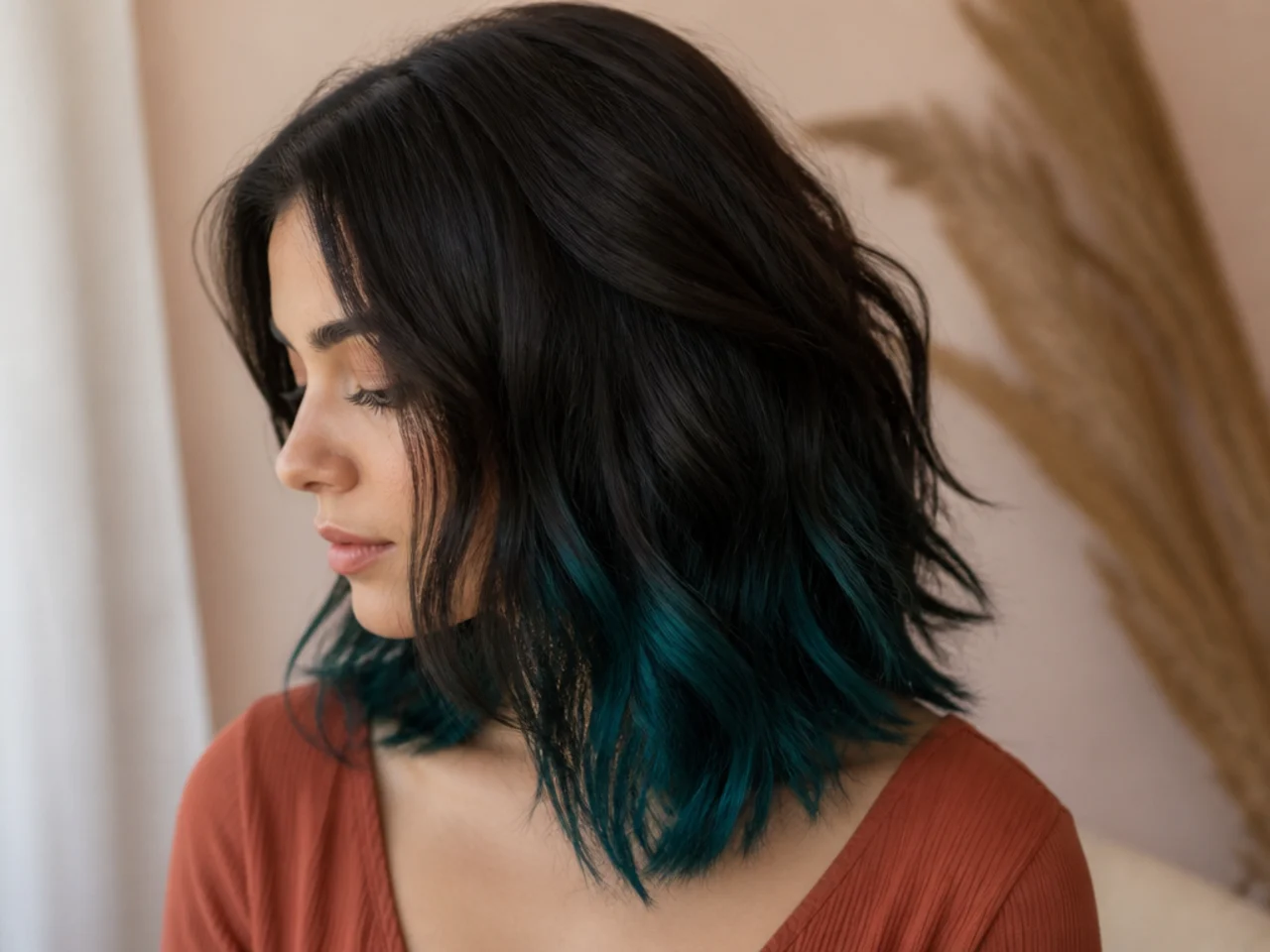
7. Teal Peekaboo
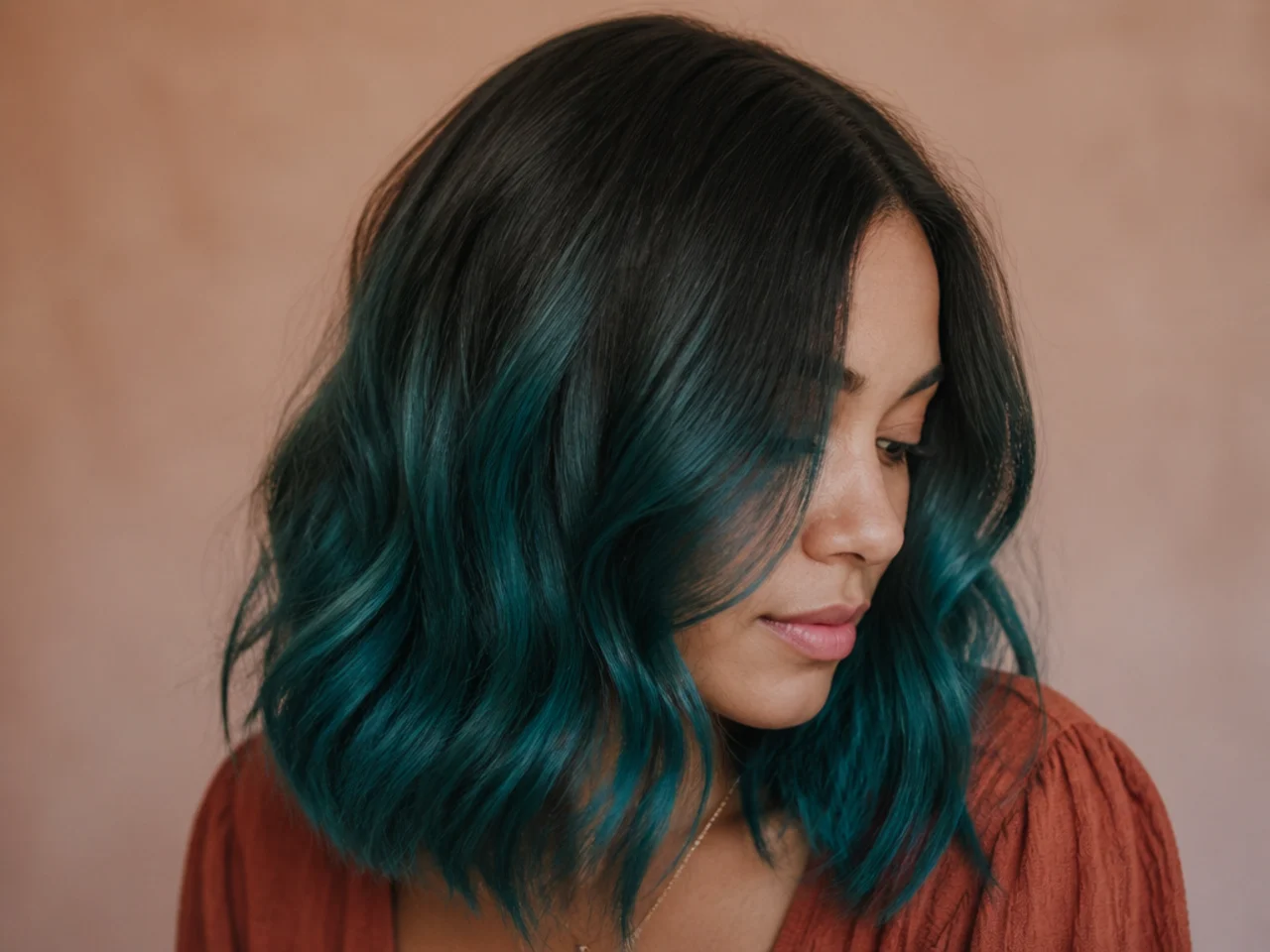
Teal is the shade that forgives a base which did not lift all the way, since leftover warmth pulls a blue green towards exactly where teal already lives. That makes it the realistic single session vivid on a dark head, and the one least likely to disappoint.
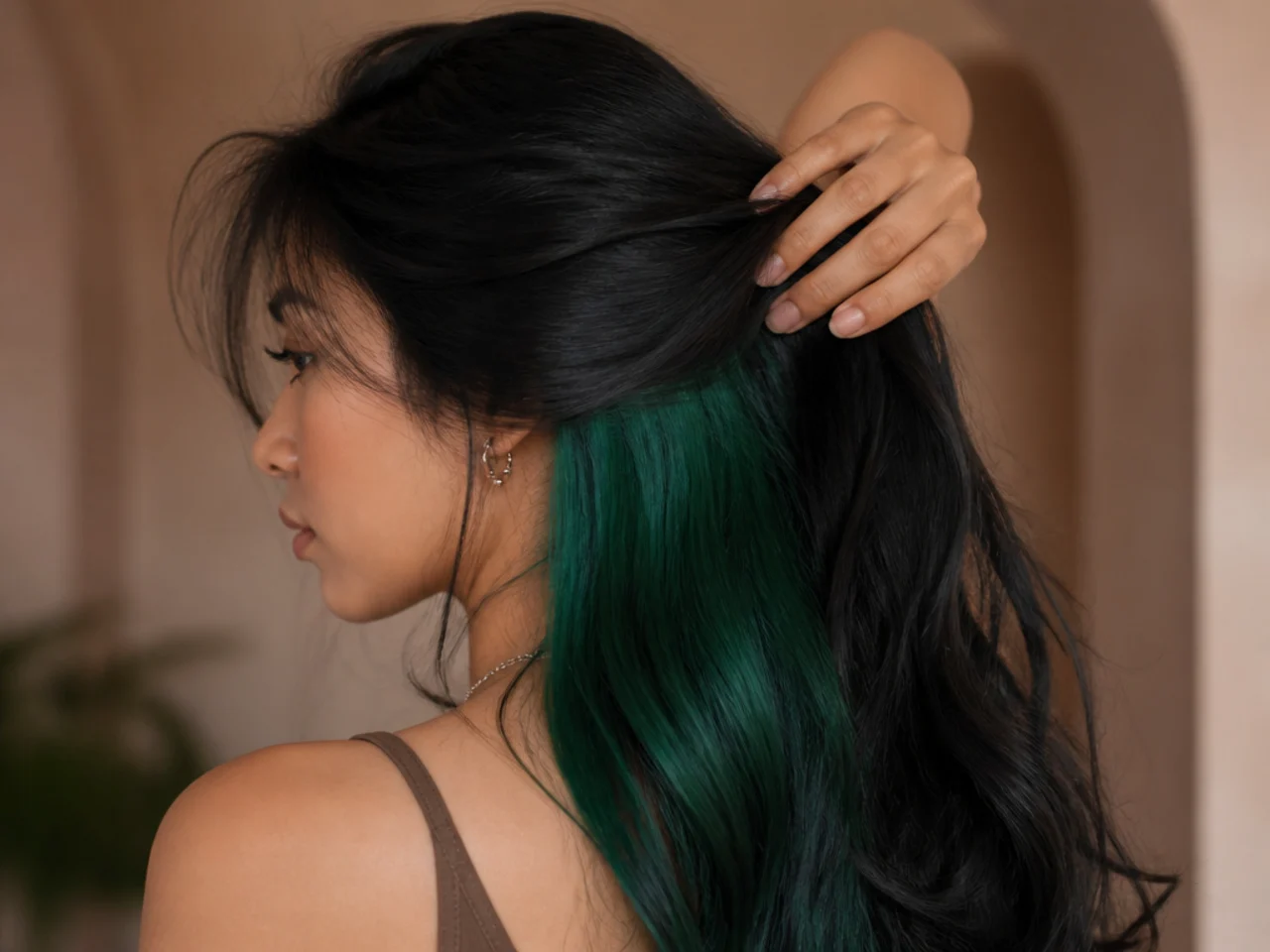
8. Emerald Green Panel
Green sits opposite red on the colour wheel, so on a base that still carries red the panel goes flat and brownish. Lifted to a clean yellow it holds longer than almost any other vivid, because green direct dyes stain the cuticle heavily and resist washing out.
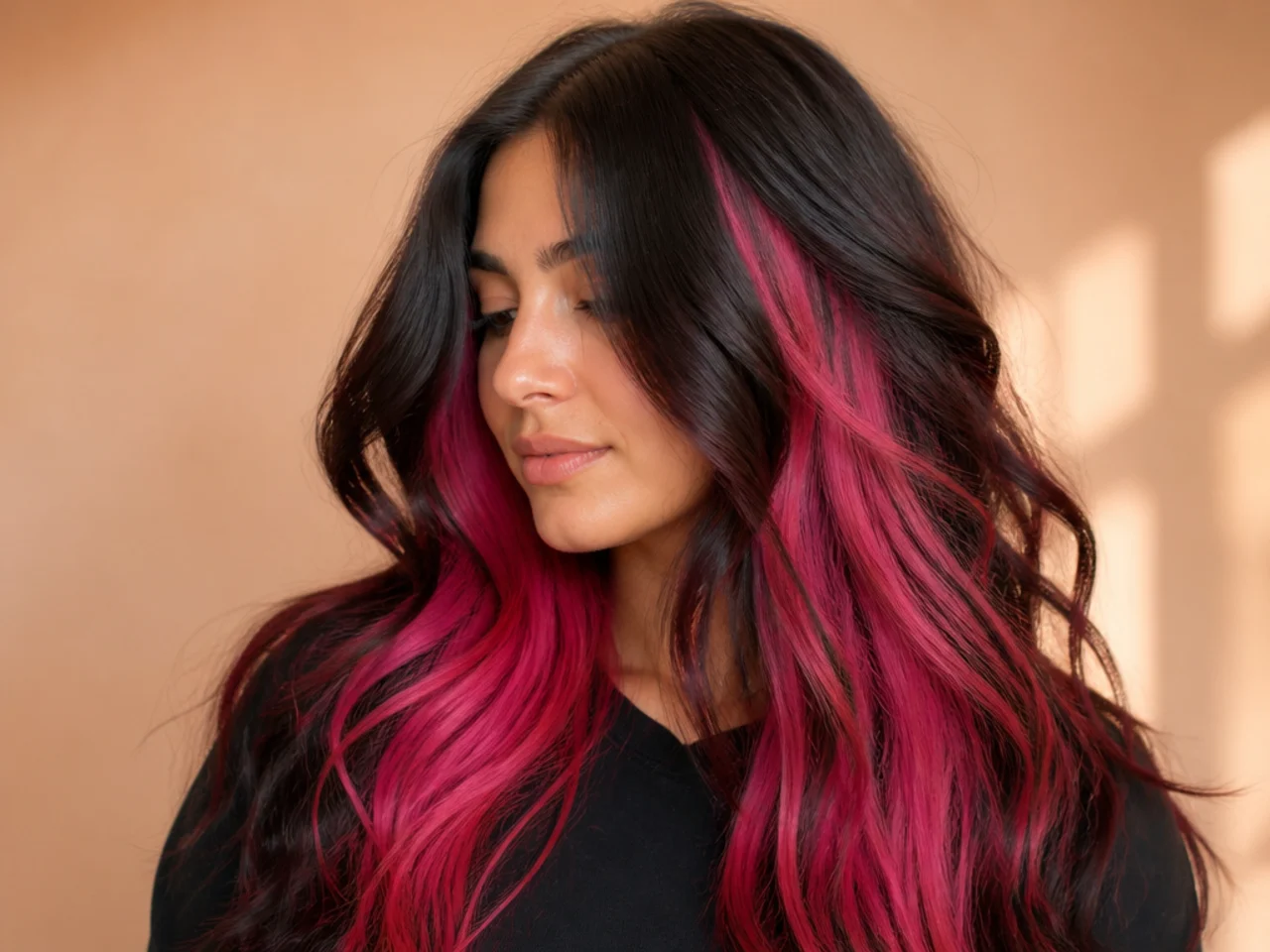
9. Hot Pink Peekaboo
Pink is red at a lower pigment load, and that dilution is the problem: it needs a lighter base than a cherry red to show the same brightness. Below roughly a level eight it reads as a dull raspberry rather than as pink, no matter how bright the tube looks.
10. Tangerine Peekaboo
Orange is a stage the hair passes through anyway, so tangerine is one of the few brights a single lift session reaches honestly. It also fades gracefully, dropping to a soft apricot instead of collapsing into a tone that fights the dark hair above it.
11. Silver Peekaboo
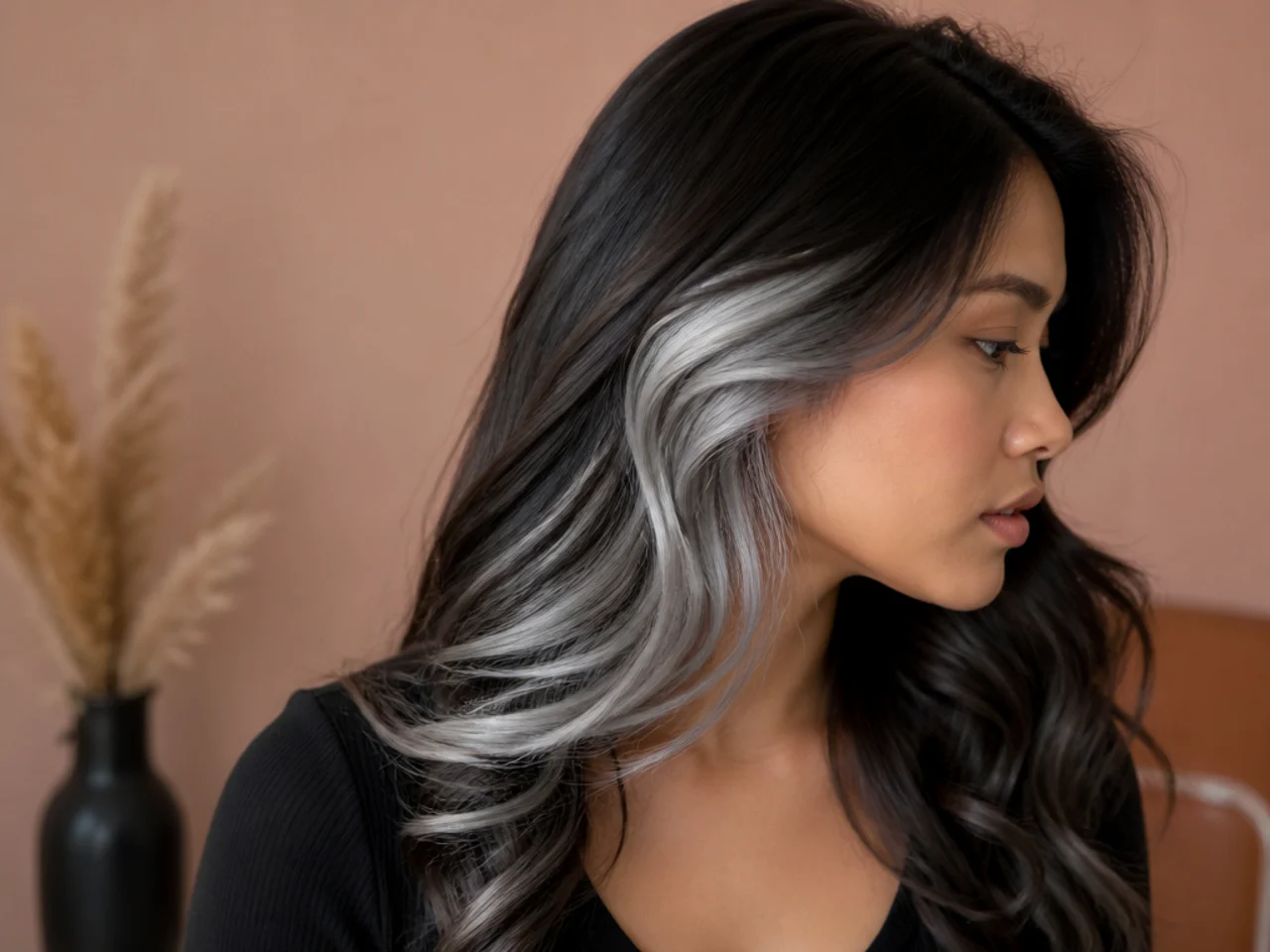
Silver is less a dye than the absence of warmth, so the panel has to reach pale yellow and then be toned with violet to cancel what remains. Any gold left in the base turns the silver a dirty beige within a wash or two, which is why it is the least forgiving shade here.
12. Pastel Lilac Peekaboo
Pastels are close to transparent, so they show whatever is underneath them rather than covering it. On dark hair that means lifting to the palest yellow before lilac reads as lilac, and reaching that from a very dark base in one appointment is where hair breaks.
13. Caramel Peekaboo for Low Contrast
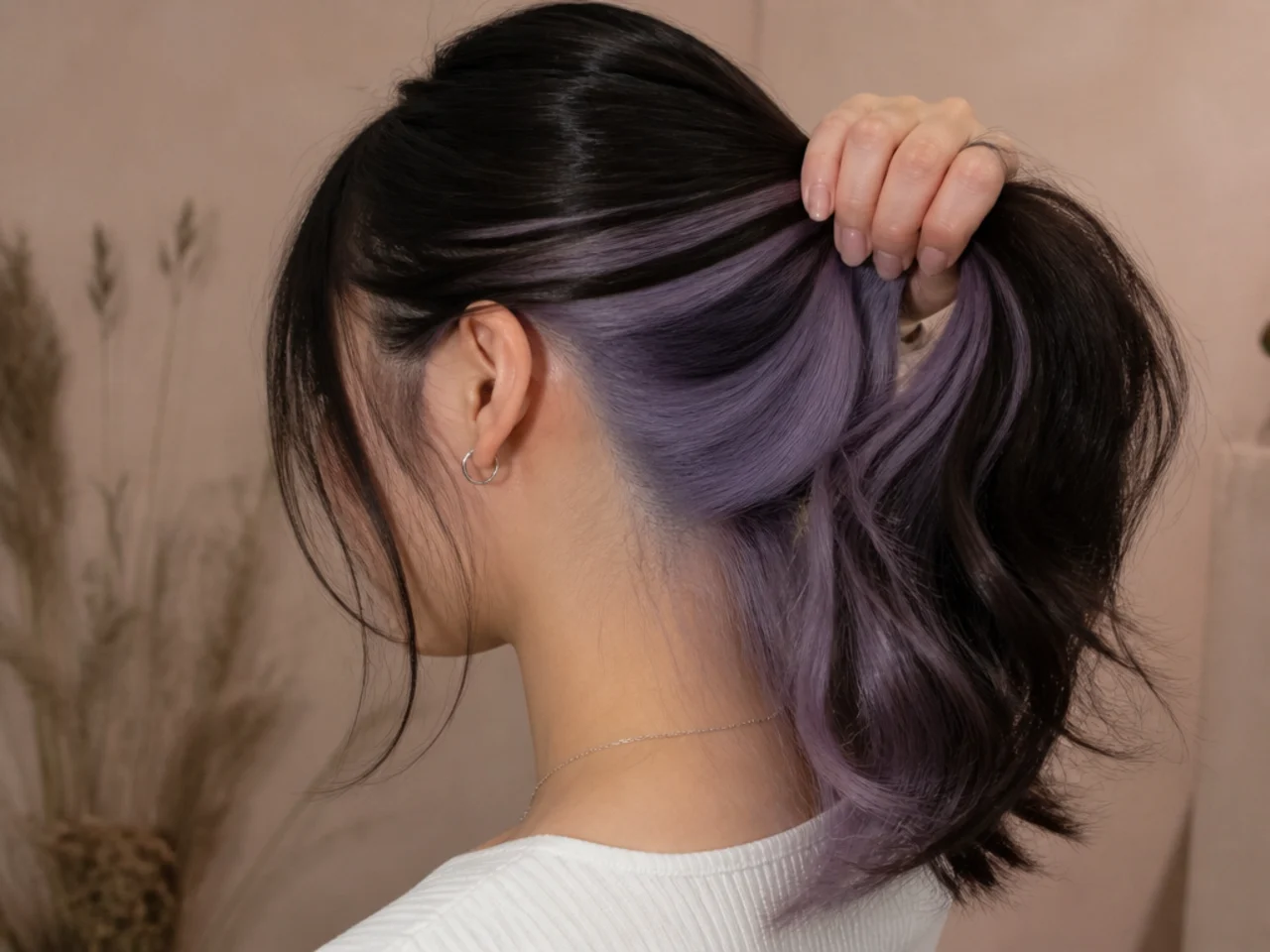
Two or three levels of lift and no vivid at all, so the panel reads as movement rather than as colour when the hair shifts. It is the version that survives a strict dress code and needs no top up dye, only a lift refresh a couple of times a year.
14. Two Tone Peekaboo
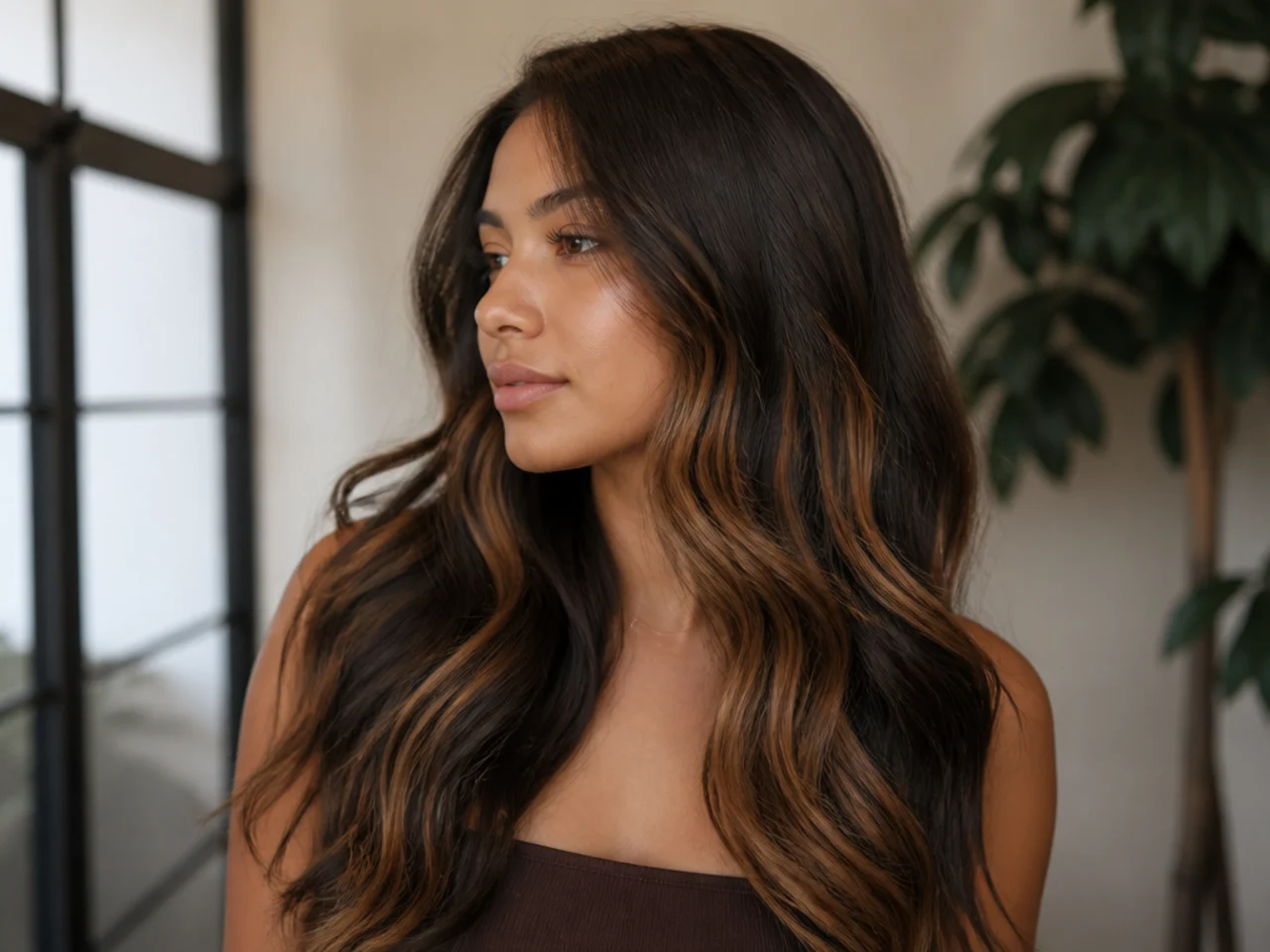
Two shades in one panel work when they sit next to each other on the wheel, like violet and blue, and fail when they sit opposite, like blue and orange. Opposites bleed into each other during washing and turn brown along the boundary where they meet.
15. Nape Only Peekaboo
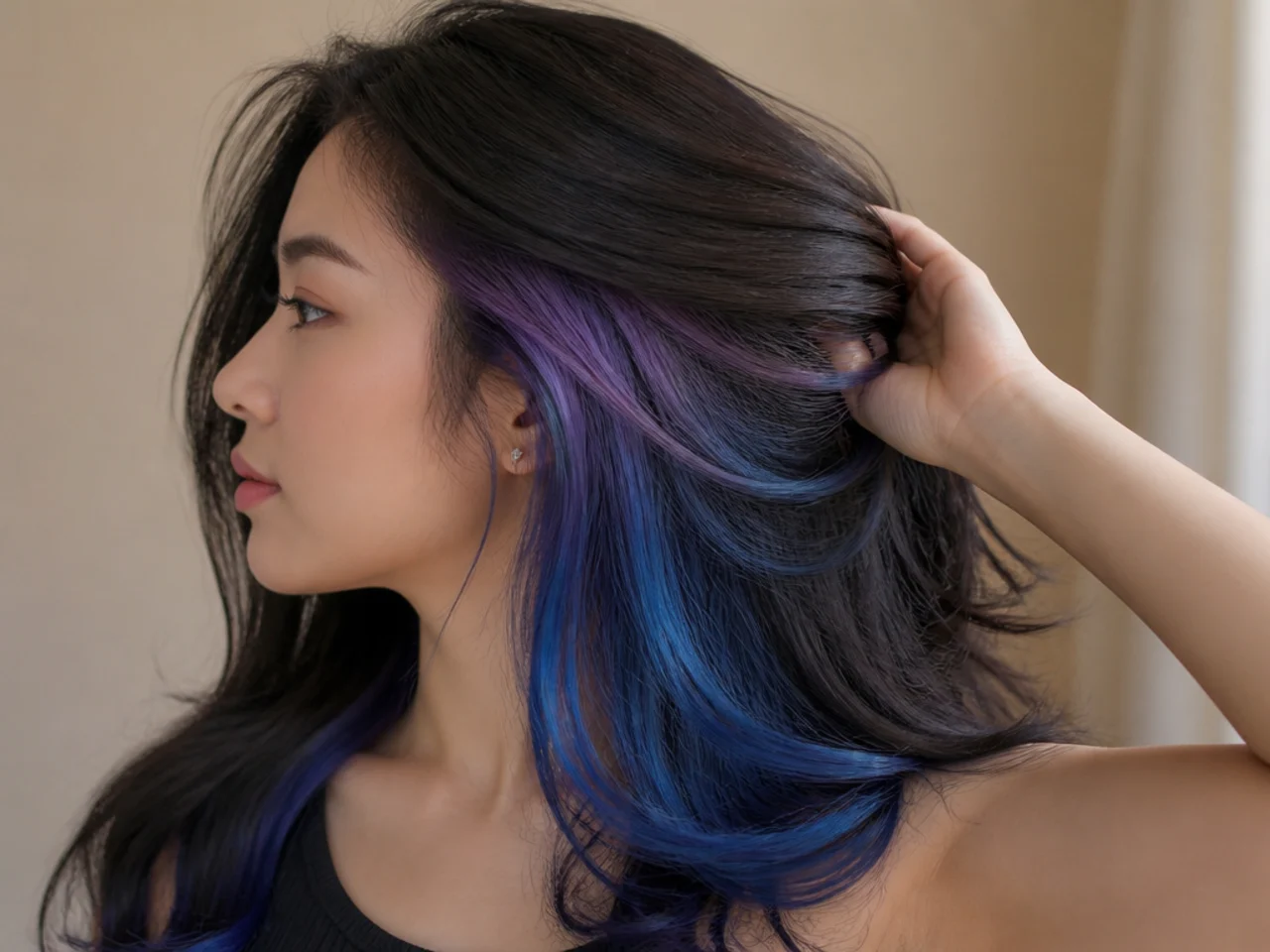
The nape sits below the occipital bone, so the top layer covers it entirely with hair down and reveals all of it the moment hair goes up. It is the most hidden placement available, which makes it the wrong choice for anyone who wears their hair loose.
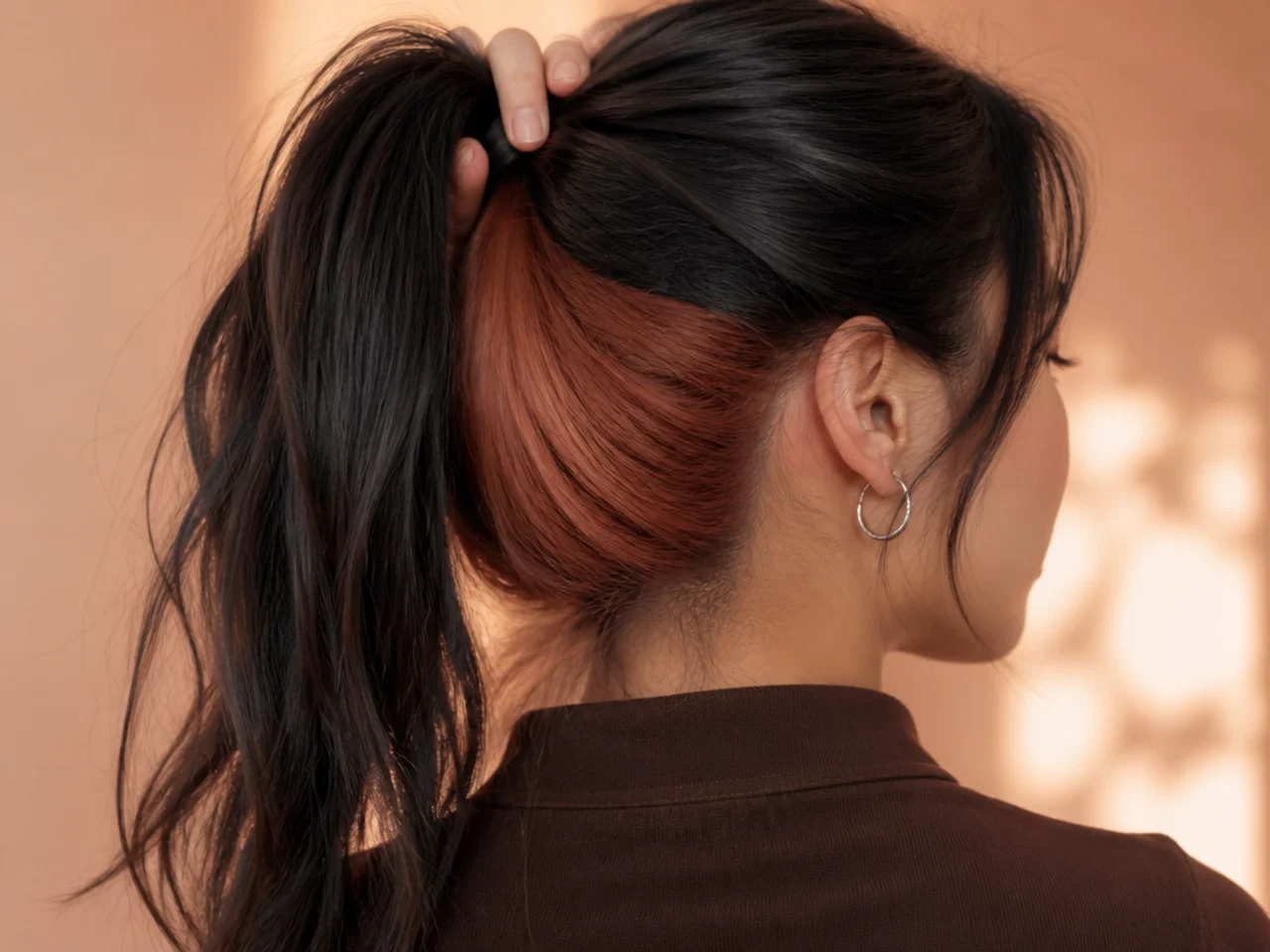
16. Under the Parting Peekaboo
A panel taken directly beneath the parting shows on every head turn, because the parting is the one place the top layer separates by itself. It reads as colour more than as a reveal, so treat it as a commitment rather than a secret.
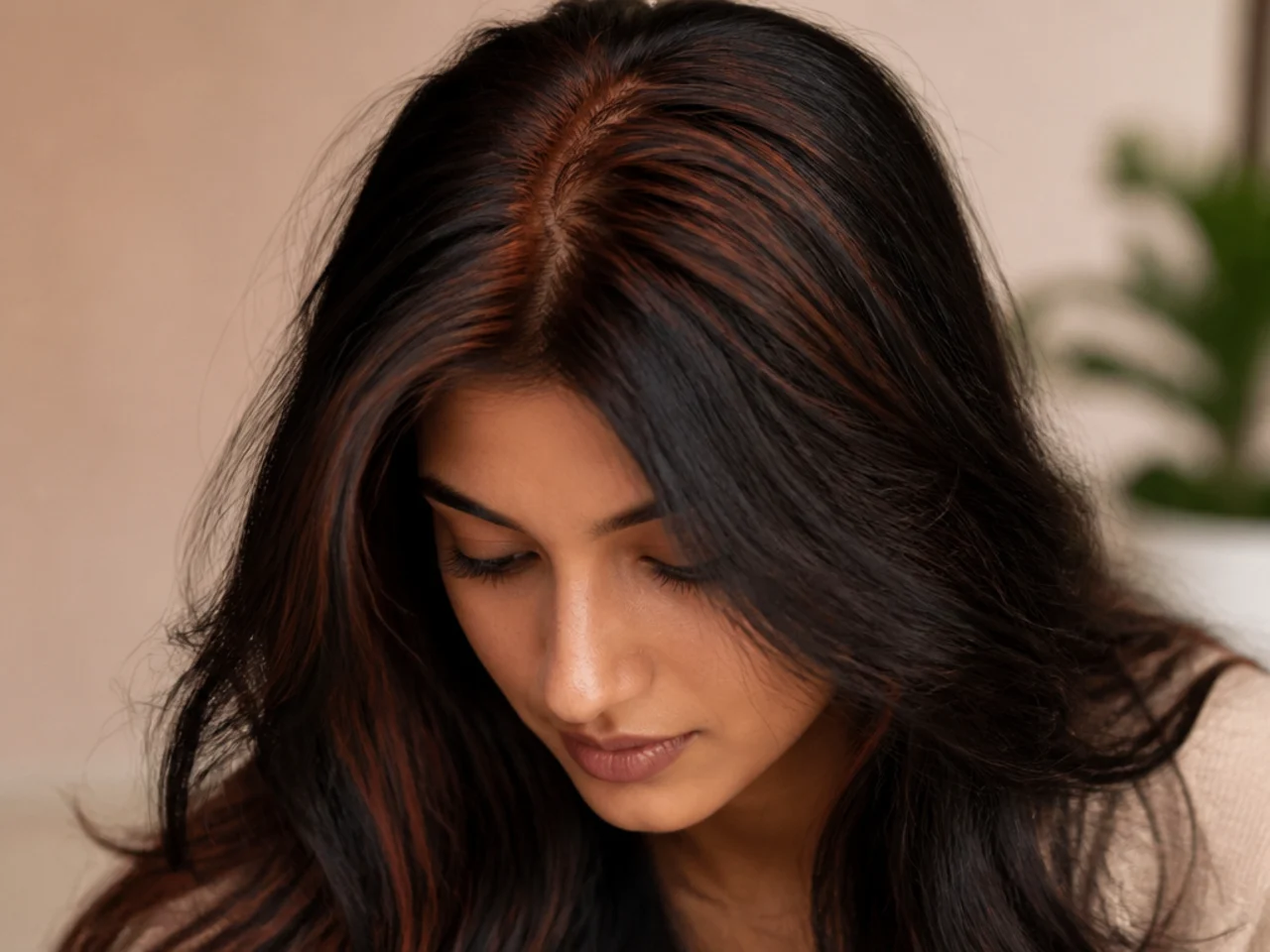
17. Ear to Ear Panel
A horizontal section running from one ear to the other catches the tuck: the instant hair goes behind an ear, the whole side appears. It shows far more often than a nape panel and far less constantly than one placed under the parting.
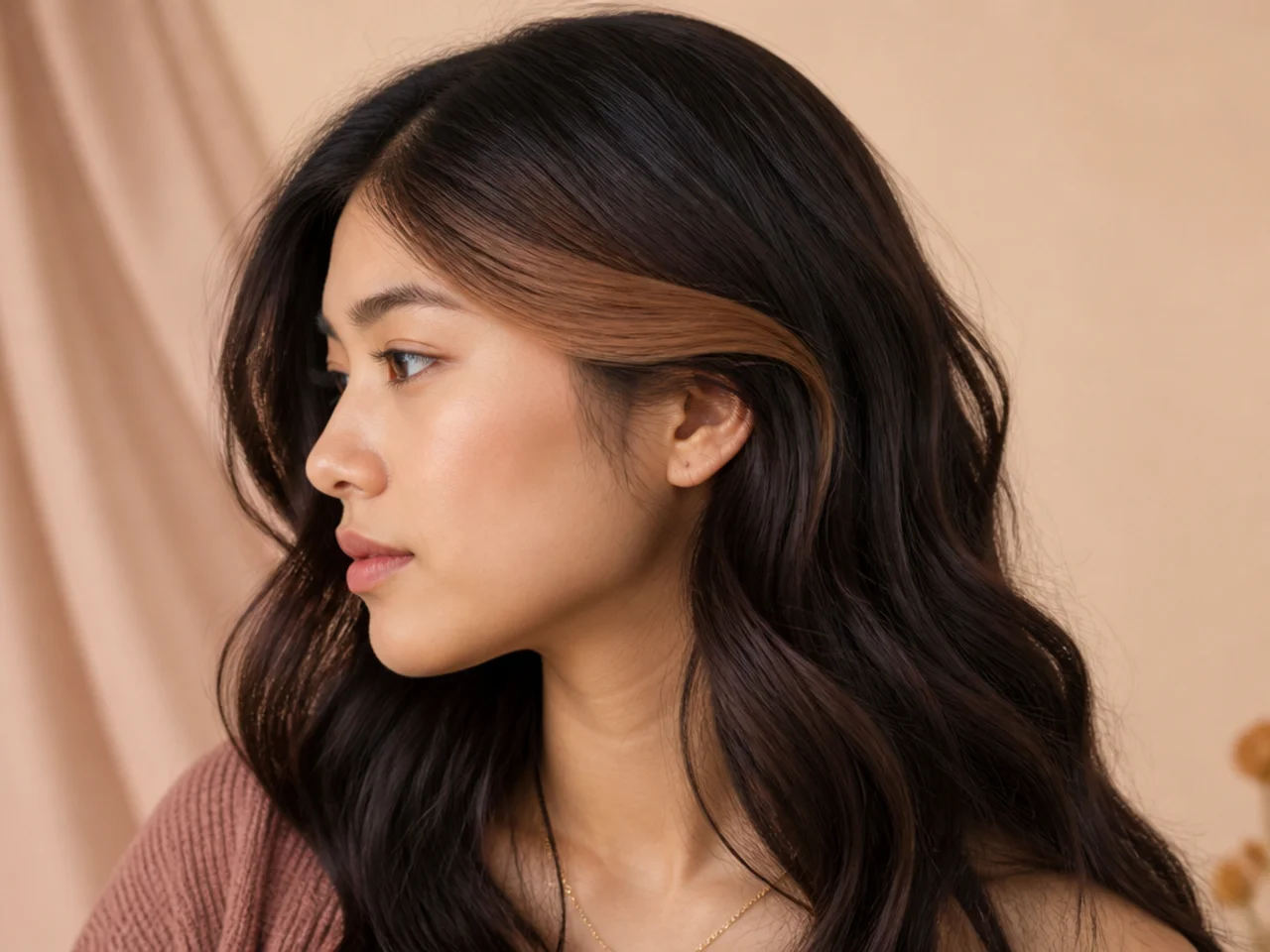
18. Behind the Ear Peekaboo
Two small panels, one behind each ear, and nothing else touched. It is the least bleach for the most frequent reveal, because that section moves every time you glance sideways or push hair back from your face.
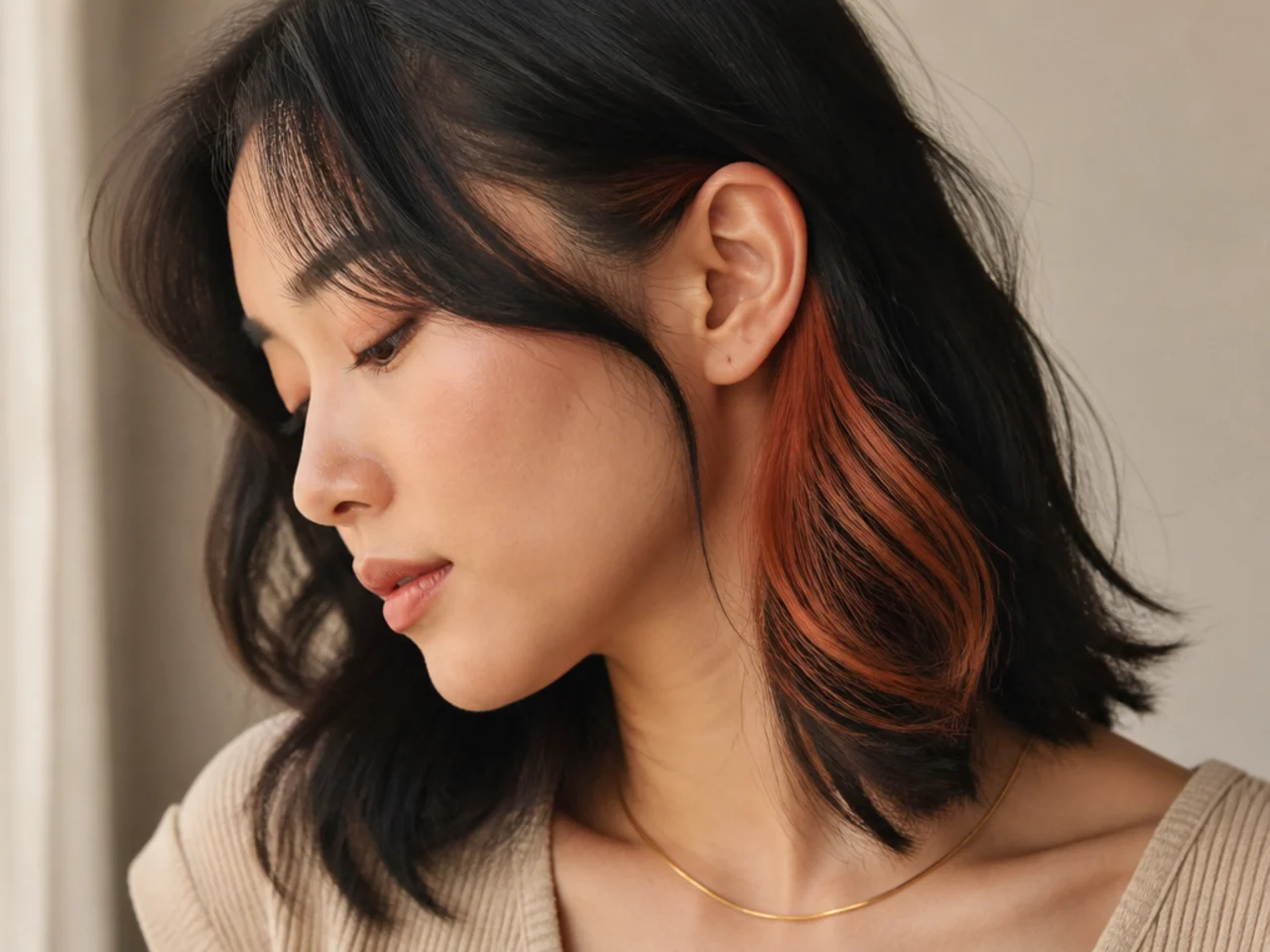
19. Half Head Underlayer
Everything below the horseshoe section is coloured, which reads as a full head of colour in a ponytail and as nothing at all when hair hangs down. The cost is that half the head is now lifted, so the condition of the entire underside becomes your problem.
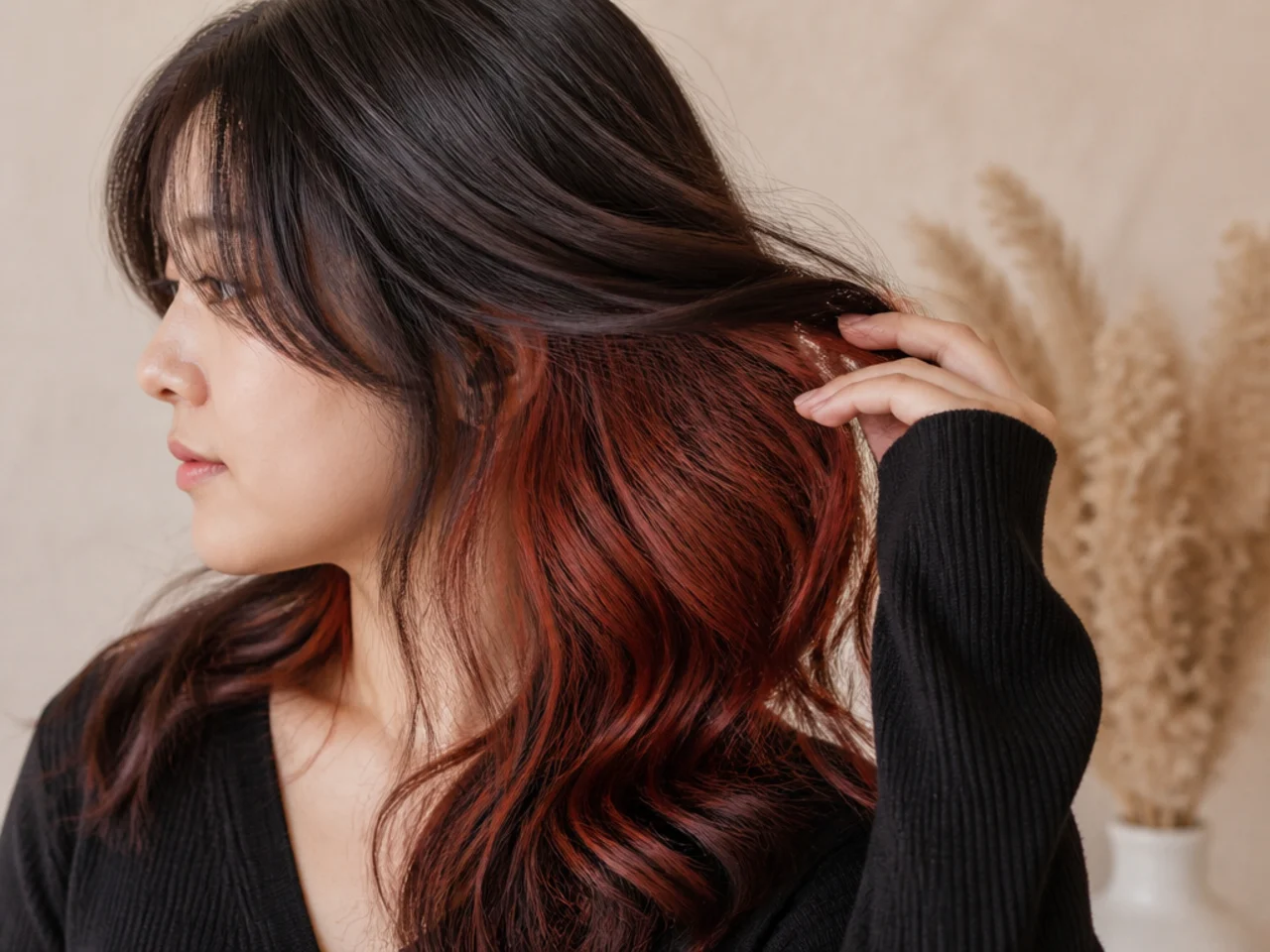
20. Ribbon Width Peekaboo
A section under an inch wide reads as a single stripe rather than as a panel. On thick dark hair the top layer swallows it almost completely, so a ribbon only works placed directly under the parting where nothing can cover it.
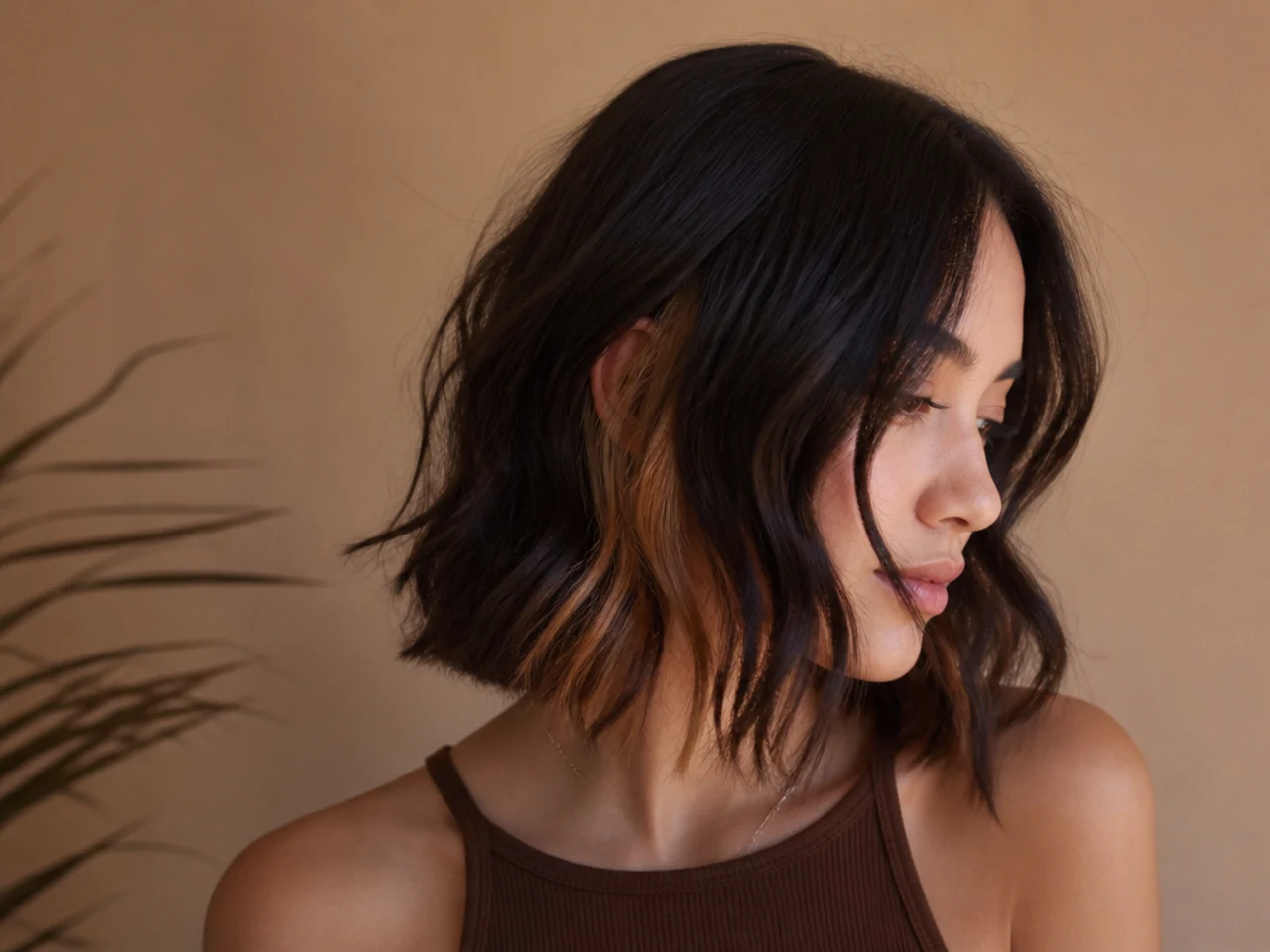
21. Ombre Peekaboo
Starting the colour at the mid lengths instead of the root removes the regrowth line entirely, because the dark root is part of the design rather than a fault in it. On dark hair it also halves the bleach, since only the lower part of the panel is lifted.
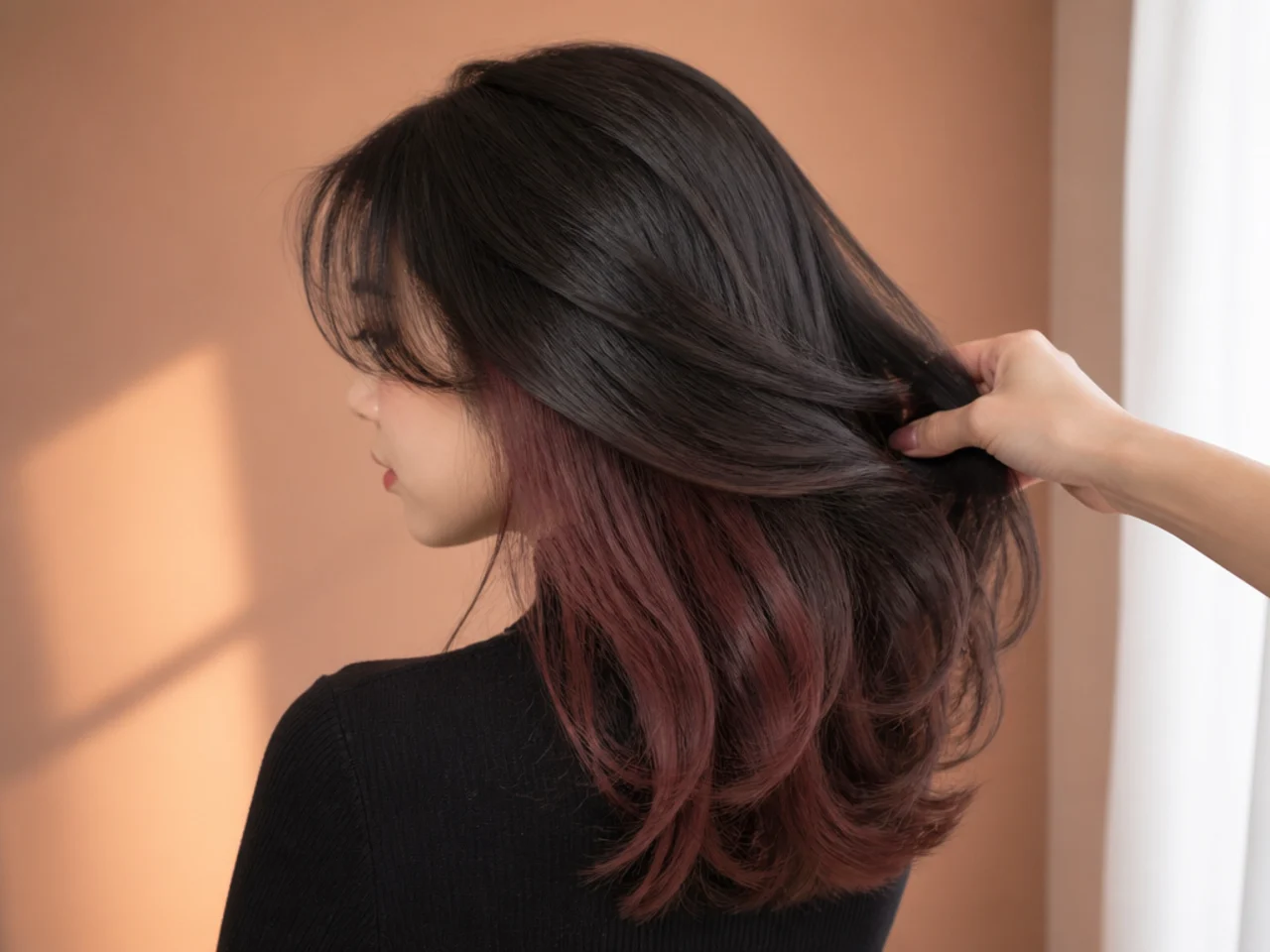
22. Root Shadow Peekaboo
A dark toner smudged over the first inch of the panel blurs the join between lifted hair and natural hair. It buys six to eight weeks before the grow out starts reading as grow out instead of as a deliberate gradient.
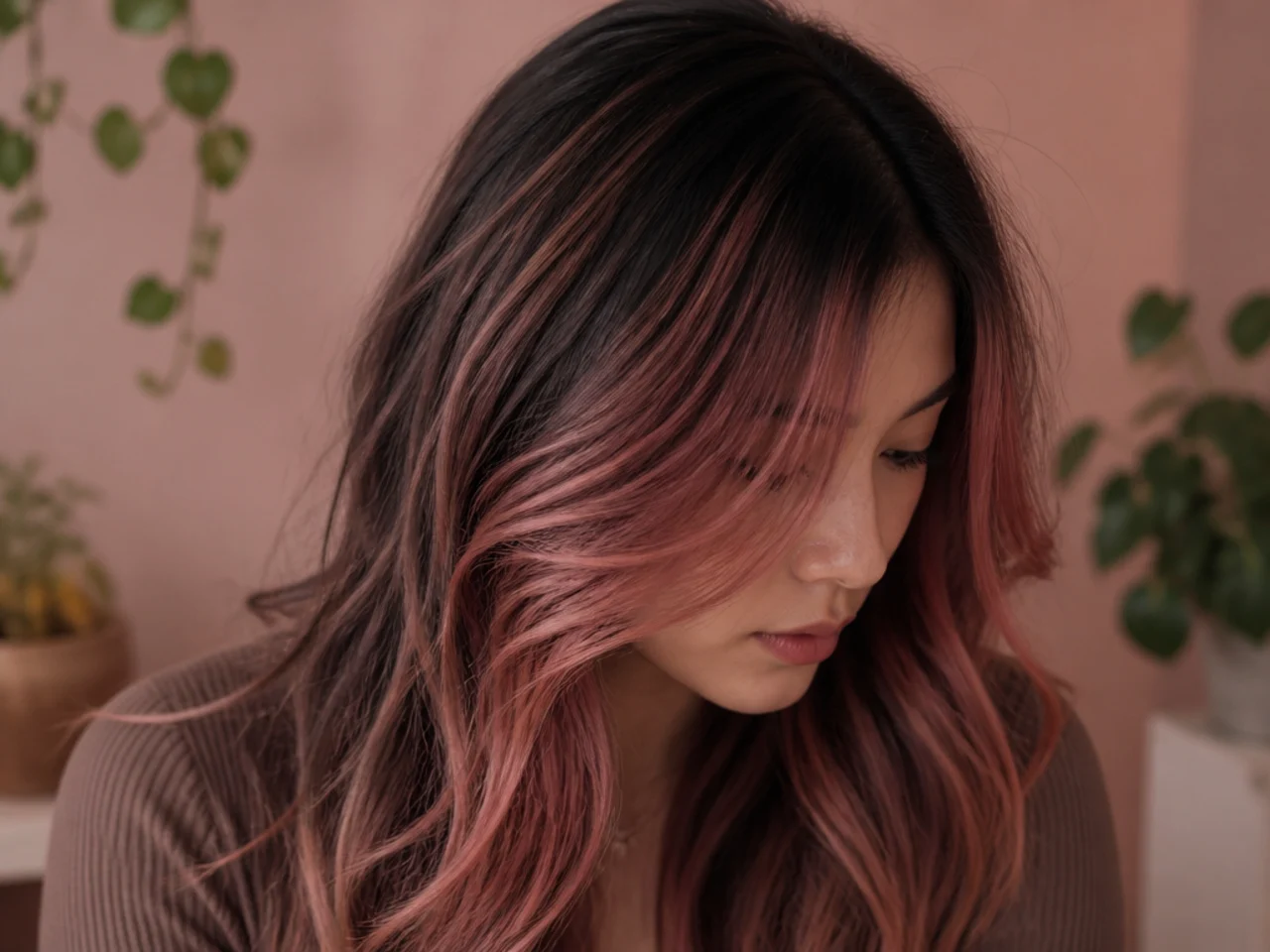
23. Peekaboo on Straight Dark Hair
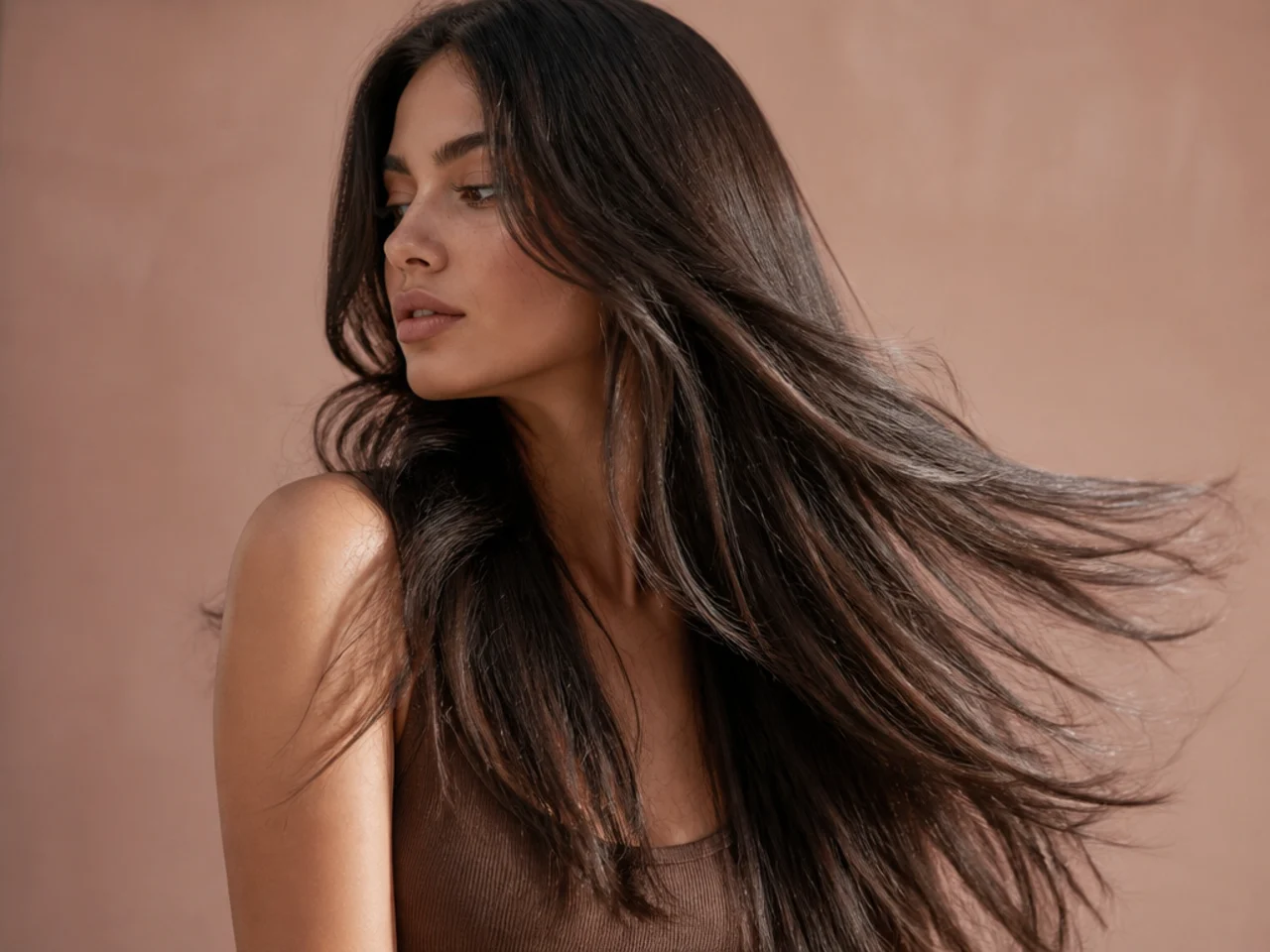
Straight hair gives both the sharpest reveal and the most complete concealment, because flat strands lie in a single plane and cover the panel with nothing left showing. That same flatness exposes a crooked section line the moment the hair parts.
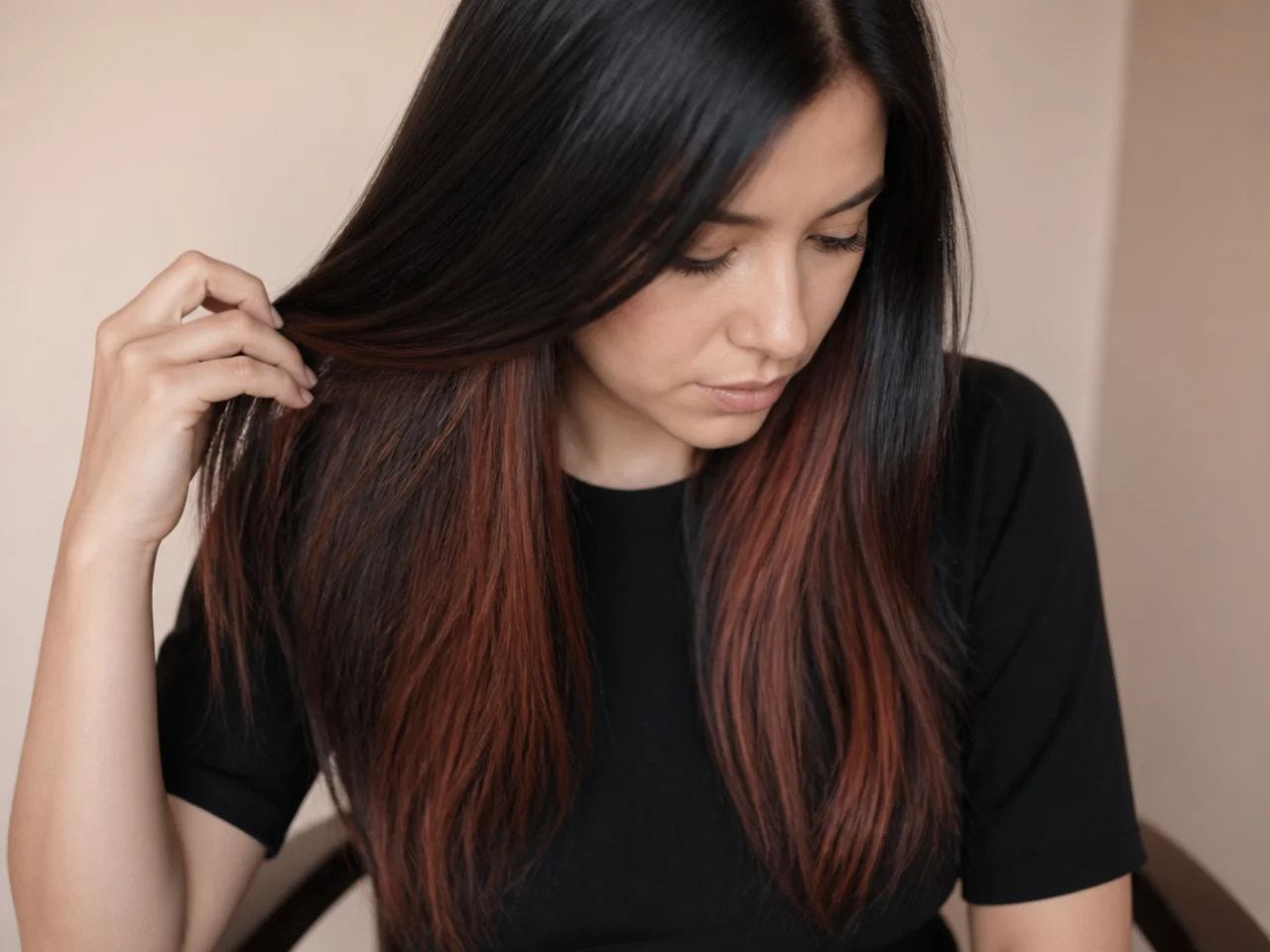
24. Peekaboo on Wavy Dark Hair
Waves lift the top layer away from the panel constantly, so a wavy head shows the colour without being tied up at all. Take the section slightly lower than you would on straight hair, or the panel will never manage to hide.
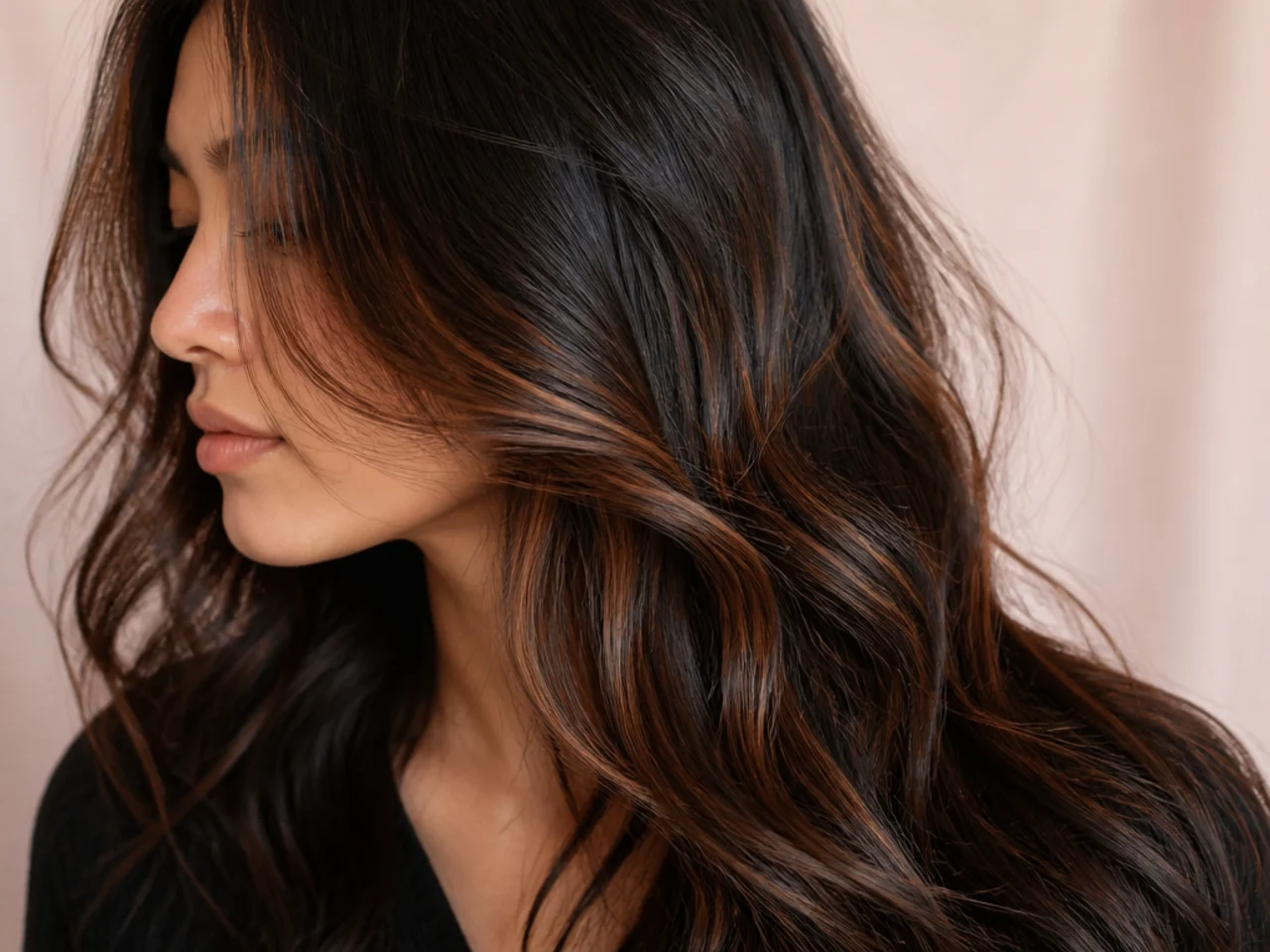
25. Peekaboo on Curly Dark Hair
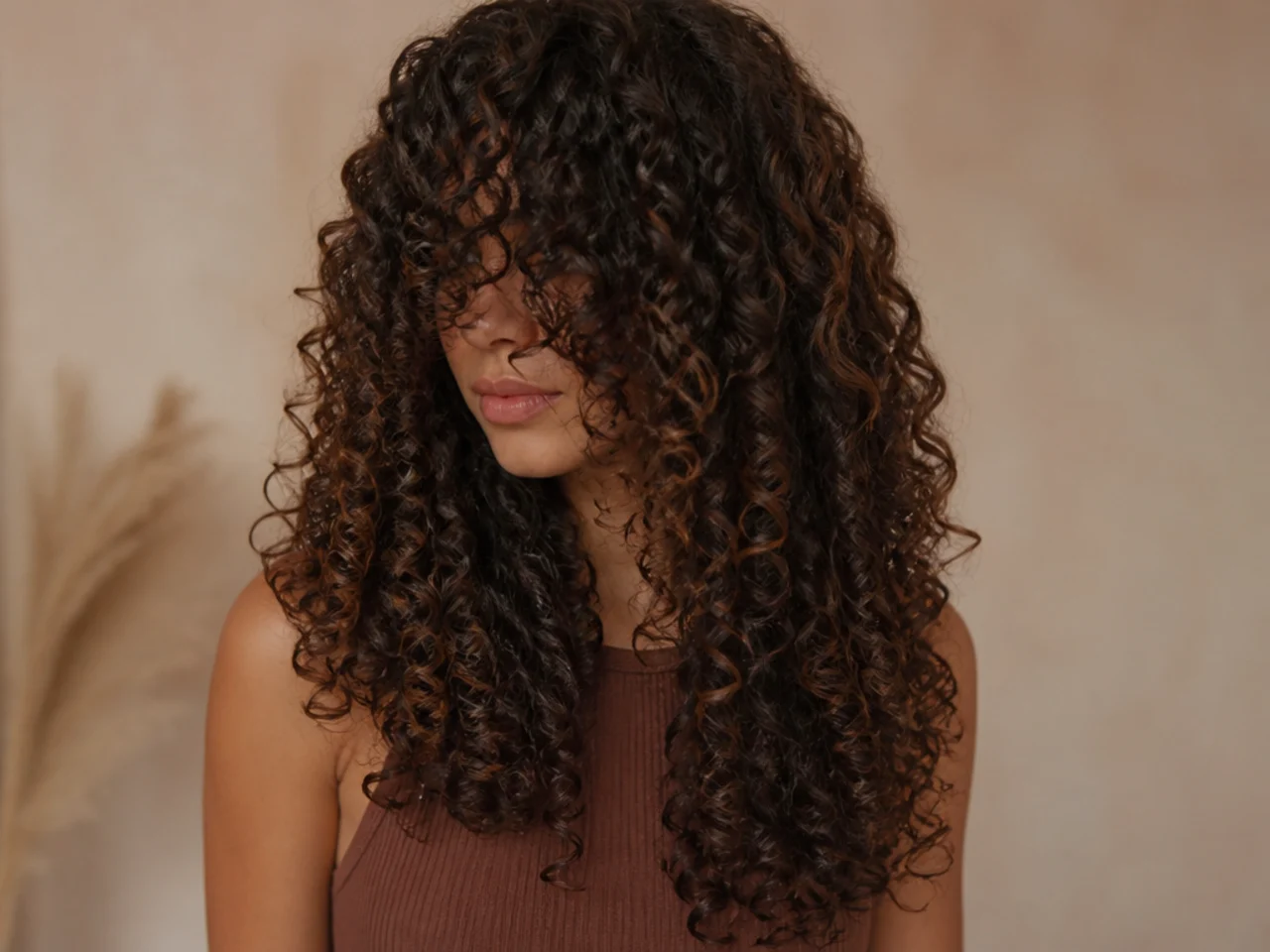
Curl shrinks the visible area of any panel, since a strand that measures a foot pulled straight may show four inches once it springs back. Sections have to be taken wider on curly hair for the same amount of colour to read.
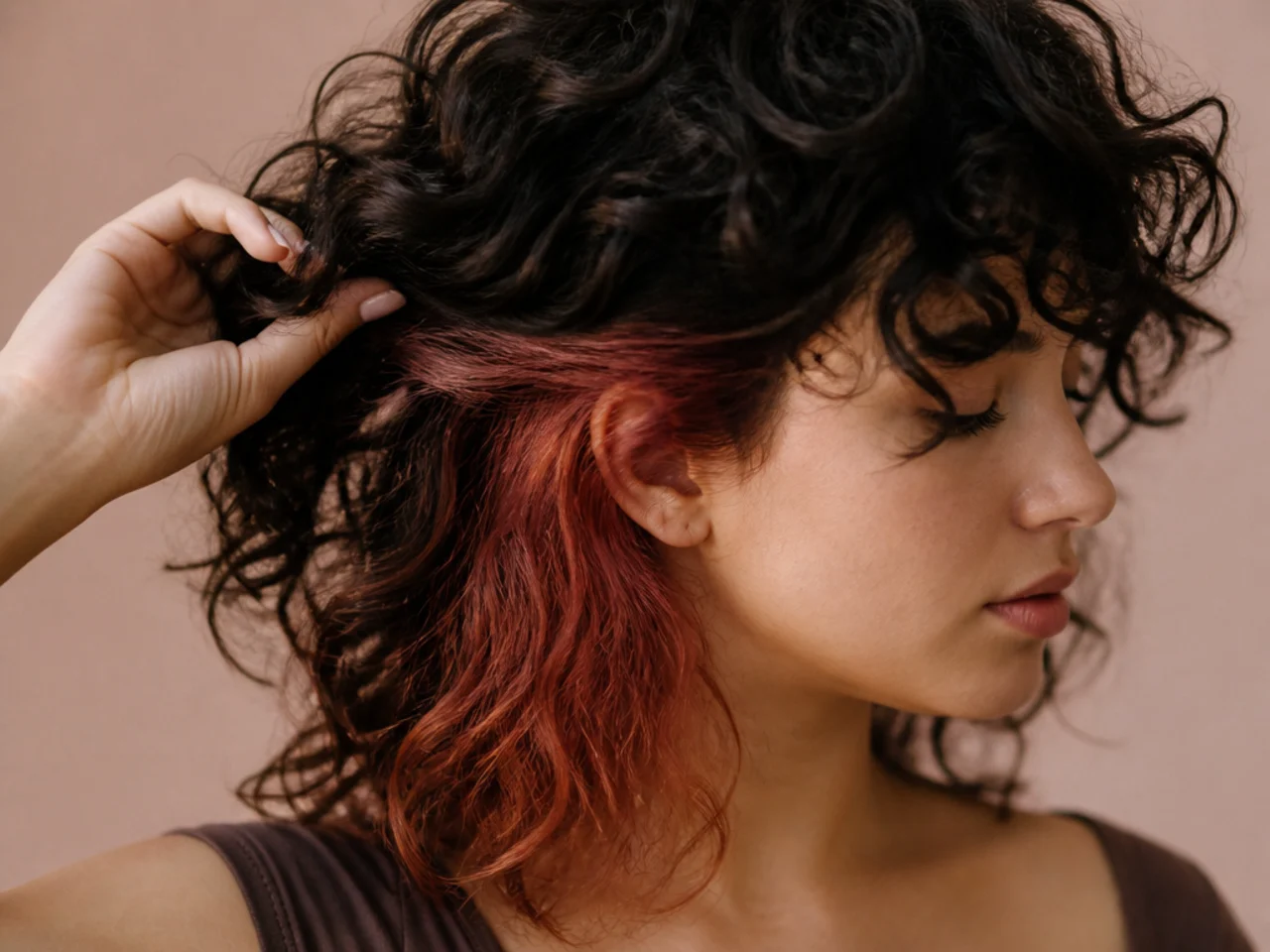
26. Peekaboo on Coily Hair
Coils scatter colour into flecks rather than a block, which is flattering but means a thin panel simply vanishes. Lifting also has to be gentler, because coily hair is weakest at the bends and that is exactly where bleach sits longest.
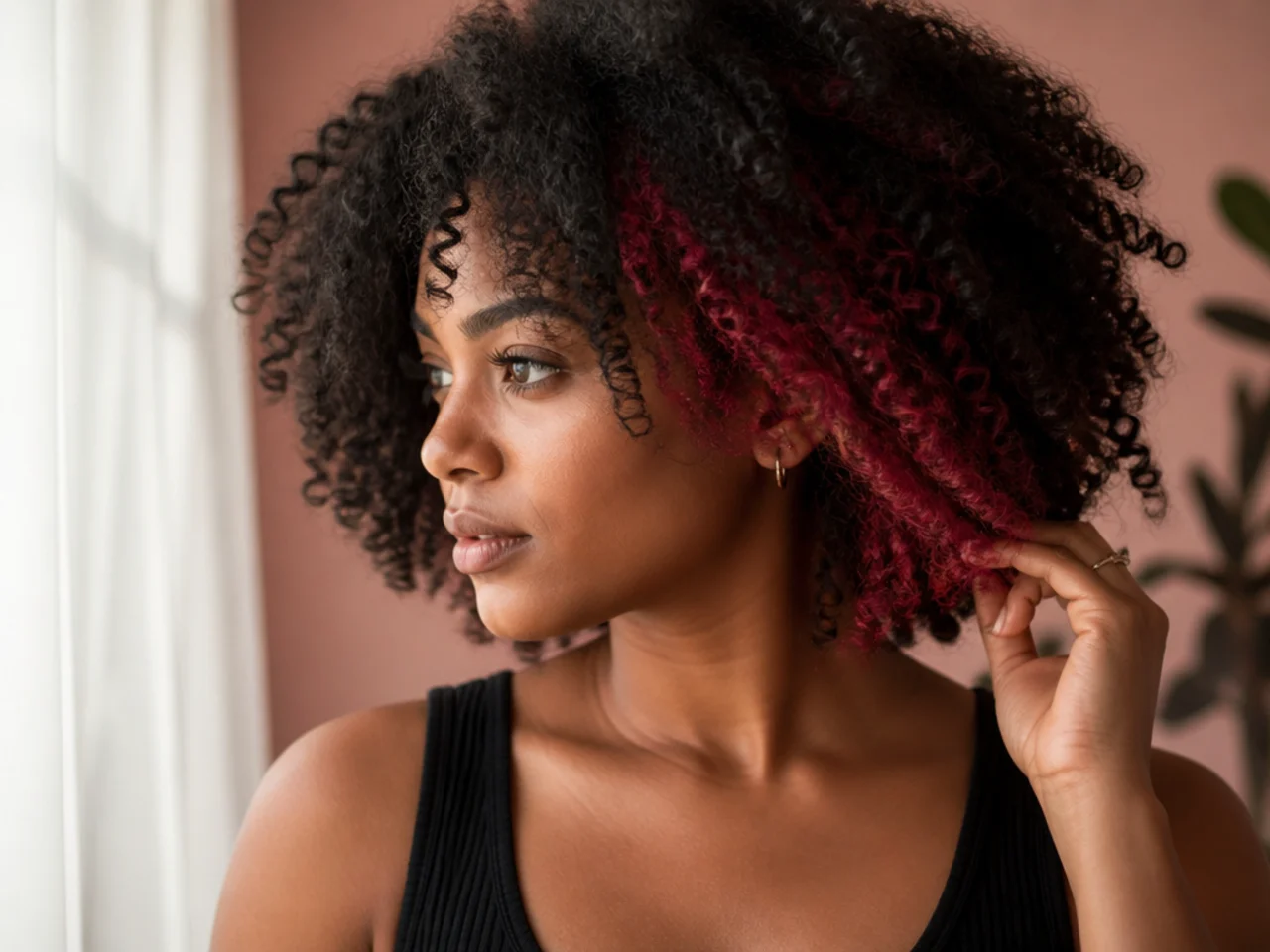
27. Peekaboo Under a Blunt Bob
A blunt bob has one weight line and no layers to interrupt it, so the panel appears as a clean band whenever the ends move. Placement has to sit higher than on long hair, because there is far less length below the section to hide it.
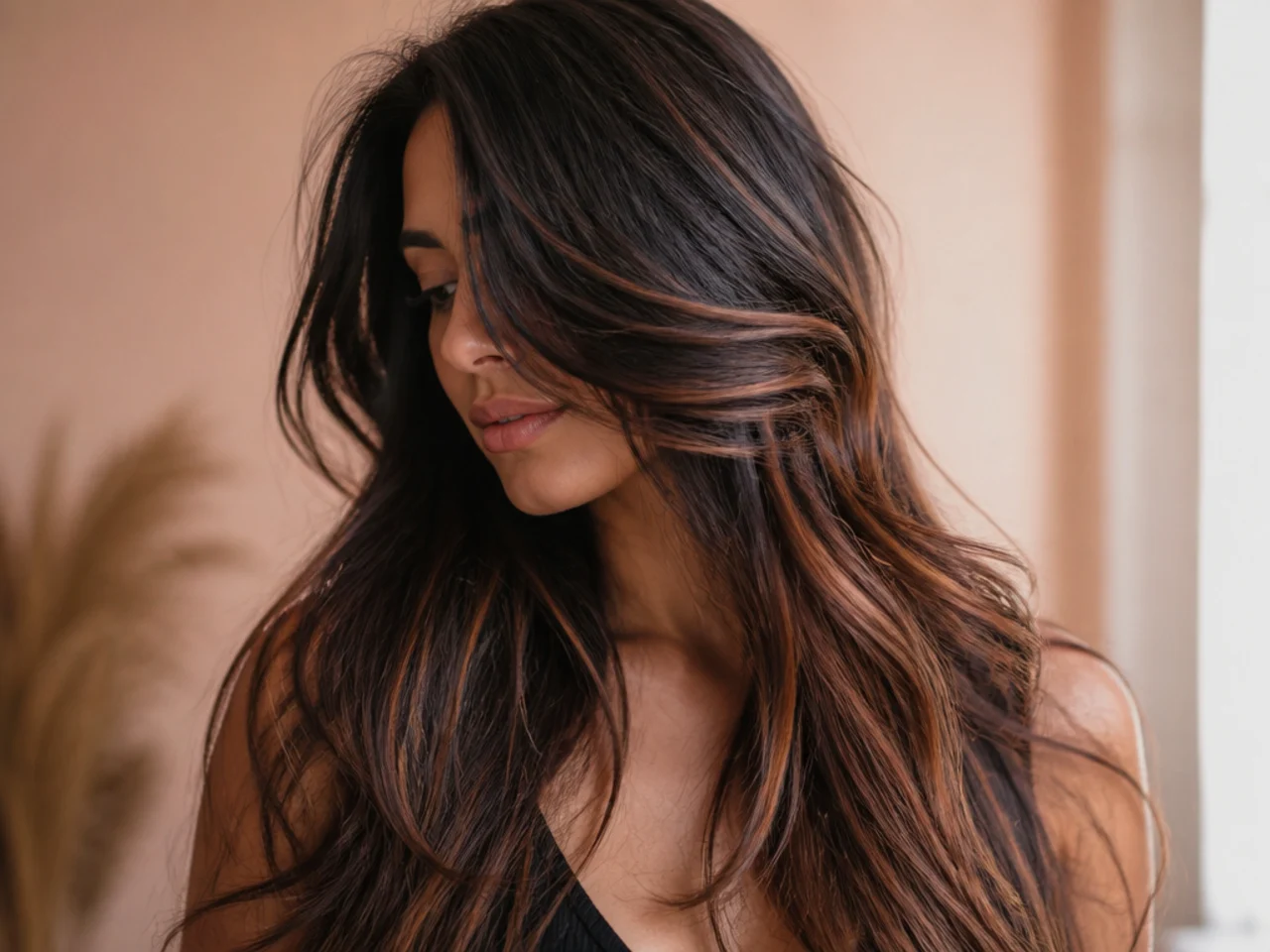
28. Peekaboo Under Long Layers
Layers move independently of each other, so a panel underneath them flashes constantly rather than appearing all at once. The trade is that no single reveal is ever complete: you see pieces of the colour instead of a block of it.
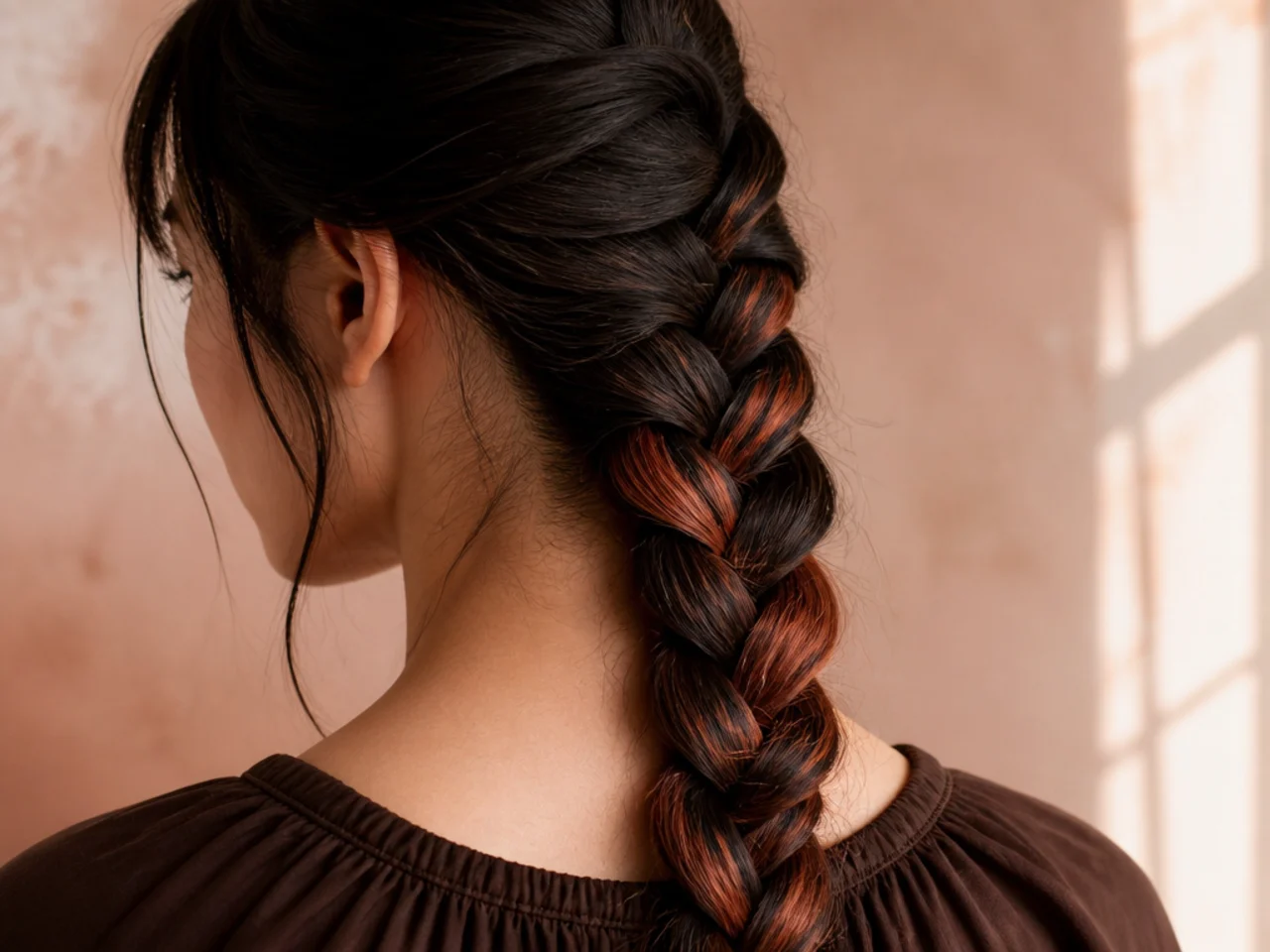
29. Peekaboo in Braids
A braid folds the underlayer over the top at every crossing, which turns a hidden panel into a repeating pattern down the whole length. It is the one style that makes a nape panel visible from the front, and braided peekaboo placement is worth planning before the colour goes on.
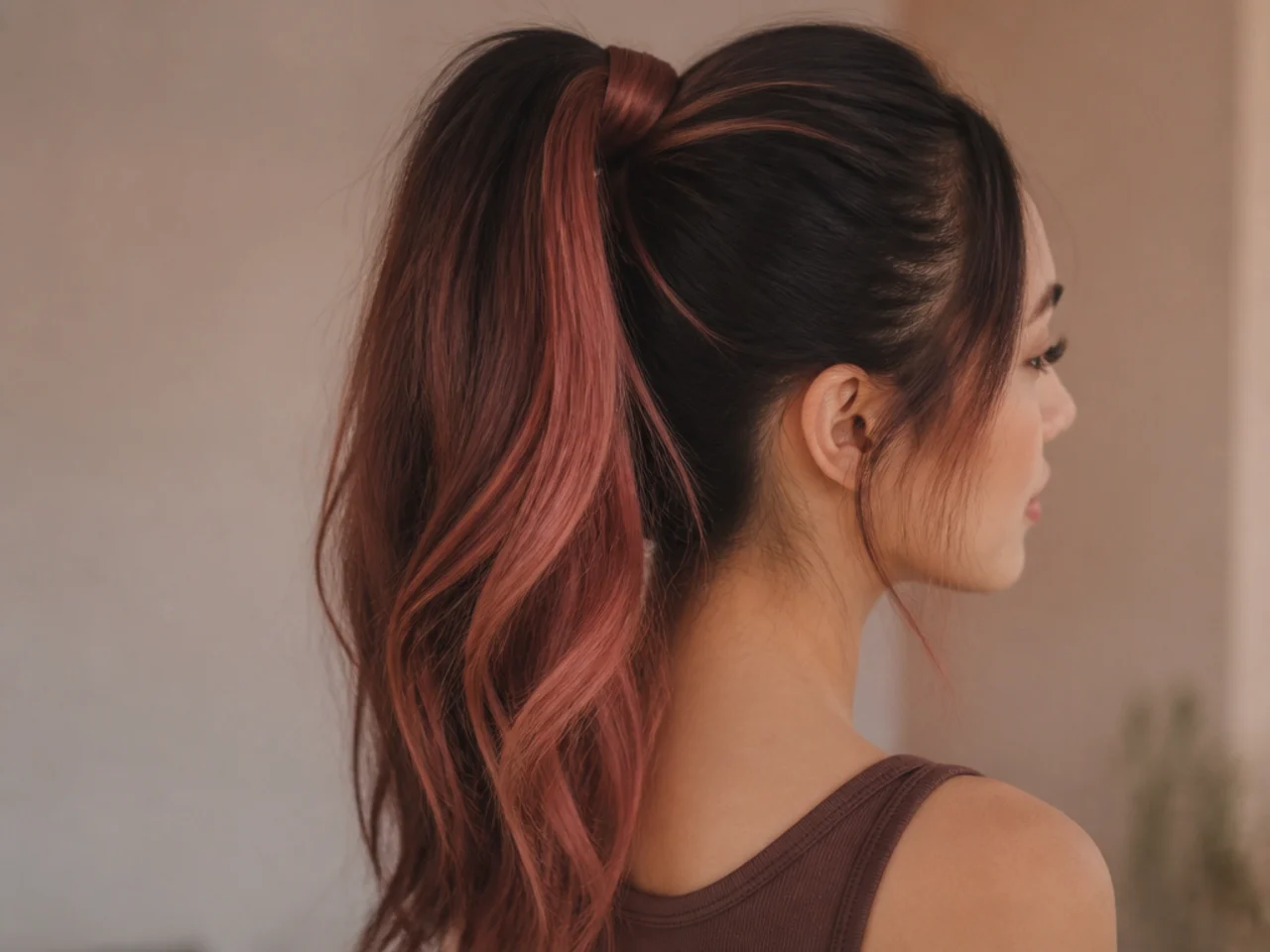
30. Peekaboo Under a High Ponytail
A high ponytail inverts the head: what sat underneath is now on the outside of the tail. Place the panel nearer the crown rather than the nape if a ponytail is your default, or the colour ends up buried inside the tail where nobody sees it.
Styling and Upkeep
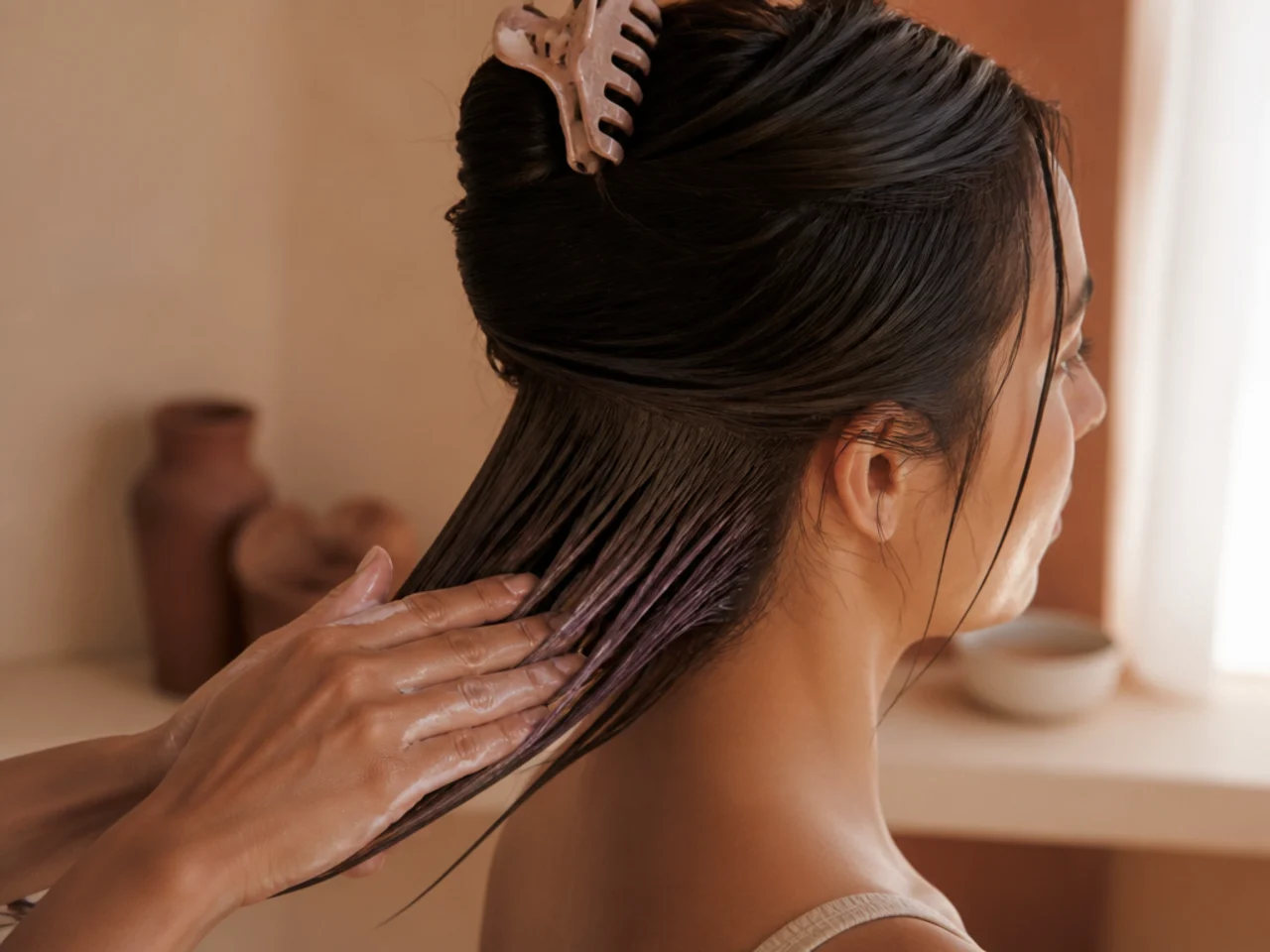
Rinse cool. Heat swells the cuticle and lets direct dye escape. A cold final rinse costs nothing and adds washes to the life of the panel.
Drop the sulphates. Sulphates are the surfactants that strip dye along with oil, and on a vivid panel they are the fastest single way to lose the colour you paid for.
Refresh in the shower. A teaspoon of the same dye stirred into conditioner and left on for five minutes each wash tops the panel back up without booking a full application.
Keep the irons off the panel. High heat cooks direct dye, turning blues towards green and pinks towards orange, and that shift does not wash back out.
Book the lift, not the fade. The dye takes twenty minutes; the bleach is the appointment. Schedule by how much regrowth the panel has, not by how tired the colour looks.
Mistakes to Avoid
Putting a bright shade on an unlifted base. Dye deposits, it does not lighten. On very dark hair a blue tube produces nothing visible whatsoever.
Taking the panel above the parting. At that point it is a highlight and it shows permanently. The concealment is the entire mechanism of a peekaboo.
Stopping the lift at orange and applying blue. The result is teal, every time, because orange and blue are opposites and neutralise each other on the strand.
Bleaching the whole underside in one sitting. Very dark hair needs a long processing time to reach pale yellow, and long processing on a full section is where breakage starts.
Reaching for purple shampoo on a warm panel. Violet cancels yellow, not orange. On a copper or a red panel it only dulls the shade without correcting anything.
FAQ
Do I need bleach? For anything brighter than a deep red, yes.
Why did blue turn green? The base was still orange underneath it.
Where should the panel sit? Under whichever section you actually lift.
Final Thoughts
On dark hair the shade is downstream of the lift. Decide how much lightening the panel can take, then choose from the colours that work at that level, and the result matches the picture instead of arguing with it.
For the full method behind the technique see the peekaboo hair colour guide, and for the shade that needs the least lifting on a dark base see red peekaboo colour. More in Hair Color Trends.