15 Graduation Hair Ideas for the Updo Versus Down Decision
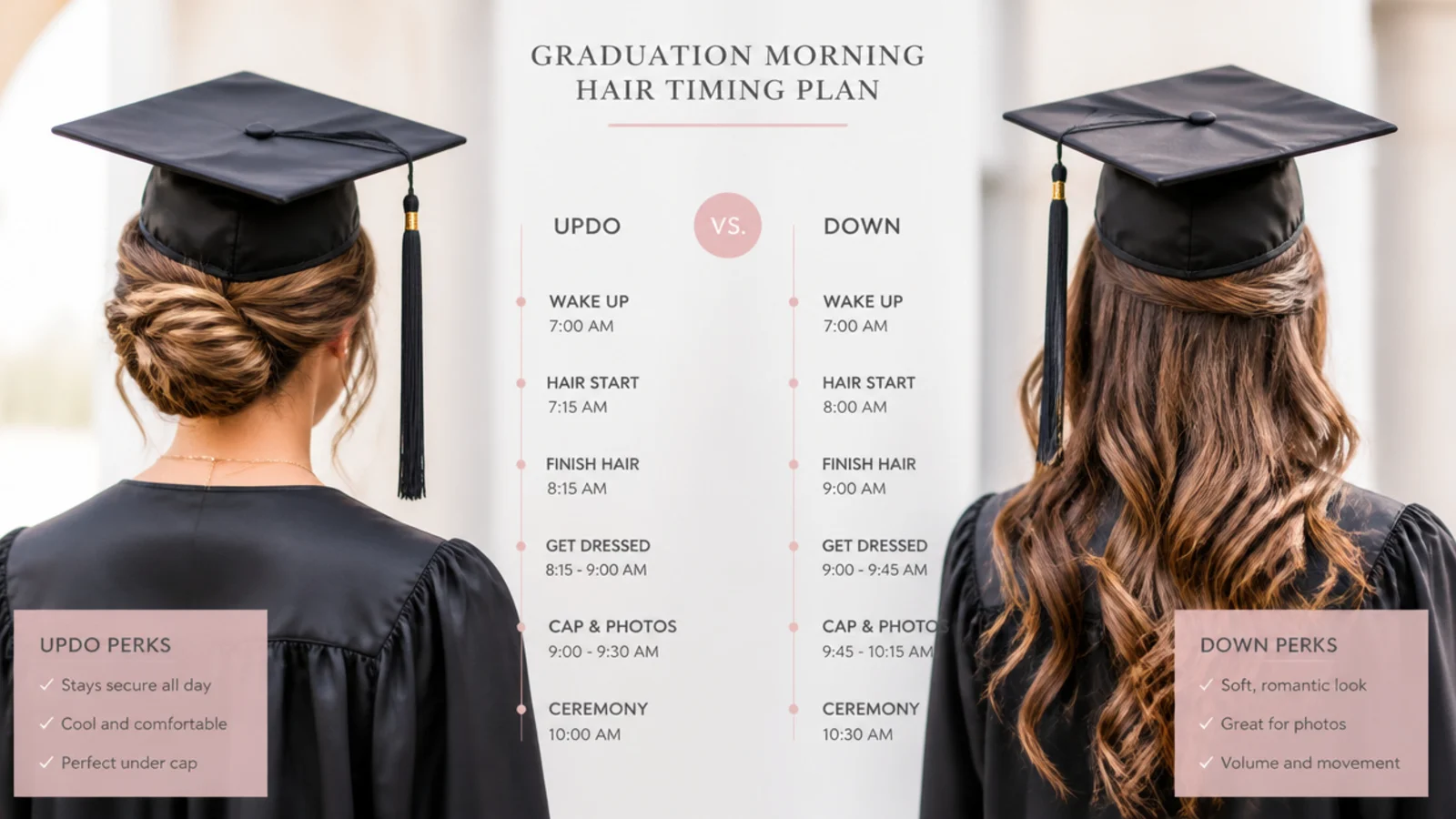
Fifteen graduation looks split across both answers, and the question that actually settles it. It is not which is prettier. It is whether the cap comes off for the photographs, because that decides who has to fix a band line.
In this article · 23
- Where the Cap Band Lands
- Updo Versus Down in Photos
- From Cap On to Cap Off
- By Hair Length
- What a Four Hour Hold Needs
- Timing on the Morning Of
- The 15 Graduation Looks Either Way
- 1. Low Chignon
- 2. Sleek Low Ponytail
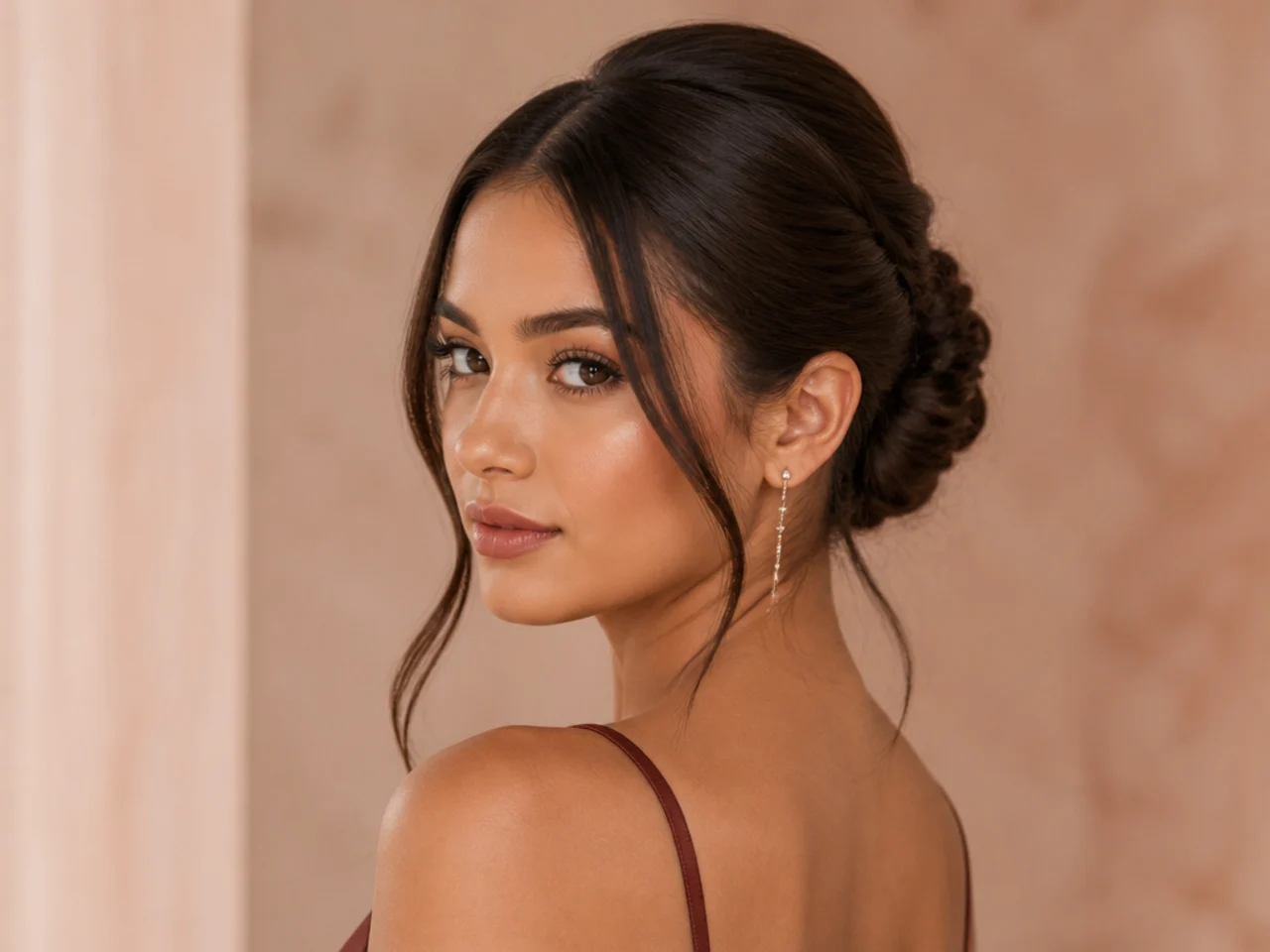
- 3. French Twist
- 4. Braided Low Bun
- 5. Twisted Rope Bun
- 6. Low Ballet Bun
- 7. Half Up Flat Crown
- 8. Half Up Bubble Ponytail
- 9. Side Swept Waves
- 10. Beach Waves
- 11. Blunt Bob Worn Down
- 12. Money Piece Worn Down
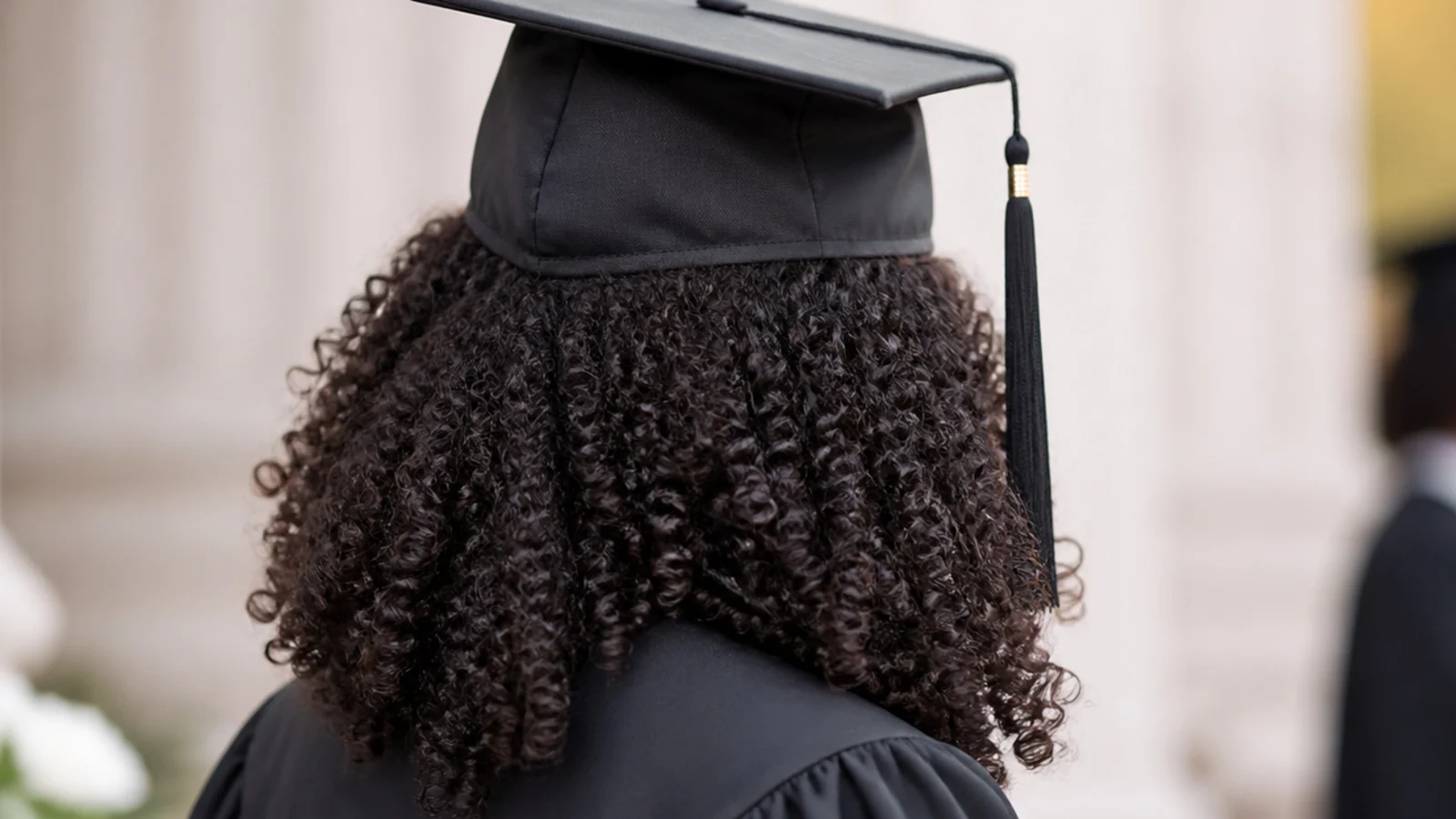
- 13. Defined Curls Worn Down
- 14. Knotless Braids Worn Down
- 15. Crown Braid Half Up
- Final Thoughts
The updo or down question at graduation gets argued as a style choice, and it is really a logistics choice.
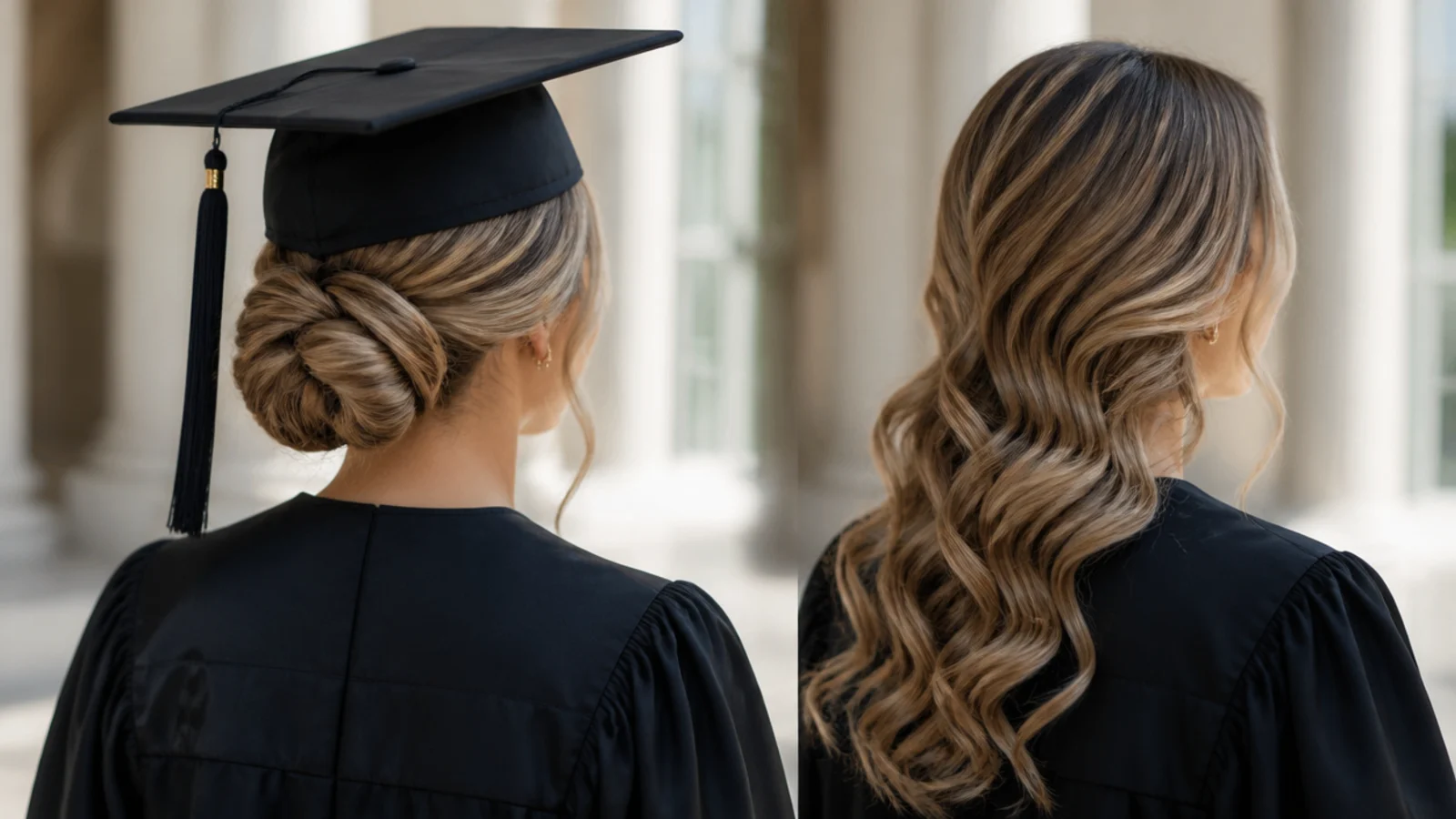
An updo wins on fit and loses on the photographs. Nothing sits under the band, so the cap behaves — but the picture is a jawline and a gown, and that is all.
Hair down wins on the photographs and costs you a repair. The band presses one horizontal stripe flat for hours, and that stripe is visible the second the board comes off.
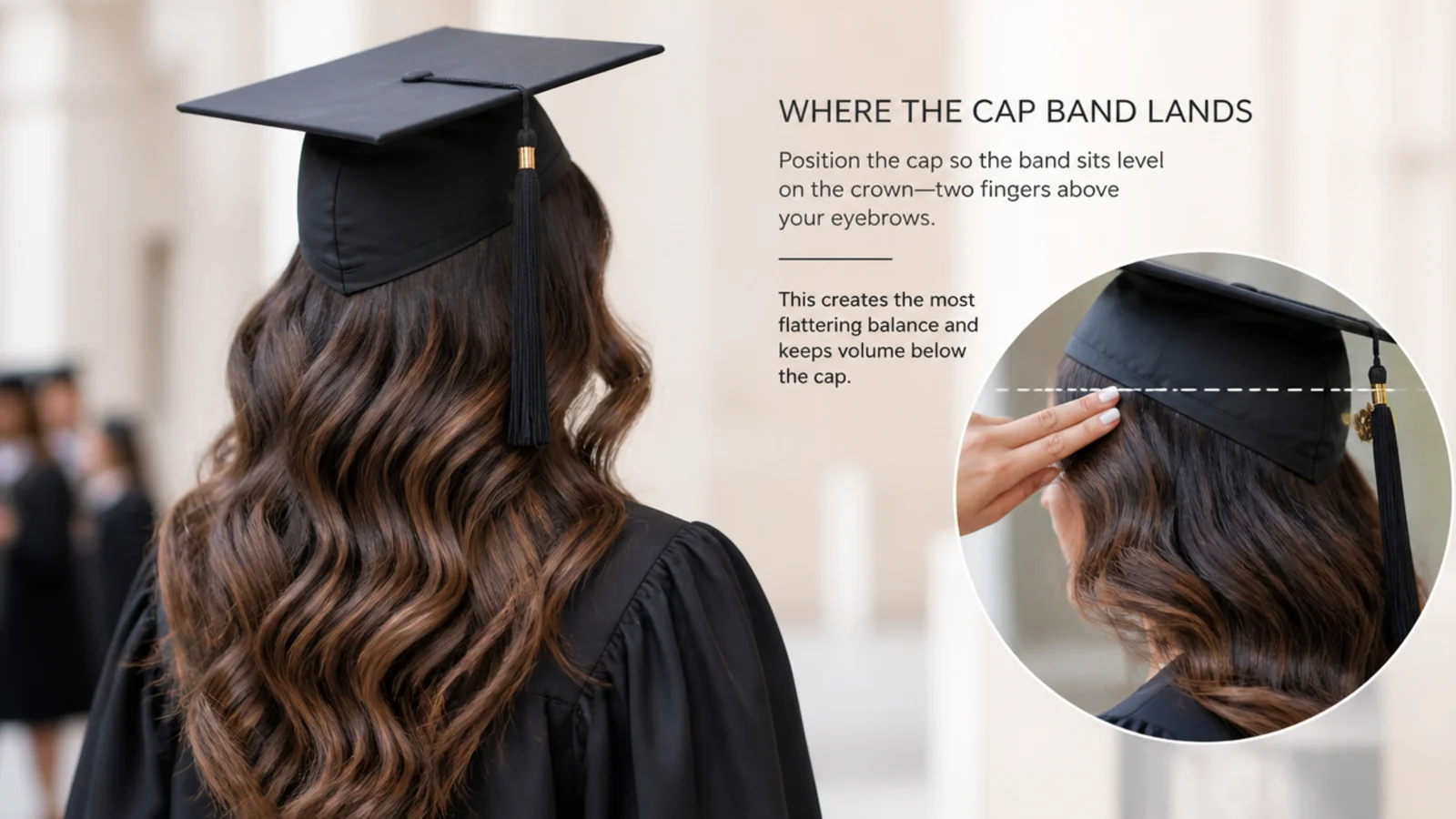
Where the Cap Band Lands
A finger above the brows at the front. That is the fitting the mortarboard was cut for, and it is where the band starts.
On the occipital bone at the back. The bony ridge at the base of the skull is the rear contact point, and it is the line every decision here is measured against.
The circumference is fixed. The band cannot be worn further back to clear a bun. Pushed back, it rides up instead and the board tips.
Above the line the cap is in charge, below it you are. That is the whole geometry, and both answers to the updo question follow from it.
Updo Versus Down in Photos
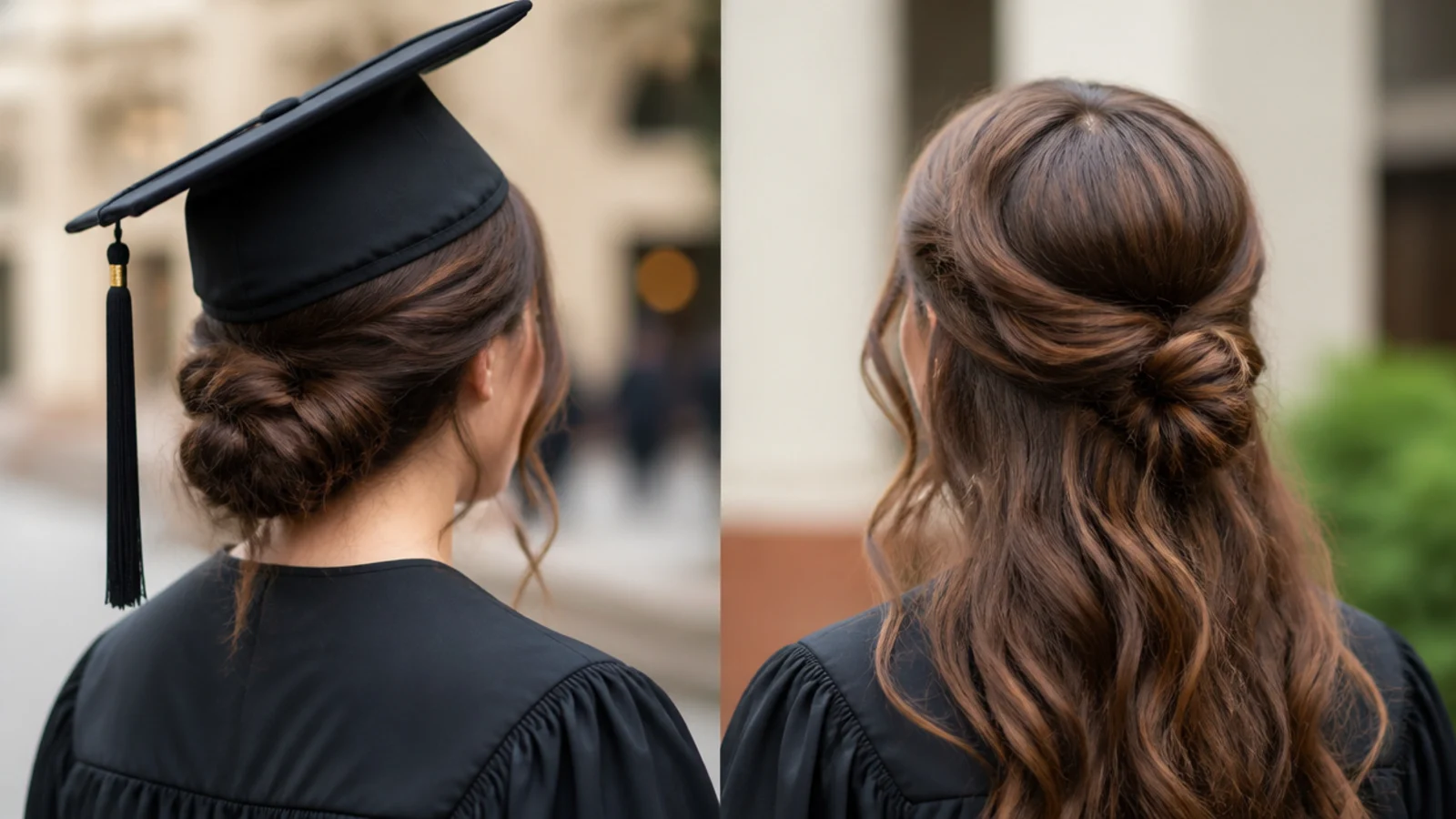
Cap on, an updo is a clean line. The gown collar and the jaw carry the frame with nothing competing.
Cap on, hair down softens the whole shape. Length either side of the face reads warmer, and it is the version most people picture when they imagine the day.
Cap off, an updo needs nothing. What went under the board comes out of it unchanged.
Cap off, hair down needs two minutes. Fingers under the flattened stripe and a burst of dry shampoo, before anyone starts taking pictures.

From Cap On to Cap Off
Take the cap pins out before the cap. Lifting a pinned board drags it across whatever it was anchored to.
Lift it straight up, never slide it forward. Sliding rakes the band across the crown and pulls loose strands with it.
Lift the roots, do not brush the surface. Brushing spreads the flattened stripe across the whole crown instead of removing it.
Dry shampoo is the actual tool. It absorbs the sebum holding the compression, which is what lets the root stand back up.
By Hair Length
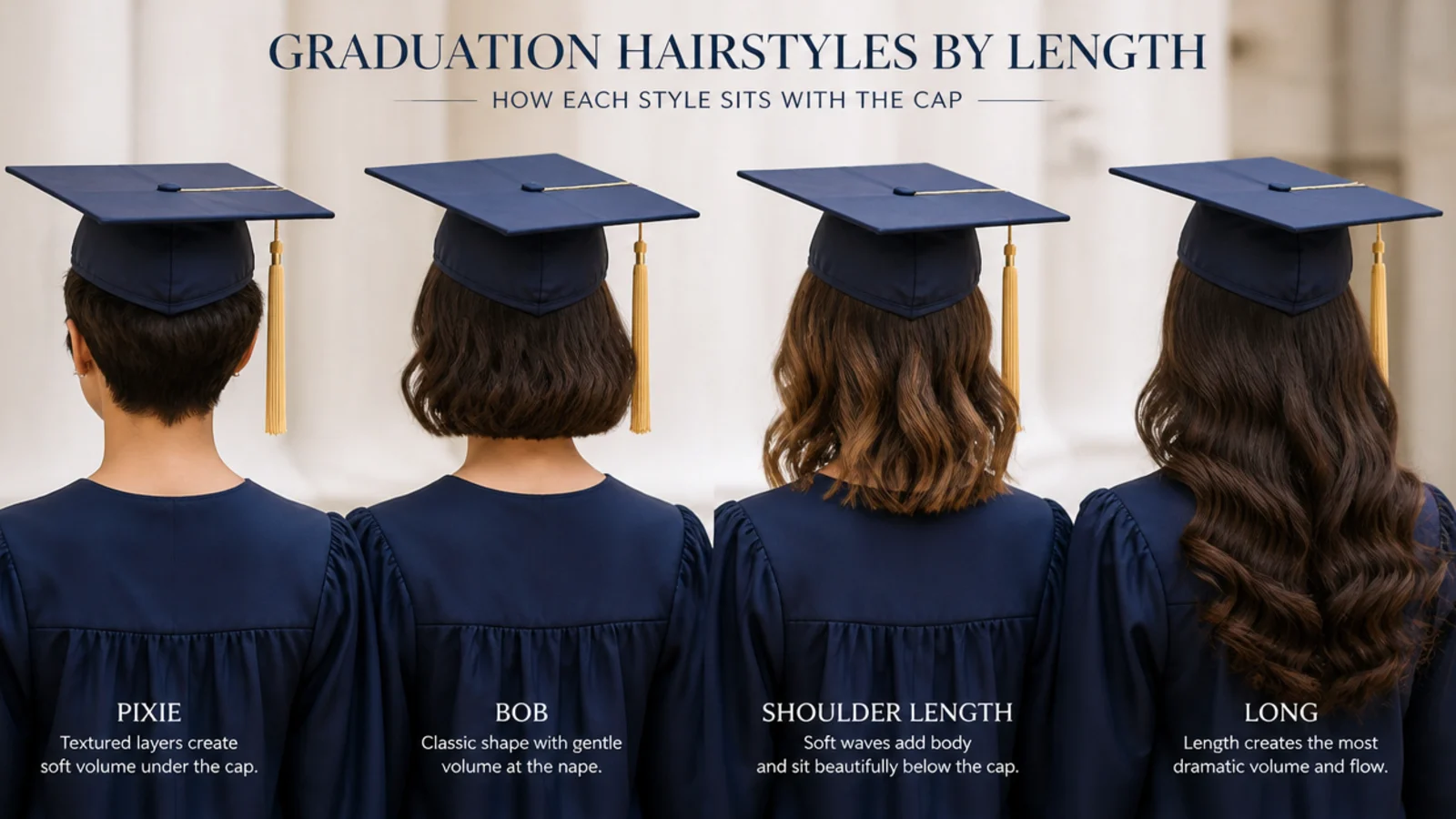
Pixie and short crops. Nothing to pin and no dent worth worrying about. The cap sits on hair, so anchor it with crossed pins through the band above each ear.
Chin to shoulder. Both answers are easy. A bob worn down clears the band, and a low chignon takes thirty seconds.
Past the shoulders. Down is heavy and gets caught in a gown collar. Up is heavy and loads the pins. Either way, plan for the weight rather than ignoring it.
Coils, braids and tight texture. These recover from compression far better than a blow dried style, which makes wearing it down genuinely low risk.
What a Four Hour Hold Needs
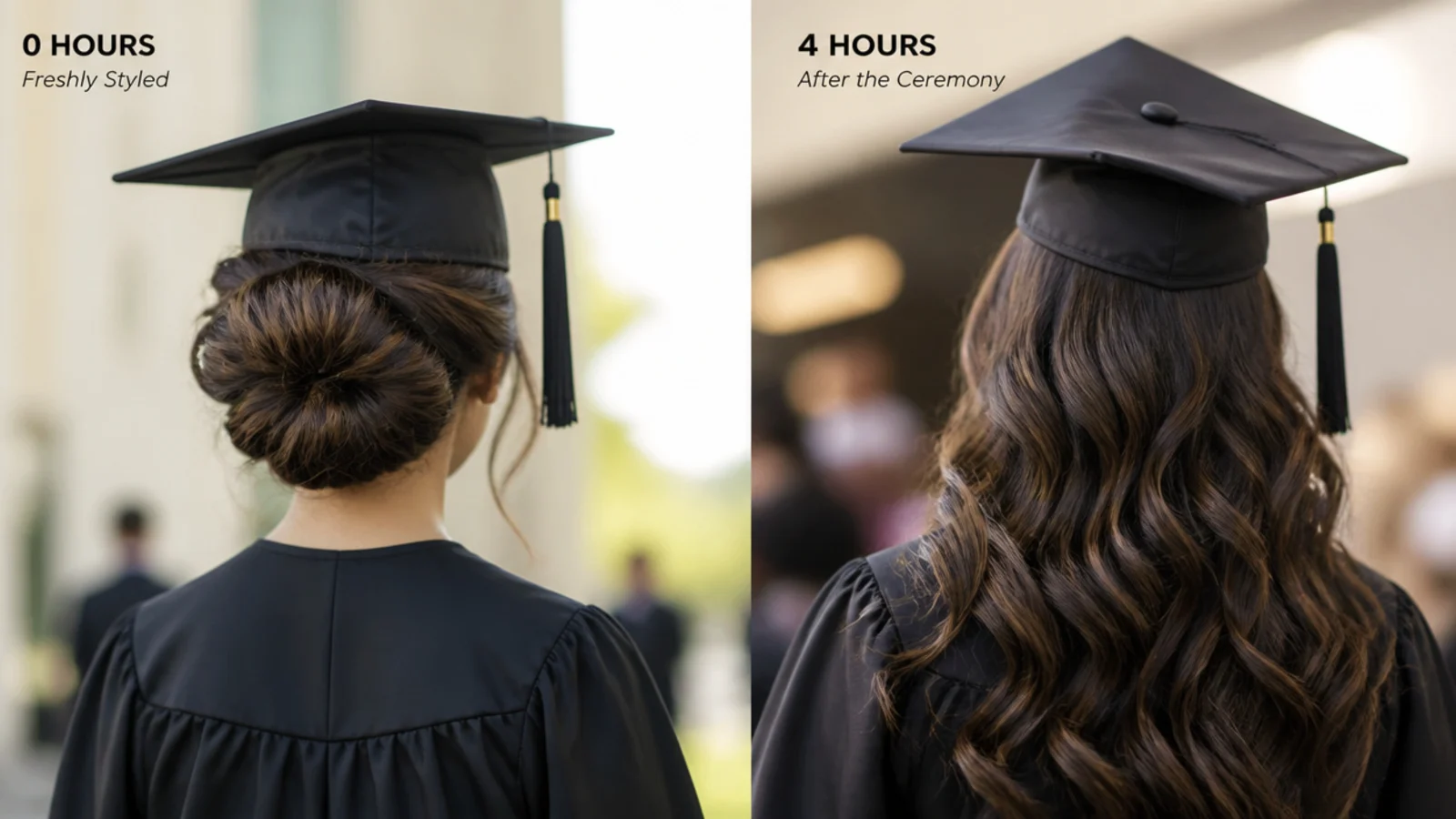
Style for the last hour, not the first. Seating, procession, names, then photographs. The picture that matters is taken at the end.
Friction, not more product. Sebum from washing the night before, or texture spray on clean hair, is what stops pins and elastics sliding.
Flexible spray over firm spray. A flexible film bends when the cap knocks it and returns. A rigid one fractures at the same knock.
Crossed pins in pairs. Two pins at opposing angles lock rotation both ways. One pin is a hinge waiting to open.
Timing on the Morning Of
Wash the night before. Overnight sebum raises the friction between strands, which every pin and elastic depends on.
Ninety minutes before you leave. Sprayed hair has to dry fully before the cap touches it, or the film sets around a crease.
Fit the cap in the gown. The collar is higher than expected and changes where a low bun or loose length sits.
Carry pins, a mini spray and dry shampoo. One small bag covers both answers to the question.
The 15 Graduation Looks Either Way
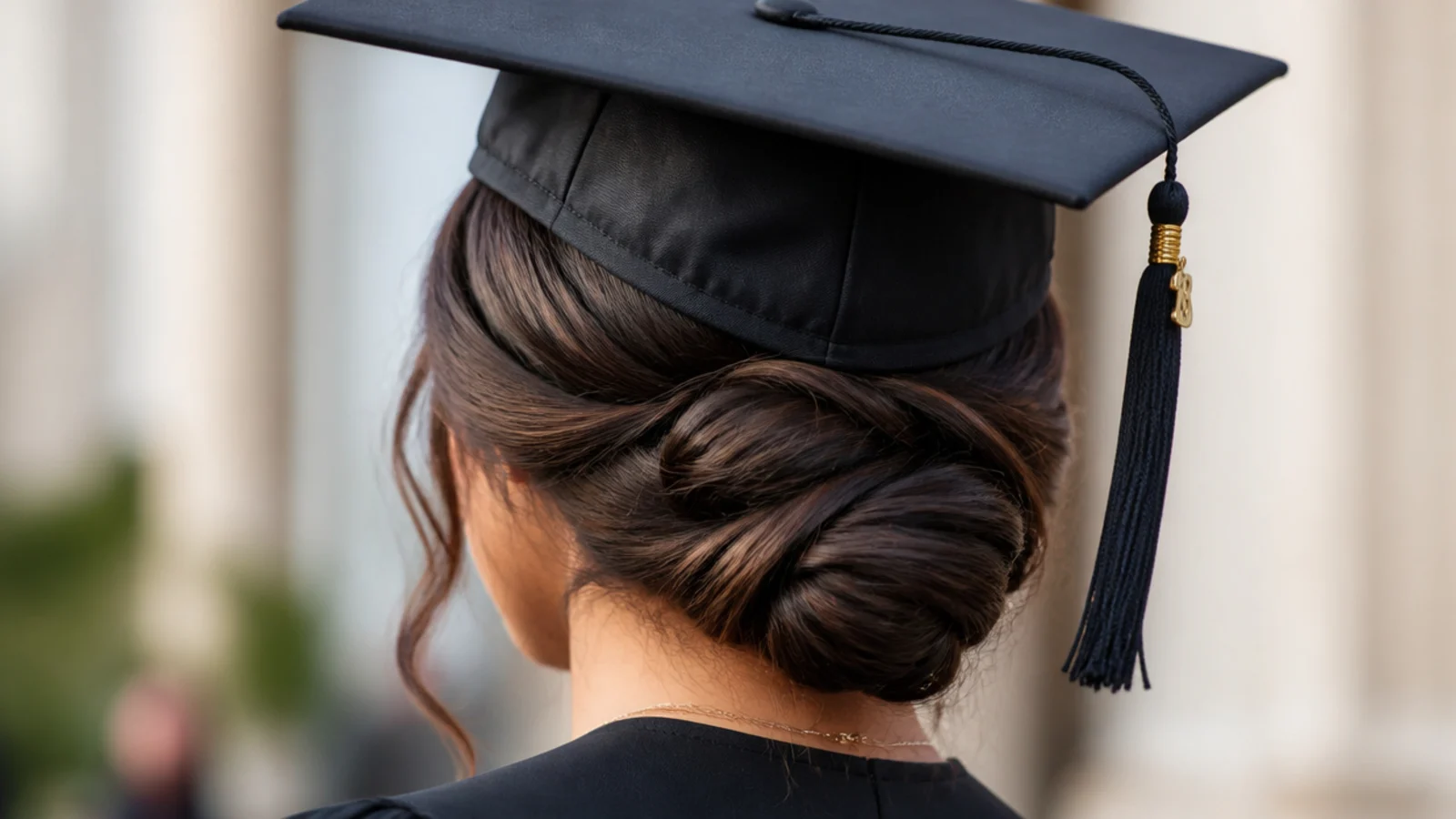
1. Low Chignon
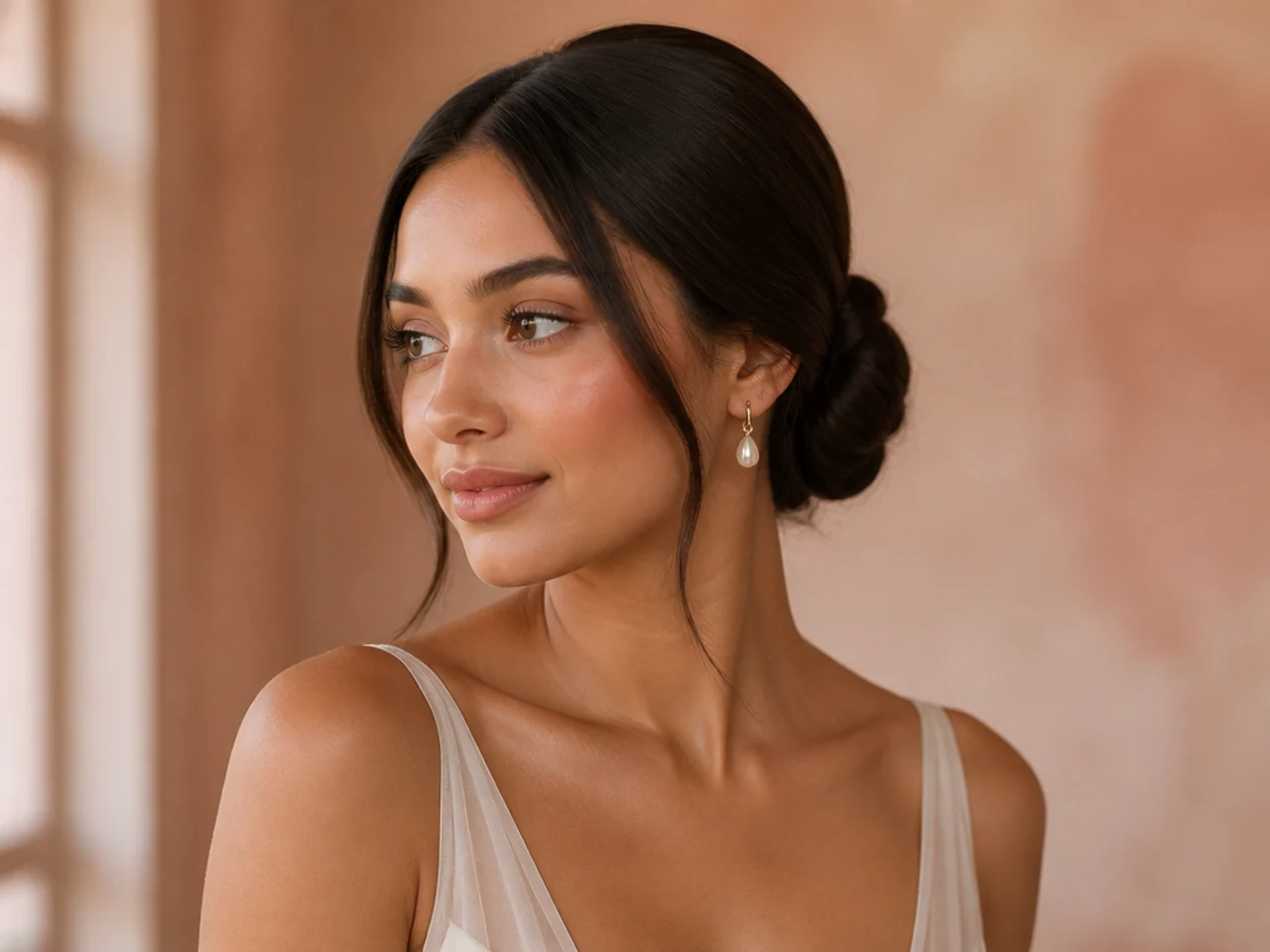
The strongest argument for the updo side. A flat coil at the nape sits below the occipital bone, so the rear edge of the band meets bone rather than hair and the cap fits as issued. It also comes out of the ceremony needing nothing at all.
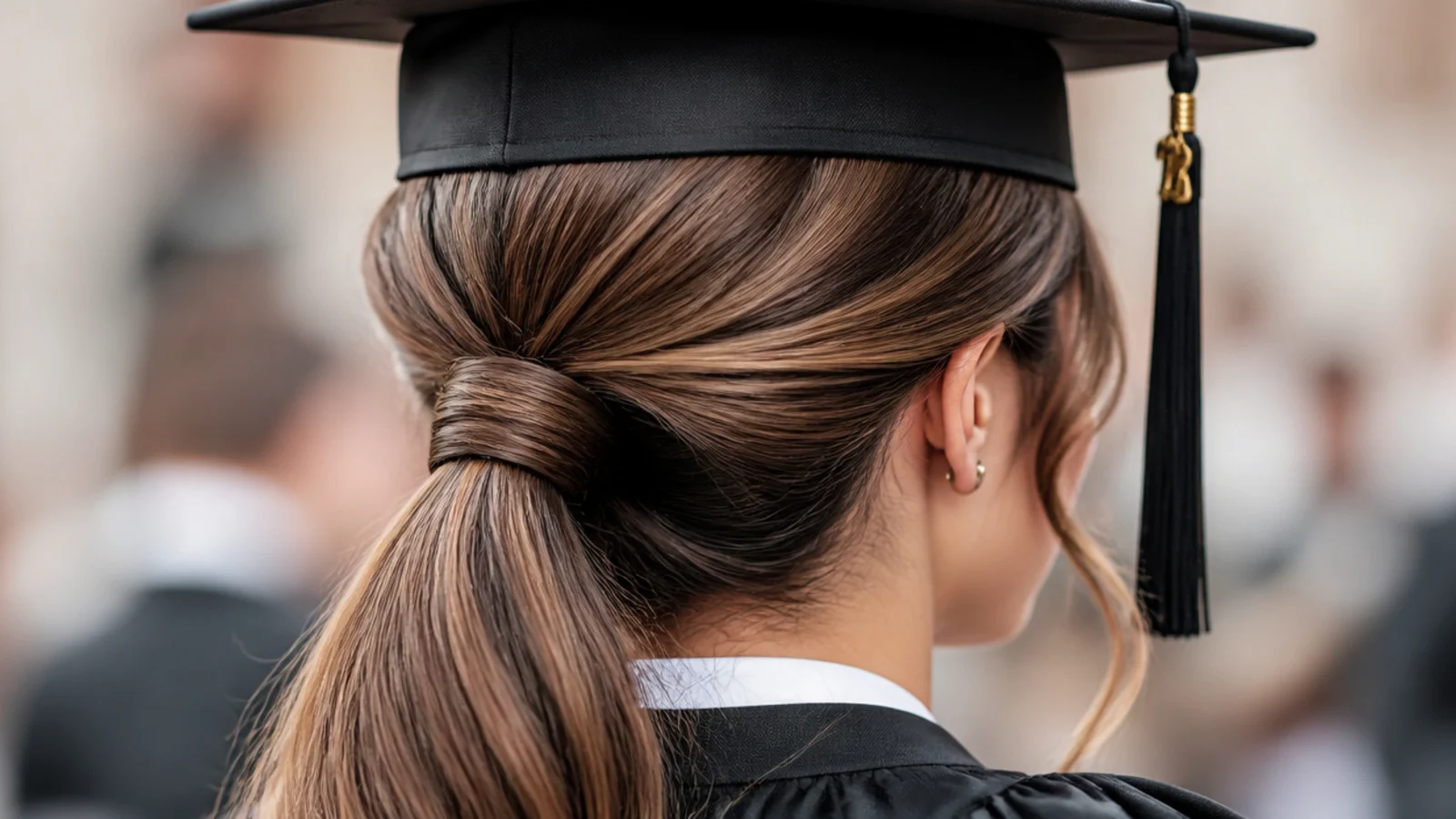
2. Sleek Low Ponytail
Tying at the occipital bone keeps the elastic under the rear edge of the band instead of in its path. Tie it even two inches higher and the knot becomes a wedge, which is the single most common reason a mortarboard will not stay level.
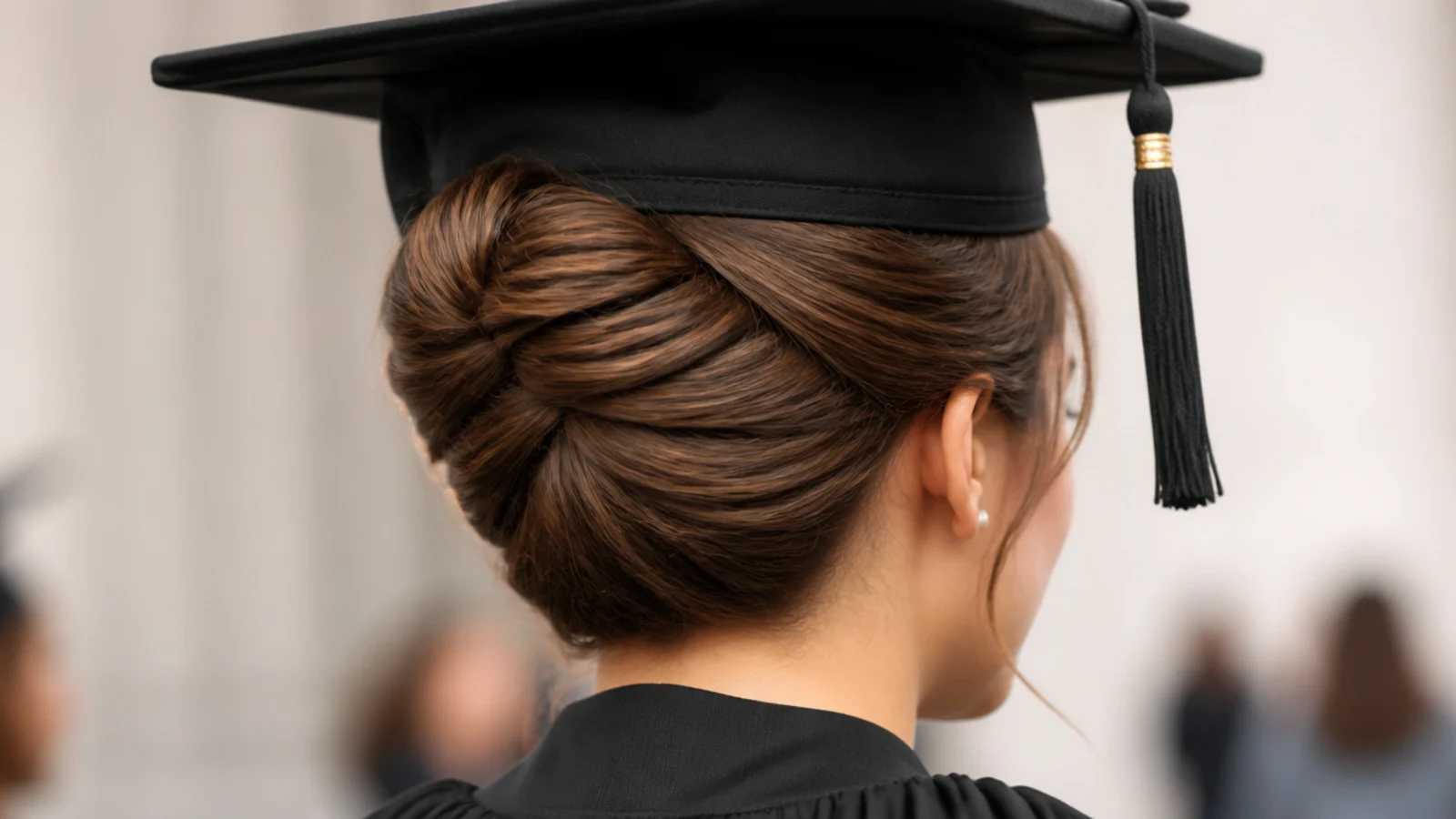
3. French Twist
Rolling the length into a vertical column keeps the mass narrow and tight to the skull, which is the profile the cap wants. Pin along the seam of the roll rather than through its face, so each pin is loaded sideways instead of being pulled straight out.
4. Braided Low Bun
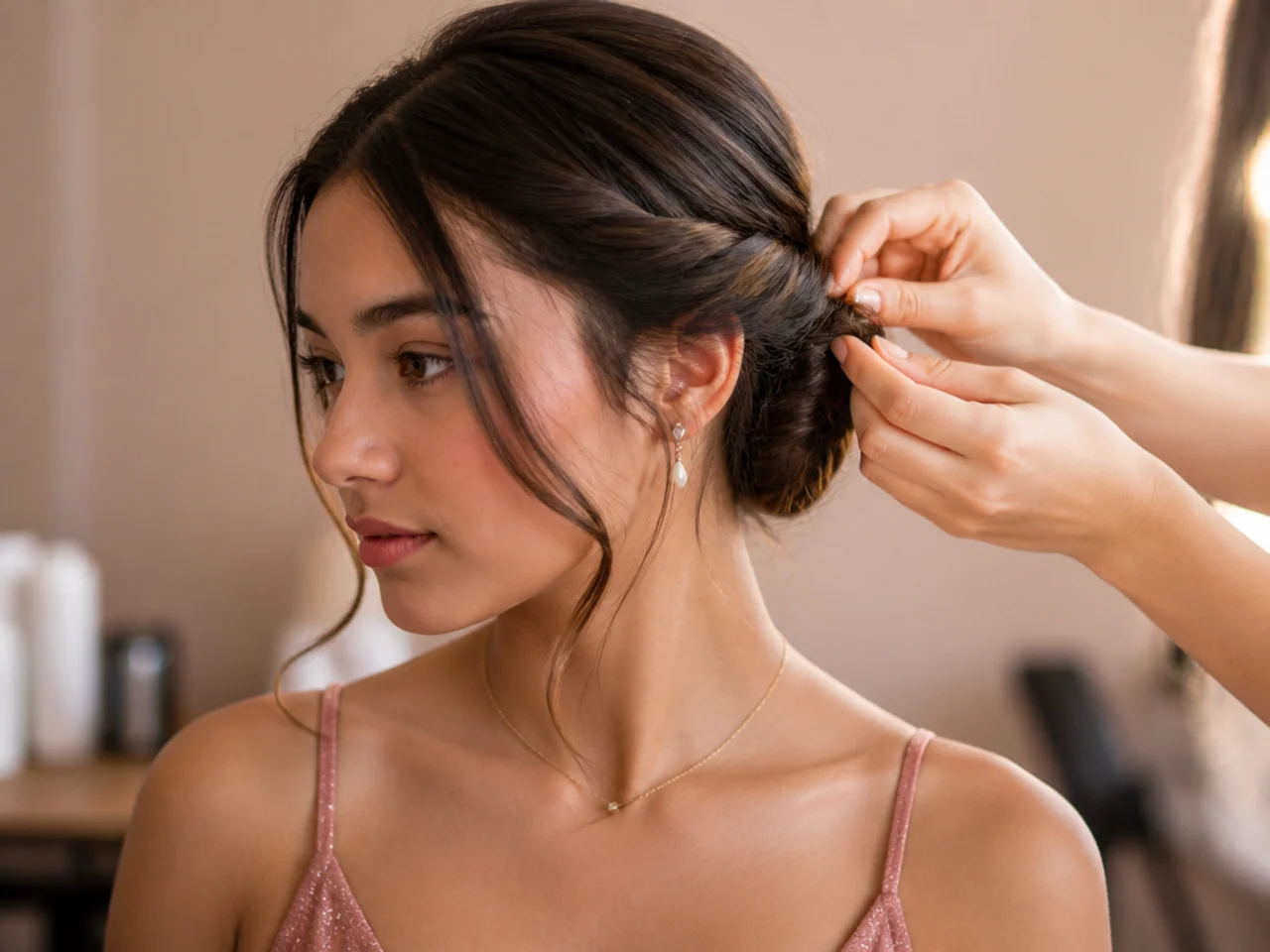
Braiding before gathering hands the weight to the scalp along the whole braid rather than loading one pinned point. That is why a braided bun holds on long hair where the same mass gathered loose slowly drags itself out of the pins.
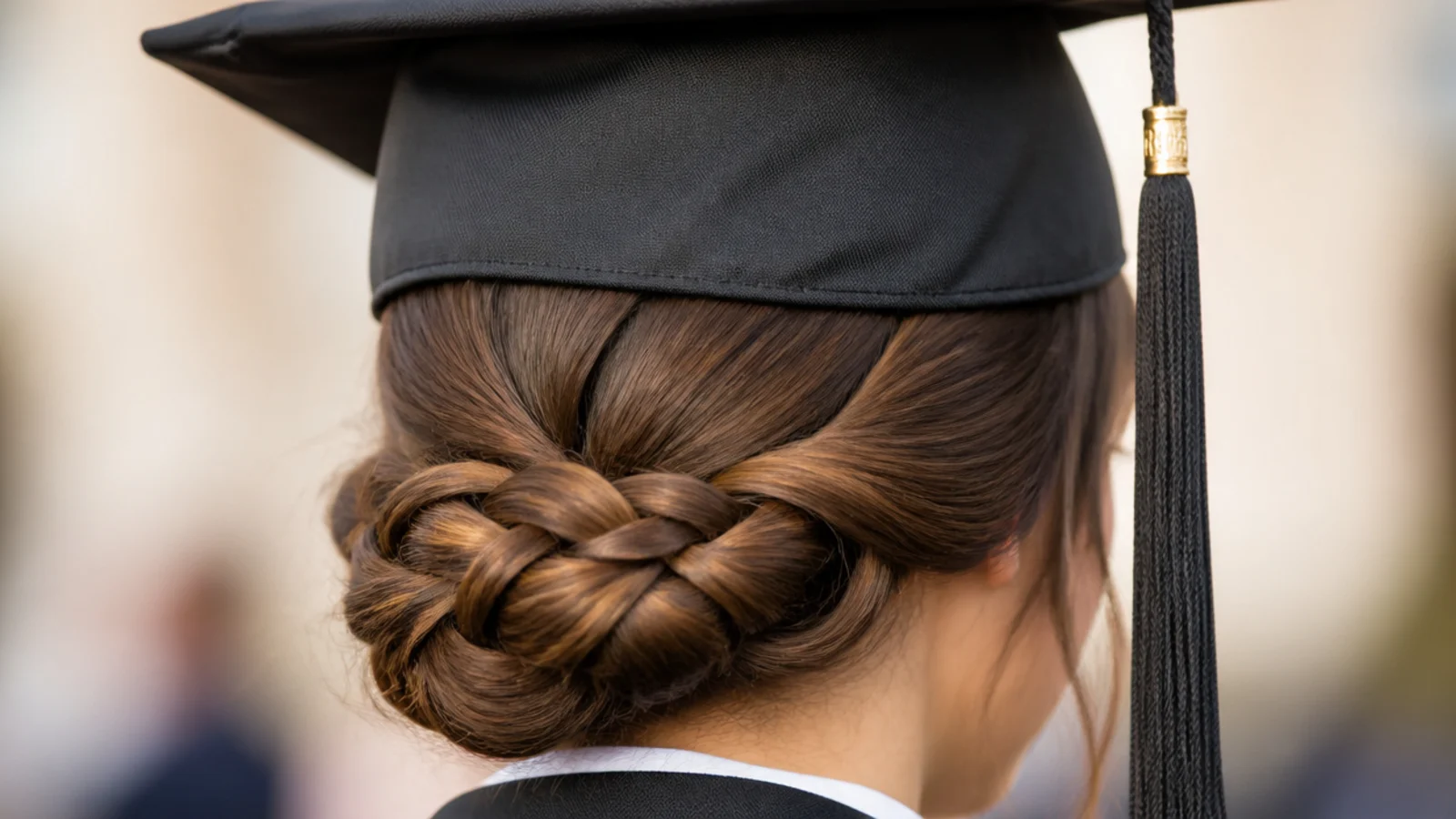
5. Twisted Rope Bun
Two sections twisted one way and wrapped the other lock against each other, so the rope cannot unwind under its own tension. Coiled flat at the nape it keeps its definition for the full ceremony where a single twist slowly relaxes open.
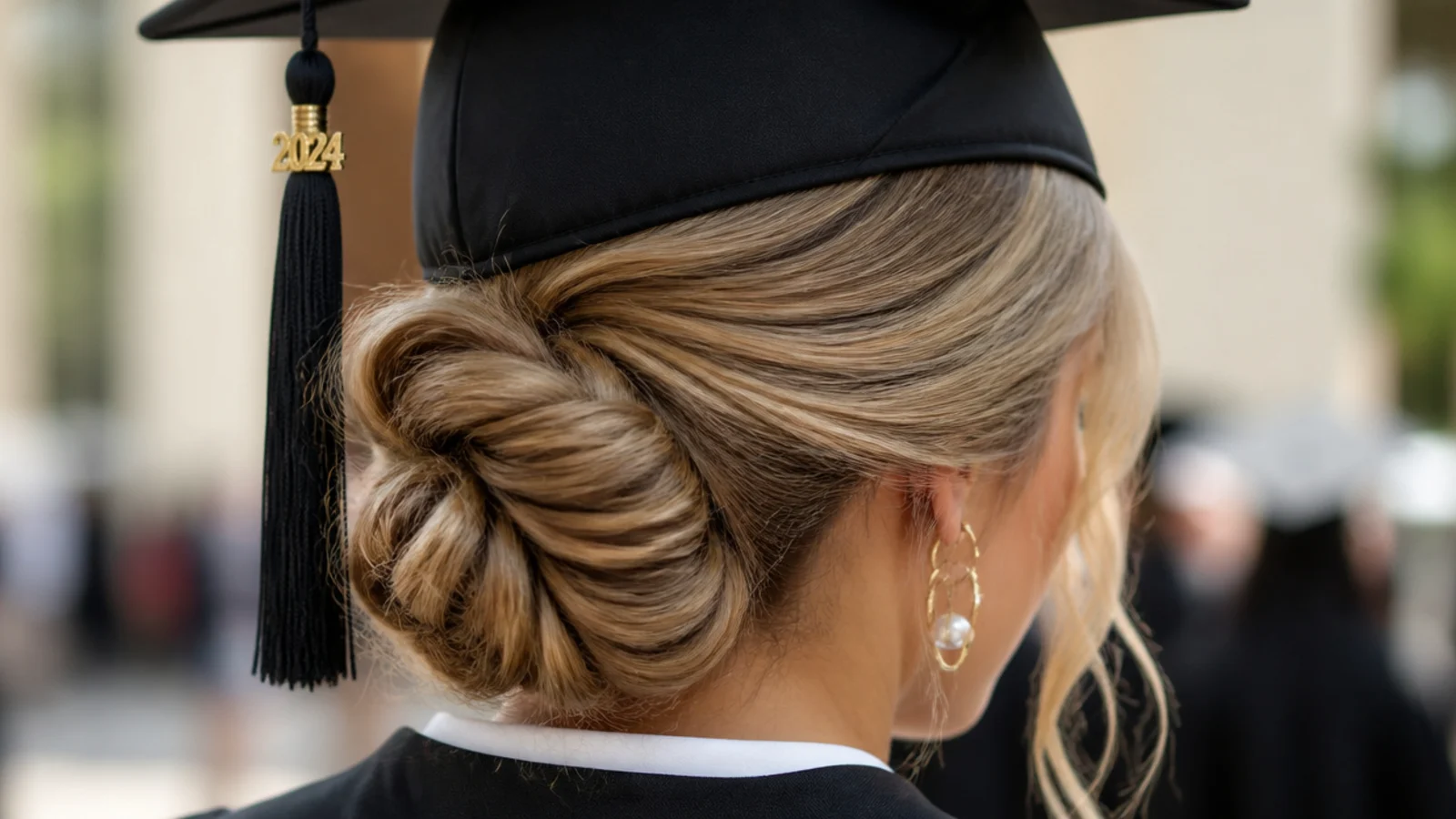
6. Low Ballet Bun
The wrapped ballet shape with the placement corrected. At crown height it is the classic wedge under the board, and dropped to the nape it keeps the same sculpted surface while sitting entirely outside the cap.
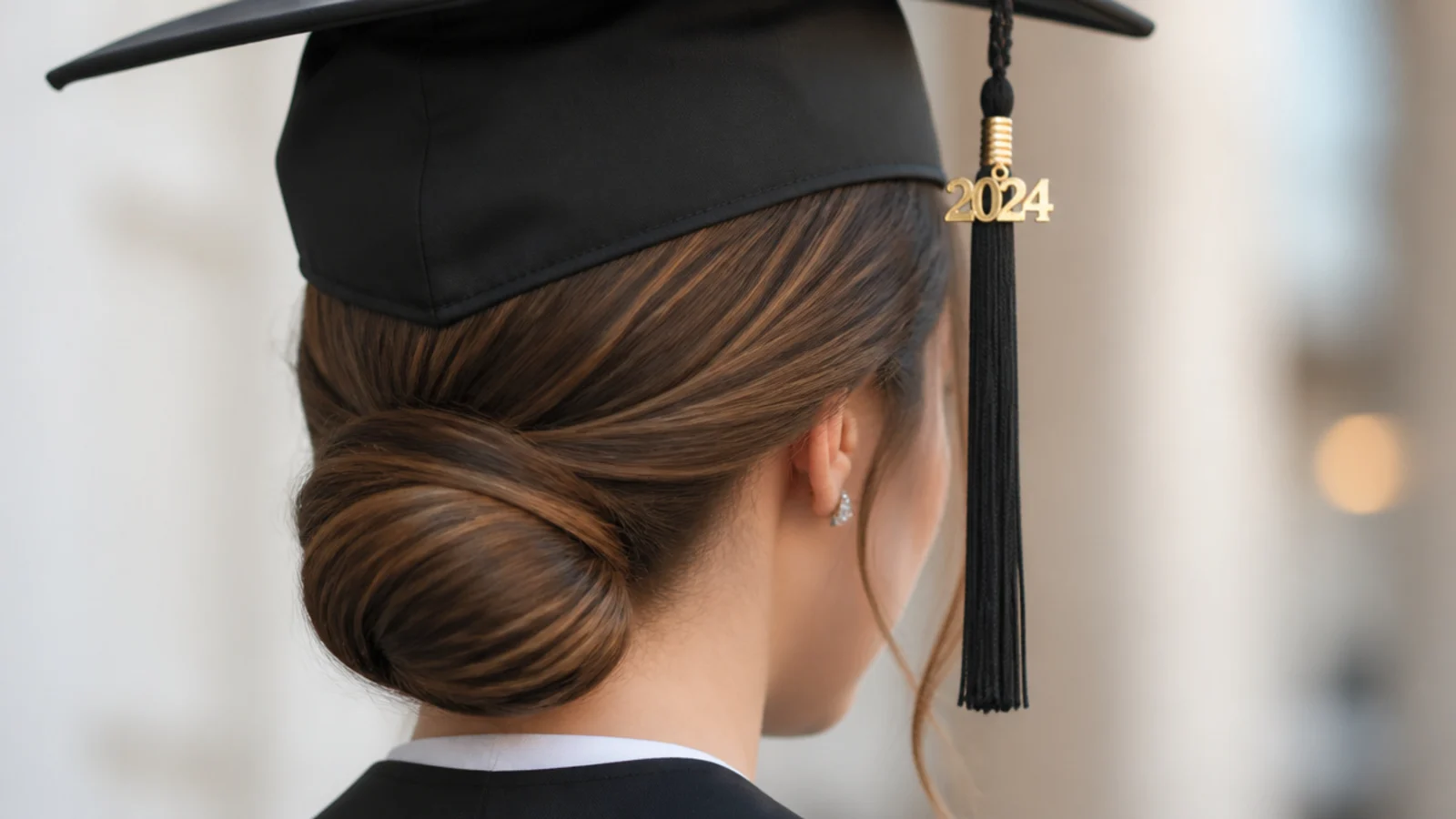
7. Half Up Flat Crown
The compromise position. Gathering the top and pinning it flat rather than tying it back keeps the crown level under the band while the length hangs free below it, so neither half of the style is fighting the cap.
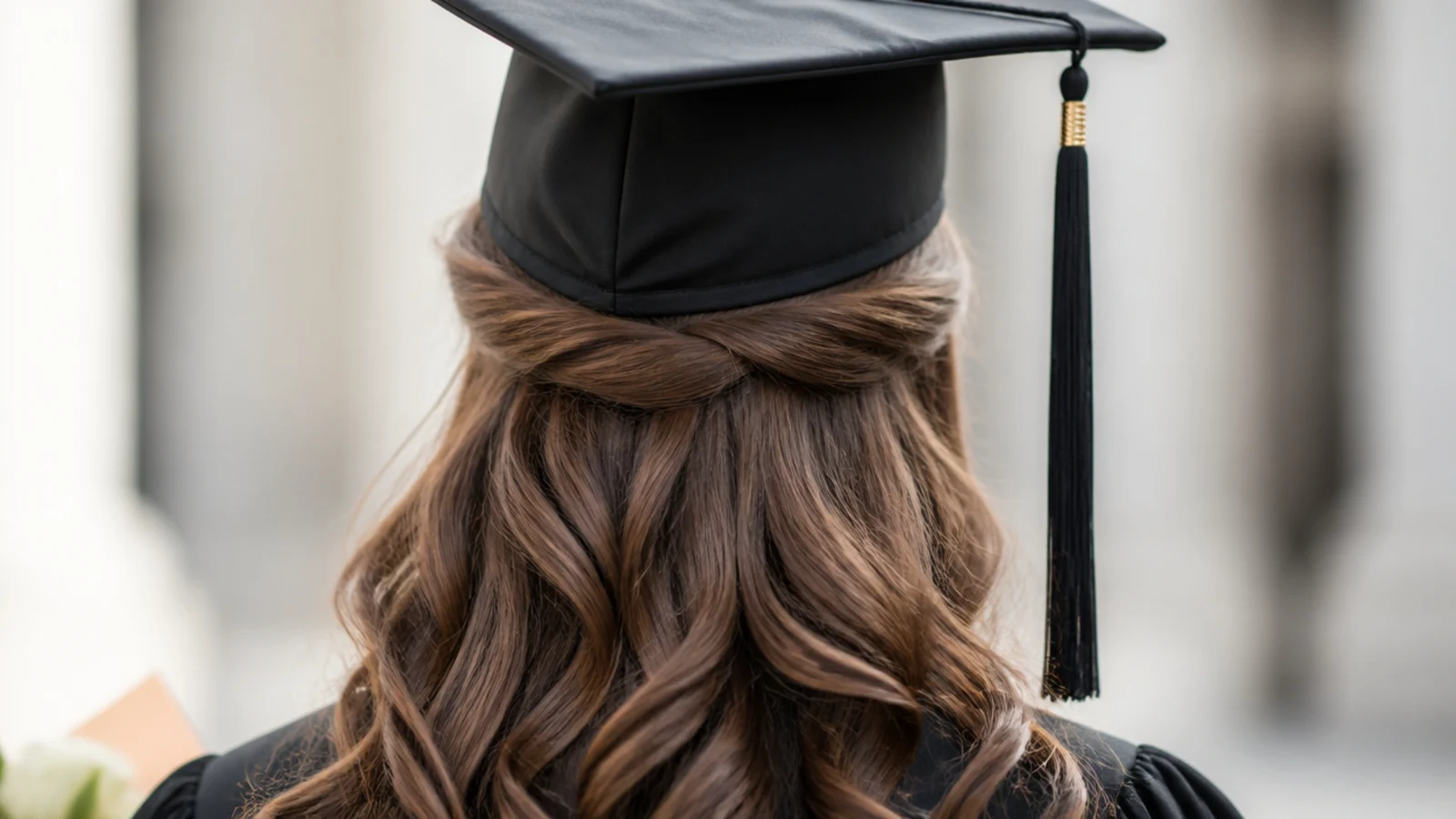
8. Half Up Bubble Ponytail
Clear elastics down the tail spread the load along its length instead of hanging everything from the first band. Over four hours a single loaded elastic creeps downwards, and the gather at the top loosens as it goes.
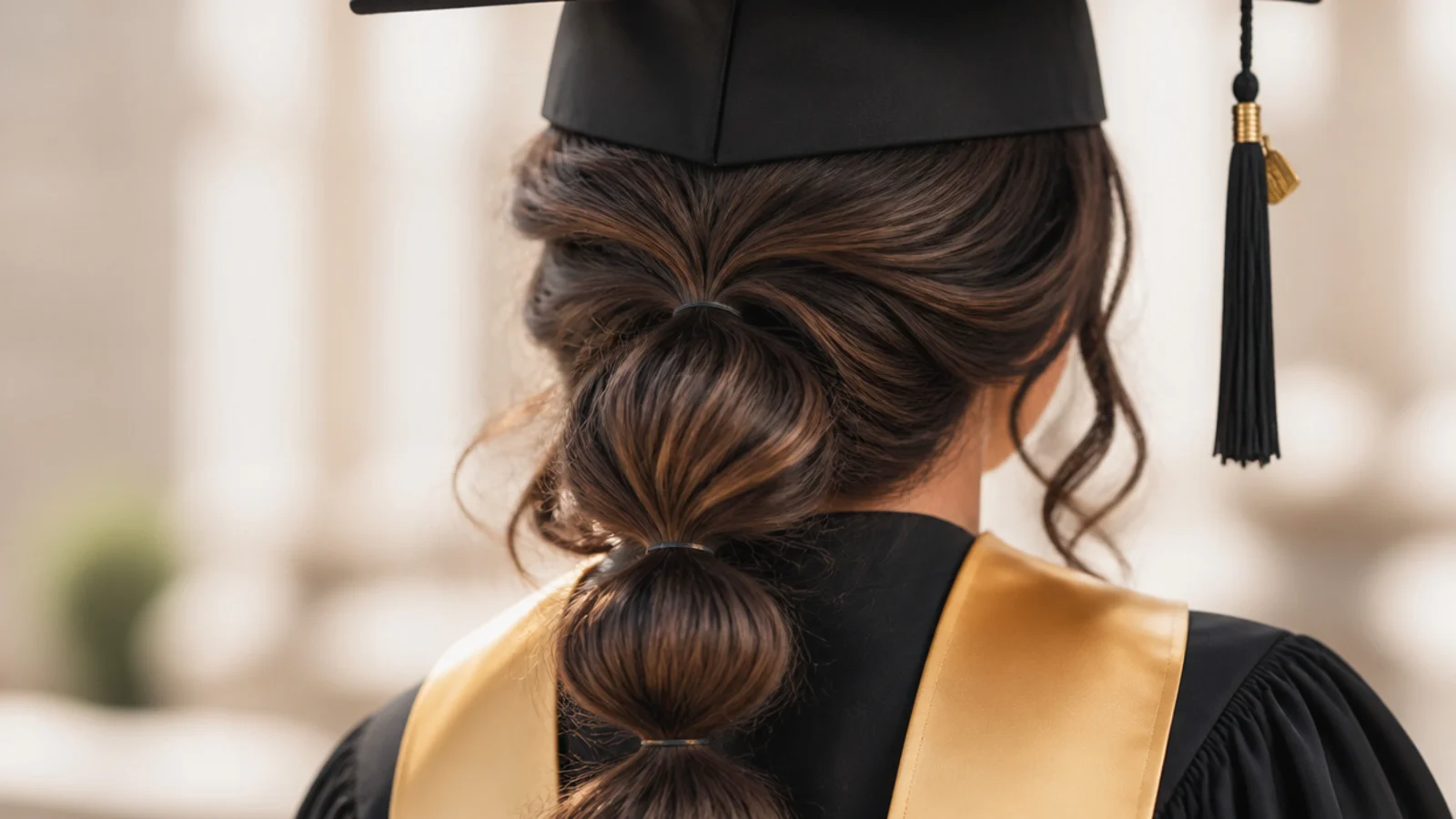
9. Side Swept Waves
Sweeping the length over one shoulder moves the bulk off the crown and onto the collarbone, so the band only crosses smooth flat hair. Keep the wave below ear level, because a curled root pressed under a band for hours will not spring back.
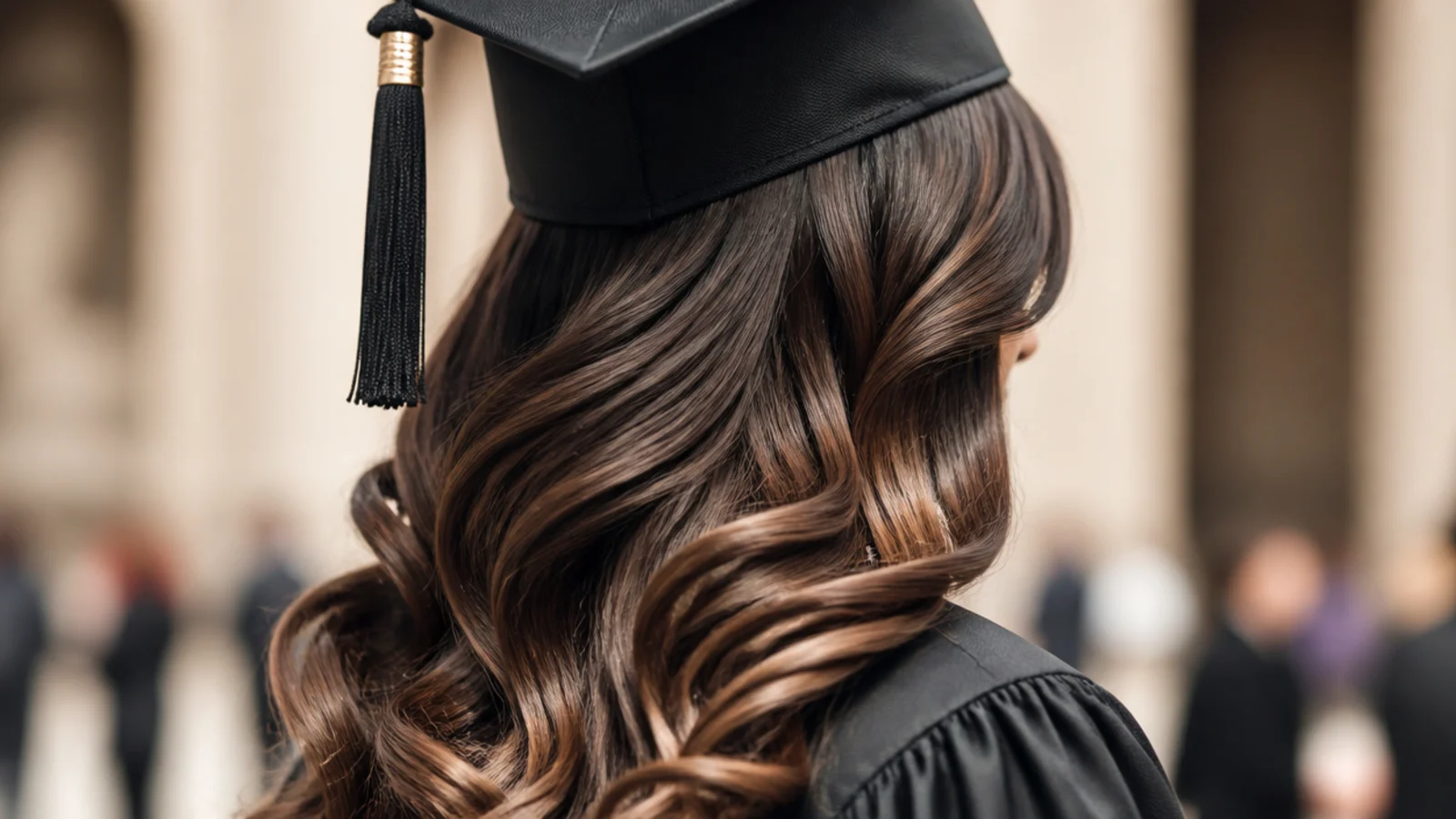
10. Beach Waves
A bent strand scatters light in several directions, which is why a wave disguises the compression line far better than a straight blow dry does. Set the waves the night before on damp hair so nothing needs heat on the morning.

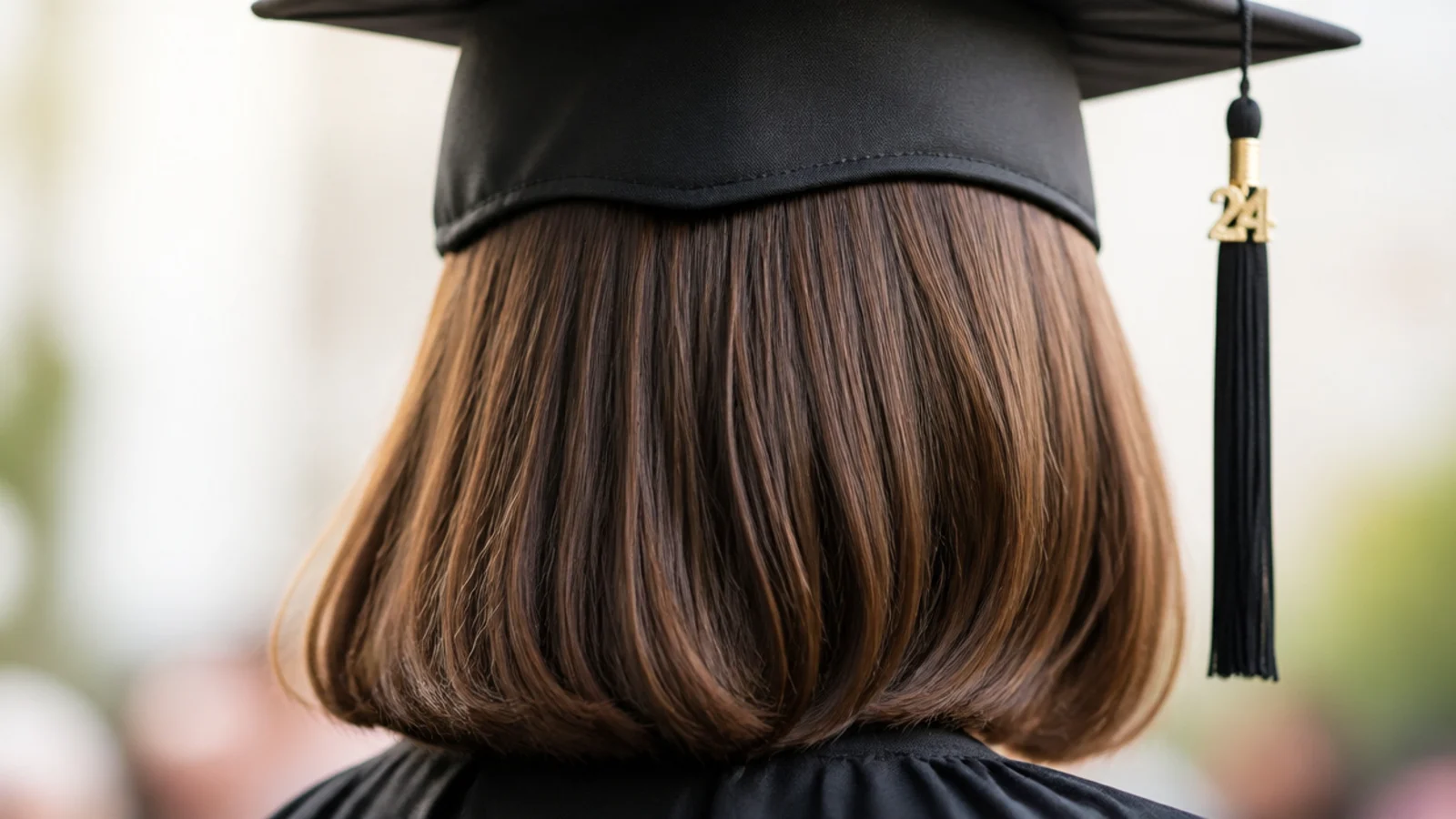
11. Blunt Bob Worn Down
At bob length the ends sit well below the band and there is no weight for the cap to fight. The blunt line is the whole cut here, and it survives the ceremony untouched because the band only ever presses on the crown above it.
12. Money Piece Worn Down
Two lighter face framing pieces sit exactly in the gap between the cap brim and the jaw, which is the only part of the head a mortarboard leaves fully visible. That framing is what stops a straight down style reading flat under a board.
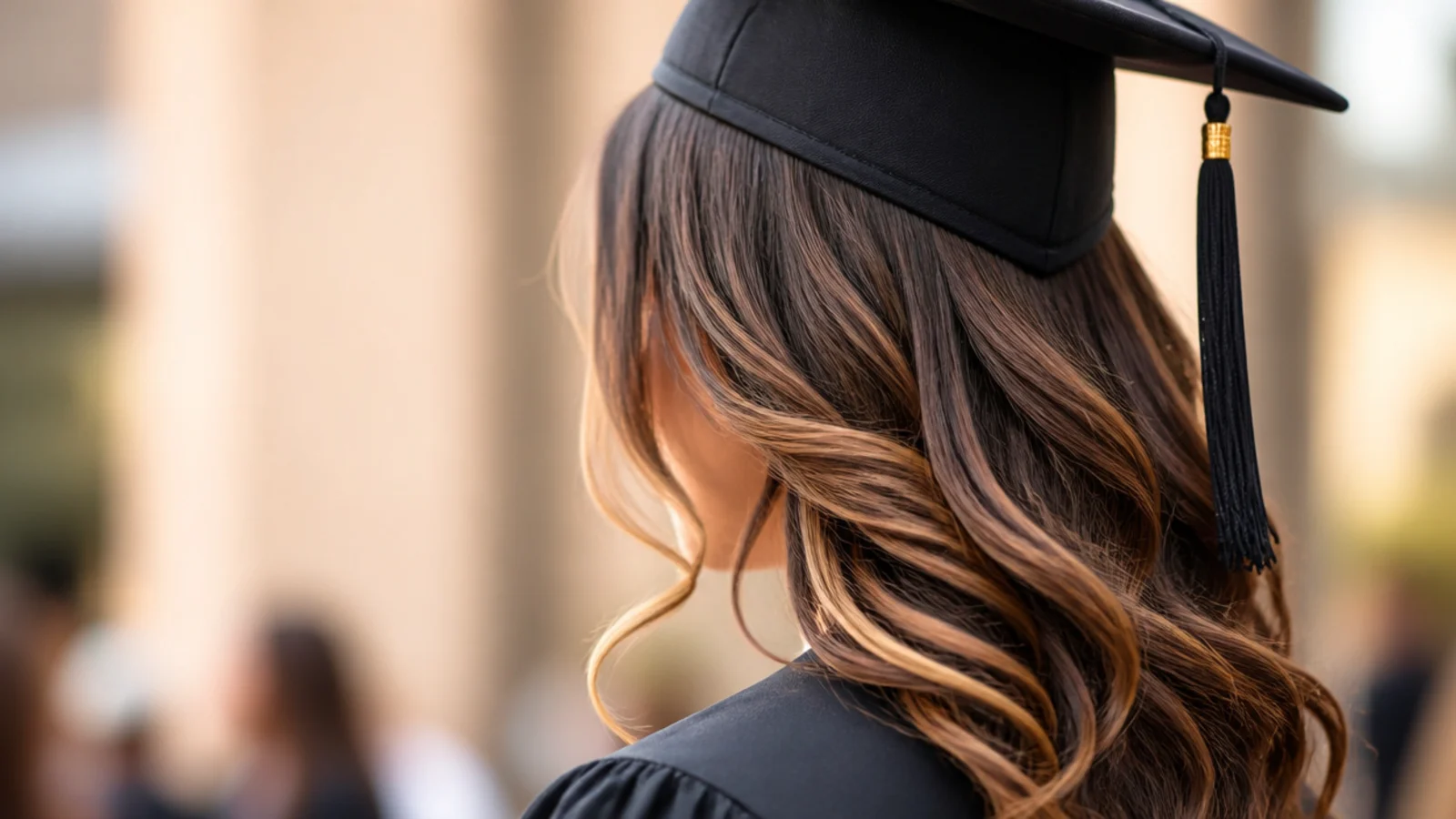
13. Defined Curls Worn Down
Curls compress under the band and rebound afterwards, which is something a blow dried style simply does not do. Define the pattern low, expect the crown to need a shake out, and the recovery is a matter of seconds rather than minutes.
14. Knotless Braids Worn Down
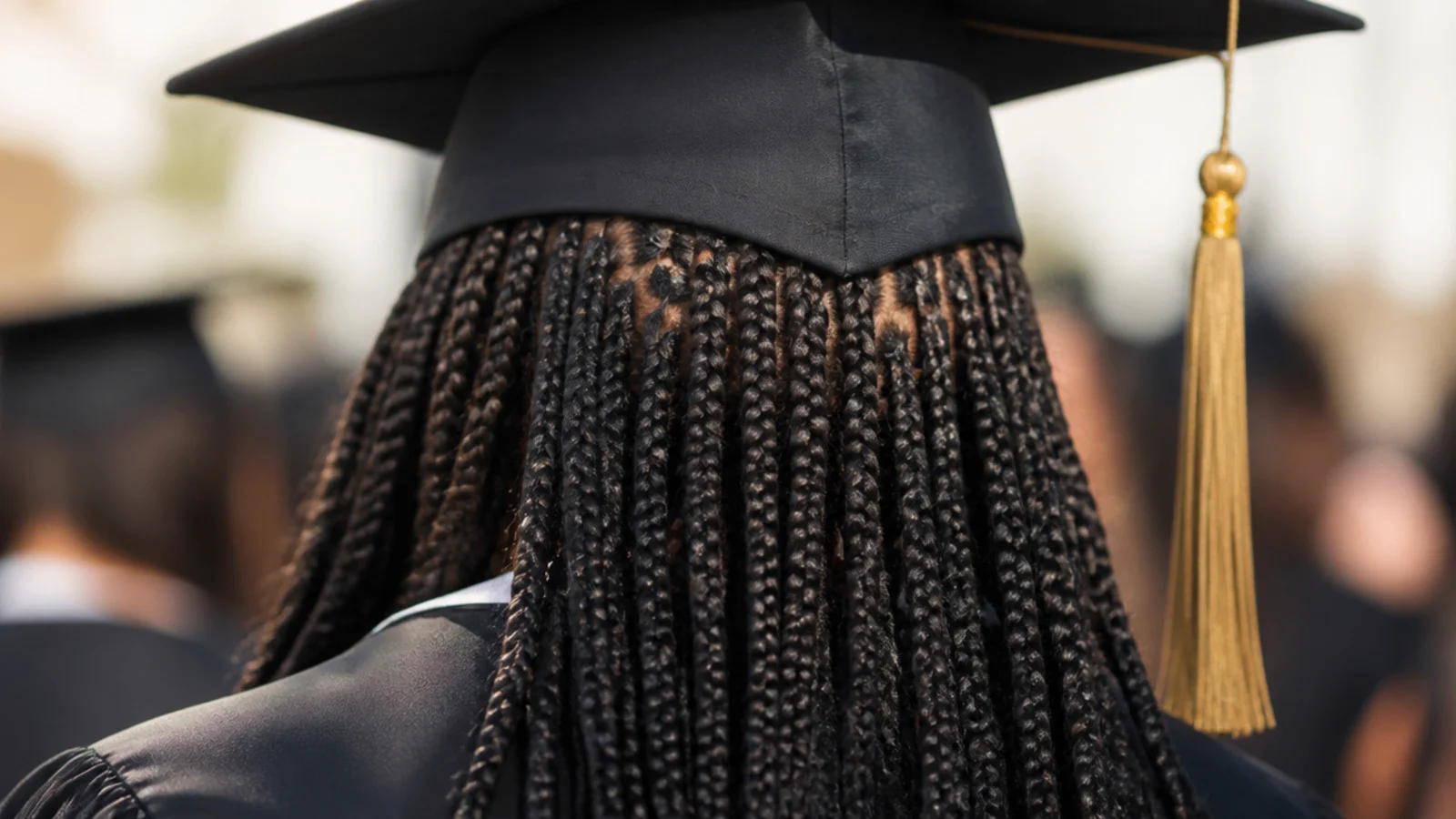
Knotless braids start with the natural hair rather than a bulky knot, so they lie flat at the root and the band has nothing raised to sit on. They also come out of four hours under a cap in exactly the condition they went in.
15. Crown Braid Half Up
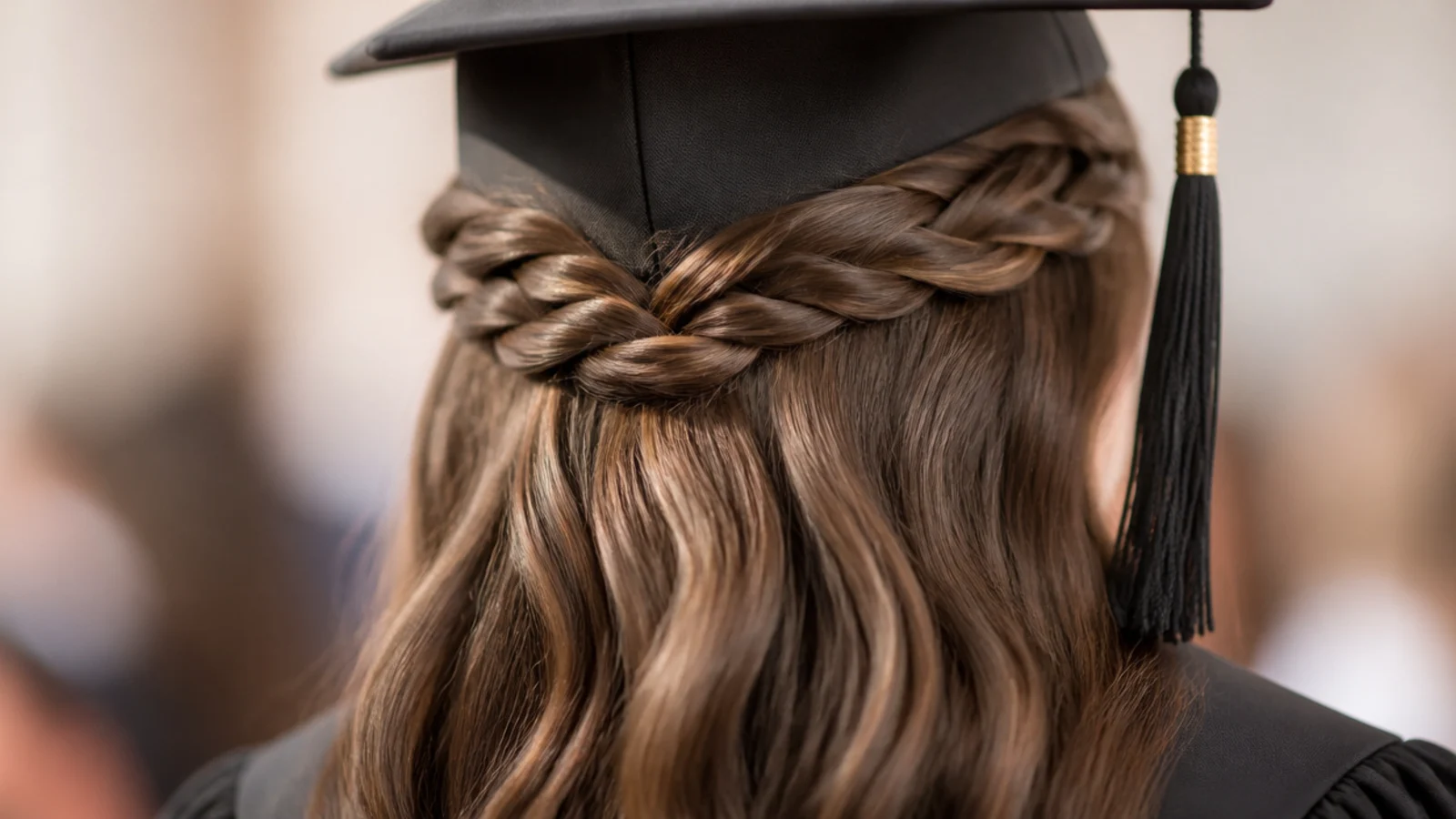
A braid wrapped at ear level adds width rather than height, so it passes under the band without lifting it. Pin it flat against the head as you go, because a braid resting on the head rather than against it becomes exactly the wedge you were avoiding.
Final Thoughts
Answer one question and the rest decides itself. If the cap stays on for every photograph, wear it down and enjoy the softer frame, because nobody will see the band line. If the cap comes off for pictures, either pin it up or budget two minutes and a can of dry shampoo for the crown.
Whichever way you go, the geometry does not change. Keep everything below the occipital bone, wash the night before so the strands have grip, and use a flexible spray rather than a firm one. For the same decision at a school dance see hoco updo hair ideas and hoco hair down looks. More in Occasion Hair.