20 Hairstyles for Frizzy Hair That Hold Through Humidity
Twenty hairstyles for frizzy hair, sorted by what each one does with the halo. A style either buries the loose hair inside the shape, covers it, or makes it the point of the look, and nothing else is available.
In this article · 28
- The Cuticle and the Moisture Mechanism
- Frizz Type Diagnosis
- The Wash Day Routine
- Product Layering Order
- Humidity and Sleep Habits
- Layers for Frizzy Hair
- The 20 Hairstyles for Frizzy Hair
- 1. Messy Bun
- 2. French Braid
- 3. Double Dutch Braids
- 4. Side Fishtail
- 5. Claw Clip Half Up
- 6. Slicked Low Bun
- 7. Bouffant Ponytail
- 8. Air Dried Waves
- 9. Plopped Curls
- 10. Halo Crown Braid
- 11. Braided Headband
- 12. Rope Twist Pony
- 13. Bubble Ponytail
- 14. Silk Scarf Headwrap
- 15. Low Side Braid with a Beanie
- 16. Mini Claw Clips
- 17. Low Chignon
- 18. Overnight Braid Waves
- 19. High Top Knot
- 20. Diffused Half Updo
- Final Thoughts
A hairstyle cannot remove frizz, so the only useful question is where the style puts it.
There are three options and nothing else. Bury the loose hair inside the shape, cover it with a band or a fold, or make the volume the point of the look so it reads as deliberate.
Styles set on wet hair last longer than styles set on dry hair. Wet setting reshapes hydrogen bonds as the water leaves, so the shape holds until the next wet. A dry style is held by hardware alone.
The Cuticle and the Moisture Mechanism
Frizz is a lifted cuticle catching the air. The outer scales lie flat on a healthy strand and reflect light in one direction. Lifted, they snag on neighbouring strands and lever them out of line too.
Keratin takes water out of the air directly. Damp air swells the cortex, and a swollen strand pushes any open scale wider. That is the whole of what humidity does to hair.
A film slows the exchange in both directions. Gel dries into a cast, oil leaves a hydrophobic layer, and either one keeps the strand nearer the moisture level it dried at.
Shape is set during drying. Hydrogen bonds re-form in whatever position the hair holds as the last water leaves, which is why the same style set wet and set dry behave completely differently.
Frizz Type Diagnosis
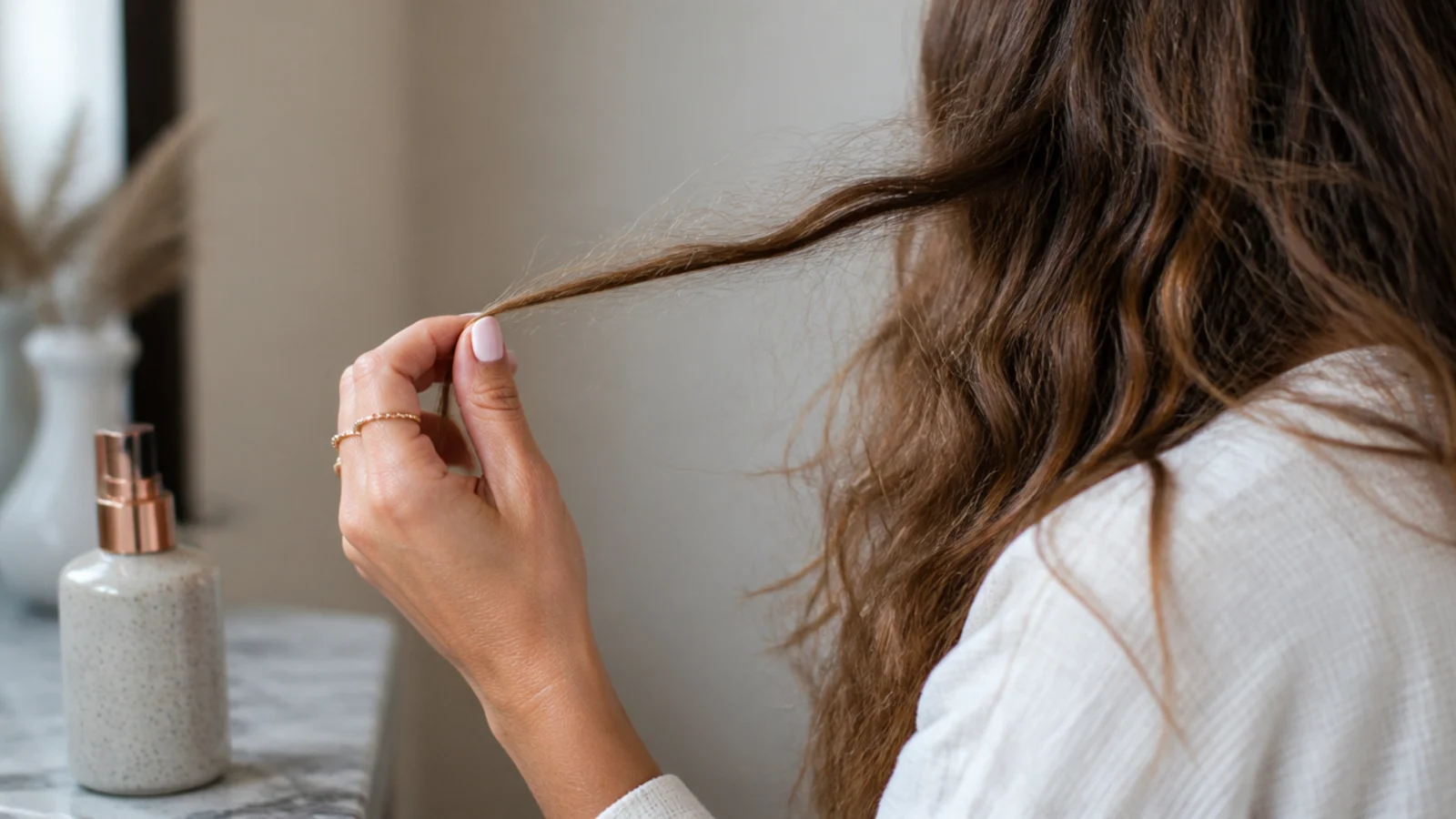
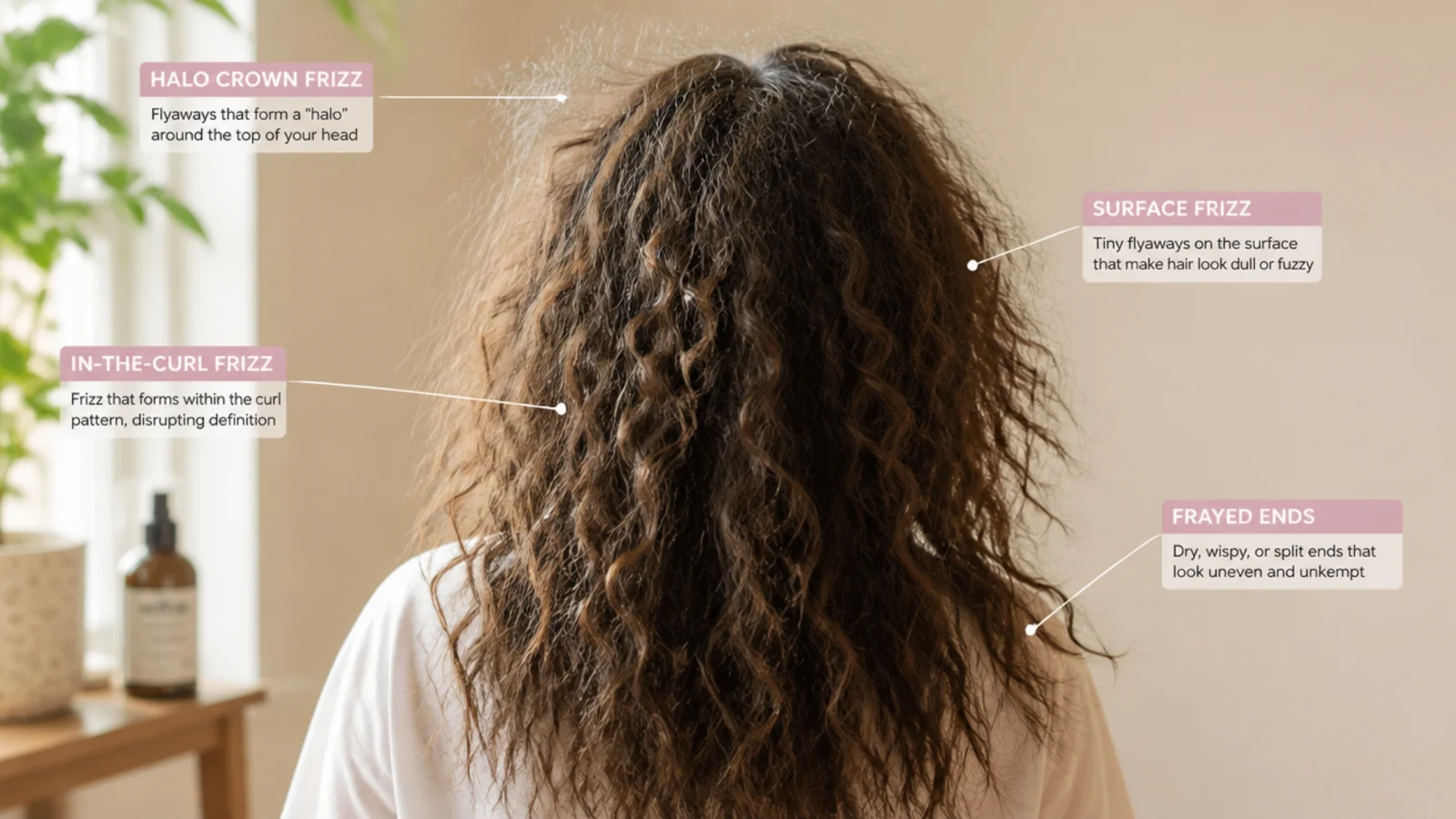
A surface halo is broken hair. Short ends standing above smooth length, usually from breakage, dry brushing or layers cut too high on the head.
Volume frizz is density with nothing holding it. Each strand behaves, but there are enough of them that the whole shape widens.
Root frizz is regrowth with no pattern yet. New hair standing up above the point where the wave or curl begins, worst in the first inch from the scalp.
End frizz is damage and only a cut removes it. Split ends fray apart and stop reflecting as a group, and no style will make them lie down.
The type decides the style. A halo wants covering, volume wants containing, root frizz wants a band across it, and damaged ends want to be tucked inside a fold.
The Wash Day Routine
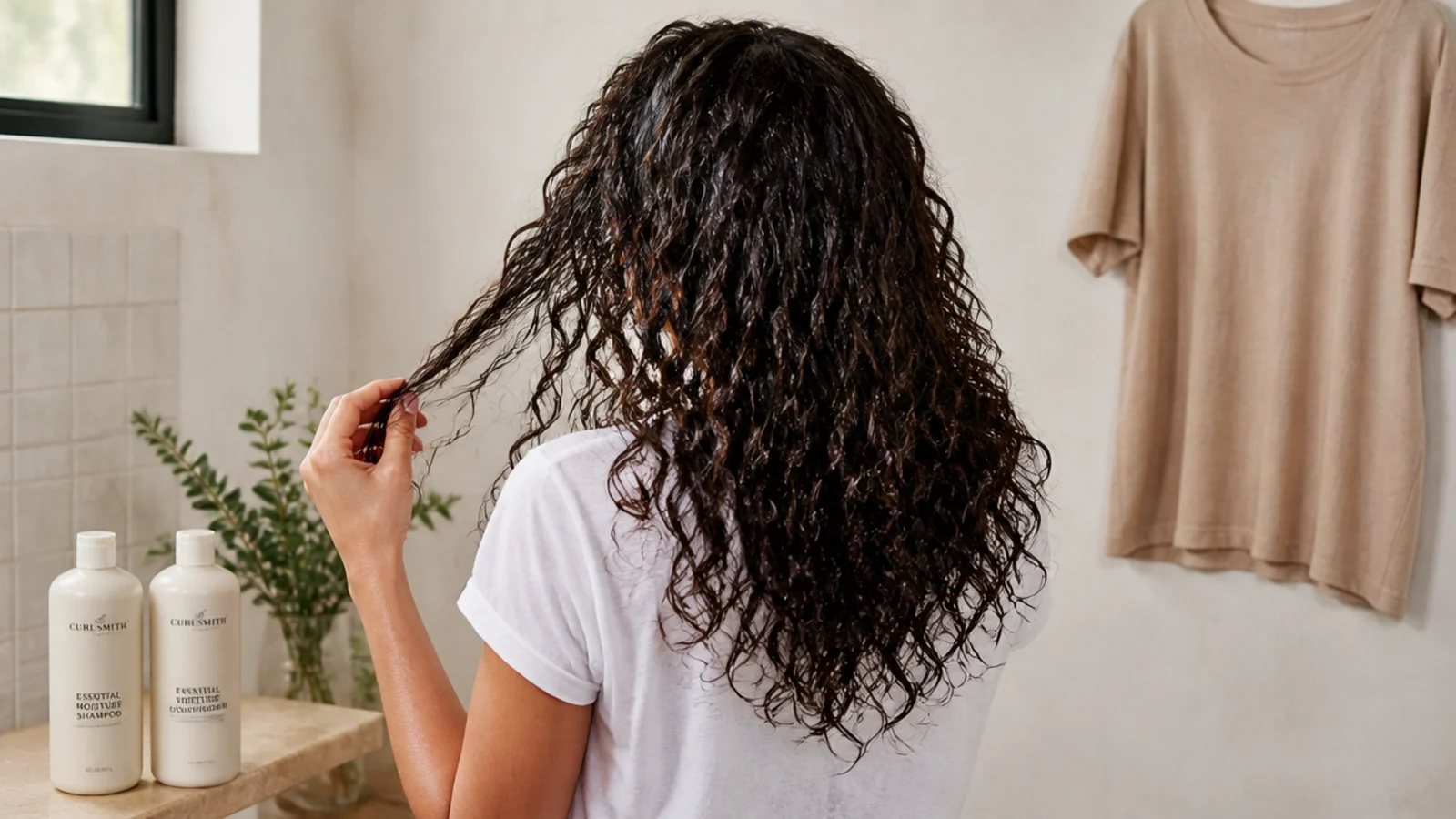
Detergent on the scalp, conditioner on the lengths. Oil is produced at the root and the ends are the oldest hair on your head, with nothing left worth stripping.
Detangle only inside the conditioner. Wet hair with slip on it stretches and slides apart. The same comb through dry hair shears the clumps and creates the halo you spend the week hiding.
Blot with cotton jersey rather than terry. Towel loops catch lifted scales and lever them further open, which is mechanical damage rather than drying.
Apply everything to soaking wet hair. Product travels through the water already on the strand, so damp application lands in patches and every gap becomes a frizz point.
Stop touching it until it is dry. A half dry film breaks under a hand and cannot re-form, so every check costs you an hour of the set.
Product Layering Order
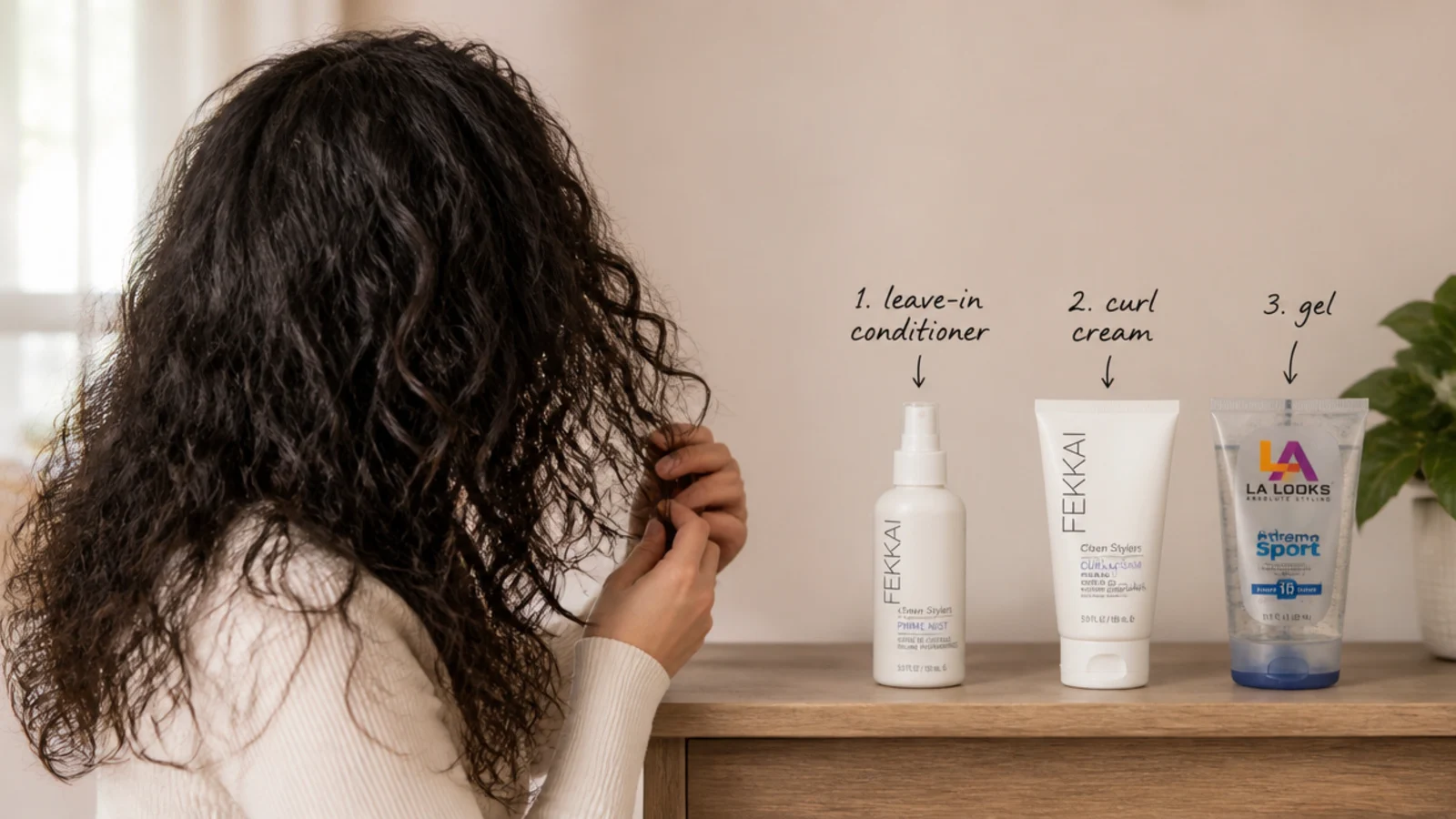
Leave in first, on wet hair. It binds water into the strand and gives the layers above it something even to spread across.
Cream second, for friction. Cream sits between strands so they slide past each other instead of catching and lifting one another out of position.
Gel or mousse last, always outermost. The film former only works if it is the outside layer, because its job is to stand between the cuticle and the air.
Rake to distribute, scrunch to shape. Raking alone gives even product and no pattern. Scrunching alone gives a defined patch beside a flat one.
Thin layers beat one thick one. Several light applications dry into a flexible cast, while a single heavy one dries into a sheet that cracks at the first movement.
Humidity and Sleep Habits
Sixty percent humidity is roughly where unsealed hair starts moving. It is the water in the air that matters, not whether it is raining, which is why an indoor day can be the worse one.
Sealed hair holds its position. A dried gel cast or an oil film is a physical barrier that slows water crossing the cuticle in either direction.
Glycerin works with you or against you. As a humectant it draws water toward the hair in moderate air and out of it in very dry air, so its position on the ingredient list is worth checking twice a year.
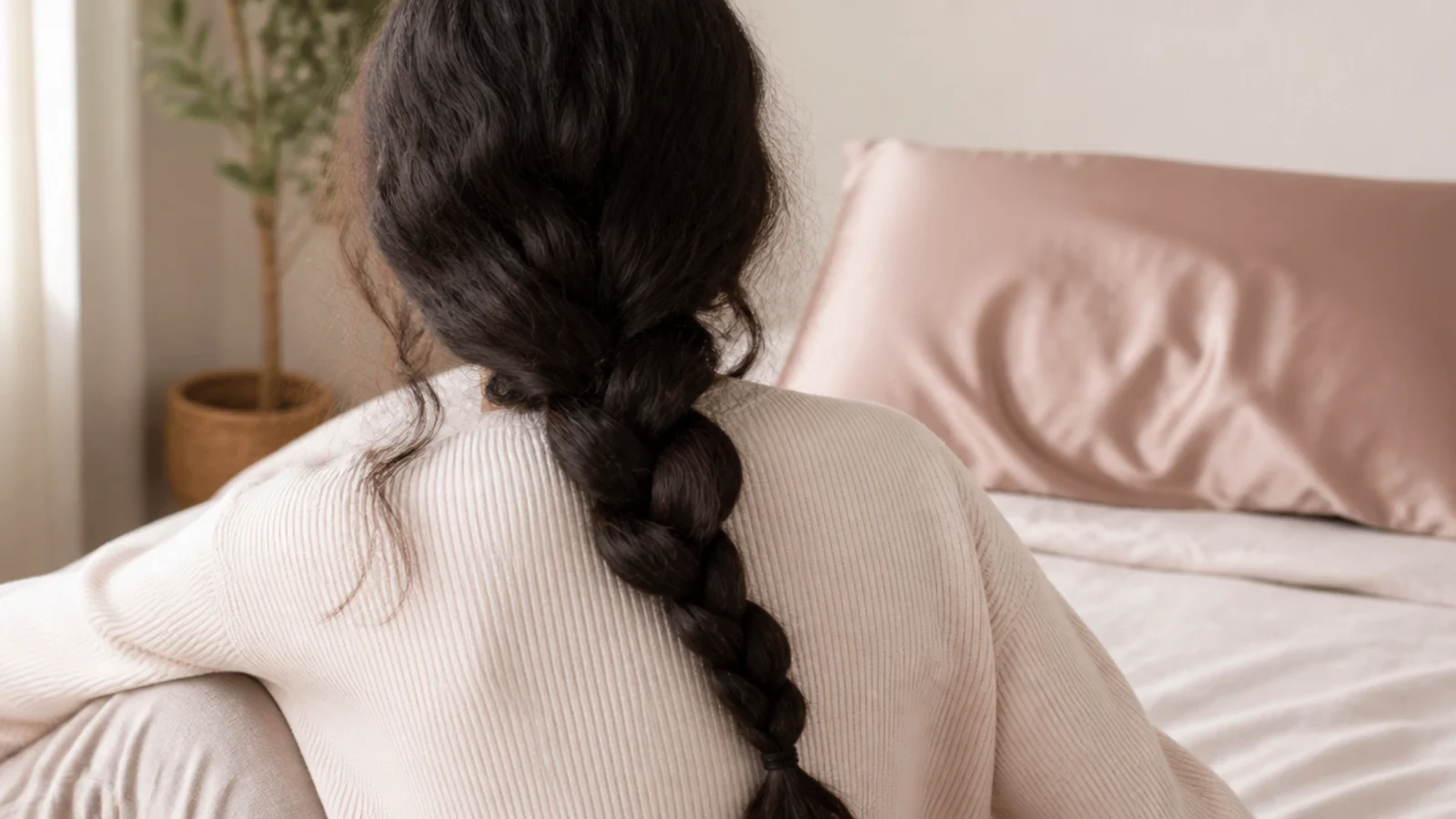
Cotton pillowcases cause frizz twice over. High friction lifts the scales mechanically and absorbency removes the moisture that was keeping them flat.
Tie it up as well as switching the pillowcase. Silk removes the friction and a loose gather removes the contact, and doing both is what gets a set to a fourth day.
Layers for Frizzy Hair
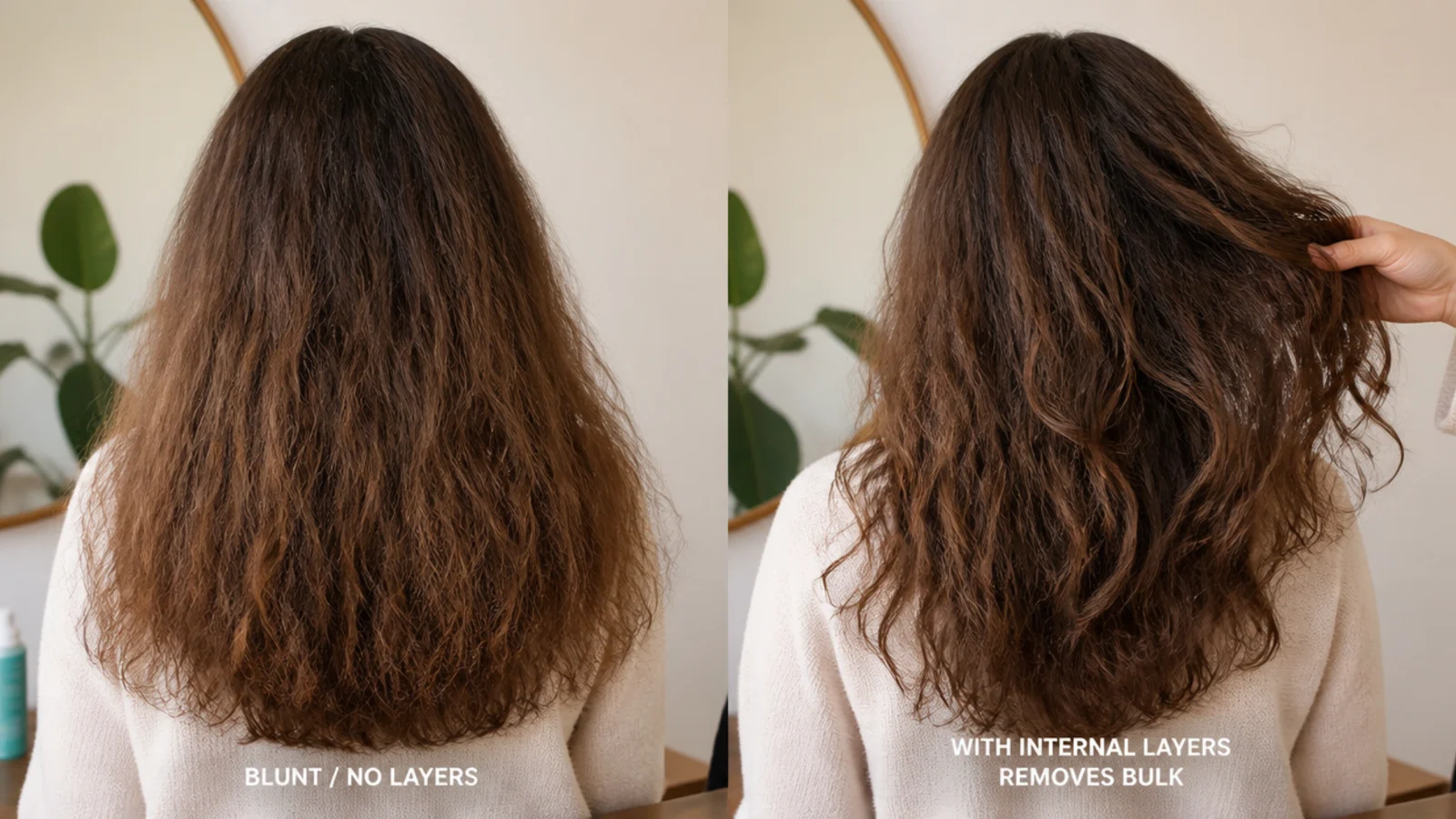
Weight holds hair down and layers remove weight. That trade is the whole argument, and it has to be made in the right place.
Surface layers create flyaways. Anything cut into the top of the head leaves a short end on the outside of the style, which is exactly where it lifts.
Interior layers thin without exposing anything. Weight taken from underneath narrows the shape and leaves the outer surface as one clean plane.
Point cutting softens the widest line. It breaks the hard perimeter that makes dense hair read as a triangle without removing the mass above it.
Skip the thinning shears. They leave short ends at random depths through the section, and on frizz prone hair each one surfaces within two washes.
The 20 Hairstyles for Frizzy Hair
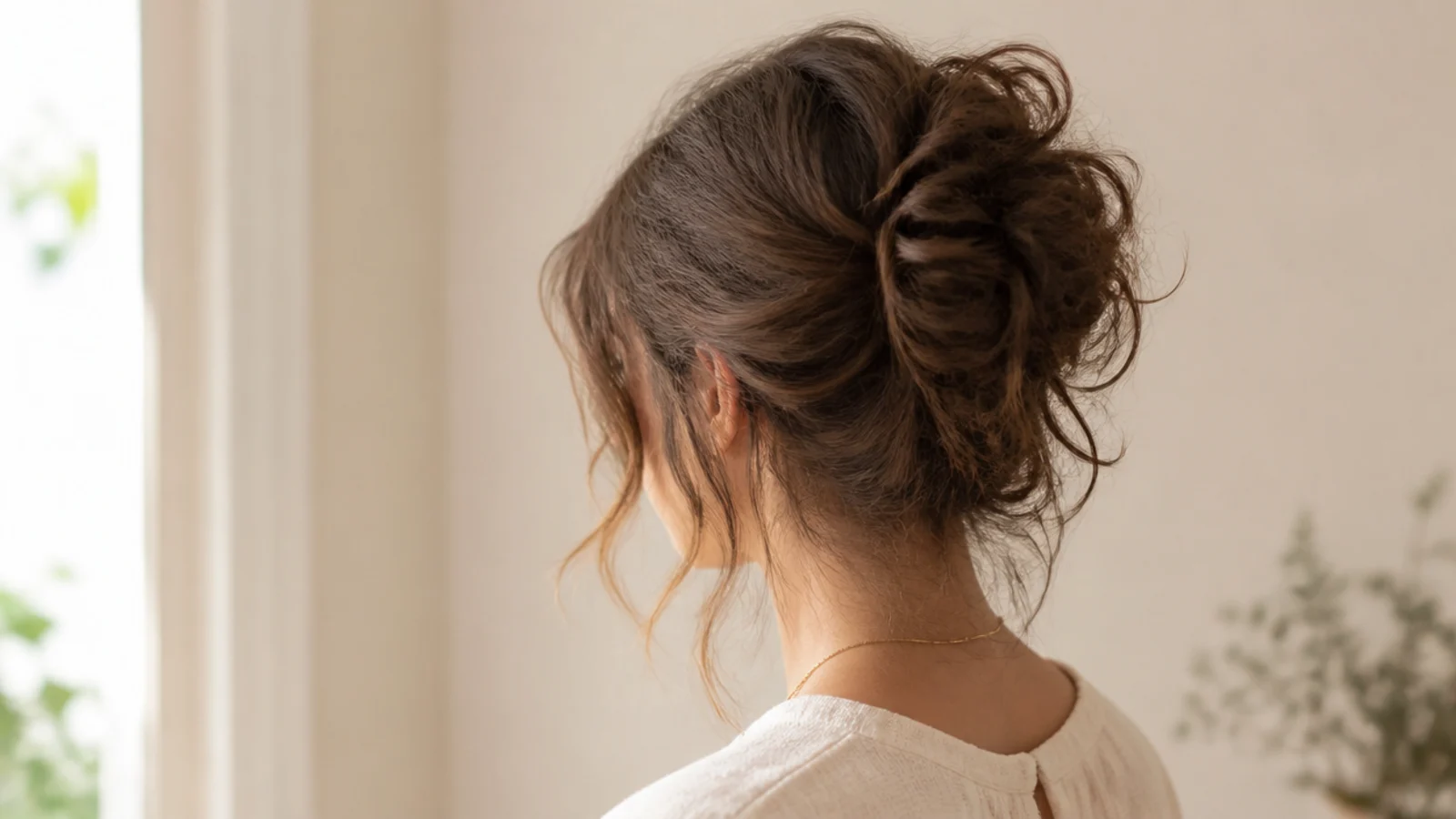
1. Messy Bun
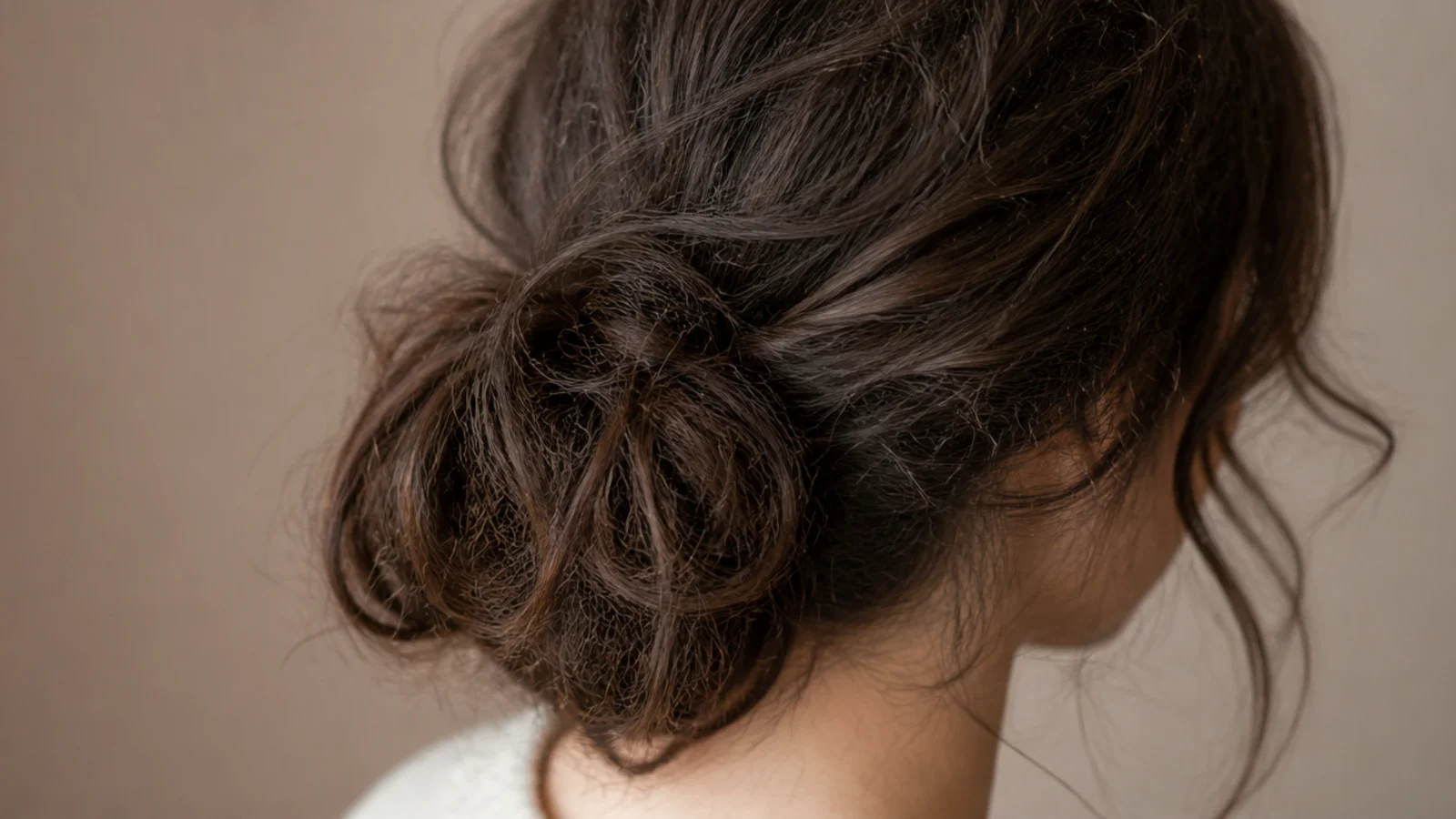
The messy bun works on frizzy hair for the reason it fails on smooth hair — it needs texture to grip itself, and frizz supplies that free. Gather it with fingers rather than a brush, since every clump a brush separates becomes a loose strand you then have to pin.
2. French Braid
A French braid picks up new hair with every crossing, which means it captures the short regrowth at the hairline instead of leaving it standing above the plait. That progressive pickup is the reason it beats a normal three strand braid on a frizz prone head.
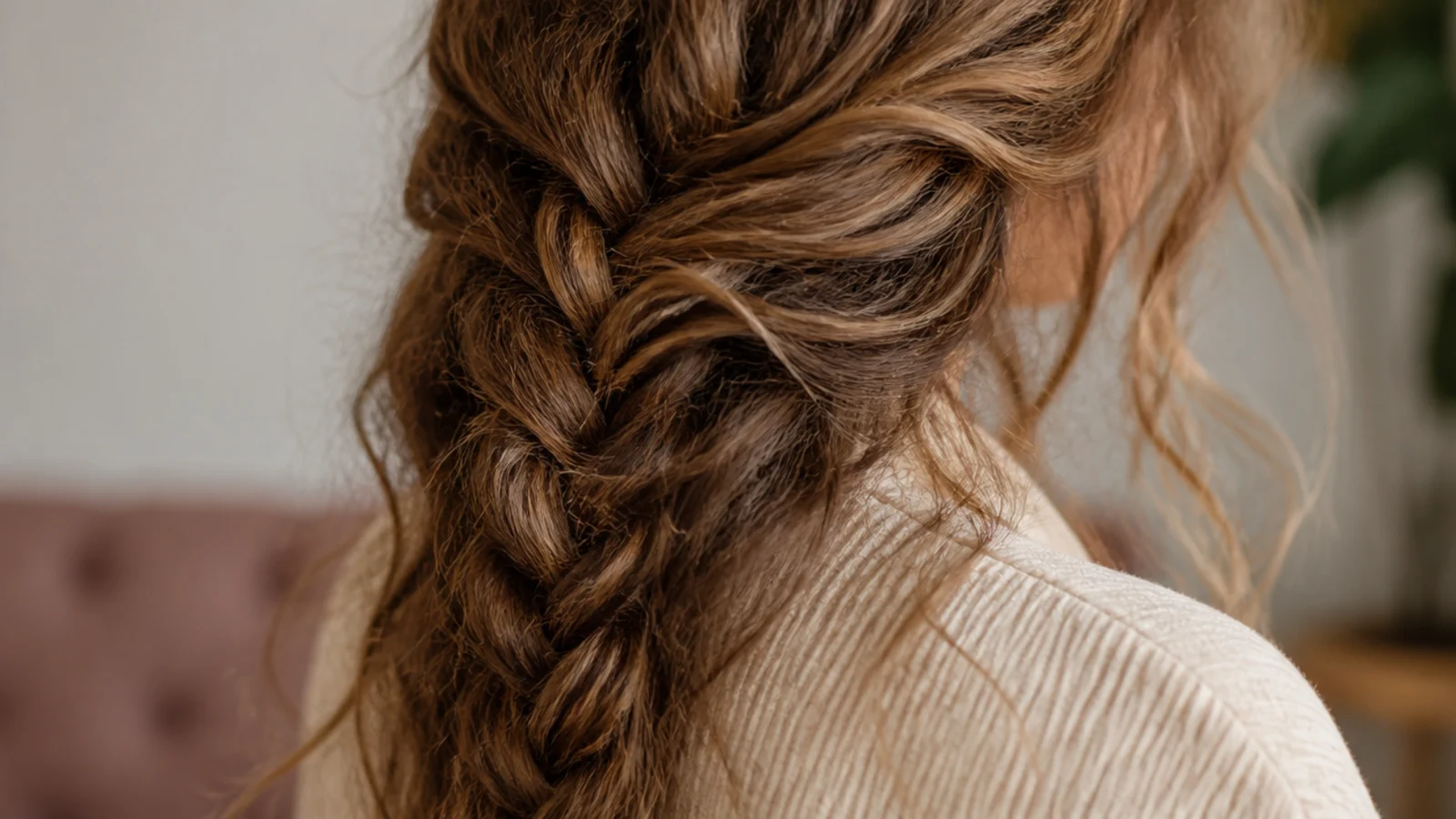
3. Double Dutch Braids
Crossing under rather than over puts the braid on the outside of the hair, so it can be gently widened without losing grip on the sections underneath. Two of them halve the bulk each braid carries, which is what stops thick hair reading as one heavy rope.
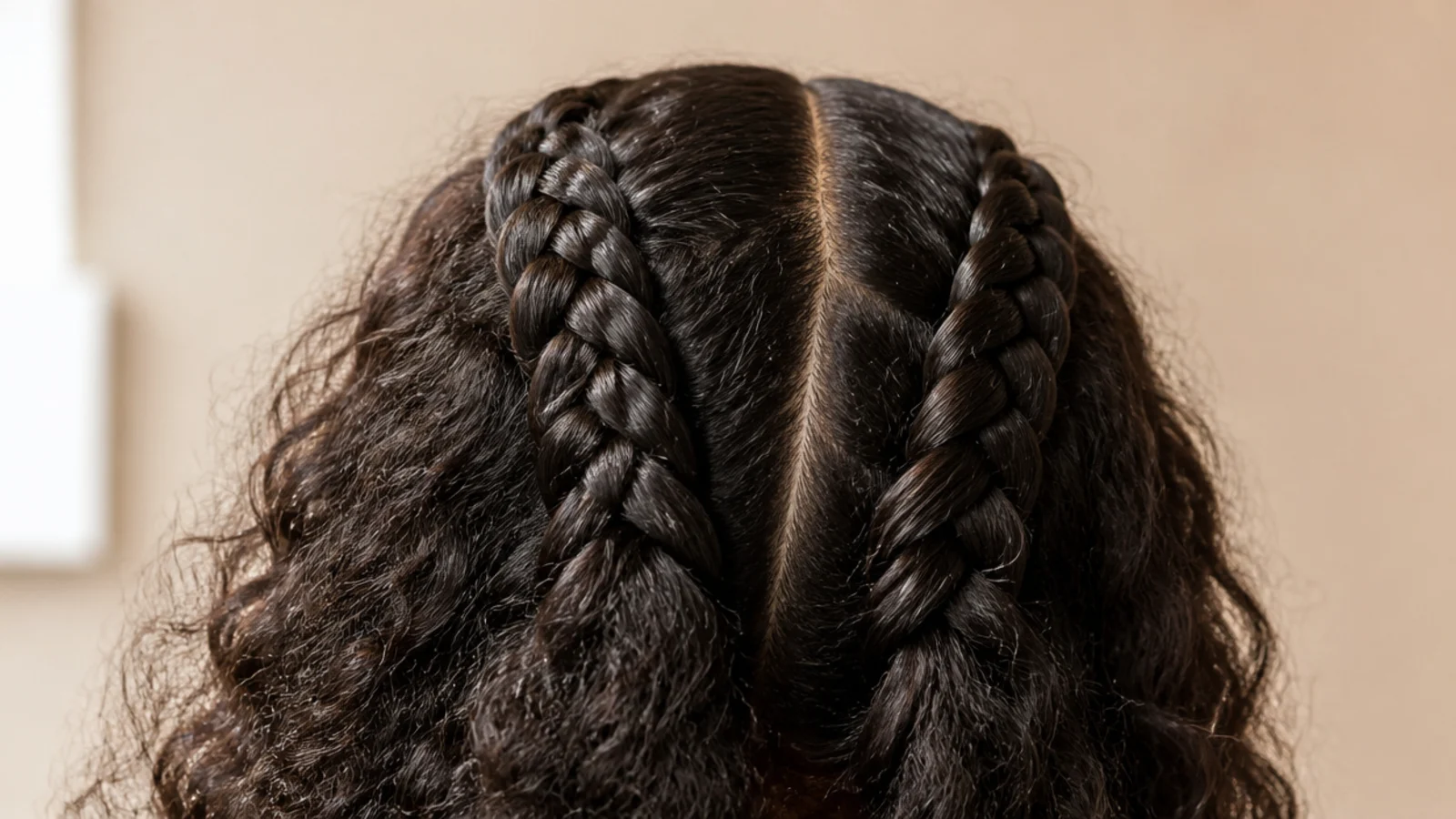
4. Side Fishtail
The fishtail crosses very small sections, which produces a dense woven surface that traps loose ends between the strands rather than letting them lift out. It takes longer than any other braid, and textured hair makes it easier because the sections grip instead of sliding.
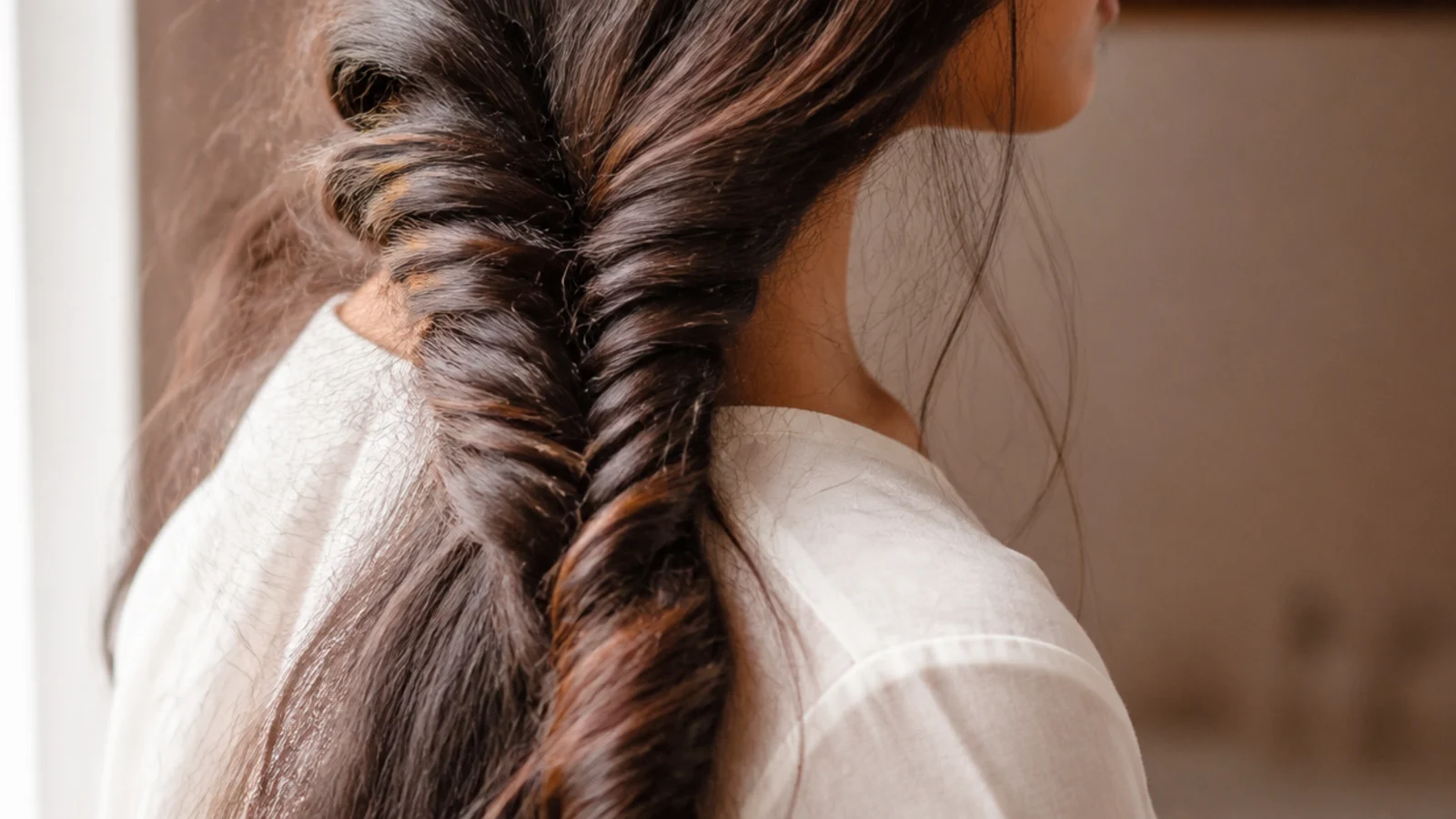
5. Claw Clip Half Up
Clipping the top section lifts weight off the crown, which is where dense hair pushes outward and where a wave collapses first. The lengths underneath stay visible and the frizziest region, the roots, ends up inside the clip.
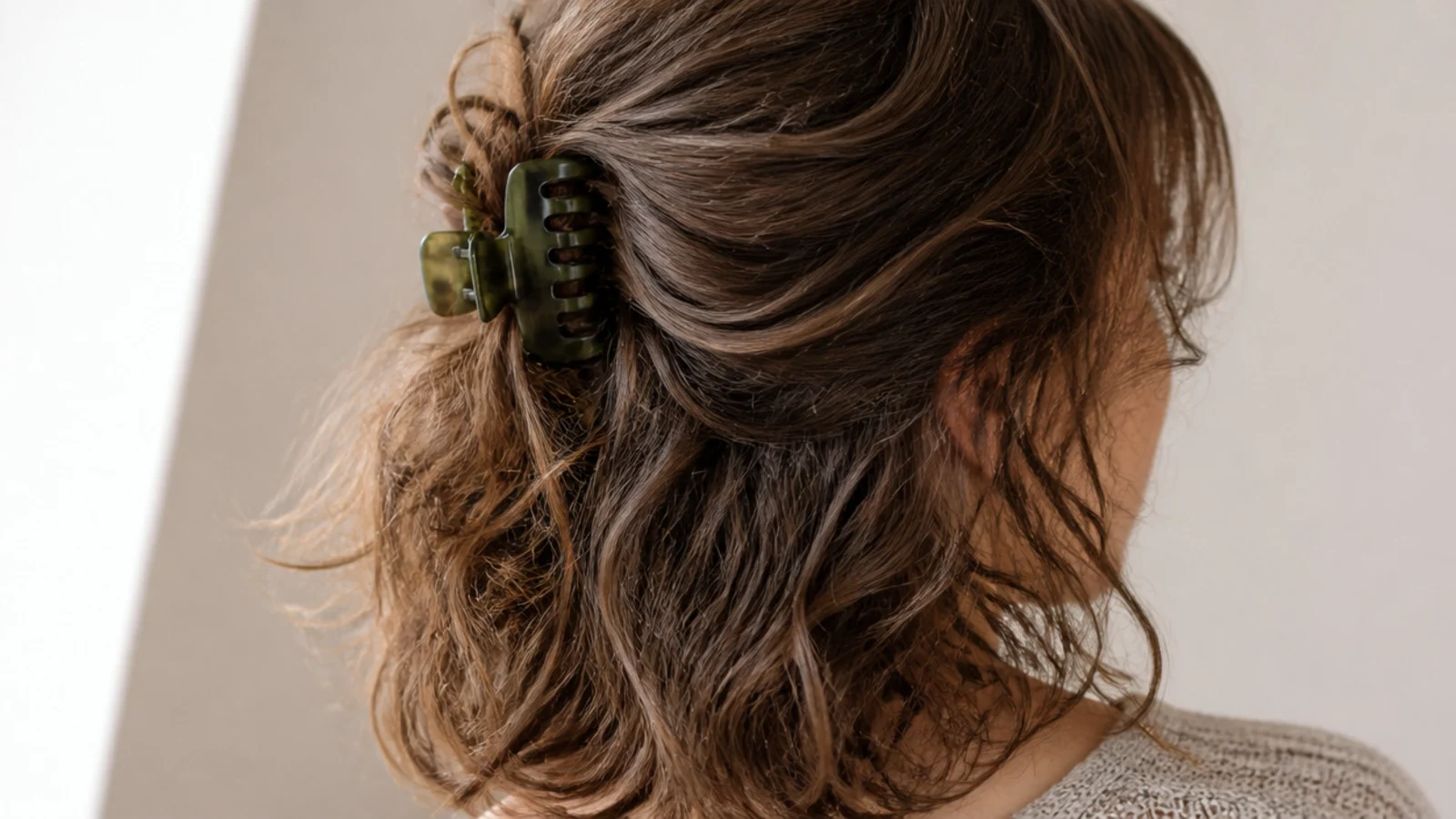
6. Slicked Low Bun
Gel applied to damp hair sets the short hairs flat before they can dry standing up, and that timing is the whole trick. Slicking dry hair traps the flyaways under a shiny layer where they still show, while slicking wet hair puts them down and keeps them there.
7. Bouffant Ponytail
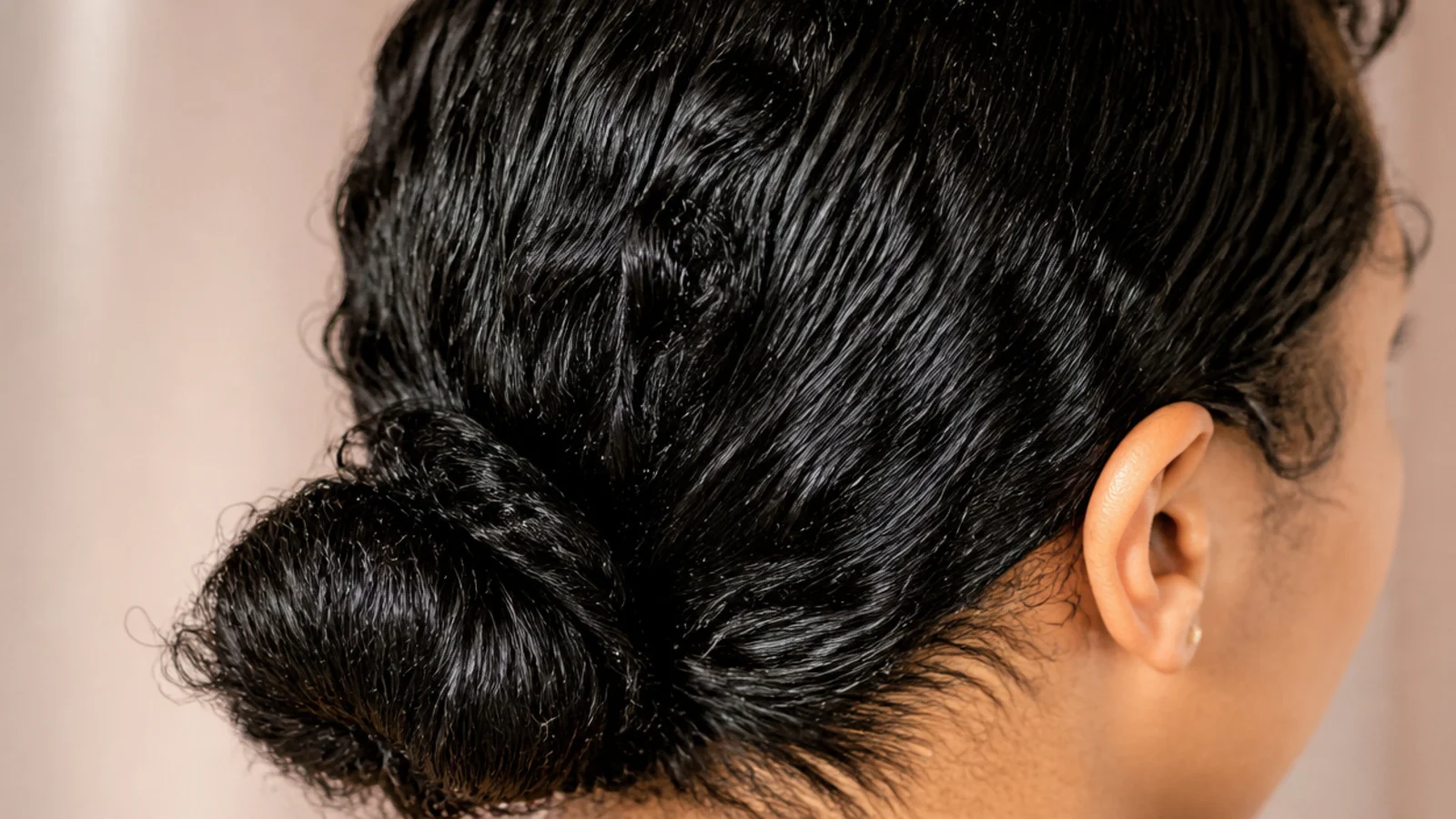
Backcombing the crown and smoothing the top layer over it turns volume into a shape with an outline, so the puff has a defined edge instead of fading into a halo. Only the section underneath is teased, which is why the visible surface stays smooth.
8. Air Dried Waves
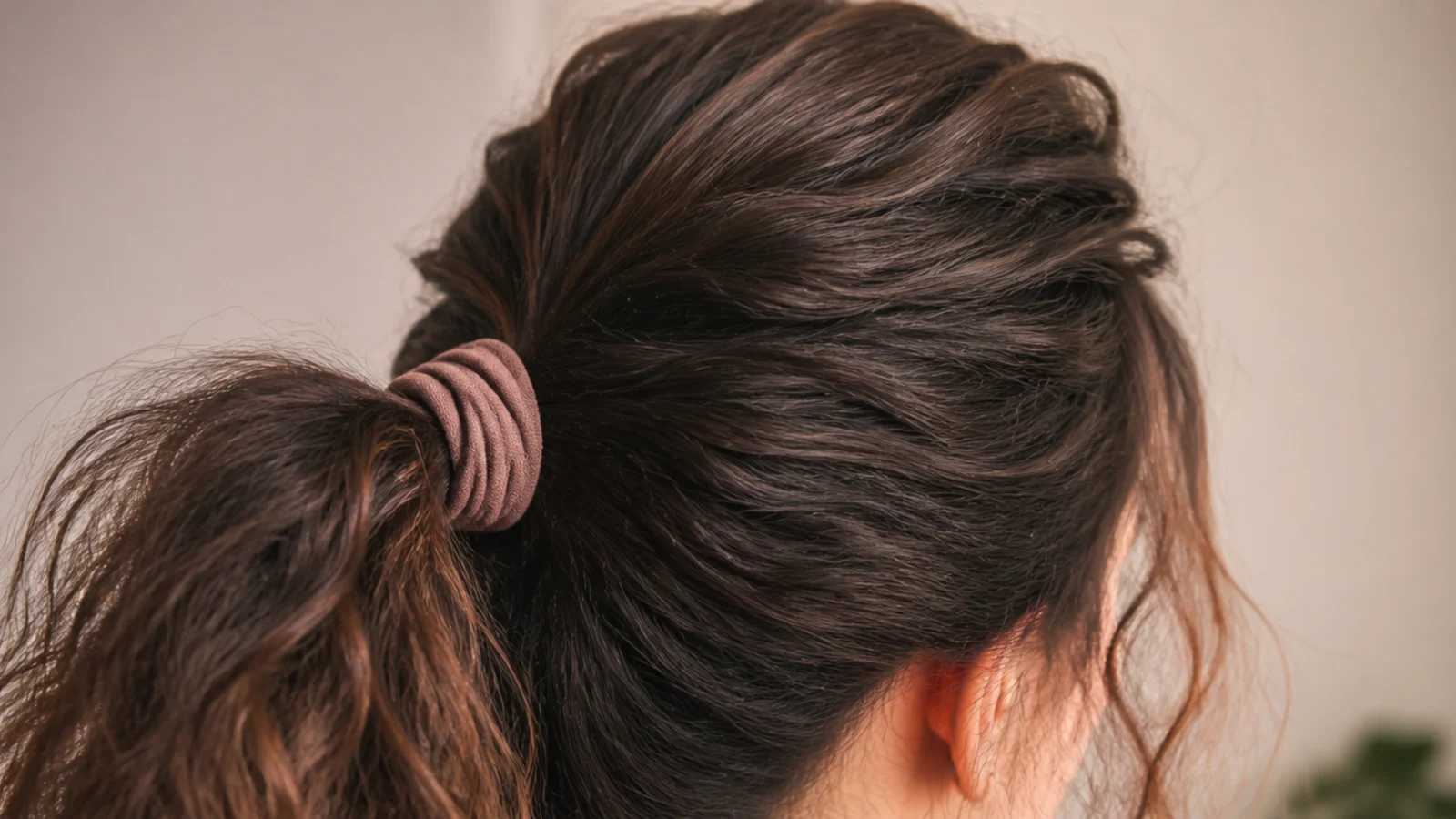
Air drying avoids the airflow that separates clumps, which is the actual mechanism behind blow dryer frizz rather than the heat. Apply on soaking wet hair, leave the house late, and accept that the first hour is the one where touching it costs the most.
9. Plopped Curls
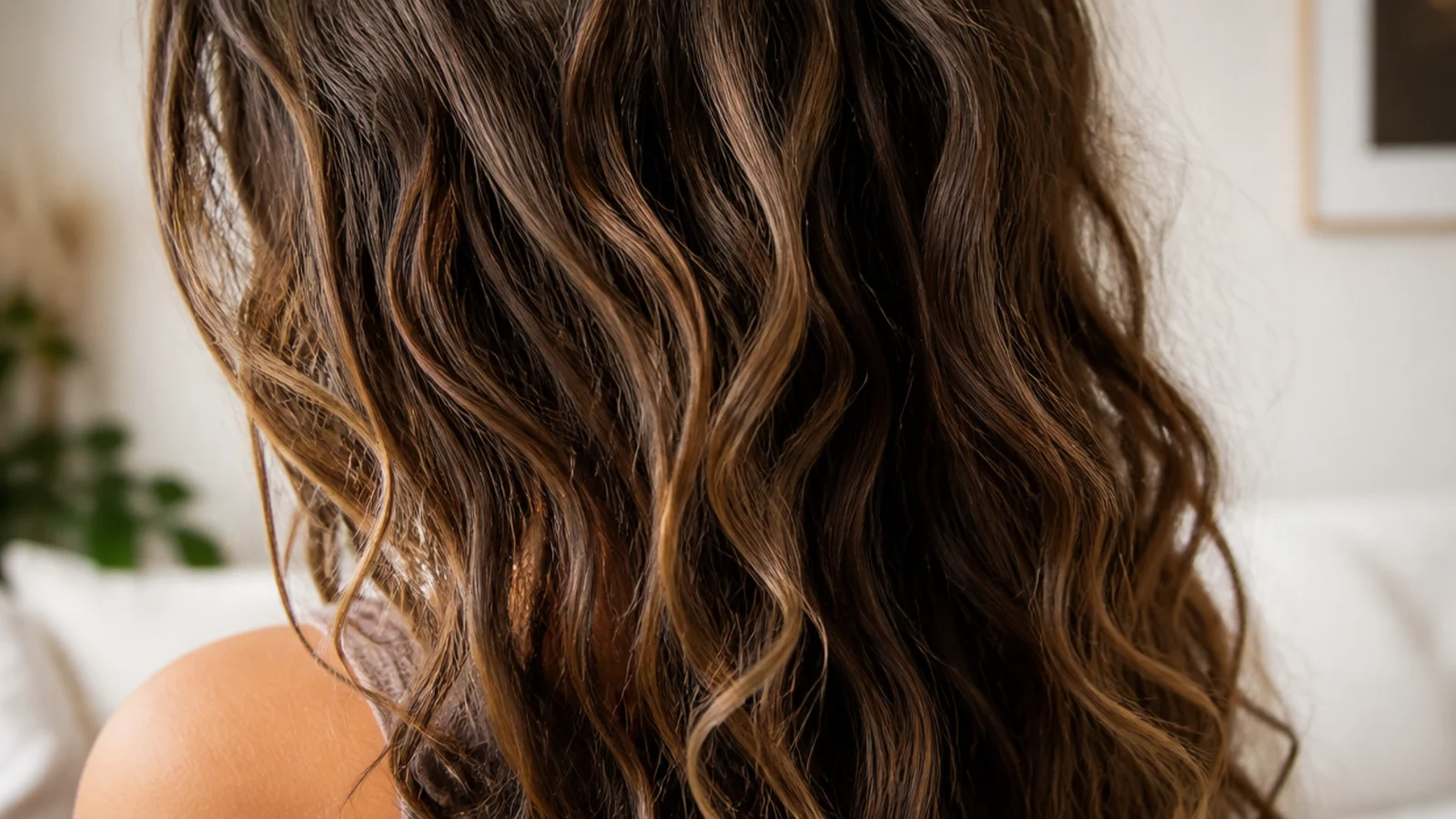
Wrapping soaking hair into a cotton t-shirt stacks the pattern against the head so it dries in a shortened coil rather than being pulled straight by its own weight. Cotton jersey blots without the snagging loops that make a terry towel a frizz machine.
10. Halo Crown Braid
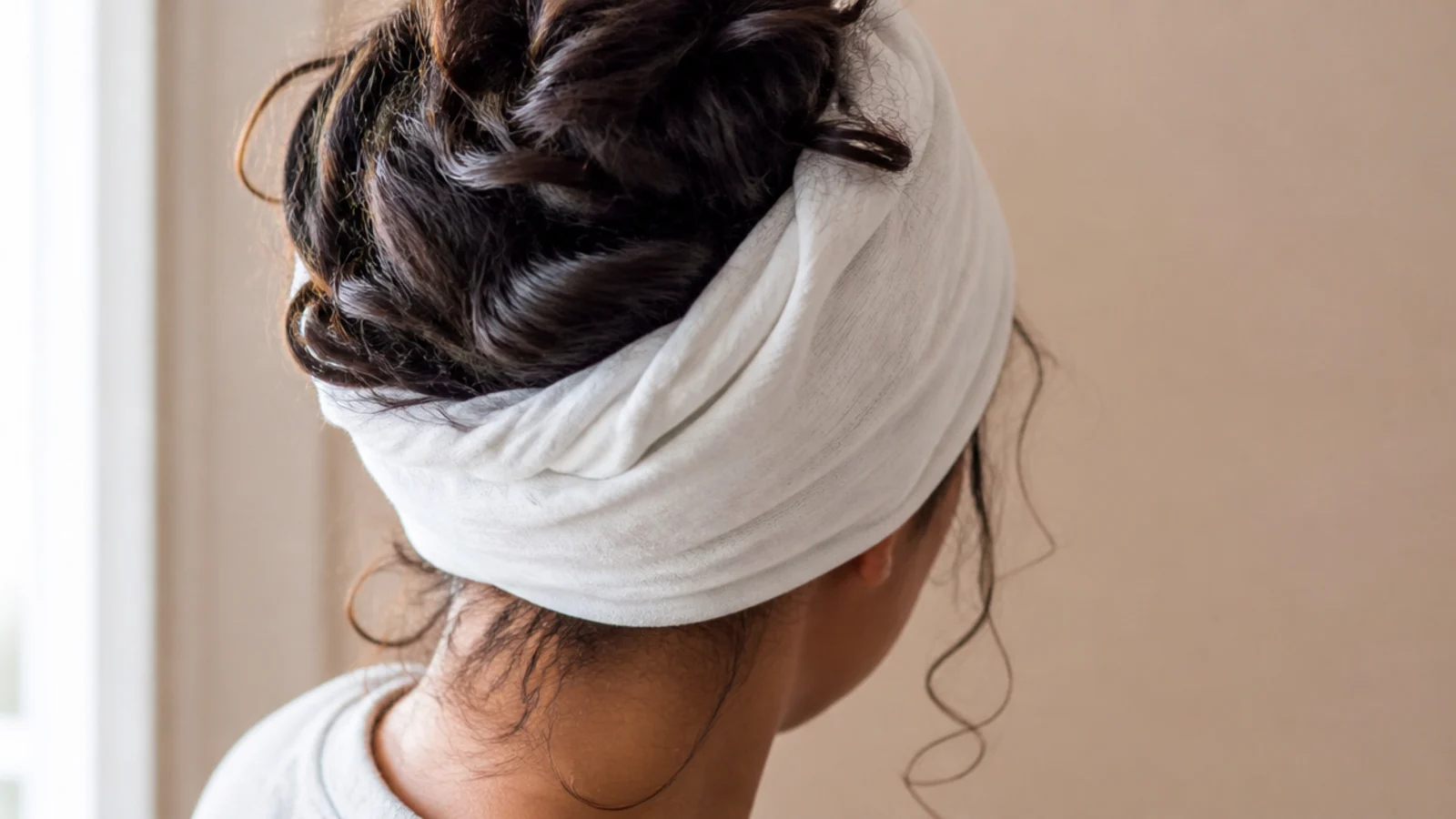
Wrapping a braid all the way around the head places a continuous band across the hairline, which is where the shortest and most stubborn hairs live. There is no free end anywhere in the style, so nothing can work loose over the course of a day.
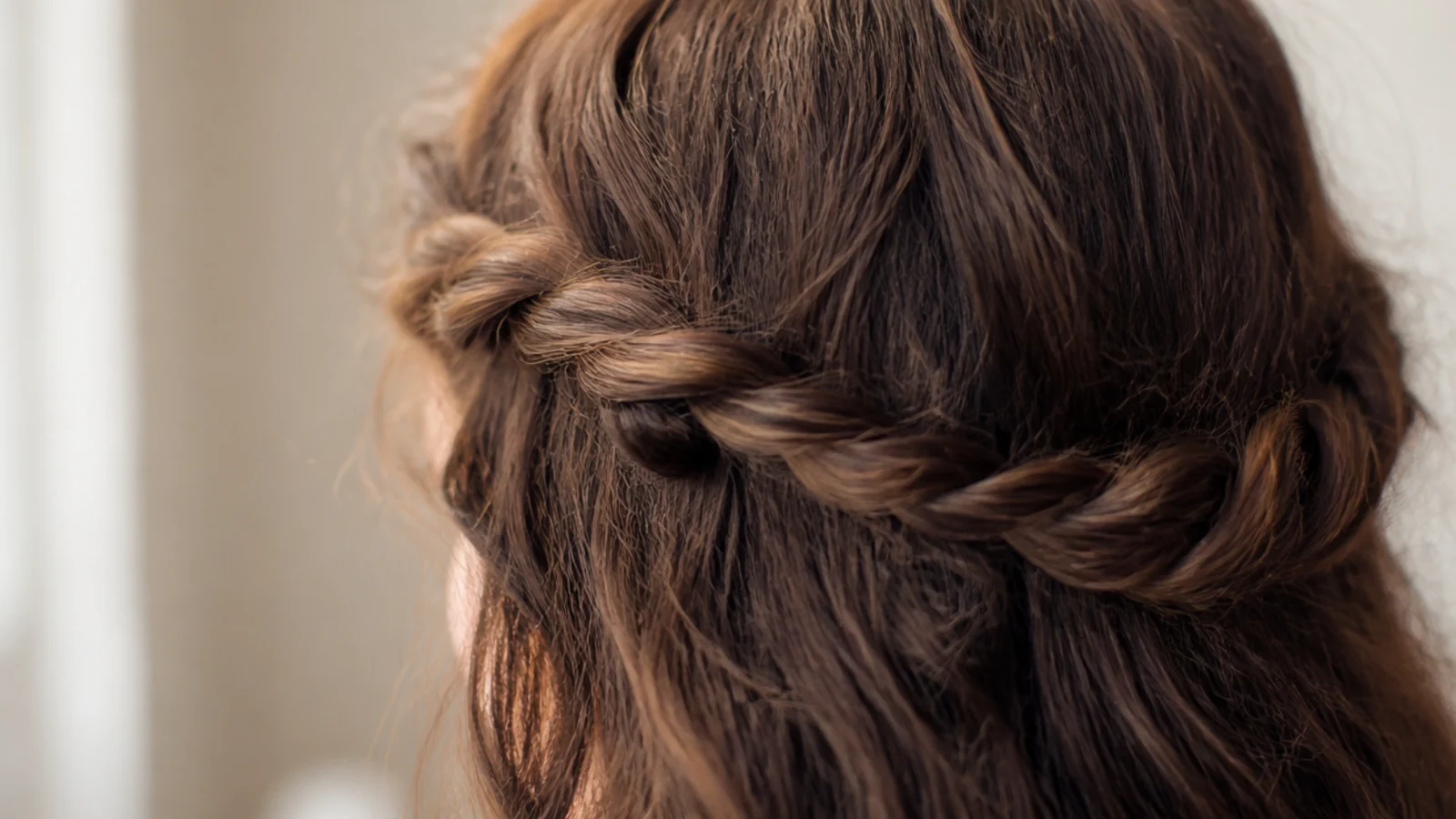
11. Braided Headband
A single braid taken from one temple to the other does the same job as a fabric band without the slip, because it is anchored in the hair rather than resting on it. It holds the front section down while leaving the length free to move.
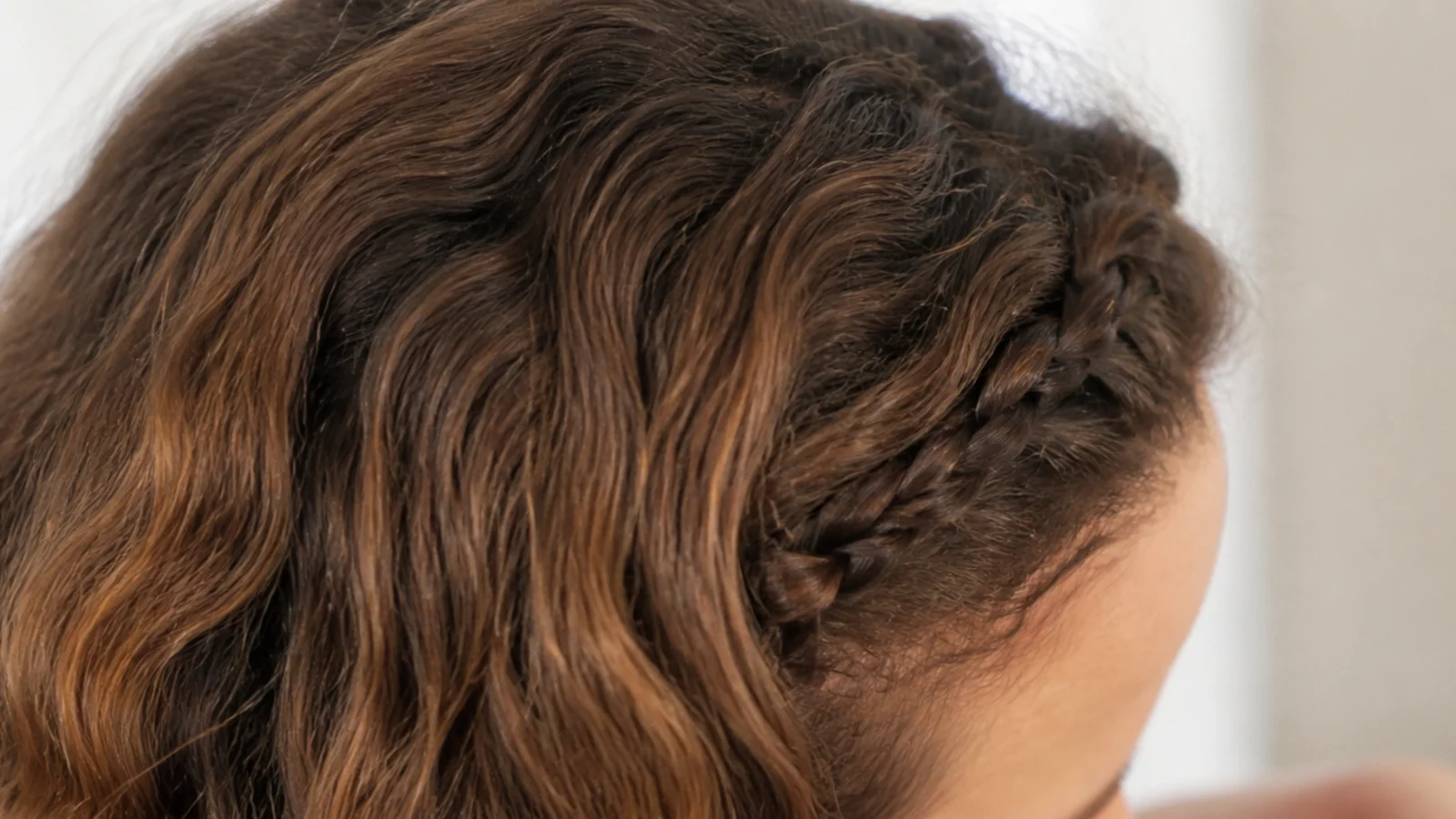
12. Rope Twist Pony
Twisting two sections one way and winding them the opposite way locks the rope against itself, so it holds without a second elastic. The twisting motion also compresses the surface of each section, pressing lifted scales flat as you work down.
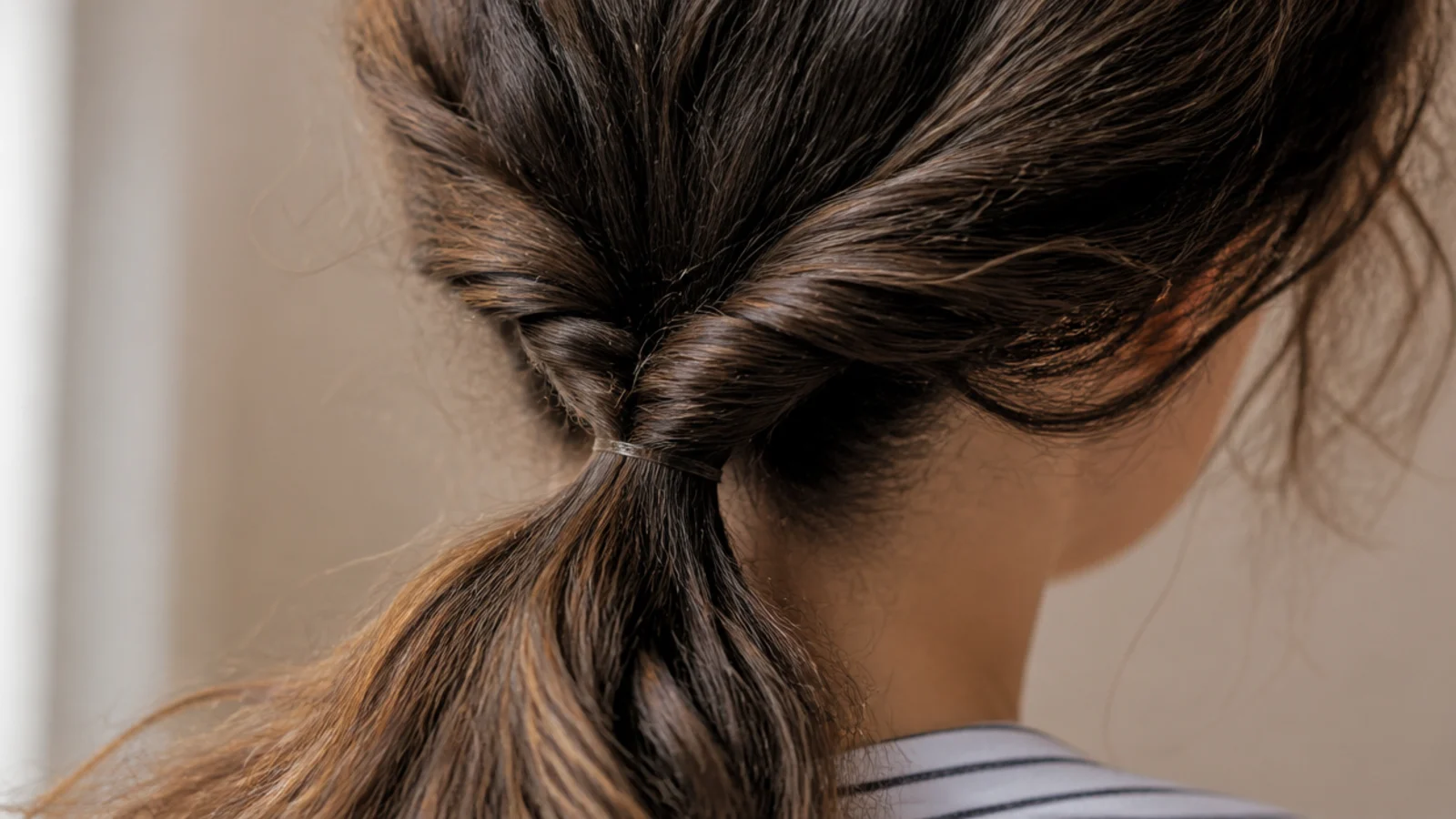
13. Bubble Ponytail
Small elastics spaced down the length turn bulk into a repeating shape, which converts volume from a flaw into the structure of the style. Choose elastics without a metal join, because the crimp concentrates stress at one point and snaps hair there.
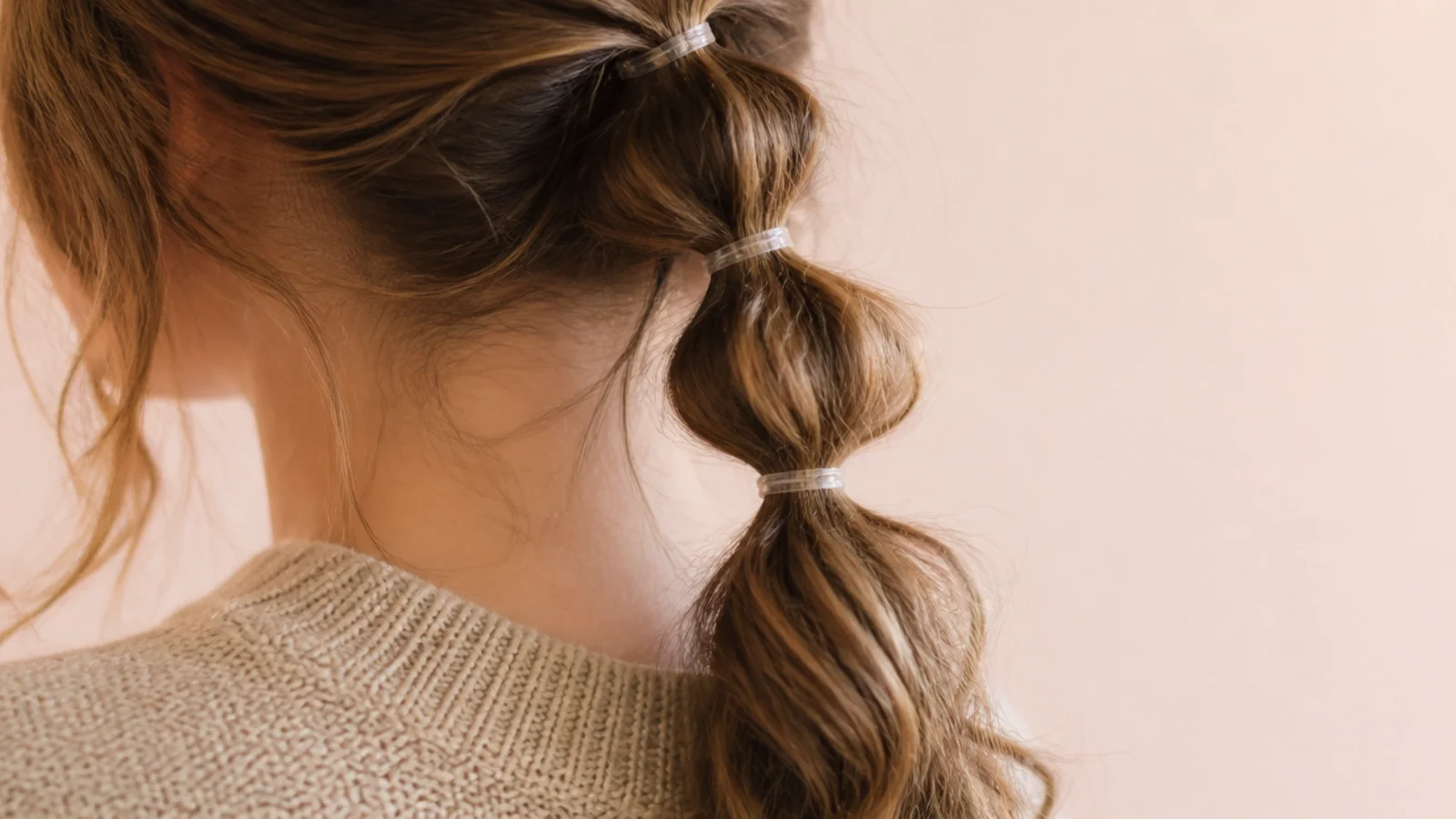
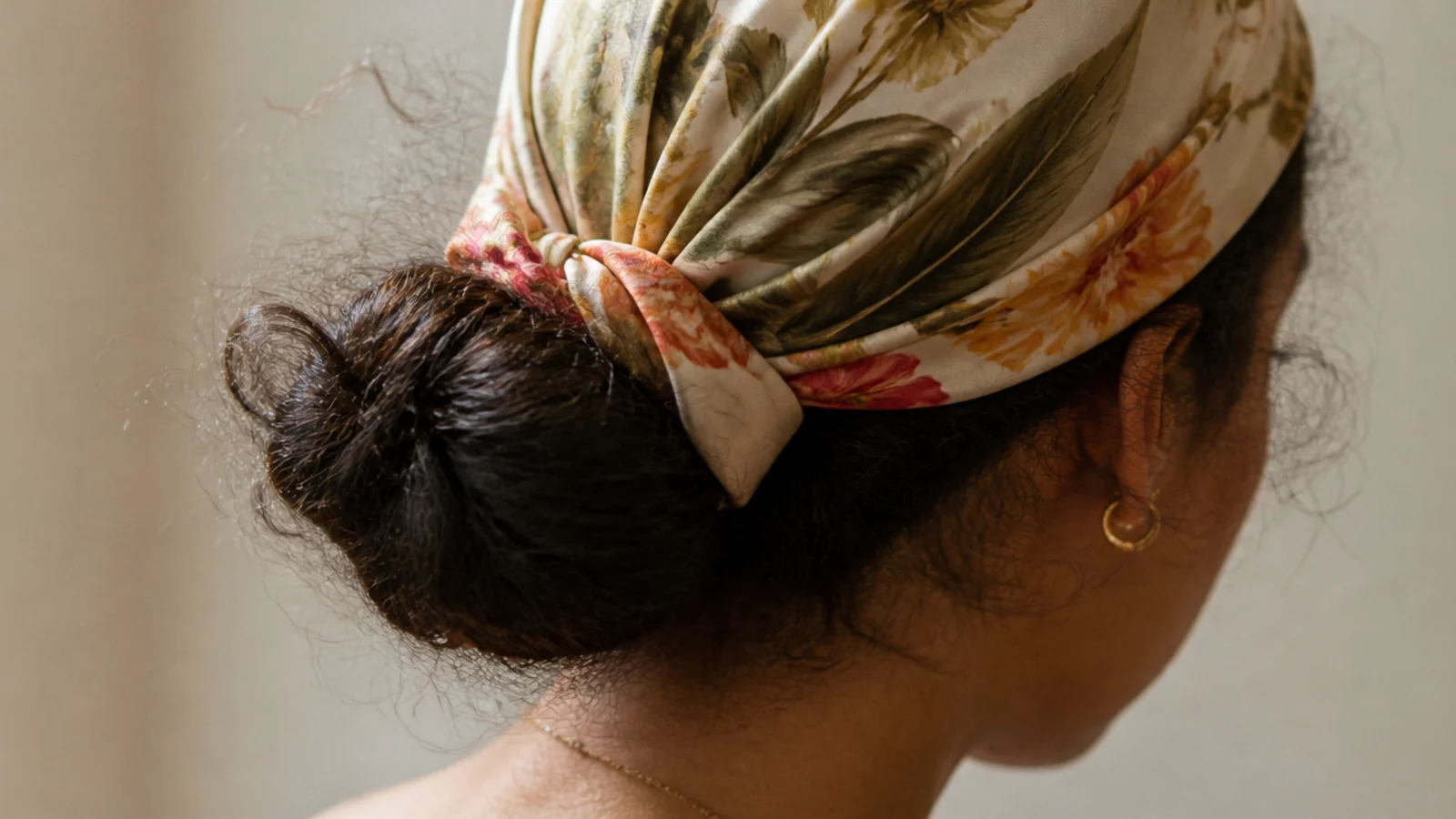
14. Silk Scarf Headwrap
A wrapped scarf covers the entire frizz prone front region rather than pressing a band across it, and silk adds almost no drag against the cuticle. It is the one style that works equally well on a fresh wash and on a fourth day set.
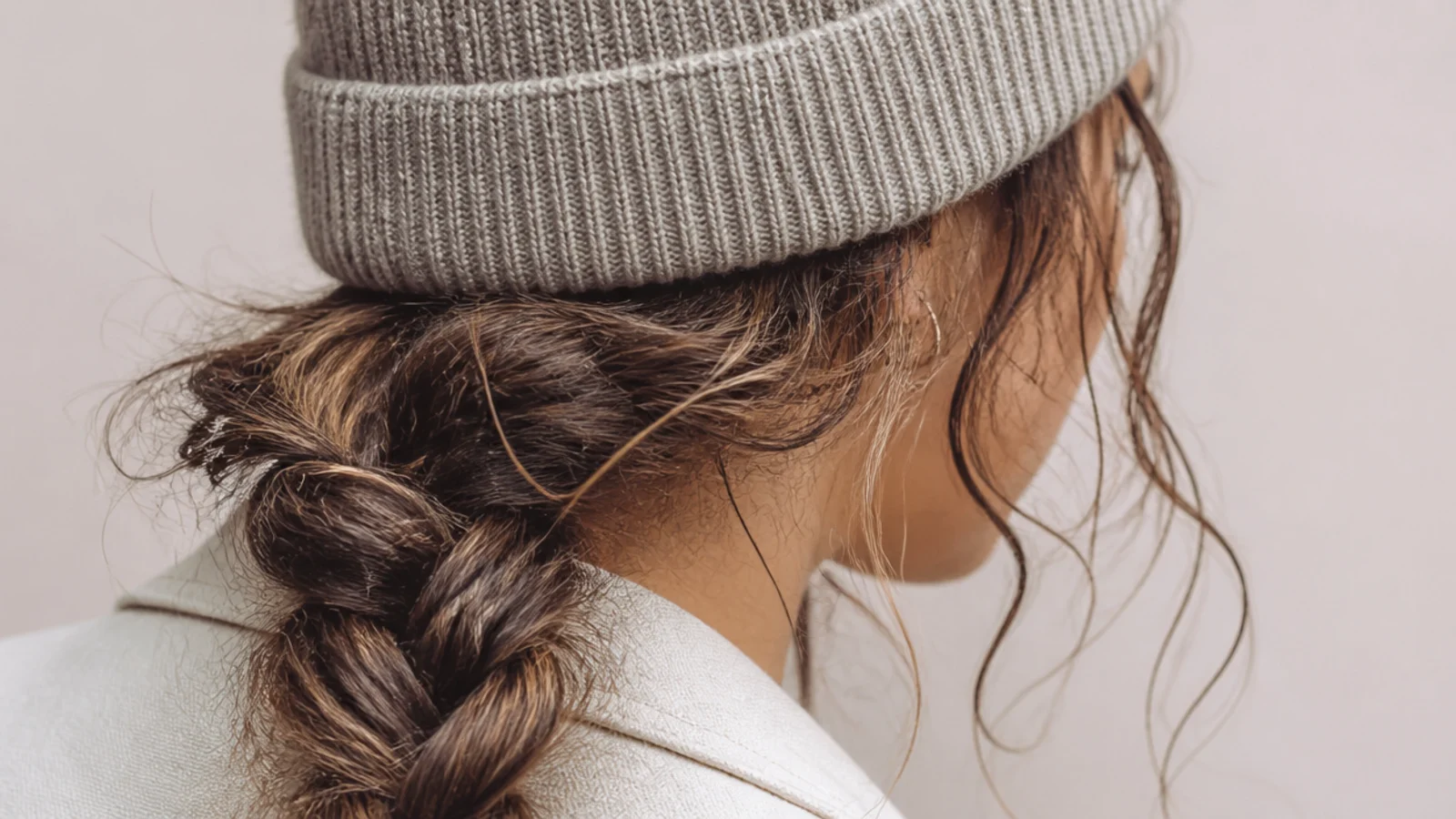
15. Low Side Braid with a Beanie
Braiding before the hat goes on means the beanie is only flattening roots rather than pressing the whole length into itself. Look for a satin lining, because wool sitting directly on the cuticle is exactly the friction that creates the halo you are covering.
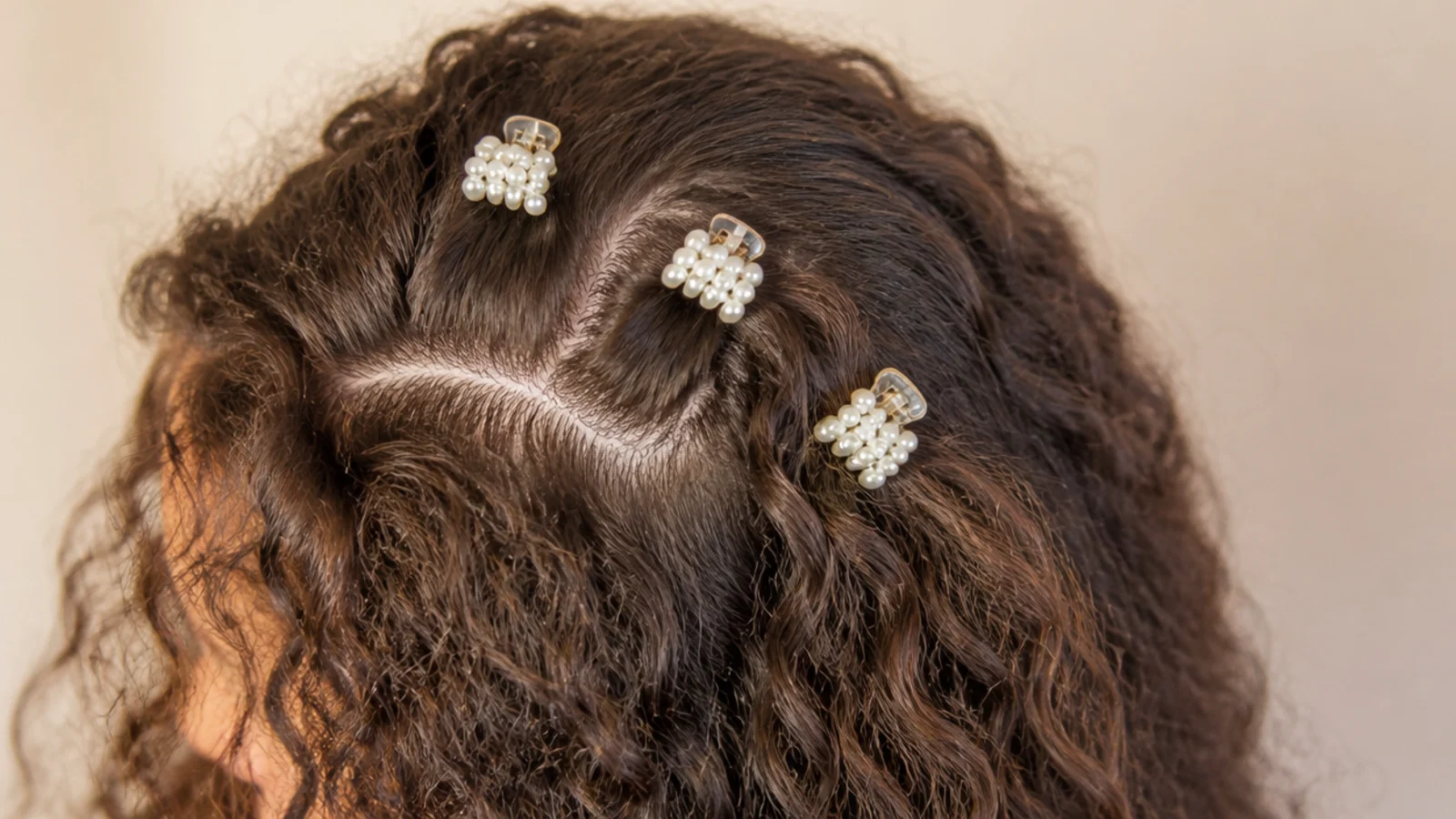
16. Mini Claw Clips
Several small clips take tension in several places rather than concentrating it in one, so no single point of the hairline is being pulled hard enough to break hair. They also catch the short pieces around the temples that a single large clip skips over.
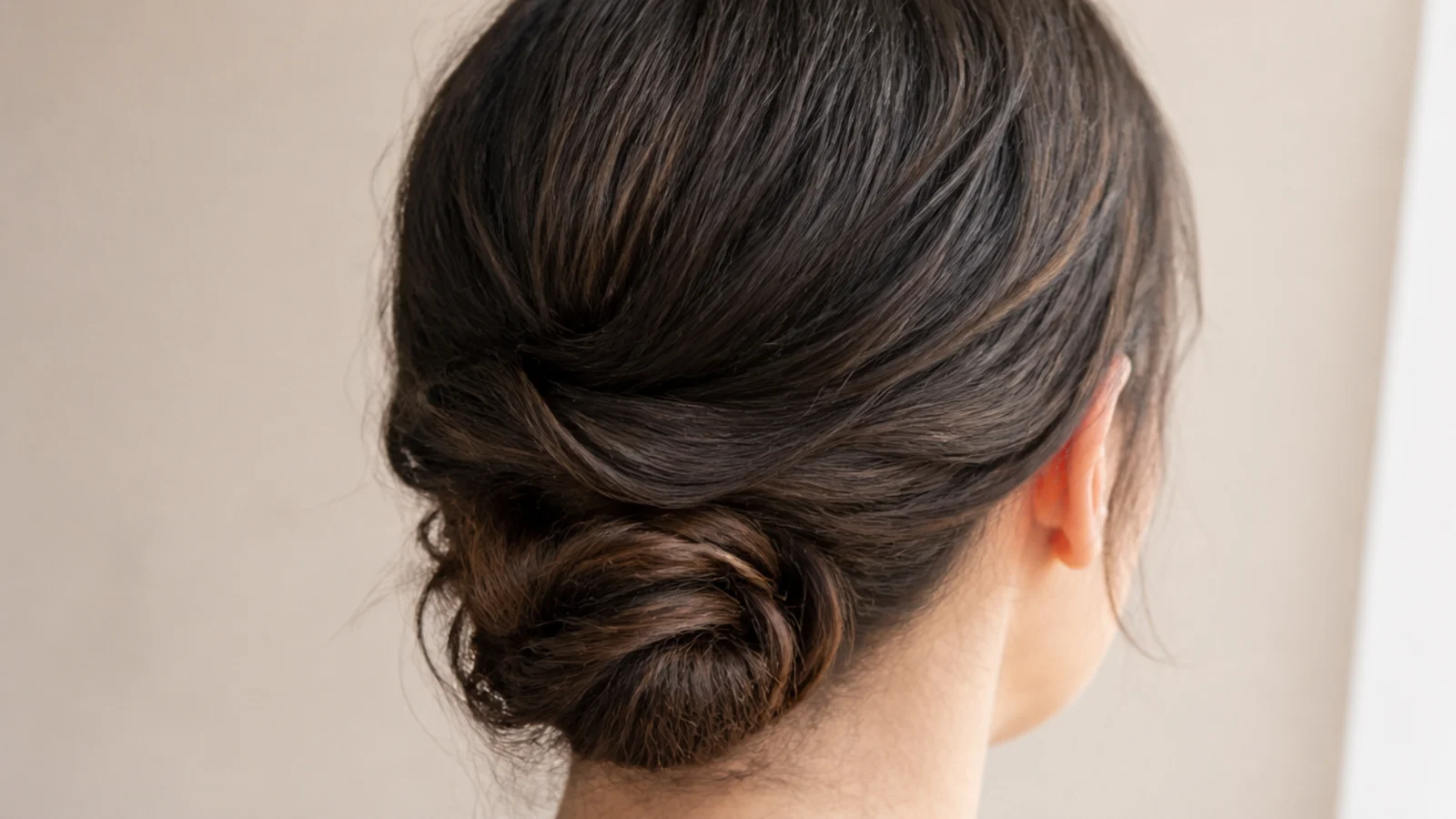
17. Low Chignon
Rolling the length under and pinning the fold puts every end inside the roll, so the surface on show is the mid length section, which is always the smoothest hair on a frizzy head. Low placement also keeps the pull horizontal rather than lifting at the hairline.
18. Overnight Braid Waves
Braiding damp hair before bed sets a bend as the bonds re-form in that position, and it binds the lengths so eight hours of pillow friction lands on the braid rather than on individual strands. Two braids give a looser wave than one, because each section is smaller and turns less.
19. High Top Knot
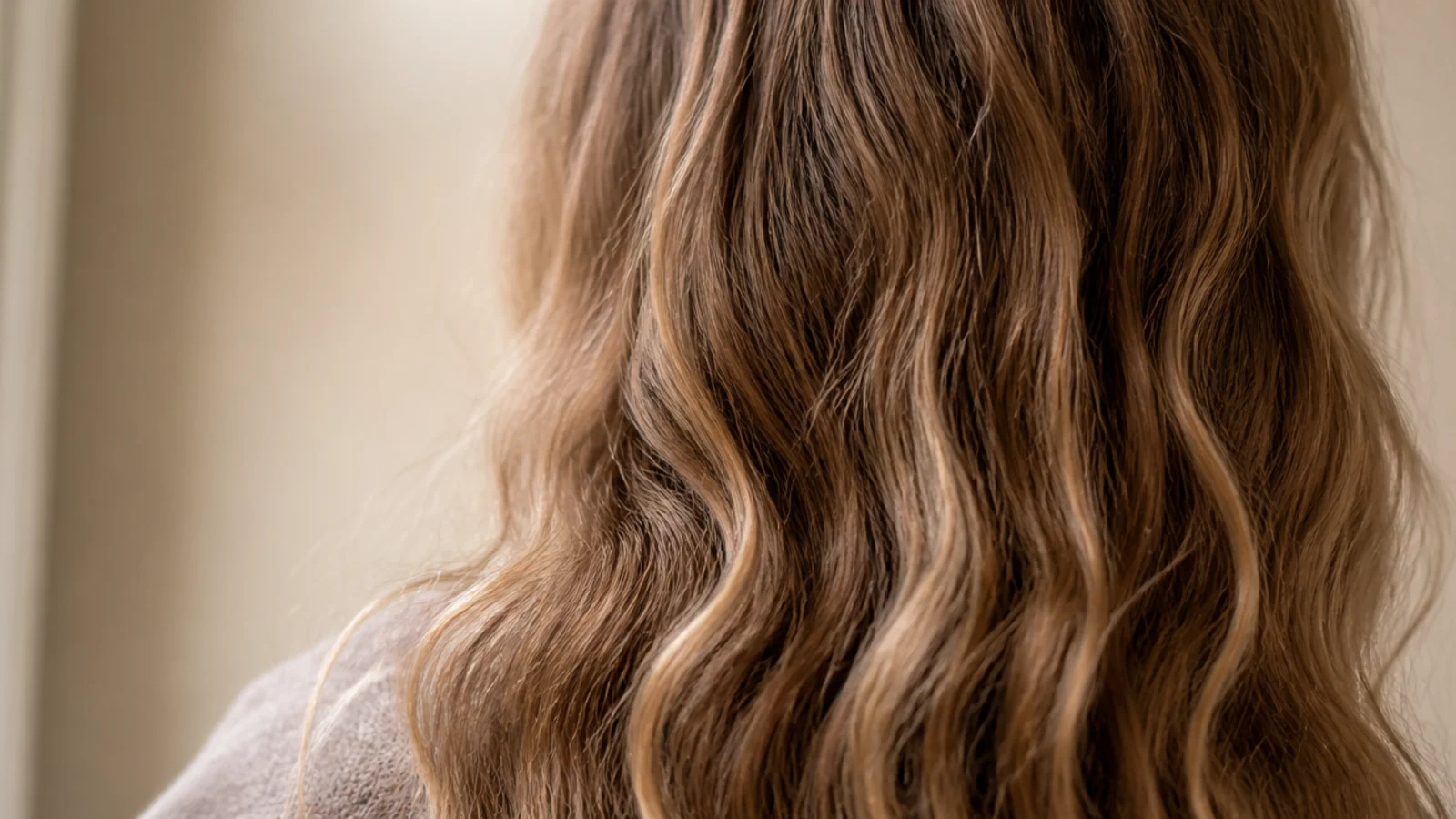
Pulling everything to a single high point puts the smoothest hair on the outside of the head and the ends inside the knot, which is the cleanest presentation available in under a minute. Wrap it on damp hair and the length dries with a soft bend already in it.
20. Diffused Half Updo
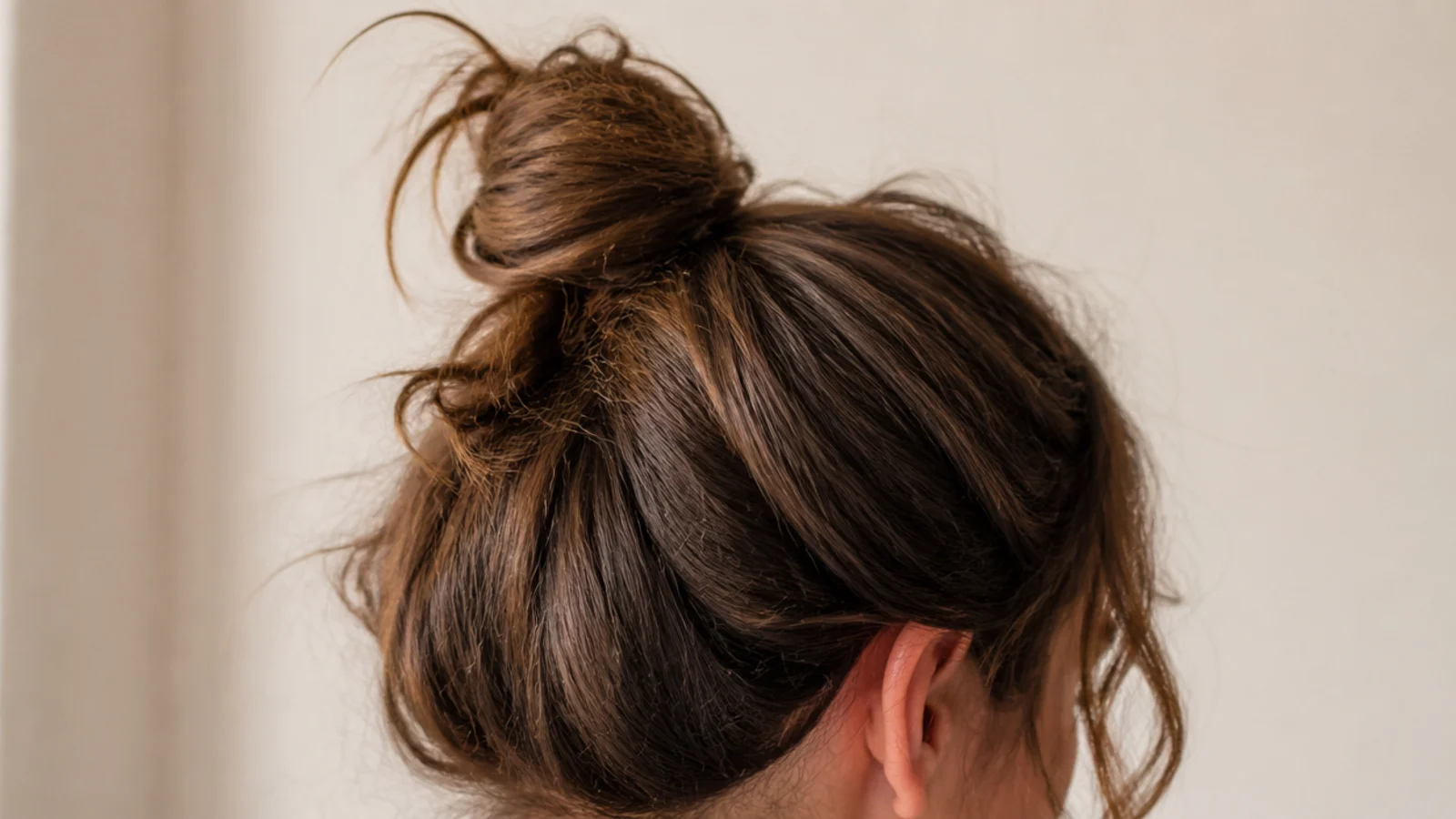
A diffuser spreads airflow so the pattern dries where it sits rather than being blown apart, and taking the top half up afterwards removes the weight that would flatten it by the afternoon. Keep the heat medium, since movement rather than temperature is what separates clumps.
Final Thoughts
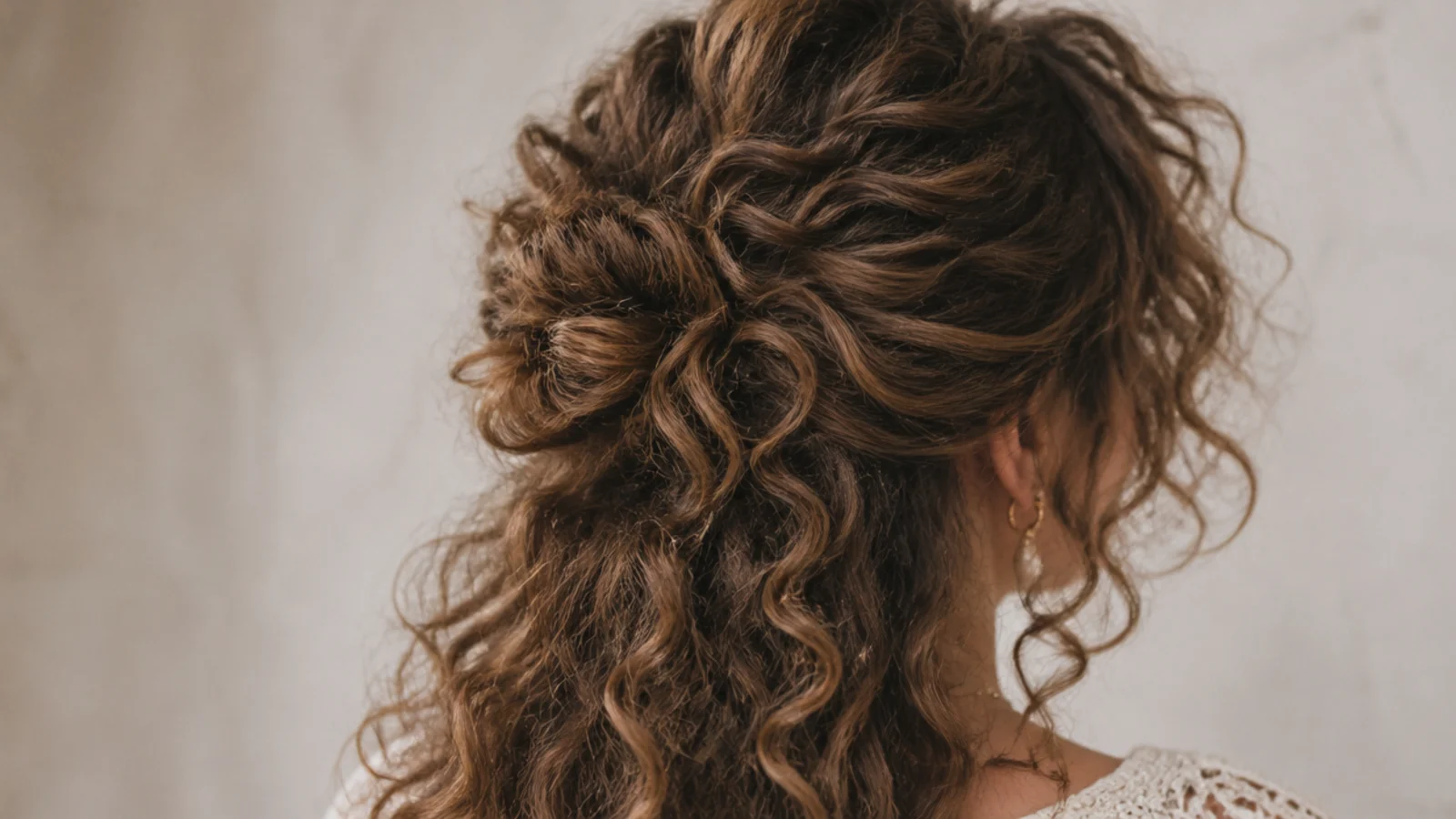
Every style here is a decision about where the loose hair goes. Folds and rolls bury it, braids weave it in, bands and scarves cover it, and a bubble ponytail or a bouffant turns it into the shape itself. Once you see the four categories, choosing a style stops being a matter of taste and becomes a matter of which one suits the frizz you actually have.
The other half of the decision is time. Wet set styles need an evening and hold for days. Dry styles take a minute and hold until the clip comes out. A week that alternates the two is far more sustainable than a week of trying to make loose hair behave.
For styles that work on unwashed hair see the day 3 greasy version, and for the dressed up versions see hoco hairstyles for curly hair. More in Hair Care.