15 Hairstyles for Puffy Frizzy Hair That Contain the Volume
Fifteen styles for puffy frizzy hair, built on a distinction most advice misses — puff and frizz are two different problems. Frizz is strands lifting off the surface, puff is a shape expanding, and sealing does nothing for the second one.
In this article · 23
- Why Puffy Hair Frizzes
- Where the Puff Sits and What That Tells You
- A Wash Day Routine for Puffy Hair
- Product Layering Order
- Humidity Sleep and Tension
- Cuts and Layers for Puffy Hair
- The 15 Hairstyles for Puffy Frizzy Hair
- 1. Claw Clip Twist
- 2. Low Nape Chignon
- 3. Double Stacked Buns
- 4. Deep Side Part Twist
- 5. High Ponytail with a Wrapped Base
- 6. Silk Scarf Headband
- 7. French Twist
- 8. Dutch Braid Crown
- 9. Loose Low Side Braid
- 10. Side Fishtail Braid
- 11. Rolled Bun Tuck
- 12. Overnight Braid Waves
- 13. Blunt Chin Bob
- 14. Shoulder Length Shag
- 15. Curtain Bang Blowout
- Final Thoughts
Puffy hair and frizzy hair get the same advice, and half of it is wasted, because they are not the same problem.
Frizz is strands lifting off the surface. Sealing the cuticle with a cream or a gel film fixes that, because the mechanism is a scale standing open.
Puff is a shape expanding outward. Nothing about a smoother strand narrows it. Puff needs compression, weight at the ends, or a style that physically winds the hair against itself.
Why Puffy Hair Frizzes
Density without weight expands. Coarse or dense hair has enough strands to push outward and often not enough length to pull the shape down, so the outline widens at the mid length.
Coarse strands resist bending toward each other. A thick strand has more bending stiffness than a fine one, which is why coarse hair holds a gap between neighbours instead of falling into a clump.
No clumping means every strand is visible separately. Curls and waves hold their shape by grouping. When strands sit apart the eye reads each one, and that reads as both puff and frizz at once.
Humidity then adds the frizz on top. Keratin absorbs water from the air, the cortex swells, and open cuticle scales push wider still. That is the part a product can genuinely help with.
Where the Puff Sits and What That Tells You
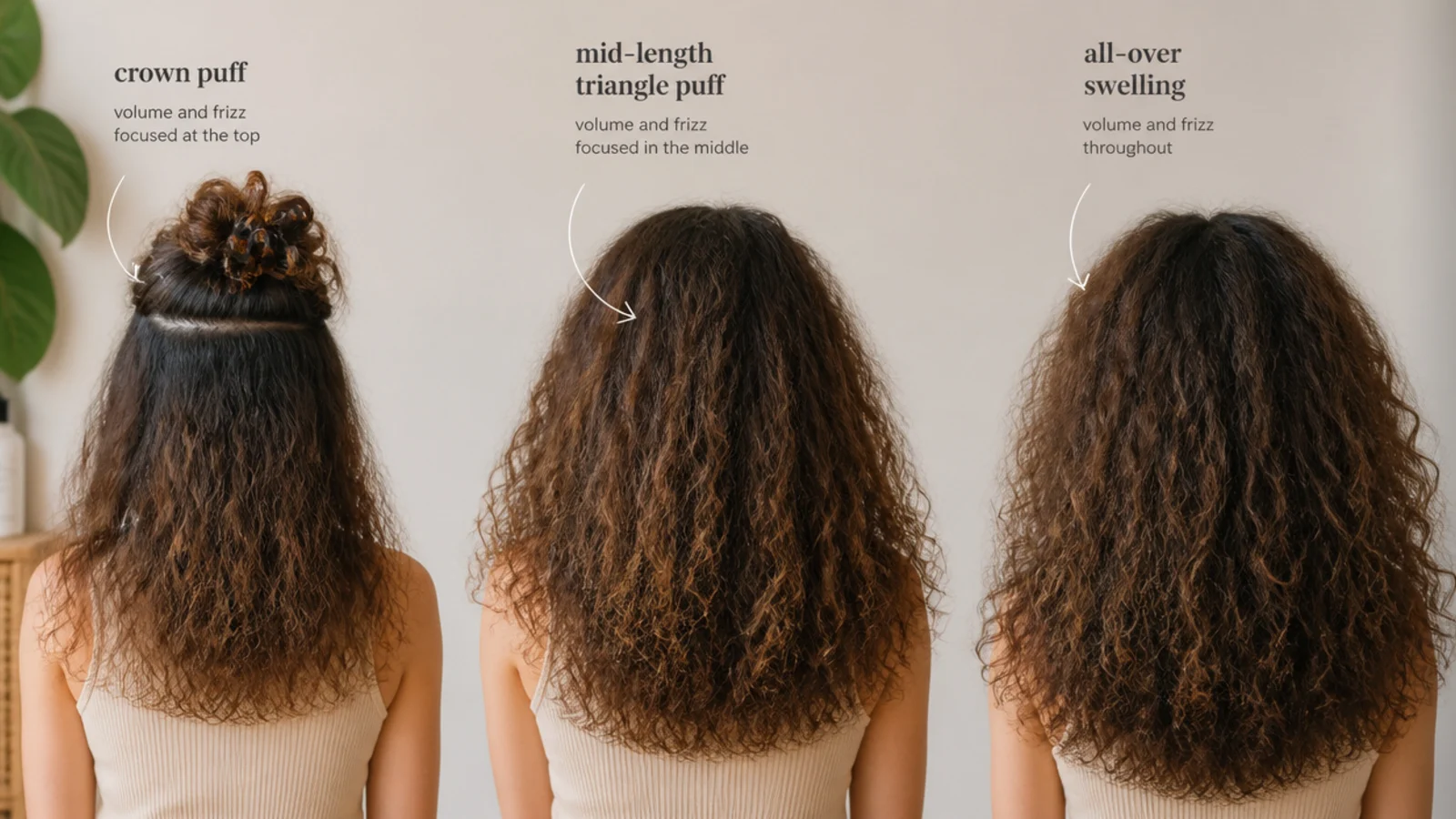
Puff at the crown is usually short layers. Anything cut into the top of the head leaves a short end that stands up rather than falling, and the crown is where they are most visible.
Puff at the sides is the widest point of the cut. If the shape flares level with the cheekbone, the cut is putting mass where the head is already widest. Moving the widest point below the jaw fixes it without losing length.
Puff through the mid lengths is over layering. Too much weight removed above the perimeter leaves nothing to pull the middle of the length down.
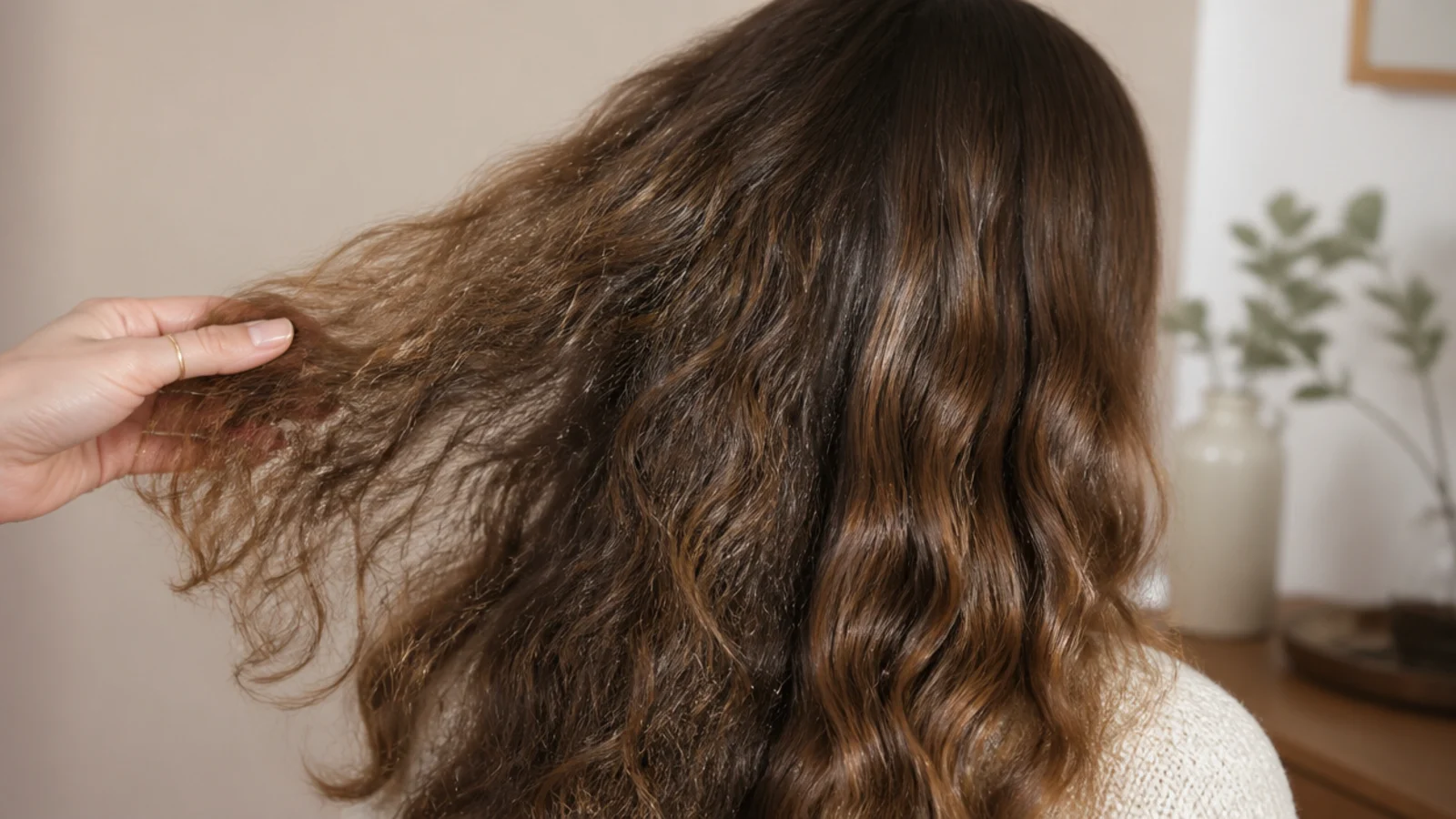
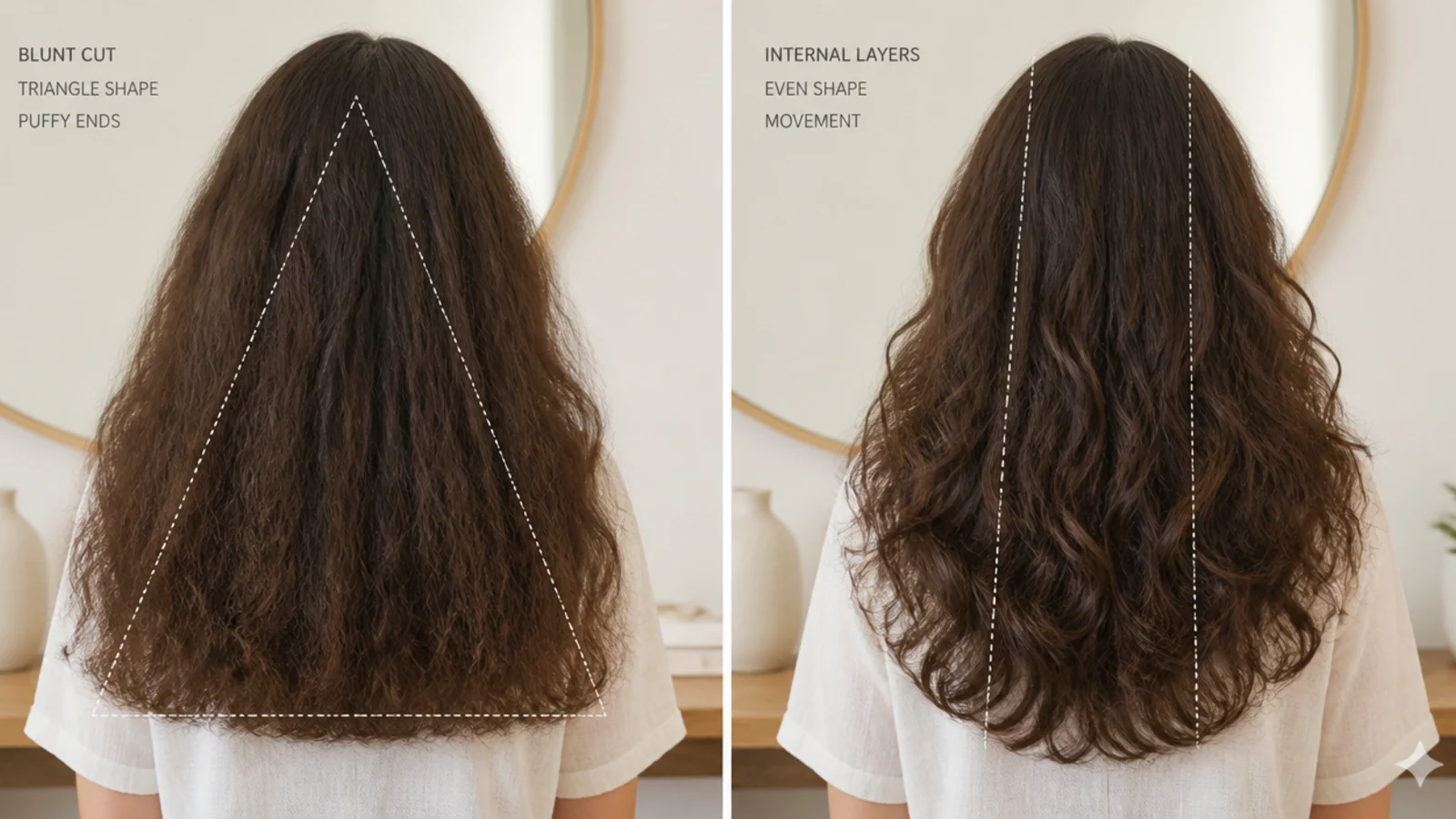
Puff at the ends is either damage or a blunt line on dense hair. Splayed damaged ends fray outward, and a hard perimeter on very thick hair reads as the base of a triangle.
Puff only at the front is breakage. Short hairs at the hairline from repeated tension, which no style fixes and every tight ponytail adds to.
A Wash Day Routine for Puffy Hair
Shampoo the scalp only. Detergent belongs where oil is produced. Running it down the lengths strips a lipid layer that coarse ends cannot replace.
Be generous with conditioner and rinse less thoroughly. Leaving a thin film behind gives strands slip against each other, which is what lets coarse hair settle together rather than standing apart.
Detangle in the conditioner and nowhere else. Dry detangling shears through the few clumps you have and turns them into separated strands.
Blot with cotton jersey, never a terry towel. The loops of a towel snag lifted scales and lever them open, adding frizz to a shape that was already wide.
Apply everything soaking wet, then leave it alone. Product spreads through the water on the strand, and hands on drying hair separate the clumps that were forming.
Product Layering Order
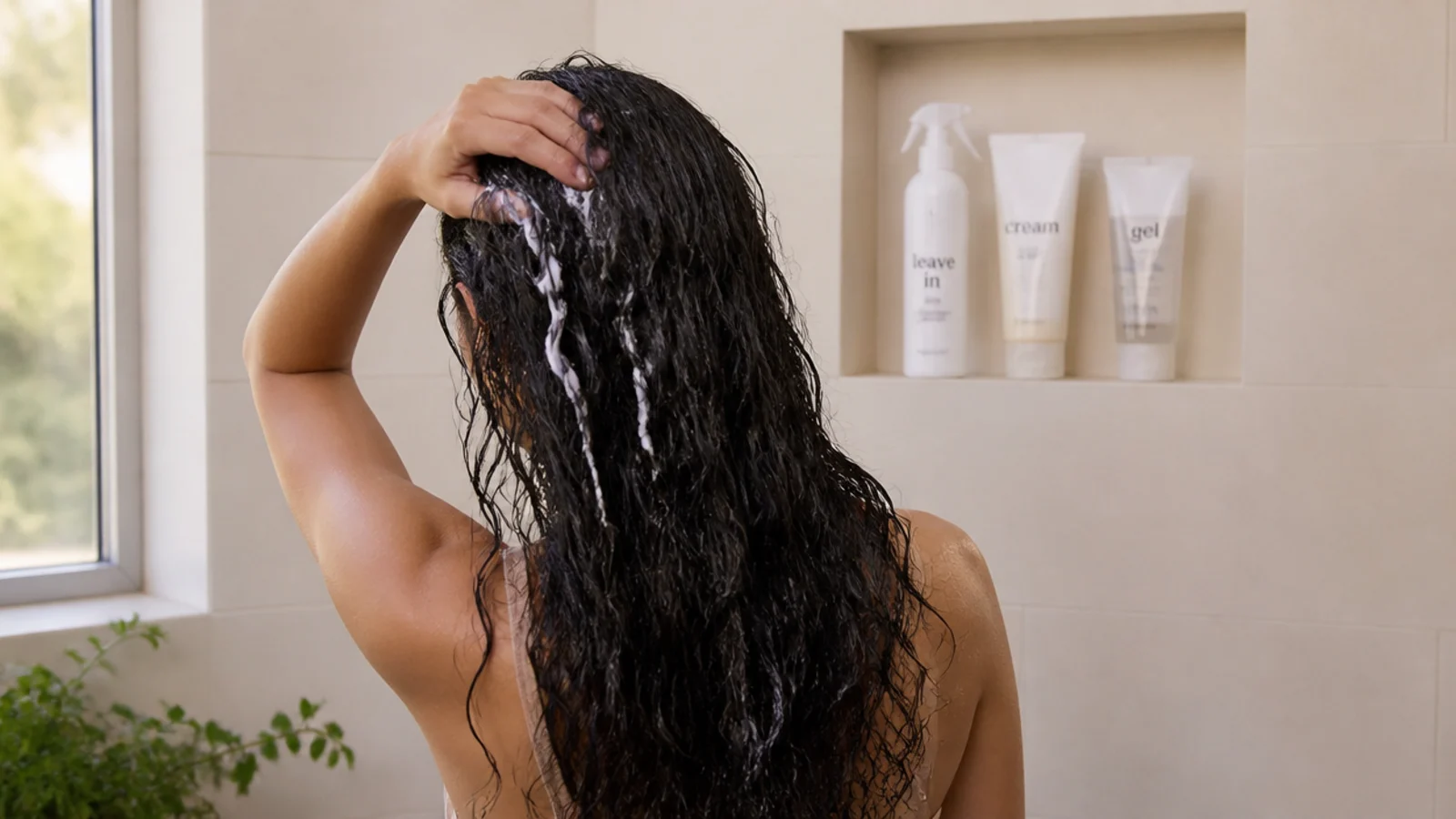
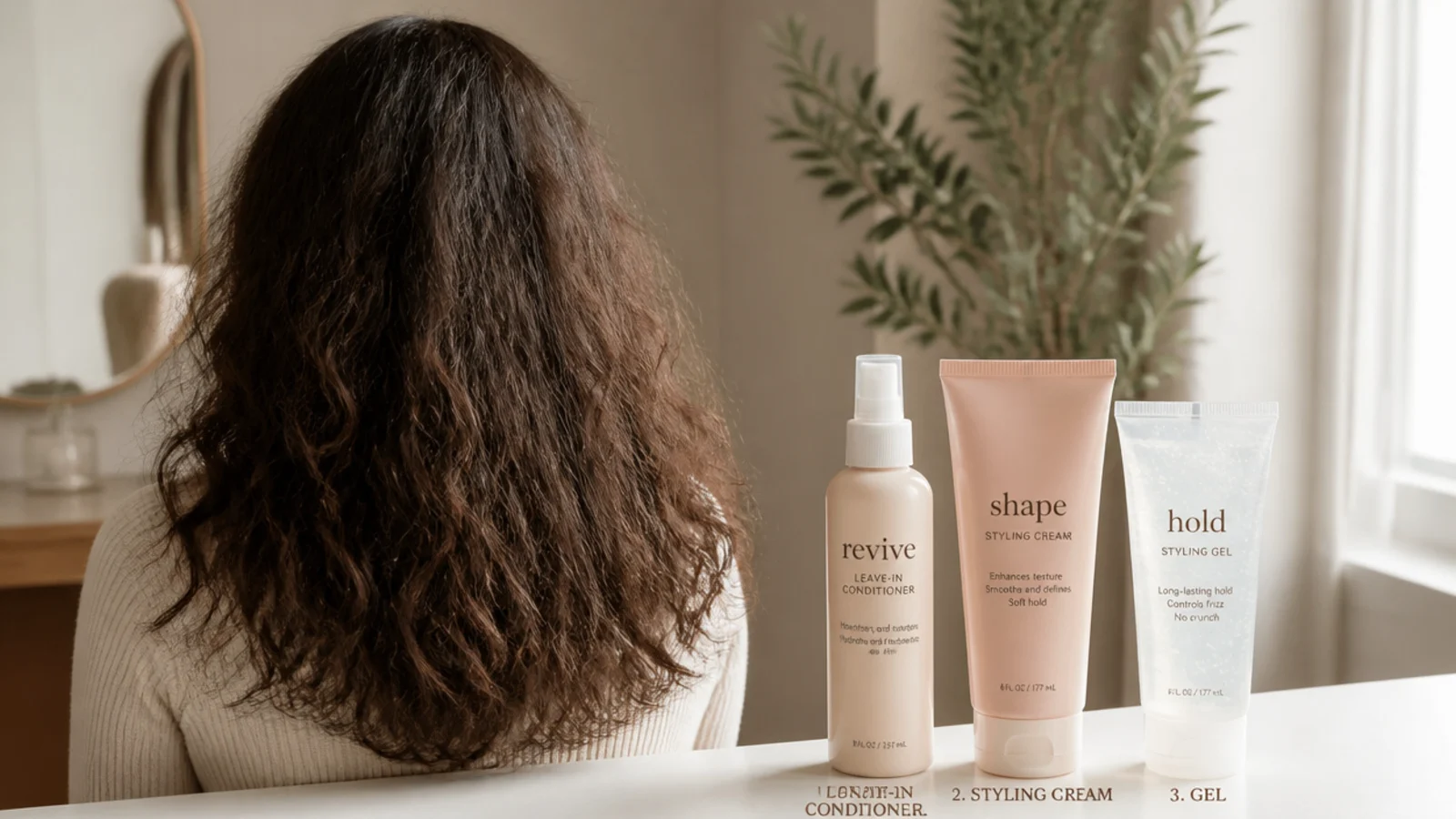
Leave in first, on wet hair. It binds water into the strand and gives everything above it a smooth even base to spread over.
Cream second, and use more than you think. Cream is the layer that reduces friction between strands, and coarse hair takes considerably more of it than fine hair before it does anything.
Gel last, as the outer layer. The dried film is the only part of the routine that stands between the cuticle and the air, so it has to be on top of everything else.
Weight is a tool here, not a risk. On fine hair a heavy product ruins the style. On dense puffy hair the weight is doing useful work pulling the shape down.
Break the cast only when fully dry. Scrunching a gel cast before the hair is dry destroys the compression that was holding the shape narrow.
Humidity Sleep and Tension
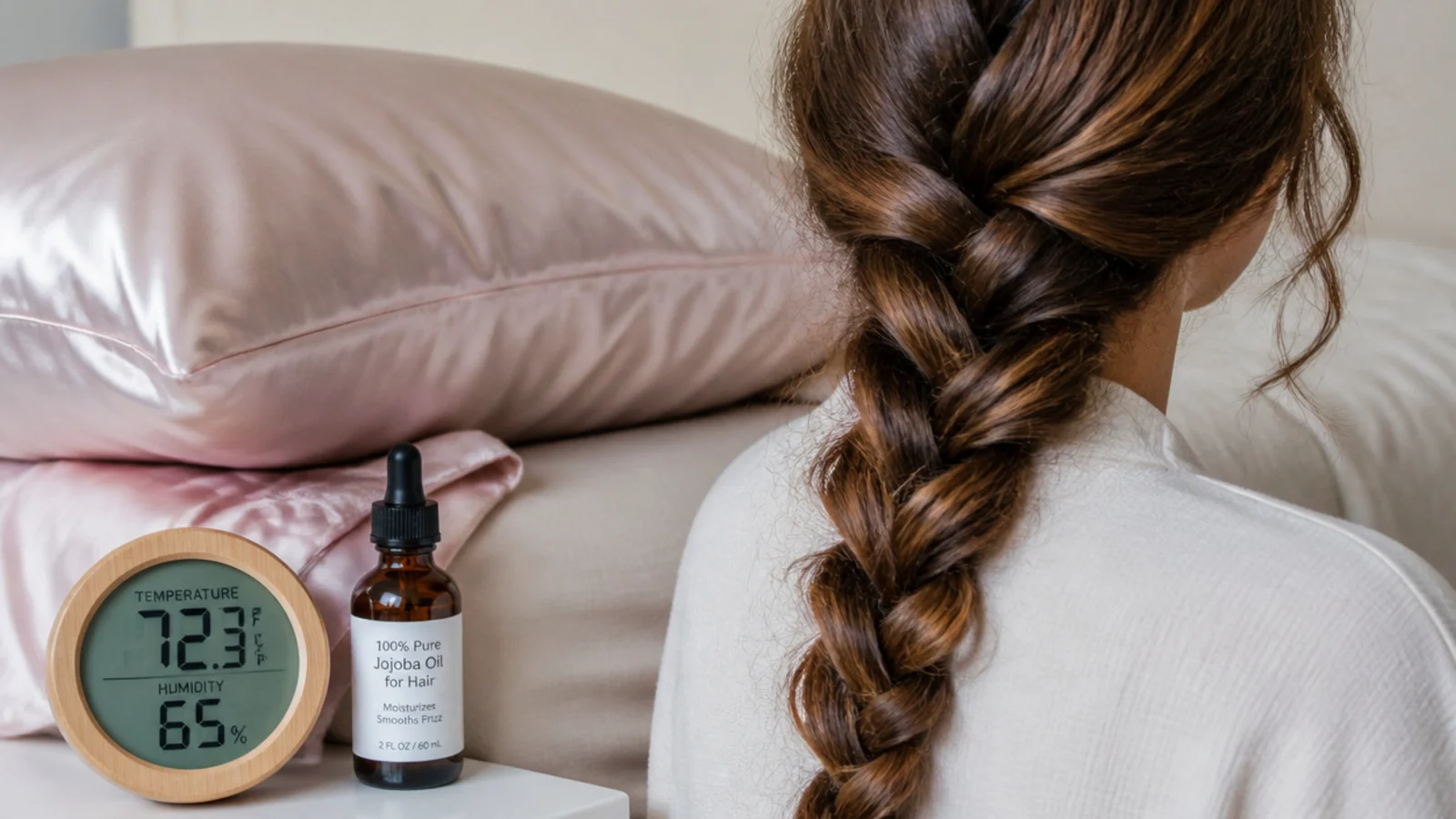
Above roughly sixty percent humidity, unsealed hair moves. Hair reads water in the air rather than rain, so a still humid indoor day can be worse than a wet windy one.
Cotton pillowcases cause two problems at once. High friction lifts the cuticle mechanically over a night, and the absorbency pulls out the moisture that was holding the scales flat.
Compression overnight is worth more than any product. A loose braid, a wrapped scarf or a high gather keeps the shape narrow while you sleep, so you wake with the width you went to bed with.
Tension breaks hair at the hairline. The same tight ponytail in the same place breaks short hairs there, and every break adds a new short piece standing up at the front.
Vary the parting and the tie height. It costs nothing, spreads the load across the hairline, and it is the only fix for traction breakage that actually works.
Cuts and Layers for Puffy Hair
The widest point is the whole decision. Ask where it will land before anything is cut, because a shape that flares at the cheekbone and one that flares below the jaw are the same cut in different positions.
Weight at the perimeter pulls the shape down. A heavier bottom line is the simplest narrowing tool available, and it costs nothing to keep.
Interior layers narrow, surface layers widen. Remove bulk from underneath and the shape gets slimmer. Cut the same amount off the top and you gain a halo instead.
Point cut the perimeter on very dense hair. It breaks the hard bottom line so the shape stops reading as a triangle, without removing the weight above it.
Hair grows about half an inch a month. Layers that sit correctly today are half an inch lower in a month, and a shape built only for the day of the cut will widen again by the third one.
The 15 Hairstyles for Puffy Frizzy Hair
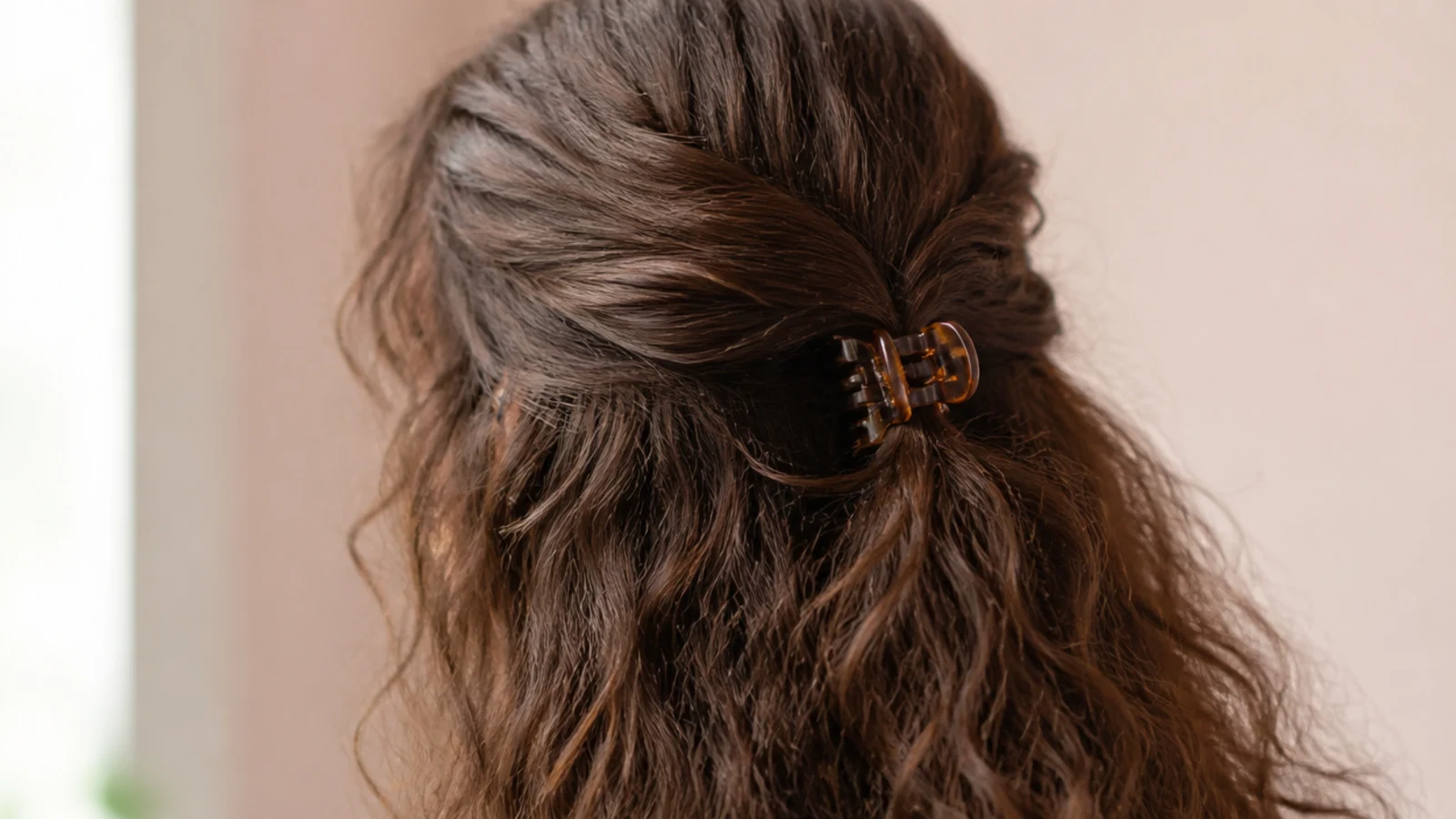
1. Claw Clip Twist
Twisting the section before clipping it compresses the hair against itself, so the clip is holding a narrow rope rather than trying to close over a wide fan. That compression is why a twist holds thick hair in a clip that would spring open on the same hair gathered flat.
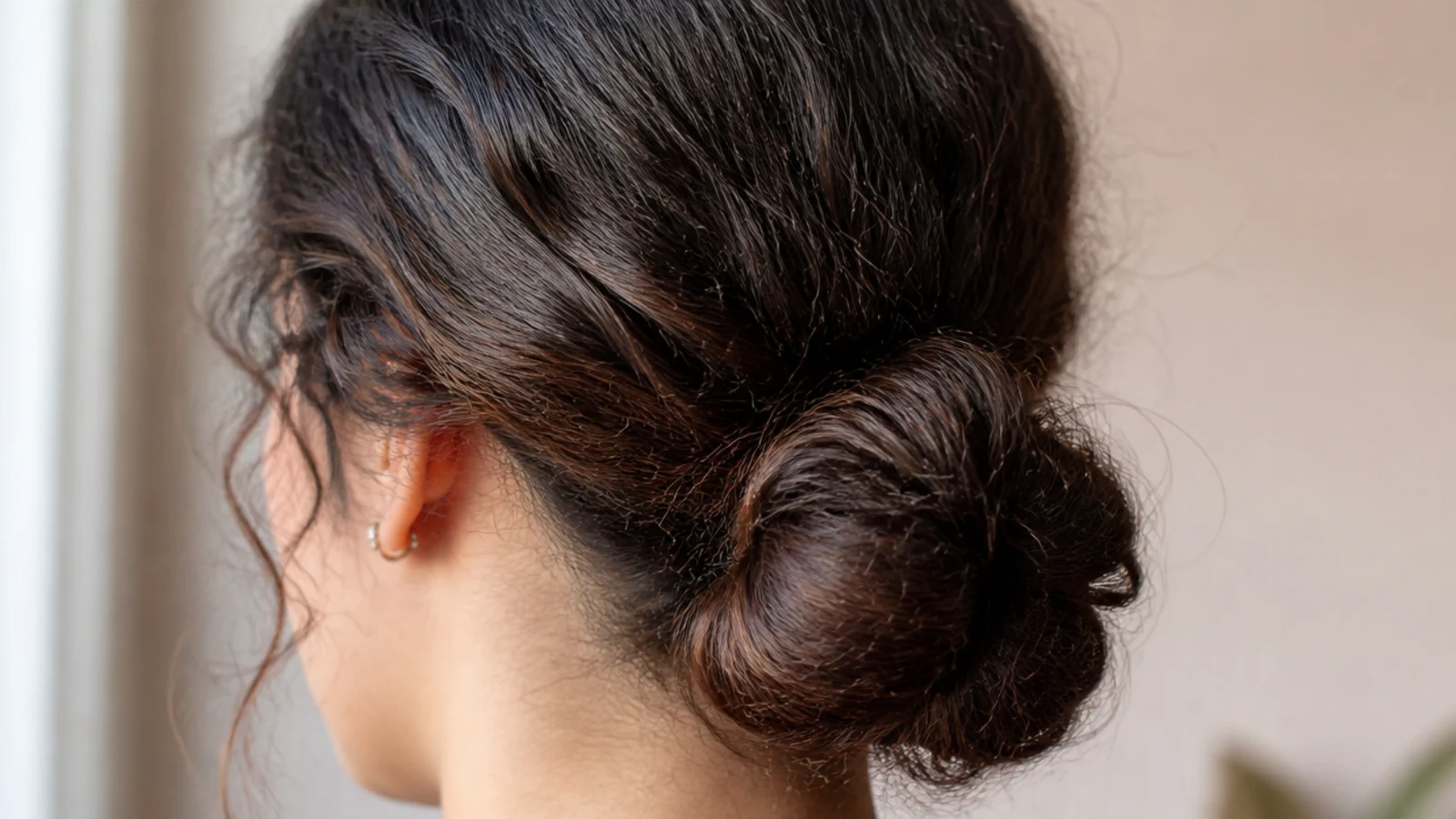
2. Low Nape Chignon
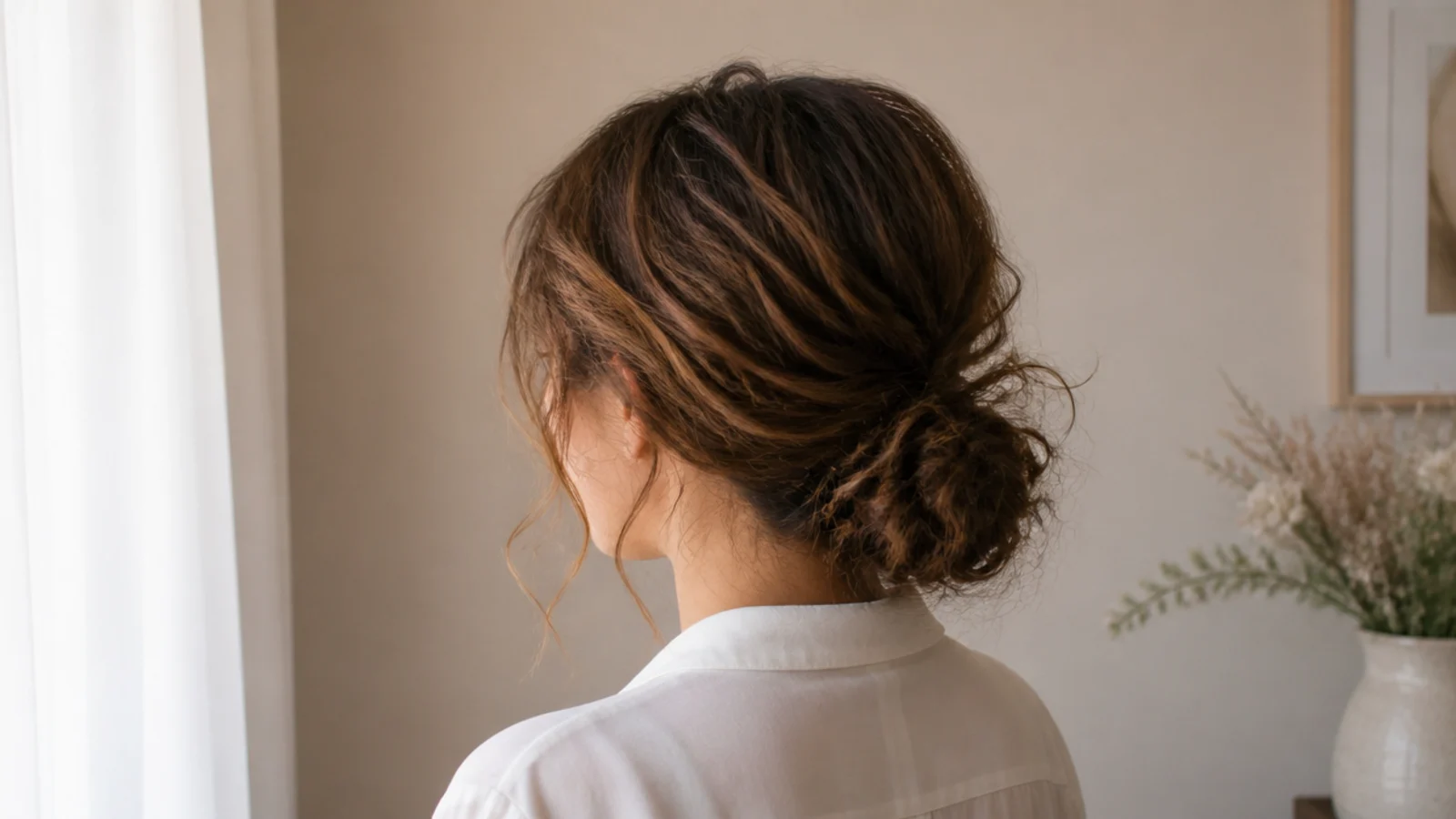
Rolling the length under at the nape puts every end inside the fold, so the surface on show is the mid length section, which is always the smoothest and least puffy part of the hair. The low position also keeps the pull horizontal rather than lifting the hairline.
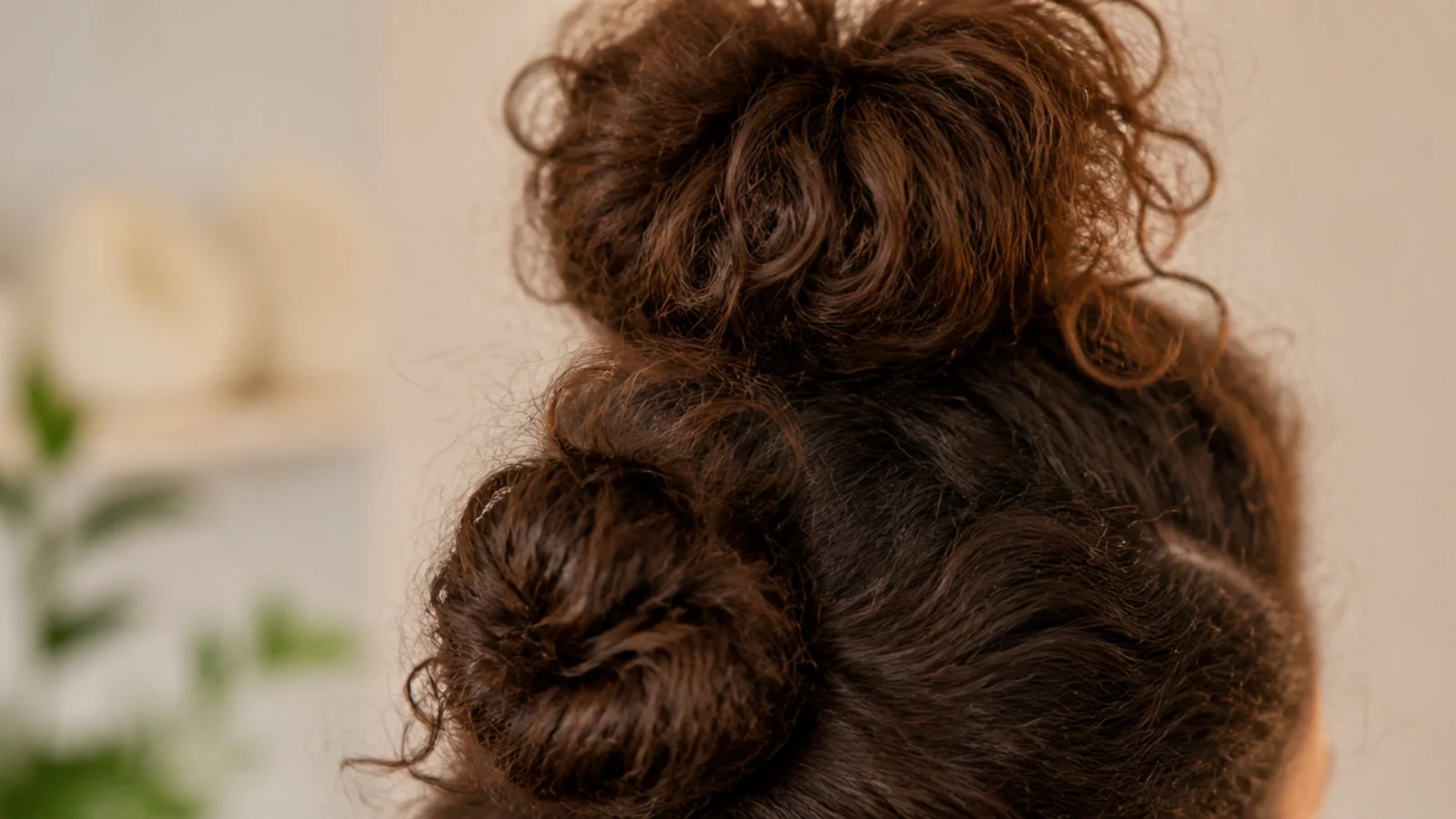
3. Double Stacked Buns
Splitting the hair before you coil it halves the bulk in each bun, and two smaller coils sit tighter than one large one because a smaller radius means the hair wraps more times around itself. That extra wrapping is what stops thick hair sitting as a loose ball.
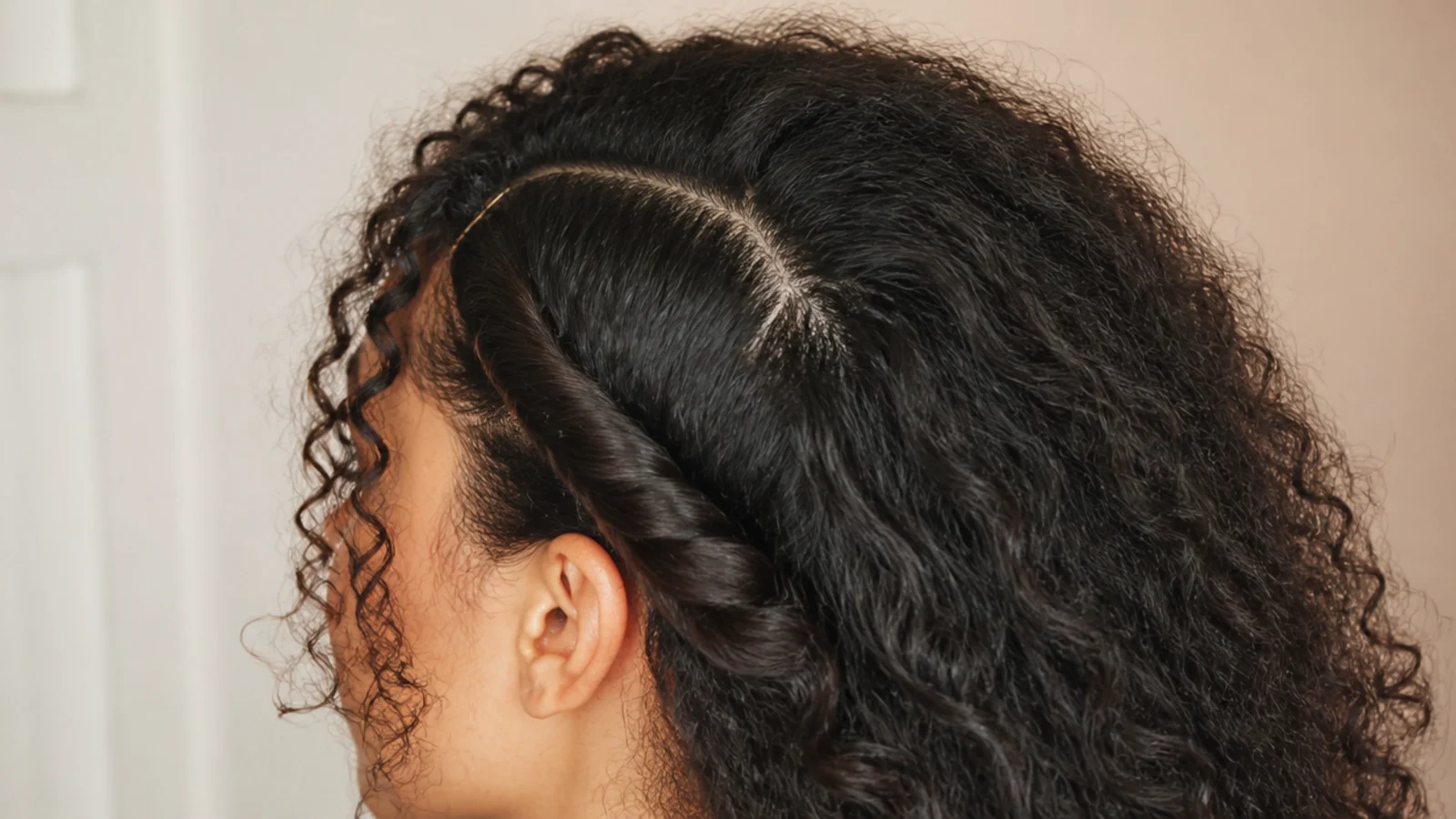
4. Deep Side Part Twist
A deep part moves the bulk of the hair to one side, so instead of two equally wide halves you get one flat side and one with deliberate volume. Twisting the heavy side back and pinning it compresses that volume into a shape with a defined edge.
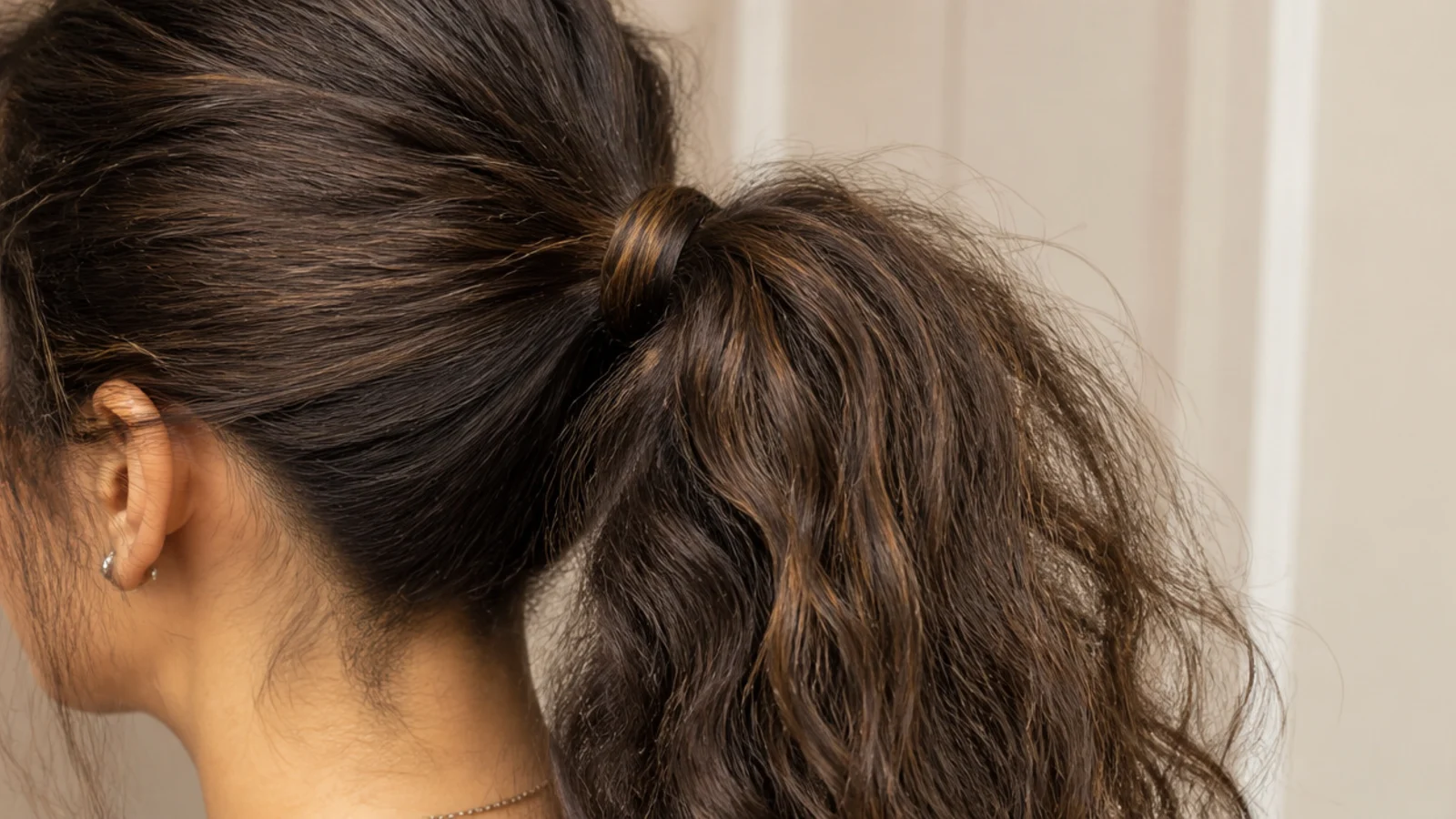
5. High Ponytail with a Wrapped Base
Wrapping a section of hair around the elastic pulls the base in tight and hides the widest, loosest point of any ponytail. The wrap also removes the visible band, which is what makes the difference between a ponytail that looks tied and one that looks finished.
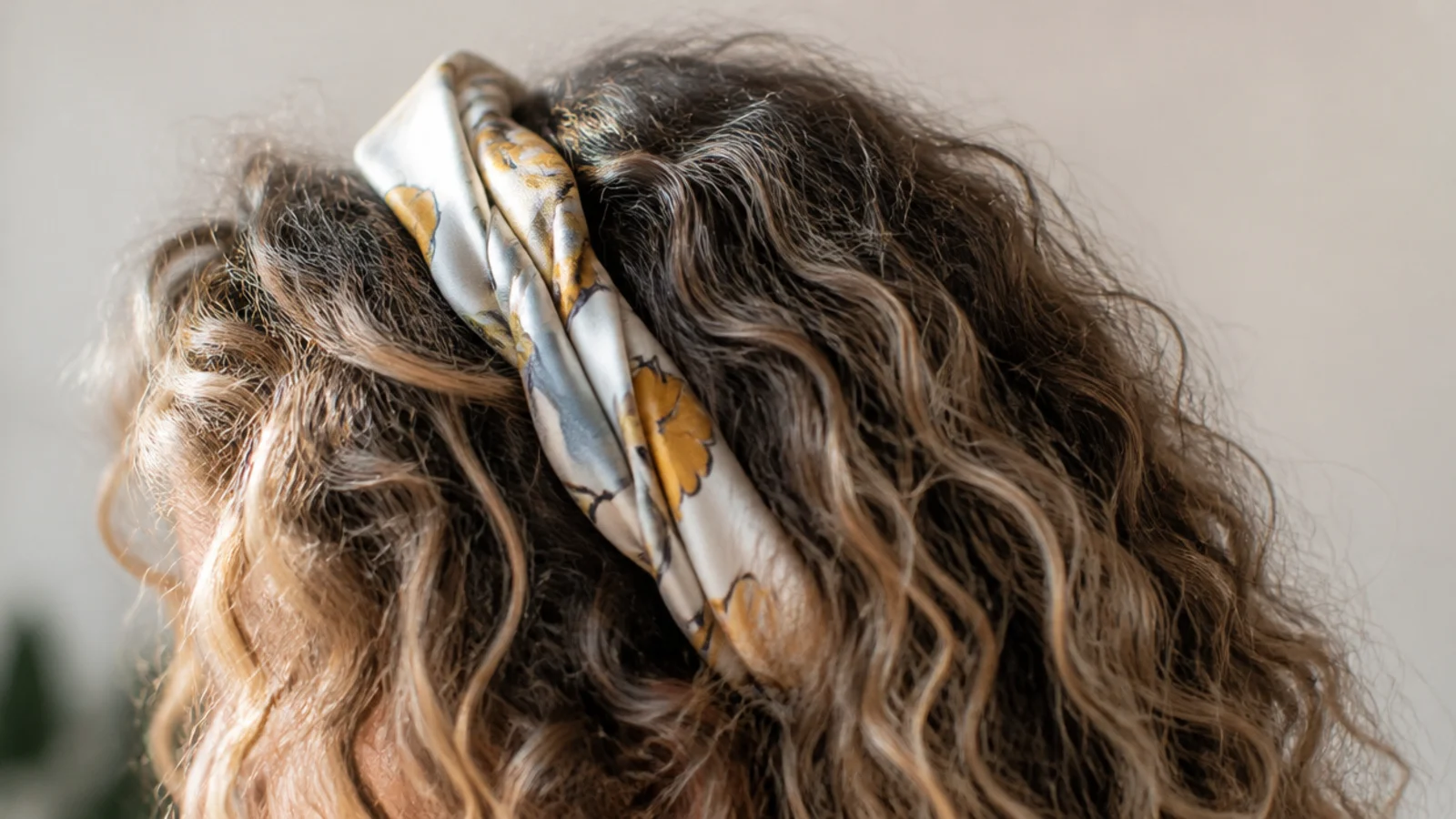
6. Silk Scarf Headband
A wide silk band flattens the crown and hairline in one move, which is where puff is most visible from the front. Silk has a far lower friction coefficient than cotton and does not absorb moisture, so it presses without abrading or drying the section underneath.
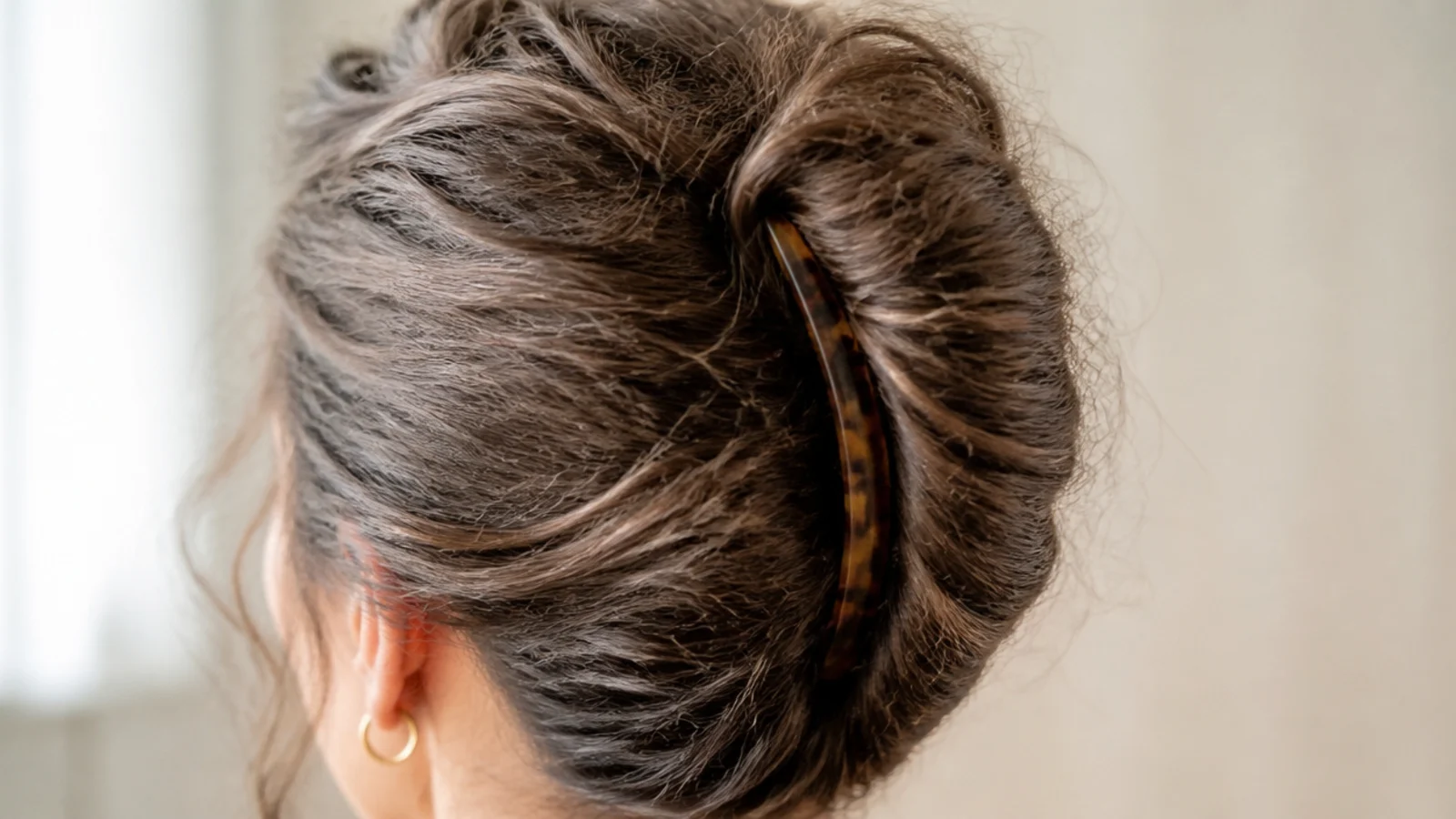
7. French Twist
The French twist is the most compressive style available without heat, because the whole length is rolled vertically and pinned against the head. Every end finishes inside the roll, so puff and frizz are both put somewhere the light never reaches.
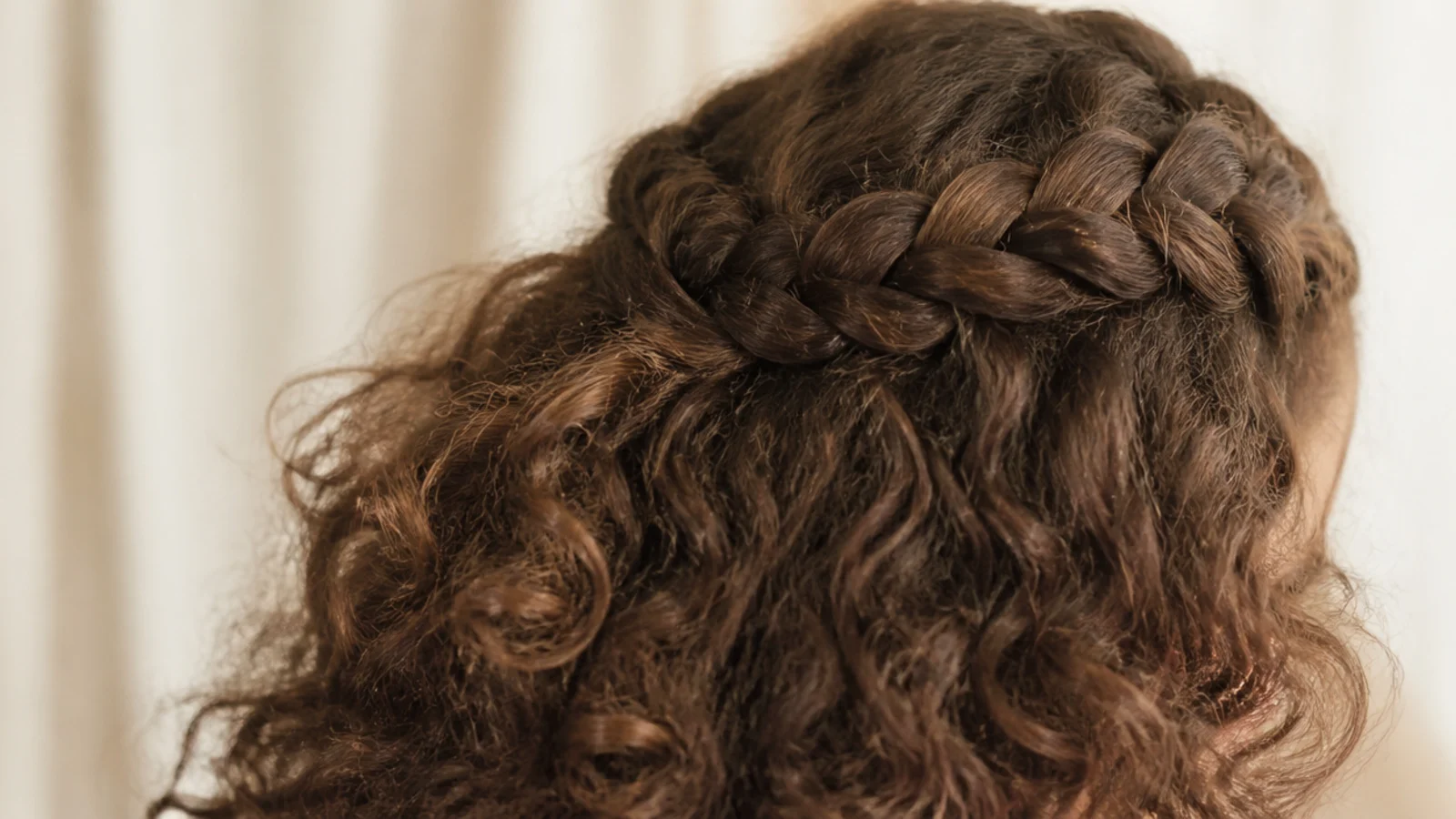
8. Dutch Braid Crown
Crossing under puts the braid on the surface, and taking it around the crown lays a continuous band across the hairline where the shortest hairs stand up. The braid also picks up new hair with every crossing, so nothing is left free to expand above it.
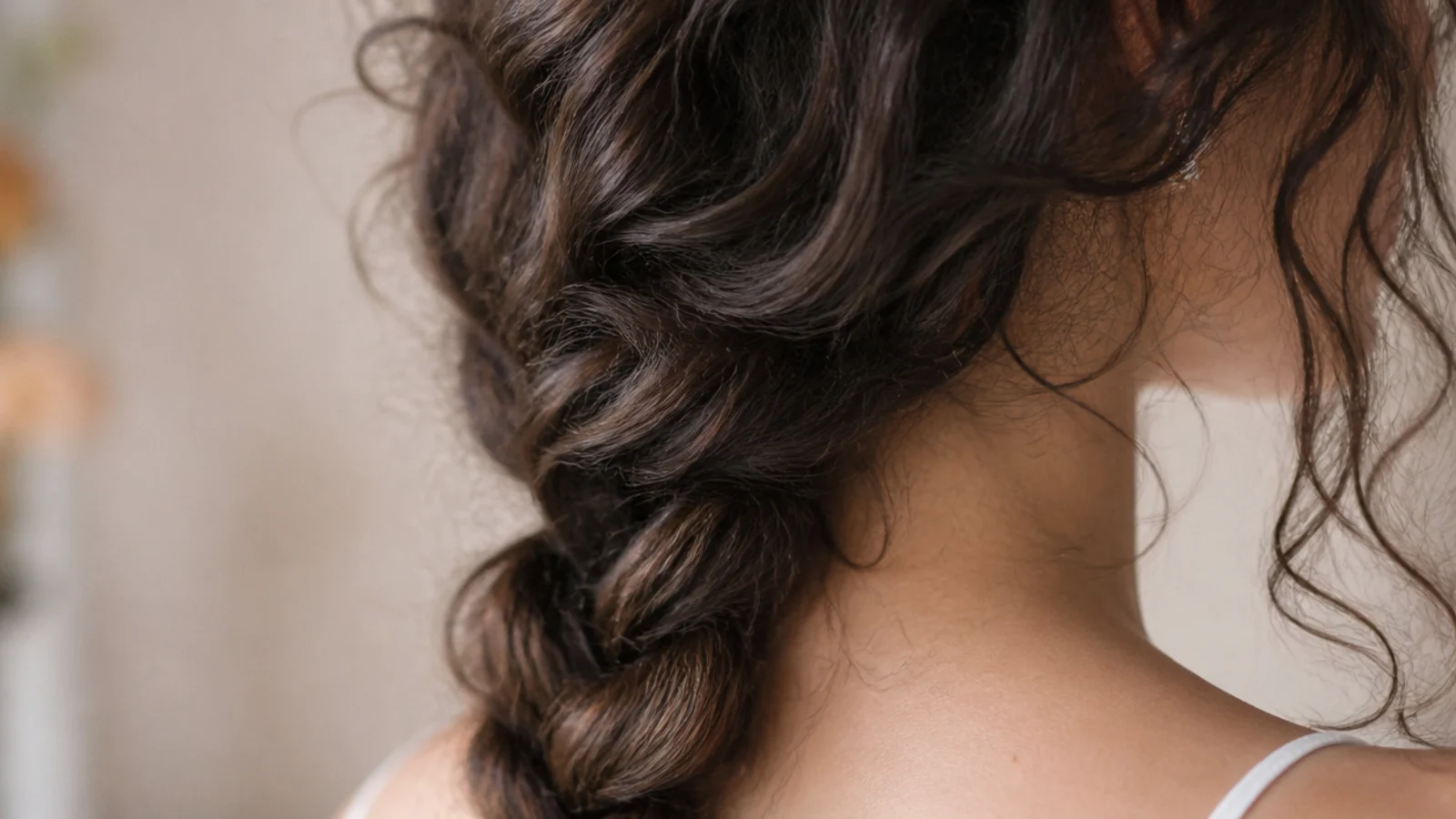
9. Loose Low Side Braid
A low side braid contains the length without pulling at the hairline, which matters on hair already carrying breakage at the front. Braiding loosely rather than tightly keeps the shape soft while still binding the strands so none of them can lift out on their own.
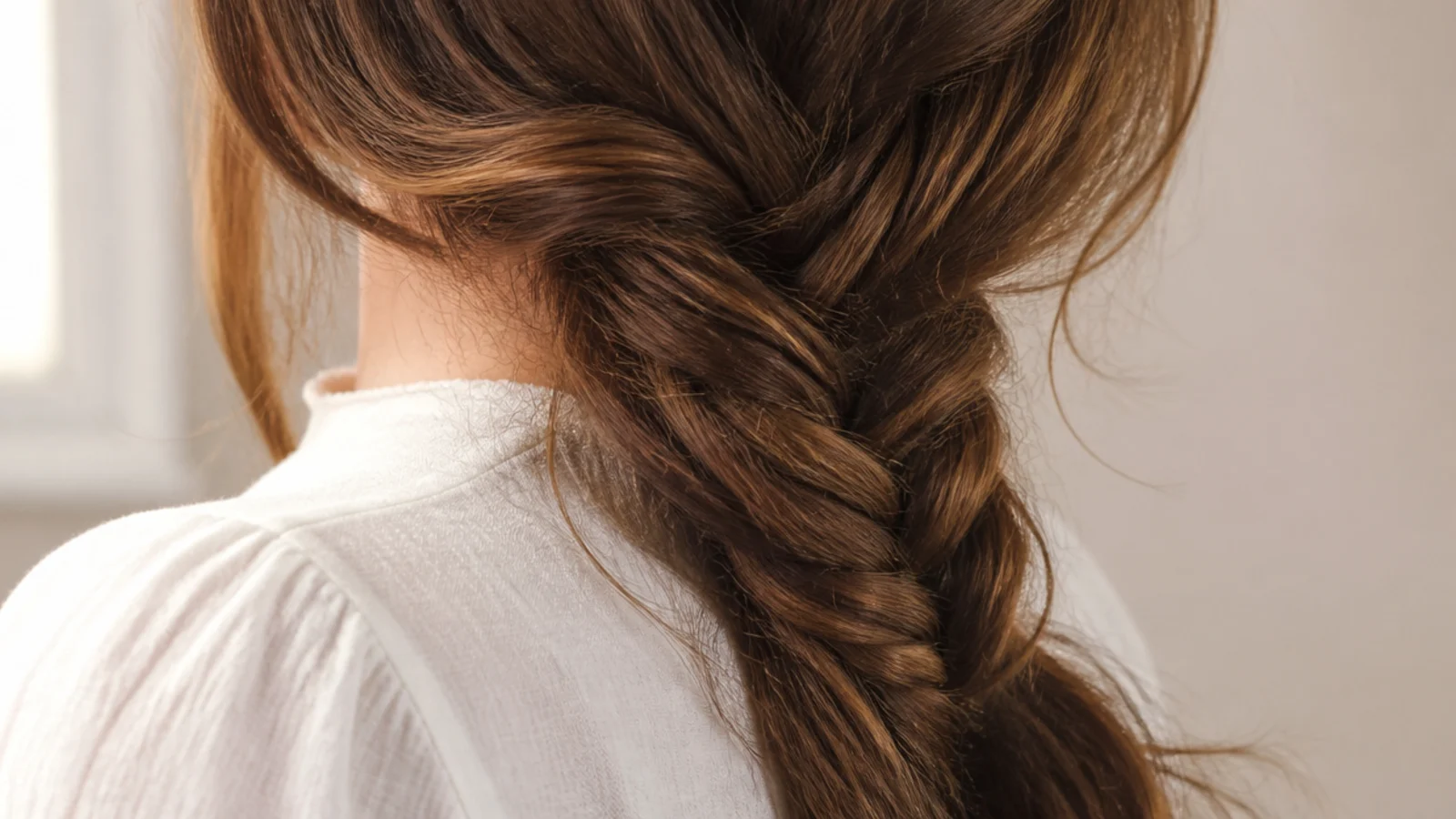
10. Side Fishtail Braid
Fishtailing crosses very small sections repeatedly, producing a tight woven surface with almost no gaps for a strand to escape through. It is slow, and coarse puffy hair is the easiest texture to do it on because the sections grip each other rather than slipping.
11. Rolled Bun Tuck
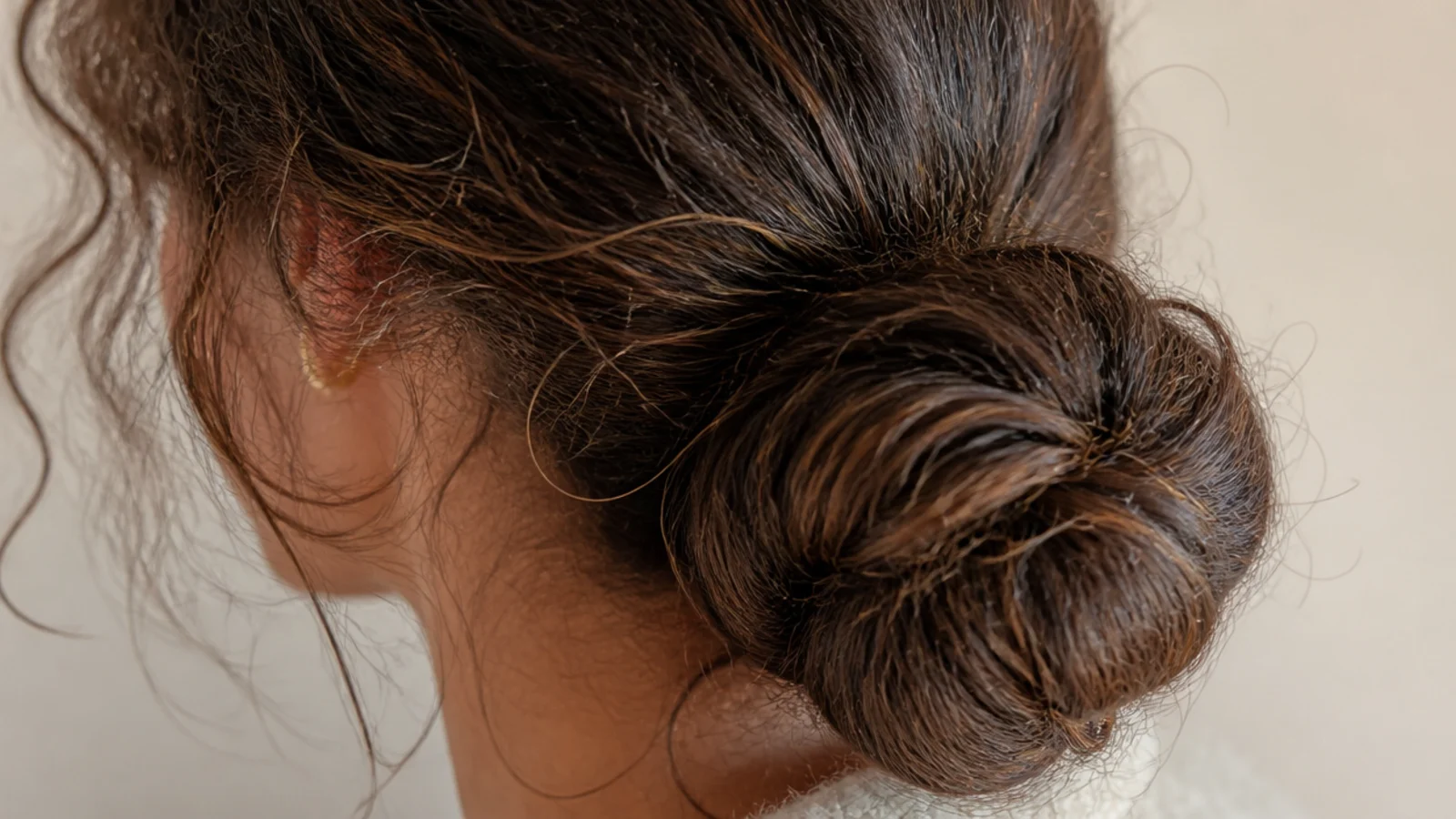
Rolling the ponytail upward and tucking the roll under itself produces a narrow horizontal shape rather than a round one, which reads as far less bulk on a dense head. Pin through the roll into the hair underneath rather than into the bun itself so it cannot loosen and expand.
12. Overnight Braid Waves
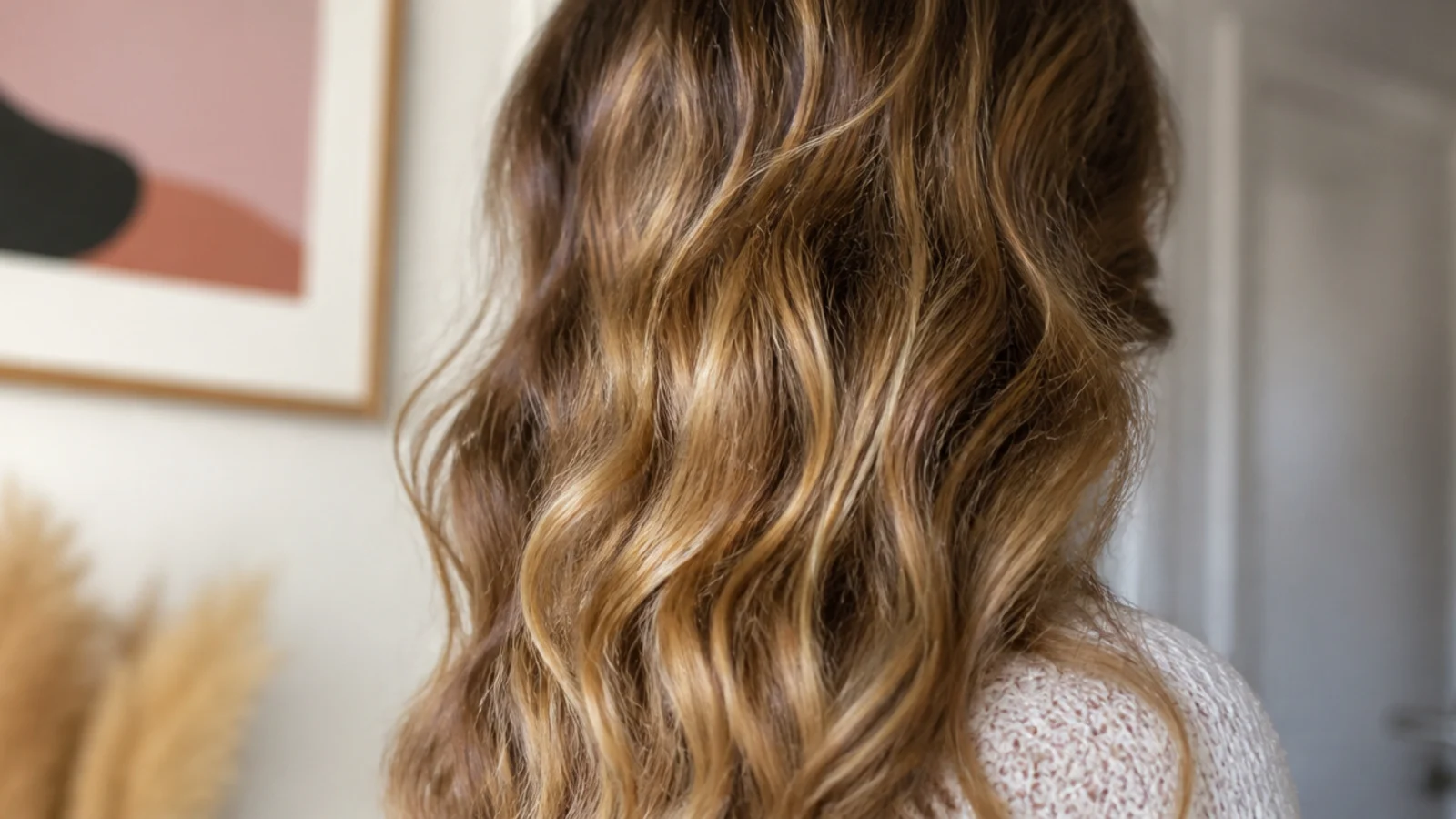
Braiding damp hair before bed does two jobs on puffy hair — it sets a bend as the bonds re-form, and it holds the whole length compressed through eight hours of pillow friction. You wake with a defined pattern instead of a wide one, which is the shape puffy hair lacks naturally.
13. Blunt Chin Bob
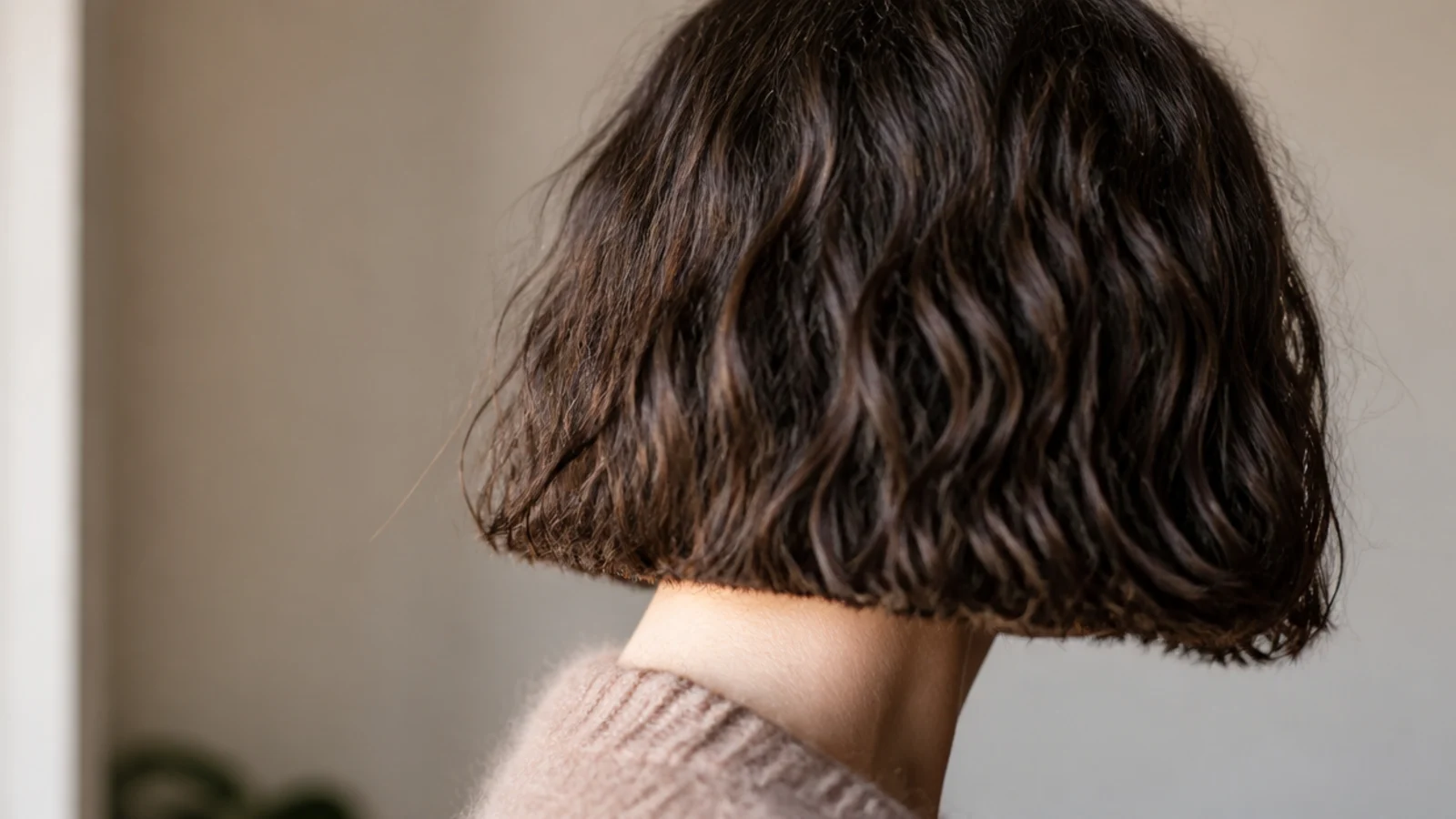
A blunt line at chin length puts the maximum available weight at the perimeter and removes the mid length where puffy hair widens most. The shorter the shape, the less length there is to expand sideways, which is why a chin bob narrows dense hair that a lob does not.
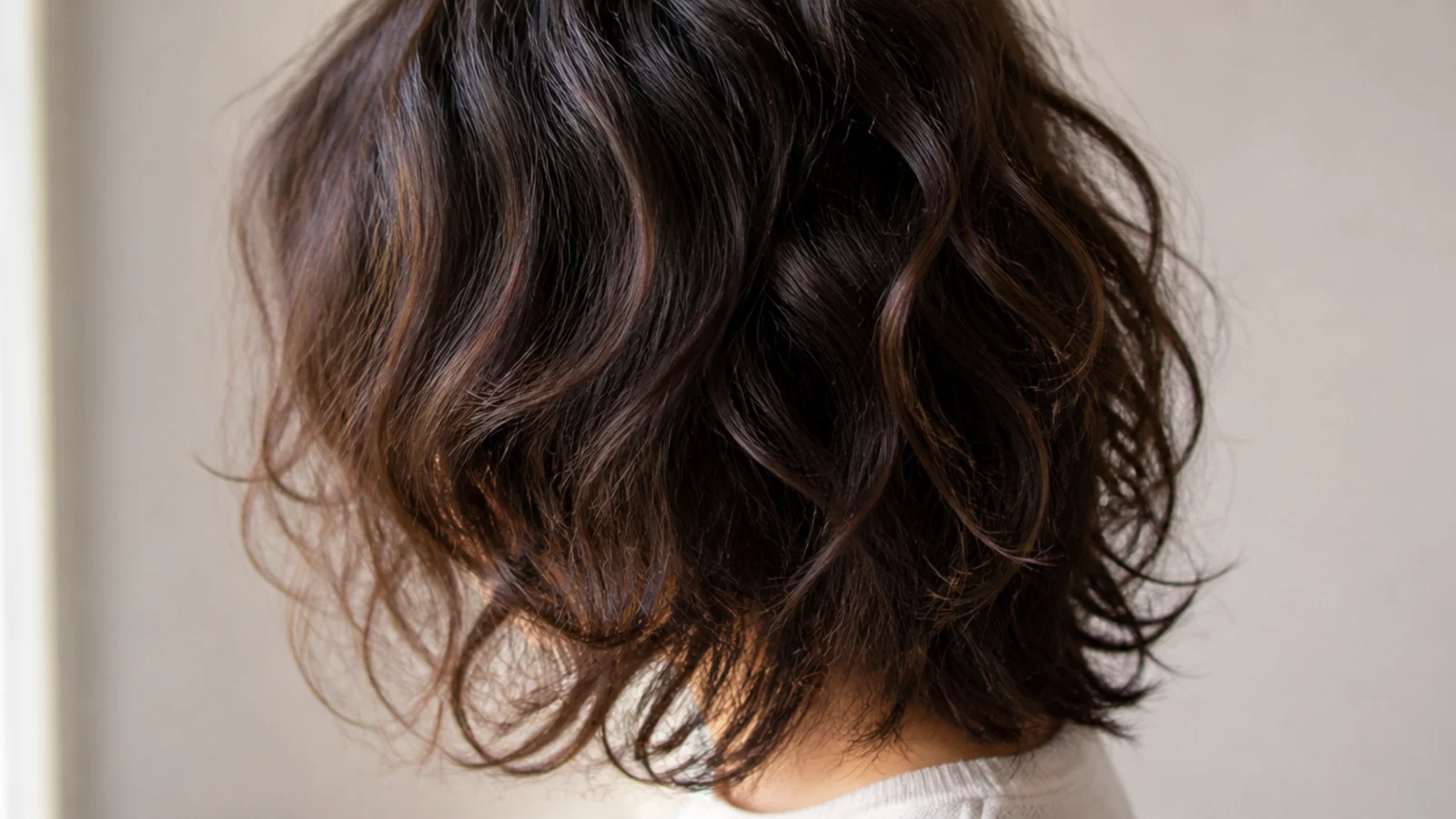
14. Shoulder Length Shag
A shag stacks layers so the density is distributed up the length rather than concentrated in one wide band. On puffy hair the layers have to be cut into the interior, because the same shape with surface layering trades a wide outline for a halo of short ends.
15. Curtain Bang Blowout
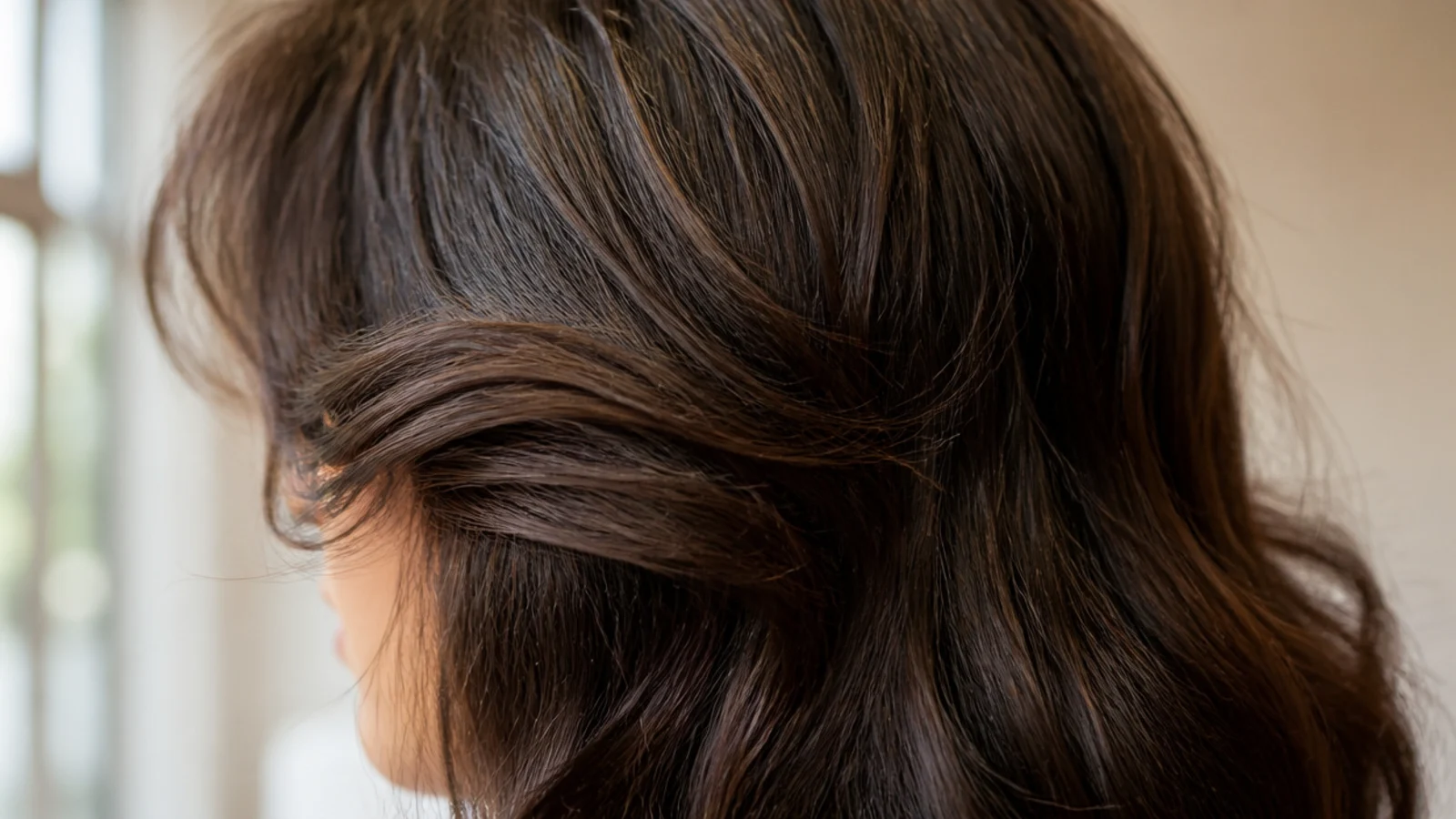
Drying the front sections around a brush pulls them into a curve that sits against the head instead of standing away from it, and the tension while drying is what sets that shape. Point the airflow down the strand rather than into it, since air across the cuticle is what lifts the scales.
Final Thoughts
Once you separate puff from frizz, the shopping stops. Frizz responds to a sealed cuticle, so a cream and a gel handle it. Puff responds to compression and weight, which is a styling and cutting problem that no bottle addresses, and that is why so many people with dense hair own a shelf of products and still leave the house wide.
Compression is the common thread through everything above. Twists, rolls, wrapped bases and tight weaves all wind the hair against itself, and hair wound against itself cannot expand. Choose whichever version fits the length you have, keep the tension off the same patch of hairline every day, and let the cut put the widest point somewhere below your jaw.
For dressed up versions of these shapes see hoco hairstyles for curly hair, and for the days when unwashed hair is doing half the weighing down for you see greasy hair hairstyles that hide it. More in Hair Care.