15 Hairstyles for Thick Frizzy Hair That Hold
Fifteen cuts and styles for thick frizzy hair, and the distinction most salon conversations get wrong — thick means dense and coarse means wide. Only one of those is helped by taking weight out, and the other gets worse.
In this article · 23
- Why Thick Hair Frizzes
- Thick Versus Coarse Hair
- Cuts That Hide Frizz Versus Cuts That Cause It
- Wash Day Routine for Thick Hair
- Product Layering on Thick Hair
- Humidity and Sleep Habits
- The 15 Cuts and Styles
- 1. Long Internal Layers
- 2. Collarbone U Shape
- 3. Feathered Wolf Cut
- 4. Angled Bob
- 5. Tousled Pixie
- 6. Curtain Bangs With Layers
- 7. Butterfly Cut
- 8. Shoulder Shag Over 50
- 9. Claw Clip Twist
- 10. Low Chignon
- 11. Two Dutch Braids
- 12. Loose Side Braid
- 13. Bouffant Ponytail
- 14. Diffused Waves
- 15. Overnight Braid Waves
- Final Thoughts
Thick frizzy hair tends to leave the salon with thinning shears taken to it, and that is usually the thing that made the frizz worse rather than the thing that fixed it.
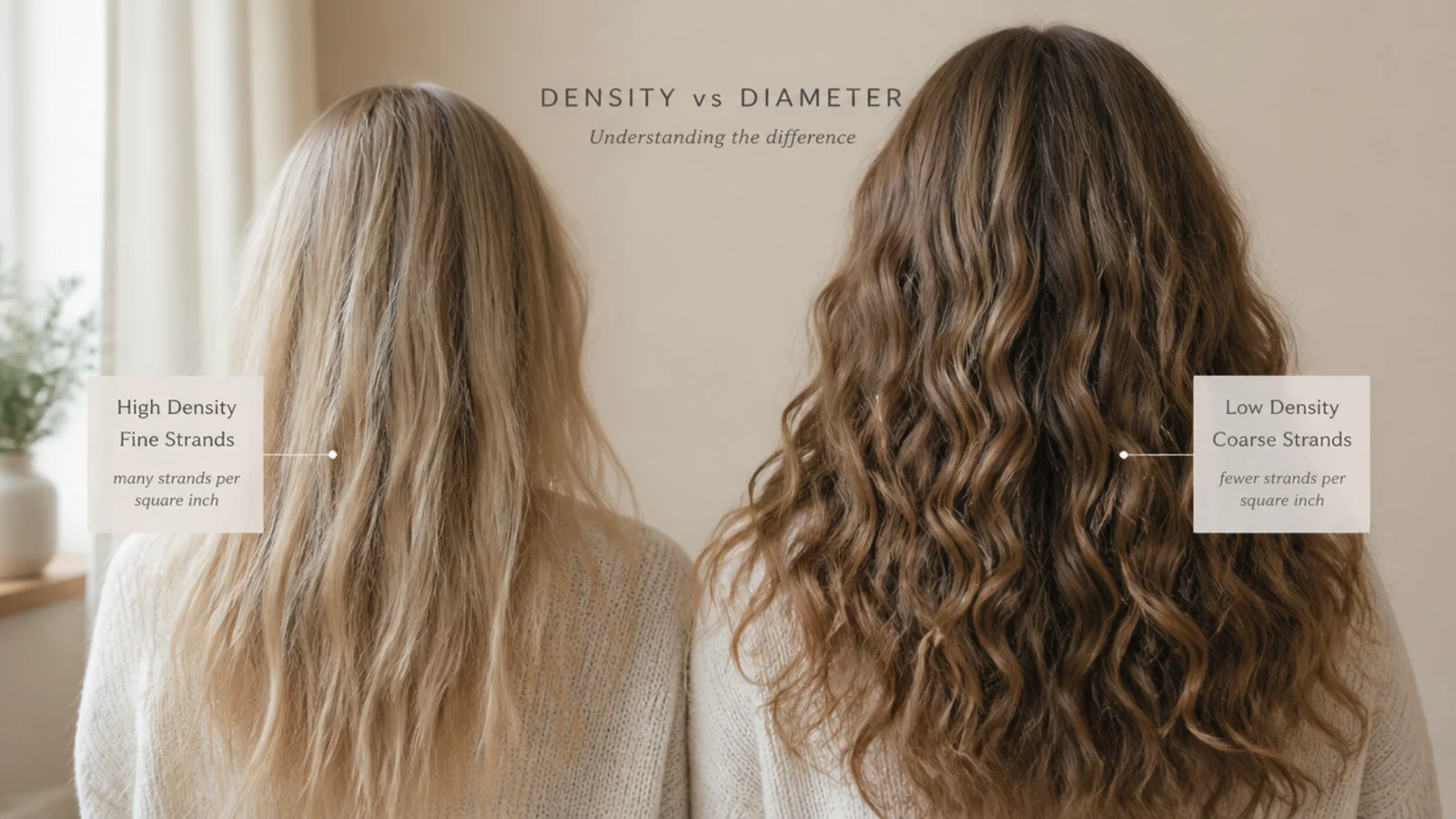
Thick is density. Coarse is diameter. Thick means many hairs per square inch of scalp. Coarse means each individual strand is wide. They are different problems and they want opposite cuts.
Weight taken off the surface turns into frizz. Every layer cut into the top section leaves a short end with nothing above it to press it flat. Take the same weight from underneath and the head loses bulk with no halo at all.
Why Thick Hair Frizzes
Frizz is a length problem before it is a moisture problem. Any strand shorter than its neighbours has no weight above it, so it lifts away from the surface instead of lying along it.
Density multiplies the effect. More hairs per square inch means more strands competing for the same surface area, and the ones that cannot lie flat push outward because there is nowhere else to go.
Breakage manufactures new short hairs. Dry brushing, tight elastics and terry towels snap strands mid length, and each snapped strand becomes another short hair standing proud of the top layer.
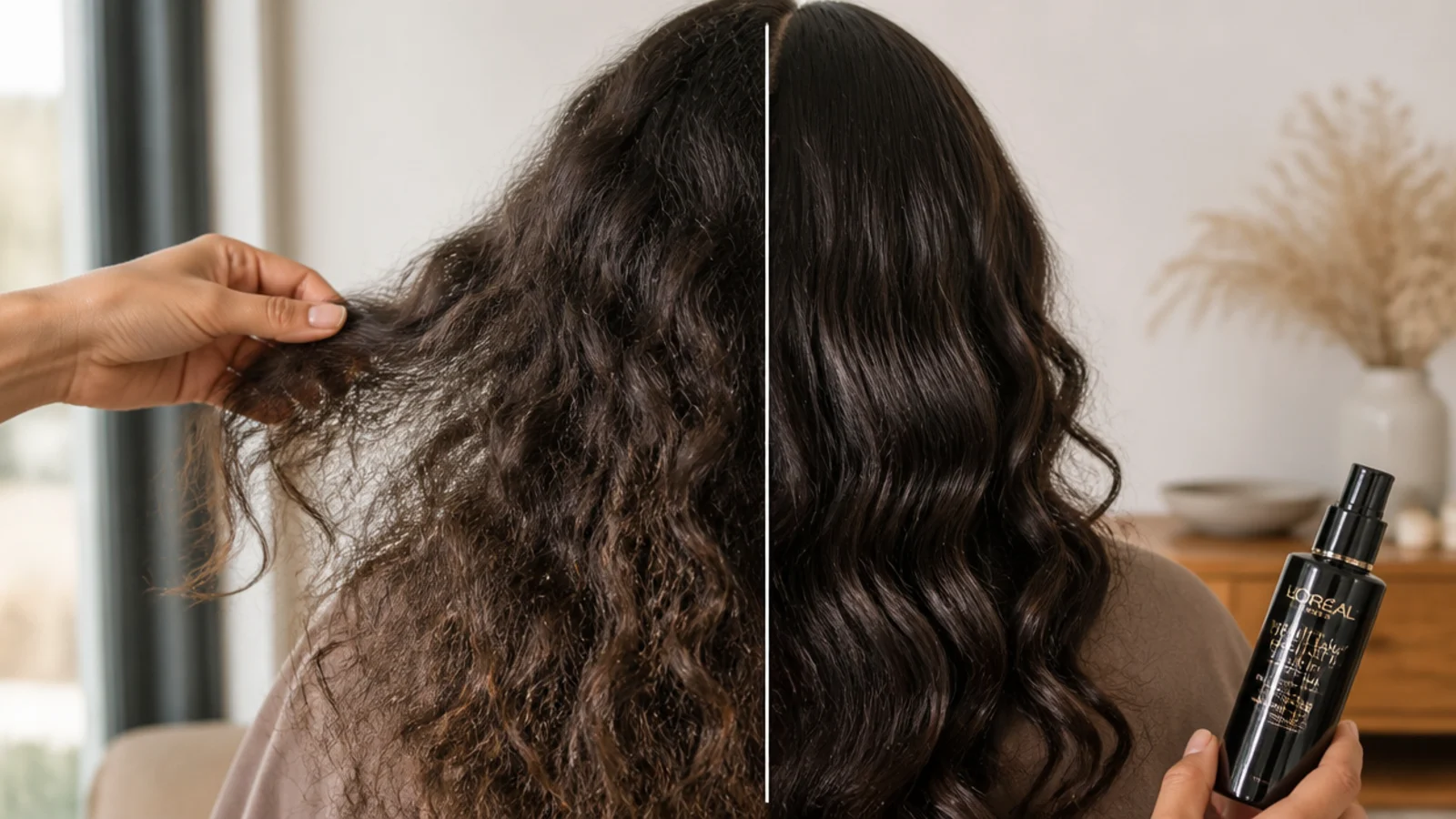
The cuticle only controls how fast it happens. Raised cuticle scales let humidity into the cortex, the strand swells unevenly along its length, and the bend you get from that uneven swelling is what you actually see.
Thick Versus Coarse Hair
Measure density at the ponytail. Gather everything into one band and measure around it. Under two inches of circumference is low density, and four inches or more is genuinely thick.
Measure coarseness on one strand. Roll a single hair between finger and thumb. If you can feel it distinctly it is coarse, and a coarse strand resists bending, so it holds its own shape against whatever you style it into.
You can be one without the other. A dense head of fine hair goes limp and frizzes into a soft halo. A sparse head of coarse hair frizzes into a handful of thick wires that stand straight out.
The fixes point in opposite directions. Density wants weight removed from underneath. Coarseness wants moisture and softening and no weight removal at all, because thinning a coarse head just produces coarse short hairs.
Cuts That Hide Frizz Versus Cuts That Cause It
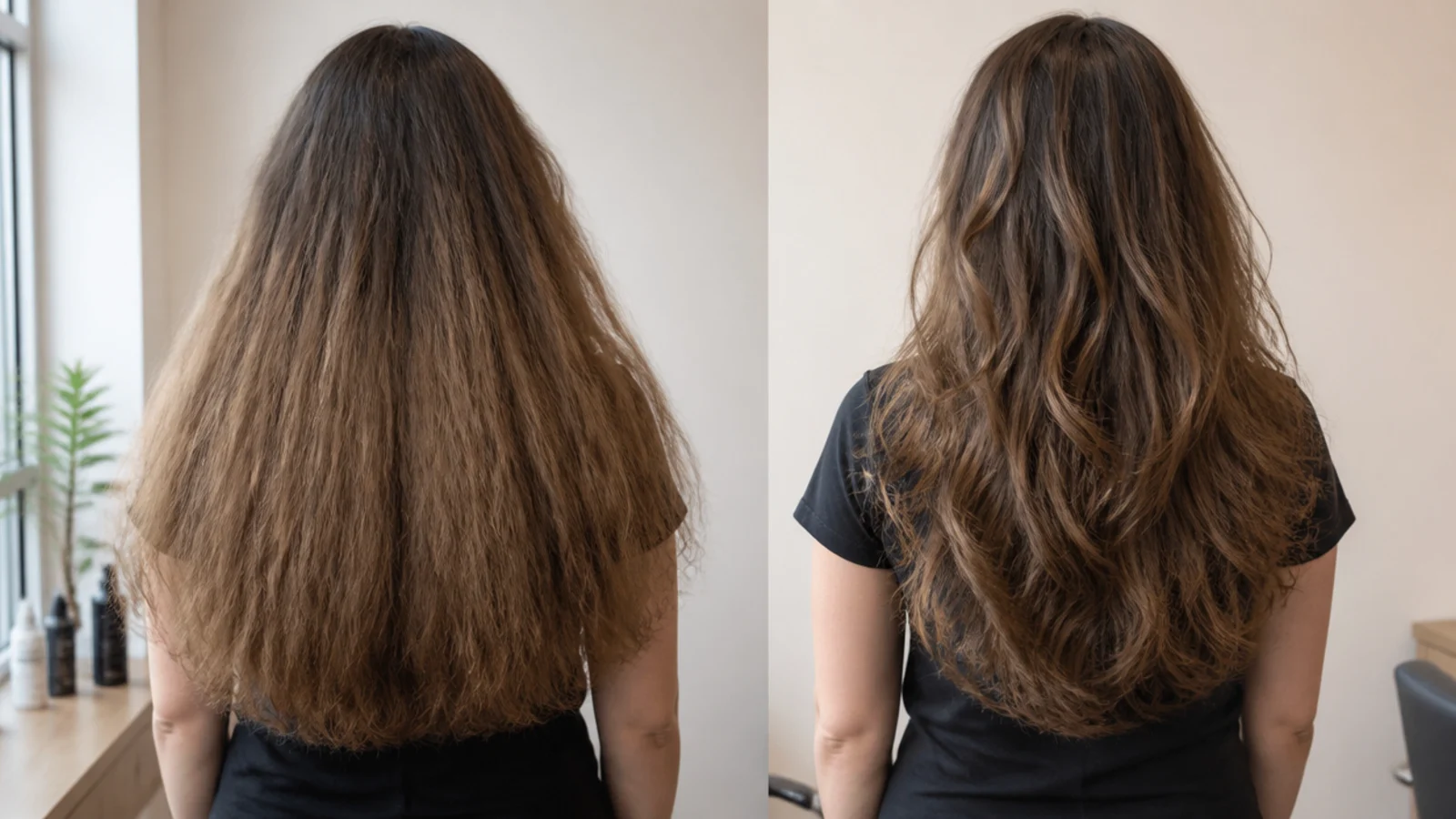
Internal layers remove bulk without exposing ends. Cut underneath the top section, the shortened hair sits below the surface and its ends never show, so the head gets lighter while the outside stays smooth.
Surface layers put fresh ends on top. A layer cut into the visible section has to be long enough to reach the length below it, or it lifts. This is the single most common cause of a halo on thick hair.
Thinning shears are the worst version of this. They cut at random points through the whole section, top layer included, and every one of those points becomes an unsupported short hair within two washes.
Keep the perimeter blunt. A dense blunt edge is heavy, and that weight pulls the whole length down. Point cutting the perimeter on thick frizzy hair opens the ends up and lets the bottom flare.
Wash Day Routine for Thick Hair
Shampoo the scalp only. The length gets cleaned by the runoff. Lathering the mid lengths strips the oil that is doing the work of holding the surface down.
Condition the bottom two thirds. On a dense head that is where the oldest and most porous hair is, and it is where the frizz starts.
Detangle wet, in the conditioner, with wide teeth. Wet hair with slip on it slides apart instead of snapping, and every snap is a future short hair standing off the surface.
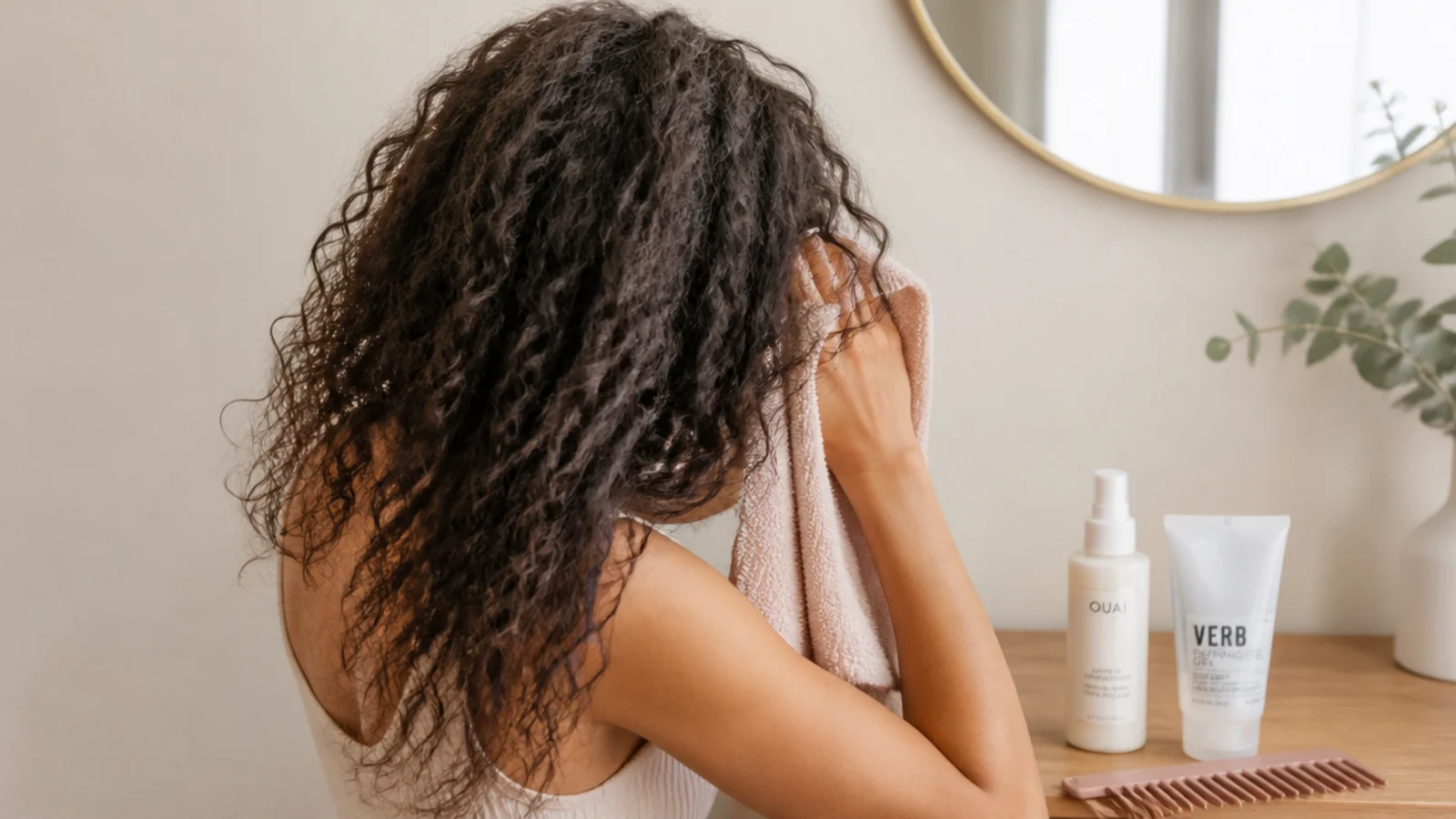
Never touch it with a terry towel. Terry loops are wider than a strand and lift the cuticle by abrasion. A cotton t shirt is a flat knit, so it absorbs without catching.
Finish the rinse cool. Hot water swells the strand and lifts the cuticle. Ending cool lets it contract again before you handle it, which is why the shine appears before you have applied anything.
Product Layering on Thick Hair
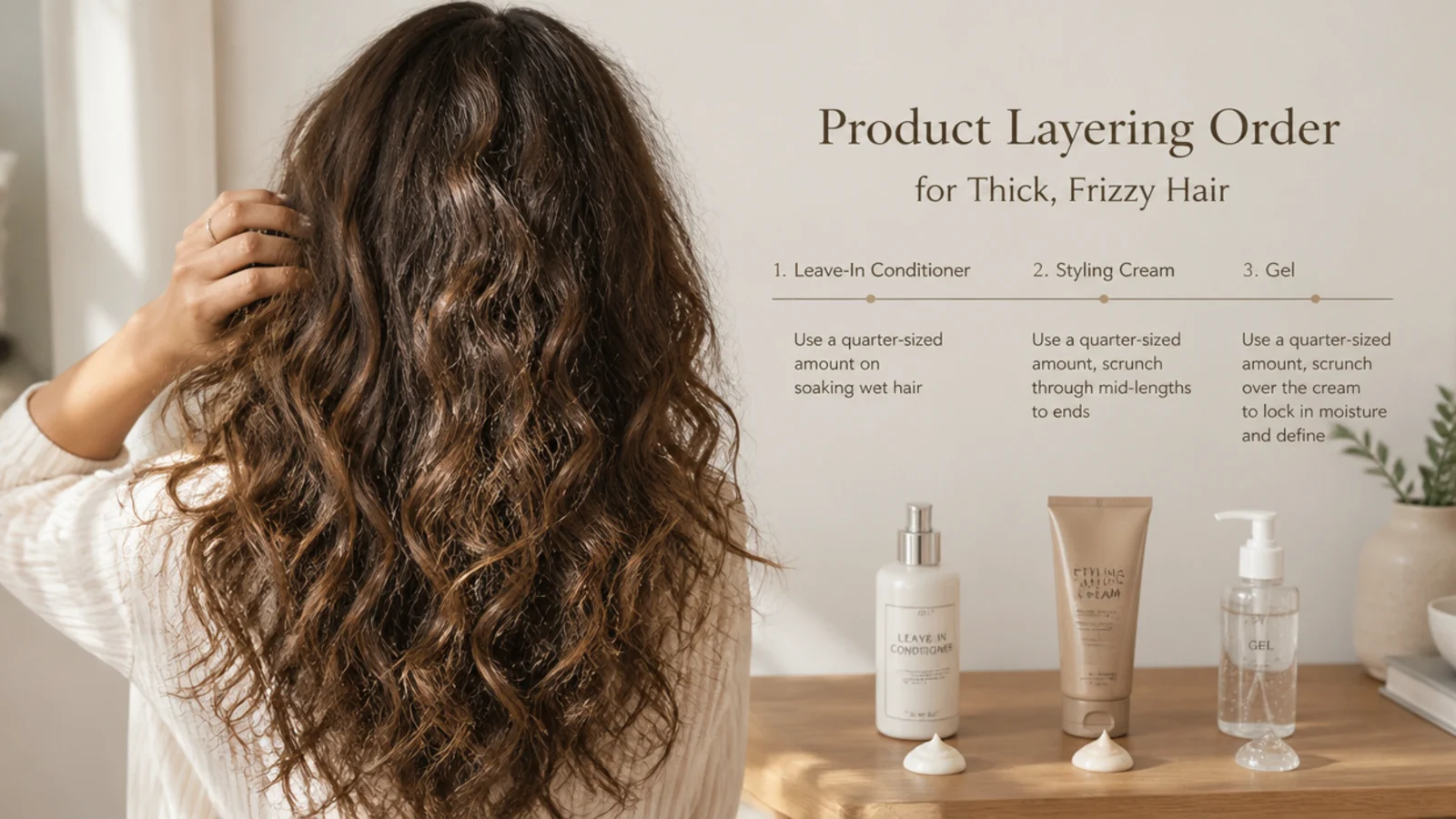
Thinnest first, thickest last. Leave in, then cream, then gel or oil. Each layer has to be able to travel through the one underneath it, and a heavy layer applied first blocks everything after it.
Apply to soaking wet hair. Water is the distribution medium. On a dense head, product put onto merely damp hair reaches the top layer and stops there, which is why the underneath still frizzes.
Work in four sections at minimum. Thick hair cannot be coated by handfuls thrown at the outside. Sections are the only way to know the middle of the head got any.
Rake, then scrunch, then stop. Raking distributes, scrunching sets the bend, and every touch after that breaks the drying cast and releases the frizz you just contained.
Expect to use more than the label suggests. Dosage instructions assume average density, and a four inch ponytail is not average density.
Humidity and Sleep Habits
Frizz is your hair equalising with the air. Hair moves water in both directions until it matches its surroundings, and the swelling that follows is uneven along the strand.
Watch the dew point, not the humidity percentage. Relative humidity changes with temperature and tells you very little. Dew point is the absolute figure, and above roughly sixty degrees Fahrenheit humectants such as glycerin pull water in faster than the strand can absorb it evenly.
Below about forty degrees dew point they run backwards. The air is drier than your hair, so the same humectant draws water out of the cortex and you get frizz in dry cold weather too.
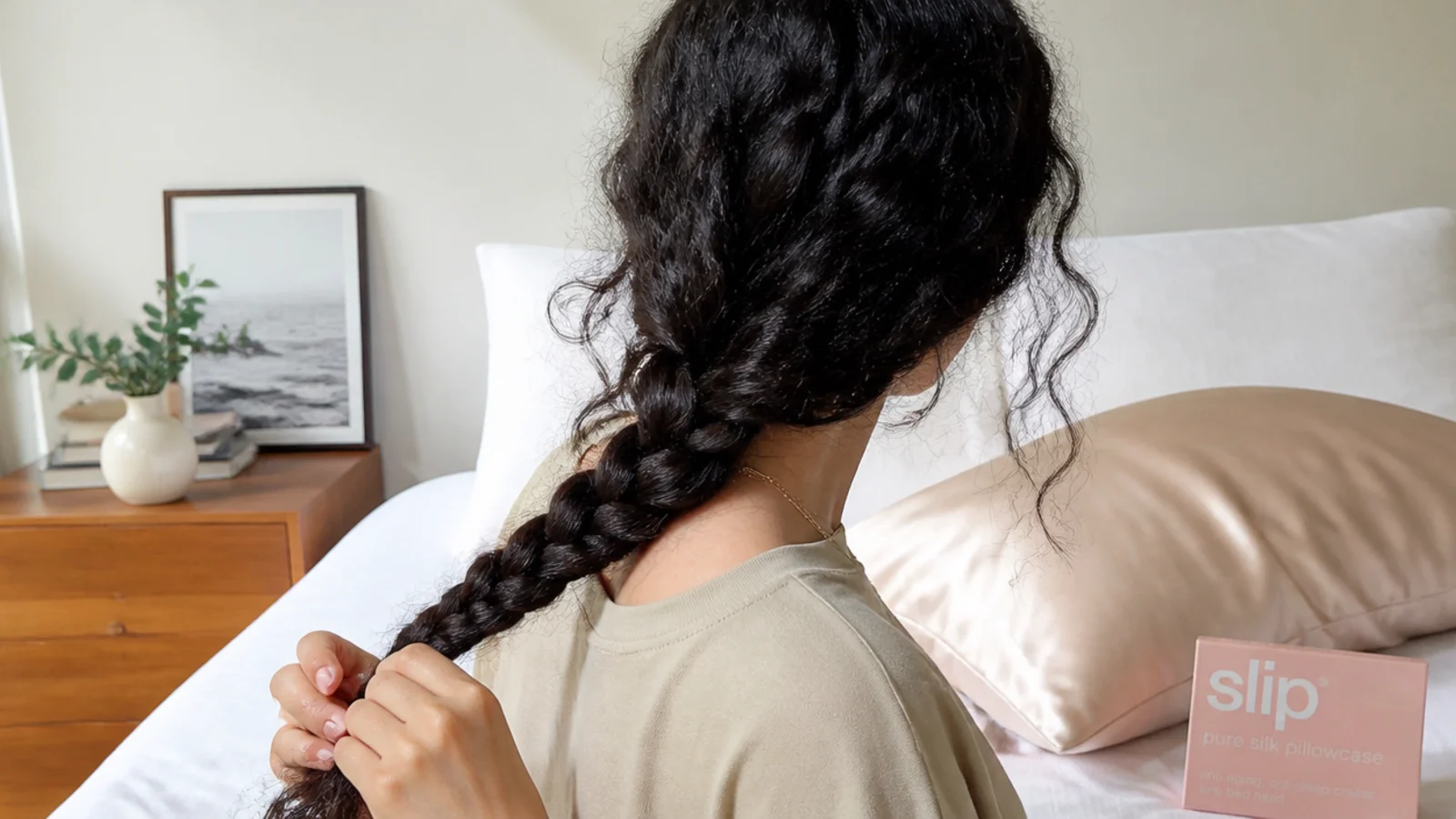
Sleep is half the problem. Cotton pillowcases both absorb moisture from the hair and drag against it all night. Satin or silk does neither, and it costs nothing per night.
Never sleep on a wet dense head. Thick hair takes hours to dry, and whatever position it spends those hours in is the shape it sets into as the water leaves.
The 15 Cuts and Styles
1. Long Internal Layers
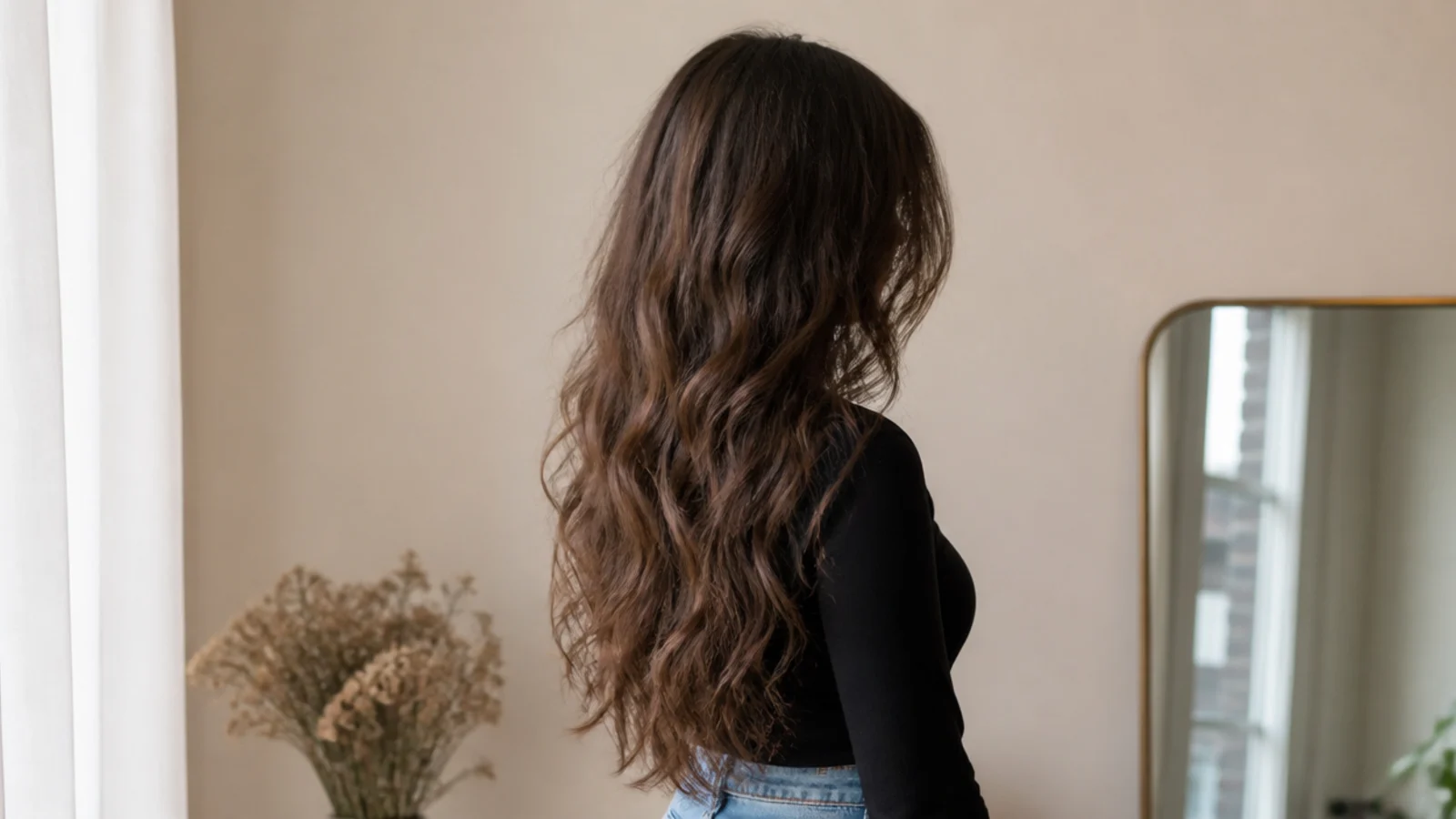
Weight is removed from beneath the top section, so the surface layer stays long and lies over the shortened interior. The head loses bulk without gaining a single visible short end, and the retained length adds the weight that holds the outside flat.
2. Collarbone U Shape
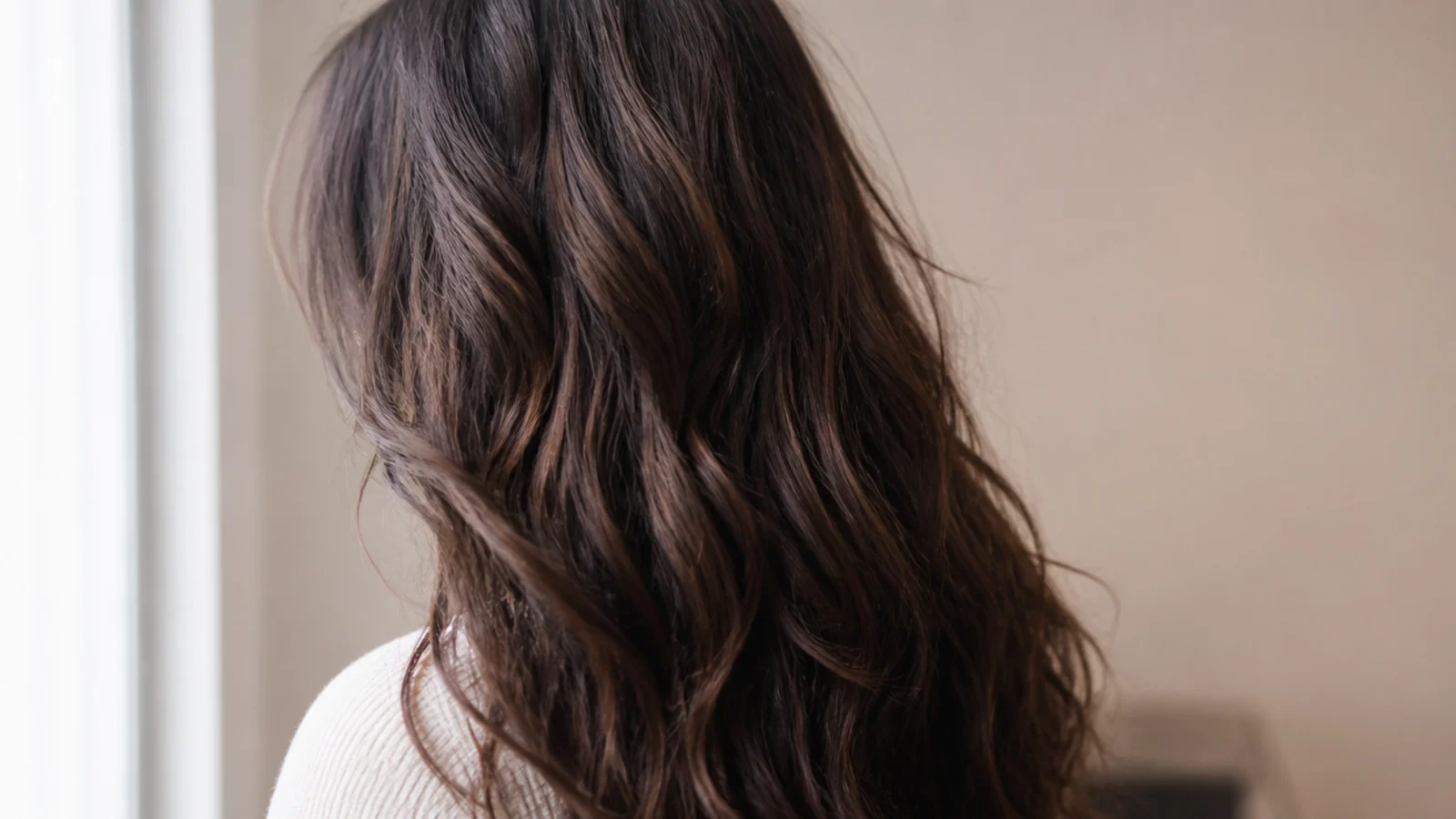
The perimeter is cut in a shallow U rather than straight across, with the centre back longest. A dense head cut level stacks weight at the corners and builds a triangle, and rounding the outline removes that weight exactly where the silhouette is widest.
3. Feathered Wolf Cut
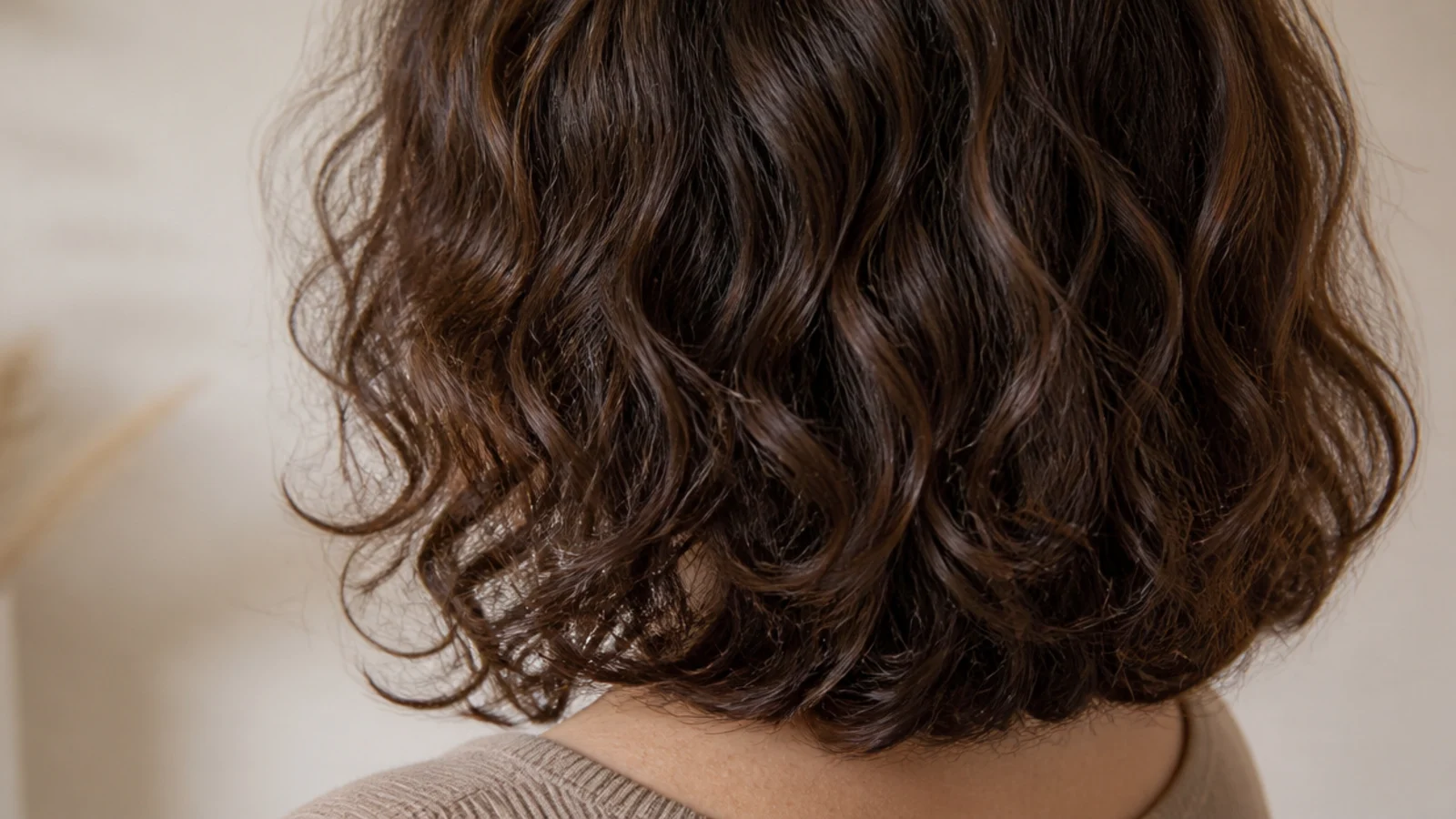
Short crown layers over kept length, feathered so each layer bleeds into the next instead of stopping. It only works on thick hair when the shortest crown pieces are long enough to reach the layer below them, otherwise the cut delivers a permanent halo rather than shape.
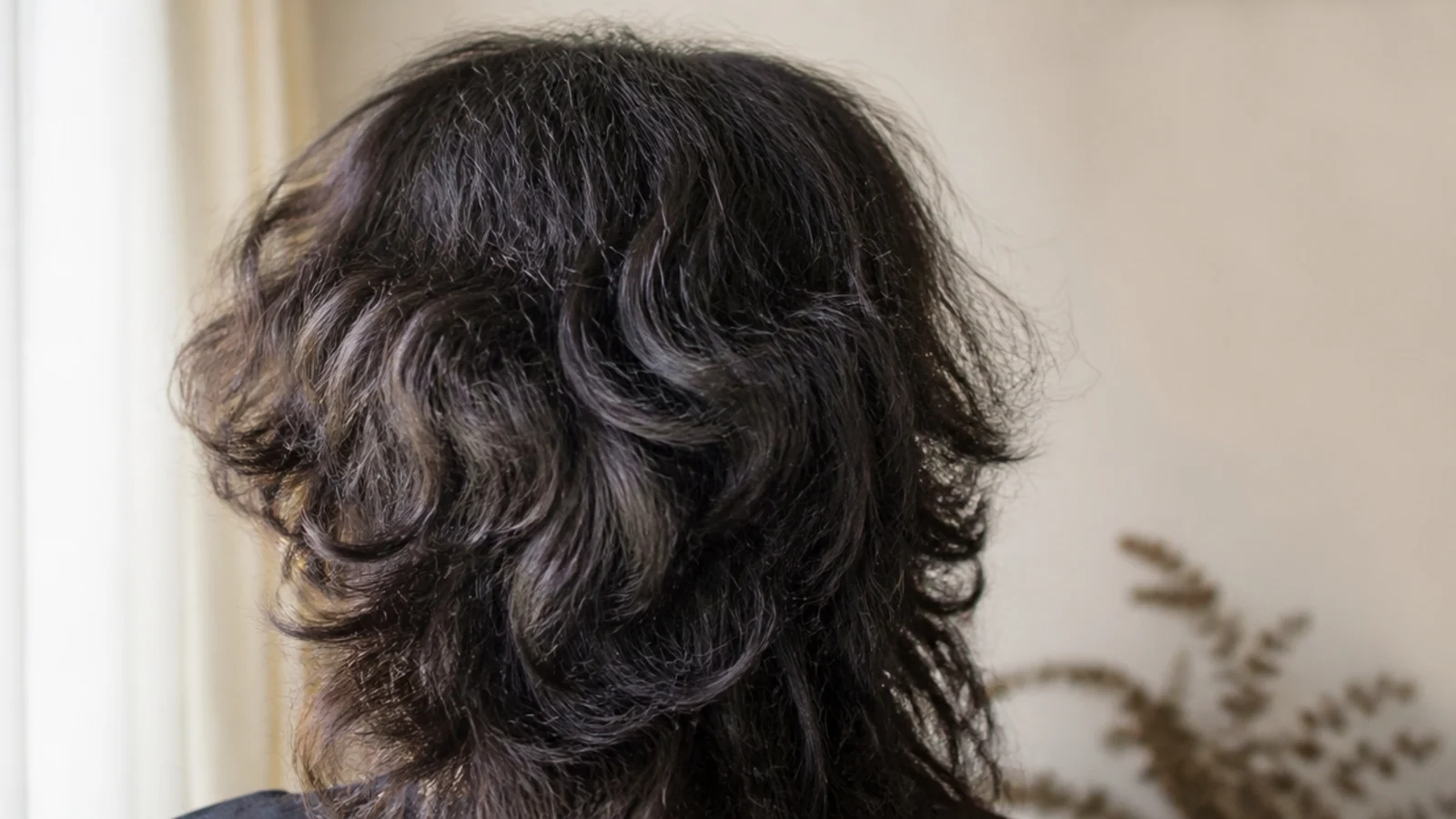
4. Angled Bob
Longer at the front than the back, with graduation through the nape. The graduation takes out the bulk at the neck where dense hair pushes outward, while the forward angle carries weight to the face where it holds the front sections down.
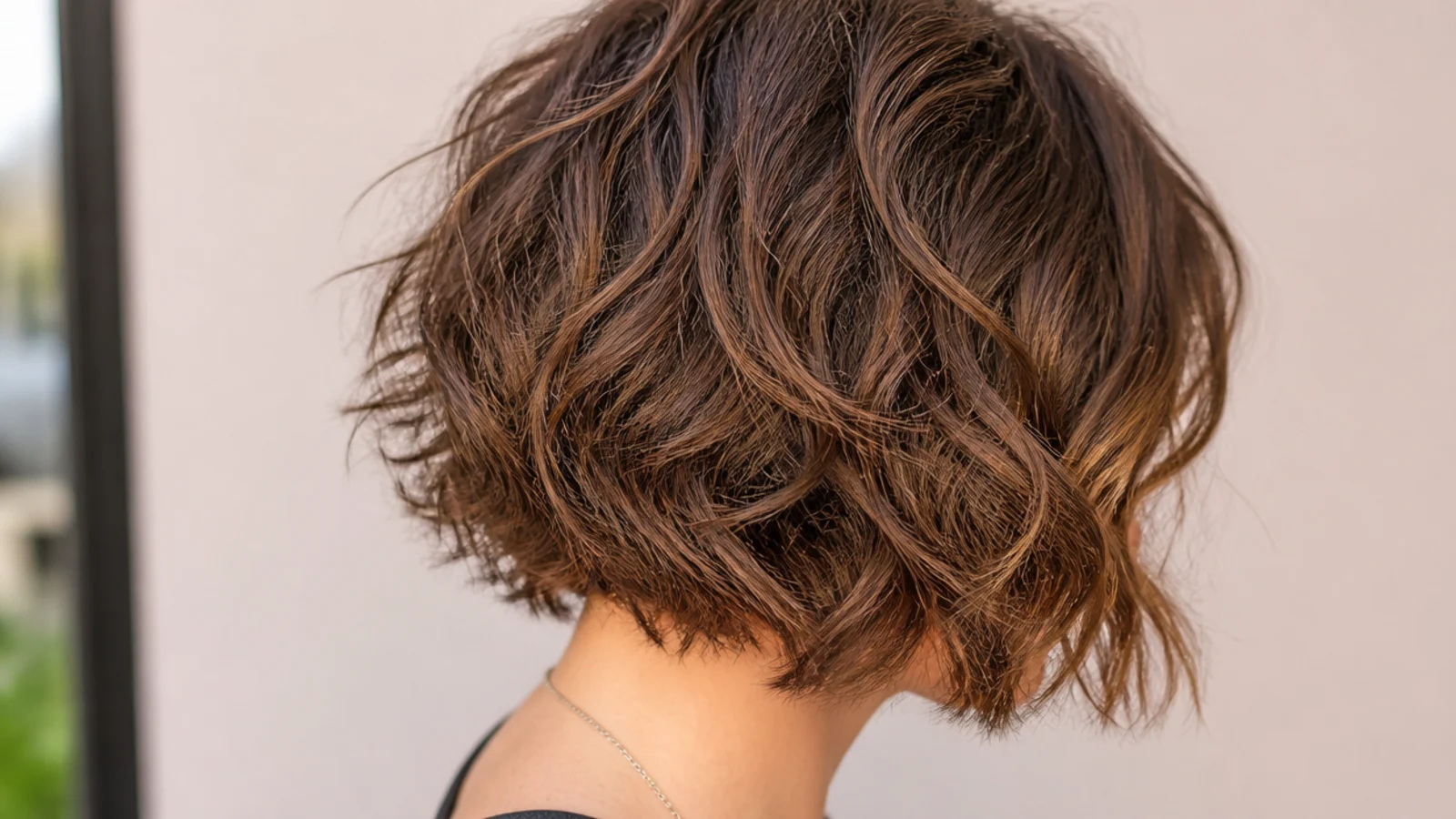
5. Tousled Pixie
The shortest answer, and the most effective one. Below about three inches a strand does not have the length to accumulate a visible bend, so what was frizz becomes texture. The cost is upkeep, since half an inch of monthly growth changes a short shape quickly.
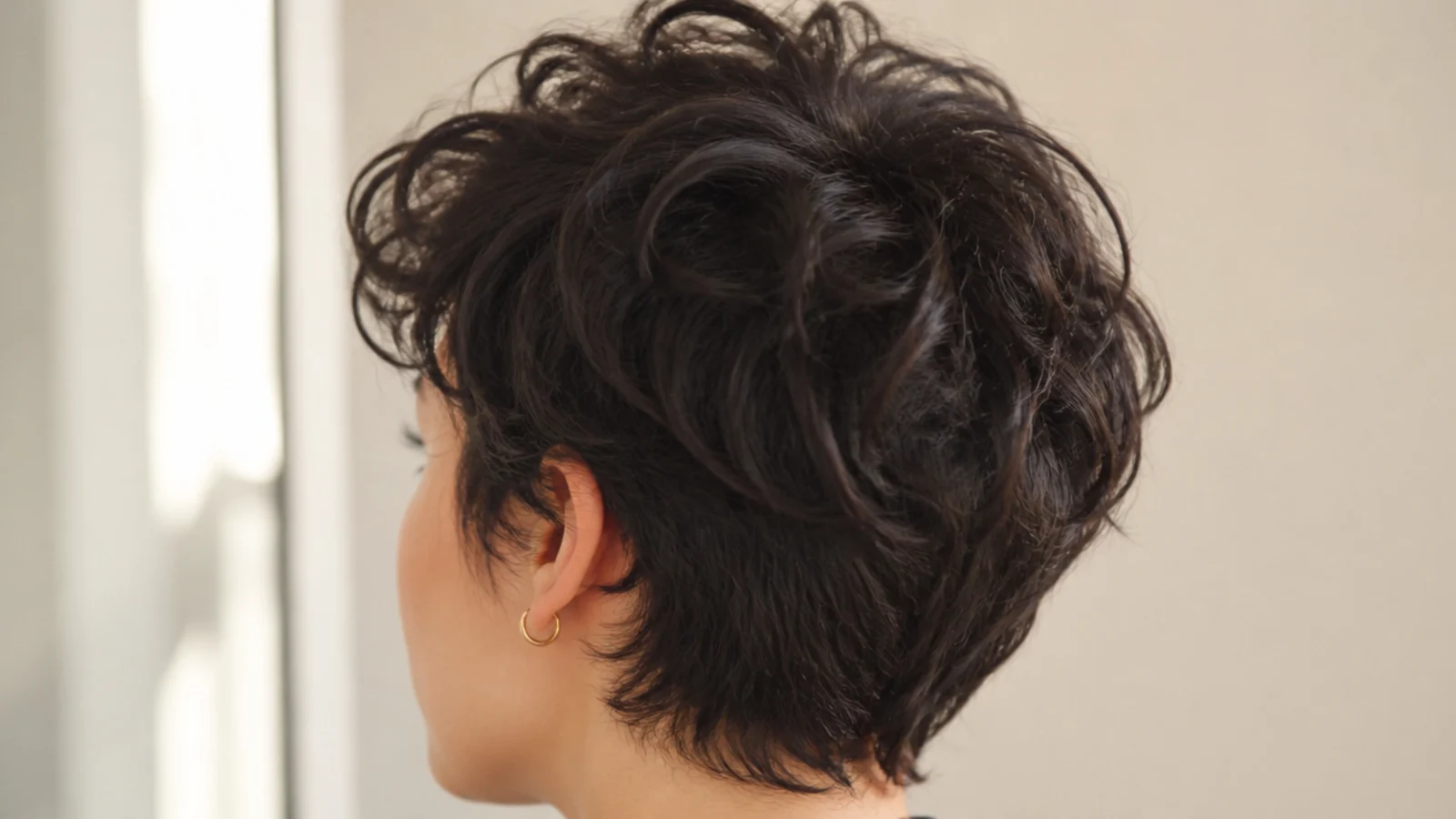
6. Curtain Bangs With Layers
The front is where frizz is most visible because it sits against your face. Curtain bangs are cut long enough that even the shortest piece reaches the cheekbone, so it still has weight, where a short blunt fringe on thick hair lifts at the root and stays lifted.
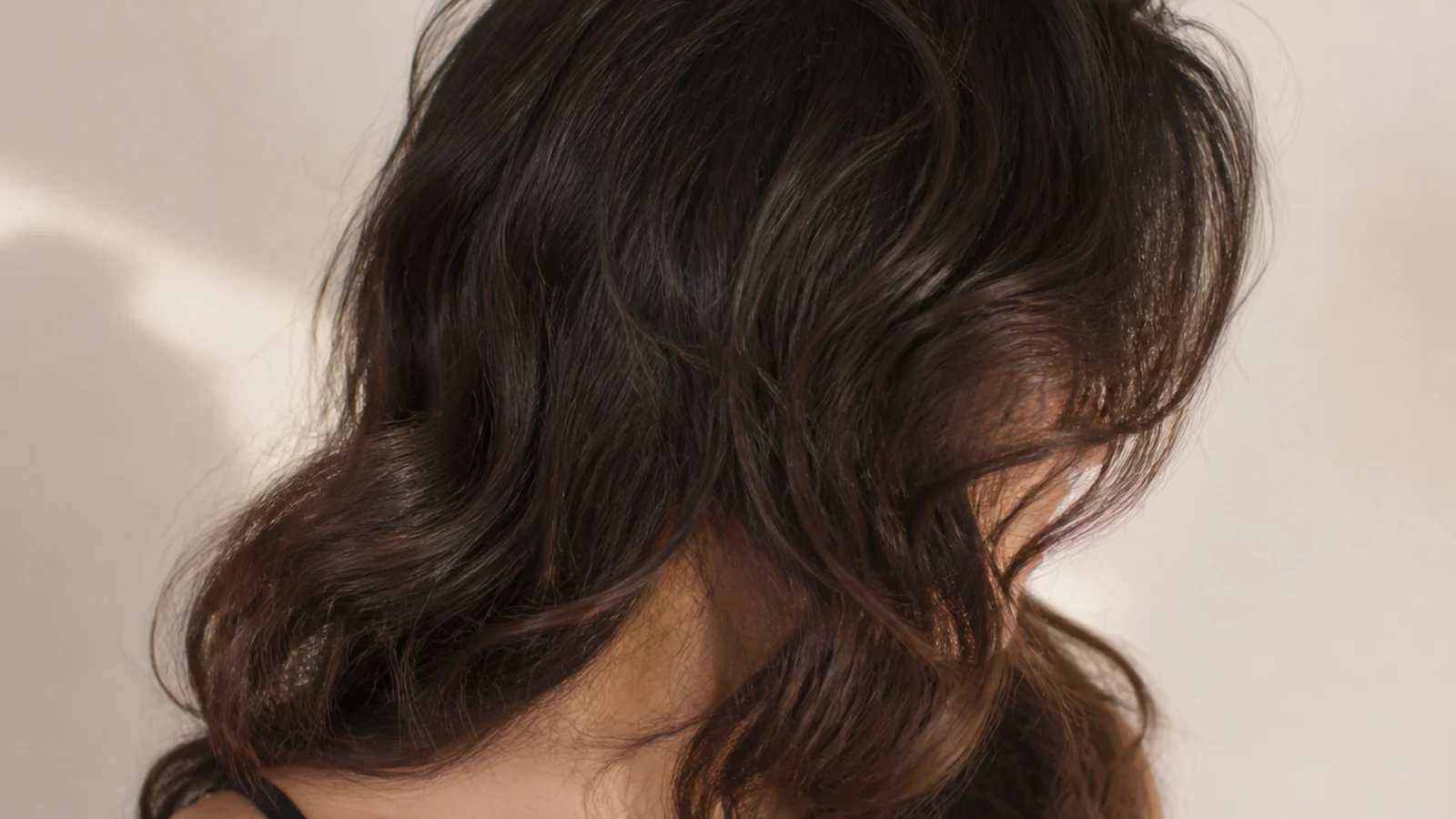
7. Butterfly Cut
Two distinct layer lengths with nothing in between, so the shorter face framing pieces sit on top of the long length rather than blending into it. That gap is what creates crown volume without producing the mid length short ends that cause the halo.
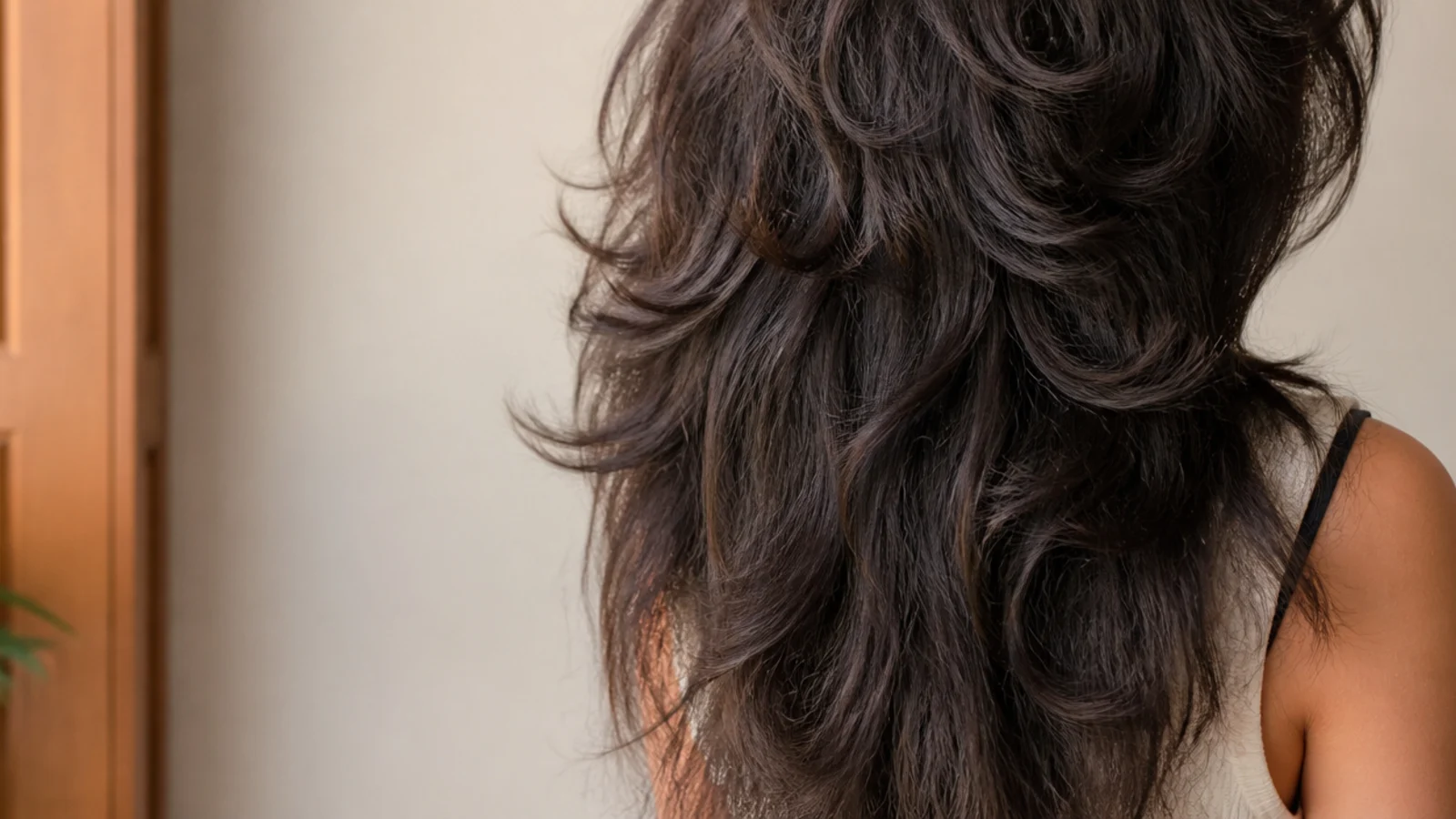
8. Shoulder Shag Over 50
Strand diameter and density both tend to fall over time while the hair also gets drier, so frizz becomes more visible on less hair. Shorter crown layers rebuild volume where the density went, and shoulder length is short enough that the remaining weight cannot drag the shape flat.
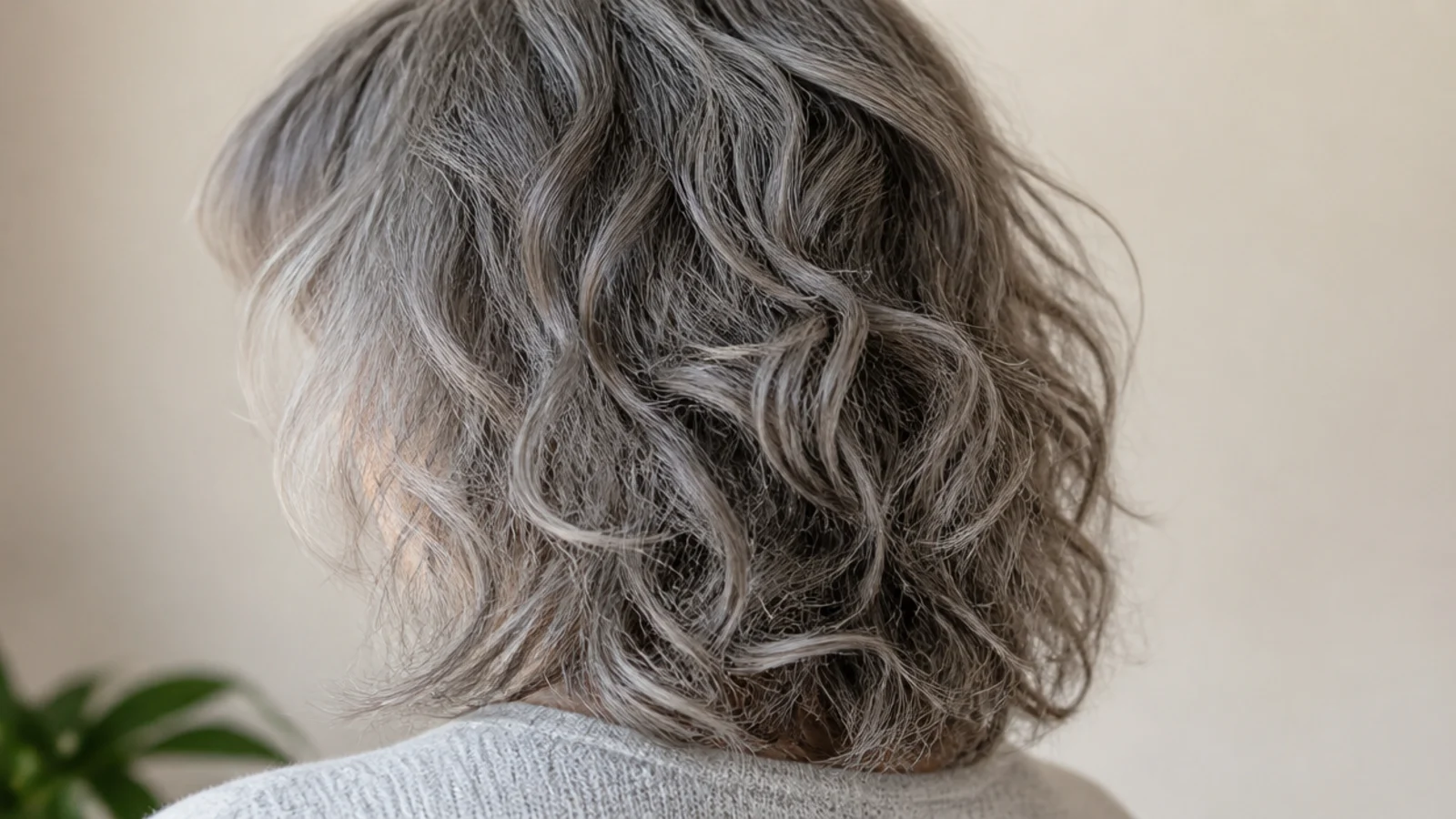
9. Claw Clip Twist
Twisting folds the frizz prone surface layer inward and buries the ends inside the twist, where humidity cannot reach a free edge. A dense head also gives the clip enough to bite on, which is the reason this holds all day on thick hair and slides out of fine hair.
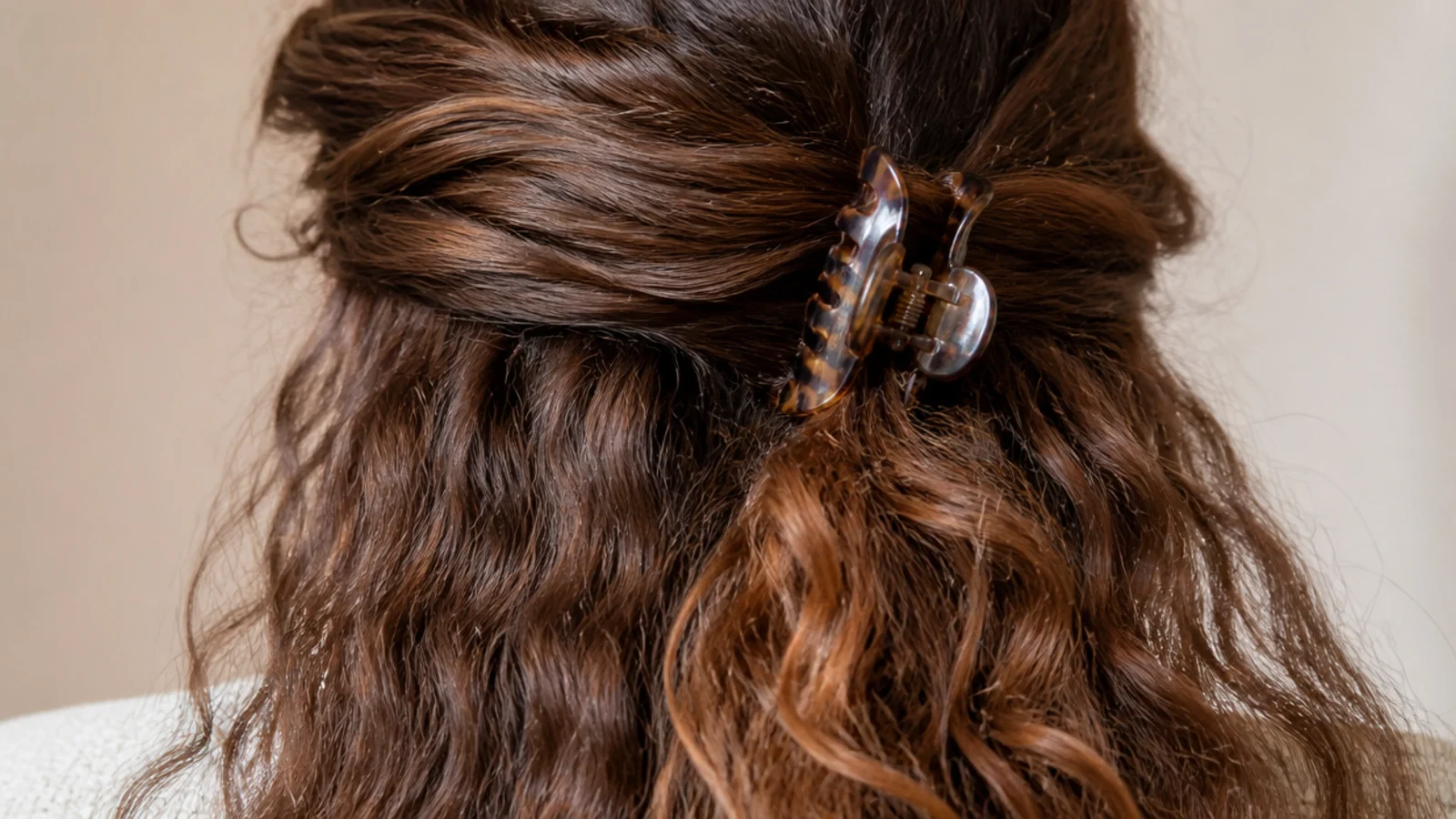
10. Low Chignon
Gathered and pinned at the nape, where gravity works with the style rather than against it. Setting it while the hair is still slightly damp lets the surface dry in position, and thick hair needs no padding underneath because the density supplies the shape itself.
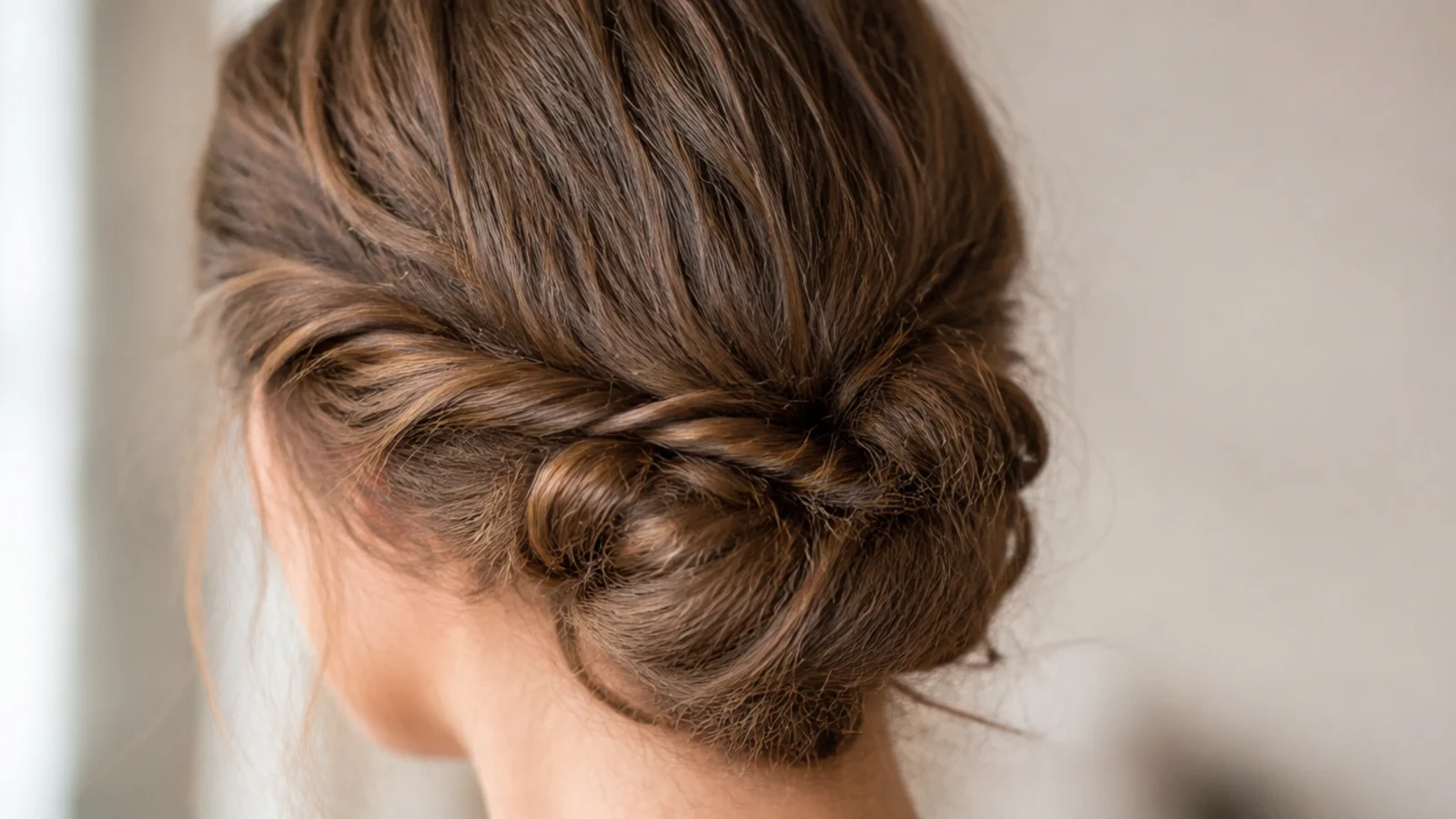
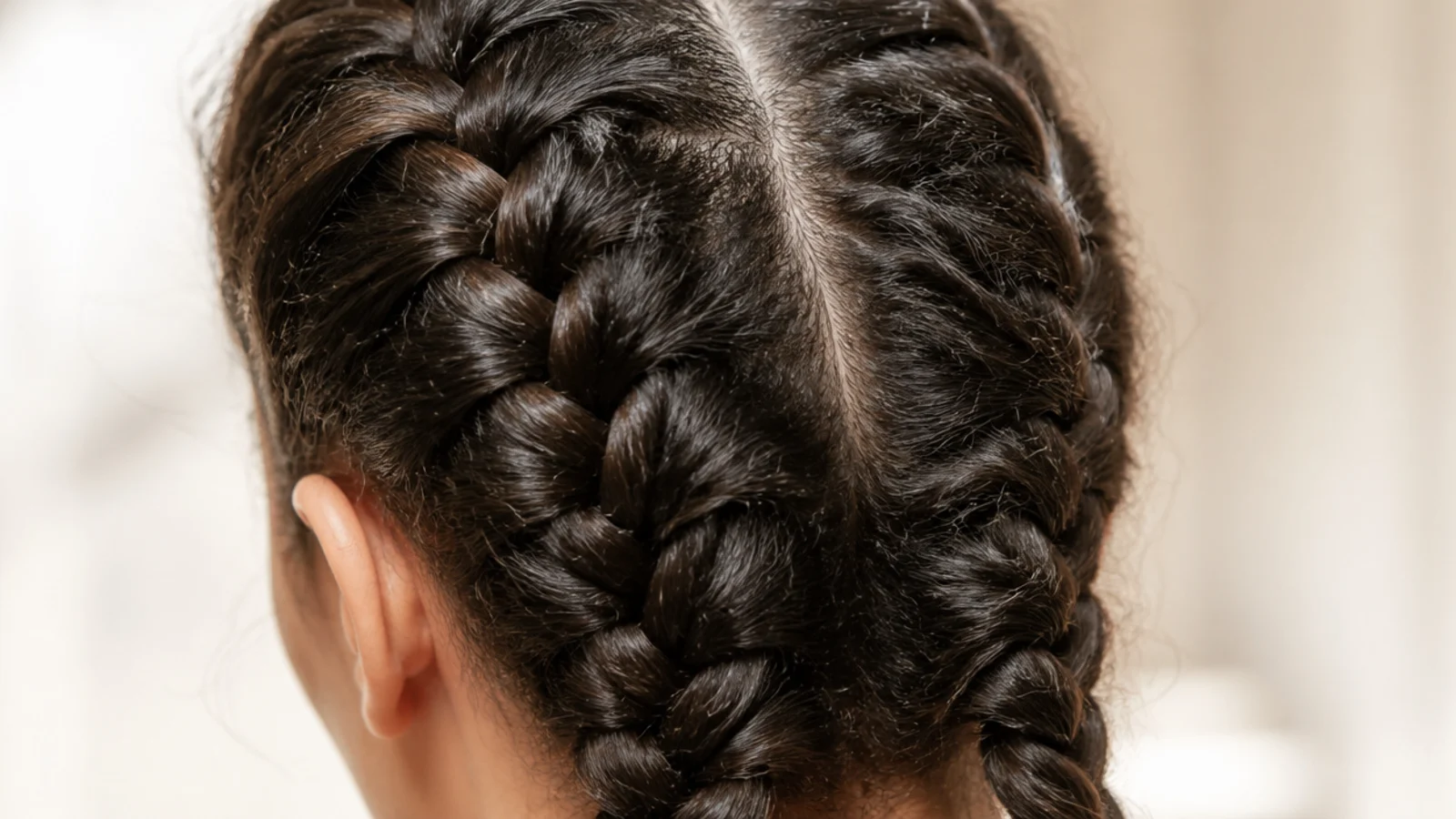
11. Two Dutch Braids
Dutch braiding crosses the strands underneath, so the braid sits on top of the hair and every length is locked inside it. Nothing is left loose for humidity to lift, and splitting a dense head in two halves the volume each braid has to contain.
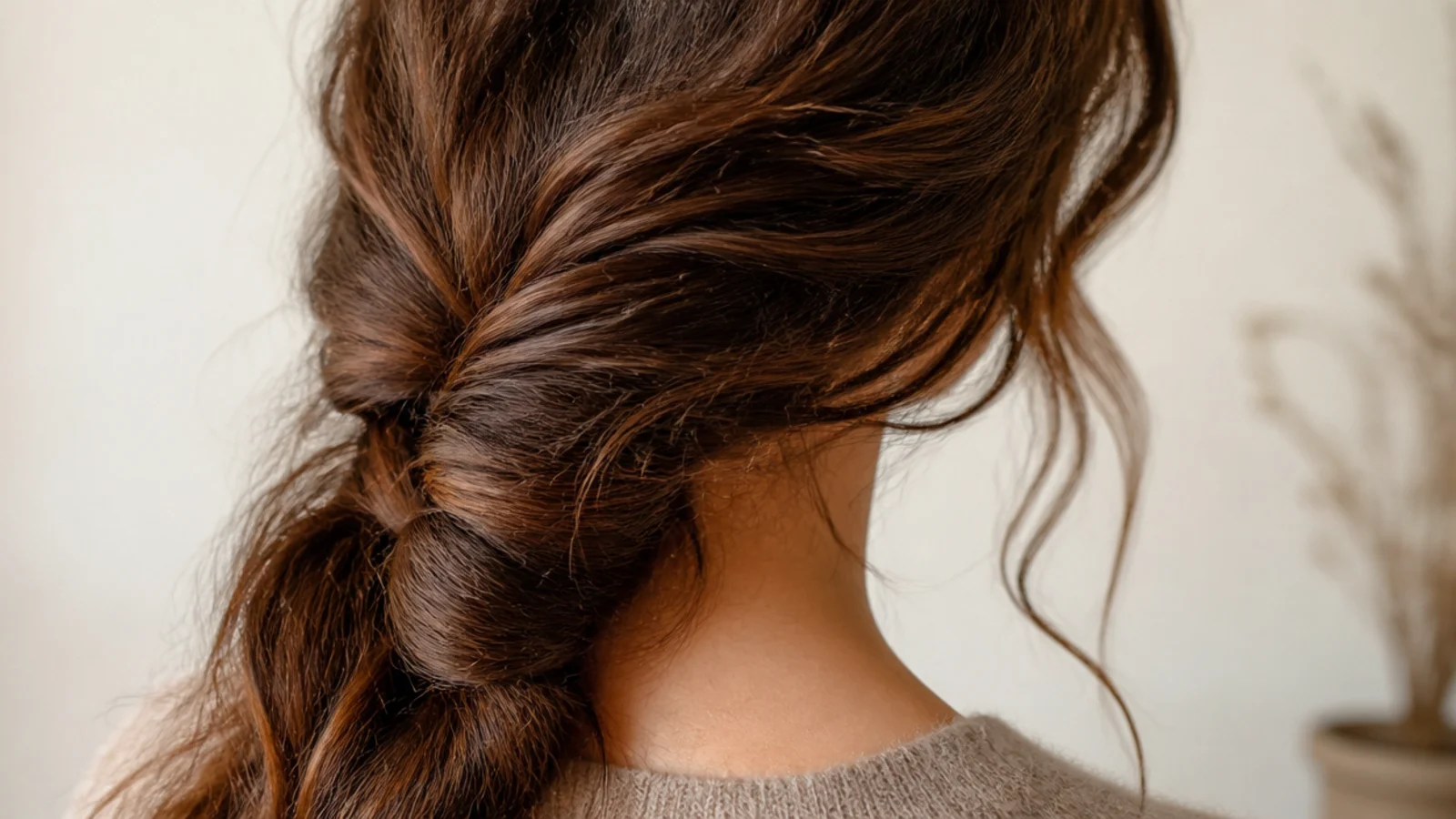
12. Loose Side Braid
The ends are the oldest and most porous hair you own, and a braid puts all of them inside the plait where the air cannot get at them. Braiding it loosely also keeps tension off the hairline, so you are not breaking the short front hairs while containing the long ones.
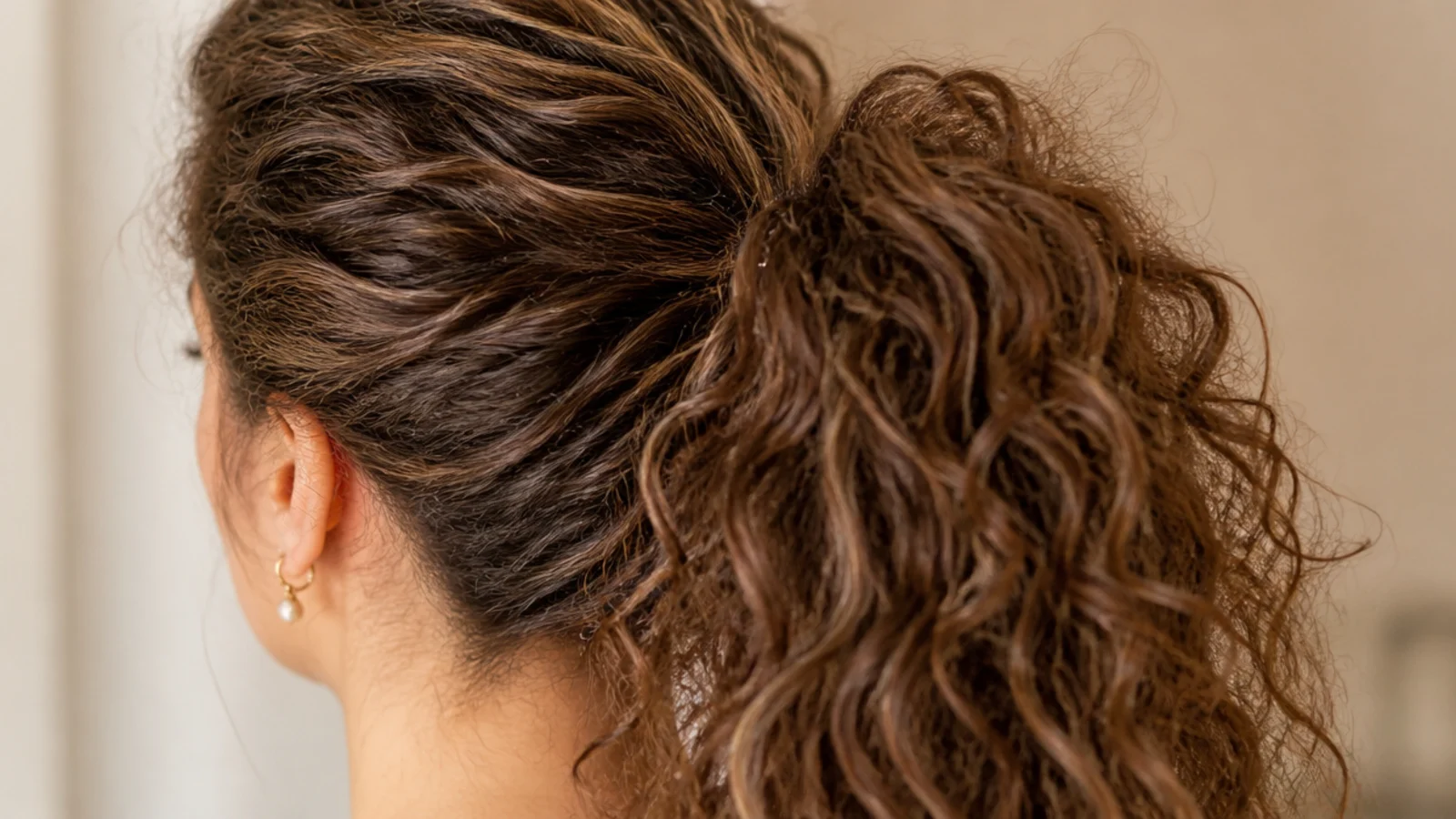
13. Bouffant Ponytail
Thick hair supports height at the crown with almost no product, because there is enough density to hold a backcombed cushion up on its own. Keep the backcombing to the underside of the top section only, since combing the visible surface breaks strands and buys you frizz next week.
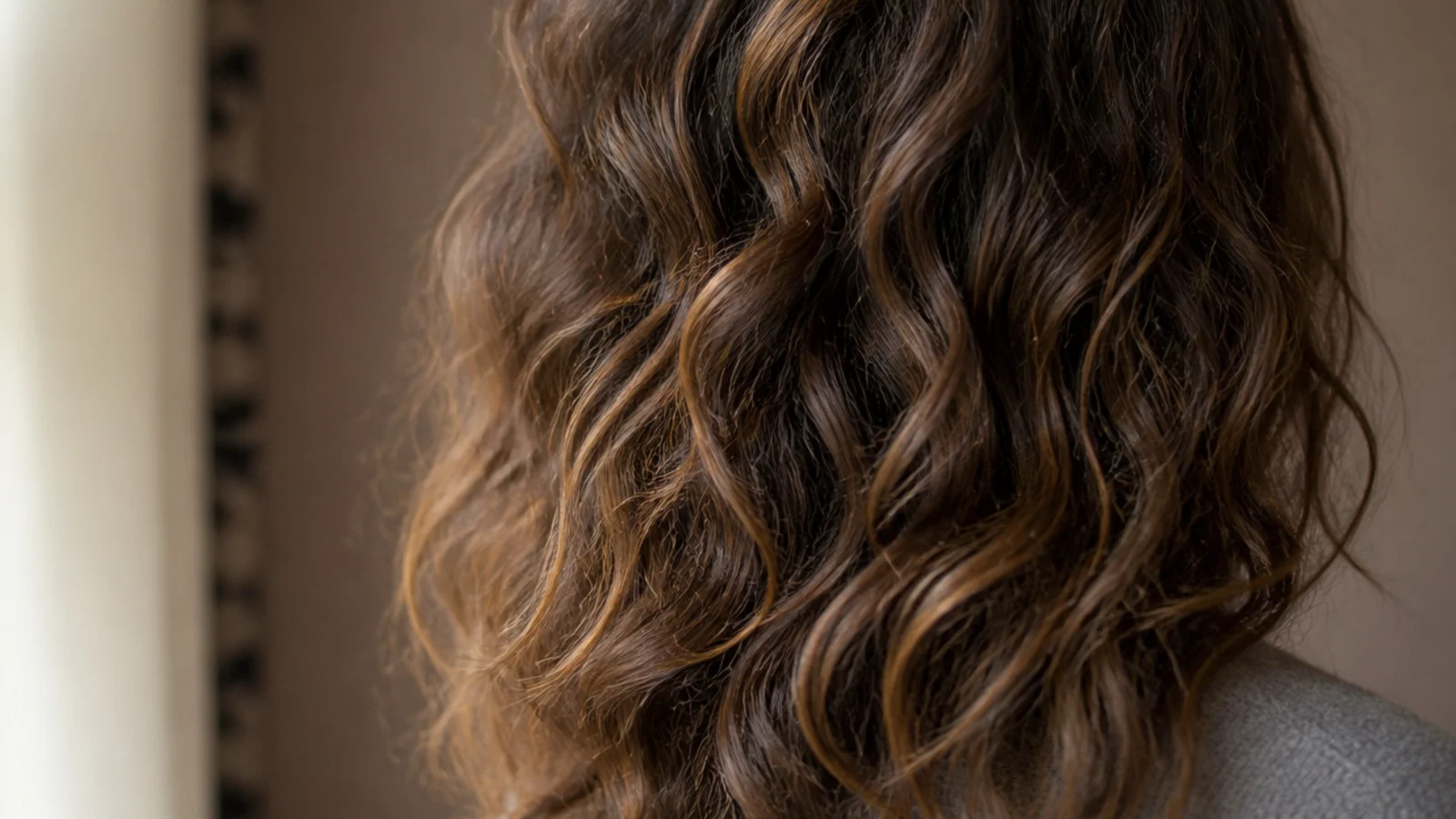
14. Diffused Waves
A diffuser spreads the airflow so the moving air stops blowing strands out of alignment, which is what a bare nozzle does. On a dense head the inside dries hours after the outside, so roots first on low heat and low speed is the only way to finish evenly.
15. Overnight Braid Waves
Hair holds whatever shape it is in as it dries, because the hydrogen bonds broken by water reform as the water leaves. A braid dries slowly and evenly along its whole length, so the wave comes out uniform, where a bun dries in a crease and a hard bend.
Final Thoughts
Ask for weight to come out from underneath and for the perimeter to stay blunt. That one sentence prevents the most common bad outcome on a dense head, which is a cut that feels lighter in the chair and grows a halo by the second wash. If a stylist reaches for thinning shears at the top section, that is the moment to say something.
Everything else is water management. Apply on soaking wet hair, dry on cotton rather than terry, sleep on satin, and judge any change over three wash days rather than one. For shorter options on a dense head see the 20 stunning short version, and for an occasion version on texture prone hair see 20 hoco hairstyles for curly hair. More in Hair Care.