15 Ways to Fix Frizzy Hair That Last Until Wash Day
Fifteen fixes for frizzy hair, and the reason most of them fail — frizz is set while the hair is wet and can only be disguised once it is dry. Almost every fix here happens before the hair has finished drying.
In this article · 23
- Why Hair Frizzes and the Mechanism Behind It
- Frizz by Hair Type
- The Wash Day Routine
- Anti Frizz Products and What They Do
- Haircuts That Hide Frizz
- Humidity and Sleep Habits
- The 15 Fixes
- 1. Start on Soaking Wet Hair
- 2. Dry With a Cotton T Shirt
- 3. Product Layering Order
- 4. Scrunch Out the Crunch
- 5. Sleep on a Silk Pillowcase
- 6. Detangle Wet With a Wide Comb
- 7. A Cold Final Rinse
- 8. A Weekly Hair Mask
- 9. The Dew Point Humidity Rule
- 10. An Internal Layers Haircut
- 11. Plopping in a T Shirt
- 12. A Diffuser on Low Heat
- 13. A Clarifying Shampoo Reset
- 14. A Silicone Serum Barrier
- 15. The Three Wash Day Timeline
- Final Thoughts
Most anti frizz advice is applied to hair that has already dried, which is roughly like trying to iron a shirt after it has been folded and put away.
Frizz is water moving, not water missing. The strand swells as it takes water in and shrinks as it gives it back, and the bend you see is that movement happening unevenly along its length.
The shape is set as the hair dries. Water breaks hydrogen bonds inside the strand and they reform as it leaves, so the drying window is the only stage where you have any say. After that, all you can do is weigh the halo down.
Why Hair Frizzes and the Mechanism Behind It
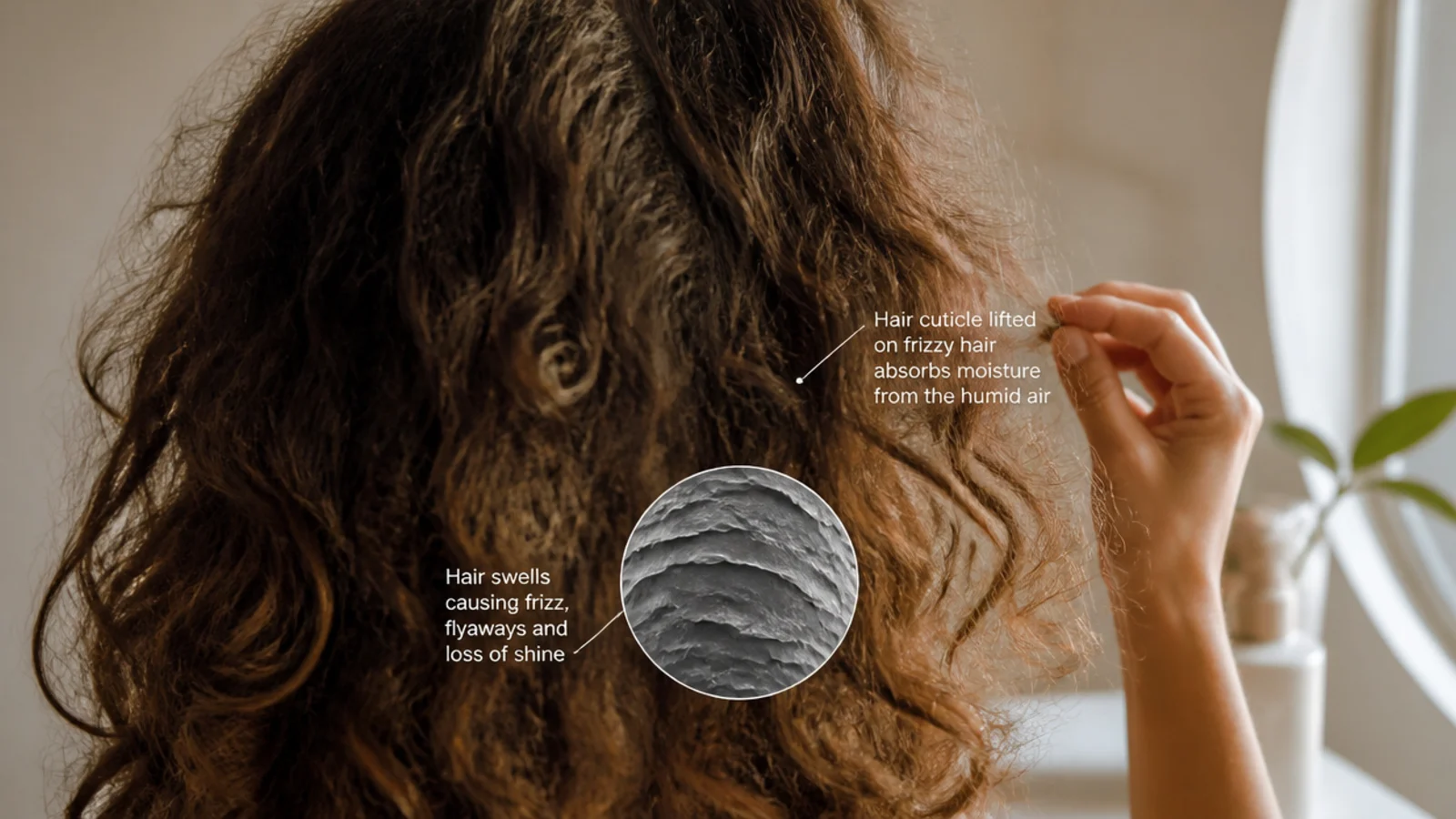
The cuticle is a shingled outer layer. When it lies flat the strand reflects light in one direction and water moves slowly. When the scales lift, both of those change at once.
Damage lifts the scales permanently. Bleach, heat and mechanical abrasion leave gaps, and hair with gaps is called high porosity. It soaks up water in seconds and loses it just as fast.
Uneven swelling produces the bend. Water reaches some parts of the cortex before others, those parts expand first, and the strand kinks where the expansion is uneven.
Short broken hairs are a separate problem wearing the same costume. A snapped strand has no weight above it and simply stands up. No amount of conditioning will fix that one, because nothing is wrong with the hair except its length.
Frizz by Hair Type
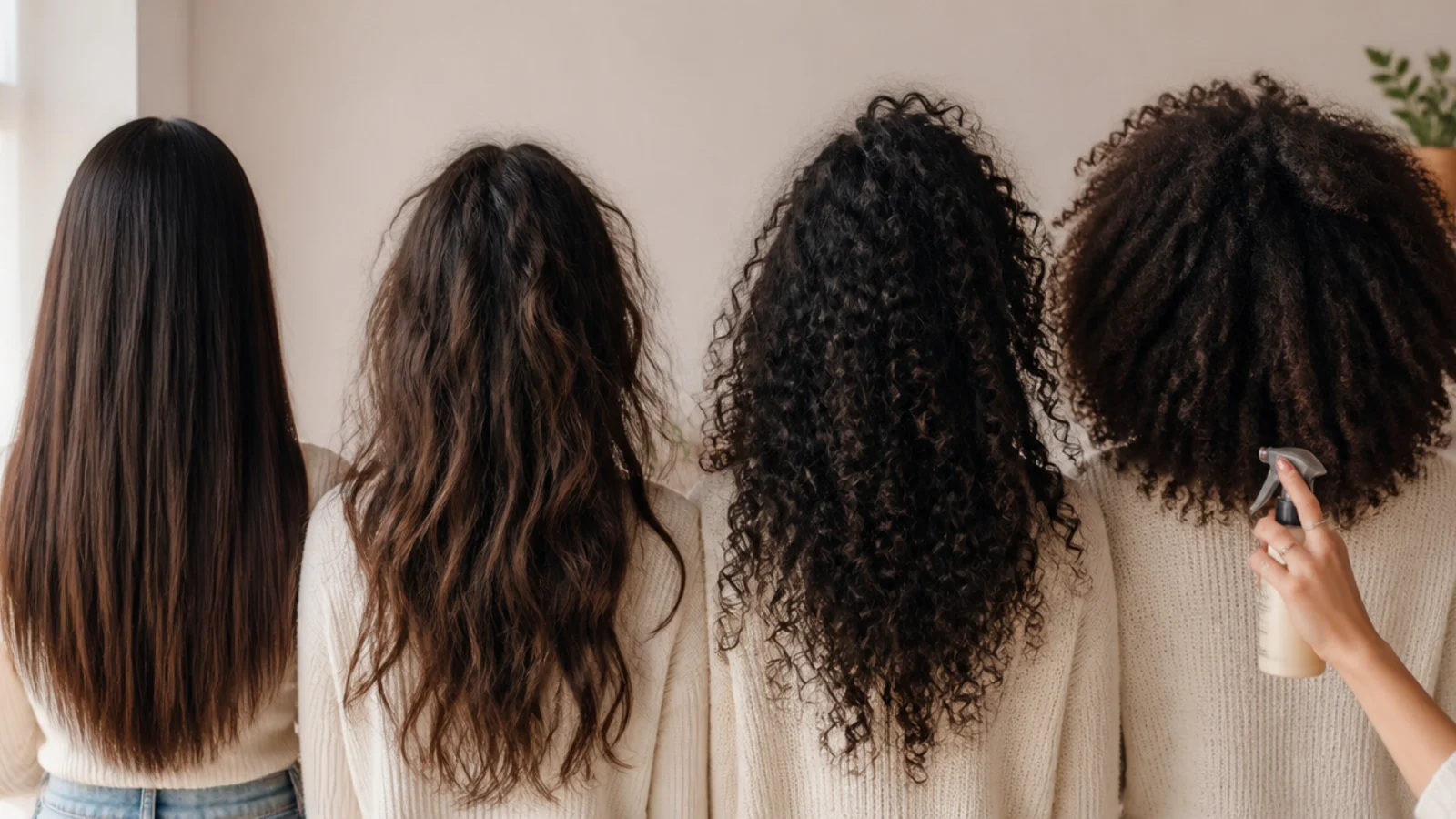
Straight hair frizzes on the surface. Individual flyaways lift off an otherwise smooth top layer, and they are almost always breakage rather than dryness.
Wavy hair loses its pattern. The S bend opens out into an undefined puff, usually because the wave was disturbed while it was still drying.
Curly hair loses its clumps. Curls that dried in groups reflect light as one surface, and frizz is what you see when individual curls detach from those clumps.
Coily hair frizzes at the ends and the crown. The crown gets the most friction from pillows and collars, and the ends are the oldest hair on the head.
Porosity beats type. Two people with the same curl pattern and different porosity will need completely different products, which is why copying a routine from someone with matching curls so often fails.
The Wash Day Routine
Shampoo the scalp and let the runoff clean the length. Lathering the mid lengths strips the oil that was holding the surface flat.
Condition from the ears down. Roots make their own oil. The bottom two thirds is where the porosity is.
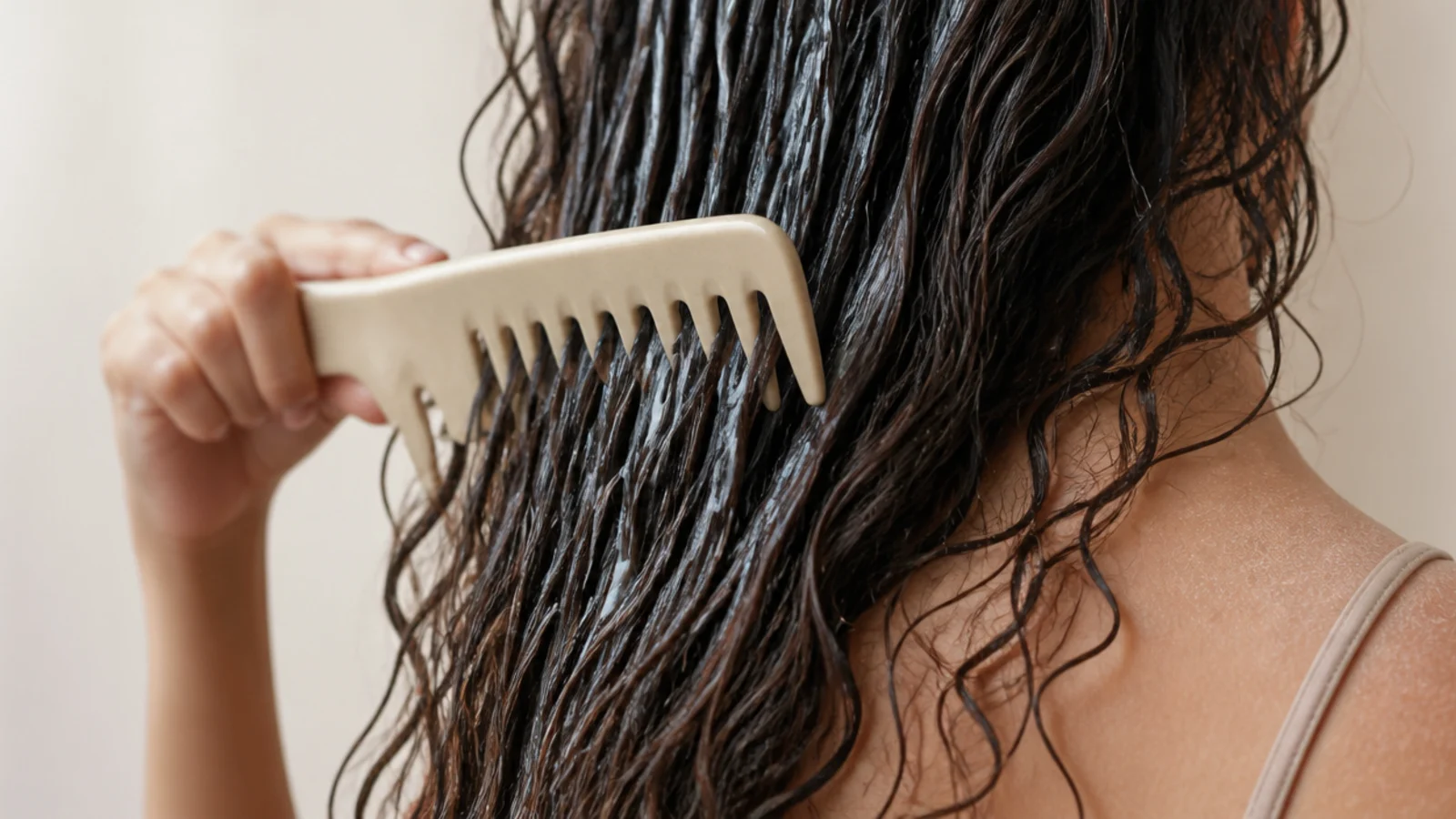
Detangle in the conditioner while it is still on. Slip is what lets strands slide past each other instead of snapping, and every snap is a future flyaway.
Do not wring or rub. Squeeze water out downward through a flat cotton knit. Twisting the length forces strands across each other under load.
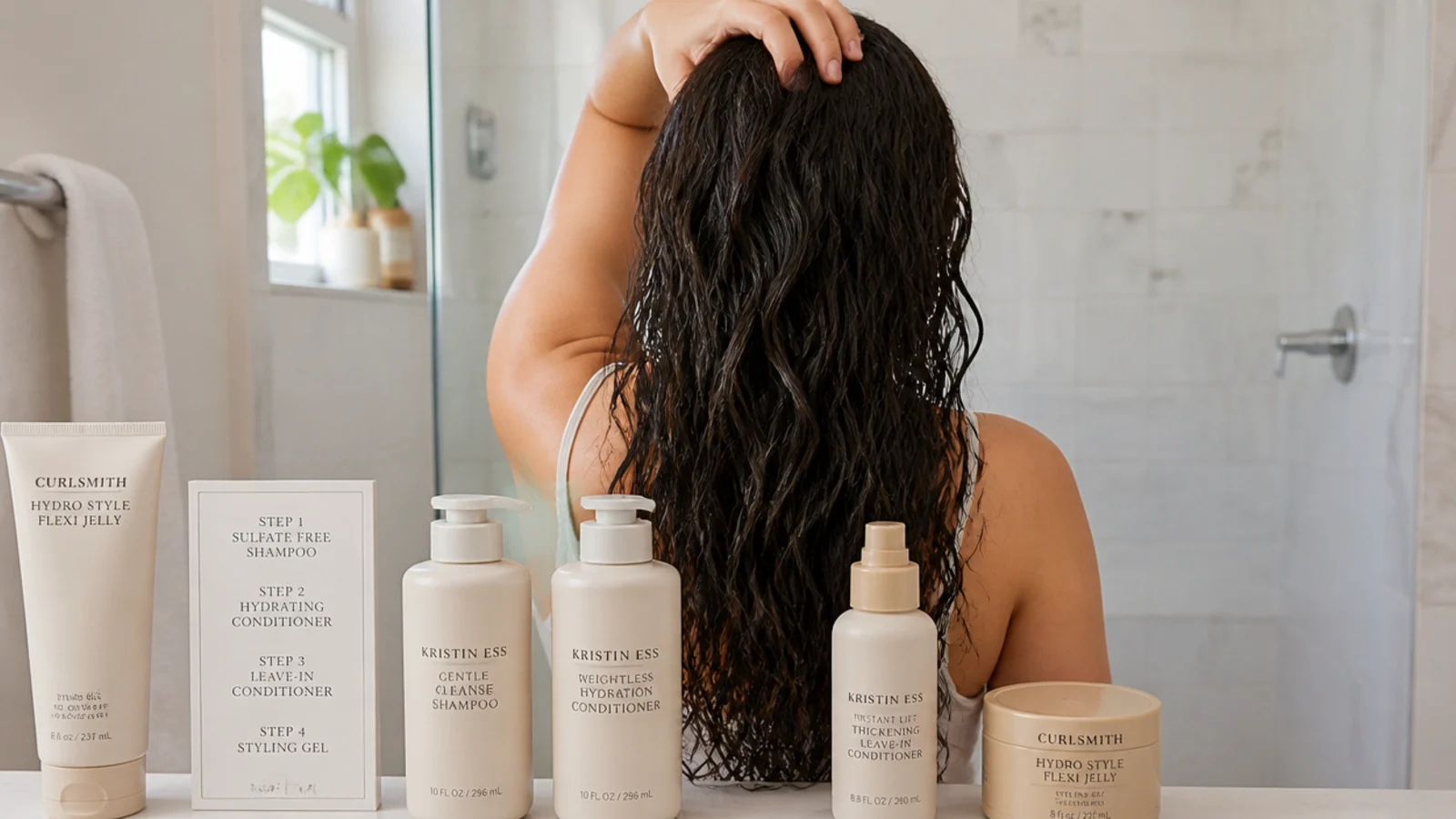
Move straight from the shower to product. The window between rinsing and applying is measured in seconds on high porosity hair, because the water you need as a carrier is already evaporating.
Anti Frizz Products and What They Do
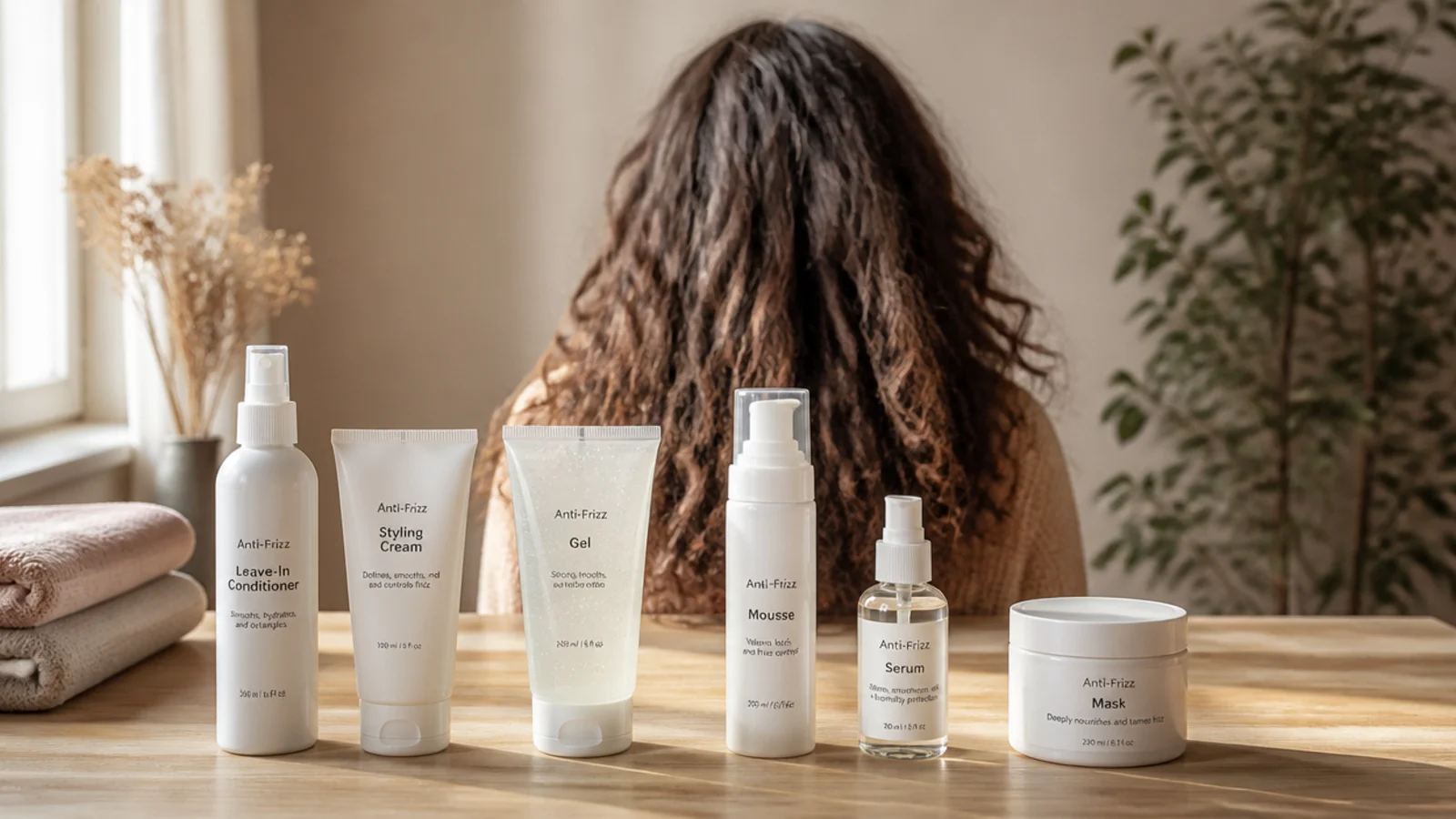
Humectants pull water toward the strand. Glycerin, honey and aloe. Useful in moderate air, actively harmful at either humidity extreme.
Emollients soften and fill gaps. Oils and fatty alcohols. They make the surface feel smoother but do not stop water crossing it.
Occlusives form a physical barrier. Silicones and heavier oils sit on the outside and slow water movement in both directions, which is the only thing that genuinely holds through weather.
Film formers set a cast. Gel and mousse dry into a shell that holds the strand in the position it dried in until you break it.
Protein rebuilds temporarily. It patches porous spots for a few washes. Too much and the strand goes stiff and snaps, which produces the short hairs you were trying to avoid.
Haircuts That Hide Frizz
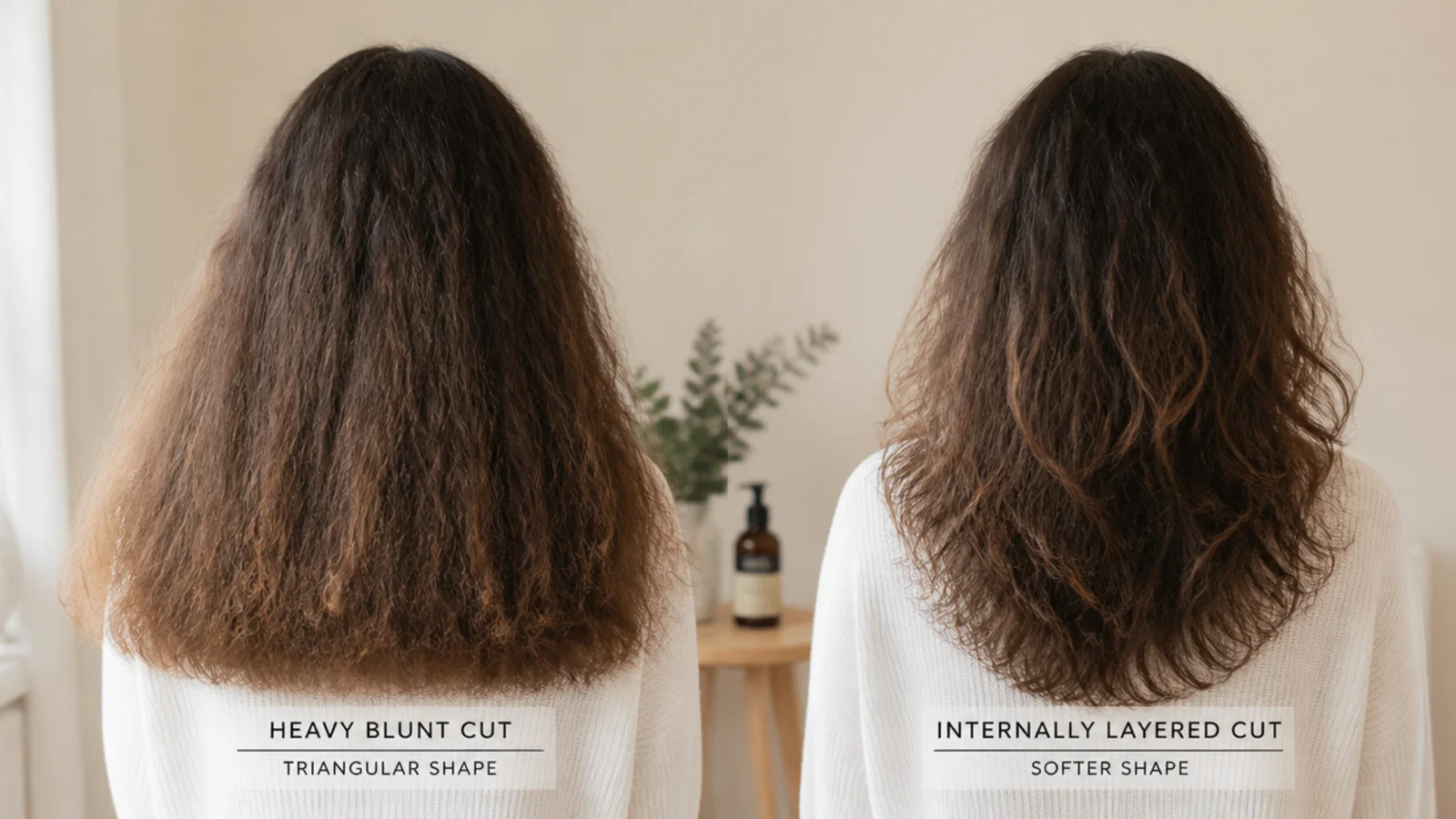
Internal layers remove weight without exposing ends. The shortened hair sits underneath the top layer, so the outside stays smooth while the head gets lighter.
Surface layers must reach the length below them. A layer cut too short in the visible section has nothing to lie against and stands off the head permanently.
A blunt perimeter is heavy and heavy is flat. Point cutting the bottom edge opens the ends and lets them flare, which is the opposite of what frizz prone hair needs.
Trim the ends on schedule. Split ends travel upward along the strand, so a quarter inch removed on time saves an inch removed late.
Humidity and Sleep Habits
Dew point is the number that matters. Relative humidity shifts with temperature and tells you almost nothing useful. Dew point measures the water actually in the air.
Above roughly sixty degrees Fahrenheit, drop the humectants. They pull water in faster than the strand can absorb it evenly, and uneven absorption is the whole mechanism of frizz.
Below about forty degrees, they run in reverse. The air is drier than your hair, so a humectant draws water out of the cortex and you frizz in cold weather.
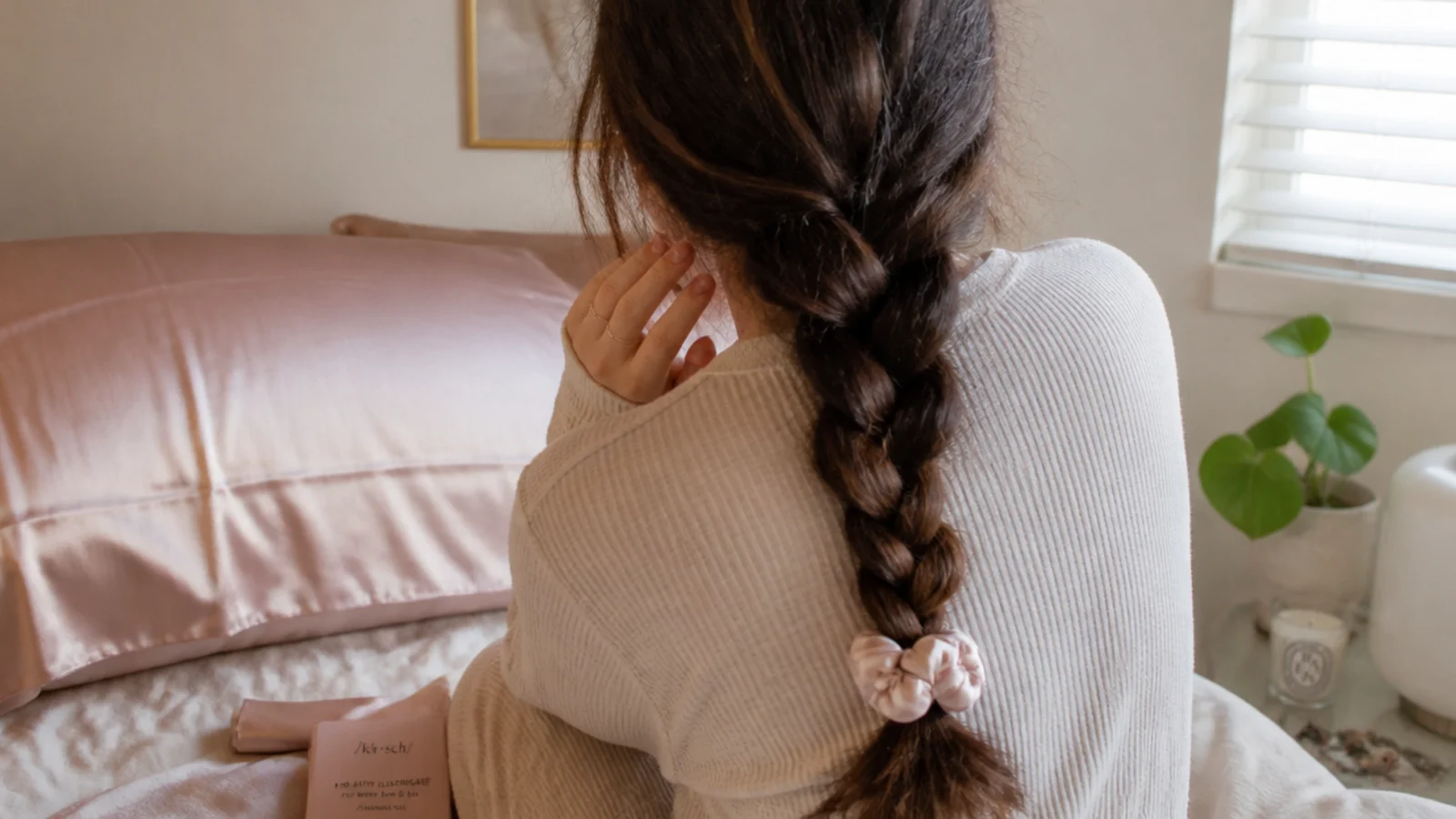
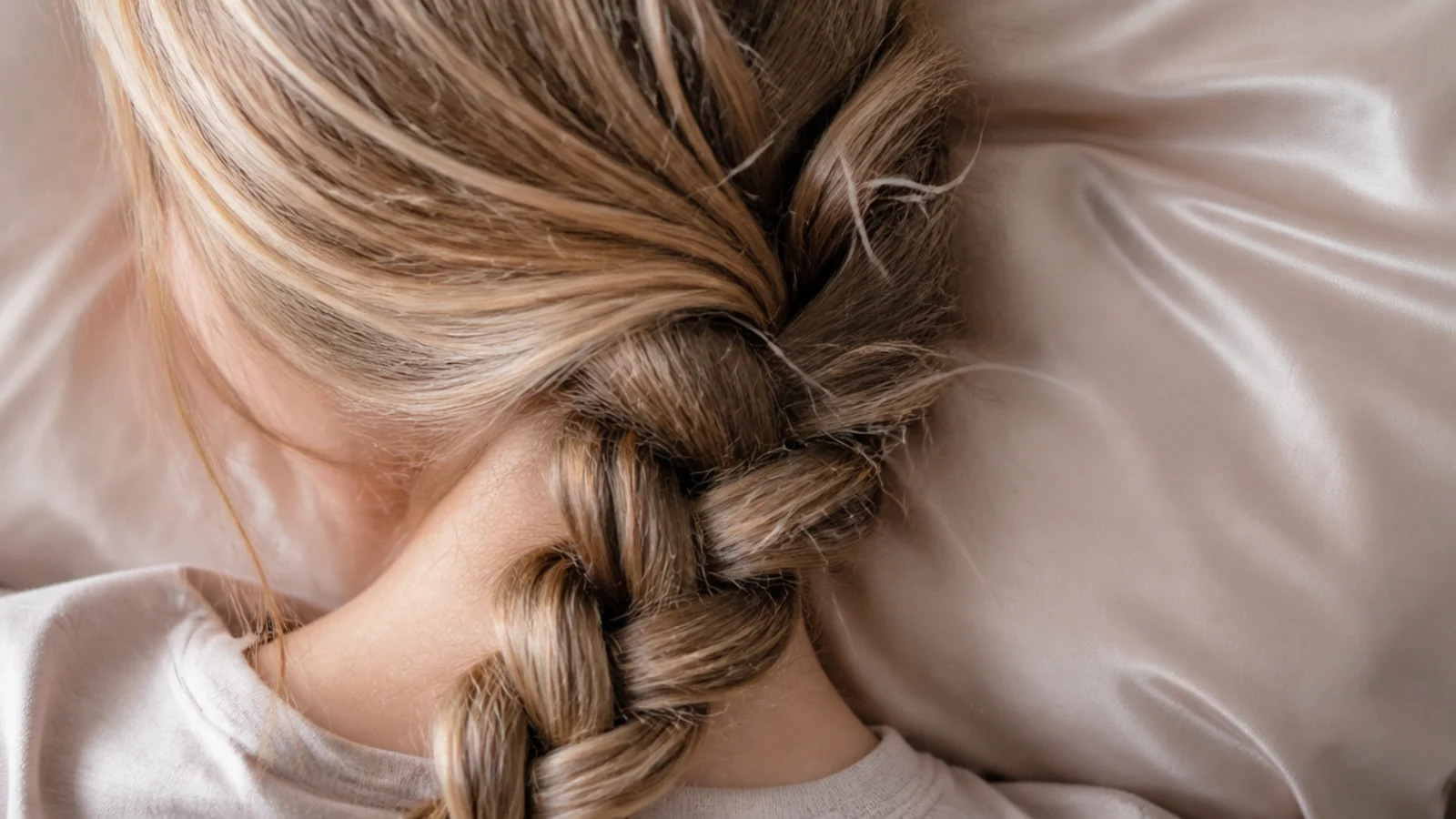
Sleep on satin or silk. Cotton absorbs moisture from the hair and drags against the cuticle for eight hours at a stretch.
Contain the length overnight. A loose braid or a pineapple keeps friction on the tie rather than on the pattern, so you have one dent to wet down instead of a whole head.
The 15 Fixes
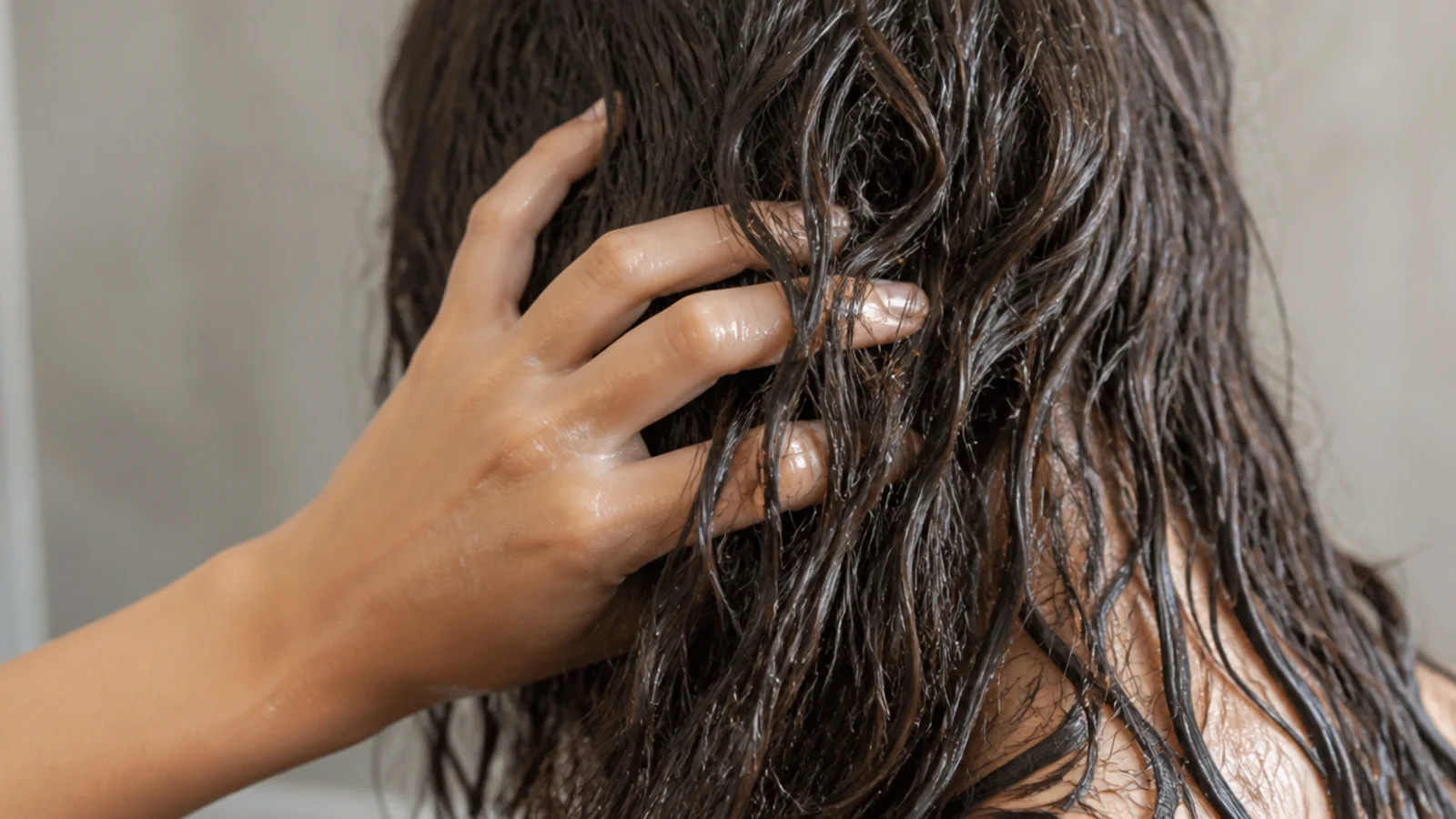
1. Start on Soaking Wet Hair
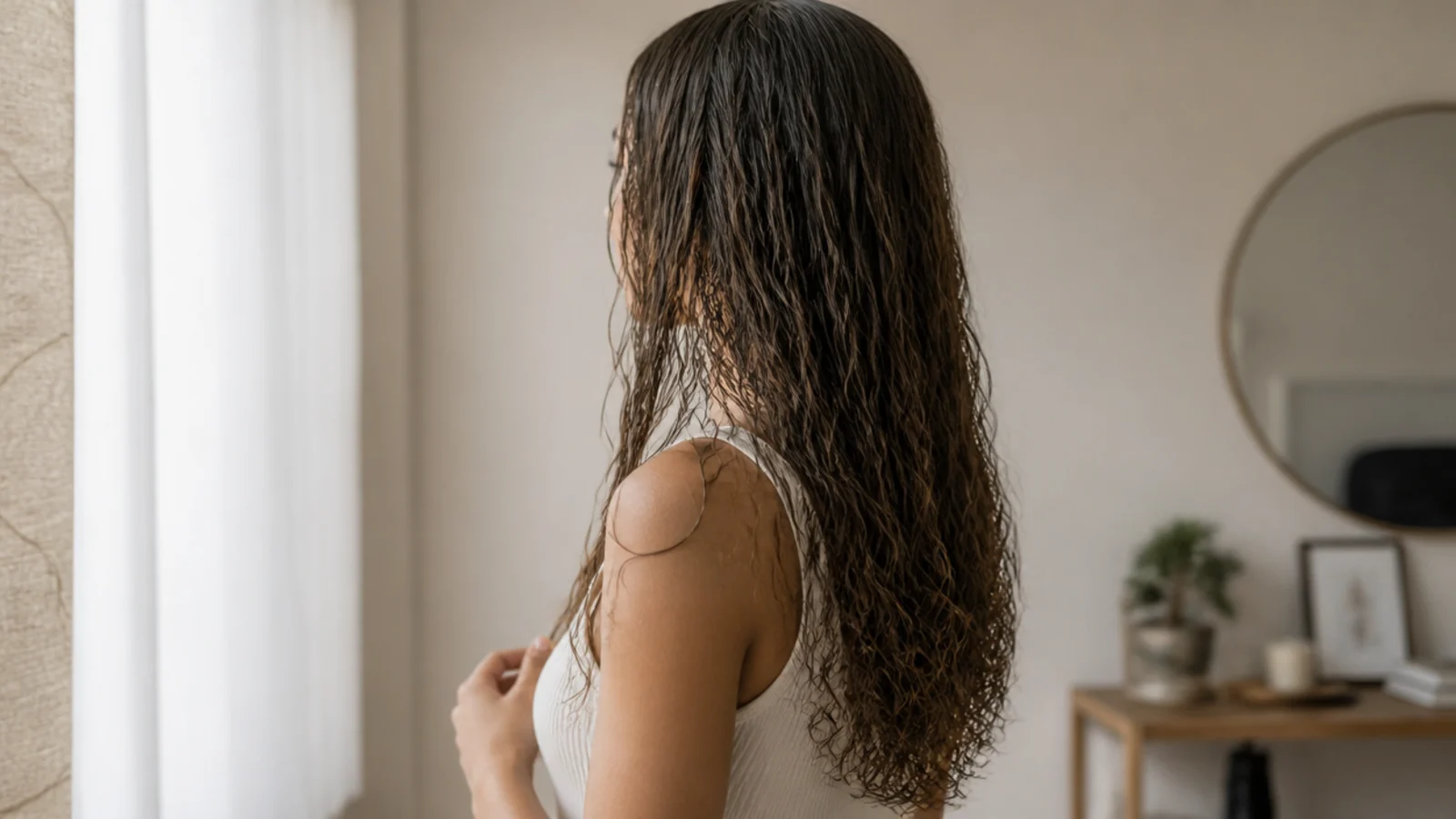
Water is the carrier that moves product from your palms to the middle of a section. Applied to merely damp hair, a cream coats the outside and never reaches the inner layers, which is why the underneath frizzes while the surface looks fine.
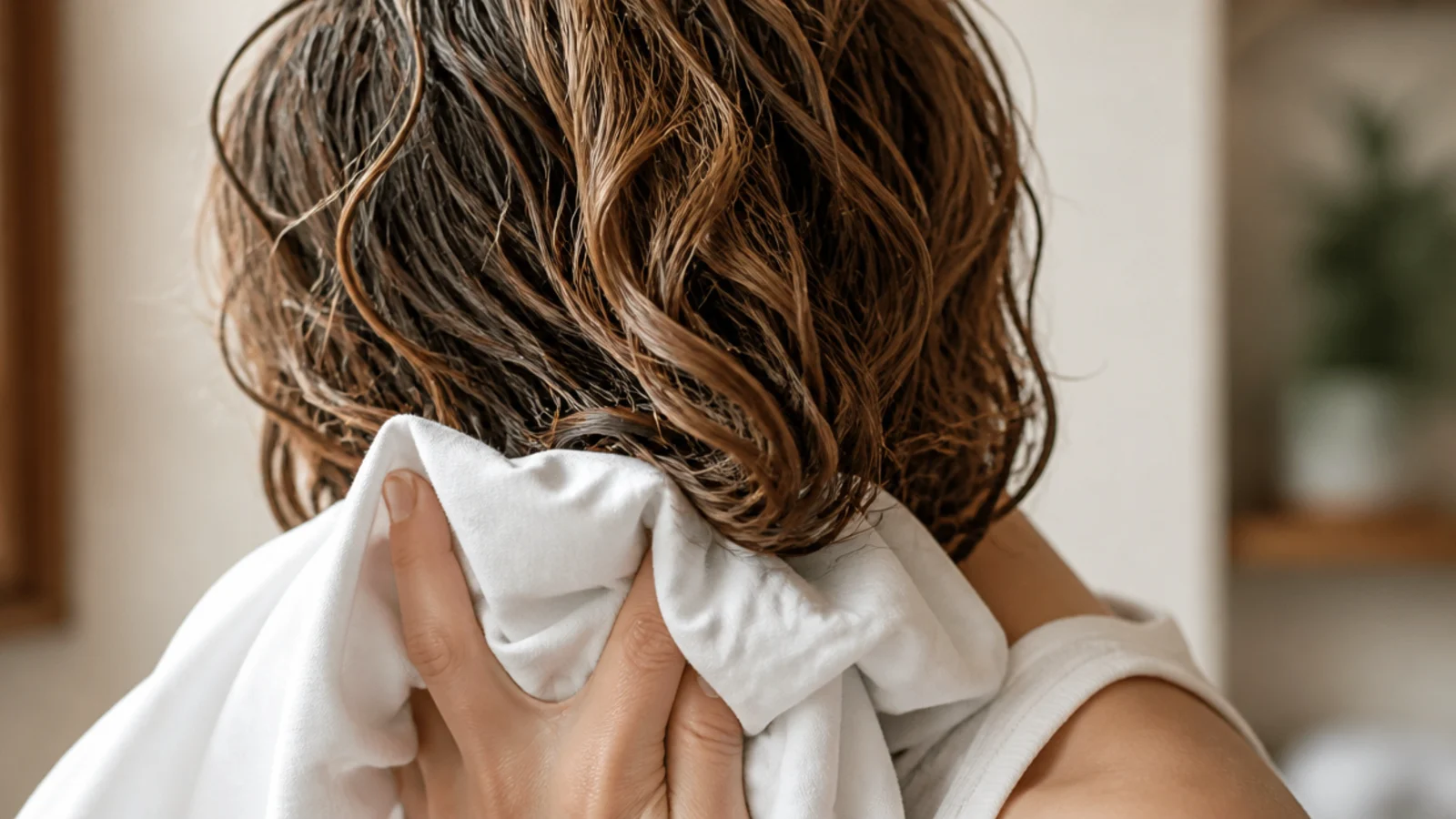
2. Dry With a Cotton T Shirt
The loops on a terry towel are wider than a single strand, so they catch under the cuticle scales and lift them as the towel moves. A cotton t shirt is a flat knit with no loops, so it absorbs water without abrading the surface.
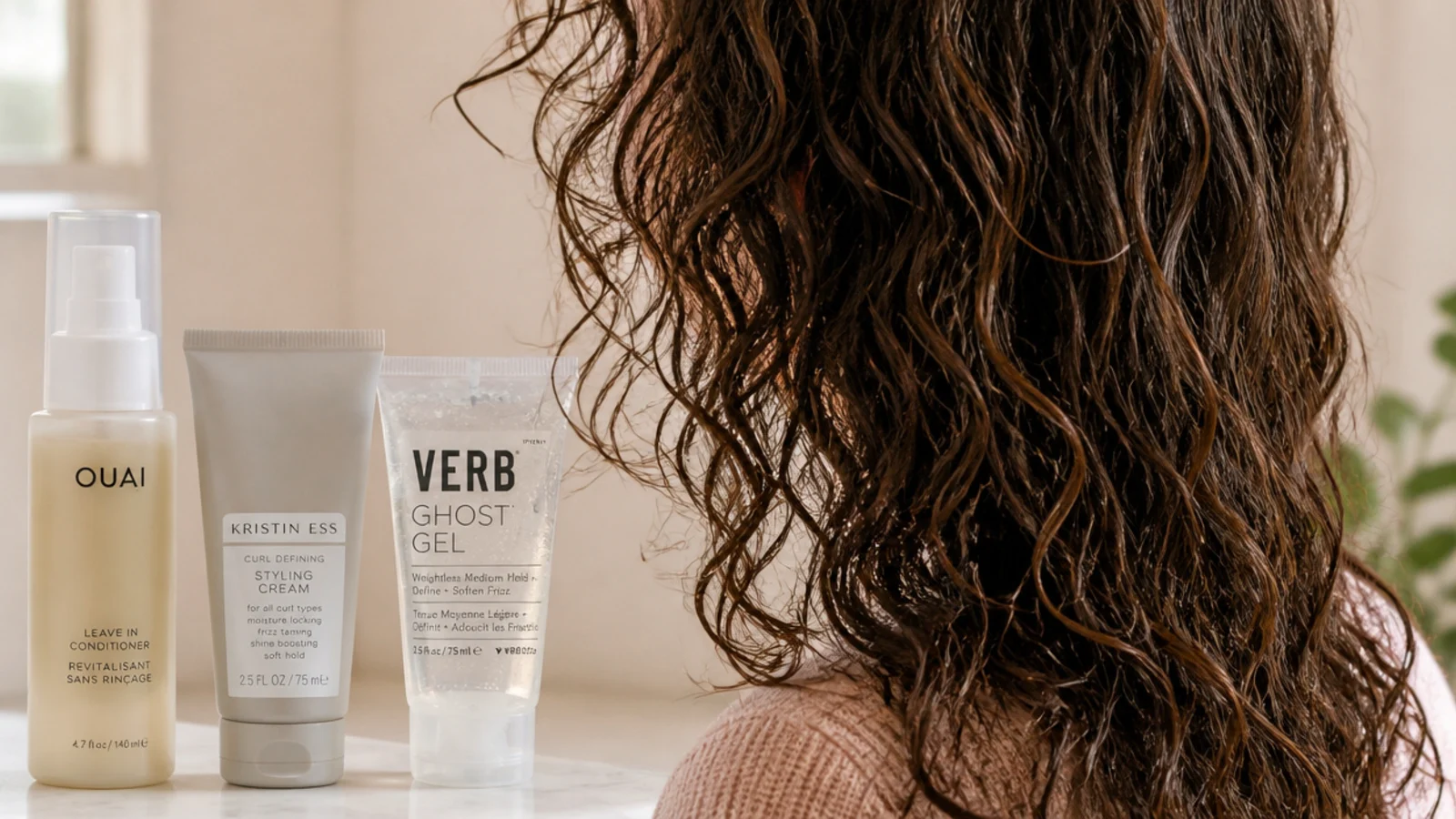
3. Product Layering Order
Thinnest first and thickest last, because each layer has to be able to travel through the one beneath it. Put an oil on before a leave in and the water based product cannot get past it, so you have paid for two products and applied one.
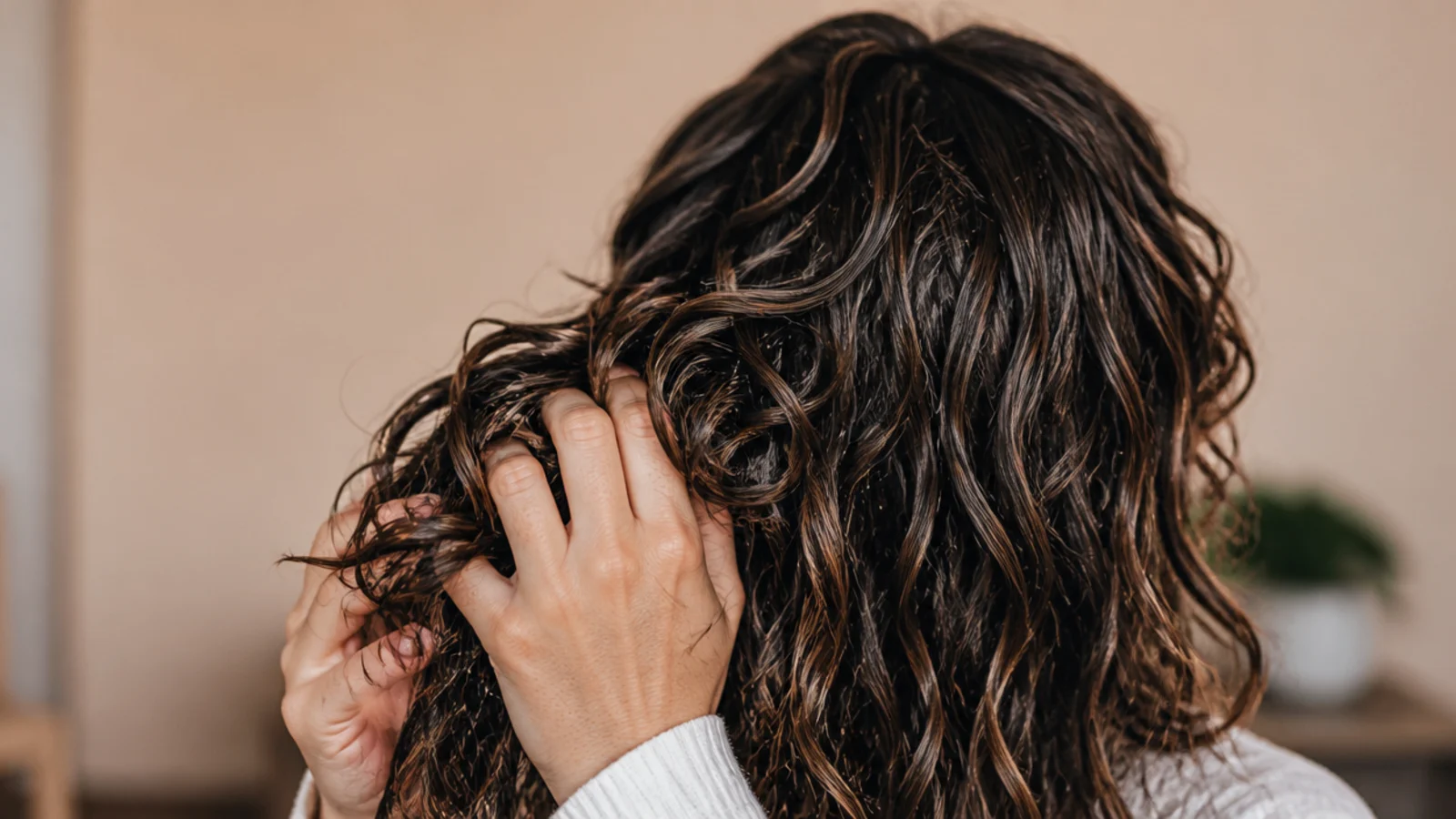
4. Scrunch Out the Crunch
Gel dries into a rigid cast that holds each strand exactly where it dried. Breaking that cast once the hair is completely dry leaves the set behind and takes the stiffness away, but breaking it early releases the shape along with the crunch.
5. Sleep on a Silk Pillowcase
Cotton does two things at once overnight, absorbing moisture out of the hair and dragging against the cuticle every time you move. Silk and satin are smoother and far less absorbent, so eight hours of contact costs the strand almost nothing.
6. Detangle Wet With a Wide Comb
Dry hair has no slip, so a comb pulled through a knot loads the strand until it snaps, and each snapped strand becomes a flyaway. Detangling wet with conditioner still on lets strands slide apart under a fraction of the force.
7. A Cold Final Rinse
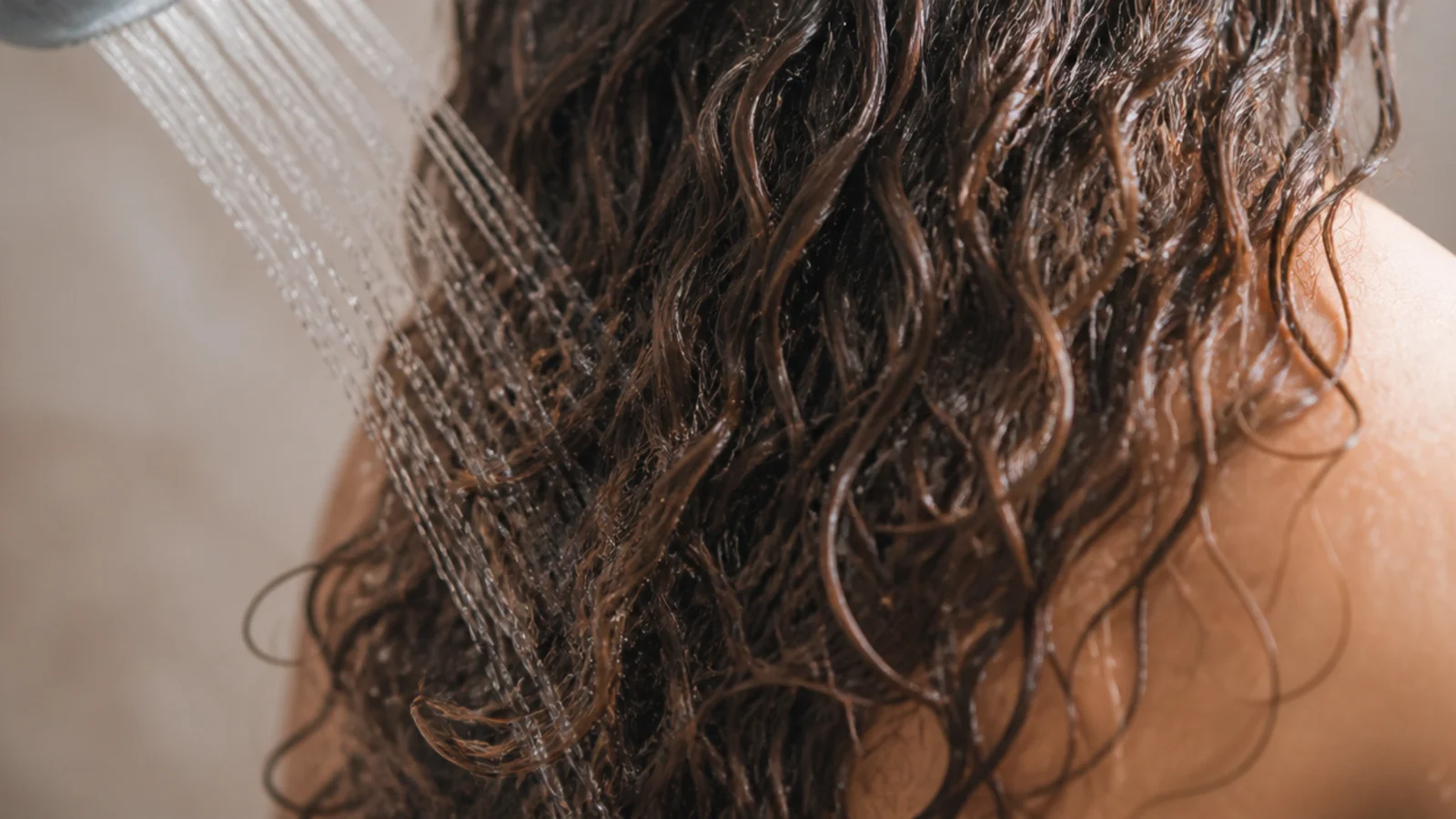
Hot water swells the strand and lifts the cuticle scales. Finishing cool lets the strand contract before you touch it, so the surface is flatter at the moment you start handling it, which is when most of the day's damage happens.
8. A Weekly Hair Mask
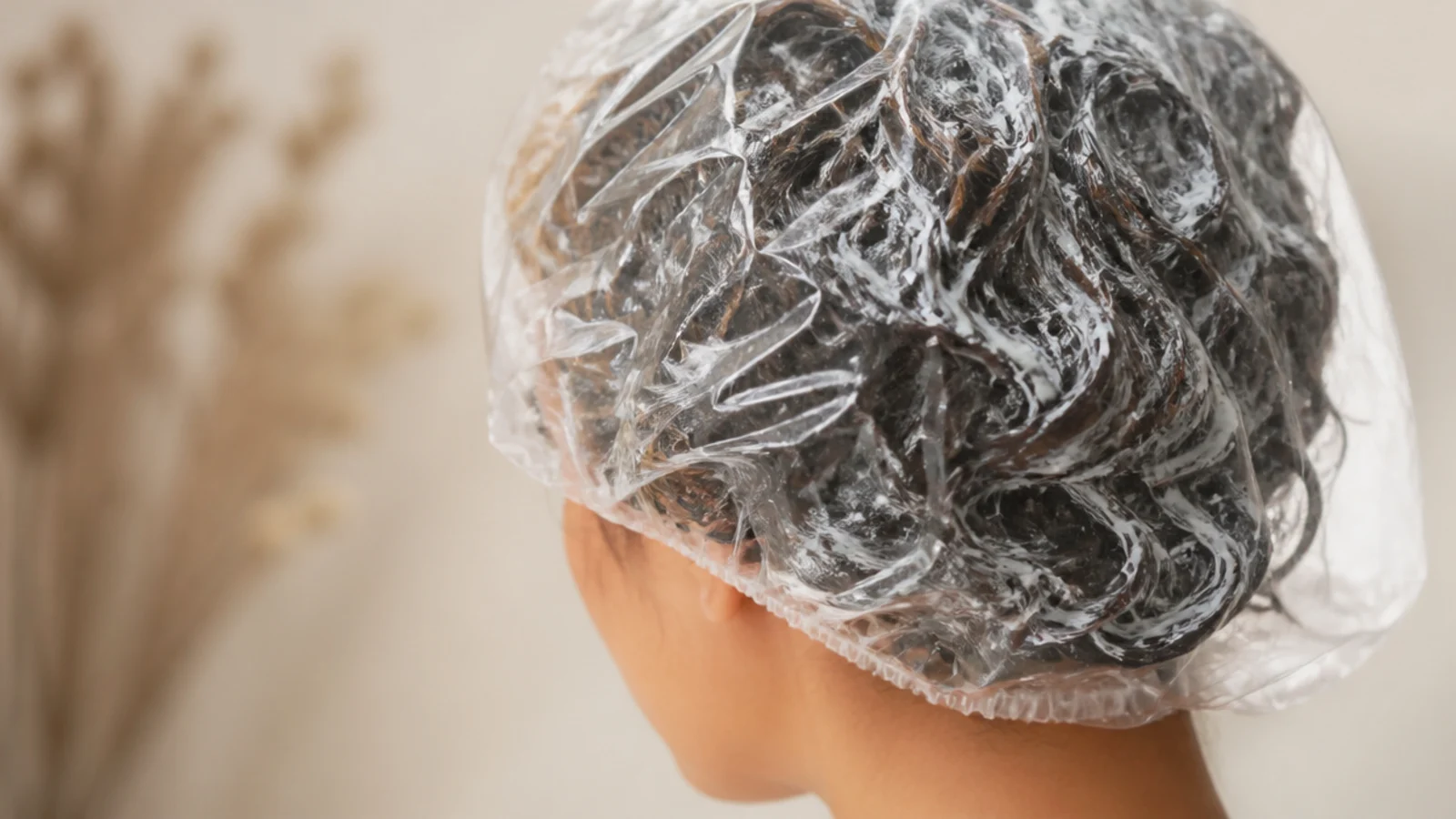
A mask sits long enough for its emollients to reach into the gaps that porosity leaves, which a two minute conditioner cannot do. Once a week is the useful frequency, because doing it more often softens the strand until it loses the elasticity it needs to hold a shape.
9. The Dew Point Humidity Rule
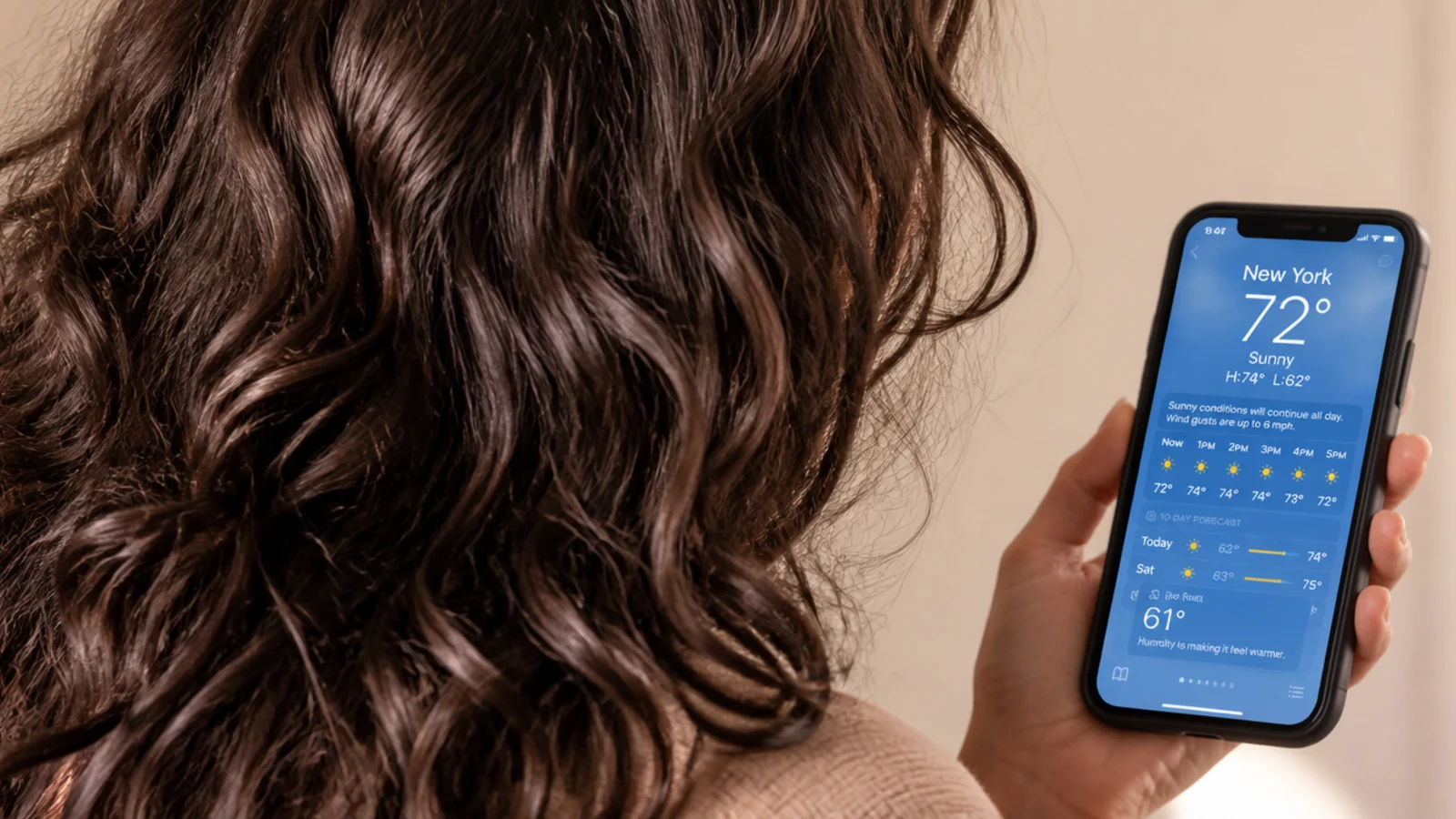
Check the dew point rather than the humidity percentage, since the percentage moves with temperature and the dew point measures actual water in the air. Above roughly sixty degrees Fahrenheit skip glycerin and reach for a barrier instead, and below about forty do exactly the same thing for the opposite reason.
10. An Internal Layers Haircut
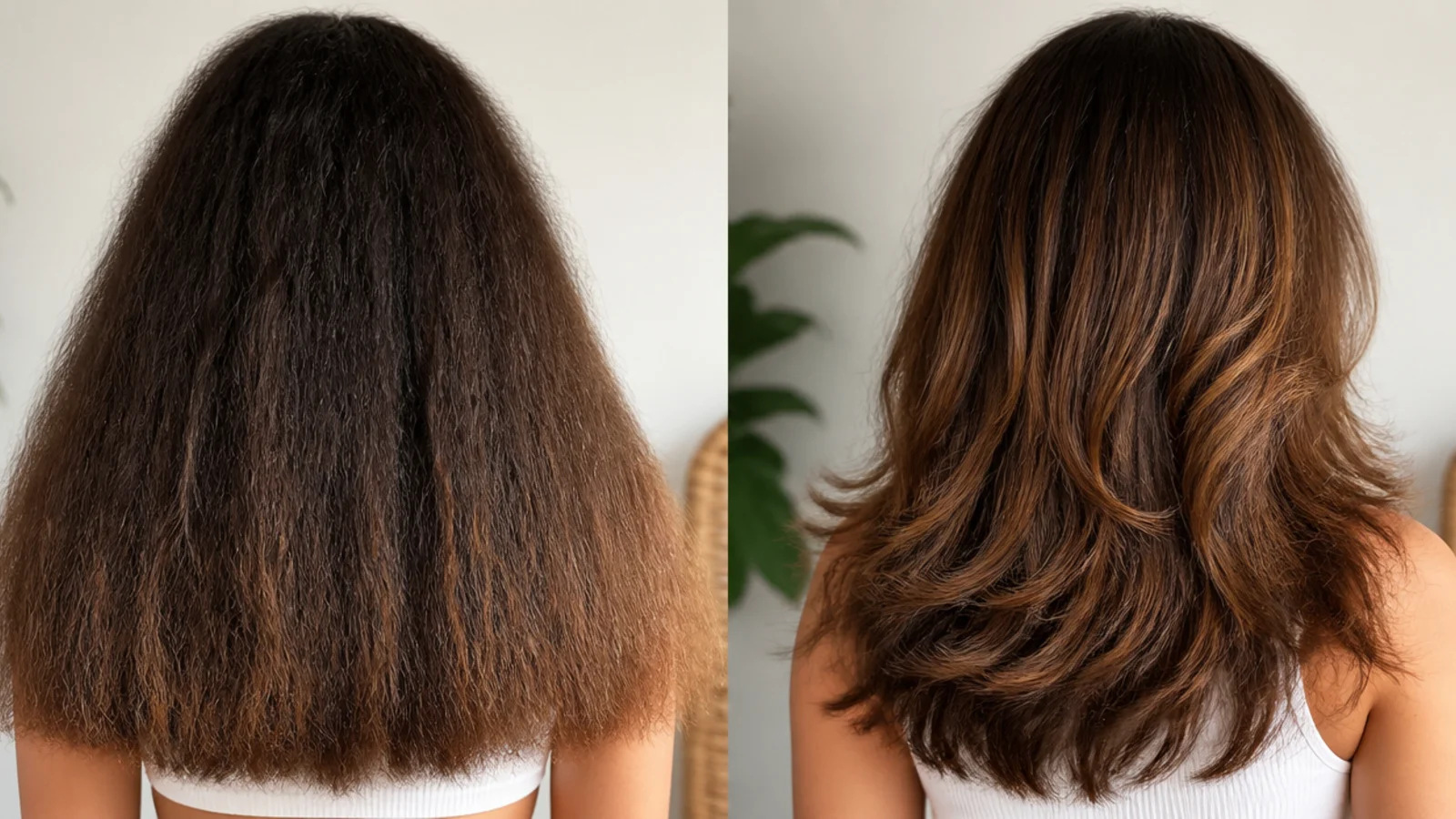
Weight taken from beneath the top section lets the head dry faster and lie flatter, without putting a single new end on the visible surface. Layers cut into the top layer do the reverse, because a short piece up there has nothing above it to hold it down.
11. Plopping in a T Shirt
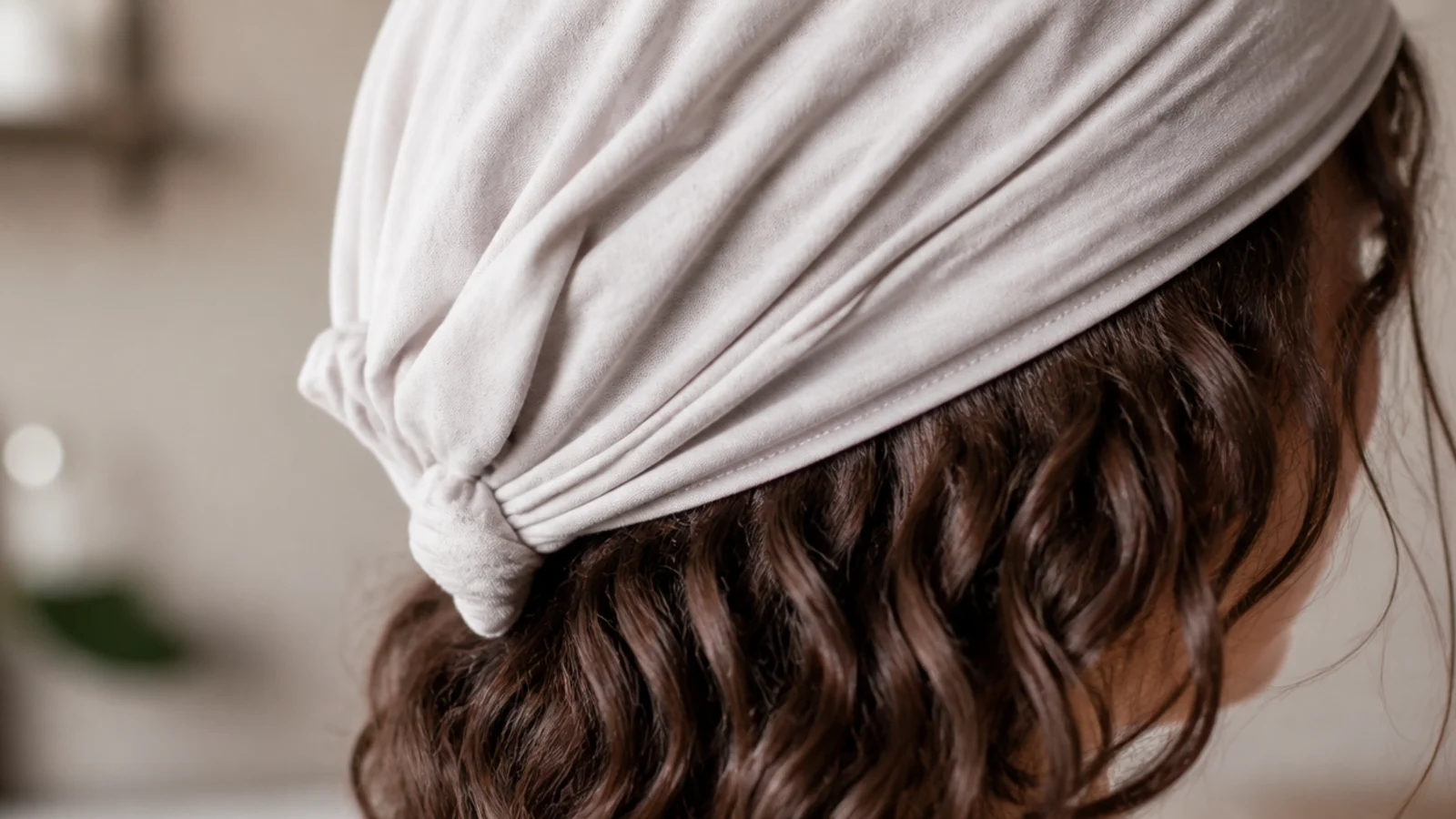
Laying the length onto a t shirt and wrapping it holds the curl pattern stacked against the head while the excess water is absorbed. Gravity is what pulls a wave out during the first ten minutes of drying, and plopping simply removes gravity from that window.
12. A Diffuser on Low Heat
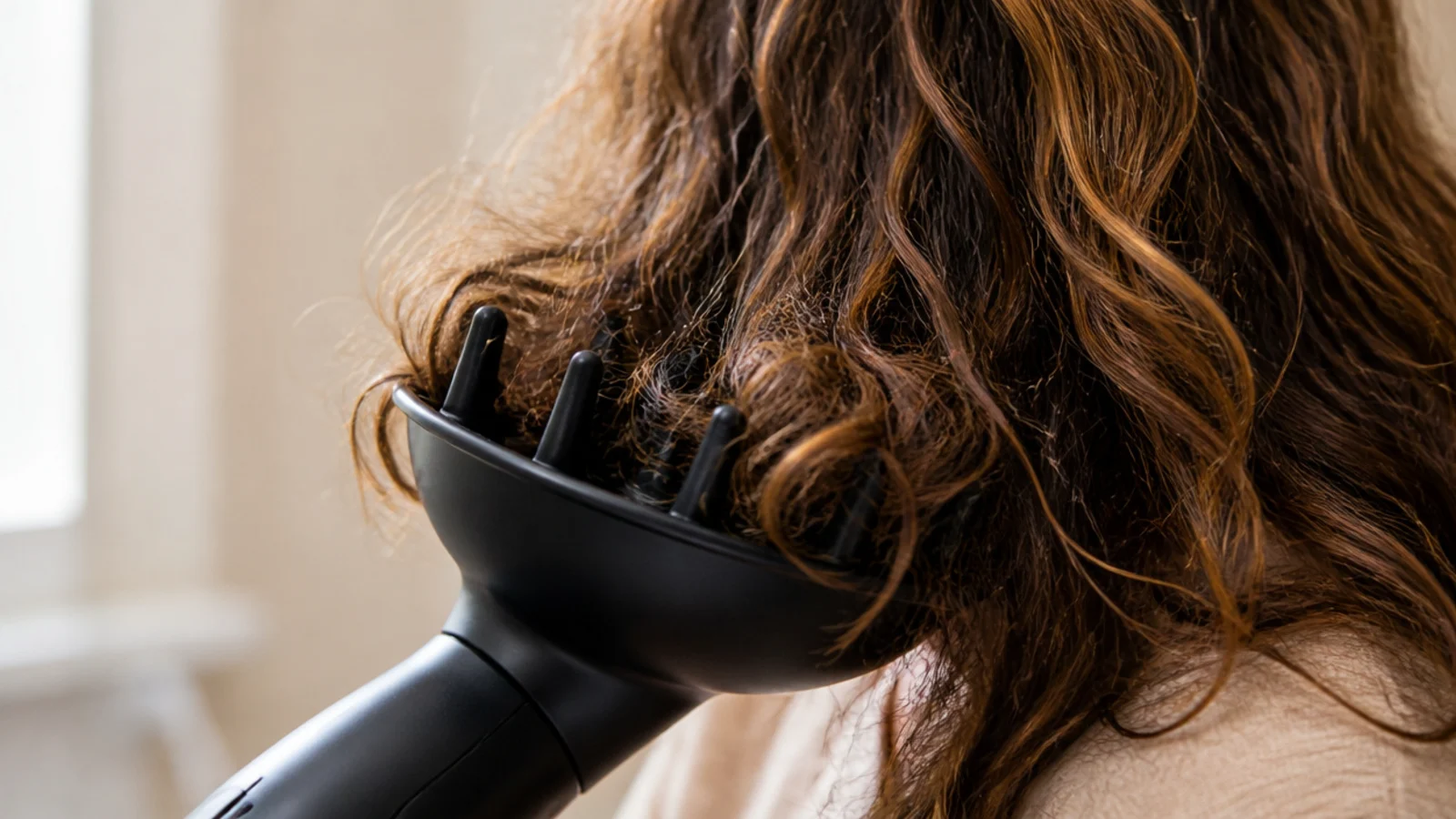
A bare nozzle blows strands out of alignment faster than they can dry in place, which is exactly how a smooth section becomes a puff. A diffuser spreads the same air over a wide bowl, so the hair dries where it sits rather than where the airflow pushes it.
13. A Clarifying Shampoo Reset
Silicones and film formers build up over weeks and eventually stop water and conditioner reaching the strand at all. Hair under a layer of buildup reads as dry and frizzy while it is actually coated, so a monthly clarifying wash is what makes everything else work again.

14. A Silicone Serum Barrier
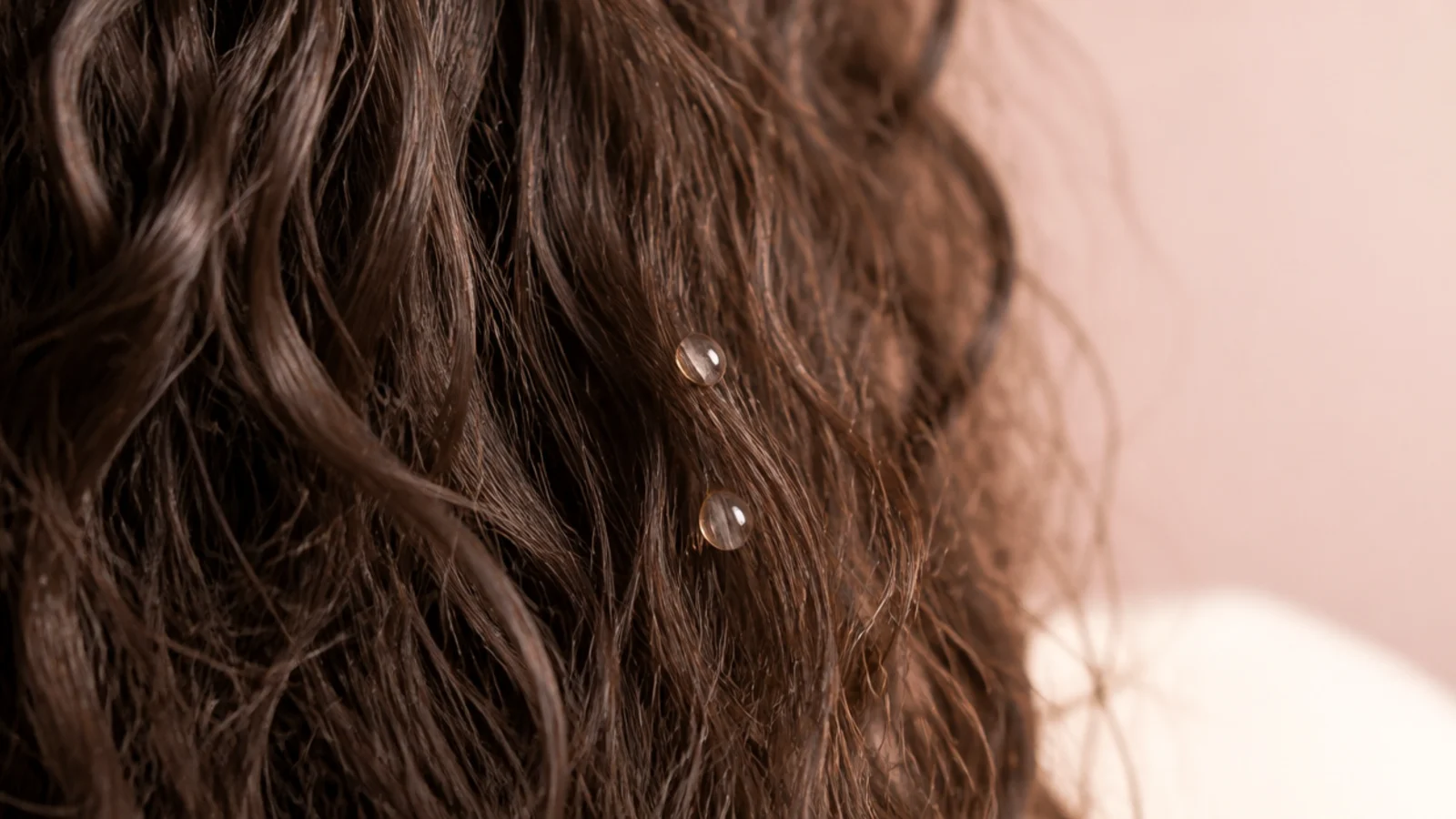
An occlusive layer slows water crossing the cuticle in both directions, which is the only approach that survives genuinely humid weather. Two or three drops warmed between the palms and pressed onto the surface is the dose, because a serum raked through the length weighs the pattern flat.
15. The Three Wash Day Timeline
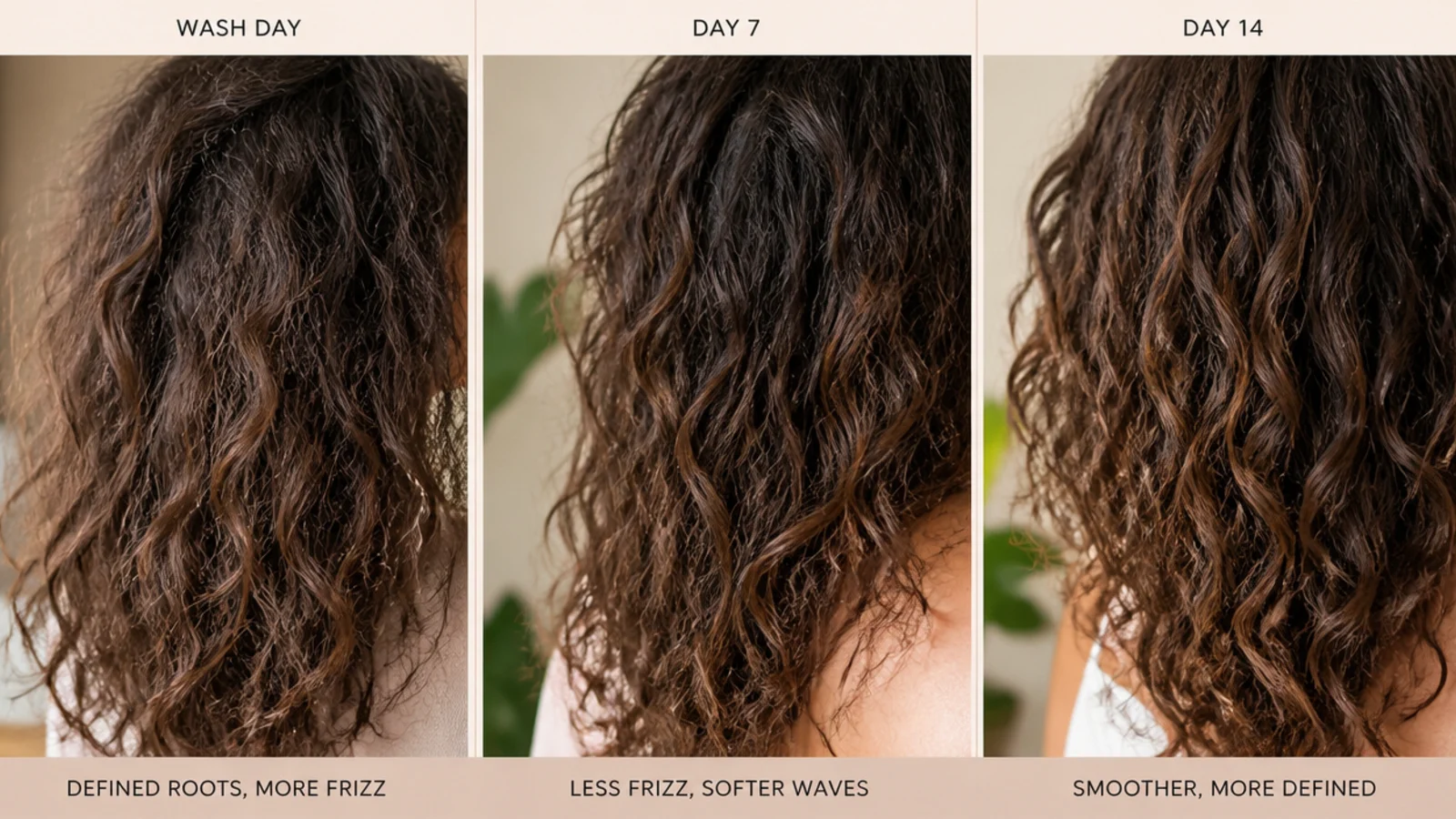
The first wash after a routine change often looks worse because clarifying strips the coating you had been relying on. The second wash is where layering starts to behave and the third is a fair test, so change one variable per wash or you will never know which one worked.
Final Thoughts
The single change that fixes the most frizz is moving your whole routine forward in time. Product on soaking wet hair, cotton instead of terry, a diffuser instead of a nozzle, and then hands off until it is dry. Everything on that list happens before the hair has finished drying, because that is the only window in which the shape is still yours to set.
Once it is dry, be honest about what you are doing. You are not repairing anything at that point, you are weighing a halo down or pressing it flat, and the smallest amount of an occlusive applied to the surface will do it better than anything raked through the length. Judge any change over three wash days rather than one. More in Hair Care. See also the curly version and the curly aesthetic version.