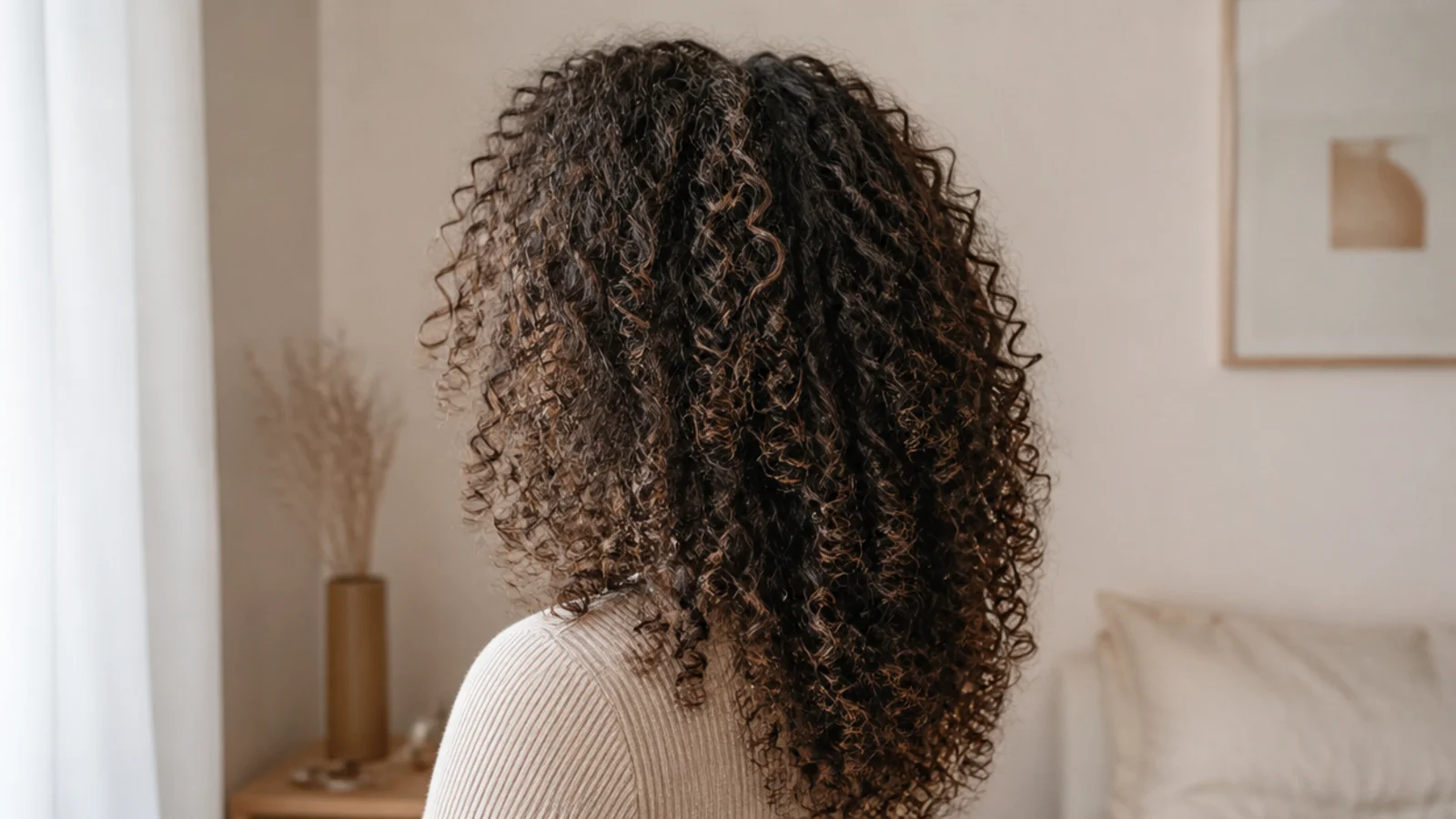
20 Frizzy Curly Hair Ideas That Hold Their Shape
Twenty curly styles that survive a humid day, and the distinction almost everyone gets wrong — most of what reads as frizz on curly hair is not extra frizz at all. It is one curl clump that has split into forty separate strands.
In this article · 28
- Why Curly Hair Frizzes
- Frizz Types by Hair Type
- Wash Day Routine
- Product Layering Order
- Cuts and Layers for Frizz
- Humidity and Sleep Habits
- The 20 Frizzy Curly Hair Ideas
- 1. Wash and Go on 3B Curls
- 2. Diffused With Root Clips
- 3. Pineapple Ponytail
- 4. Half Up Curly Bun
- 5. Plopped Curls
- 6. Finger Coiled 3C Curls
- 7. Curly Shag With Curtain Bangs
- 8. Low Bun With a Silk Scarf
- 9. Twist Out on 4A Coils
- 10. Braid Out Waves
- 11. Curly Lob With a Side Part
- 12. Curly French Braid
- 13. Curly High Ponytail
- 14. Bantu Knot Out
- 15. Curly Blowout With a Diffuser
- 16. Curly Space Buns
- 17. Scrunch Out the Crunch
- 18. Long Layered Curls
- 19. Halo Braid
- 20. Air Dried With Leave In
- Final Thoughts
Most of what people call frizz on curly hair is not frizz. It is one curl clump that dried as forty separate strands instead of one.
A curl clump is the unit that reads as definition. Strands that dry stuck together present a single smooth outline. Separate them and you have not added a single hair, but you have multiplied the number of edges catching light.
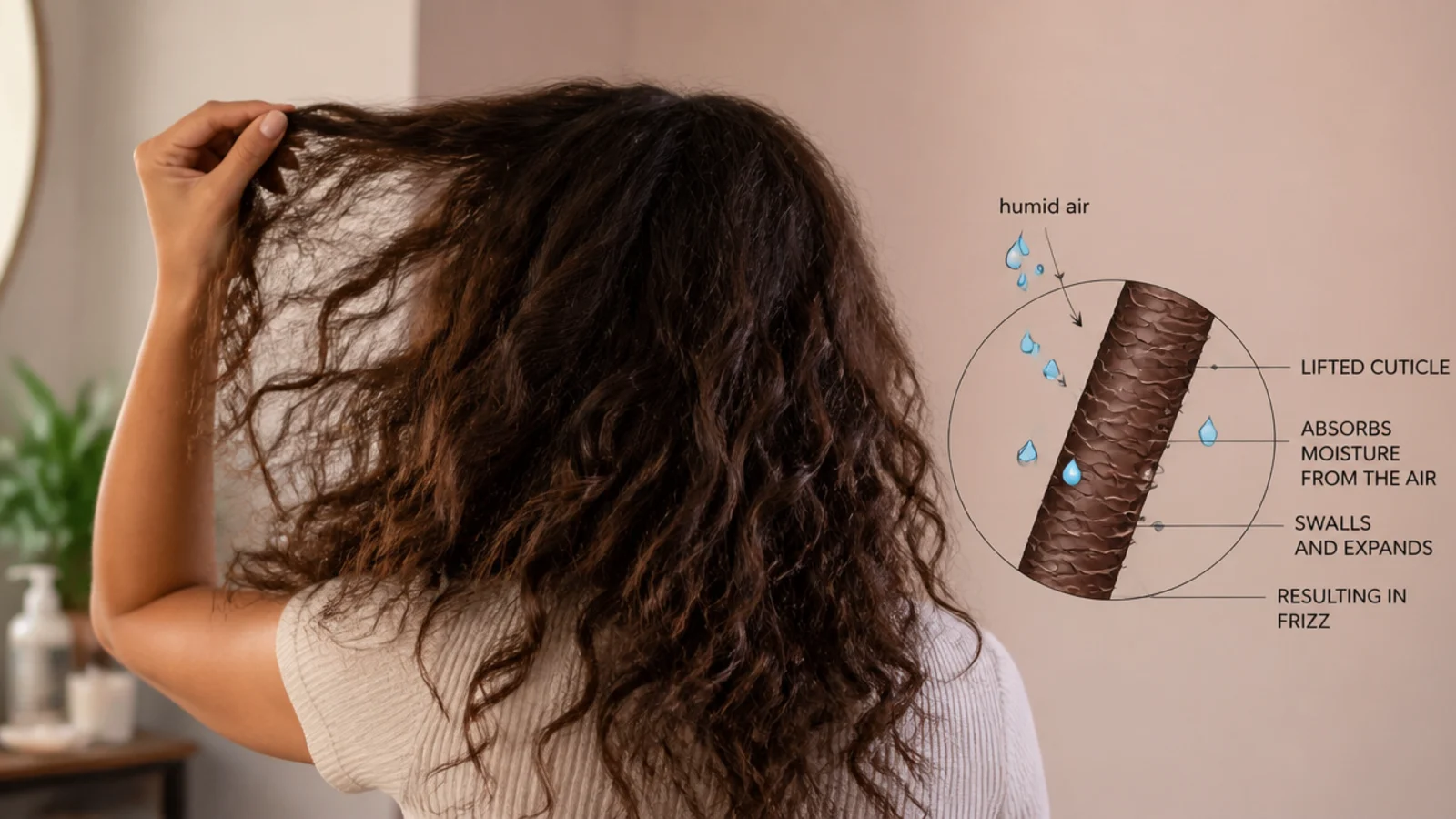
Real frizz is a swollen cuticle, and that is a different fix. One is caused by handling, the other by water moving in and out of the strand. Almost every failed anti-frizz routine is treating one and suffering from the other.
Why Curly Hair Frizzes
The cuticle is a stack of overlapping scales. When it lies flat, light reflects off one continuous surface. When water swells the cortex underneath, those scales lift and each raised edge scatters light in its own direction.
Every bend is a weak point. A curl is not a straight tube; at each turn the scales sit slightly apart. That is more open surface than a straight hair has, and it is why the same humidity produces frizz on curls and nothing on poker straight hair.
Sebum cannot get down a spiral. Scalp oil travels a straight strand quickly and a coiled one barely at all, which leaves curly mid lengths chronically drier and more eager to absorb whatever moisture the air offers.
Dry hair pulls water in hardest. The drier the cortex, the steeper the gradient between hair and humid air, and the more violently the strand swells when it finally gets to drink.
Frizz Types by Hair Type
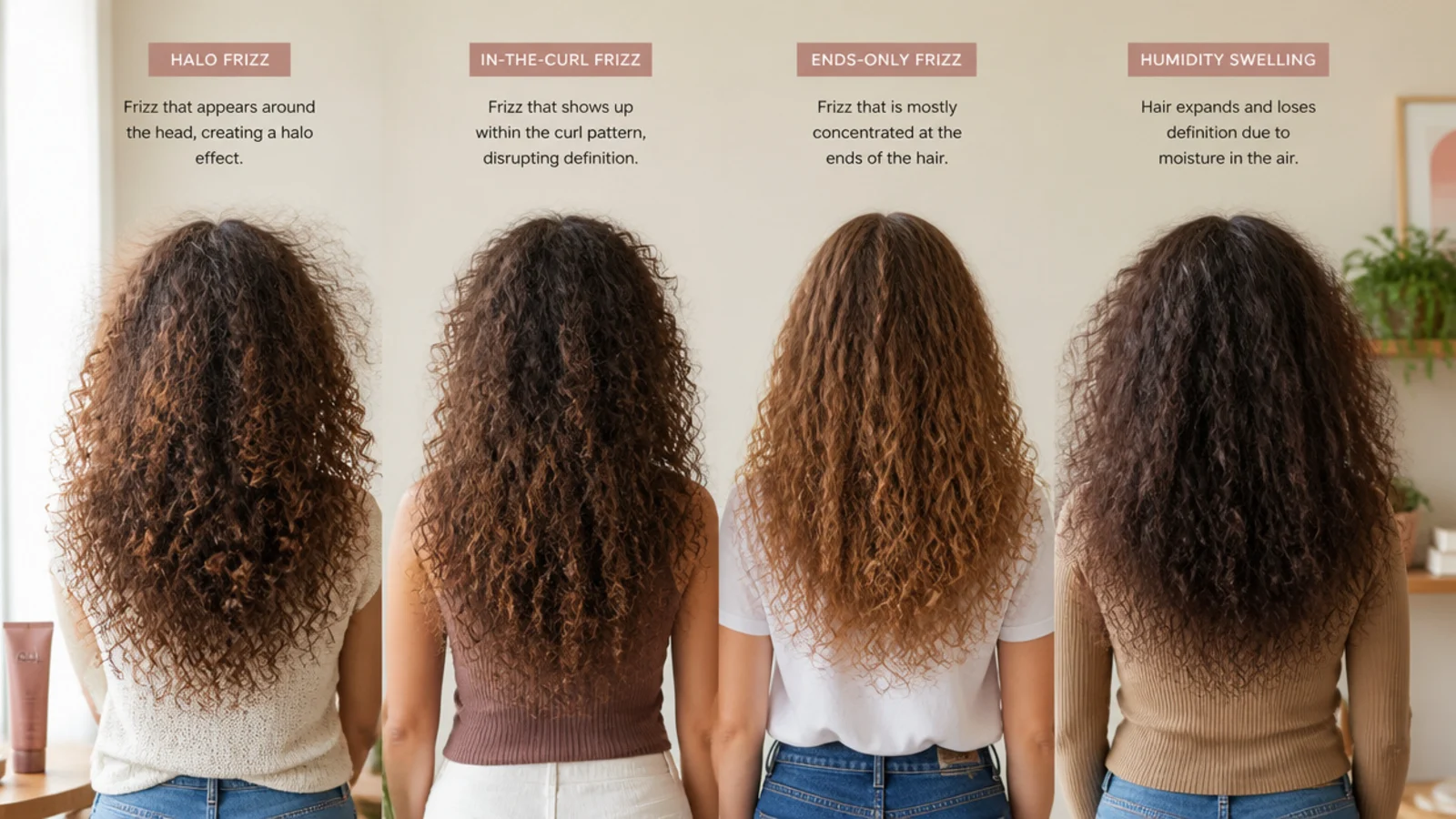
Halo frizz sits at the crown. Short new growth and broken hairs that are not long enough to join a clump. It reads worst on 3B and 3C because the surrounding curls are so defined by comparison.
Surface frizz covers the whole canopy. A sign of raised cuticle across the length rather than a cutting problem, and it responds to acidic rinses and film forming products rather than to scissors.
In the curl frizz breaks the clump itself. Common on wavy 2B and 2C hair, where the pattern is too loose to hold strands together without help from gel.
End frizz is split ends, and only scissors fix it. A split travels upward and each fork is a separate light scattering edge. No product closes a split; conditioner only makes it lie quietly for an afternoon.
Wash Day Routine
Shampoo the scalp, not the length. Sulfates strip sebum efficiently, which the scalp needs and the ends cannot spare. The suds running down are already enough for the lengths.
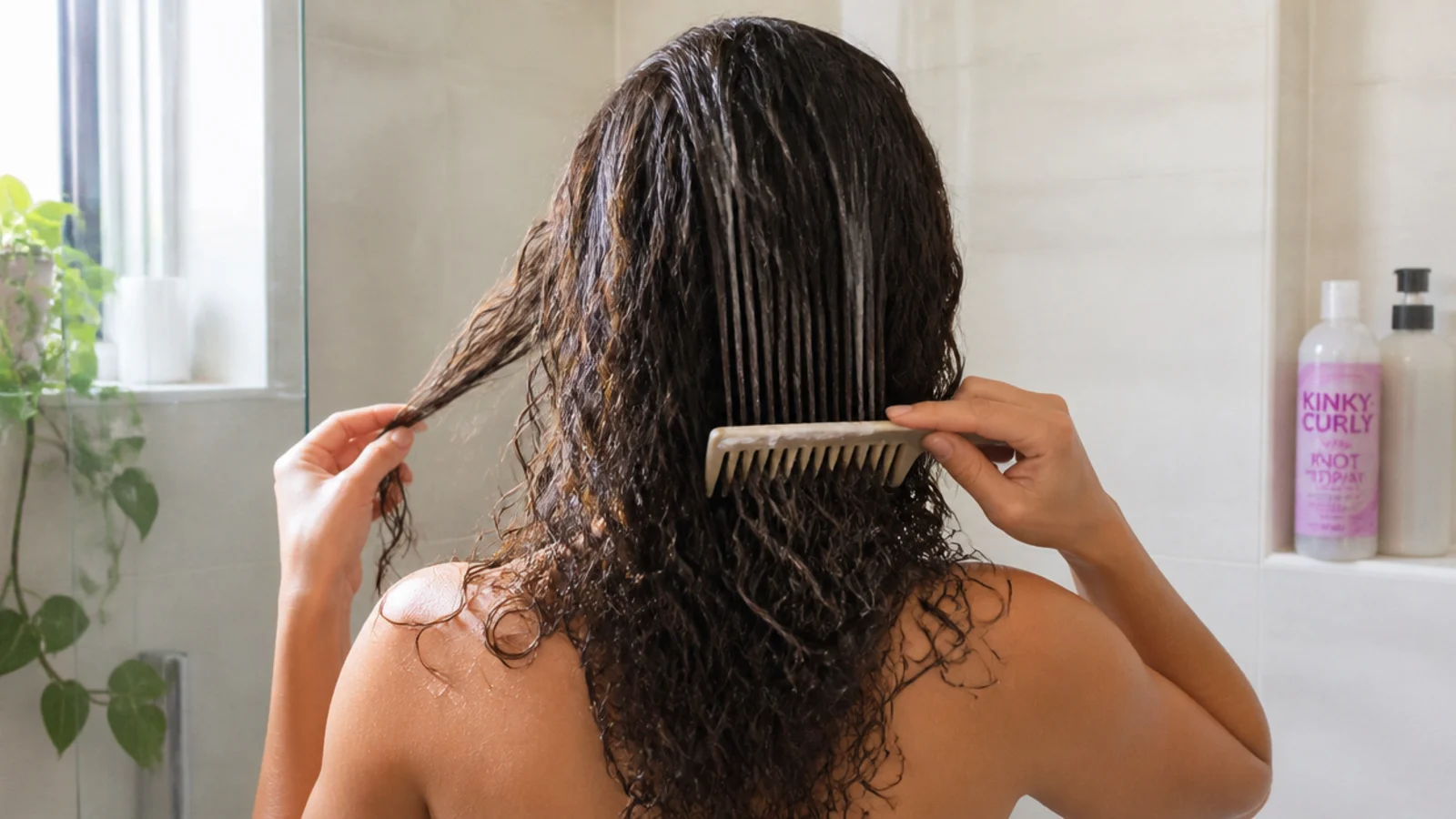
Detangle in conditioner, never dry. Conditioner gives slip so a wide tooth comb slides instead of snagging. Dry detangling snaps the strands that later become halo frizz.
Squish water back in before rinsing. Cupping handfuls of water into conditioner coated hair forces both into the strand, and the sound of it squelching is the sign that it is working.
Finish cooler than you washed. Hot water swells the shaft and lifts the cuticle further. A cool last rinse simply stops that swelling rather than sealing anything shut.
Product Layering Order
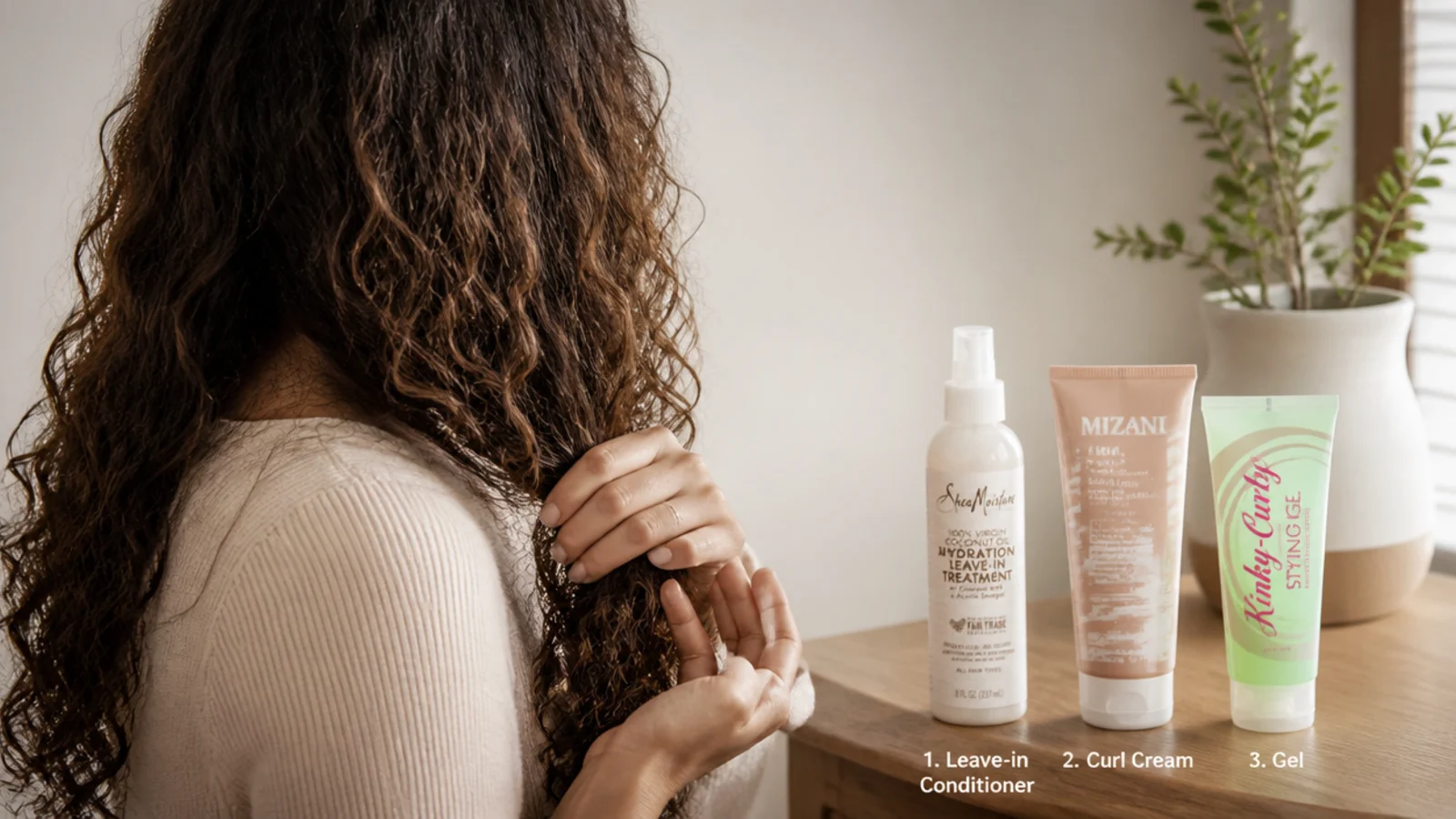
Everything goes on soaking wet. Not damp. Water is what holds the clump together while the products dry around it, so applying to towel dried hair means sealing a clump that has already fallen apart.
Leave in first, as the water holder. It is the layer with the humectants, and it belongs closest to the strand where it can do something.
Cream second, gel last. Cream adds softness and weight; gel forms the film that sets the shape. Reverse them and the cream dissolves the cast you just built.
Praying hands, not raking. Smoothing product between flat palms keeps clumps intact. Fingers driven through the hair split every clump they touch, which is the single most common cause of self inflicted frizz.
Cuts and Layers for Frizz
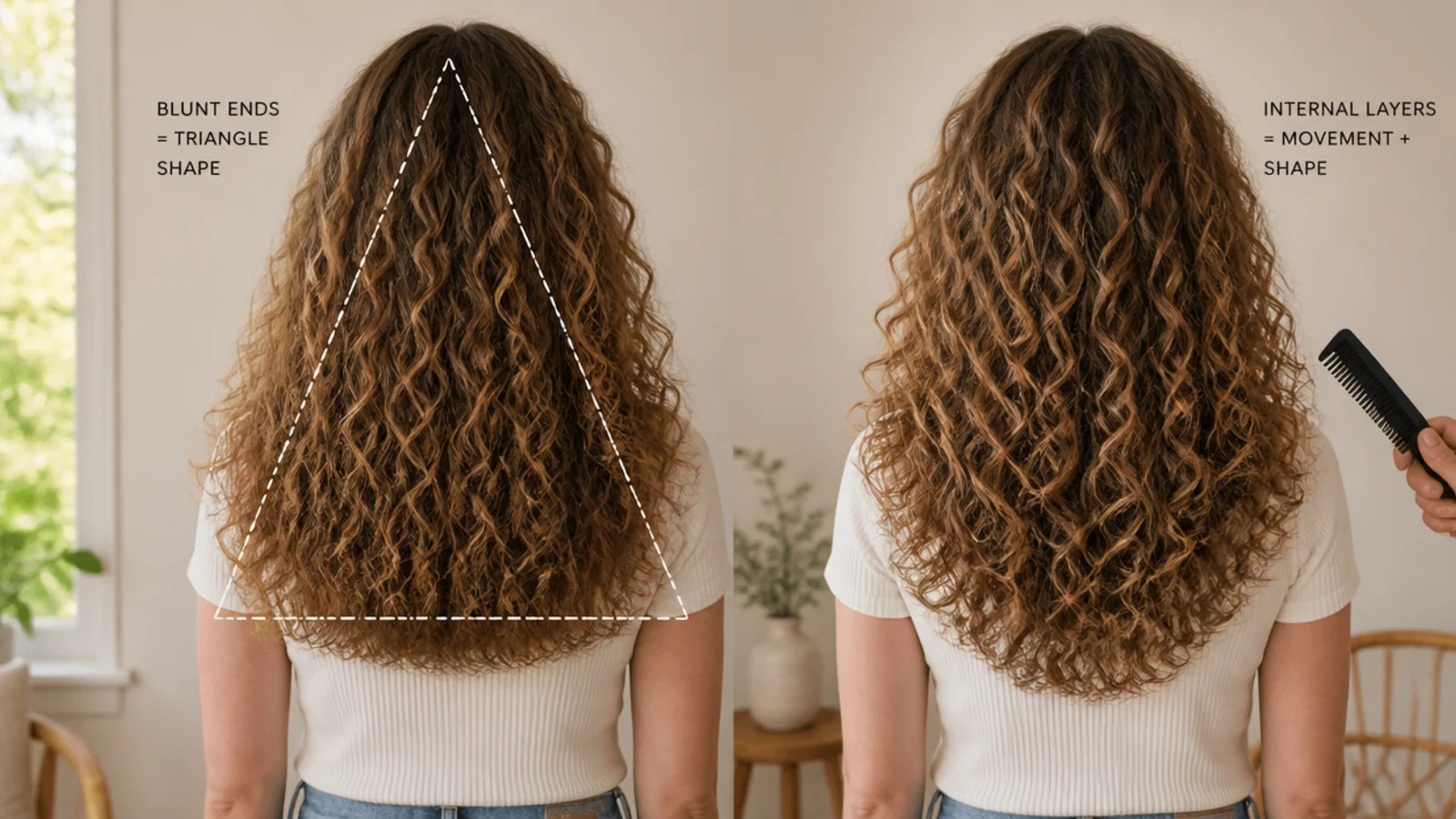
Weight is what stretches a curl straight. One blunt line means the bottom of the hair is carrying everything above it, and the pattern collapses into a triangle. Layers remove that load so each curl can spring to its own length.
Ask for internal layers, not surface ones. Removing bulk from underneath keeps the outer canopy long and unbroken, and it is the canopy that shows. Surface layering creates short ends that poke out of every clump.
Refuse thinning shears outright. They leave hundreds of short blunt ends distributed through the interior, and each one eventually works its way to the surface as permanent halo frizz. See the full range of curly cuts for shapes built this way.
Trim on a schedule, not on a crisis. Hair grows roughly half an inch a month, so a trim every ten to twelve weeks removes about an inch and stays ahead of splitting.
Humidity and Sleep Habits
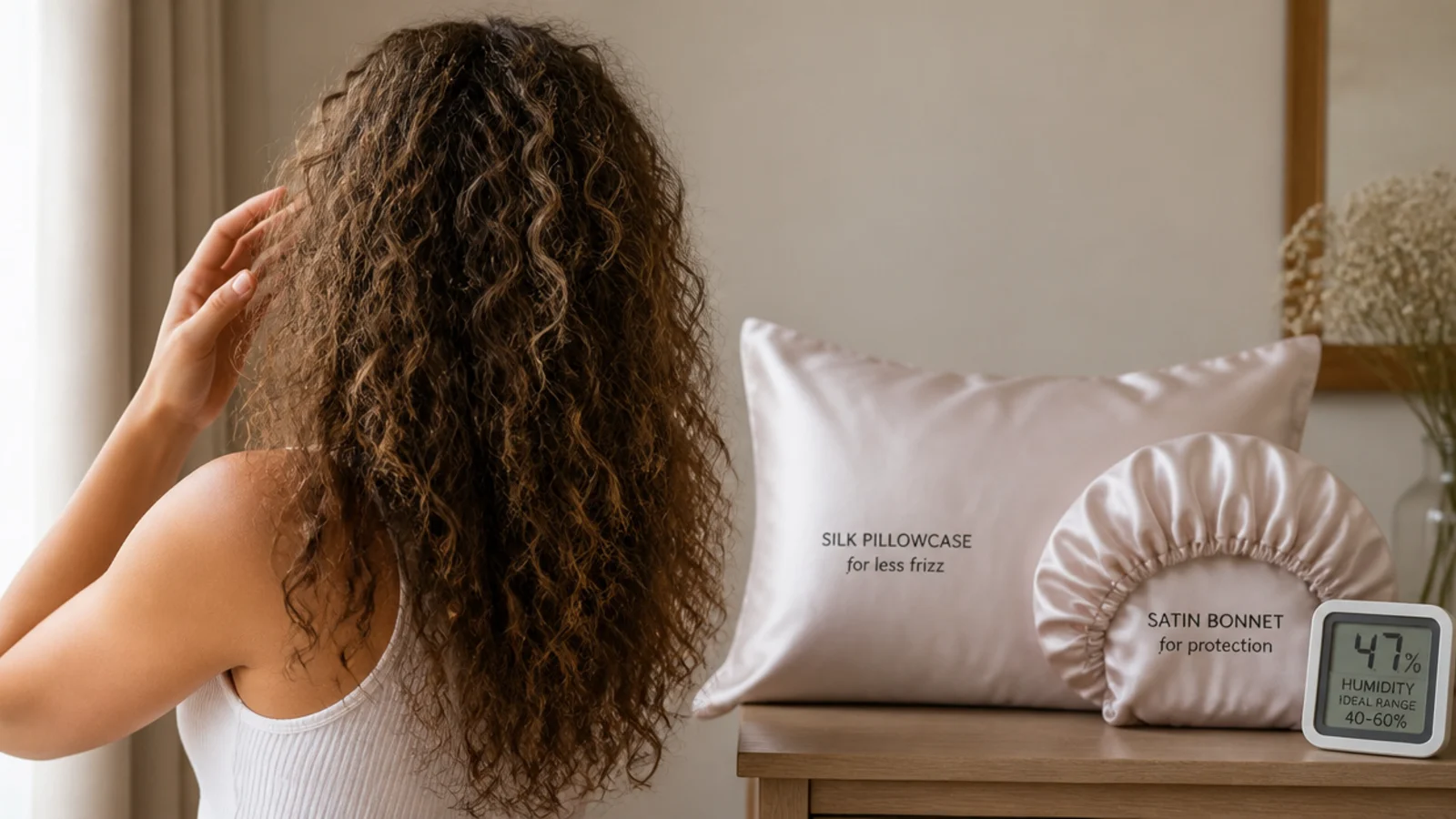
Watch the dew point, not the humidity figure. Relative humidity tells you how full the air is relative to its temperature; dew point tells you how much water is actually in it. Above roughly 60F there is enough for hair to drink.
Glycerin cuts both ways. It is a humectant, so it pulls water toward the hair from whichever side has more. On a high dew point day it drags in enough to swell the strand, and on a very dry one it can pull moisture out.
Cotton pillowcases take moisture and give friction. The weave absorbs what you spent the evening putting in, and it catches on the cuticle every time you turn over.
Get the hair off the pillow entirely. A loose gathering on top of the head means the night's friction lands on a scrunchie instead of on the curl pattern.
The 20 Frizzy Curly Hair Ideas
1. Wash and Go on 3B Curls
The whole style is decided in the ninety seconds when the hair is still soaking. Product applied then holds the clumps the water made; applied later it only glues together whatever shape the towel left behind.
2. Diffused With Root Clips
Clips hold the root section away from the scalp while it dries, so the curl sets before its own weight can flatten it. Volume built this way stays for days because the shape is dry when gravity arrives.
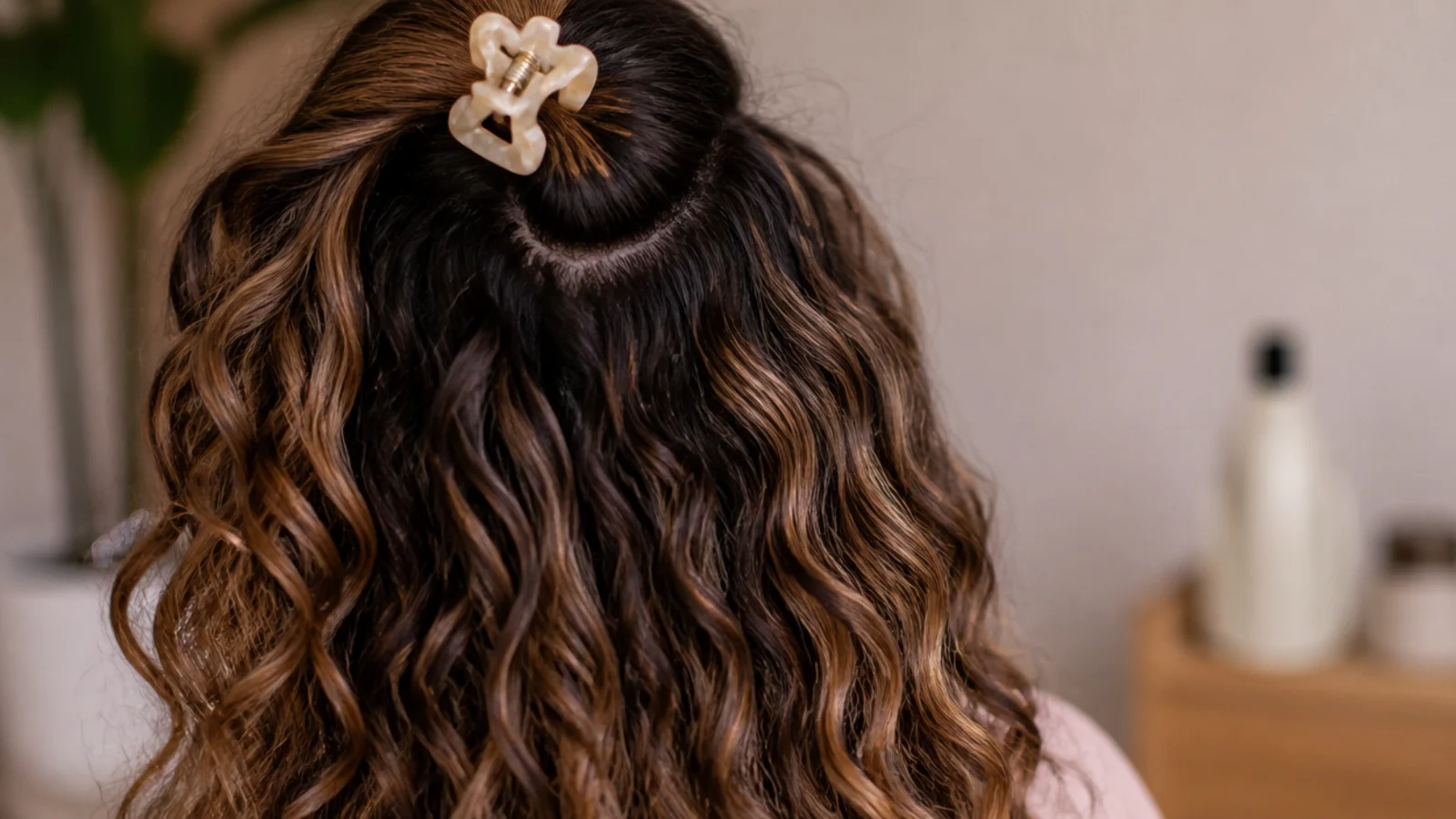
3. Pineapple Ponytail
Gathering the curls loosely at the very top of the head keeps the pattern off the pillow, so the night's friction lands on the tie rather than on the curl. The looser the tie sits, the fewer dents there are to wet down in the morning.
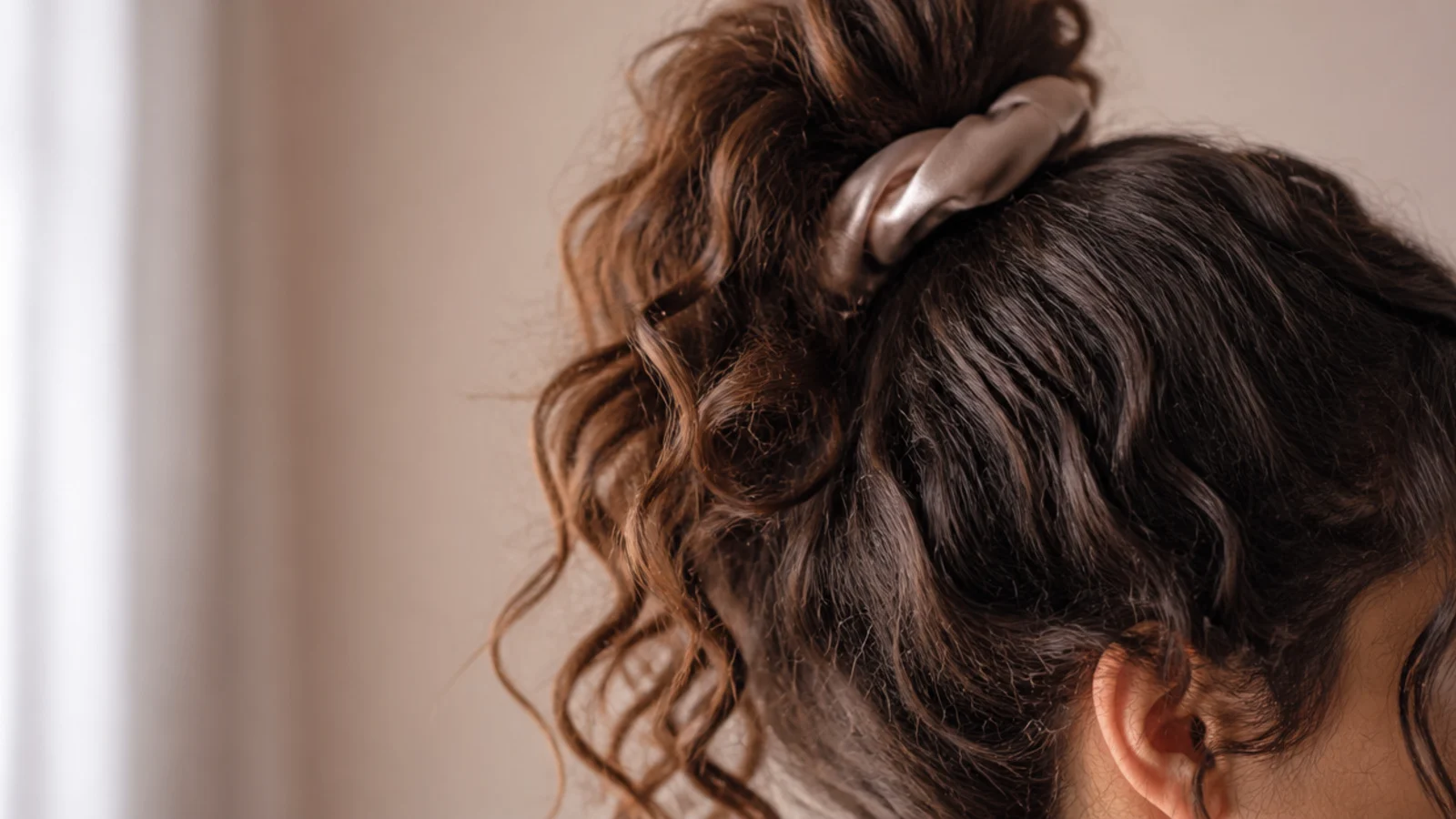
4. Half Up Curly Bun
Only the top section is under tension, which pulls the halo frizz at the crown flat while leaving the defined lengths visible. It solves the frizziest area of the head without touching the part that already looks good.
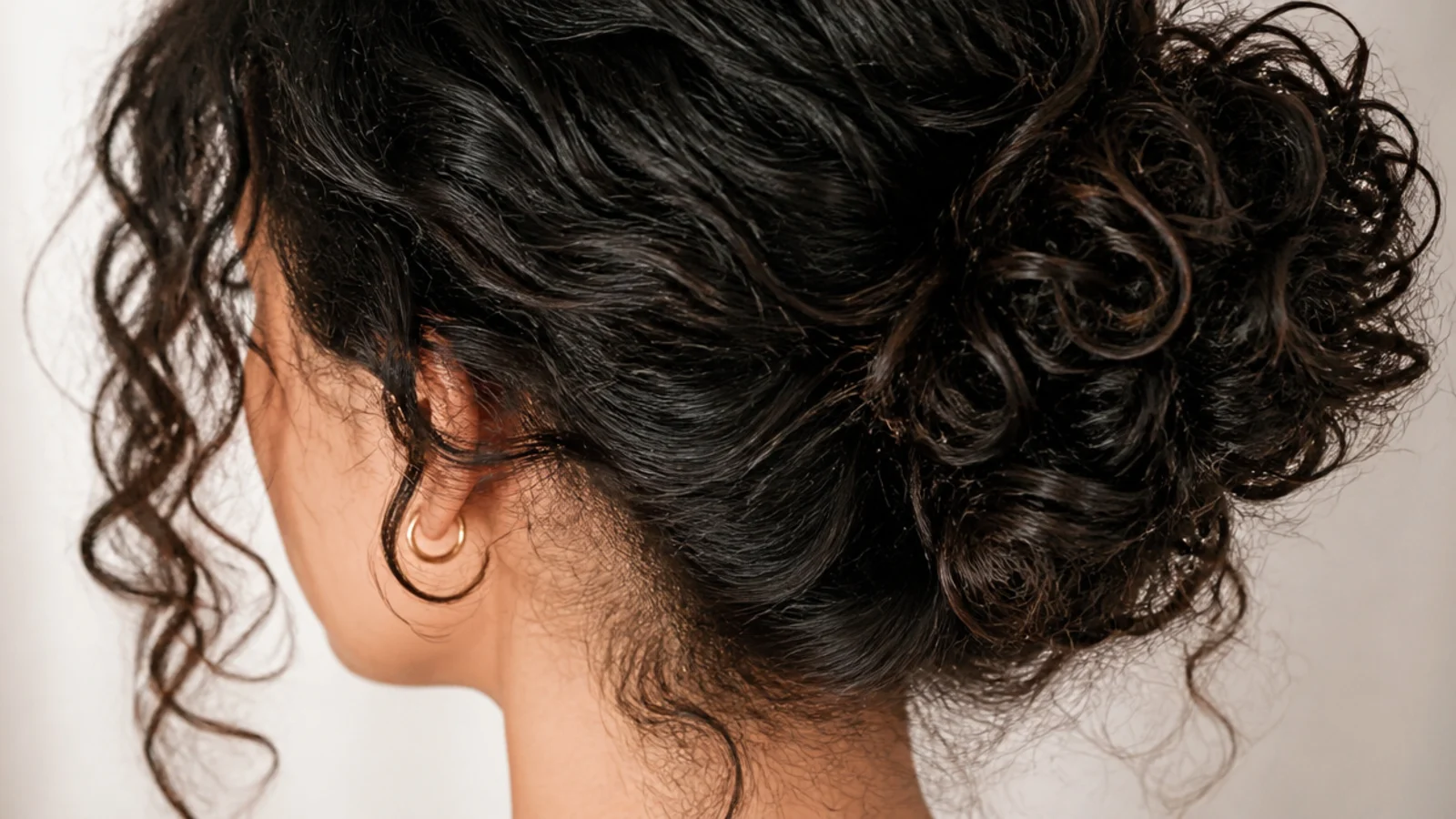
5. Plopped Curls
Wrapping wet hair into a cotton shirt holds every curl in its own coil while it drains, so nothing dries stretched by its own weight. Twenty minutes is enough, and much longer just delays the drying you still have to do.
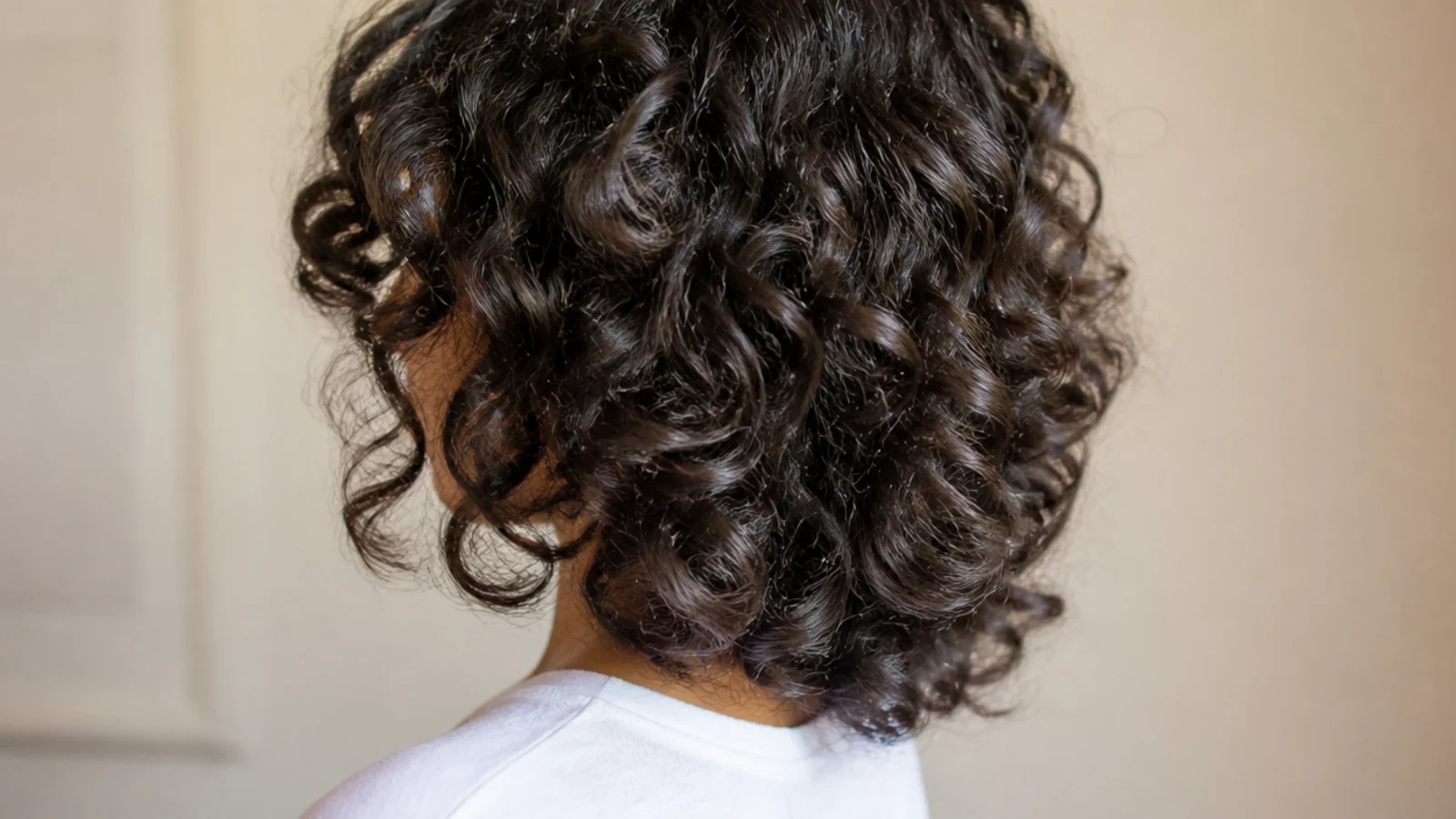
6. Finger Coiled 3C Curls
Winding individual sections around a finger forces every strand in that section into one uniform diameter. It is slow, but it produces the most consistent definition available without heat, because you are removing the size variation that reads as frizz.
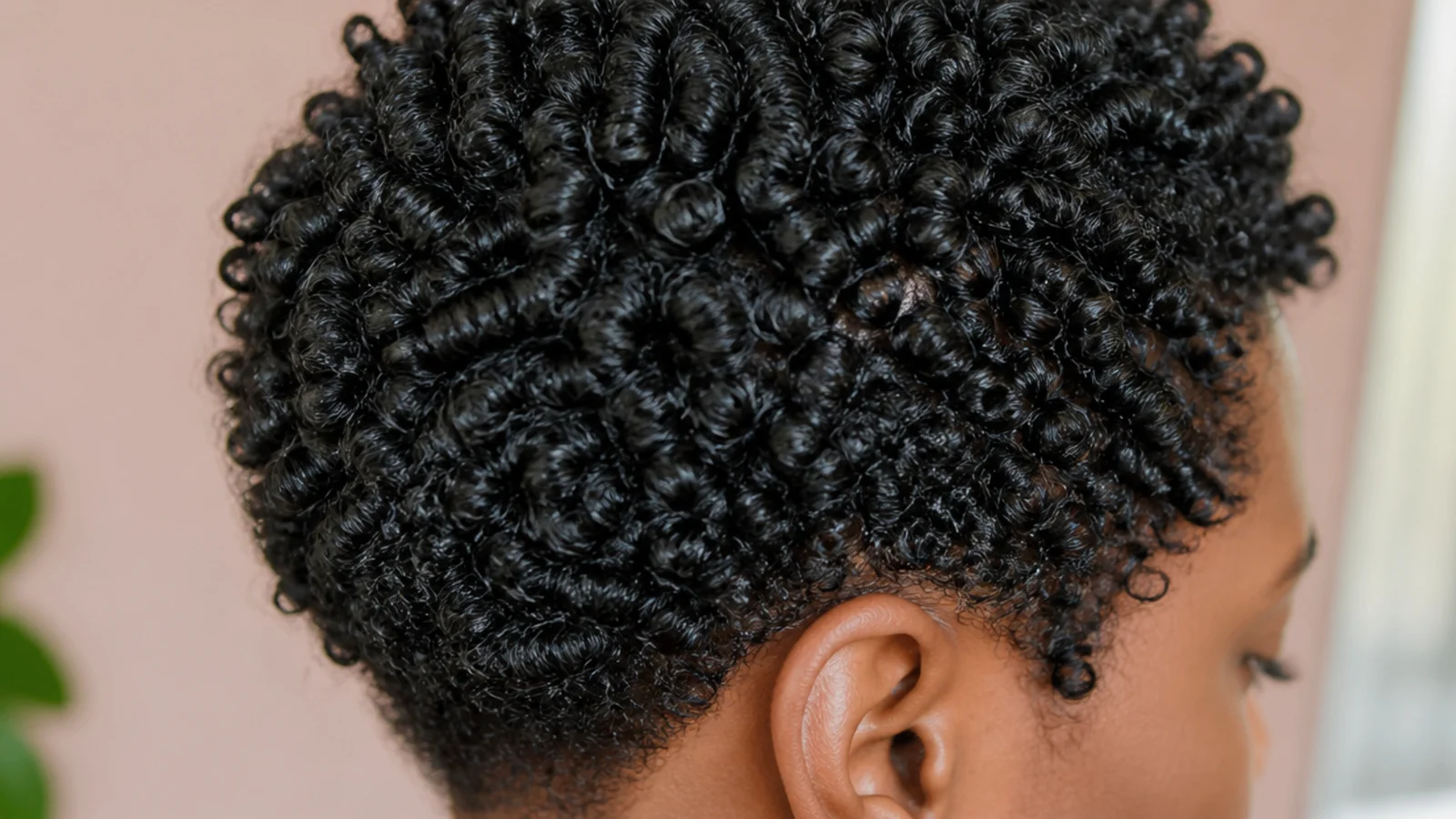
7. Curly Shag With Curtain Bangs
The shag's stacked layers take weight out at several heights, so no single length is dragging the pattern down. The bangs give the frizziest hair at the front an actual job instead of leaving it to escape upward.
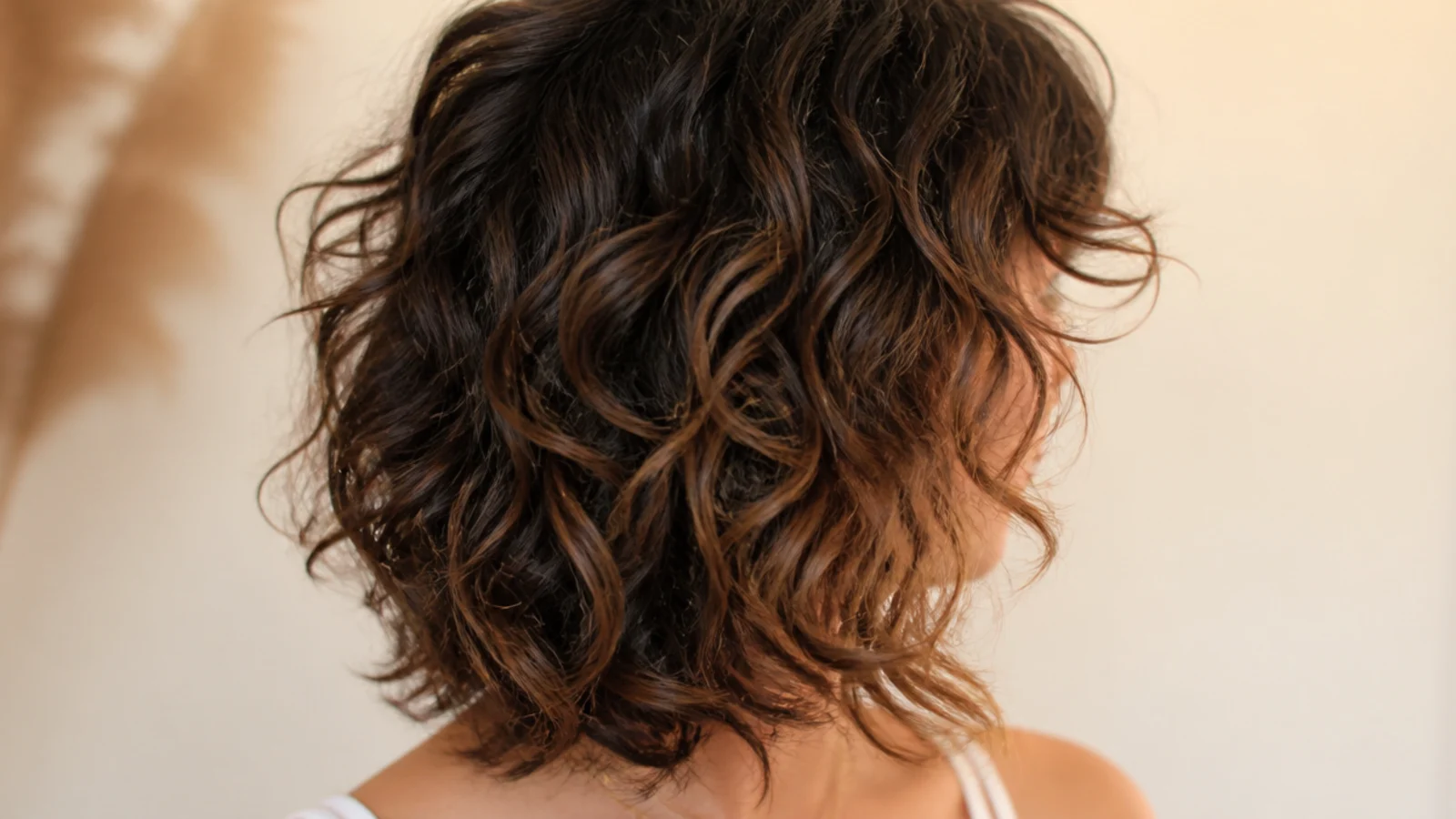
8. Low Bun With a Silk Scarf
A scarf tied over the front hairline flattens the short new growth that no style can gather. Silk has almost no grab compared with cotton, so it holds those hairs down without sanding the cuticle underneath.
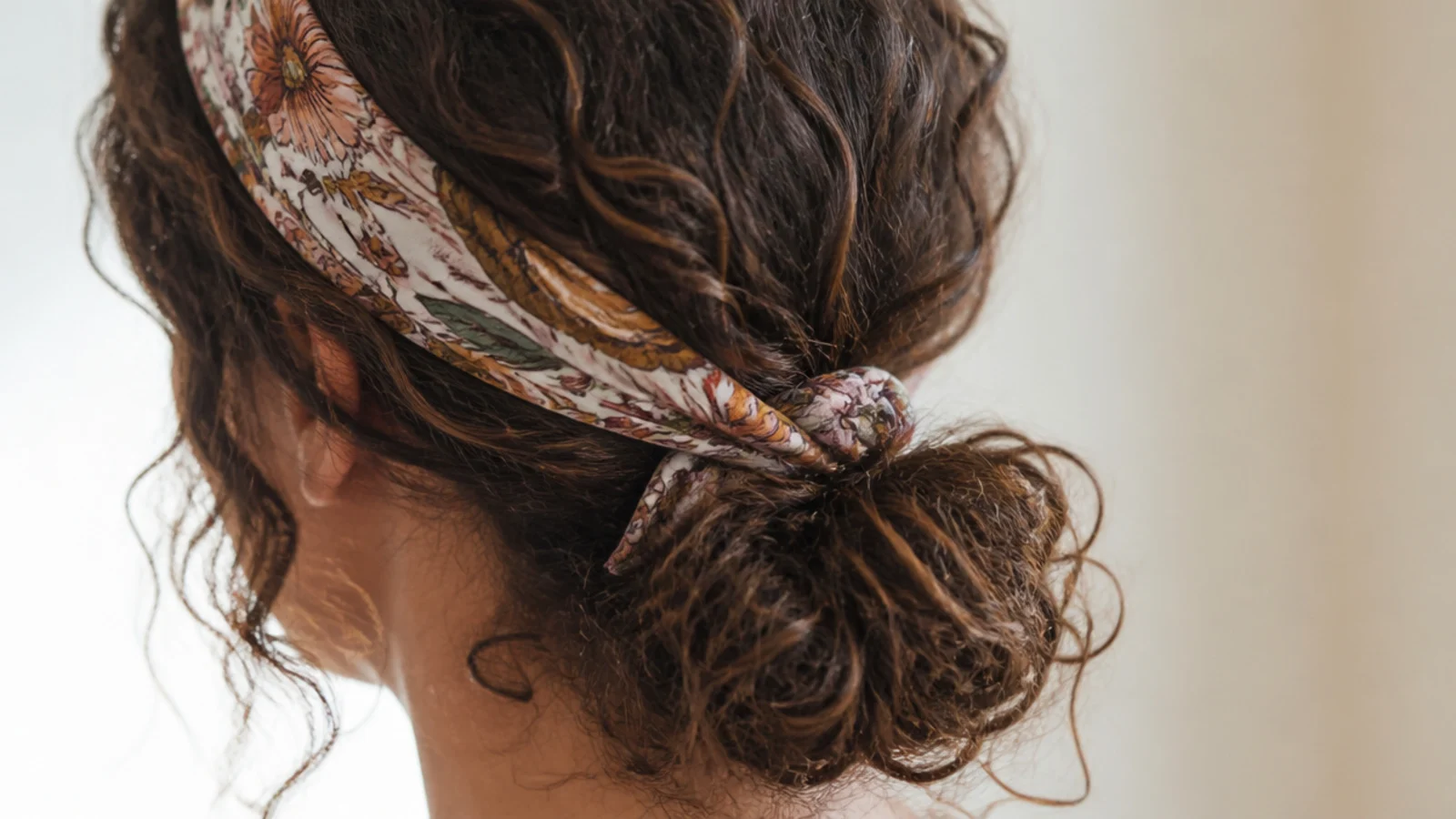
9. Twist Out on 4A Coils
Two strand twists set overnight and unravelled dry give every section the same diameter, which is what makes a set read smoother than the native pattern. Unravel with oiled fingers, because dry hands split each twist into fuzz on contact.
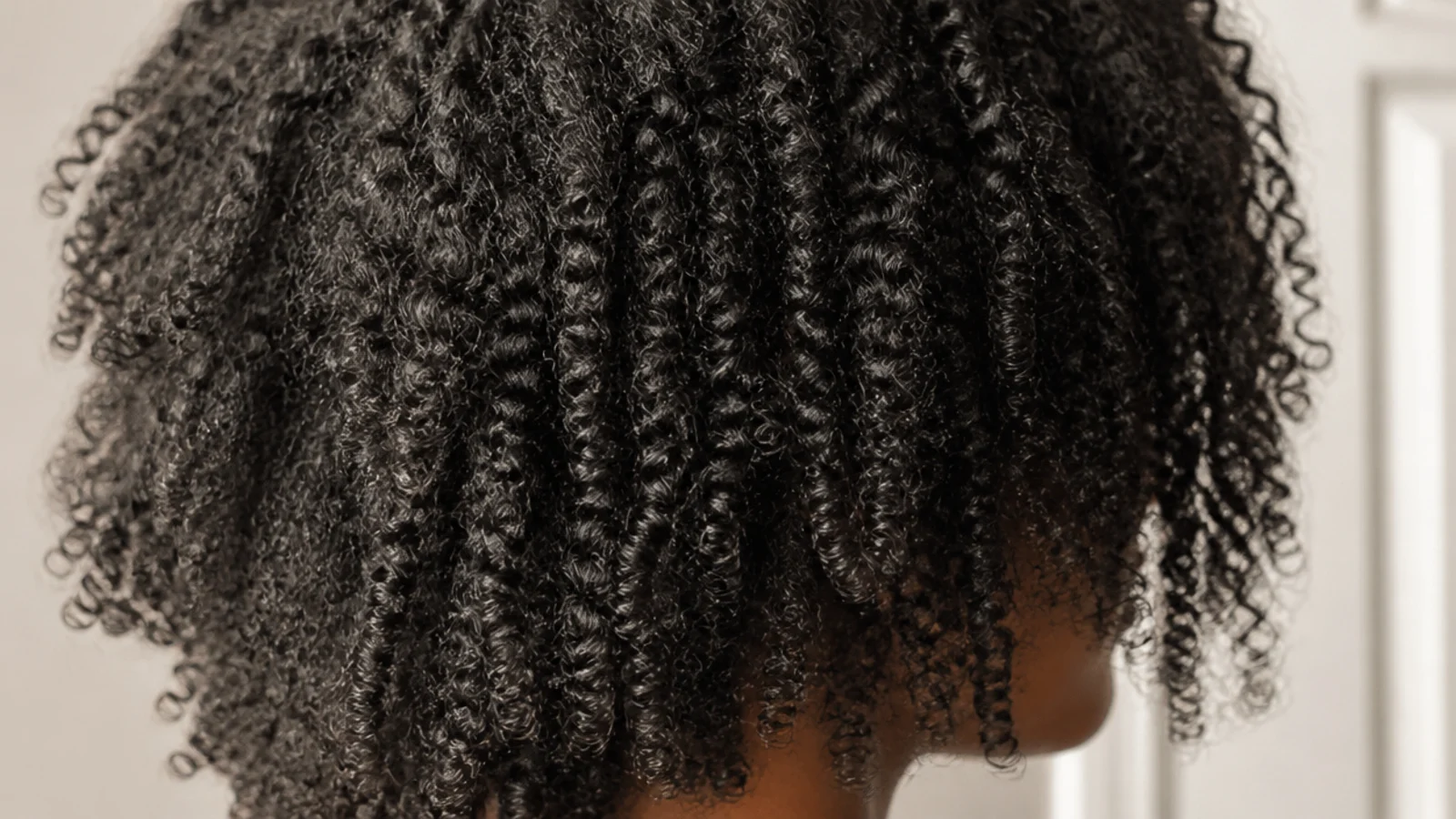
10. Braid Out Waves
A braid stretches the curl and sets it as a wave, which trades pattern for length and uniformity. Fewer, fatter braids give looser waves; more braids give a tighter set, so the count is the only dial you need.
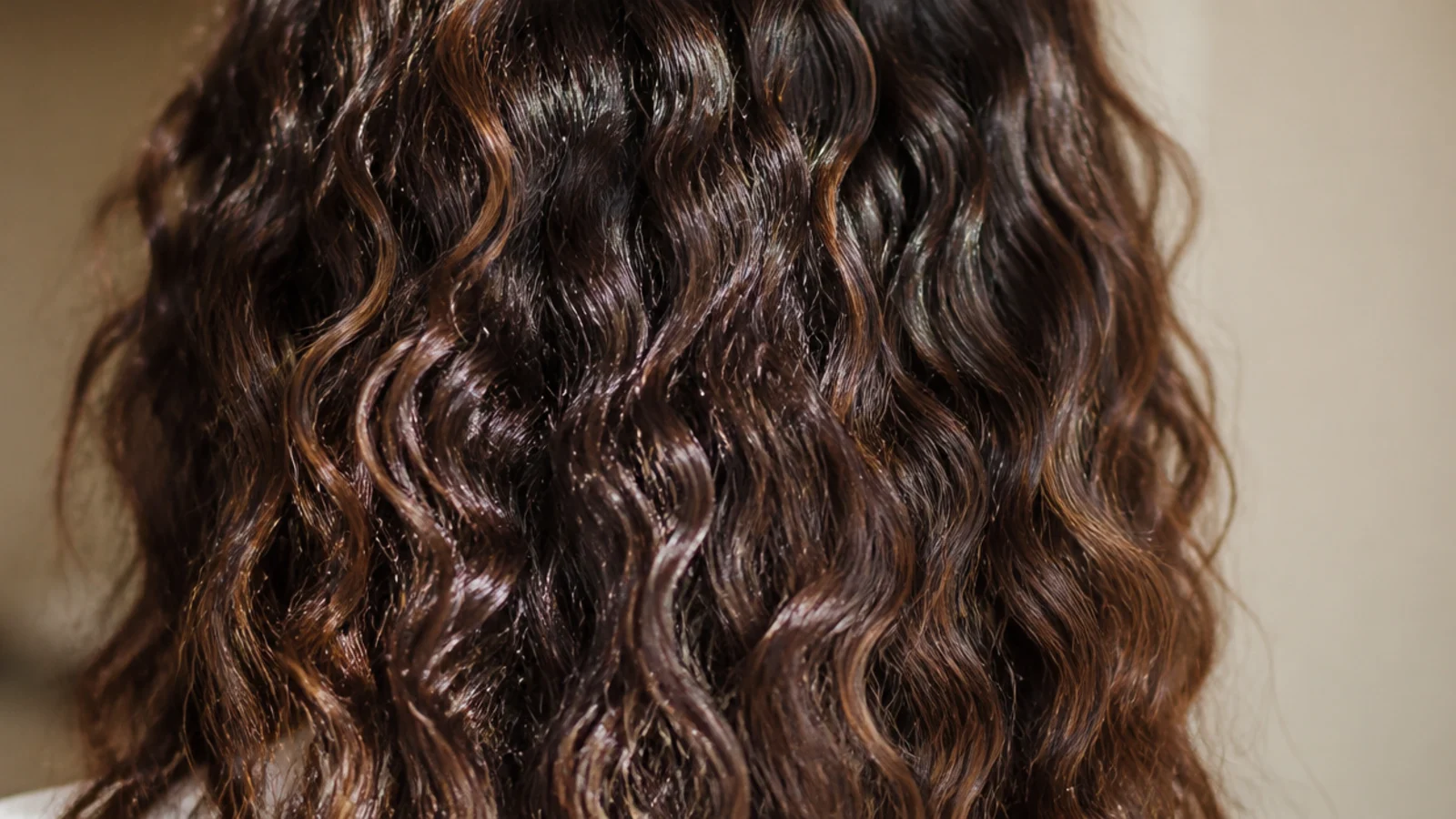
11. Curly Lob With a Side Part
Cutting to collarbone length removes the section of hair with the most accumulated damage, which is also the section that frizzes first. The shorter length weighs less, so the curls above it sit higher and hold their spring.
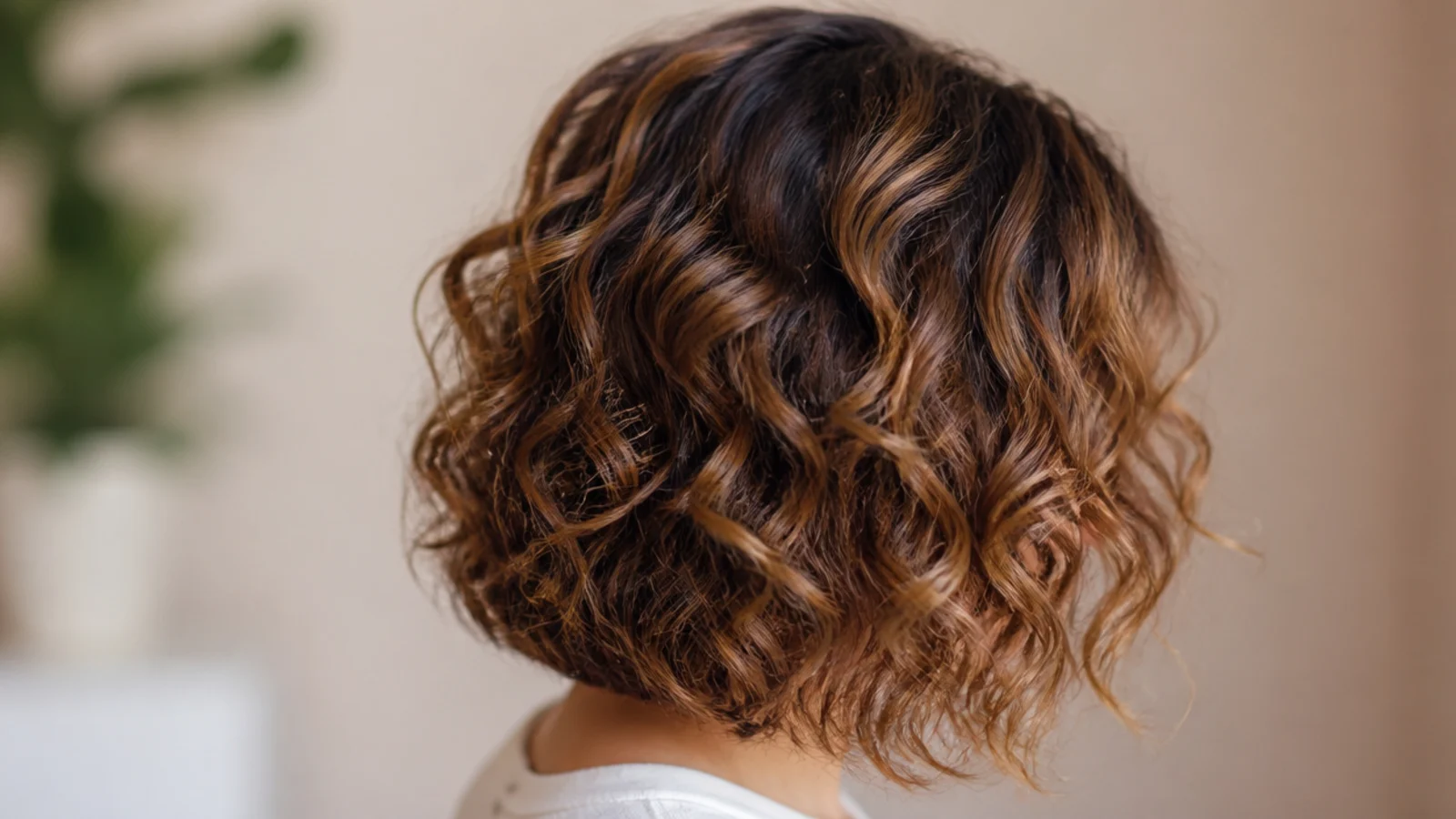
12. Curly French Braid
Braiding gathers the escaping surface hairs into the plait as it travels, so the frizz becomes texture instead of a halo. It also puts the whole length under mild tension, which stops individual strands moving against each other all day.
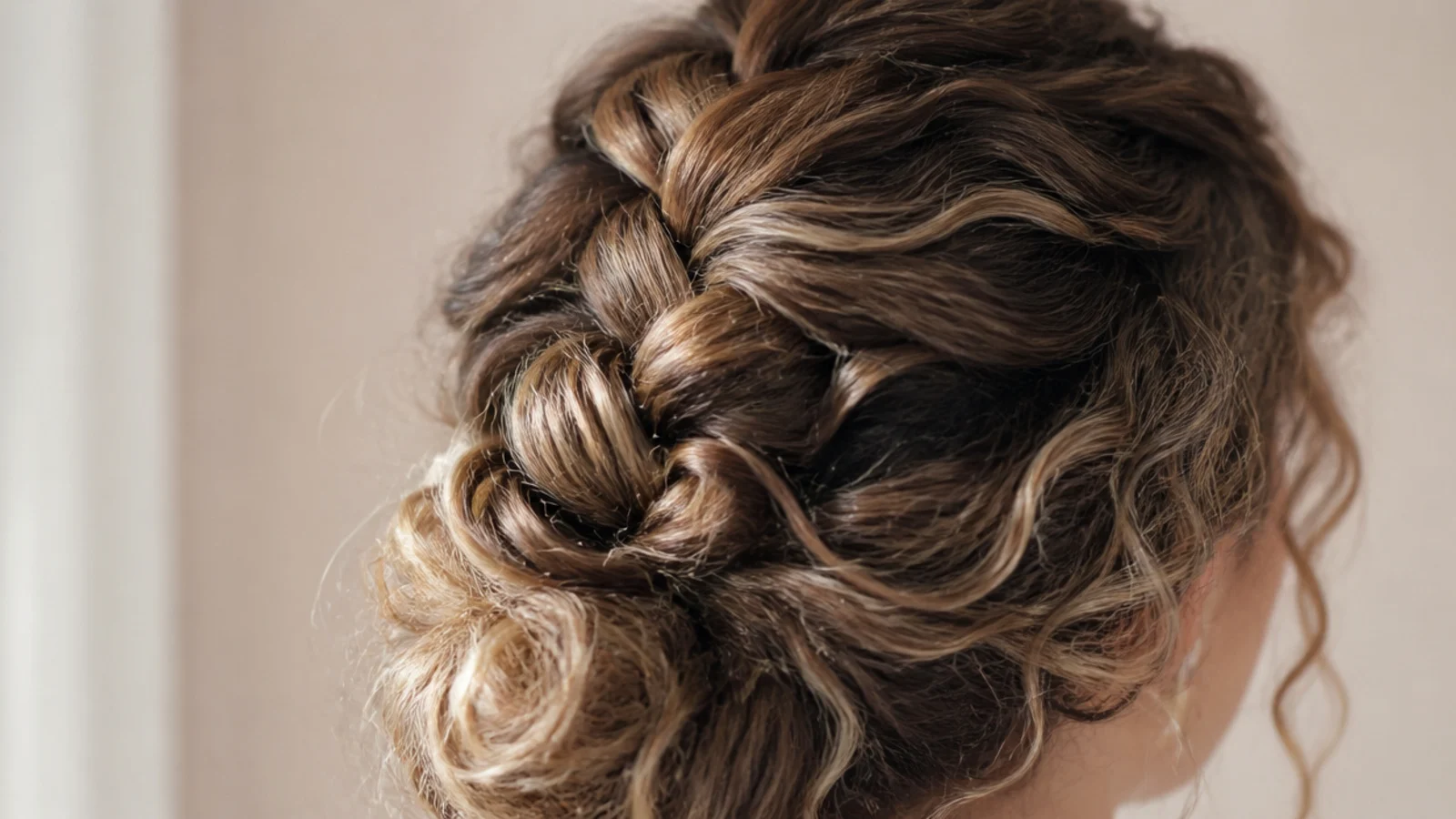
13. Curly High Ponytail
Height means the tie sits above the crown, so the front hairline gets pulled smooth rather than pushed up. Use a fabric covered tie, because an elastic with a metal join saws through a curl clump every time you take it out.
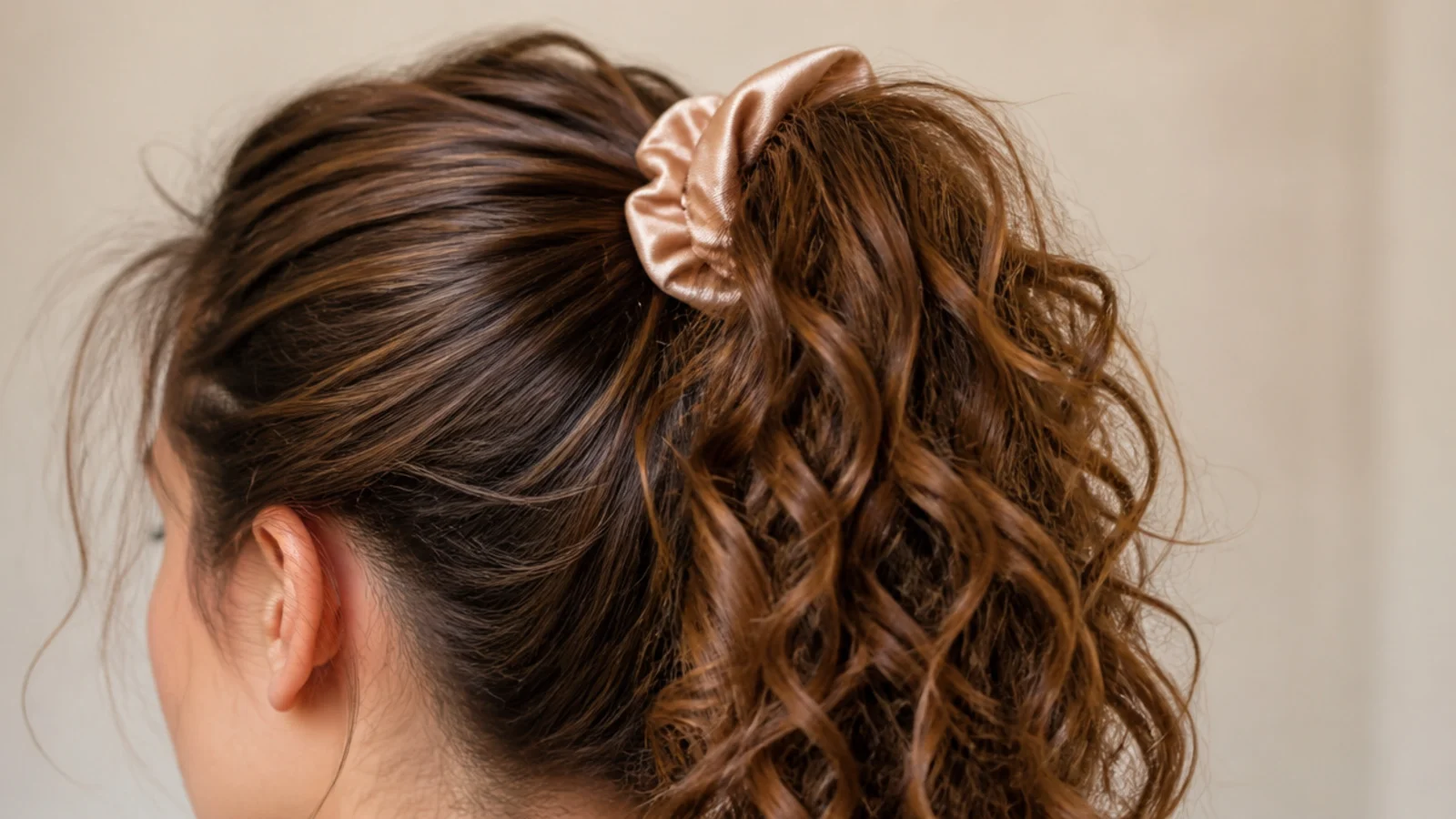
14. Bantu Knot Out
Each knot dries the section in a spiral around itself, producing a curl that gets wider toward the ends rather than tighter. That reversed taper is what makes the result look set rather than merely dried.
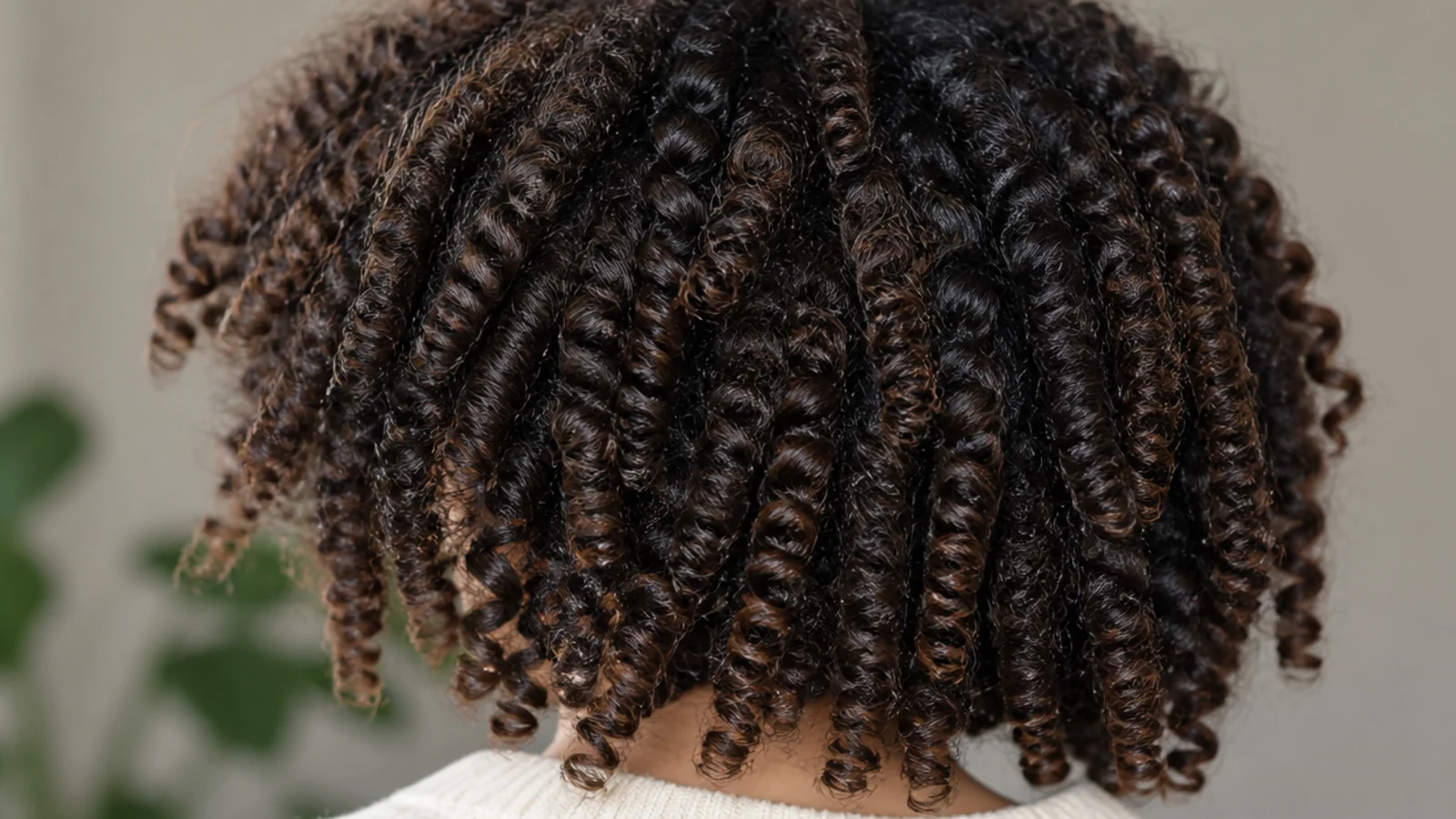
15. Curly Blowout With a Diffuser
A diffuser exists to slow the air down, not to warm it. Full velocity airflow blows strands out of their clumps faster than it dries them, which is why the same dryer produces definition on low and a cloud on high.
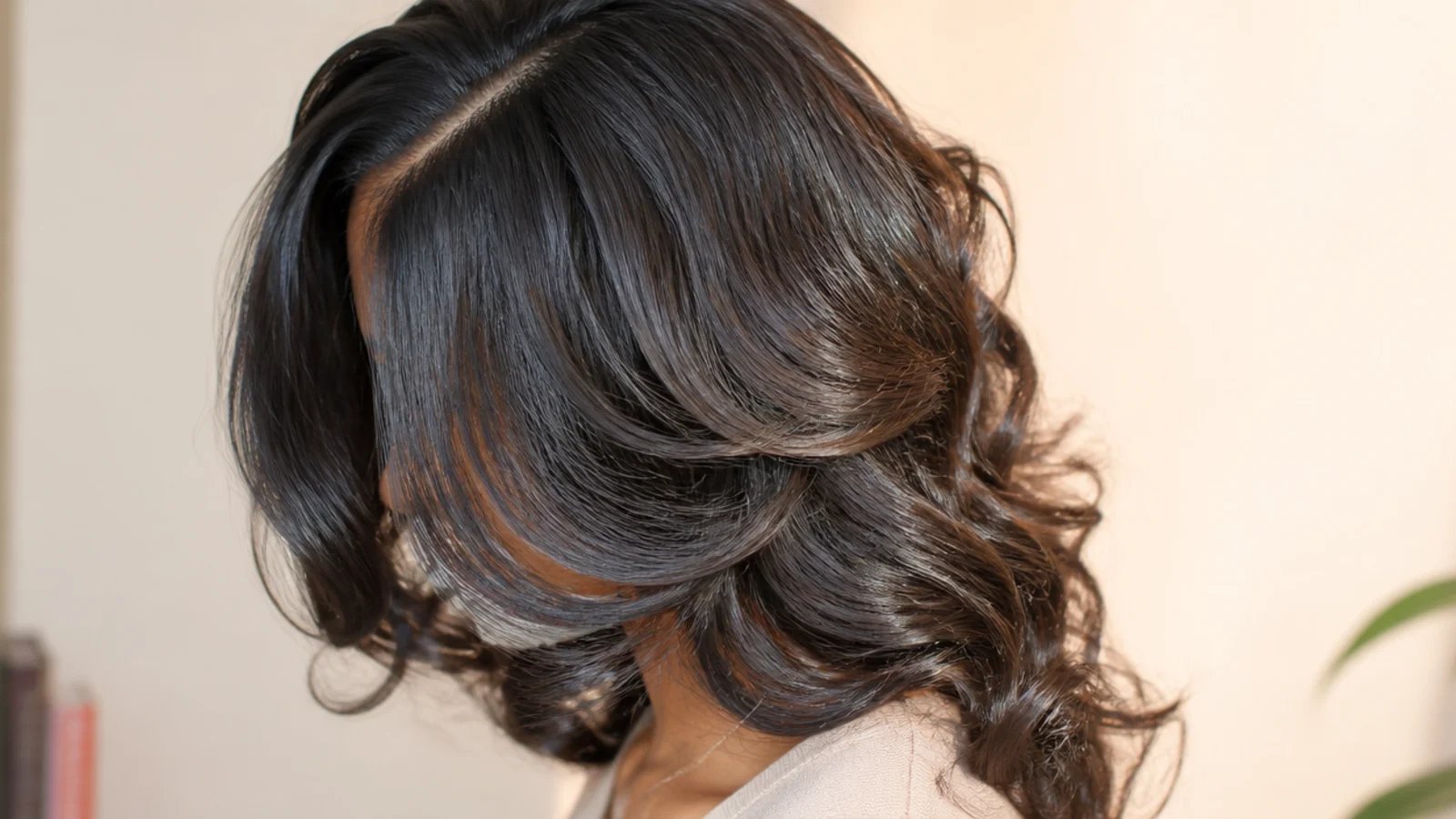
16. Curly Space Buns
Two buns divide the length in half, so each one holds a shorter, lighter section and slips less through the day. They also take every surface hair on the crown into the twist, which is exactly where halo frizz lives.
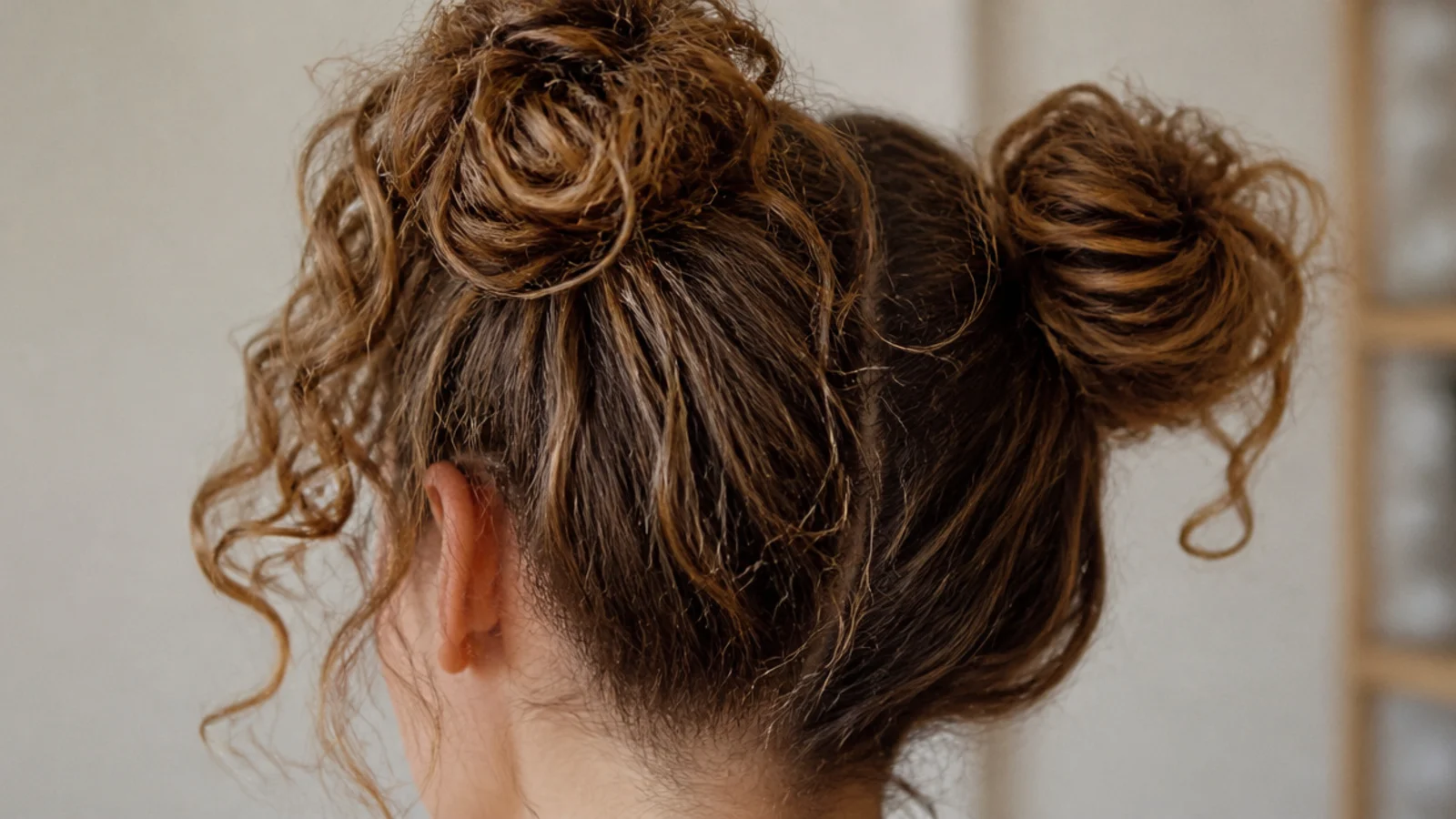
17. Scrunch Out the Crunch
Gel dries into a hard film that locks the clump in position. Crushing that film once the hair is fully dry leaves the shape and removes the stiffness, and doing it while still damp collapses the curl you spent the morning setting.
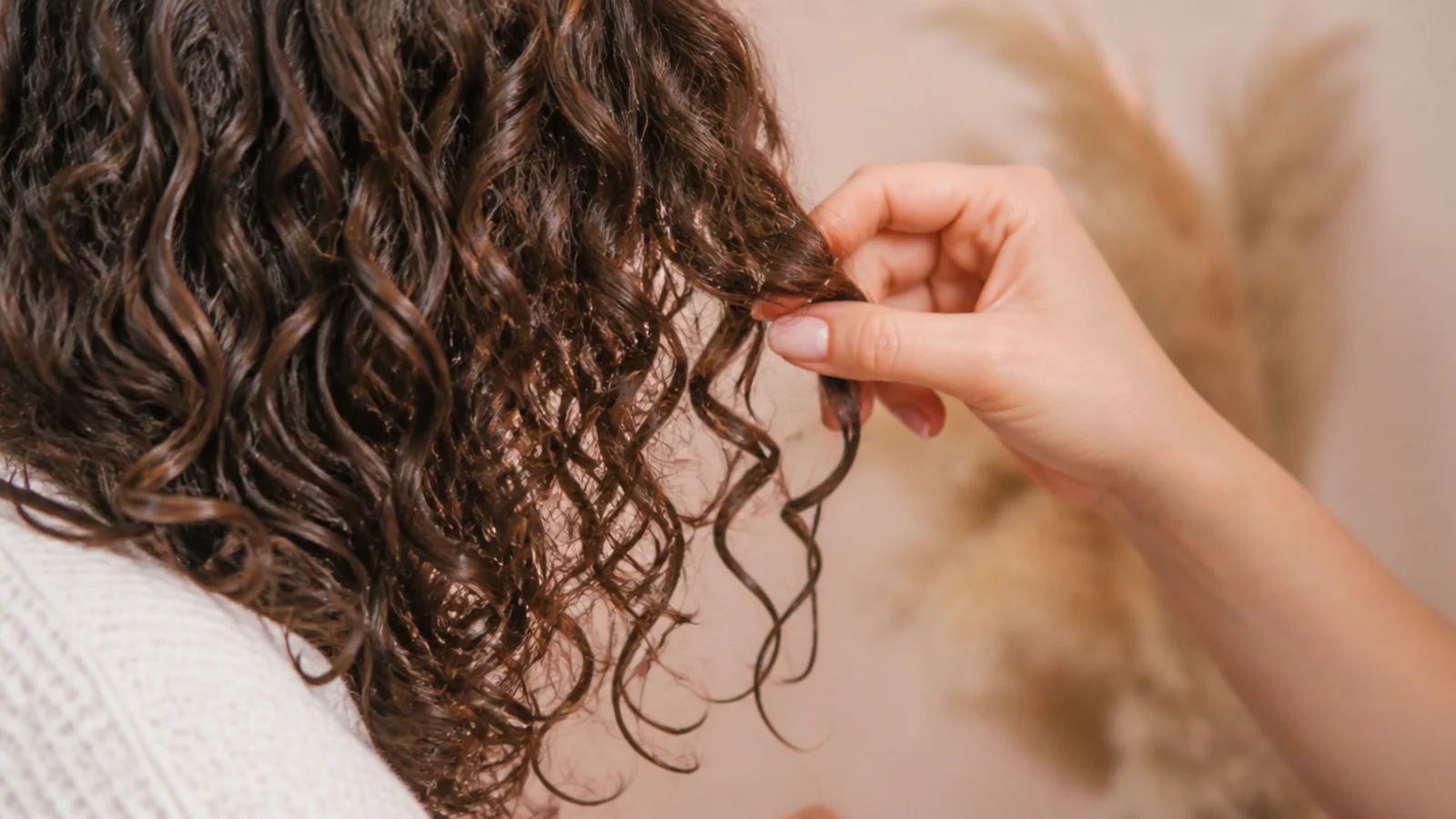
18. Long Layered Curls
Long curly hair without layers becomes a triangle, because the weight at the bottom stretches the pattern while the top stays springy. Layers redistribute that load so the curl diameter stays consistent from crown to ends.
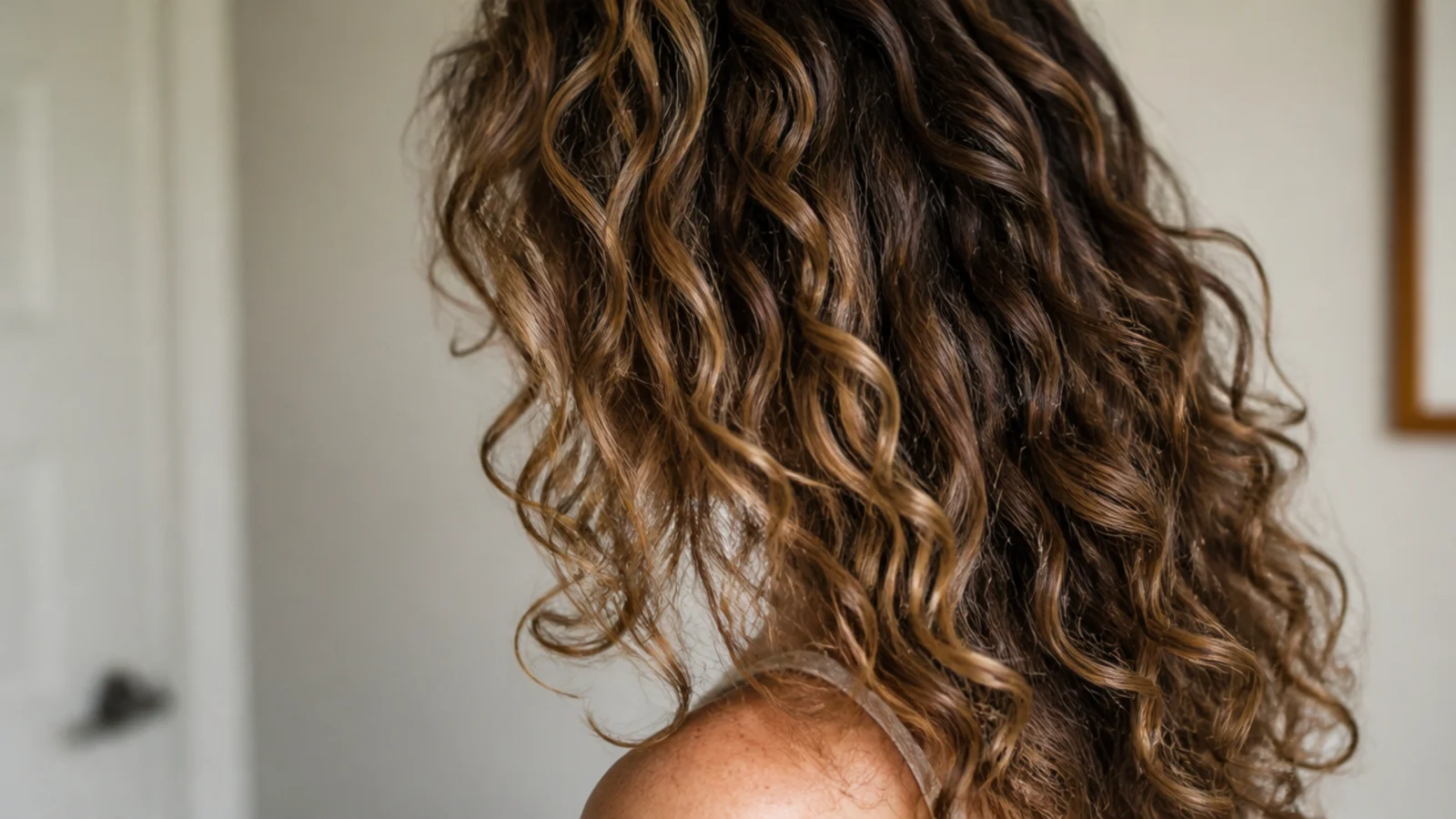
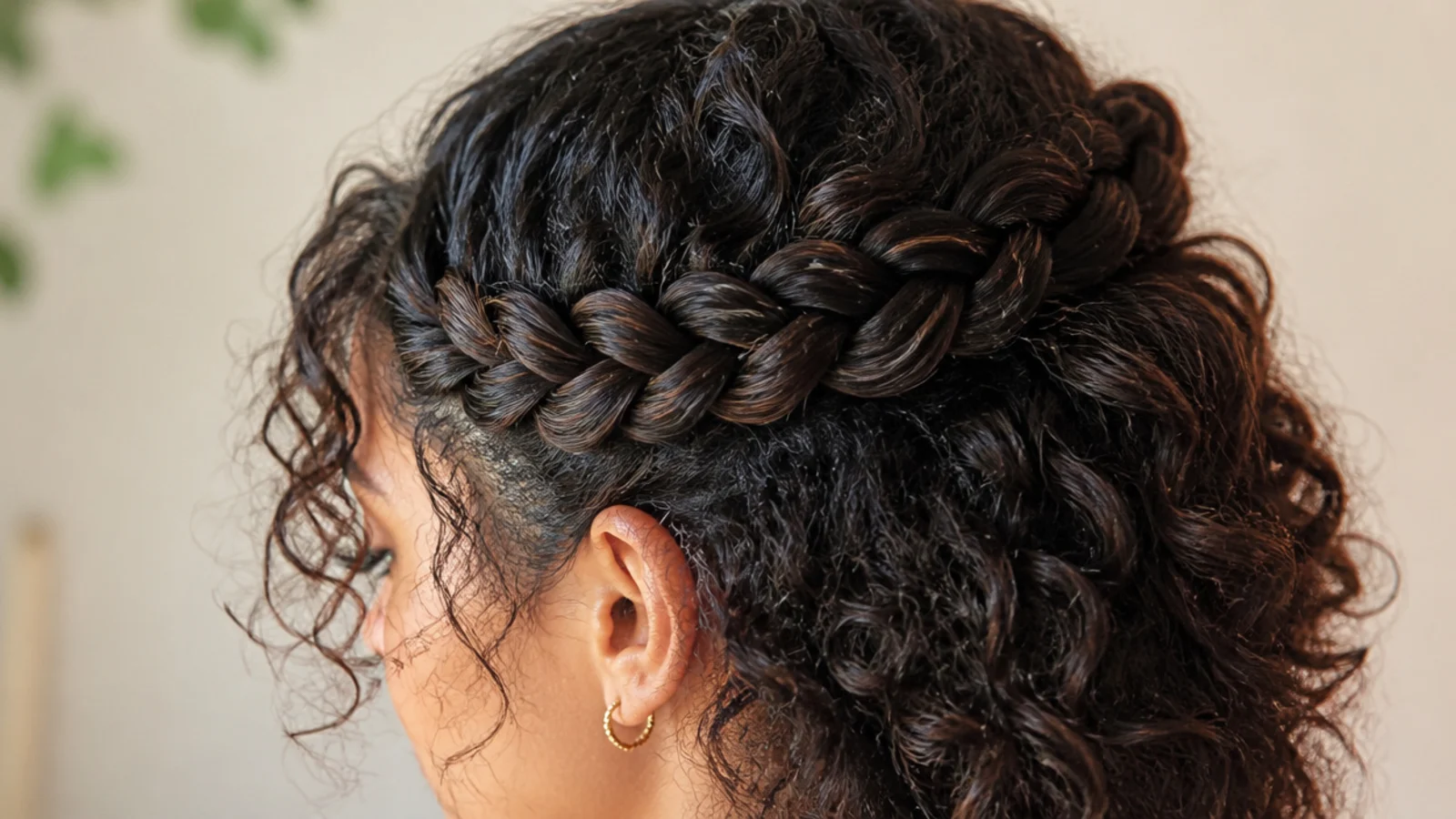
19. Halo Braid
Wrapping the braid around the head puts every hair on the crown under tension against the scalp, which is the only reliable way to flatten short new growth. It is also the style that survives the longest without touching.
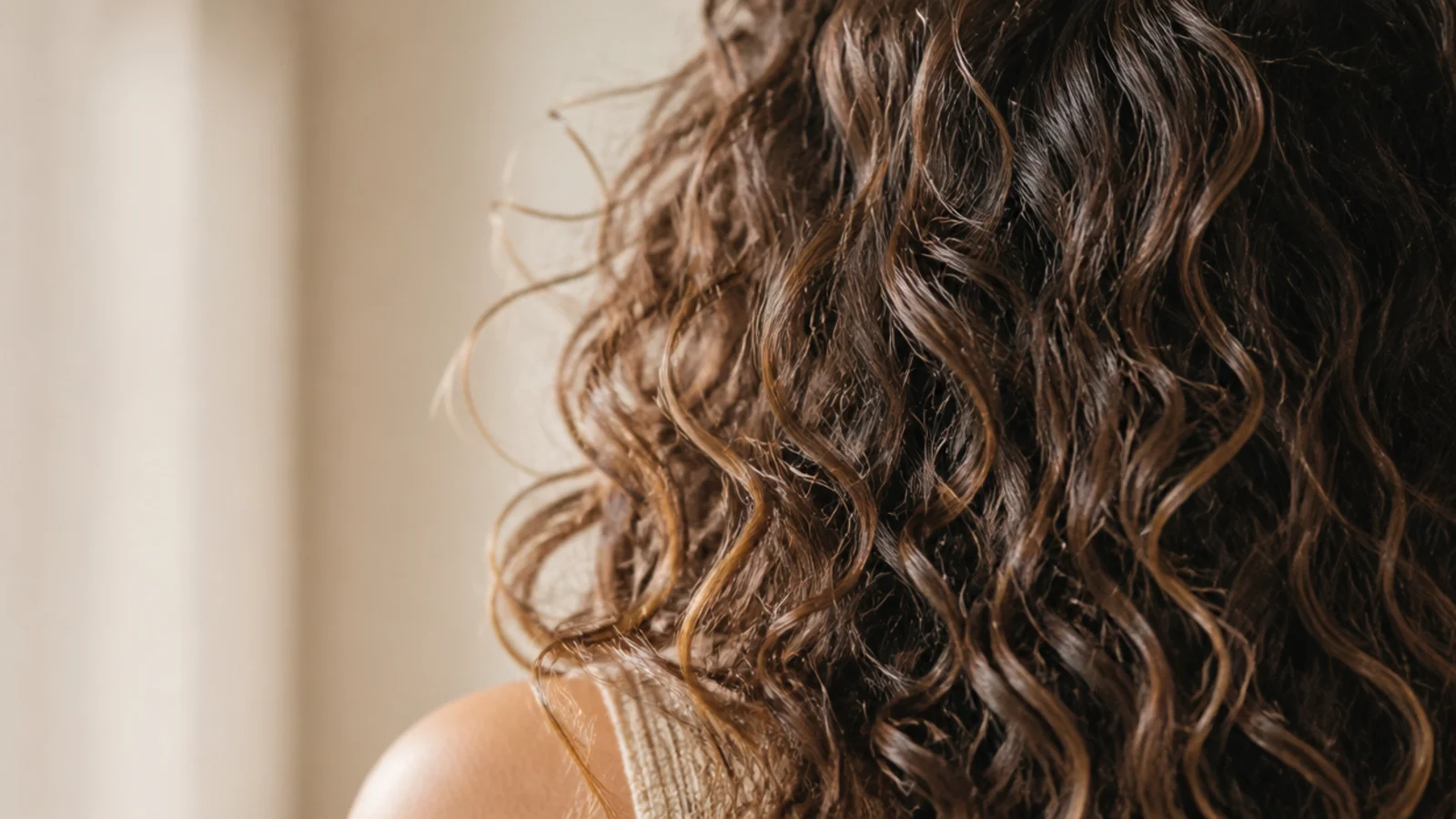
20. Air Dried With Leave In
Air drying gives the flattest cuticle of any method because nothing is being blown across the scales. The cost is time, and a curl that is still wet after an hour will dry stretched, so it suits shorter or looser patterns best.
Final Thoughts
Before adding another product, count how many times your hands go through your hair between the shower and the mirror. Most people rake three or four times, and each pass splits clumps that were holding perfectly, which produces a frizz that no gel can undo because it was never a cuticle problem.
Fix the handling first, then the humectants, then the cut. For shapes built to carry curl weight properly see the best curly hair haircuts, and for a cut that turns volume into the point see curly mullet styles. More in Hair Care.