15 Jellyfish vs Wolf Haircut Differences Compared
Fifteen head to head comparisons, and the single fact that separates the two cuts. A wolf cut connects every length to the next one and a jellyfish deliberately refuses to. Everything else follows from that one decision.
In this article · 23
- What Is a Jellyfish Haircut
- What Is a Wolf Cut
- The Four Way Comparison
- Face Shape and Texture
- Styling Compared
- Grow Out and Salon Wording
- The 15 Differences
- 1. Blunt Bell Versus Shaggy Crown
- 2. Chin Bell Versus Curtain Bangs
- 3. Fine Straight Hair
- 4. Thick Coarse Hair
- 5. 2B Waves
- 6. 3B Curls
- 7. Round Face
- 8. Long Oval Face
- 9. Waist Length Hair
- 10. Shoulder Length Hair
- 11. Colour Placement
- 12. Morning Routine
- 13. Ponytail and Bun
- 14. Month Three Grow Out
- 15. Converting Between the Two
- Final Thoughts
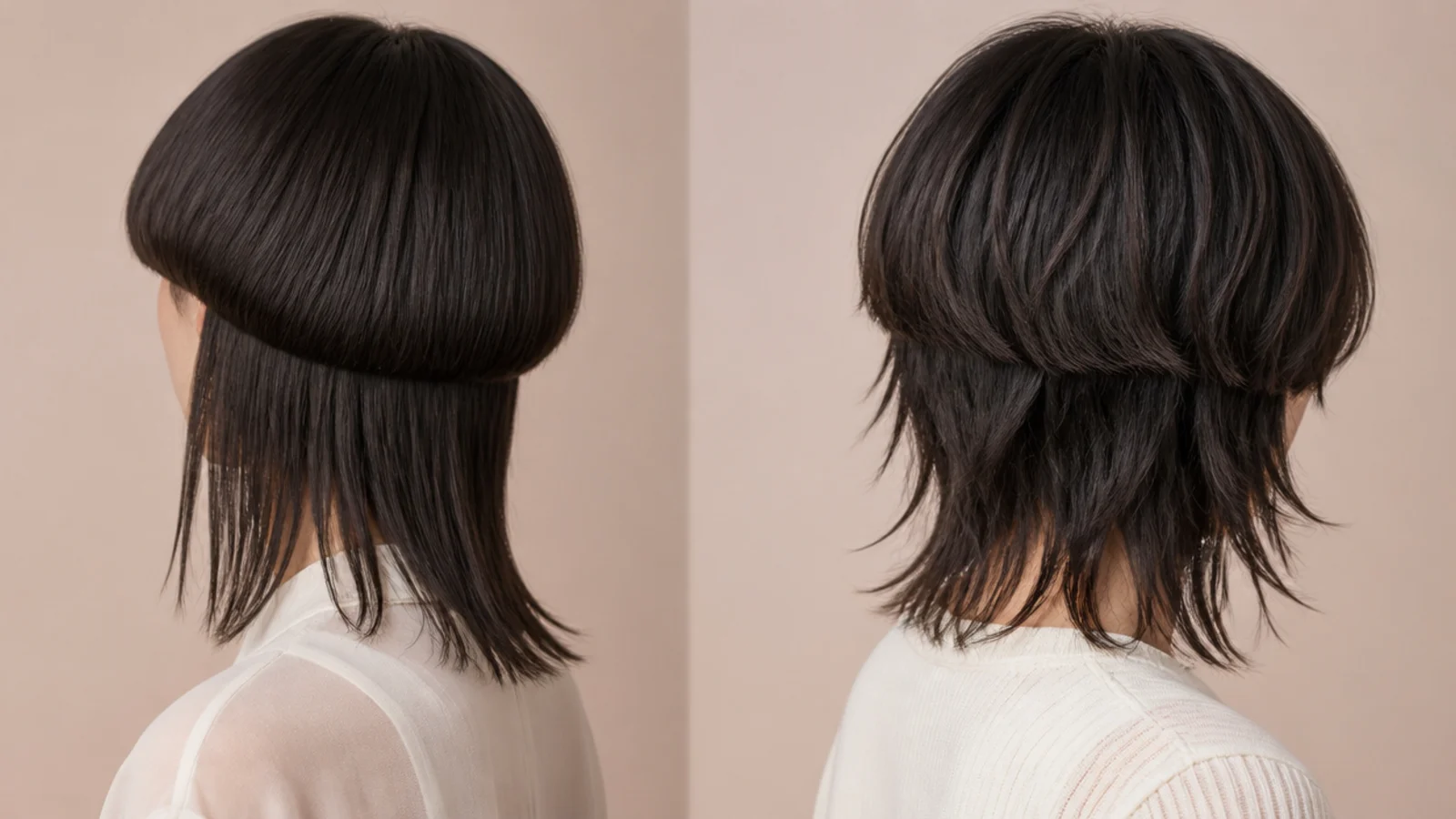
These two cuts get recommended interchangeably and they are built on opposite decisions.
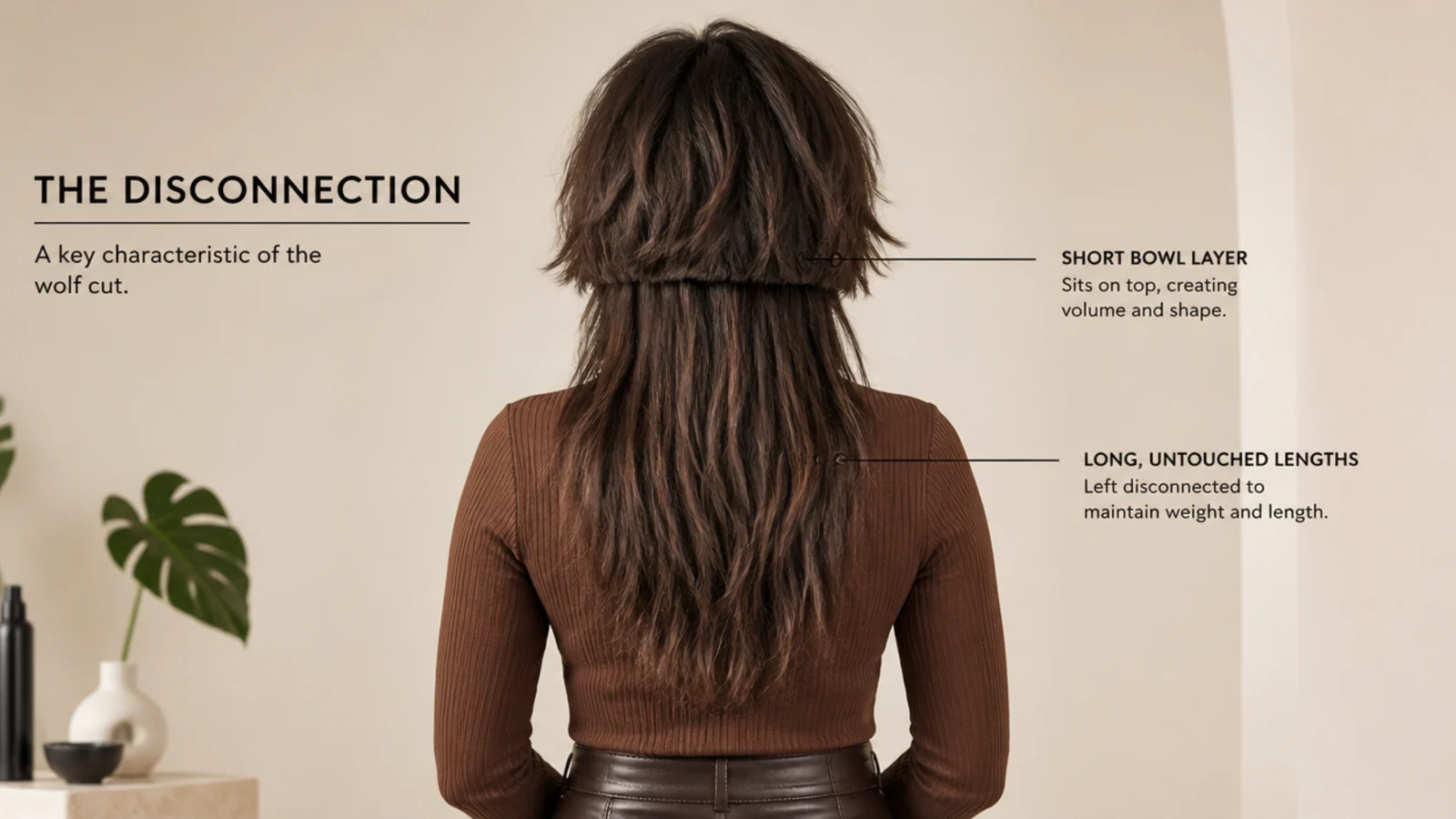
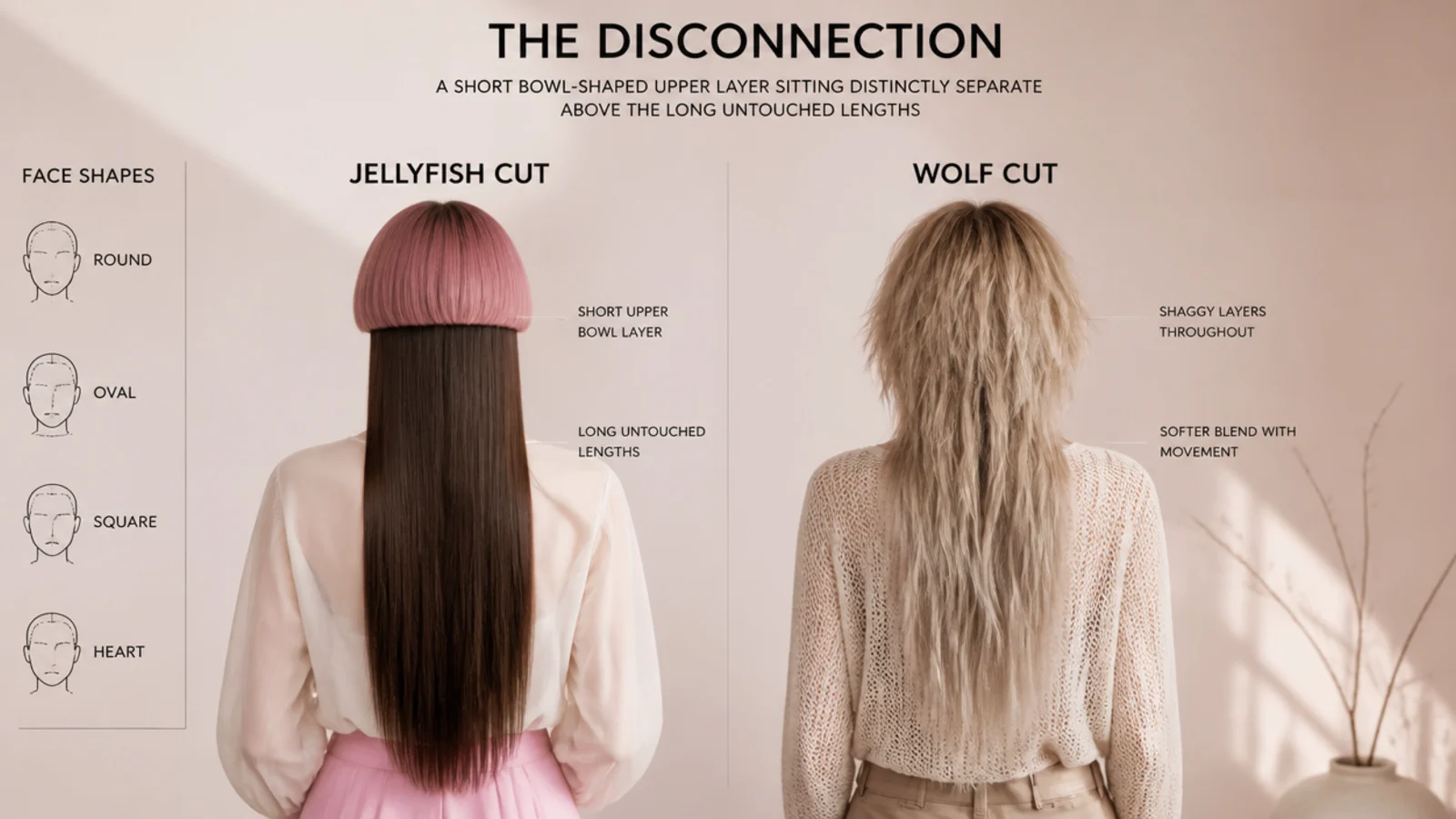
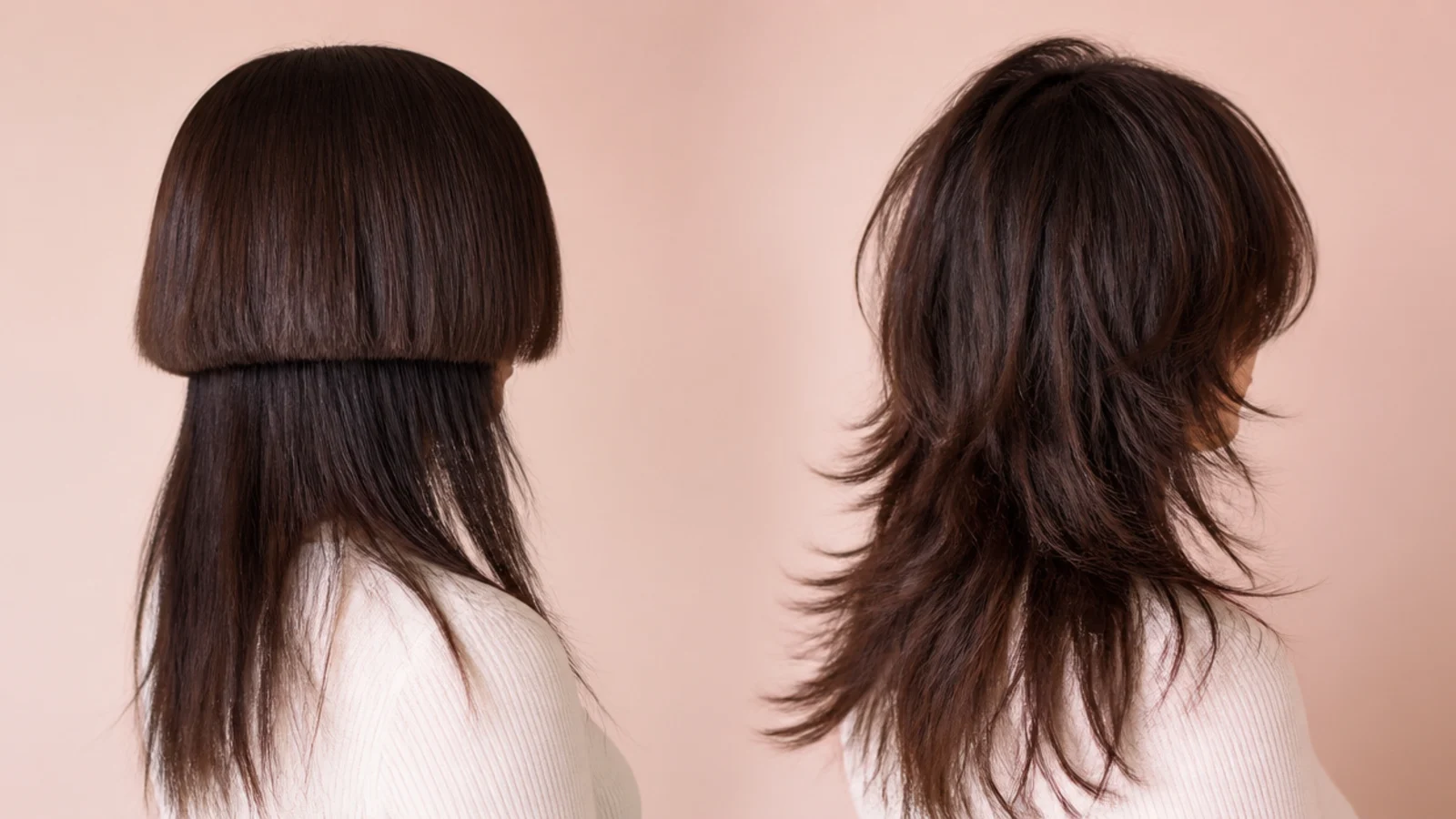
A wolf cut connects every length to the next. Short crown layers graduate down into long ends, so the eye reads one continuous shape with movement running through it.
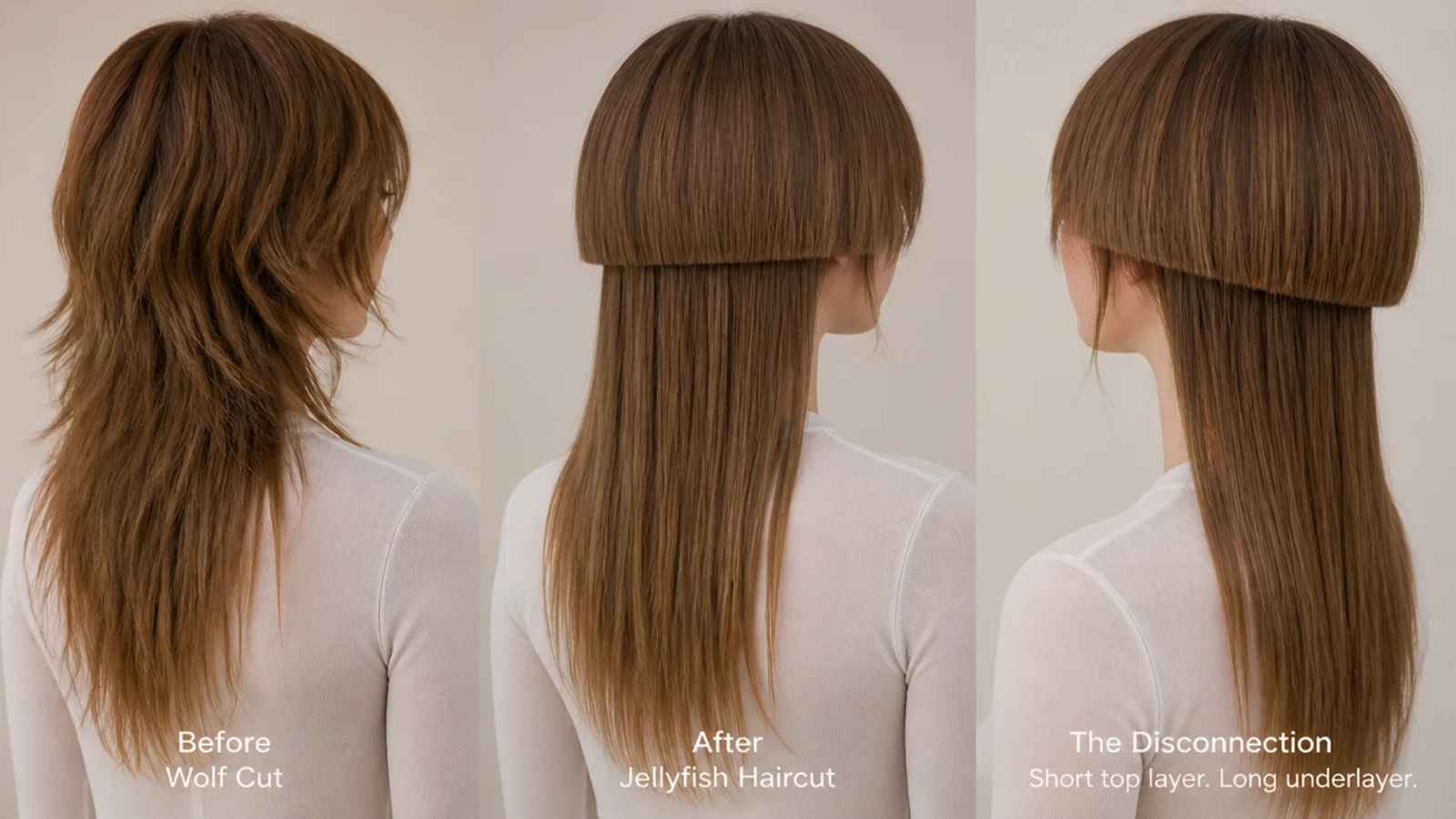
A jellyfish refuses to connect anything. A short blunt layer sits over long untouched lengths with a visible step between them. Every difference below follows from that one choice.
What Is a Jellyfish Haircut
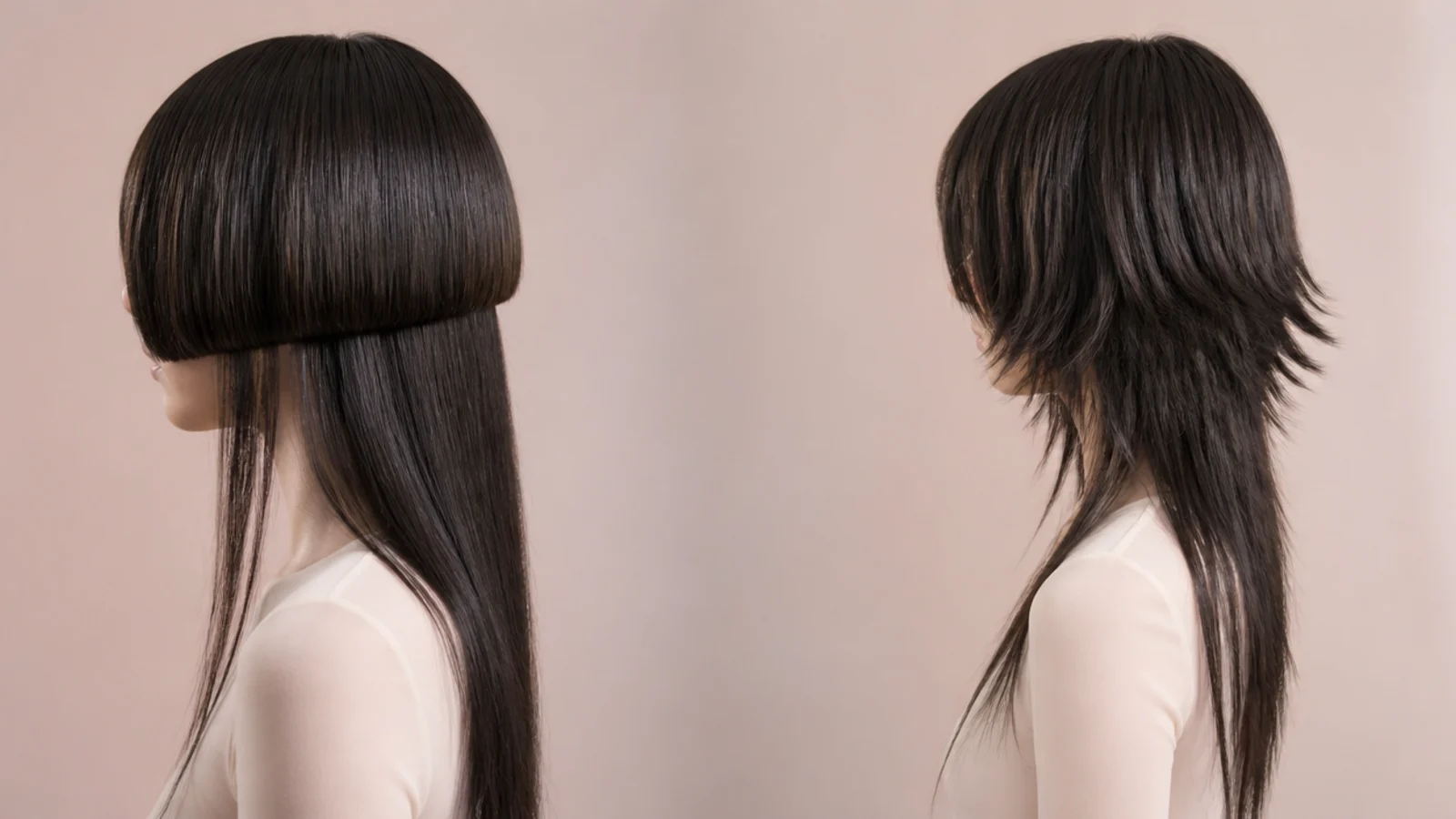
Two tiers with a hard step between them. A short blunt upper layer, cut level all the way round, sitting over lengths that were never cut into.
The perimeter stays whole. Nothing is removed from the long hair, so it keeps full weight and full density right to the ends.
The gap is the design. Four inches or more between the two hems is what makes the shape read as deliberate rather than as a layer that went wrong.
It has one line and one mass. That is why it photographs well and why a rushed hem shows immediately.

What Is a Wolf Cut
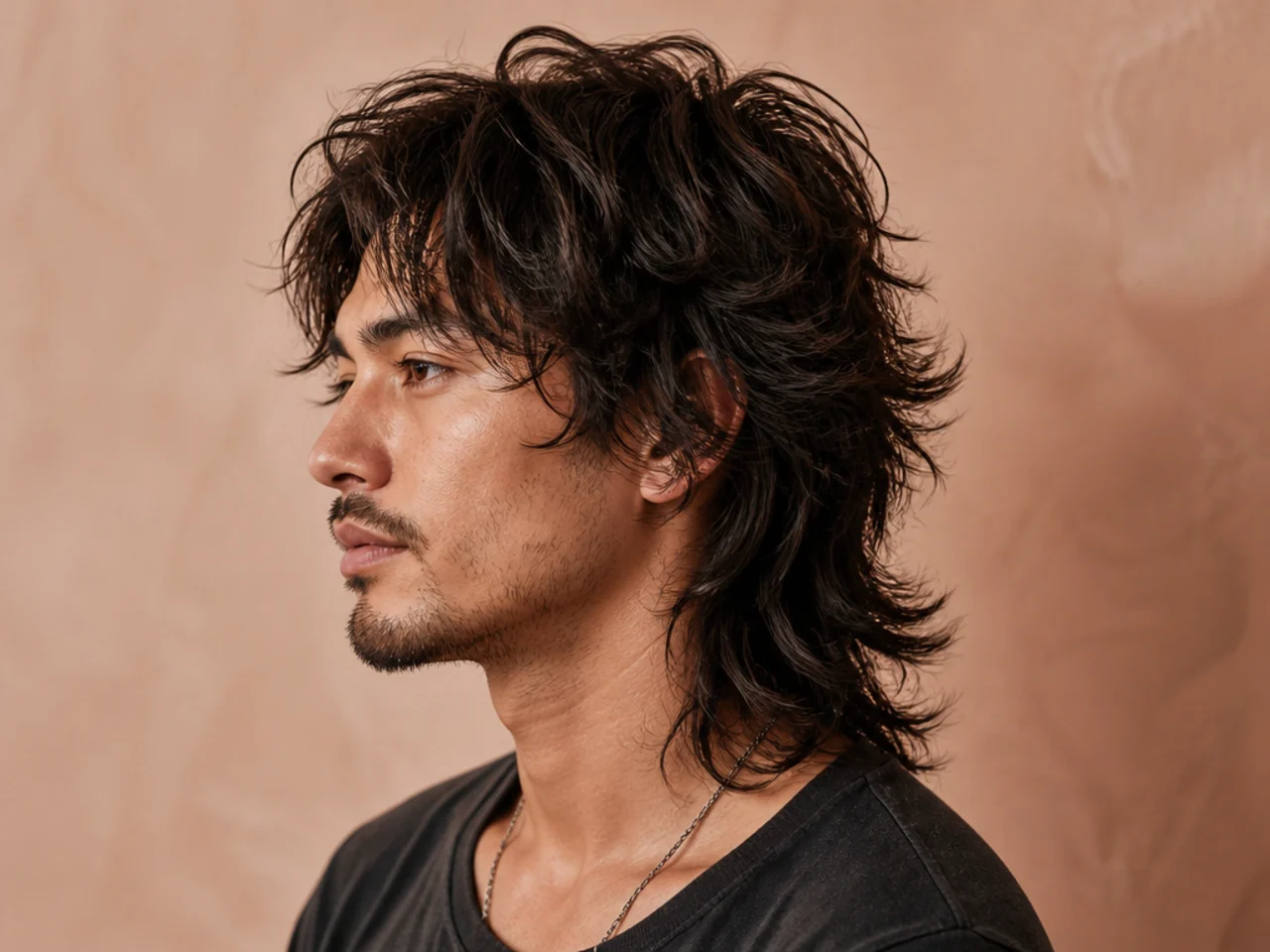
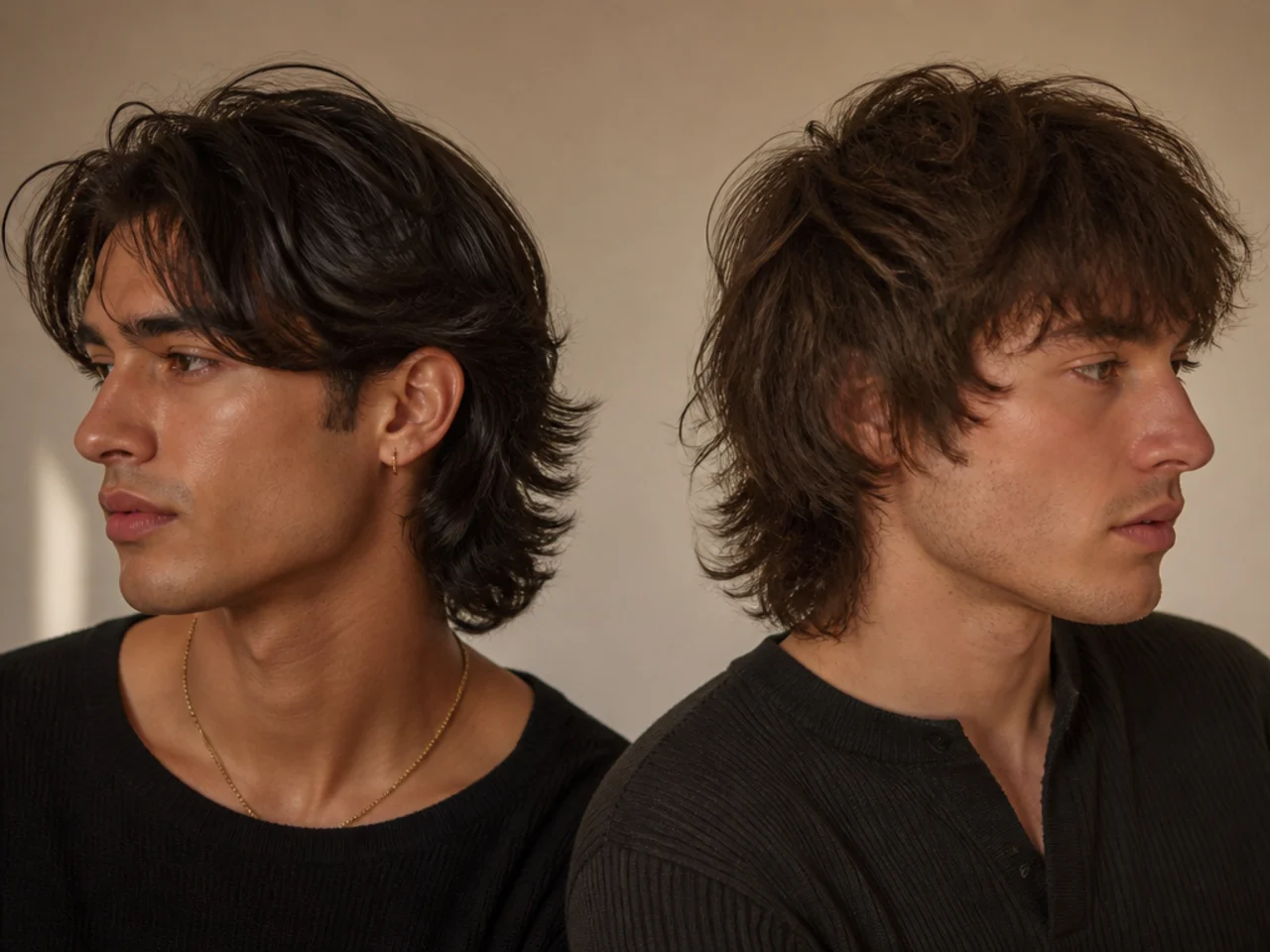
A shag crossed with a mullet. Short choppy layers around the crown and face, weight kept at the back, everything graduated into everything else.
Weight is removed throughout. The layers are cut into the interior as well as the surface, which is what gives the cut its lift and its movement.
There is no single line anywhere. Point cut ends and staggered layer lengths mean the eye finds texture instead of an edge.
It is usually cut with a fringe. Curtain bangs or a heavier shaggy fringe, graduating back into the sides so the front is part of the same gradient.
The Four Way Comparison
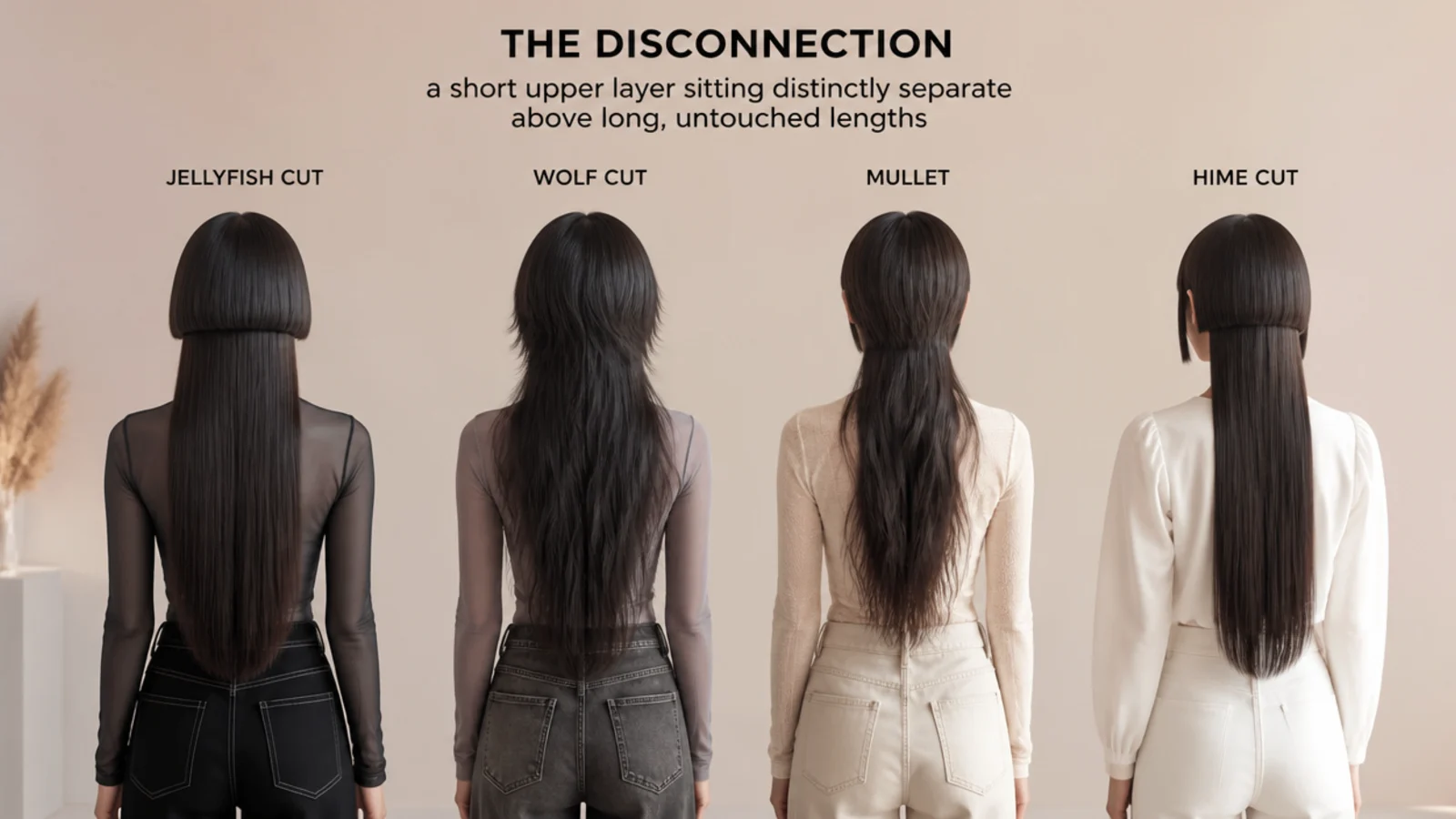
Jellyfish changes length top to bottom, with a step. One short tier above one long tier and nothing in between them.
Wolf changes length top to bottom, smoothly. The same axis as the jellyfish, but graduated, which is why the two get confused in the first place.
Mullet changes length front to back. Short at the front and sides, long at the back. A different axis entirely, and the reason a mullet reads from the side rather than the front.
Shag changes length everywhere at once. Layers throughout plus a fringe, all connected, with no dominant direction and no hard edge to find.
Face Shape and Texture
A blunt hem adds width where it lands. The jellyfish puts a horizontal across the face, so hem placement is the single most important decision in the cut.
Graduated layers add length. A wolf cut frames the face with diagonals rather than horizontals, which is why it flatters a round outline with almost no adjustment.
Curl blurs a hard line and survives a soft one. Coils hide a blunt hem inside their own outline, so the jellyfish needs a much bigger gap on curly hair while the wolf loses nothing.
Fine hair keeps weight better under a blunt cut. Every strand ending on one line reads as density, whereas layering thin hair spreads the same amount of hair over more lengths.
Styling Compared
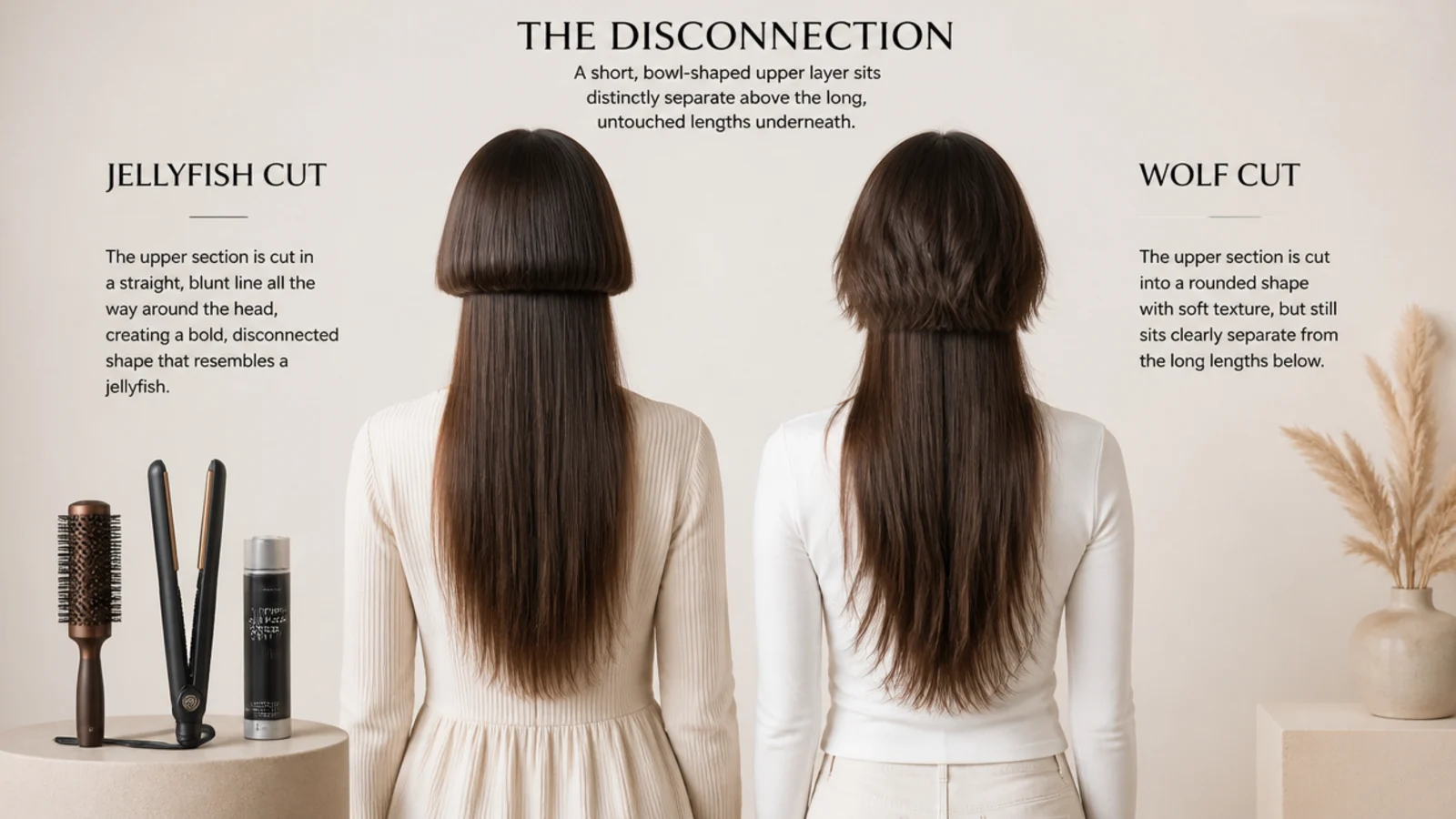
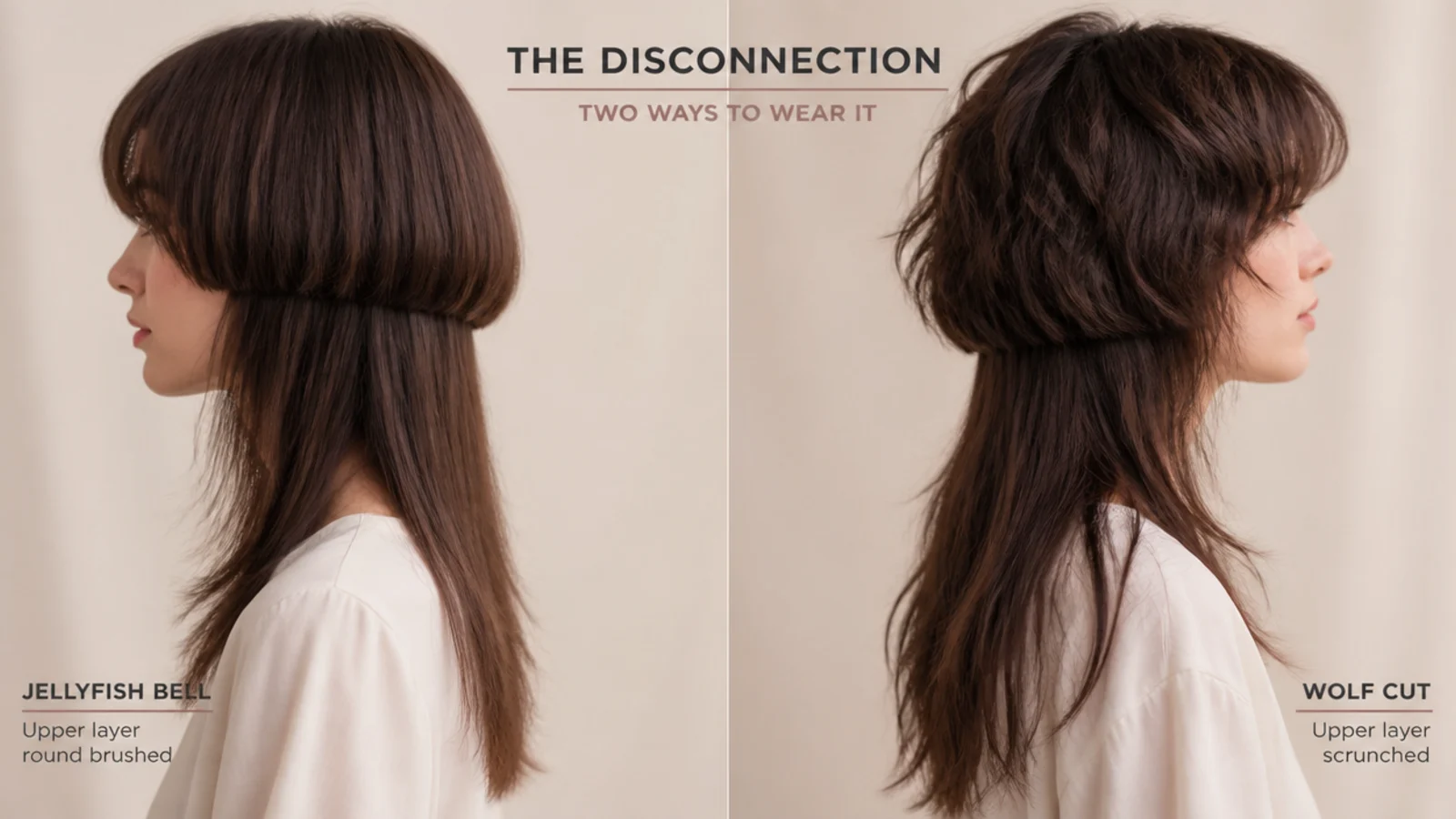
The jellyfish needs two routines. The bell gets a brush and heat, the lengths get fingers and air, and the contrast between them is what makes the cut visible.
The wolf needs one. Rough dry it upside down, scrunch texture spray through, and the layers separate on their own because the weight has already been removed.
Smoothing ruins a wolf cut. Brushed flat, the layers lie on top of each other and the whole thing reads as uneven long hair rather than as a shape.
Texturising ruins a jellyfish bell. Roughening the surface removes the flat plane that lets the hem read as a line, which is the only edge in the cut.
Grow Out and Salon Wording
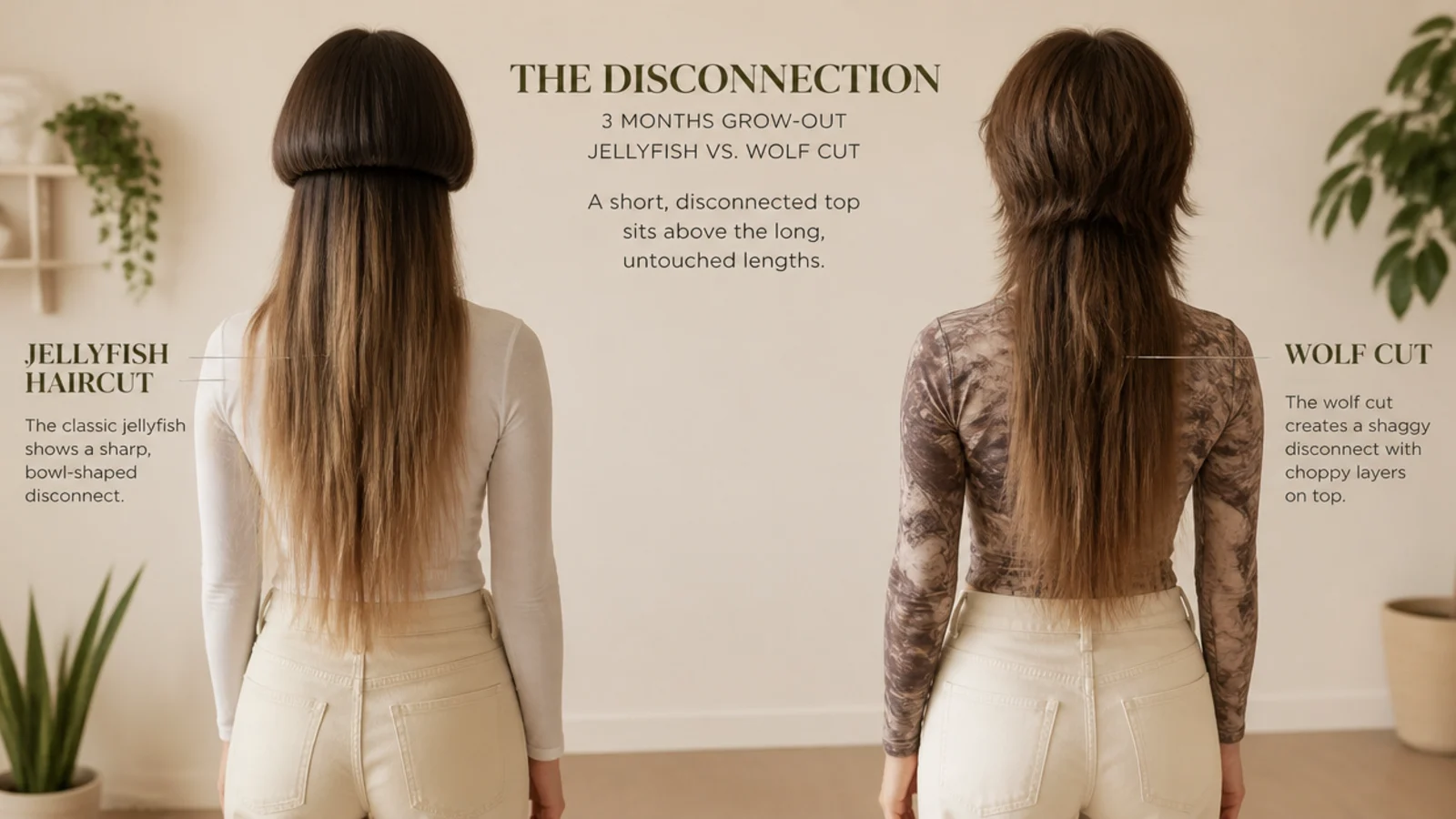
Hair grows about half an inch a month, and the two cuts spend it differently. A wolf softens evenly. A jellyfish crosses a threshold at around three months when the gap stops reading.
Say disconnected for one and connected for the other. Those two words do more work than any photograph, because a reference picture of either cut looks like layers to somebody trained to blend.
Name the gap for a jellyfish and the shortest layer for a wolf. Each cut has one number that decides it, and stylists guess wrong on both when the number is left unspoken.
Maintenance is uneven. A jellyfish needs its bell recut every eight to ten weeks and nothing else. A wolf can run three months because there is no line to go soft.
The 15 Differences
1. Blunt Bell Versus Shaggy Crown
The jellyfish keeps the crown as one solid mass with a hard hem, so the top of the head reads as weight. The wolf breaks the same area into short point cut pieces that lift away from the scalp, which reads as volume instead.

2. Chin Bell Versus Curtain Bangs
A chin length bell puts one continuous line across the face and keeps it there. Curtain bangs split at the centre and graduate backward into the sides, so the face is framed by two diagonals rather than crossed by one horizontal.

3. Fine Straight Hair
The jellyfish wins here because a blunt line ends every strand at the same point, and a hundred ends stacked on one line read as thickness. A wolf cut spreads the same hair across staggered lengths, so the ends thin out visibly.
4. Thick Coarse Hair
The wolf wins here because it removes interior weight that thick hair has in surplus. A jellyfish leaves both tiers at full density, so a heavy head ends up with two solid masses and the bell mushrooms outward at the hem.
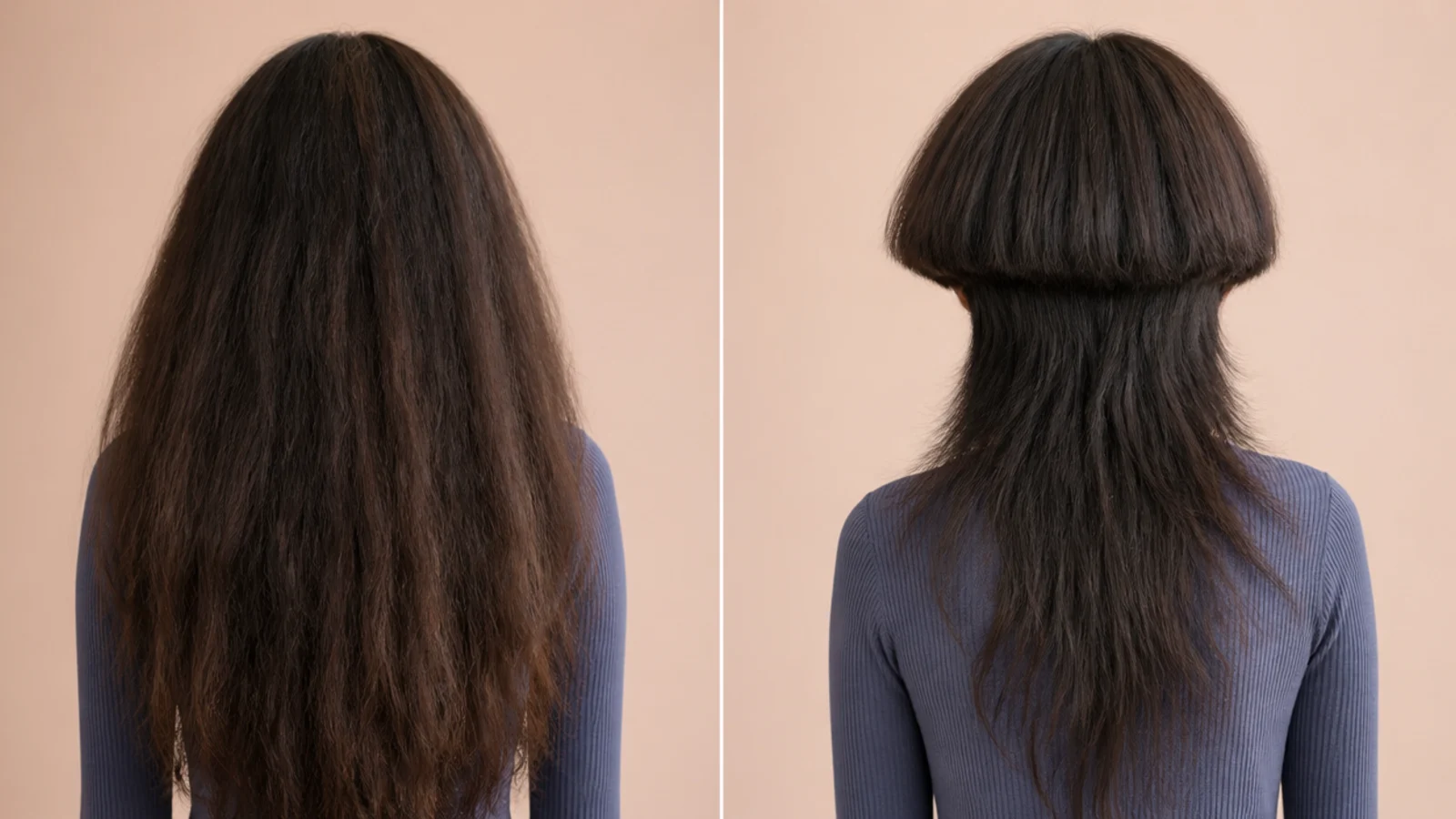
5. 2B Waves
A wave bends the strand so light scatters along the hem, which softens the jellyfish step by roughly a third and forces a bigger gap. The same bend does the wolf cut a favour, because it shows every layer without any styling.
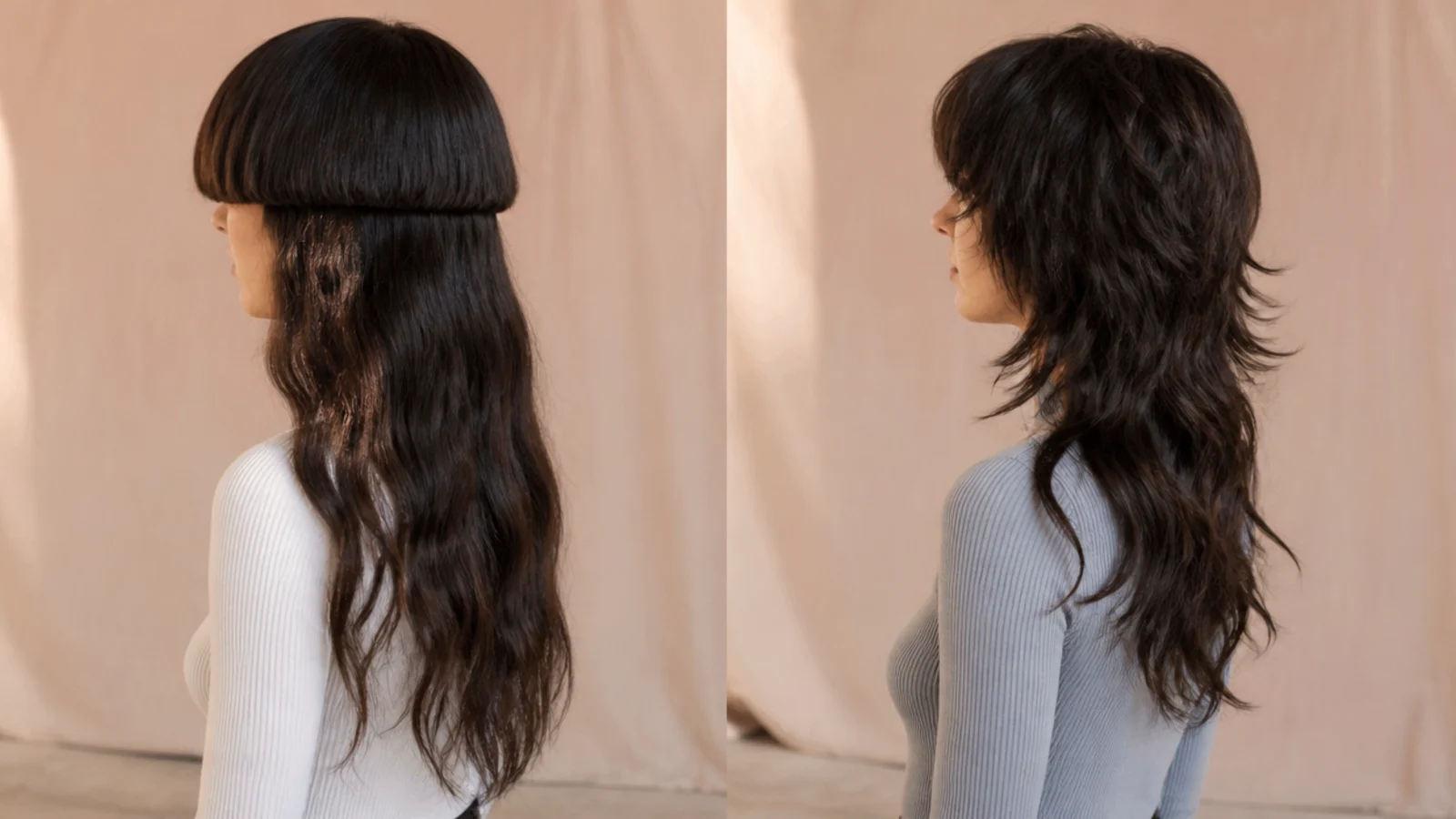
6. 3B Curls
Curl draws hair upward as it dries, so a blunt hem cut at the jaw can finish above it and the line disappears into the curl outline anyway. The wolf has no line to lose, which makes it the safer of the two on a tight pattern.
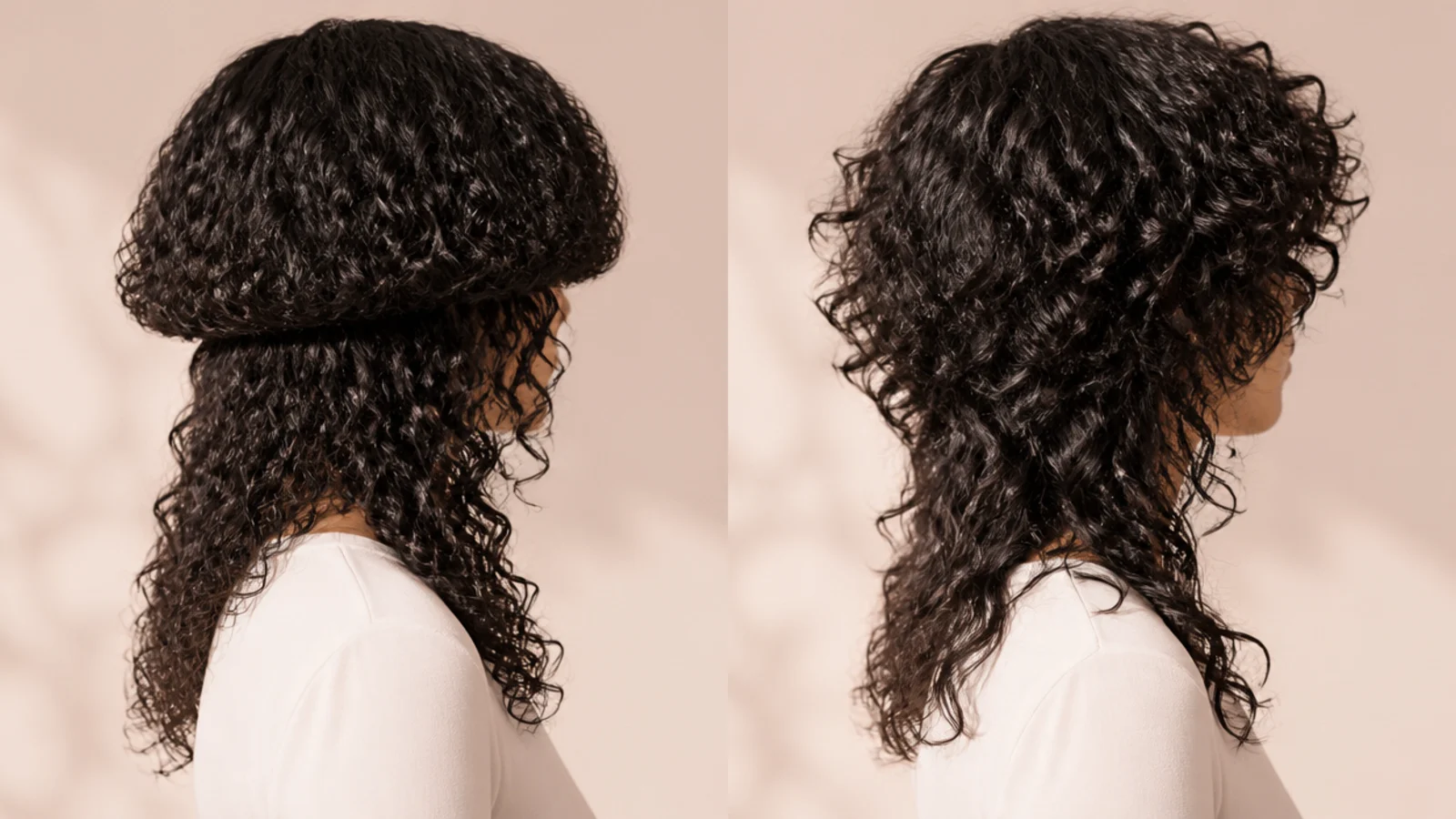
7. Round Face
The wolf frames a round face with diagonals that pull the outline downward. A jellyfish can work, but only with the hem dropped below the jaw, because a horizontal landing at the cheekbone adds width exactly where there is already the most.

8. Long Oval Face
Here the jellyfish has the advantage, because its horizontal hem interrupts the vertical run of the face. Wolf cut layers all travel downward, which flatters most outlines but does nothing to shorten one that is already long.

9. Waist Length Hair
Long hair is where the jellyfish is at its strongest, because the gap has room to be enormous and the two tiers read as separate objects. A wolf cut at this length spreads its layers so far apart that the movement thins out.
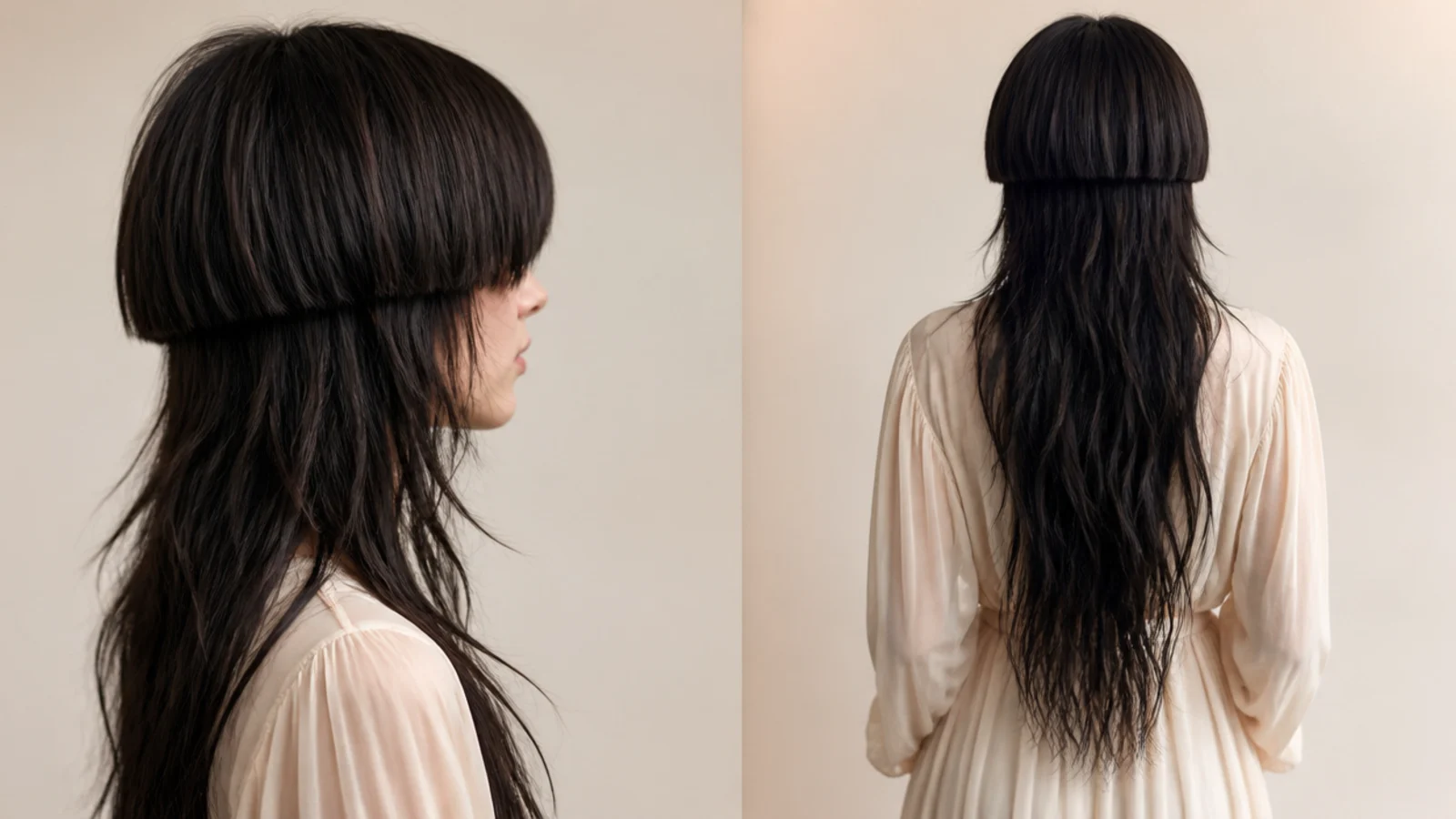
10. Shoulder Length Hair
The comparison reverses at shoulder length. There is no room for a readable gap, so the jellyfish collapses into a heavy layered bob, while the wolf concentrates its layers over a shorter run and gains definition.
11. Colour Placement
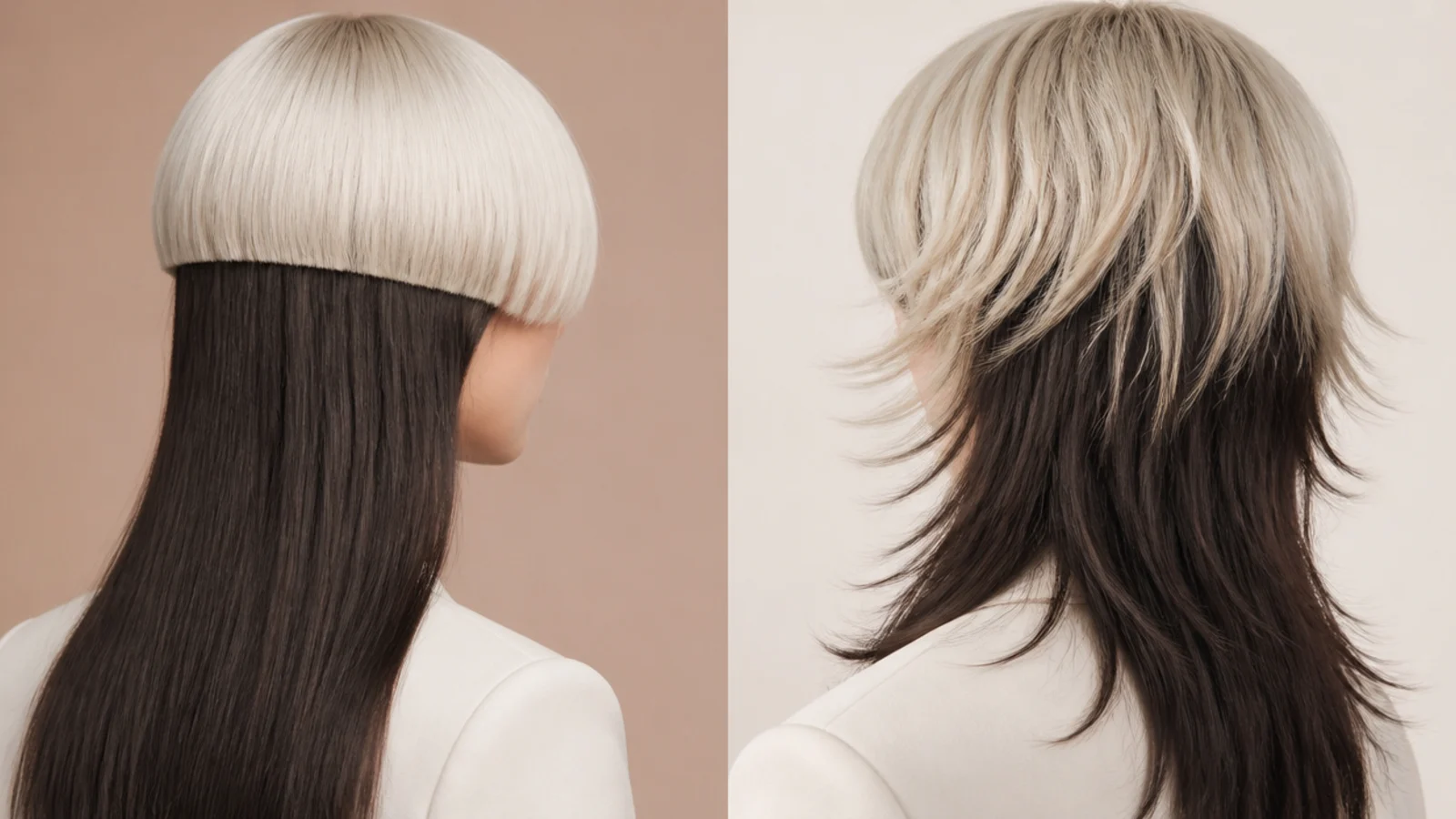
The jellyfish comes with a boundary already built in, so a block of colour on the upper tier lands on an edge the cut created. A wolf has no boundary, which is why it takes painted pieces and face framing rather than blocks.
12. Morning Routine
The jellyfish costs more time because two tiers need two different finishes and the bell needs heat to hold its hem. A wolf cut is rough dried in one pass, since removed weight does the separating that a brush would otherwise have to do.
13. Ponytail and Bun
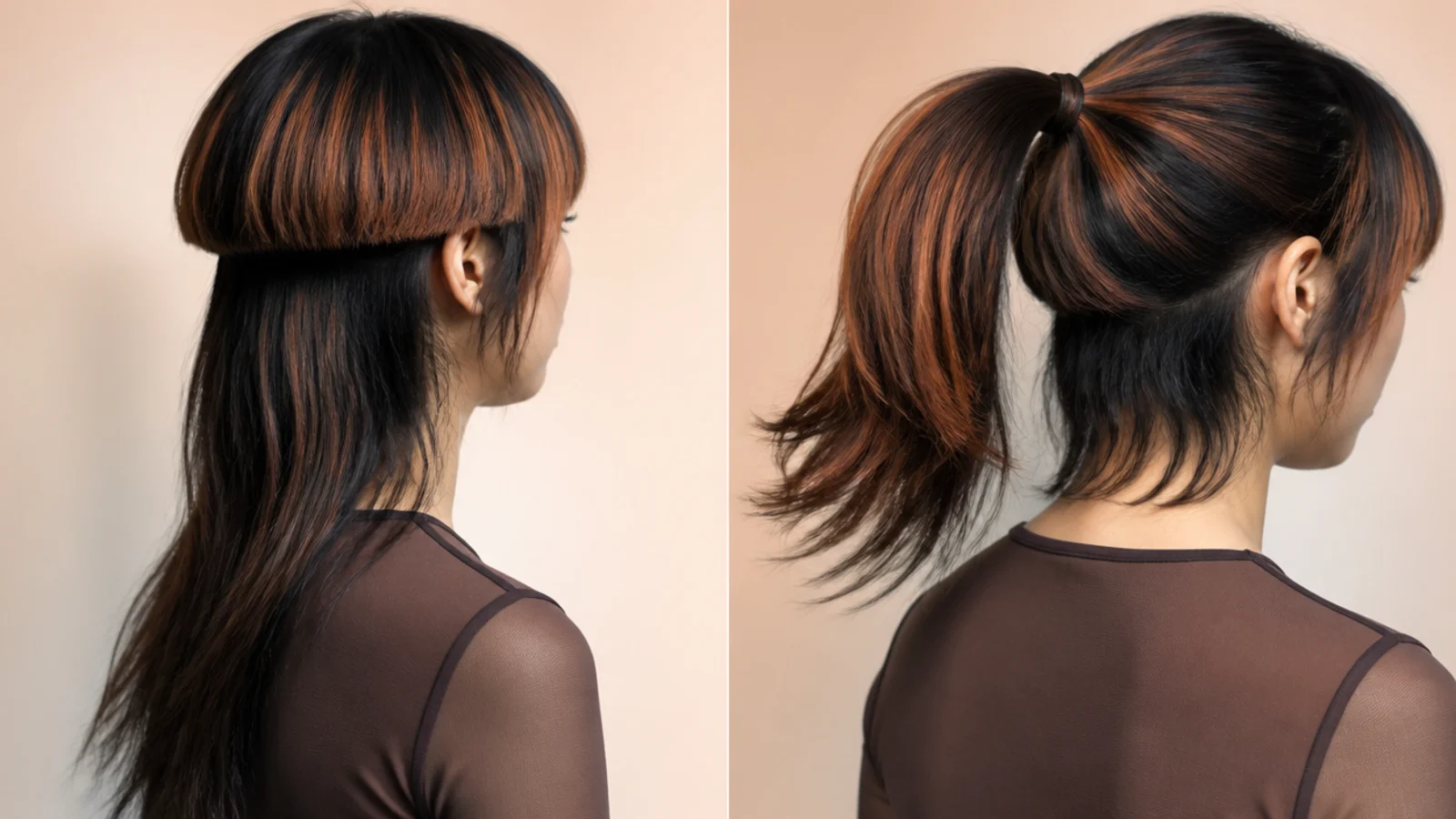
Both cuts drop short pieces out of a gathered style, but they read differently. Wolf layers graduate, so the escaped hair looks like face framing, while the jellyfish bell falls out as one blunt block and looks like a mistake unless it is left out on purpose.
14. Month Three Grow Out
A wolf cut at three months is simply a softer wolf cut, because nothing in it depends on a fixed measurement. A jellyfish at three months has lost around an inch and a half of gap, which is usually the point where the step stops reading.
15. Converting Between the Two
The conversion only runs one way. A jellyfish becomes a wolf in a single blending pass, but a wolf cannot become a jellyfish, because the lengths have already been layered and the cut needs those lengths whole.
Final Thoughts
Choose by weight before you choose by picture. If your hair is fine and you want it to look like more, the blunt tier of the jellyfish is doing something a wolf cut cannot do. If it is thick and you want it to feel like less, the wolf removes the interior weight the jellyfish leaves entirely alone.
And remember the conversion runs one way. Starting with the jellyfish keeps the wolf available for later, which makes it the lower risk of the two to try first. For the full range of the stepped version see the jellyfish haircut guide, and for how the wolf compares to its closest relative see mens wolf haircut versus shag. More in Mullet and Wolf Cut.