20 Graduation Hairstyles for Curly Hair That Hold Under the Cap
Twenty graduation styles for curls, and the distinction that decides all of them. A cap does not crease curly hair the way it creases straight hair, it collapses the crown and leaves the pattern intact, so the repair is water at the root rather than heat on the length.
In this article · 28
- Curl Patterns Under the Cap
- The Cap Line on Curly Hair
- Updo Versus Down on Curls
- All Day Hold for Curls
- Graduation Morning Timeline
- Cap Off Curl Refresh
- The 20 Curly Graduation Hairstyles
- 1. Low Chignon on 3B Curls
- 2. Half Up Puff
- 3. Side Swept 3A Curls
- 4. Twist Out on 4A Coils
- 5. Halo Crown
- 6. Flat Twists on 4C Hair
- 7. Twist Out Half Up on 3C Curls
- 8. Sleek Low Ponytail
- 9. Knotless Braids in a Bun
- 10. Bantu Knot Out on 3B Curls
- 11. Low Side Bun
- 12. French Braid Into a Nape Bun
- 13. Loose Afro
- 14. Rope Twist Half Up on 2C Waves
- 15. Curly Faux Bob
- 16. Fishtail Braid on 3A Curls
- 17. Curly Bangs
- 18. Flexi Rod Set on 4B Hair
- 19. Locs in a Barrel Bun
- 20. Nape Ponytail With a Cuff
- Final Thoughts
The advice given to curly hair before a graduation is usually advice written for straight hair, and the two fail in completely different ways.
A cap does not crease curls, it collapses them. Straight hair takes a sharp horizontal line where the band pressed. Curly hair keeps its pattern and loses the air between the coils, which reads as a flat crown rather than as a mark.
That means the repair is water, not heat. A mist into the root and a shake at the scalp restores what compression removed. An iron would fix a problem you do not have.
Curl Patterns Under the Cap
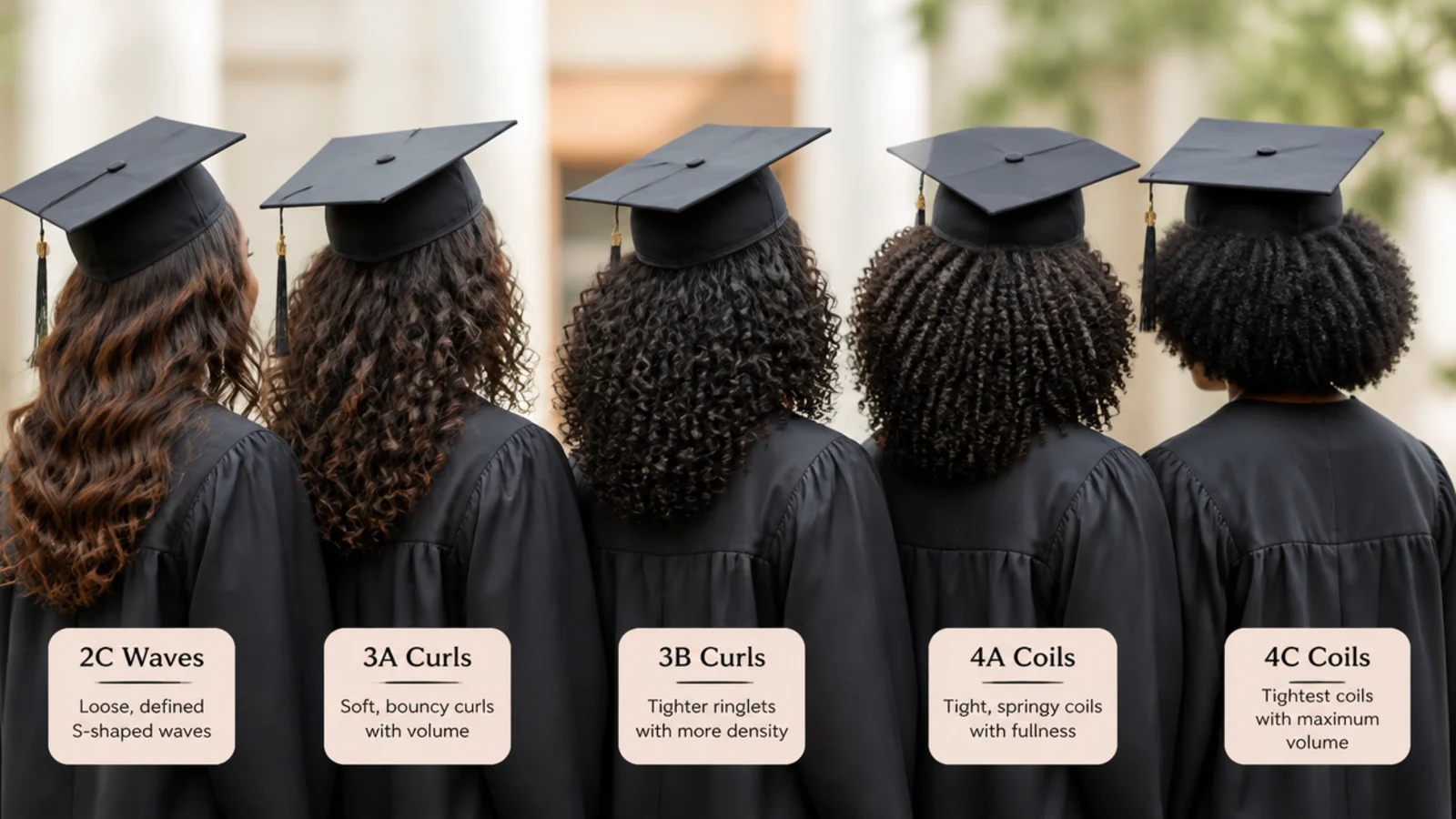
Looser patterns lose more. A 3A ringlet is about the width of a stick of chalk and has the least spring of the curl classes, so compression flattens it further and it recovers more slowly.
Tighter patterns lose volume but hold shape. A 4B or 4C coil bends so sharply that no band can pull it straight. What it loses is height, and height is what shakes back.
Denser patterns need less product to survive. The more bends per inch, the more the strands interlock and hold each other apart under pressure.
Shrinkage works in your favour here. Coily hair that already sits well short of its stretched length has less mass sitting inside the band ring in the first place.
The Cap Line on Curly Hair
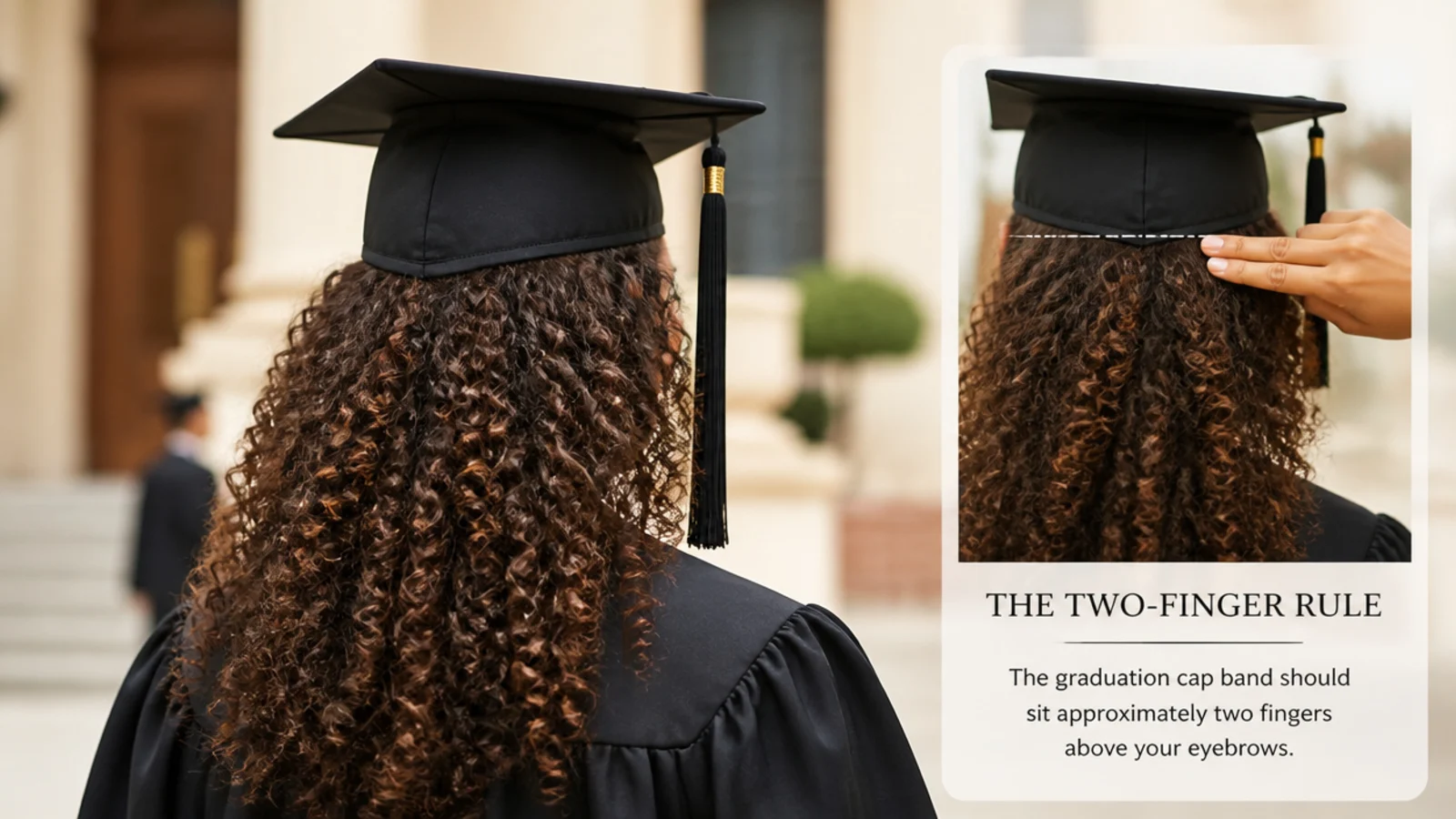
The band grips at your widest circumference. Around the occipital bone at the back, above the ears at the sides. On curly hair that circumference is measured over your volume, not your skull.
Which is why the cap feels tight and then loosens. The volume compresses over the first twenty minutes and the cap starts to slide once it has.
Pin through the inner band into anchored hair. The base of a twist, a flat twist, a bun. Loose curls just travel with the pin.
Check the fit with your hair styled, the night before. A cap fitted over a wash and go will not sit the same way over a gathered puff.
Updo Versus Down on Curls
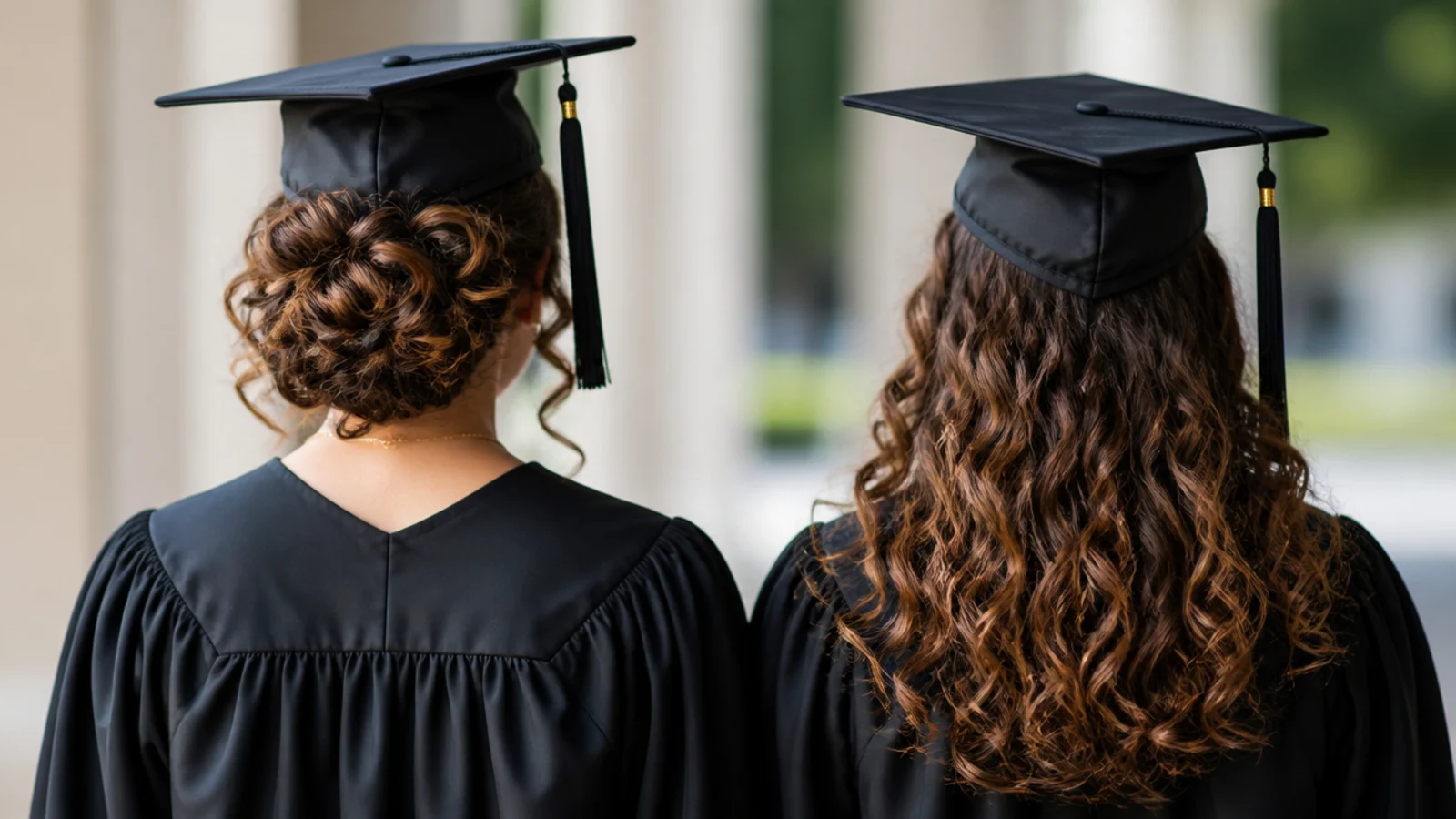
An updo takes the decision away. Nothing was under the band to compress, so the cap comes off and nothing has changed.
Curls worn down lose crown height and keep everything else. The length below the band is untouched, so what you are managing is a flat top over intact curls.
A low gather is the compromise. Volume at the nape, flat at the crown by design, and no gap between how it looked before and after.
Decide by the photographs you actually want. Most graduation portraits happen after the cap comes off, so a style that needs no repair is worth more than one that photographs better in the hall.
All Day Hold for Curls
Bone dry before the cap, with no exceptions. Hair sets in the shape it dries in. A damp crown compressed for two hours dries as a flat crown.
Gel to a cast, then break the cast. The hardened film holds the curl through the compression, and scrunching it out afterwards leaves the shape without the crunch.
Skip heavy oils at the root. Weight is the enemy of crown volume, and a band pressing on weighted roots gives you nothing to shake back up.
Refresh water goes in a small bottle, not a big one. You want a fine mist at the root, not a soak that resets the whole set.
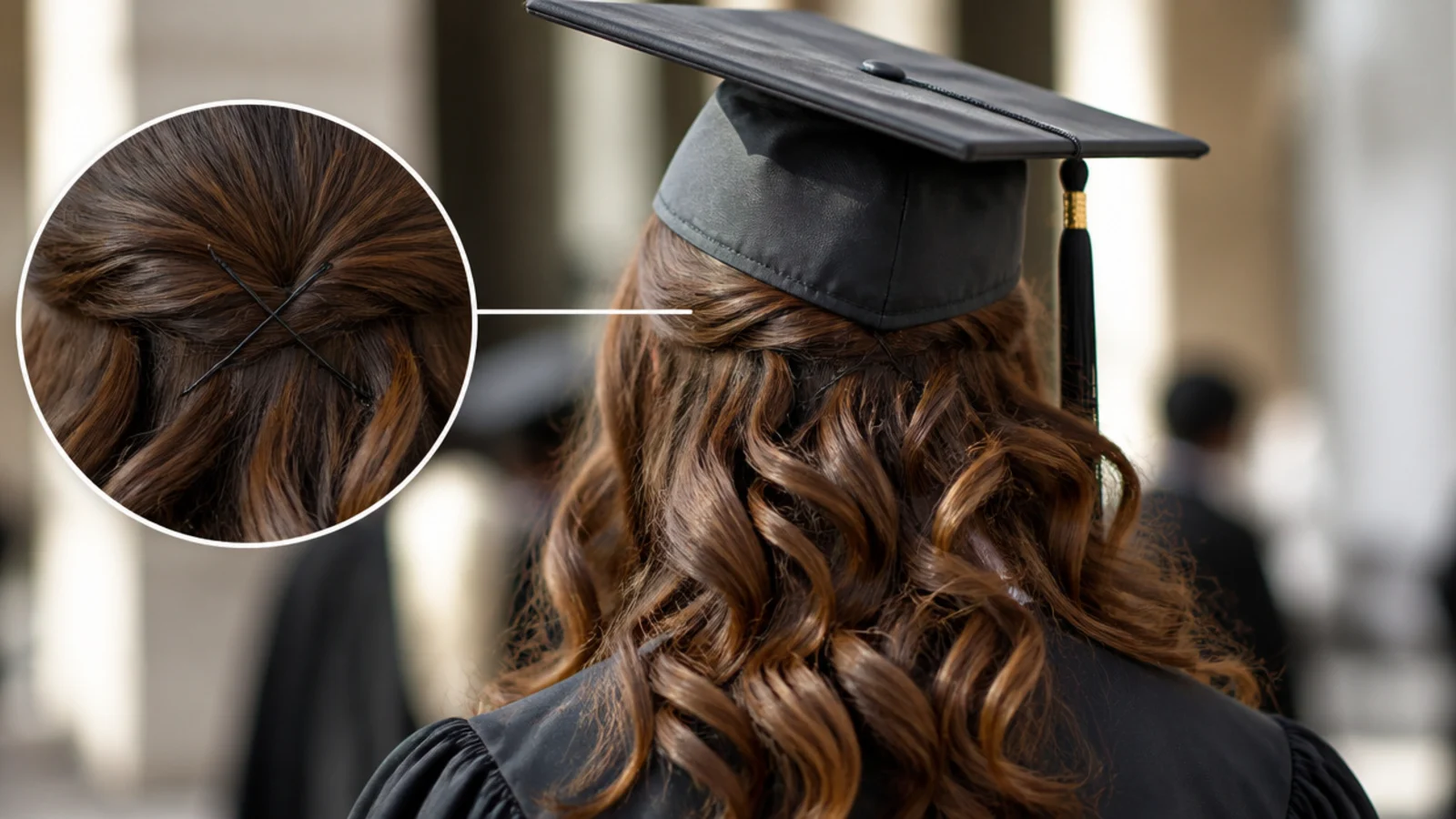
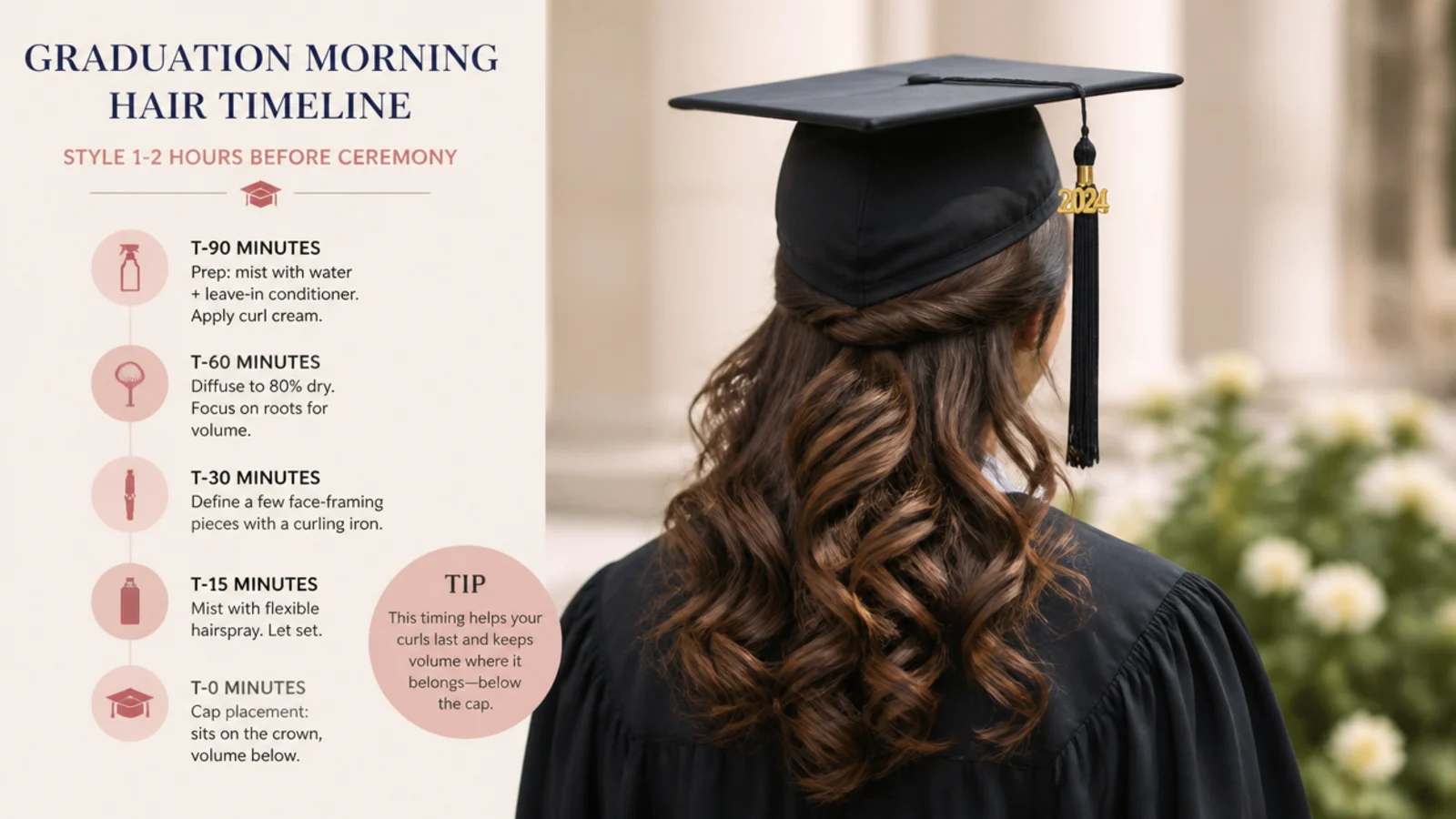
Graduation Morning Timeline
Wash two nights before, not the night before. Curls define better on the second day, and a day of natural oil gives pins something to grip.
Diffuse or air dry to completely dry, then leave it alone. Any handling before the cast is broken separates the clumps you spent the evening forming.
Break the cast ninety minutes before you leave. That gives the curl time to fall into position and gives you time to fix one section.
Cap on last, in the car park rather than the car. Twenty minutes less compression is a visibly fuller crown.
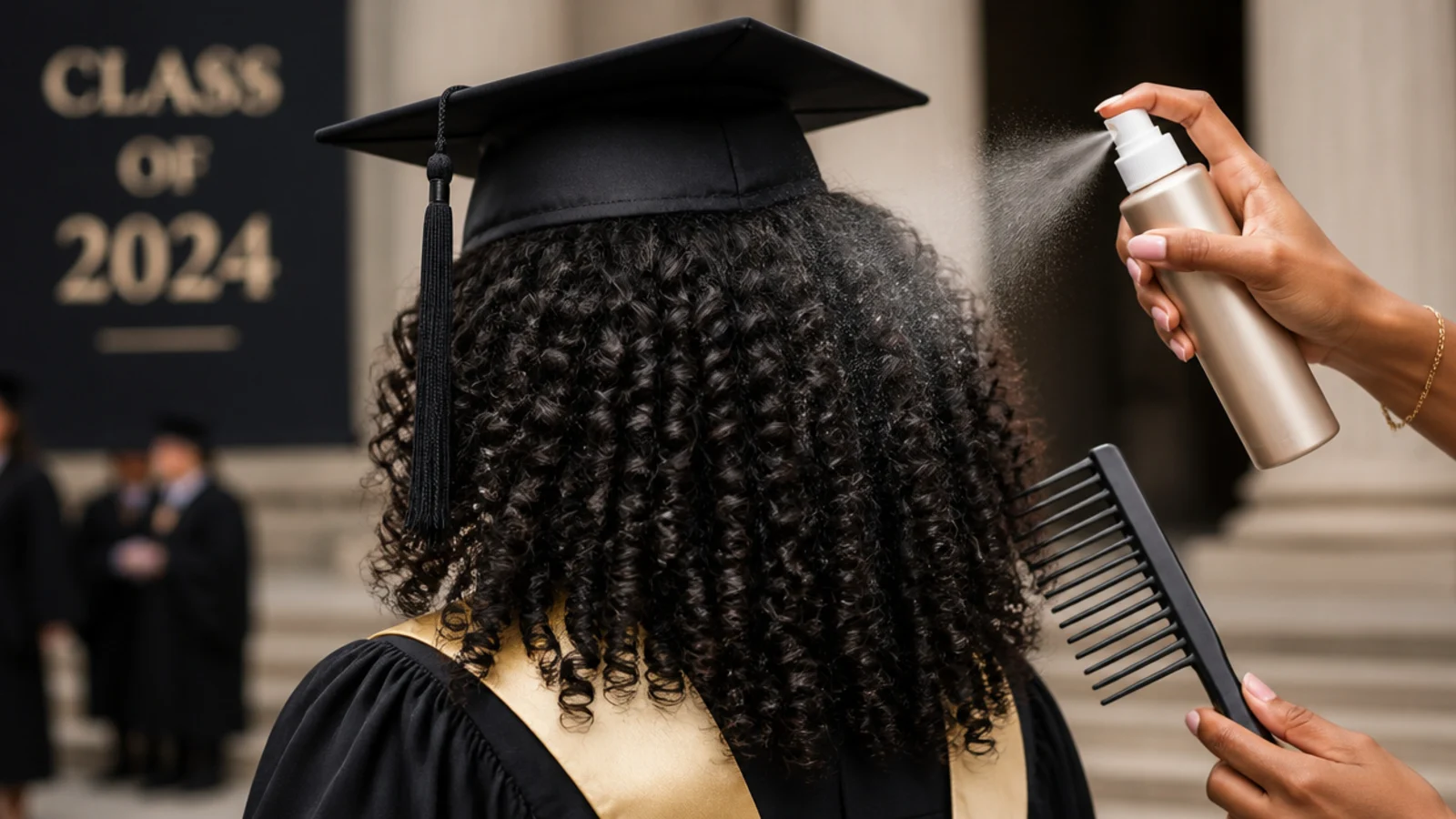
Cap Off Curl Refresh
Mist the root only. Water on the length re-forms the set and you lose the definition you arrived with.
Shake at the scalp with your fingertips. Lift comes from separating the roots, not from pulling the length.
Use a pick at the base, never a brush. A pick lifts between the clumps; a brush pulls them apart into frizz.
Let it dry in the air before touching it again. The bonds reset as the water leaves, and handling wet curls at that moment is what turns a refresh into a restyle.
The 20 Curly Graduation Hairstyles
1. Low Chignon on 3B Curls
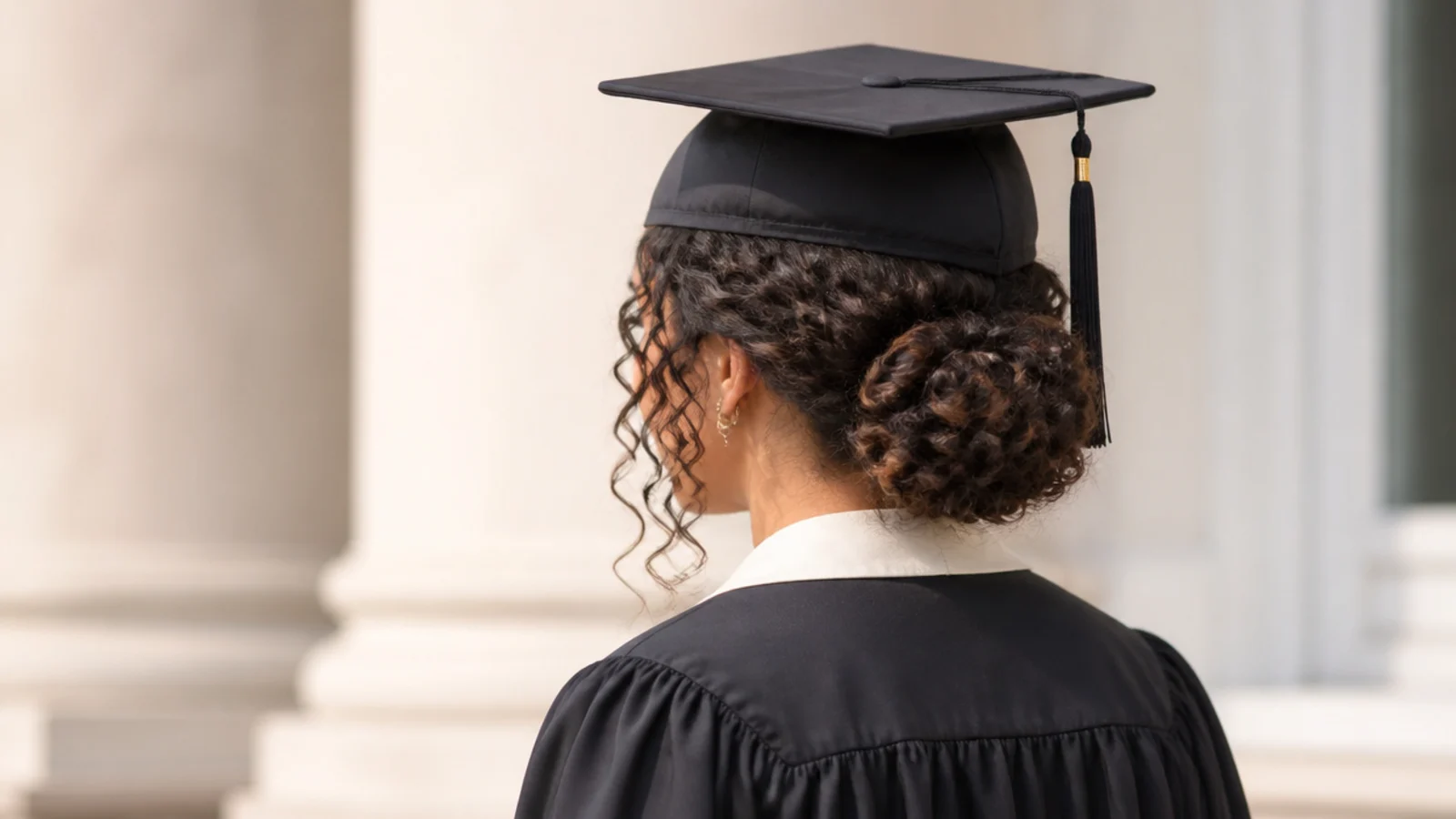
Springy marker width spirals pack into a knot with a lot of trapped air, so a chignon made from them looks larger than the same weight of straight hair would. Pin the base rather than the surface, so the volume you gained stays and the anchor still holds.
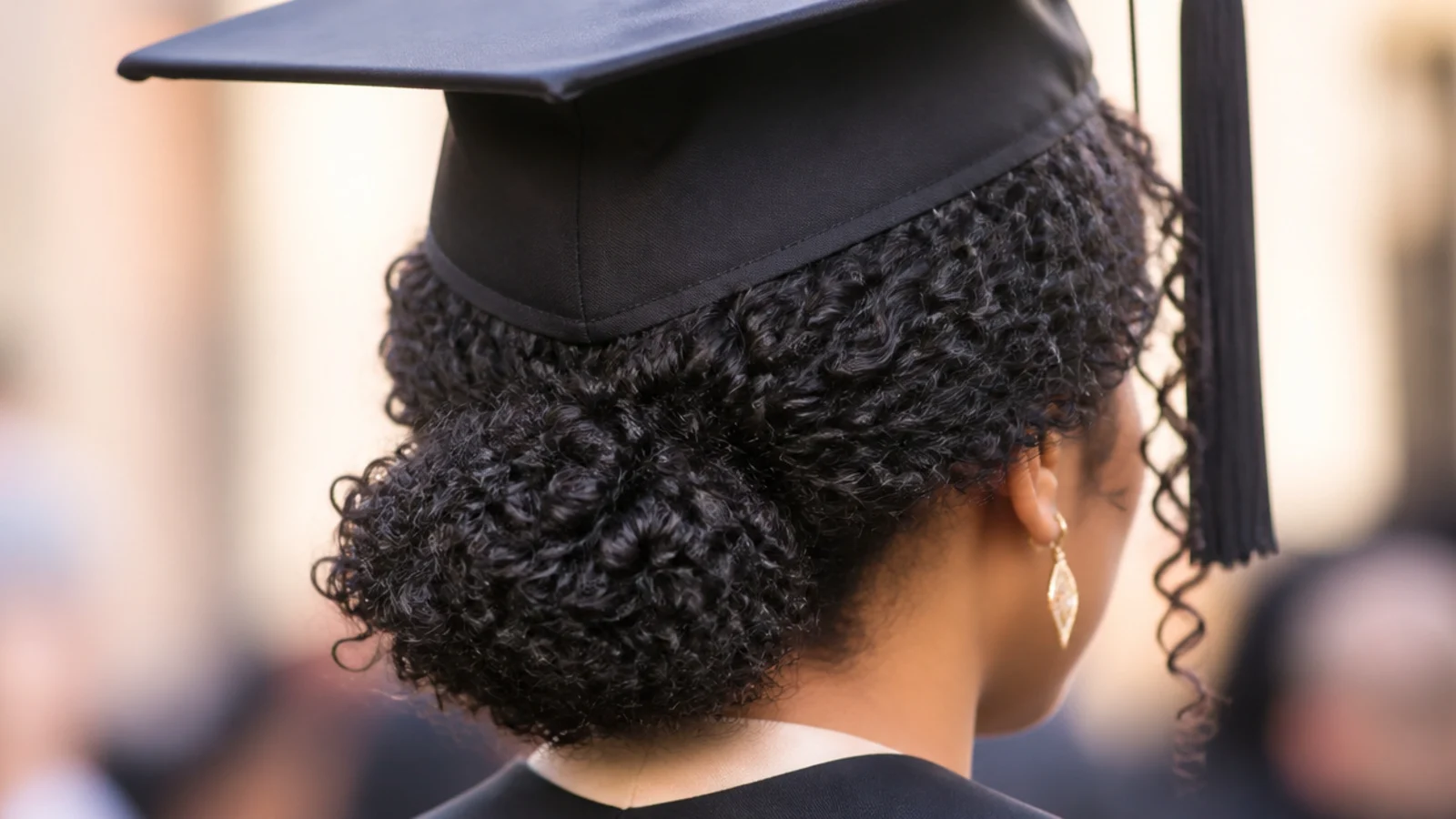
2. Half Up Puff
A puff is pure crown volume, which is the one thing a band removes, so this only works if the gather sits at or below the occipital bone. Taken that low the puff bulges outside the ring, and the cap presses flat scalp instead of your best feature.
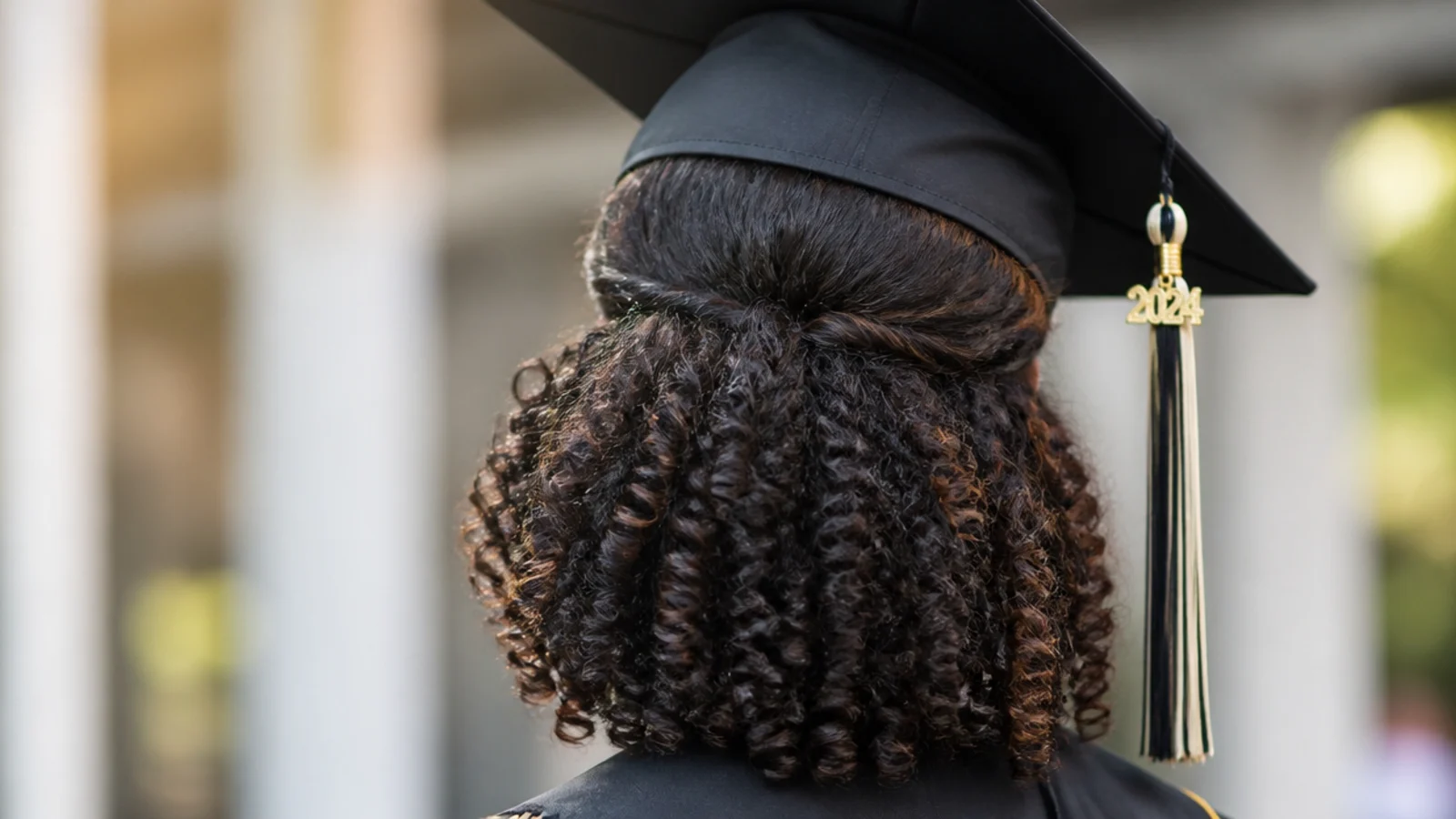
3. Side Swept 3A Curls
Loose chalk width ringlets have the weakest spring of any curl class, so compression costs them the most and they take the longest to recover. Sweeping the mass to one shoulder moves most of it out from under the band before the cap ever goes on.
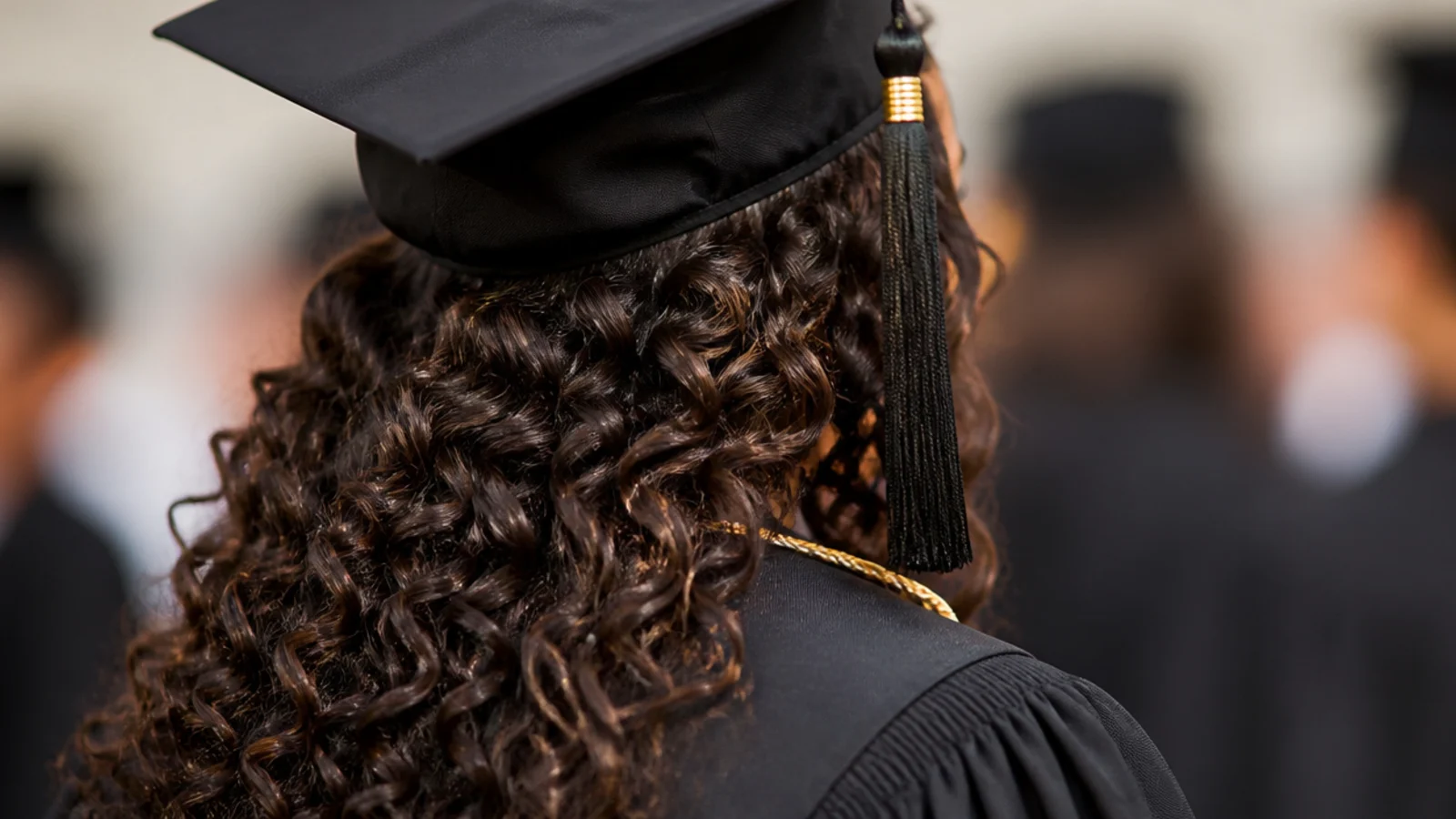
4. Twist Out on 4A Coils
A two strand twist holds the coil in a wider spiral as it dries, so the released hair is a stretched wave rather than its natural tight pattern. It has to be completely dry before you unravel it and completely dry before the cap goes on, or both stages set flat.
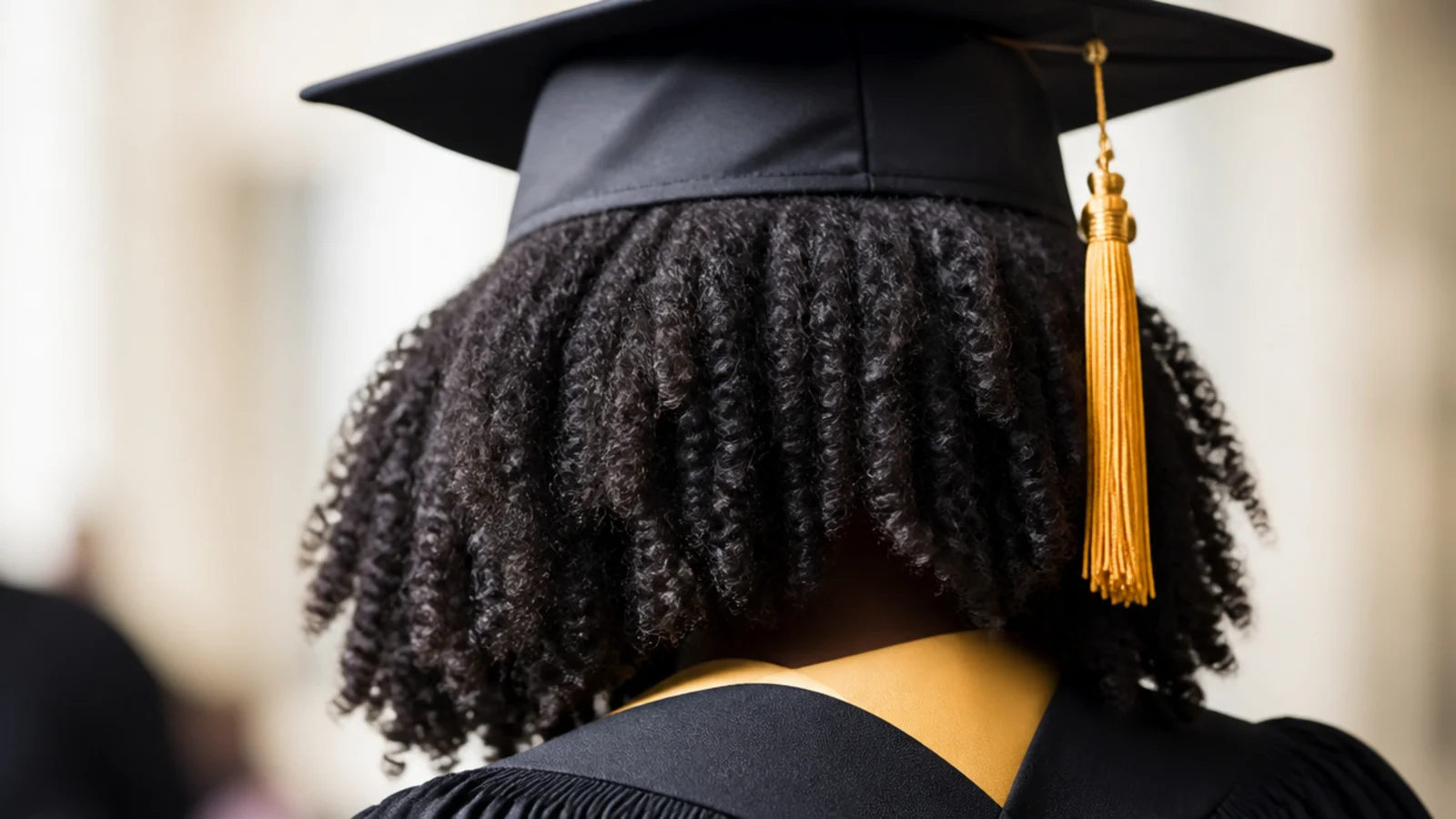
5. Halo Crown
A crown braid or twist wrapped around the head lands precisely where the band grips, which makes flatness the only thing that matters. Pressed flat to the scalp it raises the whole circumference evenly and the cap simply sits fractionally higher without tipping backwards.
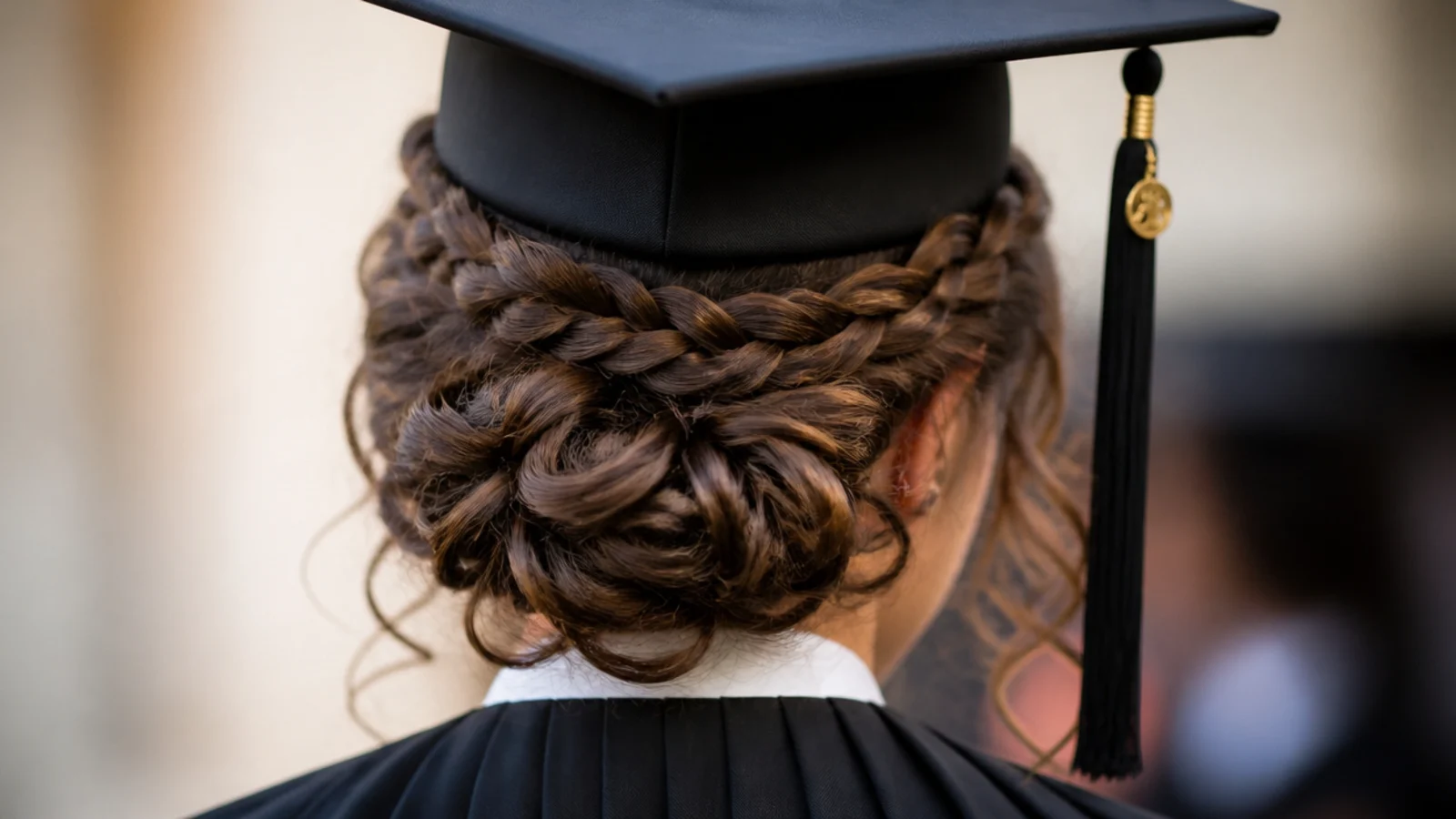
6. Flat Twists on 4C Hair
Flat twists lie along the scalp, so they add almost no height anywhere the band travels and the cap fits as though your head were bare. They also stretch the hair as they set, which is why the same coils read longer when the twists come out.
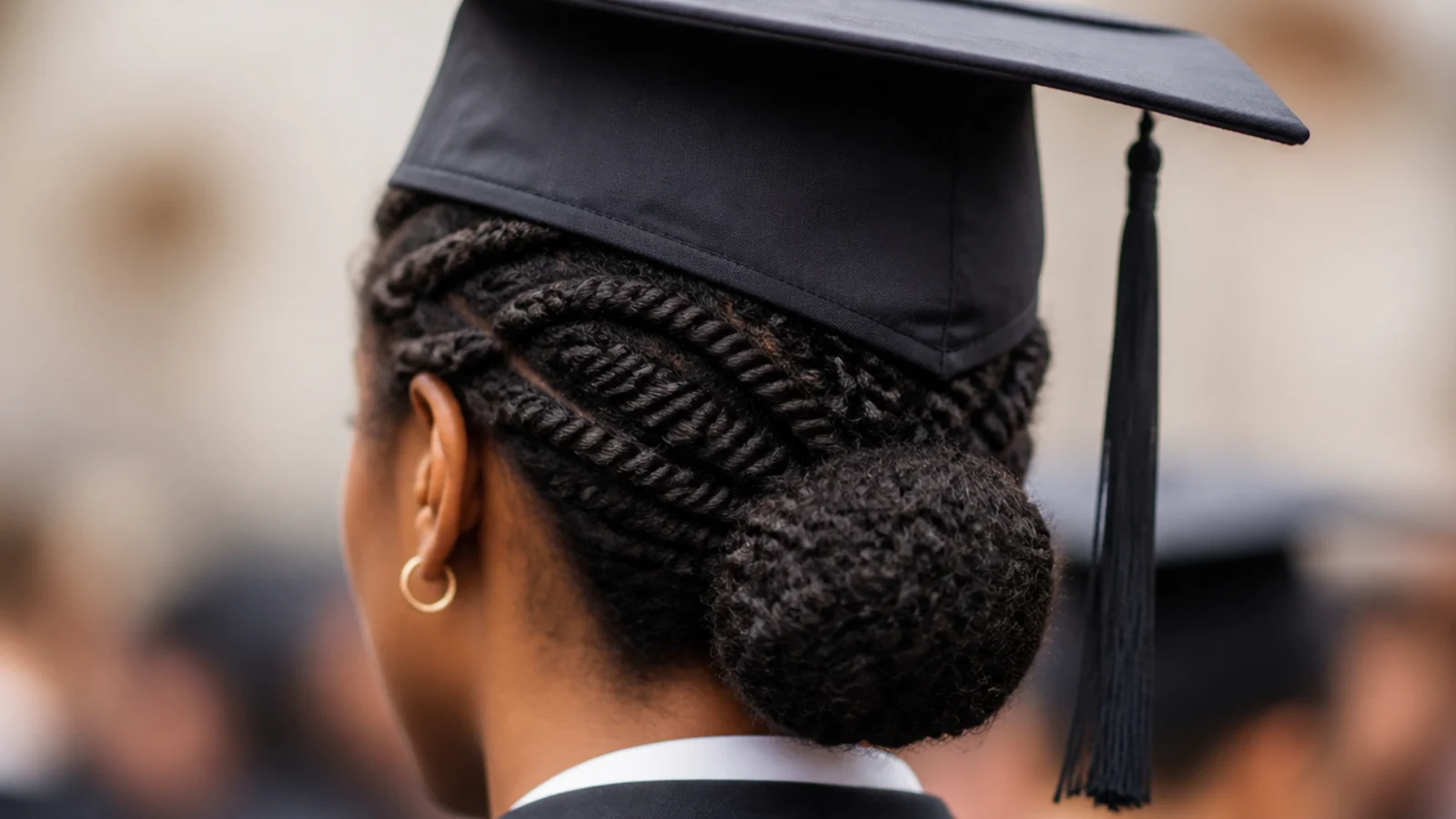
7. Twist Out Half Up on 3C Curls
Pencil width corkscrews are dense enough that a twist out loosens them into a wider wave without losing definition, which photographs bigger from a distance. Gathering only the top and taking it low keeps that volume outside the band ring.
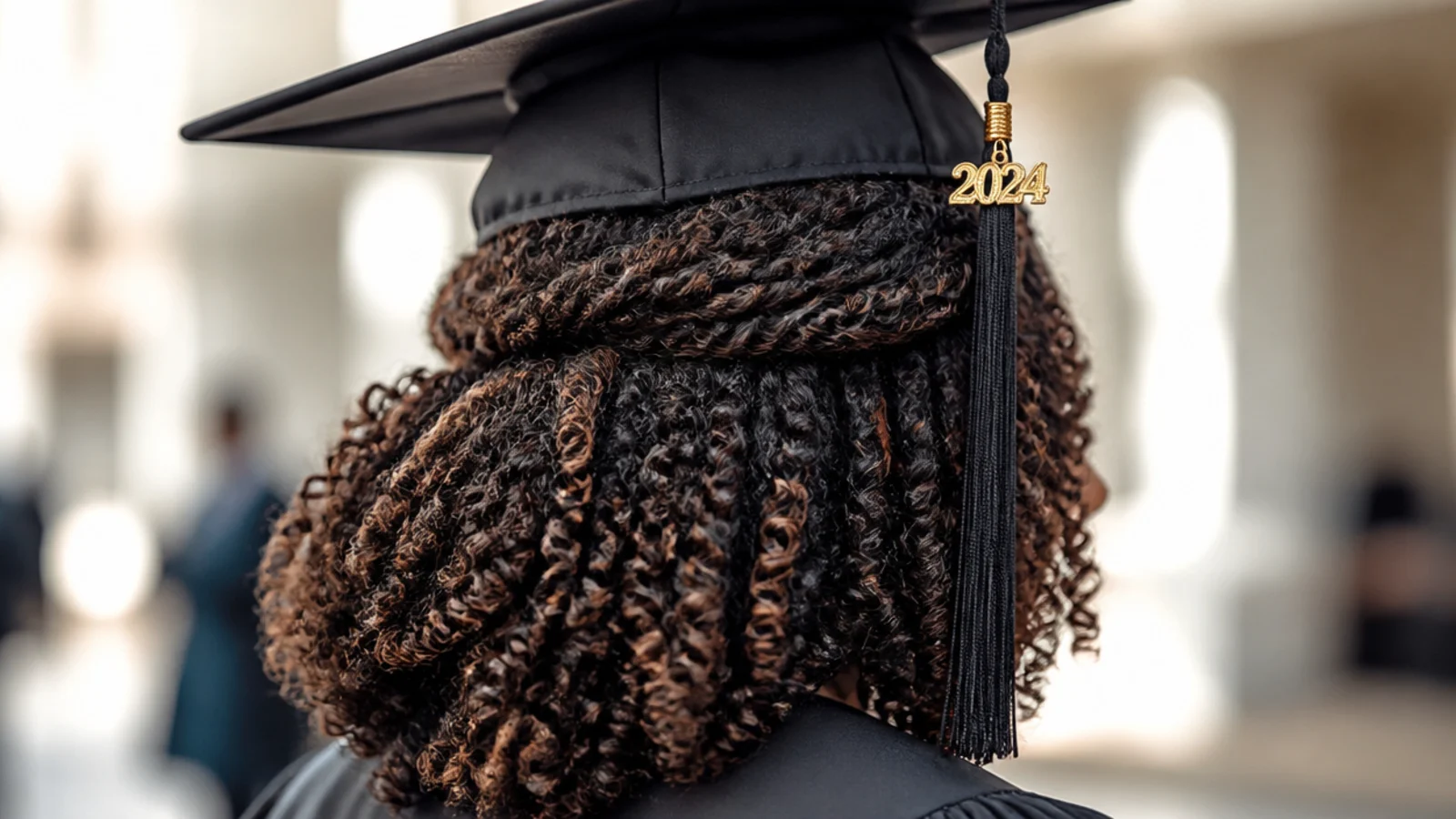
8. Sleek Low Ponytail
Smoothing curls back takes water and gel, and the whole style depends on that combination drying before anything presses on it. Put a cap over a still damp slick and it sets in whatever shape the band pushed it into, permanently for the day.
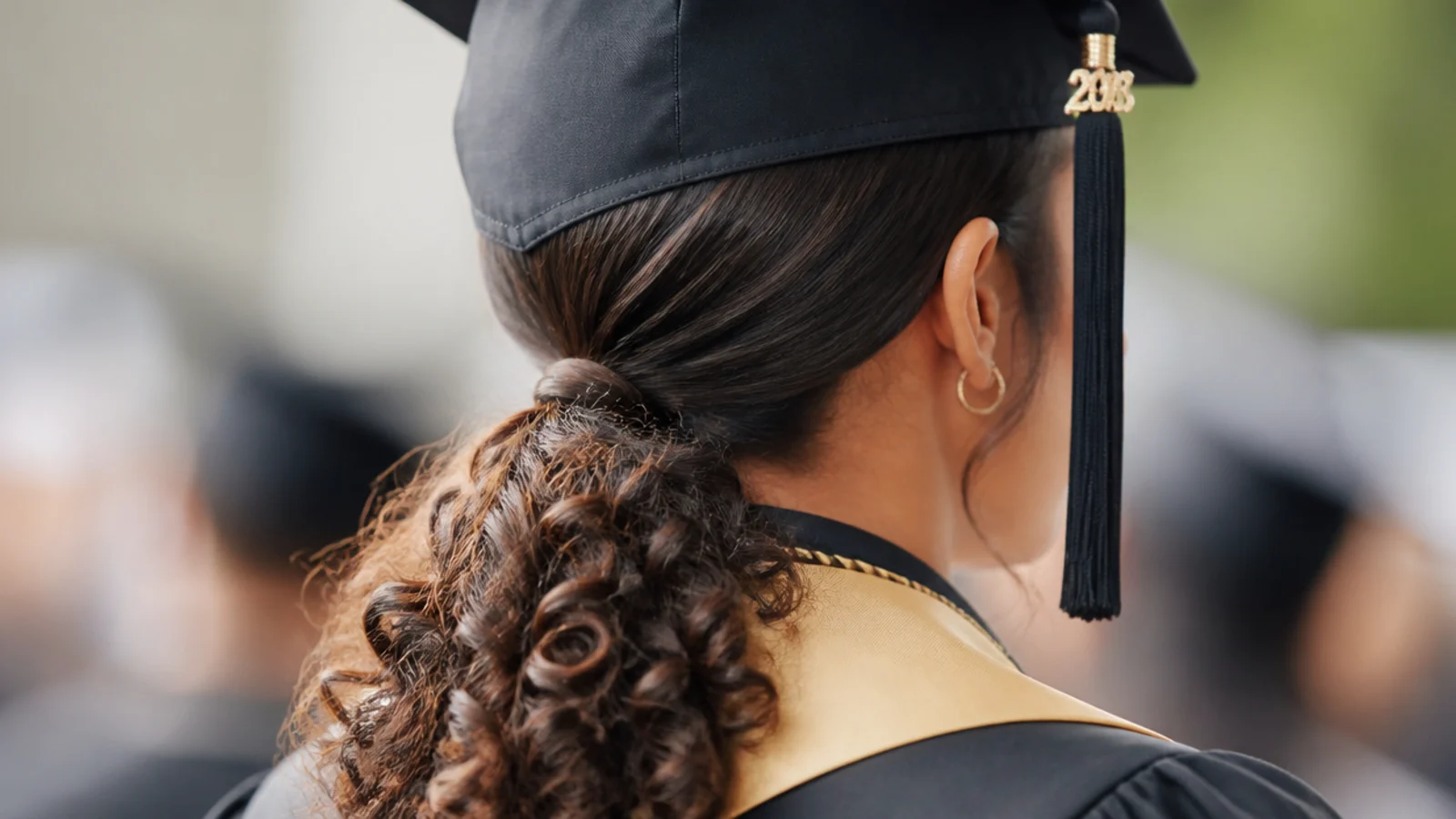
9. Knotless Braids in a Bun
The extension is fed in gradually instead of being anchored with a knot at the root, so there is no hard point to press into your scalp when the band tightens over it. Gathered low, the weight hangs clear of the cap entirely.
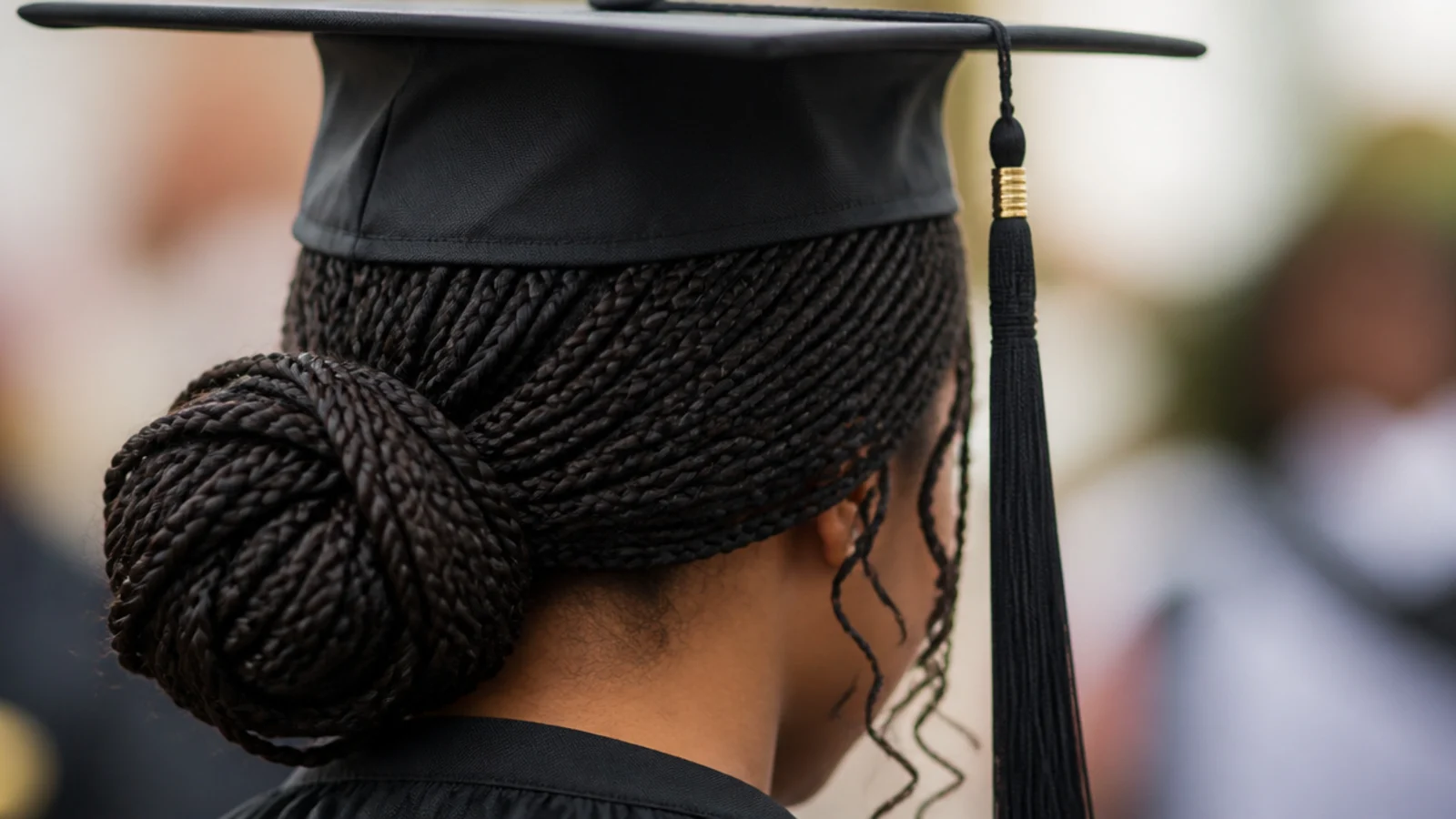
10. Bantu Knot Out on 3B Curls
Each coiled knot dries into a spiral that is tightest at the base and widest at the ends, which is the reverse of how a rod set behaves. That taper gives volume at the root, so it is worth choosing only if you are wearing the cap for a short ceremony.
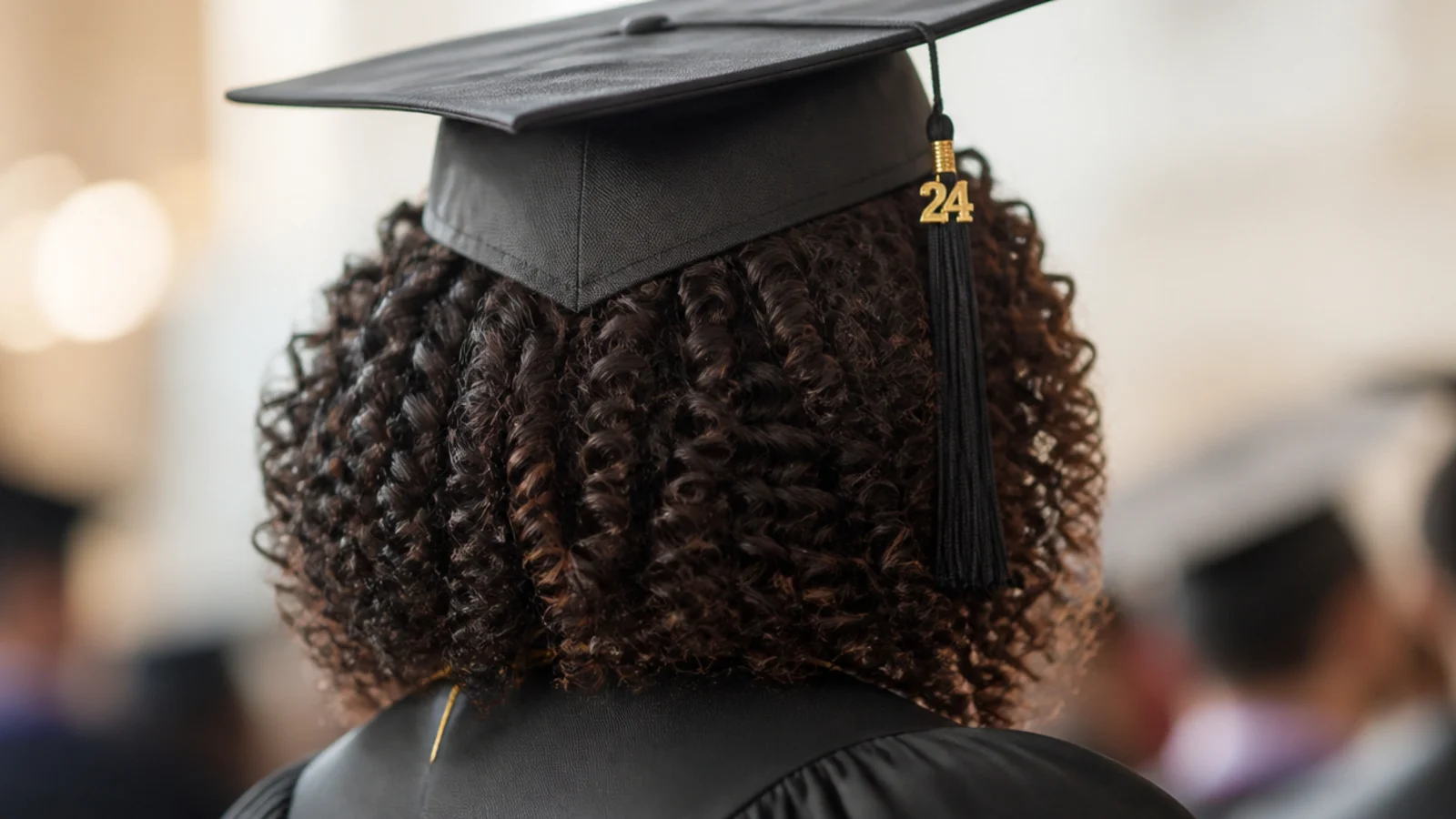
11. Low Side Bun
Moving the knot off centre puts it below the band on one side and shifts the weight away from the back of the cap, which is the direction a board tends to slide. Pin the base into hair swept across the nape so the anchor is wider than the knot.
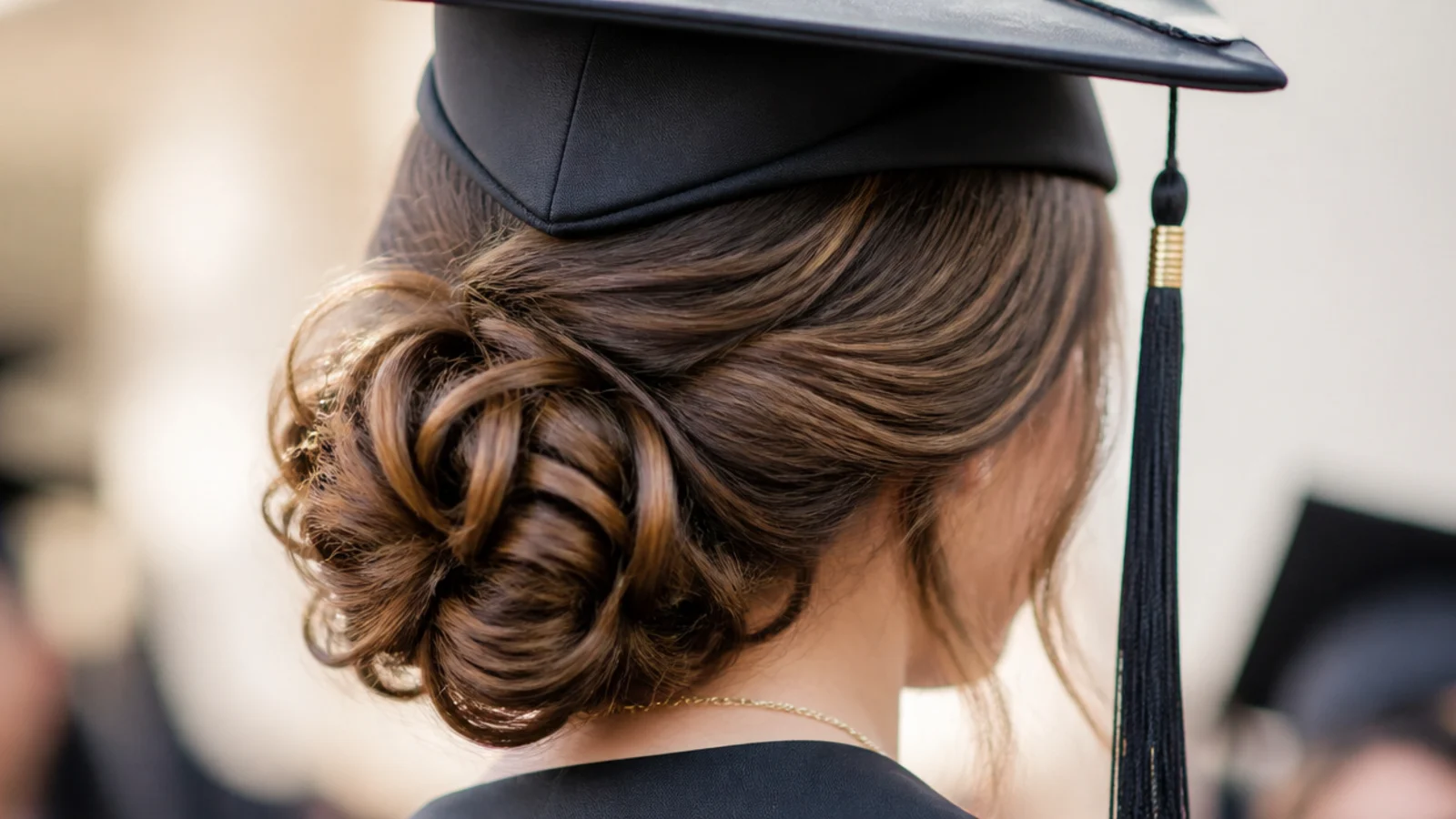
12. French Braid Into a Nape Bun
A French braid crosses each section over the top, so it sinks into the scalp rather than standing proud the way a Dutch braid does. That is the difference between a braid the cap ignores and one that props the board up.
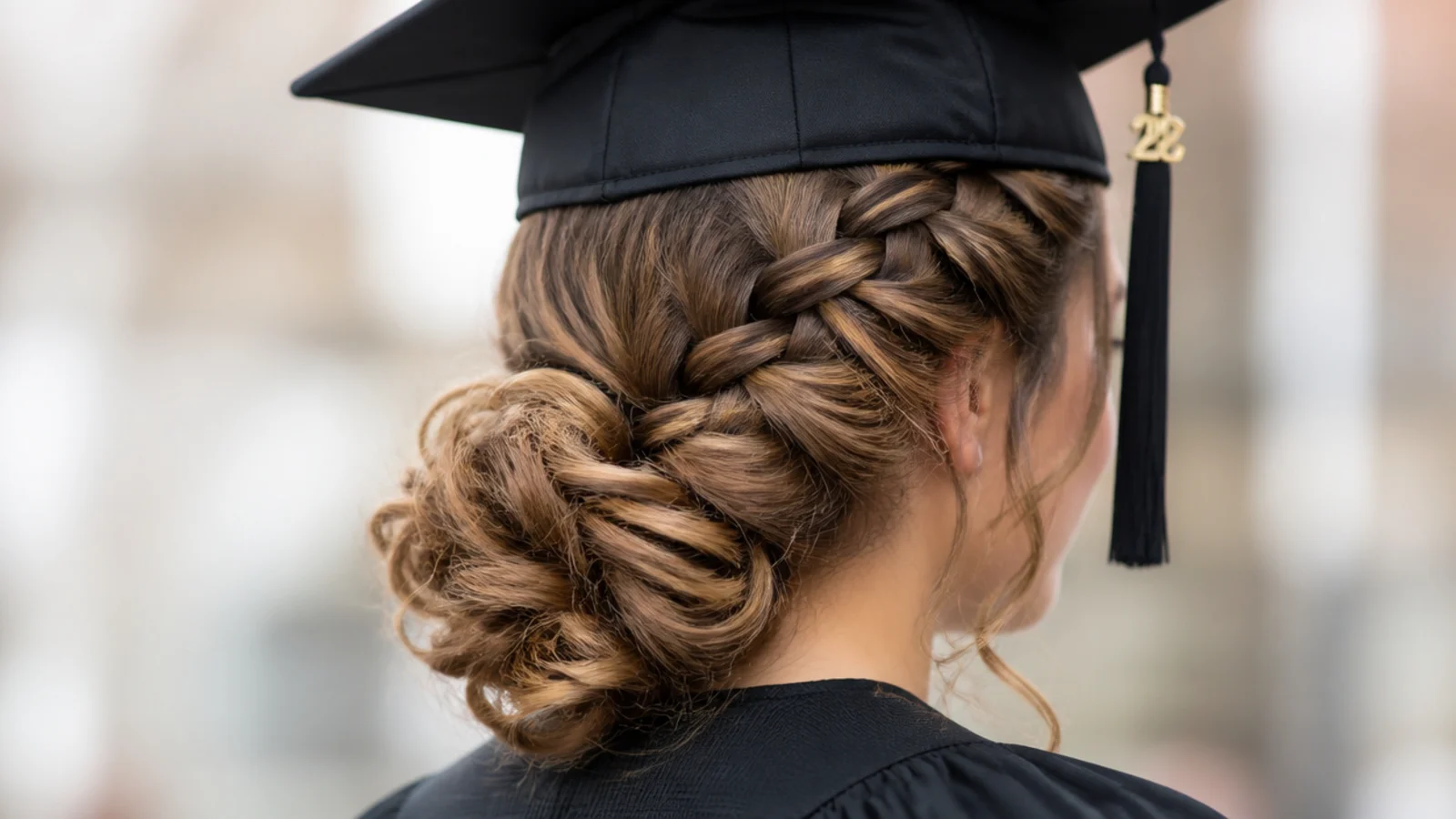
13. Loose Afro
This is the one style that is entirely crown volume, so a band takes exactly what the style is made of, and there is no arrangement that avoids it. Wear it knowing the cap comes off to a flat top, and carry a pick, water and ten minutes.
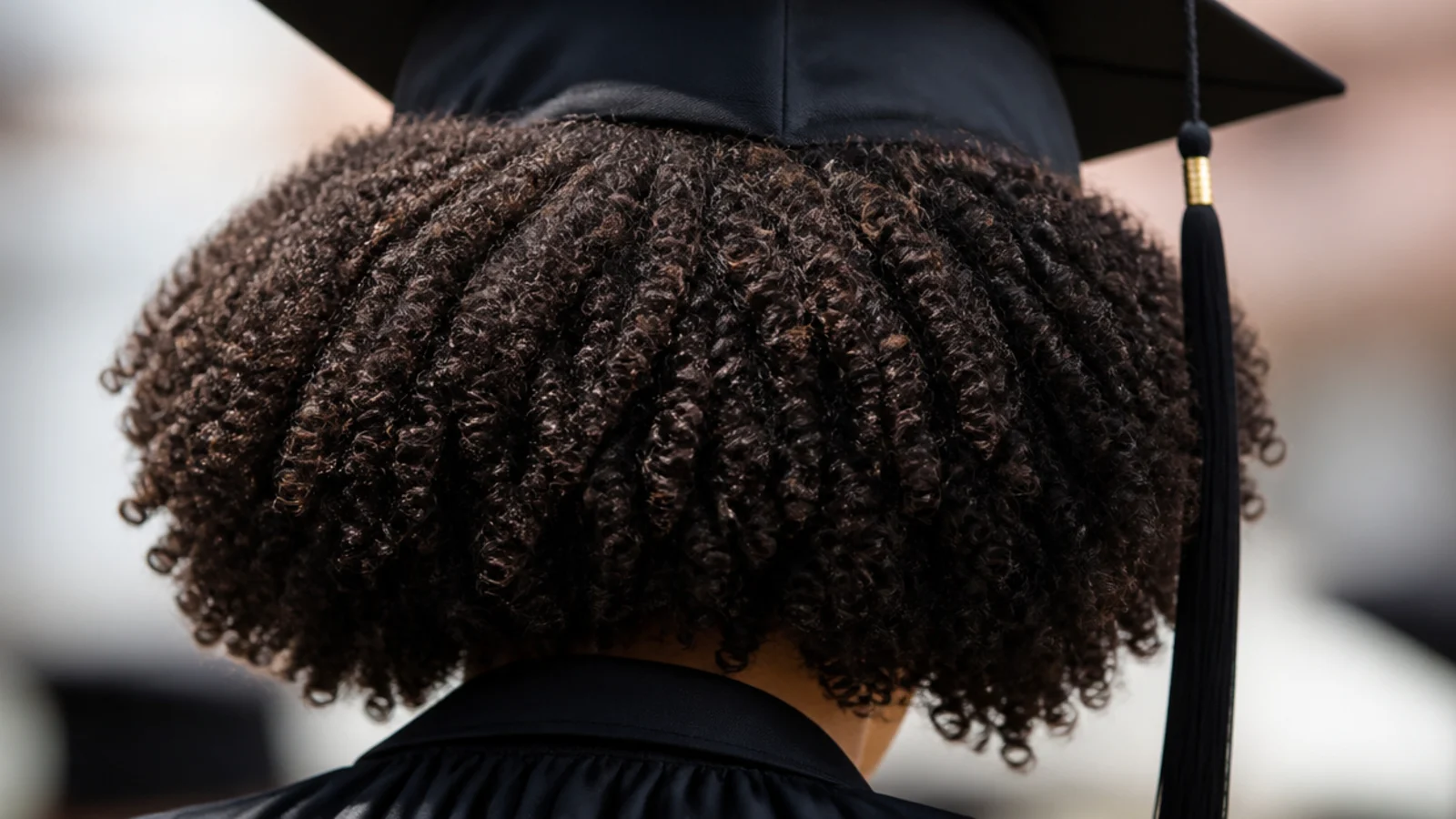
14. Rope Twist Half Up on 2C Waves
2C is the widest wave class and the one with the least grip, so a twist in it slips loose within an hour unless the sections are gripped first with a texture spray. Twist both strands the same way and wind them the opposite way, which is what locks a rope.
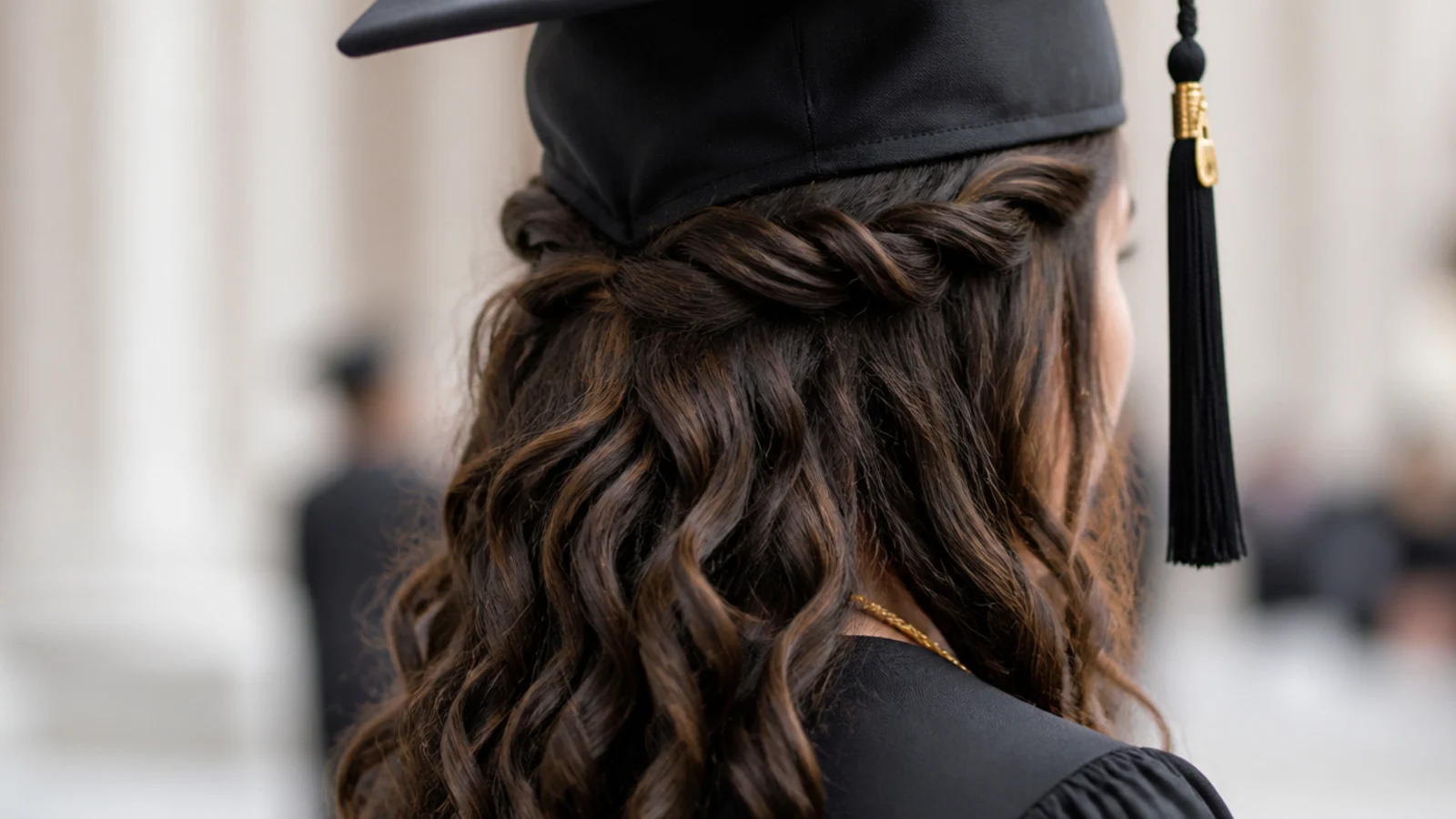
15. Curly Faux Bob
The length is rolled under and pinned rather than cut, and curls hide the fold far better than straight hair does because the pattern breaks up the join. Roll the ends up to just below the jaw so the whole shape stays under the band line.
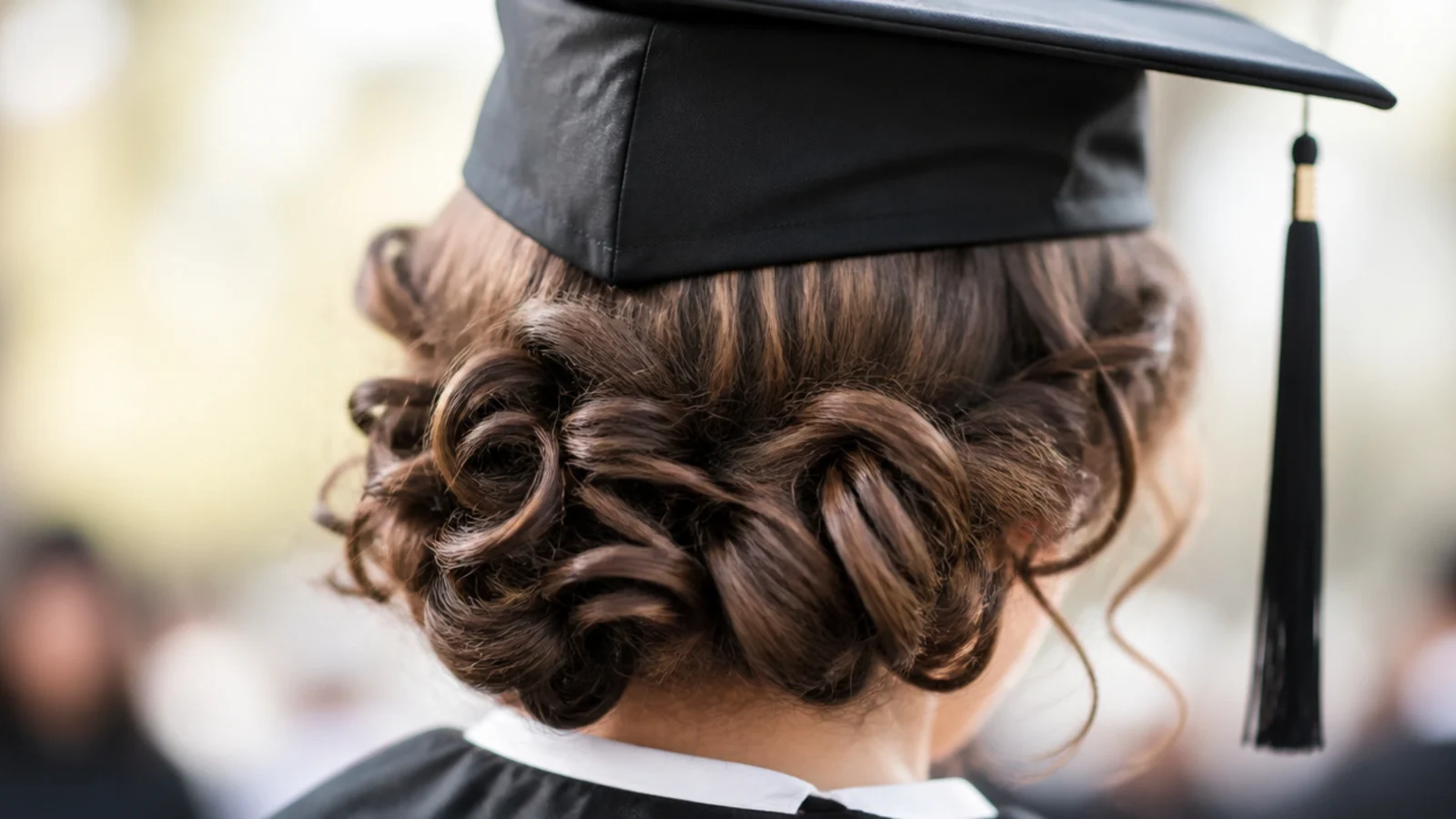
16. Fishtail Braid on 3A Curls
The two strand weave takes a thin piece from each outer edge every pass, and looser ringlets are smooth enough for that pattern to stay legible instead of blurring. Worn forward over a shoulder, it sits below the band from the first crossing.
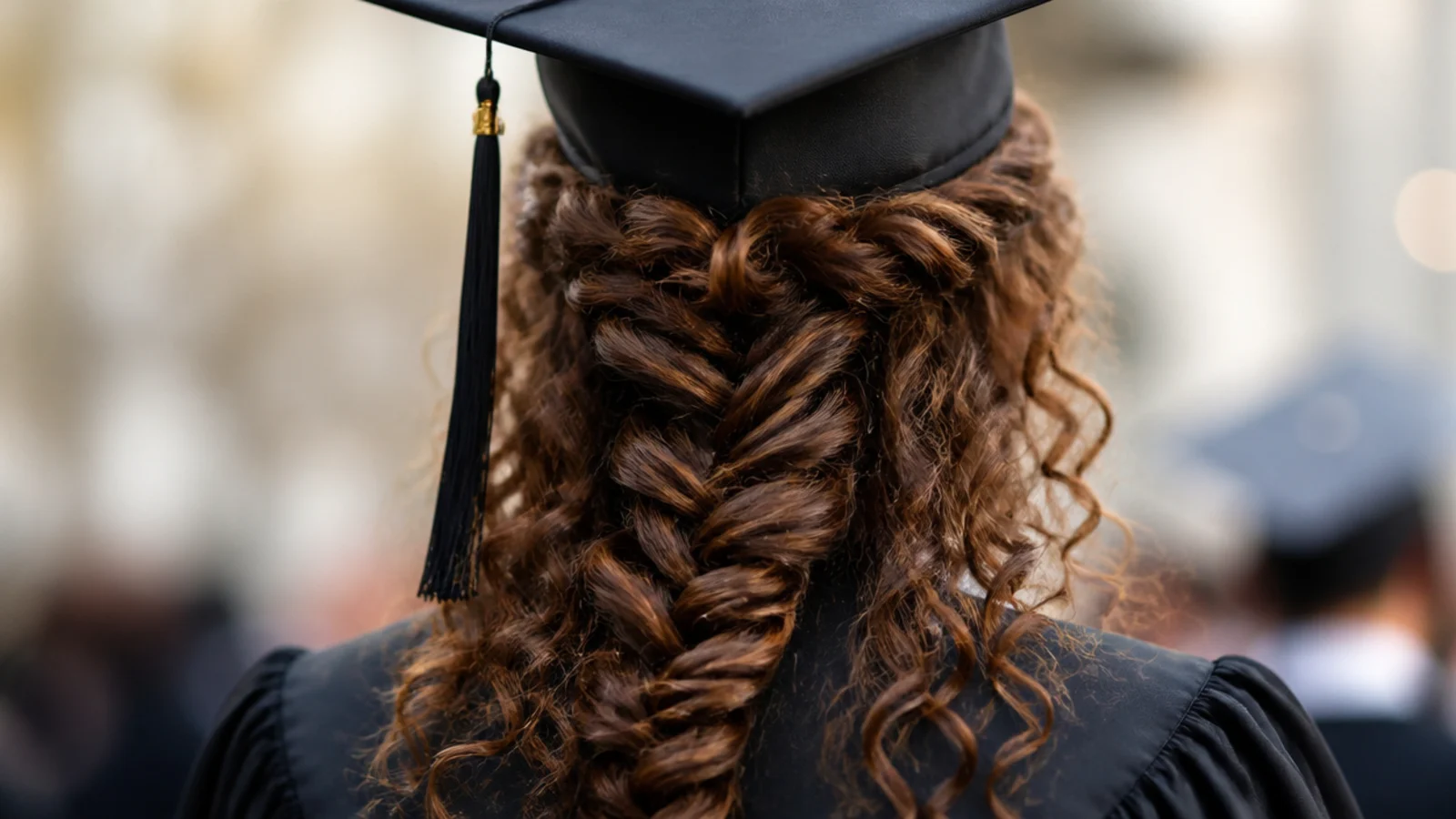
17. Curly Bangs
Bangs sit under the front edge of the cap, the only part of the front of the head the band actually presses, so they flatten while everything around them does not. Set them slightly fuller than you want them and the compression brings them to the right place.
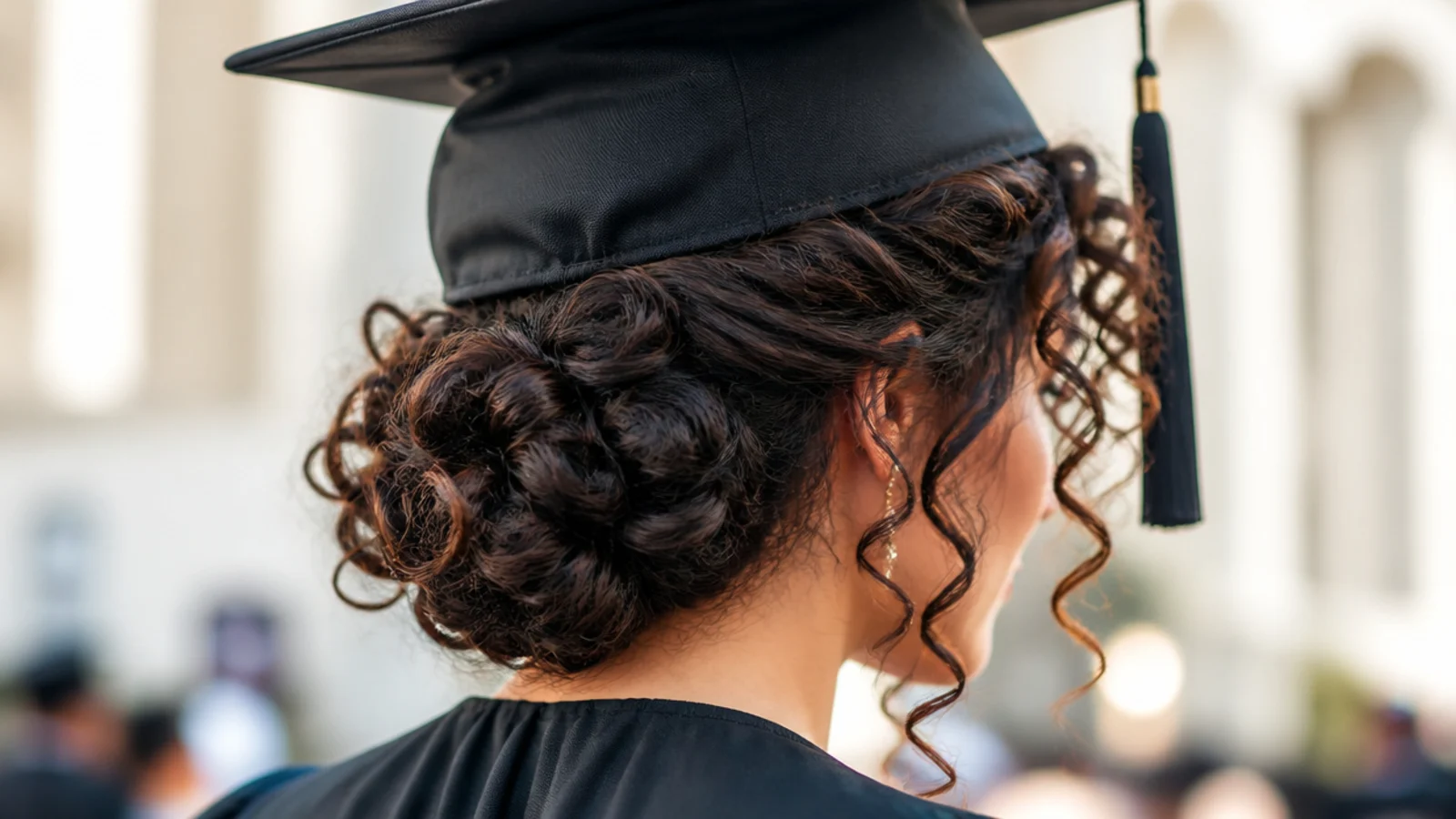
18. Flexi Rod Set on 4B Hair
4B hair bends in sharp angles rather than smooth curves, so a rod imposes a shape the pattern does not have naturally instead of just stretching it. The result holds well under a cap because a set curve is stiffer than a natural bend at the same length.
19. Locs in a Barrel Bun
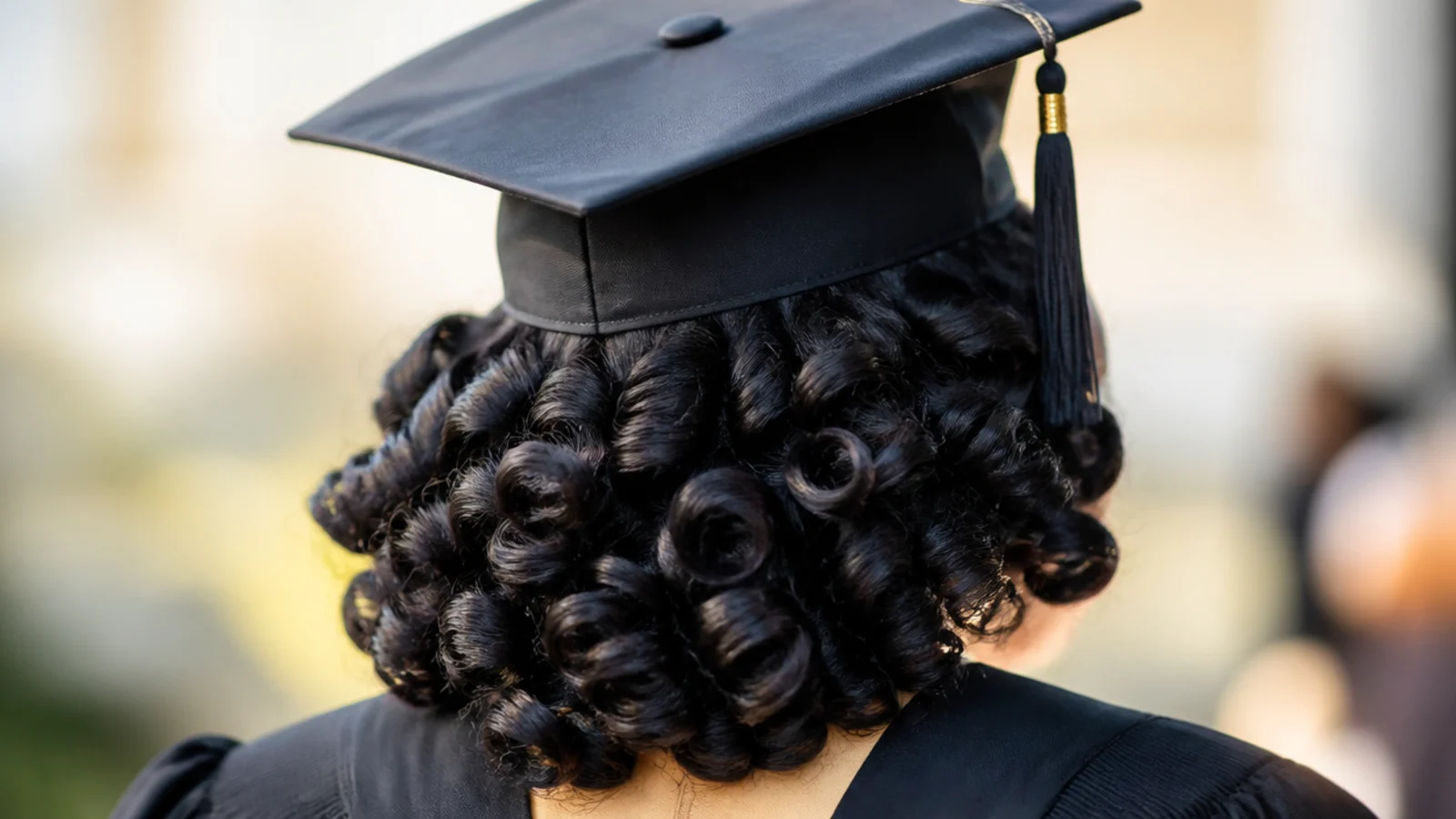
Locs are dense and heavy, so rolling them into a horizontal barrel along the nape spreads that weight sideways instead of stacking it into a tall knot. Low and wide keeps every strand below the band and stops the cap being pulled backwards.
20. Nape Ponytail With a Cuff
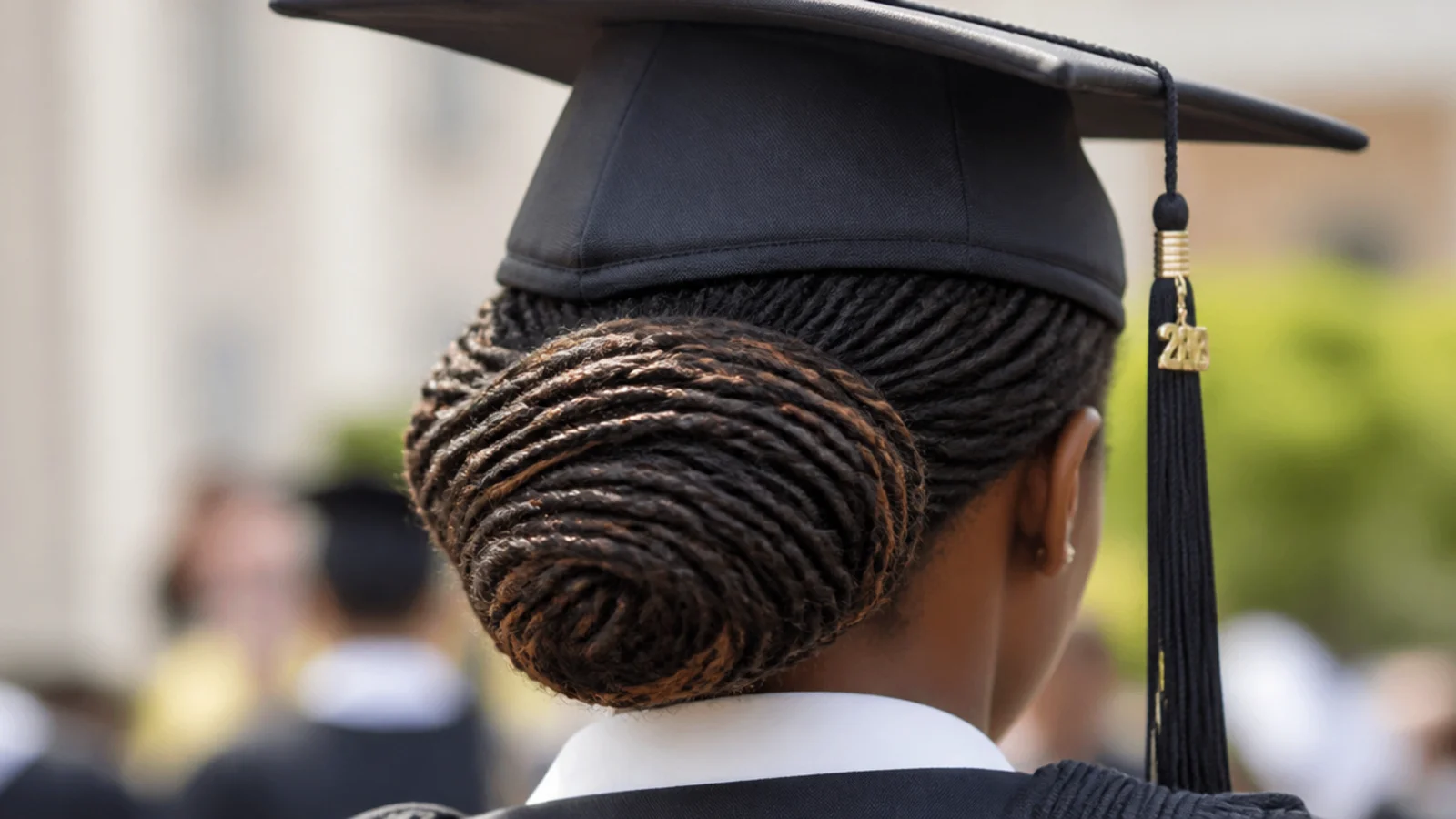
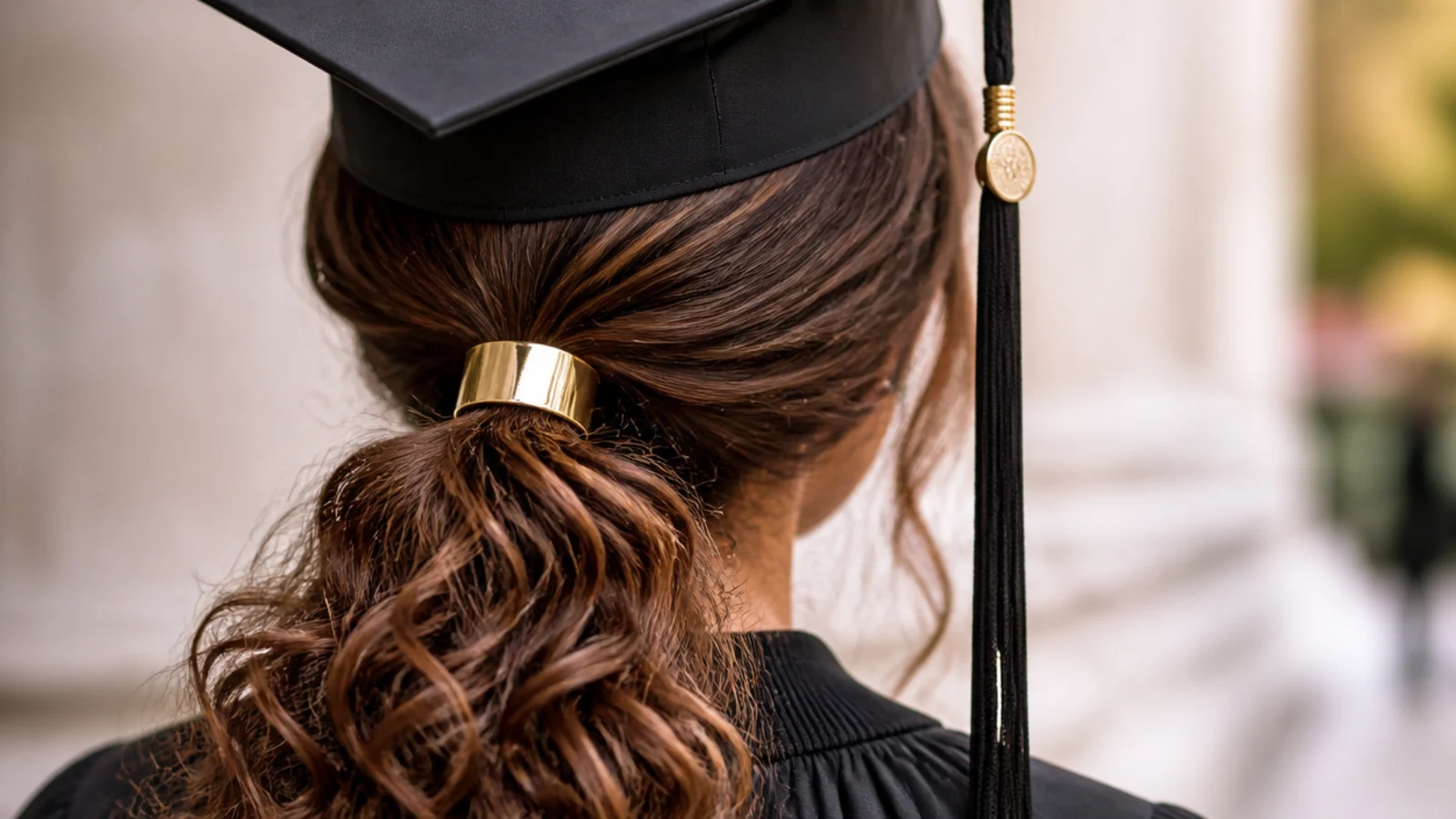
A metal cuff adds visible detail at the height a stage photograph is taken from, and it sits well below the band so it never affects the fit. Slide it over the elastic rather than over loose hair, or it works its way down the tail all afternoon.
Final Thoughts
Curly hair has one advantage on a graduation morning that straight hair does not, which is that the pattern cannot be pressed out. A band squeezes air from between the coils and the coils themselves come through unchanged, so ten minutes with water and a pick puts you back where you started rather than back at the iron.
The rest is sequencing. Dry completely before the cap, gather below the occipital bone if you are gathering at all, and refresh at the root instead of the length. For a similar occasion built around the same textures see hoco hairstyles for curly hair, and for the fastest low gather of all see claw clip hairstyles for curly hair. More in Occasion Hair.
Frequently asked questions
Related posts
See all posts
15 Graduation Hair Ideas for the Updo Versus Down Decision
Read more
15 Straight Hair Wedding Looks to Save
Read more
20 Gorgeous Prom Looks for Straight Hair
Read more