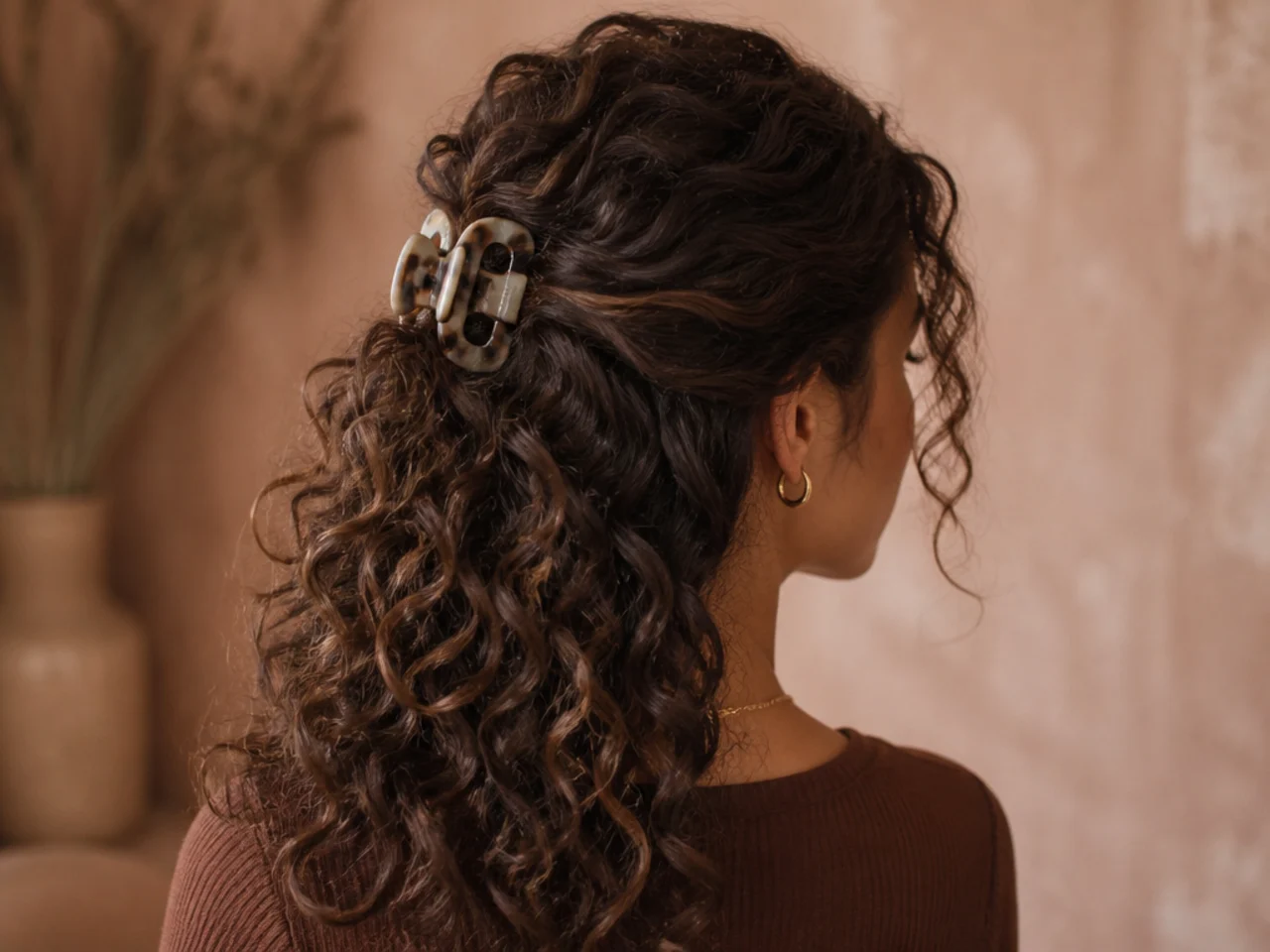
20 Claw Clip Hairstyles for Curly Hair
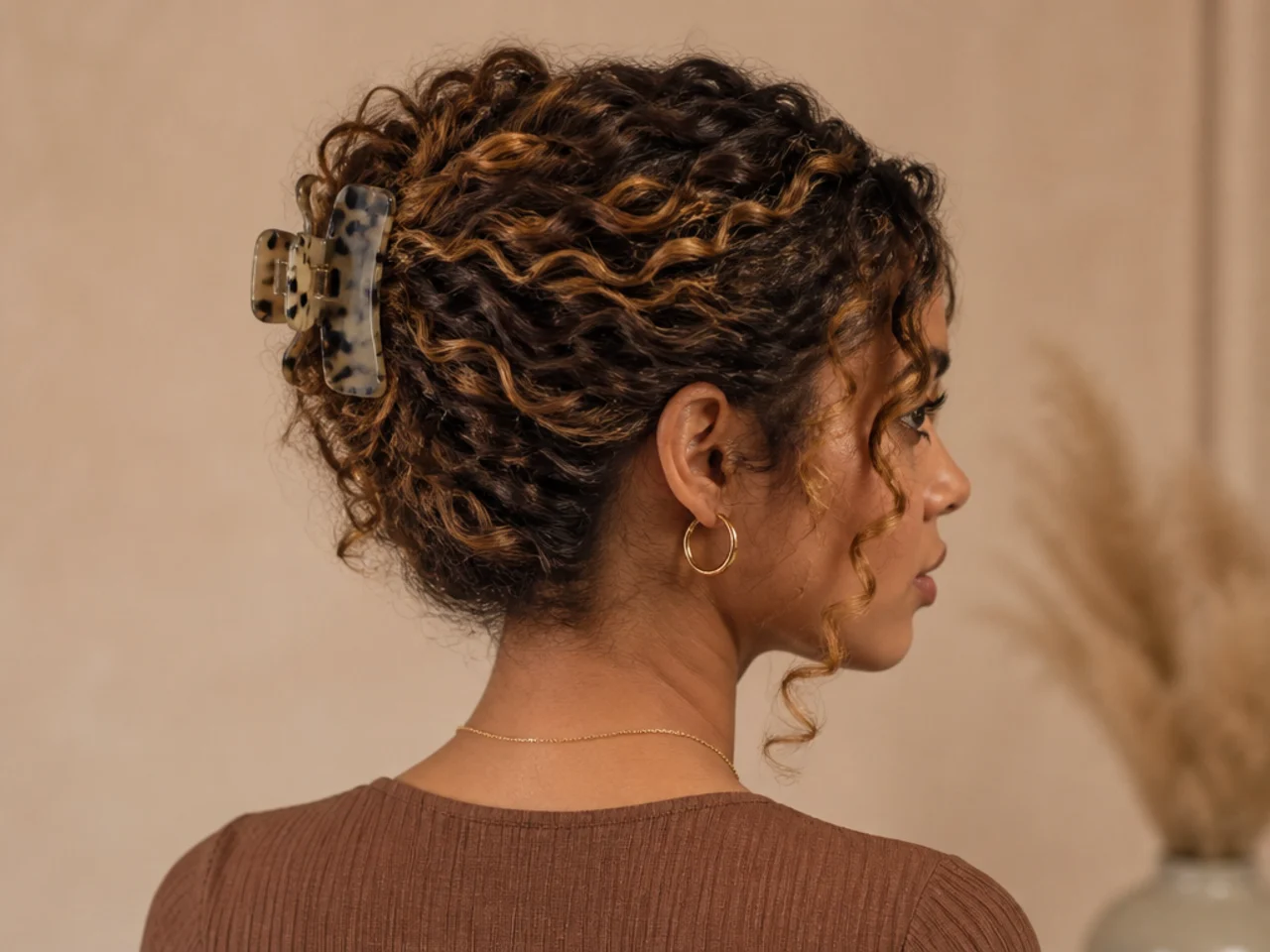
Twenty claw clip styles for curls, and the rule that separates them from every other hair type — do not gather curly hair, contain it. Pulling curl smooth before clipping destroys the grip that was going to hold it.
In this article · 27
- Why Curl Grips Better
- Choosing a Clip for Curls
- The 20 Styles
- 1. Loose Curly Half-Up
- 2. Curly Pineapple Clip
- 3. Contained Low Chignon
- 4. Half-Up Puff
- 5. Side-Gathered Curls
- 6. Clipped Coily Updo
- 7. Two-Clip Curly Split
- 8. Clipped Curls with Face-Framing Coils
- 9. Overnight Pineapple Clip
- 10. Wash-Day Clip
- 11. Curly Clipped Bun with Ends Out
- 12. Flat-Twisted Front with a Back Clip
- 13. Clipped Wash-and-Go
- 14. High Curly Puff
- 15. Clipped Curls with a Headband
- 16. Loose Curly French Twist
- 17. Half-Up on a Curly Bob
- 18. Clipped Second-Day Curls
- 19. Curly Half-Up with a Deep Part
- 20. Loose Clipped Gather for Exercise
- Clipping Without Crushing
- Mistakes to Avoid
- FAQ
- Final Thoughts
Curly hair is the texture claw clips were accidentally perfect for, and the one most often clipped wrongly.
The instinct with any updo is to gather and smooth. On curl that is exactly backwards — smoothing removes the grip that was going to hold the style, and it flattens a section that will not recover until you wash it.
The rule is: do not gather curly hair, contain it.
Why Curl Grips Better
A claw clip tooth pressed into straight hair rests on a smooth surface with nothing to catch. Into curl, it lodges against the pattern — the strands lie at angles to each other, and the tooth has to fight all of them to work free.
That is why a correctly chosen clip holds curly hair longer than straight hair, and why curly hair does not need the texture spray that fine straight hair depends on. The texture is already there.
The catch is the word correctly. A narrow-toothed clip cannot get through a curl clump at all. It presses the clump flat and holds by compression rather than grip, which both crushes the pattern and slides out anyway.
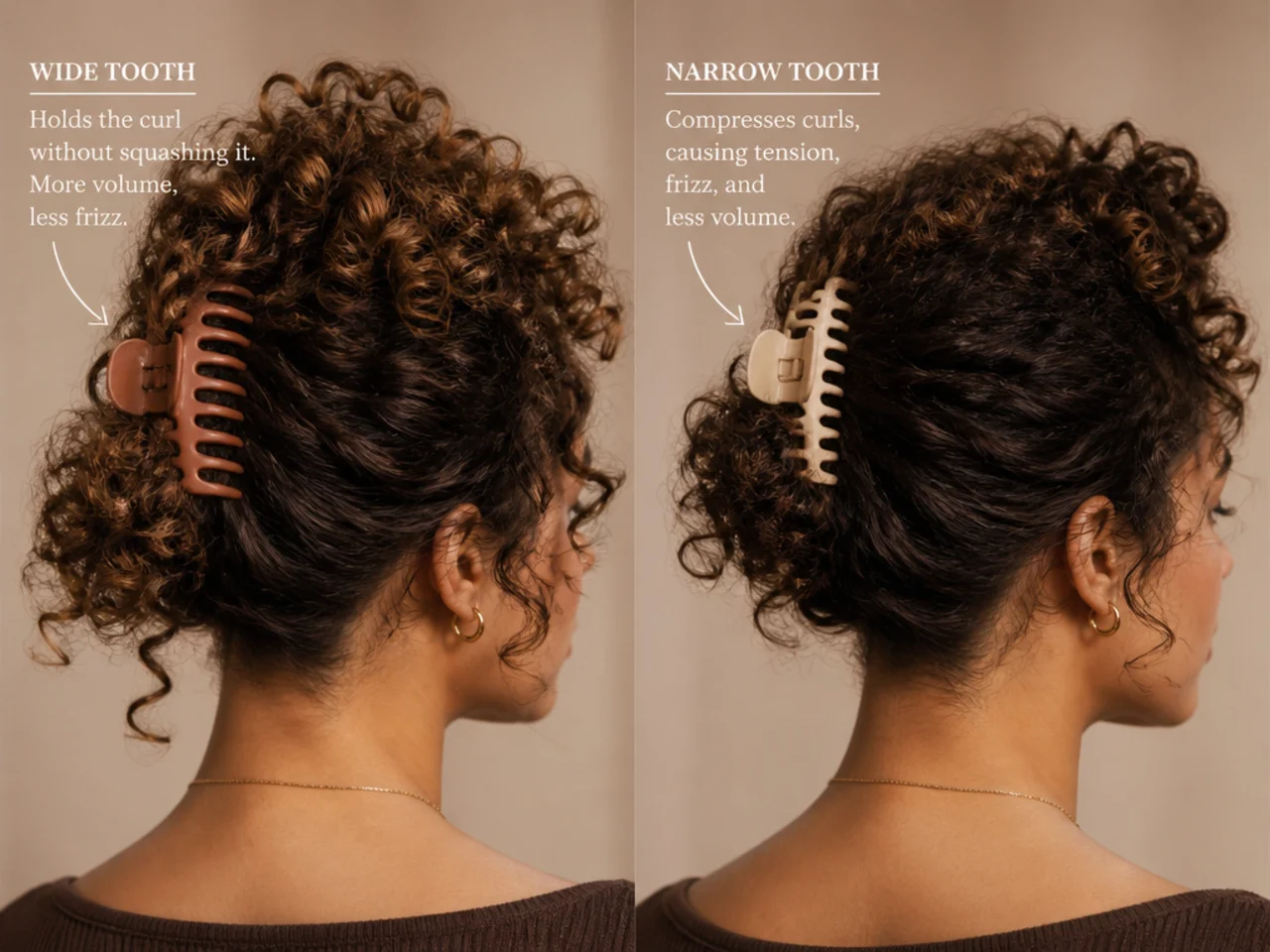
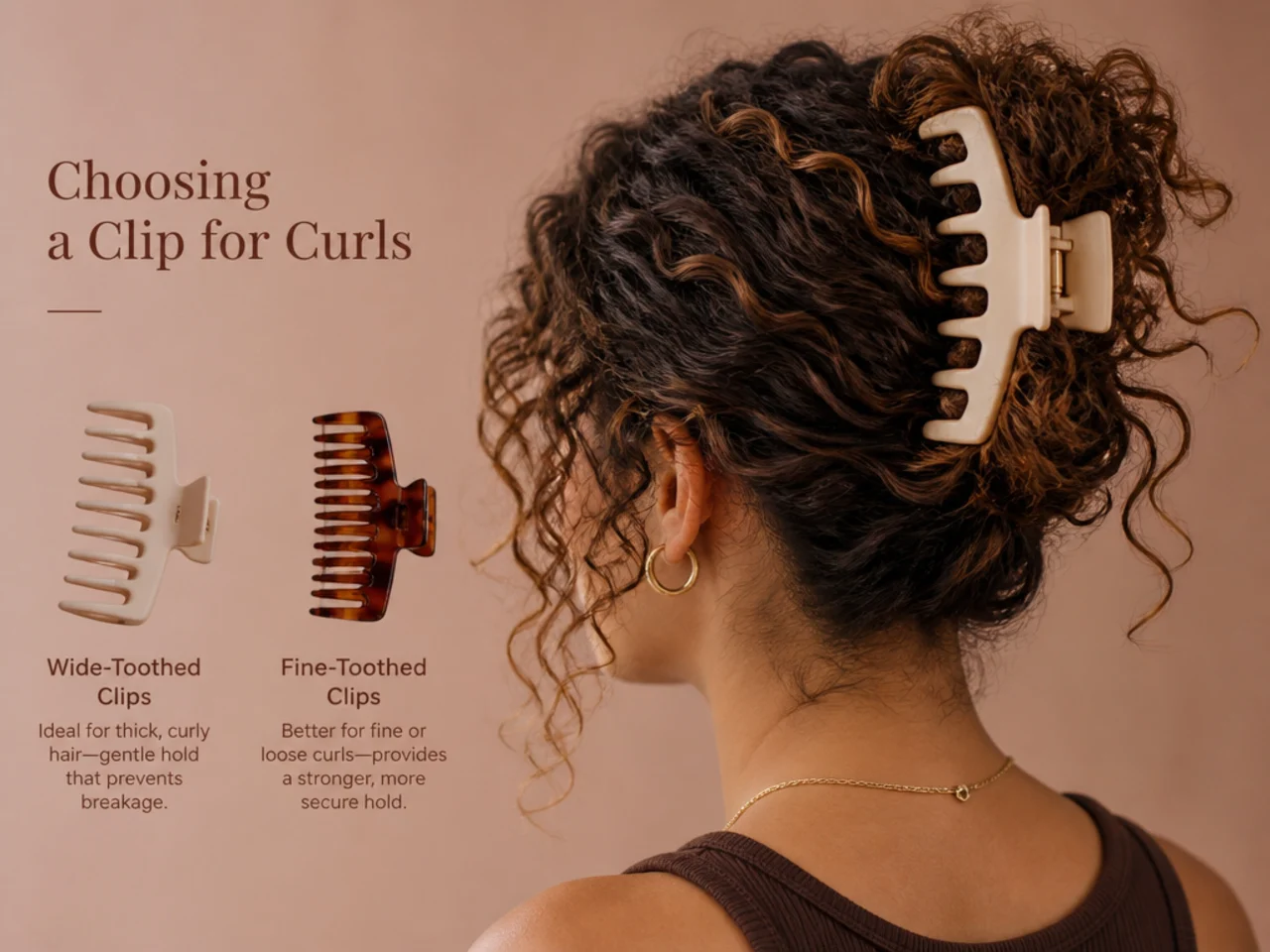
Choosing a Clip for Curls
Wide-spaced teeth. The opposite of the fine-hair rule. Teeth need room to pass between curl clumps.
A large jaw opening. Curl occupies far more volume than the same weight of straight hair, so the clip has to open wider than the length suggests.
Matte, and ideally with interior ridges. Ridges catch the pattern rather than sliding across it.
Bigger than you would use on straight hair of the same length. Volume, not length, sets the size here.
The 20 Styles
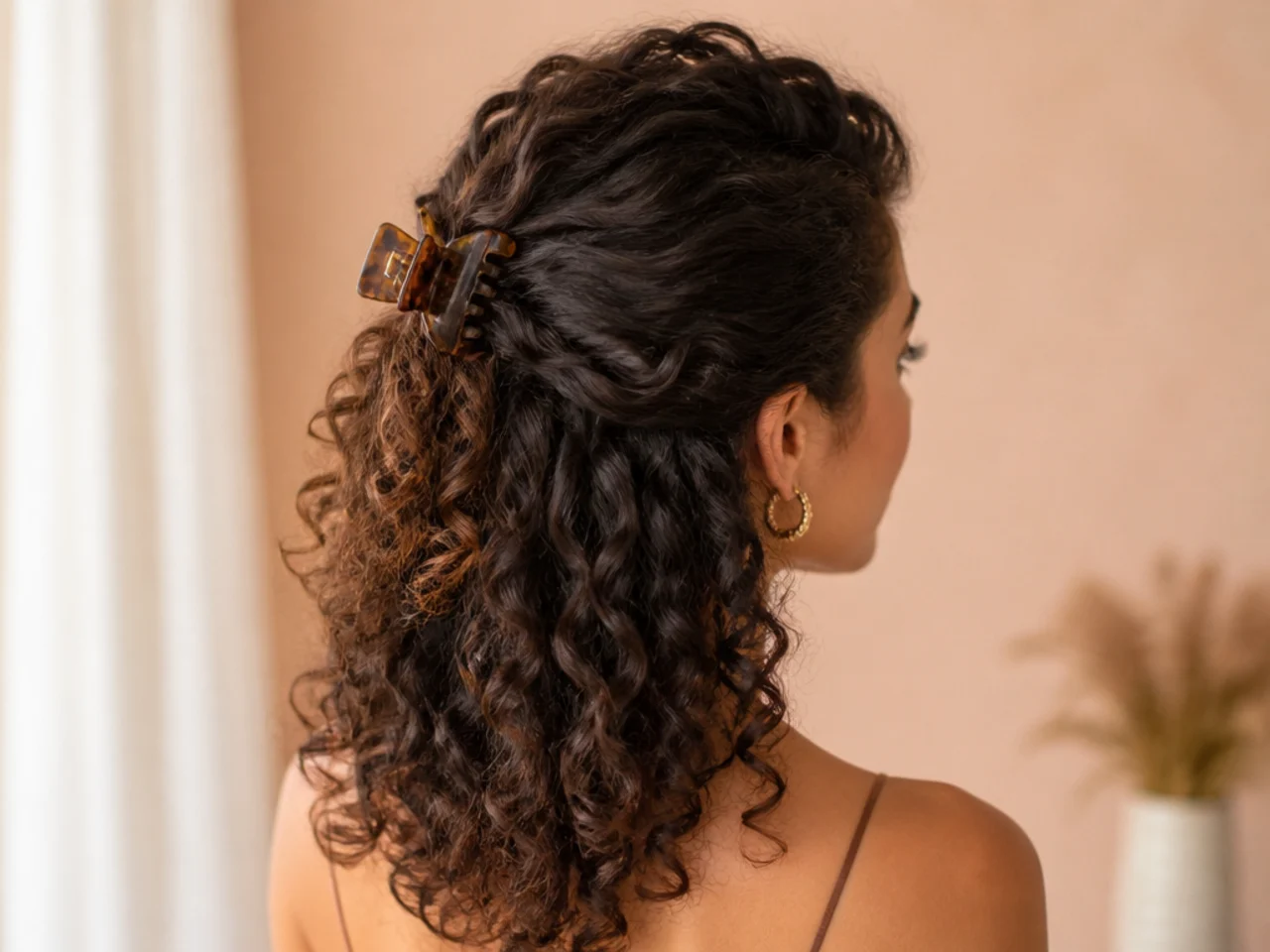
1. Loose Curly Half-Up
Top section lifted and clipped where it falls. Nothing combed.
2. Curly Pineapple Clip
Gathered high and loose, curls spilling forward. The classic.
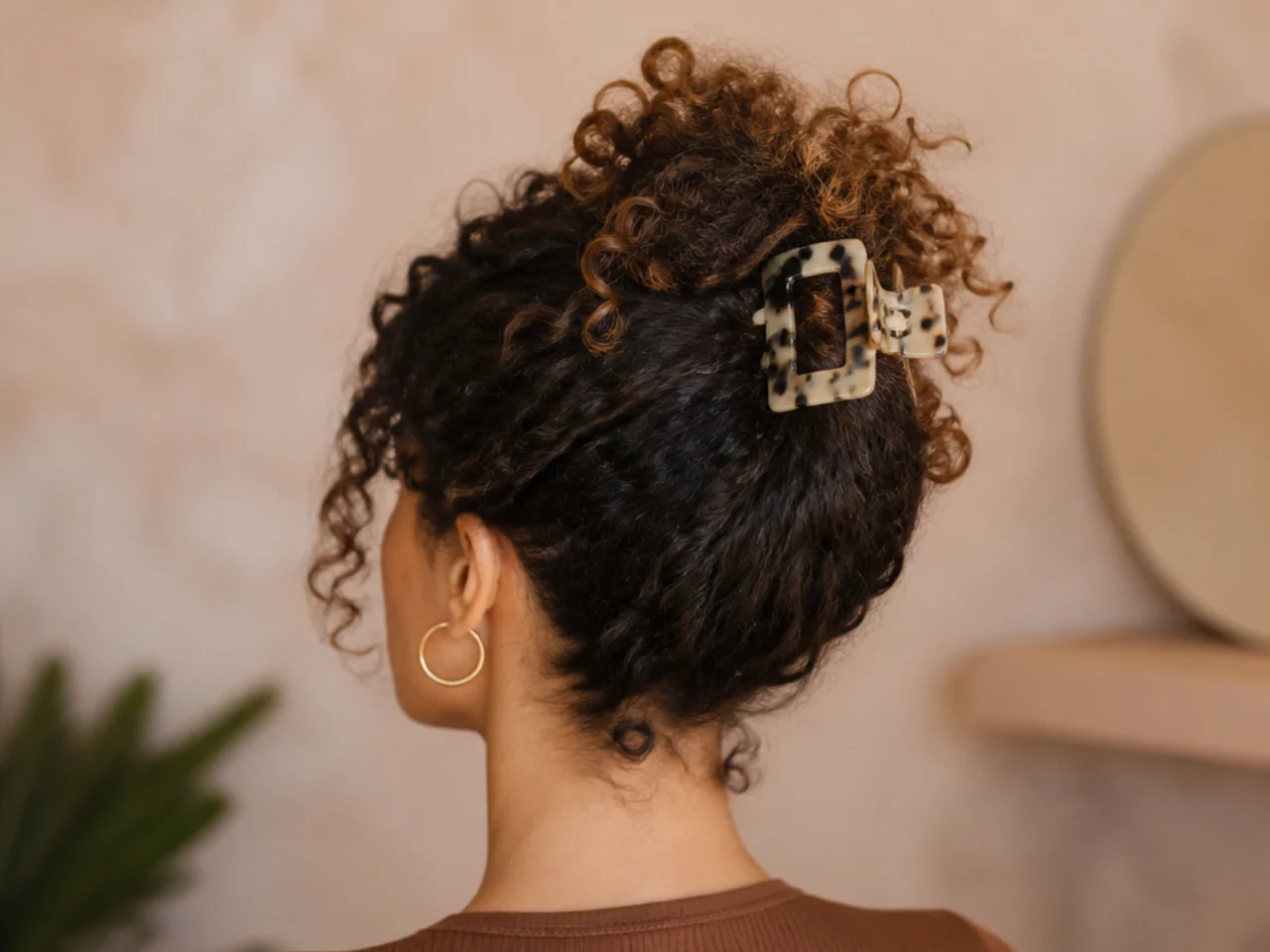
3. Contained Low Chignon
Folded loosely at the nape without compressing the pattern.
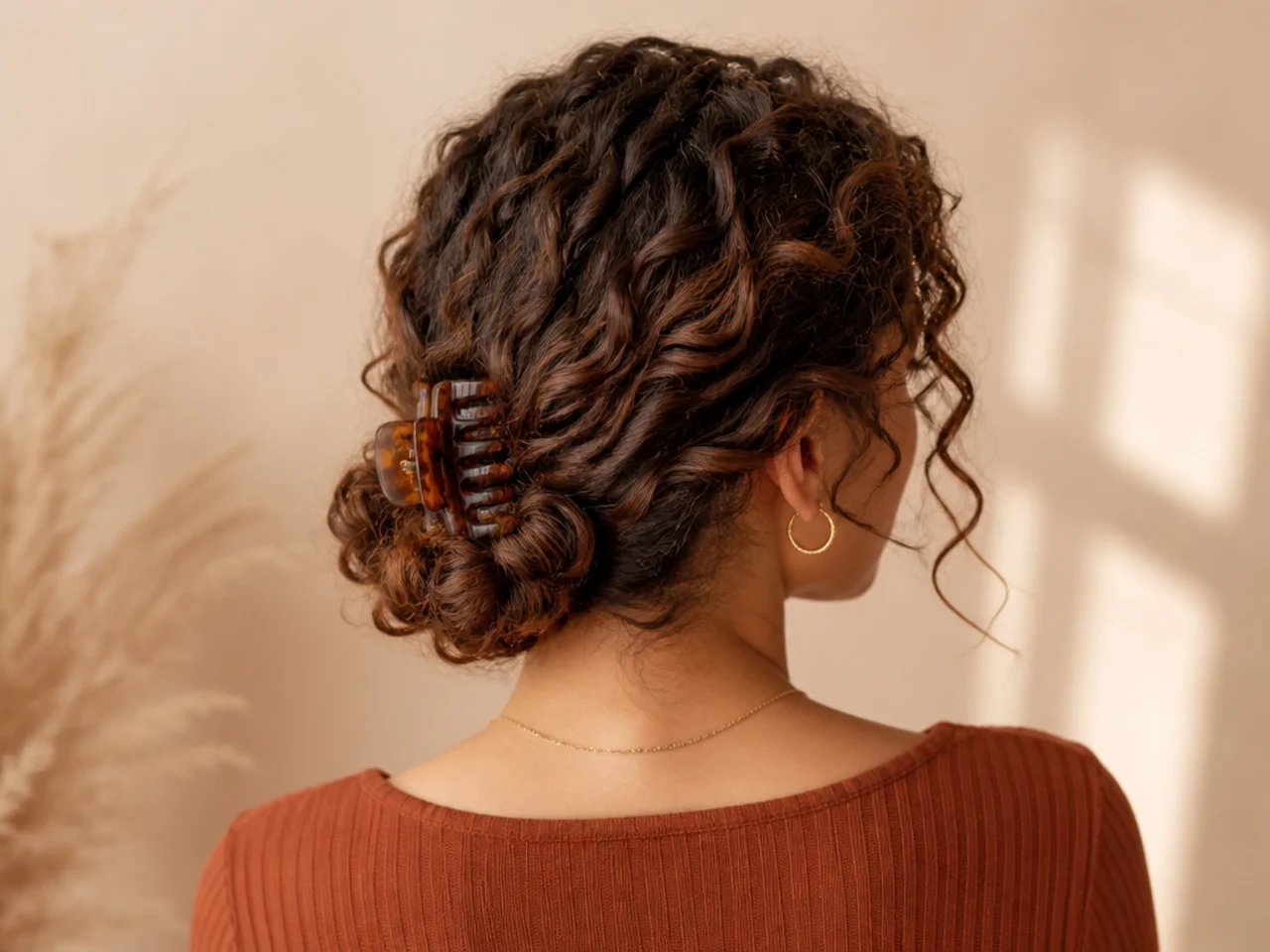
4. Half-Up Puff
Volume at the crown, curl loose below.
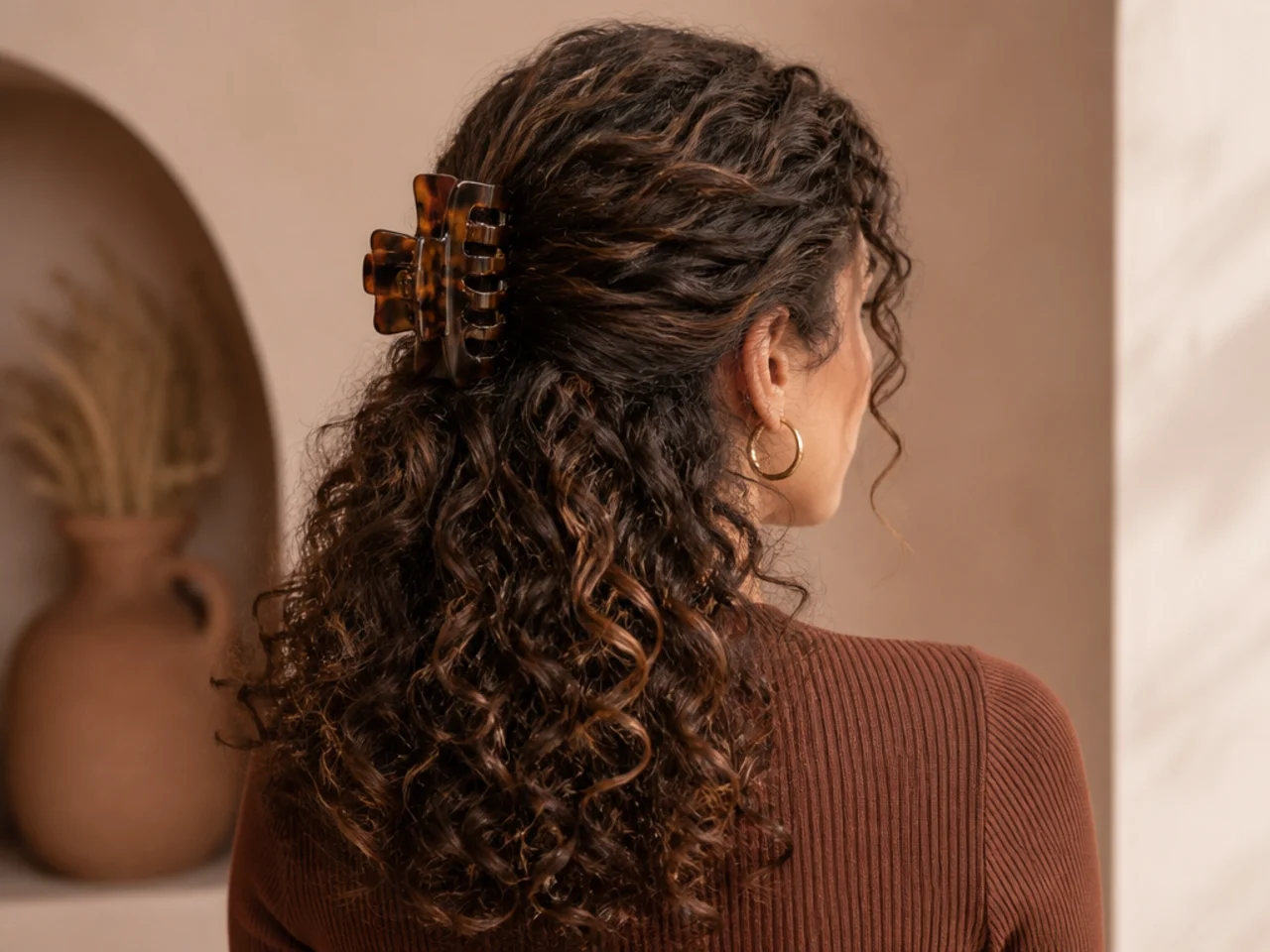
5. Side-Gathered Curls
Everything moved one way and clipped behind the ear.
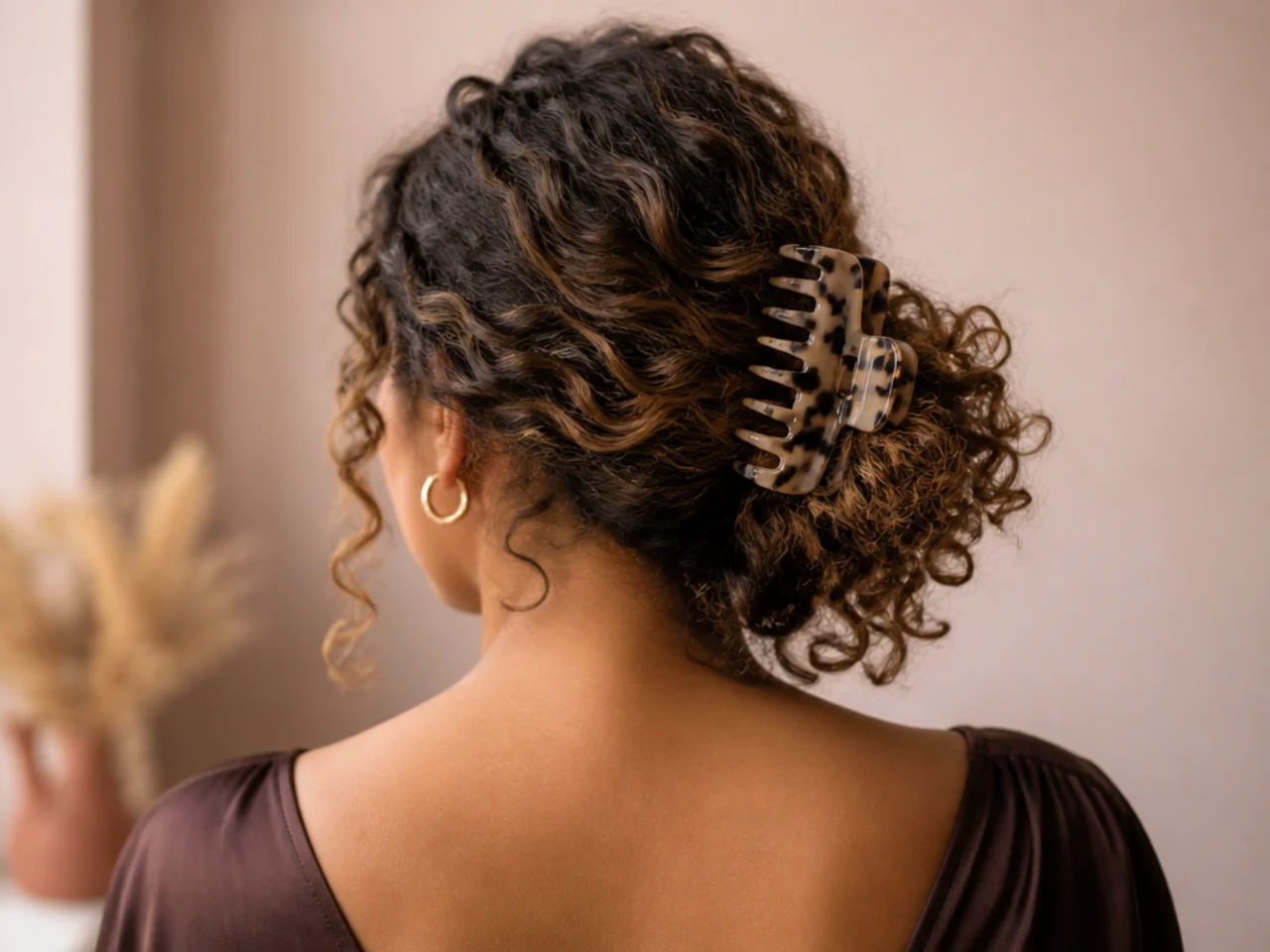
6. Clipped Coily Updo
Coils contained rather than smoothed. Sculptural and secure.
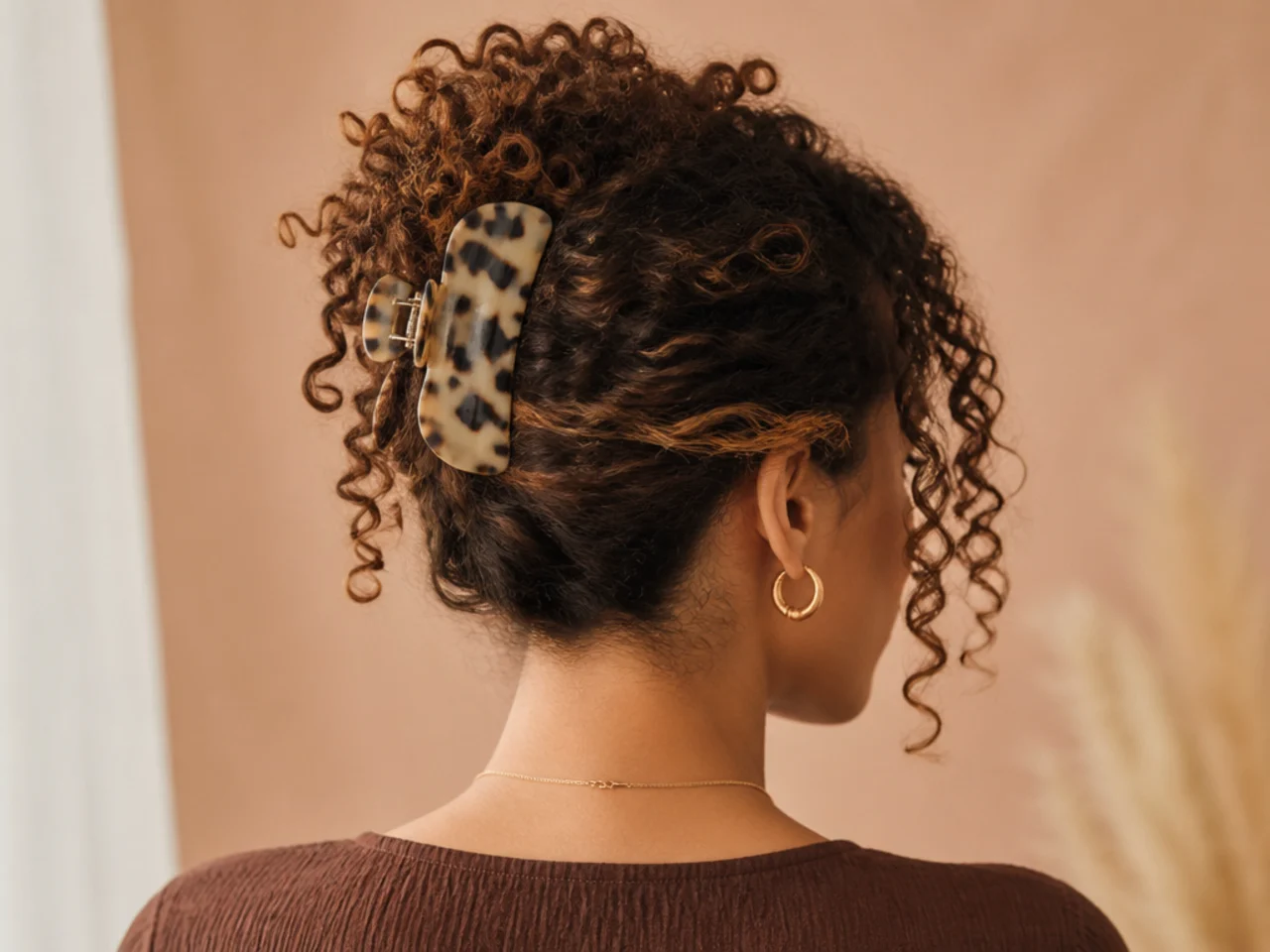
7. Two-Clip Curly Split
Divided in half, each side clipped. For very voluminous curl.
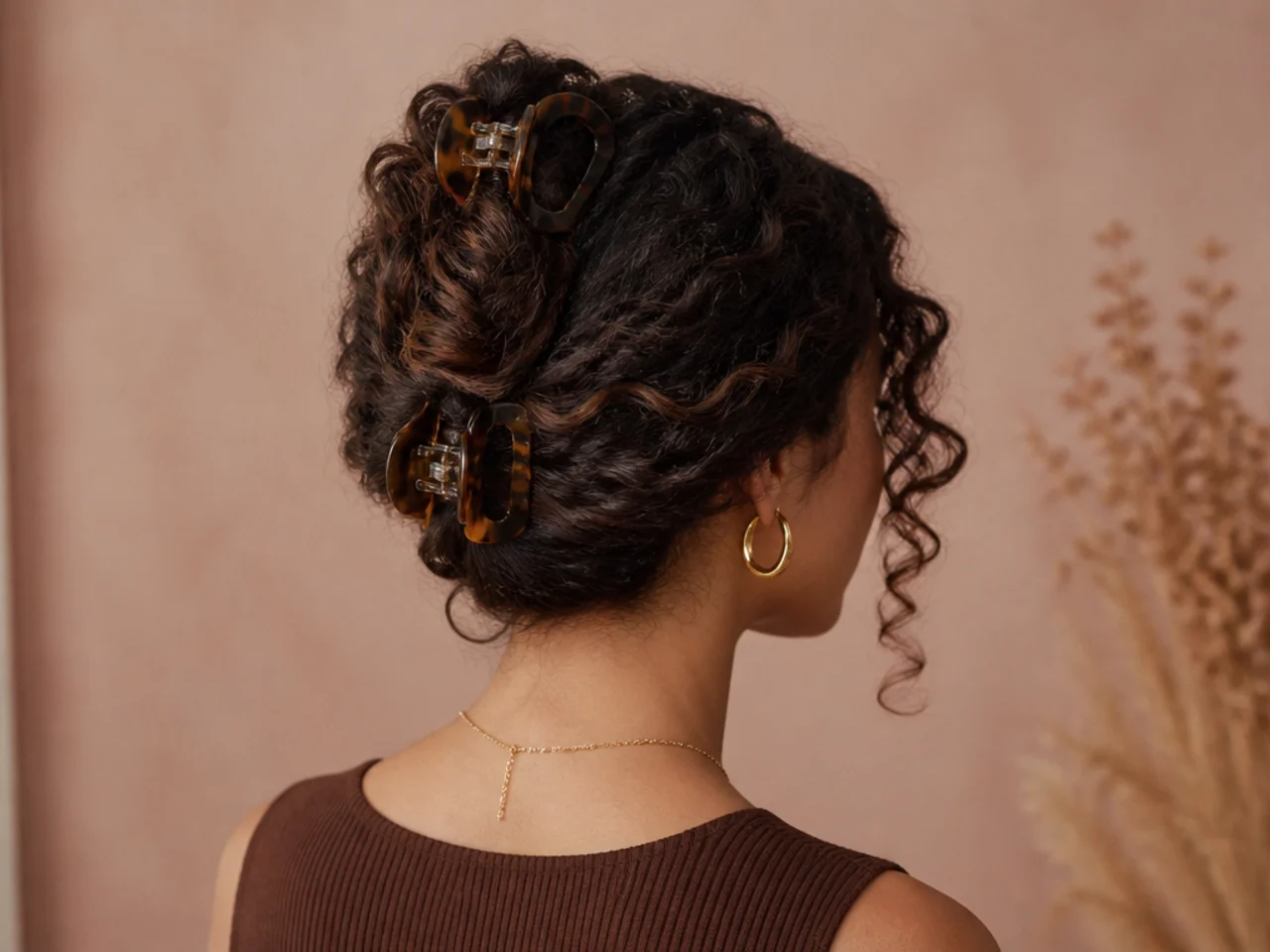
8. Clipped Curls with Face-Framing Coils
Two pieces released at the temples before clipping.
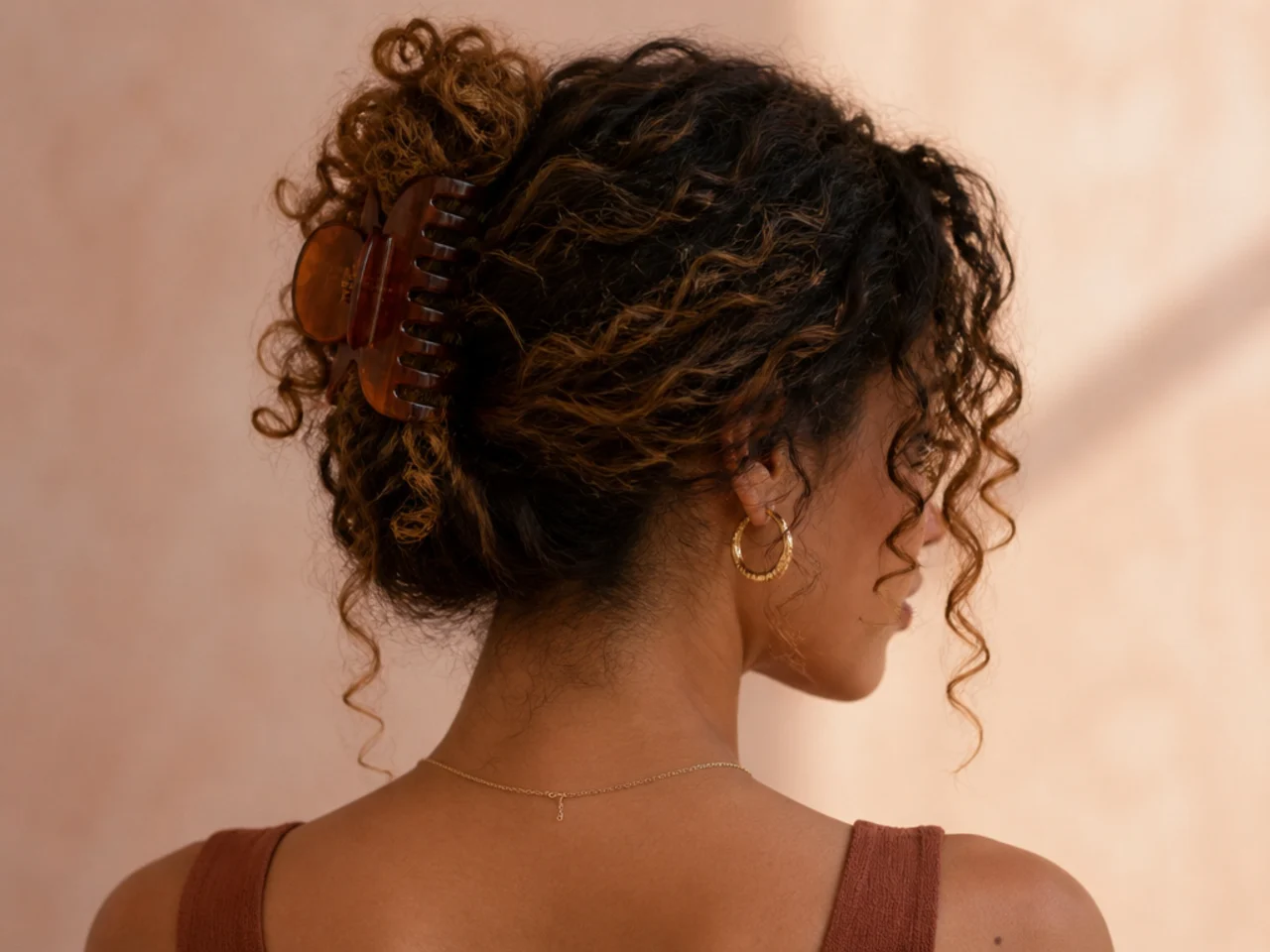
9. Overnight Pineapple Clip
Loose and high for sleeping. Protects the pattern overnight.
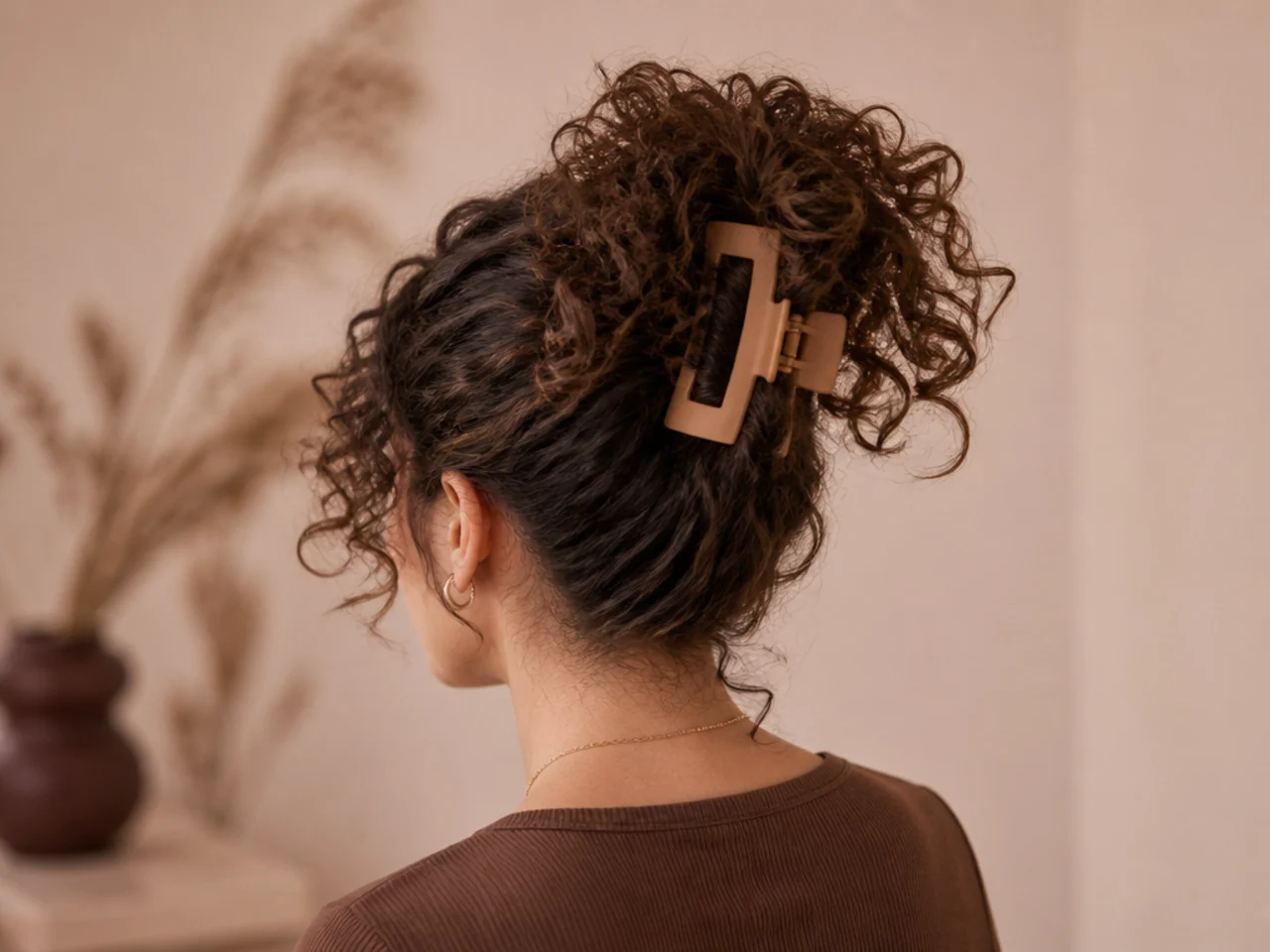
10. Wash-Day Clip
Clipped up while product sets, then released. Functional and it looks fine.
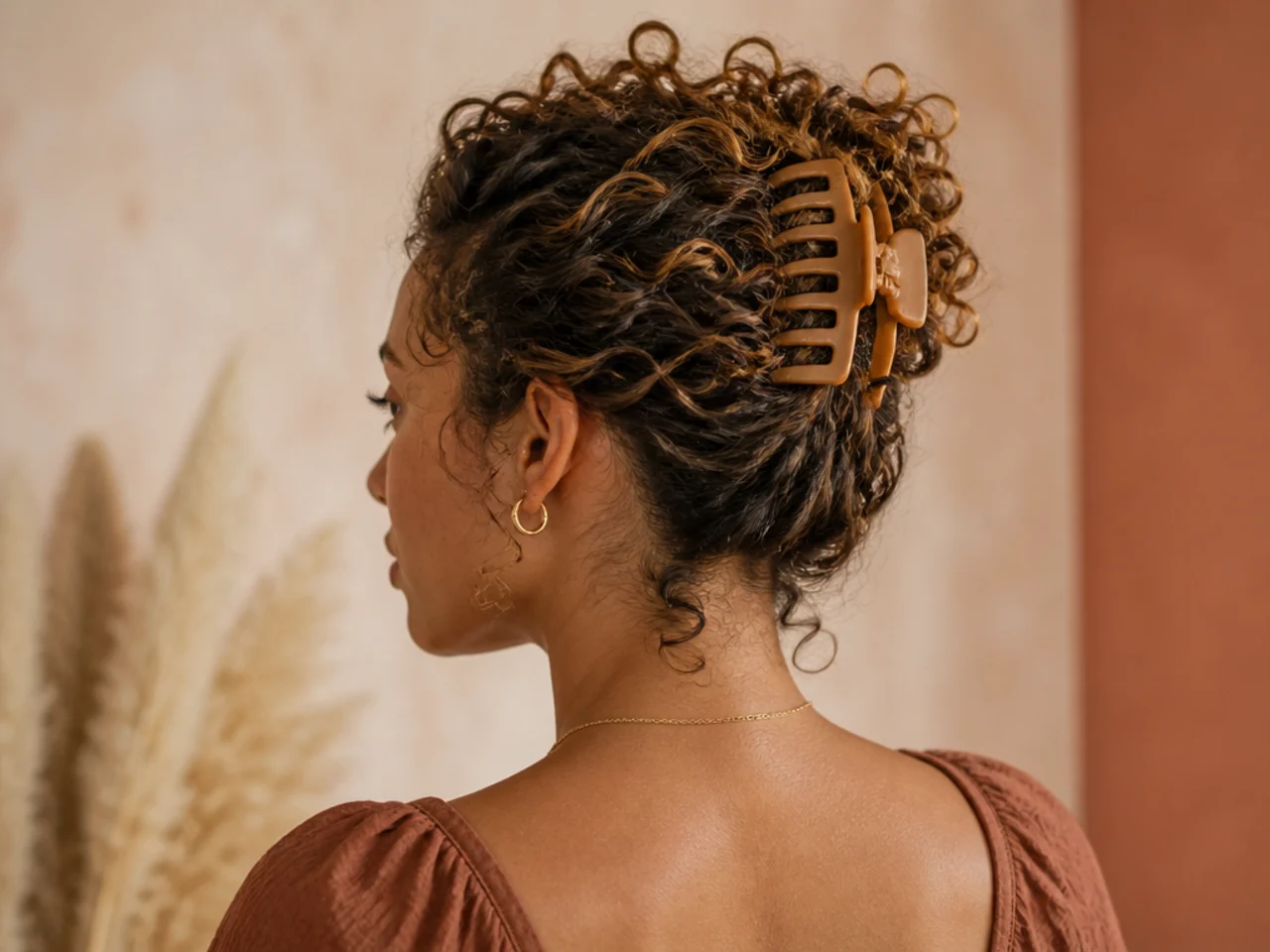
11. Curly Clipped Bun with Ends Out
Ends left showing so the coil does not read as a solid mass.
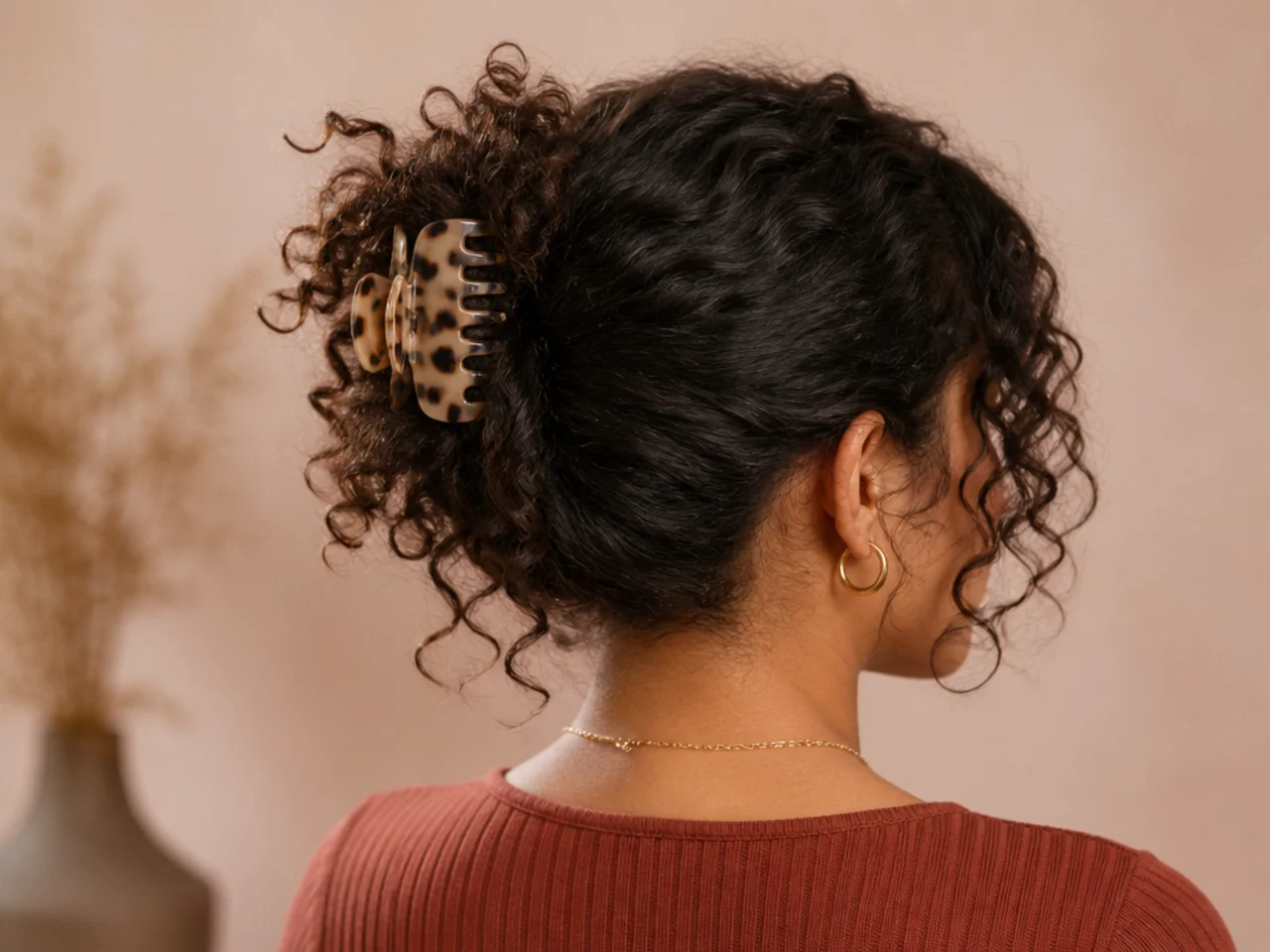
12. Flat-Twisted Front with a Back Clip
Twists at the front, the rest clipped loose behind.
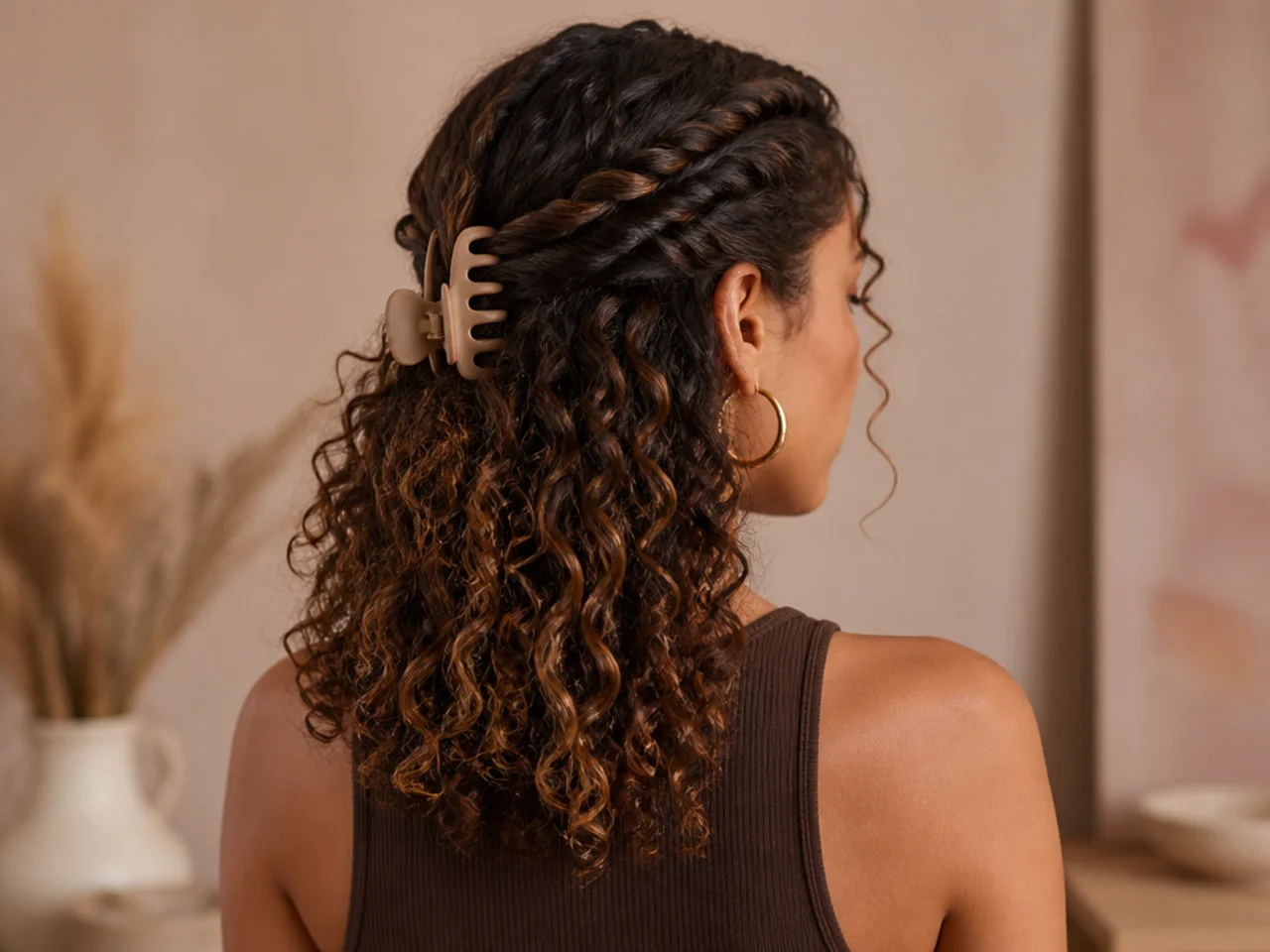
13. Clipped Wash-and-Go
Nothing done except a clip. The lowest-effort style on the site.
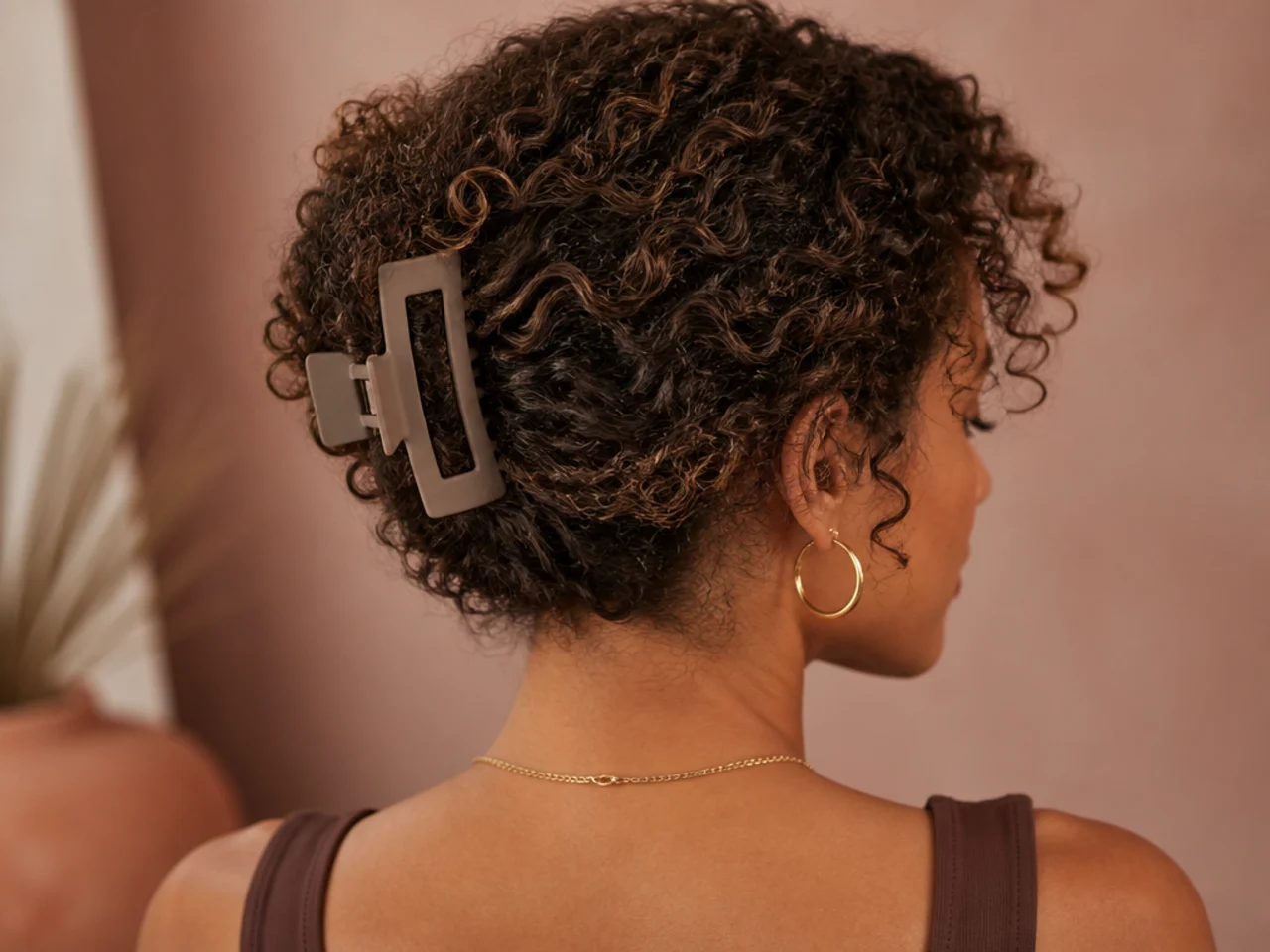
14. High Curly Puff
Everything up, volume above the face. Clears the neck entirely.
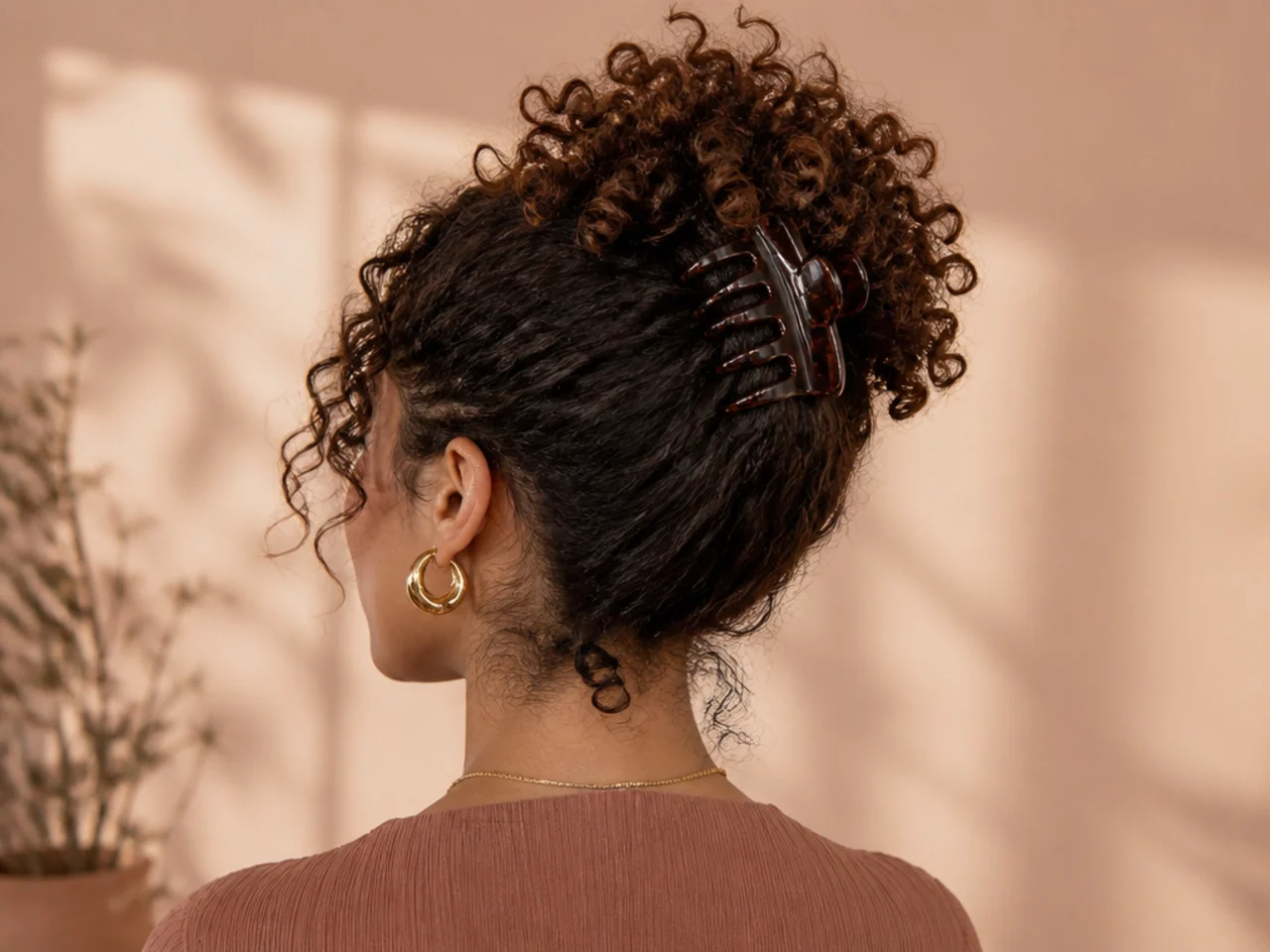
15. Clipped Curls with a Headband
Band at the front, clip at the back. Keeps definition at the hairline.
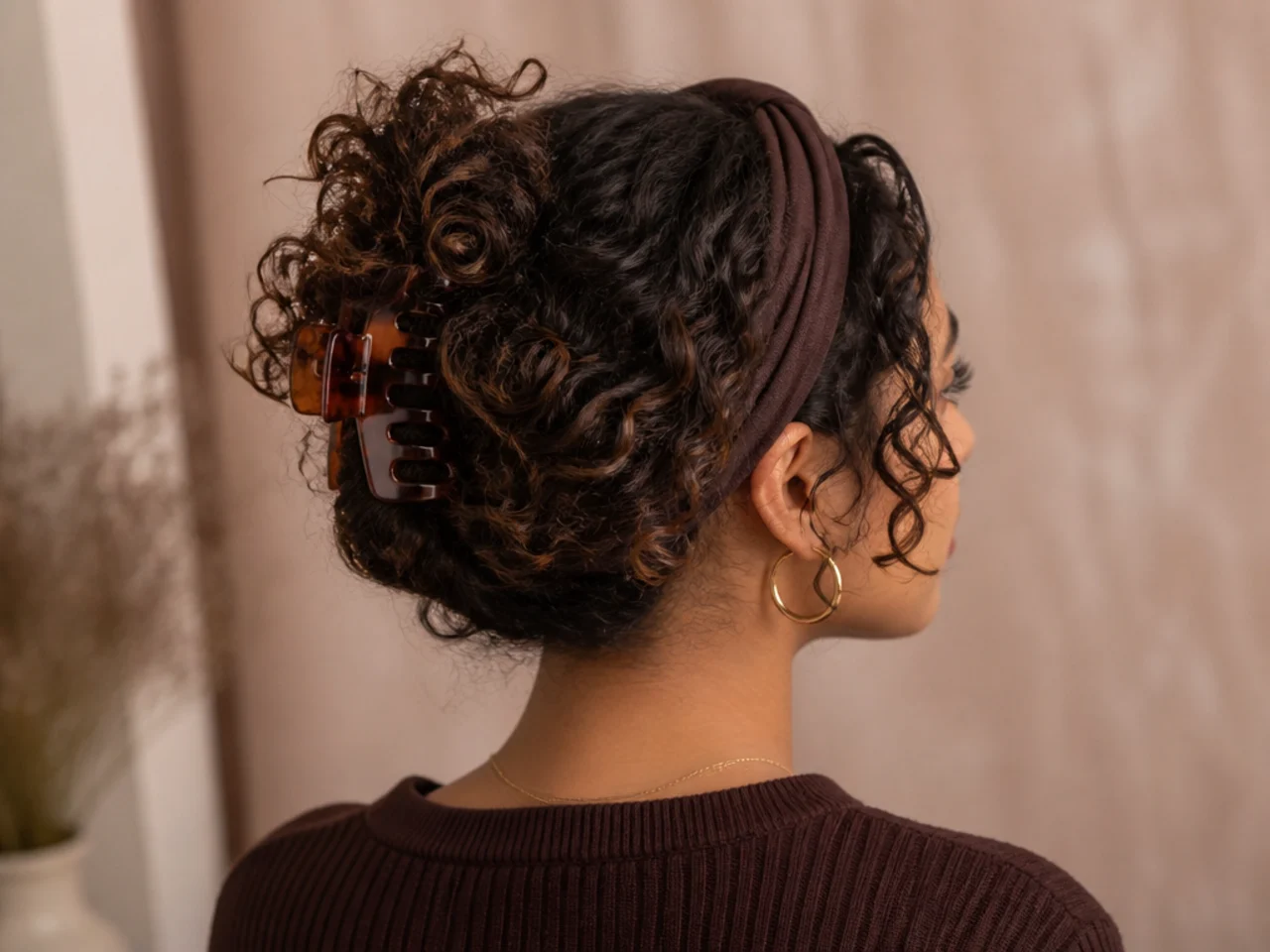
16. Loose Curly French Twist
Rolled without tension and clipped along the seam.
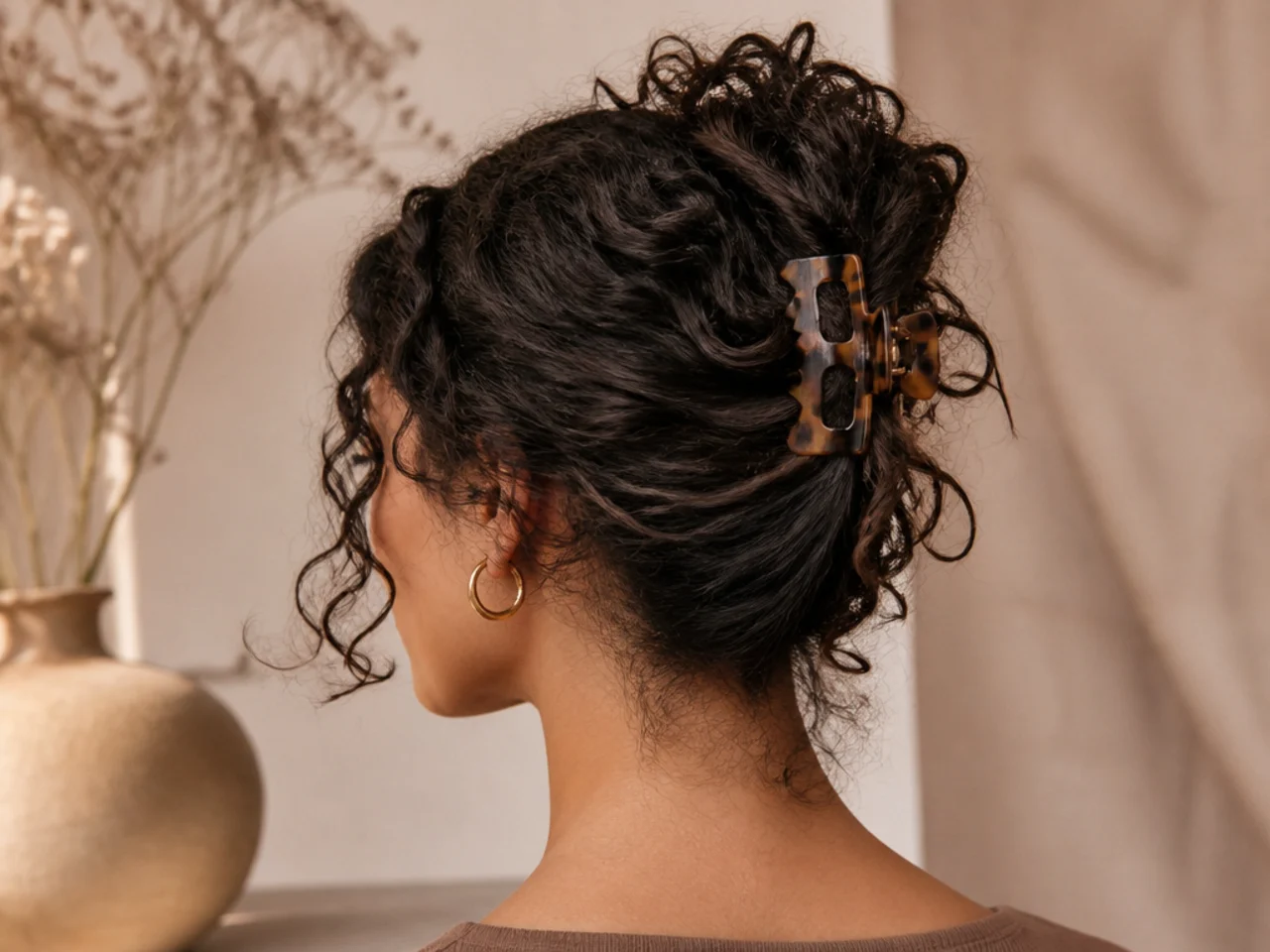
17. Half-Up on a Curly Bob
Short curl clips well because there is no weight to fight.
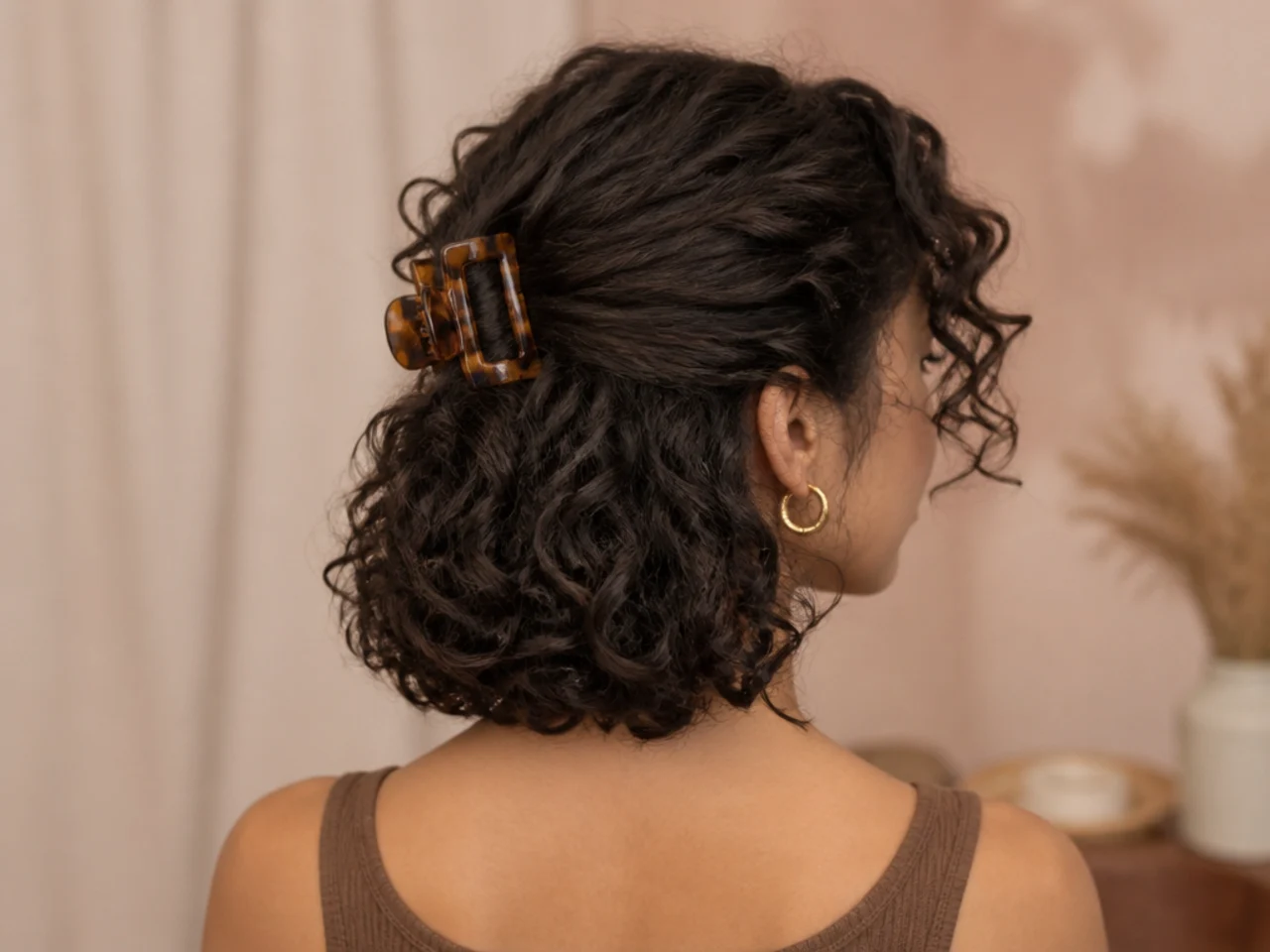
18. Clipped Second-Day Curls
Refreshed with water, clipped up. Day two is the best clip day for curl.
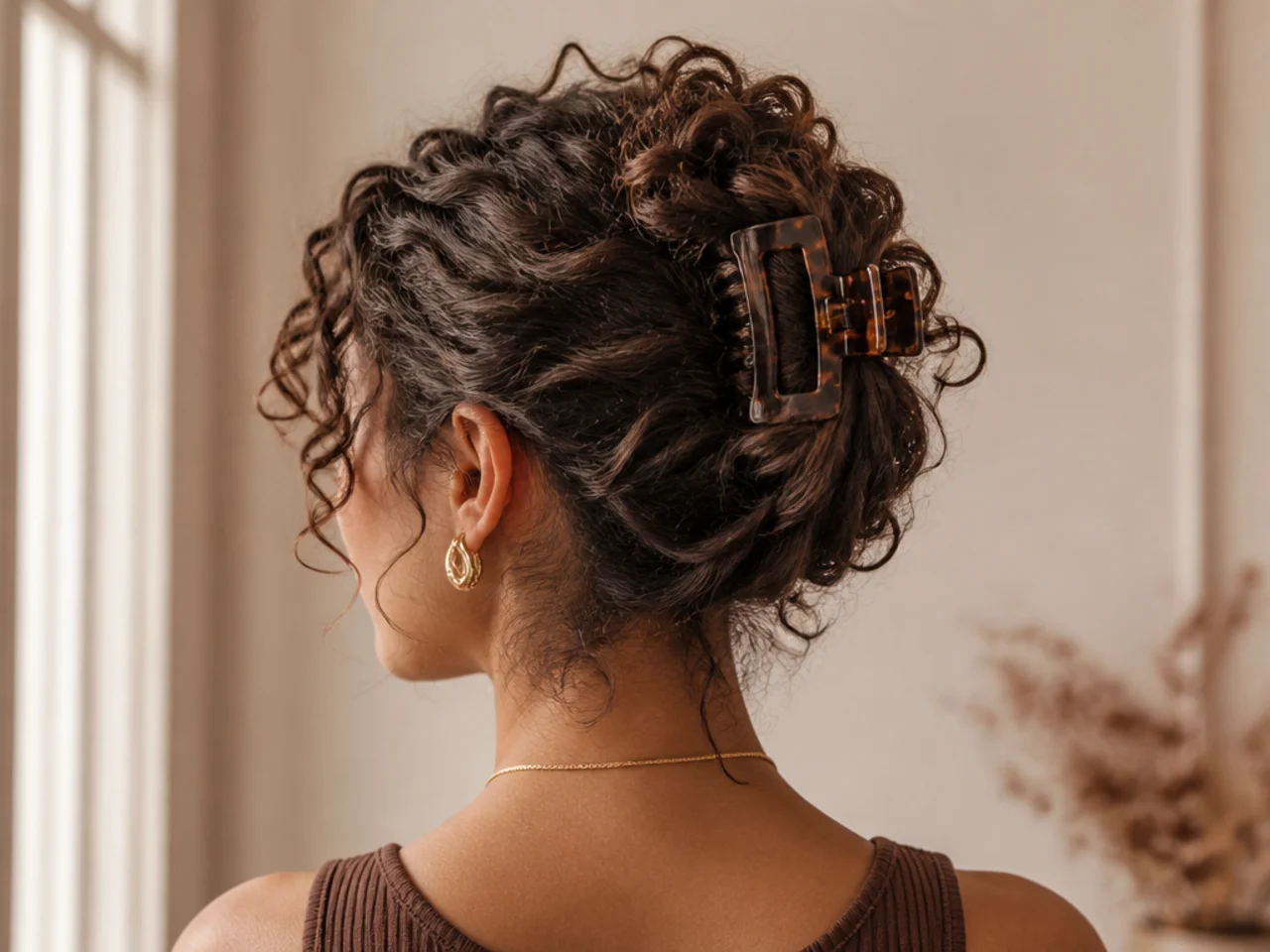
19. Curly Half-Up with a Deep Part
The parting adds asymmetry without touching the curl.
20. Loose Clipped Gather for Exercise
Contained enough to stay put, loose enough not to crush.
Clipping Without Crushing
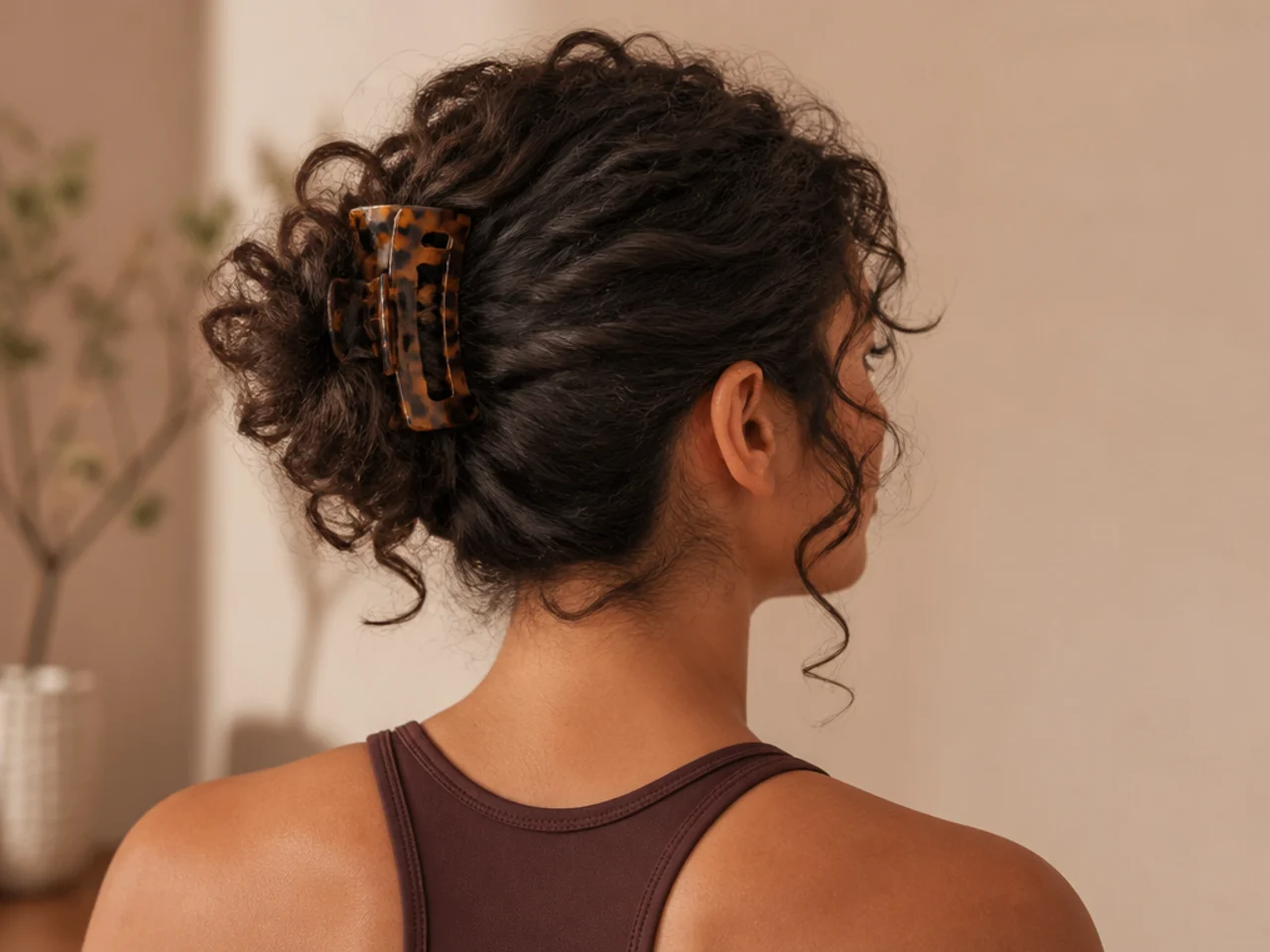
Where the clip sits determines what gets flattened, and the flattened section is always visible because it is exactly where the eye goes.
Clip at the root, not through the clump. The teeth should close near the scalp, above where the curl pattern begins. Clamping mid-length crushes definition in the most visible part of the curl.
Never comb before clipping. Gather with your hands, following where the curl already sits.
Leave the shape loose. A compressed curl does not spring back until it is wet again — unlike straight hair, which recovers in minutes.
Release it by opening the clip fully. Sliding a clip out drags through the pattern and turns definition into frizz.
Mistakes to Avoid
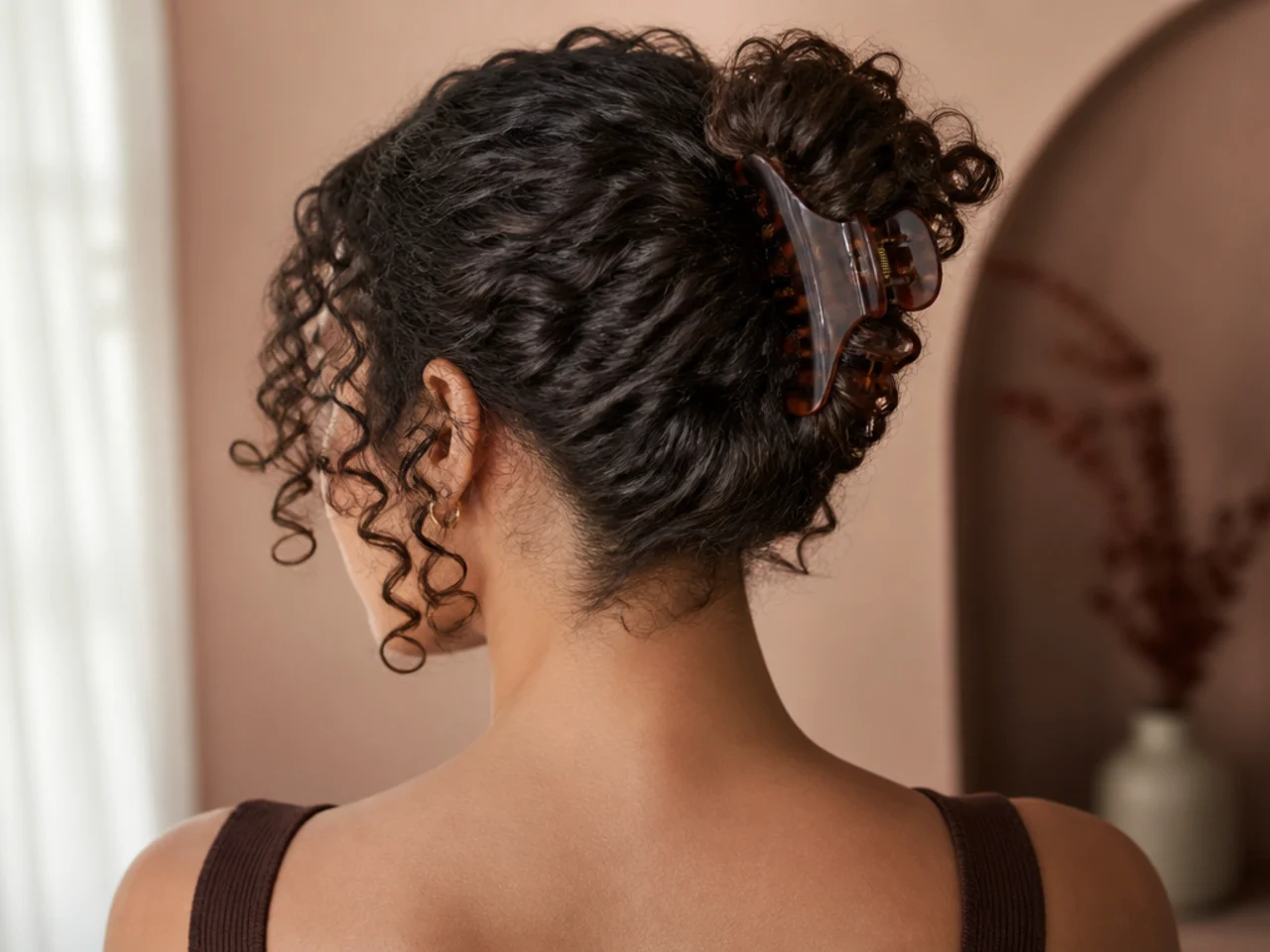
Narrow teeth. They cannot pass between curl clumps, so they compress instead of gripping.
Combing or brushing first. It destroys the pattern and the grip in one move.
A clip sized by length rather than volume. Curl occupies far more space than its weight suggests.
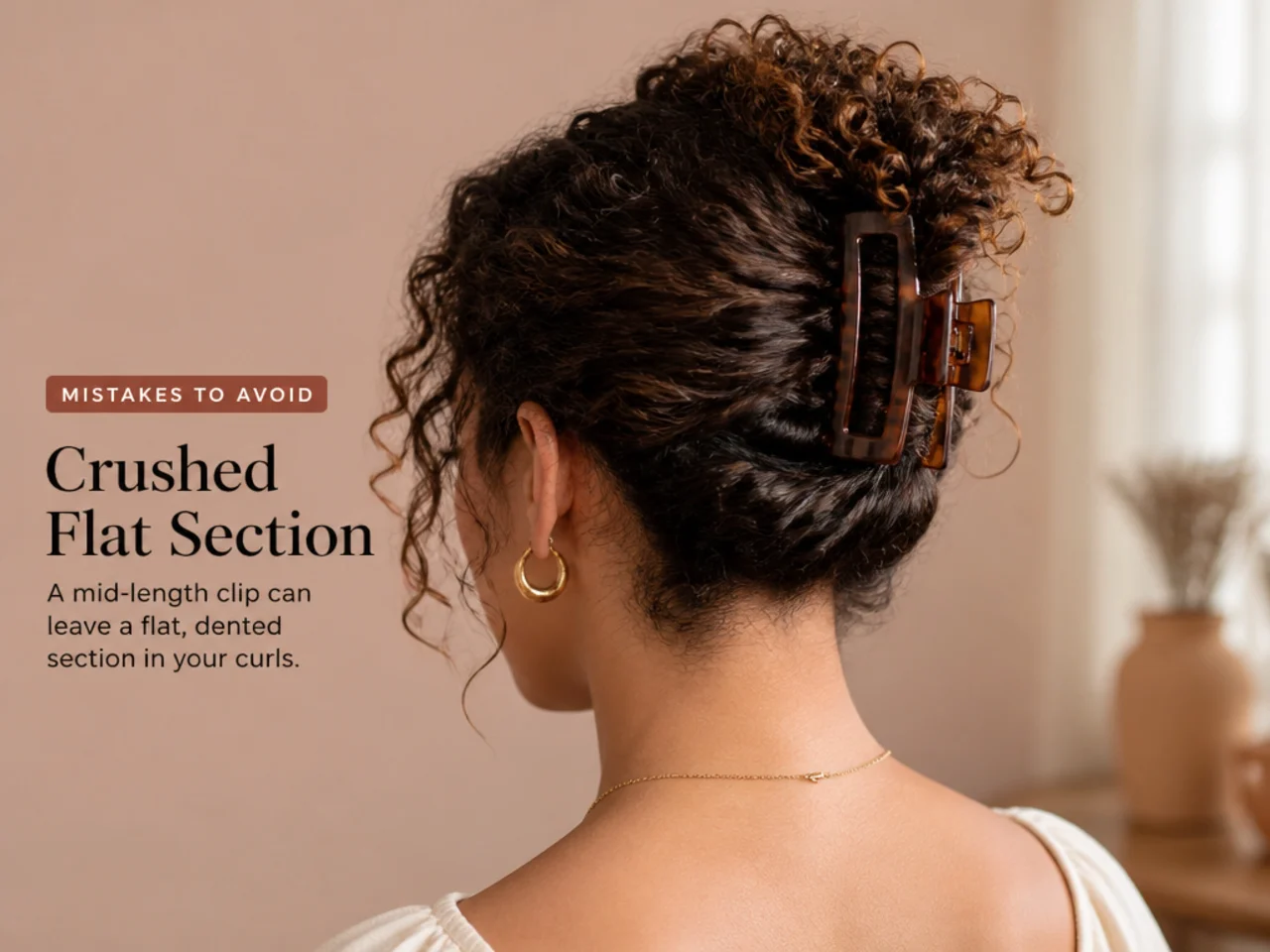
Clipping mid-length. It flattens the most visible part of the curl.
Sliding the clip out. Open it fully — dragging it free creates frizz.
FAQ
Do claw clips work on curls? Better than on any other texture — curl grips the teeth.
What clip is best? Wide-spaced teeth, large jaw, matte with interior ridges.
How do you avoid ruining the curls? Gather loosely, clip at the root, never comb first.
Final Thoughts
Buy a wider clip than you think you need and stop smoothing before you fasten it. Curl already has everything a claw clip wants — the only way to lose that advantage is to comb it out first.
For long hair generally see 20 claw clip hairstyles for long hair, and for choosing a clip see 15 ways to style a claw clip. More in Updos & Clips.