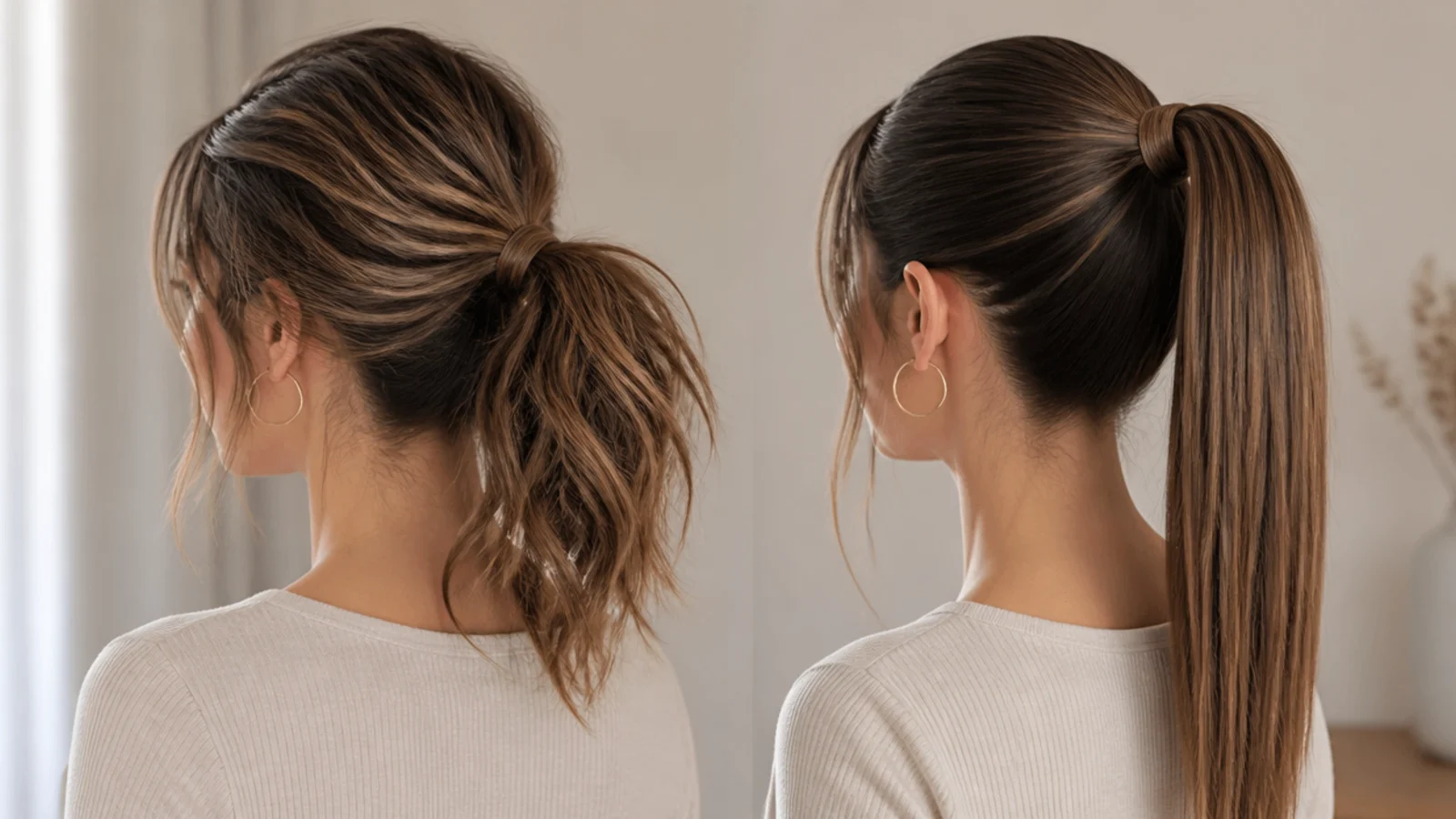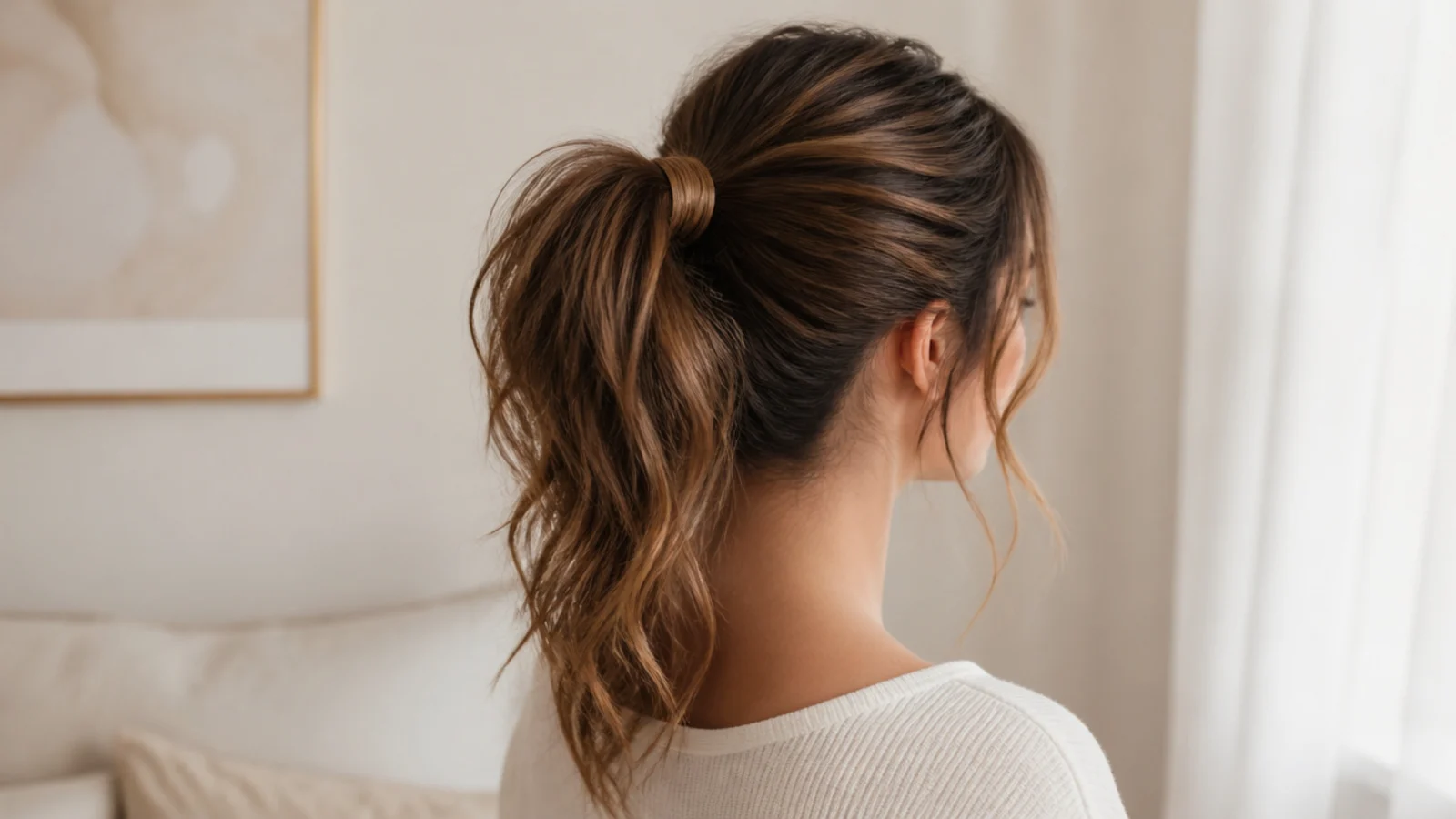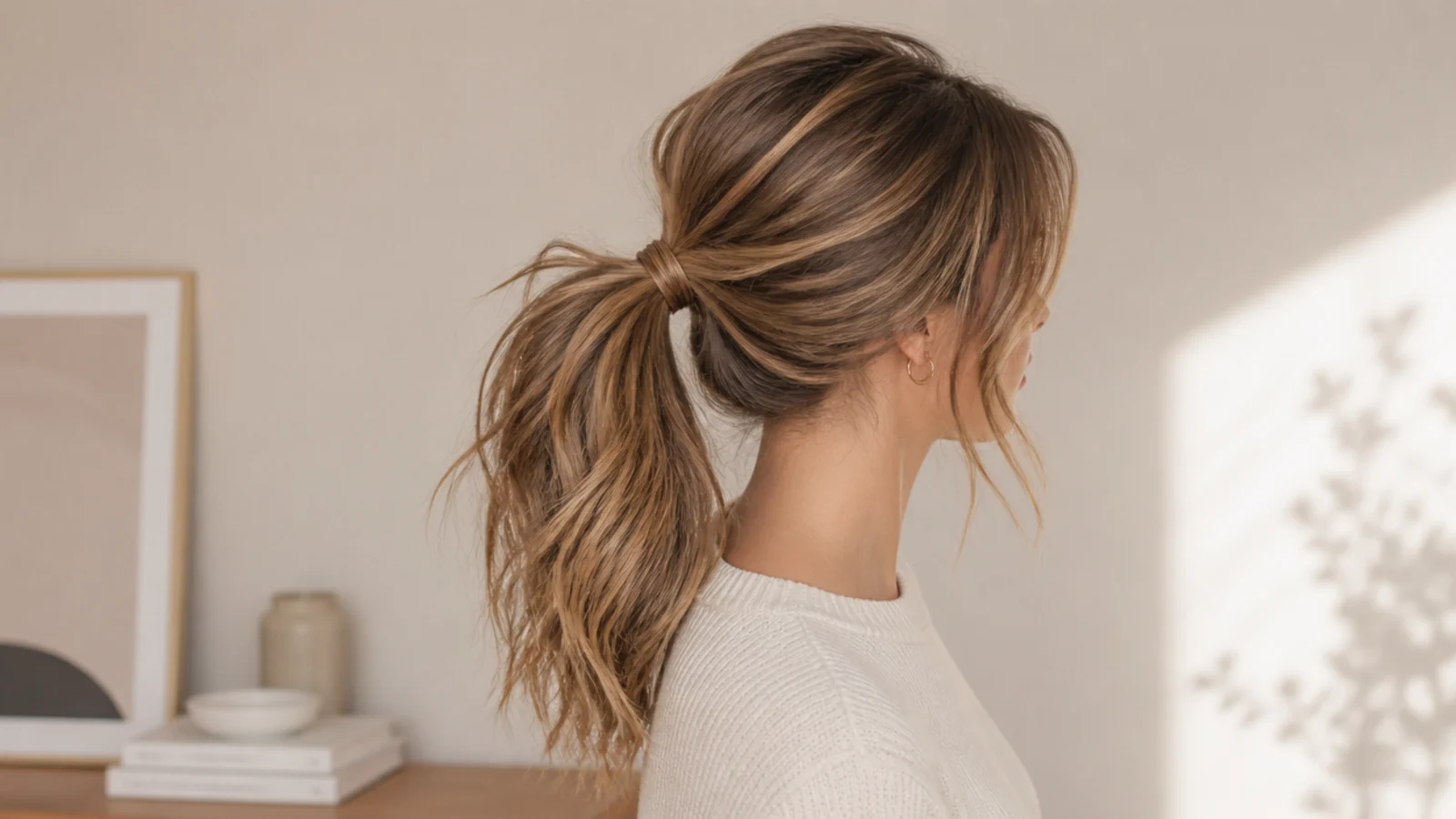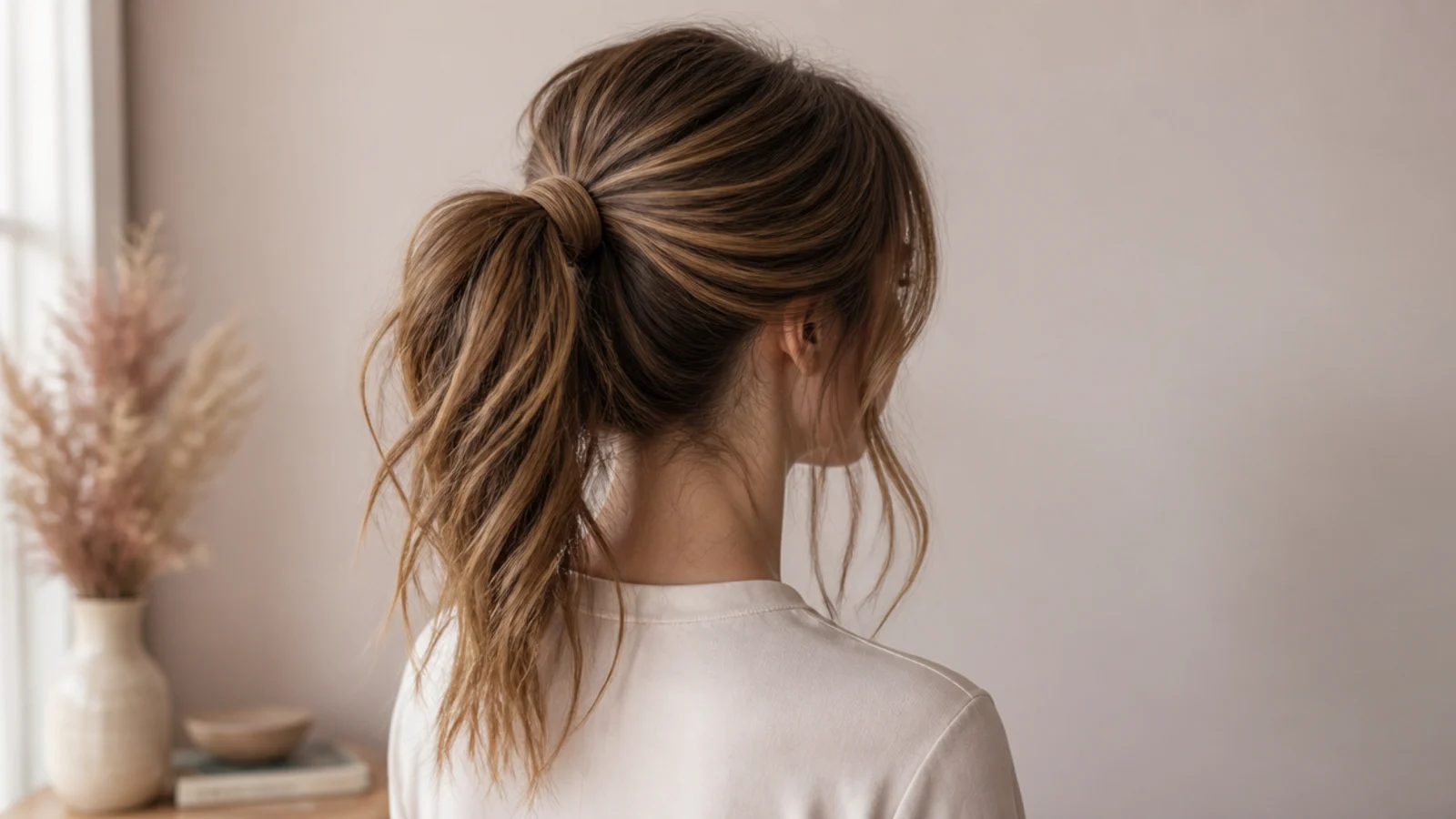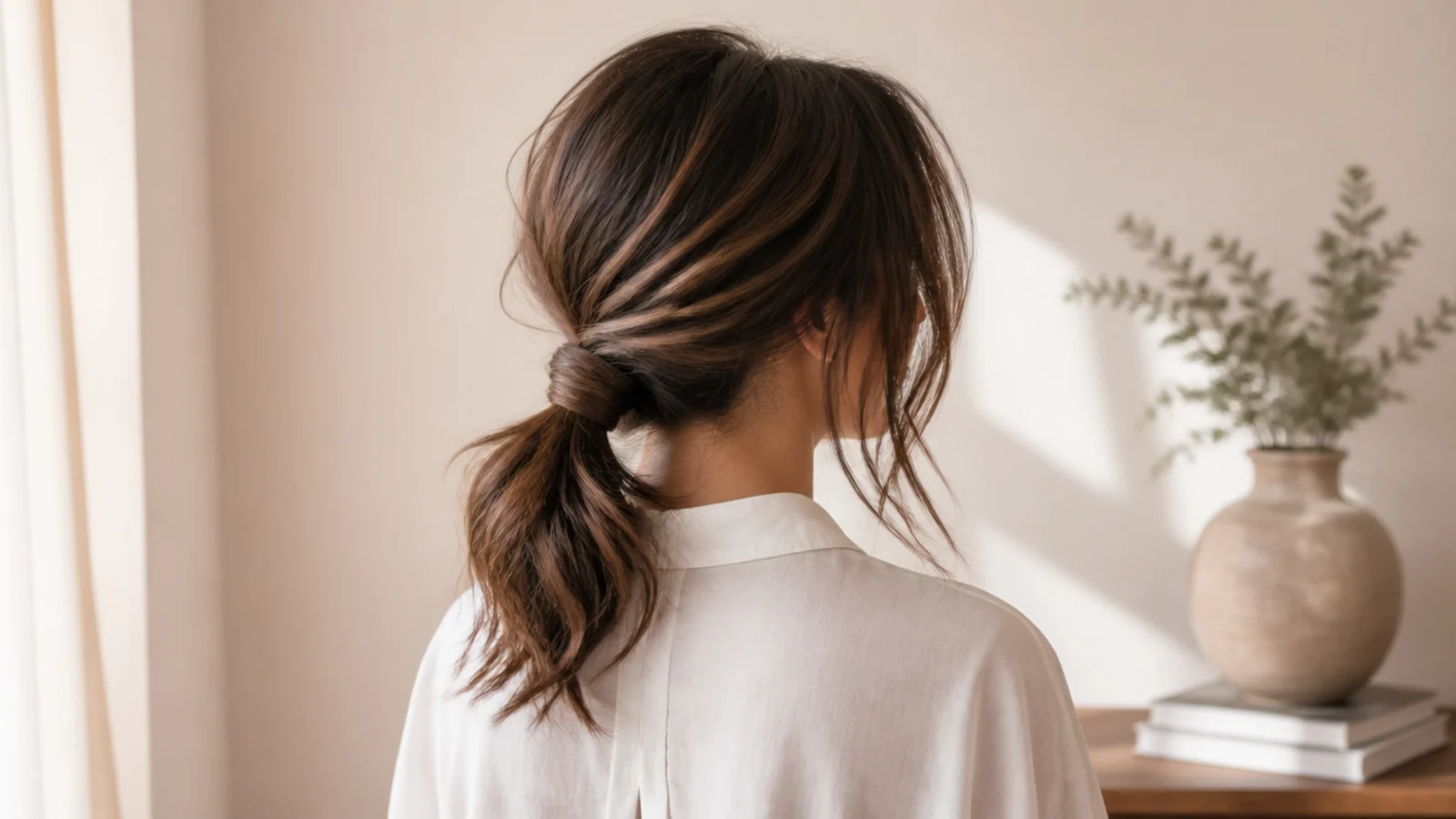
20 Messy Ponytail Ideas for Busy Days
Twenty messy ponytails sorted by the minutes they actually cost, and the reason the rushed ones slide down by lunchtime — a band grips by friction against the hair, not by how hard you pull it.
In this article · 28
- The Time Budget System
- Messy Not Untidy
- By Hair Length
- Fine Versus Thick Hair
- All Day Hold
- Products That Matter
- The 20 Messy Ponytails for Busy Days
- 1. The 60 Second Overslept Pony
- 2. Dry Shampoo Rescue
- 3. Claw Clip Half Up
- 4. Scrunchie With No Mirror
- 5. Bungee Band at Shoulder Level
- 6. Wrapped Elastic for a Video Call
- 7. Crown Tug for Fine Hair
- 8. Two Elastics Stacked
- 9. Gym to Desk
- 10. Curtain Bang Pony
- 11. Silk Scarf on Third Day Hair
- 12. Pineapple for 3B Curls
- 13. Twisted Front for the School Run
- 14. Bubble Pony With Five Elastics
- 15. Side Pony on 22 Inch Length
- 16. Braided Base for the Commute
- 17. Half Up on a Chin Length Bob
- 18. Sleek Root for the Office
- 19. Bandana the Night Before Wash Day
- 20. Night Before Braid
- Final Thoughts
Most rushed ponytails fail for the same reason, and it is not that you tied them badly.
A band grips by friction, not by tension. Pulling harder on slippery clean hair only compresses it, and the tail's own weight walks the elastic down toward the nape from there.
Grip is bought in seconds, not minutes. Ten seconds of dry shampoo at the base does more for hold than any amount of retying.
The Time Budget System
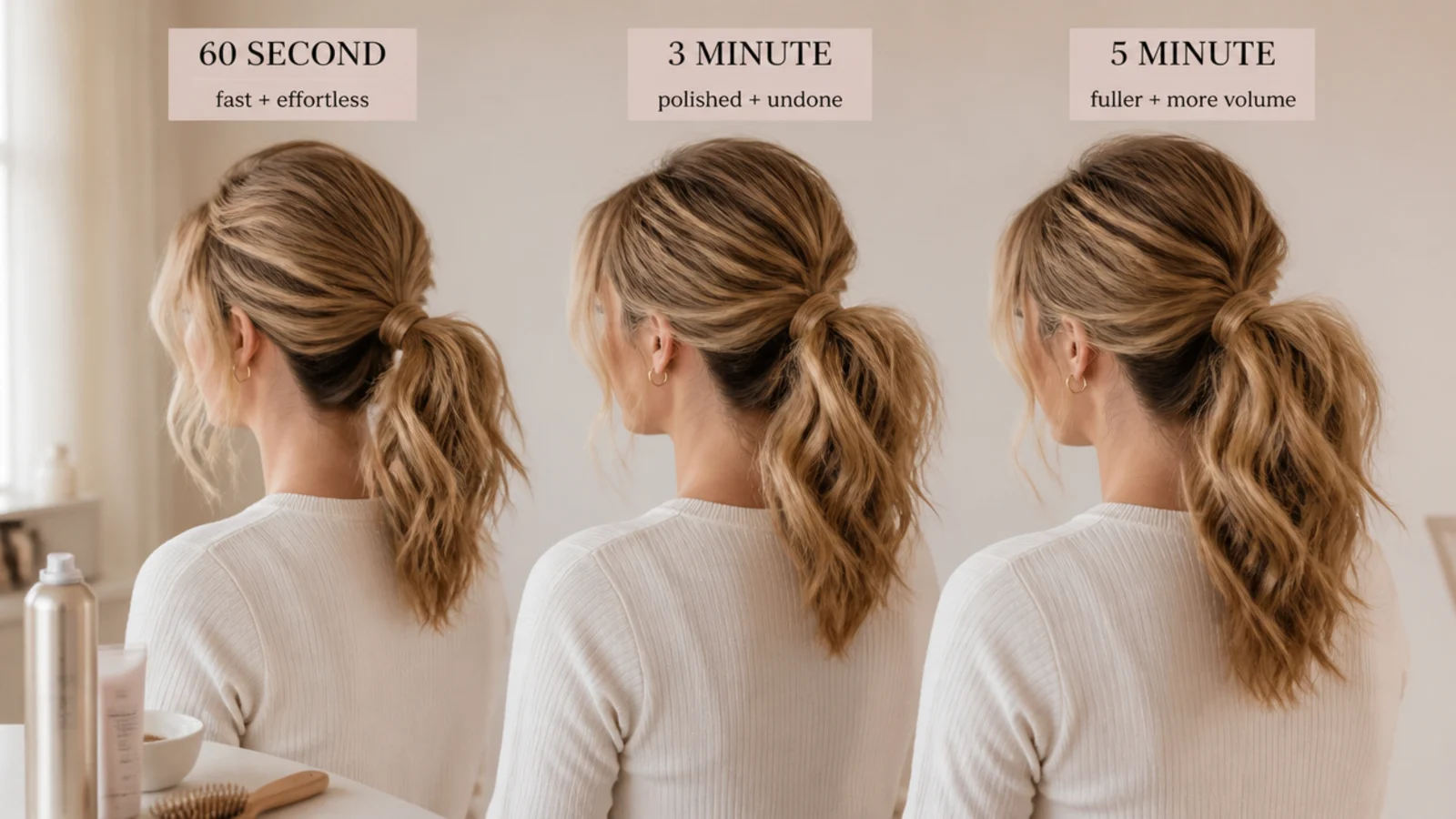
One minute buys a band and nothing else. Fingers, gather, tie. No brush, no mirror, and no expectation that it survives past lunch.
Three minutes buys grip. Dry shampoo or texture spray at the roots and around the base, then tie. This is the version that lasts a full working day.
Five minutes buys shape. Grip plus a crown tug and a wrapped elastic. Those two additions are what make a fast ponytail read as a chosen style.
Ten minutes belongs to the night before. A braid or a scarf put in on damp hair sets a bend that costs nothing in the morning.
Messy Not Untidy
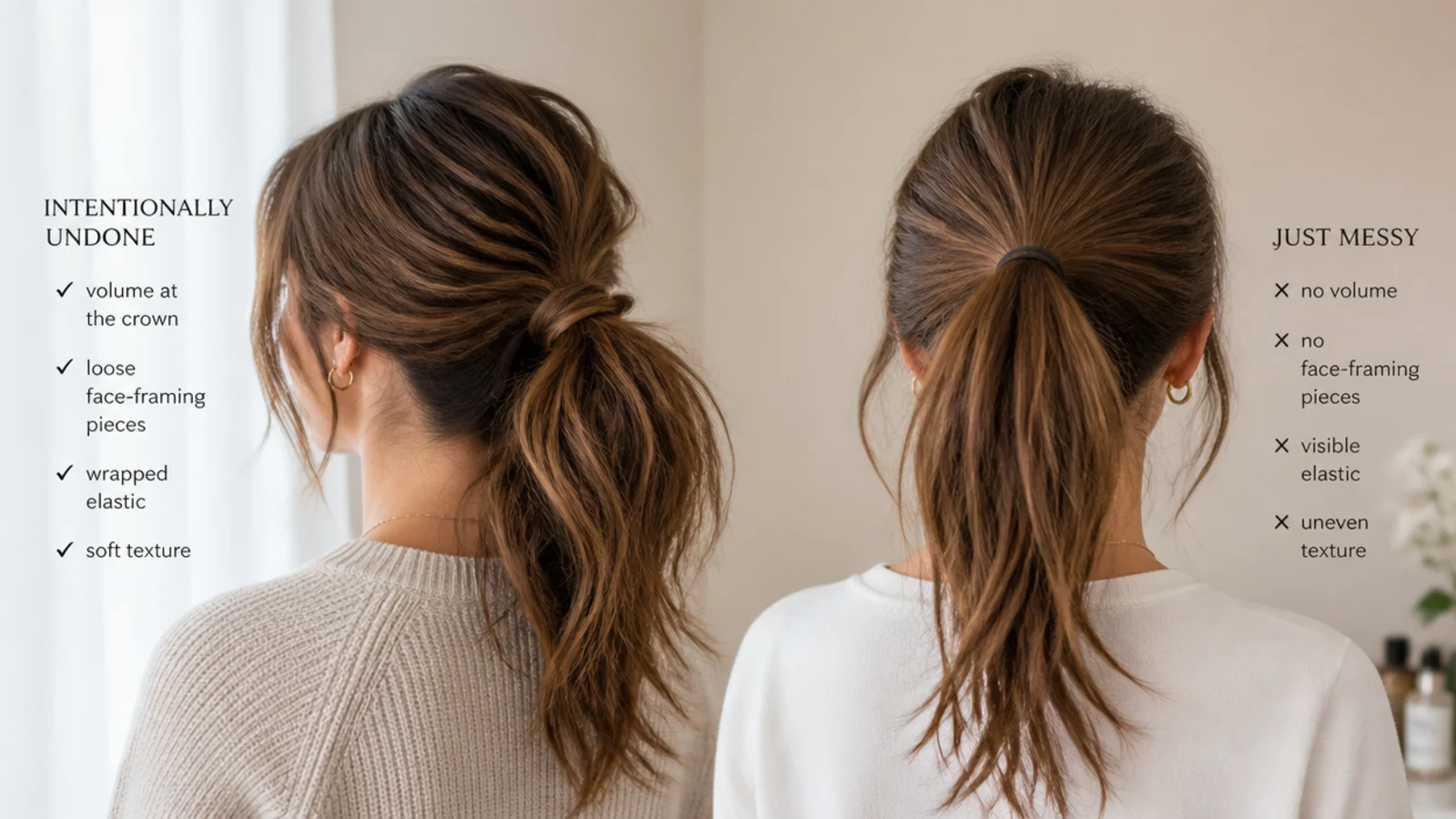
Messy is deliberate volume. Untidy is a collapse. The difference is whether the looseness sits where you put it or where gravity left it.
The base is the tell. A base that is tight and clean carries any amount of roughness above it. A loose base makes the whole thing read as slipping.
Loose pieces belong at the front. Strands falling around the face look chosen. Strands escaping at the nape look like the style is coming undone.
Texture is the whole difference. Clean, slippery hair separates into strings when it is left loose, where gritty hair holds together in soft sections.
By Hair Length
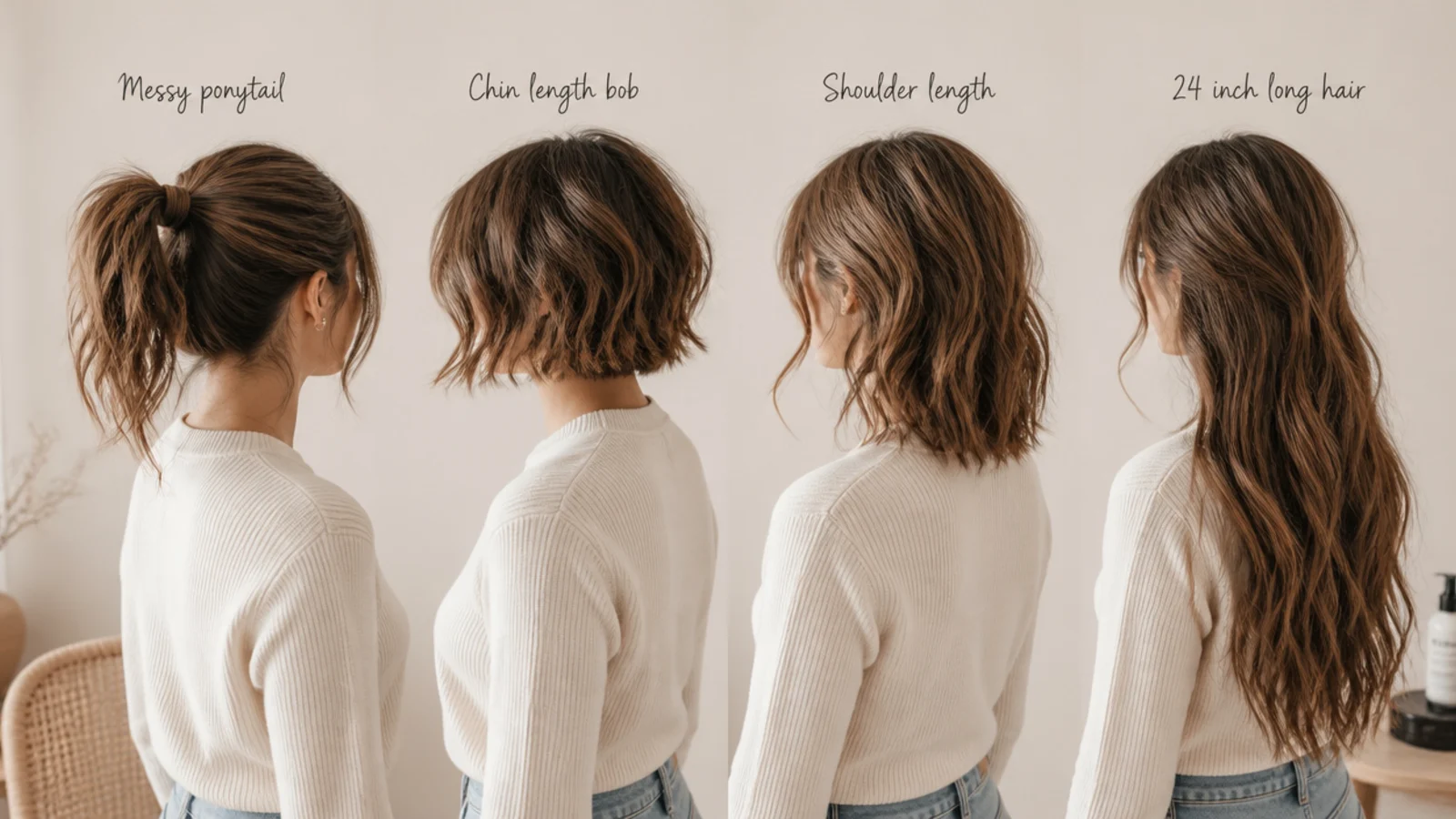
Chin length needs a half up or a bungee. There is not enough length for a full gather, so take the top section only and let the perimeter of the cut show.
Shoulder length is the easiest case. Enough hair to wrap the elastic, not enough weight to drag it down. Almost any tie height works here.
Long hair fights the band with weight. Past the collarbone the tail is heavy enough to pull a high placement downward all day, so drop the height rather than tightening.
Measure curls stretched, not as they sit. A curl that reaches the jaw may be six inches longer pulled straight, which changes which of these actually apply.
Fine Versus Thick Hair
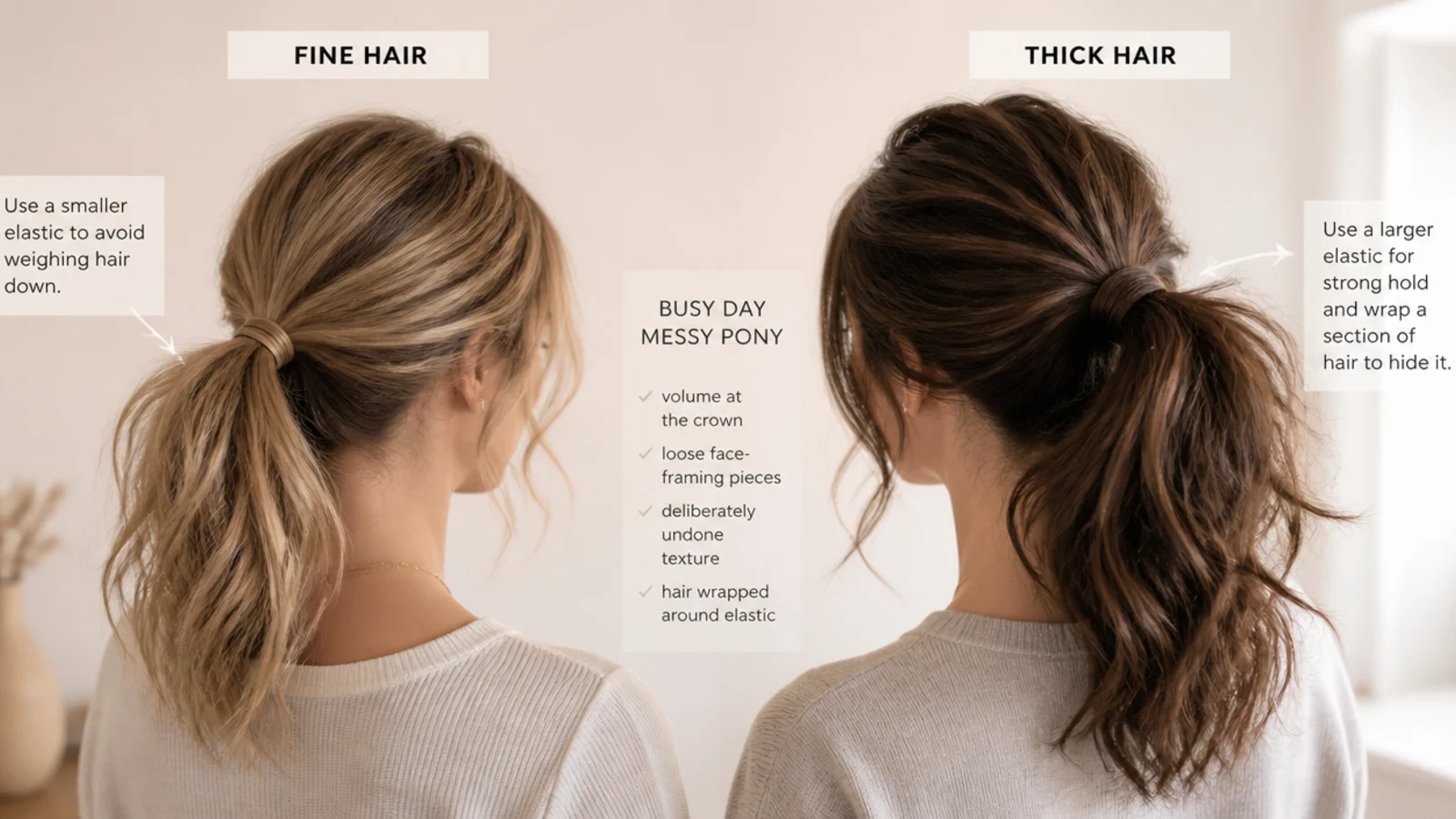
Fine hair leaves the band too little to close on. The elastic tightens onto itself and the tail hangs thin. A fabric covered band takes up that slack.
Thick hair overwhelms a single elastic. The band is holding a bundle heavier than it was designed for, which is why it creeps down within an hour.
Fine hair wants powder. Thick hair wants a bigger anchor. Dry shampoo for one, a second elastic or a claw clip for the other.
Volume comes from opposite ends. On fine hair you build it at the crown. On thick hair the volume is already there and the job is stopping it from dragging.
All Day Hold
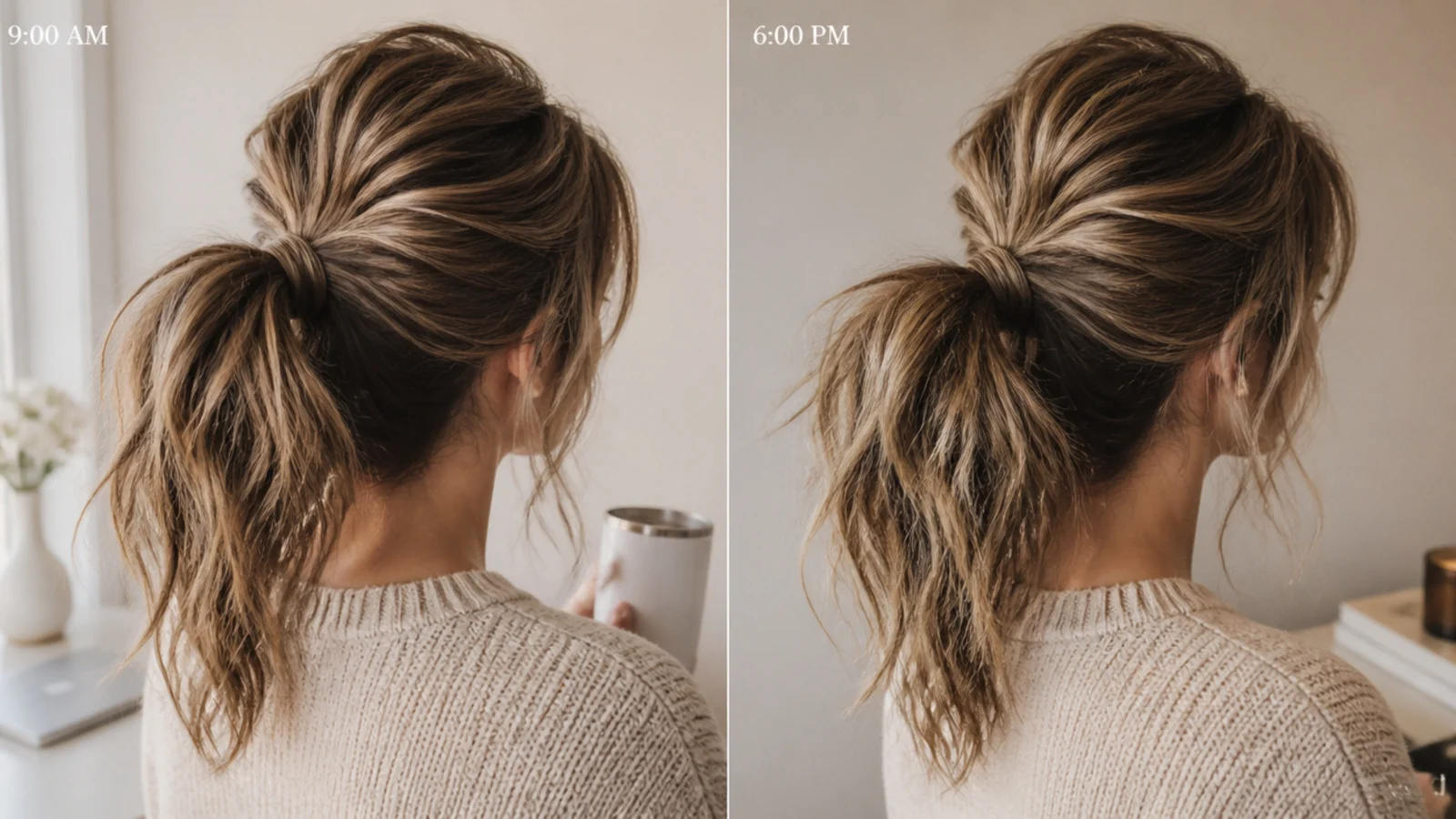
Grip beats tightness every time. A gritty base at moderate tension outlasts a slippery base pulled hard, and it does not give you a headache by three.
Height costs hold. The higher the tie, the more of the tail's weight the band carries unsupported. A nape ponytail rests partly against the head.
Retie once rather than tightening twice. Tightening compresses hair that has already slipped. Taking it out and regathering restores the friction you lost.
Damp roots undo all of it. Rain, sweat or a wet shower room softens the base, and hair reshapes as it dries. Dry the roots before you commit.
Products That Matter
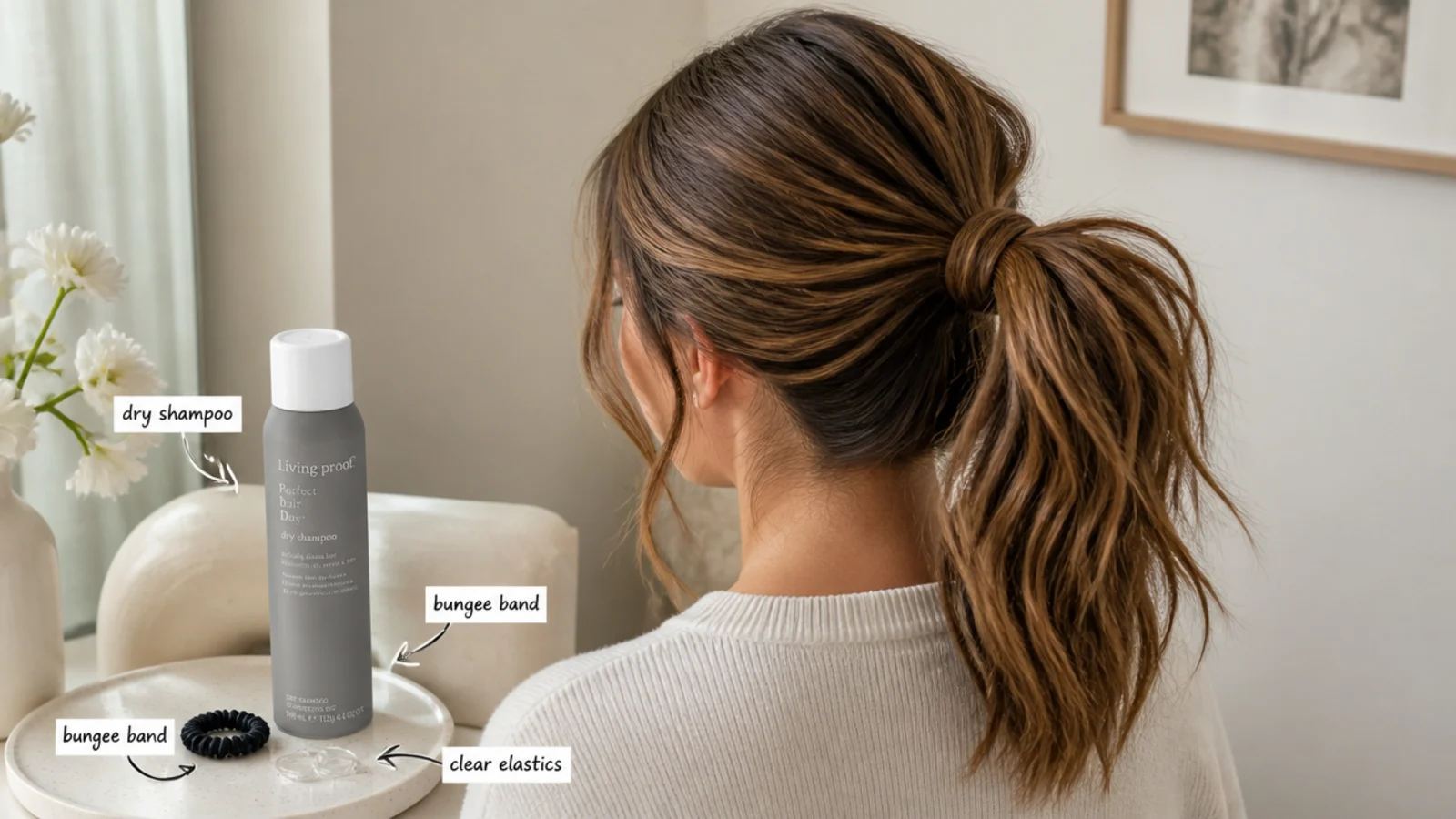
Dry shampoo. Starch or clay absorbs oil and leaves powder behind, and it is the powder doing the styling. Aim it at the base, not the tail.
Texture spray for clean hair. Freshly washed hair has no grit at all. A light mist through the mid lengths gives the band something to hold.
A fabric covered elastic. No metal join to catch and snap strands, and a wider contact area against the hair than a bare rubber band gives.
Hairspray on a brush, not on your head. Spraying the bristles and sweeping the front lays down flyaways without stiffening the whole ponytail.
Pins only where the eye lands. Two at the front do more visible work than six spread across the back where nobody looks.
The 20 Messy Ponytails for Busy Days
1. The 60 Second Overslept Pony
Gather with your fingers and skip the brush entirely. A brush aligns every strand into a smooth column the band then has to grip by tension alone, where finger gathered hair keeps enough tangle for the elastic to bite into. That one omission is most of the minute you saved.
2. Dry Shampoo Rescue
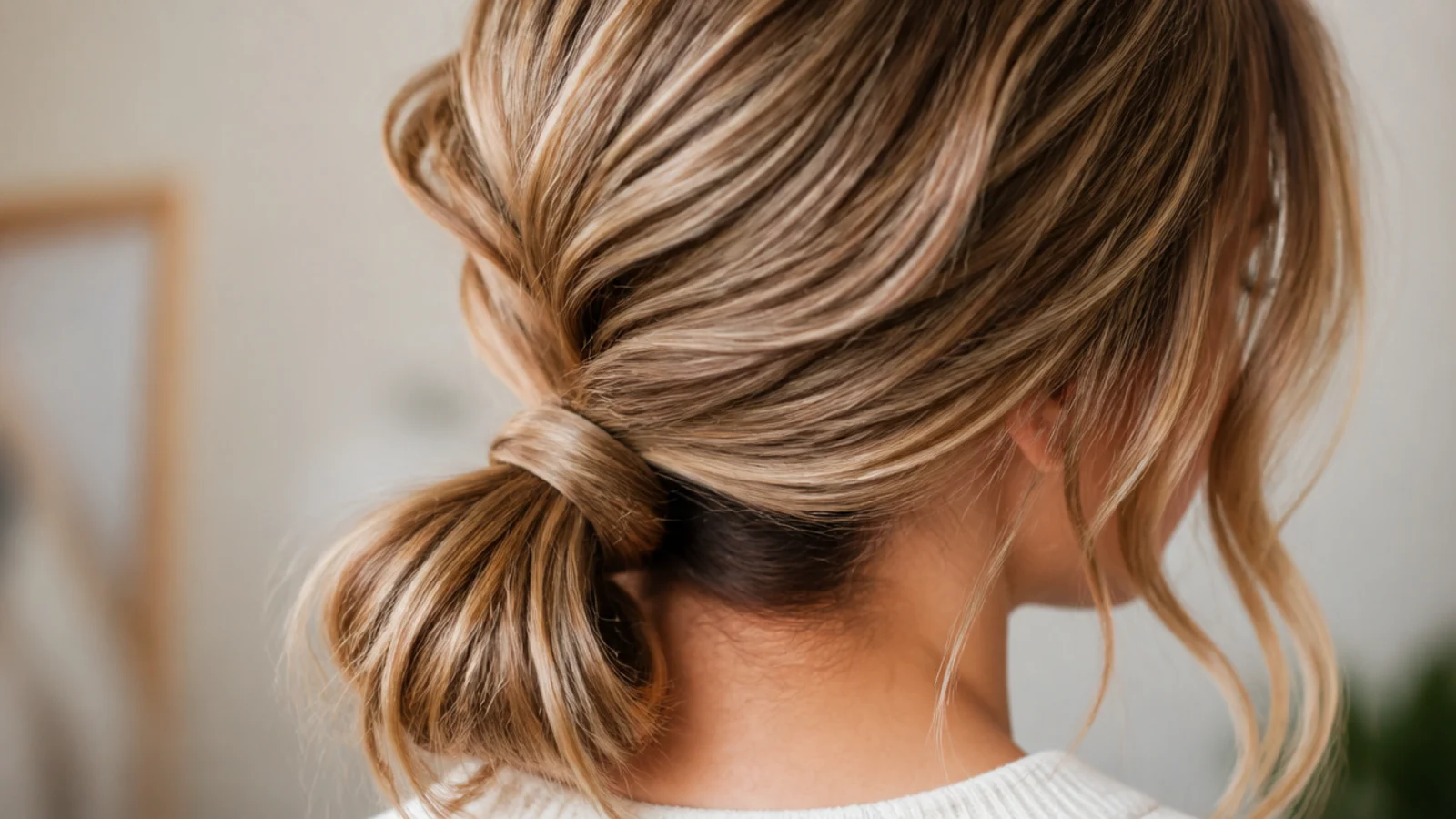
Dry shampoo absorbs oil into starch or clay, and the powder it leaves behind is what you are actually styling with. It puts friction between strands that were sliding past each other, so the band holds where an hour earlier it would have walked down the tail.
3. Claw Clip Half Up
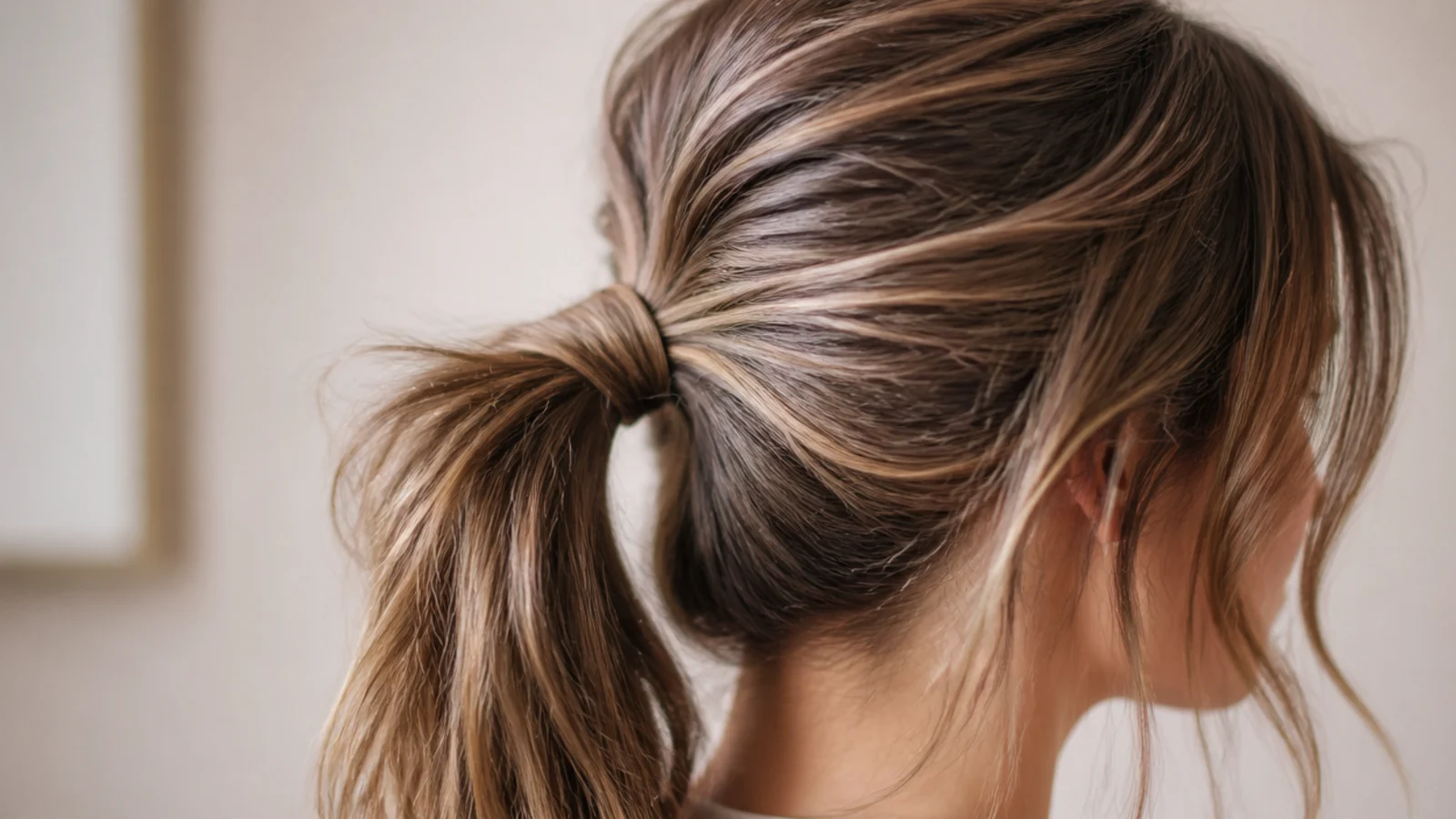
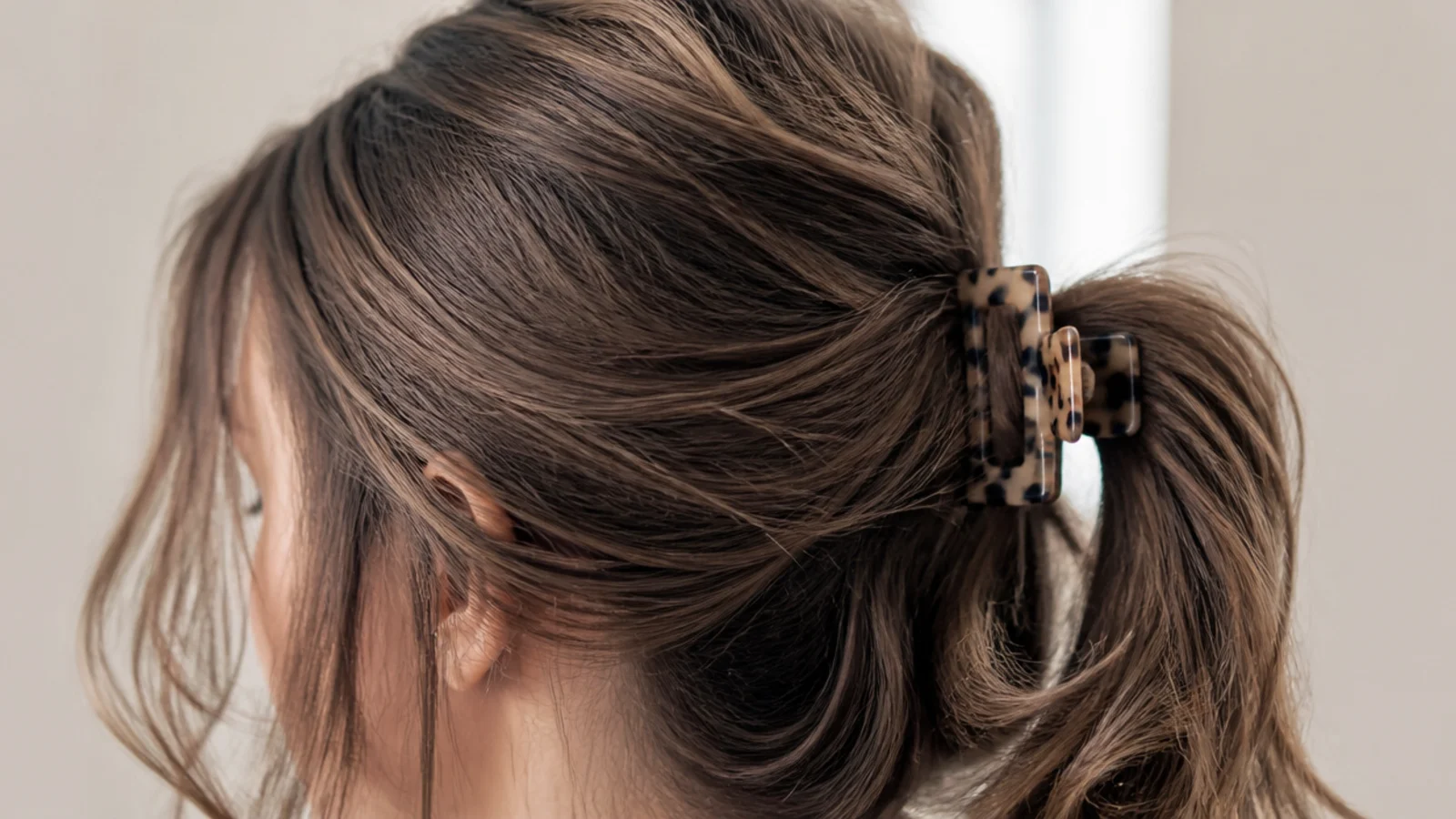
A claw clip takes the top section only, so the weight in its teeth is a fraction of a full ponytail and it never has to fight the whole head. That is why it holds on hair too heavy or too slippery for an elastic at the same height.
4. Scrunchie With No Mirror
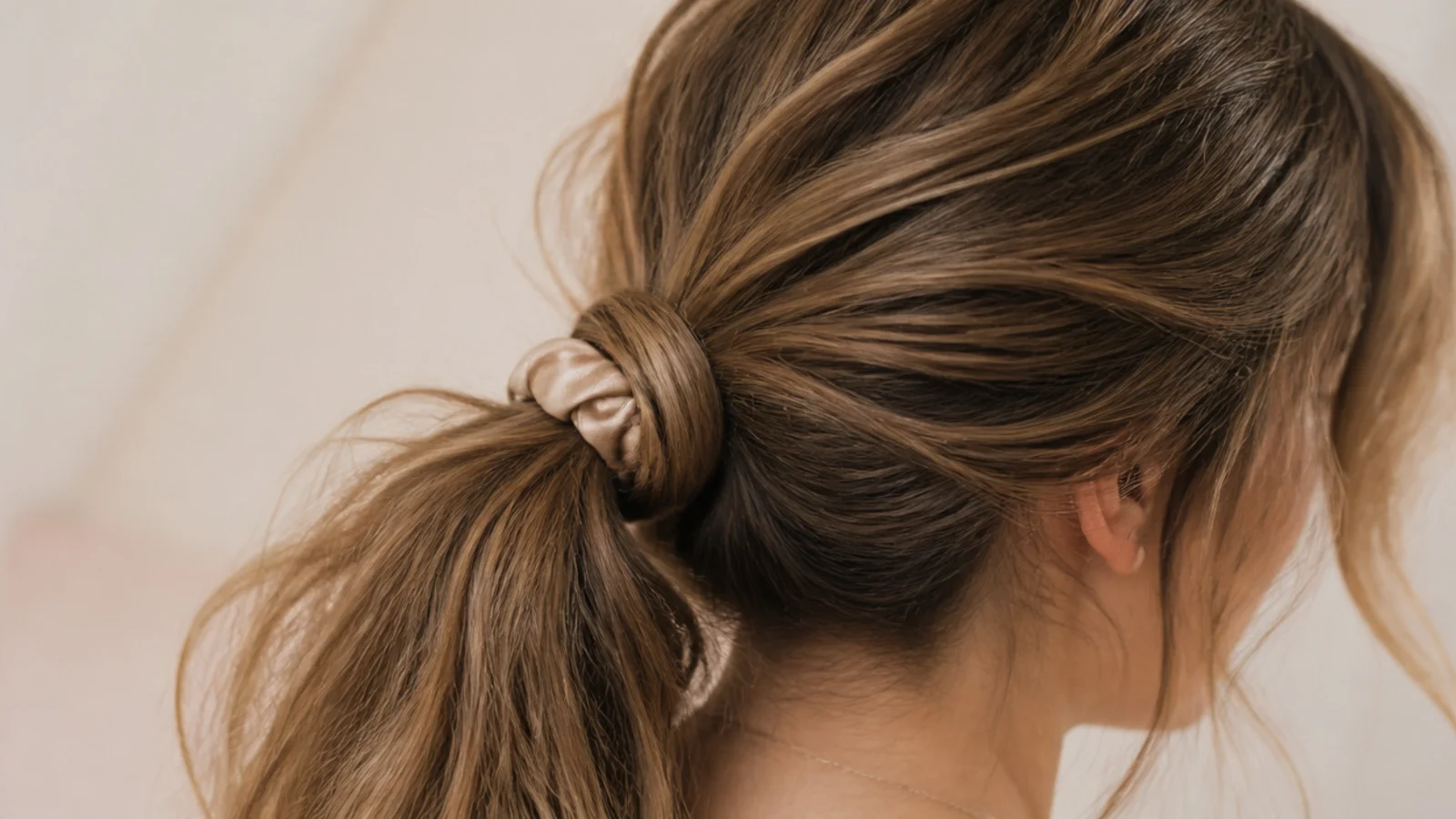
A scrunchie is forgiving because the fabric sleeve hides the band underneath, so an uneven wrap or a lump at the base disappears into the gather. You can tie this one in a lift with no reflection at all and it still reads as deliberate.
5. Bungee Band at Shoulder Level
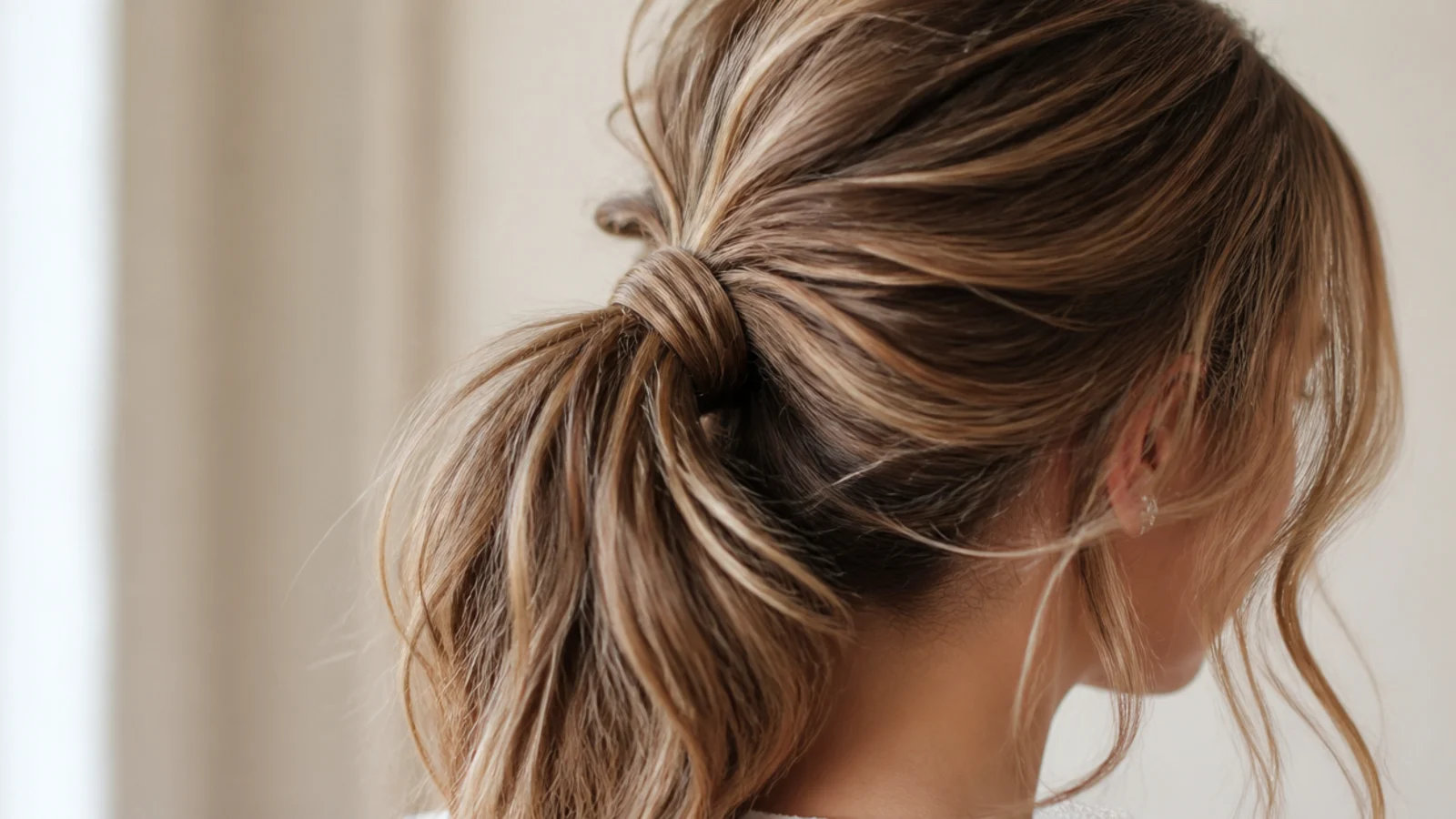
A bungee hooks at one end, wraps around the base, and hooks at the other, so hair is never dragged through a stretched loop. Nothing is pulled against the cuticle, which makes this the version that costs you the fewest broken strands across a working week.
6. Wrapped Elastic for a Video Call
On camera only the top third of the head is in frame, so all the effort goes into the base and nothing below it. Wrapping a section of hair around the elastic hides the band, and at that distance the band is the single detail separating a tidy pony from a rushed one.
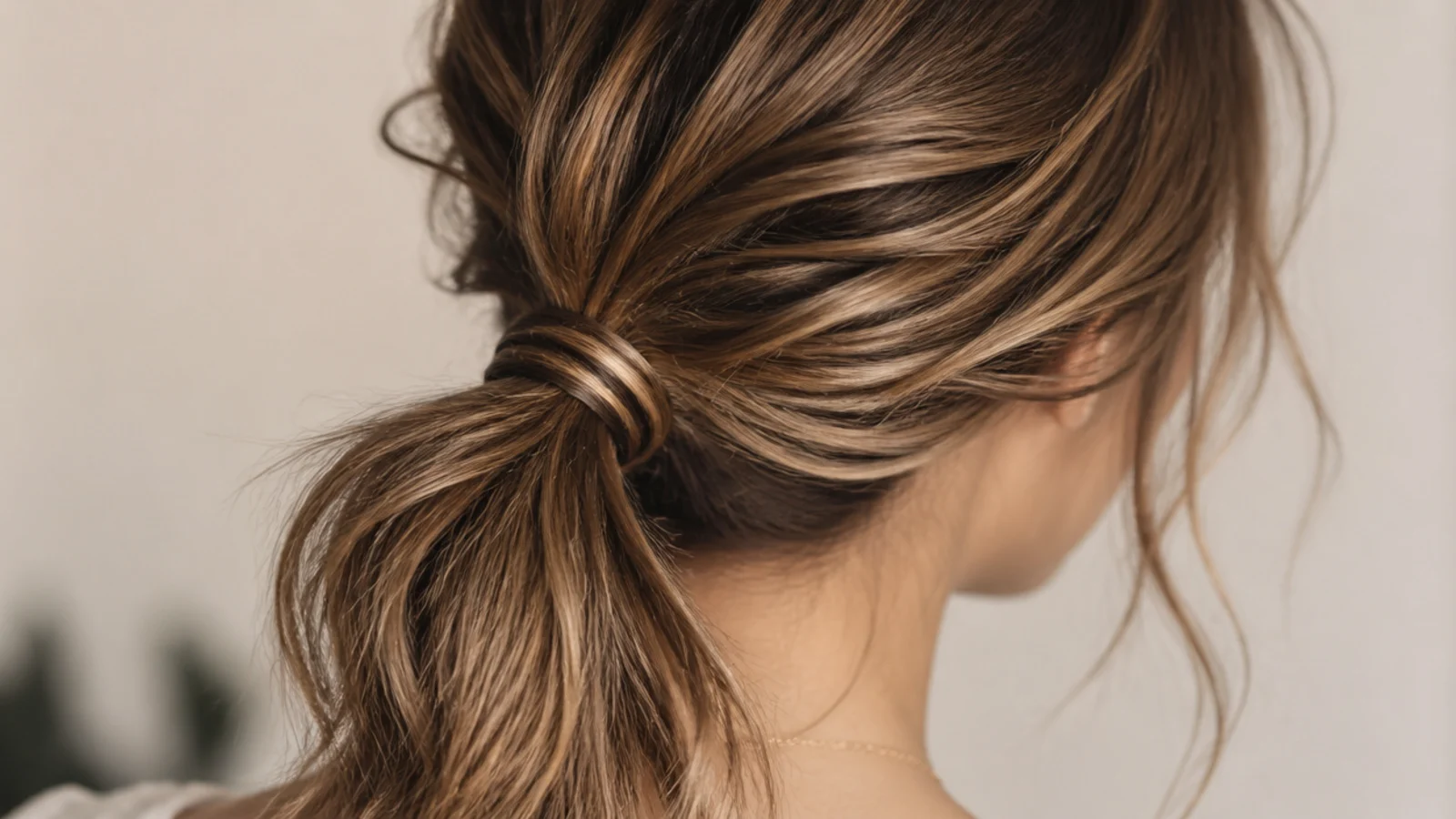
7. Crown Tug for Fine Hair
Fine hair flattens against the skull the moment the band goes on. Pinching a few strands at the crown and easing them upward creates slack between the scalp and the elastic, so the top sits proud instead of lying down against the head.
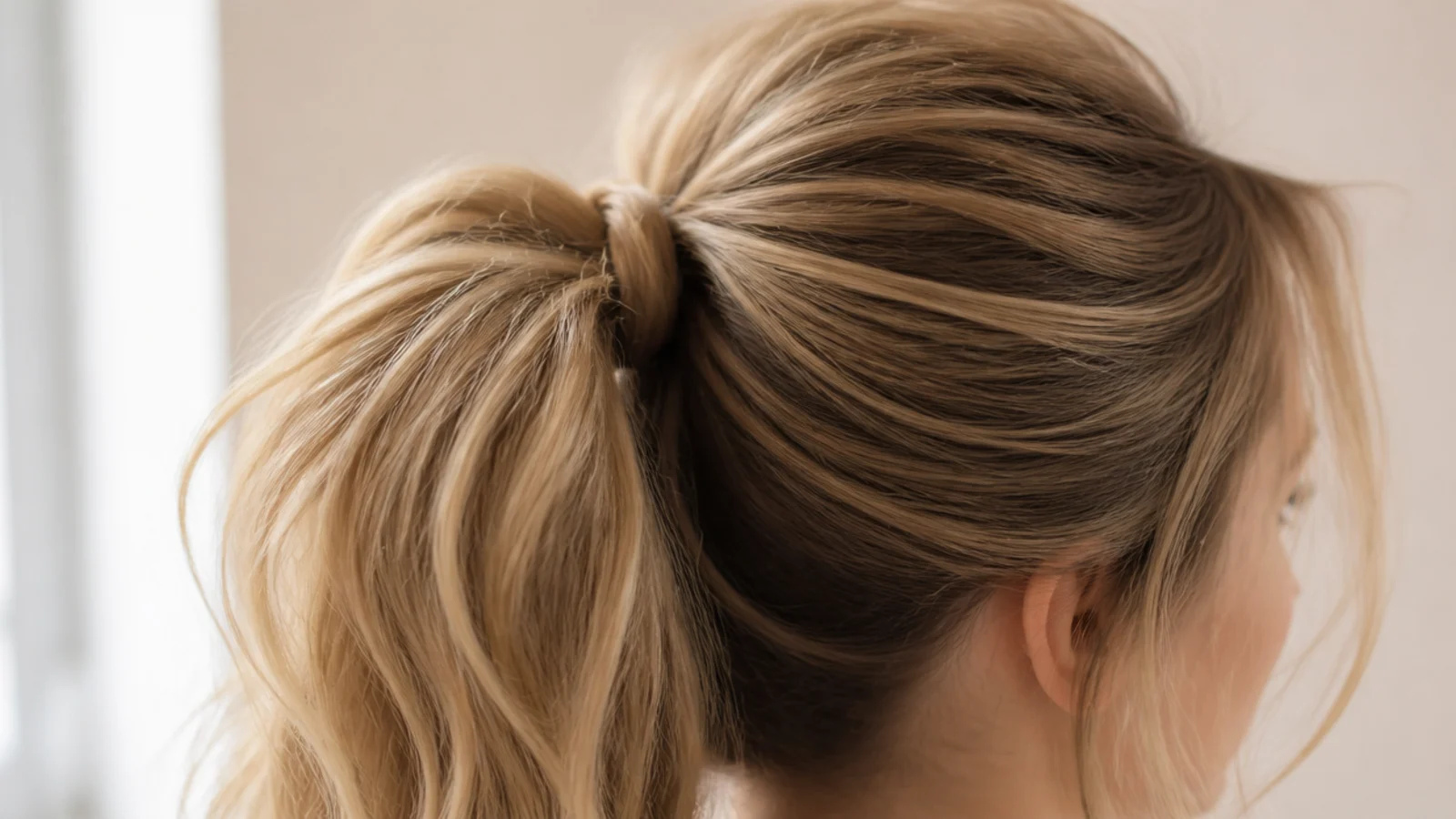
8. Two Elastics Stacked
One elastic absorbs the entire downward pull of the tail. Two share it, with the second sitting a few millimetres above the first so it stops the base from sliding. Stacking earns its keep on heavy hair, where a single band ends up at the nape by mid afternoon.
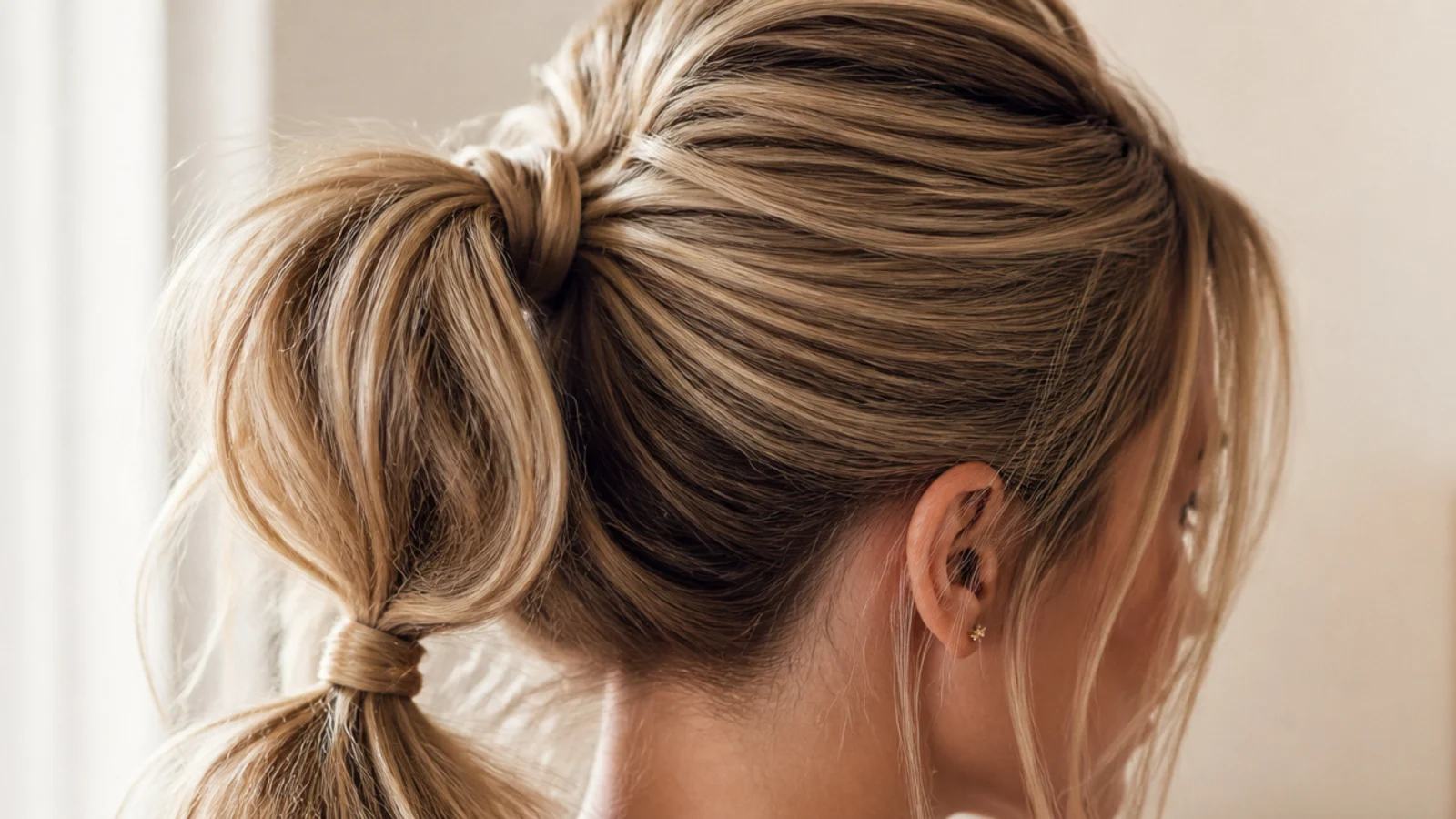
9. Gym to Desk
Sweat wets the hair at the roots, and hair reshapes as it dries and then holds that shape. A ponytail tied before a workout dries into its own set, so you retie the base afterwards, leave the tail alone, and keep the volume you got for free.
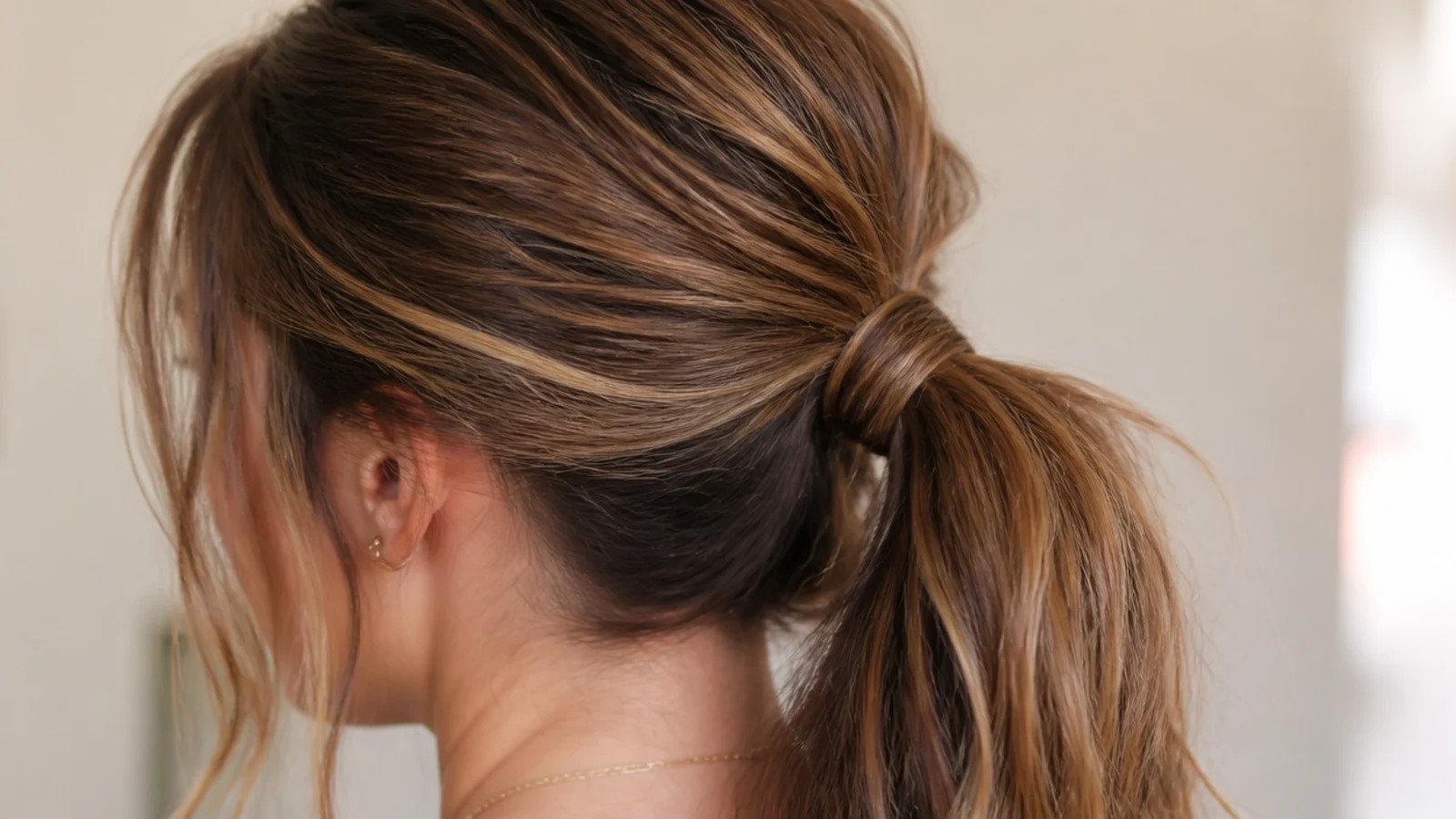
10. Curtain Bang Pony
Curtain bangs are cut too short to reach a gathered style, which is exactly what makes them work here. The pieces framing the face are meant to be out, so tying everything else back leaves the fringe reading as intentional rather than as escape.
11. Silk Scarf on Third Day Hair
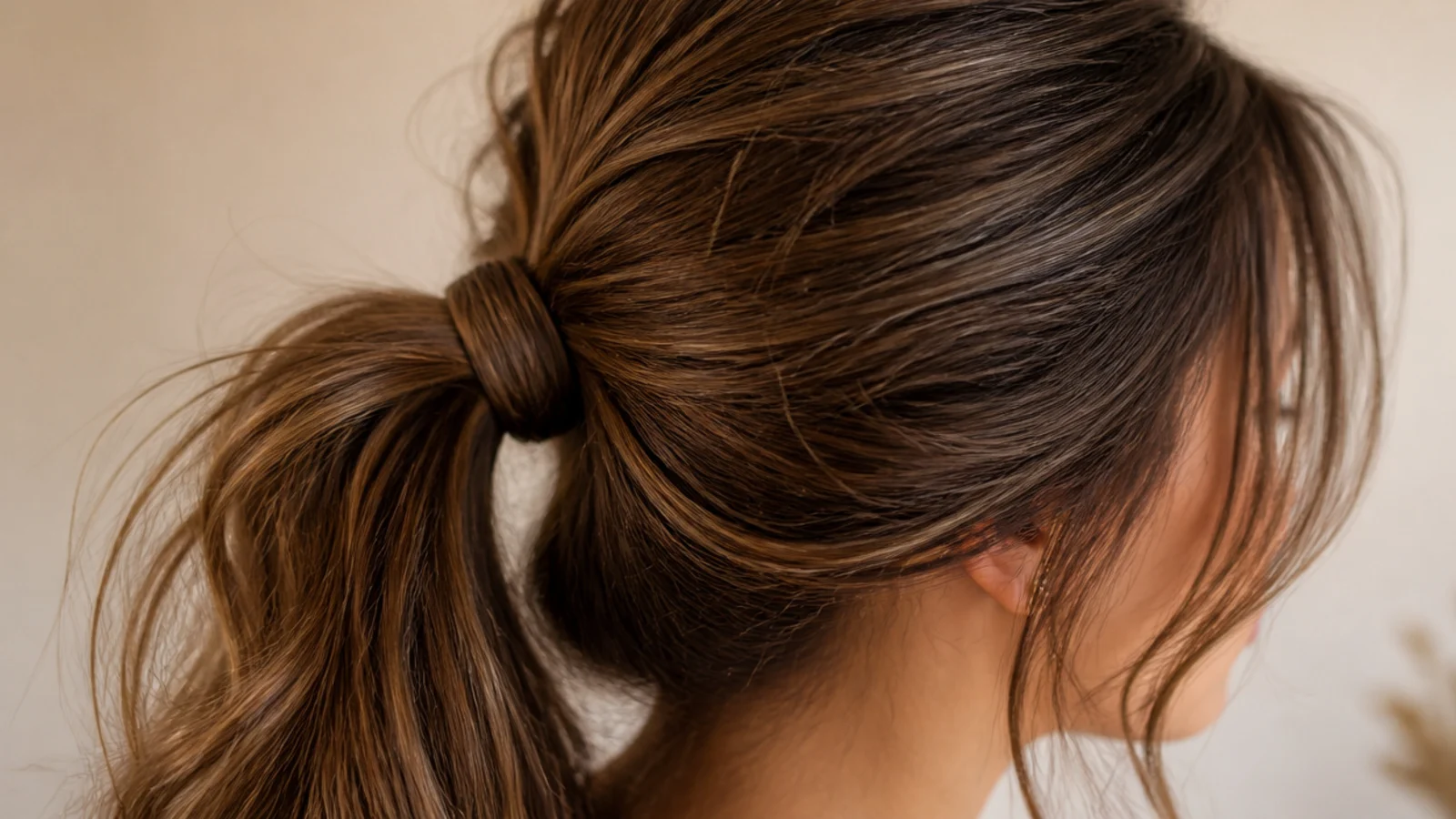
Third day hair has enough sebum on the strands to grip well, but the root looks flat and darker than the lengths. A silk scarf tied at the base covers precisely that area, and the fabric knot adds a second point of hold around the elastic.
12. Pineapple for 3B Curls
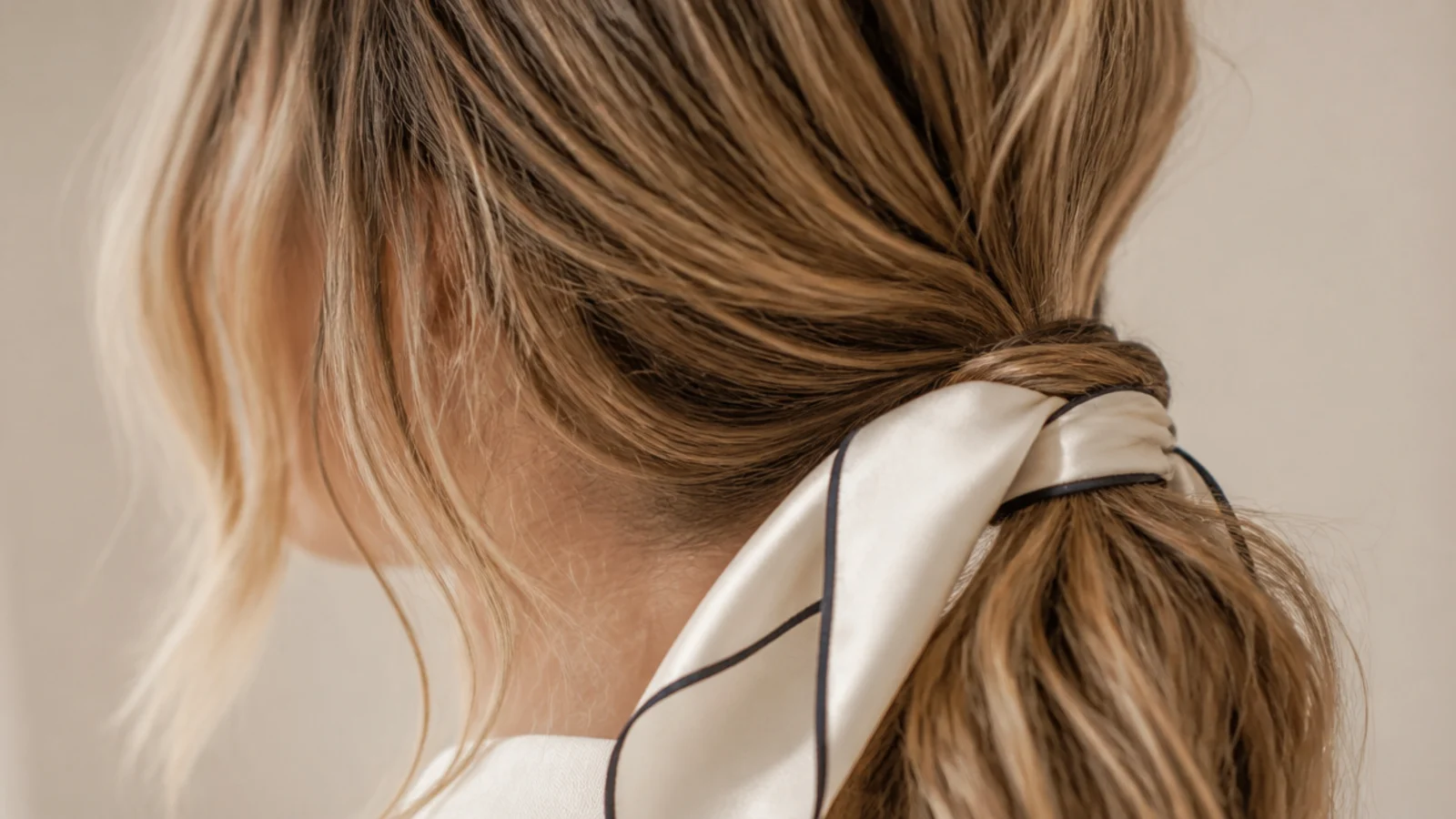
Gathering curls loosely on top of the head keeps the pattern off the pillow, so friction lands on the tie rather than on the curl itself. The looser the band sits, the fewer flattened sections you have to wet down the next morning.
13. Twisted Front for the School Run
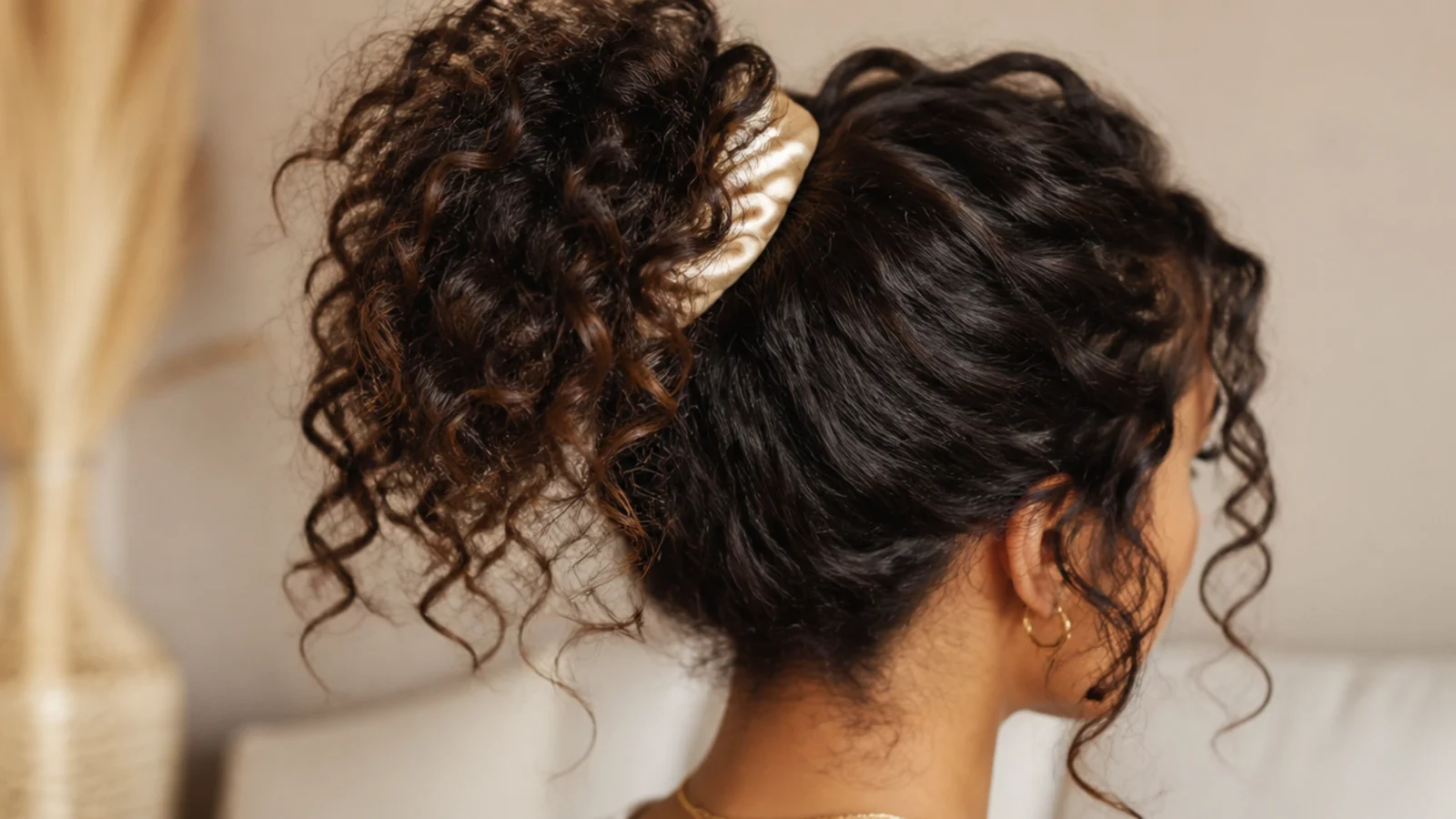
Two twists taken back from the parting and caught into the elastic hold the front off the face without a single pin. The twist is anchored at both ends, so nothing slides forward while you are bent over a car seat or a school bag.
14. Bubble Pony With Five Elastics
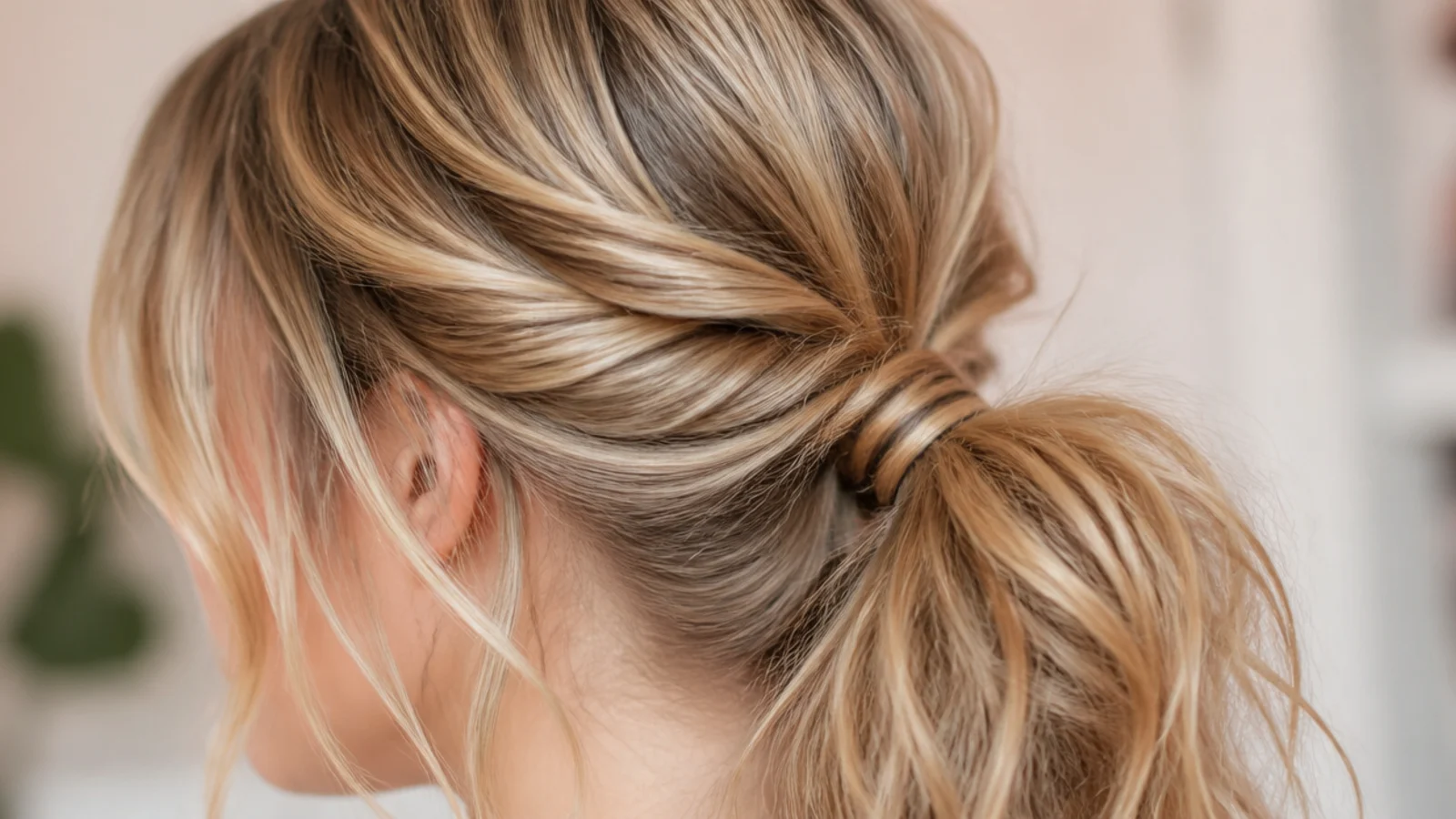
Bands spaced evenly down the tail with the hair pulled outward between each one gives the width of a braid and none of the technique. Five sections is roughly the limit before the lowest bubble runs out of hair to fan out and goes narrow.
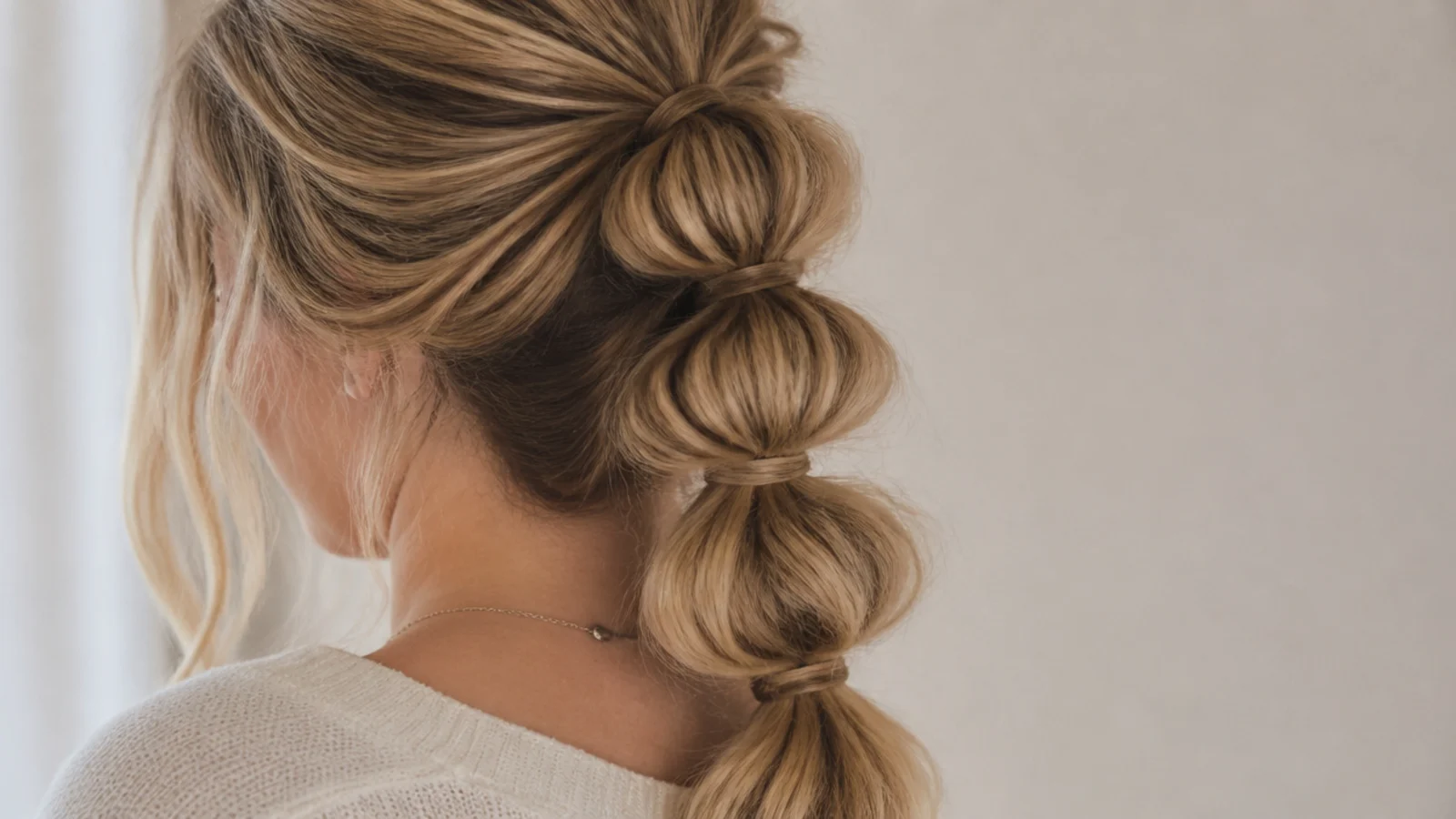
15. Side Pony on 22 Inch Length
At twenty two inches the tail is heavy enough to drag a centred placement downward all day. Moving it to one side rests the length against the shoulder, which takes weight off the band and stops the whole thing creeping toward the nape.
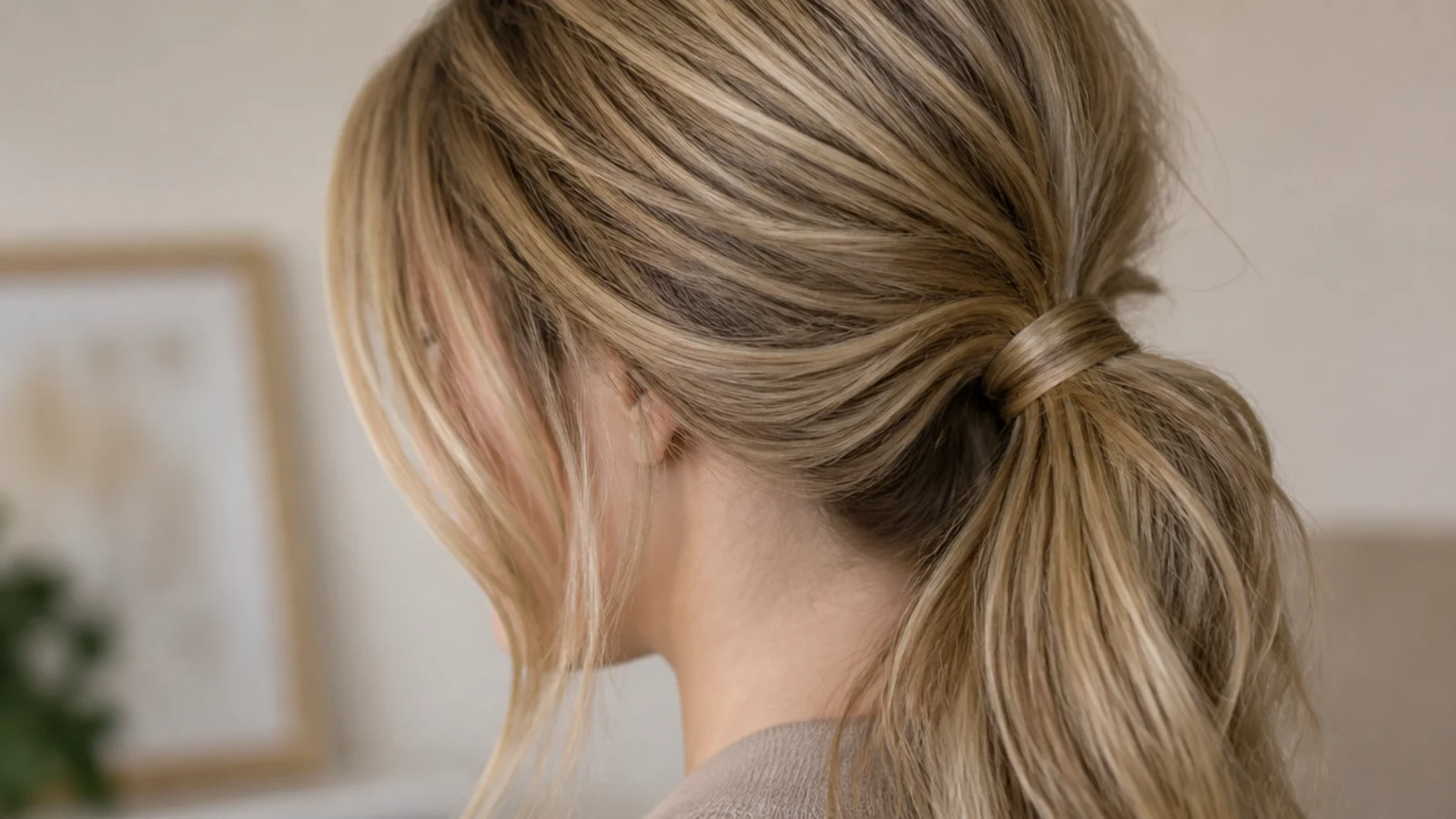
16. Braided Base for the Commute
A short braid worked into the base gives the elastic a lumpy, uneven surface to sit against rather than a smooth column of hair. Uneven surfaces grip, which is why this one survives a train, a coat collar and a rucksack strap without needing a retie.
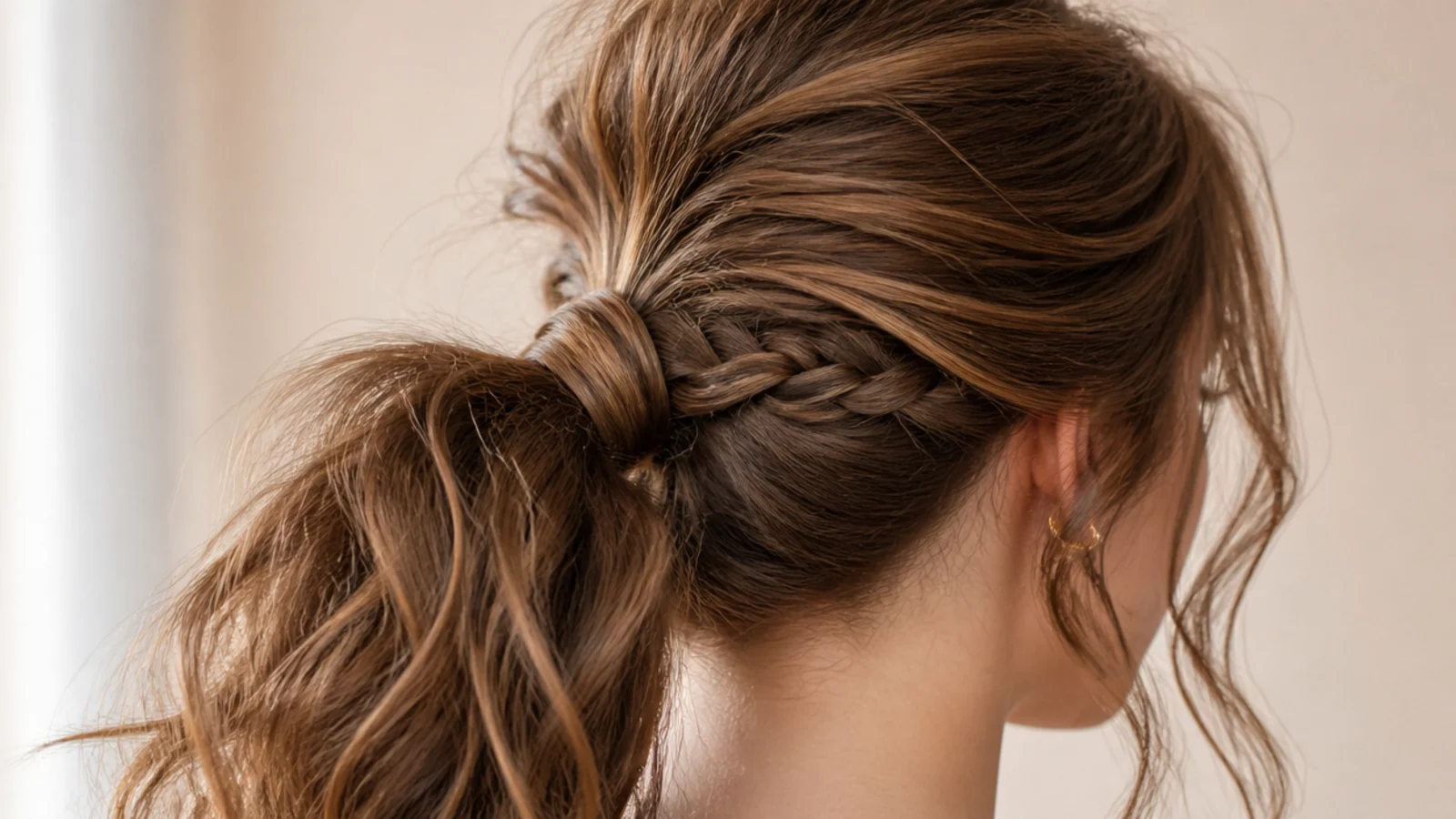
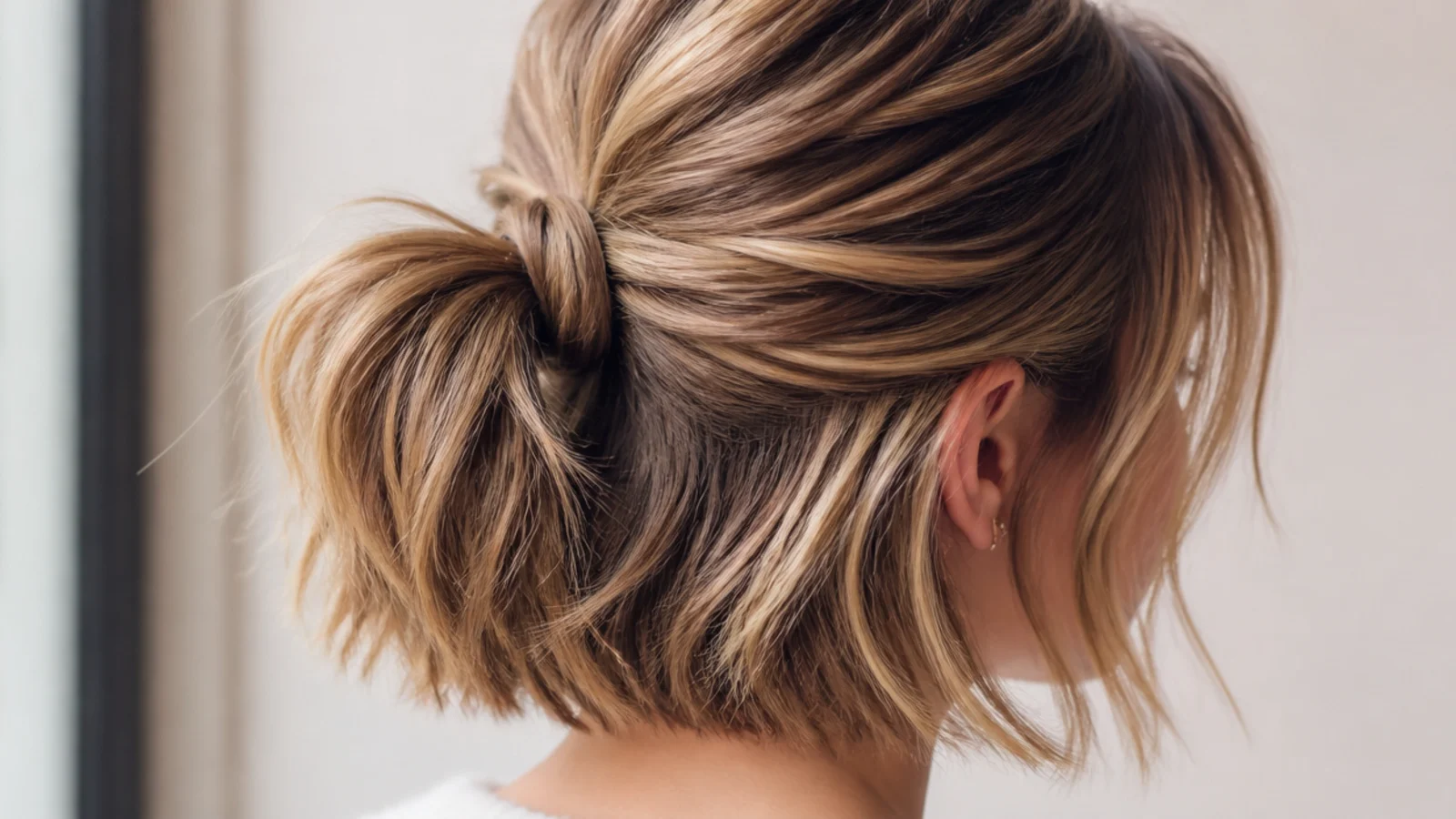
17. Half Up on a Chin Length Bob
A chin length bob has no length to spare, but the top section alone reaches an elastic when the whole head will not. Taking only from the temples upward keeps the cut perimeter fully visible, so the bob still reads as the shape it was cut to be.
18. Sleek Root for the Office
Smoothing only the first two inches from the hairline and leaving the tail rough gives a meeting the neatness it wants without a blow dry. The eye reads the root as the finish of the whole style, so everything past the band can stay undone.
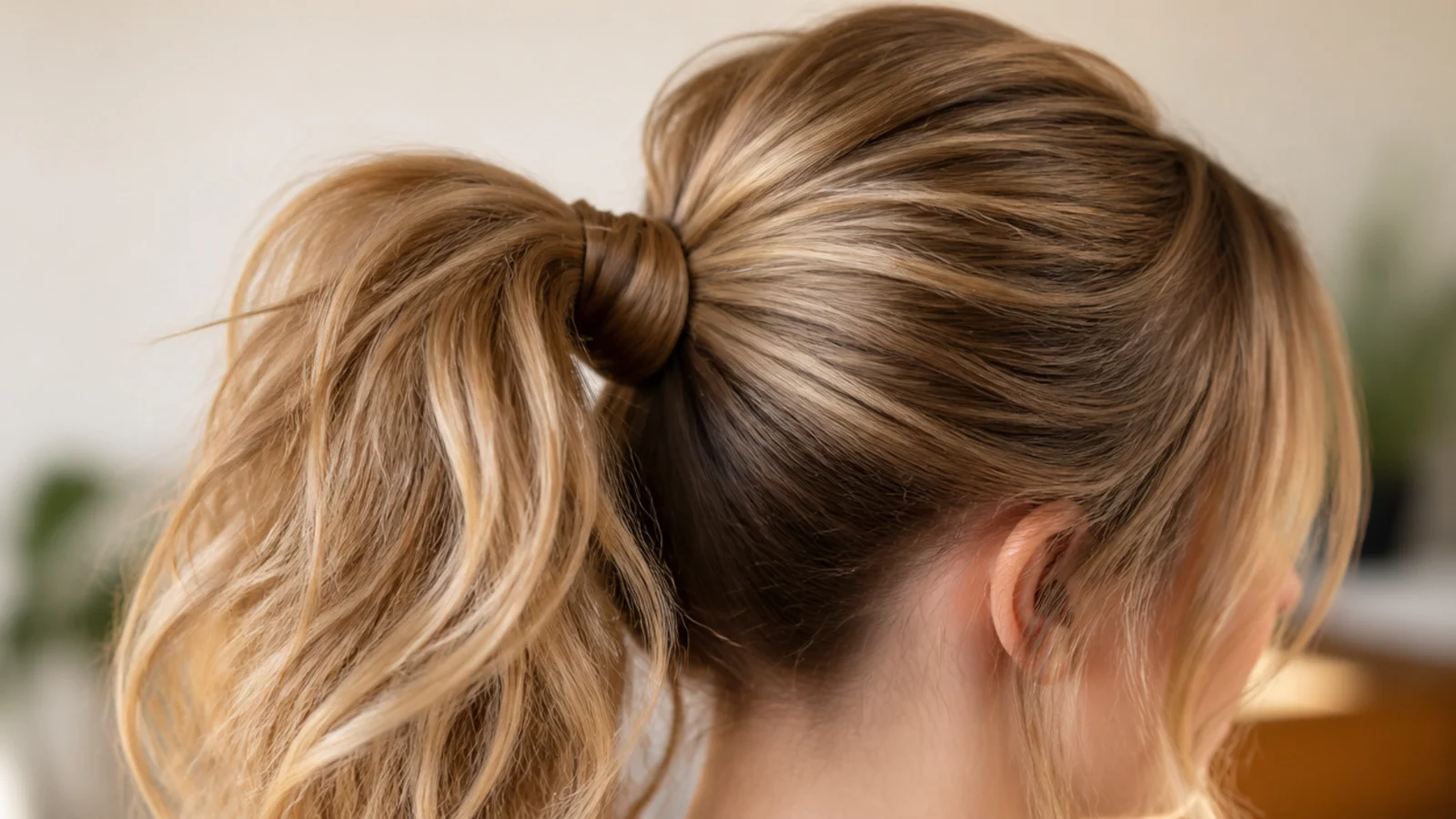
19. Bandana the Night Before Wash Day
On the last day before washing, the roots carry the most oil and the least volume. A folded bandana across the front covers exactly that band of hair, and the knot at the back sits over the elastic to add grip where the hold is weakest.
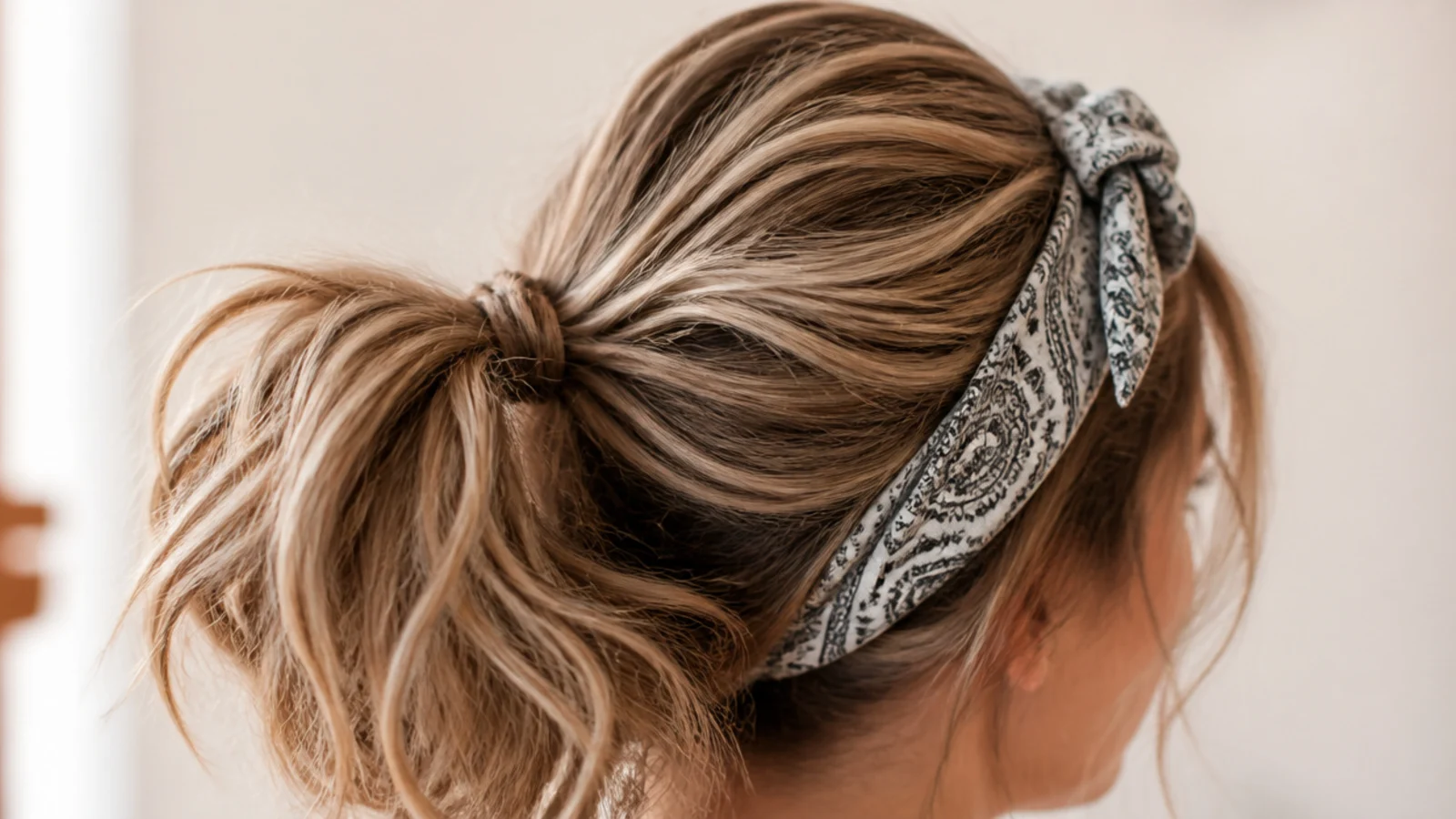
20. Night Before Braid
Hair takes a shape while it dries and keeps it, so a loose braid put into damp hair overnight sets a bend that holds the tail out from the head. By morning the only remaining job is gathering it, and the bend does the volume work you would otherwise be teasing in.
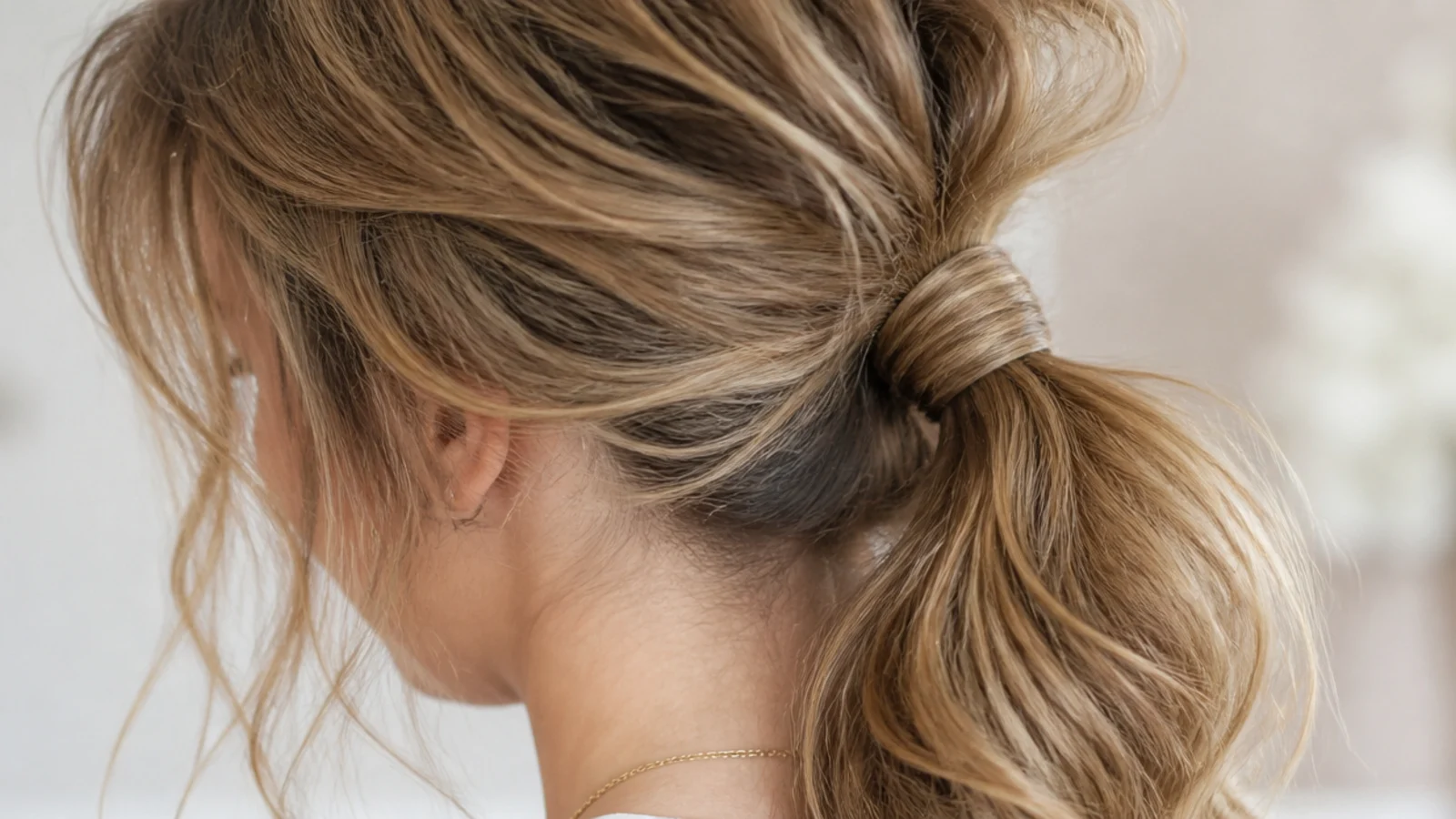
Final Thoughts
Sort these by the minutes you have rather than by how they look. The one minute versions are honest about what they are, and the three minute versions differ from them by ten seconds of powder at the base — which is the whole of the hold problem, solved before you have picked up the band.
The habits worth keeping are small. Gather with fingers, grip before you tie, tug the crown once, and retie rather than tighten when it drops. More ideas of this kind in Updos and Clips. See also the curly version and the easy school version.