20 Messy Ponytail Ideas for Long Hair
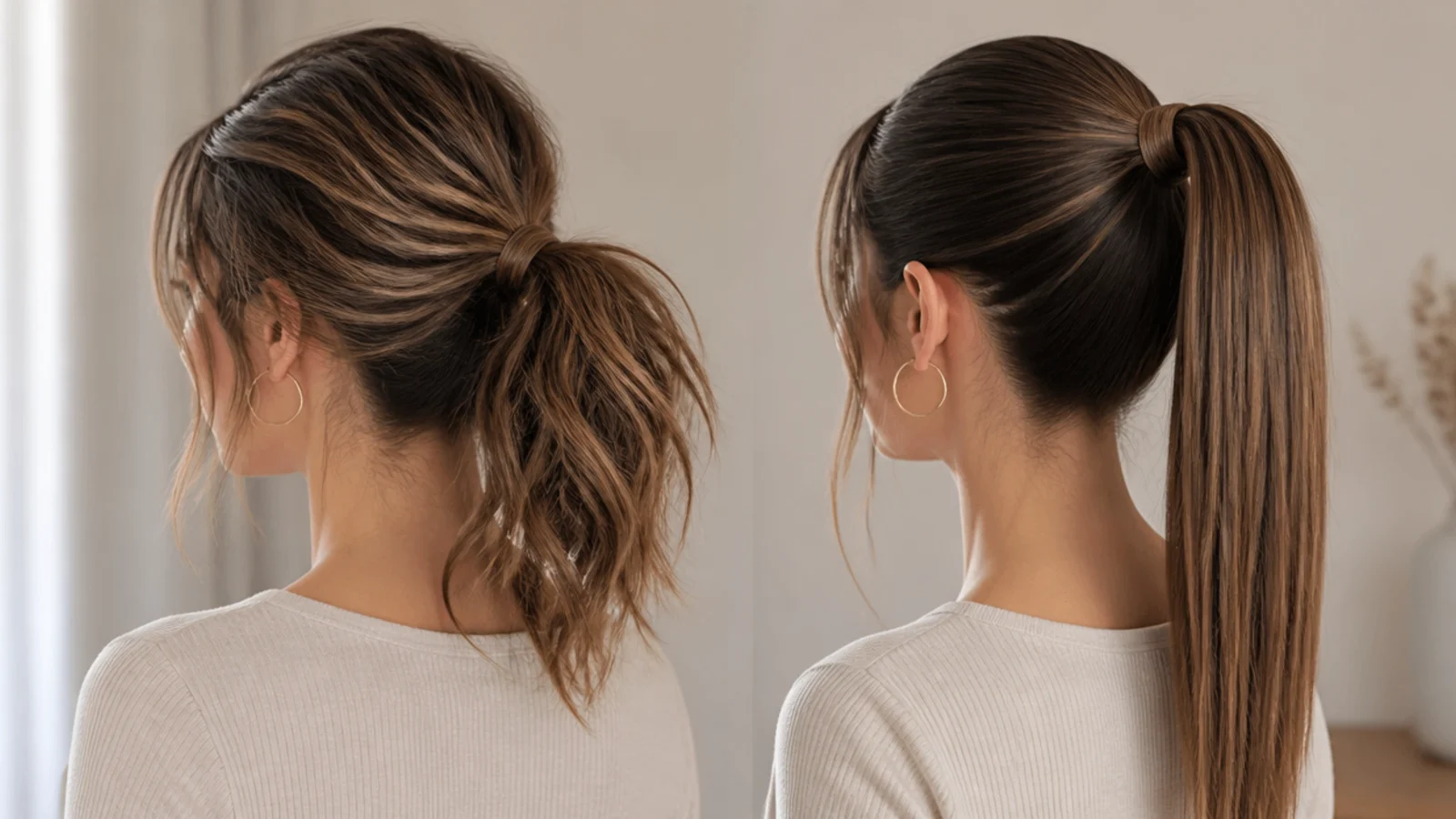
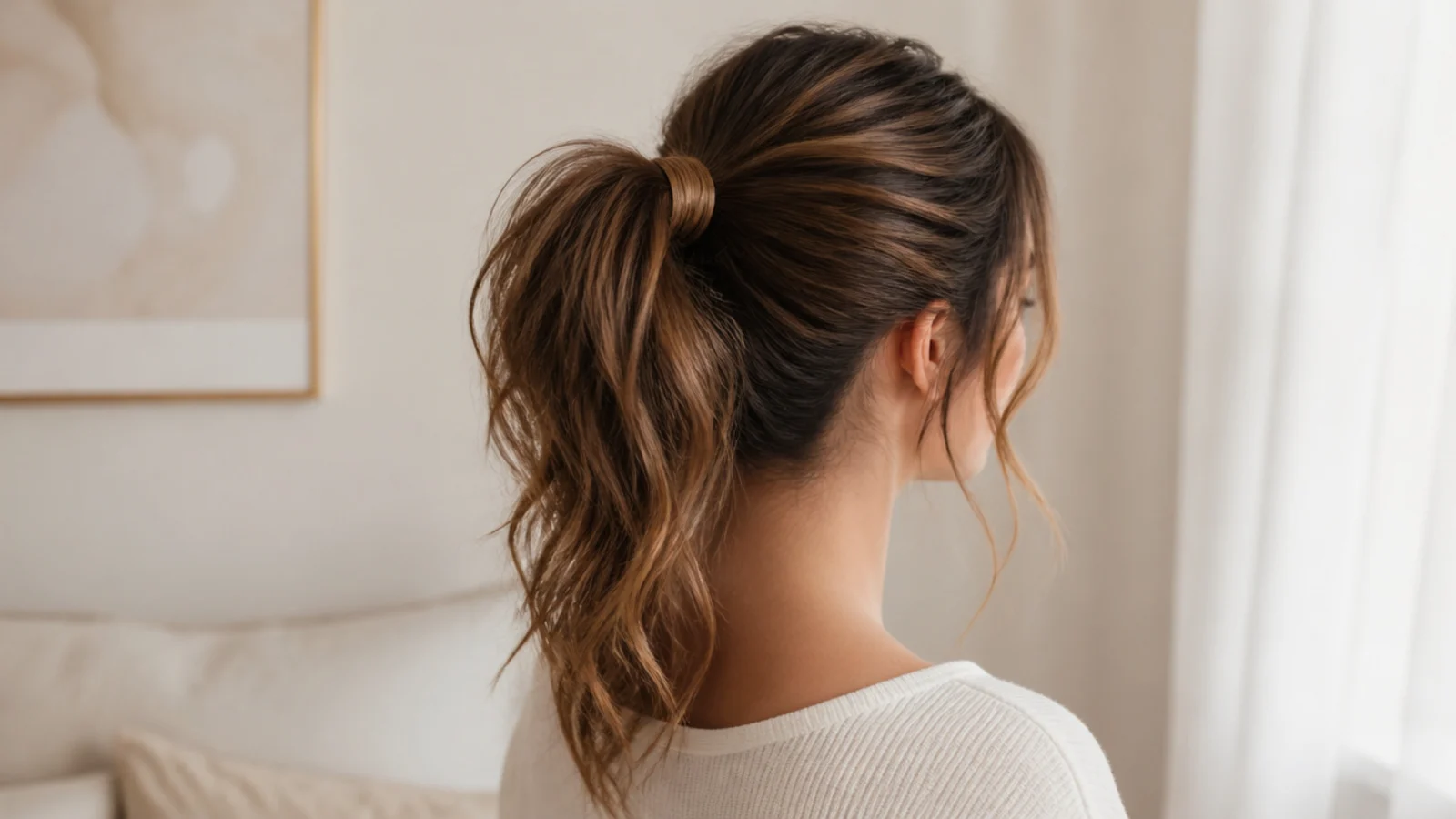
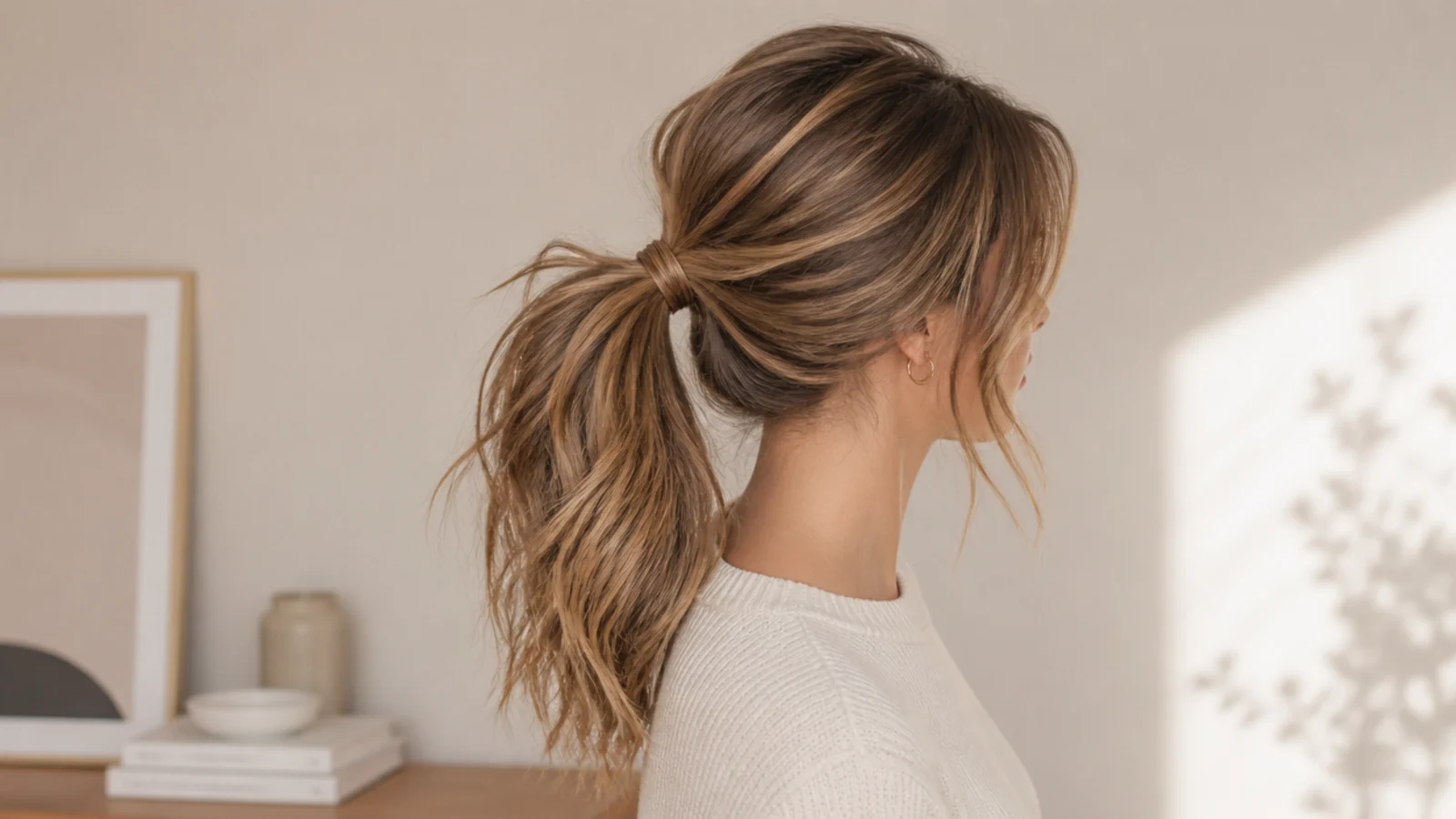
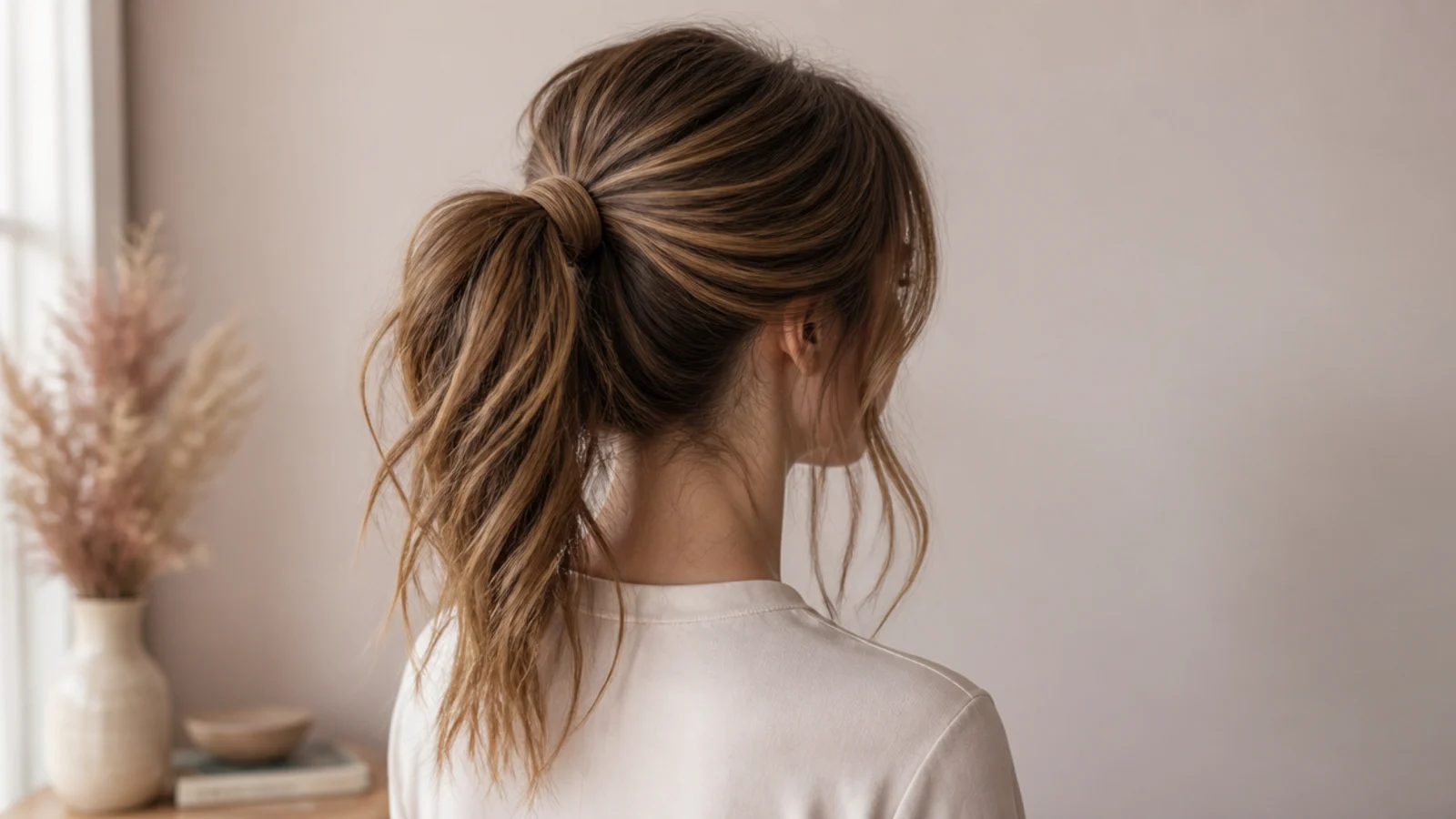
Twenty messy ponytails built for length, and the one problem short hair never has — past the collarbone the tail is heavy enough to drag its own band downward, so placement matters more than technique.
In this article · 27
- Messy Not Untidy
- Tie Placement on Long Hair
- Stopping a Ponytail From Sagging
- Fine Versus Thick Long Hair
- Products That Matter
- The 20 Long Hair Messy Ponytails
- 1. Mid Height Ponytail
- 2. Low at the Nape
- 3. Teased Crown
- 4. Wrapped Elastic
- 5. Side Swept
- 6. Bubble Ponytail
- 7. Half Up
- 8. Braided Base
- 9. Pull Through Ponytail
- 10. Curtain Bangs
- 11. Scrunchie
- 12. Knotted Ponytail
- 13. Sleek Root
- 14. Silk Scarf
- 15. Curly Ponytail
- 16. Double Stacked
- 17. Rope Twist
- 18. Claw Clip Ponytail
- 19. Second Day Ponytail
- 20. Extra Loose
- Final Thoughts
A long ponytail fails in a way a short one never does, and the cause is weight rather than technique.
Past the collarbone the tail drags its own band downward. The hair hanging below the elastic has leverage against it, and friction is the only thing resisting that pull.
Placement solves more than tightening does. A tie an inch lower loses almost nothing visually and takes a surprising amount of load off the band.
Messy Not Untidy
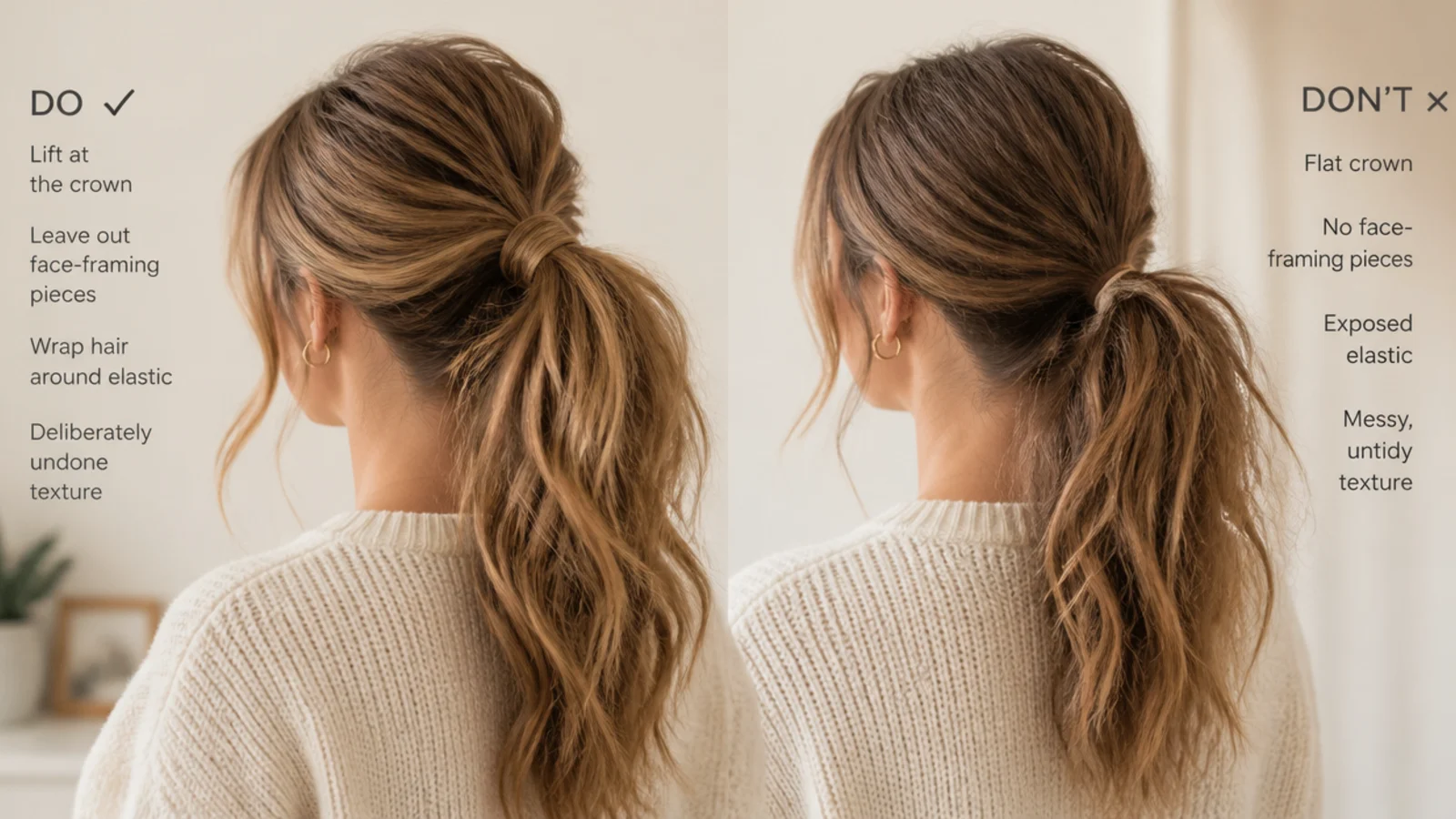
Messy is volume you placed. Untidy is volume that fell. On long hair the distinction is visible from further away, because there is more surface for it to show on.
The base decides everything above it. A clean, tight base carries any amount of roughness down the tail. A loose base makes the length read as slipping out.
Loose pieces belong at the front only. Strands at the temples look chosen. Strands escaping at the nape under a heavy tail look like the style is failing.
Length exaggerates separation. Clean long hair falls into distinct strings when left loose, so texture at the mid lengths is doing more work here than at any shorter length.
Tie Placement on Long Hair
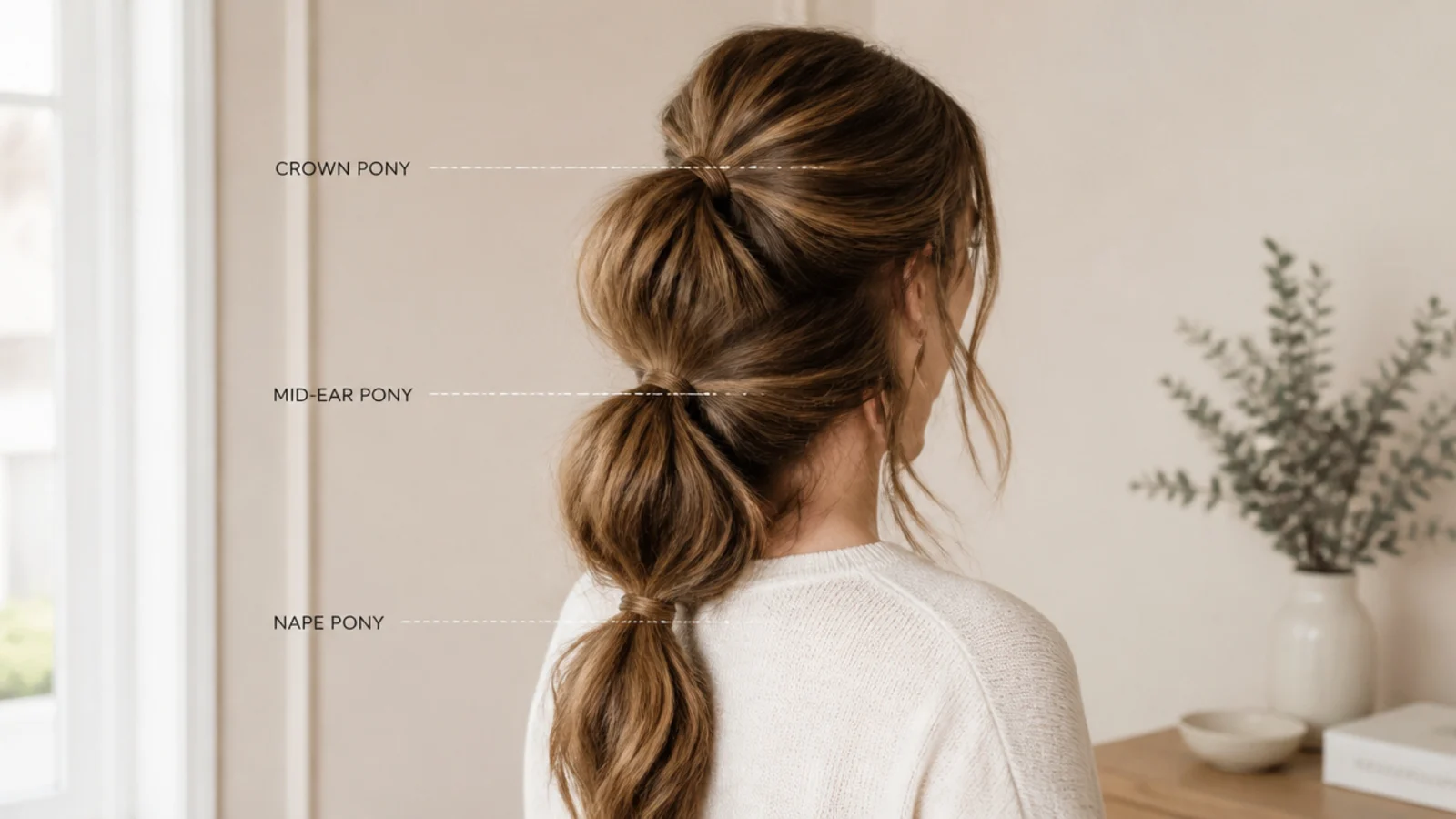
Crown height carries the full weight unsupported. Nothing behind the band is resting against the head, so all of the tail's load sits on friction. Expect to retie it.
Mid height is the working placement. Level with the top of the ear, the tail still swings and lifts but part of it brushes the head, which shares the load.
Nape height is the one that stays put. The tail sits against the neck and back, so the band holds far less than its own weight. It is the placement for a long day.
Move the height between wears. The band loads the same narrow band of every strand each time, and shifting an inch spreads that stress rather than repeating it.
Stopping a Ponytail From Sagging
Give the band a rough surface. Dry shampoo, texture spray or a short braid at the base all do the same job, which is raising friction between the elastic and the hair.
Stack a second elastic above the first. The upper band takes the sliding force so the lower one only has to hold the gather together.
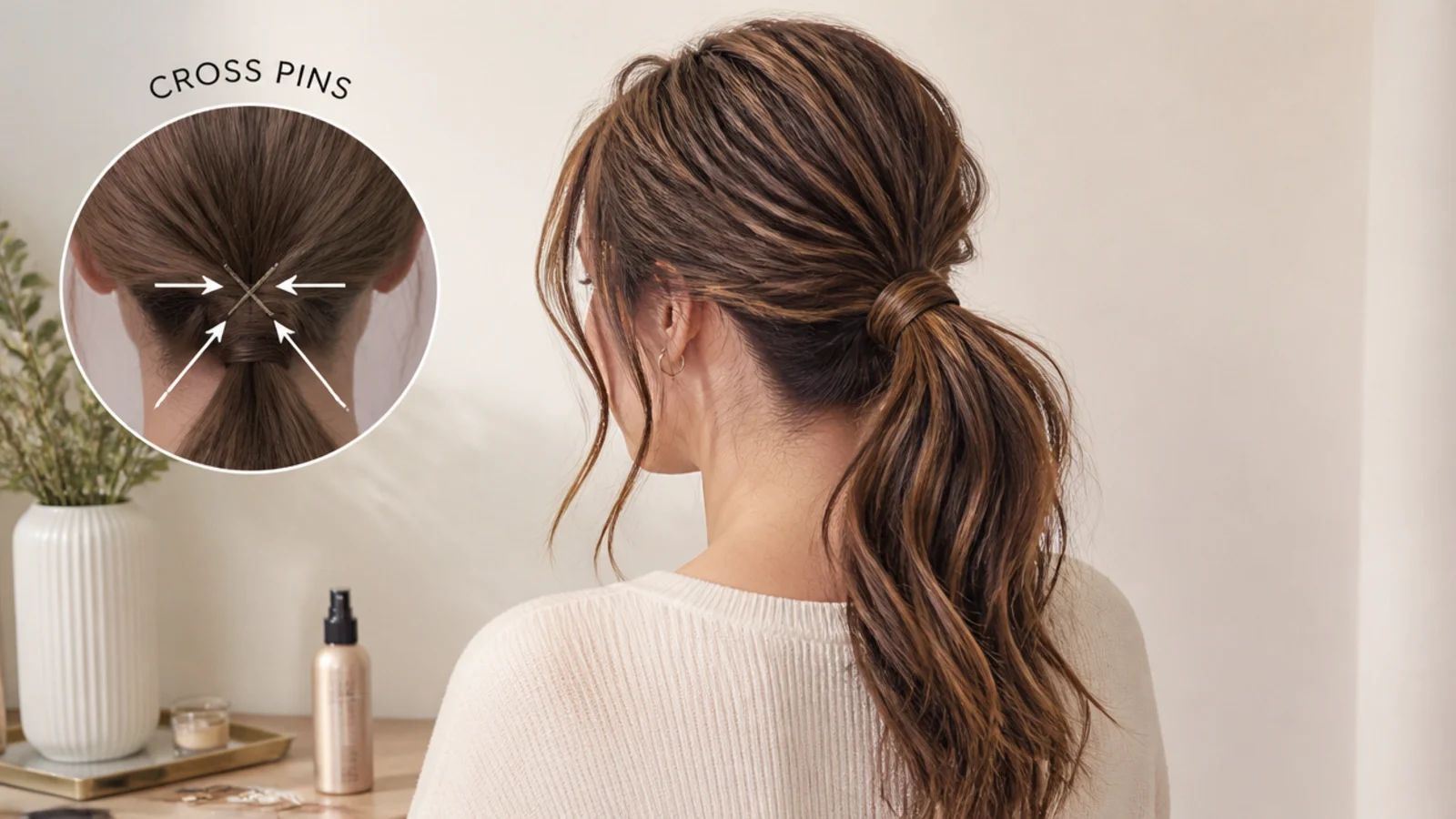
Use two crossed pins under the base. Pins slid up into the hair beneath the elastic act as a shelf, propping the whole gather rather than gripping it.
Retie instead of tightening. Tightening squeezes hair that has already lost its grip. Taking it down and regathering restores the surface the band needed.
Fine Versus Thick Long Hair
Fine long hair is light but slippery. It sags less from weight and more from a lack of grip, so texture at the base fixes it faster than a stronger band.
Thick long hair is the hardest case. Weight and bulk together, which is why a single elastic on this hair type is at the nape within an hour.
Fine hair wants a wide band. A thin elastic sinks into a small gather and closes on itself, where a fabric covered band spreads contact across more of it.
Thick hair wants an anchor, not more tension. A large claw clip, a bungee or a braided base handles bulk that no amount of pulling will hold.

Products That Matter
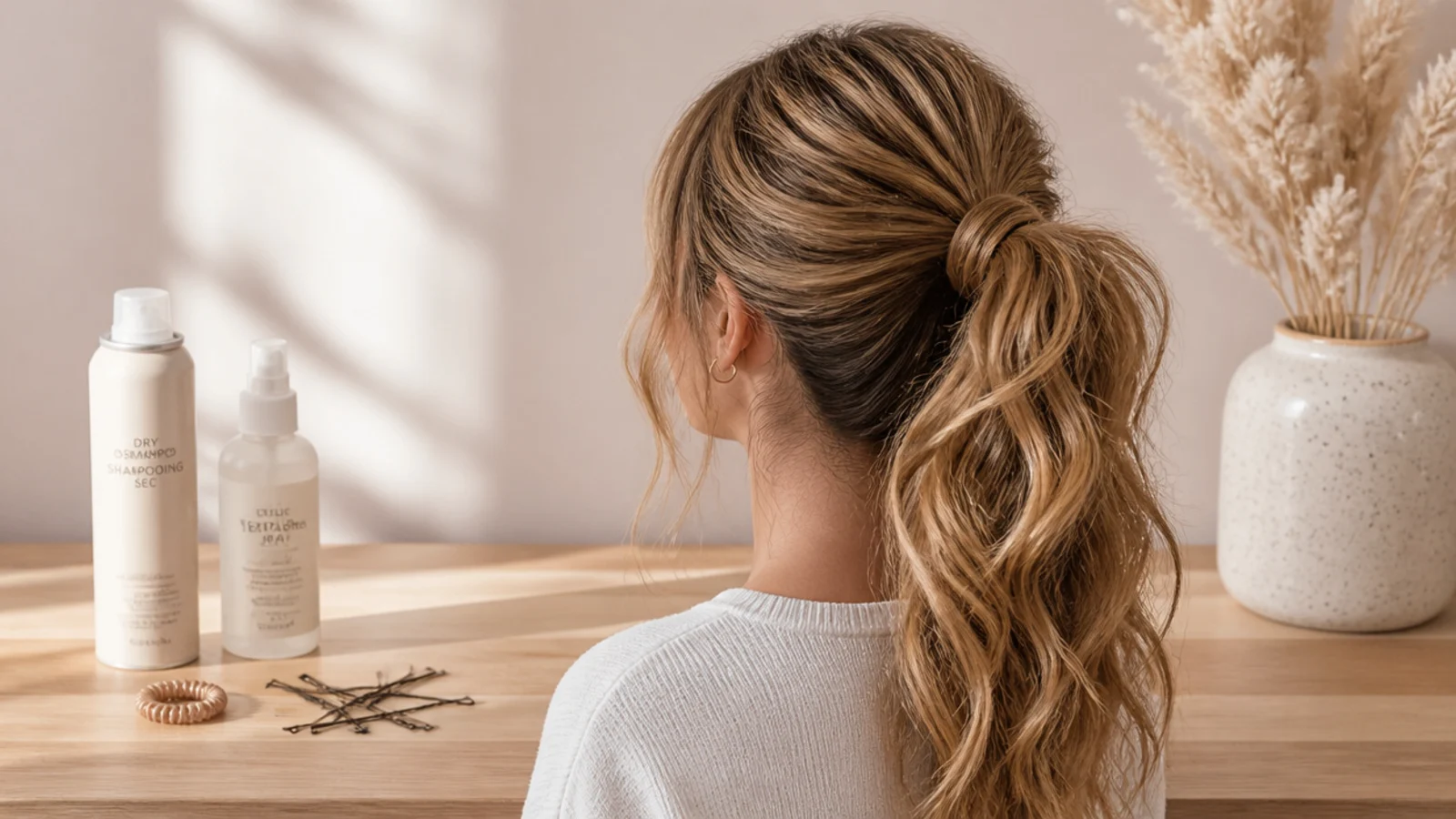
Dry shampoo at the base. The starch or clay absorbs oil and leaves behind powder, and it is that powder giving the elastic something to hold.
Texture spray through the mid lengths. Long clean hair has no grit anywhere along it, and the mid lengths are where a tail separates into strings.
A fabric covered elastic. Wider contact and no metal join, which matters more here because there is more weight loading whatever the band is made of.
Two pins, not eight. Crossed under the base they support the tail. Scattered around the head they only add bulk you have to remove later.
A light oil on the ends, never near the band. Long ends are the oldest hair you have, and oil anywhere near the base removes the friction you just built.
The 20 Long Hair Messy Ponytails
1. Mid Height Ponytail
Level with the top of the ear, which is the compromise placement for length. The tail still lifts away from the neck, but enough of it rests against the back of the head to take load off the band and slow the slide downward.
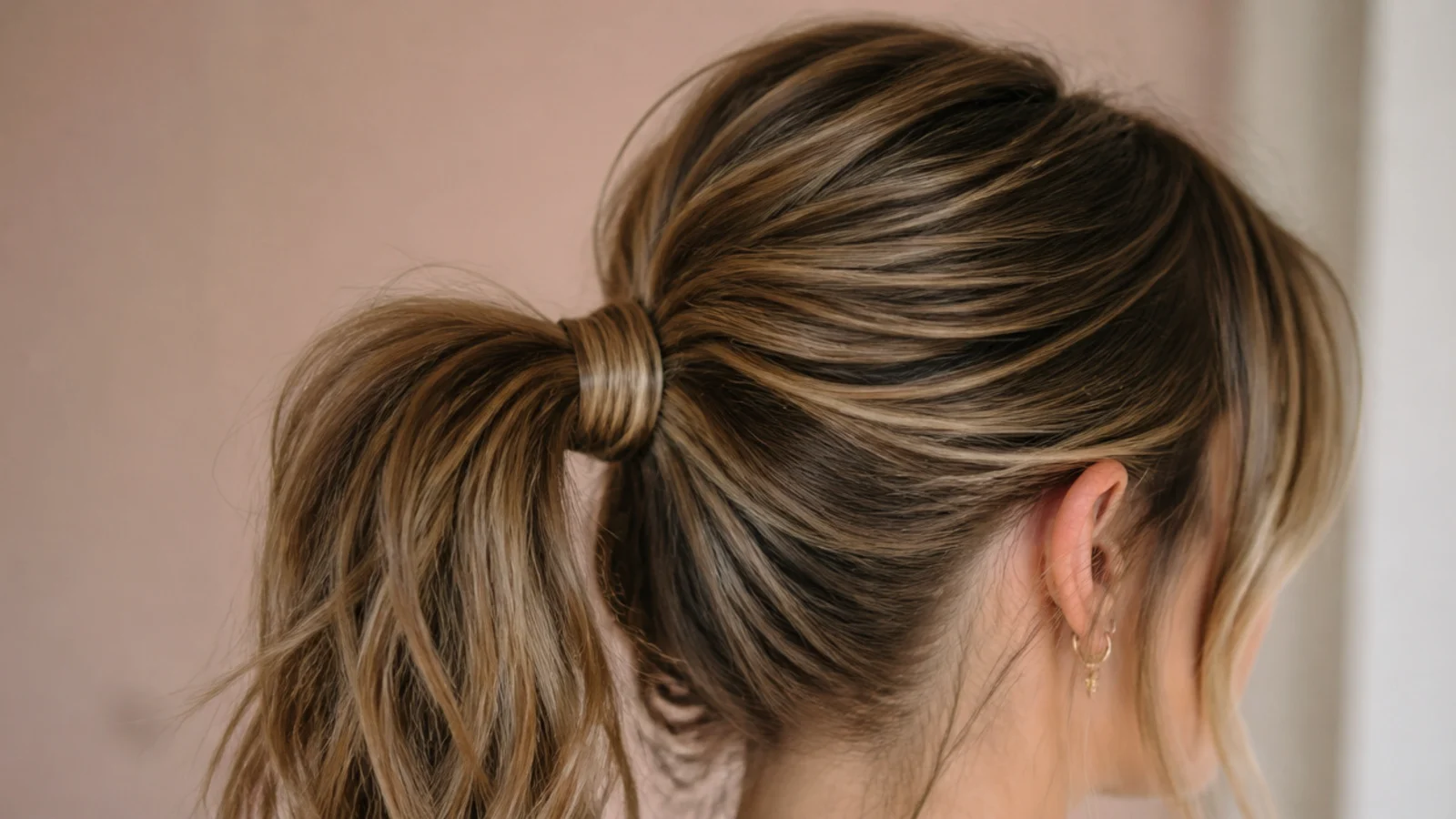
2. Low at the Nape
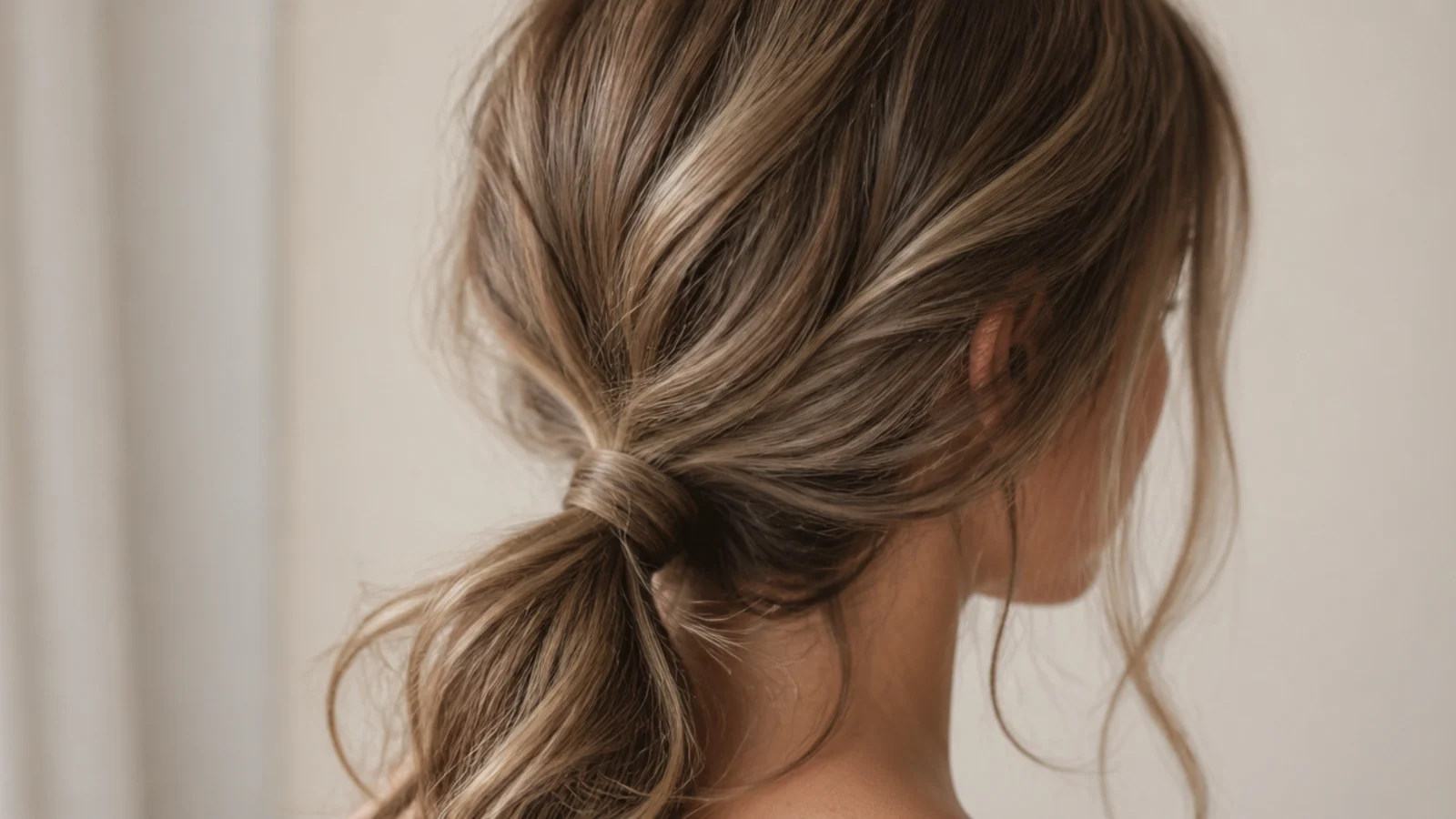
The placement that holds all day, because the tail sits against the neck and shoulders rather than hanging free from the band. The weight is supported by the body instead of the elastic, which is exactly why nothing moves.
3. Teased Crown
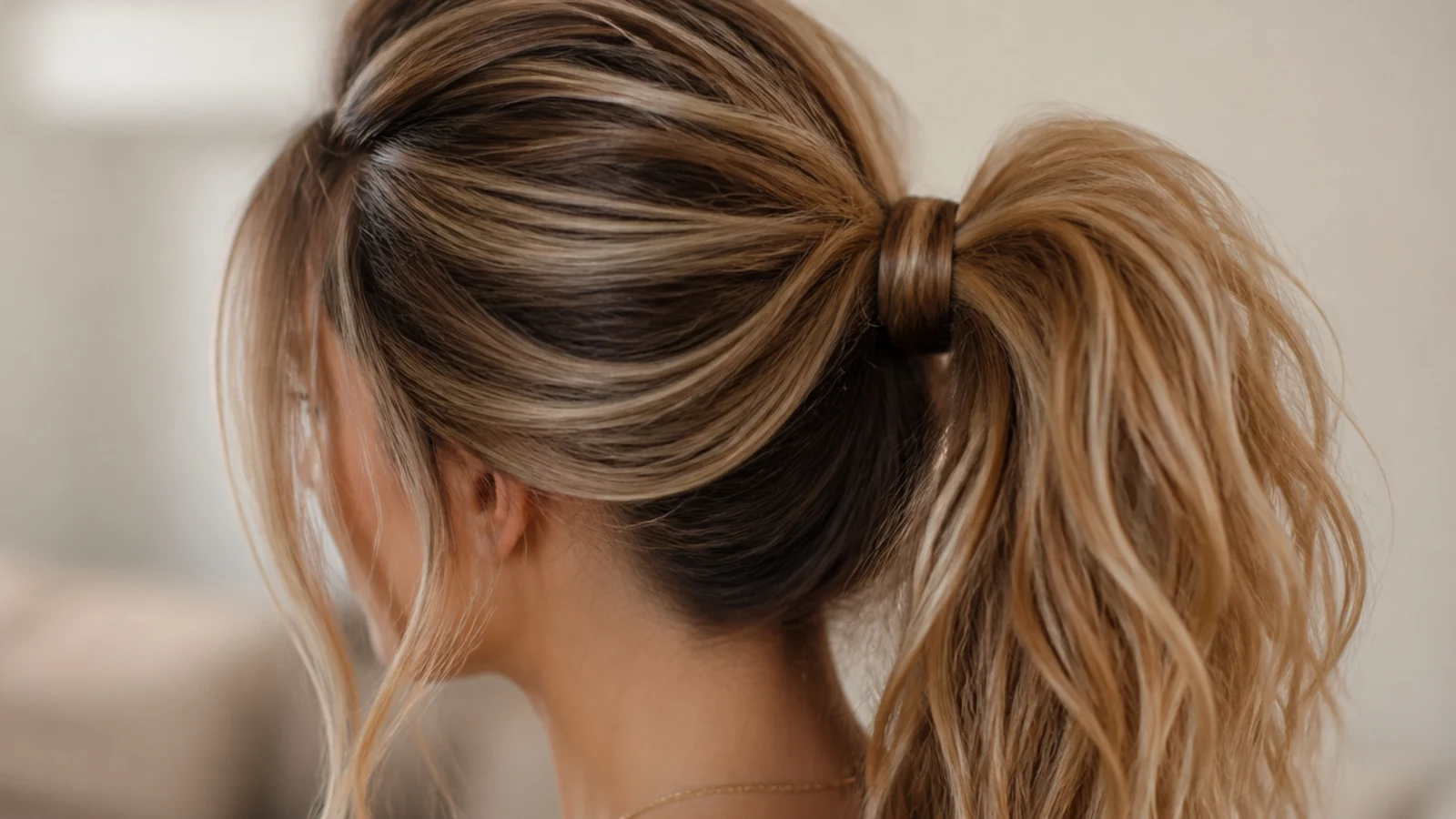
Backcombing pushes the cuticles of neighbouring strands against each other so they knot into a light mat, and that mat props the surface hair upward. On long hair it also counteracts the downward pull the tail exerts across the whole top of the head.
4. Wrapped Elastic
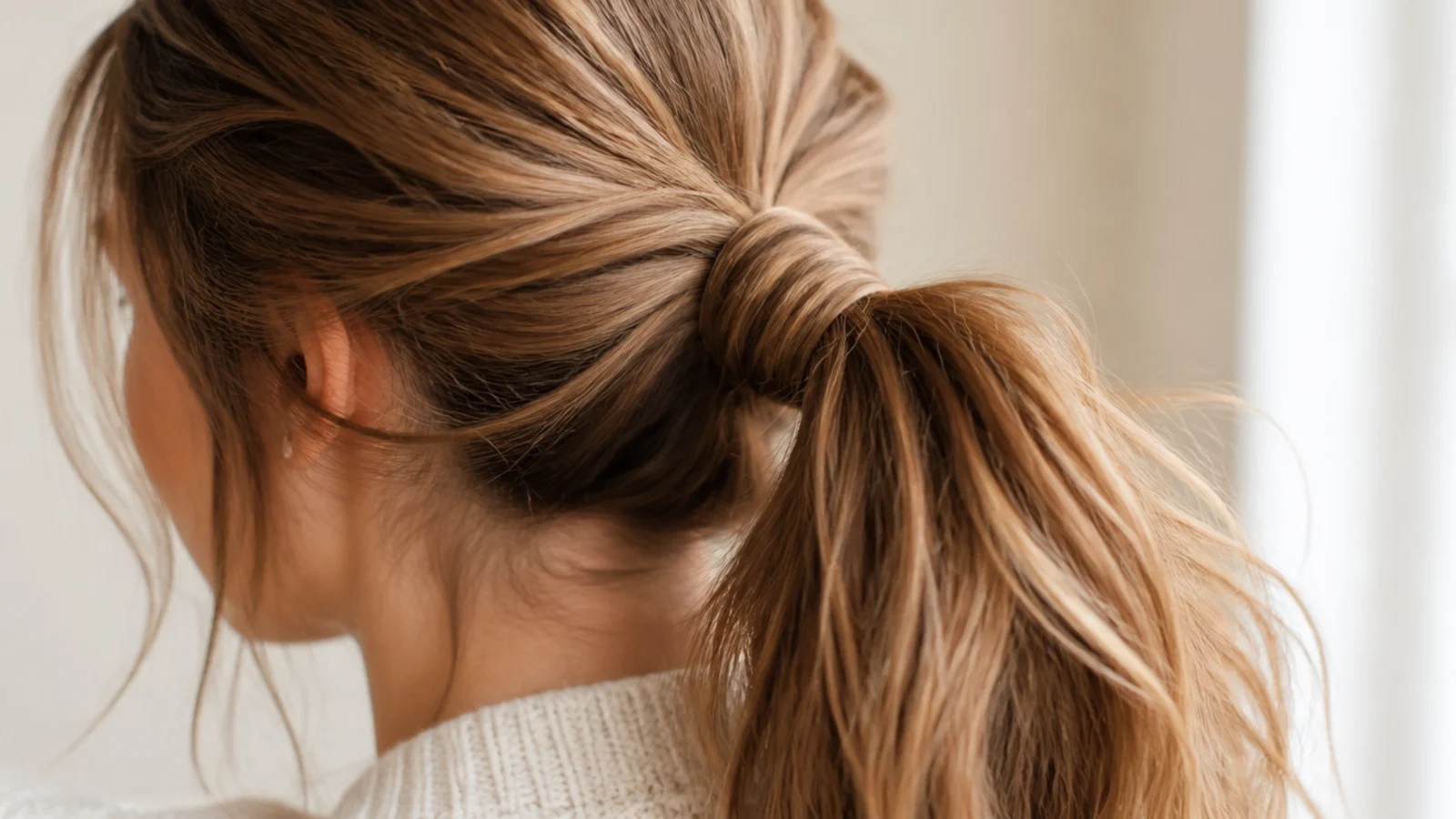
A section taken from underneath the tail and wound around the base hides the band completely. On long hair the wrap has plenty of length to go round three or four times, which makes it far more secure than the same trick on a short tail.
5. Side Swept
Bringing the tail over one shoulder shifts the weight forward and rests it on the body, which removes most of the leverage acting on the band. It also puts the length where you can see it, which is the point of having it.
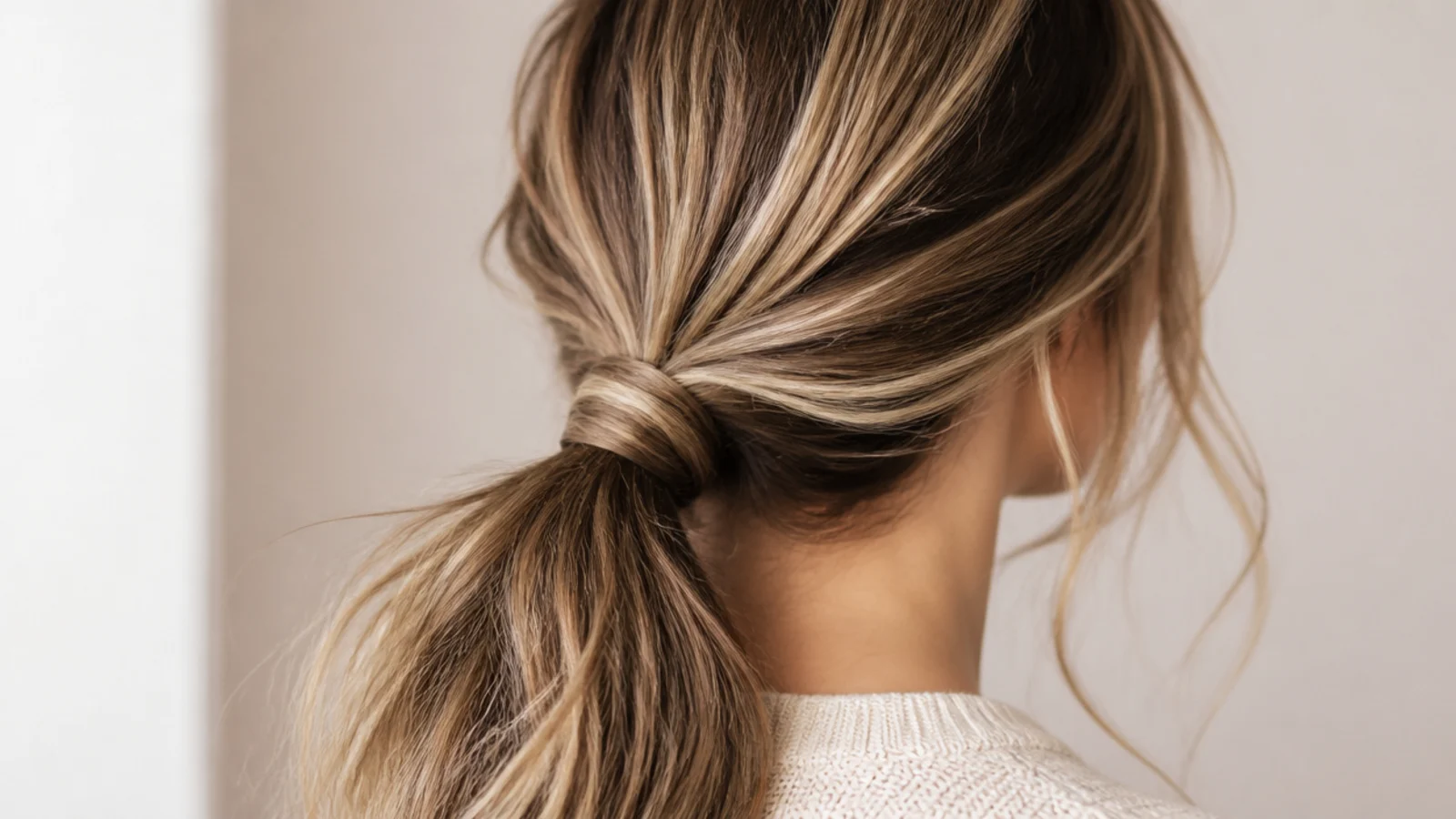
6. Bubble Ponytail
Bands spaced down the tail split one heavy column into several shorter ones, so no single elastic carries the whole load. Long hair is the ideal length for this because there is room for five or six sections before the last runs out of hair.
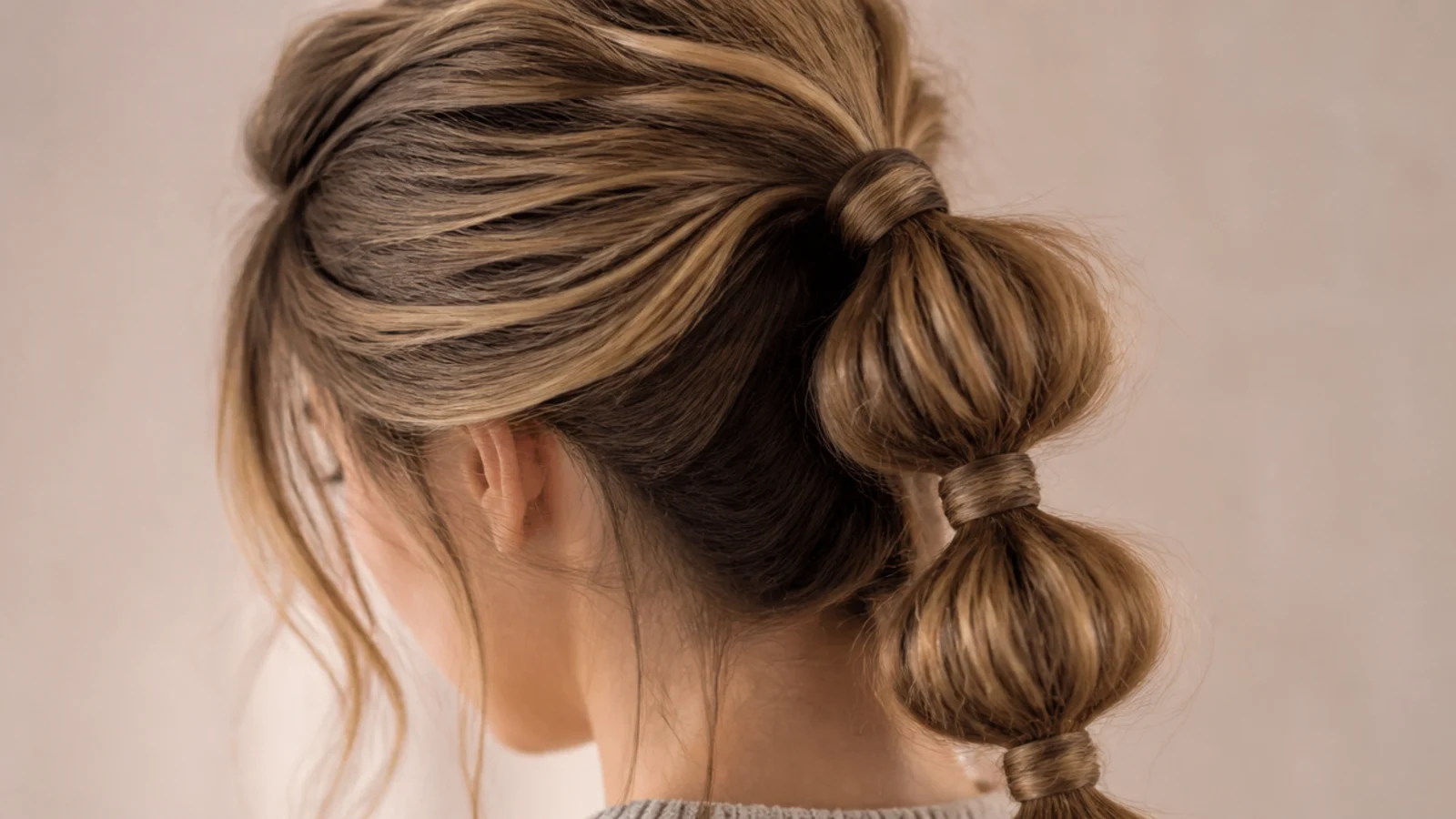
7. Half Up
Only the top section is gathered, so the elastic holds a fraction of the hair and none of the weight of the lengths. That is why a half up stays exactly where you put it on hair that drags a full ponytail down within the hour.
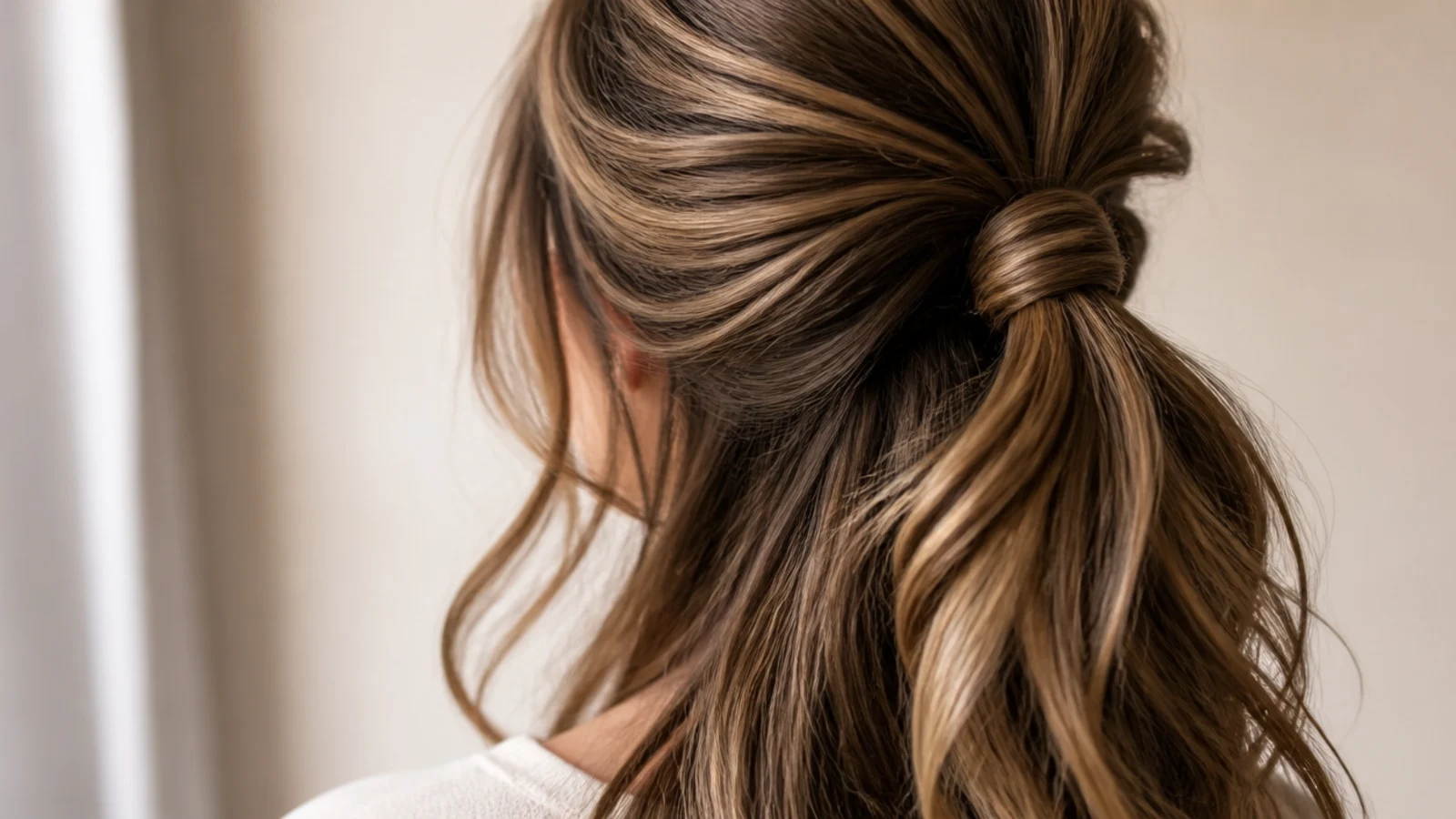
8. Braided Base
Three or four inches of braid worked into the gather gives the elastic a ridged surface instead of a smooth one. Ridges grip, and on heavy hair that difference is worth more than any increase in how hard you pull the band.
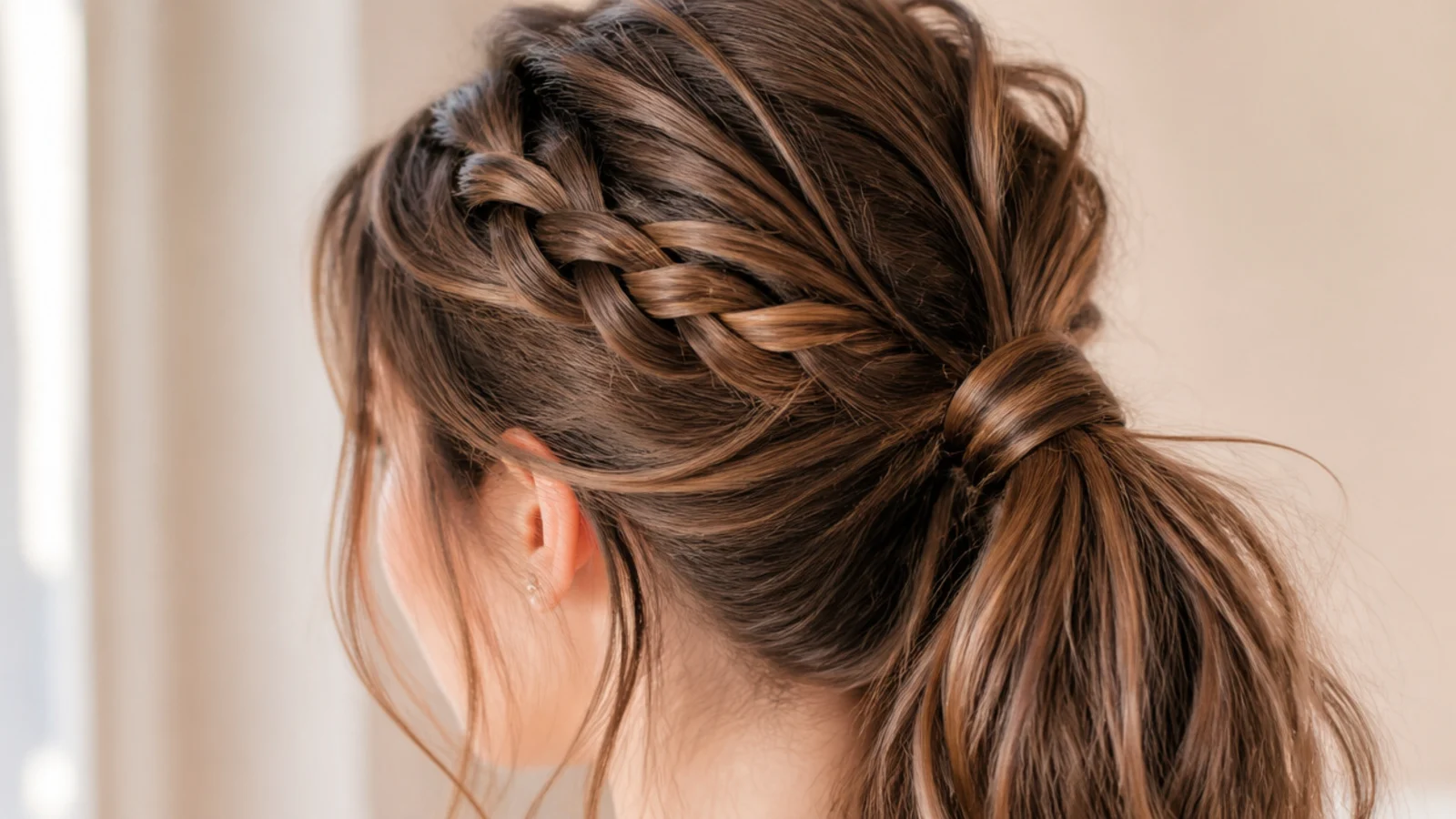
9. Pull Through Ponytail
Sections are pulled back through the gather above them, so each one is anchored by the hair around it rather than by the band alone. The structure distributes weight up the whole tail, which is why it holds on length that defeats a single elastic.
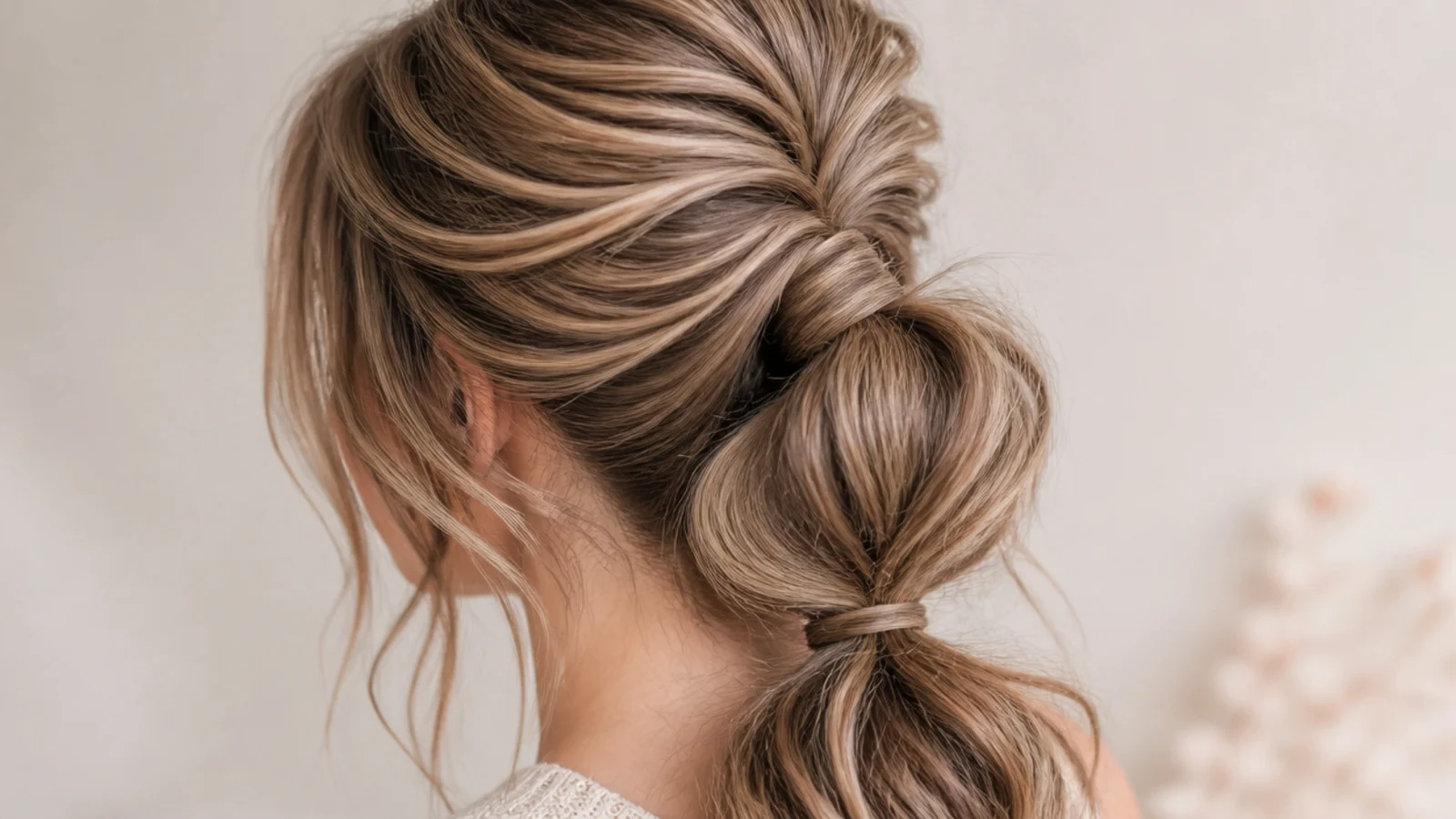
10. Curtain Bangs
A fringe cut to fall either side of the parting is too short to be gathered, so it stays out by design. Against a long tail the contrast is useful, because it puts something at eye level in a style whose whole mass sits behind the head.
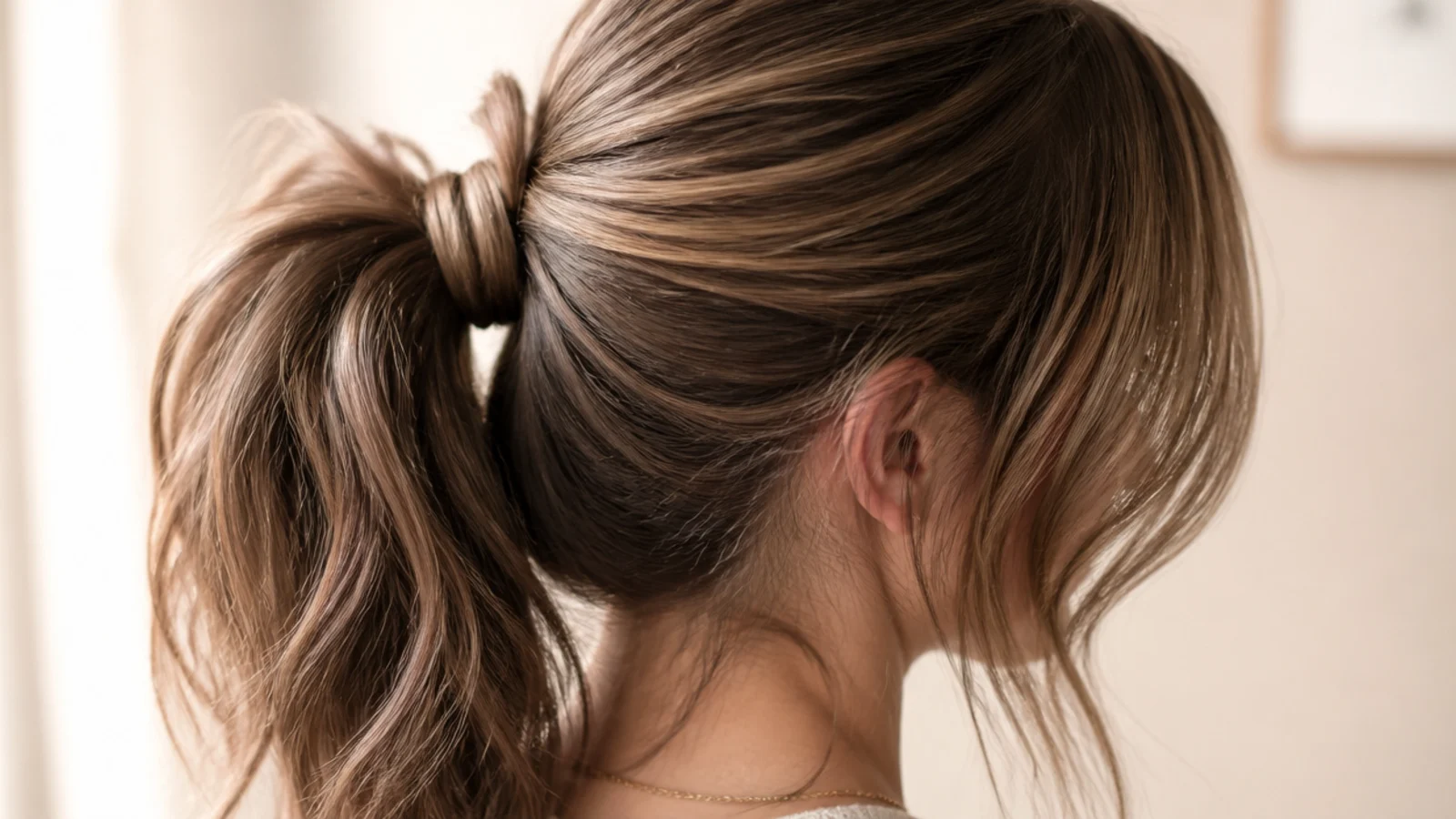
11. Scrunchie
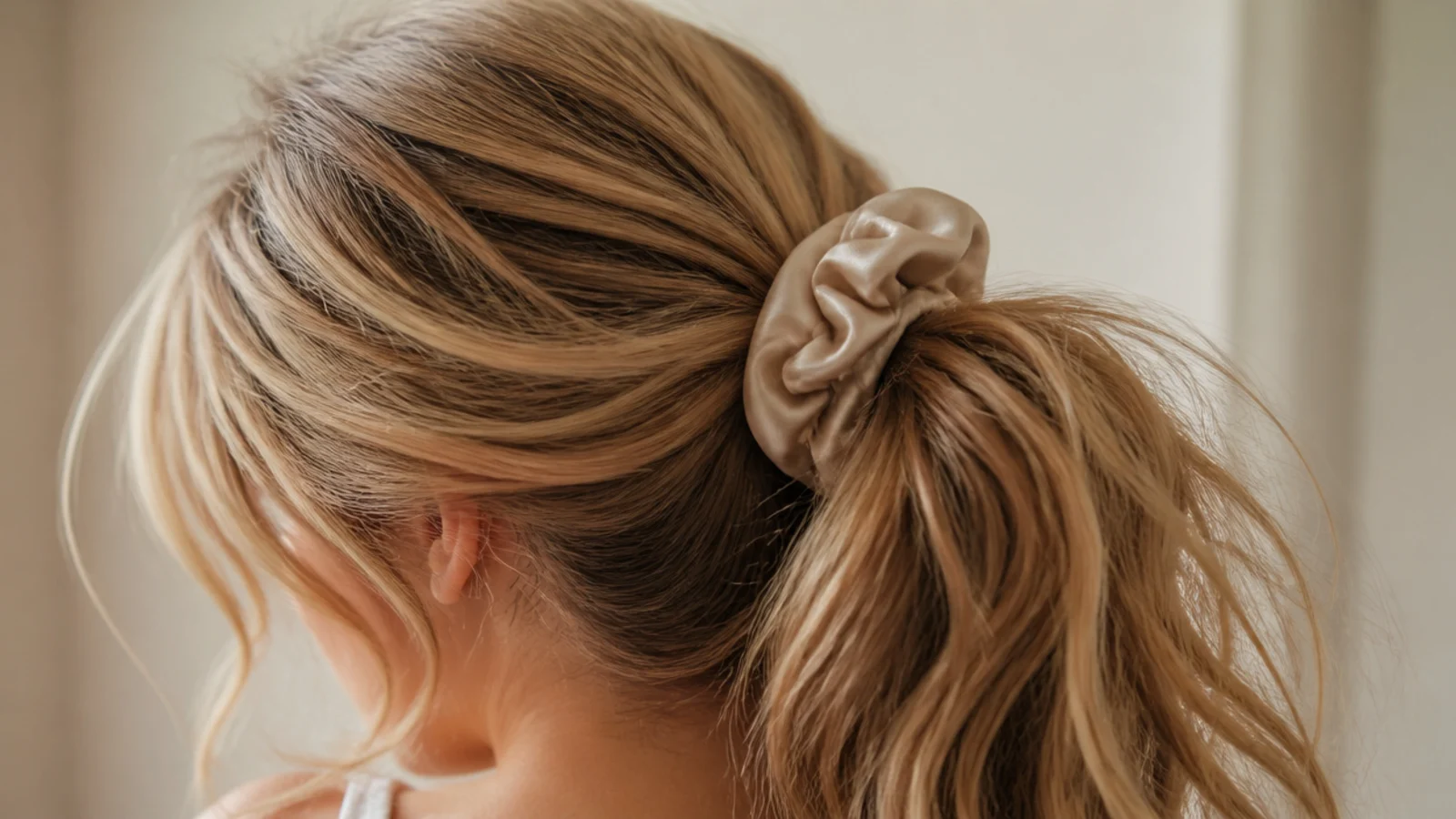
The fabric sleeve spreads pressure across a wider band of hair than a bare elastic does, which matters most on length because there is more weight bearing down on that contact point. It also hides an untidy gather underneath the gather.
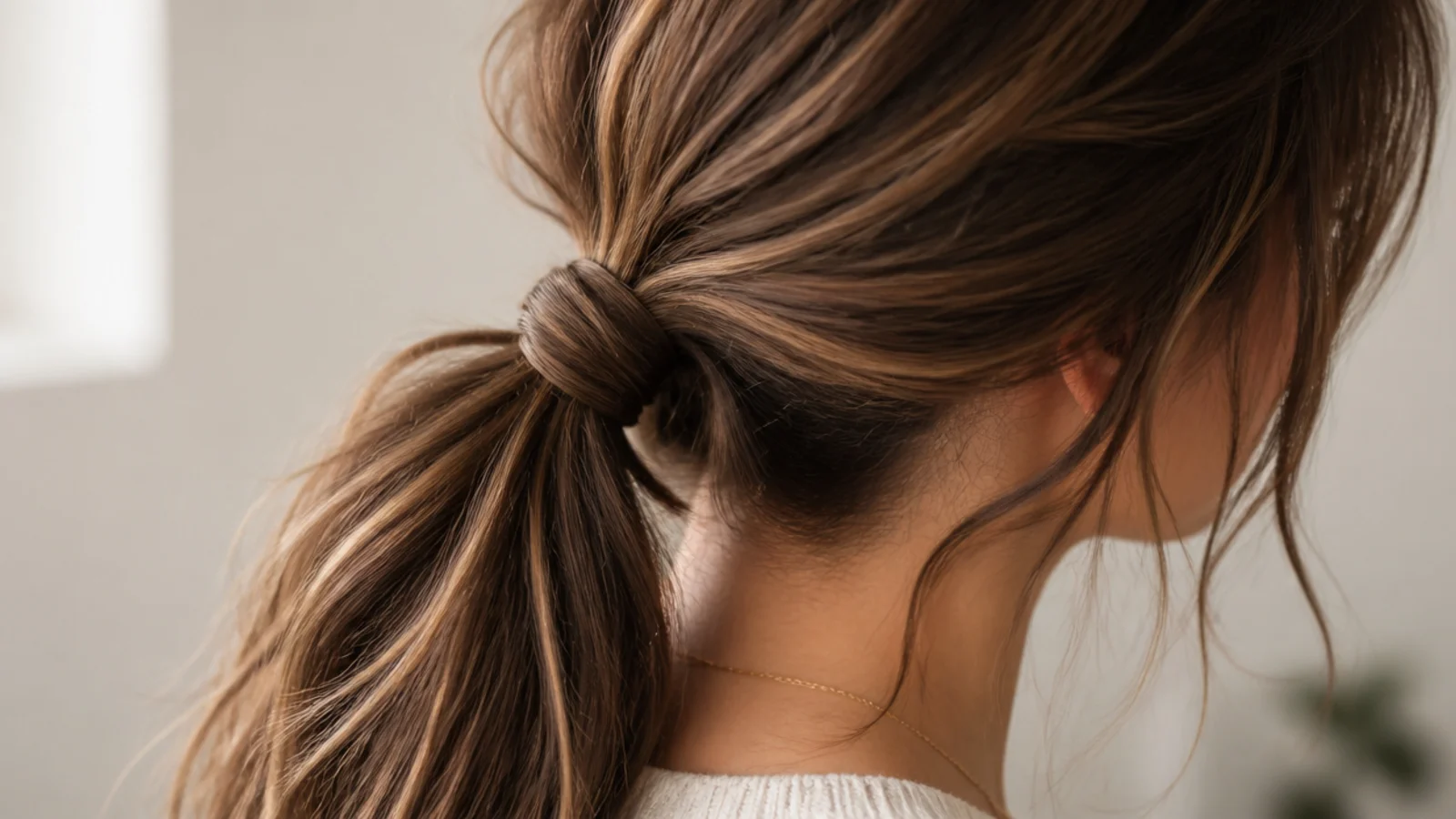
12. Knotted Ponytail
Two sections tied over each other before the band goes on create a physical knot the elastic then sits against. The knot cannot slide past itself, so it works as a stop rather than as grip, which is a different mechanism from anything a band provides.
13. Sleek Root
Smoothing the first two inches from the hairline while leaving the length rough gives the style a finished edge without committing to a blow dry. The eye reads the root as the standard of the whole look and forgives everything below the band.
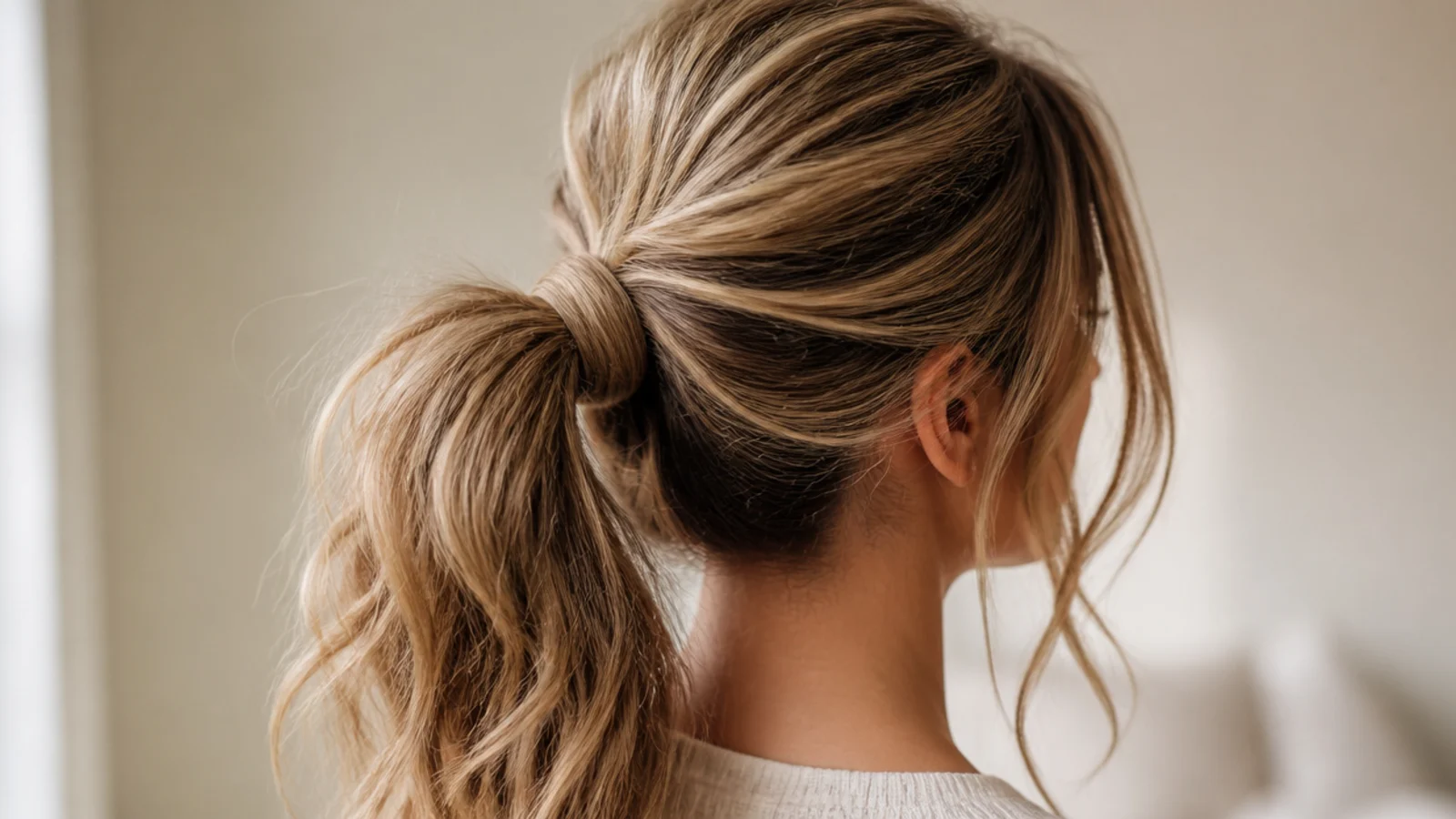
14. Silk Scarf
A scarf tied around the base adds a second, independent point of hold, and silk sits over the elastic without catching the cuticle the way a rough fabric does. On long hair the trailing ends also break up the length visually.
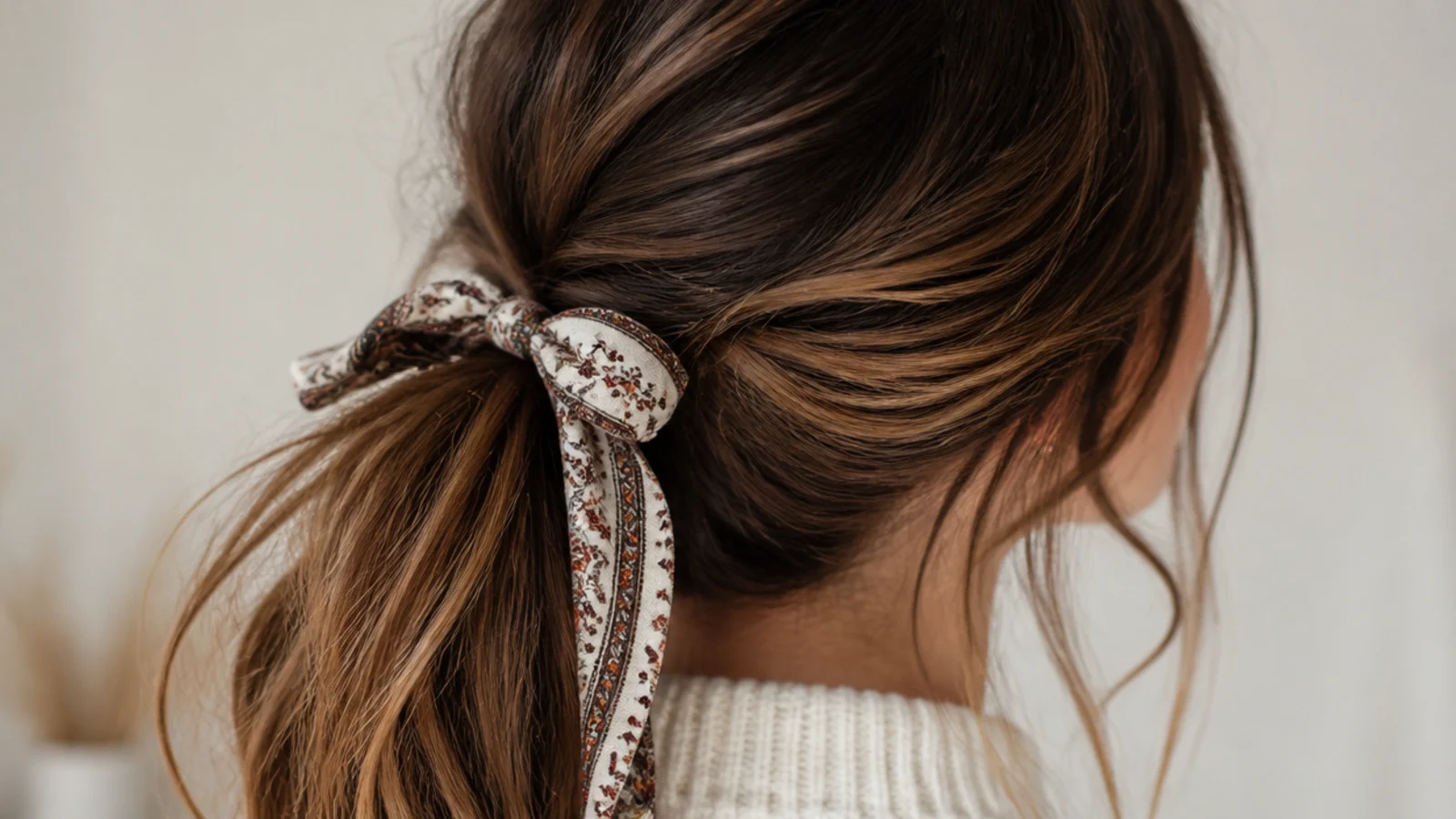
15. Curly Ponytail
Curls measure much shorter than they are, so a curly tail that reaches the shoulder may be a foot longer stretched. Gather it loosely and high, because compressing the curl at the band is what produces the flattened section you cannot brush out.
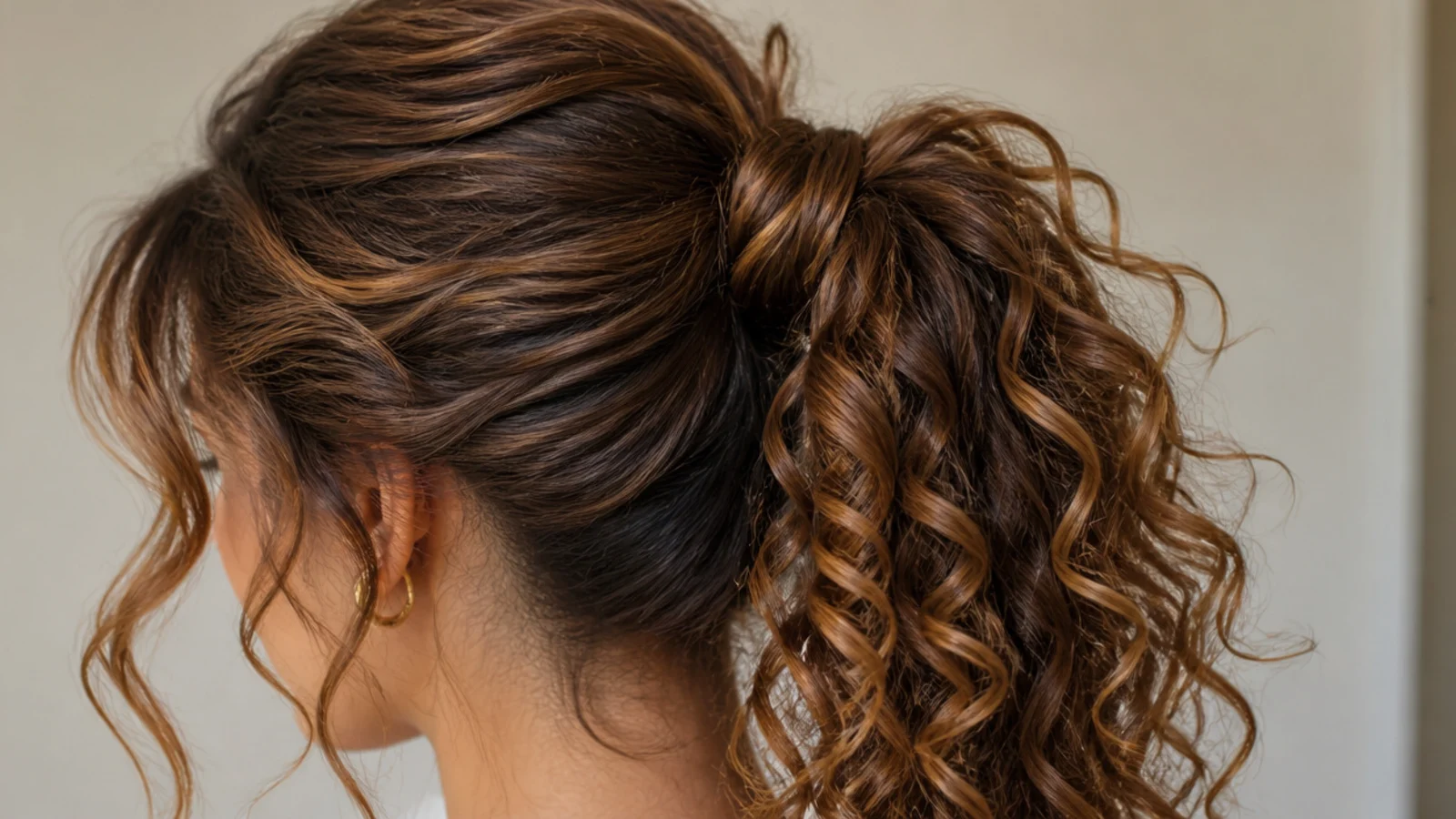
16. Double Stacked
Two elastics, the second sitting a few millimetres above the first. The upper band absorbs the sliding force while the lower one only holds the gather together, which splits a job one elastic cannot do alone on this much weight.
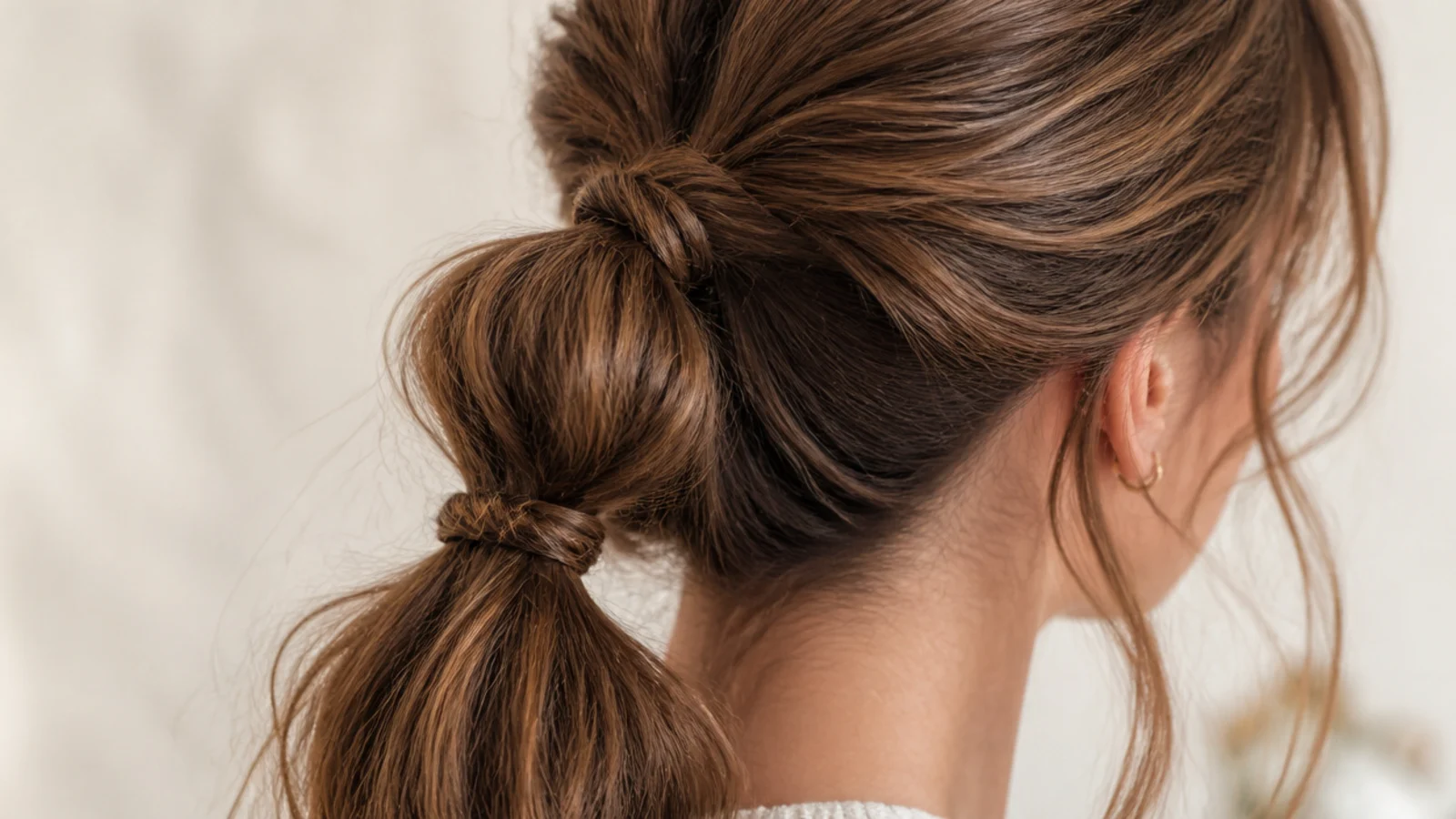
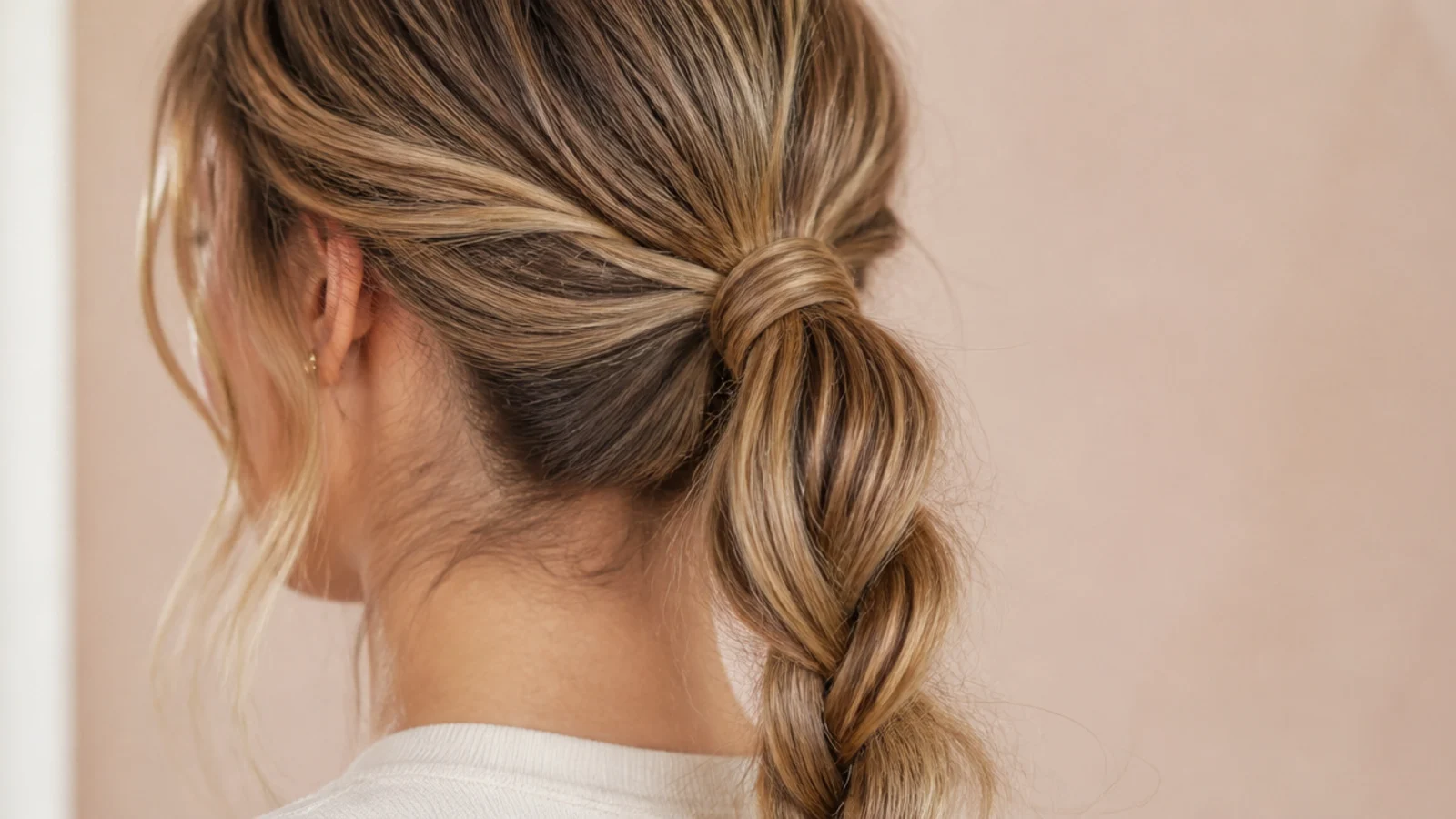
17. Rope Twist
The tail is split in two, each half twisted the same way, then wound around each other in the opposite direction. The opposing twists lock, so the rope holds itself closed and needs only a light band at the end.
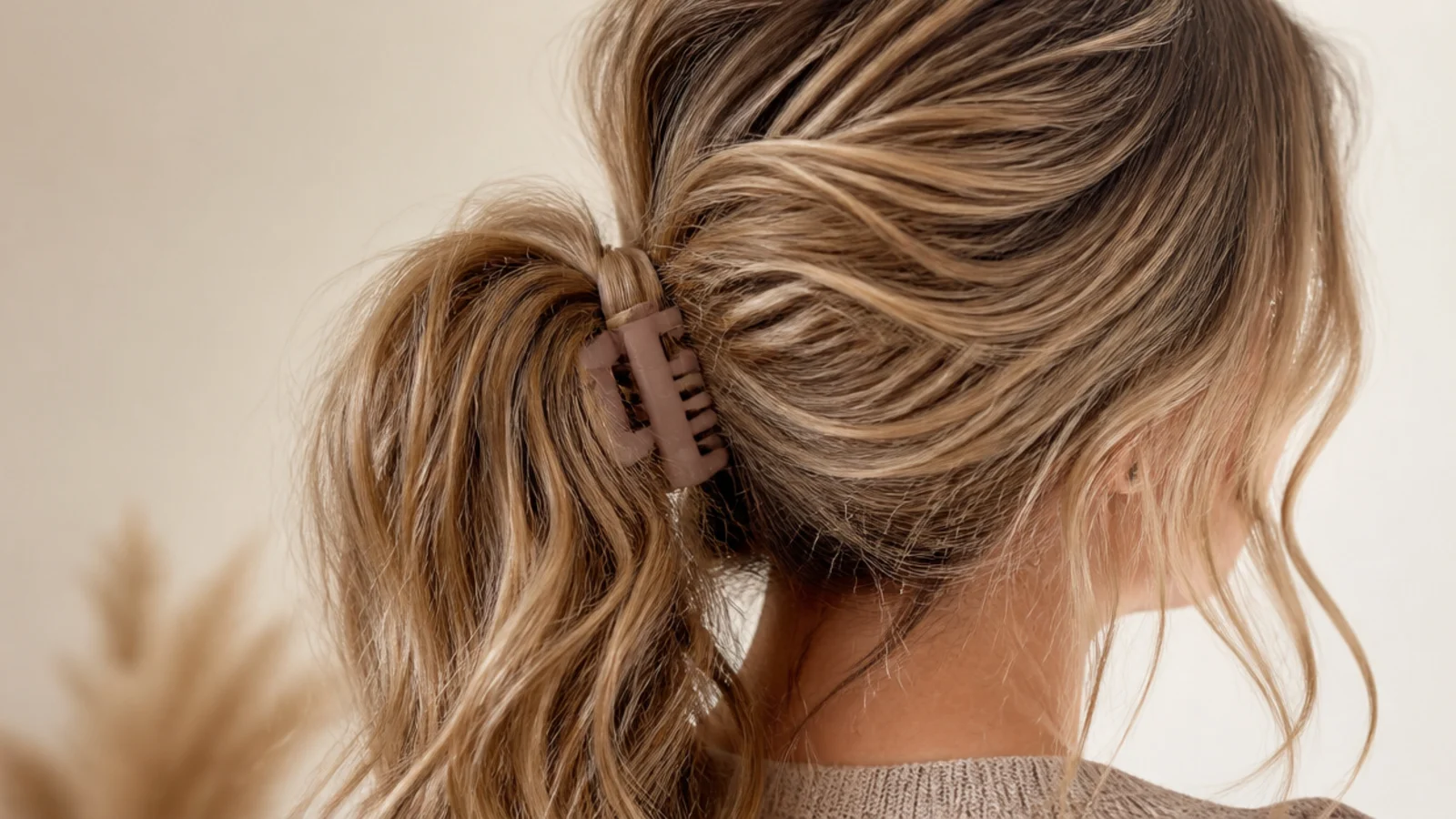
18. Claw Clip Ponytail
A clip grips by spring pressure across a broad set of teeth rather than by squeezing a gather into a loop. On long hair that spreads the load over a much wider area, which is why a large clip holds bulk that an elastic keeps losing.
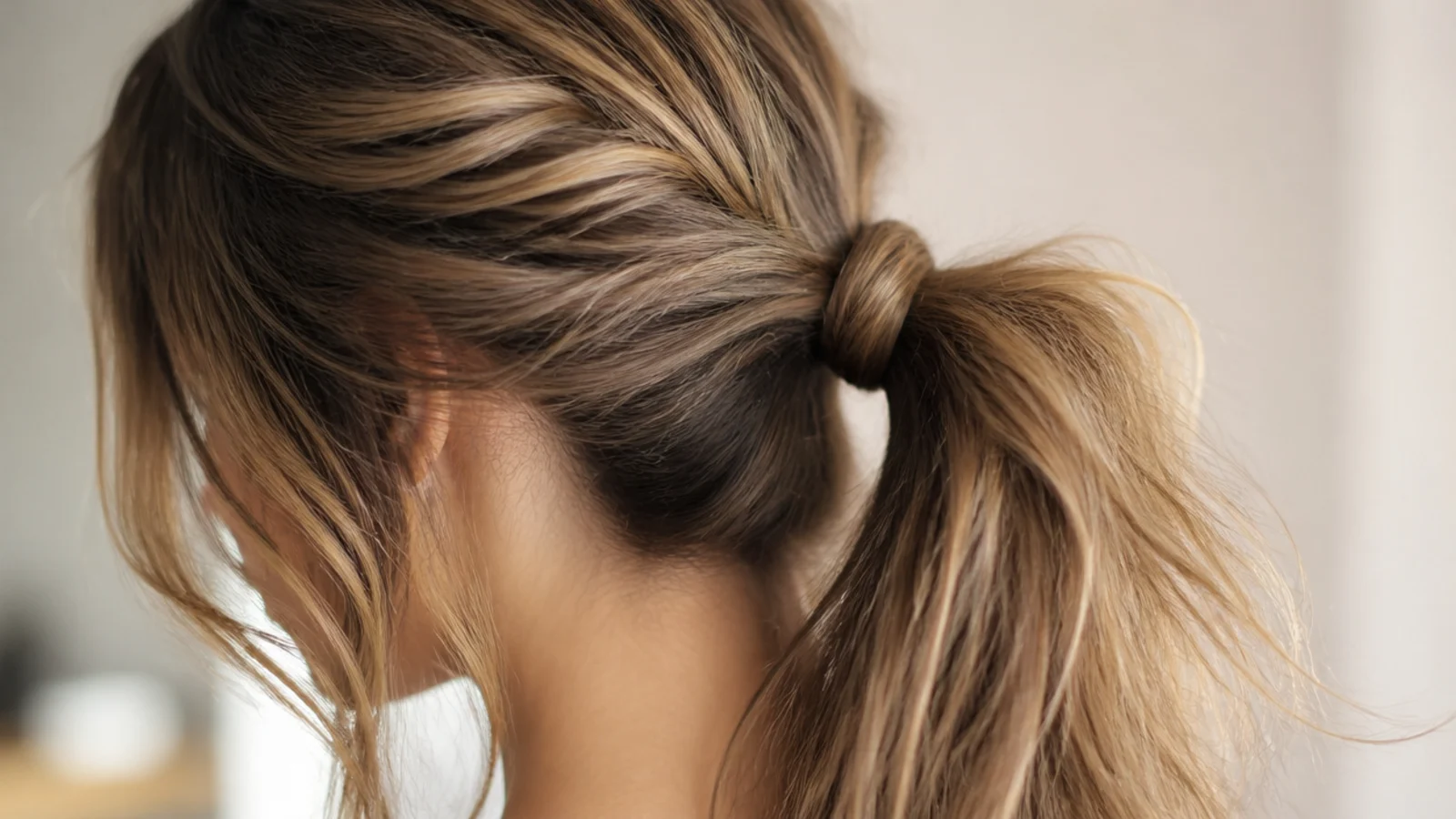
19. Second Day Ponytail
A day of sebum coats each strand and raises the friction between them, so the hair behaves as one mass instead of sliding apart. This is the state every texture spray is sold to imitate, and on long hair the difference in hold is obvious.
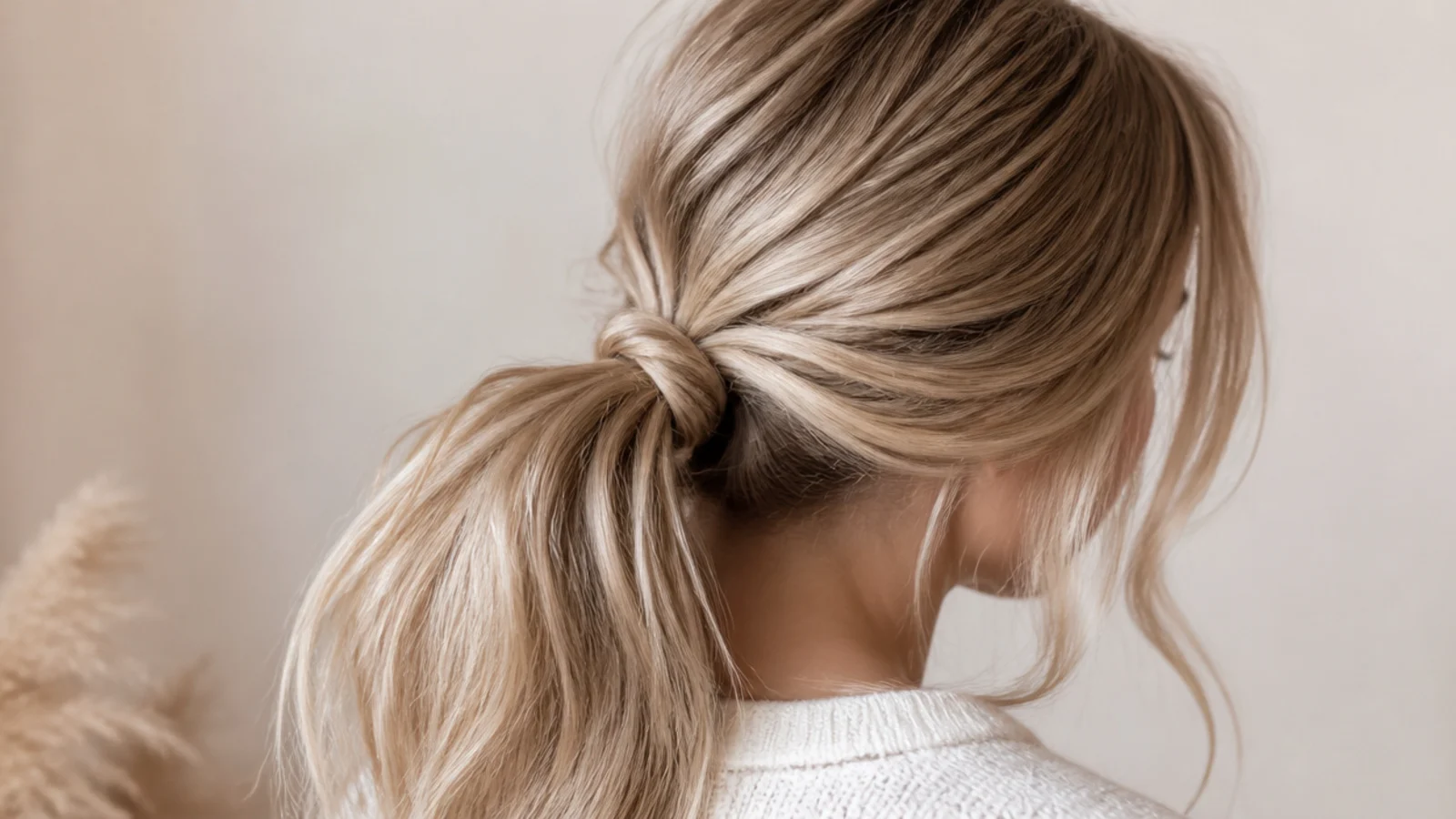
20. Extra Loose
Tied deliberately slack, with the band held away from the scalp by the hair rather than clamped to it. Long hair is the only length that can carry this, because there is enough weight below the band to keep a loose gather hanging in place.
Final Thoughts
Long hair does not need a different technique so much as an honest reckoning with weight. Drop the tie an inch, give the band something rough to sit against, and choose an anchor sized for the bulk you actually have rather than the one in the photograph.
Two habits are worth building. Move the tie height between wears so the same few millimetres of every strand are not loaded daily, and let a day of natural oil do the gripping when you can. If your hair is already at that stage see greasy hair ponytail ideas, and if the shorter face framing layers keep escaping the gather that is the cut doing it, covered in the wolf cut on long hair. More in Updos and Clips.