
20 Graduation Hairstyles for Long Hair That Hold All Day
Twenty graduation styles for long hair, and the thing nobody mentions until the cap is already sliding. On long hair the band is not gripping your skull at all, it is gripping a compressible layer of hair, so the fit you set in the mirror is not the fit you have an hour later.
In this article · 28
- Where the Cap Sits
- Pinning the Cap
- Updo Versus Down
- All Day Hold
- Morning Timeline
- The Cap Off Reveal
- The 20 Long Hair Graduation Styles
- 1. Low Chignon
- 2. Half Up Curls
- 3. Sleek Low Ponytail
- 4. Side Swept Waves
- 5. French Twist
- 6. Messy Low Bun
- 7. Dutch Braid Half Up
- 8. Fishtail Braid
- 9. Bubble Ponytail
- 10. Braided Crown
- 11. Two Texture Ponytail
- 12. Ballerina Bun
- 13. Rope Twist Ponytail
- 14. Beach Waves With a Side Part
- 15. Twisted Half Up
- 16. Low Side Bun
- 17. Cascading French Braid
- 18. Nape Knot
- 19. Dutch Braids Into a Low Bun
- 20. Layered Blowout
- Final Thoughts
Long hair fails under a graduation cap for a reason that has nothing to do with the style, and everything to do with mass.
The band is gripping your hair, not your head. On a thick long head, the cap never touches skull. It sits on a compressible layer, and that layer squashes over the first half hour.
So the fit changes during the ceremony. A cap that felt secure in the mirror is loose by the time you stand up, which is why long hair needs pins even when the style itself needs none.
Where the Cap Sits
The band grips at the widest circumference of your head. Around the occipital bone at the back, above the ears at the sides, across the forehead at the front.
On long hair that circumference includes your hair. Which is why long thick hair makes a cap feel small at first and loose later, as the layer under the band compresses.
Below the occipital bone is free space. A knot there is outside the ring entirely, and the cap fits as though your hair were short.
Weight above the ring becomes leverage. A high gather is a mass sitting under the centre of the board, pushing it up and back all afternoon.

Pinning the Cap
Pin into anchored hair, never into loose hair. A pin pushed into loose length just drags that length along with the cap when it moves.
Two pins behind the temples and one at the back. The board levers from its corners, so the front pair does most of the work of stopping it tipping.
Cross each pair in an X. Two crossed pins hold by friction against each other. A single pin holds by nothing and works its way out within the hour.
Wavy side against the scalp. The ridges are the grip, and a pin inserted the other way up slides out of long hair almost immediately.

Updo Versus Down
An updo is identical before and after. Nothing sat under the band, so there is nothing to repair and no mirror to find between the ceremony and the photographs.
Down means managing a horizontal line. The band presses a flat ring at roughly ear height, and on long hair that line lands high in the visible length where it shows most.
Swept to one side is the middle option. The back of the head is empty, so the band presses a thin layer instead of your full thickness.
Most graduation photographs happen with the cap off. That is the argument for weighting your decision toward what looks right afterwards rather than during.

All Day Hold
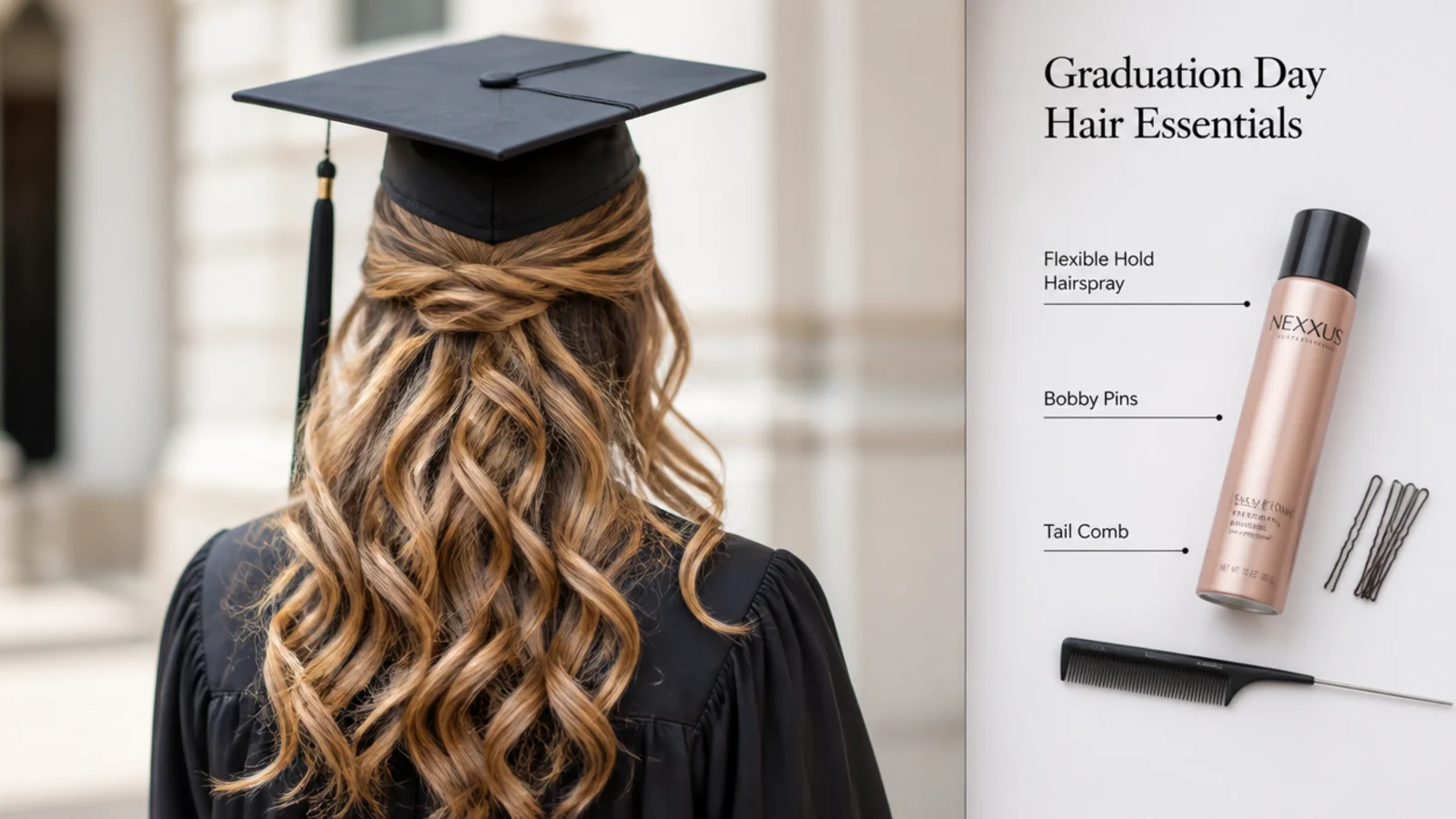
Style on bone dry hair. Water breaks the hydrogen bonds that hold hair in shape and drying reforms them. Damp hair compressed under a band dries as a flat ring.
Let a set cool fully before the cap goes on. A curl fixes its shape as it cools, so a warm curl under pressure sets in the pressed position instead.
Use two elastics on anything heavy. Long hair loads a single tie until it creeps down the back of the head, and the style drops without ever coming undone.
Spray the ends and the perimeter, not the crown. Firm hold under a band creates a rigid shell that creases harder than soft hair would.
Morning Timeline
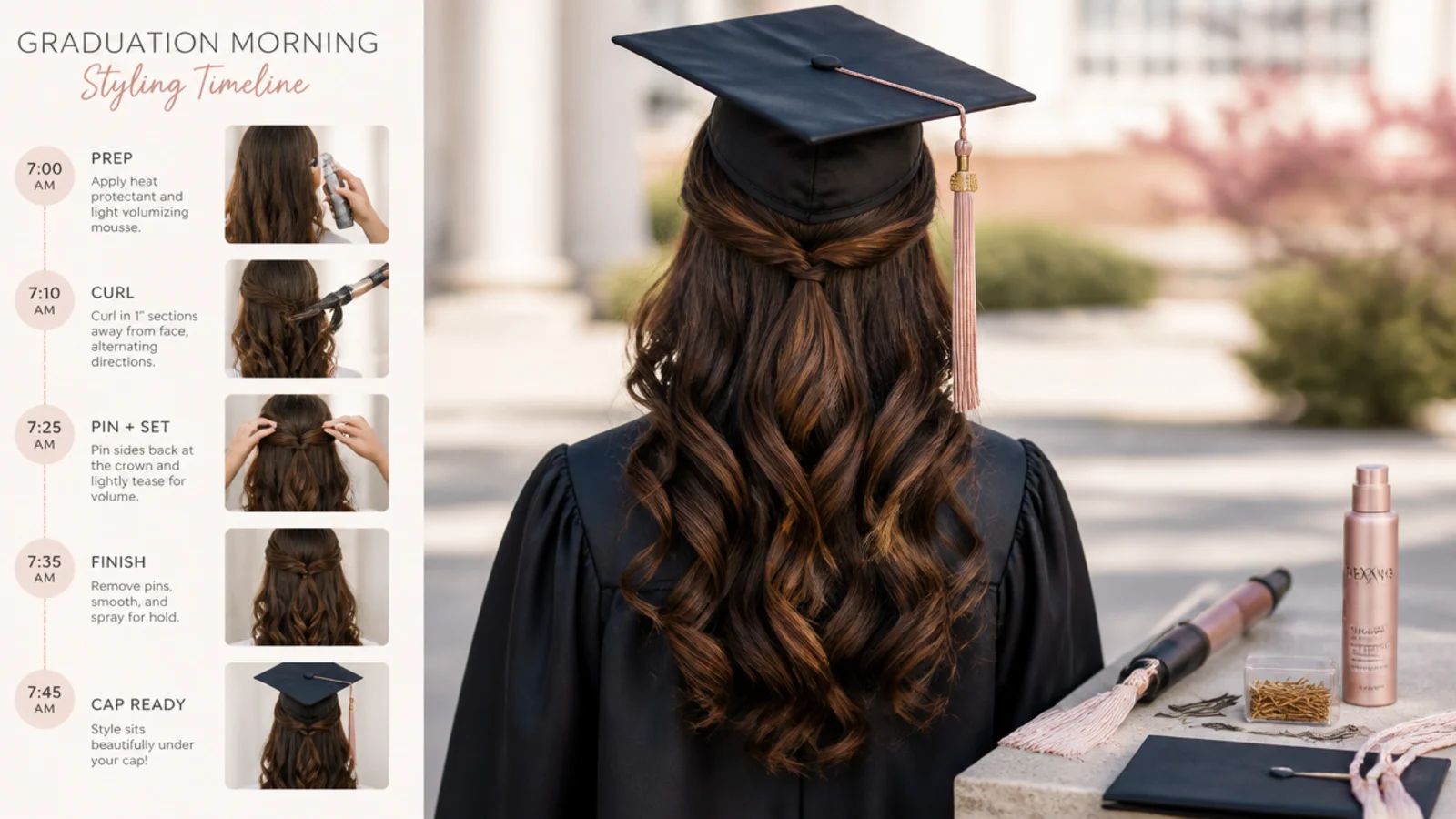
Wash the night before. Freshly washed long hair is slippery, and pins travel through it. A day of natural oil is what gives them something to hold.
Allow twice the time you think a long style needs. Every extra inch is more sections, more pins and more weight fighting you.
Finish ninety minutes before you leave. Long styles drop as they settle, and you want that drop to happen at home where you can correct it.
Cap on last. The depth of the band line scales with the time spent under it, so the fewer minutes the better.
The Cap Off Reveal
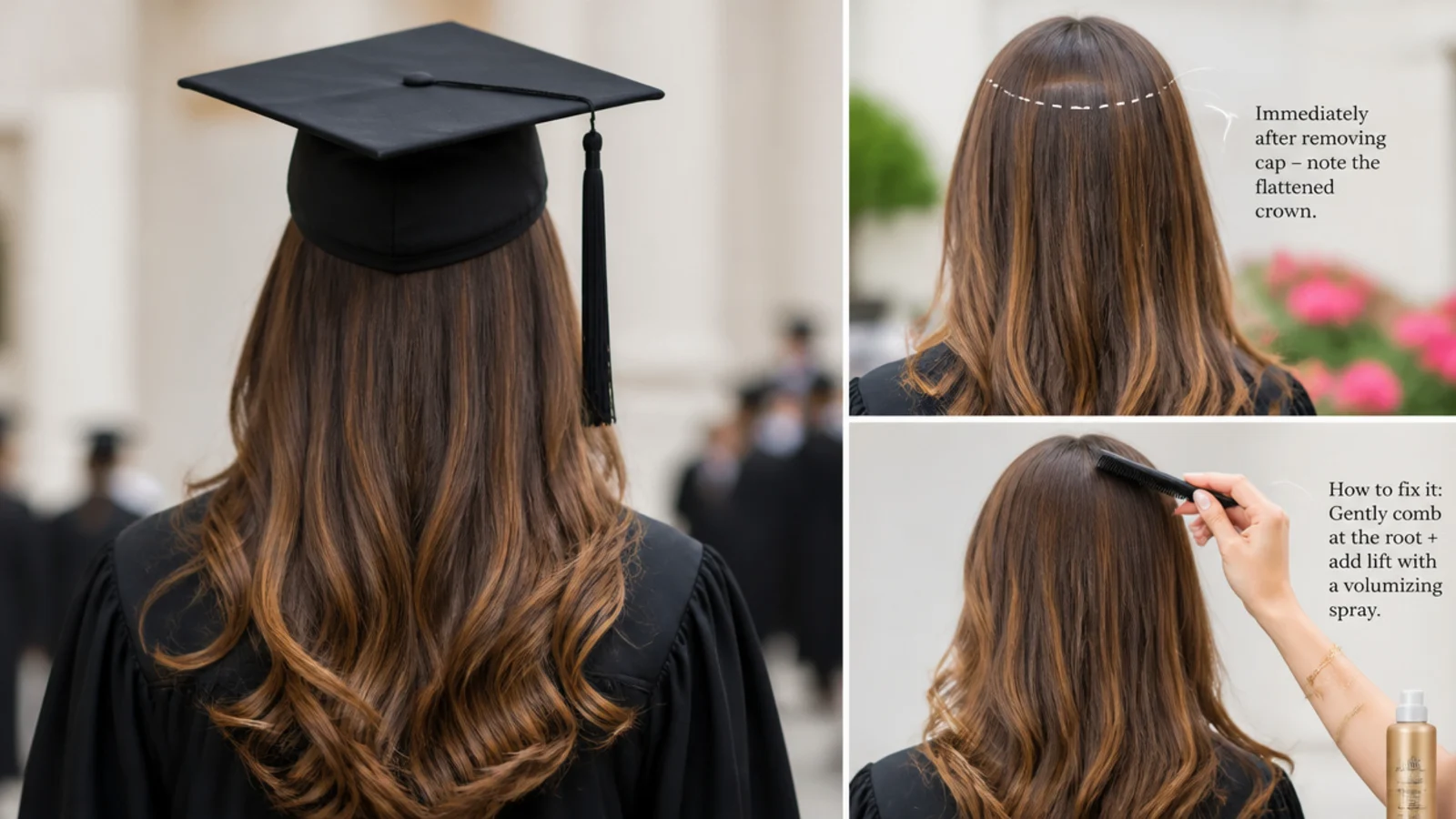
Mist the band line, not the whole head. You are resetting one ring of hair, and everything else is still doing its job.
Lift the root against the direction it was pressed. Warm air and fingers, pushing the opposite way to the band.
Let it cool before you touch it again. Bonds reform as the hair cools, so the shape is set in the last few seconds rather than under the dryer.
Shake the length out from underneath. On long hair, most of what looks flat is simply the top layer sitting closer to the head than usual.
The 20 Long Hair Graduation Styles
1. Low Chignon
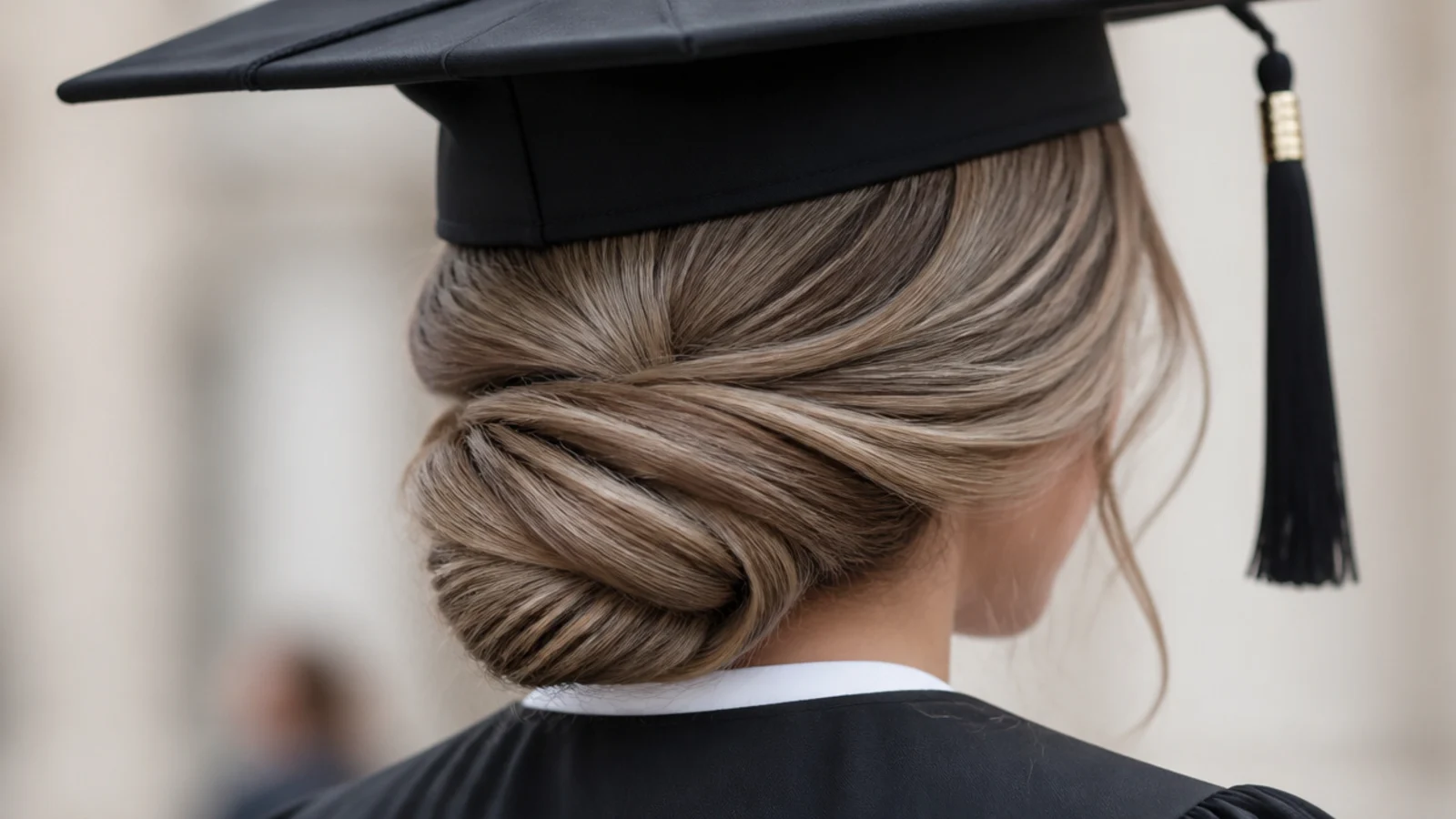
Long hair makes a coil with real mass, so every pin has to pass through the coil and re-enter the scalp hair underneath it. A pin that only crosses the coil fastens the knot to itself, which holds for about twenty minutes and then slides down the back of your neck.
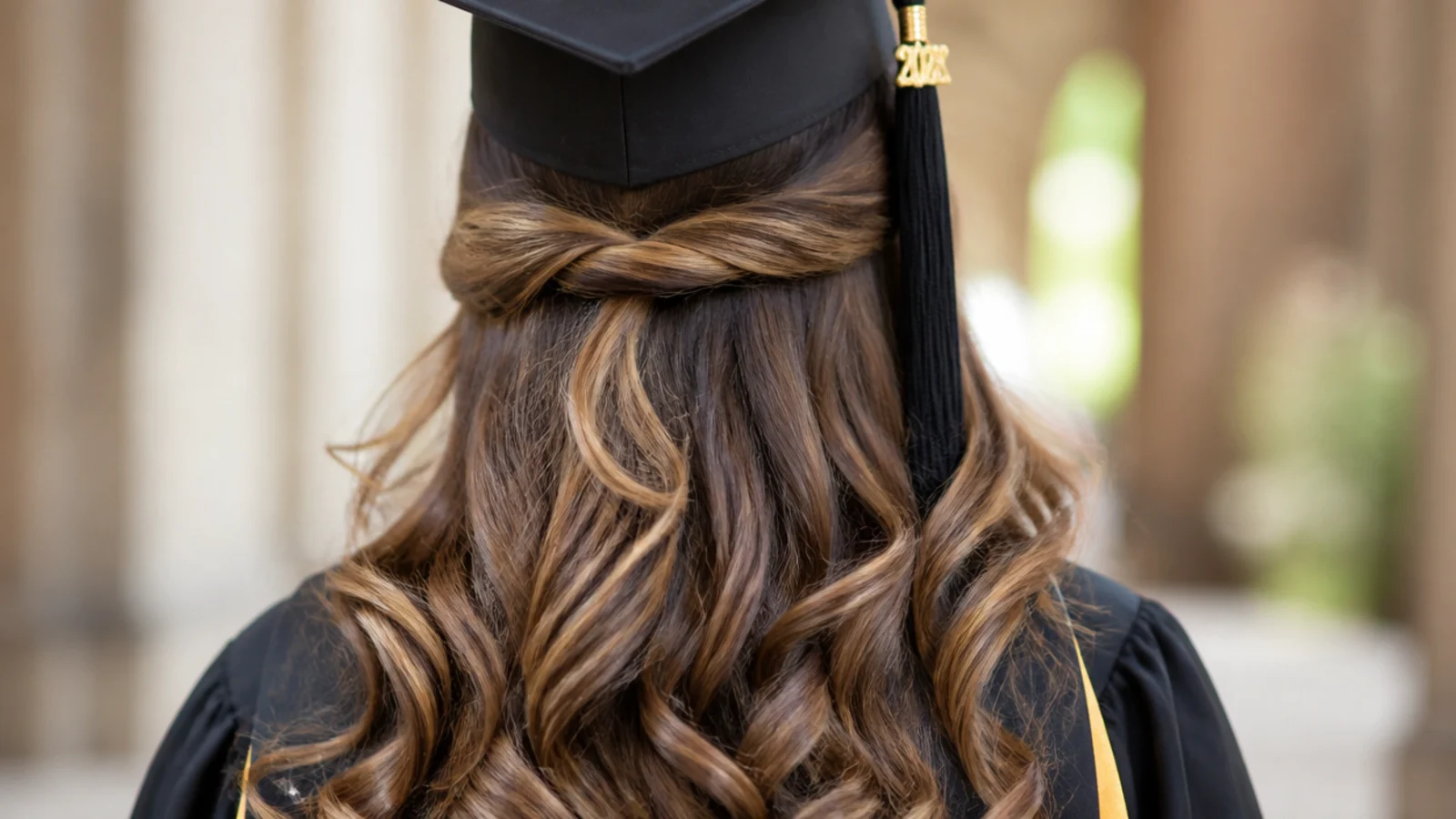
2. Half Up Curls
The gathered half of a long head is heavy enough to creep down the back of the skull over a couple of hours, taking the elastic with it. Add two crossed pins at the base so the elastic is not the only thing carrying that weight.
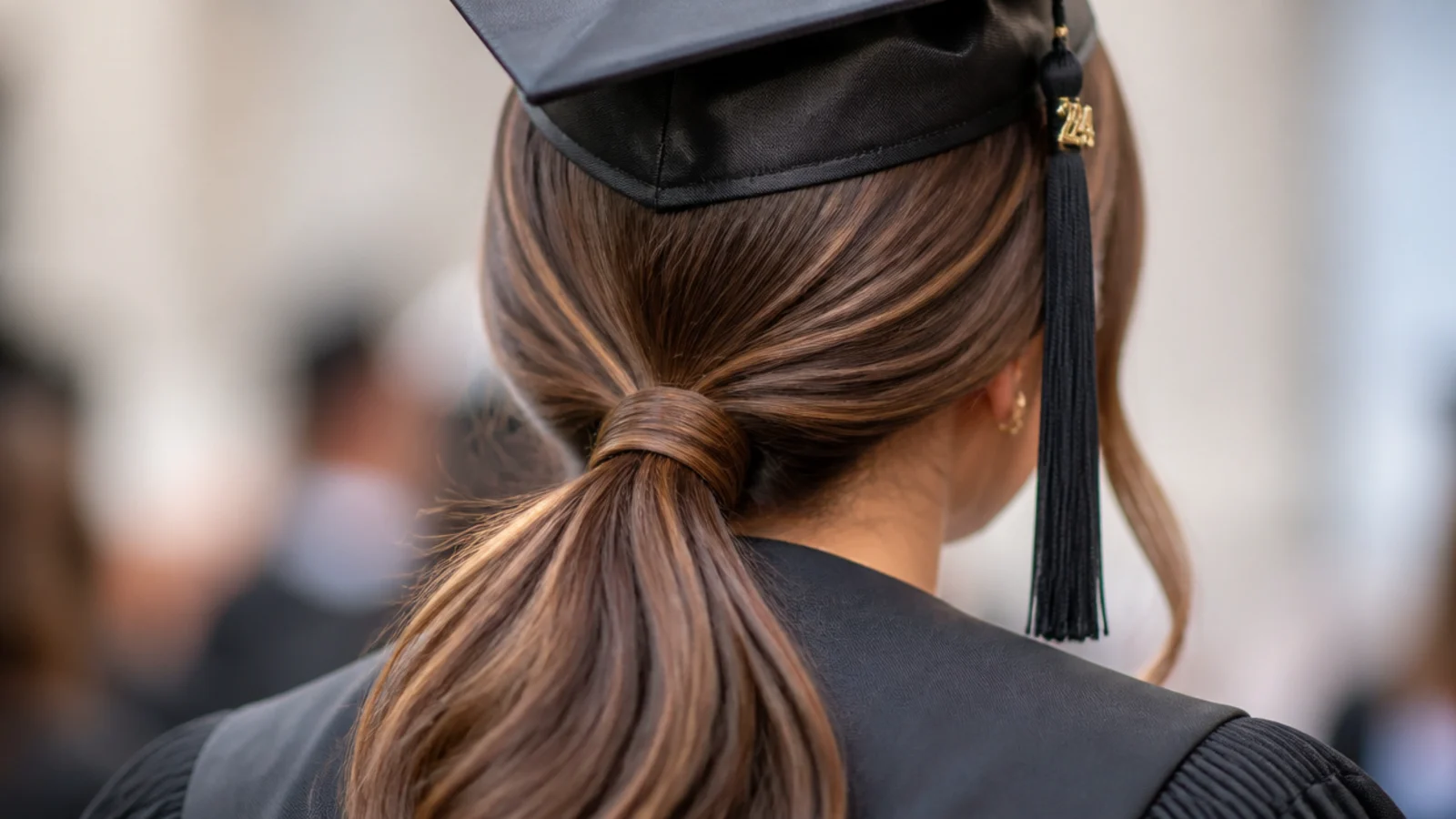
3. Sleek Low Ponytail
The tail pulls every root downwards and away from the band, and long hair is where that effect is strongest because the mass is greatest. The ring the cap leaves is measurably shallower on a head that is already under tension.
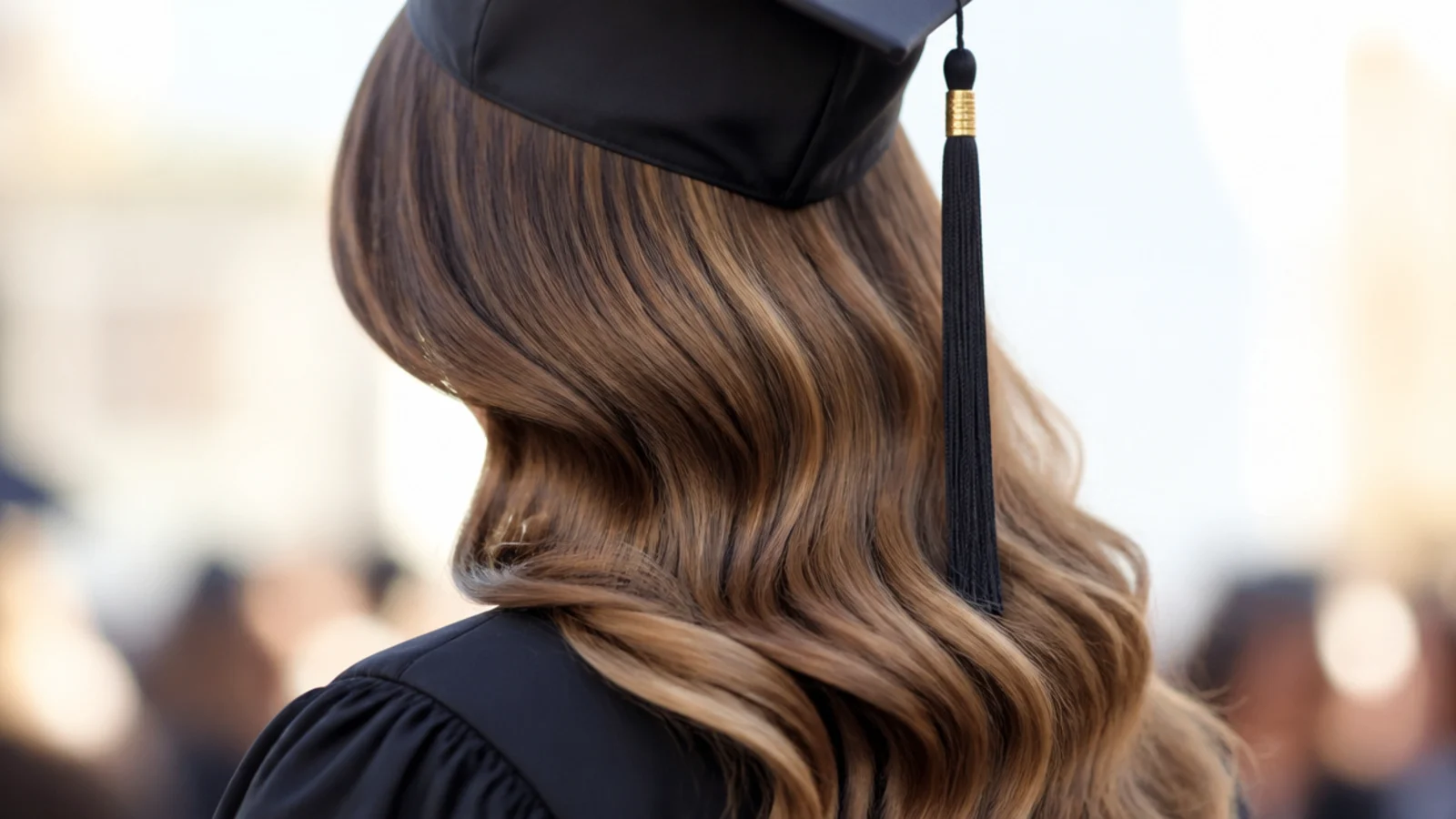
4. Side Swept Waves
Moving the full weight of long hair to one shoulder empties the back of the head but unbalances the cap, which will drift toward the heavy side. Pin the sweep down behind the opposite ear and the load is shared between two points instead of one.
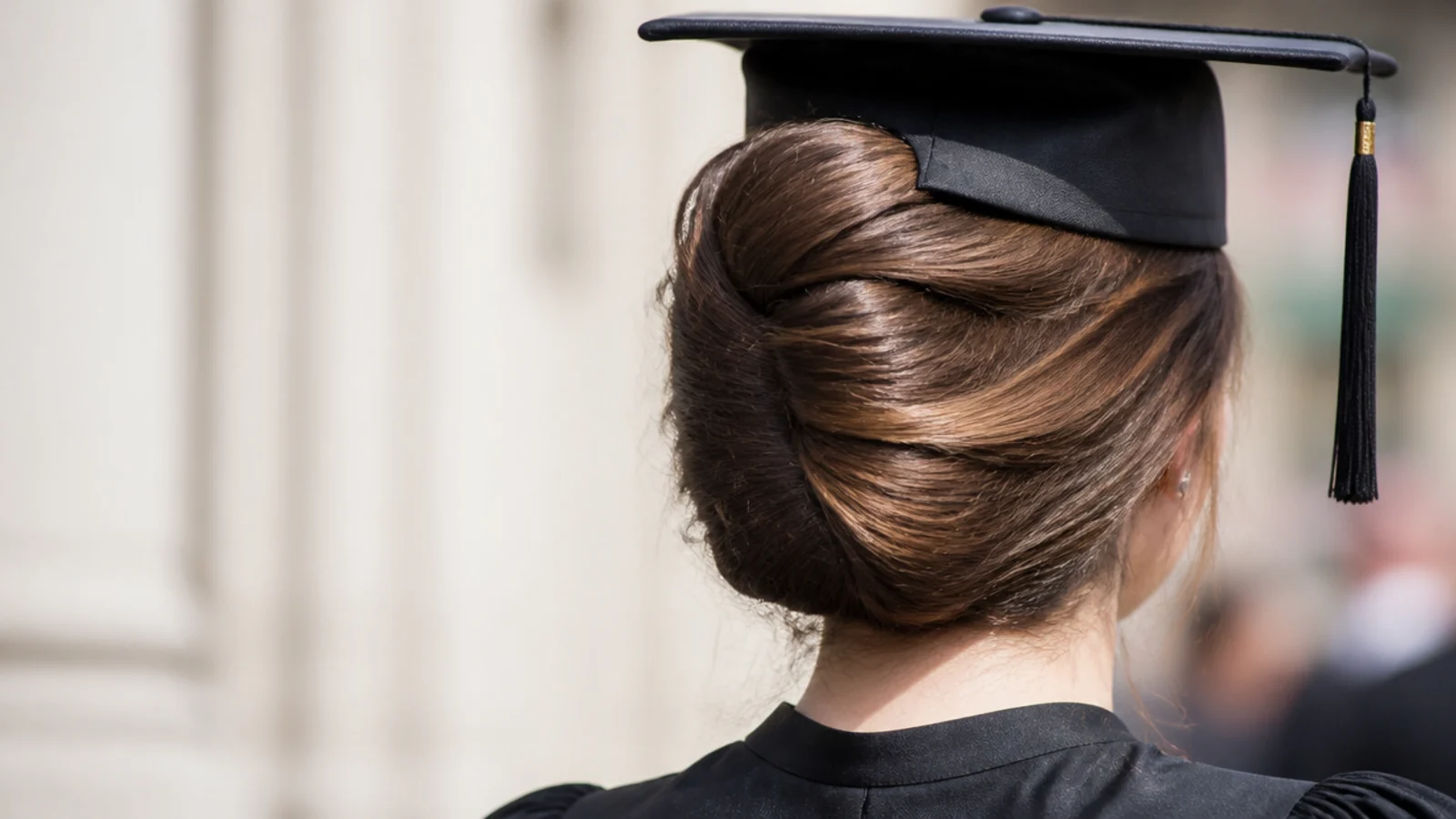
5. French Twist
The roll consumes length vertically, so the longer the hair the more turns it takes and the denser the column becomes. That density is why a French twist holds better on long hair than on mid length, where there is not enough to complete the second turn.
6. Messy Low Bun
Long hair gives you enough wraps that the inner turns can be tight while the outer two inches stay deliberately loose. The core does the holding and the surface does the looking, which is why a messy bun on long hair outlasts one on short hair.

7. Dutch Braid Half Up
A Dutch braid crosses each section underneath so it sits proud of the scalp, and on long hair the loose tail below pulls backwards on it all afternoon. Start it tighter than feels comfortable at the hairline, because that is the end that loosens first.
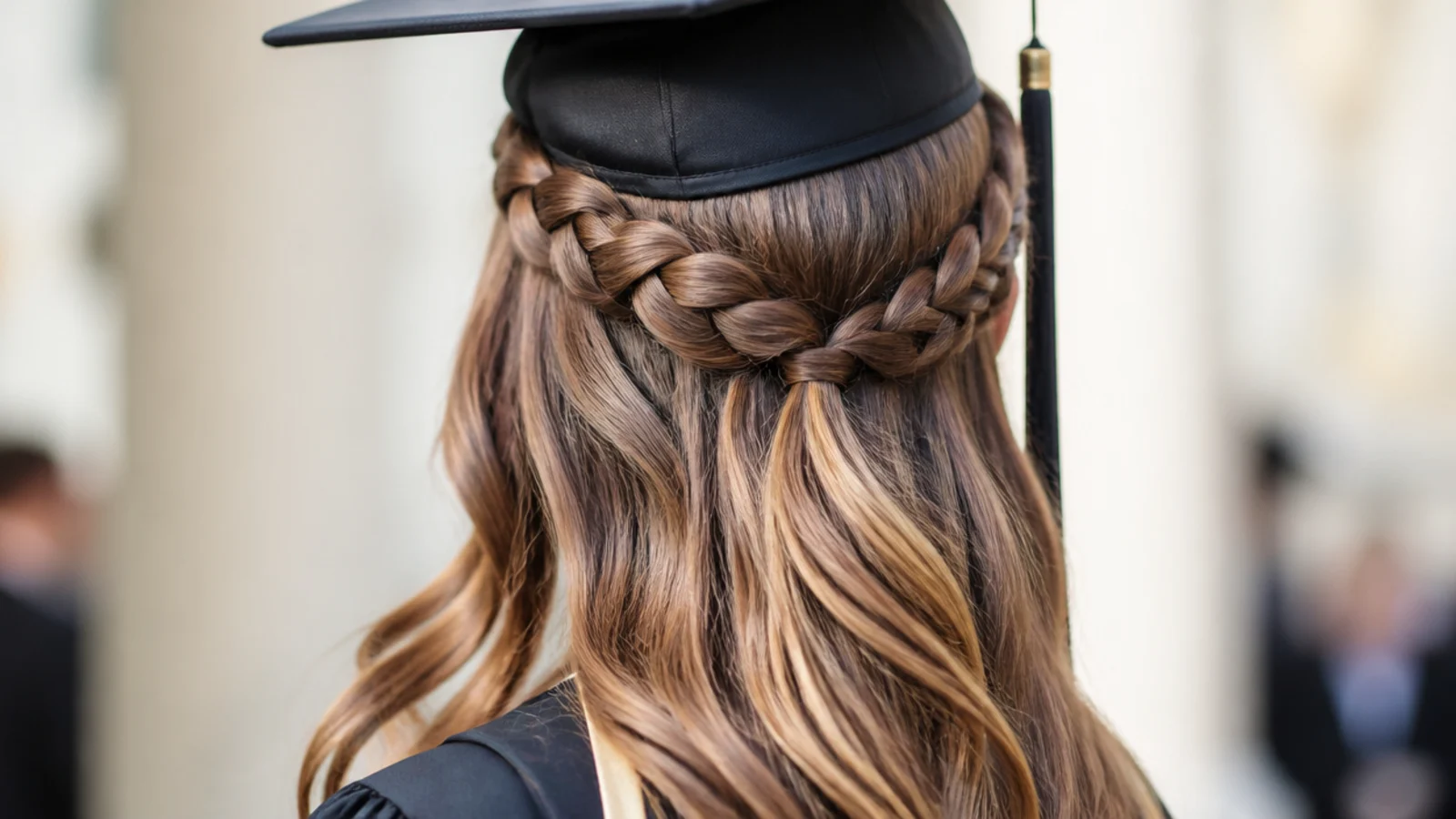
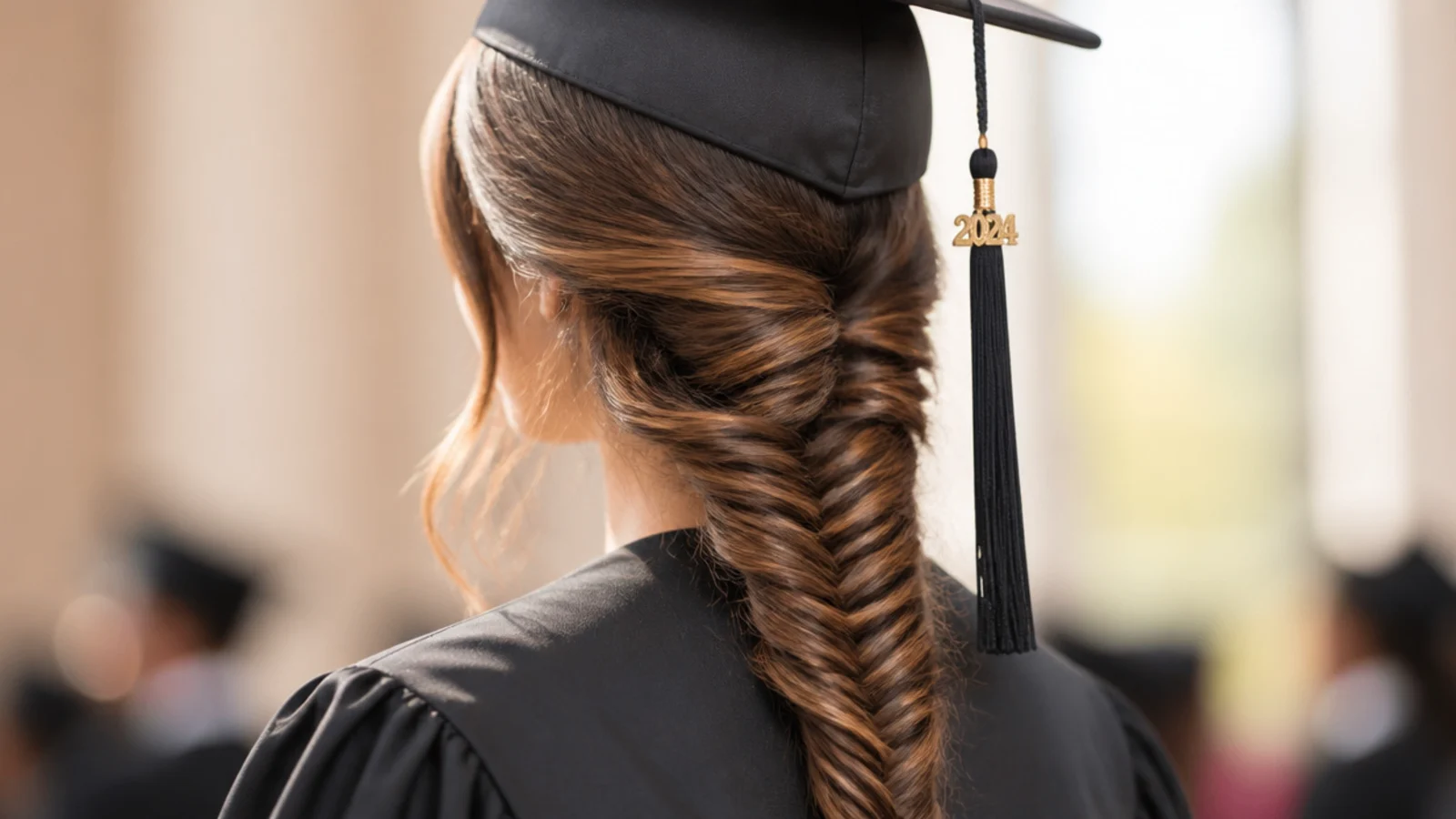
8. Fishtail Braid
A fishtail eats length, because each pass takes a thin piece from the outer edge and folds it across, using more hair per inch of finished braid than a three strand does. Long hair is the only length that finishes at a proportion worth the twenty minutes it costs.
9. Bubble Ponytail
Long hair gives you five or six segments rather than three, and even spacing is what makes the sequence read as deliberate from the back of a hall. Measure the gaps by hand span rather than by eye, since the lower bubbles look smaller at a distance.

10. Braided Crown
Only long hair makes a braid long enough to circle the whole head and still tuck under itself at the join. It sits exactly where the band grips, so it has to be pinned flat, which raises the circumference evenly rather than at one point.
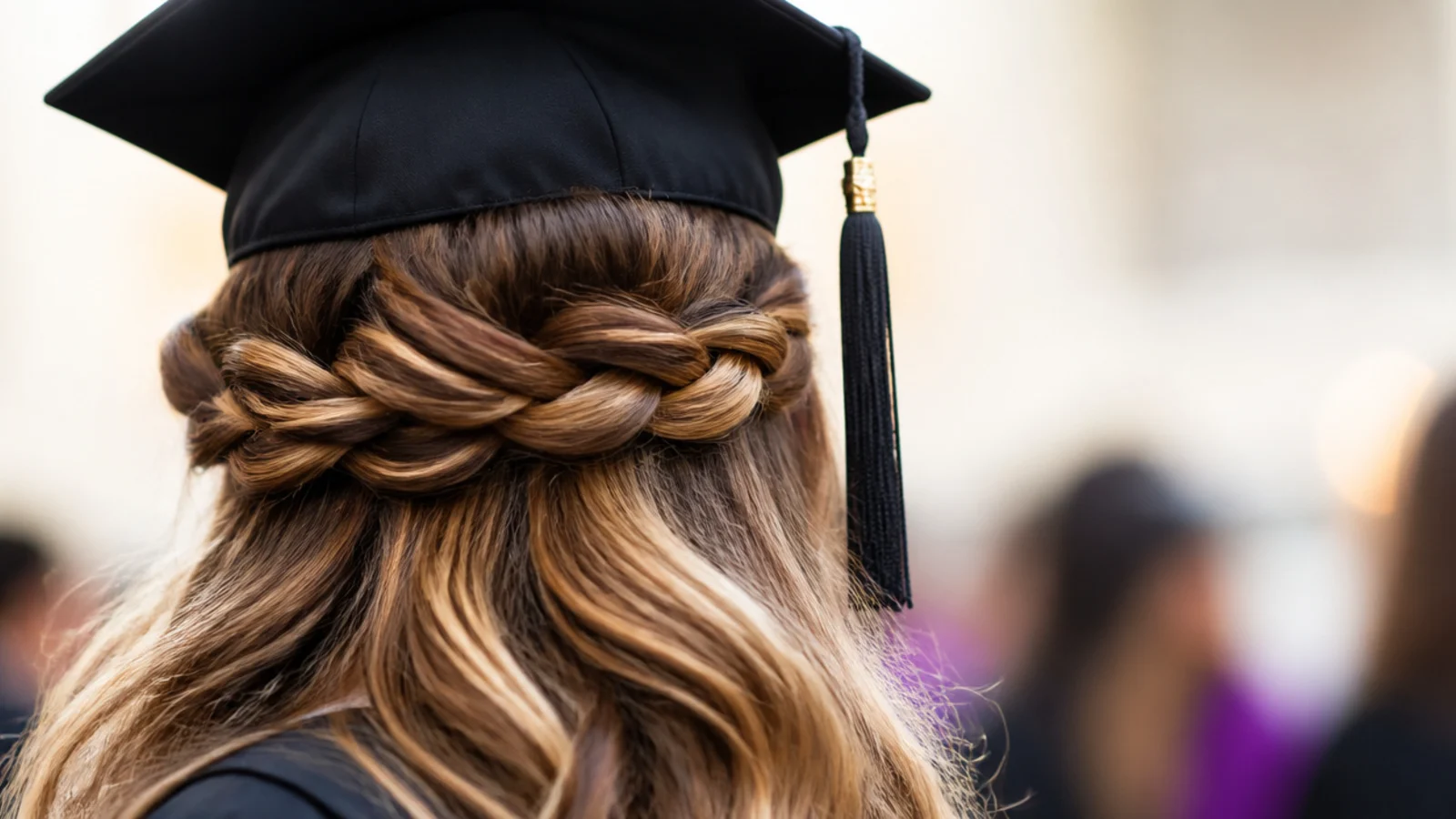
11. Two Texture Ponytail
Smooth from the root to the elastic, curled from the elastic down, which works here because the band only ever touches the smooth half. The compressed section is the section that was meant to be flat, so the cap costs the style nothing.

12. Ballerina Bun
A high bun sits inside the band ring and directly under the centre of the board, so it lifts the cap off the back of the head no matter how tightly it is pinned. This is a style for after the ceremony, and it is why so many graduates rebuild their hair in the car park.
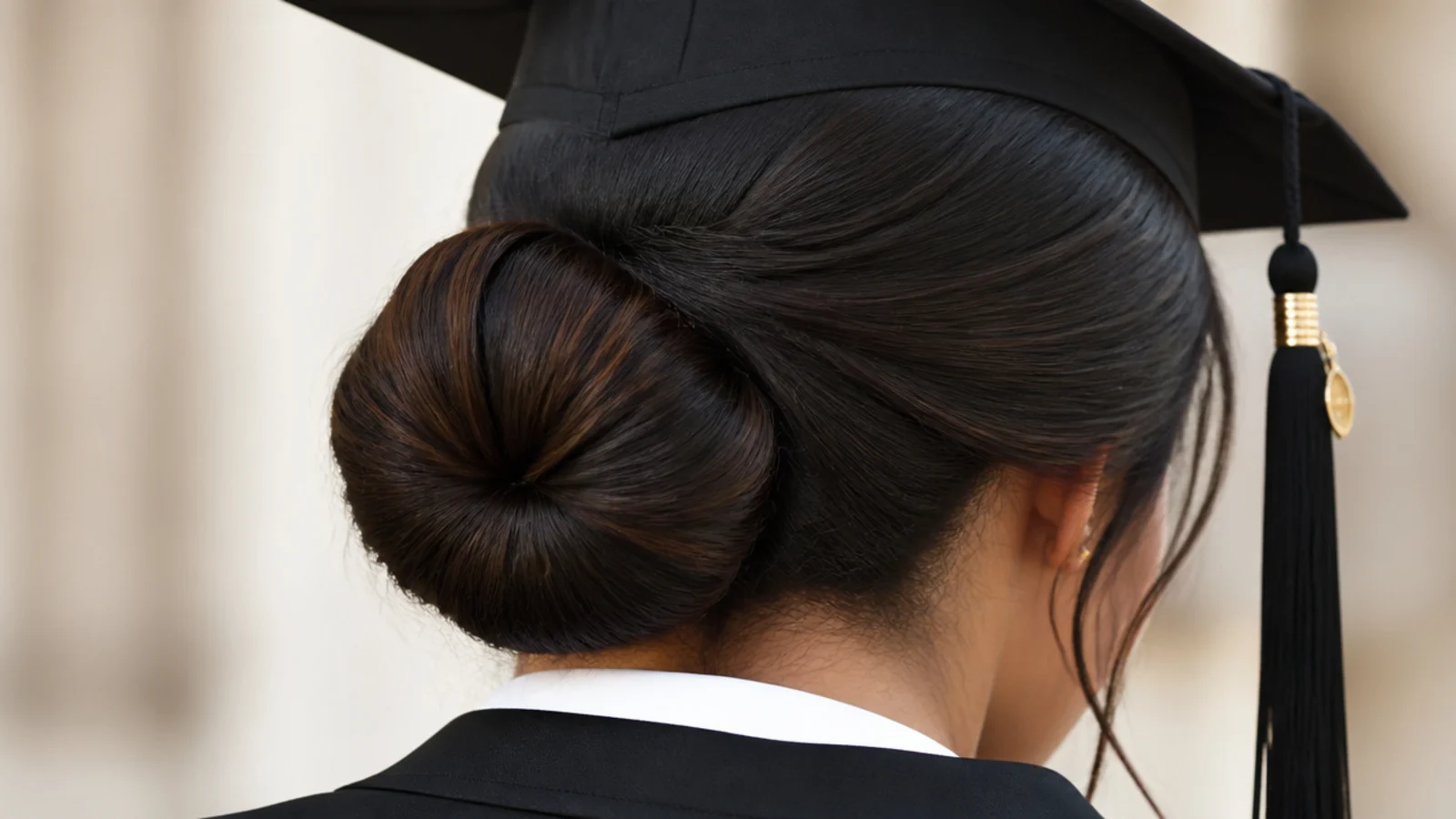
13. Rope Twist Ponytail
Twist both halves the same direction and wind them the opposite way, so each strand is trying to untwist against the other and the rope locks itself. On long hair, tension bleeds out over the distance, so re-tighten every few inches as you work down.
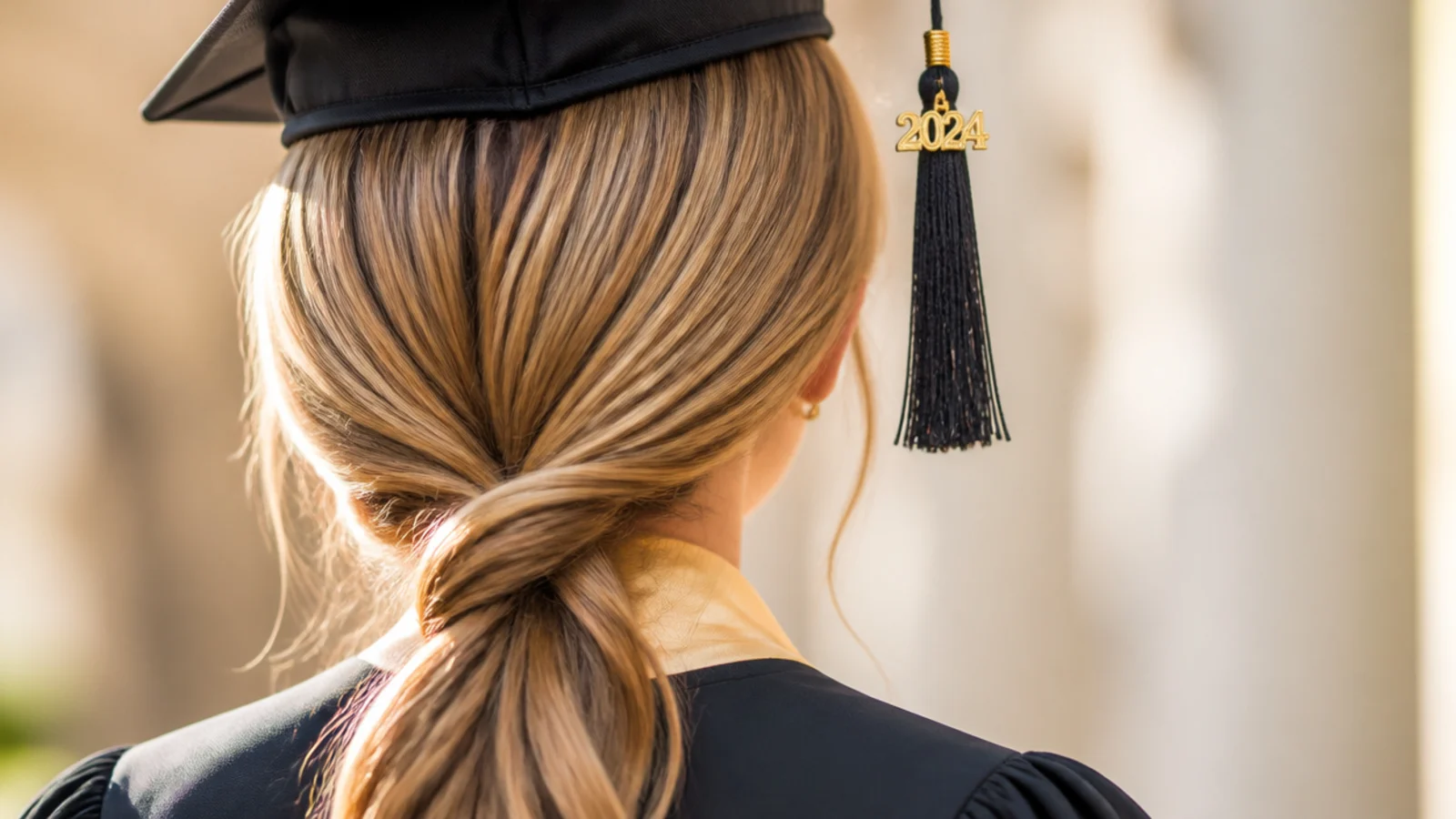
14. Beach Waves With a Side Part
A side part moves most of the mass onto one side of the head, so the band presses harder there and leaves a deeper line on the heavy side than on the light one. Part on the side you plan to sweep across, so the deeper line ends up underneath.
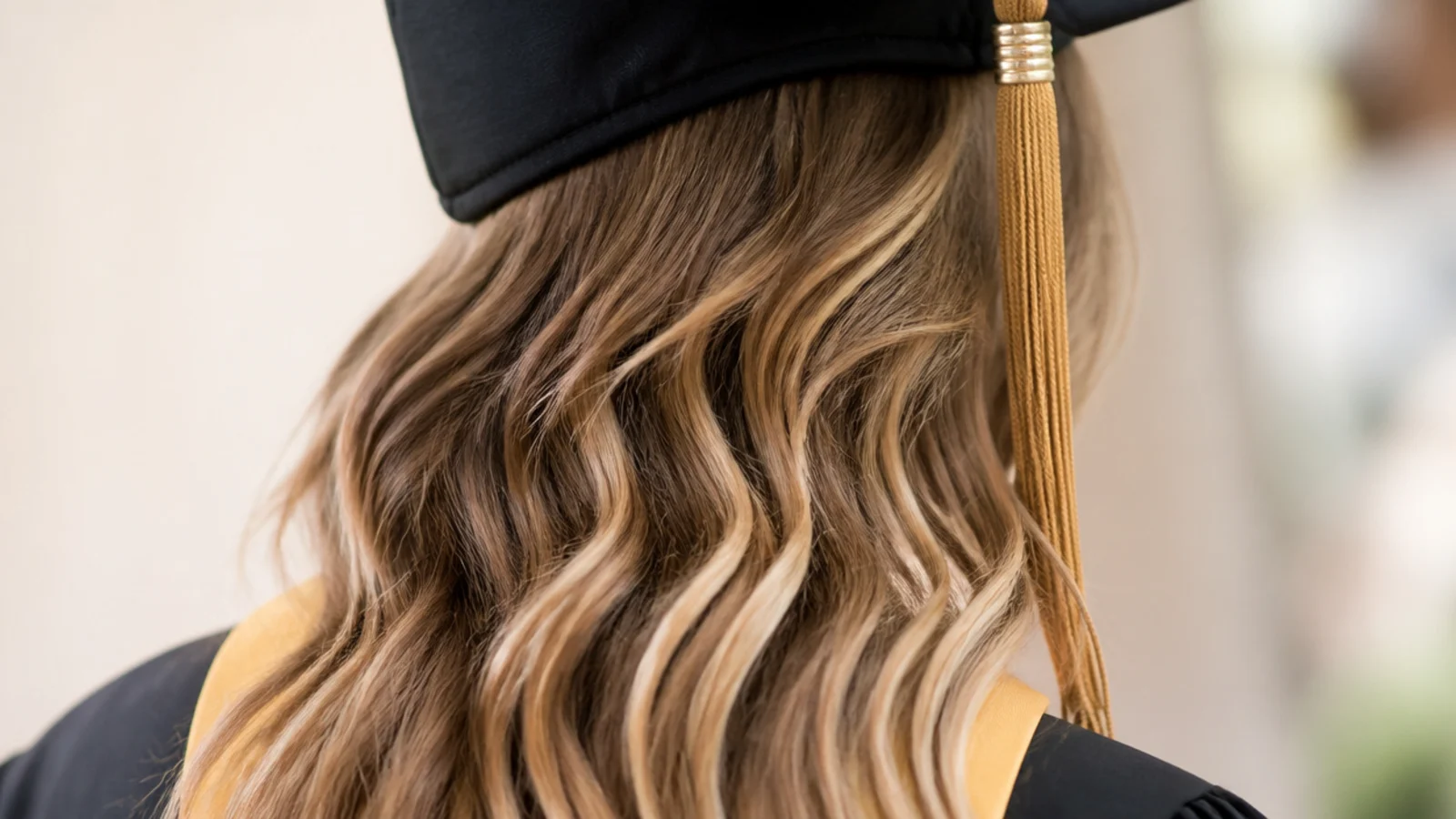
15. Twisted Half Up
Two twists taken from the temples and joined at the back are anchored at the hairline, which is forward of where the band grips hardest. That keeps the working parts of the style outside the ring even though the join sits inside it.
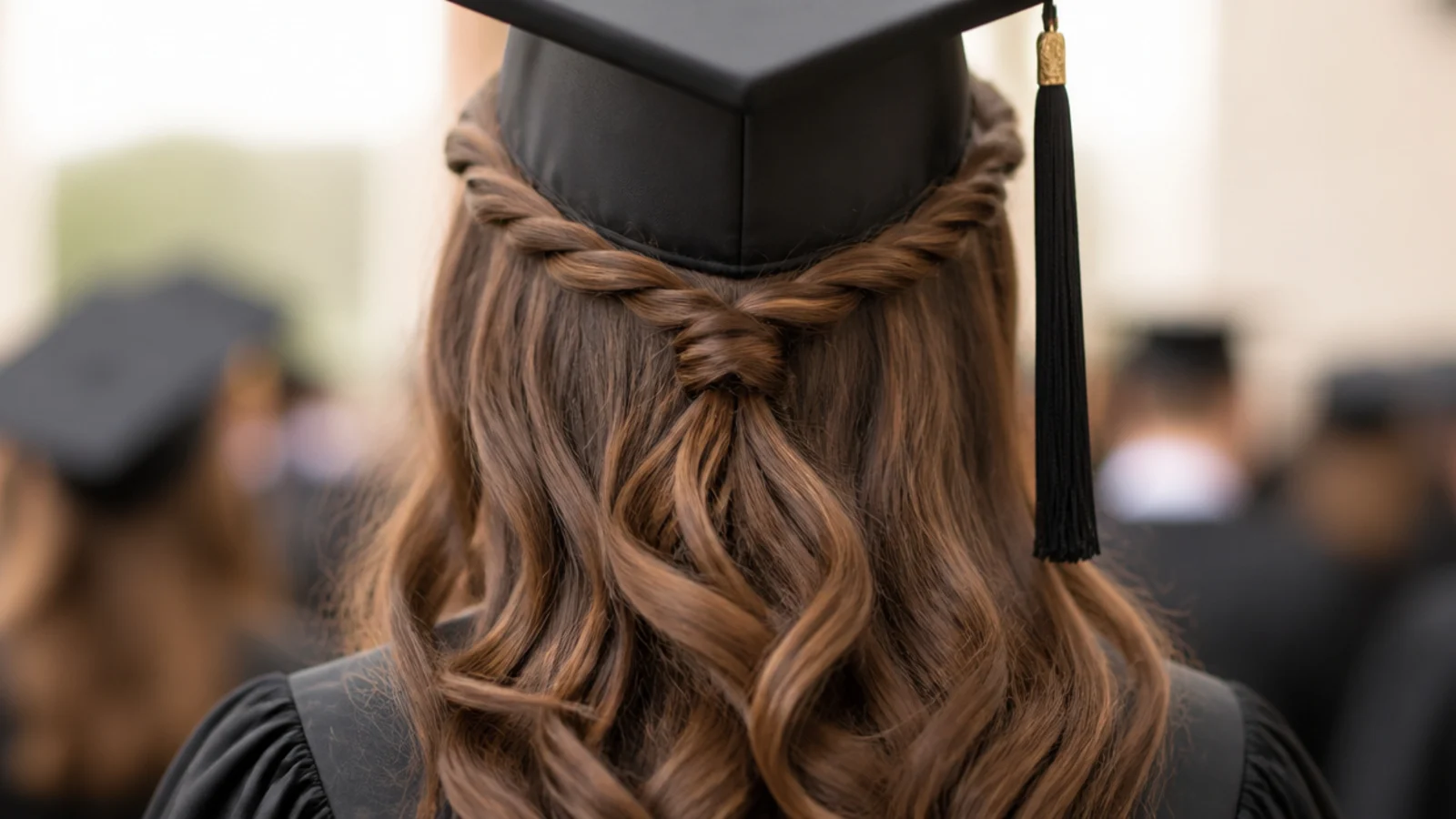
16. Low Side Bun
Offsetting the knot moves the weight away from the back of the cap, which is the direction a board naturally slides. It also lets you pin the base into hair swept across the nape, giving an anchor considerably wider than the knot itself.
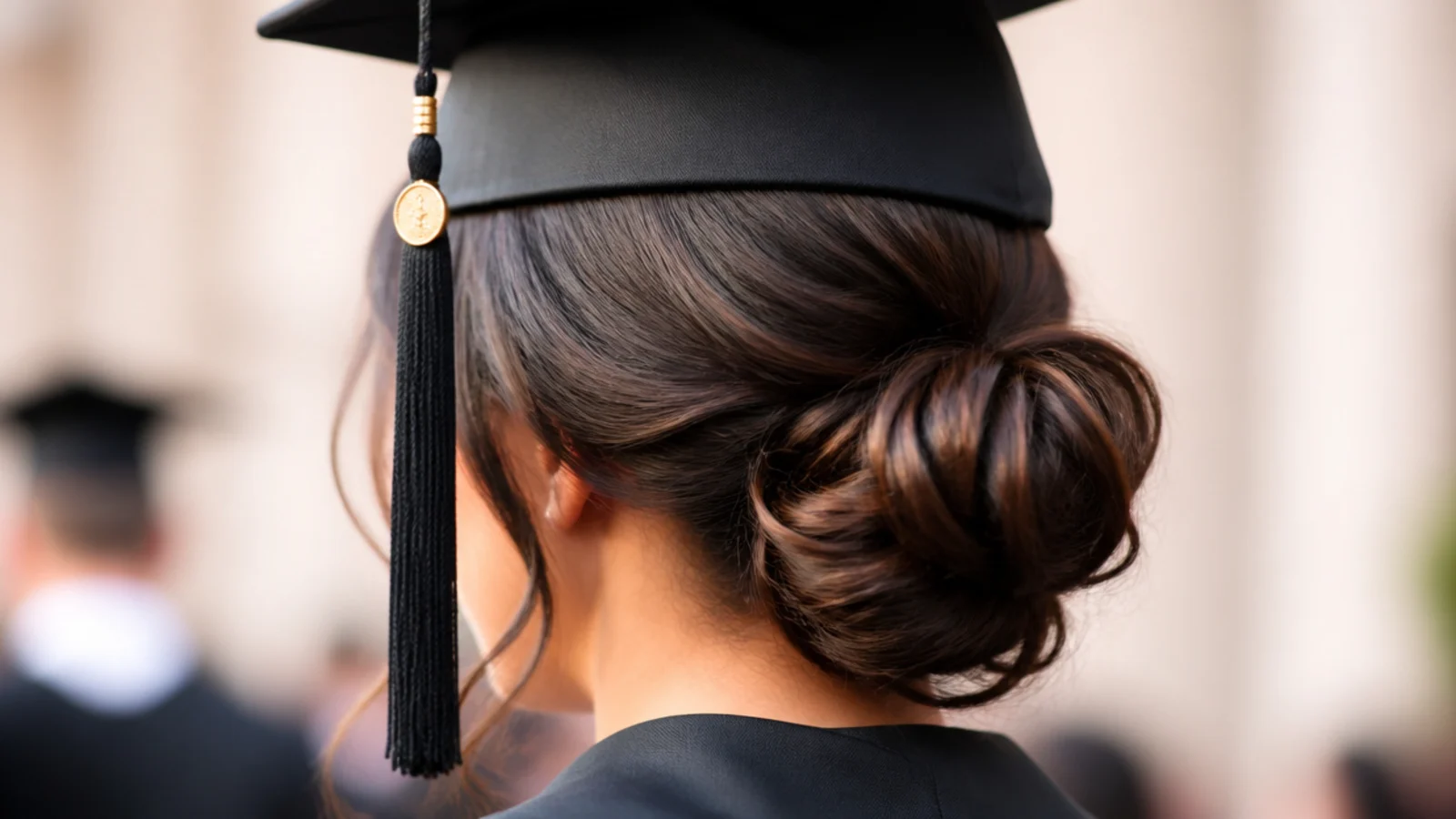
17. Cascading French Braid
The braid releases a section at every crossing instead of carrying it down, so the hair it drops falls below the band line and out of the cap's reach. What stays in the braid is flat against the scalp, since a French braid crosses over the top and sinks in.
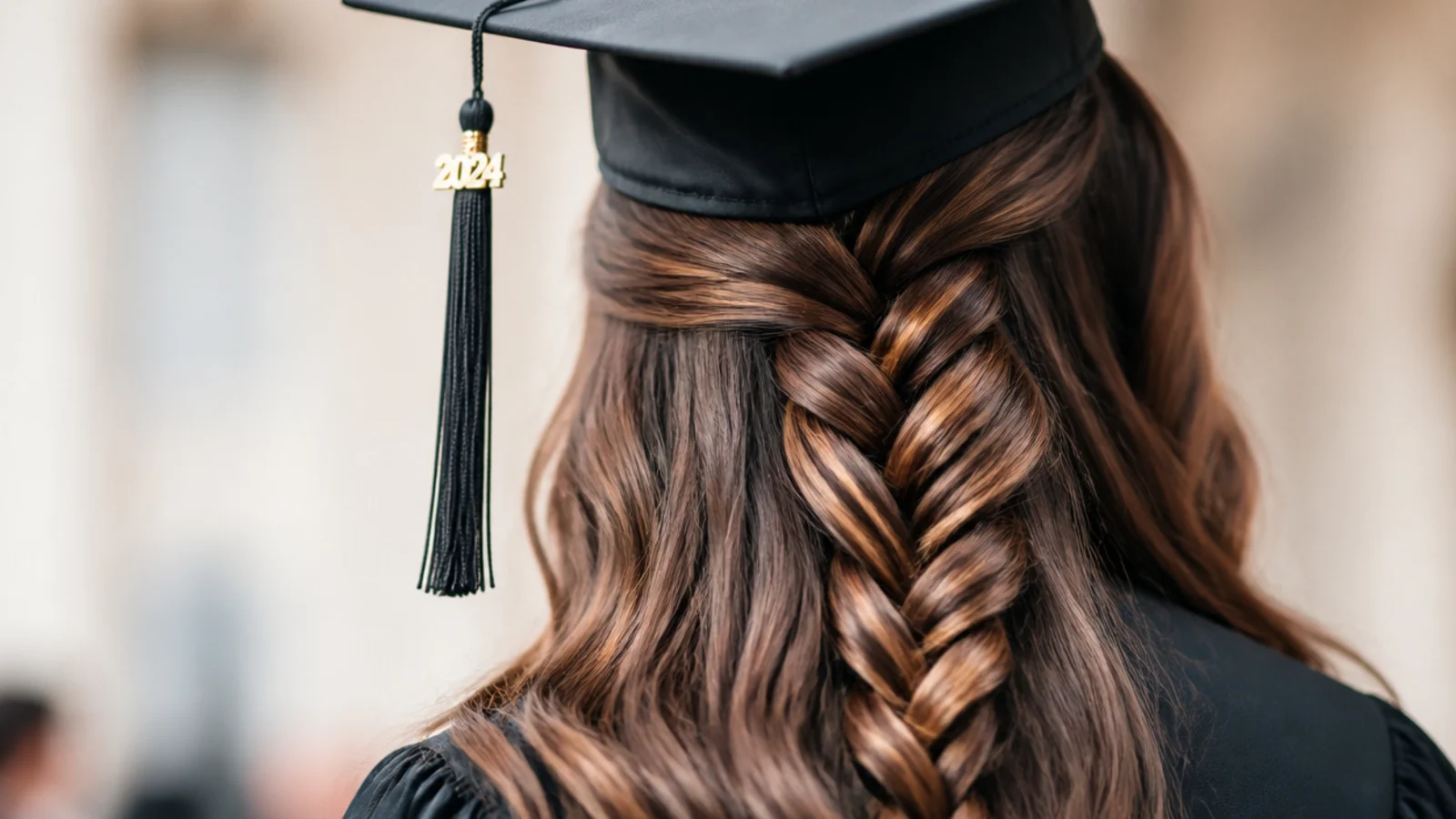
18. Nape Knot
The smallest gather that still holds long hair, and the one that puts the least bulk anywhere near the band. Twist the length into a rope first, because a rope wound into a knot occupies about half the volume of the same hair coiled loose.
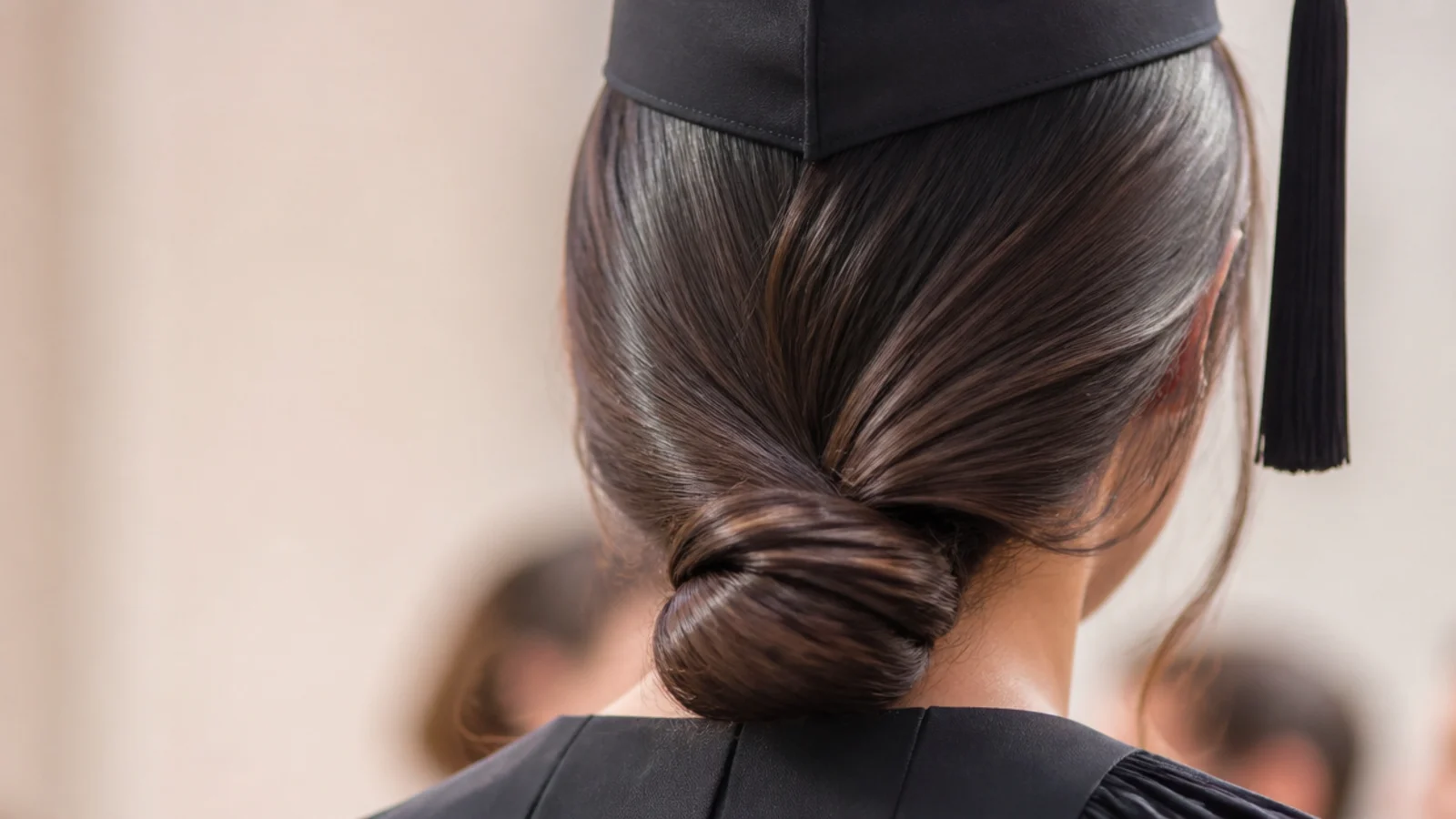
19. Dutch Braids Into a Low Bun
Two raised braids balance the weight evenly left and right, so nothing pulls the cap sideways, and both finish below the occipital bone where the bun is out of the band's way. The braids themselves stand proud, so keep them low behind the ears rather than over the crown.
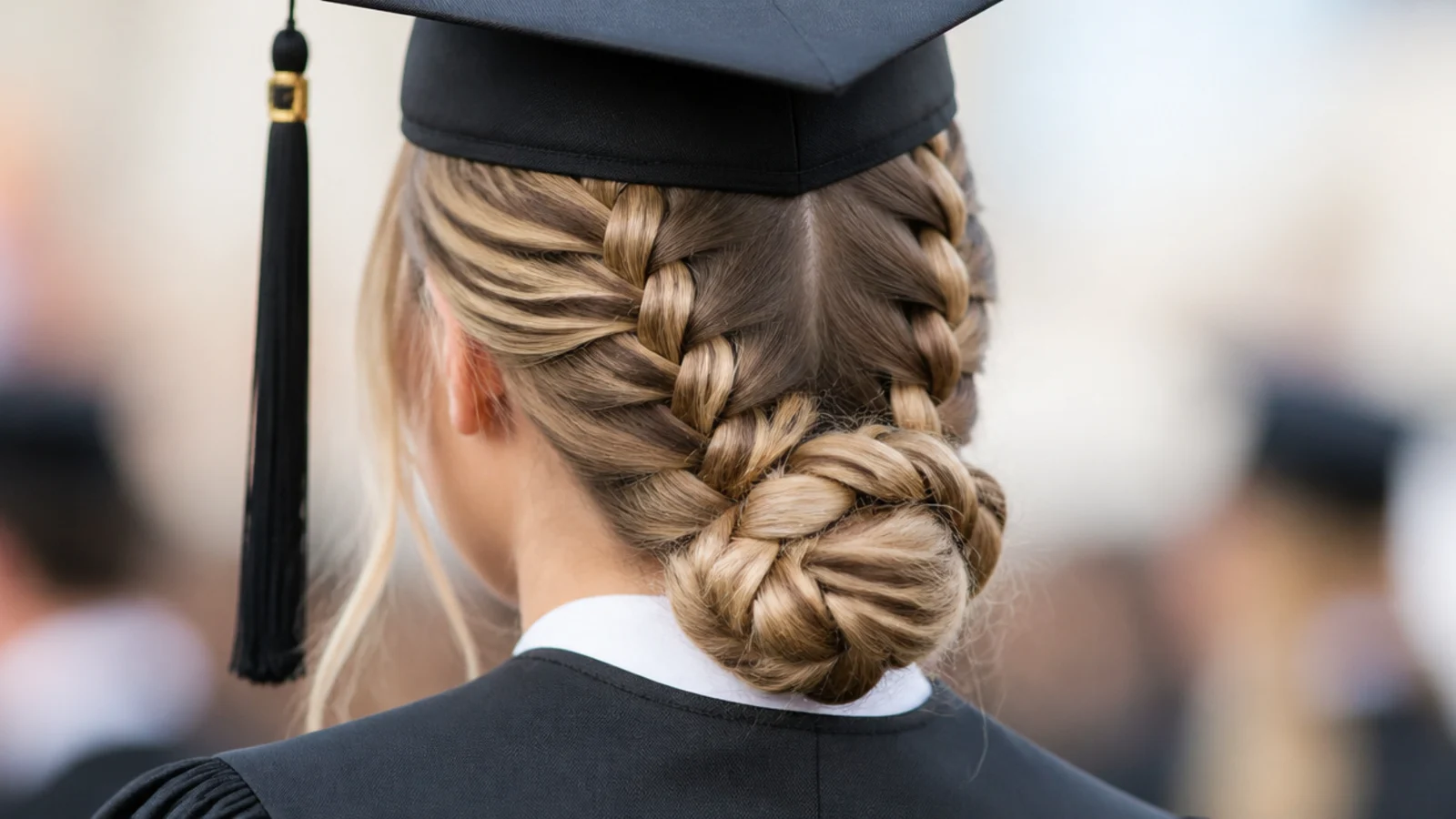
20. Layered Blowout
Layers end at different heights, so the band crosses several ends at once and the line it presses is broken rather than continuous. A one length cut takes a single unbroken ring, which is far more visible than the same pressure spread across four layers.

Final Thoughts
Long hair is the only length where the cap has to be treated as a piece of equipment rather than an accessory. It is resting on a layer that compresses, so it will be looser at the end of the ceremony than at the start, and the pins are what make that irrelevant. Two behind the temples, one at the back, each pair crossed.
Everything else follows from keeping the mass out of the ring. Gather at or below the occipital bone, or sweep it to one shoulder, and the band presses a thin layer instead of your full thickness. For the fastest version of a low gather see claw clip hairstyles for long hair, and for the smooth finishes that photograph best see the for straight version. More in Occasion Hair.
Frequently asked questions
Related posts
See all posts
15 Graduation Hair Ideas for the Updo Versus Down Decision
Read more
15 Straight Hair Wedding Looks to Save
Read more
20 Gorgeous Prom Looks for Straight Hair
Read more