15 Graduation Hairstyles for Natural Hair That Protect Your Edges
Fifteen graduation styles for natural hair, and the risk almost nobody warns about. The cap band runs directly across your hairline, so a style pulled tight at the edges plus two hours of a band pressed over it is the exact combination that costs you edges.
In this article · 23
- The Cap Line on Natural Hair
- Natural Hair by Length
- Updo Versus Down on Natural Hair
- All Day Hold on 4C Hair
- Graduation Morning Timeline
- Cap Off Crown Refresh
- The 15 Natural Hair Graduation Styles
- 1. Flat Twist Into a Low Bun
- 2. Twist Out
- 3. Knotless Braids in a Low Bun
- 4. Cornrows Into a Low Puff
- 5. Braid Out
- 6. Flexi Rod Set
- 7. Half Up Puff
- 8. Sleek Low Bun
- 9. Side Swept Twist Out
- 10. Loc Barrel Roll
- 11. Bantu Knot Out
- 12. Flat Twists Into a Side Ponytail
- 13. Fulani Braids
- 14. TWA Wash and Go
- 15. Nape Halo Braid
- Final Thoughts
The advice for wearing a graduation cap over natural hair usually starts and ends with the crown, which is the part of your head with the least at stake.
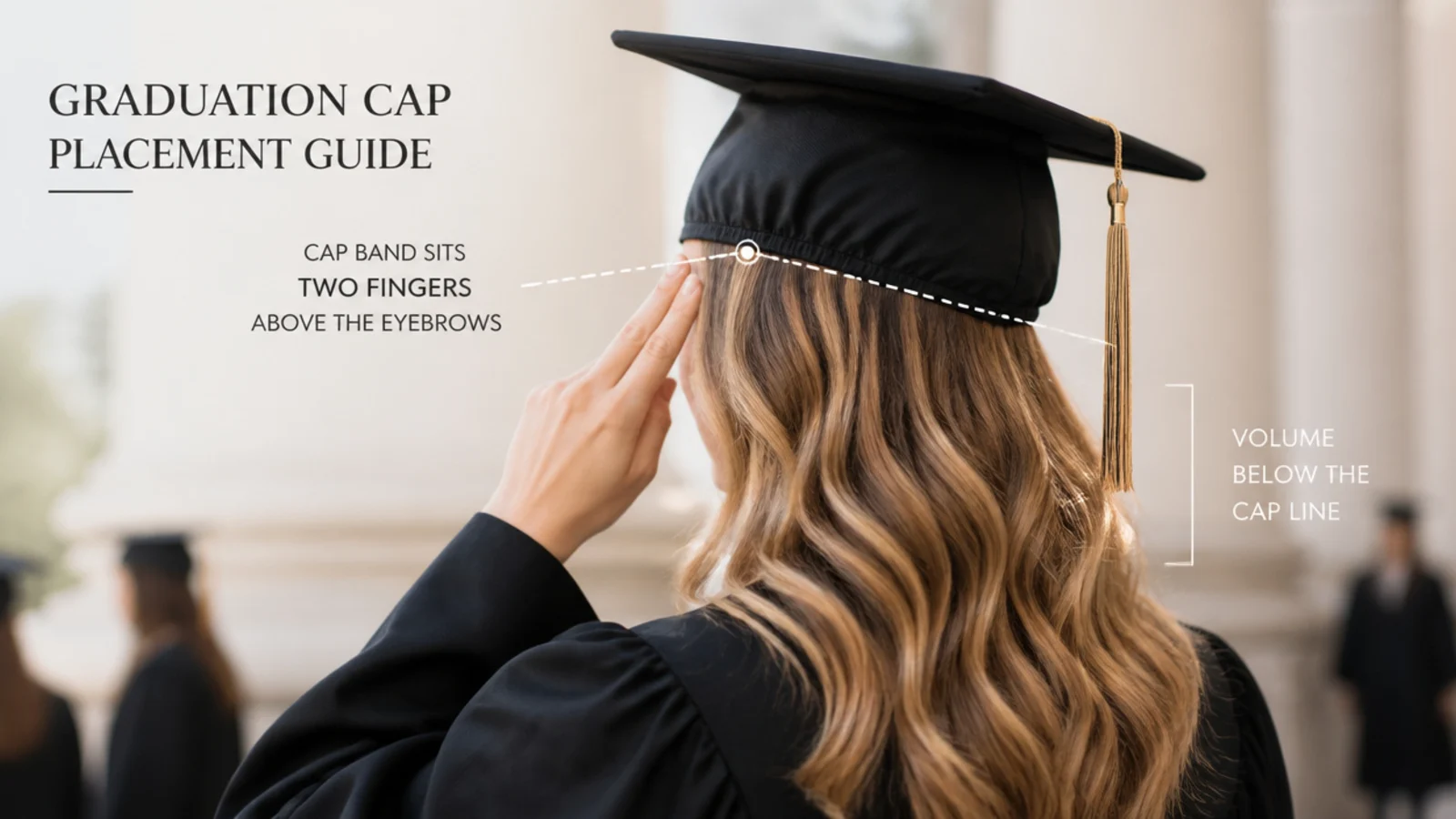
The band runs straight across your hairline. Edge hair is the finest on your head, and it is under the cap for the whole ceremony.
Tension plus pressure is what does the damage. A style pulled tight at the front, then a band pressed over that same line for two hours, loads the weakest follicles you have from two directions at once.
The Cap Line on Natural Hair
The band crosses the forehead, the temples and the occipital bone. Two of those three are hairline, and hairline hair is finer and shorter than anything else on your head.
Leave the first half inch out of the tension. Take your sections back from the hairline rather than from it, so nothing at the front is carrying load when the band arrives.
Laid edges will smear. Gel that is still tacky when the cap goes on transfers onto the band and dries in whatever direction it was pushed.
A cap that hurts is a cap that is too tight. Pressure that you can feel through a two hour ceremony is pressure your follicles are also feeling.
Natural Hair by Length
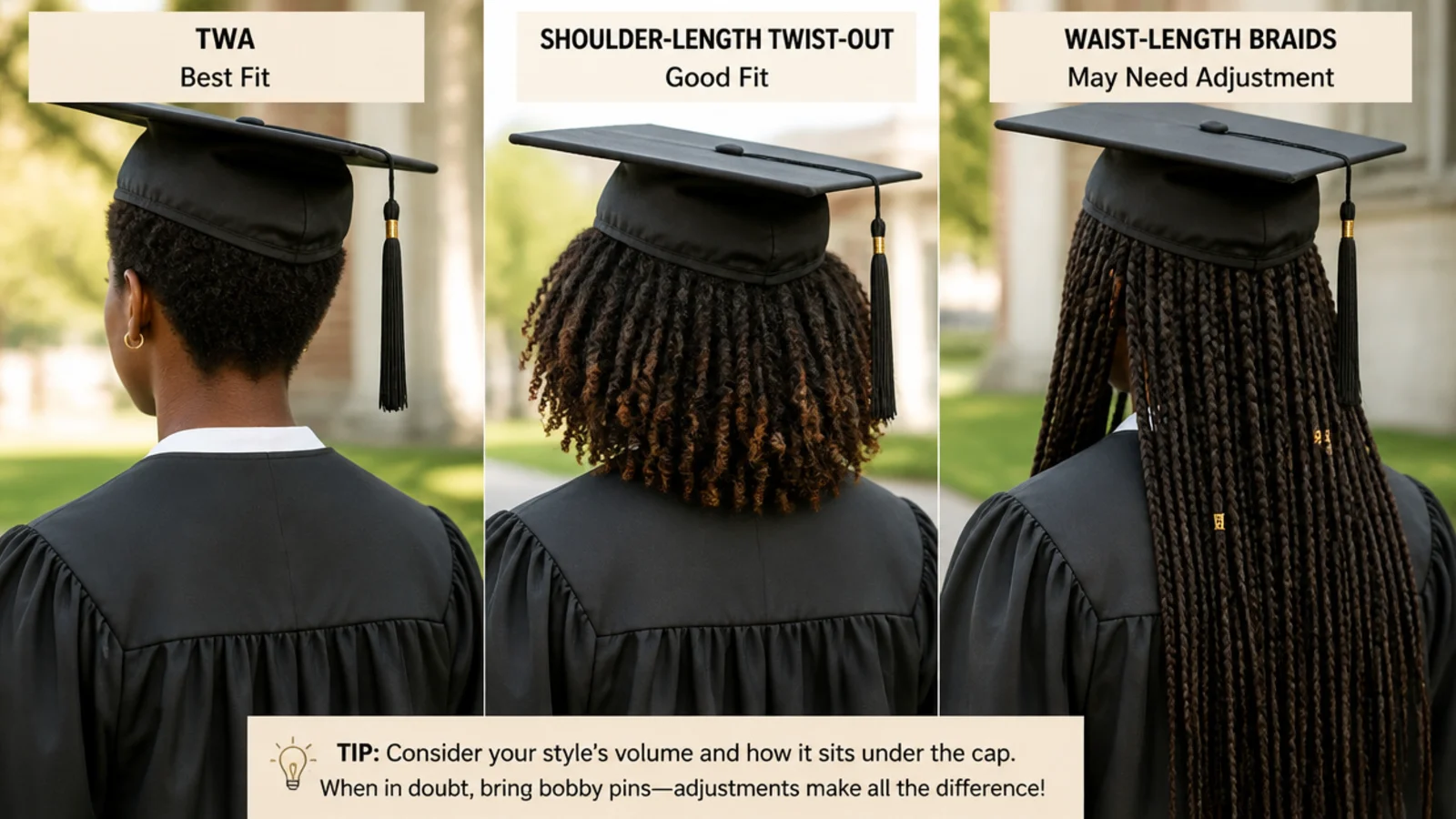
A TWA is already below the band. There is almost nothing inside the ring to compress, which makes it the easiest length in the room.
Shrinkage decides this, not your stretched length. Coily hair can sit at a quarter of its stretched measurement, so hair that reaches your shoulders wet may sit entirely inside the ring dry.
Mid length is where a gather starts to pay. Enough length to reach the nape means enough to move the whole mass outside the band.
Braids and locs add weight, not height. They lie down rather than standing up, so their cost to the cap is pull rather than lift.
Updo Versus Down on Natural Hair
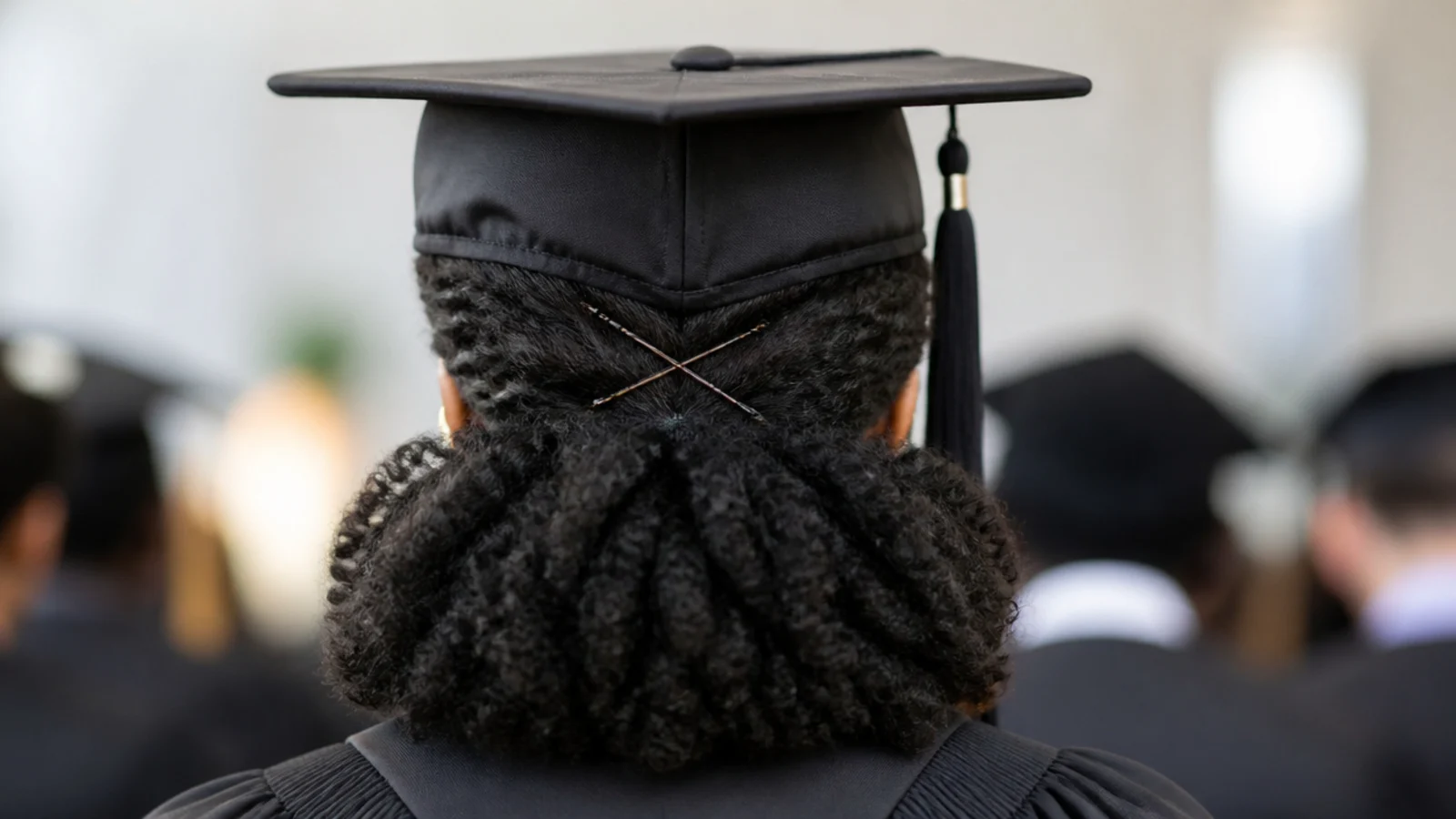
A low gather is identical before and after. The volume is already outside the ring, so removing the cap changes nothing that needs fixing.
Worn out, you lose height and keep pattern. Compression squeezes the air from between the coils without straightening a single strand, which is why the repair is water rather than heat.
A crown puff is the one thing that cannot survive. It is made entirely of the volume the band exists to flatten.
Most photographs happen with the cap off. Weight the decision toward the style that needs no repair once you are outside.

All Day Hold on 4C Hair
Stretch first, then set. Coils set at their shrunken length have nowhere to go under a band except sideways, and stretched hair sits closer to the head so it compresses less.
Moisture before hold, never the reverse. A holding product over dry coils sets brittleness, and a brittle coil under pressure snaps instead of flexing.
Completely dry before the cap. Water breaks the hydrogen bonds that hold hair in shape and drying reforms them, so a damp crown under a band dries as a flat crown.
Satin overnight, without exception. Cotton draws moisture out of the hair and roughens the cuticle, and a set that survives the night is a set that survives the ceremony.
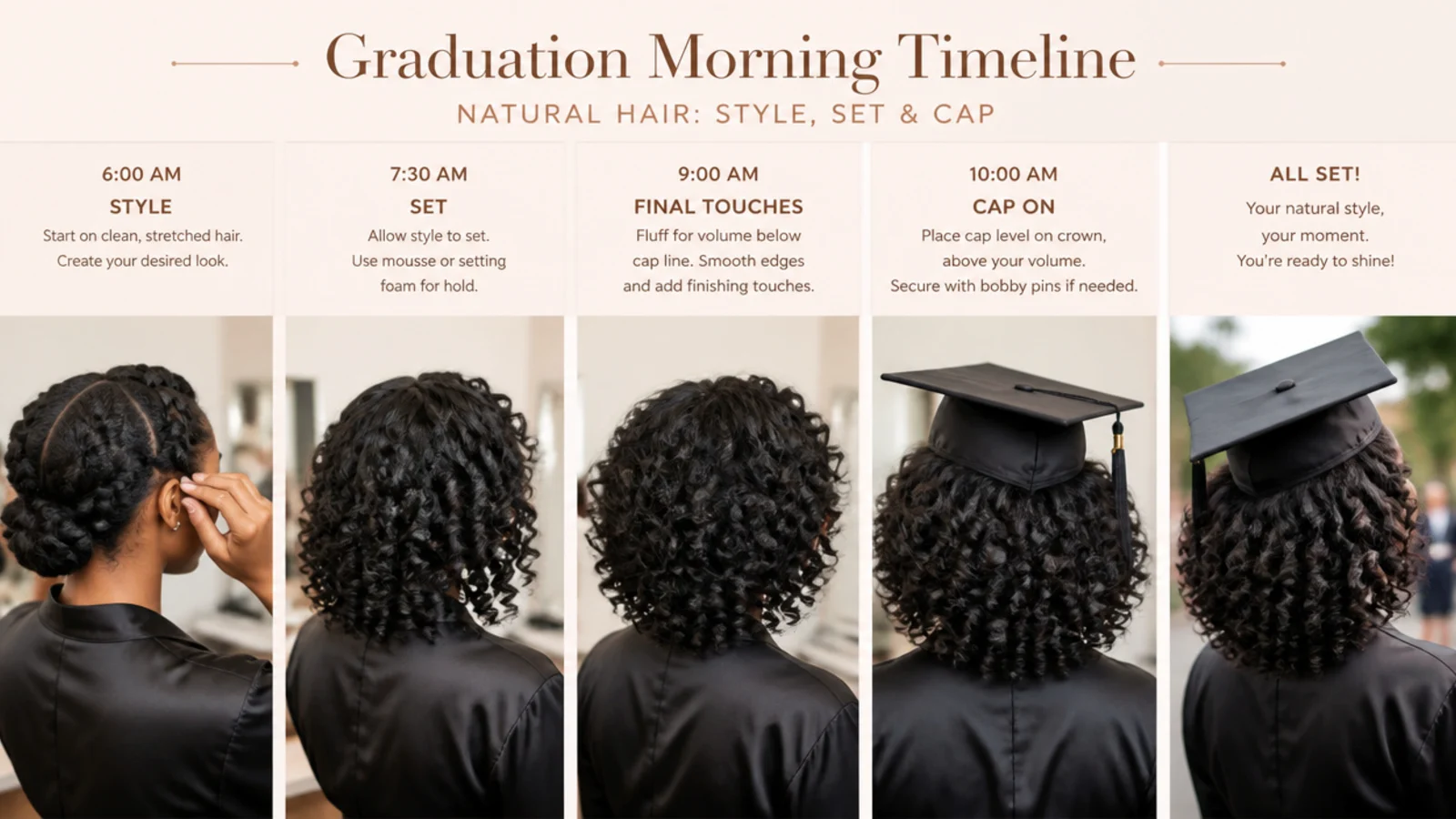
Graduation Morning Timeline
Set two nights before, not the night before. A twist or rod set needs a full day to dry through, and unravelling anything still damp at the core wastes the whole set.
Unravel with oiled fingers. The oil reduces friction between the strands, which is what stops a clean set turning into frizz as it opens.
Separate ninety minutes before you leave. That leaves time for the shape to fall into place and time to redo one section.
Cap on at the door. The depth of the flattening scales with the minutes under the band, so every one you save shows.
Cap Off Crown Refresh
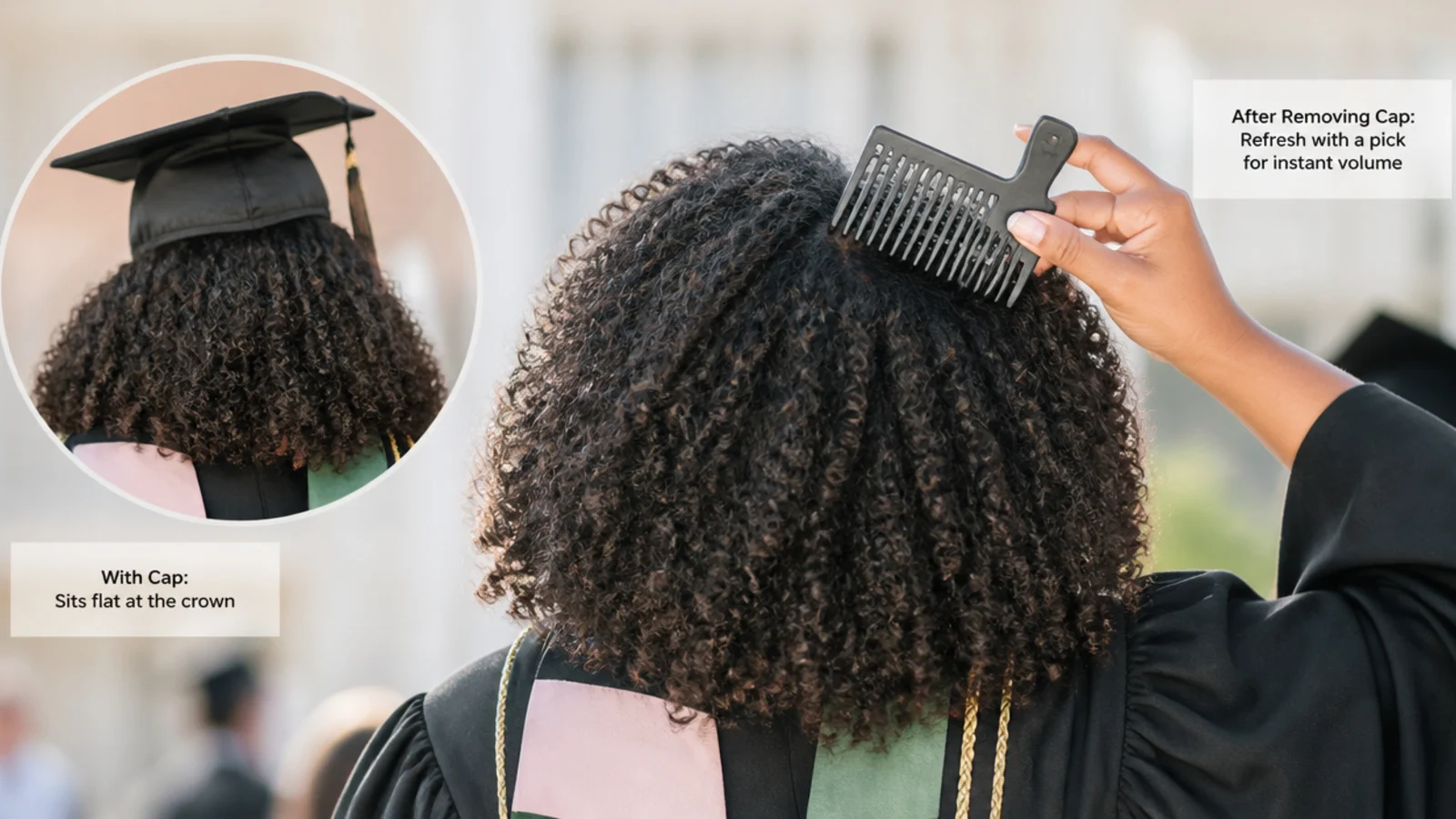
Water at the root only. A mist into the scalp area lifts what was flattened. Water on the length re-forms the set and you lose the definition you arrived with.
Fingertips at the base, then a pick. Shake the roots apart first, then lift between the clumps with a pick, which separates without breaking them up.
No brush anywhere near it. A brush pulls the clumps apart into frizz, and a flattened crown becomes a fuzzy one.
Re-lay the edges last. Do the volume first, because working at the crown after laying the front will disturb it again.
The 15 Natural Hair Graduation Styles
1. Flat Twist Into a Low Bun
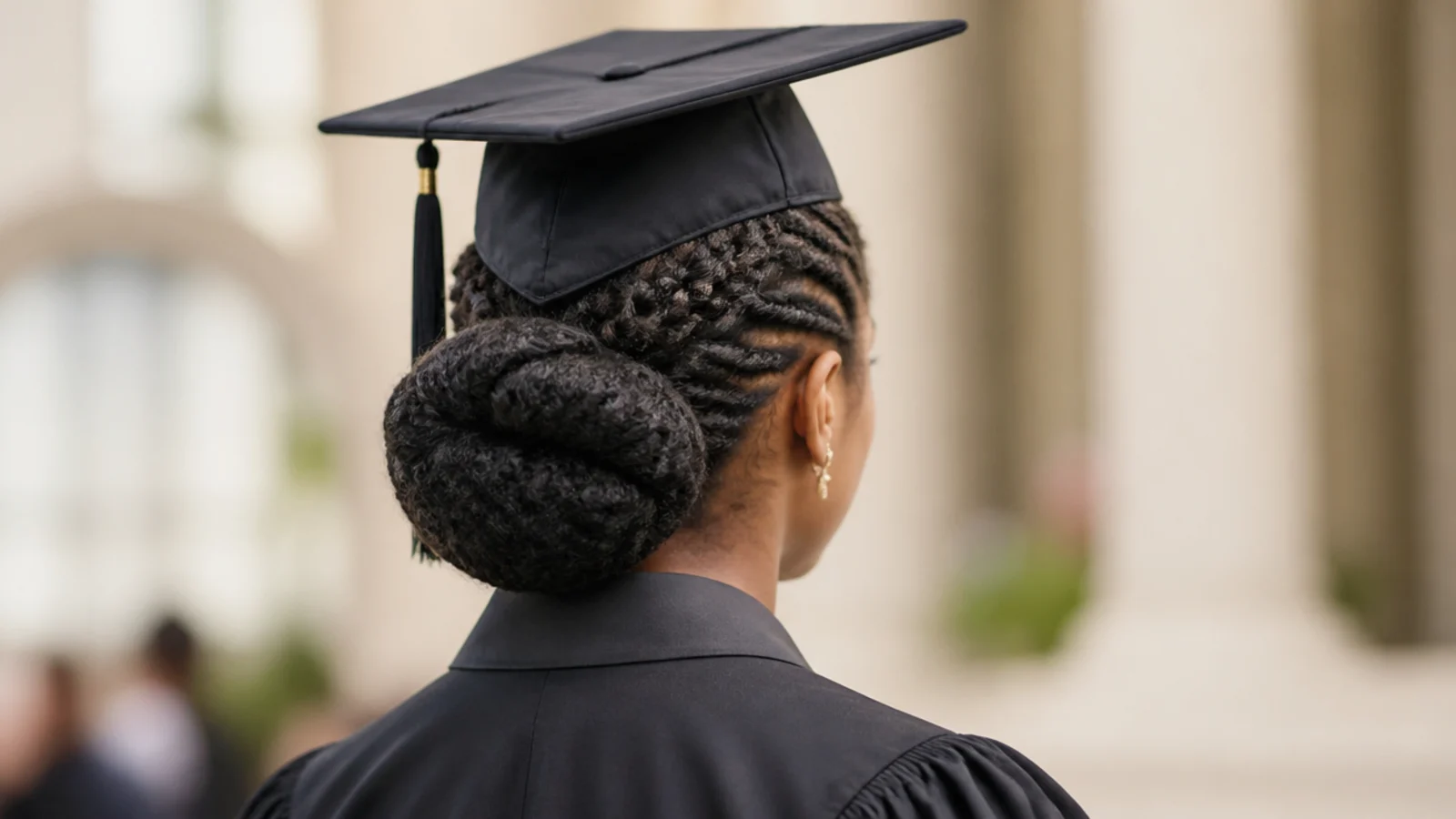
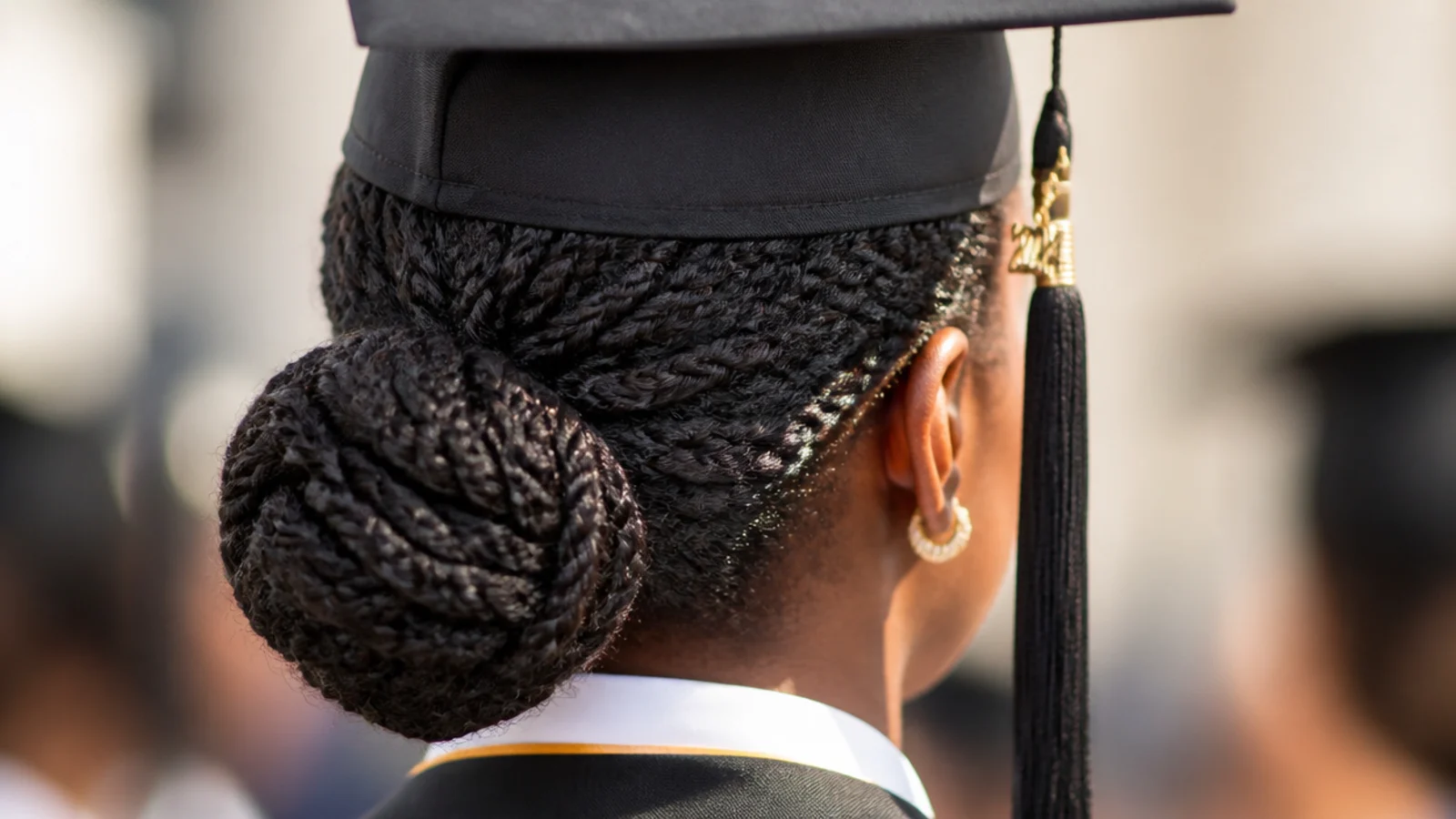
Flat twists lie along the scalp the way cornrows do, so they add almost no height anywhere the band travels and the cap fits as though your head were bare. They also stretch the hair as they set, which sends all the resulting bulk down into the bun at the nape.
2. Twist Out
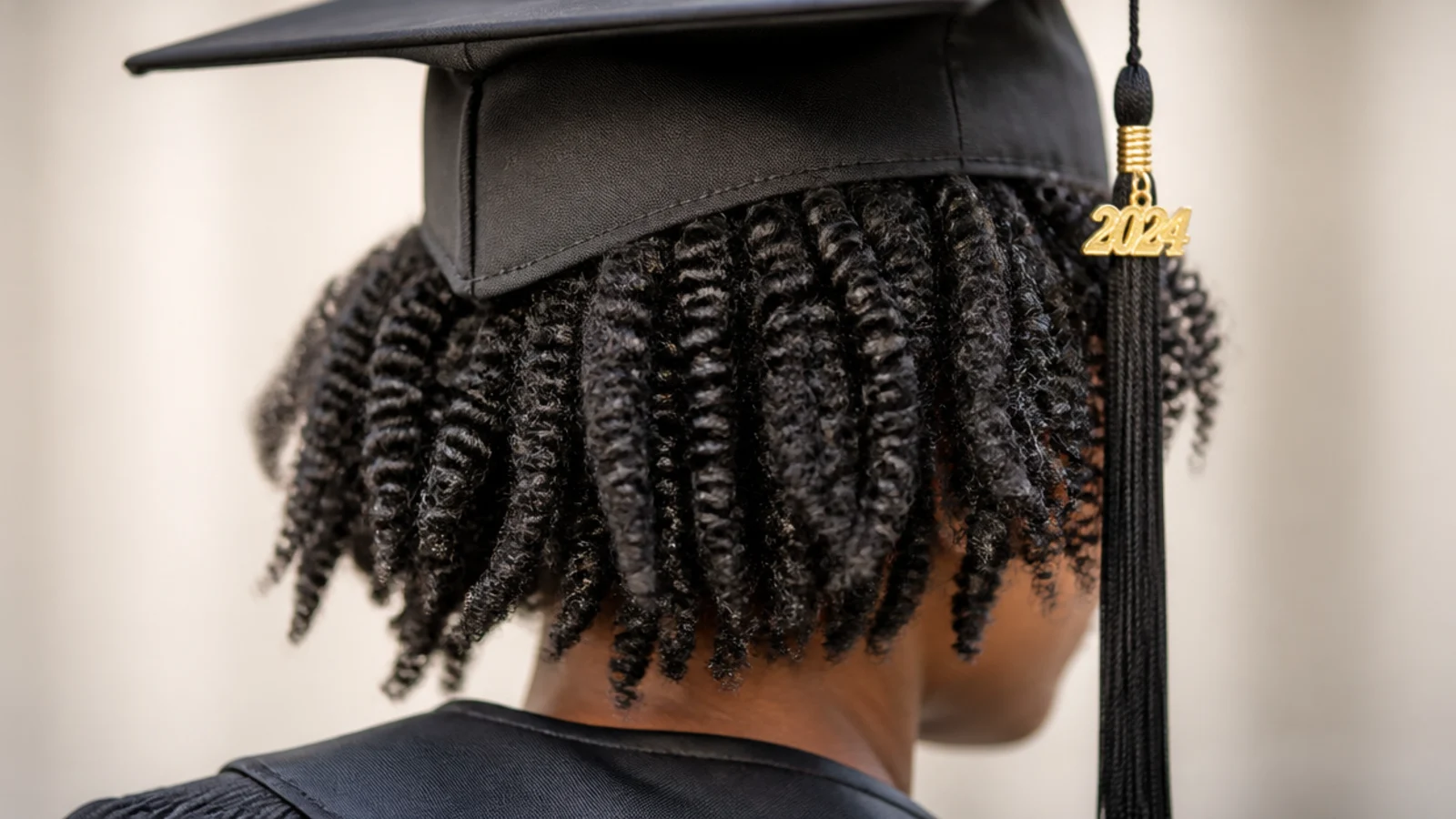
A two strand twist holds each coil in a wider spiral while it dries, so what you unravel is a stretched wave rather than the natural pattern. It has to be dry to the core before you open it and dry before the cap goes on, because both stages set whatever shape the hair is holding.
3. Knotless Braids in a Low Bun
The extension is fed in gradually instead of being anchored with a knot at the root, so there is no hard point sitting under the band and no localised pull on the follicle. Gathered low, the weight hangs below the ring and never touches the cap.
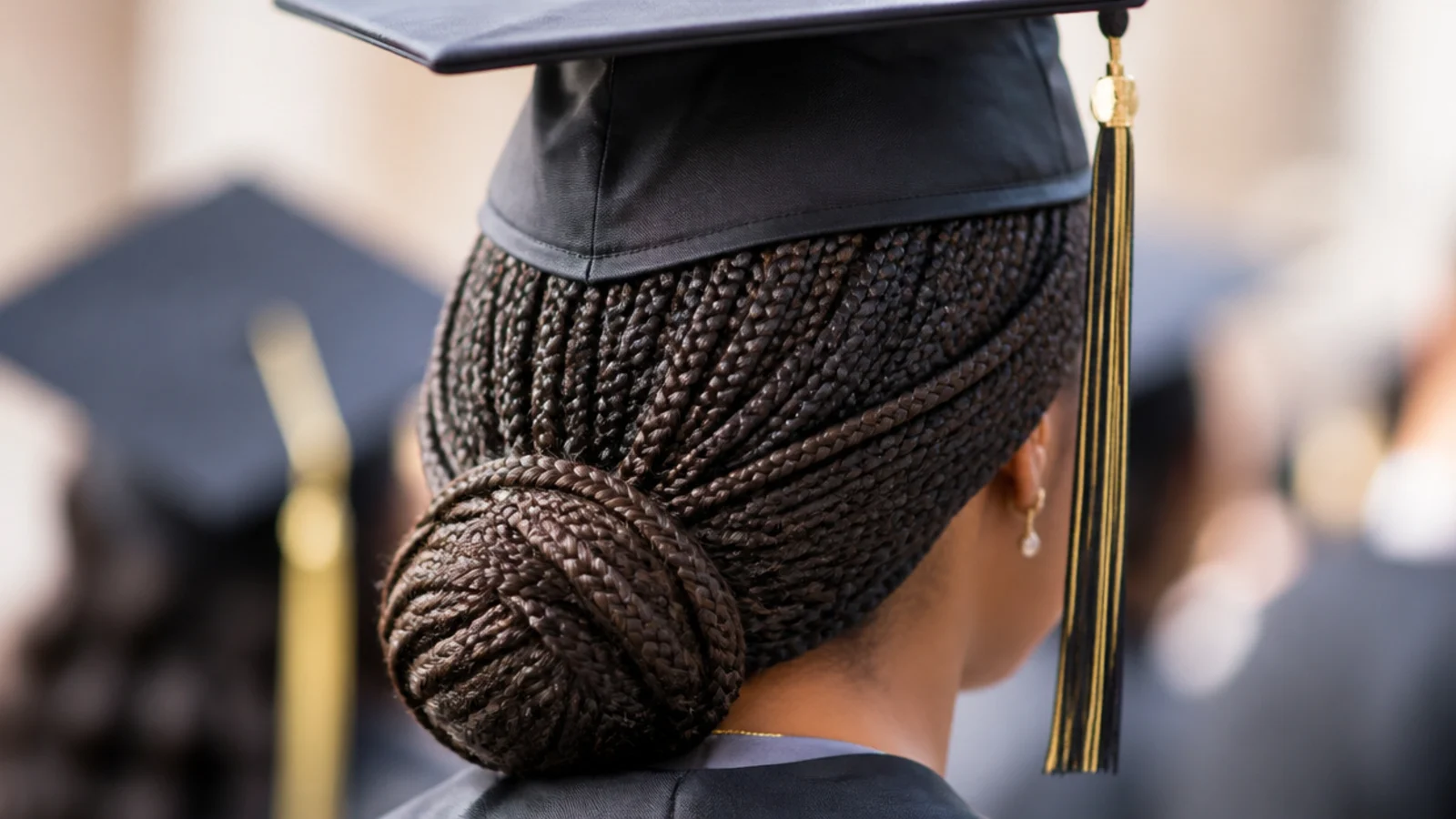
4. Cornrows Into a Low Puff
Cornrows are the flattest thing you can do to a head, which means the band presses on rows that are already at scalp height and nothing lifts the board. Every bit of volume ends up in the puff at the back, where the cap cannot reach it.
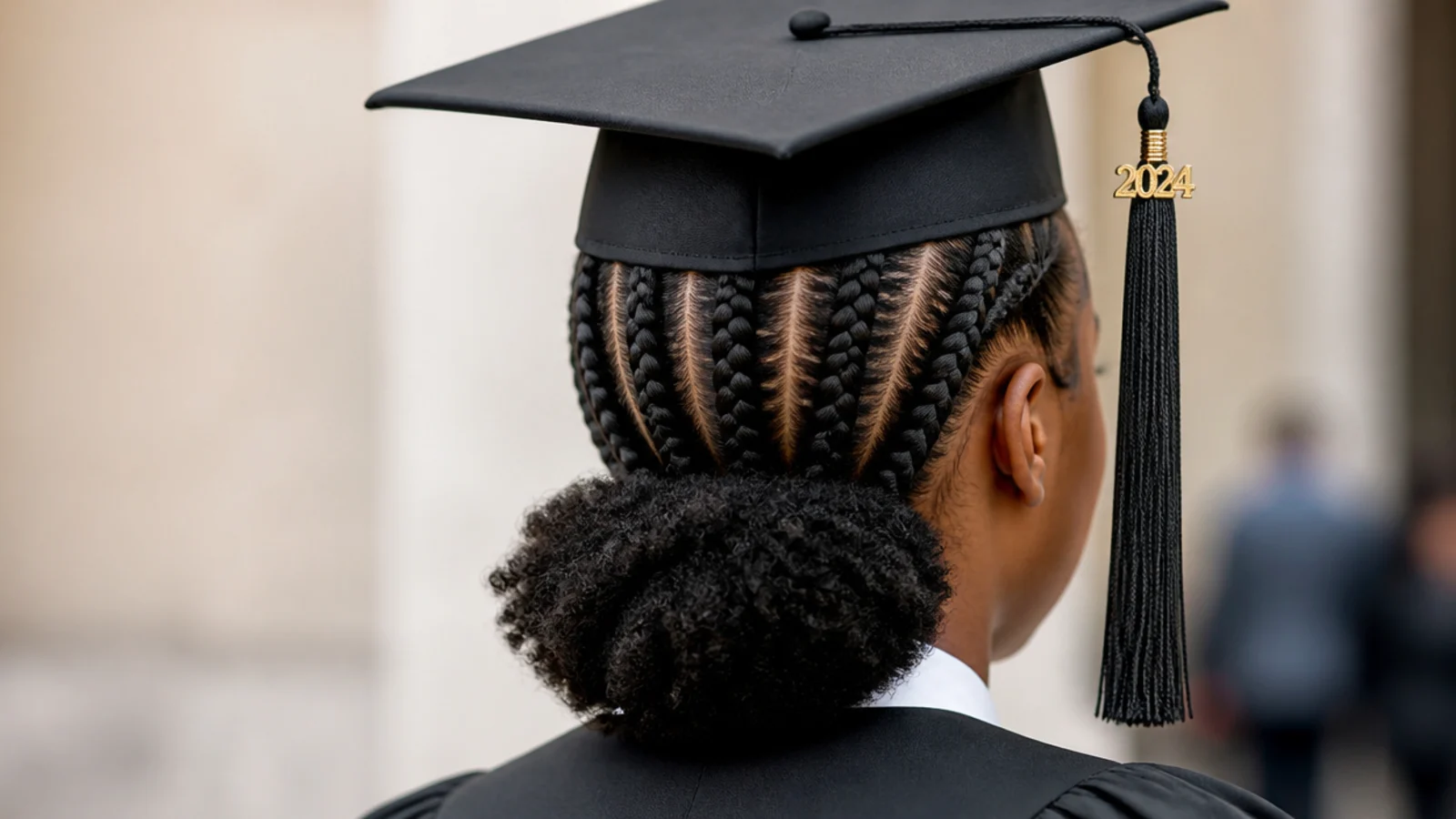
5. Braid Out
Three strands set a crimp rather than a spiral, so a braid out gives a tighter, flatter and more uniform wave than a twist out from the same hair. Flatter is exactly what you want under a band, since there is less height there to lose in the first place.
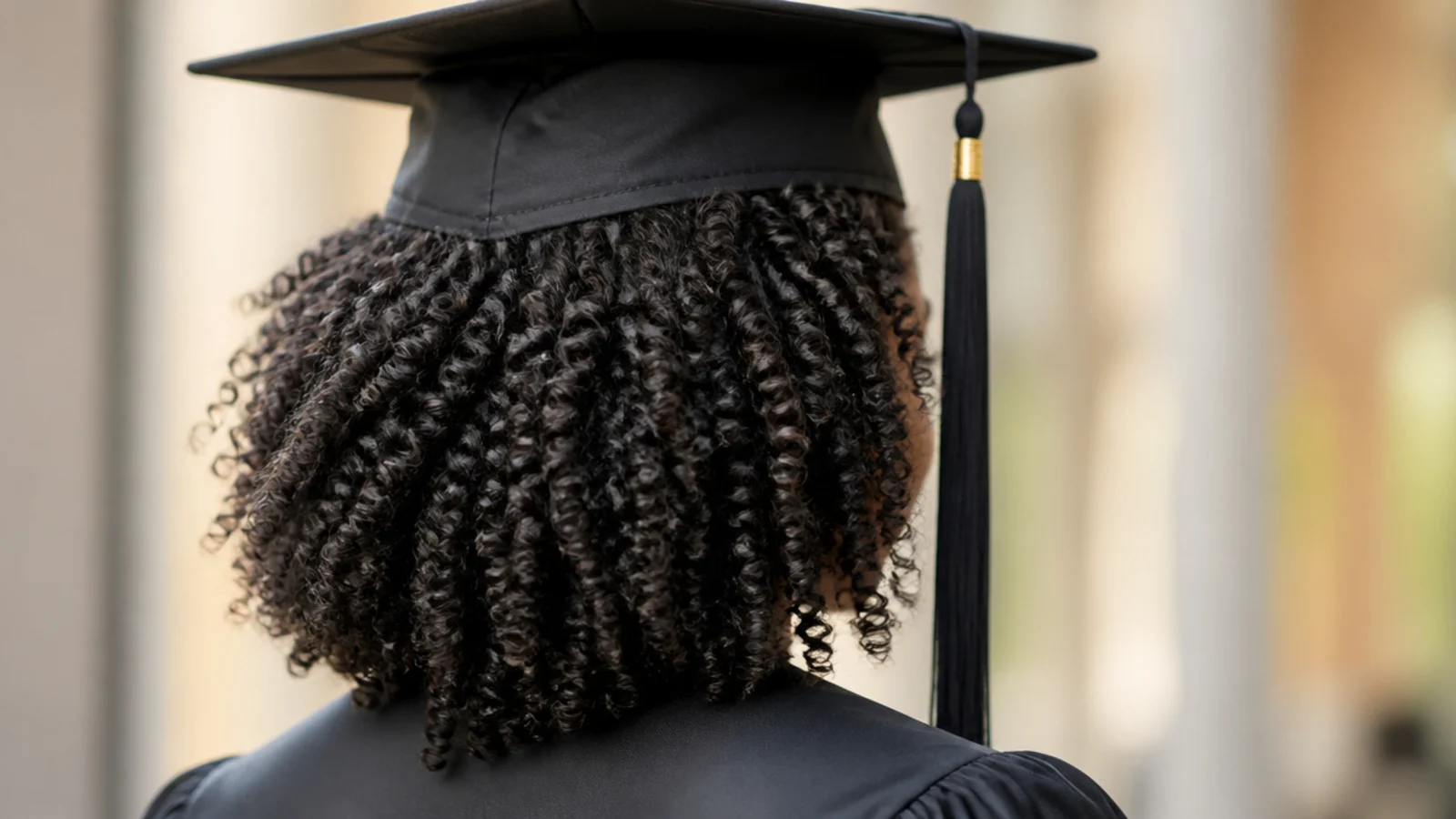
6. Flexi Rod Set
A rod imposes a smooth curve on hair whose natural pattern bends in sharp angles, so the result is a shape change rather than a stretch. A set curve is stiffer than a natural bend of the same length, which is why it recovers better after two hours of compression.
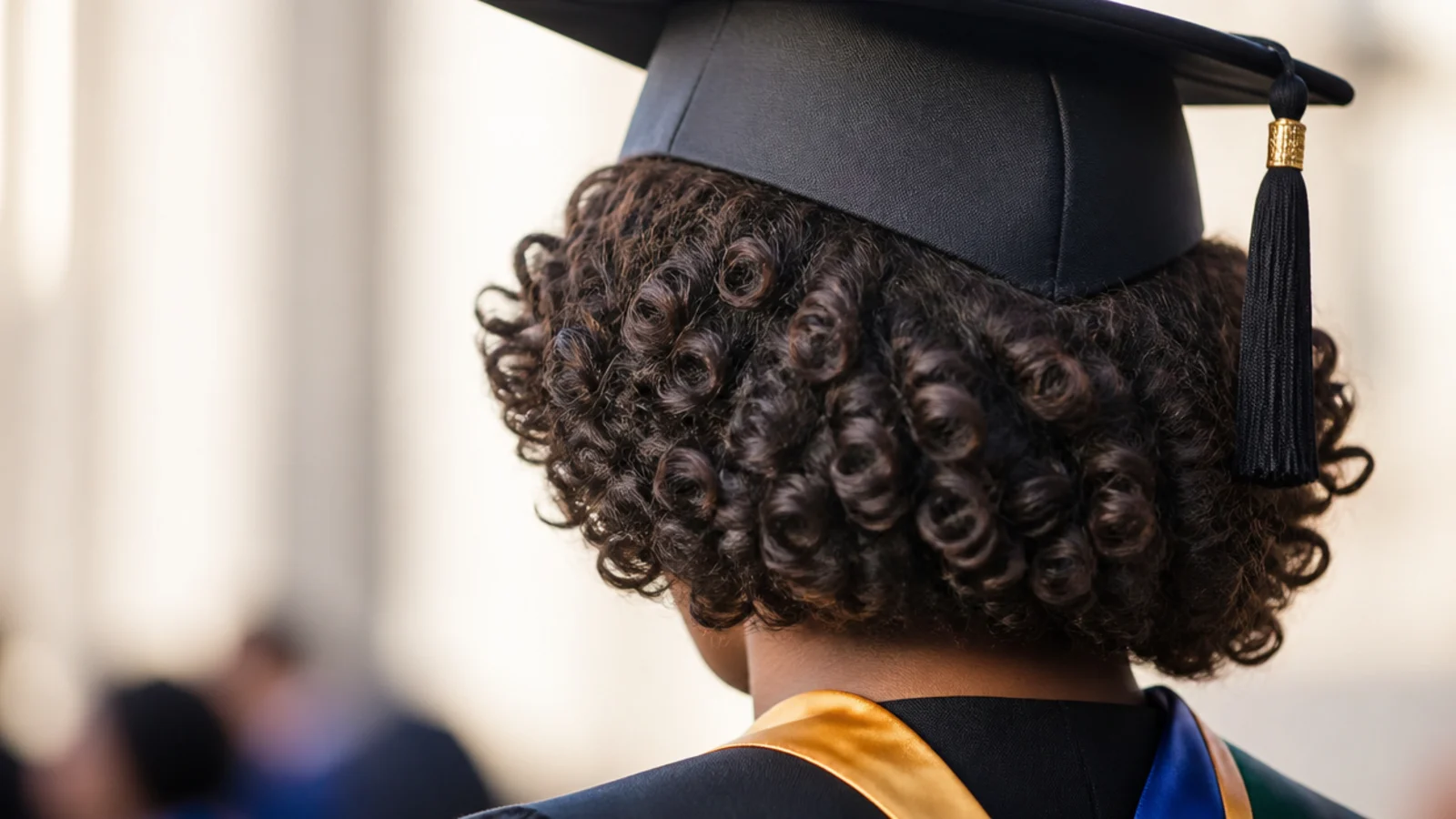
7. Half Up Puff
A puff is pure volume, so its survival depends entirely on where you gather it. At or below the occipital bone it bulges outside the ring the band grips, and the cap presses flat scalp instead of the part of the style you care about.
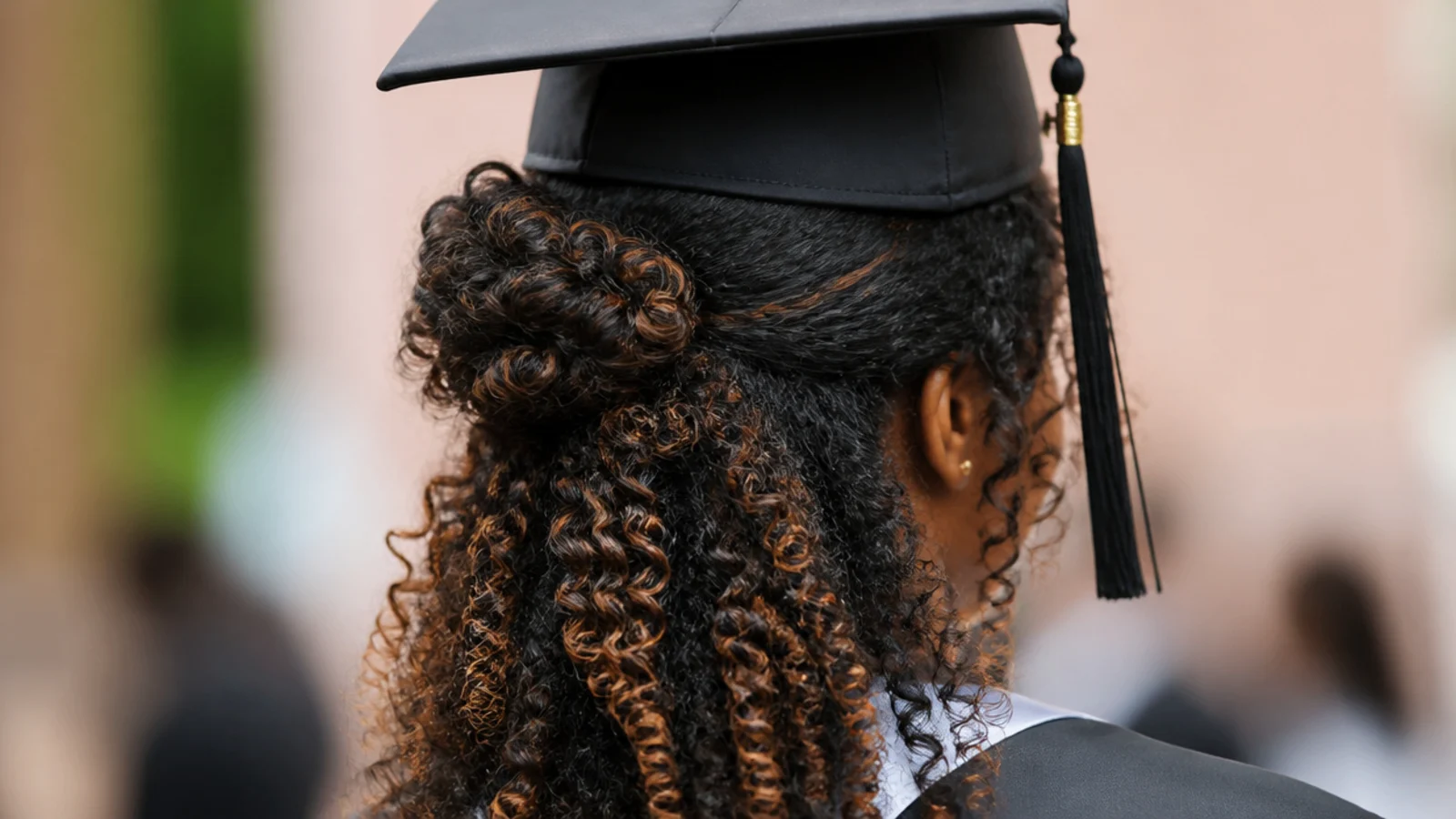
8. Sleek Low Bun
Gel dries into a shell that keeps its shape through the compression, because there is no loose surface left for the band to disturb. The one thing that ruins it is trapping it under a cap while it is still tacky, where it cannot dry and sets in the pressed position.
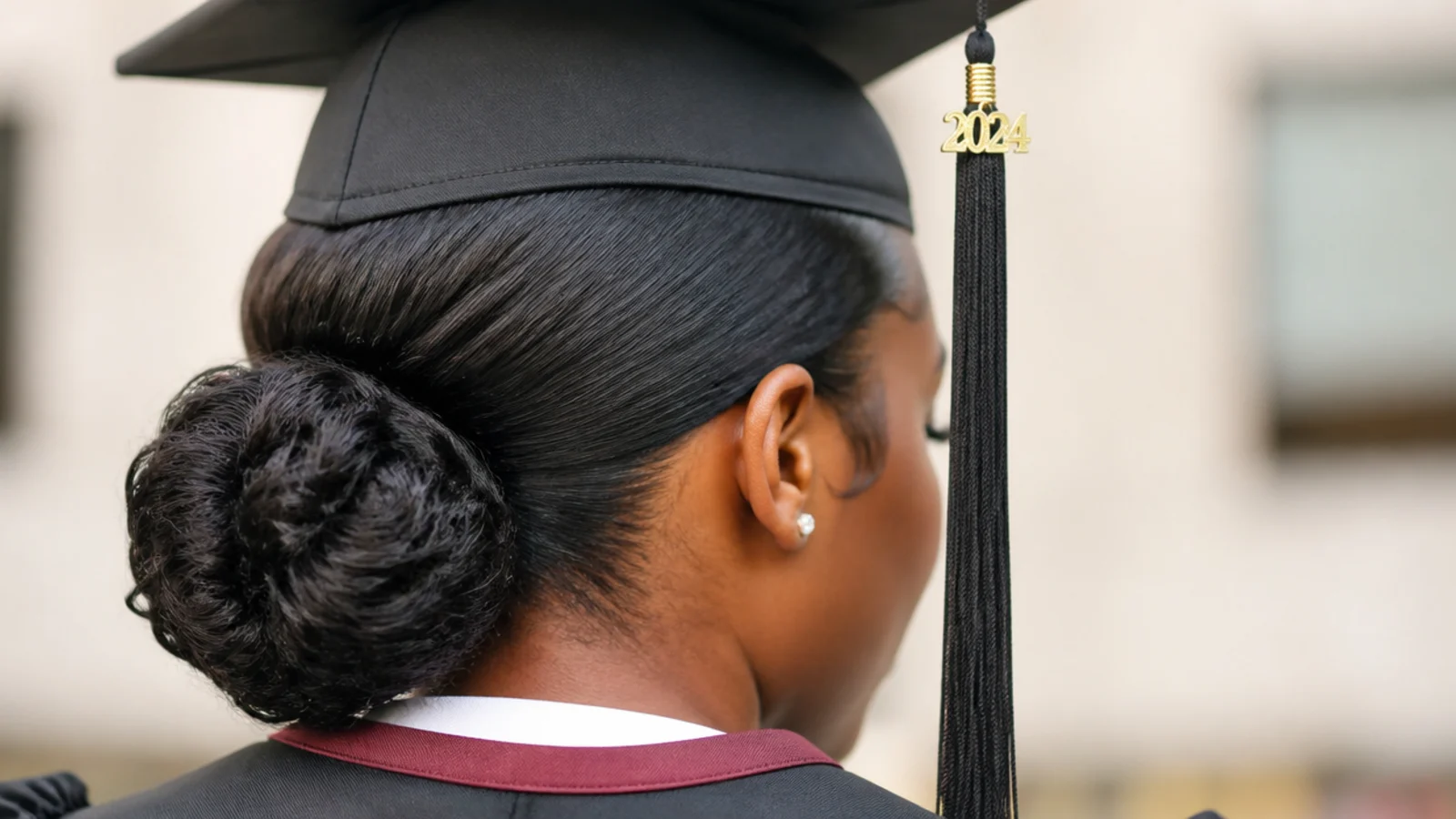
9. Side Swept Twist Out
Sweeping the set across to one side empties the back of the head, so the band presses a thin layer rather than the full depth of the volume. The line it does leave runs through a section you can hide by sweeping the other way once the cap is off.
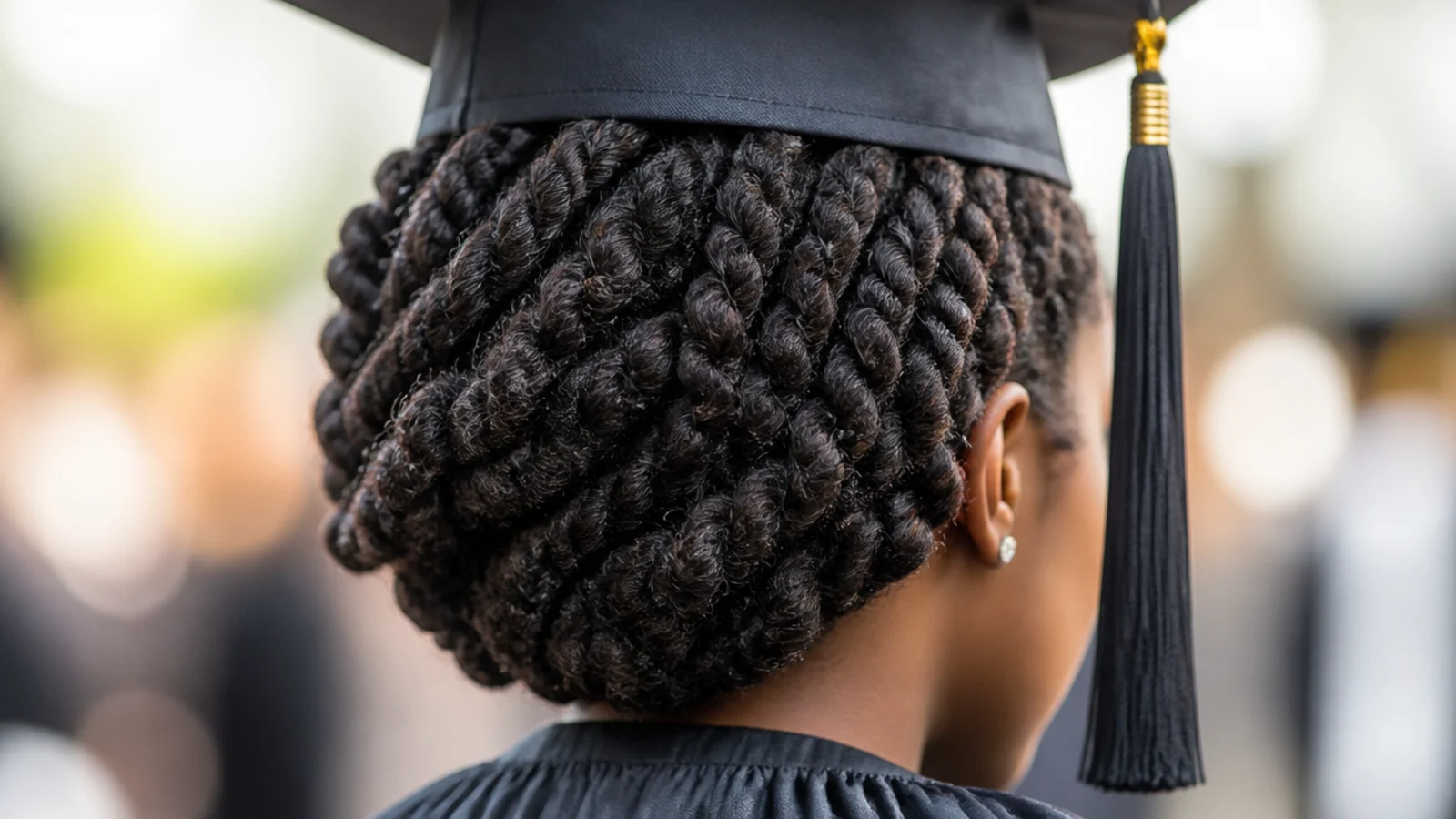
10. Loc Barrel Roll
Locs are dense and heavy, and rolling them into a horizontal barrel along the nape spreads that weight sideways instead of stacking it upward into a tall knot. Low and wide keeps everything below the band and stops the mass dragging the cap backwards.
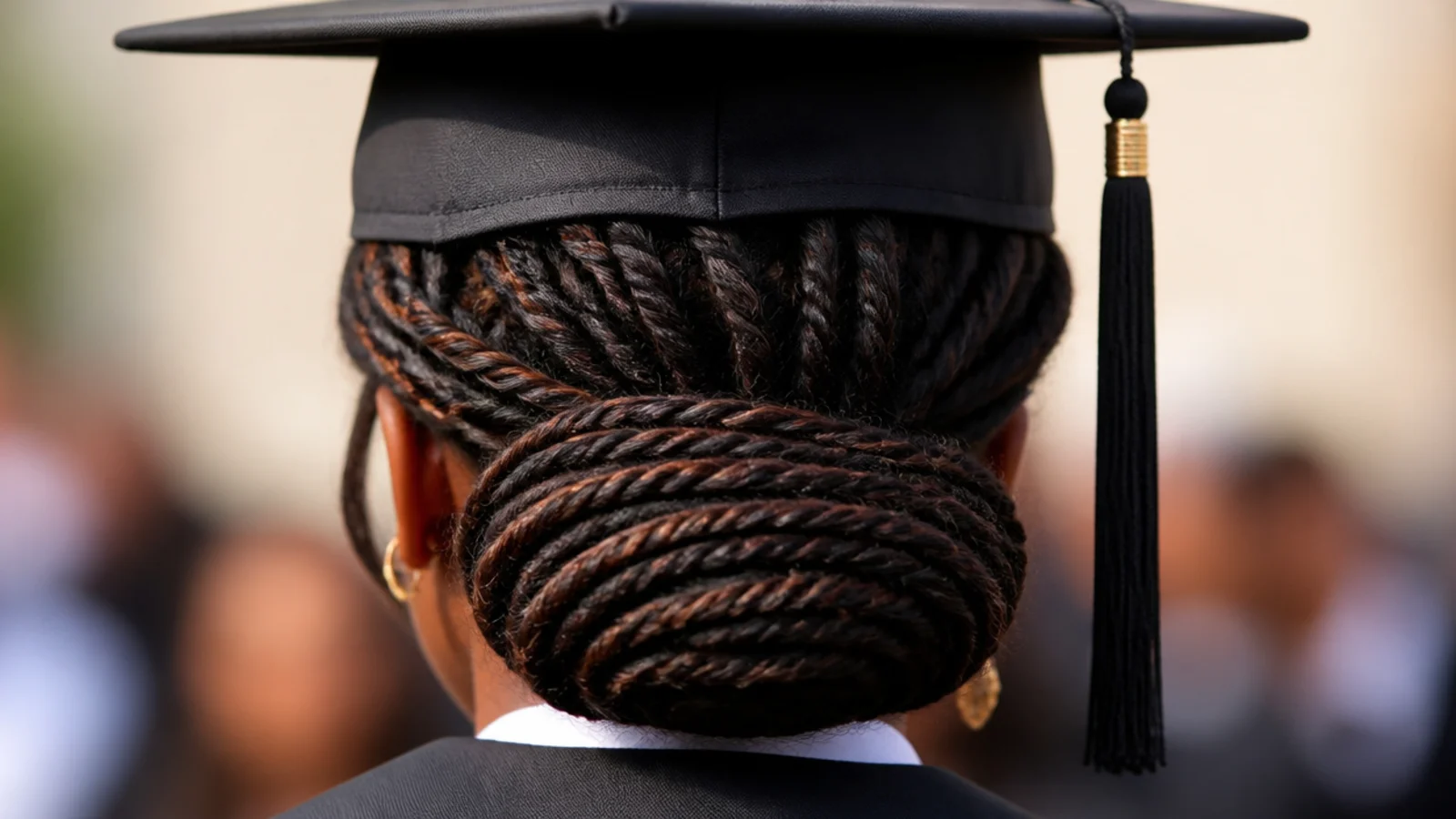
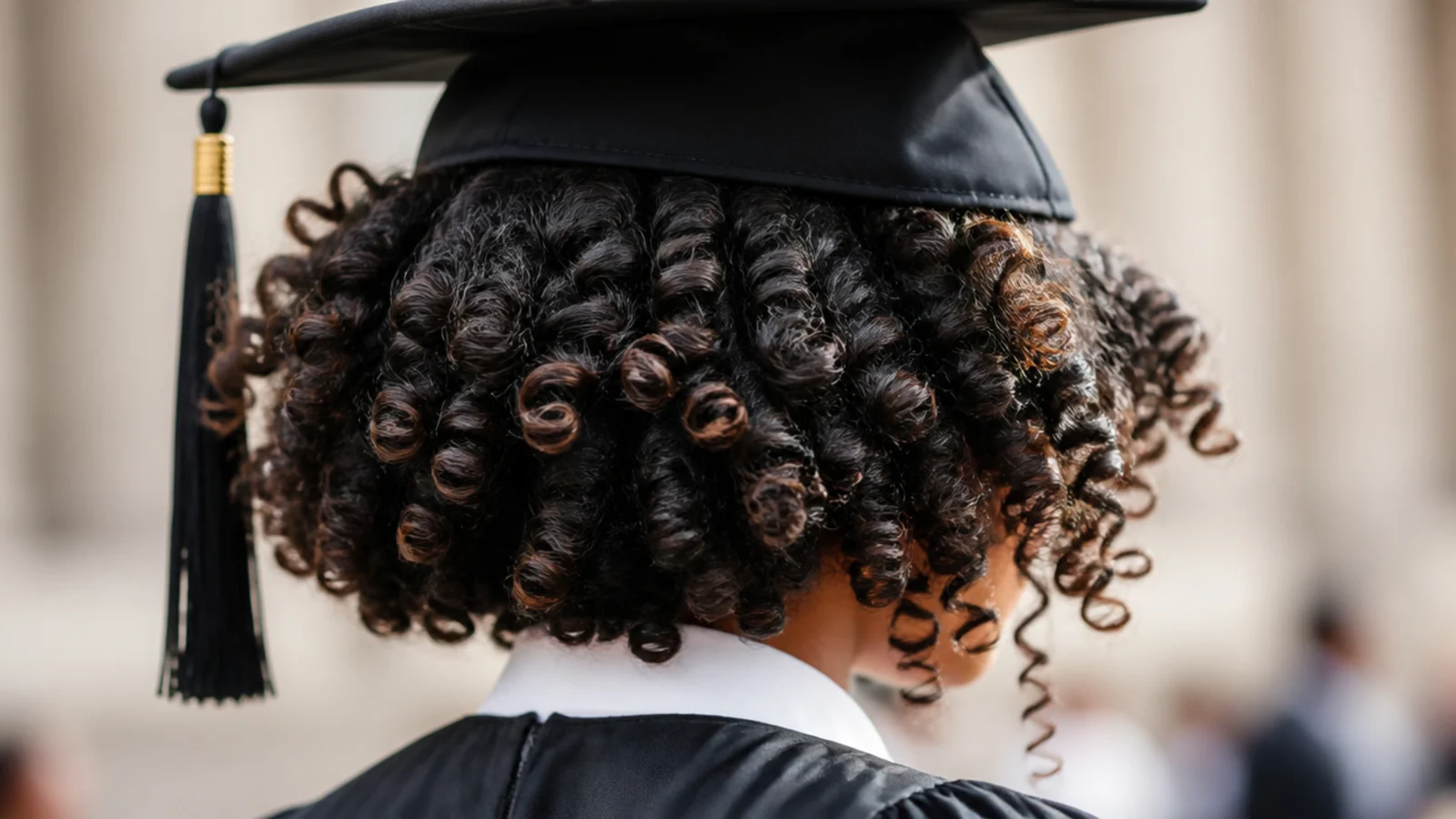
11. Bantu Knot Out
Each coiled knot dries into a spiral that is tightest at the base and widest at the ends, the reverse of how a rod set behaves. That taper puts the volume at the root, which is the one place a band takes it from, so it suits a short ceremony better than a long one.
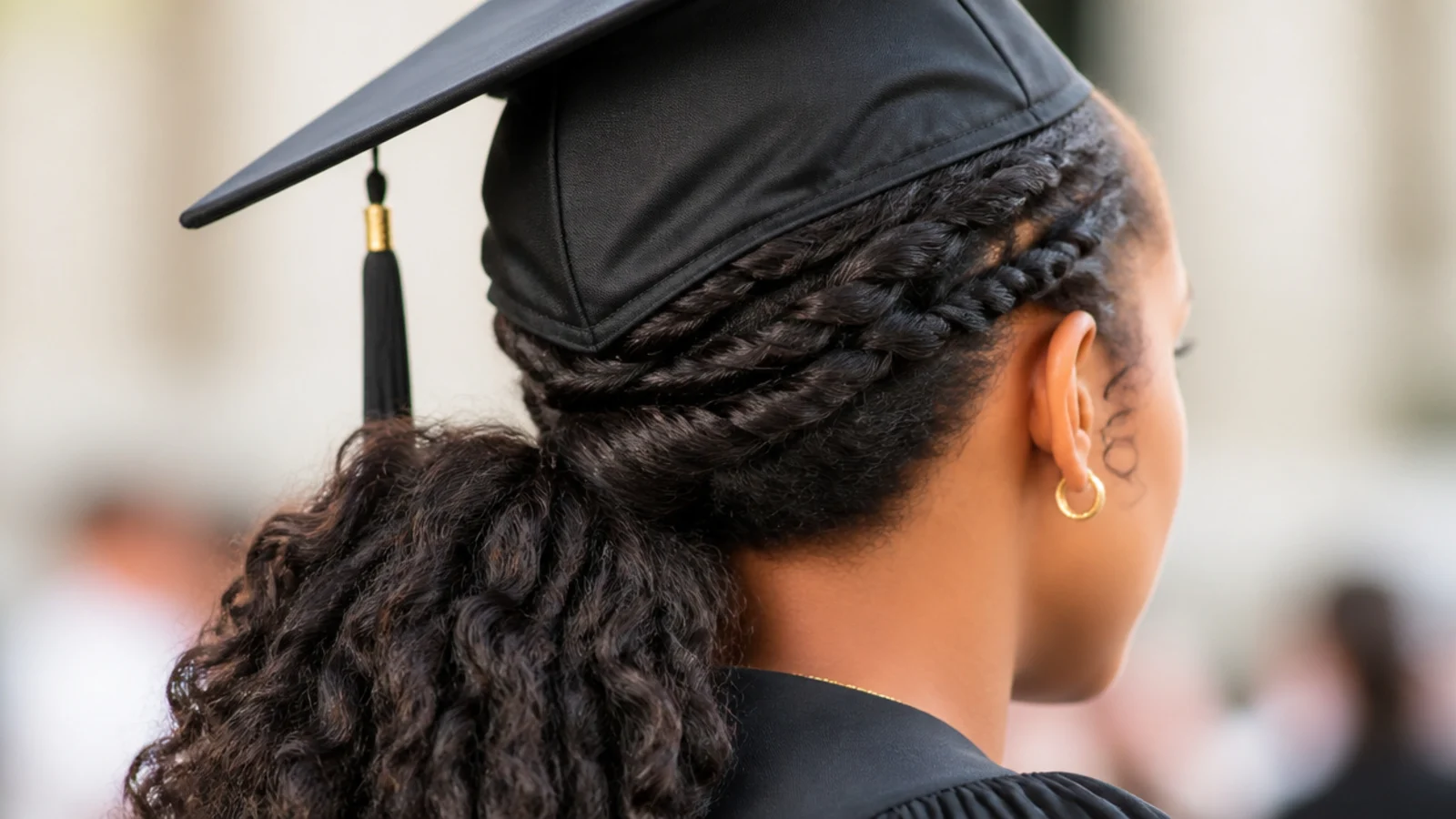
12. Flat Twists Into a Side Ponytail
Twisting flat across the head and finishing at one side moves the whole mass away from the centre back, which is the direction a board tends to slide. Angle the last row of twists behind the ear so the gather clears the band by a clear inch.
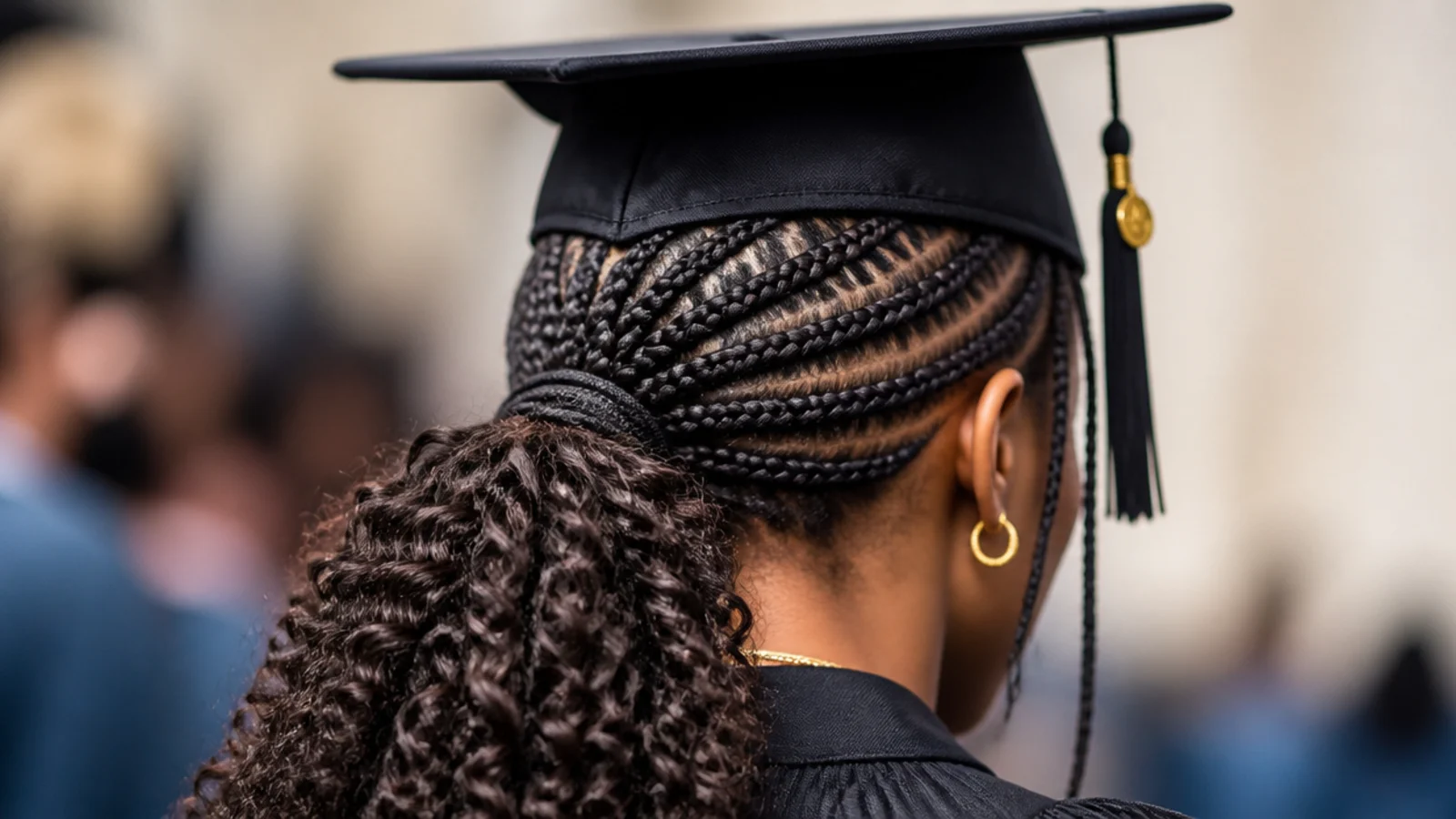
13. Fulani Braids
The centre cornrows sit flat where the band grips hardest, and the loose braids and any beads hang well below it, so the two halves of the style occupy completely different zones. Keep the front centre part shallow, since that is the line the band presses on directly.
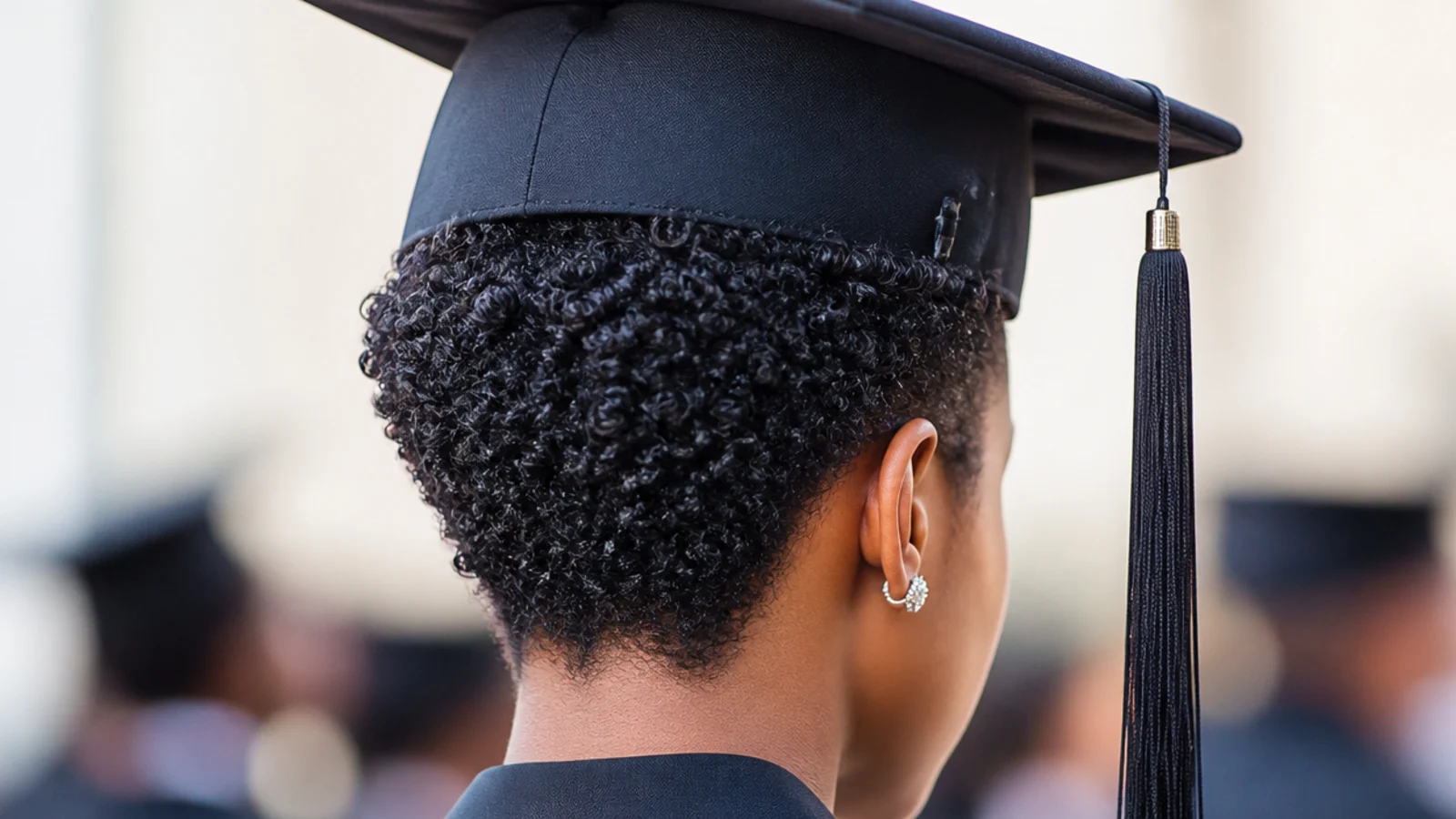
14. TWA Wash and Go
There is barely anything inside the band's radius to compress, so the cap presses evenly on hair too short to hold a crease. What flattens comes straight back with water at the root and a shake, which makes it the lowest maintenance option of the day.
15. Nape Halo Braid
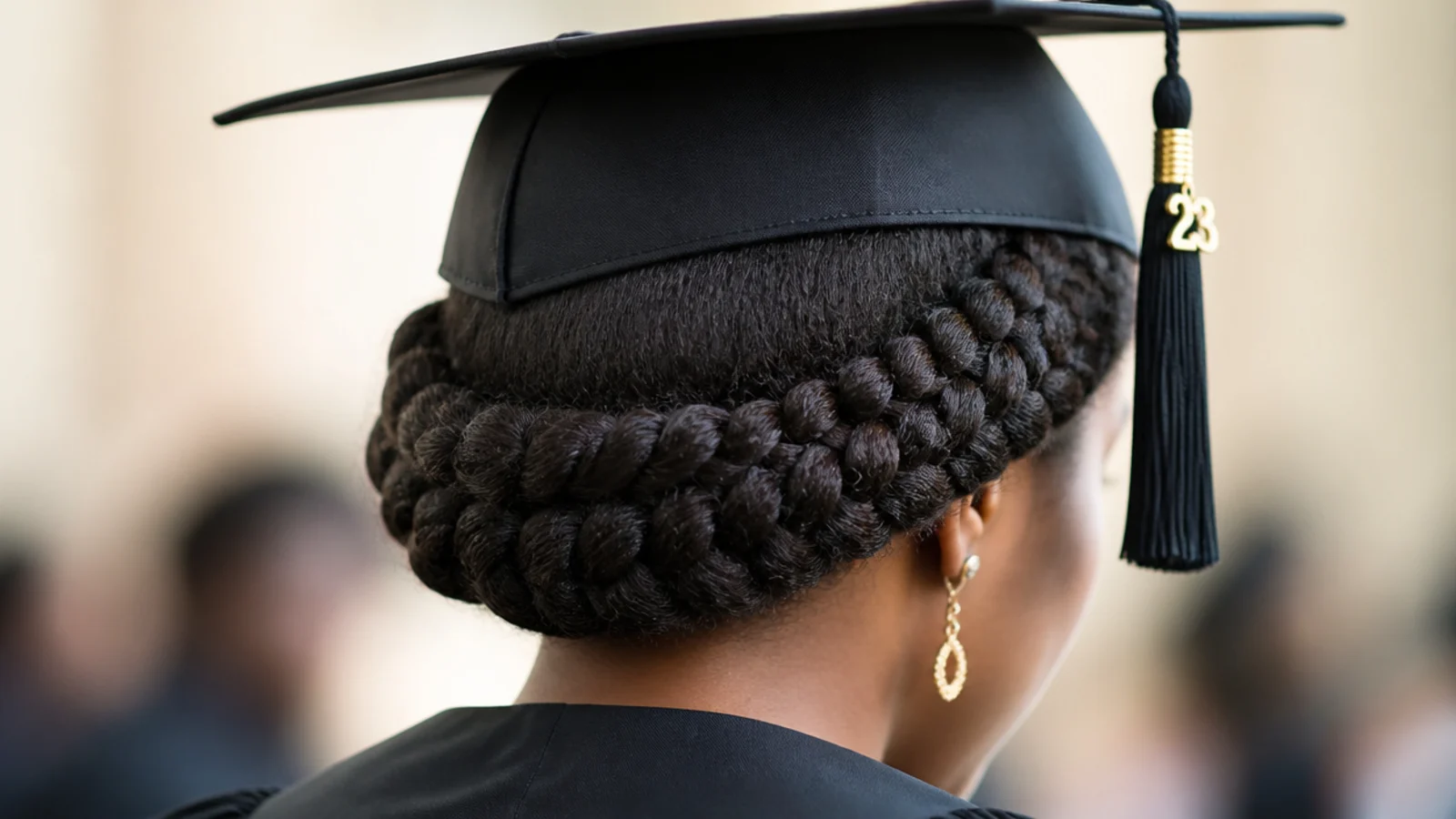
Running the wrap around the lower back of the head rather than over the crown puts the whole braid below the ring the band grips. It reads as a crown braid from the front while behaving like a low style, which is the only version of that shape a cap allows.
Final Thoughts
The cap is not the problem. Tension is, and the cap simply sits on top of it for two hours in the one place you can least afford it. Take your sections back from the hairline instead of from it, leave the first half inch loose, and let the style hold on the hair behind rather than the hair in front.
After that it is the same rule as every other texture. Gather at or below the occipital bone so the volume is outside the ring, set on stretched hair, and dry it through before the band ever touches it. For the version of the same shape once the cap comes off see high ponytail hairstyles for natural hair, and for another formal night built on the same sets see hoco hairstyles for curly hair. More in Occasion Hair.
Frequently asked questions
Related posts
See all posts
15 Graduation Hair Ideas for the Updo Versus Down Decision
Read more
15 Straight Hair Wedding Looks to Save
Read more
20 Gorgeous Prom Looks for Straight Hair
Read more