
20 Graduation Hairstyles for Short Hair That Keep the Cap On
Twenty graduation styles for pixies and bobs, and the problem short hair actually has. The cap sits beautifully on a short head and refuses to stay there, because a bobby pin needs a bundle of anchored hair to bite and short hair does not give it one.
In this article · 28
- The Cap Line on Short Hair
- Anchoring the Cap on a Pixie
- Updo Versus Down on Short Hair
- All Day Hold on Short Hair
- Morning Timeline
- Cap Dent Fix
- The 20 Short Hair Graduation Styles
- 1. Side Parted Pixie
- 2. Piecey Pixie
- 3. Side Swept Bob Waves
- 4. Blunt Glassy Bob
- 5. Half Up Mini Bun
- 6. Low Nape Knot
- 7. Twisted Side Pinback
- 8. Faux Bob
- 9. Halo Braid
- 10. Dutch Braids on a Bob
- 11. Slicked Back Pixie
- 12. Curtain Bangs on a Bob
- 13. Finger Waves
- 14. Curly Pixie
- 15. Flat Twists on a Tapered Cut
- 16. Bantu Knot Out
- 17. Pearl Barrette
- 18. Low Side Ponytail
- 19. Undercut Pixie
- 20. Silk Pressed Bob
- Final Thoughts
Short hair gets told it is the easy option on a graduation morning, and it is, right up to the moment the cap starts moving.
The cap fits a short head beautifully. There is no bulk anywhere near the band, so the board sits level with no adjustment at all.
And there is nothing to pin it to. A bobby pin holds by squeezing a bundle of hair, and a pixie hands it four strands that slide straight back out. Short hair does not need a style to fit the cap, it needs one to anchor it.
The Cap Line on Short Hair
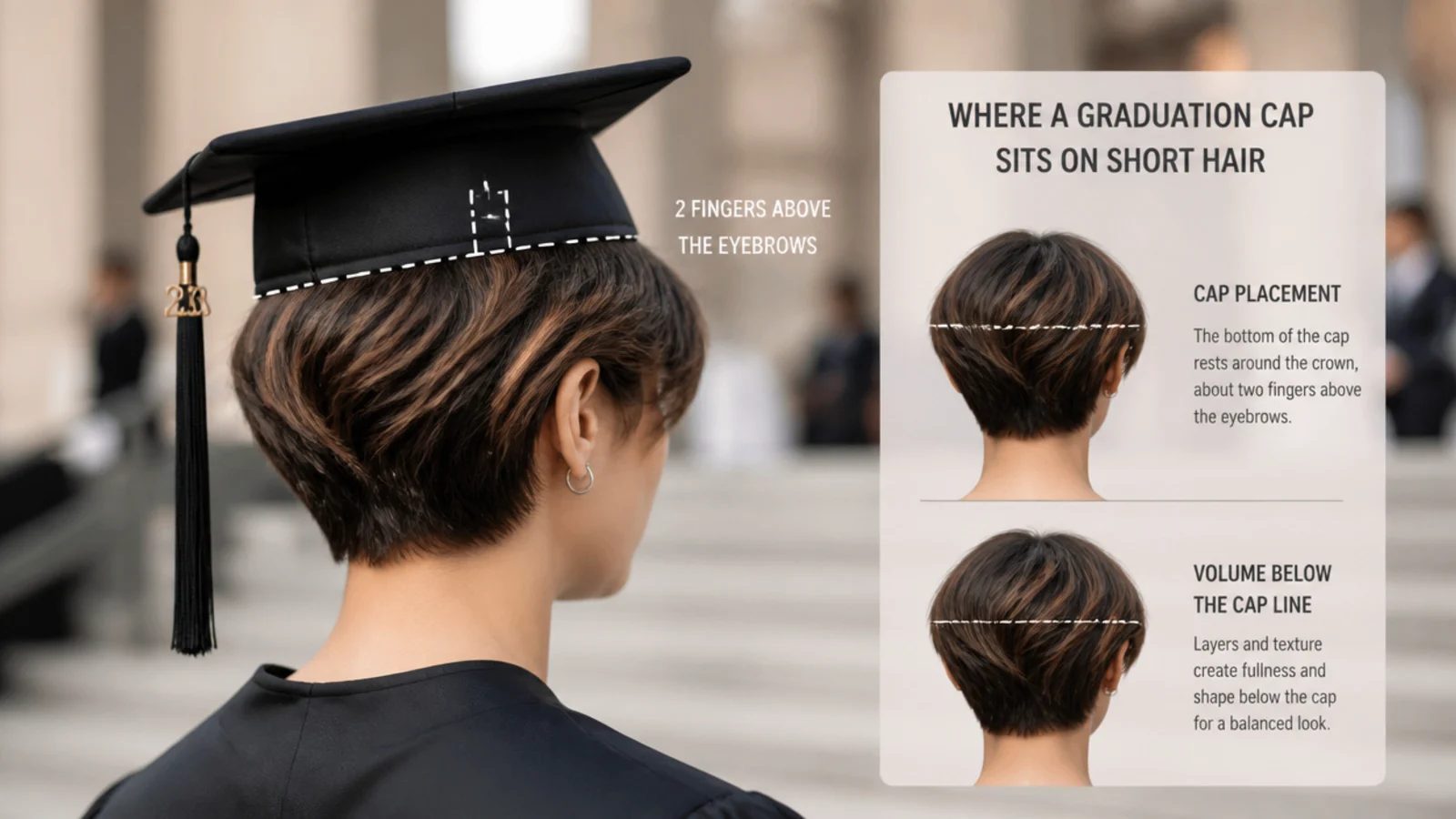
The band grips at your widest circumference. Above the ears at the sides, around the occipital bone at the back, across the forehead at the front.
On a pixie, all of your hair is inside that ring. Every strand you own is being compressed, which sounds worse than it turns out to be.
Short hair has almost no lever arm. A strand pushed up by a fingertip stays where you put it, because there is not enough length for its own weight to pull it back down.
On a bob the ring lands at the top third. Chin length hair keeps its perimeter well below the band, so the cut line itself is never touched.
Anchoring the Cap on a Pixie
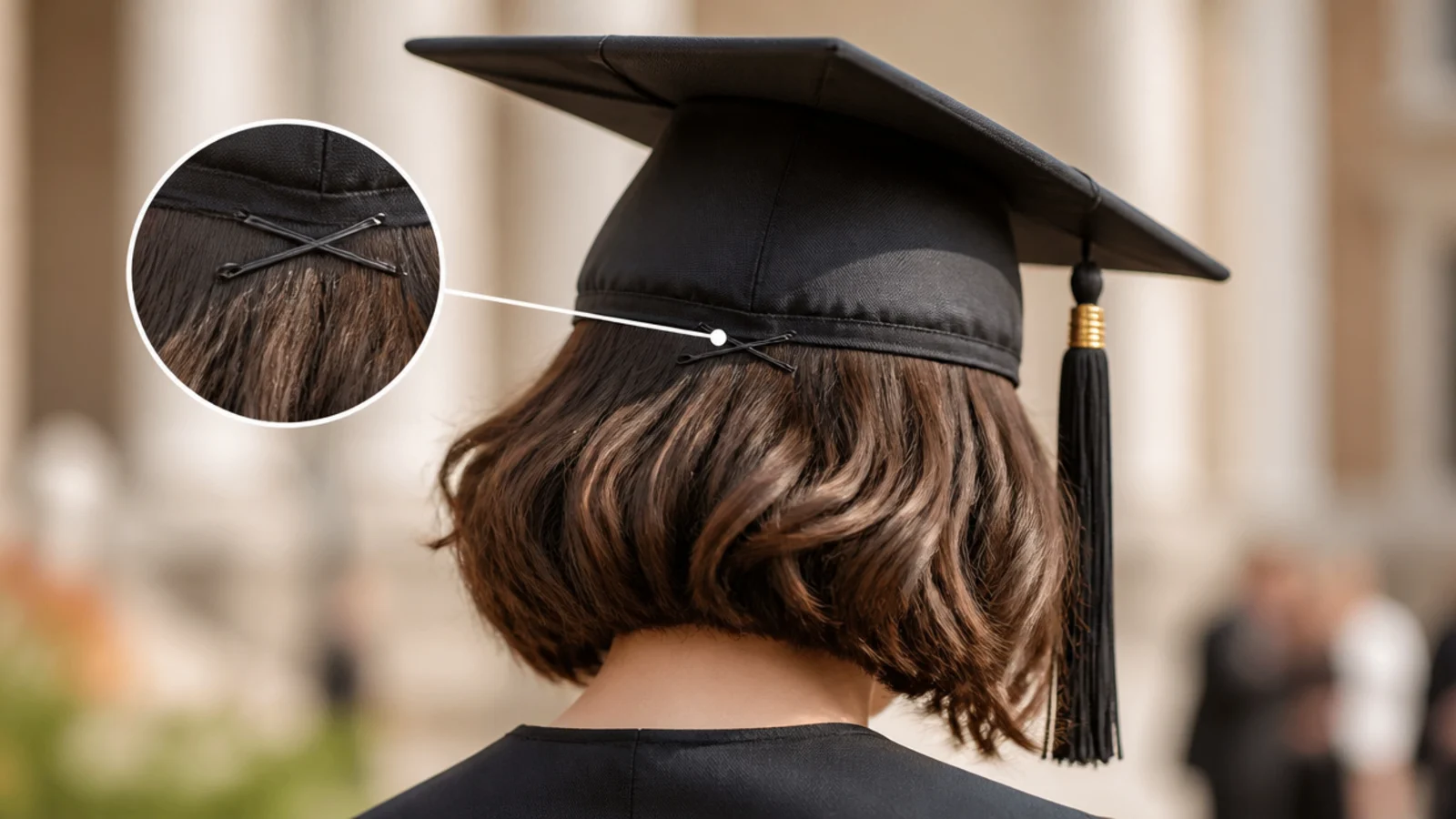
A pin needs a bundle wider than its own grip. Below that it holds by friction alone, and friction on four short strands lasts about ten minutes.
Backcomb a section at each temple. Pushing the hair back on itself packs the strands together and makes a bundle where there was not one.
Cross every pair of pins in an X. Two crossed pins hold each other in place. A single pin holds by nothing and walks its way out.
Or build one deliberate anchor and use it. A mini bun, a flat twist or a barrette is a fixed point, and one fixed point beats six hopeful pins.
Updo Versus Down on Short Hair
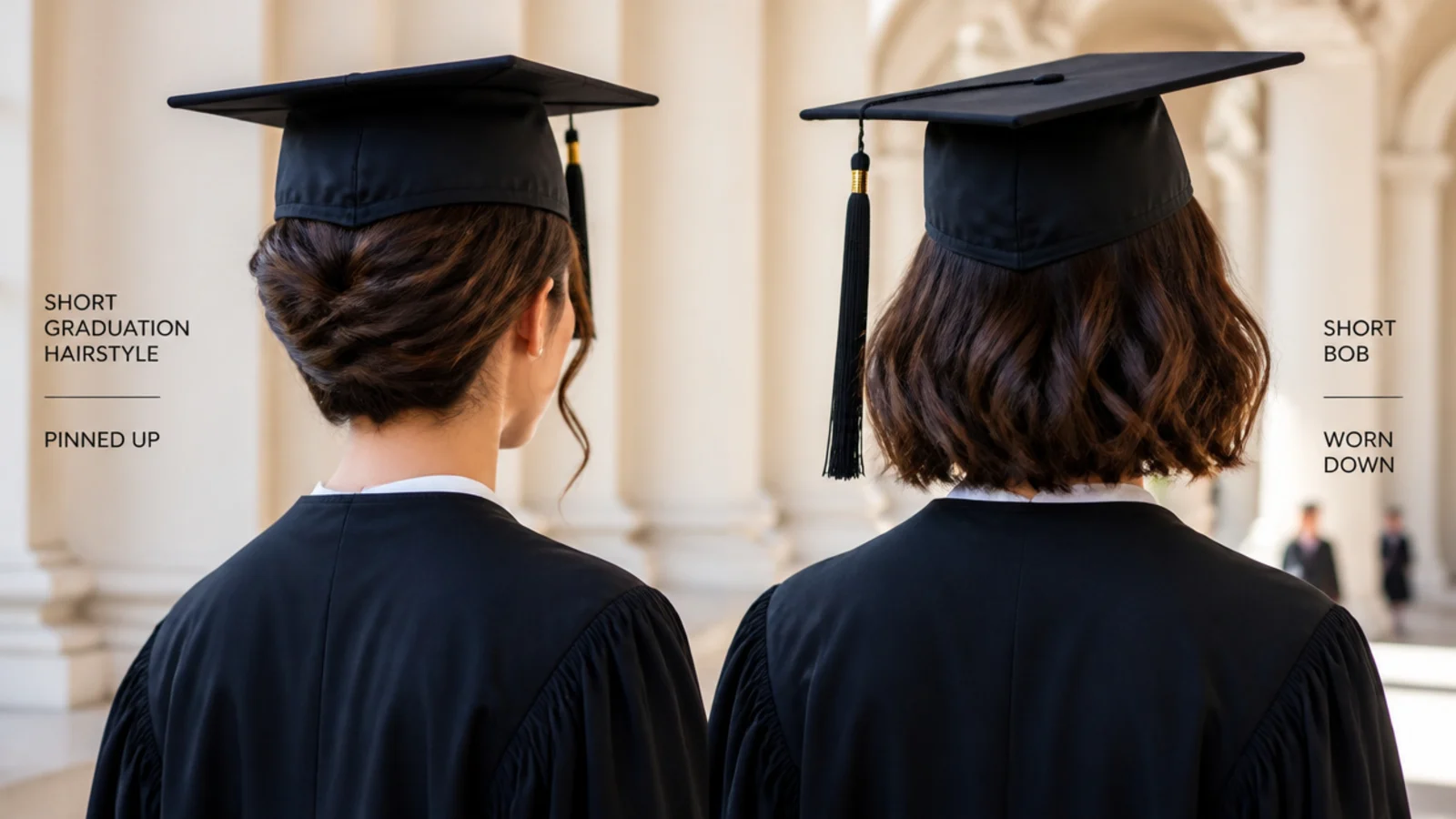
Short hair does not really have an up. The genuine choice is between pinning the front back and leaving it forward.
Pinned back gives you the anchor. Two twists taken to the sides create exactly the fixed points the cap needs, and they hold the front out of the band's path.
Left forward looks better and holds nothing. Which is fine if you are prepared to reach up during the ceremony.
A bob can go low if you want it to. A nape knot or a rolled faux bob puts everything below the ring, and both come back down in seconds.
All Day Hold on Short Hair
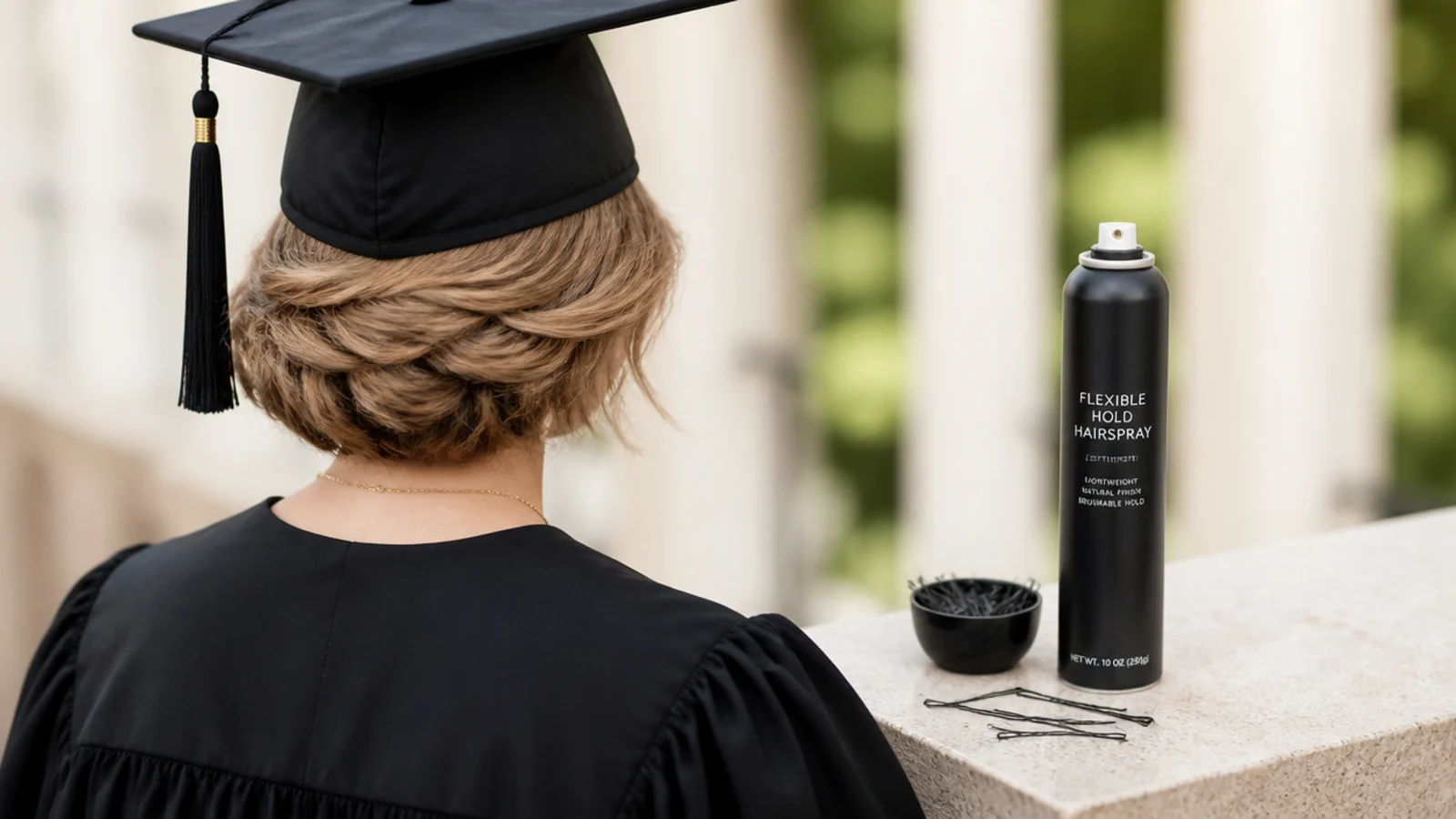
Paste and wax beat firm hold spray. A pliable product bends under the band and springs back. A rigid one cracks along the line the band pressed and the crack shows.
Bone dry before the cap goes on. Hair sets in whatever shape it dries in, so a damp crown compressed for two hours dries flat and stays there.
Grip at the root, not hold on the surface. Dry shampoo or a light texture spray adds friction between strands so the crown resists collapsing rather than being glued down and then crushed.
Short hair holds a set longer than long hair. There is less weight pulling it out of position, which means you can style earlier and use the spare time on the pins.
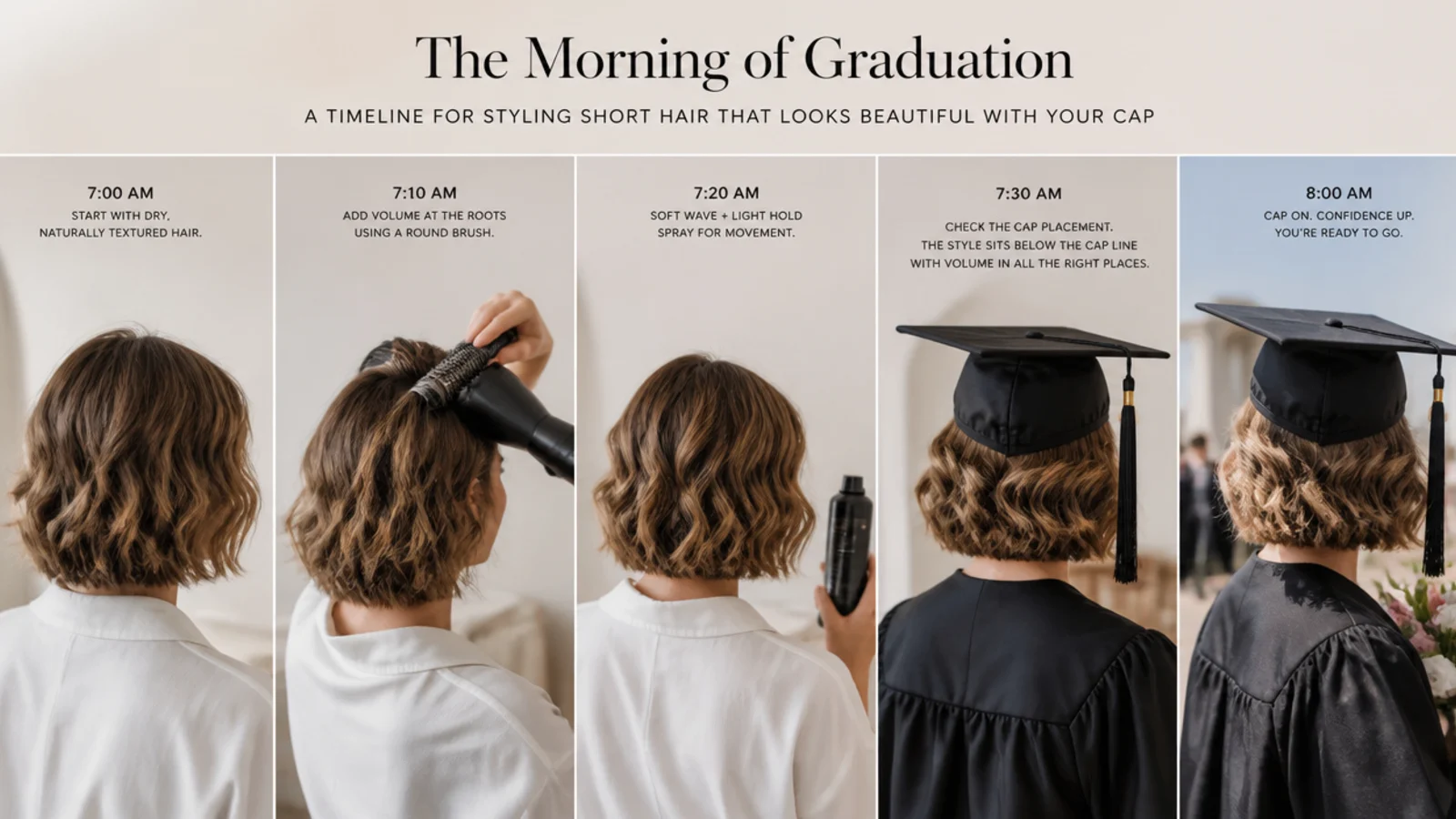
Morning Timeline
Wash the night before. Clean short hair is slippery and pins travel in it, and a pixie has no weight to hold them in place either.
Style, then fit the cap, then adjust. Fitting the cap first means fitting it to a head you are about to change.
Set the pins at home in a mirror you can see the back in. The back pin is the one you cannot place blind and the one that stops the board tipping.
Cap on last, and carry two spare pins. Pins are the failure point on short hair, and two spares fit in a pocket.
Cap Dent Fix
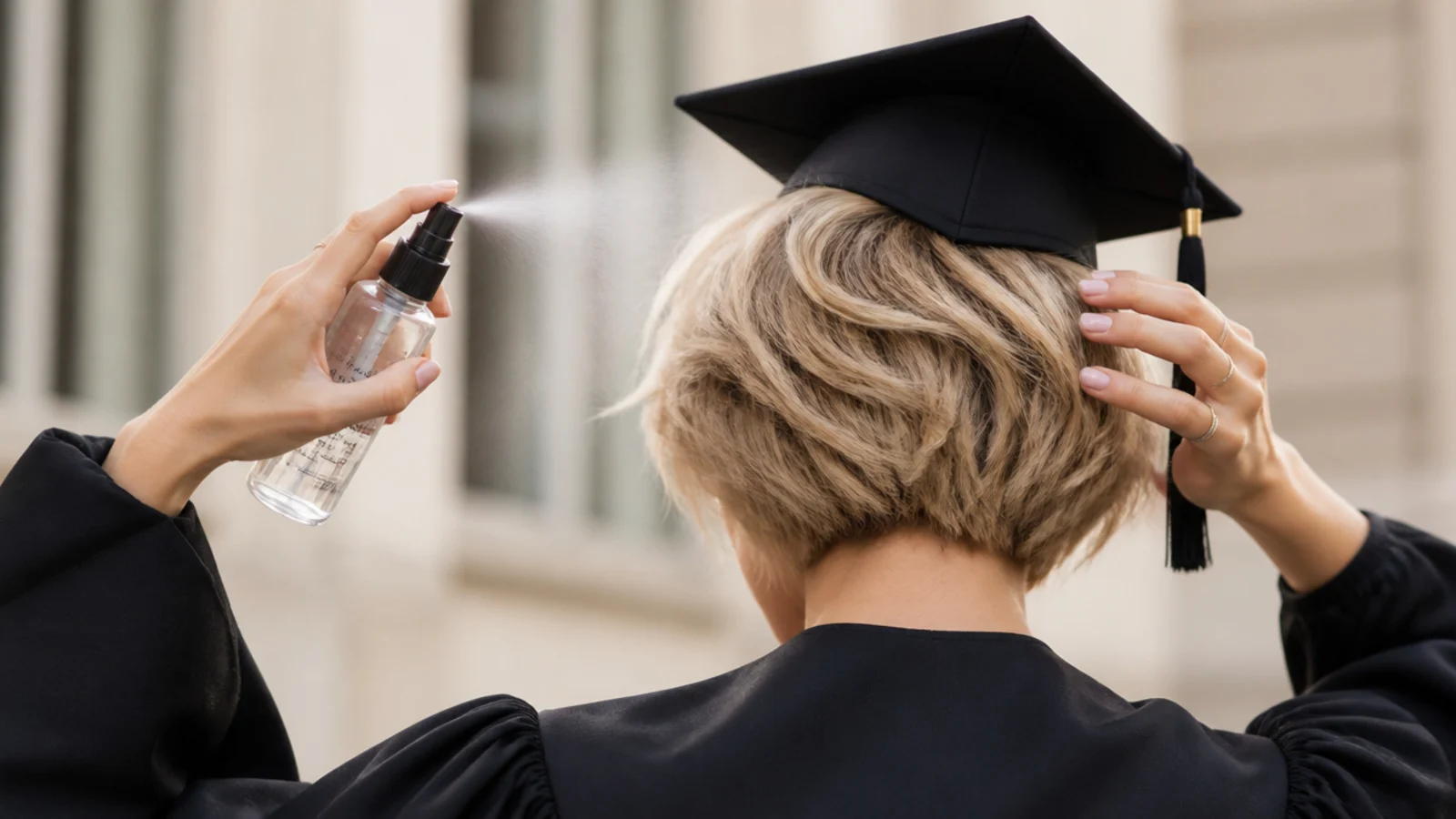
Fingertips first, before anything else. On short hair a shake at the root recovers most of the height, because there is so little weight resisting you.
Mist the band line only if the shake is not enough. Then warm air for twenty seconds while you push the root the opposite way to the band.
Let it cool in position. The bonds reform as the hair cools rather than while it is hot, which is why holding it for five more seconds is the step that actually works.
On a bob, take an iron to the root and not the length. The ring is at the top third, and the ends were never touched.
The 20 Short Hair Graduation Styles
1. Side Parted Pixie
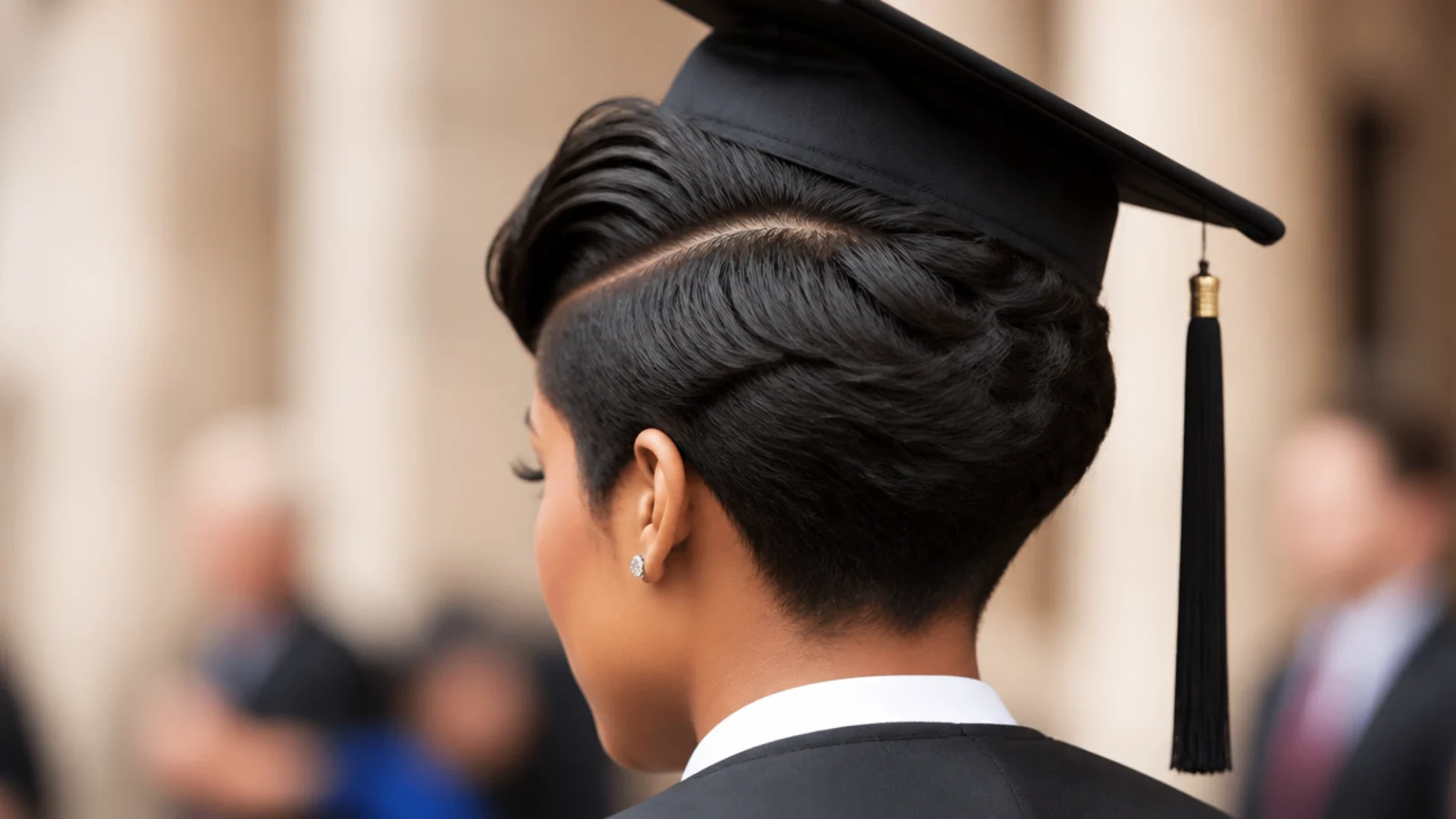
A deep part is a structural line rather than a styled one, so the band presses on the hair without moving where it splits. The heavy side sits forward of the temples, which is ahead of the point where the band grips hardest, so it keeps most of its lift.
2. Piecey Pixie
Paste stays pliable, so the separated pieces bend under the band and open again afterwards. A firm hold spray does the opposite, setting a rigid surface that cracks along the band line and leaves a visible break you cannot smooth out.

3. Side Swept Bob Waves
Sweeping a bob to one side moves the bulk of it out from under the back of the band, so the cap presses a thin layer instead of the full depth. The waves that stay under the band are the ones nearest the part, and those are the easiest to re-sweep afterwards.
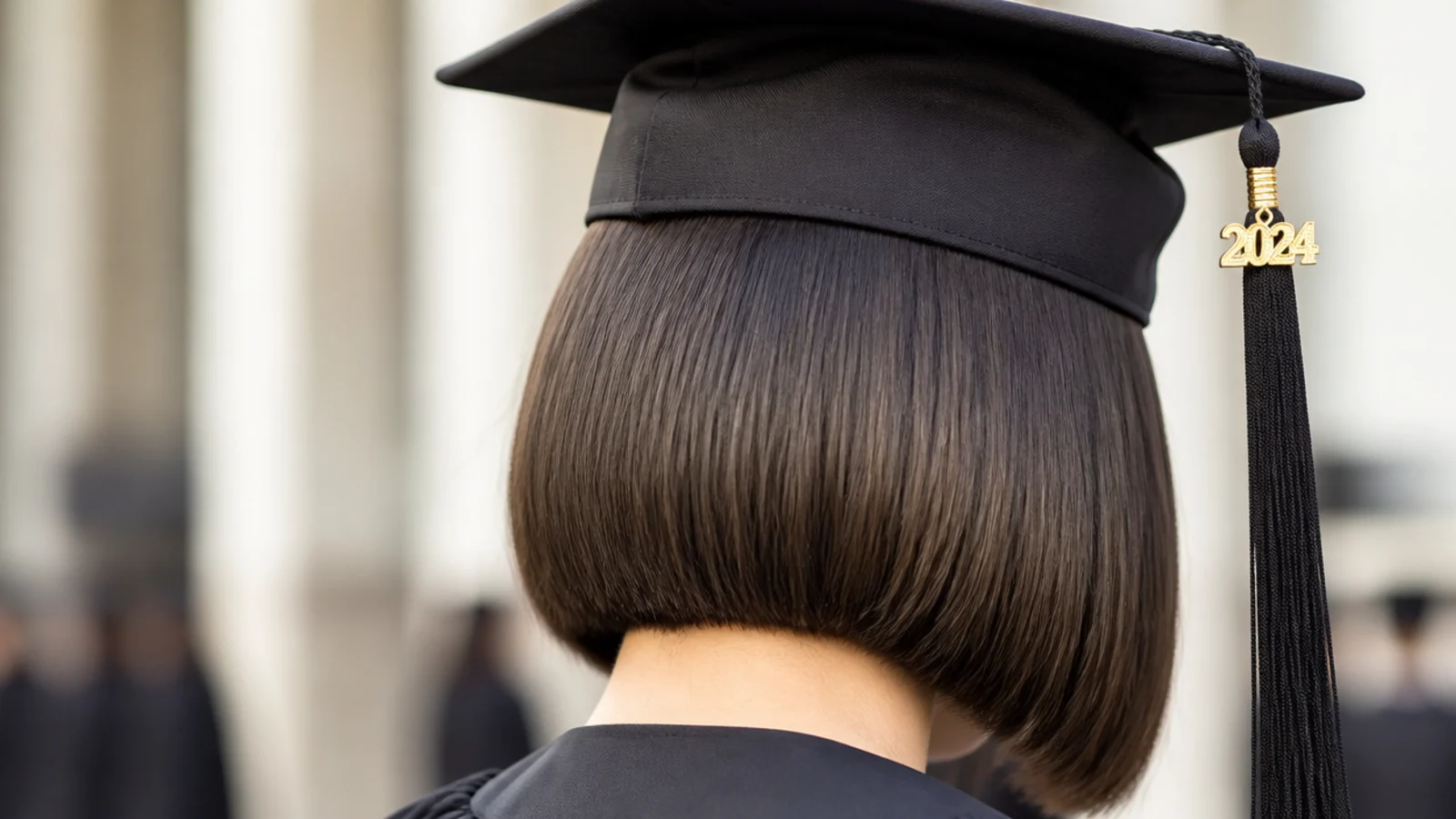
4. Blunt Glassy Bob
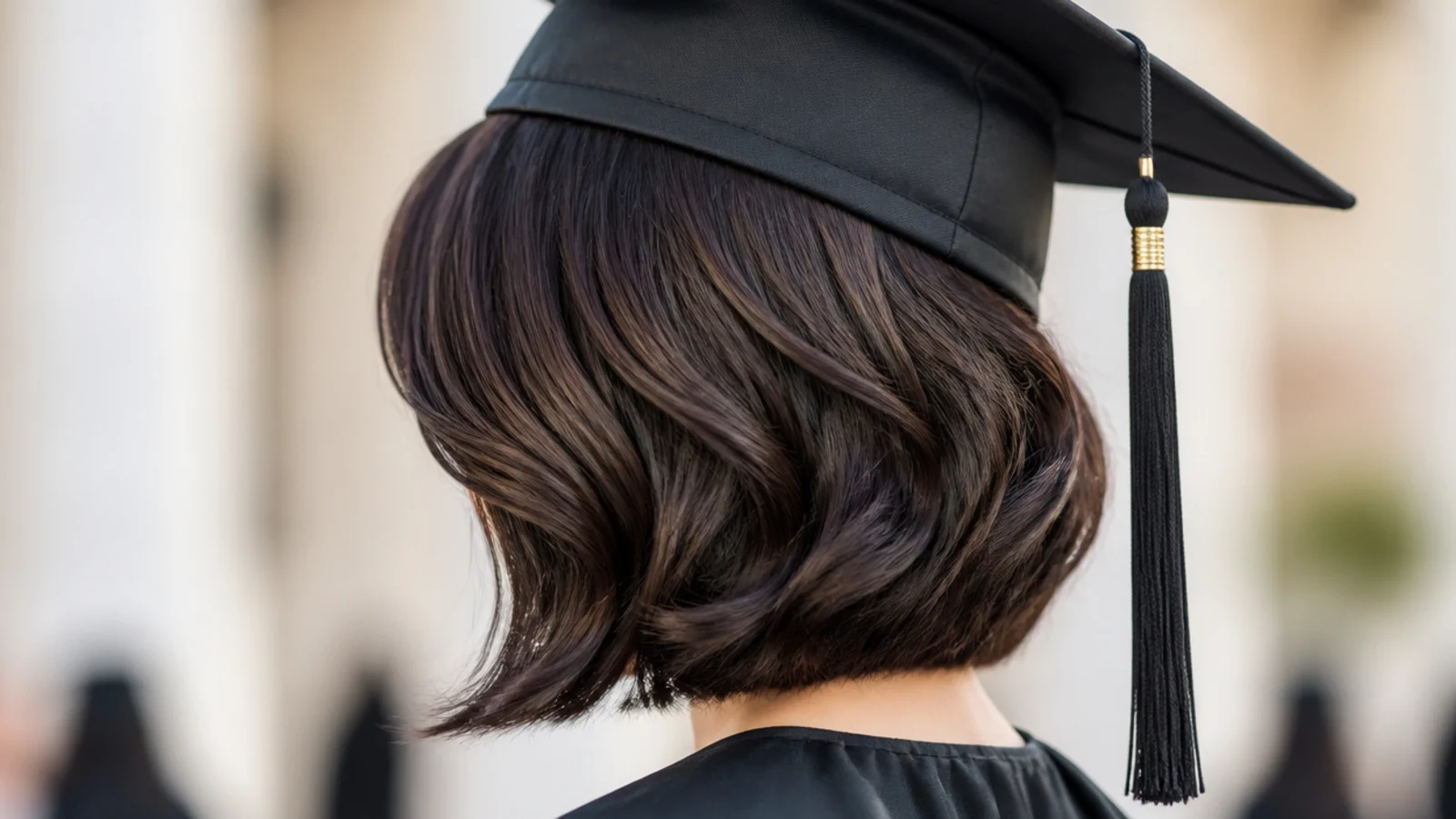
The perimeter is well below the band, so the line that makes this cut work is never touched. What the cap takes is the root lift that gives the shape its roundness, which comes back with warm air at the root and thirty seconds of patience.
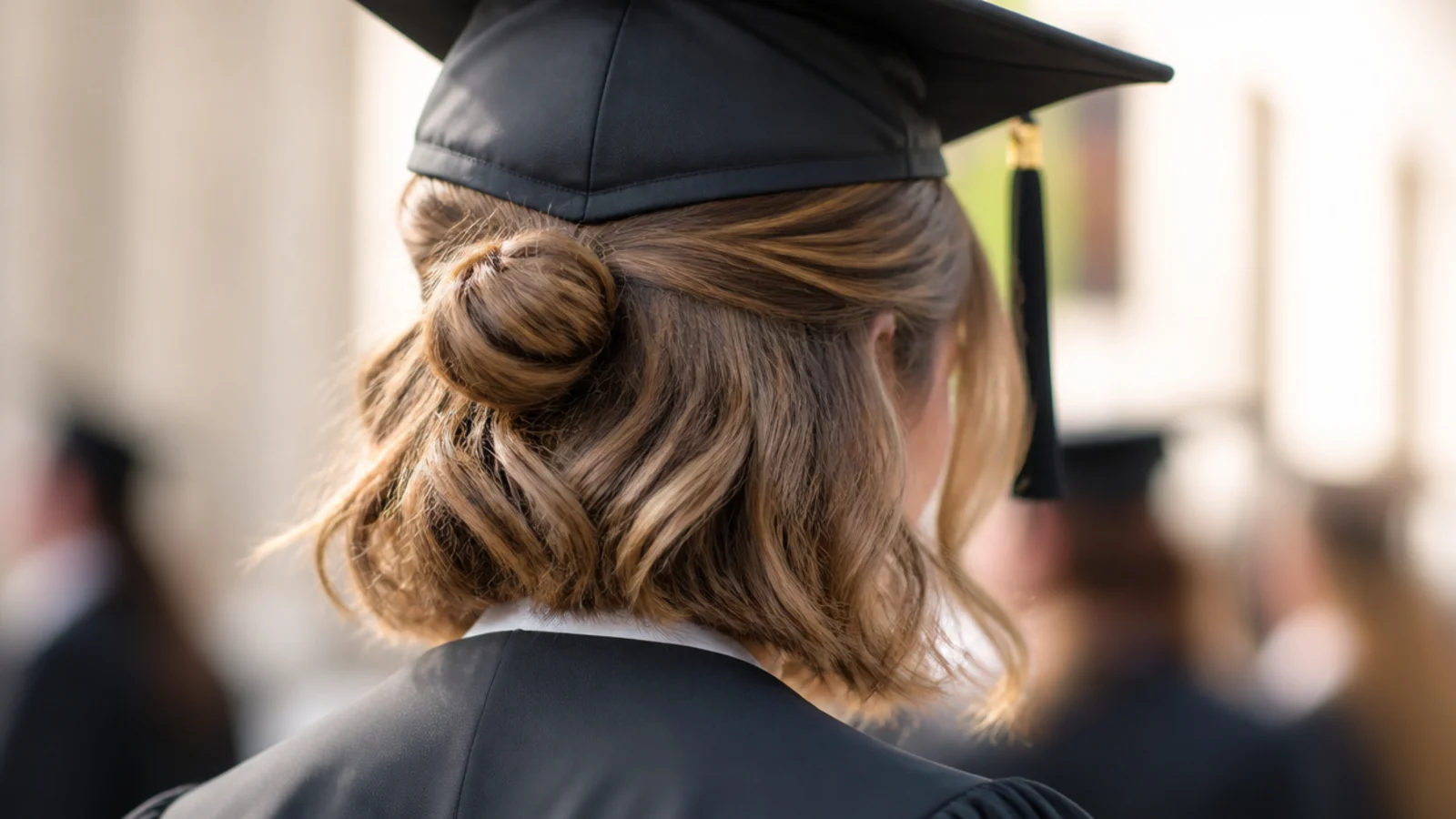
5. Half Up Mini Bun
The smallest gather short hair can make, and it doubles as the cap's anchor point, so one thirty second step solves both problems. Place it at the lower edge of the occipital bone, the highest position that still sits outside the band ring.
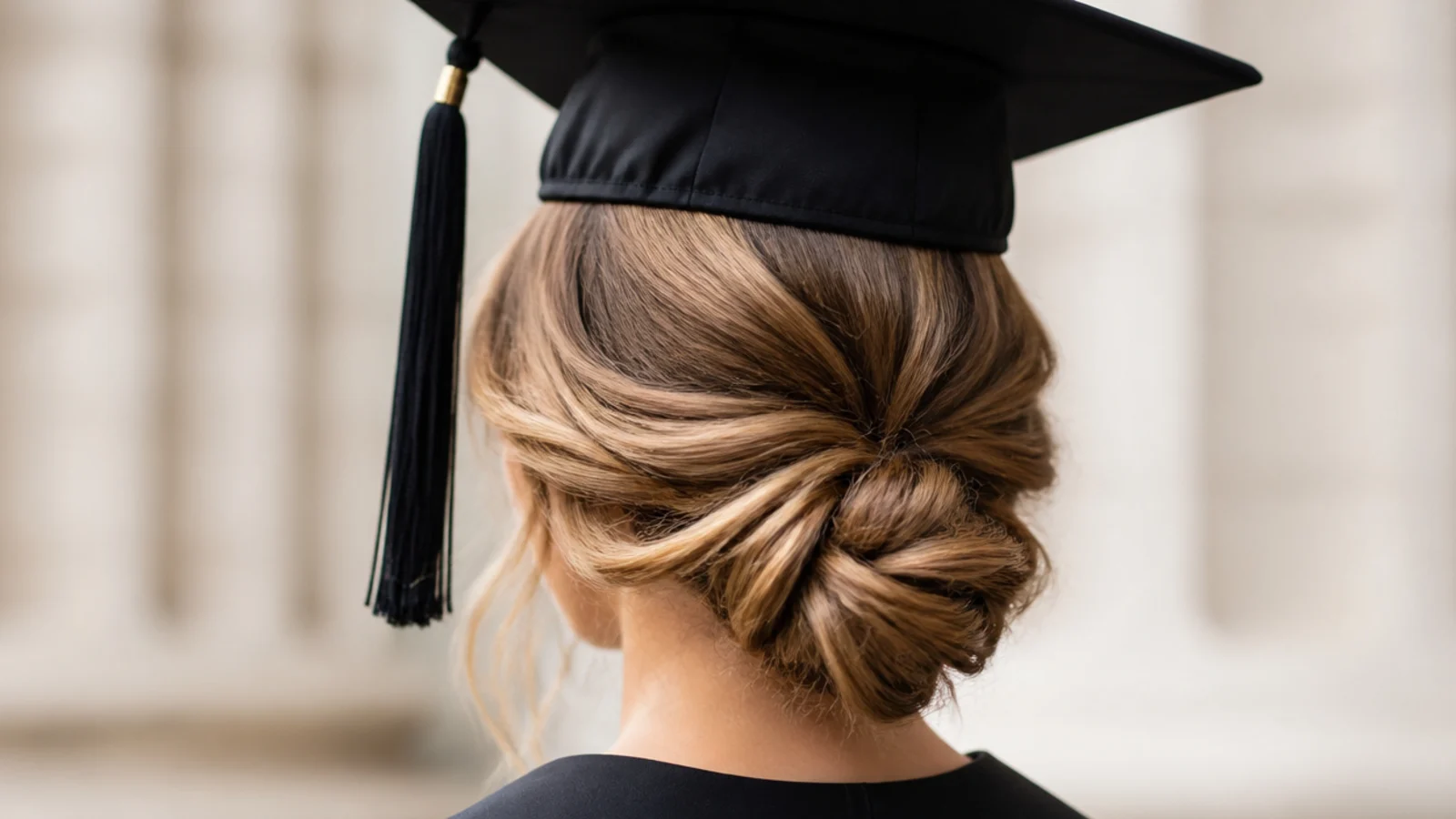
6. Low Nape Knot
Only the longest hair at the back reaches, which makes this marginal on a true pixie and straightforward on a bob. Its value is the pinned base, which is the one genuinely fixed point on the whole head for the cap's pins to enter.
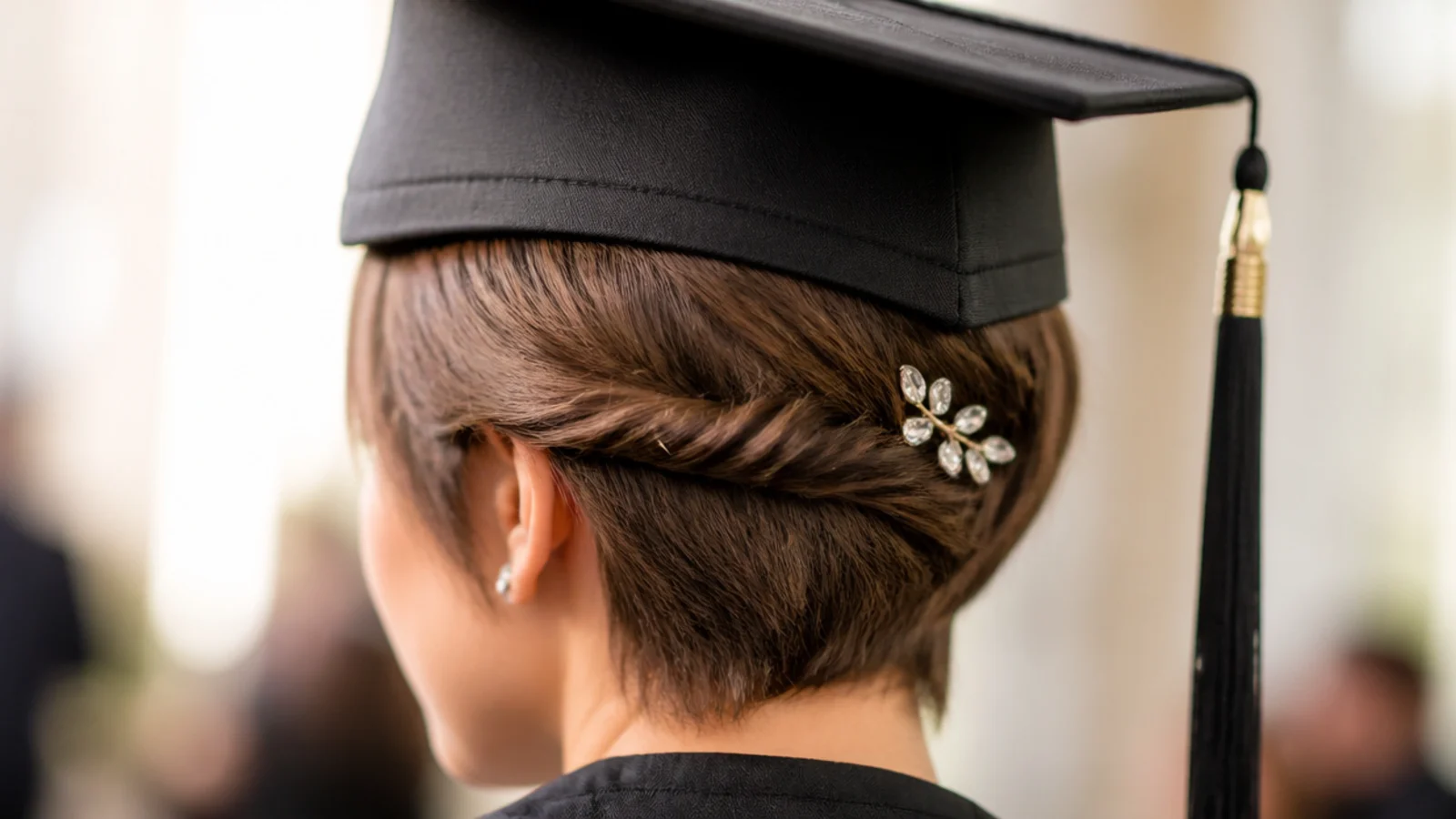
7. Twisted Side Pinback
Twisting a section before pinning packs the strands together into a bundle a pin can actually squeeze, which loose short hair never provides. Cross two pins over each twist so they hold by friction against each other rather than against the hair alone.
8. Faux Bob
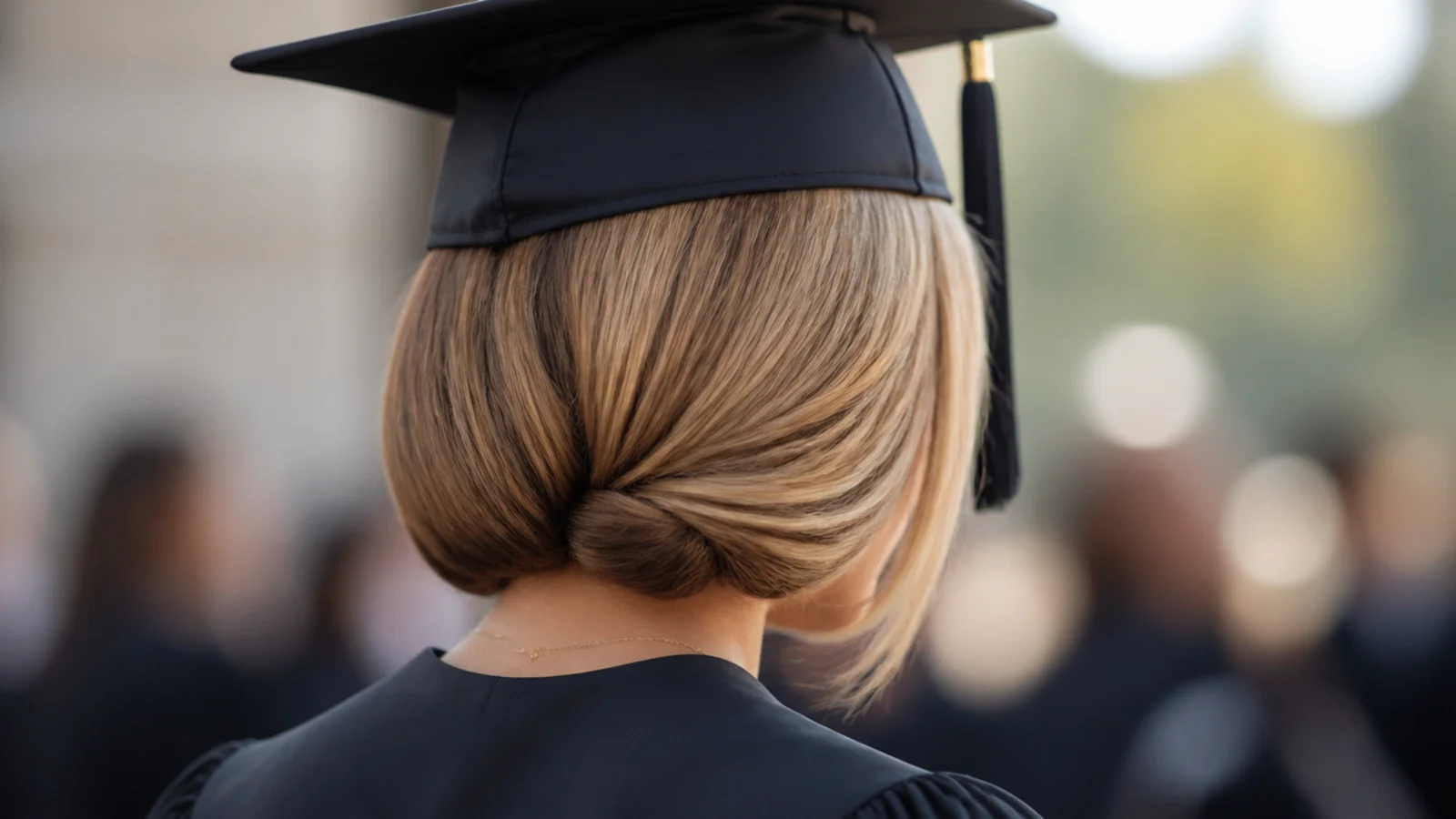
The ends are rolled under and pinned rather than cut, and the fold sits below the band so the cap never disturbs the part doing the work. It also shortens the visible length into the zone where a bob reads sharpest, without committing to it.
9. Halo Braid
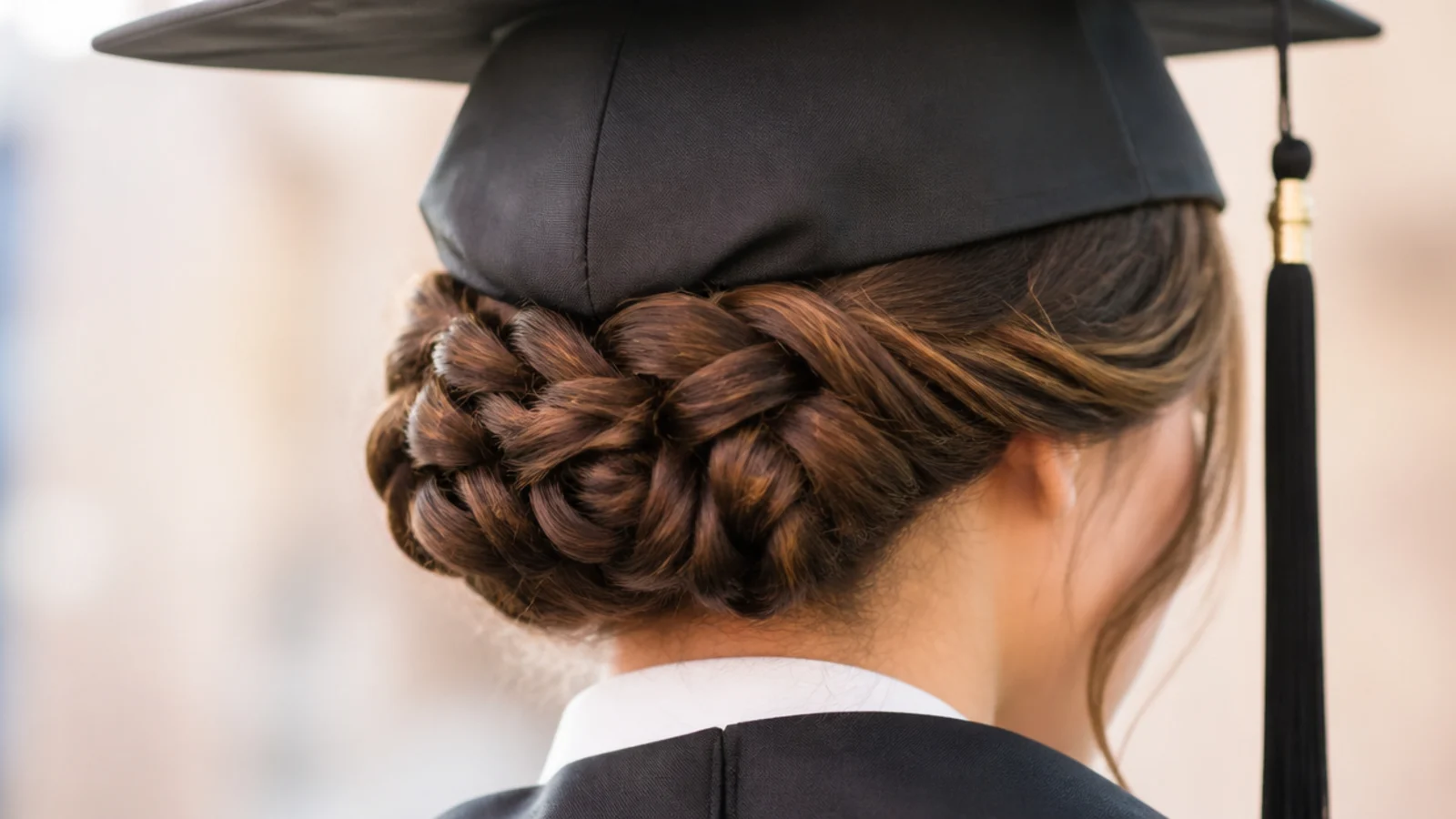
On short hair the braid is made from the top sections only, and it lands directly on the line the band grips. Pin it completely flat, because a flat braid raises the whole circumference evenly and a proud one props one edge of the board up.
10. Dutch Braids on a Bob
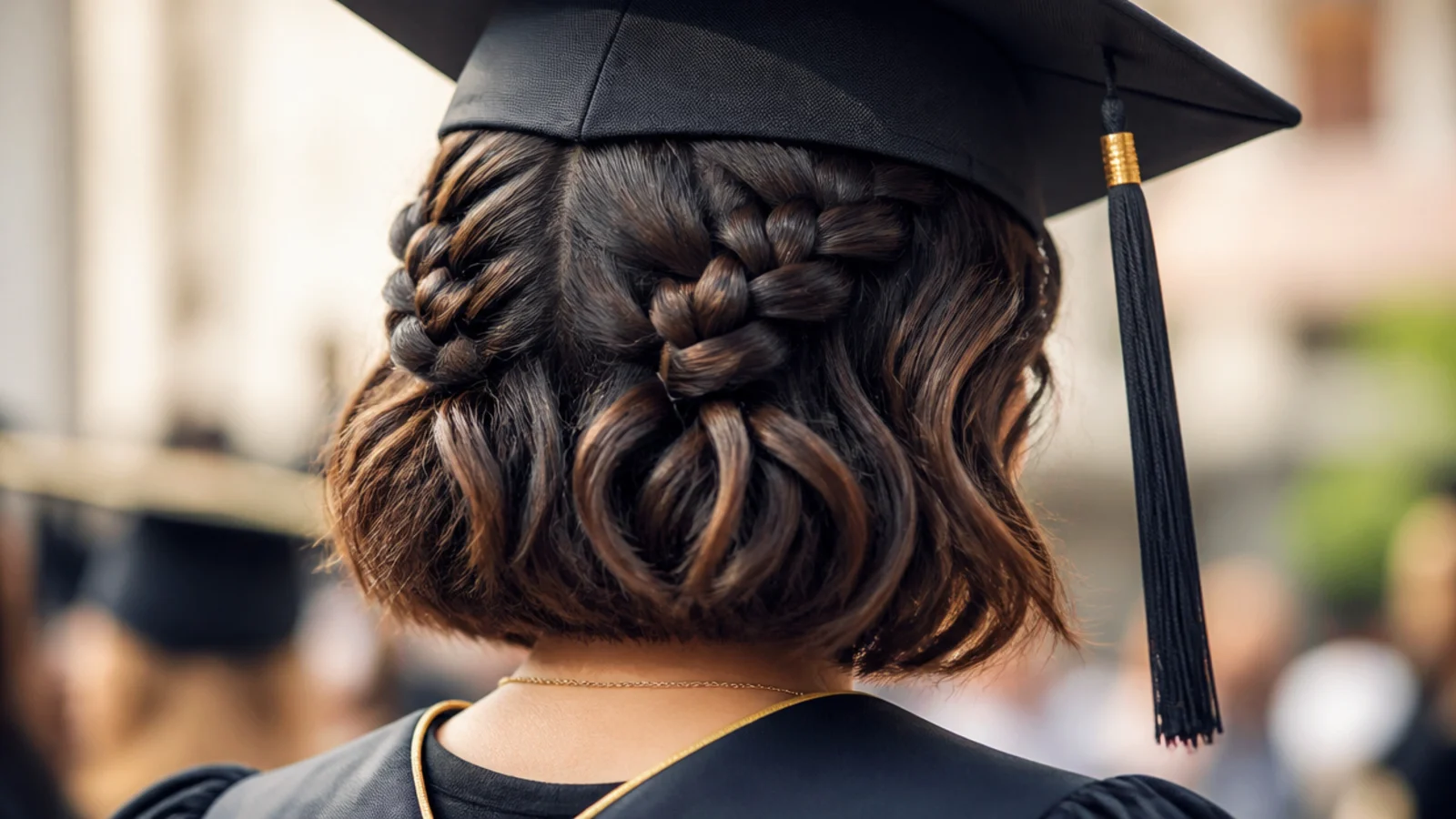
A Dutch braid crosses each section underneath so it stands proud of the scalp, which is the wrong profile for a band unless the braids run low behind the ears. Short braids also run out of hair early, so pin the tails under rather than tying them.
11. Slicked Back Pixie
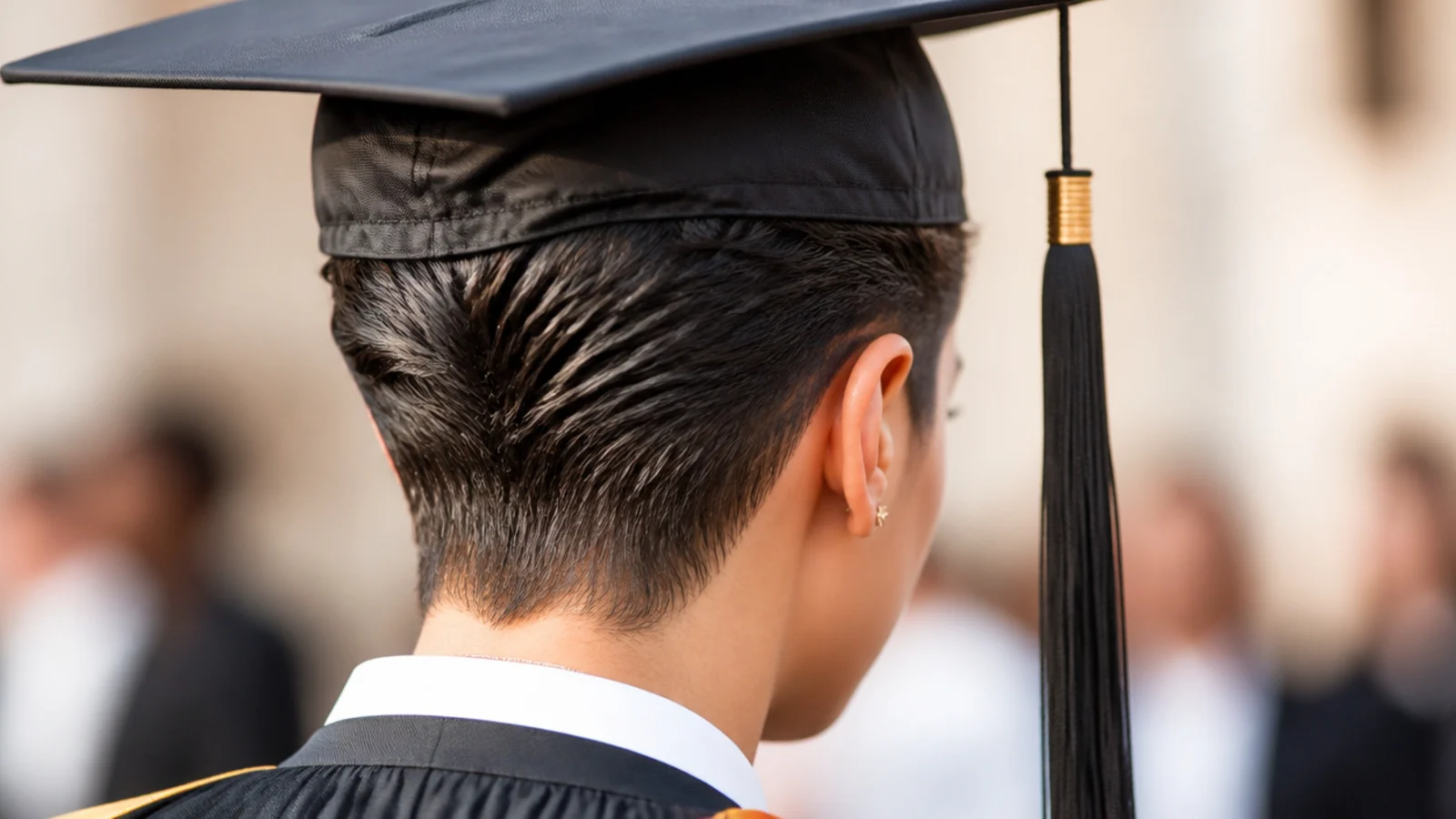
Gel gives the band a smooth low friction surface to sit on, which is exactly why a slicked head loses caps faster than a textured one. The style is secure and the cap is not, so this is the version that most needs a backcombed anchor at each temple.
12. Curtain Bangs on a Bob
Bangs sit under the front edge of the cap, which is the only part of the front of the head the band actually presses, so they flatten while the sides do not. Set them with slightly more bend than you want and the compression brings them to the right shape.

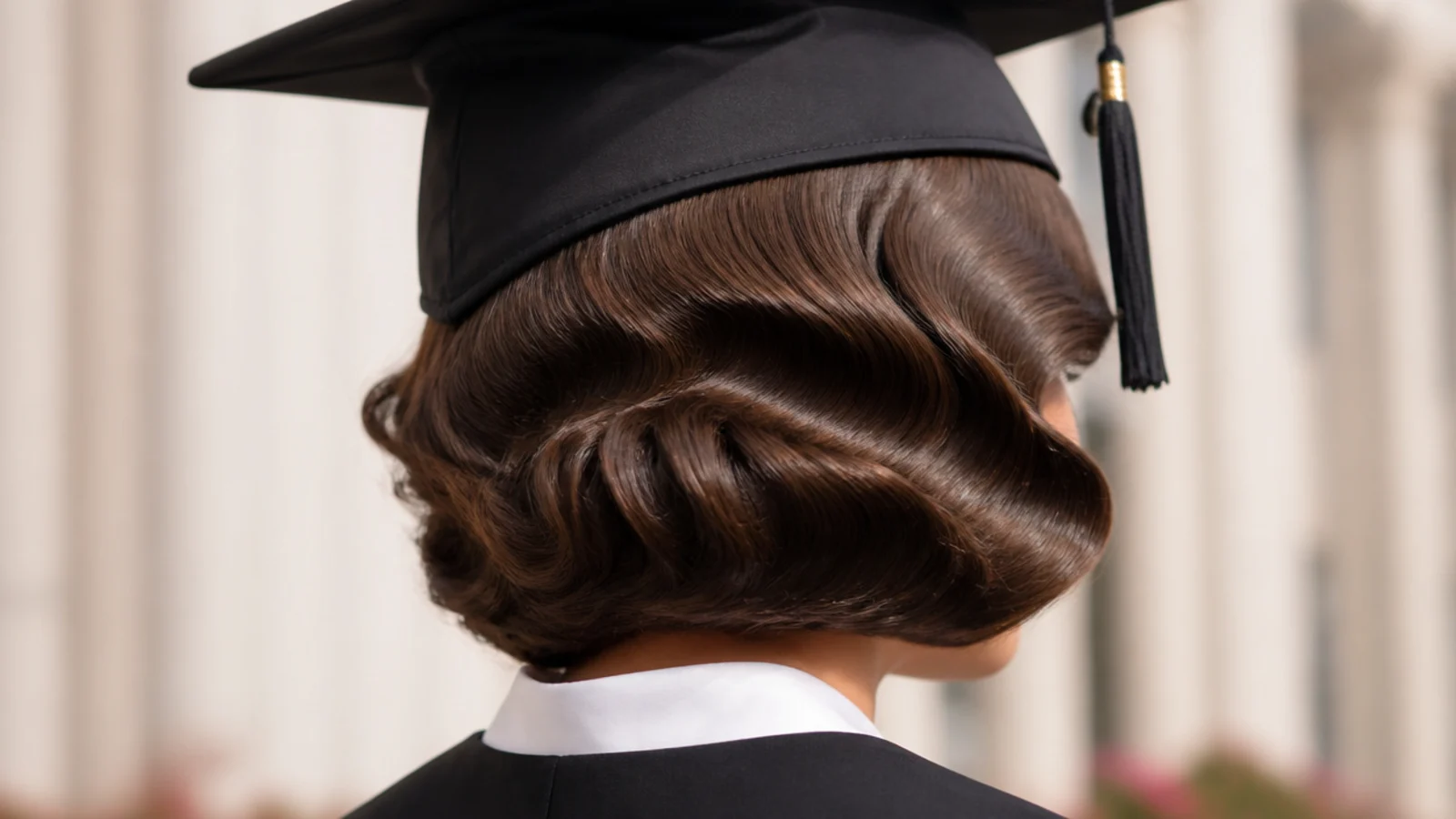
13. Finger Waves
The hair is moulded flat to the skull with gel, which makes this the lowest profile style available and the one the band alters least. It has to be completely dry before the cap goes on, since a wet set under compression dries in whatever shape the band pushed it into.
14. Curly Pixie
Every curl is inside the band ring, so the whole style is compressed, but a band squeezes the air out from between coils without straightening a strand. Water misted at the root and a shake at the scalp puts the height back in under a minute.
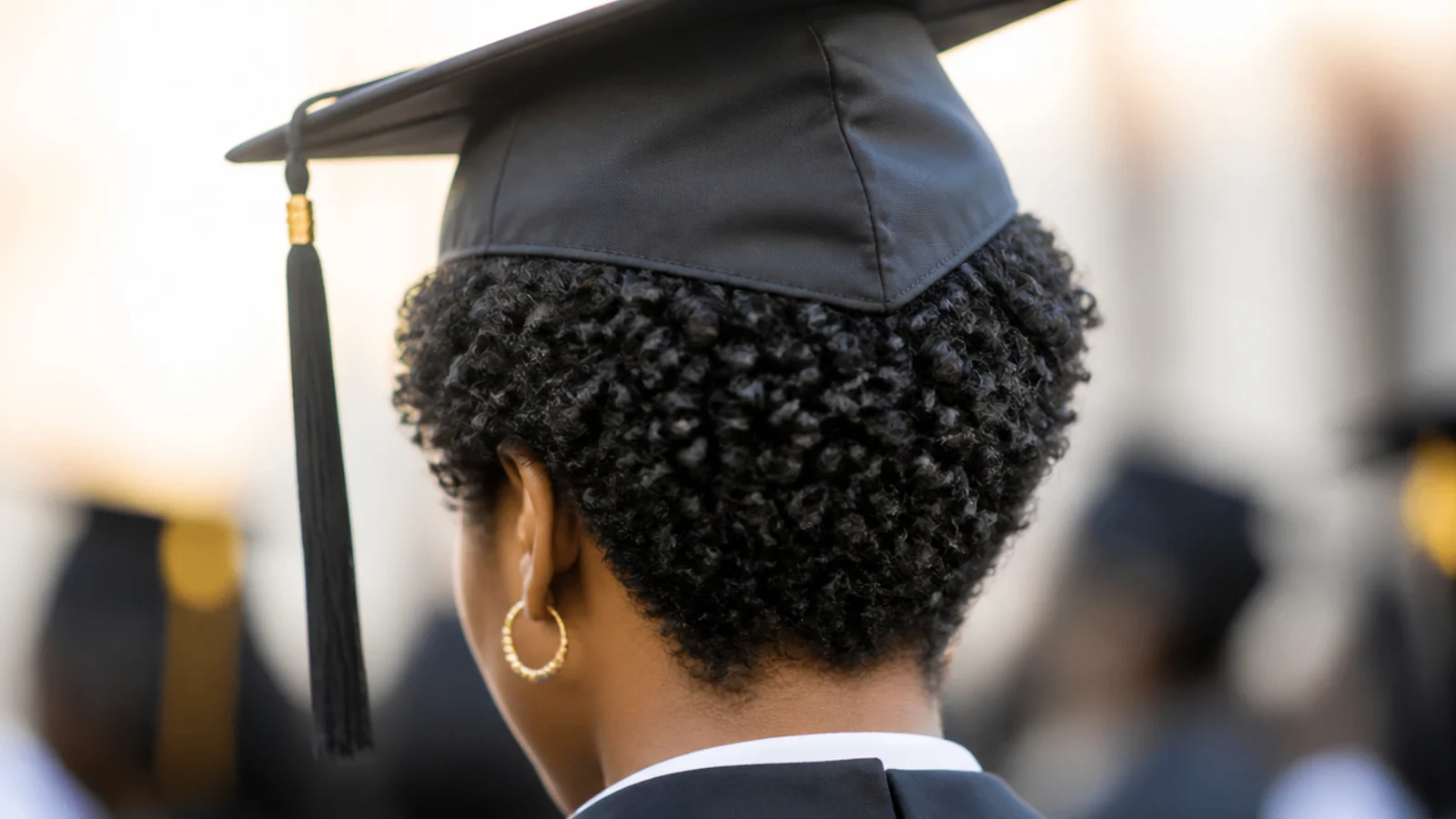
15. Flat Twists on a Tapered Cut
Flat twists lie along the scalp, so they add no height under the band, and they give a tapered cut the only anchored hair on the whole head for a pin to enter. On a taper the sides keep length rather than going to skin, which is what makes twisting them possible at all.
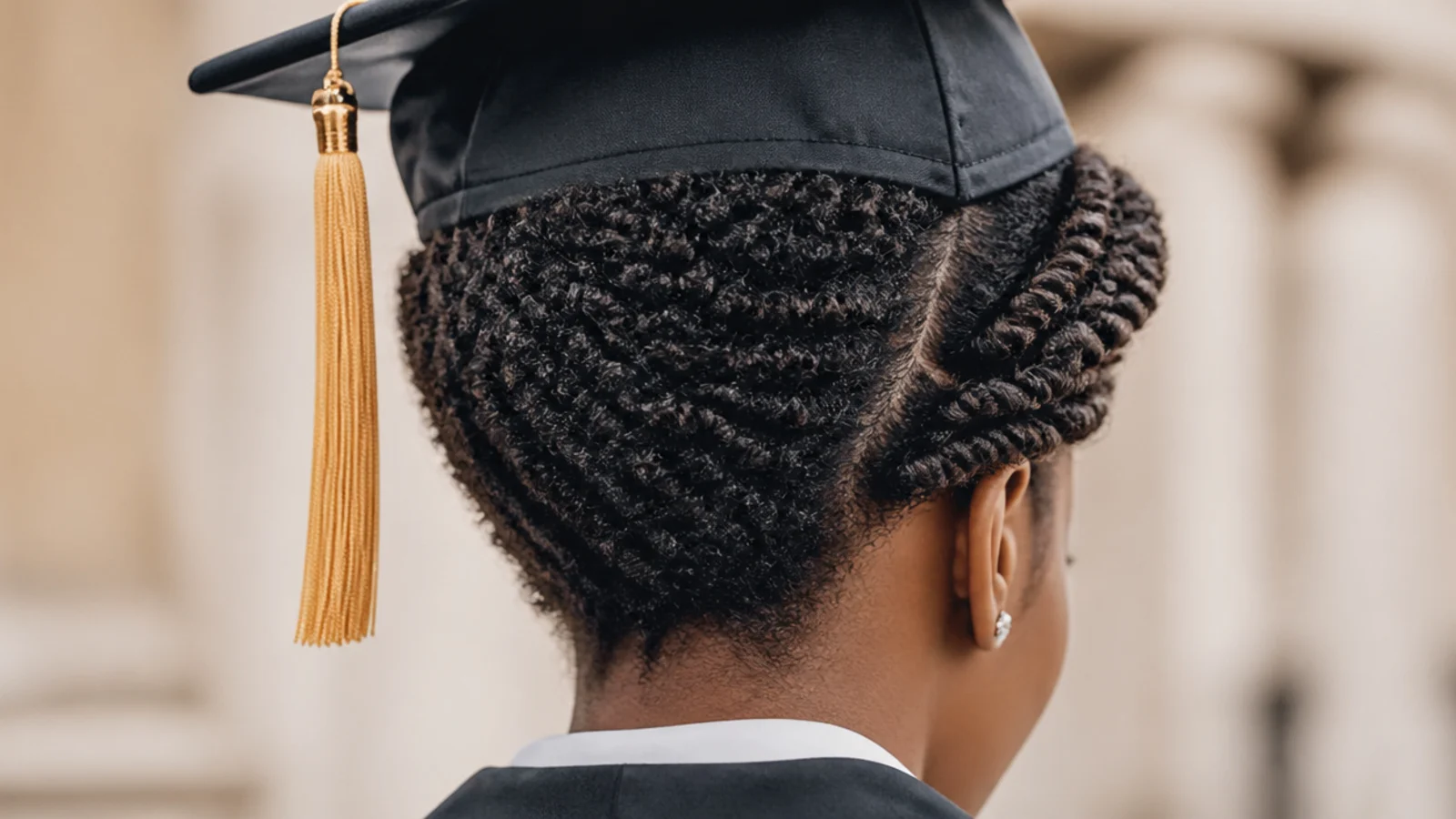
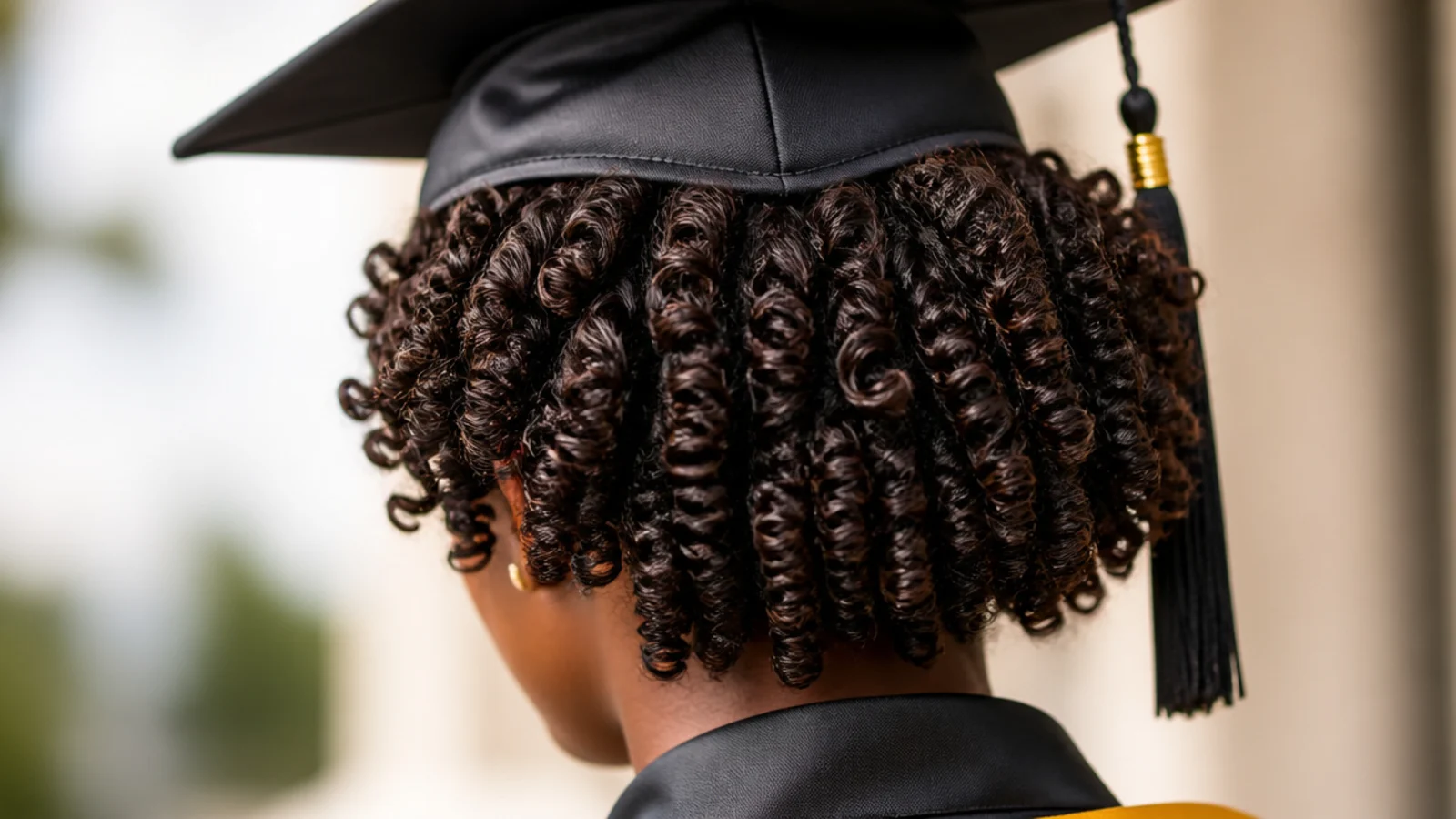
16. Bantu Knot Out
Small knots on short hair produce tight spirals, and a tight spiral resists compression better than a loose one because it has more bends holding it open. Unravel it fully dry, then leave it alone until the cap is off.
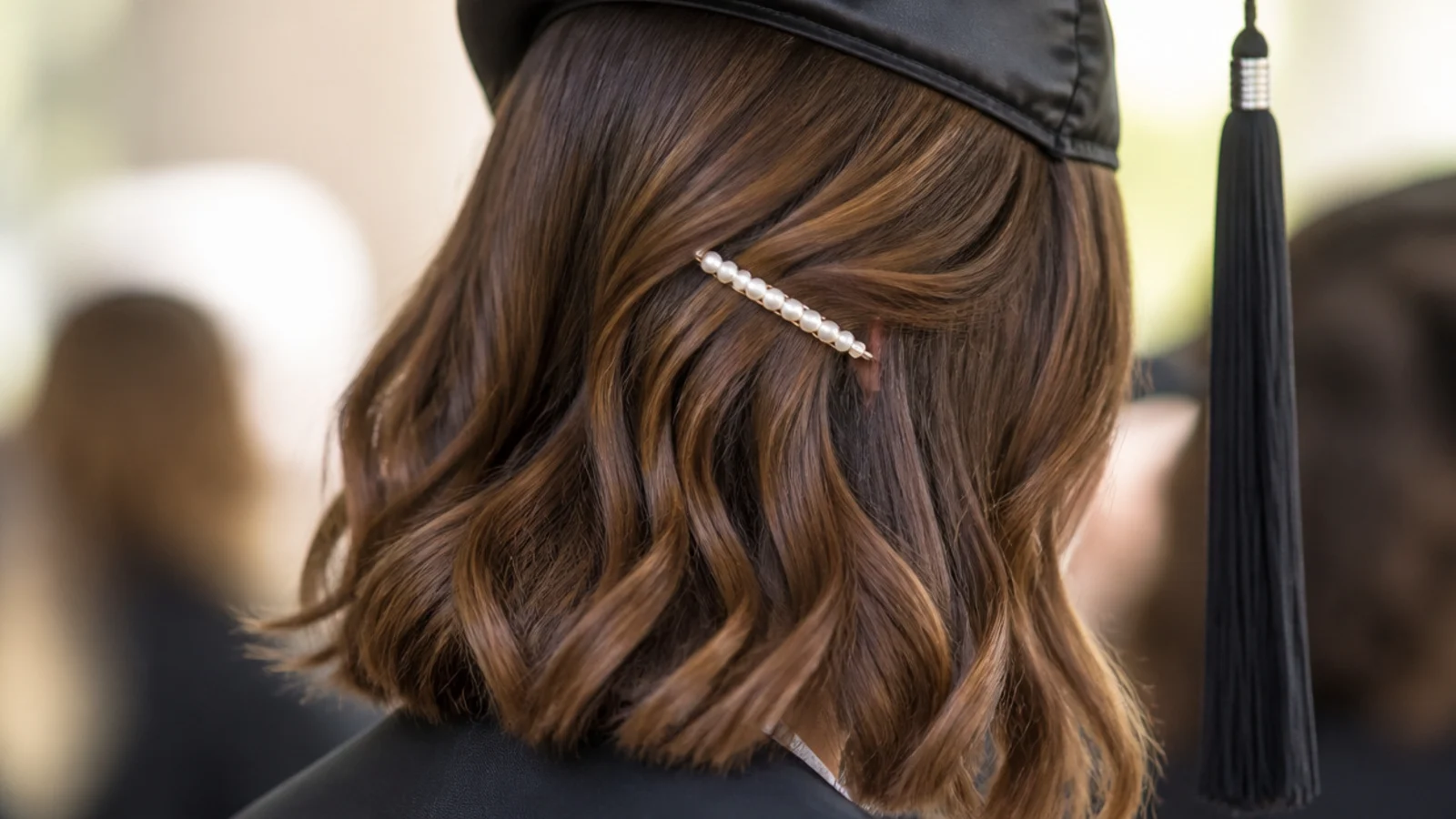
17. Pearl Barrette
A barrette clamps a whole section at once, which gives you a fixed point on hair far too short to hold a pin on its own. Set it below the band line so it is not competing with the cap for the same inch of head.
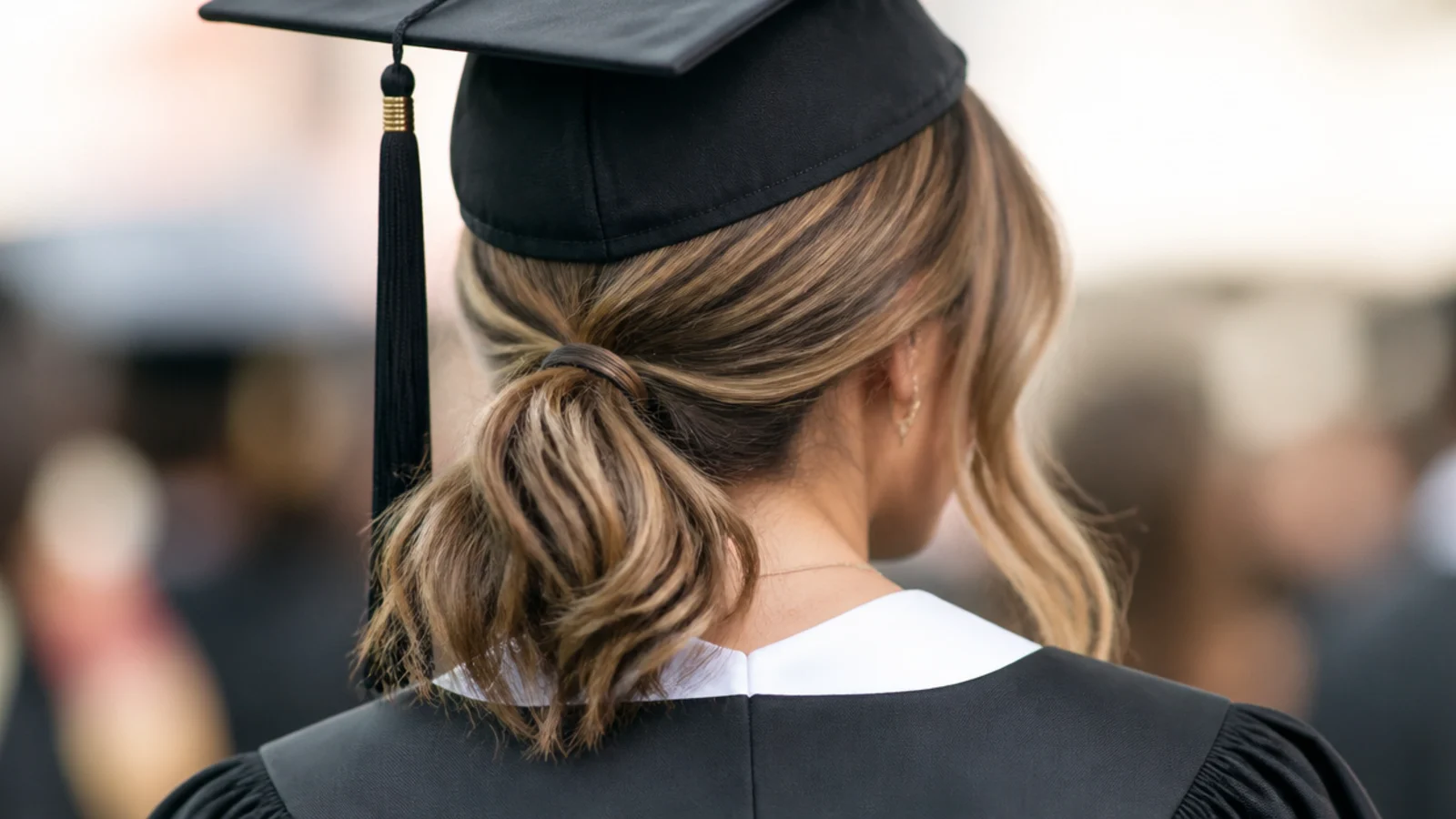
18. Low Side Ponytail
This needs the longest hair you have, so it is a bob style rather than a pixie one, and the shorter layers will escape as the day goes on. Use two small elastics rather than one, because a short tail slips out of a single tie the moment it is tugged.
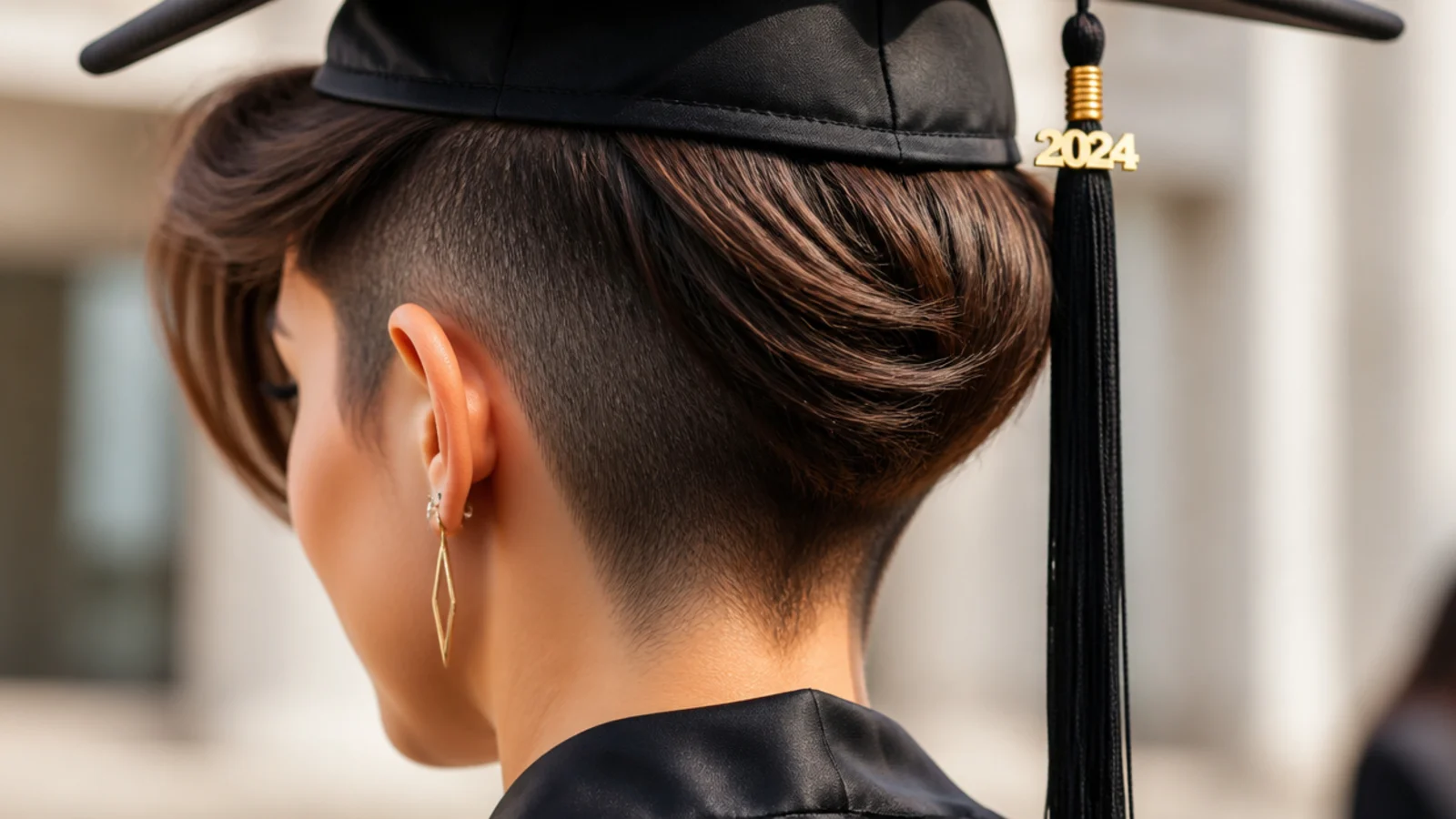
19. Undercut Pixie
The shaved section sits below the band on one side, so the cap grips a shorter, smoother surface there and tends to settle unevenly. Put your back pin on the undercut side to hold the board level rather than trusting the fit.
20. Silk Pressed Bob
A cap traps heat and moisture against the scalp for the length of the ceremony, and heat plus moisture at the root is the exact condition that reverts a press. Expect the roots to lift first, and keep the ends out of any dampness so the length holds.

Final Thoughts
Short hair has the easiest fit and the hardest hold. The board sits level without any adjustment because there is nothing under the band to lift it, and then it slides, because the pins have nothing to grip. Everything worth doing on a graduation morning with a pixie or a bob is about manufacturing one bundle of hair a pin can squeeze.
Backcomb at both temples, or twist a section, or clip a barrette, then cross two pins through the cap band into it. After that the dent is barely a problem, since short hair carries almost no weight and comes back up under a fingertip. For another formal night on the same lengths see the hoco for version, and for the fastest anchored gather there is see claw clip hairstyles for short hair. More in Occasion Hair.
Frequently asked questions
Related posts
See all posts
15 Graduation Hair Ideas for the Updo Versus Down Decision
Read more
15 Straight Hair Wedding Looks to Save
Read more
20 Gorgeous Prom Looks for Straight Hair
Read more