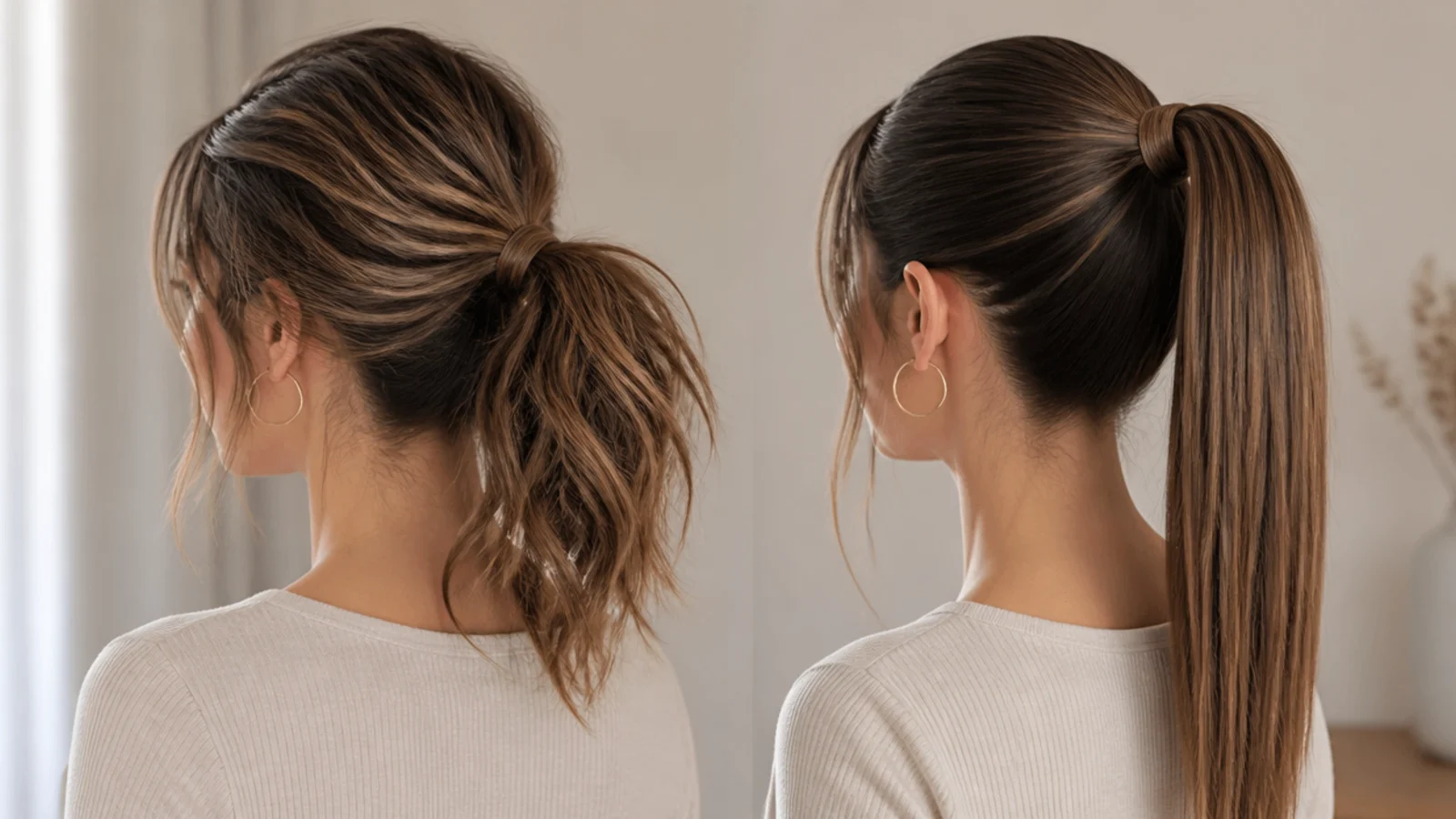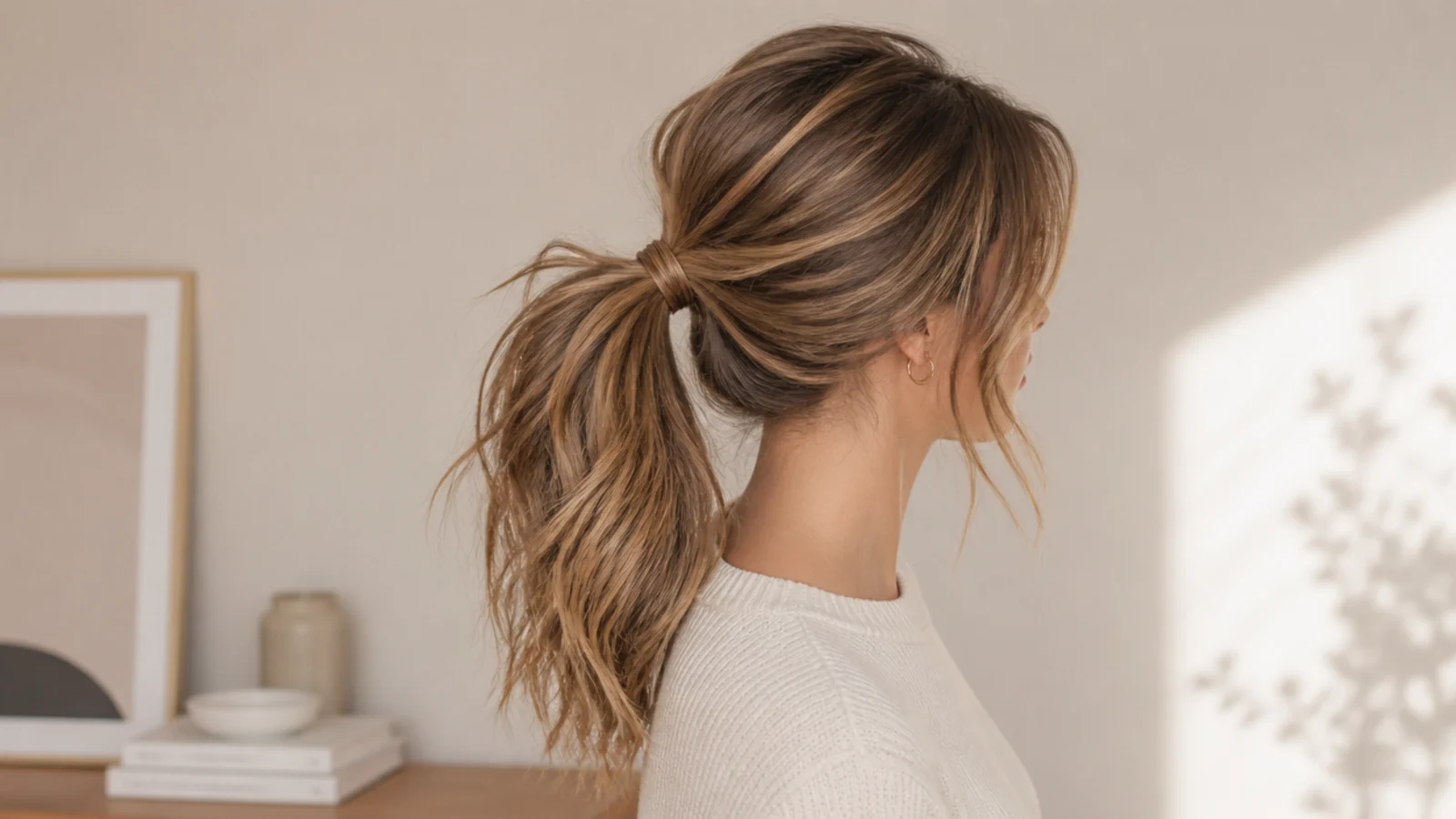
15 Messy Ponytail Ideas for Short Hair
Fifteen messy ponytails for bobs, lobs and grown out pixies, and the measure that decides whether one is possible at all — the nape hair is the shortest on your head, and it is the piece that has to reach the band.
In this article · 23
- How Short Is Too Short for a Ponytail
- Messy Not Untidy on Short Hair
- Securing a Short Ponytail
- Volume and All Day Hold on Short Hair
- Fine Versus Thick Short Hair
- Products for a Short Messy Ponytail
- The 15 Short Hair Messy Ponytails
- 1. Low Pony on a Chin Length Bob
- 2. Two Elastics Stacked
- 3. Bungee Band on a Shag
- 4. Grown Out Pixie at the Nape
- 5. Half Up on Short Hair
- 6. Crown Tie on a Lob
- 7. Clip In Wrap Ponytail
- 8. Curtain Bangs Ponytail
- 9. Twisted Side Pony for Fine Hair
- 10. Pinned Under Stub
- 11. Curly Short Pony for 3A to 3C
- 12. Sporty High Shag Pony
- 13. Scrunchie on Thick Short Hair
- 14. Braided Front on Short Hair
- 15. Wrapped Base on a Bob
- Final Thoughts
Whether a short ponytail is possible has nothing to do with the length you see in the mirror.
The nape hair decides it. The hair at the base of the neck is the shortest on your head, and it is the piece that has to reach the band.
Half an inch short is one month away. Hair grows roughly half an inch a month, so a nape that almost reaches is a genuinely short wait.
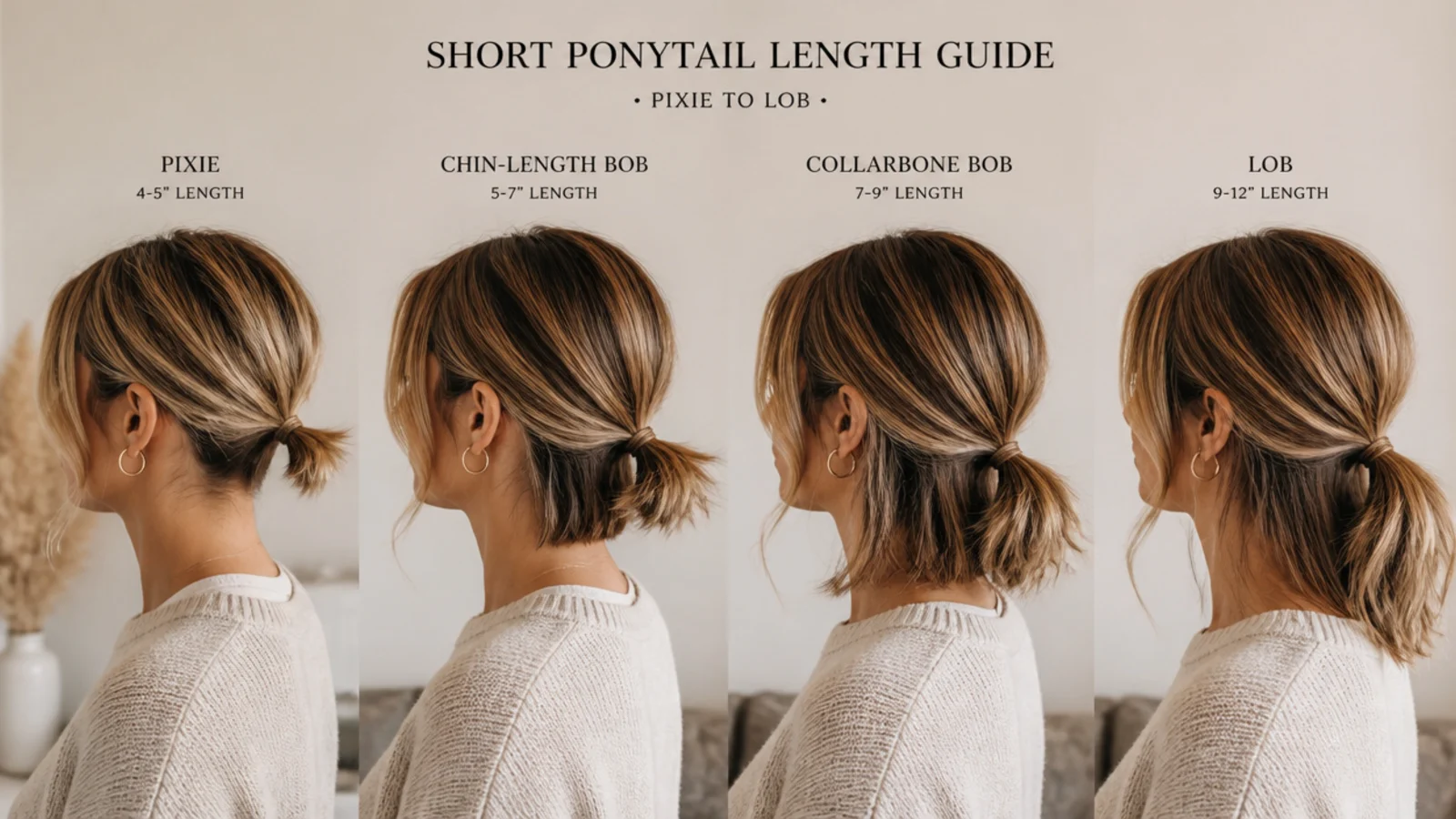
How Short Is Too Short for a Ponytail
Measure at the nape, not the front. The front sections are always longer. If the nape hair reaches the tie point, a full ponytail is on.
Chin length usually means half up. At a chin length bob the nape will not make it, so take the top section only and leave the rest down.
Jaw and lob length take a low full pony. The tie has to sit low enough for the shortest pieces to arrive, which means at or below the occipital bone.
A grown out pixie is a nape gather. Only the crown and top have length, so what you are tying is a small stub with the sides pinned in rather than a tail.
Messy Not Untidy on Short Hair
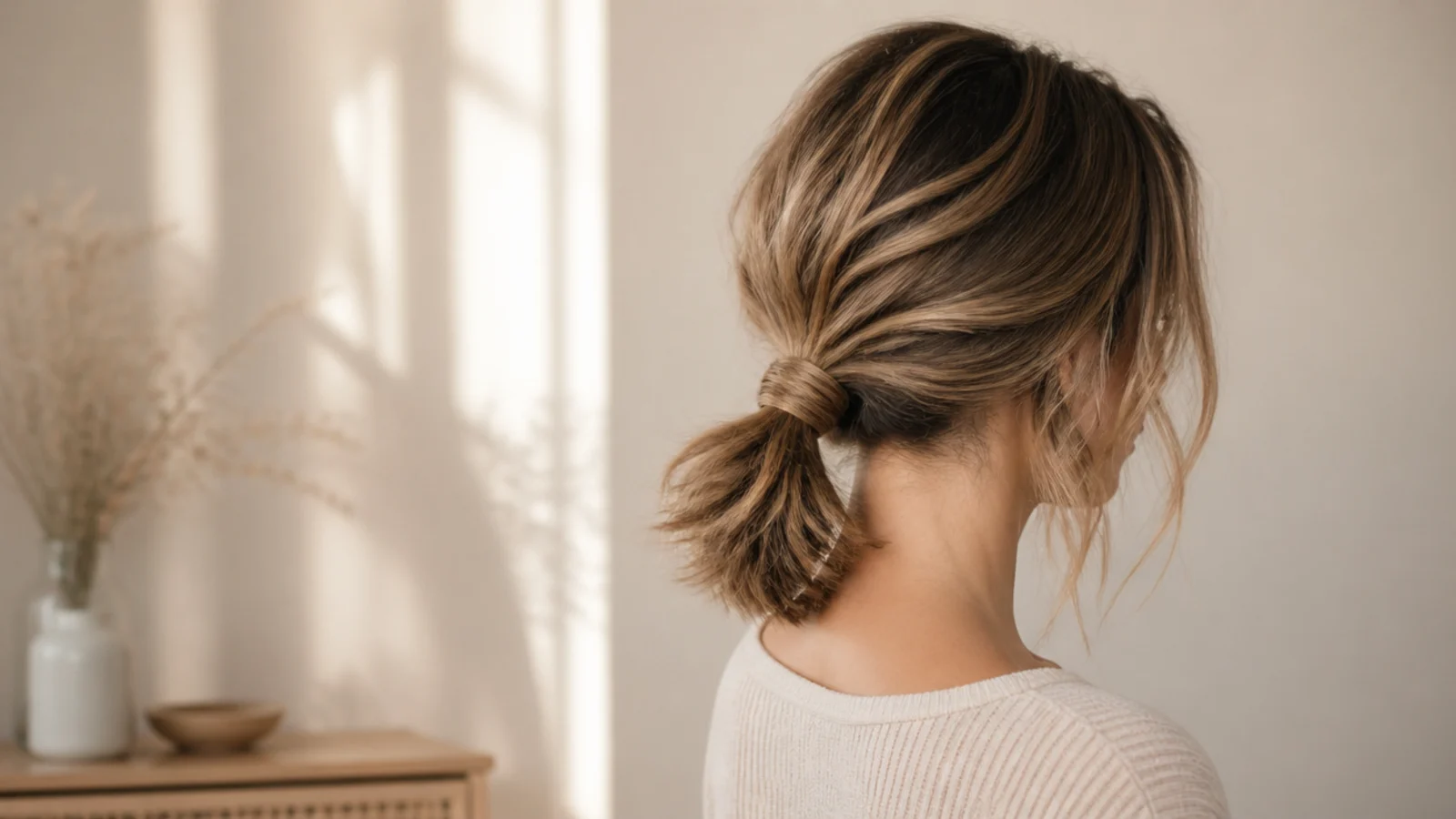
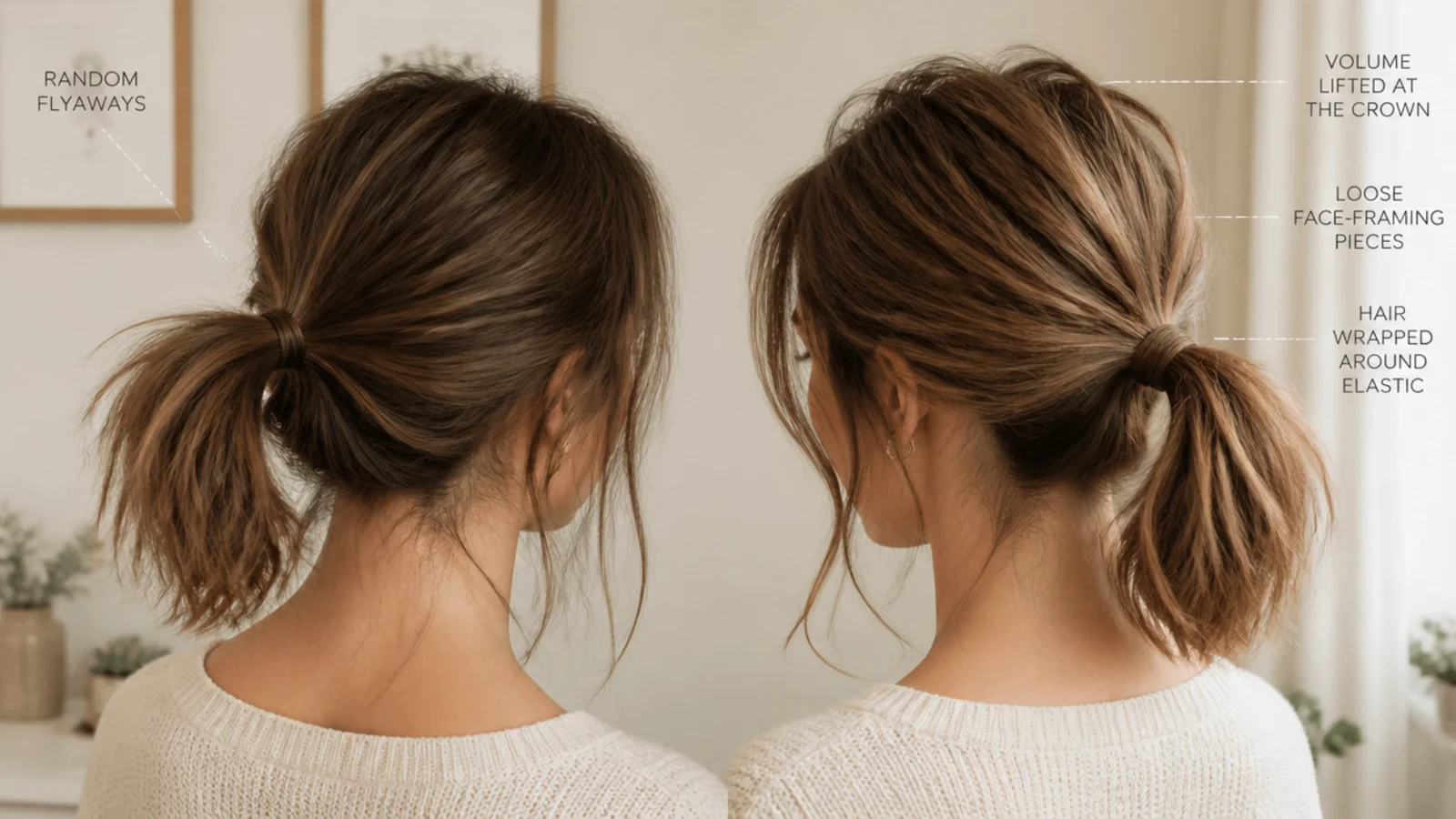
Escaping nape hairs are the whole risk. On short hair they are unavoidable, so the trick is to leave them soft rather than half caught in the elastic.
Front pieces should be pulled out on purpose. Two deliberate strands at the temples make everything else read as intentional.
The base has to be tight. There is so little tail that the base is most of what people see, and a loose one reads as failure rather than as undone.
Roughness belongs at the crown. With no length to add texture to, the volume has to come from above the band or the style looks flat and small.
Securing a Short Ponytail
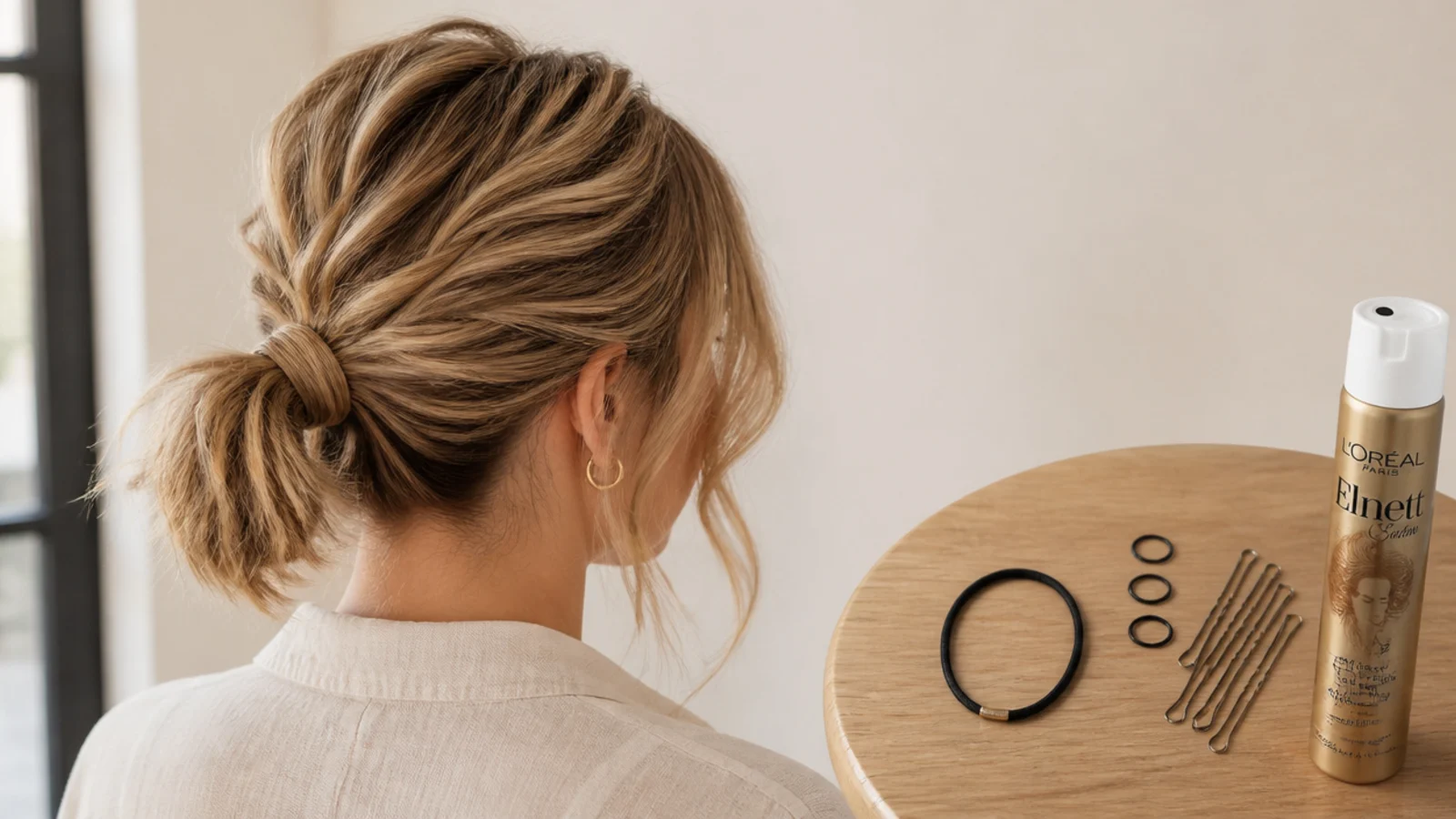
Grip before you gather. Texture spray or dry shampoo through the base is the single most effective step, because the band has very little hair to hold on to.
Stack a second elastic. The upper band stops the base sliding while the lower one holds the gather, which is the standard fix for a tail too short to hold itself.
Use a bungee rather than a loop band. Hooking at each end means you never drag short hair through a stretched elastic, which is how the shortest pieces get pulled out.
Pin the failures rather than retying. Two pins crossed under the base catch the nape hairs that were never going to reach. Retying will not recruit them.
Volume and All Day Hold on Short Hair
Volume has to be built above the band. There is no length below it to give the style size, so the crown is doing all of the visual work.
Backcombing works by tangling cuticles. Pushed against each other, neighbouring strands knot into a light mat that props the surface hair upward.
Short hair holds better than long hair, once it is in. There is almost no weight below the band, so nothing is dragging the elastic down over the day.
The failure mode is escape, not sag. Short ponytails come apart from the bottom, so the pins go under the base rather than around the crown.
Fine Versus Thick Short Hair
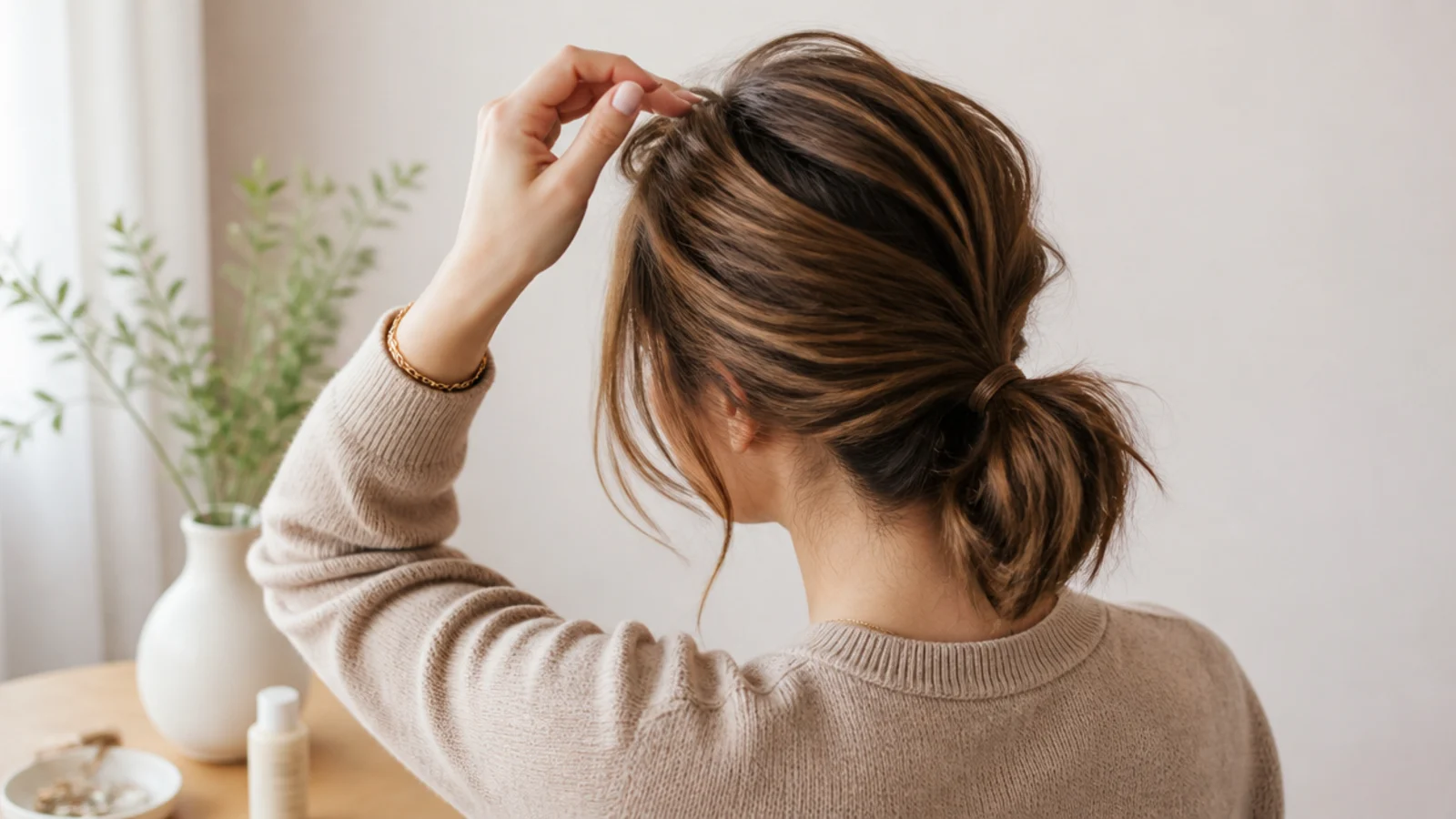
Fine short hair leaves almost nothing at the band. The elastic closes onto itself and the tail looks sparse, so a fabric band and a crown tug are doing the rescuing.
Thick short hair is bulky but blunt. Plenty to grip, but the tail comes out as a solid block rather than a shape, and it wants breaking up.
Fine hair needs powder for grip. With so few strands there is very little friction available, and dry shampoo supplies it directly.
Thick hair needs a bigger anchor. A large claw or a bungee handles a dense short gather that a small elastic simply cannot compress.

Products for a Short Messy Ponytail
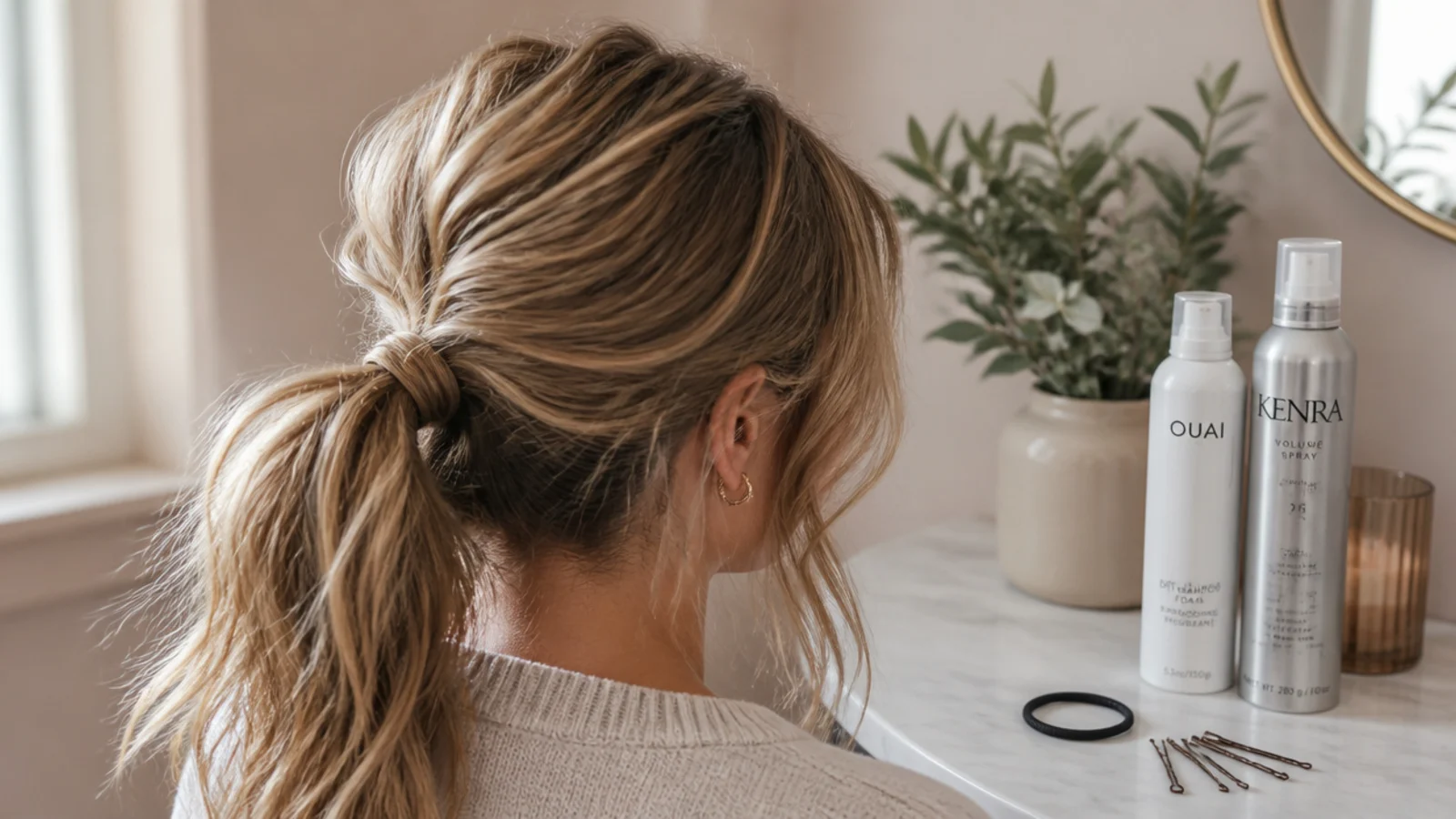
Texture spray at the base. The grit it leaves is what a small gather is actually held by, and short hair has the least natural weight to help.
Dry shampoo for grip rather than oil. Even on clean hair the powder raises friction between strands, which is the whole problem on this length.
Small fabric covered elastics. A large band swims on a short gather and loosens as it settles. Two small ones work better than one big one.
A bungee band. Hooks at both ends, no dragging through a loop, and it tightens to whatever size the gather actually is.
Pins, and more of them than you expect. They are not decoration on short hair. They are the only thing catching the pieces the band could never reach.
The 15 Short Hair Messy Ponytails
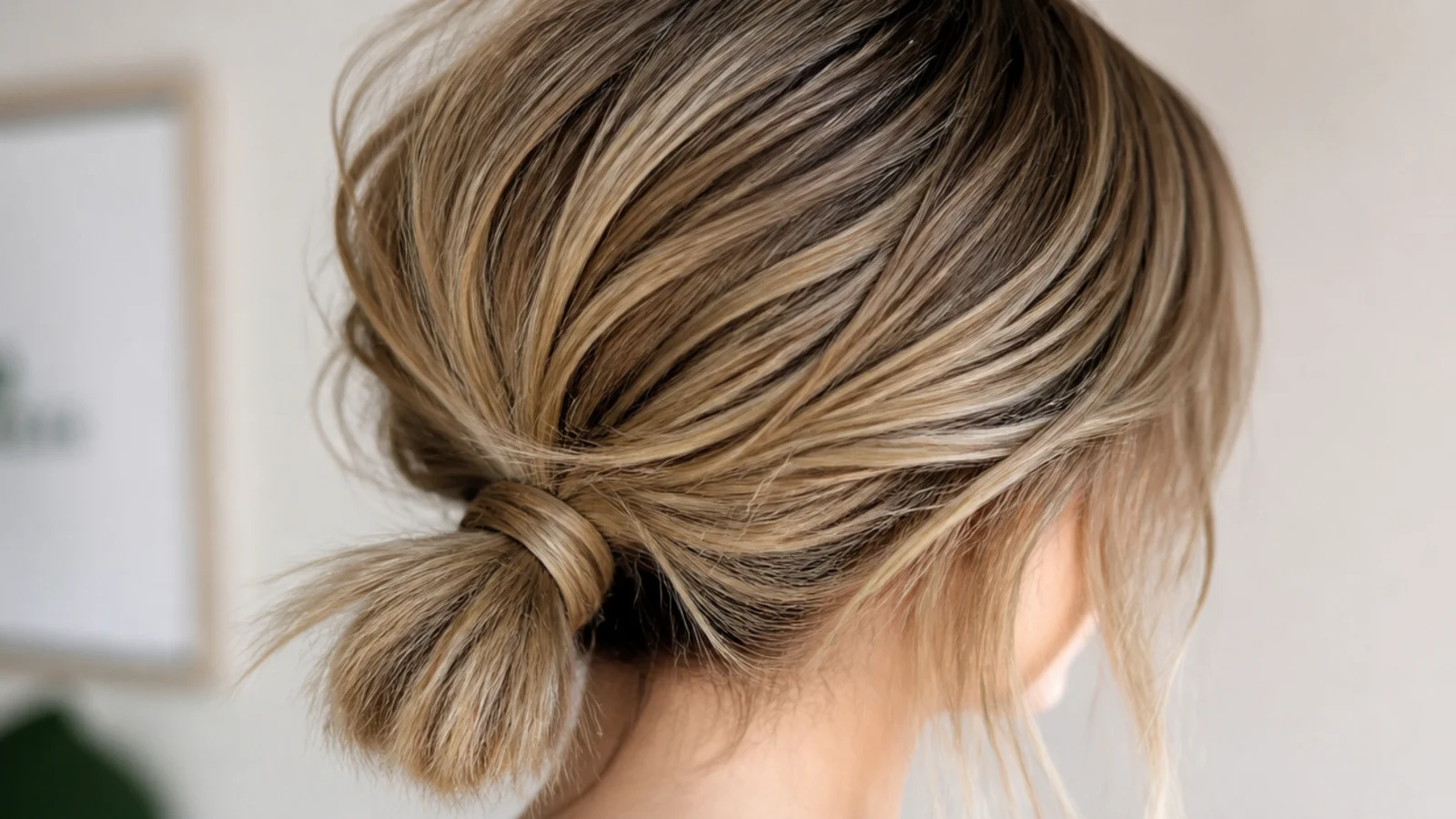
1. Low Pony on a Chin Length Bob
Tied as low as the head allows, because that is the only placement the shortest nape pieces can reach. Even then expect a few to fall out, which is why the base sits at or below the occipital bone rather than anywhere higher.
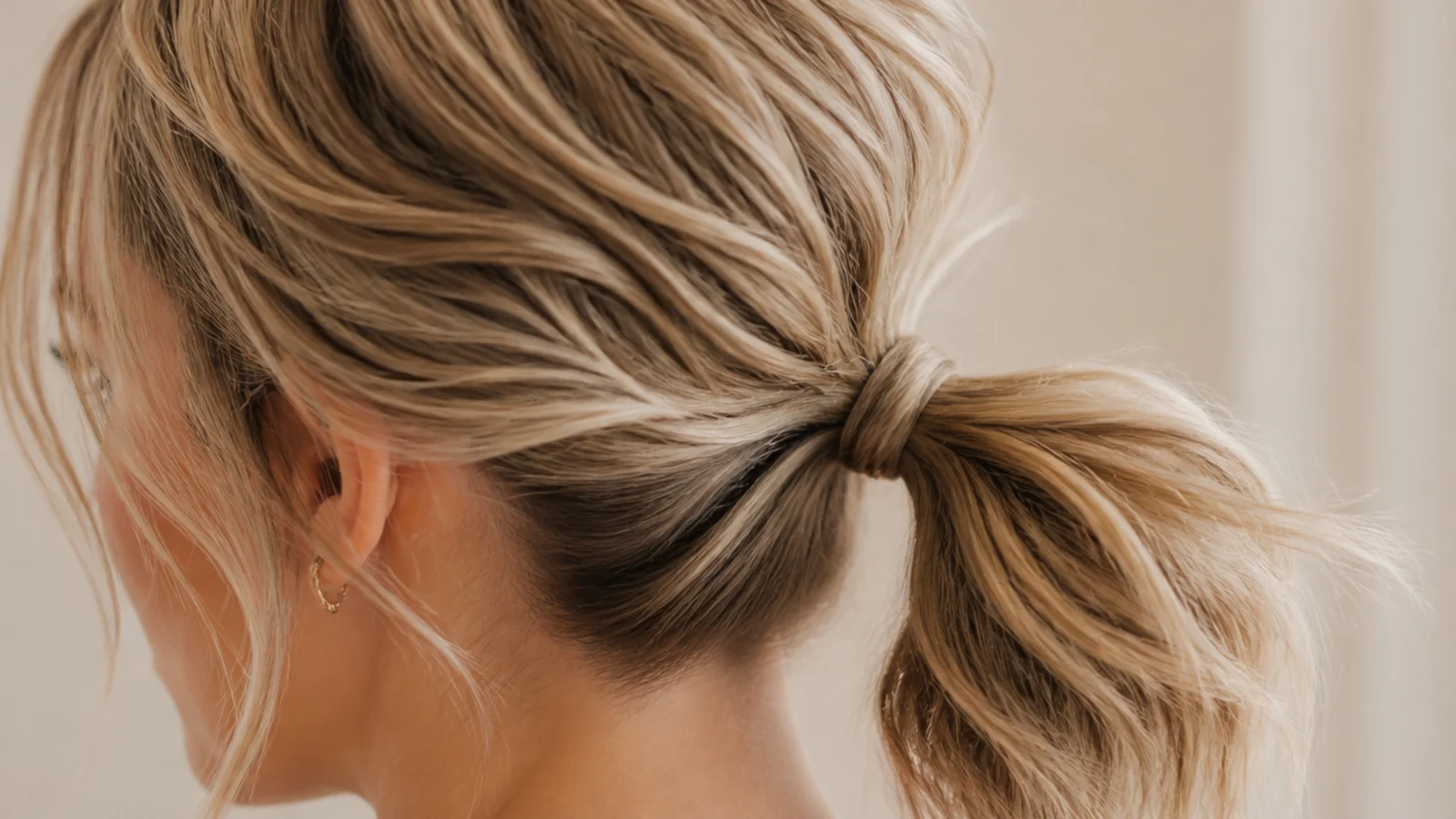
2. Two Elastics Stacked
The second band sits a few millimetres above the first, so it holds the base from sliding while the lower one keeps the gather together. On a short tail with no weight to settle it, that upper band is what stops the whole thing working loose.
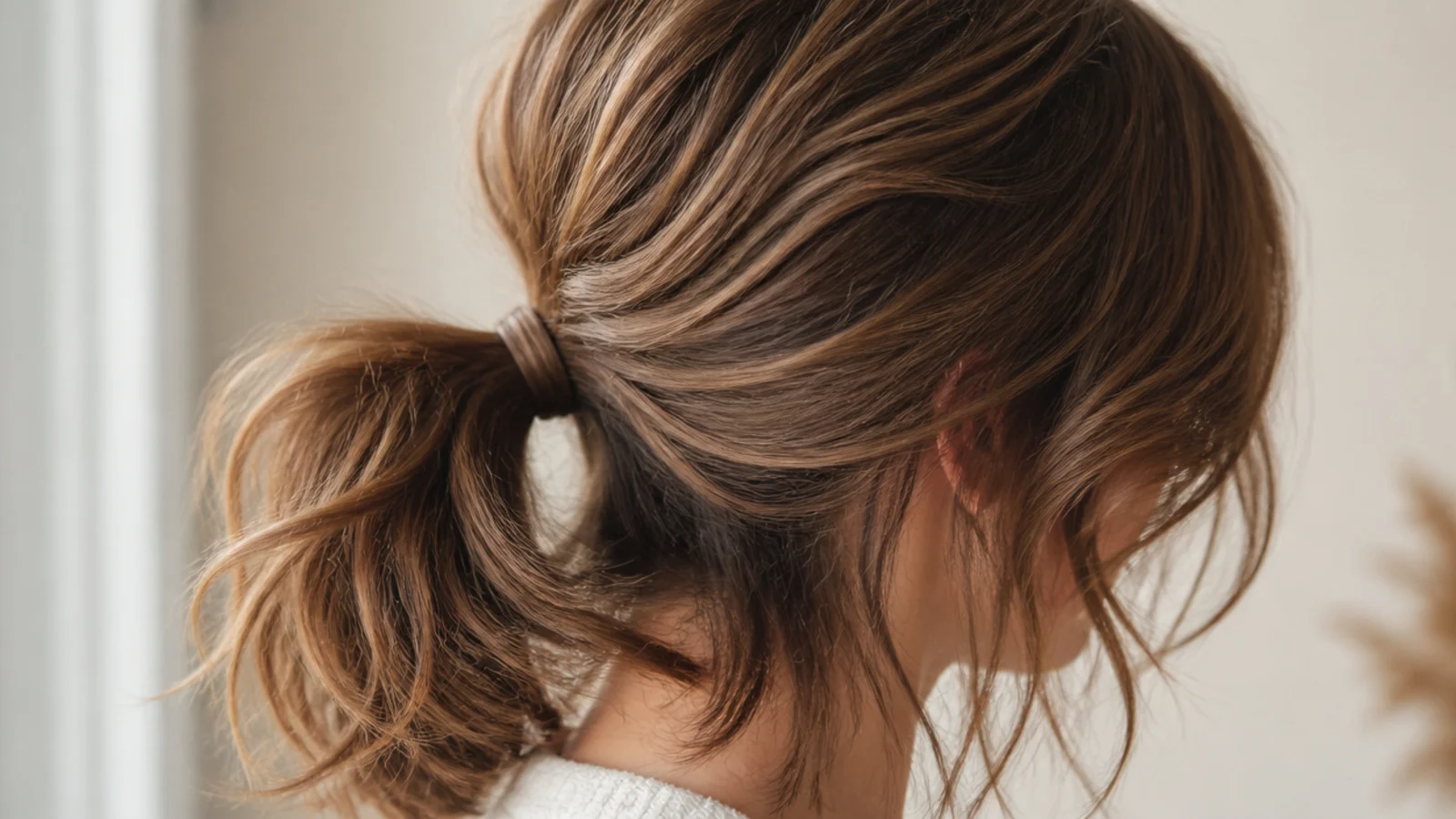
3. Bungee Band on a Shag
A bungee hooks at one end and then the other, so short pieces are never dragged through a stretched loop. On a shag, where the layers are cut to wildly different lengths, that is the difference between gathering the hair and pulling half of it out.
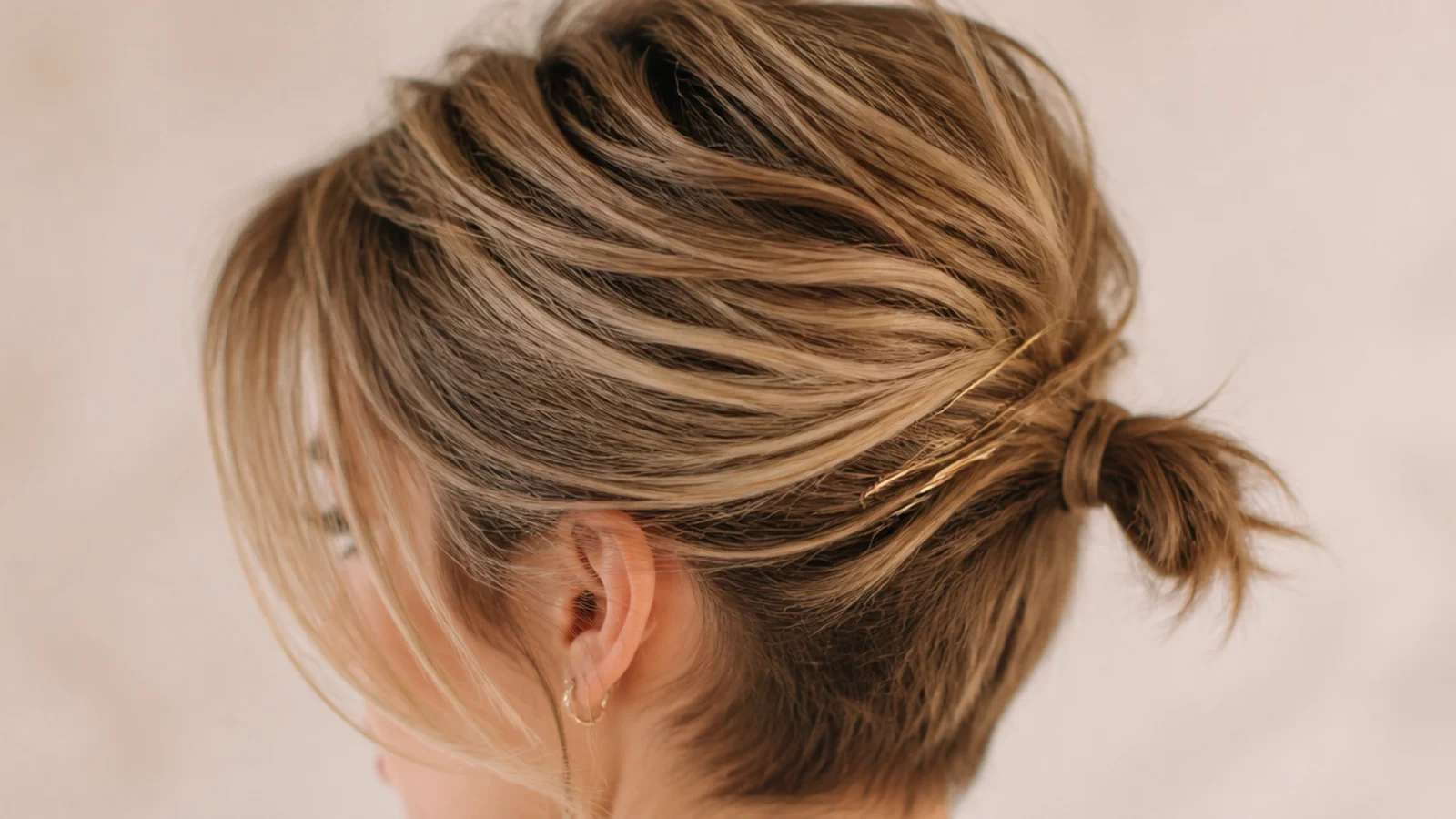
4. Grown Out Pixie at the Nape
On a growing pixie only the crown and top have real length, so what gathers at the nape is a stub with the sides pinned into it. It reads as a ponytail from the front, which is all it needs to do at this stage.
5. Half Up on Short Hair
Only the top section is taken, so the nape hair never has to reach anything. This is the version that works at chin length when a full gather does not, and it leaves the cut perimeter fully on show.
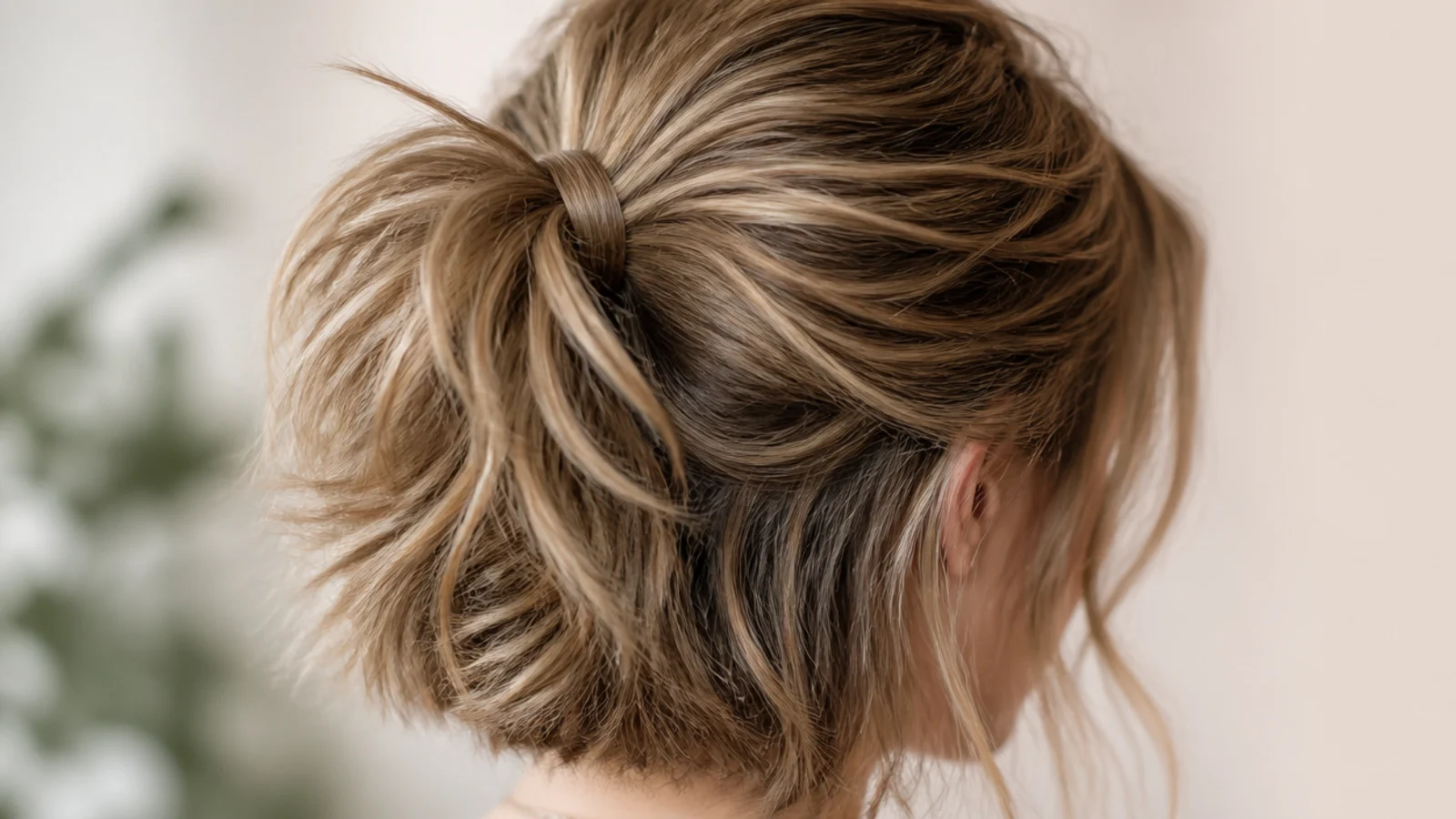
6. Crown Tie on a Lob
A lob has just enough length for a higher placement, and height is what stops a short tail reading as a stub. Tie it at the crown, accept that the lowest nape hairs will not come, and pin those instead.
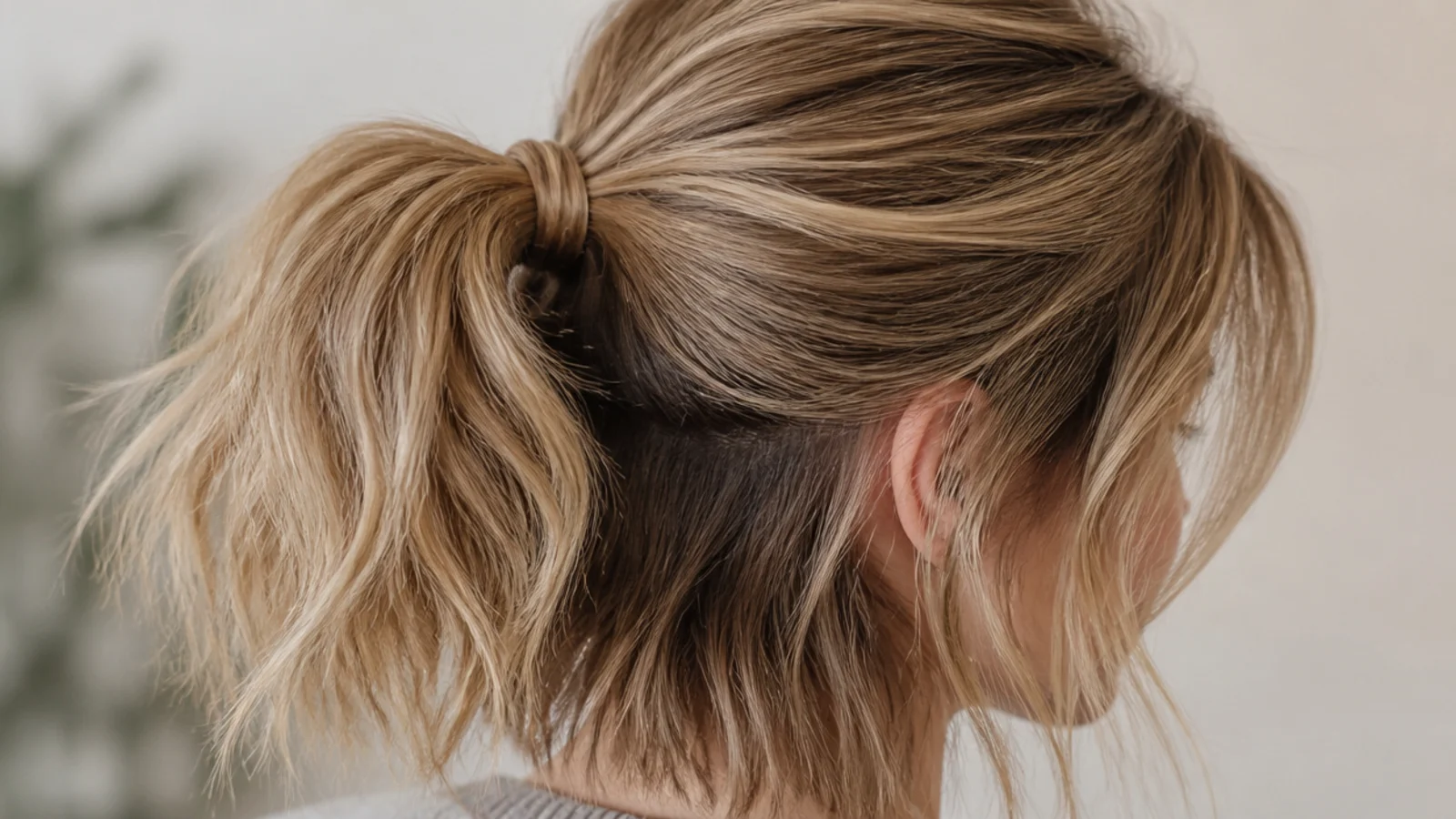
7. Clip In Wrap Ponytail
A wrap of added hair clipped around the base disguises the join and gives the style length the head does not have. The clip anchors into the gathered hair itself, so a tight base is what holds the whole thing rather than the clip.
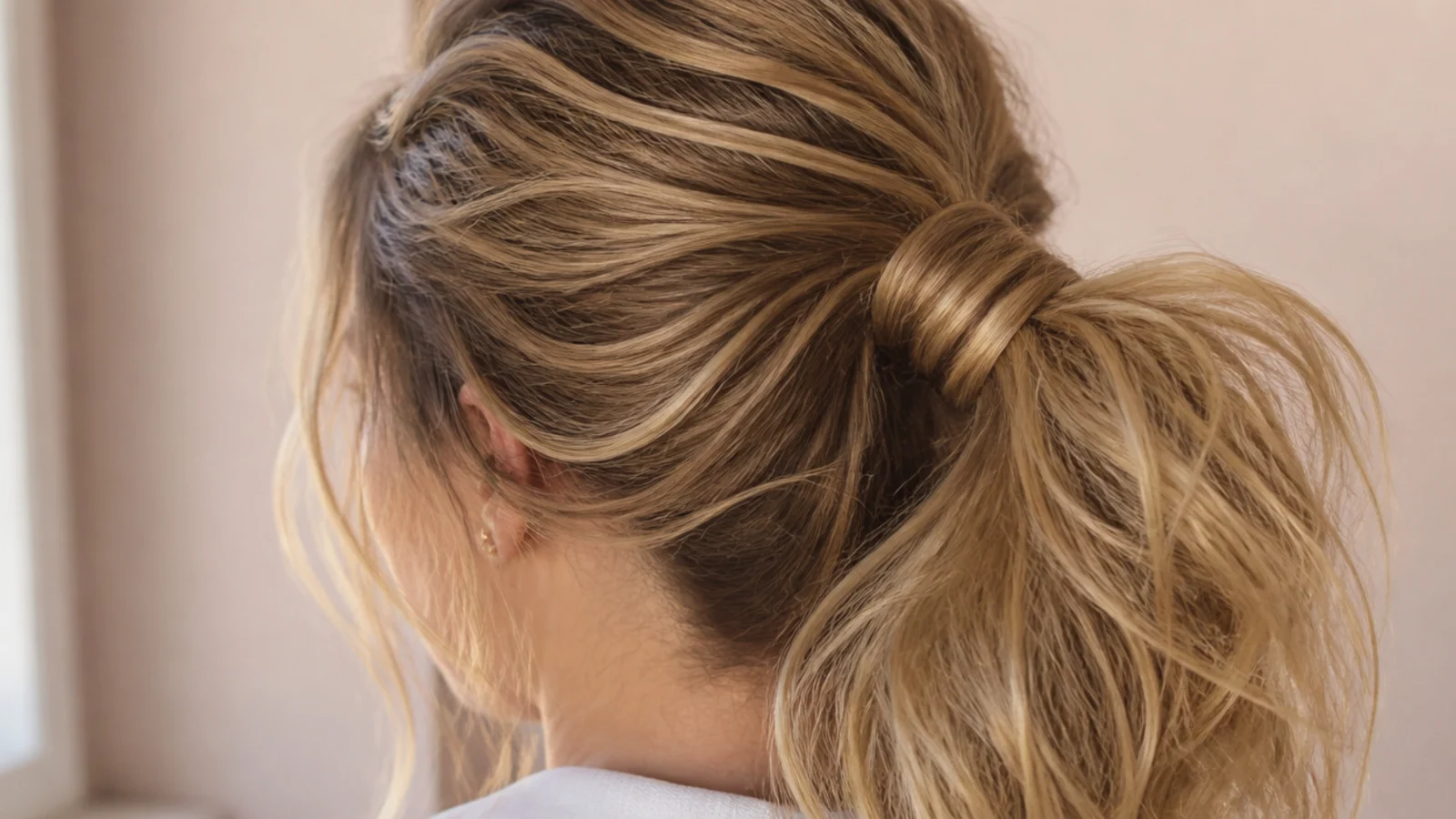
8. Curtain Bangs Ponytail
Curtain bangs are cut too short to be gathered anywhere, so on short hair they stop being a problem and start being the point. Everything that escapes at the front now matches the fringe rather than contradicting it.
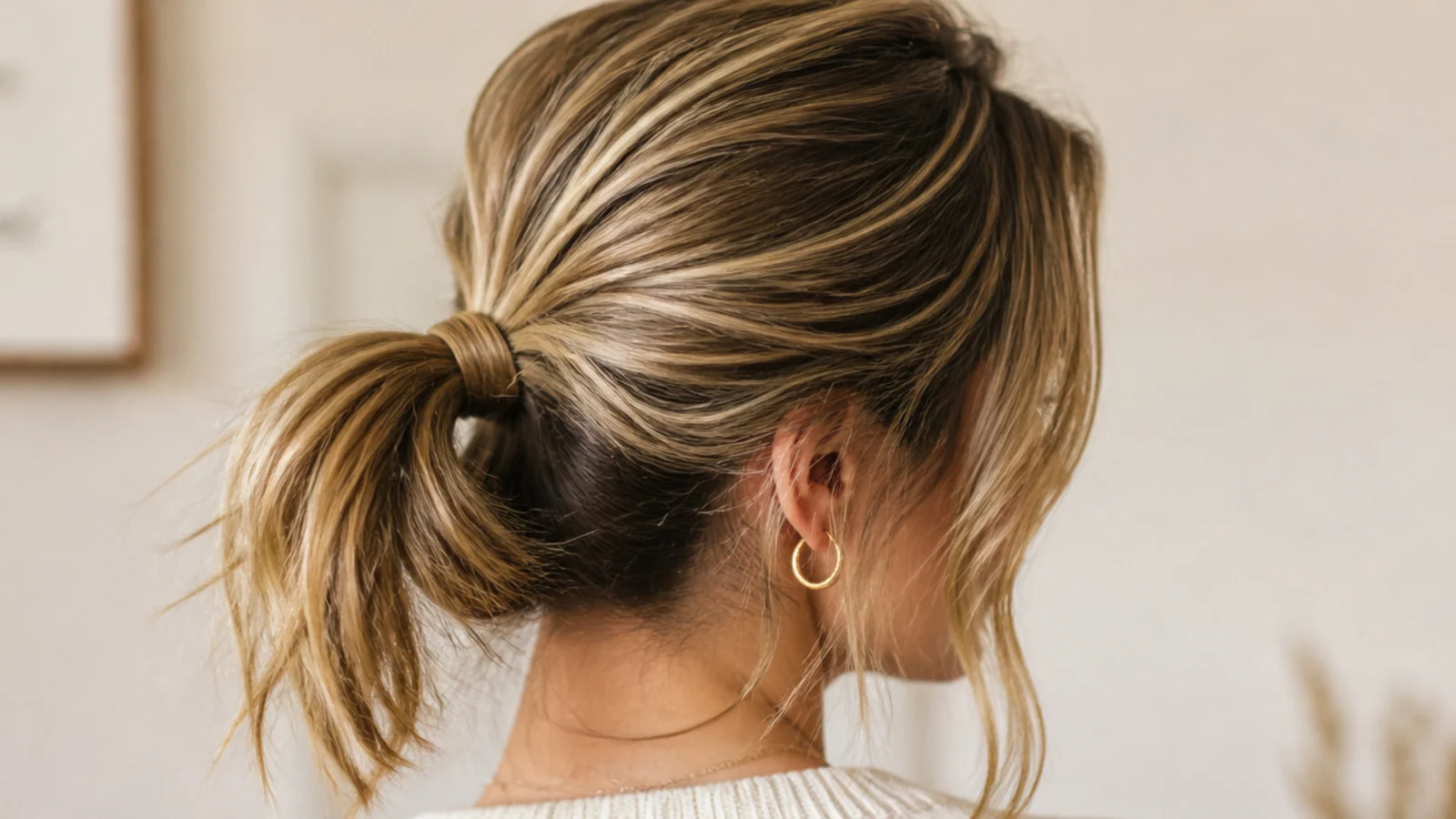
9. Twisted Side Pony for Fine Hair
Twisting each side back before it reaches the band adds apparent width where fine hair has none, and the twist grips itself along its length. Anchored at both ends, it also catches short pieces the elastic alone would have dropped.
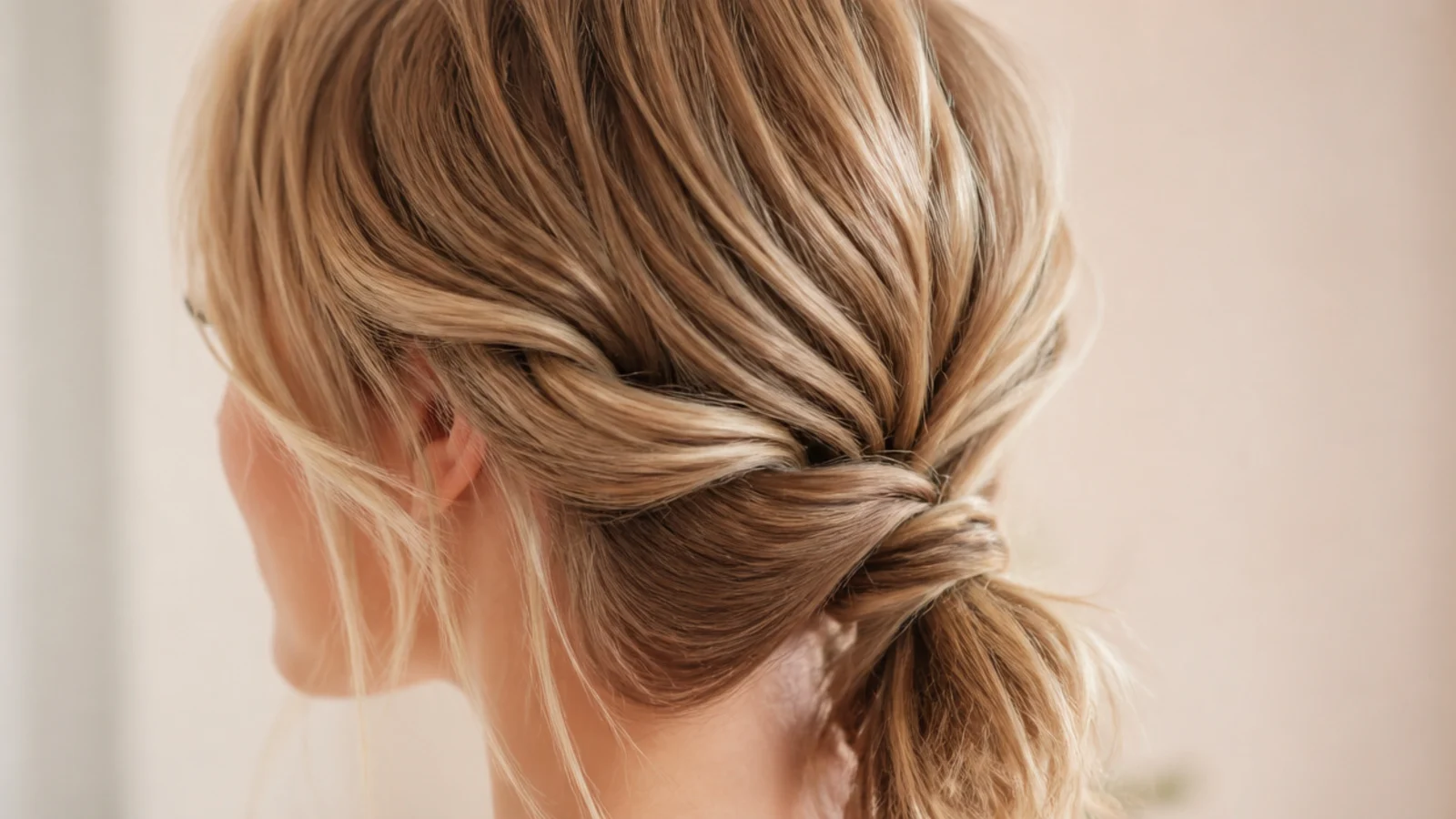
10. Pinned Under Stub
The tail is folded under and pinned instead of left hanging, which removes the blunt stub from view entirely. On the shortest hair this is the most reliable finish, because there is nothing left out to work loose.
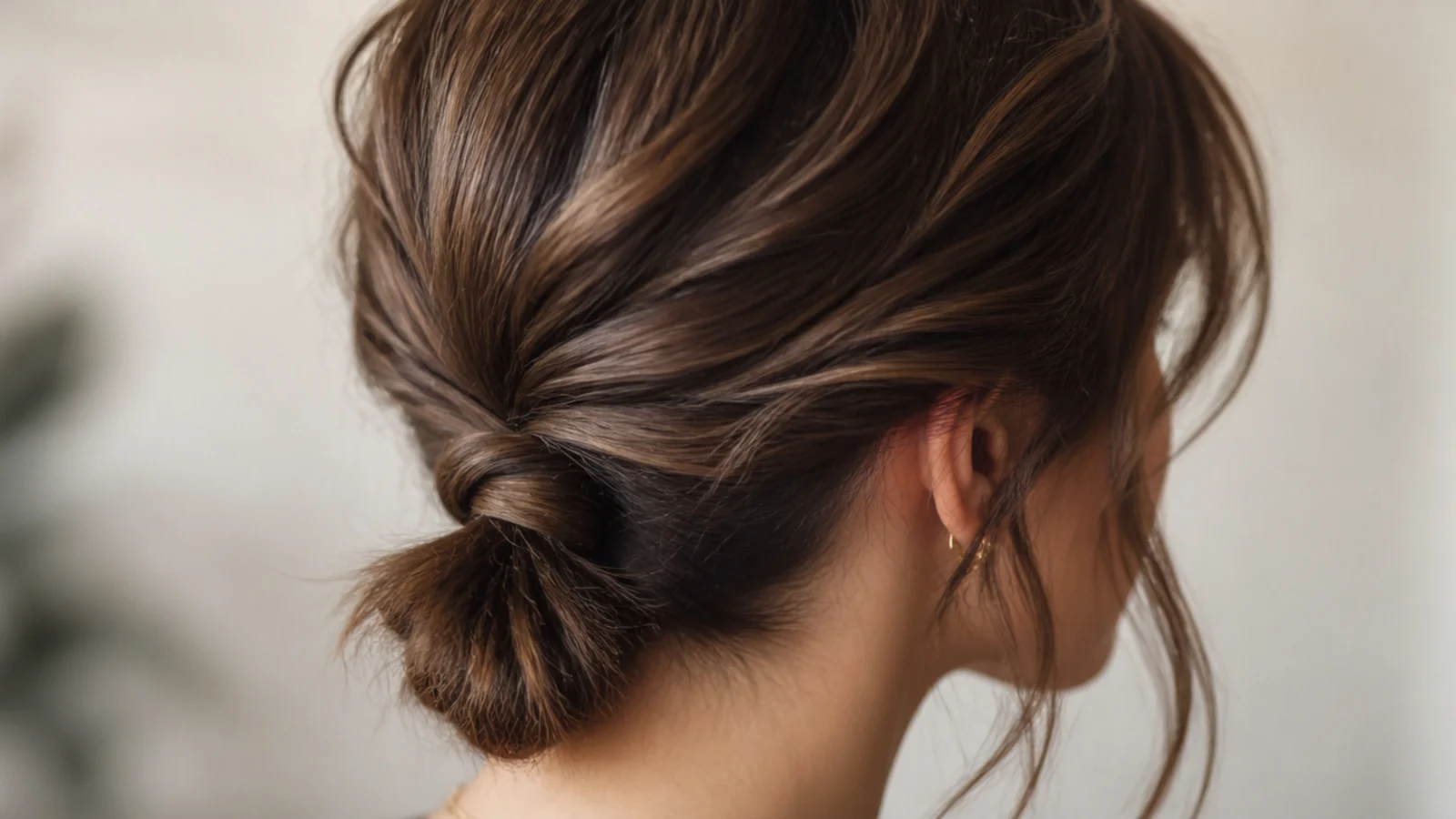
11. Curly Short Pony for 3A to 3C
Curl measures much shorter than it is, so short curly hair often gathers when straight hair of the same visible length will not. Tie it loosely, because compressing the pattern at the band leaves a flat section that only water will reset.
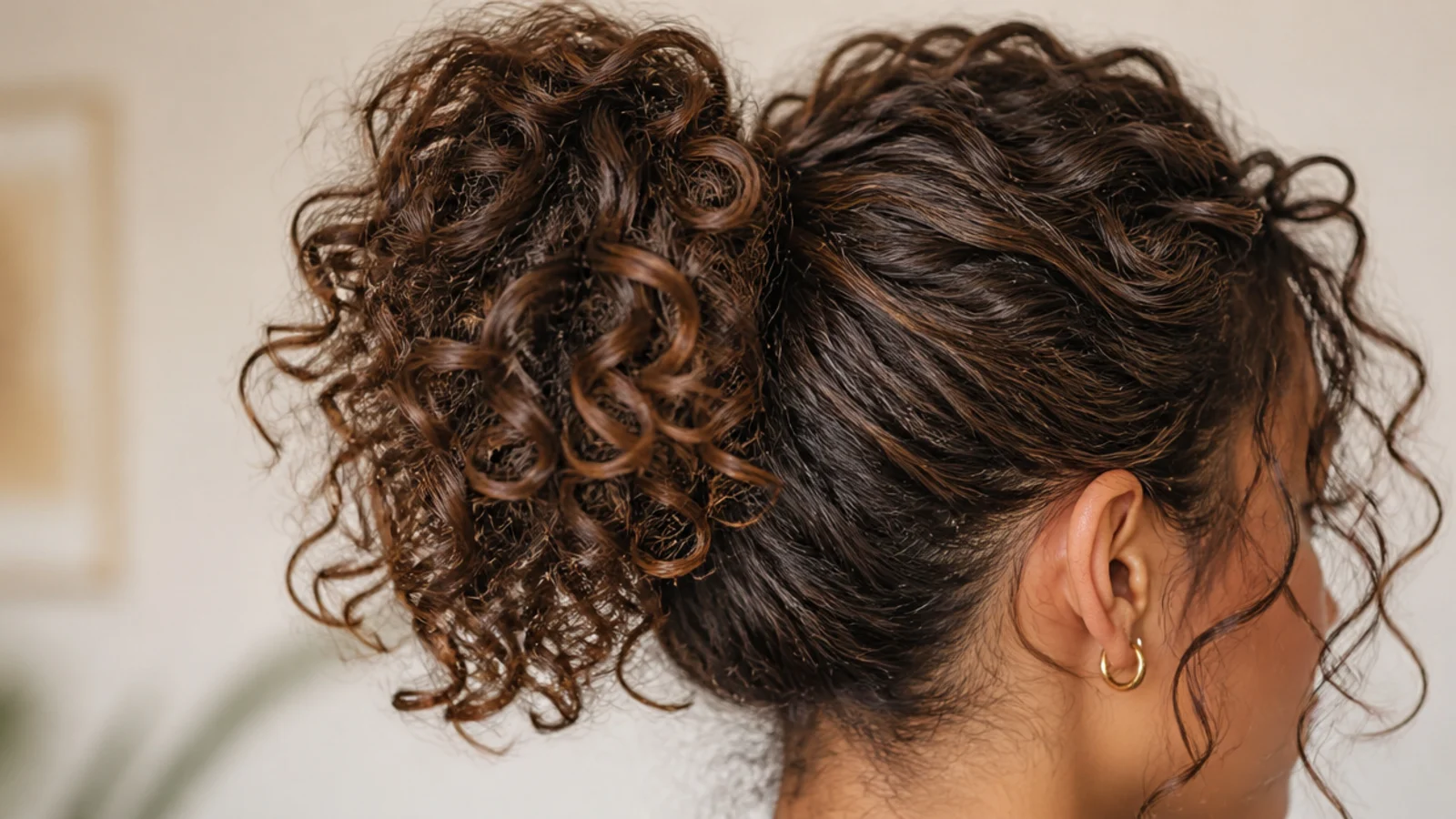
12. Sporty High Shag Pony
A high tie on a shag puts the shortest layers around the face and the longest in the band, which is the arrangement the cut was designed to produce. It moves without unravelling because nothing long enough to escape is left loose.
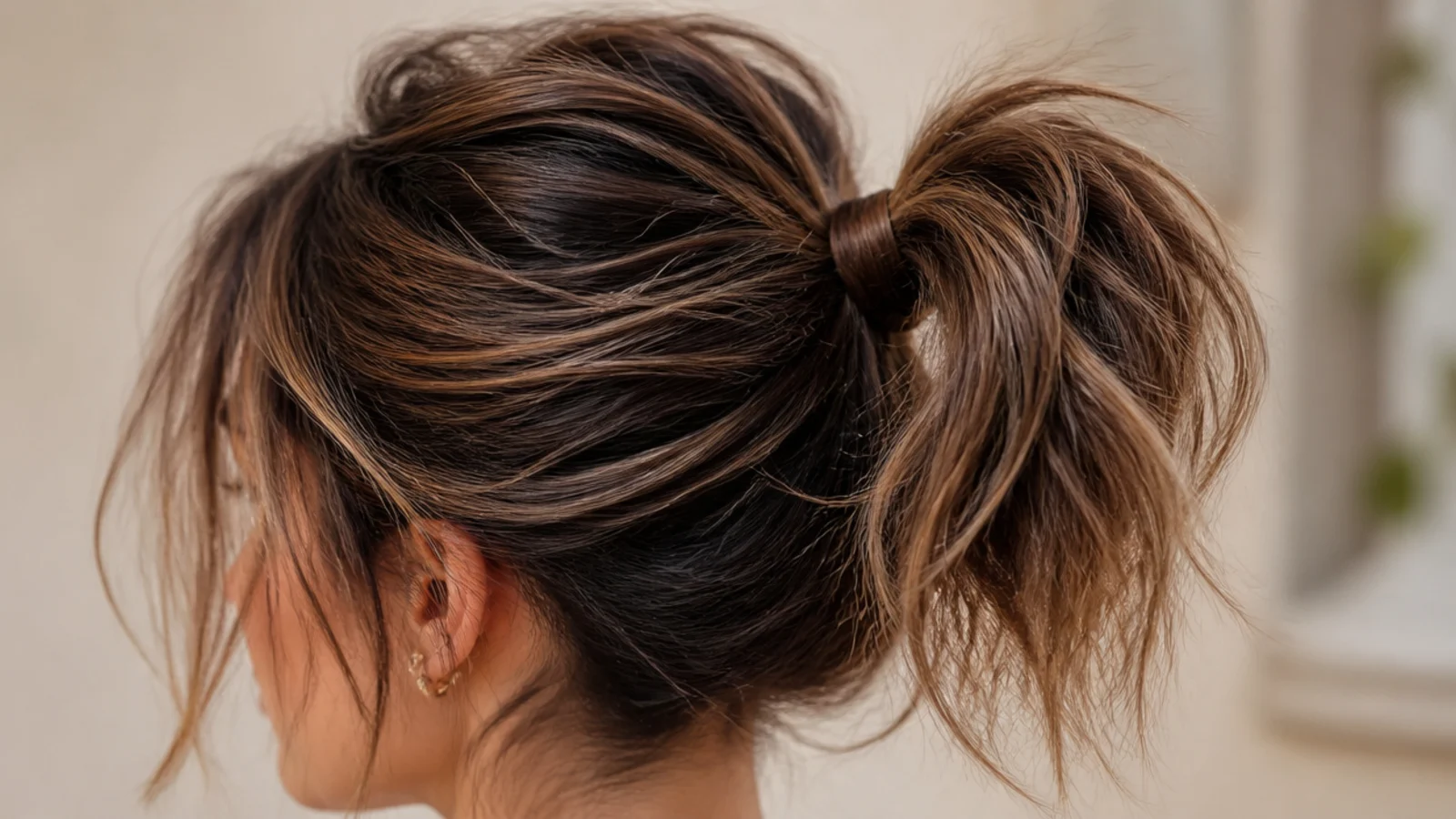
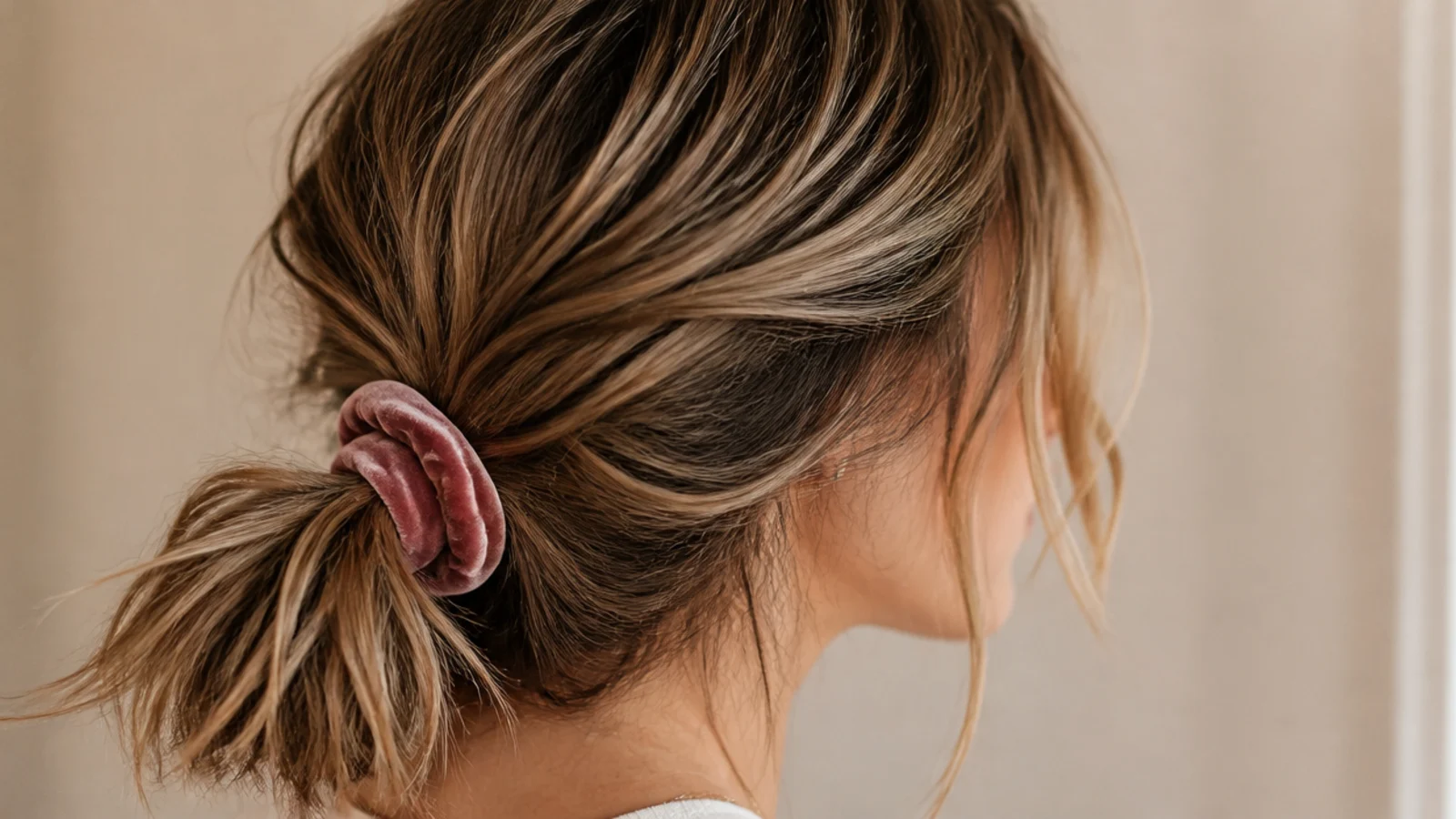
13. Scrunchie on Thick Short Hair
The fabric sleeve spreads pressure across a wider area than a bare elastic, which suits a gather that is dense and short at the same time. It also fills the space around a stubby tail so the base does not look bare.
14. Braided Front on Short Hair
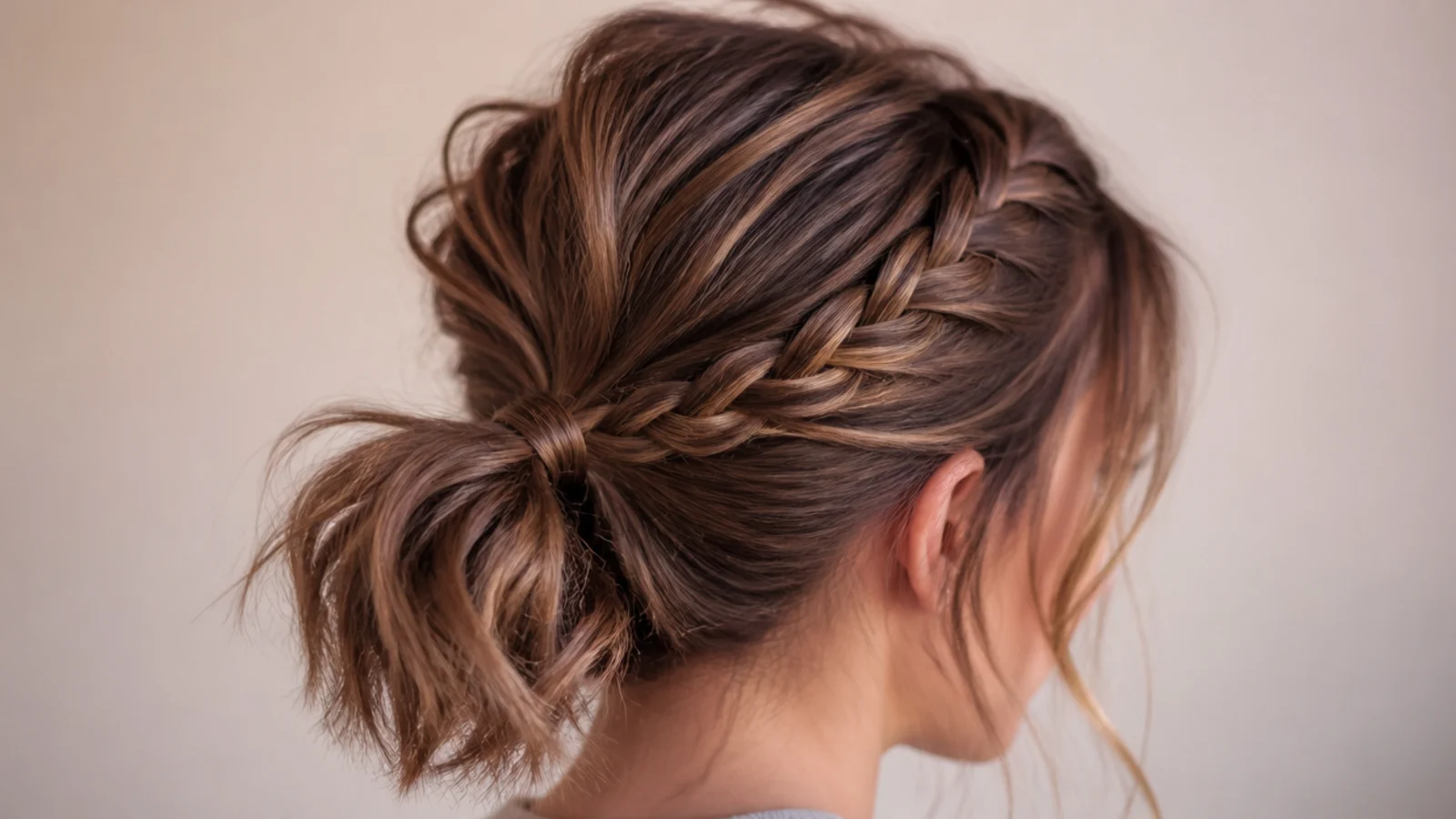
A braid taken from the parting back to the band holds the front sections in place and is anchored at both ends, so nothing slides forward. It also recruits hair that is too short to reach the gather any other way.
15. Wrapped Base on a Bob
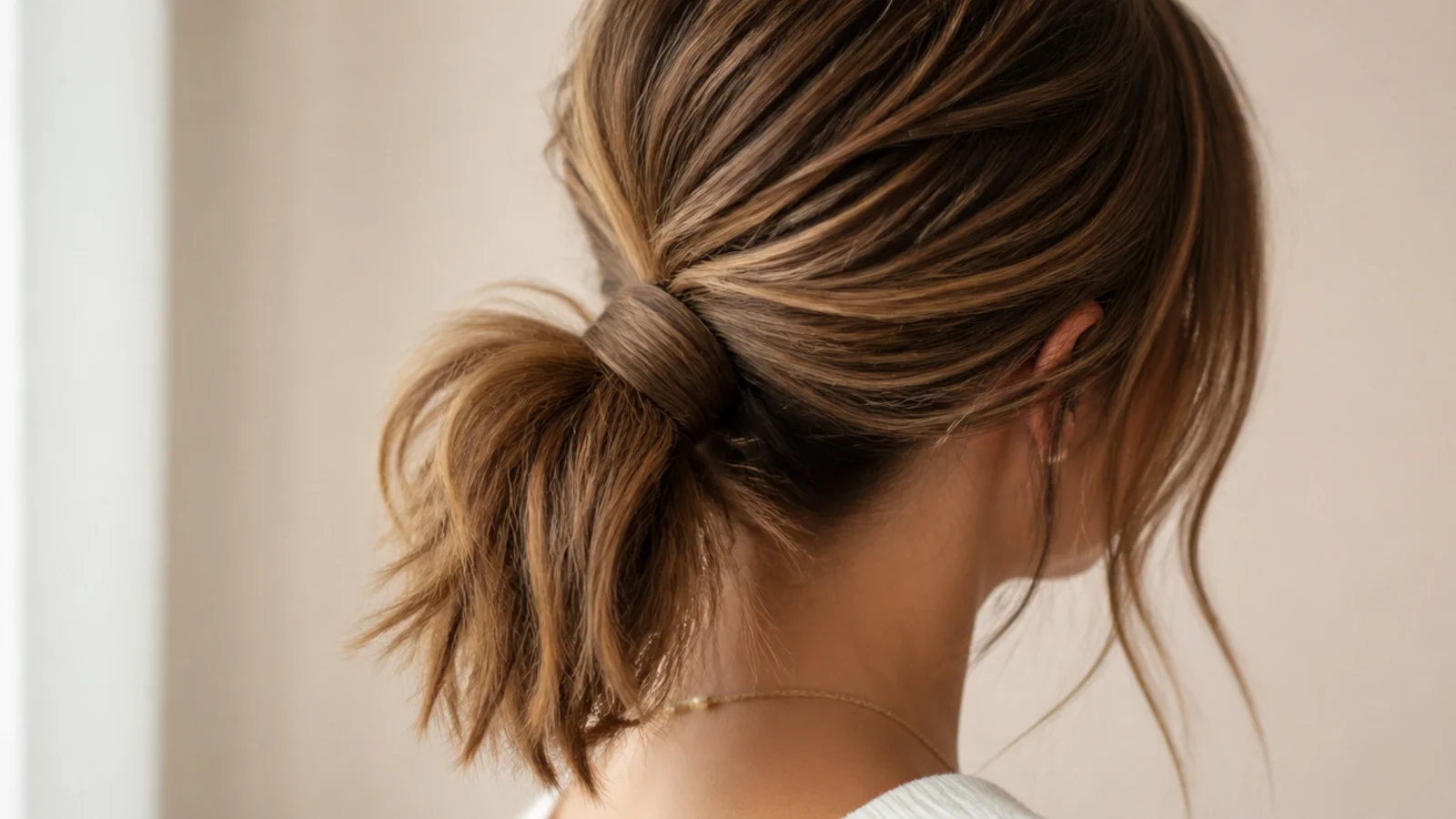
A thin section wound around the elastic hides the band, and on a bob it only reaches once or twice, so pin the end underneath. Concealing the band matters more here because the base is most of what anyone sees.
Final Thoughts
Short hair fails at the bottom, not the top. A long ponytail sags because of weight and a short one comes apart because the nape hair was never long enough to be in it, so the answer is texture at the base, a second elastic, and pins for everything the band could not reach.
The rest is placement. Tie low enough for the shortest pieces to arrive, build the volume above the band because there is none below it, and pull two front strands out deliberately so nothing else looks accidental. For higher versions on this length see high ponytail hairstyles for short hair, and for the gathered alternative see the messy bun tutorial for short hair. More in Updos and Clips.