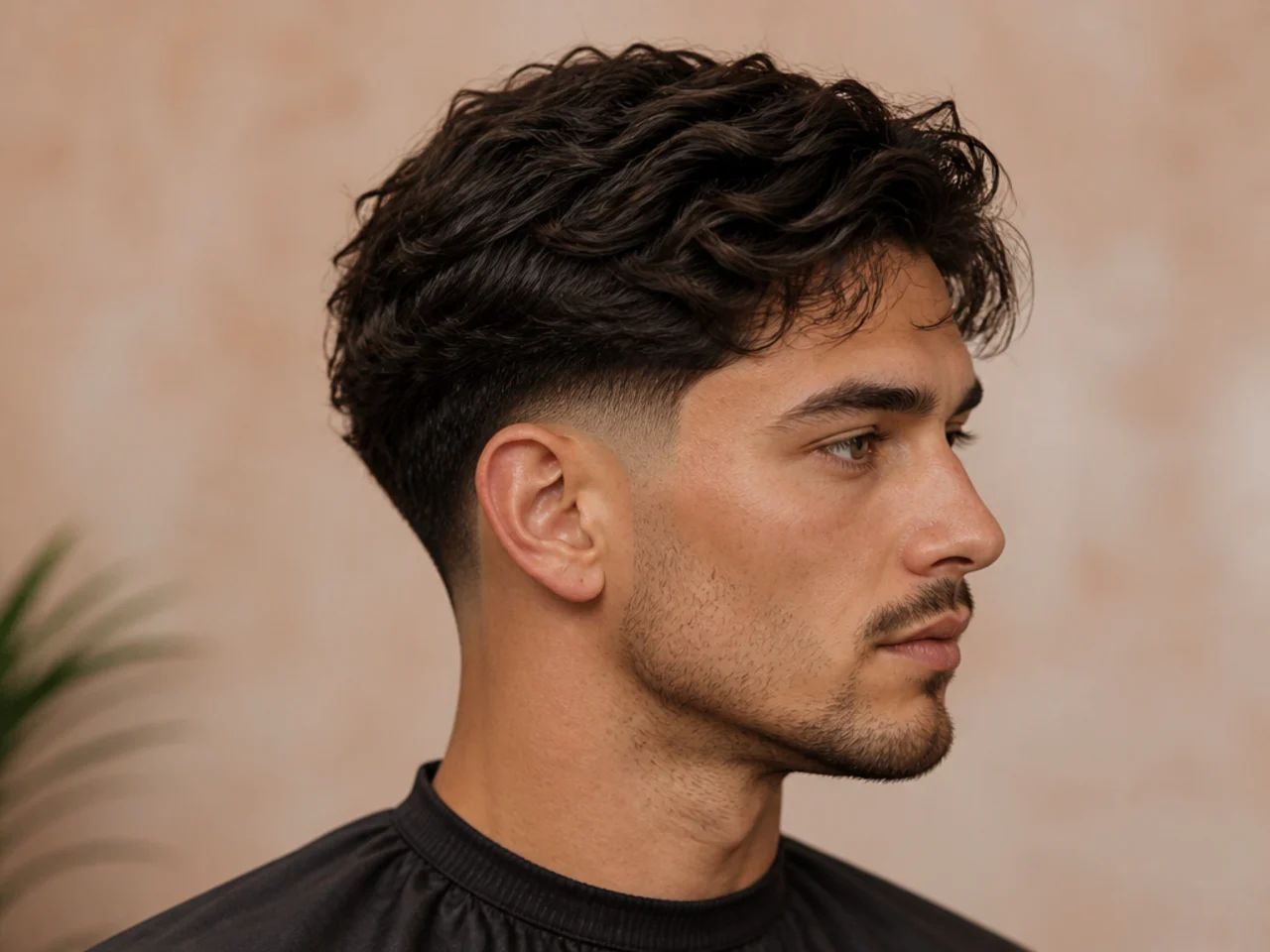
6 Steps to Style a Low Fade With Medium Hair
A barber's 6-step routine for styling a low fade haircut with mens medium hair — wash, prep, blow-dry, set, finish, and maintain, with the exact products and moves that make it hold all day.
In this article · 16
- What a Low Fade With Medium Hair Actually Looks Like
- What You'll Need
- Step 1: Wash for Grip, Not Shine
- Step 2: Prep Damp Hair With Your Base Product
- Step 3: Blow-Dry in the Direction You Want
- Step 4: Set the Shape With Paste or Pomade
- Step 5: Finish the Fade Line and the Top
- Step 6: Maintain Between Barber Visits
- Troubleshooting a Medium-Length Low Fade Style
- FAQ
- What length counts as medium hair for a low fade?
- Can I style a low fade with medium hair without a blow-dryer?
- Which top styles work best over a low fade with medium hair?
- How often should I re-cut a low fade if I wear medium hair on top?
- What's the best product for medium hair over a low fade if I only buy one?
- Can I style a low fade with medium hair on wavy or curly hair?
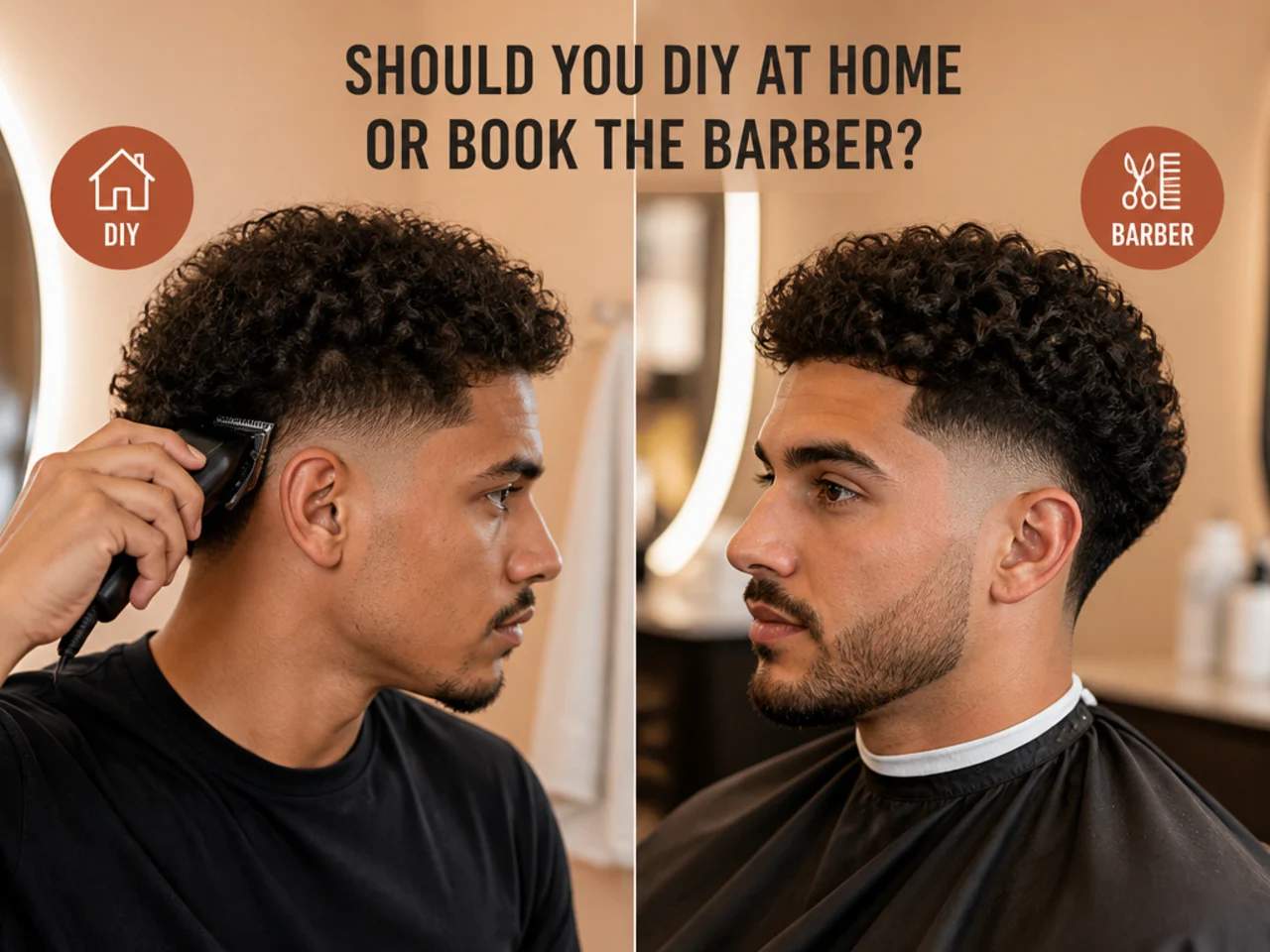
A low fade haircut with mens medium hair on top is the most flexible men's cut you can wear right now — but only when it's styled. Walk out of the shower, do nothing, and it reads shapeless. Six steps and four minutes turn the same cut into a quiff, a side sweep, a slick back, or a textured tousle. Here is the barber's routine — wash, prep, blow-dry, set, finish, maintain — with the products and moves that make it hold.
What a Low Fade With Medium Hair Actually Looks Like
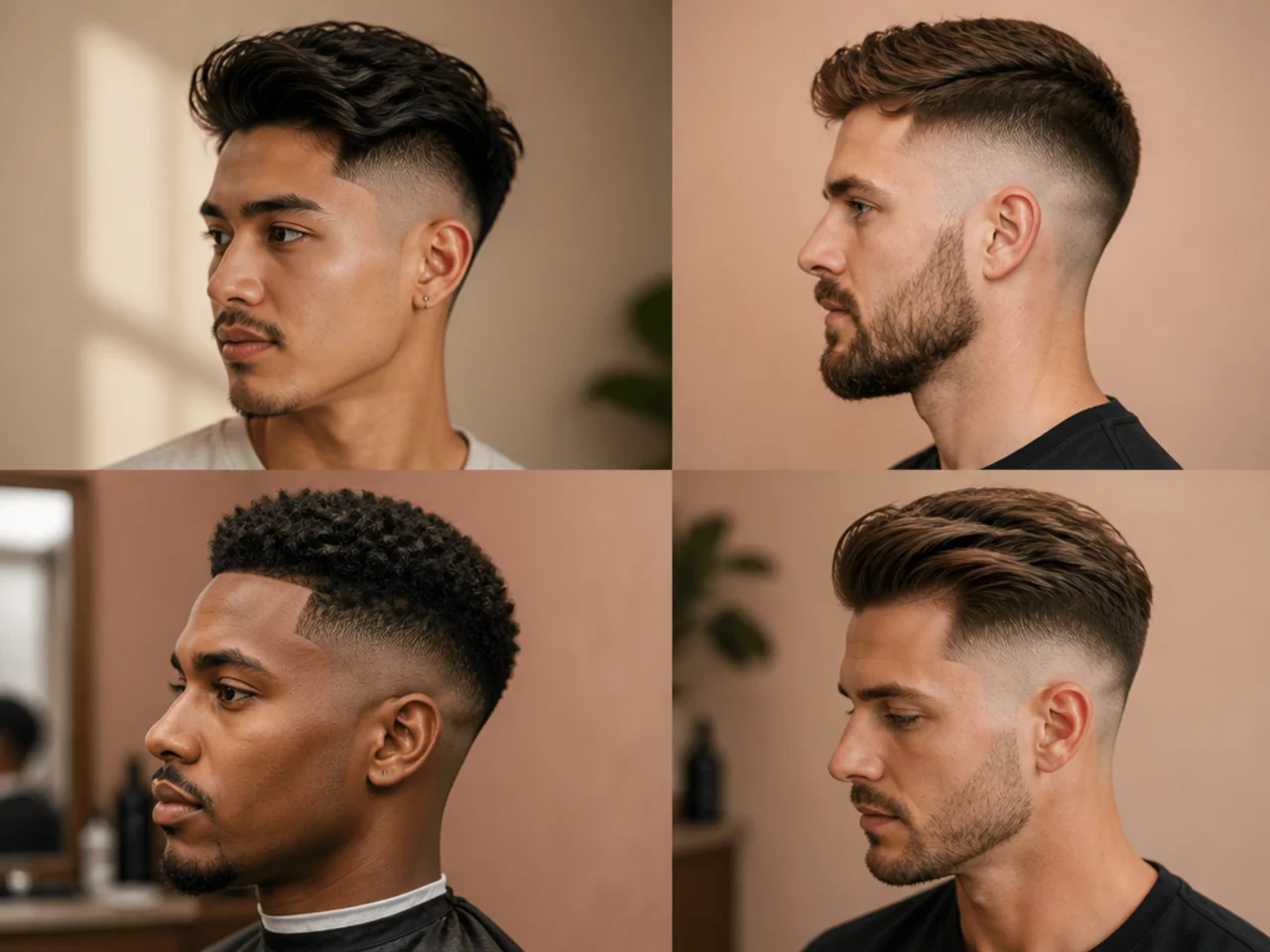
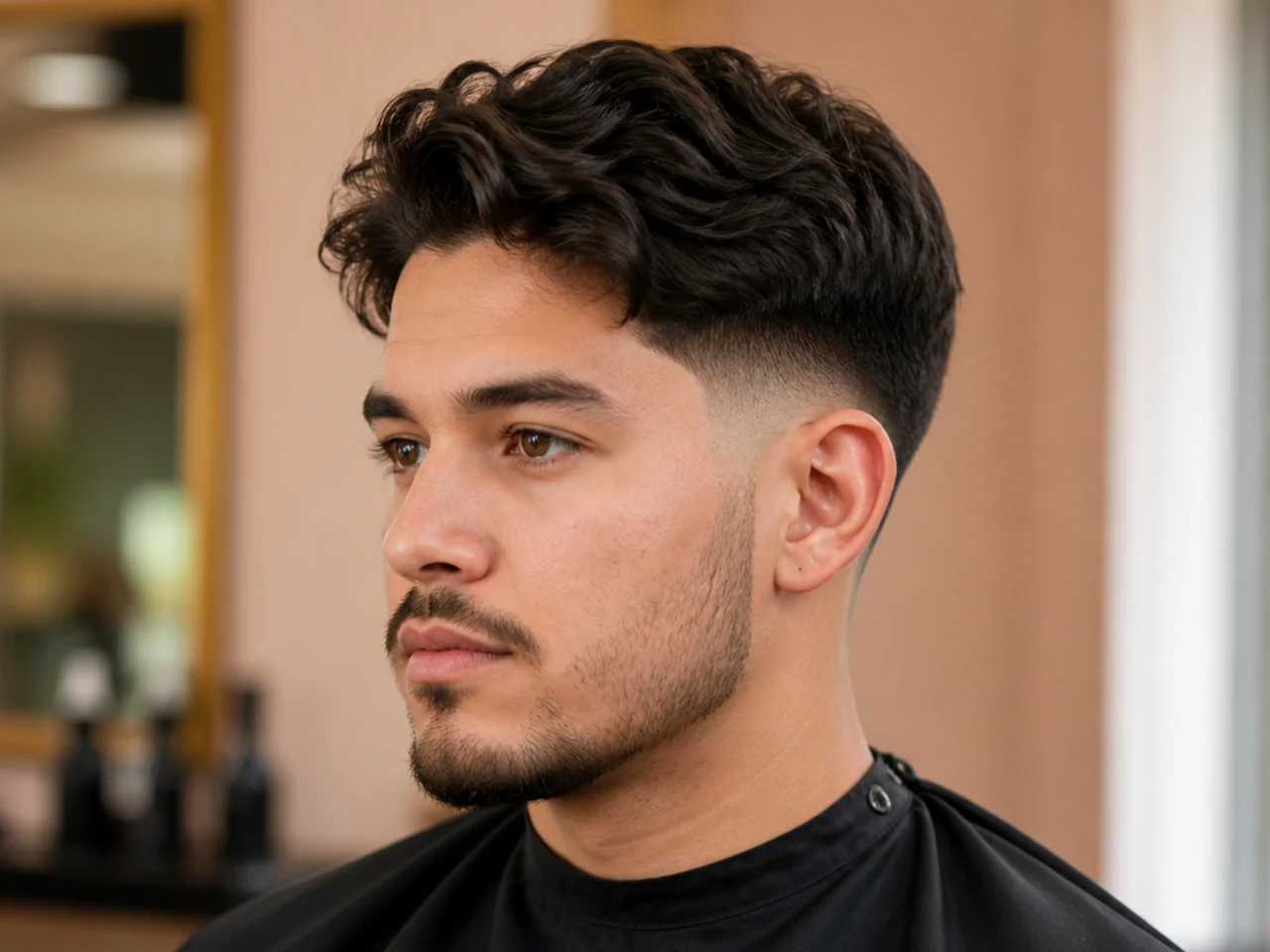
Medium hair for a man sits between 2 and 4 inches on top. Enough length to sweep, part, quiff, or brush back. Not enough to tie or pull past the collar. Underneath, a low fade drops from your top length down through a few clipper guards to a #0.5 or bare skin just above the ear, dying cleanly into the neckline. Nothing above the temple gets touched.
That combination is why the low fade with medium hair reads so cleanly across settings. The sides stay tight against your head so the silhouette is compact from every angle, and the top has enough weight to hold whichever direction you push it. See the wider low fade haircut family for cut variations, or the medium length hairstyles men pillar for how the top length behaves across styles.
Compared with a mid or high fade, the low starting point keeps the whole cut readable in a suit or a hoodie. For the height comparison, see low fade vs mid fade vs high fade.
What You'll Need
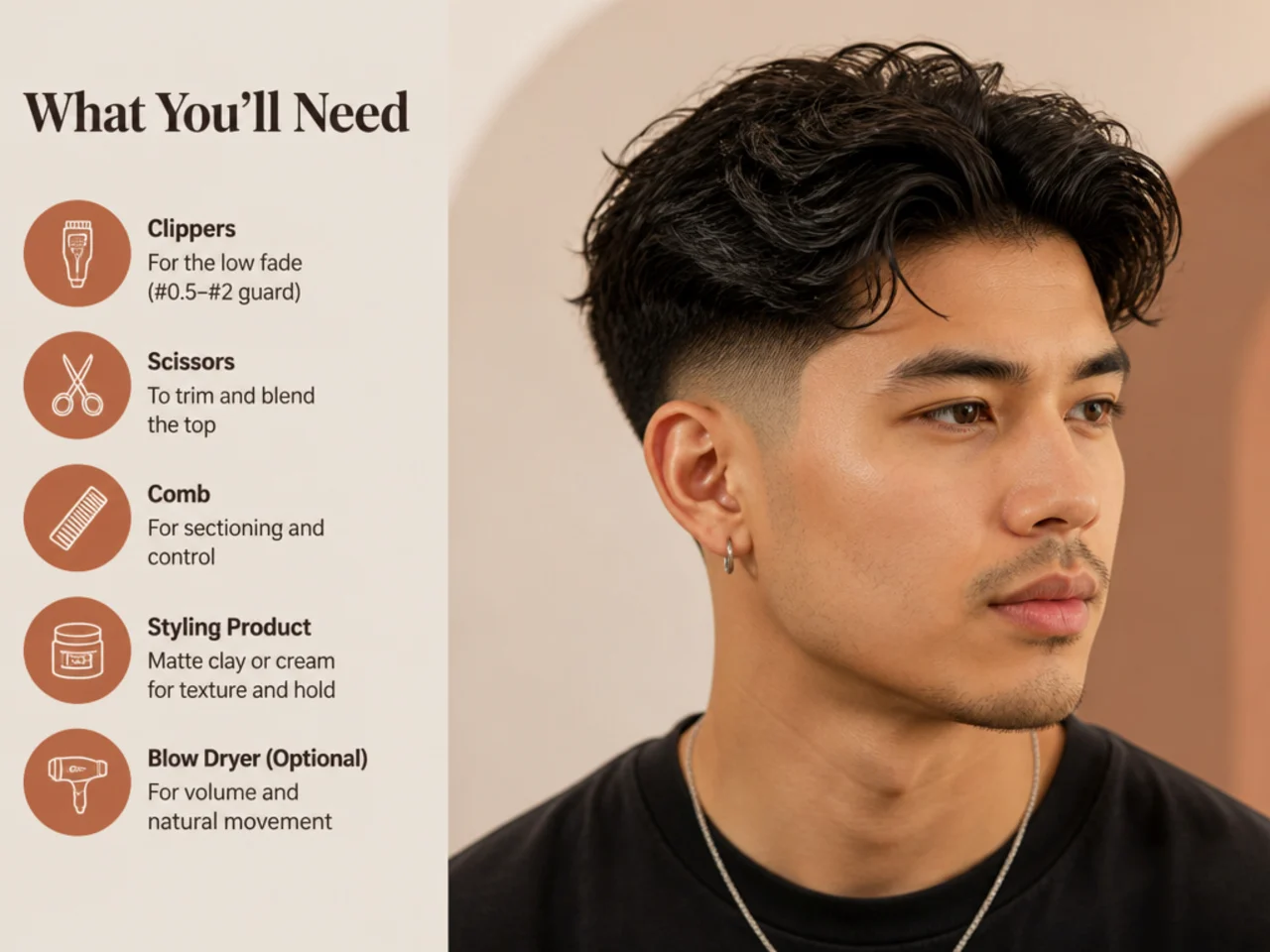
The kit is short. Buy each once and stop thinking about it.
- Sulfate-free shampoo — Every 2 to 3 days. Sulfates strip the oils that give medium hair its grip and shape. Any drugstore bottle labeled sulfate-free works.
- Lightweight conditioner — Mid-lengths and ends only, never at the roots. Roots go flat by lunch if you condition them.
- Sea-salt spray — The prep product that gives medium hair the grit it needs to hold direction. Look for one labeled "flexible" or "medium hold."
- Matte paste or clay — The workhorse for textured, quiffed, or brushed tops. Pea to nickel-sized amount for medium hair.
- Cream pomade — Only if you wear the top combed — side part, slick back, or comb over. Low shine, clean hold.
- Blow-dryer — Any 1500 to 1800-watt model. A concentrator nozzle helps but isn't required.
- Wide-tooth comb — For distributing product through damp hair without breakage.
- Boar-bristle brush — Optional. Best for training the top in one direction and adding a small amount of shine on combed styles.
- Over-ear trimmers — For upkeep between barber visits. See the best hair clippers for men guide for what to buy.
The whole product kit runs under $50 drugstore. Buy each once and stop restocking every month.
Step 1: Wash for Grip, Not Shine
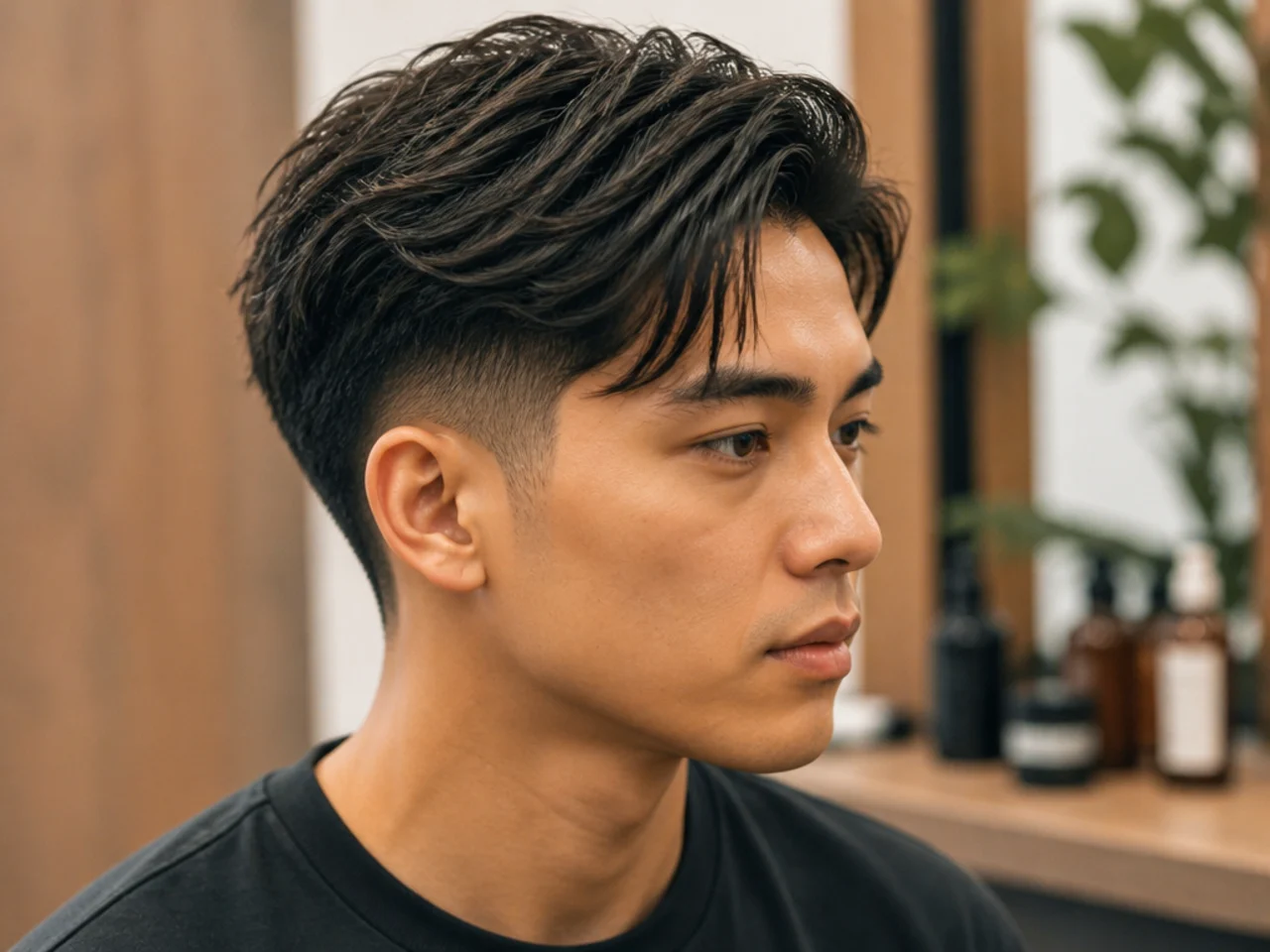
Overwashing is the number one reason a medium top slips out of shape by 11 a.m. Every wash pulls the natural oils that let medium hair hold direction. Skip a day and the same cut styles faster with less product.
Shampoo every second or third day, not every morning. Massage the shampoo into your scalp for 20 seconds, then let the suds rinse through the length as the water runs down — you don't need to scrub the mid-lengths and ends separately. That's where product buildup lives, and the rinse handles it. On off days, rinse with warm water only and condition the mid-lengths.
Keep conditioner off the crown and roots. It weighs medium hair down and cancels the lift you spend the next four minutes trying to build. Two coins of conditioner from the ears down is the right amount for medium hair. Rinse for a full 15 seconds — residue reads greasy by lunch.
Finish the shower with a 10-second cold rinse if you can stand it. Cold water flattens the cuticle so the hair reflects light more evenly, which reads healthier in bathroom lighting and cuts the "just showered" look that flat medium hair defaults to.
Step 2: Prep Damp Hair With Your Base Product
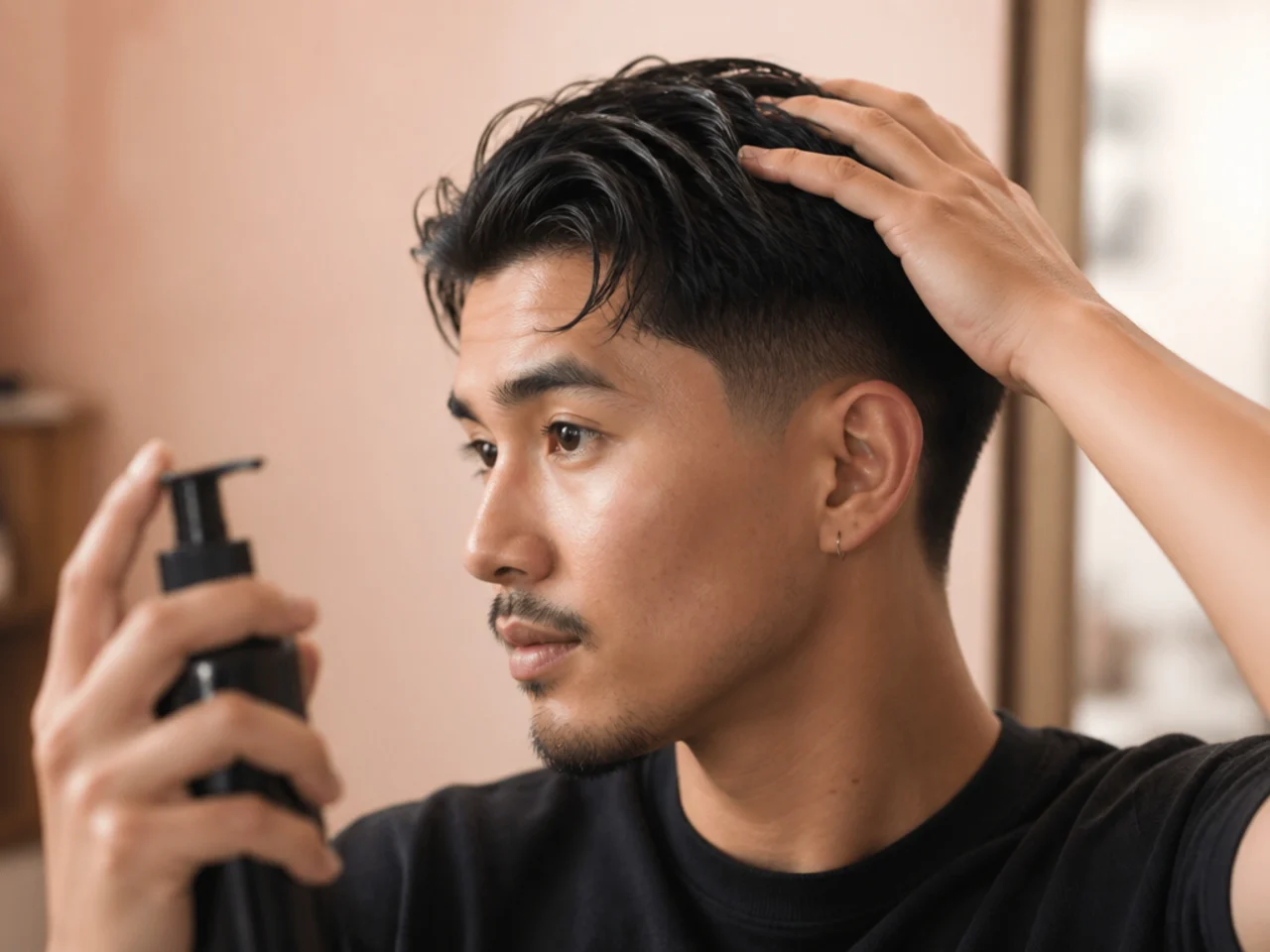
The prep step is what most guys skip, and it's what makes the difference between a top that holds for eight hours and one that collapses by afternoon coffee. Sea-salt spray on damp hair gives medium hair the grit and body it needs to sit the way you push it.
Towel-press the water out first — press, don't rub. A microfiber towel or an old cotton T-shirt is better than a terry towel, which roughs up the cuticle and gives you frizz before you've picked up a product. You want hair that's damp, not soaking. Water dilutes every product you apply after this, so it matters.
Mist sea-salt spray from about six inches away, three or four pumps across the top for medium hair, one on each side. Then comb it through once with a wide-tooth comb in your intended styling direction — back for a slick, up for a quiff, forward for a textured crop, to the side for a part. This is when the cuticle takes the direction you want. If you comb the wrong way now and correct later, the hair fights you all day.
If your hair leans fine or lifeless, add a nickel of light styling cream after the salt spray on damp hair. Rake it through with your fingers before combing. It gives fine medium hair the body it wouldn't otherwise have.
Step 3: Blow-Dry in the Direction You Want
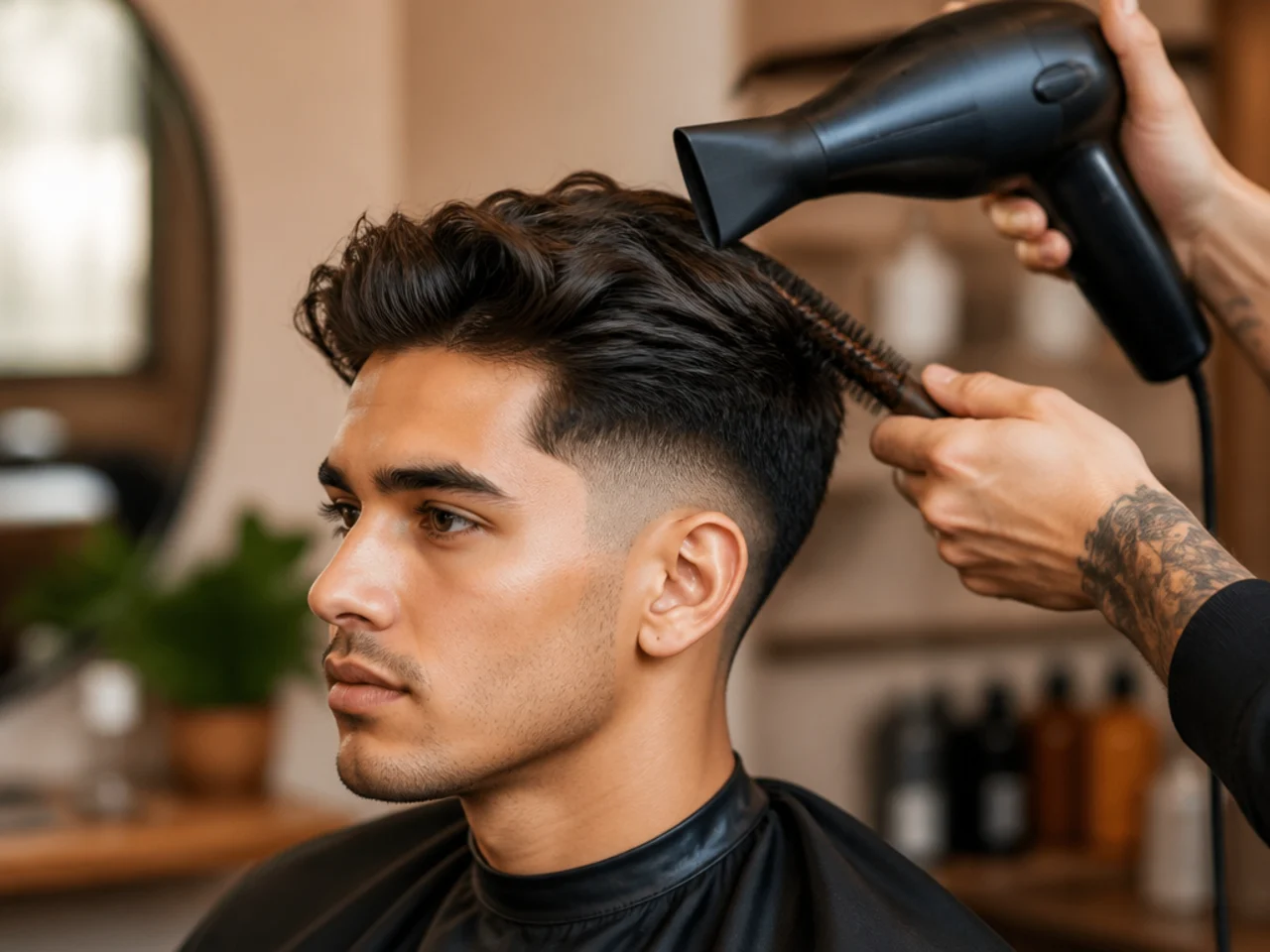
Air-drying medium hair is why so many guys write off the length as "impossible to style." A dryer isn't cosmetic for medium hair — it's structural. Ninety seconds with a dryer replaces three minutes of overworking product later.
Set the dryer on medium heat and medium airflow. High heat scorches the cuticle and dries the ends out. Point the nozzle down the shaft — from the roots toward the ends — in the direction you want the finished style to fall. Back for a slick or brushed-back look. Up and back for a quiff or pompadour. Forward for a textured crop or fringe. Sideways for a side part.
Use your fingers as the brush for most styles. Rake through the hair in the styling direction while the warm air passes over it. Fingers give you movement and separation — a brush at this stage flattens the volume you're trying to build. The one exception is a combed side part, where a boar-bristle brush pulled cleanly across the part while the dryer follows gives you the polished line you want.
Rough-dry to about 90% before you touch product. Fully dry hair rejects paste and clumps. Slightly damp hair takes the product evenly and holds the shape you push it into. If you have a cowlick at the crown, spend 15 extra seconds there — hold the hair flat against the direction the cowlick wants to go while the warm air passes over it, then release. That trains the section to sit right for the day.
A pro move: rough-dry upside down for 20 seconds before you flip up and shape. Head down, roots blasted from underneath, then flip back and style. This adds the crown volume that makes medium hair over a low fade look full instead of flat.
Step 4: Set the Shape With Paste or Pomade
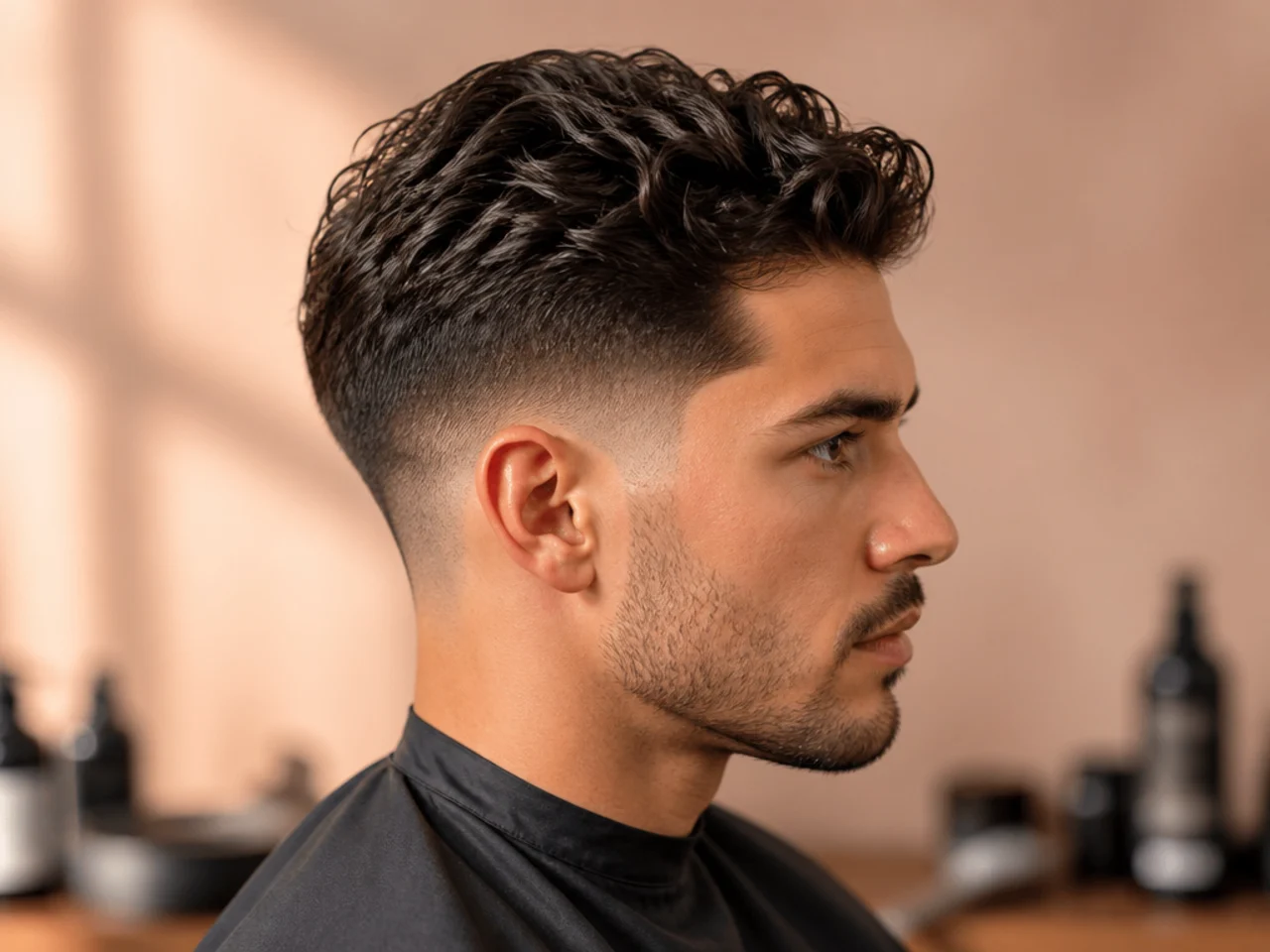
Product choice is the single biggest lever on the finished look. Matte for texture, cream pomade for combed shine, shine pomade only for slick backs. Get this pairing right and the styling almost does itself.
For a textured, tousled, or brushed-back top, use matte paste or clay. Warm a pea to a nickel-sized amount between your palms until it disappears completely — you should feel warmth, not see product on your hands. Rake it through your hair from the front hairline back with your fingers spread wide. Then reshape in one clean pass in your styling direction. Matte holds without shine and separates the pieces so the top reads modern instead of dated.
For a combed side part, comb over, or slick back, use a cream pomade instead. Nickel-sized amount for medium hair, worked between the palms the same way. Then comb from the part or the hairline in one clean pass — no fussing. See the slick back haircut guide for the pomade specifics if that's your target look.
Never apply product with your palm flat to your head — you'll grease the roots and lose volume immediately. Fingers spread, product on the fingertips, rake through the top, then shape. Two 15-second passes with light product beats one heavy pass every time.
Common mistake: too much product. Medium hair holds shape with a pea. Anything more than a nickel weighs the top down within an hour. Start smaller than you think, add if needed. You can't remove product without rewetting.
Step 5: Finish the Fade Line and the Top
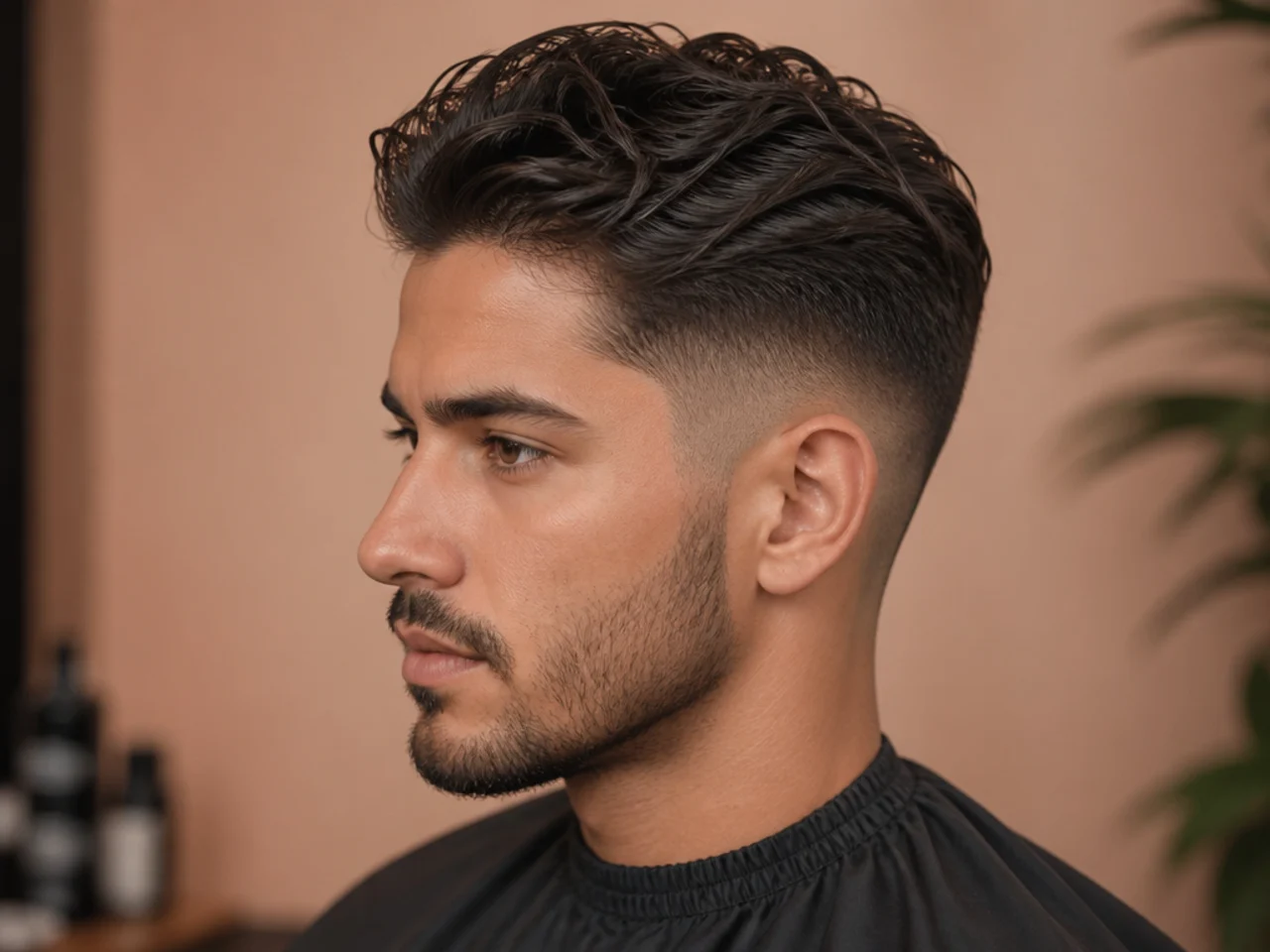
The finish step is what turns a well-styled top into a full look. Two minutes of attention to the sides, neckline, and top separation gives the whole cut a chair-fresh read.
Brush the fade side to side with a soft-bristle brush to knock out any loose hairs sitting on the fade line. Then wipe your ears and the back of your neck with a damp cloth — hair clippings from the last barber visit have a way of resurfacing after a shower. If you have a hard part or a defined temple line, a quick sweep with a fine comb along that line reinforces the visible edge.
Break up the top with your thumbs and forefingers. Pinch small sections at the crown and lift straight up, then release — this adds height and separation without needing more product. Do this in three or four spots across the top. For a textured or messy style, tug the fringe pieces apart at the front the same way. This is the move that separates a styled cut from a helmet.
If you like a low sheen finish for a combed look, add one final pass with a boar-bristle brush over the top after product. It polishes the surface without breaking the hold. Skip it for matte or textured finishes — brushes flatten what you built.
Finally, a light mist of flexible-hold hairspray held 10 inches from your head, one quick pass across the top. This is optional and only worth it for windy days, long meetings, or if your hair fights the style. Don't over-set — hairspray on medium hair reads stiff fast and undoes the movement you just built.
Step 6: Maintain Between Barber Visits
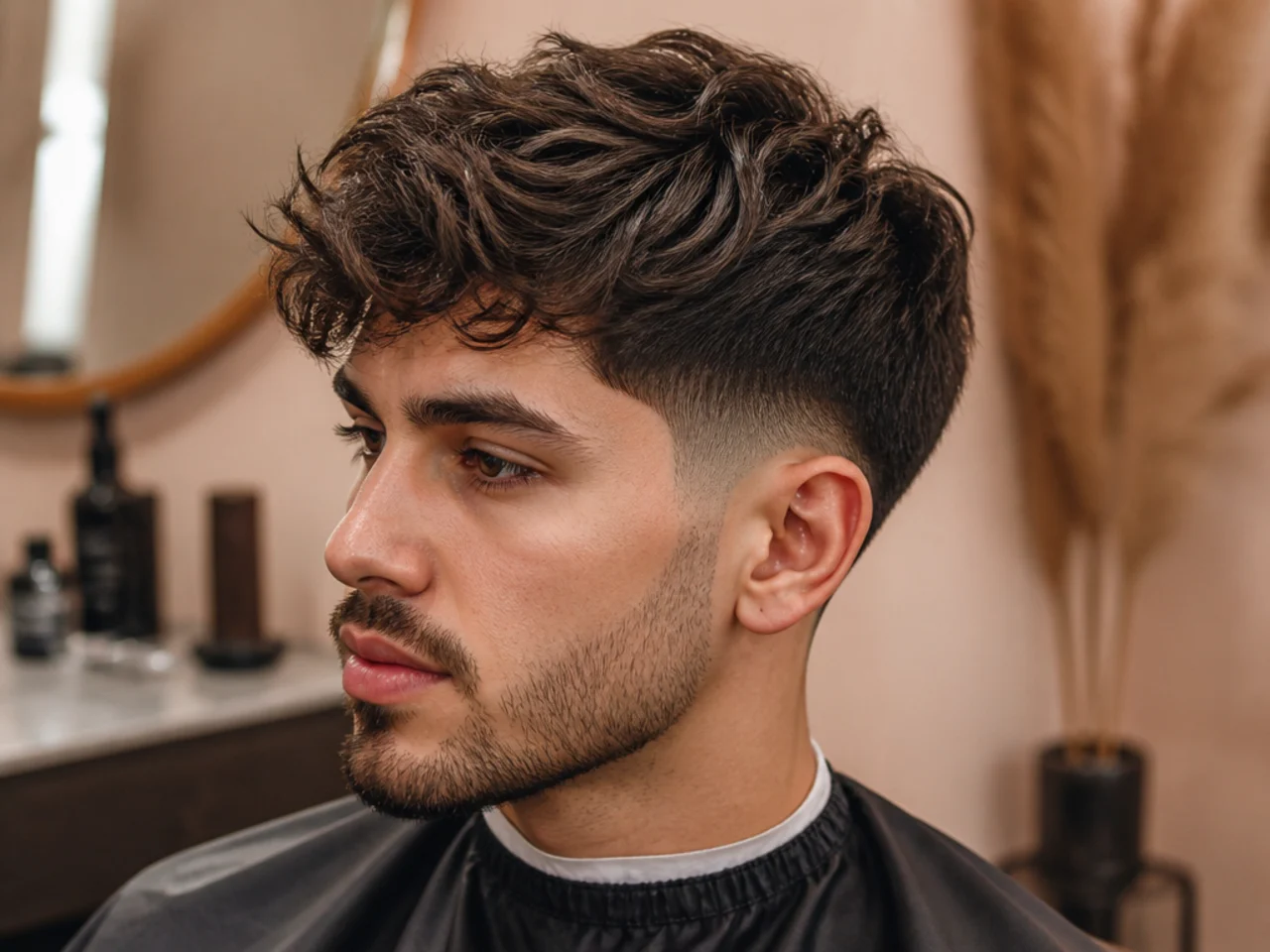
The style holds only as long as the cut underneath does. Between-visit maintenance is where guys either extend the freshness for another 10 days or watch the whole look drift into unkempt.
Book your next barber visit before you leave the chair. Every 2 to 3 weeks for a low skin fade, every 3 to 4 weeks for a low taper. Ask about the low taper fade finish if you want to stretch the interval — the softer taper reads fresh longer than a hard skin fade.
At home, over-ear trimmers handle the sides and neckline every 3 to 4 days. Two minutes per session. Run the trimmer along the neckline flush with your natural hairline — not squared, not rounded. Then clean the top of the ear and any stray fluff that grows into the fade transition. Do not touch the fade itself. That blend is your barber's job and every attempt to clean it yourself blurs the transition.
Reset the style on off-shower days without a full wash. Wet the top with your fingers or a light water mist, comb through in your styling direction, rough-dry for 30 seconds, and apply half your normal product amount. Day-two hair holds texture better than day-one anyway.
Keep the shape strong across the top by adjusting your product volume as the hair grows. Week one after a cut takes less product than week three. If the same pea-size amount stops holding, add a small amount rather than switching products. The routine stays the same — only the volume changes.
Troubleshooting a Medium-Length Low Fade Style
Every styling routine has failure modes. Fix one variable at a time and give each fix three days to prove out before you change something else.
- Top falls flat by lunch. You're either over-conditioning the roots or over-applying product. Keep conditioner off the crown, and cut your paste or pomade amount in half for a week. If it still falls, the blow-dry step isn't building enough root lift — try the head-down rough-dry for 20 seconds before you flip up.
- Hair looks greasy by afternoon. Too much product, or product with silicones on fine hair. Switch to a lighter matte paste and use a pea instead of a nickel. On off-days, spray dry shampoo at the roots to reset. If the greasy read starts within an hour, it's the product formula — pick a matte over a cream.
- Sides flop forward instead of tucking behind the ear. The temple hair hasn't been trained yet. Damp-comb it in your styling direction every morning for a week, and press your palm against it for 10 seconds while it dries. The muscle memory builds fast.
- Top won't hold direction after 30 minutes. You're either blow-drying too little or skipping the sea-salt prep step. Add the salt spray on damp hair before you dry, and give the styling direction 60 seconds of warm-air drying instead of 30. Direction sticks when the cuticle sets facing that way.
- Fade line looks blurred a week in. A #0.5 or skin fade blurs by day 10 to 14 — that's the finish, not a maintenance problem. Book earlier next time (day 12 instead of day 21), or ask for a low taper to stretch the interval past three weeks. See the medium fade haircut for men guide if you want a slightly higher fade line that grows out even more gracefully.
- Crown cowlick keeps popping up. Blow-dry that section against the cowlick direction while it's still damp. Hold the hair flat with your palm and pass warm air over it for 15 seconds, then release. Do this every morning for two weeks and the cowlick trains to lay flat.
If you've tried everything and the top still won't hold, the issue is usually the cut — medium hair over a low fade needs internal layering to sit right. Ask your barber for point-cutting on the top and light thinning through the crown at your next visit.
FAQ
What length counts as medium hair for a low fade?
Two to four inches on top, roughly. Under two inches sits closer to a short crop territory that doesn't need this routine. Past four inches you're heading into flow or grown-out shag range, where the styling moves differ. Two to four inches is the sweet spot for combing, sweeping, quiffing, or brushing without the sides fighting you.
Can I style a low fade with medium hair without a blow-dryer?
For a fully polished look, no. Air-drying leaves medium hair flat and refuses to hold a direction. If you don't have a dryer, at minimum rough-towel your hair aggressively in your styling direction, then finger-comb the shape in place while the hair air-dries. The result is looser but still readable — closer to a natural layered finish than a styled quiff.
Which top styles work best over a low fade with medium hair?
Quiff, textured crop, brushed-back, side part, comb over, and slick back all work. The low fade doesn't compete with any of them because the shortest point sits below the top of the ear. Round face shapes read best with vertical lift (quiff, pompadour). Square jaws suit softer textured tops. Long or oblong faces stay flatter through the crown and lean into a side part or comb over.
How often should I re-cut a low fade if I wear medium hair on top?
Every 3 to 4 weeks for a low taper, every 2 to 3 weeks for a low skin fade. The top itself needs a light shape trim every 5 to 6 weeks — even a quarter-inch dusting through the ends keeps the length holding shape instead of sliding into a grow-out mullet.
What's the best product for medium hair over a low fade if I only buy one?
A medium-hold matte paste or clay. It handles brushed-back, textured, quiffed, and messy finishes with the same jar, and it plays well with sea-salt spray for extra grip. Skip gel and shine pomades — they lock the shape too rigidly for medium hair on top of a modern low fade.
Can I style a low fade with medium hair on wavy or curly hair?
Yes, and the low fade actually reads cleaner against wave and curl because the smooth sides frame the pattern on top. For 2B–2C wavy hair, use a cream product with a little more weight to define the wave instead of frizzing it. For 3A–3B curly hair, swap paste for a curl cream and skip the blow-dry — air-dry with a diffuser instead. See the low fade haircut mens guide for cut variations that suit curly medium hair specifically, or low fade haircut men for the 20 clean-and-fresh variations across textures.