20 Short Jellyfish Haircut Ideas With a Clean Split
Twenty short jellyfish cuts, and the one measurement the shape actually depends on — the gap between the bell and the lengths underneath it. Below roughly four inches of separation the cut stops reading as two layers and starts reading as a bob that is growing out.
In this article · 28
- What Is a Short Jellyfish Haircut
- Jellyfish Versus Wolf Cut Versus Mullet
- Minimum Length for the Disconnection
- Who It Suits by Face Shape and Texture
- Styling the Bell and the Tentacles
- Asking Your Stylist and Growing It Out
- The 20 Short Jellyfish Variations
- 1. Chin Bell With Collarbone Tentacles
- 2. Round Face Version
- 3. Pixie Nape Tail
- 4. Blunt Bob Bell
- 5. Curtain Bangs
- 6. Cheekbone Bell for a Long Face
- 7. Fine Straight Hair
- 8. Thick Hair
- 9. Platinum Over Brown
- 10. Micro Bangs
- 11. Hidden Undercut
- 12. Wavy 2b Hair
- 13. Curly 3a Hair
- 14. Flipped Out Bell
- 15. Ear Bell With Bra Strap Lengths
- 16. Hime Side Panels
- 17. Jaw Bell for a Square Face
- 18. Copper Over Black
- 19. Shaved Nape
- 20. Grown Out at Twelve Weeks
- Final Thoughts
Most short jellyfish cuts that disappoint were cut correctly. The two layers were simply too close together to read as two layers.
The jellyfish is a disconnection, not a layer. A closed round bell sits over untouched lengths with nothing blending them. Remove the hard edge and what you have is a shag.
Short moves the bell up, not the lengths down. The lengths stay where they are and the bell climbs from the jaw to the cheekbone or the ear. Shortening both at once closes the gap the whole cut is built on.
What Is a Short Jellyfish Haircut
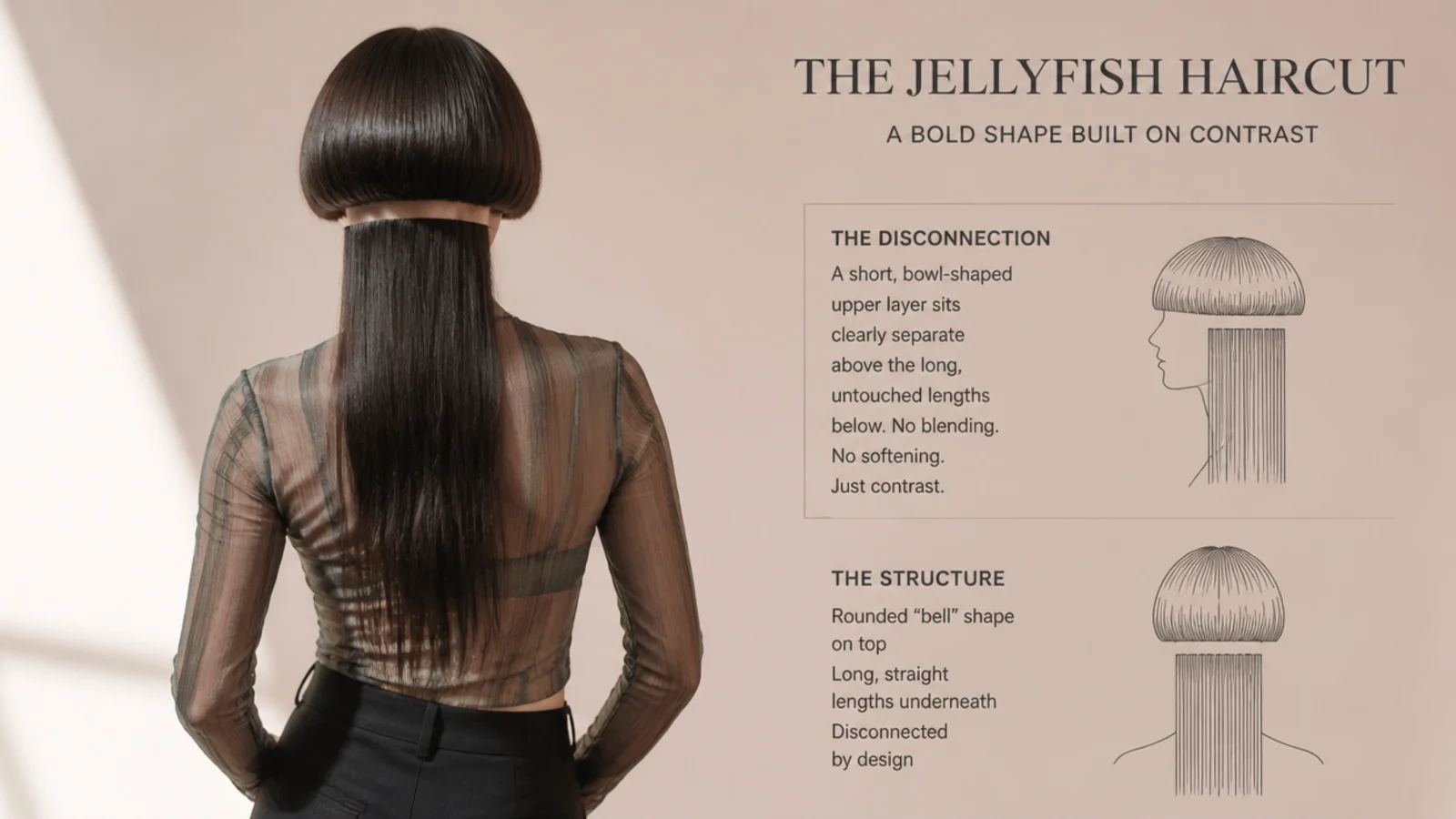
Two lengths, no blend. A rounded top section cut to one solid line, and a second section left long underneath it. Nothing graduates between them.
The bell is a full circle. It runs the whole way around the head rather than only at the front. That closed perimeter is what makes it a jellyfish instead of a heavy fringe.
Short describes the bell. Ear, cheekbone or jaw, rather than the chin length the standard version uses. The lengths beneath are usually left exactly as they were.
The lengths are rarely cut at all. Most of the appointment is spent sectioning and on the bell edge. That is why the cut suits anyone growing hair out who still wants a change.
Jellyfish Versus Wolf Cut Versus Mullet
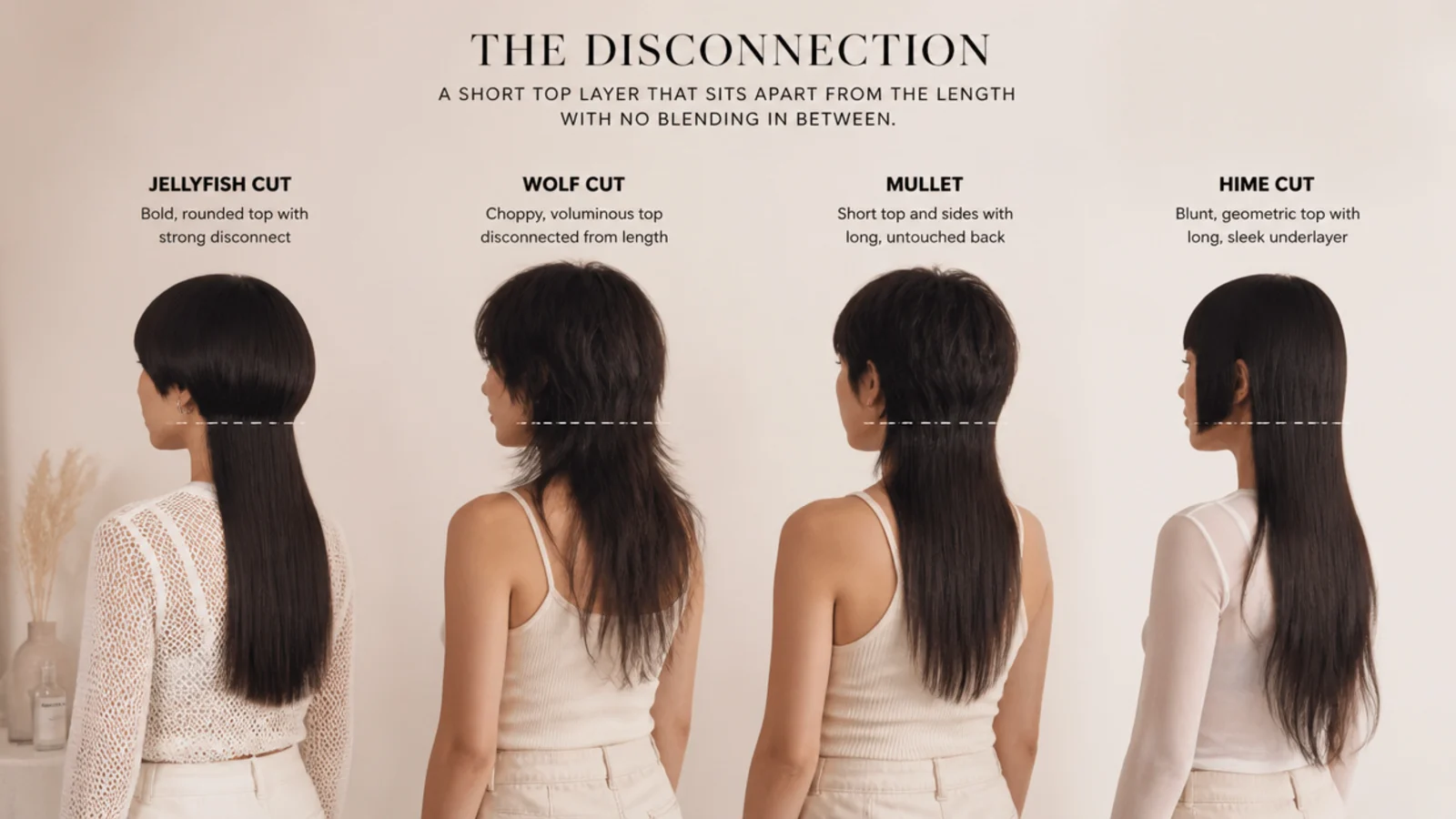
A wolf cut is connected. Its layers step down from crown to ends in a continuous run. Every length has a neighbour half an inch longer than it.
A mullet splits front to back. Short at the face, long at the nape, with the division running horizontally through the profile.
A jellyfish splits top to bottom. The division is a horizontal ring around the whole head, so the shape changes depending on whether you look at it from the front or the side.
Only one of the three has a hard edge. A wolf cut and a mullet both blend somewhere. A jellyfish blends nowhere, and a stylist softening the join out of habit will destroy it in two passes.
Minimum Length for the Disconnection
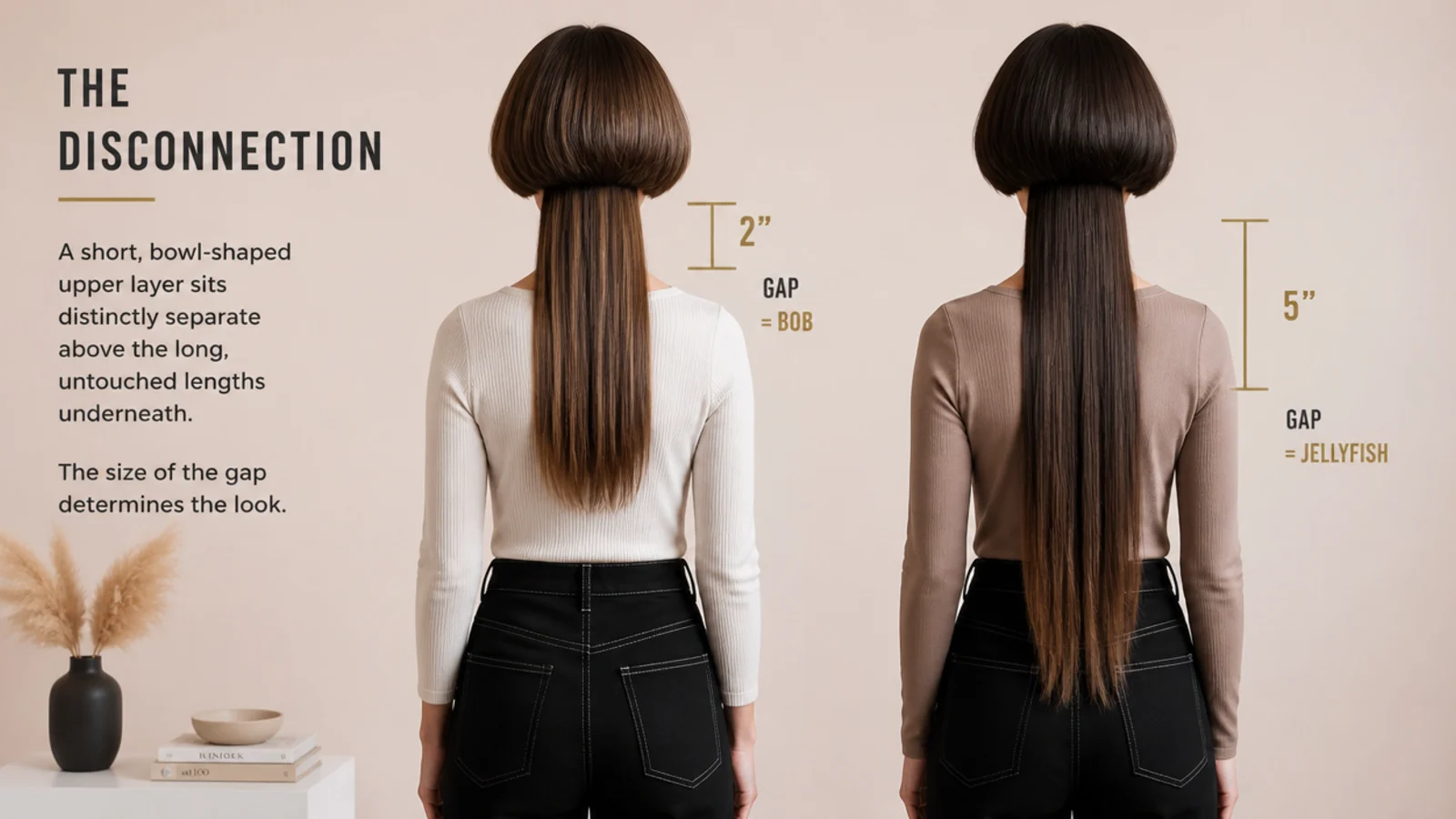
Four inches is the floor. Less separation than that and the bottom edge of the bell sits inside the body of the lengths, where the eye cannot find it.
Use body landmarks rather than inches. Chin to collarbone, ear to bra strap, cheekbone to mid back. Every one of those is a fixed point on you, and none of them shifts because a stylist measures differently.
Wave and curl eat the gap. A bell that springs up an inch and lengths that spring up two leave you with less separation than you agreed to, so both numbers have to be set wet with shrinkage already counted.
A short bell buys you gap for free. Moving the bell from the jaw to the ear adds three inches of separation without touching the lengths at all.
Who It Suits by Face Shape and Texture
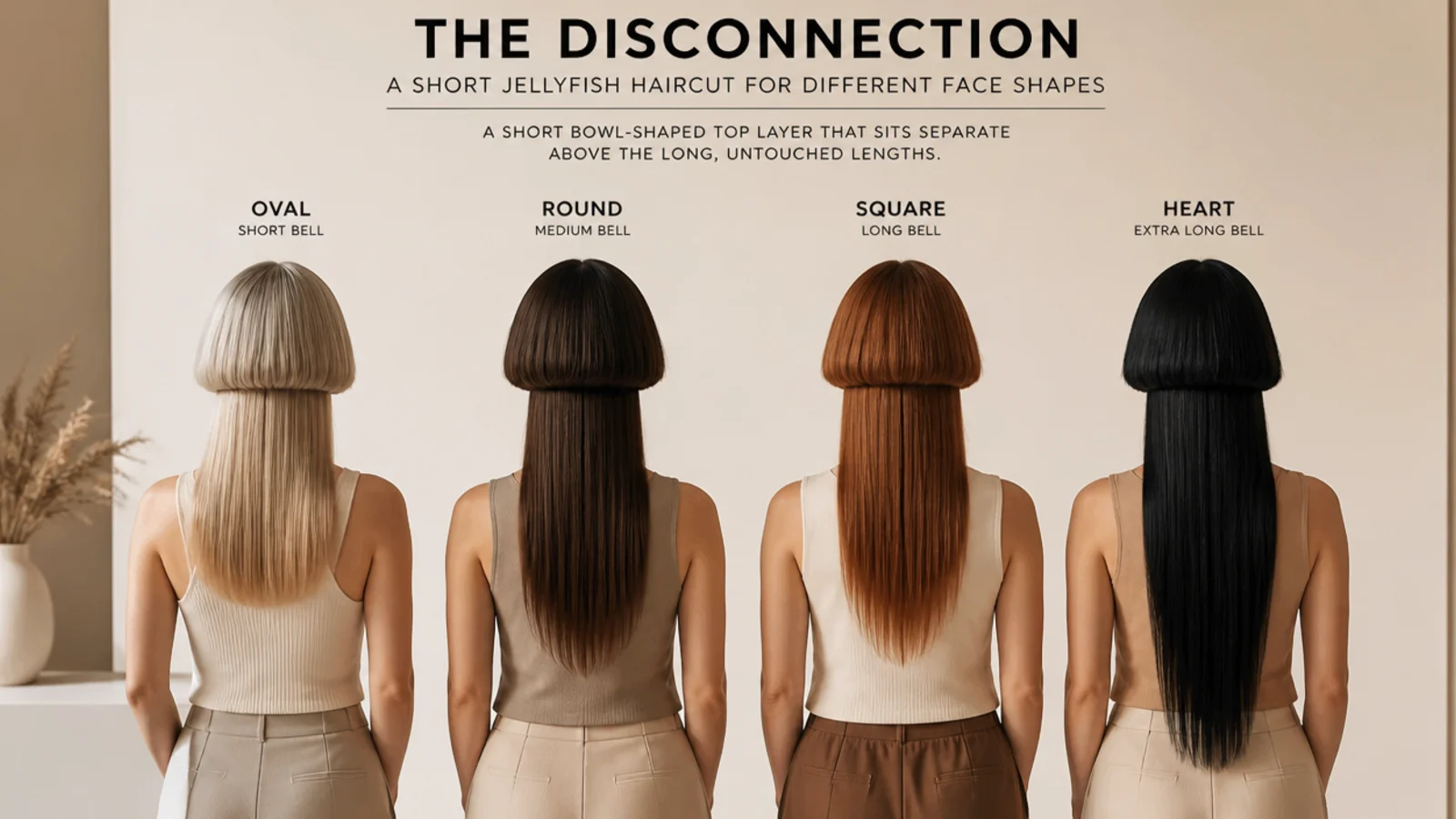
A round face wants the bell below the cheek. A bell ending at the cheekbone lays a horizontal exactly where the face is already widest, and the eye reads that as extra width.
A long face wants the bell high. A cheekbone bell interrupts the vertical, and a fringe on top of it interrupts it twice.
A square jaw wants half an inch of clearance. Land the bell on the jaw and it traces the corner. Land it just below and the curve crosses the angle instead.
Fine hair gains from the bell and loses from the lengths. A blunt edge reads as density; thin ends four inches below it read as nothing. Keep the lengths shorter than you think.
Thick hair needs weight taken out underneath. Not off the surface. Surface texturising breaks the blunt edge, and the blunt edge is the disconnection.
Styling the Bell and the Tentacles
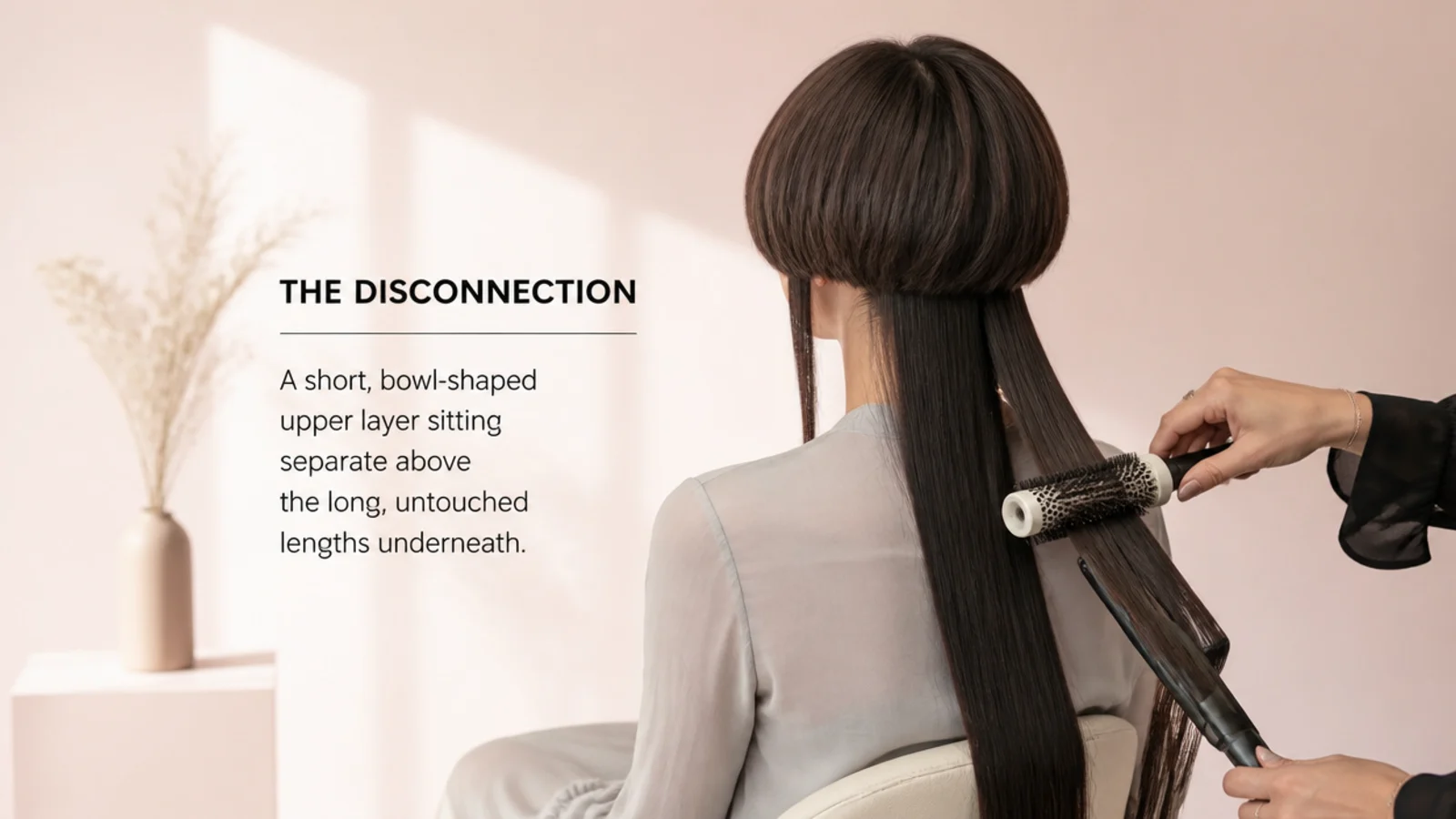
Dry the bell first, and dry it round. A dome holds its shape only if the ends are turned while the hair cools. Let it air dry flat and it hangs as a shapeless curtain.
Keep product off the bell. Cream and oil collapse the volume that gives the dome its curve. Anything you use belongs on the lengths from the ear down.
The lengths want to lie flat. Volume underneath pushes the bell outward and closes the visual gap from below.
Two finishes on one head. A smooth bell over textured lengths reads as deliberate. Both smooth reads as a wig, and both textured reads as damage.
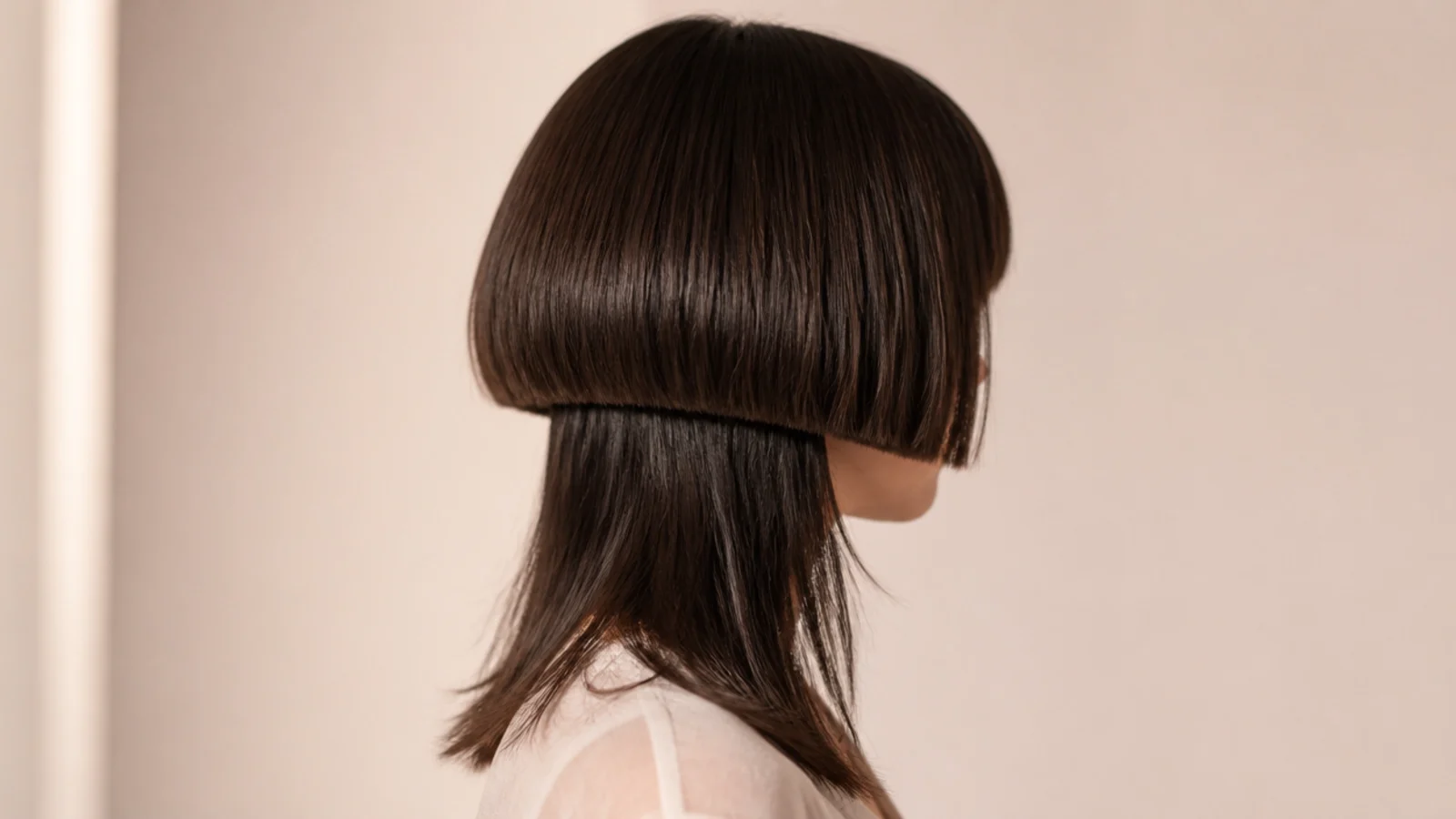
Check the bottom edge in profile. The disconnection is invisible from the front on most heads. The side view is the one that tells you whether the cut is working.
Asking Your Stylist and Growing It Out
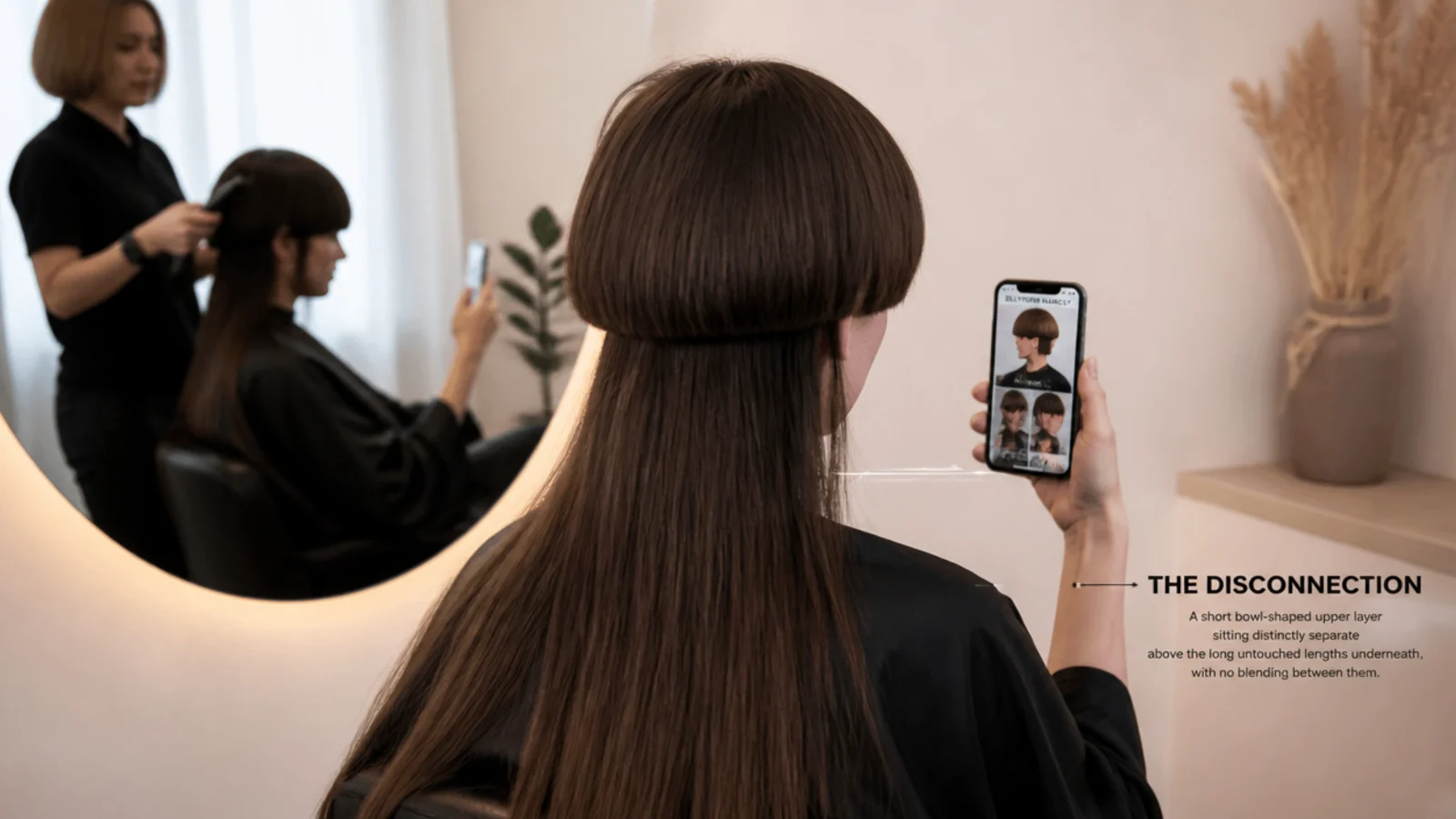
Say disconnected, and then say both lengths. "A bell at the cheekbone, lengths untouched at the bra strap, no blending" is three facts a stylist can cut to.
Bring a profile photograph. The front view of a jellyfish tells nobody anything. The side view carries the whole brief.
Book the bell on its own. It is a twenty minute appointment. Booking a full cut invites someone to tidy the lengths you were deliberately growing.
Growing it out means growing the bell down. There is no shortcut. At half an inch a month a cheekbone bell reaches the chin in about six months, and the disconnection softens gradually the whole way.
The 20 Short Jellyfish Variations
1. Chin Bell With Collarbone Tentacles
The default proportion, and the easiest one to ask for because both landmarks sit on your own body rather than on a tape measure. Chin to collarbone is roughly five inches on most people, which clears the minimum gap without asking the lengths to be long.
2. Round Face Version
The bell drops to the jaw or just past it so its widest curve sits under the cheek instead of across it. A higher bell puts a strong horizontal exactly where a round face is already at its widest, and adding a line there adds apparent width.
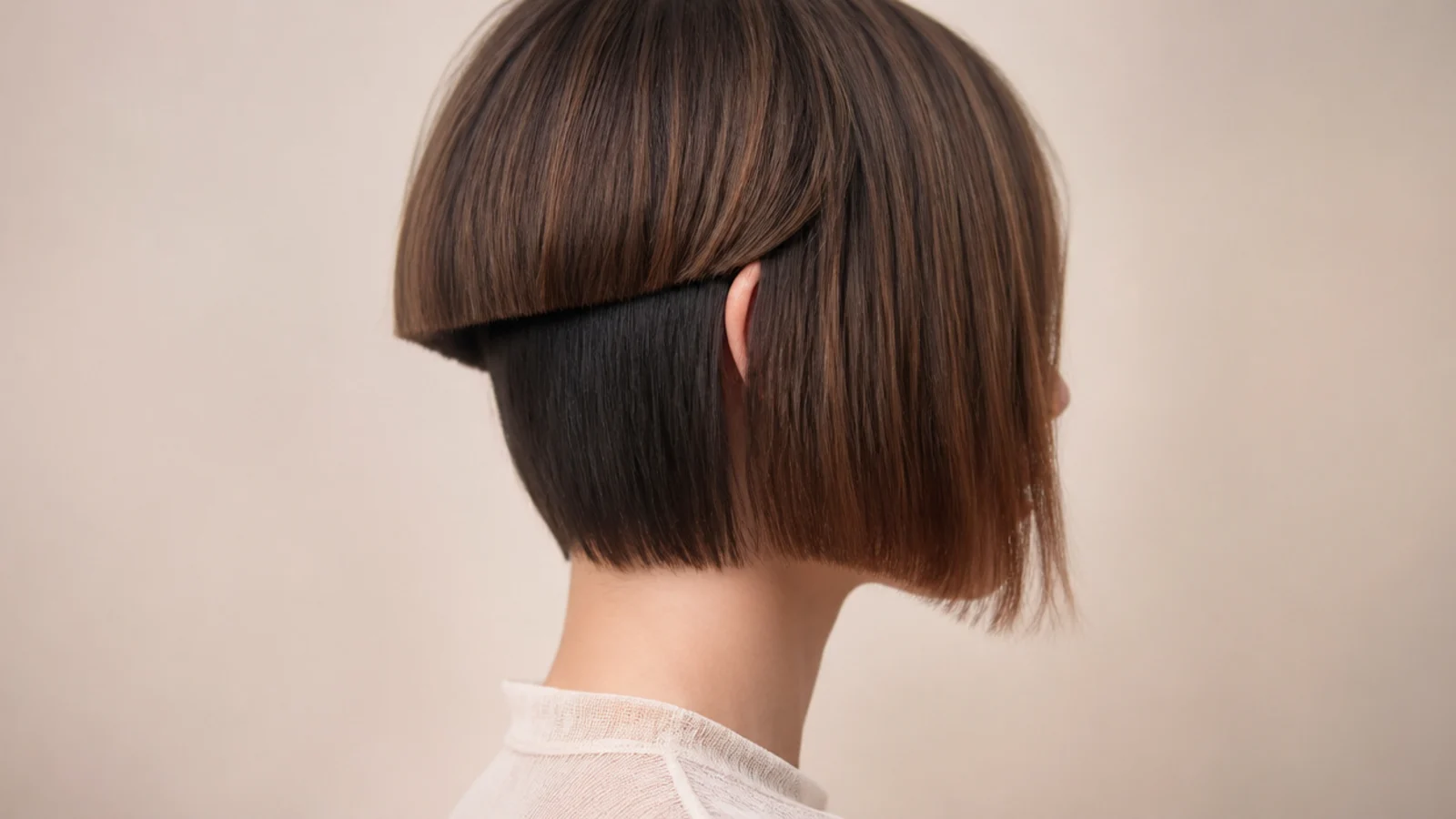
3. Pixie Nape Tail
The shortest version here. The bell is cut to pixie length all the way round and only a narrow panel at the nape is left long, which turns the disconnection into a single vertical at the back rather than a ring around the head.

4. Blunt Bob Bell
The bell cut as a true blunt bob with no internal graduation, which is what gives it a solid edge rather than a soft one. Every strand ending on the same line reflects light as one narrow highlight, and that bright line is what separates the bell from everything below it.

5. Curtain Bangs
Splitting the front of the bell into two sweeping panels breaks the closed circle where it meets the face, so the dome stops reading as a helmet head on. The split has to begin at the temple or higher, or the bell simply looks broken rather than parted.
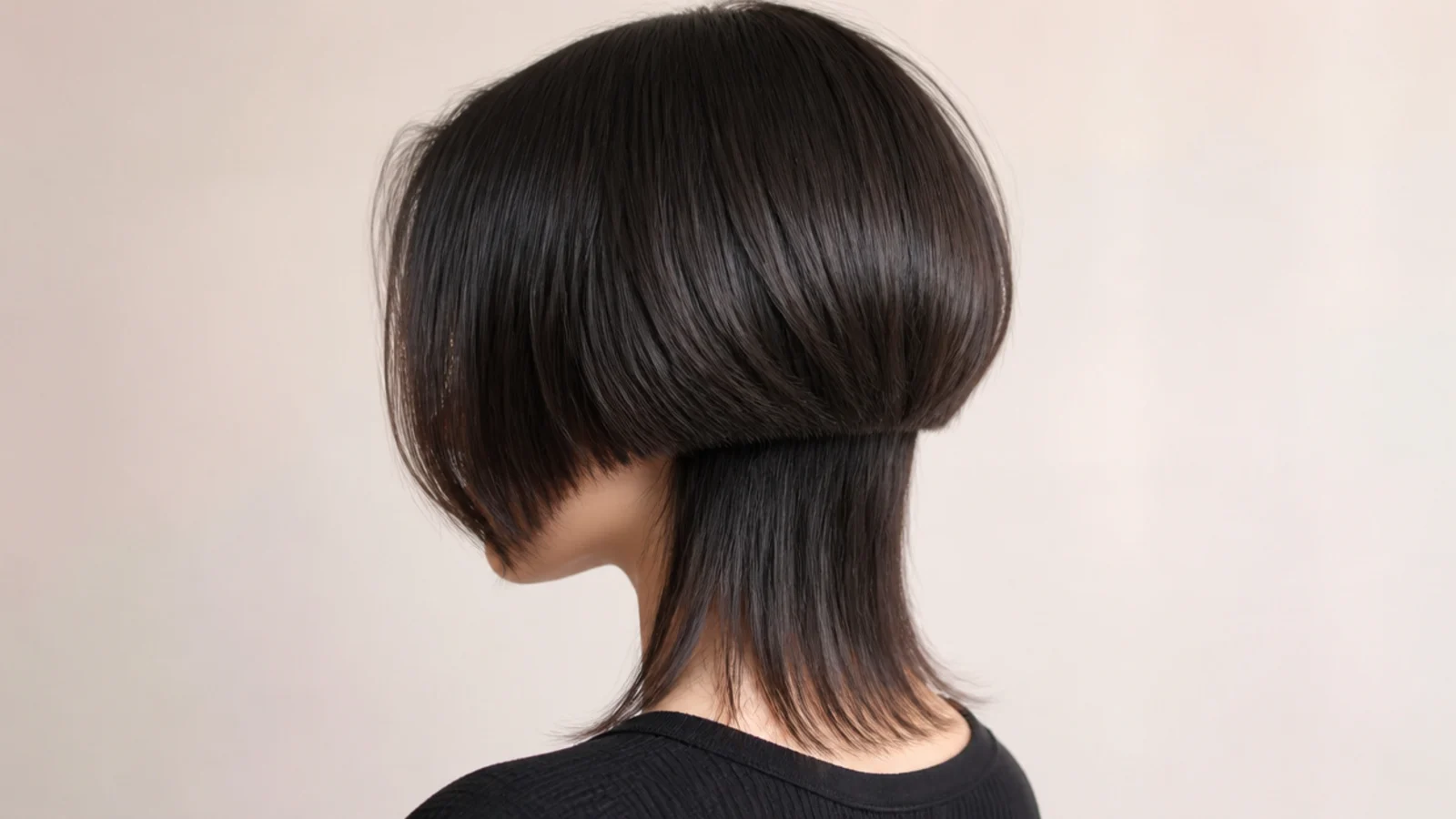
6. Cheekbone Bell for a Long Face
Cutting the bell high lays a horizontal across the upper face, which interrupts the vertical run a long face is read by. It also buys separation for nothing, so this ends up being the version with the most obvious disconnection of the whole set.
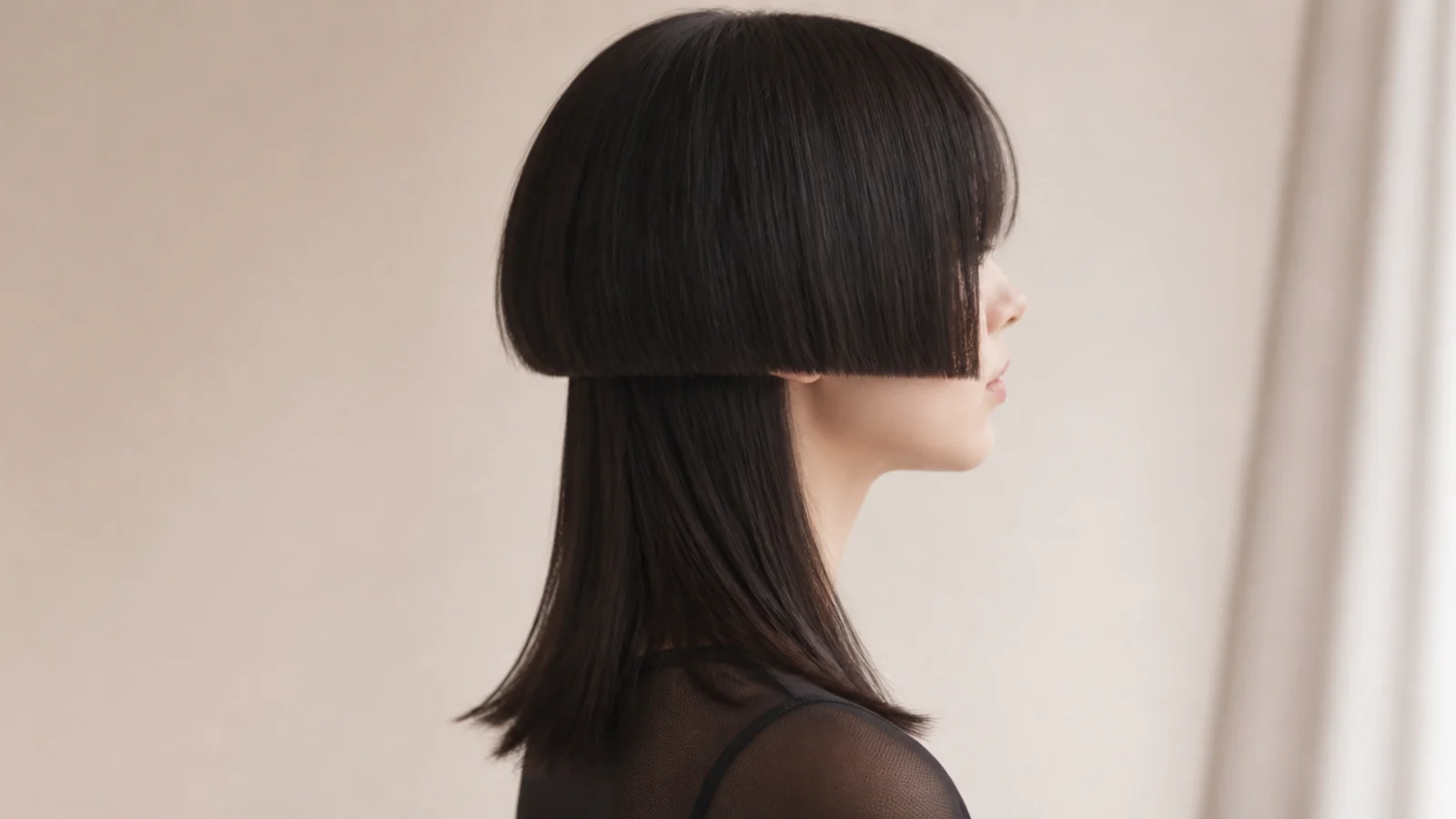
7. Fine Straight Hair
A blunt bell is the best thing that can happen to fine hair, because every strand ending on one line reads as density rather than as thinning. The lengths are the risk — keep them at the collarbone rather than the waist so the ends stay thick enough to read as a second layer at all.

8. Thick Hair
Thick hair turns the bell into a mushroom unless weight is removed from inside it rather than off its surface. Ask for internal thinning through the interior only, because surface texturising frays the blunt edge and the blunt edge is the entire disconnection.
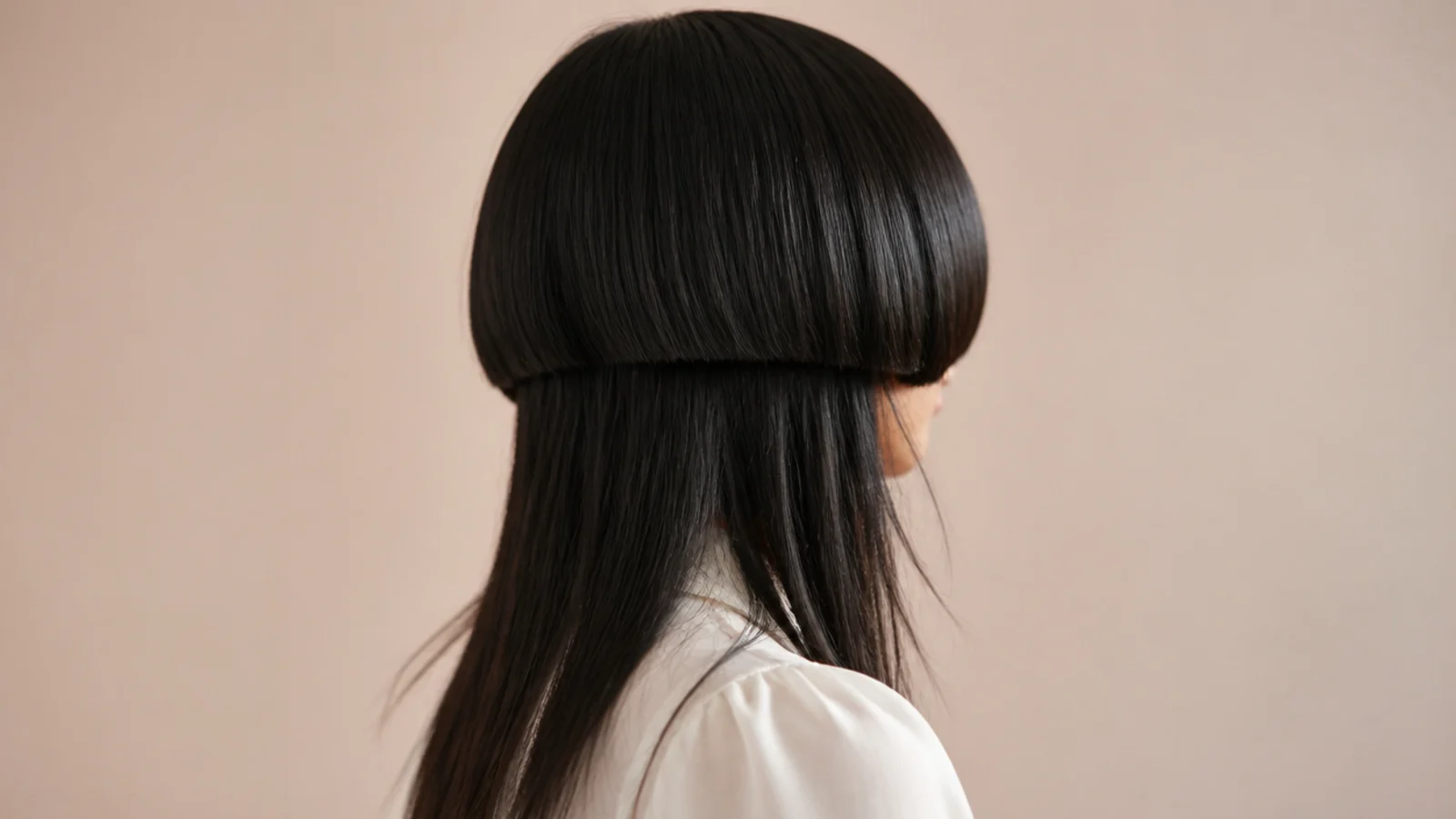
9. Platinum Over Brown
Putting the colour change on the same line as the cut line doubles the separation, because a value contrast is read faster than a change of shape. It also means the colour and the bell grow out in the same place, so one appointment corrects both.
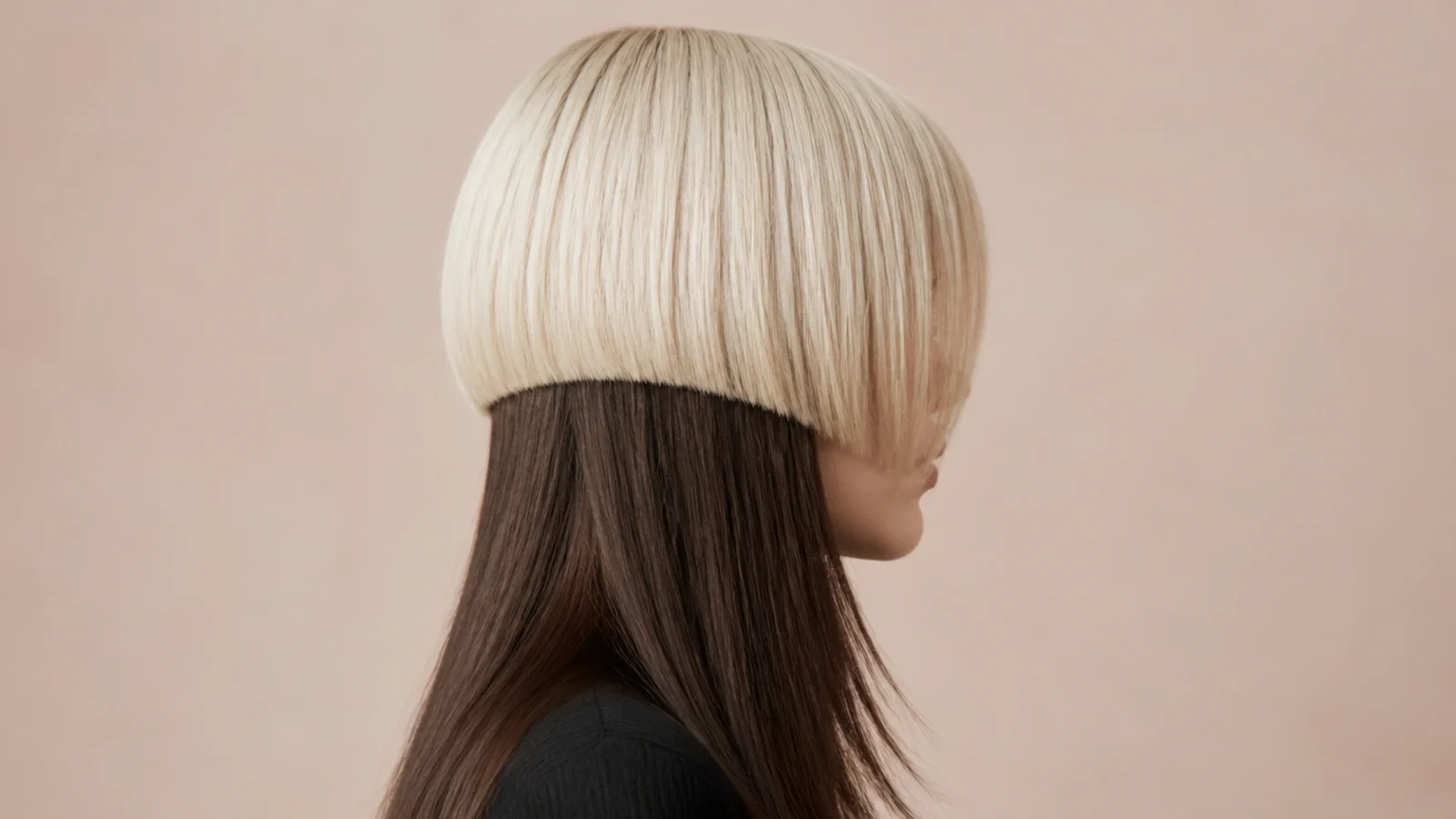
10. Micro Bangs
A blunt fringe cut well above the brow adds a third horizontal above the bell, turning a two tier cut into a three tier one. It is also the least forgiving idea here, because a very short fringe has nowhere to hide an awkward growth pattern at the hairline.
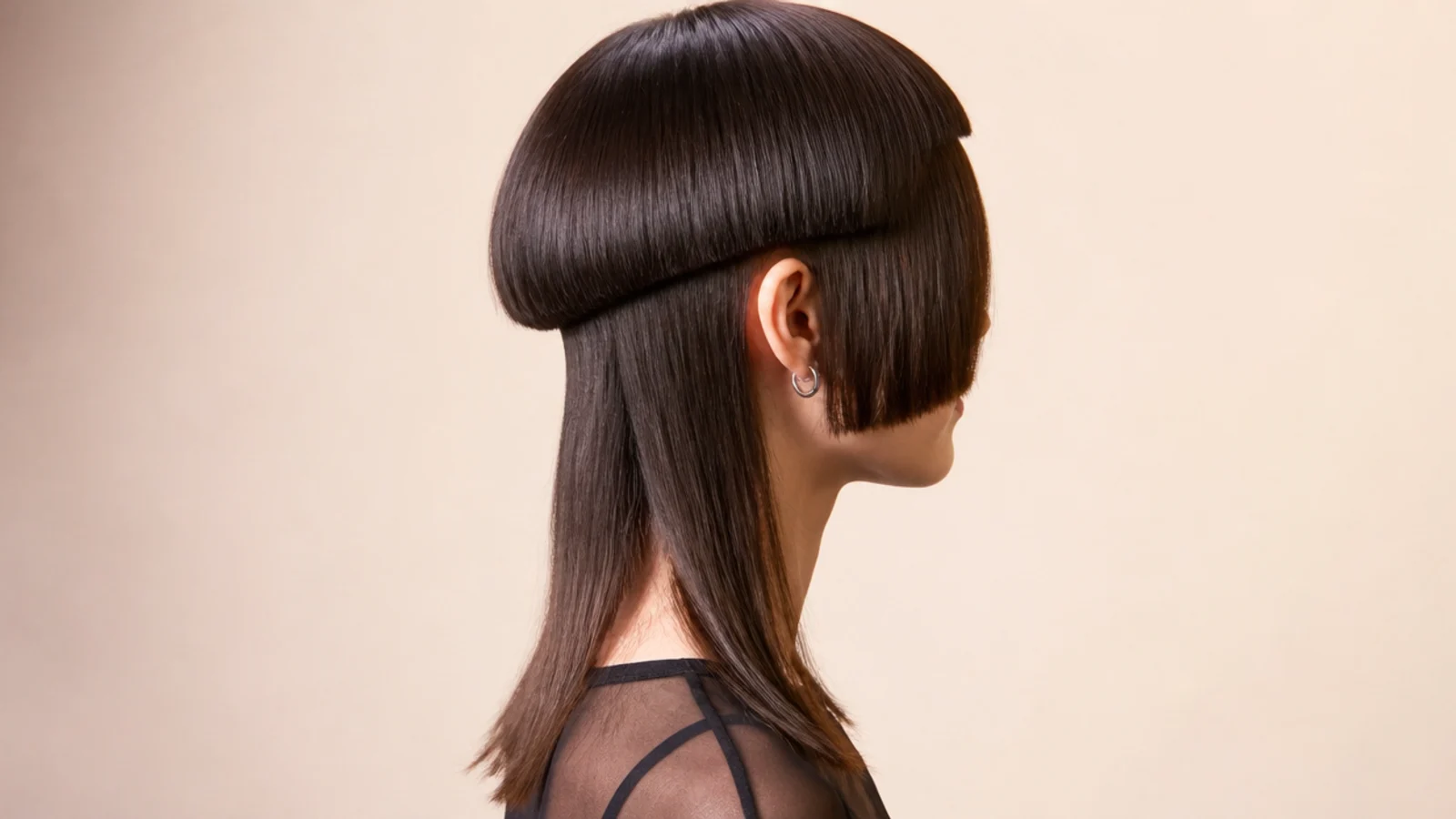
11. Hidden Undercut
A section removed under the bell takes bulk out exactly where the dome would otherwise flare outward, so it sits close to the skull. Nothing shows while the hair is down, which is why this is the standard fix for a bell that will not stop mushrooming.
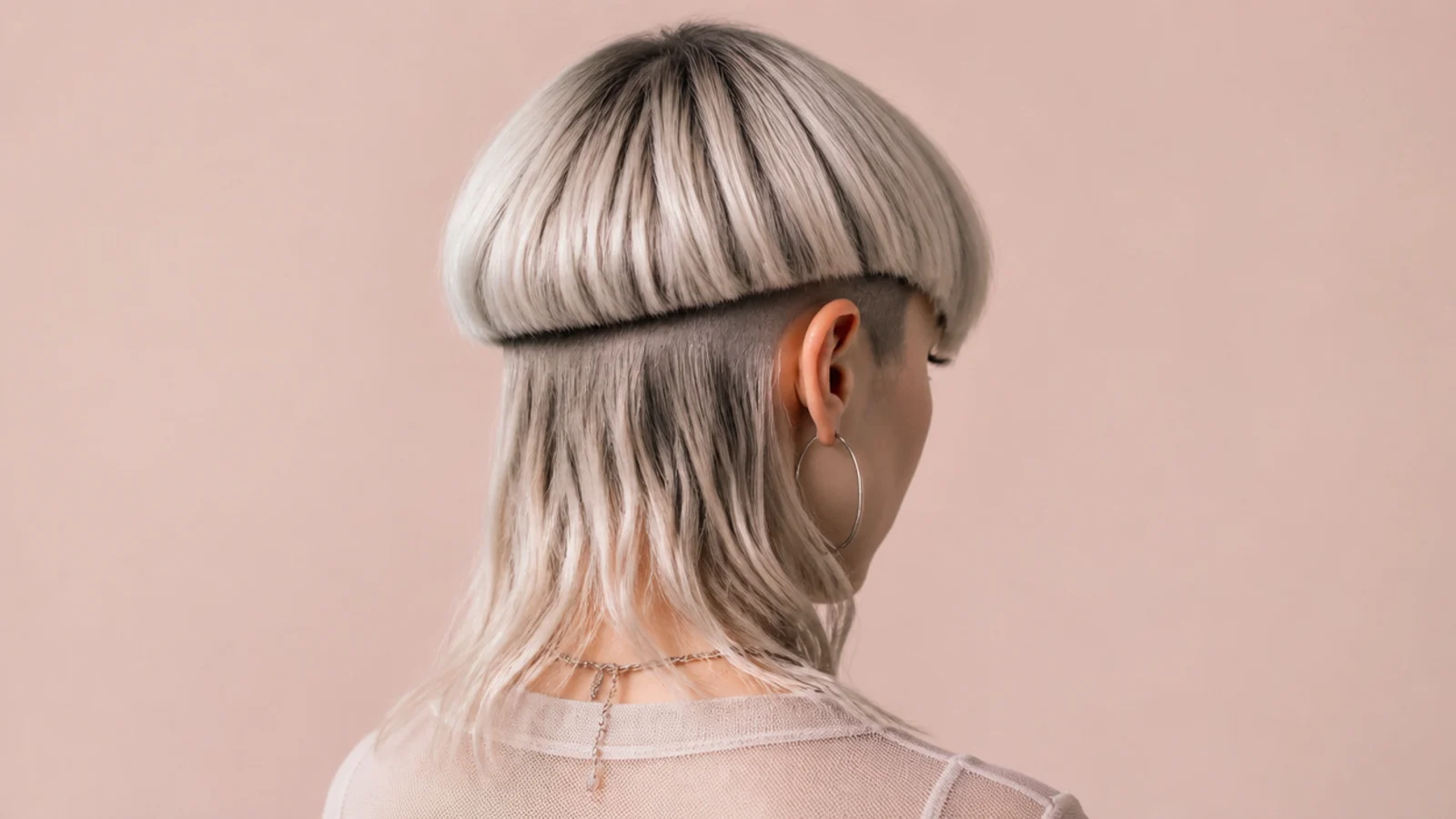
12. Wavy 2b Hair
Wave lifts the bell close to an inch as it dries, so it has to be cut longer wet than the length you actually want. The bend also scatters the cut line, which means a wavy head needs a wider gap than a straight one before the two layers separate visually.
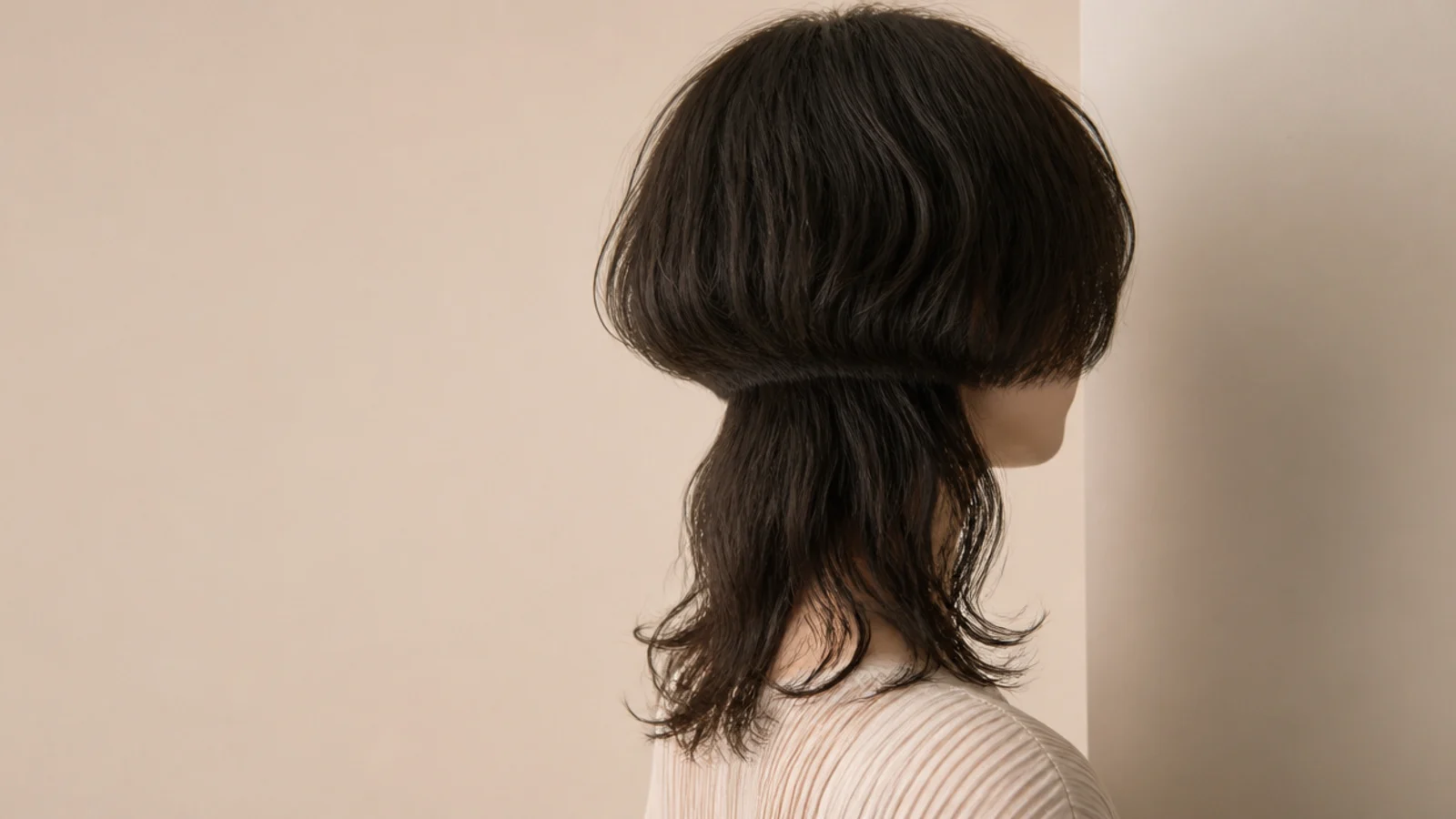
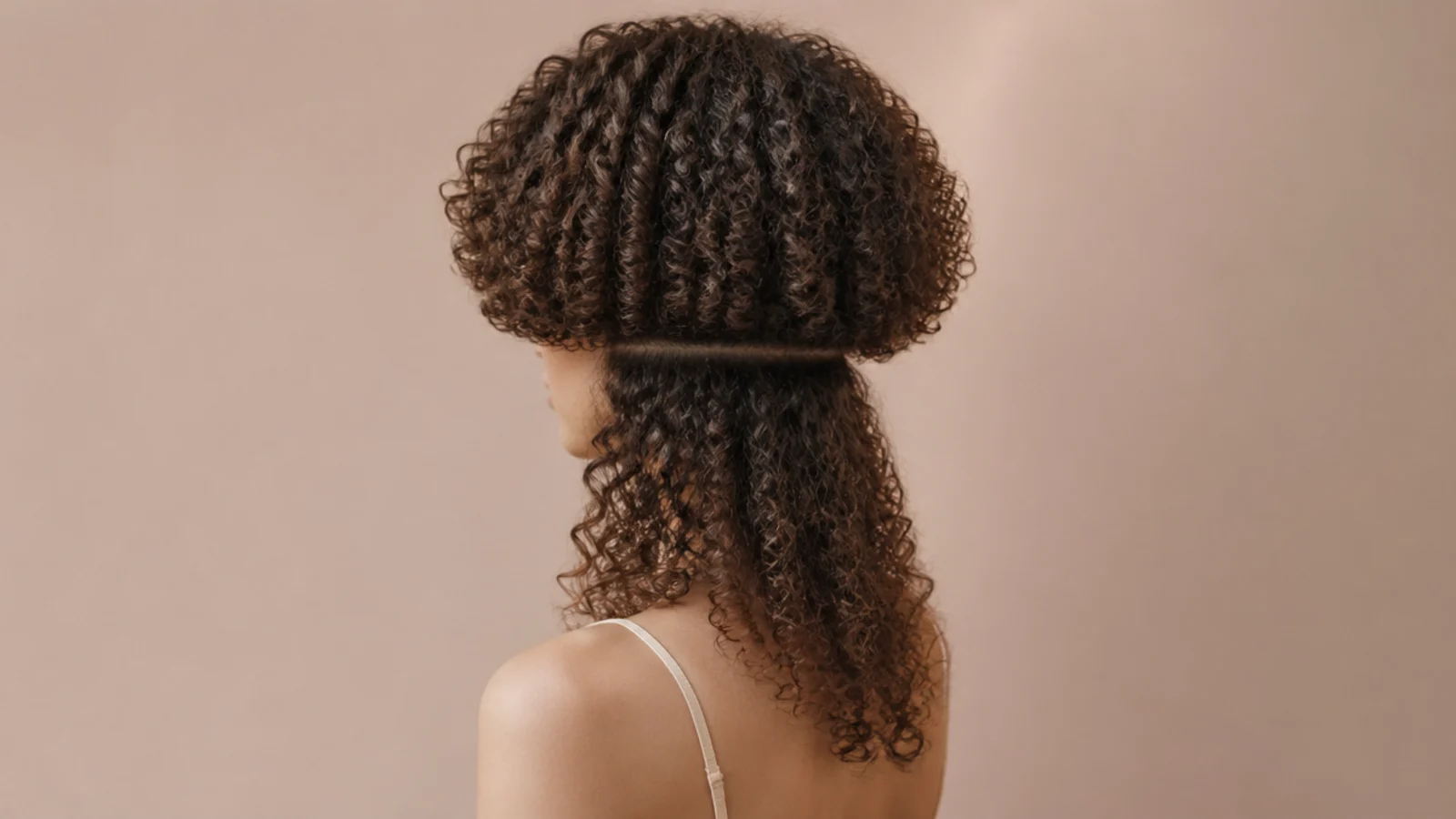
13. Curly 3a Hair
Curl shrinks further than wave does, so the bell is cut long and allowed to spring. The payoff is that a curly bell holds its dome with no styling at all, because the shape comes from the curl pattern rather than from a round brush and a cool shot.
14. Flipped Out Bell
Drying the ends of the bell outward instead of tucking them under widens the bottom of the dome and pushes its edge away from the lengths, which exaggerates the gap. It also lifts the cut clear of the mushroom register a fully tucked bell can fall into.

15. Ear Bell With Bra Strap Lengths
The widest gap in the set, and the clearest reading of the shape because of it. An ear length bell over bra strap lengths is close to a foot of separation, which is enough that the two sections read as two haircuts sharing one head.
16. Hime Side Panels
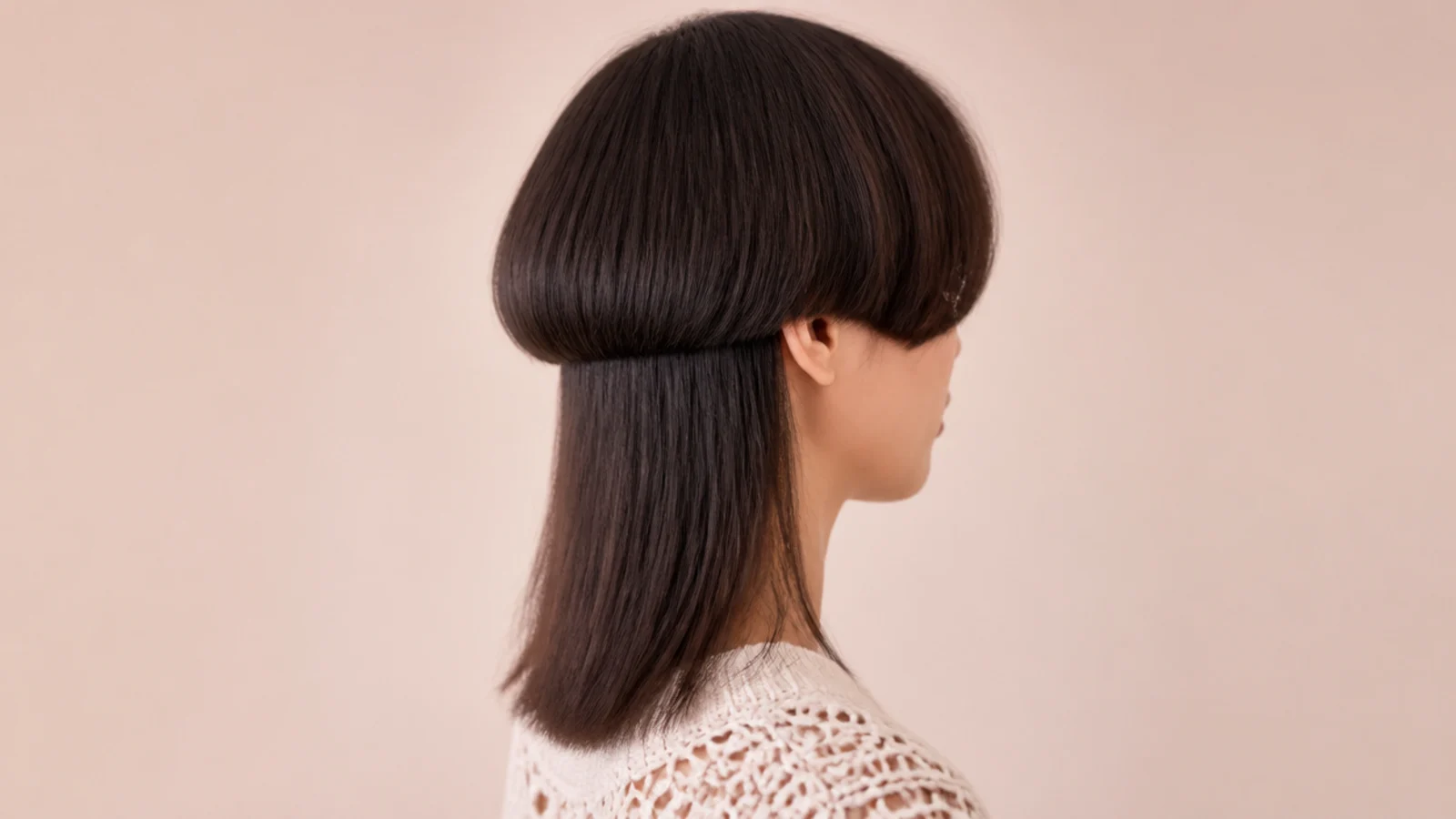
Two straight panels cut at the cheek and kept out of the bell add a third length at the front, so the face is framed by a vertical line rather than by the curve of the dome. Cut them with a blunt edge, because a softened panel just looks like the bell is falling apart at the sides.
17. Jaw Bell for a Square Face
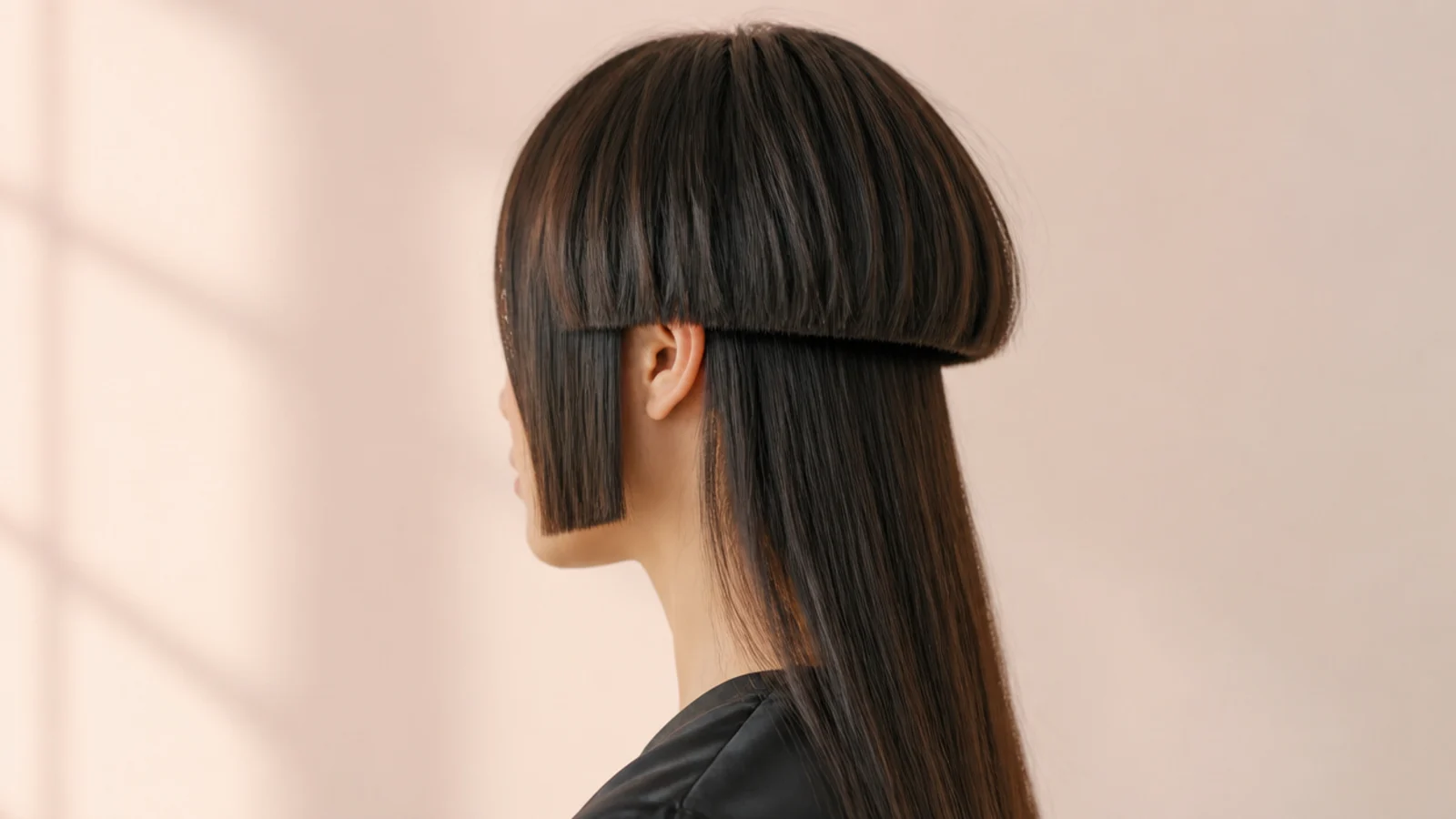
The bell lands half an inch below the jaw rather than on it. Sitting on the corner traces the angle you were trying to soften, while crossing it lets the curve of the bell cut across the line instead of following it.
18. Copper Over Black
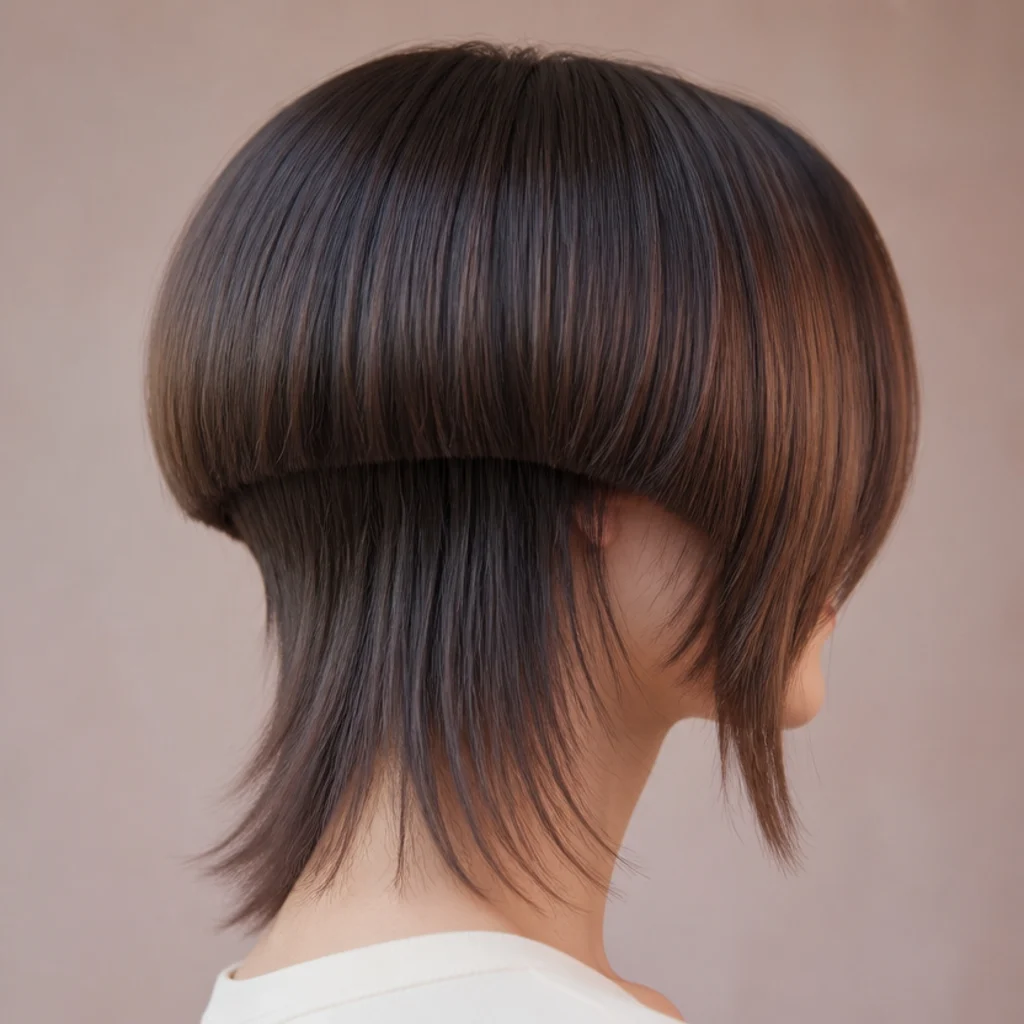
The strongest contrast you can build without lifting to platinum, because a warm copper throws light back where black absorbs it. Copper also fades faster than it lifts, so plan to gloss the bell on its own schedule rather than treating the head as one job.
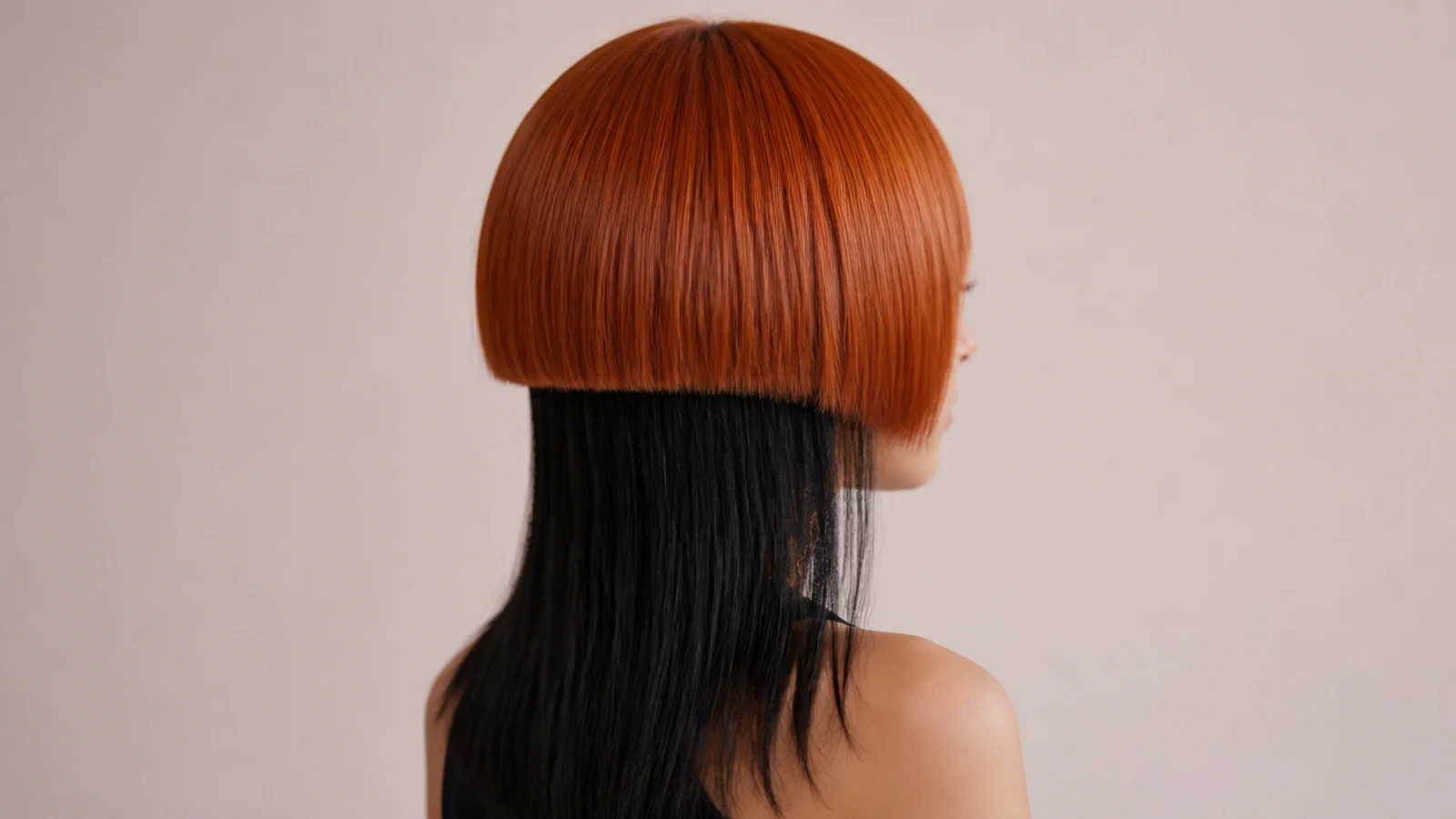
19. Shaved Nape
Taken at the hairline and covered completely by the lengths, so the cut has two states — closed when the hair is down and open when it is up. It is the only part of a jellyfish that needs a clipper, and it needs one every three to four weeks to stay clean.
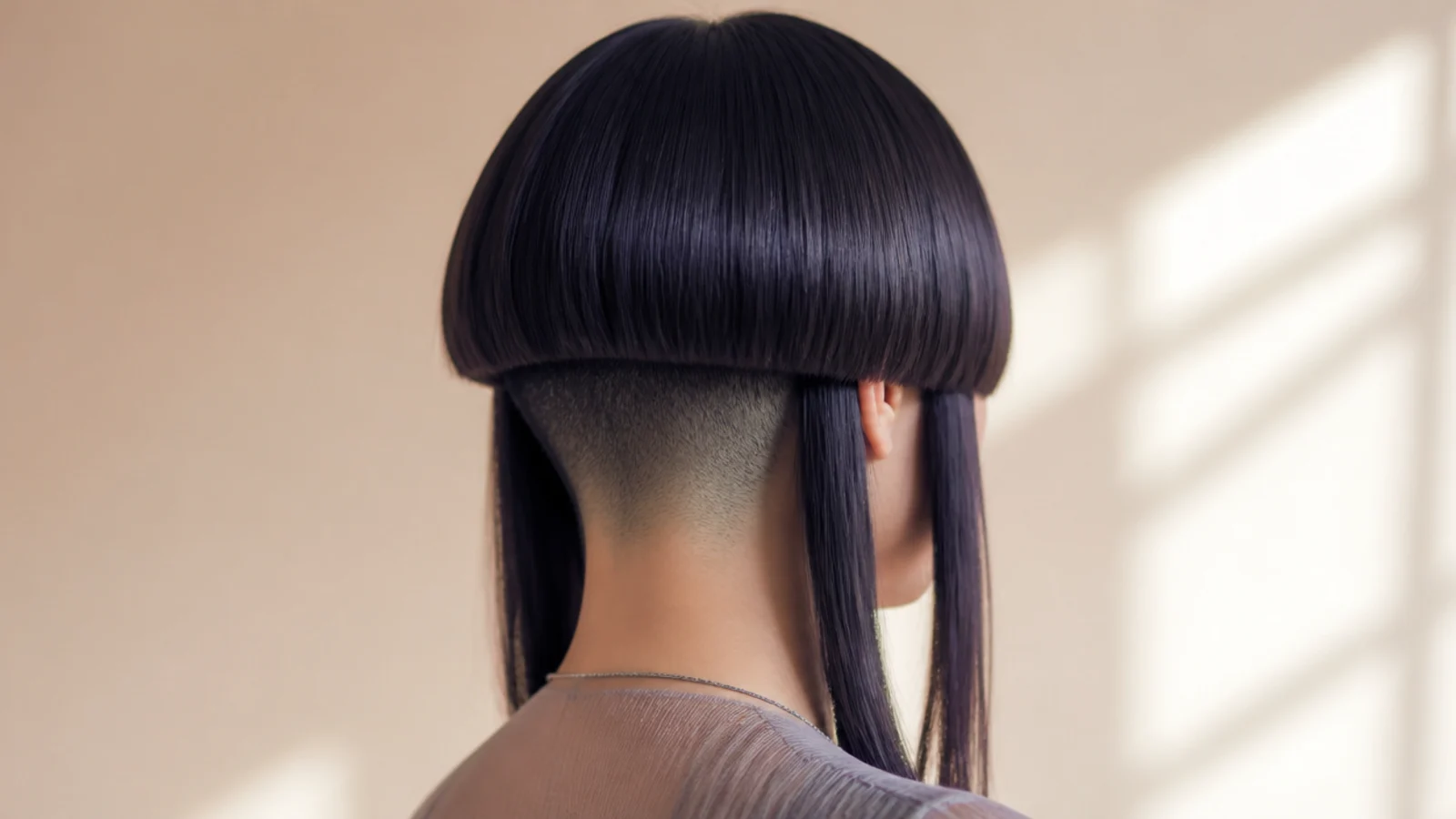
20. Grown Out at Twelve Weeks
The bell has dropped about an inch and a half, which is what half an inch a month gives you, and the gap has closed by exactly that much. This is where the cut starts reading as a long bob over long hair, and the point at which to book the bell alone.

Final Thoughts
Ask in two lengths and one word. Where the bell lands, where the lengths land, and the word disconnected between them. Everything else in this cut is a matter of taste, but the gap is a matter of arithmetic, and a stylist who blends it out of habit has removed the only thing that made the shape a jellyfish.
For the long version of the same structure see the jellyfish haircut guide, and for the other short two layer shape worth knowing see the short butterfly haircut. More in Mullet and Wolf Cut.