20 High Messy Ponytail Ideas
Twenty high messy ponytails and the reason this placement sags when a low one does not — a high tail carries its whole weight above the point gravity wants it, so where you put the band matters more than how hard you pull it.
In this article · 28
- Messy Not Untidy
- High Ponytail Volume
- Stop the Ponytail Sagging
- By Hair Length
- Fine Versus Thick Hair
- Products and Tension
- The 20 High Messy Ponytails
- 1. Teased Crown
- 2. Upside Down Gather
- 3. Stacked Two Elastic Ponytail
- 4. Wrapped Elastic
- 5. Face Framing Tendrils
- 6. Deep Side Part
- 7. Curtain Bangs
- 8. Bubble Tail
- 9. Pull Through Braid
- 10. Second Day Hair
- 11. Pineapple Curls
- 12. Crimped Root Lift
- 13. Bungee Band on Short Hair
- 14. Thick Hair Half Teased
- 15. Scrunchie
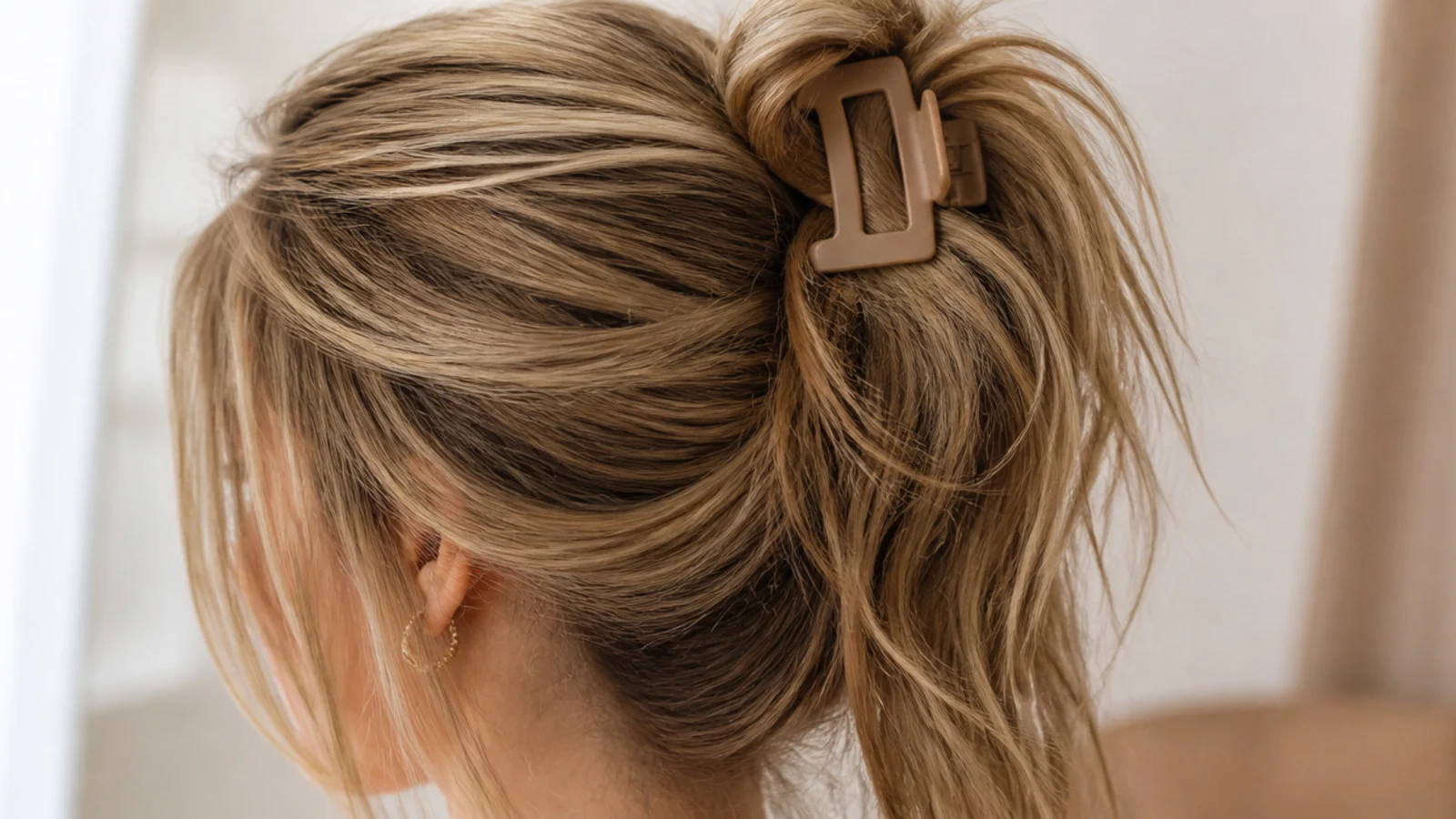
- 16. Claw Clip Ponytail
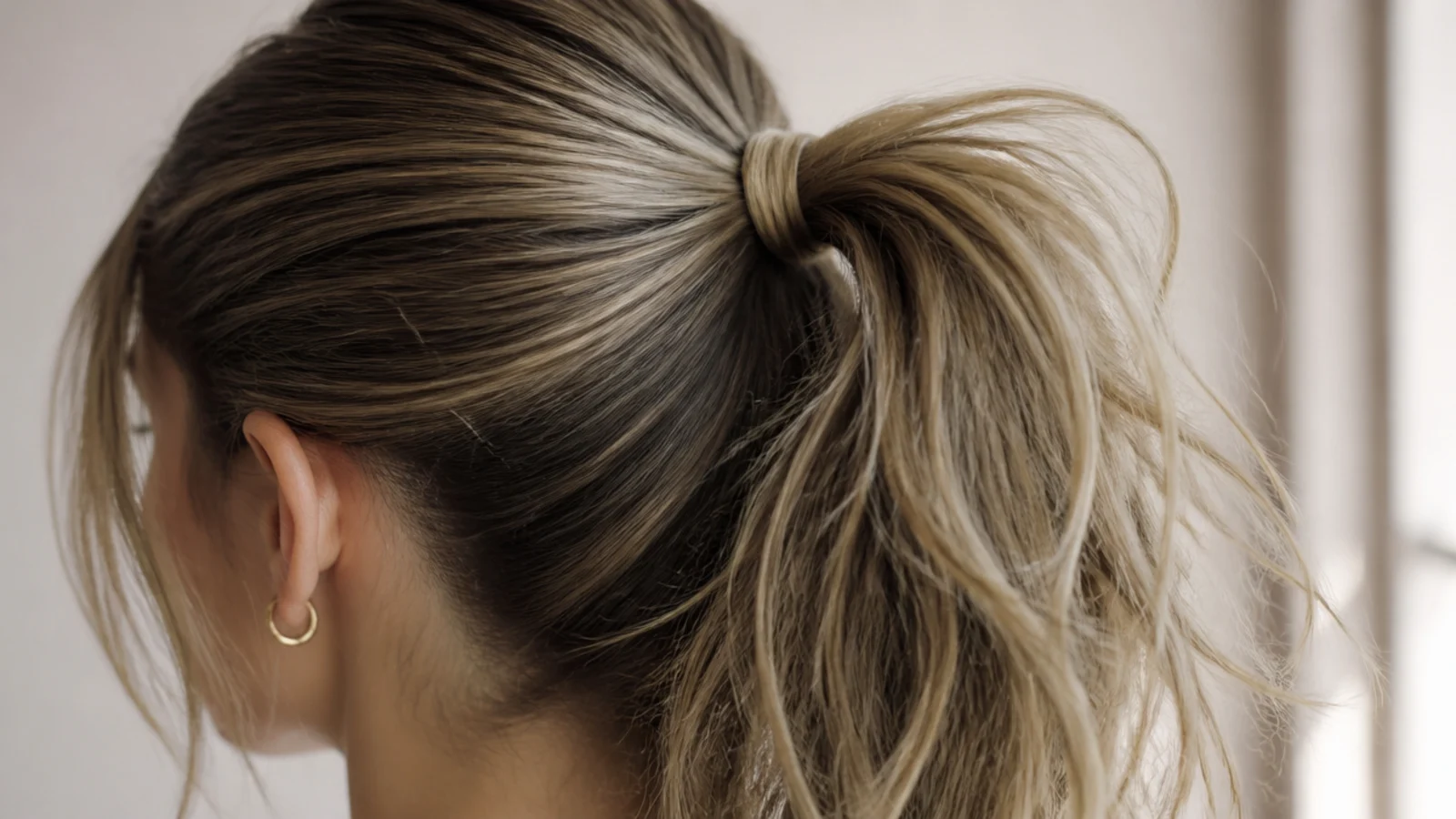
- 17. Sleek Roots With a Messy Tail
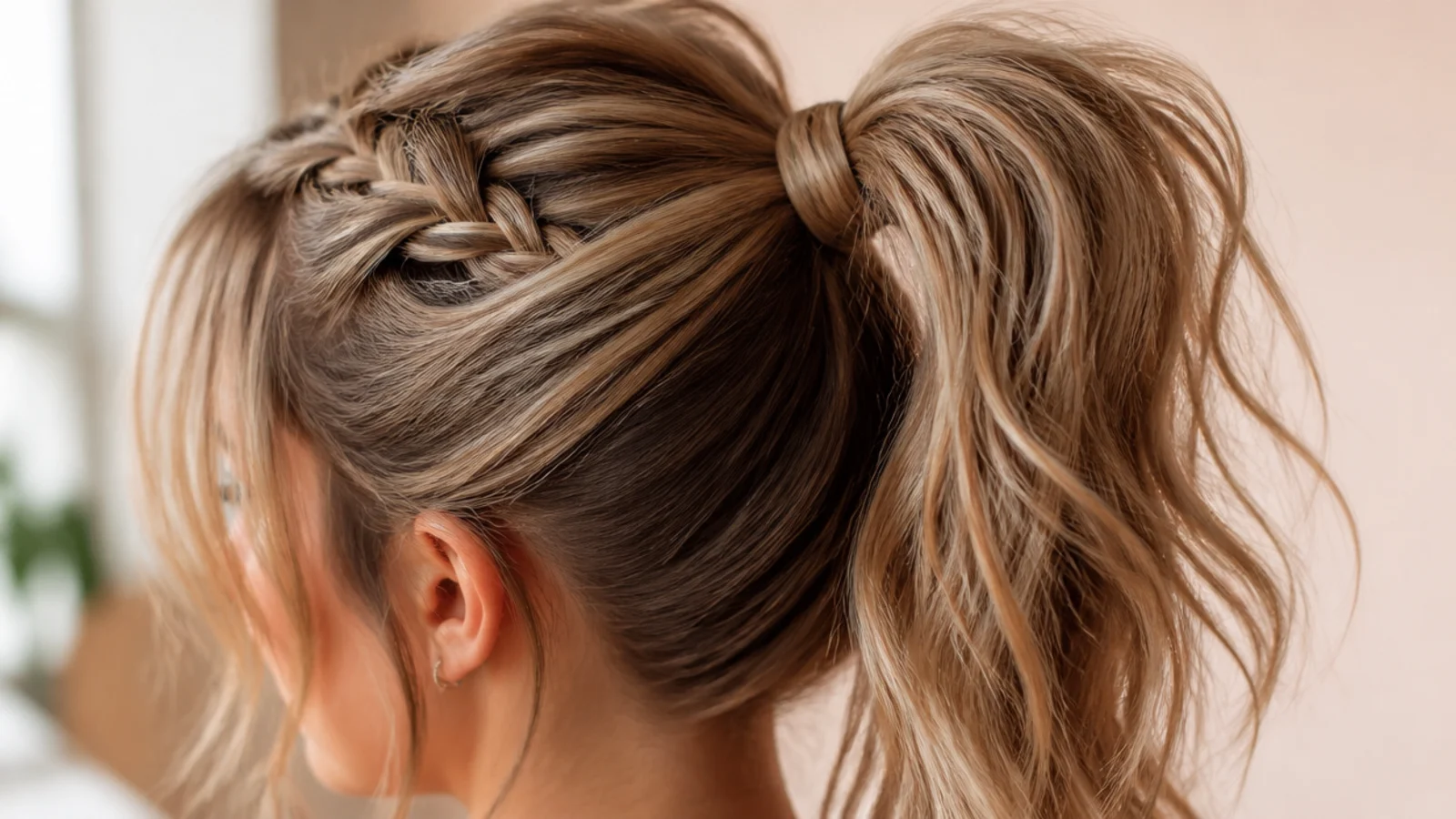
- 18. Braided Base
- 19. Gym Proof High Ponytail
- 20. Silk Ribbon
- Final Thoughts
A high ponytail that has crept an inch down the back of the head by midday is not badly tied. It is tied in the wrong place.
A high tail is the only one working against gravity along its entire length. Every other placement lets the head take part of the load. This one holds all of it above the point it wants to fall to.
Placement is a bone, not a measurement. The occipital bump at the back of the skull is a slope, and a band sitting on that slope has nowhere to go but down it.
Messy Not Untidy
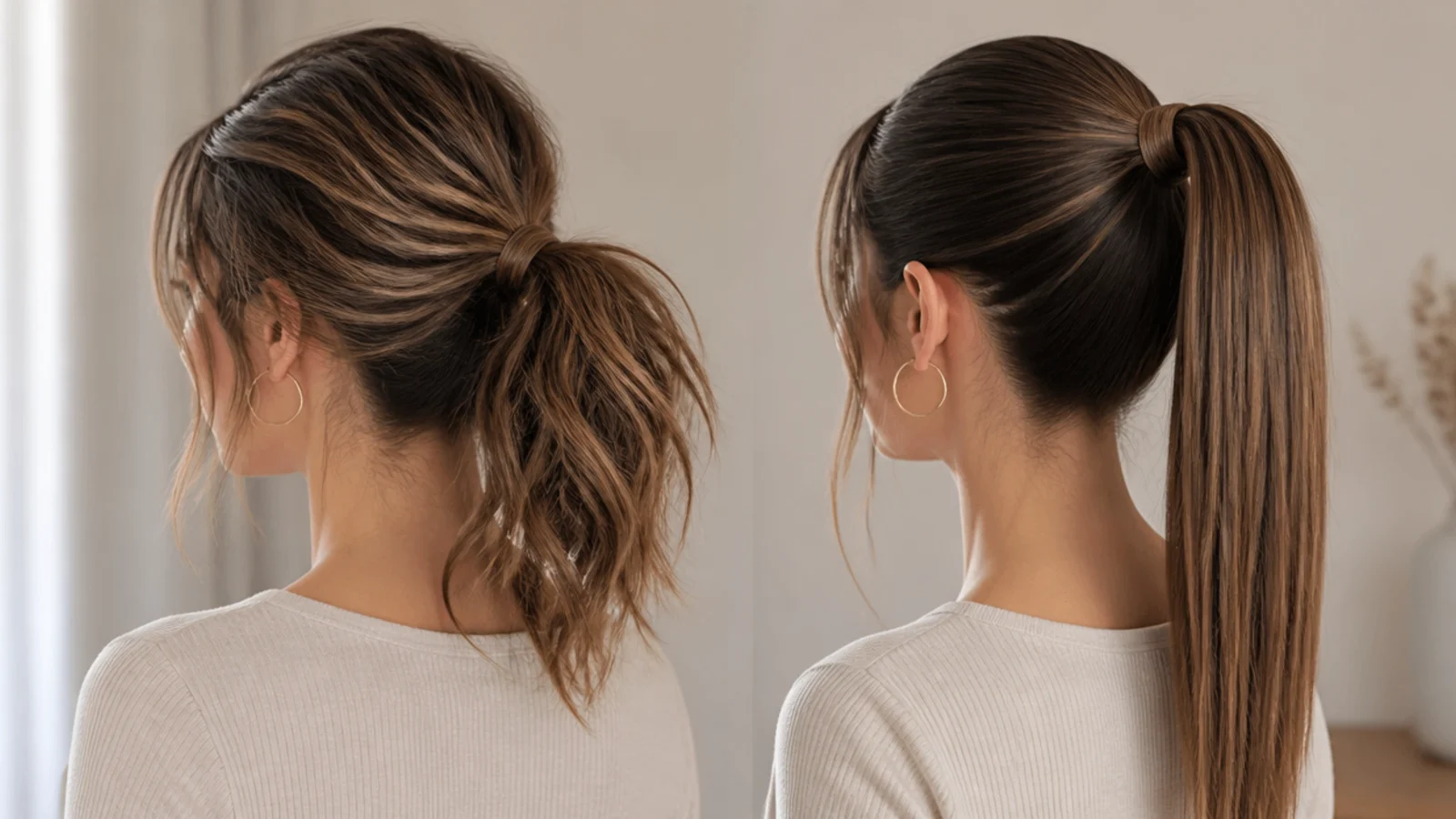
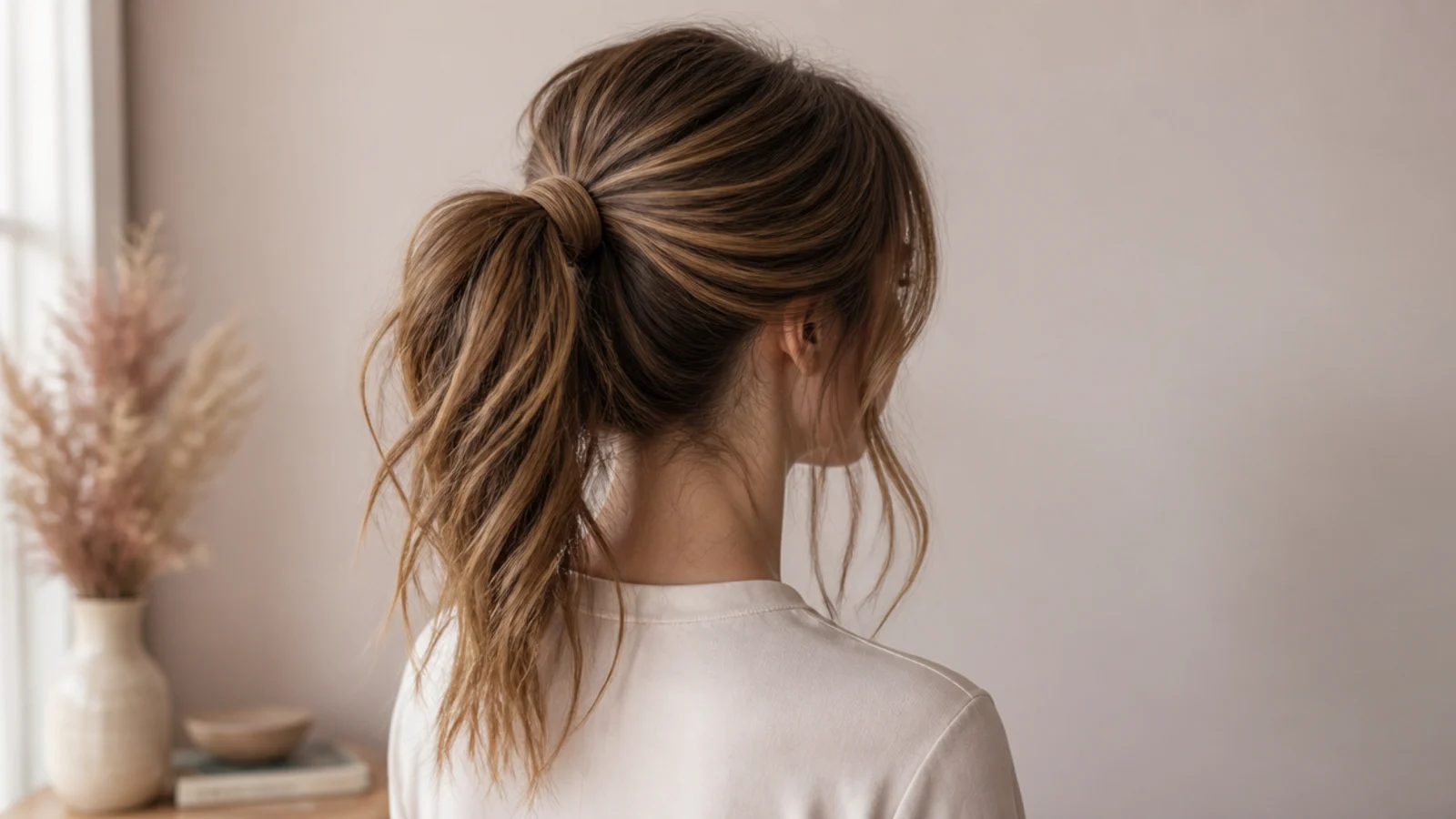
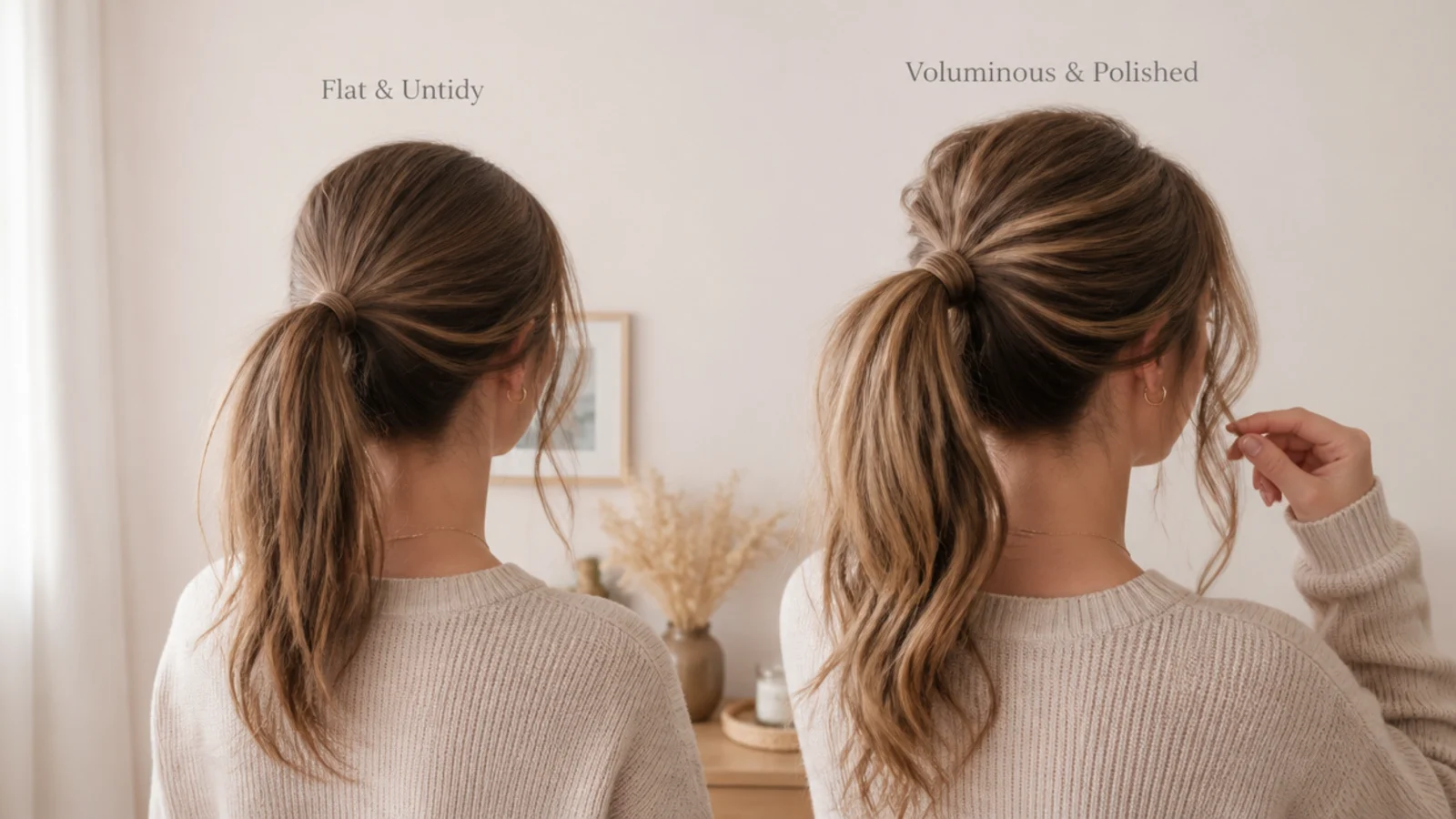
Volume at the crown, not stray hairs at the neck. The width belongs above the band. Escaped pieces below it are the thing that reads as a style falling apart.
Everything loose was pulled loose deliberately. Hair that came out on its own is coming from the underside, and it never comes out symmetrically.
The band underneath is still tight. Nothing about this look is loose at the anchor point, and softening the tie is the fastest way to lose the height.
The temples should match. Two pieces at the front, roughly equal. One is a mistake and four is a fringe you did not ask for.
A collapsed ponytail is not a messy one. They can look similar for about an hour, and then only one of them still has a shape.
High Ponytail Volume
Width comes from the crown, not the tail. A wider base reads as more hair from every angle, and no amount of teasing the length changes the silhouette.
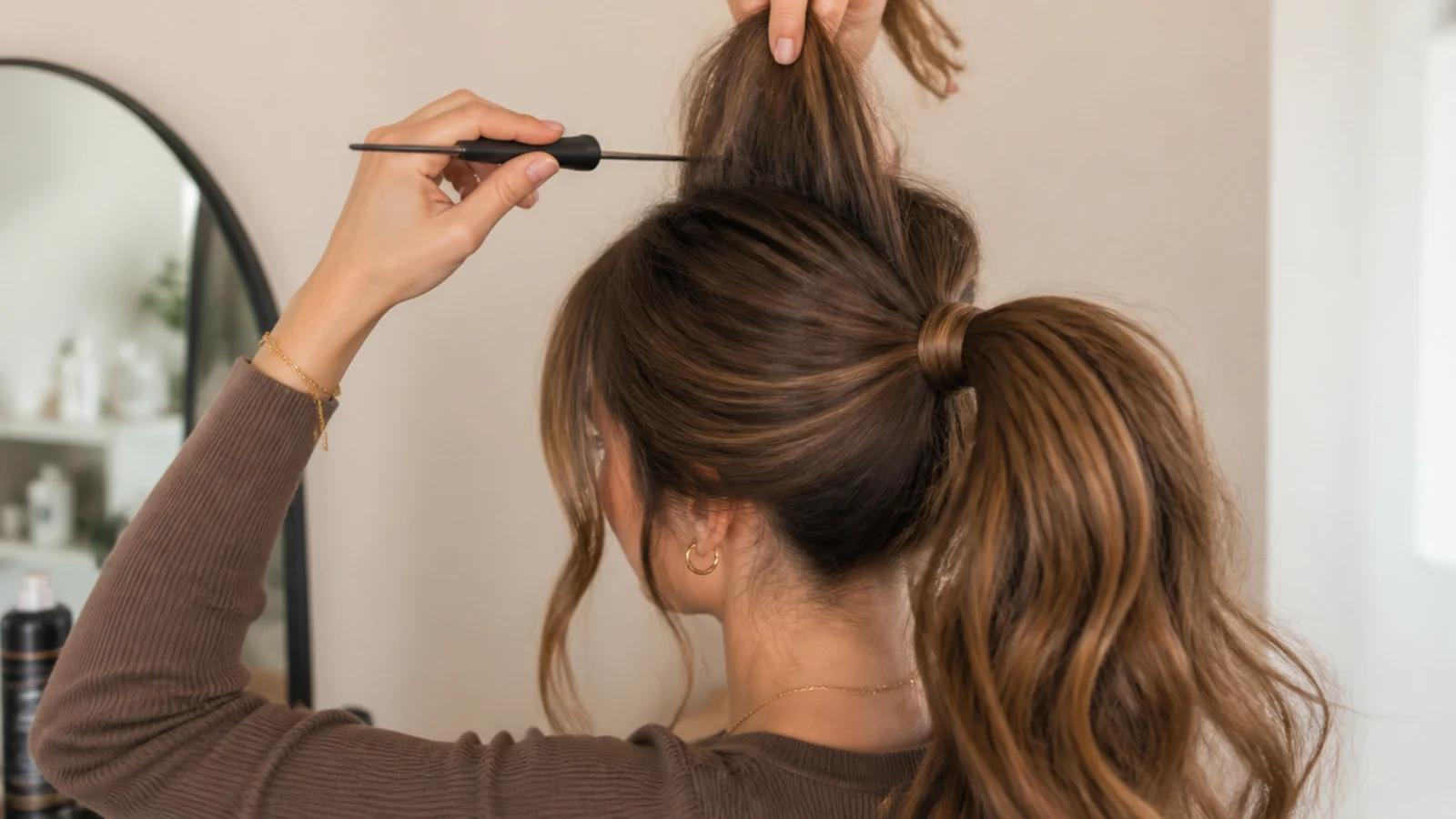
Backcomb under the top layer. The tangled under section becomes a cushion holding the smooth top layer away from the scalp, so the surface stays clean while the shape rises.
Tug hair that is already in the band. Pulling gently at the gathered crown borrows slack from hair the elastic has already trapped, which widens the shape without loosening it.
Crimp at the root for mechanical lift. Bends near the scalp hold a section physically away from the head, which is lift no product can produce.
Gather with your head flipped forward. The under layers fall toward the crown and end up on top of the ponytail, which fills the base rather than hiding beneath it.
Stop the Ponytail Sagging
Tie above the bump or below it, never on it. The slope of the occipital bone is the one place a band cannot hold, and it is where most people instinctively aim.
Two bands beat one hard pull. A second elastic a finger width down shares the weight, where tightening a single band only concentrates the strain.
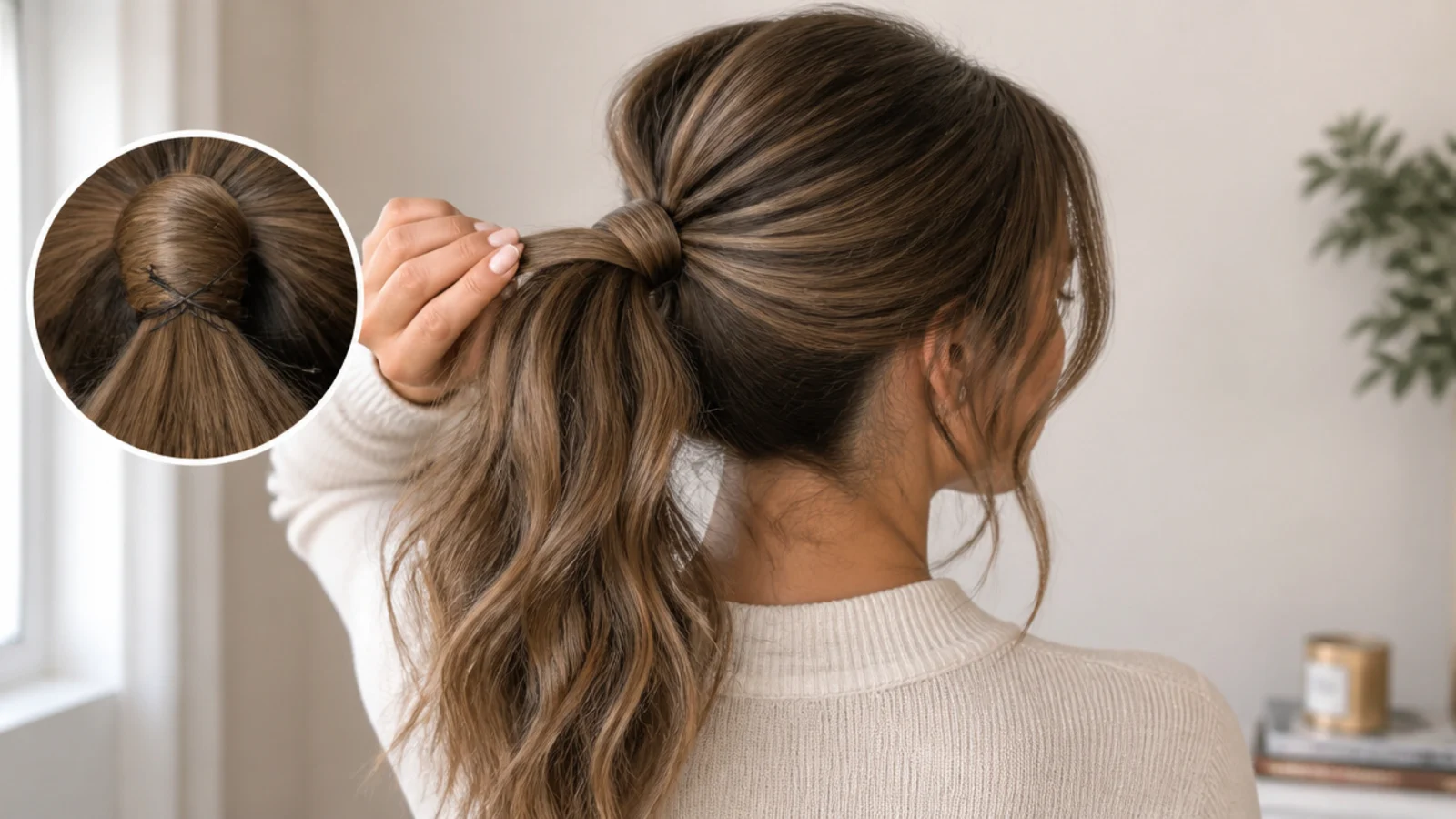
Wrap a strand over the elastic. The wrap acts as a friction collar around the base so the band cannot creep down the length of the strands.
Two crossed pins under the base. One pin resists movement across itself only. Crossed, they resist in two directions and take the downward load off the elastic.
Retie rather than dragging it back up. Pulling a slipped band into position puts a second round of tension on hair that has already been stretched once.
By Hair Length
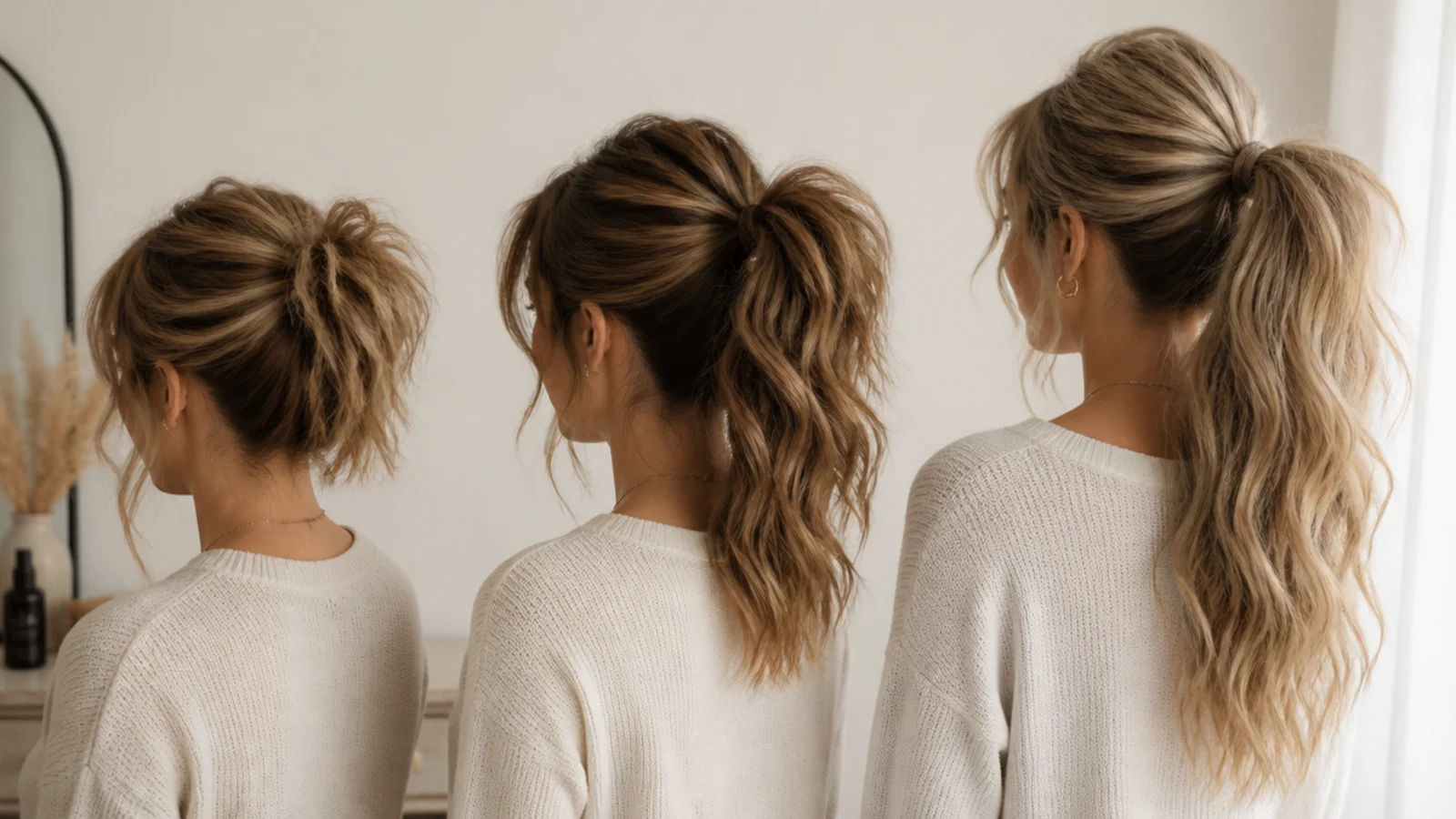
Bob length. A high gather exposes the shorter under layers at the nape, so either pin them up first or accept them as part of the texture.
Shoulder length. The easiest length for this placement. Enough tail to hang, not enough weight to drag the base down the skull.
Mid back. Weight starts to govern. Add the second band before you notice the problem rather than after.
Very long. Split into two stacked sections, or drop the placement an inch, because a single elastic holding this much hair on the upper crown will not last the day.
Curly and coily. Shrinkage means a high gather reads shorter and much fuller, so gather loosely and let the pattern sit above the band rather than inside it.
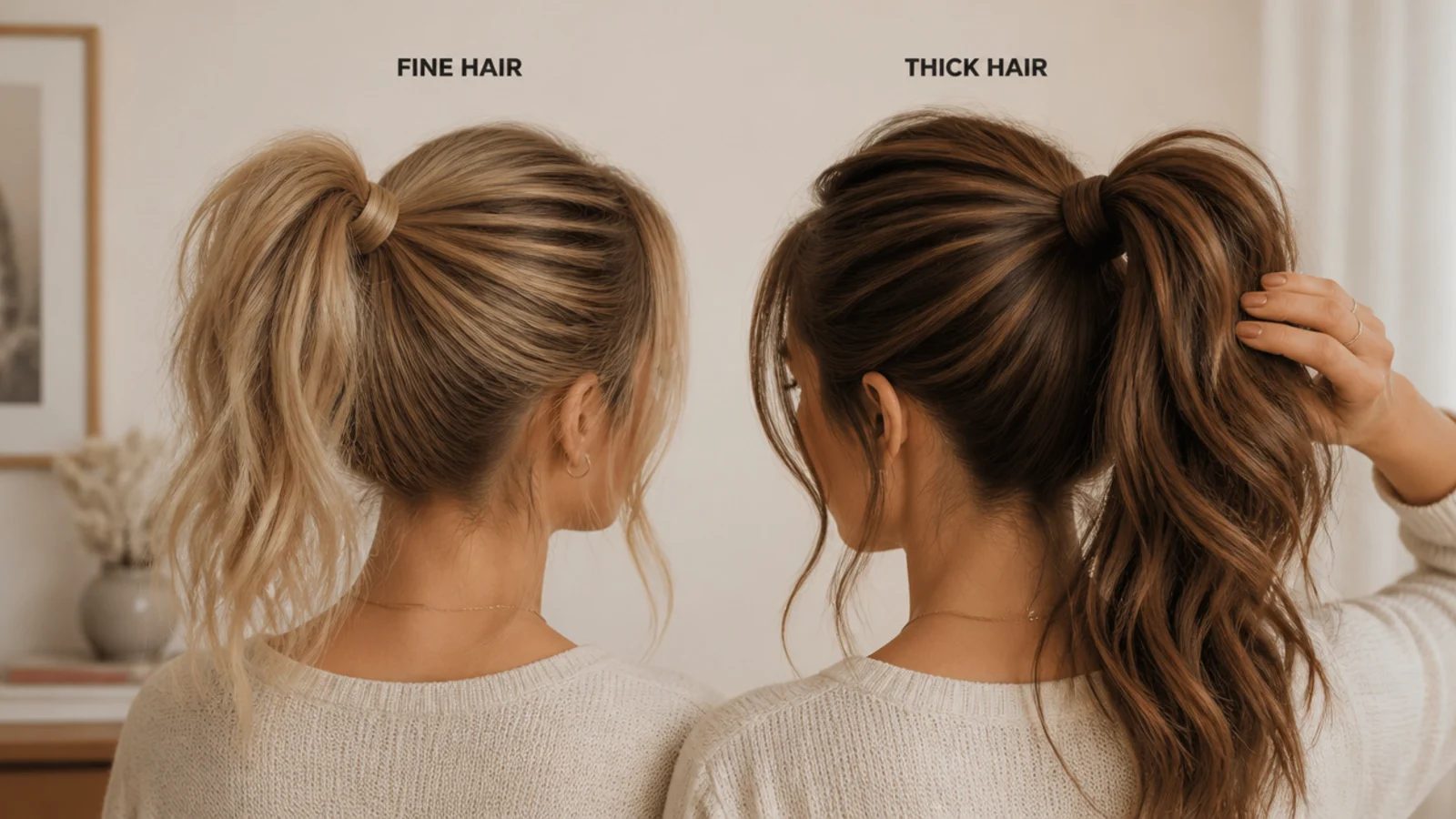
Fine Versus Thick Hair
Fine hair has a grip problem. Smoother strands slide against each other inside the band, so the tail loosens even though nothing about it is heavy.
Thick hair has a weight problem. There is friction to spare, and the base still travels downhill under the mass.
Fine hair wants texture and stacking. Spray first, tie twice, and let the upper section fall over the join to fill the base.
Thick hair wants splitting and pinning. Two elastics carrying half each, plus crossed pins to hold the base against the slope.
Both want the crown widened last. It is the final twenty seconds of the style and the part most people skip.
Products and Tension
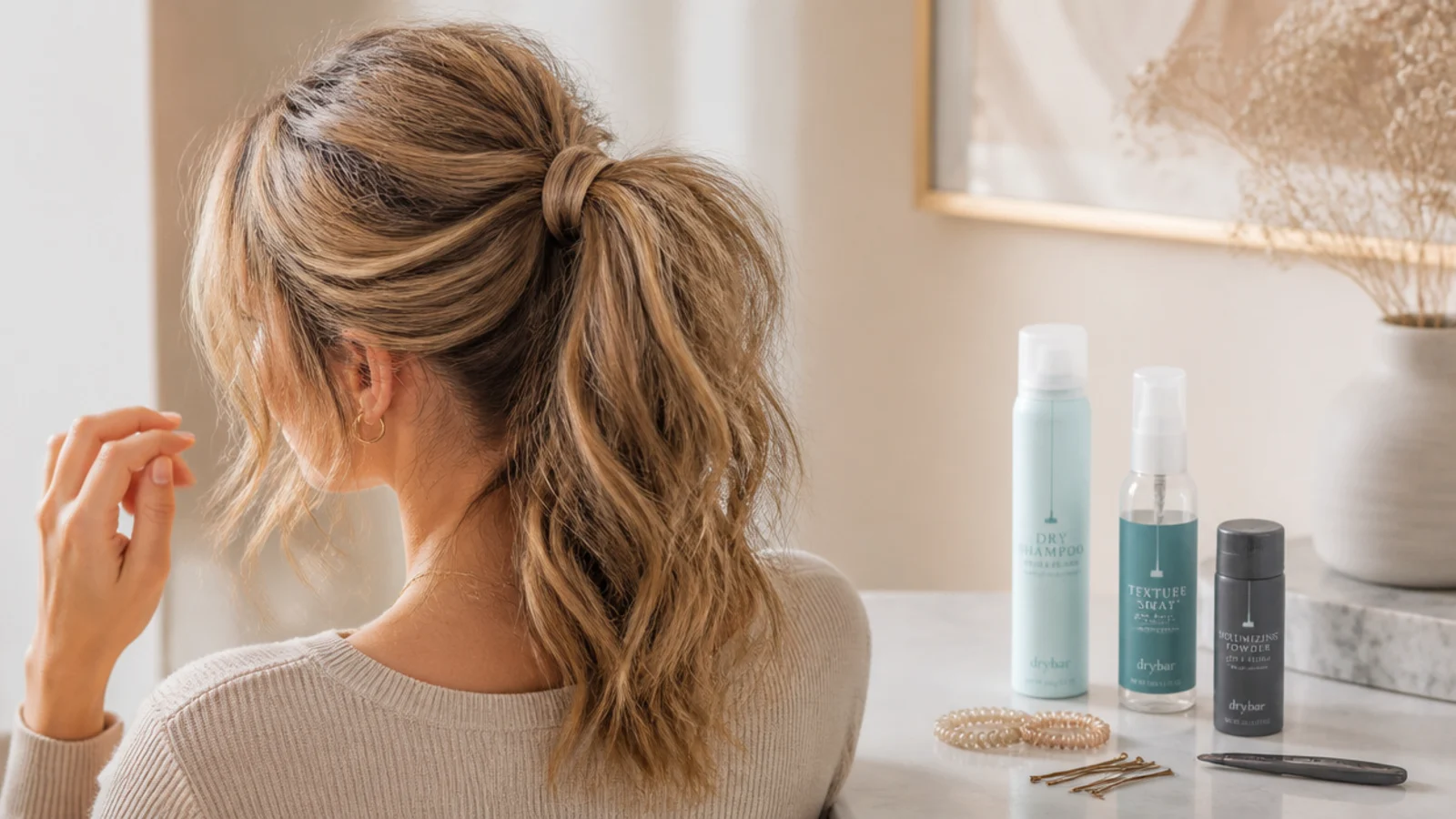
Texture spray is a grip product. It roughens the strand surface so hairs catch on each other, which is friction rather than hold.
Tension damage is cumulative. The same height every day loads the same line of hair at the hairline, and that is where thinning shows first.
Never tie it wet. Hair loses tensile strength when it is wet and sets into whatever shape it dries in, so a band on a wet head means both a kink and a strain.
Take it out to sleep. Eight hours of the same pull, every night, does more than the daytime hours do.
Flexible spray, not firm. A rigid cast cracks when the tail swings, and once it cracks the shape it was holding goes with it.
The 20 High Messy Ponytails
1. Teased Crown
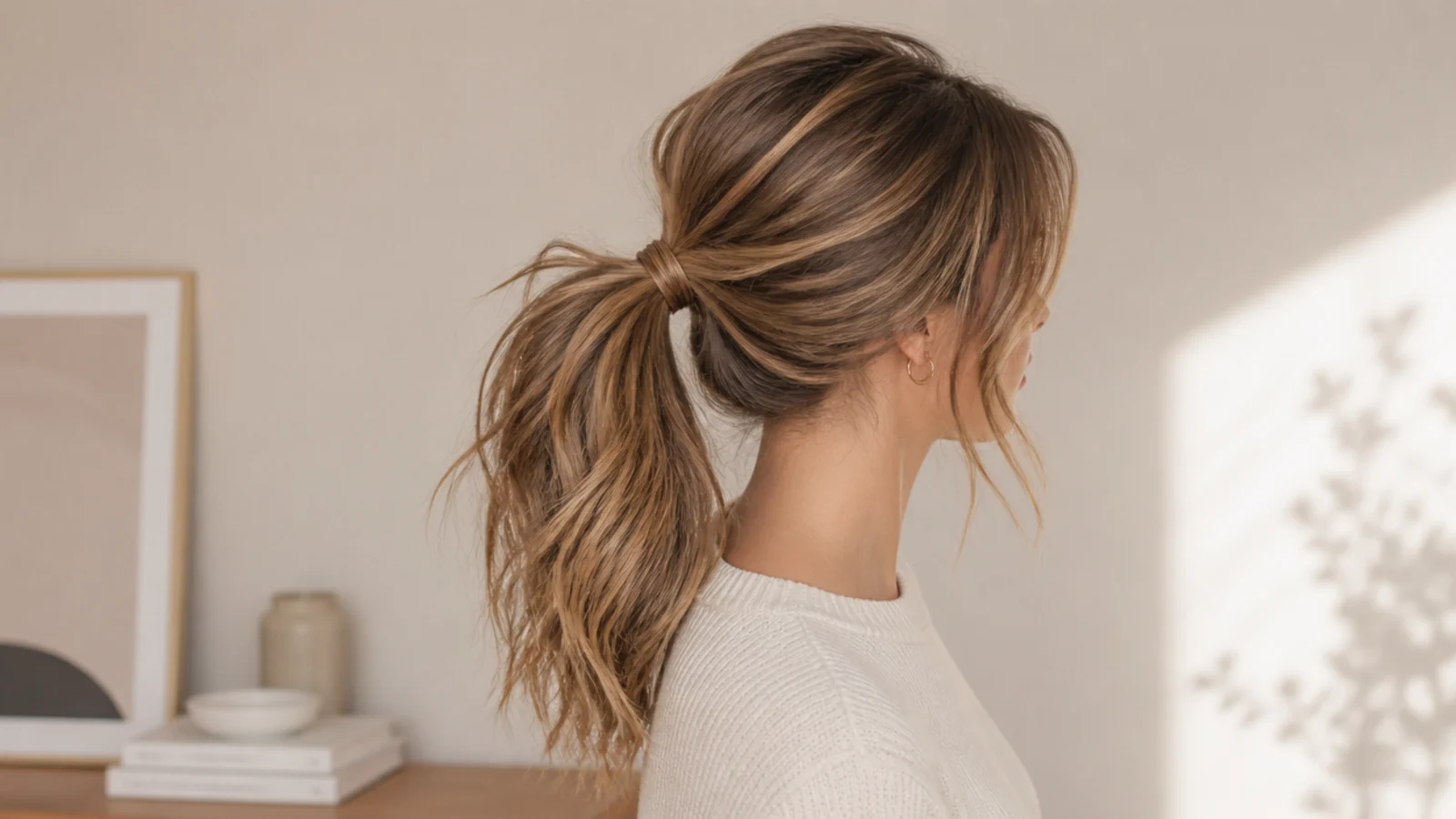
A backcombed cushion under the top layer props that layer away from the scalp, so the crown gains height without the surface ever looking roughed up. Do it before you gather, since a section already held by an elastic has no slack left to be lifted with.
2. Upside Down Gather
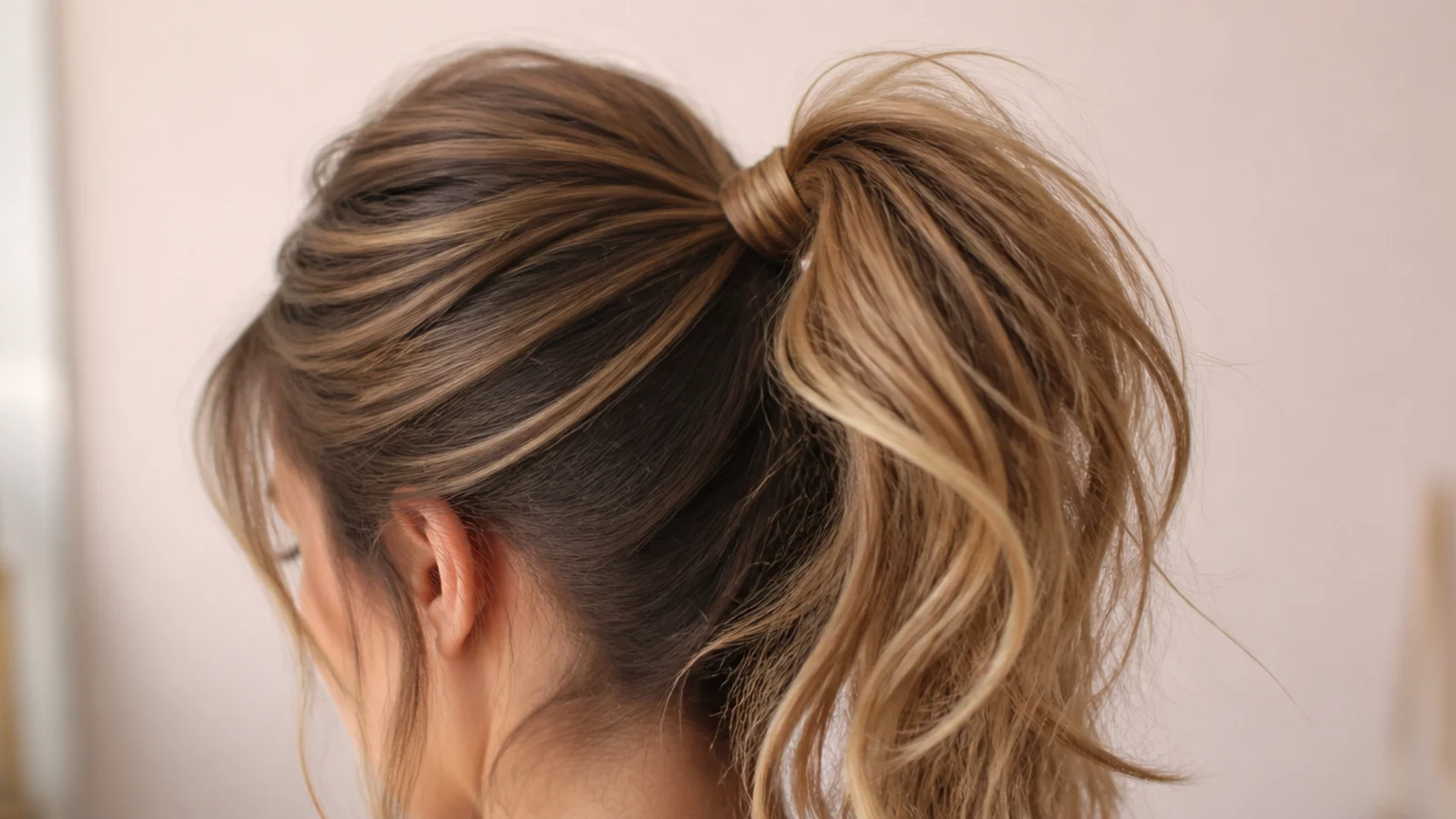
Flip your head forward and collect everything from the nape upward before you tie. The under layers arrive at the top of the gather instead of underneath it, which fills the base and sets the tail at a higher angle than gathering upright ever produces.
3. Stacked Two Elastic Ponytail
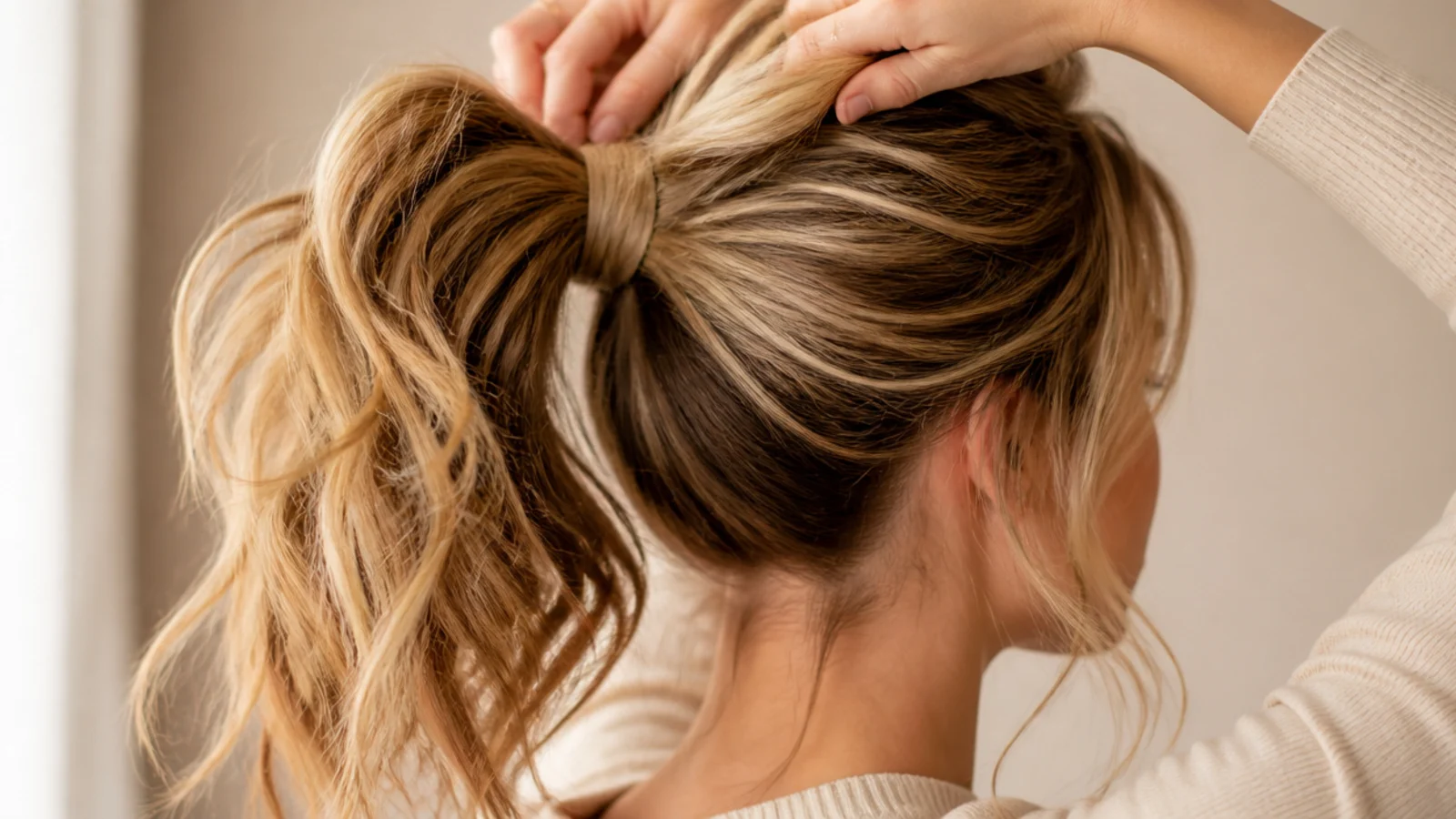
Tie once at the crown, then again a finger width below, so each band carries roughly half the load. On any weight of hair this holds a high placement longer than a single elastic pulled twice as tight, and it strains the hairline far less.
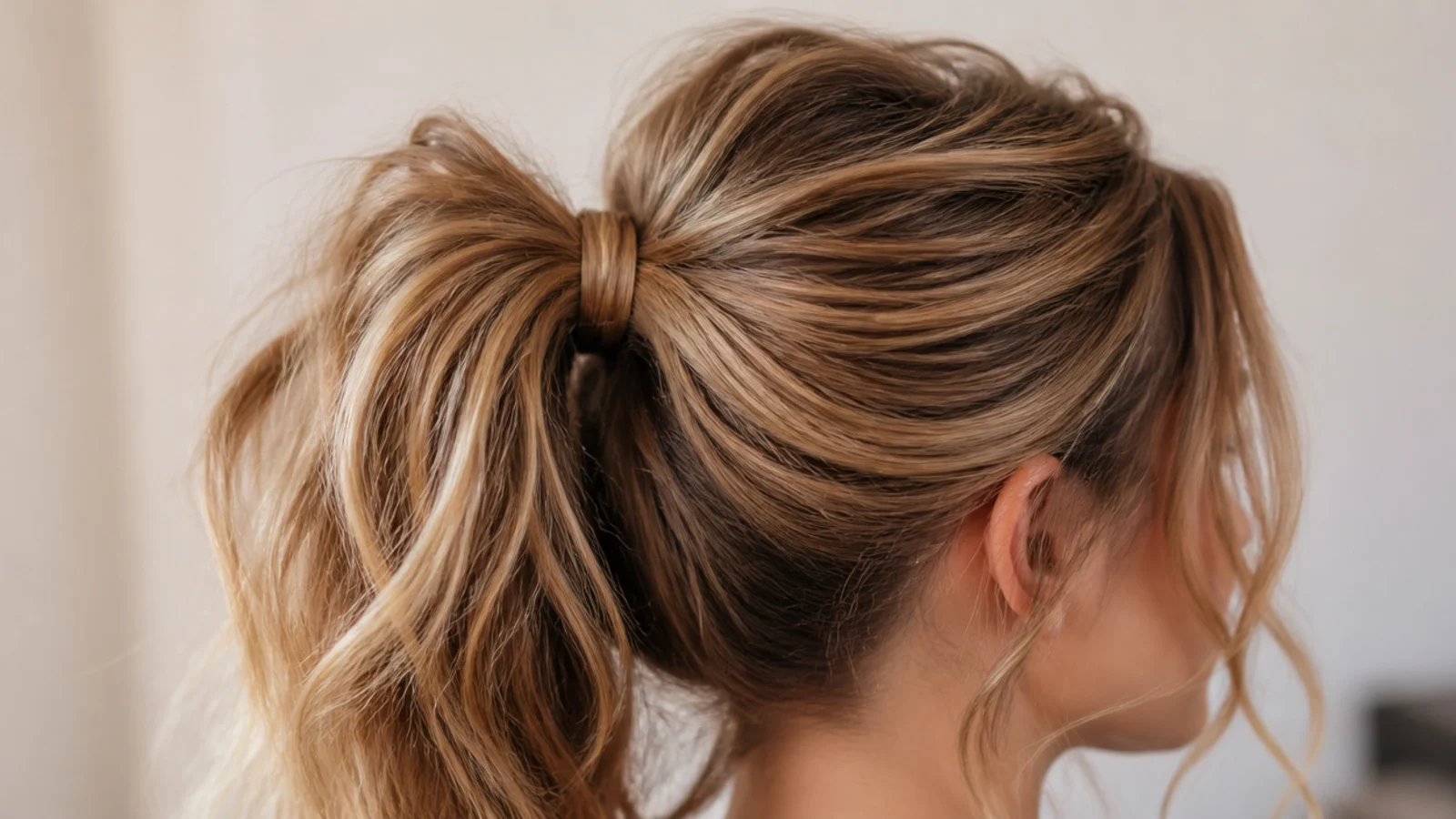
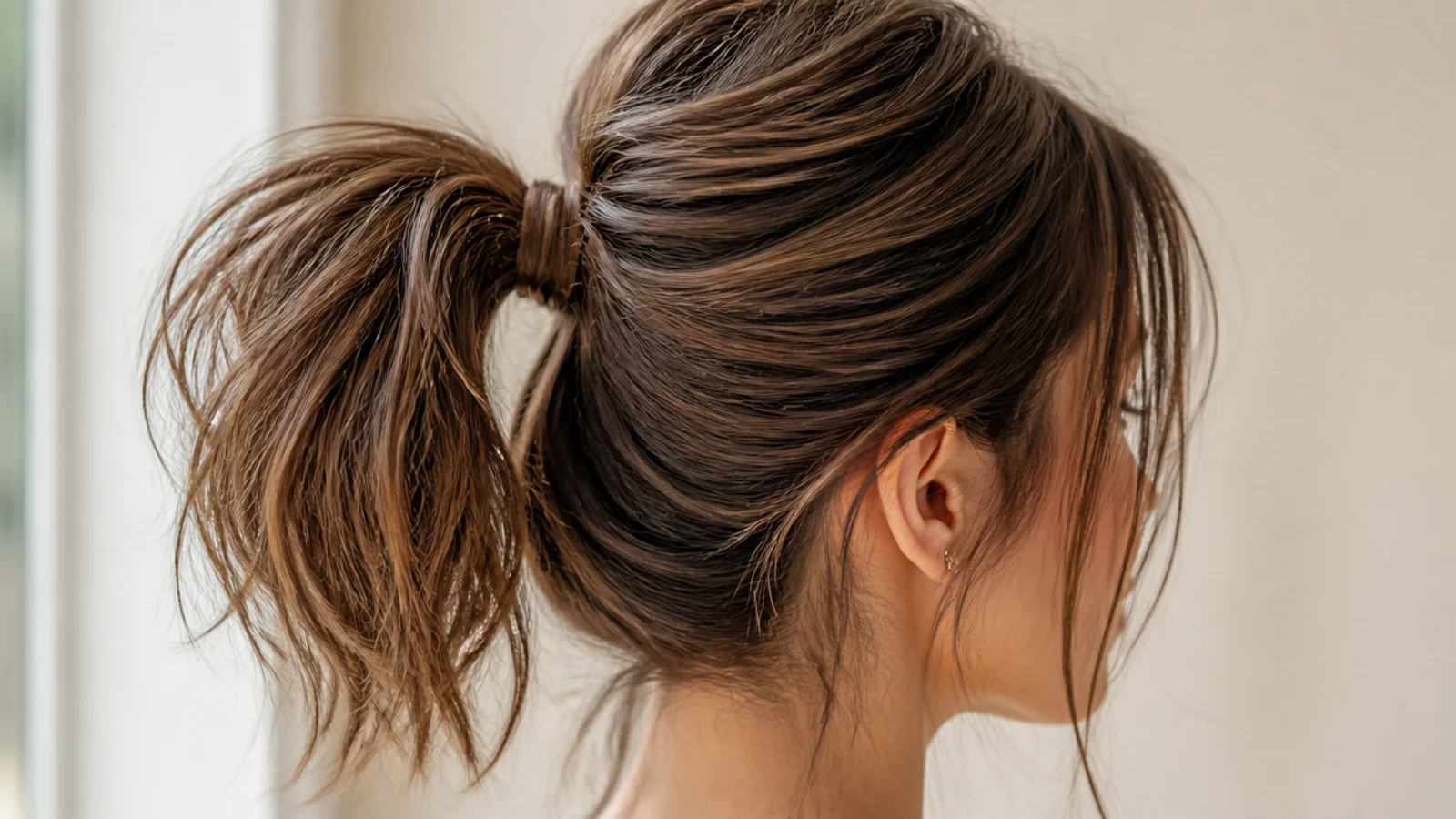
4. Wrapped Elastic
On a high tail the band is fighting the full weight of the hair, and a strand wound over it forms a friction collar that stops the elastic creeping down the strands. It also hides the band, which is the difference between a finished style and a gym one.
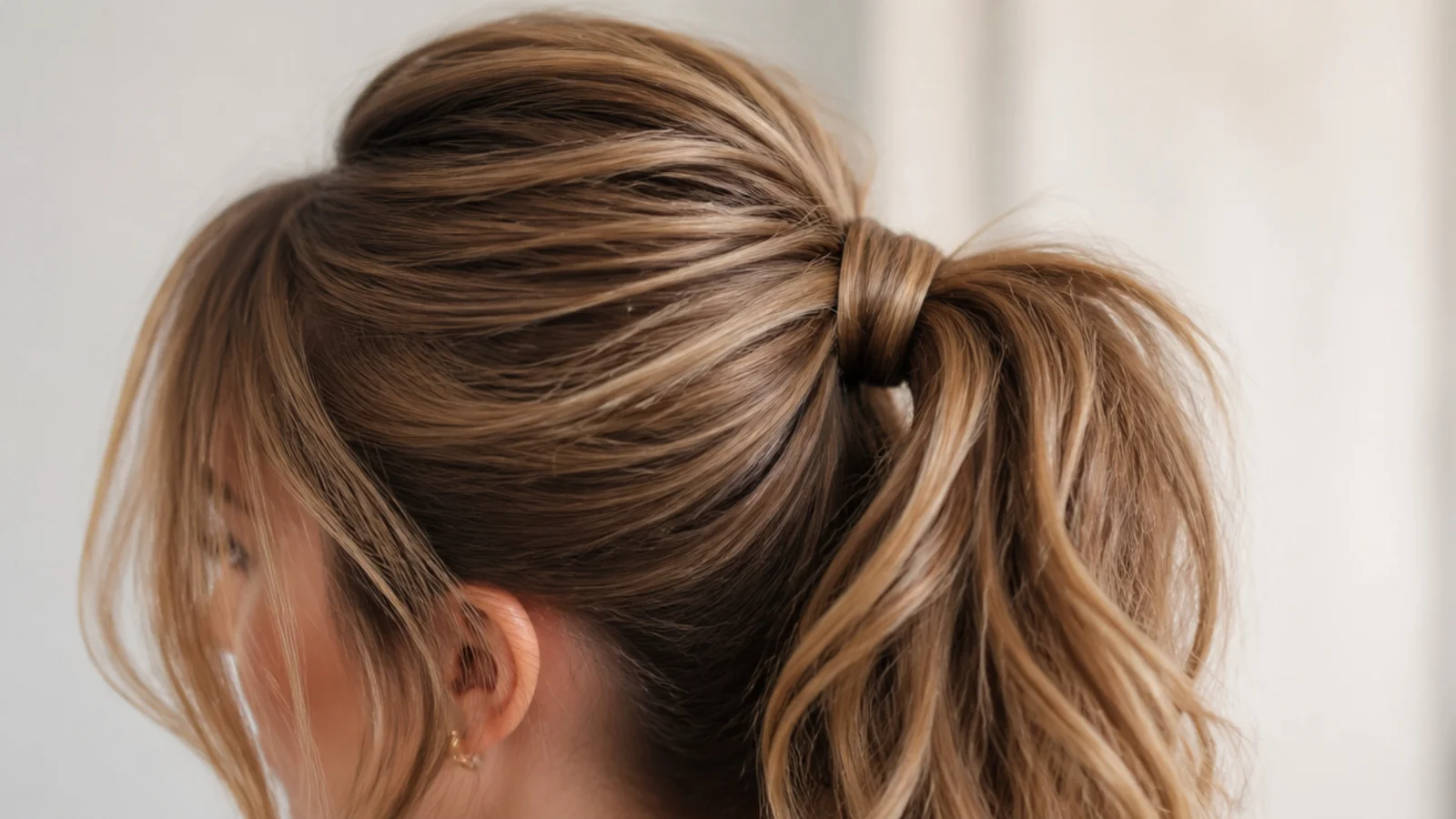
5. Face Framing Tendrils
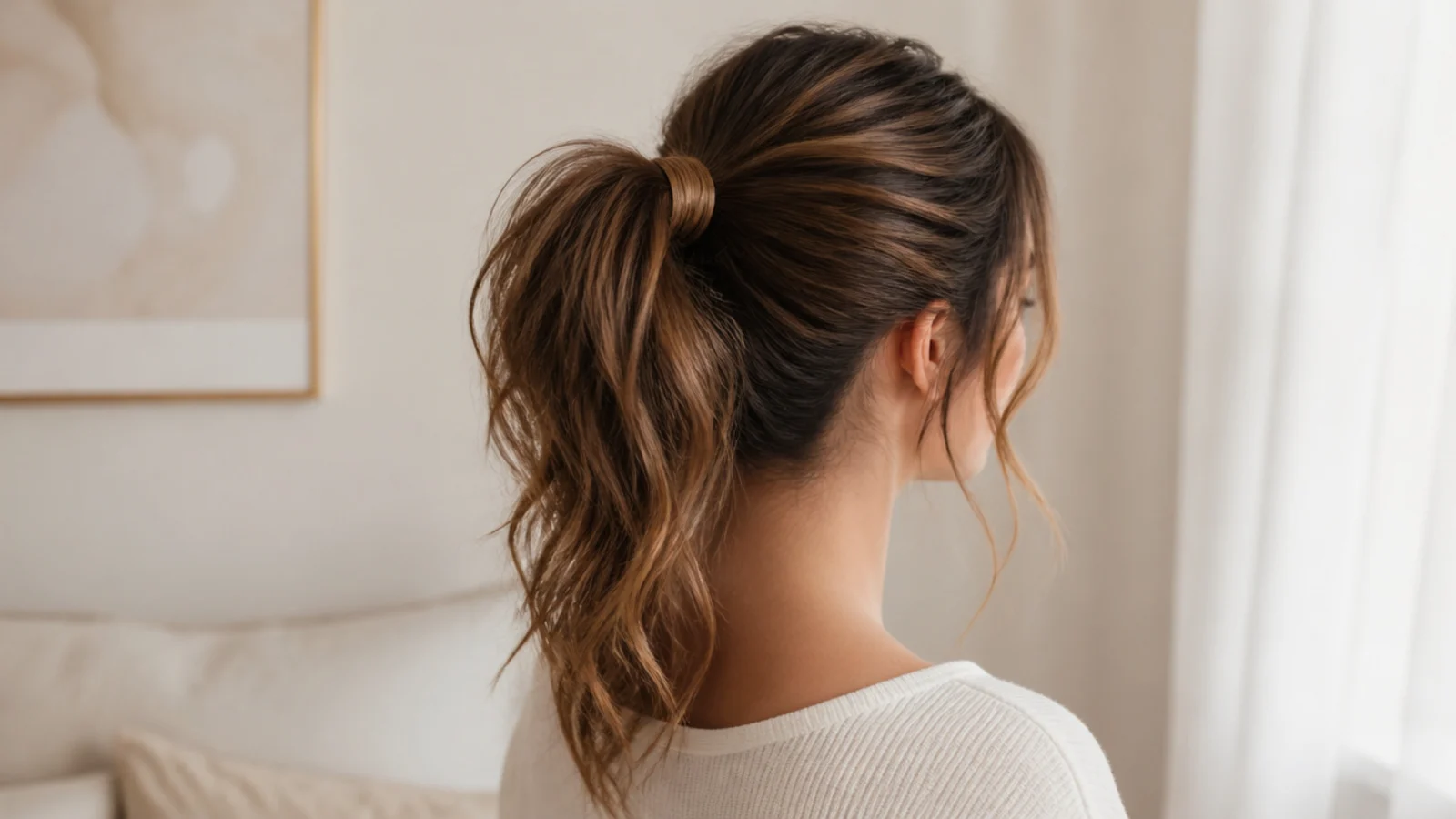
A high gather pulls the whole hairline back and leaves the forehead and temples fully exposed. Two thin pieces released afterwards put a soft vertical edge either side of the face, which is what stops the placement reading as severe.
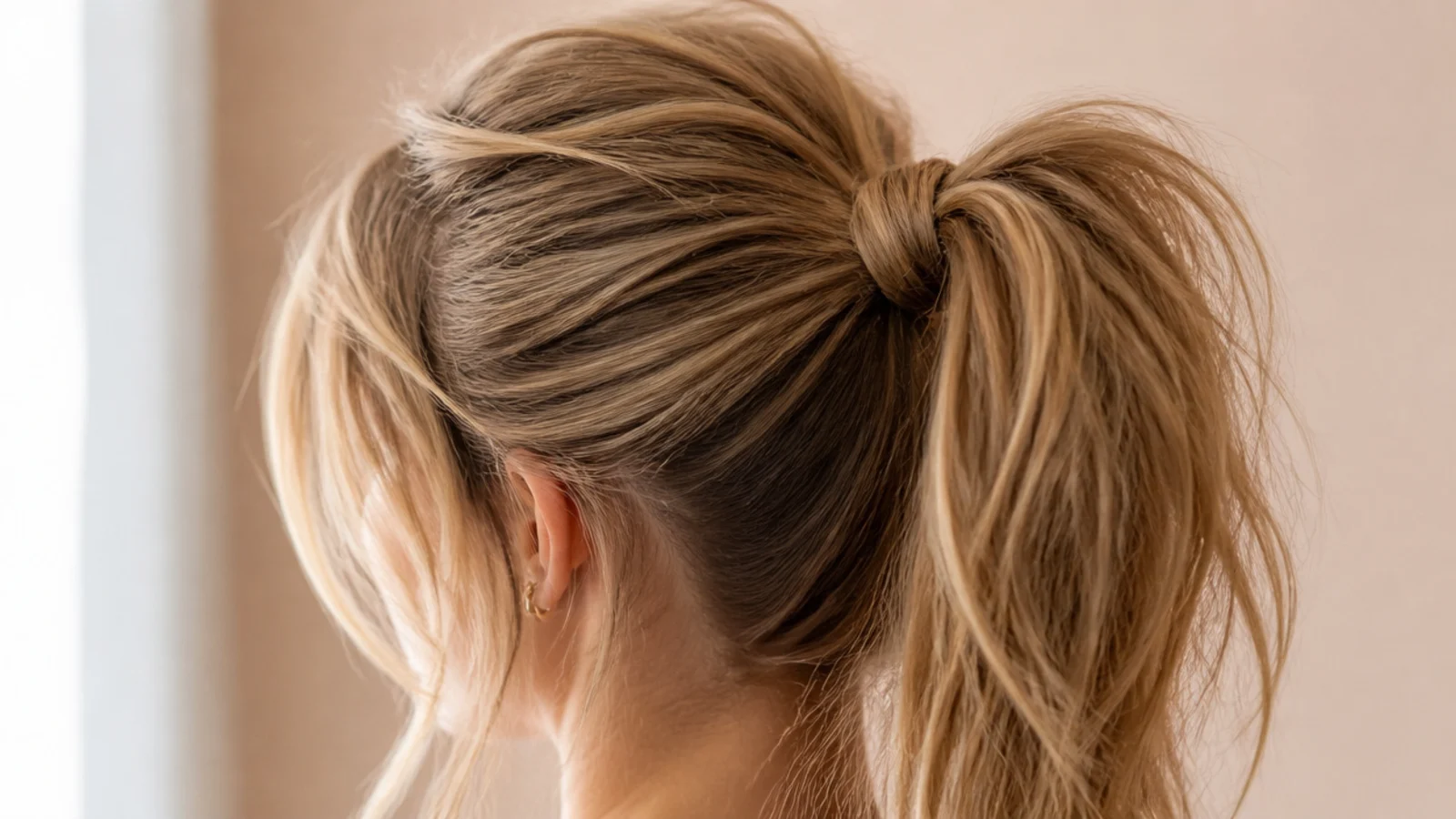
6. Deep Side Part
Carrying a deep part up into a high tail sets a diagonal against the horizontal line of the base, and two competing directions read as deliberate where one alone reads as flat. Comb the part before gathering, because a parting set after the tie has no slack to lie into.
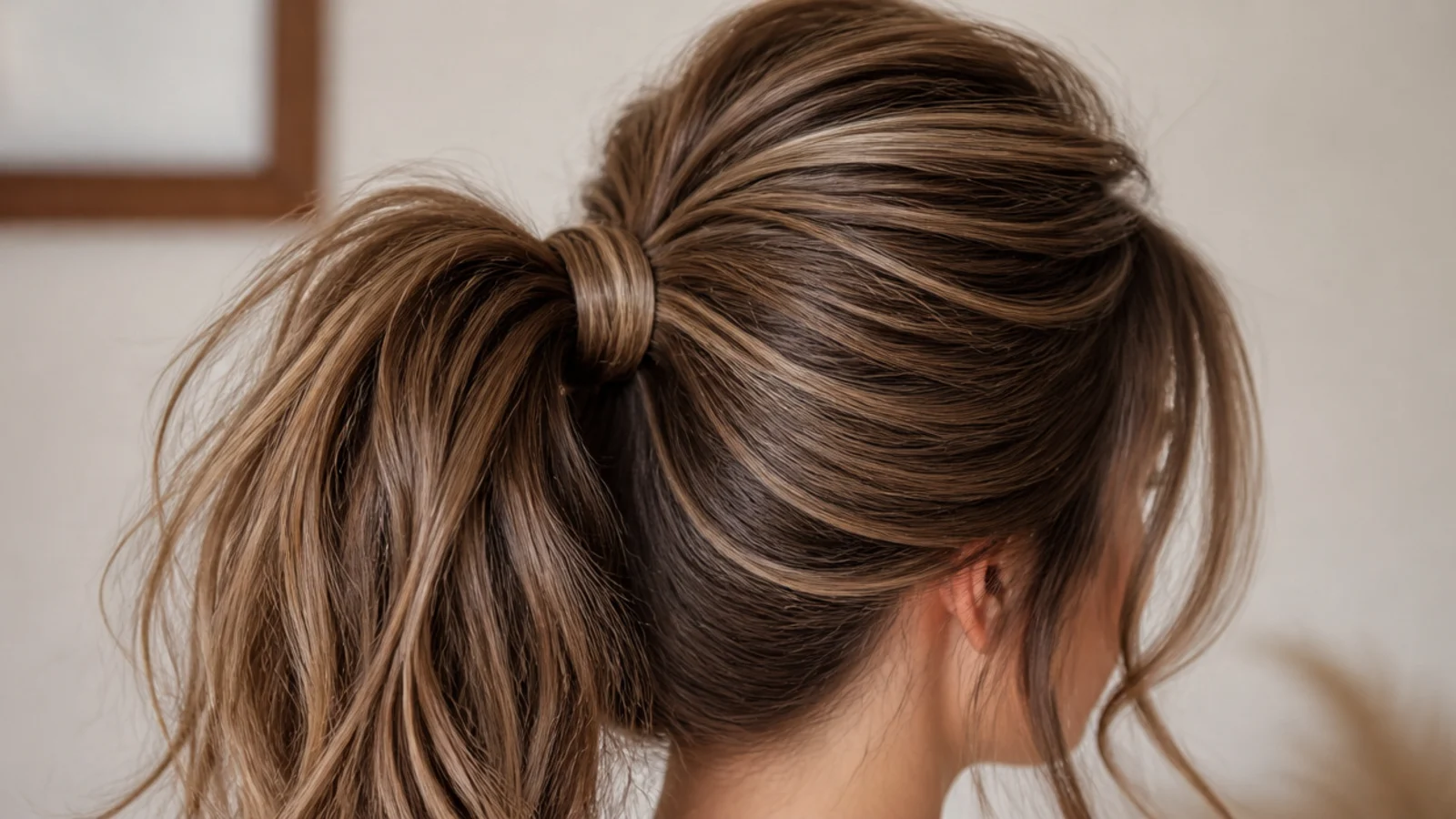
7. Curtain Bangs
Leave the fringe out and gather from behind the front hairline. A high ponytail exposes more forehead than any other placement, so the curtain is doing real balancing work here rather than sitting there as decoration.
8. Bubble Tail
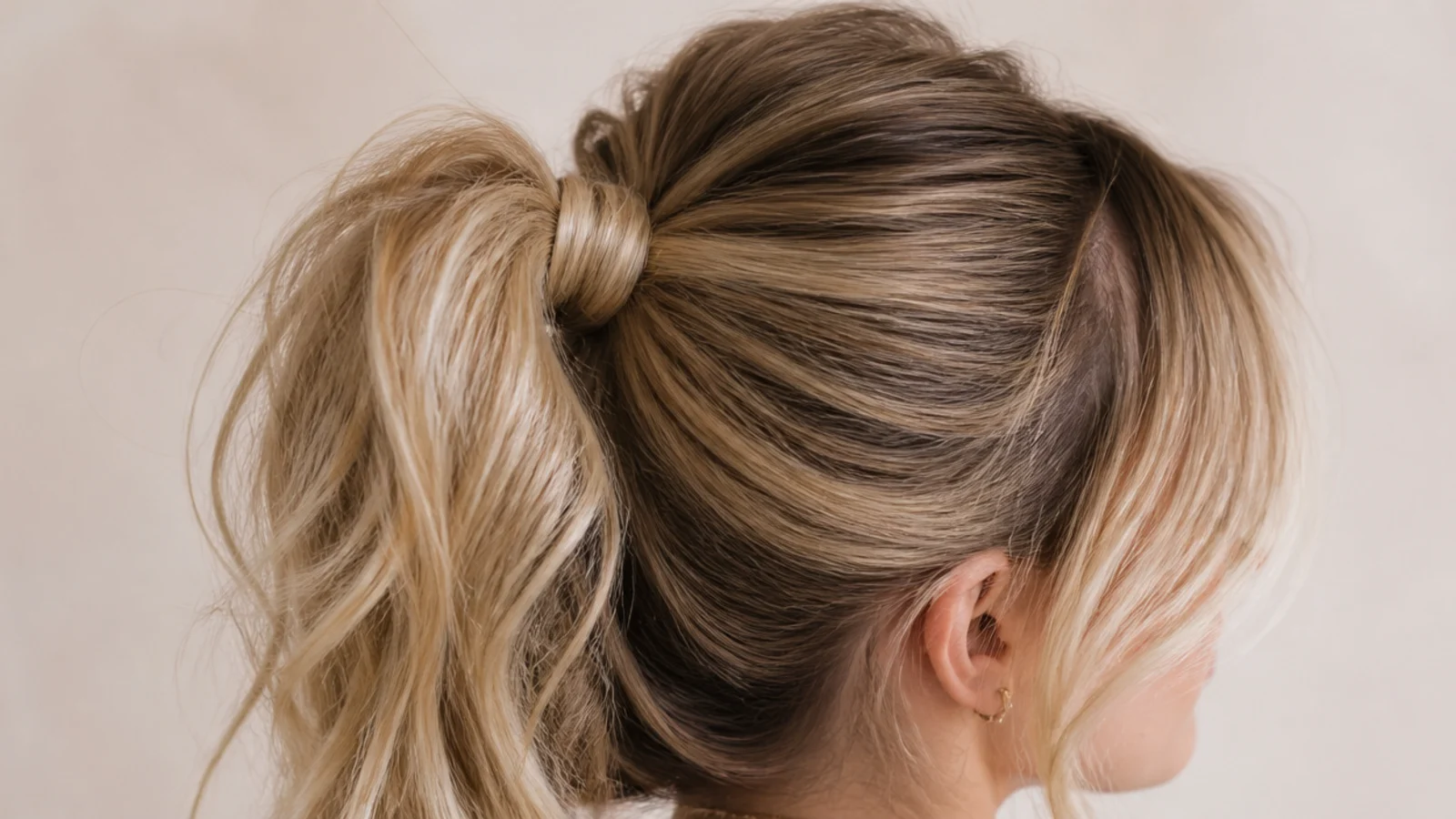
Bands spaced down the length spread the weight across several anchor points rather than loading everything onto the one at the crown. That is the reason this version holds a high placement so well, and the segments give the tail width without any teasing.
9. Pull Through Braid
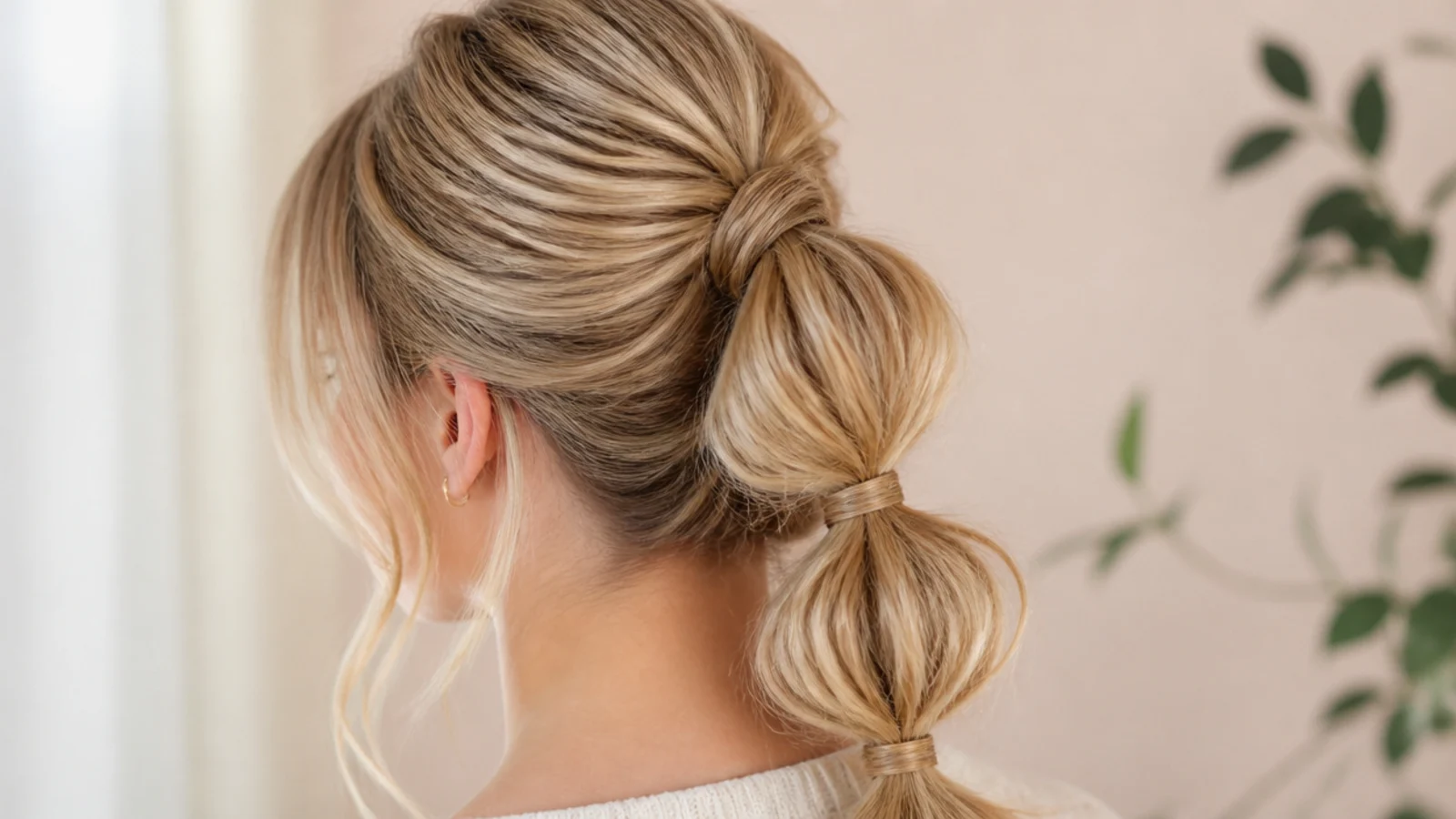
Sections are looped through each other rather than crossed over, so each loop is held only by the bands above and below it. That is why the loops can be fanned out wide without anything unravelling, and why this reads as twice the hair it actually uses.
10. Second Day Hair
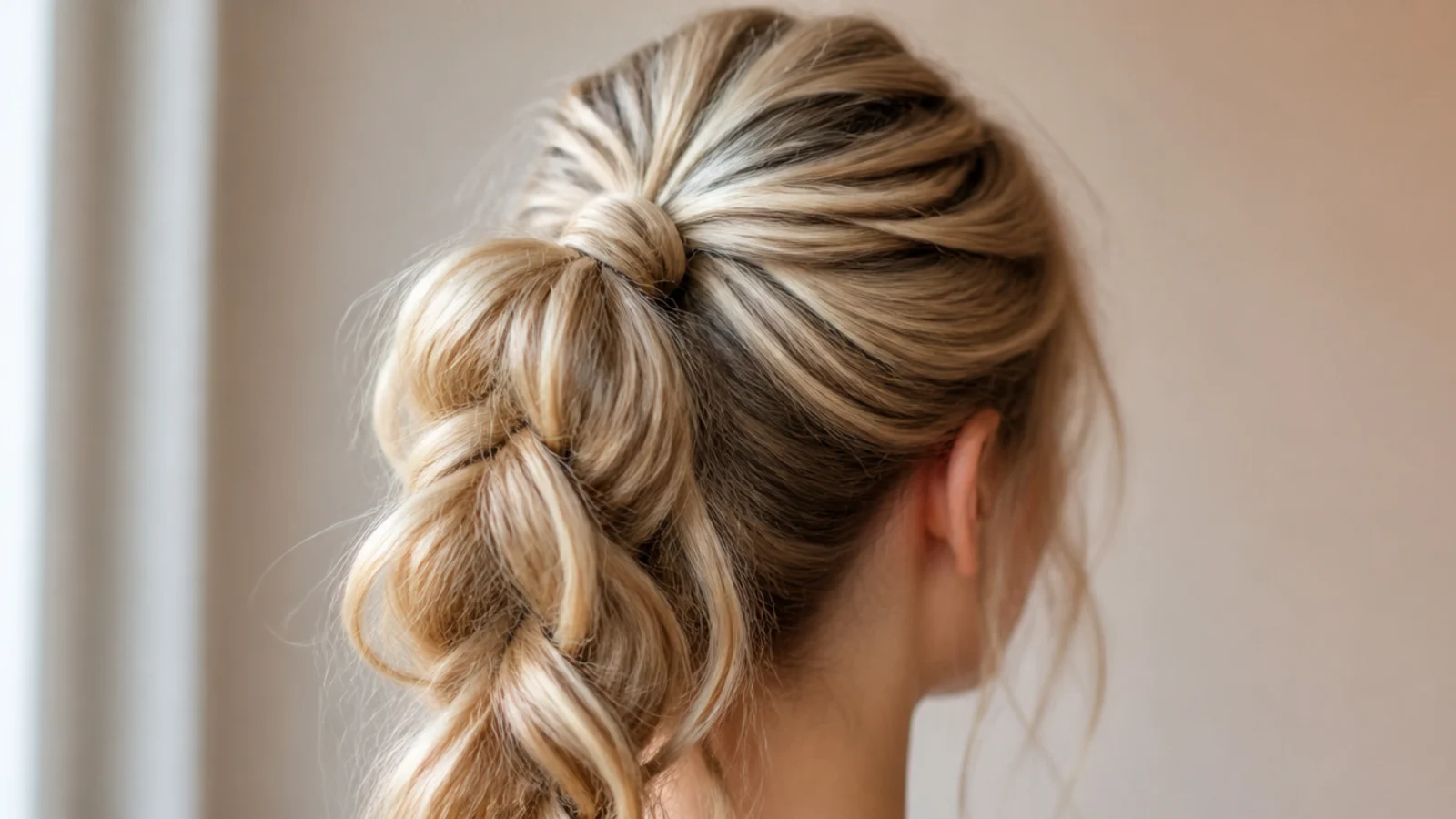
Scalp oils and yesterday's product leave a rougher strand surface, so hair grips itself inside the band instead of sliding through it. A high ponytail is the placement that benefits most, because it is the one asking the most of that friction.
11. Pineapple Curls
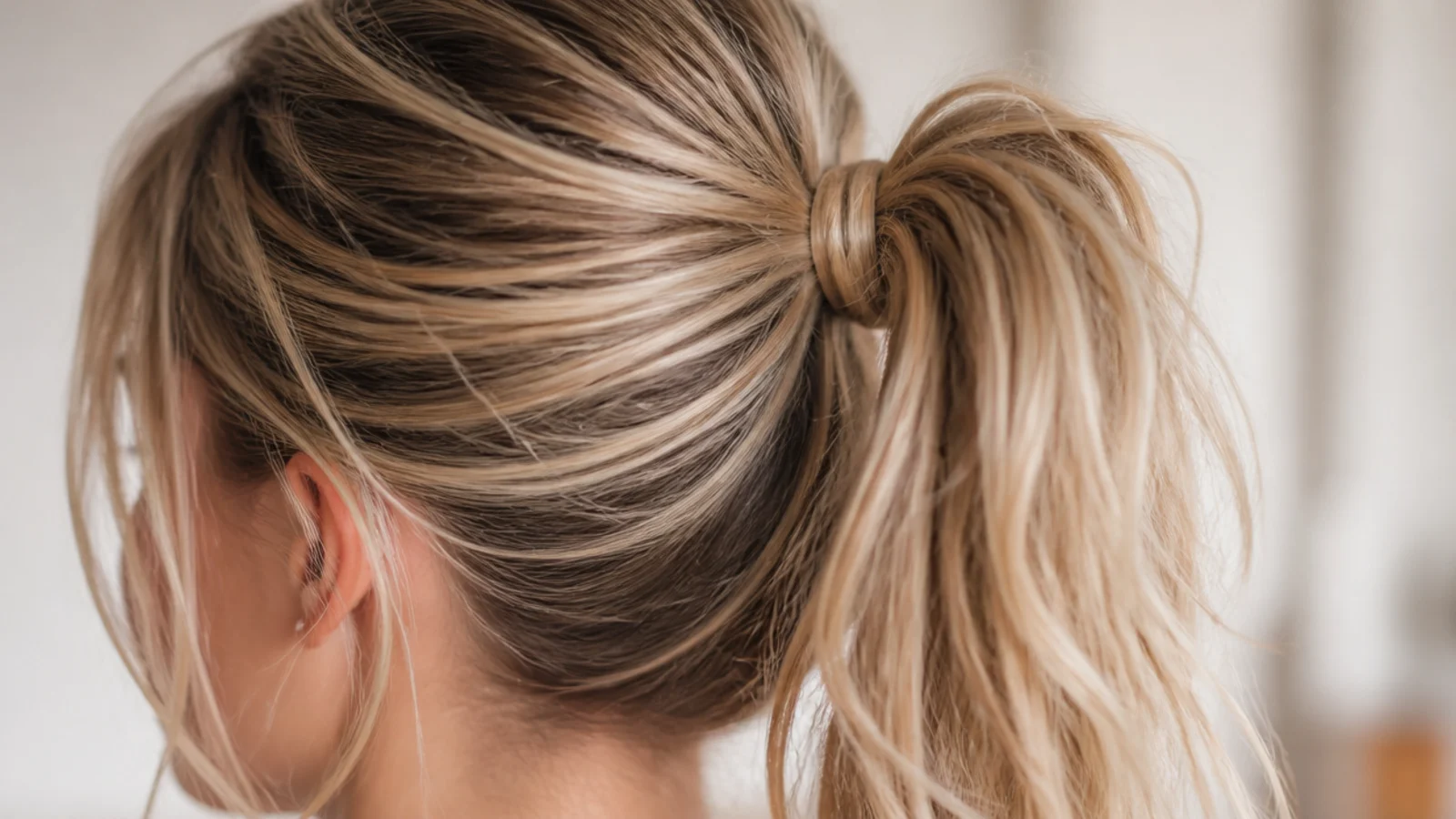
Gather loosely at the very top so the curl pattern sits above the band rather than compressed inside it. Tension pulls the bend out of a curl at the root, and that root bend is what holds the whole shape up, so a tight tie flattens the crown for the rest of the day.
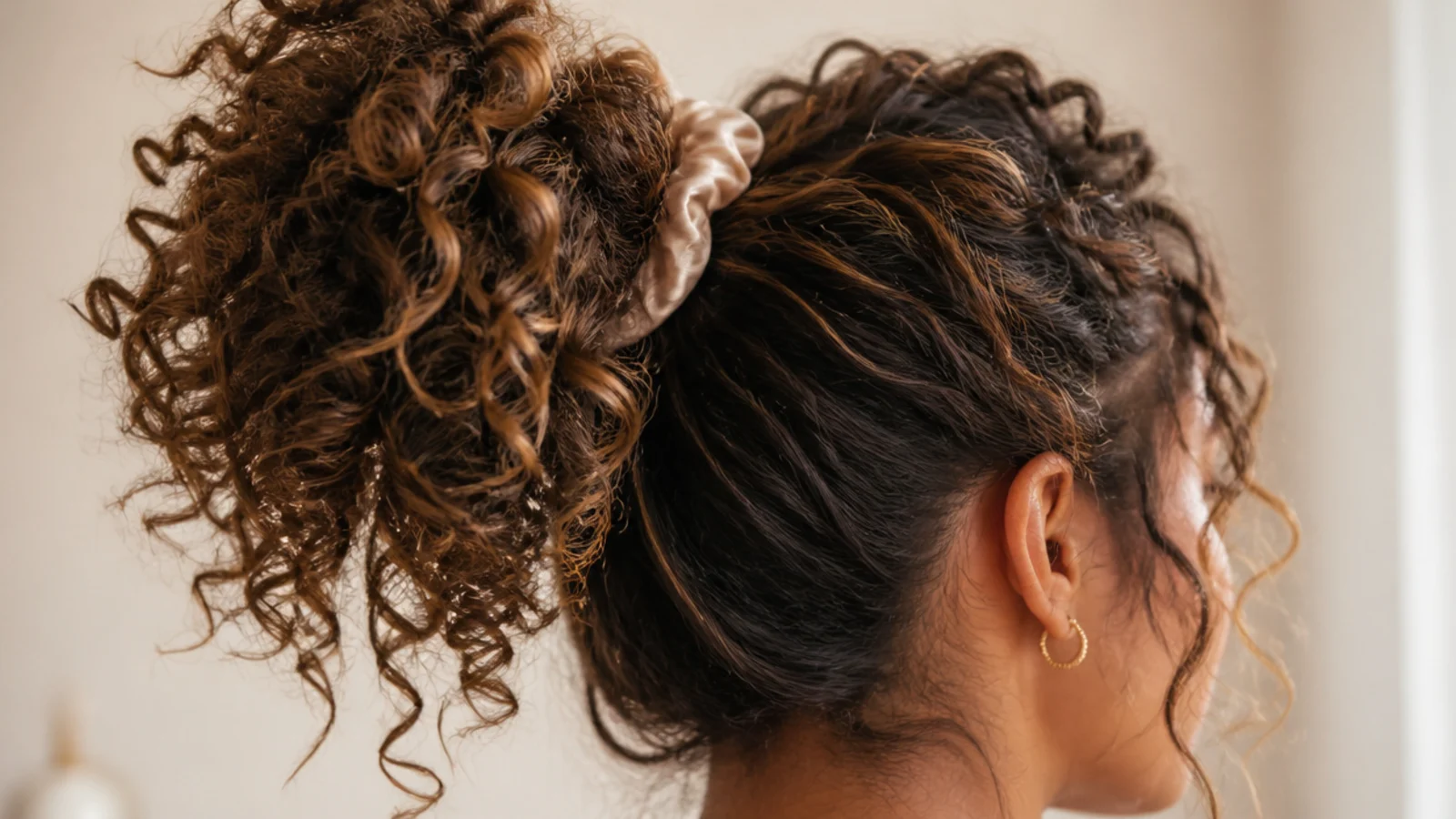
12. Crimped Root Lift
A crimping iron used only on the first inch of the roots puts sharp bends into hair that then physically hold the section away from the scalp. It is structural lift rather than product lift, which is why it outlasts a mousse on fine hair.
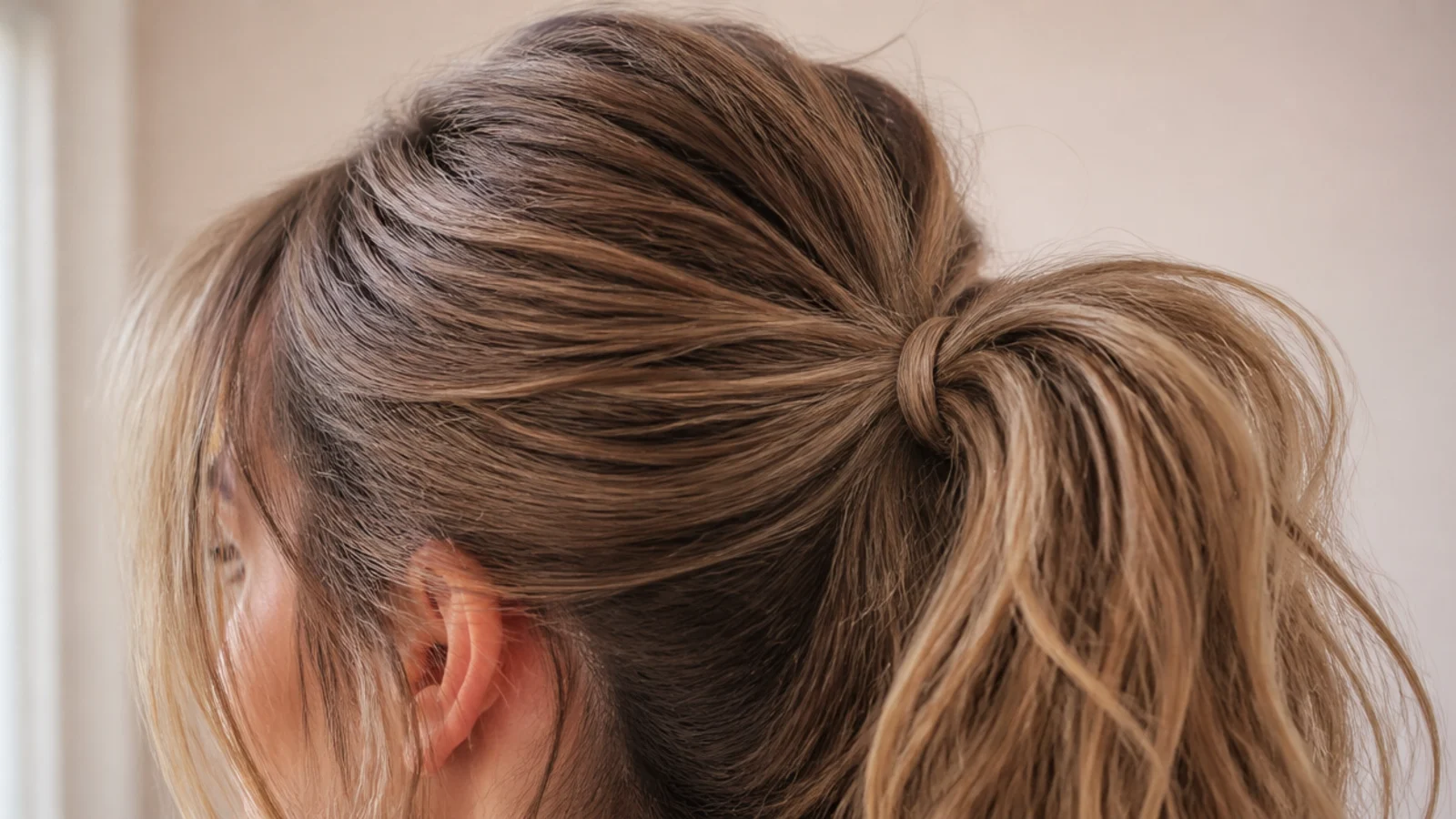
13. Bungee Band on Short Hair
Two hooks let you set the tension by stretch rather than by wrapping, which matters on short hair because every wrap of an ordinary elastic swallows length. On a bob a high placement is often only possible at all with a bungee.
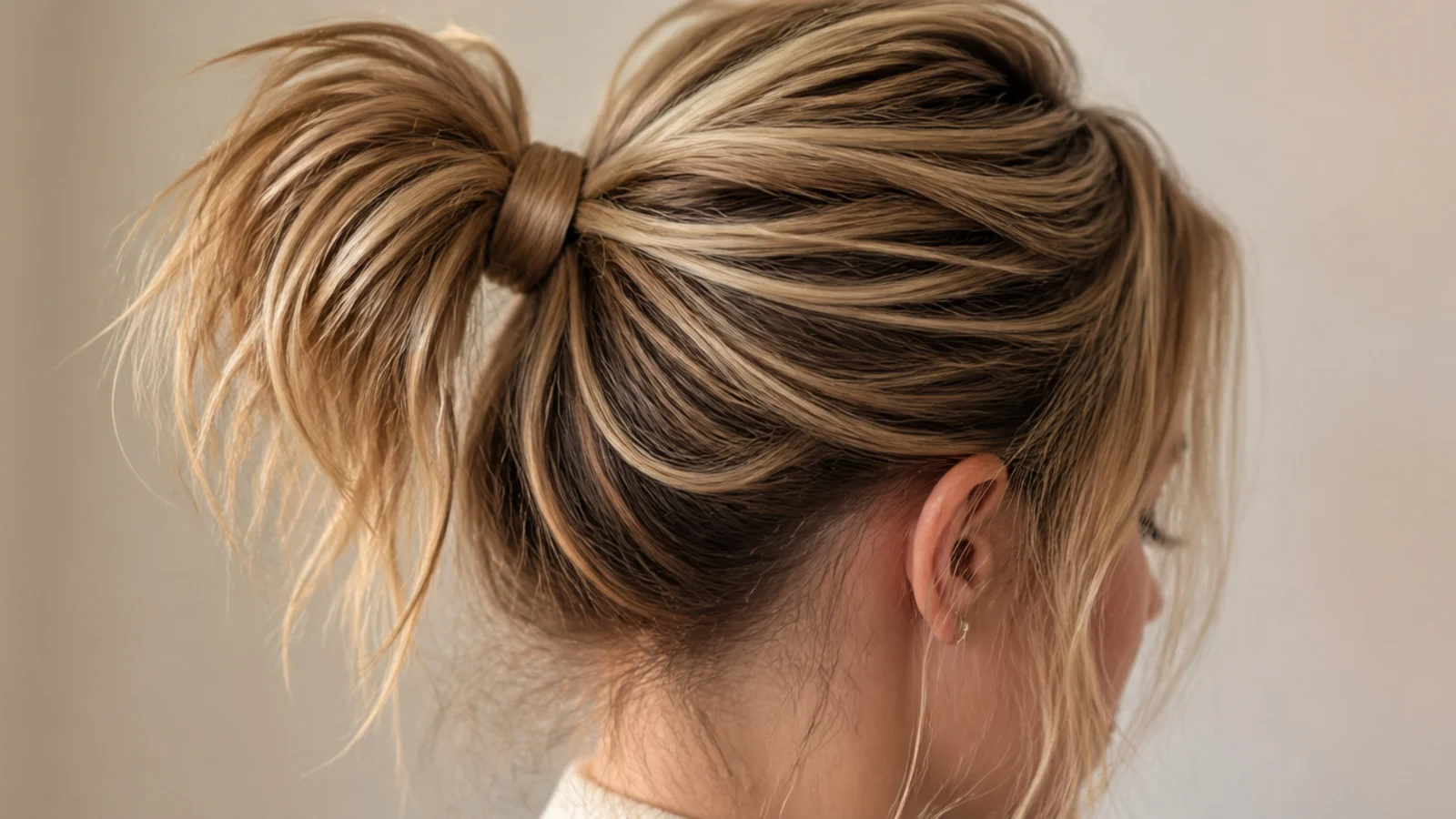
14. Thick Hair Half Teased
Backcomb the under half and leave the top half smooth, so the volume is carried by hair nobody sees. Teasing the whole head on thick hair produces bulk you then have to fight into the elastic, and the base ends up wider than the tail.
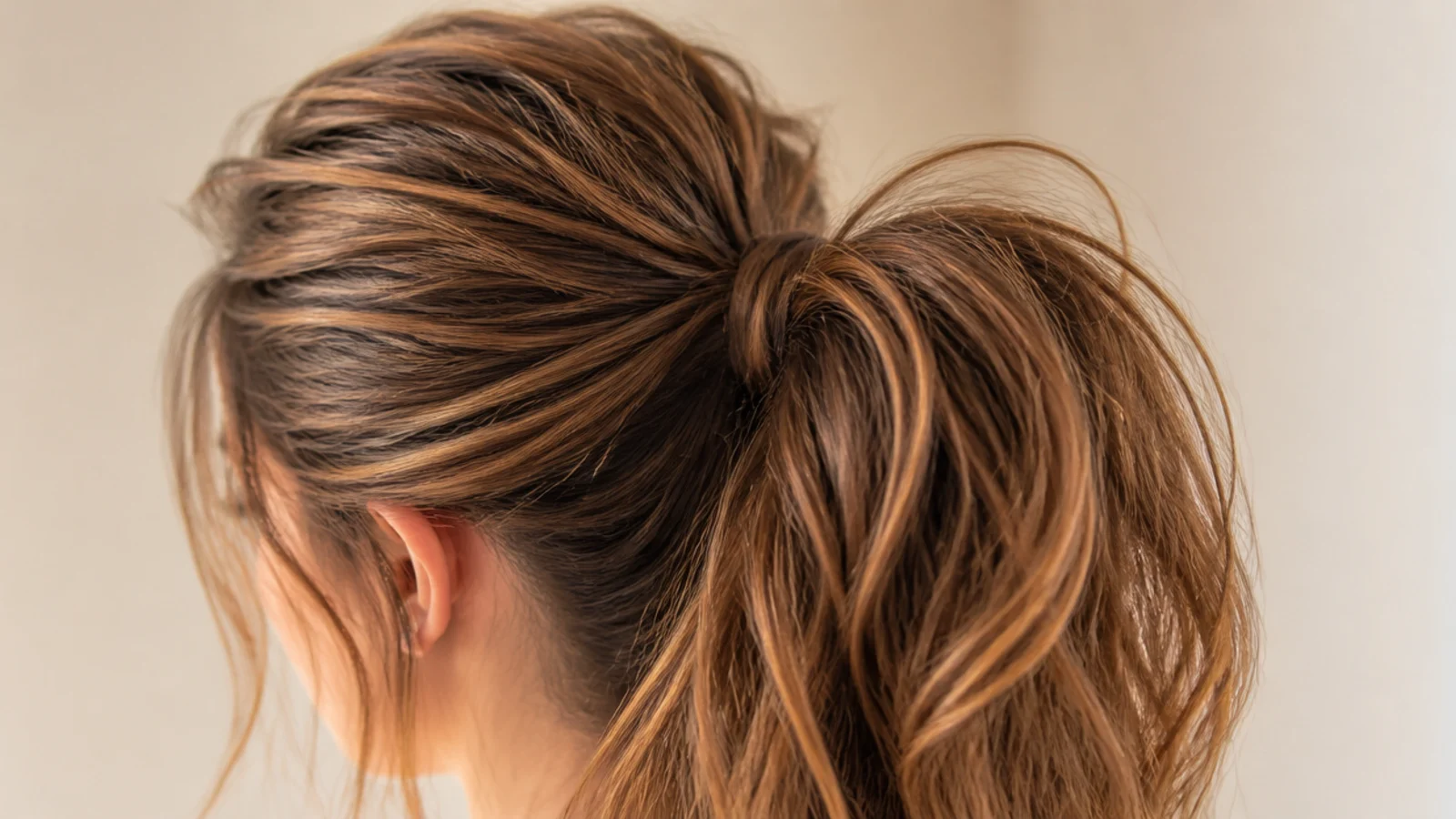
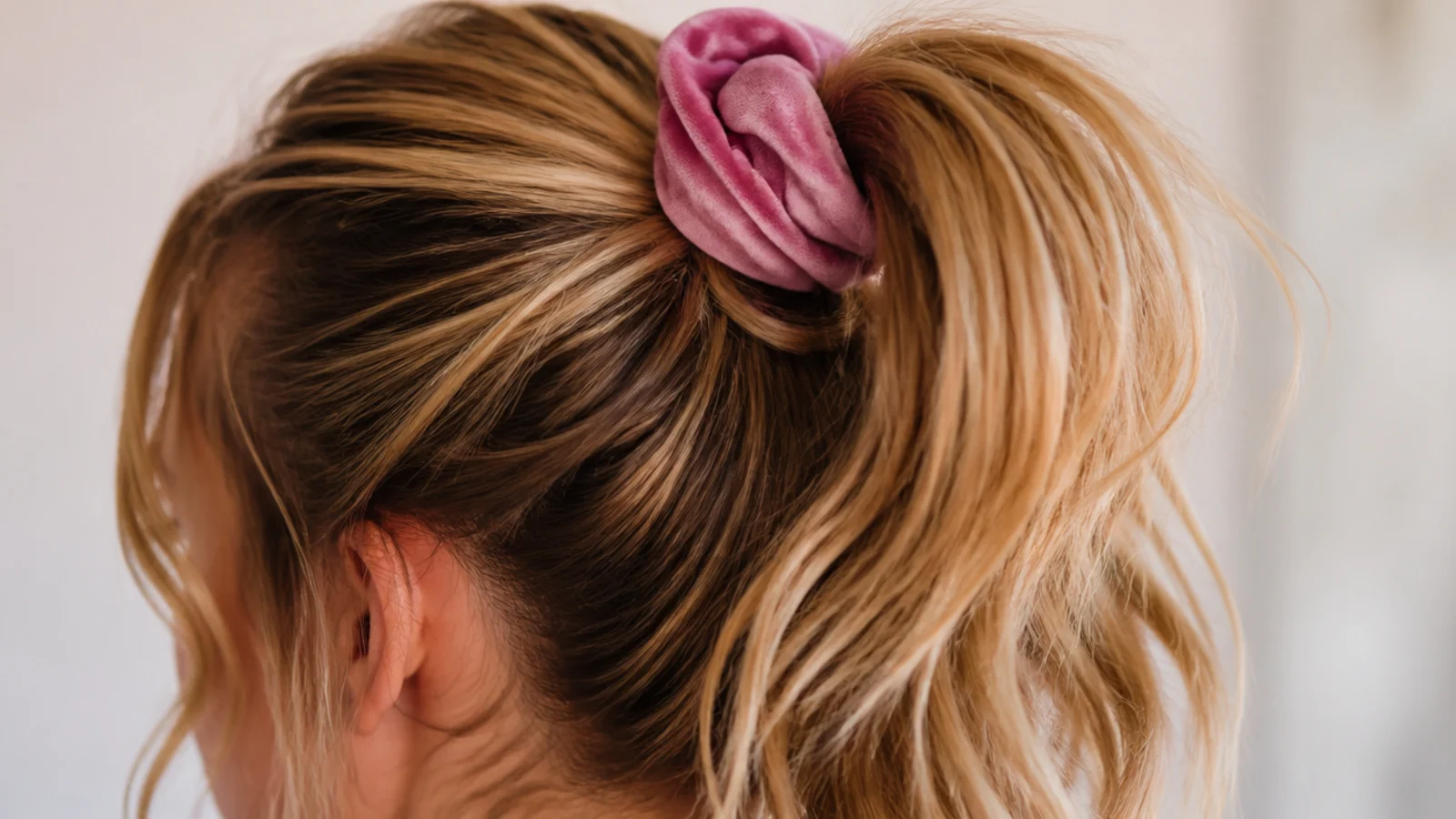
15. Scrunchie
The fabric bulk sits underneath the gathered hair and props the tail up at an angle instead of letting it hinge straight down. It also spreads the grip over a wide contact area, so the pressure at any one point is a fraction of what a bare elastic applies.
16. Claw Clip Ponytail
A claw holds by spring pressure across its teeth, so it needs a compressed section to bite into rather than a flat one. Twist the gathered hair once before clipping and it holds a high placement all day, where the same clip on smoothed hair slides within minutes.
17. Sleek Roots With a Messy Tail
Smoothing only the first few inches from the hairline and leaving everything past the band textured puts a hard boundary in the middle of the style. The contrast is the point, and it works because the eye reads the polished section as the deliberate part and applies that reading to the rest.
18. Braided Base
A short braid running up the nape into the gather stops the under layers escaping, and the nape is exactly where a high ponytail loses hair first. The braid is also anchored along its whole length, so any pin driven through it has nowhere to travel.
19. Gym Proof High Ponytail
Tied above the occipital bump the tail clears a bench, a mat and a collar, so the movement pulls against the band rather than levering the base sideways. Wrap the elastic one extra turn and split long hair into two stacked sections before you start.
20. Silk Ribbon
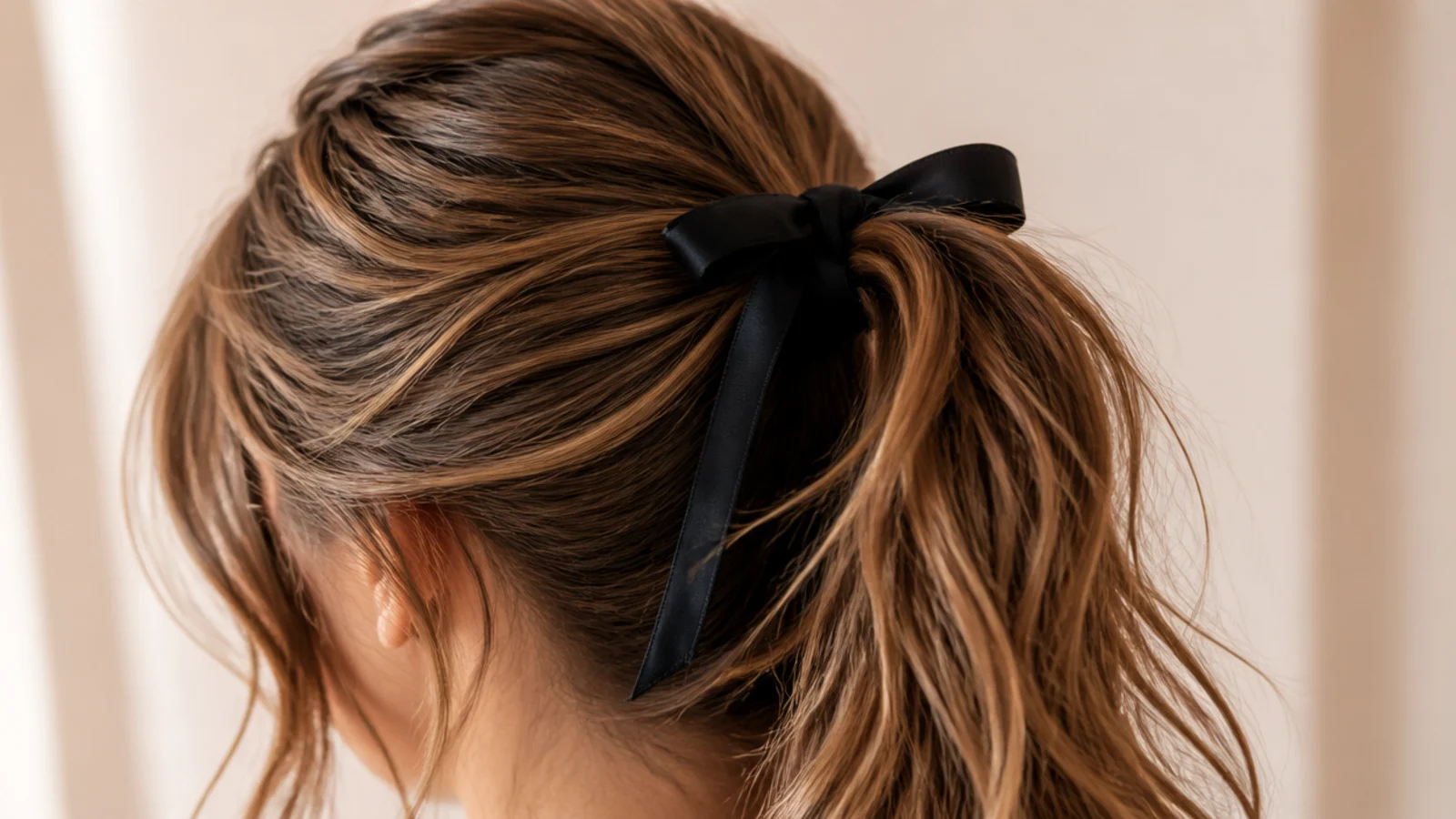
Silk is smooth and slides, so a silk ribbon should be tied over the elastic as decoration rather than used to hold anything. Knot it once and let the ends fall at different lengths, since a symmetrical bow fights the texture the rest of the style is built on.
Final Thoughts
Get the placement right and most of the other problems disappear. Find the occipital bump with your fingers, put the band clearly above it on the flat of the crown, and the tail stops fighting the slope of your own skull. Then share the load rather than increasing it, with a second elastic or two crossed pins, because tightening one band is how a daily high ponytail turns into thinning along the front hairline.
Everything else is the last twenty seconds. Widen the crown by tugging hair already inside the elastic, release two matching pieces at the temples, and leave the tail alone. For the full range of the placement see the companion piece, and for the polished opposite see the sleek version. More in Updos and Clips.