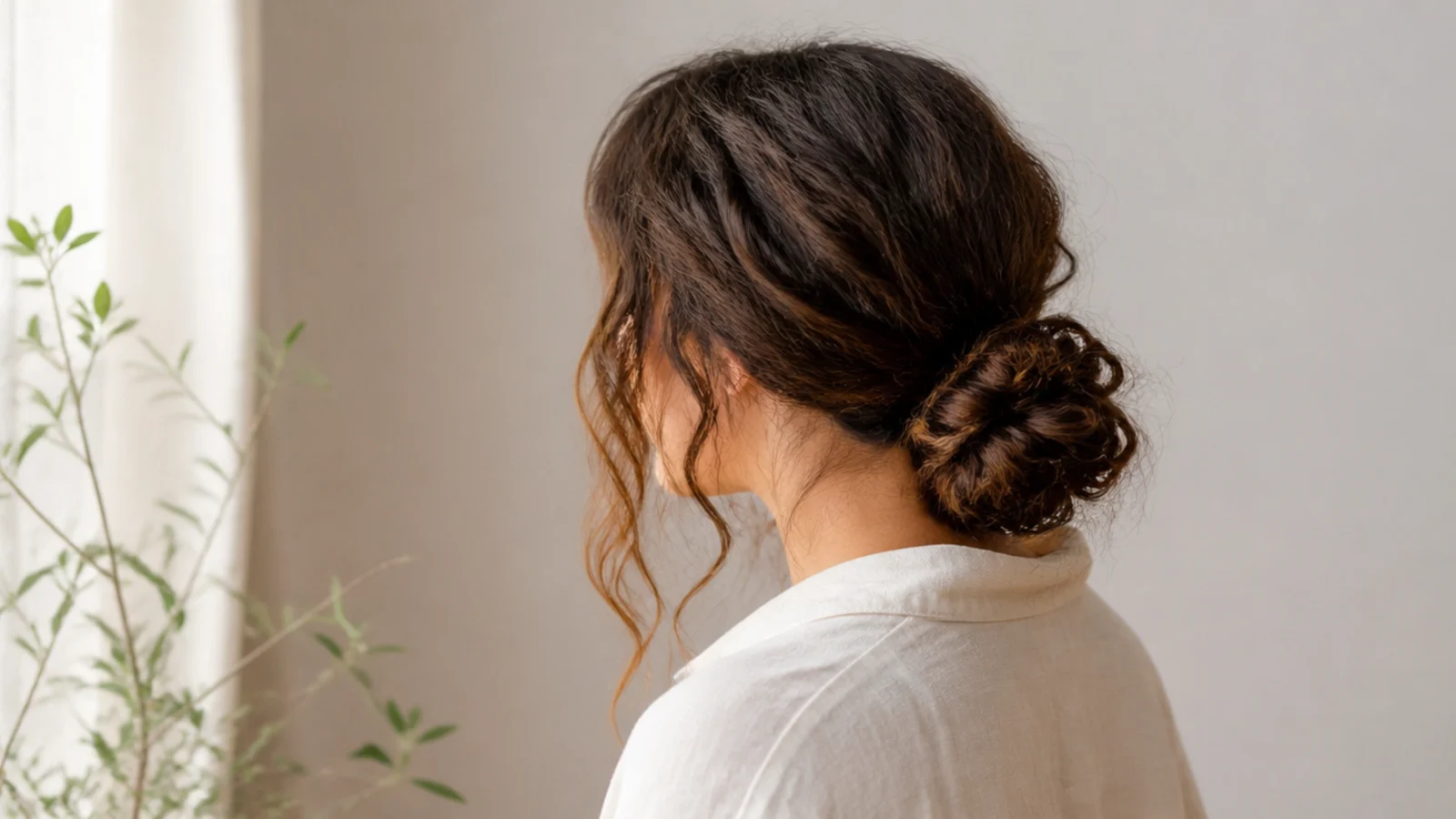
20 Frizzy Hair Hairstyles That Hide It Well
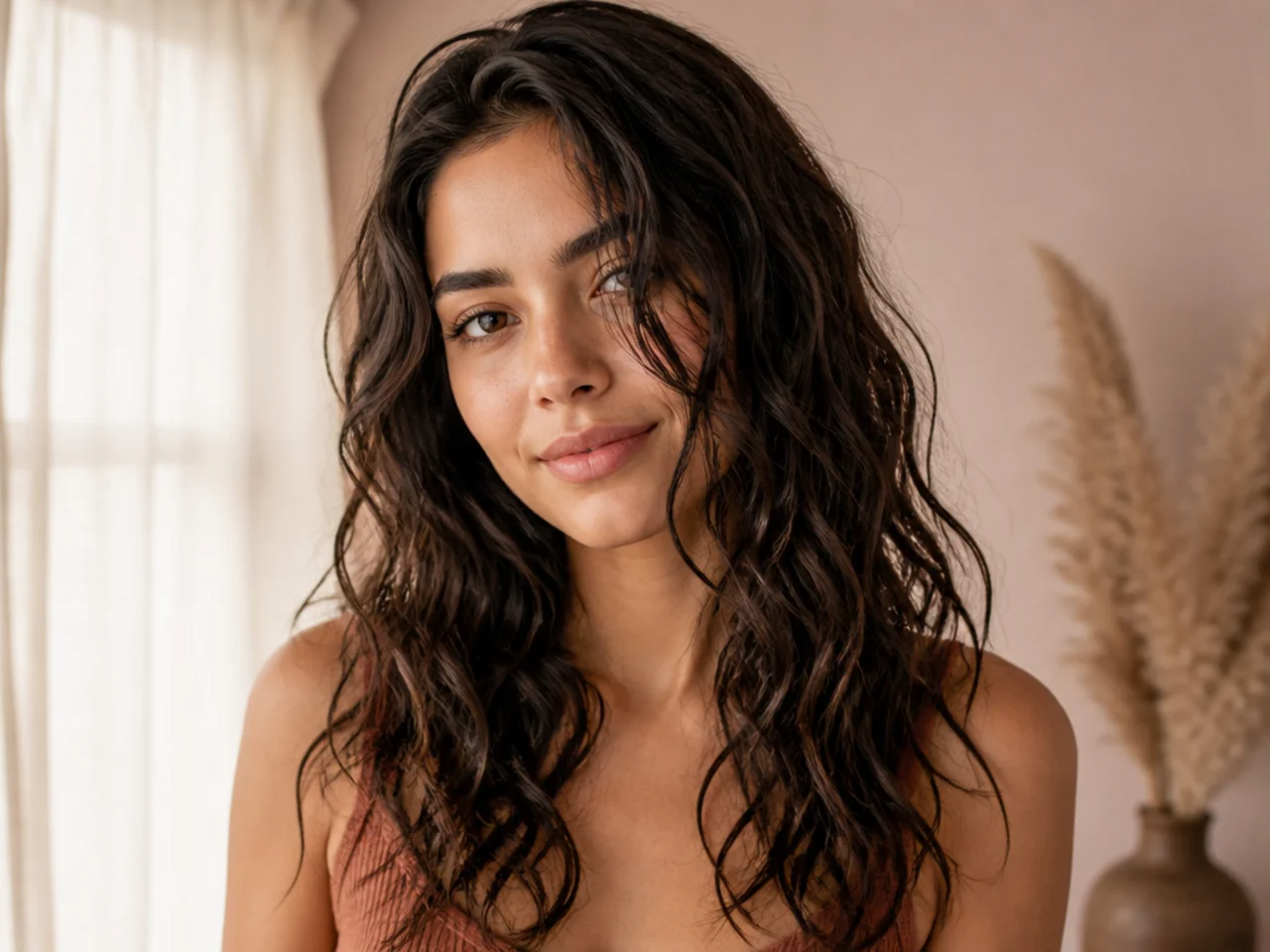
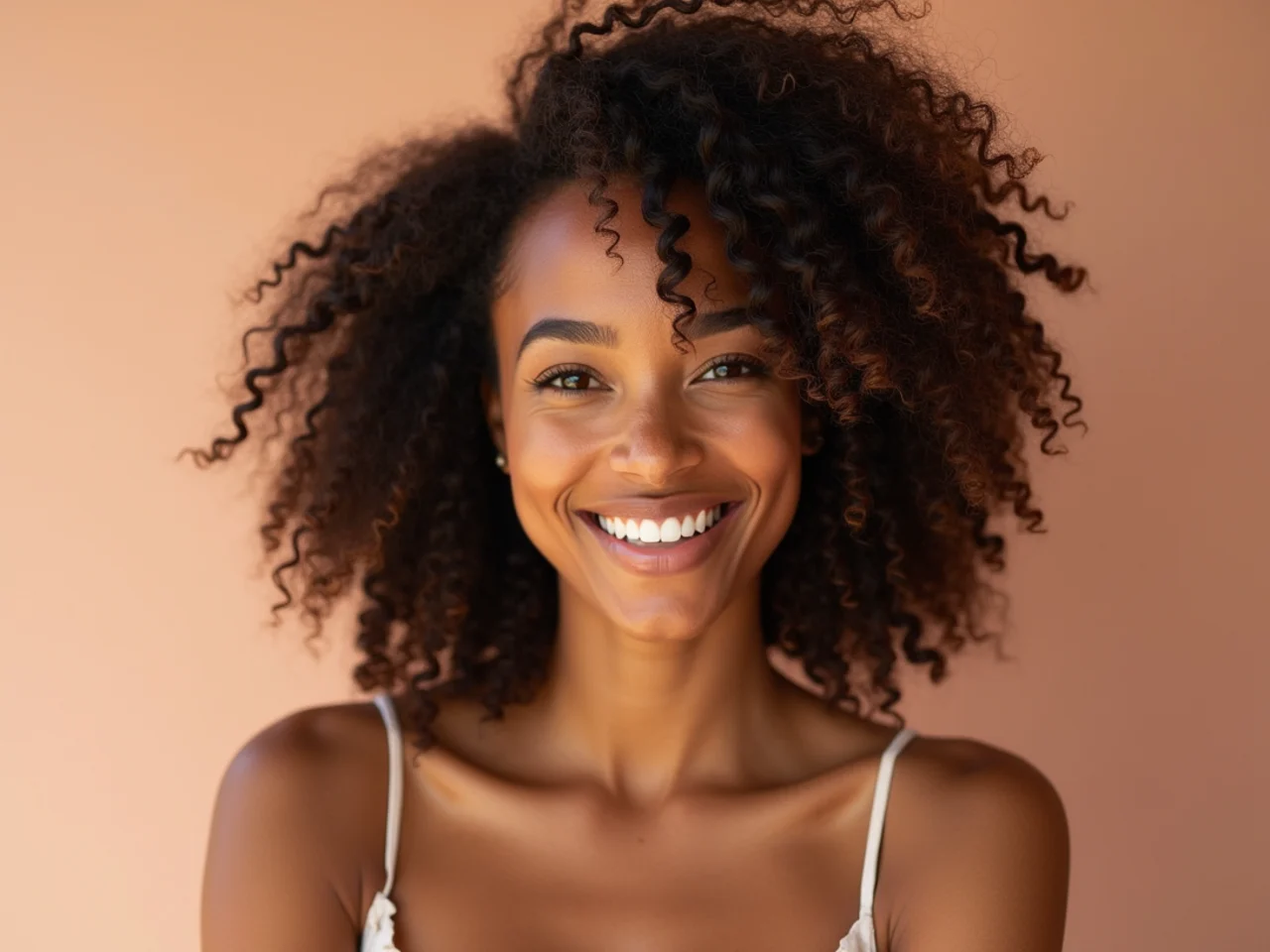
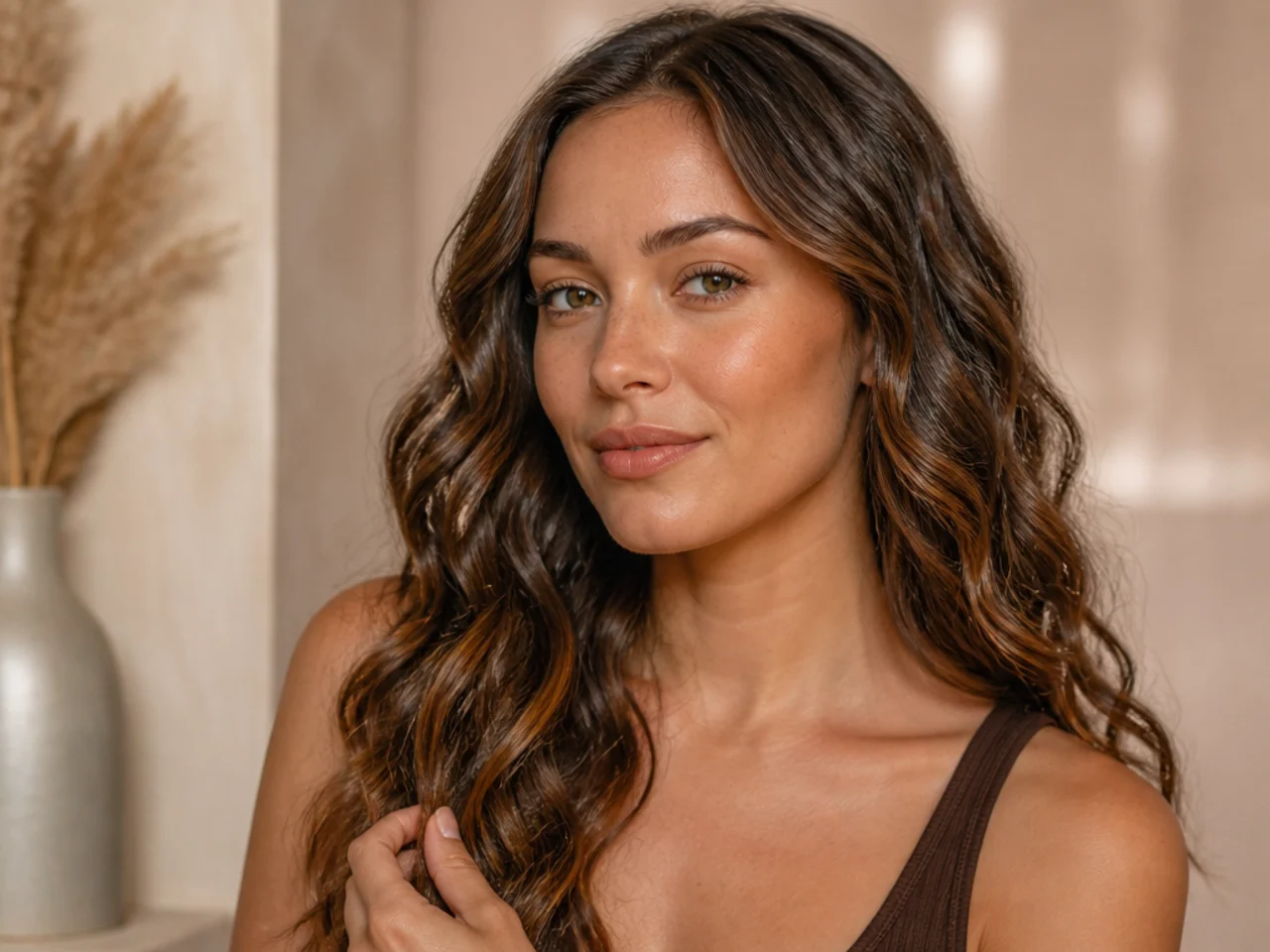
Twenty styles for a frizzy day, chosen by how they work rather than how they look. A hairstyle cannot flatten a lifted cuticle, but it can put the escaping hairs under tension or inside a braid, and that is the whole game.
In this article · 28
- Why Hair Frizzes
- Frizz Types and Diagnosis
- Wash Day Routine
- Product Layering Order
- Cuts and Layers for Frizzy Hair
- Humidity and Sleep Habits
- The 20 Frizzy Hair Hairstyles
- 1. Loose Low Bun
- 2. Messy Top Knot
- 3. Slicked Low Pony
- 4. Claw Clip Twist
- 5. French Braid
- 6. Double Dutch Braids
- 7. Side Fishtail
- 8. Rope Braid
- 9. Braided Crown
- 10. Twisted Chignon
- 11. Bubble Ponytail
- 12. Half Up Space Buns
- 13. Faux Knot Half Up
- 14. Plopped Waves
- 15. Overnight Braid Waves
- 16. Silk Scarf Headband
- 17. Headband Tuck
- 18. Diffused Wash and Go
- 19. Bouffant High Pony
- 20. Low Side Braid
- Final Thoughts
A hairstyle cannot flatten a lifted cuticle. What it can do is give every escaping hair somewhere to be, and that is a completely different mechanism from a serum.
Tension flattens the hairline. Short new growth at the crown is too short to join anything. Pulling the section it sits in tight against the scalp is the only thing that reliably holds it down.
Braids swallow strands as they travel. A plait picks up surface hairs and folds them into the pattern, which converts a halo into texture rather than trying to remove it.
Why Hair Frizzes
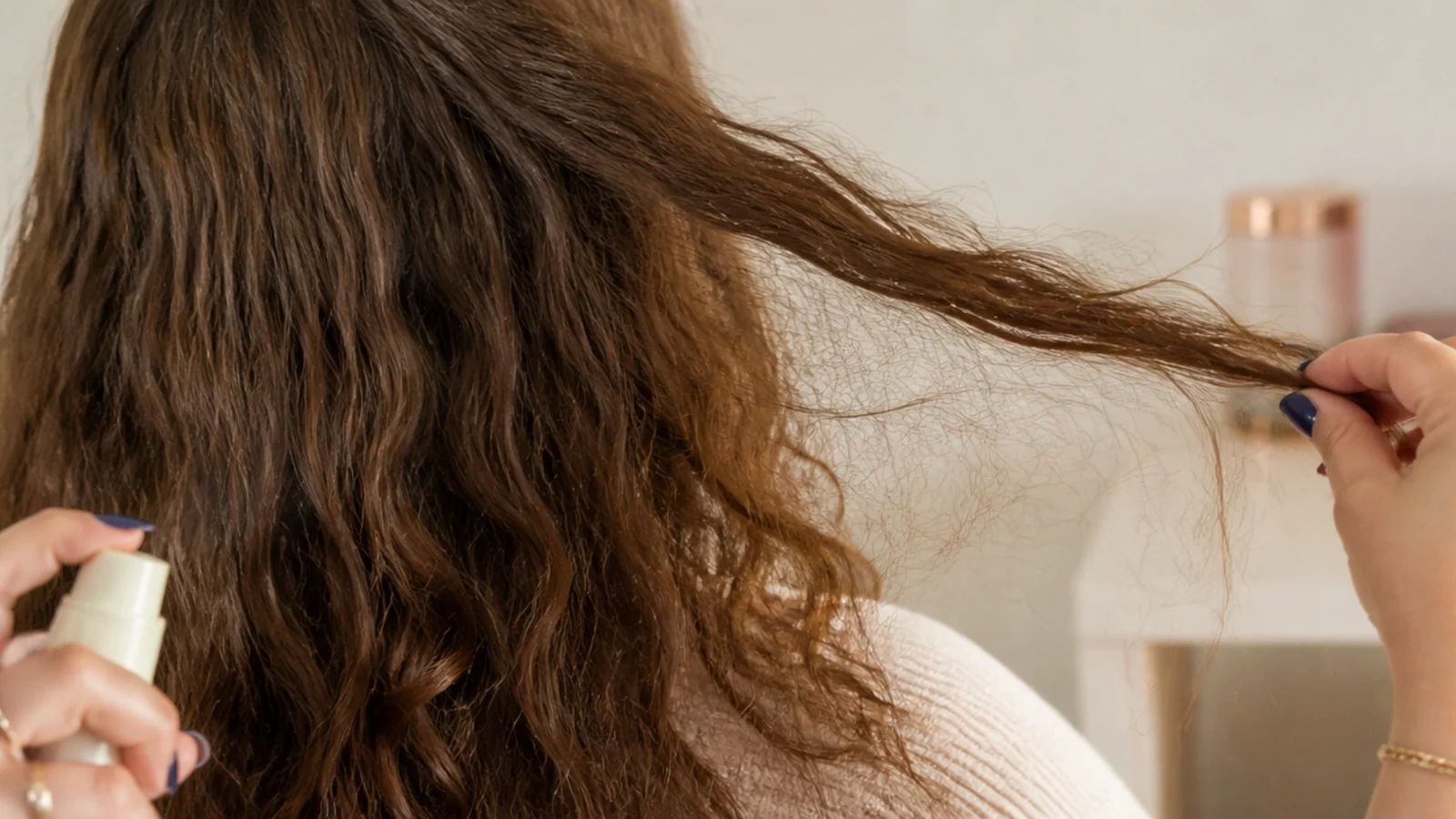
Water gets into the cortex and swells it. The cuticle is a layer of overlapping scales sitting on top. When the inside expands, those scales are forced apart from below and the strand stops lying flat.
Every lifted scale scatters its own light. That is why frizzy hair looks dull as well as untidy. A flat cuticle reflects as one surface, a lifted one reflects in a hundred directions.
Damage means the scales never fully close again. Bleach, heat and friction chip them, and chipped hair absorbs faster, releases faster and frizzes at a lower humidity than intact hair does.
Not all of it is cuticle. Broken hairs, new growth and static charge produce the same silhouette from different causes, which is why one fix never clears the whole picture.
Frizz Types and Diagnosis
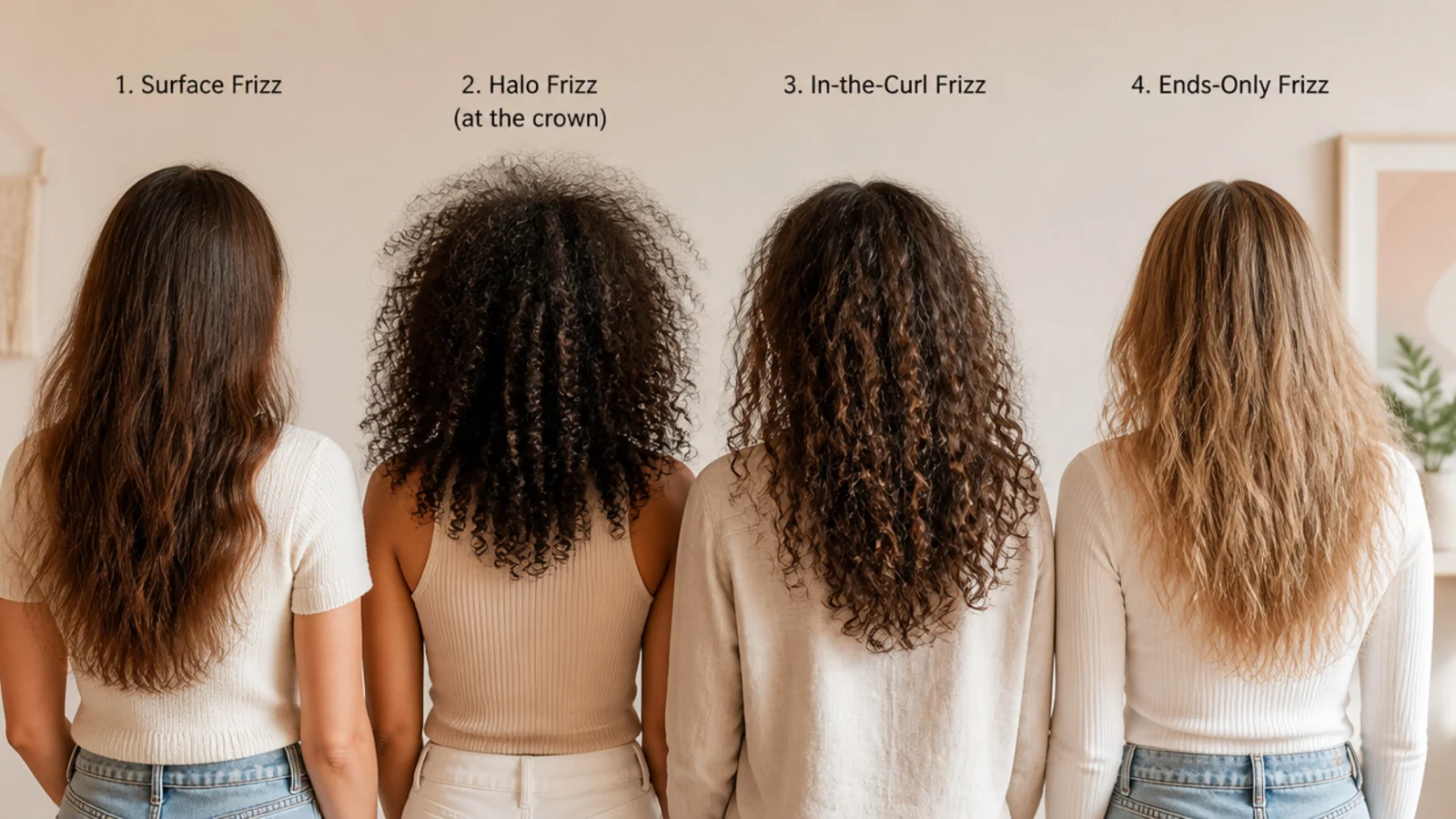
Halo frizz sits in a band at the crown. Short regrowth and snapped hairs. It has nothing to do with conditioning, and tension or a scarf is the only same day answer.
Surface frizz covers the length evenly. A cuticle problem across the whole canopy, which points at washing temperature, pH and mechanical handling rather than at your cut.
End frizz is fraying. Split ends fan out into separate edges, and no product rejoins a split. Hair grows roughly half an inch a month, so a trim every ten to twelve weeks keeps ahead of it.
Static frizz appears in cold dry air. Charge builds through friction and there is no moisture to conduct it away, so the strands physically repel one another.
Wash Day Routine
Wash the scalp, condition the ends. Detergent belongs where the oil is and conditioner belongs where it never reached. Reversing that leaves flat roots and dry lengths at once.
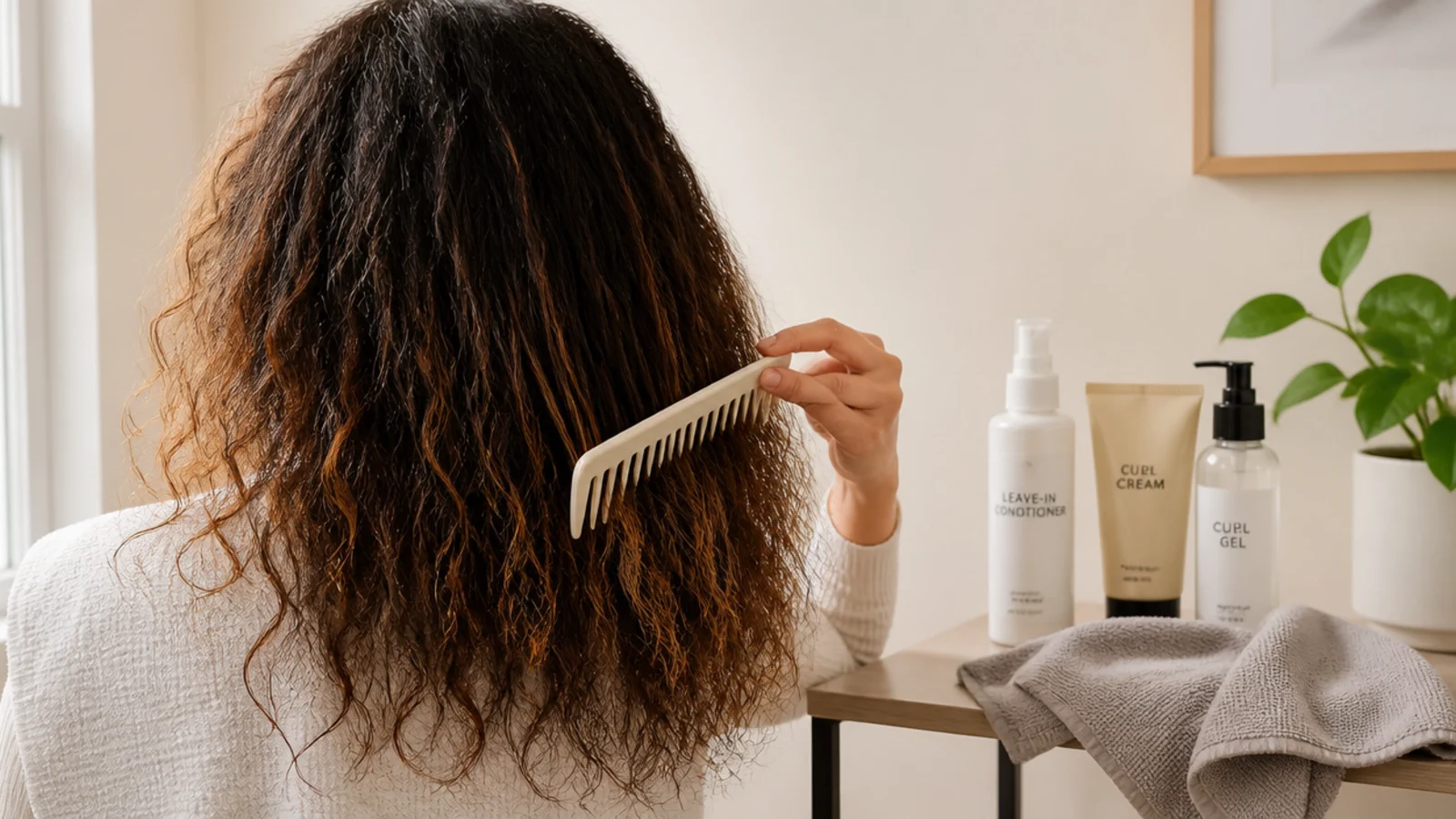
Detangle only under conditioner. Slip lets the comb pass between the strands. Dry detangling breaks hairs, and every broken hair becomes a short piece that will stand up for months.
Cool the last rinse. Hot water keeps the shaft swollen and the cuticle open. Cooling it does not seal anything, but it stops the swelling and lets an acidic conditioner settle the scales.
Style before it dries fully. Frizz sets as the hair dries, so a style built at ninety percent dry holds the surface flat through the part of the process that matters.
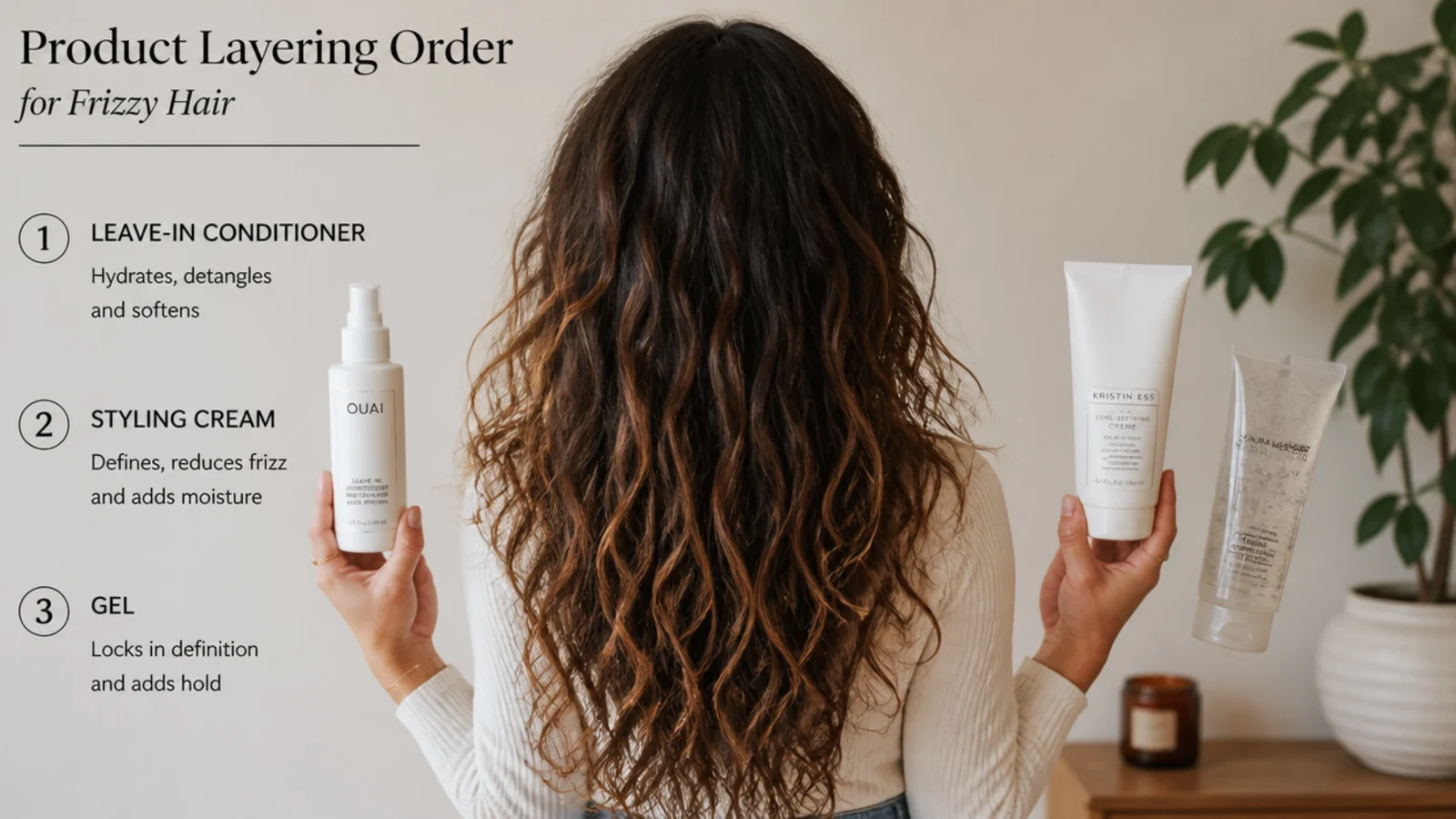
Product Layering Order
Leave in first, on wet hair. It is the layer with the water holding ingredients and it belongs closest to the strand where it can actually reach the cuticle.
Cream or mousse second. This is the weight layer. It decides how much movement the finished style keeps and how much of the surface stays where you put it.
Gel or spray last. The film former goes on top because its job is to sit across everything else and set. Underneath it does nothing at all.
Oil after drying, never before. Oil applied wet blocks water from leaving and slows the whole dry. A trace on dry ends reduces friction between strands, which is where fraying starts.
Cuts and Layers for Frizzy Hair
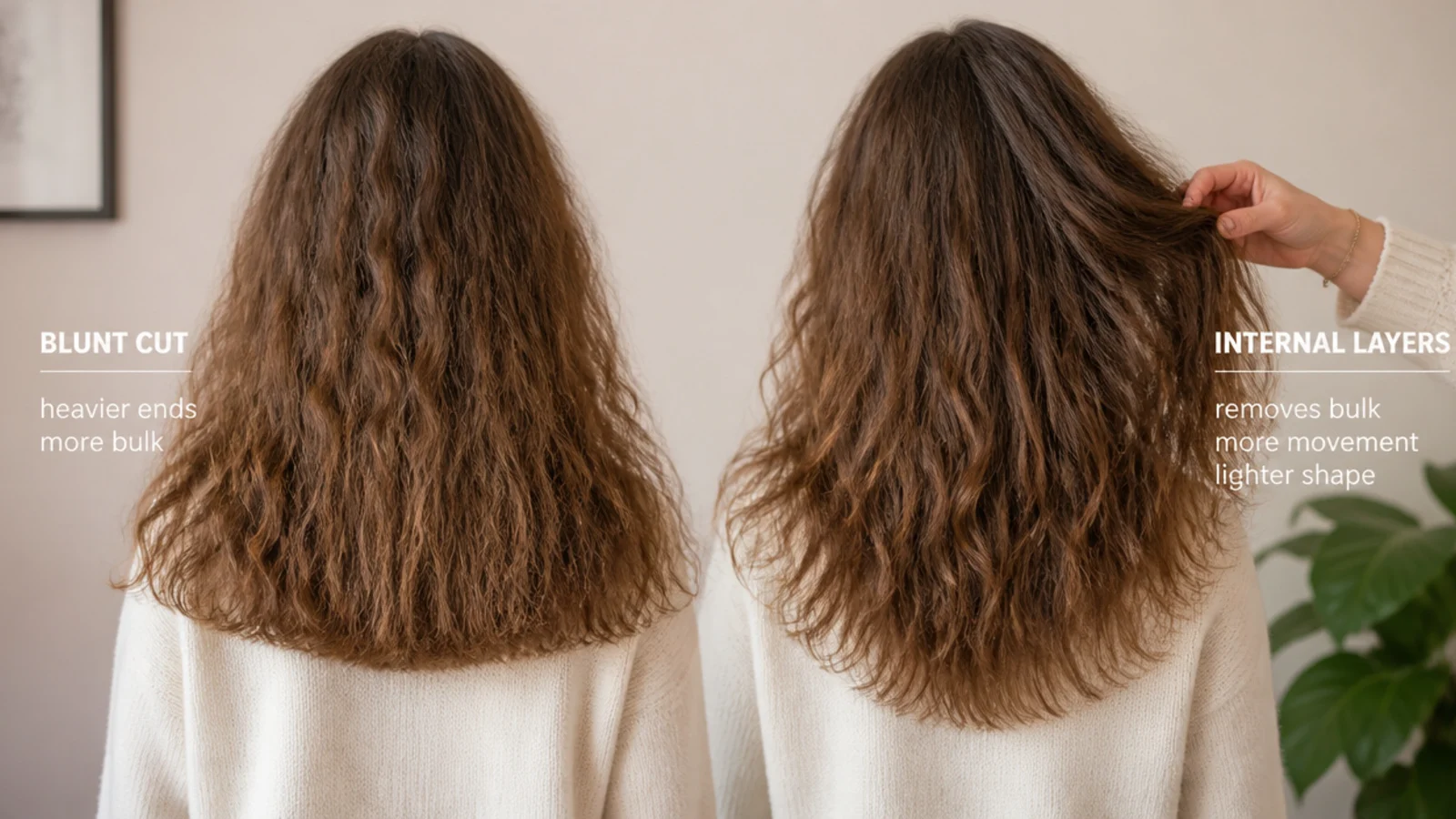
Weight helps straight hair and hurts curly hair. Density holds a straight canopy flat, while on curls the same weight stretches the pattern until the shape collapses into a triangle.
Take layers from the inside. Removing bulk underneath keeps the outer canopy unbroken, and it is the canopy that everyone sees. Surface layers leave short ends lifting out of it.
Say no to thinning shears. They scatter hundreds of short blunt ends through the interior, and those ends migrate outward over the following months as permanent halo frizz.
Length that will not hold a style is length to lose. If a bun slips out every afternoon, the ends are too fine to grip, and cutting to the last dense point fixes it in one appointment.
Humidity and Sleep Habits
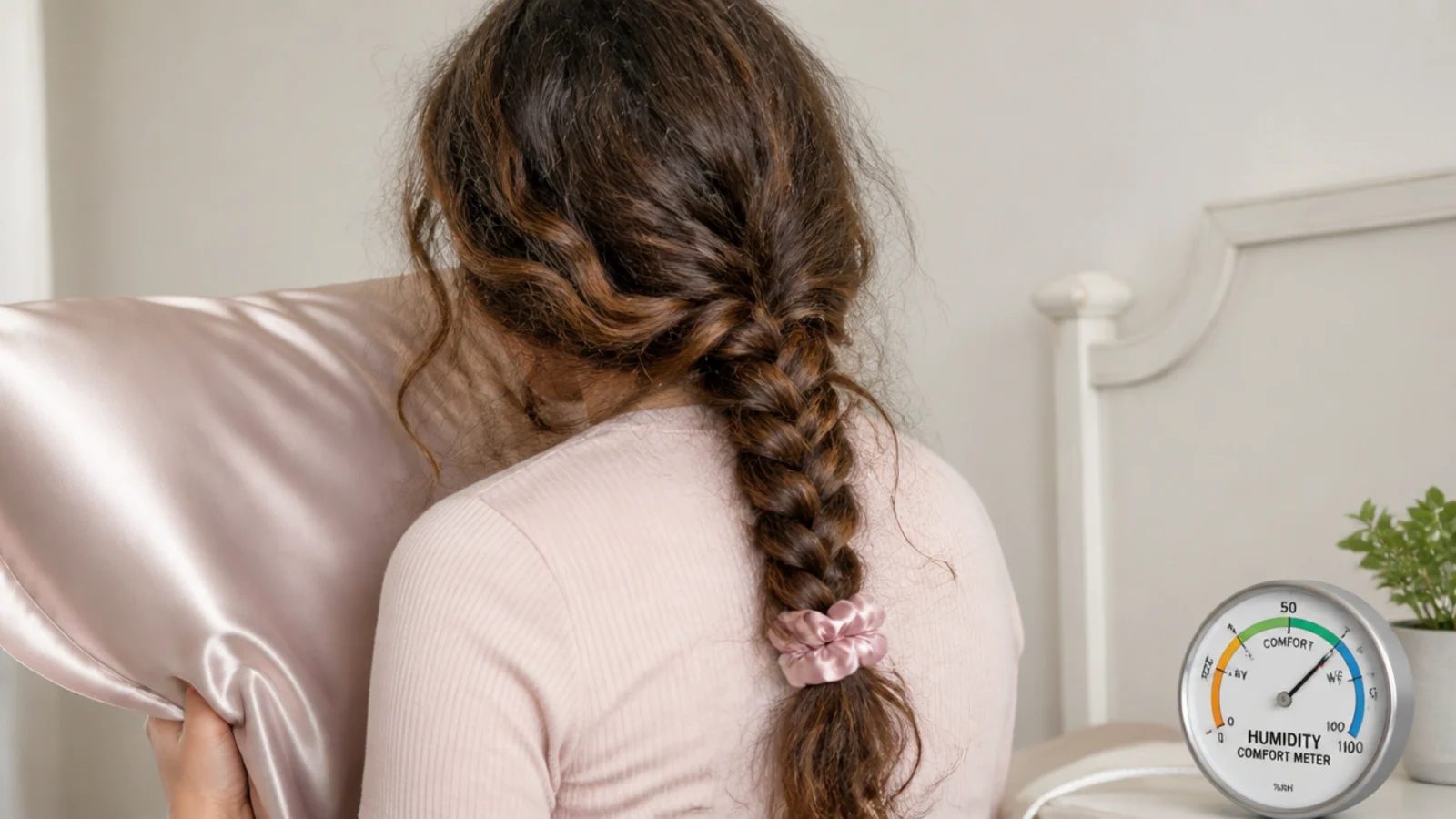
Read the dew point before you choose a style. Above roughly 60F there is enough water in the air to swell hair all day, and that is a braid day rather than a sleek blowout day.
Humectants pull whichever way the gradient runs. Glycerin, honey and aloe move water toward the hair in muggy air and out of it in freezing dry air, so the same product behaves opposite in two seasons.
Cotton pillowcases absorb and abrade. They take the moisture you added and their weave catches at the cuticle every time you move, which is why morning hair is frizzier than evening hair.
Sleep in the style you want to wake in. A loose braid becomes a wave, a pineapple preserves a curl and a silk cap preserves everything, and all three beat starting from scratch.
The 20 Frizzy Hair Hairstyles
1. Loose Low Bun
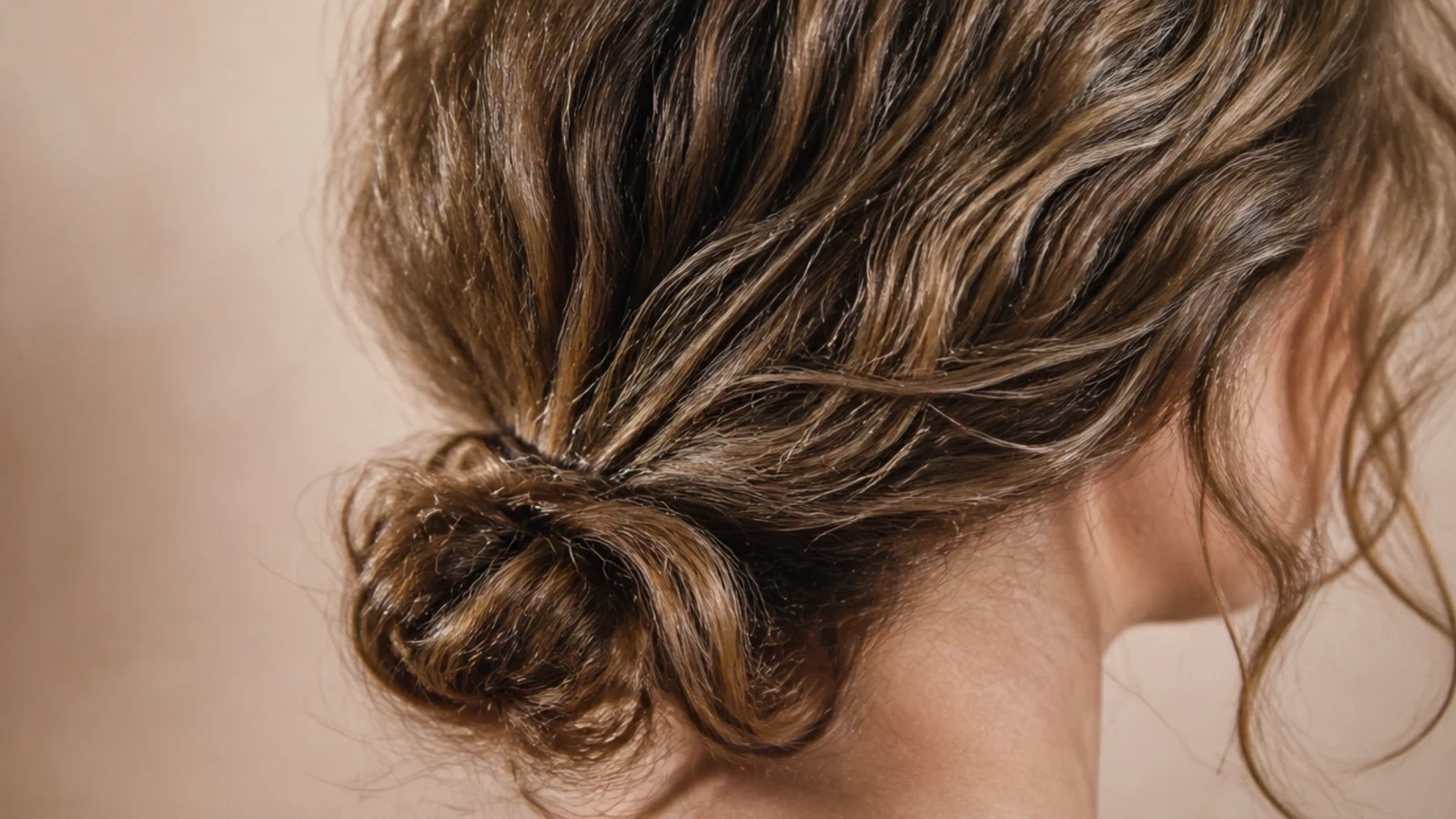
Gathering at the nape puts the whole length under mild, even tension so individual strands stop moving against one another. Keep it low, because a bun placed high pulls the crown upward and lifts the very hairs you are trying to flatten.
2. Messy Top Knot
The knot is the one style where frizz becomes the texture rather than the flaw, because the shape depends on volume it cannot get from smooth hair. Twist rather than brush, so the surface stays broken up deliberately.
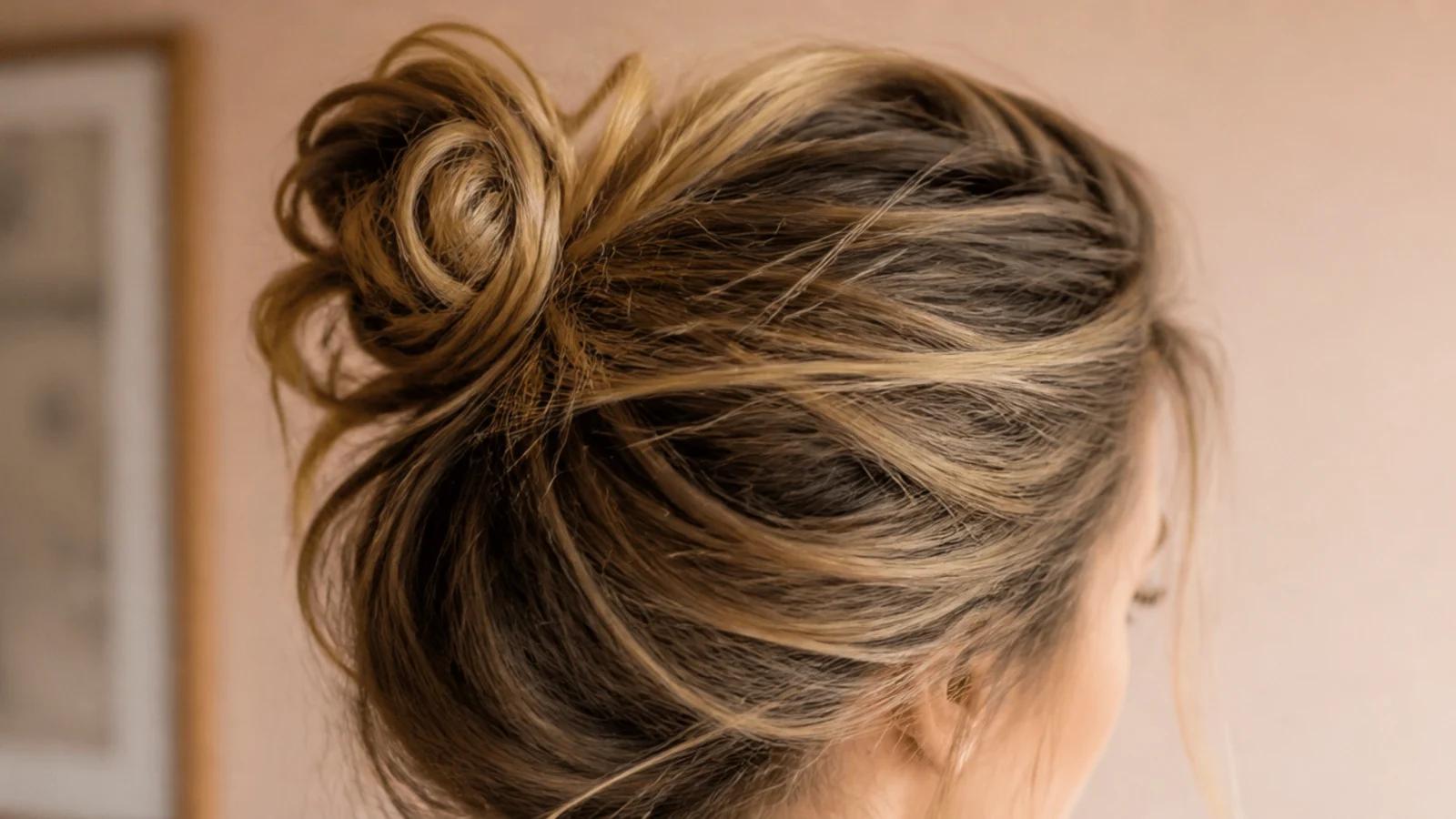
3. Slicked Low Pony
A gel or cream slicked back puts a film across the whole canopy while the tension holds it in position, so the two mechanisms reinforce each other. Apply with a brush on damp hair, because dry hair takes gel unevenly and shows every stripe.
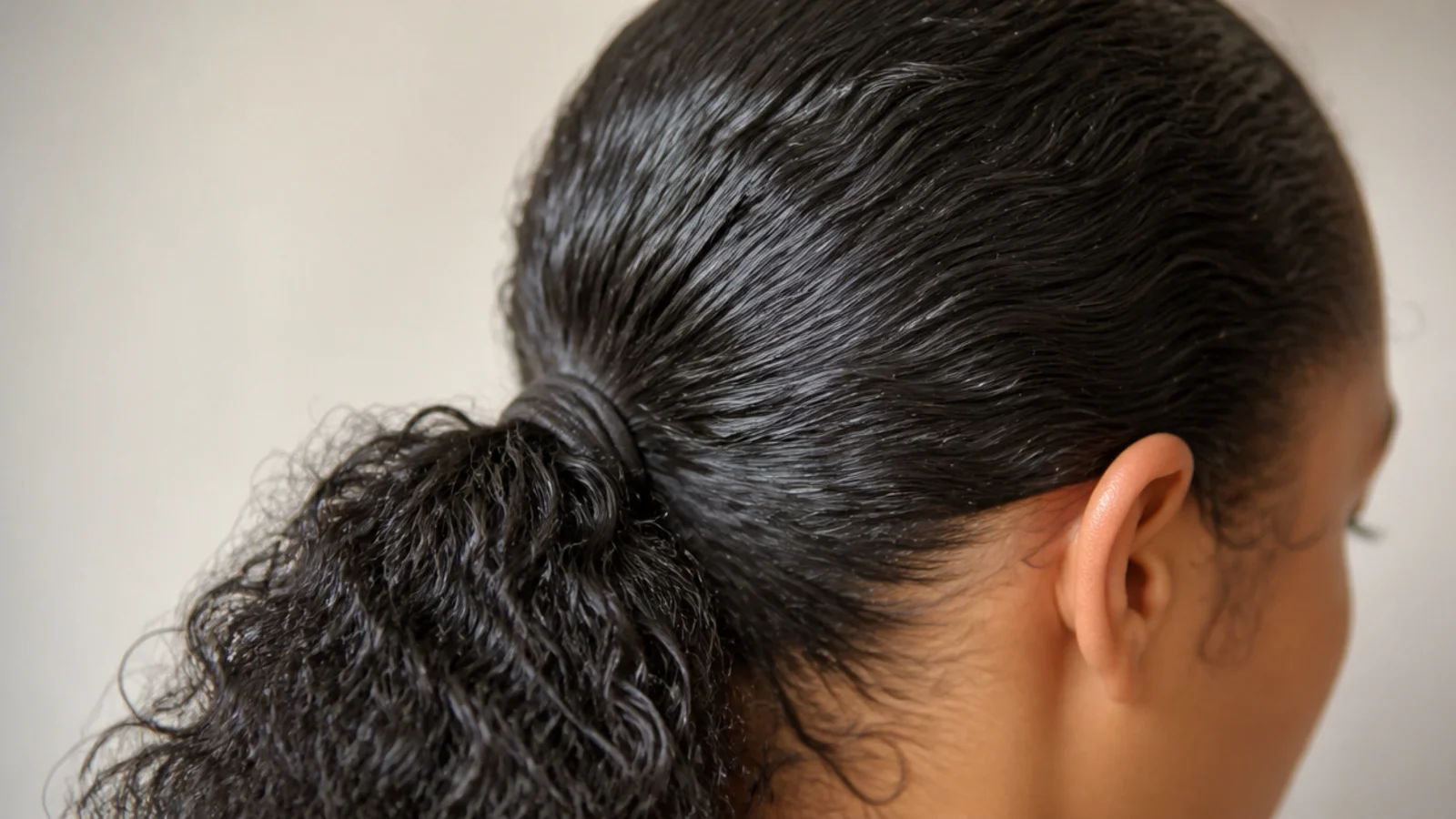
4. Claw Clip Twist
A claw clip grips a twist without pinching a single point, which means no crease and no dent to correct tomorrow. Twist away from the face on both sides so the front sections are pulled taut across the hairline.
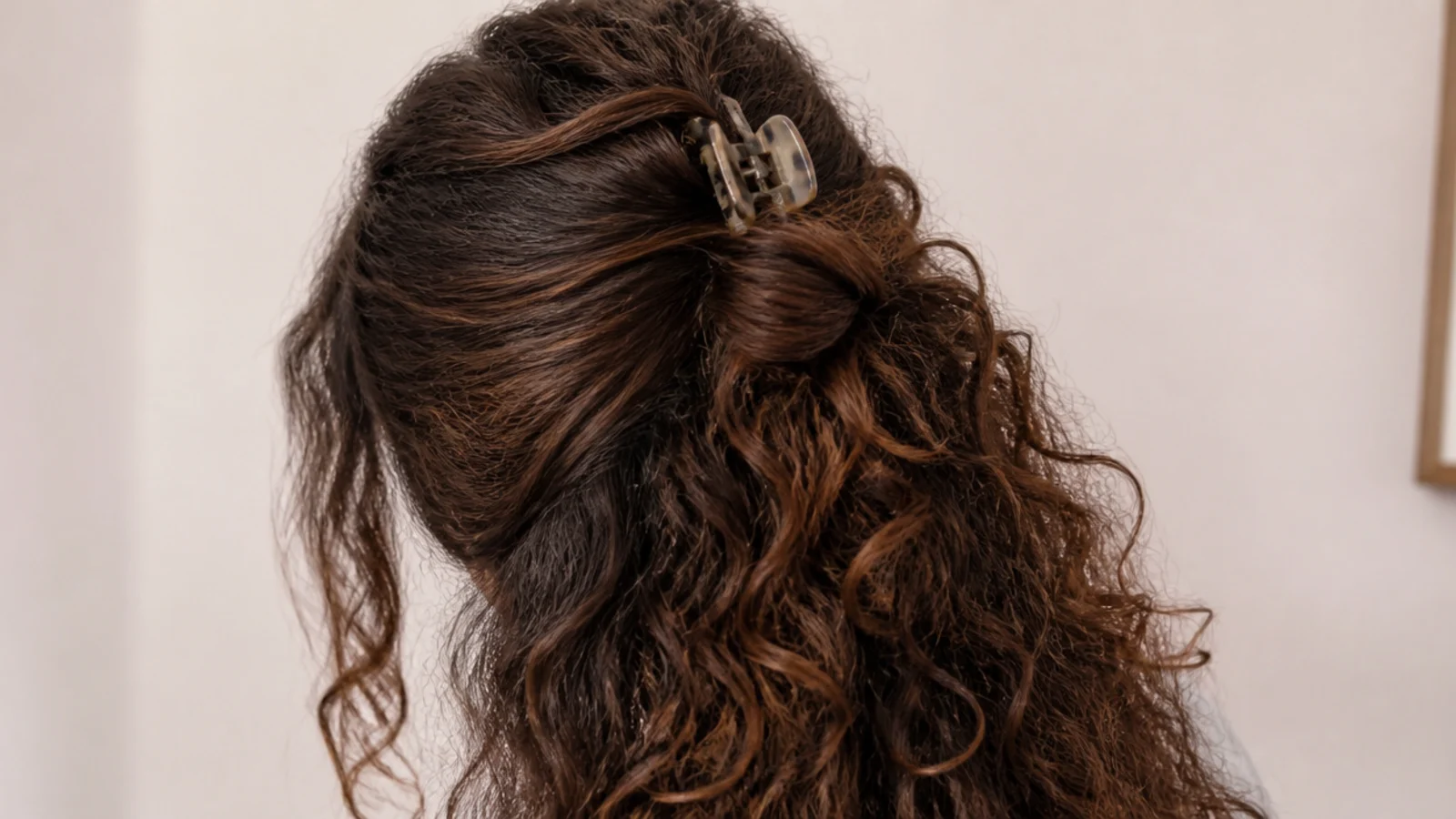
5. French Braid
A french braid picks up new hair with every crossing, so surface strands are folded into the plait instead of standing above it. It is the single most effective style for a genuinely humid day.
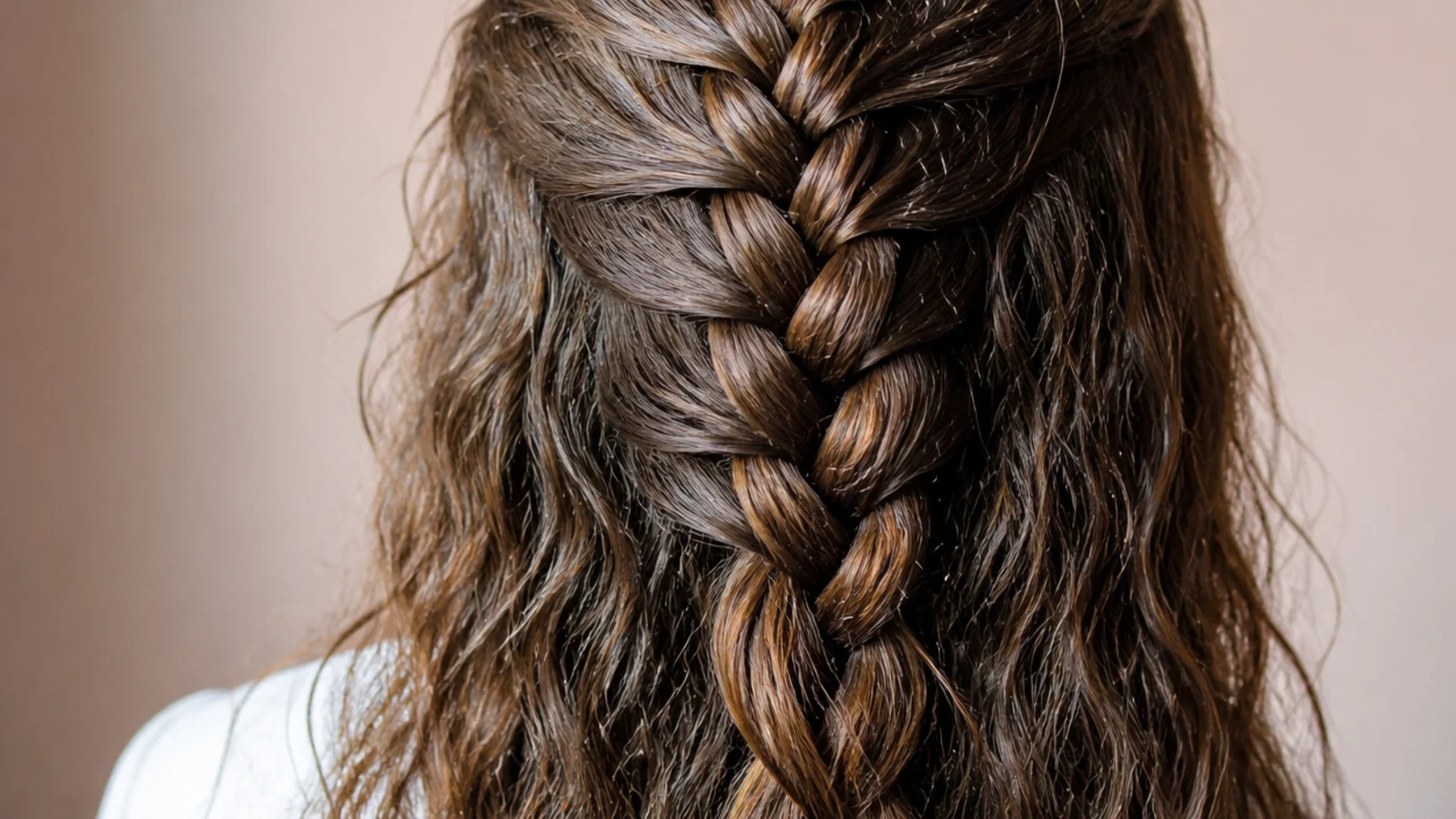
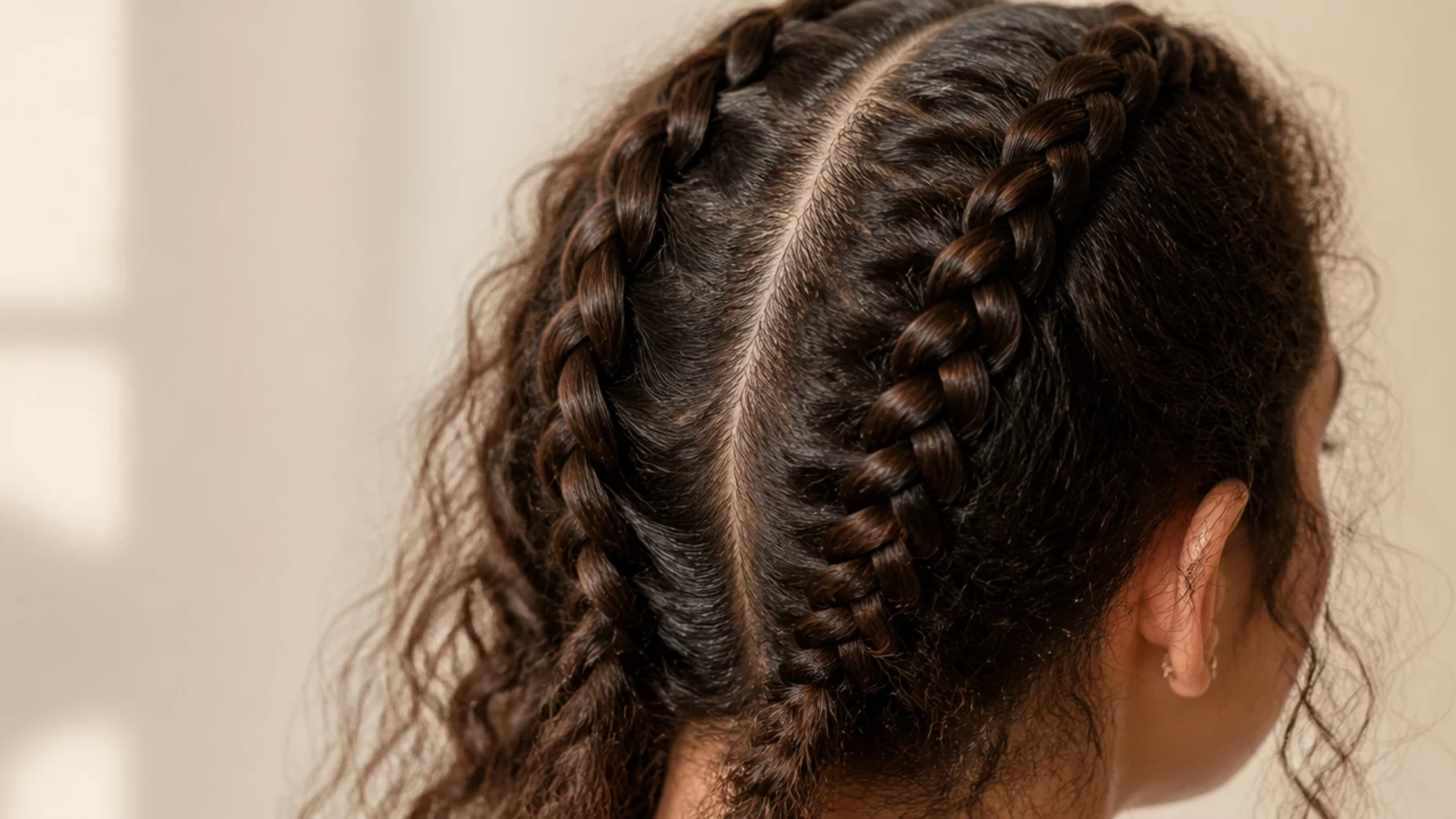
6. Double Dutch Braids
Braiding under rather than over lifts the plait onto the surface, which means the tension sits directly against the scalp along its whole path. Two of them halve the section weight, so neither loosens as the day goes on.
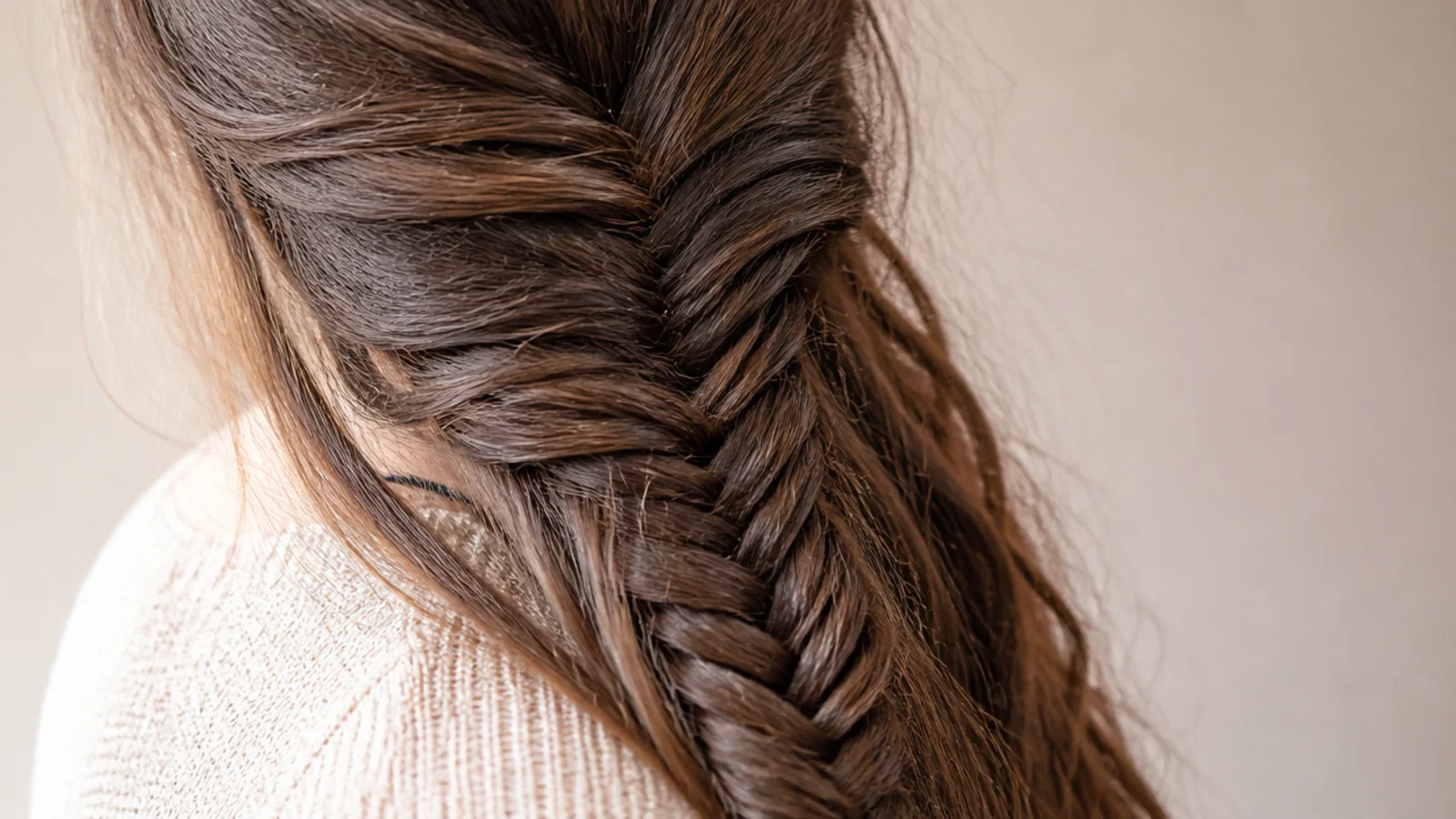
7. Side Fishtail
A fishtail uses very small crossing sections, so the surface is broken into many tiny facets rather than three large ones. Frizz reads as part of that texture instead of sitting on top of a smooth plait.
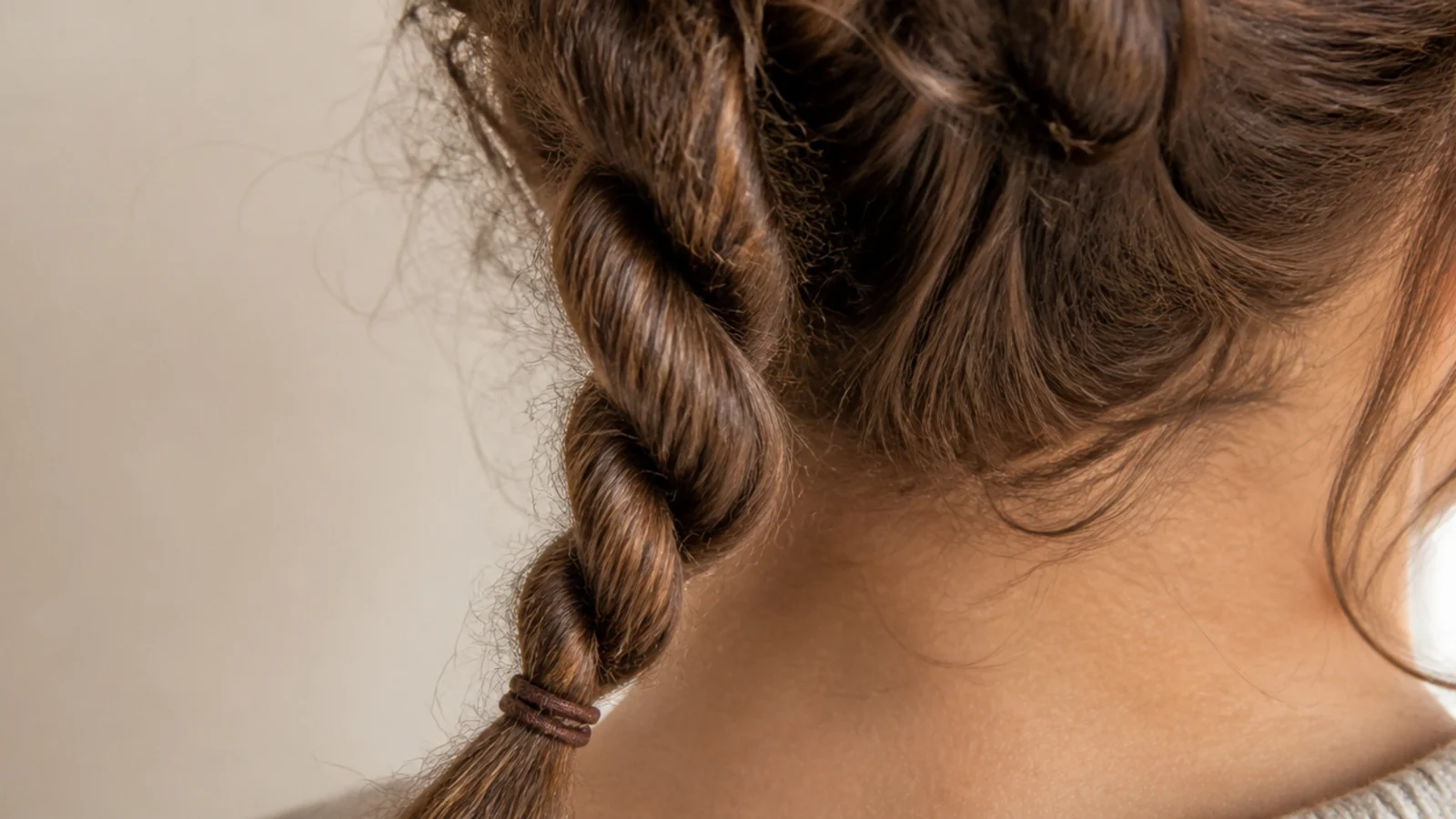
8. Rope Braid
Two sections twisted in one direction and wound together in the other lock against each other, which is why a rope braid holds without a tie halfway down. The twist also compresses each section and flattens its surface.
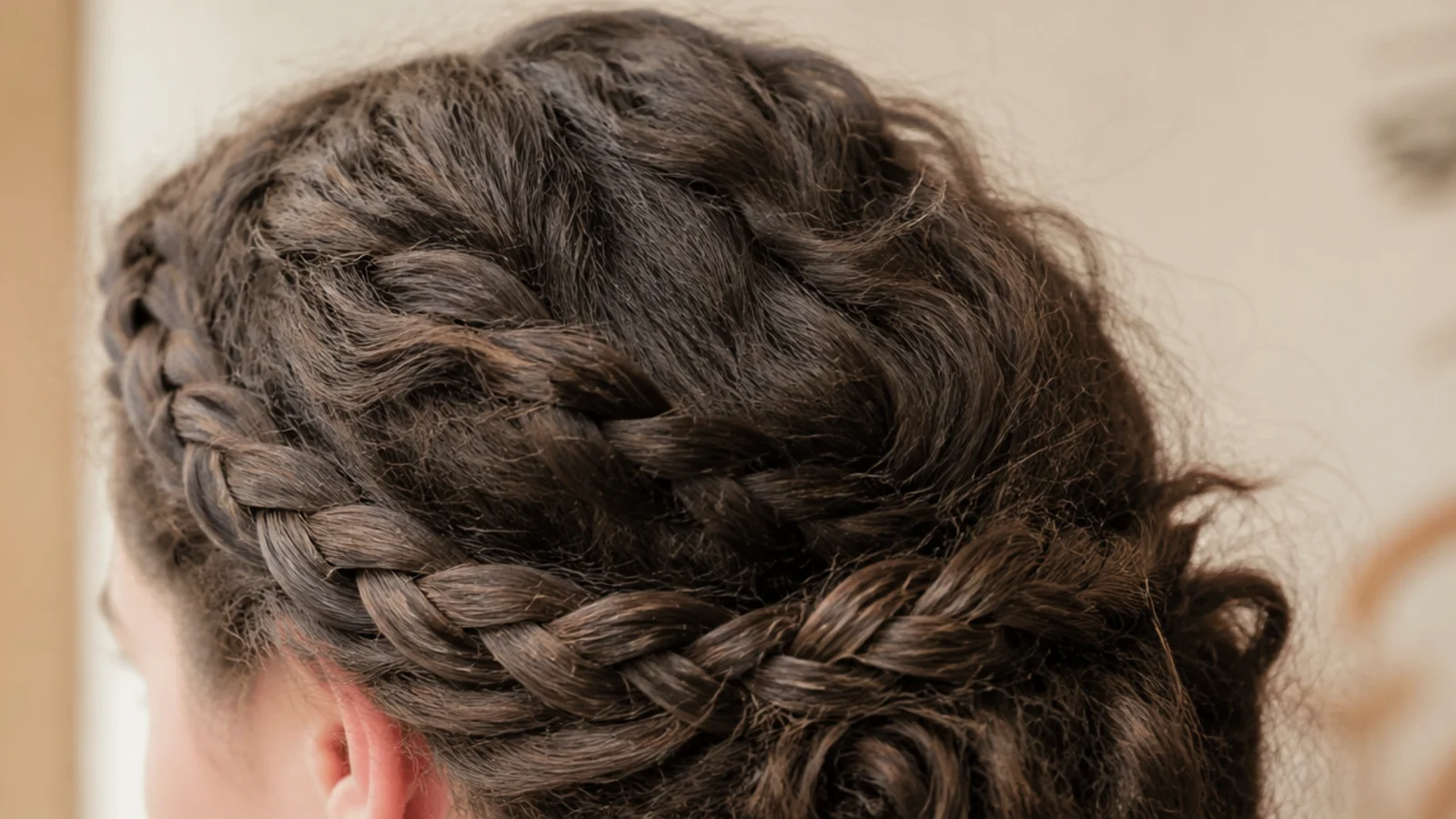
9. Braided Crown
Wrapping a braid around the head holds every hair on the crown against the scalp, which is the only reliable way to flatten short regrowth. It is also the style that survives longest without any touching up.
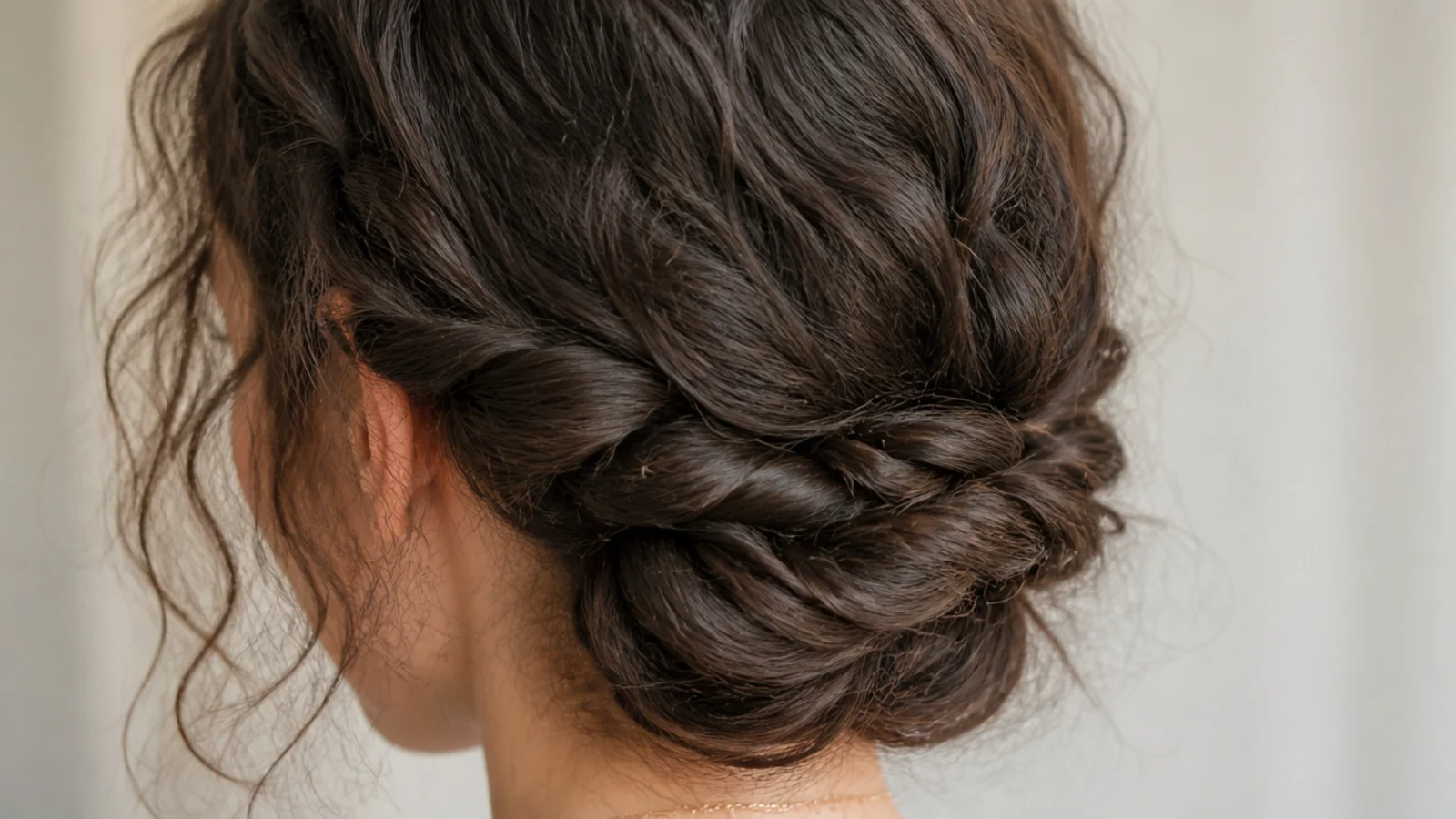
10. Twisted Chignon
Twisting compresses a section, which pulls its surface hairs inward before the shape is even formed. That is why a twisted chignon looks tidier than a gathered one made from the same frizzy hair.
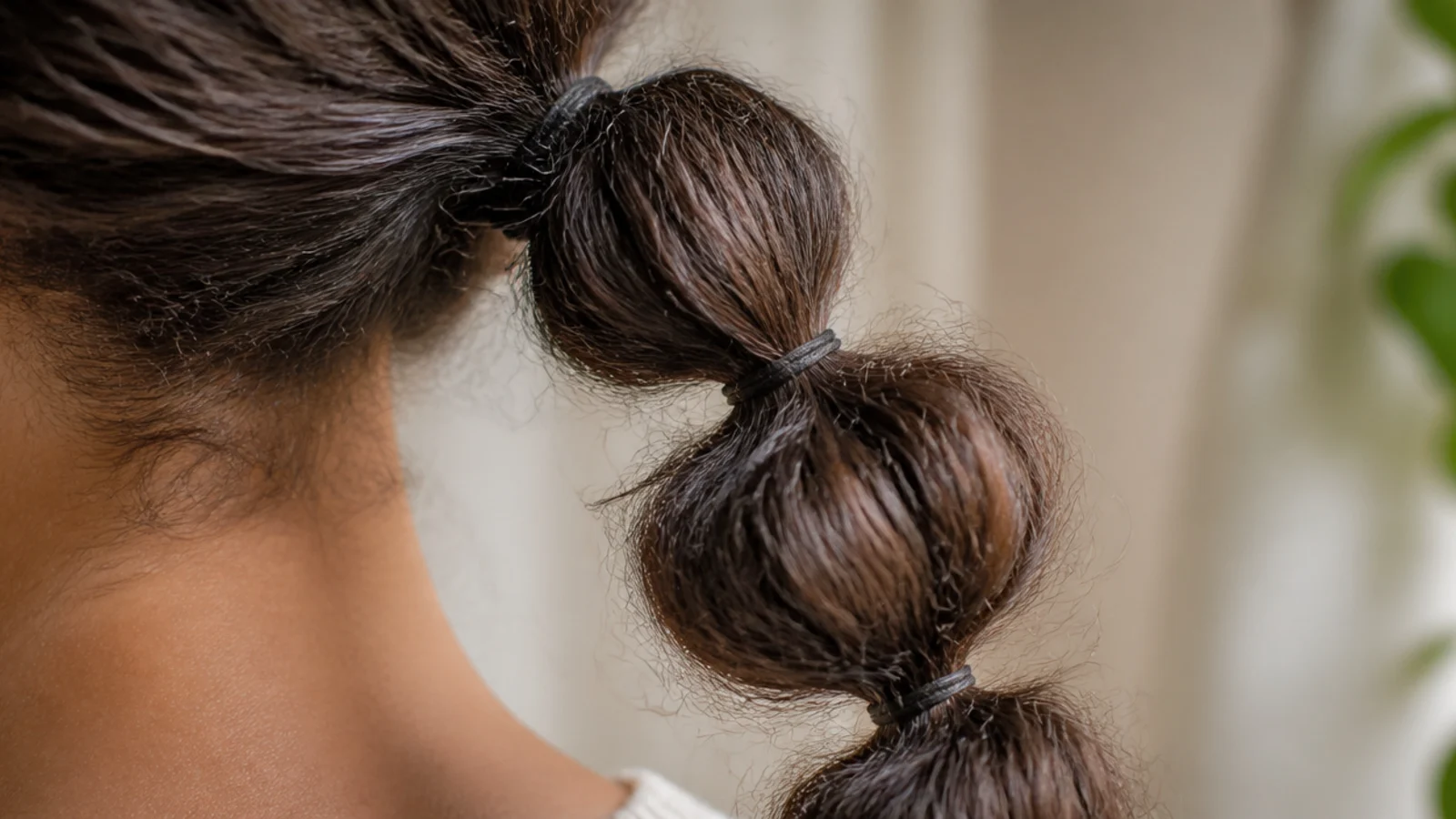
11. Bubble Ponytail
Ties spaced down the length divide the hair into short segments, and a short segment has far less room to fray outward than a long one. The gaps between ties turn any remaining volume into part of the design.
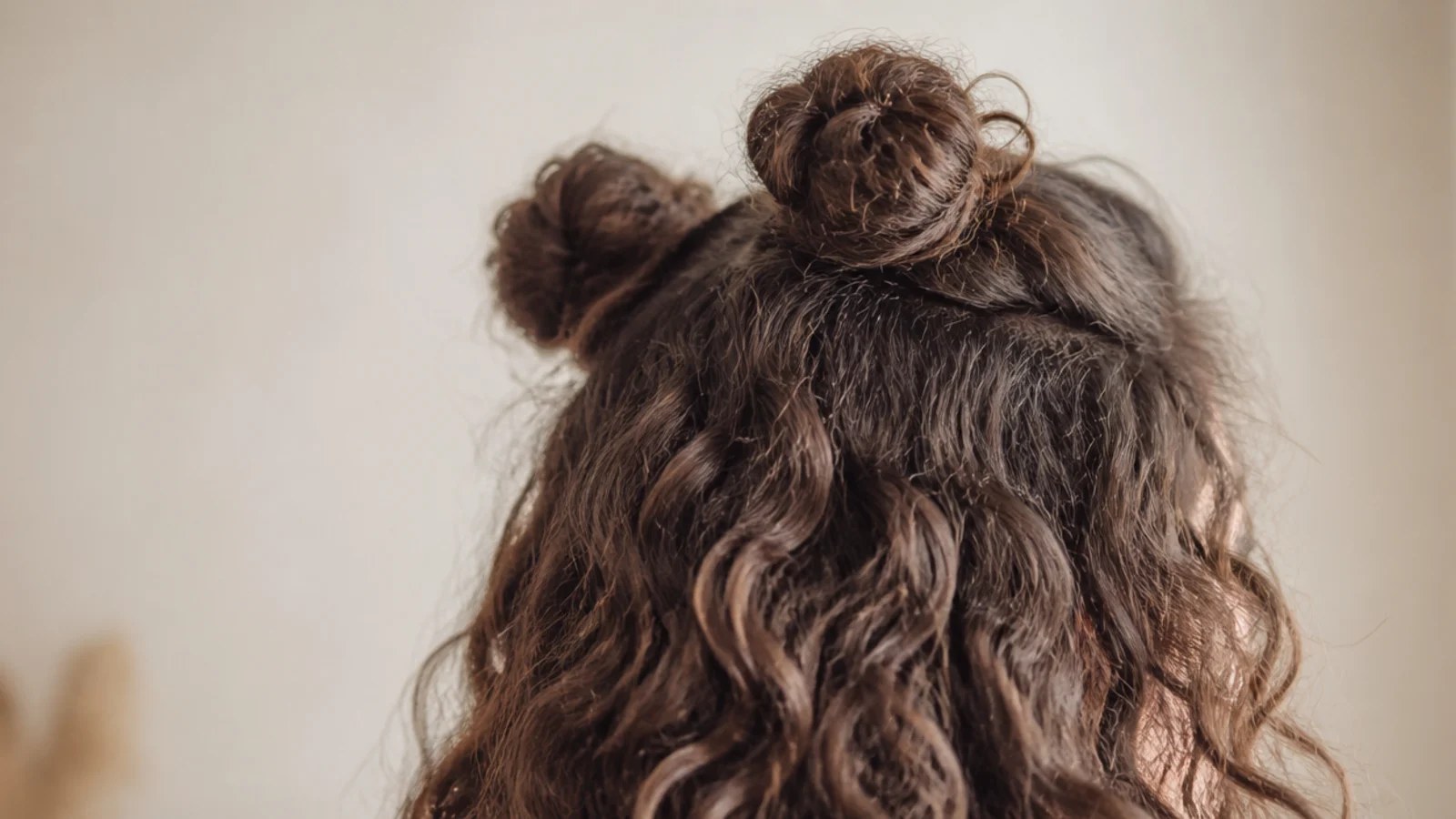
12. Half Up Space Buns
Only the top sections are taken up, which is exactly where halo frizz lives, and the lengths are left alone. It treats the frizziest part of the head and ignores the part that was already fine.
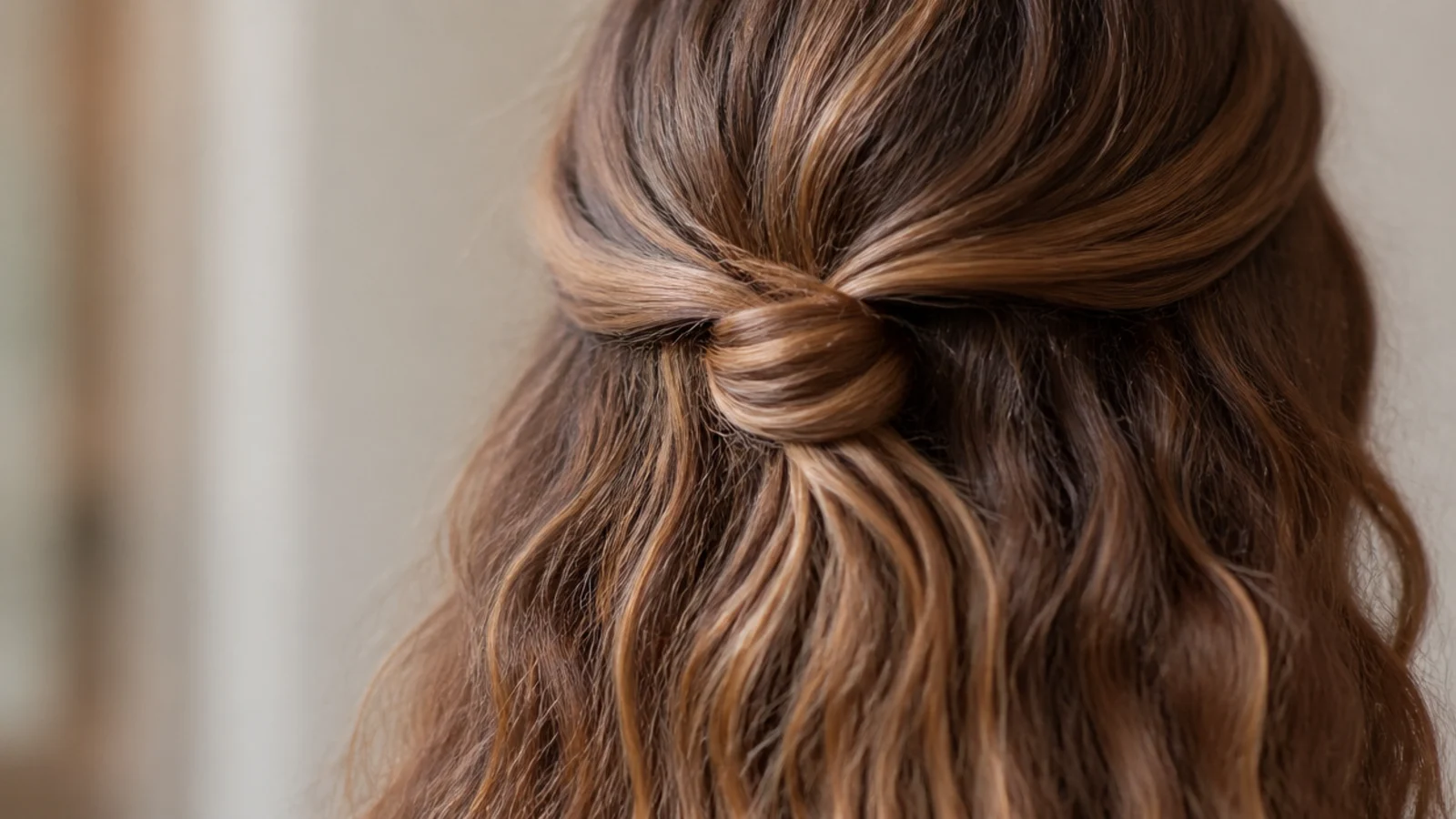
13. Faux Knot Half Up
Tying the two front sections in a simple knot pulls both sides of the hairline taut against each other, with no elastic and therefore no crease. It takes ten seconds and holds the frizziest band on the head.
14. Plopped Waves
Wrapping damp hair into a shirt supports each bend while it drains, so nothing dries stretched under its own weight. The wave you get is the one the hair made, set before gravity could pull it out.
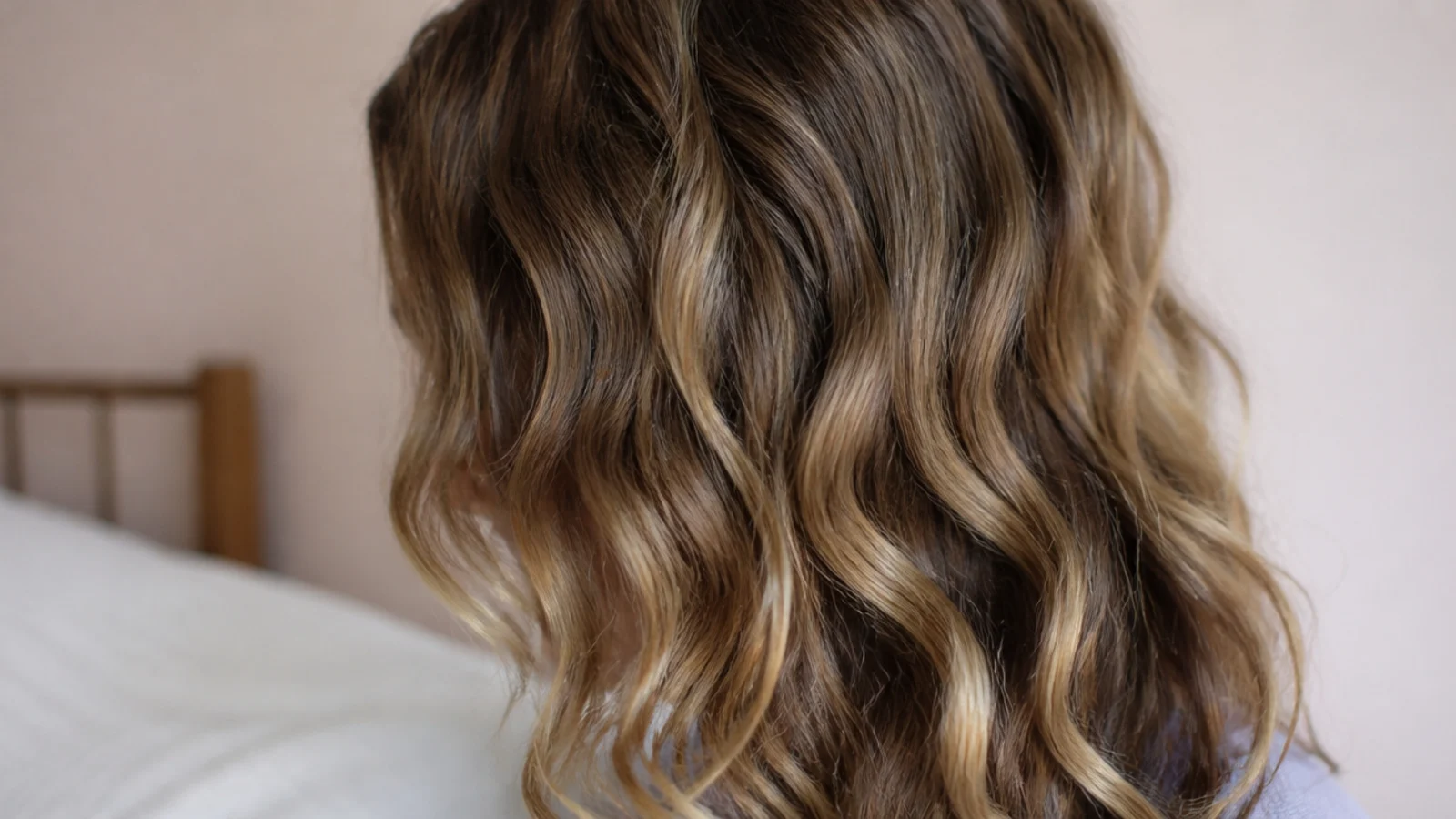
15. Overnight Braid Waves
A braid set on damp hair dries it in a stretched, uniform bend, and uniformity is what reads as smooth. The braid count is the dial, since more and thinner braids produce a tighter wave than two fat ones.
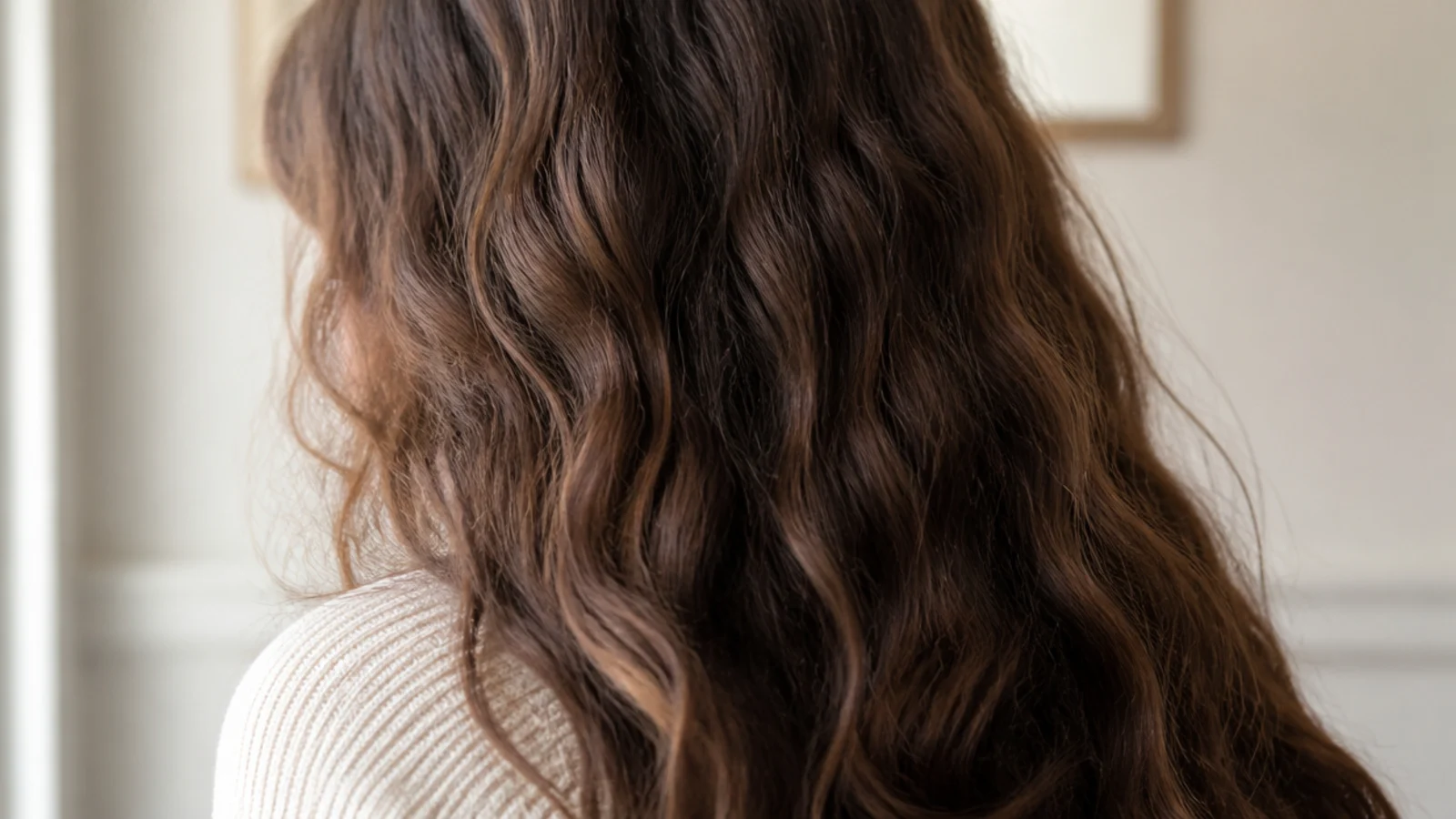
16. Silk Scarf Headband
A scarf tied across the front hairline presses down the short growth that no style can gather. Silk has almost no grab compared with cotton, so it holds those hairs flat without abrading the cuticle underneath.
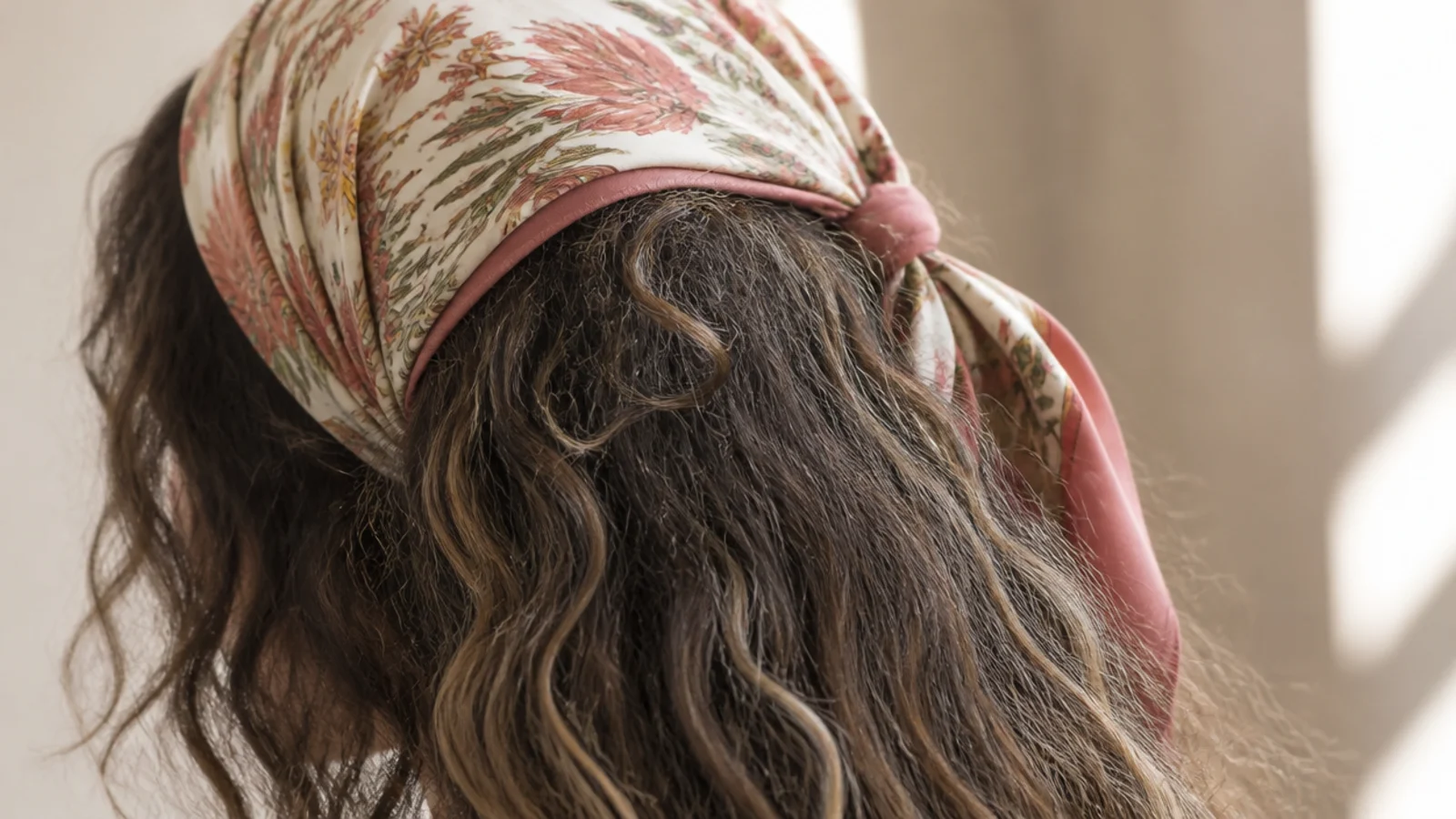
17. Headband Tuck
Rolling the lengths up and over a headband hides the ends entirely, which matters because the ends are where fraying is worst. Everything on show is mid length hair, and mid lengths are always in better condition.
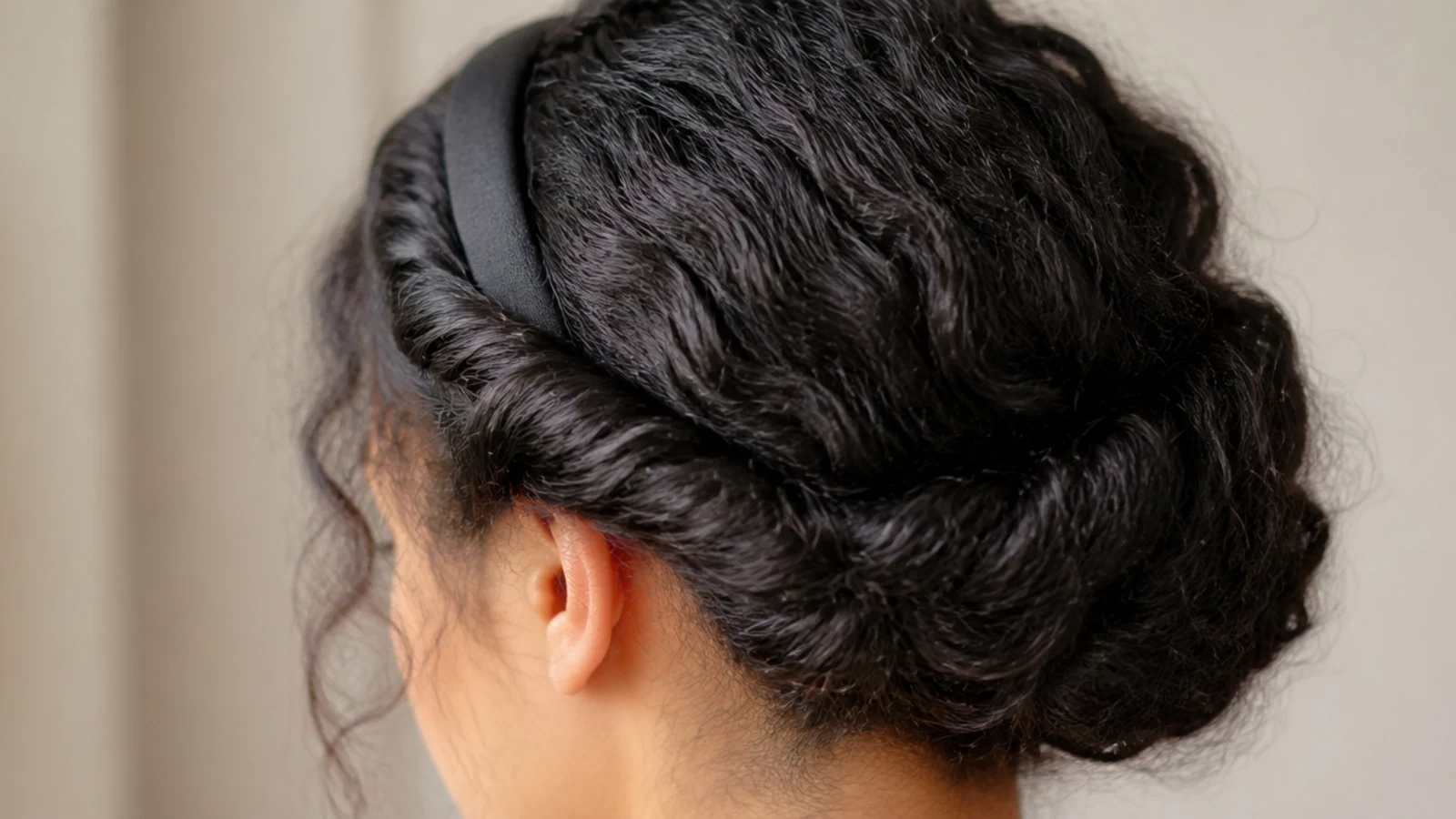
18. Diffused Wash and Go
A diffuser slows the air so it dries the hair without blowing strands out of position. Full velocity separates faster than it dries, which is the whole reason the same dryer gives definition on low and a cloud on high.
19. Bouffant High Pony
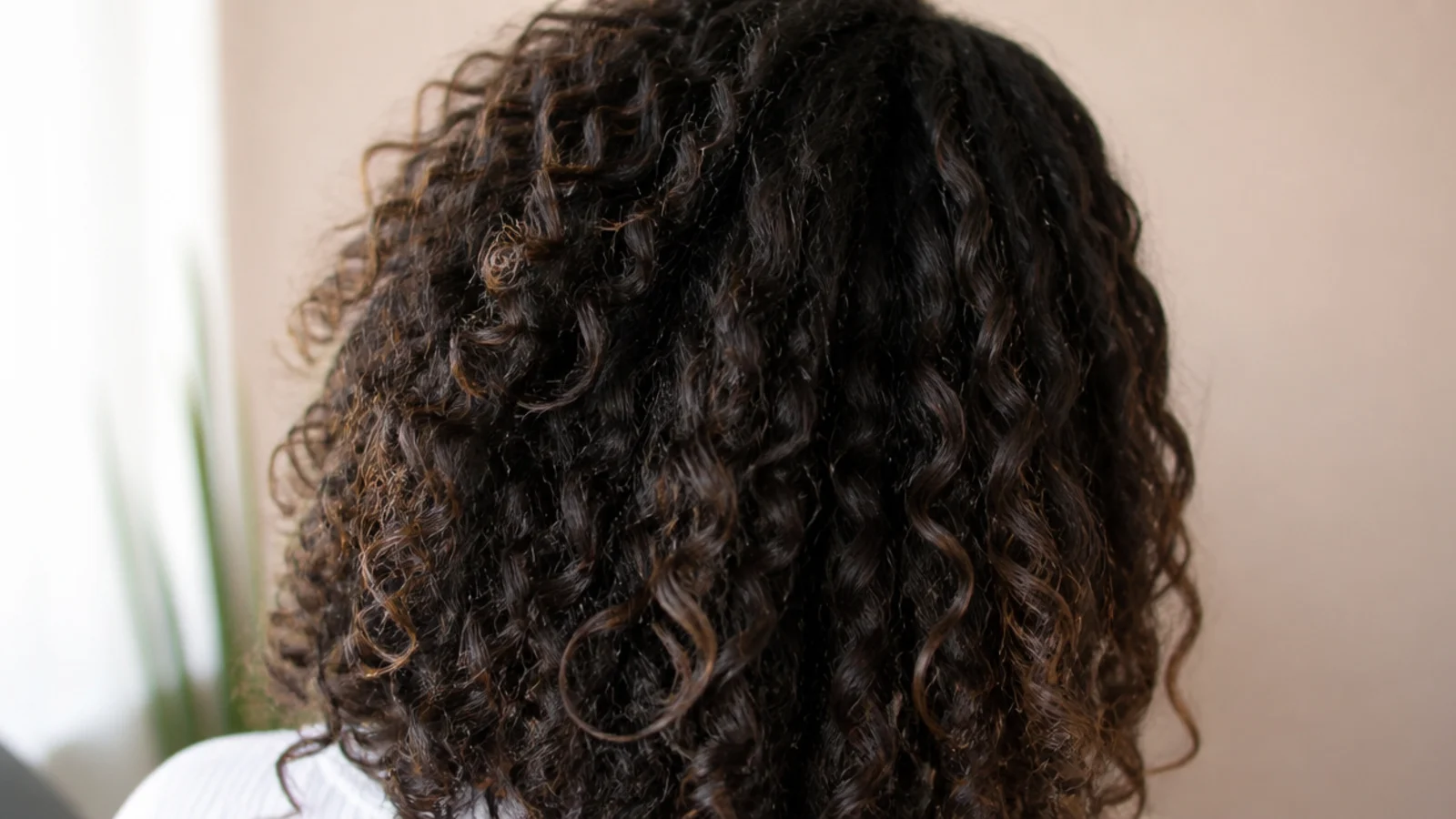
Backcombing at the crown deliberately roughens the cuticle to create volume, which means it is the one style where frizz is the raw material. Smooth only the top surface over the padding and leave what is underneath rough.
20. Low Side Braid
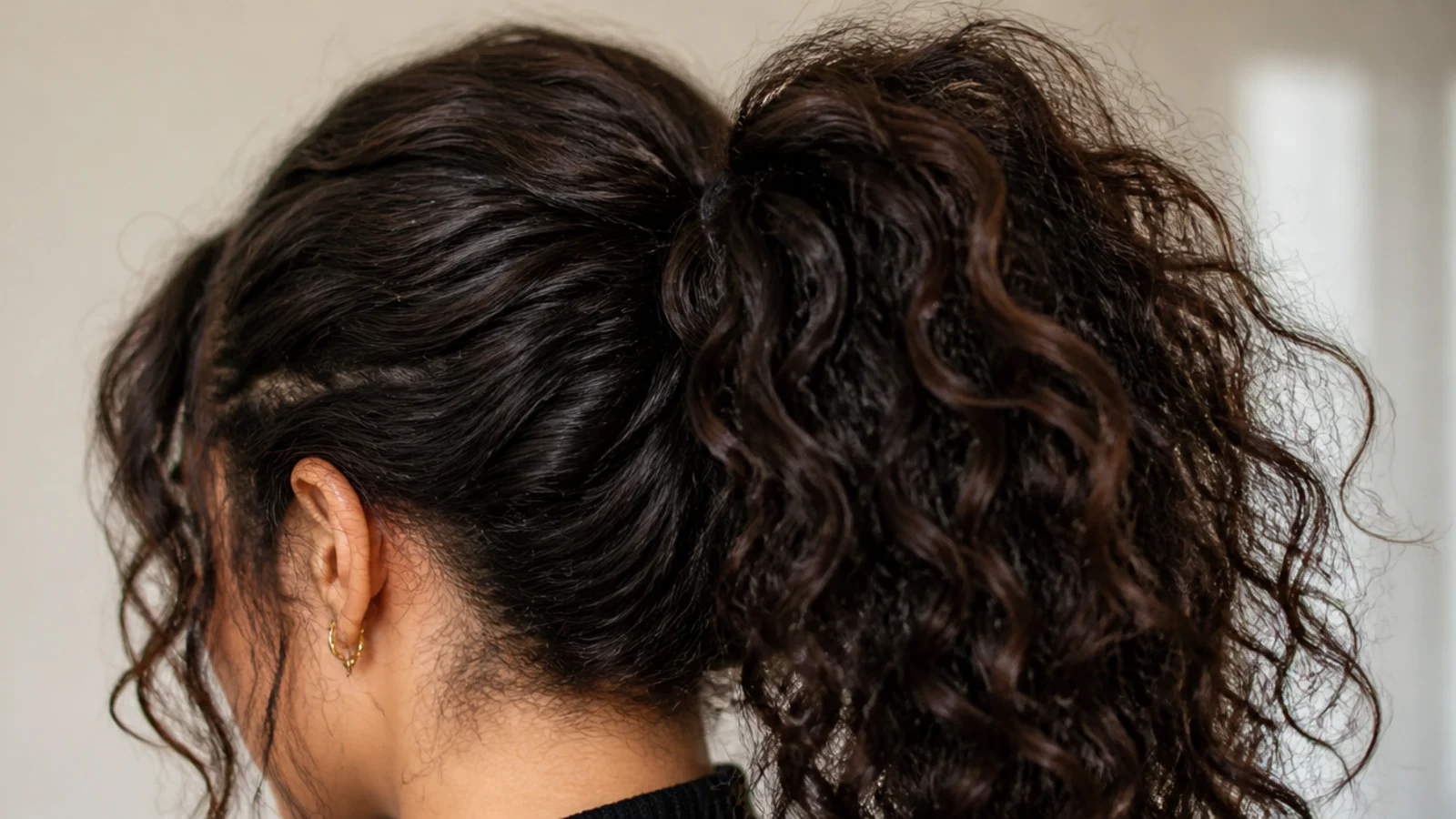
A braid started at the nape and worn to one side keeps the whole length contained while asking nothing of the hairline. It suits a day when the crown is behaving and the ends are not.
Final Thoughts
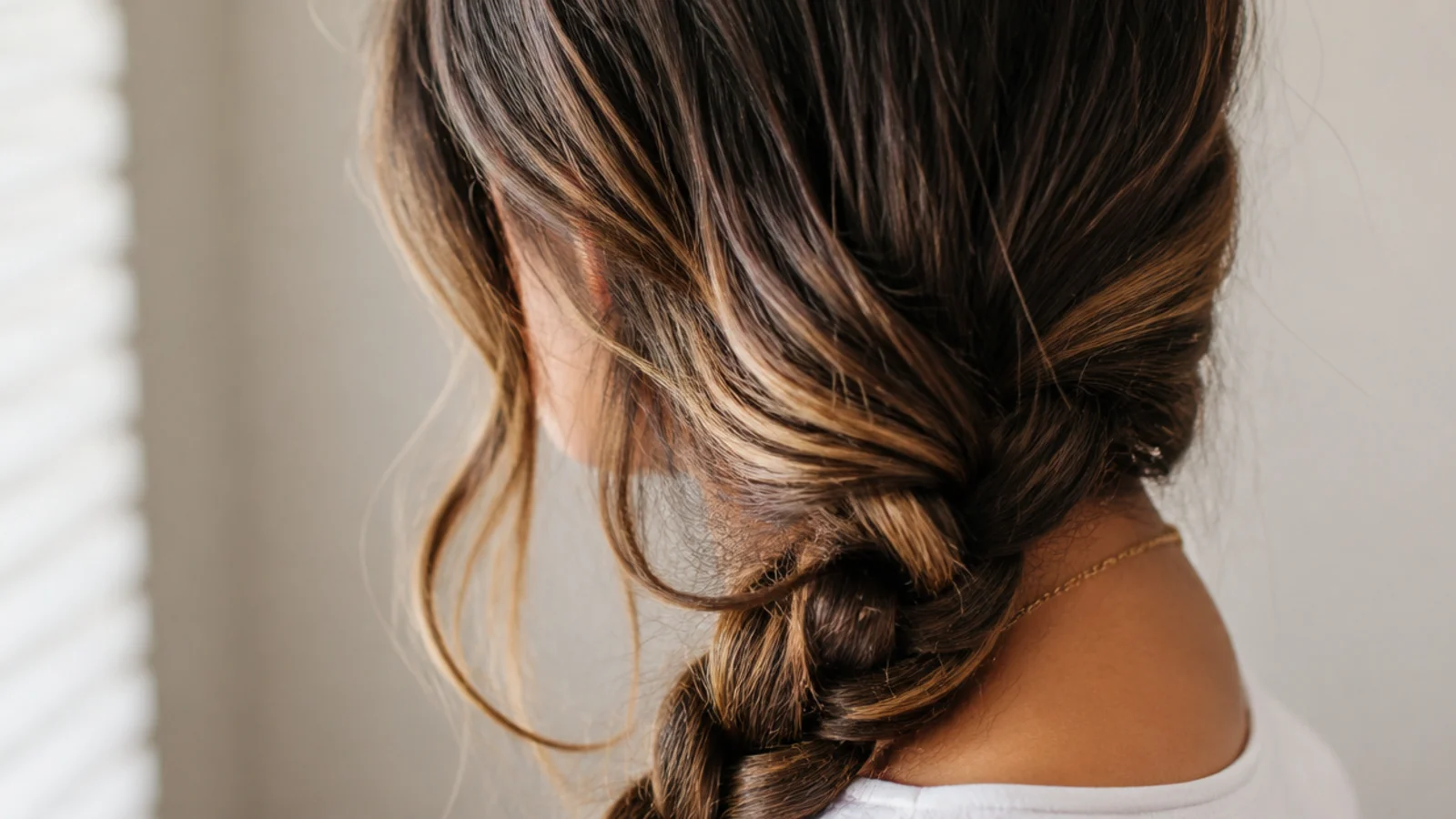
Pick the style by where your frizz actually is. Crown frizz needs tension, so choose a braid, a crown wrap or a headband. Length frizz needs containment, so choose a chignon, a tuck or a bubble ponytail. Choosing by the photograph rather than the mechanism is why some days a bun fixes everything and other days it changes nothing.
Then check the dew point on the way out. Above 60F it is a braid day whatever you planned. For gathered styles that hold on curly texture see hoco hairstyles for curly hair, and for the smooth end of the range see cute hairstyles for straight hair. More in Hair Care.