20 Elegant Messy Ponytail Ideas
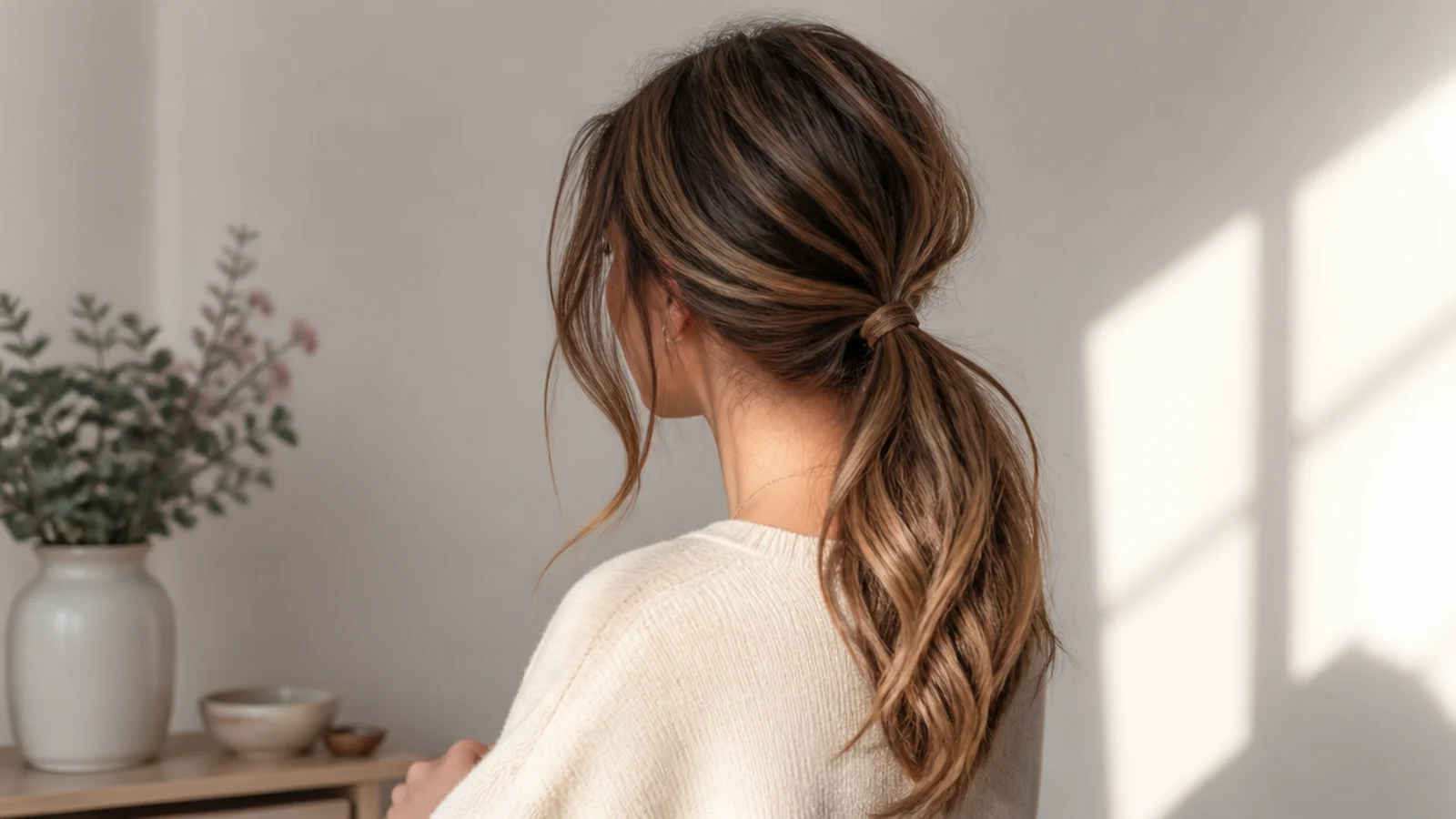
Twenty formal versions of the messy ponytail, and the distinction that makes the two words stop contradicting each other — elegance is built at the base and the texture belongs in the length, never the other way round.
In this article · 28
- What Makes It Elegant
- Messy Versus Sleek
- By Hair Length
- Fine Versus Thick Hair
- Volume and Hold
- Products That Matter
- The 20 Elegant Messy Ponytails
- 1. Wedding Guest Low Ponytail
- 2. Bridal Wrapped Ponytail
- 3. Office Nape Ponytail
- 4. Black Tie High Ponytail
- 5. Date Night Side Ponytail
- 6. Velvet Ribbon Ponytail
- 7. Vintage Bouffant Ponytail
- 8. Curtain Bangs Ponytail
- 9. Half Up on Long Hair
- 10. Braided Base Ponytail
- 11. Gold Cuff Ponytail
- 12. Fine Hair Stacked Ponytail
- 13. Thick Hair Split Ponytail
- 14. Curly Tendrils
- 15. Short Hair Bungee Ponytail
- 16. Bubble Ponytail for Evening
- 17. Deep Side Part Ponytail
- 18. Rope Twist Ponytail
- 19. Pearl Pins
- 20. Humidity Proof Ponytail
- Final Thoughts
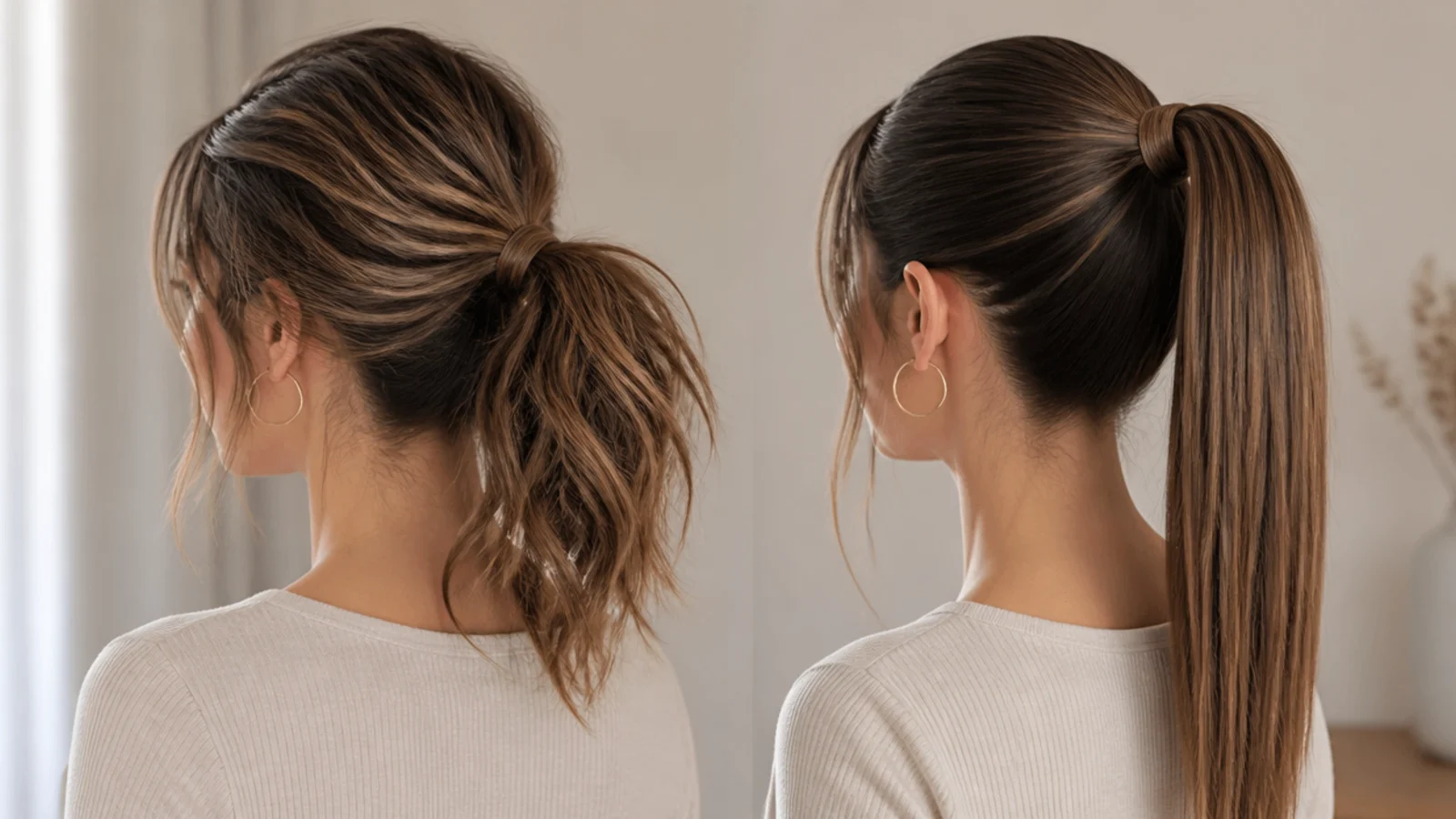
Elegant and messy sound like they cancel each other out, and in most failed attempts they do. The fix is not a technique but a boundary.
Elegance is built at the base. The crown smooth, the elastic invisible, nothing escaping within a hand span of the tie. That zone is where a formal ponytail is won or lost.
Texture belongs in the length. Below the band, as much movement as you want. Spread the same mess evenly over the whole head and it stops reading as a choice.
What Makes It Elegant
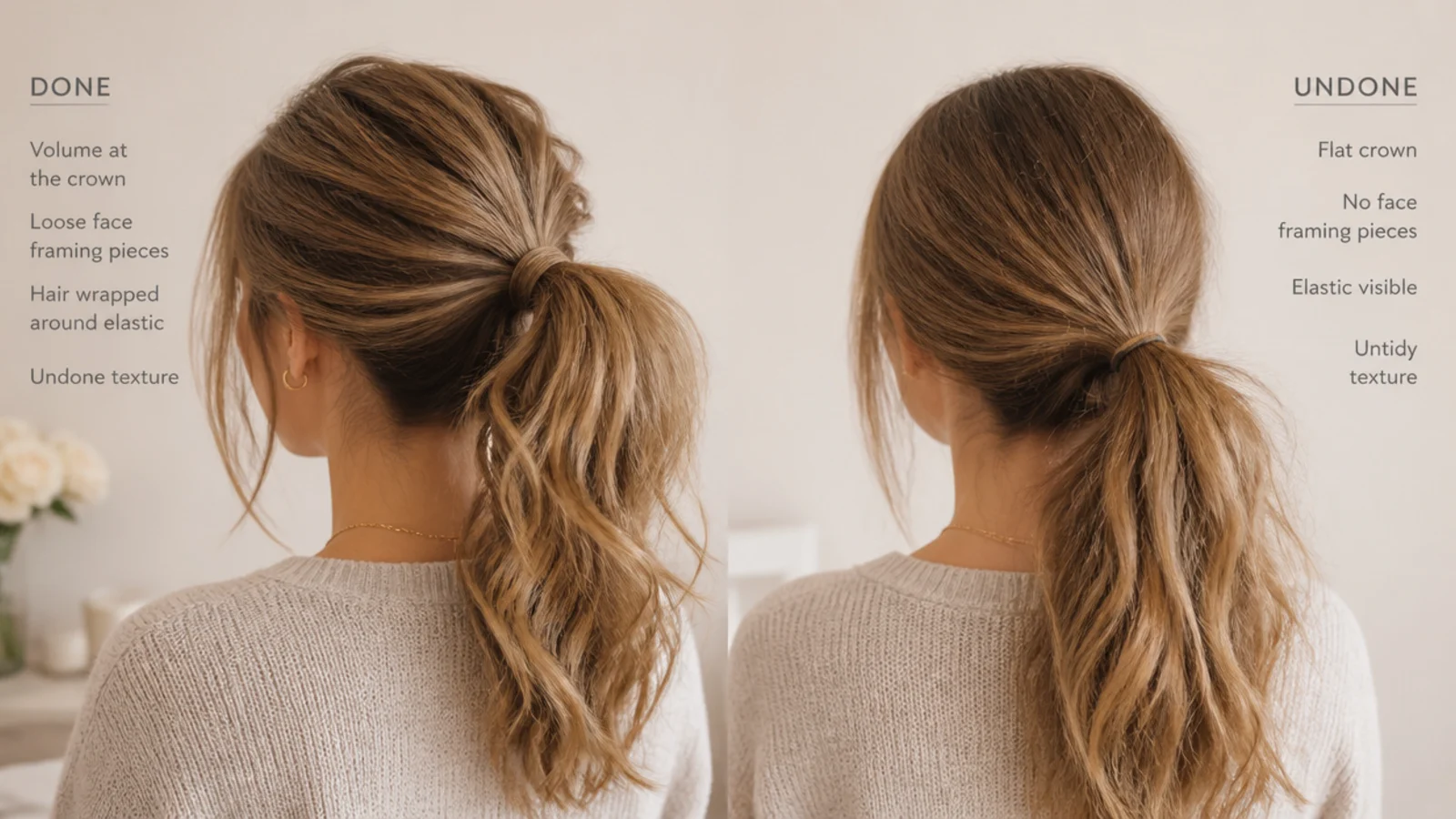
The band never shows. A visible elastic is the single detail that drops a formal ponytail back into an everyday one, and it takes ten seconds to cover.
The crown is controlled. Not flattened, but even. Bumps here read as a slipped style rather than as volume, because the eye uses the head outline as its reference line.
One undone element, not four. Loose tendrils or a textured tail or a soft fringe. Choosing all three at once leaves nothing for them to contrast against.
Nothing looks accidental. Every piece out of the band was placed there on purpose, and placed symmetrically enough that the asymmetry looks chosen.
The tension is even across the scalp. An elegant ponytail is not a tight one. It is one where no section is pulling harder than its neighbours.
Messy Versus Sleek
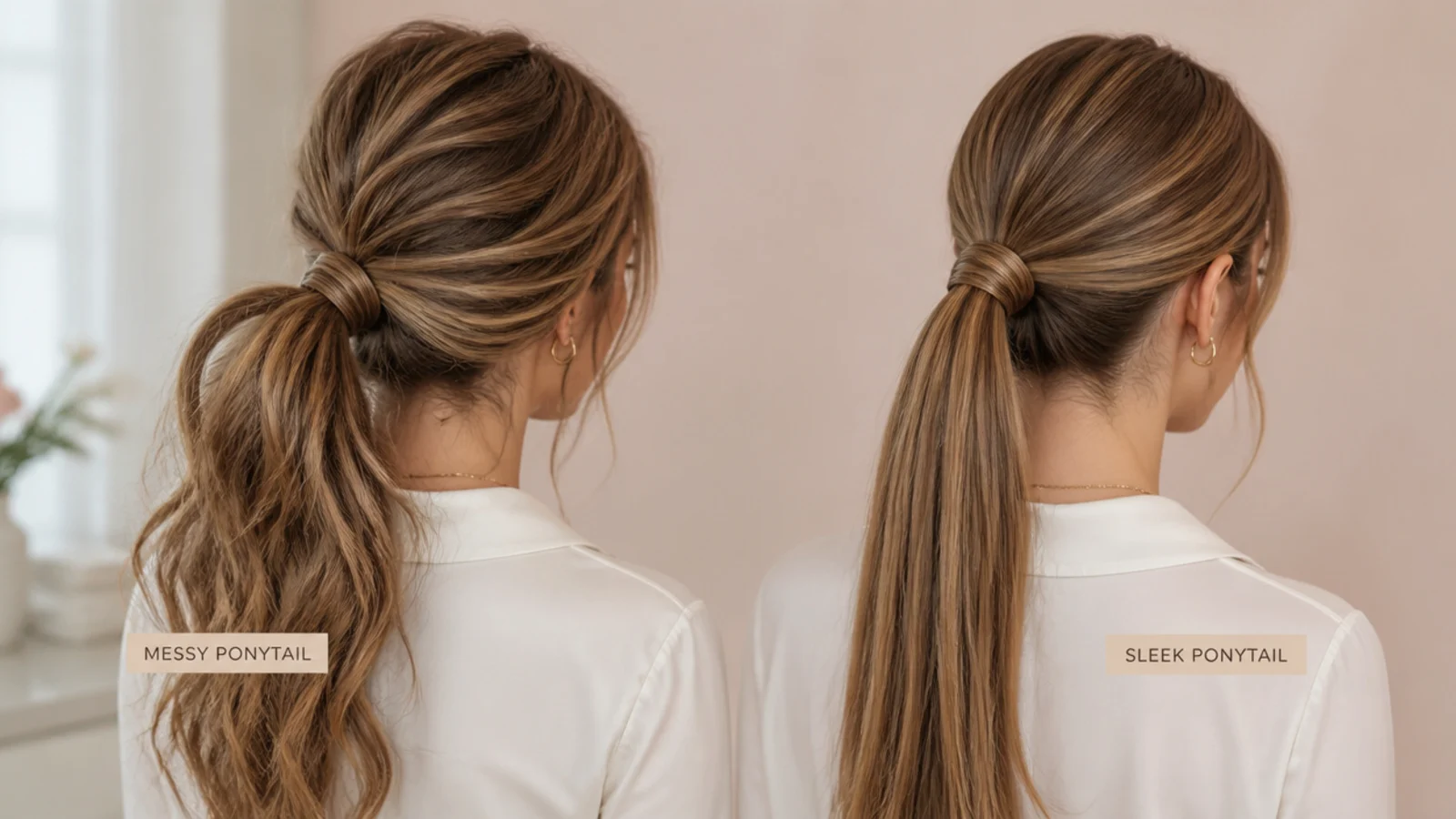
Sleek is a commitment for the whole evening. One flyaway lifting against a flat surface is visible from across a room, and there is no way to disguise it once you are out.
Messy absorbs its own mistakes. A piece that works loose joins the texture instead of breaking the line, which is why it survives a long night better.
Sleek depends on the cuticle lying flat. Humidity lifts it, and a lifted cuticle scatters light where the whole look wanted a single reflection.
Messy depends on friction, not on a set. Nothing is holding a shape it wants to spring out of, so there is nothing for damp air to undo.
In photographs the difference is contrast. Sleek gives one bright highlight down a smooth surface. Messy gives many small ones, which flatters under warm indoor light.
By Hair Length
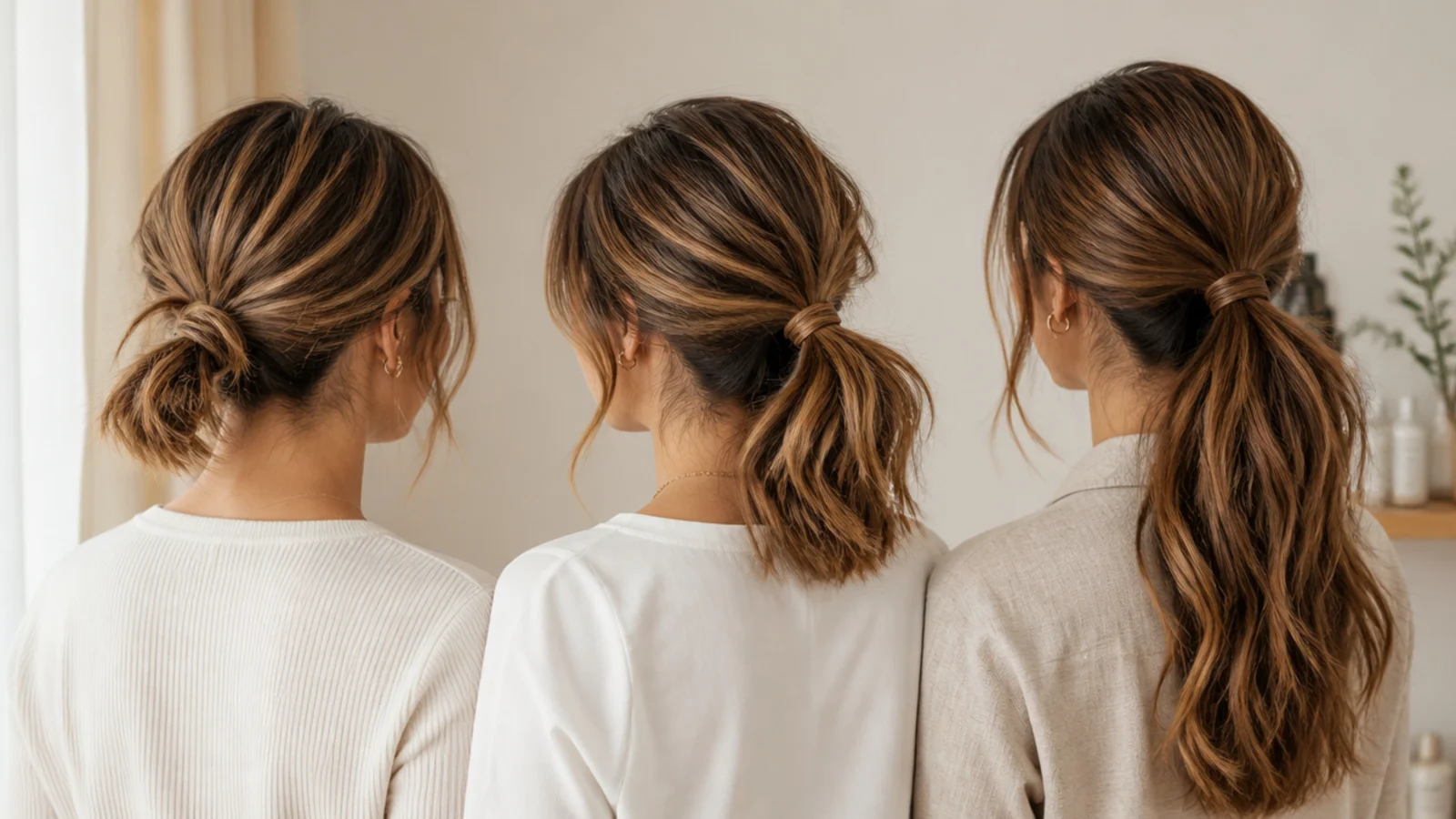
Above the chin. A bungee band rather than an elastic, because each wrap of a standard tie costs length you do not have to spare.
Chin to shoulder. The tail barely closes, so tie once and pin the ends up under themselves rather than fighting for a second wrap.
Shoulder to collarbone. The easiest length here. Enough weight to hang properly, not enough to drag the base down over an evening.
Past the shoulder blades. Weight becomes the governing problem. Drop the placement to the nape so the head carries part of the load rather than the elastic carrying all of it.
Very long. Split the hair into two sections tied one above the other, so no single band is holding the whole mass.
Fine Versus Thick Hair
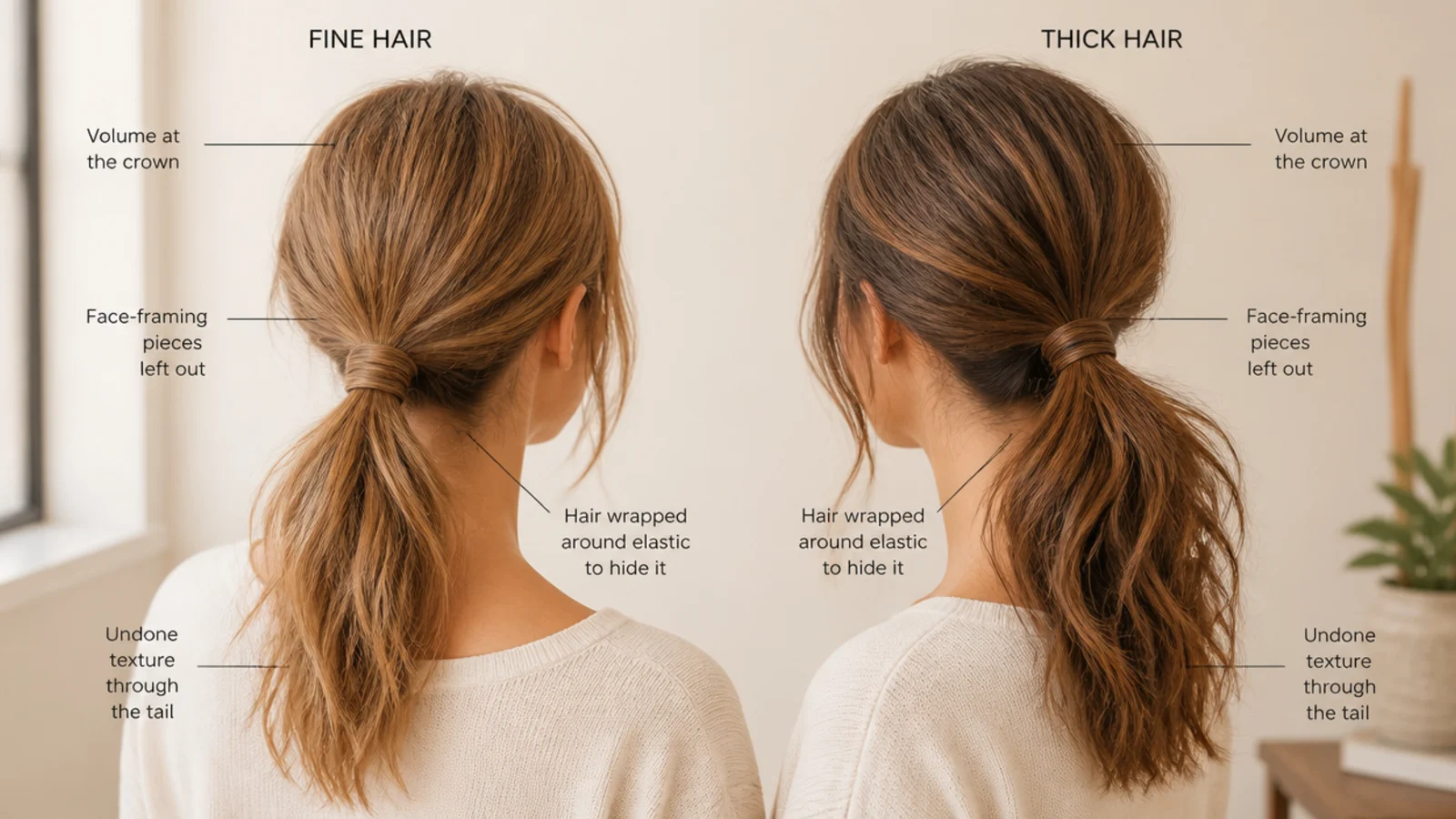
Fine hair loses depth at the base. Fewer strands means the elastic winds more times, and the tail starts thin at the exact point it should look fullest.
Thick hair loses the base entirely. There is grip to spare and far too much weight, so the band slides down the slope of the skull within an hour.
Fine hair wants stacking. Two sections tied one above the other, with the upper one falling over the join, doubles the apparent depth for no extra hair.
Thick hair wants splitting. The same two sections for the opposite reason, halving what either band has to carry.
Both want the crown widened after tying. Pulling gently at hair already inside the elastic borrows slack without loosening the anchor.
Volume and Hold
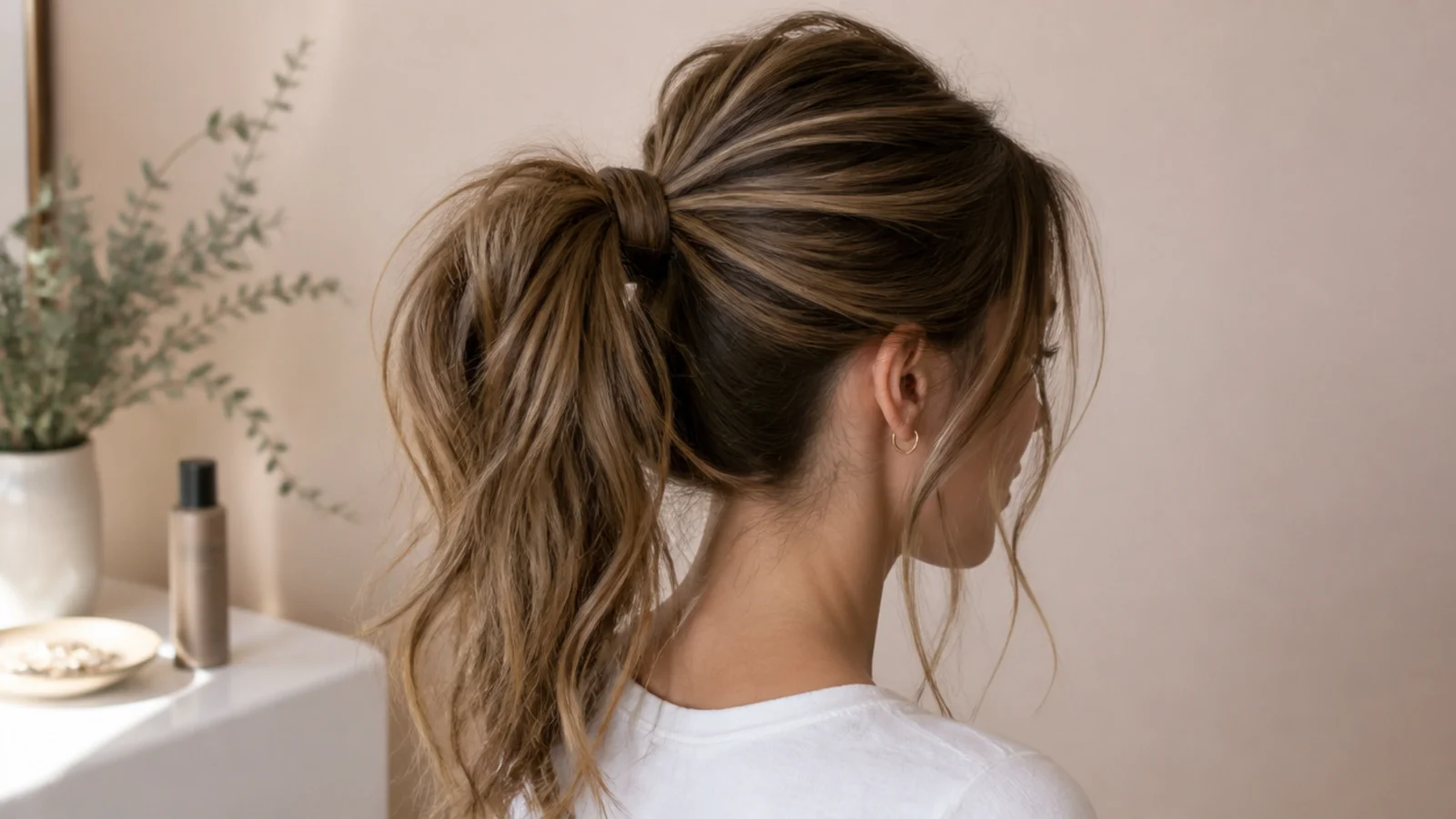
Build the height before the elastic goes on. Hair already under tension cannot be lifted, so backcombing after the tie moves the texture and not the shape.
Backcomb underneath, never on the surface. The under layer becomes a cushion that holds the top layer away from the scalp while the top layer stays smooth.
Pin the base, not the tail. Two crossed pins under the elastic take the downward load. Pins in the length hold nothing, because the length is what is pulling.
Use a flexible spray. A firm cast has to crack somewhere over four hours, and it flakes onto dark fabric where every fleck shows.
Photograph the back before you leave. It is the only view you never get, and it is the one everyone behind you has all evening.
Products That Matter
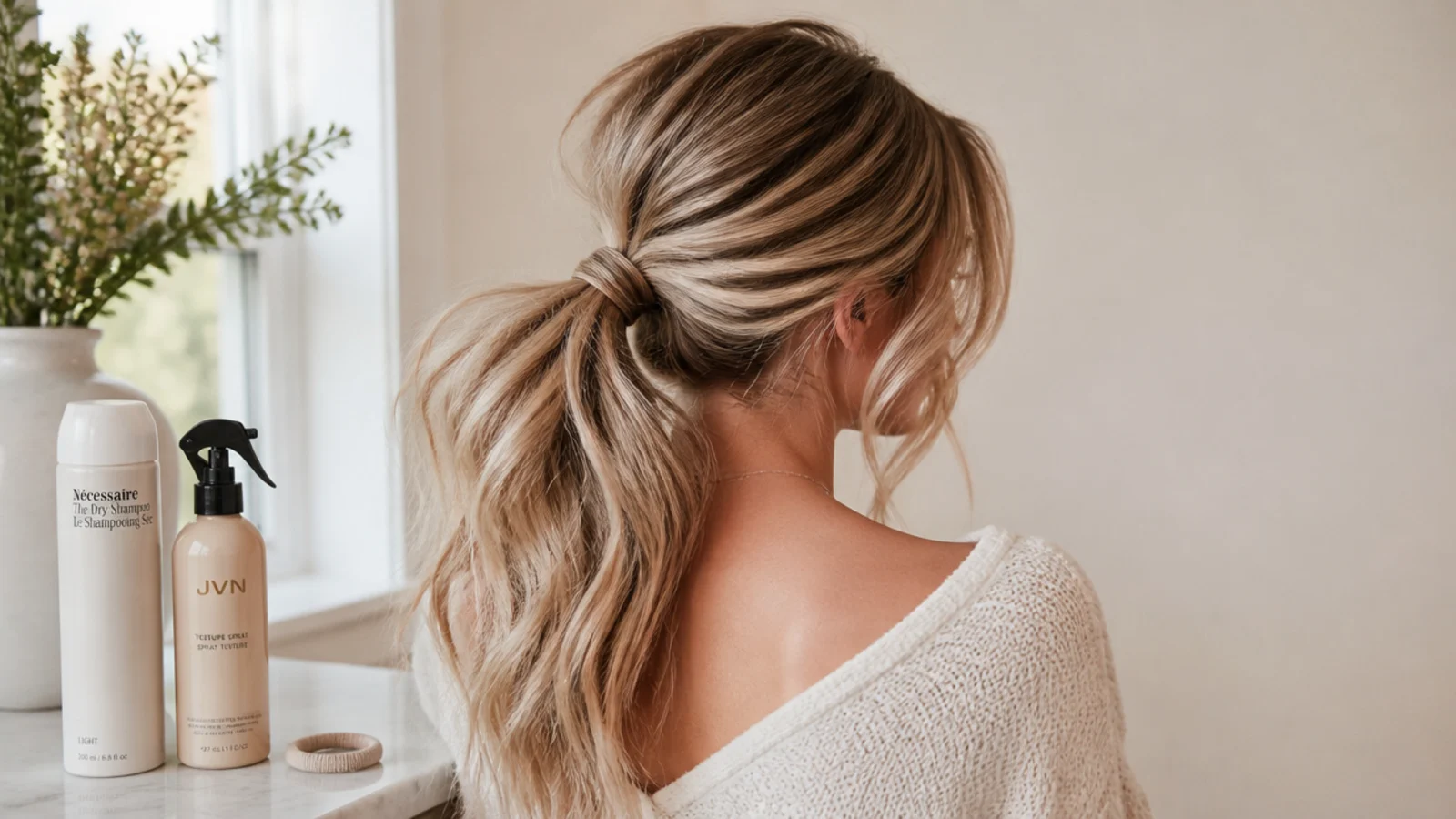
Texture spray, on dry hair only. It roughens the surface so strands catch on each other, which is what keeps a tail wide instead of dropping to a point.
Dry shampoo as a grip product. Its job here is friction at the roots rather than cleaning, and it does that best applied twenty minutes before you style.
Flexible hold spray rather than firm. You want the shape to move slightly and return, not to set and then break.
Crossed pins, two per anchor. A single pin only resists movement across itself and lets the base slide freely along the other axis.
No shine spray near the base. It smooths the very surface the elastic needs to grip, and a slick base is the most common reason a set style drops.
The 20 Elegant Messy Ponytails
1. Wedding Guest Low Ponytail
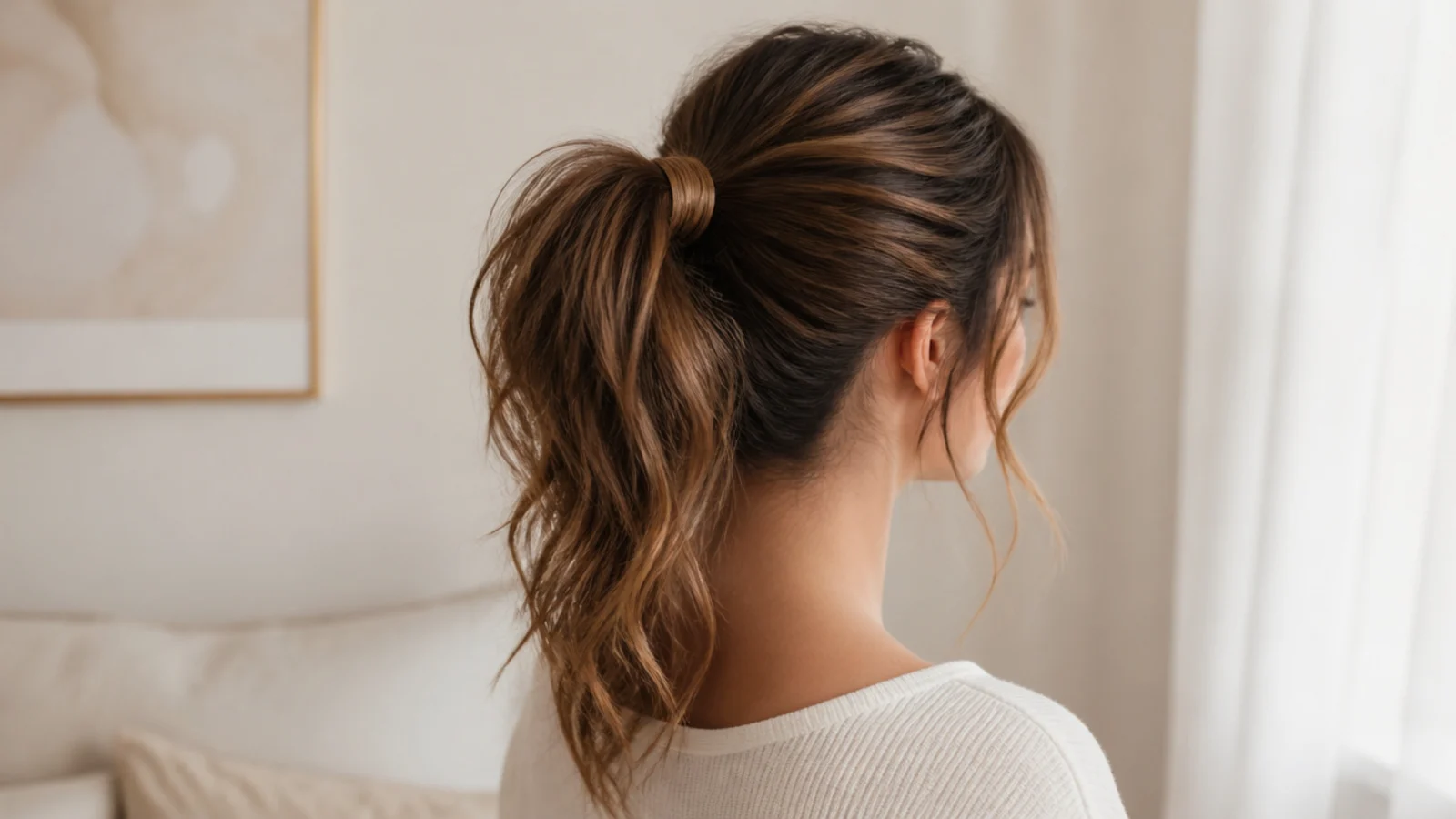
A nape placement keeps the outline of the head unbroken, and an unbroken outline is what photographs as formal in a room full of hats and cameras. Tie it low, cover the band, and leave the texture entirely to the length hanging below it.
2. Bridal Wrapped Ponytail
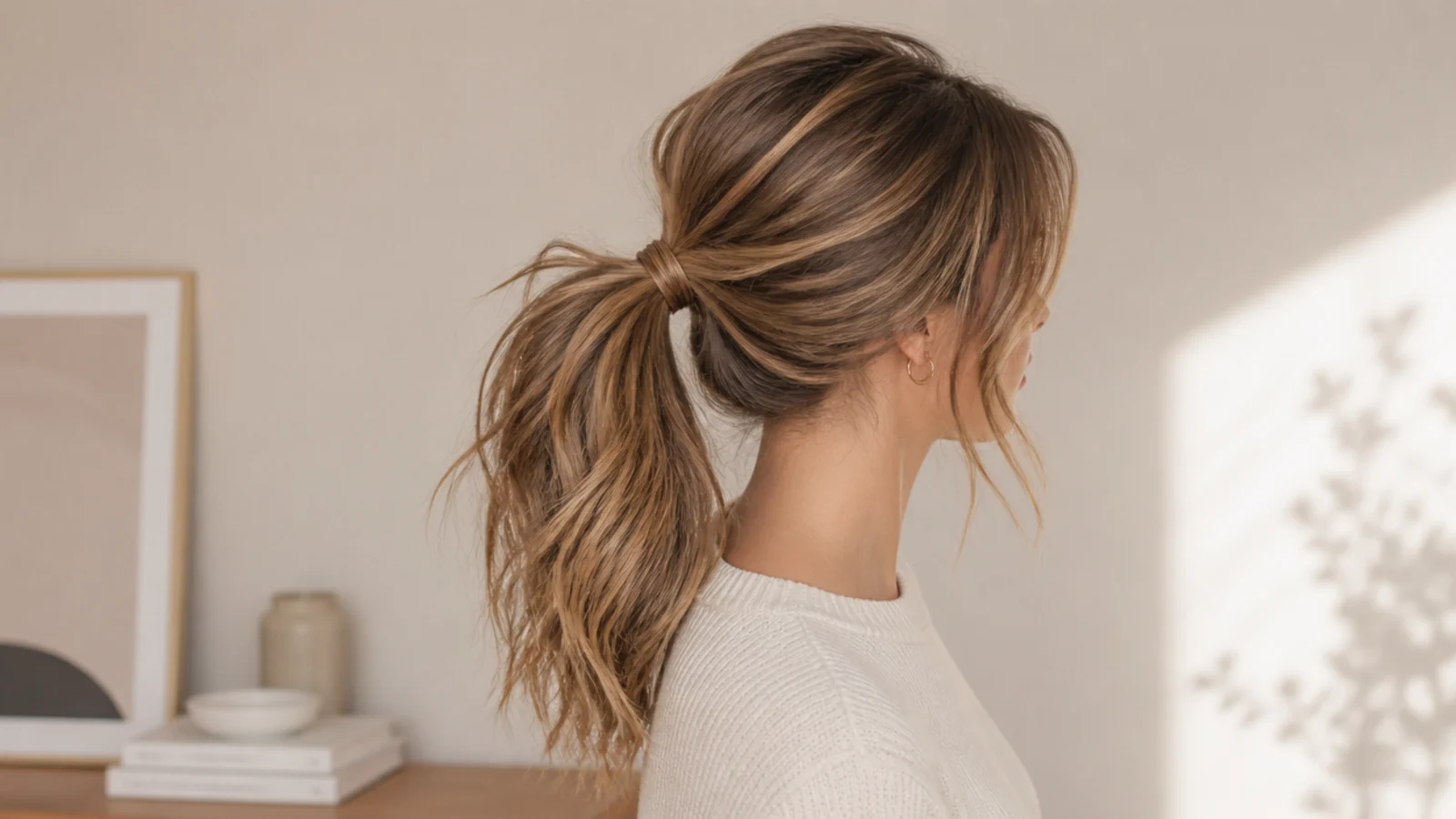
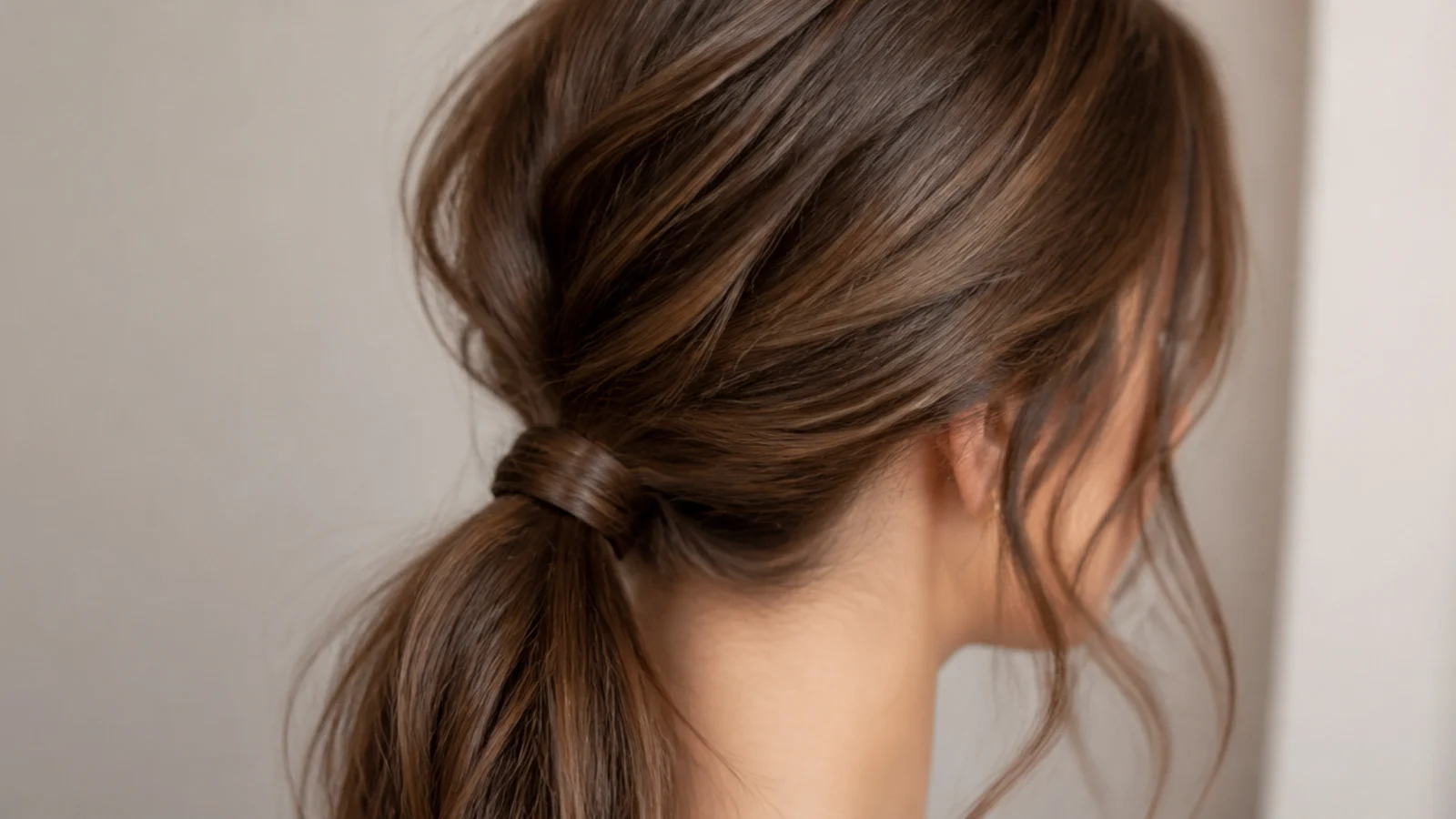
A strand taken from beneath the tail and wound over the elastic does two jobs at once, hiding the band and clamping it against the base so it cannot rotate. On a fourteen hour day that second function matters more than the first.
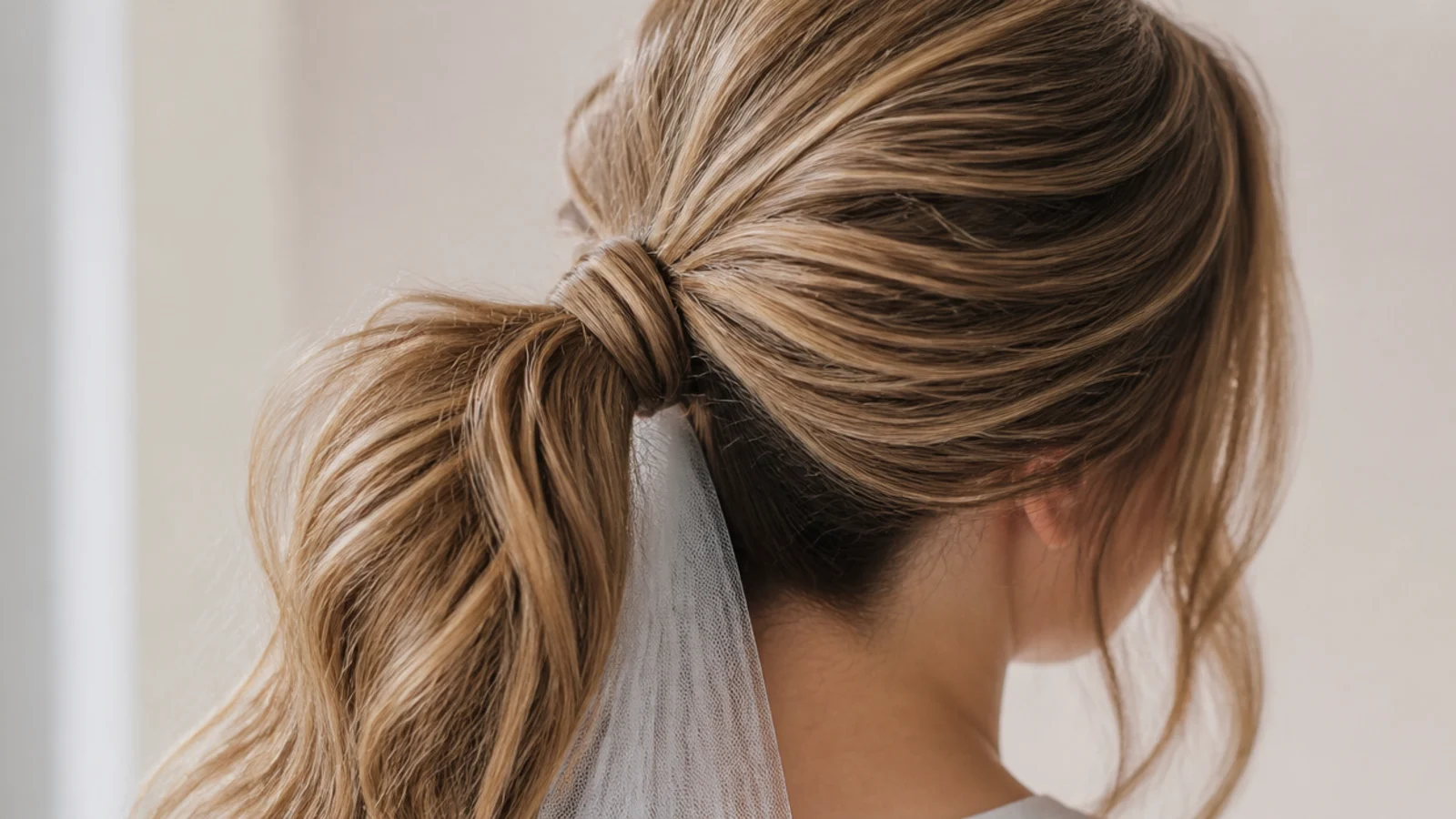
3. Office Nape Ponytail
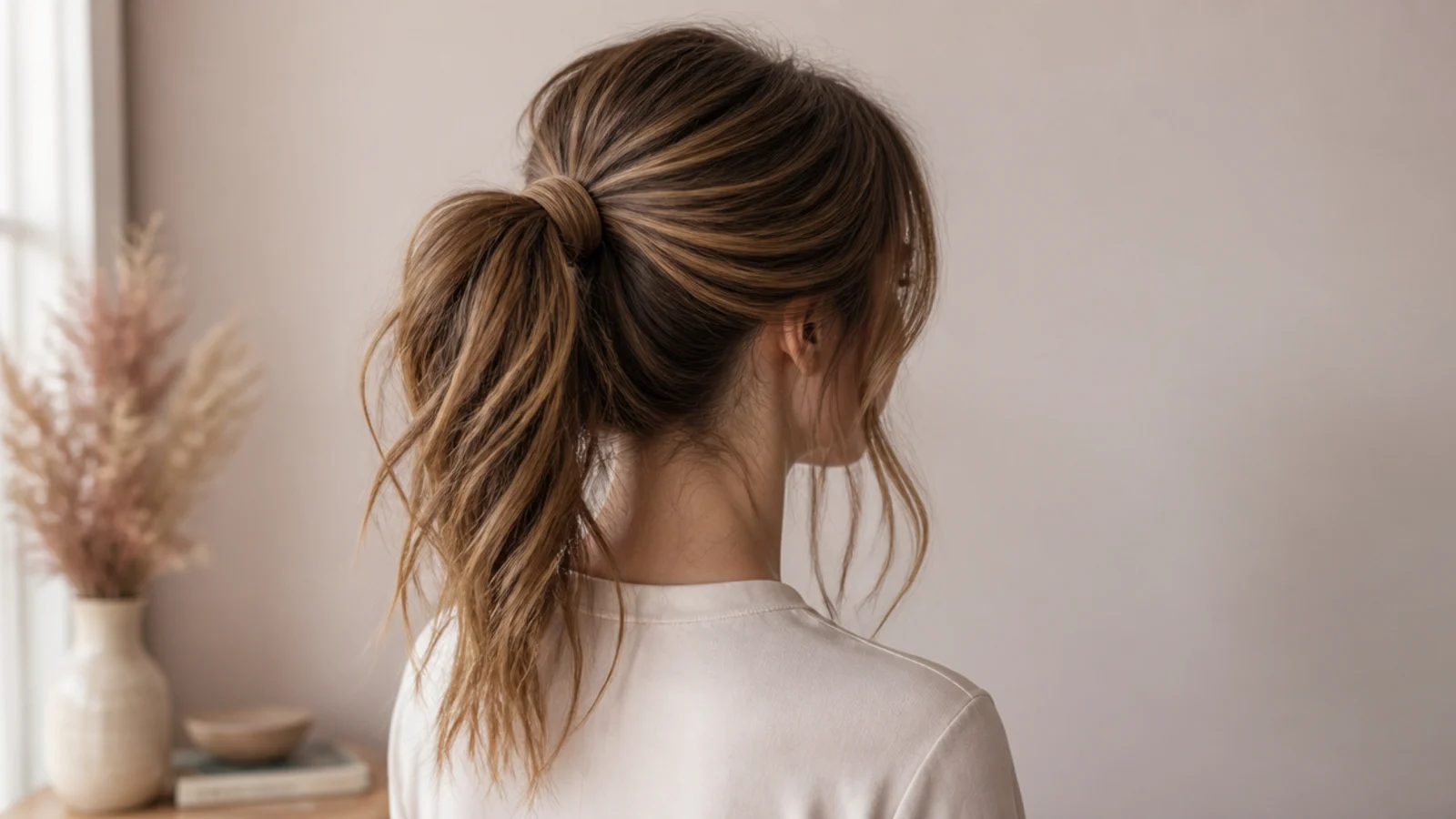
Sitting at the nape, this is the one placement that does not fight a jacket collar, since anything higher gets pushed forward every time you sit back in a chair. Keep the crown even and the tension low and it survives a full working day untouched.
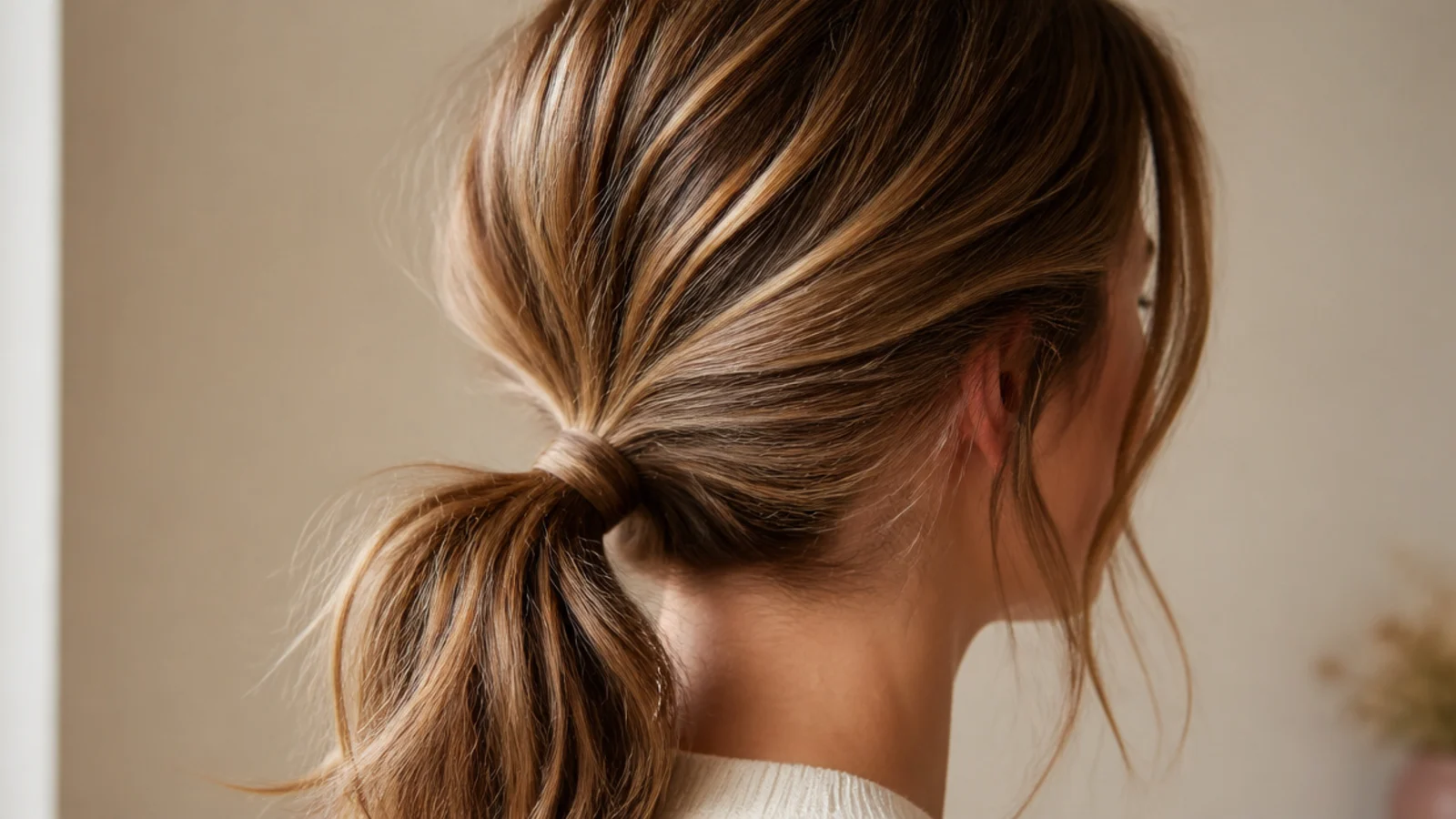
4. Black Tie High Ponytail
Height reads formal at black tie because it clears the neck and jaw completely and lets a neckline do its work. The whole mass now sits above the point gravity wants it, so this version needs two crossed pins under the band and not just a tighter tie.
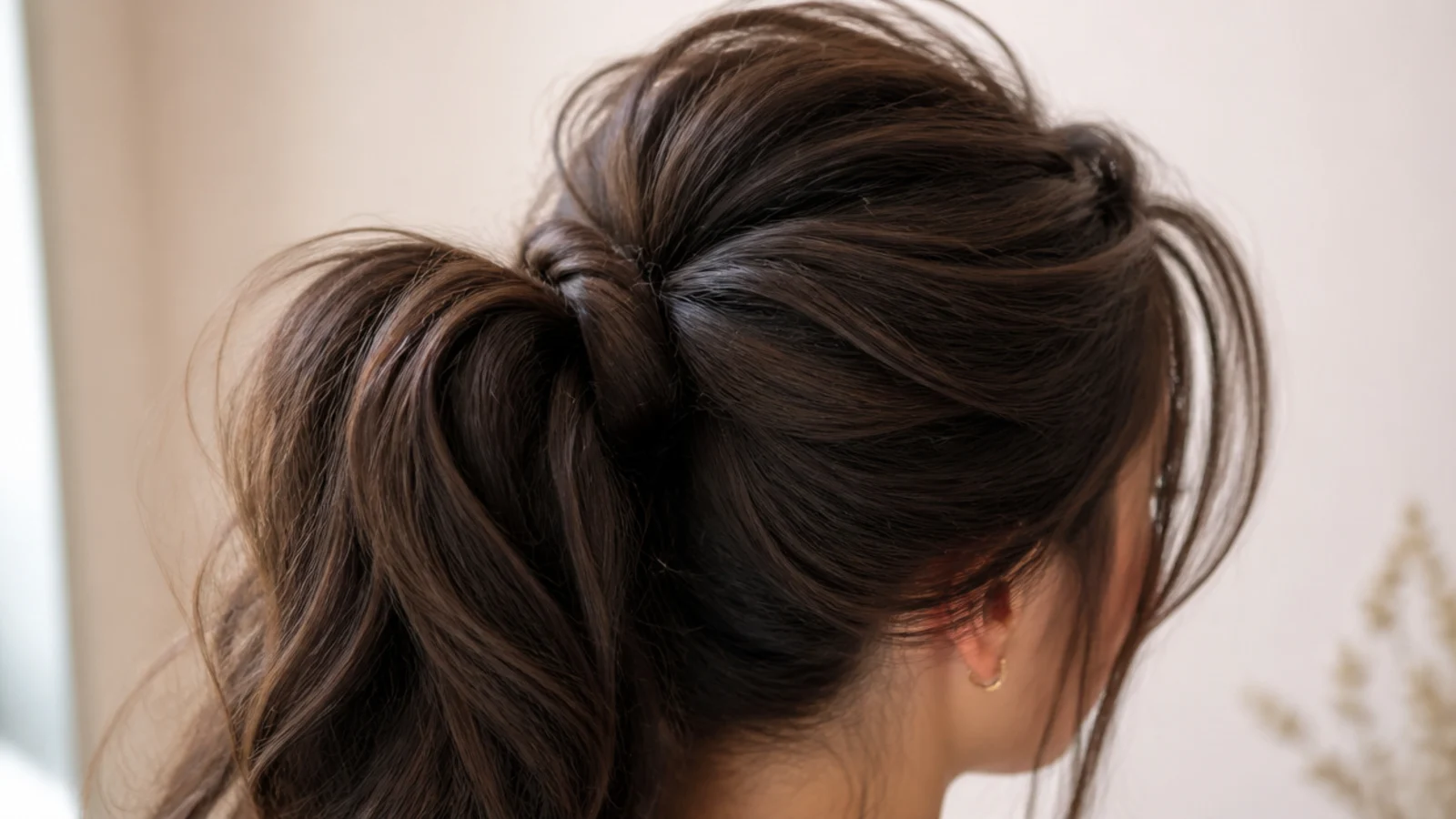
5. Date Night Side Ponytail
Bringing the mass in front of one shoulder puts it where it is visible from the front rather than only from behind. Pin the opposite side flat against the head before you gather, or the asymmetry reads as a slipped ponytail instead of a swept one.
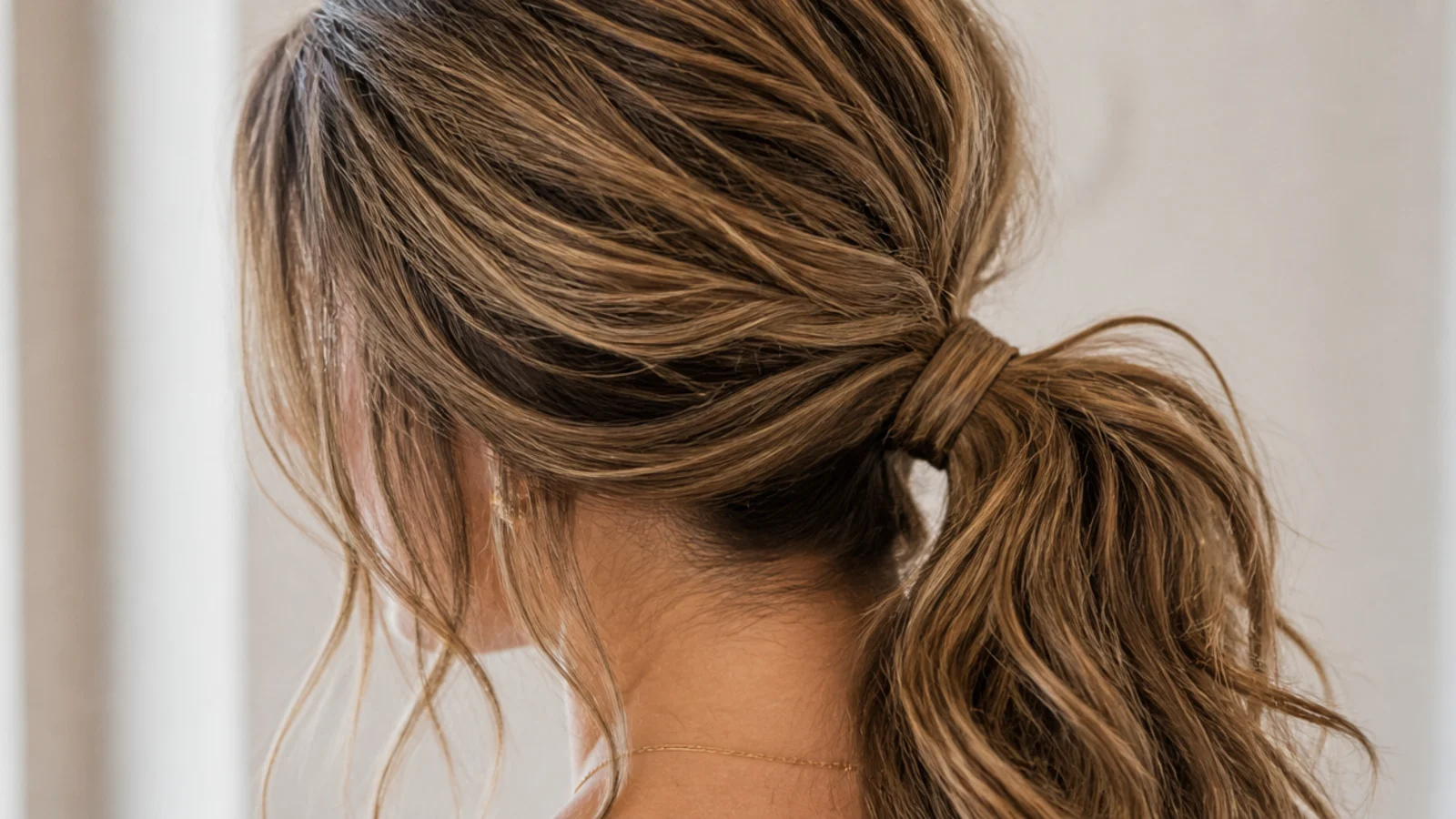
6. Velvet Ribbon Ponytail
Velvet has a directional pile that catches on hair, which is why a velvet ribbon stays where you tied it while a satin one slides loose by the second hour. Tie it over the elastic rather than instead of it and let the ends fall unevenly.
7. Vintage Bouffant Ponytail
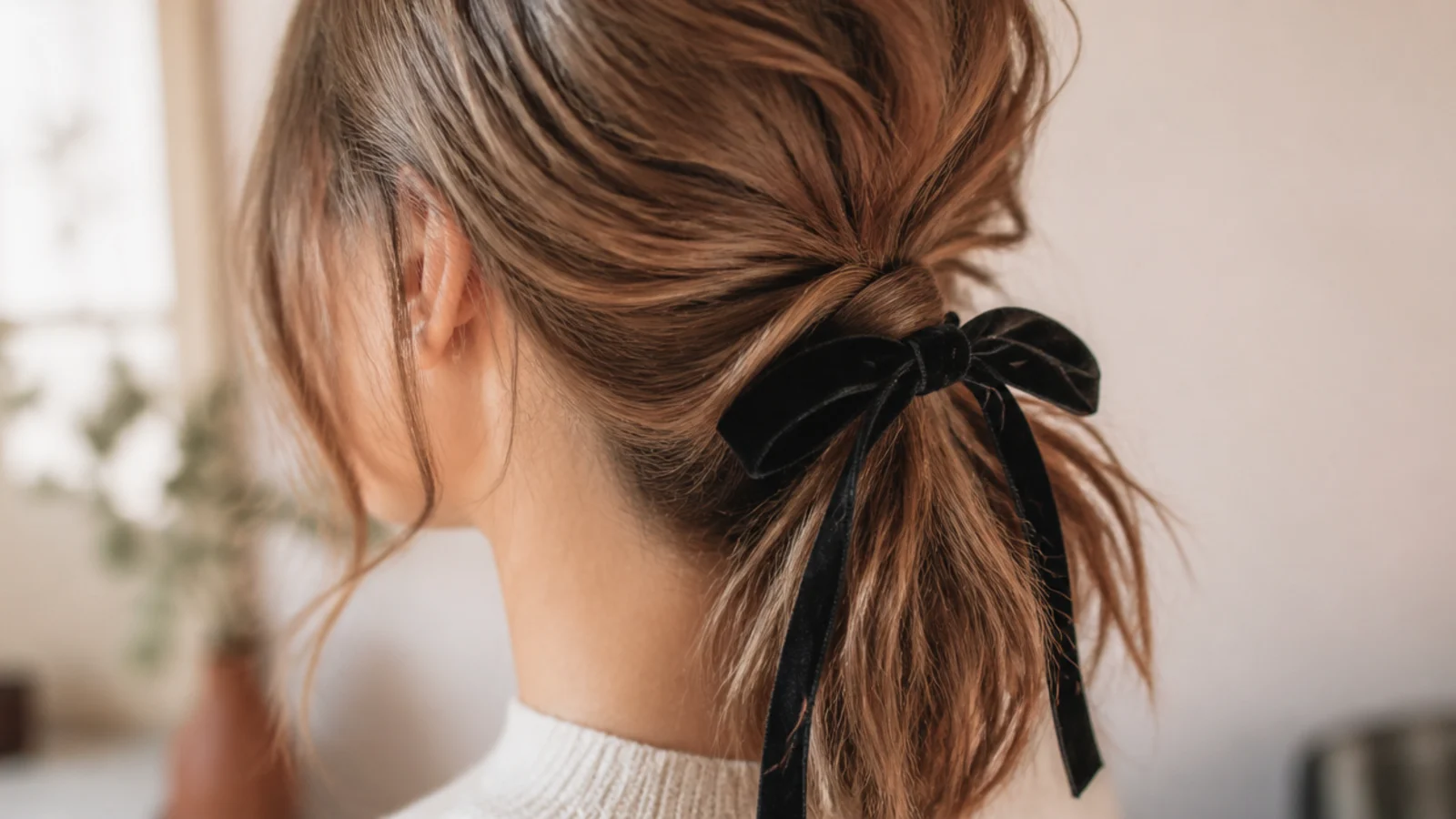
The crown is lifted by a backcombed cushion underneath before any hair is gathered, because a section already held by an elastic cannot be raised afterwards. Smooth only the top layer over the cushion, leaving the tangle beneath it entirely alone.
8. Curtain Bangs Ponytail
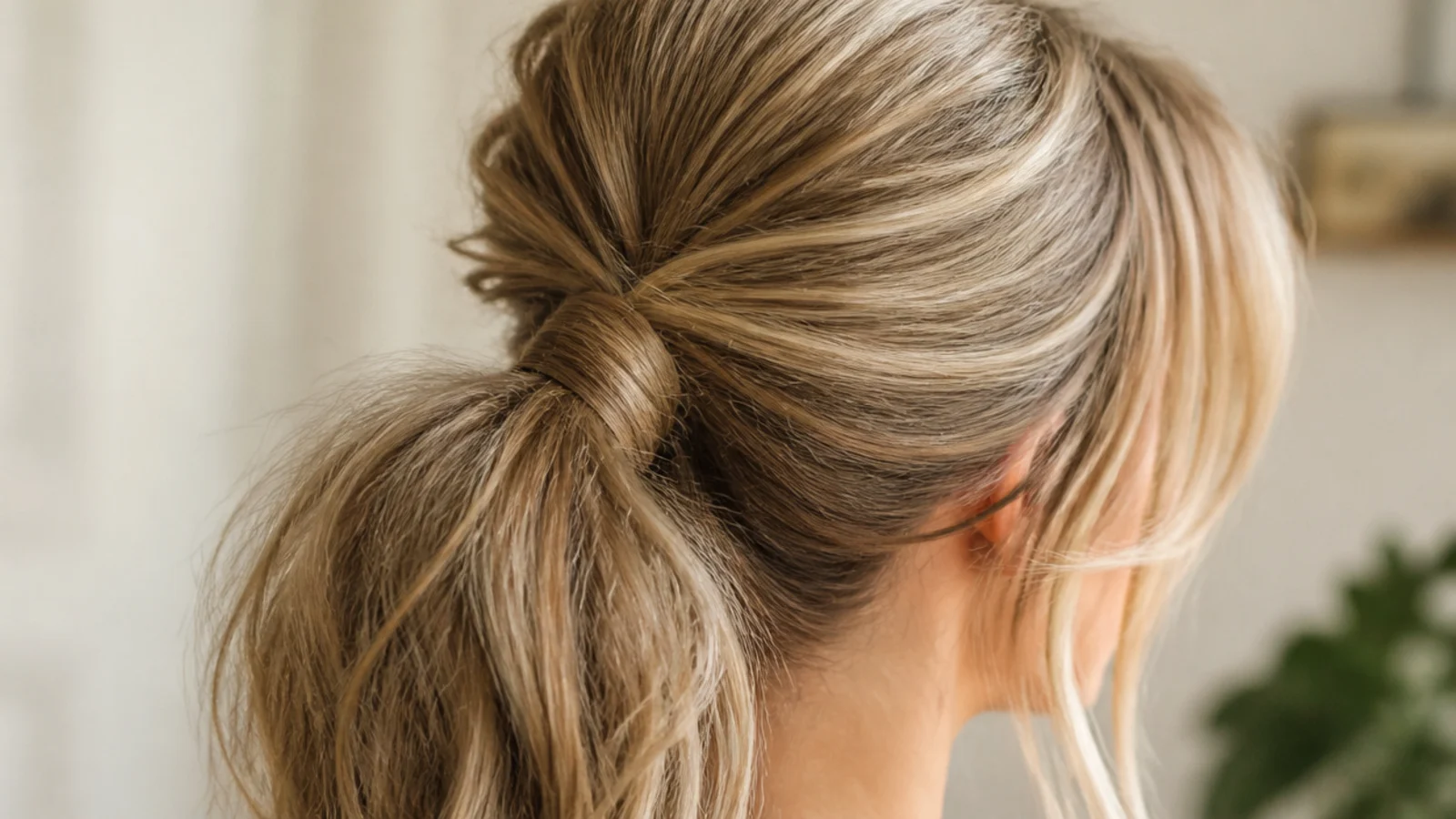
Keep the fringe completely out of the gather and collect from behind it. Curtain bangs are cut on a long angle, so a few pieces caught in the elastic drag the whole curtain sideways and the centre split stops falling where it was cut to fall.
9. Half Up on Long Hair
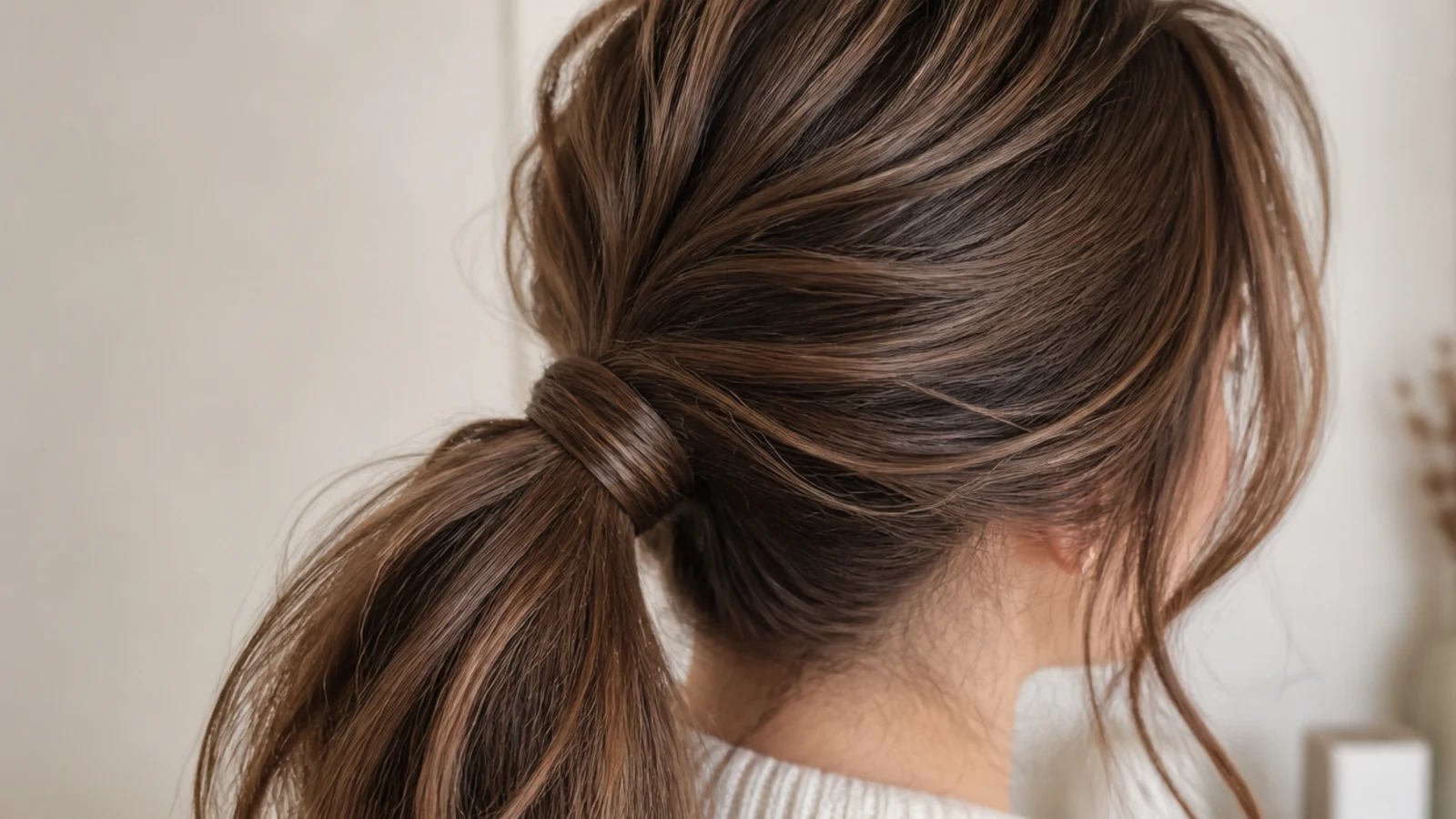
Gathering only the top section halves the mass the band is holding, which is the reason this outlasts a full ponytail on very long hair. The length stays visible from the front, so it keeps the effect of hair down with none of the load.
10. Braided Base Ponytail
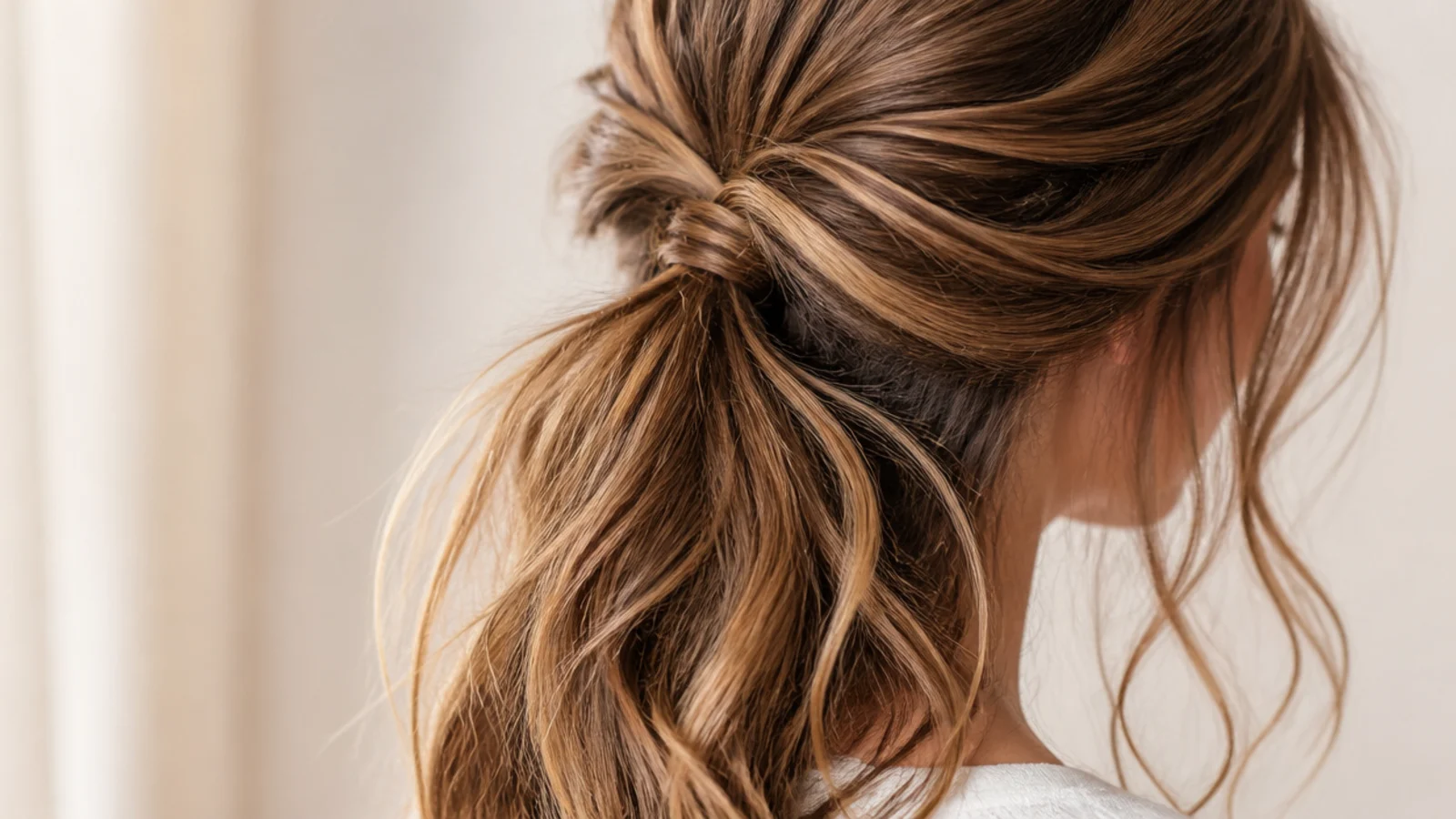
A short braid worked into the hair before the tie gives every pin something anchored to pass through. A pin driven into loose hair simply travels with that hair, which is why pinned formal ponytails drop and braided ones do not.
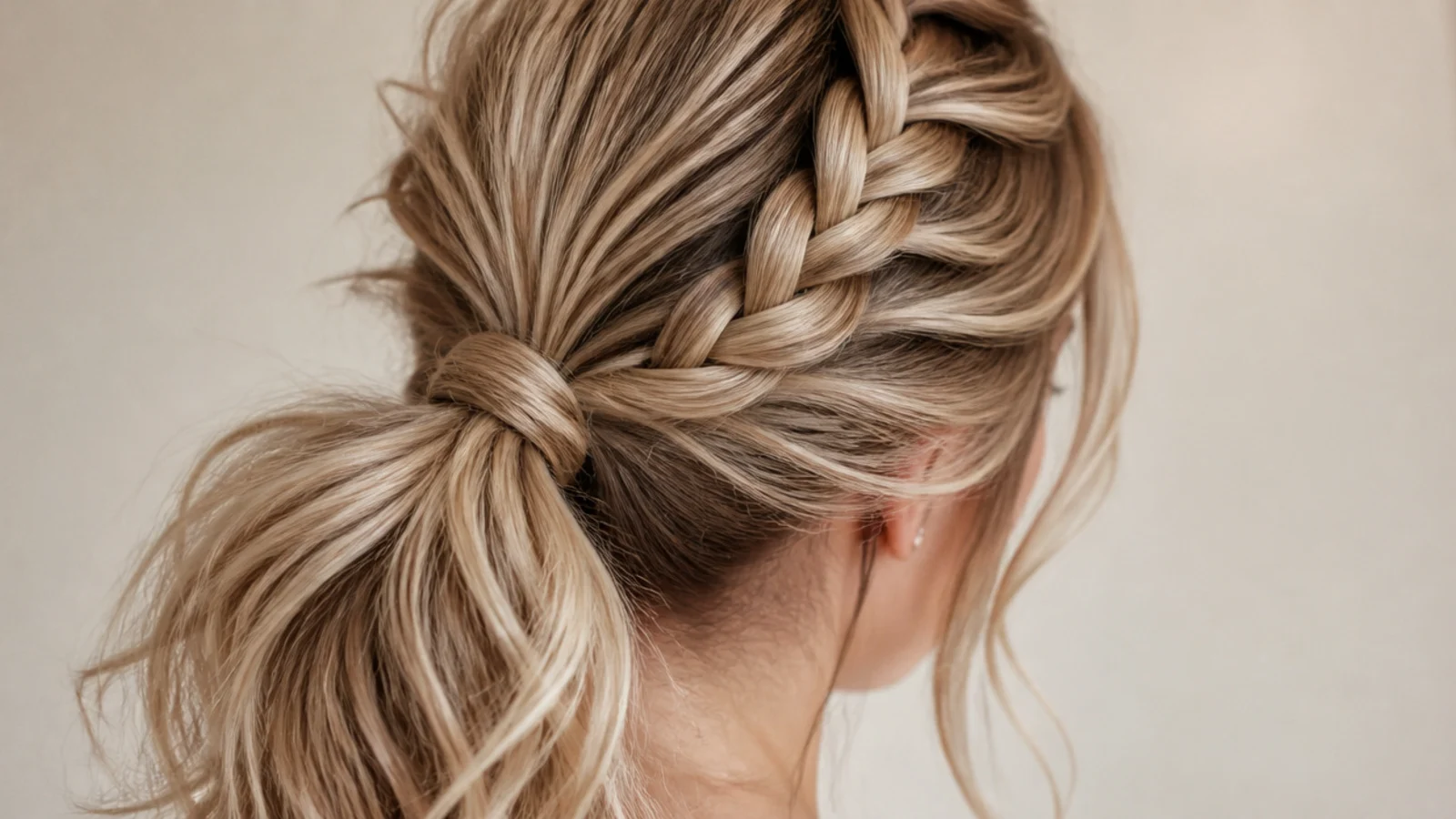
11. Gold Cuff Ponytail
A metal cuff clamps over the elastic, so the band is covered by something rigid rather than by hair that can slip. The hard edge also gives the eye a single clean line to read against all that texture, which is what stops the tail looking shapeless.
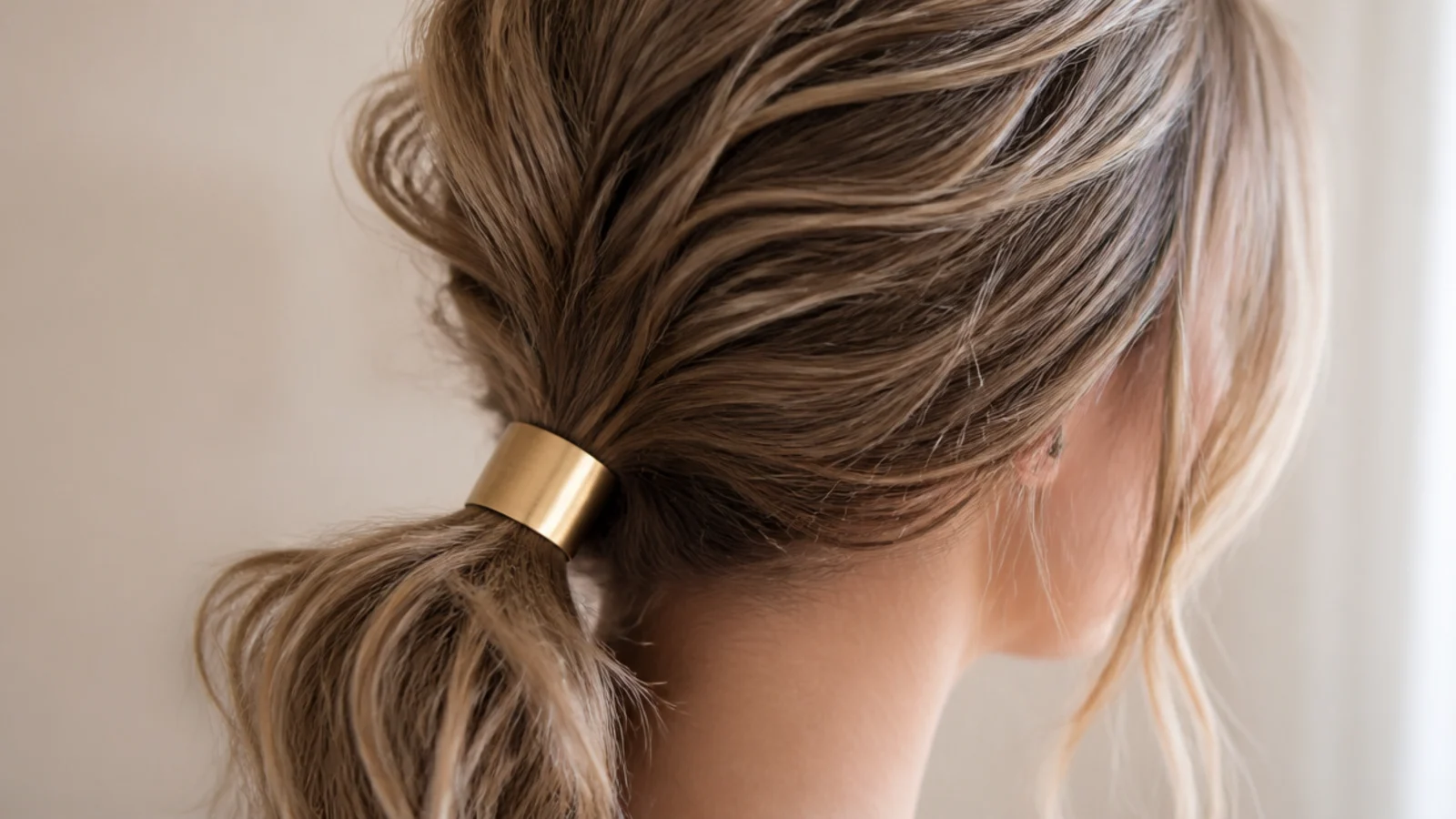
12. Fine Hair Stacked Ponytail
Tie the upper half first, then the lower half a finger width beneath it, and let the top section fall over the join. Fine hair reads thin at the base because there is nothing to fill the space around the band, and stacking puts a full layer exactly there.
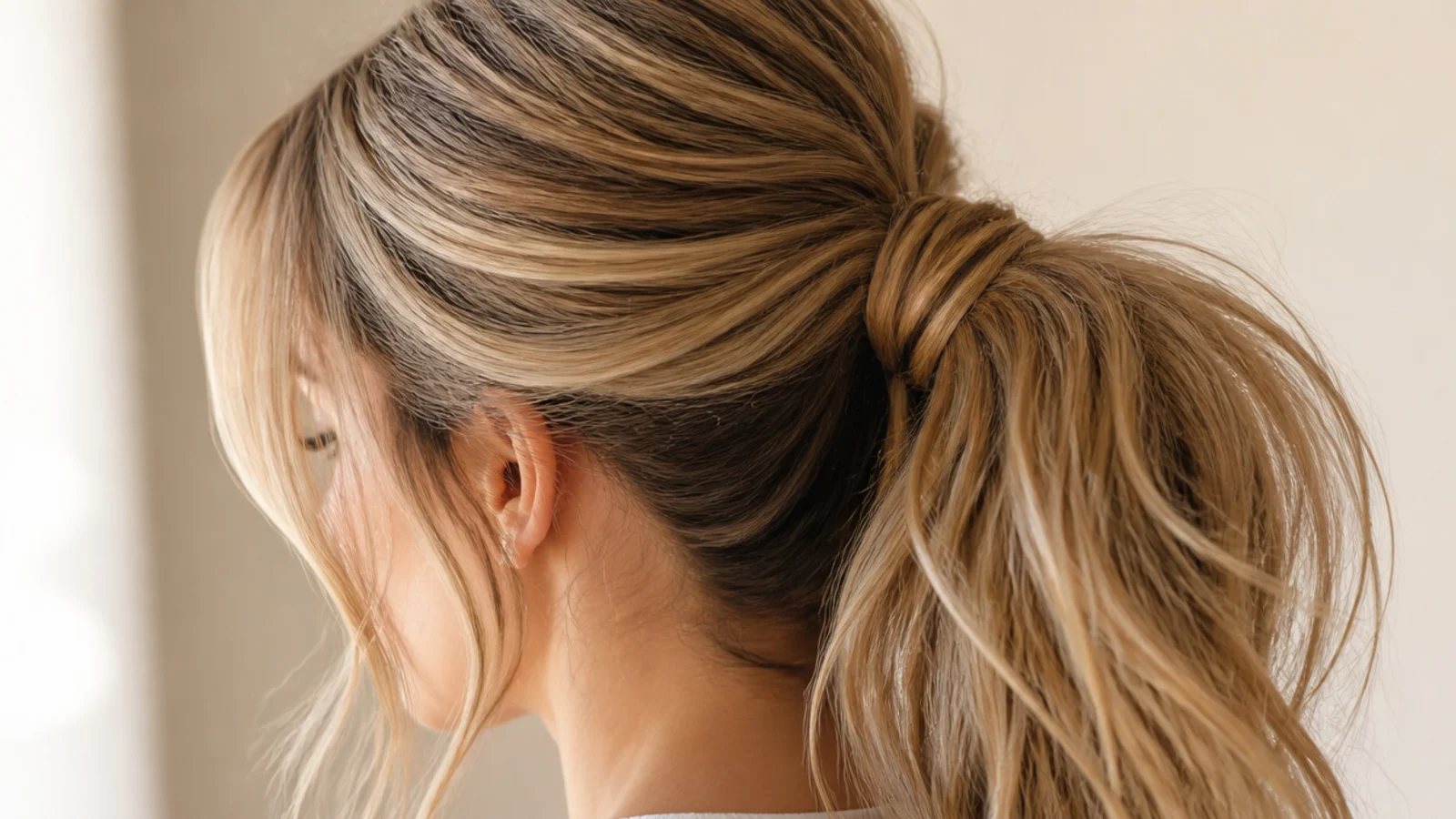
13. Thick Hair Split Ponytail
The same two section method used for the opposite reason, because each band now carries half the weight instead of one band carrying all of it. On heavy hair this is the difference between a base that holds its height and one that has slid an inch by the time you arrive.
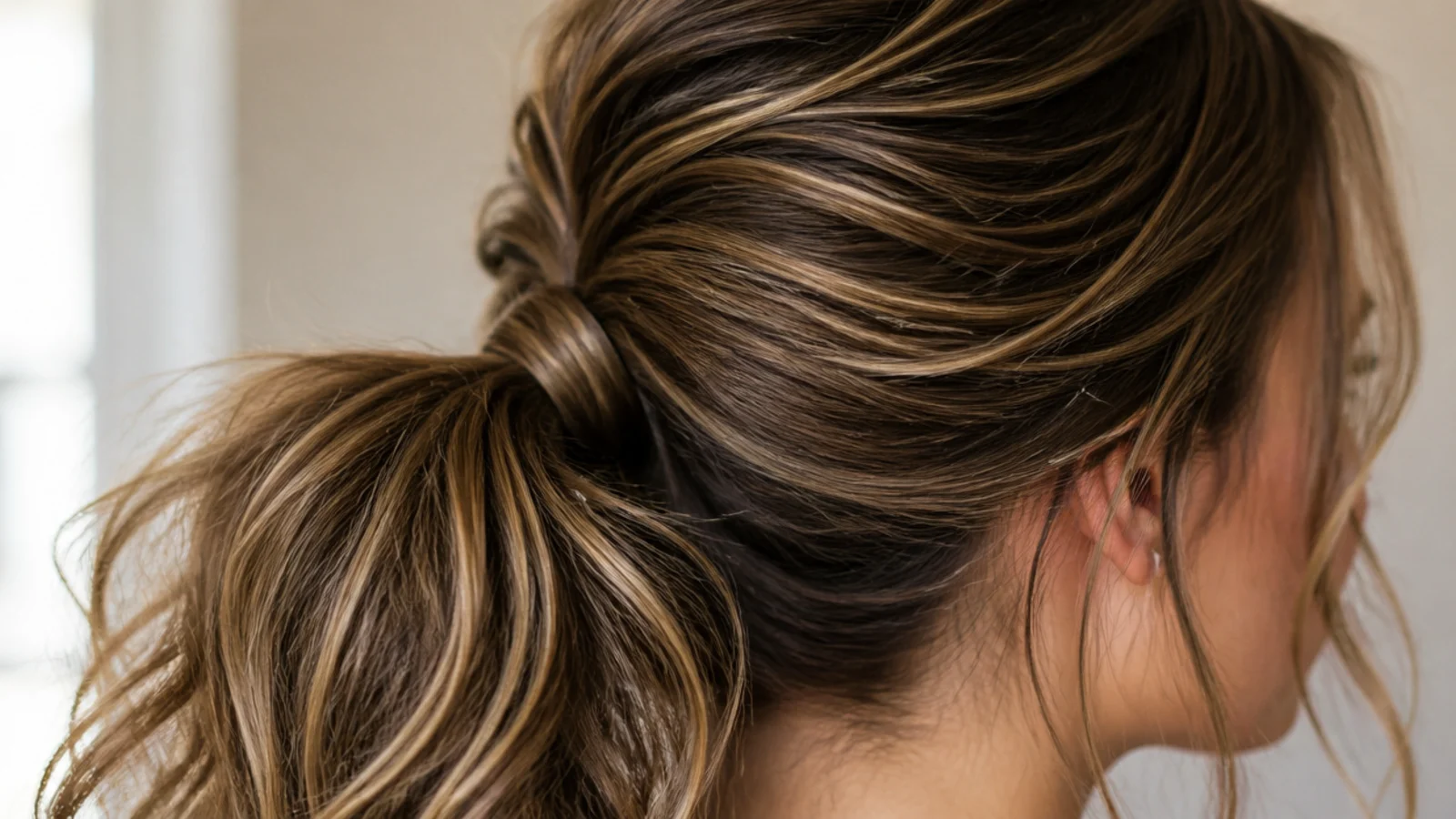
14. Curly Tendrils
Pull curls down at the temples after the tail is tied and pull further than looks right. A released curl springs back to roughly two thirds of its stretched length, so the piece you leave at the jaw will settle somewhere near the cheekbone.
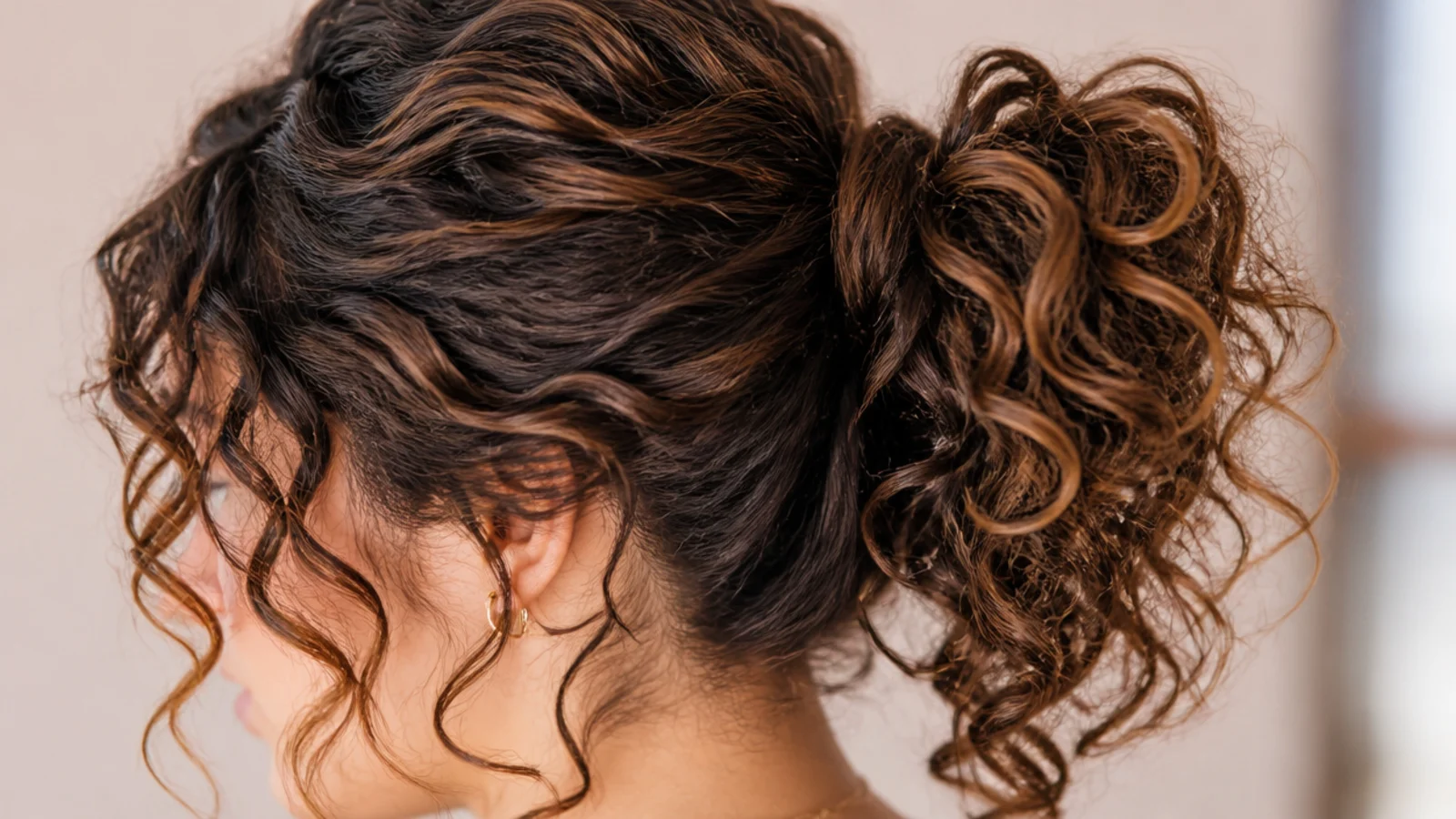
15. Short Hair Bungee Ponytail
A bungee hooks at both ends, so the tension is set by how far you stretch it rather than by how many times you can wrap a fixed loop. On hair above the shoulder that matters, because each wrap of an ordinary elastic pulls in length the tail cannot afford.
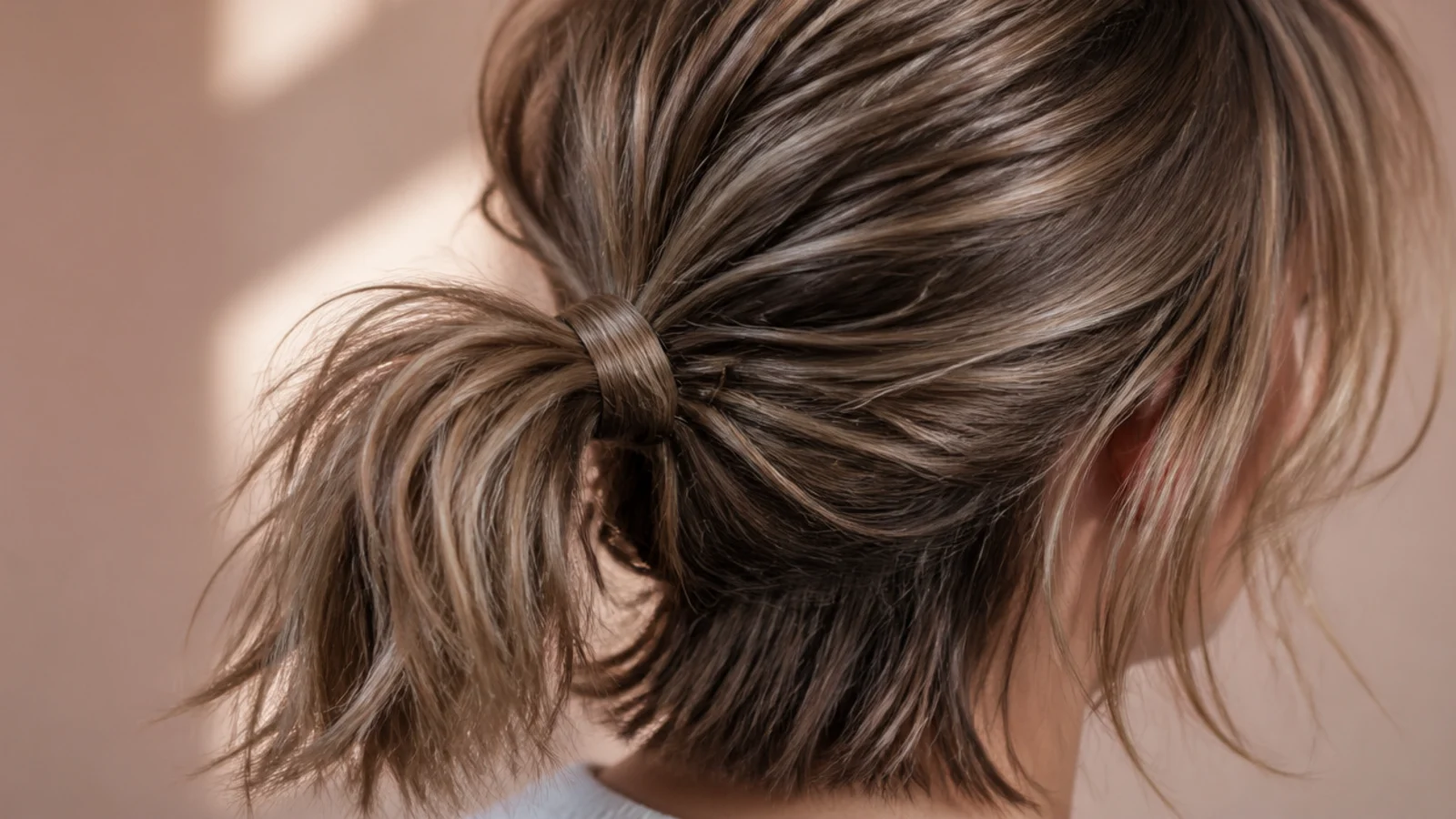
16. Bubble Ponytail for Evening
Bands spaced down the tail each carry a portion of the weight, so the base is no longer holding the whole length on its own. Under indoor light the rounded segments also catch highlights at intervals, which reads as structure rather than as decoration.
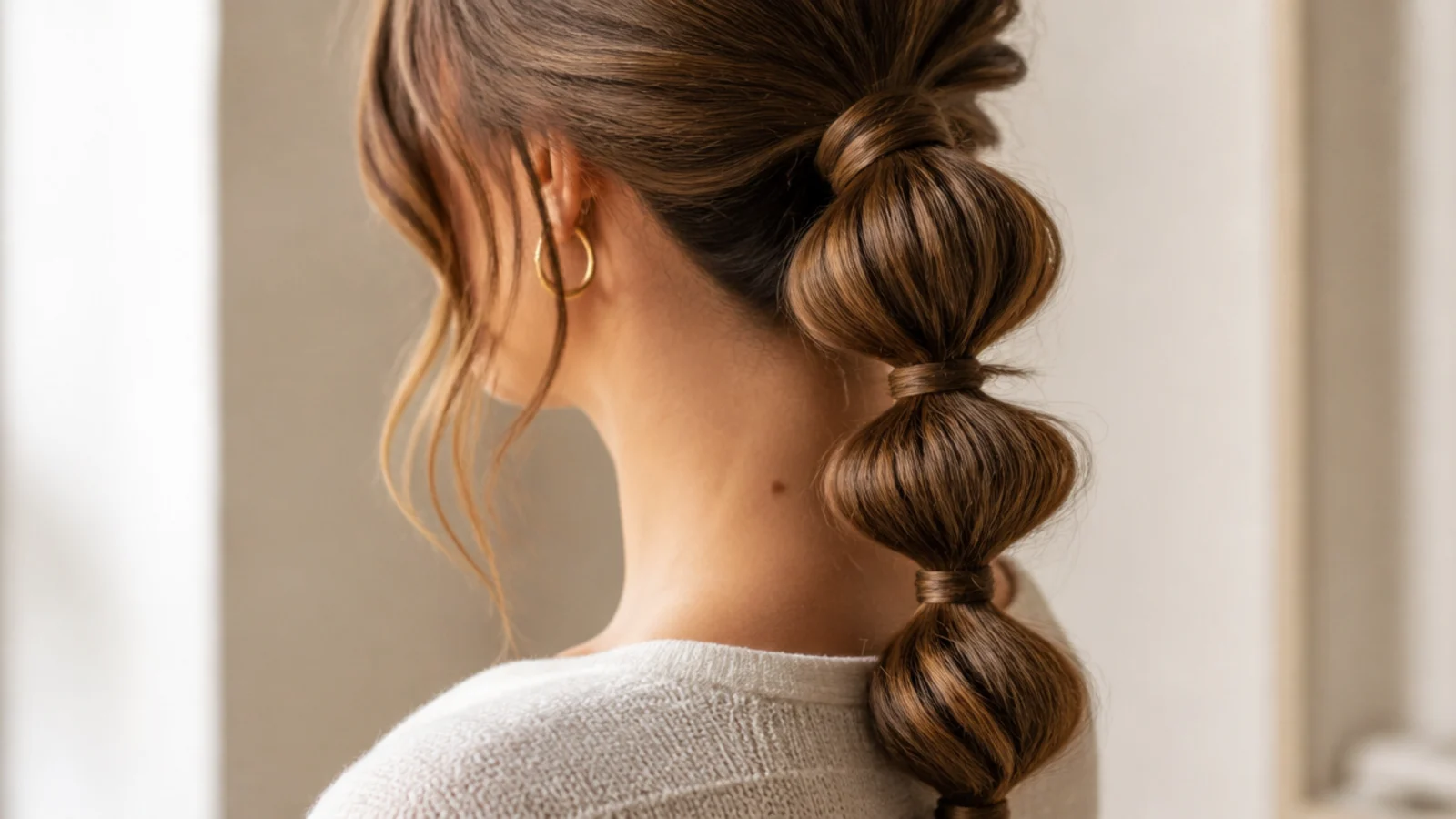
17. Deep Side Part Ponytail
A deep part throws the bulk of the hair across the head to one side, which builds height on that side without any backcombing at all. Comb the line before you gather, because a part set after the elastic is on has nothing left to lie into and creeps back to centre.
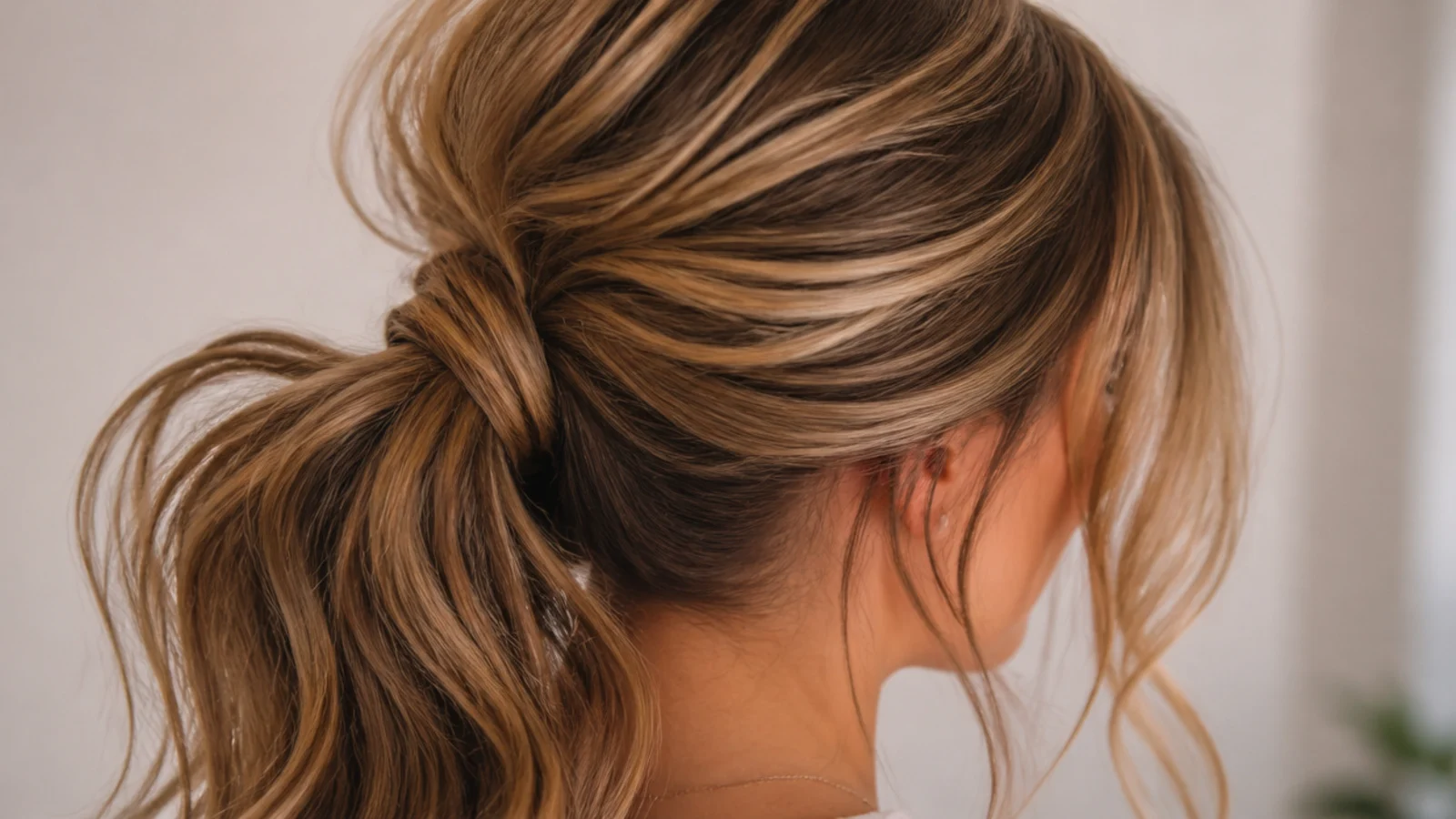
18. Rope Twist Ponytail
Two strands twisted in one direction and then wound around each other in the opposite direction lock against their own tension. That counter twist is the entire mechanism, and it is why a rope holds without an elastic partway down while a simple twist unravels.
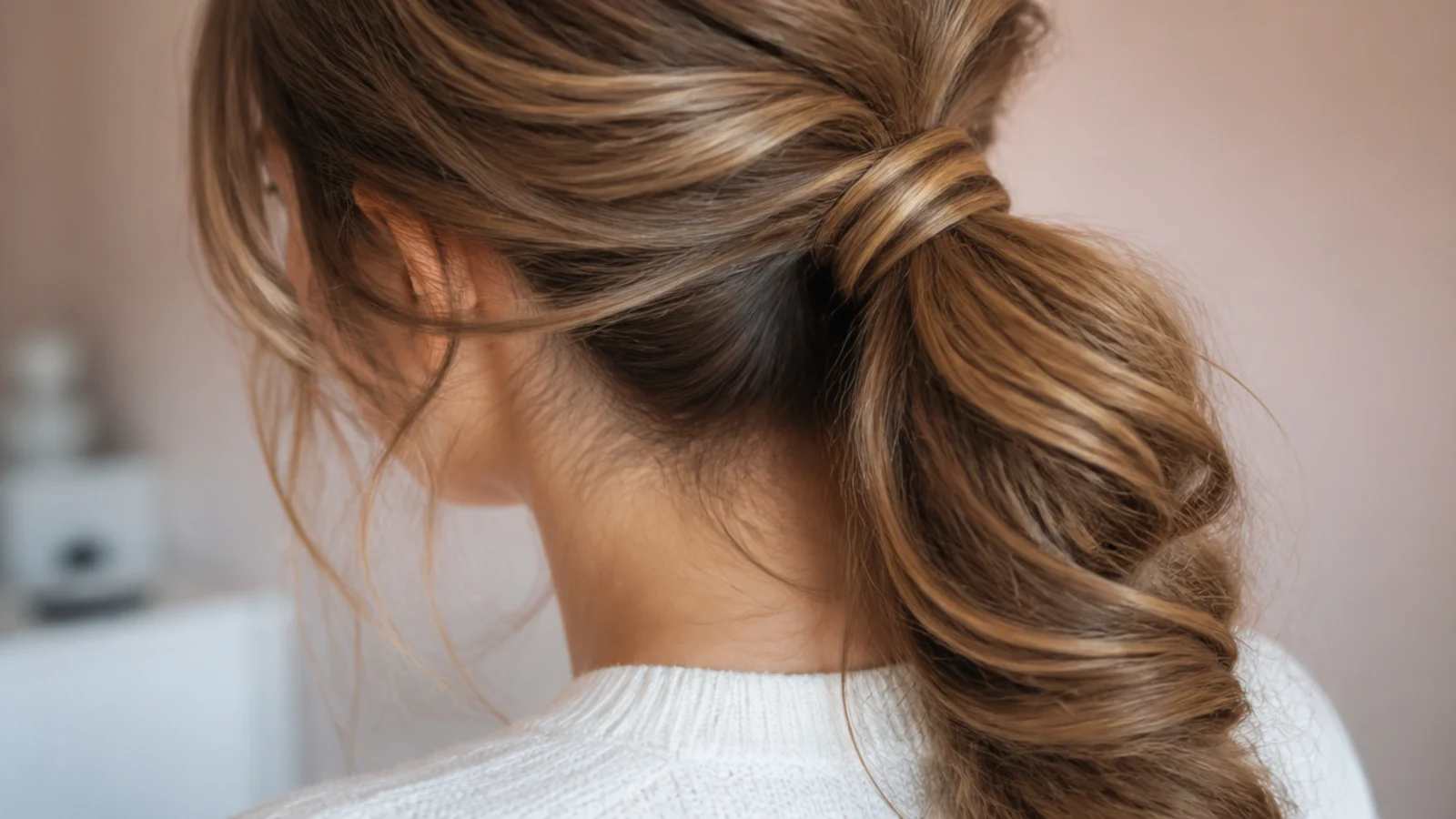
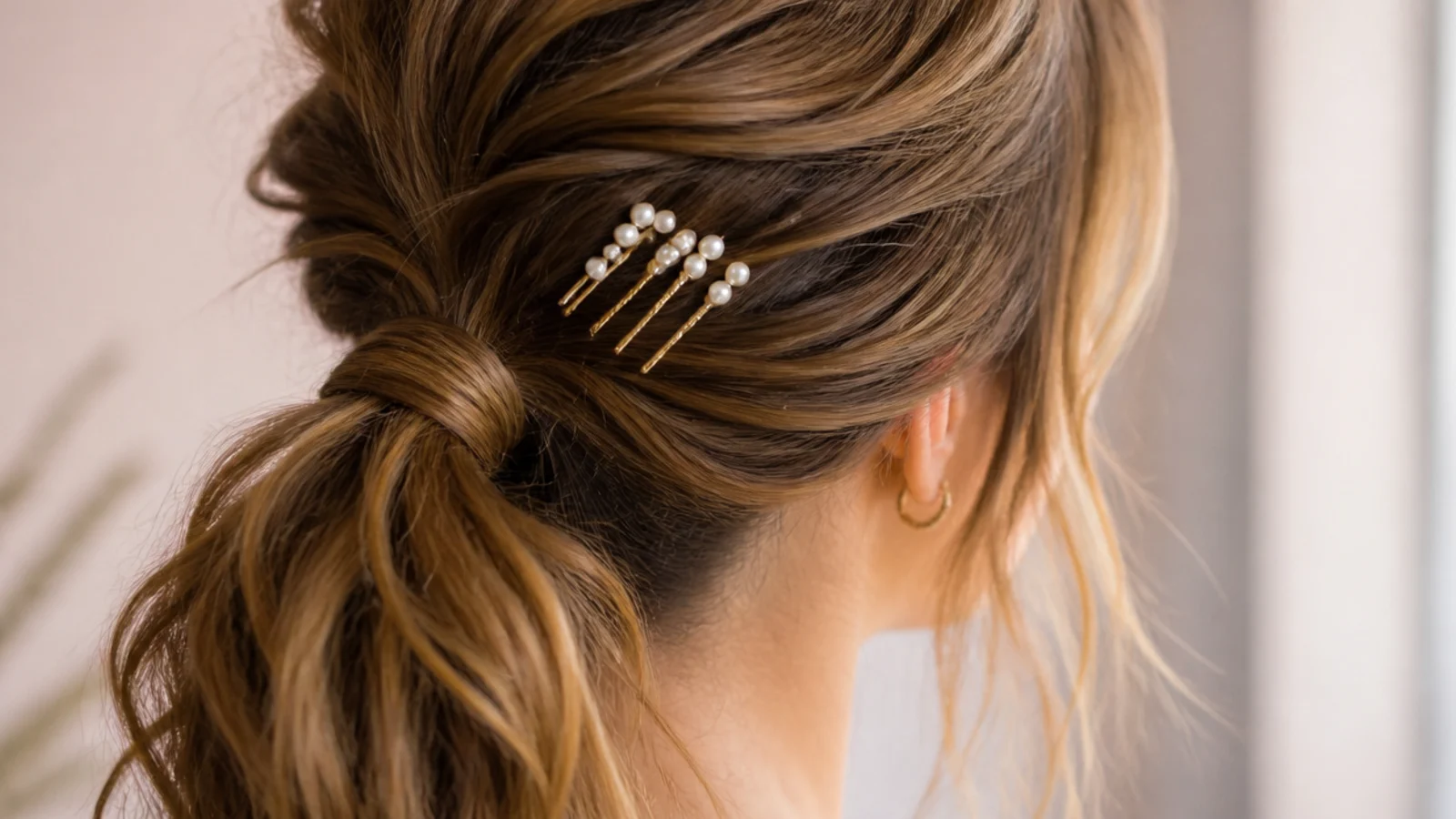
19. Pearl Pins
Place them along the line where the smooth crown meets the textured tail, because that boundary is where the light already changes and the eye is already looking. Scattered evenly over the whole head they lose the contrast that makes them work at all.
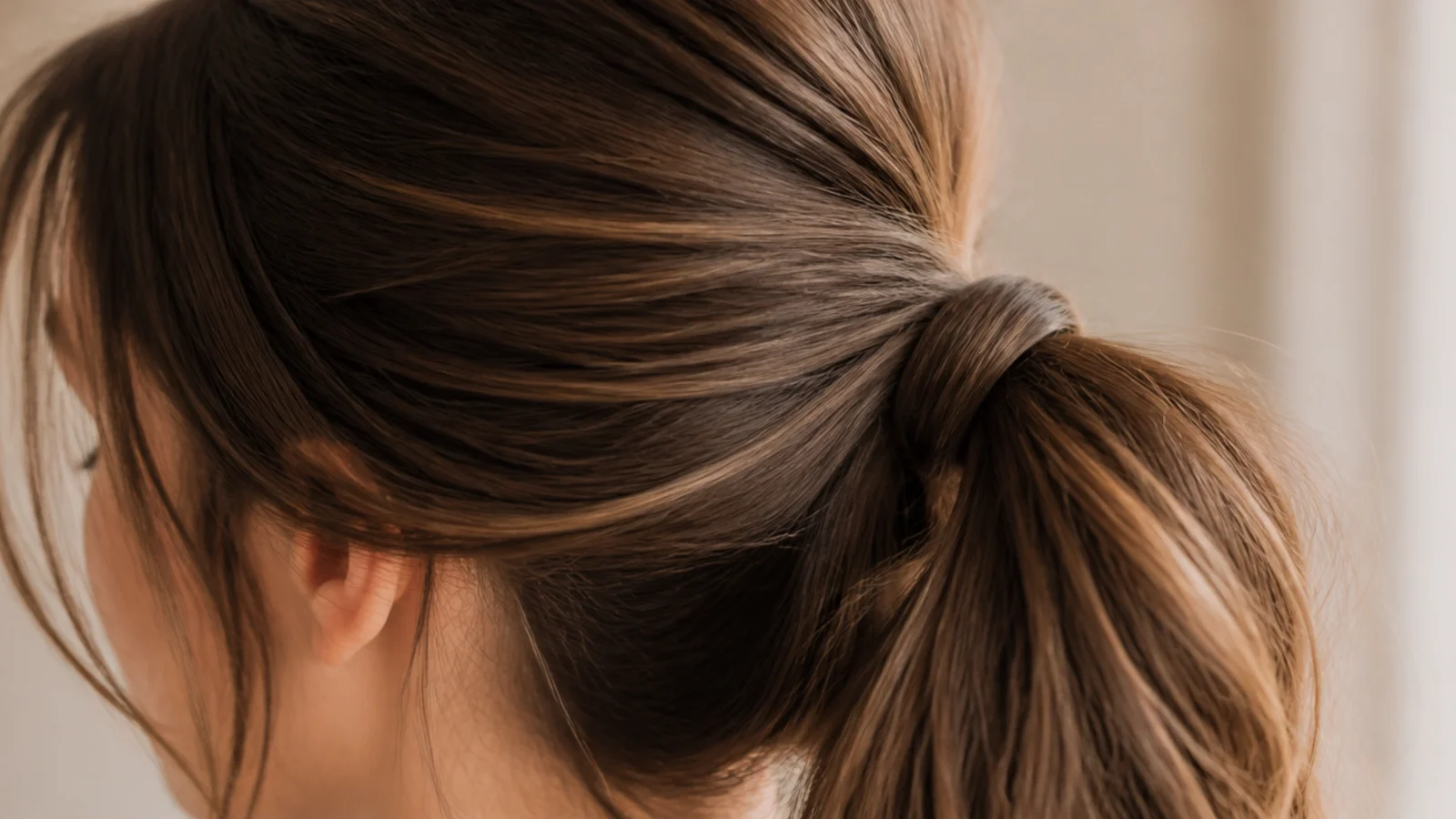
20. Humidity Proof Ponytail
A smoothed style is held by hydrogen bonds that damp air breaks, which is why a blow dried surface lifts and reverts on a warm evening. A textured tail is not holding a shape it wants to escape from, so humidity has nothing to undo and the style ends the night as it started.
Final Thoughts
Draw the boundary and then respect it. Everything within a hand span of the elastic stays controlled and covered, and everything below it can move as much as you like. That single rule turns the two halves of the phrase from a contradiction into a method, and it explains why a ponytail with loose ends everywhere reads as tired while one with loose ends only in the length reads as done on purpose.
Build the height before you tie, not after, and give the base two crossed pins rather than one hard pull. A tight ponytail is not an elegant one, and by hour four the difference between them is obvious to everyone except the person wearing it. More in Updos and Clips. See also the curly version and the easy school version.