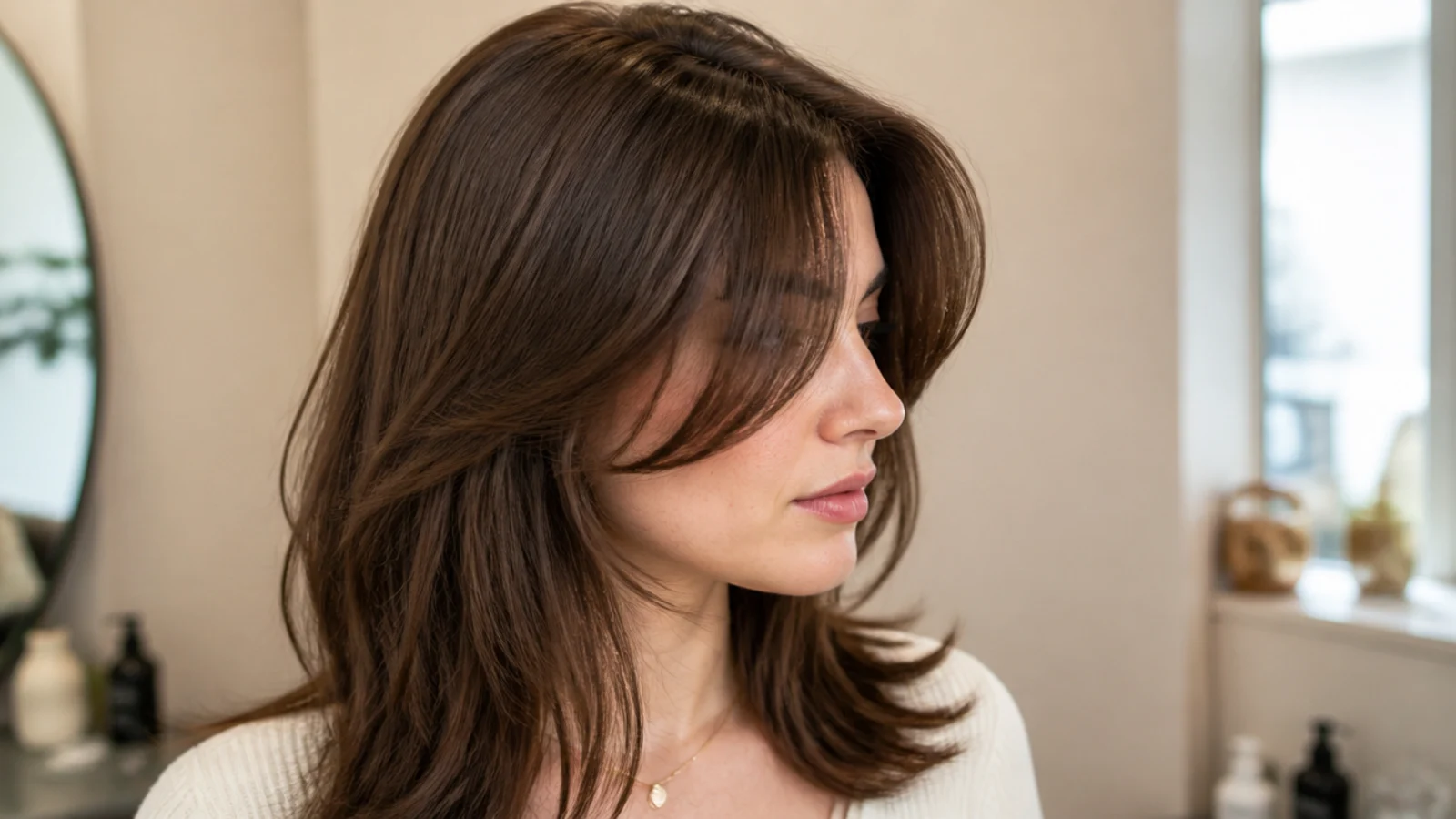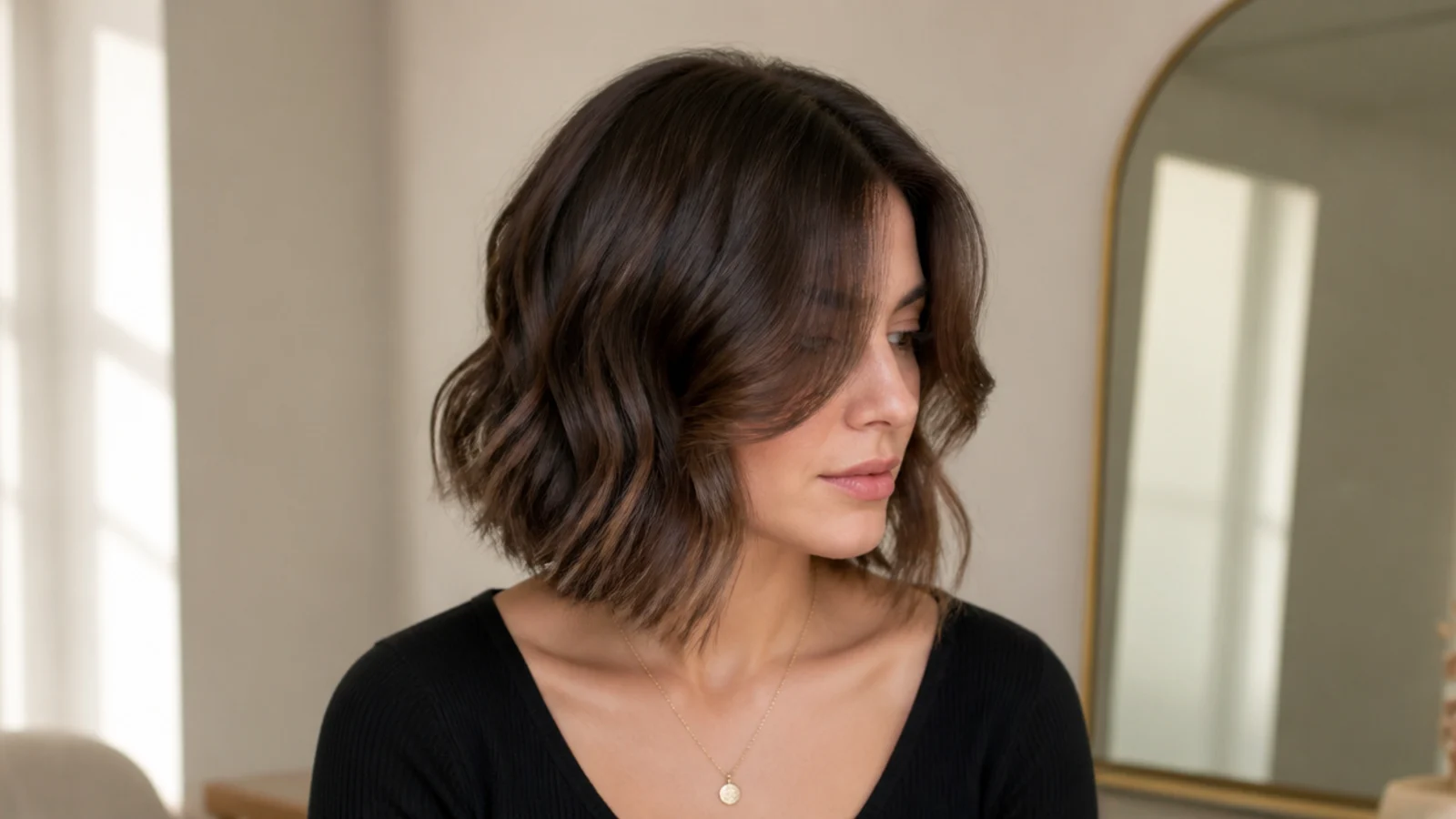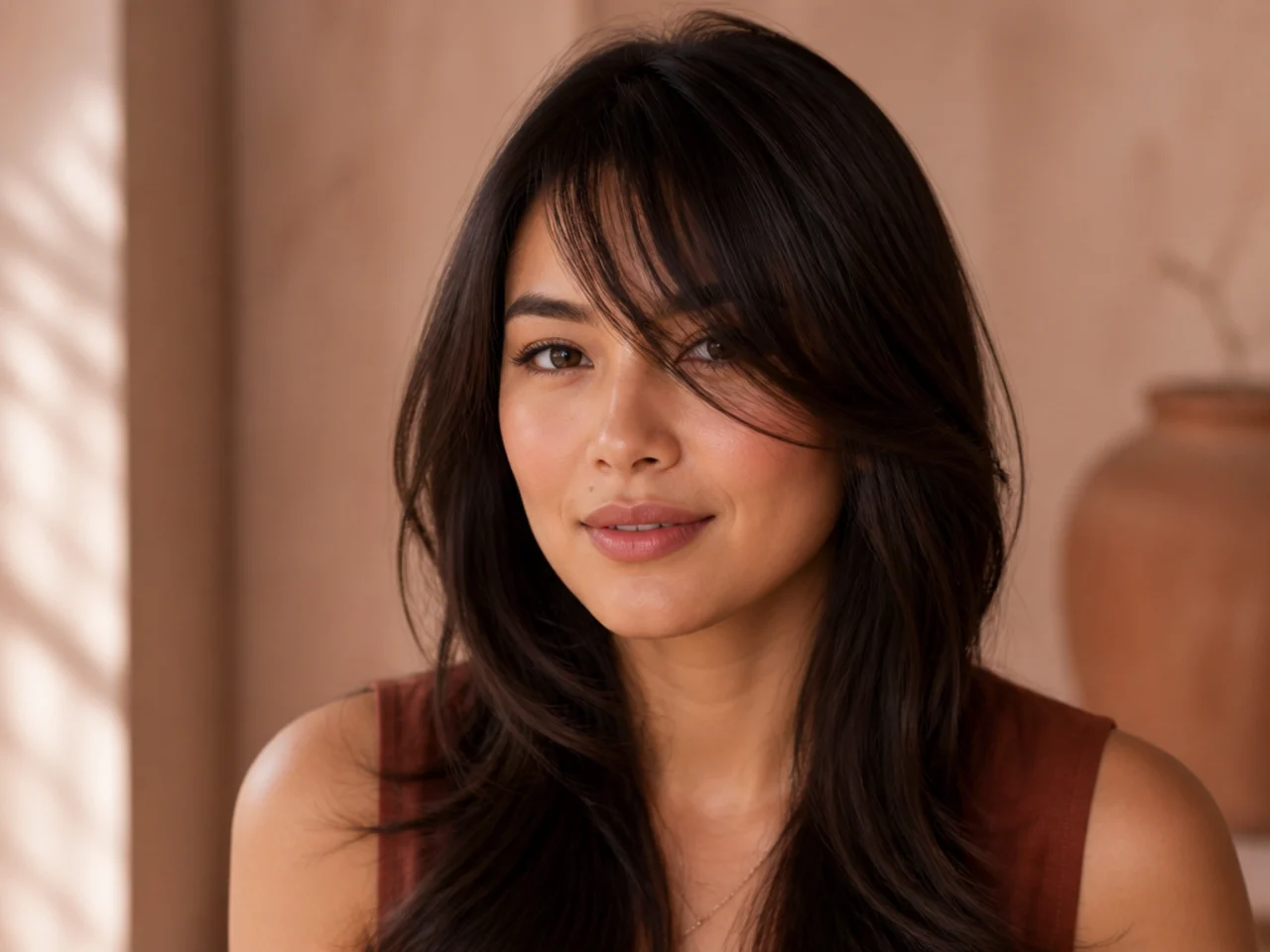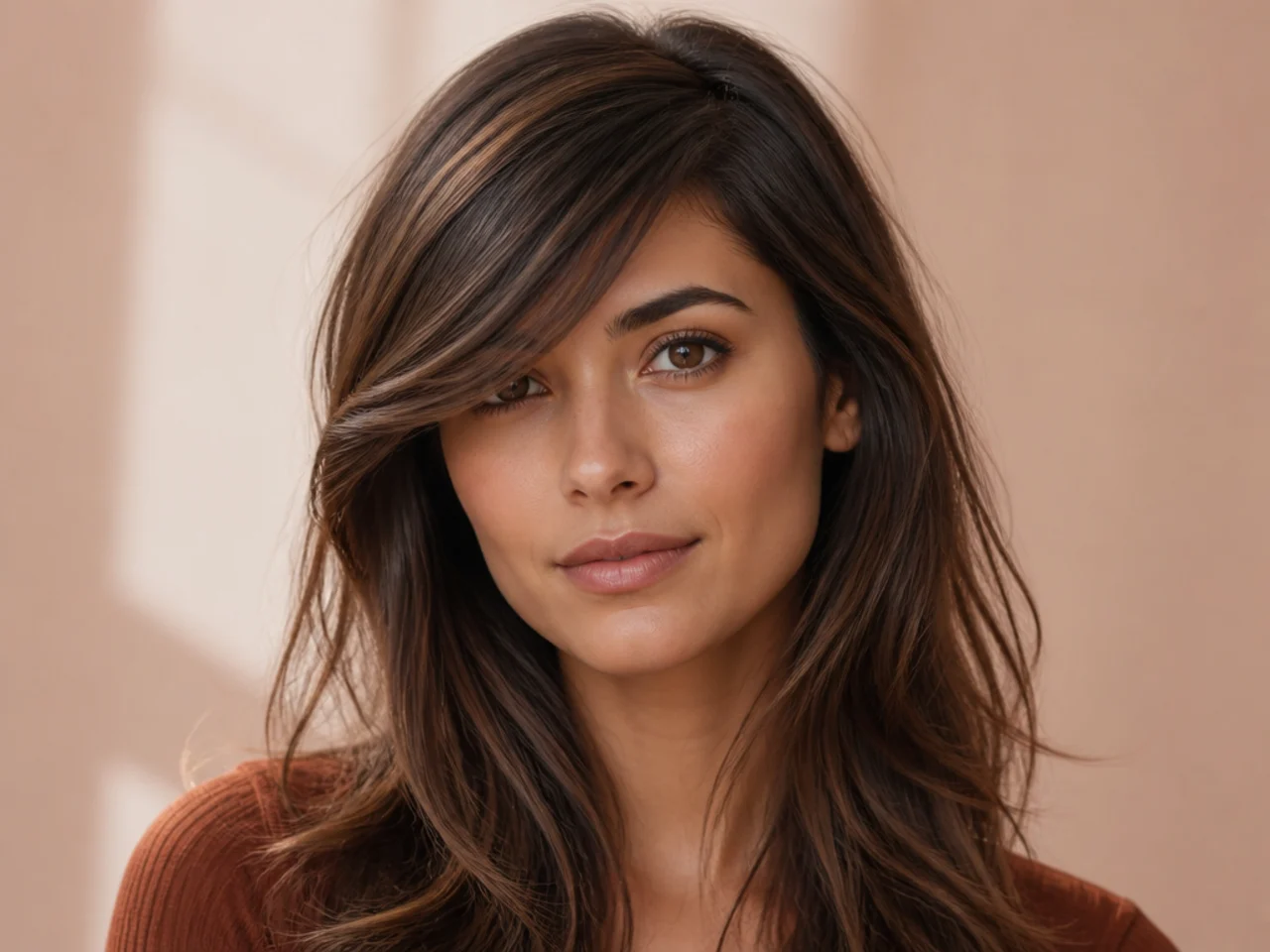
20 Long Side Swept Bangs Ideas We Love
Twenty long side swept bangs ideas, and the reason long ones drop first — the extra length puts weight at the far end of the diagonal, which is the point with the most leverage over the sweep.
In this article · 27
- What Makes Long Side Swept Bangs Work
- How to Choose Yours
- The 20 Long Ideas
- 1. Classic Cheekbone-Length Sweep
- 2. Jaw-Length Sweep
- 3. Below-Jaw Sweep
- 4. Long Sweep with Internal Thinning
- 5. Long Wispy Sweep
- 6. Long Sweep with a Steep Angle
- 7. Long Sweep Connected to Layers
- 8. Long Sweep with a Deep Side Part
- 9. Long Sweep on Straight Hair
- 10. Long Sweep on Wavy Hair
- 11. Long Sweep on Curly Hair
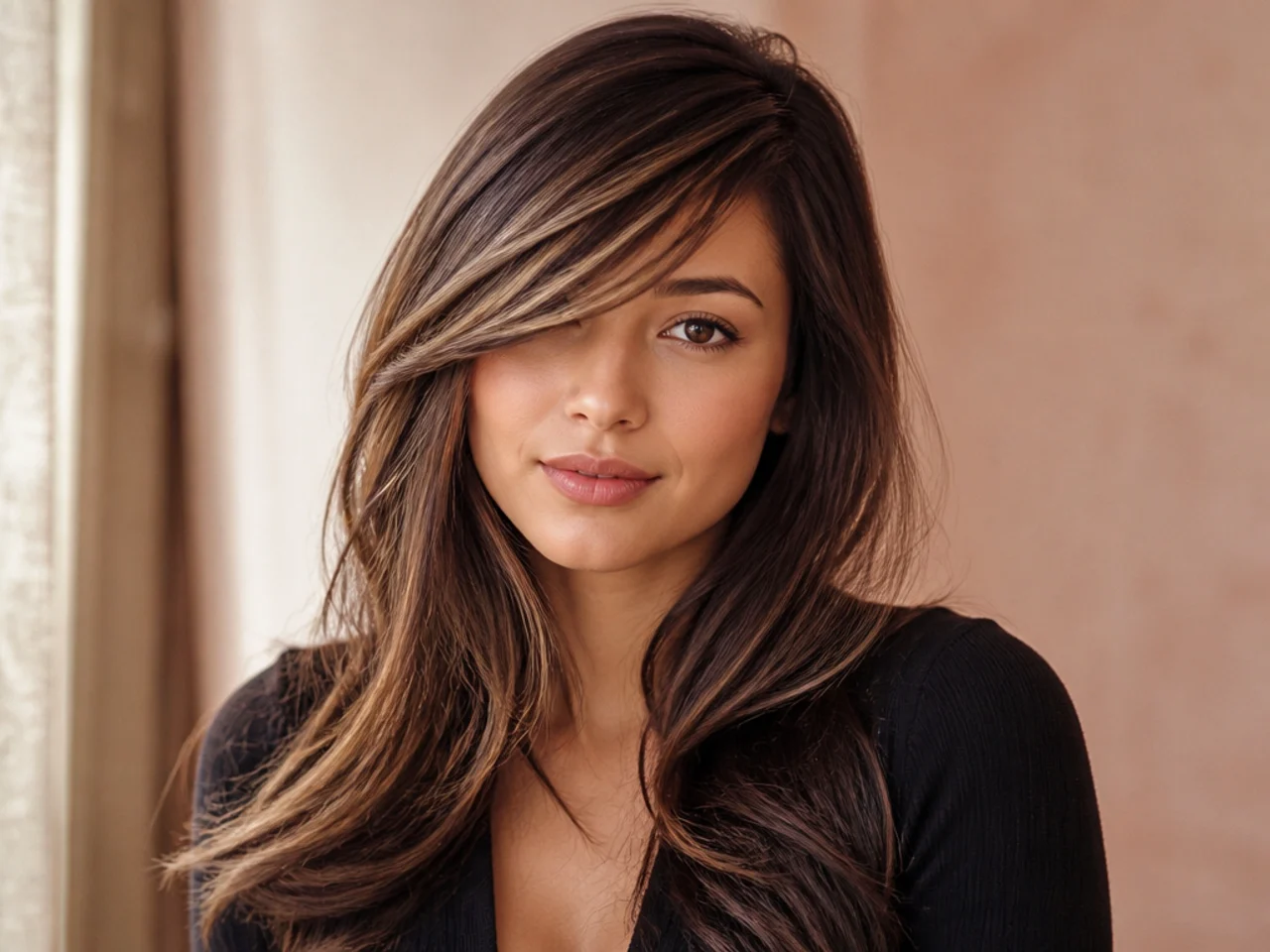
- 12. Long Sweep on Fine Hair
- 13. Long Sweep on Thick Hair
- 14. Long Sweep with a Lob
- 15. Long Sweep with Waist-Length Hair
- 16. Long Sweep Tucked Behind One Ear
- 17. Long Sweep with Highlights Along the Line
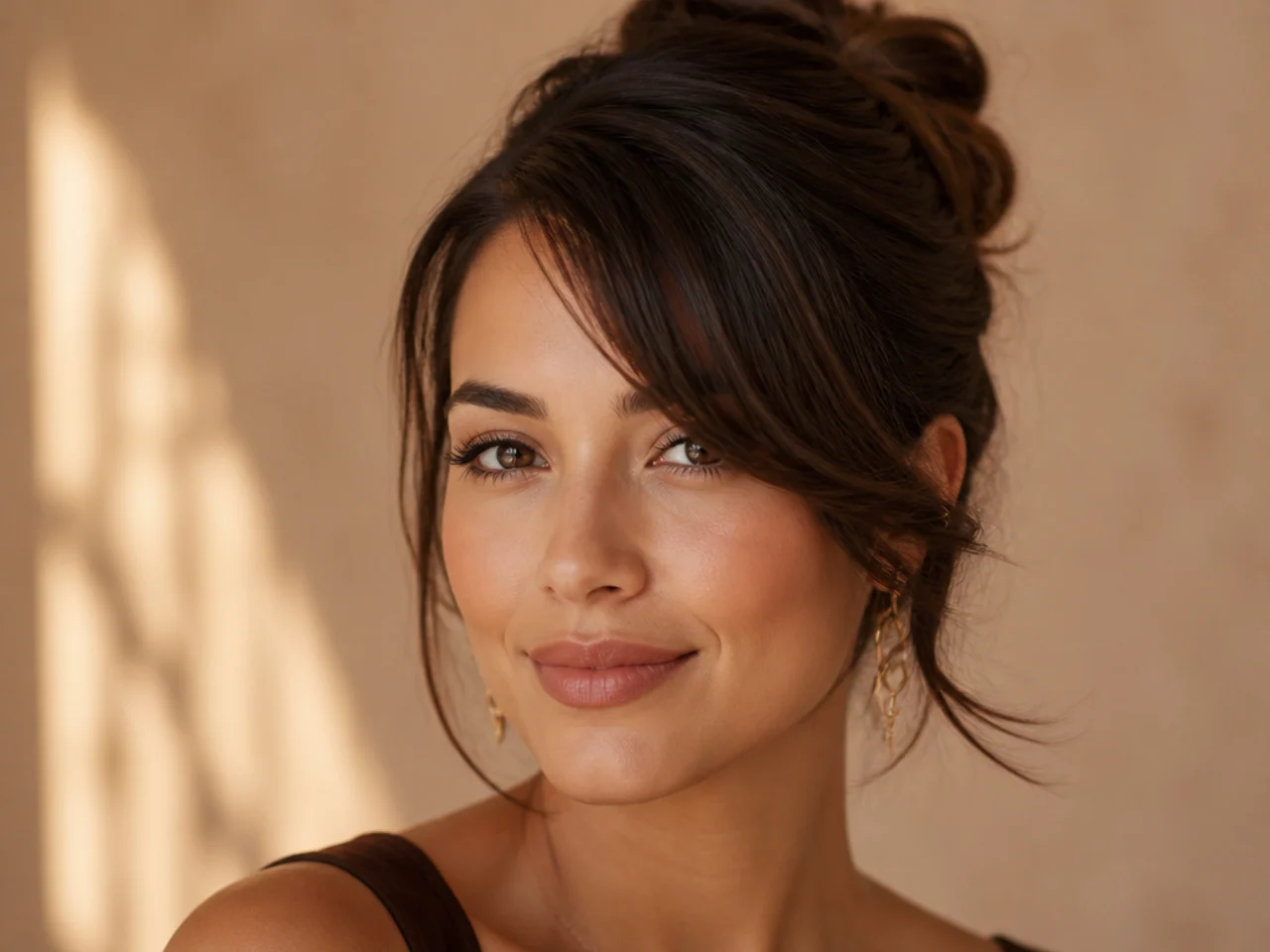
- 18. Long Sweep with an Updo
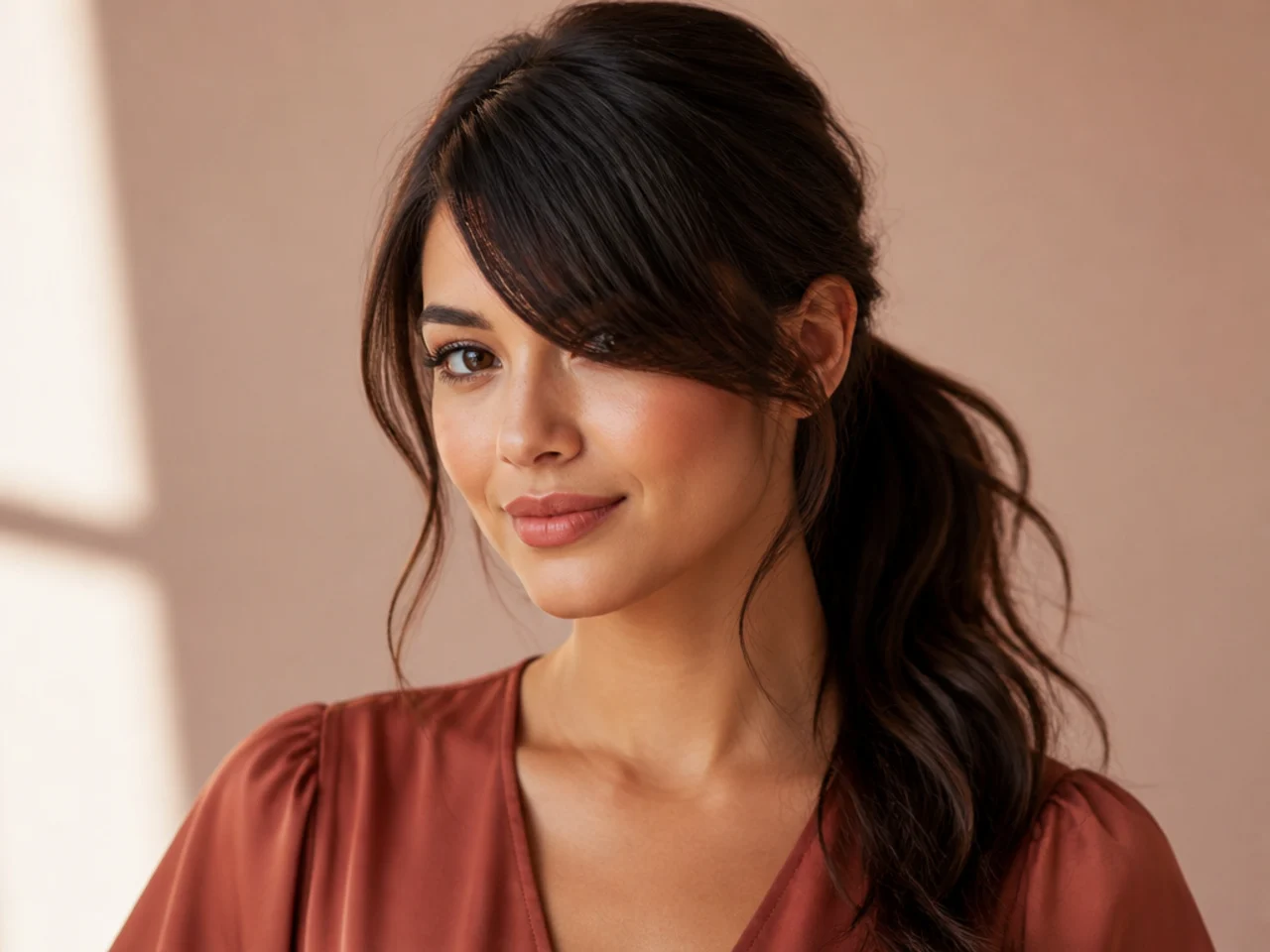
- 19. Long Sweep with a Ponytail
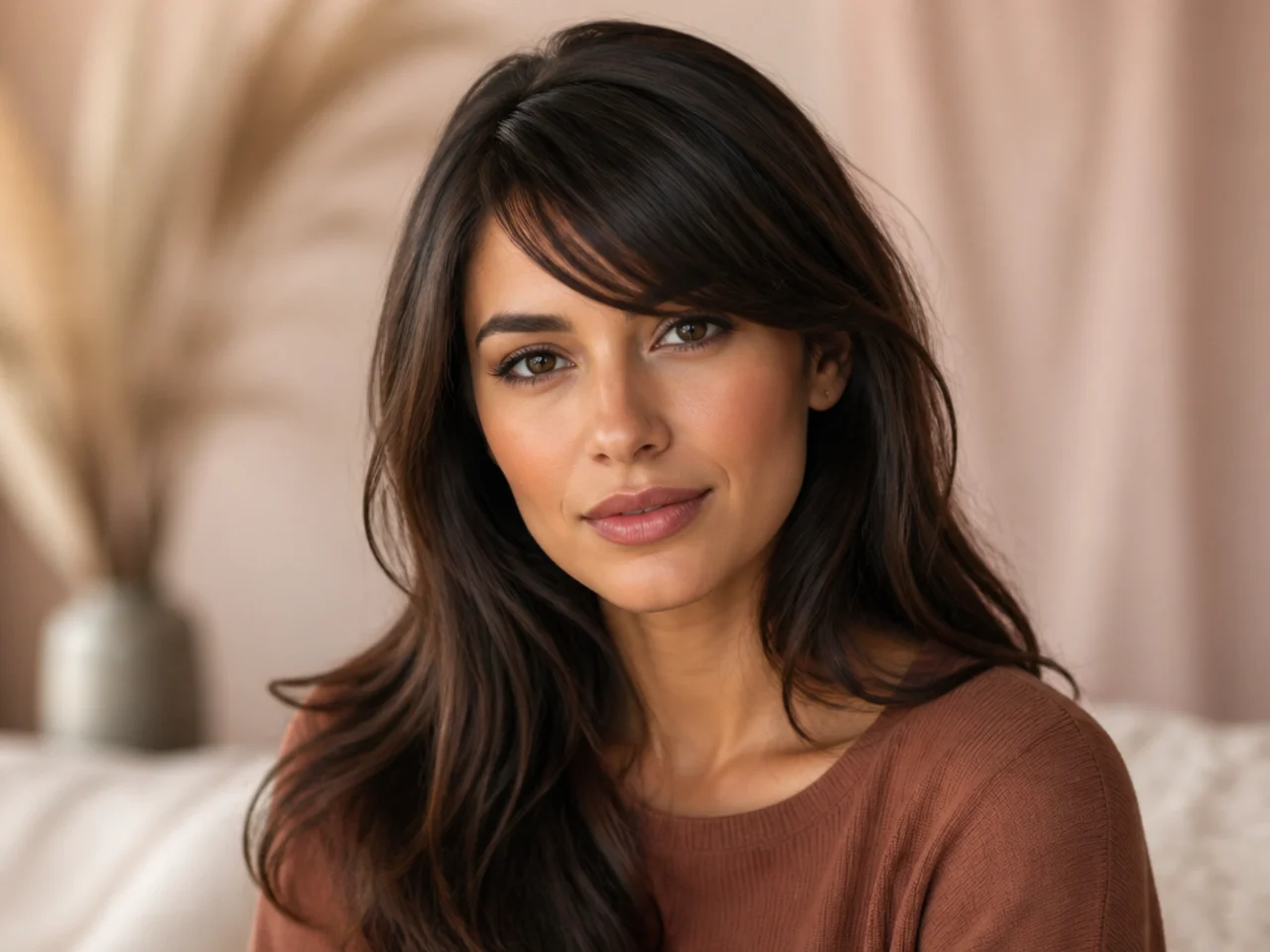
- 20. A Long Sweep That Has Dropped
- Styling and Upkeep
- Mistakes to Avoid
- FAQ
- Final Thoughts
Long side swept bangs are the most-saved version of this cut and the one that most often stops sweeping after a fortnight.
Length adds weight at the far end of the diagonal. That is the end with the most leverage over the whole sweep, so a long fringe is constantly being pulled downward by its own mass. A short one holds its angle almost by default.
Which means the length itself is not the problem. The weight distribution is, and that is fixable.
What Makes Long Side Swept Bangs Work
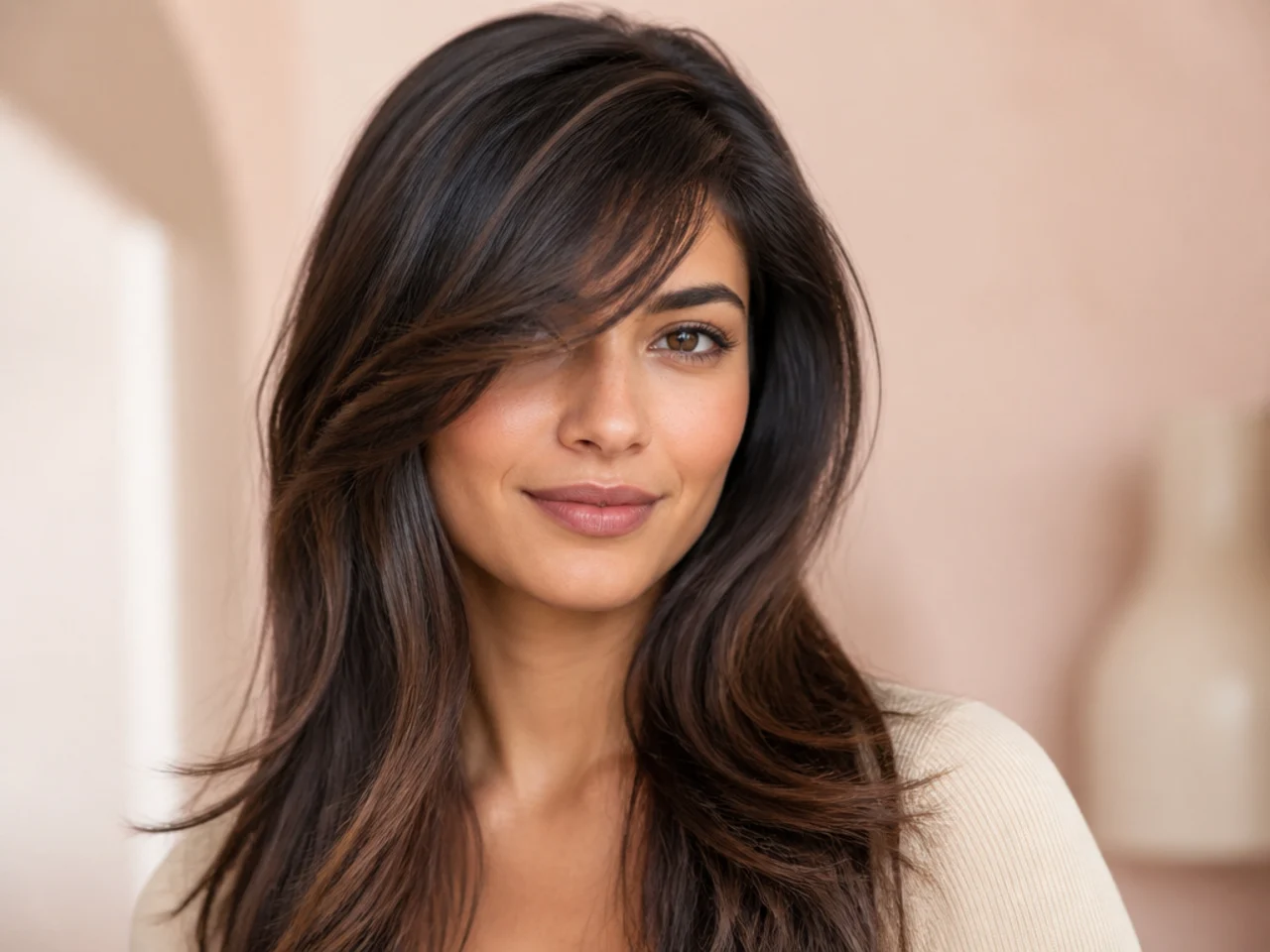
The mass sits at the wrong end. The longest section of a diagonal is furthest from where the fringe is anchored, so its weight has the most effect on the angle.
Internal thinning is the fix, not end thinning. Removing weight through the lower half of the fringe keeps the outline and takes away the pull. Thinning only the ends softens the edge and changes nothing about the drop.
Longer means it must connect. Past the jaw a sweep starts reading as face-framing layers, so the length behind it needs layering too or the fringe looks stuck on.
They cover more, which is often the point. A long diagonal crosses more of the face, which is why this version does the most for width.
How to Choose Yours
Say "internal weight removal", not "thin them out". The second usually produces end thinning, which is the wrong tool for this problem.
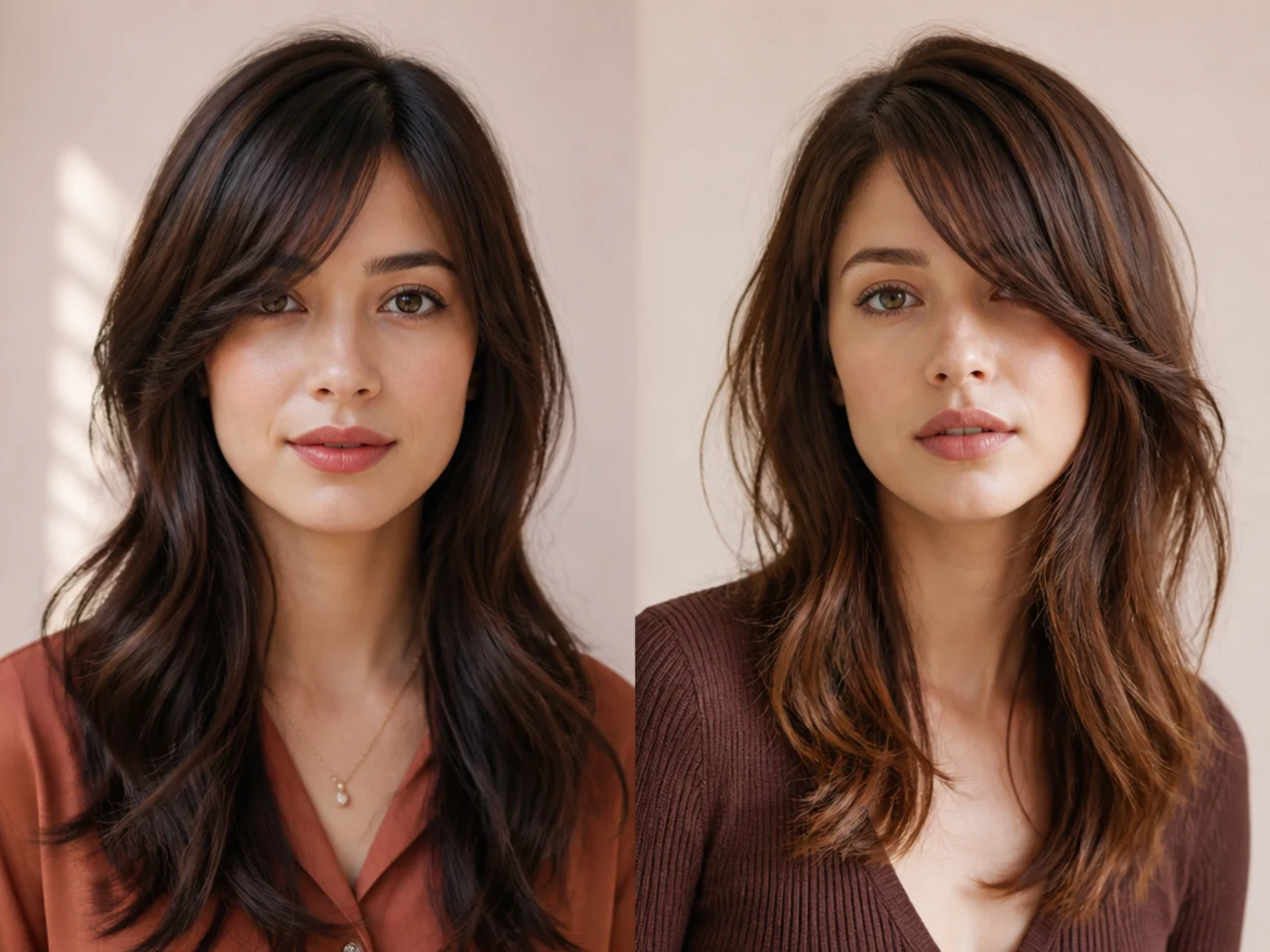
Pick the end point on your own face. Cheekbone, jaw, or below. Each behaves differently as it grows.
Ask for it to connect to your layers. Especially past the cheekbone. A disconnected long fringe is the most common way this cut looks wrong.
Go steeper than you think. A long diagonal loses angle faster, so it should start with more than it needs.
The 20 Long Ideas
1. Classic Cheekbone-Length Sweep
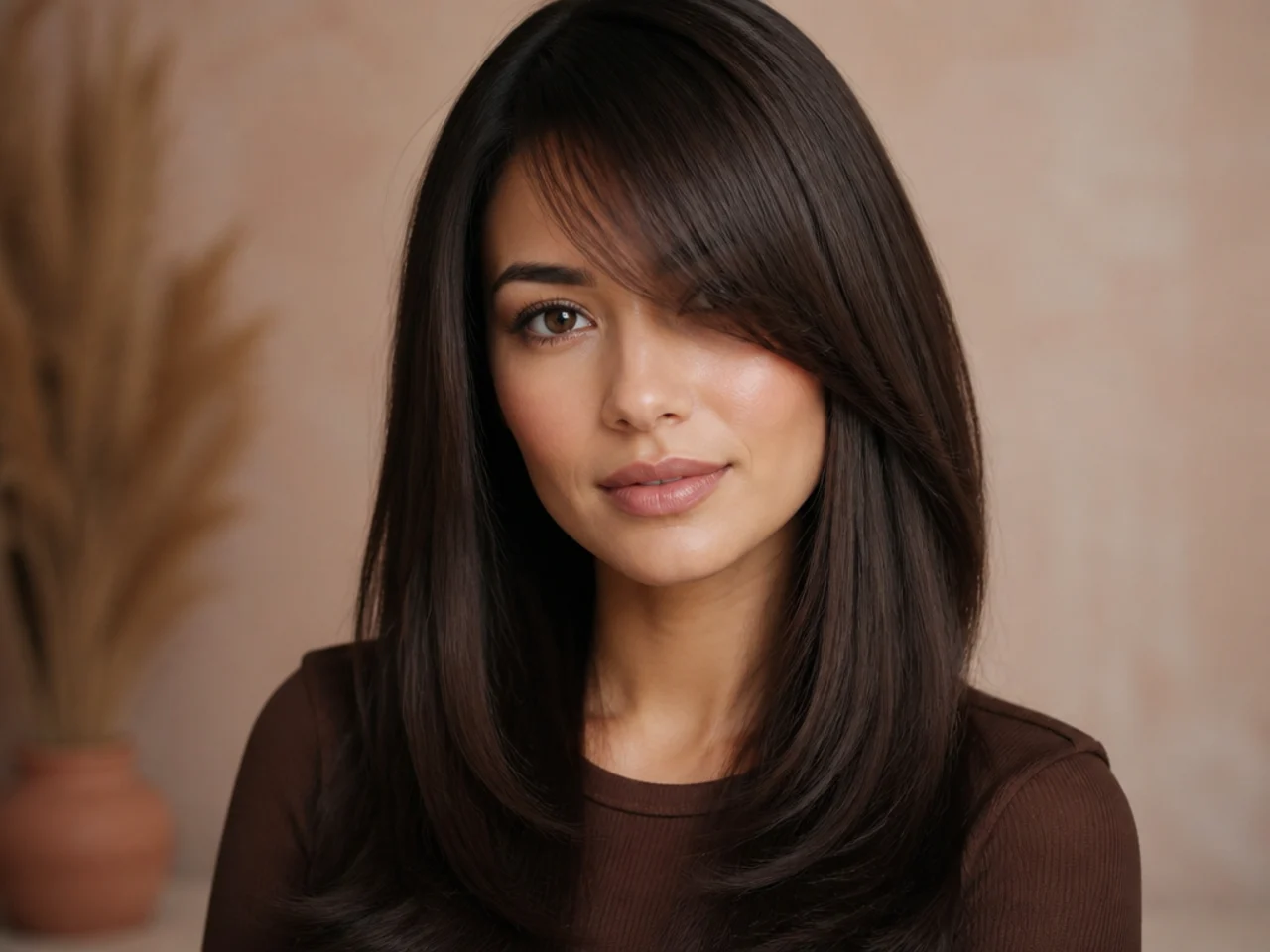
The benchmark long version. Enough diagonal to read clearly. The cheekbone is roughly the furthest a fringe can travel and still read as a fringe rather than as framing.
2. Jaw-Length Sweep
Longer, and the point where it must connect to layers. At jaw length there is enough hair in the fringe that a disconnected version sits visibly on top of the haircut.
3. Below-Jaw Sweep
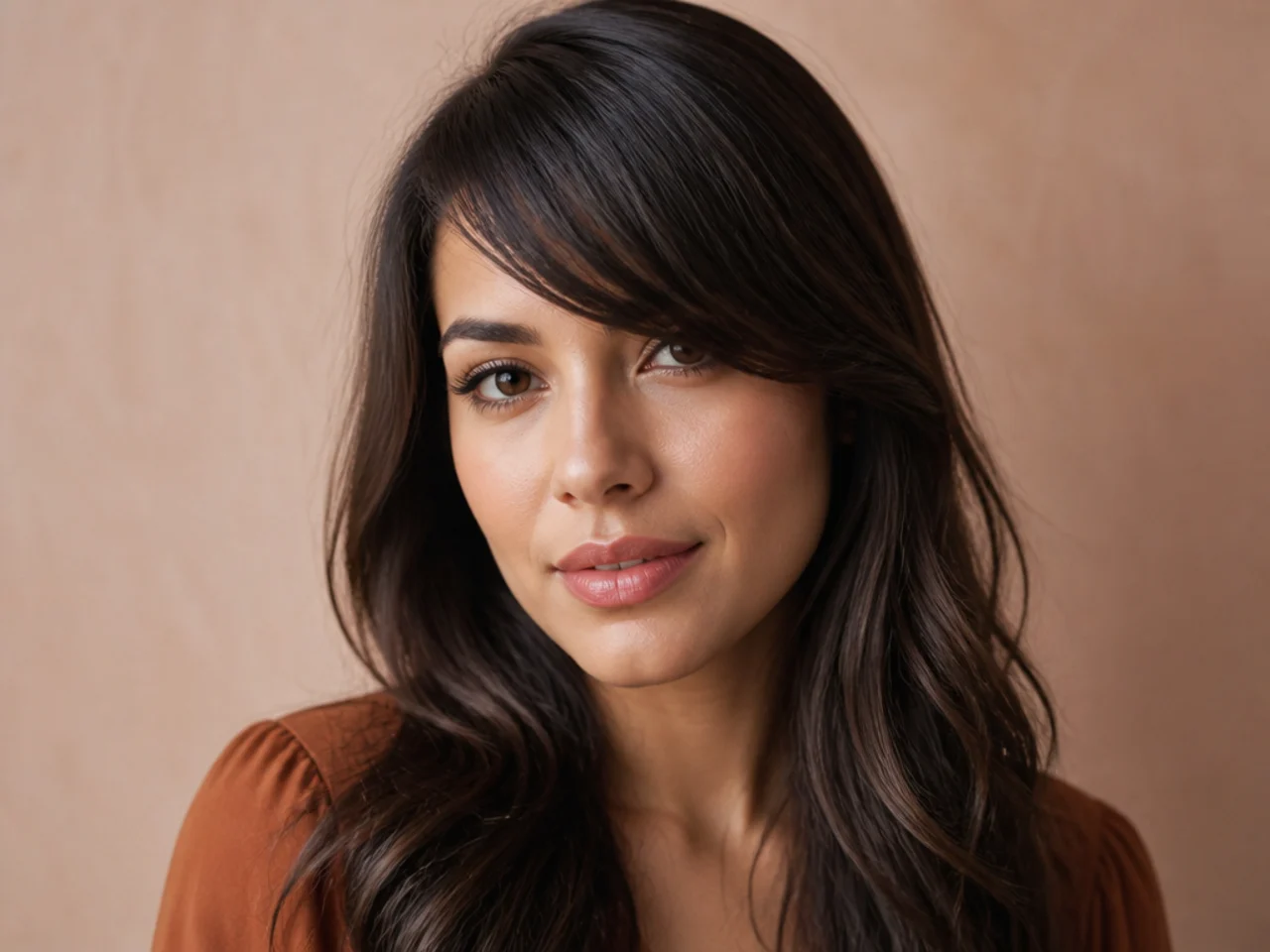
Reading as face-framing more than as a fringe. Below the jaw the diagonal stops being read as a fringe at all, which is fine as long as it is what you wanted.
4. Long Sweep with Internal Thinning
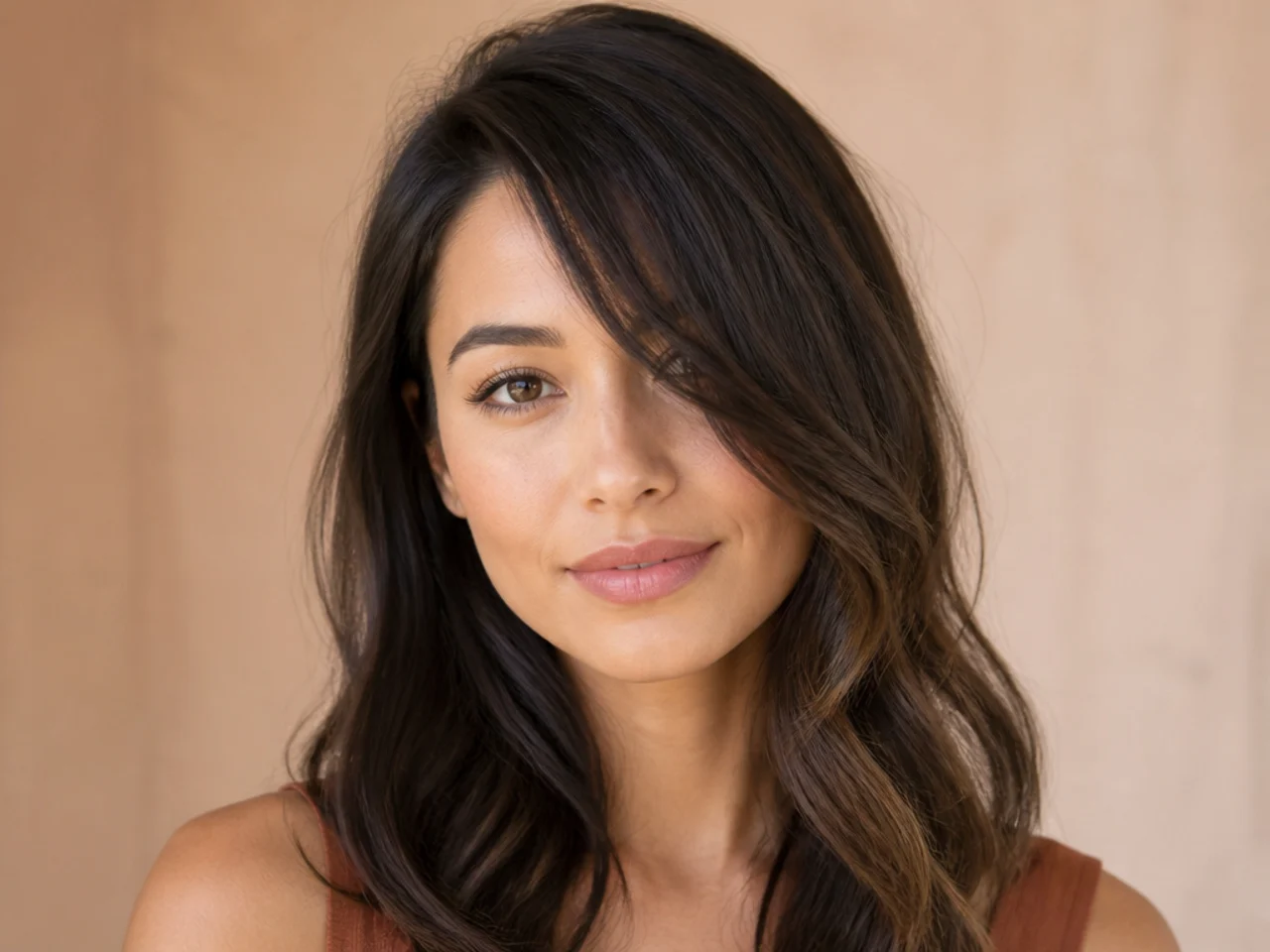
The version that keeps its angle. Weight taken from the middle. Weight is what drops a long sweep, and it accumulates in the body of the fringe rather than at the tips.
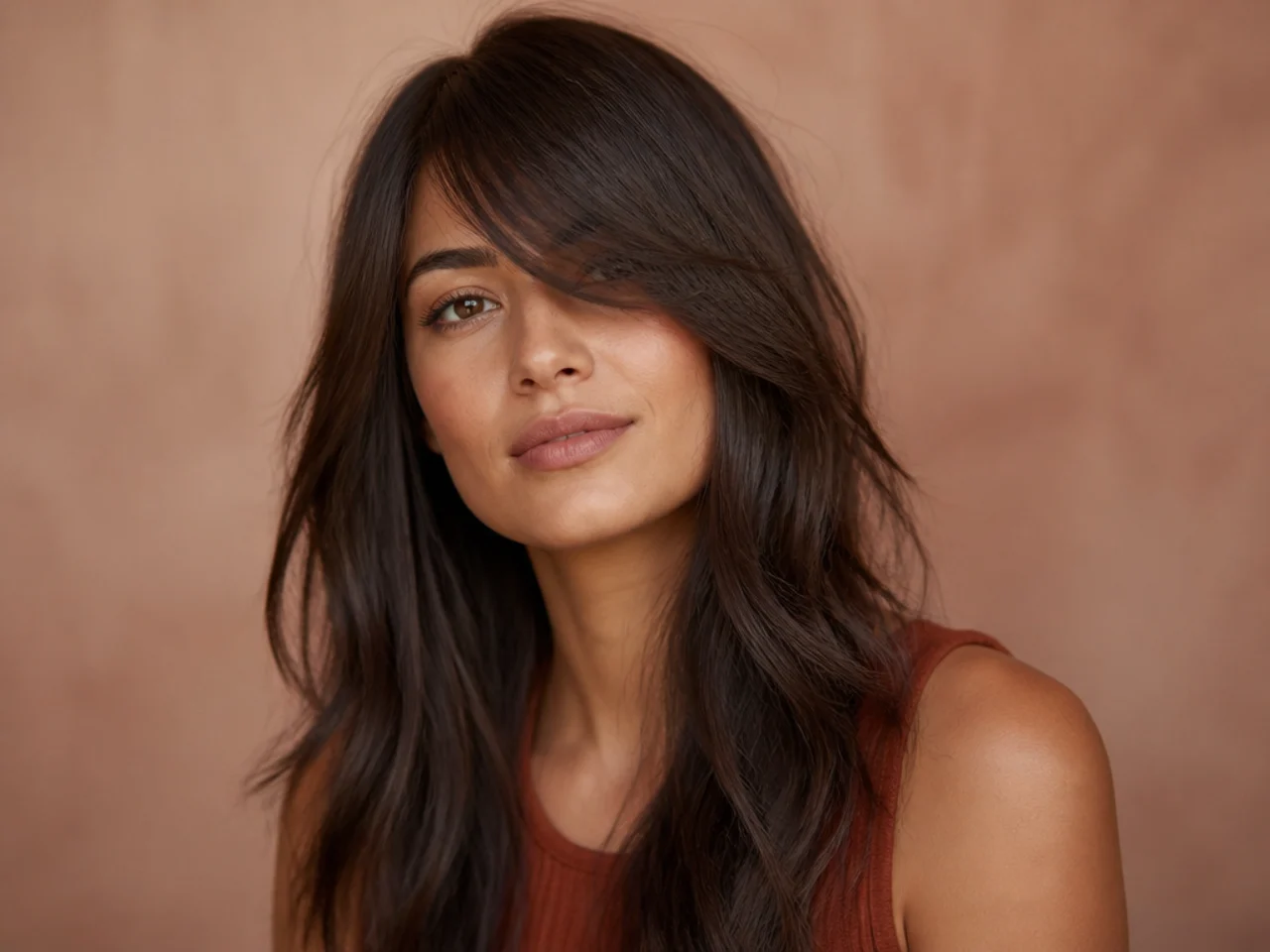
5. Long Wispy Sweep
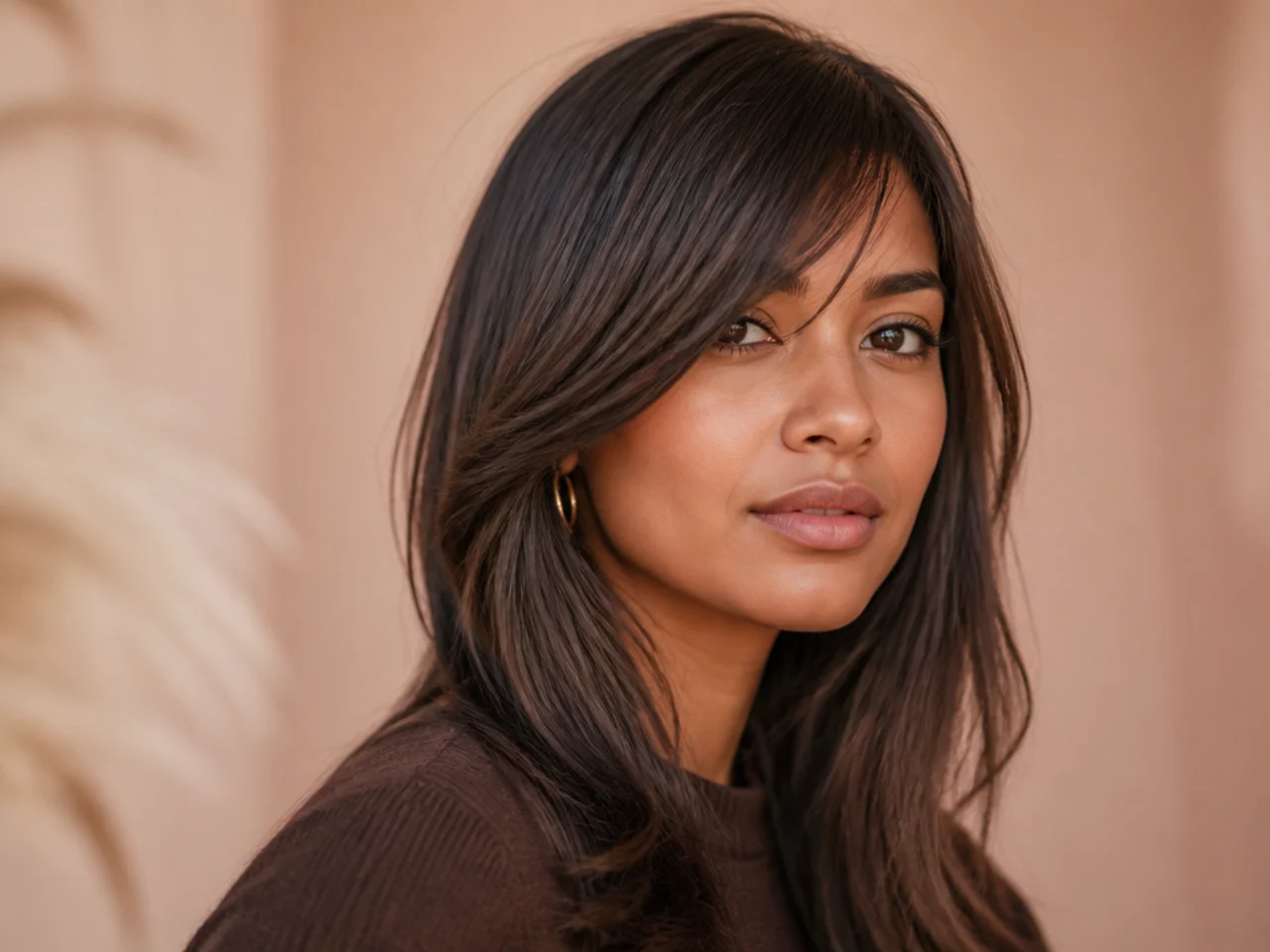
Softened outline over an internally lightened body. Wisping the edge and removing internal weight solve two different problems, and a long sweep usually needs both.
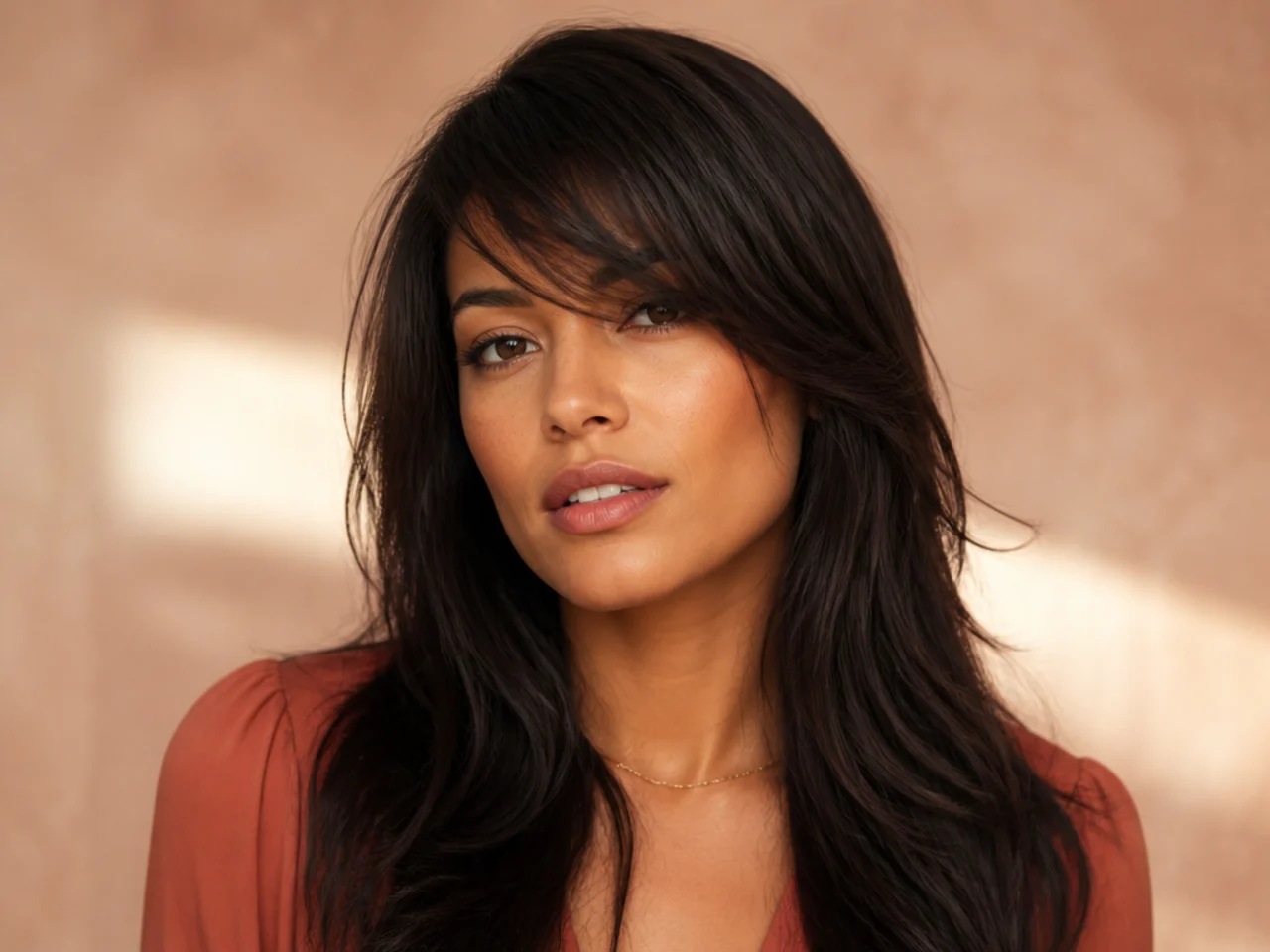
6. Long Sweep with a Steep Angle
More angle than it needs, so it still sweeps at week four. The angle flattens as the fringe grows, so cutting steeper than you want buys you the whole trim cycle.
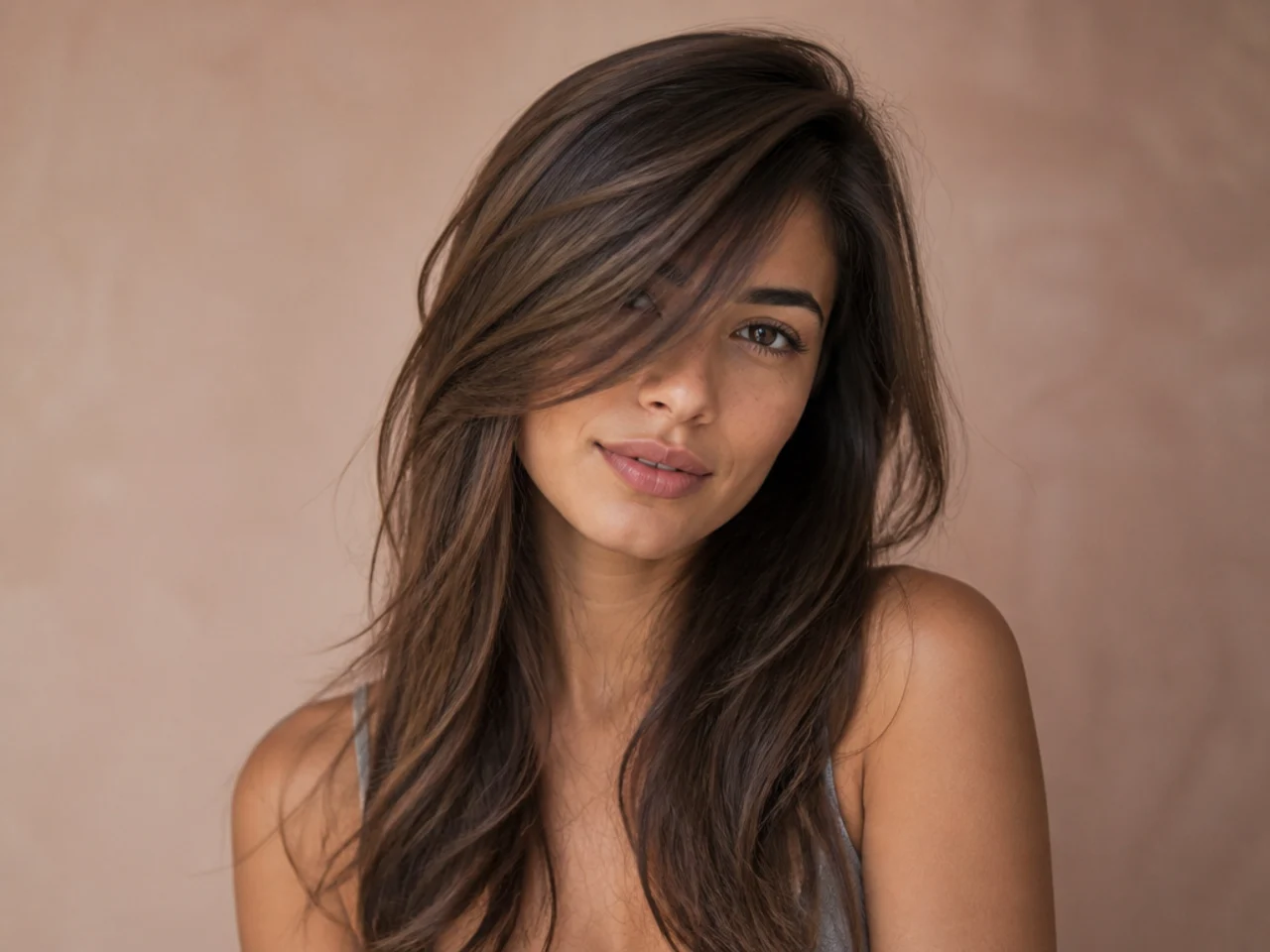
7. Long Sweep Connected to Layers
Blended into the length behind rather than sitting separately. At this length the fringe is long enough to meet the layers, so leaving it disconnected creates a visible step.
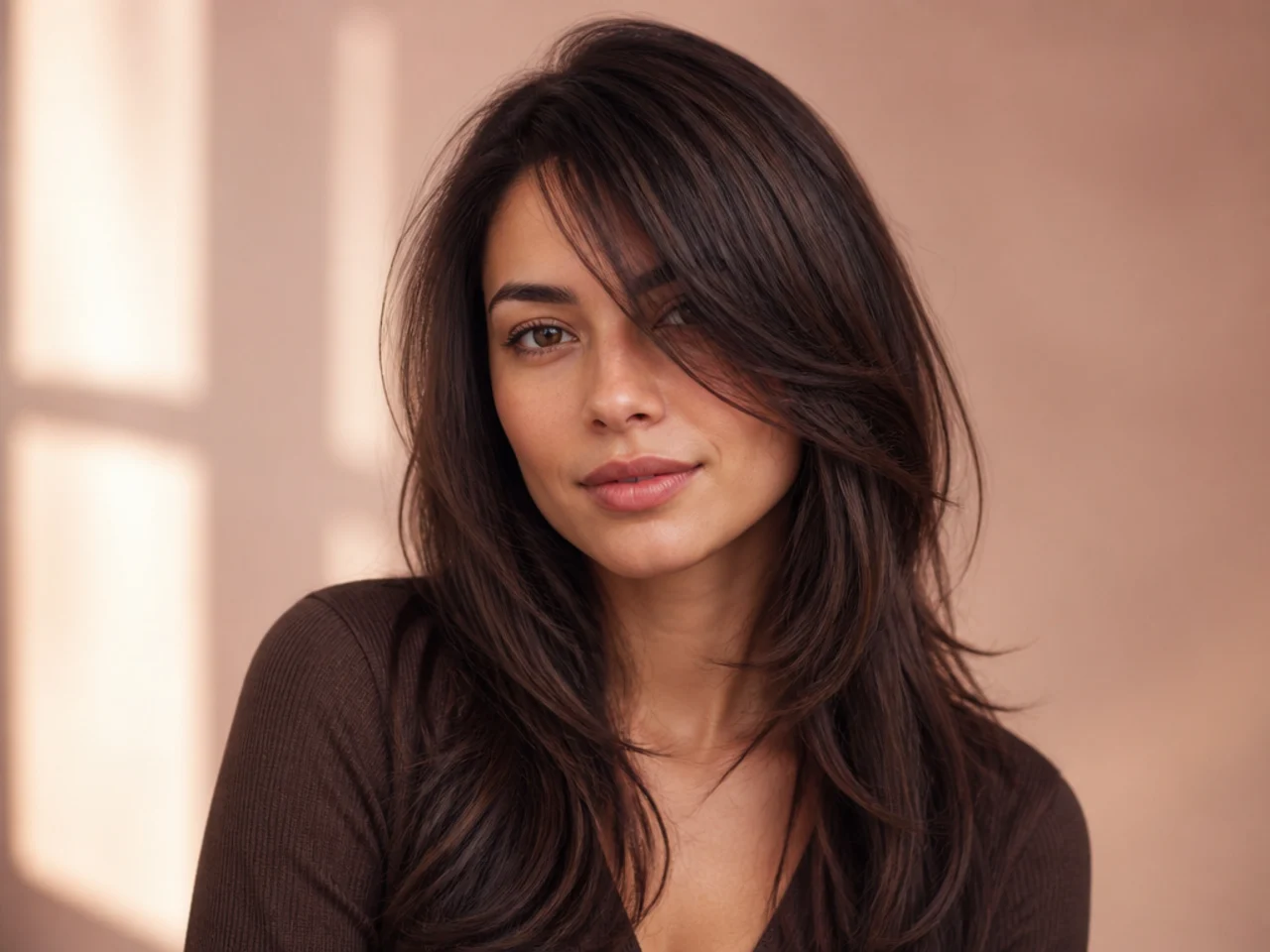
8. Long Sweep with a Deep Side Part
The part reinforcing the direction of the fringe. A deeper part gives the root a head start on the direction, which matters more the more weight the fringe carries.
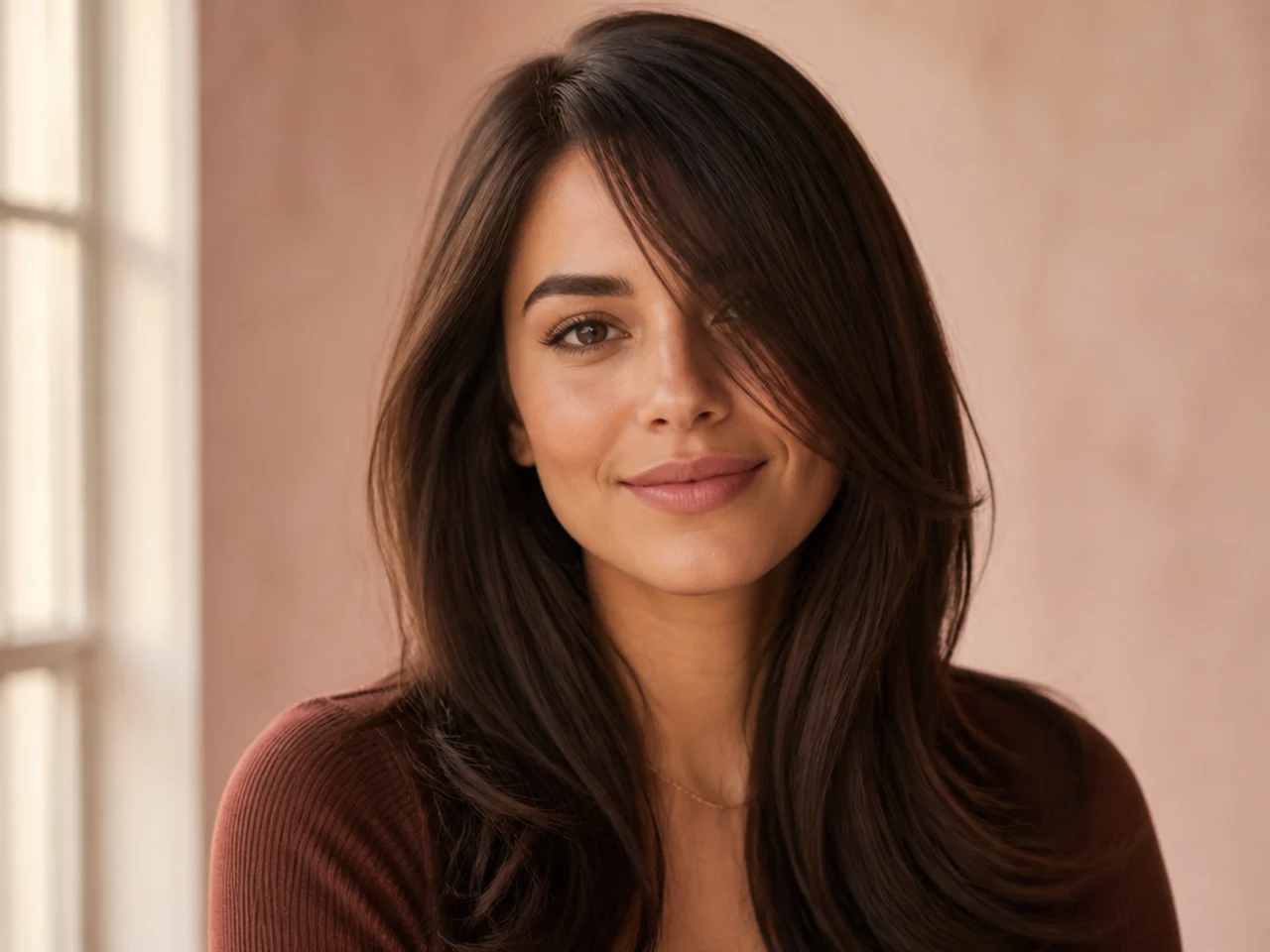
9. Long Sweep on Straight Hair
The cleanest diagonal, and the one where drop shows soonest. Straight hair has no friction to hold the sweep, so the weight of a long fringe wins earlier than on any other type.
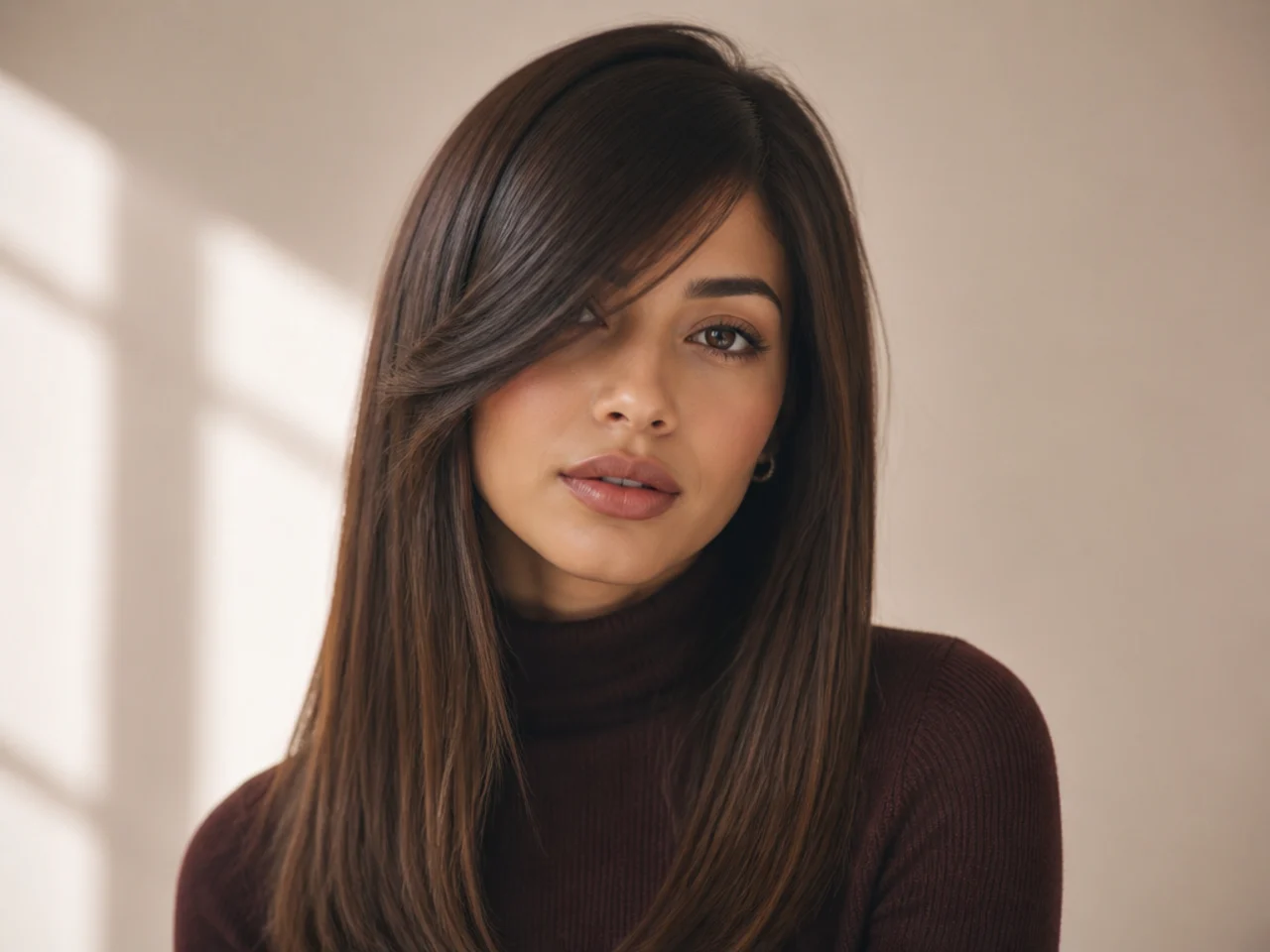
10. Long Sweep on Wavy Hair
The bend holds the angle better than straight hair does. A wave grips itself where straight strands slide, which is why a long sweep survives longer on wavy hair.
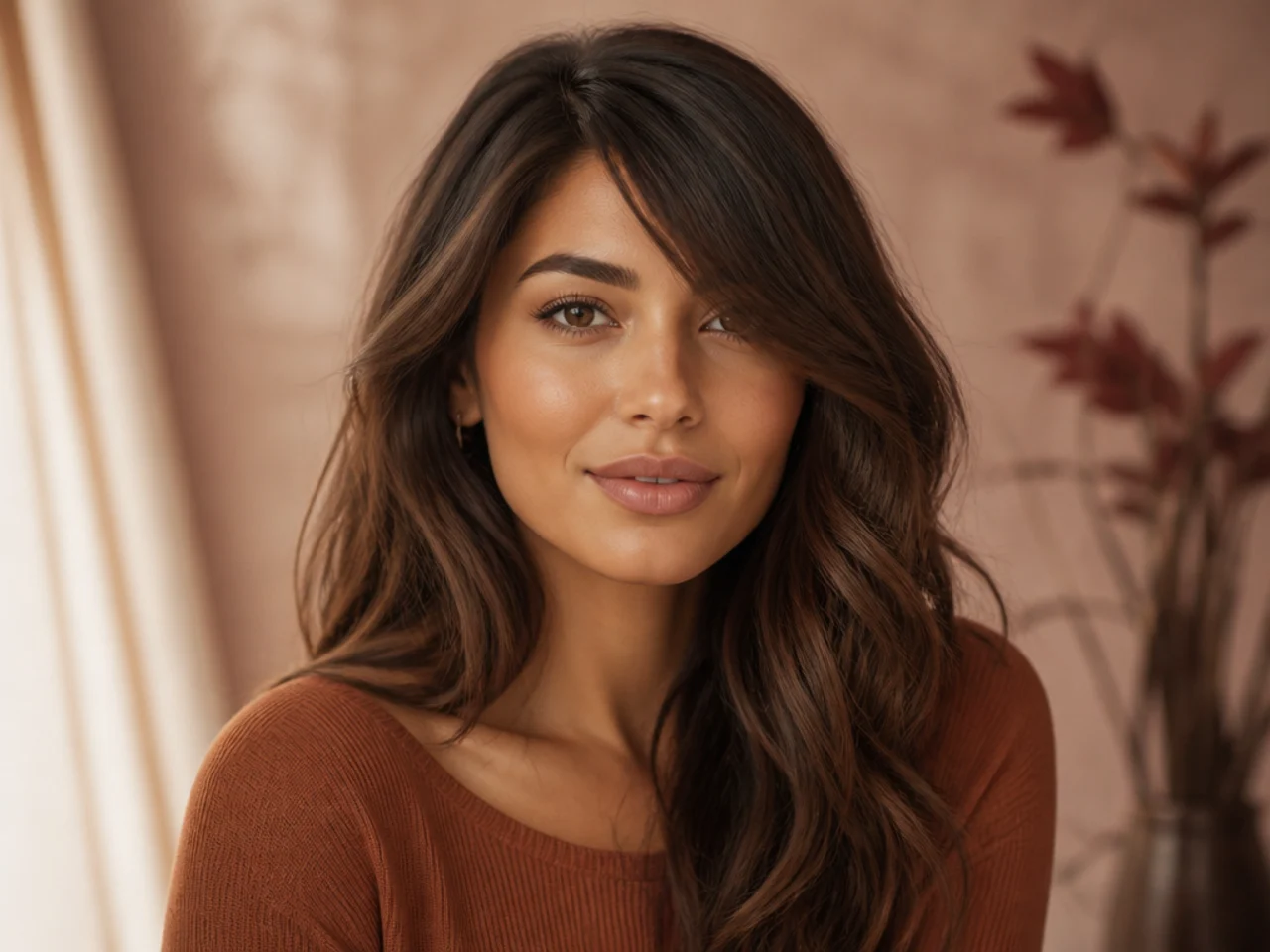
11. Long Sweep on Curly Hair
Cut well below target, since curl lifts as it dries. Curl shrinks as the water leaves, so a fringe cut at the target length lands well above it once dry.
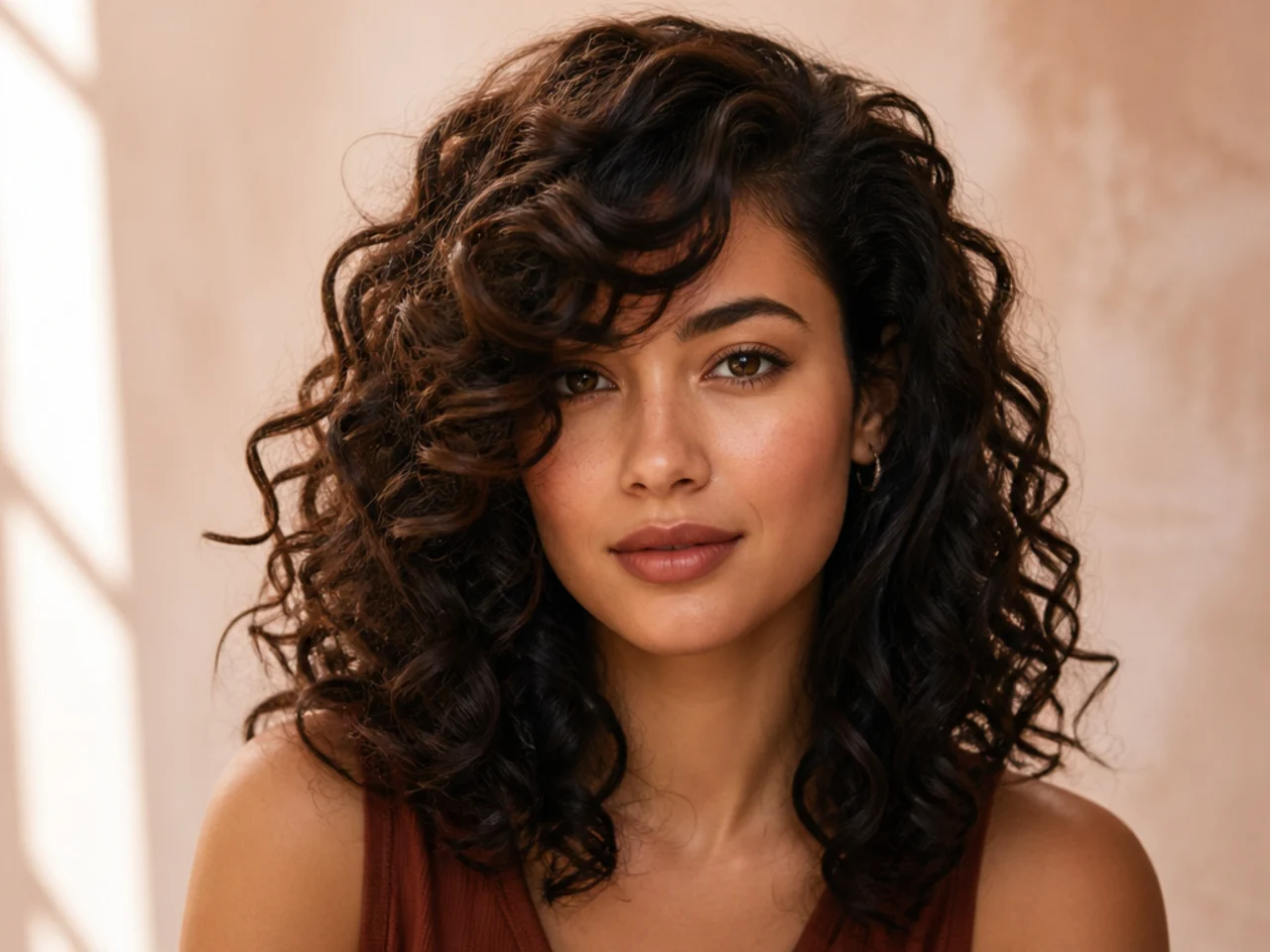
12. Long Sweep on Fine Hair
Less mass, so it holds its angle without thinning at all. Fine hair is the one density where a long sweep needs no weight removed, because there is none to remove.
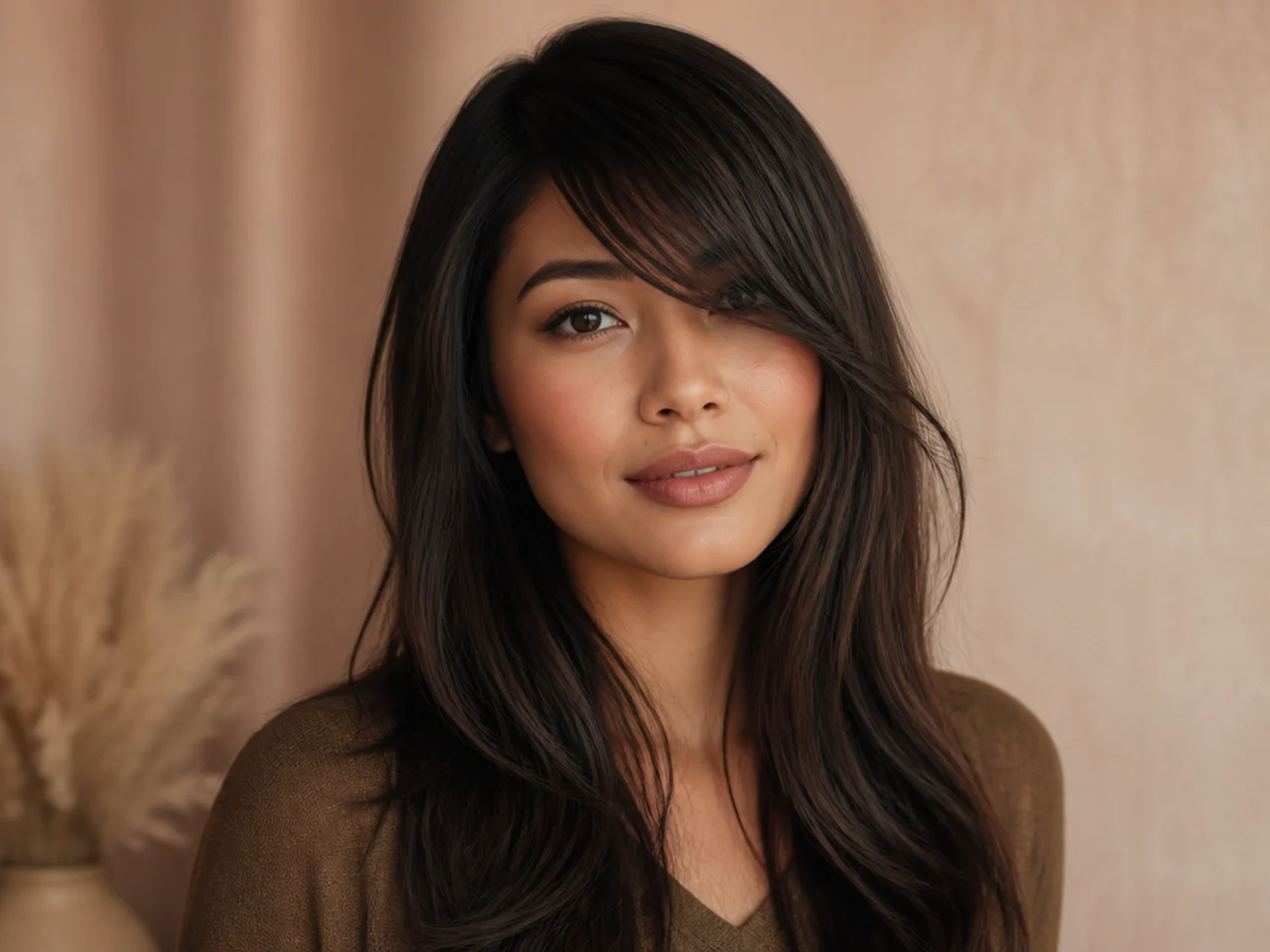
13. Long Sweep on Thick Hair
The version that most needs internal weight removed. Thick plus long is the heaviest combination available, and it is the one that drops fastest without internal thinning.
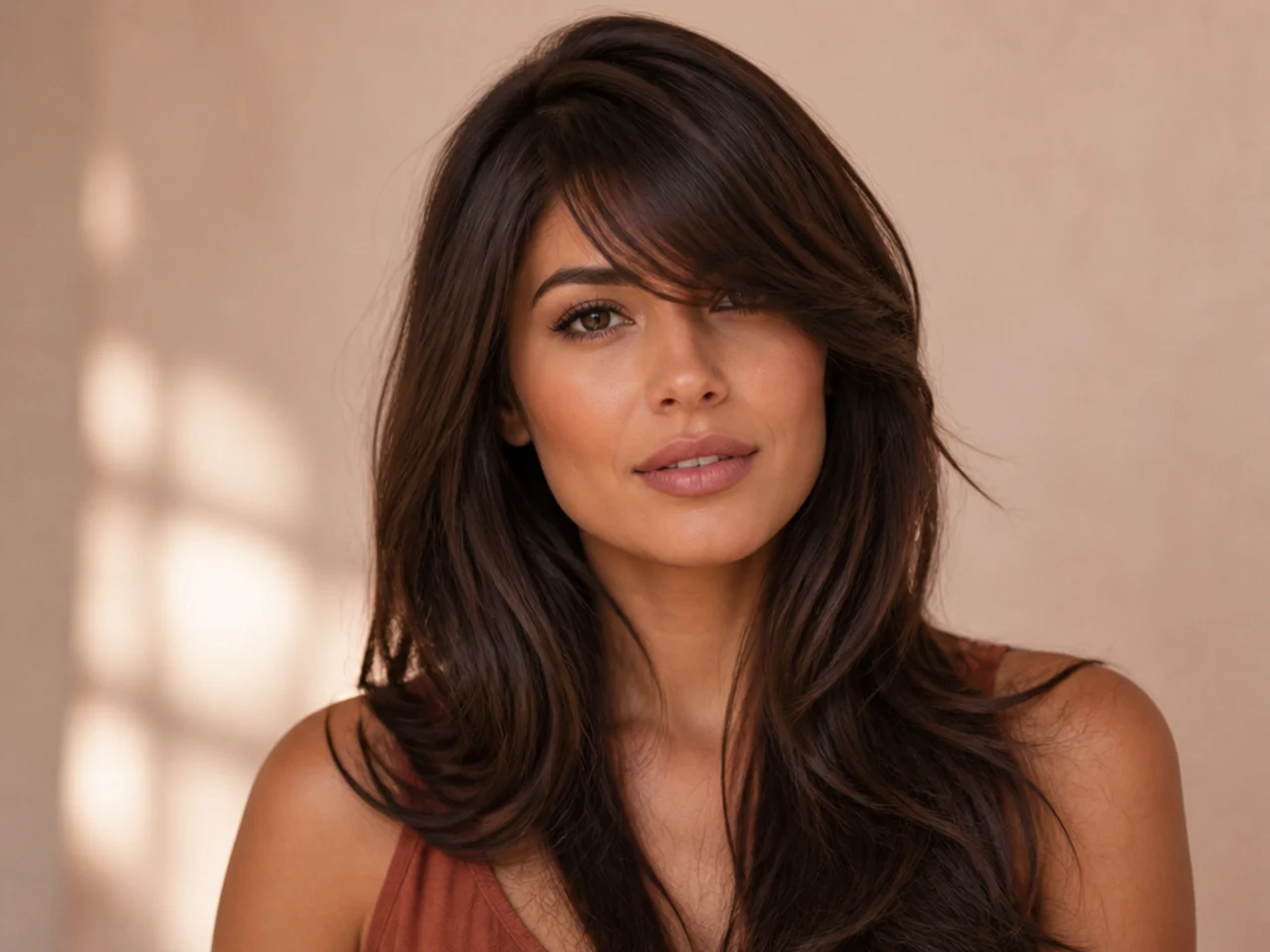
14. Long Sweep with a Lob
Collarbone length behind a long diagonal in front. The two lengths are close enough that the fringe reads as the shortest layer rather than as a separate cut.
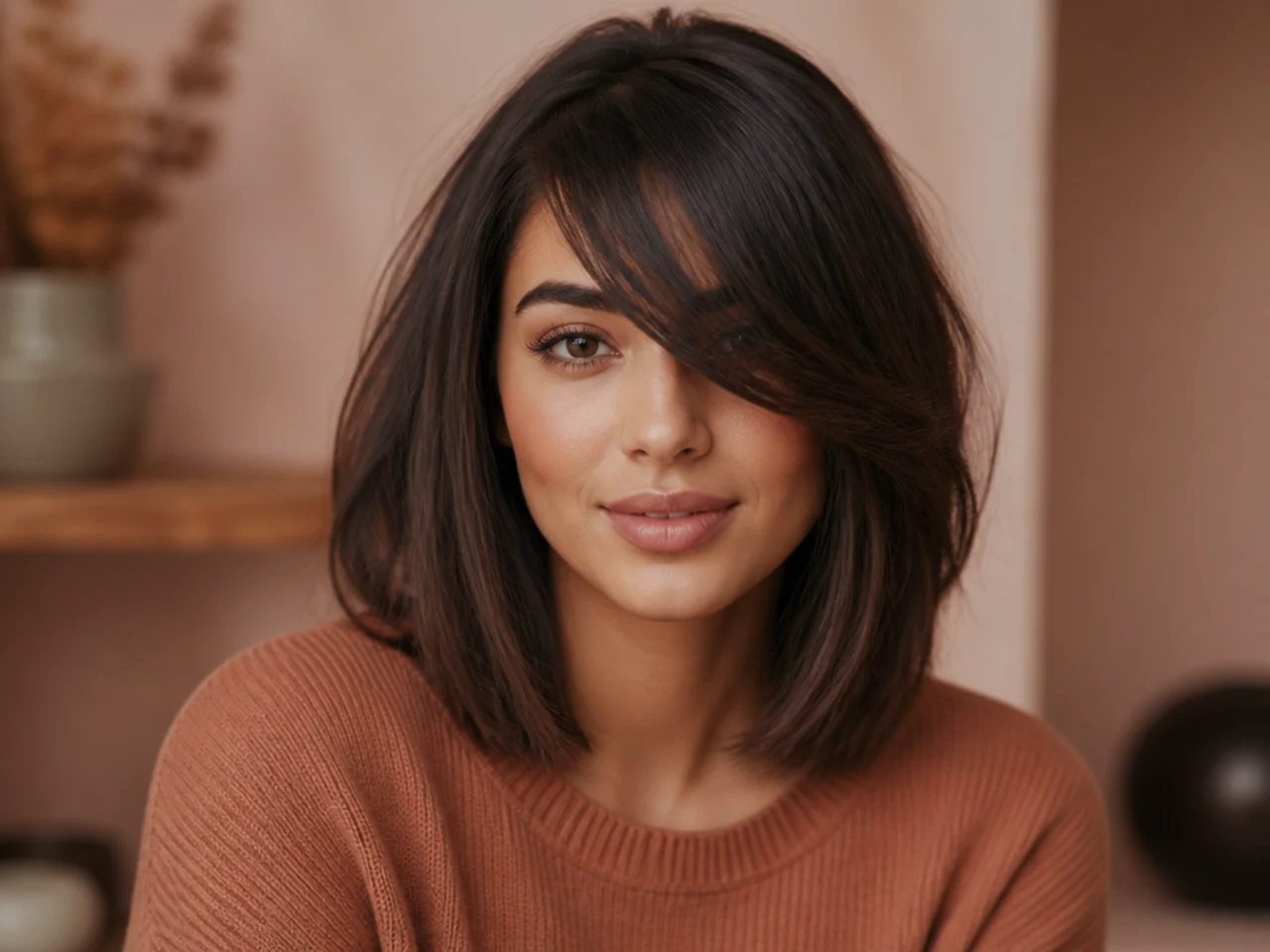
15. Long Sweep with Waist-Length Hair
Maximum contrast between fringe and length. The greater the gap between fringe and length, the more the fringe needs to connect into something or it looks orphaned.

16. Long Sweep Tucked Behind One Ear
The long end tucked, exposing one side. A long sweep has enough length to stay tucked, which shorter versions do not.
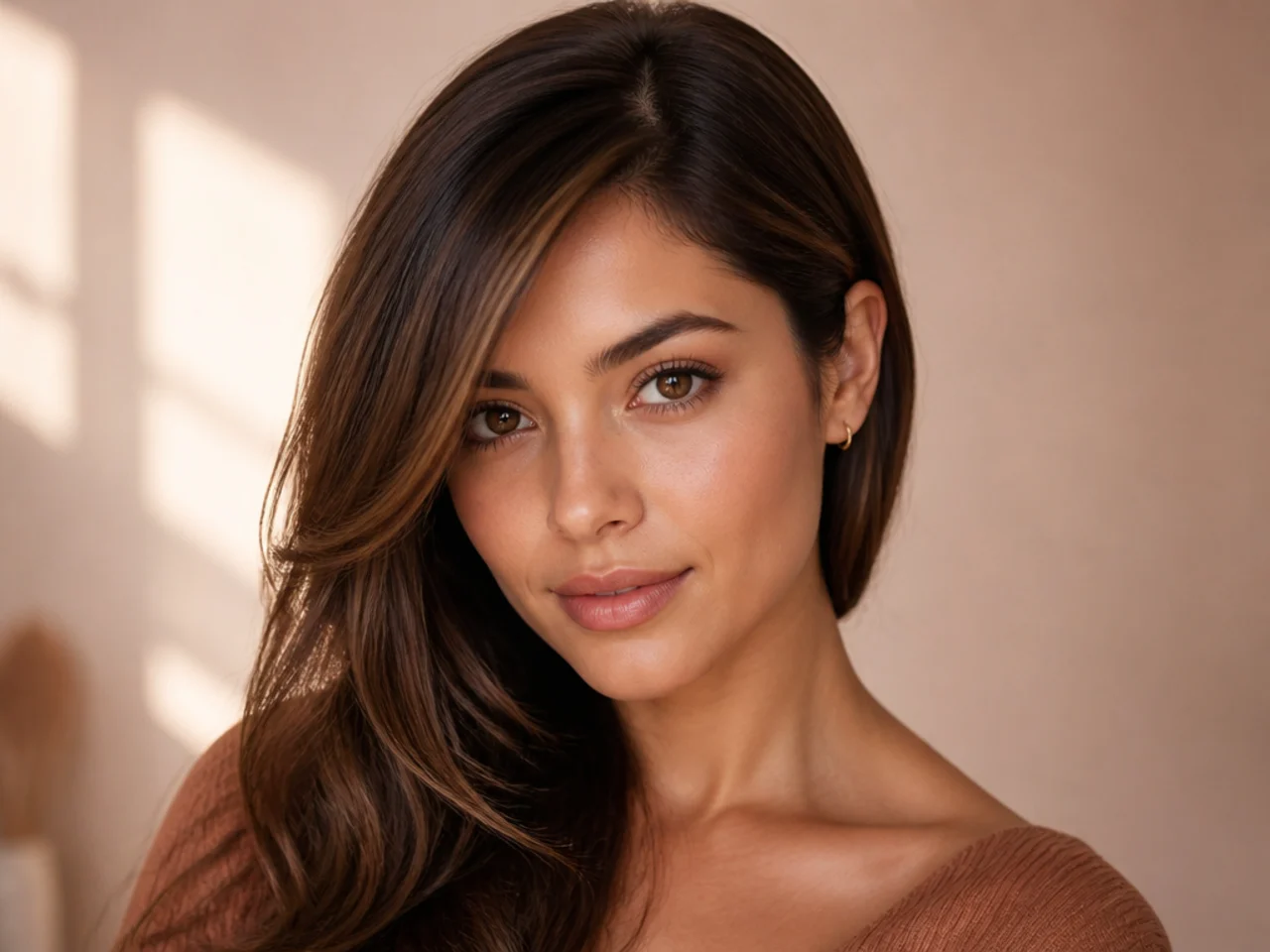
17. Long Sweep with Highlights Along the Line
Colour tracing the diagonal down its length. Colour along the line is the clearest way to show the fringe and the layers are one continuous cut.
18. Long Sweep with an Updo
The one loose diagonal against a gathered shape. With everything else gathered the fringe carries all the softening, which is what a long sweep does best.
19. Long Sweep with a Ponytail
Everything back, the fringe left to frame. A high gather pulls the hairline back slightly, which gives even a heavy fringe a little extra lift.
20. A Long Sweep That Has Dropped
Weight winning over angle. The failure this length is prone to. Every extra centimetre adds weight pulling the root down, and past the cheekbone the angle alone stops being enough.
Styling and Upkeep
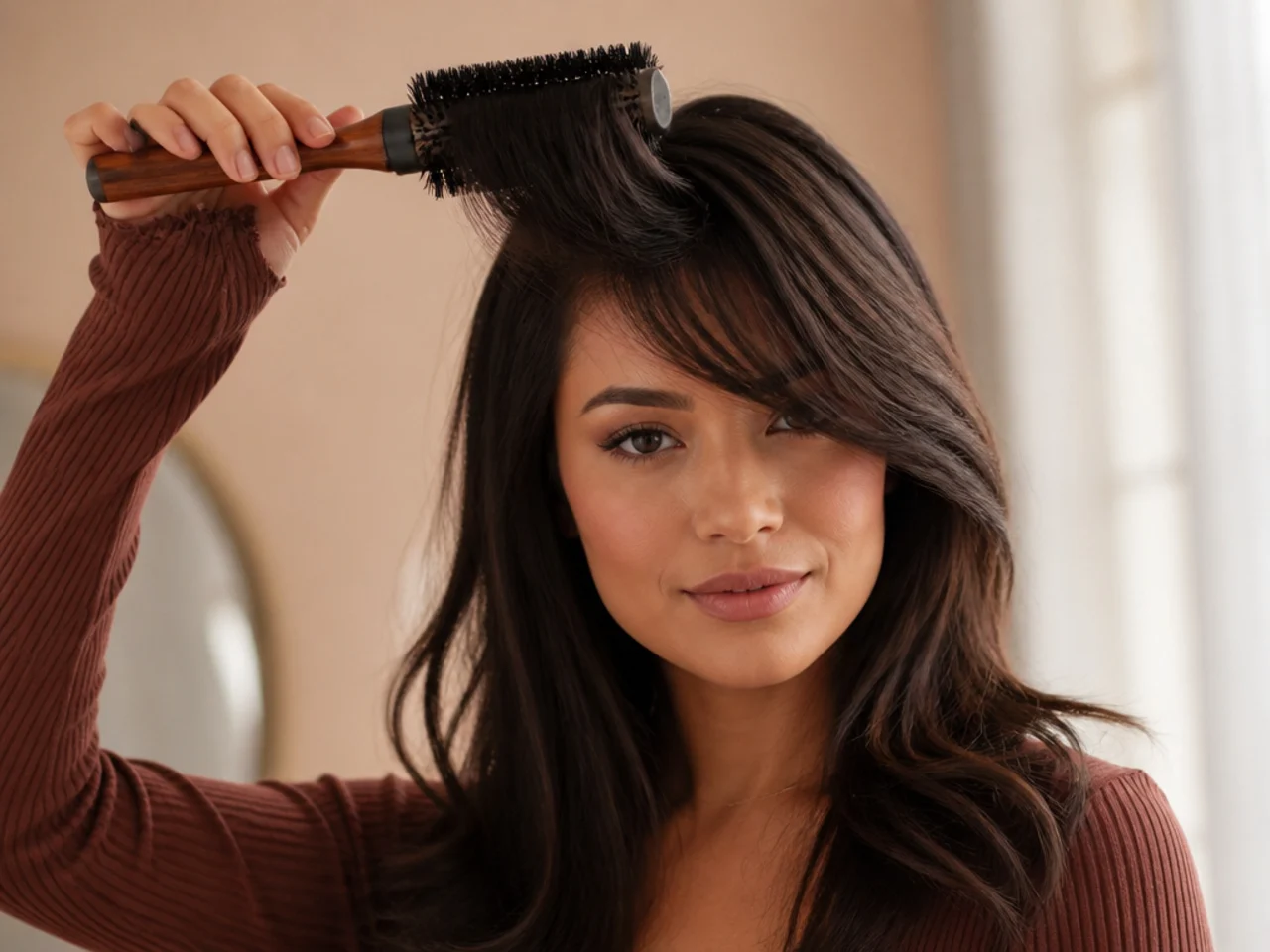
Dry the root first and hardest. Lift at the root is what counteracts the weight further down. Once the root is set, the rest follows.
Keep product off the lower half. That is precisely where the weight problem already is.
Use a round brush pulling across, not down. Direction set while drying outlasts anything applied afterwards.
Ask for internal weight removal at each trim, not just the first. It grows back in, and the drop returns with it.
Trim every three to four weeks. A long diagonal loses its angle faster than a short one.
Mistakes to Avoid
Asking for the ends to be thinned. It softens the edge and leaves the weight.
Product on the lower half. More weight where there is already too much.
A shallow angle on a long fringe. The combination most likely to fall flat.
Leaving it disconnected from your layers. Past the cheekbone it needs to blend.
Trimming on a six-week cycle. The angle flattens well before then.
FAQ
Why do they fall flat? Length puts weight at the end of the diagonal with the most leverage.
Where should weight be removed? Internally, through the lower half — not at the ends.
How long can they be? Past the jaw they read as face-framing layers rather than bangs.
Final Thoughts
Ask for internal weight removal by name. It is the difference between a long sweep that still sweeps in week four and one that has quietly become a heavy curtain over one eye — and it is not what most stylists reach for when you say "thin them out".
For the shorter version, which has the opposite problem, see 15 short side swept bangs ideas, and for the cut itself see 25 cute side swept bangs ideas. More in Bangs & Fringe.