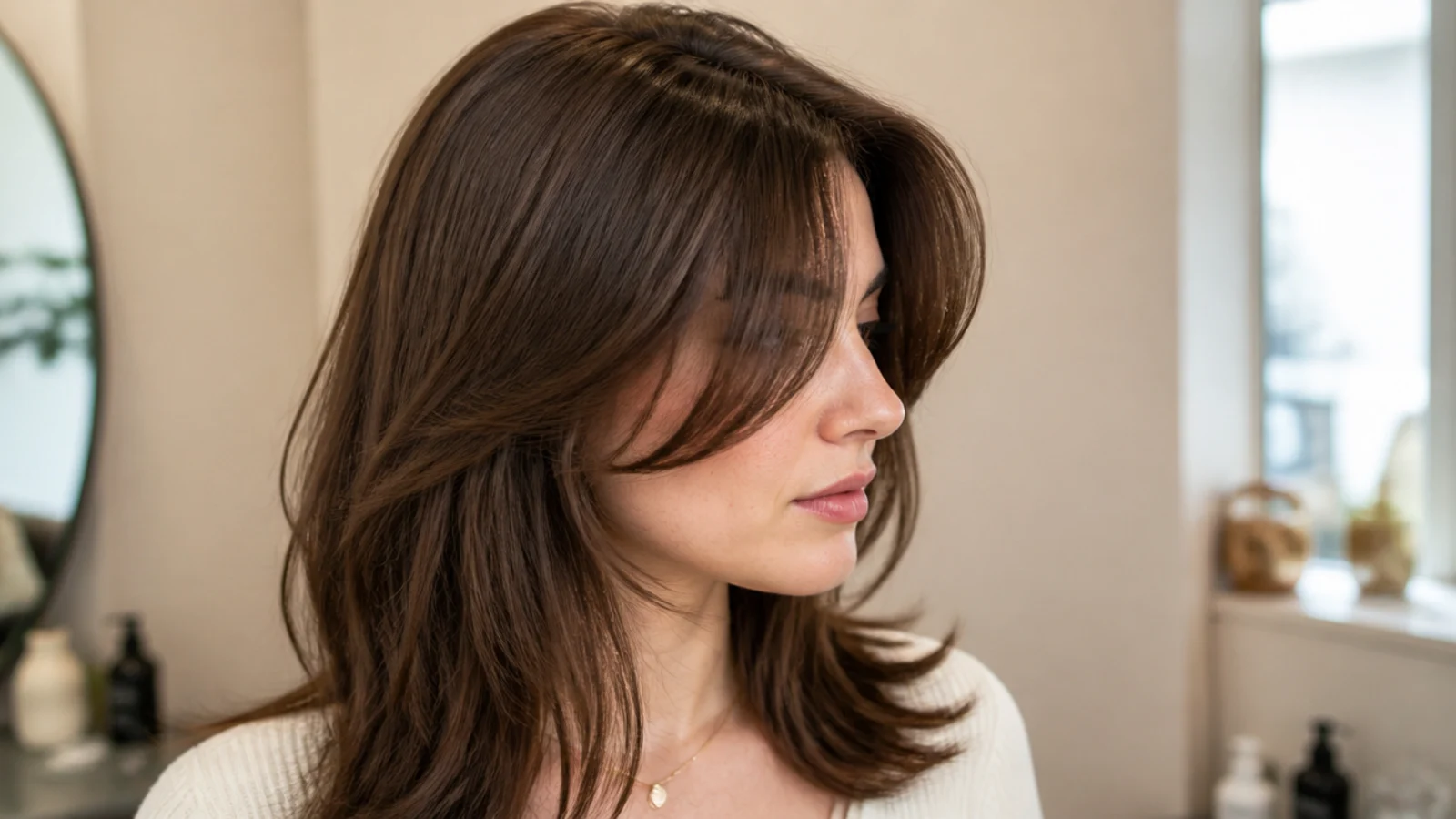
20 Easy Long Hair Looks With Curtain Bangs
Twenty ways to wear curtain bangs on long hair, and the measurement nobody mentions at the consultation — how far back from the hairline the fringe section is taken. That depth sets the weight, and weight is what makes the two halves fall apart on their own.
In this article · 27
- What Makes a Fringe a Curtain Fringe
- How to Choose Your Length and Split
- The 20 Long Hair Looks With Curtain Bangs
- 1. Classic Cheekbone Curtain Bangs
- 2. Bridge of the Nose Curtain Bangs
- 3. Jaw Length Curtain Bangs
- 4. Curtain Bangs With Long Layers
- 5. Curtain Bangs Over a One Length Cut
- 6. Curtain Bangs on Straight Hair
- 7. Curtain Bangs on Wavy Hair
- 8. Curtain Bangs on Curly Hair
- 9. Wispy Curtain Bangs for Fine Hair
- 10. Heavy Curtain Bangs for Thick Hair
- 11. Off Centre Curtain Bangs
- 12. Curtain Bangs With a Cowlick
- 13. Curtain Bangs With a Money Piece
- 14. Curtain Bangs With Beachy Waves
- 15. Curtain Bangs Blown Straight
- 16. Curtain Bangs With a Half Up Style
- 17. Curtain Bangs With a Low Ponytail
- 18. Curtain Bangs With a Wolf Cut
- 19. Curtain Bangs With a Braid
- 20. Grown Out Curtain Bangs
- Styling and Upkeep
- Mistakes to Avoid
- FAQ
- Final Thoughts
Most curtain fringe requests fail on a number nobody says out loud — how far back from the hairline the fringe section is taken.
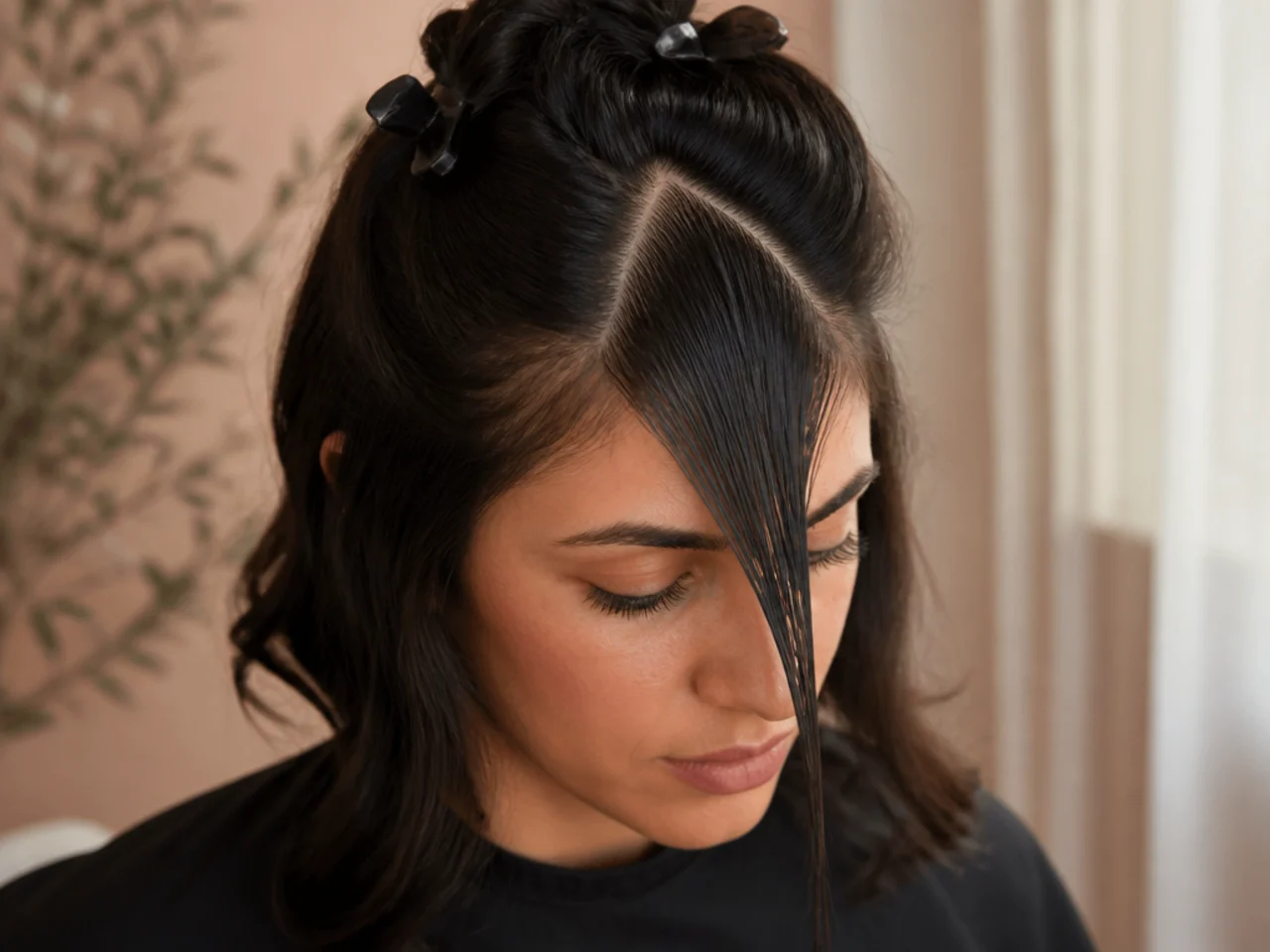
Depth sets weight, and weight sets the split. A section taken two centimetres back gives a see-through fringe. Four centimetres gives one heavy enough to fall open without a brush.
The shortest point decides the rest. Cheekbone falls open by itself. Above the brow there is not enough length for gravity to work with, so the shape becomes a daily styling job.
What Makes a Fringe a Curtain Fringe
It is cut on a diagonal, not straight across. The shortest point sits at the centre and the length increases outwards until it meets the layers at the cheek or jaw.
It is cut with the parting already in place. Comb the section forward and cut it flat and you have a straight fringe that only looks like a curtain while it is styled. It drops into one wall of hair the moment it air dries.
The section is a triangle, not a rectangle. The apex sits back along the parting and the base runs along the hairline, which is what lets the two halves fall away from the centre instead of hanging as a single piece.
It has to connect into the length. Without a blend point at the cheek there is a visible step where the fringe ends and the long hair begins, and the eye reads that step before it reads the fringe.
How to Choose Your Length and Split
Pick the shortest point by how much styling you will actually do. Cheekbone opens on its own. Brow level wants a round brush every wash, without exception.
Match the depth to your density. Fine hair has no reserve, so a deep section takes hair the rest of the top needs and the crown starts showing scalp. Keep it around two centimetres.
Allow for shrinkage by texture. Straight hair barely moves as it dries, wave lifts a centimetre or two, and curl can lift several. Anything with a bend should be cut dry.
Look at the hairline before choosing anything. A cowlick at the front grows in a fixed direction and cannot be cut out, so the fringe has to be long enough for its own weight to beat the lift.

The 20 Long Hair Looks With Curtain Bangs
1. Classic Cheekbone Curtain Bangs
The shortest point lands level with the top of the cheekbone, which is the shortest a curtain fringe can be and still open without help. Below the brow there is enough weight for gravity to pull each half down and outwards, so the split survives a shake of the head.
2. Bridge of the Nose Curtain Bangs
Shorter, more visible, with the split sitting right in the eyeline. The trade is styling time, because at this length the fringe has too little weight to open by itself and the root has to be dried back after every wash or both halves hang forward.

3. Jaw Length Curtain Bangs
The longest version, with the shortest point near the corner of the mouth and the outer edge reaching the jaw. It reads as face framing rather than as a fringe, and it is exactly what a cheekbone version grows into after about four months.

4. Curtain Bangs With Long Layers
Layers through the mid lengths give the fringe somewhere to land. Without them the fringe stops at the cheek against a solid wall of one length hair, and the eye reads that junction as a step instead of a blend.

5. Curtain Bangs Over a One Length Cut
The contrast is the point — a heavy blunt perimeter under a soft open fringe. Keep the outer edge of the fringe long enough to reach the cheekbone, because a short outer edge leaves an obvious gap between the fringe and the solid length below it.

6. Curtain Bangs on Straight Hair
Straight hair shows the cut line exactly, so the diagonal has to stay clean along its whole run. It also holds the least bend of any texture, which is why root direction matters more here than anywhere else — with no natural wave propping it up, a flat root gives a flat fringe.

7. Curtain Bangs on Wavy Hair
Wave does half the work, because the natural bend pushes the two halves apart before you touch them. The cost is shrinkage — a wave shortens as it dries, so a fringe cut wet at the cheekbone can finish an inch higher than planned.

8. Curtain Bangs on Curly Hair
Cut dry and curl by curl, because a stretched curl springs back to roughly two thirds of its wet length. The curtain shape here comes from where each curl sits rather than from a continuous line, so the diagonal is built by shortening individual curls near the centre.

9. Wispy Curtain Bangs for Fine Hair
Take the section shallow, around two centimetres back from the hairline. Fine hair has nothing spare, and a deep section borrows length the rest of the top is using to cover the crown, which starts showing scalp within a few weeks.

10. Heavy Curtain Bangs for Thick Hair
Thick hair takes the opposite treatment: a deeper section, and weight removed at the mid lengths rather than at the ends. Thinning the ends of a thick fringe makes them flick outwards, because the short pieces sit underneath the long ones and push them up.

11. Off Centre Curtain Bangs
Moving the split two or three centimetres to one side makes the halves uneven, and the heavier one sweeps across the forehead. It sits close to long side swept bangs without going all the way there, since the lighter half still falls on the opposite side.

12. Curtain Bangs With a Cowlick
A cowlick at the front hairline grows in one fixed direction and no amount of cutting removes it. The fix is weight, which means length — keep the shortest point no higher than the cheekbone so the fringe can hold itself down.

13. Curtain Bangs With a Money Piece
Lightening only the fringe and the pieces directly behind it makes the split read from across a room, because the eye follows the tonal edge faster than it follows a cut line. Keep the lightening inside the fringe section or it spreads and stops framing anything.

14. Curtain Bangs With Beachy Waves
Texture through the lengths with a smoother fringe. The contrast is what makes the fringe look placed rather than accidental, and waving the fringe as well merges it into everything else until the split disappears entirely.

15. Curtain Bangs Blown Straight
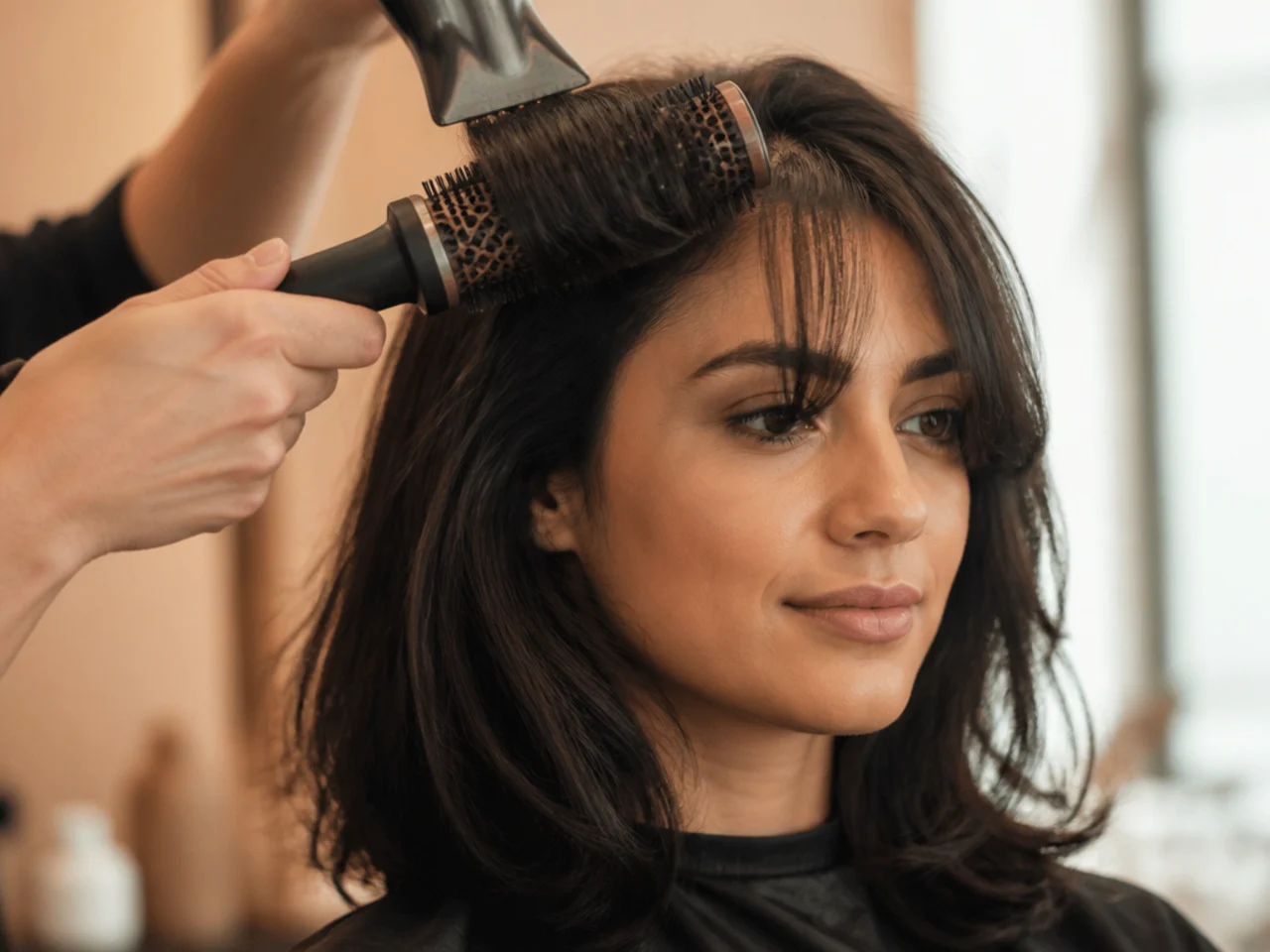
A round brush at the root, angled away from the face, held until the section is cool. The bend sets as the hair cools rather than while it is hot, so releasing the brush straight away undoes the work you just did.

16. Curtain Bangs With a Half Up Style
Pulling the top section back exposes the whole fringe, which is the most flattering way to wear one. Start the half up section behind the fringe apex, or the tie drags the fringe backwards and the shortest pieces stick out of it.

17. Curtain Bangs With a Low Ponytail
The fringe stays loose and softens the hairline a ponytail otherwise exposes. Tie low and keep the front loose, because tension pulls the fringe roots backwards and flattens exactly the lift the shape depends on.

18. Curtain Bangs With a Wolf Cut
A wolf cut is short through the crown and long underneath, and a curtain fringe is the front continuation of that same shape. See the long wolf cut for where those layers sit — the fringe should meet the shortest face framing layer with no visible step.

19. Curtain Bangs With a Braid
Braiding the lengths pulls everything back and leaves the fringe carrying the whole outline. Start the braid behind the fringe section, because catching the short front pieces makes them work loose and stand up within an hour.

20. Grown Out Curtain Bangs
By three or four months the shortest point sits near the jaw and the fringe reads as face framing. This is the argument for the shape — it never passes through the awkward blunt stage a straight fringe does, because it was cut on a diagonal from the start.

Styling and Upkeep
Dry the fringe first, before the rest of the head. It sets in whatever direction it dries in, and once dry that root direction is fixed until the next wash.
Point the brush away from the face at the root. The shape lives in the first two centimetres of root, not in the ends.
Let it cool in position before you release it. Hair holds the shape it cools in, which is why a warm release drops flat within the hour.
Wash the fringe on its own between washes. Forehead oil transfers straight into it, so the fringe looks greasy days before the rest of the head does.
Book a fringe trim, not a haircut. The diagonal closes up as it grows, and ten minutes every six weeks restores it without touching the length.
Mistakes to Avoid
Cutting it wet on wavy or curly hair. It dries shorter than you cut it, by a centimetre on wave and considerably more on curl.
Taking the section too deep on fine hair. The fringe borrows from the top of the head and leaves the crown looking sparse.
Cutting the fringe combed forward and flat. That produces a straight fringe. The curtain shape only exists if the section is cut with the parting in it.
Going above the brow over a cowlick. There is no weight left to hold the hair down and it stands up permanently.
Thinning the ends to lighten it. Short pieces underneath push the long ones outwards. Remove weight higher up the strand instead.

FAQ
How short? Cheekbone opens by itself. Anything shorter needs a brush every wash.
Wet or dry? Dry on anything with a bend, since wave and curl both shrink as they dry.
How often? A ten minute fringe trim every six weeks, not a full haircut.

Final Thoughts
Ask for the two measurements rather than the picture. "Shortest point at the cheekbone, section two centimetres deep, cut dry" is three instructions a stylist can act on, and it is the difference between a fringe that opens on its own and one you fight every morning.
For the full range of lengths see the curtain bangs on long hair guide, and for how the diagonal differs from its nearest neighbour see french bangs versus curtain bangs. More in Bangs & Fringe.