25 Curtain Bangs Ideas For Medium Length Hair
Twenty-five curtain bangs for medium hair, and the measurement that decides every one of them — where the outer edge lands. On medium length there is less hair below the fringe to absorb it, so a steep angle leaves a step.
In this article · 32
- What Makes a Fringe a Curtain
- Choosing Your Length and Parting
- The 25 Curtain Bangs Ideas for Medium Hair
- 1. The Brow Length Curtain
- 2. The Cheekbone Curtain
- 3. The Jaw Length Curtain
- 4. The Nose Bridge Curtain
- 5. The Wispy Curtain
- 6. The Full Density Curtain
- 7. The Feathered Curtain
- 8. The Razored Curtain
- 9. The Centre Part Curtain
- 10. The Off Centre Curtain
- 11. The Deep Side Part Curtain
- 12. Curtain Bangs on Straight Medium Hair
- 13. Curtain Bangs on Wavy Medium Hair
- 14. Curtain Bangs on Curly Medium Hair
- 15. Curtain Bangs on Coily Hair
- 16. Curtain Bangs on Fine Medium Hair
- 17. Curtain Bangs on Thick Medium Hair
- 18. Curtain Bangs With a Medium Shag
- 19. Curtain Bangs With a Medium Wolf Cut
- 20. Curtain Bangs With a Collarbone Cut
- 21. Curtain Bangs With Face Framing Layers
- 22. Curtain Bangs With a Blunt Perimeter
- 23. Curtain Bangs in an Updo
- 24. Curtain Bangs at Week Eight
- 25. Curtain Bangs Growing Into Layers
- Styling and Upkeep
- Mistakes to Avoid
- FAQ
- Final Thoughts
Curtain bangs get cut to the short point and judged by the outer edge, which is why so many of them look correct in the mirror and wrong in a photograph.
The outer edge is the measurement that matters. It is where the fringe hands off to the length, and on medium hair there is less below it to hide a bad handover.
Root direction does the work, not the cut. A curtain sits open because the root was dried away from the face. Dried forward, the same cut falls closed over the eyes.
What Makes a Fringe a Curtain
It is parted, not solid. A curtain has a split down the middle or just off it, and both halves sweep outwards. A fringe cut straight across is a different animal entirely.
It is shortest in the centre. The length increases outwards, so the shape is a soft V rather than a line, and that angle is what frames the face instead of covering it.
It has to join the length. The outer edge should meet the layers behind without a step, which is the whole difficulty on medium hair.
It is the least committal fringe. Because it grows into face framing layers rather than into an overgrown brow fringe, there is no awkward stage to survive.

Choosing Your Length and Parting
Set the short point by your face, not the trend. At the brow it dominates, at the cheekbone it frames, at the jaw it is barely a fringe. Each is a different amount of face covered.
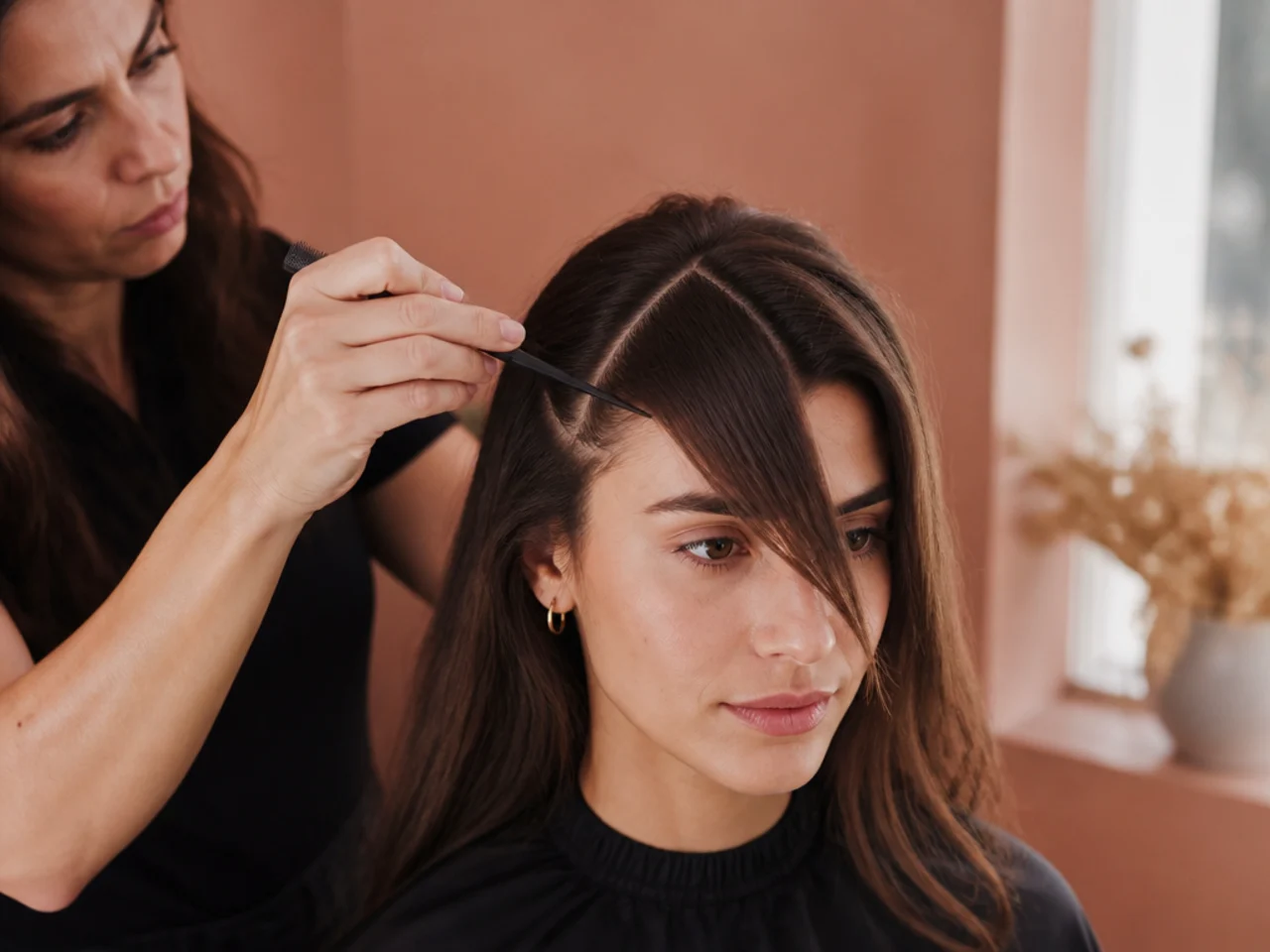
Keep the section shallow on fine hair. The section is taken out of the top of the head, so anything deeper than the corner of the eye starts thinning the length behind it.
Part where your hairline already parts. A cowlick at the front pushes hair one way whatever you do. Fighting it with a centre part means restyling every morning; moving the parting off centre works with it.
Ask for it cut dry if you have curl or a wave. Wet hair sits lower than dry, and on a fringe that difference is the whole design rather than a small error.
The 25 Curtain Bangs Ideas for Medium Hair
1. The Brow Length Curtain
The short point cut at the eyebrow, which is the most fringe you can have while still calling it a curtain. Less length means less weight, so it holds the sweep poorly and needs a round brush most mornings to stay open.
2. The Cheekbone Curtain
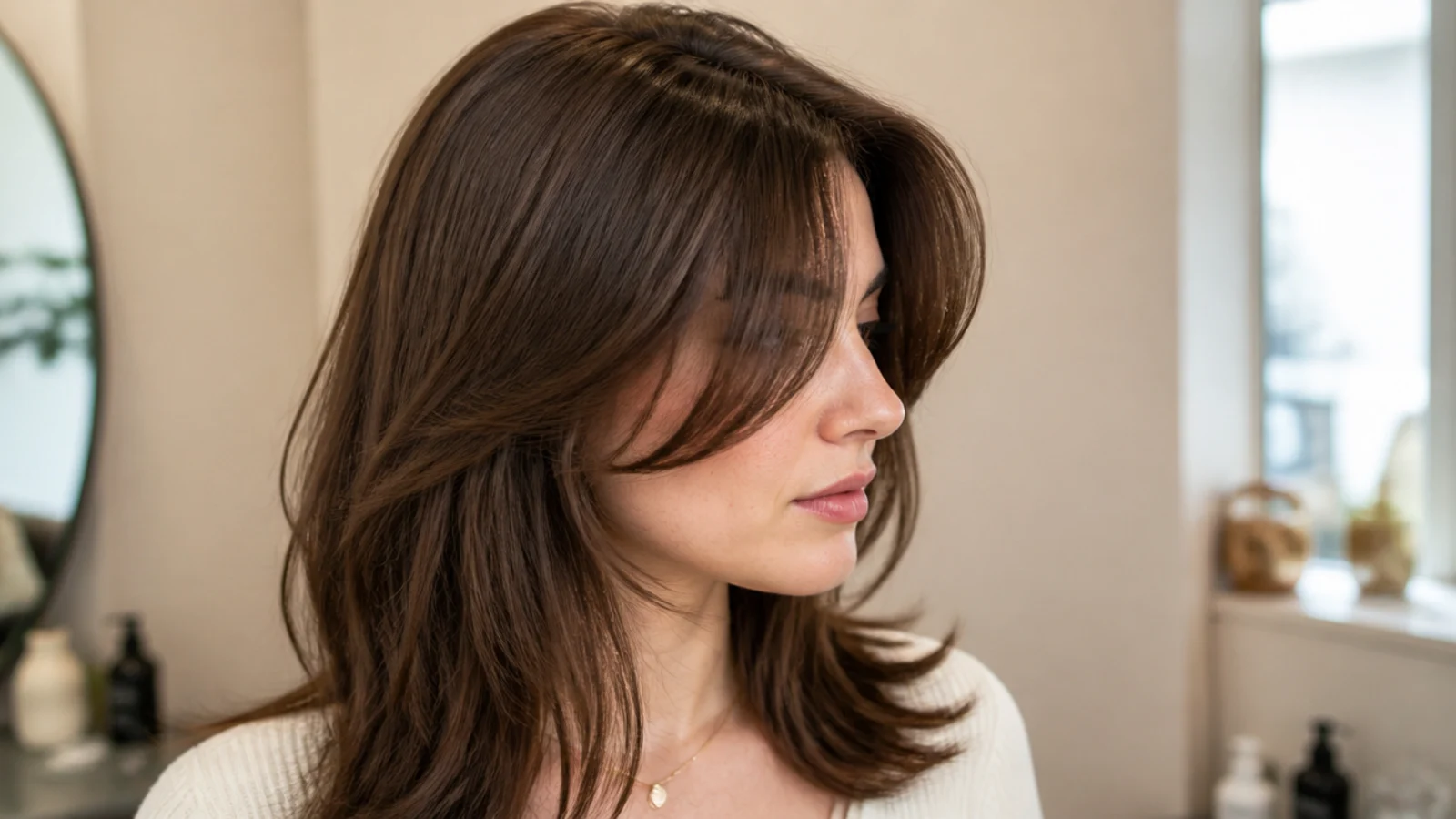
The default proportion, with the short point landing on the cheekbone and the edge sweeping to the jaw. There is enough weight at that length to hold the bend from a blow dry through most of a day.

3. The Jaw Length Curtain
Barely a fringe: the short point sits at the jaw and the outer edge disappears straight into the length. It gives the face framing without any of the maintenance, because there is nothing short enough to fall into your eyes.

4. The Nose Bridge Curtain
The short point cut level with the bridge of the nose, which puts the split right at eye height and opens the face at its widest part. It is the shortest version that still parts cleanly rather than flopping into one piece.

5. The Wispy Curtain
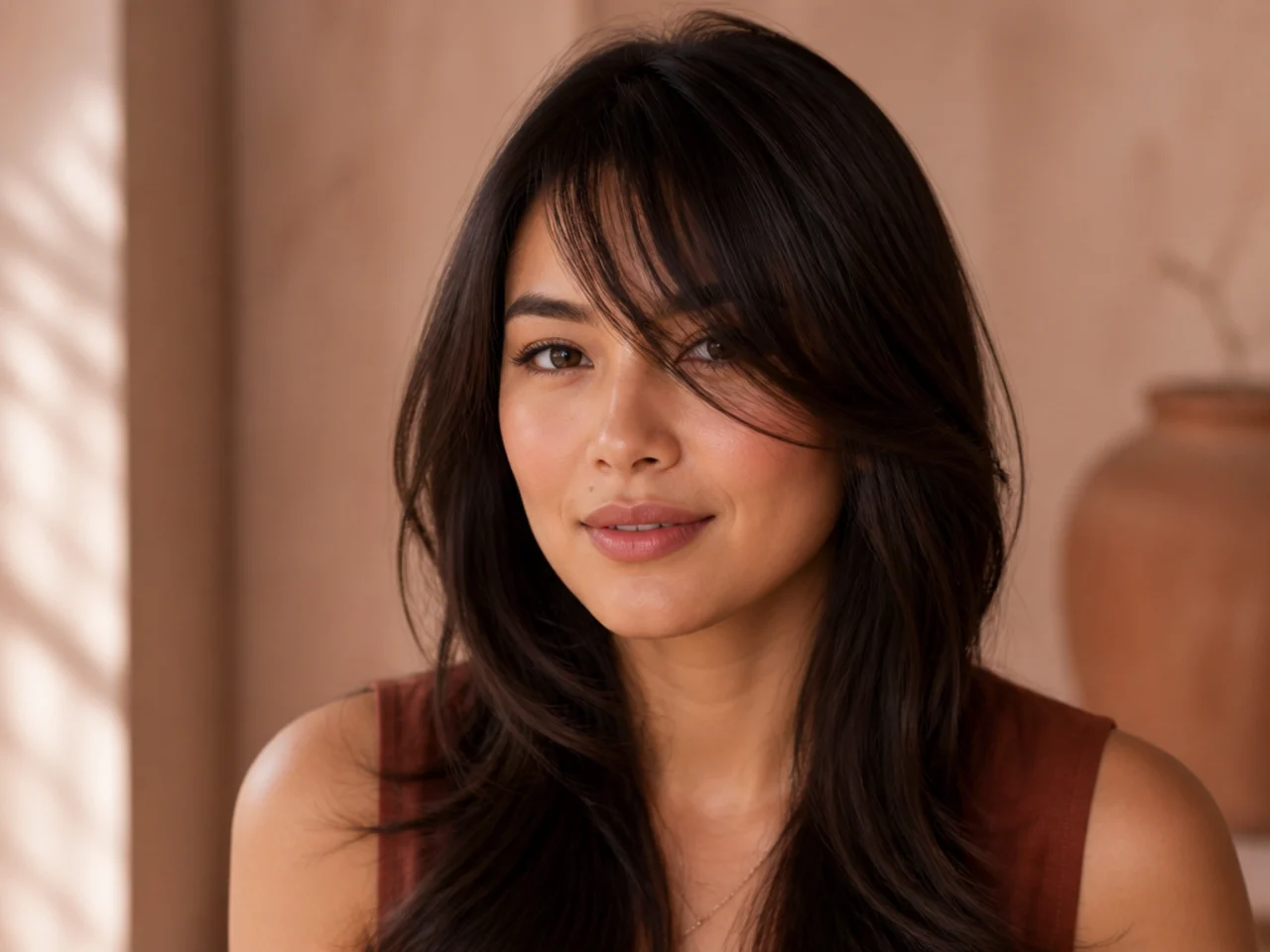
Cut into heavily at the ends so the fringe finishes in separated points rather than a solid edge. Removing that tip weight lets the pieces move independently, which is why a wispy curtain looks softer without being any shorter.

6. The Full Density Curtain
A deeper section and a blunter edge, so the fringe reads as a solid piece of hair. It holds its shape far better than a wispy one, at the cost of density taken from the length behind it.

7. The Feathered Curtain
Layers cut within the fringe itself, so short pieces sit on top of longer ones and prop them away from the face. That internal support is what keeps the curtain open without a round brush every morning.

8. The Razored Curtain
A razor tapers the very tip of each strand to a point, which makes the edge sit softer than shears can leave it. On dry or coarse hair the same taper frays, so it suits smooth textures far better.

9. The Centre Part Curtain
A true middle parting splits the fringe symmetrically and frames both sides of the face equally. It only holds if the hairline cooperates, since a front cowlick will push the split off centre within an hour of drying.

10. The Off Centre Curtain
Moving the split a couple of centimetres to one side makes one half heavier than the other, which adds asymmetry and disguises a cowlick instead of arguing with it. It is the version most hairlines actually want.

11. The Deep Side Part Curtain
The parting taken well over to one side, so most of the fringe sweeps in a single direction and the short half becomes a small accent. The heavy side needs more length or it will not reach far enough across to sit down.

12. Curtain Bangs on Straight Medium Hair
Straight hair sits exactly where it is cut, so the angle of the sweep is visible in full and any unevenness between the two halves shows immediately. It also holds a blow dried bend the shortest time, since there is no natural wave to keep it there.

13. Curtain Bangs on Wavy Medium Hair
A wave already bends away from the face at the root, which is exactly the direction a curtain needs, so wavy hair holds the shape with the least styling. The trade is that the two halves rarely bend identically.

14. Curtain Bangs on Curly Medium Hair
Curl shrinks once dry, so a fringe cut at the cheekbone wet can finish above the brow. Cutting dry is not a preference here but the only way to place the short point where you intended it.

15. Curtain Bangs on Coily Hair
Coils shrink most of all, so the fringe has to be cut with far more length than the finished shape needs. The upside is that a coil holds its own direction, so the curtain stays open without heat.
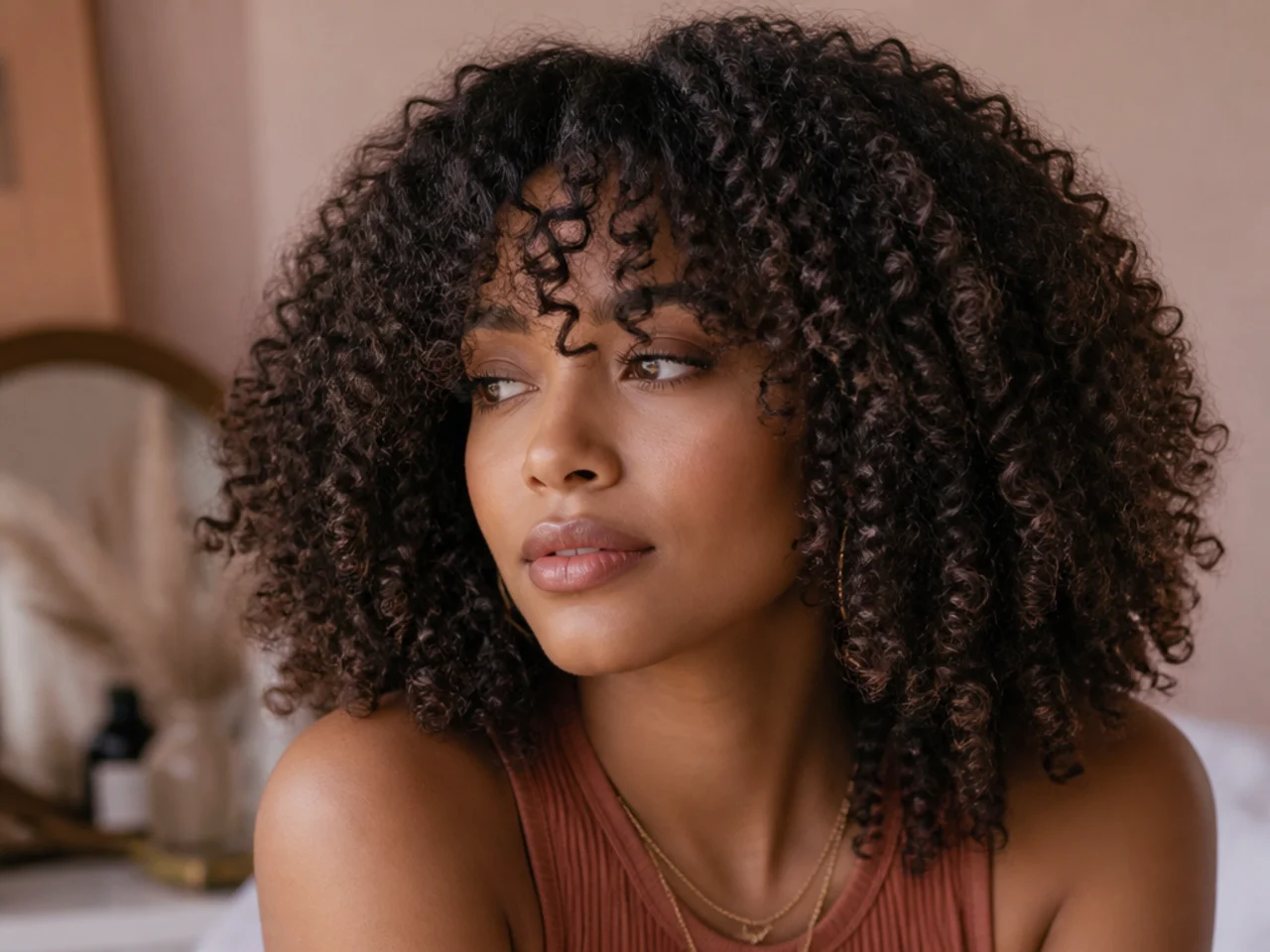
16. Curtain Bangs on Fine Medium Hair
Keep the section shallow, because every extra centimetre of depth is density removed from the length behind. Fine hair cannot spare it, and a fringe that looks full at the cost of a thin crown is a bad trade.

17. Curtain Bangs on Thick Medium Hair
Thick hair pushes the fringe away from the head instead of letting it lie against the face. Weight has to come out from inside the section rather than off the edge, or the curtain sits proud of the forehead.

18. Curtain Bangs With a Medium Shag
Shag layers start high through the crown, so the fringe has somewhere to hand off to rather than stopping abruptly. That connection is what makes the whole shape read as one cut instead of a fringe added to a length.

19. Curtain Bangs With a Medium Wolf Cut
The wolf cut stacks short crown layers over longer ones, and the curtain becomes the front edge of that stack. Cut them as one shape rather than two, since a medium wolf cut already sets the angle the fringe has to match.

20. Curtain Bangs With a Collarbone Cut
At collarbone length the perimeter is close enough to the jaw that the fringe reaches it in one sweep. Any shorter and the outer edge has nowhere to land, which is when the fringe starts looking bolted on.

21. Curtain Bangs With Face Framing Layers
Layers cut down the sides continue the fringe's angle past the jaw, so there is no point where the sweep stops. It turns the curtain into the top of a longer line rather than a self contained shape.

22. Curtain Bangs With a Blunt Perimeter
A hard bottom edge concentrates the weight at the ends, which balances a soft fringe by giving the eye something solid to finish on. On fine hair this is the pairing that keeps the whole cut looking dense.

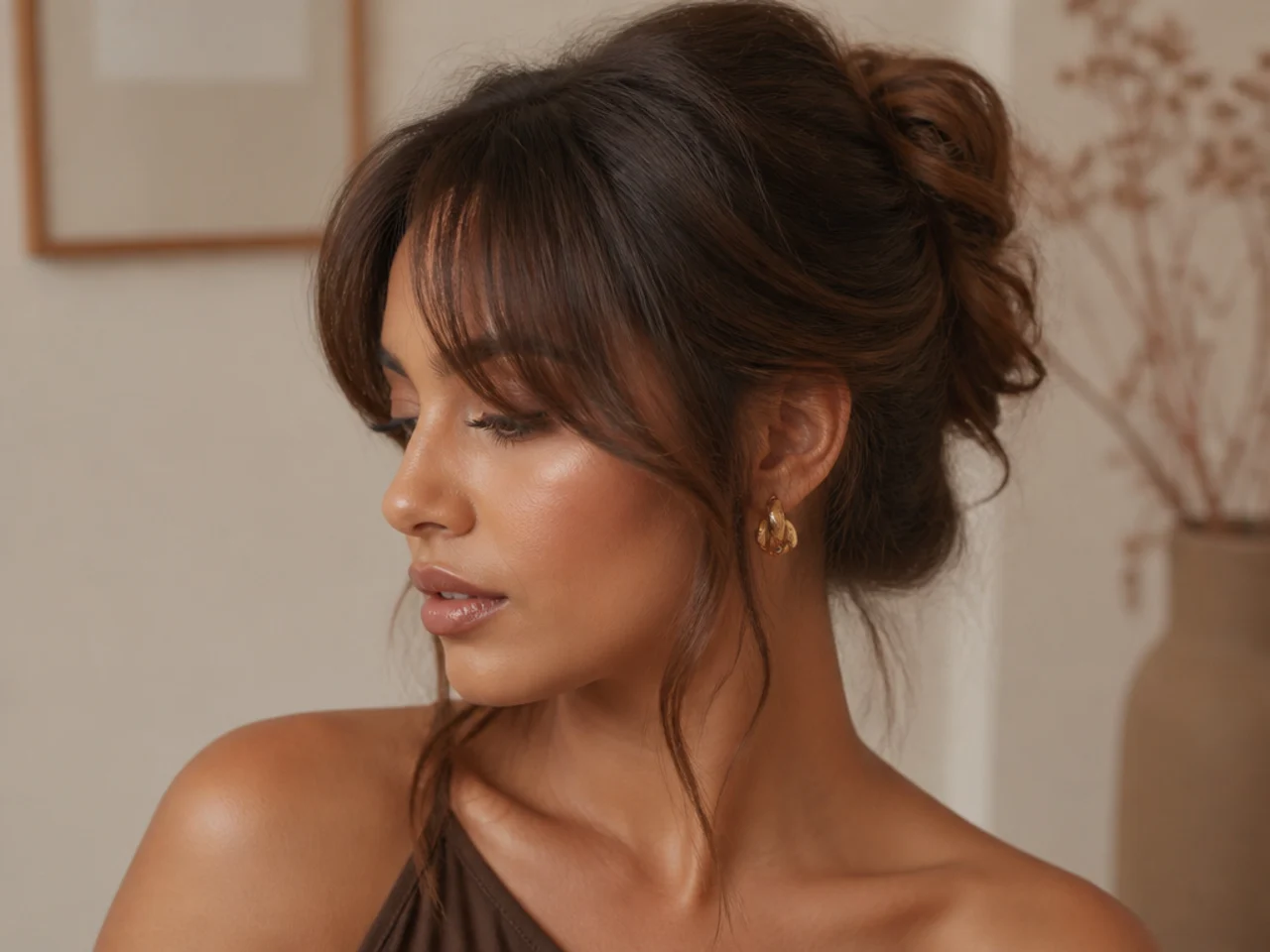
23. Curtain Bangs in an Updo
Pulling the length up leaves the fringe as the only loose hair, which makes it the entire front of the look. Set the bend before the hair goes up, because a round brush cannot reach the roots once an updo is pinned.
24. Curtain Bangs at Week Eight
Roughly two centimetres of growth has moved the short point down from the cheekbone towards the jaw, and the sweep has flattened with it. This is the trim point, and it is a five minute appointment rather than a haircut.

25. Curtain Bangs Growing Into Layers
Left alone for four or five months, the fringe reaches past the jaw and stops being a fringe at all, becoming the shortest of the face framing layers. That painless exit is the reason curtain bangs are the fringe to try first.

Styling and Upkeep
Dry the roots away from the face first. Direction is set at the root while the hair is wettest. Once the root is dry pointing forwards, no amount of brushing the ends will open the curtain.
Finish with cool air. Heat makes the bend and cooling sets it. Letting the fringe cool in position on the brush is what makes the shape survive to lunchtime.
Wash the fringe more often than the length. It sits against the forehead and picks up oil faster, so a fringe that separates into strands by midday usually needs washing rather than cutting.
Trim at six to eight weeks. That is roughly a centimetre and a half of growth, which is where the short point drops far enough to change the shape.
Keep product off the roots. Anything heavy at the root weighs down the exact part that holds the sweep, and the curtain closes.

Mistakes to Avoid
Taking the section too deep. The fringe is cut from the top of the head, so depth is borrowed from the length behind. On fine hair it never grows back fast enough to feel worth it.
Cutting curly hair wet. It stretches when wet and springs up once dry, which on a fringe means the short point lands somewhere nobody chose.
Parting against a cowlick. The hairline wins. Move the parting to where the hair already separates and the fringe stops needing daily correction.
Cutting both halves to match exactly. Faces are not symmetrical, and a fringe cut to identical halves reads as crooked because it sits against features that are not.
Trimming it yourself between appointments. Hair pulled forward and cut straight across comes out shorter than expected once released, because the section was under tension while you cut.

FAQ
Where should the short point sit? Between the brow and the cheekbone.
How deep is the section? Back to the corner of the eye on fine hair.
How often trimmed? Every six to eight weeks.

Final Thoughts
Cut the outer edge first and the short point second. On medium hair the handover to the length is where a curtain succeeds or looks bolted on, and the centre is only the part everybody notices afterwards.
For the same fringe on more length see curtain bangs on long hair, and for the nearest alternative see French bangs versus curtain bangs. More in Bangs & Fringe.