25 Curtain Bangs That Flatter Round Face Shapes
Twenty five curtain bang variations for round faces, and the single measurement that decides whether they help — the height at which the curtain splits, because that is the point the eye travels to first.
In this article · 32
- Why Curtain Bangs Work on a Round Face
- Setting the Split and the Length
- The 25 Curtain Bang Variations
- 1. Long Curtain Bangs Split at the Cheekbone
- 2. Jaw Length Curtain Bangs
- 3. Wispy Curtain Bangs
- 4. Curtain Bangs With a Deep Side Part
- 5. Curtain Bangs With a Centre Part
- 6. Curtain Bangs on a Short Bob
- 7. Curtain Bangs on a Lob
- 8. Curtain Bangs With Long Layers
- 9. Curtain Bangs With a Shag
- 10. Curtain Bangs on Curly Hair
- 11. Curtain Bangs on Wavy Hair
- 12. Curtain Bangs on Straight Hair
- 13. Curtain Bangs on Fine Hair
- 14. Curtain Bangs on Thick Hair
- 15. Curtain Bangs With a Money Piece
- 16. Curtain Bangs With Crown Volume
- 17. Curtain Bangs Pushed Back
- 18. Curtain Bangs With a Pixie
- 19. Curtain Bangs With Face Framing Layers
- 20. Curtain Bangs Worn Flat
- 21. Curtain Bangs With a Half Up Style
- 22. Curtain Bangs With Textured Ends
- 23. Curtain Bangs Grown to the Jaw
- 24. Curtain Bangs Cut Too Short
- 25. Curtain Bangs With a Blunt Perimeter
- Styling and Upkeep
- Mistakes to Avoid
- FAQ
- Final Thoughts
Curtain bangs get recommended for round faces without anyone saying where to split them, which is the only decision that changes the outcome.
The split point is where the eye lands. Open the curtain at the brow and the face reads shorter. Open it at the cheekbone and it reads longer.
Length past the cheekbone covers the widest point. A round face is widest across the cheeks, and hair falling over that width narrows it without shortening anything.
Why Curtain Bangs Work on a Round Face
They draw diagonals, not a horizontal. Two lines falling away from a centre split add vertical direction, which a round face is short of.
A blunt fringe does the opposite. One horizontal line across the forehead cuts the visible face length and widens what is left below it.
The taper at the ends softens the edge. Curtain bangs are cut along the strand rather than across it, so no hard line lands anywhere on the face.
They frame without covering. The forehead stays partly visible, which keeps the vertical space a round face needs.

Setting the Split and the Length
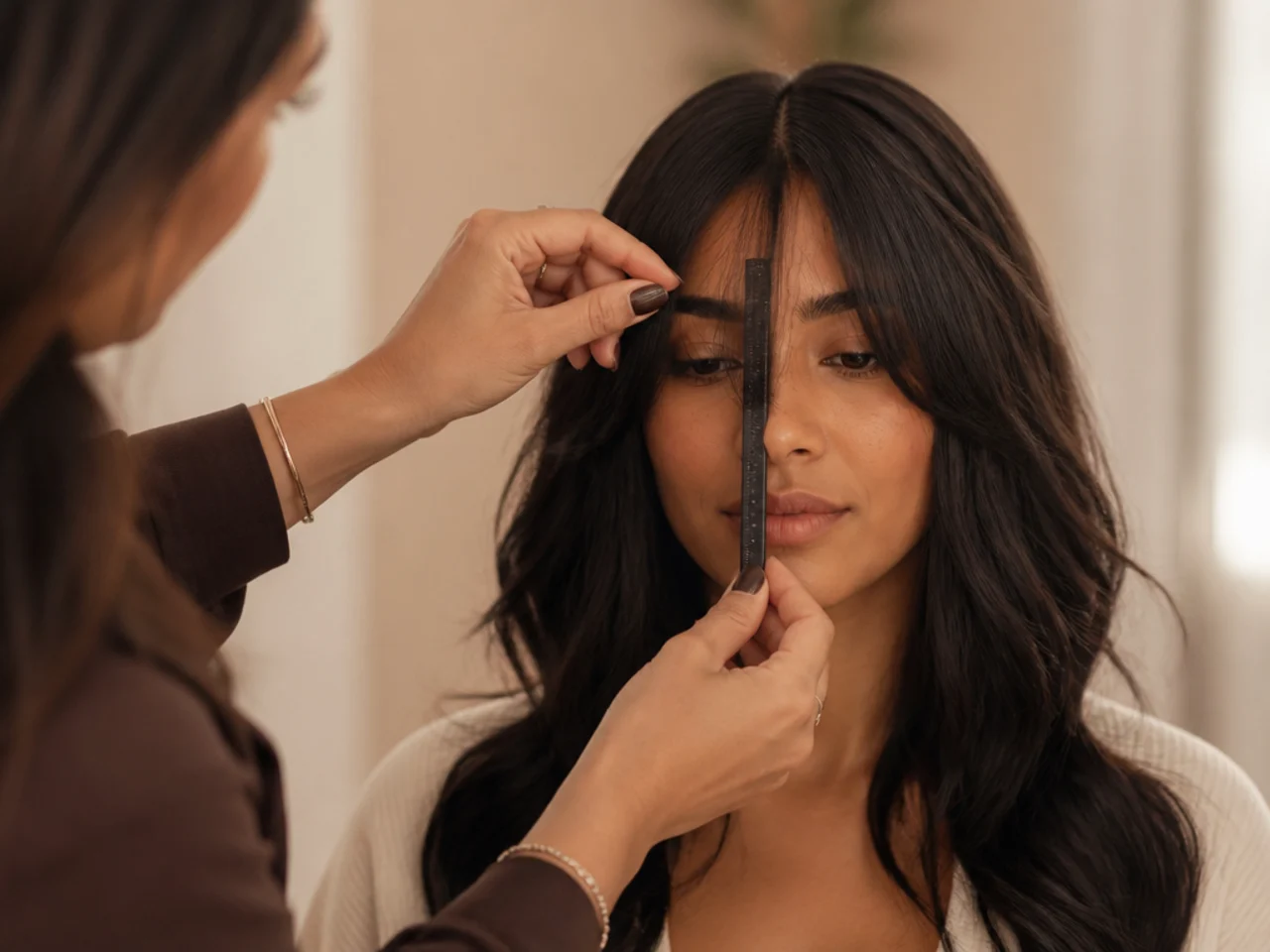
Split at the cheekbone as the default. It puts the opening at the widest point and sends everything below it downward.
Take the ends past the jaw if the face is very wide. More vertical line means more offset against the horizontal width.
Deepen the part rather than centring it. A diagonal parting breaks the symmetry that makes a round face read as a circle.
Add height at the crown at the same time. Length added above the face counts toward the vertical just as much as the bangs do.
The 25 Curtain Bang Variations
1. Long Curtain Bangs Split at the Cheekbone
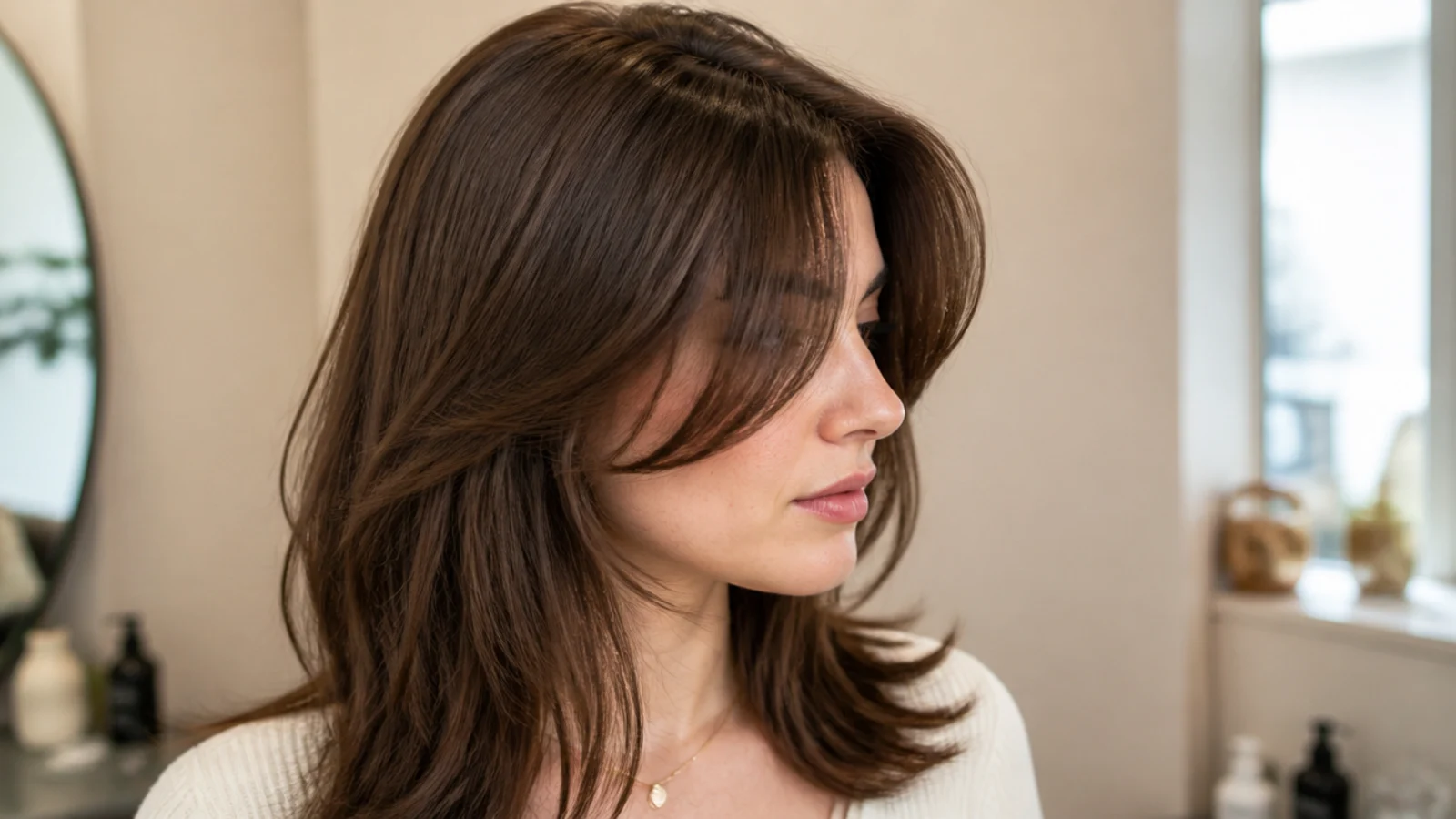
The default for a round face and the reason the style gets recommended at all. The opening sits at the widest point and the ends carry on past it, so the eye follows a downward line instead of stopping at the width.
2. Jaw Length Curtain Bangs
The ends taken all the way to the jaw, which is the longest a curtain can go before it stops reading as a fringe. It draws the most vertical line of any version, so it is the one to ask for on a genuinely wide face.

3. Wispy Curtain Bangs
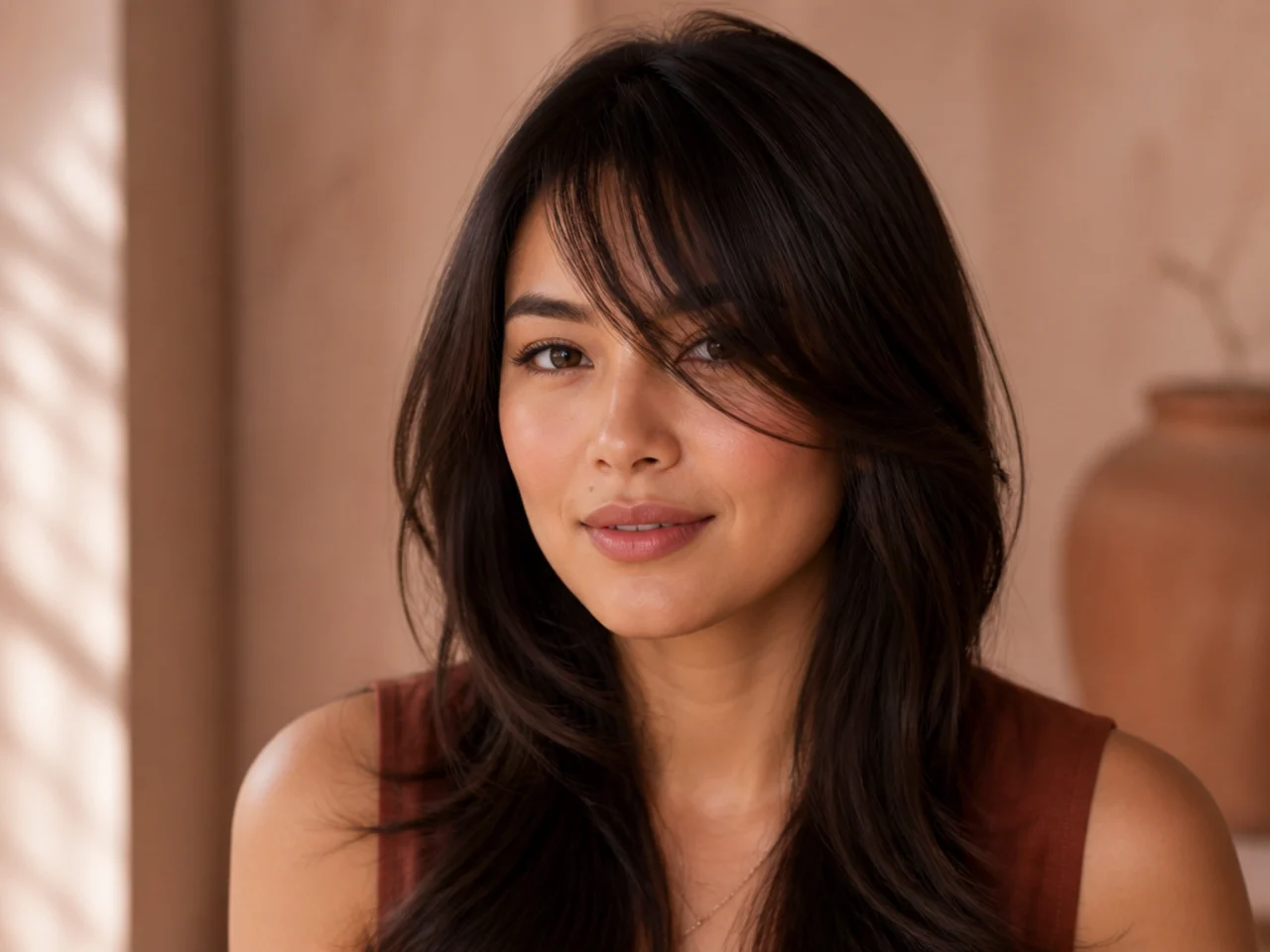
Cut from a thinner front section so light passes through them and the forehead stays partly visible. Keeping that vertical space open matters more on a round face than on any other shape, because covering the forehead removes the little length it has.

4. Curtain Bangs With a Deep Side Part
The parting moved well off centre so the front weight crosses the forehead on a diagonal. The diagonal does two things at once, breaking the symmetry and lifting the roots on the heavy side as the hair travels over the parting line.

5. Curtain Bangs With a Centre Part
Symmetrical and cleaner, but it needs more length to work on a round face. With no diagonal from the parting, the vertical line has to come entirely from how far below the cheekbone the ends fall.

6. Curtain Bangs on a Short Bob
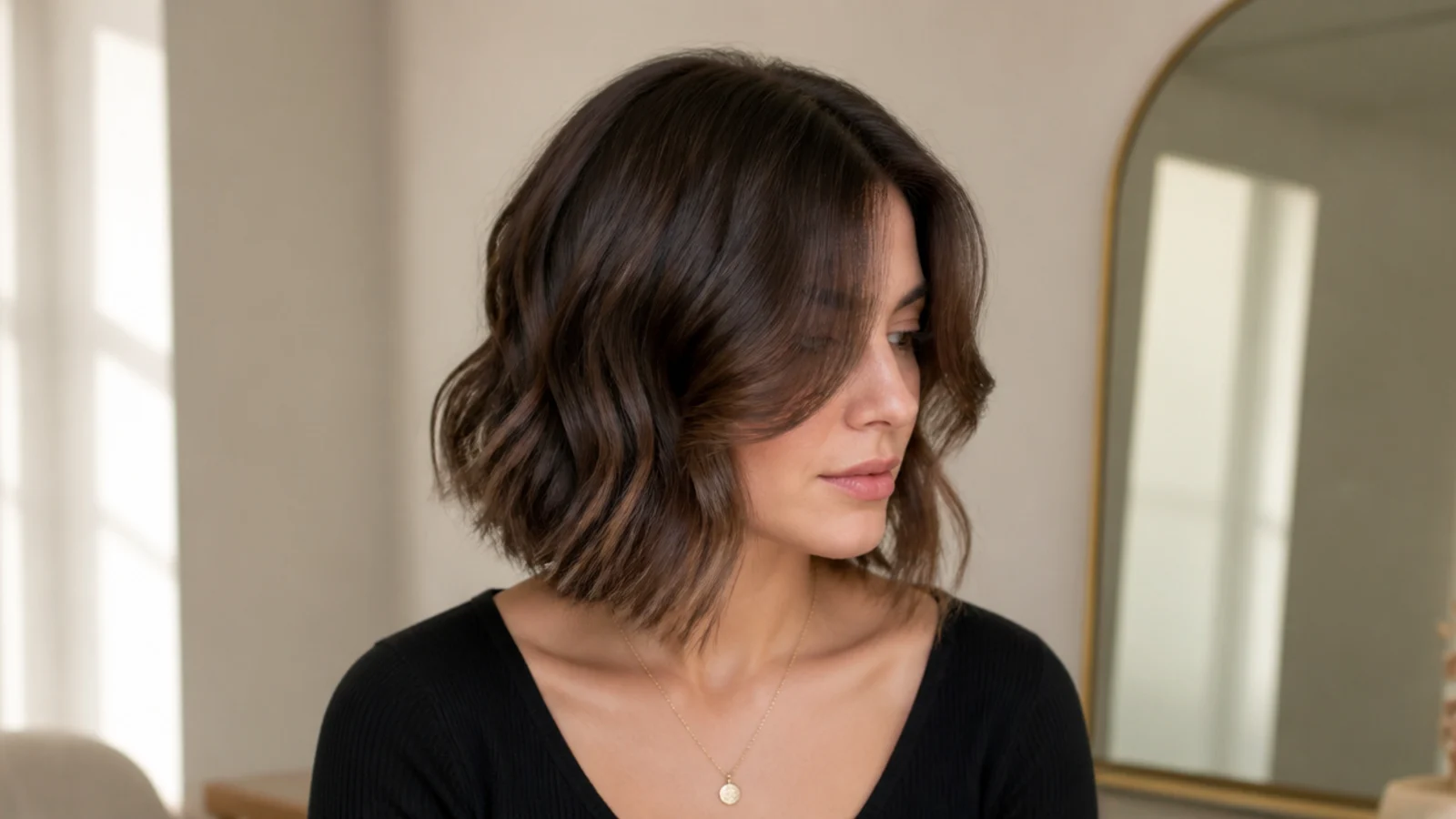
The shortest cut a curtain still works on, because the bangs supply the vertical that a chin length perimeter cannot. Keep the bob perimeter below the jaw rather than at it, since a line landing exactly at the widest point emphasises it.

7. Curtain Bangs on a Lob
The collarbone perimeter gives the eye somewhere to travel after the bangs run out, which is why this pairing is the safest on a round face. The line from split point to perimeter is continuous rather than stopping at the jaw.

8. Curtain Bangs With Long Layers
The curtain becomes the shortest point of a face framing layer that carries on down the sides. Connecting them means one uninterrupted line down the face instead of a fringe that ends and a length that starts.

9. Curtain Bangs With a Shag
Heavy interior texture lifts the crown, and crown height adds to the vertical from above while the bangs work from the front. On a round face the two together do more than either does alone.

10. Curtain Bangs on Curly Hair
Curls lose up to a third of their length as they dry, so a curtain cut wet at the cheekbone dries somewhere near the brow. Cut dry, curl by curl, and take the length two inches longer than the target to allow for spring.

11. Curtain Bangs on Wavy Hair
The easiest texture for this fringe, because the natural bend already pushes the ends outward and away from the face. That outward sweep is the shape a blow dryer has to create on straight hair, supplied for free.

12. Curtain Bangs on Straight Hair
Straight bangs fall exactly where they are cut, which makes the split point unforgiving but also means it stays put all day. They need a round brush turn at the ends or they hang flat against the cheek and add width instead of removing it.

13. Curtain Bangs on Fine Hair
Take a shallower front section than you think. Fine hair has a limited number of strands to spare, and a deep bang section borrows them from the top of the head, which flattens the crown exactly where a round face needs height.

14. Curtain Bangs on Thick Hair
Dense bangs will not sit in a curtain shape without weight removed from underneath. Thinning the inside of the section lets the surface lie flat and sweep, whereas thinning the surface just leaves short ends sticking up through it.

15. Curtain Bangs With a Money Piece
The two curtain sections lightened several shades. Lighter hair reflects more light so those pieces advance visually, which pulls attention to the vertical line they draw rather than to the width behind them.
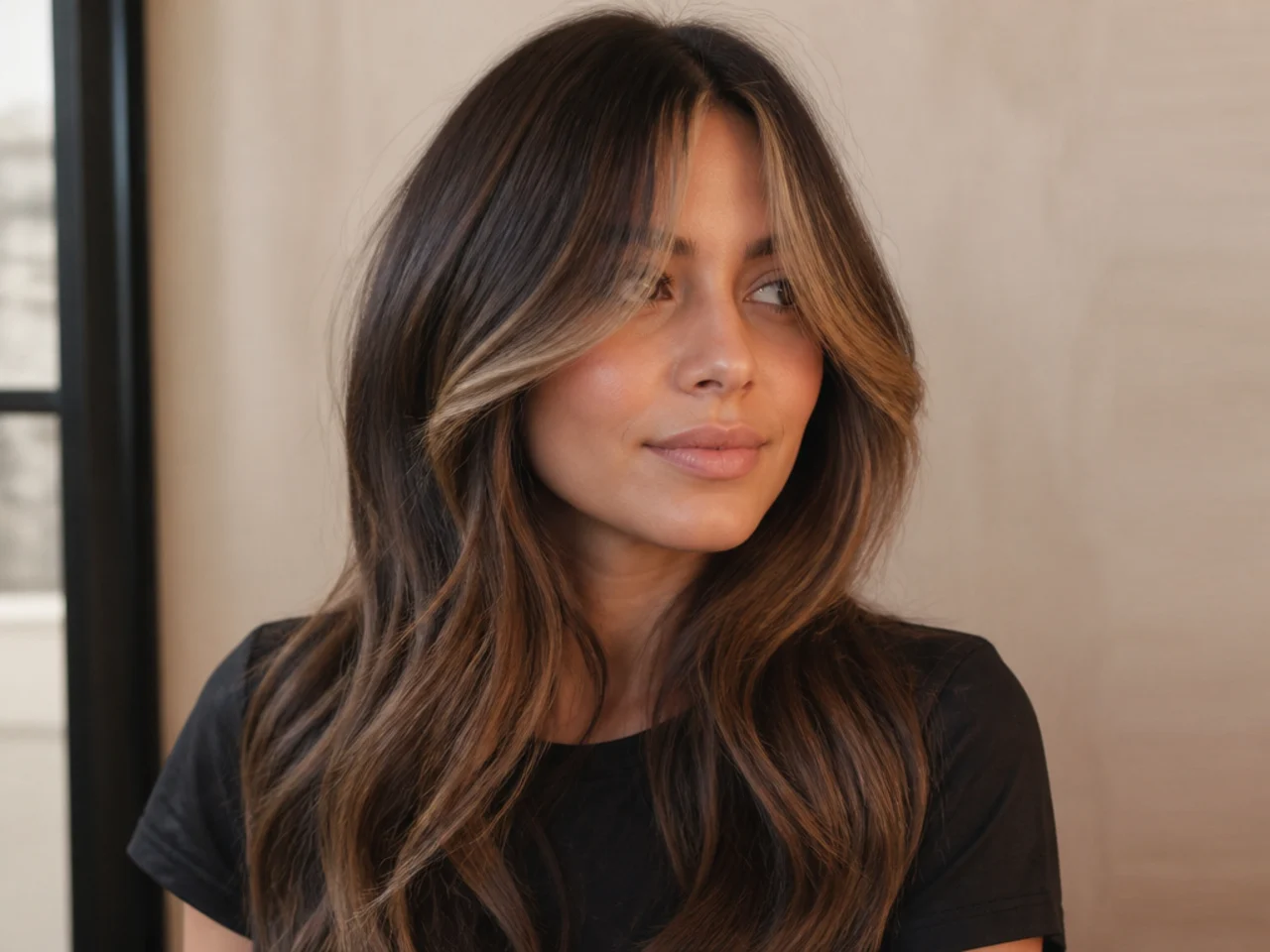
16. Curtain Bangs With Crown Volume
The crown dried against its growth direction so the roots stand away from the scalp. Height at the top adds to the visible length of the head, which is the same job the bangs are doing from the front.

17. Curtain Bangs Pushed Back
Swept off the face entirely and held at the temples. The bangs then act as a volume section rather than a frame, which suits a round face on days when the height matters more than the narrowing.

18. Curtain Bangs With a Pixie
The one short cut where the fringe carries the whole job. With no length below the ear to draw a vertical, the curtain has to be left long enough to reach the cheekbone even though everything behind it is cropped.
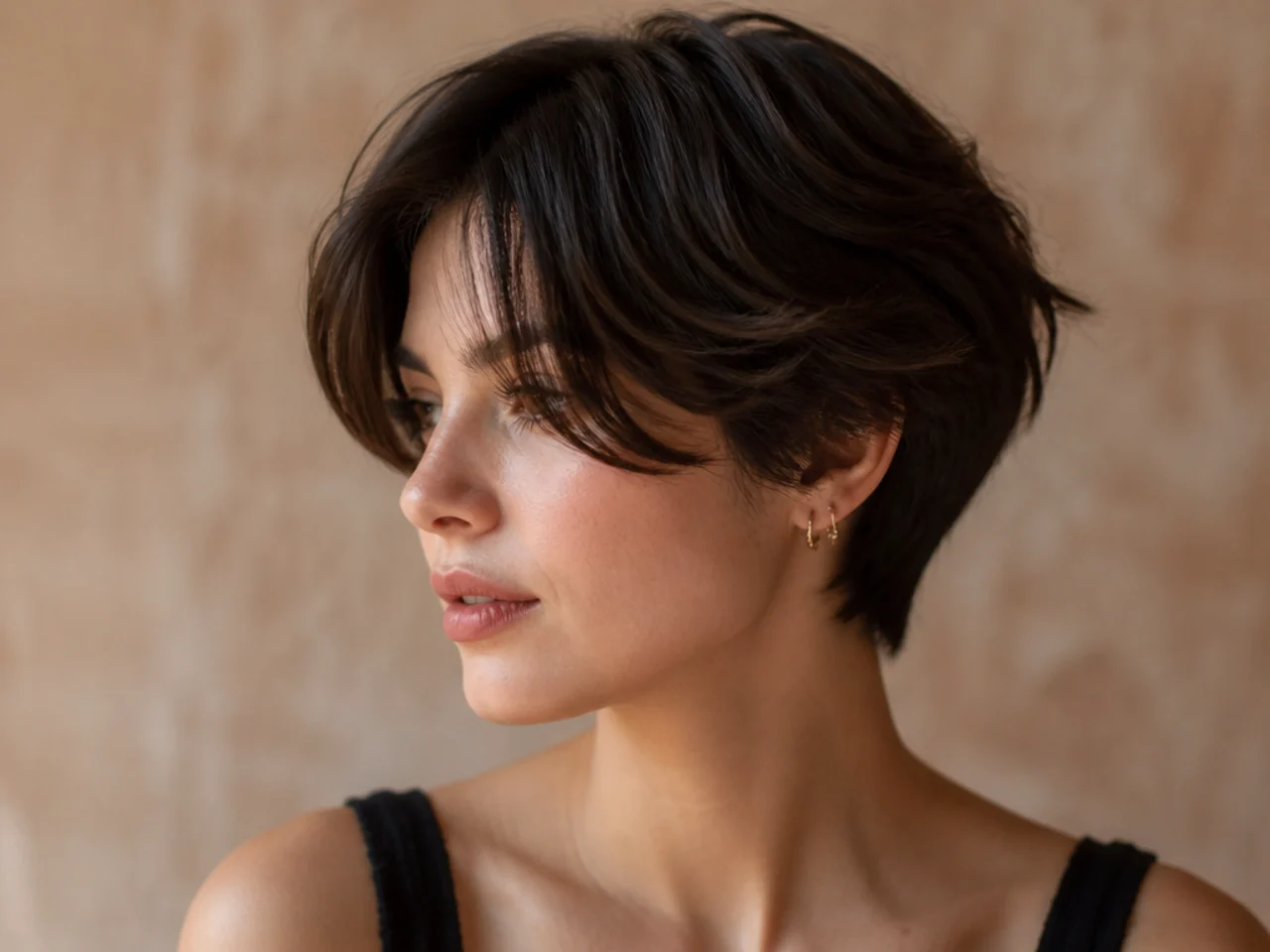
19. Curtain Bangs With Face Framing Layers
Layers cut below the curtain at graduating lengths so the frame continues past the jaw. Each layer restates the same diagonal, and repeating a line is what makes the eye follow it rather than the width behind it.

20. Curtain Bangs Worn Flat
Dried straight down with no outward turn. It is the least flattering way to wear them on a round face, because flat bangs sit against the cheek and add to the width they were cut to reduce.

21. Curtain Bangs With a Half Up Style
Taking the back up while leaving the curtain down keeps the frame and adds height behind it. The raised section supplies vertical from above at the same time the bangs supply it from the front.

22. Curtain Bangs With Textured Ends
The last inch point cut so the ends splinter rather than finishing on one line. Broken ends read as movement instead of as a boundary, which stops the fringe drawing a second horizontal across the cheeks.

23. Curtain Bangs Grown to the Jaw
Hair grows roughly a centimetre a month, so a cheekbone curtain reaches the jaw in about two months. Because the fringe was cut on an angle it stays usable the whole way, which is why curtain bangs need trimming far less often than blunt ones.

24. Curtain Bangs Cut Too Short
Split above the brow, the curtain draws a horizontal instead of a diagonal and shortens the visible face. On a round shape that is the exact effect the fringe was chosen to avoid, and it takes two months to grow back to the cheekbone.

25. Curtain Bangs With a Blunt Perimeter
A sharp bottom line below the collarbone gives the eye a clear stopping point well past the widest part of the face. The further that line sits from the cheeks, the less the width registers.

Styling and Upkeep
Turn the ends outward with a round brush. Flat bangs add width, turned ones remove it.
Dry the bangs first, while they are wettest. They set their direction early and will not take a new one once dry.
Trim every six to eight weeks. The angled cut stays usable through several centimetres of growth.
Lift the crown at the same time. Height above the face counts toward the same vertical the bangs are drawing.
Keep the split point written down. It is the one measurement that changes the whole effect, so say it in centimetres rather than pointing at a photo.

Mistakes to Avoid
Splitting the curtain above the brow. That is a horizontal line, and it shortens a face that is already short.
Stopping the length at the cheekbone. The ends need to pass the widest point, not land on it.
Cutting curls wet. They spring up by as much as a third, so a cheekbone target dries out at the brow.
Taking too deep a front section on fine hair. It borrows strands from the crown and flattens the height a round face needs.
Wearing them flat against the cheek. Undried bangs sit on the width instead of covering it.

FAQ
Where should they split? At the cheekbone, so the ends pass the widest point.
Centre or side part? A deep side part, for the diagonal it draws.
How often trimmed? Six to eight weeks, because the angle keeps them usable.

Final Thoughts
Name the split height, not the style. "Curtain splitting at the cheekbone, ends past the jaw, deep side part" is three instructions, and it is the difference between a fringe that narrows the face and one that widens it.
For the sharper alternative see french bangs on a round face, and for how the two shapes differ see french vs curtain bangs. More in Bangs and Fringe.