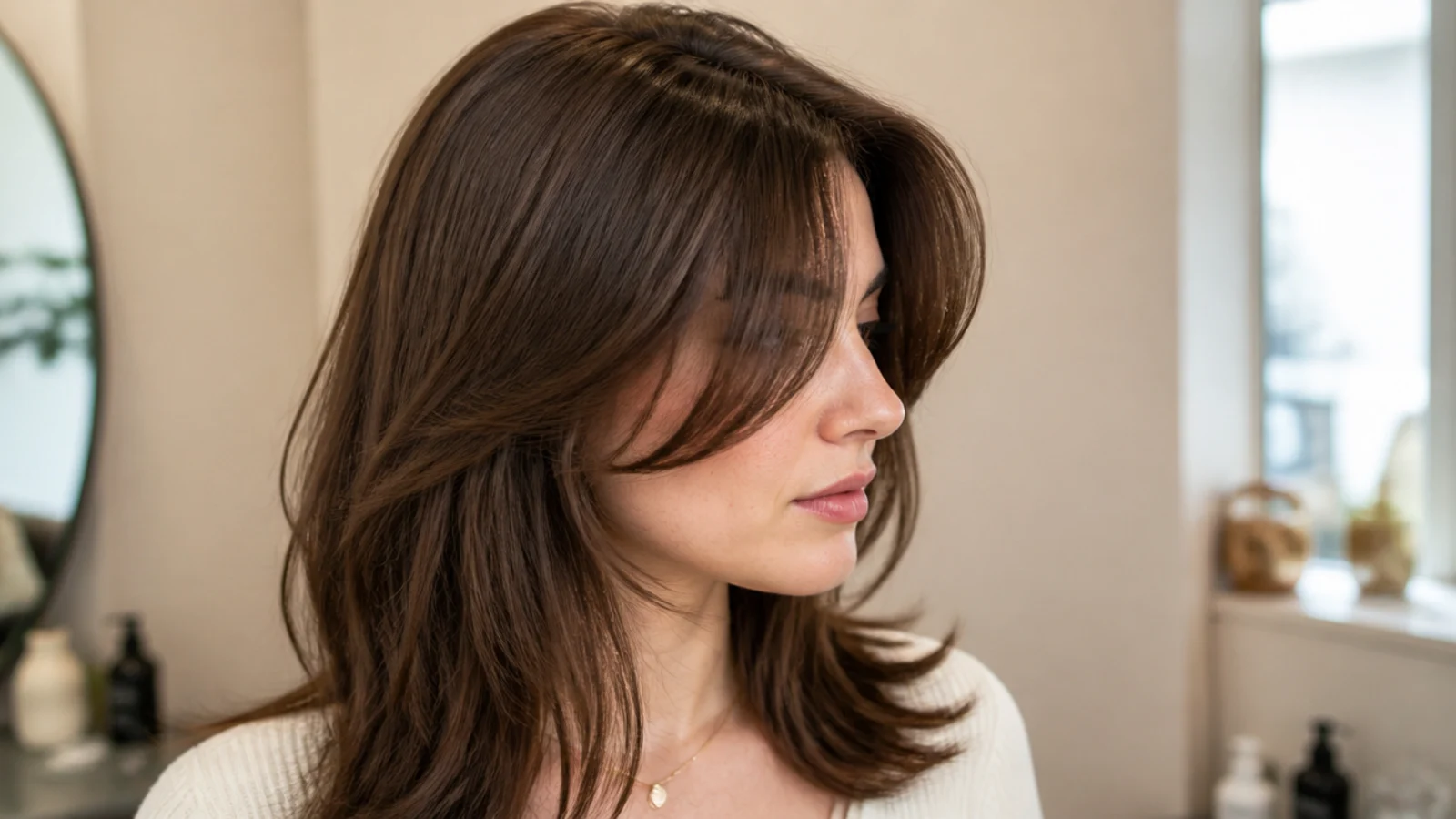
15 Wispy French Bangs Ideas to Save
Fifteen wispy French bangs ideas and the cutting technique behind them — wispiness is not less hair, it is the same hair cut at different lengths. Get that wrong and you have a thin fringe instead of a soft one.
In this article · 23
- What Wispy Actually Means
- Why Thinning Shears Ruin It
- The 15 Wispy French Bangs Ideas
- 1. Classic Wispy Brow-Skimmers
- 2. Extra-Deep Point-Cut Fringe
- 3. Wispy Bangs with Longer Corners
- 4. Micro-Wispy Fringe
- 5. Long Wispy Bangs
- 6. Wispy Bangs with Curtain Layers
- 7. Wispy Fringe on a Bob
- 8. Piecey Wispy Bangs
- 9. Wispy Bangs with a Shag
- 10. Asymmetric Wispy Fringe
- 11. Wispy Bangs with a Ponytail
- 12. Wispy Fringe with Highlights
- 13. Barely-There Fringe
- 14. Wispy Bangs with a Bun
- 15. Grown-Out Wispy Fringe
- How Thin Is Too Thin
- Styling Wispy Bangs
- Mistakes to Avoid
- FAQ
- Final Thoughts
Wispy is a cutting technique, not an amount of hair. That distinction matters, because the two things look similar in a photograph and produce completely different results over the following months.
A properly cut wispy fringe has the same volume of hair as a solid one. What differs is where each strand ends.
What Wispy Actually Means
Take a fringe and cut it straight across, and every strand ends at the same point. That produces a solid edge and a solid shadow on the forehead.
Now take the same fringe and cut into the ends vertically, so the strands finish at twenty different lengths staggered over an inch. The same quantity of hair is still hanging there — but light passes between the ends, the edge dissolves rather than stopping, and the fringe reads as soft.
That is the entire technique. Wispy is a length distribution, not a density reduction, and confusing the two is why so many people end up with a fringe that is genuinely too thin.
Why Thinning Shears Ruin It
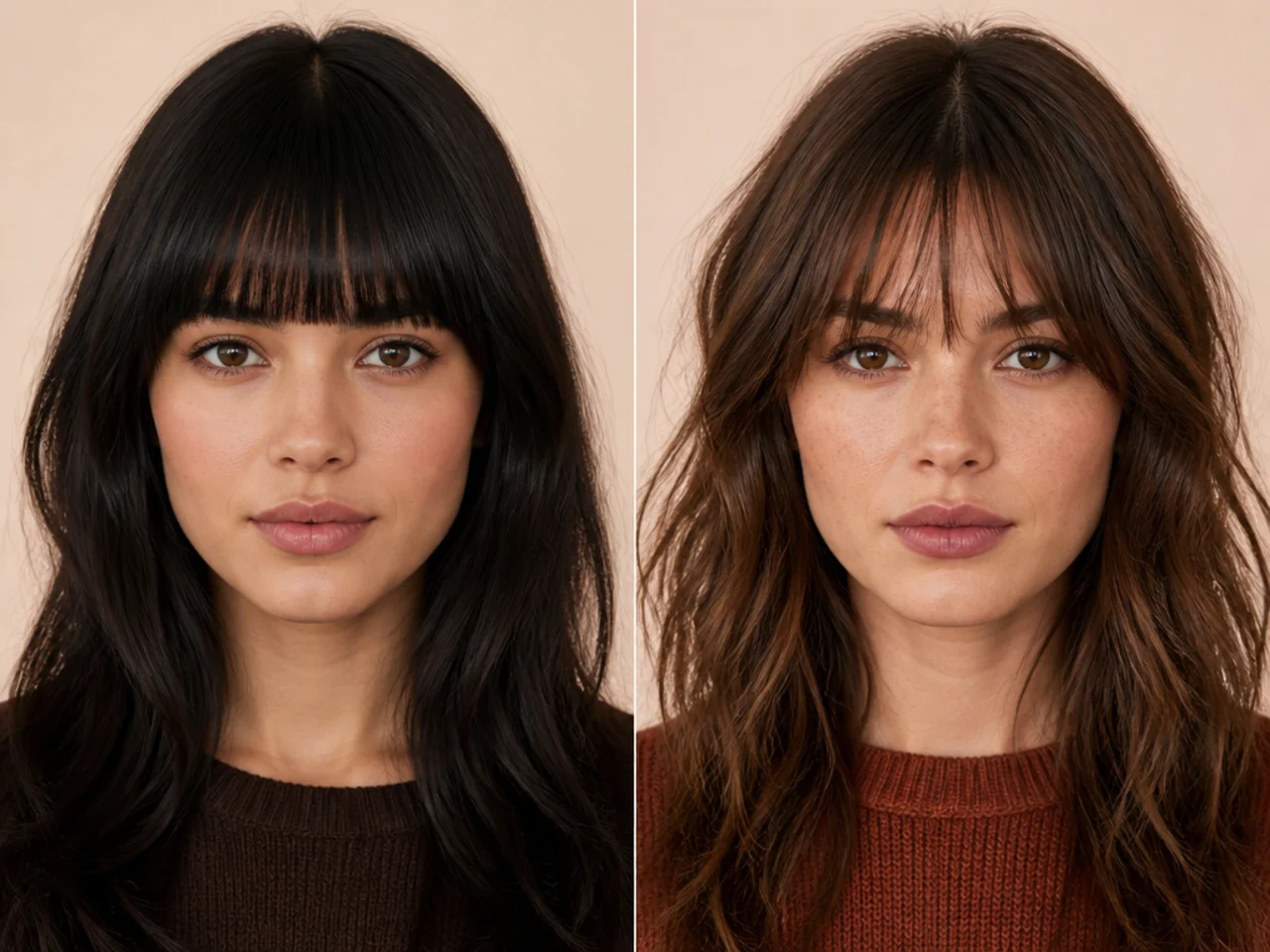
Thinning shears look like the obvious tool and they are the wrong one.
They cut through the middle of the section rather than the ends, removing weight from a place you cannot see. What you get immediately is a softer fringe, which is why they seem to work.
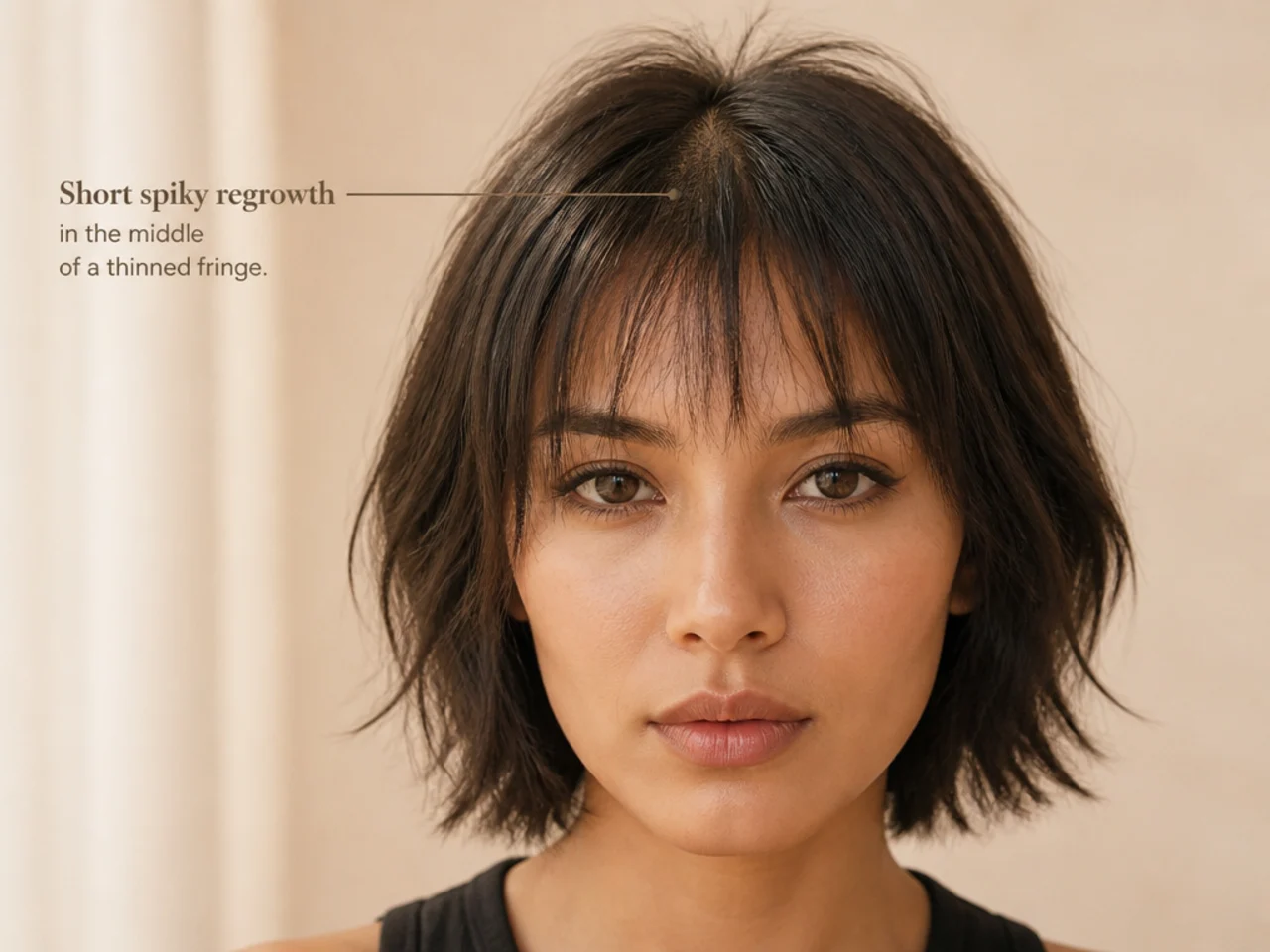
What you get six weeks later is a layer of short, blunt regrowth in the middle of the fringe — hair that was cut at two inches and is now three, pushing the longer hair around it upward and outward. The fringe starts to fluff. It stops sitting flat. And the usual response is to have it thinned again, which creates another layer of the same problem.
Point-cutting produces the same softness with none of that, because everything it removes comes off the bottom.
If someone reaches for thinning shears on a fringe, it is reasonable to ask them not to.
The 15 Wispy French Bangs Ideas
1. Classic Wispy Brow-Skimmers
Point-cut about an inch deep, landing on the eyebrow. The standard version.
2. Extra-Deep Point-Cut Fringe
Cut two inches into the ends. The softest edge achievable without removing anything.

3. Wispy Bangs with Longer Corners
Centre lightest, edges left heavier. It stops the fringe looking sparse at the sides.

4. Micro-Wispy Fringe
Above the brow and lightly point-cut. Bold, and unforgiving of a bad cut.

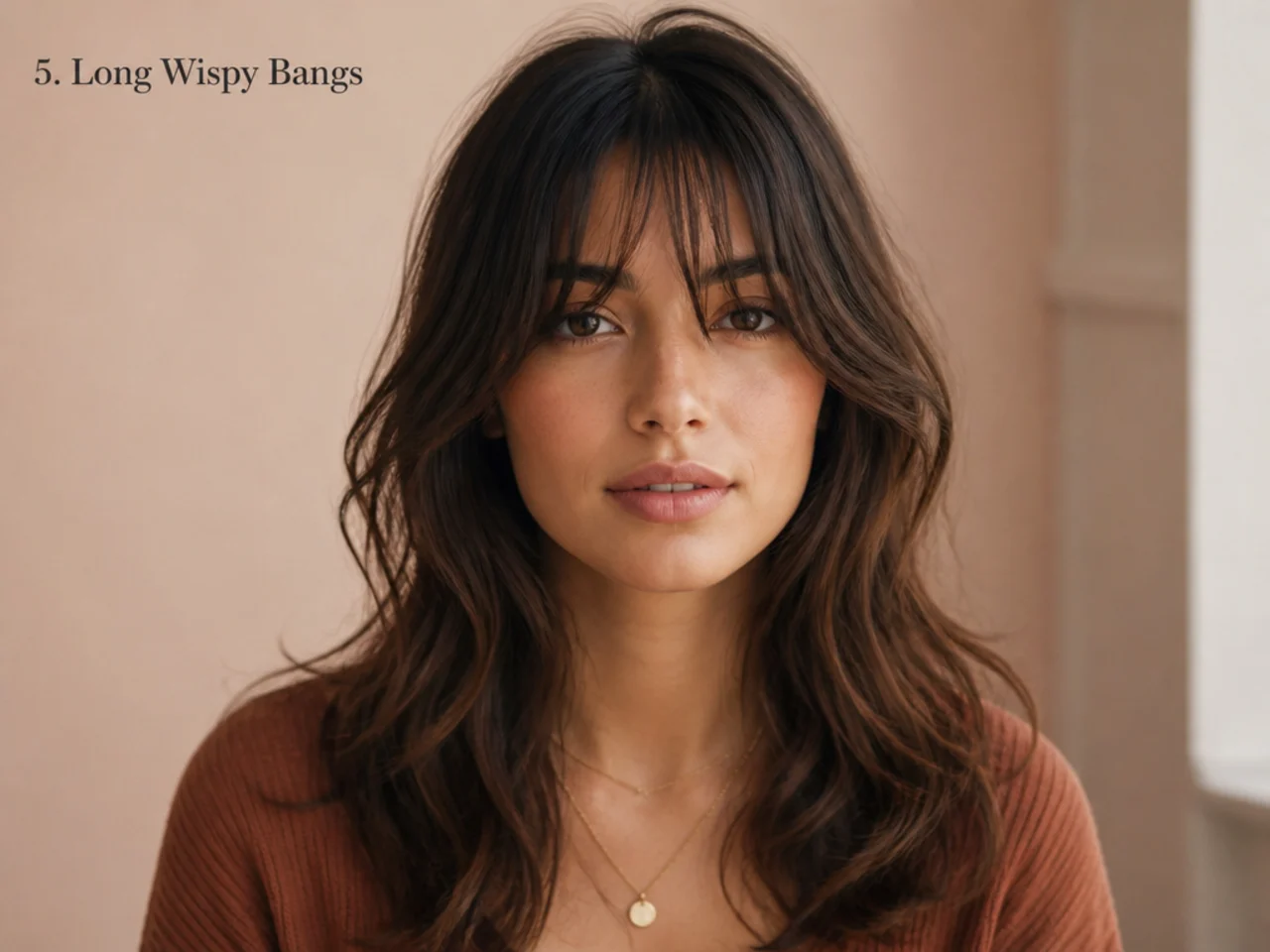
5. Long Wispy Bangs
At the lash line, ends broken. The extra length carries the softness better.
6. Wispy Bangs with Curtain Layers
Fringe dissolving outward into face-framing pieces. No visible edge anywhere.

7. Wispy Fringe on a Bob
Two soft edges at the same scale. The pairing that defines the look.

8. Piecey Wispy Bangs
A trace of wax so the separated pieces read individually.

9. Wispy Bangs with a Shag
Broken ends echoed by texture throughout the cut.

10. Asymmetric Wispy Fringe
Longer on one side, point-cut throughout. The softest way to wear asymmetry.

11. Wispy Bangs with a Ponytail
Light enough that they never look heavy against a pulled-back shape.

12. Wispy Fringe with Highlights
Lighter pieces at the broken ends. The staggered lengths catch the colour.

13. Barely-There Fringe
The lightest version that still reads as a fringe. Any lighter and it stops being one.

14. Wispy Bangs with a Bun
Soft at the front, smooth behind. The contrast is the point.

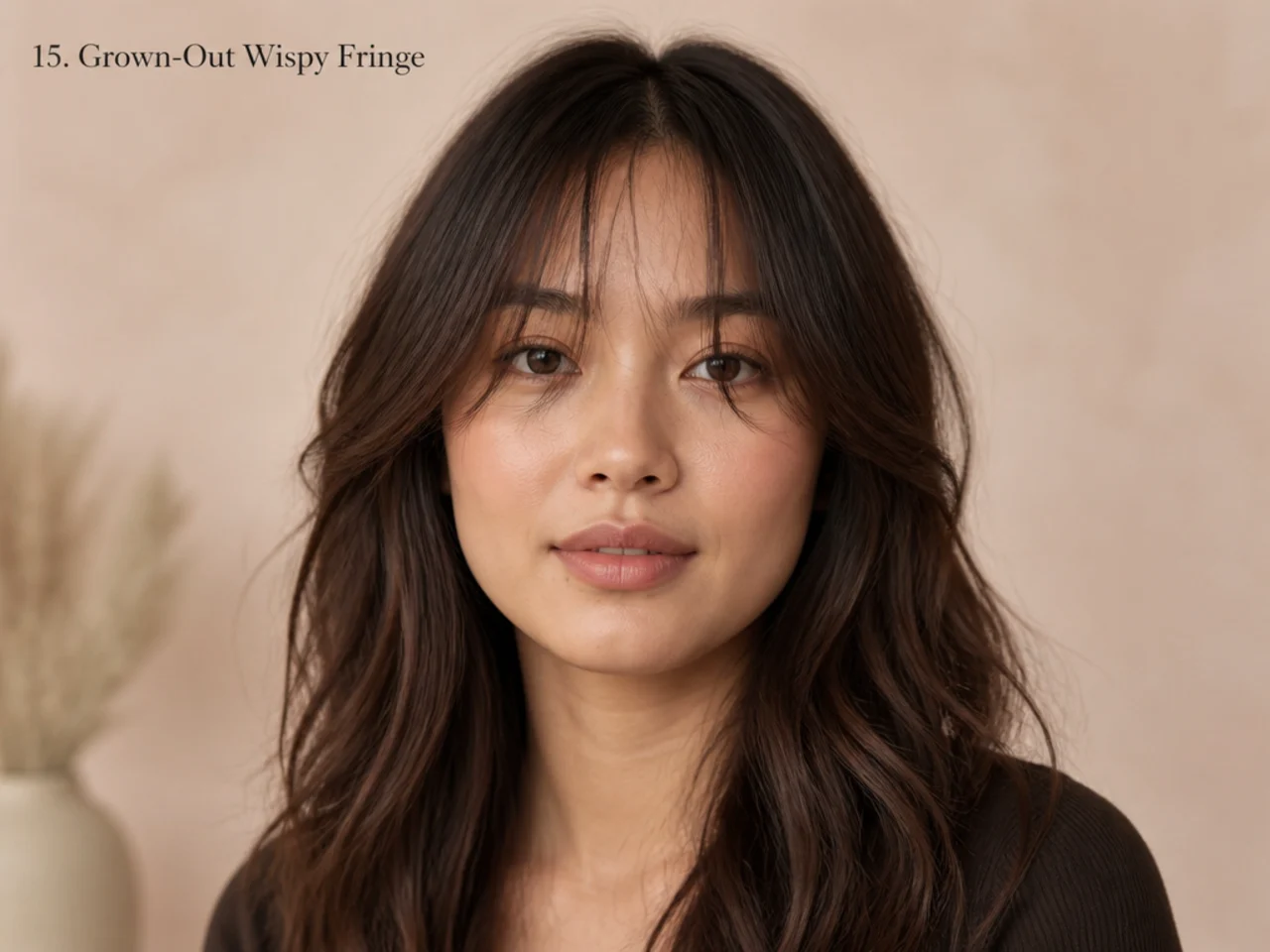
15. Grown-Out Wispy Fringe
Point-cut ends grow out more gracefully than a blunt edge ever does.
How Thin Is Too Thin
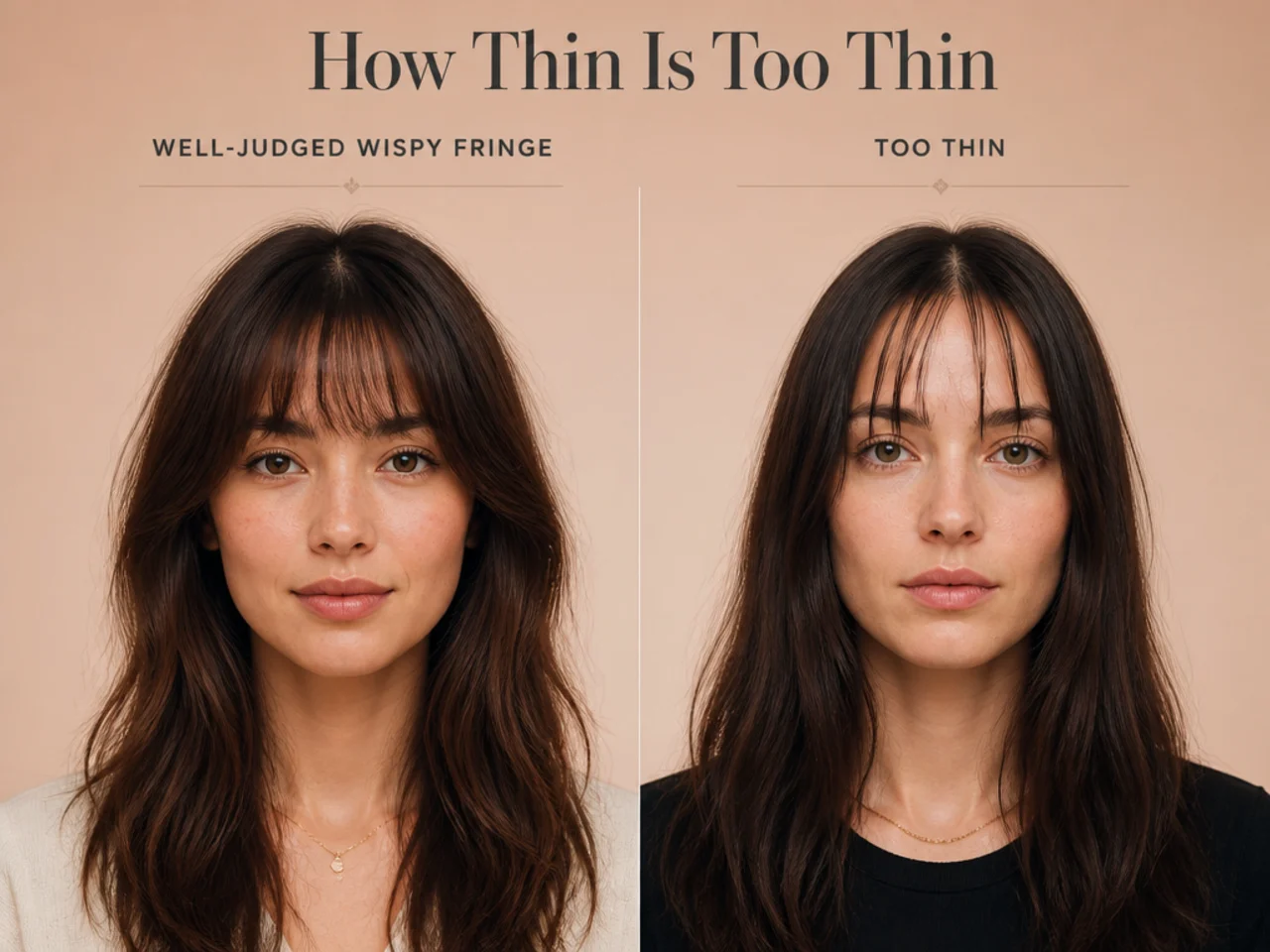
There is a threshold, and it is worth naming: when you can see more forehead than hair, it has gone too far.
Past that point the fringe stops reading as a style choice and starts reading as a fringe recovering from something. It also becomes impossible to style — there is not enough weight left to hold any direction, so it lifts and separates in whatever way the air moves it.
The safe approach is that you can always take more off next time. A fringe that is slightly too solid is a five-minute fix at the next trim; a fringe that is too thin is three months of growing out.
If you are unsure, ask for it point-cut about an inch deep and see how it wears for a fortnight.
Styling Wispy Bangs
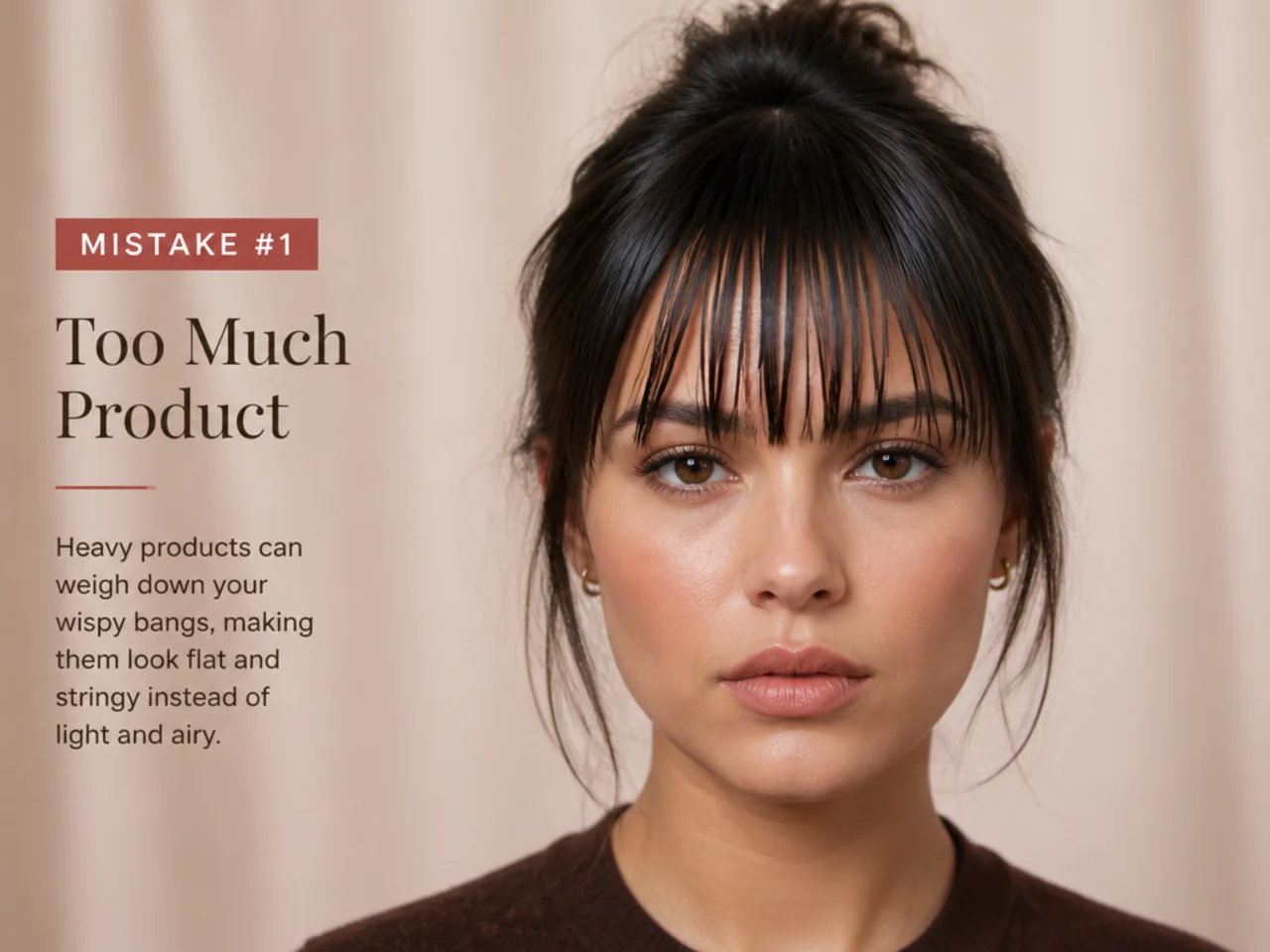
Almost no product. These have very little weight to spare, and anything creamy collapses them against the forehead.
A trace of wax on fingertips only, worked into the ends. Never at the root.
Rough-dry, do not brush. Brushing regroups the ends and undoes the separation that the cut created.
Skip hairspray entirely. It glues the staggered ends back into a single edge, which removes the only thing making this fringe wispy.

Mistakes to Avoid
Confusing wispy with thin. It is a cutting technique, not a smaller amount of hair.
Thinning shears. Short spiky regrowth in six weeks, and a fringe that fluffs from then on.
Going lighter each trim. Thinning compounds, and it only moves in one direction.
Product at the root. There is no weight to spare here.
Hairspray. It welds the broken ends back into a line.
FAQ
How are they cut? By point-cutting into the ends so strands finish at staggered lengths — not by removing hair.
Thinning shears? No. They leave short regrowth in the middle of the fringe.
Can they be too thin? Yes. Once you see more forehead than hair, it has gone too far.

Final Thoughts
Ask for point-cutting, decline thinning shears, and start less wispy than you think you want. This is a cut that only moves one way at each trim — softer is always available next time, and solid is three months away.
For fine hair specifically see 15 soft French bangs for fine hair, and for the full range see 25 chic French bangs ideas. More in Bangs & Fringe.