15 Curly vs Wavy Hair Drawing Compared
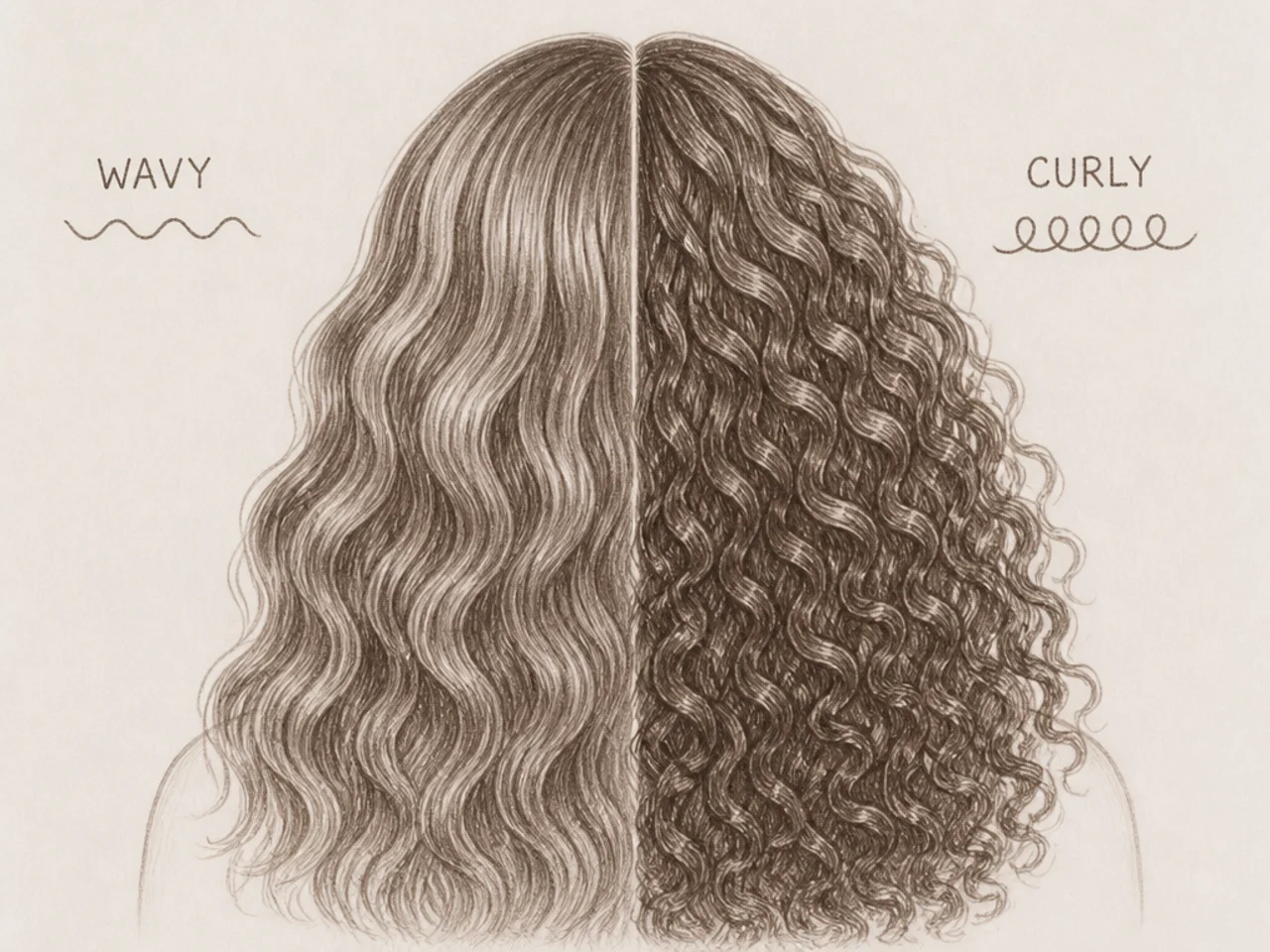
Fifteen comparisons between drawing curly and wavy hair — and the structural difference behind all of them. Wave is continuous, curl is discrete. One is drawn with unbroken lines, the other with separate units.
In this article · 21
- Quick Comparison at a Glance
- The 15 Comparisons
- 1. The Basic Mark
- 2. Line Length
- 3. Silhouette
- 4. Volume
- 5. Clumping
- 6. Where Detail Goes
- 7. Highlights
- 8. Shading Approach
- 9. Forgiveness
- 10. Common Failure
- 11. In Motion
- 12. At Small Scale
- 13. Anime Style
- 14. Cartoon Style
- 15. The In-Between
- Drawing the In-Between
- Mistakes to Avoid
- FAQ
- Final Thoughts
The difference between drawing wavy and curly hair is not a matter of degree. It is structural, and it changes the mark you make.
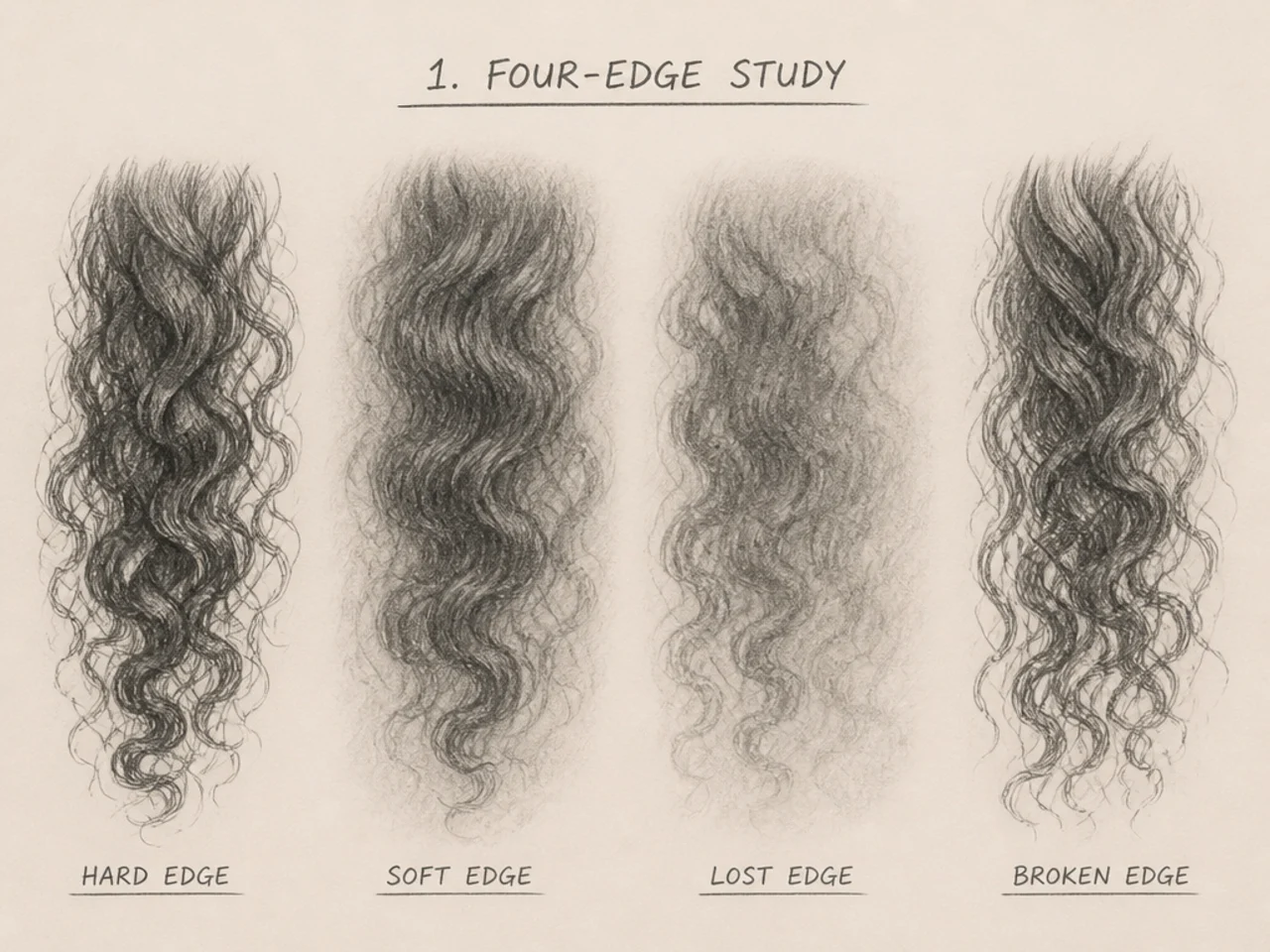
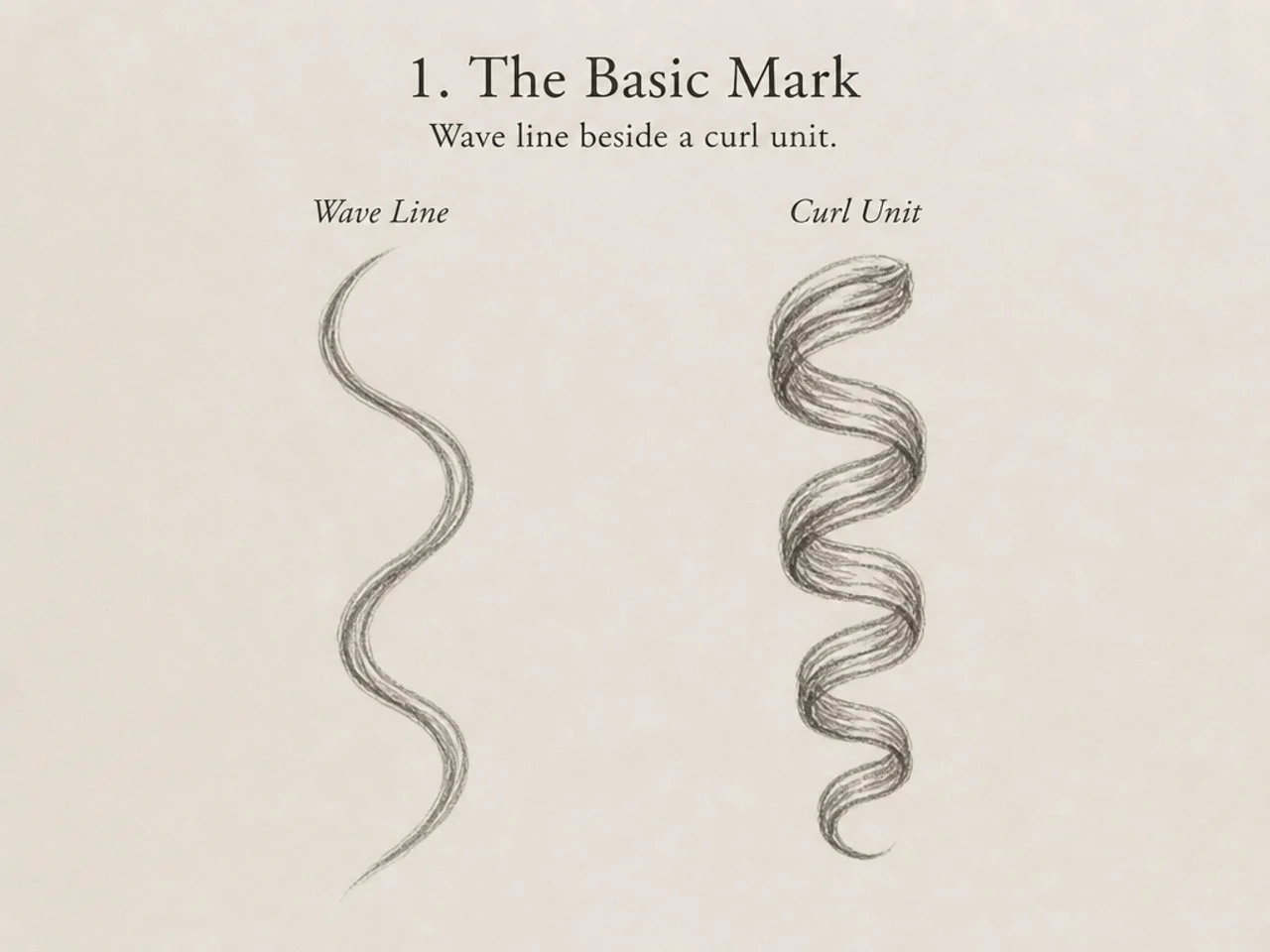
Wave is continuous. An S-curve running unbroken down the length of the strand. It is drawn with long lines.
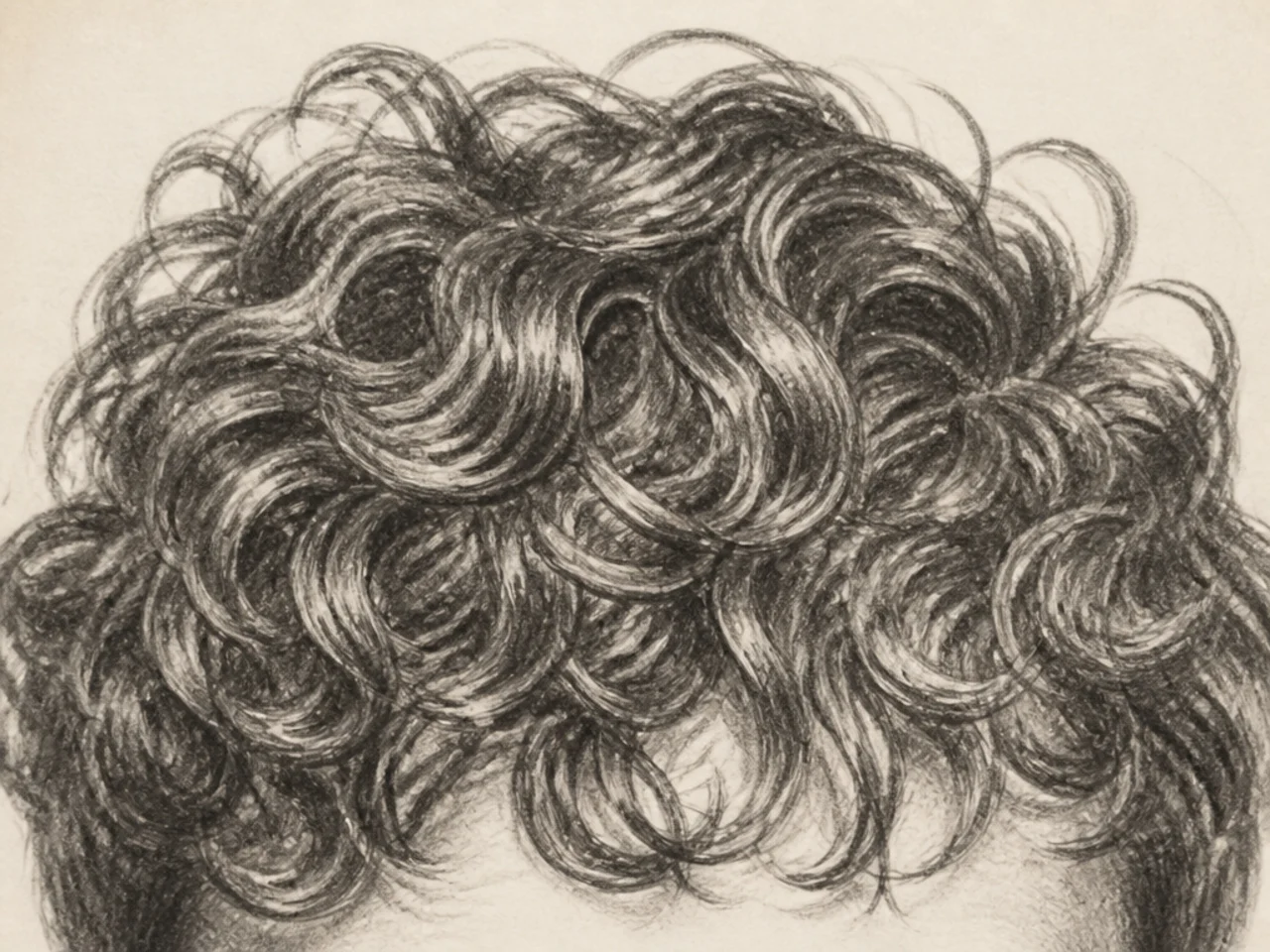
Curl is discrete. Separate repeating units, each completing a turn. It is drawn with individual shapes.
Every difference below follows from that one.
Quick Comparison at a Glance
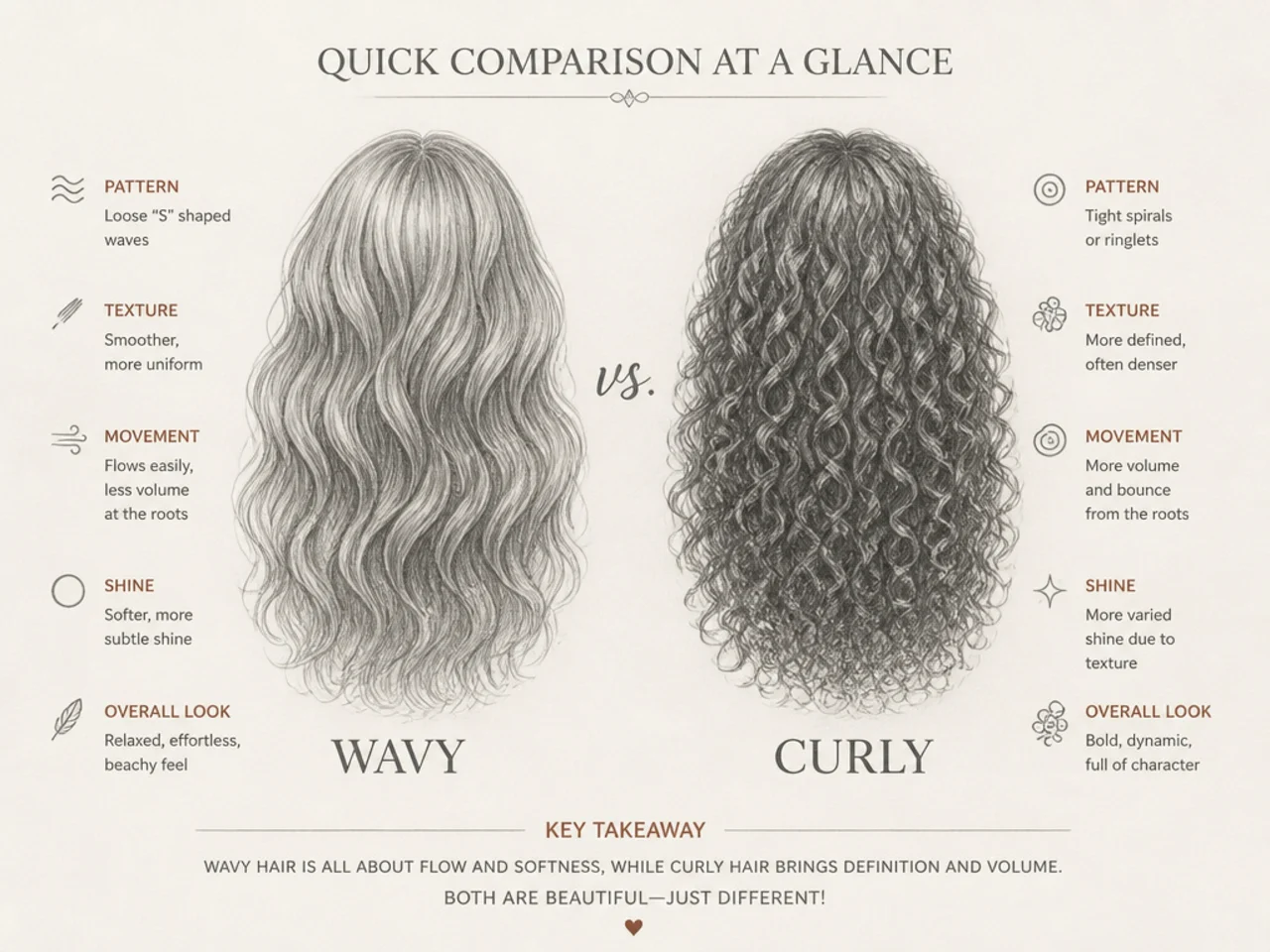
| Wavy | Curly | |
|---|---|---|
| Structure | Continuous S-curve | Discrete repeating units |
| Line type | Long, unbroken | Short, closed shapes |
| Silhouette | Gently undulating | Bumpy, scalloped |
| Volume | Close to the head | Away from the head |
| Clumping | Minimal | Strong |
| Detail placement | Along the length | At the edges |
| Highlight | Can be continuous | Must be broken |
| Difficulty | More forgiving | Less forgiving |
The 15 Comparisons
1. The Basic Mark
Wavy: one long S-curve. Curly: a closed or hooked unit.
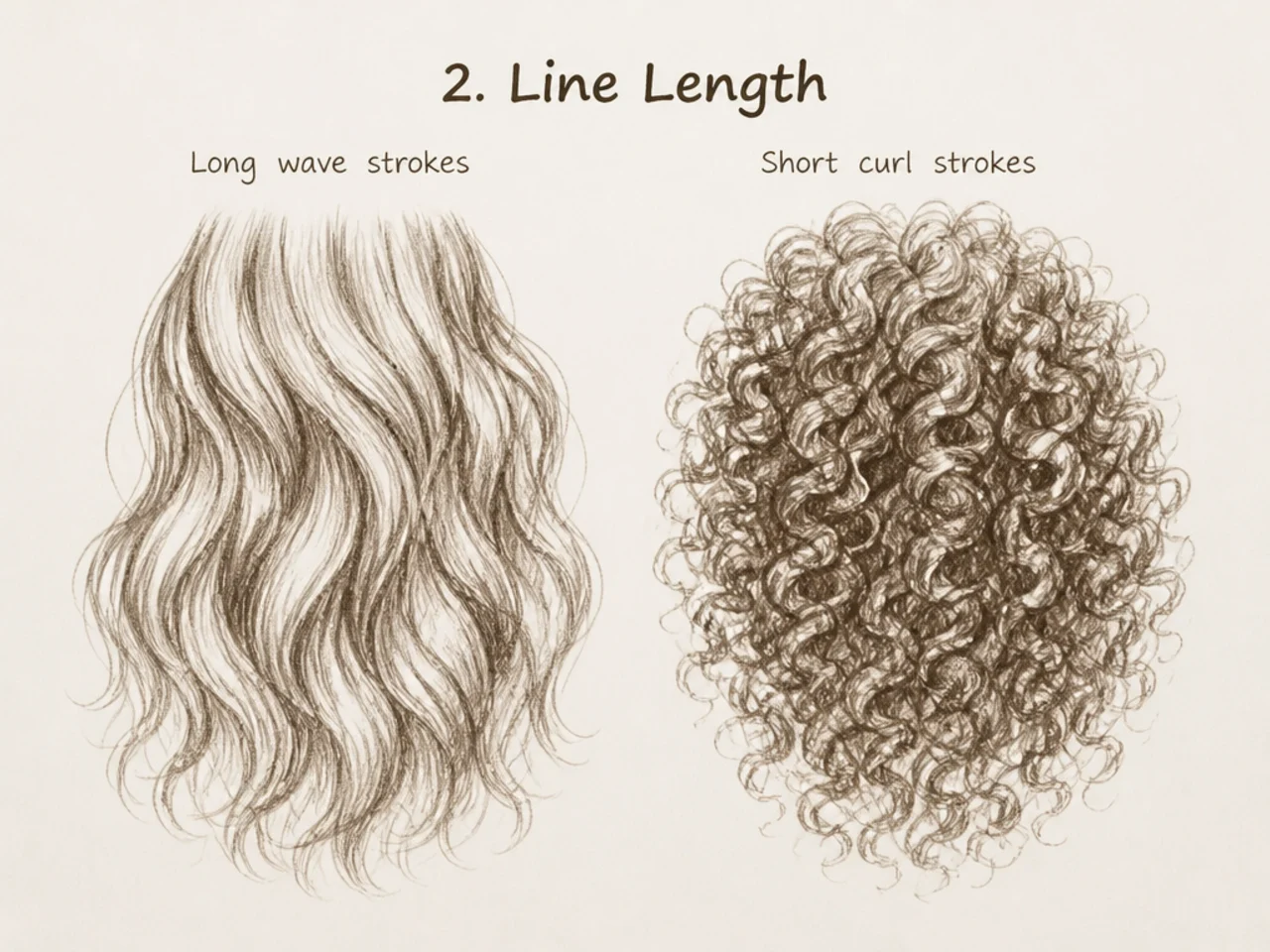
2. Line Length
Wavy: strokes run the full length of the hair. Curly: strokes are short and end within the shape.
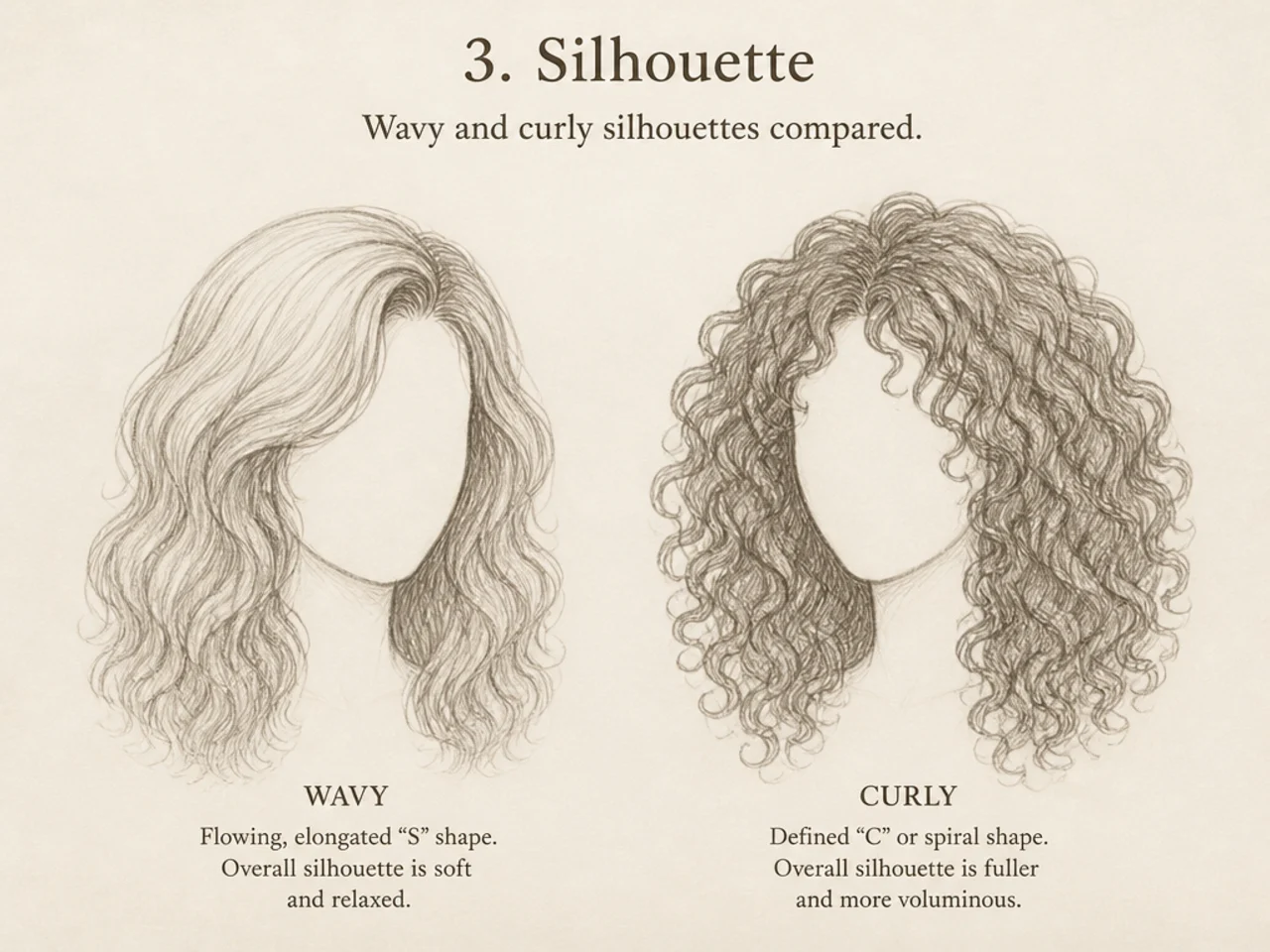
3. Silhouette
Wavy: gently undulating, close to smooth. Curly: bumpy and scalloped, with escaping pieces.
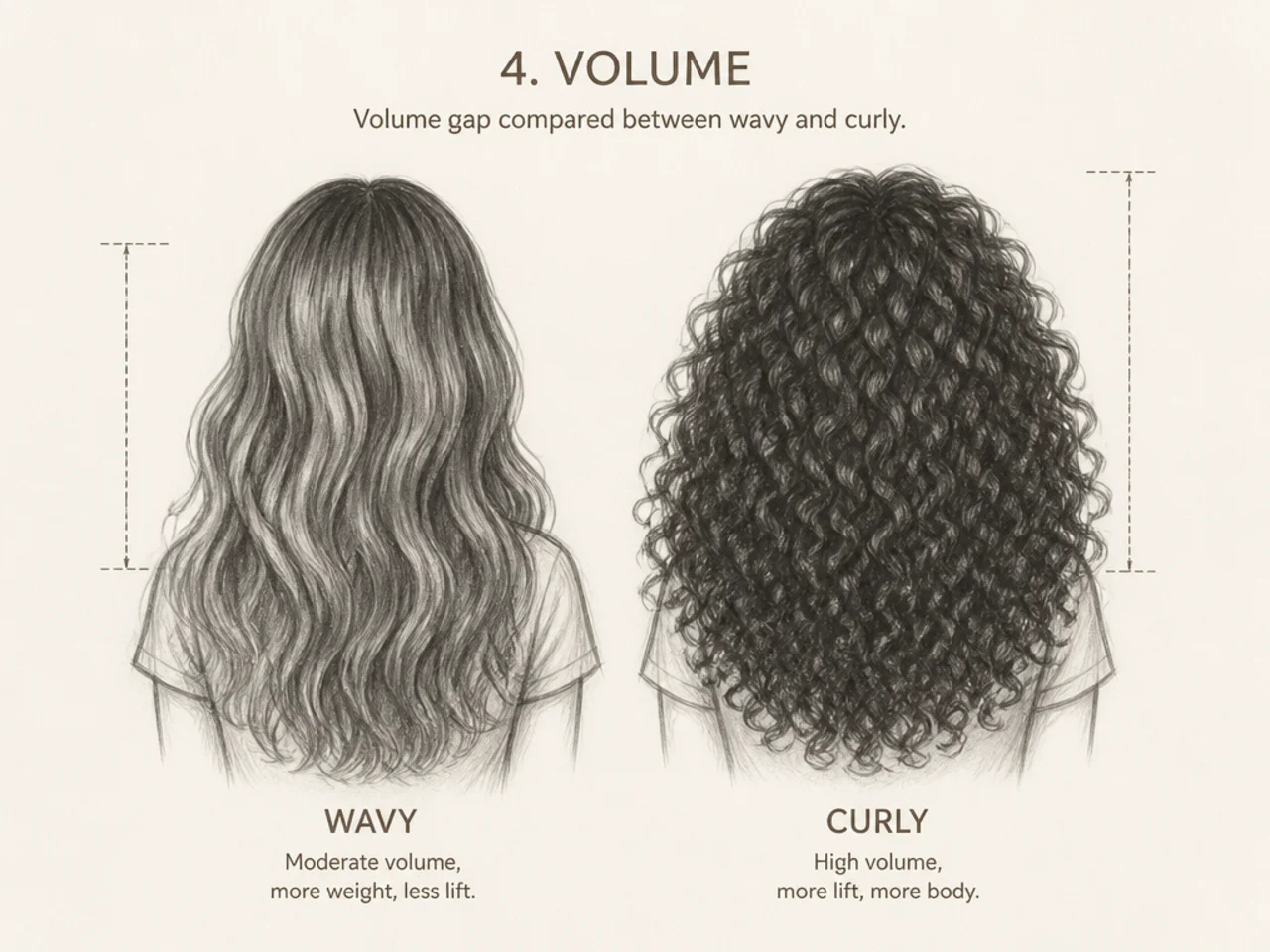
4. Volume
Wavy: sits fairly close to the skull. Curly: sits away from it, with a real volume gap.
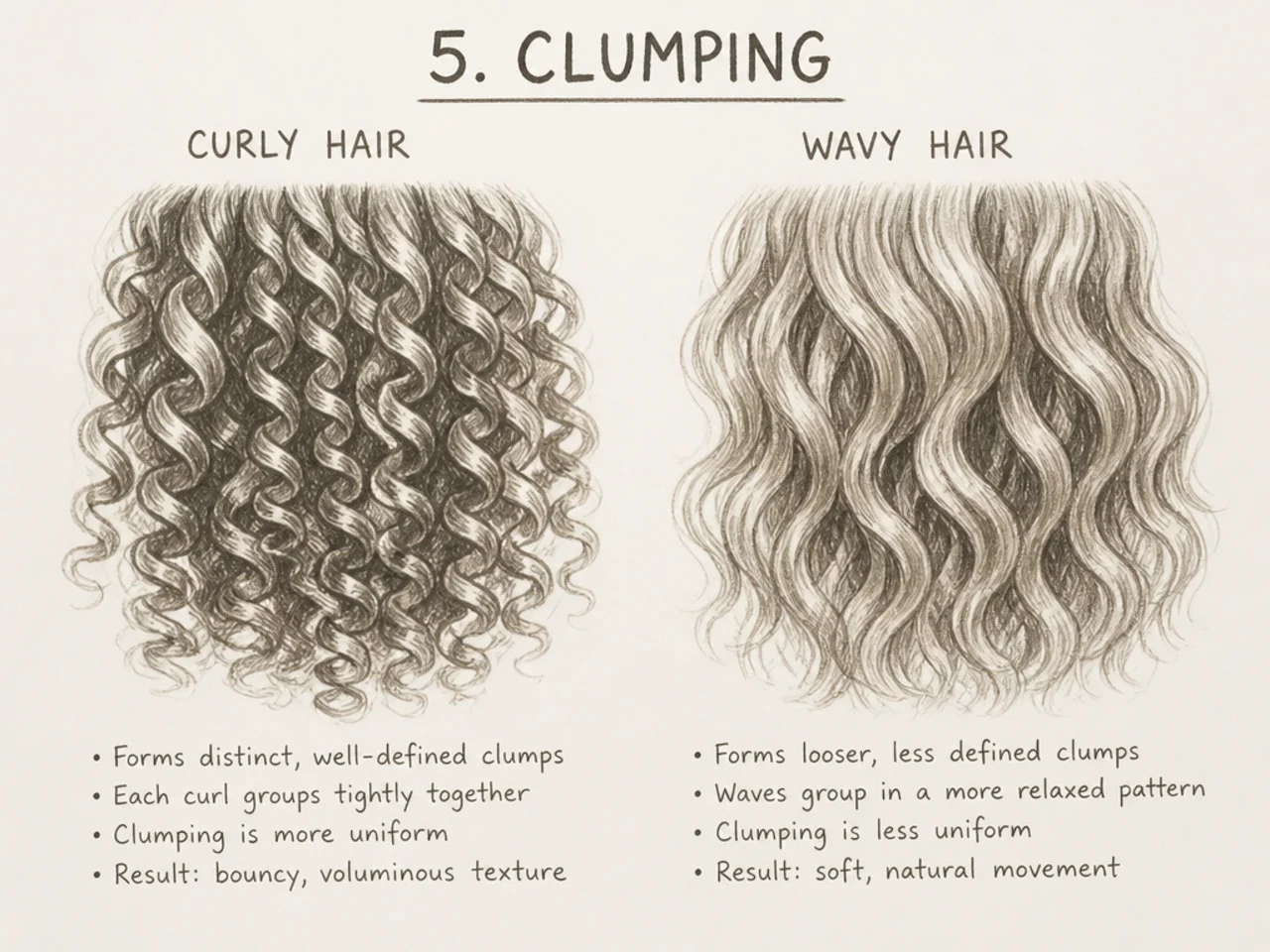
5. Clumping
Wavy: minimal. The mass stays fairly even. Curly: strong. Five to eight distinct clumps.
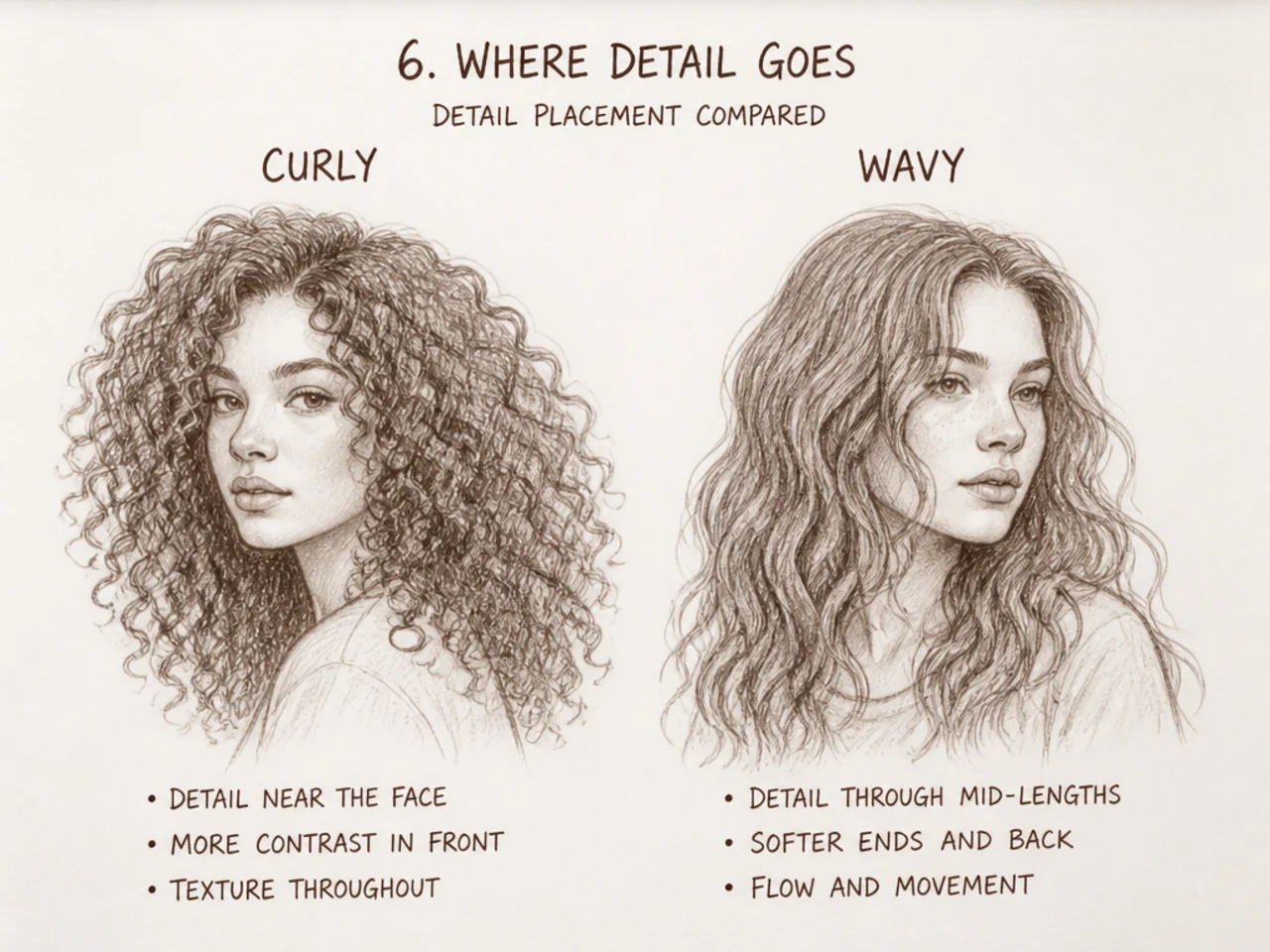
6. Where Detail Goes
Wavy: along the length, following the S-curves. Curly: at the edges, where light defines individual curls.
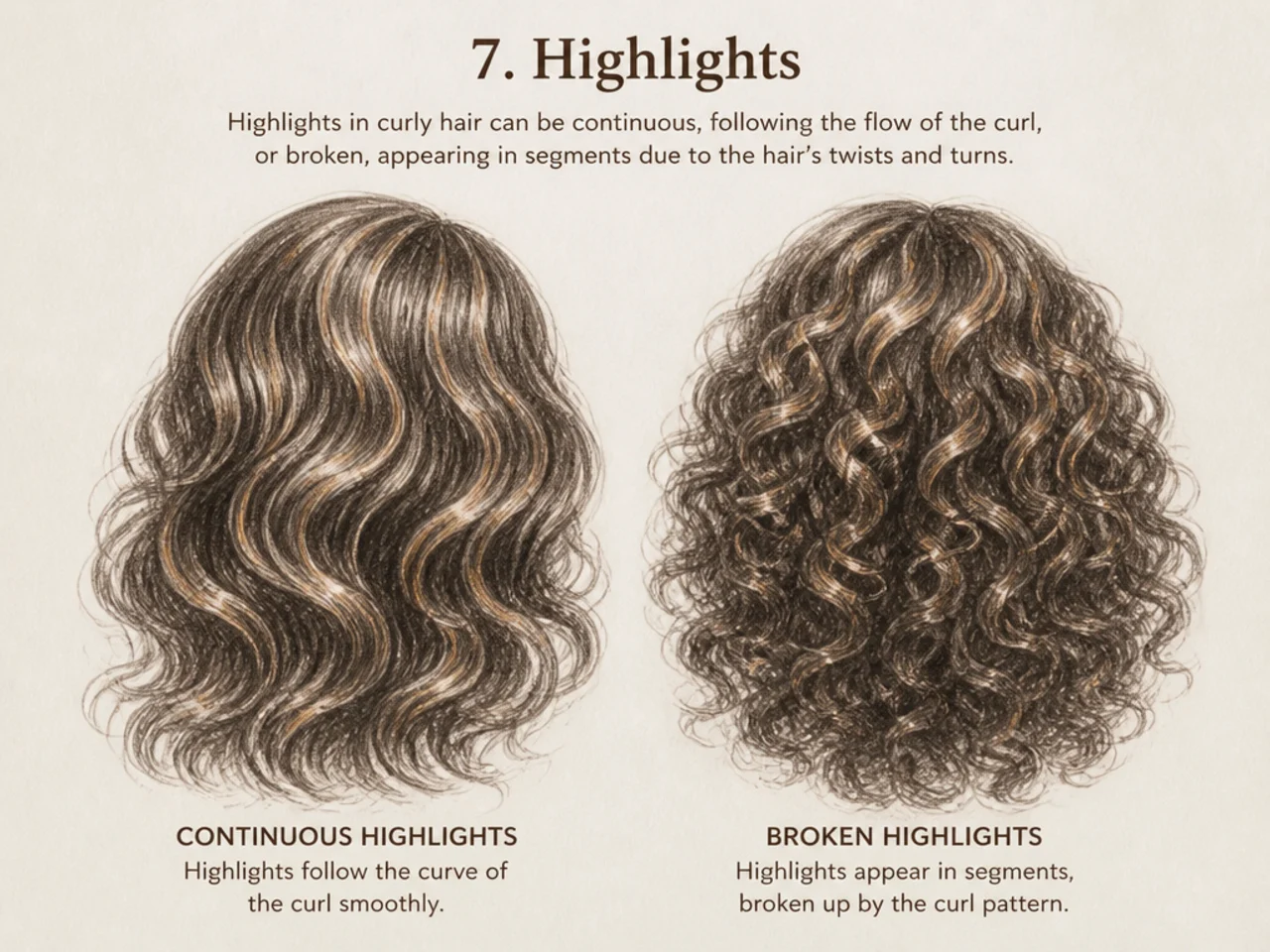
7. Highlights
Wavy: can run as a continuous band. Curly: must break into segments per clump.
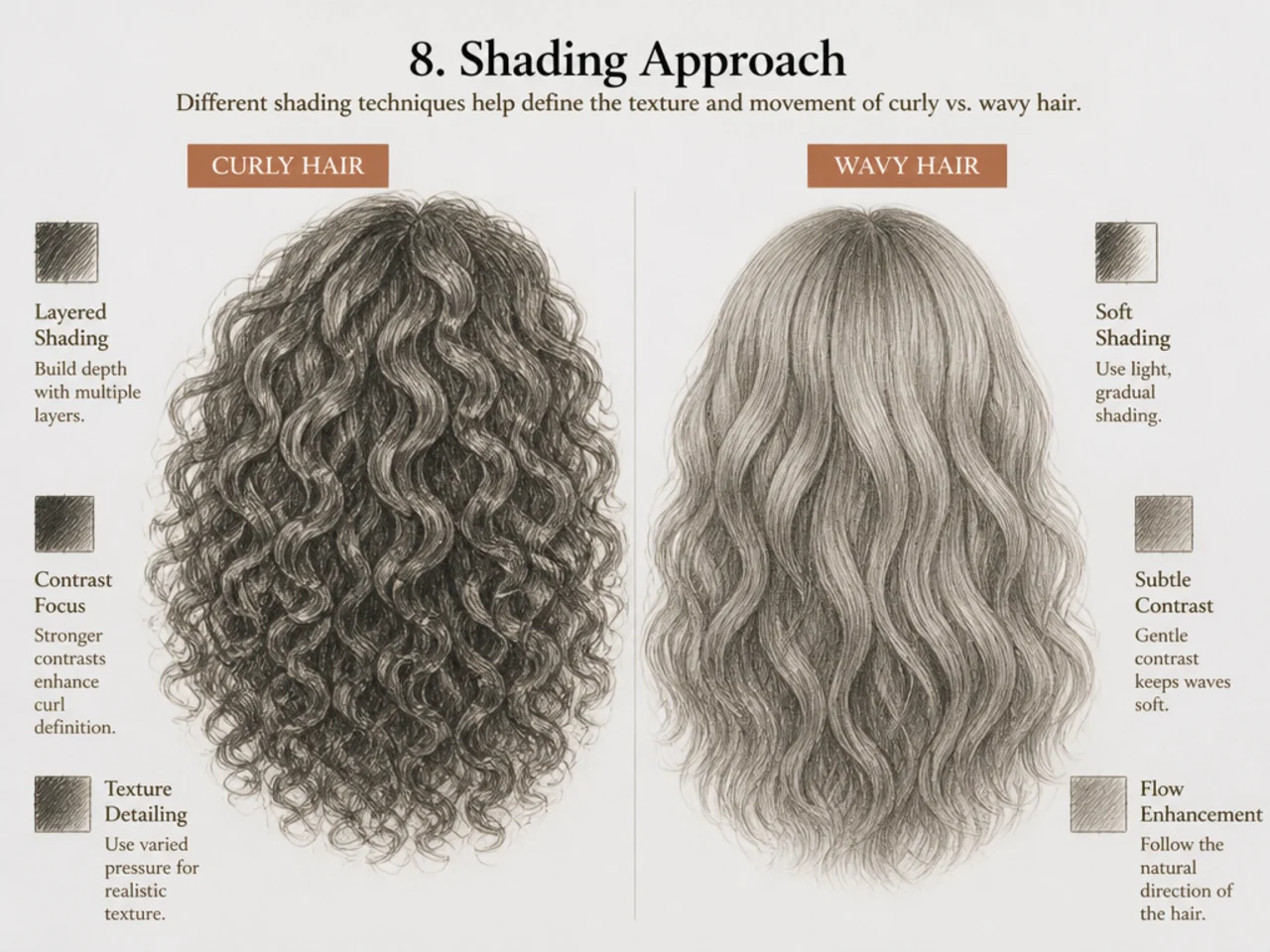
8. Shading Approach
Wavy: shade along the curve, following the flow. Curly: carve between clumps.
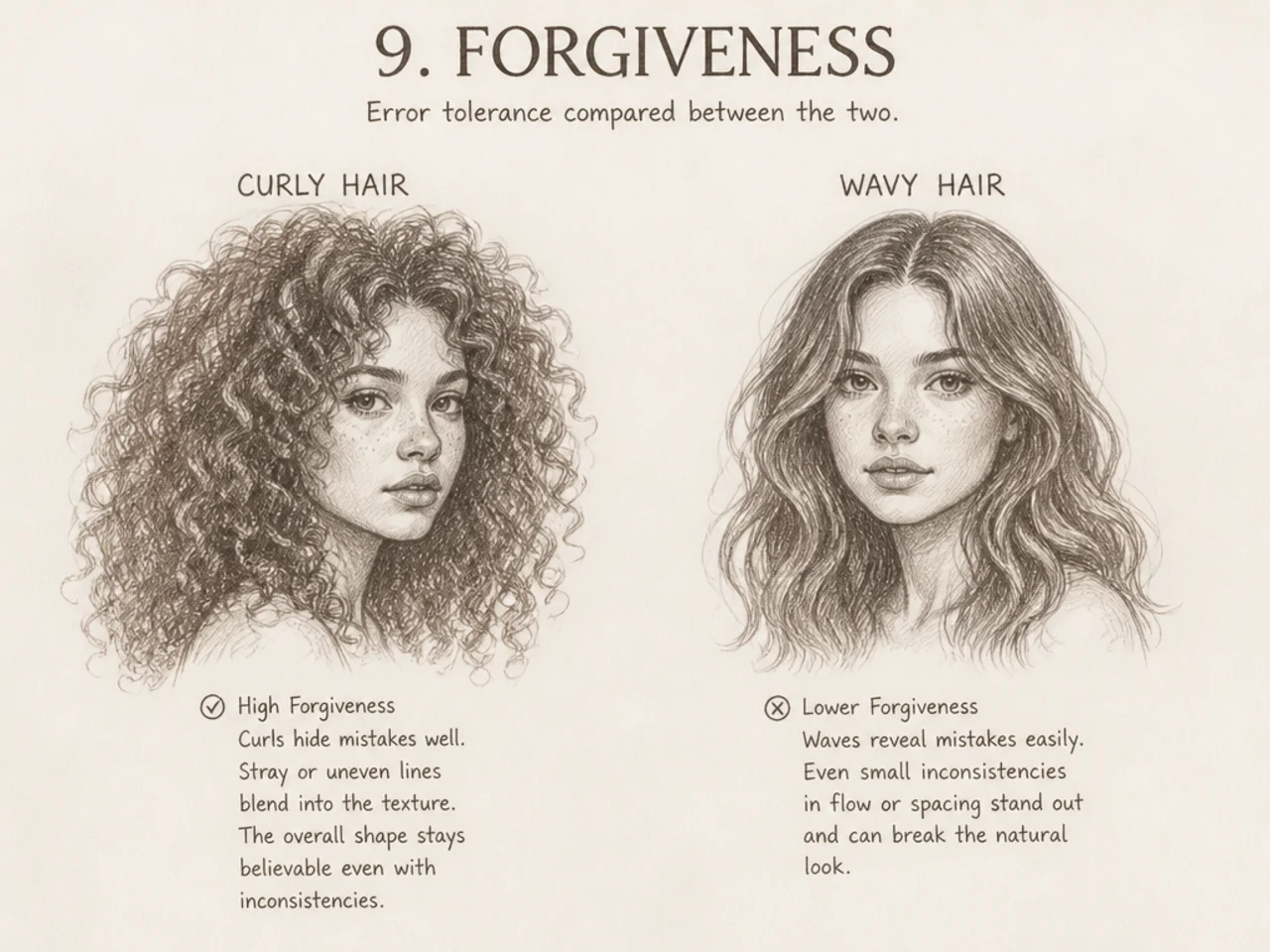
9. Forgiveness
Wavy: a slightly wrong curve still reads as a wave. Curly: a slightly wrong curl reads as an error.
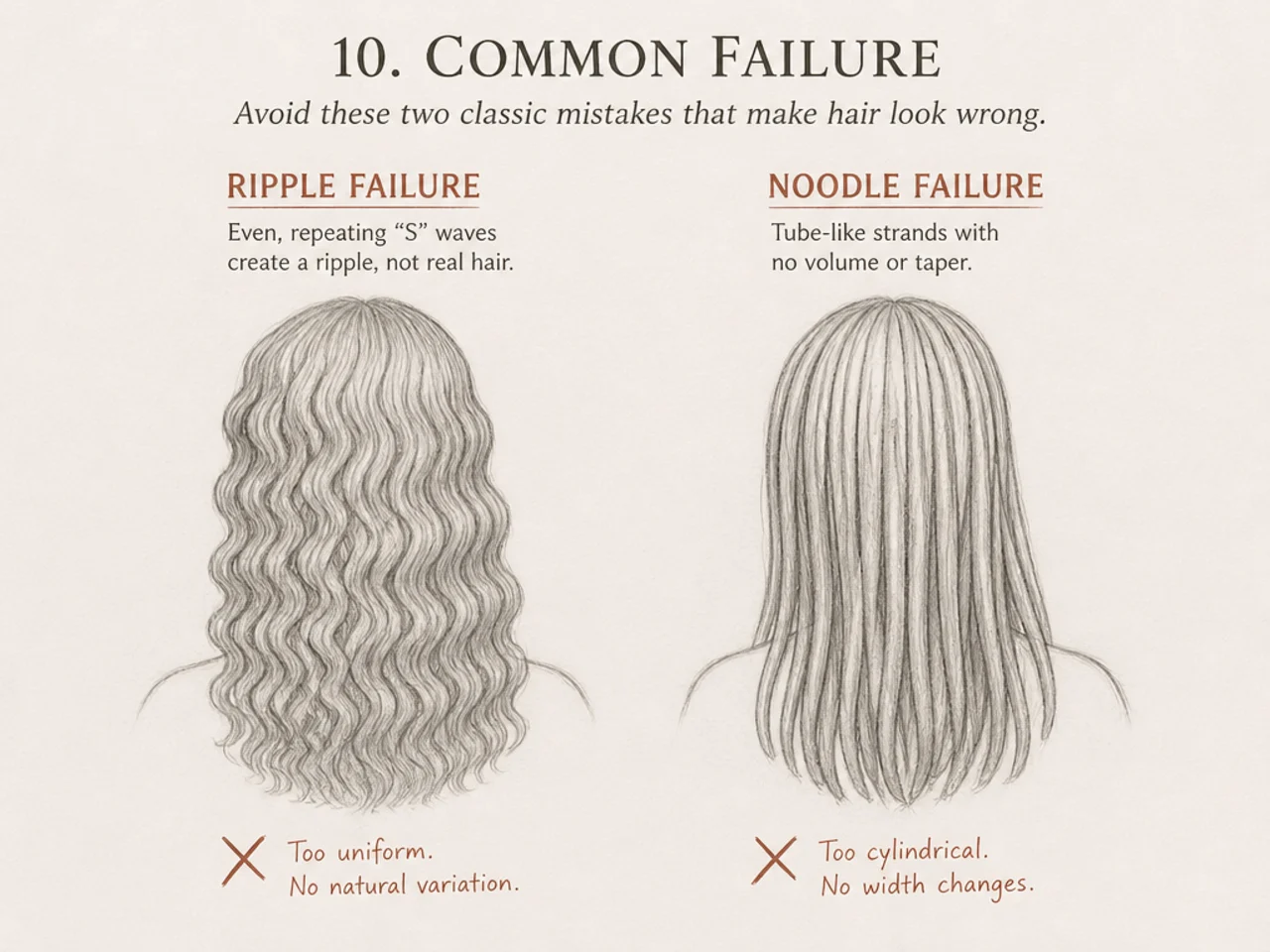
10. Common Failure
Wavy: looks like ripples on water — too regular. Curly: looks like noodles — every curl drawn.
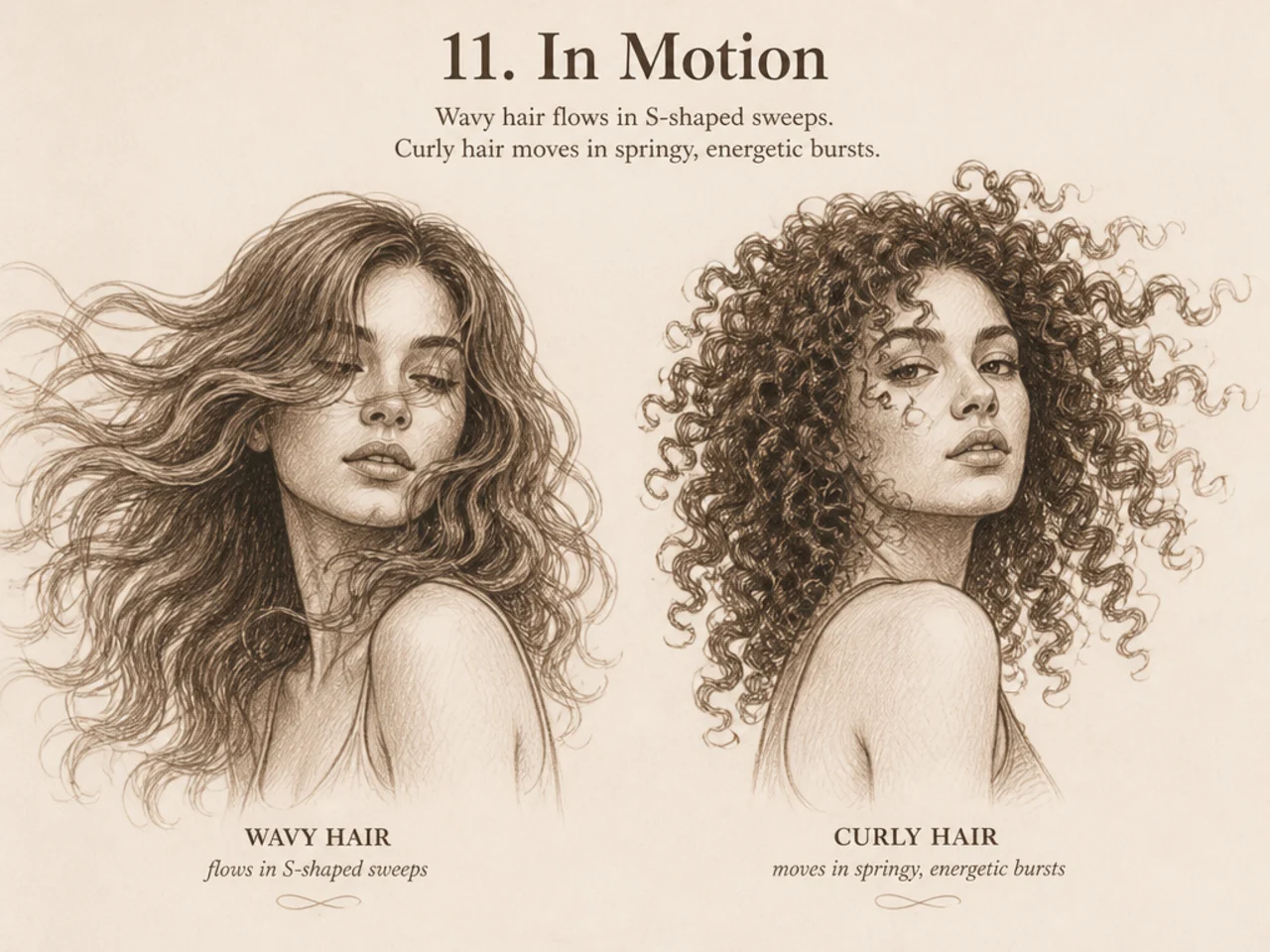
11. In Motion
Wavy: the curves stretch and flatten. Curly: the clumps separate and the silhouette breaks up.
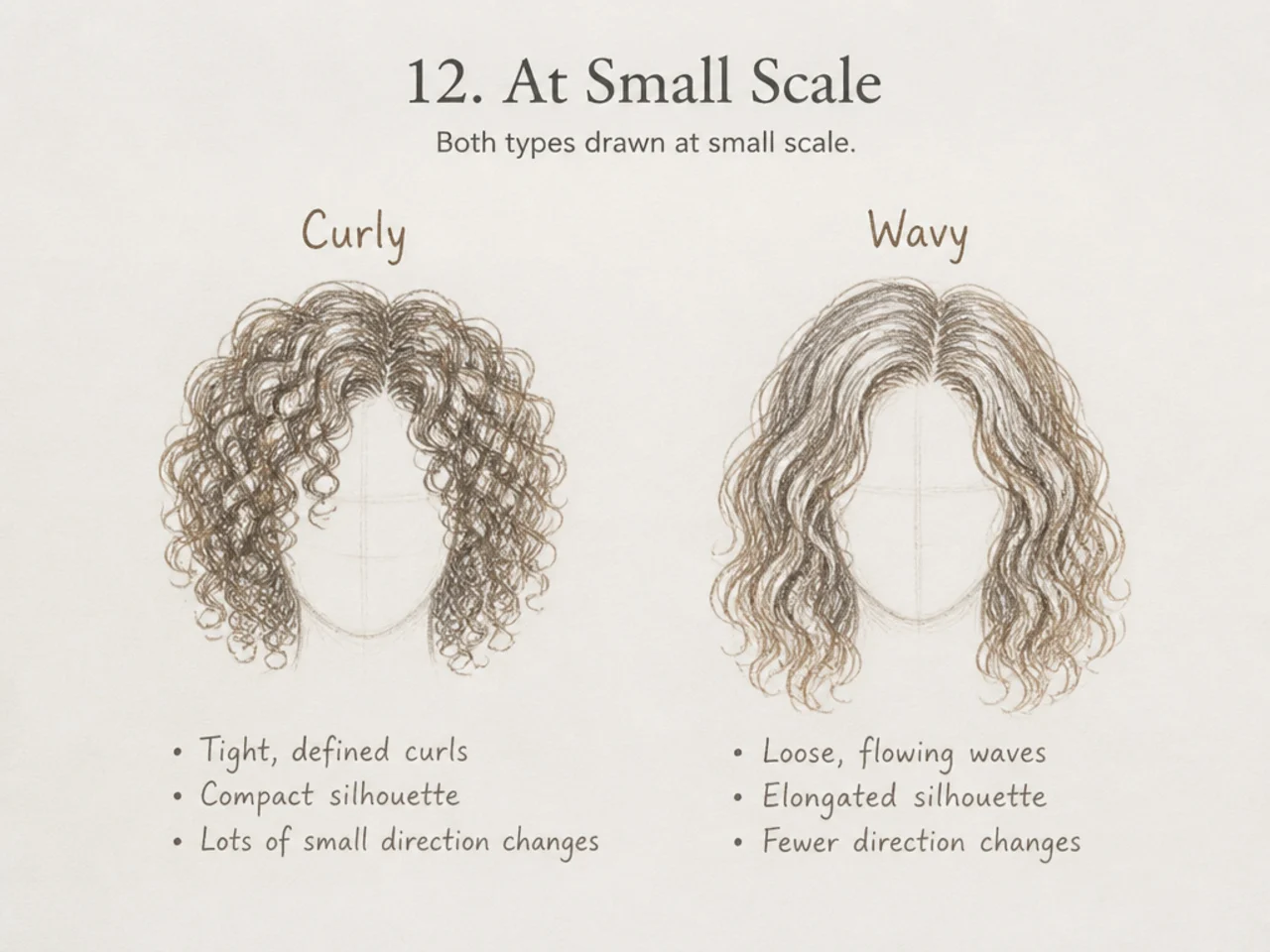
12. At Small Scale
Wavy: the curve still reads as a thin ribbon. Curly: becomes texture almost immediately.
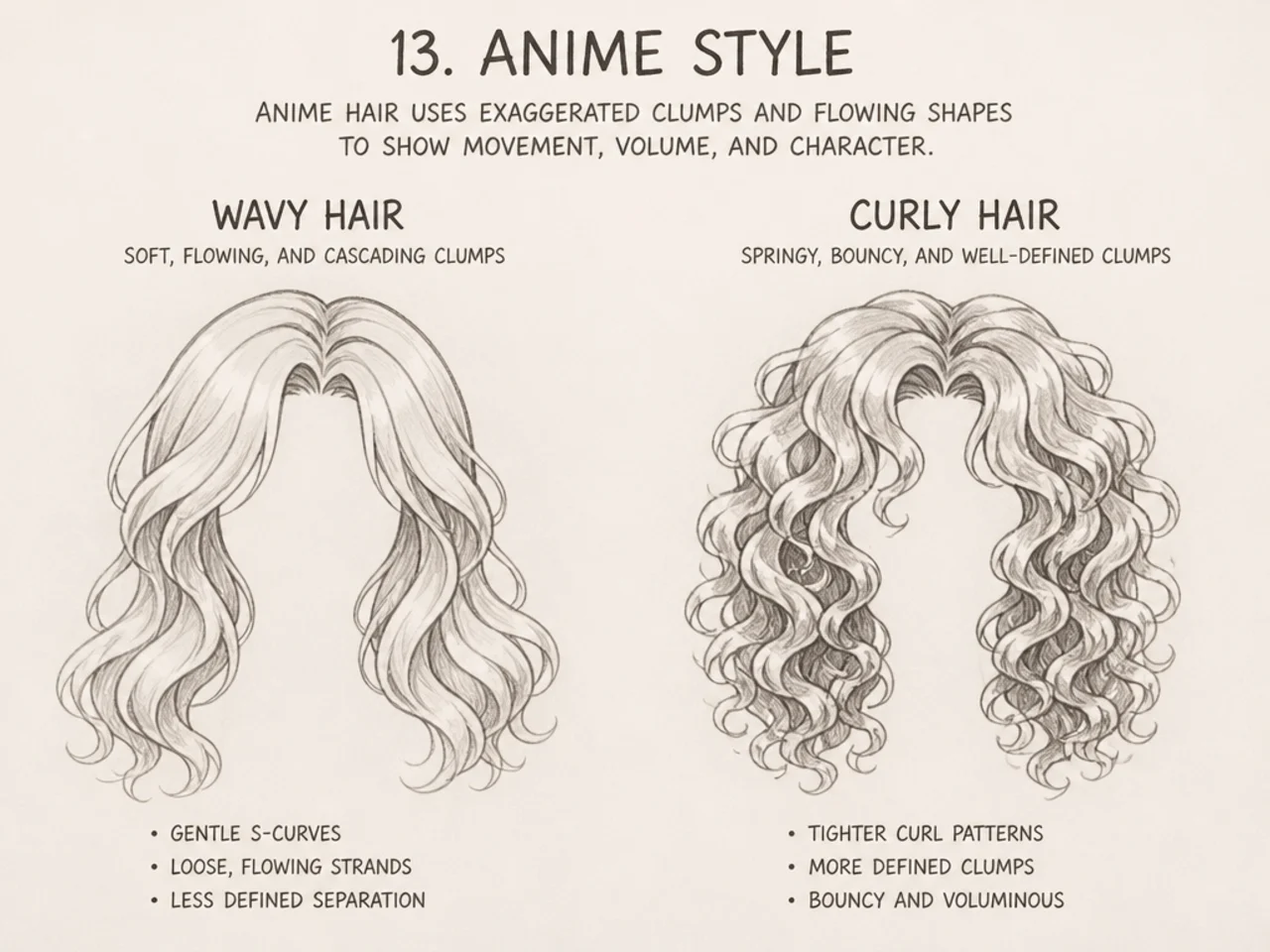
13. Anime Style
Wavy: long gently curved clumps. Curly: shorter clumps with hooked ends.
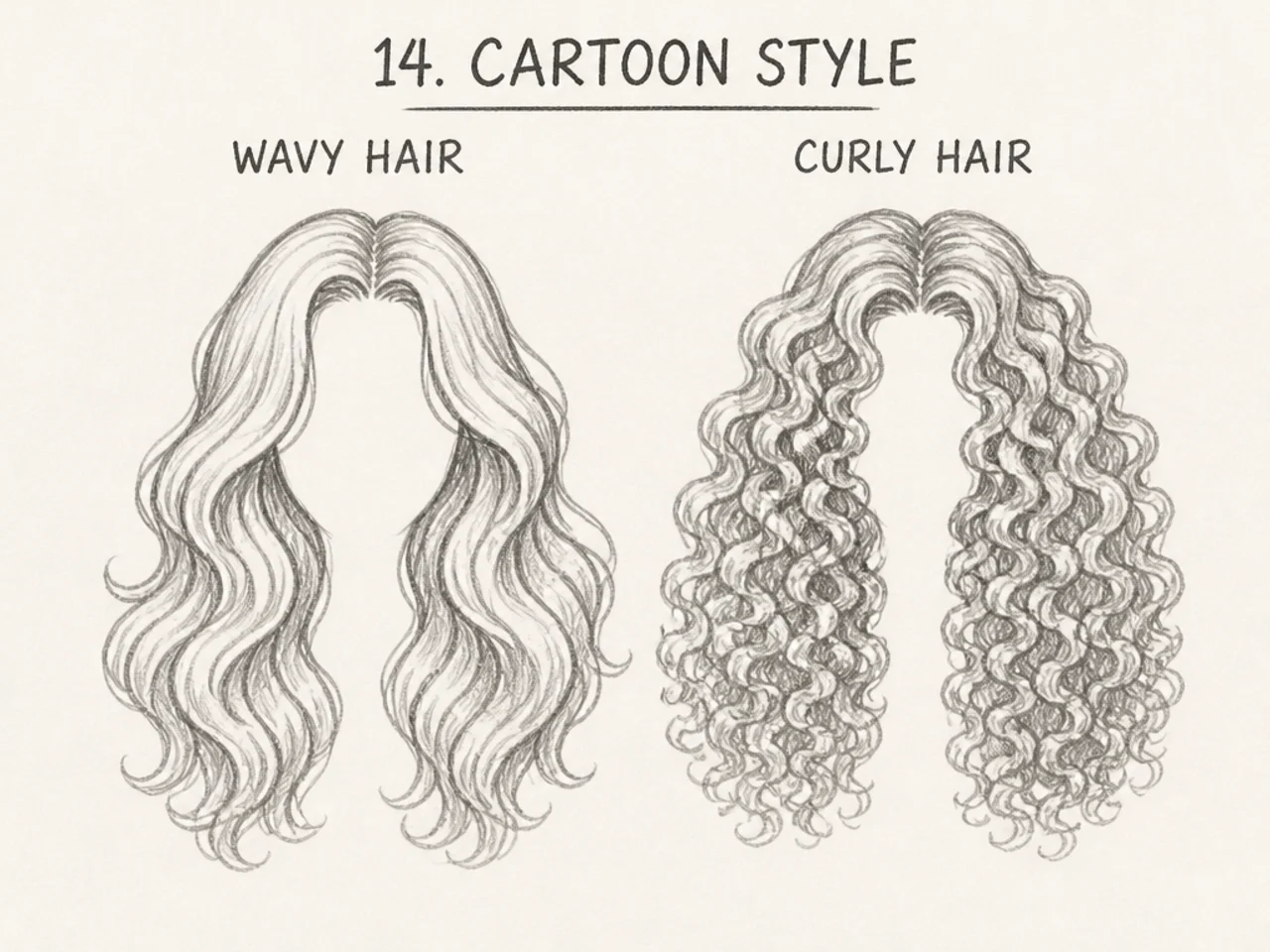
14. Cartoon Style
Wavy: a smooth wobbling outline. Curly: a scalloped, uneven one.
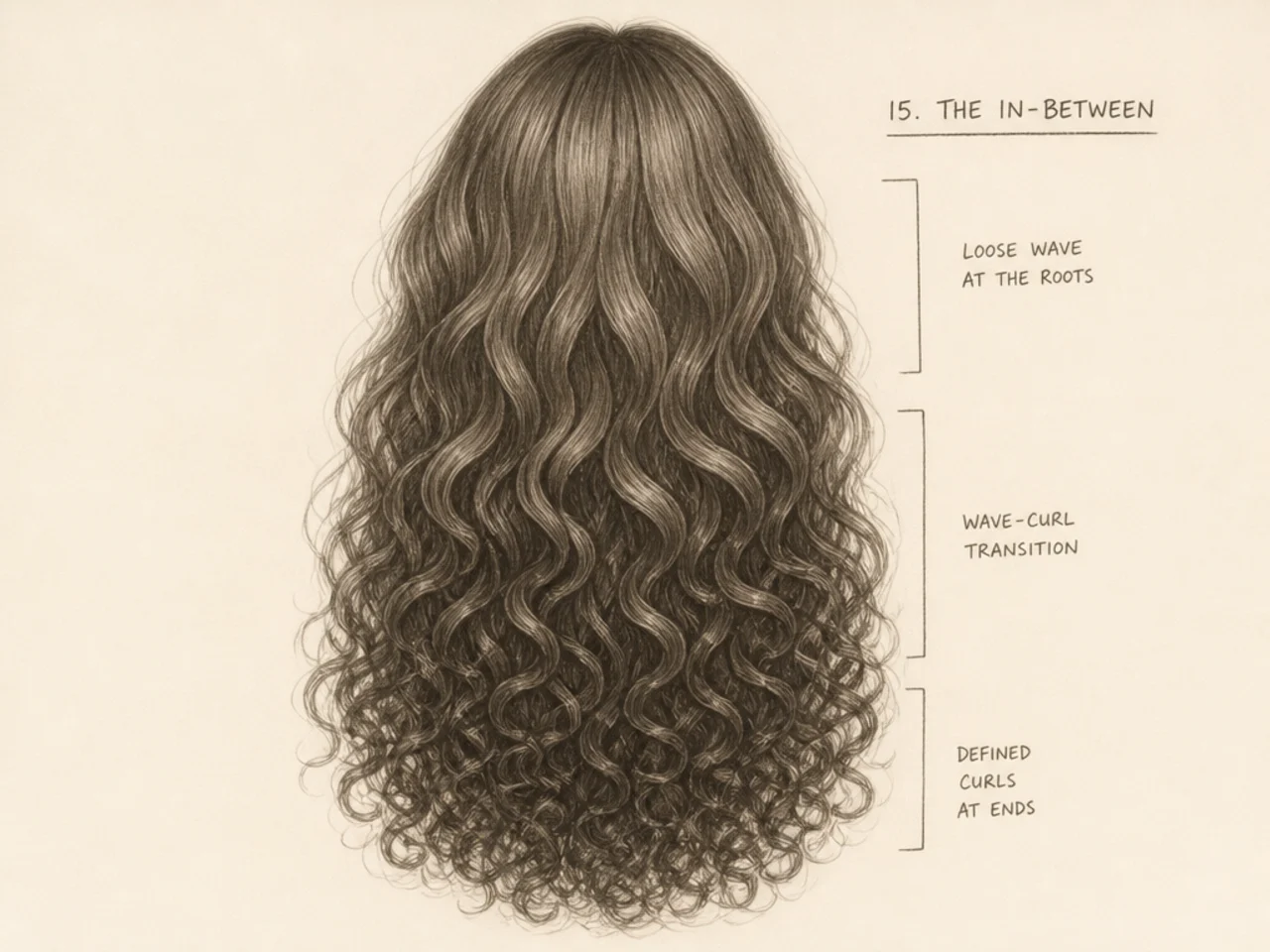
15. The In-Between
2C to 3A: continuous near the roots, discrete toward the ends.
Drawing the In-Between
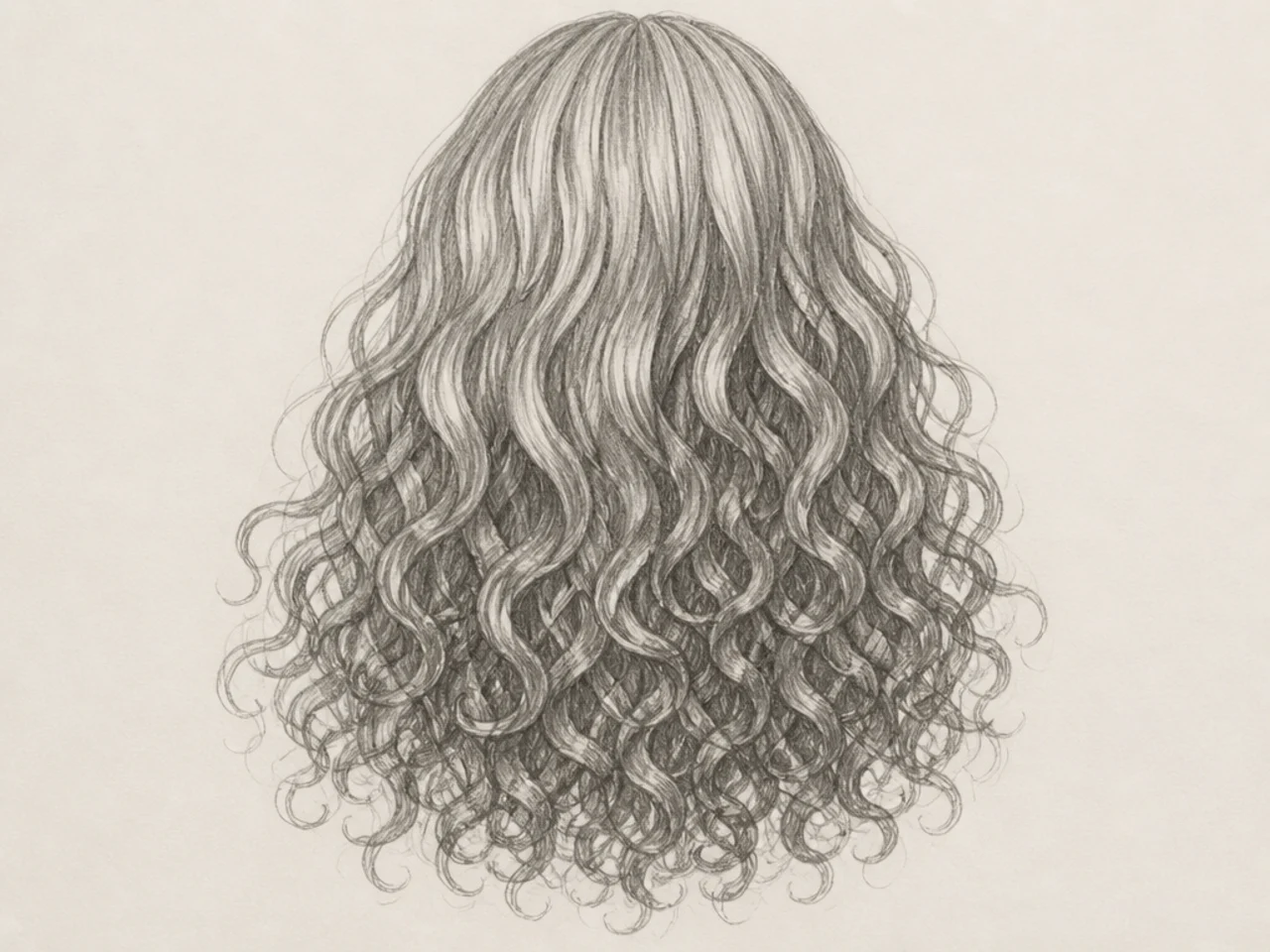
Most real hair sits between the two, and this is where drawings most often fail — because people pick one system and apply it uniformly.
Continuous near the roots, discrete toward the ends. Real 2C and 3A hair is looser at the top where there is less weight below, and forms defined curls further down.
So use both marks in one drawing. Long lines at the crown, closing into units toward the tips.
That gradient is also what stops long hair reading as repetitive, which makes this the single most transferable idea in the silo: the mark should change as it travels down the strand.
Mistakes to Avoid
Drawing wave with short marks. It fragments and stops flowing.
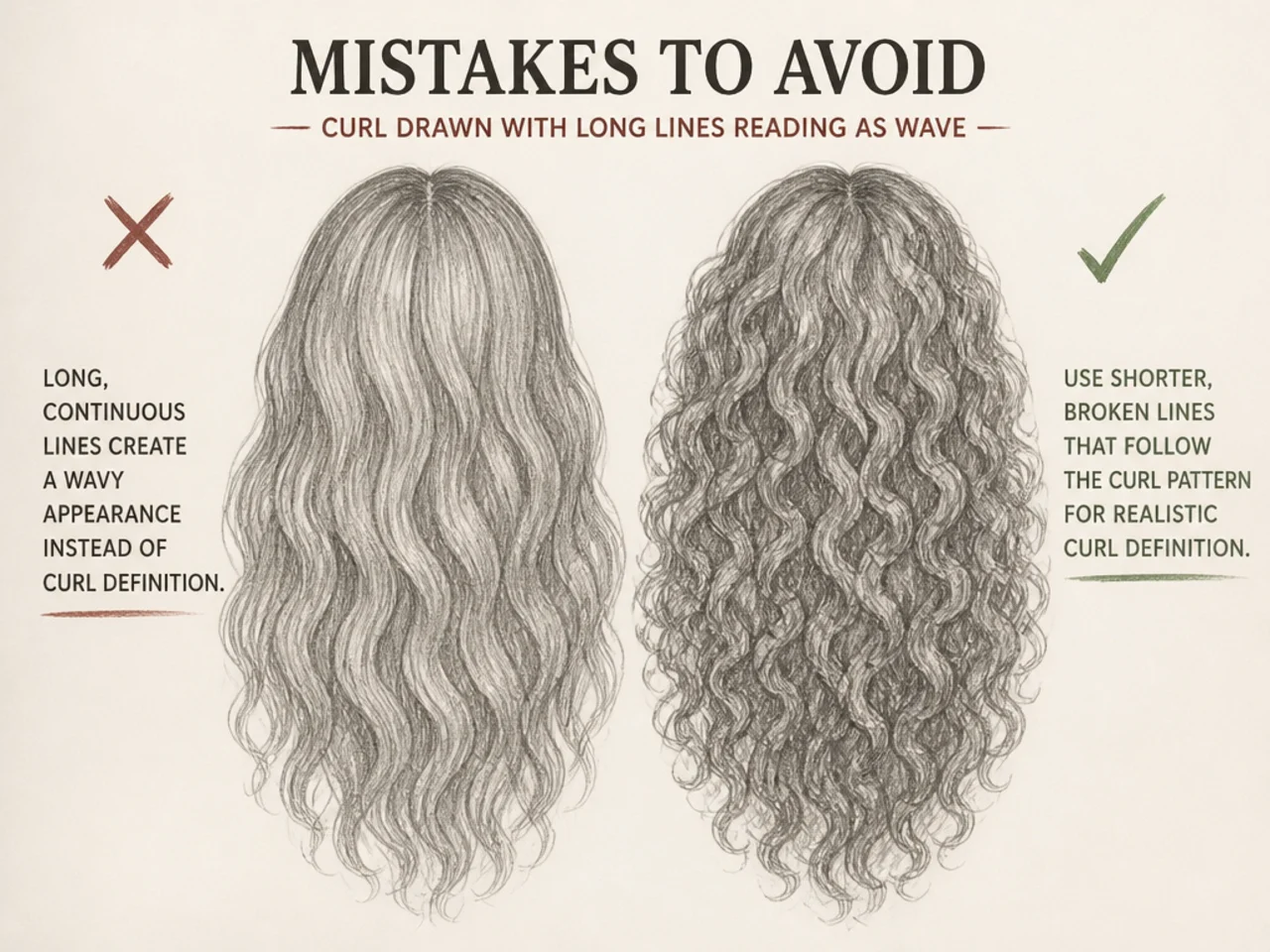
Drawing curl with long unbroken lines. It reads as wavy hair, not curly.
Regular, even waves. They read as ripples on water.
One system applied uniformly to in-between hair. Most real hair needs both.
A continuous highlight on curly hair. It flattens the clumps.
FAQ
What is the difference? Wave is continuous, curl is discrete — long lines versus separate units.
Which is easier? Wavy, because continuous lines are more forgiving.
How do you draw in-between hair? Continuous at the roots, tightening into units toward the ends.
Final Thoughts
Decide whether you are drawing continuous or discrete before the first mark, and let it change down the length. Most hair is both, and matching the mark to the section is what makes a drawing look observed rather than systematised.
For curl specifically see 25 easy curly hair drawing ideas, and for realism see 20 realistic curly hair drawing ideas. More in Hair Drawing & Art.