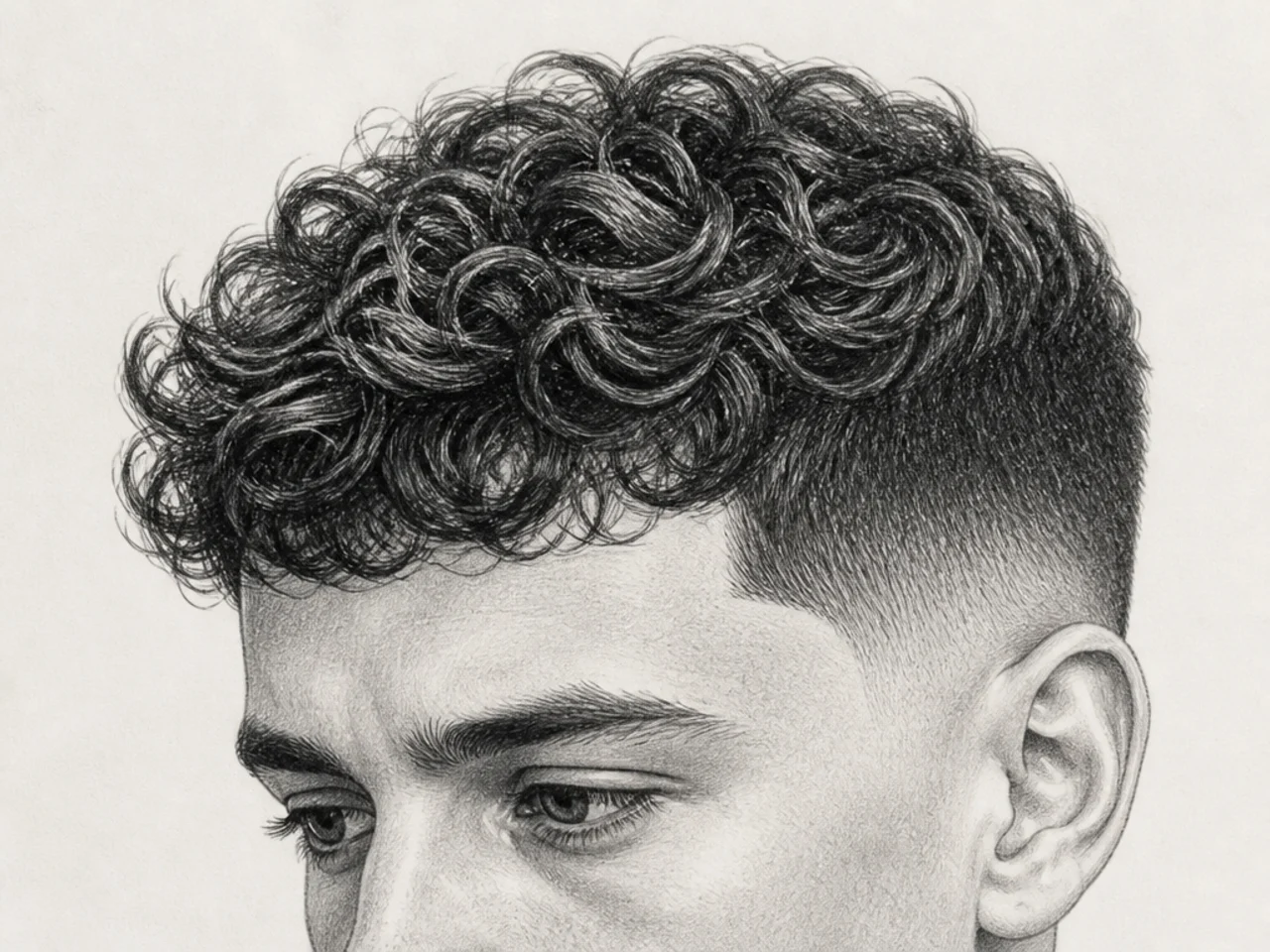
20 Male Curly Hair Drawing Ideas to Save
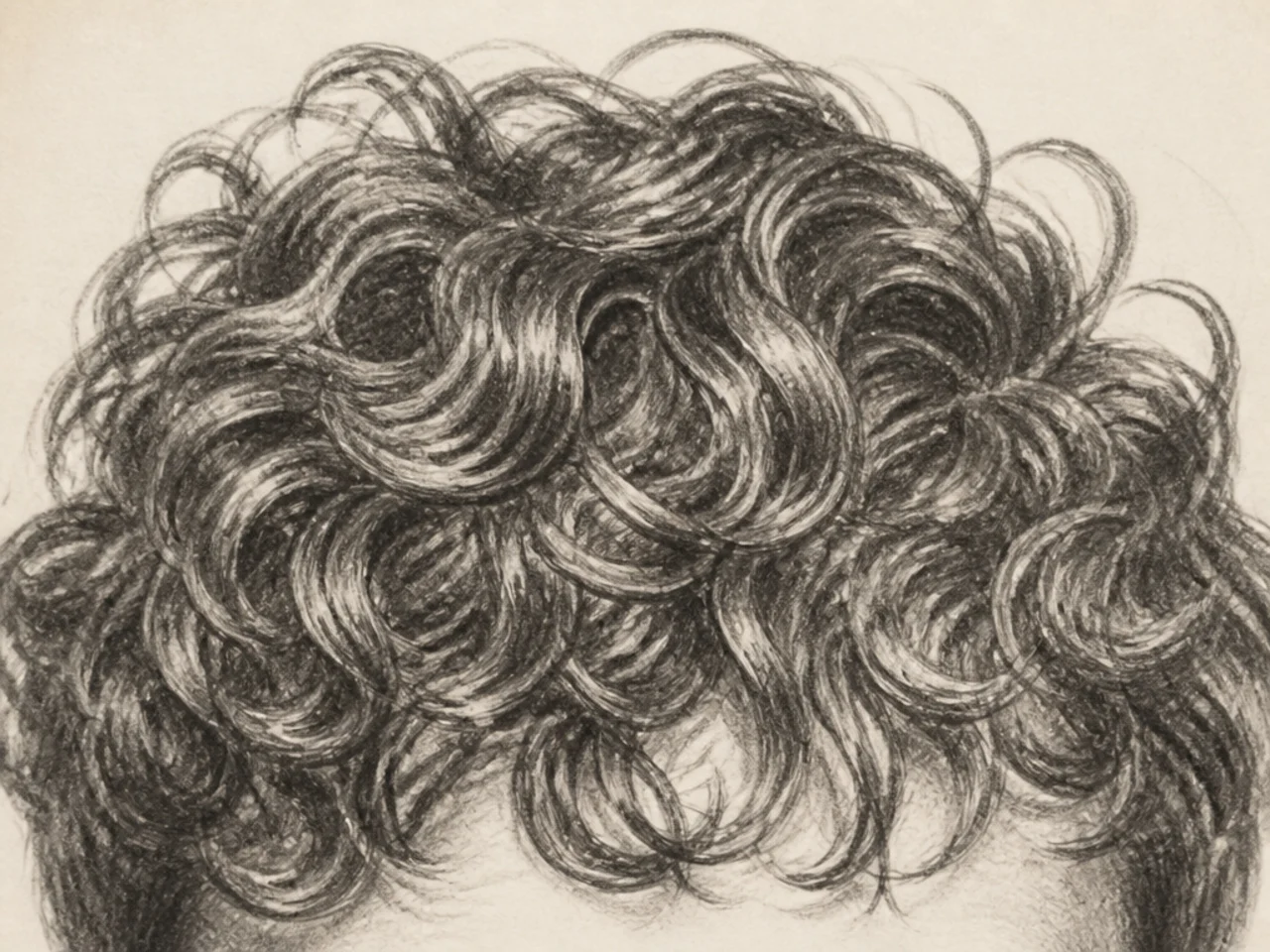
Twenty male curly hair ideas, and the thing that decides whether they read as male — the hairline. On shorter hair the hairline is visible, and it does more characterisation work than the curl does.
In this article · 27
- The Hairline Does the Work
- Uneven Volume
- The 20 Ideas
- 1. Short Curly Top, Faded Sides
- 2. Curly Crop with a Straight Fringe Line
- 3. Medium Curls, Natural Hairline
- 4. Tight Coils, Close Cut
- 5. Curly Afro, Medium Height
- 6. Long Curly Male Hair
- 7. Curly Hair with a Receding Hairline
- 8. Curly Man Bun
- 9. Curly Hair with a Beard
- 10. Curly Undercut
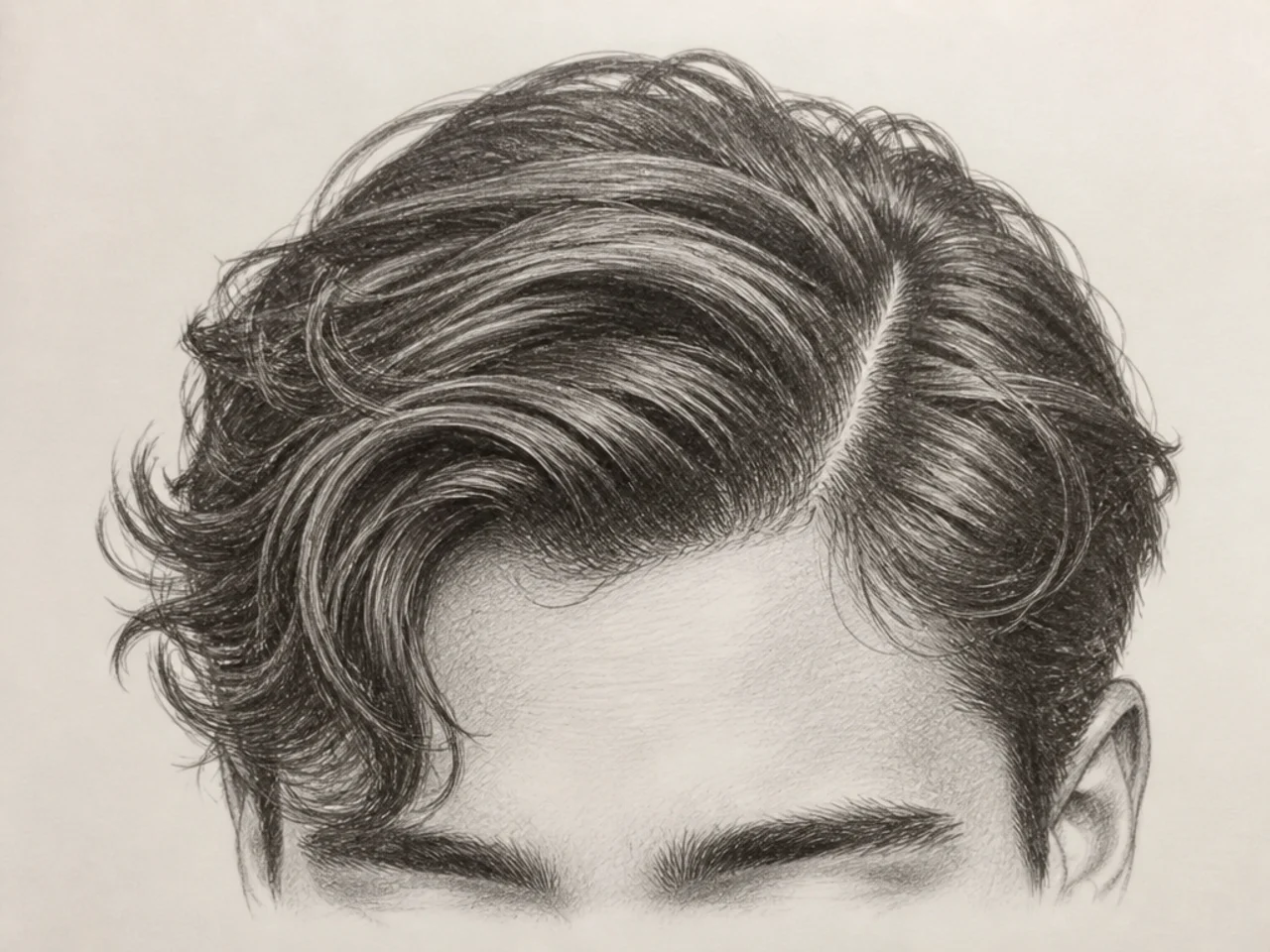
- 11. Wavy Male Hair, Side Part
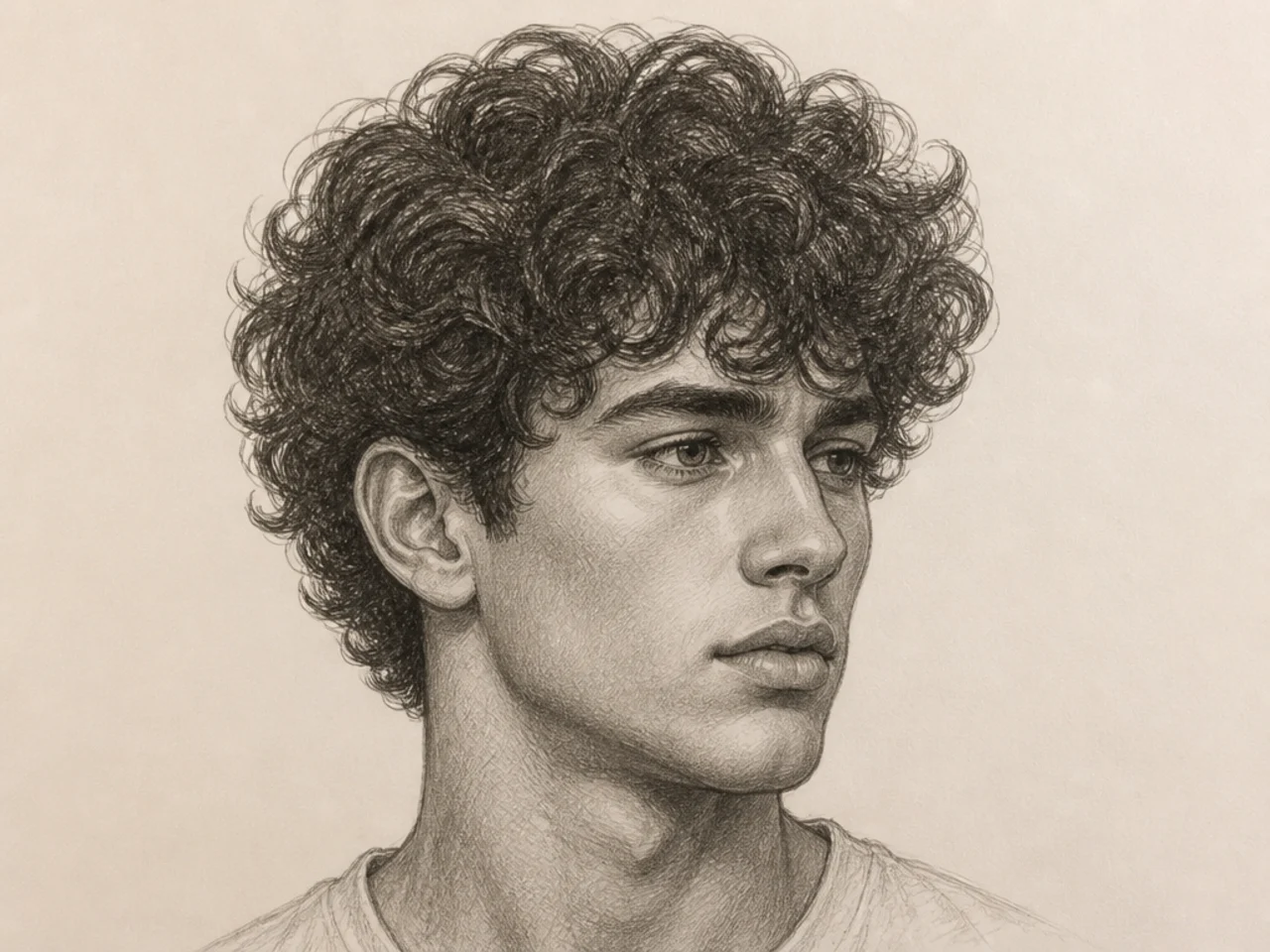
- 12. Curly Hair From Three-Quarter View
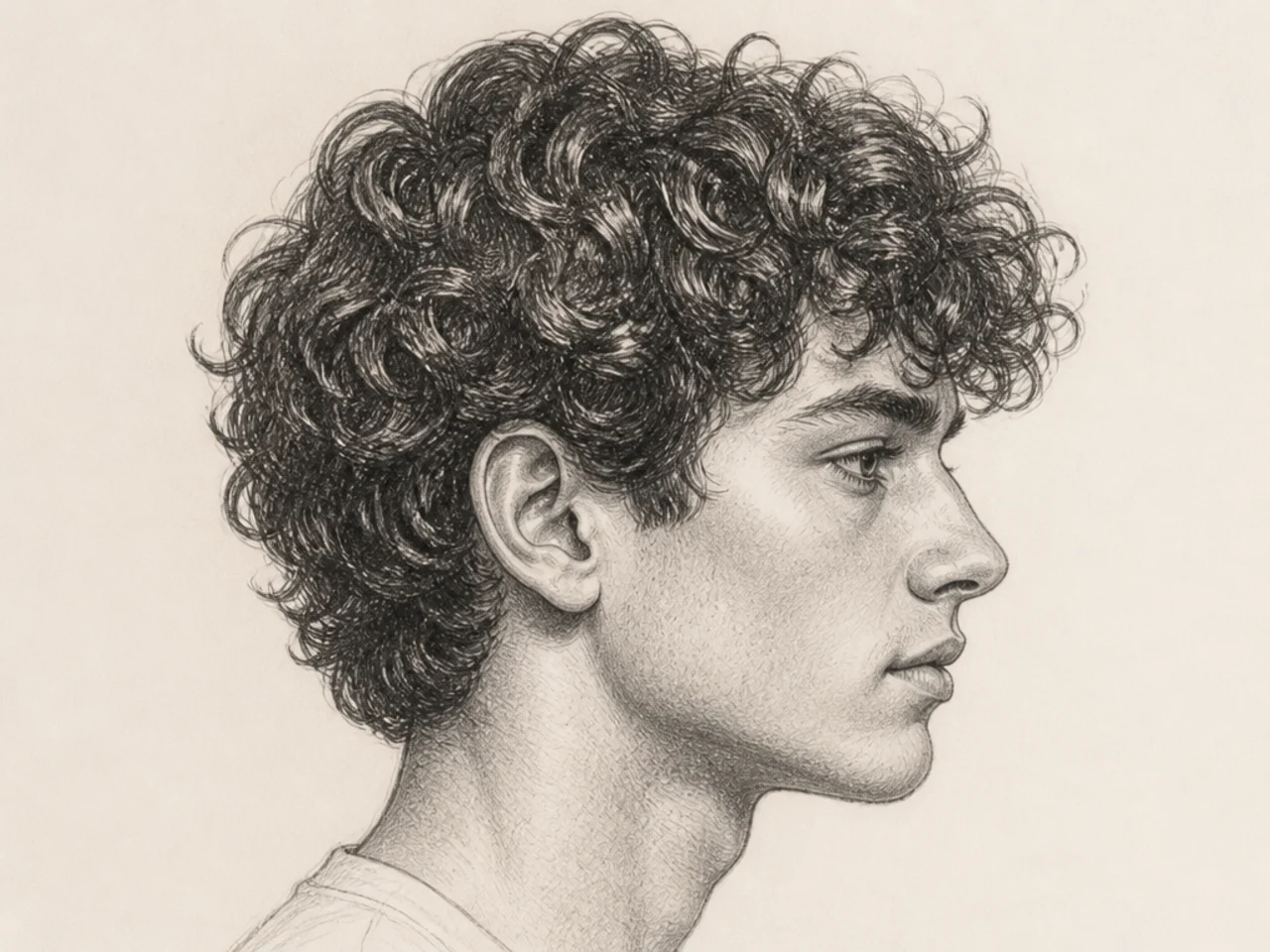
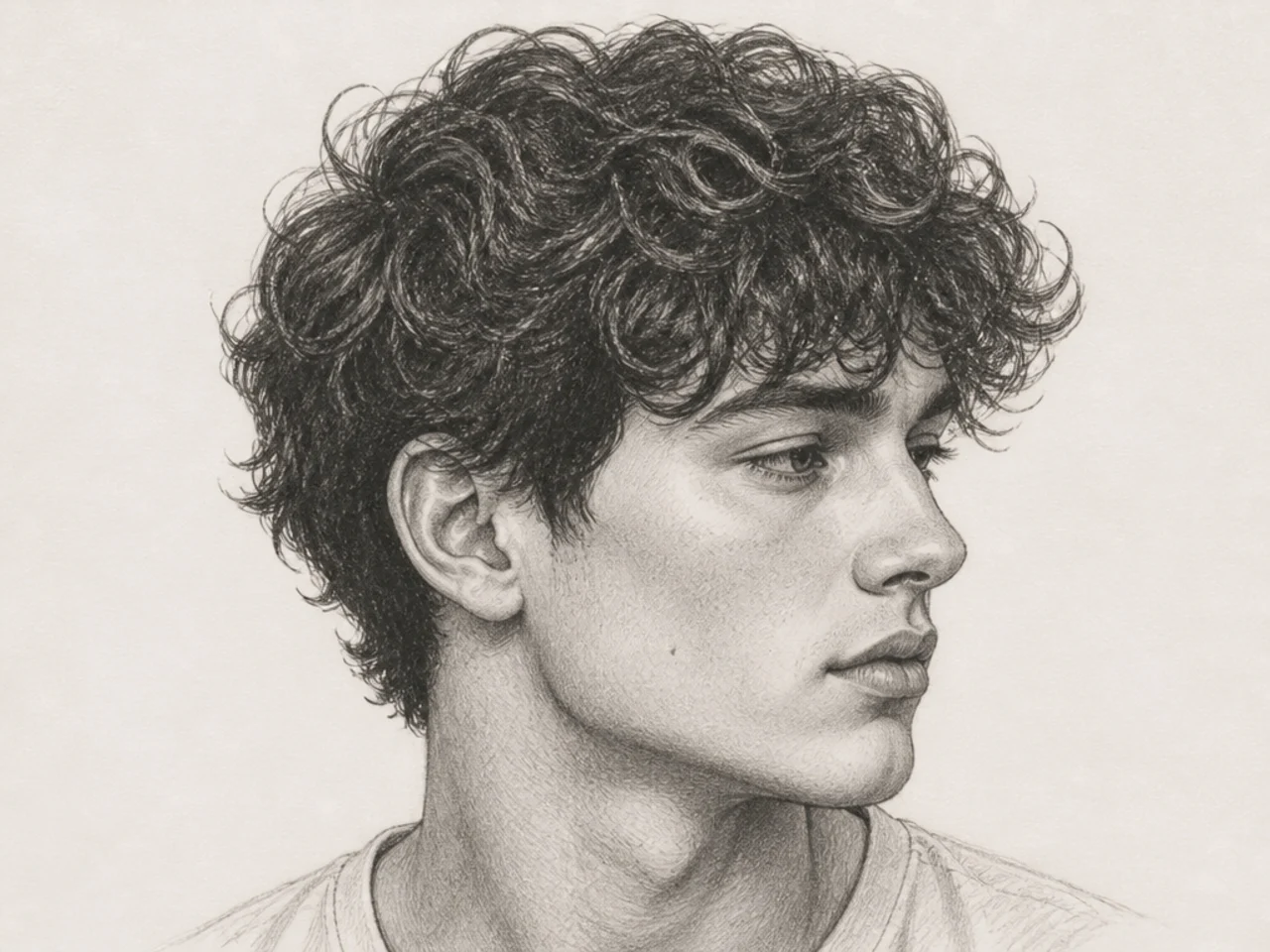
- 13. Curly Hair in Profile
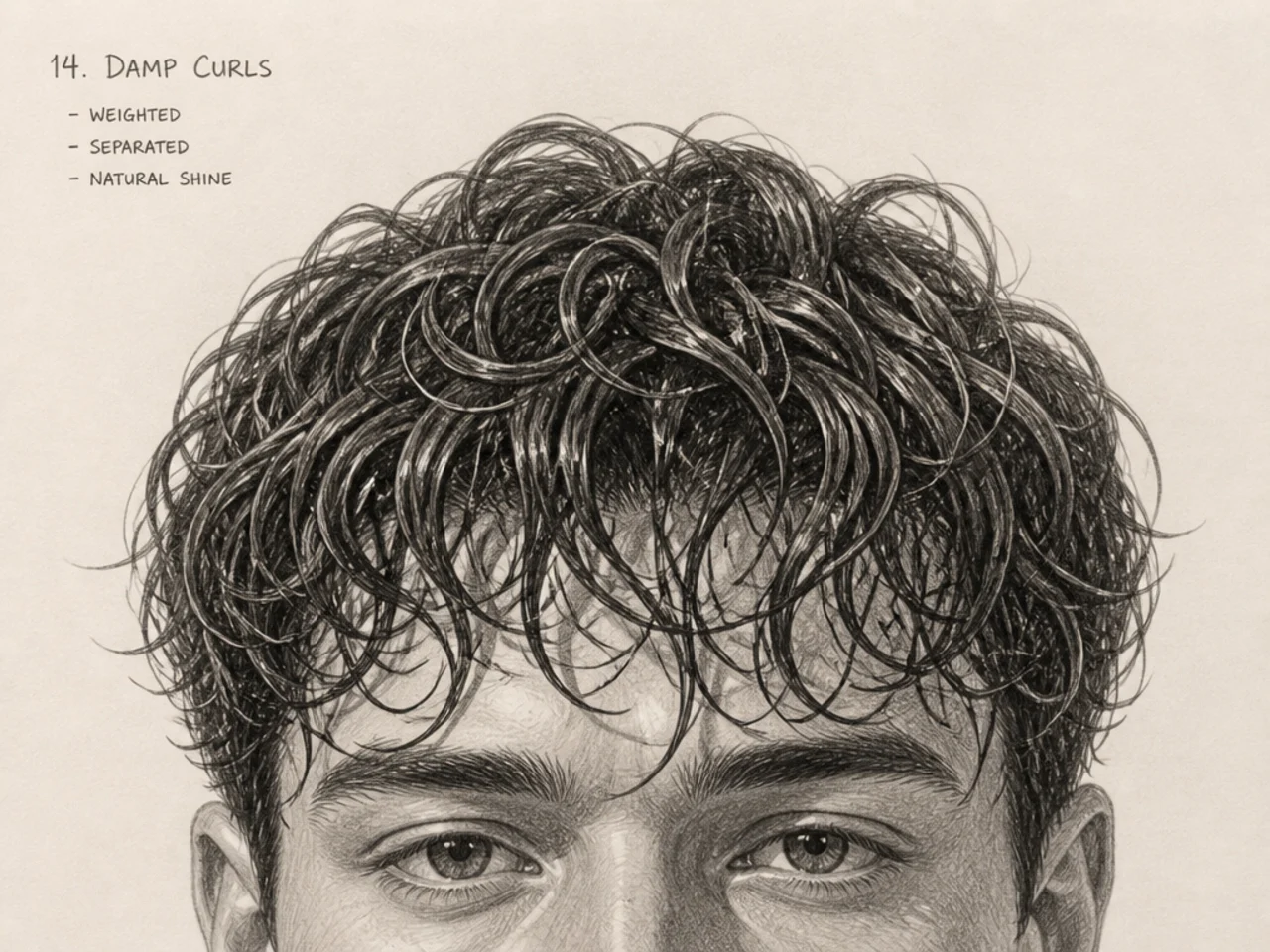
- 14. Damp Curls
- 15. Curly Hair Pushed Back
- 16. Older Character, Grey Curls
- 17. Young Character, Low Hairline
- 18. Curly Hair Under a Cap
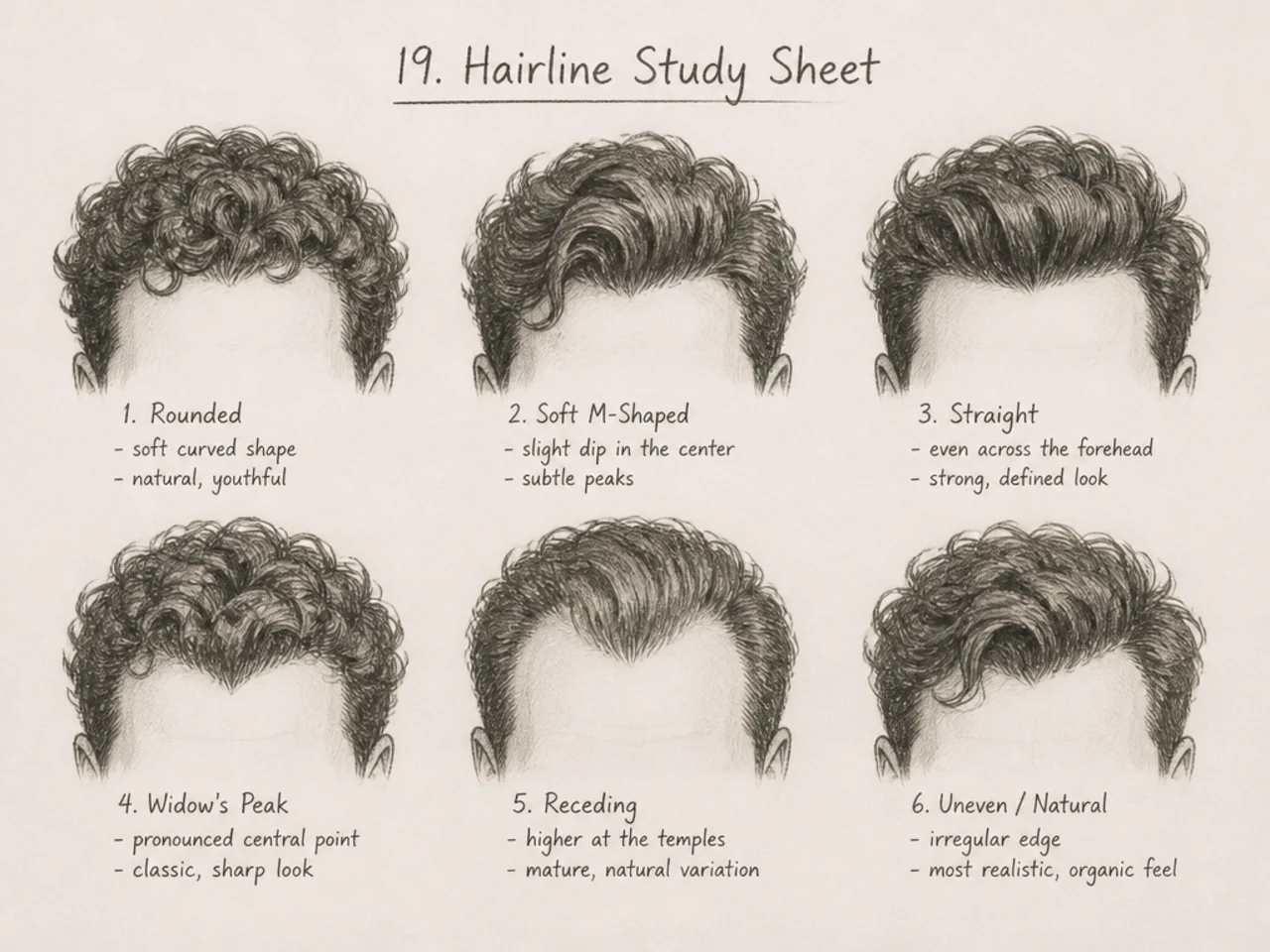
- 19. Hairline Study Sheet
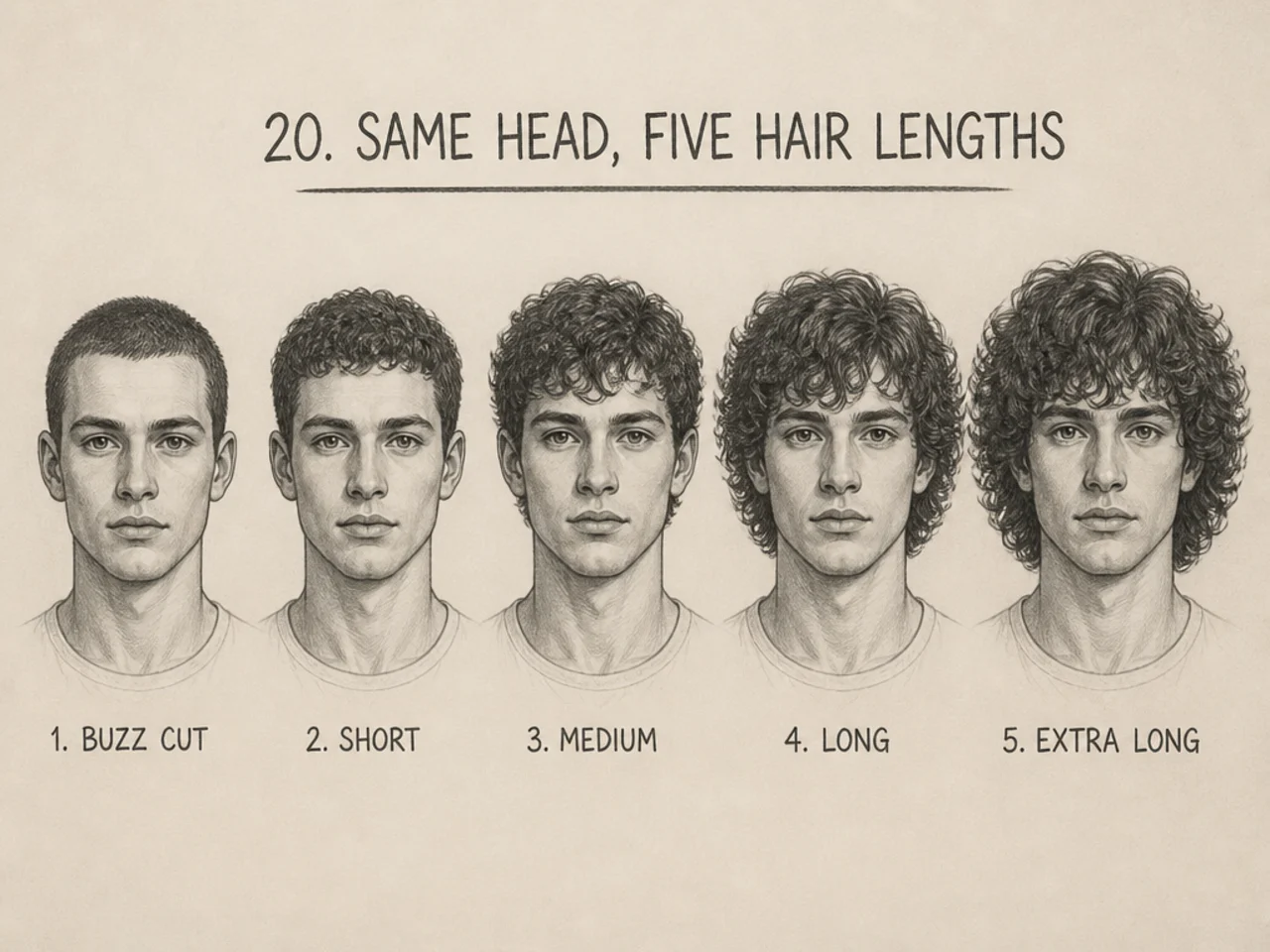
- 20. Same Head, Five Hair Lengths
- Short Curl Is Texture, Not Shapes
- Mistakes to Avoid
- FAQ
- Final Thoughts
On long hair the silhouette carries everything. On short male hair the silhouette is small — so the work shifts to the hairline, which is visible and which does most of the characterisation.
Get the hairline right and a fairly rough curl texture reads convincingly. Get it wrong and no amount of well-drawn curl fixes it.
The Hairline Does the Work
Find the corners. The two points where the hairline steps back at the temples. Their depth and sharpness say more about a character than any other single feature of the hair.
Vary the height. A low hairline reads younger, a high one older. This is the fastest age control available in a portrait.
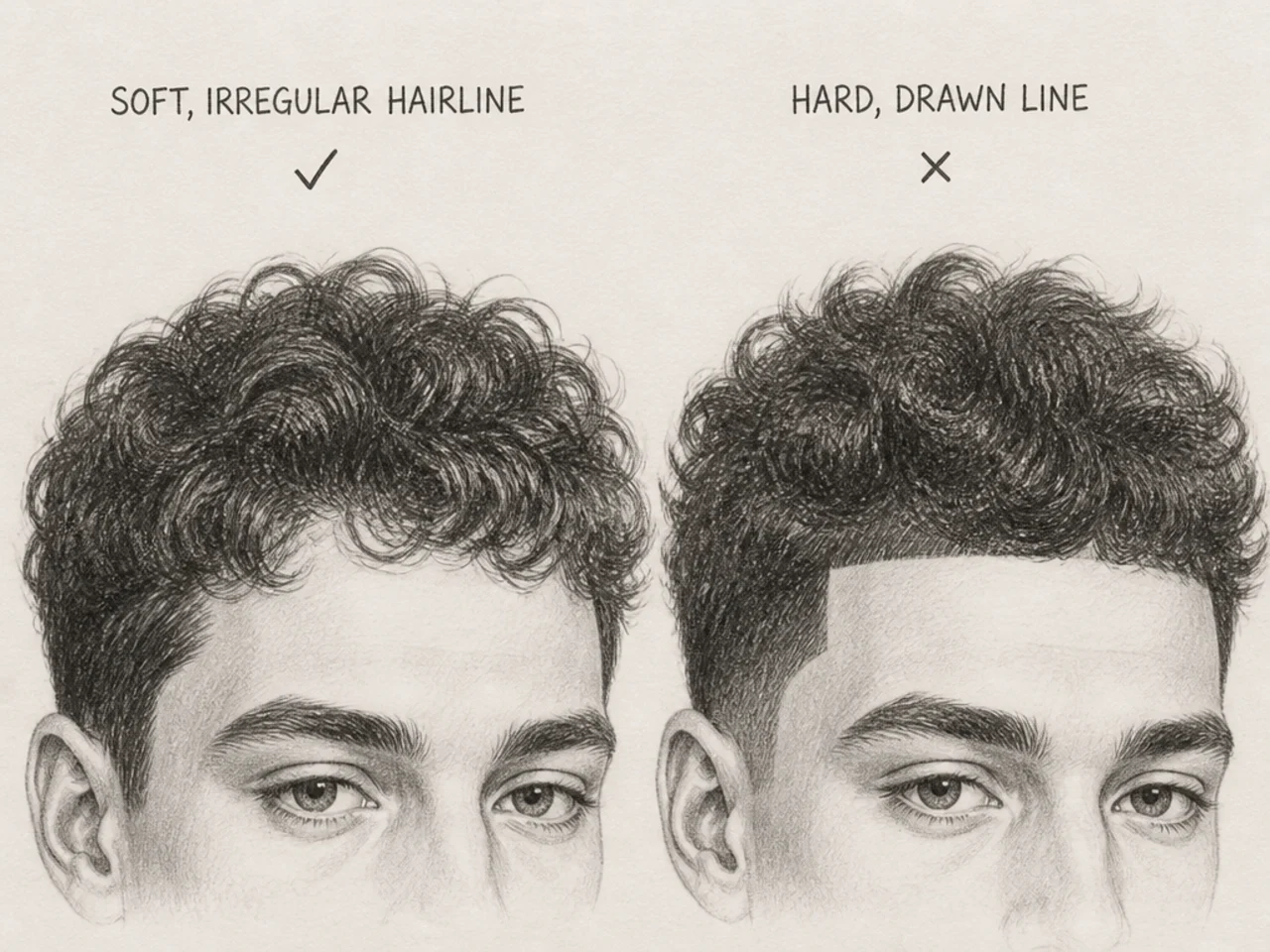
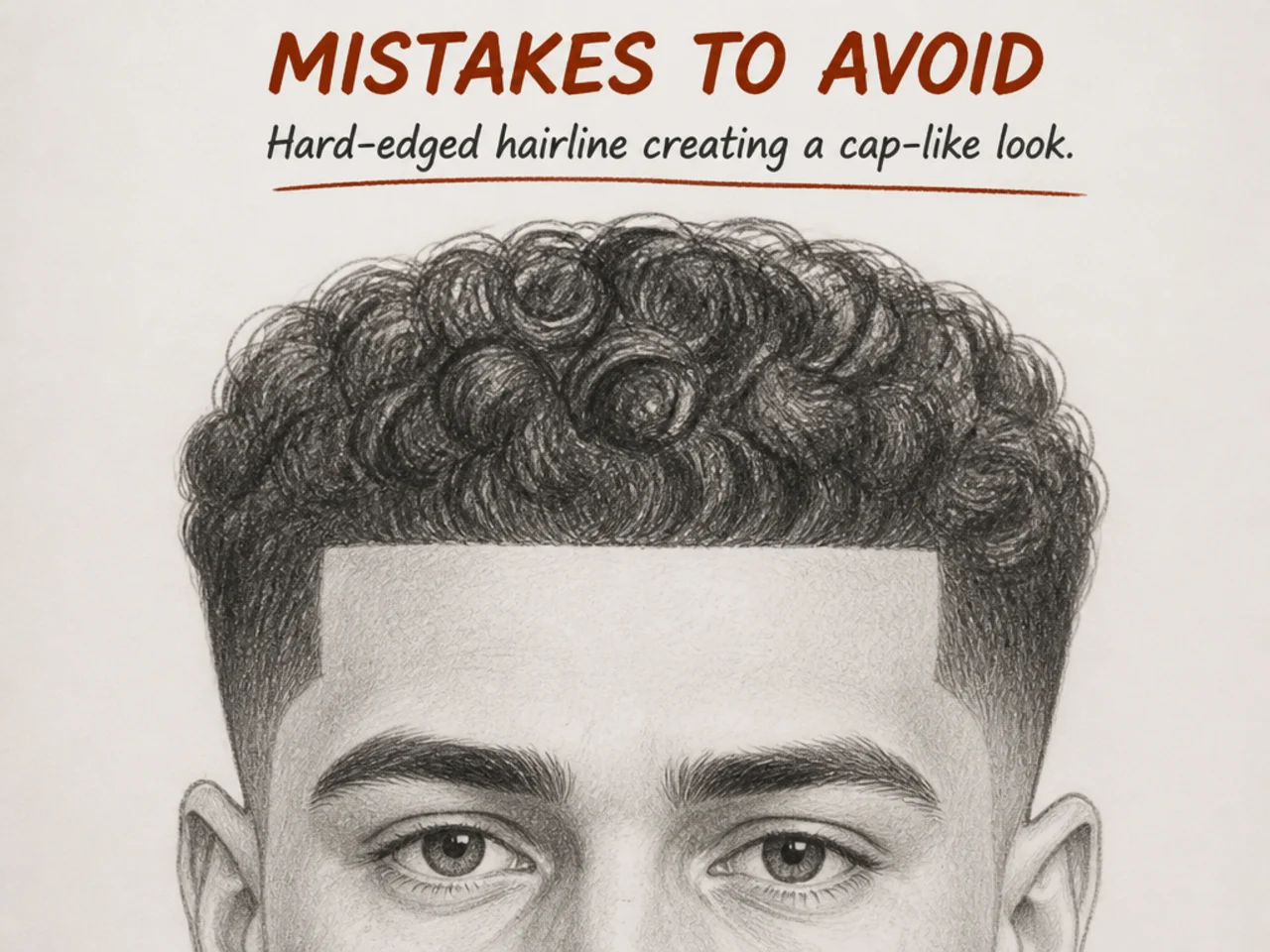
Keep it soft, not drawn. A hairline is not a line — it is a gradient of shorter, finer hairs. Drawing it as a hard edge is the commonest mistake and makes hair look like a cap.
Let curl break it up. Curly hair produces an irregular hairline, with pieces sitting forward and back. That irregularity is what stops it reading as a wig.
Uneven Volume
The second thing that separates convincing male hair from a helmet.
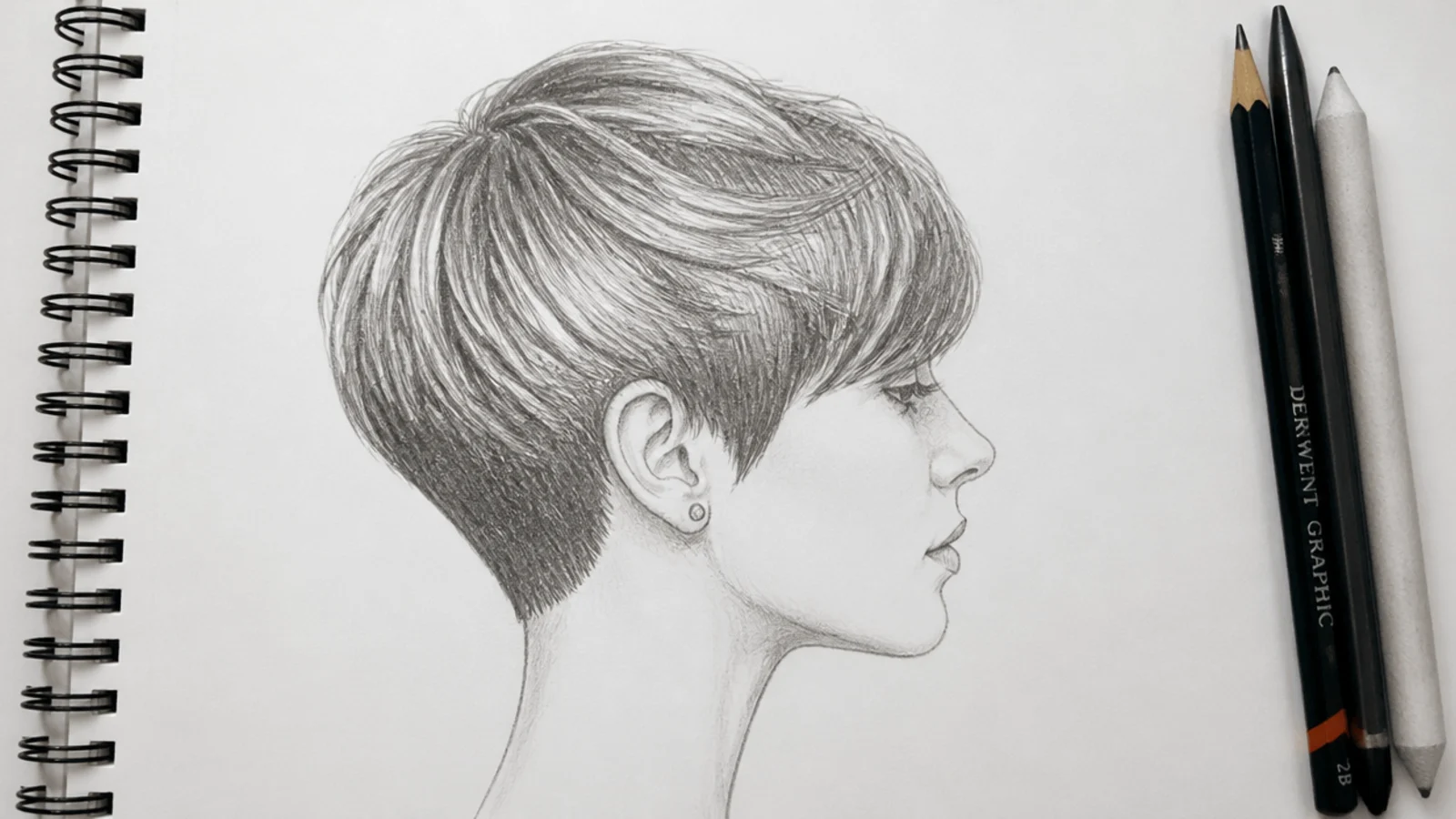
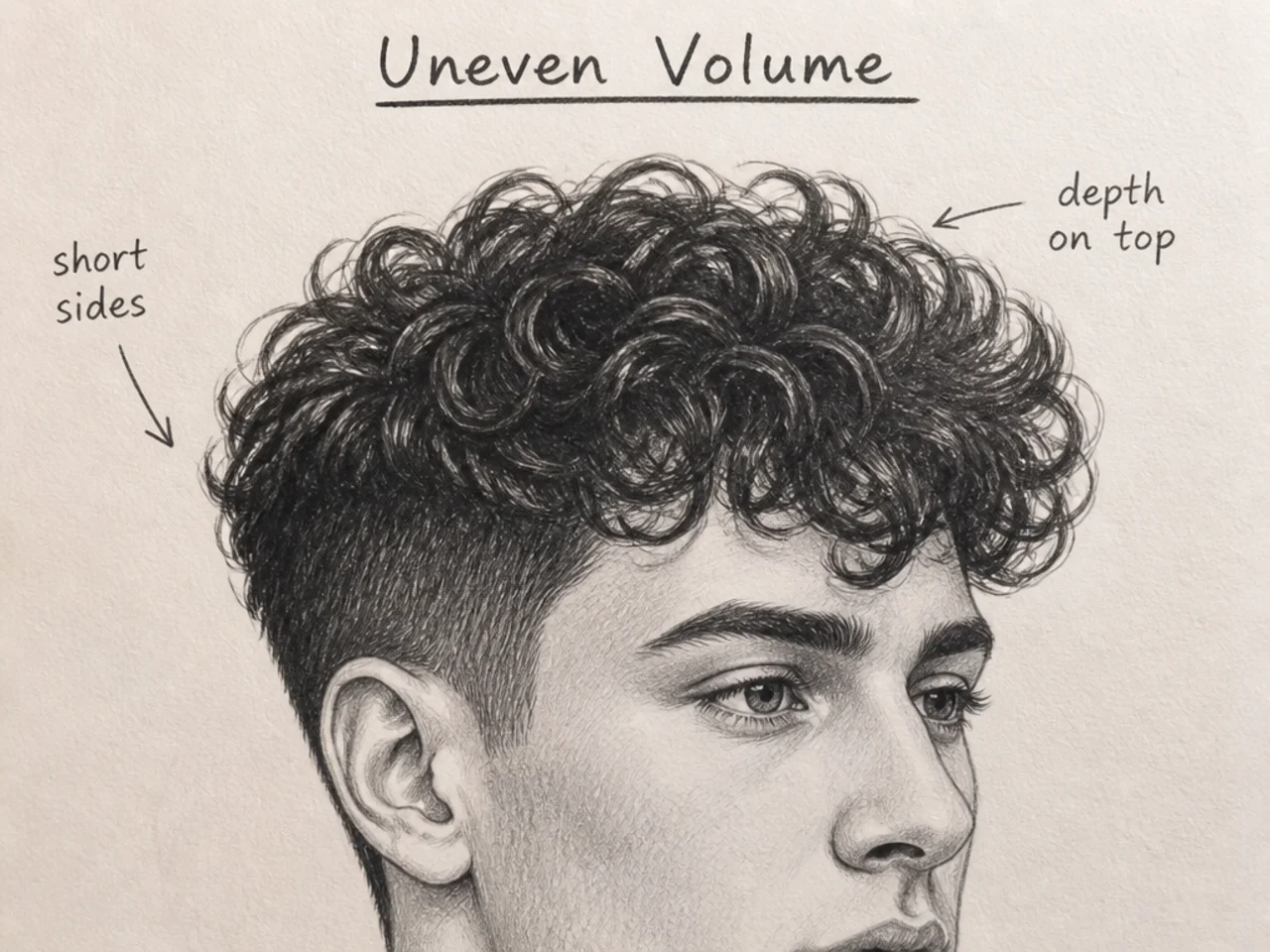
Real short male hair is almost never the same depth all the way round. It is shortest at the sides and back, deepest on top — a taper, a fade, or simply more length at the crown.
Drawing an even volume gap around the whole skull produces the helmet look. Vary it: close to the skull at the temples and nape, and a real gap above.
On curly hair this matters more, because curl exaggerates whatever volume is there.
The 20 Ideas
1. Short Curly Top, Faded Sides
The most common real-world shape.
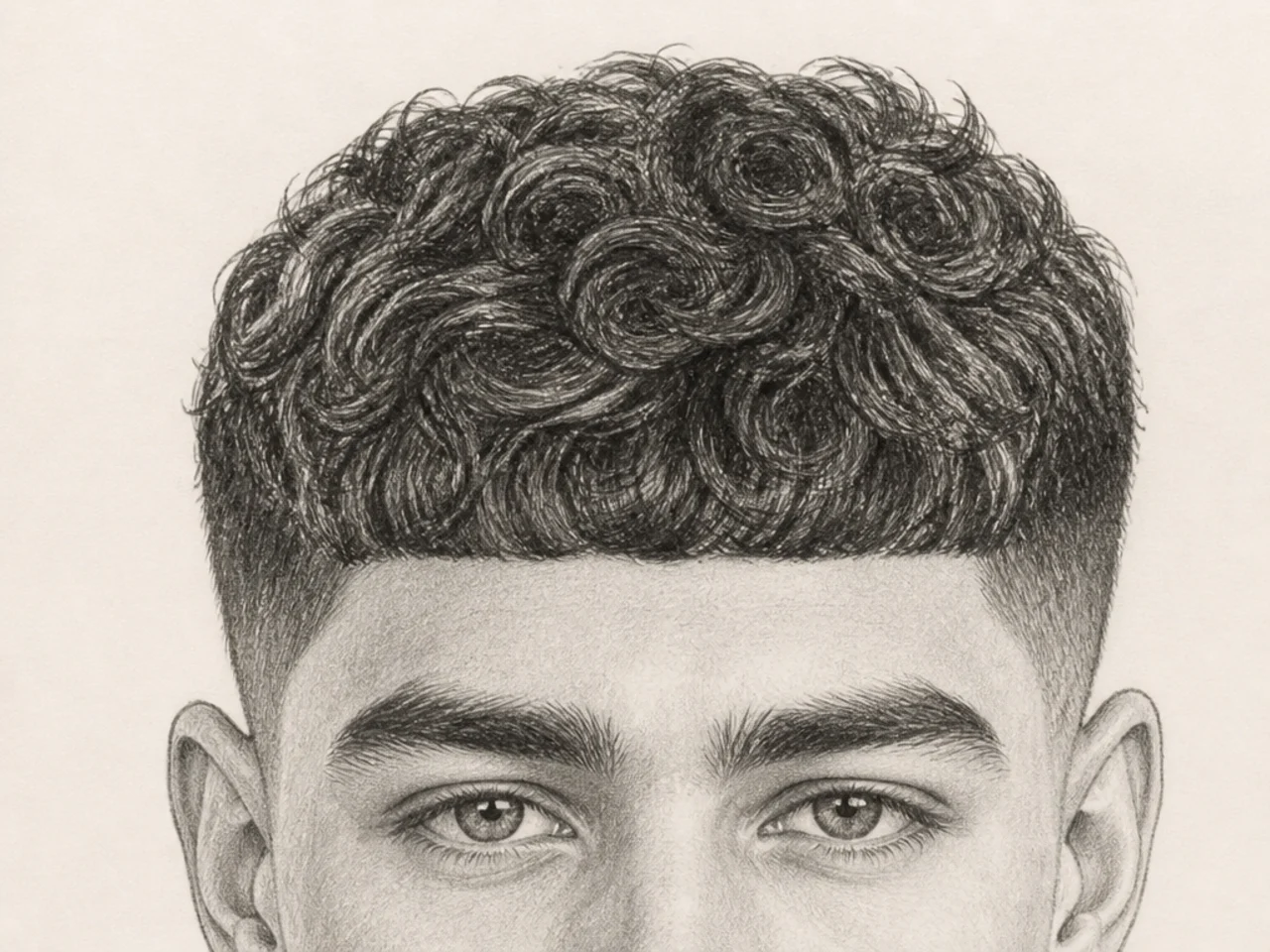
2. Curly Crop with a Straight Fringe Line
Curl above, defined edge at the front.
3. Medium Curls, Natural Hairline
No fade. Curl running into the temples.
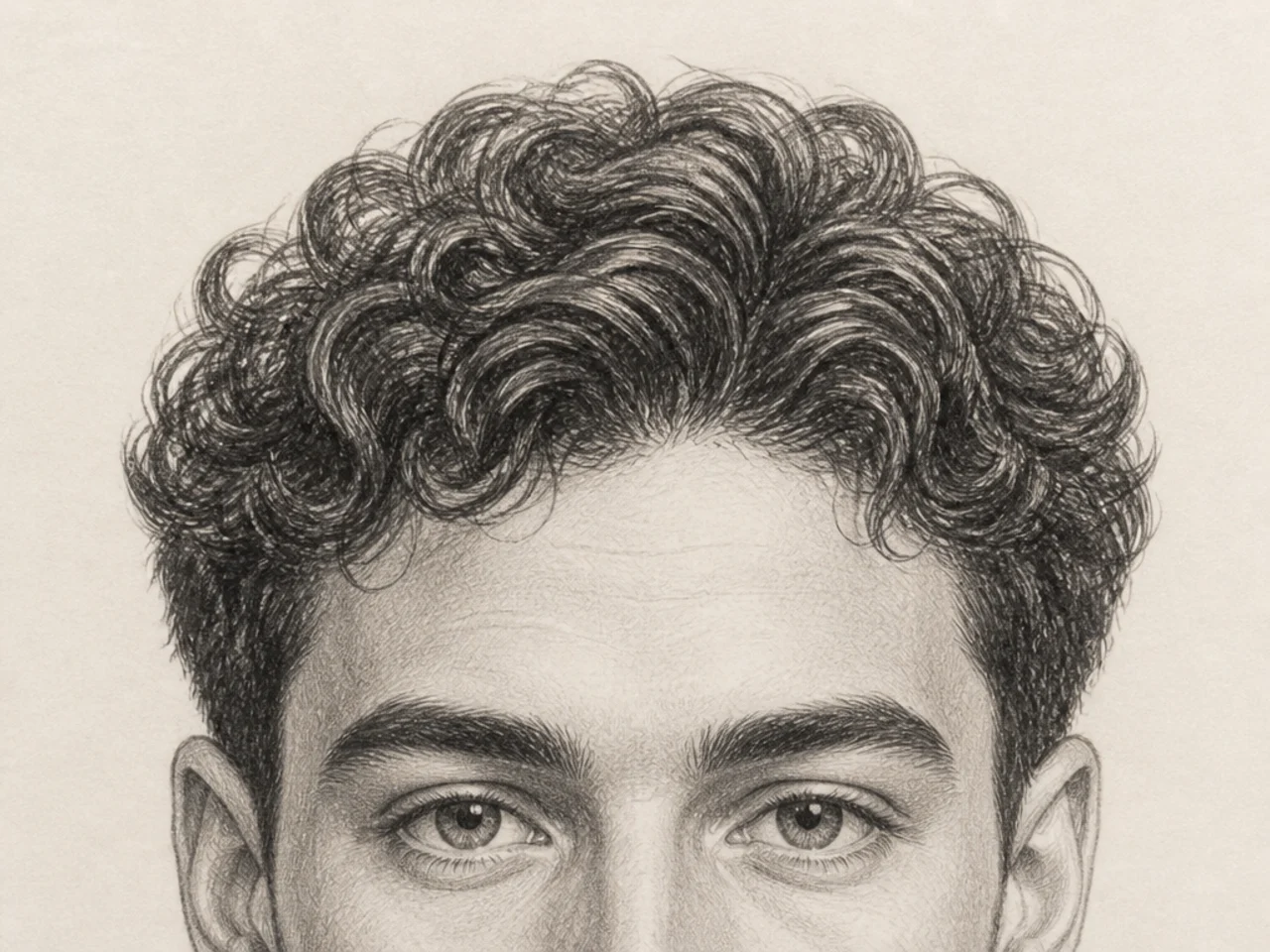
4. Tight Coils, Close Cut
Texture rather than shapes at this length.
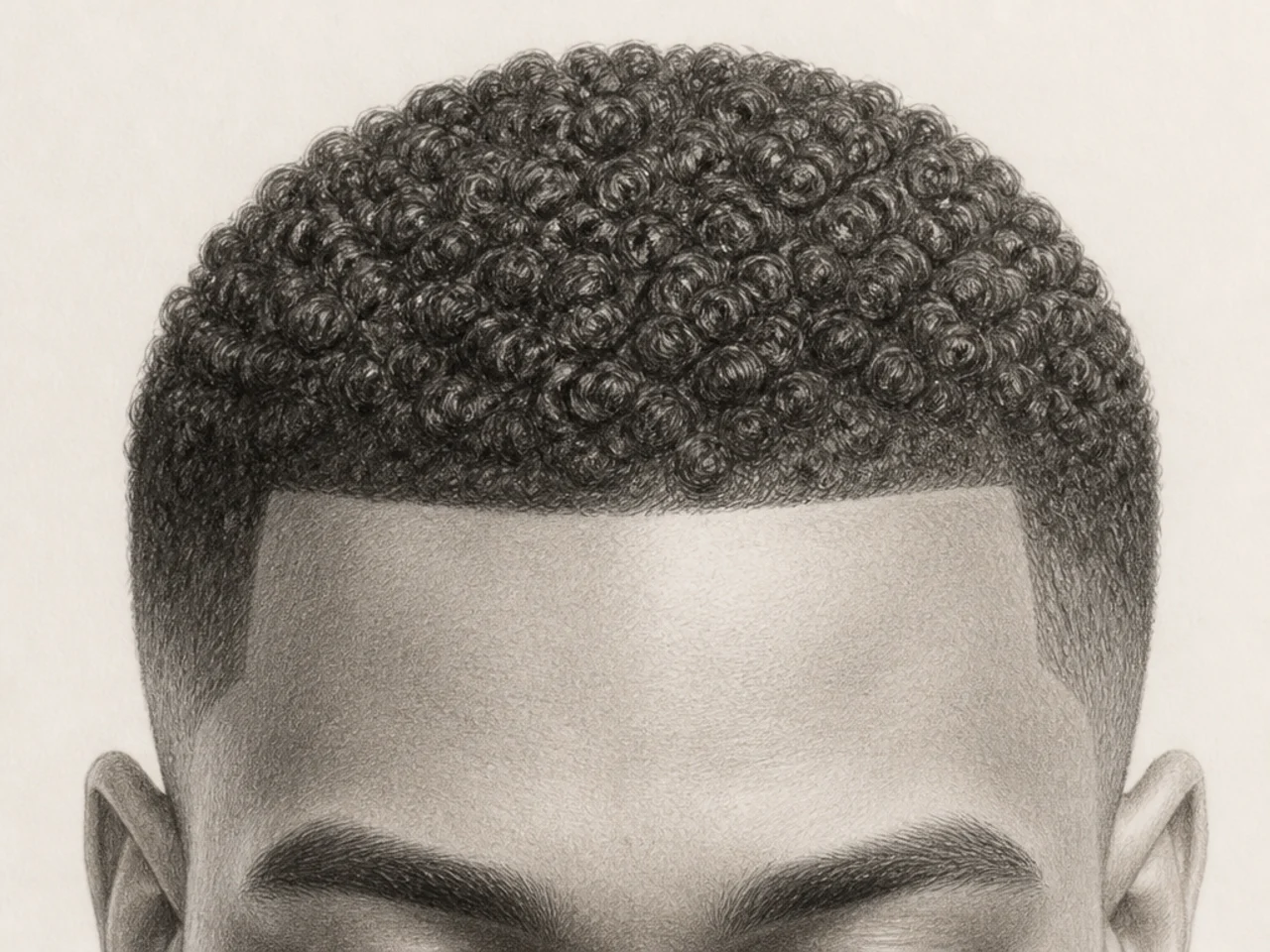
5. Curly Afro, Medium Height
Rounded volume with a defined hairline beneath.
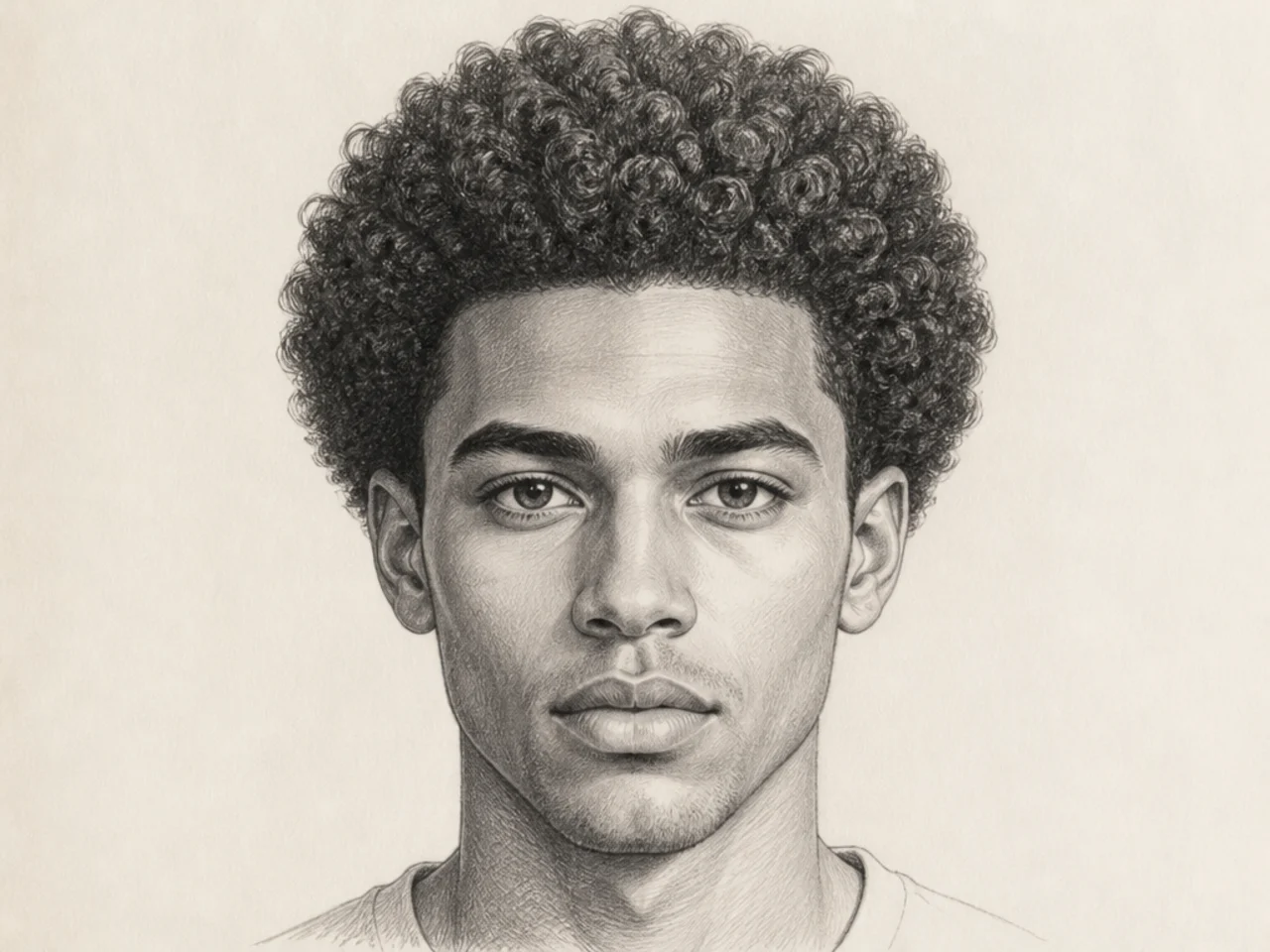
6. Long Curly Male Hair
Past the ears, where silhouette starts to matter again.
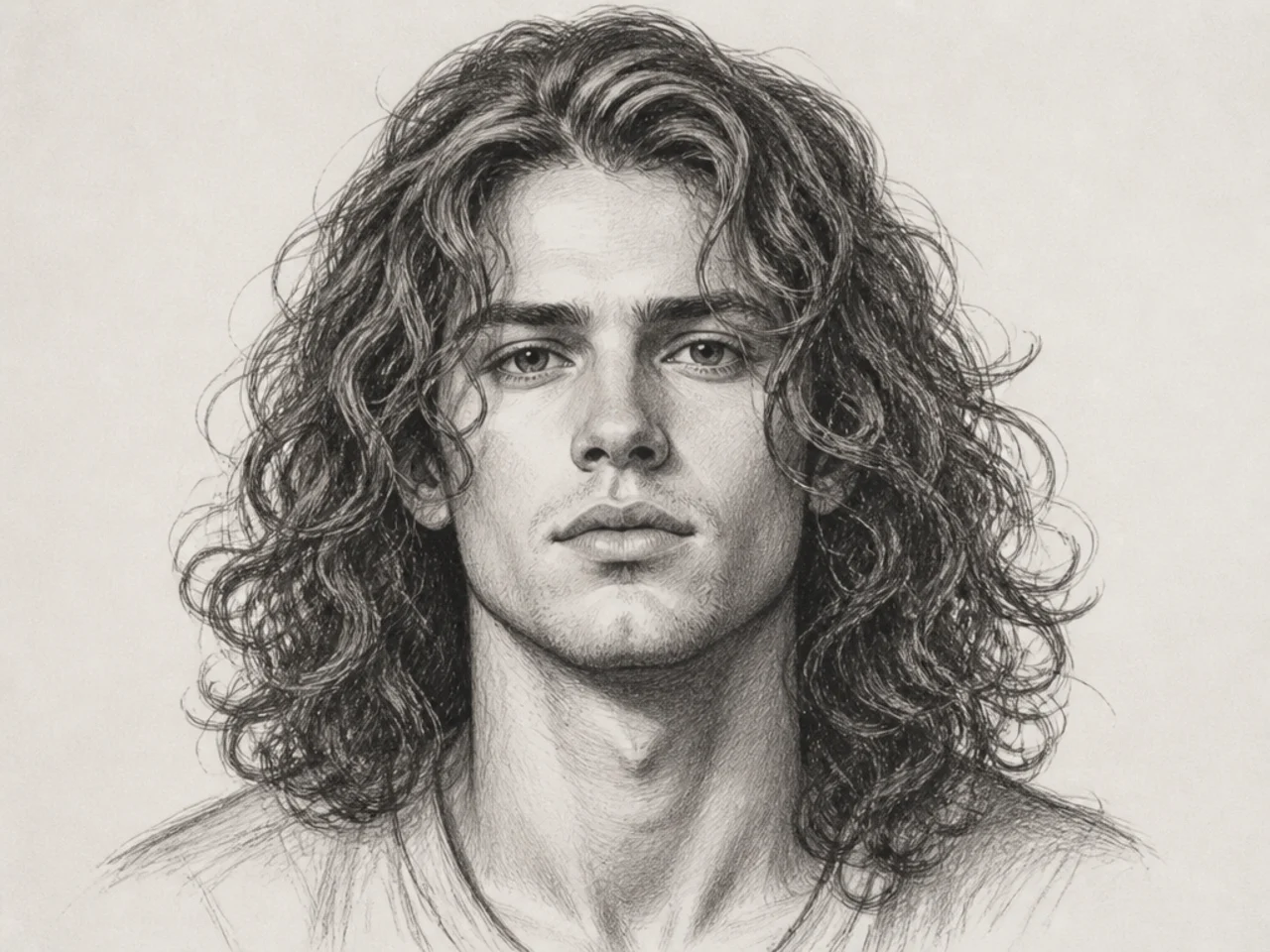
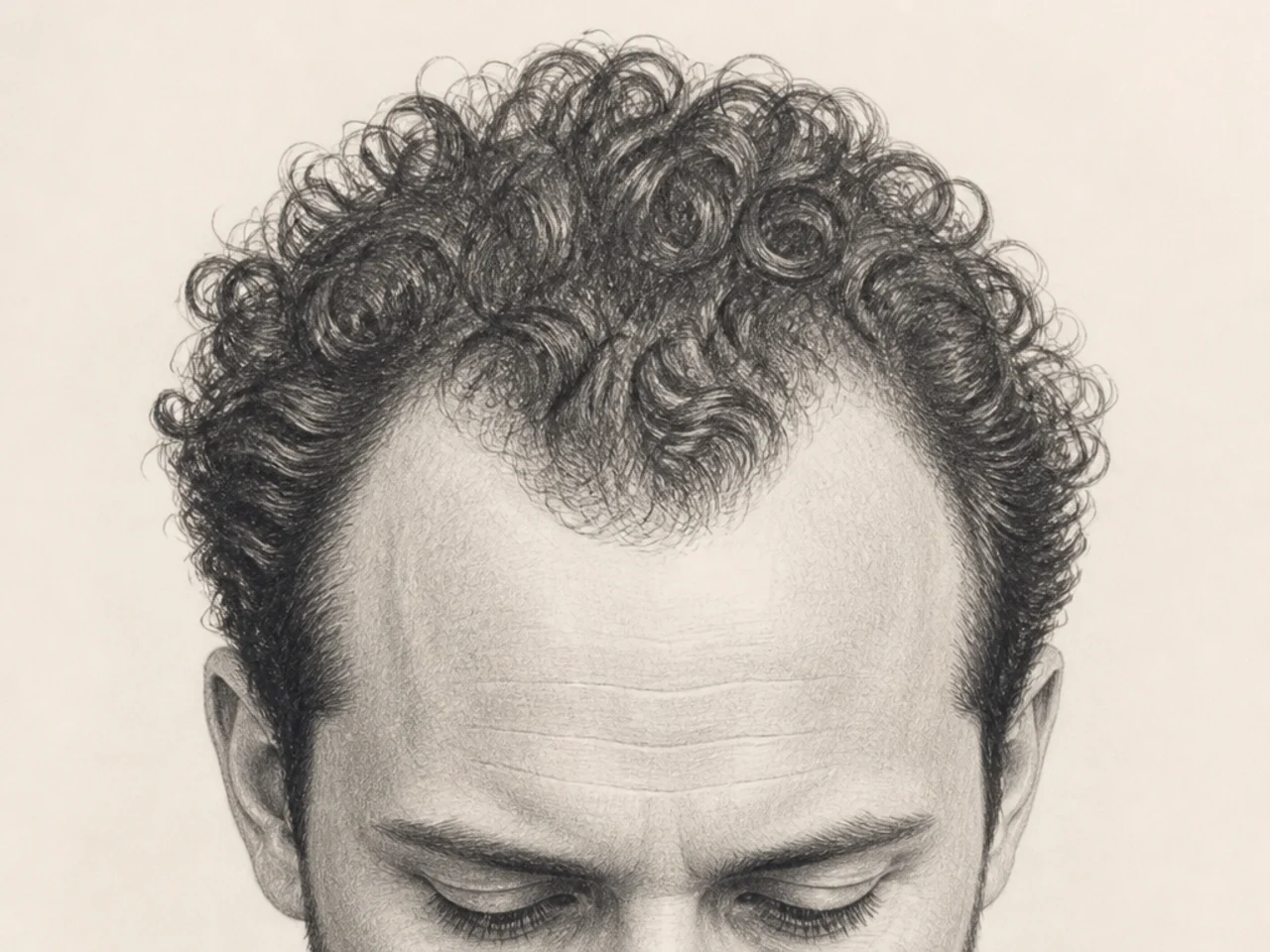
7. Curly Hair with a Receding Hairline
The corners drawn deeper. Ages a character instantly.
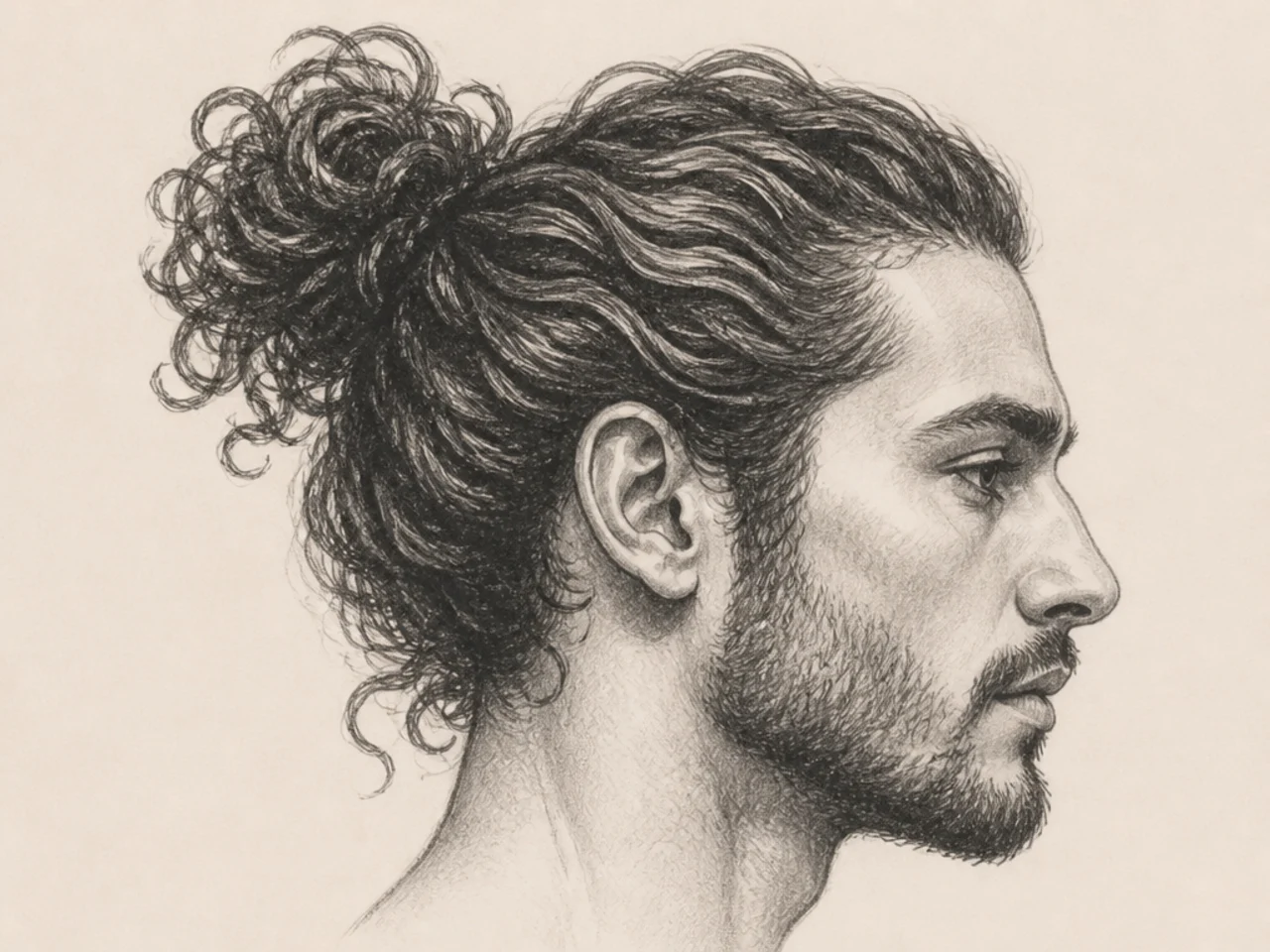
8. Curly Man Bun
Gathered above, short at the sides.
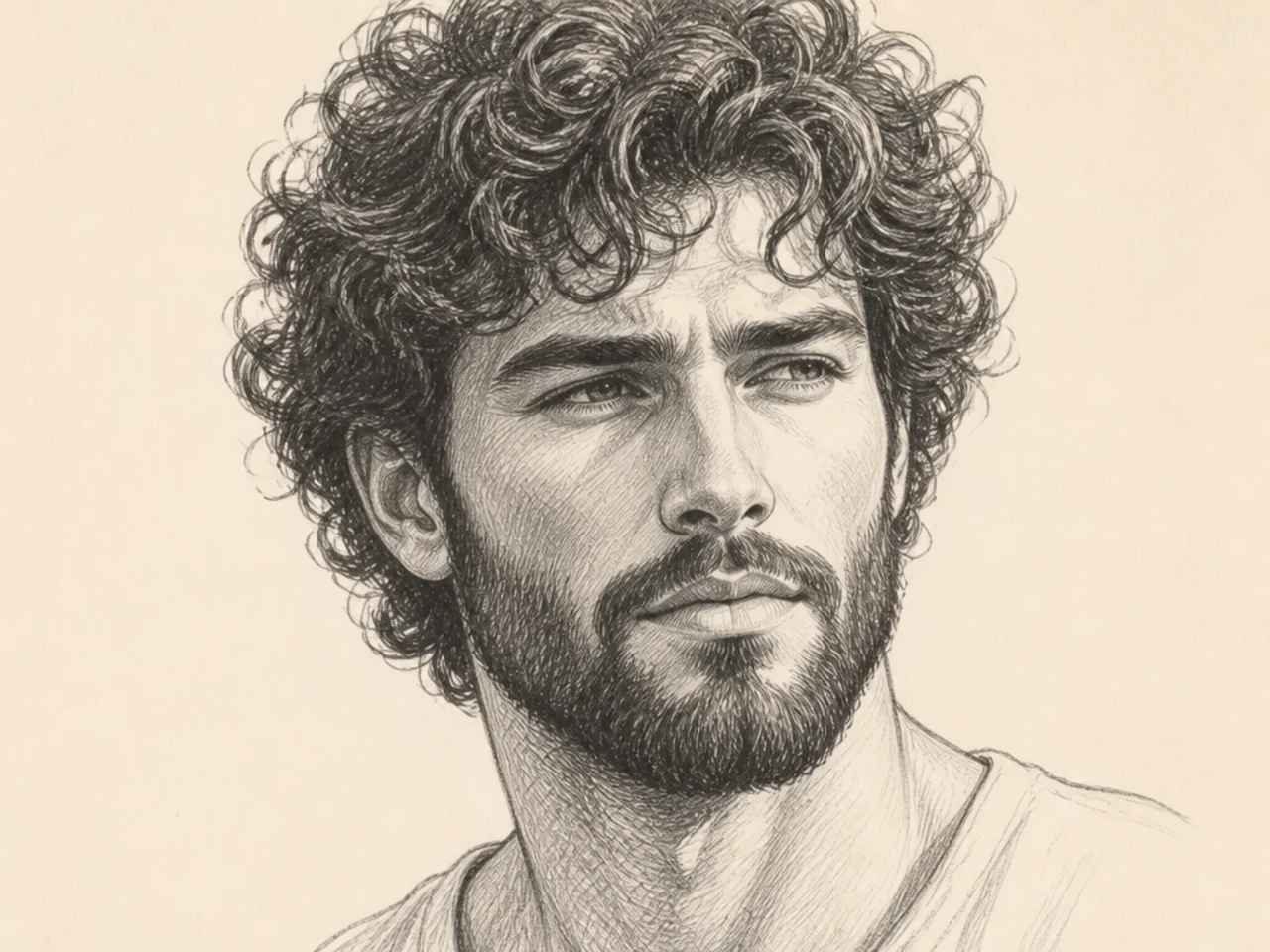
9. Curly Hair with a Beard
Two textures meeting. The transition needs care.
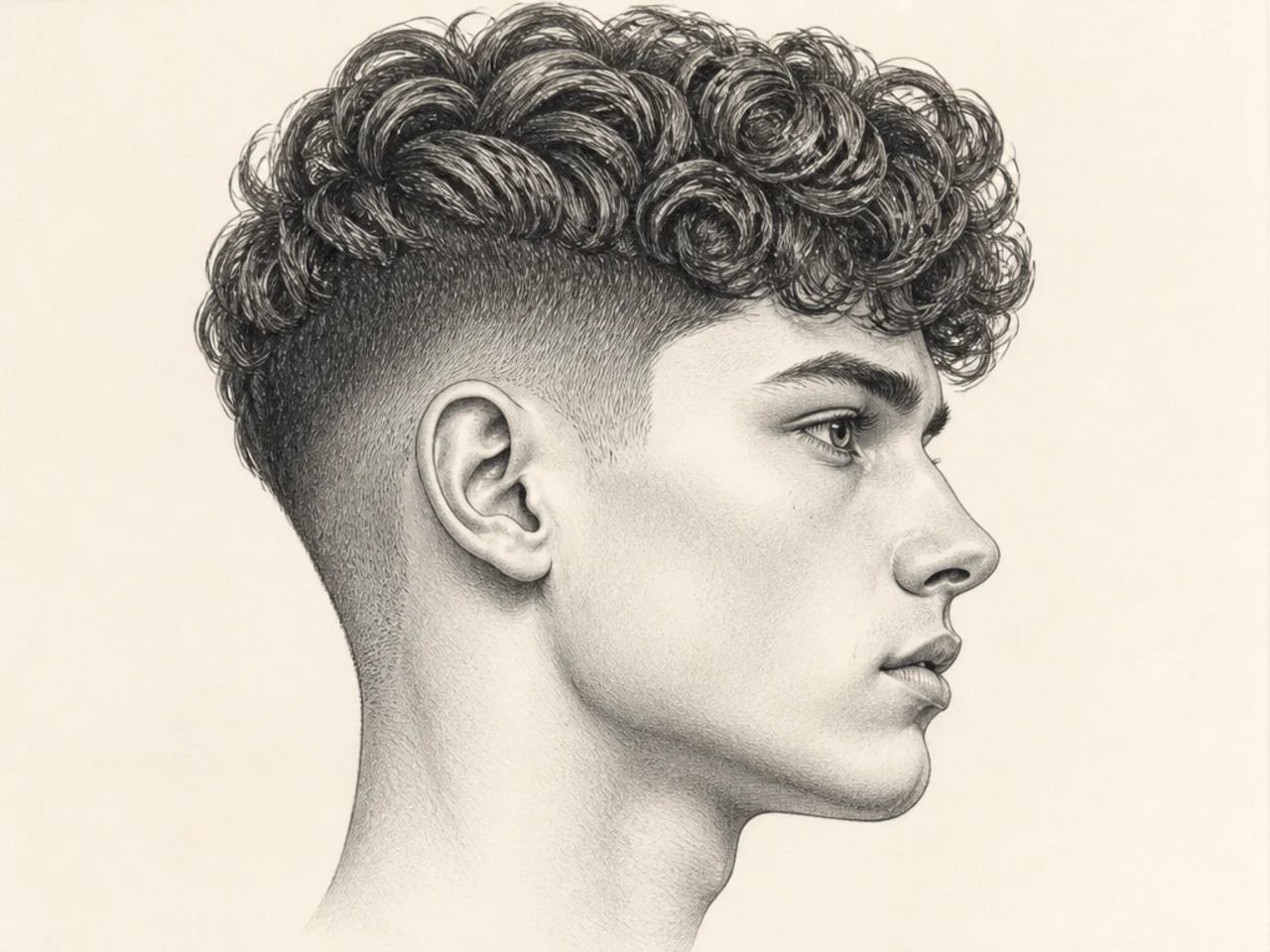
10. Curly Undercut
Hard line between shaved and curly. Strong graphic contrast.
11. Wavy Male Hair, Side Part
Looser pattern with a defined parting.
12. Curly Hair From Three-Quarter View
The angle where the hairline reads best.
13. Curly Hair in Profile
The volume difference between top and nape is clearest here.
14. Damp Curls
Fewer, heavier clumps sitting closer to the skull.
15. Curly Hair Pushed Back
Volume moved off the forehead entirely.
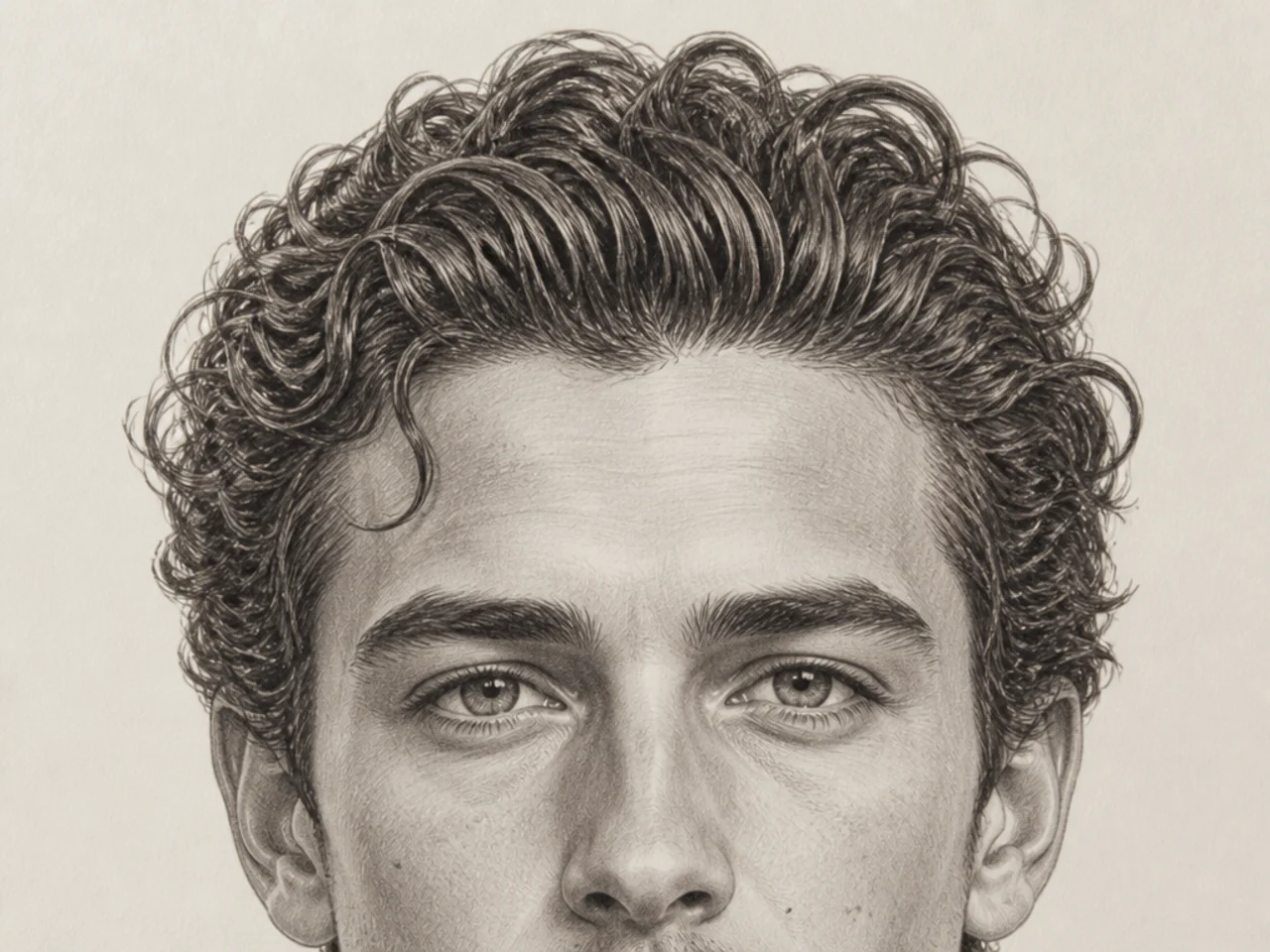
16. Older Character, Grey Curls
Higher hairline, looser pattern, lower contrast.
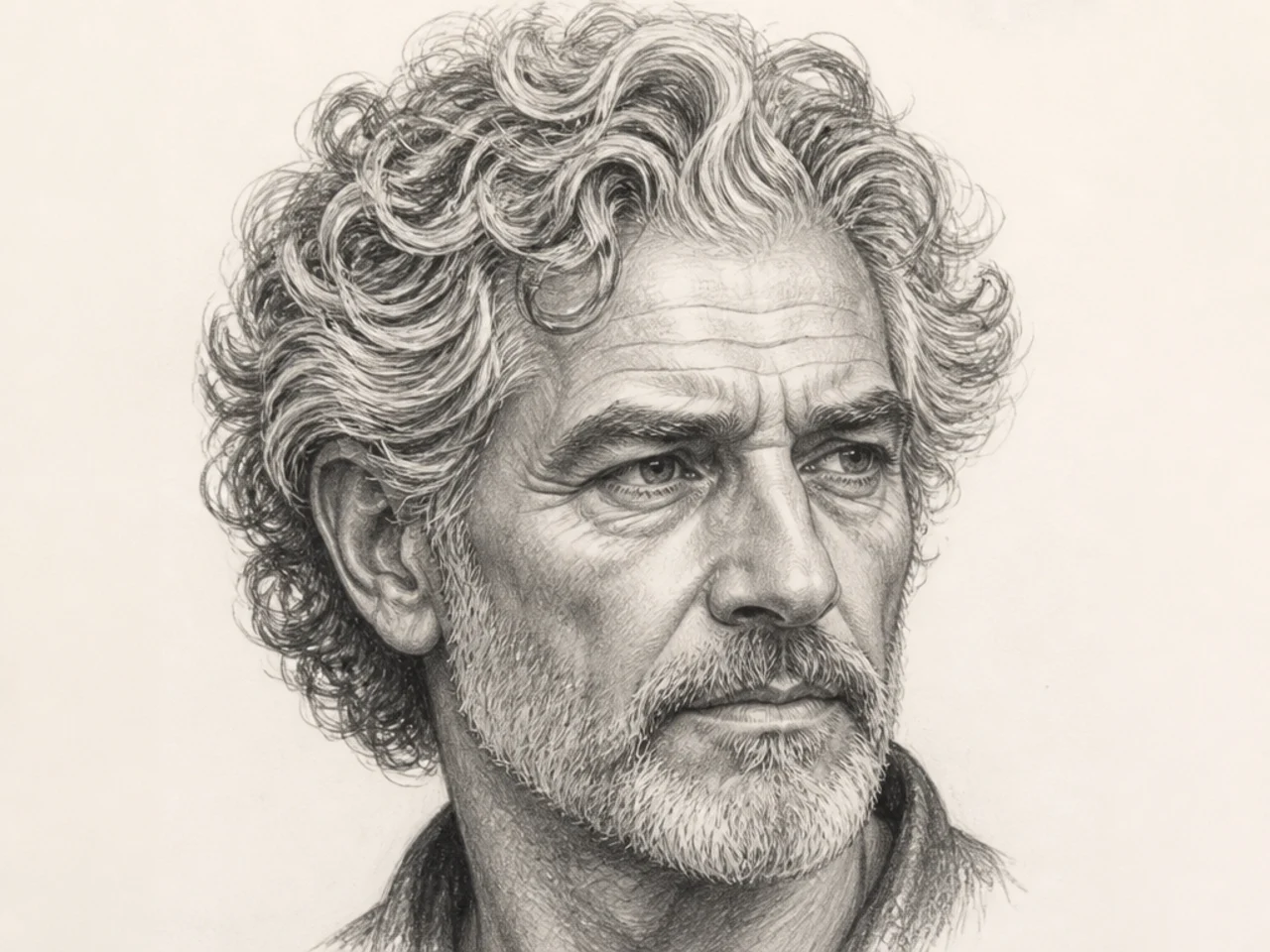
17. Young Character, Low Hairline
Low, soft, irregular edge.
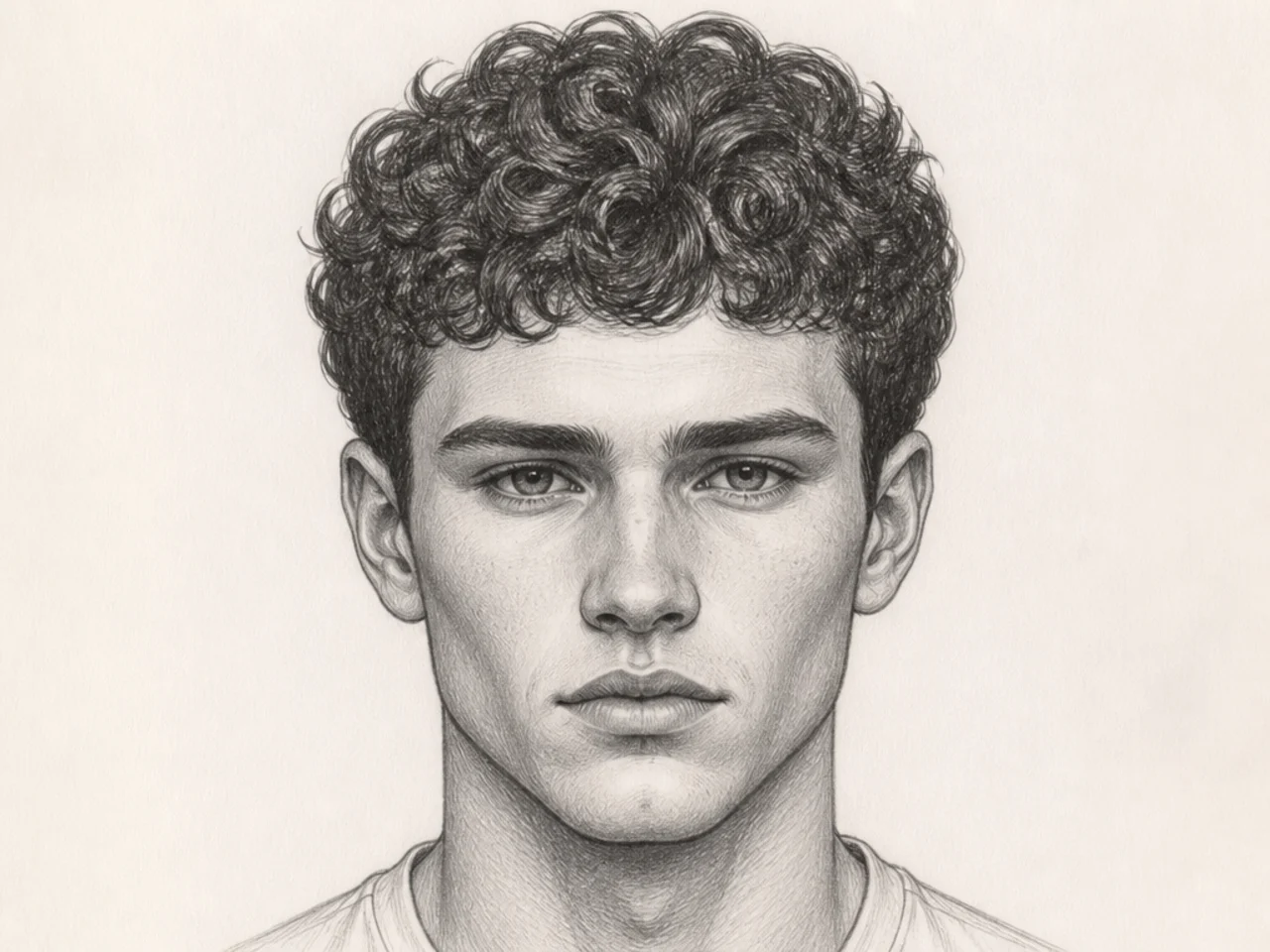
18. Curly Hair Under a Cap
The shape a cap forces, and the curls escaping it.
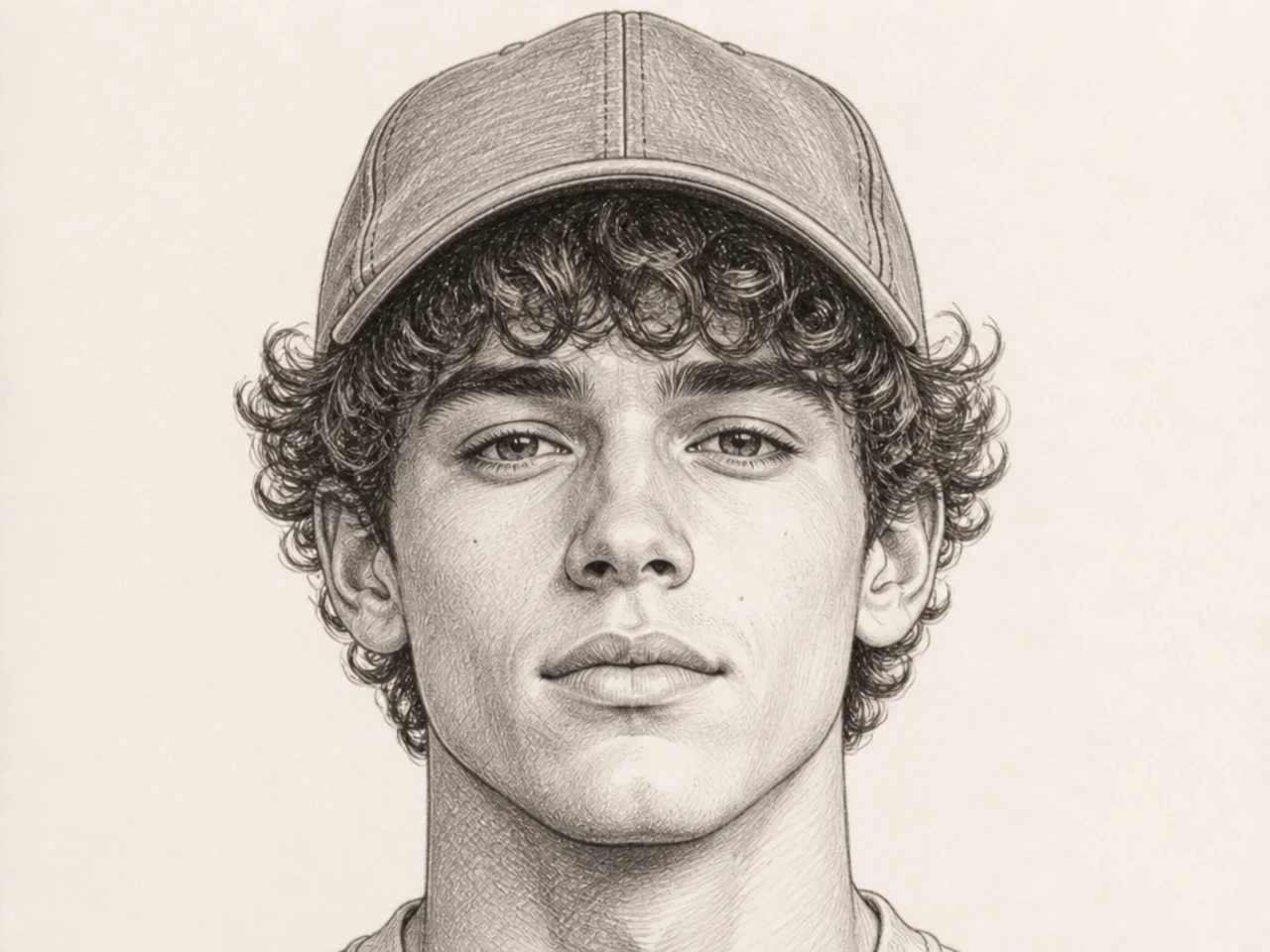
19. Hairline Study Sheet
Six hairlines only, no hair. Pure practice.
20. Same Head, Five Hair Lengths
One face, five lengths. Shows how much length changes character.
Short Curl Is Texture, Not Shapes
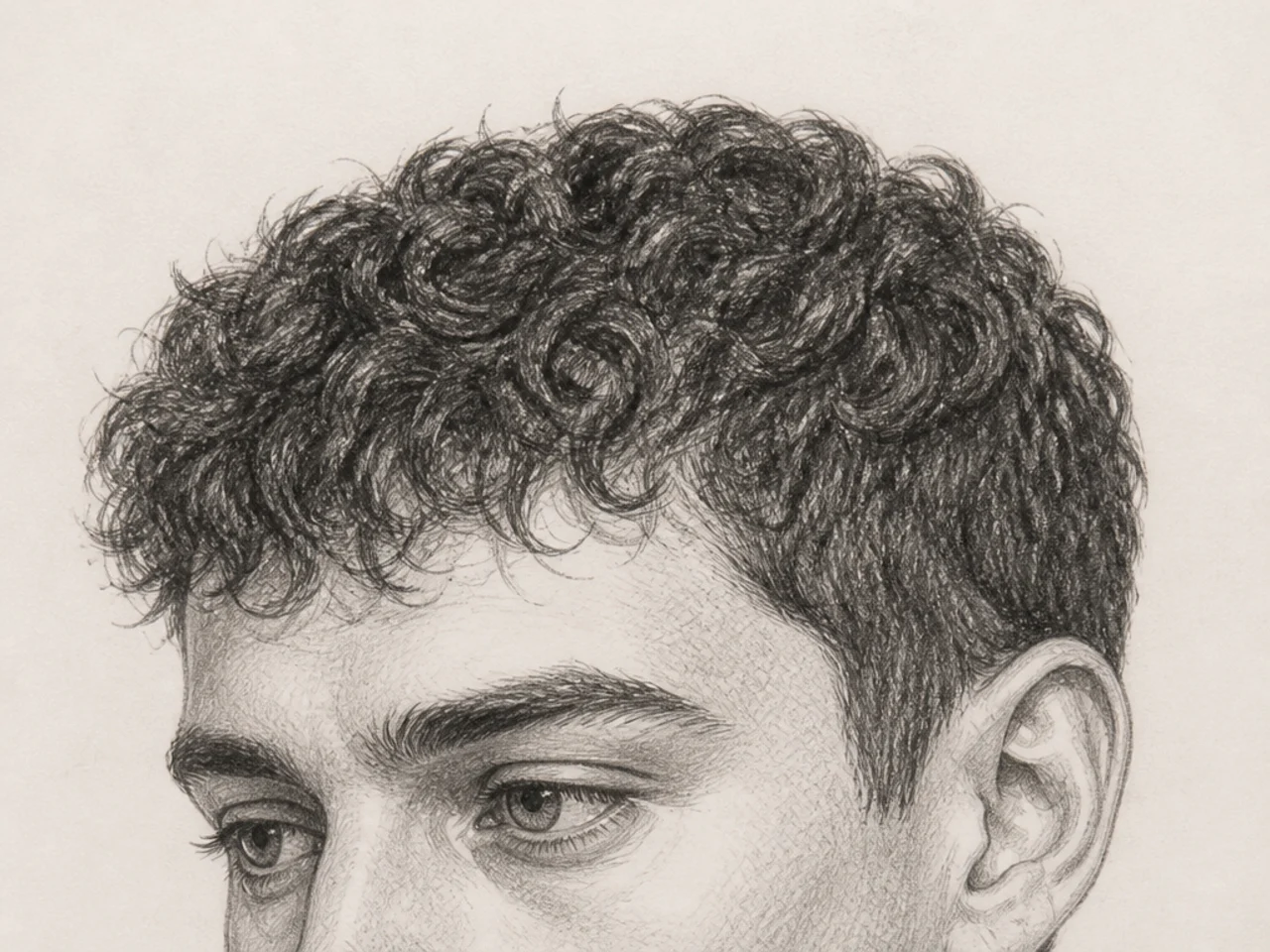
Below about two inches, individual curls stop being drawable as shapes.
At that length curl reads as surface texture — a broken, granular quality across the form — rather than as a set of spirals. Drawing individual coils on a close cut produces something that looks like beads or chain mail.
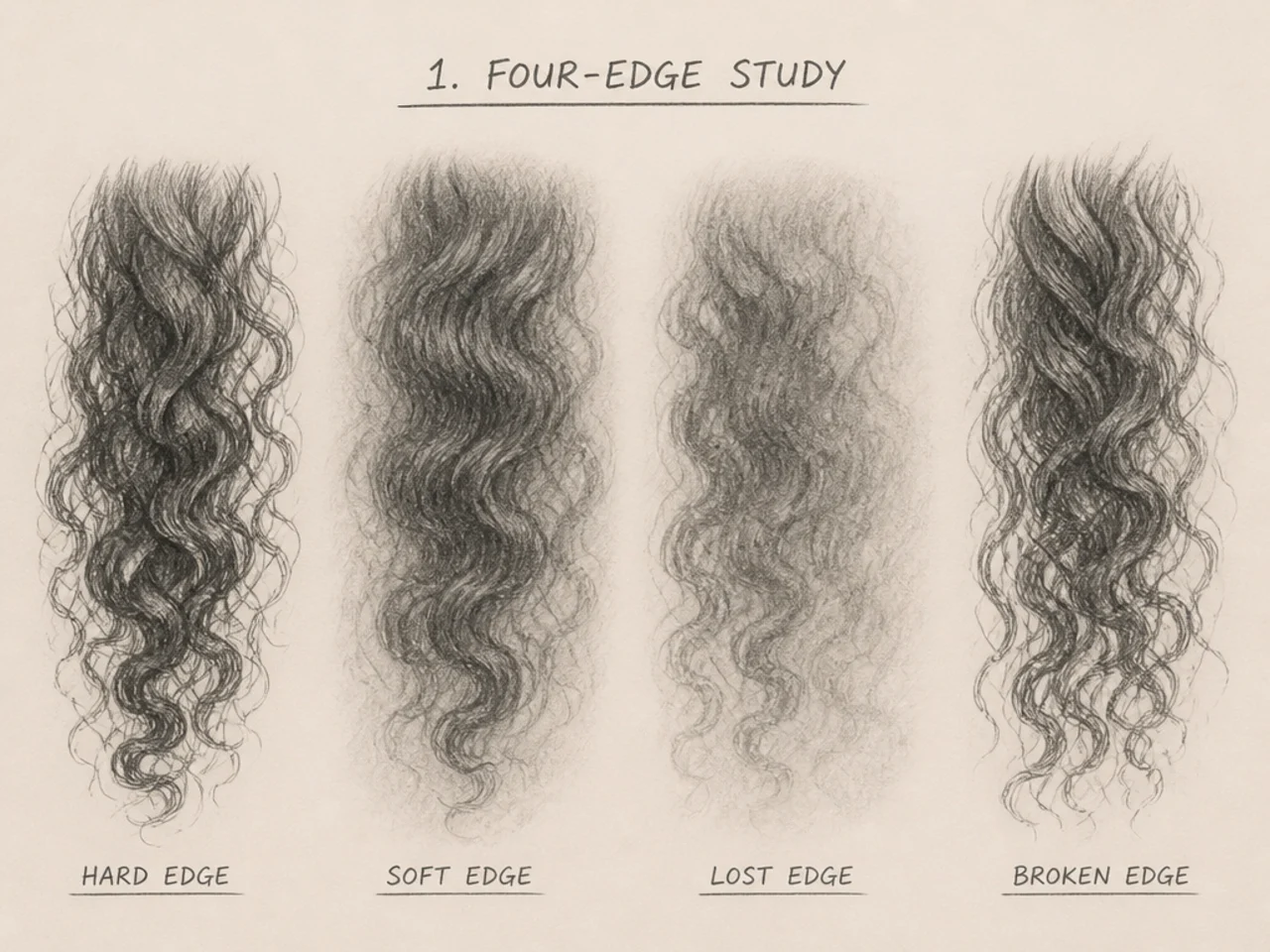
Render it as tone with a broken edge. Vary the value slightly across the surface, and put all the detail information into the silhouette edge, where individual coils catch light against the background.
The edge is where short curl announces itself. A close-cropped coily cut is recognised almost entirely by its outline against the skin and the background.
Mistakes to Avoid
A hard-line hairline. It is a gradient, not an edge.
Even volume all round the skull. The helmet look.
Drawing individual coils on a close cut. It reads as beads.
A symmetrical hairline. Real ones are uneven, and curl makes them more so.
Ignoring the temples. The corners carry most of the characterisation.
FAQ
How do you draw male curly hair? Start with the hairline — it does most of the characterisation.
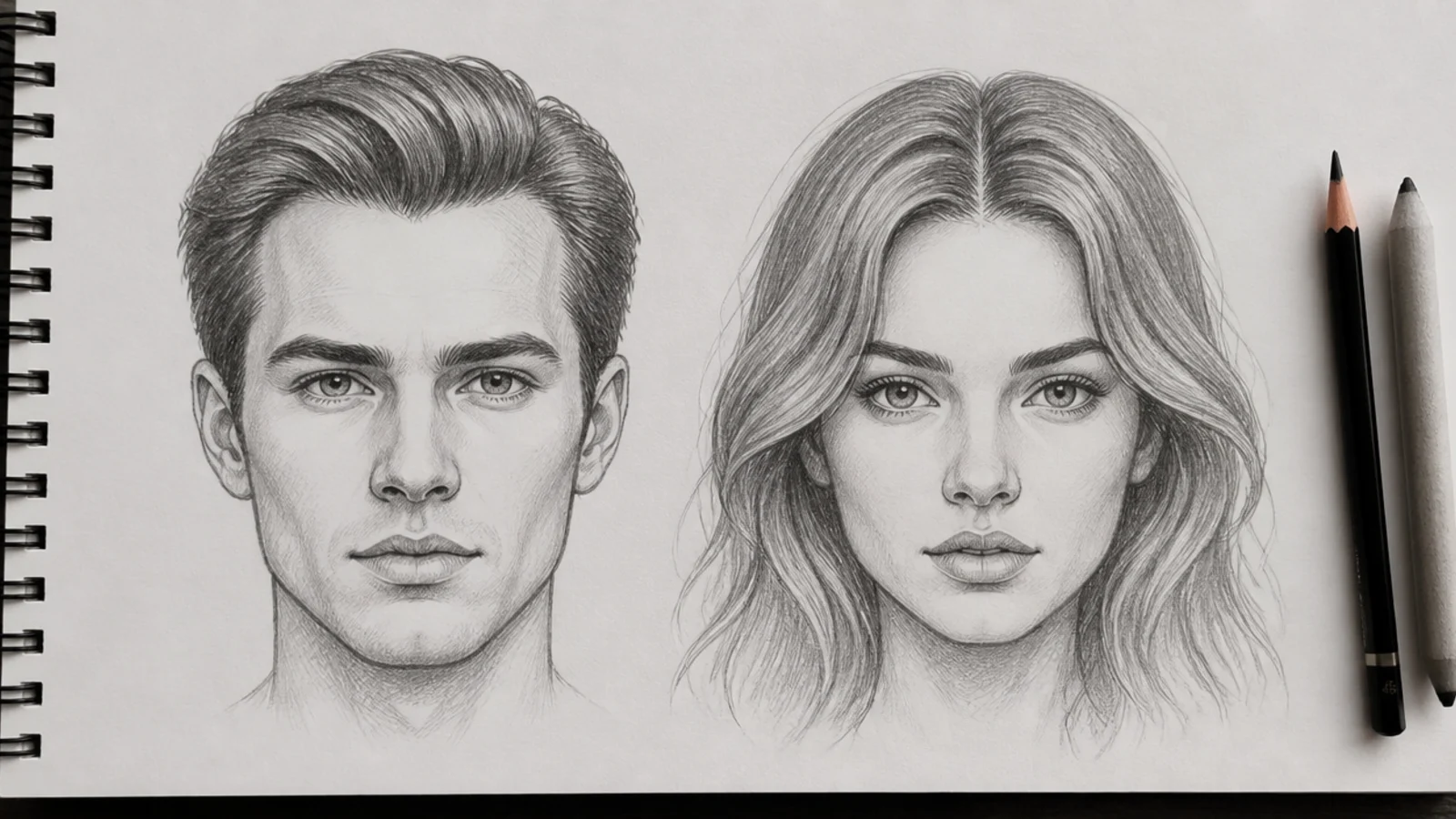
What differs from female hair? Length and hairline visibility, mostly.
How much volume? Less at the sides than on top, almost always.
Final Thoughts
Draw six hairlines on their own before you draw another head of male curly hair. It is the feature carrying the likeness, and it is the one most people spend the least time on.
For longer hair see 15 female curly hair drawing ideas, and for the method see 20 steps to draw curly hair like a pro. More in Hair Drawing & Art.